In search of small silences: Parenthood as an introvert
Conference
4 general sessions and a solemn assembly over Easter weekend General Conference
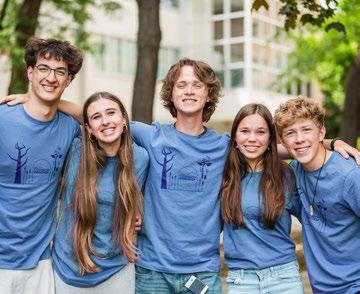
5 callings, 1 purpose: Quintuplets serve missions at same time
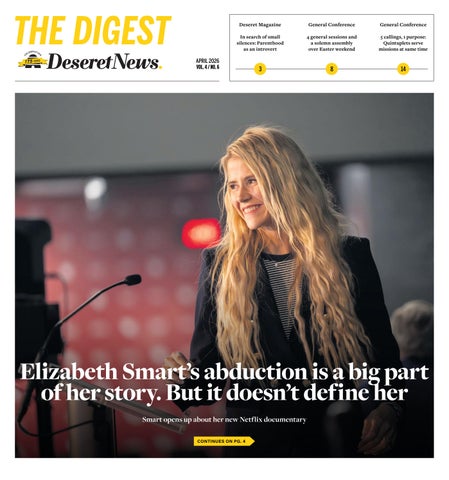
Elizabeth Smart’s abduction is a big part of her story. But it doesn’t define her
By Doug Wilks Executive Editor
By Burke Olsen Publisher
We are pleased to introduce you to The Digest, a sampling of some of the best stories written every day by the dedicated journalists at the Deseret News, Deseret Magazine and Church News. Our hope is that you will make us your trusted news source each day at a time when there is confusion and contention in the nation.
The Deseret News brand stands for unimpeachable journalism centered on the issues most core to the human heart. While the Deseret News since its beginning in 1850 has evolved to meet the demands of its audience — reimagining print offerings, launching an acclaimed magazine and increasing the visibility and reach of its award-winning website — the publication remains committed to certain timeless ideals.
We stand for truth and light. We stand for faith and family. We stand for liberty and responsibility. We provide news and perspective, exploring society’s thorniest problems in search of solutions that will improve your life. That’s our commitment to our readers.
We invite you to discover what we can offer you:
Award-winning website
Our website, Deseret.com, is designed to be user-friendly and
INTRODUCING 'THE DIGEST'
or on the go with your mobile phone, you can access our website for the latest news, analysis and commentary.
Mobile apps
Our apps for iOS and Android devices offer a seamless and convenient way to access the latest news, wherever you are. Choose what you want to read, save articles for later and receive push notifications for the breaking news you need to know.
Newsletters
Delivered straight to your inbox, our free email newsletters provide a curated selection of the most important stories of the day, as well as deeper dives into topics that matter to you. Choose from a variety of subjects and frequencies to tailor your news consumption to your needs.
Weekly print newspaper
For those who appreciate the tactile experience of a traditional newspaper, our weekly print edition offers a comprehensive roundup of the week’s most important stories and opinions, including the most comprehensive high school, college and professional sports offerings in the state.
Deseret Magazine
In 2020, we undertook an ambitious endeavor by launching a new magazine with in-depth journalism, unique voices and principled points of view. The reception to the magazine has far exceeded our expectations. You can read more from the magazine online at Deseret.com/magazine or subscribe to have it delivered to your home or office.
Church News
The Church News remains one of our most popular offerings for those who want to know the latest news from The Church of Jesus Christ of Latter-day Saints. It’s available online at TheChurchNews.com and via iOS and Android apps. A print version is included in the Friday edition of the Deseret News.
By Megan Feldman Bettencourt Deseret Magazine
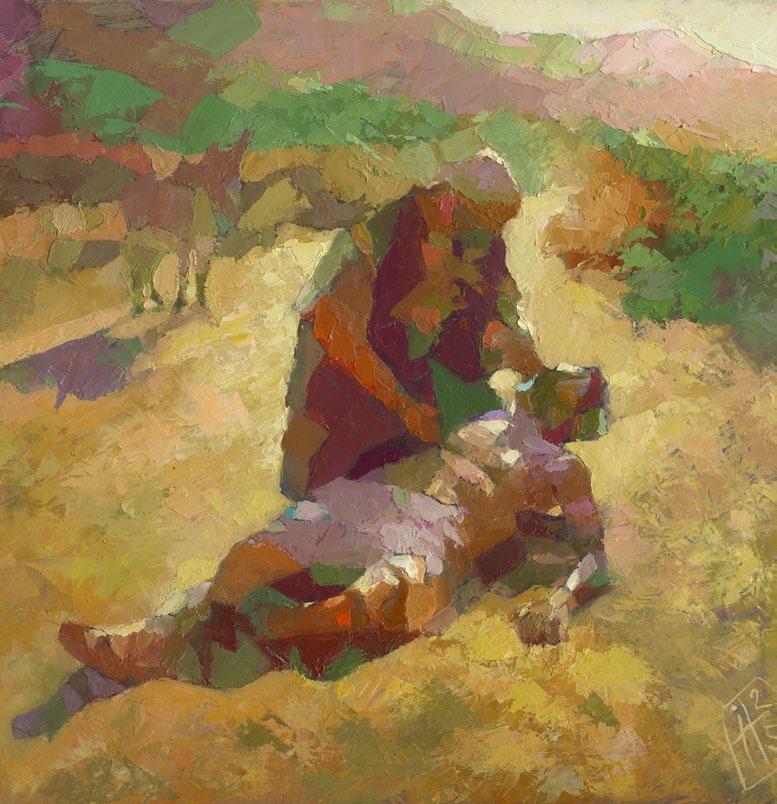
In search of small silences
Surviving parenthood as an introvert
I never intended to hide behind a tree.
It was Monday, and my family of four awoke late. My 6-year-old daughter refused to brush her bird’s-nest hair, while my 10-year-old son frantically searched for his homework. When I finally corralled them into the car, construction turned our 20-minute commute into a 35-minute drive filled with arguing in the back seat. I dropped the kids off late and slumped over the steering wheel, exhausted. I decided to decompress at a nearby park. Just minutes into my silent stroll, a familiar face caught my eye. Walking toward me was a woman I went to college with 20 years earlier. I liked her, and under different circumstances, I would have waved her down to catch up. But, at this moment, that was the last thing I wanted to do. I had no energy to talk, and a work meeting was quickly approaching. I clambered behind a large tree alongside the path and peered out from behind the pine needles. Watching with dread as the woman approached, I cringed. What exactly am I doing?
Well, I was being an introvert. With Latin roots meaning “to turn within,” the word introvert was first applied to psychology by Carl Jung in the 1920s. He coined the terms introvert and extrovert to describe two personality types: those who prefer to focus inward and gain energy from time alone, and those who prefer to focus externally and feel energized by social interaction. In the 1940s, Katharine Cook Briggs and Isabel Briggs Myers used Jung’s theory in their Myers-Briggs Type Indicator test, developed to help people land wartime jobs. Studies have since found key brain differences between introverts and extroverts, from the amount of gray matter in certain areas to the level of activity and blood flow in others. So the two personality types don’t just seem different — they are different.
The problem for us introverts, who comprise between 30 and 50 percent of the U.S. population depending on which survey you cite, is that while introverts and extroverts may be more or less equally represented numerically, our traits are not equally valued or respected.
“Modern educational and professional cultures tend to reward visibility, speed and verbal performance,” Soumia Bardhan, an associate professor of communication at the University of Colorado, Denver, who has written about introverts’ talents and needs, told me. She pointed out that we equate speaking frequently with competence and frame leadership around charisma and social dominance, rather than reflection and restraint. Even in the classroom, children are often graded partly on how often they participate in class discussions.
I found myself nodding at Bardhan’s words, much like I did when I read Susan Cain’s 2012 bestseller, “Quiet: The Power of Introversion in a World That Can’t Stop Talking.” In it, Cain describes the favoritism she calls the “extrovert ideal,” which, according to Bardhan, remains as pervasive now as when Cain’s book was published 14 years ago.
“Open offices, constant collaboration, rapid brainstorming, and group-heavy work cultures are designed around the assumption that more interaction is always better,” Bardhan said. “What gets lost is that some forms of intelligence, such as deep reasoning, ethical reflection and slow synthesis of ideas, are quieter and less immediately
visible, but not less valuable.”
Yet just as introversion is undervalued, it’s also misunderstood. Introversion is often confused with shyness, which implies a lack of social confidence and fear of judgment. Contrary to popular belief, we introverts can be sociable; we just get drained by a certain amount of interaction and require alone time to recharge. Being reminded of this made me feel like less of an oddball for seeking out solitude behind a conifer.
F inding quiet early
As a child with extroverted parents, I saw a mom and a dad who both worked as physicians treating patients f ive days a week. On weekends, they played doubles tennis and brought me to brunch with their friends. The annual party my parents hosted on Christmas Eve drew dozens and lasted for hours. Afterward, we cleaned up — only to attend another annual party in a different part of town. I learned at lunches, dinners and parties how to hold a conversation with all sorts of people from an early age. But, looking back now, I realize that after those outings and interactions, I often retreated to my room for peace. I enjoyed that time to myself; spending hours reading, making jewelry and playing my drum set became a comfort to me.
The quiet time I was able to spend by myself, unknowingly recharging in the company of my drums and beaded bracelets, eroded as I came of age. Constant interaction and social assertiveness seemed like prerequisites to get a good job, find a solid friend group and date successfully. When I was single and working in open-floorplan offices, I recovered from hours of collaboration by sequestering myself alone in my room. By the time I became a married mother of two, my solitude had shrunk to the size of the nine-minute drive between school drop-off and the commuter train to my office in
downtown Denver. A lack of silence, solitude and low-stimulation environments sapped my energy.
“(Introverts’) nervous systems respond more strongly to sensory and social input like noise and crowds, and that’s linked to faster fatigue, overload and stress,” Bardhan says. Parenting involves intensive interaction. It’s important for introverts to get enough solitude, quiet and rest to avoid exhaustion and burnout. This became increasingly difficult for me as my children grew older. They became more independent, but also more involved in activities that required my participation: birthday parties, baseball tournaments and spelling bees, an endless parade of loud events filled with crowds and pleasantries and carpools.
As my kids turned 6 and 10, two things became clear. First, raising a family with my husband and spending quality time with our children as they grew was more rewarding than anything I had ever done. And second, the level of interaction this entailed left me feeling fatigued, irritable and empty. I snapped at my kids more frequently and always felt guilty afterward. My head ached and my mind raced. I felt restless and tired at the same time.
Bardhan gently reminded me that, despite what mom guilt might say, solitude is not social avoidance — it’s a necessary way to regulate one’s nervous system. Too much stimulation creates stress for the introverted brain, prompting the release of “fight-or-flight” chemicals like cortisol and adrenaline. Having written a book on the health impacts of such stress chemicals, I know that over time they could lead to mental health symptoms like depression and anxiety.
I also know that having alone time makes me a better person when I’m with others. And if I don’t make sure I f ind that alone time, no one will.
When my daughter was recently invited to a birthday party at a crowded venue, I dropped her off and checked in with the host parents. Then I had brunch alone down the street and returned to socialize with the parents while our children slid down the slides. Because I’d taken time for myself first, I had the energy.
I’ve also become more courageous about defending my boundaries. A friend recently reminded me that I can’t expect the extroverts around me to understand my needs unless I explain them and ask for what I want.
Instead of immediately responding to requests, I have started pausing to consider my bandwidth first. Recently, when my mother texted me to call her after bedtime, I replied: “I need some downtime after getting them to bed. If it’s not an emergency, I’ll call you in the a.m.?”
It’s all still a work in progress for me, as I was reminded when I hid behind that pine tree to avoid reconnecting with an old friend. While I tried to be still and fretted over what I would say if she saw me huddled behind the tree bark, she turned onto a different path. I was saved. But now that I think about it, maybe I’ll reach out and invite her to lunch — at a time and place that works for us both.
This story appears in the March 2026 issue of Deseret Magazine. Learn more about how to subscribe.
Hanneke Rozemuller, for Deseret Magazine
DESERET
Smart’s abduction is a big part of her story. But it doesn’t define her
By Lottie Elizabeth Johnson Deseret News
Smart opens up about her new Netflix documentary
Nine brutal months after being abducted from her Salt Lake City home in the middle of the night, relentless rescue efforts f inally brought 15-year-old Elizabeth Smart back.
As the teenager returned home, surrounded by and grateful for a network of family, friends and a community that never stopped saying her name, never stopped searching or praying for her safe return, Smart found herself wrestling with somewhat of a morbid thought.
“I’m just forever going to be known as the girl that was kidnapped. I’m just forever going to be known as Elizabeth Smart, kidnapping victim, rape survivor.”
“I remember just feeling like, ‘Wow, if I died tomorrow, my funeral would just be, oh, she survived a kidnapping,’” Smart recalled. “And I remember sitting there thinking, ‘I don’t want my funeral to be like that.’
“Honestly, I don’t even want that to be mentioned.”
So early on, Smart made a decision to enlarge her life, to f ill it with opportunities and memories and purpose.
In the nearly 24 years since her abduction, Smart has become a tireless advocate and beacon of hope for sexual abuse survivors and families of missing children. She’s often opened up about her abduction and captivity, including through the recent Netflix documentary “Elizabeth Smart: Kidnapped” and a YouTube channel where she tackles frequently asked questions.
Her advocacy work has kept her in the public eye, with her kidnapping front and center. But when it comes to Smart’s day-to-day life, there’s a happiness so expansive that the kidnapping is no longer the focal point.
“I have so much more to reflect on than just my abduction and captivity,” she said.
In a wide-ranging interview with the Deseret News, Smart opened up about her new Netflix documentary, advocacy work, continual healing and the memories that have enriched her life. This interview has been edited for clarity and length.
Deseret News: You’ve told your story so many ways over the years, through writing, through speeches and f ilm. What separates this new Netflix documentary from all of these other tellings, and did it offer something different for you?
Elizabeth Smart: When I was f irst rescued, I really didn’t want anyone to know what had happened to me. I felt a lot of embarrassment. I felt a lot of shame around what had happened — even though I knew it wasn’t my fault. I just couldn’t help how I felt.
Sexual assault and rape and abuse, it can feel so isolating. I remember one of the reasons why I didn’t want to talk to people was because I felt like, “How could anyone else understand what
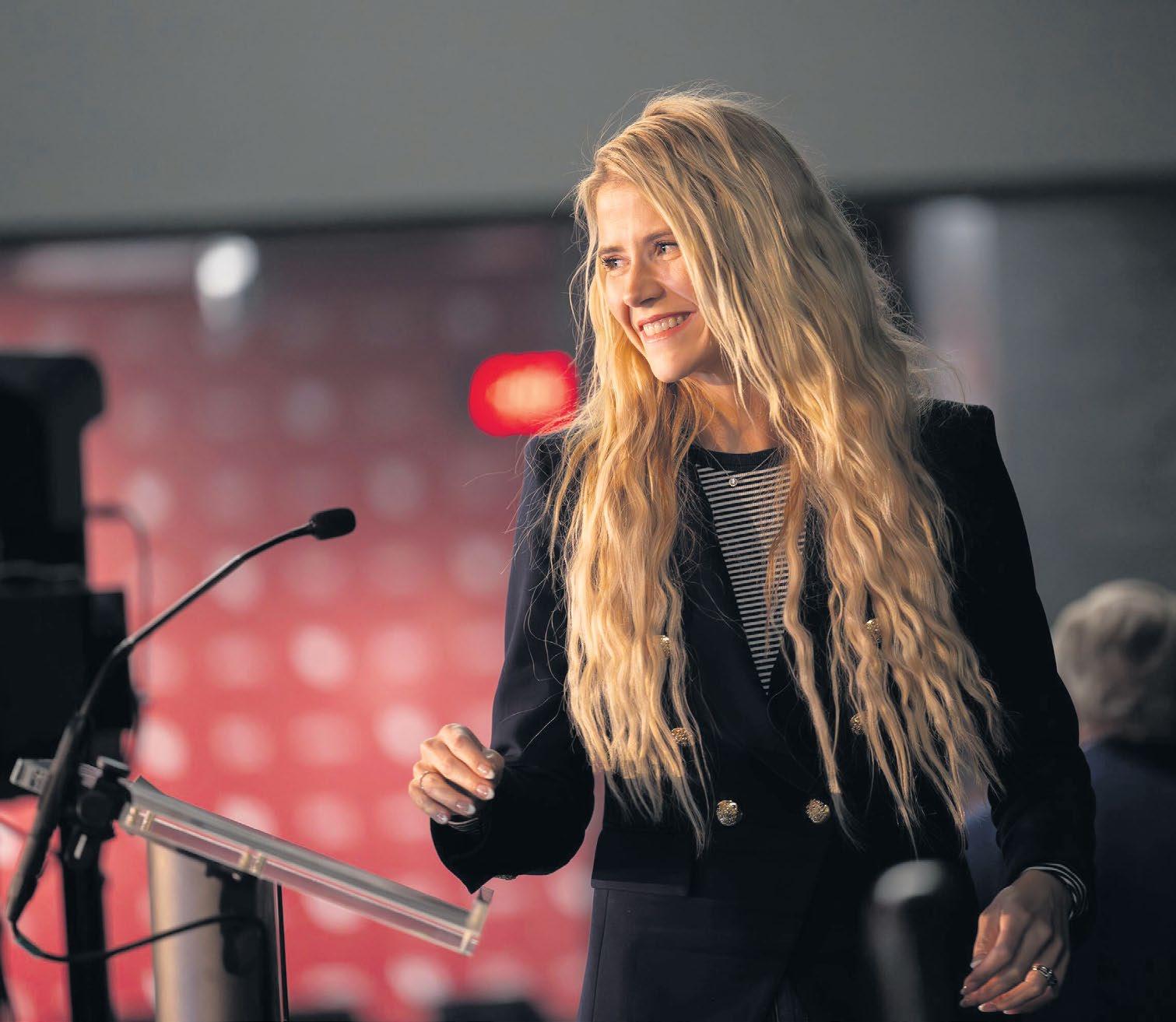
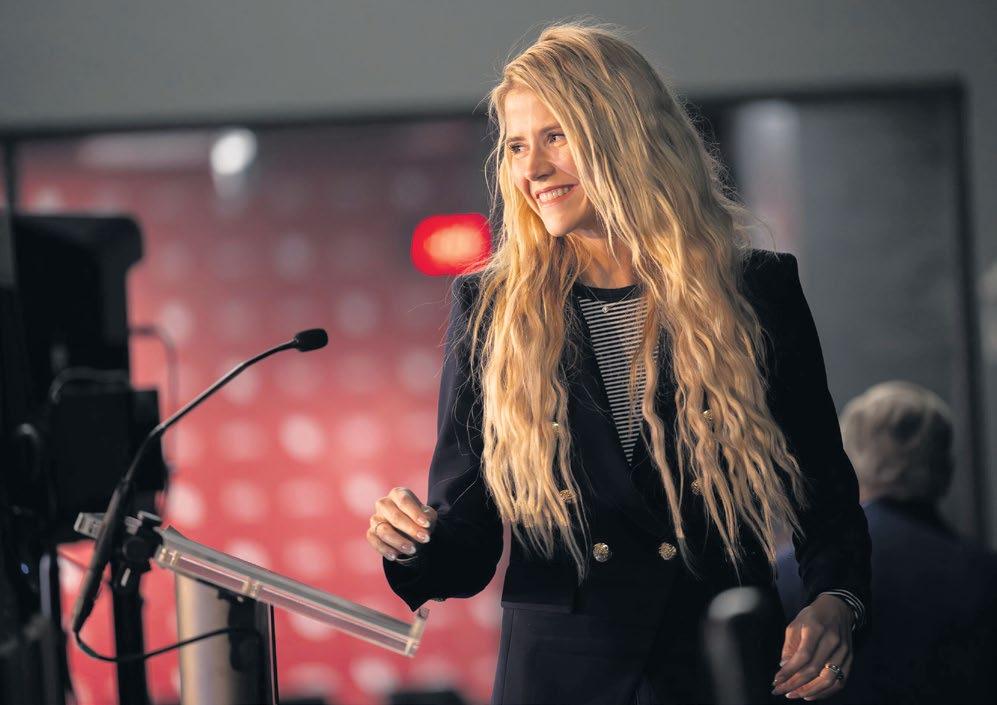
Scott G Winterton, Deseret News
Elizabeth Smart steps to the podium to speak on the prevalence of childhood trauma during an event at Rice-Eccles Stadium at the University of Utah in Salt Lake City on Oct. 14, 2025. The recent Netflix documentary "Elizabeth Smart: Kidnapped" covers her abduction.
I went through?” I didn’t know anyone who had shared their story publicly. I didn’t know anyone who admitted that they’d been raped or admitted that they’d been abused in any way. I didn’t feel like that was just something people talked about. It was kind of like people kept their skeletons in the closet.
I didn’t share my story — I didn’t share the details of what happened for years, actually. It really wasn’t until the trial happened and I felt like everything that I had kept private all
of a sudden was out. And I wanted my story to be more than a courtroom transcript. I felt like it needed to serve a purpose.
I remember just thinking, “Well, if it’s going to be out there, then I want it to help other people to not feel so alone.” So that’s when I wrote my f irst book. That’s when I started speaking. And over the years, I feel like that belief has just become more and more cemented.
The amount of victims and survivors who have approached
me and said, “Because you shared your story, I felt like I could share mine,” “Because you seem to be happy, I want to go forward in my life,” “Because you did it, I can do it, too.”
I just feel like stories are the best way we learn. Sexual abuse, kidnapping, families in pain — this is not just a problem in America. This is a problem worldwide. So as this Netflix documentary happened, it felt like a huge world stage had just been given to me, and it was terrifying and inspiring.
DN: Was there anything that surprised you as you took part in this documentary, or maybe something that you learned about yourself?
ES: I think one of the things that I really appreciated — and I don’t want to say surprised, but I was a little bit surprised — was really, actually, it came down to the production company and just how sensitive they handled my story, and how careful they were. They didn’t want me to feel re-traumatized in any way — to the point that when I saw the f irst cut, I thought it was amazing, I thought it was really high quality, but I remember just going back to them being like, “Well, I think this is great. I also feel like it kind of looks like I went on vacation for nine months.”
I think they were a little bit taken aback that I said what I said, but I feel like I want it to be a true representation of what happened. So I just really appreciated the care that they took in sharing my story. And then, as I re-watched the whole thing, I mean, I actually became quite emotional watching my family’s side, and specif ically my sister (Mary Katherine). If I teared up at any point, it was watching her.
DN: Regarding your kidnapping, early on in the documentary, Mary Katherine says, “I think it’s something I still deal with.” As I was watching, it seems very much for everyone involved, there has been a healing process. There continues to be a healing process. And I would love to know what are some things that have helped you heal and continue to help you heal?
ES: I think certainly having a support network, a support system, honestly, throughout my life, has made a huge difference. I feel like it’s almost impossible to heal and move forward unless you have friends, you f ind your family. I say f ind your family because, unfortunately, not everyone has a loving, biological family. So sometimes you have to f ind it.
I think the fact that I really never was doubted — everyone’s always believed what I’ve said — I think that’s made a really big difference. So many victims aren’t believed, and when they’re not believed when they f irst tell, it becomes harder and harder to share with anyone else. And this is the kind of thing that can just fester inside you and kill you slowly from the inside out. So I think always being believed has made a big difference in my life.
I think being able to make decisions for myself, being given back the gift of choice, that has helped me heal.
Initially, when I got home, I found a lot of peace in music. I found a lot of healing in the outdoors and horseback riding with my grandpa. And I think as life has moved on, I have found that same sort of outlet in running
and exercising. I still love music and being with my family, in being able to experience more of what life has to offer.
DN: You also have a YouTube channel where you continue to take power of your story. There’s a video where you take your brother and your sister-in-law, and you’re revisiting and hiking this kidnapping site. How is the YouTube approach and doing this different from a movie or a documentary?
ES: I mean, it is a very diff icult, long hike. I feel like maybe YouTube gives that visualization. And I just felt like it was kind of an opportunity, because so many times people have been like, “Why didn’t you run? Three and a half miles isn’t that far.” It wasn’t necessarily so much like, “You’re wrong. Three and a half miles is really far,” but it was just to give people a little bit more perspective, a little bit more visualization.
But then on this hike that we did, now I have the opportunity to talk more about why other victims don’t run. We can take, for example, victims of domestic abuse: The average victim, it takes them seven tries of leaving their abuser before they successfully leave.
I’m able to talk about the physical chains that I experienced when I was chained up, but then I also talk about these mental chains that so many other victims experience, that people don’t see.
DN: It seems like such an intense level of
vulnerability to go back there, to hike that, to talk about it as you’re hiking. How did you get to that point where that was OK?
ES: I actually remember hiking back there just days after I was rescued, and I went with my parents. ... Some form of law enforcement and I think an uncle or two maybe was with us. I was able to take them to these different sites, these different points that I’d experienced something at. And my parents, I think, were very worried about me, understandably.
I remember my mom just being like, “Are
you OK? How do you feel?” And I remember just being like, “I feel f ine.” And she was like, “Are you sure? Are you sure you’re OK? Well, how do you feel?” And I remember saying, “I feel triumphant.”
Because all these terrible things happened to me here, and it was a secret. No one could f ind me. And now bringing people here and shining a light on it, no one will ever be able
Jeffrey D. Allred, Deseret News
Elizabeth Smart, founder and president of the Elizabeth Smart Foundation, speaks during a press conference at Trolley Square in Salt Lake City on Wednesday, Jan. 5, 2022, where she announced the merger of the Elizabeth Smart Foundation and the Malouf Foundation.
t o keep this place a secret ever again. It felt like it was shining a light into a dark hole.
DN: Do you have any upcoming videos that we can tease or let people know about?
ES: I haven’t recorded them yet, but I’ve got a whole bunch of ideas floating around in my head. At some point I would like to go to the Salt Lake Public Library where I was f irst approached by the homicide detective. ... It was talked about in the documentary, and so that’s something I’d like to do, just talk a little bit more in-depth what that was like, what was going through my head. ... Being able to explore kind of those trauma responses — f ight, flight, freeze and appease — a little bit more in-depth.
DN: With the Nancy Guthrie case so prevalent in the news right now, my 4-year-old is starting to ask me questions about kidnapping because he’s hearing that word and seeing this. How have you approached the subject with your own kids? How do you recommend a clueless mother like myself to approach that with her own children?
ES: I think this should be a conversation that is ongoing — it can’t just happen once. And I think there is an age appropriate way to approach it. You know your children best, and so you know what they’re ready for. I know my oldest started asking questions way before I was ready. I was like, “Wait, you’re 3 years old, why are you asking me these questions? I’m not ready for this.” But then again, someone said it to me, the best time to start talking about it is when they start asking questions. And so that began at 3 years old for my kids.
I feel like even things as simple as calling a penis, a penis, calling a vulva, vulva, vagina, vagina, and not attaching the shame or the embarrassment to it. I mean, for instance, my parents were like, “Those are your privates. Don’t let anyone touch them. They’re your privates,” and that was really kind of all that was said. And so then eventually, after I was rescued and I had to go in and talk about it, I ended up feeling so uncomfortable. I ended up feeling just so embarrassed. I mean, even just saying the word penis, having to describe being raped in graphic detail, that was a horrif ic experience. And so I just feel like if we can even just take away the shame of saying penis — it’s a body part. Elbow is a body part, nose is a body part. It’s just another body part. So if we can take that kind of shame away, that is a great beginning place.
I think it’s great to talk about safety. Everybody knows what to do if you catch on f ire — stop, drop and roll. But how many people know what to do if you get raped? I wasn’t taught what to do. But there are conversations we can have. We can talk about screaming. For as great as it is to be kind and polite and respectful, you should never put your own safety at risk. You should never worry about someone else’s feelings over your own personal safety. You should be allowed to say no. You should practice saying no with your children. If they don’t want to give Grandpa a hug, let them not give Grandpa a hug. Respect their boundaries. Respect their body autonomy as well.
When they come and tell you something that’s important to them or that they’re scared about, don’t just be like, “Oh, it’s f ine. Don’t worry about it.” Listen to them so that trust is built and so that should anything happen in the future, they know that they can come to you and tell you anything, and you are in their corner, that you believe them, you are on their side.
And above all, I think the most important gift any parent can give their child is to make sure that their child knows that they are loved unconditionally — that there isn’t anything that anyone else can do to them that would make them stop loving them. That you are there for them, and that they can disclose anything to you, and you will be there to help them.
DN: The Elizabeth Smart Foundation also has this self-defense training program, Smart Defense. Could you talk a little bit about the growth of that, because that is available in public universities in Utah, right?
ES: It is an accredited class in almost all of the public universities in Utah. We’re still working on the last few. Give me time, I’ll get there.
I feel like I remember being a freshman — I think I was sitting
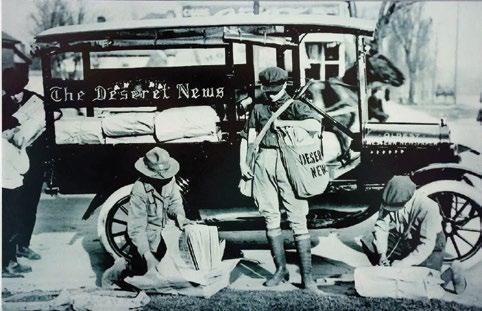
Deseret News
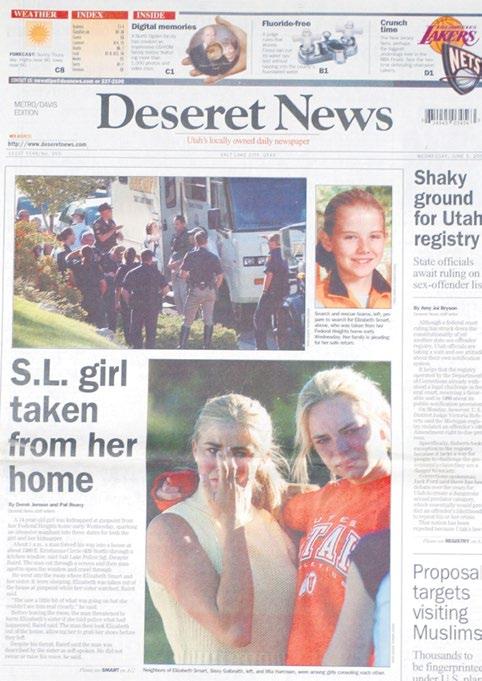
The Deseret News' front page coverage of Elizabeth Smart's kidnapping June 5, 2002.
through freshman orientation — I remember hearing it a few times, just talking about making sure you lock your doors, make sure you consider renters insurance. There was much more focus on making sure your things weren’t stolen than really personal safety. ... But the truth is actually you’re two times more likely to be raped on campus than you are to be robbed on campus.
And so I feel like these are things that we should be focusing more on, and it should take a much bigger place in personal safety. Especially when you consider that the national average is 1 in 4 women is raped in their lifetime and, unfortunately, 1 in 3 women in Utah. I mean, that’s horrif ic. And these are just the cases that we know of. These are just the numbers that are reported. So we’ve got a lot to do.
So Smart Defense, that actually was kind of in response to an experience I had. I was flying on a plane, and I was exhausted, and as soon as I sat down on the plane, I just fell asleep. And I remember we were just about to start our initial descent, and I woke up because the man next to me, he had his hand in between my legs, and he was rubbing high up on my inner thigh. And I was just so shocked I’d woken up in a start. And I remember looking over at him, like waiting for him to apologize, or give me some reason as to why he was doing what he was doing, and he didn’t. He didn’t apologize, didn’t say anything, didn’t move his hand. I had to physically pick up his hand and take it off me. But I was just still in such shock, I didn’t immediately respond, which is such a common response. Again, it’s a trauma response.
And it wasn’t until I got off the plane and I called up my dad, and I’d called up my husband, and I was just like, “What is going on in this world? Do I just have like a big billboard across my head that says easy victim? Like, easy target?” I was like, “I already have to be one of the most well-known victim survivors in America. How is this happening to me again?’”
And so I was like, “I’m sick of this. I’m sick of this kind of
thing happening to me. And if it’s happening to me, then it has to be happening to other people.” And so that’s kind of how Smart Defense was born.
DN: You mentioned this is a part of why you continue to share your story, to let people know they’re not alone. With Nancy Guthrie in the news, what would you want or hope for people and families who are going through this unimaginable to know during that time?
ES: Families are commonly told that the f irst 24 to 48 hours are the most critical, and that if you’re not found within the f irst 24 to 48 hours, the chances of you coming back alive drop signif icantly — almost to zero.
But, I would also just say, I came back. And I was gone for nine months. Jaycee Dugard came back, and she was gone for years. I mean, we do come back, so don’t give up hope. Don’t stop searching. Don’t stop praying. Keep looking, keep believing that it is possible, because we do come back. Keep the story alive. Keep your missing loved ones’ faces out there. And I mean, do call on the public. Because again, if my story wasn’t as big as it was, if my parents didn’t do everything in their power to keep my face out there, would I have been recognized? Would I have come back alive? It’s kind of hard to say. I think there’s a good chance that I could be dead today.
DN: In a 2017 interview you did with Deseret News, you gave a quote about your journey to advocacy that I’ve not forgotten. It says: “I couldn’t have just come home and written a book, made a movie and started speaking. I couldn’t have done that. I needed time to readjust back to my family, ref igure out my life again, and move on enough so that when I look back on my life, I didn’t just see my kidnapping.” When was that moment for you that you looked back and did not just see that, did not just see the kidnapping?
ES: I think it was a gradual evolution. Days after I was rescued, weeks after I was rescued, it was right there, like my kidnapping was right there, right behind me. And so I would say it def initely took time. I’d say it def initely was gradual. I stand by what I said. I couldn’t have just jumped into it the next day. I couldn’t have just become an advocate the next day like that. That was not a possibility for me. I needed the time, and I needed the chance to have more experiences and reclaim my life back a little bit more before I could even begin to think about it.
I mean, yes, over the years, I did a little bit here and there. I’d worked with the Department of Justice in writing a survivors guide. I flew out to Washington, D.C., with my dad, and we worked on the Amber Alert together, and we worked on the Adam Walsh Safety and Protection Act. So I mean, there were things that I did over the years, but most of the time, I went back to just trying to be a normal teenager. I went back to just trying to meet me, Elizabeth, again, get to know myself again. And I think that made all the difference.
DN: Thank you so much. Is there anything else you would want to mention that I haven’t touched on, anything you’d like to share?
ES: I would just say this to other victims out there: Nobody can take away your value. Nobody else’s actions can take away your value. I know it’s so easy to feel like you’re worthless if you’ve been raped or if you’ve been abused, or you somehow perceive it as your fault. It’s not. And no matter what people have done to you, you were born with value, and you still maintain that value. You are lovable, you are worthy.
I’d want them to know that it is easy to feel def ined by what has happened to us. I think we live in a world of labels, and no one person can be def ined by just one label. We are complex and multidimensional beings. You can be one thing and be 1,000 others. You don’t just have to be def ined by one thing. You get to def ine yourself, and you do that by the way that you live every single day.
And f inally, you deserve to be happy. Don’t give up hope. Keep going. You’ve survived every worst day you’ve had so far, whether that was yesterday or 10 years ago. Be proud of yourself; you’ve survived it. Keep going. There are more good people in this world than there are bad people, and there are people out there who are willing to help you, who are willing to believe you. So don’t give up.
Rio Giancarlo, Deseret News
By Scott Taylor Church News
4 general sessions and a solemn assembly over Easter weekend
The conference will be without a Saturday evening session, and a solemn assembly will be held to sustain a new President and First Presidency
The 196th Annual General Conference of The Church of Jesus Christ of Latter-day Saints will feature four general sessions and a solemn assembly, as well as focused messages on the Atonement and Resurrection of Jesus Christ, as the conference coincides with Easter weekend in 2026.
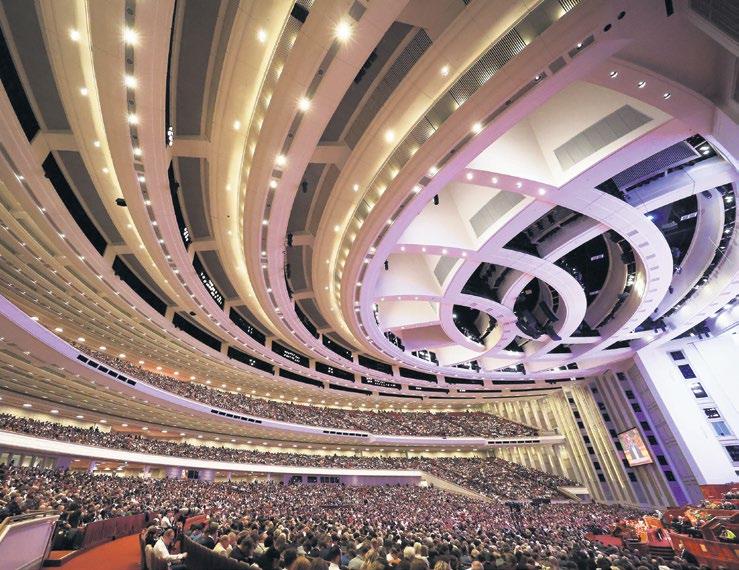
The four general conference sessions are scheduled for Saturday and Sunday, April 4-5, in the Conference Center in Salt Lake City.
While the conference offers messages of hope and peace centered on the life and teachings of Jesus Christ, messages on Easter Sunday are expected to especially focus on the literal Resurrection of the Savior, His inf inite Atonement and the hope, renewal
and peace that come through Him and His gospel.
Schedule and solemn assembly
The schedule for the four general sessions of April 2026 conference is (all times are Mountain Daylight Time):
• Saturday, April 4, 10 a.m. to noon
• Saturday, April 4, 2 p.m. to 4 p.m.
• Sunday, April 5, 10 a.m. to noon
• Sunday, April 5, 2 p.m. to 4 p.m.
A solemn assembly will be held in the Saturday morning session, as Latter-day Saints
CONTINUES ON PG. 10
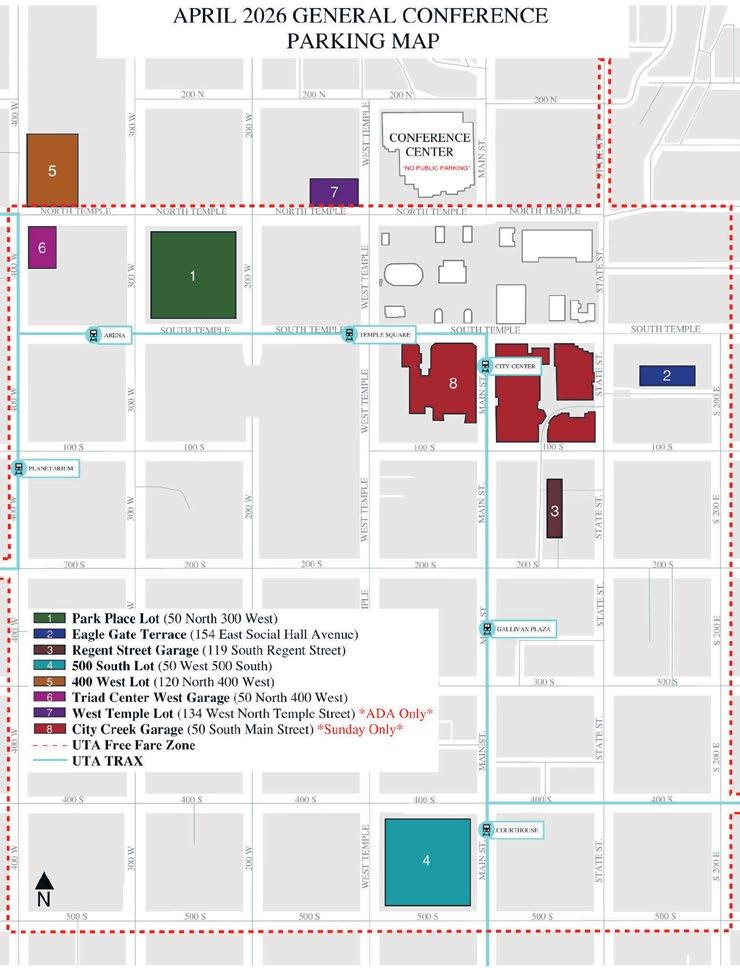
The Church of Jesus Christ of Latter-day Saints A map shows available parking in downtown Salt Lake City for the April 2026 general conference.
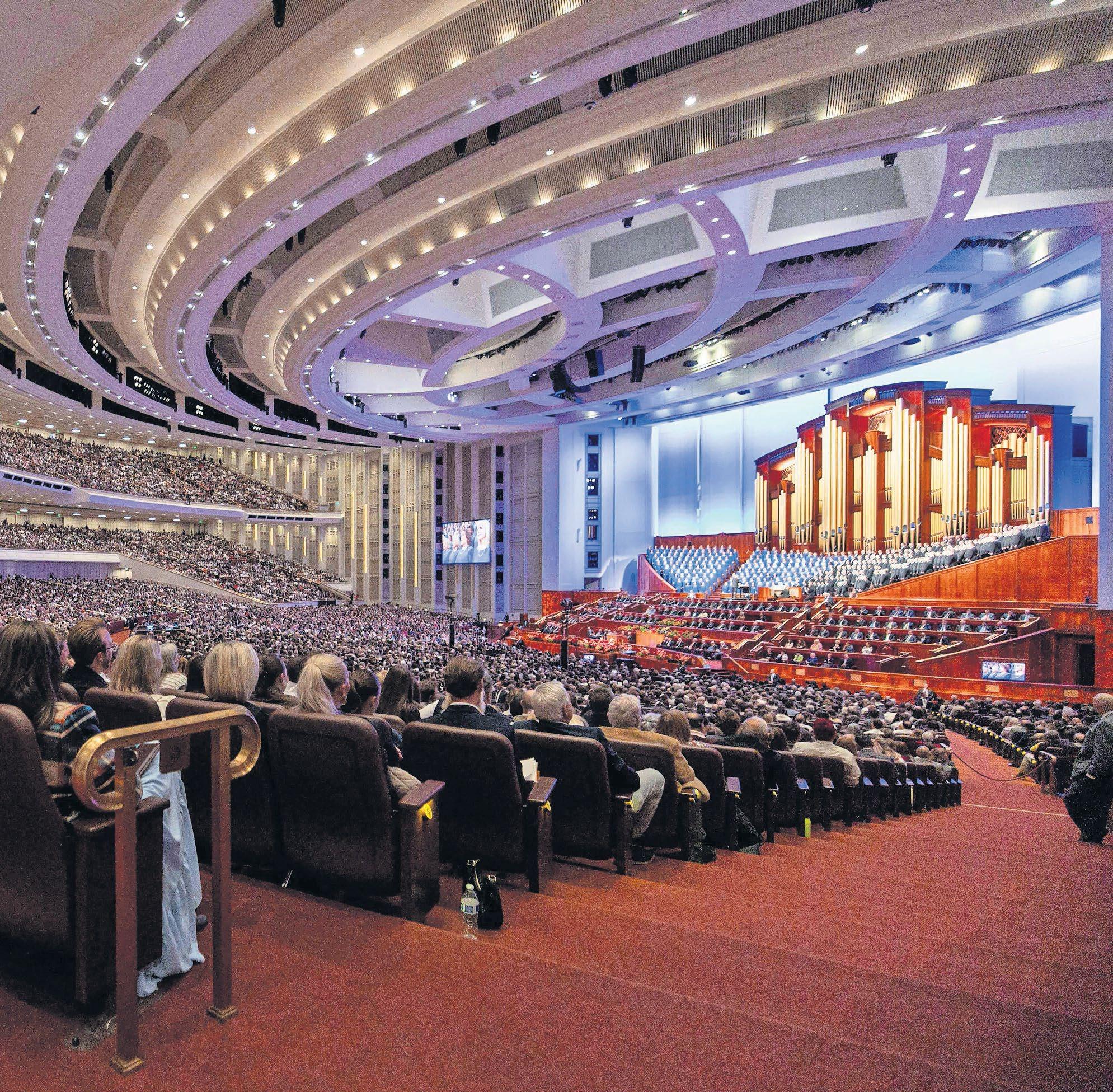
Jeffrey D. Allred, for the Deseret News Attendees listen during the Saturday evening session of the October 2025 general conference.
will sustain a new Church President and F irst Presidency.
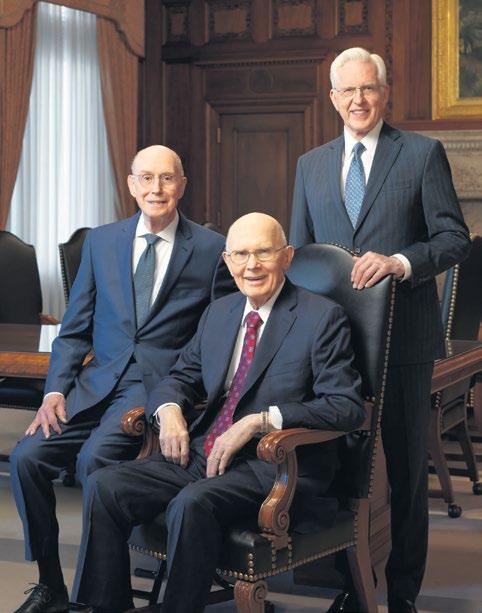
Following the Sept. 27, 2025, death of President Russell M. Nelson, President Dallin H. Oaks was announced as the Church’s new President on Oct. 14, 2025, along with the naming of President Henry B. Eyring and President D. Todd Christofferson as his two F irst Presidency counselors.
The April 2026 general conference will be the f irst time for the new F irst Presidency to be sustained in such a setting, hence the announced solemn assembly.
A solemn assembly is a special, sacred meeting held in conjunction with a variety of holy purposes, providing an elevated sense of solemnity and spirituality. Such occasions include the sustaining of a new Church president, dedications of temples, special commemorations and other sacred purposes.
Some solemn assemblies — such as at temple dedications and the one held during April 2020 general conference to commemorate the 200th anniversary of the F irst Vision — include the Hosanna Shout, a symbolic act with New Testament roots honoring God and Jesus Christ. The April 4, 2026, solemn assembly will not include the Hosanna Shout.
The April 2026 general conference will not include a Saturday evening session, following the November 2025 F irst Presidency announcement on conference scheduling. The general sessions are for all individuals, families and friends of the Church.
Availability, attending and parking
The conference will be streamed and broadcast in more than 70 languages, available for gatherings large and small, in homes and other settings. The weekly Sunday worship services that take place in Church meetinghouses are not held when general conferences take place.
Conference messages — presented by the Church’s general authorities and organizational leaders — will be available soon after the general conference in text, audio and video formats via multiple channels in more than 90 languages for online viewing and study. Church platforms include Gospel Library, Media Library, the General Conference YouTube channel and the Church magazines.
The Church News will provide extensive coverage before, during and after the April 2026 general conference on TheChurch News.com and on the Church News app, including a summary of each message soon after it is given.
For those wishing to attend general conference, Latter-day Saints living in the United States and Canada should ask their local ward or branch leaders for tickets to attend a session. Tickets are distributed digitally to stakes and districts.
Outside the United States, Latter-day Saints can ask their stake or district president to submit a request for tickets on their behalf. These leaders can order tickets beginning three months prior to each general conference.
General conference parking is not available at the Conference Center in Salt Lake City. Other parking options in downtown Salt Lake City are available (see accompanying map). Also, a conference ticket doubles as a Utah Transit Authority pass to travel to and from conference sessions on UTA trains, light rail or buses.
Those interested in standby seating for general conference can line up outside the Salt Lake Tabernacle on Temple Square 90 minutes before the start of a session.
See Temple Square Event Guidelines at Churchof JesusChrist.org/events/temple-square-guidelines for more information and restrictions regarding general conference.
The Church of Jesus Christ of Latter-day Saints Official portrait of the First Presidency: President Dallin H. Oaks and his counselors, President Henry B. Eyring, first counselor, and President D. Todd Christofferson, second counselor.
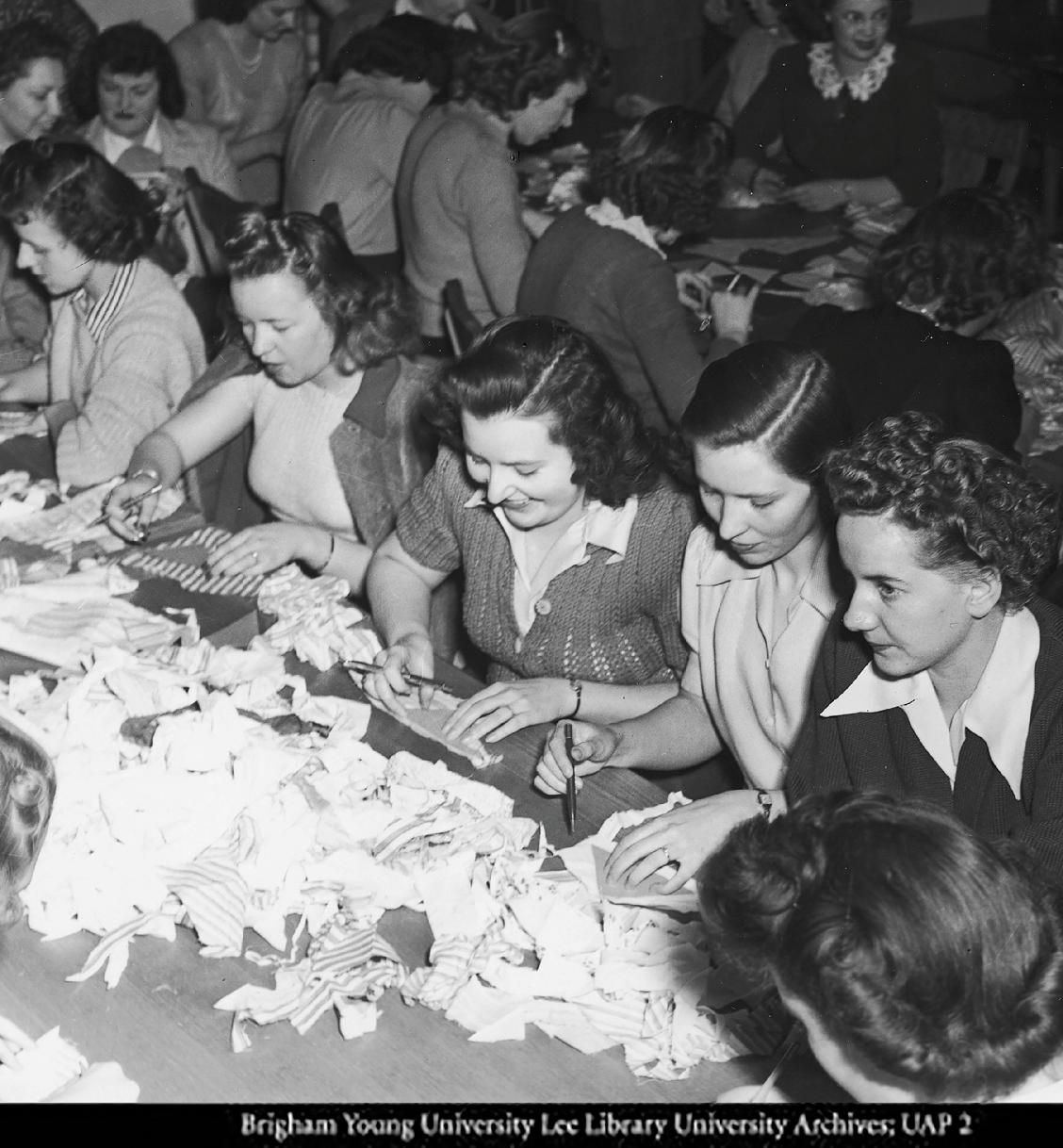
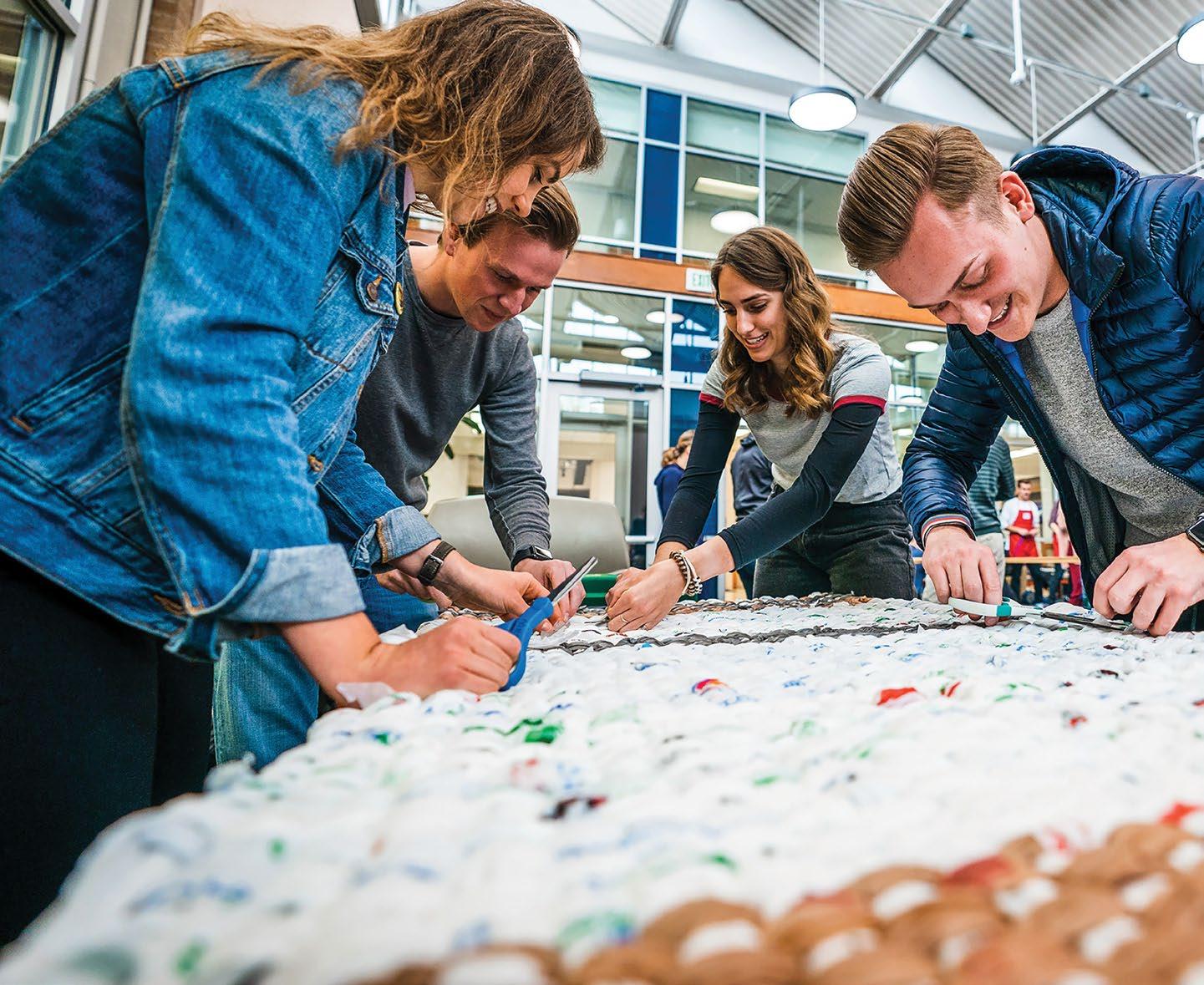
Above: BYU students sew for the Red Cross during World War II (left) and weave sleeping mats for refugees (right).
GENERAL CONFERENCE
Millions of items donated at Giving Machine kiosks during Christmas season
‘I can think of no better gift we can give the Savior than to love one another as He did,’ says Elder Ronald A. Rasband
By Aimee Cobabe Church News
During the 2025 Christmas season, visitors to Giving Machine kiosks donated approximately 4.7 million items to those in need.
The red Giving Machine kiosks are sponsored by The Church of Jesus Christ of Latter-day Saints. The Church covers all operational costs, ensuring that 100% of the donations are given to those in need through participating organizations.
Donations will be delivered in the coming months, according to a news release on ChurchofJesusChrist.org.
The impact of the donations includes:
• 3.5 million meals will help feed the hungry.
• 500,000 children will receive life-saving vaccinations, protecting them from preventable diseases such as polio, measles and tetanus.
• 350,000 months of menstrual hygiene care will help women and girls live with dignity.
• 108,000 children and adults will receive essential clothing, including shoes, socks, coats, everyday attire and school uniforms.
• 97,000 books, school supplies and technology resources will support education for tens of thousands of children.
• 40,000 hygiene kits — with items such as soap, deodorant and toothpaste — will provide cleanliness and conf idence to students, refugees and shelter residents.
Light the World Giving Machine kiosks were in 126 cities — more than ever before — for the 2025 Christmas season.
Since the f irst Giving Machine kiosk launched in 2017, approximately $70 million has been donated through the initiative.
Several countries had the kiosks for the f irst time in 2025: Argentina, Austria, Brazil, Chile, Italy, Japan, Spain and Thailand. In total, Giving Machine kiosks were in 21 countries and on six continents this past year, also more than ever before.
Celebrate Jesus Christ
The purpose of the Light the World global initiative — of which the Giving Machine kiosks are a part — is to celebrate the birth and life of Jesus Christ and embrace His invitation to “love thy neighbour” (Matthew 22:39).
Referencing Acts 10:38, Elder Ronald A. Rasband of the Quorum of the Twelve Apostles and chair of the Missionary Executive Council said, “Jesus of Nazareth went about doing good. I can think of no better gift we can give the Savior than to love one another as He did. The Giving Machine initiative is a beautiful way to do just that.”
Speaking to news media on Wednesday, Nov. 12, 2025, in the Conference Center on Temple Square in Salt Lake City, Elder Matthew S. Holland, General Authority Seventy and executive director of the Church Communication Department, reminded
people that “Jesus Christ is the Light of the World.”
“Like the wise men of old made signif icant sacrif ices to bring and offer gifts to the Savior, Jesus Christ, we are grateful for people all around the world who sacrif ice and offer donations to bring joy and light to others,” Elder Holland said.
A growing impact on individuals
During the 2025 Christmas season, more than 500 nonprof its participated in the Giving Machine initiative, offering over 3,200 different items for donation.
Items vary by city, but a typical machine includes food, clean water, clothing, shelter, health care, education support, hygiene kits, bedding, job and career training, and even livestock.
As the number of donated items continues to grow each year, the impact of those donations also grows in the lives of individuals
and families around the world.
For example, the donation of menstrual hygiene education and supplies in Western Nepal means that many young girls won’t miss school and fall behind in their studies.
Though the amount donated through Giving Machine kiosks since 2017 is in the tens of millions, the impact on the future for many families can’t be measured in dollar amounts.
In the Philippines, the gift of piglets is helping hundreds of families improve their livelihoods.
Ricky and Junila Seraf in received two donated piglets last year.
“We were so happy to receive these pigs,” said Junila Seraf in. “We have very little income, but we took care of the pigs and raised them, and in a few months, we made a prof it — enough to meet our needs and purchase additional pigs to keep going.”
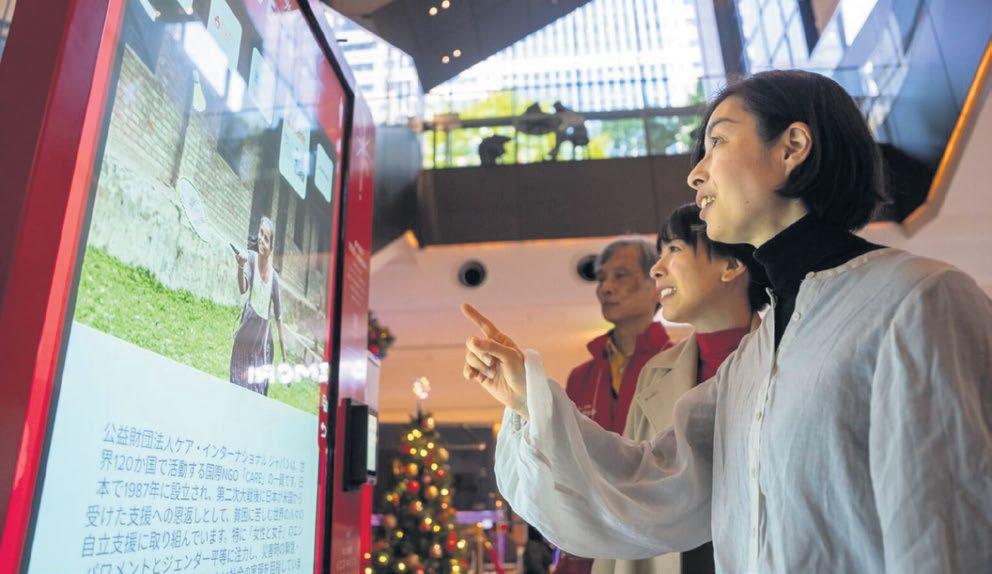
The Church of Jesus Christ of Latter-day Saints Guests donate using the new Giving Machine kiosks located in Tokyo, Japan, on Nov. 27, 2025.
for returned LEARN MORE missionaries $1,000 SCHOLARSHIP
GENERAL CONFERENCE
5 callings, 1 purpose: Quintuplets serve missions at same time
The 18-year-old Wilkinson quintuplets have been called to serve in missions around the world, each speaking a different language
By Makeilah Law Church News
When Rachelle Wilkinson of the Cedar Park Texas Stake found out she was having quintuplets nearly 20 years ago, she said it felt like an “out-of-body experience.”
“‘This doesn’t happen to real people. How is this happening to me?’” she recalled thinking.
After an ultrasound revealed she would be having f ive babies, her doctor immediately began talking about reducing the pregnancy. Bombarded with information and statistics about the likelihood of her babies surviving if she carried them all, she felt the gravity of what decision to make pressed heavily on her.
Wilkinson and her husband, Jayson Wilkinson, sought desperately for guidance.
“We prayed, we had gone to our bishop, we had gone to the temple, I had read every conference talk I could f ind on answers to prayers and receiving personal revelation,” she said. “We wanted to do whatever the Lord wanted us to do, but we didn’t know what that was.” It wasn’t until more than two weeks later, during a meeting with her stake president, that she experienced a def ining moment that answered her prayer.
Wilkinson said the moment wasn’t prompted by anything her stake president said or did, but she recalled “the strongest feeling” coming over her.
“It was the strongest, most powerful answer to [my] prayer that I had ever received,” she said. “In that moment, I just knew that Heavenly Father had sent those babies here for a reason, and I knew that I was supposed to do whatever I could to get them here as safely as possible.”
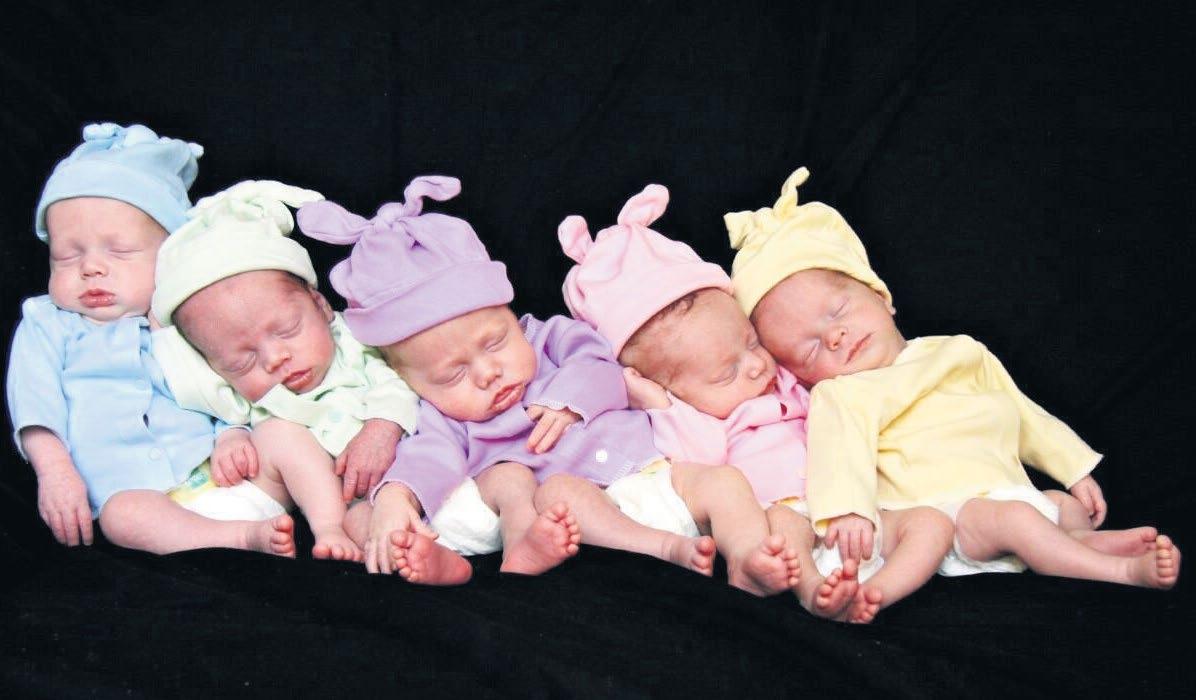
On July 31, 2007, Rachelle Wilkinson delivered f ive healthy babies, breaking the national record in the United States for the collective birth weight of quintuplets at 21 pounds, 7.2 ounces.
Today, the Wilkinson quintuplets are 18 years old — and each of them has chosen to serve missions for The Church of Jesus Christ of Latter-day Saints.
A sibling bond that keeps growing
Three of the f ive quintuplets have already begun their missions, with the other two set to begin in the summer.
Ryder Wilkinson was assigned to the California San Jose Mission and began his Spanish-speaking service on Sept. 1, 2025. Rustin Wilkinson started his mission in the Côte d’Ivoire Abidjan West Mission, on Sept. 23, 2025, learning French, while Kyndall
Wilkinson began serving in the Nevada Las Vegas West Mission on Feb. 9, 2026.
Kaydence Wilkinson is preparing to serve in the Korea Seoul Mission on May 6, 2026. Kassidy Wilkinson will follow shortly after, beginning her mission in the Italy Milan Mission on June 3, 2026.
For Kassidy Wilkinson, the decision to serve came last spring, while visiting her grandparents serving in the Italy Rome Mission.
Seeing how the Church impacted people’s lives in Italy inspired her to share the gospel like her grandparents were. While visiting, she also had the opportunity to go to Rome and had the feeling she would return one day. Upon learning she would be serving in the Italy Milan Mission, Kassidy Wilkinson said
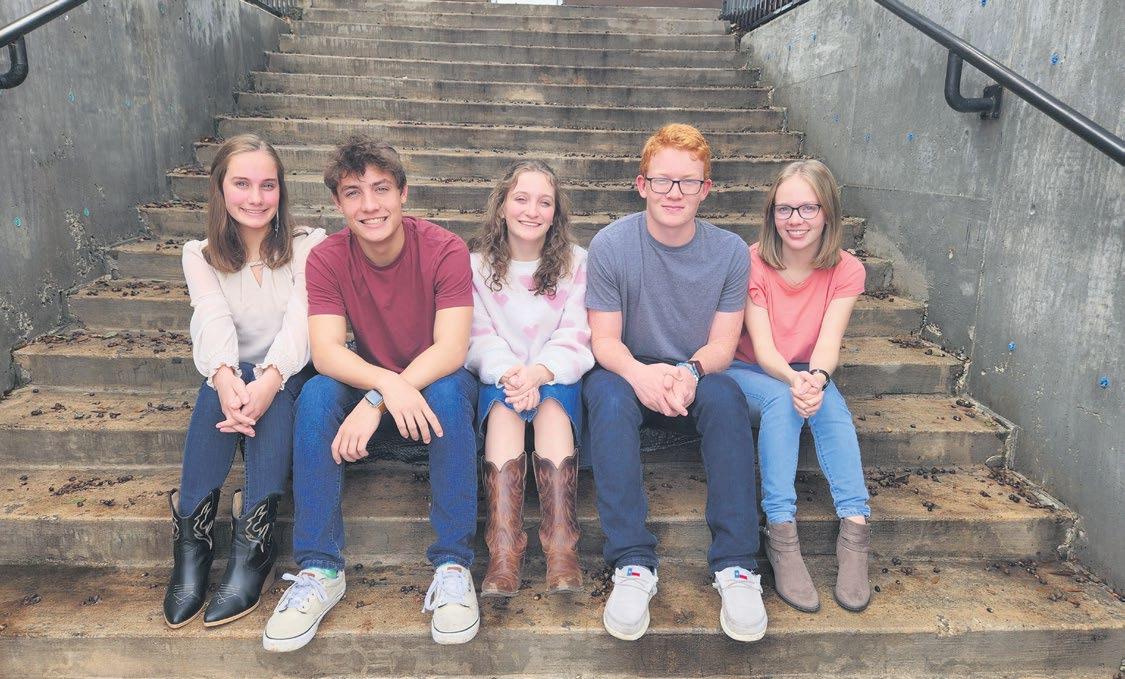
Provided by Rachelle Wilkinson Quintuplets Kassidy Wilkinson, Ryder Wilkinson, Kyndall Wilkinson, Rustin Wilkinson and Kaydence Wilkinson are photographed in October 2024 in Round Rock, Texas.
YOUR PHILANTHROPY MAKES A DIFFERENCE
WORLD.
EVERY ACT OF GIVING has the power to transform lives, teach generosity and inspire gratitude. Deseret Trust Company offers a simple, powerful, and highly personal approach to giving. We can help you create lasting impact through a donor advised fund, charitable remainder trust, or gift annuity.
For more than 50 years, Deseret Trust Company has administered charitable gifts that help donors give in smart and efficient ways. We work in partnership with Philanthropies to help you accomplish your philanthropic goals.
If you’d like to help accelerate the work of The Church of Jesus Christ of Latter-day Saints and its affiliated entities, including BYU, we are prepared to help you make the world a better place.
philanthropies.ChurchofJesusChrist.org/donorfund
daf.deserettrust.com
she “couldn’t stop smiling.”
“I don’t know if I’ve felt that much joy suddenly, all at the same time, as I did when I opened my mission call,” she said. High school graduation gave rise to many changes for the quintuplets. They would split up for college and go on missions — a milestone Kassidy Wilkinson was nervous for.
“We’re going to come back and be total strangers with each other,” she remembered thinking.
However, she discovered the outcome was the opposite of what she expected.
“Honestly, I feel like we’ve grown closer,” she said. “I feel like because they have such a strong relationship with God, it affects all their other relationships, too.”
Kaydence Wilkinson noticed a difference in her relationships with her siblings too.
“I think I talk to them more now that they’re on a mission,” Kaydence Wilkinson said. “I email them every week, and I can call them every week.”
Though Kaydence Wilkinson acknowledged that it is hard to be apart from her siblings, she said she knows “they’re doing a good thing.”
“The work that they’re doing is so important, and it’s way more important than wanting to see them,” she said.
Kassidy Wilkinson said hearing and reading her siblings’ inspiring stories and emails about their mission experiences has enhanced her understanding of the impact they have on others.
“Something I get to experience as a quintuplet with all my siblings serving missions is the power of missionary work,” she said. “I can see that it really is a very powerful experience for the person that is going on a mission and who they’re touching on the mission — who they’re f inding and teaching and bringing to the Church.”
A transformative experience
P-days for Rachelle Wilkinson is an “all-day affair.”
With three quintuplets already serving, she juggles their various time zones to be able to talk with all of them.
“I just set aside my Mondays for that,” she said. “My kids are going to be all over the world, which is really crazy.”
Rachelle Wilkinson said she loves how many youth are choosing to serve missions, adding she has noticed the “positive change” within her own children who have chosen to serve.
“It’s really helped them to strengthen their testimony, but also to build conf idence in themselves and their abilities,” she said.
She has seen how her two sons’ relationship has grown because of their shared experiences as missionaries.
“I feel like they really appreciate each other a lot more now that they’re doing this hard thing together,” she said.
Kaydence Wilkinson didn’t expect she and her siblings would have vastly different experiences on their missions, she said, but she thinks “it will transform us in the way that we need to be changed.”
“It’s such a blessing to be able to go and serve Heavenly Father and be a representative of Jesus Christ every day. You get to do that every day,” she said.
Kassidy Wilkinson shared a quote from Brigham Young University President C. Shane Reese, given during his speech to students, faculty and staff during a BYU devotional on Tuesday, Sept. 16: “Alone, your light cannot be hid; together, your light floods the earth.”
“That’s what I feel like it is as a quintuplet. I feel like I just see the light flooding the earth from my family,” she said.
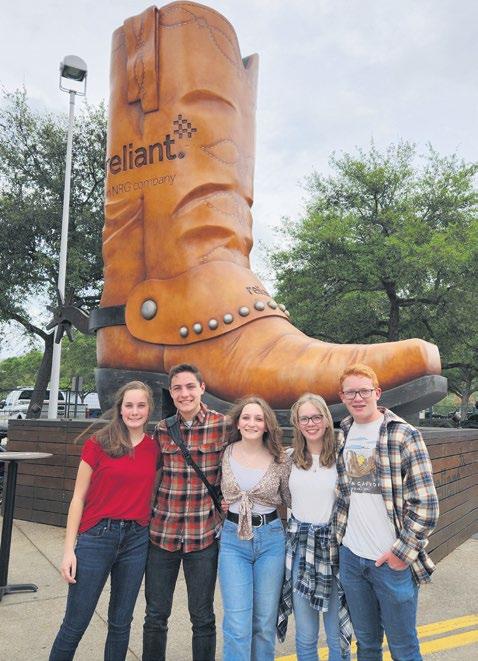
Provided by Rachelle Wilkinson The quintuplets at the Houston Rodeo in 2024.
“ In that moment, I just knew that Heavenly Father had sent those babies here for a reason, and I knew that I was supposed to do whatever I could to get them here as safely as possible.”
— Rachelle Wilkinson
Provided by Rachelle Wilkinson Newborn quintuplets Rustin Wilkinson, Ryder Wilkinson, Kassidy Wilkinson, Kyndall Wilkinson and Kaydence Wilkinson are photographed in August 2007.
GENERAL CONFERENCE
‘Go through’ hard things, Steve Young says at RootsTech
The former BYU and NFL Hall of Fame quarterback was the keynote speaker on the third and final day of the global family history conference
By Trent Toone Church News
During his professional football career, Steve Young won Super Bowls, was recognized as the NFL’s Most Valuable Player and was named to Pro Football’s Hall of Fame.
Despite his success, the former BYU quarterback said he has long struggled with anxiety.
As a child, Young experienced separation anxiety so severe that he rarely left home at night. Sometimes before college games, he secretly wished the stadium would explode so he didn’t have to play. In the pros, he was known as a player who would vomit before each game.
“I’d hear my teammates whisper: ‘Has he thrown up yet? He plays great when he throws up,’” Young said.
Seated on the main stage during his keynote session at RootsTech, Young said his struggle with anxiety led him to embrace and appreciate a piece of wisdom from his grandfather: “Go through it, don’t go around it.”
“I’ve taken that to my heart, that no matter what I come in front of, it feels like it’s super hard, but I’m not going to go around it. Let’s go through it,” he said.
Young was the main keynote speaker on the third and f inal day of RootsTech in the Salt Palace Convention Center in Salt Lake City on Saturday, March 7, preceding Family Discovery Day, which featured Elder Ronald A. Rasband of the Quorum of the Twelve Apostles and his wife, Sister Melanie Rasband.
Young is a member of The Church of Jesus Christ of Latter-day Saints.
‘Truest
truth’
Reflecting on his experience of playing quarterback, one of the most scrutinized, high-pressure roles in sports, Young noted how easy it was to slip into a “victim mindset” and focus on factors beyond his control. He countered this by learning to accept responsibility for his mistakes and do his best to f ix them.
“The most important thing that I learned, going back to our theme of ‘Going through it,’ was to own what I say is the ‘truest truth’ — there was a lot of things that happened that I couldn’t control, but the truest truth was the ball’s in my hands, yeah, and so I am ultimately accountable,” he said.
Young linked this lesson back to his parents, grandfather and wife, all of whom have modeled what it means to “go through it” instead of hiding behind excuses.
Love and shared experiences
Young remembers a football practice in 1987 when his coach, Bill Walsh, stood in front of the team and said: “I don’t care what play we call on the f ield. I don’t care what defense we run. We will win because we have shared common experiences together
Jeffrey D. Allred, for the Deseret News
Former BYU and NFL Hall of Fame quarterback Steve Young laughs while speaking during RootsTech in the Salt Palace Convention Center in Salt Lake City on Saturday, March 7, 2026.
and an element of love for each other.”
“I remember being in the back and thinking: ‘This is football. Did he just say love?’” Young said.
Young connected this idea with the work of genealogists and family historians at RootsTech, who seek shared experiences across generations. Whether in a family tree or a locker room, knowing and loving people at a deeper level can become a type of “North Star” that influences behavior, he said.
Young told a story about Reggie White, a Hall of Fame defensive lineman known for both his on-the-f ield dominance and his faith. While loud and ferocious in his pass rush, when White sacked Young, he would often cushion the hit by pulling the quarterback down on top of him. White would then hold onto Young
and become a caring friend who casually asked about his family.
“That’s emotional and spiritual athleticism, which I honor more than physical athleticism,” Young said. “Can we be more like Reggie? ... We are all in this together. Can we f ind the bounty in each relationship that we have by putting the North Star as love?”
Legacy of healing
Asked how he wants his descendants to remember him, Young said he hopes to be remembered as a person who was responsible, accountable and humble and who showed love toward others.
“My legacy, the only one that really matters, is the amount of healing that I brought to other humans,” Young said. “See how much healing you can bring to the human family.”
GENERAL CONFERENCE
How basketball has assisted Parker Van Dyke on his journey of discipleship
Serving a full-time mission in Alabama blessed Van Dyke with the ‘tools, from a gospel standpoint, to be a very successful athlete’
By Trent Toone Church News
Parker Van Dyke’s professional basketball career appeared to be off to a successful start.
The former East High and University of Utah star was beginning to play signif icant minutes for the Tijuana Zonkeys of the CIBACOPA professional league in Mexico. He scored a career-high 18 points in one of his f irst games.
Then in March 2020, the league suspended play for the COVID pandemic.
Van Dyke went on to later play in Europe — in Estonia, Germany and Spain — and eventually the NBA G League with the Austin Spurs and the Salt Lake City Stars. Nothing about his professional basketball experience has been easy, he said, but with faith, persistence and relying on God’s timing, opportunities have come.
“There’s sometimes times when you are waiting for that door to open and you want to give up,” he said. “But right before you’re about to give up, if you just keep going a little bit longer, something will open. I learned a lot during that process.”
Van Dyke, a member of The Church of Jesus Christ of Latterday Saints from Salt Lake City, discussed his basketball career, lessons learned as a full-time missionary and other topics on a recent episode of the Church News podcast.
‘It gave me the tools’
After one year at the University of Utah, Van Dyke stepped away from basketball to serve in the Alabama Birmingham Mission.
“I loved my mission so much,” he said. “There are so many lessons that I gained and so many special experiences.”
As a missionary, Van Dyke used basketball to connect with people, develop friendships and introduce the Church. Even in a white shirt, tie, slacks and loafers, he and his companion often stopped to join in when they saw kids playing basketball.
One of Van Dyke’s favorite activities was to hold weekly basketball nights at the local meetinghouse and invite people in the neighborhood to play, the Deseret News reported. Looking back, Van Dyke said his mission was more of an investment than a sacrif ice. The two-year experience enhanced his basketball career because it helped him develop in every aspect of his life. He returned home a better and more conf ident leader, with greater life perspective.
“I’ve gained so much from my mission. It’s been one of the best investments I have ever made,” he said. “It’s such a beautiful thing. And to me, it only enhanced my athletic career because it made me such a better person, and it gave me the tools, from a gospel standpoint, to be a very successful athlete.”
G League experience
After years overseas, Van Dyke appreciated the opportunity to come back to the United States and play in the NBA G League, a developmental system for players, coaches and off icials.
“Playing in the NBA G League was an amazing experience and perhaps the highlight of my professional basketball career,” he said, adding that it was challenging to get that opportunity.
He appeared in 24 games for the Austin Spurs, the G League aff iliate of the San Antonio Spurs. Some games were played in locations close to where he served in Alabama, and he felt blessed to reconnect with old friends.
Members of his Latter-day Saint ward in Austin, Texas, were also supportive. Van Dyke particularly appreciated a game where the ward’s youth attended and cheered for him.
Lessons for a gospel-centered life
Reflecting on his career, Van Dyke says playing basketball has helped him learn the gospel of Jesus Christ and become a better disciple. He’s learned about discipline, teamwork, unity, resolving conflicts, kindness and compassion.
“To me, that’s the gospel,” he said. “I was learning those attributes without even knowing that I was. I’m grateful for that aspect of sports that can bring people together and use it as a way to apply in a gospel-centered life.”
Van Dyke encouraged others not to lose sight of their true identity — a child of God, a child of the covenant — as taught by President Russell M. Nelson.
“Your identity as an athlete should be like f ifth or sixth on your list. My advice to a lot of athletes is: Don’t lose sight of your true identity,” he said.
Jeffrey D. Allred, Deseret News Utah guard Parker Van Dyke (5) high-fives fans near the end of the game against UCLA in Salt Lake City on Feb. 22, 2018.
GENERAL CONFERENCE
Eliza R. Snow project culminates in ‘Rise Up and Speak’ publication
From nearly 1,300 documented discourses, editors and historians selected 52 that show the breadth of Sister Snow’s service and leadership in the early Church
By Trent Toone Church News
During June 1878, Eliza R. Snow, the second general president of the Relief Society, traveled throughout central Utah Territory, delivering addresses to Relief Societies in the towns of Mona, Nephi, Fountain Green, Moroni, Spring City, Gunnison and others.
On June 27, she made her f irst visit to Mayf ield, a newer settlement occupied by Danish immigrants who had organized a ward and Relief Society the year before.
Her visit was likely prompted by a tragic event that occurred f ive days earlier. During a holiday gathering at a nearby reservoir, a sudden windstorm surprised 13 young people on a boat and forced them into the water, where 11 drowned. The community was devastated.
According to minutes and records, Sister Snow offered sincere consolation for their loss, and “many cheering and comforting words were given to the bereaved.” She encouraged those present to “sacrif ice our personal feelings and try to be one and mourn with those that mourn.”
“Sister Eliza urged the sisters to be one and uphold each other in their place and be true to one another and true to God,” the record states.
The tender account and discourse are among 52 featured in a new publication by The Church Historian’s Press, titled “Rise Up and Speak: Selected Discourses of Eliza R. Snow.”
Elder Kyle S. McKay, a General Authority Seventy who serves as Church historian and recorder, paid tribute to Sister Snow during a press event celebrating the publication’s release at the Church History Library in Salt Lake City on Tuesday, March 3.
“Eliza R. Snow was, in every def inition, in my view, an elect lady,” said Elder McKay, adding that she was a “truly remarkable woman” in the history of The Church of Jesus Christ of Latter-day Saints. “This is a woman who, time and time again, accepted the call. ... I’m thrilled to be part of this day when we can shine the light on her life and sermons.”
Sister Kristin M. Yee, second counselor in the Relief Society general presidency, expressed gratitude to the volume editors and others for their work to bring forth Snow’s words, which have “power and strength” and point to the Savior, Jesus Christ.
Sister Yee praised the title, “Rise Up and Speak,” because “that was Eliza.”
“She spoke as a devoted disciple of the Savior. She spoke by the Spirit and encouraged all women to do the same,” Sister Yee said. “The works that Eliza talked about are the works that we do today as sisters in Relief Society. It tells me this work is eternally relevant ... and it carries on today. Their stories are our stories.”
Jennifer Reeder, lead editor and historian on the project,
Rio Giancarlo, Deseret News
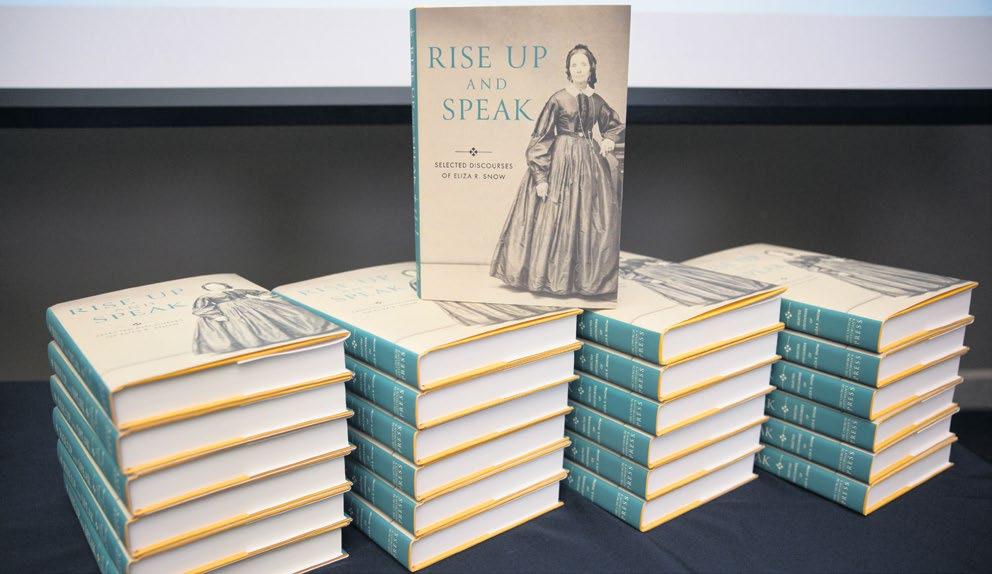
Copies of "Rise Up and Speak: Selected Discourses of Eliza R. Snowî by The Church Historian's Press are displayed during a press event at the Church History Library in Salt Lake City on Tuesday, March 3, 2026.
said it was a “privilege to come to know Eliza R. Snow” through her discourses.
“One of the things I love about this project is feeling like I belong to this heritage and legacy of women,” Reeder said. “When I read her words and see how diligent and urgent she is about this responsibility as a woman of God, to be a part of that, I think that’s so important, and I love that.”
Learning to ‘rise up and speak’
In 1868, recognizing the need for unity among women in their new Western communities, President Brigham Young asked Sister Snow to assist bishops in reorganizing ward Relief Societies and instructing Latter-day Saint women.
As the f irst secretary for the Female Relief Society of Nauvoo, Snow understood the purpose of the Relief Society better than
most. But teaching the women — at a time when women didn’t speak publicly — was a daunting assignment.
“She was scared,” Reeder said. “She was not comfortable with public speaking.”
Despite Sister Snow’s reservations and lack of experience in public speaking, she demonstrated her faith in Jesus Christ. During the mid-to-late 1800s — in her golden years — Snow traveled throughout the Utah and Idaho territories, ministering to women and inspiring audiences with her faith and testimony. She rarely spoke from notes. Relief Society secretaries and others recorded her discourses in minute books and newspapers. Sister Snow became a prolif ic speaker and one of the most influential Latter-day Saint women of the 19th century. In her messages, Sister Snow frequently encouraged women to “rise up and speak” — to overcome fears in public speaking
and serve in their communities. She championed learning. She admonished women to awaken to their divine potential, stay engaged in their faith, become politically active and vote, and unite in supporting one another. Snow did this in real time while confronting language and cultural differences, poverty and other diff iculties of the time.
“Slowly you see this evolution,” said Elizabeth Kuehn, an editor and historian on the project. “Toward the end of her life, at least in the way that it’s captured for us, [public speaking] almost seems effortless. She’s got so much conf idence, so much experience, and she’s such a well-known f igure, that it’s amazing to see her drawing crowds, and not just women, but also men. She is a public speaker that people want to go hear.”
F inding Eliza’s discourses
According to Reeder, in the late 19th century, male Church leaders often had talks printed in the newspaper or the Journal of Discourses.
Despite lacking similar platforms to share or preserve their talks, the sisters diligently recorded their meeting minutes.
When the idea to compile Snow’s discourses was proposed, a research team began examining nearly 1,600 minute books from the Relief Society, Primary, Young Women and Sunday School organizations, including 480,000 pages of Spencerian cursive. They also searched newspaper archives, personal journals and books.
“That is a lot of old handwriting,” Reeder said with a smile. “We started to see the breadth of where she was going and where she was speaking. Sometimes she spoke three or four times a day.”
Rio Giancarlo, Deseret News
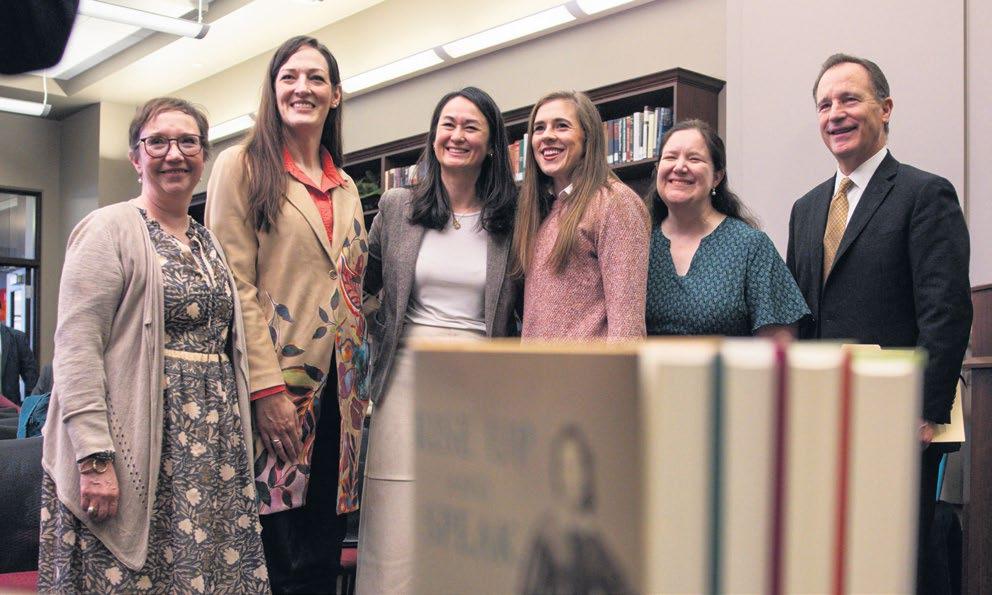
From left, volume editors Jenny Reeder and Sharalyn Howcroft; Sister Kristin M. Yee, second counselor in the Relief Society general presidency of The Church of Jesus Christ of Latter-day Saints; volume editors Jessica Nelson and Elizabeth Kuehn; and Elder Kyle S. McKay, a General Authority Seventy and the Church historian and recorder, are photographed during a release event for "Rise Up and Speak: Selected Discourses of Eliza R. Snow" by The Church Historian's Press at the Church History Library in Salt Lake City on Tuesday, March 3, 2026.
The team transcribed everything it found, which amounted to nearly 1,300 of Snow’s discourses, all of which are now available on the Church Historian’s Press website.
“It’s a treasure trove of her words and ideas,” Kuehn said. “I hope that it’s useful to members, scholars and those who are interested in what Eliza was doing. It taught us a lot about her patterns and how deeply involved she was in every organization of the Church.”
From those 1,300 discourses, historians selected 52 to be featured in “Rise Up and Speak.” Each discourse has been fully annotated and contextualized to provide readers with insights into Sister Snow’s teachings and times. Additionally, punctuation, spelling and grammar have been standardized to help modern readers understand her words more easily.
“Rise Up and Speak” will become a part of the Gospel Library app in 2027.
Jessica Nelson, an editor and historian, valued the experience she gained from working on the Joseph Smith Papers as she researched annotations and footnotes.
“We need to know a little about the ‘who.’ ‘what’ and ‘why’ that led to this speech that someone wrote down. What kind of current events could have impacted what they were saying?” she said. “Much of what she ends up talking about are things we know from Utah history.”
Selection process
Sharalyn Howcroft, an editor on the project, said the discourses varied in detail, ranging from brief summaries like “It was a terrif ic meeting; Sister Snow spoke; everyone was deeply touched,” to richly detailed accounts.
How did the team select 52 discourses from nearly 1,300?
Howcroft said the team considered several factors: the varying levels of detail in each discourse, from brief impressions to
Rio Giancarlo, Deseret News
Elder Kyle S. McKay, a General Authority Seventy and the Church historian and recorder, speaks during a release event for "Rise Up and Speak: Selected Discourses of Eliza R. Snow" by The Church Historian's Press at the Church History Library in Salt Lake City on March 3.
rich descriptions; recurring themes and nuances in Sister Snow’s discourses to highlight key messages; records that accurately conveyed Sister Snow’s words; her speaking tours and audiences, including Relief Societies, Young Women and Primary organizations; and comprehensiveness in both subject matter and group representation. The selection process also involved discussions to ensure an accurate reflection of Eliza’s relationshipfocused topics.
The team believes the 52 discourses show the breadth of Sister Snow’s service and leadership in the early Church.
“We wanted to have a representation of the organizations that she is speaking to, as well as subject matter,” Howcroft said. “There were a lot of conversations that went into being deliberate and careful about that selection that would do justice not only to the record, but also to her words and the types of things that she is speaking about.”
Unity and focusing on Christ
A discourse Eliza delivered in the Salt Lake City 10th Ward in 1874 seemed thematically repetitive until Howcroft uncovered its historical context — a devastating pneumonia epidemic causing widespread loss, including the death of the ward’s bishop. Howcroft wrote the annotation in the aftermath of the COVID-19 pandemic.
“Time and time again, Eliza is coming into these circumstances, meeting people in their moment of tragedy,” Howcroft said. “She does this all the time, and it’s fascinating how she tries to reorient their perspective, ‘Yes, we have trials and diff iculties, but our focus is on the kingdom of God and the things of eternity.’”
Sister Snow attended the Scandinavian Relief Society meetings with Danish, Norwegian and Swedish women. Despite not understanding their languages, she deeply cared for them and
was delighted by their company, which she considered an intellectual and spiritual feast.
“The unity she felt among a diverse group of people was anchored in their shared belief in the gospel of Jesus Christ and the purpose of the society to relieve the poor and save souls,” Howcroft said. “Snow also encouraged her listeners to turn to Christ during times of trials. She characterized trials as a proven ground for the receipt of celestial glory.”
Free exhibit
To accompany “Rise Up and Speak,” the Church History Library is hosting a free exhibit that features photographs of Sister Snow, souvenirs from her travels and original manuscripts of her writings.
Visitors can view the exhibit through Sept. 8 in the Church History Library, located at 15 E. North Temple in Salt Lake City.
Latter-day Saint women’s history
“Rise Up and Speak” is the latest in a series of publications that highlight Latter-day Saint women’s history. Previous publications include:
• “The F irst F ifty Years of Relief Society: Key Documents in Latter-day Saint Women’s History”
• “At the Pulpit: 185 Years of Discourses by Latter-day Saint Women”
• “Carry On: The Latter-day Saint Young Women Organization, 1870–2024”
• “The Diaries of Emmeline B. Wells”
• “Journals of Early Sister Missionaries”
• “The Prison Journal of Belle Harris” Learn more about these and other publications at church historianspress.org.
“It’s a treasure trove of her words and ideas. I hope that it’s useful to members, scholars and those who are interested in what Eliza was doing. It taught us a lot about her patterns and how deeply involved she was in every organization of the Church.”
— Elizabeth Kuehn, an editor and historian on the project
Every August, FAIR brings together faithful scholars, historians, and other members of the Church to answer the hardest questions clearly, honestly, and without spin
Rio Giancarlo, Deseret News
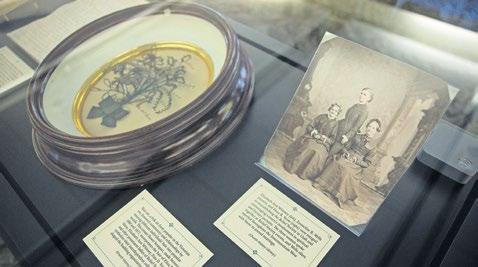
Artifacts from Eliza R. Snow’s life are seen in display cases at the Church History Library in Salt Lake City on Tuesday, March 3, 2026.
FESTIVALS
THANKSGIVING POINT TULIP FESTIVAL
DATE: April 8-May 18
TIME: 9 a.m.-8 p.m.
LOCATION: 3003 N. Thanksgiving Way, Lehi
More than 900,000 flowers will bloom at Thanksgiving Point’s Tulip Festival.
CROSS E RANCH SPRING FESTIVAL 2026
DATE: April 10-May 9
TIME: Monday-Friday, 4 p.m.; Saturday, 10 a.m.
LOCATION: 3500 N. 2200 West, Salt Lake City It’s finally spring! Get out and enjoy the sunshine and warmer weather!
TOOELE'S READY TO PLAY! FESTIVAL
DATE: April 11
TIME: 11 a.m.-3 p.m.
LOCATION: 1111 N. 200 West, Tooele Get ready for an action-packed day of outdoor fun for all ages!
CONCERTS & LIVE MUSIC
DEVO
DATE: April 7
TIME: 8 p.m.
LOCATION: 536 W. 100 South, Salt Lake City New wave band from Akron, Ohio, brings feelgood energy.
JOURNEY
DATE: April 12
TIME: 7:30 p.m.
LOCATION: 301 W. South Temple, Salt Lake City The Final Frontier Tour stops at the Delta Center.
JENNA DAVIS & TIMMY MCKEEVER & MADDOX BATSON
DATE: April 16
TIME: 7:30 p.m.
LOCATION: 536 W. 100 South, Salt Lake City Catch Maddox Batson's LIVE! 2026 Tour.
BILMURI
DATE: April 18
TIME: 6 p.m.
LOCATION: 235 N. 500 West, Salt Lake City Country metalcore fuses contrasting styles.
THEATER & COMEDY
KEVIN NEALON
DATE: April 4
TIME: 6 p.m.
LOCATION: 190 S. 400 West, Salt Lake City Kevin Nealon sets himself apart from other
EVENTS
performers with his unique sense of humor.
PETER PAN GOES WRONG
DATE: April 4-May 9
TIME: Varies
LOCATION: 9900 S. Monroe St., Sandy Technical hitches, flying mishaps and cast disputes on the way to Neverland.
OPENING KNIGHTS ~ THEATRICAL ROLEPLAY
DATE: April 17
TIME: 7:30 p.m.-9:30 p.m.
LOCATION: 602 E. 500 South, Suite E101, SLC Make the journey to see a live D&D roleplaying stage production.
SPORTS
UTAH JAZZ VS. MEMPHIS GRIZZLIES
DATE: April 10
TIME: 7:30 p.m.
LOCATION: 301 W. South Temple, Salt Lake City Jazz host Grizzlies as season winds down.
UTAH MAMMOTH VS. CAROLINA HURRICANES
DATE: April 11
TIME: 3 p.m.
LOCATION: 301 W. South Temple, Salt Lake City The NHL's Hurricanes storm into town.
SALT LAKE BEES VS. SUGAR LAND SPACE COWBOYS
DATE: April 14-19
TIME: 6:30 p.m. (Sunday, 2 p.m.)
LOCATION: 11111 S. Ballpark Drive, South Jordan Bees aim to sting the visitors from Texas.
REAL SALT LAKE VS. SAN DIEGO FC
DATE: April 18
TIME: 7:30 p.m.
LOCATION: 9256 S. State Street, Sandy RSL battles a Western Conference foe.
COMMUNITY & MARKETS
SPRING BONSAI SHOW
DATE: April 11-12
TIME: 9 a.m.
LOCATION: 300 Wakara Way, Salt Lake City
Discover bonsai, the centuries-old Japanese art of cultivating miniature trees in containers.
CRAZY DAISY SPRING MARKET
DATE: April 18
TIME: 9 a.m.–6 p.m.
LOCATION: 9575 S. State Street, Sandy A day of shopping and crafts.
Scott G Winterton, Deseret News Journey lead vocalist Arnel Pineda walks the stage at Stadium of Fire in Provo on Saturday, July 1, 2023.
GAIN CONFIDENCE
WITH OUR RETIREMENT PLANNING CHECKLIST:
Is my estate protected so I can stay in my own home if I have longterm care expenses?
Will I maintain my purchasing power through high inflation and market volatility?
Do I understand probate and how to avoid it?
Are my assets protected from being forced to surrender to Medicaid?
Has my CPA talked with me about eliminating taxes on my Social Security benefits?
Do I know why a trust may be more effective than a will and why I may need one?
Am I aware of the tax and legal consequences of placing children on my bank accounts or home?
When donating to charity (including tithing) do I donate tax efficiently?
Is my retirement income protected from taxes and inflation, so I don’t outlive it?