T-AB February 2026

Page 1


THAI-AMERICAN

INSIDE THIS ISSUE:

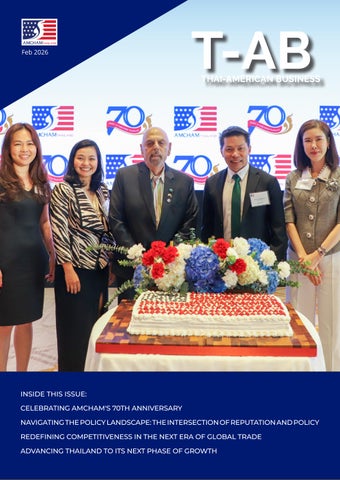
CELEBRATING AMCHAM'S 70TH ANNIVERSARY

NAVIGATING THE POLICY

LANDSCAPE: THE INTERSECTION OF REPUTATION AND POLICY

REDEFINING COMPETITIVENESS IN THE NEXT ERA OF GLOBAL TRADE

ADVANCING THAILAND TO ITS NEXT PHASE OF GROWTH

Invest in your workforce with cloud trainingempower teams to drive innovation

Accelerate business transformation

Help your teams build practical skills and cloud expertise critical to your organization. Over 600 digital courses and curated learning plans, along with interactive, hands-on training, provide engaging learning experiences that span more than 30 technical domains and all skill levels.

Build cloud skills at scale with AWS Skill Builder, the online learning center built by AWS experts

• Self-paced labs with AWS Builder Labs

• Expert AWS instructor-led training - on demand with AWS Digital Classroom

• Game-based learning with AWS Cloud Quest and AWS Industry Quest

• Use case challenges with AWS Jam

• Exam preparation for AWS Certification

Top 5 benefits of AWS Skill Builder for Teams

1. Accelerate business transformation

2. Encourage hands-on experience

3. Develop expertise in key roles and industries

4. Motivate teams with collaborative learning and friendly competition

5. Fast-track career development for team members

eBook: Build Cloud Expertise and Transform Your Business

Discover how empowering your teams with cloud skills can drive innovation.

Learn how to maximize your cloud investment by upskilling your workforce with diverse training and learning experiences.

Download the eBook › Watch the demo ›

Navigating the Policy Landscape: The Intersection of Reputation and Policy

Capturing the China Plus One Opportunity: Advancing Thailand to Its Next Phase of Growth

Freedom 250: Celebrating America’s 250th Birthday, Shaping the Future

Redefining Competitiveness in the Next Era of Global Trade Key Issues Relating to the Articles of Association of a Limited Company in Thailand

Short-Term Rentals in Thailand

Roundtable Working Meeting with the Pollution Control Department (PCD)

Ken Chaichanavong - Managing Director of

Tanasak (North)

Thai-American

ISSN-T-A 0125-0191 February 2026

ATF Hosts Scholarship Orientation Camp, Empowering Future Leaders

AMCHAM 2026 Strategy Session

Impact in Action: Chevron Thailand

Continuous Development for the C-Suite

Thailand Tourism Forum 2026

Impact in Action - Organon Thailand

The Governors' Table @ The Peninsula Bangkok

AMCHAM New Member Brew & Buzz

JUSMAG & AMCHAM Super Bowl Watch Party 2026

NIST International School Opens Three New Facilities

TravelTech Joins the Virtuoso® Network

Betagro Wins Highly Commended Sustainability Awards at the 2025 SET Awards

Thai Union Honored with 2025 Sustainability Disclosure Award, Highlighting Leadership Under SeaChange® 2030

Welcome New Members

AMCHAM Affinity Program

HELPING MAKE SUSTAINABLE MORE ATTAINABLE NOW

We are ready now with an array of solutions ranging from sustainable aviation fuels to battery energy storage systems

LEARN MORE

AMCHAM BOARD OF GOVERNORS 2026

PRESIDENT

Chatit Huayhongtong, Chevron

VICE PRESIDENTS

Sondra Sutton Phung, Ford Motor Company

Raymond Deidrick, Ingredion Incorporated

Norachet Saetang, Seagate Technology

Philip Bernard, Western Digital

TREASURER

Winnie Wong, Mastercard

SECRETARY

Ririnda Tangtatswas, Betagro Group

GOVERNORS

Wiyada Srinaganand, 3M Thailand

Narumon Chivangkur, Citibank

Sasathorn Phaspinyo, FedEx Thailand

Anothai Wettayakorn, IBM Thailand

Charles Blocker, IC Partners

Asama (Prae) Dumrongmongcolgul, Meta

Idara Huang, Mondelez International

Mark Kuo, Pfizer Thailand

EXECUTIVE DIRECTOR

Heidi Gallant

T-AB Magazine is a publication by The American Chamber of Commerce in Thailand.

101 True Digital Park, Griffin Building, Level 12A, Unit No.12A-06, Sukhumvit Road, Bangchak, Phra Khanong, Bangkok 10260 Tel: +66 (0)2 119 3350 www.amchamthailand.com

Editorial Advisory Board: Heidi Gallant

Editors: Varsha Wadhwani Phenphitchaya Chapanon

Any opinions expressed in articles in this magazine do not necessarily reflect the views of the Chamber.

T-AB Magazine welcomes contributions from AMCHAM members. Articles may be reproduced with acknowledgement, except those taken from other sources.

Letter from the Executive Director

Dear Members,

I’d like to thank all of you who joined us last week for our AMCHAM 70th Anniversary Member Luncheon. It was a true pleasure to look across the room and

see members both new and old, sharing stories and memories while forging new connections for the future.

For those of you who were unable to attend, I invite you to enjoy our slideshow here which captures just a few of the many milestones that have shaped AMCHAM Thailand over the past seven decades.

As we reflect on this anniversary, we are reminded of the enduring legacy of AMCHAM—an organization built on strong partnerships and a vibrant business community committed to contributing positively to Thailand’s economic and social development. From our earliest days to the present, AMCHAM has continued to evolve alongside our members, remaining a platform where dialogue, collaboration, and leadership thrive.

In March, we’ll continue the spirit of celebration with our upcoming Governors’ Gala: Shake, Rattle & Roll Back to 1956, when we look forward to welcoming our guests with classic 1950s flair. It promises to be a memorable night, and we hope to see many of you there.

Beyond these milestone celebrations, March is filled with opportunities to engage, learn, and connect. Events include our Connecting for Corporate Impact Forum; the AMCHAM Inclusion Committee Tea celebrating International Women’s Day; and, of course, our Annual General Meeting and Member Luncheon, where we will hear from Dr. Supavud Saicheua, Chairman of the NESDC, on economic directions for Thailand post-elections.

Thank you for being part of AMCHAM’s journey—past, present, and future. Your continued support, participation, and commitment are what make this community so special. I look forward to connecting with many of you at our upcoming events.

Sincerely,

Navigating the Policy Landscape: The Intersection of

Reputation and Policy

In today’s social and political environment, corporate reputation is a cornerstone of business resilience and success, but it cannot be managed in isolation. Policy decisions shape public perception, and public pressure accelerates policy change, creating an intersection that companies must navigate strategically.

Global policy shifts and activist movements are creating an environment where external factors can redefine a brand overnight. Legislative changes and geopolitical dynamics can alter brand expectations and create new challenges or opportunities for companies, requiring them to adapt their strategies and narratives in response. Simply telling a strong company story or positioning executives as thought leaders is not enough. Instead, companies need integrated strategies where government relations teams anticipate legislative trends, and reputation teams transform those insights into credible narratives. When these functions collaborate effectively, businesses can anticipate and mitigate reputational risks.

Failure to act or collaborate can result in reputational setbacks or even legal action. For example, state-level legislation often sets a precedent that influences policies in other states

or even at the federal level. In a global context, policy decisions made in one jurisdiction can have far-reaching effects. These policy developments make real-time awareness and cross-functional collaboration essential as regulatory missteps can lead to reputational damage. To head off potential issues, government relations and reputation teams must work together to monitor legislative trends, anticipate public reactions, and craft proactive strategies that address reputation management in the context of regulatory and legal compliance.

Strategies for Staying Informed

In today’s rapidly changing media and policy landscape, organizations face growing complexity and constant shifts. From decentralized social media platforms and viral digital activism to new regulations, the challenges are multifaceted. It is essential to have a strong information strategy that anticipates regulatory changes and adapts to the demands of a 24/7 media cycle. Here are some key considerations to keep in mind when building plans to safeguard your reputation:

• Identify key topics: Companies must stay ahead of legislative and regulatory developments, as these shifts directly impact both operations

and reputation. Monitoring and responding to these developments not only ensure compliance but also helps companies focus on key areas that matter most, aligning strategies with regulatory changes and public values to protect and strengthen reputation.

• Mainstream news is not the end-all be-all: Industry trade outlets, niche newsletters and platforms like Substack often surface trends before they hit top-tier headlines.

• Keep an eye on key stakeholders: Policymakers, industry groups, and activist coalitions are increasingly becoming more active on social media, making it crucial to monitor the narratives and agendas they promote. Monitoring these sources can provide early warnings about policy shifts and social movements on the horizon.

• Read multiple perspectives: The polarization of media makes it vital to read outlets across the spectrum for balanced insight. Gathering diverse perspectives on emerging issues ensures that your insights are bipartisan, wellrounded and rooted in factual information, helping to inform thoughtful strategies.

Turning Insight into Action

When navigating the complexities of today’s regulatory and reputational landscape, companies must transform understanding into decisive action.

• Develop a strategic game plan: Scenario planning for likely policy outcomes and aligning public positions with core business values builds credibility. Consistency strengthens trust.

• Decide where to engage: While not every issue requires a public statement, certain topics may align closely with business values or the

expectations of stakeholders. It is essential for reputation management teams to carefully evaluate the potential impact on the brand by analyzing policy trends and considering how these issues might affect customers and their perceptions.

• Act early on emerging policy shifts: Anticipate regulatory changes and act fast. Government affairs teams lead engagement and advocacy, while reputation teams craft value-driven messaging for key audiences. Coordinated activation such as public statements, thought leadership or community engagement mitigates risk.

Navigating Forward: Empowering Clients Through Policy Awareness

Understanding and anticipating policy changes is non-negotiable in safeguarding reputation and for mitigating risk. This holds true for companies across the board whether you are a global corporation, a small business, a trade association or a consultancy. In a world where policy and perception are increasingly intertwined, and business decisions are increasingly political, this alignment is fundamental to navigating uncertainty and achieving long-term stability.

Chin Ann Ho is a senior director at APCO based in Singapore. He is a trusted advisor to business leaders and global enterprises in Asia. Specializing in industry positioning, narrative strategy and issues management, he works closely with CEOs and founders to protect and advance their business interests through integrated strategic communications and advisory.

Capturing the China Plus One Opportunity: Advancing Thailand to Its Next Phase of Growth

As global supply chains shift away from overconcentration in one country, Thailand finds itself at critical crossroads. While neighbors like Vietnam, Indonesia, and India move with aggressive speed, the Kingdom must leverage its unique advantages - from the Treaty of Amity to a burgeoning digital infrastructure - to transition from a regional hub to an indispensable high-tech partner. Yet, the nation currently faces a classic “comfort trap”: it is an economy too advanced to compete on lowcost labor, but not yet sufficiently differentiated to compete solely on high-end innovation. This article explores how Thailand can break through this plateau and move beyond; securingits position as a winner in the China Plus One era.

For more than two decades, China’s role as the Factory of the World has defined global supply chains. Following WTO accession in the early 2000s, China combined scale, cost efficiency, and ecosystem depth in ways few economies could replicate. The results were unmistakable: GDP

growth averaged 10.3% annually between 2000 and 2010.

By 2010, however, the first strains were visible: rising costs, demographic shifts, and China’s push up the value chain. Then came geopolitical tensions - IP concerns, the South China Sea, and trade frictions with the U.S. Ultimately, Covid-19 exposed the fragility of over-concentrated supply chains. Over the past decade, China Plus One has become a fixture in business strategy. As explained earlier, it did not start as a sudden rupture; it has been a 20-year convergence. What began as risk mitigation has evolved into a structural redesign of global production. For boards and CEOs, diversification is now a strategic imperative, not a choice.

What Success Really Looks Like

China Plus One is often misunderstood as factories leaving China. In reality, winners are not replacing

China - they are often complementing it. China still commands nearly 30% of global manufacturing capacity and will likely remain dominant in the high 20s for years. The countries benefiting most are those building differentiated capabilities within this integrated supply chain.

Success at a country level can be measured by:

• Sustained FDI in targeted industries.

• Growth in manufacturing exports and deeper value-chain integration.

• A more prominent role in global supply networks.

• Continuous improvement in infrastructure, regulation, and the investment climate (for example, as measured by Ease of Doing Business rankings).

The

Drivers of Success

Five core factors shape success for the winners:

1. Market Environment: Regulatory openness, policy stability, FDI frameworks, and ease of doing business.

2. Infrastructure: Logistics, ports, energy, and digital networks.

3. Cost and Labor: Wages, skills, talent depth, and flexibility.

4. Market Size and Access: Domestic demand, growth trajectory, FTAs, and trade blocs.

5. Long-term Sustainability: Demographics, resilience, and environmental standards.

Who Is Benefiting the Most - and Why

Vietnam, once inspired by Thailand’s model, is now outcompeting it with a young workforce, lower costs, trade agreements, and strong geopolitical tailwinds - especially in electronics, garments, and semiconductor-related activities.

India’s advantage is not just low costs, but scale plus optionality: a massive domestic market, digital public infrastructure, and an ability to absorb both services-led and manufacturing-led investment simultaneously.

Indonesia, meanwhile, is leveraging its large consumer base and natural resources, supported by policy reforms, to move further downstream in manufacturing, including EV-related supply chains.

Each of these markets highlights Thailand’s strategic challenge. Thailand sits in a challenging middle position; it has earned comfort through past success, but that same comfort reduces the urgency for further reforms. It risks being overlooked in favor of more aggressive peers. As Saigon, Jakarta, and Bangalore push forward, Bangkok’s measured caution has become a disadvantage in a world where capital rewards speed and adaptability.

China Plus One and ASEAN 2030

China Plus One is not just a supply-chain adjustment; it is a foundational driver of ASEAN’s next growth phase. As ASEAN’s combined GDP moves from roughly 4 trillion U.S. dollars today toward 6-7 trillion U.S. dollars by 2030, manufacturing diversification, intra-ASEAN trade, and deeper integration into global value chains will be central to that expansion.

The bloc’s advantage lies in complementarityIndonesia anchors scale and resources, Vietnam

drives export manufacturing speed, the Philippines contributes services and demographics, Singapore orchestrates capital and logistics and Thailand sits at the strategic, geographical center. The winners within ASEAN are those that align national strategies with this regional architecture rather than competing in isolation.

Thailand’s Strategic Moment

Thailand enters this next phase with real strengths: a deep industrial base in automotive, electronics, agriculture, and tourism; a strategic ASEAN location; extensive trade agreements; and government incentives aligned with future industries. The U.S.-Thailand relationship remains a cornerstone of this stability; U.S. businesses have cumulatively invested over 90 billion U.S. dollars here, supporting more than 500,000 local jobs. Digital transformation momentum is also genuine, evidenced by multi-billion-dollar cloud and AI infrastructure commitments from hyperscalers,positioning Bangkok as a premier regional data hub.

The next phase must focus on moving decisively up the value chain. The risk for Thailand is not decline, but relative irrelevance - being integrated everywhere, yet indispensable nowhere.

Priority sectors already identified - next-generation vehicles, smart electronics, data centers, food tech, and renewable energy - reflect this shift. In particular, the launch of the Utility Green Tariff (UGT) is a vital step in helping U.S. corporations meet their RE100 global sustainability targets. Thailand can also maintain an edge with U.S. firms due to its superior IP protection and the unique privileges afforded by the Treaty of Amity, which allows for 100% U.S. ownership. These are capability strategies, not volume strategies. Thailand must turn blueprints into execution.

Constraints That Must Be Addressed

To succeed, Thailand must confront long-standing bottlenecks with urgency:

• Skills and Innovation Gaps: Especially in technology and advanced manufacturing.

• Infrastructure Investment: Demanding continuity and discipline in project timeline and completion.

• Policy Stability: Navigating political cycles to sustain investor confidence.

• Ease Regulatory Friction: In FDI approvals, visas, and ownership rules.

Competing Smarter in the Next Phase

China Plus One will reward those who combine openness with execution and stability with specialization. Thailand has the foundations. The question is whether it can move with the speed and boldness to differentiate itself - not by doing everything, but by doing the right things exceptionally well. By leveraging the U.S.-Thailand Communiqué on Strategic Partnership and the historical trust built over 193 years of diplomacy, Thailand can secure its place as the region’s most reliable "plus one."

Aseem Goyal is an international banker, strategic consultant and global leadership coach with 30 years of experience across seven Asia-Pacific markets.

Materials Science Expertise for Low-Carbon Economy

Dow have set out ambitious sustainability targets that guide our innovation portfolio of products and enabling technologies.

PROTECT THE CLIMATE

Climate Change Mitigation: By 2050, Dow intends to be carbon neutral (Scopes 1+2+3 plus product benefits).

Climate Change Adaptation: By 2050, Dow will partner to conserve 50,000 acres of habitat and our top 20 water-dependent sites will be water-resilient.

TRANSFORM THE WASTE

By 2030, Dow will transform plastic waste and other forms of alternative feedstock to commercialize 3 million metric tons of circular and renewable solutions annually.

CLOSE THE LOOP

By 2035, Dow will close the loop by enabling 100% of Dow products sold into packaging applications to be reusable or recyclable.

Our action to achieve carbon commitment:

Product Process Partnership

Dow Thailand has 28 products certified for carbon footprint of products and 19 products certified for carbon footprint reduction by the Thailand Greenhouse Gas Management Organization (TGO), enhancing competitiveness for our customers.

Dow Thailand aligns with global carbon reduction targets and collaborates locally to achieve them. Through our efforts to improve operational efficiency, we have reduced GHG emissions by 71.985 kT from 2020 to October 2024.

Dow Thailand has joined the Thailand Carbon Neutral Network (TCNN) to collaborate towards a lowcarbon economy and Siam Polyethylene Co., Ltd., a subsidiary of Dow Thailand, has received the "Climate Action Leading Organization (CALO)" award for the second consecutive year.

Freedom 250: Celebrating America’s 250th Birthday, Shaping the Future

This year, America marks the 250th anniversary of the Declaration of Independence, a historic milestone that celebrates not only the nation’s founding, but the enduring ideals of freedom, innovation, and partnership that continue to shape the world.

Under President Trump’s leadership, the United States looks forward to celebrating America’s 250th birthday across Thailand through a yearlong series of events and activities that honor American history, showcase the beauty and ingenuity of the United States, ignite innovation, and strengthen the faith that will carry the country forward for the next 250 years.

The U.S. Mission to Thailand is working closely with Thai friends and allies to hold Freedom 250 events throughout the year—celebrating both

America’s 250th birthday and more than 200 years of American-Thai friendship.

For two and a half centuries, the United States has been a beacon of freedom, innovation, and excellence. Thailand was America’s first friend in Asia, and by 1833, the two nations had signed the Treaty of Amity and Commerce, laying the foundation for a relationship built on shared prosperity, security, and happiness of American and Thai citizens. Today, this partnership continues to evolve through forward-looking cooperation across economic, security, and people-to-people ties.

The U.S. Mission to Thailand’s Freedom 250 celebration reflects a bold, innovative, and forward-looking American spirit. Throughout the year, Freedom 250 will engage audiences across

Thailand, showcase American ingenuity and innovation, and culminate in what promises to be the greatest celebration of independence of the century!

Freedom 250 Kicks Off with an Iconic Building Light-Up

U.S. Embassy Bangkok shines in red, white, and blue to kick off Freedom 250! Join us as we celebrate America’s 250th birthday—honoring American history, showcasing American excellence, and igniting partnerships to carry us into the next 250 years!

Explore the celebration

Freedom 250 Takes to the BTS Skytrain

To bring the celebration into the heart of Bangkok, the U.S. Mission to Thailand launched a BTS Skytrain body wrap campaign on the Sukhumvit Line, running from February 10 to March 9, 2026.

This marked the launch of the Freedom 250 partnership with Plan B Media.

On the first day of the official launch, Ambassador O’ Neill rode the Freedom 250–wrapped BTS train and invited commuters to join our celebration. The full train-body graphic transformed one of Bangkok’s busiest commuter routes into a moving platform for Freedom250.

Looking Ahead

Each month we’ll be sharing Freedom 250 news with AMCHAM members and sponsors in this special column, be on the lookout in each edition! From May through July, Freedom 250 will expand its reach through a three-month digital video campaign across Plan B Media’s network, including on BTS trains and outdoor screens across Bangkok and Chiang Mai.

Partners and sponsors are invited to contact the U.S. Mission to Thailand at USFreedom250Thailand@ state.gov to explore opportunities to be part of this historic celebration throughout the year.

Redefining Competitiveness in the Next Era of Global Trade

“The coming decade will redefine not only how we manufacture, but how nations participate in global trade.”

The coming decade will redefine not only how we manufacture, but how nations participate in global trade. Automation, AI, digital ecosystems, and sustainability are transforming industry faster than any technological wave before it. For Thailand, a critical production base within global supply chains, this moment presents a rare opportunity: to step forward not just as a regional player, but as a global innovation leader.

How are automation, digitalization, and AI redefining productivity in manufacturing and logistics?

Manufacturing and logistics are undergoing the most significant productivity revolution in modern history. Automation has already streamlined repetitive and hazardous tasks, but its true power emerges when combined with advanced AI and real-time digital platforms.

Across the sector, we are seeing the rise of intelligent factories—operations that use

interconnected sensors, predictive analytics, and autonomous decision-making to optimize output. Vertical AI models tailored to specific industries, such as HVAC, automotive, or electronics, consistently outperform generic AI tools. These models are capable of diagnosing system faults, predicting demand, optimizing energy usage, and accelerating engineering cycles with extraordinary accuracy.

This shift is more than digitization; it is transformation. AI-enabled workflows are reducing report-generation time from days to hours, compressing design cycles, and empowering technicians with instant diagnostic insights. In logistics, AI optimizes forecasting, routing, inventory, and SIOP planning—creating resilient

supply chains that can respond dynamically to global disruptions.

The new productivity frontier will belong to companies capable of blending human expertise with machine intelligence—augmenting workers, not replacing them.

How can companies integrate sustainability into their core strategy to strengthen competitiveness?

Globally, sustainability has moved from a compliance requirement to a strategic differentiator. Environmental performance now directly influences competitiveness, investor confidence, regulatory access, and customer preference.

Manufacturers across the world are investing heavily in:

• Low-emission refrigerants and materials

• Smart energy management systems

• Carbon-efficient production processes

• Solutions that help customers reduce emissions

Thailand’s industrial sector is similarly accelerating its sustainability transformation. Modern plants are integrating energy-saving systems, data-driven controls, and increasingly AI-optimized operations. These steps not only reduce carbon footprints, but they also improve reliability, reduce energy costs, and enhance overall productivity.

Sustainability is no longer a trade-off between cost and responsibility. It has become the engine that underscores reliability of solutions, innovation, and corporate responsibility. Companies that embed environmental goals at the core of their strategy— rather than treat them as an afterthought—will define the competitive landscape of the future.

What will truly differentiate global manufacturers over the next decade?

The differentiators of the next decade will be fundamentally different from those of the last.

Speed, intelligence, and purpose will matter more than size.

• Speed: Rapid innovation cycles, fast decision-making, and agile supply chains.

• Intelligence: AI-powered insights enabling better planning, predictive maintenance, and real-time optimization.

• Purpose: Clear commitments to environmental and social responsibility shaping brand preference and stakeholder trust.

While scale once created advantage, it is no longer enough. Smaller, more adaptive players—those who leverage AI, connected ecosystems, and sustainability—are challenging even the largest incumbents. Differentiation will come from how fast a company can learn, adapt, and innovate in a complex and volatile global environment.

IN FOCUS

Which capabilities will matter more than scale in a rapidly shifting trade environment?

A company’s global relevance will increasingly depend on its smart and predictive capabilities rather than its physical footprint. These include:

• Digitally integrated ecosystems, where systems communicate seamlessly across factories, suppliers, and customers.

• AI-augmented workforces, enabling employees to operate at higher levels of efficiency and creativity.

• Adaptive supply chains with real-time visibility and multi-regional flexibility.

• Sustainable design principles, from R&D to operations to after-sales service.

• Data-driven decision models, moving organizations from reactive to predictive.

These capabilities allow companies to turn complexity into competitive advantage and ultimately drive growth through data analytics and better decision making.

What strategic decision made today will most determine a company’s global relevance ten years from now?

If there is one decision that will determine global relevance over the next decade, it is this:

Commit fully to becoming a data-driven, AI-enabled, sustainability-anchored organization right now.

This commitment requires more than investment— it requires a mindset shift. It means:

• Redesigning processes around intelligence and automation.

• Elevating digital and sustainability functions to core strategic pillars.

• Empowering teams to experiment, innovate, and challenge conventions.

• Building a culture that embraces transformation rather than resists it.

Companies that make this bold decision today will define the future of global trade. Those that hesitate will be defined by it.

Thailand is uniquely positioned to lead this shift. With strong industrial foundations, skilled talent, and increasing regional importance, the country can become a global benchmark for intelligent, sustainable manufacturing.

The next era of industry will reward those who reinvent themselves with courage, clarity, and purpose. The leadership we demonstrate today will shape the opportunities we create for the next generation.

“Commit fully to becoming a data‑driven, AI‑enabled, sustainability‑anchored organization right now.”

Driving Seamless Business Performance

CUSTOMIZABLE SERVICE

Key Issues Relating to the Articles of Association of a Limited Company in Thailand

The Articles of Association (AoA or Articles) play a vitally important role in the governance of a Thai limited company, as they are the company’s internal corporate rules. The AoA are initially decided at the company’s statutory meeting which is held as part of the company formation process. The Articles not only regulate the relationship between shareholders, directors, and the company itself, but also set out the legal framework within which corporate powers are exercised. This article examines various issues, including the enforcement and amendment of the AoA, as well as the provisions typically contained in the AoA of a company limited in Thailand.

What are the AoA under Thai law?

The AoA are recognized by the Civil and Commercial Code of Thailand (CCC), as a binding internal contract governing the legal relationships between:

• the company and its shareholders;

• the shareholders among themselves; and

• the company and its board of directors (to an extent).

Once the AoA are registered with the Department of Business Development (DBD), the directors of the company must act in accordance with them and they can be enforced, provided they do not conflict with the CCC, other applicable laws such as the Foreign Business Act B.E. 2542, as well as public order and good morals. If a provision in the Articles is contrary to any of the above, then such provision can be challenged and found to be void and unenforceable in accordance with Thai law (except if permitted by law). Acts done that are contrary to the AoA may be invalid or challengeable in the Thai courts. The DBD may also refuse to register AoA if they identify any provisions which conflict with the CCC.

The AoA are subject to Thai law but can be stipulated differently, provided they are not contrary to peace and order. For example, the CCC requires that a meeting of shareholders must be summoned not less than seven days in advance and not less than 14 days in advance if a special

resolution(s) must be passed. However, a longer period of time can be specified in the AoA, but a shorter period is not possible.

Are AoA Legally Required?

Articles are not a compulsory requirement under Thai law. If a company decides against implementing its own AoA, it will be governed in accordance with the relevant provisions of the CCC. However, despite the fact that AoA are not legally required, it is advisable to have them as they can offer extra safeguards for the shareholders such as provisions controlling the transfer of shares.

If a company limited is initially set up without AoA but its shareholders later decide to adopt them, they can be implemented by passing a special resolution at a properly convened and held annual general meeting (AGM), or extraordinary general meeting (EGM). The special resolution and the adopted AoA must then be registered with the DBD.

Rules typically contained in the AoA for a Company Limited incorporated in Thailand

Unlike some jurisdictions, Thai law does not prescribe a rigid format for the AoA, hence for most companies registered in Thailand, their AoA generally cover the following topics:

1. Shares and share capital – classes of shares (such as ordinary, preference, and more), rights attaching to each class of share and details on share certificates.

2. Share transfers – the procedures for transferring shares, including board of director approval requirements.

3. Shareholders’ meetings – types of shareholder meetings (AGM and EGM), notice periods and methods, quorum requirements, voting rights and procedures, and proxy rules.

4. Directors – number and qualifications of directors, method for determining the number of directors, quorum for board meetings, appointment of chairperson, appointment and removal of directors, and the scope of authority and management powers.

5. Balance sheet – the company’s accounting period, preparation of financial statements, and the presentation of accounts to the shareholders.

6. Dividend and reserve fund - timing and method of payment for dividends and allocation of profits,

7. Liquidator – appointment and number of liquidator(s) and their powers.

8. Company seal – rules for use of the seal and custody of the company seal.

Challenging Shareholder Resolutions Contrary to the AoA

The CCC provides that if a shareholder meeting (such as an AGM or EGM) has been summoned or held, or if a resolution is passed that is contrary to the AoA, a director or shareholder may submit an application to the Civil Court to cancel such resolution(s). However, the directors and shareholders wishing to challenge the resolution(s) must act swiftly, as the application must be filed within one month after the date of resolution being passed by the shareholders.

Amending the AoA

If shareholders wish to amend the AoA, the CCC requires that such amendment be approved by a special resolution of the shareholders at a duly called shareholder meeting and thereafter registered at the DBD.

Notice of the special resolution must be given to the shareholders in accordance with the notice requirements under the AoA and at least 14 days before the date of the relevant shareholder meeting. For the special resolution to pass, at least three-fourths (75%) of the votes of shareholders present and entitled to vote must agree to the special resolution (or such higher threshold as specified in the AoA) and the votes must represent not less than half of the total shares of the company.

AoA and Shareholder Agreements

The AoA may not cover all internal governance issues, and certain topics may instead be covered in a shareholder agreement between the company’s shareholders such as special investor protections or reserved matters1. There are several reasons for doing this, including:

• The AoA is a public document and can be obtained from the DBD, whereas a shareholder agreement is private and not filed or registered with the DBD, hence a shareholder agreement provides greater confidentiality.

• A shareholder agreement can be amended by mutual agreement of the shareholders who are a party to such contract, thus, it can be faster and more adaptable than trying to amend the AoA via a special resolution passed by the shareholders at a shareholder meeting.

1 These are key decisions of the company that require special shareholder approval (such as a supermajority or unanimous consent) before the company can act, thereby safeguarding minority shareholders and ensuring key strategic choices align with all investors' interests, covering areas like new debt, changing capital structure, new and director appointments.

• A shareholder agreement can provide more flexibility in terms of dispute resolution as such agreement can contain arbitration clauses, mediation, or other dispute resolution mechanisms.

There are however certain advantages when comparing AoA with shareholder agreements, one of them is that the AoA automatically binds all shareholders whereas a shareholder agreement is only enforceable against those shareholders who are a party to such agreement.

Ryan Crowley is an Executive Director and Foreign Services Manager at Dharmniti Law Office. His responsibilities include supporting international clients.

Click here to register

Short-Term Rentals in Thailand

The rapid growth of short-term rental platforms such as Airbnb has transformed Thailand’s hospitality and short-term accommodation sector. These platforms exist to meet travelers’ demands for more flexibility, privacy, and convenience than are offered by traditional hotels. As a result of this growth, some properties, such as condominiums and residential buildings, are rented out for short-term stays by individuals who may not be traditional hotel operators. However, the current version of the Hotel Act B.E. 2547 (2004) (Hotel Act) does not reflect, or address, these developments. Short-term rentals of condominium units generally are considered noncompliant with the Hotel Act, which creates legal uncertainty and practical enforcement difficulties.

To address these issues, Thailand is introducing the Draft Hotel and Non-Hotel Accommodation Act and the Draft Accommodation Establishments Act (collectively, Draft Laws). Both draft laws are designed to align Thailand’s Hotel Act with new business models in the hospitality sector.

The Draft Hotel and Non-Hotel Accommodation Act amends the existing Hotel Act by introducing the concept of Non-Hotel Accommodations, including

movable and immovable accommodations, hostels, guesthouses, and homestays. Operators of these accommodations will be required to register, obtain licenses or approvals, and comply with standards relating to safety, hygiene, and service quality, including the appointment of trained caretakers. Non-Hotel Accommodation is defined as lodgings or premises established for business purposes to provide temporary accommodation in exchange for remuneration, excluding monthly or yearly rentals. While this expands regulatory coverage to encompass alternative accommodations, only those having a business purpose fall within the scope of the draft act. As a result, there is uncertainty as to whether condominium units and residential houses primarily intended for residential use are within the scope of this draft.

The Draft Accommodation Establishments Act makes more fundamental reforms. It proposes to repeal and replace the Hotel Act entirely and introduces the broader concept of Accommodation Establishment, covering all types of places that provide temporary accommodation in exchange for remuneration or any monetary benefit. This draft expressly recognizes accommodation

establishments with residential purposes, meaning that condominium units and residential houses could be legally used for short-term accommodation businesses if the other relevant regulatory requirements are met. This approach significantly reduces legal and operational barriers for small-scale investors and individual unit owners and, in practice, could legalize shortterm condominium rentals.

Another key feature of the Draft Accommodation Establishments Act is its streamlined licensing framework. Operators who obtain an accommodation establishment license will be deemed to have complied with several related regulatory requirements, for example, certain requirements established in public health laws, business hazardous to health regulations, and excise laws on alcohol and tobacco. This one-stop mechanism will reduce administrative burdens and simplify compliance with multiple government agencies. The draft also introduces measures to regulate online booking platforms and to protect consumers against misleading advertisements, unfair practices, and wrongful cancellations, thereby strengthening consumer confidence in the short-term rental market.

Despite their economic benefits, the Draft Laws raise concerns about the impact of short-term rentals on residential communities, especially condominiums. Increased turnover of occupants may lead to congestion, security risks, and faster deterioration of common areas, potentially undermining the quality of life of long-term residents. In response, developers may adapt by designing projects with separate zones or buildings for short-term rentals and long-term residential use, which could significantly reshape Thailand’s condominium market.

An additional concern relates to the Building Control Act, which currently restricts the use

of residential buildings as hotels. Although the Draft Laws suggest greater flexibility in the use of residential units as accommodation establishments, they do not directly address potential conflicts with building control regulations. Without corresponding amendments, legal uncertainty may persist.

Overall, the Draft Laws clearly signal Thailand’s intention to modernize and legalize the regulation of short-term accommodations, including the possible use of residential units like condominiums. They present opportunities for investors through greater flexibility and reduced regulatory burdens, while also highlighting the need for careful regulatory coordination to protect residential communities and ensure sustainable development of the accommodation sector.

Thiti Homjabok is a Bangkok Partner with extensive experience in real estate, spanning housing, hotels, industrial estates, factories, data centers, FMCG expansion and REIT development.

As part of Thiti’s real estate practice, Theerapoj Kitchainukul assist on housing, hotels, industrial estates, factories, data centers, FMCG expansion and large-scale development projects.

Roundtable Working Meeting with the Pollution Control Department (PCD)

On January 29, AMCHAM Executive Director Heidi Gallant led a delegation of AMCHAM members in a meeting with Mr. Taweechai Jiaranaikhajorn, Director of the Waste Minimization Sub-division, along with senior officials.

During the meeting, AMCHAM received updates on the Department’s progress in sustainable packaging management, including future goals for plastic reduction and recycling, as well as initiatives aligned with the Extended Producer Responsibility (EPR) framework. Both parties also discussed collaborations for the Corporate Impact Awards, raising awareness of the Department’s missions within the AMCHAM business community.

AMCHAM reaffirmed its commitment to collaborate closely with the Department, offering member expertise and practical insights to support the development of environmentally sound, socially responsible, and business-feasible approaches to waste management and sustainable packaging.

Pfizer Strengthens Commitment to Healthcare in Thailand

Pfizer is reinforcing its commitment to improving health outcomes in Thailand through innovative medicines and vaccines in areas including oncology, internal medicine, vaccines, neurology, and infectious disease prevention. With nearly 70 years of presence in the country, Pfizer continues to partner with government, healthcare professionals, and communities to deliver “Breakthroughs that change patients’ lives.”

Advancing Cancer Innovation

Pfizer is investing in next-generation oncology research, including immunotherapy and precision medicine. Through its collaboration with biopharmaceutical company 3SBio, the company is advancing the SSGJ 707 bispecific antibody project, which targets both PD-1 and VEGF proteins, offering a novel approach to more effective cancer treatment. Pfizer holds global rights outside China and plans production in the U.S. The company aims to transform cancer into a manageable condition

Strengthening respiratory disease prevention

Pfizer addresses respiratory infections like pneumococcal pneumonia, RSV, and COVID 19 by advancing vaccines and antiviral treatments. Two new vaccines recently approved in Thailand include a 20 valent pneumococcal vaccine and an RSV vaccine protecting young children and older adults, supporting national health goals and reducing disease burden.

Working together for a healthier Thailand

As Thailand’s population continues to age and healthcare needs become increasingly complex, Pfizer remains dedicated to partnering with the government, the medical community, and all sectors of society. The company recognizes that addressing Thailand’s healthcare challenges requires close and continuous collaboration across public, private, and medical stakeholders. Through its ongoing commitment to research and development, Pfizer will continue to bring forward innovative medicines and vaccines, grounded in scientific breakthroughs, to raise standards of care and expand access to meaningful health innovations for all Thais.

From your perspective, what key economic trends are currently shaping SMEs in Thailand?

SMEs are a vital pillar of Thailand’s economy, accounting for more than 99% of registered businesses and contributing around 35% of GDP, while employing a significant portion of the workforce. Today, many SMEs are reaching an important transition point. Rising labor, energy, and financing costs, combined with increasing competition and evolving customer expectations, mean that businesses are increasingly encouraged to adapt in order to remain competitive. At the same time, digitalization, infrastructure development, and deeper regional and international integration are opening new possibilities. Closer U.S.–Thai economic collaboration, particularly in technology, innovation, and business standards, is also influencing how SMEs modernize operations, improve productivity, and create long-term value. SMEs that are willing to invest in transformation are better positioned to navigate this changing

Ken Chaichanavong is the Managing Director of VCON and serves as an AMCHAM Small Business & Entrepreneurs Committee Co-Chair. environment.

What are your priorities for the Small Business & Entrepreneurs Committee in supporting members, particularly SMEs navigating today’s economic environment?

My priority is to ensure the Committee delivers practical, relevant, and accessible support to SMEs. This includes providing insights on access to finance, technology adoption, regulatory navigation, workforce development, and cross-border opportunities. I also want to strengthen collaboration between SMEs, larger enterprises, policymakers, and solution providers. Through VCON’s work applying American technology to support Thailand’s infrastructure development, I have seen how the right partnerships, tools, and standards can help businesses operate more efficiently, scale responsibly, and contribute broader value to society. The Committee can play a meaningful role in helping SMEs learn from one another and move forward with greater confidence.

What inspired you to get involved in the AMCHAM leadership?

Having been part of VCON’s journey from its early SME roots to a larger organization today, I have developed a strong appreciation for the challenges businesses face at different stages of growth. Working closely with American partners has reinforced the importance of innovation, sound governance, and long-term thinking. AMCHAM provides a unique platform where these principles can be shared through collaboration rather than competition. I joined the AMCHAM leadership with the intention of contributing where I can, sharing practical experience, and supporting U.S.–Thai collaboration that benefits SMEs and strengthens Thailand’s broader business ecosystem.

Meet Tanasak (North) Chantarach

A determined AMCHAM scholarship alumnus, Tanasak (North) Chantarach overcame personal loss and financial adversity to excel in logistics. Through resilience and community spirit, he transformed his challenges into academic success, paving the way for a rewarding career.

Hello, my name is Tanasak (North) Chantarach. I graduated with First-Class Honours in Technology and Industrial Management from King Mongkut's University of Technology North Bangkok, and recently earned a master’s degree in Logistics and Supply Chain from Mahidol University. Today, I work as an Inland Logistics Senior Officer at AGC Vinythai, a leading chemical manufacturer in Thailand and Southeast Asia.

Growing up in a middle-income family, my life took a dramatic turn during my teenage years. Both of my parents passed away from healthrelated conditions while I was still in high school. After their loss, I moved in with my aunt and three other children, and our household faced many financial challenges. To make ends meet, I lived frugally and took on part-time jobs throughout university, balancing my limited earnings between daily expenses, tuition fees, and helping my family.

These hardships fueled my determination. I was committed to excelling in my studies, which led to receiving the Outstanding Student Award for achieving the highest academic results in my faculty. Always eager to pursue opportunities, I actively searched for scholarships to lessen the financial burden. My efforts paid off when I discovered the AMCHAM scholarship – a chance I embraced, despite my limited English at the time.

“AMCHAM gives students the opportunities that can transform their future.”

I still remember the excitement when my professor called to share the good news. Out of students across the country, I was one of the fortunate few to receive this support. This scholarship was more than just financial help; it was a lifeline that eased the pressure at home and gave me the freedom to focus on my studies and personal growth.

The AMCHAM scholarship offered me access to learning resources and the opportunity to keep developing myself – transforming me from a student with limitations to someone building a stable future. I am deeply grateful for this turning point that brought me to where I am today.

One of my fondest memories is the AMCHAM Scholarship Orientation Camp. It was my first time staying in a nice hotel and enjoying a special dinner, an experience I will always treasure. I met fellow scholars, and together we shared stories, advice, and laughter. Many of those friendships continue to thrive, and I am proud to have been part of such an inspiring community. The AMCHAM Career Camp was equally formative. I participated in group projects focused on sustainability and community service. These activities developed my teamwork, leadership, and communication skills, and encouraged me to give back to society. The warm welcome I received made me feel truly part of the AMCHAM family.

Later, I was honored to return and share my journey with new scholarship recipients at the AMCHAM Career Camp in 2025. Staying connected with AMCHAM has been a rewarding experience, reminding me how opportunities can transform lives.

AMCHAM THAILAND FOUNDATION

ABOUT US

Education has been a core value for AMCHAM since the very beginning of the Chamber. Over the last three decades, AMCHAM has provided over 3,200 scholarships and supported over 890 primary schools.

In 2004, AMCHAM formally registered the American Chamber of Commerce in Thailand Foundation (ATF) to carry out its charitable activities. The ATF is recognized by the Ministry of finance as a Public Charitable Organization (number 632) and donations are deductible in Thailand.

AMCHAM FOUNDATION SCHOLARSHIP PROGRAM

Each year ATF enables disadvantaged Thai university and vocational students to complete their higher education studies through targeted scholarships. Our Community Engagement Council works directly with universities and vocational colleges to identify hard-working and motivated students enrolled in programs championed by AMCHAM member companies.

HOW YOU CAN SUPPORT THESE PROGRAMS

Sponsor university scholarship. Provide speakers and goodie bag items for Orientation/Career. Join the Community Projects Council. For further information, contact foundation@amchamthailand.com.

Celebrating AMCHAM's 70th Anniversary

On February 11, AMCHAM held a commemorative member luncheon to celebrate a remarkable milestone: AMCHAM Thailand’s 70th Anniversary. Founded in 1956, AMCHAM has been at the heart of fostering business connections, driving economic growth, and strengthening U.S.-Thai relations for seven decades.

Members gathered for a delightful afternoon of networking, engaging conversations, and reflections on the achievements that have shaped the AMCHAM community. Together, they honored the rich history while looking ahead to an exciting future.

Towards the end of the event, all attendees also received a special anniversary gift and enjoyed the AMCHAM birthday cake.

ATF Hosts Scholarship Orientation Camp, Empowering Future Leaders

The American Chamber of Commerce in Thailand Foundation (ATF) recently welcomed its 2025-2026 scholarship recipients with a dynamic two-day Orientation Camp in Bangkok, held from January 19 to 21. Designed to prepare students for their upcoming academic pursuits at universities and vocational schools nationwide, the camp featured an array of interactive workshops and activities focused on building essential life skills and practical knowledge.

Heidi Gallant, Vice President of ATF and Executive Director of AMCHAM Thailand, spoke about the program’s impact: “Our ATF Scholarship program, along with orientation and career camps, gives students the resources they need to succeed in their educational and professional journeys. Thanks to the support of AMCHAM member companies, we are able to fund these opportunities, host meaningful workshops, and become an important resource for the students.”

AMCHAM member companies led a series of workshops at the camp, focusing on personal development and key skills for success:

• Ice-Breaker Activities led by Chattawat Chaiyatham of Dale Carnegie, encouraging teamwork and communication.

• CPR Training provided by First Aid Training Bangkok, equipping students with important life-saving techniques.

• Money Smart for Student Life facilitated by Naambo Shivute and Natakarn Tiplert of LawtonAsia Insurance Brokers, introducing students to financial basics, personal savings, and the importance of financial planning.

• Stay Safe, Stay Smart: Protecting You in a Digital World by Kulwarang Wongthrirat and Jutikarn Timpradub of Our Rescue, educating students about digital safety, online threats, and how to protect themselves.

• Designing the Life of Your Dreams with Ikigai with Samantha Marion from the Asian Institute of Hospitality & Management (AIHM) & Minor Education, inspiring students to discover their purpose and passions.

The scholarship recipients responded positively to the workshops, expressing enthusiasm for the practical skills and insights gained. Student testimonials highlighted the camp’s value in preparing them for both academic and real-world challenges.

In addition to interactive sessions, students shared how the experience helped them build confidence, develop new friendships, and feel inspired about their future paths. “The activities helped me gain diverse perspectives and exchange experiences with others and also helped me learn new insights beyond the classroom,” said Prim, Purimpruch Intharak, Naresuan University.

Reflecting on her experience, Phorn (Ketsiriphon Singhapanyachot) from Nawamintrachinee Mae Hong Son Industrial and Community Education College shared, “I was not very confident speaking at first. However, throughout the camp, the staff and fellow students were incredibly caring. They regularly checked in on me and helped translate things I did not understand. This camp helped me become more confident, and the next time I join, I hope to return as a new version of myself—with greater confidence.”

In 2025, ATF raised more than four million baht to provide scholarships for 116 deserving students. The foundation is determined to expand its reach in 2026, with a goal of supporting 135 students pursuing university and vocational education. Through these efforts, ATF is committed to shaping future leaders and strengthening Thailand’s skilled workforce.

ATF remains dedicated to helping disadvantaged students gain access to academic, vocational, and professional opportunities. By partnering with AMCHAM member companies, the foundation ensures scholarship recipients are equipped with the tools and skills needed to excel in their studies, careers, and communities.

EVENTS

AMCHAM Special Event

AMCHAM 2026 Strategy Session – Jan 15

Event Highlights:

AMCHAM launched its 2026 strategy at its annual Strategy Session, bringing together its Board of Governors, and Committee and Council Co-chairs.

AMCHAM now has 21 committees and councils, including a new Digital Governance Council, to address digital economy policy and a new Digital Innovation & Enablement Committee to support capacitybuilding for members. Events organized by AMCHAM committees and councils provide a platform for knowledge-sharing, networking, and leveraging AMCHAM as a catalyst for professional growth.

The Chamber remains dedicated to providing premier networking, advocacy, and development opportunities for its 700 corporate members. The AMCHAM Board of Governors and committee leadership represent a diverse range of industries, bringing together experienced professionals from sectors such as energy, automotive, finance, technology, healthcare, education, and manufacturing.

Corporate Impact Awards Council Impact in Action: Chevron Thailand – Jan 16

Organized by: Corporate Impact Awards Council

Event Highlights:

The AMCHAM Corporate Impact Awards Council hosted the second session of the Impact Awards series, continuing to spotlight corporate initiatives and foster knowledge exchange among members.

The webinar featured a presentation by Chevron Thailand, highlighting its commitment to sustainable low-carbon agricultural production and insights on practical solutions such as biogas generation from wastewater, solar energy integration, and carbon footprint certification. The speaker also shared insights on community empowerment, cost reduction, and scalable sustainability initiatives.

Click here to register

EVENTS

Human Capital Committee

Continuous Development for the C-Suite – Jan 21

Speakers: Narumon (Fourth) Chivangkur of Citi Thailand; Sondra Sutton Phung of Ford Motor Company; and Sasathorn Phaspinyo of FedEx Corporation

Moderator: Naambo Shivute De Cock of LawtonAsia Insurance Brokers

Organized by: Human Capital Committee

Event Highlights:

AMCHAM’s Human Capital Committee hosted a panel session on how C-Suite leaders sustain high performance in today’s rapidly evolving business environment. The discussion explored leadership challenges driven by shifting market demands, organizational complexity, and rising stakeholder expectations, with speakers sharing practical insights on essential leadership skills and coaching platforms, followed by a question-and-answer session and networking.

EVENTS

AMCHAM Partner Event

Thailand Tourism Forum 2026 – Jan 22

Event Highlights:

Industry leaders urge development of new destinations and experiences at the Thailand Tourism Forum 2026 as travel patterns, infrastructure gaps, and aggressive competition reshape Asia’s tourism landscape.

Organized by C9 Hotelworks, the 15th edition of TTF 2026 was hosted at The Athenee Hotel, a Luxury Collection Hotel, Bangkok, bringing together 1,000 senior hospitality professionals, hotel operators, developers and owners, and tourism executives under the theme “A World of Change.”

Read the full press release here.

Corporate Impact Awards Council Impact in Action - Organon Thailand – Jan 23

Organized by: Corporate Impact Awards Council

Event Highlights:

AMCHAM’s Corporate Impact Committee Council hosted an Impact in Action session highlighting Organon’s award-winning Smart Family Life Planning project, which supports vulnerable factory and migrant workers, particularly women, through education in health, financial literacy, and essential life skills.

The session featured concise, practical insights and transferable ideas on how organizations can effectively reach and engage vulnerable target groups to strengthen corporate impact initiatives.

AMCHAM Signature Event

The Governors' Table @ The Peninsula Bangkok – Jan 29

Hosts: Chatit Huayhongtong of Chevron Thailand; Sondra Sutton Phung of Ford; Wiyada Srinaganand of 3M; and Charles Blocker of IC Partners

Event Highlights:

The AMCHAM Board of Governors hosted an exclusive dinner at a unique venue at The Peninsula Bangkok, The Paribatra. To mark the beginning of the new year, leading executives connected and expanded their networks in a relaxed setting, engaging with industry leaders from diverse sectors with a stunning view.

EVENTS

AMCHAM Signature Event

AMCHAM New Member Brew & Buzz – Feb 3

Event Highlights:

AMCHAM recently hosted a Brew and Buzz coffee morning to welcome new members in a warm, relaxed setting. The event provided a great opportunity for attendees to build new connections and expand their professional networks while engaging with business leaders from a wide range of industries across Thailand. AMCHAM Council and Committee Co-Chairs were also present to welcome new members and encourage involvement in AMCHAM activities aligned with their interests.

AMCHAM Partner Event

JUSMAG & AMCHAM Super Bowl Watch Party 2026 – Feb 9

Event Highlights:

AMCHAM Thailand partnered with JUSMAG for an unforgettable Super Bowl Watch Party, bringing the energy of game day to Bangkok!

In the early hours, members and guests came together to experience the big game on a jumbo screen, creating an atmosphere filled with energy and excitement. The energy was electric and the spirit of sportsmanship was alive throughout the morning. More than just football, it was a celebration of community!

The event was also attended by U.S. Ambassador to Thailand Sean K. O'Neill.

NIST International School Opens

Three

New Facilities

NIST International School has completed three major facilities: the Innovation Building, Pavilion Building, and Elementary Buildings, marking a significant expansion of its city-center campus and reinforcing its not-for-profit commitment to holistic education.

The Elementary complex features a two-story library, science laboratories, a purpose-built gymnasium with a climbing wall, makerspaces, and a learning kitchen designed to foster exploration,

collaboration, and connection. The Innovation Building serves as a hub for collaboration and design thinking, while the Pavilion Building, opened in February 2025, brings learning and community together through its lecture hall, lounge, and community spaces.

“Today, since our inception over 33 years ago, NIST has built a strong sense of community, closely aligned with our mission to inspire growth, empower excellence, and enrich lives, driven by a relentless commitment to be a preeminent school in the region, and perhaps the world,” said Prab Thakral, Executive School Board Chair & Foundation Board Vice Chair.

TravelTech Joins the Virtuoso® Network

TravelTech announced that it officially joined Virtuoso®, a global network of agencies

specializing in luxury and experiential travel, in September 2025.

With over 30 years of experience in Thailand, TravelTech crafts personalized journeys for corporate, leisure, and adventure travelers. This invitation-only partnership aligns TravelTech with a network of over 2,300 hotels, cruise lines, and local experts across more than 100 countries.

This partnership also reinforces TravelTech’s commitment to sustainability. By celebrating local cultures and supporting regional economies, TravelTech and Virtuoso are working together to ensure that luxury travel contributes to a better planet.

Betagro Wins Highly Commended Sustainability Awards at the 2025 SET Awards

Betagro received the Highly Commended Sustainability Awards, in the Sustainability Excellence category at the prestigious 2025 SET Awards. This recognition was hosted by the Stock Exchange of Thailand (SET) in collaboration with Money & Banking Magazine.

This prestigious recognition is presented to SETlisted companies with a market capitalization of over 30 billion baht but less than 100 billion baht that prioritizes sustainable development.

The award reaffirms Betagro’s commitment to transparent operations, five core sustainability strategies, the use of technology and innovation to support business operations and sustainable growth of the economy, society, and the environment.

Betagro’s five sustainability framework covers food quality and safety; climate change management, including a net-zero greenhouse gas emissions target by 2050; community and social development; sustainable packaging; and occupational health and safety with a goal of zero accidents.

Thai Union Honored with 2025 Sustainability Disclosure Award, Highlighting Leadership Under SeaChange® 2030

Thai Union Group PCL has received the 2025 Sustainability Disclosure Award by the Thaipat Institute, for its sustainability reporting. The award was received by Pannita Suttisawad, Sustainable Impact Reporting Manager, from Weeraya Preyapan, Director of Sustainability Disclosure

Community, Thaipat Institute, during a ceremony at the Bangkok Art and Culture Centre.

The recognition reflects the company’s ESG disclosure under its SeaChange® 2030 sustainability strategy.

The Thaipat Institute assesses companies against three criteria: Content Completeness (45%), Content Reliability (35%), and Communication & Presentation (20%), drawing on international frameworks such as Ceres-ACCA and reviewing publicly available sustainability information across reports and digital platforms.

Welcome New Members

CORPORATE MEMBERS

Dee Zee is a trusted truck accessory brand with a legacy dating back to 1977. The company designs durable, functional, and stylish products for both work and everyday life, combining classic designs with modern innovation. As a leading OEM supplier to major automotive brands, the products are engineered and largely manufactured in Iowa using sustainable practices, backed by one of the industry’s strongest warranties.

A global architecture and design firm with studios across Asia and the Middle East, and projects spanning Europe and Australia. Guided by its Design for a Better World philosophy, the firm creates thoughtful, sustainable environments across multiple sectors. With over 30 years of experience, dwp integrates creativity, technology, and AI-driven design tools to deliver award-winning spaces that connect people, place, and purpose.

A community-focused IB school in the north of Bangkok, providing a nurturing, inquiry-based education for students aged one to 16. With a strong emphasis on holistic development, the school combines academic rigor with socialemotional learning. Supported by dedicated educators in a diverse and inclusive environment, MYIS fosters curiosity, confidence, and compassion, empowering students to grow and reach their full potential.

Set along the golden sands of Jomtien Beach, Pattaya Marriott Resort and Spa offers a serene coastal escape where local culture meets the energy of Pattaya. Located just two hours from Bangkok, the resort features 289 well-appointed rooms and suites, diverse dining options, Quan Spa, multiple pools, and versatile event spaces. Ideal for relaxation, family getaways, and memorable meetings or celebrations.

February 2026

Established in 2020, QHR Recruitment is a Bangkok-based human resources and recruitment firm providing professional recruitment and HR consulting services across diverse industries. Operating under Japan’s QUICK Group, a publicly listed multinational with over 40 years of HR expertise, QHR combines global best practices with local insights to connect top talent with leading organizations, supporting sustainable growth, professional development, and positive social impact in Thailand.

Operating with a strong commitment to sustainability, SEQENS provides endto-end pharmaceutical solutions that secure customer needs while minimizing environmental impact. The Bangpoo manufacturing site (Novacyl (Thailand) supports the global supply of bulk generic APIs, offering multiple Acetyl Salicylic Acid grades and maintaining GMP approvals from PMDA, ANSM, the US FDA, and the Thai FDA.

Located in the lively Surawong district, voco Bangkok Surawong blends local culture with modern comfort and convenience. Surrounded by Bangkok’s dining, shopping, and nightlife, the hotel offers a relaxed stay for business and leisure travelers alike. Guests can enjoy diverse dining experiences, unwind at the pool, gym, or spa, and host events in versatile spaces, delivering a refreshingly comfortable stay in the heart of the city.

Corporate Membership is available to all companies registered in Thailand. If you are interested in joining AMCHAM Community, please contact us at membership@amchamthailand.com.

Amplify your voice with AMCHAM!

The Chamber is always seeking member submissions for ThaiAmerican Business (T-AB) magazine as well as the AMCHAM website.

Articles should be shared in an editable format accompanied and with any applicable graphics that are 300dpi minimum

Check with the communications team to learn about the theme for our next issue AMCHAM also looks for legal and regulatory developments, knowledge sharing and best practices

Articles should be on topics of general interest with original research or analysis Articles should not be self-promotional or be company member news.

Authors are frequently approached regarding their expertise Be sure to include an author photo and short biography with article submissions.

Please send your article submission for consideration to the communications team before the beginning of the previous month at comm@amchamthailand com

Turn static files into dynamic content formats.

Create a flipbook