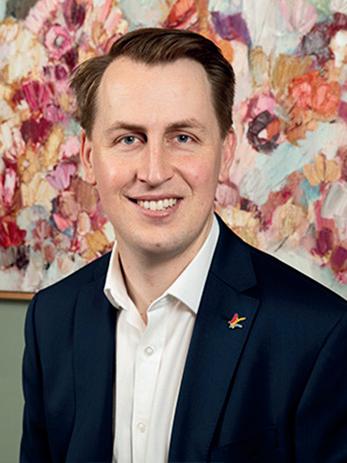
THE CURTAIN CALL
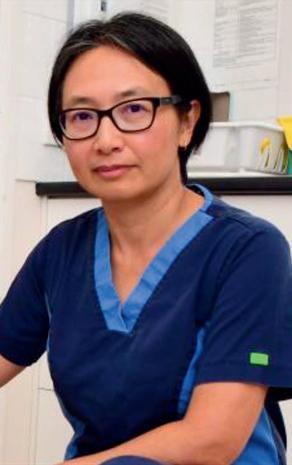
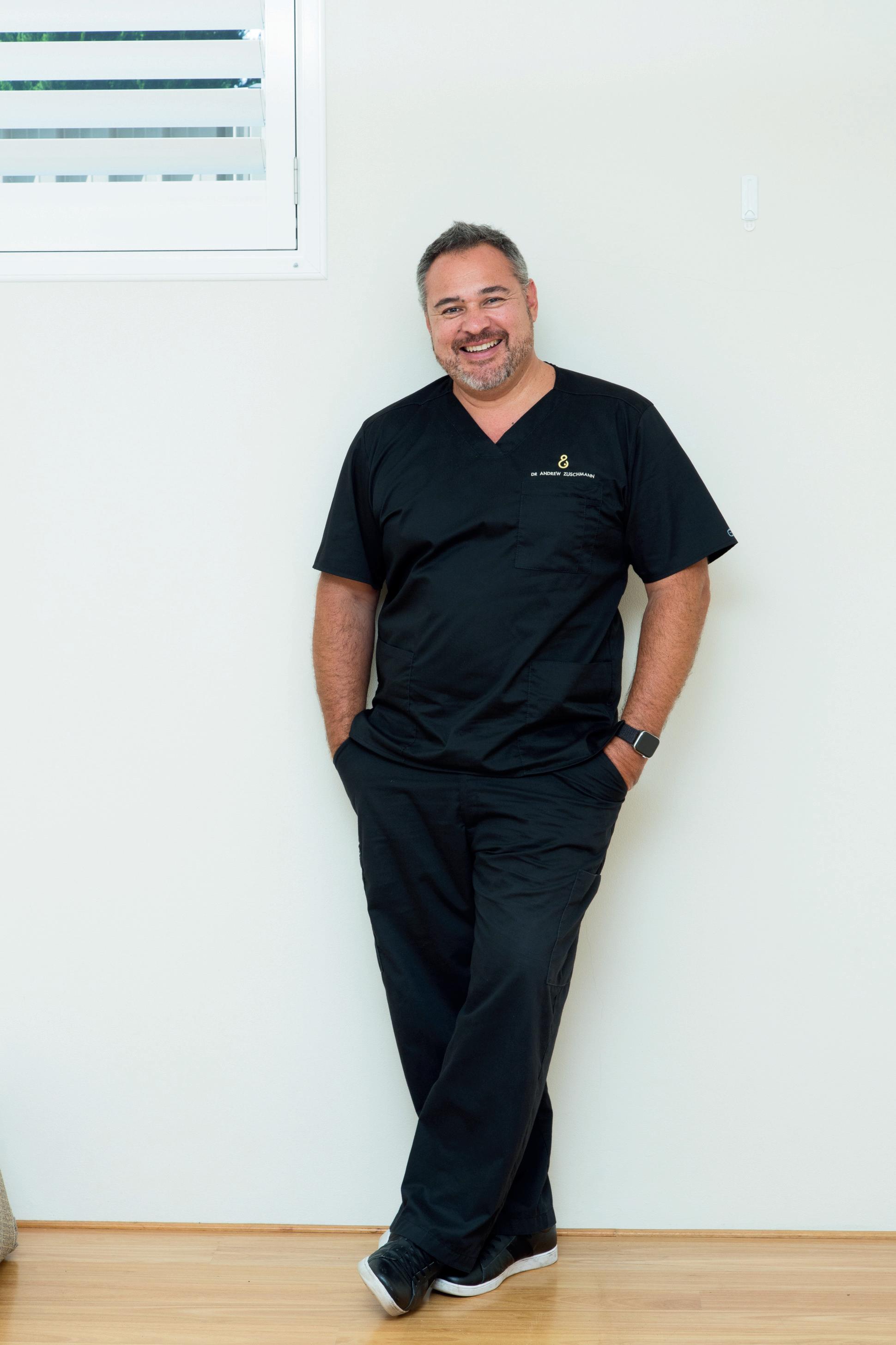
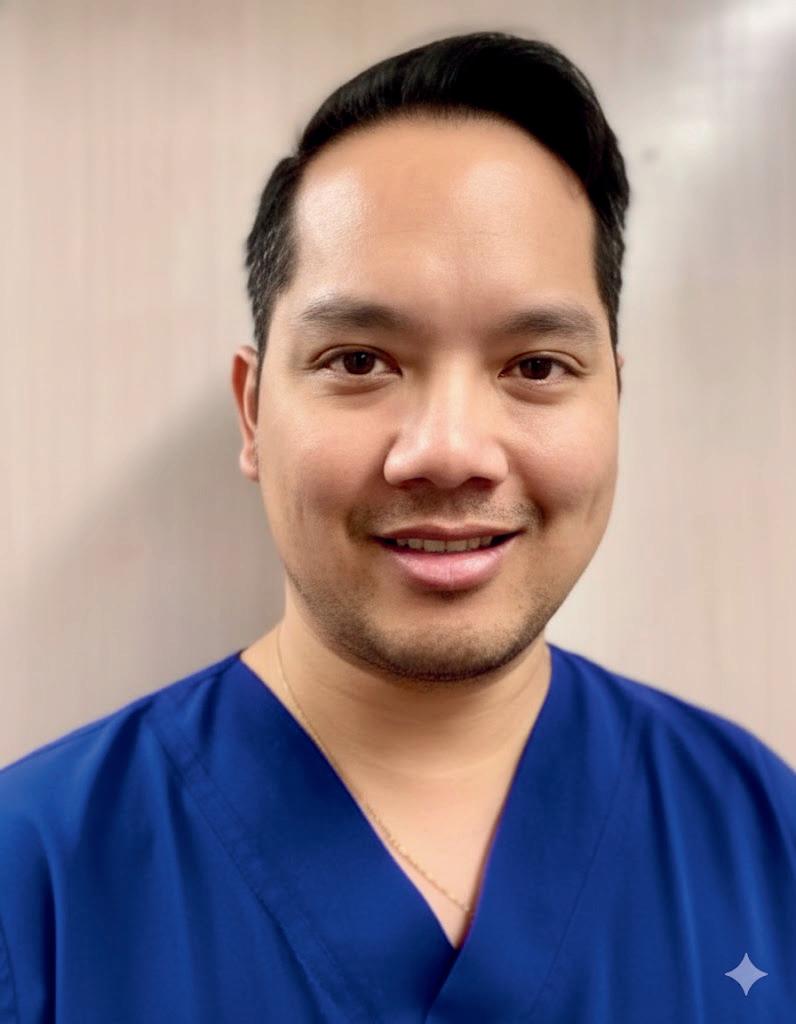
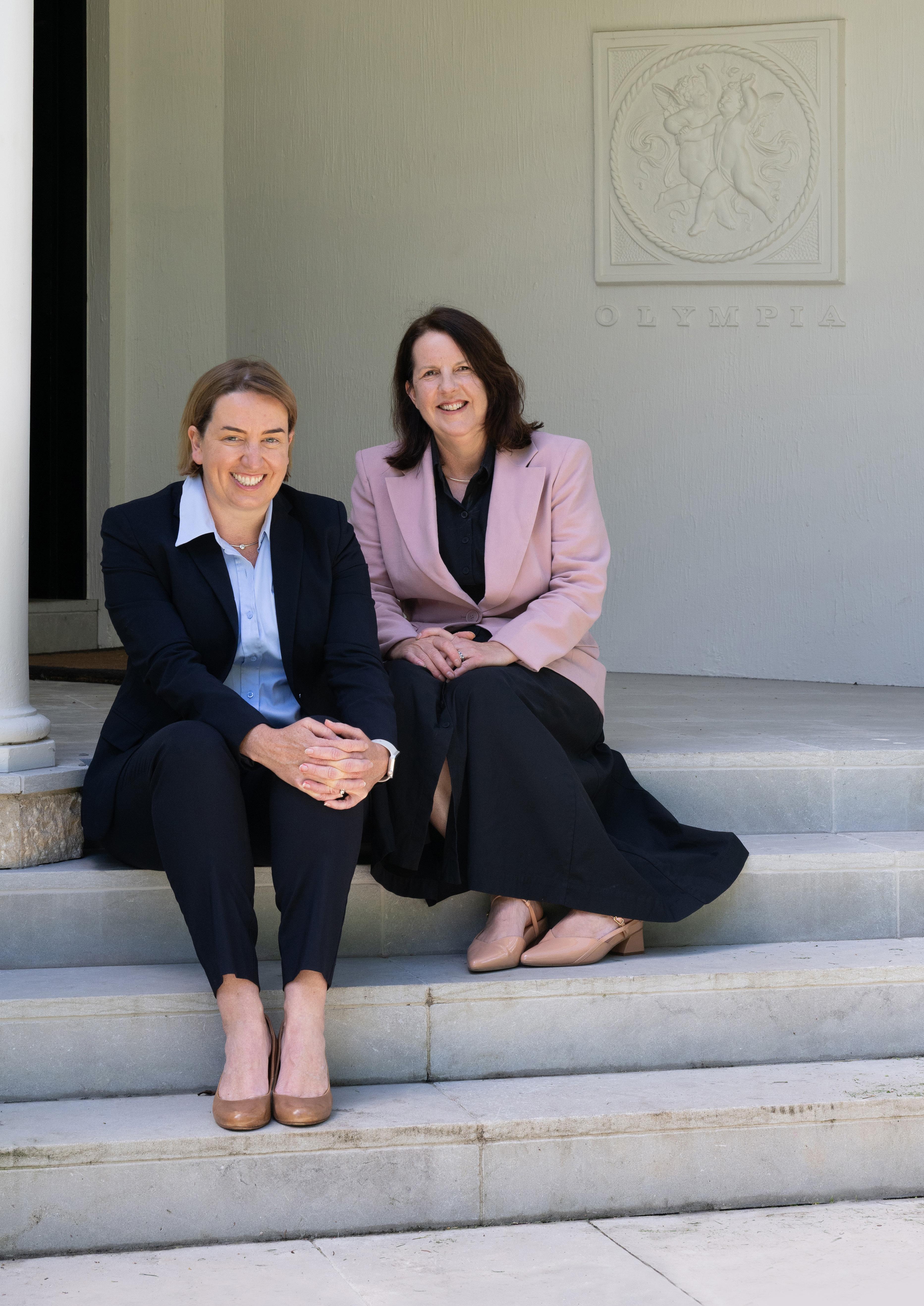
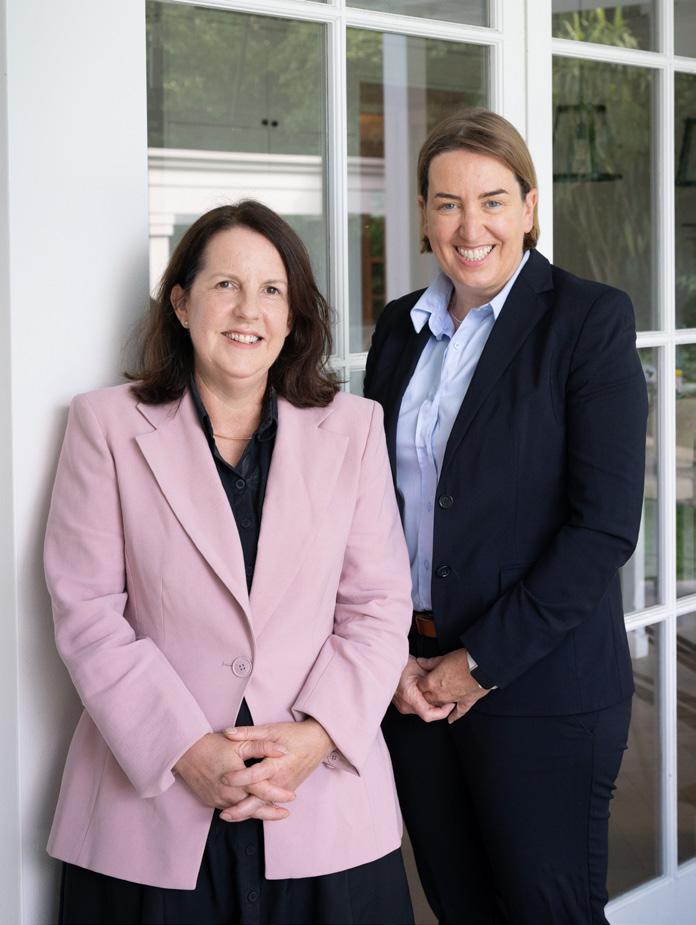
The end of an era for Dr Kathryn Austin and Fiona Davies – Page 7



EDITOR’S WORD
CHANGING OF THE GUARD
In this edition of NSW Doctor, we say goodbye to two significant members of the AMA (NSW) family.
Dr Kathryn Austin finishes her term as the 131st president of AMA (NSW) and Fiona Davies steps down after almost 28 years with the association, including 18 as CEO.
Jacob Gormley talks to Dr Austin on her successes and regrets over the past two years, while I sit down with Fiona Davies to reflect on her formidable career at the top.
Both have spearheaded several wins for AMA (NSW) recently, including the continuation of private services at Northern Beaches Hospital; while also tackling workforce shortages and unprecedented pressure on public hospitals.
Hearings for AMA (NSW)’s Visiting Medical Officer arbitration hearings have been underway for several weeks and we are very grateful to all those who have provided evidence or given statements. Twenty-eight statements have been provided, plus evidence from accountants and a health economist.
In this edition, Director of Workplace Relations Dominique Egan explains our case and provides details on some of our claims.
Workplace Relations senior advisor Anastasia Livanova covers the spike in general protections claims involving dismissal under the Fair work Act, and explains the pitfalls for members, while policy assistant Jasmine Digges looks at Voluntary Assisted Dying processes in NSW in the wake of ABC radio announcer James Valentine’s recent death.
Jacob Gormley also talks to junior doctor and former Medical Student of the Year Chris Farag on his ambitions for his career. Thanks for reading.
Australian Medical Association (NSW) Limited
000 001 614
STREET ADDRESS
69 Christie Street
ST LEONARDS NSW 2065
MAILING ADDRESS
PO Box 121, ST LEONARDS NSW 1590
Telephone (02) 9439 8822
Outside Sydney Telephone 1800 813 423
Email magazine@amansw.com.au members@amansw.com.au www.amansw.com.au
The NSW Doctor is the quarterly publication of the Australian Medical Association (NSW) Limited.
Views expressed by contributors to The NSW Doctor and advertisements appearing in The NSW Doctor are not necessarily endorsed by the Australian Medical Association (NSW) Limited. No responsibility is accepted by the Australian Medical Association (NSW) Limited, the editors or the printers for the accuracy of the information contained in the text and advertisements in The NSW Doctor. The acceptance of advertising in AMA (NSW) publications, digital, or social channels or sponsorship of AMA (NSW) events does not in any way indicate or imply endorsement by the AMA.
AMA (NSW) BOARD
Dr Kathryn Austin, president
Dr Fred Betros, vice president
Dr Michael Bonning
Dr Costa Boyages
Dr Brian Fernandes
Dr Amandeep Hansra
Dr Jacqueline Ho
Dr Theresa Ly
Dr David Malouf
SECRETARIAT
Chief Executive Officer, Fiona Davies Director, Workplace Relations, Dominique Egan
Editor
Kate Benson kate.benson@amansw.com.au
Cover Photography
Hayden Brotchie
Design
Cally Browning cally@barecreative..com.au
Advertising enquiries
Jacob Gormley Jacob.gormley@amansw.com.au
magazine@amansw.com.au
www.facebook.com/amansw
CEO’S WORD
HEALTH REMAINS THE NEVER-ENDING STORY
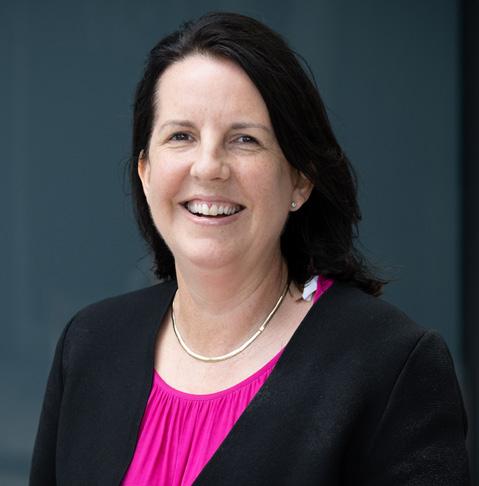
For most months of the past 28 years, I have found myself turning to writing an article for NSW Doctor. Prior to becoming CEO, I wrote for most editions with features about various policy issues, a regular workplace relations column and then for many years a column called “The Good, The Bad and The Ugly” about the variety of topics I encountered in medico-politics.
My NSW Doctor columns sometimes got me in some trouble. During the height of the terrible times of the Campbelltown-Camden crisis, I wrote a scathing attack on faceless bureaucrats and then had to confront those same very angry faces at a meeting with the Director General of NSW Health. As noted elsewhere, I have actually reflected on those words with regret, having to come to see that there are no faceless people in health and those same bureaucrats often put their careers on the line as much as doctors.
In other editions, I wrote a column to challenge doctors about whether they were supporting a freeloader. This was a somewhat misguided attempt to get doctors who do pay their membership to think about their colleagues who were also obtaining some benefit from AMA membership without making a financial contribution. Again, this was one of those ideas that was more effective in concept and many doctors thought it was quite harsh.
My then newborn son, Tom, made an early appearance on the cover of NSW Doctor to illustrate a story on standalone midwife only birthing units. I am pleased to say that 21 years later, Tom is still going well but the two standalone midwife led units at Ryde and Belmont which occupied so much angst have closed.
Most editions, it was the scramble of an increasingly anxious editor, reminding me patiently of a copy
deadline, however, even with this, there was never a shortage of stories to tell or inspiring content to draw upon. Doctors, and health, remain all these years later a source of endless fascination to me (important note, health being the system, not the sick people thing - I still am endlessly squeamish about the sick people thing).
We have all of the old editions of NSW Doctor to stand as a legacy of the stories and people that shaped our health system. We had the prophetic tombstones on the cover for national registration, the months and months of coverage of the indemnity crisis, hopeful doctors from Manly and Mona Vale Hospital standing in an empty block dreaming of a new hospital and so many more.
We had amazing contributors including Dr Eliza Milliken who wrote beautifully and, at times, heartbreakingly about the joys and challenges of life as a doctor-intraining. Her writing about swimming out and picking up plastic rubbish from the ocean as a way of dealing with the grief of the loss of a colleague has stayed with me.
I wrote about the joy of regional and rural travel, where I was always running late and often lost in the pre-sat nav era. I loved getting to meet our rural and regional doctors and their families who invited me into their homes.
Over the years, we have also covered the amazing presidents who make AMA (NSW) what it is. Every two years, I have had the joy of working with a new and inspiring doctor with a fresh passion and interest. All of our presidents change the AMA in their own way and I have taken something from all of them. I have been sorry to have had to eulogise three of my former presidents in Andrew Keegan, Saxon Smith and Brian Morton, all heavy losses for the AMA family.
I would like to thank all of the amazing AMA (NSW) staff and members who have contributed to NSW Doctor over the years. You have all added so much to the story of my time with the AMA.
For now, from me, my heartfelt thanks for a wonderful 28 years and my best wishes to the AMA and our members for the future.
Fiona Davies - CEO, AMA (NSW)




Hold onto your liquidity No cash deposit required for many clinics
Bank-grade security with S&P A A- rated, same as big four banks
Accepted by major landlords including Centuria Healthcare, Dexus and EG Funds




FEATURE
DRIVEN AND UNRELENTING: A PRESIDENCY DEFINED
As outgoing AMA (NSW) president for 2024–26, Dr Kathryn Austin leaves the role much the same way she entered it - clear in purpose, grounded in practice, and unafraid to speak plainly about the challenges facing healthcare in NSW, writes Jacob Gormley
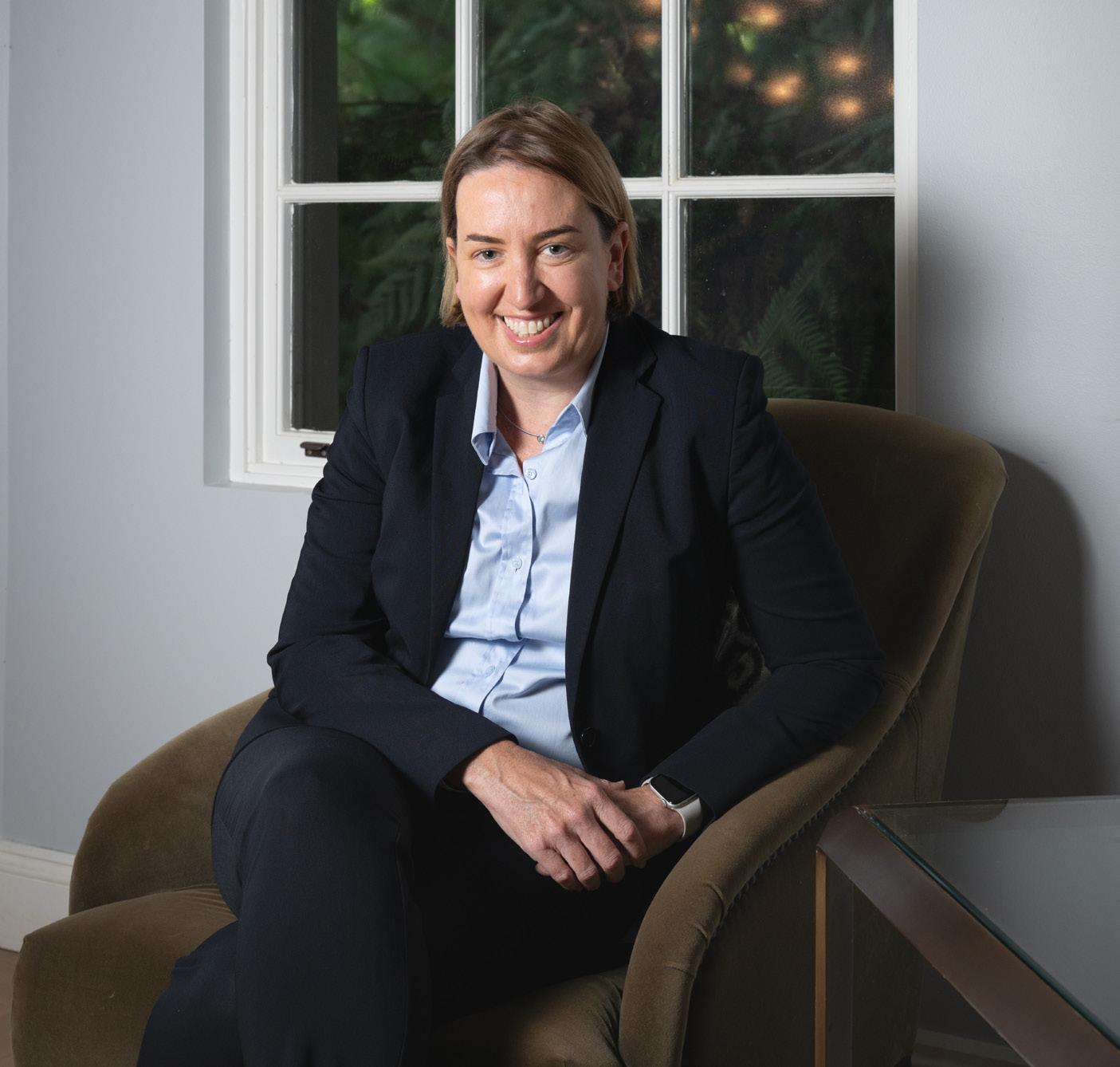
In her youth, there was never really a question of the path Kathryn Austin would follow.
“I always knew I wanted to be a doctor,” she says.
There was no defining moment, no single influence. Just a quiet certainty that stayed with her from childhood through to medical school, and eventually into one of the most demanding specialties in
medicine. She was the first in her family to pursue the profession, taking an early detour through pharmacy, not as an alternative, but as a deliberate foundation. Medicine was always the goal.
It is a path that has shaped not only her clinical career as an obstetrician working in high-risk pregnancy, but also her leadership style. Obstetrics, she explains, offered everything she was looking
for -it was procedural, intellectually demanding, deeply human and emotionally complex.
It also taught her that medicine, at its core, is about navigating complexity while never losing sight of the person in front of you.
That philosophy would later define her presidency of AMA (NSW).
There are moments for all of us that leave a permanent mark. For Dr Austin, one of those came during her sub-specialty training. A maternal collapse. A retrieval. A baby saved. A mother lost.
It was a confronting experience, one that forced her to reckon with the limits of medicine and the weight of responsibility that comes with it. But rather than stepping back, she leaned in. It sharpened her understanding of resilience, teamwork, and the importance of support systems within and outside the hospital.
When Dr Austin became AMA (NSW) president, she did so without fixed expectations but with a very clear sense of direction.
From the outset, her focus was on protecting the independence of the medical profession, strengthening public and private healthcare systems, and ensuring
patients across NSW could continue to access high-quality, doctor-led care.
Unlike many in leadership positions, Dr Austin never stepped away from clinical practice. She continued working in hospitals while serving as president, and that proximity to the frontline has been central to her approach.
“I’m a clinician working in a hospital every single day. Those issues are my bread and butter.”
Over the course of her presidency, AMA (NSW) has continued to be one of the most prominent voices in healthcare policy in the state. Through sustained advocacy and detailed analysis of Bureau of Health Information data, the organisation has highlighted the growing pressures on the system. Record emergency department presentations. Elective surgery waitlists stretching beyond clinical recommendations. Patients leaving hospitals without receiving care. Patients presenting to EDs because they are unable to get timely appointments with general practitioners.
Dr Austin has not shied away from confronting these issues directly. She has consistently pushed for honest conversations about the state of the system, and long-term solutions rather than short-term fixes.
Her communication style has played a key role in that. She was described by a journalist as “blunt” when speaking on behalf of the profession. But it is a description she embraces.
“That single line… carries so much weight when you speak for a medical profession,” she says.
FEATURE
For Dr Austin, clarity matters. Not just in clinical settings, but in public discourse. If the system is under strain, she believes it should be said plainly.
That approach has underpinned several key advocacy wins during her term.
Among the most significant was the extension and continuation of private services at Northern Beaches Hospital for another year. Following extensive engagement with government and stakeholders, a variation was secured to allow services to continue, protecting access to care for thousands of patients and maintaining stability within the local health system.
At the same time, AMA (NSW) has been deeply involved in shaping discussions around planned surgery reforms, ensuring that workforce capacity, patient flow and funding considerations remain central to implementation.
Another defining area of work has been the push to modernise Visiting Medical Officer arrangements. Through arbitration proceedings and a substantial body of evidence, the organisation has sought to bring outdated frameworks into line with contemporary practice, recognising the changing nature of medical work and the need to attract and retain a highly skilled workforce.
AMA (NSW) has also continued to advocate for funding reform through its pre-budget submissions and engagement with the Special Commission of Inquiry into Healthcare Funding. The message has been consistent. Funding must reflect real demand. Solutions already exist. What is
needed is the political will to implement them.
But, not every effort has delivered the outcome Dr Austin sought.
One of the most discouraging moments of her presidency, she says, was the failure to improve access to abortion services in NSW.
“It was really disappointing to know that there are political forces at play that do, unfortunately, undermine good policy,” she reflects.
It is a reminder that healthcare does not operate in isolation. Policy is shaped by competing interests, and even evidence-based reforms can stall.
This tension between evidence and politics has been one of the most challenging aspects of the role, but she remains clear-eyed about what is at stake.
“There’s no question that the health outcomes of the residents of NSW will deteriorate if meaningful reform does not occur,” she says.
She points to international examples as warnings. Systems that have tipped too far in one direction, whether fully public or fully private, have struggled to deliver equitable and effective care. Australia, she argues, still has an opportunity to strike the right balance, but that opportunity is not guaranteed.
Population growth, increasing complexity of care, and workforce pressures are converging. Without action, the system will feel that strain more acutely, particularly in rapidly growing and diverse communities.
FEATURE
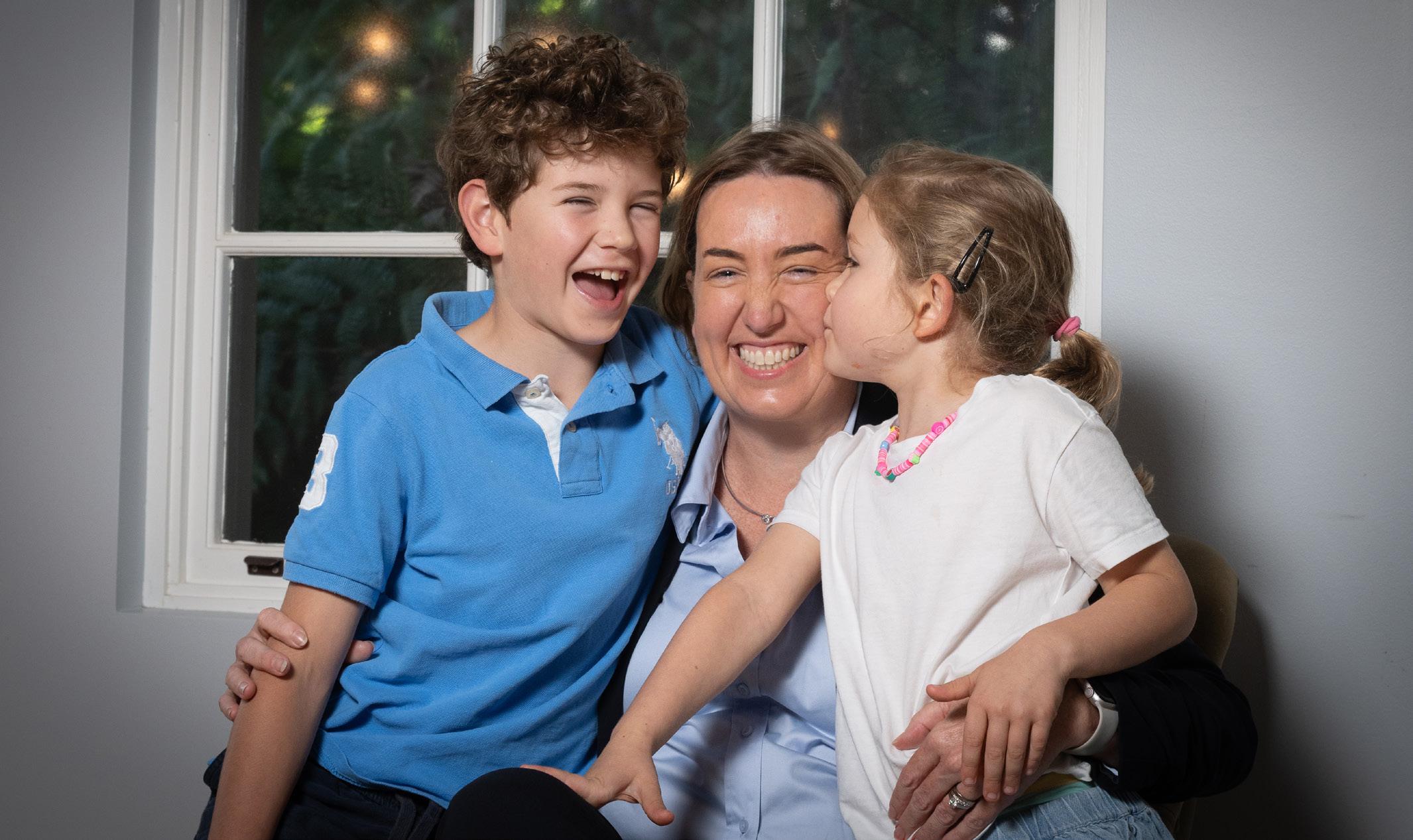
For all the policy and advocacy work, Dr Austin’s presidency has also been shaped by her life outside medicine.
She is a mother to Sam, 11 and Amelia, 6, balancing clinical work, leadership responsibilities and family life with the support of her husband, Nick, who paused his own career to enable that balance.
This has shaped how she thinks about the future of healthcare as a generational issue, and has influenced her push for comprehensive screening for all women during the first trimester of pregnancy.
Early identification of potential risks allows for timely intervention and more coordinated care throughout pregnancy, reducing complications, improving maternal and neonatal outcomes, and supporting healthier pregnancies from the outset. It also creates an
opportunity to address broader health and social factors, helping to ensure better long-term outcomes for both mother and child.
If AMA (NSW) can lock in support from politicians, this policy can change the face of maternal and child health for generations.
At the heart of all her advocacy work is a strong sense of identity.
“I am deeply proud to be a doctor. It is not just a profession, but a responsibility.”
One that extends beyond the bedside into the systems and policies that shape patient care.
“If doctors are not involved in shaping policy, then we, unfortunately, will have a health system that is not fit for purpose.”
Reflecting on the role, she describes it as an incredible opportunity. One
that demands focus, resilience and a clear sense of purpose.
Her advice to those who follow is straightforward. Set a strategy and pursue it with precision. But perhaps more importantly, bring your own perspective.
“This was very much about me … I’m not doing things that I’m not passionate about,” she says.
It is a reminder that leadership, at its best, is about authenticity.
As her presidency comes to a close, Dr Austin leaves a clear, strong voice for the profession. One that speaks with authority, grounded in experience, and unafraid to say what needs to be said.
And that clarity will continue to shape the profession well beyond her term.
Dr Austin with son Sam, 11, and daughter Amelia, 6
AN HONOUR AND A PRIVILEGE TO LEAD STATE’S MEDICS
FEATURE
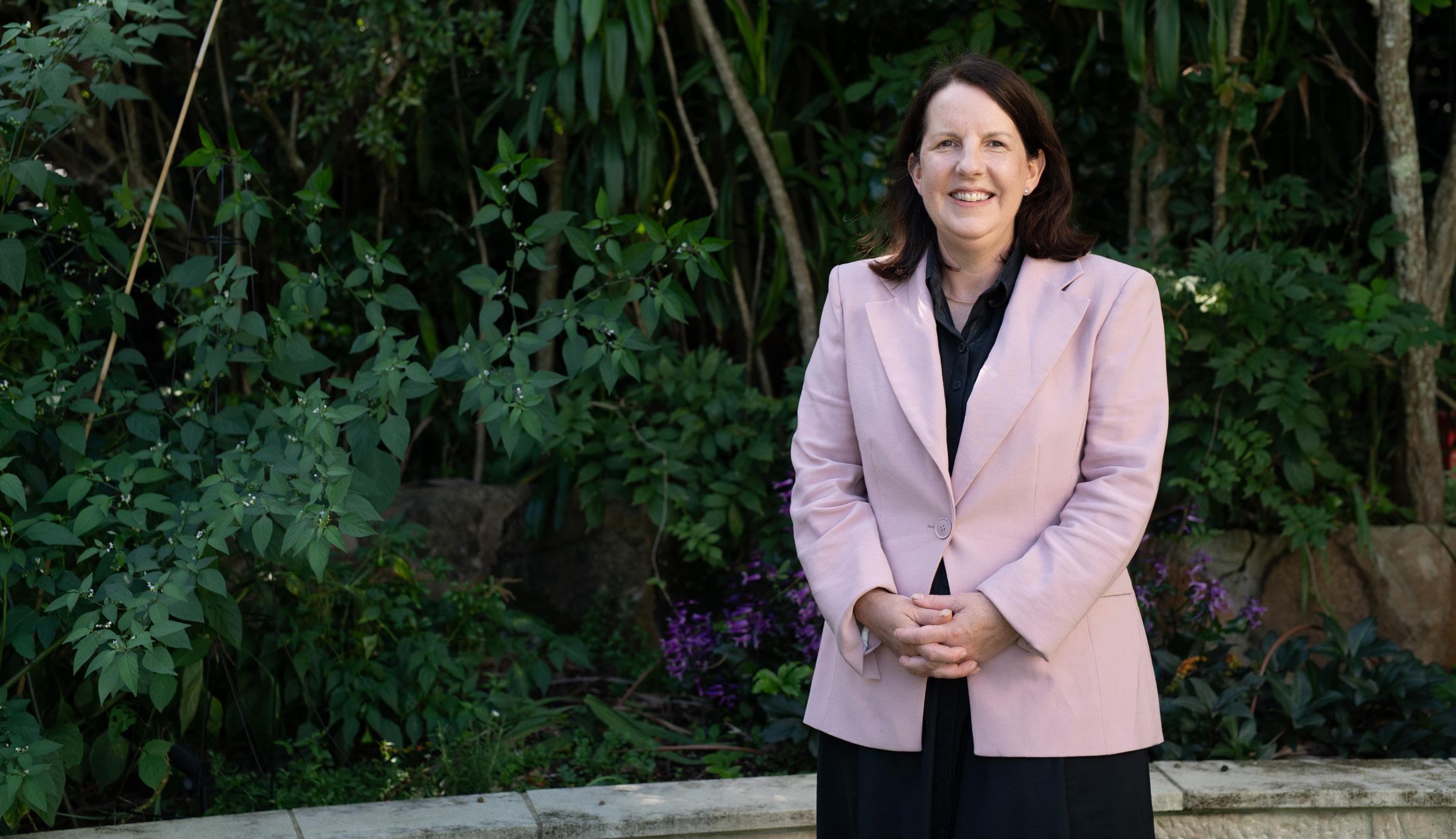
Fiona Davies had no idea how much her role at AMA (NSW) would shape her life - or the incredible legacy she would leave, writes Kate Benson
Almost 30 years after Fiona Davies walked through the doors of the Australian Medical Association in NSW in 1998, the words of a mentor still ring in her ears.
“You’ll always feel proud to work for the AMA,” former Director of Workplace Relations Allen Thomas told her.
At the time, the 23-year-old had little idea that one simple sentence would linger quietly, constantly charting her course – and her moral compassfor decades, like the rhythmic glow of a clifftop lighthouse.
Fiona’s only previous role had been as a secretary at the Industrial Relations Commission, so Thomas’
arrival in her life proved profound –professional and personally.
“He was a remarkable figure - self educated, immaculately dressed, deeply committed, and intensely passionate about representing doctors,” she recalls.
Having come from the wharves and risen through determination rather than credentials, Thomas embodied an almost old fashioned work ethic, dedicating six days a week to his job, without exception, and making himself available whenever a doctor needed help, no matter the hour or location.
“He held the profession in genuine awe - not because of status or authority, but because of how hard
doctors worked and how much responsibility they carried,” she says.
That sense of privilege became foundational to Fiona’s own approach.
Watching him advocate relentlessly through the disputes and challenges that followed the turmoil of the early 1990s instilled in her a strong belief that representing doctors was not just a job, but a vocation.
Within 10 years, Fiona was CEO herself, with a Bachelor of Business and a Masters of Employment Relations under her belt, riding her own waves of upheaval, political transformation, seismic reform in medical regulation, and profound personal change.
Looking back, she recognises the decision to give her the top job was bold, even extraordinary. She was
a young woman with no prior CEO experience and a four year old son at home, stepping into a position traditionally occupied by men.
But, with Thomas’s confidence and the guidance of former AMA (NSW) CEO Laurie Pincott, a seasoned political operator with deep connections and a sharp instinct for advocacy, she had learned how to build campaigns, navigate government, and position AMA (NSW) as a serious force in public debate.
With the wisdom of age, she does acknowledge, however, that watching a CEO is nothing like being one.
“The responsibility is fundamentally different when decisions are yours to make and consequences yours to carry,” she says.
Managing staff proved to be a particularly steep learning curve. She had to develop her own style, make difficult calls, and carry the weight of responsibility for people’s livelihoods. It was, she reflects, akin to the jump doctors make from registrar to consultant - a shift to full accountability.
But with risk, often comes reward and when asked to name her greatest achievement, her answer comes without hesitation.
During her tenure, AMA (NSW) successfully kept the state out of the national registration and accreditation scheme for medical complaint management. The national system, now administered by AHPRA, was widely anticipated to be expensive, bureaucratic, and alienating for doctors - and, in her view, less safe for patients.
That win has made a profound difference to doctors’ day to day
FEATURE
lives, but she suspects many still do not fully appreciate how different - and how fortunate - the NSW system remains.
Her other proudest moments come from public health wins, including the Kids Don’t Fly campaign during Professor Brian Owler’s presidency. That campaign changed the law in NSW to require window locks on apartment buildings, a move the Children’s Hospital at Westmead had been trying to achieve for years.
The campaign brought together the strongest of the AMA’s public health skills; the lived experience of a passionate doctor; the ability to craft a campaign to find allies and a strong media narrative.
Of course, this year’s VMO arbitration – which may see terms and conditions modernised for the first time in almost two decades – is also a powerful highlight, particularly given industrial relations runs deep within her veins. Arbitration, she argues, was always the most valid path to pursue for members.
But regrets, too, come easily to mind. Her most significant centres on the fine balance between supporting doctors-in-training and senior consultants.
In the wake of a highly publicised incident involving bullying claims by a surgical registrar, AMA (NSW) publicly backed the junior doctor without reservation. In doing so, Fiona acknowledges she failed to adequately support consultants who were also deeply affected.
Over time, she’s become increasingly concerned that the profession underestimates the pressure borne by consultants: the risks they carry in supervision, the impact on their private practices,
and the growing scrutiny they face in a system that has shifted dramatically from an era of unchecked authority to one of intense accountability.
She worries about consultant wellbeing and believes the profession has yet to fully grapple with how best to support those in senior roles. Training models, supervision structures, and professional relationships all need re-evaluation if medicine is to function cohesively.
Fiona also worries for doctor-intraining members. While she has seen transformational change in the hours of work and roles, this has been replaced by significant uncertainty in terms of access to training positions and the nature of their future careers. She believes it is essential the AMA focuses on demonstrating the importance and contribution of doctors to our health system.
But achieving wins for doctors takes more than political nous and connections.
When one canvasses reviews of Fiona’s career, the same themes return time and again: passionate, fair, principled. It is almost as if former US president Theodore Roosevelt’s famous line on foreign policy - “speak softly and carry a big stick” – has been her beacon.
And it makes sense because reputation is everything in advocacy, she says. People must trust that you are willing to work with them, even when you disagree – a sentiment not lost on those who have sat across from her at the negotiation table.
NSW Secretary of Health Susan Pearce knows her as “a tireless
advocate of the medical profession always willing to have the tough, frank conversations and to push hard for change and improvements for doctors and the healthcare system more broadly”.
“We may not have shared the same views on matters, (but) Fiona has always been constructive and respectful in her dealings with NSW Health. And more often than not, we would find common ground as, ultimately, we both wanted the best outcomes for both our doctors and the communities they serve.”
Former NSW Minister for Health Brad Hazzard, has a reputation for being a tough operator, but his voice warms when he recalls his dealings with Fiona.
FEATURE
“On my watch as NSW Health Minister for almost seven years (including three in the COVID pandemic) there were four very different AMA (NSW) presidentsand one Fiona Davies.
“The AMA presidents were all excellent professionals and good people committed to representing NSW doctors in delivering worldclass patient care,” he says.
“But, if doors to decision-makers were not kept open, highly competent presidents may have struggled. That was never a problem with Fiona holding the position of CEO at the AMA.
“She was the constant conduit built over two decades of delicate
Supporting Doctors early in their Australian practice
long-term diplomacy with decision-makers and their senior staff. Trust, deep knowledge of often very complex issues, honesty, sincerity, discretion while never backing away from arguing the AMA’s perspective were just some of the qualities that ensured AMA presidents were heard at the highest levels of government.”
Former NSW Health Deputy Secretary for Health System Strategy and Patient Experience and current Sydney Local Health District Chief Executive Deb Willcox has negotiated with the best of them, but calls Fiona “masterful”, affirming their relationship was always one of “trust and mutual respect”.
“The best of advocacy is strength

with an ability to distil the issues, listen and find a way through every day. She always had the medical staff at the front, but patients and the system were never far away. Her legacy will be with a capital ‘L’.”
The ever-humble Fiona, of course, rejects the idea that healthcare is populated by people acting in poor faith and quotes former AMA federal president Andrew Pesce, who once observed that nobody goes into health to do a bad job.
And, she maintains, that when she walks into a room, she does not do so as an individual – but as the AMA, which carries both influence and responsibility.
Fiona’s greatest concern for the health system is the enduring divide between those who manage healthcare and those who deliver it. This tensiondescribed in 2008 by Justice Peter Garling as the “great schism”has played out repeatedly, most painfully during crises such as the Campbelltown and Camden hospital investigations in 2002.
She recalls difficult conversations with senior health leaders and recognises that public blame often destroys careers without solving underlying problems.
She argues that doctors and health system leaders must learn to work together more effectively. Removing chief executives cannot become the default goal of advocacy. These are difficult roles, she says, and finding people willing to take them on is already hard enough. Constructive behaviour and engagement must be recognised and rewarded, not overshadowed by the loudest voices. Against this backdrop,
FEATURE
Fiona is unequivocal about AMA (NSW)’s relevance.
In a crowded landscape of competing voices, AMA (NSW) remains the only organisation representing doctors across the system. Independence is precious - and the AMA exists to protect it, she maintains.
While her greatest personal loss during her career may have been family time, particularly when son Tom was young, her greatest professional gift came when she stood beside doctors in moments of crisis, the quiet conversations in consulting rooms, the privilege of service.
Those small moments, she says, not the public victories, are the true essence of a meaningful career. But, despite her obvious passion for medics and advocacy, she has now set her cap on new ventures. Since her first day at AMA (NSW), Fiona’s personal life has evolved –
eldest son Tom is now 22. She now also has three step-children, Lily, 18, Henry, 17, and Matilda, 16, and an everbusy neurosurgeon husband, Brian.
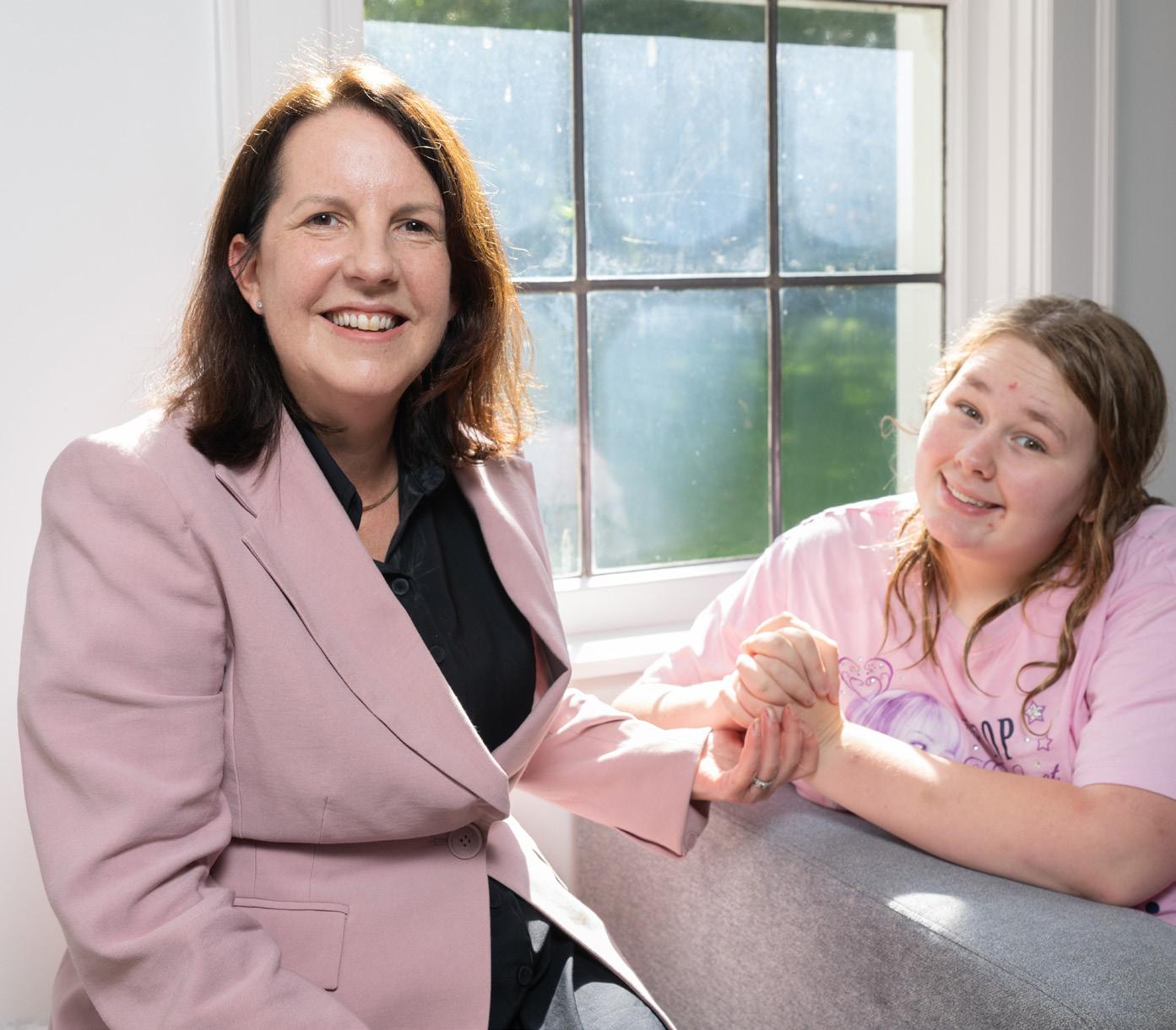
As many are aware, Matilda has special needs, an experience which has only deepened Fiona’s empathy as a leader, while sharpening her focus on a personal future needing much consideration.
She won’t say no to consultancy work down the track, but it is time to circle the wagons and chart a new course for those closest to her.
Perhaps the final word should go to current AMA (NSW) president
Dr Kathryn Austin who says Fiona has “an exceptional ability to view the health system as a complete eco-system – balancing patient needs, workforce sustainability, and policy and political realities while consistently ensuring that doctors’ voices and independence remain central to any agenda”. Now, that’s a hard act to follow.
Fiona Davies with daughter Matilda, 16

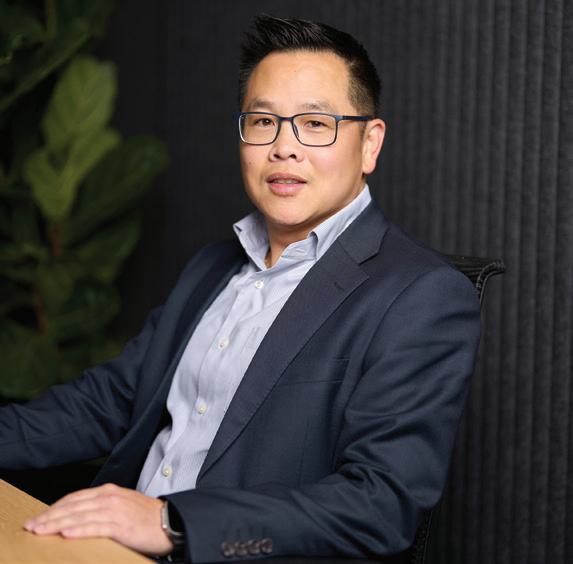
Welcome to the latest edition of Financial Paracetamol.
As always, if you have any questions relating to anything in this edition, please don’t hesitate to get in touch with our award-winning team.
How a structured financial plan for doctors builds confidence through market cycles.
Markets and investment products can feel complex, especially if you’ve only invested sporadically. A structured financial plan cuts through that complexity by giving you clarity around why you’re investing and what you’re working towards, so every decision has purpose.
It starts with clear goal-setting. Breaking goals into short, medium and long-term priorities helps you focus on immediate needs like building an emergency buffer, while planning ahead for milestones such as buying a home or owning a practice. These goals anchor your strategy throughout your medical career.
Investing in areas you understand can build confidence, particularly in healthcare adjacent industries. However, this should be balanced with diversification across asset classes, sectors and regions to manage risk.
Stuart Chan, Partner 1800 988 522
Automating regular investments removes emotion and market timing, keeping your plan on track even during busy periods. Combined with regular reviews as your income and circumstances change, a structured plan helps you navigate market cycles with confidence.

medical@cutcher.com.au

cutcher.com.au
If you are interested in starting your investment journey, or looking to refine an existing portfolio, our team at Cutcher & Neale are ready to help. Visit cutcher.com.au today.
The ATO is cracking down.
For years, many taxpayers have relied on the ATO taking a relatively lenient approach to remitting interest charges and failure to lodge penalties. That approach has changed.
What’s changed? >
The ATO is taking a firmer stance on late lodgements and unpaid tax. Interest and penalty remission requests are now reviewed closely – approval is no longer automatic.
Why delays are more expensive >
From 1 July 2025, the General Interest Charge (GIC) is no longer tax deductible, making late payments even more costly.
What will (and won’t) be accepted >
Remission requests must be backed by genuine, documented reasons outside your control. Without clear evidence, requests are likely to be declined.
One of the simplest ways to stay ahead is timely communication with your accountant. Using a registered tax agent provides access to extended lodgement deadlines and professional support if a remission is required.
Contact us today and avoid any tax-time surprises.

Understand your lending options.
For many Australians, buying a home is more challenging than ever. Government initiatives like the Help to Buy Scheme and the 5% Deposit Scheme aim to bridge the gap, but they work in very different ways, and doctors also have access to specialist lending options worth considering.
Government schemes >
to 30% for existing
or 40% for new
Ownership Structure
Income Limits
Government guarantees up to 15% of the loan so you avoid LMI.
You own the home but share equity with the Government. You retain full ownership of the property.
Yes. Below $100,000 (single) or $160,0000 (joint/single parent). No income limits.
Medical benefits >
While these schemes can suit some early-career doctors, many medical professionals benefit more from medical-specific lending. Banks often view doctors as low-risk borrowers, offering up to 95% LVR with no LMI and greater flexibility.
Cutcher & Neale can help you determine the right path for your circumstances.
Our complimentary video breaks down exactly what you must do to stay compliant and protect your practice.




YOUR GUIDE TO THE VMO ARBITRATION
Our case for change for Visiting Medical Officers has begun. AMA (NSW) Director of Workplace Relations Dominique Egan explains what it all means.

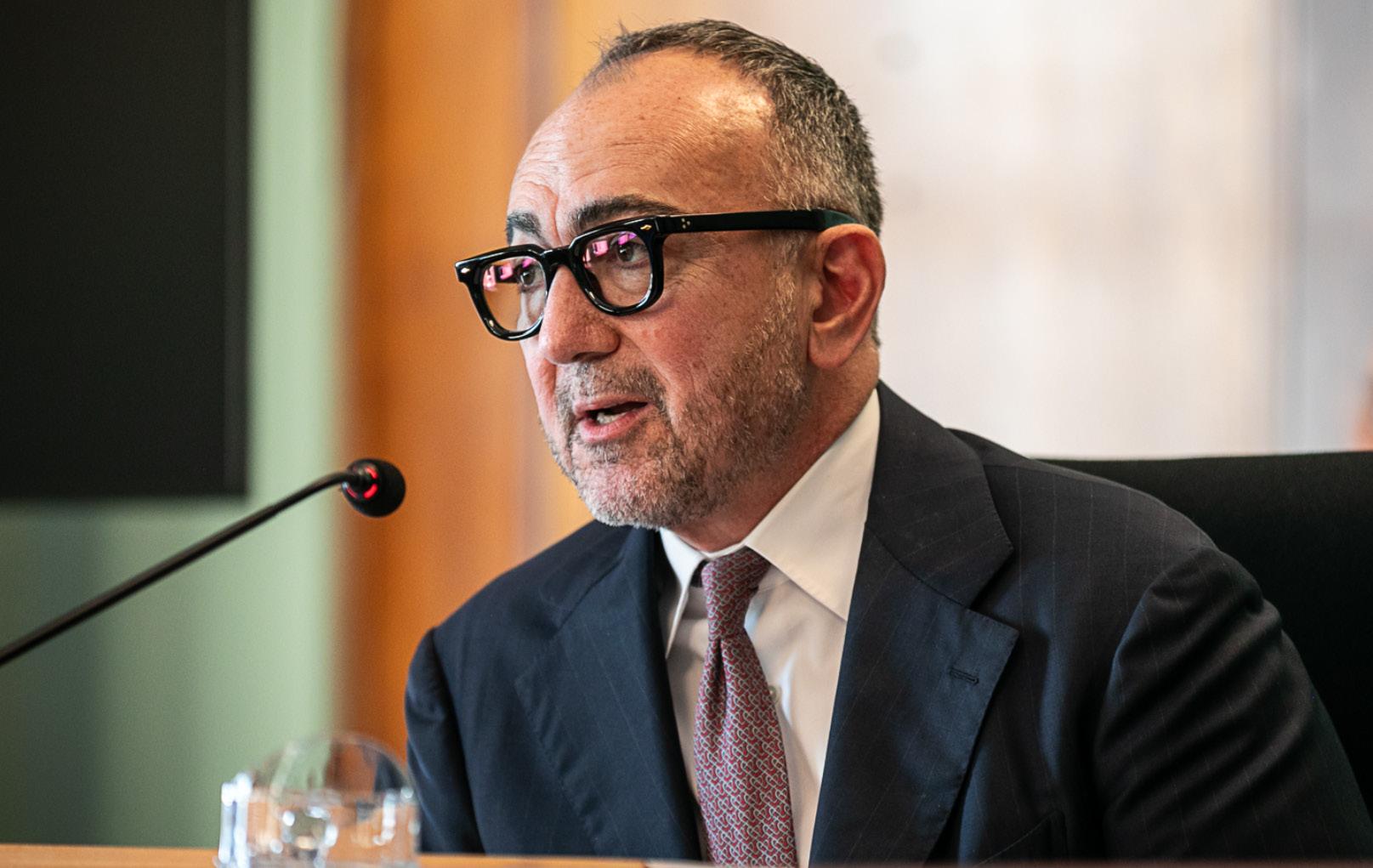
The Visiting Medical Officer Arbitration commenced on April 8, 2026 before the Arbitrator, Justice David Chin.
AMA (NSW) is the registered industrial organisation for Visiting Medical Officers (VMOs) in NSW. There are two VMO Determinations that are the subject of the current arbitration: the Public Hospitals (Visiting Medical Officers Fee-forService Contracts) Determination 2014 and the Public Hospitals (Visiting Medical Officers Sessional Contracts) Determination 2014.
It is the first time since 1993 that there has been a contested
arbitration of the terms and conditions for sessional VMOs, and the first contested arbitration of the terms and conditions for fee-forservice VMOs. There have been changes made to the terms and conditions for both sessional and fee-for-service VMOs in the interim, in 2007 and 2014. At these times, agreement was reached between AMA (NSW) and the Ministry of Health (or its predecessors).
At all times in the lead up to the arbitration, AMA (NSW) has remained willing to engage in discussions with the Ministry of Health to reach agreement and avoid a contested hearing.
Including engaging in six days of conciliation. The position of the NSW Government is, and has been, that all claims made on behalf of public sector employees and VMOs must be determined by the Industrial Relations Commission (in the case of employees) or an independent arbitrator (in the case of VMOs).
The claims being made by AMA (NSW) on behalf of VMOs are claims to modernise the terms of the Visiting Medical Officer Determinations to reflect the current ways VMOs work.
The following is an overview of the claims being made by AMA (NSW).
WORKPLACE RELATIONS
Remote work
With advances in technology, VMOs can provide meaningful contributions to the provision of patient care when not in the hospital. Technology also means that increasingly VMOs are contactable 24/7 regardless of whether they are rostered oncall. It is no longer the case that to contact a VMO a call needs to be placed through the hospital switchboard, they are readily contactable on their mobile telephone at any time.
Evidence in the proceedings includes evidence from VMOs that they can provide meaningful contributions to patient care when they are not at the hospital because of the quality and quantity of information they can access via the electronic medical record, imaging and test results.
AMA (NSW)’s claim is not a claim that VMOs should not have to attend the hospital if called and it is clinically indicated that they need to do so, but that where meaningful contributions can appropriately be made without attending the hospital, VMOs should be remunerated for doing so.
Loadings (other than for call-backs)
The NSW public hospital system has moved from a system where services were provided within the hours of 7am to 6pm to a system where services are provided 24/7. Staff (other than consultants) who are required to work after 6pm during the week or on weekends are paid loadings for doing so. VMOs are not paid such loadings.
There are local health districts which require VMOs to attend patients within 24 hours of admission regardless of clinical need, LHDs which direct VMOs to undertake a ward round on weekends (again irrespective of clinical need), and operating lists are scheduled on weekends (often wait-list reduction work) or on weekdays run past 6pm. AMA (NSW) submits that if the LHD directs a VMO to provide services outside the hours of 7am to 6pm or on the weekends, then the VMO should be paid a loading. If a VMO chooses for convenience to attend outside of the hours of 7am to 6pm or on weekends, then the loading would not be payable.
Call-back loadings
AMA (NSW) is also seeking a change to the loadings that apply when a VMO provides a service pursuant to a call-back, essentially increased loadings across the board but particularly at more unsociable times.
On-call Allowance
Under current arrangements, fee-for-service VMOs are not paid the on-call allowance. AMA (NSW) is making a claim for the on-call allowance to also be paid to feefor-service VMOs.
AMA (NSW) is also seeking an amendment to both Determinations that the on-call allowance is always payable when a VMO is rostered on-call. The on-call allowance is a payment that reflects the burden of being on-call. Being on-call means a VMO must remain accessible by telephone, a restriction of locality
The NSW public hospital system has moved from a system where services were provided within the hours of 7am to 6pm to a system where services are provided 24/7.”
within reasonable proximity of the hospital and a necessary condition of sobriety. VMOs who are rostered on-call, whether they are at the public hospital undertaking a ward round or theatre list or elsewhere, must be available to attend to calls made about public patients, often for emergencies or for consultation by less-senior or less-specialised staff.
Regional VMOs
AMA (NSW) is seeking changes to both Determinations to improve attraction and retention of VMOs to regional areas. The Professional Support Payment (PSP) was introduced in 2007 to assist VMOs with the costs of continuing professional development expenses and other professional expenses. The amounts available to VMOs have not been indexed since 2007, yet the costs incurred by VMOs such as those associated with attending conferences, be in registration fees, accommodation and/or travel have increased considerably.
WORKPLACE RELATIONS
The 2025 VMO Survey results show 46 per cent of respondents were unaware of the PSP. One hundred and twenty four of 484 regional VMOs made a claim for the PSP in 2024.
AMA (NSW) is seeking to change the PSP from a reimbursement for expenses to the payment of grants: one payable when a VMO relocates to a regional area (recruitment allowance) and a second payable each year that a VMO remains in a regional area and providing services under their VMO contract. AMA (NSW) is also proposing to simplify the eligibility criteria to participation in an on-call roster (unless otherwise excused) and to live within a 75-kilometre radius of a regional hospital where services are
provided (or such other radius as may be approved).
AMA (NSW) is seeking the right for regional VMOs to take up an appointment at a tertiary or quaternary hospital so they have professional development opportunity to work with peers in these facilities where greater volumes of work is undertaken, and/or to observe and participate in the provision of care they may not have had the opportunity to be involved in while working in a regional location. Such an initiative will benefit the VMOs and the patients of regional and rural NSW.
AMA (NSW) is also seeking a right for regional VMOs to make a claim for payment under the FFS and
sessional Determinations where they have to travel between a number of hospitals in the LHD to provide services.
Payment of loadings where no registrar capable of working unsupervised
There is a provision in each of the existing Determinations whereby a VMO is entitled to the payment of an additional loading for a call-back where there is no RMO, registrar or CMO on duty 24/7. The issue that is frequently raised is that unless a Registrar is on duty with sufficient experience to work independently (under remote supervision), the likelihood of a VMO having to go back into the hospital is much greater. As
Arbitrator Justice David Chin
WORKPLACE RELATIONS
such, AMA (NSW) is seeking the payment of an additional loading where there is no Registrar able to work independently.
Background practice costs
Sessional VMOs are paid an allowance for background practice costs. This is to compensate the VMO for the costs of running their private rooms, private rooms which increasingly accommodate public patients in the absence of public outpatient clinics. AMA (NSW) is seeking the extension of the payment of this allowance to fee-for-service VMOs.
Payment for cancelled cases
There is provision in the current Determinations for VMOs to be paid in certain circumstances if a list is cancelled.
Feedback from VMOs has been that it may not be the entire list that is cancelled, but one case or cases on a list are cancelled resulting in losses for the VMO. The VMO cannot replace that work with work at another hospital or with consultations in rooms. If there is other work to be done at the hospital the hospital can direct the VMO to undertake that work in order to be paid, or if there is no other work, then the hospital can excuse the VMO from attendance in order to be paid for the cancelled cases in the same way as occurs for cancelled lists.
Private patients in public hospitals
VMOs often provide services in circumstances where they believe
the patient they are treating is public only to be advised some weeks or months later when their VMoney claim is rejected that the patient was in fact private.
The VMO, having not provided the patient with informed financial consent about their fees, not holding billing information for those patients must then seek out this information and realistically may only bulk bill or no gap bill these patients in circumstances where informed financial consent was unable to be obtained.
A complicating factor in some cases is whether a VMO is entitled to privately bill if they did not provide the service, but instead, supervised the registrar providing the service on the basis the patient was thought to be public. Under the Commonwealth Medicare Benefits Schedule, many items require personal performance for a claim to be made.
An additional and increasing concern for VMOs is that if the patient is private (where no TM indemnity is available) any negligence claim made is made against the VMO’s own professional indemnity insurance. Medical indemnity premiums, after a period of relative stability, are once again increasing, and for some specialties significantly so. AMA (NSW) is making the following claims:
• If a patient is admitted under the care of a VMO, the VMO must explicitly agree to accept the patient as a private patient. If this does not occur, the VMO has the option to claim for the services provided under his or her VMO contract.
• Additionally, if the VMO has not explicitly agreed to accept or provide services to a patient as a private patient then the VMO is entitled to be indemnified by TMF. TMF cover is currently offered to VMOs in regional areas for private inpatients (subject to conditions).
Remuneration
AMA (NSW) is seeking remuneration increases for sessional and fee-for-service VMOs. The basis for these claims includes the changes in the value of the work undertaken by VMOs, increases in productivity and efficiency, changes in the value of money warranting a change in the rates of remuneration, and changing social, economic and market circumstances.
Evidence
The evidence that has been filed by AMA (NSW) includes statements from 28 witnesses, and expert evidence from accountants and a health economist.
AMA (NSW) once more extends its thanks to VMOs for giving generously of their time and expertise in support of the case for change and extends thanks the many VMOs who have engaged with us in recent years as we have prepared for the arbitration.
AMA (NSW) also acknowledges expertise of the legal team: Mr Ian Neil SC, Michael Seck, Michael Whitbread, and Scott Chapman and Luke Depares and their team from HWLE Lawyers.
AI AND THE SPIKE IN CLAIMS
General protections claims involving dismissal under the Fair Work Act 2009 (Cth) are increasing at an unprecedented rate. What is driving this change, asks senior Workplace Relations adviser Anastasia Livanova.

In the 2024-25 financial year, the Fair Work Commission (FWC) recorded 6,209 general protections dismissal applications, a 27 per cent increase above the five-year average. The trend has accelerated further in the first quarter of 2025–26 alone, general protections dismissal claims rose 57 per cent above the three-year average.
FWC president Justice Hatcher has described this growth as “unsustainable”, prompting procedural reforms in late 2025 and further changes expected in 2026.
Why are general protections claims rising and what does this mean for you and your private practice? Before examining the drivers behind this surge, it is important first to understand what a general protections claim is and the key elements that make up such a claim.
What is a general protections claim?
A general protections claim arises when an employee alleges they were subjected to adverse action such as dismissal, demotion or
changes to their role for a prohibited reason. A prohibited reason includes:
• exercising a workplace right (such as making a complaint, requesting flexible work or taking leave)
• engaging in industrial activity
• discrimination based on race, sex, age, disability, family or carer’s responsibilities, pregnancy, religion or other protected attributes
• temporary absence from work due to illness or injury
WORKPLACE RELATIONS
To put it into context, examples of breaches of general protections provisions could be:
• dismissing or demoting an employee because they have taken paid personal leave;
• placing an employee on a Performance Improvement Plan because they made a bullying complaint about another colleague;
• not employing a prospective employee because of their gender or family responsibilities.
Importantly, a breach of the law may occur where a protected attribute was one of a number of reasons for the employer taking adverse action against an employee.
General
protections vs unfair dismissal
Most employers are familiar with unfair dismissal claims, but general protection claims carry much greater risk because they operate differently. Key differences include:
• Reverse onus of proof. Once an employee alleges that adverse action was taken for a prohibited
reason, the burden of proof shifts to the employer. In effect, the employer is “guilty until proven innocent” and must demonstrate that the decision was based solely on lawful and legitimate reasons.
• No minimum employment period. Unlike unfair dismissal, general protection claims do not require any minimum service or completion of probation. An employee who has worked for only one day or even a prospective employee who was never hired can still bring a general protections claim.
• Uncapped compensation. If an employee succeeds in a general protections claim, there is no cap on compensation. Awards exceeding $1 million have been made in these matters, making them a significant financial risk for employers.
Why are general protections claims increasing?
General protections claims are increasing for several reasons but a major driver behind the surge

is the growing use of Artificial Intelligence (AI). Employees using AI chatbots can now produce applications in a matter of minutes, often without fully understanding the legal issues involved and statutory deadlines.
A recent example is the Pennisi v Prime Group Australia Pty Ltd & Mark Richards [2026] FWC 352 decision. In this case, the FWC rejected an attempt by an employee to lodge a general protections claim six months out of time. The usual timeframe to file a general protection claim is 21 days from dismissal. What makes this case notable is that the employee submitted 53 pages of material that the FWC determined had been generated by AI. The FWC noted it was difficult to identify the relevant considerations because the AIgenerated content was repeated multiple times and with each repetition, the reasoning changed or evolved.
General protections claims are also increasingly being used as an alternative to unfair dismissal claims, particularly by employees who do not meet the eligibility criteria to lodge an unfair dismissal claim. The FWC has noted that a significant portion of the surge in general protections claims appear to be unfair dismissal claims in substance, reframed by AI tools as general protections applications to get around eligibility requirements.
The growing volume of claims has led the FWC to update its processes, including more detailed forms and increased early screening of late or incomplete matters.
Practical tips for employers
WORKPLACE RELATIONS
With the rise in general protections claims, there are several steps you can take now to significantly reduce your risk or strengthen your position if a general protection dispute arises.
1. Document the reason for your decision
Clear and consistent documentation is one of the most common areas where employers fall short when responding to a general protections claim. To minimise risk and protect your practice:
• Maintain written records of all performance discussions, warnings, and workplace complaints.
• Ensure decisions, particularly those involving disciplinary action, demotion, restructuring or termination are supported by evidence.
• Clearly identify who made the decision to terminate and the basis for that decision.
• Use objective, factual language in all internal communications and provide the employee a clear reason for termination in writing.
Comprehensive documentation makes it significantly easier to demonstrate that your actions were based on legitimate, lawful reasons and not influenced by any prohibited factors. Without any written evidence, it becomes more difficult to discharge the reverse onus.
2. Education and training
Many general protections claims

In effect, the employer is ‘guilty until proven innocent’ and must demonstrate that the decision was based solely on lawful and legitimate reasons.”
arise not from deliberate wrongdoing but from misunderstandings or simple missteps by employers.
A frustrated comment, a poorly timed email or a snap decision can unintentionally give rise to allegations of adverse action.
You can reduce this risk by ensuring that you and your management team understand what constitutes a workplace right, how conduct can create exposure to a general protections claim and how to properly document the basis for your decisions.
AMA (NSW) offers a range of training options, including webinars and masterclasses, designed to help you and practice managers avoid missteps that commonly lead to general protection disputes.
3. Watch your timing
If an employee has recently exercised a workplace right, such as filing a grievance, requesting flexible work arrangements or
taking leave, be extra cautious because the timing for general protection claims is critical.
Even if a disciplinary action or termination is justified, the timing of your response could create the perception of retaliation. Before taking action, pause and consider whether the timing could be misconstrued. Ensure all communication remains calm, professional and well documented.
4. Get advice before terminating General protection claims carry substantial risk and early advice is often more cost-effective than responding to a claim filed with the Fair Work Commission. If you are considering terminating an employee and need assistance, contact the AMA (NSW) Workplace Relations team for tailored advice. You can contact our team via email workplace@amansw.com.au or calling (02) 9439 8822.




POLICY AND ADVOCACY
CLEARING THE SMOKE ON ILLEGAL TOBACCO TRADE
Australia has long been a leader in tobacco control, but that is slipping away, writes policy assistant Jasmine Digges

Our nation has enjoyed decades of strong policy driving a significant decline in the prevalence of smoking. Yet, while the legal tobacco has been tightly regulated, the illicit market has leveraged a growing price differential and flourished in plain sight.
The result? More than 40,000 retail venues unlawfully distributing tobacco and other nicotine-based concoctions to adults and children alike, along with the promise of a minefield of health consequences in the years to come. A crack-down is long overdue.
Cracking down on oversupply
Research confirms a direct positive association between density of local retail outlets and smoking status. With more than 40,000 venues providing 8.3 per cent of the Australian population with tobacco and nicotine products, the extent of oversupply is staggering. A high density of tobacco retailers not only normalises the purchase of tobacco in everyday environments, but also increases risk of impulse buying, undermines quit attempts and provides easy access to vulnerable consumers (such as our youth).
In our submission to the NSW Legislative Council Inquiry into the illegal tobacco trade, AMA (NSW) urged government to slash storefront numbers to fewer than 1,000, achievable through licensing caps, product seizures and tighter regulations. This demands a coordinated operational approach between NSW Health, NSW Police, Department of Planning and other relevant regulators, with clear escalation pathways, stable funding, cross-jurisdictional data visibility, and a public register of licenses. Without decisive action and collaboration, legislation remains toothless.
POLICY AND ADVOCACY
Prioritising public health
No level of tobacco or nicotine use should be considered acceptable, and efforts to deconstruct the tobacco trade should focus on eliminating consumption, not just reducing it.
Smoke from a single cigarette contains more than 7,000 chemicals (69 linked to cancer), making tobacco a leading cause of illness and death in Australia. Annual deaths attributable to smoking are estimated to make up 8.6 per cent of the national burden of disease, costing us billions of dollars each year in treatment, bedspace and lost productivity. In an overstretched health system, preventable harms are unsustainable.
While traditional cigarette-smoking persists, the rise of novel nicotine products (such as vapes and oral pouches) bring new threats. The contents of these new products often include a concoction of chemicals commonly associated with industrial disinfectants and poisons, with early research linking e-cigarette consumption to cardiovascular, respiratory and potentially carcinogenic risks.
Vibrant colours and fruity flavours aggressively marketed to children both mask and compound the perniciousness of novel nicotine products. In 2022-2023, 28 per cent of young people aged 14 to 17 had tried e-cigarettes – a near three-fold increase since 2019. For the 18 to 24 age bracket, it was 49 per cent. Education campaigns are essential to counteract this targeted advertising and raise public awareness of the harms
associated with tobacco and nicotine products.
Maintaining the excise
Debate regarding tobacco trade in Australia has centred on the excise, with proponents of removing the tax claiming that price differential has been the driving force behind the explosion of a black market. This narrative oversimplifies the issue.
Illicit tobacco is a criminal enterprise built on cheap importation and low profit margins. Australia is a highincome country, with a high floor price for cigarettes. Even without the excise, legal tobacco would remain notably costlier than illegal alternatives.
A 2023 survey by the Cancer Institute NSW identified tobacco cost to be a dominant reason smokers considered quitting, with modelling suggesting that a 10 per cent increase in price cuts consumption by 4 to 5 per cent. The excise has been a powerful lever for realising this trend and should remain firmly intact. The real problem lies in unchecked supply.
Futureproofing
Change is inevitable, but public policy and legislation should always be curated with the future in mind – particularly when it impacts health. The illegal tobacco market has become a game of nicotine-whack-a-mole, where novel products and businesses rear their ugly heads before government has time to respond.
NSW must learn from the examples set by other states. While South Australia used legislation to
Without decisive action and collaboration, legislation remains toothless”
empower ministers to ban novel nicotine or substitute products as they emerged, Queensland invested in free and effective cessation support. A combination of the two would simultaneously prevent uptake and encourage quitting.
Alongside reducing supply and increasing education, aligning NSW with the reforms of other states is a powerful step towards dismantling the illegal tobacco trade, both now and into the future.
POLICY AND ADVOCACY
PRESERVING PATIENT CHOICE TO THE END OF THE LINE
For decades, debates about voluntary assisted dying simmered quietly in the background. Now, that has all changed, writes policy assistant Jasmine Digges.

In 2017, Victoria broke the silence and re-legalised the practice for patients facing life-limiting conditions. Like dominoes, other Australian jurisdictions followed, culminating in the Voluntary Assisted Dying Act 2022 which came into effect November 28, 2023. Since then, 1,426 terminally ill patients in our state have chosen to end their life through VAD, marking a profound shift in how patients navigate their final chapter.
Who can access VAD in NSW?
VAD allows an eligible person to request medical help to end their life. To be eligible, an individual must:
• Be 18 or older
• Be an Australian citizen or have been a resident in Australia for at least three continuous years
• Have at least one condition expected to, on the balance of probabilities, cause death within six months (12 months for neurodegenerative conditions)
• Have decision-making capacity in relation to VAD
• Be acting voluntarily, without pressure or duress
• Have an enduring VAD request
What are the expectations on clinicians?
AMA (NSW) notes that the following is a brief overview, not a comprehensive guide; all clinicians should undertake their own due diligence.
POLICY AND ADVOCACY
Two years since legalisation in NSW, VAD is understandably and appropriately a tightly regulated process. Just as the medical profession supports patients at the very beginning of life, VAD offers a meaningful chance to support patient autonomy at life’s end. With demand rising, more trained and willing practitioners are needed to take on the task of supporting VAD. The first step starts here, with understanding the process.
Clear guidelines and safeguards exist to inform responsibilities, expectations and best practice so that clinicians may feel comfortable supporting their patients through VAD. NSW Health has developed a Voluntary Assisted Dying Clinical Practice Handbook to guide clinicians, and a Voluntary Assisted Dying Prescription and Administration Handbook for authorised administrators.
In NSW, all registered “healthcare workers” may provide information to a patient who initiates a discussion about VAD, but only within the limits of their own expertise. Doctors and other healthcare workers who do not feel confident discussing VAD, or who conscientiously object, should refer the patient to NSW VAD Care Navigator Services or a facility coordinator.
A medical practitioner may initiate a discussion about VAD only if, in the same discussion, they also advise standard treatment options, likely outcomes, and palliative care options. The practitioner receiving the first request for VAD must complete the First Request Form with the Board within five business
Just as the medical profession supports patients at the very beginning of life, VAD offers a meaningful chance to support patient autonomy at life’s end”
days, regardless of acceptance, refusal, practitioner eligibility, or conscientious objection. The practitioner who accepts the first request becomes the patient’s coordinating practitioner.
A prognosis may only be provided by an authorised coordinating or consulting practitioner. Prognoses must be determined on the balance or probabilities using informed clinical judgement.
How does VAD operate in other Australian jurisdictions?
While now legal nationwide, VAD frameworks differ across Australia’s states and territories. Where NSW requires six-month prognosis for non-neurodegenerative conditions, Queensland uses a blanket 12-month prognosis requirement (with Victoria soon to adopt the same). The Australian Capital Territory takes a different approach, imposing no specific prognostic timeframe and instead requiring only that a patient have an advanced, life-limiting condition causing intolerable suffering.
Legislative amendments in Victoria, due to come into effect in 2027, will
remove the ‘gag’ clause prohibiting medical practitioners from raising VAD with a patient, expand the ‘administering practitioners’ to include registered nurses and nurse practitioners, and shorten the minimum timeframe required between first and final requests.
These varied approaches offer valuable insight as NSW progresses along its own VAD journey.
What is next?
The NSW Government commenced its first statutory review of the Voluntary Assisted Dying Act 2022 in November 2025 (which remains underway), with future reviews scheduled to occur on a five-year basis.
AMA (NSW) recognises VAD as a valuable pathway which, in only two years, has significantly strengthened patient autonomy over end-of-life care. However, every effort should be made at this early juncture to avoid premature scrutiny and debate over the legislation, lest it undermine progress and destabilise a mostly well-functioning system.
Still, we should always seek ways to improve our healthcare system. Rising awareness and demand surrounding VAD mean that regular, carefully timed reviews are essential to ensure our state’s legislation keeps pace with societal expectations and other jurisdictions. AMA (NSW) supports future improvement of the VAD system, particularly the VAD portal, and hopes that more education and equitable access to VAD in rural and remote area will be a central focus.



LEARNING IN THE QUIET MOMENTS
Fresh from being named AMA (NSW) Medical Student of the Year, Dr Christopher Farag is already discovering that medicine is as much about the small moments as the big ones. He speaks to Jacob Gormley about purpose, pressure, and what it really means to be a good doctor.
Afew days after an emergency department shift, Dr Farag found himself face to face with a former patient, this time not in a hospital bed, but out in the community. The man recognised him instantly. He hung up his phone, walked over, shook his hand, and smiled.
“He was beaming,” Dr Farag recalls.“ He told me how much better he was doing.”
Just days earlier, that patient had presented with physical symptoms that masked something deeper. Dr Farag had sat with him, listened, and gently uncovered thoughts of selfharm and suicide. There was no rush, no checklist, just time and attention.
Seeing him again, healthier, steadier, was something else entirely.
“He was thanking me,” Dr Farag says. “But in truth, I was thanking him.”
It is a small moment, easy to overlook in the pace of a hospital. But for Dr Farag, just nine weeks into his internship, it captured exactly why he chose medicine. The impact may not always be dramatic, but it is real. That perspective sits at the heart of how he approaches his career, even after being named Medical Student of the Year for 2025. The recognition, he says, was an honour, but also something quieter.
“It gave me reassurance that I’m on the right path,” he says. “More than anything, I want to become a good doctor.”
And that means more than academic performance. It is about balance, leadership, education, advocacy, and community, and he has made a point of pursuing each alongside his studies.
Still, stepping into the hospital as a doctor has shifted his understanding of what that really looks like.
As a student, he saw junior doctors as task driven, moving through the system without much influence. That idea did not last long.
“You’re often the one who knows the patient best,” he says. “And that carries real weight.”
It is not always in the big decisions. More often, it shows up in the details.
A palliative care patient who had not slept in days, finally getting a single room after Dr Farag advocated for them. A patient
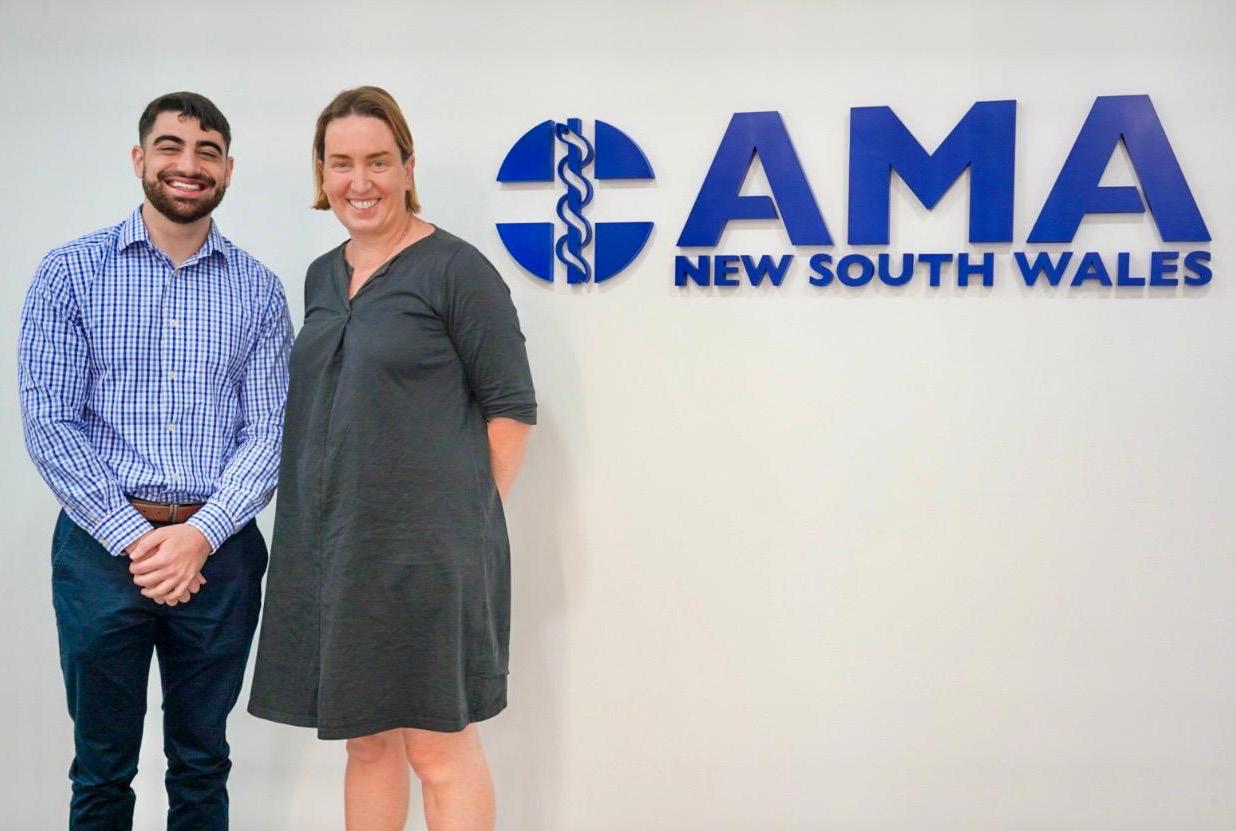
Dr Chistopher Farag with Dr Kathryn Austin - president AMA (NSW)
starting sertraline, reassured after he sat down and explained what to expect.
“They’re not big clinical decisions,” he says. “But they matter deeply to patients.”
These are the moments that have redefined the role for him. Not as a small part in a larger system, but as someone with a unique ability to connect, advocate, and quietly lead.
That sense of responsibility has come with its own pressures.
Starting as an intern, Dr Farag found himself back at square one.
“In medical school, you build a reputation,” he says. “Then you start again. You have to earn trust all over again.”
It is a challenge he feels most in high acuity environments like resuscitations and trauma calls, the very settings he is drawn to. They are fast paced, high stakes, and deeply collaborative, but opportunities are not handed out easily.
“It’s about showing you’re capable, building trust, and gradually being given more responsibility,” he says.
Outside the hospital, there is another kind of balancing act. The long hours have meant less time with friends and fewer gym sessions, something he is now actively working to rebuild.
Despite it all, what keeps him going is a genuine love of medicine, particularly physiology.
“When you love what you’re doing, the hours don’t feel long,” he says.
MEMBER FOCUS

You don’t have to know everything. You just have to care, be curious, and willing to learn.”
That passion has not made him immune to doubt. Even as dux of Western Sydney University Medical School and a major award recipient, imposter syndrome has still crept in.
“Medicine has a way of humbling you,” he says.
Over time, he has learned to see that doubt differently. Not as an issue to overcome, but as something that keeps him careful, reflective, and committed to learning.
Much of that perspective traces back to those around him.
He speaks first about his parents, whose support and stability he credits as the foundation of everything he has achieved. He also points to mentors who have shaped his aspirations, doctors whose humility, empathy, and
approach to patients have left a lasting impression.
At this early stage, Dr Farag describes himself simply.
“I love to get involved,” he says.
Whether it is teaching, sitting on hospital committees, contributing to curriculum development, or building procedural skills, he leans into every opportunity.
His time in countries like Tanzania, Ghana, and Zambia has been particularly influential.
“You learn so much from people,” he says. “It broadens your perspective and reminds you of what really matters.”
For those about to enter the profession, his advice is straightforward.
“You don’t have to know everything. You just have to care, be curious, and willing to learn.”
Looking ahead, he sees himself in critical care, drawn to its complexity, urgency, and reliance on teamwork. But the kind of doctor he hopes to become is defined less by specialty, and more by how he shows up.
“I want to be someone patients trust and colleagues value,” he says.
Back in that moment outside the hospital, shaking hands with a patient who was doing better, a version of that doctor already felt close – all because he took the time to listen.
And for Dr Farag, that is where good medicine begins.
Medihost Telehealth
Secure, seamless & made for Australian healthcare.
Experience seamless, secure, and reliable virtual care with Medihost Telehealth - your trusted partner in modern healthcare delivery.
Whether you’re a solo GP or a multi-site practice, Medihost Telehealth helps you connect with your patients - anytime, anywhere. Book your free demo today. Our solution brings you:
Effortless video consultations with no downloads or logins required.
End-to-end encryption for patient privacy and peace of mind.
Custom branding to reflect your practice’s identity.

Integrated workflows that fit your clinics needs.
AI scribe to automatically generate clinical notes, saving time & improving accuracy.
Medihost Solutions is a valued sponsor of AMA (NSW)
MY PRACTICE
NAVIGATING PRIVATE PRACTICE WITH THE RIGHT SUPPORT
Running a specialist private practice involves far more than patient care. Jacob Gormley speaks with AMA (NSW) member Gregory Falk about the Sydney Heartburn Clinic and the critical role of workplace relations support in keeping his practice running smoothly.

Associate Professor Gregory Falk runs the Sydney Heartburn Clinic, a highly specialised practice focused on reflux disease and complex upper gastrointestinal conditions. With decades of experience in oesophageal surgery, his practice has developed into a centre for both routine and complex
presentations, supported by advanced diagnostics and a strong commitment to long-term patient outcomes.
“I have had a long-standing interest in the oesophagus in its physiology, diagnostics and clinical disease including reflux, hiatus hernia, Barrett’s oesophagus and cancer
and have published extensively on those topics,” Dr Falk says.
That depth of expertise underpins a highly tailored approach to care, with a clear focus on improving quality of life for patients who are often dealing with chronic and complex symptoms.
“The focus is very much on patients’ symptoms and improving quality of life with minimal side effect. Day-to-day this means a focus on patients’ symptoms and reappraisal of the symptomatic outcome following any intervention,” he says.
Behind that clinical precision, however, sits the reality of running a private practice, something Dr Falk says has become increasingly complex over time.
From staffing and compliance to navigating evolving workplace laws, the administrative demands can be significant, particularly for a highly specialised service.
“Employment of staff offers a great deal of constraint due to changing legislative matters and again guidance of AMA NSW in managing this and having the ability to consult about sticky problems with staffing requirements for management and remuneration,
Associate Professor Gregory Falk
MY PRACTICE

employment contracts and other practical help has been invaluable,” he says.
It is in this space that AMA (NSW)’s Workplace Relations team has become a critical partner to the practice, providing clarity and confidence in an area that is often difficult to navigate alone.
“Medical defence and the AMA have been valuable in guiding me through those processes for which I’m very grateful,” Dr Falk says.
That support allows the practice to operate with greater certainty, ensuring employment matters are handled appropriately while freeing up time and energy to focus on patient care.
At the same time, Dr Falk says broader pressures on private practice continue to intensify, from funding constraints to shifting patient expectations.
“Private practice is under an increasingly difficult monetary situation with the Medicare rebate falling badly below that which was agreed in 1972 and patients being told by government repeatedly that doctors are overcharging,” he says.
He also points to the growing challenges faced by frontline staff, particularly in dealing with difficult interactions.
“The receptionist frequently has to deal with aggressive, rude behaviour from patients which would have been completely unacceptable two decades ago,” he says.
In this environment, having access to trusted, practical advice through AMA (NSW) has become an essential part of sustaining the practice.
“In private practice one can focus more on the care of patients and do one’s own administration and much more easily develop a focused
The focus is very much on patients’ symptoms and improving quality of life with minimal side effect”
high-level centre of excellence,” Dr Falk says.
That focus remains central to the Sydney Heartburn Clinic, where patients are supported through complex diagnoses with a clear pathway forward and an emphasis on long-term outcomes.
“The most rewarding situation is managing a patient with disease and seeing them in the longer term with good control of their symptoms or no recurrence of their cancer,” he says.
For Dr Falk, the ability to combine specialist expertise with strong workplace relations support has been key to maintaining a high-functioning practice in an increasingly challenging environment.
It is support that may sit behind the scenes, but plays a defining role in allowing practices like his to continue delivering high-quality, patient-centred care.
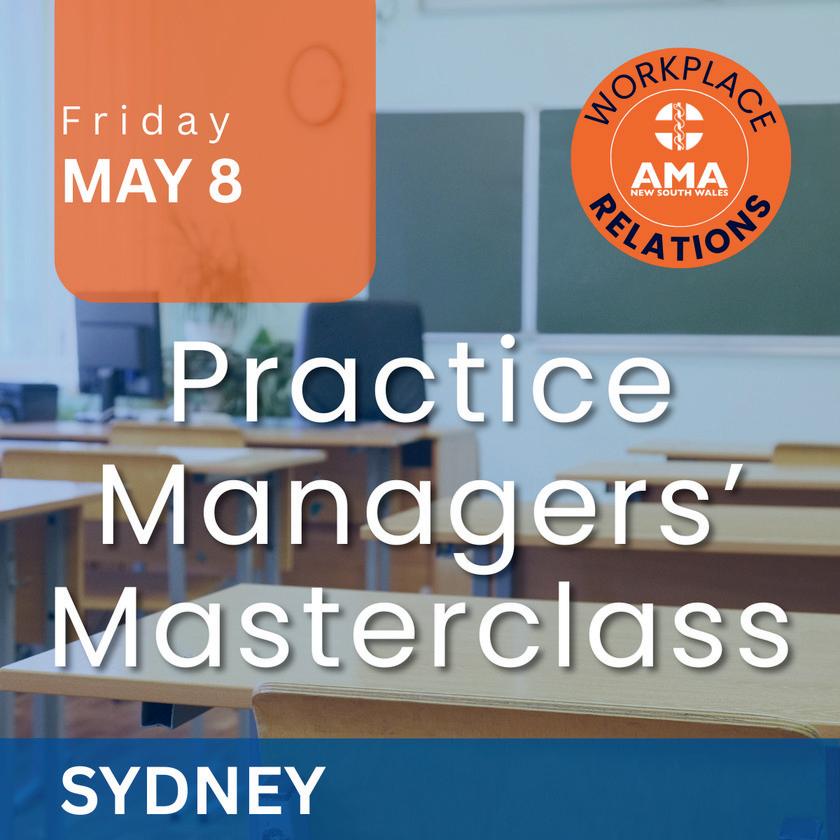
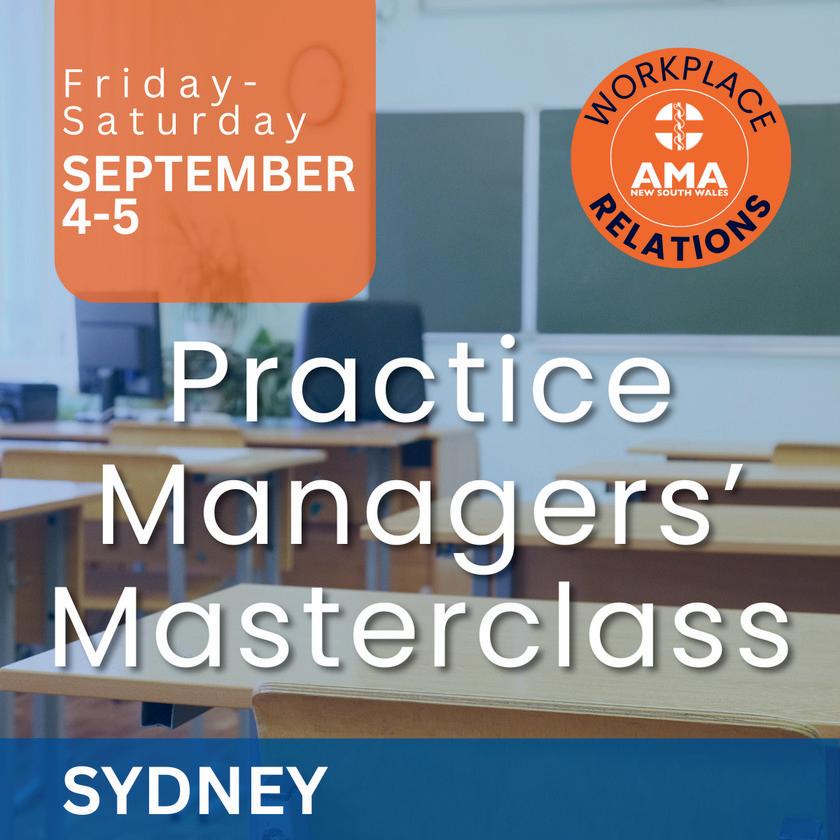
UPCOMING EVENTS
AMA (NSW) hosts a variety of events throughout the year to support, inform and connect the medical profession. From professional development to networking opportunities, our events are designed to help you grow your knowledge and engage with the wider medical community. Explore our upcoming events below.
AMA (NSW) hosts a variety of events throughout the year to support, inform and connect the medical profession. From professional development to networking opportu designed to help you grow your knowledge and engage with the wider medica Explore our upcoming events below.
AMA (NSW) hosts a variety of events throughout the year to support, inform and connect the medical profession. From professional development to networking opportunities, our events are designed to help you grow your knowledge and engage with the wider medical community. Explore our upcoming events below.







Scan now
Scan now
Scan now
Scan the QR code to learn more about our upcoming events and book your place today. Spaces are limited and fill quickly.
Scan the QR code to learn more about our upcoming events and book your place today. Spaces are limited and fill quickly.
Scan the QR code to learn more about our upcoming events and book your place today. Spaces are llimited and fill quickly.


CLAIM & GET PAID FASTER. WITH LESS HEADACHES.


100+ PMS INTEGRATIONS
Integrate with your PMS for a seamless payment & claims experience.
PRIVATE HEALTH CLAIMS
Process claims & quotes inperson or online.1
MULTI-MERCHANT
Add unlimited practitioners to a Tyro Health EFTPOS device, and settle funds separately
AMA (NSW) members get 3-months free EFTPOS rental. Scan to claim.
FAST MEDICARE INVOICING
Instant Medicare claims & rebates with Medicare Easyclaim & integrated PMS partners. 2
DIGITAL-FIRST CONVENIENCE
Secure payment links, deposits and payment holds, card on file and flexible instalment options.
SUPPORT MORE CLAIM TYPES
Medicare, ECLIPSE, DVA, icare NSW, WorkSafe Victoria and other major workers’ compensation schemes
DOCTORS’ HEALTH ADVISORY SERVICE
SUPPORTING DOCTORS BEHIND THE SCENES
Support often comes in quiet, private moments when doctors need it most. Dr Katherine Hutt reflects on the importance of peer support through Doctors’ Health NSW and why it must be protected.
Imagine for a moment a time when a doctor needs support. It might be a colleague. It might be you.
The circumstances will vary. A complaint. A procedure gone wrong. A failed exam. A difficult shift. Health issues. Trouble at home. A relationship under strain. The list goes on. Often the first chance a doctor has to think about themselves is after work, sometimes late into the night. They might be sitting in their car outside the hospital after a difficult shift, or at home in the dark once the house is finally quiet. Sometimes things have been building for a while. Sometimes they have been thinking about making the call for days.
From the outside, telephone support services can look quite similar. A phone number. Someone answering the phone. But a doctors’ health service is a little different.
When someone contacts the 24/7 Doctors’ Health NSW phone line, they are speaking to another doctor. Someone who understands the profession and the pressures that come with it. There is no need to explain what receiving a complaint feels like, or that particular physical sensation when you first realise you may have made an error. Only another doctor truly understands how hard you have worked to get here, the sacrifices made along the way, and

the deep sense of shame we feel when things go wrong.
Before returning the call, the Doctors’ Health NSW doctor makes sure they are ready. They find somewhere private, make sure they won’t be interrupted and set aside enough time to listen properly.
These conversations are rarely quick. Many last well over an hour. The doctors who take these calls are chosen carefully. Experience matters, but so does kindness, the ability to withhold judgement and sit with someone who is struggling, and a deep care for colleagues. Our doctors train together and support one another so we can best look after the colleagues who call our line.
Backed by established clinical networks and an understanding of the unique NSW workplace and regulatory systems, our doctors can help callers work out their next step. Trust is everything in these conversations. Doctors calling need
to know the discussion will remain confidential, independent and focused entirely on their wellbeing.
Doctors’ Health NSW has been providing this kind of peer support to doctors and medical students across the state for more than 50 years. The work happens quietly. In small, private moments that make a big difference.
For the first time in half a century this service faces closure. It would be a great loss to the profession if the quiet work of supporting doctors in NSW was lost. Not all phone numbers are the same. This is one worth keeping.
Doctors’ Health Advisory Service (DHAS) is a confidential, 24hour support service for medical professionals across Australia, including doctors and medical students.
Support is available via the national helpline on (02) 9437 6552.
RURAL DOCTORS’ NETWORK
THE CURSE OF “INTERESTING TIMES”
Those sci-fi movies are now very real in medicine, writes Theo Clark.

During the Cold War, US Senator Bobby Kennedy told a group of South African students: “There is a Chinese curse which says ‘may he live in interesting times’. Like it or not, we live in interesting times. They are times of danger and uncertainty; but they are also the most creative of any time in the history of mankind.”
Sound familiar?
In 2026, war in the Middle East has exposed Australia’s position at the bottom of a precarious global supply chain, with effects
felt nowhere more keenly than in rural communities, where fuel is the “lifeblood” of agriculture, and medicine leans heavily on aviation.
We remain in creative times, too, but with the artificial intelligence revolution in full swing, creativity is no longer exclusively human. If Hollywood did us no favours by introducing AI via the homicidal HAL computer in 2001: A Space Odyssey, still the possibilities aren’t all glum.
In a recent opinion piece for RDN’s Rural Health Pro, Extended Reality
industry pioneer David Francis of SHINKO 1, expounded on the possibilities for rural health of Physical AI as the “next major wave”.
“The industry has spent years trying to solve the rural skills crisis with better recruitment ads and slightly larger relocation grants,” he wrote. “But as the National Skills Plan suggests, we need systemic reform. For a start, we need to stop allowing tacit knowledge to bleedout of our regions.”
Using Physical AI, skills can be recorded by smart glasses like Meta RayBans, he explained, which ‘clone’ the expertise of our best practitioners, “distributing their hands-on wisdom to every corner of the outback.”
According to Francis, this means that a young registrar facing an unfamiliar trauma at a remote location will, through Physical AI integrated into wearable smart-glasses or a simple mobile setup, access a system that “can recognise a rashpattern or bruising/swelling and instantly recommend the ‘best-practice’ movement of a complex procedure, drawing from a ‘confluence of knowledge’ captured from leading trauma teams and that legendary rural surgeon who retired last-yearbecause the AI watched him/her work and learned that ‘golden standard’.”
Interesting times indeed – and not always cursed.
UNDERSTANDING THE ROLE OF SOCIAL WORK
For doctors facing complex and overlapping pressures, having the right support can be critical. Alexandra Brown looks at how the Medical Benevolent Association NSW-ACT’s social work team makes a difference.
Doctors who contact the Medical Benevolent Association of NSW and ACT (MBA NSW-ACT) are sometimes unsure what a social worker might be able to offer them.
That uncertainty tends to shift once they begin engaging with MBA NSW-ACT. It often becomes clear that the situations doctors bring are not just one challenge, but several, sitting across different parts of their life. These situations are rarely contained or straightforward. Health concerns, regulatory processes, workplace pressures, financial strain and family responsibilities often intersect. When these pressures converge, it can be difficult for them to step back and see a clear path forward.
Social workers provide counselling, which can be valuable when someone is under strain. However, the support that social work provides is broader than this. Social work is grounded in strong professional values such as respect for the individual, a focus on fairness and access, and a commitment to understanding people in the context of the systems they are part of. In practice, this involves taking the time to understand what is happening for someone, and then working through options, identifying supports, navigating processes and where needed, advocating to help establish a clear and practical way forward.
As one doctor explained:
“Having someone consistent to turn to- someone who builds trust quickly, brings clarity to chaotic situations and provides an open door has been profoundly stabilising.”
And as another doctor described:
“What sets this service apart is the individualised, holistic planning that considers my unique circumstances rather than offering generic advice.”
For doctors who find themselves in situations that are difficult to navigate alone, MBA NSW-ACT is available as a confidential point of contact to help work through what comes next.
What sets this service apart is the individualised, holistic, planning that considers my unique circumstances.”
For confidential, free support from the Medical Benevolent Association social work team, please call 02 9987 0504. To learn more, or to make a donation, visit www.mbansw.org.au.



Dr Ushma Narsai General Practitioner

IN THE NEWS IN THE NEWS

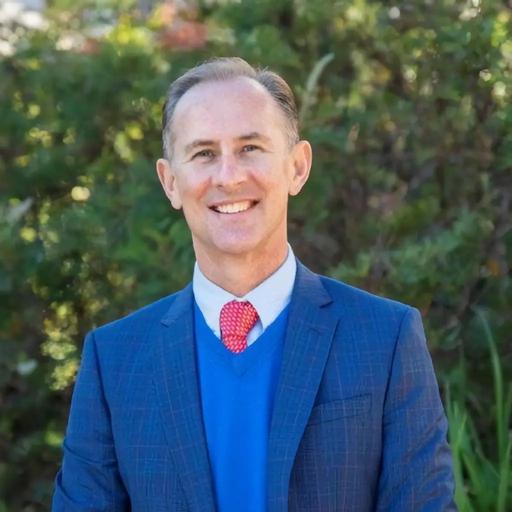
OUT OF POCKET COST FOR PATHOLOGY TEST
Dr Kenneth McCroary 2GB
November 20

STATE AND FEDERAL HEALTH FUNDING BATTLE


BHI DATA SHOWS NSW CONTINUES FALLING BEHIND
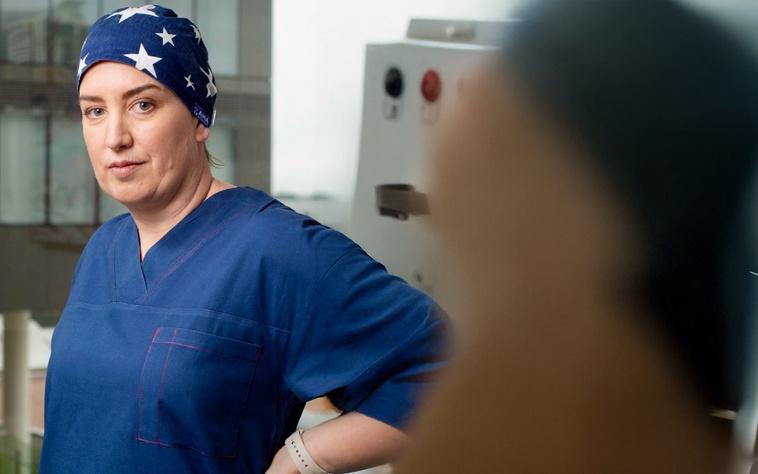
Dr Kathryn Austin Triple M radio
November 20
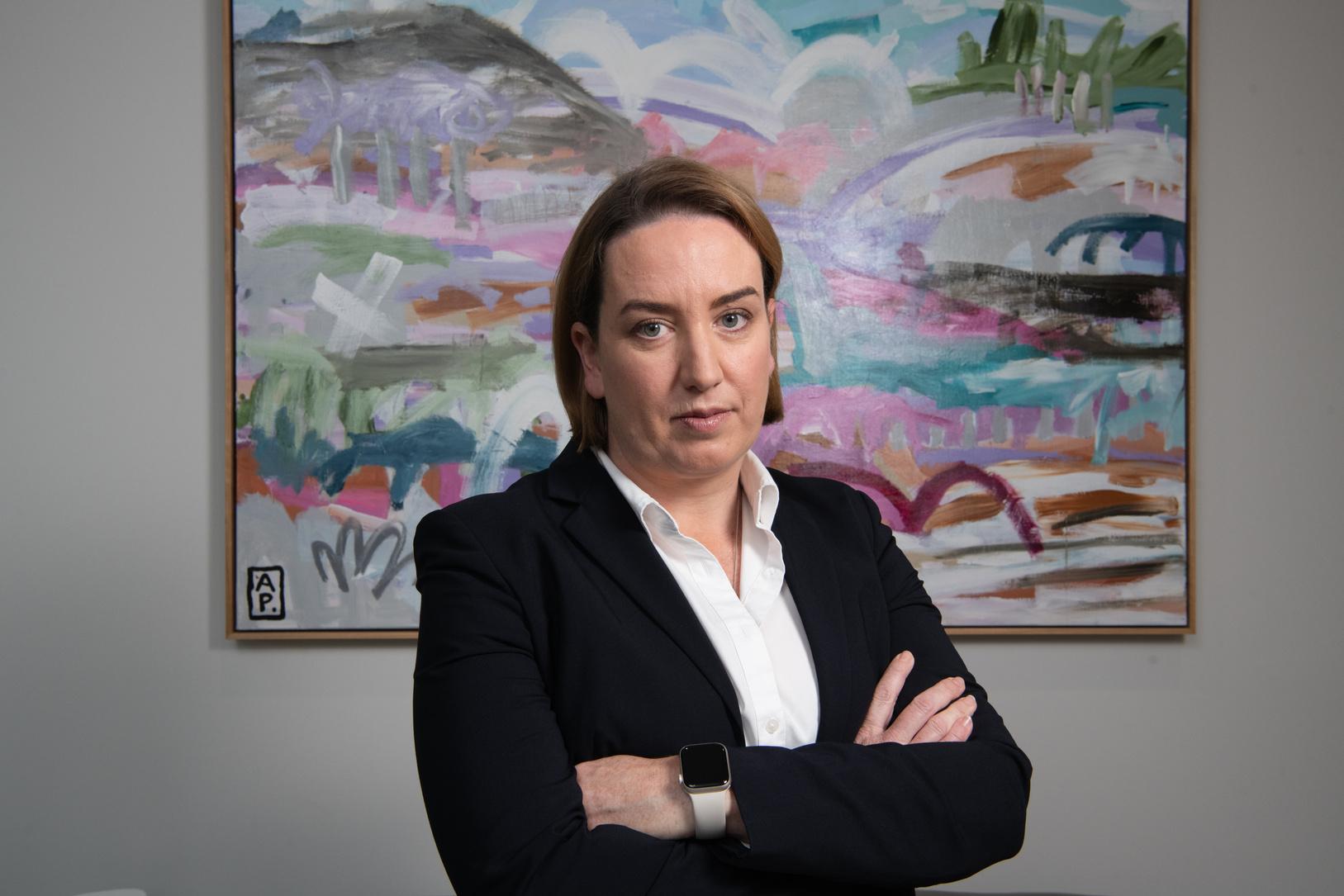

NORTHERN BEACHES HOSPITAL PUBLIC BUY BACK WARNING
Dr David Dickison and Dr Karen Shaw
ABC TV
September 16
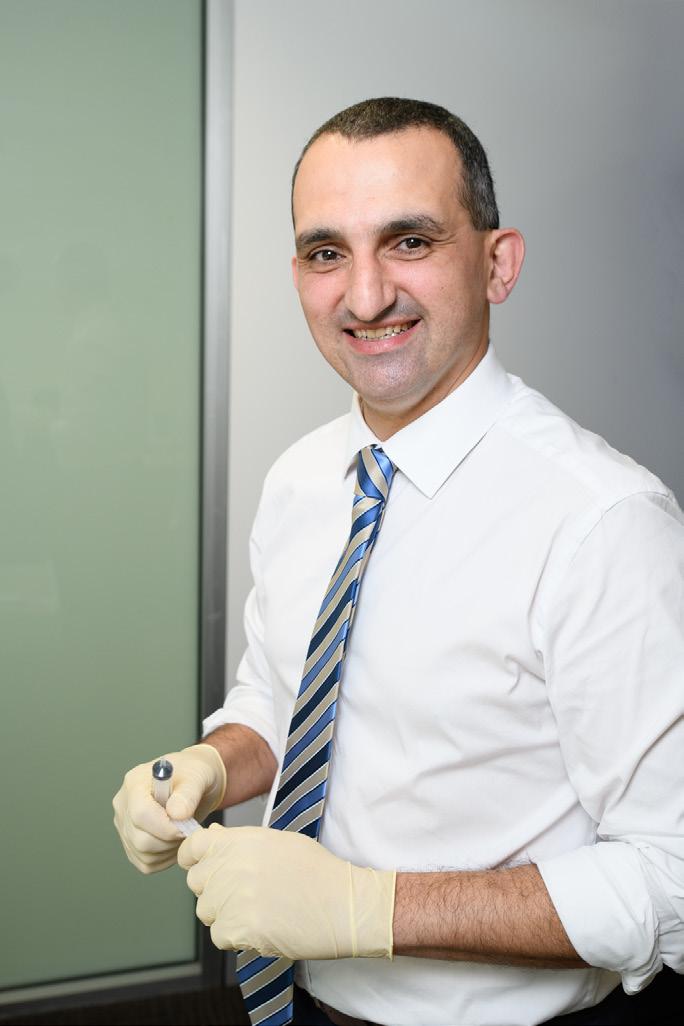
Dr Fred Betros 2day FM
December 10

HOSPITAL PATIENTS
DESERVE BETTER THAN A FIGHT OVER FUNDS
Dr Kathryn Austin The Australian November 19
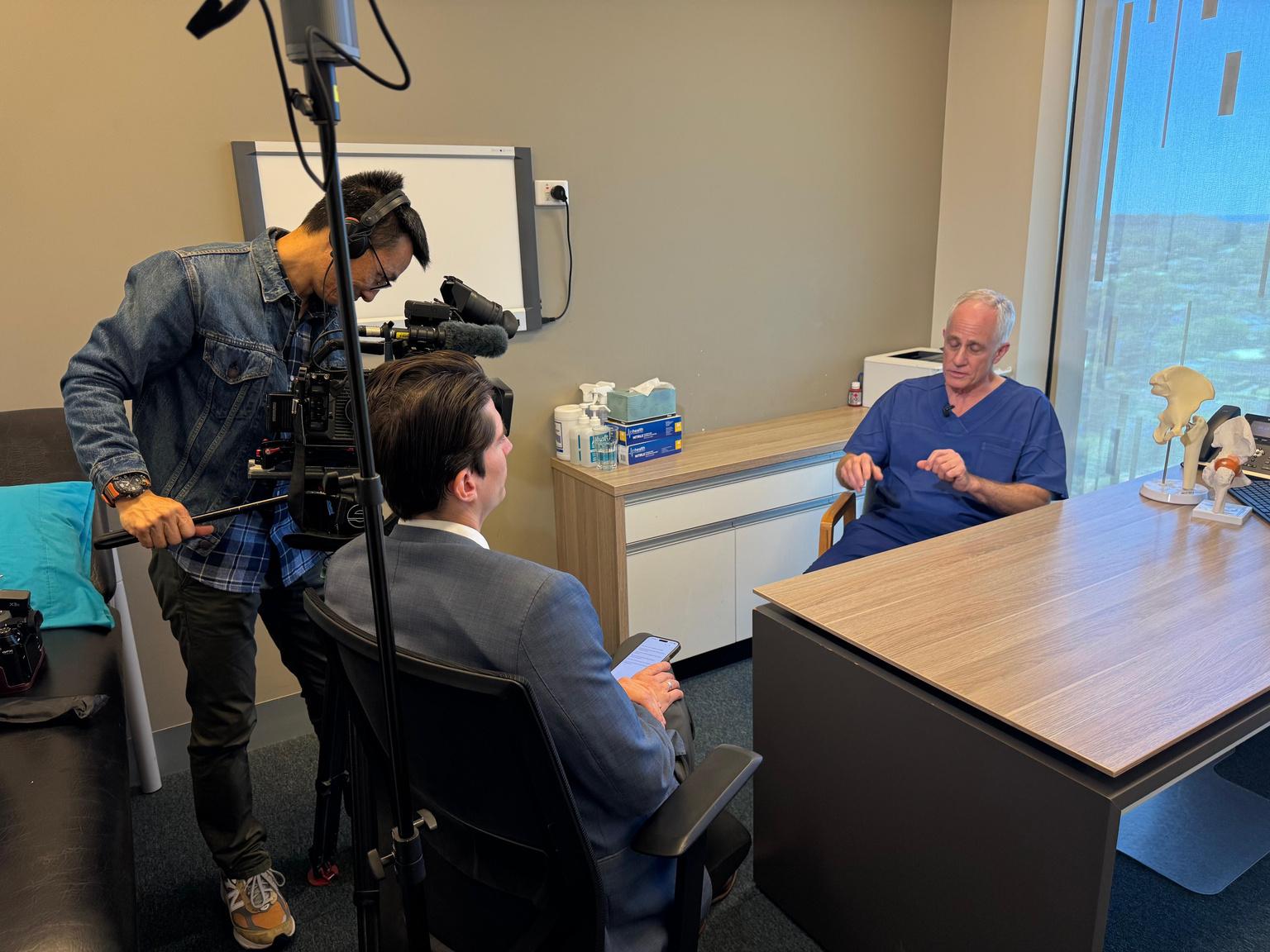
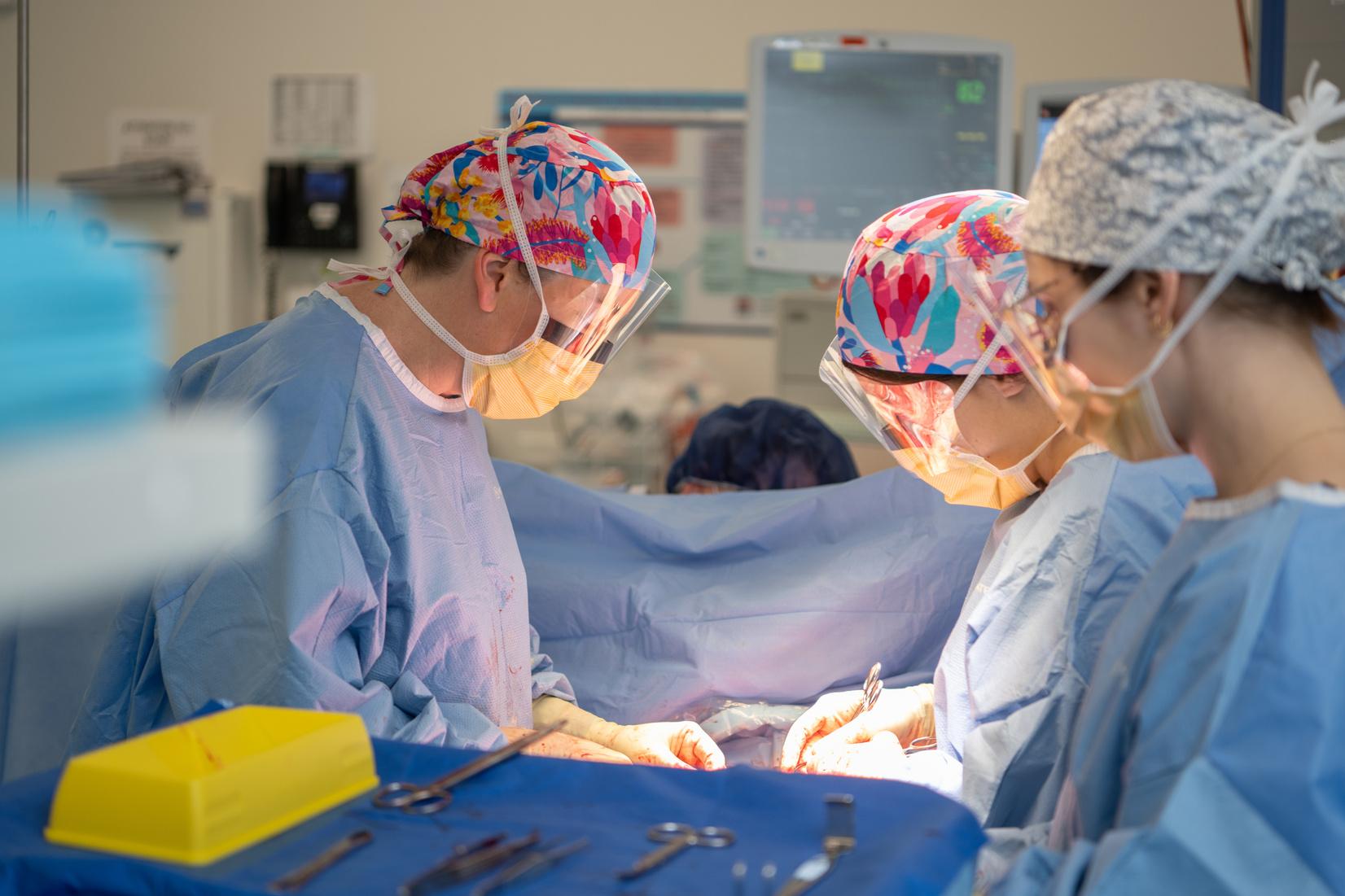
PRIVATE SERVICES TO CONTINUE AT NORTHERN BEACHES HOSPITAL UNTIL JUNE 2027
Dr Kathryn Austin Hospital and Healthcare December 19

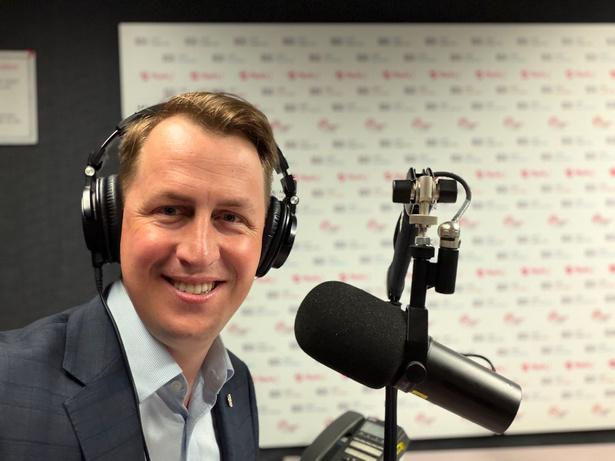

NSW PUBLIC HEALTH SYSTEM EXPERIENCED UNPRECEDENTED DEMAND, BHI REPORT SHOWS
Dr Kathryn Austin ABC March 11
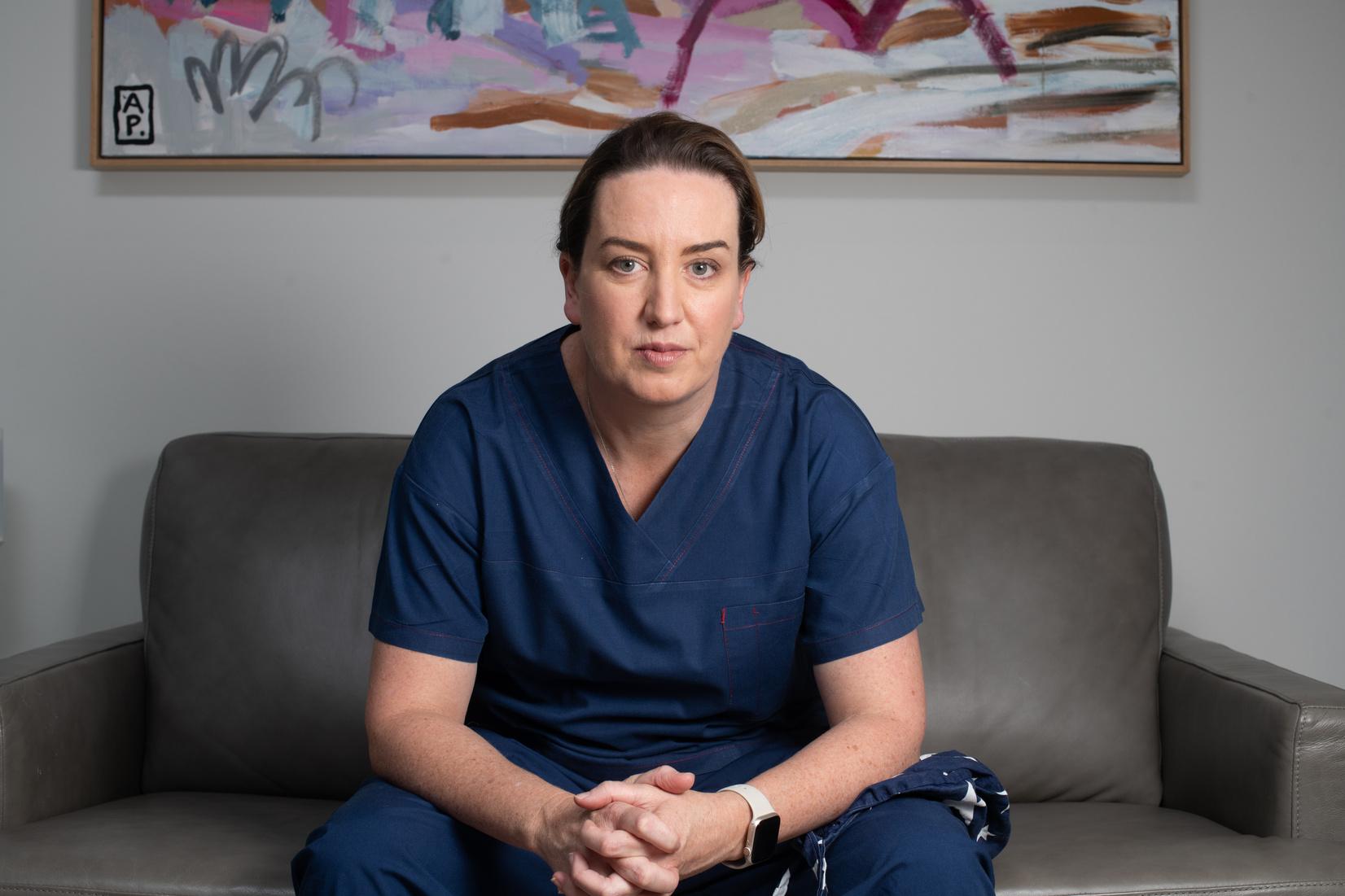

GENERAL HEALTH UPDATES AND QUESTIONS
Dr Michael Bonning ABC Radio February 18


NEW NORTHERN BEACHES HOSPITAL 'HIGH VOLUME SURGERY HUB' TO POWER THROUGH WAITLIST
Dr Kathryn Austin Pittwater News February 1











































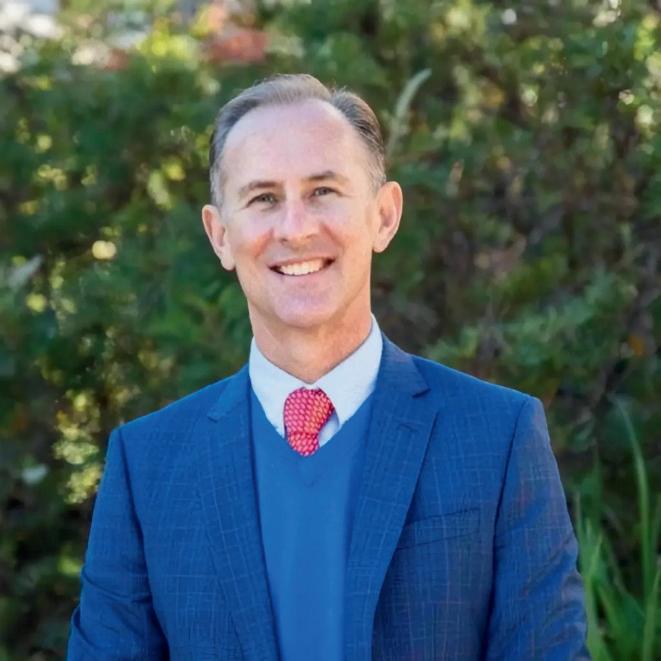
SUPPORT THAT REPRESENTS

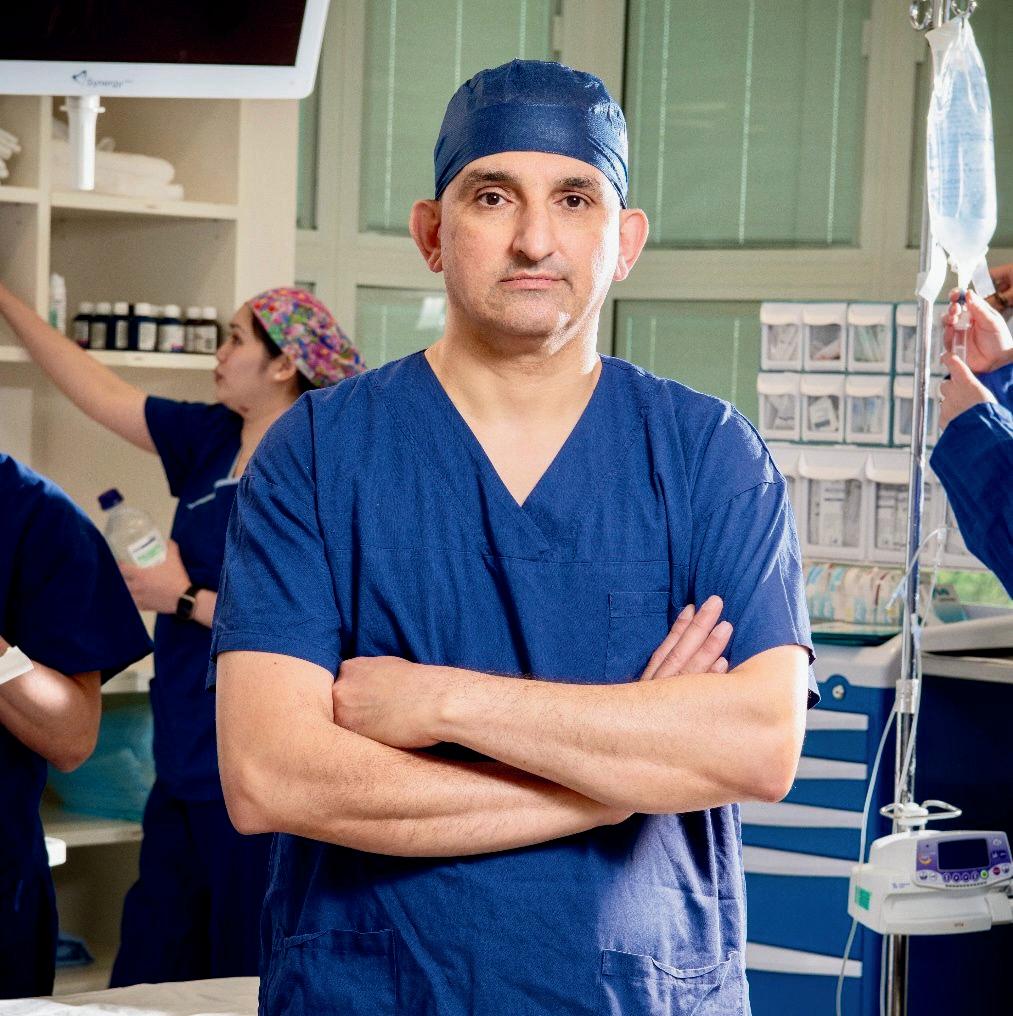
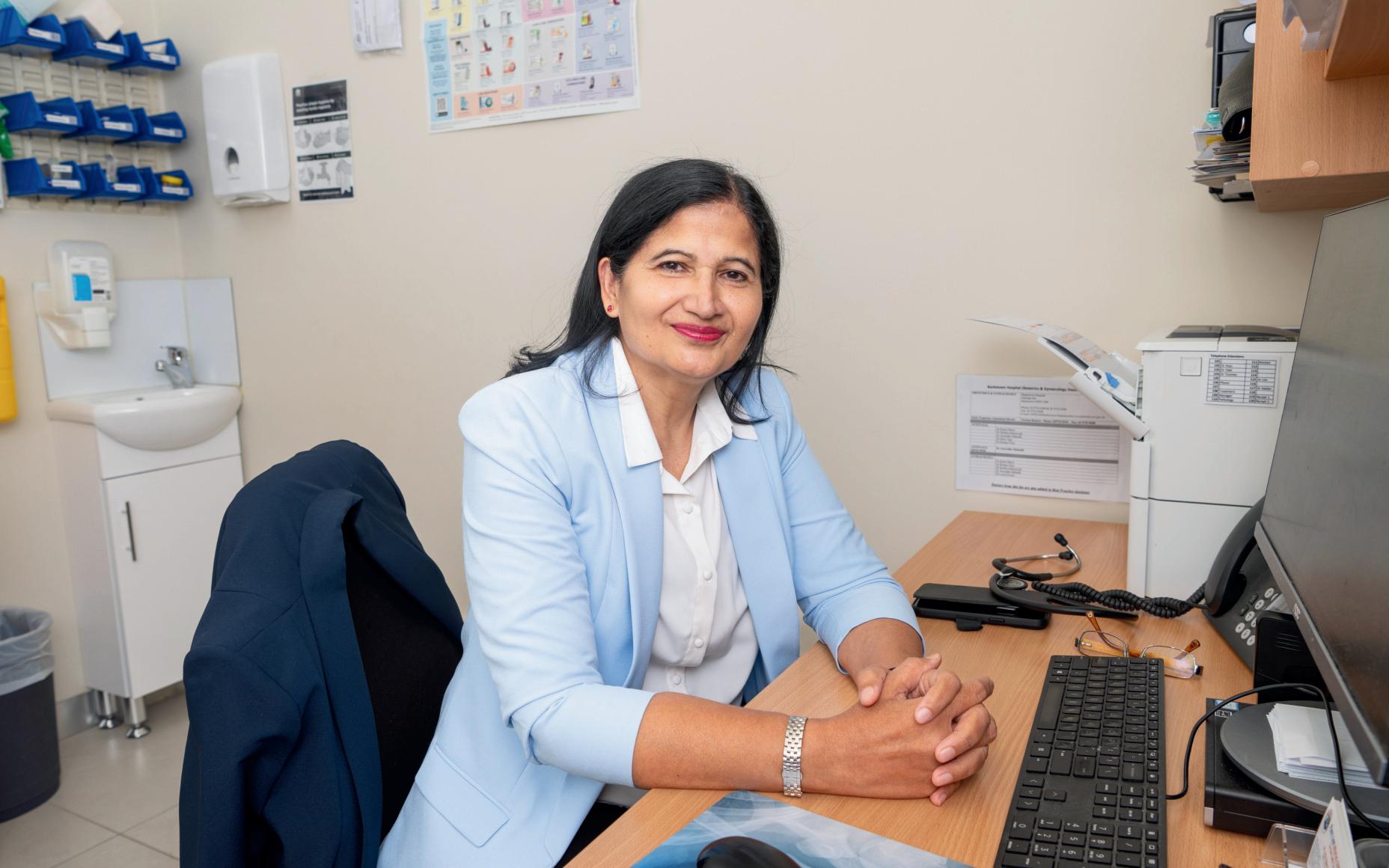
Police
Workplace
Career