
What Skills Do You Need for CBAP
Certification?
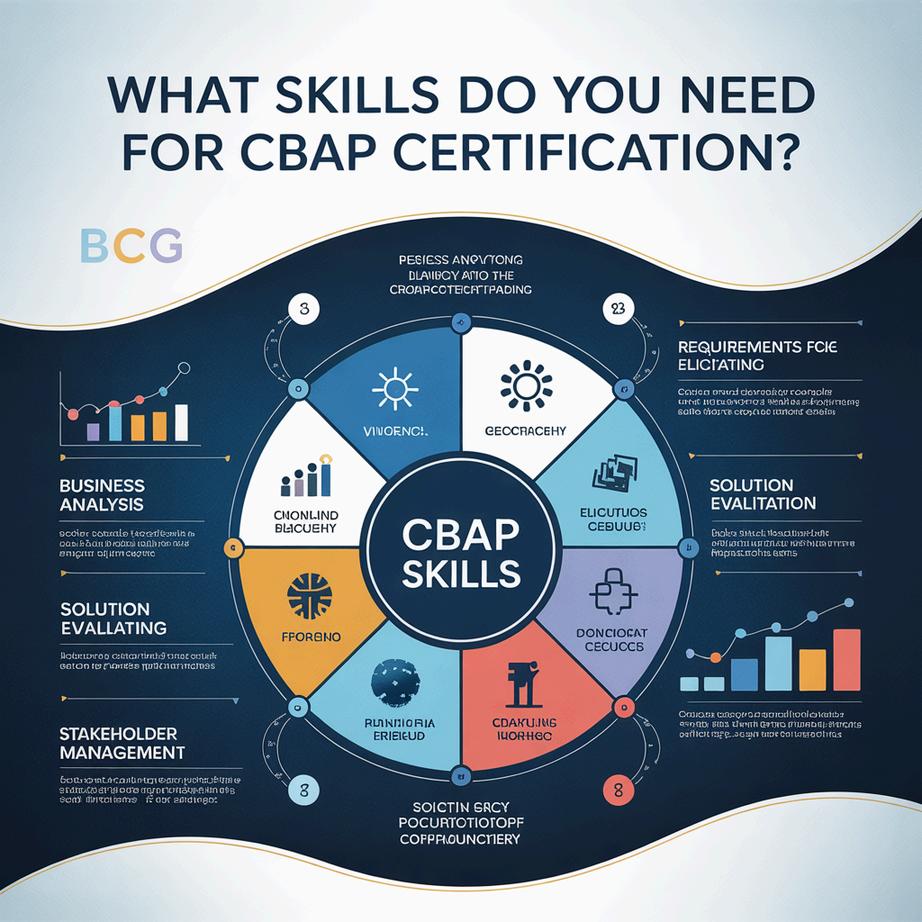
To achieve the Certified Business Analysis Professional (CBAP) designation in 2026, you need a balance of technical knowledge, practical experience, and "underlying competencies." The IIBA evaluates these skills based on the BABOK® Guide v3, which remains the primary framework for the exam.
The skills are generally divided into three main layers: Knowledge Areas, Underlying Competencies, and Emerging Modern Skills.
1. Core Knowledge Areas (Hard Skills)
These are the technical domains that form the syllabus of the 120-question exam. Success requires a deep understanding of the tasks, inputs, and outputs within each area.
Key Skill Focus
Modeling (UML, BPMN), structuring requirements, and recommending design options
Defining "Future State," risk assessment, and change strategy formulation.
Traceability, prioritization, and managing changes to requirements
Measuring solution performance and assessing limitations.
Planning BA approaches, governance, and stakeholder engagement
Facilitating workshops, interviewing, and confirming elicitation results.
2. Underlying Competencies (Soft Skills)
These are the personal behaviors and characteristics that support effective business analysis. The CBAP is a Level 3 certification, meaning it tests your ability to use these skills in complex, senior-level scenarios
Analytical Thinking & Problem Solving: Includes systems thinking (seeing the big picture), conceptual thinking (finding patterns), and creative problem-solving.
Behavioral Characteristics: Ethics, trustworthiness, personal organization, and adaptability are critical when managing high-stakes projects
Communication Skills: Proficiency in verbal, non-verbal, and written communication, with a heavy emphasis on Active Listening.
Interaction Skills: Leadership, facilitation, and negotiation are vital for aligning stakeholders with competing interests.
Business Knowledge: Deep business acumen, industry-specific knowledge, and understanding organizational structures.