HOW THE DISABILITY GATEWAY IS HELPING FAMILIES FIND THE SERVICES THEY CAN TRUST
THE REAL PERILS OF SHARENTING
MOHAMED TOURE AND NESTORY IRANKUNDA: THE FACE OF MULTICULTURAL AUSTRALIA AT THE WORLD CUP THE ISLAMIC CALENDAR 10 11 12 15 16 22 20 24 6 9 7 4
RACV URGES ACTION TO SUPPORT THE SAFE ROLLOUT OF AUTOMATED VEHICLES
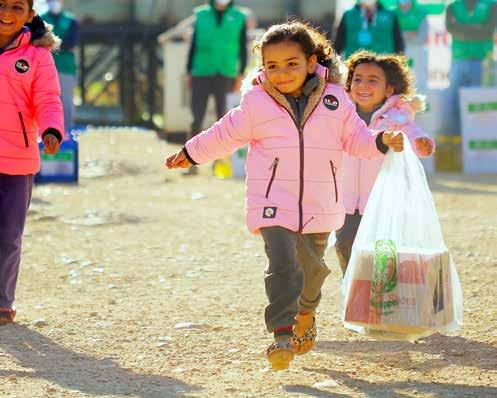
NEW ONLINE HUB HELPS REFUGEES ACCESS ESSENTIAL SERVICES IN NEW SOUTH WALES
ISLAMIC LEADERSHIP DIPLOMA (ILEAD) OPENS INTERNATIONAL HORIZONS IN MALAYSIA FOR ISLAMIC COLLEGE OF MELBOURNE STUDENTS
FUNDRAISING FOR EDUCATION: ANNUAL IMESA VICTORIA DINNER IN MELBOURNE
EID FESTIVALS: EXAMPLES OF EARLY CELEBRATIONS
THE RATE HIKE MIRAGE: WHY 13 RISES HAVEN’T KILLED INFLATION – AND THE RADICAL NEW MODEL AUSTRALIA NEEDS
HOW DID PERTH GET ITS FIRST MOSQUE?
Al Wasat Magazine
The Islamic Calendar
The Islamic calendar (or Hijri calendar) is a lunar calendar. It contains 12 months that are based on the motion of the moon, and because 12 lunar months is 12 x 29.53=354.36 days, the Islamic calendar is consistently shorter (11 Days) than a solar year, and therefore it shifts with respect to the Gregorian calendar.
The first day of Year One of the Islamic calendar was set as the first day of the Hijrah, the Prophet’s migration from Makkah to Madinah on July 26, 622 C.E. The western convention in designating Islamic dates is thus by the abbreviation AH, which stands for the Latin Anno Hegirae, or ‘Year of the Hijrah’.
What does the Quran say about measurement of time?
[Quran - 9.36] Surely the number of months with Allah is twelve months in Allah’s ordinance since the day when He created the heavens and the earth..
[Quran - 31:29] Seest thou not that Allah merges Night into Day and he merges Day into Night; that He has subjected the sun, and the moon (to his Law), each running its course for a term appointed; and that Allah is well-acquainted with all that ye do?
[Quran - 103: 1..3] By (the Token of) Time (through the ages),- Verily Man is in loss, - Except such as have Faith, and do righteous deeds, and (join together) in the mutual teaching of Truth, and of Patience and Constancy.
How is an Islamic month determined:
Each month starts when the lunar crescent is first seen after a new moon.
Although new moons may be calculated quite precisely, the actual visibility of the crescent is difficult to predict. It depends
on factors such as weather, the optical properties of the atmosphere, and the location of the observer. Therefore in some cases it may be difficult to give accurate information in advance about when a new month will start.
Furthermore, in some areas Muslims depend on a local sighting of the moon, whereas in other areas a universal sighting is accepted. (i.e. if a new crescent is seen anywhere in the world it is accepted for communities the world over). Both are valid Islamic practices, but they may lead to different starting days for the months.
The Islamic Months
1. Muharram
2. Safar
3. Rabi’ al-Awwal (Rabi’ 1)
4. Rabi’ al-Thani (Rabi 2)
5. Jumada al-Ula (Jumada I)
6. Jumada al-Akhirah (Jumada II)
7. Rajab
8. Sha’ban
9. Ramadan
10. Shawwal
11. Dhu al-Qa’dah
12. Dhi al-Hijjah
The most important dates in the Islamic calendar are:
• 1 Muharram (Islamic New Year)
• 10 Muharram (Day of `Ashura’)
• 27 Rajab (Israa’ and Mi’raj)
• 1 Ramadan (first day of the month of fasting)
• The last ten days of Ramadan,
• However, the dates of some of these events, such as that of Laylat Al-Qadr and the Prophet Muhammad’s journey of Israa’ and Mi`raj, have not been conclusively specified, and there has been some uncertainty about the exact date of the event.
• Four of the twelve months are sacred: Rajab, Muharram, Dhul-Qi`dah, Dhul- Hijjah).
• In the pre-Islamic period, raids among the Arab tribes were forbidden and hunting was halted during these months. Islam inherited and approved
which include (Laylat Al-Qadr)
• 1 Shawwal (`Eid Al-Fitr)
• 8 – 10 Dhul-Hijjah (Hajj)
• 9 Dhul-Hijjah (Day of `Arafah)
• 10 Dhul-Hijjah (`Eid Al-Adha).
this practice.
• Fighting (killing) is prohibited during these sacred months except in self-defense.
• Since the Islamic calendar is lunar, its year is 10 or 11 days shorter than the Gregorian year. This means that Muslim months fall in different seasons.
• For example, Ramadan and Hajj can fall in the summer as well as in the winter. It takes about 33 years for the Islamic dates to rotate through the solar seasons.
The Caliph Umar Invented the Islamic Calendar
The dating of the Islamic calendar was introduced by the second caliph, `Umar ibn Al-Khattab, in 638 CE (16 AH) in an attempt to circumvent all the various conflicting dating systems used during his time.
After consulting his companions, he set the Hijrah—the immigration of the Prophet (peace and blessings be upon him) from Makkah to Madinah—as the most appropriate reference to the new Islamic era.
The Hijrah, historically speaking, is the central event of early Islam, the turning point in Islamic history that led to the foundation of the first Muslim state.
MALDIVIAN LAUNCHES HISTORIC DIRECT FLIGHTS BETWEEN THE MALDIVES AND AUSTRALIA
Australia and the Maldives are now connected by a direct air service for the first time in history following the launch of Maldivian’s new Melbourne–Malé route.
The inaugural flight departed Velana International Airport in Malé on 17 May 2026 and arrived in Melbourne on 18 May, marking a significant milestone for tourism and aviation between the two countries. Operated by the national carrier of the Maldives, Maldivian, the service is expected to strengthen travel, tourism, business and cultural ties while providing Australian travellers with a more convenient gateway to the Indian Ocean nation.
The route is operated using a modern Airbus A330 wide-body aircraft and eliminates the need for many passengers to transit through major hubs in Asia or the Middle East. Industry observers have described the service as an important step in expanding the Maldives’ connectivity to long-haul international markets.
The Maldives has long enjoyed a reputation as one of the world’s most desirable tourism destinations. Comprising nearly 1,192 coral islands
scattered across the Indian Ocean, the country is internationally renowned for its pristine white-sand beaches, crystal-clear turquoise waters, luxury overwater villas and worldclass hospitality.
For decades, the Maldives has attracted visitors from around the globe, including families, divers and luxury travellers seeking a unique tropical experience. Tourism remains the backbone of the Maldivian economy, with the country consistently ranking among the leading luxury and leisure destinations worldwide.
The introduction of direct flights from Melbourne is expected to make the Maldives more accessible to Australian travellers while also encouraging greater tourism and investment opportunities between the two nations.
The service is anticipated to appeal not only to holidaymakers but also to business travellers and members of the Maldivian community living in Australia.
Officials have welcomed the launch as a milestone achievement that reflects growing demand for travel between Australia and the Maldives. The new connection is also expected to enhance the Maldives’ profile in the Australian market and support the country’s ongoing efforts to diversify and expand its tourism sector.
As the first direct air link between the two countries, the Melbourne–Malé service represents a historic chapter in Australia–Maldives relations and highlights the continued growth of the Maldives as a leading global tourism destination.
MOHAMED TOURE AND NESTORY IRANKUNDA: THE FACE OF MULTICULTURAL AUSTRALIA AT THE WORLD CUP
Mohamed Toure and Nestory Irankunda represent more than Australia’s emerging football talent. Their stories reflect the multicultural character of modern Australia and the opportunities available to families from diverse backgrounds.
Born to families with refugee and migrant experiences, both players developed their football careers in South Australia before progressing to higher levels of the game and earning recognition on the national stage.
Their journey highlights the important role sport can play in creating opportunities, fostering inclusion, and bringing together people from different cultural backgrounds. As representatives of Australia on the world stage, Toure and Irankunda embody the diversity that has become a defining feature of contemporary Australian society.
From refugee and migrant backgrounds to the global stage of the World Cup, their story reflects how multiculturalism continues to shape Australian sport and national identity.
ERITREAN FAMILIES IN HUME AND THE NORTH (EFHN): A JOURNEY OF GROWTH
By Yasir Mahmud
The foundation of Eritrean Families in Hume and the North (EFHN) grew from the increasing number of Eritrean families settling in Melbourne’s northern suburbs, particularly within the Hume City Council area. Community members recognised the need for an organisation that could bring families together, strengthen social connections, and support community engagement
Before 2010
Before 2010, Eritrean families living around Hume City Council gathered informally through family BBQs in parks around Greenvale, Roxburgh Park and Craigieburn, while celebrating Eid festivals in local Musella’s and mosques.
Early discussions – Late 2010
In late 2010, Eritrean community members from Roxburgh Park, Craigieburn and Greenvale began discussing the need for a local organisation that could coordinate family activities and strengthen community participation, particularly during school holiday periods.
The first community meetings – 2011
In March 2011, five community members organised a meeting at the Homestead Community & Learning Centre in Roxburgh Park. A series of meetings followed at both the Homestead Community Centre and Hume Islamic Youth Centre (HIYC). These discussions focused on three key goals:
• Strengthening kinship and neighbourhood relationships.
• Organising community gatherings through BBQ events.
• Exploring the establishment of a formal community organisation in Melbourne’s northern suburbs.
Community activities and growth
During 2011 and 2012, the group organised regular BBQ gatherings and family activities during school holidays. It also launched weekly Saturday programs at hired venues in Somerton and Roxburgh Park, attracting growing participation from families and young people.
Official naming of the organisation
In late 2012, a community meeting at HIYC formally adopted the name Eritrean Families in Hume (EFH).
In early 2013, the name was expanded to Eritrean Families in Hume and The North (EFHN) to reflect the organisation’s wider reach across Melbourne’s northern suburbs.
Formal registration of EFHN Inc.
A major milestone was achieved on 1 May 2013 when EFHN Incorporated was formally registered with Consumer Affairs Victoria following the election of its first management committee. This established EFHN Inc. as a recognised community organisation serving Eritrean families and the wider community.
Leadership and community participation
Since incorporation, EFHN Inc. has continued to hold Annual General Meetings (AGMs) to elect executive committee members and encourage new leadership. This process has strengthened community participation and helped members gain valuable experience in governance, leadership and event management.
Programs and community services
Over the years, EFHN Inc. has delivered a wide range of programs and activities, including:
• Weekly community meetings.
• Weekly youth sports programs.
• Women’s programs.
•Annual family trips and excursions.
• Annual soccer tournaments.
• Eid festivals and community events.
• School holiday BBQ gatherings.
• Welcome events for newly arrived families.
• Community awareness and information sessions. These initiatives have promoted social inclusion, youth engagement, cultural identity and community wellbeing.
Partnerships and community engagement
EFHN Inc. has built strong partnerships with local councils, Victoria Police, community organisations, service providers, local mosques, youth centres, councillors, Members of Parliament and community leaders.
These partnerships have enabled the organisation to contribute positively to the wellbeing and unity of both the Eritrean community and the wider multicultural community across Melbourne’s northern suburbs.
COVID-19 response
During the COVID-19 pandemic, EFHN faced significant challenges, including the loss of several community members. The organisation responded by delivering online health awareness sessions, distributing face masks, and supporting vulnerable families in Melbourne’s north as well as residents of the public housing estates in Flemington and North Melbourne.
A fresh vision for the future
In 2022, EFHN began planning for future growth as access to existing facilities became increasingly uncertain. A committee of ten advisors was established to examine the feasibility of creating a dedicated community centre to support the organisation’s expanding programs and activities.
Towards an EFHN Community Centre
The feasibility study highlighted the long-term benefits of establishing a permanent community facility. At the 2023 AGM, members endorsed the proposal, supporting the creation of a dedicated gathering place that would provide a stable home for EFHN programs and activities.
The fundraising milestone – 8 November 2025
A major fundraising event was held at Broadmeadows Town Hall on 8 November 2025, attracting hundreds of community members. The event secured pledge commitments exceeding half a million dollars towards the establishment of the future community centre, to be known as Adal Centre Australia.
2026 – A historic new chapter
In 2026, the Adal Centre Australia Committee, in partnership with EFHN Inc., announced the first organised Eid Al-Adha prayer gathering for the Eritrean community in Melbourne’s northern suburbs. This historic milestone reflected more than a decade of community building, volunteer commitment and collective effort, while strengthening unity among Eritrean families and laying foundations for future generations
HOW THE DISABILITY GATEWAY IS HELPING FAMILIES FIND THE SERVICES THEY CAN TRUST
Keeping the household strong and well cared for is always a top priority. Hardworking families can hesitate to seek outside help, believing they must manage everything on their own or risk being seen as vulnerable.
The Disability Gateway is a free Australian Government service that helps people with disability, their families, and carers, find reliable information and support in one place, whether or not they have an NDIS plan.
Instead of searching across multiple websites, the Gateway provides a central place to find trusted services, information and resources in your language. It connects people to the right organisations and support options, helping them take the next step with greater
confidence and less confusion.
Support is also available by phone, including access to interpreter services, so people can get help in their preferred language. The service provides information on areas such as employment, finances, housing, aids and equipment, and independent living.
The Disability Gateway is a secure platform designed to make this process easier. It provides clear and reliable information. This helps families find reliable support for their loved ones. It connects people to everyday resources keeping their households strong and thriving. Respected community leader and multicultural services advocate Dr. Michael Kheirallah understands the pressure the evolving care and support sector
places on local households.
“Many families want to do everything they can for their loved ones, and the Disability Gateway helps make that journey easier by connecting them to reliable support,” Dr. Kheirallah said.
To access the service, families and individuals can:
• visit Disability Gateway
• call 1800 643 787
• or contact TIS National on 131 450 and ask to be connected to the Disability Gateway in their preferred language
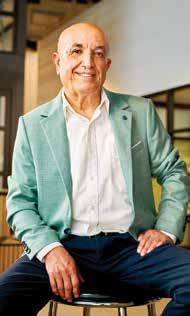
Dr. Kheirallah
of Kindness
THE REAL PERILS OF SHARENTING
By Jamilah Samian www.coolmumsuperdad.com
Sharenting (parents sharing their children’s photos, videos or stories online) may come from a good place: love, pride, connection. But your child might look back one day only to feel, “That wasn’t for the world to see,” or “Why was that shared about me?” Even if the intention was loving, the impact can still feel invasive.
First, let us look at the issue of permanence. People often think, “I can always delete it later.” But in reality, the internet doesn’t work like that. A post can be saved, screenshot, reshared, or downloaded within seconds. Even if it is removed, copies may already exist elsewhere. So a child’s early moments: their tantrums, their funny mistakes, their emotional breakdowns, may stay in circulation forever.
This leads to something many parents don’t anticipate: future embarrassment or bullying by peers. What feels cute or funny in early childhood can feel deeply uncomfortable in adolescence. Imagine being a teenager and your friends come across a video of you crying uncontrollably as a toddler, or a moment where you were disciplined in a vulnerable way. Children may not say it out loud, but they can feel exposed or even humiliated.
We also need to consider digital misuse. Once a child’s image is online, it is no longer fully in the
parent’s control. Most people are kind and well-meaning, but the internet is not only seen by people we know. Images can be copied and used in ways that were never intended. Even innocent photos can be taken out of context or appear in places parents would never have imagined. This is why experts often stress that children’s images deserve extra protection, especially in open platforms. There is also the idea of a digital footprint shaping future life. Today, many schools, universities, and even employers may look at online presence. A child’s early years could remain searchable long into adulthood. What was once shared casually during childhood can become part of their long-term public identity.
Even more subtle is emotional development. When children grow up being frequently photographed or posted, they may start to become aware of the camera in a different way. Instead of just living the moment, they begin to think about how it looks, how it
might be shared, how others might react. Over time, this can influence how naturally they express emotions. Some children begin performing for the camera, even in everyday life, instead of simply being their authentic selves.
The most important issue is trust between parent and child. This is often the quiet one, but it is very real. Children need to feel safe telling their parents private things like mistakes, fears, struggles, emotional ups and downs. But if they see their private moments being shared online, they may start to think, “If I tell my parents this, will it become a post?”
That one thought can change everything. A child may stop sharing openly. Not because they don’t love their parents, but because they are trying to protect their own privacy. Over time, conversations become more guarded. Emotional distance can slowly grow without anyone noticing immediately, simply because home is no longer a private sanctuary. It has been transformed into a
public stage for everyone to see, comment, analyse and evaluate. At the end of the day, protecting a kid’s digital footprint isn’t just about tweaking privacy settings or picking the right platforms. It’s about giving them the space to just be. When we treat their daily milestones like social media currency, we risk robbing them of the chance to figure out who they are without an audience watching. Every child deserves a good headstart. Children aren’t content to be consumed; they’re human beings building their own identities from scratch.
Jamilah Samian is the author of “Raise Me Right”, “Cool Mum Super Dad”, “Leadership In Parenting”, “The Kindness Miracle”, “Parenting Generation Y & Z”, “Cool Boys Super Sons” and “77 Power Parent Tips”.
HAPPY HIJRI
NEW YEAR
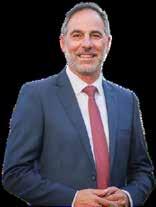
Luba Grigorovitch MP Member for Kororoit Minister for Youth Minister for Carers & Volunteers
Ph: 03 8361 7133
W: lubagrigorovitch.com.au
E: luba.grigorovitch@parliament.vic.gov.au Shop 2, 11 Commercial Rd, Caroline Springs, 3023
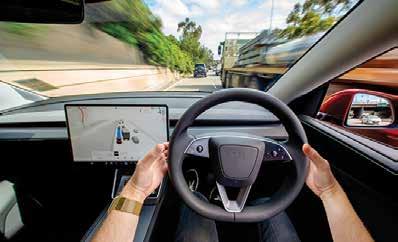
RACV URGES ACTION TO SUPPORT THE SAFE ROLLOUT OF AUTOMATED VEHICLES
RACV has released its first policy positions on automated vehicles, calling on the Federal Government to progress national safety laws and the Victorian Government to update the Road Rules and registration system so that the technology can be safely deployed on Australian roads.
With self-driving capability now available in the car market, and self-driving robotaxi services expected to follow, RACV believes there is an opportunity for Australia’s regulatory framework to better keep pace with the technology so that motorists have clear guidance on how automated vehicles can be safely used.
RACV Head of Policy James Williams said Australia was at an important juncture, with a significant road safety opportunity on the table.
“Human error is a factor in around 90 per cent of all crashes, so if we can get the settings right, automated vehicles have the potential to deliver one of the most meaningful reductions in road trauma we’ve seen in a generation,” Mr Williams said.
“If we move too slowly, however, there is a risk the technology will be deployed without the safeguards motorists deserve. Industry is already moving faster than government.”
RACV’s analysis suggests that Australian law continues to assume a human is performing the dynamic driving task at all times. In practice, there are already vehicles on our roads
capable of steering, braking, accelerating and changing lanes without human intervention.
While the Federal Government has already accepted it has a role accrediting operators to ensure the safe operation of automated vehicles – in a similar way to humans needing a licence to drive – the government is moving too slowly.
“The role of the driver is shifting from performing the driving task to supervising an automated driving system, and it is important that our laws reflect that so that motorists understand what’s expected of them and regulators have clarity on what they’re enforcing,” Mr Williams said.
RACV is encouraging the Federal Government to:
• Progress the introduction of Automated Vehicle Safety Laws that regulate the Automated Driving System Entity (ADSE), including over-the-air software updates and automated technologies that are not
classified by manufacturers as highly automated.
• Establish the national inservice safety regulator to help assure the safety of automated vehicles across their full life cycle.
• Require manufacturers to provide consumer education and awareness as part of their safety accreditation.
RACV is also calling on the Victorian Government to:
• Update the Road Rules and vehicle registration.
• As a priority, update the definition of “proper control” to clarify when a driver maintains control through supervision and monitoring rather than physical contact with the steering wheel.
RACV’s view is that a hand on the wheel should continue to be required for vehicles up to and including Level 3 automation.
• Update the Driver Licence Test and develop public education campaigns to help motorists understand the levels of
automation, the responsibilities of a fallback-ready driver, and the risks of distraction and fatigue when supervising an automated vehicle.
Mr Williams said that preparing motorists was just as important as updating the regulatory settings.
“Supervising an automated vehicle is a different skill to driving one. It requires sustained attention with relatively little to do, which can be challenging for any driver. Motorists would benefit from clear information, clear guidance and appropriate training before taking the wheel of a vehicle that can drive itself,” he said.
RACV supports the deployment of automated vehicle technologies that can demonstrably improve road safety, and welcomes the introduction of self-driving robotaxi services in Australia under trial conditions.
Mr Williams said RACV would continue to work closely with counterpart clubs around the country, the Australian Automobile Association and governments at every level to encourage a nationally consistent approach.
“This is ultimately a national challenge, and it would benefit from a national response. Motorists shouldn’t face one set of rules in Victoria and another over the New South Wales border. Australians would be well served by a clear, consistent and safety-led framework, and the time to start that work is now,”
Mr Williams said.
NEW ONLINE HUB HELPS REFUGEES ACCESS ESSENTIAL SERVICES IN NEW SOUTH WALES
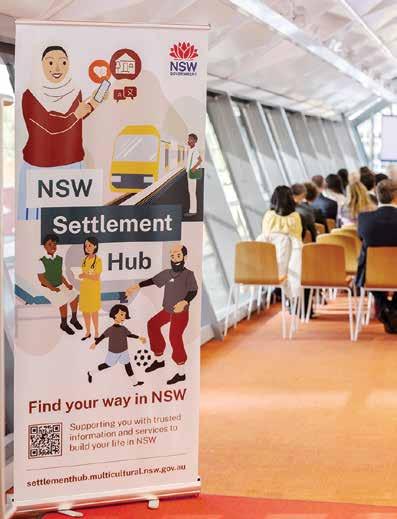
A new online platform launched during Refugee Week is making it easier for refugees in New South Wales to access trusted government information and essential services. The NSW Settlement Hub brings together information from more than 300 government and service provider websites into a single online resource, offering practical guidance, multilingual resources, and personal settlement stories to support refugees as they build new lives across the state.
The Hub provides information for every stage of the settlement journey and includes resources in multiple languages and formats, including videos in the 13 languages most commonly spoken by refugees in NSW. It covers key aspects of life in Australia, including healthcare, education, community services, language support, transport, and the legal system.
For the first time, people from refugee and refugeelike backgrounds can access information that was previously spread across hundreds of websites through one trusted platform. In addition to practical resources, the Hub features lived experiences from refugees who have settled in NSW, along with step-by-step examples of the government and community services that individuals and families may need as they establish their new lives.
The Hub is also designed to assist settlement services, community organisations, and support workers in helping refugees navigate available services. Of the approximately 4,000 refugees who settle in NSW each year, around onequarter live in regional areas. To support these communities, the platform includes local information for key settlement locations, including Albury, Armidale, Coffs Harbour, Newcastle, and Wagga Wagga.
The NSW Settlement Hub forms part of the NSW Government Settlement Strategy, which aims to improve outcomes for people from refugee and refugee-like backgrounds living across the state.
NSW Minister for
Multiculturalism Steve Kamper said the Hub would make it easier for refugees to find the information they need as they begin a new life in Australia.
“We know that navigating government services and finding the right information can be overwhelming, especially when you’re starting over in a new country. The NSW Settlement
Hub changes that.”
NSW Coordinator General for Settlement Professor Peter Shergold AC said improving access to information and services benefits both refugees and the wider community.
“When refugees thrive, everyone benefits… The NSW Settlement Hub puts practical information all in one place to help people find their own path forward.”
Multicultural NSW Acting CEO James Jegasothy said the new platform would make it easier for refugees to access reliable information and support.
“The first step is knowing where to go for support on that journey. We are proud to launch the NSW Settlement Hub to make it easier for refugees in NSW to access the information and services that will allow them to thrive.”
Tsering Tsomo, who has lived in Wagga Wagga since arriving in Australia in July 2023, said the Hub would have made her own settlement experience much easier.
“If the NSW Settlement Hub had been available when I first arrived in Australia, it would have saved me a lot of time and confusion.”
The NSW Settlement Hub is available at settlementhub. multicultural.nsw.gov.au.
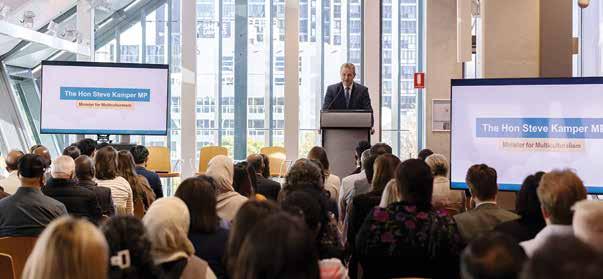
Minister Kamper speaking at Settlement Hub launch 16.06.2026
COMMUNITY ADVOCATE KURANDA SEYIT OAM RECOGNISED FOR SERVICE TO MULTICULTURAL AUSTRALIA
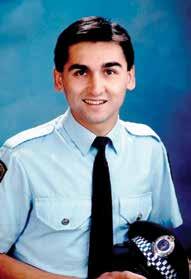
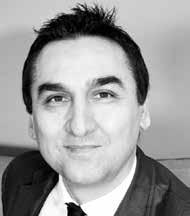
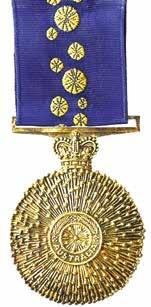
Australian community advocate and media commentator Kuranda Seyit has been awarded the Medal of the Order of Australia (OAM) in recognition of his contribution to community service, multicultural affairs, and public engagement.
For several decades, Seyit has been involved in a range of community initiatives across Australia, with a particular focus on supporting refugees, young people, families, and culturally diverse communities. His work has included advocacy, community development, public education, and participation in programs aimed at strengthening social cohesion and civic participation.
His community involvement has included service on the board of the Sydney Peace Foundation, where he served for seven years. Between 2002 and 2007, he founded and presented the Goodness and Kindness Campaign, an initiative that promoted understanding and cooperation between Muslim, Christian, and Jewish communities through schoolbased programs. In recognition of his community advocacy and peace-building efforts, he was awarded the Pride of Australia Medal in 2005.
Seyit has also held senior leadership positions in the community sector, including serving as Chief Executive Officer of the Multicultural Disability Advocacy Association
and the Auburn Migrant Resource Centre. In addition, he has contributed to a number of community and representative organisations, including serving on the board of the Islamic Council of Victoria as Secretary and media spokesperson.
Seyit has also been active in discussions relating to multiculturalism, discrimination, community relations, and the challenges faced by migrant and minority communities. Through community organisations, public forums, and media platforms, he has contributed to conversations on social inclusion and intercultural understanding.
Reflecting on the award, Seyit said that his experiences growing up as a Muslim in Australia influenced his interest in community affairs and his commitment to promoting
greater understanding between people of different cultural and religious backgrounds.
In addition to his community work, Seyit has been involved in media and communications projects that seek to highlight issues affecting diverse communities and encourage broader public awareness of multicultural Australia. His contributions have included community-based media initiatives, public commentary, and engagement with organisations working in the areas of social justice and community development.
Seyit said the recognition reflects the efforts of many individuals who contribute their time and expertise to community organisations and volunteer
initiatives across the country. He noted that much of the work undertaken in the community sector relies on the commitment of volunteers, advocates, and local leaders working behind the scenes.
The Medal of the Order of Australia forms part of the Australian honours system and is awarded to individuals who have made noteworthy contributions to their communities or professions. Seyit’s recognition highlights a long record of involvement in community affairs and multicultural engagement, areas that have remained central to his work over many years.
HAPPY
HIJRI NEW YEAR 1448
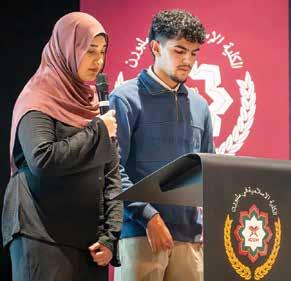
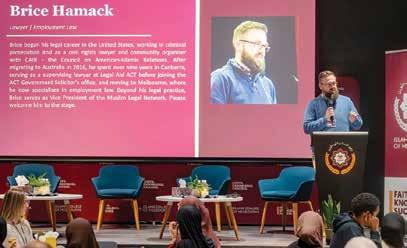
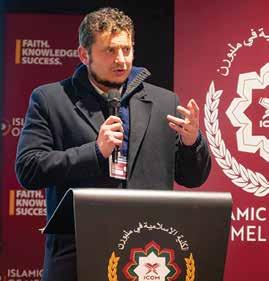
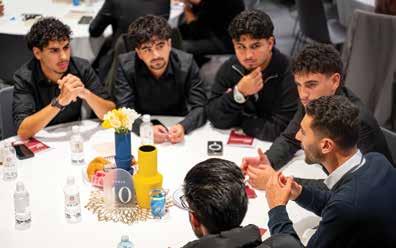
ICOM CONNECTS YEAR 12 STUDENTS WITH 36 INDUSTRY PROFESSIONALS AT ANNUAL MEET THE PROFESSIONALS EVENT
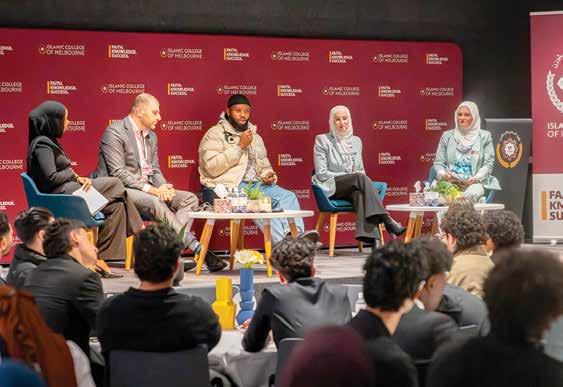
In late May, the Islamic College of Melbourne hosted its annual Meet the Professionals evening, bringing together Year 12 students and professionals from a diverse range of industries to explore university pathways, career opportunities, leadership, and life beyond school.
The event provided students with valuable insights into different professions while also addressing the transition from school into the workforce and broader professional environments.
The evening commenced with a keynote address by Brice Hamack, Principal Solicitor at the ACT Government Solicitor in Canberra, who shared experiences from his legal career across Australia and the United States, including work in civil rights, Islamic advocacy, and community legal practice.
A panel discussion followed, featuring Dr Amireh Fakhouri, a General Practitioner with expertise in women’s health and community healthcare; Mohamed Jamal Eddine, a director specialising in strategy and digital transformation; and Taoufiq Olomowewe, a professional footballer and content creator.
The program concluded with the Athan and a Hadith reflection delivered by Bakr Alsoudi, a pharmacist and futsal coach with experience in sports coaching and player development.
Students had the opportunity to engage directly with speakers, ask questions, and receive guidance on their future educational and career pathways. The college expressed its appreciation to the 36 professionals who generously contributed their time and expertise to support the initiative.
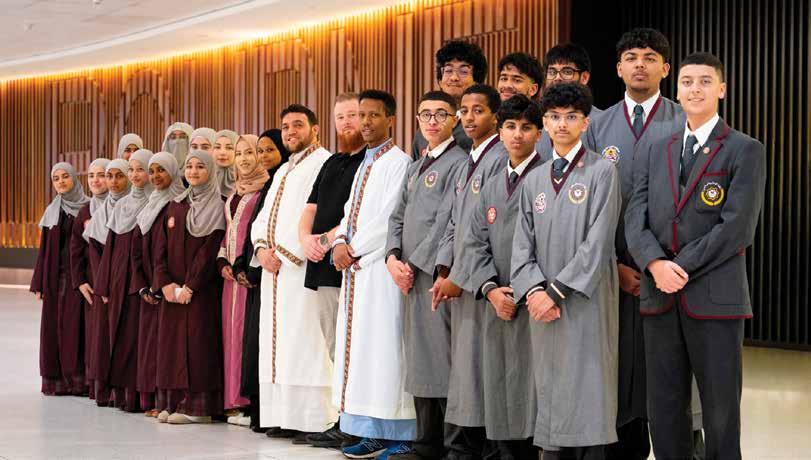
ISLAMIC LEADERSHIP DIPLOMA (ILEAD) OPENS INTERNATIONAL HORIZONS IN MALAYSIA FOR ISLAMIC COLLEGE OF MELBOURNE STUDENTS
A group of Year 10 students from the Islamic College of Melbourne (ICOM) has departed for Malaysia as part of the college’s Diploma of Islamic Leadership (ILEAD) program, an initiative designed to develop the next generation of Muslim leaders through academic learning, practical engagement, and international exposure.
The students left Melbourne Airport accompanied by staff members to begin a leadershipfocused educational tour that will provide them with opportunities to engage with scholars, visit educational institutions, and participate in activities aimed at strengthening their understanding of leadership from an Islamic perspective.
According to the college, the ILEAD pathway is a unique diploma-level program that is exclusive to ICOM and is currently the only initiative of its kind offered within an Islamic school in Australia. The program has been developed to equip students with the knowledge,
character, and practical skills required to become effective leaders within their communities and wider society.
Throughout the journey, students will take part in a range of educational and cultural experiences designed to complement their classroom studies. The program combines academic learning with realworld engagement, allowing students to observe leadership in practice, interact with respected scholars and educators, and gain firsthand exposure to institutions that contribute to Islamic education and community development.
School representatives highlighted that the international component of the program plays an important role in broadening students’ perspectives and helping them develop a deeper appreciation of leadership responsibilities. By interacting with individuals and organisations in another country, students are expected to gain valuable insights into the diversity of Muslim communities
and the different approaches to education, community service, and leadership across the Islamic world.
The visit to Malaysia also provides students with an opportunity to act as ambassadors for their school and community. As representatives of ICOM, the students are expected to demonstrate the values of respect, responsibility, integrity, and service that form part of the college’s educational philosophy.
Malaysia has long been recognised as a leading centre for Islamic education and scholarship in Southeast Asia, making it an appropriate destination for a program focused on leadership development. The country is home to a range of universities, educational institutions, and community organisations that play a significant role in nurturing future leaders and promoting educational excellence.
For the students involved, the journey represents more than an overseas trip. It is an opportunity
to apply the lessons learned through the ILEAD program in a practical environment while building confidence, strengthening personal character, and developing a greater understanding of leadership grounded in Islamic values.
The college expressed its appreciation to the staff and families supporting the initiative and extended its best wishes to all participants. School leaders said they hope the experience will be both rewarding and transformative, providing students with memories and lessons that will remain with them throughout their lives. As the group begins its Malaysian leadership journey, the experience is expected to contribute significantly to their personal growth and reinforce the college’s commitment to preparing young Muslims to become informed, capable, and compassionate leaders for the future.
FUNDRAISING FOR EDUCATION: ANNUAL IMESA VICTORIA DINNER IN MELBOURNE
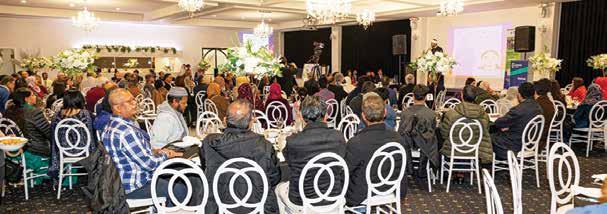
The Indian Minority Education Society of Australia Inc (IMESA) held its Annual Victoria Dinner on 13 June 2026 at Laila Reception in Brunswick, Melbourne. The event attracted a full house of doctors, professionals, business leaders, philanthropists, and members of the South Asian Muslim community, all gathered to support educational opportunities for underprivileged Muslim children in India.
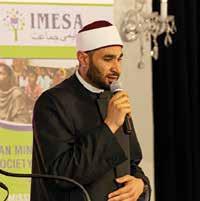
Masters of Ceremonies Dr Nisa Sheriff and Ms Saheem Wani welcomed guests, including Sheikh Alaa Elzokm OAM, Mayor Mohammed Semra, Mr Yianni Zaparas of Zaparas Lawyers, and Mr Fawaz Chawk, Editor-in-Chief of Al Wasat Magazine. They also welcomed IMESA’s Sydney team members, including Mr Zahid Jamil and Mrs Mona Zahid, Dr Syed Aslam Shaheer and Mrs Erum Shaheer, Mr Shahnwaz Ali and Mr Asad Farouk. The evening began with a recitation from the Holy Qur’an, followed by an address from Sheikh Alaa Elzokm OAM, Imam of Elsedeaq Mosque and a member of the Australian National Imams Council.
Sheikh Alaa highlighted the importance of education in Islam, noting that the first
Qur’anic revelation began with the command “Read” (Iqra). He emphasised that supporting the education of disadvantaged children creates lasting change across generations. He also praised the leadership displayed by the female MCs and reflected on the cultural similarities between India and his homeland, Egypt.
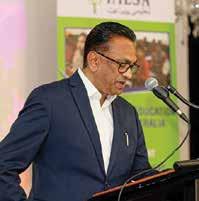
Dr Aejaz Sheriff formally welcomed attendees and thanked event sponsor Zaparas Lawyers for its support. He also commended IMESA’s commitment to transparency, ethical governance, and effective use of donor funds.
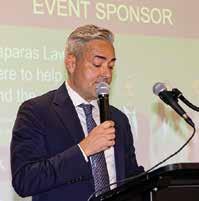
Mr Yianni Zaparas of Zaparas Lawyers also addressed the gathering, expressing his pleasure in supporting the event and IMESA’s educational mission. He further demonstrated his commitment by making a generous contribution during the fundraising appeal.
A video presentation showcased IMESA’s work and featured beneficiaries from its educational projects across India.
IMESA’s programs currently operate in Bengaluru, Boisar, Dehradun, Dinajpur, Hyderabad, Lucknow, New Delhi, Patna, Saharanpur, Vadodara, Tonk, Nuh (Mewat), and Srinagar, with future projects planned in Chennai and Assam.
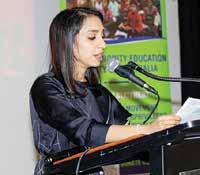
Dr Nisa Sheriff delivered a moving presentation on the impact of child labour. Drawing on her childhood experiences in India, she described witnessing children begging, selling goods on the streets, and working as domestic helpers. She contrasted these realities with the opportunities enjoyed by children in Australia and recounted the story of Pakistani child labour activist Iqbal Masih, whose advocacy against exploitation cost him his life at the age of 12.
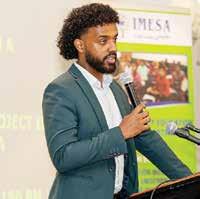
The newly elected Mayor of Maribyrnong, Mr Mohammed Semra, shared his own journey as the son of Sudanese refugees. He described overcoming significant speech difficulties through expert treatment which helped him excel in education. He reflected on the racism and barriers he encountered while growing up. Mr Semra described education as “the great equaliser” and credited it for his success as one of Australia’s youngest mayors.
He spoke about the importance of representation, diversity, and authentic leadership, recalling advice he once received to change his name to improve his political prospects. Instead, he chose to remain true to his identity.
Mr Semra praised IMESA’s work, noting that the students supported
today may become tomorrow’s professionals, leaders, and community advocates.
A fundraising appeal followed.
Mr Shahnwaz Ali highlighted how donations are distributed and the growing impact of IMESA’s programs, Dr Zaffar Ghouse and Ms Saheem Wani added inspiring words of encouragement. Patrons responded generously, impressed by the organisation’s achievements and the stories shared throughout the evening.
An auction featuring works by local Melbourne artists, including Sohail Yamin, Dr Luqman Bilgrami, Dr Fayyaz Wani, Fatima Rajap, and Shaista Banu, added a cultural dimension to the fundraising effort.
In his vote of thanks, IMESA founder Mr Zahid Jamil expressed gratitude to volunteers and teams in both India and Australia. He gave special recognition to Dr Talath Sheriff and Dr Aejaz Sheriff for their contributions to organising the event and thanked patrons for their generous support of educational opportunities for disadvantaged children in India. Guests concluded the evening enjoying Indian cuisine and praised the organisers for delivering a successful and professionally managed event.
Dr Aejaz Sheriff
Mr Yianni Zaparas of Zaparas Lawyers
Sheikh Alaa Elzokm OAM
Mayor Mohammed Semra
Dr Nisa Sheriff
EID FESTIVALS: EXAMPLES OF EARLY CELEBRATIONS
By Dr Dzavid Haveric, Historian
Similar to the feasts observed in other religions, Islamic festivals in Australia not only embody faith as a central element but also serve as occasions characterised by vibrant cultural expression and celebration. Such cultural and religious expressions of faith create lasting and dynamic impressions on participants and bystanders, regardless of their cultural background. These occasions provide opportunities for religions to express their faith and way of life within a social context. Islamic festivals typically last several days, although in some instances. For almost 200 years, Indian, Afghan, Arab, Persian and other Muslims in Australia have celebrated their festivals. European bystanders, including men, women and children, watched the proceedings of the religious ceremony with interest, and often with amusement, as they were unaccustomed to Islamic celebrations.
The ‘Feast of Ending the Fast’ and ‘Feast of Sacrifice’ were commonly celebrated by Muslims – Eid is an Arabic word that means ‘a day which returns often’ and ‘festival.’ The ‘Feast of Ending the Fast’ (Eid al-Fitr) marks the end of the fast of Ramadan and lasts three or more days in the Islamic tenth month (Shawwal). This feast is also known as the ‘Little Feast’ (‘id al-Saghir; in Turkish Kuchuk Bairam). It is celebrated by offering alms or food to the less fortunate. On this occasion, gifts are exchanged, especially cakes and sweets. Another name for this festival is Hari Raya Puasa Day. The ‘Feast of Sacrifice’ (‘Eid al-Adha) is celebrated on the 10th day of Dhu al-Hijjah,
the Islamic twelfth month. This feast is also known as the ‘Great Feast’ (‘id al-Kabir; in Turkish Qurban Bairam). On the day of sacrifice, Muslims offer a lamb, goat, cow or camel to God as a sacrifice. This feast is associated with the annual Hajj pilgrimage to Mecca. Other names for this festival are the ‘Feast of the Ram’ and ‘Buckreed’ (Bakreed or Bakrid).
Many Muslims in Australia also celebrate other festivals, including the birthday of the Prophet Muhammad (pbuh) (Eid-e-Milaad-un-Nabi) and the Islamic New Year (Al-Hijra)
The arrival of Muslims in the Australian colonies introduced Islamic feasts and new religious celebrations. Initially, these
celebrations took place on board ships, at wharves and quaysides, near rivers, and on railway piers. Before mosques were built, Islamic festivals were held in private residences. Communal celebrations also occurred in public spaces such as streets, parks, gardens, farms, Afghan camps, and town halls, consulates or embassies. Islamic festivals represented central events in the lives of dispersed Muslim communities. These settlers, primarily single men, gathered according to their cultural traditions. Such gatherings encouraged the development of local customs. The festivals also reinforced community bonds and supported spiritual well-being. Local authorities frequently
permitted Islamic festivals to be held in public venues such as parks. These locations were chosen because they could accommodate the large numbers of participants arriving from distant areas
The widely held belief in Western societies that Muslims arrived in new lands by force and sword is nothing other than a fake. In colonial Australia, Muslims arrived with joy, music, and dance, particularly during Islamic festivals. The festivals were picturesque affairs. They generated interesting stories of Muslim participation of all ages and generations.
The celebrations encouraged Muslims to remain faithful to ‘the one eternal God, to the
memory of the Prophet, and to practise morality, truthfulness, and charity.’ Emphasis was placed on providing relief for the poor and distressed, with donations from affluent Muslims considered an expected component of the festivities. The Patriotic Fund for Australia was also launched.
The ethnic diversity of Muslim communities was also reflected in their festivals. These polyethnic celebrations brought together Afghans, Indians, Bengalese, Arabs, Javanese, Malays, Turks, Albanians, and English converts, including individuals with Sufi convictions. Typically, Islamic festivals attracted between 50 and 150 worshippers.
In 1886, one of the earliest documented Eid celebrations among Victorian Muslims took place at the Observatory Reserve in Melbourne (Botanic Garden). The group of 80 participants entered and formed a procession before reaching the designated area, approved by local authorities, for the religious ceremony. In 1887, about 150 Punjabis and those from ‘the more northern portions of Hindustan,’ who were residents of Sydney, celebrated id al-Fitr at the house of a prominent Muslim residing in Bourke Street,
Surry Hills. The Melbourne ‘id al-Fitr celebration of 1887 was held in the Domain by Afghan and Bengalese residents. It was reported:
“They all faced west, kneeling down in five rows on the grass, waiting for the arrival of the imam. The Imam Mohammed Sali stood before the devotees. He was dressed in a long flowing white turban, and a tunic and tight trousers of clean linen. A small but most gorgeous carpet, richly embroidered with gold, was spread. out under a tree over a small box, which served as a sort of dais for the priest to stand on. After casting aside an umbrella that he carried in his hand, he knelt down on the carpet in front of the worshippers and began to say a prayer in Arabic. The first portion of the service consisted of a prayer used in ceremonial services chanted by the imam with prostrations by the whole congregation.”
In 1890, crowds of curious onlookers were reported to have gathered outside Adelaide Mosque to watch an Islamic celebration. It was the first Islamic festival recorded in the newly-built Adelaide Mosque, with 80 Afghans and one Hindu in attendance, presided over by Hadji Mullah Merban. It was ‘id
al-Adha, the Feast of Sacrifice, which was also called the ‘Hadji Day’ and was said ‘corresponds to Christmas.
In 1903, Muslims in Adelaide celebrated Islamic New Year (Al-Hijra). Alongside the mosque, situated off Wright Street, in the presence of about 200 spectators, a number of Afghans, with the aid of sticks, performed ‘weird’ dances, under the glare of flare lights, to the music of a drum, an accordion and a violin.
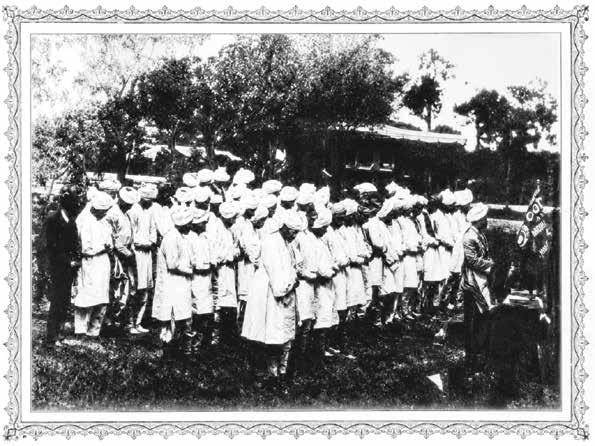
In 1910, in Domain Gardens, the Punjabi residents of Melbourne held their ‘id al-Fitr festival. Facing the direction of Mecca, the worshippers knelt near a grove of Whispering Pines, and raised their hands to pray … Dressed in white, with here and there a splash of colour from a richly embroidered vest or a head surmounted only by a crimson fez, they were a picturesque group: Especially striking was the elaborate ornamentation of their socks. The Shah [imam], his snowy garments almost hidden by a dove-coloured mantle, read passages from the Qur’an. Almost touching his left arm was a sturdy infant eucalyptus, its tender green contrasting vividly with the sombre note of the pines. In like manner, the faces of the devotees and those of the
passers-by, who quickly formed a crowd, made a fine study in light and shade. At the end of the rites, the Muslims saluted and embraced one another, ‘spraying their turbans with scent.’ Gifts were made and several cases of fruit were shared with European bystanders.
Source: Dzavid Haveric, 2019. History of Islam and Muslims in Australia.
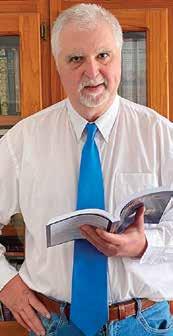
Dr Dzavid Haveric is an Adjunct Research Fellow, Historian, and Author at the Centre for Islamic Studies and Civilisation (CISAC), Charles Sturt University. He is also an Honorary Associate at the Victoria Museum and a prolific author with sixteen written books. His work, ‘History of Islam and Muslims in Australia’, has been translated into six languages, and excerpts from his other publications have also appeared in multiple languages.
Muslims at Eid prayer in Domain Gardens in 1910, Melbourne
THE RATE HIKE MIRAGE: WHY 13 RISES HAVEN’T KILLED INFLATION – AND THE RADICAL NEW MODEL AUSTRALIA NEEDS
By Shams Alam
For two long years, the Reserve Bank has been doing the only thing it knows how to do: whacking the cash rate higher and higher. Thirteen times.
From 0.1 per cent to 4.35 per cent. And what
I’m not an economist. I’m just a citizen watching our country walk into a wall, over and over. And I’ve come to a simple, unsettling conclusion: the conventional toolkit for fighting inflation is not working for Australia. Not because the RBA is incompetent, but because our economy has changed. And our policies haven’t.
We have a housing market drowning in debt – 91 per cent of GDP in mortgages, mostly variable rate. We have governments at every level adding to our costs, not subtracting. And we have a quiet, creeping disease – Dutch disease – that has hollowed out our farms and factories. The result? Inflation that feeds on rate hikes, not fears them.
Let me explain what I mean, and then – because I believe in solutions – lay out a different path.
The 13 Rate Hikes Paradox: Pushing on a Rope Made of Rent
The RBA raises rates to make borrowing harder, so people spend less, and prices cool. Textbook.
But in Australia, rate hikes do something else first: they directly increase mortgage repayments for millions of households on variable rates. And when investors see their monthly interest bill jump by $500 or $1000, they do what any rational person would do – they try to pass it on.
To renters.
Rental inflation exploded to nearly 8 per cent even as rates climbed. Landlords said, “my
costs are up, so your rent is up.” And because vacancy rates are at record lows, renters had nowhere to run. The RBA’s own tool became fuel for the fire. That’s not a theory. That’s the last two years of our lives. Meanwhile, commercial property investors did the same. They raised shop and office rents. Tenants – cafes, mechanics, small manufacturers – passed those costs to you and me.
So here’s the perverse truth: every rate hike designed to cool inflation has, in part, added to the very inflation it was meant to kill. Not entirely – demand did cool a little – but enough to make 13 hikes feel like running on a treadmill.
The Government’s Other Hand: Fees, Wages, Pension – All Adding Fuel
Now here is where the story gets truly incoherent.
While the RBA is trying to shrink the money supply, the federal government is expanding it – lifting social security, boosting the pension, increasing Commonwealth Rent Assistance, and mandating higher award wages. These are noble moves to help struggling families. But they are also inflationary. Every extra dollar of pension or rent assistance flows straight into spending. And every mandated wage rise for the low-paid, however deserved, increases costs for the cafes, farms, and cleaners who employ them. They have to raise prices.
Then you have state and local governments.
My council rates went up 6.5 per cent last year. My state
have we got?
Rents through the roof. Mortgage stress across the suburbs. And inflation that refuses to die –stuck like a stubborn weed.
land tax – passed through by my landlord – went up 8 per cent. Public transport fares: up. Car registration: up. Tolls: up. Water licences for farmers: up. And don’t forget the effective carbon price under the Safeguard Mechanism, adding costs to steel, cement, and electricity. Every single one of these is a government-imposed price increase. The RBA cannot do anything about them. They just happen. And they feed directly into the Consumer Price Index. So, we have a monetary policy pulling one way (higher rates to choke demand) and a fiscal policy – across three levels of government – pulling the other way (higher fees, higher wages, higher benefits). No wonder we’re stuck.
The Dutch Disease Nobody Mentions
But the deepest wound is one we rarely name: Dutch disease. That’s the condition where a boom in resource exports (iron ore, coal, gas) pushes up the exchange rate and pulls labour and capital out of other tradable sectors – specially manufacturing and agriculture. Australia has had three resource booms since the 2000s. And we have watched our manufacturing share of GDP fall from 15 per cent to barely 5 per cent. Our agriculture share has halved.
It’s not because our farmers or factory workers are lazy. It’s because a welder can earn $180,000 on an LNG site, so a factory has to pay $90,000 to keep a welder – double what a competitor in Vietnam or Mexico pays. And the strong Australian dollar, inflated by mining exports, makes every Australianmade product look expensive overseas.
So, manufacturing offshored. Food processing moved to New Zealand or Thailand. Even wool –we ship it raw to China now. We don’t even wash it here. This is not a free market miracle. It is a policy failure. And it has made us import dependent. When the Australian dollar fell in 2021-2023, import prices shot up. But we had no local factories to fill the gap. So, inflation spiked. And the RBA’s rate hikes couldn’t fix a supply chain that no longer exists.
Housing: The Unspoken Anchor
Let me add one more number: 91 per cent of GDP in mortgage debt. Most of it variable. This makes Australia an outlier among rich countries. In the US, mortgages are mostly fixed for 30 years. In Europe, fixed rates dominate. Here, a 1 per cent rate hike hits millions of households within months. That’s why the RBA has been so timid compared to, say, New Zealand or Canada. They know that aggressive hikes would break the housing market. But timid hikes haven’t killed inflation either. So we sit in a miserable middle: high rates, high rents, high inflation, high stress.
And the government’s answer? More rent assistance – which flows straight back to landlords. More wage rises – which feed into costs. More superannuation building roads in Peru while our own infrastructure crumbles. Which brings me to the super funds.
Australia’s $3.9 Trillion Elephant in the Room
We have the fourth largest
pool of retirement savings on the planet – nearly $4 trillion. And where is it building infrastructure? In the UK, in the US, in Canada. AustralianSuper owns ports and pipelines overseas, generating billions in profit and GST for foreign treasuries. Meanwhile, our own manufacturing is a ghost town. Our housing is unaffordable. And our young people are leaving for London and Dubai because they can’t see a future here. Does that make sense to you? It doesn’t to me.
A New Model: Six Pillars to Fight Inflation Without Breaking the Country
Instead of praying for the next rate hike to work, I believe we need a comprehensive, coordinated model that goes far beyond the RBA. Here is what it could look like.
1. A Two-Year Freeze on All GovernmentAdministered Fees
Council rates, land tax, public transport fares, tolls, vehicle registration, water licence fees, and any state or local charge should be frozen at current levels for two years. If necessary, the federal government can provide temporary compensation to states and councils. This would directly subtract from CPI – not indirectly, not hopefully –directly.
2. Transparent, CostJustified Pricing for
Essential Goods
I am not a fan of price controls. But I am a fan of shaming. Require supermarkets, banks, and energy retailers to publicly justify any price increase above the RBA’s inflation target, with an independent watchdog (the ACCC) given power to name and shame. This would deter opportunistic pricing without destroying market incentives.
3. Stimulate Agriculture by Cutting Water Licence Costs and Red Tape
Our farmers are drowning in fees and paperwork. Reduce water licence fees, streamline environmental approvals, and invest in on-farm efficiency. More food supply means lower food inflation. It’s that simple.
4.
A Generous, Targeted Migration Program – Tied to Housing
We need workers for farms, factories, and construction sites. But we cannot import millions without building homes for them. So, tie visa numbers to housing completions: for every 10,000 new dwellings approved, allow an extra 15,000 workers. And create a special agricultural visa with pathways to permanency so workers stay, learn, and invest in our regions.
5. A Manufacturing Reinvestment Act – Using Super Loans, Not Super Sacrifice
Here is my radical proposal: amend superannuation law to allow a small portion of each fund (say, 5 per cent) to be placed into a National Manufacturing Finance Corporation. That corporation would issue governmentguaranteed bonds to super funds at market rates. It would then provide low-interest loans to Australian manufacturers, especially in strategic sectors: medical supplies, defence components, food processing, and renewable energy parts. No tax holidays (too expensive), but accelerated depreciation and investment allowances. Super funds get a safe, liquid asset. Manufacturers get cheap, patient capital. And Australia rebuilds its industrial base. That would reduce import dependence, weaken the Dutch disease exchange rate effect over time, and create real jobs.
6. Free Market Wages? No. But Wage Flexibility for Struggling Sectors.
I don’t support abolishing the minimum wage. But I do support a temporary, two-tier training wage for new entrants in agriculture and manufacturing – say, 80 per cent of the award for the first six months. And expand piecework (payment per basket of fruit, per unit produced) so workers can earn more by working harder, without employers being forced to pay high hourly rates for slow days.
This would lower labour costs at the margin without gutting protections.
Will This Work? Or Am I Dreaming?
I am not naive. I know that freezing council rates will make local governments scream. I know that redirecting super funds will make the finance industry howl. I know that migration is politically toxic. And I know that wage flexibility is a third rail.
But I also know that 13 rate hikes haven’t fixed us. And I know that the current path leads only to more mortgage pain, more rent inflation, more offshoring, and more imported inflation when the dollar inevitably dips again.
We cannot simply hope that the RBA has a magic bullet. It doesn’t. The bullet is a whole new gun.
We need a national compact: federal, state, local, the RBA, super funds, unions, and business, all rowing in the same direction. Not monetary policy fighting fiscal policy. Not councils adding costs while the RBA tries to subtract them. A real, honest, coordinated war on the structural causes of inflation – not just the symptoms. Is it hard? Yes. Is it possible? Only if we decide that our children deserve a country that makes things again, grows things again, and keeps a roof over every family without breaking the bank.
Let’s stop pretending that the 14th rate hike will be different. It won’t. Let’s start building a new model – before the treadmill breaks beneath us.
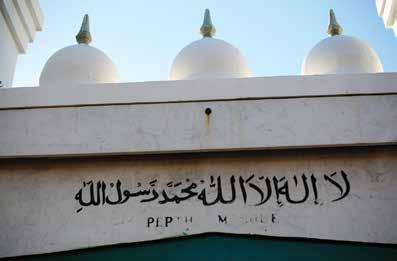
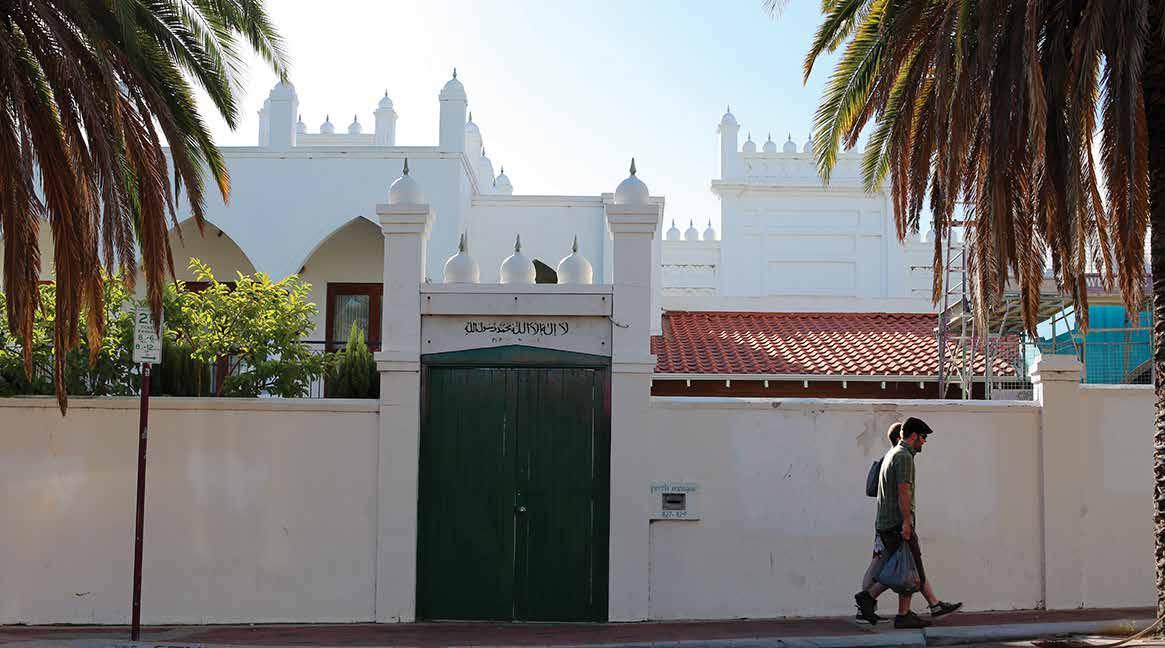
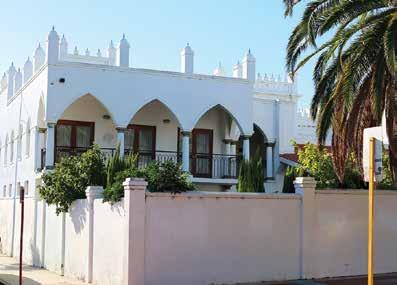
HOW DID PERTH GET ITS FIRST MOSQUE?
By Kuranda Seyit
In the 1870s through to the 1890s many of the Afghan and Indian cameleers would trek with the camels loaded with goods from the vast interior, places like Coolgardie, Kalgoorlie, Alice Springs, Oodnadatta, Marree and the like all the way to Perth where they would unload their camels and rest for a few weeks. After some time more cameleers arrived in WA, and also Indian hawkers emerged, tailors and business minded Indians who settled in Perth.
Around the mid 1890s, a group of Muslim men, from various backgrounds agreed that they needed a mosque for the growing community in Perth, but also to serve those from around the state. Amongst those men was an educated man named Hasan Musakhan who carefully documented the process from
the beginning. In 1895 efforts were made by them to obtain a grant for a property in the city of Perth from the Government of Western Australia, but without success. They then decided (learning from their Muslim brothers in Adelaide who had built a mosque in 1889) that they should raise their own funds to purchase a property on 427-429 William Street, Perth. According to Musakhan, “The property is held by Trustees, changeable from time to time, the present Trustees being Mr.
Faiz Mohamet and Mr. Hoffiz Mohamad Hayat, Merchants, of Perth.” Faiz Mahomet was a prominent camel importer and breeder and Hoffiz Mohamad Hayat a successful merchant in Perth.
Through rigorous fundraising far and wide across the Muslim community £680 was raised to purchase the property and a further, £1,850 was raised for the construction. This was equivalent to a total of $700000 in today’s terms.
Musakhan wrote in his journal:
“The President explained that Mr. Anwar Kakad was absent from the meeting because, at the request of a large number of the members he had gone to the Goldfields to collect more funds for the Mosque, and hoped that he would soon return with a large amount to enable the Committee to pay debts now due and owing by the Mosque.”
The plans and specifications for the buildings were prepared by an Indian gentleman, Mr. Din Mohamed, and approved by the Perth City Council.
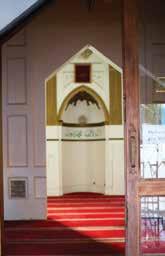
Musakhan writes: “The exterior part of the Mosque Building is in an incomplete state which requires early attention. On the East side of the Mosque facing William Street, the Entrance Hall, Committee Rooms, Library and Reading Rooms have to be built as shown in the Plans approved by the Perth City Council, and also a Fountain Cistern for purposes of ablution
at the foot of the Mosque steps, as proposed, is to be erected. The plastering of the wall on the East side of the Mosque is also needed, and also a verandah at the entrance of the Mosque, and the ornamental work to the exterior of the Buildings. All these require a further outlay of money to the amount of at least £1,000.”
The following are the minutes of the meeting which highlights the different communities who contributed to the fundraising for the mosque: “In the name of God, the Merciful and the Compassionate, Praise be to God; and the blessings of God on His great Apostle. MEMORANDUM OF AGREEMENT between the Delegates and Representatives of the several Mohammedan Communities resident in Western Australia in the Commonwealth of Australia, namely, Afghans of the one part, and Indians (including Punjabies, Bengalies, Sindhies 30 and other races of India) of the second part, and Syeds of the third part, and Baloochies (including Brohies and Mekranies) of the fourth part, and Arabs and other various Mohammedan races of the fifth part…”
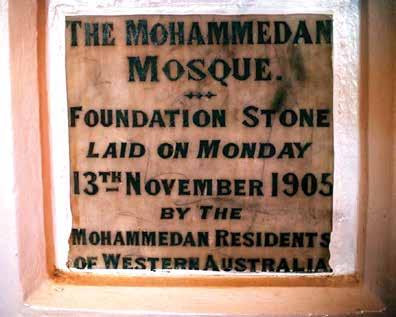
The foundation stone of the Mosque building was laid on Monday, the 13th day of November, 1905 (corresponding with the 15th day of Ramazan, 1323, Hijri) before a representative gathering of the community; Jemadar Faiz Mohamet (Durrani Afghan) assisted by Hoffiz Mohammad Hayat performed the ceremony of placing the foundation stone in position.
Pictures: Kuranda Seyit
BROADWAY HALAL MEATS
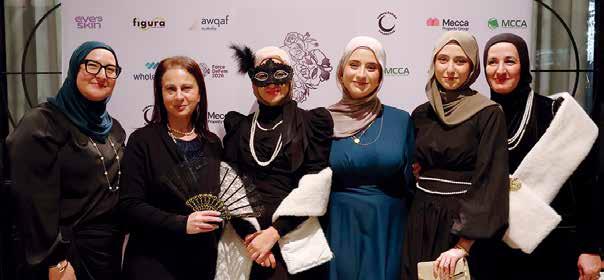
FORCE DE FEM CELEBRATES FIVE YEARS OF EMPOWERING WOMEN THROUGH BUSINESS AND FINANCIAL LITERACY
The driving force behind Force De Fem is entrepreneur, awardwinning author, public speaker, and film director Mariam El-Houli, who reflected on the organisation’s growth since its beginnings.
“I can’t believe it’s been five years,” El-Houli said.
“What started off in 2022 as a little gathering for startup businesses has grown substantially, even to an international scale.”
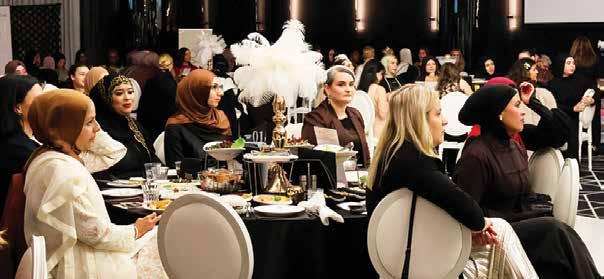
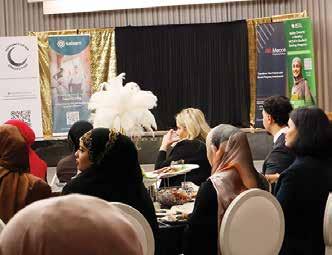
This year’s anniversary event embraced The Great Gatsby theme, with guests arriving in feathers, pearls and sequins, capturing the elegance of the Roaring Twenties. The venue showcased womenled businesses, with tables displaying products, services and ventures from ambitious entrepreneurs.
While celebrating business success, the evening centred on financial literacy and wealth creation, with industry leaders sharing insights on investing, retirement planning and longterm financial security.
“I always say financially stable women build safer homes, and we are so in need of building them,” El-Houli said.
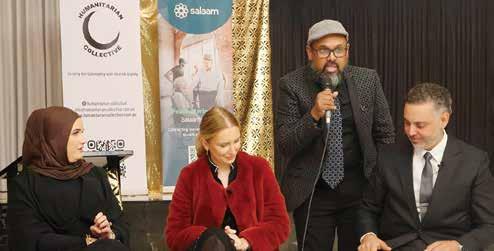
The event also featured a fundraising initiative in partnership with Humanitarian Collective to support plans for Australia’s first faith-based drug and alcohol rehabilitation centre for young boys and men.
Opening the event, Humanitarian Collective founder Julide Turker highlighted the importance of sisterhood, community service and empowering women to create meaningful change.
By Shazma Gaffoor
Force De Fem marked its fifth anniversary with a glamorous evening dedicated to women’s empowerment, entrepreneurship and financial literacy, bringing together businesswomen, community leaders and changemakers from across Australia.
Created to support women in business, the organisation focuses on education, networking and personal development, helping women build the skills and confidence to reach their full potential.
“Women are capable of extraordinary things when they are empowered with knowledge, support, purpose and belief,” Turker said.
Inspired by her parents’ commitment to helping others, Turker said their values shaped her vision for Humanitarian Collective
The organisation supports
refugees, families in crisis and individuals experiencing hardship behind closed doors by providing practical assistance and longterm support.
Recognising a gap in faith-based rehabilitation services within the Muslim community, Turker took the reins to kickstart the initiative.
“Our vision one day is to create
a safe and compassionate rehab space that combines evidencebased recovery support with faith and dignity, routine services, counselling and a holistic approach to wellbeing,” she said.
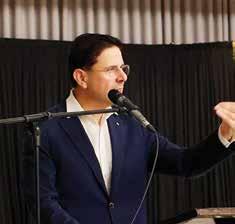
The evening then turned to financial literacy, with Salaam founder Professor Talal Yassine
highlighting the importance of women taking control of their financial futures.
He emphasised the significant role Muslim women play within families and communities, noting they represent half of Australia’s Muslim population.
“They are our mothers, our trainers, our supporters and our nurturers. If they are undereducated, what will become of our ummah (community)?” Professor Yassine said.
Salaam has supported Australian Muslims through networking opportunities and Islamic finance initiatives. Its superannuation provider, Salaam Wealth, now manages about $600 million on behalf of around 12,000 members.
Professor Yassine encouraged audience members to become more informed about their finances and retirement savings.
“If there’s one message you take away tonight, it’s to learn about finance, understand where your super is and know where your savings are,” he said. “It’s not unfeminine to understand how money works.”
Property investment expert Abdullah Nouh, founder of Mecca
Property Group, followed with a crash course on building longterm wealth through strategic property investment.
Drawing on almost two decades of industry experience, Nouh stressed the importance of financial education and planning for future generations.
“Once you understand financial literacy and how to generate wealth, think about the legacy you can leave for your children and community,” he said.
Over the past five years, Mecca Property Group has facilitated the purchase of more than 450 developments worth over $350 million and served more than 300 clients.
Nouh encouraged buying “ugly” established properties and renovating them, rather than purchasing off-the-plan properties often sold at peak prices.
His five principles for financial security were: understanding personal finances, distinguishing between good and bad debt, increasing personal value through skills and problemsolving, building a side income, and recognising the importance of time in wealth creation.
“The most successful people
have a high-performing team around them,” Nouh said.
“Be the CEO of your life, you don’t have to do everything.”
Guests also heard prerecorded messages from MCCA Head of Engagement and Business Development Ahmed Zanaty and Awqaf Australia CEO Mohamed Zaoud, who highlighted the importance of community-led initiatives.
Hannan Accounting’s Nisho Sadeque encouraged attendees to seek professional assistance to maximise their tax benefits.
With more than 16 years of experience in accounting and taxation, Sadeque is passionate about helping individuals achieve sustainable financial growth through tailored advice.
“Don’t ask ChatGPT about your tax; it won’t walk you through a tax plan,” Sadeque said.
The evening’s final speaker, Wholesum founder Dr Tanvir Uddin, shared ethical financial strategies for building longterm wealth through an Islamic finance lens.
An expert in Islamic wealth building and ethical investments, his seven-step approach to investing were: passive investing, dollar-cost averaging,
managing emotions, avoiding fear of missing out, limiting portfolio monitoring, investing long-term, and investing in areas of understanding.
“Network with people, ask questions, and tell them what you can offer,” Dr Uddin said.
“Give twice, ask once.”
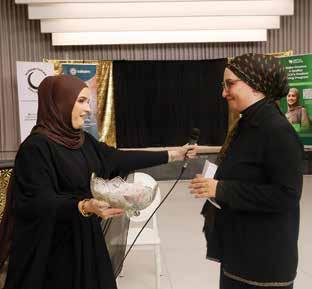
The fundraising auction for Humanitarian Collective’s rehabilitation project raised close to $10,000, followed by a Q&A session focused on community development, leadership and creating lasting impact.
The proceedings concluded with a raffle draw featuring a $2,000 grand prize and other generous giveaways.
As the night ended with networking, philanthropy and insights on financial independence, El-Houli was already looking ahead, with plans underway to bring Force De Fem to Sydney this August and further its mission of empowering women.
Salaam founder Talal Yassine
From left: Mariam, Ella, Nisho, Abdallah from Mecca Property Group
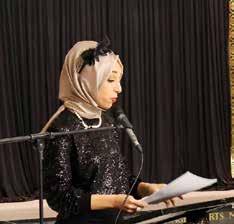
Julide Turker
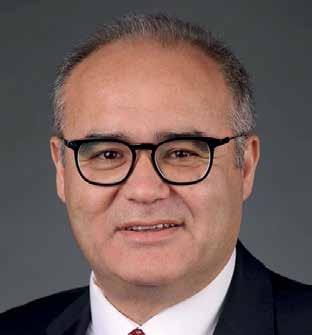
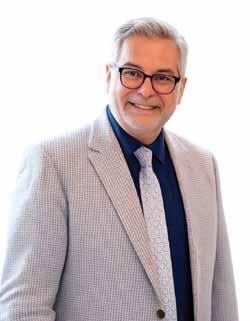
PROFESSOR EMAD WALID SHUBLAQ AWARDED OAM
Professor Emad Walid Shublaq has been awarded the Medal of the Order of Australia (OAM) in recognition of his outstanding service to engineering. The OAM is one of Australia’s national honours, presented to individuals who have made exceptional contributions to their profession, community, or the nation. The award recognises Professor Shublaq’s longstanding contributions to the engineering profession and the wider Australian community.