Melbourne office: 171 Denton Ave, St. Albans, VIC 3021
Postal Address:
P.O.Box 5178, Cairnlea VIC 3023
Tel.: + 61 4 3020 4076
Sydney office: 10-28 Biloela St, Villawood NSW 2163
Tel.: + 61 4 9033 0623
MOVING ON PAST MISTAKES
HOW CENSUS DATA HELPS SHAPE SERVICES FOR MIGRANTS AND REFUGEES IN AUSTRALIA
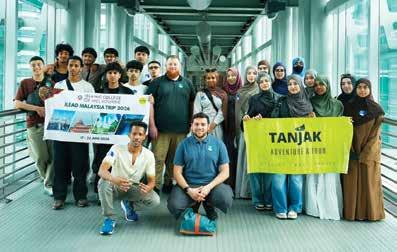
ISLAMIC COLLEGE OF MELBOURNE STUDENTS COMPLETE DIPLOMA OF ISLAMIC LEADERSHIP STUDY TOUR TO MALAYSIA
MAJOR CHANGES TO PROPERTY TAX LAWS TO HIT INVESTORS
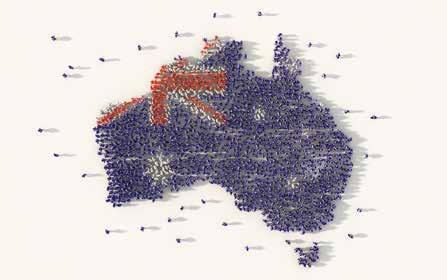
CHECK YOUR MAILBOX: WHAT YOU NEED TO KNOW TO COMPLETE THE 2026 CENSUS 10 11 12 13 16 6 8 7 3
MAYOR BILAL EL-HAYEK LEADS FOURTH ANNUAL LIGHTS OUT SLEEPOUT TO SUPPORT PEOPLE EXPERIENCING HOMELESSNESS
AUSTRALIA SET TO HOST ITS FIRST INTERNATIONAL HALAL EXPO: A HISTORIC MILESTONE FOR THE HALAL INDUSTRY
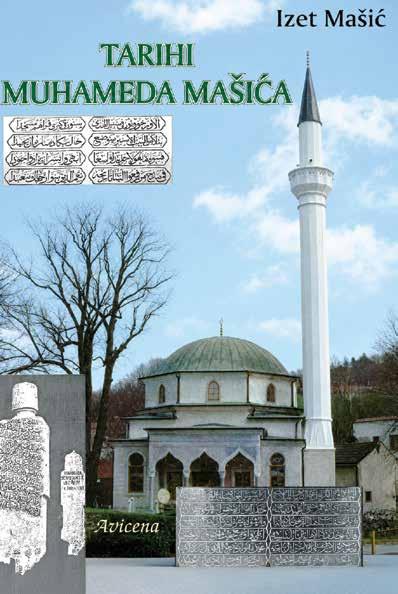
MUHAMED SEID MAŠIĆ (1913–1978) THE BOSNIAN POET WHO WROTE IN ARABIC… AND REACHED MAKKAH
VICTORIAN GOVERNMENT EXTENDS DEADLINE FOR 20% VEHICLE REGISTRATION REBATE TO 31 AUGUST
census.abs.gov.au/arabic
CHECK YOUR MAILBOX:
WHAT YOU NEED TO KNOW TO COMPLETE THE 2026 CENSUS
With Census Night fast approaching on Tuesday, 11 August, households across Australia are being encouraged to check their mailboxes as letters containing instructions for participating in the 2026 Census are now being delivered.
The Australian Bureau of Statistics (ABS) says most households will soon receive information explaining how to complete the Census and is reminding residents not to overlook these important instructions.
According to Hasan Hawatmeh, Census multilingual spokesperson, Australians can complete the Census in the way that best suits their needs.
“People can complete the Census online, by paper or with help from the Census team. Please check your mailbox,” Mr Hawatmeh said.
He added that support would
be available for those who need assistance, including translated information materials, pop-up support hubs and Census form completion sessions.
“Every answer matters in the Census, because Census data is used to inform decisions about transport, schools, health care, infrastructure and business,” he said.
The ABS has highlighted three key things every household should know before completing the Census.
Complete the Census online or by paper
Most households will receive instructions explaining how to complete the Census online. However, paper Census forms remain available for those who prefer them and can be requested if needed.
Some households will automatically receive a paper
Census form in the mail or have one delivered by a Census field officer. Even if a paper form is provided, people may still choose to complete their Census online.
You don’t have to wait until Census Night
Once Census instructions have been received, households do not need to wait until 11 August to complete the form.
If you already know where you will be staying on Census Night, you can submit your Census as soon as you receive your instructions.
Everyone staying in your home must be included
The ABS reminds residents that everyone staying at the household on Census Night must be included on the Census form, regardless of their citizenship or
visa status.
This includes Australian citizens, permanent residents, temporary visa holders, international students and visitors who will be staying at the address on the night of Tuesday, 11 August.
The average household is expected to take around 30 minutes to complete the Census. The ABS encourages all Australians to participate, noting that Census information plays a vital role in planning essential services and infrastructure for communities across the country.
For more information, translated resources and support in Arabic, visit:
https://census.abs.gov.au/ arabic
THE GREAT AUSTRALIAN CAPITAL FLIGHT: ARE WE FUNDING THE WORLD WHILE WE FADE AT HOME?
Every couple of weeks, most of us glance at our payslip, see that chunk marked “superannuation” come out, and think nothing more of it. It’s just our retirement money, right? The nest egg we’re building so we can get by comfortably once we finish working.
But how many of us ever stop to wonder where all that cash actually ends up?
Australia’s compulsory super system is easily one of our country’s proudest economic wins. Figures from APRA show our total retirement savings have blown out to around $4.5 trillion—making ours one of the biggest pools of long-term investment money anywhere on Earth.
For decades now, that money has bought us a slice of some of
By Shams Alam
Every couple of weeks, most of us glance at our payslip, see that chunk marked “superannuation” come out, and think nothing more of it. It’s just our retirement money, right? The nest egg we’re building so we can get by comfortably once we finish working.
But how many of us ever stop to wonder where all that cash actually ends up?
the world’s biggest companies, major infrastructure projects, renewable energy schemes, prime real estate and cuttingedge tech firms. Spreading our investments across the globe has been smart too—it’s smoothed out returns and kept us from putting all our eggs in the basket of our relatively small local economy.
But that very success has created a question we really need to talk about more openly. Roughly 40 to 50 cents of every super dollar is invested overseas. Without most of us even realising it, Australia has become one of the world’s biggest exporters of long-term capital. Our retirement savings are helping build factories, roll out new tech and upgrade infrastructure across North America, Europe and Asia.
There’s nothing wrong with investing abroad. It’s just
common sense for any good investment portfolio. But have we tipped the balance too far? Is our money working harder to grow other countries than it is to grow our own?
Every dollar invested is a dollar that gets things done. It pays for new equipment, hires staff, and turns ideas into real businesses. The money we send offshore does exactly that—just not here. No one can say exactly how many jobs exist overseas because of our super funds alone. But it’s obvious that our savings are behind hundreds of billions of dollars worth of economic activity in other nations. Those businesses employ local people, pay taxes to their governments, buy supplies from local companies, and help build up their communities and economies.
We don’t see a cent of that tax
revenue, or feel the benefit of those new jobs.
Meanwhile, we keep buying back the very things that money helps create: cars, medical gear, computers, heavy machinery, fuel, and more and more of our most advanced technology.
It’s a strange, frustrating contradiction.
We send our savings overseas to build other economies, then borrow or pay to import the finished results. We pour money into making the rest of the world more productive, while we’re still arguing over how to get our own industries back on their feet.
Economists often point to “Dutch disease” to explain part of this. When countries strike it rich with natural resources like
we have with mining, money and skilled workers tend to flow straight into that booming sector—and leave other parts of the economy behind. We’ve reaped huge rewards from our mines, but over the years we’ve also watched our car factories close, our manufacturing base shrink, and our reliance on goods from overseas get deeper and deeper. And COVID showed us just how fragile that reliance can be.
None of this means we should pull all our money out of global markets—that would be shortsighted and foolish. Nor should we ever ask our super funds to put our retirement savings at risk just to prop up local projects. Their first job is always to get the best possible return for us.
But what if we shifted our focus to making sure more of our future super growth gets invested right here, in projects that stack up commercially and make Australia stronger? Imagine if even 10 per cent of the new money flowing into super each year went into things like processing our own critical minerals, making advanced batteries, building local biotech and defence industries, rolling out better energy transmission, or setting up regional logistics hubs.
These aren’t wild ideas— governments and business groups have been saying for years these are exactly the areas we need to back if we want to stay competitive.
And unlike just buying shares in an overseas company, investing in these kinds of local projects ripples right through our whole community:
• Construction jobs pop up straight away
• New facilities need engineers, tradespeople and apprentices
• Local suppliers get more work
• Our universities get to team up with business to turn research into real products
• Small businesses see more customers
• Governments collect more tax to pay for hospitals, schools and roads
• Country towns get new opportunities to keep their brightest people
• We rely less on buying things from overseas
Other countries have shown us how it can work. Canada’s big pension funds have delivered great returns while pouring billions into their own roads, ports and power networks.
Singapore’s Temasek has used long-term investment to build up whole new industries from scratch. Norway’s sovereign wealth fund proves you can save for the future and help your country thrive, without cutting corners on good governance.
We don’t need to copy them word for word—but they prove you don’t have to choose between good profits and good national progress.
Whatever we do, we can’t cut corners. Fund managers need to make their own calls, free from political pressure, and only back projects that make financial sense.
This isn’t about forcing funds to throw good money after bad ideas or dying industries.
It’s about asking: why aren’t there more big, profitable opportunities here at home that are good enough to compete for our own money?
If we want our super to stay here, we can’t just order it to happen. We have to make Australia a place our own funds want to invest in.
That means governments delivering consistent, longterm plans instead of changing rules every few years. It means speeding up approvals for new projects, building the infrastructure we actually need,
training more skilled workers, and getting serious about what we want our industries to look like.
We have everything going for us: more natural resources than we know what to do with, some of the best universities on the planet, world-class financial systems, and that $4.5 trillion super pool. Hardly any country in the world has all that.
The real question is whether we’re actually putting it all together.
Compulsory super has been one of the best things we’ve ever done for ordinary Australians. Now maybe it’s time to make sure it does double duty— securing our retirement and building the kind of Australia we’ll be proud to leave to the next generation.
We’re not talking about turning our backs on the world. We just want to make sure that while our money works hard overseas, it gets the same chance to work hard right here.
Because the best return on investment isn’t just the number on your super statement. It’s the kind of country we get to call home.
MOVING ON PAST MISTAKES
By Jamilah Samian www.coolmumsuperdad.com
In some societies, ageing is associated with decline, dependence, and the uncomfortable idea of becoming a burden. This negative perception has a name: ageism. It reflects a tendency to judge or devalue people simply because they are old. Parents, once strong and capable, are seen as slowly losing relevance. Conversations about ageing revolve around loss: strength, independence, value. It is no surprise that many grow up dreading old age.
But when we look at our own past mistakes, it’s entirely different. We look back at our old choices and wonder how we could have been so foolish, so blind, or so weak. True kindness cannot just be something we give to other people. We have to send it backward in time to ourselves. To grow into better people, we need to learn a special kind of gift: the gift of letting go.
Driving Forward While Looking in the Rearview Mirror
To be clear, looking back at your life is not a bad thing. In fact, it is important to recall the past so you can learn from it and avoid making the exact same mistakes again. Your memory is like a warning sign that says, “Hey, we tried this before and it hurt. Let’s choose a better path this time.”
But there is a huge difference
between remembering a mistake to grow, and ruminating on it until you drown in guilt. When you replay your worst moments over and over in your head, you aren’t fixing anything. You are just wasting your precious time and energy today. Prolonged guilt is an expensive emotion. It steals your focus, drains your productivity, and robs you of the resources you need to build a better future right now.
The Trap of Knowing How it Ends
The biggest reason we get stuck drowning in this guilt is because we already know the ending of the story. Today, you know that the relationship was going to fail. You know that the job was a dead end, or that the big risk wasn’t going to pay off. Because you know the final score, you feel like your past self should have seen it coming. But that is not fair. When you judge your past self, you are
using the wisdom you have today. You are judging a beginner by the standards of an expert. The only reason you are smart today is because your past self lived through the mistake to teach you the lesson. In a way, your current wisdom is a gift that your past self paid for with tears. Punishing yourself for not knowing everything back then just doesn’t make sense.
Seeing Yourself with Kind Eyes
Being kind to your past selfstarts with understanding the situation. Think about a moment you still feel bad about. Instead of just thinking about what you did wrong, ask yourself what was happening at that time. A lot of times, the things we call “stupid mistakes” were just ways we tried to survive. When you look at your history this way, things change. You stop seeing a list of failures. Instead, you see a human being
who was just struggling with what they had at the time.
Why Inner Kindness Matters Today
When you finally forgive your past self, your present life gets better. You stop living in guilt and fear. People who are terrified of their past mistakes usually become afraid to try anything new. They worry too much about small choices and stay stuck in one place. But when you make peace with who you used to be, you realize that making a mistake is not the end of the world. It is just how we learn.
Jamilah Samian is the author of “Raise Me Right”, “Cool Mum Super Dad”, “Leadership In Parenting”, “The Kindness Miracle”, “Parenting Generation Y & Z”, “Cool Boys Super Sons” and “77 Power Parent Tips”.
HOW CENSUS DATA HELPS SHAPE SERVICES FOR MIGRANTS AND REFUGEES IN AUSTRALIA
As Australia prepares for the 2026 Census on Tuesday, 11 August, community organisations are highlighting the important role Census data plays in improving services for migrants, refugees and multicultural communities across the country.
One of those organisations is AMES Australia, which supports more than 50,000 newly arrived migrants and refugees each year through employment assistance, English language classes and settlement programs.
According to Angelica Svensson, Research and Policy Project Lead at AMES Australia, reliable Census data is essential for ensuring that services reach the people who need them most.
“You can’t advocate for services if we don’t know people exist,” Ms Svensson said.
She explained that Census data helps organisations identify where migrant communities are growing and where additional support is needed. This information enables service providers to make informed decisions about where to establish English language programs, settlement services and other community initiatives.
The data also assists organisations in supporting refugee settlement in regional areas where employment opportunities are available, helping new arrivals build stable and productive lives.
For Laurie Nowell, Media Manager at AMES Australia, Census data tells an important story about the contribution migrants make to Australian society.
“Migrants have built this country, and they still do. They’re twice as likely to start a business,” Mr Nowell said. “With a little support, people just flourish.”
Ms Svensson said accurate information is critical to ensuring that no community is overlooked.
“When there are gaps, we risk missing the people who need support most,” she said.
“Without that data, it’s much harder to plan services effectively.”
The challenge of planning services based on accurate population data is shared by organisations across Australia, making participation
in the Census an important responsibility for every household.
The Australian Bureau of Statistics (ABS) says Census data provides governments, councils, businesses and community organisations with a clearer understanding of Australia’s changing population, helping them plan transport, education, health care, housing, infrastructure and multicultural services where they are needed most.
The 2026 Census will be held on Tuesday, 11 August 2026, and every person in Australia is encouraged to participate.
For more information about the 2026 Census and resources for multicultural communities, visit: https://census.abs.gov.au/ multicultural
ISLAMIC
COLLEGE OF MELBOURNE STUDENTS COMPLETE DIPLOMA OF ISLAMIC LEADERSHIP
STUDY TOUR TO MALAYSIA
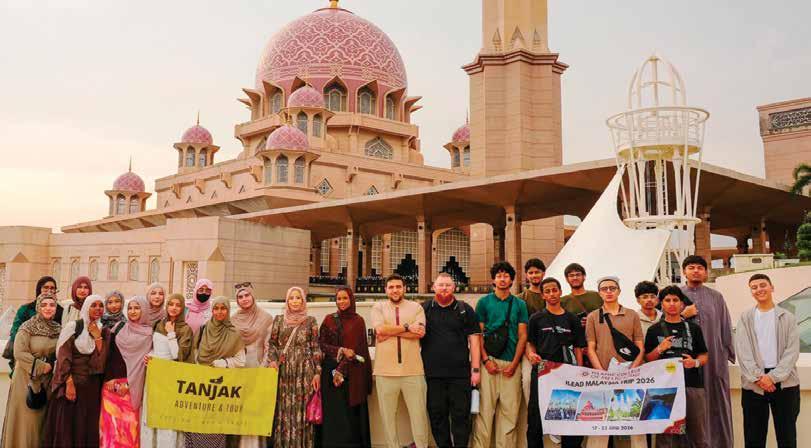
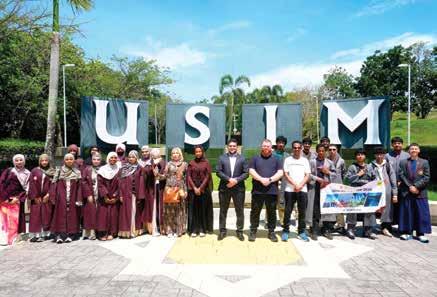
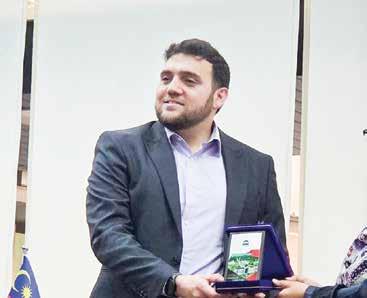
Students from the Diploma of Islamic Leadership (ILEAD) at the Islamic College of Melbourne have returned from an educational tour to Malaysia that combined academic learning, leadership development, and faith-based experiences.
During the tour, students visited leading universities, attended academic conferences, and engaged with scholars in discussions on Islamic leadership, education, and community service. The group also visited several prominent Islamic landmarks, including the
National Mosque, the Islamic Arts Museum Malaysia, the Nasyrul Quran Complex, Putra Mosque, and the Iron Mosque.
The college said the ILEAD program, the first of its kind in Australia, is designed to prepare future Muslim leaders by combining formal study,
practical experience, and engagement with the wider Muslim world. It expressed hope that the knowledge and insights gained during the tour will continue to benefit students in their future leadership and service.
MAJOR CHANGES TO PROPERTY TAX LAWS TO HIT INVESTORS
By Dr. Abul Jalaluddin
Sweeping reforms to Australian property investment tax laws passed in the Federal Parliament on 25 June 2026. The historically significant legislative changes are made in negative gearing, capital gains tax, small business tax concession and self-managed superannuation fund. The Treasury Laws Amendment (Tax Reform No. 1) Bill 2026 introduced major provisions intended to make property prices more affordable for younger Australians and improve fairness for wage earners.
Negative gearing
From 1 July 2027, negative gearing on residential properties will be restricted exclusively to new builds. Investors who purchase established housing after 12 May 2026 (the budget night) can no longer use negative gearing rules which allow them to deduct rental losses against their wage or non-residential income. These investors, however, are eligible to carry forward rental losses against future rental income. Existing investment properties owned before the budget night (12 May 2026) are grandfathered and continue under the negative gearing rules. Under the current grandfathered rules, jointly owned assets such as an investment property owned by a couple will not benefit from these grandfathered provisions if they are transferred to single
ownership when one partner dies or a couple divorces. The government has undertaken to rectify this unintended consequence in the next tranche of budget legislation.
Capital gains tax (CGT)
From 1 July 2027, Property investors will no longer qualify for the 50% CGT discount on capital gains from the sale of properties or other assets, if these assets are owned for 12 months or more. Instead, capital gains will be taxed by an inflation-indexed discount. The new rules also ensure a minimum 30% tax on real capital gains. These rules apply to real capital gains realised from 1 July 2027. As a simple worked example, if the cost base (original price) of the property is $400,000, sold for $500,000 after 12 months of ownership,
the capital gains realised will be $100,000 and the investor will pay tax on $50,000 at their marginal rate of tax under the old rules. Assuming the cumulative inflation rate over the ownership period is 20% (after 6 years or so), the real cost base will be $480,000, the real capital gain will be $20,000 and the investor will pay tax on $20,000 under the new rules.
Small business tax concession
The aggregated annual turnover threshold to access the small business 50% active asset CGT reduction was increased from $2 million to $10 million. This turnover will have to be generated from the disposal of active assets used in small businesses. These provisions are legislated under Subdivision 152B of the Income Tax Assessment Act 1997.
It is estimated that 2.7 million businesses or around 98% of active Australian businesses will be eligible for this concession.
Self-managed Superannuation Funds
The new legislation removed a loophole allowing investors with Self-Managed Super Funds (SMSFs) to borrow money to purchase established properties for investment.
Under section 67 of the Superannuation Industry (Supervision) Act 1993, a trustee of a superannuation fund must not borrow money or maintain a borrowing for investment, except for limited recourse borrowing arrangement under sections 67A and 67B of the same Act. This exception allows a trustee including a trustee of an SMSF to borrow for investment
in a single asset which is held in a bare trust or holding trust. This exemption is no longer available to SMSFs and their trustees.
Concluding remarks
Through the tax reform around property investment, the government expects to reverse a decade of decline in home ownership, enhance housing affordability for young people, and better align the tax treatment of asset income and labour income in Australia.
The opposition leader Angus Taylor declared to repeal these tax measures if elected as they are built on broken promises. They also said the government has railroaded the budget through the Parliament as a political fix and to stop the debate.
MAYOR BILAL EL-HAYEK LEADS FOURTH ANNUAL LIGHTS OUT SLEEPOUT TO SUPPORT PEOPLE EXPERIENCING HOMELESSNESS
Canterbury-Bankstown
Mayor Bilal El-Hayek is once again calling on businesses, schools, community organisations and local residents to come together in support of people experiencing homelessness through his fourth annual Mayor’s Lights Out Sleepout, one of the city’s leading community fundraising initiatives.
The overnight event will be held at Belmore Sports Ground from 6:00 pm on Friday, 28 August, until 7:00 am on Saturday, 29 August 2026, where participants will spend a night outdoors to gain a small insight into the realities faced by thousands of Australians without secure housing, while raising funds for charities working on the frontline of homelessness.
Mayor El-Hayek has challenged business CEOs, community leaders, schools and members of the public to brave the winter
conditions and stand in solidarity with people experiencing, or at risk of, homelessness. The initiative aims not only to raise much-needed funds but also to increase public awareness of one of Australia’s growing social challenges.
Now in its fourth year, the Mayor’s Lights Out Sleepout has become an important annual community event in CanterburyBankstown, bringing together local government, businesses, sporting organisations, charities and residents in a shared commitment to supporting vulnerable members of the community.
The Canterbury-Bankstown Bulldogs are once again proudly hosting the event at Belmore Sports Ground, reinforcing the club’s ongoing commitment to community wellbeing and social responsibility.
All funds raised will support three organisations providing
essential services to people experiencing hardship:
• Mission Australia
• Maronites on Mission Australia
• Brothers in Need
These organisations deliver a wide range of services, including emergency accommodation, food relief, counselling, outreach programs and practical support that help individuals and families rebuild their lives.
The campaign has set a fundraising target of $30,000, with more than $6,800 already raised by the end of July, demonstrating strong early community support.
Among those backing this year’s campaign is rugby league icon Phil Gould, who has urged businesses and the wider
community to get involved, saying homelessness affects far more people than many realise and that everyone can play a role in making a difference.
Community members who are unable to participate in the overnight sleepout are encouraged to support the initiative by making a donation, creating a fundraising team or helping spread awareness of the campaign.
More than just a fundraising event, the Mayor’s Lights Out Sleepout serves as a reminder that addressing homelessness requires compassion, partnership and collective action. Through a single night spent outdoors, participants help shine a light on an issue that often goes unseen while supporting organisations dedicated to giving vulnerable Australians hope, dignity and a pathway to a more secure future
AUSTRALIA SET TO HOST ITS FIRST INTERNATIONAL HALAL EXPO:
A HISTORIC MILESTONE FOR THE HALAL INDUSTRY
From 27 to 29 November 2026, Melbourne will host the Australia & New Zealand Halal Expo 2026, bringing together government representatives, international trade organisations, business leaders, halal certification authorities, manufacturers, exporters, investors and community organisations under one roof.
For many years, Australia has been recognised as one of the world’s most trusted suppliers of halal-certified food and agricultural products. Australian beef, lamb, dairy products, grains, processed foods and pharmaceuticals are exported to markets across the Middle East, Southeast Asia, Africa and beyond. Despite this strong international reputation, Australia has never before hosted a dedicated international halal exhibition of this scale.
The Australia & New Zealand Halal Expo seeks to fill that gap by creating a platform where Australian businesses can connect directly with international buyers while showcasing the country’s capabilities in halal production, innovation and export.
More Than a Trade
Exhibition
The global halal economy has evolved far
By Dr Bekim Hasani Founder & CEO, Australia & New Zealand Halal Expo
Australia is preparing to make history with the launch of its first international halal exhibition, an event that aims to position the country as a major meeting point for the global halal economy while strengthening trade, investment and cooperation between Australia and Muslim-majority markets around the world.
beyond food production. Today it represents one of the fastest-growing sectors in the world, covering industries such as food and beverages, pharmaceuticals, cosmetics, Islamic finance, tourism, logistics, education, agriculture, technology and manufacturing. Reflecting this growth, the Expo will feature three days of exhibitions, conferences, business networking, investment forums and cultural programs designed to encourage long-term partnerships between Australian companies and international markets.
Dedicated business-tobusiness (B2B) meetings will allow exporters and manufacturers to engage directly with overseas importers, distributors and investors, creating practical opportunities for new trade agreements and commercial cooperation.
Connecting Businesses with Consumers
In addition to facilitating business-to-business (B2B) partnerships, the Expo will also create valuable Businessto-Consumer (B2C) opportunities. Thousands of visitors from across Australia are expected to attend, giving exhibitors the chance to showcase their products and services directly to consumers, receive immediate market
feedback, strengthen brand recognition and build long-term customer relationships. Visitors will be able to discover and sample new halal products, meet the people behind leading Australian and international brands, learn about halal certification, and explore the latest innovations across food, beverages, cosmetics, pharmaceuticals, tourism, education and lifestyle services. By bringing businesses and consumers together in one vibrant marketplace, the Expo aims to increase public awareness of the halal industry while creating meaningful commercial opportunities for exhibitors.
Strengthening Australia’s Global Role
Australia’s reputation for quality, food safety and rigorous regulatory standards has made its products highly sought after across Muslimmajority countries. As global demand for premium halal-certified products continues to grow, the Expo provides an opportunity to further strengthen Australia’s position as a trusted supplier while opening new pathways for investment, innovation and international collaboration. Organisers expect the event to attract more than 10,000
visitors, over 50 exhibitors, international trade delegations, ambassadors, government officials, universities, halal certification bodies and industry experts from across the Middle East, Southeast Asia, Europe and Africa.
Celebrating Australia’s Multicultural Success
Beyond its commercial objectives, the Expo also celebrates Australia’s multicultural identity and recognises the important contribution that Muslim communities have made to the country’s social, economic and cultural development.
Educational displays, cultural exhibitions and presentations will showcase the diversity and values of Islamic civilisation while encouraging dialogue, understanding and cooperation between people of different backgrounds.
The event reflects the spirit of partnership, respect and shared prosperity that continues to define Australia’s multicultural society.
An Invitation to the Global Halal Community
The Australia & New Zealand Halal Expo extends an open invitation to manufacturers,
exporters, importers, investors, government agencies, chambers of commerce, halal certification organisations, universities and entrepreneurs from across the world.
Whether you are seeking new markets, investment opportunities or strategic partnerships, Melbourne will provide a unique gateway to engage with Australia’s growing halal industry and connect with businesses from across the Asia-Pacific region.
This Expo represents more than a new event on Australia’s business calendar. It marks the beginning of a long-term vision to establish Australia as an international hub for halal trade, innovation and investment.
We look forward to welcoming delegates from Australia and around the world to Melbourne for this landmark occasion.
Event Details
Australia & New Zealand Halal Expo 2026
Dates: 27–29 November 2026
Official Launch: Friday, 27 November 2026 – 10:00 AM
Venue: Boulevard Pavilion, Melbourne Showgrounds, Melbourne, Australia
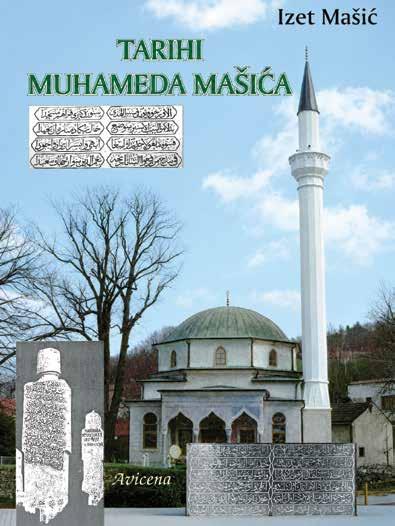
MUHAMED SEID MAŠIĆ (1913–1978)
THE BOSNIAN POET WHO WROTE IN ARABIC… AND REACHED MAKKAH
Among the many distinguished names in Bosnian literature, Muhamed Seid Mašić (1913–1978) occupies a unique place. More than a Bosnian poet, he was one of the few European Muslim intellectuals who mastered Arabic to such an extent that he wrote original poetry, translated Arabic literature and produced scholarly works in the language.
Born in Gračanica in 1913 into a respected scholarly family, Mašić received his education at the renowned Gazi Husrev-beg Madrasa in Sarajevo, where his lifelong passion for Arabic language and literature began. Although he never lived in an Arab country, he developed an extraordinary command of Arabic that enabled him to compose sophisticated classical poetry. As a young student, he was inspired by modern Arab writers and poets who championed freedom and resisted colonialism. His earliest poems expressed solidarity with the Palestinian people during the British Mandate, reflecting his deep engagement with issues affecting the wider Muslim world.
His literary work soon reached readers beyond Bosnia. In 1937, one of his Arabic poems was published in Umm Al-Qura, the newspaper of Makkah, demonstrating the high literary standard he had achieved and reflecting the cultural links that existed between Bosnia and the
Arab world long before modern communications made such exchanges commonplace.
For a young Bosnian poet writing in Arabic during the 1930s, publication in one of the Arab world’s leading newspapers was a remarkable achievement and a testament to his command of the language.
Scholars estimate that Mašić composed around 6,000 lines of Arabic poetry, employing
classical Arabic metres of exceptional complexity. Researchers have noted that some of these poetic forms are rarely attempted even by accomplished native Arabic poets.
Beyond poetry, Mašić was a translator, essayist and Islamic thinker. His works included translations and studies relating to Jamal al-Din al-Afghani, together with original writings
on religion, literature, memoirs and Islamic thought. He also became widely recognised for composing Arabic chronograms (tarih poetry), a literary tradition in which the numerical values of Arabic letters are used to record the year of a historical event in poetic form.
His intellectual independence came at a personal cost. During the communist era in Yugoslavia he experienced political persecution and imprisonment. According to available sources, many of his poems were lost or destroyed during those difficult years, while others survived only in family manuscripts and were published decades after his death.
Interest in Mašić has grown significantly in recent years. Academic conferences, scholarly books and research projects have highlighted his contribution to Bosnian, Islamic and Arabic literary heritage. Much of this revival has been led by his son, Professor Izet Mašić, whose extensive work has helped preserve and publish his father’s remarkable legacy.
Muhamed Seid Mašić’s story is more than the biography of a Bosnian poet. It is the story of a cultural bridge between Bosnia and the Arab world and a reminder that Arabic has long inspired writers well beyond the borders of the Arab region.
VICTORIAN GOVERNMENT EXTENDS DEADLINE FOR 20% VEHICLE REGISTRATION REBATE TO 31 AUGUST
The Victorian Government has announced an extension of the application deadline for the 20% Vehicle Registration (Rego) Rebate until 31 August 2026, giving more residents additional time to access the cost-of-living support. According to the Government, more than 3.6 million Victorians have already benefited from the rebate since it was introduced. The extension is intended to ensure that more families and workers are able to claim the assistance.
Under the program, eligible motorists with one vehicle can receive a rebate of up to $186, while families with two eligible vehicles can receive up to $372. The full rebate is available regardless of whether registration was paid in a single payment or by instalments.
To qualify, applicants must have paid the registration for a light vehicle used for personal purposes between 1 July 2025 and 30 June 2026. Eligible residents may claim the rebate for up to two vehicles registered
in their name.
The Government is encouraging eligible Victorians to submit their applications before the new deadline through the Service Victoria app or via the Service Victoria website.
Minister for Government Services Ingrid Stitt said more than 3.6 million Victorians had already benefited from the initiative and that extending the deadline would allow even more families and workers to access the rebate.
Minister for Cost of Living Paul Edbrooke said the rebate forms part of the Government’s broader measures to help households manage rising living costs and encouraged eligible residents to apply before the deadline.
The media release also included criticism of the Opposition’s position on the rebate, with the Government stating that the Opposition did not support the initiative while reaffirming that the rebate is part of its broader strategy to ease cost-of-living pressures for Victorians.
FIRE AND RESCUE NSW URGES RESIDENTS TO CHECK SMOKE ALARMS FOLLOWING HOLIDAY
Fire and Rescue NSW (FRNSW) is urging residents across New South Wales to ensure their smoke alarms are working properly following a major fire at a holiday park in Chinderah, on the state’s far north coast. More than 40 people, including elderly and vulnerable residents, were evacuated after a fire broke out in an onsite mobile home shortly before 8:00 pm on Wednesday. The blaze spread to four accommodation units, destroying two of them before firefighters brought the fire under control.
Fire crews from Tweed Heads, Kingscliff and Banora Point responded quickly to the incident and successfully extinguished the blaze.
Fortunately, no injuries were reported, and the cause of the fire remains under investigation.
Following the incident, Fire and Rescue NSW renewed its winter safety campaign, reminding residents that working smoke alarms remain one of the most effective ways to protect lives in the event of a fire.
According to FRNSW, 45 per cent of the 3,884 homes that experienced a major fire last year did not have a working smoke alarm, highlighting the importance of regularly testing and maintaining these devices. The agency also reminded the public that smoke alarm requirements apply not only to houses but also to caravans, mobile homes and holiday accommodation. Under NSW
legislation, every home and caravan must be fitted with a working smoke alarm, with an additional alarm required in any annex used as a sleeping area.
FRNSW advises that smoke alarms have an average lifespan of 10 years and should be replaced once they reach that age, even if they appear to be functioning. Residents are also encouraged to test their alarms regularly to ensure they are operating correctly.
The agency continues to offer free Home Fire Safety Visits, during which firefighters provide practical fire safety advice, inspect smoke alarms and install new smoke alarms free of charge for eligible residents. These visits are also available for retirement villages, lifestyle
PARK FIRE
villages and some holiday accommodation.
For more information or to book a free Home Fire Safety Visit, visit:
https://www.fire.nsw.gov.au/ visits
Smoke alarms with a strobe light and vibrating pad are also available for eligible people who are deaf or hard of hearing. More information is available at: