


Sydney’s streets are set to become quieter and cleaner with the opening of Australia’s first off-site electric charging hub for light commercial vehicles. The Albanese Labor Government, through the Australian Renewable Energy Agency and Clean Energy Finance Corporation, supported Zenobe’s development of their site in Mascot with 22 fast chargers, making it easier for businesses to switch their fleets from diesel to electric.
New data released in April confirms that emissions have fallen across heavy industry. Net emissions across facilities covered by the Government’s Safeguard Mechanism fell 5.5% year on year and are now down over 12% from when our reforms began.
Onsite emissions are now 5.8 million tonnes lower than when our reforms were introduced two years ago. It’s the equivalent of removing more than 2 million cars from the road or cutting around 60% of domestic aviation emissions.
Young men are particularly vulnerable to gambling harm and we want to stop children being exposed to the deluge of advertisements. We are:
Restricting gambling advertising on broadcast television to no more than three ads each hour between 6am and 8.30pm, with a complete ban during live sport broadcasts within those hours.
Banning gambling ads on the radio during school drop off and pick up times (8am to 9am and 3pm to 4pm).
Banning gambling ads on online platforms, unless people have a logged in account, are over 18 and have the option to opt-out of gambling advertising.
Banning the use of celebrities and sports players in gambling ads, along with odds-style ads targeting sports fans.
Banning gambling ads in sports venues and on players’ and officials’ uniforms.
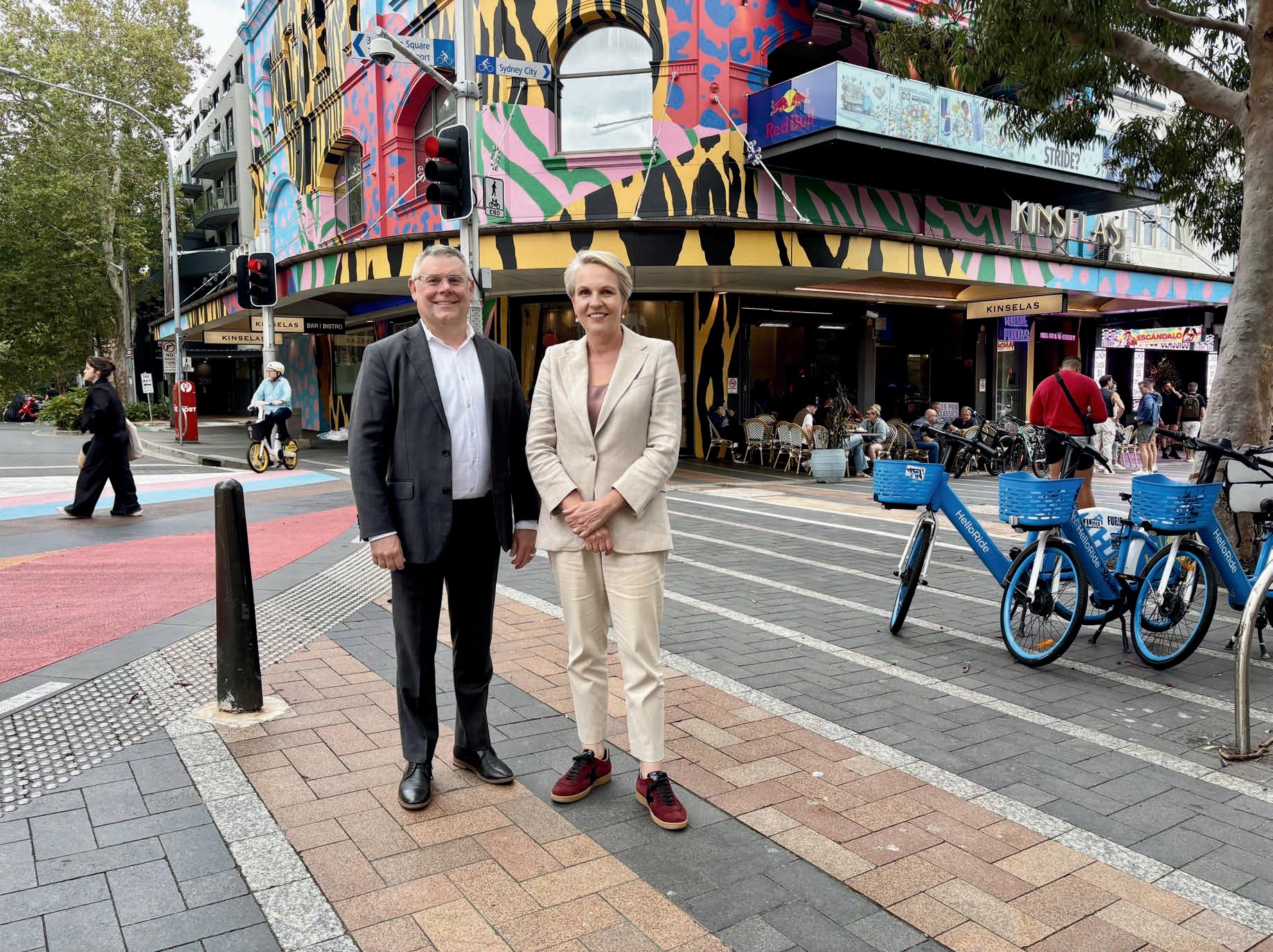
The Albanese Government is helping more Australians buy an electric vehicle sooner. The Clean Energy Finance Corporation has committed up to $60 million to partner with Hyundai Capital Australia to offer discounted finance on eligible Hyundai and Kia electric vehicles. It will be available for new, fully electric vehicles priced below the luxury car tax threshold.
Eligible customers could save between 0.5 per cent 1.0 per cent on their finance rate. On a $70,000 loan, a 1.0 per cent discount over five years could save more than $1,900 in interest costs.
Whether you need expert health advice or reassurance, the registered nurses at 1800MEDICARE are there 24/7 to provide free advice. Between 6pm and 8am, the triage nurses can connect you to a free telehealth session with a 1800MEDICARE GP via phone or video.
Just call 1800MEDICARE (1800 633 422) or download the app via the QR code here:
We all know someone hurt by gambling. It hurts individuals and can have a devastating impact on families and communities. Gambling is increasingly recognised as a contributing factor in domestic violence.

Publisher’s Assistant: Mal Moody
National Sales Director: Greg Topalian Ph: 0455 120 404
Advertising Manager: Mal Moody Ph: 0484 042 615
Advertising: sales@altmedia.net.au
Managing Editor: Chloe Sargeant
Digital Manager & Journalist: Patrick Lenton
Staff Journalist: Lydia Jupp
News Contributors: Lydia Jupp, Michael James, Patrick Lenton, Will Thorpe
Arts Contributors: Angus Sharpe, Coffin Ed, Jacques Nieuwoudt, Jasmine El Hanafy, Josh Kerwick, Michael James, Naomi Lawrence, Patrick Lenton
Cover Image: Tim Pascoe
Designer: Nadia Kalinitcheva
Mail: PO Box 843 Broadway 2007
Email: news@altmedia.net.au, arts@altmedia.net.au
Ph: 9212 5677 Fax: 9212 5633
Website: www.cityhub.com.au
PUBLICATION DATE: 30 APRIL 2026
If you have a story, or any comments you’d like to share with us: news@altmedia.net.au
@CityHubSydney
BY WILL THORPE
The City of Sydney wants its own, stricter definition of affordable housing applied to local developments taking advantage of state planning reforms. Councillors also want to go further, raising the affordable housing levy — already the highest in the country — paid by developers.
Planning reforms by the Minns Government have allowed developers to seek additional height and floor space in exchange for the provision of affordable units. However, a recently released discussion paper on the City’s housing policy argues that its own stipulations should apply, capping rent at 30% of gross household income in perpetuity.
Qualifying developments across NSW presently need only provide ‘affordable’ units at 20% below the market rate, and for only 15 years.
According to the document, research indicates that delivering one “forever affordable” unit in the area has an equivalent cost to delivering five or six “time-limited” ones. “Further investigation is needed to explore how current state government policies can allow for this preferred approach.”
Greens councillor Sylvie Ellsmore said that the City supports “genuinely affordable” housing.
“It is rent capped and permanent, and based on no more than 30 per cent of a moderate to low income household. The City also advocates for the NSW Government to limit rent increase in state laws. The Greens go further — we want a rent freeze and stronger rent caps.”
Housing minister Rose Jackson said that the Government “is
currently reviewing the guidelines for affordable housing.”
“We will have more to say on rent settings under the new Affordable Housing Policy shortly. We expect the new policy to be in place by mid-2026.”
Currently, developments in the city centre must contribute 3% of residential floor space and one per cent of the remainder, or an equivalent sum, to affordable housing. A higher rate is sometimes captured in areas rezoned by the City.
In 2024, Ellsmore secured the unanimous support of the council — including Labor, Greens and Liberal members as well as those aligned with Moore — to increase the levy on rezoned projects to 20%. This would apply to new floor space, and the City would decide whether an in-lieu contribution should be paid instead.
“The City of Sydney has the highest levy of any council. But we have been asking, is the levy as high as it could be? Are we capturing as much of developers' profits as we should, to deliver back to the community?”
“This would be Australia's most ambitious levy scheme on developers for affordable
housing. It was supported by strong modelling that showed developer profits would still be okay. It was even endorsed by the NSW Property Council!”
The plan went on exhibition last year. “While we wait for the final report so we can put the changes into law, we have heard that the property industry has since organised and has been campaigning strongly to kill the changes.”
Are we capturing as much of developers' profits as we should, to deliver back to the community?
Yet, Ellsmore noted, some developers have agreed to pay a sum equivalent to the increased levy on current projects, despite not having to.
She is “asked all the time” whether a higher levy will discourage housing construction.
“The inner city has some of the most expensive and valuable land, not just in Sydney, but in the world. When government or Council rezones it to allow more height, it creates a huge amount of additional profit.”
Publisher’s Assistant: Mal Moody
National Sales Director: Greg Topalian Ph: 0455 120 404
Advertising Manager: Mal Moody Ph: 0484 042 615
Advertising: sales@altmedia.net.au
Managing Editor: Chloe Sargeant
Digital Manager & Journalist: Patrick Lenton
Staff Journalist: Lydia Jupp
News Contributors: Lydia Jupp, Michael James, Patrick Lenton, Will Thorpe
Arts Contributors: Angus Sharpe, Coffin Ed, Jacques Nieuwoudt, Jasmine El Hanafy, Josh Kerwick, Michael James, Naomi Lawrence, Patrick Lenton
Cover Image: Tim Pascoe
Designer: Nadia Kalinitcheva
Mail: PO Box 843 Broadway 2007
Email: news@altmedia.net.au, arts@altmedia.net.au
Ph: 9212 5677 Fax: 9212 5633
Website: www.cityhub.com.au
PUBLICATION DATE: 30 APRIL 2026
If you have a story, or any comments you’d like to share with us: news@altmedia.net.au
@CityHubSydney
BY WILL THORPE
The City of Sydney wants its own, stricter definition of affordable housing applied to local developments taking advantage of state planning reforms. Councillors also want to go further, raising the affordable housing levy — already the highest in the country — paid by developers.
Planning reforms by the Minns Government have allowed developers to seek additional height and floor space in exchange for the provision of affordable units. However, a recently released discussion paper on the City’s housing policy argues that its own stipulations should apply, capping rent at 30% of gross household income in perpetuity.
Qualifying developments across NSW presently need only provide ‘affordable’ units at 20% below the market rate, and for only 15 years.
According to the document, research indicates that delivering one “forever affordable” unit in the area has an equivalent cost to delivering five or six “time-limited” ones. “Further investigation is needed to explore how current state government policies can allow for this preferred approach.”
Greens councillor Sylvie Ellsmore said that the City supports “genuinely affordable” housing.
“It is rent capped and permanent, and based on no more than 30 per cent of a moderate to low income household. The City also advocates for the NSW Government to limit rent increase in state laws. The Greens go further — we want a rent freeze and stronger rent caps.”
Housing minister Rose Jackson said that the Government “is
currently reviewing the guidelines for affordable housing.”
“We will have more to say on rent settings under the new Affordable Housing Policy shortly. We expect the new policy to be in place by mid-2026.”
Currently, developments in the city centre must contribute 3% of residential floor space and one per cent of the remainder, or an equivalent sum, to affordable housing. A higher rate is sometimes captured in areas rezoned by the City.
In 2024, Ellsmore secured the unanimous support of the council — including Labor, Greens and Liberal members as well as those aligned with Moore — to increase the levy on rezoned projects to 20%. This would apply to new floor space, and the City would decide whether an in-lieu contribution should be paid instead.
“The City of Sydney has the highest levy of any council. But we have been asking, is the levy as high as it could be? Are we capturing as much of developers' profits as we should, to deliver back to the community?”
“This would be Australia's most ambitious levy scheme on developers for affordable
housing. It was supported by strong modelling that showed developer profits would still be okay. It was even endorsed by the NSW Property Council!”
The plan went on exhibition last year. “While we wait for the final report so we can put the changes into law, we have heard that the property industry has since organised and has been campaigning strongly to kill the changes.”
Are we capturing as much of developers' profits as we should, to deliver back to the community?
Yet, Ellsmore noted, some developers have agreed to pay a sum equivalent to the increased levy on current projects, despite not having to.
She is “asked all the time” whether a higher levy will discourage housing construction.
“The inner city has some of the most expensive and valuable land, not just in Sydney, but in the world. When government or Council rezones it to allow more height, it creates a huge amount of additional profit.”
BY PATRICK LENTON
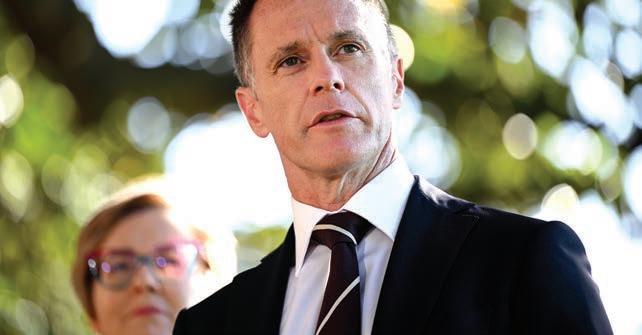
NSW Premier Chris Minns has reaffirmed support for his government’s anti-protest measures despite a ruling by the state’s highest court that key provisions are unconstitutional.
The NSW Court of Appeal found the laws invalid on the basis that they impermissibly burden the implied freedom of political communication, rejecting “social cohesion” as a lawful justification for restricting protest. The legislation, introduced following the Bondi Beach terror attack, granted police broad powers to restrict public assemblies in designated areas and exposed participants to arrest. The court found the measures were overly broad and
not compatible with constitutional protections.
Minns has defended the approach, describing the laws as a “rational and proportionate” response to the circumstances in which they were introduced. He has also indicated an intention to proceed with further restrictions, including potential limits on certain protest slogans.
Gaslighting our state by suggesting the community is to blame for the violence they experienced
The decision has prompted a review of charges laid against protesters under the invalidated provisions. NSW Police
The Cat Protection Society of NSW can help you with affordable options to get them healthy & safe, and to become a part of your family.
Don’t delay, call the Cat Protection Society today on 9519 7201 or visit catprotection.org.au

Commissioner Mal Lanyon said some prosecutions remain under consideration, though several rely on the struck-down powers.
Legal experts have indicated the judgment may constrain future attempts to legislate protest restrictions, particularly where they are justified on the basis of preventing social division rather than addressing specific risks.
Greens MP Sue Higginson criticised the Premier’s response, stating:
“The Premier has launched an extraordinary attack on our independent judiciary today, showing complete contempt for
the Constitution, and our right to political expression - all in an attempt to violently subdue our democratic rights.”
“Hundreds of witnesses have provided evidence about the unprovoked assault by Police against the community on the night of 9 February, the Premier is gaslighting our state by suggesting the community is to blame for the violence they experienced,”
The court’s ruling follows a legal challenge brought by activist groups, and is expected to have broader implications for protest law in New South Wales.
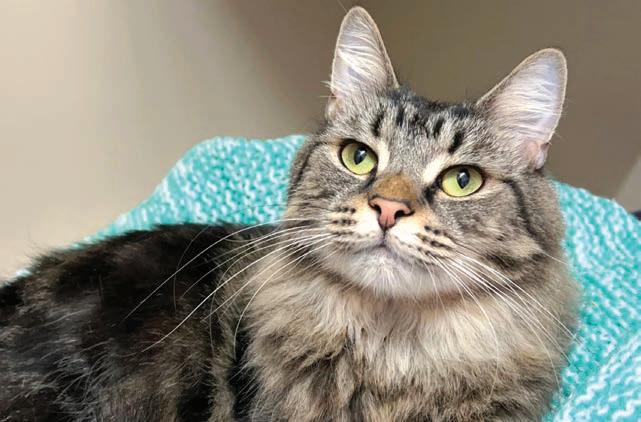
Name: SOLO | Age: 2 years (est) Sex & Colour: Male Tabby DMH
Handsome Solo will save the day! This extra fluffy boy with his magnificent mane, wonderful whiskers and glorious green eyes may act like a tough guy but at heart he is a big softie with a smoochy side. Solo is a sensitive soul and will need some time to adjust to his new surroundings. He is seeking a quiet life and uninterested in sharing his space with young children or other pets, he would prefer a relaxed indoor-only forever home where he can flourish and be treated to all the TLC he deserves. Once he is feeling more comfortable in his new home, you’ll be thrilled to discover what a little lovebug Solo is.
INTERESTED IN ADOPTING?
visit www.catprotection.org.au
Rehoming Organisation Number: R251000224
BY MICHAEL JAMES
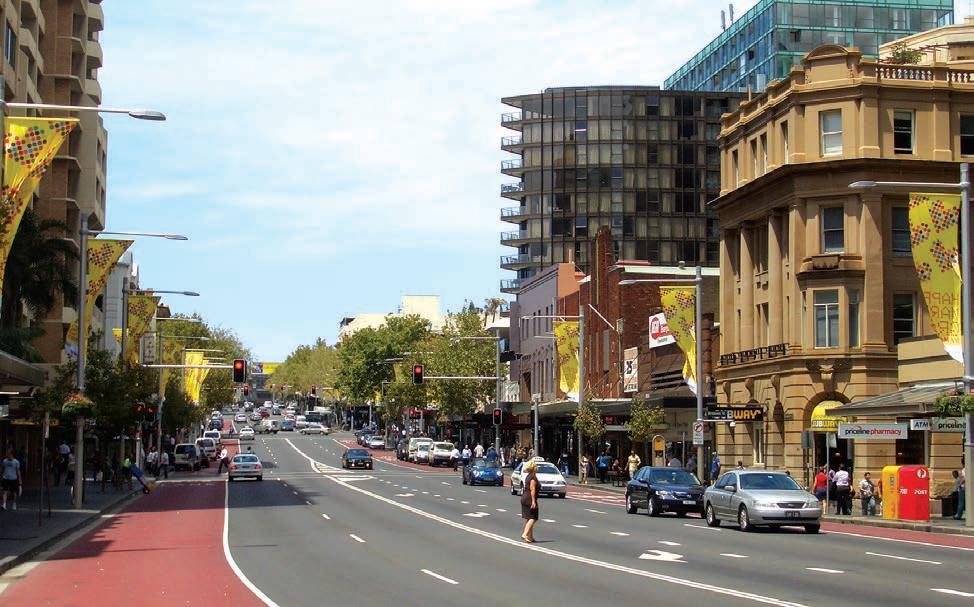
Sydney’s iconic Oxford Street, long considered the heart of Australia’s LGBTQIA+ nightlife and history, is facing renewed concern after new figures revealed nearly one in three shopfronts along the Darlinghurst strip are sitting empty.
According to the Daily Telegraph, vacancy rates on the historic strip have reached 31%, with boardedup shops, graffiti and ongoing construction delays contributing to what some observers describe as a struggling retail environment.
Even when excluding sections impacted by major redevelopment works, the publication claims vacancy rates still sit at 26%, far higher than Sydney’s CBD average of 4.3%.
The figures arrive just weeks after the closure of one of Oxford Street’s most recognisable LGBTQIA+ venues, the Stonewall Hotel, after it entered administration in March.
The loss of Stonewall added to growing concerns about the future of the precinct, particularly as redevelopment and shifting nightlife habits reshape Sydney’s queer landscape.
Just months earlier, The Bookshop Darlinghurst announced that it would be closing its doors after more than four decades.
Following its closure the historic store location was announced as one of several buildings on Oxford St proposed for heritage listing.
Property expert Rob Klaric told the Daily Telegraph the street’s decline has been noticeable, saying “It’s like the oxygen has been turned off and they’ve slowly suffocated.”
While Oxford Street’s challenges have been building for years, recent construction delays linked to the $200 million Oxford
and Foley redevelopment have also been blamed for reduced foot traffic and business closures. In 2024 local business owners came together to express their frustration at the lack of support from developers and council during the ongoing redevelopments.
Oxford Street remains culturally significant, but the way people use it has changed
In 2026, community voices remain divided, as more promises of invigoration came from the government. Renderings of upgrade plans for the iconic street were released in November, showing upgraded footpaths, improved street design, more trees, open space, and the completion of the eastern cycle path from Taylor Square to Centennial Park.
Rainbow Precinct president Shane Warren told the Daily Telegraph he remained optimistic
about the street’s future, saying: “I’m not an alarmist about it.”
Chair Of The Darlinghurst Business Partnership Stephan Gyory told City Hub that more needs to be done to understand the data behind the vacancy rates.
"A vacancy rate on its own doesn’t tell us much — we need to know how long they’ve been empty, who owns them, and what’s actually driving it."
"No one’s systematically gathering that information, and without coordinated precinct management, that gap just sits there," he said.
"This is something that could be assessed quickly by an independent, qualified group within a matter of months, and the capability to support that already exists across the City of Sydney, State and the 24-Hour Economy Commissioner — it’s really a question of coordinating it and getting it done."
Gyory stressed there was more to understand about the evolving nature of the street.
"The underlying conditions are still strong — Oxford Street remains culturally significant, but the way people use it has changed, and what we’re seeing is a highly visible, localised issue on a very symbolic street."
Oxford Street’s importance to LGBTQIA+ communities remains significant, with recent news reports of moves to heritage list historic queer venues across the precinct in recognition of its cultural significance.
The street’s legacy stretches back decades, with the iconic street still serving as the traditional Mardi Gras parade route, which is now being added to the national heritage list.
Despite the challenges, there are signs of cautious optimism. The Daily Telegraph reports expanded outdoor dining, late night trading changes and government funding for venues as part of efforts to revitalise the area.
With the 50th anniversary of Sydney’s first Mardi Gras approaching, many stakeholders are calling for collaboration to ensure Oxford Street remains a vibrant and inclusive destination.
BY LYDIA JUPP
Anew deal from the NSW government will see electric bus, train, and light rail services across the state running solely on renewable energy.
The $1.9 billion deal with Snowy Energy marks the first time all public transport operations will be powered under a single supply deal.
“Transport uses almost as much electricity as all other government agencies in NSW combined," said transport minister John Graham. "It’s important we use our buying power responsibly and get the best possible deal for taxpayers, which is what we have achieved.
“Cost of living pressures are real for household and government budgets. This contract reduces costs and moves us towards better environmental outcomes
while we deliver a reliable public transport network."
Transport operations use almost as much power as all other NSW public sector agencies combined.
Nationally, it's set to become one of the largest sources of emissions by 2030.
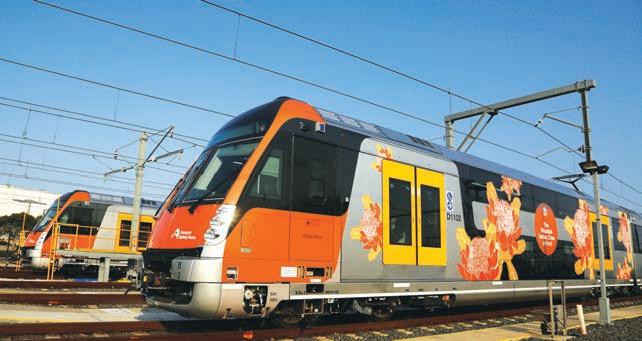
800,000 tonnes of CO2 produced by conventional power. Transport for NSW is aiming to reduce operational emissions by 65% by 2030, and reach net zero by 2035.
avoiding around 870 tonnes of carbon emissions per annum, while reducing the amount of electricity that needs to be bought from the grid.”
The government says the switch to renewable power will see "significant emissions reductions", preventing the release of more than the annual
“We’ve also been able to deliver significant reductions in energy demand through initiatives like rooftop solar at the new Sydney Trains’ Mortdale train maintenance facility and the Clyde engineering hub," said Transport for NSW Secretary Josh Murray.
“At Mortdale alone, 2,000 solar panels have been installed, generating 1,317 Megawatt hours of clean renewable electricity and
Last year, Sydney’s first purpose-built electric bus depot was announced for Macquarie Park as part of the Minns government's plan to switch from the 8000-strong diesel and gas fleet, to battery electric buses over the next two decades.
The government's Zero Emissions Bus Program will see more than 1,200 new electric buses delivered by 2028, with 500 already on the road.
Earlier this year, three public housing tenants in the ACT took the Government to court for trying to evict them - and won.
Between 2020 and 2022, the ACT Government had a policy in place called the “ACT Growing & Renewing Public Housing Program”, which involved evicting public housing tenants so they could redevelop their homes or sell them off. They would then use some of the proceeds to build new public housing.
If this process sounds familiar, it’s because the NSW Labor Minns Government has been asset recycling in a very similar way - even though they made an election promise not to.
It’s a counterproductive way of building more public housing, because you lose good homes years
before they’re actually replacedso the overall pool of public housing actually shrinks until, many years down the line, it starts to grow again.
Under the Growing & Renewing Public Housing program, the ACT Government tried to evict three tenants, one of whom had been living in their home for 42 years. The tenants took the ACT Social Housing Commissioner to the Supreme Court, arguing that their human rights hadn’t been considered, and that they were denied procedural fairness.
The Supreme Court agreed with them, citing Section 12 of the ACT Human Rights Act that recognises that everyone has the right “not to have their privacy, family, home or correspondence interfered with unlawfully or arbitrarily”.
This decision shows us that a Human Rights Act is not just a feelgood, ideological document, but a tool that people can use to fight for their rights and challenge decisions that harm them.
Unlike our neighbours in the ACT, Queensland, and Victoria, people in NSW don’t have the same pathways to justice - yet.
That’s why I introduced a Bill in October last year to establish a Human Rights Act for NSW, which has now been referred to an Inquiry.
We’ll be accepting submissions soon - and we want to hear from you. Scan the QR code below to be notified when they’re open.
Jenny Leong MP Member for Newtown
BY PATRICK LENTON
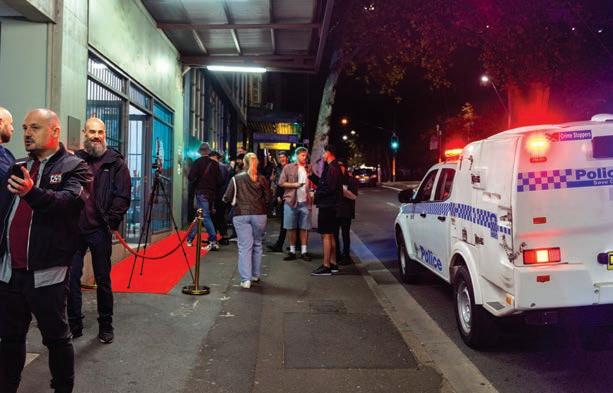
Acannabis-themed art exhibition in Sydney was subject to a police raid on April 20, after reports of alleged illegal drug activity. Officers attended the event at Brave Gallery in Surry Hills but made no arrests after determining that the cannabis on display was not real.
What was meant to be a controlled artistic experience became a real time reflection of the issues we have been highlighting for years
The exhibition, titled Who Are We Hurting, ran from April 18 to 21 and was organised by the Who Are We Hurting collective, an Australian-based activist group known for combining visual art, public interventions and media campaigns to challenge cannabis prohibition.
The collective, led by Will Stolk and Alec “Craze” Zammitt, has operated for nearly a decade, using what it describes as “large-scale public interventions, visual activism, and media-driven campaigns” to draw attention to drug law reform.
BY PATRICK LENTON
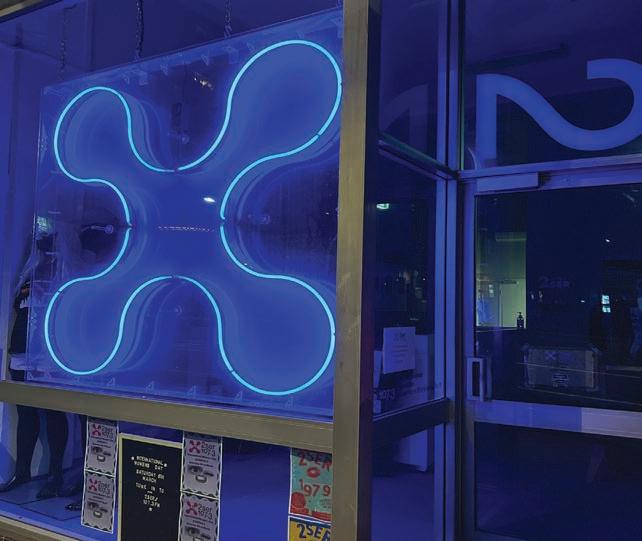
Sydney community radio station 2SER has warned it may cease broadcasting as early as July 2026, following the withdrawal of funding from one of its university partners and an ongoing search for financial alternatives.
Founded in 1979, 2SER is a not-for-profit station jointly owned by the University of Technology Sydney (UTS) and Macquarie University, and operates under a community broadcasting licence with an educational focus.
UTS said it is continuing to support efforts to identify a replacement partner, stating it is “hopeful that other universities… may step in”.
The station has approximately 100 volunteers and has historically served as a training ground for media professionals, as well as a platform for music, arts and community programming.
This included projecting images and pro-cannabis messages onto the sails of the Opera House.
According to organisers, police responded on the evening of April 20 following complaints that cannabis was being used or distributed at the exhibition. After inspecting the premises, officers confirmed that all substances present were theatrical props used as part of the artistic installation.
“All cannabis featured in the exhibition was purely prop based and formed part of the artistic presentation,” organisers said. “No arrests were made and no individuals were detained.”
The exhibition featured largescale installations, performance works and a central “detentionstyle” environment intended to reflect experiences associated with cannabis policing in Australia.
Organisers said the incident aligned with the themes of the exhibition.
“What was intended as a cultural gathering quickly became a live demonstration of the themes the exhibition was built around,” they said. They added that “what was meant to be a controlled artistic experience became a real time reflection of the issues we have been highlighting for years.”
Macquarie University announced last year it would end its financial support, creating a funding shortfall that UTS has indicated it cannot cover alone. The station has since been seeking a new university partner and exploring alternative funding models.
In an email to staff and volunteers, station manager Cheryl Northey said closure remained a possibility if new funding is not secured. She wrote: “Should the station close this year, which could be as early as July, 2SER must do the right thing by our staff.” She added that “a decision to close would not be taken lightly”.
It would be a dire loss for the City of Sydney for a cultural icon like 2SER to be closed
Former presenter Robbie Buck said the station’s potential closure would have broader impacts, stating: “It would be a dire loss for the City of Sydney for a cultural icon like 2SER to be closed.”
2SER’s board and management have indicated they will continue to pursue funding solutions and partnerships in the coming months as the station’s future remains uncertain.

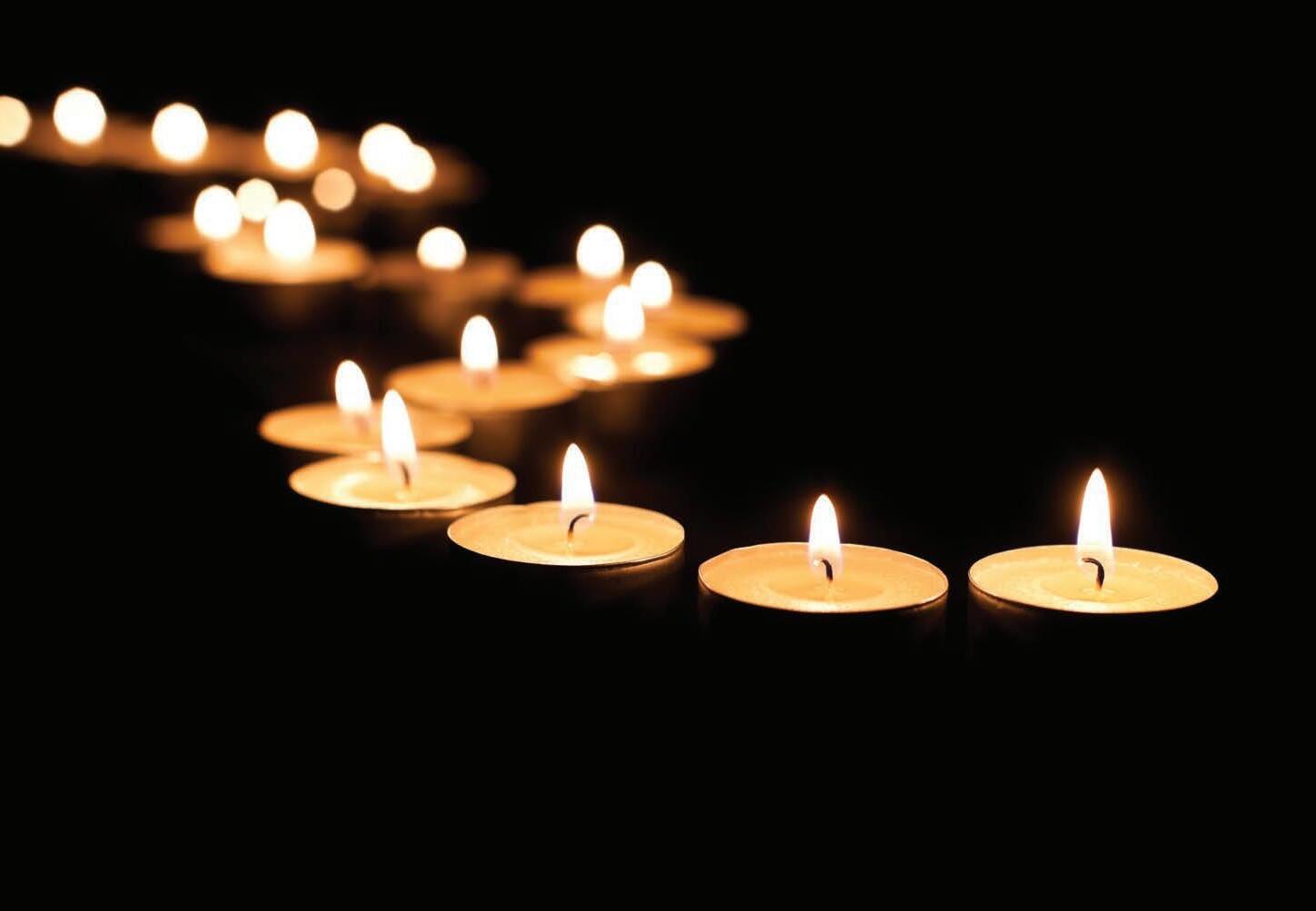
Join us at the annual Sydney Candlelight Memorial as we remember our loved ones, friends and family who have passed from HIV/AIDS.
DATE & TIME
Sunday 17 May 2026
Service: 3pm (doors open 2.45pm)
Followed by refreshments
NEW VENUE FOR 2026
THE COLLIDER
477 Pitt Street
Haymarket
PLEASE RSVP
RSVP essential for catering purposes
To RSVP and/or add names to the Remembrance list, contact: Positive Life NSW (02) 8357 8386 1800 245 677 contact@positivelife.org.au
BY WILL THORPE
Rents in Sydney climbed 52% over the past six years, and New South Wales has further solidified its position as the least affordable state in Australia for tenants.
Those are two of the findings in REA Group’s latest Rental Affordability Report, released last month. Rental affordability in New South Wales is now at the worst level that the company has recorded, falling below the 201011 low point which followed the Global Financial Crisis.
A median-income household in the state could afford merely 25% of rentals advertised on realestate.com.au between July and December 2025.
Most other states are not far behind. “Victoria stands out as the only exception – rental affordability actually improved in the past year, and Victoria is the most affordable state for renters.”
The premier state is usually found to be the least affordable, the exceptions being 201920 and 2022-23 when it was eclipsed by Tasmania.
“Renting in New South Wales has always been challenging for low-to-middle-income
households – typically more so than in other states. At no time in the past 18 years has a New South Wales household earning median income been able to afford even half of advertised rentals.”
Eloise Parrab is Policy and Advocacy Manager for the Tenants’ Union of NSW. She said that “renters continue to be under significant pressure to compete against each other for a property when looking for a new rental home.”
“Often they find themselves in a very stressful situation, worried that if they don’t find a new home in time, they’ll have nowhere to go.”
“Renters are also in a really tough situation facing rapid rent rises.” Parrab said that the organisation has seen a “significant increase” in those seeking its advice in recent years.
“Prior to COVID, around 2.5% — 700 per year — of calls were about rent increases, but this has roughly tripled to around 7% — 2,500 per year — of all calls to local services in the last year.”
She said that there are few hardship protections on the
books to protect renters. “Current rent increase laws encourage an approach where rents can be increased based on renter’s desperation for a roof over their head.”
Around 400,000 private tenants in New South Wales receive Commonwealth Rent Assistance, but Parrab said that 46% of them are still in rental stress.
At no time in the past 18 years has a NSW household earning median income been able to afford even half of advertised rentals
“For people on lower incomes, support is available through Homes NSW or charities and can help to cover short-term rent arrears or moving costs.”
A spokesperson for Minister for Better Regulation and Fair Trading Anoulack Chanthivong said that the Minns Government “has passed multiple tranches
of landmark legislation” to make renting fairer.
“This includes banning nogrounds evictions, limiting rent increases to once a year, making it easier to have pets in rentals, mandating fee-free ways for tenants to pay rent, extending the ban on rent bidding and prohibiting fees for background checks.”
Smart Rental Bonds, slated for launch in the middle of the year, are “the latest way this Government is delivering on its promise to deliver cost-of-living relief to renters,” they added.
“This system will allow tenants to digitally transfer their bond between properties for a small fee of $25. This means they will no longer have to find thousands of dollars for a ‘second’ bond while waiting for the previous bond to be refunded.”
The spokesperson dubbed the upcoming service a “critical costof-living measure.”
Meanwhile, Woollahra Council in the Eastern Suburbs is on the path to adopting affordable housing requirements, which already exist in the City of Sydney, Randwick and Waverley. Its scheme is slated to be more ambitious.
BY LYDIA JUPP
NSW nurses and midwives have been awarded a pay rise of up to 28% in a new decision handed down by the Industrial Relations Committee (IRC).
The ruling ends a two-year battle between the NSW Nurses & Midwives' Association (NSWNMA) and the Minns government, after they failed to come to an agreement.
Justice Ingmar Taylor said the wage cap from the previous Liberal government, high inflation throughout the pandemic, and the gender-
nurses given a 22% rise and enrolled nurses 12%, backdated from 1 July, 2025.
It amounts to a pay rise of 16% for registered nurses, 18% for enrolled nurses, and 28% for assistant nurses over the course of three years.
The dispute escalated to the IRC last year, after the union demanded a 35% pay rise to combat the rising cost of living. In their opening submissions, both parties estimated the increase would cost taxpayers over $10 billion, with union barrister Leo
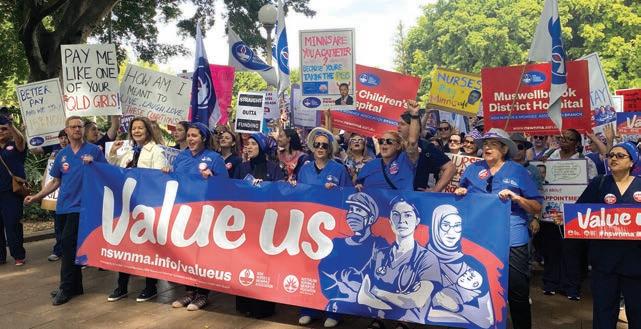
expanded with no reflection of their increased responsibilities in their wages, and that the work of women was undervalued. Of the 69,000-strong workforce, 90% of nurses and 98.9% of midwives are women.
NSWNMA general secretary Michael Whaites said that while the pay rise for assistant and enrolled nurses was welcomed, the ruling failed to address structural pay issues faced by registered nurses and midwives.
"Registered nurses and midwives remain behind those in other states," he said.
Registered nurses and midwives remain behind those in other states… They are the backbone of this workforce
"They are the backbone of this workforce, they are the majority of this workforce, and we hoped for a better outcome for them.
"Today we heard registered nurses should be paid more, but we just can't afford it."
Children and young people should be able to live their lives without being exposed to harmful gambling advertising.
Australia already has the highest per capita gambling losses of any country in the world.
Last year NSW residents lost a staggering $9.3 billion dollars to poker machines. That’s $1.1 million every hour.
Experts have warned that exposure to gambling ads at a young age, normalises risky gambling behaviour and causes long-term harm.
We’re just past 1000 days since the landmark Murphy report on gambling in Australia was tabled in the federal Parliament.
While the announcement from the Prime Minister earlier this month goes some way to reducing the volume of gambling ads, we know it doesn’t go far enough.
It falls well short of the report recommendations and it won’t keep children and young people safe from gambling harm.
We need stronger action.
I’ve called on the NSW Premier to step up and work with the Australian Government to ban gambling advertising and to help keep our young people safe.
Please scan and sign the petition below to help end gambling harm.
Yours sincerely,
Kobi Shetty MP Member for Balmain


Every now and then a city or town in Australia erects a statue or monument that becomes an outstanding, iconic addition to the urban environment. However, I’m not talking about ‘big’ gimmicks such as ‘The Big Banana’, which we can immediately dismiss as tacky tourist bait.
There has to be something more than just sheer size – like Goulburn’s 15.2-metre tall ‘Big Merino’. Sure, it’s large but it’s also brutalism at its finest, constructed of raw in-your-face concrete. There’s nothing cuddly or endearing about it – just a 97-tonne monolith that says 'don’t mess with me’.
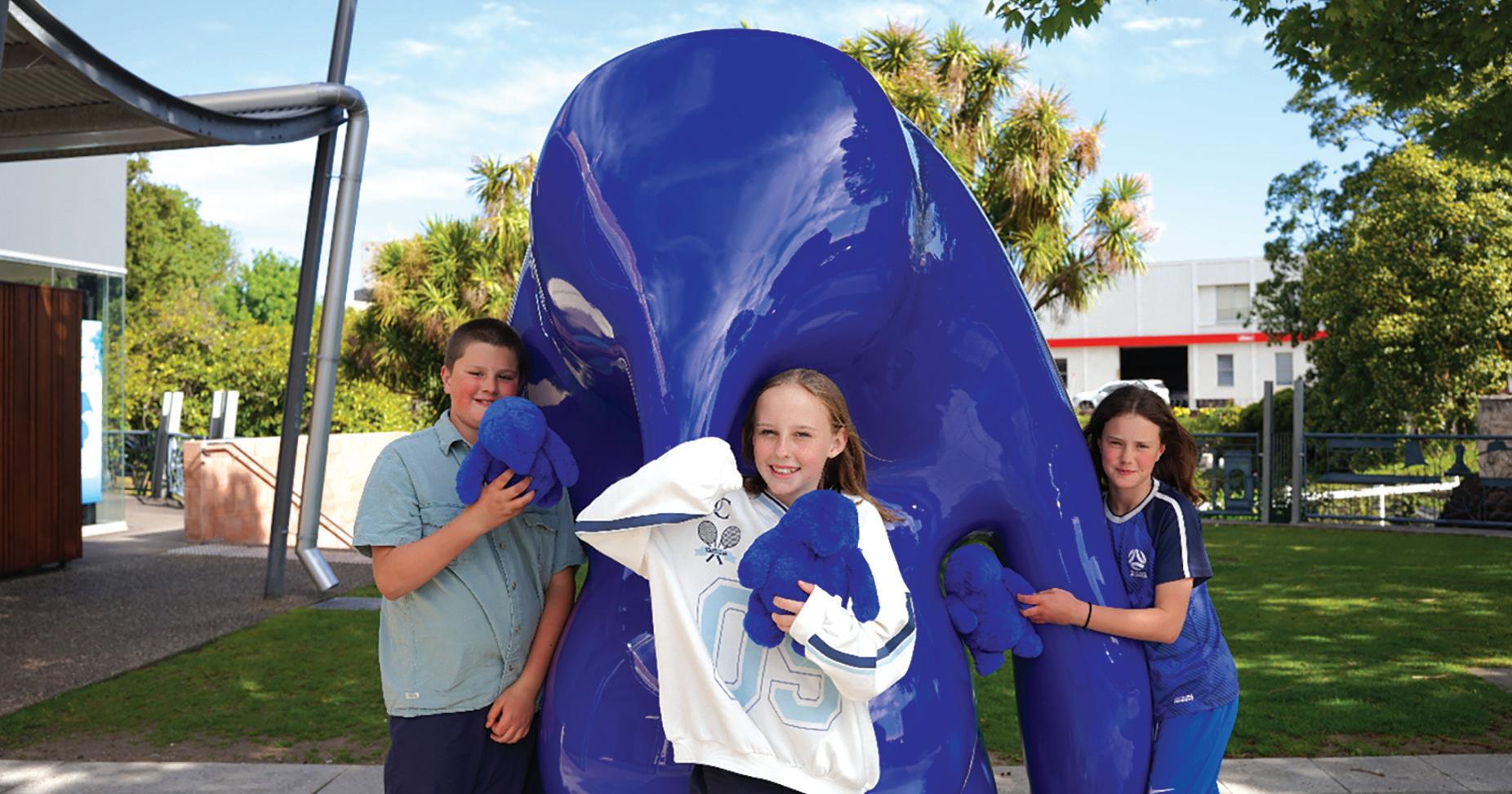
Meanwhile in South Australia’s Mount Gambier, there is a relatively new and controversial public artwork that should be the envy of every city in Australia, particularly Sydney. Unveiled in July of last year, it’s an almost comic book sculpture of a giant mythical megafauna, officially known by the rather drab title of ‘Cast In Blue’.
It wasn’t long before the public dubbed it the ‘Blue Blob’ and
embraced it with great affection, despite it costing a rather staggering $136,000.
It also attracted nationwide attention when a young local woman, 19-year-old Amelia Vanderhorst, stuck a pair of googly eyes to it as a prank a few months after the unveiling. Amelia copped a $2,000 penalty and 60 hours of community service. Don’t mess with the Blob!
Here in Sydney we are no strangers to having our civic sculptures splattered with graffiti, or otherwise modified. It was once a popular prank to take a can of Brasso to the genitalia of naked male statues in the Archibald Fountain, leaving their manhood sparkling.
Not so flattering have been the paint bombs protesting colonial invasion, directed at the giant effigy of Captain Cook in Hyde Park. Likewise, bronzes of the humourless, stern faced Queen Victoria, positioned outside the QVB and in Queen’s Square attract more pigeon poop than public attention – and deservedly so!
And that’s primarily what the various sculptures placed
throughout our city lack – a connection with the public that either brings a smile, ‘Blue Blob’style, or really evokes a significant social or historical event.
There are exceptions of course — like the sculpture titled ‘Joy’, said to be the first public statue of a female sex worker anywhere in the world. It was originally installed on the corner of Stanley and Yurong Street adjacent to the red-light area of East Sydney and Darlinghurst, but supposedly upset many residents.
After a noisy backlash, it was relocated to the Macquarie University Sculpture Park. Thanks to pressure and advocacy from sex worker activist Julie Bates and historian Catherine Freyne, the City Of Sydney Council returned a revamped, all-bronze version of ‘Joy’ to its original location in 2025.
I’ve often wondered why those who originally opposed the statue have not objected to the ‘Bronze Of Friendship’ rings in Macquarie Place. It’s been regularly suggested that they look like two giant donuts, entwined in some salacious sexual interlude.
I suppose it all boils down to a matter of interpretation, like the Tom Bass fountain at the P&O building in Hunter Street. When it was jokingly referred to as a public urinal back in 1964, many suggested it be removed.
When it comes to public sculptures, like Tom’s unintentional pissoir, the public have voted them far more popular than some crusty politician or early explorer.
Take Porcellino the bronze boar, who stands outside Sydney Hospital in Macquarie Street The loveable critter was originally donated by Marchesa Clarissa Torrigiani, in memory of her father and brother, renowned surgeons. Needless to say it’s a favourite with both adults and kiddies alike, and the perfect photo op. The good folk of Mount Gambier have got the jump on us with their fabulous Blue Blob, but surely Sydney could match its majesty with our own giant Bunyip or Yowie – perfectly positioned adjacent to QVB’s Queen Victoria statue. The old grumpy guts might finally crack a smile!


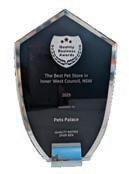
Come and say hello ��
We are proudly local, genuinely friendly, and passionate about your pets — because they are family too!

We bring you the best quality and prices for retail products for dogs and cats. Quality products at great prices for dogs and cats, including clothing, toys, beds, bowls, collars, treats, and flea & worming protection — plus more in-store and online. This is paired with personalised doggy daycare and exclusive home-based dog stays. A refined, one-on-one care in a calm, home environment.
No cages. No commercial facilities.
STORE TRADING HOURS: 8am till 7:15pm

DOGGY DAY CARE OPENING HOURS: 7:00am till 7:00pm ALL DAYS OF THE WEEK, INCLUDING WEEKENDS AND PUBLIC HOLIDAYS







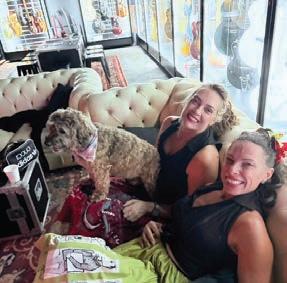

Photos: Tim Pascoe
BY CHLOE SARGEANT
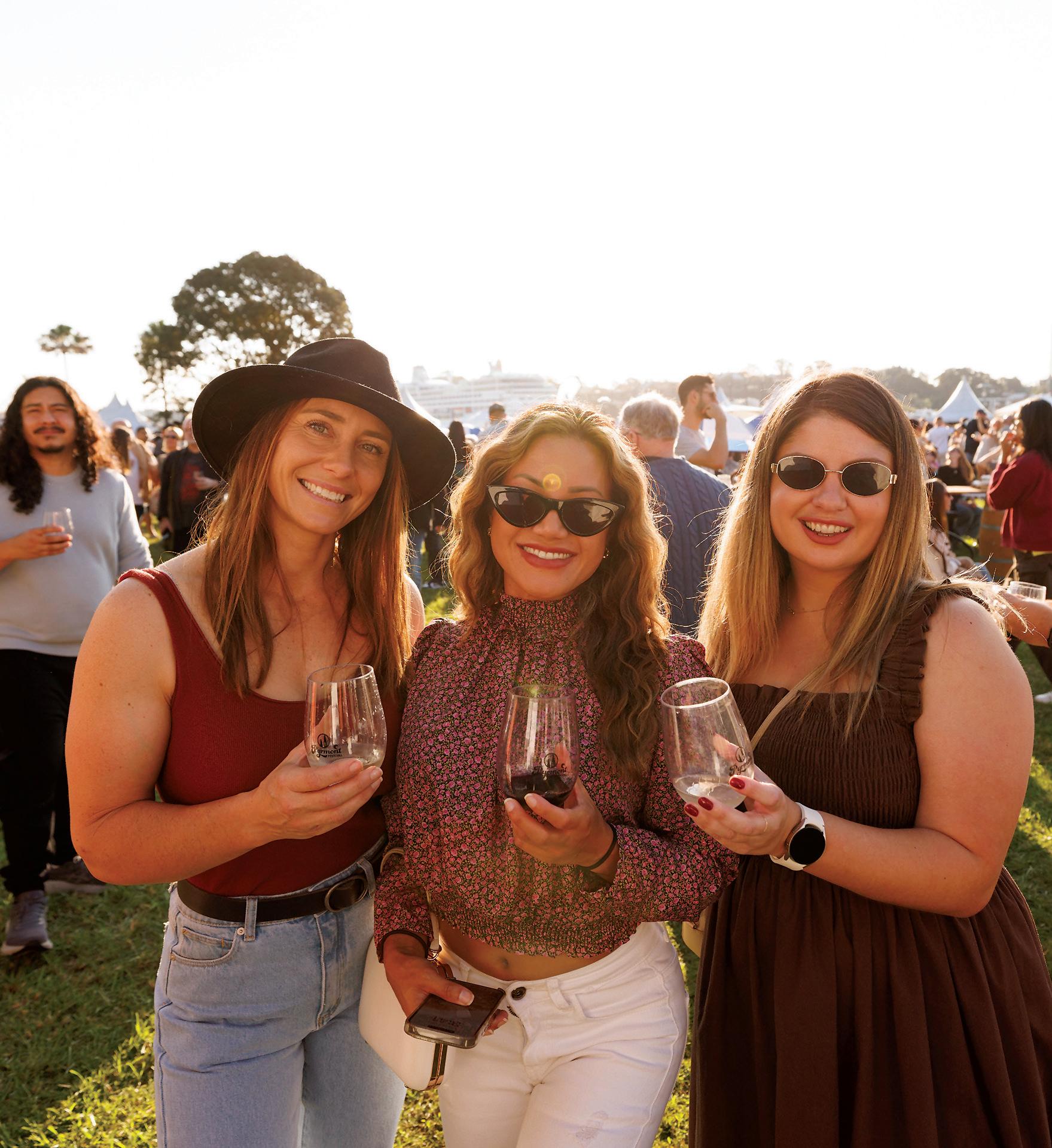
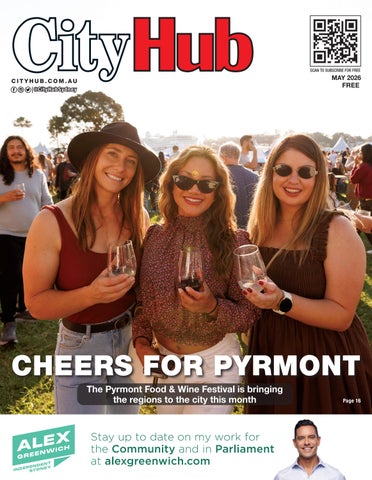
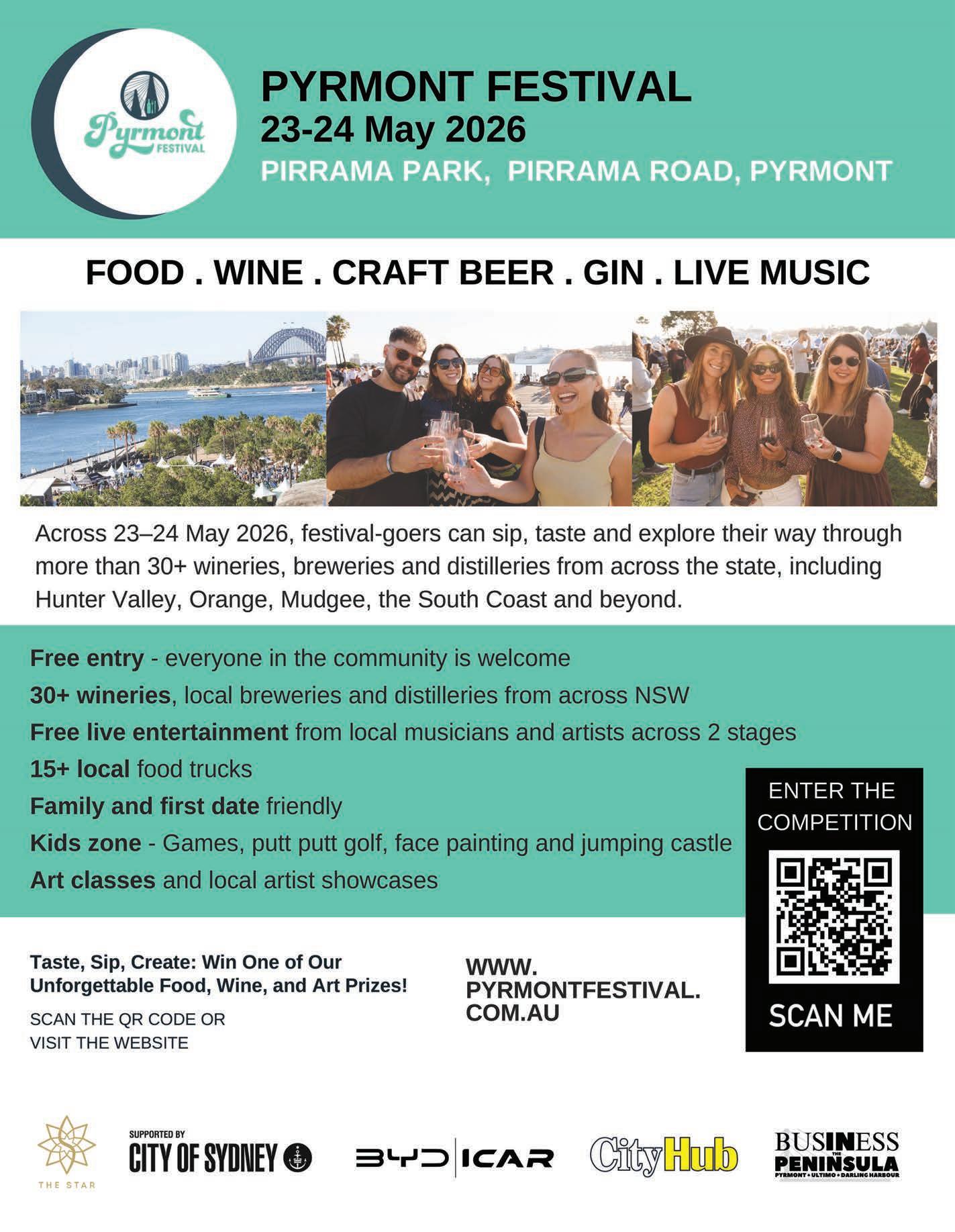
Astretch of Sydney Harbour, a lineup of regional producers, and an appetite for community — for one weekend in May, Pyrmont is once again set to become a meeting point for the regions that feed the city.
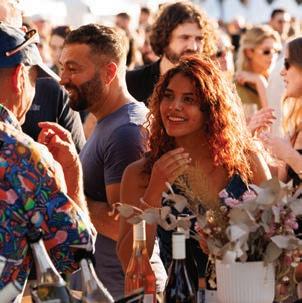
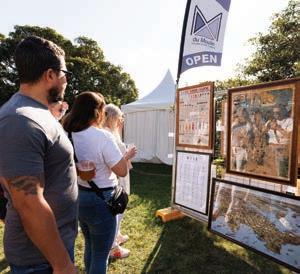
The 2026 Pyrmont Food and Wine Festival lands on May 23 and 24, taking over Pirrama Park with a loving goal: bring the country to the city, and let Sydneysiders taste their way through it.
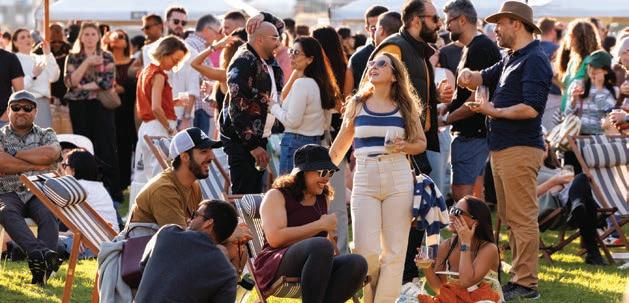
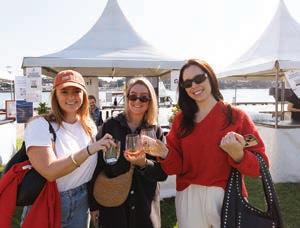
Across two days, more than 25 wineries, breweries and distilleries will pour alongside 10-plus produce stands, creating a kind of open-air cellar door by the harbour.
It’s free to enter, and deliberately pitched as something that works just as well for a first date as it does for a family outing, or a loose, sun-drenched catchup with friends (dogs on leads are very much welcome).
A FESTIVAL THAT FEELS LIKE A WEEKEND AWAY
What sets Pyrmont apart isn’t just the scale — though stages with live music running throughout the day certainly helps — it’s the sense of place. Or rather, places. Each stall is a small portal into a different region, a reminder of how widely NSW’s wine map stretches.
Among the larger, established names, Tulloch Wines and Peterson House bring the polish of the Hunter Valley — crisp whites, easy-drinking sparklings, and the kind of hospitality that’s been refined over decades.
Glandore Estate leans into a more boutique sensibility within that same region, known for smallbatch wines that still carry the weight of tradition.
But magic also lives in the smaller pours.
See Saw Wines, an organic producer from Orange, has built a
quiet following for its cool-climate wines — bright acidity, restrained fruit, and a sustainability ethos that’s clearly lived practice. Then there’s Slowfox Wines, a newer, smaller operation that embodies the festival’s “country to city” spirit: nimble, experimental, and deeply connected to the land it produces on.
Together, it creates a layered experience — one where you can move from legacy to small-batch just by taking a few steps.
Of course, the festival isn’t just about what’s in the glass.
In 2026, there’s a strong focus on activities that keep the space moving and exciting, and the festival prides itself on offering something for absolutely everyone.
Budding artists can join harbourfront painting sessions led by TAP Gallery, turning Pirrama
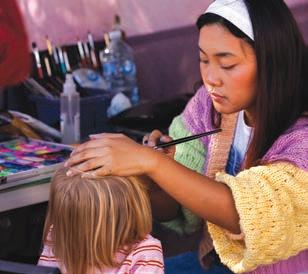
Park into a kind of pop-up studio. Nearby, SNAP Fitness will be running outdoor gym classes — for gym lovers, an appealing chance to trade a wine glass for a set of burpees to work off all the treats.
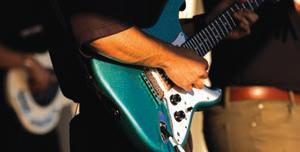
Live music runs across two stages, spotlighting local musicians and keeping the energy up all day. For something more playful, there’s putt putt golf set against the harbour.
Pyrmont is once again set to become a meeting point for the regions that feed the city
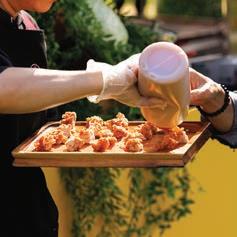
And then there’s the Berry Doughnut Van, a cult favourite making the trip up from the South Coast. It’s exactly the kind of detail that grounds the festival — not flashy, just down-to-earth people making truly great food.
Underlying all of it is a quieter economic story. The festival is
explicitly built around small and regional businesses, giving producers direct access to a city audience that might otherwise only encounter them on a bottle label.
In a moment where cost-ofliving pressures are reshaping how people spend, that connection feels important. You’re not just buying a glass of wine; you’re meeting the person who made it, hearing about the season that shaped it, maybe even planning a future trip out of the city because of it.
That’s the real success of Pyrmont Food & Wine Festival, and likely why it’s now in its 14th year — it’s not just as an event, it’s a bridge. For a couple of days, Sydney gets to feel a little less insular.
The city slows down, and somewhere between a tasting flight, a Berry doughnut, and a half-finished conversation, you remember that food and wine have always been far more than sustenance – they can create community.
SILENCED
Powerful doco following Higgins case to open Sydney Film Fest
(See p.22)
BY JOSH KERWICK
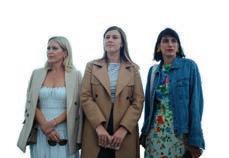
First published in 2012, The River is a darkly twisty three-hander that serves as an exploration of love, lies and the space in between them. It doesn’t provide any easy answers, but its open-ended sense of unease is precisely what makes it such an enthralling watch.
Besides an ominous opening, The River starts normally enough with Ewen Leslie and Miranda Otto portraying the two halves of this couple. He's there for fly fishing, and she's there to accompany him as a display of her love – an arrangement that seems lovely until Otto’s character inexplicably swaps out with Andrea Demetriades. One thing that's certain about
BY NAOMI LAWRENCE
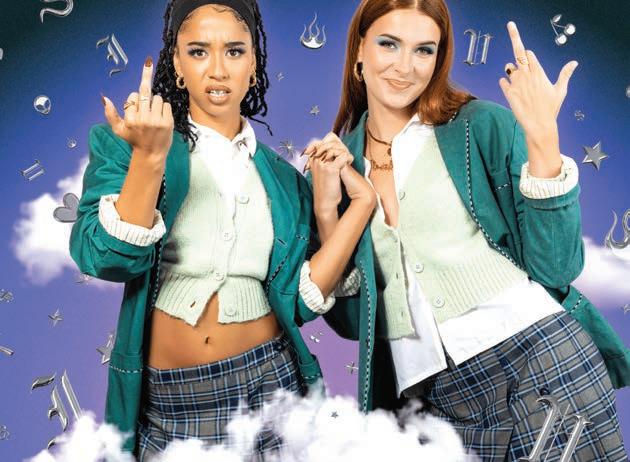
Achaotic, meme-soaked ode to sisterhood, SISTREN turns a “lethal combination” into something tender and volatile.
Staged by Griffin Theatre Company, Iolanthe and Janet Anderson star as Isla and Violet, two girls whose bond feels unbreakable.
Isla and Violet are forcibly split by their self-righteous headmaster. Stripped of their shared orbit, both are left fighting to be seen — by each other, by their school, by a world that insists on ranking their struggles rather than recognising their overlap.
SISTREN's writing thrives in its push and pull. It’s unapologetically Gen Z — littered with TikTok audios and deep-cut memes. Anderson opens with a lipsync to Are You Havin’ Any Fun?, setting the tone for a show that is playfully self-aware. The humour is irreverent but controlled,
The River is that the man at its centre is rather strange. Leslie’s performance uses charm as its main weapon, and he is particularly proficient at capturing the character’s strange idiosyncrasies, making him feel real even in the script’s least believable moments. Otto and Demetriades are similarly brilliant, expertly playing off the other’s performances while never sharing the stage. It's deeply unsettling to watch these women repeat the other’s words, leading to a truly bone-chilling atmosphere where it’s impossible not to fret for their safety. Both Otto and Demetriades beautifully navigate that moment where they realise something is wrong, making these women genuinely distinct from
one another while allowing them to echo each other.
The River abounds in these big ideas focused on romance, masculinity and more, but is more interested in asking questions than answering them, and it’s ultimately up to the viewer to make a judgement call about what they believe is happening. Its elusiveness may be frustrating to some, especially in a conclusion that only creates even more questions.
skirting absurdity before pulling back into real sincerity.
That control is what allows the play to hit harder. A standout monologue from Iolanthe, reflecting on Isla's father’s imprisonment, suddenly grounds the show.
Iolanthe also threads in a sharp, lived-in sense of intersectional
feminism. Isla and Violet circle the question of who “has it harder,” their arguments exposing messy fault lines between communities that the play insists have always been interconnected.
The narrative stacks ideas, images and tonal shifts rather than building a neat arc; at
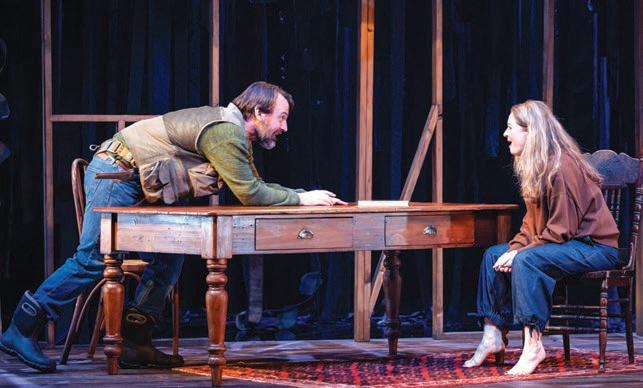
Nonetheless, I can’t deny that The River gave me a truly visceral sense of discomfort that I felt in my bones – and one of the hallmarks of great art is its ability to make you feel. Despite some gripes with its structure, a show that is skilled at creating discomfort with performers of such a high calibre is well-worth seeing.
The River is on until 16 May at Sydney Opera House’s Drama Theatre.
times, that diffuseness blunts the emotional payoff. Yet, the show largely gets away with it. Every leap is tethered to Isla and Violet’s pull towards each other, and Iolanthe and Anderson share a chemistry that feels almost intrusive in its authenticity.
Visually, the production mirrors that. A fuzzy pink classroom renders the stage a warped dollhouse. It’s a pointed image: the girls are performers and objects, echoing the play’s quieter interrogation of how Black femininity is aestheticised, contained, and projected onto.
SISTREN is for anyone who has ever had a friendship that felt all-consuming. Gen Z audiences and women of all ages will feel instantly at home.
Bold, specific and unwilling to tidy itself up, SISTREN is exactly the kind of story theatre needs more of.
SISTREN is running til 3 May at Belvoir St Theatre.
BY JACQUES NIEUWOUDT
Sydney painter Sean Burgess is best known for his vibrant and gritty explorations of Sydney’s past, and his latest exhibition is no different.
GLEBE: The Good, the Bad, and the Beautiful will take over The Shop Gallery at 112 Glebe Point Road from July 9–15, and will render Glebe’s forgotten histories visible for the first time.
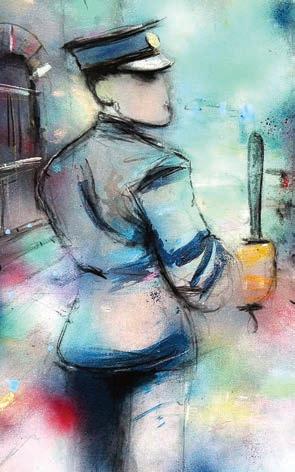
Have you ever wondered what heroes and villains once walked (and stalked) the leafy streets of Glebe? Whose fingertips we can still trace in the grout of its buildings? These questions and more, Burgess answers in paint.
From Australia’s first gangster John “Chow” Hayes to Glebe's everyday citizens, the exhibition seeks to document the local figures that once shaped (and/or terrorised) this bohemian innerSydney suburb.
Though his chosen medium is often used for abstract expression, Burgess maintains a documentarian commitment to painting only truths. Drawing from archives and local histories, he aims to depict real people, real events, and real locations from Glebe’s past.
“I’ll spend two months, three months, researching the local history,” Burgess tells City Hub. “I’ll pull up police records, court files, any newspaper clippings I can get my hands on.”
“I’ve been interviewing community members that have lived in Glebe for their whole lives. I’ve gotten photographs from their albums,” he continues.
“It’s very much about keeping history alive and bringing the community together to swap stories.”
The exhibition marks Burgess’ fourth installment of the roaming series, People of a Time and Place: Colourful Paintings of Sydney’s Colourful Past, which aims to keep Sydney’s history alive through paint, music and community. The studio is a collaboration between Burgess, digital creator John Burgess, and Dani Morris who handles photography and promotional duties.
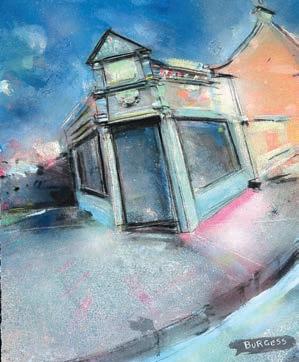
Together, they document the overlooked history of selected Sydney locales, with previous installments capturing the past crimes and communities of Sydney City, Kings Cross, Darlinghurst, and Surry Hills. You can find GLEBE: The Good, the Bad, and the Beautiful at The Shop Gallery 112 Glebe Point Road from July 9–15.
BY PATRICK LENTON
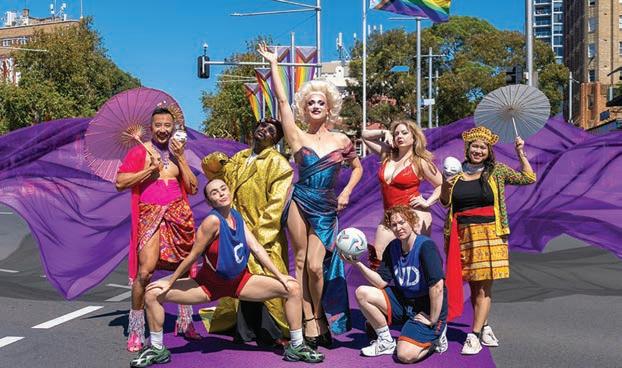
Qtopia Sydney has announced the program for Pride Fest 2026, which will run from 1 to 30 June.
Billed as "Sydney’s queer arts and culture festival", it will feature more than 300 events, marking the largest program in the festival’s history.
According to the organisers, the 2026 festival will extend beyond Qtopia Sydney’s venues to include the wider Oxford Street precinct for the first time. Events will be held across multiple locations, including The Loading Dock Theatre, The BWYASSS Substation, The Eternity Playhouse, Ginger’s at the Oxford, and Universal Sydney’s upstairs and downstairs spaces.
The program will include theatre, drag, comedy, cabaret, book launches, panel discussions, workshops, fitness classes, dance, film screenings, parties and restaurant activations. Organisers said the expanded footprint aims to create a precinct-wide celebration throughout June.
The festival will open with the inaugural Pride Fest Gala on 2 June, featuring performances from artists appearing across the program.
Two headline acts have been announced. Skank Sinatra will present The Name on
Everybody’s Lips, described as a new cabaret production, scheduled from 10 to 14 May. Kala Gare and Victoria Falconer will present Juicy Riot on 29 May.
Other programmed events include Homogrown, Dykes on Bikes: An Origin Story, Jess Fuchs: Feral, Still Proud: Honouring the 78ers, Saddle Club Line Dancing, Nails The Musical: In Concert, and Haus of Dy-lan
New initiatives for 2026 include Pride Fest: Intersections, focused on cultural diversity through an intersectional queer lens; Pride Fest: New Voices, showcasing works in development; and Fit N’ Proud, a program of sport, fitness and dance events sponsored by Bupa.
“Pride Fest is a powerful reminder of what happens when community comes together with purpose,” said Festival Director Carly Fisher. “This year's growth has been driven by the community and we couldn't be more proud to welcome new partners on board to help us grow this into an annual signature event on Oxford Street.
“Pride Fest is really about the artists who share their stories, the communities who show up and the allies who stand up, and we couldn’t be more proud”. The full program can be found at qtopiasydney.com.au.
BY MICHAEL JAMES
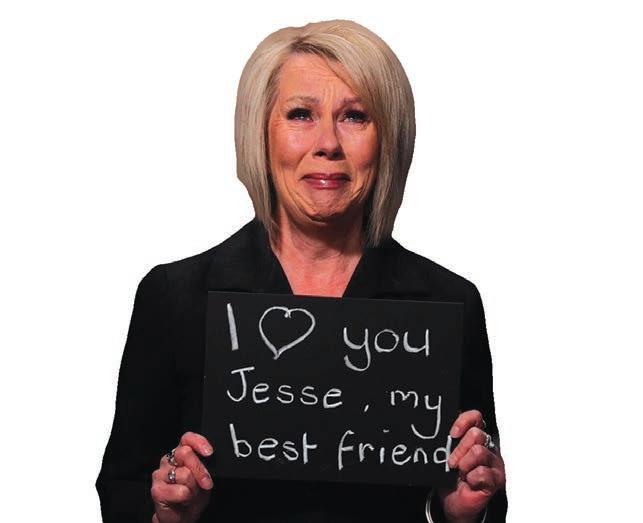
It's been two years since Sydney’s LGBTQIA+ community was rocked by the horrific murders of Jesse Baird and Luke Davies.
While friends and family continue to wait for answers, singer and songwriter Greg Gould has helped channel the grief many have felt through his music.
Gould collaborated with Adam Noviello & Jack Hollander to write the tribute to Jesse and Luke, titled No More, before inviting Jesse’s mother, Helen Baird, to partake in the film clip for the song, which features real-life survivors of domestic violence.
"Working with Helen on the No More video was something I’ll never forget. It was deeply personal – I felt her heart, and I felt her pain," said Gould.
"She carries a story no parent should ever have to tell, and the strength she brought to the set was incredibly moving. Everything she brought to the video came from a place of love for Jesse, and from her immense loss.
BY ANGUS SHARPE
Fairy lights pulse as they run around Laura Altman’s bizarre collection of trinkets on stage, snaking up the walls of the tiny living room-like space of Stadium Rockdale.
Finally, Altman picks up a handheld cassette player. Holding it to her microphone, she switches it on and begins to perform.
Static enters the room. And carefully, Altman lowers this static to the strings of her electric guitar. Absorbing herself deep in her tools, Altman begins to stretch the static apart.
Constantly she explores and experiments with the evolving electro-acoustic soundscape.
After the performance, Altman tells me her unique style came from a desire to not have to rely on other performers to bring her music to life.
Instead, when she first started playing solo eight years ago, she looked to build a quasiband to support her clarinet out of devices and tools. She wanted her style to be distinct and free. So, over time she developed this abstract practice.
“She wanted to honour him, but it was also important to her to take a stand so that no other family has to live through the same immeasurable loss," he said.
"We first connected when a mutual friend shared the song with Helen. She reached out to thank me for writing it in Jesse’s honour, and to tell me how much it meant to her. I was really touched by that.”
Helen's appearance in No More’s video is incredibly powerful – she is seen holding a photo of her son as she openly shares her grief in the clip.
"There was no performance –just truth. Just love. Just grief, and courage, all sitting side by side," Greg said.
"I’m so proud of her. When I sent her the final video, she told me she’d watched it about 100 times that day and cried every single time. Having Helen be part of this video grounded No More in something real and deeply human.
“It turned the message into more than a song – it became a moment of remembrance, and a true stand against violence."
Switching on radios and portable speakers littered around her, then raising the soft mournful tone of her clarinet to various handheld cassette dictaphones, she begins to spin feedback into an instrument itself.
Make no mistake, the lack of patterns and rhythm made it difficult to sink into it as you would with a traditional genre. But, this type of experimental music is becoming increasingly accepted by younger audiences in Sydney, so the audience meets this challenge with glee.
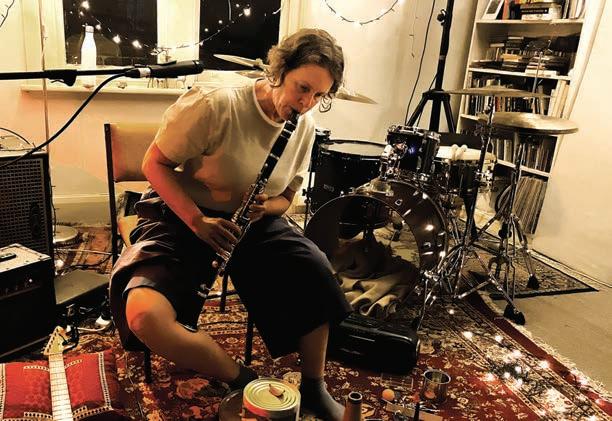
Blowing slowly through her clarinet, she holds the opening in various locations to create different sounds. It may be held over an open can, with a dictaphone inside – her feet then covering the can. She moves objects around, placing items within or on top of each other to create different vibrations and sounds.
The audience is left to grapple with moments of pleasure and discomfort. Asking themselves, do I like this? And if so, why?
Though to conclude her set, Altman allowed a break from this debate. With great care Altman built a folk song over the static – her soothing voice emerging finally into brief, beautiful lyrics.

BY JOSH KERWICK
Lee Cronin’s The Mummy (LCTM) is a far cry from the 1999 swashbuckling bisexual bait film or the hyper-serious Tom Cruise 2017 reboot. But its singularity is precisely what makes the film enjoyable – even as it lovingly constructs itself from the bones of other horror films.
Yet never do those inspirations feel tired across this surprisingly complex horror tale, following the mysterious reappearance of a young girl in Egypt after vanishing eight years earlier. It’s a little The Exorcist, a little Evil Dead, but ultimately a whole lot of fun as it cleaves skin from flesh.
Within the first 20 minutes, we’ve witnessed horrible bodily
injury and child abduction – but LCTM has barely gotten started. It’s once Katie (Natalie Grace) is rediscovered entombed in a sarcophagus that the film truly begins to reveal its intent – showering its characters with unpleasantries and viscera.
Parents Charlie (Jack Reynor) and Larissa (Laia Costa) bring Katie back to the States to care for her as she recovers. But this is ‘Lee Cronin’s The Mummy’ and not ‘Lee Cronin’s Katie’s Healthy Recovery’ – freaky stuff starts happening immediately.
If you’ve seen the classics, LCTM’s trajectory will not surprise you. But what may thrill is its whole-hearted willingness to take everything to the extreme –
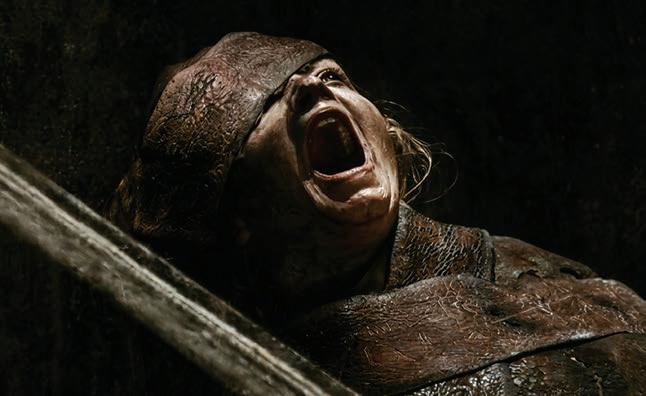
Cronin makes his version utterly disgusting, strangely intriguing and oddly emotional all at once. This is an extremely wet, entrailladen movie that had me regularly watching through my fingers. I didn’t feel this way just because of what was happening – which is plenty horrible – but because of the film’s enthusiasm for close-ups and split dioptres that accentuate. Sam Raimi’s influence is also on full display, with an expert understanding of tension and when to deploy scares and gore.
LCTM doesn’t even try to be unique, a somewhat ironic fact given its title, but works effectively as a cocktail of horror influences that’s much more than the sum of its parts.
Besides some minor flaws – it probably didn’t need to be 2+ hours – this is a surprisingly fun take on The Mummy as a cinematic institution. It’s earned Cronin newfound respect in my book.
1/2
Lee Cronin’s The Mummy is in cinemas now.
BY JASMINE EL HANAFY
T
he Sydney Film Festival has announced its 73rd edition will open with the Australian premiere of Silenced, the powerful Sundance-premiered documentary from Australian director Selina Miles.
“The opportunity to play at the State Theatre as the opening night film for Sydney Film Festival is a dream come true, and a testament to the power of storytelling to elevate voices that might otherwise go unheard,” said Miles.
Despite its title, Silenced is anything but quiet — it’s a loud and pressing documentary. Focusing on how defamation law is being increasingly weaponised to silence survivors and the journalists who report on their cases, the documentary follows international human rights lawyer Jennifer Robinson.
Inspired by Robinson’s book How Many More Women?, co-
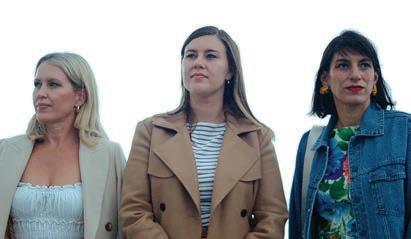
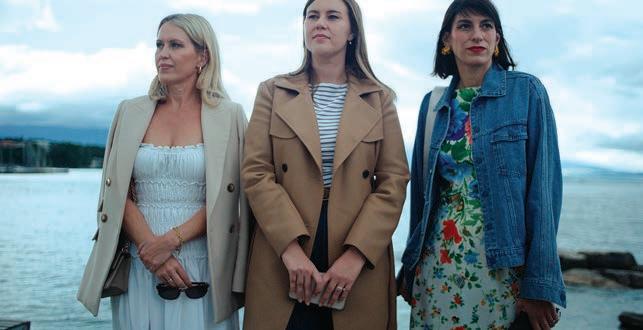
authored with Dr Keio Yoshida, the film pulls audiences into the charged courtrooms, chaotic media storms, and the emotional fallout that follows when women speak publicly about abuse.
At the heart of the documentary are three women whose stories caused international headlines.
Brittany Higgins, a survivor and advocate against gendered violence, whose allegations that she was sexually assaulted
inside Parliament House in 2019 sparked national conversations on accountability and gendered violence. But this was followed by years of legal battles, not only causing severe financial consequences for Higgins, but also intense public scrutiny.
Catalina Ruiz-Navarro, a Colombian journalist who published an investigation into allegations against a rising film director. Though she ultimately
won the prolonged defamation lawsuit, her case highlights how legal action is frequently used to exhaust and intimidate women from speaking publicly.
Then there’s Amber Heard, who was represented by Robinson in the UK. Her defamation battle against Johnny Depp became one of the most globally watched legal cases of the decade, with her facing relentless online harassment and misinformation. By the end, what should have been a legal process had turned into a misogyny-driven campaign against Heard’s character.
“Selina Miles has made a clear-eyed and urgent work that challenges audiences to question the systems that decide whose voices are heard and whose are suppressed,” says Festival Director Nashen Moodley. Silenced will open Sydney Film Festival on 3 June at the State Theatre.