Includes Both A Facial & One Hour Massage Along With A Product Gift Bag.
Mother’s Day Relaxation Ritual $199
Upgrades & Add-Ons Available Include: Hot Stones to Massage
Essential Oils to Massage or Facial LED Therapy for Massage or Facial
Lip, Foot, or Hands Sugar Scrub To Massage or Facial
Custom Gift Certificate -Add On Service or Take Home Product Specialty Make-Up by Trudy
Includes A 15 Minute Foot Soak & Specialized Consultation Followed By A 90 Minute Custom Massage & Body Scrub. FREE MOTHER’S DAY TOTE WITH PURCHASE OF $99 OR MORE WHILE THEY
SATURDAYS AVAILABLE BY APPOINTMENT ONLY
• Liposuction
• Suture Suspension Lifts (Face, Neck, Breast, and Buttocks)
(Skin Tightening, Wrinkle & Cellulite Reduction) • Medical Skincare Therapies
If you have an eye problem, we are here to find a solution. At Family Eye Care Clinic, We deliver cutting-edge eye disease treatments using the most advanced technologies available. you eye we here to
First
and only
Valeda™ PBM is the first and only FDA-authorized treatment for early and intermediate dry AMD
Improve And Maintain Vision
84% of Valeda™ PBM–treated patients improved or maintained vision at ~2 years compared to baseline.
A Noninvasive Treatment
Dilation free, speculum free, anesthesia free, and injection free
Alyssa Jensen
Alyssa Jensen
PHOTOGRAPHY
Michelle Horton
Alyssa Jensen
FEATURES
Michelle Horton
CONTRIBUTING WRITERS
Dustin Stringer
Suzie Tyler
If you have an event you would like to include in our Upcoming Events section, please e-mail us at: alyssa@alt-mag.com.
From A NOTE
THE PUBLISHER
May comes in with a different kind of feeling. It is the month that most people look forward to because it means summer is near. As the Spring season settles in, we find ourselves thinking about two groups of people whose influence is profound but often underappreciated: educators and mothers.
When you first think about it, they may seem like separate roles. One belongs to the classroom, the other to the home. However, the truth is, they are deeply intertwined. Both shape the future, creating minds and hearts in ways that ripple far beyond what can be measured in grades or milestones.
Educators step into their roles each day with a quiet resilience. They carry the weight of not just curriculum, but of curiosity, confidence, and character. A great teacher does not simply give information— they create a spark. They see potential where others might see struggle. They see possibilities that others may not see for years, and when they do, they can change their own lives and others’.
Mothers are teachers too in every sense of the word. Way before a child even enters a classroom, learning has already started through stories and daily actions. A mother’s lessons are often not spoken, but rather woven into the daily lives and shape the values and identities of little minds in ways that will last a lifetime.
This month, we wanted to bring light to all types of educators. From smaller schools to the larger ones, everyone on a campus matters. This issue gives us the opportunity to pause and recognize the great things these six educators are doing. We need to acknowledge not just the visible efforts but also the invisible ones—the late nights, the silent worries, and the small victories that matter deeply. Appreciation should not be reserved for a single day or even a week, but let this month remind us to say it out loud.
To the educators: Thank you for your patience, your creativity, and your unwavering commitment to shaping each generation.
To the Mothers: Thank you for the love that forms the foundation for the life we all live.
In our world that moves way too quickly, this May wants us to slow down and actually honor the hands that guide us through each day. A teacher, a mother, or both are usually the ones who first see every achievement and dream.
Alyssa Jensen
LITTLE VOICES, BIG IMPACT: HOW GRACIE AKIN IS SHAPING YOUNG HEARTS IN TEXARKANA
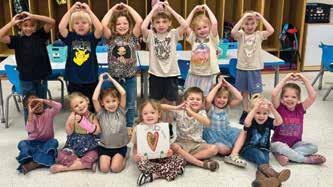
In a classroom filled with laughter, movement, and the unmistakable energy of three-year-olds discovering the world for the first time, Gracie Akin has found her calling. As a Pre-K 3 Teacher at Redlick Christian Preschool, Akin is not just teaching colors, letters, and numbers. She is shaping confidence, nurturing kindness, and helping her students take their very first steps toward independence.
Akin’s story begins right here in Texarkana, where she was born and raised. Her upbringing was rooted in family, activity, and the simple joys of childhood. “Growing up, my favorite thing to do was go fishing with my dad,” Akin says. “I was always playing various sports growing up from a young age. I have three sisters.”
Her school years took her through several local campuses. “For middle school, I went to Pleasant Grove, and I completed high school at Arkansas High, where I was in the marching band and Color Guard program,” Akin says. Those experiences, she reflects, helped shape both her discipline and her creativity. Today, she continues to build a life in the same community that raised her. “I currently live with my fiancé Joe Rochelle. He has really been there to support me and support what I want to do in life,” Akin says.
While many teachers can point to a single defining moment that led them into education, Akin’s path was more gradual, rooted in years of quiet influence. “Well, growing up, my mother had an
in-home daycare. So I have always been around children and helping her with everything,” Akin says. “Since a young age, I have known I could be a teacher someday. I have always had a heart for helping young children, and anytime I have been around them, I have always worked well with them.”
That steady sense of calling eventually led her to Redlick Christian Preschool. After gaining experience elsewhere and taking time to reflect on her future, clarity came. “I took some time thinking about what I wanted to do in life, and I knew that I wanted to be a teacher,” Akin says. “I started looking for a place of employment, and at the right time God led me to this Preschool right when I needed it.”
That sense of purpose is something Akin carries with her into the classroom each day. For her, teaching is not simply a job. It is a calling grounded in both faith and intentionality. “I would say my faith is definitely in the classroom with me every day,” Akin says. “I know that God called me to do this job, and to show that there is love and life in everything that you do.”
Working with three-year-olds requires a special kind of patience and joy, and Akin embraces both. “For me, I love the three-year-olds,” Akin says. “They are right in the age where they can talk, and are growing away from the two-year-old mentality, and growing into independent children.” It is a stage filled with rapid emotional and social development. “They also are going from understanding just their feelings to understanding others’ feelings,” Akin says.
That transformation is something she gets to witness daily, often in the smallest and most meaningful ways. “My favorite thing is getting to watch all of their little personalities come to life,” Akin says. “They all have very unique personalities; some are the ‘jokesters’ of the classroom, and some have very sassy personalities.”
Step inside her classroom, and the day unfolds with a rhythm that balances structure and joy. “Every morning when I first walk in, all the kids tell me good morning and give me hugs,” Akin says. “We eat our breakfast, then we get to do our morning dance parties.” From there, the learning begins in earnest. “After that, we get all of our work and crafts done. The kids learn in center play, then we get some fresh air outside,” Akin says. The day continues with lunch, rest, and more opportunities to learn and play. “After a good nap, we wake up to do circle time, and learn in centers again, then we get to the end of the day, the fun part of the day with Play-Doh, and circle play time,” Akin says.
If there is one theme that defines Akin’s teaching style, it is her commitment to fostering independence. “I will definitely say my teaching philosophy is more of a realistic teaching style,” Akin says. “I am teaching them to be more independent. They have learned that they are capable of doing a lot of things on their own and not so much relying on someone else to do it for them.” At the same time, that independence is balanced with deep care and connection. “I comfort them,” Akin says. “One of my biggest things I like to do is I tell them how important they are and give them hugs. They know if they need a hug, I will always be there. I care for them and love them.”
That combination of structure and affection creates a classroom where students feel safe enough to grow. It also creates plenty of unforgettable moments along the way. “There are so many funny moments that happen in my classroom every day,” Akin says. “Between the jokes, and the sass, and the southern accents that come out when they are trying so hard to explain something.” Some of those moments have stayed with her long after the laughter fades. “I had one of my kids tell me
a story about his baseball game,” Akin says. “He said, ‘Ms. Gracie, I found a snail at my baseball game and picked it up.’ I replied, ‘Eww, I bet it was stinky.’ He said, ‘No, it was not disgusting, it was my friend.’ We both just started laughing.”
Beyond the laughter, Akin is intentional about helping her students develop skills that will carry them far beyond her classroom. “One of my biggest things I hope they take away from my classroom is that they can do anything they put their minds to,” Akin says. That message is reinforced through both instruction and example. She measures her success by transformation. “To me, I can measure my success as a teacher in the classroom when I can tell that they are implementing the things that I teach them,” Akin says. “When the knowledge that I have taught them sticks with them, and it starts to show. An example of that would be they will comfort each other in a time of need, and they are learning to coexist in the classroom together.”
Of course, teaching three-year-olds comes with its challenges. Chief among them is their seemingly endless energy. “One of the biggest challenges that Pre-K 3 has is all the energy they have at this age,” Akin says. “They have so much energy, and they have to find a way to get it out.” Akin meets that challenge with creativity and enthusiasm. “A couple of ways I like to help them with that are our dance parties, we shake all our wiggles out,” Akin says. “Another great way is when we go outside, I like to teach them little games. Like tag, freeze tag, and even duck, duck, goose.”
Her favorite activities often reflect that same hands-on, high-energy approach. “My favorite activity to do with the children is our dance parties,” Akin says. “At this age, they have so much energy, so I love to dance with them and get our wiggles out.” She also finds joy in creative projects that spark imagination. “My favorite activity to do with the children is on Earth Day. We make sensory bottles with sand and water, like a beach in a bottle,” Akin says.
Through it all, Akin continues to grow alongside her students. “Taking this job opportunity has really opened my eyes,” Akin says. “Every day it helps me realize that this is something I was made to do, this is my purpose in life, to help teach small children about the world. It has made me feel more loved every day.”
That sense of purpose extends beyond her classroom and into the broader Texarkana community. “I think preschools are amazing because they help young children get ready for school,” Akin says.
“with my camera”
“It helps them in so many ways that when they get to kindergarten, they will have a much easier time getting into the school program.”
Even the smallest gestures from her students serve as reminders of the impact she is making. “I will say feedback from the children would be that they want hugs from me every day,” Akin says. “I have one student who tells me every morning, Ms. Gracie, I did not get a hug today.”
Outside the classroom, Akin finds joy in the same things that have always grounded her: relationships and shared experiences. “Outside of the classroom, my favorite thing to do is spend time with family,” Akin says. “My fiancé and I love to vacation in other places and just explore the world together.”
It is a fitting balance for someone whose work is rooted in both care and curiosity. In many ways, Akin is doing exactly what she set out to do from a young age, even if she did not recognize it at the time. She is helping children grow, guiding them as they begin to understand themselves and others, and showing them that they are capable of more than they realize.
In this town that values connection and community, teachers like Gracie Akin play a quiet but powerful role. Day by day, hug by hug, lesson by lesson, she is helping shape not just students, but the future of Texarkana itself.
WHERE CREATIVITY
HEART
In a classroom filled with color, rhythm, and imagination, Stacy Deaton has built more than a Fine Arts program. She has created a space where children feel seen, valued, and inspired to discover what they are capable of becoming. As the Fine Arts Teacher at Redwater Elementary School for grades Pre-K through 3rd grade, Deaton blends music, art, and encouragement into something that reaches far beyond the classroom walls.
Her story begins long before Redwater. “I was born in Norman, Oklahoma,” Deaton shares. “We moved to Fort Worth after the birth of my brother.” That brother, now Dr. Greg Davis, would go on to become a research scientist, a reflection of the same work ethic instilled in their home from an early age. “Our dad, Garland Davis, is a retired pharmacist with 57 years of experience,” she says. “Our mom, Sandy, adored teaching preschoolers. They taught us that hard work pays off and made sure we had every opportunity to participate in activities we loved.”
Those early years were filled with simple joys that now feel almost timeless. “My brother and I were fortunate to grow up during the era when children roamed neighborhoods by bike,” she says. “Our family spent many weekends at the lake, skiing and tubing behind the boat. The lake will always be one of my favorite places.” She remembers treehouses, soccer games, and evenings lit by fireflies.
Music and creativity were woven into the rhythm of daily life, even then. “Even after long 10-hour workdays, my dad would still sit down at the piano and fill our home with beautiful music,” Deaton recalls. “I
remember hearing ‘Malagueña,’ ‘Stardust,’ and lots of Scott Joplin.” Her mother’s creativity left a lasting impression. “When I was very young, my mom often took me to her painting classes. I loved watching her create. She seemed able to fix just about anything.”
That combination of discipline and creativity would quietly shape the foundation of her future. When her family moved to DeKalb during her middle school years, another influence entered her life. “Because of two amazing band directors, Larry Ward and Don Foster, I fell in love with band,” she says. “I learned to play the trumpet, French horn, euphonium, and trombone in the stage band.” The band hall became a second home. “Whenever we did not have class, my friends and I made a beeline for the band hall.”
Looking back, Deaton sees those years as pivotal. “I received an excellent education in DeKalb,” she says. “Music, art, math, and writing were my favorite subjects. Those years gave me a strong foundation and helped plant the seeds for what I do now.” The influence of great teachers stayed with her. “I was fortunate to have excellent teachers from preschool through high school,” she says.
That sense of care and attentiveness has become a hallmark of her own classroom. “I remember what it felt like to be encouraged,” she says. “I also remember how important it was when a teacher made me feel seen and capable.” Today, that memory guides her daily work. “I try to create a classroom where students feel safe to try, make mistakes, grow, and be proud of what they create.”
Her path into teaching was less of a single decision and more of a natural progression. “My path to becoming a fine arts teacher grew from a lifelong love for children, creativity, music, and art,” she explained. “Over time, I realized that teaching would allow me to combine the things I loved most in a way that could truly make a difference.”
It is the youngest learners, however, who captured her heart. “Students at these ages are so impressionable,” she says. “I want them to know they are important and that their dreams can come true.” She lights up when describing their perspective. “I love the way they look at the world… with faith, transparency, and enthusiasm.” In her classroom, those qualities are not only welcomed but also nurtured.
A typical day reflects that energy. “Every day is active, creative, and varied,” Deaton says. “Depending on the lesson, students may sing, move, listen, create, respond, perform, or work with visual materials.” Teaching such a wide age range requires intention. “Younger students need simple directions, movement, repetition, and hands-on experiences,” she explained. “Older students are ready for more independence, deeper discussion, and more complex skill-building.” Still, her goal remains constant. “No matter the age or activity, my goal is always the same: for every student to feel successful, challenged, and included,” Deaton says.
That philosophy comes to life in the projects she designs. “The students and I love working with clay, especially when we make dragon eyes,” she says. “The project helps strengthen the small muscles in students’ hands.” Music brings its own excitement. “Bucket drums and Poison Rhythm videos are among our favorite things. The suspense makes the activity especially fun and engaging.” Then there are the moments that cannot quite be planned. “At the end of the school year, I try to plan a paper airplane lesson for third grade,” she says. “It is wonderfully chaotic. Their enthusiasm and laughter make it one of my favorite lessons.”
Behind every activity is a deeper purpose. “Fine arts are not extra,” Deaton emphasized. “They are essential.” In her view, the arts shape the whole child. “When students sing, play music, or create artwork, they engage many parts of the brain at once,” she explained. “The arts strengthen learning in subjects like reading and math, support social-emotional growth, and give students a healthy outlet for self-expression.”
Deaton sees that impact daily. “I have seen students grow in confidence, become more willing to participate, and feel more comfortable expressing themselves,” she says. “Through weekly art and music classes, children develop patience, resilience, and pride in their work.” For some students, the arts become a turning point. “Sometimes a child who struggles in one academic area will shine in the fine arts,” Deaton notes. “Confidence resulting from that success can positively affect everything else in that child’s life.”
Building that confidence is one of her greatest priorities. “I believe confidence begins with a classroom where students feel safe, supported, and unafraid to try,” she says. “Mistakes are not merely accepted; they are welcomed as signs that learning is happening.”
She finds simple, intentional ways to reach even the most hesitant students. “When I point out specific sounds or patterns that impressed me, their faces light up with pride,” she says. “Those moments are incredibly meaningful.” Strategies like partner discussions help ease students into participation. “Sharing an idea with one classmate gives students a chance to practice without pressure,” she explained.
Her philosophy is summed up in a phrase often heard in her classroom: “Turn your mistakes into masterpieces.” As Deaton puts it, “Students learn that it is okay to make mistakes. They can use their imagination to change, add to, or enhance the mistake.” That balance of structure and freedom is intentional. “Strong lessons are grounded in the Texas Essential Knowledge and Skills, while also allowing room for flexibility,” she says. “If a student understands the skill being taught but wants to show their understanding differently, I welcome their wishes to ‘go rogue.’”
Beyond the classroom, family is an important part of Deaton’s life. “My husband, Paul, and I have been married for thirty-four years. He is loving, hardworking, and an amazing dad and best friend. Together we have three incredible children, and one son-in-law who make us proud every day. We also share our home with a small menagerie of rescued critters,” she says.
Deaton’s work also helps shape the culture of Redwater Elementary and the broader community from beyond her school room walls. “At Redwater Elementary, fine arts bring people together in meaningful ways,” she says. From holiday performances to Veterans Day tributes, students are given opportunities to connect their creativity with something larger than themselves. “Pre-K through third-grade students gather to share their heart-melting holiday voices,” she says. “Families and friends join in!”
The visual impact is just as powerful. “Visitors are welcomed by student masterpieces displayed along the walls,” she says. “It is exciting to see our students’ creativity shared beyond our campus.” One of the most anticipated events of the year is the Artome Art Show. “The elementary gym transforms into an art gallery,” Deaton says. “My heart swells to see the pride of our students as they view their masterpieces in such a formal setting.”
Even larger community connections continue to grow. “Student artwork was selected for the 33rd Annual Student Juried Exhibition,” she says, highlighting the reach of their program. Meanwhile, the district art show theme of “Community” has taken on special meaning. “Students created ‘quilt squares’ that tell their own stories,” she explains. “I love how this activity helps students feel seen, connected, and proud of who they are.”
Recognition has followed her work over the years, but she is quick to redirect the focus. “Some of the milestones I am most proud of are not always the most public ones,” she says. Awards such as the Going the Distance Award and Teacher of the Week are meaningful, but it is the quieter moments that stay with her. “A shy child volunteering for the first time or a child suddenly saying, ‘Oh! I get it!’”
Outside the classroom, Deaton has continued to invest in students in unique ways. She earned a Level
5 TEFL certification and taught English to students in China online for several years. She also led an afterschool chess club that grew to 100 students. “Chess is a powerful way to build cognitive, academic, and social-emotional skills,” she says.
Even her sense of humor reflects a lifetime immersed in the arts. “When teachers ask how I can handle 15 students playing drums at once, I joke that I was probably desensitized at an early age,” she says, recalling the music-filled home she shared with her brother.
Through it all, her motivation remains deeply rooted in the students she serves. “I am thankful every day to be a part of Redwater ISD,” Deaton says. “Our entire Dragon family is united by one goal: putting students first.” She treasures the opportunity to teach children at various stages of their development. “What a gift it is to teach kiddos year after year for nearly half of their little lives,” she says.
In the end, it is the small, daily moments that matter most. “I love watching them learn, grow, and become taller little humans,” Deaton says. “That daily joy is what keeps me passionate about teaching year after year.”
Stacy Deaton is quietly shaping something far more lasting. Through music, color, and creativity, she is helping children find their voice, their confidence, and their place in a community that celebrates who they are becoming.
tony.langford.roofing1@gmail.com
This Mother’s Day, celebrate the women who make everything possible.
For the early mornings, the late nights, the quiet sacrifices, and the endless love—Mom deserves more than just a thank you. She deserves something as special as she is.
The rainy season is not over! Many homeowners don’t realize they have storm damage until it’s too late—you could qualify for a new roof without even knowing it! Call us today!
Show your appreciation with a gift that speaks from the heart. Whether it’s something simple or something grand, what matters most is letting her know she’s seen, valued, and deeply loved.
Because everything she’s given… deserves to be celebrated.
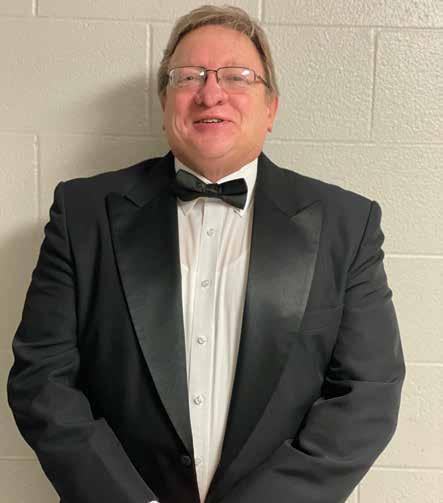
THE SOUND OF DEDICATION: RICHARD ECKSTEIN’S LIFELONG RHYTHM
OF INFLUENCE
In the heart of Texarkana, where community ties run deep and Friday nights echo with school pride, one educator is quietly building something lasting—not just music, but character, discipline, and confidence. As the Middle School Band Director for Red Lick Independent School District, Richard Eckstein brings decades of experience, a lifetime of performance, and an unmistakable passion for music into the classroom each day.
However, Eckstein’s story does not begin in a band hall—it begins right here at home. “I grew up in Texarkana, Texas, the fifth child of six siblings: three older brothers who picked on me a lot, an older sister, and a little brother,” Eckstein says. “My parents were terrific role models and completely supportive parents.”
Music entered his life early and never left. “I started playing piano in fifth grade and trombone in sixth grade and have been involved in music ever since,” Eckstein shared. From Pine Street Junior High to Texas High School, his musical path was clear. That path eventually led him to college on scholarship. “After graduation, I accepted a music scholarship to attend East Texas State University, now East Texas A&M University,” he says. “After my bachelor’s degree in music, I got married and became a band director in East Texas.”
What followed was a 33-year career shaping students across multiple communities—Mount Pleasant, Sulphur Springs, Linden-Kildare,
Winnsboro, and Mount Vernon—while raising a family of his own. “I taught the majority of my career and raised my three wonderful daughters in Mt Pleasant, with a few other band directing stops along the way,” he says. After decades in the classroom, Eckstein thought he was ready to step away. “I decided to retire and move to Texarkana,” he says.
Retirement did not last long. “Since moving to Texarkana, I have ‘unretired’ by directing bands in the Texarkana, Arkansas School District for five years and am now teaching band part-time at Red Lick Middle School.”
For Eckstein, music has never been just a profession—it has been a passport to the world. “Musical performances have literally taken me around the world, and I have had the opportunity to perform with many famous performers and entertainers, including Wayne Newton, Natalie Cole, Don Rickles, and The Temptations, to name a few,” he says. Even now, his involvement in music extends far beyond the classroom. “I currently perform regularly in Williams Memorial Methodist Church as a member of the choir, the Williams Orchestra, the Williams Brass, and the Williams Bell Ringers,” Eckstein says. “I also perform with Colt and the Old 45’s, Paul Holder and the Hot Snakes, and The Texarkana Jazz Collective.” He added, “Over the past 30 years, it has also been my honor and privilege to direct and perform with the Texarkana Jazz Orchestra. Lastly, it is my privilege to conduct the Texarkana Winds for the past two years.”
Despite all the stages he has played on, Eckstein’s greatest influence came from teachers who once stood where he now stands. “My first big musical influence was my Junior High Band Director, Mr. Ron Brigmon,” he says. “His dedication and musicianship were inspiring. He once gave me a compliment telling me that, ‘I could play that as well as anyone in the High School Band.’” That encouragement mattered—and it stuck.
“Mr. Ingram, my high school band director, showed me a path that I could be successful as a college musician,” Eckstein says. “While in college, my biggest influence was my outstanding trombone instructor and mentor, Dr. Neil Humfeld. I use teaching methods, techniques, and inspirational tidbits that he used every day in my teaching.”
The moment that sealed Eckstein’s calling came during a powerful musical experience. “While in high school, I was selected to play in the Four States Honor Band in 1980,” he says. “Arnold Gabriel, a famous conductor of the United States Air Force Band, conducted our clinic and convention. He brought along with him a guest trumpet soloist named Don Sheffield.” That experience changed everything for Eckstein. “The thrilling experience performing with the outstanding conductor and the amazing soloist prompted me to continue studying music after high school,” Eckstein says.
Today, his journey has come full circle at Red Lick. “I had experience with the Red Lick Band for several years before I started as their director,” he says. “My wife was the director for seven years before I became the director. I volunteered to help her on several occasions each year, so I was very familiar with the Red Lick Band Program.”
Step inside his classroom, and you will find structure, energy, and opportunity. “I arrive at school at 7:25am and meet students in the band hall before school,” Eckstein says. “We have 25 minutes or so before school starts, where students get extra help, practice on their own, or pass off musical
assignments.” From there, the day unfolds across multiple levels of learning. “I direct the Mustang seventh and eighth grade band, where we prepare for the next performances and learn new techniques,” he says. “In the second period, fifth-grade music exploration takes place. We learn about reading music, introduce musical instruments, and play bucket drums with recorded music. Beginning band students arrive in the third period, where we learn how to play musical instruments and prepare music for upcoming concerts and assessments.”
Teaching middle school students comes with its own complexities. “I have found that each group of students, no matter the school level, has a unique set of group dynamics,” Eckstein says. “Finding the unifying and motivational factors that will work with a specific group is key to success.” The job itself requires more than many realize. “People may not realize all of the different sets of knowledge that are necessary to teach all of the different instruments well,” he says.
Yet beyond the technical, Eckstein sees something deeper happening through music. “Music may have intangible characteristics that could shape a person’s self beyond what is possible to comprehend,” he says. “Emotions and or attitudes can have positive improvements through musical experiences.” He continued, “Beyond that, the activity of learning an instrument and performing in a group, music can influence a person with better self-discipline, better time management, more intense concentration abilities, and better group cooperation skills.”
Sometimes, the impact is not immediately visible. “Occasionally, I have had experiences where an ex-student has contacted me through social media and explained to me that their experience in band transformed their life from the negative to the positive,” Eckstein says. Those moments stay with him. “Sometimes, these contacts are from people whom I barely remember or an experience long ago forgotten about. One never knows the influence that you may have on the future.”
In the day-to-day, his approach is simple but effective. “Being encouraging by awarding compliments is a key to building confidence,” he says. The benefits for students are far-reaching. “Learning how to play an instrument is a skill students can use throughout their entire lifetime,” Eckstein says. “Studies have proven that playing a musical instrument is the most engaging intellectual activity a person can do.”
He added, “The activity stimulates the brain by activating tactile skills, emotional feelings, coordination skills, language, and comprehension skills simultaneously. Students also learn concentration skills, group dynamics, long-term goal accomplishment, self-discipline, and teamwork through participation in band.”
Under his leadership, the Red Lick band program is seeing measurable growth. “The thing that I am most proud of in the band program at Red Lick is the ability of the students to consistently improve to meet the challenges that I have placed in front of them,” Eckstein says as he points to recent milestones. “The first time we competed at the AllRegion competition, we had one student make the all-region band with one alternate. This year, 10 students made the all-region band. Also, the past two years our band has received 1st division superior ratings at concert and sightreading assessment, and has received many 1st division individual medals at the Redwater Solo and Ensemble Contest.”
Balancing excellence with enjoyment is part of the craft. “One of the most important things a teacher can do for their students is to select music that is enjoyable and challenging at the same time,” Eckstein says. “Selecting the right music for the right players keeps everyone engaged and moving forward.”
And the payoff is worth it.
“Making music is naturally a fun activity to do,” he says. “Additionally, when you do it well in a performance situation, the rewards and recognition that you receive from the audience in a performance and/or judges at a competition make any hard work involved totally worth it.”
Looking ahead, Eckstein’s vision is steady growth. “I would like to see the program continue to progress in the fashion that we have begun, while at the same time, progress in the number of students involved,” he says. A strong community supports that growth. The Redlick ISD community shows great support for the band program by enthusiastically attending their performances. Parents purchase instruments for the students and have been very complimentary of the program’s accomplishments. For Eckstein, that support makes all the difference.
Still, like many school programs, there are needs. “If I were to ask for something, it would probably be financial support,” he says. “We have some needs that need addressing to give our band program some things that we do not have and that we traditionally borrow from other schools.”
When asked about the most rewarding part of his career, Eckstein finds it hard to choose just one moment. “I have been so fortunate to have so many rewarding moments,” he says. “Being a musician/educator each day is an opportunity to have inspiring moments making music.”
For students standing on the edge of joining the band, unsure of what lies ahead, his message is clear. “Making music is the most enjoyable activity that I think a person can be involved in,” Eckstein says. “If you are doing it well, the actual activity is exciting, fun, and rewarding.”
He added, “When you have the opportunity to perform, it is almost always a happy, rewarding experience with audiences appreciating your effort. And if you are an accomplished teacher or performer, you can actually get paid for it.”
In a town where roots run deep and stories matter, Richard Eckstein is adding his own—one student, one rehearsal, one performance at a time.
WHERE READING TAKES ROOT: HOW
MADISON LUNDRY IS SHAPING CONFIDENT LEARNERS AT HOOKS ELEMENTARY
On any given morning inside Hooks Elementary School, the rhythm of Madison Lundry’s classroom begins long before the first lesson is taught. There are handshakes, high fives, and fist bumps—small gestures that set the tone for something much bigger than reading instruction.
“Teaching is about more than just academics,” Lundry says. “We start our day with a morning greeting—handshake, high five, or fist bump—so students know they are welcomed and valued.” It is that blend of structure, warmth, and intentionality that defines Lundry, a fourth-grade reading teacher who was recently named Elementary Teacher of the Year. In a profession often measured by test scores and benchmarks, Lundry’s impact is best understood through something less tangible but far more lasting: confidence.
Lundry’s path to the classroom began in Flower Mound, Texas, where she spent her early childhood before a move reshaped her perspective. “I grew up in Flower Mound, Texas, and lived there until the summer after my freshman year, when I moved to DeKalb,” Lundry says. “That move ended up shaping so much of who I am—I quickly found my place in the community and spent many Friday nights on the sidelines as a cheerleader, supporting my school and making lifelong memories.”
That sense of belonging would later become central to her own classroom. After graduating from DeKalb High School in 2013, Lundry attended Texas A&M University–Texarkana, where she earned her Bachelor of Interdisciplinary Studies in just three and a half years. “During college, I completed my student teaching at Pleasant Grove Intermediate School, where I had a wonderful
mentor, Tonya Taylor, who taught me so much about teaching and connecting with students—strategies I still use in my classroom today,” Lundry says.
Her personal life grew alongside her professional journey. She met her husband in 2014, and the two married in 2019. Today, they are raising two daughters. “We have been blessed with Emerson and Ellison, who are truly the center of our world,” Lundry says.
For Lundry, teaching was never a question of “if,” but “when.” “I have always wanted to be a teacher,” she says. “Even in elementary school, I loved playing ‘school’ in my free time, and that early love for teaching has just grown as I have worked with students and seen the impact a teacher can have.” Her inspiration came from someone who never officially stood at the front of her classroom. “I was inspired to become a teacher by Jonna Reed,” Lundry says. “She was not actually my teacher, but she loved and encouraged me and taught me so many important lessons about life. Seeing the impact she had on me made me want to be that kind of influence for other kids.”
That desire—to be a steady, encouraging presence—has become a defining thread in her work. After graduating in December 2016, Lundry began her teaching career at Hubbard ISD, where she taught second grade across all subjects. It did not take long, however, for her to find what would become her professional home. “I later moved to Hooks Elementary, where I now teach fourth-grade reading,” Lundry says. “I am currently in my ninth year of teaching at Hooks ISD. I had heard great things about the district before starting, and it truly felt like the right fit for me.” That feeling has only deepened with time. “I have been at Hooks ever since, and I really love the school, the students, and the people I get to work with every day,” she says.
In a close-knit district like Hooks, relationships are not just a bonus—they are the foundation. “Hooks ISD is special to me because it is such a close-knit community—everyone really has your back, and there is just not another place like it,” Lundry says. “For the students, it means they feel supported and cared for every day.”
Fourth grade is a pivotal year in a child’s academic journey, marking the transition from learning how to read to reading in order to learn. “A typical day in my classroom is pretty fast-paced,” Lundry says. “I teach in four rotations and see about 70 students a day, so I am working with a lot of different learners.” Within that structure, there is intentional space for individualized attention. “I also have two 30-minute intervention blocks where students who need extra support come back to me,” she says. “I really enjoy that time because I can work with them in a smaller group and focus on exactly what they need.”
For many students, reading can feel like a hurdle rather than a joy. Lundry works to change that perception. “I build a love for reading by making my class fun and engaging so students actually look forward to coming,” she says. “I focus on personal growth, so whether a student is reading on a second-grade level or an eighth-grade level, we celebrate every victory.” That emphasis on growth helps shift the narrative for struggling readers. “Focusing on personal growth helps struggling readers not get discouraged and see that they can improve,” Lundry says.
Her methods are as dynamic as they are thoughtful. “We might watch a short video, do sorting activities, play review games, or work in groups,” she says. “That variety really helps keep my students engaged and supports their attention spans.” Peer learning also plays a significant role. “I use a lot of peer teaching, so students are not just hearing the content from me—they are learning from each other, explaining their thinking, and staying actively involved in the lesson,” Lundry says.
Perhaps most importantly, every student has a role. “In my classroom, everyone has a place and a purpose,” she says. “Every table group has jobs—an encourager, timekeeper, and materials manager—roles that every student can contribute to, no matter their academic level.”
While academic growth is essential, Lundry is equally committed to developing the whole child. “When they walk into my classroom, they know it is a safe space where they can set aside whatever troubles they are facing
outside,” she says. That environment is built through intentional connection. “Sometimes I need to pull them aside for a little pep talk or some encouragement,” Lundry says. “I support my students emotionally and socially by talking with them on tough days, helping them work through challenges, and guiding them on how to get along with their peers.”
Lundry views character development as inseparable from academic success. “I also focus on teaching respect, kindness, and responsibility so they can grow into confident, productive members of society,” Lundry says. “Helping them grow as people is just as important to me as helping them grow as learners.”
In a career filled with daily challenges and quiet victories, certain moments stand out for Lundry. “One moment that reminded me why I chose teaching was at the end-of-year award ceremony when our fourth-grade team gave a growth award to a student,” Lundry says. “They were so proud of themselves that they actually started crying.” It is in those moments that the true weight of her work becomes clear. “It was such a powerful reminder of how meaningful even small accomplishments can be to kids,” she says.
Equally meaningful are the visits from former students. “Another thing that always reminds me why I love this job is when students from previous years come back to visit me,” Lundry says. “Seeing how they have grown and knowing I played even a small part in their journey makes all the hard work worth it.”
When Lundry was named Elementary Teacher of the Year, the recognition carried special significance. “I was truly humbled to be voted on by my peers—educators I admire and look up to,” she says. “It is such an honor to be recognized by people I respect so much.” For Lundry, the award is not just a reflection of past work, but of a continued commitment to growth. “I have been working hard to grow as a teacher—going to trainings at Region 8 and even traveling to Austin a few times to help develop the STAAR test by writing passages and questions,” she says. Those experiences have broadened her perspective and sharpened her practice. “Along the way, I have made connections with other educators and picked up ideas that I have been able to bring right back into my classroom,” Lundry says. “Being recognized by my peers really feels rewarding and shows that all the effort to better myself is making a difference for my students.”
As anyone in education knows, behind every great teacher is a network of support, and Lundry is quick to share the credit. “The people who have supported me the most are my principal, Mr. Breiby, my husband, and my amazing fourth-grade team,” she says. “Mr. Breiby is open to trying new ideas and supports our growth through professional development—he really looks out for his teachers,” Lundry says. “My husband has been a huge support too—he is my sounding board when I talk about my day.”
Her team, she says, is indispensable. “My fourth-grade team is incredible; I learn from them every day, we celebrate all the wins together, and they are always there for me when things get tough,” Lundry says.
Ask Lundry what she hopes her students carry with them long after they leave her classroom, and her answer is simple but profound. “I hope my students remember that they were cared for and that my class was a place where they could grow in reading, confidence, and just as people,” she says. It is a goal that extends beyond test scores or report cards. It is about shaping how students see themselves. Her teaching philosophy reflects that vision. “My teaching philosophy is to engage, support, and empower every student, helping them grow as readers while building their confidence and love of learning,” Lundry says.
Inside Lundry’s classroom at Hooks Elementary, her efforts are visible in every interaction, every lesson, and every student who begins to believe in their own ability. Perhaps that is the true measure of a teacher of the year—not just excellence in instruction, but the ability to leave a lasting echo in students’ lives.
In Madison Lundry’s classroom, that echo is already being heard.
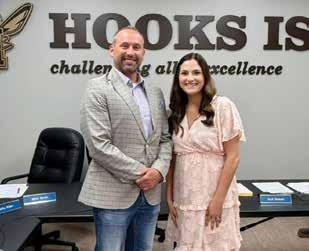
INDEPENDENT SCHOOL DISTRICT
Why join the HISD Family for 2026-2027?
• Huge community following & strong family engagement
• HES is an ERP Honor Roll Campus
• Small class sizes & free student meals
• UIL Lone Star Cup, Div 3A Top 25 Two years in a row
ROOTED IN PURPOSE: HOW LAKESHA TAYLOR IS SHAPING STUDENTS,
FAMILIES, AND
THE FUTURE OF TEXARKANA
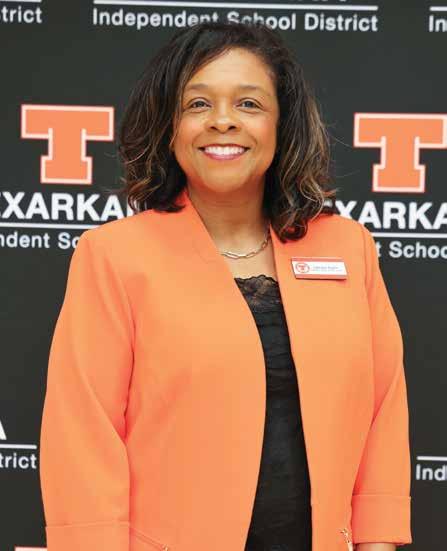
From classroom teacher to district leader, Lakesha Taylor is building a culture where every student is seen, supported, and prepared for life beyond the classroom. Her story is one that resonates far beyond the walls of a school building. It is a story of calling, consistency, and care— woven together through years of service to students and families who call this place home.
Taylor, who serves as both the Principal of Texas Middle School and the Executive Director of Student & Family Services, does not separate her roles so much as blend them. To her, both positions share the same heartbeat: people.
Taylor, a native of Texarkana, is rooted in the same soil she now serves. She earned a Bachelor of Science degree in 2004 and a Master of Science degree in 2009 from Texas A&M UniversityTexarkana. From those early academic years to now, her path has been marked by steady growth and an expanding sense of purpose.
Her journey through education has been anything but accidental. She began her career as a classroom teacher and was later named Dean of Students at Texas Middle School in 2011. That same year, she added another credential to her name, earning her Principal Certification from Texas A&M UniversityTexarkana. One year later, she stepped into campus leadership as an assistant principal.
From 2015 to 2022, Taylor served as principal at Paul Laurence Dunbar Early Literacy Center, a role that helped shape her leadership style and deepen her commitment to early education. Taylor then earned her Superintendent Certification from Texas
A&M University-Texarkana in 2021, further equipping her to lead at a district level. Today, she carries the responsibility of both campus leadership and district-wide family support—roles she embraces fully.
However, long before the titles, the certifications, and the responsibilities, there was a little girl in Texarkana watching her mother. “My education journey really began with my mother, who was a teacher at Pleasant Grove Middle School,” Taylor said. “Growing up, I did not just see her as a teacher; I saw the impact she had on people.”
Those early memories left a lasting impression. “I can still remember being out in stores with her and former students running up, excited to see her, saying, ‘Mrs. Haynes, do you remember me?’ They would talk about how much they missed her class, and you could feel the connection and love they had for her,” she says.
For Taylor, those moments revealed something deeper about the profession. “Watching those moments showed me that teaching was not just a job, it was a calling that stayed with students long after they left the classroom.”
When Taylor became a teacher herself, she experienced that same sense of purpose. “Building relationships with my students and seeing their growth made the work so meaningful,” she says. Still, even in those early years, she sensed there was more ahead. “Over time, I started to feel a pull to do more. I wanted to reach beyond the walls of my own classroom to impact more students, support more families, and help create an environment where all students could be successful.”
That desire—to expand her reach without losing her heart for the classroom—ultimately led her into leadership.
“Becoming a principal, and later an Executive Director, was not about leaving the classroom; it was about expanding my reach,” Taylor says. In many ways, that philosophy still defines how she leads today. “I wanted to support teachers in the same way I once needed support, and to help strengthen instruction so that every student is prepared not just academically, but for life.”
Even now, as her responsibilities span across campuses and community partnerships, Taylor says her purpose has not changed. “Everything I do is still grounded in those early memories of my mom and the relationships she built. That is what continues to drive me, knowing that the work we do every day has a lasting impact far beyond the classroom,” she explains.
While many in the community know Taylor as the principal of Texas Middle School, her work as Executive Director of Student & Family Services quietly extends her impact even further. “The primary responsibilities of the Executive Director of Student & Family Services are to support students and families and ensure that their needs are met fairly and equitably,” she explains.
In a role that often operates behind the scenes, Taylor’s department becomes a point of connection, clarity, and care for families navigating challenges. “If there is a concern, my department serves as a neutral place to review the situation, provide clarity, and offer solutions,” Taylor says. “We also support campus mentor programs, guiding and assisting the adults who invest in students’ growth. Additionally, we provide direction and support to our Volunteers in Public Schools (VIPS) at each campus, helping them make a meaningful impact.”
Taylor also states how community partnerships play a vital role in supporting students and families. It is not just about extra resources—it is about opportunity. “They provide mentorship opportunities for students, helping them build guidance, confidence, and real-world skills,” Taylor says.
For families facing real-life challenges, those partnerships can be life changing. “For families facing challenges with basic needs, community partners offer essential resources and support that help create stability at home,” she says. When everything works together—schools, families, and the community—the results speak for themselves.
At Texas Middle School, Taylor’s leadership is felt in the hallways, classrooms, and conversations that happen every day. “As principal, I shape the culture and environment at Texas Middle School by being intentional about relationships, expectations, and consistency. I believe culture starts with people, so I focus on building strong, positive relationships with students and staff,” Taylor says.
Those relationships are the foundation, and from there, expectations take shape. “We set clear expectations for behavior and academic effort, and we reinforce those expectations consistently while also celebrating growth and achievements,” she states.
For Taylor, success is not measured solely by test scores. “Academic achievement matters, but it is only half the story,” Taylor says. “True student success goes beyond test scores and grades; it is about growth, confidence, and character. It is seeing students develop resilience, take ownership of their learning, and persevere through challenges.”
Ask Taylor about defining moments in her career, and she does not point to awards or titles. Instead, she talks about something she calls “God winks.” Taylor explains, “There have been several moments in my career that I think of as ‘God winks,’ small, powerful reminders that I am exactly where I am meant to be. These moments, whether it is a student’s breakthrough, a staff member’s growth, or a community connection, remind me that I was placed here for a purpose and that my work is making a meaningful difference in the lives of students and families.”
Over the years, Taylor has seen change—both in herself and in the people around her. “I am most proud of the growth I have seen in both our students and staff. Watching students embrace challenges, take ownership of their learning, and develop confidence has been incredibly rewarding. At the same time, I have seen our staff pour themselves into their work, support one another, and continually strive to be better for our students,” Taylor says. That shared commitment creates something special.
Even the most dedicated leaders face difficult days. For Taylor, those days are met with a combination of faith and perspective. “On the toughest days, what keeps me going is my faith and seeing the heart of our students and staff,” Taylor says. “Prayer gives me strength, perspective, and peace when things feel overwhelming.”
However, it is the people around her who keep her moving forward. “It is the little moments with students, watching them persevere, seeing their smiles when they achieve something new, and the unwavering dedication of our staff that truly fuel me,” she adds.
Taylor is quick to acknowledge those who have helped guide her along the way. “A major influence in my leadership journey has been my mother. Her care and commitment to others have shaped how I view service and leadership. She was one of the most selfless people I know, always sacrificing for her family and her students,” Taylor says.
She also points to mentors who helped refine her leadership approach. “I have also been guided by Mr. George Moore, whose mentorship on leadership and building relationships has been foundational. He constantly reminds me to lead with fairness and consistency. Lastly, Donna McDaniel has greatly influenced my approach; she taught me that in every decision, if you put what is best for students at the forefront, you cannot go wrong.” Together, those influences form the foundation of how Taylor leads today.
When asked what she would say to the students and families she serves, Taylor does not hesitate. “To all of our students, I want you to know that you are the future, and your future starts now. Every choice you make, every challenge you face, and every opportunity you embrace is shaping the path ahead,” she says. “Believe in yourself, stay committed to your goals, and know that I am here to support you.”
In a community like Texarkana, where schools are more than buildings and educators are more than employees, leaders like Lakesha Taylor stand out—not because they seek recognition, but because they consistently show up.
She shows up for students learning to believe in themselves.
She shows up for families navigating challenges.
She shows up for teachers pouring into the next generation.
Through it all, she remains what she has always been at heart: a servant leader who aspires to equip and empower our future generation with the tools to become innovative citizens in an evolving world. It is a mission that started long ago, watching her mother connect with students in grocery store aisles. And it is a mission that continues today, in classrooms, offices, and conversations across Texarkana.
Because for Lakesha Taylor, education is not just a career. It is a calling that never really leaves.
MORE THAN A LESSON PLAN: HOW KERRY YATES IS SHAPING LIVES ONE SCIENCE CLASS AT A TIME
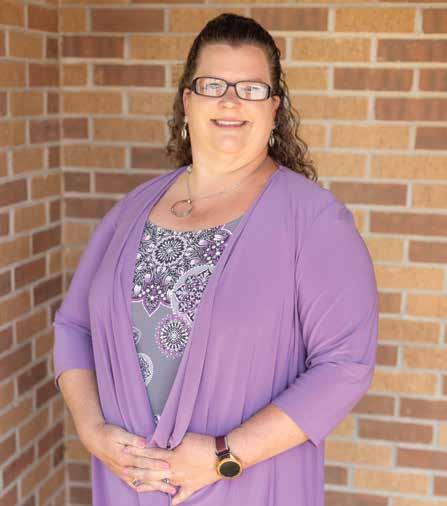
On any given day inside a classroom at LibertyEylau Middle School, you might hear a chant, see students moving from desk to desk, or catch a teacher mid-song explaining a scientific concept. It is not unusual. In fact, it is exactly how Kerry Yates wants it. “I want the kids up and moving, asking questions, making observations, and just being in the moment,” Yates said. “I want every student to know they have a voice and they need to use it.”
That energy, that intentionality, and that heart for students are just a few of the reasons Yates was named a 2026 Teacher of the Year. However, for those who know her best—her students, colleagues, and family—the recognition confirms what they have seen all along.
Yates’ path to Texarkana did not begin in Texas. “The place that I call my hometown is Placerville, California,” she said. “It was a great place to grow up because it was a small town with plenty of Gold Rush history.” Her childhood was filled with adventure—exploring the outdoors, riding horses, and even stumbling upon abandoned gold mines. “Every once in a while, when I visit a friend, we would find abandoned gold mines while exploring their property,” she said. “We would never go in due to safety reasons.”
Raised on five acres with her parents and older sister, Yates describes a life deeply connected to nature and family. She was adopted as an infant, something her mother never kept from her. “My mom never hid the fact that I was,” she said. “The day that I comprehended the fact that I was adopted was when I was 8 years old… I responded, ‘ok, cool, can I go to my friend’s house?’” Her upbringing also came with constant change. By the time she graduated high school, she had attended eleven different schools across multiple states. “It was
because of this movement that has really made me adaptable, and able to embrace change and be flexible,” Yates said. “I view these characteristics as strengths in whatever job or school I taught/teach at.”
Yates did not always know she would become a science teacher. In fact, her journey began with a completely different passion. “In my freshman year of high school, I met one of my dearest friends, Dawn,” she said. “She was into sign language, and she would teach me signs on the bus, at lunch, or after school.” That introduction sparked a deeper interest. “Just a couple of signs and the alphabet shown by my best friend started my future in becoming a deaf and hearing-impaired teacher,” Yates said.
Her father, however, had a different vision—one in which she would take over his optometry practice. However, Yates had other plans. “One day at the dinner table, I said that I am interested in becoming a deaf and hearing-impaired teacher,” she recalled. “He would then say to me, if he could have done it all over again, he would have gone into teaching.” That moment mattered. “That was his way of encouraging me and accepting my career choice,” she said.
Her academic path was not perfectly linear. After earning an associate degree and transferring to California State University, Sacramento, she discovered that her chosen major would not lead to the career she had initially planned. “That was a major disappointment at the time,” she said. “But I just sat back and thought about what my favorite subject was at that time.” The answer came easily. “My favorite classes in college were Oceanography, Chemistry, and SCUBA diving,” she said. “So my choice was easy. I then became a Science Teacher for middle school students.”
Now in her 23rd year of teaching, Yates has built a career marked by adaptability, creativity, and a deep commitment to students. “I believe that teaching is not just a profession, it is a calling,” she said. “It is a daily commitment to show up with patience, passion, purpose, and positivity, even on the hardest of days.” Her career has taken her across grade levels, roles, and even states. From California classrooms to Texas school districts, she has taught everything from elementary combination classes to middle school science and social studies. “I really wanted to go back to middle school because that is where my passion is,” she said.
That passion is evident in how she approaches her classroom today. “I can not be the teacher who stands in front of the class lecturing for the entire period,” Yates said. “I would be bored to tears, and that would not be motivating to me.” Instead, she creates an environment where learning is active, engaging, and personal. “I am using total physical response, sign language, songs, and chants in my class to help connect the content. I want my students to remember that Science was a fun class,” she said. “The labs, projects, dances, and songs we did were for them to learn the content.”
Ask Yates what matters most in education, and her answer is immediate. “I believe relationships are the foundation of learning,” she said. “Rigor matters. Data matters. Growth matters. However, none of it happens without trust.” That philosophy shapes everything she does. “When students feel as though they are safe, valued, and capable, they rise to expectations that they once felt impossible,” she said. Yates works intentionally to build that trust from day one. “Since the first day of school, I have always been as transparent with the students,” Yates said. “Transparency helps to grow that trust since I have nothing to hide from them.” Her impact often extends far beyond the classroom. “My whole life is dedicated to each of my students through the school year,” she said. “I am a person they can come and talk to if they are having a good or bad day.” Sometimes, those connections last a lifetime. She still remembers a student named Hannah from her very first year of teaching. “One day, Hannah came to me and passed me a piece of paper,” Yates said. “The paper was titled ‘Holy Cow Thank you for a great science day!’” Years later, they reconnected. “To this day, we still keep in contact,” Yates said. “I got to see her beautiful wedding pictures from her ceremony in Italy.”
When Yates was named Teacher of the Year, the moment was emotional—and unforgettable. “My reaction was sheer joy and happiness shown with tears,” she said. Called into the hallway by administrators, she was met with a crowd and a surprise announcement. “I think I yelled, covered my face for a moment, uncovered it with tears coming down,” she said.
However, her first instinct was not to celebrate herself. “I told my students that I accepted this award on their behalf because it was due to their hard work,” Yates said. For her, the recognition is deeply meaningful. “This recognition is incredibly affirming,” she said. “Teaching can be demanding and, at times, feel unseen.” She continued, “Being Teacher of the Year validated the countless hours of planning, grading, supporting students, and going the extra mile.”
Yates is quick to point out that her success is not hers alone. “The credit I have to give most for this award is my wonderful husband Ted and my kids Courtney and Clintin,” she said. She described long days and late nights— and the sacrifices her family made along the way. “Without their love and support, I would not be the teacher that I am today,” she said.
She also carries the influence of family members she has lost. “I hear my mom’s kind words to me when I got my first F in science class,” she said. “‘It is ok, you just need to try harder next time.’” Her father’s advice stayed with her, too. “He said to me that I need to finish college so that I do not have to rely on anyone,” she said. “Dad, I did just that!”
Like many educators, Yates acknowledges the growing demands of the profession. “The biggest challenge educators face right now is workload stress,” she said. “We have so many items on our plates that it sometimes feels impossible.” Still, her approach remains grounded. “One project at a time!” she said. “I ask for help if I cannot do it.” Despite the challenges, her passion has not faded. “I love teaching!!” she said. “Every single day is a new day and can end a million different ways.” She added, “I have never thought once this year, ‘oh man, I have to go to work today.’”
Instead, her mindset is simple—and powerful. “Yes, I get to go to work today,” she said. “I want to be the teacher to make someone… smile today.”
Nearly six years ago, Yates and her husband made the move to Northeast Texas—a decision she now describes with certainty. “My husband and I have lived in North East Texas now for almost six years, and I could not be happier,” she said. “We should have done this 20 years ago.” Today, Texarkana feels like home. “I love the fact that I can go into a store and students, friends, co-workers will stop and say hi,” she said. “It just makes us a part of something bigger.”
Furthermore, she is not done making an impact. “I do have hopes in getting people, families, and businesses more involved with Liberty Eylau Middle School,” Yates said. “Keep your eyes and ears open, you may see one of my ideas coalesce.”
At the heart of Kerry Yates’ story is something deeper than awards, accolades, or even years of experience. It is a belief—steady and unwavering—that every student matters. “Teaching requires heart and grit,” she said. “It requires seeing potential before a student sees it in themselves and holding that vision steady until they believe it too.”
In a classroom filled with movement, laughter, and the occasional science song, that belief comes to life every day. For the students lucky enough to walk through her door, it is a lesson they will not soon forget.
Dan L. Martin, DOM Doctor of Oriental Medicine
TOP LAWYERS 2026
Ever been in need of a lawyer and not sure where to start looking? We want to help!
Texarkana’s 2026 Top Lawyers will be nominated by you, our readers! Prior to voting, we will confirm that each lawyer is in good standing with the local bar association. The objective is to create a credible, comprehensive, and diverse listing of outstanding lawyers that can be used as a resource for those searching for legal counsel.
Now is your chance to tell us who you think should be Texarkana’s Top Lawyer by category, Top Distinguished Lawyer, Top Young Lawyer, and Top Lawyer overall!
Nominate May 1-31, 2026
Vote July 1-31, 2026
Celebrate!
September 1, 2026
Nominations:
Lawyers can be nominated by anyone but themselves. Nominations will be taken from May 1-31, 2026. Winners will be announced in the September 2026 ALT Magazine.
Eligibility Check:
Nominees are confirmed to be in good standing with their local Bar Associations.
Nominees will be announced in the July 2026 ALT Magazine. Voting will be from May 1-31, 2026.
• We ask that a lawyer not nominate himself or herself. •
Administrative / Regulatory Law
Appellate Practice
Bankruptcy and Creditor Debtor Rights / Insolvency and Reorganization Law
Business Organizations (including LLCs and Partnerships)
Commercial Litigation
Criminal Defense: Non White-Collar
Criminal Defense: White-Collar
DUI/DWI Defense
Employment Law
Family Law
Insurance Law
Mediation
Medical Malpractice Law – Defendants
Medical Malpractice Law – Plaintiffs
Personal Injury Litigation – Defendants
Personal Injury Litigation – Plaintiffs
Product Liability Litigation – Defendants
Product Liability Litigation – Plaintiffs
Real Estate Law
Trusts and Estates
Workers’ Compensation Law – Claimants
Workers’ Compensation Law – Employers
Texarkana’s Top Distinguished Lawyer (Lawyers that have been practicing for at least 40 years)
Texarkana’s Top Lawyer
Texarkana’s Top Young Lawyer (Must be under 40 years of age for Top Young Lawyer)
YOUR TRUSTED PARTNER IN EVERY CLOSING
Once the contract is executed by all parties and is sent to us, we do a complete title search and examination, looking for any title defects and liens. We are also looking for probates, pending suits, forged documents/signatures, incorrect notary acknowledgments, and any issues that could affect the title of the property you are purchasing. Through the search and the examination, title problems are disclosed so they can be corrected by issuing a title commitment.
When we receive all of the necessary documents, surveys, termite reports, home warranties, and anything else needed to close, and the lender has received a clear to close, we coordinate with all parties to schedule a closing.
At closing, we execute all of the closing documents, disburse the funds, send the loan documents to the lender, and record the documents (Deeds/ Deeds of Trust). Once the documents are recorded, we issue the title policies to the buyer and lender, ensuring a free and clear title.
Real Estate is a significant investment, and Stewart Title is here to help you through the process.
PREQUALIFYING FOR A MORTGAGE LOAN
Prequalifying for a mortgage loan is an essential early step in the home-buying process. It gives you a general idea of how much you can borrow from a lender based on your financial situation. Here’s a breakdown of what it involves and how to do it.
What Is Mortgage Prequalification?
Mortgage prequalification is a quick, informal process where a lender estimates how much you can borrow based on financial info you provide (like income, debt, and assets). It’s not a loan offer or guarantee, but it helps:
• Show real estate agents and sellers you’re serious
• Set a realistic home price range
• Identify any potential credit or income issues early Unlike preapproval, prequalification is usually easier and faster — often possible online or over the phone. You’ll typically need to share:
• Income details (salary, bonuses, freelance income, etc.)
• Employment information
• Monthly debt payments (student loans, car loans, credit cards)
• Estimated credit score – (Lender can soft pull credit, so it will not affect your credit score)
• Assets (bank accounts, retirement funds, etc.)
How to Get Prequalified
1. Choose a lender.
2. Complete a prequalification form – online, by phone, or in person.
3. Get results – often within minutes to a few days.
Even if you prequalify for a certain amount, you don’t have to borrow that much. Base your home-buying budget on what you’re comfortable with monthly, not just what the bank says you can afford.
RULE CHANGE AFFECTS HIGH EARNERS MAKING CATCH-UP CONTRIBUTIONS
RETIREMENT & LONGEVITY
Workers who exceed a certain wage threshold must make retirement plan catch-up contributions to an after-tax Roth account.
For many workers, the later stage of a career is a time of professional accomplishment. These peak earning years, which may coincide with having fewer dependents, can also be a time when it becomes easier to boost contributions to a workplace retirement saving plan.
Since 2002, tax law has supported late-career saving through catch-up contributions, but a significant change to the rules now alters the tax advantages of catch-up contributions for high earners.
Workers who exceed a certain wage threshold in the previous year can no longer make catch-up contributions to a pre-tax plan such as a 401(k) – they must make them to a Roth account using after-tax dollars.
Under IRS Notice 2025-67, the threshold for making Roth catch-up contributions in 2026 is $150,000 in Federal Insurance Contributions Act (FICA) wages, as reported in 2025 tax documents. FICA wages are the amount in W-2 Box 3 that represents an employee’s gross earnings subject to FICA taxes, which fund Social Security and Medicare.
The change will affect a meaningful number of people, not just those whose accumulated wealth, which makes it less necessary to try to save more in the final years before retirement.
The impact of catch-up contributions
Catch-up contributions acknowledge the need for many workers to accelerate their saving efforts as they get closer to retirement. The opportunity is especially valuable for those who started saving later or had career gaps, as well as the increasing number of workers who no longer have access to the company pensions plans that helped sustain previous generations.
Contributions to employer-sponsored plans are double tax-advantaged: Contributions are made with pre-tax dollars, which reduces the worker’s taxable income, and growth in the account is tax-deferred. Taxes are not paid until distributions are taken, typically in retirement when the account owner’s income level and tax rate are potentially lower than during working years, especially peak earning years.
Each year, there is a limit on the amount each worker can contribute to an employersponsored retirement plan. Catch-up contributions allow those 50 and older to contribute an additional amount. In 2025, super catch-up contributions went into effect for those ages 60 to 63, allowing for an even higher catch-up amount.
For 2026, the 401(k)-employee contribution limit is $24,500. For workers 50 and older, a catch-up contribution of an additional $8,000
can be made, boosting the total contribution to $32,500. Those eligible to make super catch-up contributions can add another $3,250 for a total annual contribution of $35,750, which is $11,250 more than those under 50.
There are several types of employer-sponsored plans, including 401(k), 403(b), 457(b) and SIMPLE IRA accounts. Each typically has a distinct catch-up contribution limit. Contribution limits, catch-up limits and the newly introduced high-earner FICA threshold are indexed for inflation, so they can increase year to year.
Changes for high earners
The SECURE 2.0 Act, passed in 2022, disallows the pretax advantage of catch-up contributions for high earners. This eliminates the near-term tax benefit of reducing annual income.
Comparatively, funds in a Roth account grow tax-free and qualified distributions are tax-free. Because the account owner has already paid income tax on contributions, those funds can always be withdrawn tax-free. For earnings, or growth, to qualify for tax-free distributions, the account owner must be at least 59 1/2 and five years must pass since the initial contribution to the account.
The differing tax treatments between pre-tax, taxdeferred and tax-free accounts can accommodate more complex tax-planning withdrawal strategies in retirement. In many cases, it can be advantageous to have more than one type of account.
The role of the employer
Worker eligibility is based on the FICA wages provided by employers on W2 forms, not total household income. Therefore, much of the responsibility for adapting rests
with employers, many of which had to update payroll systems to track prior year wages and properly route catch-up contributions.
Originally scheduled to take effect in 2024, the Rothonly mandate was delayed to 2026 because of readiness concerns. Employers have a good-faith compliance year in 2026 before strict enforcement begins in 2027. An employee who is hired mid-year and whose compensation level puts them over the threshold is not required to make catch-up contributions to the Roth until the following year.
If an employer’s plan does not include a Roth option, high earners are prohibited from making catch-up contributions until the employer adds one.
Bottom line
High earners whose prior-year FICA wages exceed the applicable threshold must make catch-up contributions on a Roth basis.
Participants whose prior-year FICA wages do not exceed the applicable threshold may continue to make catchup contributions on either a pre-tax or Roth basis, if permitted by the plan.
Individuals who do not make catch-up contributions do not need to take any action.
Changes in tax laws or regulations may occur at any time and could substantially impact your situation. While we are familiar with the tax provisions of the issues presented herein, as Financial Advisors we are not qualified to render advice on tax or legal matters. Raymond James and its advisors do not offer tax or legal advice. You should discuss any tax or legal matters with the appropriate professional.
Suzie TK SnippeTS
By: Suzie Tyler
I love technology. Suzietk’s Snippets will give you tidbits on everything from makeup to music, and everything in between. I have a wealth of information in my brain! If I can just access the hard drive, I will blog about it!!
Youth Talent Opportunities
Karmyn attended Miss Bertha’s Preschool at 4 years of age. I was so focused on her being a pianist that I almost missed her God-given talent - singing. I owe that revelation to Miss Margaret and Miss Marjorie’s keen ability to discover her voice.
When I finally consoled myself that I would not have a pianist, I focused on the vocal talent. Where can a child sing Broadway-type music that is suitable for their age? Certainly not in a bar.
There were few options for young people in our area other than the church. There were talent shows, a Country and Western Opry, and pageants. Karmyn loved the standard show tunes, but there were few to no general performance opportunities for this genre. Some of her experiences were unique stories, but for another blog!
She and a good friend, Jennifer, sang in the Texarkana All-City Choir for 5th graders under the direction of Gloria Alewine, music teacher at Texas High School. Show tunes were a significant part of the performance, with the choir featuring area students and highlighting the tunes from the 50s and 60s, as well as Broadway numbers.
Although they found an abundance of ways to showcase and develop their talents through local venues, nothing gave them access to the people already on the inside of the entertainment business they wanted to pursue.
As trained vocal teachers, both girls have achieved success in their chosen fields of music and have used their knowledge and performing skills to coach many local talents for entry into the performing industry. They
know too well the importance of having access to music professionals who are already on the inside of the business.
Songbook South is a 501(c) organization founded by Jennifer Dowd and Dr. Thoms Stone with a Board of Directors composed of people interested in creating opportunities for young people. The organization focuses on providing opportunities to perform and meet with professionals who have the inside knowledge that young performers have not previously had access to.
Through the Songbook South Organization, students from the four-state area can access networking opportunities and personal training with industry insiders who have connections to agents and managers.
Although the goal of Songbook South is to make the entertainment world more accessible for those who choose that career, those who just want to be master singers are also welcome. It is not required to be looking for a career in the arts to take part in their competitions or workshops; it is simply a desire to become a more informed and skilled musician.
Songbook South’s YouTube channel features interviews with young working musicians who share their triumphs and struggles as they climb the ladder, as well as with those who have had lengthy careers and offer tips to those who want to be industry-ready. There is also an array of testimonials from Songbook South’s previous young participants.
If you are interested in this program or know of a young talent who would be, please check the SongbookSouth. Org website for information on the organization and direct contact information. The deadline for applications for the 2026 high school competition is June 15th.
For individual voice lessons, contact Jennifer Dowd in Shreveport (318) 465-5202 or Karmyn Tyler in New York City at KTVocalStudio.com to schedule a time. Zoom lessons are available online.
Follow me on Facebook, Instagram, Substack, X (formerly Twitter), and my online blog, SuzieTK’s Snippets
Passion For Pooches
Texarkana Animal League
Passion For Pooches
Texarkana Animal League
BOXER RESCUE OF TEXARKANA : Facebook.com/BoxerRescueOfTexarkana MUTTLEY CREW GERMAN SHEPHERD RESCUE : Facebook.com/MuttleyCrewRescue
PASSION FOR POOCHES (mostly small dogs) : Facebook.com/passionforpooches TEXARKANA ANIMAL LEAGUE : Facebook.com/TexarkanaAnimalLeague TEXARKANA HUMANE SOCIETY : TexarkanaHumaneSociety.org : Facebook.com/TexarkanaHumaneSocietyInc : For more info call 903-824-8117