Copyright 2024 Mitchell Media, LLC. All Rights Reserved.
No part of this book or any images herein may be reproduced in any form without permission in writing from the author. Reviewers may quote brief passages in reviews. While all attempts have been made to verify the information provided in this publication, neither the author nor the publisher assumes any responsibility for errors, omissions, or contrary interpretations of the subject matter herein. The views expressed in this publication are those of the author alone and should not be taken as expert instruction or commands. The reader is responsible for his or her own actions, as well as his or her own interpretation of the material found within this publication. Adherence to all applicable laws and regulations, including international, federal, state and local governing professional licensing, business practices, advertising, and all other aspects of doing business in the US, Canada or any other jurisdiction is the sole responsibility of the reader and consumer. Neither the author nor the publisher assumes any responsibility or liability whatsoever on behalf of the consumer or reader of this material. Any perceived slight of an individual or organization is purely unintentional.
Cover
design by
Kes Lehrman & Olivia Hinchley
ISBN - 978-1-7331645-0-4
First Mitchell Media LLC edition • April 2024
Acknowledgments
I am deeply grateful to my remarkable team for their support throughout the creation of this book. For years, I have dreamed of enhancing people’s relationships with their dogs. It is with heartfelt appreciation that I acknowledge the contributions of everyone who helped this dream become a reality.
Special gratitude is extended to Kes Lehrman and Olivia Hinchley, whose creativity and collaboration helped bring this project to life. Your encouragement, insight, and aloha spirit infused every step of this journey. Thank you.
To Marcy Tippmann, thank you for your exceptional design talent. Your expertise and attention to detail brought this book to its fullest potential.
To all those whose support and expertise have contributed to this project, thank you for sharing my passion for improving the bond between humans and their dogs. Your contributions have made a lasting impact. I am truly grateful for the privilege of collaborating with such a talented and dedicated team.
With deepest appreciation,
Dedication
To my two daughters, Malia and Kiana. Your love of animals continues to inspire me.
To Samara; thank you for your love and support.
And to Linda Tellington-Jones, founder of the Tellington TTouch, her sister Robyn Hood, and all the TTouch practitioners worldwide for bringing awareness and kindness to the world of animal training.
And last, to Michelle and Kea. You live in my Heart and Soul.
Disclaimer
(PLEASE READ)
Tom Mitchell, 1 Minute Dog Training, One Minute Dog LLC, and Mitchell Media, LLC cannot be held responsible for any injury or damage resulting from dog training activities. If you are unsure about any aspect of dog training, please consult a professional in your area, or your veterinarian.
This eBook describes a proven training method for dog training. It does not cure dogs with aggression problems, or predatory aggression. Please ensure you take all reasonable precautions to prevent injury to others (including dogs).
While all attempts have been made to verify information provided in this publication, the Publisher assumes no responsibility for errors, omissions, or contrary interpretation of the subject matter herein.
Any perceived slights of specific persons, peoples, or organizations are unintentional. In practical advice books, like anything else in life, there are no guarantees! Readers are cautioned to reply on their own judgment, and those of outside professionals about their individual circumstances and their dog and act accordingly.
You may come across some suggestions and links throughout this book. As an Amazon Affiliate, this means I earn a small commission should you click on the link and purchase one of the products I recommend. You will not pay a higher price. Rest assured, I only recommend products that I use and love. They’re all products my dog loves too!
Welcome
I’d like to thank you wholeheartedly for taking the time to explore this book. I realize there are hundreds of books on dog training you could be reading.
Given that you are taking a chance with this book, I want you to know how much I appreciate your trust in me.
As a thank you, I’m excited to give you a free video course. Please accept your free copy with my compliments. Scan the QR code for free access to this exclusive program. Enjoy!
Foreword
Every dog I’ve worked with has contributed to this book, offering challenges, surprises, and heartwarming moments. I’ve been a dog trainer for over 30 years. In that time, I’ve discovered that each puppy is truly unique, with their own personality and learning style.
While personal experience has taught me a great deal, I’ve also kept pace with the latest research, constantly exploring insights into the canine psyche.
Throughout these pages, you’ll find guidance that is well-researched and grounded in real-world experience.
I care deeply about providing solutions that actually work, so you and your puppy can embark on this journey with confidence and clarity.
It’s okay to make mistakes—we’re all human, after all. What matters most is the bond you share with your dog. So as you dive into this book, remember to be gentle with yourself and your pup.
Imagine I’m right there beside you, offering support and encouragement every step of the way. Together, we’ll celebrate successes, overcome challenges, and have fun along the way. It’s an honor to be a part of your dog training journey.
Testimonials
“When I first met Tom Mitchell in the early 1980s, I did not imagine he would become a lifelong friend, advisor, and someone responsible for helping to spread the Tellington method for companion animals across the globe. For over 30 years, Tom has focused on helping people develop a relationship with dogs by promoting an attitude of kindness and gratitude for our canine friends. He clearly demonstrates that the concept of having to be the “alpha dog” has been thoroughly discredited by the American Behavioral Veterinary Association. Many studies have proven the effectiveness of the simple one-and-a-quarter TTouch circles for reducing fear and pain and enhancing a state of well-being.”
- Linda Tellington-Jones, Founder of the TTouch®
“I had the most positive experience with the 1 Minute Dog Training! When I took my dog Buffalo to the local dog training class, they were too rigid and strict. Our work with the 1 Minute Dog Technique was perfect for both our temperaments… gentle and joyful, but firm. I highly recommend the 1 Minute Dog Training and TTouch work. There is a deep respect and care for animals and a positive life attitude that is a nourishing and instructive combination.”
– Linda Reuther and Buffalo
“The 1 Minute Dog Training System really works! Our dog now comes with ease now because you taught us how to give him the right kind of positive reinforcement. It feels so much easier and more doable in 1 Minute segments.”
- Char, Dr. William Showalter and Scooby
“When my dog Mico was young and I took him for a walk, he would pull me down the street. If he saw another dog, he pulled even harder. After a few short sessions, I was amazed that Mico listened and did not pull anymore. On top of that, he has matured into an awesome dog and this training played a great role in that. I highly recommend 1 Minute Dog Training! This is the best training method in the world!”
- Basha Cohen and Mico
Why should you trust me?
I grew up on my grandparents’ farm in Minnesota, in a small house we called “The Shack.” Those summers were full of berry-picking, while winters were all about sledding and snowball fights.
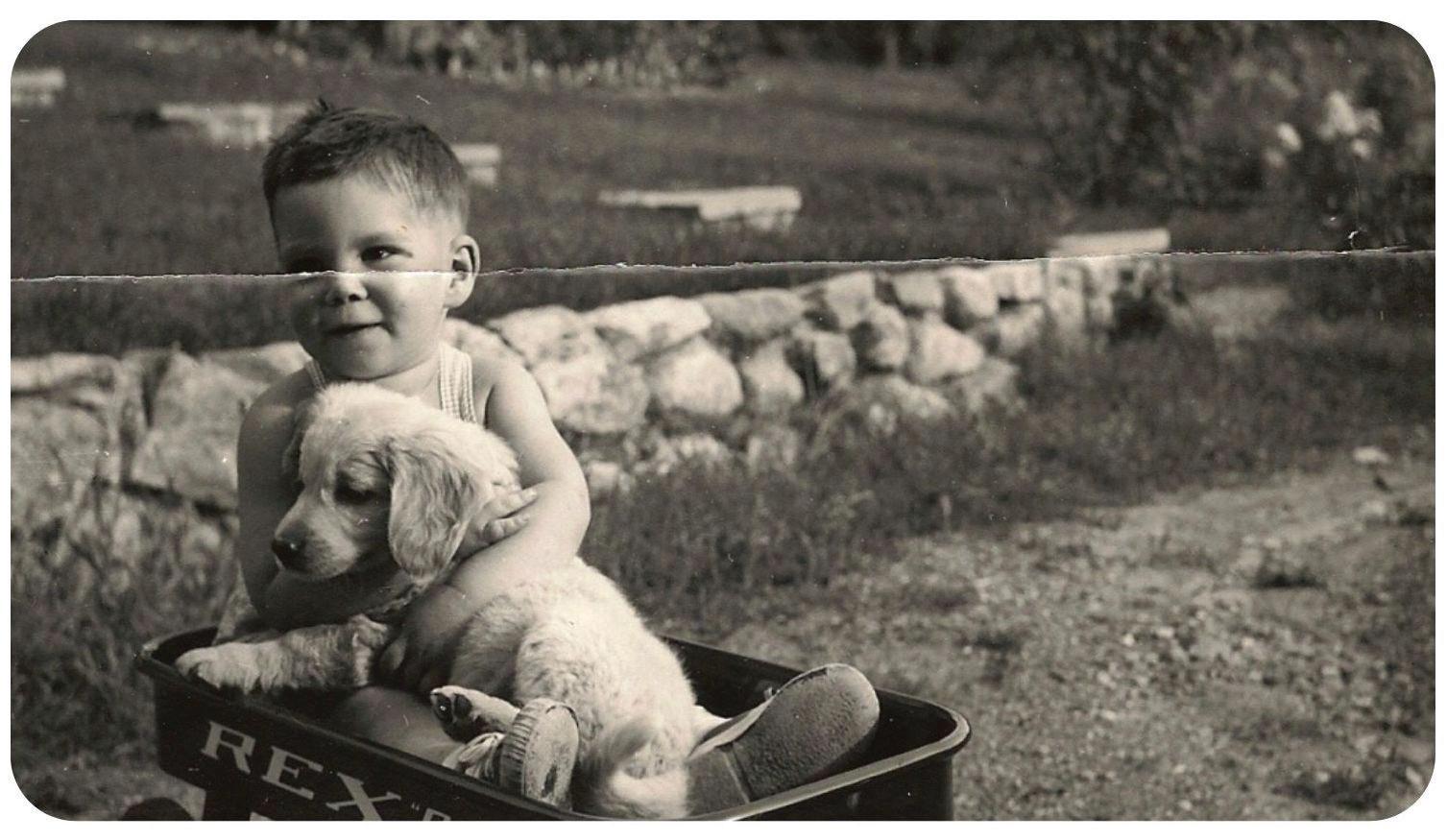
My parents didn’t like dogs, but my grandparents loved them. It was with my grandpa that I met Sandy, my first love. Sandy was a beautiful Golden Retriever, and we were inseparable.
Many times, the only way anyone could find me was to call for Sandy. She was my sidekick, always there to lead me back home whenever I wandered off.
Moving to Northern California when I was ten opened up a whole new world of exploration. I spent hours hiking through fields, befriending horses, and sometimes even trying to ride them with a piece of rope and sheer determination.
Despite many falls and tumbles, my love for animals only deepened. Since then, I’ve had my fair share of adventures with all kinds of creatures.
From wolves to Olympic horses to rhinoceroses and even grumpy house cats, I’ve dedicated my life to animals. But dogs have always held a special place in my heart.
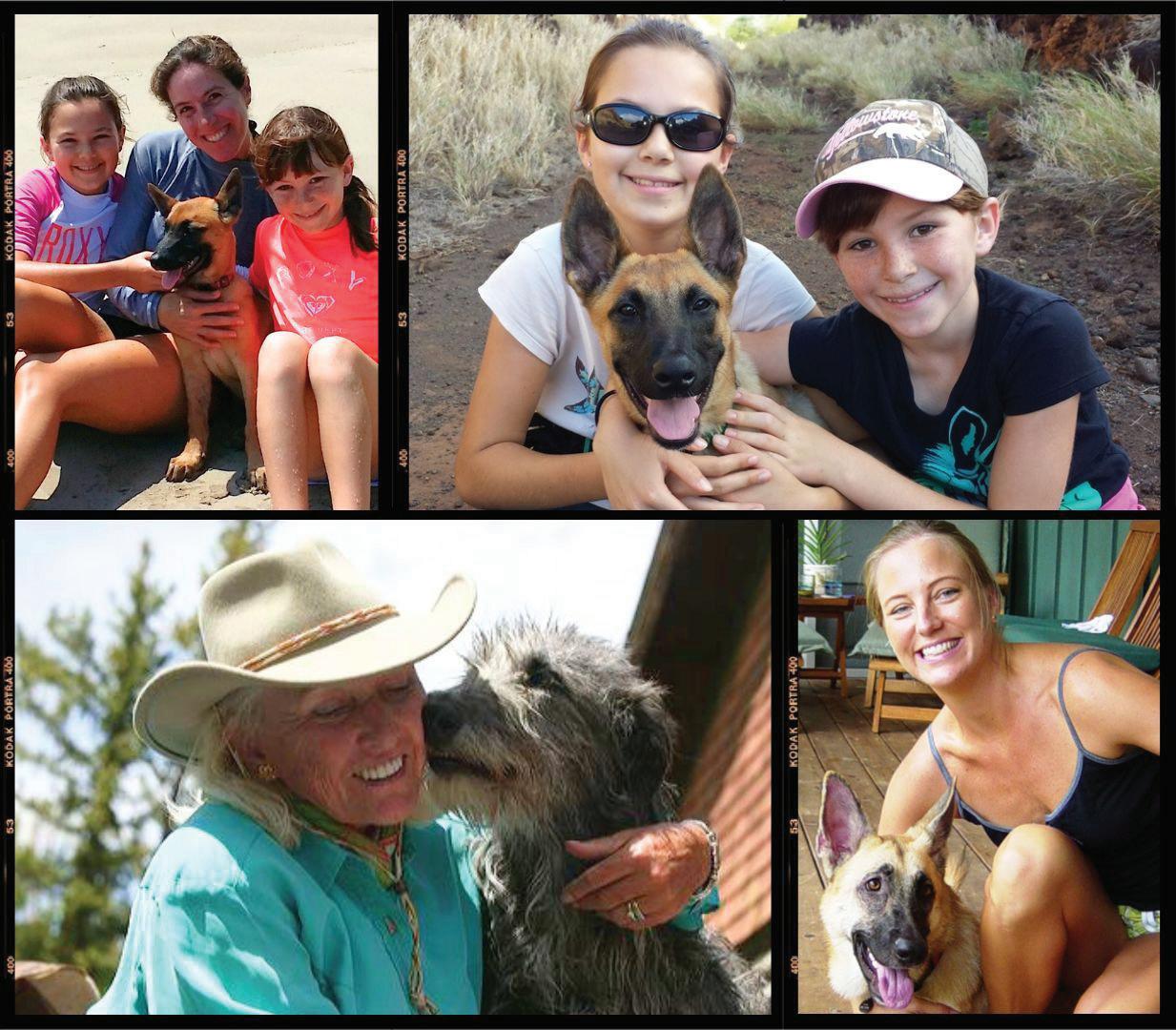
I have even raised my family with dogs! My daughters learned responsibility and compassion from our dogs, Kea and Roxy.
So, as we dive into this journey together, know that my dedication comes from a lifetime of learning, love, and respect for our furry friends. Let’s make some memories and help your pup thrive!
CHAPTER 1
Welcome
I have potty trained countless dogs. In my three decades of experience as a dog trainer, I’ve truly seen it all. I’ve worked with families and their 8-weekold puppies all the way to senior dogs. I’ve raised puppies and rescued dogs of all ages. I’ve worked with breeders, shelters, and service dogs too.
I’ve found that the lessons we can learn from dogs are endless. They live in the moment, find joy in the simple things, and love with their whole hearts. And they can really test our patience! Potty training a puppy can be a frustrating and challenging journey.
I am here to guide you through that journey in a positive and gentle way. Potty training a puppy or an older dog can be fun, fast, and easy. I’ve tested my methods over and over throughout the decades. The result? I’ve learned how to teach any dog where to go potty.
So, let’s do it together! I’ll share my best tips, triedand-true advice, and some stories along the way.
Potty Training a Puppy
Are you thinking of adding a furry friend to your family? Or maybe you have recently welcomed a new pup to your home. Many people who add a puppy to their family for the first time find that their dog is more mystery than magic.
In my experience, dogs are puppies for about two years. They may be full-sized by this time, but they still have puppy brains. So, even if you’ve rescued a dog that’s over a year old, you can still train him like a puppy.
And puppies are little bundles of joy! Is there anything better in the whole world?
But they are a lot of work. When I got my current dog, Roxy, she was about three months old. Although I’d been working as a dog trainer for over thirty years, it had been a long time since I had a puppy of my own. My skills and decades of experience were really put to the test.
When we welcomed Roxy into our family, I hadn’t raised a puppy of my own in over fifteen years. I had honestly forgotten how challenging it was. So, as we work through this book together, remember to give yourself grace. Raising a puppy is hard work! You have an incredibly difficult and rewarding journey ahead, and I’m so excited to be here with you.
Potty Training an Older Dog
Maybe you’re here because you rescued an older dog that never learned proper house training. This book can help you too. My techniques work with dogs of any age. You will also find bonus content throughout the book that is specific to potty training an older dog. It’s never too late to teach an old dog new tricks!
I once met a woman whose dog never learned to go potty outside. Curious to learn what she did instead, I asked for her solution. I was absolutely shocked by her answer.
She said, “I replaced the floors.”
Amazed, I asked her what she plans to do in the future. She shrugged and casually said, “I’ll probably have to replace the floors again!”
Yes, you read that right. While I appreciate creative problemsolving, I’m not entirely sold on the idea of floors being as
disposable as paper towels. I believe that mindful training is the right solution to any potty problems. I have found that potty training is about more than just protecting your floors. It’s also about building a lasting bond with your puppy.
Let’s be honest—it’s much easier to get along with our dogs when they’re not destroying our homes. Think of all the money you save by taking time to teach your puppy this life skill. Repeatedly replacing the floors isn’t exactly a sustainable financial plan. Investing your time in training your dog is a decision that pays off in the long run.
Unfortunately, countless dogs are surrendered to animal shelters because they were never properly house trained. But here’s the good news: your dog genuinely wants to make you happy. With the right guidance and the many tools I will share, your dog will be house trained before you know it.
A Word on Our Words
You may have heard many people use the term “house breaking.” To me, this sounds a bit too much like old cowboys who want to tame wild stallions. I prefer to take a more positive approach and call this process “house training.” Instead of “breaking” your dog of “bad habits,” I encourage you to think of this as an opportunity to train your dog.
The words we use influence the way we think. In fact, I avoid using the word “command” as well. I don’t command dogs, I ask them. And I ask in complete sentences!
Speaking Dog
It’s a simple yet often overlooked concept: speaking to your dog in complete sentences. This may sound silly—or even feel silly, at first—but I strongly recommend it.
Did you know that dogs understand about as many words as a human toddler? That’s upwards of 150 words! And some super smart dogs know as many as 1000 words.
Beyond that, dogs are excellent at reading our expressions, body language, and tone of voice.
Dogs are like emotional sponges. Shout demands at them, and they just might return the favor. Speak to them like the family members they are, and you’ll get that love and respect back. It’s a two-way street!
Think about the way many people talk to their dogs: “Sit, Stay, Fetch, Heel” and of course “COME” and then everyone’s favorite— “No!” How would you feel if this was how people spoke to you?
There’s a better way. Instead of commanding, ask your dog politely. I find it very helpful to use “please” and “thank you” as well.
I once worked with a Golden Retriever named Beau. He was a lovely dog and his family adored him. Beau seemed well-behaved, gentle, and bright. During their first training session, I asked, “What brings you here?”
They sighed, frustrated. “Beau ignores all of our commands!”
“Well, why are you commanding him?” I asked. They looked at me in shock. I could almost see each person searching for an answer. Before they could respond, I challenged them further.
“Do you enjoy being commanded?” I pressed.
“Well, no,” the dad said, “but he’s a dog.”
“He’s also a member of your family,” I noted. “You might find that Beau is a great listener when you speak to him respectfully. Let’s give it a go. In a complete sentence, ask Beau to sit.”
The dad hesitated. He looked around to his family members, unsure and a bit shy. Finally, he asked, “Beau, will you please sit?”
Beau paused, meeting the dad’s gaze with understanding. He sat down, stunning the whole family. From then on, Beau listened readily. The family’s relationship with him improved instantly! That is the strength of respect.
When you talk to your dog in a complete sentence, you treat him like the family member he is. I promise your dog will understand the difference. The tone of our voice dramatically changes when we speak to our dogs with respect.
The Power of Patience
House training is a process, and this guide will help you every step of the way. We are about to dive into the tips and tricks I’ve tested for decades with more dogs than I can count.
Whether you have a puppy or a full-grown dog, one thing is for certain: Fido needs to learn where it’s okay to go potty.
And learning is a process. Consistently providing frequent potty breaks is the best way to speed up the learning process.
Your goal is to give your dog many opportunities to succeed. If an accident happens inside the house, it is not your dog’s way of rebelling. Let these accidents be a gentle reminder to pay more attention to your pup. Every successful potty trip is an opportunity to celebrate. Each celebration will solidify the skill. And every little hiccup is a chance to fine-tune your approach.
Ask yourself: Did I wait too long between trips outside? Did I give my puppy too much indoor freedom? Did I watch as she drank so much water I thought that she would float? We’ll cover all these possibilities and more in the chapters to come.
Mistakes are part of the process. Remember, you are learning too! The most important thing you can do is guide your dog with compassion. Accidents will happen, and you can only do your best. Fall back on kindness and you, your puppy, and your floors will be just fine.
CHAPTER 2
Potty Time: Step-by Step
We will unpack all the potty training tools in the pages to come, but let’s cut right to the chase and unlock your pup’s pee-tential.
Start right away! The next time your dog gets that “gotta go” look, give it a try. If you’re bringing home a puppy, follow these steps before you even enter your home.
Step 1: Location, Location, Location
Carefully select a designated potty spot where your dog will do the deed. It is important to return to this spot each time your dog needs to go, so choose somewhere convenient.
If you live in an apartment, this spot may be an area with a puppy pee pad. Hopefully on a balcony or porch. If so, it could also be where you have laid out an artificial or faux grassy pad.
Step 2: The Pep Talk
When you get to the potty spot, tell your dog what you want him to do. In a complete sentence, you can say something like, “It’s potty time!” Or, “let’s go potty now.”
Step 3: The Waiting Game
This might take a minute. Wait patiently for your pup to do his business. Be boring. Hold off on any playtime. The goal is to make your dog think, “Well, I might as well go.”
Step 4: The Standing Ovation
Praise your pup profusely for the job well done.
The key ingredient here is praise. It’s important to reward your dog for doing what you ask—every single time!
Each little victory should be celebrated like a magnificent win. Your dog will quickly learn that going potty outside makes you happy.
And our dogs are happy when we’re happy.
Whichever dog you have, no matter where you live, and whatever stage of life your pup is in, potty time is the same. And it’s simple!
CHAPTER 3
Supplies to Help You
Let’s gear up for this potty training project. I will share my top-recommended training tools with you, but I encourage you to spend within your means. Puppies are expensive enough as it is!
For my budget-savvy readers, I’ll share some cash-saving tips I have learned over the years. I want you to have the supplies you need without breaking the bank.
#1 - A Crate: Your Dog’s Personal Paradise
Crates are the best way to prevent accidents. A crate also allows you to relax when you cannot directly supervise your dog. Better yet, it teaches your dog to feel confident with some alone time.
Your dog’s crate is like her home within your home. This is a safe place, a refuge. It is not a canine correctional facility. Please, never lock your puppy in her crate to inflict punishment or harm.
We will explore how to use your dog’s crate in the chapters to come. For now, let’s discuss what to look for as you shop for a crate. I recommend a handful of house training supplies, with the crate being the most expensive. I know firsthand that dogs aren’t exactly easy on the wallet. The good news is that you can give your dog the very best without emptying your pockets, though it might require a bit more time and perhaps some creativity.
Consider the eco-friendly option: secondhand shopping. I encourage you to check online marketplaces before purchasing a brand-new crate. Many secondhand crates are in great condition, and some have never been or hardly used.
You might not find exactly what you’re looking for right away, but people list items daily on these platforms. You never know what might turn up the next day. If you have the luxury of time, this would be an easy money-saving option to consider. This is one of the things you want to think about before you bring your puppy home.
You can also save some cash by getting crafty. I have seen people build beautiful crates that fit seamlessly into their homes. You have the freedom to design it however you want. This is a great option for the stylish dog guardian who wants a crate that’s easy on the eyes. Just make sure there is plenty of ventilation so your pup can relax and see what’s going on around her.
I do not recommend using wood. One downside to using a wooden crate (whether you DIY or purchase new) is that wood is harder to clean in the event of an accident. And, a lot of wood is treated or painted and puppies love to chew on wood, so that is something to think about.
Another thing to keep in mind as you shop for a crate is how versatile you want it to be. Do you prefer to buy one crate that you use for a variety of occasions? There are many uses for a crate beyond house training. Dog crates are great for traveling, vet visits, boarding centers, and visiting friends’ houses. If you want an all-in-one solution, I recommend you purchase a plastic or metal/wire crate. These materials are durable, lightweight, and easy to clean.
If you opt for a more stylish crate, you could always purchase a separate travel crate. These are usually budget-friendly and made of fabric. These are lightweight and portable—a good option for transportation and vet visits.
If you plan to go jetsetting with your dog, keep in mind that you will need a TSA-approved crate. Sturdy crates are a must if your dog flies under the plane. If your pup is small enough to fly in the cabin, your doggie carry-on bag should, and in some cases must, fit under the seat in front.
Whichever style crate you choose to purchase, the key thing to consider is sizing. Is your dog still growing, or are you rescuing a larger senior? You want a crate that’s just big enough for your dog to lay down, stand up, and turn around. Any bigger than that, and if not well potty trained, Fido might make a mistake and treat his den like a restroom.
The size of your dog’s crate is important because it is meant to replicate a dog’s den. And, thankfully, dogs have an instinctual drive to keep their dens clean. When confined to a small yet comfortable enclosure, your dog won’t want to relieve himself inside the crate. If the crate is large enough, however, he might use one corner as a bathroom and another corner for sleeping. The good news is that some crates come with dividers, so you can make them smaller for your puppy. This is a wonderful solution because you won’t need to purchase another crate. As your dog matures, you can simply adjust the divider to accommodate his growing body.
The right size crate will be your best friend as you potty train your dog. Apart from a crate, there’s not much else you need for successful house training. But there’s one more that’s definitely worth purchasing: A good pet odor eliminator.
#2 - An Enzymatic Cleaner: Erasing the Evidence
Although the crate will prevent many accidents, be prepared for a few of them to happen. Despite your best attempts and careful surveillance, mistakes are part of the process. When these accidents happen, it’s really important to clean them thoroughly. I recommend buying the right cleaner before your carpet gets soiled. You’ll thank yourself later!
I like Nature’s Miracle spray because it contains enzymes that eliminate odor. There are others that also work well.
A cleaner with enzymes helps keep your home smelling fresh. More importantly though, it prevents your dog from re-soiling the same spot. We will get into the specifics of this in a moment, but it helps to know that your puppy’s nose guides her bathroom behavior. So, erasing the evidence of an accident will help prevent future accidents.
It’s best to get a cleaner that was made specifically to eliminate pet odor. Avoid using generic household cleaners. Many multi-use products contain ammonia, or vinegar, which smells a lot like urine to your dog. These cleaners might have the opposite effect of what you’re looking for! They can attract your dog to soil that spot again.
#3 - A Potty Spot: Where Business Gets Done
Dogs like going to the same spot once they’ve “marked” it, which leads me to the third and final thing you need for house training: a designated potty spot. Thankfully, this one is free! This tool will only cost you a few moments of your time to consider the best place for Fido to go.
Because your dog’s bathroom habits are guided by her nose, taking her to the same spot every time she needs to go will streamline the process. Once she smells her previous visits, she’ll take care of business much faster.
Dogs also remember what type of surfaces they typically eliminate on. Is your designated spot grassy? Well, your pup might turn her nose up at concrete and vice versa. So, think ahead about this when selecting the perfect potty patch.
You might be wondering about the puppy pad option. In my experience, it is better to teach your dog to go potty outdoors instead of indoors. I understand, however, that some people’s circumstances require puppy pads.
If you haven’t heard of puppy pads, they are the modern-day version of putting newspaper on the floor. They are designed to absorb urine before it reaches your flooring. Some also trap odors (to some extent) so the smell of pee is less likely to fill your entire home.
There are some pros to using puppy pads, but there are also some cons. One major drawback is that puppy pads can cause more accidents inside your house.
Puppy pads can confuse your pup. They may make your dog feel like he can “go” anywhere indoors. A small rug, for example, can resemble a puppy pad. It can be challenging for a new puppy to understand the difference.
Some puppy pads produce a scent that encourages dogs to pee on the pad, which is helpful but not 100% effective.
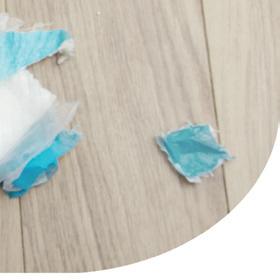
There’s one more thing to consider—your dog’s chewing instincts. The same way your dog may be tempted to chew her bed and toys…that’s right. Your furry friend might make a big, shredded mess of her toilet. Even worse, poop left on a puppy pad might start looking like a tasty treat to your dog. Or your pup might track feces around the house after playing with it. This,
of course, can be avoided if you stay on top of your dog’s potty schedule. We will get into the details of creating a potty schedule later.
While I recommend teaching your dog to use nature’s bathroom, sometimes it is more suitable to train your dog to go indoors. Maybe you have limited mobility and live in a high-rise apartment building. It may not be possible to take your dog outside for regular potty breaks.
Puppies have much less control over their bladders (if any at all), so a young pup can require as many as 6 to 10—or maybe more— trips outside each day. That is a lot of movement for someone with limited mobility. In this case, an indoor bathroom setup might be the solution.
Young puppies need a bathroom break every hour. So, puppy pads can be useful if you plan to leave your pup for more than an hour. You can create a small, confined area with a gate or exercise pen for your pup to roam freely. Within the enclosure, you could keep a water bowl and a puppy pad.
You might be wondering if you can leave a puppy pad in your
dog’s crate. I encourage you not to do this. The reason I don’t put puppy pads in my dog’s crate is because the crate should be a place where your dog doesn’t go potty. The crate teaches puppies to have bladder control. If your puppy goes potty in her crate, it may prolong the house training process. It also means that she has to sit on pee or poop while she is in her crate. Ick! I recommend only using puppy pads in an area that is larger than your pup’s crate.
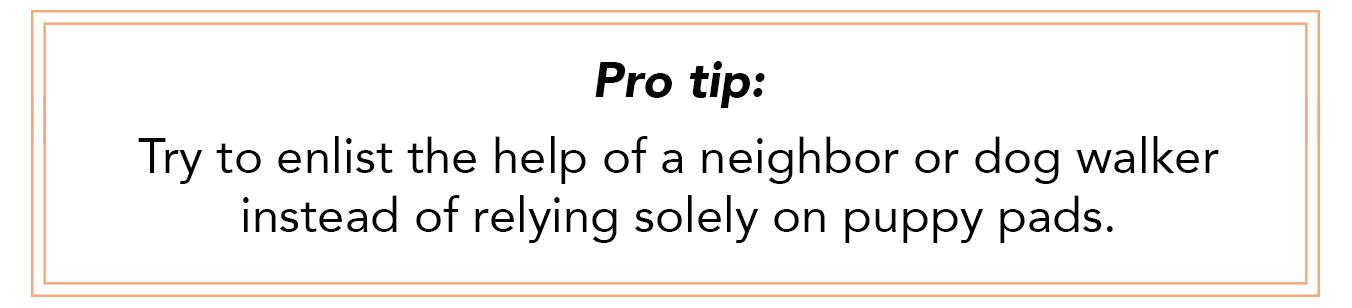
Of course, dog walkers can be pricey. And neighbors are not always available to help. When faced with this difficult decision, you might have to get creative.
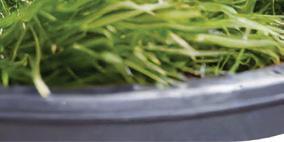
If your apartment has a balcony, you could put some sod in a plastic tray outside. This way, your dog is still taking care of business in an outdoor environment. There are grass delivery services you can subscribe to as well. But these can get expensive, and the grass doesn’t last very long.
You might find it more worth your while to go to your local garden center and purchase a patch of grass. You can lay the grass on any type of plastic lid or tray it fits in. This part is important because the grass won’t absorb all the pee. You will want something to catch any runoff.
Remember how dogs prefer familiar surfaces? Well, a sod patch is a good way to remind your dog that grass is a good place to go potty. Your puppy will be much less likely to mistake the bathroom rug for his grass box.
ACTION ITEMS
TTouches
Now that you have the right supplies, let’s explore a powerful tool that you already have: Touch! This method of communication doesn’t require words but speaks volumes.
So, let’s break down the TTouch. These gentle touches help you connect with your pup on a deeper level. They also speed up the house training process.
TTouches: The Silent Language of Love
The Tellington TTouch®, or TTouch for short, is a special technique developed by Linda Tellington-Jones. I have had the privilege of working closely with Linda for over thirty years.
Originally, TTouch was created for horses, and the impact was profound. Linda and I traveled the world with Olympic Equestrian Teams, teaching clinics and witnessing incredible results. The method was so versatile that it was adapted for the well-being of other animals, such as cats and dogs.
TTouches are more than just a physical interaction; they are a powerful tool for teaching your pup to listen and respond readily. These gentle touches also make for a better reward than treats. TTouches are perfect to practice on your dog after she goes potty in her designated potty spot. This will keep her coming back for more!
This method is used by animal lovers, trainers, breeders, veterinarians, zoo personnel, and shelter workers worldwide. There are over 1500 trained practitioners of the method throughout the world. By using these techniques, you can boost your dog’s confidence and bodily awareness. A confident and comfortable dog will learn faster!
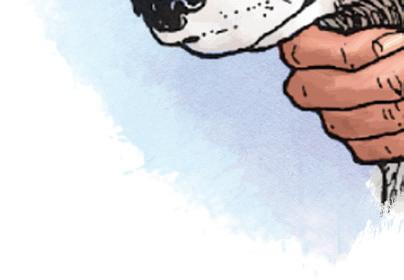
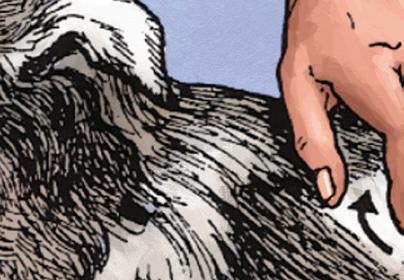
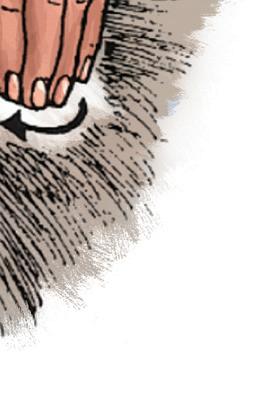
To do the Basic TTouch Circle, you gently move the skin in one and a quarter circles. The mindful, circular movements of the TTouch are very therapeutic for your dog in many ways.
What do I mean by mindful? When you move the skin gently in a 1 and 1⁄4 circle, focus on the roundness and smoothness of the circle. Taking approximately 2-3 seconds to complete each 1 and 1⁄4 circle calms your dog and enhances her ability to learn and listen to you.
Here are a few fundamental, easy-to-learn techniques to get you started:
Pressure and Direction
Anybody can practice TTouch on their dog! It’s okay if you don’t know anatomy or massage techniques. You can easily learn how to improve your dog’s well-being with these simple TTouches.
• Begin by imagining the face of a clock on your dog’s body. Place the imagined clock with the six o’clock toward the ground.
• The size of your imaginary clock depends on the looseness or tightness of the skin. The circle on a joint could be as small as a quarter of an inch and as big as one inch or more on loose skin.
• Start with your fingers at 9 o’clock on the imaginary clock. Move the skin in a clockwise direction, do a full circle back around 9 o’clock, and then go another quarter of a circle. Your fingers should end at 12 o’clock.
• If you or your dog find it more comfortable with a counterclockwise circle, trust your feeling.
• It helps to use your other hand to support your dog’s body. This will help her to relax while you do the TTouches.
• Experiment with light connection with the skin until you find what works for your dog. Your dog’s body language will indicate how comfortable she is with your contact.
Circular TTouch
The most basic TTouch is done with the pads of your lightly curved fingers, as shown in the following image:
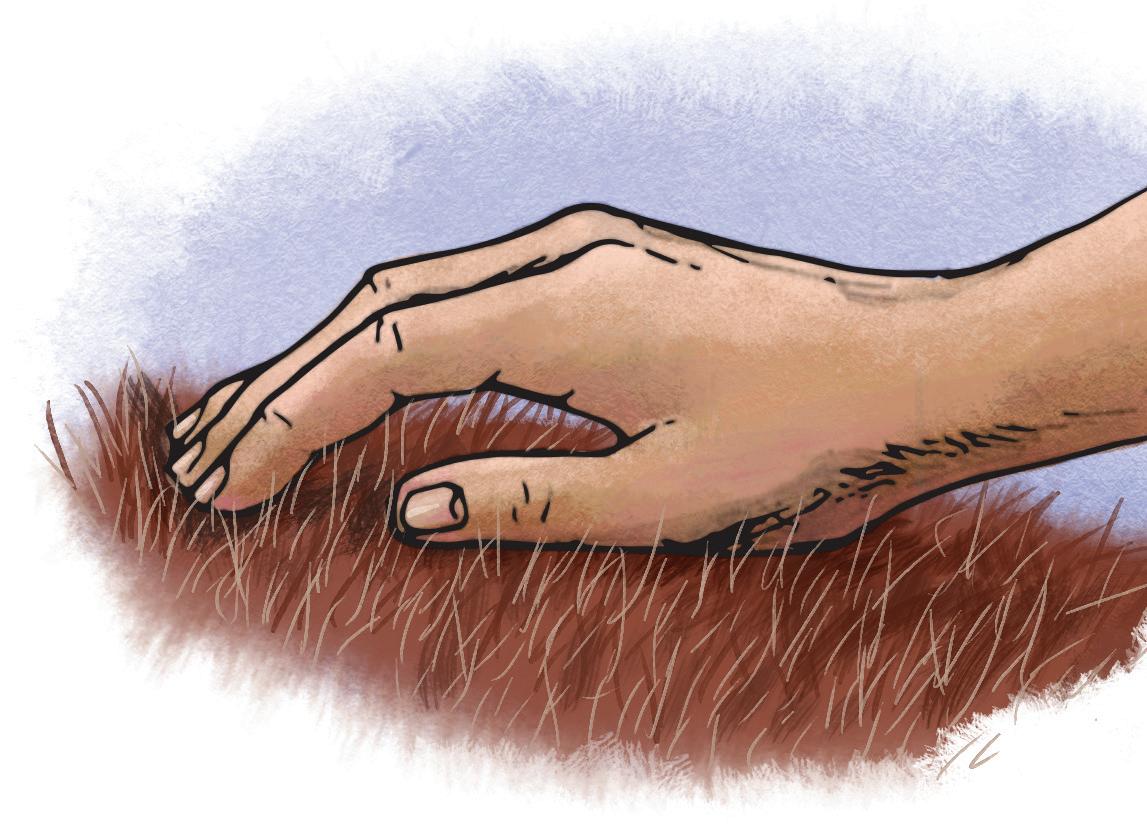
You can also straighten your fingers a bit to make more contact with your dog’s body. Do these TTouches with very gentle pressure. Refer to the image below:
Your goal is to help your dog become a cooperative, focused, confident and trusting member of your family. In fact, the second T in TTouch stands for trust. For more information, visit ttouch.com.
Think about this practice in human terms. Humans use mindful methods—such as taking deep breaths—when we need to collect our thoughts. When we concentrate on breathing, our mind is focused and cannot wander. This melts away stress and other distractions that prevent us from thinking clearly. The TTouch has a similar effect. Because we can’t ask our dogs to take deep breaths or practice other mindful techniques, the TTouches accomplish this for them. When calm, your dog learns faster, recovers from injury more quickly, and connects with you on a deeper level.
A dog who feels comfortable and balanced in her body is more confident. This feeling of safety gives your dog a better sense of self-control, which can streamline the potty training process and make your dog’s schedule more predictable.
ACTION ITEMS
CHAPTER 5
Prevention, Prevention, Prevention!
Preventing accidents is the name of the game for successful house training. While this sounds simple, it’s easier said than done. Thankfully, with the right tools and a focused strategy, you can prevent most accidents.
Dogs are creatures of habit. The more they go potty outside, the more they will want to go potty outside. Great! The more accidents they have inside, however, the more likely they are to happen again.
House training isn’t always linear. Each potty success is two steps forward; each indoor accident is a step back. Mistakes happen. No one is perfect. Errorless house training would be a great goal to have, but it’s not very realistic. Instead, I encourage you to strive for as few accidents as possible. Think of each accident as an opportunity to learn. As frustrating as it may be to discover soiled floors, let this be a reminder to pay more attention to your dog.
Take a deep breath. Remember that your puppy has yet to learn where and when it’s okay to go potty. Un-house trained dogs are like babies—you can’t expect them to know where to go until they have learned this skill.
So, now you’re prepared for at least a couple of accidents. They are bound to happen. Let’s explore everything you can do to prevent them! I have a handful of tried-and-true methods to save you (and your floors) from a few disasters.
Crate Training: Your Best Bet
Crate training is, without a doubt for most people, the best way to prevent accidents. We’ll dive even deeper into crate training in the next chapter, but for now, know this: Your dog can learn to like his crate if introduced positively.
If you have doubts about crate training, I completely understand. It feels unnatural to us. But your dog can learn to love it! Many dogs hang out in their crate just for fun. They will go inside to relax and get some alone time.
Your pup can spend time in his crate when you can’t keep a close eye on him. At first, this might be the entire window of time between potty breaks. Eventually, dogs graduate from this amount of crate time. Your pup can gradually earn more freedom to roam as his potty training progresses.
There will be dogs who won’t benefit from crate training. These dogs are the exception, not the rule.
If your puppy was brought up to go potty where he slept, then crate training may be less effective. Some puppies come from places called puppy mills. These puppies are usually purchased in pet stores or on online marketplaces.
Puppy mills are known for keeping young puppies in a crate for long stretches of time. Some puppies can’t leave their crate for days at a time! This means that they learn to use their crate as a toilet, which can be really difficult to unlearn.
Or, if you rescued an older dog with a history of negative crate experiences, crate training can be more of a challenge. We will discuss strategies to overcome these difficulties in the following chapter.
Tethering: Staying Close and Connected
If you’d like to spend quality time with your dog in between trips outside, tethering is a good short-term solution.
Simply keep your dog on a leash so she stays right by your side. This allows you to keep a constant eye on your pup. It minimizes the chances of getting distracted and missing the signs that your dog needs to go potty.
Be mindful that your dog might grow too attached to your constant presence. When overused, tethering could lead to separation anxiety. It’s not very practical to do at all times either, considering house training may take a month or more in some cases.
Creating a Schedule: The Power of Routine
An intuitive way to support the house training process is by establishing a schedule. Like I mentioned before, dogs love routine! They are very good at sustaining habits and regular schedules. Better yet, this method won’t cost you a cent.
Dogs have a very predictable input and output cycle. Your puppy will pee after she drinks and poop after she eats. Your dog’s size, breed, age, and health will determine how quickly she needs to go after eating and drinking. Your pup’s schedule should be quite consistent, so your daily routine won’t change much once it is established.
Some things to keep in mind as you build your routine:
First thing in the morning, take your dog out.
Try to feed your dog about 30 minutes to an hour before leaving your house. This gives your puppy enough time to digest his breakfast and go potty right before you leave.
Be flexible at first. It will take some experimenting before you know how fast your dog digests food.
Write down your routine. This will help you commit to it. It also allows you to keep notes on what does and doesn’t work.
Keep a bathroom log for a week. Note the time, whether your pup peed or pooped, and how long it’s been since he ate or drank. The more information you log, the more you will know what to expect in the future.
Feed your dog at the same time each day. If he doesn’t finish his food in 15 minutes, take the dish away. This prevents “free feeding,” which is when a dog’s food dish is left out all day. Free feeding makes it difficult to track when your dog needs to poop.
Make sure your puppy gets plenty of opportunities to succeed. The more often you praise your dog for his triumphs, the more he will repeat the good behavior.
Do you commute to work? Be sure to design a schedule that is appropriate for your dog’s age. If you have a puppy, potty breaks during the workday are nonnegotiable. A young puppy needs to be let out every hour or so. If you work from home, consider setting an alarm to notify you once an hour. I know how easy it is to lose track of time when you’re working hard!
If you cannot come home during the day, look into hiring a dog walker, or ask a friend or neighbor for help. Another option is puppy daycare. There are generally many options in a populated area.
Whenever I am adjusting to a new schedule, I like to write it down. Something about seeing my plan on paper helps to hold me accountable. I encourage you to try this too! That way, your whole family can be on the same page (literally!).
ACTION ITEMS
CHAPTER 6
How to Crate Train Your Dog
By using a crate to house train your dog, you work smarter, not harder. If you’re wondering how the crate makes your life easier, think about what dogs naturally do whenever they get overwhelmed. Whether it’s fireworks, a thunderstorm, or chaos in the house, dogs might dart under a bed or table to wait it out. Dogs have an instinct to seek shelter in a safe, confined space.
By keeping your dog in a crate during the potty training process, you work with your puppy’s instincts. And everyone wins! Your dog feels safe and secure, and you don’t have to worry as much about accidents. Why? Well, although some people joke that dogs are dirty and smelly animals, they are instinctually very clean. They have a strong desire to keep their homes free of waste.
This instinct makes crate training an excellent way to support house training. It also means that it is very unfair to lock your dog in her crate for hours at a time, especially for puppies. It will cause your dog a great deal of stress to “hold it” for multiple hours. For puppies, this is impossible.
I like to think of a crate as my dog’s home within our home. And dogs try very hard to keep their homes clean. If your pup soils her crate, this means she held it for as long as possible and had to pee or poop inside.
The crate also helps slowly develop your puppy’s bladder control. When in his crate, your dog will inevitably feel the urge to go potty. His instincts will prompt him to wait, which develops his ability to hold it. This must be done gradually though, so your dog does not become distressed.
When used responsibly, crate training is useful. Although crates look like mini-jail cells to us, they may however be appealing to our dogs.
Please never punish your dog by banishing her to the crate. Keep periods of confinement at a maximum of three to four hours. Any longer than that, and your dog’s crate will start to feel like a jail cell.
To ensure your puppy has positive crate experiences, follow this stepby-step guide to a joyful crate introduction:
1. Placement: Position the crate where your family spends a lot of time. Consider the temperature of this area. Ideally, it would be climate controlled—not too hot or too cold. I like to also be mindful of not placing the crate next to loud appliances, as these can frighten puppies.
2. Comfortable Interior: Make the crate cozy. You can do this by placing towels or blankets on the bottom of the crate. There are also many beds and crate mats available for purchase if you prefer. I like to add a few toys and a water bowl to make it even more comfortable. Remember to choose toys that are safe and durable, and avoid anything that could be chewed into small parts that your puppy could swallow.
3. Familiar Scents: If your dog’s breeder or shelter gave you a familiar-smelling toy or piece of fabric, place it inside the crate. It’s okay if you do not have something from the breeder or shelter. You could also use a recently worn t-shirt of yours.
4. Gradual Introduction: Initially, leave the crate door open and invite your puppy to explore it, but don’t force anything.
5. Make it Tempting: Toss a couple of treats or a toy inside the crate. See if your puppy enters voluntarily. If he does not go in the crate voluntarily, calmly reassure him and gently guide him inside. Praise him as soon as he goes in.
6. Keep the door open: If your dog wants to come out, let him. Allow your puppy to come and go at first. You can also place a treat inside and let your puppy go in and out after eating the treat.
7. TTouch Time: Eventually, your dog will either sit or lie
down in the crate for a moment. When this happens, practice some TTouches on him. The door can remain open.
8. Trial Run: Once your dog has settled comfortably in his crate, try to close the door. Let him out after a few seconds.
9. Gradual Increase: Work your way up to longer periods of time in the crate. Keep those first few stretches of time very brief. This shows your dog that crate time is temporary.
10. Reward Generously: Occasionally do some TTouches while your puppy spends time in the crate. You can also randomly drop some treats into the crate while your dog is inside. The first days in the crate should be as joyful and stress-free as possible.
It’s worth mentioning again that your dog should never be forced to hold it for prolonged periods of time. If your dog associates his crate with discomfort and stress, it will no longer feel like a safe space. It’s very important to show your dog how to love his crate!
Preventing Separation Anxiety
There are life-long benefits to crate training beyond keeping your house clean. The crate gives you an opportunity to teach your dog confidence. This can help to prevent separation anxiety, which is very common in dogs today.
When your dog has his own special space, he becomes comfortable with alone time. He may even come to crave it! Many dogs use their crate to escape from the chaos of everyday life. Learning to love alone time is an important skill for every dog to have.
Separation anxiety can be very challenging for a family if their dog needs to be home alone. This is because dogs with separation anxiety struggle being apart from their human companions. This distress often leads to destructive behaviors and some dogs get nervous and chew on themselves.
We want our dogs to love us, but not to the extent that they wreck our homes and hurt themselves. So it’s important to prevent separation anxiety from spiraling out of control.
Here is a step-by-step guide to building your puppy’s confidence:
1. Encourage: While your puppy is in the crate with the door open, start with some TTouches.
2. Communicate: Calmly tell him, “I’m closing the door and stepping away now, but I’ll stay close by.” When you do this and leave the room, your puppy may cry or whine a bit. I recommend practicing this right after a potty break to ensure the cries aren’t because Fido needs to go.
3. Come Back: Visit your puppy after 1 minute, then 2, and then 5 minutes or so. If he’s barking or crying, wait for a moment of silence before making your entrance. We want to show our puppies we’re not gone forever. We don’t want to teach them that crying or barking is the way to bring us back.
4. Reward: Spend some playtime with your puppy and do more TTouches before guiding him back into the crate. Again, tell him you’ll be back soon.
5. Repeat: Slowly increase the amount of time your puppy spends alone in the crate. Every now and then, come back after just a couple of minutes. This reinforces that some stretches of alone time are short.
Remember to reassure your dog that you always come back. Leaving your dog crated for too long can worsen separation anxiety. The goal of crate training is to make your dog love her crate. Once that’s accomplished, everything else becomes much easier.
Once you’ve practiced this exercise a handful of times, consider your progress:
• Does your puppy seem comfortable when left alone while you’re home?
• Has her crying stopped, and does she appear content in her crate?
If so, you’re ready for phase two. If not, keep practicing with very short intervals of separation while you are home. Here are the next steps:
1. Grab your keys. Go to your puppy’s crate and tell her, “I’m leaving now, but I promise you’ll be okay. I’ll see you soon.”
2. Stay true to your word. Come home quickly. You don’t even need to drive anywhere. You could simply walk to the end of the street and back.
3. Before re-entering your house, listen if you can hear your puppy crying or barking. If she’s silent, then go on in. If she’s barking, wait for a moment of silence.
4. When you come home, let her out of the crate and praise her for being so good. Have a play date to redirect the energy she’ll have after seeing you again.
5. After a moment of meet and greet, immediately take her outside to go potty. This helps avoid the excited wee-wee.
6. Repeat this process frequently with varying amounts of time spent away.
ACTION ITEMS
CHAPTER
7
Your Puppy’s Potty Needs
When it comes to potty training, the biggest difference between dogs and puppies is that puppies have tiny bladders. And not only are their bladders small, but puppies haven’t developed the muscles needed to “hold it.”
Routine is key! Puppies thrive on a consistent schedule. This helps them learn the rhythm of the day, including when it’s time for meals, playtime, and potty breaks.
To avoid accidents, take your furry friend outside as often as possible. So, if you bring home an eight-week-old puppy, plan to take him outside at least every hour. It helps to set alarms to remind you of these breaks.
On top of an hourly potty break, your 8-week-old pup will likely need to pee as soon as he wakes up from a nap. Exercise and play sessions should also end with a potty break, since puppies usually pee when they get excited.
Because of their small digestive tracts, puppies will usually need to pee within 15 minutes of drinking water. They will generally poop within 30 minutes of eating as well. This is why a consistent feeding schedule is very important.
And I don’t want to be the bearer of bad news, but in the beginning, most puppies will need a bathroom break in the middle of the night as well. It helps to keep your puppy’s crate near your bed for those first few weeks, so you can hear any cries in the middle of the night. That’s your cue to hurry outside.
The only thing harder than taking your puppy outside at 2:00AM is cleaning a crate and a stinky dog at 2:00AM because you missed your signal.
If you’re feeling ambitious, you could set an alarm to sound off about three to four hours after you go to bed. This is a more proactive method. You can wake up your puppy and take him outside before he realizes he needs to go. You run the risk of waiting a bit for your pup to do his business, but at least you won’t sleep through your cue.
You might only need to take your puppy out once in the middle of the night. You can increase your chances of this by taking your puppy out right before you go to bed. It should be the very last thing you do before your head hits the pillow. Make sure to take another trip outside as soon as you wake up in the morning as well.
The good news is that your puppy’s bladder will grow as he does. He will also develop more control of his urethral sphincter as he matures. And puppies grow fast! So, you won’t be making this many daily trips for long.
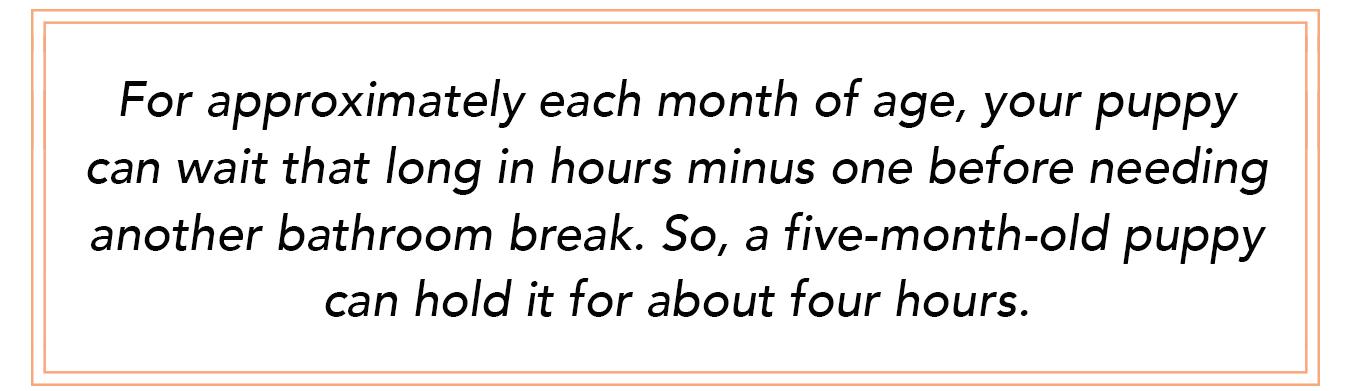
Here is a good rule of thumb for determining how long your puppy can hold their bladder:
Keep in mind that this rule has an expiration date. A tenmonth-old puppy cannot be expected to go nine hours without going potty. Most people can’t wait that long either! A fully pottytrained dog should not have to wait more than four or five hours between bathroom breaks.
And please be mindful of when your puppy eats or drinks water. By giving your puppy plenty of opportunities to succeed, house training will be a much faster process. I promise it is worth being very diligent those first few weeks!
You will want your puppy to hang out in her crate between potty breaks. Immediately after going potty would be the exception. There might be a window of 10-15 minutes where you can let your puppy explore the house.
Puppies will try as hard as they can to keep their crate clean, since this is where they may sleep. An exception would be if your pup came from a puppy mill or unethical breeder.
In puppy mills or hoarding situations, puppies are forced to pee and poop where they sleep. This goes against your dog’s instincts, but it might be all she has ever known. In this case, crate training may be less effective in the beginning at preventing accidents.
In fact, if your puppy has come from one of these situations, it might be best to avoid using the crate at first. You will have to work with your pup to teach her how to keep her crate clean. If your puppy is in the habit of soiling her crate, it will be difficult to unlearn this behavior.
You might try giving your puppy limited crate time right after a potty break. This would be a good way to introduce your puppy to her crate, since she will be less likely to use it as her bathroom.
If you suspect that your puppy came from a puppy mill, she can still be house trained! It will just require some extra patience and dedication from you. Your best bet is to stick to a very consistent schedule. Take your puppy outside even more frequently than is recommended for your puppy’s age.
Each potty training success gets you one step closer to a house trained pup. Every little win counts, so give your puppy many chances to win.
You might also try the tether technique, where you attach your puppy’s leash to your belt loop and constantly supervise her. This allows you to watch for any signs that your pup needs to go.
This technique is only possible for someone who can stay home all day. Do you leave the house every day for work? It might be worthwhile to take a week off when you first bring your puppy home. If this is not an option for you, ask if you can bring your puppy with you to work! You might be surprised by how flexible your employer is. This would allow you to keep a close eye on your puppy and may be easier if you bring a portable crate. You can also provide very frequent potty breaks this way.
Puppy Potty Schedule
Provide your puppy with a potty break:
• Once every hour (this amount of time increases by 1 hour every month)
• 15 minutes after drinking water
• 30 minutes after eating food
• Immediately after waking up from a nap
• Immediately after playing or exercising
• Before something exciting happens (such as a guest coming over)
• Right before you go to bed
• Once or twice in the middle of the night
• As soon as you wake up in the morning
• Whenever your puppy is showing signs that he needs to go (sniffing around, circling, whining, etc.)
CHAPTER
8
Your Older Dog’s Potty Needs
If you have rescued an older dog, then I applaud you! You have changed an animal’s life for the better, and that is worth celebrating.
You may have heard that house training an older dog is easier than house training a puppy. Or maybe you’ve heard that it’s more difficult.
There are pros and cons to house training an older dog. There are pros and cons to house training a puppy too—it’s just the name of the game. You can overcome any roadblocks you may run into! Just remind yourself to be patient and all your hard work will pay off.
The good news is that older dogs have much larger bladders than puppies. They also have more impulse control, which means they are better at holding it when they feel the urge to go.
A mature dog should not require very frequent bathroom breaks—maybe your dog will only need three to four each day. It is very important to anticipate these times, however, since an unhouse trained dog has possibly developed some undesirable habits. Also, some rescue dogs may have health issues that need to be addressed if your dog has trouble “holding it.”
If your dog has spent her whole life peeing and pooping wherever and whenever, house training will require some unlearning. If you wait until your dog desperately needs to go, there is a good chance you will miss her warning signs. Your dog may not even display signals that she needs to go!
The best way to ensure house training success is to provide your dog with a potty break before she realizes she has to go. Although your dog may only need four potty breaks each day, it would be wise to give her more chances to go outside.
But how do you anticipate when your dog needs to go, especially if she does not give you any signs? Well, dogs are very predictable in some ways. Their digestive system is one thing that often runs like clockwork.
Each dog has their own unique schedule that depends on their age, size, breed, and health. In general, dogs will need to go potty shortly after eating or drinking. This could be 20 minutes later or an hour later, but you will quickly come to learn your dog’s schedule. By controlling when your dog eats and monitoring when she drinks, you can guess when she needs to take care of business.
You want to give your dog many opportunities to succeed. And each success should be followed with plenty of praise. Your dog will quickly realize that going potty outside means winning your approval and some tasty treats. She will most likely repeat this behavior.
Crate training can be an effective way to house train older dogs. (Learn more about crate training on page 49.) If introduced to their crate slowly and calmly, most dogs will not resist it. There are, however, some exceptions to this.
Does Your Dog Hate the Crate?
If your dog came from a shelter where she was contained for months, she may seem very reluctant to enter her crate. You can probably imagine why. Some dogs were also punished with crate time in the past.
If your dog panics when persuaded into his crate, he may have trauma that’s associated with the crate. Don’t force it—you want to show your dog he can trust you, and that may take some time.
In order to use the crate, you will need to reassure your dog that you only use the crate for good. Set aside plenty of time as you first show your dog his crate.
To start, do some TTouches with an emphasis on the ear work. In that first session, your goal should simply be to make your dog feel calm around the crate. It’s okay if he does not go inside, he will get there eventually. You can place his food dish inside the crate when you feed him. This will hopefully entice him to enter the crate as he eats. Feeding your dog inside the crate is a fantastic way to show him that the crate brings good things.
It will probably take multiple crate sessions before your dog is comfortable with the door closed, so be patient as you approach that step. You might place food both inside the crate and outside of the door. This shows your dog that he gets rewarded for entering and exiting the crate. It also reassures him that he will always be let out.
TTouches will be your best friend as you work through crate training with your dog! Whether he is fearful of the crate or not, you want to do everything you can to help him relax.
Treats are a valuable tool to use as well. As useful as treats can be, I recommend using them only in the early stages of training. Eventually, you want to replace the treats entirely. You will replace them with something your dog craves even more than treats: Your affection and TTouches and a soothing voice. And that costs nothing! It won’t make your dog overweight, either—everyone wins.
The most important thing you can do is load on the praise every time your dog goes potty in the designated spot. Our dogs love to please us! They will be happy to repeat the behavior you reward.
Mature Dog Potty Routine
Provide your dog with a potty break:
• As soon as you wake up in the morning
• Shortly after breakfast
• Shortly after dinner
• Sometime around midday
• Immediately after playing, exercising, or completing a training session
• Right before you go to bed
• Whenever your dog is showing signs that he needs to go (sniffing around, circling, whining, etc.)
The Potty Training Backslide
Maybe your older dog was a potty pro. But then, did she seem to forget all the toilet training you painstakingly went through together? This can be surprisingly common, and I’m here to help you through this bump in the road.
The first thing to clear up is that your dog is not doing this out of spite. While it might feel like a slap across the face after all your hard work, this is not an attitude problem. Your pup wants to please you, so this setback is a bummer for you both —and the two of you can overcome it together! There are just some things to determine first.
The reason for your dog’s house training relapse will shape how you resolve it. Typically, there are two general causes for a potty training backslide: behavioral or medical. Your vet can help you decide which is affecting your pup.
The first thing you can do is an audit of your home. Look all around the house (outside too!) with the intention of finding anything out of the ordinary. Did you recently get new furniture? Did you move your cat’s litter box to a different part of the house? Did the neighbor just bring home a new dog? Have there been thunderstorms all week?
Even slight changes to your environment can trigger some unwanted behavior from your dog. These changes may prompt your pup to mark his territory by urinating inside the house. The same goes for your daily routine!
Did your work schedule change, which threw off your dog’s feeding and bathroom routine? Did you recently have a baby? Did someone move out of the household? These life changes are inevitable and oftentimes out of your control. They might be the answer to your dog’s house training setback, though. So it’s worth considering whether a change occurred when your dog started soiling your floors again.
If your environment and homelife seem unchanged, monitor your dog’s habits closely. Does she have any symptoms other than urinating indoors? Does her urine look or smell abnormal? How about her feces? Is she eating like normal? If you notice that other elements of your dog’s health seem “off,” mention it to your vet. They will likely check for urinary tract issues, as these are common for dogs.
While you probably can’t eliminate lifestyle changes or control the weather, for example, these changes should be relayed to your veterinarian as well. They may determine that the behavior was triggered by anxiety, which is known to cause abnormal urination.
If your dog’s health looks good (I hope it does!), then you can work with your dog to create a new routine suited to your lifestyle changes. This may include more frequent potty breaks or an extra 15 minutes of play/exercise each day.
Your veterinarian can provide medical advice that is much more specific to your dog’s individual needs. You can prepare for your vet
appointment by gathering all the information you can about your family’s (including your dog’s) current situation in life.
Does your dog consistently have an accident in the same room? Is this particular room one he doesn’t hang out in otherwise?
Dogs are driven by instinct to keep their living and sleeping areas free of stinky messes. Your dog may view the guest bedroom just as he sees the yard. To her, this is a place where it’s okay to pee because no one lives or sleeps there. Luckily, there is a quick fix for this: Hang out in otherwise unused rooms with your dog! Pick an activity, such as reading, that you can do anywhere in the house. Get in the habit of doing this activity in whichever room your dog has mistaken for his bathroom. And remember to invite your dog to join you! You might even make that room your designated training spot, where you and your dog have brief and consistent training sessions each day.
If your dog’s potty accidents persist in this particular room after spending more time there, then smells from past accidents might be tempting him. You could, alternatively, leave the door to this room shut at all times. This is more of a temporary fix than a longterm solution, but it may help.
Again, if your dog has regular accidents that cannot be prevented with more focused training, it’s time for a visit to your vet. Explain the problems you have experienced and what steps you have already taken to solve them.
Debunking the ‘Guilty Look’
You’ve probably seen the viral videos: a dog, head hanging low, eyes averted, standing beside a mess they made on your living room floor. The caption almost always suggests they’re wearing an expression of guilt. But are we so sure our dogs are feeling guilty? Let’s explore the research behind this and debunk the idea that your dog’s “guilty look” is a sign of intentional wrongdoing.
The Viral ‘Guilty Look’
If you’ve ever posted a video of your dog giving you the “guilty look” after having an accident, you’re not alone. The internet is full of these clips, paired with comments and captions that our dogs have been up to no good. But what if your pup’s hangdog expression doesn’t mean she has a guilty conscience? CHAPTER 9
What Research Tells Us
Alexandra Horowitz, a renowned researcher and author, investigated the phenomenon of the “guilty look.” Her research focused on whether dogs truly feel guilt when they’ve had a house training mishap.
Horowitz’s findings challenge the idea of the “guilty look.” In one study, she ran a series of experiments involving dogs and their owners. The owners told their dogs not to eat a treat before leaving the room. Once they left, Horowitz tempted the dogs with a treat. Some dogs refused to eat the treat. Others couldn’t resist.
When the owners returned, Horowitz observed that dogs who had eaten the treat didn’t wear a “guilty look” more than those who had listened. In other words, their expressions did not reflect their actions or any sense of guilt.
Then, Horowitz asked the owners whether they believed their dogs had listened or not. Interestingly, even the dogs who had followed the rules were falsely accused of misbehavior. These dogs were wearing the signature “guilty look.” 1
These findings suggest that our dogs’ expressions don’t represent their actions—they represent our reactions.
1. Citation: Horowitz A. (2009). Disambiguating the “guilty look”: salient prompts to a familiar dog behaviour. Behavioural processes, 81(3), 447–452. https://doi.org/10.1016/j.beproc.2009.03.014
What Your Dog’s Expression Means
So, if that “guilty look” isn’t a sign of guilt, what is it? Your dog’s lowered head, averted gaze, and flattened ears are more likely signs of submission.
In my experience, many dogs are non-confrontational. When a dog senses their owner is angry or upset, they may use these submissive signals to calm the situation. Your dog’s expression might be saying, “I see that you’re upset, and I want to avoid confrontation.”
This response goes beyond potty training accidents too. Dogs will react this way in other situations, like when they’ve chewed your favorite shoes, jumped on the counter, or raided the trash can.
Potty Training Practice
It’s important to remember that potty training is a learned behavior. Dogs don’t instinctively understand not to go potty inside the house. It’s our responsibility to teach them where it’s okay to do their business.
Here’s the house training reality: puppies go potty based on instinct and urgency. If they’re indoors and they need to go, they will, unless they’ve been trained to do otherwise. That’s where you come in!
As much as we love to assign human emotions to our dog’s actions, this isn’t always accurate. Instead, focus on training and consistent reinforcement of the behavior you want.
So, as entertaining as those viral videos may be, it’s time to understand the myth of the “guilty look.” You can feel calm knowing that your sweet puppy isn’t a little rebel. Your pup is simply reacting to your reaction.
If you find an accident inside the house, take a deep breath. I know firsthand how frustrating this can feel. But it helps to remember that your dog didn’t mean to upset you. Accidents happen! Calmly clean up the mess and watch how it strengthens your bond with your pup.
ACTION ITEMS
Why Praise is Better than Punishment
Have you heard that rubbing your dog’s nose in his potty accident is the best way to prevent it from happening again? If so, you are not alone. In the past, punishment was the method many people used to potty train a puppy.
Thankfully, times have changed. We know better now.
I remember the first time I heard someone say that the best way to potty train a puppy is by hitting him on the head with a rolled-up newspaper when he has an accident. Even as a child, this didn’t sit right with me.
I am more likely to give myself a gentle bop on the head when my dog has an accident. Why? Because an accident means that I should have paid more attention to my puppy.
So, what method do I use instead of punishment? I train dogs to listen because they want to. It is the best way to strengthen your relationship. And it’s simple! You celebrate with your dog each time she succeeds. That’s pretty much all there is to it. The science behind this method is clear—its benefits have been proven time and again. Each new scientific discovery confirms that your dog’s brain responds better to praise than punishment.
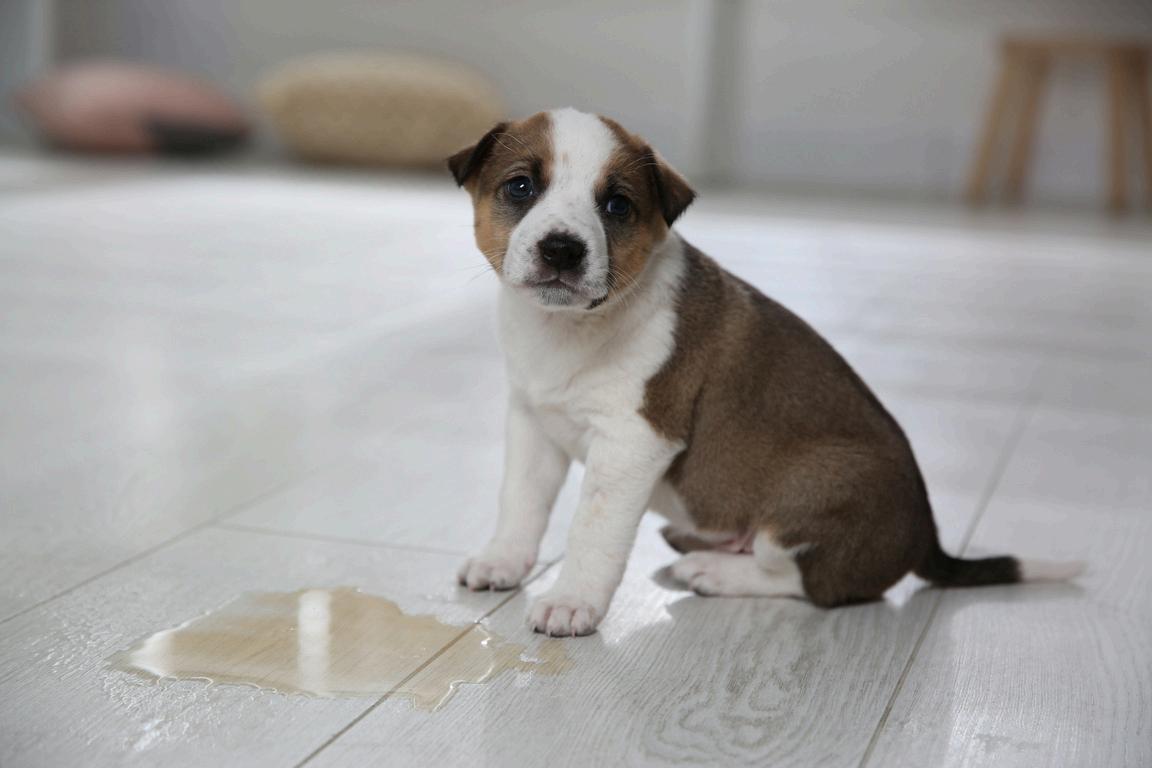
Remember: Your dog does not naturally know that going potty indoors is unacceptable. If your dog has an accident, she will not know to associate a punishment with her actions. If you yell, hit, or rub your dog’s nose in her pee or poop, she will not understand that you are punishing her for the accident. Instead, she may think you are punishing her for going pee or poop.
This misunderstanding could make your puppy hesitant to go potty in front of you. Bathroom breaks and walks could take much longer if your dog is afraid to relieve herself in your presence.
Worse yet, your puppy might start having accidents in the spare bedroom or behind the couch, hoping you won’t find it and punish her again.
I’ve known dogs who were regularly punished when they were puppies. As they grew into older dogs, it became apparent that they were more fearful in general. These are the dogs who I’ve seen develop anxiety and other behavioral issues.
I’ve mentioned that dogs love routine, but it is worth acknowledging again. They crave structure. When we punish our dogs—either verbally or physically—we appear very unpredictable. This can damage your dog’s trust in you and affect your relationship.
Alternatively, if you praise your dog every time she successfully goes potty outside, she will want to repeat that behavior. She will
also trust you, feeling comfortable and confident in your presence.
Try to look at your interactions through your dog’s eyes. Many of us see our pets as family members, but it is important to remember they are a different species. They have a unique way of understanding things. When we share our homes with another species, empathy is necessary. We can teach our dogs to behave in our homes, but we also need to keep an open mind. Let’s take some time to learn how our dogs think—it will make us much better teachers!
So now you know not to punish your dog if you find an accident in your home. But what should you do when you catch your dog in the act? I’ve been there. These moments will really test your patience. Witnessing your dog soil your floors makes most people panic.
Try your best to stay calm. Accept that some clean-up is ahead of you. All you can do now is try to correct the behavior while you still have the chance.
Here’s what to do if you catch your dog mid-accident:
• Take a deep breath.
• Try to catch your dog’s attention. Instead of losing your temper, you could try to alert your dog with an energetic “Whoops!” It’s best to use a signal other than your puppy’s name. You want your pup to associate his name with good, happy things.
• If you’re lucky, your puppy might be so surprised that he stops peeing. This is your chance to quickly bring him outside to finish the job.
• If he doesn’t stop mid-pee, just let him finish. Cleaning a small puddle on the floor is much easier than cleaning a stream that runs through your house and out the front door.
• Clean the accident immediately with an enzymatic cleaner. The faster you take care of the mess, the easier it will be to remove.
Though you clean all potty accidents with an enzymatic cleaner—whether it be pee or poop—the steps above are specific to dealing with a urine mistake. I use a different method when I find a stinky, solid mistake.
What to do if you find poop on your floor:
• Stay calm and take a deep breath.
• Use a disposable glove, paper towel, or poop bag to pick up the feces.
• Take both the dog and his poop outside.
• Go to the designated potty spot. Place the poop there.
• Gently tell your dog that this is where you want him to go.
• Let him sniff it and leave it there for a bit, so he understands where to go.
• If your dog goes potty again during your visit to the potty spot, praise him for going in the right place!
• Go back inside and thoroughly clean the accident area.
Please Don’t Alpha Your Dog
Have you ever been told that raising a puppy means you must step into the role of the alpha dog?
I’ve heard so many people say this. In fact, many well-respected celebrity dog trainers have built their careers on this concept. I can tell you with complete certainty that this is not true. And that isn’t just my opinion—it’s been backed by scientific research. So, let’s explore what the studies reveal.
Follow the Facts
Let’s take a cue from a fascinating study by Juliane Kaminski and her team at the University of Portsmouth in 2009. They researched the cognitive abilities of our dogs in comparison to wolves, their wild cousins. What they found was eye-opening: dogs have a remarkable knack for understanding us in a way that wolves simply cannot.2
Think about it like this: When we communicate with our dogs, we use a mix of words, body language, facial expressions, and subtle vocal cues. And guess what? Dogs are experts at picking up on these signals.
Kaminski’s study revealed just how attuned dogs are to human communication. They respond not only to our words but also to
2. Kaminski, Juliane, Sebastian Tempelmann, Josep Call, and Michael Tomasello, 2009. “Domestic dogs comprehend human communication with iconic signs”, Developmental Science(6), 12:831-837. https://doi.org/10.1111/j.14677687.2009.00815.x
the slightest shifts in our tone of voice and body posture. A simple change in the pitch of our voice or a tilt of our head can convey volumes to our canine companions.
Now, contrast this with wolves. While they’re undeniably intelligent creatures, their communication style is vastly different from that of dogs. They haven’t had the same millennia-long bond with humans that dogs have enjoyed.
So, what does this mean for training our beloved pups? Well, it means we can ditch the outdated alpha dog method. There’s no need to use force or intimidation to get our point across. Instead, we can leverage the power of positivity and clear communication.
So, the next time you’re tempted to raise your voice or reach for a shock collar, remember this: your dog doesn’t need fear or dominance to learn. They need friendliness, understanding, and above all, love.
And your dog loves you, too! You’ve probably realized this by now. When I look into my dog’s eyes, I can truly see how much she loves me. I don’t need a scientist to tell me that.
Still, researchers are curious by nature. As am I. So, I looked into the various studies that have been conducted to see if our dogs really love us. And the science says: They do! It’s been proven over and over.
While wolves may feel love, it’s not something that they share with humans. This is another way that dogs are very different. We can now pinpoint specific genetic differences that make dogs the friendly, lovable animals they are.
One team of researchers found a fascinating gene in the DNA of dogs. The main trait of this gene is extreme friendliness.3 And how did that gene make its way into doggy DNA? One theory is that we selectively bred the most loving dogs. This practice passed
3. Citation: Bridgett M. vonHoldt et al. ,Structural variants in genes associated with human Williams-Beuren syndrome underlie stereotypical hypersociability in domestic dogs. https://www.science.org/doi/10.1126/sciadv.1700398
the “friendly” gene from one dog to the next. The result is the affectionate animals we know and love today.
And these studies are just the tip of the dog training iceberg! New information is constantly being uncovered, and we become better dog trainers with every new discovery.
If you’ve used harsh training methods in the past, I forgive you. All we can do is move forward and be better than we were yesterday. You don’t need to be the alpha dog anymore. You get to be something much better: Your dog’s best friend!
Like any good teacher, I recommend you keep learning, too. It seems like we are learning more about dogs every day. As we make new scientific discoveries, I encourage you to be open minded to new, more compassionate approaches to training.
CHAPTER 12 Train Your Dog to Go Potty on Cue
Now that we’ve laid a solid foundation for your puppy’s house manners, we can take things to the next level. Let’s train your dog to go potty on cue.
You might wonder, why add this extra layer to the potty training process? Well, I promise it’s worth the extra bit of effort. This skill will be a lifetime benefit for both you and your pup.
Benefits of Training Your Dog to Go on Cue
Efficiency: Imagine the convenience of telling your dog, “Let’s go potty,” when you need her to, especially during those hurried walks or before a long car ride. No more pacing back and forth waiting for nature’s call.
Reduces Accidents: Cueing your dog to go potty keeps him from getting too distracted during potty breaks. A successful potty break minimizes the chances of your pup having an accident indoors, which is a big win.
Travel and Outdoor Adventures: Whether you’re on a road trip, camping in the great outdoors, or visiting friends and family, a cue for your dog to go potty is a game-changer. It means you can stick to a schedule and have your dog relieve themselves when and where it’s most convenient.
Extreme Weather: Wouldn’t it be great if it was 70 and sunny every time Fido needed to go? Unfortunately, it can feel like the opposite is true. Whether you’re waiting in the pouring rain, freezing cold, or being attacked by mosquitoes, you will thank yourself later for teaching this cue.
Peace of Mind: Training your dog to go on cue provides you with peace of mind knowing you have better control of their bathroom habits. This results in happier, stress-free house training.
So, how can you teach your dog this handy skill? Let’s talk about something called classical conditioning and then break down the step-by-step process.
Classical Conditioning
You might have already heard of Ivan Pavlov, the Russian physiologist famous for his experiments with dogs and bells. If you haven’t heard of him, he was the guy who discovered that dogs could learn to associate a specific sound or cue with a paired event. In his experiments, Pavlov rang a bell just before presenting food to his dogs. Over time, the dogs started to salivate at the sound of the bell, even when no food was around. This is known as classical conditioning.
So, how does classical conditioning apply to teaching your dog to eliminate on cue? Well, we’re creating an association between the cue and the act of going potty. By consistently pairing the cue with the action, your dog will eventually respond to the cue by going potty. It becomes a sort of reflex reaction to hearing the cue. It’s a fantastic way to communicate with your dog and make house training more efficient.
Step-by-Step Process to Add a Cue to Potty Training
Choose a Cue: Start by selecting a cue word or phrase that you’re comfortable using. Common cues are “Go potty” or simply “Now is a good time.” Pick something that feels natural to you.
Timing is Crucial: When you take your dog out for a potty break, be ready with your chosen cue. As your pup is about to pee or poop, say the cue word in a clear and calm voice. Remember, timing is key. The cue should come just before or as your dog begins to pee or poop. This helps your dog link the cue and the act.
Praise and Reward: When your puppy successfully responds to the cue and goes potty, shower her with praise and offer a treat as a reward. Positive reinforcement goes a long way in establishing this behavior.
Consistency: Consistency is my golden rule in dog training. Use the same cue every time your dog goes potty.
Avoid Distractions: Try to keep your potty area free from distractions when you give the cue. Keep toys away from this area. This helps your dog focus on the task at hand.
Patience and Repetition: Like any training, this can take time. Be patient and stay positive if your dog doesn’t respond right away. Consistent repetition will help your puppy grasp the concept.
Practice Regularly: Practice the cue in various situations and environments. It’s essential that your dog associates the cue with the action, no matter where you are or what’s happening around you.
Phase Out Treats: After a while, you can gradually reduce the frequency of treats and rely more on praise. The cue itself will become rewarding for your dog.
Maintain a Routine: Continue following your routine of regular potty breaks. The cue deepens your dog’s understanding of when it’s time to go potty, but it doesn’t replace her natural need for regular bathroom breaks.
ACTION ITEMS
CHAPTER 13
Train Your Puppy to Give You a Bathroom Cue
I like teaching puppies to communicate their need to go outside. This can strengthen your relationship with your pup and make life a lot easier. Let’s explore some fun ways you might teach your puppy how to communicate, including some you might not have considered. We’ll also discuss doggie doors and the benefits of taking your dog out on a leash.
Ring That Bell
Teaching your dog to give you a bathroom cue can be fun for both you and your pup. One of my favorite methods is training your dog to ring a bell. This method serves a practical purpose, and it’s a fun way to impress your guests.
If you want something even more amusing, you can opt for a button instead of a bell. This method works with anything that makes noise. There are even buttons available where you can record your own words and phrases.
Here’s how to teach your dog to ring the bathroom bell:
Step 1: Get a Bell That Hangs on the Doorknob
First things first, you’ll need a bell that hangs on the doorknob. It should be easily accessible for your dog to nudge or ring with his nose.
Step 2: The Ringing Ritual
Before taking your dog outside for a bathroom break, hold a treat in your hand. Ring the bell on your way out the door.
Remember the classical conditioning we discussed in the last chapter? We’ll use that here too. Every time you take your dog out for a potty break, ring the bell as you walk through the door.
Step 3: Business as Usual
You know the drill. Move forward with your regular potty routine. Bring your puppy to his designated potty spot, give your “go potty” cue, wait for Fido to finish, and praise him for the job well done.
Step 4: Reward
Walk back inside as you normally would, and give your puppy the treat you’ve been holding.
With consistent practice, your dog will understand the connection between bell-ringing and a bathroom break.
Doggie Doors: Dreadful or Delightful?
Doggie doors can be a fantastic addition to your home. But are they the right fit for your family? Let’s consider the pros and cons before you install one.
Pros:
Convenience: Doggie doors provide your pets with easy access to your yard, reducing your role in their bathroom needs.
Increased Independence: They allow your dog to go out whenever they please, which can be very beneficial for high-energy dogs.
Emergency Access: In case of an emergency, like a fire or another immediate threat, your pet can escape to safety without your assistance.
Cons:
Security Concerns: If you are going to have a doggie door, you need to have a fenced or contained yard! Also, if large enough, doggie doors can be an entry point for unwanted guests, both human and animal. Ensure your home’s security measures are up to the task.
Training and Behavior: If left outside on their own for extended periods of time, it may encourage unwanted behaviors in some dogs, such as excessive barking, chewing, digging, or escaping.
Energy Efficiency: Doggie doors can affect your home’s energy efficiency. They create gaps that might let out warm or cool air.
Again, the most important thing to note is that doggie doors are only safe if you have a fenced-in yard. I strongly advise against installing a doggy door if your pup can wander into the street. If your puppy will grow into a large dog, I recommend 6ft fencing, as some dogs can jump very high.
Taking the Lead: Why Leash Training Matters
When teaching your dog to give you a bathroom cue, the question of using a leash often arises. The answer depends on several factors:
Age: If your dog is still a young pup, using a leash can be incredibly helpful. Puppies tend to be easily distracted, and a leash can help keep their focus on going potty.
Recall Skills: For dogs with less reliable recall, especially in unfenced areas, a leash is necessary. The leash helps keep your dog safe from cars, other dogs, and from getting lost.
Focus: Taking your dog out on a leash can keep them on track and maintain their focus on the task. They’ll understand that it’s potty time, not playtime.
Support and Reassurance: Being on a leash allows you to reassure your dog as they sniff around and search for the perfect spot. Your presence and guidance can be soothing if your pup is a bit hesitant or fearful.
Cue Watching: You’re more capable of watching your dog’s cues on the leash, such as sniffing, circling, or whining. This gives you a better understanding of your pup’s mannerisms right before he goes potty. You’ll be glad to know this when he starts showing these behaviors indoors.
Before you know it, you and your puppy will build a bond where a simple bell ring, look, or leash grab will say all you need to know.
Let’s explore some helpful dog body language clues to speed up the learning process. In the next chapter, we will unpack all the things your pup might be telling you with her body. You can use this information to improve your communication skills and prevent accidents. And better yet, it improves your relationship with your dog.
CHAPTER 14
Canine Communication: Decoding Your Dog’s Body Language
Dogs are incredible animals, full of personality and emotions. They might not communicate with words, but they have a wide vocabulary of body language, sounds, and behaviors that express their thoughts, feelings, and needs. Understanding what your dog is trying to tell you can prevent many accidents when house training. It also helps you build a deeper connection with your puppy.
So, let’s dive into canine communication! In my decades of dog training experience, I’ve learned how to decode dog language. Let’s go through everything I’ve found.
Talking Tail
Your dog’s tail is one of the most expressive parts of his body. A wagging tail isn’t just a sign of happiness. The speed, height, and direction of the wag can send different messages.
Keep in mind that each dog’s anatomy is different. Tails come in all shapes and sizes. You can use your best judgment to decide what your dog’s tail is telling you.
A high, fast wag: Your dog is excited and happy to see you.
A low wag: Your dog might be feeling nervous or submissive.
A slow, wide wag: This is a sign your dog is confident and content.
A rigid tail: Your dog might be alert or anxious.
Tucked tail: A sign of fear or distress.
The 3 Es: Ears, Eyes, and Expressions
Understanding these 3 Es is key to reading your pup’s emotions.
Pinned-Back Ears: Often a sign of stress.
Dilated pupils: Excitement or arousal.
Small pupils: Fear or aggression.
Whale-eye: When you see the whites of your dog’s eyes, which could indicate anxiety or fear.
Raised hackles: A sign of heightened arousal or alertness.
Barking and Vocalizations
Although dogs can’t speak to us in words, their barks, growls, and howls carry meaning.
High-pitched barking: May signify joy or anticipation.
Repetitive barking: Can signal distress or a desire for attention. For many dogs, this might be their way of telling you they gotta go. It may be time for a bathroom break.
Growling: May indicate fear or aggression. Some dogs will also growl when they are playing. Please use your best judgment here.
Howling: Could be your dog’s response to sirens or other dogs.
Canine Calming Signals
Dogs have a set of calming signals that they use to ease tense situations and communicate with one another. Watch for these signals to understand when your dog is stressed, uncomfortable, or trying to calm you down:
Yawning: Dogs yawn when they feel anxious or are trying to calm someone else.
Lip licking: Often used when a dog feels stressed or uncomfortable.
Looking away: A dog might turn their head to avoid eye contact when feeling threatened or anxious.
Turning their body: By presenting their side or back, dogs show that they are non-threatening.
Tailor Your Training to Your Dog’s Communication Style
Understanding how your dog responds to your communication style is helpful when potty training.
For instance, your dog might have an accident if he is scolded. This is called submissive urination.
I always recommend using praise over punishment. Your dog will appreciate it too!
Our dogs are sensitive to our emotions. They also react to our body language. It’s our job to maintain a calm and reassuring presence during training sessions.
Positive reinforcement is the best way to potty train your pup. When your puppy goes potty in the right spot, offer praise, TTouches, and treats to encourage good listening.
Reading Stress and Anxiety
House training can be challenging for dogs dealing with stress or anxiety. Environmental changes, new family members, or even a change in routine can cause stress. It helps to recognize when your pup is under pressure and needs extra support.
Common signs of stress in dogs include:
• Excessive panting or drooling
• Restlessness
• Pacing
• Lip licking
• Whining
• Avoiding eye contact
If your dog shows signs of stress during house training, keep your training sessions short. I always recommend working with your dog 1 minute at a time! This can help build your puppy’s confidence. Providing a safe space, like a crate, can also help your dog feel secure.
Building Trust Through Communication
Communicating with your dog is a two-way street. By learning to interpret your puppy’s body language and signals, you can better understand her needs. You want your pup to trust that you will recognize her cues. This allows you to provide the opportunities she needs to go potty outside.
Remember that every dog is unique, so invest the time in getting to know your dog’s individual communication style. The more you understand your dog, the easier it is to ensure their comfort, happiness, and successful potty training.
Understanding your dog’s body language is an incredible tool for all aspects of dog guardianship. As you continue your house training journey, keep in mind that the silent language your dog speaks can significantly enrich your relationship.
In the next chapter, we’ll explore specific house training challenges and how understanding your dog’s body language can help you address them effectively.
ACTION ITEMS
CHAPTER 15
Troubleshooting Common Potty Training Challenges
Hopefully for the most part, things are going well as you’ve started house training your puppy. But along the way, you might face some common challenges that can be frustrating. That’s normal! In this chapter, let’s explore these house training hiccups and discuss my best solutions to overcome them.
The Accidental Slip-Up
Let’s say your dog has been making steady progress, and you’re starting to relax a bit. Until one day when you discover a puddle or a pile right in the middle of your living room. What happened? Accidents like this can leave you wondering if your dog has forgotten all your house training efforts.
Here’s the deal: setbacks can be a normal part of the potty training process. Just like us, dogs can have an off day. Maybe they ate something that didn’t agree with their stomach, had an unexpected rush of anxiety, or simply made a mistake.
Stay positive. Try not to let these occasional slip-ups discourage you. They’re not a sign of failure. Look at these moments as an opportunity to reinforce your dog’s training.
In a complete sentence, gently remind your dog what you want. Please do this without scolding or punishing her. Clean the accident thoroughly with an enzymatic cleaner.
Praise her when she does her business in the right place. Consistency is key in overcoming accidents.
Submissive Urination
I briefly touched on submissive urination in the previous chapter. This is a common challenge in house training, especially with puppies and shy or anxious dogs. If you have an older rescue dog with a rough past, he may also struggle with submissive urination.
Submissive urination is when dogs pee as a gesture of submission. It can happen when a person or another dog confronts them in a dominant manner.
Here are some tips to address this challenge:
Kneel down: Bending down to your dog’s level can make him feel less threatened. Please be careful if you do not know the dog!
Speak softly: Use a calm and soothing voice when interacting with a submissive urinator. Avoid loud or scolding tones. Speaking to your puppy in complete sentences will help you achieve a more relaxed tone.
Potty time before greetings: Encourage your guests to calmly greet your dog when they arrive. Too much excitement can cause many dogs to piddle. Pro Tip: You can also take your dog outside for a bathroom break before they greet your guests.
TTouches: These reassuring touches can dramatically improve your puppy’s confidence by deepening his bodily awareness and helping him feel more grounded. You can also use TTouches to reward your dog for calm and confident behaviors.
Remember, submissive urination is not a house training failure. In my experience, it is more of a communication challenge. By softening your approach and providing a supportive environment, you can help your dog overcome this obstacle.
The Territorial Terrier
Does your dog seem to bark at anything and everything that passes by your windows? I’ve known some dogs to even bark at unmoving objects like trees and mailboxes!
Territorial barking can signify house training challenges, as your dog may associate the yard with excitement and overstimulation. This can lead to distracted potty breaks.
To address territorial barking:
Ask your dog to be quiet: Hey, it never hurts to ask. In a complete sentence, gently explain to your dog that you need her to relax and be quiet when people walk past. This is another time when the 1 Minute Dog Training method helps. Remind her of this frequently if she continues to get riled up.
Understand your dog: Gradually expose your dog to the things that trigger her territorial barking, like passing cars or pedestrians. Reward your dog with TTouches or treats for remaining quiet.
Stick to your designated potty area: Remember to set a specific spot in your yard for your puppy to do her business. This will help her focus on the task at hand.
Train an incompatible behavior: It can feel challenging to use positive reinforcement when your dog never listens when there’s a passerby. In these cases, you can use positive reinforcement to teach your dog an incompatible behavior. What’s incompatible with barking at each passerby? Sitting quietly. Use positive reinforcement to teach your dog to sit quietly every time she sees someone walk by.
Here’s how to train the new behavior: Grab some treats, and sit with your dog at your window or in your yard. In a complete sentence, tell your dog that you are going to practice being calm when people pass by. When your dog starts barking or gets too excited, use a soothing tone and focus on what you want him to
do, rather than what you don’t want. So, instead of shouting “Stop barking Sheba!” try saying “Sheba, please be quiet and calm.” I like to reframe things in the positive.
Then use a treat to redirect your dog’s attention to you. Give her the treat once she is quiet. Repeat this process multiple times, eventually phasing out the need for treats. Always use TTouches.
In time, passersby will become your dog’s cue to remain calm and quiet.
Be Better than Bark Collars!
Please refrain from using shock collars if your dog is an excessive barker. I know it can feel like you’ve tried everything and must resort to this method. But I can assure you that shock collars are not a long-term solution to stop problematic barking. And the cost can be incredibly high.
According to a study published in the Journal of Applied Animal Welfare Science by Richard Polsky, dogs who wear shock collars may express extreme aggression towards humans. Polsky also found that electronic shock collars work only a small percentage of the time. They teach dogs to be afraid of both people and the collar itself.4
The best long-term solution is redirecting your dog’s behavior by using the gentle suggestions above.
Fear of the Great Outdoors
I’ve known some dogs to develop a fear of going outside. This is more common in older dogs who have had frightening experiences in the past. This is one reason why it’s very important to socialize your puppy or dog from any age. By providing your pup with positive outdoor experiences, he can learn to love the outdoors.
To help your dog overcome her fear of the outdoors:
Gradual exposure: Start with short trips outside. Gradually increase the duration as your dog becomes more comfortable. Do some calming TTouches on your dog before and after each trip outside to reassure him.
Positive associations: Pair outdoor trips with enjoyable activities like play, treats, and praise.
Desensitization: If you have a young puppy, now is the time to desensitize him to loud noises and new experiences! This process is called socialization and it’s very important for the development of a happy, healthy puppy.
4. Citation: Richard Polsky (2000) Can Aggression in Dogs Be Elicited Through the Use of Electronic Pet Containment Systems?, Journal of Applied Animal Welfare Science, 3:4, 345-357, DOI: 10.1207/S15327604JAWS0304_6
Introduce your dog to new noises and experiences in a controlled and safe environment. Praise and reward your dog for remaining calm to create positive associations with these experiences. To learn more about socialization, check out my socialization checklist here.
Create a comfortable outdoor environment: If you have a yard, make it a pleasant place for your puppy. You might add toys, shelter, and comfortable areas for him to rest.
Separation Anxiety
Dogs with separation anxiety can be particularly challenging to potty train. The stress and anxiety of being alone can lead to accidents.
If your dog shows signs of separation anxiety, address the underlying issue first. Use the methods previously discussed on page 51. You may also need to consult with a professional, positive dog trainer or behaviorist to help your dog manage their separation anxiety.
In the meantime -
Maintain a consistent routine: Keep your dog’s schedule as predictable as possible, including feeding times, potty breaks, and exercise. Stick to short training sessions. I recommend training your dog for just 1 minute at a time, multiple times each day. This is the best way to stay consistent!
Crate training: A crate can provide your puppy with a sense of security when you’re not home. It can also prevent him from having access to the house and making a mess.
Use calming strategies: Try calming your dog with TTouches before you leave the house. You can also play calming music or DOGTV while you’re away to ease your dog’s anxiety.
There are also pet cameras and treat dispensers that can help dogs feel less alone. Cameras like Furbo allow you to talk to your dog while you’re away.
The Role of a Vet
If you’ve been carefully following a house training plan for an extended period and see little to no progress, it may be time to see your veterinarian. Sometimes, underlying health issues, such as urinary tract infections (UTIs), can interfere with potty training.
Reach out to your vet if you have any concerns about your dog’s house training progress. They can help rule out health problems and guide you through the best approach to address your dog’s unique situation.
When in Doubt, Consult a Trainer
While this chapter provides you with solutions to common housetraining challenges, it is important to remember that every dog is unique. Sometimes, consulting a positive professional dog trainer or behaviorist can be the most effective way to address specific problems. These experts can get to know your dog on a personal level. Positive professional dog trainers have the experience to guide you through your house training journey.
As you navigate these house training hiccups, remember that setbacks and challenges are part of the process. Be patient, understanding, and flexible. By making necessary adjustments and continuing to reinforce your dog’s training, you should see improvements!
ACTION ITEMS
CHAPTER 16
When Fido Won’t Go
As we’ve explored house training, we’ve covered the techniques, tips, and cues to make the process smoother for you and your pup. But what happens when Fido just won’t go? I’ve been there, and I’ve learned a few tricks along the way. Let’s dive in.
Wait 10-15 Minutes and Try Again
Dogs, like us, can sometimes experience bathroom stage fright. You may have noticed your pup sniffs around, circles, and seems ready to go, only to pause unexpectedly. The solution? Patience.
If your puppy won’t go during a potty break, here’s a simple yet effective tactic: wait. Go back inside and give your dog 10-15 minutes to relax and feel comfortable. Sometimes they just need a little time. During this time, put your pup in his crate and stay nearby. Engage in some calm, pleasant interaction. Some TTouches or soft words of encouragement can do wonders to help him feel at ease.
After the 10-15 minute wait, take your puppy back out and encourage him to try again. Use your cue word, whether it’s “Go potty,” “Now is a good time,” or another choice. The key is to maintain a positive, encouraging environment throughout the process. If your pup successfully does the deed, shower him with praise and offer a treat as a reward.
The wait-and-try-again method is a valuable tool for those times when your dog just needs to wait for nature to call.
Try Going for a Walk
Dogs are natural explorers, and taking a leisurely stroll in the neighborhood can be a great motivator for them to go potty. The sights and scents of the outside world often spark their instinct to mark their territory.
Here’s how you can use this to your advantage:
Go for a Walk: If waiting 10-15 minutes doesn’t work, you can take your potty break on a short walk. The change of scenery, scents, and the stimulating environment can often do the trick.
Allow Exploration: Encourage your dog to sniff around, explore, and find the perfect spot to relieve herself. She’ll appreciate this freedom, and it can help her relax. Sniffing has been proven to relax dogs.5
Use the Cue Word: When your dog is ready to go potty, use your cue word as usual to help her make the connection between the cue and the action.
5. Citation: Duranton, C., & Horowitz, A. (2019). Let me sniff! Nosework induces positive judgment bias in pet dogs. Applied Animal Behaviour Science, 211, 61-66. https://www.sciencedirect.com/science/article/abs/pii/ S0168159118304325?via%3Dihub
Praise and Reward: If your pup successfully responds to the cue and relieves himself during the walk, celebrate his success. Praise and reward him, even if it’s not in your designated potty area.
This method works wonders, especially when your dog is hesitant to go in the usual spot. The novelty of the walk and the change of surroundings can motivate him to do the deed.
If Your Dog Is Constipated
While house training challenges are common, some issues may require more attention. If your dog is consistently having difficulty pooping, it could be a sign of constipation. Constipation can be caused by various factors, such as diet, dehydration, or underlying health issues.
If you suspect that your dog is constipated, it’s best to address the problem quickly.
Here’s what you can do:
Consult Your Vet: If your dog’s constipation continues or if you notice other concerning symptoms, consult your veterinarian. They can examine your dog, diagnose any underlying issues, and provide appropriate treatment.
Assess Diet: Review your dog’s diet to ensure it’s well-balanced and includes sufficient fiber. This is a question you can ask your veterinarian as well. Dietary changes, such as switching to a more suitable dog food or adding fiber-rich foods, can often alleviate constipation.
Hydration: Ensure your dog always has access to fresh water. Proper hydration is necessary for healthy digestion. You can even add a bit of water to your puppy’s food to increase moisture intake.
Exercise: Regular physical activity is vital for maintaining healthy bowel function. Ensure your dog gets enough exercise each day.
Remember that constipation should be taken seriously. It can be uncomfortable and suggest an underlying health issue. Your dog’s wellbeing is the most important thing, so please consult your vet if you think constipation is a recurring problem.
ACTION ITEMS
CHAPTER 17
The Excitement Piddle
Nothing quite compares to the joy of coming home to your dog, who greets you with boundless enthusiasm. Their wagging tail, wagging entire body, and that irresistible gleam in their eyes make you feel like the most special person in the world. It’s a heartwarming experience. Until, of course, you notice the small puddle on the floor. The excitement piddle—it’s an odd yet common canine quirk that’s often misunderstood.
Understanding the Excitement Piddle
So, your reunion got a little soggy. Your puppy, usually so composed during house training, suddenly loses control of his bladder when overwhelmed with joy. What’s going on?
Excitement pee, or submissive urination, is not your pup’s way of disrespecting your rules. In fact, it’s the opposite. It’s a sign of love and respect. It’s your pup’s way of saying, “I love you so much, I can’t even handle it!”
Regular house training accidents occur because your puppy does not yet understand to go potty outdoors. Excitement pee is completely involuntary. Your dog might not even realize he’s just left a little puddle in the commotion.
Preventing the Excitement Piddle
Now that we understand why the excitement piddle occurs, let’s dive into ways to prevent this by helping build your pup’s confidence.
1. Build Your Dog’s Confidence: One of my favorite ways to prevent piddling is by building a dog’s confidence. TTouches can be wonderful tools to use in this case. They help puppies feel more self-aware and comfortable in their bodies.
2. Calm Greetings: When you come home to your dog’s excited welcome, try to greet her calmly. Excitement can be contagious, and you might accidentally get your puppy a little too worked up. I like to be low-key during greetings. Once my puppy has settled down a bit, then we play.
4. Take Exciting Activities Outside: If you know your dog gets extra excited during playtime, take those activities outdoors. This reduces your risk of finding a puddle on your living room floor and allows your dog to fully enjoy her excitement.
5. Teach Emotional Control: Impulse control exercises can go a long way in helping your dog manage his emotions. Try teaching your pup to wait for a treat, not rush out of the crate, or practice skills like sit, stay, and come. These exercises can help your pup stay composed when his excitement threatens to spill over.
For greetings specifically, I like to teach dogs to sit or lie down when saying hello. The added bonus of this is that it also prevents jumping up.
6. Consult Your Vet: If your pup doesn’t seem to be growing out of the piddle phase, I recommend consulting your veterinarian. Your vet can rule out any medical concerns and provide guidance for managing the puppy piddle.
Preventing Excitement Pee as a Greeting Accident
I like to be mindful that excitement pee is different from regular house training accidents.
To prevent excitement pee from occurring with visitors or family members, especially during enthusiastic greetings, consider the following:
Pee Before Arrival: Allow your dog to go potty before your visitor’s arrival. A “calm before the storm,” so to speak, can help reduce the likelihood of excitement pee.
Low-Key Entrances: Encourage visitors to enter your home casually. Calmly greeting your pup can help him calm down and reduce the risk of piddling.
The Road to Dry Welcomes
Excitement pee, though momentarily frustrating, is just another one of those quirks that make our dogs so lovable. With a little patience and these preventative measures, you can make your joyous reunions accident-free.
The good news is that, for most dogs, excitement pee tends to fade with age. By around 18 months, your furry friend typically gains better bladder control and emotional composure. Until then, enjoy the happy greetings, and stay strong despite the occasional excitement piddle. It’s all part of the delightful journey of raising a happy, loving pup.
ACTION ITEMS
CHAPTER 18
How Long Will House Training Take?
So, you’ve made a lot of progress house training your puppy. You might be wondering how long it will take before your pup becomes a pro at doing his business outside. The truth is, there’s no one-size-fitsall answer to this question. Just like people, all dogs learn at their own pace. The time it takes to achieve house training success varies from one dog to another.
The Learning Curve
Your dog’s age, breed, and life background are all factors when estimating how long the house training process will last. In general, you can expect to see significant progress within two to eight weeks.
Many dogs are considered fully house trained around the sixmonth mark. I consider a dog fully house trained once they can be trusted inside the house without the need for a crate. However, even as your pup approaches this milestone, it’s best to grant her new freedoms in gradual, measured steps.
Individual Factors
Your dog’s age can significantly affect how quickly she picks up the house training routine. Puppies may learn faster than adult dogs. Younger dogs are often more open to new concepts and adapt to changes more readily. They’re in the prime of their learning phase, making them quick studies.
Additionally, your dog’s breed might impact the pace of their house training journey. Small breeds may take longer to house train compared to their larger counterparts. It’s important to understand that it’s not the small dogs themselves to blame. Incomplete house training is more often due to the habits of small dog guardians. Smaller dogs have smaller bladders and higher metabolisms, which means they require more frequent potty breaks.
But generalizations are imperfect. It’s entirely possible to successfully house train a small dog. You just need to provide your pup with plenty of opportunities to succeed! Praise her for every successful potty trip outside.
The Power of Praise
During the house training process, your dog is looking to you for guidance and encouragement. It’s vital to provide positive reinforcement every step of the way. Praise is one of the most powerful tools you have in your house training tool belt. When your dog successfully goes potty in the right place, shower him with praise.
You can use verbal praise and treats as rewards, but I’ve found that TTouches are my dog’s favorite reward. These gentle, circular touches support your dog’s confidence, enhance her bodily awareness, and contribute to her overall well-being. Your dog’s willingness to learn will improve, and her behavior will also flourish. As a dog guardian, you have nothing to lose and everything to gain by giving this technique a try.
The Road to Success
When tackling the question, “How long will house training take?” it’s important to remain patient and focused. Keep in mind that there’s no universal timetable for every dog. Each pup is unique, and your furry friend will develop his understanding of house training at his own pace.
Remember, the ultimate goal is to establish a strong bond with your dog and teach him life skills.
ACTION ITEMS
CHAPTER 19
House Training with Children and as a Family
I surprised my two daughters with our current dog, Roxy. They had been begging me to get them a puppy after we lost our German Shepherd, Kea, who lived to be thirteen.
I’ll always remember the day I surprised them. The looks on their faces were priceless! And I swear I can still hear the way they squealed when they saw Roxy. There are few things in life sweeter than the relationship children share with dogs.
After my daughters stopped crying tears of joy, we had a chat about my expectations. Because Roxy is a Belgian Malinois, she is a working dog. She is incredibly smart and needs to be exercised mentally and physically on a daily basis. I told my girls from the start that I would teach them everything they needed to know. But it was their job to help with the day-to-day work of raising a dog. And I’m very proud to say that they followed through on that.
Some days were harder than others. In my experience, most children want dogs. They also don’t realize how much work it is to care for a dog. Sometimes, I had to motivate my daughters to uphold their end of the bargain. So, how did I keep them motivated? I taught them my 1 Minute Training method. They learned how to work on basic skills with Roxy in 1 minute microsessions.
It was like a game to them: How much can we do in 1 minute? Because each training session was so short, they would train Roxy multiple times each day. And they had fun doing it!
If your family is like mine, then potty training your puppy will
be a team effort. All families are different, so make a plan with your team about what will work best for you! Just be sure that everyone in your home is on the same page. This is when a schedule can come in handy. It helps to have something that everyone can keep track of. But feel free to use whatever method of communication feels best for your family.
Do you have kids? Hopefully, they are helping you potty train your puppy. That is great! I encourage families to include children in the process. It can be a fantastic way to practice leadership.
I was so inspired by my experience raising Roxy with my family. So, I wrote a graphic book for kids. Can you guess who the main character is? Roxy transforms into a super-dog to teach children my dog training method. It’s packed full of information on all things dog training. Scan this code to check it out:
I’ve found that potty training puppies comes naturally to many children. Crate training is the one thing they generally struggle the most with. It can be hard for a child to understand why their puppy needs to be kept in a crate. They just want to cuddle them all the time! If your child is having a hard time with crate training, here is what Roxy the super-dog has to say in my graphic novel:
`“Now, about keeping your house clean, especially if you have a puppy: Let’s think about how humans and dogs are different.
Human babies wear diapers, right? Well, that’s because they can’t use the toilet. Puppies won’t wear diapers, so we use crates. Crates keep us in one spot, which helps us from making a mess inside the house.
Most puppies or dogs find that the crate is a cozy spot. When we’re inside, we probably won’t have accidents around the house. This is how my family potty trained me. I’m so glad I learned how to love my crate!
For most dogs, crate training is temporary. Some dogs learn to love their crate so much that they even want to have it after they are potty trained! Other dogs may want to sleep in their crate at night.
You might feel sad to keep your dog in a crate, but it really helped me learn.
You can make it comfy with towels, blankets, and a shirt that smells like you. Give your dog toys to enjoy inside the crate too. This is especially important if you bring home a new puppy.
You may want to bring something from where the puppy lived before, like a blanket he may have slept on, to
help him feel safe. This reminds your puppy of his mother or brothers and sisters.
And some dogs love our crates. We like to curl up in cozy places to relax. So make your dog’s crate really nice!
Sometimes, I go to my crate when I want some alone time. Your dog might do the same thing.
After recharging, your dog will be ready to hang out with you again!”
Raising a puppy is an incredible way to bring a family together. With your help and supervision, your children can learn so much through this process. Puppies are a lot of work! And they can teach children how to be responsible, kind, and compassionate.
When introducing a new puppy to your family, start small. Maybe your children can be in charge of one daily task. If you have a yard, you could teach them how to use a pooper scooper. Once they get the hang of picking up poop every day, you could add on more responsibility.
Here is what Roxy has to say about using a pooper scooper:
“There are a couple of different ways to pick up dog poop. This comes down to where your pup will mostly be doing her business.
Do you have a yard where your dog goes potty? Pooper scoopers are great if you’re cleaning poo in your yard!
What’s a pooper scooper? Well, it does just what it sounds like—it scoops poop and keeps your hands clean at the same time.
Although, you should still wash your hands after. Better safe than sorry.
How to Use a Pooper Scooper:
Step 1: There should be two pieces. In one hand, you will hold the piece that looks like a rake. In the other hand, hold the piece that looks like a dustpan.
Step 2: Walk around your yard and look for any stinky presents your dog has left you.
Step 3: When you find poop, use the rake to scoop the poop into the dustpan-looking piece.
Step 4: Dump all the poop you’ve collected into a plastic bag. This is a very important step, so make sure to remember!
Step 5: Put the poop-filled plastic bag into your outdoor trash bin. Give your pooper scooper a rinse with your outdoor hose. Then, wash your hands!”
As my daughters got older and could take on more responsibility, they started taking our dog on walks. If your children are mature enough to walk your dog, then Roxy recommends using a poop bag on walks. Here is what she teaches children:
If you don’t have a yard, or if your dog goes poop on a walk, you will use a poop bag instead of a pooper scooper.
The most important thing to remember is to bring poop bags every time you walk your dog.
You can get a very expensive ticket for not picking up dog poop—even as a kid! So, unless you have $500 saved up, make sure you bring poop bags on every walk.
How to Use a Poop Bag:
Step 1: Wait patiently while your dog does his business.
Step 2: Open the bag. Stick your whole hand inside the bag.
Step 3: With your hand inside the bag, grab your dog’s poop. It might feel mushy or warm or hard, but you’ll get used to it!
Step 5: Use your free hand to turn the bag inside out. The poop should be inside the bag, and both of your hands should have stayed completely clean.
Step 4: Keep holding your dog’s poo and flip your hand over, so your palm faces the sky.
Step 6: Tie the poop bag shut and carry it until you pass a public trash can. Throw away the poop bag—and enjoy the rest of your walk!
My advice? Go with whatever works best for your family. Your schedule, children’s ages, and the size of your family will all be important factors to think about.
If you want to involve your whole family in the dog training process, be sure to check out my graphic book: “Fun, Fast & Easy Dog Training for Kids: Super Dog Training Academy.” Your kids can discover all kinds of tips, tricks, and fun games with Roxy the super-dog.
Conclusion A Journey to a Potty Trained Pup
As our house training journey comes to a close, I want to commend you on your commitment to becoming the best dog guardian you can be. I hope this book has guided you through the ups and downs, successes and setbacks, and, above all, the lessons in compassion that come with house training your dog.
The Power of Compassion
Throughout this book, we’ve underscored the importance of compassion in house training. Compassion isn’t just about being kind to your dog, it’s about being gentle with yourself as well. Teaching your dog life skills is a rewarding and not-so-easy task, and you should be proud of yourself. And include your children (if you have them) in your practice of compassion.
Remember, accidents will happen. Your dog’s journey toward house training success may include moments of frustration and setbacks. But the true measure of your success as a dog guardian lies in your unwavering commitment to your dog. It’s not about how quickly your dog achieves perfection; it’s about the patience, understanding, and relationship you develop in the process.
The Joy of Partnership
As you’ve discovered, house training goes beyond teaching your puppy where to go potty. It’s a process that strengthens the bond between you and your dog. It’s an opportunity to learn and grow together. The lessons you’ve learned—the value of consistency, the
magic of positive reinforcement, the wisdom of understanding your dog’s needs—will be the foundation of your relationship.
Your dog is more than a companion; they’re a cherished part of your family.
The Truth About Dogs
One of the fundamental truths we’ve explored is that dogs are not humans. They think and react differently.
Your dog doesn’t soil your floors to defy you. It’s not an act of rebellion. It’s an instinctual behavior, driven by his need to relieve himself. Understanding this truth—and seeing the difference between your dog’s world and yours— is key to successful house training.
The Value of Patience
Each day, each accident, and each small success contribute to the bigger picture.
When you feel frustrated, remember that dog training isn’t always linear. House training, like life, is filled with twists and turns. Embrace the learning process, celebrate the smallest victories, and give yourself grace on the challenging days. Your dog doesn’t measure your worth as a guardian based on house training success, and neither should you.
Looking Ahead
As we’ve discussed, the benefits of successful house training extend beyond clean floors. They also include a harmonious coexistence with your puppy.
Now you have the tools, insights, and compassion to navigate any house training challenges that come your way. Your dog will continue to teach you invaluable life lessons, so enjoy this unique season of life that you share.
The Unconditional Love of a Dog
In the eyes of your dog, you are the hero, the provider, the protector, and the source of endless love. Your puppy doesn’t care about your imperfections; she loves you no matter what. She doesn’t need you to be perfect; she just needs you to be present.
Enjoy every moment, embrace every challenge, and remember that the journey is often more meaningful than the destination.
We are so lucky to have our dogs, and sometimes we can lose sight of that. Thank you for choosing to be a compassionate and loving dog guardian.
Wishing you many tail wags, cozy cuddles, and a lifetime of cherished moments with your pup.
With gratitude,
Can I Ask For a Small Favor?
You now have access to this simple, revolutionary technique in dog training.
I would be incredibly grateful if you scanned this code and reviewed this book on Amazon. Thank you!
I love feedback! Please share what you liked or hoped to learn more about. I truly value your contribution.
To get the absolute most out of this book, I encourage you to utilize your free gift! Please visit 1minutedog.com to access your FREE exclusive dog training video course.
You can see me and some of my clients in action—this free resource is a great visual representation of my methods.
For all things dog training, check out the 1 Minute Dog website, 1minutedog.com. Please sign up for special discounts and other books I am working on. I have a lot more to share!
Unfortunately, I cannot answer individual dog training questions unless you are a client. If you’d like to check in with me, however, you may send an email to info@1minutedog.com.
Other Books by the 1 Minute Dog Trainer
Involve your whole family in the dog training process! Check out my Best Selling Dog Training Book for Children! I also have a book about my 1 Minute Dog Training method. Scan this code to explore my other books. Thank you!
Do You Want the World’s Easiest Guide to Puppy Potty Training?
Tom Mitchell, the 1 Minute Dog Trainer, takes the stress out of puppy potty training. His proven, step-by-step system is perfect for busy families.
Imagine: A well-trained puppy A cleanser, happier home Knowing you can take your puppy anywhere
In this book, you’ll discover: Easy to follow methods, including the Tellington TTouch® and 1 Minute Dog Training sessions. How to potty train any dog. Exclusive access to 8 training videos and 4 downloadable guides to support your learning experience.
Puppy Potty Training: The World’s Easiest Puppy Potty Training Guide is your key to a happier, welltrained puppy. Start your journey today! For more information, please visit: www.1minutedog.com or email info@1minutedog.com