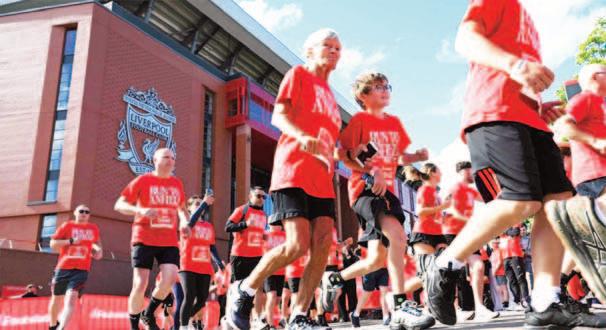
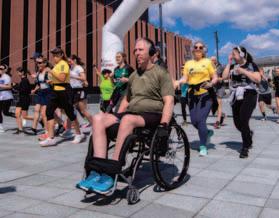
ANFIELD ARMY: More than 1,350 people took part in last year’s event
THERE’s an open invitation to take part in the annual Run to Anfield fun day and raise cash for Liverpool FC’s community work across the city.
Everyone crossing the finishing line will also get the chance to be part of a special Anfield pitch-side photocall to mark the occasion.
Two runs through Stanley Park are taking place – a five-kilometre route and a one-kilometre fun run.
Last year saw more than 1,350 people take part across both distances, raising vital funds to support the LFC Foundation’s health, wellbeing and community programmes.
All those joining the 5K (£30) or 1K (£15) events will receive an exclusive race t-shirt ahead of the event.
The event takes place on Saturday, August 1. n www.liverpoolfc.com/foundation/run-anfield
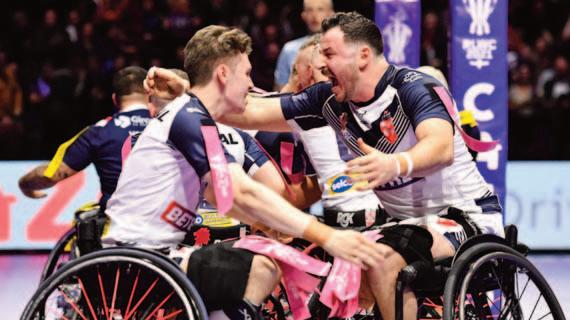
WANT to get involved in wheelchair rugby – playing or even coaching?
Well, here’s your chance…
The Rugby Football League has outlined its aim to create opportunities for women’s and junior wheelchair players to compete at international level.
Feedback gathered from players highlighted a clear appetite for more dedicated opportunities to play, a supportive and inclusive environment, and a visible pathway towards international competition.
Tom Coyd, RFL head of pathways (wheelchair), said:
“This programme is shaped by what players tell us they want, alongside what we believe they need to support their development. There is a clear appetite for more opportunities to play, to develop and ultimately to represent.
“Our ambition is to stage competitive international
women’s and junior matches. For that to become a reality, we hope to see other nations continue to grow and develop their own pathways alongside us.”
Two summer events are planned, with the junior pathway open to players aged 12-16, and the women’s to players aged 16 and over.
l Saturday, July 25 – junior and women’s exhibition matches to raise the curtain on the Wheelchair Challenge Cup Final, Robin Park Leisure Centre, Wigan.
l Saturday, August 29 – Junior and Women Festival, York Sport Centre, York.
The programme will also create opportunities for emerging coaches, player-coaches and support staff.
n To register for these events follow the link: https://www.rugby-league.com/getinvolved/play/wheelchair
Eye tests crucial to avoid sight loss
ALARMING figures predict the number of people living with the two most common sight conditions in England will soar by more than a quarter in a decade.
By 2036, over one million people will be living with glaucoma and almost 800,000 people will have age-related macular degeneration (AMD), warns sight loss charity RNIB. Glaucoma is a group of eye diseases that damage the optic nerve, often caused by high pressure inside the eye. It typically has no early symptoms but can lead to irreversible blindness if untreated, making regular checks crucial.
AMD causes changes to the macula, which is located at the back of the retina, and leads to problems with central and detailed vision. The condition can cause the central vision to become distorted or blurry, and over time, a dark area may appear in the centre of a person’s vision.
High risk
Louise Gow, the charity’s head of optometry, said: “In many cases, sight loss can be prevented by routine eye tests. We recommend that everyone has an eye test at least every two years, and more frequently if you are advised to do so by your optometrist because you are in a higher risk group.”
The stark figures come from RNIB’s updated Sight Loss Data Tool, the UK’s largest collection of eye health and sight loss data.
John Slade, RNIB’s head of strategic research, said: “The refreshed Sight Loss Data Tool provides detailed insight into the numbers of people living with sight loss, what eye conditions they’re living with and what risk factors for sight loss diagnosis may be present in an area.”
n www.rnib.org.uk/ professionals/research-anddata/sight-loss-data-tool/ n RNIB Helpline 0303 123 9999
BARRIER-BREAKING BARRIER-BREAKING
YEARS YEARS
Wheelchair user Lord
Mayor’s mission
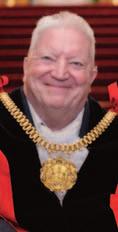
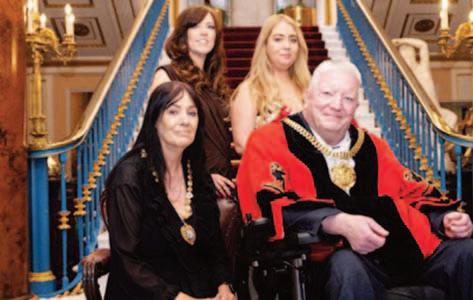
TOP JOB: Lord Mayor Councillor Shortall with wife Marie (Lady Mayoress), and daughters Melissa and Laura
Our time has come
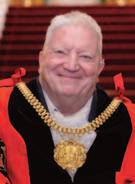
LIVERPOOL’s new Lord Mayor is determined to shine a light on inclusion and accessibility over the next year.
Cllr William Shortall said: “As the first wheelchair user to hold this office in our city’s 816-year history, I am deeply proud to represent a community that values inclusion, resilience and opportunity for all.”
Born and educated in the city, Cllr Shortall earned his law degree through part-time
study with The Open University and the Chester College of Law, balancing his community volunteering with life as a wheelchair user with muscular dystrophy (a progressive muscle wasting condition).
Cllr Shortall has worked in various roles from a pub, an electronic servicing business and volunteering in the community. He has been a councillor since 2019, representing Old Swan.
As chair of Liverpool City Council’s
Corporate Access Forum, he leads the city’s work to champion accessibility, strengthen inclusive policy, and ensure disabled residents’ voices shape decisionmaking.
Cllr Shortall’s wife, Marie, will be Lady Mayoress, and daughters Melissa and Laura will share the role of consort.
The Greenbank Project, based in Greenbank Lane, is the Lord Mayor’s charity of the year.
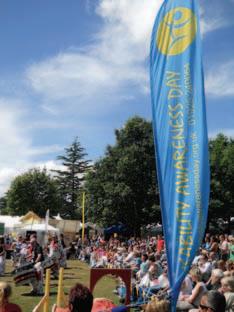
ORGANISERS of this year’s Disability Awareness Day are expecting record crowds at Walton Hall Gardens, near Warrington, on Sunday, July 12.
A huge tented village of marquees will house 150 exhibitors of wide-ranging products and equipment to help with independent living.
n WDP: Tel. 01925 240064.
Care homes ‘350,000
THE UK is heading for a care crisis, with demand for care home beds projected to almost double by 2050, leaving a potential shortfall of more than 350,000 places for older people.
New research from Noble Live-In Care, part of the CCH Group, shows that while the country had around 480,000 care home beds in 2023, the ageing population will push demand far beyond current capacity, to around 750,000 places by 2050.
Despite the looming need, capacity is barely growing. In 2023/24, care home places increased by just 1,000 nationwide. Per capita, there are now fewer beds available for every 100 people aged over 75 than a decade ago.
While building more care homes is one solution, experts warn it will not be enough and that scaling up live-in care could help.
Live-in care provides 24-hour support in the comfort of an older person’s own home, delaying or avoiding the need for residential care. It also helps the NHS by enabling faster hospital discharges and reducing bed-blocking.
About 820,000 people receive some form of home-based care, but only about 10,000 use live-in care.
By 2050, one in four Britons will be aged 65 or over and the 85+ population will more than triple, from 1.6 million in 2016 to nearly 5 million.
Kids treatment ok’d
HUNDREDS of children and young people in England living with Duchenne muscular dystrophy (DMD) are set to benefit from a new treatment.
The National Institute for Health and Care Excellence (NICE) has approved the use of givinostat, a treatment designed to slow the progression of DMD.
DMD is a rare inherited condition that causes progressive muscle weakness and loss of muscle function over time.
Law bid to cut pay gap beds short by 2050’
THE Government is to push ahead with its delayed plans to force large employers to report on the size of their disability pay gap.
The Government said the new laws will also require employers to report on the overall make-up of their workforce by ethnicity and disability and will force them to publish action plans to tackle any pay gaps.
The Trades Union Congress reported last November that the average difference in hourly pay between disabled and non-disabled workers was £2.24 an hour (or 15.5%), the equivalent of more than £4,000 a year for full-time workers.
The plans were first announced in the King’s speech in July 2024, and a consultation was held between March and June last year.
THEY CAN’T WORK NOT WON’T WORK
DON’T penalise young people unable to work. That’s the message disability charities are sounding after a major review into youth employment.
Former Government minister Alan Milburn’s interim report says a “catastrophic system failure” is leaving young people “abandoned” to long-term welfare dependency.
Disabled young people are especially affected, say national charities. James Watson-O’Neill, chief executive at Sense, said: “For too long, disabled people have been locked out of work not because of a lack of ambition or potential, but because systems and workplaces are not designed with them in mind.
– Ruth Owen, Leonard Cheshire ‘
Blamed for having no job, as if it’s a lifestyle choice
SYSTEM
“It is right that the review recognises the failure of government and employers to remove the barriers young disabled people face when trying to find and stay in work.
“From inaccessible recruitment processes to inflexible workplaces and a lack of tailored support, the system too often fails disabled people – especially those with complex needs.
“Disabled people should not be forced to fit around systems that were never built for them. It is the responsibility of government, employers and public services to create environments where disabled people can thrive.”
But Mr Watson-O’Neill said it must also be recognised that not all disabled people can work and that “their value cannot be measured by employment alone”.
He added: “A fair society is one that supports disabled people to live independently and free from poverty, whether or not paid work is possible.
“Offering more employment support for people on Universal Credit would be positive, but it must never
come at the cost of cutting financial support and pushing disabled people into hardship.”
RNIB policy lead Roisin Jacklin said: These are young people who want to work just like anyone else, but too often graduate recruitment schemes or apprenticeships don’t think about accessibility when designing their recruitment processes.
“Imagine trying to upload your CV to a website that doesn’t work with assistive technology, or to persuade an employer of your skills when they hold outdated ideas about what someone with sight loss is capable of with the right technology and workplace support.
“And once in work, it’s critical that the Access to Work scheme, designed to get disabled people into work, functions properly.”
Leonard Cheshire chief Ruth Owen said young people have been unfairly blamed for not being in education, employment or training “as if it were a lifestyle choice”.
She added: “Young people, especially young disabled people, are being let down by the very systems meant to support them.”
Driving bans put on hold
CAMPAIGNERS have welcomed Motability’s decision to suspend controversial technology that monitors how its customers are driving.
But they have also called for it to scrap other damaging changes that remain in place.
There are also concerns that some disabled customers may have already been removed from the scheme – and barred from using their vehicle – because of technology that has now been found to be inaccurate and unreliable.
Motability has attracted waves of complaints from customers over its Drive Smart scheme, with many criticising unreliable technology, loss of privacy, and lack of choice over signing up.
The scheme punishes those judged to be driving unsafely,
driving too often, or too late at night.
Motability Operations, the company which runs the Motability scheme, said it was pausing Drive Smart because “the experience of using the app has not been as it should be and has caused concern”.
The scheme uses a small device fitted to the windscreen and an associated mobile phone app – or a black box fitted inside the vehicle for those who cannot use the app –to measure how well the vehicle is being driven, how far, and how often, and to analyse journey patterns.
But the company said Drive Smart will no longer be included in
Young people lose out in PIP changes
MORE disabled people will no longer have to prove they are “sick enough” as often as they used to in order to get financial support.
Most new claims for the personal independence payment (PIP) will now last at least three years before they are reassessed – rising to five years at the claimant’s next review if they remain entitled to support.
But claimants under 25 will continue to face more frequent reassessments, drawing criticism from disability charities.
Harriet Edwards, director of influencing at Sense, rejected the Department for Work and Pension’s argument that young people should not receive long awards because their conditions might improve or it may impact their job prospects.
Extra
costs
Ms Edwards said: “It is wrong and damaging for the DWP to link PIP with employment prospects... PIP is not an out-of-work benefit, it exists to offset the significant extra costs that come with being disabled.
“Far from being ‘scarring’, benefits are a lifeline.”
The measures it is taking to reduce PIP reassessments – which apply to England and Wales – will save the department about £300 million.
leases for those new to the scheme or for customers under 30 when they renew their leases.
Those who have already been forced to sign up can withdraw from Drive Smart and delete the mobile phone app.
Despite the announcement, Motability Operations made it clear it was not scrapping the programme.
Instead, it said it would continue to review it and is setting up a panel of customers to help shape how Drive Smart develops.
Although the announcement was welcomed by many customers, there has been no let-up in calls for Motability to abandon separate changes to most new leases – to be introduced from July – which include sharp cuts to annual mileage allowances and significantly increased excess mileage rates, as well as reduced vehicle choice.
DWP officials say claimants whose needs increase should still ask for their PIP award to be reviewed to ensure they do not miss out on more generous payments, despite the changes.
The minister for social security and disability, Sir Stephen Timms, said it was an “important step” towards reforming the social security system “so that it better meets the needs of disabled people”.
He said: “This will make the system more efficient by freeing up the capacity of health professionals to tackle our inherited assessment backlog, while removing unnecessary pressure from disabled claimants whose conditions rarely change.”
FAILURE: Alan Milburn
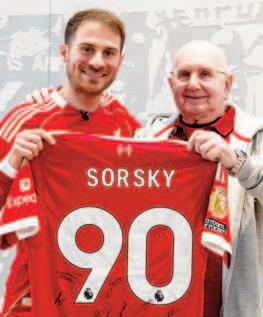
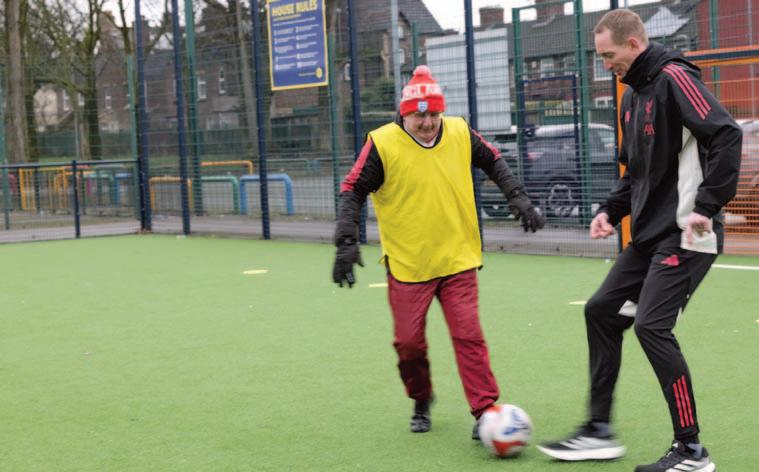
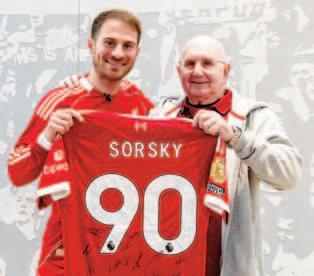
THESE Liverpool football stars may be separated by more than six decades but they still had plenty in common when they met up.
Lifelong fan Sol Sorsky, who at 90 is the club charity’s oldest player, was treated to a trip to the AXA Training Centre, where he was surprised by World Cup star Alexis Mac Allister.
The pair quickly bonded over their shared love of football, swapping stories and celebrating the game’s ability to connect people of all ages.
Sol was invited to the men’s first team training centre for a behind-the-scenes tour and chat with ex-Reds goalkeeper and LFC Foundation ambassador Chris Kirkland, before Mac Allister appeared to spend some time learning more about
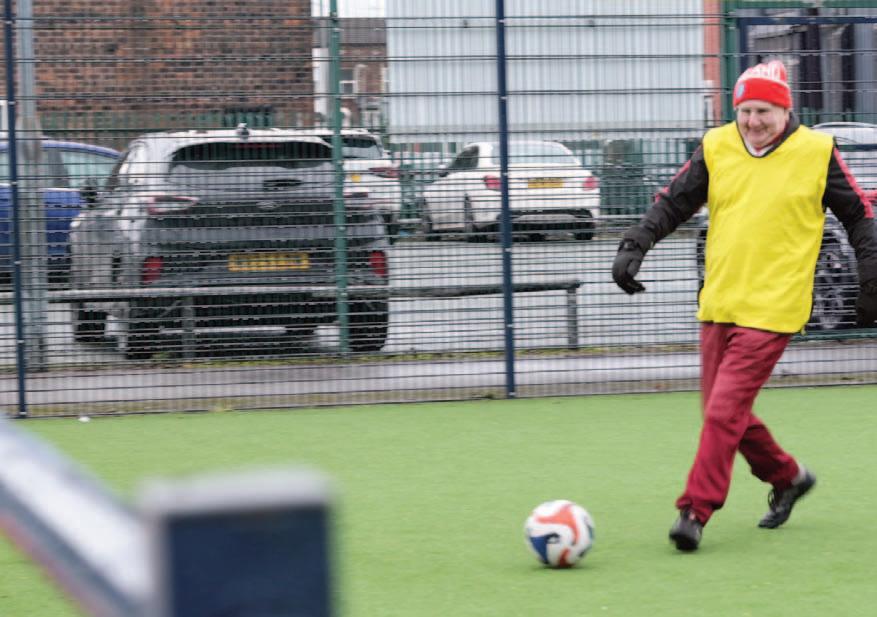
Sol’s story and to present him with a signed shirt. For Sol, the weekly walking football sessions – funded by the Premier League and Professional Footballers’ Association –mean far more than staying active.
Living on his own, the programme is a key source of social interaction and routine, helping him stay connected and avoid social isolation which is one of the core focus areas of the LFC Foundation’s community work.
Walking football provides a welcoming, inclusive environment where those taking part can enjoy the physical and mental health benefits of the game at their own pace.
n Want to get involved? Contact LFC Foundation: Tel. 0151 432 5675.
Welfare benefits and social care: everything you need to know
Opening doors to independent living
Disability Rights UK is a charity that’s been providing advice, and information about benefits for over half a century. Our publications and online resources have helped hundreds of thousands of people get the benefits, services and support they have a right to expect.
We also manage the Radar National Key Scheme, providing people with a health condition or disability, independent access to locked disabled toilets around the UK.
Full of tools and tactics to help you make a successful claim
Don’t miss out - find your way around the benefits maze
Thinking about making a claim for a benefit? Or applying for care or support services?
The answers you need, all in one place
Comprehensive guidance on the benefits system and your rights
How social care operates around the UK and how support needs should be met, at home or in a care home
Other services and resources for disabled people
Written in plain English by benefits specialists and updated every year, our handbook has been the trusted source of advice for both claimants and advisers for almost 50 years.
A4 paperback (304 pages): £52 post free £26 for individuals on benefits
Need priority access to accessible public toilets?
If you have a health condition or disability, finding a clean, tidy, accessible toilet can be a challenge.
The Radar Key gives you access to over 9,000 locked disabled public toilets around the UK. We manage the Radar National Key Scheme (NKS) and use profits from key sales to maintain the scheme.
Get a Radar Key
Manufactured and guaranteed by the makers of Radar NKS locks
Don’t risk buying a cheap copy that may not work
Genuine Radar Key £5 + P&P
GENERATION GAME: Alexis Mac Allister meets Reds fan Sol Sorsky, 63 years his senior. RIGHT: Sol in action
get what they need Helping patients to
MEDICAL staff are being reminded about the rights of patients with communications needs.
The NHS 6 Steps campaign aims to help people who rely on braille, British Sign Language (BSL), easy read, or language interpretation services. The six steps are:
l Check for any communication needs.
l Record those needs on health records.
l Ensure those needs are easy to see on health records.
l Share those needs with other health services, if being referred.
l Make sure those needs are met.
l Regularly review and update information.
All NHS organisations in Cheshire and Merseyside have interpreter and translation arrangements available for visits to a GP practice, hospital or a community health team.
Dr Fiona Lemmens, from NHS Cheshire and Merseyside, said: “Everyone has the right to communication support if they need it.
“We want patients, families and carers to know it’s okay to ask for this support – and if it’s not in place, we want to know so we can make things better.”
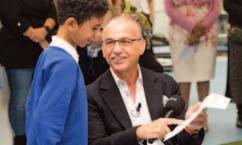
Dyslexia champ Theo
DRAGONS Den star and business mogul Theo Paphitis, labelled “thick” at school with unrecognised dyslexia, is the British Dyslexia Association’s newest vicepresident.
Theo, whose business empire includes iconic stationery brand Ryman, has served as the charity’s Empowerment Patron since 2024.
He said: “I am very proud to step into my new role as vice-president.”
Subtitles must be better
DEAF people are demanding better quality subtitles, which they say too often ruin their enjoyment of TV and stage shows.
Deaf-led charity Stagetext research shows that 63% of people questioned said subtitles need to be as close to perfect as possible to understand what is being said.
Stagetext chief executive, Melanie Sharpe said: “What the research reveals is that quality is the most important thing for audiences and we encourage venues and organisations to consider this.
“For some users, poor quality subtitles provide worse access than no subtitles at all.”
WAR ON TO CUT CLAIMS BACKLOG
TENS of thousands of disabled people needing help to move into or stay in work will have their claims processed quicker.
Nearly 500 new staff are being recruited to speed up processing times of the heavily criticised Access to Work scheme, which can help fund specialist equipment, support workers including BSL interpreters, and the costs of travelling to work for people with health conditions and disabilities.
Hundreds recruited for Access to Work
The recruitment drive will see 480 new case managers and caseworkers employed to help fix the backlog by September 2027 – representing a 72% increase to the 658 people working on the scheme. Demand for support has surged, with the number of claims more than doubling since 2018/19.
This, coupled with the backlog inherited from the previous Government – of 48,270 applications awaiting a decision at the end of June 2024 – means around 60,000 applicants are still awaiting a decision.
What the
charities say:
l Roisin Jacklin, RNIB policy lead: “This is a muchneeded step towards tackling the severe backlog that has left blind and partially sighted people waiting
around a year, and in some cases far longer, for vital support.
“It’s had a devastating impact, with many affected unable to carry out large parts of their role, and some even losing their jobs altogether.”
l Evan John, policy adviser at Sense: “Sense is really pleased to hear the Government is investing in Access to Work. We hear far too often from people we support that they have waited too long for this support to come through, which in the worst scenarios has resulted in people turning down job offers or leaving employment. Every disabled person who wants to work deserves a fair opportunity to do so.”
l Jon Sparkes, chief executive of learning disability charity Mencap: “This recruitment drive is a positive step. People with a learning disability can be fantastic employees, but many will need the right support to thrive in the workplace.”
l Harriet Oppenheimer, chief executive of RNID: “Being able to access the tools and support needed to work is essential. For many people who are deaf, especially British Sign Language (BSL) users who rely on interpretation, the scheme is vital to get the communication support they need to be able to do their jobs effectively.”
Harness our strengths
FINDING solutions to the bullying, discrimination and limited career choices faced by disabled doctors is the aim of a new investigation.
Despite legal protections already in place, doctors with disabilities in the NHS continue to face prejudice and significant barriers to their career progression.
A new £800,000 project will explore the challenges they face and offer practical solutions.
The findings will be shared with doctors, patients, employers, and regulators who it is hoped will co-develop an action plan to improve fairness and equity in the Health Service.
The project, funded by the National Institute for Health and Care Research, will be led by the University of Aberdeen.
The university’s Dr Anita Laidlaw said: “Disabled doctors bring unique strengths to healthcare, including empathy and lived experience, which enhance patient care.
“As researchers we understand the importance of a sense of being valued for doctors. This includes being confident that you can progress in your career.”
Alongside the University of Aberdeen, a collaborative network will include scientists and experts from the University of St Andrews, Edinburgh Napier University, Queen’s University Belfast and advocacy organisations for disabled doctors.
Professor Iain Atherton, from Edinburgh Napier University, added: “We cannot afford to see capable health care professionals unnecessarily fall short of career aspirations.”
‘AI can help us – but only if we help!’
THE chance to transform lives with artificial intelligence could be lost if disabled people are not involved in its development.
“There is the potential for AI products and tools to make a radical and positive difference to disabled people’s lives,” said Lara Davis, communications director at the Business Disability Forum.
“But there is also the risk that disabled people could be left behind. With AI developing at pace and one in four people experiencing disability at some point in their lives, this is not an issue that we can afford to overlook.”
Forty per cent of disabled adults surveyed believe designing, developing and testing AI products with disabled people is key to making them more accessible.
A poll of more than a thousand disabled UK adults asked for views on how to improve AI accessibility.
Future help
Responses included creating more user-friendly interfaces (38%), greater availability of information about how AI can support disabled people (37%), and more support to help disabled people get started with AI (36%).
Views were also sought on how AI could help disabled people now and in the future. Findings show that over a third of disabled adults believe AI tools can help by improving both communications (38%) and online experiences (34%).
Other commonly raised benefits include improved access to healthcare information (33%), better access to education (32%) improved accessibility of digital content (32%), support for independent living (31%), improved customer experience (25%) and better access to employment and experience in the workplace (24%).
Ms Davis added: “Businesses, AI developers and employers must actively consult with their disabled consumers and employees.”
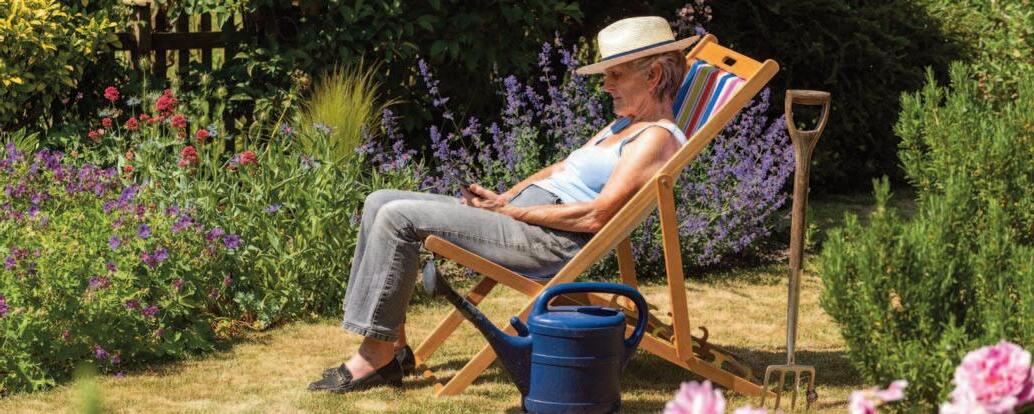
It’s really easy to keep your garden looking lovely without using a lot of water. Just follow our water saving tips below.
Plan your garden
Try planting drought-resistant plants, such as lavender. It looks fabulous and requires a lot less water.
Water out of hours
Water your garden in the early morning or late evening, when less water is lost through evaporation. Aim for the plant roots, not the leaves.
Ditch the hosepipe
Use mulch for moisture
Add a layer of mulch (e.g. bark chips, manure) over your soil to help retain moisture and keep weeds at bay.
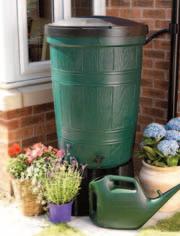
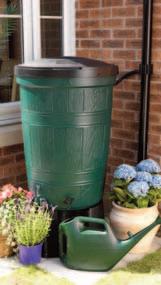
A watering can uses far less water than a hosepipe or sprinkler, and it’s easier to direct the water at the roots, where your plants need it most. If possible, invest in a water butt so you can use all that lovely rainwater in the garden.
We’ve got 10 water butts to give away. To be in with a chance of winning, simply send your name, address and phone number to Water Butt Competition, All Together Now, The Bradbury Centre, Youens Way, Liverpool, L14 2EP or email your entry to competition@ alltogethernow.org.uk with “water butt” in the subject line. Entries will be accepted until the end of the day on 31st July 2026. Terms and conditions apply, see unitedutilities.com for details.
Saving water isn’t just good for the environment—it can lower your water bill (if you’re on a meter) and cut your energy costs too.
Around 12% of your energy bill is spent heating water for things like showers, baths, cleaning, and appliances. By making a few simple changes, you could save around £100 a year.
• Keep showers to 4 minutes
• Only use dishwashers and washing machines when full
• Boil only what you need
• Use a bowl in the sink to avoid wasting hot water
MEDICAL NOTES
Cataracts top reason for hospital admission
EYE conditions were the biggest single reason people were admitted to hospital in England last year.
Cataracts were the most common hospital admission in 2023-24, with 374,072 cases – a 17% rise on the previous year.
Pneumonia showed one of the sharpest increases, up 18% year on year.
Abdominal pain (319,813 cases) and chest/throat pain (266,281 cases) were the fourth and fifth most common reasons for being admitted.
The findings come from a study by personalised medical bracelet specialists at The ID Band Company, which analysed NHS England data.
Fight for a fair deal
TACKLING inequality suffered by people living with multiple sclerosis in the UK is the subject of research being paid for with new funding.
MS Trust’s first annual £100,000 research grant will support projects that improve services, strengthen multidisciplinary care and lead to better outcomes for people with MS.
The charity is also backing a study at the University of Sheffield and Sheffield Teaching Hospitals NHS Foundation Trust to see if mobility sensors can be used to monitor how well people with progressive MS walk in their homes and community.
Heart like never before
THE WORLD’s most detailed 3D images of the mechanical forces at work inside a living, beating heart are the aim of a £4m research project.
The seven-year project follows an initial 18-month study that provided the first proof that this ambitious idea can be turned into reality.
Together, scientists at University of Glasgow, the University of Sheffield and Imperial College London will develop imaging techniques to measure the forces inside hearts of live zebrafish.
These techniques will provide new insight into the forces which play a crucial role in sculpting the human heart in normal health and in disease.
Professor Jonathan Taylor, at the University of Glasgow School, said: “We hope to unlock new understanding of heart disease and how to treat it.”
WIRELESS pacemakers are set to give more people with slow heart rhythms extra peace of mind by reducing the risk of complications.
Pacemakers are needed by around one in a thousand people whose heart’s natural electrical signals do not work properly, causing the heart to beat too slowly.
Traditional devices are implanted under the skin in the chest and connected to the heart with wires. While very effective, they are sometimes linked with complications such as life-threatening lead infection.
Leadless pacemakers do not require a chest incision, helping to reduce the risk of infection and other complications, and new national guidance approves their use across the NHS.
The guidance, from the National Institute for Health and Care Excellence (NICE) follows a major review of international research involving more than a million patients.
Simple urine test can detect kidney disease
KILLER IN HIDING:
Symptoms often only show when the disease is at a late stage
ASIMPLE test for chronic kidney disease could save millions of lives across the world.
Under-diagnosis of CKD has contributed towards it becoming the ninth leading cause of death globally.
Early diagnosis is critical to successful treatment, and the condition can be detected using a simple and affordable urine test.
But the test is not routinely used across all healthcare settings, and often only when kidney disease has already progressed. In mild and moderate stages of the disease, people rarely experience any symptoms. They may develop only in the most severe stages, close to the time when dialysis or kidney transplant may be required. Without successful treatment it can be fatal.
The lack of symptoms likely contributes to low rates of diagnosis and awareness.
Kidney Research UK’s director of policy Alison Railton said: “We have shown that the failure to address the diagnosis crisis in the UK alone could result in as many as 650,000 more lives being blighted by advanced chronic kidney disease
“Governments need to prioritise resourcing health services to diagnose at-risk patients, such as those with heart disease, high blood pressure or diabetes earlier, and deliver urgent, preventative care, or millions of patients and economies worldwide will suffer the consequences.”
Chronic kidney disease, a longterm condition where the kidneys don’t work as well as they should, currently affects 844 million adults worldwide and is projected to become the fifth leading cause of death by 2040.
It is estimated that around 7.2 million people have CKD in the UK.
Diabetes: heart failure screening needed
MANY people living with diabetes may have undiagnosed heart failure, a recent trial found.
The findings of the TARTAN-HF trial suggest a simple heart failure screening programme could dramatically reduce the
risk of hospitalisation and death. The success of the trial – led by the University of Glasgow – strengthens the case for routine, widespread heart failure screenings for high risk patients with diabetes.
Dr Kieran Docherty said: “We identified
heart failure in a large proportion of people living with diabetes, emphasising the need for a heart failure screening strategy
“The strategy used in our trial is simple and easy to implement and will improve outcomes in patients with heart failure.”
250,000 250,000
250,000
READERS . . . BRINGING PEOPLE TOGETHER READERS . . . BRINGING PEOPLE TOGETHER
All Together NOW! has been a real help to us. We’ve been involved with the paper since its launch in 2005 and always get a great response to our adverts. Here’s wishing the paper every success.”
—
Steve Curran, co-director, DaVinci Mobility
“All Together NOW! brings together so many people and organisations – there is no doubting the importance of this excellent publication.
“The newspaper makes a unique contribution to improving the quality of life of disabled people and their families.
“We are delighted with the huge progress the paper has made.”
– Steve Morgan CBE, chairman Steve Morgan Foundation
“OF ALL the marketing that United Utilities puts into the community, nothing generates as much feedback and response as All Together NOW!
“It is a great platform that’s helping us to get our messages to our vulnerable customers.”
— Louise Beardmore, Chief Executive Officer United Utilities
“All Together NOW! is a valuable link to hundreds of thousands of disabled people. We have used this free charity newspaper to promote the services of our mobility shops and the annual Disability Awareness Day and know that it is reaching huge numbers of people who otherwise would go uninformed.”
— Dave Thompson Warrington Disability Partnership
“WE HAD a brilliant response to your article about our Atrial Fibrillation Ambassador programme – and lots of people phoned us to find out how they could become an AF Ambassador. Thanks to All Together NOW! many more people with an irregular heart rhythm will now be detected, get the right medication and this will prevent them from having strokes.”
— NHS Innovation Agency
“WE’VE advertised in All Together NOW! for the past 14 years – and haven't missed a single issue. It's a fantastic publication that does a brilliant job of presenting disability interests and issues in a positive and inclusive manner. We get a great response to our advertising – and the team is always great to deal with.” – Donald Pow, MD, Allied Mobility
“WE HAVE proudly advertised in All Together NOW! for over 12 years. It is an excellent newspaper, with endless interesting and helpful facts for all readers.
“We alway receive great responses to our advertisements.
“The newspaper is freely available to so many people throughout the North West and is appreciated by so many.”
– Heather Maddox, A-Line Mobility
City action plan ‘will strengthen help available’
PLANS to improve the lives of people living with dementia and their families across Liverpool have been unveiled.
The Dementia Strategic Action Plan aims to strengthen support services, improve awareness and ensure people living with the condition can stay active and connected to their communities.
It also highlights the importance of supporting carers and loved ones who play a vital role.
In Liverpool, there are currently around 3,500 people living with a diagnosis of dementia. It is estimated that a further 1,600 people may be living with the condition without a formal diagnosis.
Liverpool City Council will be working in partnership with health organisations NHS Cheshire and Merseyside Integrated Care Board, Liverpool Dementia Action Alliance, people with lived experience, Mersey Care NHS Foundation Trust, the Alzheimer’s Society, and primary care.
Fact file
l DEMENTIA is the name given to a set of symptoms that affect the normal functioning of the brain. Brain cells become damaged and stop communicating properly.
l ALZHEIMER’S, the most common type of dementia, develops when abnormal structures form in the brain and eventually cause cells to die. Affects memory, wayfinding and thinking at first.
l VASCULAR dementia, the second most common type, is caused by a lack of blood to the brain. Early symptoms vary but include problems with thinking, memory and mood.
l RISK FACTORS for dementia – like age and genetics – we can’t change. But others, such as poor diet and lack of activity, we can do something about. Quit smoking, drink less alcohol, and eat plenty of fruit, vegetables, whole grains, lean protein, and healthy fats. to Limit added sugars, salt and processed food.
Mates really matter
GETTING out and seeing friends is not just good for your social life – it’s an important way to keep your brain in good shape.
Socialising, joining clubs and organisations and being part of a church community all help reduce social isolation and in turn protect the brain in later life, a study has found.
Dr Jo Hale from the University of St Andrews in Fife, who led the research, said social engagement is good for our mental health.
“It is also important for our cognitive health. Constructing the scaffolding to allow for regular social interaction, especially for those who may not have family or friends nearby, should be a priority.”
l Boost
brain and body
l
If worried, don’t delay
DEMENTIA: WHAT DEMENTIA: WHAT
Reporting by GERRY CORNER
AS WE grow older, many of us will experience that feeling at one time or another.
A name we really ought to know eludes us, and we wonder – is this a simple lapse of memory, one to be expected as the brain, along with the rest of us, shrinks a little.
Or is something more serious going on?
More than heart disease or cancer, dementia is the most feared health condition of all. More feared even than death itself.
But dementia is not inevitable. Nor should simple lapses of memory be reason to assume the worst.
Many conditions can affect memory, among them stress, depression, sleep problems, medication side effects, thyroid issues, vitamin deficiencies, and even hearing loss.
And there are many steps you can take, at any age, to improve the health of your brain and so reduce your chances of falling prey to the condition.
If you do receive a diagnosis, it doesn’t mean your world will fall apart overnight. With the right support in place, many people can continue to live well.
Who qualifies for benefits?
IF YOU are living with dementia, or caring for someone with the condition, you may be eligible for some benefits. Financial support is not provided with a diagnosis of dementia alone but based on a person’s ability to care for themselves and stay safe.
If you’re over State Pension age, the main benefit is Attendance Allowance. That’s for people who need help or supervision because of a health condition.
If you’re under State
Pension age, it’s usually Personal Independence Payment (PIP), which looks at daily living and care/mobility needs.
If someone is providing unpaid care, they may be eligible for Carer’s Allowance, depending on hours of care, earnings rules, and whether the person cared for receives a qualifying benefit. There can be significant help with Council Tax, including discounts in some cases.
If you need to go into a care home, you might be
eligible for NHS Continuing Healthcare. This is when the NHS pays towards fees. A diagnosis of dementia alone is not enough to qualify you for CHC, you must be assessed as having a “primary health need”. This depends on how dementia affects you. For advice, call . . . n Alzheimer’s Society: 0333 150 3456.
Take Tom Hinde, an ex-Royal Navy seaman diagnosed more than eight years ago. He still works in a pub, co-hosts a podcast, recently underwent a 27-kilometre cycle ride, and has started playing golf again.
Others with a diagnosis have taken up dancing, play the trombone and even learned to ride a penny-farthing.
Every case is different and what anyone can achieve will depend how far advanced
the condition is, but there is one thing experts agree on – the sooner you act on any concerns, the better. Reece Richards, north-west head of the Alzheimer’s Society, said: “With the right support, people can make the most of life.
“Delaying is usually the worst option. Lots of things can look like dementia. The only way to separate fear from facts is to get assessed. Early diagnosis is crucial because it opens the door to treatment, support and planning.”
Nourishing our brain and our body is the best way of lowering the risk of developing dementia or at least slowing down the rate at which our mental faculties decline.
It’s never too early to start, but as Dr
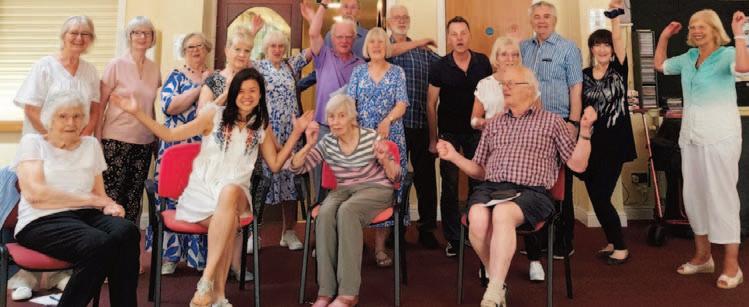
Dorothy Tse and an eager group of volunteers in the North West are showing, over-65s can also make their brains work better for them.
In Dr Tse’s Ageing With An Active Mind project, the Edge Hill University neuroscientist works with University of the Third Age (U3A) groups in Aughton and Ormskirk to boost their mental wellbeing. With higher-than-average dementia rates in the region, the participants are being encouraged to adopt brain-friendly habits. Other U3A groups are keen to get involved and there are encouraging signs that healthy habits are being adopted. The challenge is to persuade people to stick to them long-term.
Dr Tse said: “All these participants are 65plus so it’s never too late!”
MINDFUL: Dr Tse (front, second left) with enthusiastic members of the u3a Aughton and Ormskirk health and wellbeing group
THIS VITAL LIFELINE
seeing GP l Diagnosis doesn’t mean life is over
ON AIR:
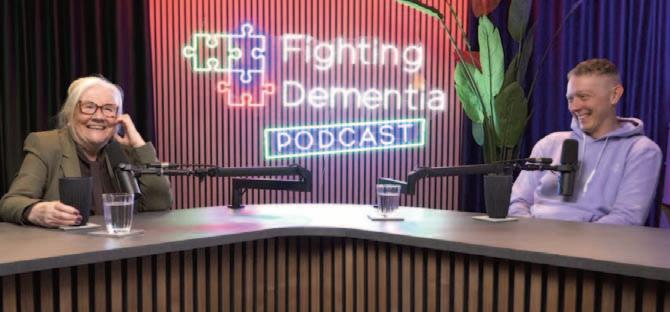
Fran with podcast co-host
YOU CAN DO
FRAN MURT is living, breathing, laughing, joking proof that there is life after a diagnosis of dementia.
Six years on from being told she had Alzheimer’s, Fran co-hosts a popular and inspirational podcast, Fighting Dementia, while the former nurse gives talks about the condition to student nurses across the region. The condition has had a profound impact on her day-to-day existence, from her physical health, balance and spatial awareness to her sense of taste and smell and ability to care for her grandchildren.
Yet Fran, 70, from West Derby, Liverpool, remains positive, cheerful and, as far as possible, fully occupied. “I decided when I was diagnosed,” she says, “I wasn’t going to let it ruin the rest of the life that I had.
“I’m not all singing and dancing all the time but I still want to make the best of the day.”
Rather than feeling crushed, confirmation of what she suspected came as a relief. “It gave me hope, a proper diagnosis I could work with.
“I’m not saying I’m glad I got it, but I knew then where I was and thought, right, I can sit back and let this take me – or make a life for myself.”
A couple of years of worry and uncertainty, mislaying valuables, calling things by the wrong name, came to a head when Fran, a clinical nurse manager, attended a training session.
“I went to a cardiac update on how to use a defibrillator and when I got there, I couldn’t use it. I had worked with that stuff all my life. I’d been a cardiac nurse, worked on intensive care.
“I burst out crying and thought ‘what the hell happened there’. I couldn’t do it, I just couldn’t do it. I felt embarrassed because I was known as a good nurse and I did my job well.
“I left work that day and I never went back. I thought I’m not endangering any of my patients.”
At home too, the reality of dementia showed up in every aspect of Fran’s life. “It’s being in a conversation and not being able to keep a grasp of it when you’re out with your friends.
“I’ve lost my sense of taste and smell; your legs, your arms, everything goes weaker.”
Fran added: “It was hard telling the kids, and hard as a nan because I couldn’t have my grandchildren on my own and I got upset and I said ‘I’ll never forget you and I’ll be ok, and if I do forget you, you know you’re in here’ (she points to her heart).”
But as elements of Fran’s old life have been closed off to her, she has forged a new way.
She joined a pilot scheme that involved keeping a diary and having a plan for the day . “That helped me tremendously because it gave me the impetus to do something rather than sit and do nothing, and some of the
things I couldn’t do, well, I’d make myself a new life around that.”
“And now I’m doing the podcast, and I speak to the student nurses about dementia and Alzheimer’s and how people should react to those who have the disease, and that it’s not the end of our world.
“That’s what the podcast is about, encouraging people to believe it’s not the end, you can go out and learn new skills, change your behaviour.”
While the support of external agencies and support groups is invaluable, husband Frank, 71, their children, and the ability to see the funny side all help to keep Fran’s mind active and her mood positive.
“We all have such a good sense of humour and that’s got us through. She jokes: “My daughter’s made up she’s got my power of attorney card!”
Frank adds: “I’ve always said acceptance is the biggest thing, because if you try and fight against everything it makes it that much harder.”
Fran recalls how people around her misunderstood her can-do approach to her diagnosis: “Friends were saying, ‘Fran,you’re not accepting it’. I said, ‘I am accepting it!’”
And she insists: “It doesn’t mean you’re going to go downhill fast when you get that diagnosis. For people who get diagnosed quick enough, there’s so much out there –people just need to be educated on what to do, and who can help.
“I want to do the best I can with this. It’s not always easy, it’s not always plain sailing, but I’ve organised my life around it.
“My dad always said to us, ‘Do the best you can with what you’ve got’. I think ‘what’s the alternative?’ I’m not lying on a couch all day, I can’t do it.”
Frank laughs: “It’s trying to get you to stay in for a day that’s the problem!”
Engaging with 250,000 people across the region . . .
You’re not alone: Support groups across region
SUPPORT can vary greatly according to where you live.
Merseyside and Cheshire are among the UK’s better served regions, with an array of support and activity groups, from Singing For The Brain in Southport, to the Chester Zoo memory cafe, and Sedgemoor Day Service in Norris Green, Liverpool, with activities such as gardening, relaxation sessions and music.
Based at the Museum of Liverpool, House of Memories (www.liverpoolmuseums.org.uk/house-ofmemories) is an award-winning programme providing services including dementia awareness workshops for carers, a free app enabling people with dementia and their carers to share memories, and House of Memories On The Road, a mobile cinema experience that visits care settings and community locations.
n The Alzheimer’s Society can provide more details of support available near you, either online at www.alzheimers.org.uk/find-supportnear-you, or by ringing their support line on 0333 150 3456.
‘Optimists do better’
THE more optimistic a person is, the lower their risk of developing dementia, according to a new study.
It raises questions about whether mindset could play a role in protecting brain health, say US researchers.
They followed the lives of a large group of older adults for up to 14 years and the key finding was striking – people with higher levels of optimism had a 15% lower risk of developing dementia.
The study does not prove that optimism directly prevents dementia. However, researchers suggest there are several ways in which it could help protect brain health:
l Lower stress levels. People with a more positive outlook often experience less chronic stress, which is known to affect cognitive health over time.
l Stronger social connections. Optimistic individuals are more likely to have supportive social networks.
l Healthier behaviours. Optimistic people tend to be more physically active and less likely to smoke – both factors linked to reduced dementia risk.
One of the more encouraging aspects of the findings is that optimism is not fixed. Previous studies have shown that interventions, such as psychological exercises and structured programmes, can help people develop a more positive outlook.
However the researchers caution that any attempts to promote optimism would need to take account of individual circumstances and cultural differences.
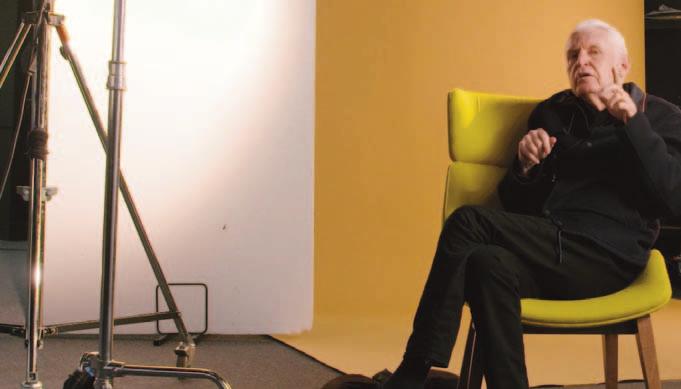
Leon Rossiter in the studio
EV network is put to test in epic journey
A DISABLED driver has undertaken a 2,800mile journey in an electric vehicle to test the accessible charging network in a way never done before
Anjna Patel 68, who lives with severe rheumatoid arthritis, took on the return journey from Birmingham to Spain, organised by Disabled Motoring UK.
A DMUK trustee, Anjna and colleague Zoe Rush were recording the barriers and challenges faced when locating and using the EV charging infrastructure, alongside the added complexities of travelling with mobility issues.
The journey to Alicante and back, involving a total of 16 charging stops, was designed to put those concerns to the test.
At a time when electric vehicles are rapidly becoming the norm, accessibility is still lagging severely behind. In the UK, just 2.3% of onstreet charge points are currently considered accessible, while consistent standards across Europe are only just beginning to be developed.
The additional risks and concerns often faced by women, older people, and disabled people contribute to fears around transitioning to electric vehicles.
A full report will be available later in the year.
Stars and fans to enjoy the ride
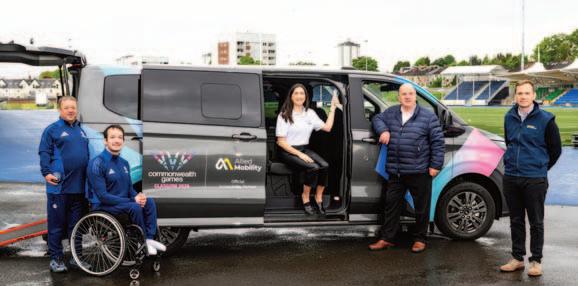
AFLEET of accessible vehicles, electric scooters and wheelchairs will be at the ready to ensure a smooth experience for all at this year’s Commonwealth Games.
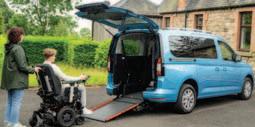
Along with wheelchair accessible vehicles (WAVs) for the Para athletes, a range of mobility aids will be available for spectators at the Glasgow games, along with dedicated signage to highlight accessible routes.
The Games return to the city from July 23 to August 2, with 10 days of sporting events and the largest Para sport programme in the competition’s history.
Allied Mobility, the UK’s leading WAV manufacturer, is the event’s Official
Accessibility Partner, with sister company Mobility Solutions providing equipment to the public.
Both are part of Glasgow-based employer, Allied Vehicles Group, which employs over 800 staff in the city and across Britain and Europe.
Para athlete Sean Frame said: “Allied Mobility being involved in the Games and supporting disabled athletes is absolutely amazing and it will be invaluable to the athletes selected to compete.
“It will make it so much easier and less stressful not having to worry about transferring out of our day chairs as we have to do in normal cars.
Sean, 29, who won silver in the T53/54 marathon at the 2022 Games in Birmingham, added: “It will also make it a more relaxing and enjoyable experience when travelling to different venues.
“These are my second Games representing Scotland and I am very excited and very proud to get to compete in my home city of Glasgow.”
Jade Gallagher, the Games chief operating officer, said: “Accessibility is central to our venue planning for Glasgow 2026.
“We’re hosting the largest Para sport programme in the history of the Commonwealth Games and we need our operations to match that ambition.
GAMES PLAN: From left, Stuart Sloane (Team Scotland and Allied Mobility employee),Sean Frame (Team Scotland), Jade Gallagher (Chief Operating Officer at Glasgow 2026), Peter Facenna (MD at Allied Mobility) and Gerry Facenna (Allied chairman)
“Para athletes and visitors across Glasgow will benefit from Allied Mobility’s partnership and expertise in accessibility, helping in part to make the Games inclusive.”
Allied chairman Gerry Facenna added: “As a wheelchair accessible vehicle manufacturer that has been helping to support the independence of people with disabilities for over three decades, we’re extending our commitment to providing accessible travel at this year’s Games, ensuring Para athletes and Commonwealth Teams can travel comfortably, confidently and with ease to competition venues.”
n Tickets for Glasgow 2026 on sale via www.glasgow2026.com
Card lesson that could save lives
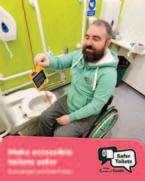
A SMALL charity has managed to deliver 200,000 warnings about the danger of interfering with the red emergency cords in accessible toilets.
The emergency cord, a vital safety element in every accessible toilet, is frequently found tied up, cut short or out of reach, leaving disabled people unable to call for help in an emergency.
Disabled access charity Euan’s Guide has distributed Red Cord Cards –designed to be attached to the emergency cord – across the country. Each card reads: “This red emergency cord must hang freely to the floor. If it does not, it may prevent a disabled person from asking for help.” n www.EuansGuide.com
JOHN – A GIANT LEAP CLOSER CLOSER TO SPACE TO SPACE
Sponsors sought for amputee astronaut
Mobility products, sales, serving & repairs
Rise/recline & fireside chairs
Adjustment beds & stairs-lifts
3 & 4 Wheel walkers
Bathing, kitchen & continence products
Free no obligation assessments in-store or in your home
Pre-owned equipment available
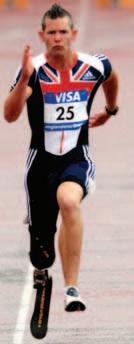
PARALYMPIAN and NHS surgeon John McFall has taken another giant leap towards a history-making journey into space.
John, who lost his right leg in a motorcycle accident at the age of 19, last year became the first person with a physical disability to be medically cleared for a long-duration mission in orbit.
Now an agreement between the UK Government and US commercial space company Vast means the UK Space Agency can secure sponsorships to fund a spaceflight for him.
And the research he aims to carry out could have significant benefits for disabled people on Earth.
Father of three John, from Hampshire, hopes to be sent to Vast’s Haven-1 – intended to be the world’s first commercial space station and scheduled for launch next year.
The mission would see John conduct pioneering research including into how prosthetics perform in microgravity, and how people move and balance in space.
Among the potential benefits for disabled people back on Earth could be the design of lighter, more adaptable prosthetics; a better understanding of conditions like osteoporosis or muscle wastage and new insights into rehabilitation techniques for amputees.
John, who won a bronze medal as a sprinter at the 2008 Beijing Paralympics,
said: “Signing this agreement with Vast is incredibly exciting. If we can make this mission happen, it won’t just be a milestone for human spaceflight, it will send a powerful message about what people with disabilities are capable of, and that there should be no limit to what you can achieve – on Earth or in space.”
Tim Peake, the first UK astronaut to take part in a mission to the International Space Station, said: “John McFall is an inspiration – not just to the space community, but to everyone who has ever been told there are limits to what they can achieve.
“This agreement is a landmark moment for inclusive human spaceflight, and I hope it brings us one step closer to seeing John in space.
“Space has always pushed the boundaries of what’s possible, and John’s mission would do exactly that.”
Space Minister Liz Lloyd added: “John McFall’s story is one of extraordinary determination — as a Paralympian, a surgeon, and a pioneering astronaut.
“This agreement with Vast brings us one step closer to making history, and to showing the world that space is for everyone.”
COUNTDOWN: Haven-1 space station. Left and below, Paralympian John. Main picture: Vast
Reasons to be cheerful!
Hello
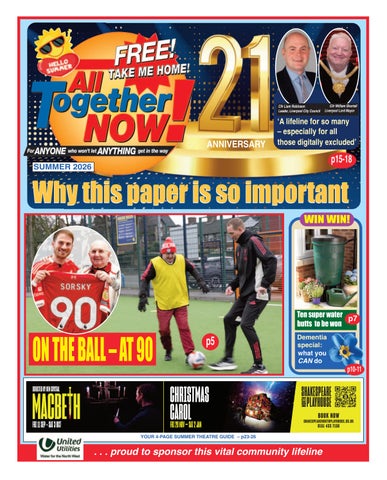
All Together NOW! is 21 years old – and, boy, have we got a lot to celebrate!
Your FREE and favourite newspaper, which has become a lifeline to tens of thousands of vulnerable people, has itself been thrown a vital lifeline.
The Big Lottery’s Community Fund has sent us a £20,000 anniversary present to help us get through the coming year –recognising the paper’s importance to huge numbers of people affected by disability and ill health, and especially the one in five across Merseyside and Cheshire who are digitally excluded.
ANNIVERSARY
Other generous gifts have come from the UKF Foundation and the Persula Foundation.
The money, which will go towards our printing and distribution costs, is a massive boost for our small, hard-pressed charity, and gives us a fighting chance of getting through another year.
We are most thankful for their support –and, of course, from the many readers who have sent us personal donations over the years.
I hope you enjoy reading this very special edition. As you will see, we’ve received some fantastic letters from well-wishers –
l THANKS to all those who are helping to keep us going –and for the many generous personal donations. We are also very grateful to the following organisations for their support:
Steve Morgan Foundation; Allied Vehicles; Da Vinci Mobility; Albert Gubay Foundation; North West Fuels; Liverpool Metro Mayor Covid-19 Fund; Department for Culture, Media and Sport; Albert Hunt Charitable Trust; Liverpool City Council Covid Fund; Arnold Clark; Bosus Engineering; Pilkington CT; Rainford Trust; Price
including Liam Robinson, leader of Liverpool City Council, and the city’s Lord Mayor, Councillor William Shortall. Local MPs, Paul Barker (Wavertree), Kim Johnsom (Riverside) and Patrick Hurley (Southport) have also sent kind words, as have longtime supporters Lady Anne Dodd, the Rt Hon Jane Kennedy, Mike McCartney, and Steph Smith, priority services manager at United Utilities. Onwards and Upwards! See you in September.
TOM DOWLING, editor
Perry CT; West Derby Wastelands; Eleanor Rathbone CT; John Moores Foundation; ACSIL (Amputees and Carers Support in Liverpool); Medicash; Dowager Eleanor Peel CT; Ken Dodd CT); Anne Duchess of Westminster Charity; Duchy of Lancaster Benevolent Fund; W O Street Foundation; Geoffrey and Pauline Martin Trust; PH Holt Foundation; UKH Foundation; Persula Foundation; Big Lottery Community Fund
Want to help? See Back Page
Reaching the
people too often ignored
AS LIVERPOOL celebrates 21 years of All Together NOW! it is important that we recognise the vital role this publication plays in reaching people who are too often overlooked.
For tens of thousands of residents who are digitally excluded, this newspaper is not just a source of information – it is a lifeline that connects them to their community, to opportunities, and to support.
All Together NOW! has stood as a powerful example of what inclusive communication looks like in practice, ensuring that older people, disabled residents, carers and vulnerable communities are not left behind.
As we mark this milestone, I would like to thank everyone involved for their dedication and commitment.
At the same time, more support is needed to secure its future.
I would encourage partners, organisations and businesses across our region to get behind this invaluable publication so it can continue to inform, empower and connect our communities for many years to come.
A lifeline that’s personal to me
AS THE first wheelchair user to serve as Lord Mayor in more than eight centuries, I understand personally just how vital access to information, connection and opportunity is for our communities.
All Together NOW! has been a lifeline for 21 remarkable years – championing inclusion, breaking down barriers, and ensuring that tens of thousands of disabled, older and vulnerable residents are not left behind, especially those who remain digitally excluded.
This unique, home-grown publication is far more than a newspaper – it is a gateway to independence, confidence and community. Its continued success is a testament to the dedication, resilience and lived experience of its remarkable team.
I wholeheartedly congratulate everyone involved and encourage partners, businesses and organisations across our region to support its future.
Councillor Liam Robinson Leader of Liverpool City Council
WHEN I saw the message Ken sent all those years ago in the First Anniversary edition in 2005, I smiled.
Ken always spoke from the heart.
We both supported All Together NOW! because it was a newspaper that cared. It cared for the people out there who may have thought they were on their own. It cared about giving out up-to-date news and information in these everchanging, challenging times. It still cares.
There are always upbeat stories, features and news items that reinforce its motto:
For anyone who won’t let anything get in the way. It is a voice of optimism. ALL TOGETHER NOW Those three words say it all. Ken was a communicator and he knew what a lifeline it was for so many people helping those with disabilities, ill health and old age.
I will continue to support it for all the wonderful work it does.
Much happiness on your milestone in the media.
Well done on 21 years of being a trailblazer. You are making a real difference.
With my best birthday wishes from Knotty Ash.
Lady Anne Dodd
‘ ‘ ‘ ‘
“I WANT to offer a huge congratulations to All Together NOW! on an incredible 21 years. The newspaper is a lifeline for tens of thousands of disabled, older, and vulnerable people across Merseyside and Cheshire – especially for digitally excluded people within our region, for whom ATN is a precious resource that supports them to step out of social isolation and be more independent.
That ATN has continued for 21 years is a true testament to the dedication and hard work of the inspiring Tom Dowling and his team.
Tom has turned his own personal pain and hardship into a source of light, hope and support, helping others overcome the challenges and barriers he has faced.
Here’s to celebrating this milestone – and to supporting All Together NOW! for many more years to come.
Paula Barker, MP for Liverpool Wavertree
CONGRATULATIONS to All Together NOW! on your 21st birthday: you have been, and continue to be, a powerful advocate for our disabled residents, providing connection, information, support and a voice to those in power.
At a time when so many printed newspapers are folding, it is testament to the team behind All Together NOW! that you remain a vital voice for those too often excluded. I wish you many more years ahead.
Kim Johnson, MP for Liverpool Riverside
‘I HAVE known All Together NOW! for many years and always been conscious of the wealth of information and strength of advice it contains.
Thousands of people have found it to be a lifeline when navigating the complexities of welfare support. It provides a solid foundation for people excluded from society and I hope it continues for years to come.
Also, it has puzzles to help you stay sharp! Rt Hon Jane Kennedy
WHY THIS PAP WHY THIS PAP
CONGRATULATIONS to All Together NOW! on milestone.
For 21 years, this new lifeline for disabled, vu across our region, esp digitally excluded. At a time when loneliness and challenges, trusted and accessib more than ever. I’ve lived all ove Prescot, to St Helens, to Aigburt I know full well the high esteem All Together NOW! is held acros Pa
All Together NOW!
that make worth fighting for
HUGE congratulations to Tom and the whole team as All Together NOW! celebrates its 21st anniversary.
We’re incredibly proud to have supported such a trusted and important newspaper – one that has brought people together and made a lasting, positive difference to the community for over two decades. Tom, your commitment and passion have been truly inspiring, and this publication is a testament to your hard work and belief in its purpose.
Here’s to everything All Together NOW! represents, and to many more years of the newspaper being at the heart of the community.
Steph Smith, Priority Services manager, United Utilities
IN TODAY’s chaotic world, when so many papers and magazines are going under, it’s reassuring to hear that All Together NOW! is not only surviving, but celebrating its 21st anniversary this year.
But it’s not been easy for the team with old supporters having to drop out.
Any help you can give them will be greatly appreciated
this year . . . ANY help, particularly from old friends like Metro Mayor Steve Rotheram and the NHS.
So, if you see All Together NOW! (great Farm track, that!) don’t forget it’s FREE and gives lots of disability news and features. Pick up a copy, read lots of interesting news –and please give any help you can – however small (or BIG) Mike McFab McCartney – Thank U Very Much.
PER MATTERS! PER MATTERS!
‘I LOVE birthday cakes – even if it means more candles to light each year.
There is one anniversary celebration I am so pleased and proud to be part of . . . the success, achievements and ongoing goals of All Together NOW!
It is a unique, mould-breaking, awardwinning publication with a big heart. It informs and entertains thanks to a tireless, dedicated and talented team.
The joy of this newspaper is that individually and collectively the people who work for it and those who read it and support it are part of its longevity and relevance in our communities.
All Together NOW! – past, present and future . . . I salute you, and look forward to lighting more candles in the years ahead.
Peter Grant, journalist, author and broadcaster
o everyone at reaching such a fantastic
wspaper has been a real ulnerable and older people pecially those who are isolation remain major ble information matters er Merseyside – from th and now Southport – and in which ss the whole area.
IT’S QUITE amazing to realise that All Together NOW! – the only newspaper of its kind in the UK – is now 21 years old.
This is solely due to the dedication, hard work and sheer tenacity of its founder and editor, Tom Dowling, and his small team.
I have known Tom since he was a young journalist on the Liverpool Echo when he came up with the idea of a special column for the disabled. A column to help them become more active and independent, just like him. This column – aptly titled I Can Do That! – was the first of its kind in a daily newspaper and led to the launch of All Together NOW!
almost single handedly by Tom over the whole 21 years and I don’t quite know how he has done it. He has had good support from former colleagues, especially Gerry Corner – but it is his drive, ambition and ideas that have made it the great, unique success it is.
I am proud and humbled to know Tom both as a friend and a colleague and I sincerely congratulate him on his talent and his amazingly positive attitude to life.
trick Hurley, MP for Southport
This brilliant, stylish, informative newspaper has been produced
Mike Unger, ex-editor Liverpool Daily Post, Liverpool Echo, Manchester Evening News
YOU may not be disabled or a carer but you probably know someone who is affected in some way by a disability of some kind.
All Together NOW! is not just a comprehensive source of information and links for disabled people and their carers but an interesting, chatty and brightly presented newspaper in its own right, There’s even a wide-ranging guide to local entertainments that’s a great encouragement to everyone to get out and make the most of life.
Roy
West, journalist, Wirral
Remembering some of the special friends who have helped us along the bumpy road to a remarkable milestone . . .
‘I suspect ATN has saved lives’
All Together NOW! is unique. No other UK publication or website does what you do. But more than that, you have done it consistently well for 21 years.
The support you provide across Merseyside and Cheshire is invaluable and it is a huge regret that disabled people in other parts of the UK –particularly those who do not use the internet – do not have access to such an amazing resource.
I can’t prove it, but I suspect All Together NOW! has saved lives. It will certainly have improved them in many ways.
John Pring, Editor, Disability News Service
‘
WE KNOW the pain many feel when services and support don’t meet their needs and this seems to be a situation that is getting worse. Without the appropriate equipment and support many feel trapped and reliant on others, affecting mental health by creating feelings of isolation and despair.
People need the support of their community and having a publication like ATN reminds them they are not alone and connects them to the vital support they need.
We hope ATN goes from strength to strength and supports many others in the future to change things so that we live in a society that values everyone’s ability, no matter what their situation.
Stuart Miles, PR manager, Spinal Injuries Association
‘PUBLICATIONS like this are vital for learning disabled people and others who can too easily be overlooked, offering clear, accessible information and a sense of connection.
For many readers, it’s more than a newspaper – it’s a trusted companion that opens doors to opportunities, community life and independence.
Reaching such an important milestone is a testament to its relevance, resilience and the value of inclusive media that puts people first.
Heather Pickstock, PR manager, Hft
‘THE first edition was supported by so many people because they all wanted it to work.
Well, guess what? It did. Two decades on it’s better than ever.
I’m sure two of the legends featured in that first anniversary
issue would agree with me – the late Sr Ken Dodd and Gerry Marsden MBE.
Congratulations to the small team at All Together NOW! . . . keep on being ‘Simply the best.’
Pete Price, broadcaster author, podcaster, columnist and commentator.
‘IN A WORLD where so many people can feel unseen, unheard or left behind, this wonderful newspaper has been a guiding light for disabled, vulnerable, older and digitally excluded readers across Merseyside and Cheshire.
It takes real heart, grit and purpose to keep something this special alive for 21 years.
May All Together NOW! continue to shine, connect people, open doors and remind every reader that they matter.
Russell Grant, Astrologer
THE Merseyside Liverpool Lieutenancy and The Duchy of Lancaster Benevolent Fund Merseyside, DLBF, extend warm congratulations to All Together NOW! on reaching this wonderful milestone.
The free newspaper reaches those who do not have access to the internet.
It is informative, entertaining and an all-round good read with responsible content.
We wish you many more years providing you readers with this invaluable newspaper.
Helen Tanzey, Secretary to the Duchy of Lancaster Benevolent Fund Merseyside
FOR MORE than two decades, your newspaper has helped break down barriers for disabled people across the North West. Journalism is a powerful force for change. That’s why it’s so important that we have disabled journalists who can tell our stories authentically and report on the issues that matter most to us as disabled people.
This is the basis of disability activism: that there should be nothing about us without us. All of us at Sense look forward to continuing to work with you and celebrating your achievements.
James Watson-O’Neill, Chief Executive, Sense
‘I CAN’T remember how we came across All Together NOW! –but when we did I wanted to show support for this great innovative, invaluable, informative and inspiring publication.
Rosie Richer, Persula Foundation
DISABILITY Rights UK is delighted and proud to partner with All Together NOW!
The paper is packed with fantastic free information and plays a unique role supporting people living with a disability or health condition.
It helps us enormously in getting vital messages to the community, especially with reaching the large numbers of people who are digitally excluded.
‘
Tony Stevens, Head of Development, DRUK
CONGRATULATIONS on reaching a remarkable 21st anniversary. It underlines the continued importance of All Together NOW! for disabled people, helping thousands stay informed and connected.
This milestone is a credit to everyone connected to the publication. We wish you every success for the years ahead.
Robert Boyland, Leonard Cheshire
ROBBIE CANNING: Delivery boss NANCY JAMES: Trustee TONY OWENS: Trustee
EILEEN EASTWOOD: Trustee MADELEINE WERE: Writer
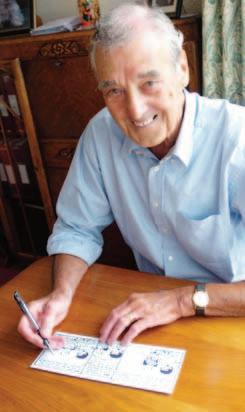
FRANK HARRIS: Cartoonist
WALTER HUNTLEY and SIR KEN DODD: Ambassadors
CHRIS GROVES: Jack of all trades
SIR BERT MASSIE: Columnist
‘Hip joint – trendy bar or medical concern?’
THERE was a time when, as retirement age neared, it was a toss up which would pay out first – your State Pension or your funeral plan.
Nowadays, with a slice of luck and something approaching a moderately healthy lifestyle, you can look forward to several more annual bunion checks at the foot clinic before you’re finished.
Many factors will affect our ability to savour those extra years, not least an ability to see the bright side.
In this vein, the great American writer Mark Twain urged us to embrace later life as “a privilege denied to many”.
An ageing relative had a different approach. “Don’t get old”, she would warn me, usually after a painful reminder from her body that all was not well under the bonnet.
Now I am the ageing one but since the alternative – oblivion – isn’t especially inviting, I will gladly take however many more years the universe grants me.
That’s not to say it’s always easy to face the world with a smile, on those days when my sixties seem to sting more than they swing.
GERRY
CORNER weighs the gains and losses of getting older
However much I may try to ignore my years, insist that “in my head I’m still 21”, thinning bones, weakening cartilage and all manner of unidentified aches and twinges provide daily reminders that I am 66 and finally understanding why they call it clickety-click.
That I have entered the time of life where a hip joint is less about hanging out in a trendy bar as a subject for discussion with a medical professional. It would be nice to think at least that the many harsh lessons learned down the years had earned me a sagelike reputation among friends and family members.
So why does it sometimes feel I’m regarded not so much
as the wise old buddha as the daft old bugger.
Yet for all the drawbacks of advancing age, I am grateful to still be knocking around, and for a mind and body functioning, touch wood, at a workable level.
And it is not lost on me that in the course of more than six decades there have been occasions when, had fate held different ideas, I could have been fatally denied the privilege of a cut-price haircut at my local barber’s.
That time the bonnet flipped up and lodged against my windscreen on the M58, a handful of nights lost to drink, not to mention being carried out into the Atlantic on a rip tide
The cartoon king
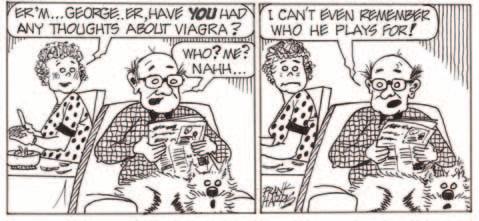
For decades FRANK HARRIS was the Liverpool Echo’s cartoonist bringing a daily smile to thousands of readers. Frank also became a big friend and champion of this newspaper. Sadly no longer with us, here’s a reminder of his talents . . .
during a trip to Lanzarote.
Whatever our circumstances, there are always blessings, however small, to be thankful for: the birds singing in the trees, a hot shower, that first cuppa of the day. After all, you only get one crack at life. Unless you are Hindu, obviously.
Come to think of it, there are numerous consolations to being older. For one thing you are unlikely to suffer from acne. Other plus points include:
*You don’t have to fork out the fare for all those bus journeys to and from hospital appointments.
*Many opportunities arise to stay relevant and young at heart by hanging out with the cool kids, or as your grandchildren’s parents call it, babysitting.
*If nobody else buys you a present for your big 6-0, you can always rely on your bowel cancer screening kit landing on the doormat.
*Best of all your social life suddenly blooms as regular funerals provide the ideal opportunity to catch up with old pals at the same time as seeing one off…
Happy retirement!
SHOPMOBILITY
n ALTRINCHAM
. Tel 0161 929 1714
n ASHTON-UNDER-LYNE.
Tel 0161 339 9500
n BARROW. Tel 01229 434039
n BIRKENHEAD. Tel 0151 647 6162
n BLACKBURN AND DARWEN. Tel 01254 690566 or 07757 502217
n BLACKPOOL. Tel 01253 349427
n BOLTON. Tel 01204 392946
n CARLISLE. Tel 01228 631564
n CHESTER.
Tel 01244 312626
n CHORLEY. Tel 01257 260 888
n COLWYN BAY. Tel 01492 533822
n ELLESMERE PORT. Tel 01244 312626
n KENDAL. Tel 01539 740 933
n LEIGH, Wigan. Tel 01942 777 985
n LIVERPOOL.
Tel 0151 707 0877
n MANCHESTER Trafford Centre. Tel 0161 747 2684
n MANCHESTER Arndale Centre. Tel 0161 839 4060
n NELSON.
Tel 01282 692 502
n NORTHWICH, Vale Royal Tel 01244 312626
n OSWESTRY. Tel 01691 656882
n PENRITH. Tel 01768 895 438
n PRESTON.
Tel 01772 204 667
n RHYL. Tel 01745 350665
n ROCHDALE.
Tel 01706 865 986
n RUNCORN, Halton Lea Tel 01928 710144
n SHREWSBURY. Tel 01743 236900
SKELMERSDALE. Tel 01695 550066
n STOCKPORT. Tel 0161 666 1100
n WARRINGTON. Tel 01925 240064
n WARRINGTON. Birchwood Tel 01925 822 411 WIDNES: 0151 511 8833
n WIGAN. Tel 01942 776 070
n WINSFORD Tel 01244 312626
n WIRRAL. 0151 647 6162
n WREXHAM. Tel 01978 312390 MIDLANDS
n BIRMINGHAM. Snow Hill Railway Station. Tel 0121 236 8980. Level 2, Centre Car Park, Bullring. Tel 0121 616 2942
n STAFFORD. Tel 01785 619456
n STOKE ON TRENT. Tel 01782 233333
n SUTTON COLDFIELD. Tel 0121 355 1112
n TAMWORTH. Tel, 01827 709392
Moyes puts unsung heroes in spotlight
EVERTON boss David Moyes joined the Royal Liverpool Philharmonic Orchestra and a junior school dance group to celebrate the heroes behind the club’s charity. Volunteers, fundraisers and participants in Everton in the Community’s 60-plus programmes and initiatives were honoured at the Premier League club’s Blue Hearts Awards.
Among the winners was Maisie, who has gone from struggling with socialising and attending school to applying for college and appearing on Match of the Day after engaging with the Safe Hands programme.
EitC’s Street Child World Cup team, representing England at the tournament in Mexico City, were also winners on the night. Moyes, who helped hand out the prizes, said: “One of the things Everton was always really famous for was the work done in the community.
“Even years ago, the work done was so good and, when I see it now, it’s enhanced greatly.
“A big thank you to all of the workers and everyone who puts the time in to make it so good.”
The night began with a performance from the Philharmonic Orchestra and a special dance recital from The Trinity Catholic Primary School – one of the charity’s partner schools.
We’re not on the Fringes now!
THIS year is set for a big step forward in making the Edinburgh Fringe Festival accessible to visually impaired audience members.
Extant, the UK’s leading professional performing arts company of blind and visually impaired artists, is returning to build on the success of its landmark 2025 programme.
The London-based outfit is driving change by championing accessibility not as an add-on, but as an integral part of any show.
That’s reflected in the growth from an estimated 30 to 50 visually impairedaccessible shows in 2024, representing less than 1% of the Fringe, to around 2% in 2025, with projections indicating that as much as 12% of the 2026 programme will be accessible to visually impaired
audiences. Extant is also working with the Fringe Society to hold workshops on low-cost ways to increase access.
The company will also be working with partners Sight Scotland and Visually Impaired Creators Scotland to connect with local visually impaired communities and audiences.
Extant artistic director Maria Oshodi said: “Extant has always been a force driving industry change towards higher standards and access for visually impaired people.
“We’re delighted to continue disrupting the status quo at Edinburgh Fringe in 2026, by increasing the number of accessible shows tenfold over the past two years.”
n Edinburgh Fringe, Aug 7-31 n www.edfringe.com
AT THE END OF A PHONE
(Amputees and Carers), Tel, 0151 261 1166
n THE BRAIN CHARITY Tel 0151 298 2999
(GTR)
n Personal Budgets Helpline Tel. 0330 995 0404
Opening hours: 9.30am-1.30pm, Tues and Thurs personalbudgets@ disabilityrightsuk.org
n Disabled Students Helpline Tel. 0330 995 0414
Opening hours: 11am-1pm on Tues and Thurs students@disabilityrightsuk.org
n Scope’s Disabilty Information and Advice Line (DIAL) Freephone 0808 800 3333
Runners raise £9 MILLION
RUNNERS – and wheelchair users –at Everton FC’s Hill Dickinson Stadium helped raise an astonishing £9 million for spinal cord injury research.
More than 200 runners registered to line up at the start line at the Premier League club’s waterfront home, joining over 346,000 participants from 173 nations in the annual Wings for Life World Run.
Across the globe, participants took a collective 4,243,552,935 steps during the biggest edition in the event’s history.
In the UK, the Hill Dickinson Stadium staged the event for the first time, alongside the club’s official energy drink partner, Red Bull.
Unlike traditional races, the Wings for Life Run has no fixed finish line.
Instead, participants run, jog, walk, or roll as far as they can before the moving finish line – a virtual Catcher Car – gradually catches up with them, making the event accessible to people of all abilities and experience levels.
l Worldwide, Wings for Life World Run has raised a total of well over £60 million for not-for-profit spinal cord research, with the single mission to find a cure for spinal cord injury.
Andy’s triple crown
CONGRATULATIONS to Andy Reid who entered the London Marathon record books by becoming the first triple amputee to complete the gruelling course.
The father-of-two from St Helens is turning 50 this year and was determined to mark it in style.
Clocking a time of 12hrs, 34mins, 54 secs, he said: “I’m exhausted but delighted to have made it.
“It’s one of the hardest things I’ve ever done, and it was a massive physical and mental challenge but with the support of the crowds, and my friends and family, I kept going.
“I want to thank everyone who supported me –every donation and message of support makes a real difference.
“This marathon was not just about raising funds, but also about inspiring other people to see what they can achieve with the right help and mindset.”
The former Afghanistan veteran’s life was changed in a second while on patrol in Helmand Province, in 2009. He has since focused on raising funds for the Army Benevolent Fund (ABF), which helped him after his injury, and his own Standing Tall Foundation, which provides mental health counselling and welfare support.
RECORD BREAKER: Andy’s marathon effort was a new first
HELP AT THE END OF A PHONE
VISUAL PROBLEMS
n CARLISLE: Action for Blind People Tel 01228 595121
n CHESHIRE & N WALES: Vision Support. Tel 01244 381515
n GUIDE DOGS Tel 0118 983 5555
n HENSHAW’S 0161 872 234 or 0151 708 7055
n LIVERPOOL: Bradbury Fields.Tel 0151 221 0888: Action for Bind Tel 0151 298 3222
n MANCHESTER: Action for
Blind Tel 0161 787 9252
n PRESTON: Action for Blind People Tel 01772 320550
n OLDHAM Tel 0161 682 8019
n ROSSENDALE Tel 01706 873256
n SIGHTLINE (North West) Tel 0800 587 2252
n WIGAN Tel 01942 242891
n WIRRAL Society of the Blind and Partially Sighted. Tel 0151 652 8877
HEARING ISSUES
n BIRMINGHAM Institute for Deaf Tel 0121 246 6101
n CHESHIRE Deaf Society Tel 01606 47831
n CUMBRIA Deaf Society Tel 01228 606434
n LANCASHIRE (EAST) Deaf Society Tel 01282 839180
n MERSEYSIDE Society for Deaf Tel 0151 228 0888
n SOUTHPORT Centre for the Deaf Tel 01704 537001
n ST HELENS: Deafness Resource Centre. Tel 01744 23887
n N WALES Deaf Association, Tel 01492 542235
n ACCRINGTON Tel 01254 387 444
n BLACKBURN with DARWEN Tel 01254 688 www.bwdcarers.org n BLACKPOOL Blackpool Borough Council, Tel 01253 477 716
n CUMBRIA Carlisle. Tel 01228 542 156 Penrith. Tel 01768 890 280 Barrow-in-Furness. Tel 01229 822 822
Kendal. Tel 01539 732 927
Whitehaven, Tel 01946 592 223
n CHESHIRE & WARRINGTON
Helpline:0300 102 0008
n KNOWSLEY Tel 0151 549 1412
n LANCASHIRE 0345 688 7113
nLIVERPOOL Tel 0151 705 2307
n MANCHESTER
Tel 0161 835 2995
n MORECAMBE Tel 01524 833456
n PRESTON Tel 01772 200173
n RUNCORN Tel 01928 580182
n WIDNES Tel 0151 257 9673
n SALFORD Tel 0161 833 0217
n SEFTON Tel 0151 288 6060
n ST HELENS Tel 01744 675 615
n STOCKPORT Tel 0161 442 0442
n WARRINGTON (WIRED) Tel 01925 633 492
n WEST LANCS Tel 01695 711243
n WIGAN & LEIGH Tel 01942 705959 / 486923
MIDLANDS
n BIRMINGHAM Tel 0121 675 8000
n SOLIHULL Tel 0121 788 1143
n WALSALL Tel 01922 610 810
NORTH WALES
n ANGLESEY Tel 01248 722828
n BANGOR Tel 01248 370 797
n CONWY Tel 01492 533714
n DENBIGHSHIRE: NEWCIS, Tel: 0845 603 3187
nDOLGELLAU Tel 01341 421167
n FLINTSHIRE: NEWCIS, Tel: 01352 751436
n WREXHAM CARERS SERVICE
Help when you need it most
Since launching in 2015, more than 580,000 people across the North West have now registered for United Utilities’ Priority Services scheme.
Steph Smith from the Priority Services team said: “Our Priority Services scheme is free to all our customers who may need a bit of extra support in life. This could be due to age, ill health, disability, mental health problems, 昀nancial worries or language barriers.
“By registering for our scheme, we can make sure you receive the right support from us during those times when we may need to switch o昀 the water to repair a leak, or if we need to visit you in your own home.
“Even if you don’t need this support, we all know someone who would bene昀t from these services - such as a friend, family member or neighbour - so please encourage them to get in touch to register.”
Services include:
• A dedicated team on hand to listen and help
• Braille, large print, ‘talking’ bills and text relay service
• Knock and wait service. If you tell us you have mobility needs and we have to visit your home, we will wait allowing enough time for you to answer the door
• Nominate a carer, family member or friend to check your bills and speak to us on your behalf
• Additional support if you have a medical need for water.
• Protection from bogus callers with a password protection scheme
• Notice of interruptions to your water supply
• Translation services
• Every two years we’ll check that your details are still correct
Our
• are blind or partially sighted;
• have a chronic (long-term) or serious illness;
• have a condition that a昀ects their development;
• have dementia;
• rely on dialysis, feeding pumps or automated medication;
• are having 昀nancial diculties;
• are deaf or hard of hearing, or have speech diculties;
• have a mental health condition;
• have children aged 5 or under;
• are experiencing temporary life changes (including divorce or bereavement);
• are recovering after leaving hospital;
• have restricted movement making it dicult to answer the door; or
• may struggle to communicate because their 昀rst language isn’t English.
Scan the QR code to visit our Priority Services webpage, where you can click on ‘Accessibility Help’ to turn on text-to-speech or change the language used on our website.
Jun 19-Jul 18: Taking the Piste – The Unbelievable Story of the Kirkby Ski Slope. Royal Court, Liverpool. Kirkby can be the town of the future! A symbol of regeneration in the 1970s! You know what Kirkby needs? A ski slope… Donald Storm is head of Kirkby Council and he’s got an eye on creating a new destination for tourists from around the world. If he can make a few bob in the process, so much the better. Together with his mate Geoff, he hatches a plan to use tax-payers’ money to build a ski slope right next to the M57. Standing in their way are a trainee journalist from the Liverpool Echo and her burnt out supervisor. Between them, they take on Don, the council and even the Echo itself by setting up a new free press so they can speak their minds.
Jun 19: Nikita Kuzman: Supernova. Venue Cymru, Llandudno.
Jun 23-27: Matthew Bourne’s The Car Man. The Lowry, Salford. Loosely based on Bizet’s opera, the familiar 19th Century Spanish cigarette factory becomes a greasy 1950’s garage-diner in the American Mid-West where the dreams and passions of a small-town are shattered by the arrival of a handsome and enigmatic stranger. Fuelled by heat and desire, the inhabitants are driven into an unstoppable spiral of greed, lust, betrayal and revenge. Audio described/touch tour, Jun 25.
Jun 23-27: Charlie and the Chocolate Factory. Regent, Stoke.
Jun 23: Blue Lanterns Special: Ian Prowse. Storyhouse, Chester.
Jun 23: Stewart Lee vs The ManWolf. Venue Cymru, Llandudno. Comedy.
Jun 24: G4: Phantoms of the Popera Tour. Rhyl Pavilion.
Jun 24: Gary Murphy’s Original Guitar Legends. Epstein Theatre, Liverpool.
Jun 25-28: NT Live: Les Liaisons Dangereuses. Theatr Clwyd, Mold.
Jun 26-27: Romeo & Juliet. Shakespeare North Playhouse.
Jun 26: Joanne McNally: Pinotphile. Palace, Manchester.
Jun 26: So True – 80s Party Night. Floral Pavilion, New Brighton.
Jun 26: Endless Love – A Tribute to Diana Ross and Lionel Richie. Venue Cymru, Llandudno.
Jun 26: An Evening with Duncan Ferguson. Theatre Royal, St Helens.
Jun 27-28: Zog. Lyceum, Crewe.
Jun 27: Take Flight. Shakespeare North Playhouse. Stunning aerial show.
Jun 27: The Lancashire Hotpots. Theatre Royal, St Helens.
Jun 27: The Magic of Motown. Floral Pavilion, New Brighton.
Jun 27: Joanna McNally: Pinotphile. Empire, Liverpool.
Jun 27: The Spirit & Sound of Steely Dan: Nearly Dan in Concert. Atkinson, Southport.
Jun 28: Gary Delaney: Gary on Laughing. The Lowry, Salford.
TJun 28: Strawberry Jack. Floral Pavilion, New Brighton.
PREVIEW
DANCIN’ THE NIGHT AWAY
RICKY ON THE ROAD
RICKY TOMLINSON – Retirement My Ar*e Tour: Shakespeare North Playhouse, Jul 10-11. Floral Pavilion, New Brighton, Aug 29.
JOANNE McNALLY: Pinotphile. Palace, Manchester, Jun 26. Empire, Liverpool, Jun 27.
Jun 28: Liverpool Philharmonic Youth Brass Band. Philharmonic, Liverpool.
Jun 28: Think Floyd. Grand, Blackpool. Tribute show.
Jun 29: Jukebox Idols. Philharmonic, Liverpool. Non-stop hits from the idols of the 50s and 60s starring the UK’s leading platinum-selling vocal harmony group, The Overtones, Nadiya Bychkova and Louis Smith.
Jun 30-Jul 4: The Rocky Horror Show. Storyhouse, Chester. Musical telling the story of two squeaky clean college kids –Brad and his fiancée Janet. When by a twist of fate, their car breaks down outside a creepy mansion whilst on their way to visit their former college professor, they meet the charismatic Dr Frank-n-Furter. Audio described/signed, Jul 2.
Jun 30: Kai Widdrington: Evolution. Lyceum, Crewe. Dance.
Jun 30: Derren Brown: Only Human. Regent, Stoke.
THIS IS RAMBERT. The Lowry, Salford, Jul 7-9.
TJul 1-2: Charles Dickens: The Hanged Man’s Bride. Shakespeare North Playhouse.
Jul 1: Grateful Fred’s: Martin Stephenson. Atkinson, Southport.
Jul 1: Kai Widdrington: Evolution. Atkinson, Southport.
Jul 2-Aug 8: Moulin Rouge! The Musical. Empire, Liverpool. Enter a world of splendour, of eye-popping excess, of glitz, grandeur and glory. A world where Bohemians and aristocrats rub elbows and revel in electrifying enchantment.
Jul 2-4: YEP: Jekyll and Hyde. Everyman, Liverpool. A Young Everyman Playhouse production. Step into world where gas lamps flicker and something monstrous prowls beneath the city’s polished surface.
Jul 2: Dreamcoat Stars. Lyceum, Crewe.
Jul 2: Roy Orbison Story – The Platinum Years. Theatre Royal, St Helens.
Jul 3-5: The Gruffalo. The Lowry, Salford.
Jul 3-4: One Man Poe: The Black Cat & The Raven. Shakespeare North Playhouse.
Jul 3: The Wizard of Oz – Adults Only. Epstein Theatre, Liverpool.
Jul 3: A Night to Remember: Motown Show. Octagon, Bolton.
Jul 4: Destination Summer! The Brindley, Runcorn.
Jul 4: 80s Mania. Atkinson, Southport.
Jul 4: Elgar: The Dream of Gerontius. Philharmonic, Liverpool.
Jul 4: Jarlath Regan: Gas Man. The Lowry, Salford.
Jul 4: Ben Hart: The Labyrinth. Octagon, Bolton. Simply magic!
Jul 5-18: Scott Bennett: Blood Sugar Baby. The Lowry, Salford. The amazing true story of how his daughter fell ill with a rare genetic condition, congenital hyperinsulinism (CHI). Never heard of it? Neither had Scott and Jemma. Yes, it’s a story about an ill baby, but it’s a very funny one with a happy ending, as new parents Scott and Jemma fight to get the right diagnosis for their daughter and are plunged into months of bewildering treatment, sleepless nights, celebrity encounters and bizarre side effects.
Jul 5: Fireman Sam: The Lost Pirate. Rhyl Pavilion.
Jul 5: Liverpool Philharmonic Youth Orchestras. Philharmonic, Liverpool.
Jul 5: Thank You for the Music Abba. Octagon, Blackpool. Tribute show.
Jul 6-11: Waitress: The 10th Anniversary. Regent, Stoke. Musical.
Jul 7-9: This is Rambert. The Lowry, Salford. Dance.
Jul 7-8: The Perfect Match. Shakespeare North Playhouse. Musical. Rowan is desperately trying to finish the musical she has been writing for six years when the lights go out.
Jul 7: Stewart Klee vs The Man-Wulf. Lyceum, Crewe. Comedy.
Jul 8: One Night Only. The Brindley, Runcorn. Presented by Andrew Curphey Theatre Company.
Jul 9-11: Diane’s Deli: A Tale from Paradise Heights. Octagon, Bolton. When a woman turns up in the café late one night, a chain of events is set in motion that will have devastating effects on all their lives…
Jul 9-10: It Happened on a Tuesday. Shakespeare North Playhouse. Six employees. An ordinary Tuesday in the office. One of them stole £60,000.
Jul 9: The Legend of Barry White. Octagon, Bolton.
Jul 9: White Nights. Philharmonic, Liverpool. Conductor Laureate Vasily Petrenko.
Jul 9: 80s Live. Grand, Blackpool.
Jul 10-11: Ricky Tomlinson –Retirement My Ar*e Tour. Shakespeare North Playhouse, Prescot.
Jul 10-11: Stewart Lee vs The Man-Wulf. The Lowry, Salford.
Jul 10: Genesis Connected. Theatre Royal, St Helens. Tribute show.
Jul 11: WOW! That’s What I Call Musicals. Playhouse, Liverpool.
Jul 11: The Music of George Michael: The Candlelight Concert. Storyhouse, Chester.
l Continued next pages
l Continued from p23
Jul 11: Irby Dance Studio –Dancing Around the World. Floral Pavilion, New Brighton.
Jul 11: The Magic of the Bee Gees. Octagon, Bolton. Tribute show.
Jul 12: Liverpool Philharmonic Youth Choirs Summer Showcase. Philharmonic, Liverpool.
Jul 13-15: Lord of the Dance: 30th Anniversary. Regent, Stoke.
Jul 13: Ed Byrne (Work in Progress). Octagon, Bolton.
Jul 14-15: The Tiger Who Came to Tea. Grand, Blackpool.
Jun 16-Jul 19: Something Rotten. Opera House, Manchester. Starring Jason Mountford and Richard Fleeshman. In a world without musicals, two brothers dared to dream a dream …
Jul 16-18: Murder Mystery: Last One Standing. Afternoon Tea. Everyman, Liverpool.
Jul 16-18: Hamlet. Shakespeare North Playhouse.
Jul 15: The Easy Rollers. Shakespeare North Playhouse, Prescot. The jazz septet taking us back to the 1920s and ’30s Harlem, Kansas City and New Orleans.
Jul 15: Scummy Mummies: Hot Mess. Storyhouse, Chester.
Jul 16: The Drifters. Theatre Royal, St Helens.
Jul 16: Mark Watson: Before it Overtakes Us. Storyhouse, Chester.
Jul 16: Dire Straits – The Tribute to Dire Straits. The Brindley, Runcorn.
Jul 16: Rhythm of the Dance. Floral Pavilion, New Brighton.
Jul 16: Get Blue: A Tribute to the Fab Four. Shakespeare North Playhouse, Prescot.
Jul 17: The Kate Bush Songbook. Shakespeare North Playhouse, Prescot. Tribute show.
BOX OFFICE CONTACTS
BOLTON
Octagon: 01204 520661
CHESTER
Storyhouse: 01244 409 113
CREWE
Lyceum: 01270 368 242
LIVERPOOL
Empire: 08444 999 999
Epstein: 0151 312 8735
Everyman & Playhouse: 0151 709 4776
Philharmonic Hall: 0151 709 3789
Royal Court: 0870 787 1866
Shakespeare North Playhouse: 0151 433 7156
Unity: 0151 709 4988
LLANDUDNO
Venue Cymru: 01492 872000
T
Jul 17: The Rocket Man. Grand, Blackpool. Celebration of Sir Elton John.
Jul 17: Girls Just Wanna Have Fun – The Ultimate Girls Night Out. Floral Pavilion, New Brighton.
Jul 17: Totally Tina – Tina Turner Spectacular. Epstein Theatre, Liverpool. Tribute show.
Jul 18-19: Peppa Pig’s Big Family Show. Storyhouse, Chester.
Jul 18: The Choir with No Name – The Big Gig. Everyman, Liverpool.
Jul 18: Rumours of Fleetwood Mac. The Lowry, Salford.
Jul 18: Oasiz. Shakespeare North Playhouse, Prescot. Tribute show.
Jul 18: The Magic of Motown.
MANCHESTER
Opera House: 0870 401 9000 Palace: 0870 401 3000
MOLD:
Theatr Clwyd: 0845 3303565
NEW BRIGHTON
Floral Pavilion: 0151 666 0000
RHYL:
Pavilion: 01745 330 000
RUNCORN
The Brindley: 0151 907 8360
SALFORD
The Lowry: 0843 208 6000
Access line: 0333 320 2838
SOUTHPORT Atkinson:
ST HELENS: Theatre Royal: 01744 756000
THE CHOIR WITH NO NAME – THE BIG GIG: Everyman, Liverpool, Jul 18.
How an Oxton woman became the first female police officer with full powers to detain.
THE STORY OF EDITH SMITH: Shakespeare North Playhouse, Sep18.
Jul 20-21: Murder She Didn’t Write. Octagon, Bolton. The improvised murder mystery.
21-25: 9 to 5 The Musical. Grand, Blackpool.
Jul 21-24: Twelfth Night. Shakespeare North Playhouse.
Jul 21: For You Blue: Celebrating the Beatles Greatest Hits 1967-1970. Philharmonic, Liverpool.
Jul 22-25: The Spy Who Came in from the Cold. The Lowry, Salford. For the first time ever, a novel by John le Carré – the undisputed master of the modern spy genre – is brought to life in a thrilling stage adaptation. Signed, Jul 23; audio described/touch tour, Jul 24.
Jul 22: Reynard the Fox. Shakespeare North Playhouse. Family show.
Jul 24: As You Like It. Shakespeare North Playhouse.
Jul 25: The Lancashire Hotpots: Tour de Sauce Tour. The Lowry, Salford.
Jul 22: Neil Sands’ Remember When 20th Anniversary Tour. Floral Pavilion, New Brighton.
Jul 22: The Real Thing: 50th Anniversary Tour. The Brindley, Runcorn.
Jul 22: James Phelan: The Man who was Magic. Octagon, Blackpool.
Jul 23: The Tour of the Era’s – A Spectacular Tribute to Taylor Swift. The Brindley, Runcorn.
Jul 23: The Sound of Springsteen. Atkinson, Southport. Bruce Springsteen tribute show.
Jul 24-25: Deaf School: 2nd Honeymoon 50th Anniversary. Philharmonic, Liverpool. Te London String Group.
Jul 24: All or Nothing – Live Concert. Floral Pavilion, New Brighton. The story of the Small Faces.
Jul 24: Luke Combs UK. Lyceum, Crewe.
Jul 25: The George Harrison Project. The Brindley, Runcorn. Tribute show.
Jul 25: Ministry of Science. Theatre Royal, St Helens.
Jul 27-Aug 1: The Rocky Horror Show. Palace, Manchester. Top musical about two squeaky clean college kids. When their car breaks down outside a creepy mansion they meet Dr Frank-n-Furter.
Jul 28-Aug 1: Oh Zeus! The Lowry, Salford. Jul 28-Aug 1: The Battle: Blue vs Oasis. Storyhouse, Chester.
Jul 28: The Dinosaur That Pooped. Theatre Royal, St Helens.
Jul 30: Let the Music Play – Celebrating the Music of Barry White. The Brindley, Runcorn.
Jul 31-Aug 29: Take Me Home County Road. Royal Court, Liverpool. Shelly’s a County Road girl, born and bred, through and through. Once upon a time, she had it all – the looks, the talent, the fire
in store at theatres across the region
TSIZZLERS
in her belly. But now she’s forty-something, and life’s all gone a bit… naff. Work is fine, her mates are sound, and her hubby Mick is always there when she needs him, but something’s missing.
Jul 31: Simon & Garfunkel Through the Years. The Brindley, Runcorn. Tribute show. Jul 31: The 70s Show. Floral Pavilion, New Brighton.
Jul 31: The Roy Orbison Story. Lyceum, Crewe.
Jul 31: K-Pop Forever. Storyhouse, Chester. Aug 1-15: Six: The Musical. The Lowry, Salford.Aug 1-2: Tales From Acorn Wood. Lyceum, Crewe.
Aug 1: Tosca. Shakespeare North Playhouse. Gripping tale of love, power and sacrifice, reimagined in a dystopian future where tyranny and defiance collide.
Aug 1: Roy Orbison & The Traveling Wilburys. Epstein Theatre, Liverpool. Tribute show.
Aug 2: Jamie Hutchinson: Can My Mate Come? He’s Sound. Storyhouse, Chester.
Aug 4-8: Miss Saigon. Palace, Manchester.
Legendarusical set in the last days of the Vietnam War. Seventeen year-old Kim is forced to work in a Saigon bar run by a notorious character known as The Engineer. There she meets and falls in love with an American GI named Chris but they are torn apart by the fall of Saigon.
Aug 4-5: Tales from Acorn Wood. Storyhouse, Chester.
Aug 6-8: Summer of Love: Love’s Labour’s Lost. Shakespeare North Playhouse.
Aug 6: The Story and Sound of Northern Soul. Storyhouse, Chester.
Aug 7-8: Summer of Love: Much Ado About Nothing. Shakespeare North Playhouse.
Aug 7-8: Peppa Pig’s Big Family Show. Regent, Stoke.
Aug 8: Across the Universe 66-80 – The Beatles Studio Years. Storyhouse, Chester. No wigs, no costumes. Just the music performed by world class musicians.
Aug 9: Ultimate Irish Hooley. Floral
Pavilion, New Brighton.
Aug 13: Legends of the 60s Show. Floral Pavilion, New Brighton.
Aug 14-15: The (Almost) Complete History of Britain. Shakespeare North Playhouse. Aug 14-15: Peppa Pig’s Big Family Show. Palace, Manchester.
Aug 15: Thank ABBA For The Music. Rhyl Pavilion.
Aug 18-22: The Choir of Man. Storyhouse, Chester. Welcome to the best pub in the world. Brimming with hits from Queen, Luther Vandross, Sia, Paul Simon, Adele, Guns & Roses, Avicii and Katy Perry to name but a few, this is a pub like no other!
Aug 19-22: Jospeh and the Amazing Technicolour Dreamcoat. Grand, Blackpool. Musical.
Aug 20-22: The Trials. Octagon, Bolton. In an imagined courtroom of the near future, the jurors are teenagers, tasked with deciding responsibility for environmental collapse. But are they delivering justice, or taking revenge? Aug 21-Sep 13: High School Musical. The Lowry, Salford.
. . . reaching people who are digitally excluded . . .
Aug 21: Dean Friedman on Tour. Epstein Theatre, Liverpool.
Aug 22: The Musicals in Concert. Floral Pavilion, New Brighton.
Aug 27: A Midsummer Night’s Dream. Shakespeare North Playhouse.
Aug 27: Queen of the Night – A Tribute to Whitney Houston. Floral Pavilion, New Brighton.
Aug 29: An Evening with Ricky Tomlinson. Floral Pavilion, New Brighton.
Aug 29: James Martin Cookery Demo with Q&A. Octagon, Blackpool.Aug 30-31: Wirral Tattoo Extravaganza. Floral Pavilion, New Brighton.
Aug 30: Man in the Mirror. Empire, Liverpool. Michael Jackson tribute show. Aug 30: Wonders of our Universe. Lyceum, Crewe.
Sep 1-5: Dirty Dancing – The Musical. Empire, Liverpool. The classic story of Baby and Johnny, two fiercely independent young spirits from different worlds, who come together in what will be the most challenging and triumphant summer of their lives.
Sep 1-2: Peppa Pig’s Big Family Show. Grand, Blackpool.
Sep 1: Karl Loxley – From the Stage & Screen. The Brindley, Runcorn.
Sep 2-3: Jonathan Pie – Work in Progress. Lyceum, Crewe.
Sep 2: Grateful Fred’s: Max & Veronica. Atkinson, Southport.
Sep 2: Gary Meikle: Yer Man. The Brindley, Runcorn.
Sep 3: Elvis – From Memphis to Vegas. The Brindley, Runcorn. Tribute show.
Sep 4-Oct 3: East is East. Octagon, Bolton. Salford, 1971. The Khan family are living above a chip shop and on the fault line between two cultures. George Khan is determined to raise the family in his Pakistani way. His English wife, Ella, just wants to keep the peace. Their seven children? They’re busy discovering disco, denim, and defiance.
Audio described, Sep 19; signed, Sep 30.
Sep 4: Heaven Can Wait: Tribute to the Music of Meat Loaf. Rhyl Pavilion.
Sep 4: Diane’s Deli. Floral Pavilion, New Brighton. Another compelling chapter in the world of Paradise Heights. Loaded with atmosphere and desperately broken people all scarred by their pasts.
Sep 4: Mothership – Led Zeppelin Tribute. The Brindley, Runcorn.
Sep 4: The UK Rock Show. Atkinson, Southport.
Sep 5: Fleetwood Bac – The Fleetwood Mac Tribute Band. Epstein Theatre, Liverpool.
Sep 5: The Mersey Beatles. Atkinson, Southport.
Sep 5: Lipstick on your Collar. Floral Pavilion, New Brighton. Step back in time to the golden era of music where the jukebox roared and feet didn’t touch the floor.
l Continued next page
THE LANCASHIRE HOTPOTS: Theatre Royal, St Helens, Jun 27.
SUMMER OF LOVE: Much Ado About Nothing Shakespeare North Playhouse, Aug 7-8.
l Continued from p25
Sep 5: New Dawn Fades. Grand, Blackpool. The story of four ordinary lads who, inspired by the punk revolution of 1970s Manchester, came together to form one of the most influential bands of all time, Joy Division.
Sep 6: The Upbeat Beatles. Grand, Blackpool. Tribute show.
Sep 7-19: Jersey Boys. Palace, Manchester. The story of Frankie Valli and The Four Seasons. From the streets of New Jersey to the Rock and Roll Hall of Fame, this is the musical that’s almost too good to be true.
Sep 7-12: Waitress. Empire, Liverpool. Meet Jenna, a waitress and expert piemaker who dreams of some happiness in her life. When a hot new doctor arrives in town, life gets complicated. With the support of her workmates Becky and Dawn, Jenna overcomes the challenges she faces and finds that laughter, love and friendship can provide the perfect recipe for happiness.Sep 9: Psychic Sally. Floral Pavilion, New Brighton.
Sep 9: Scott Bennett: Stuff. Playhouse, Liverpool.
Sep 10: John Barrowman: My Life in Musicals. Floral Pavilion, New Brighton.
CLAIRE SHOWS WICKED SIDE
ANNIE: Empire, Liverpool, Sep 22-26.
Your guide to some of summer’s best treats
PREVIEW
TEveryman, Liverpool. Arthur Miller’s unforgettable drama that speaks to our everyday dreams and the pressures of our changing working world... Captioned, Sep 24; audio described, Oct 1.
Sep 19: The Opera Boys – The Farewell Tour starring Paul Potts. Floral Pavilion, New Brighton.
Sep 19: My Royal Life: An Audience with Lucy Worsley. Storyhouse, Chester.
Sep 19: Barry Steele & Friends – The Roy Orbison Story. The Brindley, Runcorn.
Sep 19: Jay Rayner: Nights Out in the Kitchen. Storyhouse, Chester.
Sep 20: One Night of Elvis-Lee Memphis King. Floral Pavilion, New Brighton.
Sep 20: Miriam’s Full English. Empire, Liverpool.
Sep 20: Jonathan Pie: The End of the World According to Jonathan Pie. The Lowry, Salford.
Sep 20: The Forbidden Realm of Conspiracies: Uncovered. Rhyl Pavilion.
Sep 20: David Essex. Opera House, Manchester.
Sep 20: Tez Ilyas: Tez Things I Hate About You. Octagon, Bolton.
Sep 11-Oct 17: Letter to Breshnev – A Liverpool Love Story. Royal Court, Liverpool. Teresa and Elaine are young, beautiful and full of life. But they don’t think that will last long, because it’s 1985 and this is Kirkby.Teresa is looking for sex and a smile, Elaine wants love, romance and the dream of a life far away from the grime of Liverpool. Fresh off the boat come Sergei and Peter. All of them have the chance to forget their lives and live their dreams for one glorious night.
Sep 11-Oct 3: Macbeth. Shakespeare North Playhouse.
Sep 11: Mike Wozniak: The Bench. Playhouse, Liverpool.
Sep 11: Arrival – The Hits of Abba. Floral Pavilion, New Brighton.
Sep 12: Sindhu Vee: Swanky. Playhouse, Liverpool.
Sep 12: The Mersey Beatles. Floral Pavilion, New Brighton.
Sep 13: Chris Ramsey. Empire, Liverpool.
Sep 13: Nick Cope’s Family Show. The Brindley, Runcorn.
Sep 13: Sindhu Vee: Swanky. The Lowry, Salford.
Sep 13: Love Hurts. Grand, Blackpool. Packed with smash-hit power ballads and classic rock anthems from Queen, AC/DC, Meat Loaf, Whitesnake, Phil Collins, Cher, Kiss, Tina Turner… and more!
Sep 14: Miriam Margoyles. Opera House, Manchester.
Sep 15-19: Barnum. Empire, Liverpool. Musical. Enter the dazzling world of P.T. Barnum, where imagination
STAND-UP STAR AND THE SHOWMAN
SINDHU VEE: SWANKY: The Lowry, Salford, Sep 13.
and ambition know no bounds. Hand in hand with wife Charity, Barnum’s life and career twists and turns as he schemes and dreams his way to headier heights.
Sep 15: Dial M for Murder. Grand, Blackpool.
Sep 16: Michael Ball: Glow UK Tour. Regent, Stoke.
Sep 16: Those Were The Days. Floral Pavilion, New Brighton.
Sep 16: Mike Dawes: The Progressive Acoustic Tour. Atkinson, Southport.
Sep 17: Love Hurts Rock Anthems and Power Ballads. Floral Pavilion, New Brighton.
BARNUM: Empire Liverpool, Sep 15-19.
Sep 17: PIFF: Pop’s Magic Shoppe. Opera House, Manchester.
Sep 18: The Story of Edith Smith by Pauline Fleming. Shakespeare North Playhouse. Edith Smith, born in Oxton, was Britain’s first female police constable given the powers of arrest. Serving in Grantham during WWI, she redefined women’s roles in policing and community care. She is laid to rest in Runcorn.
Sep 18: Cluedo. The Brindley, Runcorn. Murder mystery and madcap mayhem.
Sep 18: Scott Bennett: Stuff. Storyhouse, Chester.
Sep 18: Northern Live: Do I Love You. Atkinson, Southport.
Sep 19-Oct 10: Death of a Salesman.
Sep 22-Oct 3: High Society: The Musical. The Lowry, Salford. Plans for the society wedding of the year descend into chaos as old and new flames vie for attention, and a sharp-eyed tabloid reporter hunts for scandal. Audio described/touch tour, Sep 25; signed, Oct 1.
Sep 22-26: Annie. Empire, Liverpool.
Musical starring Claire Sweeney as Miss Hannigan. Set in 1930s New York, brave young Annie is forced to live a life of misery at Miss Hannigan’s orphanage. Her luck soon changes when she’s chosen to spend a fairytale Christmas with famous billionaire, Oliver Warbucks.
Sep 22-26: Surinderella. Grand, Blackpool. Panto for al the family.
Sep 24: John Kearns: Tilting at Windmills. Playhouse, Liverpool.
Sep 24: Michael starring Ben. Rhyl Pavilion.
Sep 24: Russell Watson: An Intimate Evening with ‘The Voice’. Atkinson, Southport.
Sep 25: Russell Watson. Storyhouse, Chester.
Sep 26: Greg Oldfield – We Close Our Eyes & Other Stories. The Brindley, Runcorn.
Sep 27: Jeremy Bowen: Truth Under Fire. The Lowry, Salford.
Sep 27: The Opera Boys with Paul Potts. Grand, Blackpool.
Sep 28: The Simon & Garfunkel Story. Grand, Blackpool.
Sep 29-Oct 3: Dirty Dancing. Palace, Manchester. Smash hit musical tells the story of Baby and Johnny, two fiercely independent young spirits from different worlds, who come together in what will be the most challenging and triumphant summer of their lives.
Sep 29: Ore Oduba – The Vintage Boys Rock ‘n’ Roll Show. Grand, Blackpool.
Sep 30: The Wonder of Stevie. Lyceum, Crewe. Stevie Wonder tribute show.
Sep 30: Gary Delaney: Gary on Laughing. Lyceum, Crewe.
HOW PLANTS GOT THEIR NAMES:
Summer stars with their own Troy story
HELENIUMS are among the finest flowers for summer and autumn colour in the herbaceous or mixed border. They are erect and long flowering and attractive to pollinating insects. The strong stems and long vase life make them excellent for cutting.
Their daisy-like blooms, mainly in shades of bronze, red, copper and yellow, have prominent centres with petals inclined downwards. Varieties range in height from 60cm-1.2m (2ft-4ft) tall. When heleniums were
introduced from North and Central America, they were seen as similar to another species named for Helen of Troy, helenion in Greek – from helios meaning “sun” – and the name stuck. Helen of Troy was regarded as the most beautiful woman in the world and there is a modern variety named after her.
The plant is commonly known as “sneezeweed” because the dried flowers and leaves are thought to have been used to make snuff for causing sneezing to clear head colds or headaches.
RAKE IT EASY
ANYONE remember “Does he take sugar?” – the old radio programme about disabled people?
The title was a dig at those people who seemed to think anyone with a disability was incapable of speaking for themselves.
It would never occur to the questioner to ask: “Does he do the gardening?”
But, of course, many people with all kinds of limitations do. Once a gardener, always a gardener.
Only when tasks become difficult do people start to lose a sense of achievement and think about giving up their hobby.
If that’s the case, then that’s a shame. Gardening can be one of the most effective
antidotes to stress. It provides fresh air, exercise in a pleasant environment, and the feeling of a job well done.
This adds up to self-fulfilment, the lack of which is believed to be a major cause of stress.
Horticultural therapy charity Thrive believes gardening can counteract and relieve stress symptoms, and indeed help to avoid the problem in the first place.
It is also part of many hospital rehabilitation programmes.
Low-maintenance plants that can reduce your workload include shrubs that do not grow too big or too fast like lavender, either English or French; hebes, evergreen with small leaves and blue, pink or white flowers; potentillas, such as bright bronze-red Red Ace and yellow Katherine Dykes; and fuchsias which come in a wide range of colours and styles.
Here are three tips to help everyone keep gardening:
l Eliminate failure – therefore stress – by tackling only tasks you are confident of finishing with the time and energy available. And don’t be too proud to ask for help.
l Before you start, get everything ready –
tools, plants and appropriate clothing.
l Don’t be distracted. If, while weeding a flower bed, you notice that the hedge needs trimming, leave that until another day.
Failing to finish the task in hand will be much more depressing than the sight of an untrimmed hedge.
And three useful aids:
l Detachable tool heads – trowel, handfork, small rake, etc – which can be fitted individually to a single long handle.
l Long-handled pruners.
l Gardening stool, some models have wheels.
n Thrive: Tel 0118 988 5688. n www.thrive.org.uk
BEE FRIENDLY: Helenium Moerheim Beauty
LOW MAINTENANCE: From left, French lavender, fuchsia magellanica and potentillas grow neither too big nor too fast
LONG FLOWERING: Helenium Helen of Troy
The Accumulator Quiz
make an anagram of the name you are looking for.
2. Small amount (7)
1. Stare amorously (4)
White liquid (4)
Remove weapons (6)
Powerful, convincing (6)
Literary manner (4)
Behind time (4)
Promenade (5) 17. Absolute emptiness (6) 18. Kettle stand (6)
Each question has four possible answers and is worth from one to 15 points. Circle your chosen answers and keep a record of your points total. Maximum total points 120.
QUESTION 1 – for 1 point:
Which of the following is affected by the medical condition rickets?
A Bones
B Heart
C Lungs
D Skin
QUESTION 2 – for 2 points:
Which cartoon character was hunted by Elmer Fudd?
A Donald Duck
B Road Runner
C Bugs Bunny
D Yogi Bear
QUESTION 3 – for 3 points:
Which London bridge is the starting point of the annual university boat race?
A Chelsea
B Battersea
C Hammersmith
D Putney
QUESTION 4 – for 4 points:
From where does the sandwich get its name?
A The Earl of Sandwich
B A brand of white flour
C The Sandwich Islands
D A type of bread oven
QUESTION 5 – for 5 points: What vegetable do Americans call zucchini?
A Spinach
B Mangetout
C Courgette
D Brussels sprout
QUESTION 6 – for 6 points:
Which of these creatures has the longest lifespan?
A Elephant
B Blue whale
C Giant clam
D Condor
There is just one simple rule in Sudoku. Each row and each column must contain the numbers 1 to 9, and so must each 3 x 3 box. This is a logic puzzle, and you should not have to guess.
QUESTION 7 – for 7 points:
Which of the following would you be searching for if you went fossicking?
A Fossils
B Gold
C Meteorites
D Insects
QUESTION 8 – for 8 points:
Musician Sting rose to fame as the lead singer of which English band?
A The Cure
B The Smiths
C The Clash
D The Police
QUESTION 9 – for 9 points:
What is a quinella?
A A type of racing bet
B A 500th anniversary
C A species of soapbark tree
D A five-pronged fork
Fill in the blank squares in the grid with numbers so that each horizontal or vertical line adds up to the total given in the box either to the left or above it. Horizontal totals are given in the top right corners of the shaded boxes; vertical totals in the bottom left corners. You can use the numbers 1 to 9, but may not use the same number more than once in any run. The number may be used again, however, in the same row or column but as part of another run.
QUESTION 10 – for 10 points: Which US east coast city is served by Logan International Airport?
A Baltimore
B Boston
C Atlantic City
D Bridgeport
QUESTION 11 – for 11 points: What, on a boat, is a sprit?
A A spar
B An oar
C A chain
D A sliding hatch
QUESTION 12 – for 12 points: The Monarch of the Glen was painted by which artist?
A Dante Gabriel Rossetti
B Sir Edwin Landseer
C Thomas Gainsborough
D William Blake
QUESTION 13 – for 13 points: What is congou?
A An early type of varnish
B A pigtail stew
C Chinese black tea
D A fragrant tree resin
QUESTION 14 – for 14 points: What is the subject of the books by C.J.J. Berry which have sold more than three million copies?
A Gardening
B Winemaking
C Stamp collecting
D Trainspotting
QUESTION 15 – for 15 points:
To which post was Sir Martin Rees appointed in 1995?
A Poet Laureate
B The Queen’s Press Secretary
C Astronomer Royal
D Master of the Horse
Musician Sting – see question 8
Each number in our Cross Code grid represents a different letter of the alphabet. You have three letters in the control grid to start you off.
Enter them in the appropriate squares in the main grid, then use your knowledge of words to work out which letters should go in the missing squares.
As you get the letters, fill in other squares with the same number in the main grid and control grid. Check off the alphabetical list of letters as you identify them.
12345678 R 910111213
14151617181920212223 S 24 O 2526
MISSING LINK
Each pair of words has a missing word between them that acts as a link to both (e.g. FRONT – DOOR – MAT). The initial letters of the six answers (reading downwards) will spell out an aromatic spice.
STINGING
DIALLING CODES
Telephone dialling pads combine several letters on one key. Here we have encoded several sets of words or items by using numbers rather than letters. Then we have divided them into groups of three characters and run all the names one after another to make your task a little more difficult. Can you crack the codes?
Starting from the central shaded letter, move one letter at a time (up, down, right or left, but not diagonally) to find the surnames of 18 rock and pop stars.
TRANSFORMER
Add the given letter to the first word to make a new word. Clue: Worry about the diligent investigator.
MAKE A DATE
In which year did all three of these significant historical events take place?
1. England cricketers regain the Ashes from Australia using the controversial bodyline tactics.
2. The iconic film King Kong, starring Fay Wray, opens in New York.
3. The London Underground diagram designed by Harry Beck is introduced to the public.
Here is an unusual word with three definitions, only one of which is correct. Can you identify the right definition?
COFFLE
1) A gang of slaves tied together;
2) A colloquial term used by New Yorkers for a coffee stall;
3) A small ornate presentation box, decorated with motherof-pearl.
A = 2; B = 3; C = 4; D = 5; E = 1; F = 6. Missing Link nettle; under; text; mist; elm; gutter. Spice: nutmeg. Make a Date The year was 1933. Transformer Fret + RE = Ferret.
All Together NOW! is helping and inspiring tens of thousands of people. But the charity needs to find ways to balance the books.
You can help in a big way by becoming one of our loyal subscribers. For a suggested £20 donation (more, if you can afford it!) we will send you the next SIX editions.
NAME
ADDRESS
Please send this coupon and a cheque payable to All Together NOW! to: Subscriptions Dept., All Together NOW! The Bradbury Centre, Youens Way, Liverpool L14 2EP
Poignant tribute to war horse Blackie
THE sacrifice of so many men and women from Merseyside during both world wars cannot be underestimated or forgotten.
But neither can that of the thousands of animals who were injured or killed on the battlefields. They never asked, nor did they volunteer to take part, we just made them do so.
We may have cared for them or even loved them in return, but many have been forgotten or not considered at all.
Carrier pigeons, dogs, mules, donkeys, and camels all played a significant part.
Canaries were used to detect poison gas, and cats were used to kill rats in the trenches. Monkeys, goats, bears, and even lions were kept as pets or mascots to help maintain morale.
Undoubtedly though, thousands of horses gave loyal and devoted service during Britain’s wars (again, not that they had much alternative).
At least there are some memorials to individual animals across Europe and Britain, including in Liverpool.
This includes a two-metre statue of a
KEN PYE’s latest book, Liverpool: A Potted History, is now available with Quirky Wirral to follow. All his books are available in all good bookshops or from Ken directly. l Tel. 0151 427 2717 lken@discover-liverpool.com
horse near Higher Road in Halewood, on the southern edge of Liverpool.
Born around 1905, Blackie served with the 275th Brigade Royal Field Artillery ‘A’ Battery-55th West Lancashire Division during the First World War.
This was with his master, Lieutenant Leonard Comer Wall (b.1896), who was from West Kirby.
Wall received a military commission and was posted to the Western Front in September, 1915.
While riding Blackie, Lieutenant Wall –just 20 years old – was killed in action on June 9, 1917, at Ypres in Belgium.
Leonard was buried at Lijssenthoek Military Cemetery at Poperinge, in the Belgian province of West Flanders.
Blackie received severe shrapnel
injuries in the same incident, was treated, and then sent back to the front where he remained until the end of the War in 1918. He bore his visible battle scars for the rest of his life.
After the war, Blackie was bought by Lieutenant Wall’s mother, who then loaned him to the Territorial Riding School in Liverpool.
In 1930, the horse was retired and stabled at the Horses’ Rest in Halewood. He lived here very happily and was loved by local adults and children until his death, aged 35, in December, 1942.
Incidentally, for some years Blackie was the lead horse in the Liverpool’s May Day Horse Parade, along with another ex-warhorse known as Billy.
Blackie always wore his late master’s medals in the parades.
The horse now lies in the north-west corner of the western field fronting Higher Road and was buried with his master’s medals.
The grave is well maintained and marked by an engraved headstone. It is surrounded by a low, ornamental, white picket fence, and thoughtful people leave flowers there.
SACRIFICE: Blackie with Lieutenant Wall who fought and died on the Western Front
ARIES (March 21st-April 20th)
JULY begins in a whirl of errands, messages, short trips and paperwork, and you may wonder whether you’re getting anywhere. You are, but the results won’t show immediately. A community committee or neighbourhood project may catch your attention.
AUGUST begins with relationships that demand effort, patience, and a bit less of your famous “my way or the high road” routine. If you want lasting love, nurture it. Community work or voluntary efforts bring satisfaction. By month’s end, negotiations, agreements and heartfelt discussions go well.
SEPTEMBER opens with your mind firmly on money, career and the long-term consequences of the choices you are making. A close friend could need you to adapt to circumstances neither of you expected. You may have to lead where you once followed.
TAURUS (April 21st-May 21st)
JULY starts with a strong urge to tidy, organise and put everything in its proper place. Midmonth asks you to think seriously about work and health. Long-term aspirations move to the front of your mind, and you have a chance to showcase creative skills or clever business ideas.
AUGUST starts with a delicate dilemma. Don’t act impulsively. Existing commitments cannot be tossed aside because the past is tapping at the window. Caring for someone vulnerable, perhaps even an animal with special needs, reveals just how much devotion you’re capable of giving.
SEPTEMBER starts with you feeling as if someone is challenging your integrity or trying to force you into a situation that makes you uncomfortable. Ask yourself whether you are being nudged out of a rut or whether your objections are entirely justified. Compromise is possible without surrendering your principles.
GEMINI (May 22nd-June 21st)
JULY opens with a warning: don’t make sweeping lifestyle changes just because you’re bored, irritated or restless. Give yourself extra time, especially for travel, paperwork and important conversations. The final week is delicate. Accept help graciously.
AUGUST begins with teamwork, social activity and the promise of real achievement. Group efforts gather pace, and your spirits lift through new experiences. If you’re single, romance could blossom through an expanded social circle. At month’s end, you’re busy, tired and pulled between work and family.
SEPTEMBER: Family life is lively throughout the month, with children, younger relatives or people coming and going more than usual. Don’t let old rules stop you exploring a more satisfying path. One small domestic or professional improvement could open a surprisingly promising path.
CANCER (June 22nd-July 23rd)
JULY: Think carefully about money, practical arrangements and personal commitments. If plans feel wrong, opt out. Don’t assume people know what you mean. Spell it out. By the final week, you’re thinking seriously about your life direction.
AUGUST opens with emotional truths you can no longer shove under the carpet. Harmony at home matters deeply now, and family commitments become a priority. People will thank you for taking responsibility, even if the conversation is uncomfortable at first.
SEPTEMBER may begin with family conflicts, workplace tensions or awkward power
What do the stars have in store for you this summer
struggles that place you in a position you would rather avoid. Small changes could irritate you. Revisiting a childhood home, a favourite local haunt, or a treasured memory could lift your spirits.
LEO (July 24th-August 23rd)
JULY is great for you, and you know it. Dream big, but don’t be daft. Big dreams still need solid planning. The final week could bring tension. Your temper is powerful, and someone close may discover just how sharp your tongue can be. Avoid online rows and domestic theatrics.
AUGUST begins with you feeling worn out from putting everyone else first. Enough of that. You can still be loyal without handing over your entire life. New routines, new possibilities and a more organised approach all work in your favour.
SEPTEMBER begins with a tug between your own wishes and the needs of someone close.
A small act of kindness, even towards a stranger, could lift your spirits and remind you how generous you can be when you are not feeling pressured.
VIRGO (August 24th-September 23rd)
JULY sees you reflecting and thinking about your future without everyone offering opinions you didn’t ask for. Create a wish list. It will help you recognise the right opportunities when they appear. The final week highlights money.
A household mishap could trigger a misunderstanding, but don’t overreact.
AUGUST begins with a strong need for solitude and breathing space. You want independence, and an overly possessive friend may be making you twitchy. Mid-month, you reassess a close friendship that has taken too much time and energy. As August ends, work improves and becomes more relaxed.
SEPTEMBER: Emotions are in the air, especially if a partner, child or loved one is under pressure. An outburst may feel personal, but it is probably a sign of stress rather than a true attack on you. Thankfully, the intensity eases. People want to hear your ideas, and innovative thinking could open financial doors.
LIBRA (September 24th-October 23rd)
JULY: There’s useful advice coming from someone older or more experienced, and unexpected invitations could lead to knowledge that serves you well. Mid-month, old friends or ex-lovers may reappear, either in
RUSSELL GRANT
your life or through someone close. This could bring complications if expectations are unrealistic.
AUGUST begins with happiness. If romance is developing, you may feel ready to take it deeper. Openness between you helps prevent complications later, so keep things honest. Mid-month, your energy is excellent. By month’s end, a new friendship or romance could begin.
SEPTEMBER brings momentum, excitement and a growing sense that your efforts are paying off. Personal projects are gaining speed, and you can see that the hard work you put in earlier was not wasted. Your zest for life becomes infectious, and people may suddenly seek your company more than usual.
SCORPIO
(October 24th-November 22nd)
JULY begins with a promising connection. Someone kind, supportive and genuinely interested in the same things as you could become important. The final week brings clashes, possibly with a relative who is not exactly cheering you on from the front row.
AUGUST: Showcase your abilities with confidence. If you believe in your talents, others will too. New starts and intriguing developments can sweep you along, while home and family tasks are left gathering dust. Don’t neglect old responsibilities because something shiny has appeared.
SEPTEMBER: Choose your words carefully, especially when discussions turn towards touchy subjects. You may also feel inspired to revive skills you have not used for some time. Do it. They could prove valuable now or later.
SAGITARRIUS
(November 23rd-December 21st)
JULY opens with a reminder to pace yourself. When you need a break, take it. Don’t dismiss odd encounters. They sometimes carry the message. The second week is full of opportunity, but Mercury retrograde insists on patience. Mid-month brings exciting news. Adventure is calling, but this time it wants an itinerary.
AUGUST: Reach out to friends. New opportunities excite you, and you have the determination to go after whatever goal you choose. Mid-month brings invitations, reunions and possibly an overseas adventure linked with a wedding or family event. By month’s end, social life is lively and romance heats up.
SEPTEMBER: Your optimism is one of your
greatest assets, and it will inspire those around you. Good fortune may arrive through a gift, bonus, prize or unexpected opportunity, but this is not random luck. You have often gone out of your way to help others, and now life seems ready to return the favour.
CAPRICORN
(December 22nd-January 20th)
JULY: Help is available when needed, but don’t take kindness for granted. Make quality time for those who matter. Your willingness to help draws people towards you professionally, socially and romantically, but don’t be so busy being useful that you forget to be present.
AUGUST begins with a warning: responsibilities are eating into your family life, and everyone feels it. Fun has gone missing, and that’s no good for you or your loved ones. Rest is not laziness. It’s maintenance. Get out and socialise. As the month ends, opportunities demand alertness. Build on recent achievements and act quickly.
SEPTEMBER: Words carry weight, especially with partners, close friends and family. Relationships could become fractious if you push too hard or allow irritation to sharpen your tongue. Power struggles are not what you need, so choose strategy over force. Use your dry humour to ease pressure and keep everyone smiling.
AQUARIUS
(January 21st-February 19th)
JULY begins with partnerships and close relationships demanding your attention. Expartners or old friends may reappear through planned events or surprise circumstances. It may feel unsettling, but it also brings a useful chance for closure. New proposals could make life interesting, though one offer may catch you completely off guard.
AUGUST starts with people talking to you as though you’ve opened a confession booth. Friends, colleagues and even strangers seem eager to share secrets. Your intuition is strong, and déjà vu moments may connect you with your spiritual side. At the end of the month, keep track of valuables.
SEPTEMBER finds you caught between home, family and career. It may be impossible to satisfy everyone, so deal first with what cannot be ignored. Mid-month could bring financial disruption through an unexpected bill or a dispute. You may see a different side to someone.
PISCES
(February 20th-March 20th)
JULY begins with you almost too busy to think. Delays, broken promises and awkward changes of plan may leave you flustered. A practical friend will help, so don’t be too proud to accept support.
AUGUST: Support a friend facing unfair treatment but let them stand up for themselves first. You are kind, not their personal shield. A dream you thought impossible may begin to show signs of life. A sense of excitement and adventure pushes you towards new possibilities.
SEPTEMBER stirs a powerful longing for freedom, variety and a wider horizon. You have felt held back for some time, and now your determination to break through restrictions becomes stronger. Personal goals, ambitions, education, travel, spiritual development or international connections could all occupy your thoughts.
FOR 21 years, your FREE, multi-award winning All Together NOW!
newspaper has been helping and inspiring hundreds of thousands of readers across the region with its unique content.
But publishing newspapers is a hugely costly business – especially for a small charity like ours.
Every advertisement or donation helps us to achieve that goal.
We are now appealing to YOU – our loyal and devoted readers – to help us to carry on the good work by becoming a FRIEND of All Together NOW!
By making a donation to the charity you will have the satisfaction of knowing you have a direct involvement in keeping this essential and unique news service in good fettle. Whatever you can afford to give – however little – will be gratefully appreciated!
EVERY GIFT HELPS EVERY GIFT HELPS
All Together NOW! is unique. You can help secure its future – and make it even bigger and better for everyone’s benefit.
Thank you TOM DOWLING, editor Tel, 0151 230 0307 news@alltogethernow.org.uk
THE Government operates a scheme called Gift Aid that allows charities to claim the basic rate tax on every pound donated.
So for every £20 you donated to All Together NOW!, the charity would be able to get another £5 from the Government!
Gift Aid Declaration Form
I am a UK taxpayer. Please treat all donations I make or have made to All Together NOW! for the past 4 years as Gift Aid donations until further notice.
I would like to be a FRIEND of All Together NOW! and agree to donate
Two powerful films about our work . . .
WANT to know the story behind All Together NOW! and why people like Liverpool celebrity Mike McCartney love the paper?
Thanks to Liverpool-based Zut Media you can see two powerful short films about our work.
Mike, younger brother of Beatles star Paul, recalls the suffering he and his family went through on hearing that his son, Sonny, had to
have his left leg amputated following a motorbike accident.
An emotional Mike says: “Sonny asked for help, took help, and he came out the other end. That’s why it’s important to never ever give in. There’s always light at the end of the tunnel.”
Mike, now an internationally acclaimed photographer and artist, continues: “I got involved with All Together NOW! through DadaFest, Disability Arts Forum, where I first met Tom (Dowling). I
found out he did this newspaper about disability and things and I said ‘Oh, if you have a newspaper providing information, giving help to people that otherwise won’t know where to go, then that to be is a valuable institution, a valuable outlet’.
“I’ll be singing the paper’s praises every chance I get … Try and stop me!”
l Zut Media is owned by Mark Hancock, a trustee of the charity.