11 minute read
Feature

8 Lamplighter A-S BRIDGE 1.0 A-S Bridge
So much has changed over the past few months, but this spring A-S Bridge demonstrated that an Allen-Stevenson education continues to nourish our boys’ hearts and minds.
For 137 years, Allen-Stevenson has created opportunities for learning, elicited feedback, made alterations, and watched what was designed get better. Developing A-S Bridge has followed precisely this process. The School had to rapidly launch remote learning and slowly evolve it over several months with feedback from parents, boys, and teachers, seeing improvements weekly. Now, the intention is to evaluate A-S Bridge further to discuss what worked and what didn’t work so well and, with the benefit of time, develop an even more robust A-S Bridge 2.0, so it is ready as needed in the fall.
Bridging learning between being physically in School and learning from home is challenging. With the School’s mission in mind, the A-S Bridge curriculum incorporated a balance of skills and content, but through new forms and approaches. The plan engaged students in work that was teacher-directed as well as self-driven, with developmentally appropriate amounts of on and off screen time.
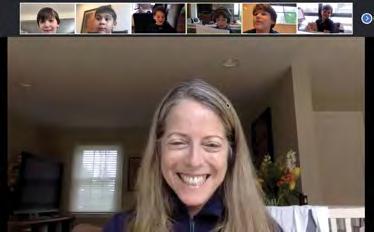
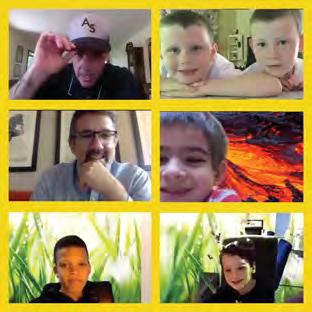
Live Instruction, Small-Group Learning and Individual Support All boys had daily connections live with their teachers via Zoom. In the Lower School, homerooms met daily via Zoom and teachers checked in with each boy individually at least once a week. Boys and their teachers connected over assignments through Seesaw and had classes live with their specialist instructors. Middle and Upper School boys also had daily meetings via Zoom with their homerooms and advisories. Academic support was provided in the Middle and Upper School through Zoom office hours or individual meetings with regular academic teachers and Learning Specialists. They worked closely with the boys on assignments, just as they always have, by creating smaller breakout rooms during Zoom classes to give more attention to each boy’s needs. The School Nurse remained an active part of each boy’s school day by popping into the Lower School classroom meetings and offering Zoom office hours for the older boys.
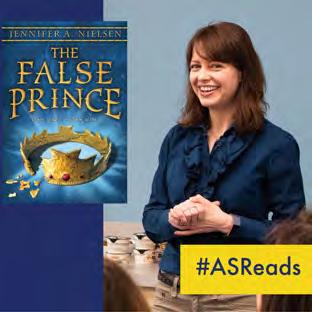
The Library Tech Commons team trained teachers on numerous educational tools, provided round the clock tech support to families and employees, and culled through resources to support classroom learning across the grades, as well as to share out with the community on the A-S Bridge web page. Library teachers curated books for the boys and read aloud every afternoon so boys could decompress while listening. They even organized a virtual Book Fair to ensure the boys’ love of reading was nourished and books were made available.
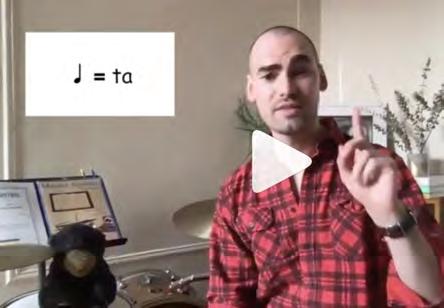
The Arts The fact that our music program is embedded in the rest of our curriculum meant we were able to find many ways to continue to incorporate it into our remote learning plan. Lower School Music Teacher Ian Taggart created a range of entertaining music videos to teach boys in Grades K to 2 musical rhythms, as well as holding live music classes via Zoom from time to time. Third graders continued their recorder lessons with Head of Music Michelle Demko via Zoom.
Fourth graders studied and created proverb rondos, and fifth graders continued their study of the Blues, with the boys improvising on the recorder, singing and organizing performances of Blues they wrote, with live guidance from Ms. Demko. Chorus for Middle and Upper School boys proceeded via Zoom too!
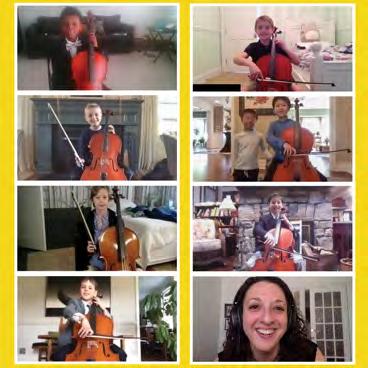
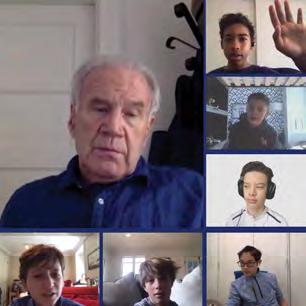
Claire Schlegel, Director of Instrumental Music, ensured that instrumental lessons via Zoom started up immediately, followed shortly after with online orchestra meetings. What’s impressive is that the boys were able to rehearse enough to record chorus and orchestra songs for Closing Exercises and the instrumental instructors organized Zoom “play-ins” for the recital portion of their performance development.
The Art team organized a virtual Arts Festival and creatively revamped its curriculum. In Kindergarten, the boys discussed monsters online with their teachers and drew and created their own out of cardboard. In First Grade, they made thoughtful observations, under the guidance of Art Teacher Tara Parsons via Zoom, of
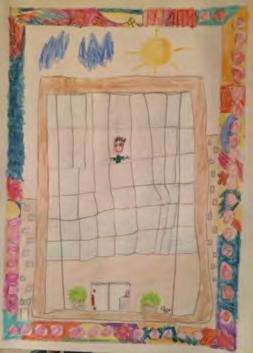
what they saw outside their windows using the artist Faith Ringgold as inspiration. Fourth graders created armor—helmets, chest plates, shin and wrist guards and shields with online lessons from Art Teacher Julia Kunin. One Upper School art elective created dystopian landscape scenes using Adobe Photoshop, after researching the possible impact of human intervention on the planet and cataclysmic natural causes and discussing them during an online discussion with teacher Rob McCallum.

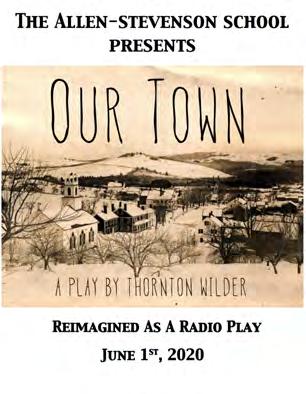
Theatre marched ahead with a reimagining of the 7th Grade Play, Our Town, as a radio broadcast and 3rd Grade “Mr. America” as a sing-along. For the youngest budding actors, Julie Robles, Theatre and Technical Director designed an engaging way to introduce her students to theatre through a series of optional weekly plays with a prompt word and two prop ideas that the boys needed to use when storyboarding their play. The boys submitted their completed plays through Seesaw.
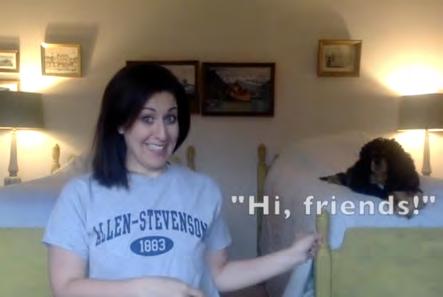
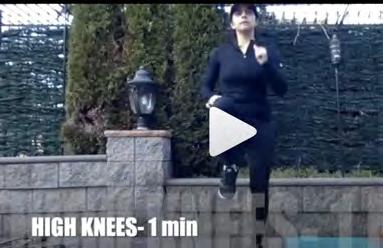
The entire Athletics department recorded an impressive series of manageable, short workouts that our students could easily engage in at home with no additional equipment. They also held live PE classes via Zoom and organized a virtual Field Day! The lacrosse, baseball, and track teams, who missed most of their season, continued to meet via Zoom throughout the spring as our athletic coaches recognize the immense value the boys gain from being part of a team.
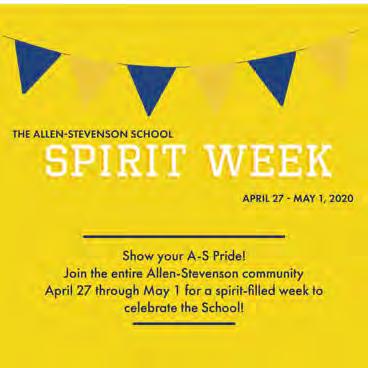
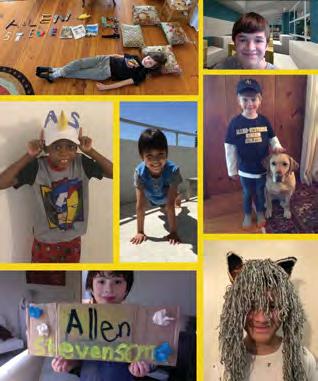
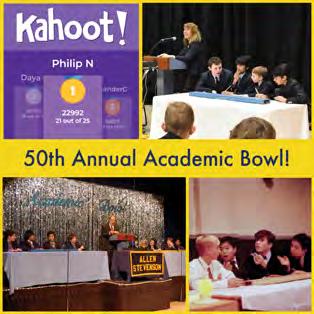
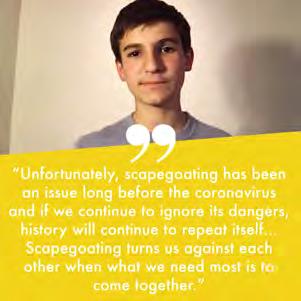
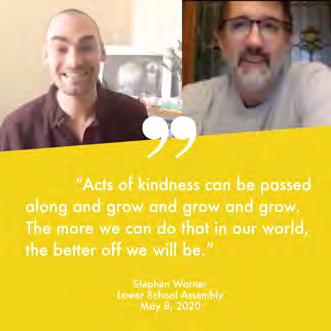
Community and Expressing Gratitude Community is at the core of everything that we do, so building in moments together while physically apart was incredibly important in our plan. Monday Morning Meetings in the form of live Zoom webinars for the Middle and Upper Schools brought the boys, faculty, and staff together. During this time, the boys sang, were inspired by an alumnus about connecting with their feelings, shared in the Academic Bowl and the Upper School Speech Contest, and kicked off the morale-boosting Spirit Week. Lower School Assemblies for Grades K to 3 focused on kindness and expressing one’s emotions. Classrooms and advisories met regularly so that the boys and teachers could check in with each other and share experiences.
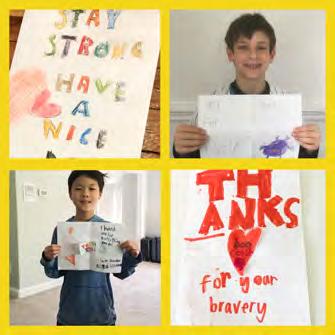
In the spirit of giving back to the community and in a show of leadership, a kind group of Upper Schoolers volunteered to read picture books out loud via Zoom to the Lower Schoolers—kicking off with the Kindergarten. Our Lower School community thanked healthcare workers on the frontline in myriad ways. Second graders in art class made heartfelt thank you cards with messages of support to be mailed to their heroes at Lenox Hill Hospital, our school neighbor. Kindergarteners showcased their computer design and penmanship skills by creating virtual skywriting banners with special messages of thanks that
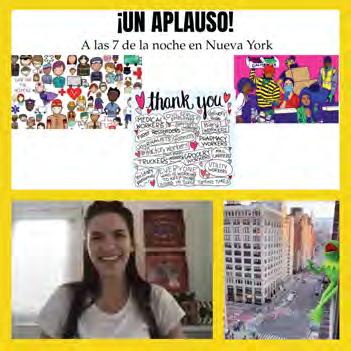
they could fly over New York City for our healthcare workers to see. Lower Schoolers across grades watched videos of our New York City community cheering at 7PM nightly and welcomed School Nurse Meghan Little to their Spanish Zoom class to thank her for everything she does for our school community, while practicing their body part vocabulary in Spanish. To thank our very own teachers, every boy in the School created a thank you message, with organizational help from their parents, to share with Allen-Stevenson’s own front-line workers on Teacher Appreciation Day.
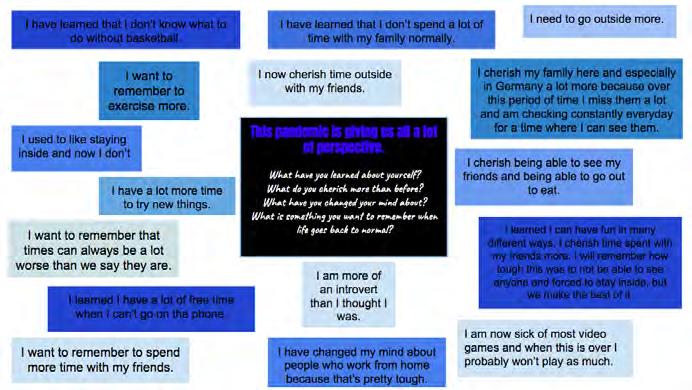
Some Unexpected Outcomes While everyone is still adapting to this new situation, allowing our boys to take suitable risks in this new way of learning meant, for some, that they’ve figured out how to manage their time better and to become more independent through the different types of assignments with which they are being challenged. Building in more time for the boys to reflect has resulted in them becoming more open-minded and aware of the world around them.
Most importantly, the School recognized the importance of inspiring in our boys a love of learning, a willingness and drive to give their best effort, a comfortable space in which to take risks and ask questions, as well as an awareness of and commitment to the human spirit. We will continue to keep this approach at the fore as we look to the future.
A FEW ACADEMIC HIGHLIGHTS FROM A-S BRIDGE
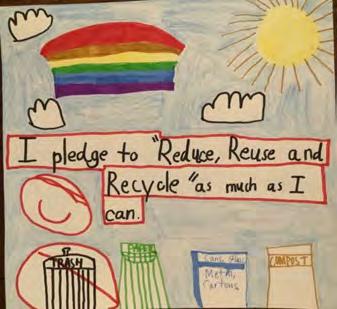
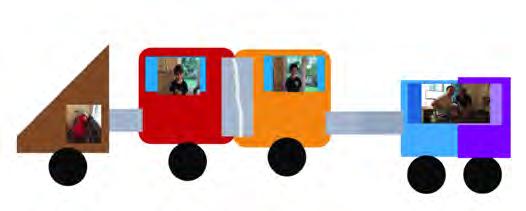
Kindergarteners tapped into their areas of expertise to teach others what they know by writing “All About” books. They continued their study of transportation while developing their technology skills with guidance online via Zoom. Earth Day provided the opportunity to share how they are helping to keep the Earth clean.
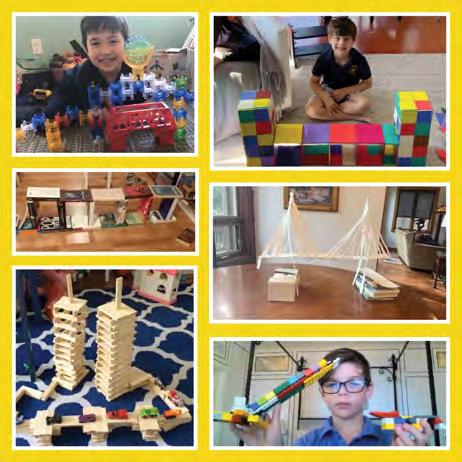
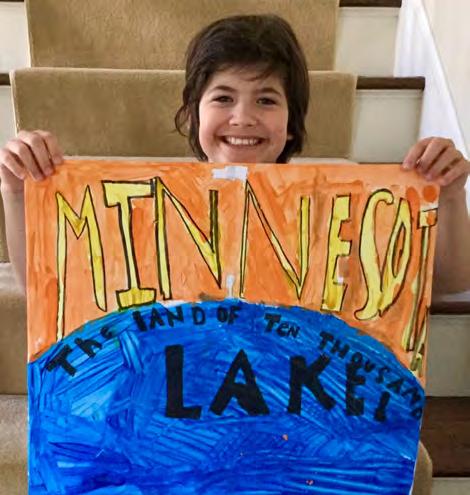
Building on their study of bridges, first graders repurposed household items to construct their bridges using their knowledge of different types and structures, then recorded themselves explaining their work. Discussions of gratitude resulted in the boys expressing their feelings through rainbow drawings.
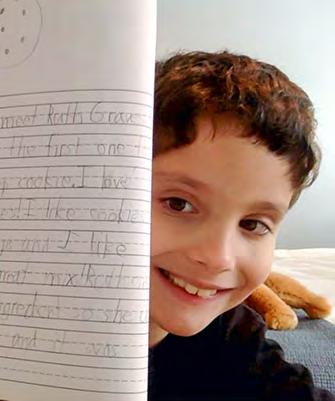
Second graders put their writing, spelling, grammar, and penmanship to work by writing journal entries that had them think outside the box while encouraging them to be self-aware.
The Spanish teachers had the third-grade boys used household items to represent their knowledge of colors and shapes, then discussed what emotions they associate with each color via Zoom. Artists in Alex Exposito’s third-grade class designed paper models of their homes, one room at a time.
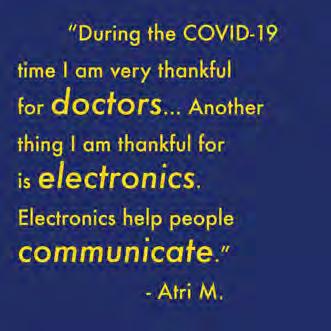
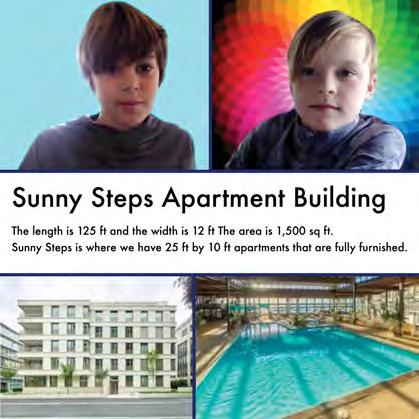
Fourth graders wrote about gratitude in class, focusing on the acronyms COPS (capitalization, organization, punctuation, and spelling) and SEE (statement, evidence, and explanation). They also learned how to code their games in Scratch with exciting results! In honor of Earth Day, our fourth-grade scientists were tasked with creatively portraying a brook trout's food chain, showing the path of energy from one plant or animal to the next. During math class, fourth graders took on the role of urban planners and designed a city block, using their knowledge of rectangular area and applying it to a real-world situation. Persuasion skills were needed to sell the group on why their design was best.
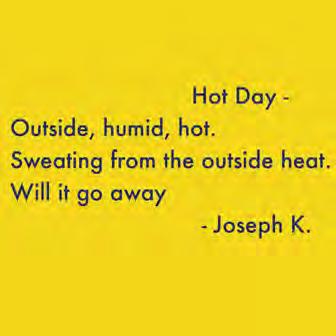
Fifth graders learned about poetry as a literary art form, writing their haikus about something that they connected with a strong emotion or memory. Fifth-grade debates were reworked to be held via Zoom, and in science, the boys explored ways in which cells can work together using a student-driven research experiment investigating the impact that food coloring has on plant tissue.
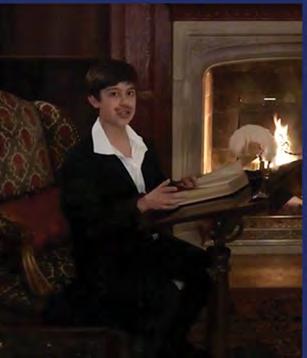
The boys in sixth-grade English class integrated theater and video editing skills into their unit on “The Raven” by Edgar Allan Poe during English, and in history, boys used art from the Metropolitan Museum of Art as inspiration and to transport themselves back to
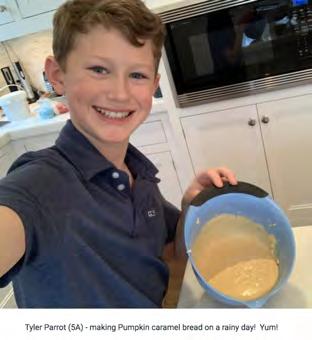
the Civil War era as they wrote historical fiction stories. Sixth graders also studied how sound travels in different spaces during discussions in science class and were then tasked with creating a hypothetical Dining Room for AllenStevenson, which incorporated soundreducing materials and strategies.
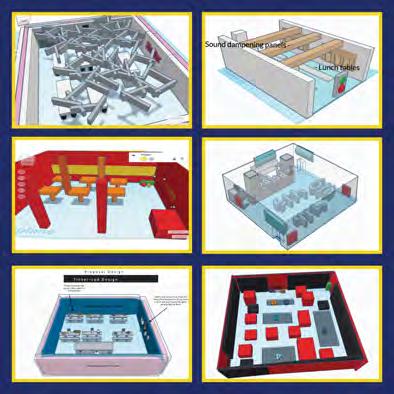
Middle Schoolers were introduced to a new class called Personal Elective Time, during which they could plan their own projects, with approval and encouragement from a teacher. Boys enjoyed the freedom of designing freely and created everything from their own golf course and ski resort, to caramel bread and a Tinkercad airplane.
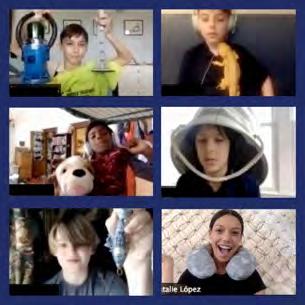
Middle and Upper School Spanish students were sent on an educational “Marie Kondo Scavenger Hunt” to find an outfit or item that sparked joy for them. They had to speak and write about the item in Spanish, as well as listen and share.
Seventh graders in history class had a productive Zoom discussion about “Jim Crow” laws from 1865-1945, during which they talked about citizenship, “privileges and immunities,” “due process of the law,” and “the equal protection of the laws.”
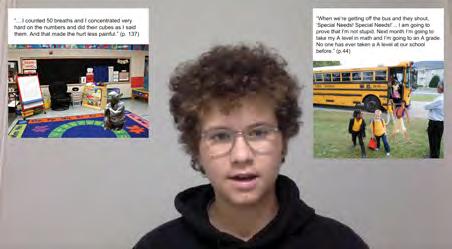
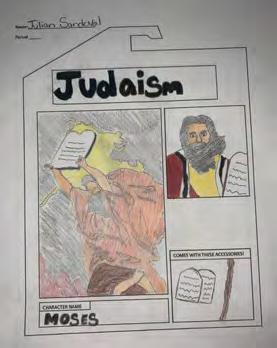
In eighth-grade history, the boys were tasked with creating a card back for a “Judaism” action figure, considering things like, where would this character live, who are their historical friends versus their foes and how would they be physically represented. While in English, the boys delved deeply into their analysis of The Curious Incident of the Dog in the Night-Time, by Mark Haddon. The boys crafted a thesis statement containing an assertion worth proving, followed by topic sentences that they supported with textual evidence and two or three quotations. Then, the boys created beautiful original artwork to illustrate their chosen quotations.
