AIU Special Education Prospectus 2026: Bridging Gaps, Building Futures
Bridging gaps, Building Futures
ExpErt Support for EvEry LEarnEr’S JournEy
SpEciaL Education & pupiL SErvicES | 2026
Learn more about the AIU’s special education related services.
Dr. James Palmiero
Assistant Executive Director for Special Education & Pupil Services
james.palmiero@aiu3.net 412-394-5956
Brian Welles
Assistant Director for Special Education & Pupil Services brian.welles@aiu3.net 412-394-5732
Jeanine Esch
Director for Hearing, Vision & Communication Access Programs jeanine.esch@aiu3.net 412-394-4538
Jennifer Pirring
Supervisor for Hearing, Vision, & Communication Access Programs jennifer.pirring@aiu3.net 412-394-4630
Holly McElhinny
Director for OT/PT Support Program holly.mcelhinny@aiu3.net 412-394-5503
Christine Nypaver
Clinical Supervisor for OT/PT Support Program christine.nypaver@aiu3.net 878-265-1209
Ginger Nese
Clinical Supervisor for OT/PT Support Program ginger.nese@aiu3.net 878-265-1223
Jill Smolenski
Clinical Supervisor for OT/PT Support Program jill.smolenski@aiu3.net 412-394-1377
Thomas Rea
Director for Speech/Language Support Program thomas.rea@aiu3.net 412-394-2205
Patricia Alter
Supervisor for Speech/Language Support Program patricia.alter@aiu3.net 412-394-3638
Executive Summary
Since opening in 1971, the Allegheny Intermediate Unit (AIU) has partnered with schools to design and deliver innovative supports that help students thrive. As we look toward 2026-2027 and beyond, our commitment remains clear: advancing equitable access and meaningful outcomes for every learner through coordinated, high quality related services.
AIU’s service model is grounded in supporting students along a continuum toward independence, beginning in Preschool Early Intervention (PEI) and extending through transition to adult living. Our services, including Speech and Language Support, Occupational and Physical Therapy, and Hearing and Vision programs, are intentionally embedded within the context of daily instruction and routines. Rather than functioning as standalone supports, therapeutic goals are integrated into classrooms, schools, and community settings to promote authentic skill development.
Central to this work is the expertise of AIU staff, who serve as collaborative members of each student’s multidisciplinary team. Drawing on deep professional knowledge and shared accountability, our professionals work alongside schools’ personnel and families to align services with instructional priorities and student goals.
Beyond direct student support, the AIU’s related services teams help build internal capacity of the systems in which they operate. Through consultation, professional learning, and collaborative design of learning environments, we strengthen school-based systems that benefit all learners. This team-based approach reinforces skill development across settings while ensuring services are consistent, compliant, and responsive.
The result is a coordinated model that supports access, belonging, and independence for students, while providing districts with a trusted partner in navigating complex needs and evolving expectations.
On behalf of the AIU’s Special Education and Pupil Services Division, thank you for your continued partnership and trust. We invite you to explore this prospectus and learn how our shared work supports districts, families, and—most importantly—students.
Sincerely,
Dr. James Palmiero
Assistant Executive Director for Special Education & Pupil Services
Supported from the Start: donovan’S path to incluSion at pine - richland middle School
During a rehearsal for “Beetlejuice Jr.,” Donovan DeHart was supposed to exit the stage with the rest of the ensemble. Instead, he stayed front and center and nailed the end of the musical number. When it was over, he ran straight to his mom in the front row and wrapped her in a hug.
“Give that boy a stage and music,” Kelly DeHart said, laughing, “and he will perform.”
This moment captures who Donovan is — joyful, spirited, authentic — and reflects a journey built through years of coordinated support that prioritize inclusion and independence.
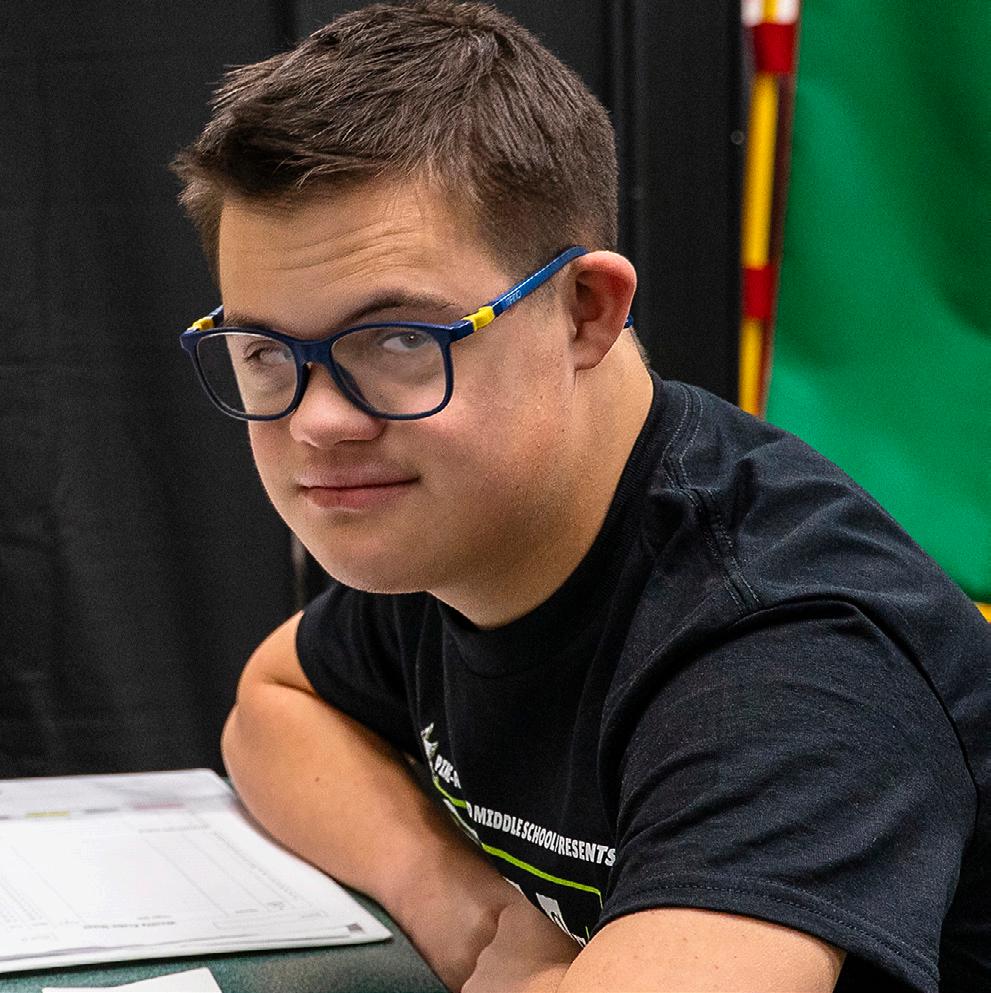
Donovan is an eighth-grade student at Pine-Richland Middle School. Diagnosed at birth with Down syndrome, he began receiving multiple therapies in infancy. “We were immersed in it and learning right out of the gate,” DeHart reflected. By age 3, Donovan was receiving special education-related services through the Allegheny Intermediate Unit (AIU), starting in Preschool Early Intervention (PEI) and transitioning seamlessly into the Pine-Richland School District.
B y E mi Ly W i LE y
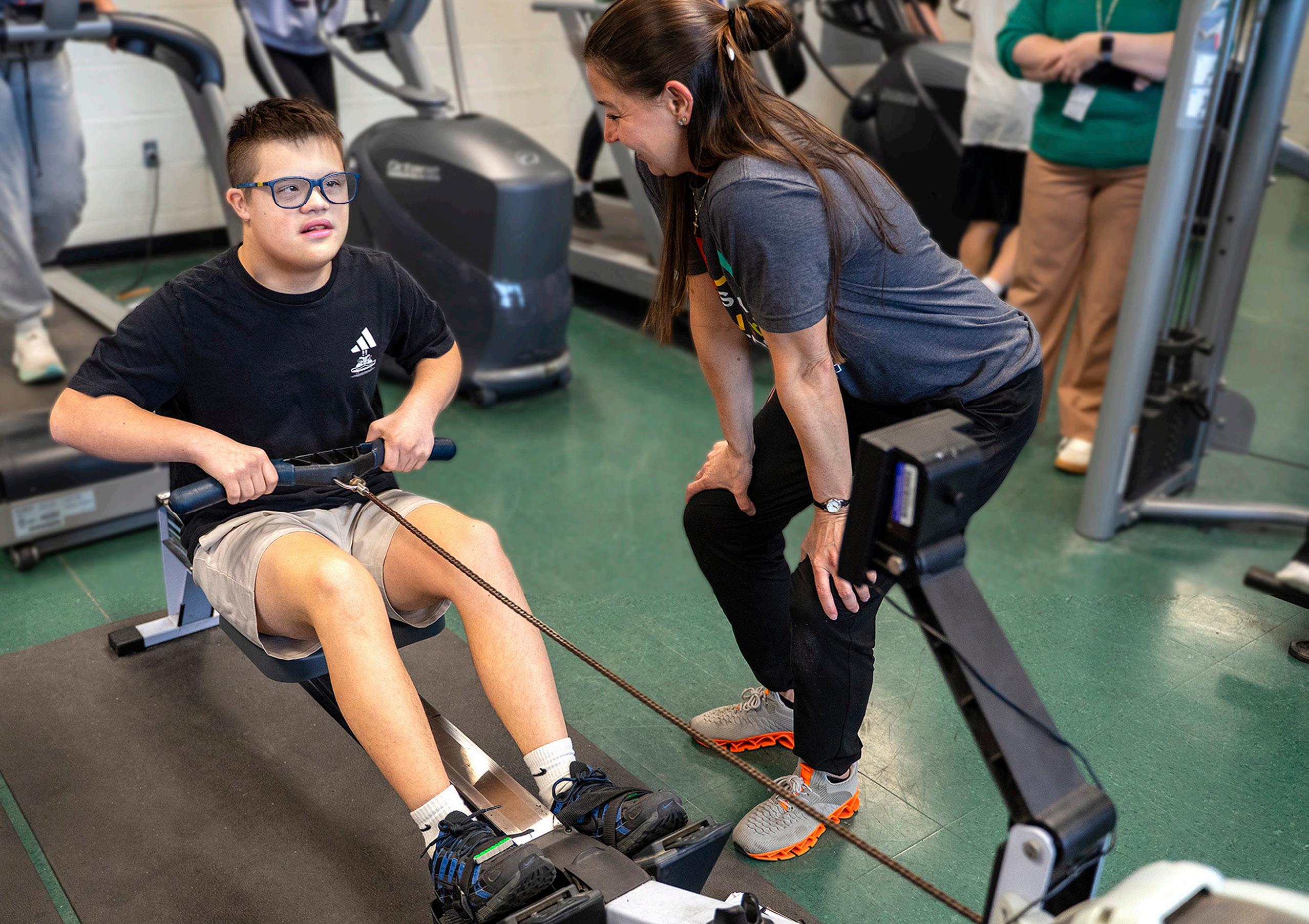
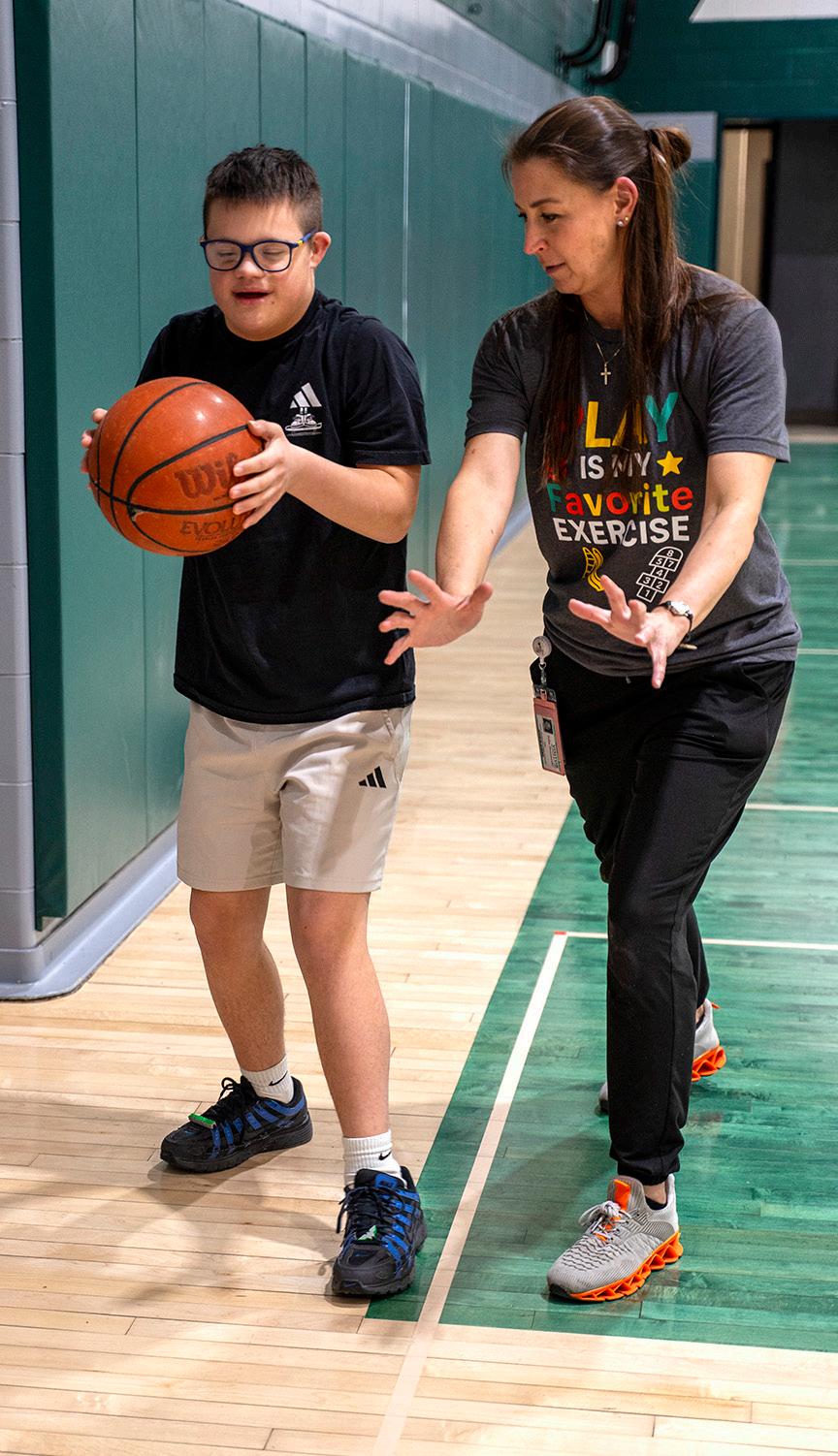
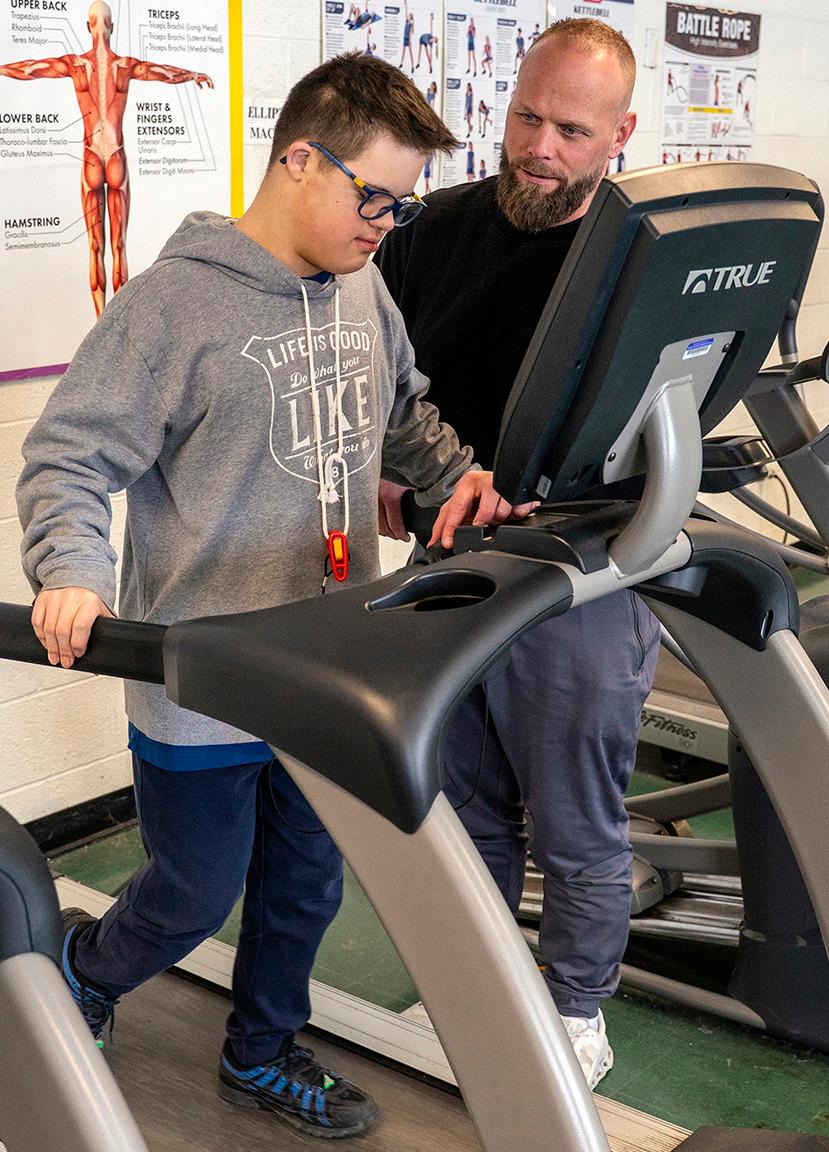
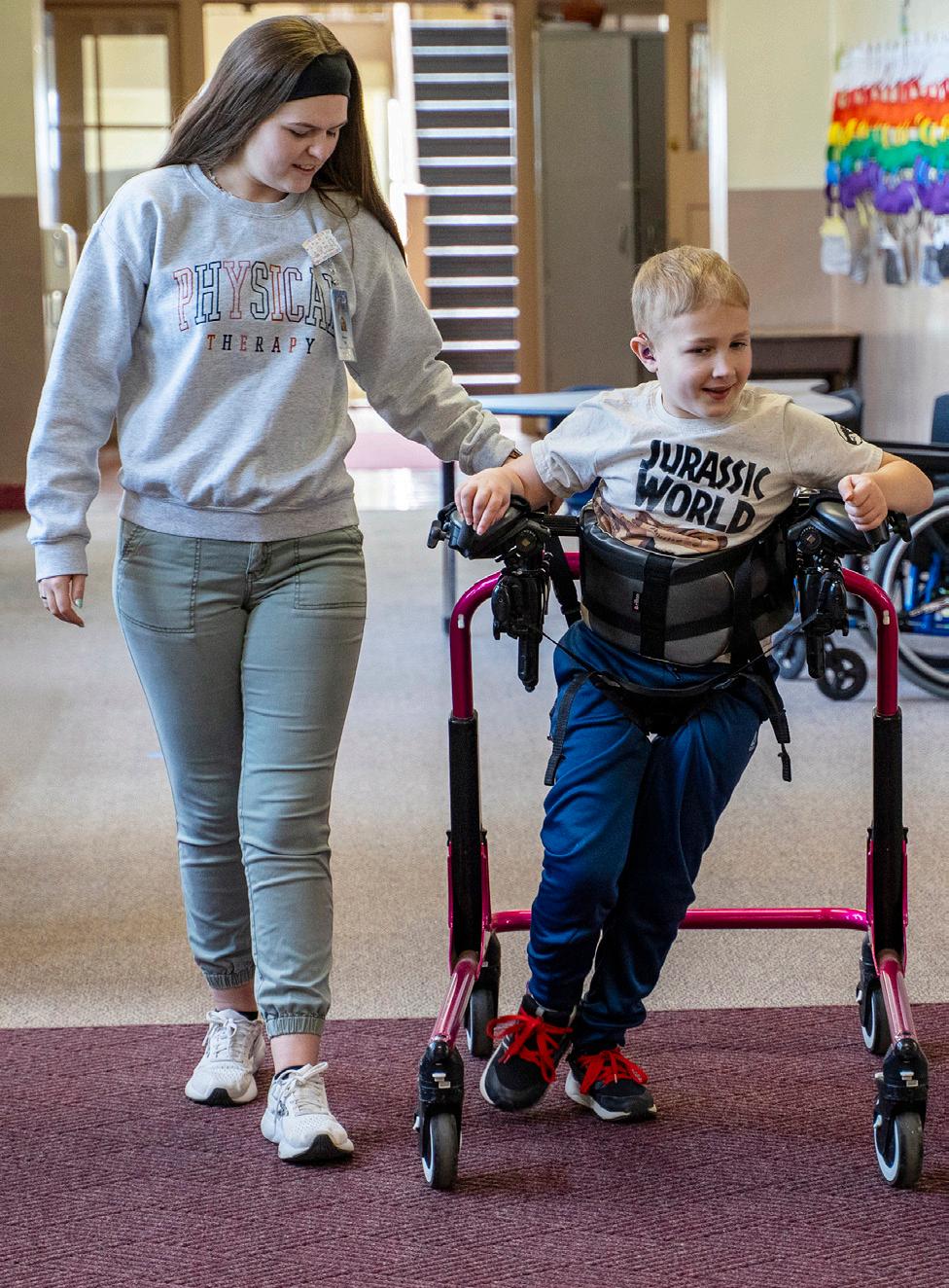
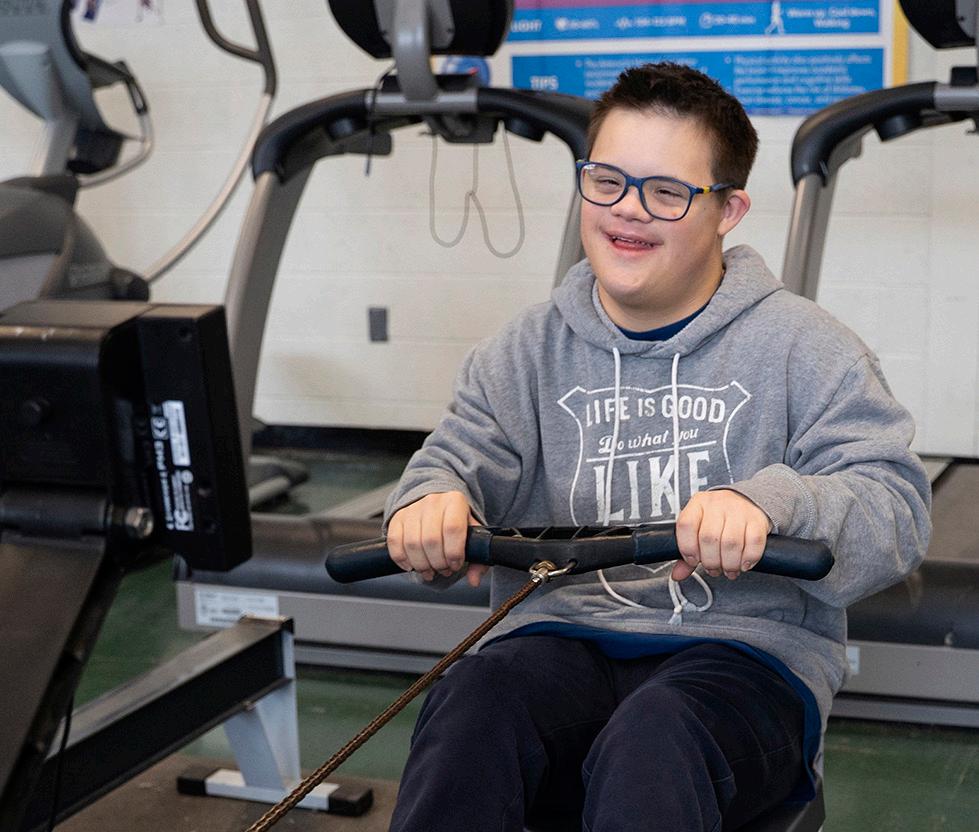
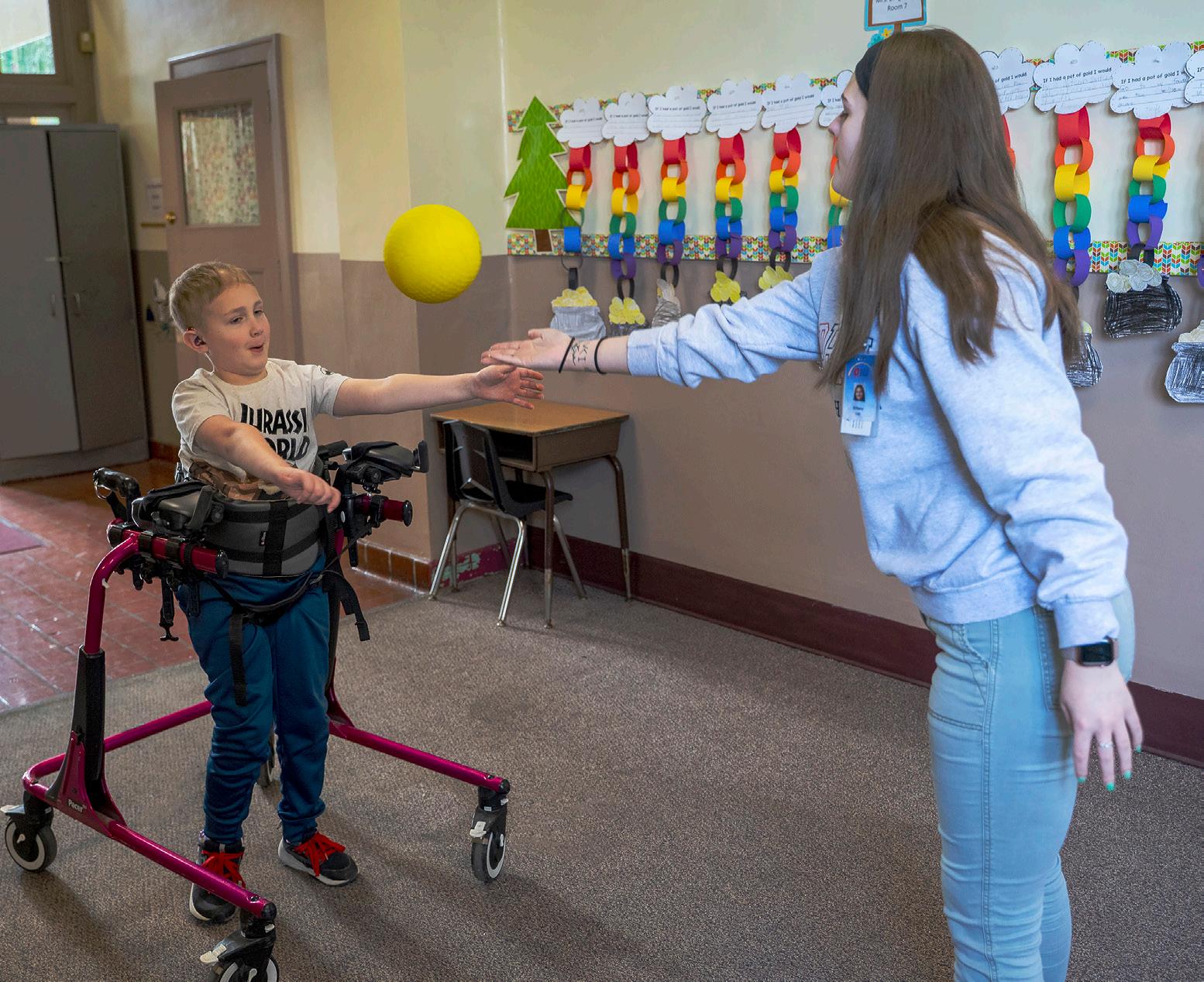
Julie Domorski assists Donovan during gym class as part of his physical therapy.
Preschool Early Intervention
Serving 4,190 children
In 500 unique locations
Preschool Early Intervention (PEI) provides free special education services for eligible children ages 3-5 in Allegheny County who have developmental delays or disabilities. Children may qualify with at least a 25% delay in areas such as communication, cognitive, physical, adaptive, or socialemotional development.
Services build foundational skills and support children in everyday routines and are delivered in the least restrictive environment, including community preschool programs or home-based support.
By strengthening early skills and partnering with families and schools, PEI helps ensure a smooth transition to kindergarten and continued success in the K–12 system.
“The early intervention services really helped Donovan make the big leap to kindergarten,” DeHart said. “He learned to advocate for himself, strengthened his motor skills, and improved sensory regulation.”
Today, Donovan participates in the life skills program at the middle school, where he receives specialized replacement curricula in reading, math, science, and social studies. He is also supported through speech and language therapy, occupational therapy, and physical therapy provided by the AIU.
Although the district contracts with the AIU, the services are embedded into Donovan’s school day. Therapists work alongside teachers and staff as part of the school community. “They are thought partners, problem solvers, and key members of our students’ teams,” acknowledged Greta Kuzilla, assistant director of student services and special education at Pine-Richland.
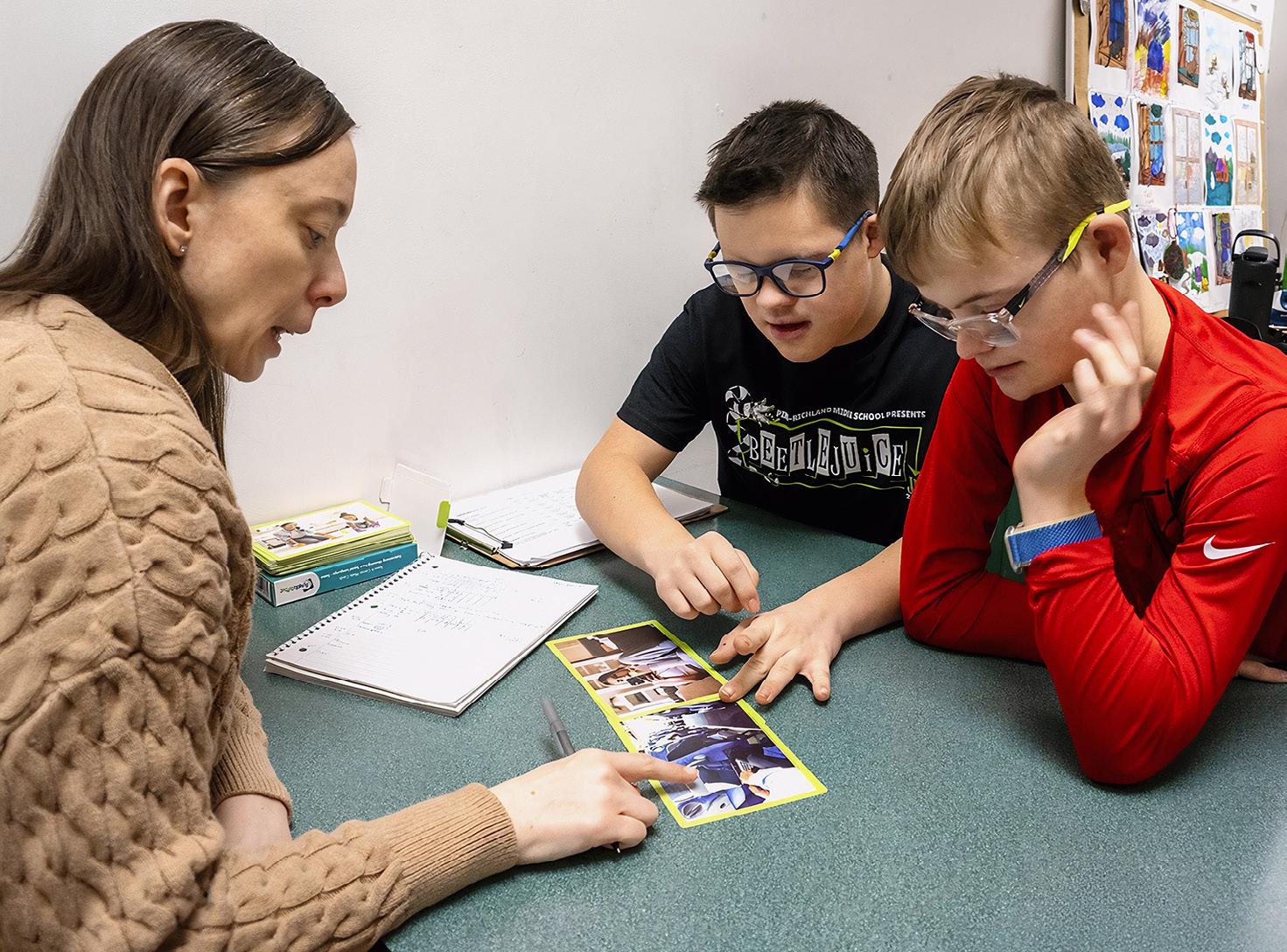
From early intervention through elementary school and into middle school, the AIU’s team of speech-language pathologists has supported Donovan’s growth. “I’ve had the pleasure of knowing Donovan since he was a little guy in kindergarten,” said Kris Scheller, a speech-language pathologist. “Seeing him go from one- and two-word phrases to communicating in full sentences is amazing.”
In his early years, speech therapy focused on building the foundations of communication. Donovan’s family understood the importance of peer-topeer interaction and encouraged it. “The IEP team was on board,” said DeHart. “I’ve pushed for it ever since.”
Therapists incorporated a model known as “reverse inclusion,” which allowed him to practice communication skills in natural, social settings without disrupting classroom instruction. “Sometimes Donovan’s peers would come into therapy sessions with him,” Scheller explained. “That helped him learn to interact with them.”
Now in middle school, Donovan’s speech goals look toward the future. He is building higher-level communication skills that will support him beyond the school day—in the community and, eventually, in the workplace. The focus is to not only be understood, but to understand others and navigate real-world interactions.
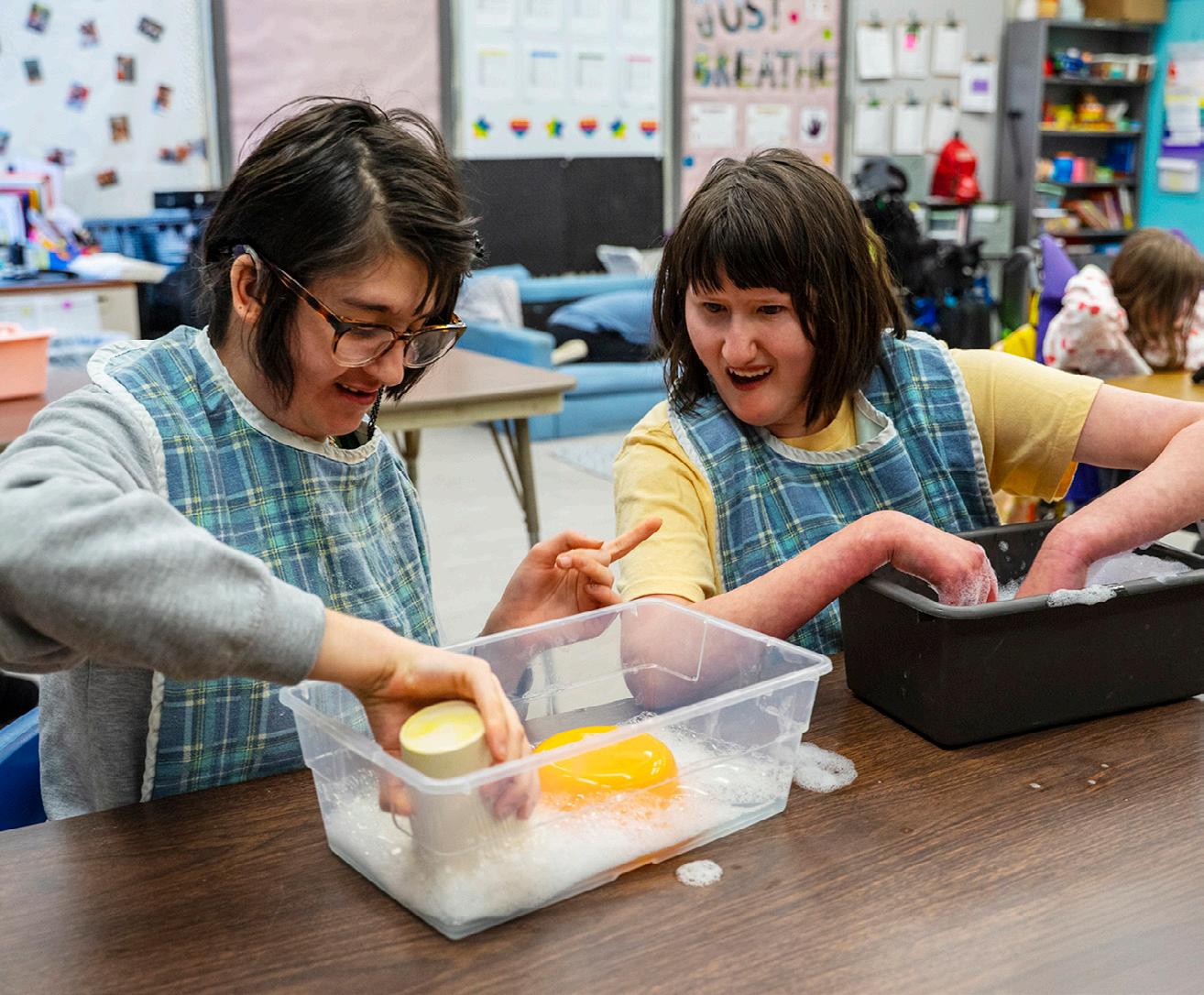
Donovan works with a classmate during speech therapy with Megan Klingensmith .
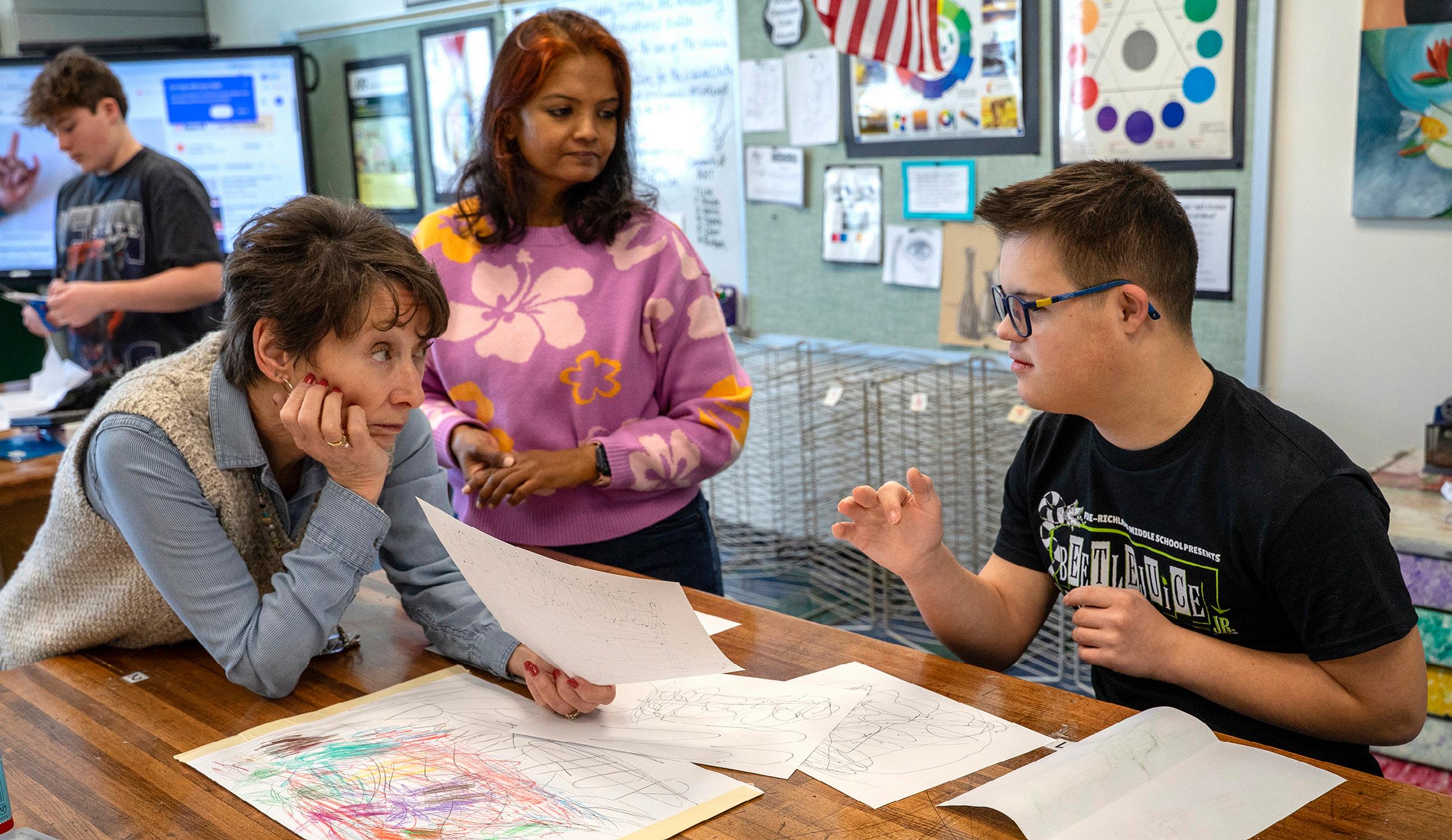
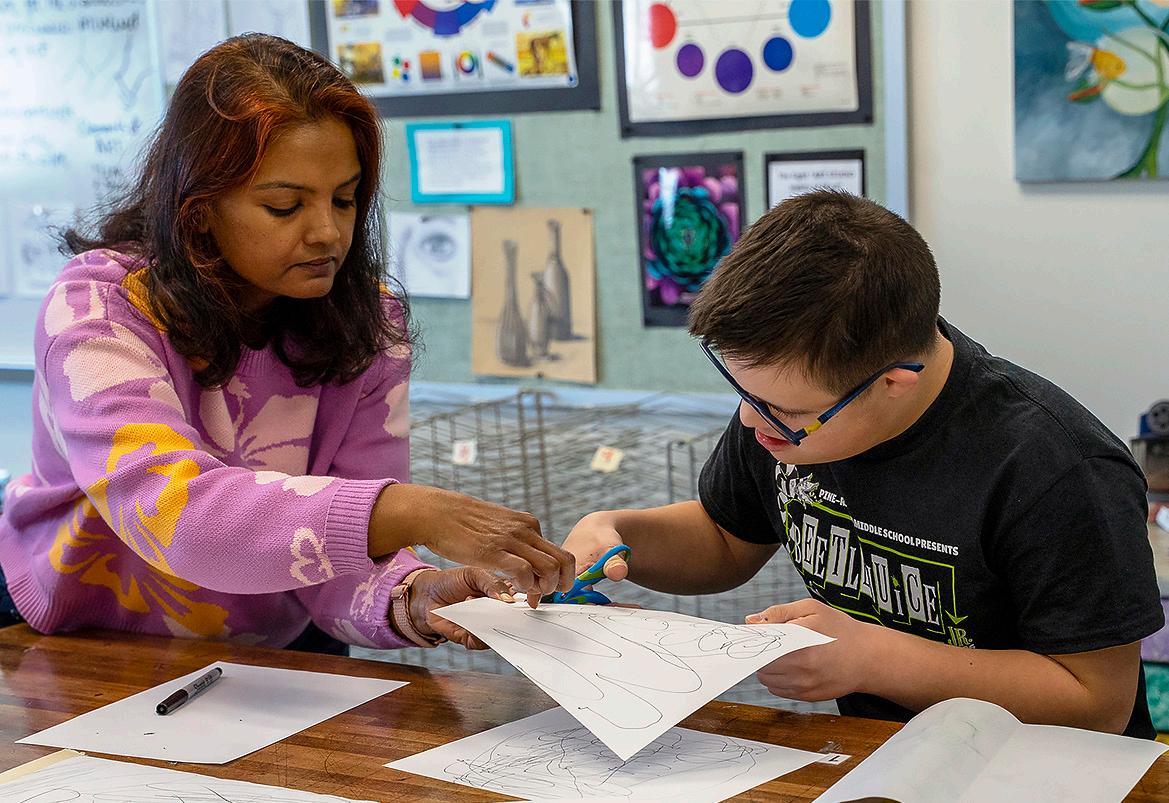
Pine-Richland staff members, Holly Angeloff (left, art teacher) and Nitu Singh (right, paraprofessional) work closely with AIU staff to ensure Donovan’s success in school. Art is one of Donovan’s favorite subjects.
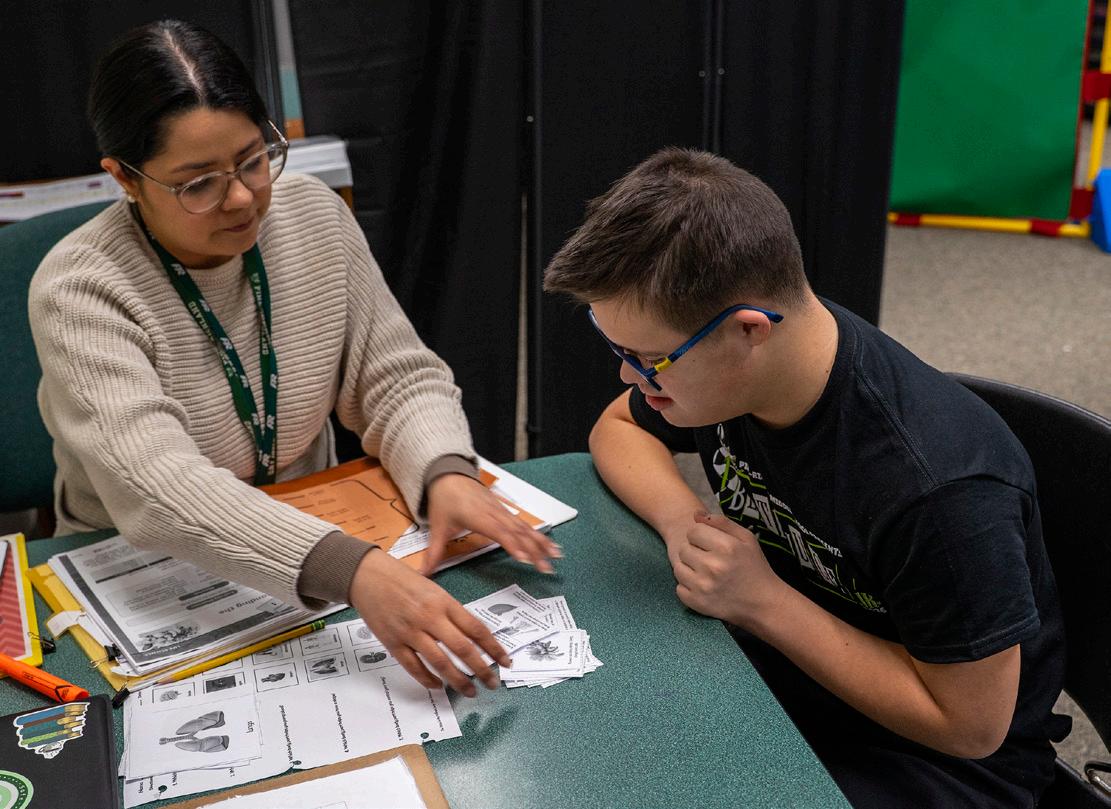
Megan Klingensmith, Donovan’s current speech-language pathologist, works with him on explaining his ideas, repairing communication breakdowns, and making inferences. “Our goals start to reflect transition skills more as he gets older,” she said.
Those skills show up throughout Donovan’s day. He picks up on social cues, uses teen slang he hears in the hallways, and enjoys conversations with classmates and staff. Each interaction reflects years of consistent, collaborative support.
That continuity extends beyond speech and language services, shaping how Donovan is supported across disciplines.
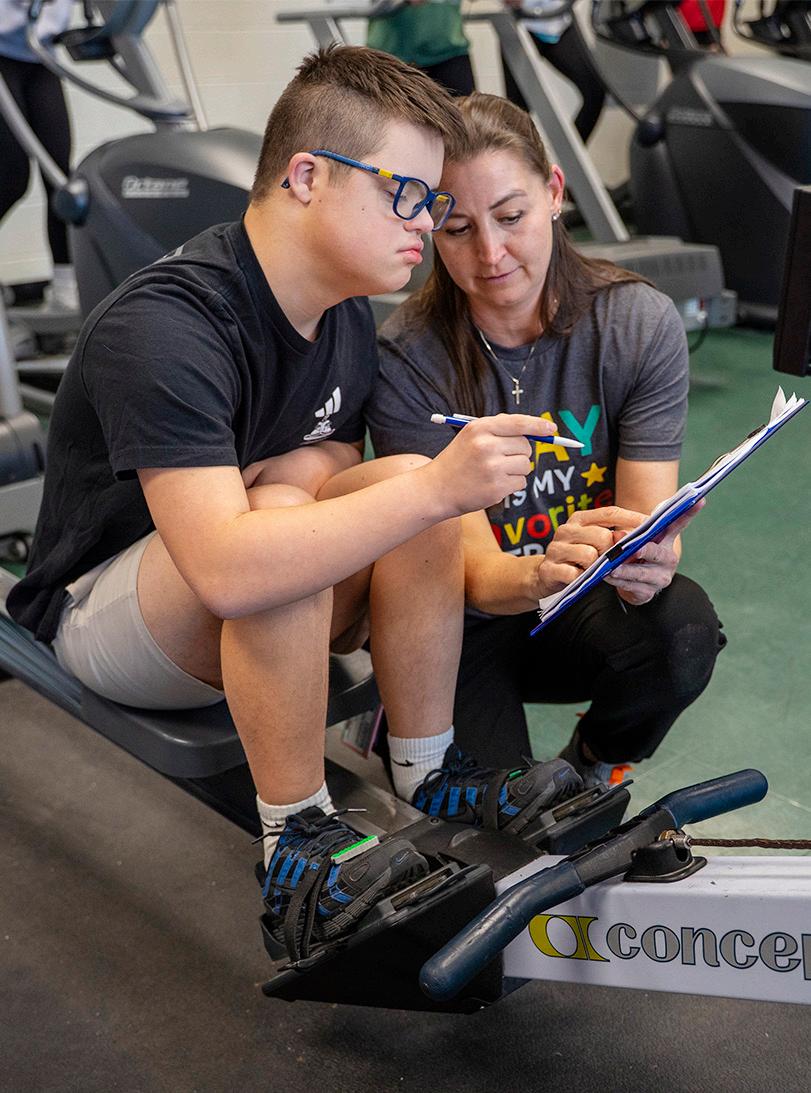
In occupational therapy, Donovan practices skills that promote independence. Early goals focused on tasks like tying his shoes and typing his name. Over time, those goals have evolved into functional, job-related tasks such as sorting and bundling papers, organizing materials, and completing fine-motor activities that require coordination and focus.
Physical therapy also plays a key role in preparing Donovan for daily life and future work. Julie Domorski, physical therapy assistant, described the Practical Assessment Exploration System (PAES) Lab at Pine-Richland High School, where Donovan gains hands-on experience exploring vocational tasks. “The PAES Lab gives students the opportunity to see what they’re good at and what they enjoy,” she said.
“ Everybody has not just helped Donovan… they’ve helped me as a mom.”
K ELLy d E H art
Speech/Language Support Program
The AIU’s Speech/Language Support Program delivers comprehensive, school-based speech and language services to districts across Allegheny County, supporting public and non-public schools, specialized programs, and AIU-operated special education schools.
B y the N um B ers
48 Therapists on staff
1,800 Students served
51 LEAs served
Services are provided in individual, small group, and classroom settings to address communication skills that are delayed or absent and to expand each child’s capacity to learn during the school day. Specialists in areas such as auditory processing, feeding and swallowing, and autism are also available.
The program emphasizes collaborative, team-based service delivery — partnering with district leaders, educators, and families to reinforce skill development across settings and ensure speech and language services are strategically aligned with district goals for student achievement.
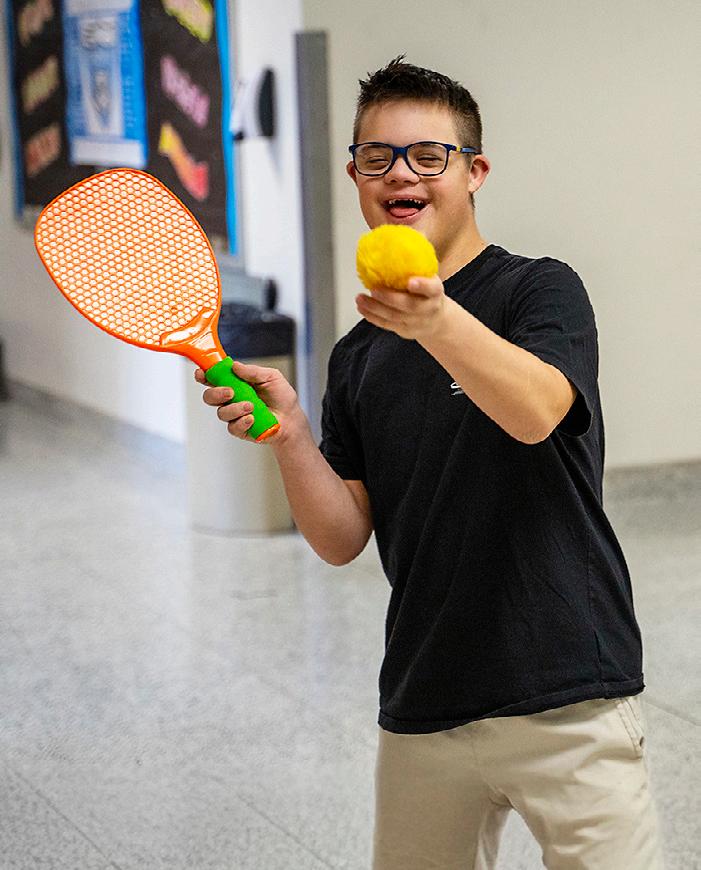
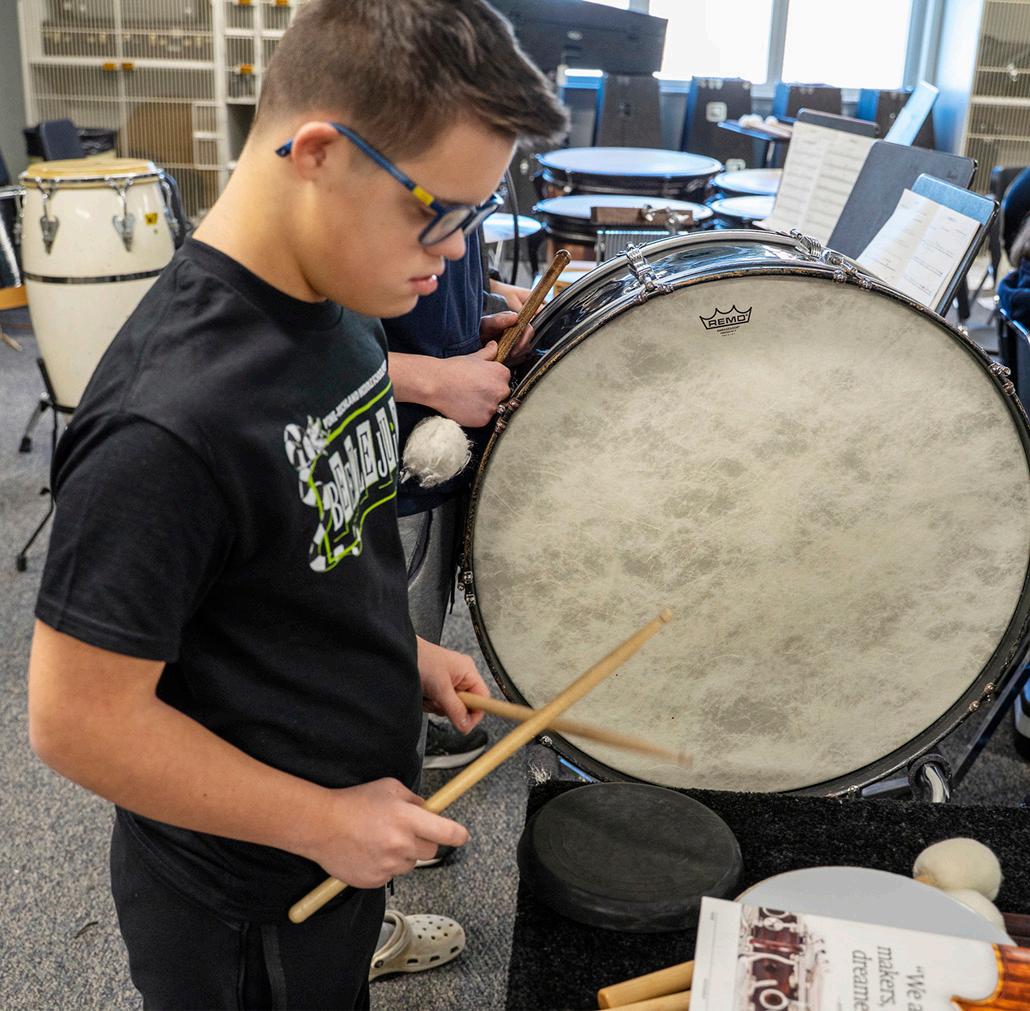
Beyond vocational readiness, therapy incorporates Donovan’s interests, including basketball, badminton, and playing drums beside his eighth-grade classmates. Rather than pulling him out of his day, AIU therapists push into physical education and music classes, supporting him alongside his peers. Their work also extends into the cafeteria, hallways, and outdoor spaces, helping Donovan navigate these environments with independence and confidence.
While school provides structure and support, the middle school years bring a new set of challenges beyond the classroom. Middle school has been a particularly complex season for Donovan, marked by puberty and changing social dynamics.
Amid the changes, consistency has mattered most, supported by a team that understands Donovan as a whole person. “Everybody has not just helped Donovan,” DeHart said. “They’ve helped me as a mom.” From early intervention through middle school, she described the support her family has received as steady, responsive, and compassionate.
Looking ahead, DeHart imagines her son in a lively work environment where he can interact with others: a movie theater, a sporting event, a place filled with energy and people. “We want Donovan to be independent and contribute to society,” she said.
As Donovan prepares for the next stage of his education, the focus remains on growth, belonging, and possibility. His team continues to plan, building on strengths and expanding opportunities. Pine-Richland administrators point to collaboration with the AIU as a key factor in his success.
“The AIU supports our work by training paraprofessionals, assisting with data tracking, attending IEP meetings, and helping design classroom environments that reduce distractions and support learning,” Kuzilla said. “The AIU enhances what we do by ensuring each student receives the support they need every day.”
Whether he’s performing on stage, playing drums with his classmates, shooting baskets in gym class, or mastering a new skill in the PAES Lab, Donovan’s story is a reminder of what’s possible when a school district and the AIU work together with consistency and purpose.
Cheerleaders for Joey
Finding his way forward at Park Elementary
tHE firSt day of KindErgartEn iS a SEminaL momEnt in a cHiLd’S LifE. It’s the start of formal education and the opening of a whole new world of learning and discovery.
For Joey Mihailoff and his family, the first day of kindergarten was the start of a different journey, one that led to hospital stays, surgery, and a challenging recovery. Through those difficult moments, Joey and his family found a team of educators in the Steel Valley School District and at the Allegheny Intermediate Unit (AIU) driven to ensure he is like any other third grader at Park Elementary.
“Everybody around here isn’t just here for their job,” said Amanda Mihailoff, Joey’s mother. “They’re here because they’re a cheerleader for him, too.”
Joey started kindergarten at St. Therese in Munhall, but his first day was cut short when he became sick. Combined with additional concerning symptoms, the Mihailoffs decided to contact their pediatrician, who sent them to the emergency room. There, doctors discovered a brain tumor and operated the very next day. Rehabilitation, radiation treatments, and chemotherapy followed.
B y a ndr EW c H iappazzi
“The collaboration of the AIU team, the general ed teachers, and the special ed teachers in the district is so important.”
J eanine e sch
Occupational/Physical Therapy Support Program
The AIU provides school-based occupational (OT) and physical therapy (PT) services that enable students to access their educational programs and environments. These services support functional performance through targeted intervention and close collaboration with IEP teams.
B y the N um B ers
OT/PT Support program
65 Occupational therapists on staff
22 Physical therapists on staff
3,700 Students receiving therapy
66 LEAs served
Licensed therapists deliver services within school settings, aligning supports to mobility, fine motor development, sensory integration, and functional independence. Screenings and consultation for general education students are also available in accordance with the Americans with Disabilities Act.
Professional development and in-service training further strengthen district capacity in areas such as transfers and mobility, fine motor strategies, and sensory integration.
Suddenly, everything changed, including where Amanda and her husband Tom would enroll Joey when it was time to go back to school. “We knew he was smart enough. Things are just a little bit slower for him,” Amanda Mihailoff said. “We wanted him in as much of a general education setting as possible. We didn’t feel like we’d get that anywhere other than Steel Valley.”
As a result of his treatment, Joey returned to school, needing support with movement, fine motor skills, hearing, and vision. That’s when a coordinated team from the AIU stepped in. Three years later, AIU specialists work in sync with Steel Valley staff to provide the tools Joey needs to fully access his education.
“This is unique in that he receives so many services,” said Jeanine Esch, program director for Hearing, Vision, and Communication Access at the AIU. “The collaboration of the AIU team, the general ed teachers, and the special ed teachers in the district is so important.”
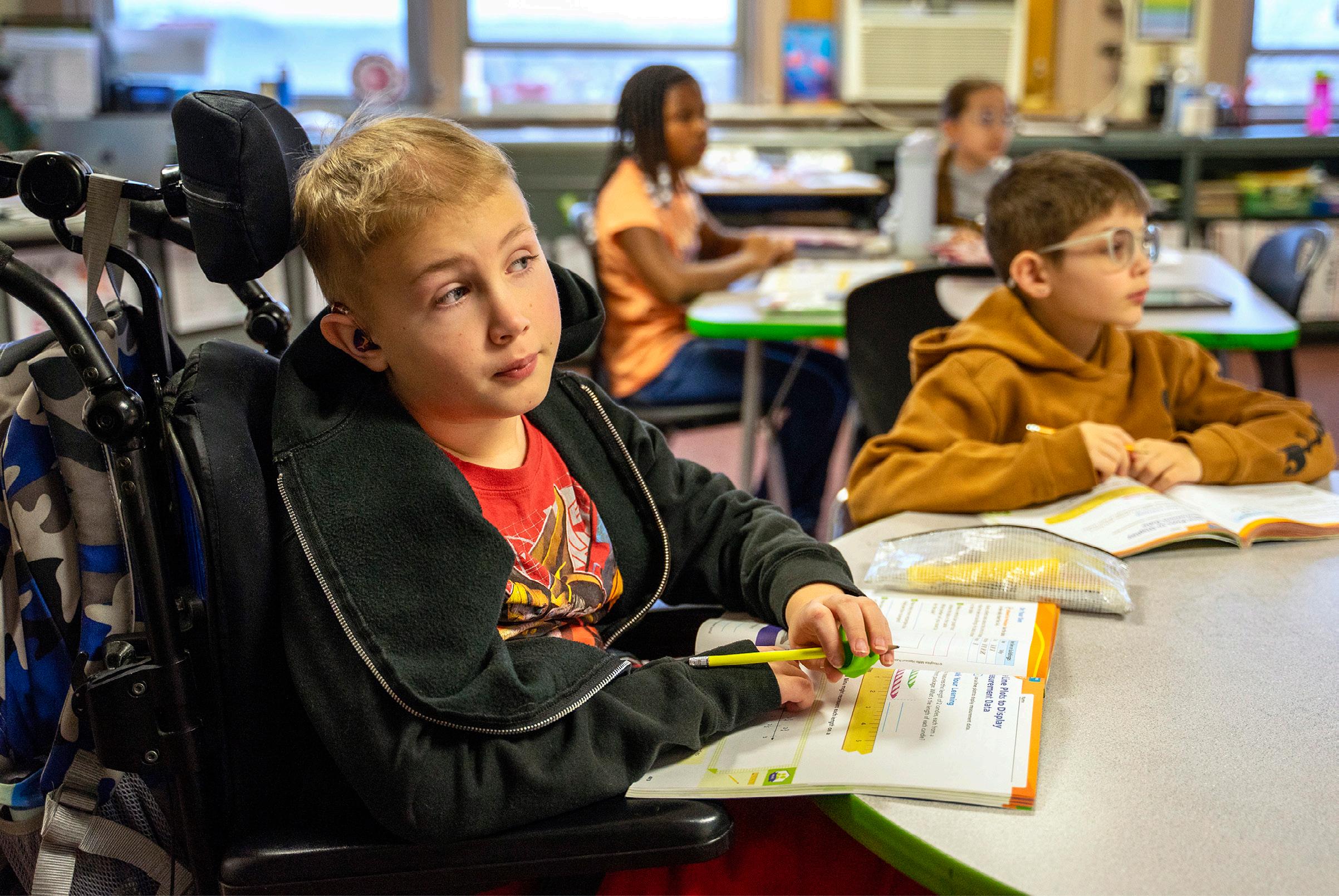
Joey receives a range of support services each week, including access to Hearing Assistive Technology (HAT). HAT is designed to minimize the negative effects of background noise, distance from the speaker, and classroom reverberation by improving the signal-to-noise ratio. Joey’s teachers wear a microphone that transmits their voices directly to his hearing aids. This direct transmission ensures that the teacher’s voice is clear and consistent, even in busy or noisy classroom environments where instruction might otherwise be difficult to hear or easily lost.
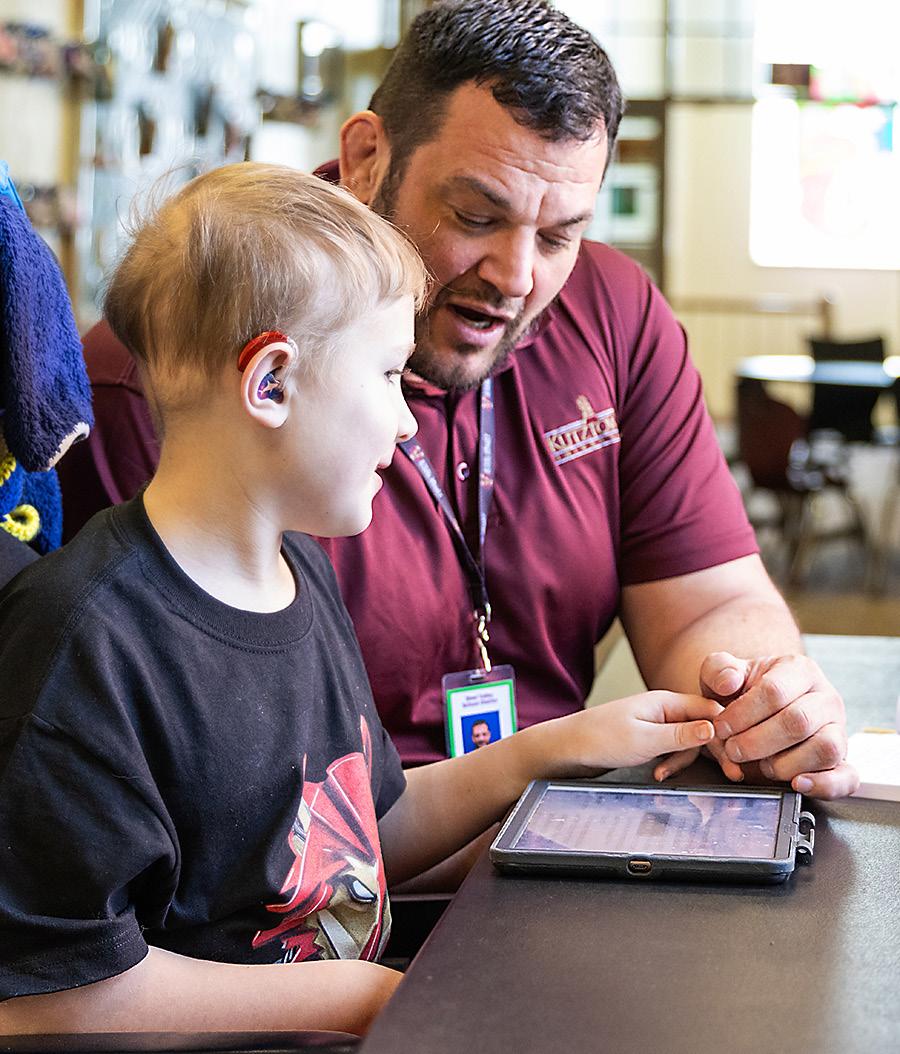
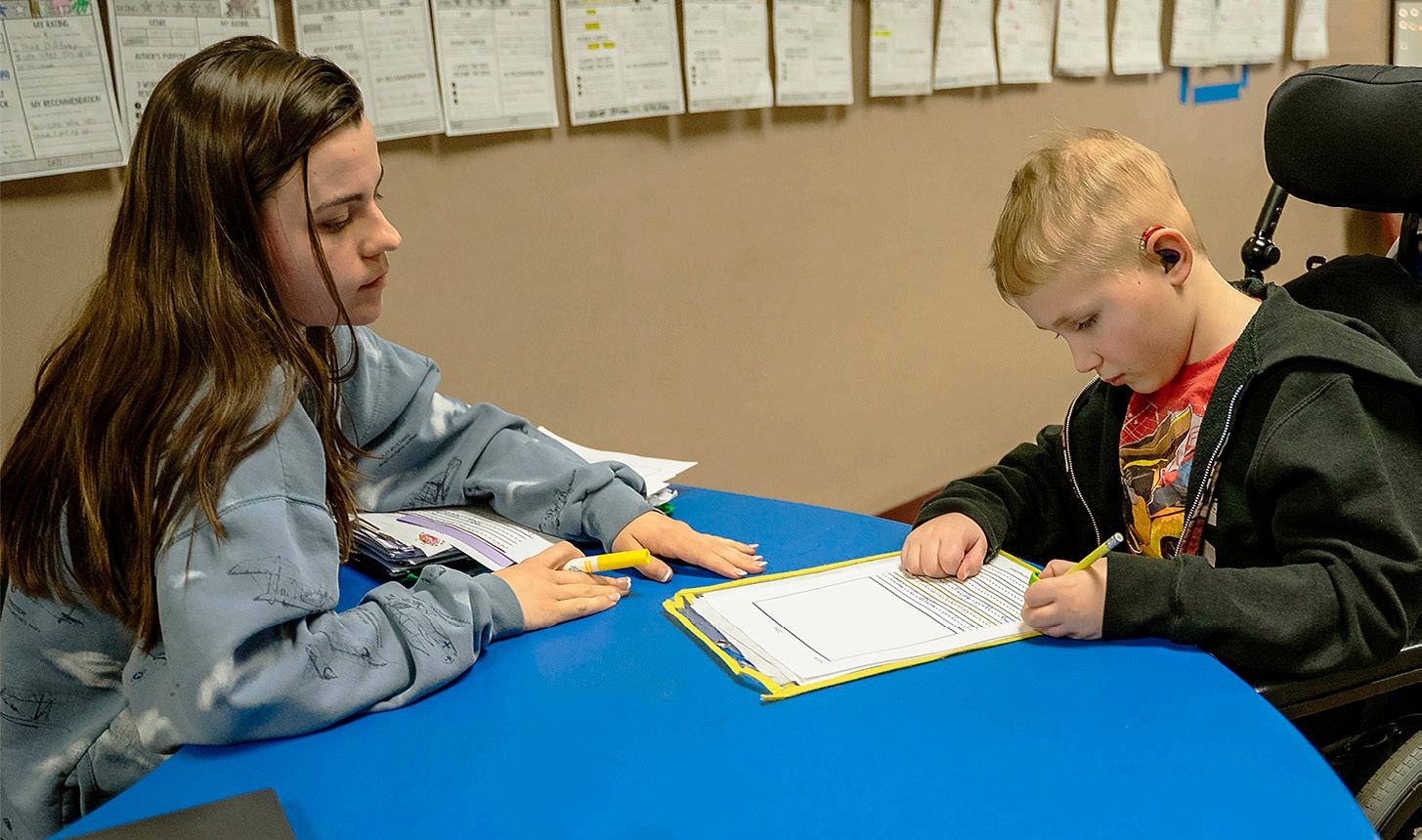
Barbara Martin-Taylor, teacher of the Deaf and hard of hearing, works with Joey twice a week—once in the classroom environment, once in an individual session—to support his use of the technology.
“I have the opportunity to see what’s happening in class and make sure everything’s working well,” she said. She also pulls him out to focus on skills he may need extra help with, including self-advocacy.
The emphasis on collaboration led Martin-Taylor to recommend a vision evaluation earlier this year, bringing William Closson onto Joey’s team.
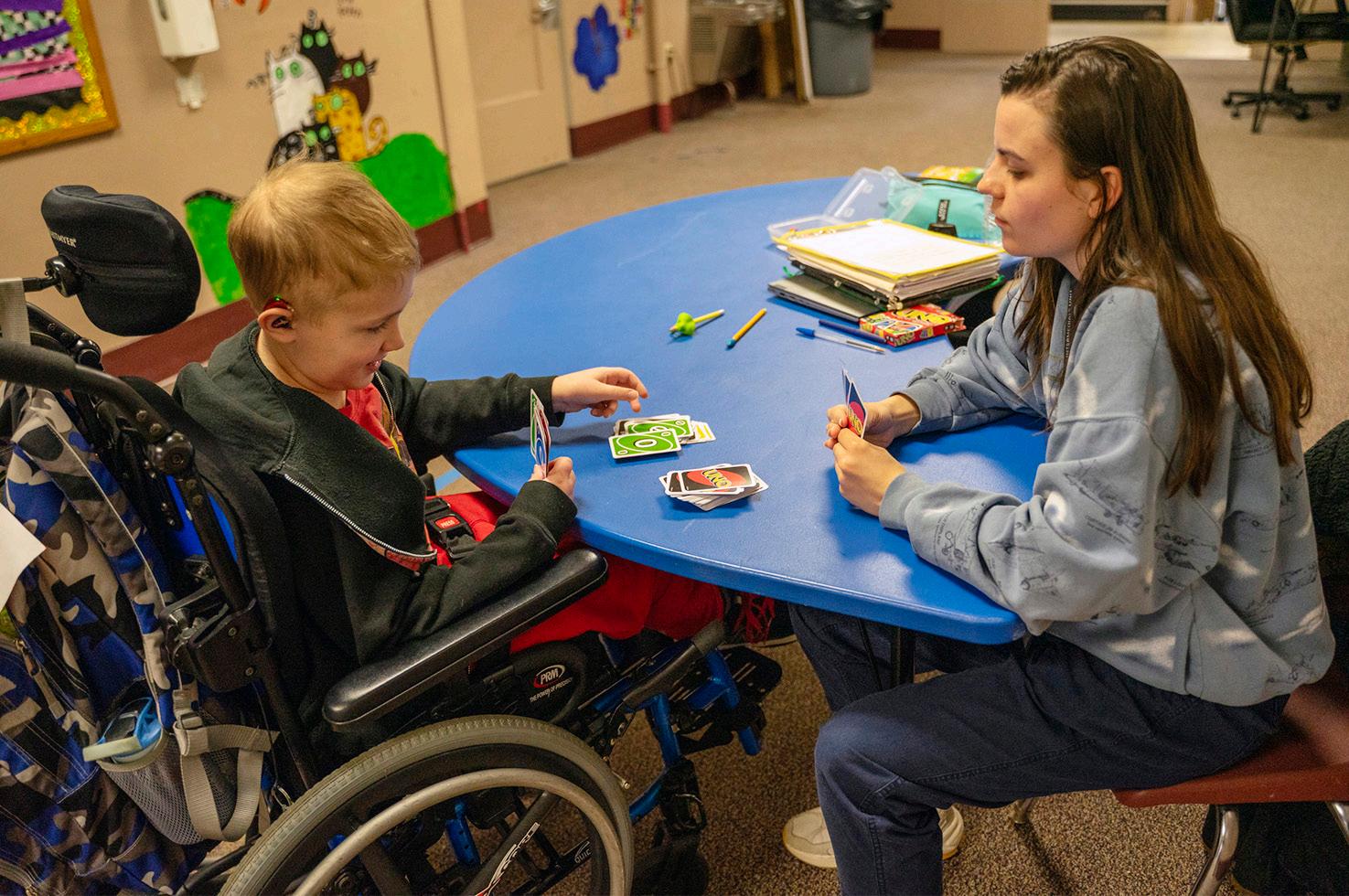
Joey plays cards with his occupational therapist, Stephanie Kosmidis.
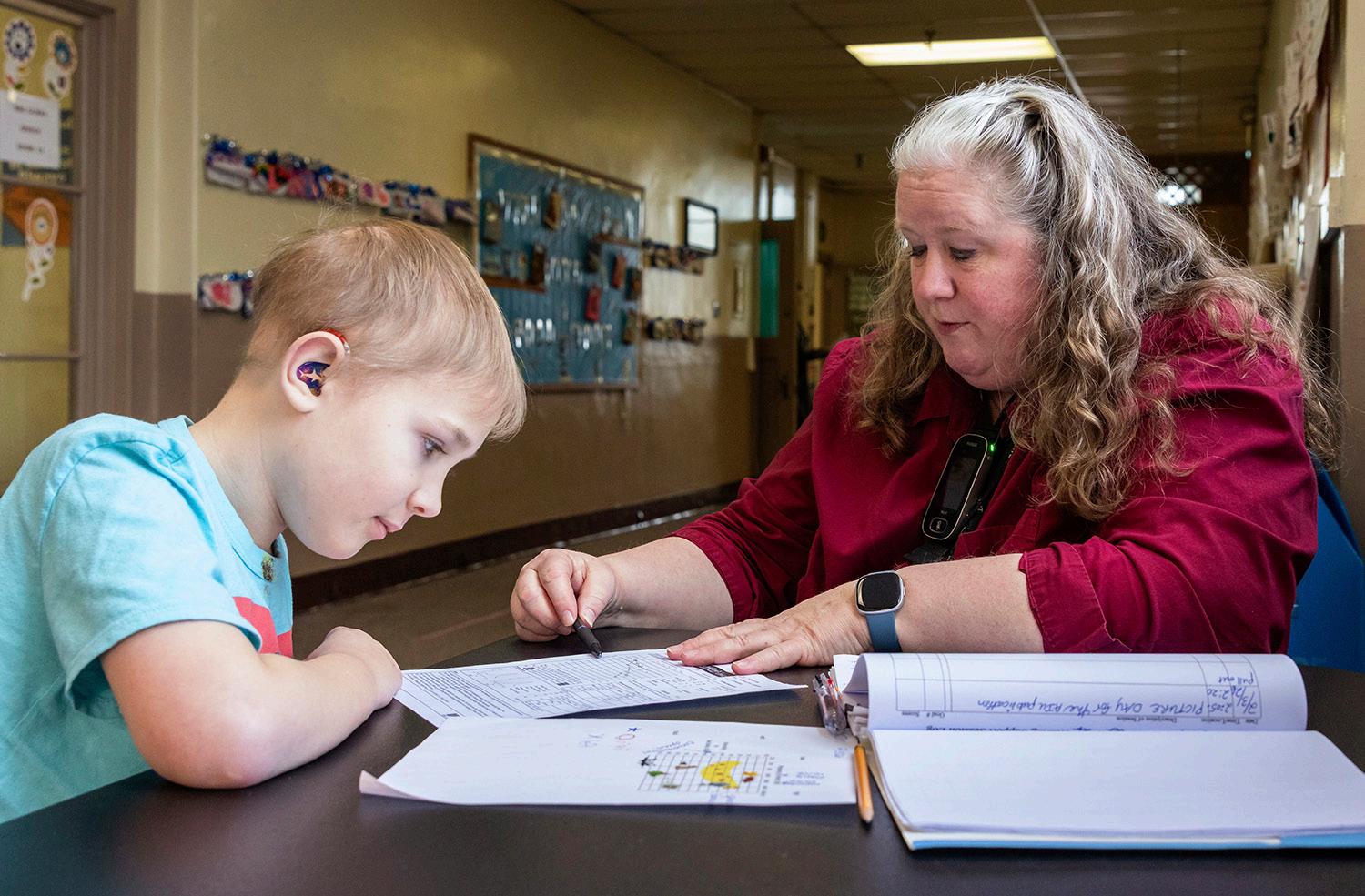
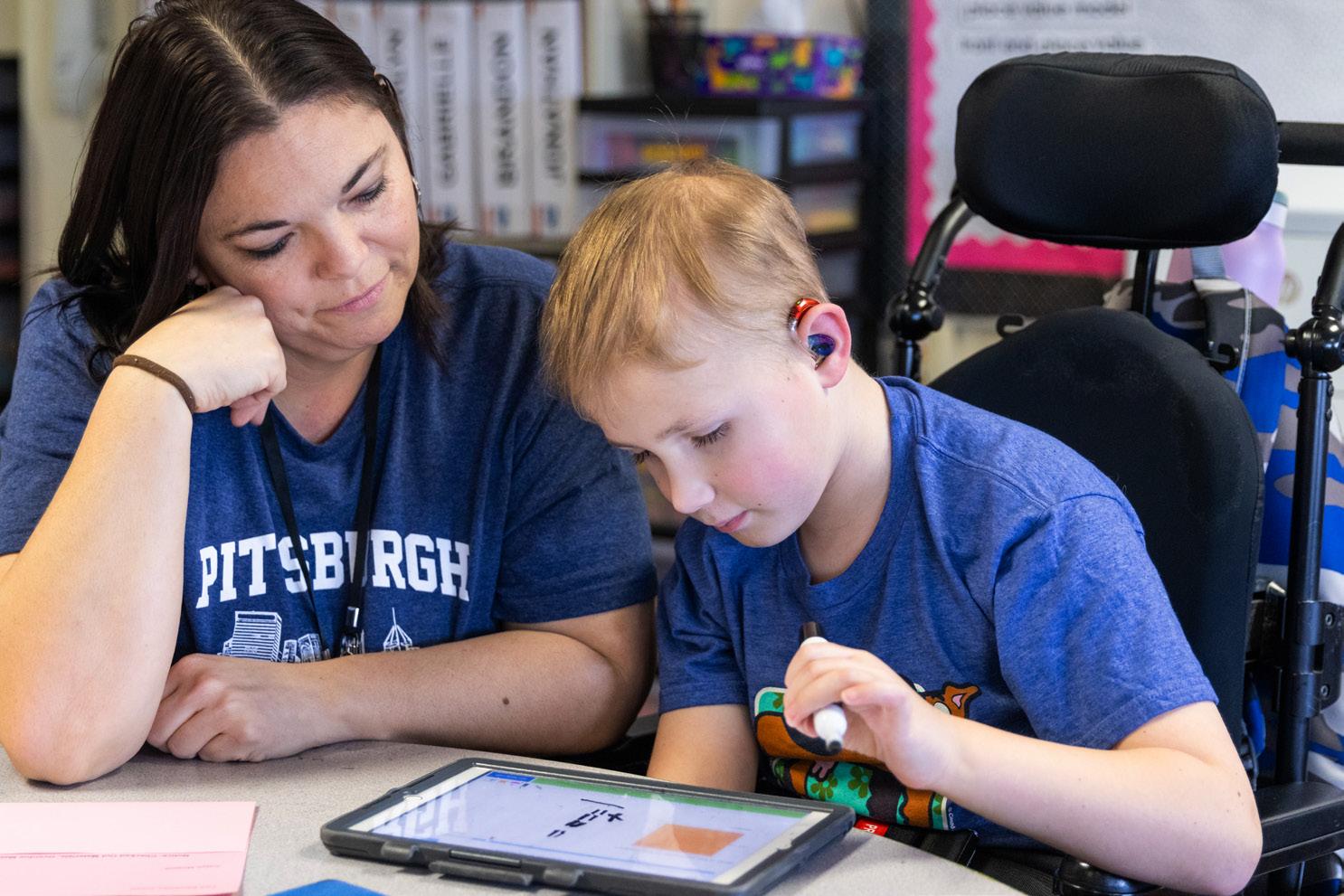
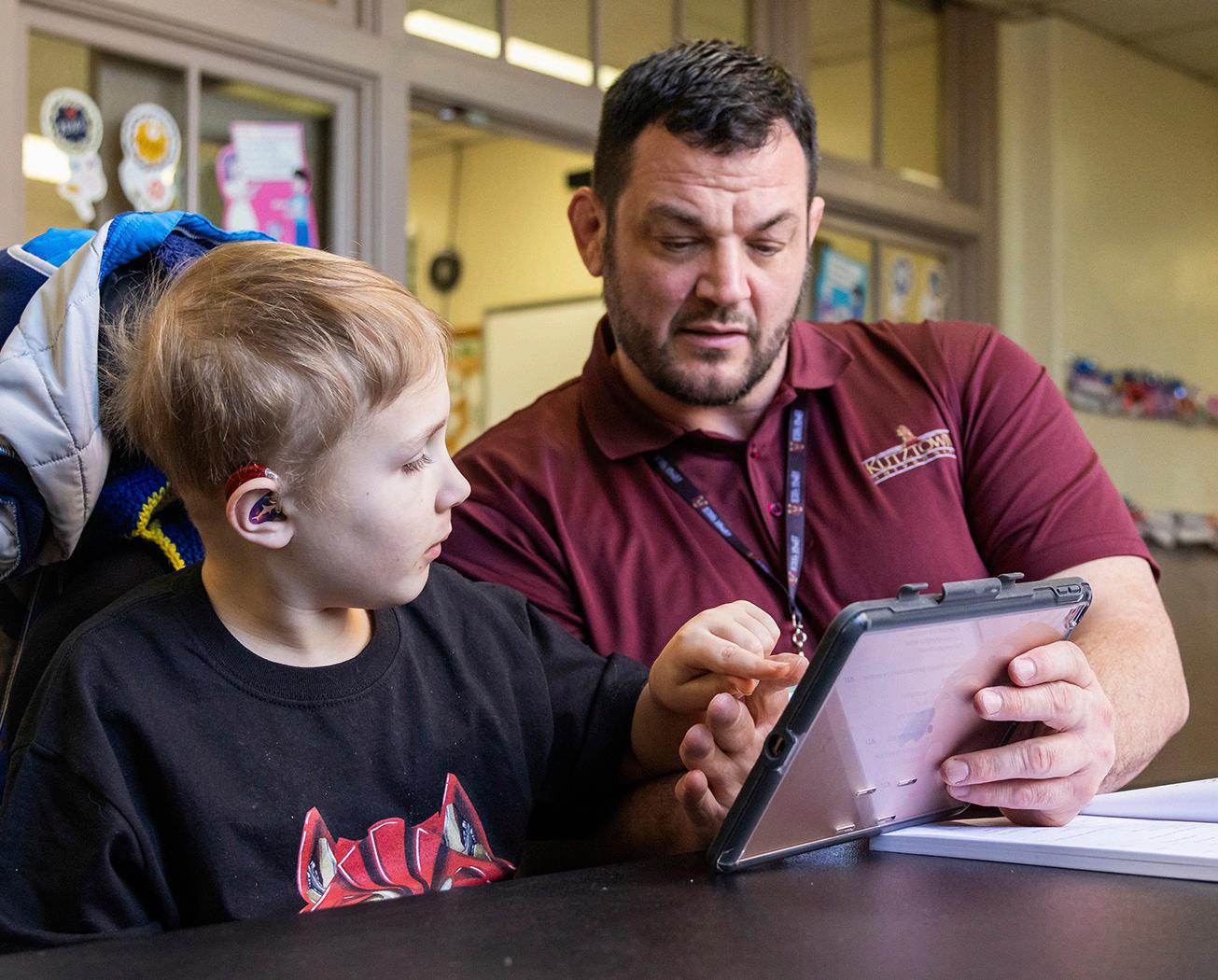
Closson, Teacher of the Visually Impaired, helps Joey use an app on his iPad to access the curriculum more efficiently. Much of that work happens in the classroom, though he will pull Joey out for one-on-one sessions as needed.
“What better place to do that than where the curriculum is available?”
Closson said. “Plus, it gives you an opportunity to collaborate with the teacher, get their input, and they’ll give you feedback on issues he may be having with any tasks, and then you can adjust the goal and any accommodations.”
The specialists’ work often overlaps, as it did in a recent session with Closson. While going through a biology lesson, Joey used several tools on his iPad to select text and have it dictated through his hearing aids. A fan of science and math, the topic about kiwis was right in his wheelhouse. He briefly pondered a question about the bird’s diet, looked at Closson and confidently answered, “Omnivore!”
To enter his response, he pressed another button, waited a beat, and clearly repeated his answer. The dictation isn’t always accurate, but it registered Joey’s answer immediately, and he turned to a stunned Closson with glee. Though Closson has only worked with him for a few months, the two have forged a quick connection, something that comes as no surprise to Joey’s mom.
“He kind of has that way of fitting in or just squeezing himself into your heart,” she said. “It’s hard not to have a soft spot for him.”
Perhaps no one understands that better than Tina Dolan, a Steel Valley paraprofessional who has worked with Joey for much of his time at Park. “Every day is something different with him,” Dolan said. “Sometimes, when we’re just having a conversation, it’s like I’m talking to an older kid. He’s just so smart.”
“I just like being around her,” Joey chimed in.
Dolan is delighted with Joey’s progress since kindergarten and credits his growth to both his work with outside therapists and ongoing support from AIU specialists. Occupational therapist Samantha Smith, certified occupational therapy assistant Stephanie Kosmidis, and physical therapist Brittany List meet with Joey weekly to work toward a variety of goals.
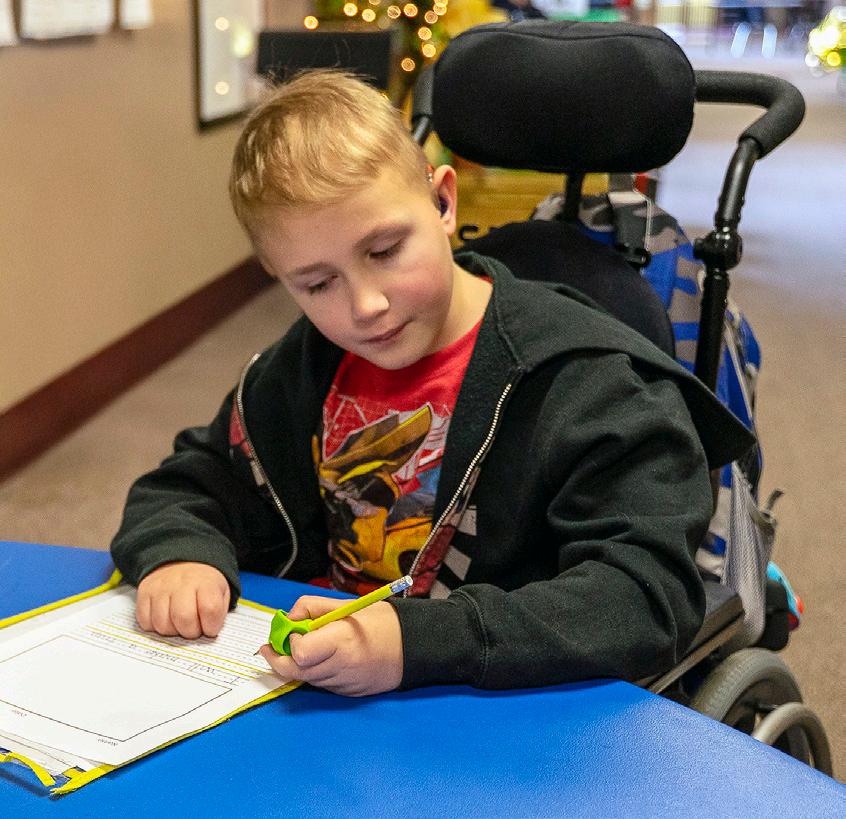
Below, note the assistive device on Joey’s pencil to help him keep a steady grip.
Barbara Martin-Taylor, teacher of the Deaf and hard of hearing works with Joey in the classroom, as well as one-on-one sessions.
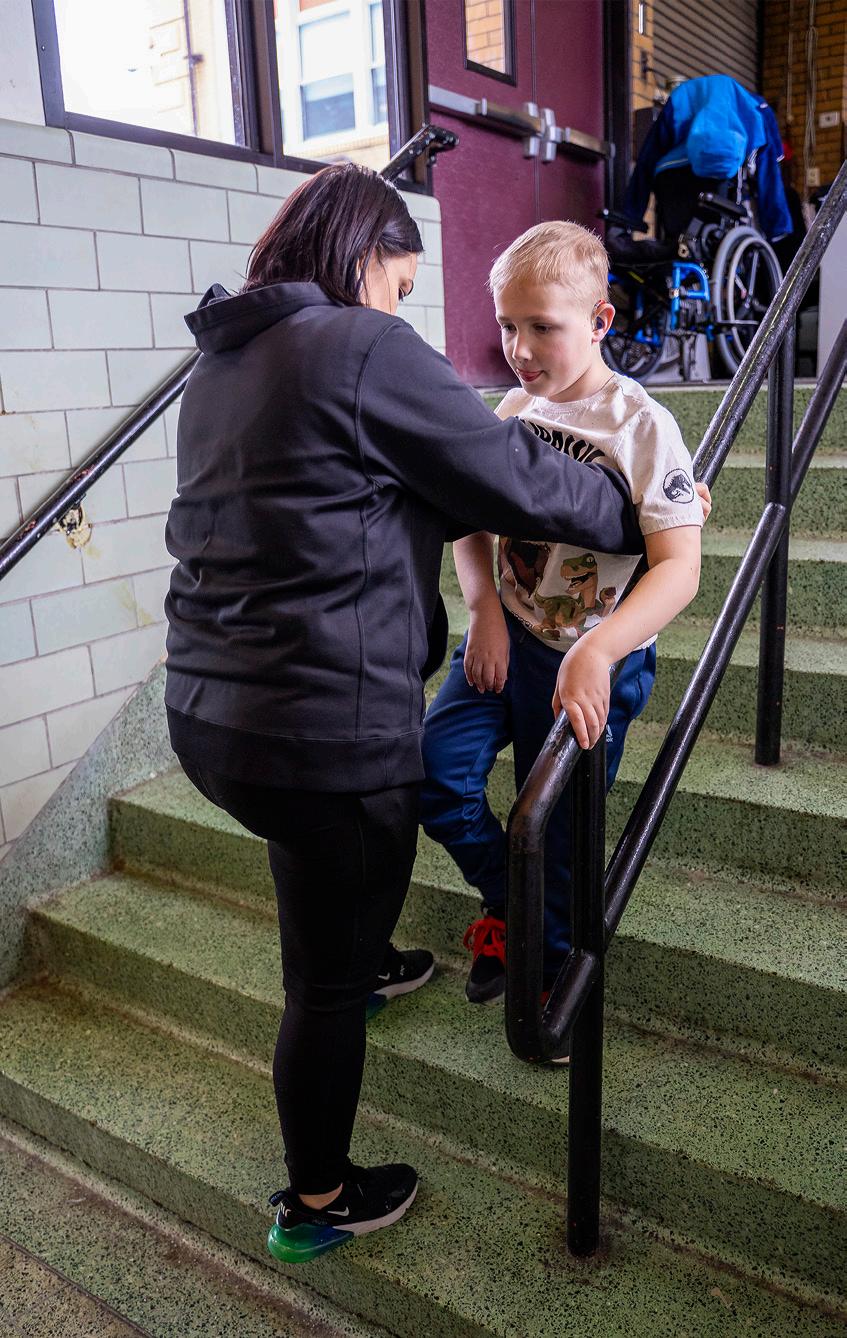
“When Joey first began school at Park, even accessing the school building in his wheelchair was a challenge,” said Holly McElhinny, director of Occupational/Physical Therapy Support Program for the AIU. “His physical therapist collaborated with the school staff to determine the best ways for Joey to enter and exit the building for recess and to negotiate between levels to access the gym and other special class areas.”
Through that collaboration, Joey was able to utilize an elevator, stair climber, and other resources to get to where he needed to be as quickly and efficiently as possible.
Now, Dolan said Joey has transitioned from using a stair climber to walking up and down the stairs. “We work really well together, and we know when we’re taking that step together,” she said.
Kosmidis and Smith focus on skills like handwriting, cutting, and other foundational tasks. For students like Joey, adaptive grippers, scissors, and paper with highlighted or contrasting lines help him meet those goals. The AIU supplies those tools on a trial basis and then makes a recommendation for the district to purchase dedicated ones for the student.
Another tool that supports Joey in the classroom is a slant board, which angles his work to improve posture and writing control. “To support his sizing and spacing goals and his positioning at the table, we occasionally use a slant board,” Kosmidis said. “We also incorporate fine motor games and things to strengthen his hands.”
“For OT, a big piece of our collaboration is not just with the teacher, but his one-on-one paraprofessional,” Smith added. “She knows everything that is going on with Joey from the minute he comes in.” Together, Joey’s team collaborates and communicates constantly to ensure he’s able to thrive alongside his peers. It’s exactly what the Mihailoffs envisioned when they chose Steel Valley.
“I know he’s a special case given his background,” Amanda Mihailoff said. “So, I just appreciate the open communication and doing whatever is best for Joey. I think we’re all on the same page. We just want to do what’s best for him, help him succeed, and give him the best chance at anything.”
Joey’s journey is no longer defined by the challenges he’s overcome, but by the possibilities that await on the path that lies ahead.
Tina Dolan, Steel Valley paraprofessional, spends her day with Joey.
Physical therapist Brittany List works with Joey weekly toward a variety of mobility goals.
William Closson, Teacher of the Visually Impaired, helps Joey access his curriculum via apps on his iPad.
Gia’s journey to coordinated support at Sunrise School Finding Access and Belonging:
When Gia Pinto walks into a room, people pay attention. Whether she’s waving enthusiastically to a classmate, greeting a teacher with a hug, or inviting everyone to sing and dance, Gia has a way of drawing others in. Her curiosity and desire to connect shape every part of her day.
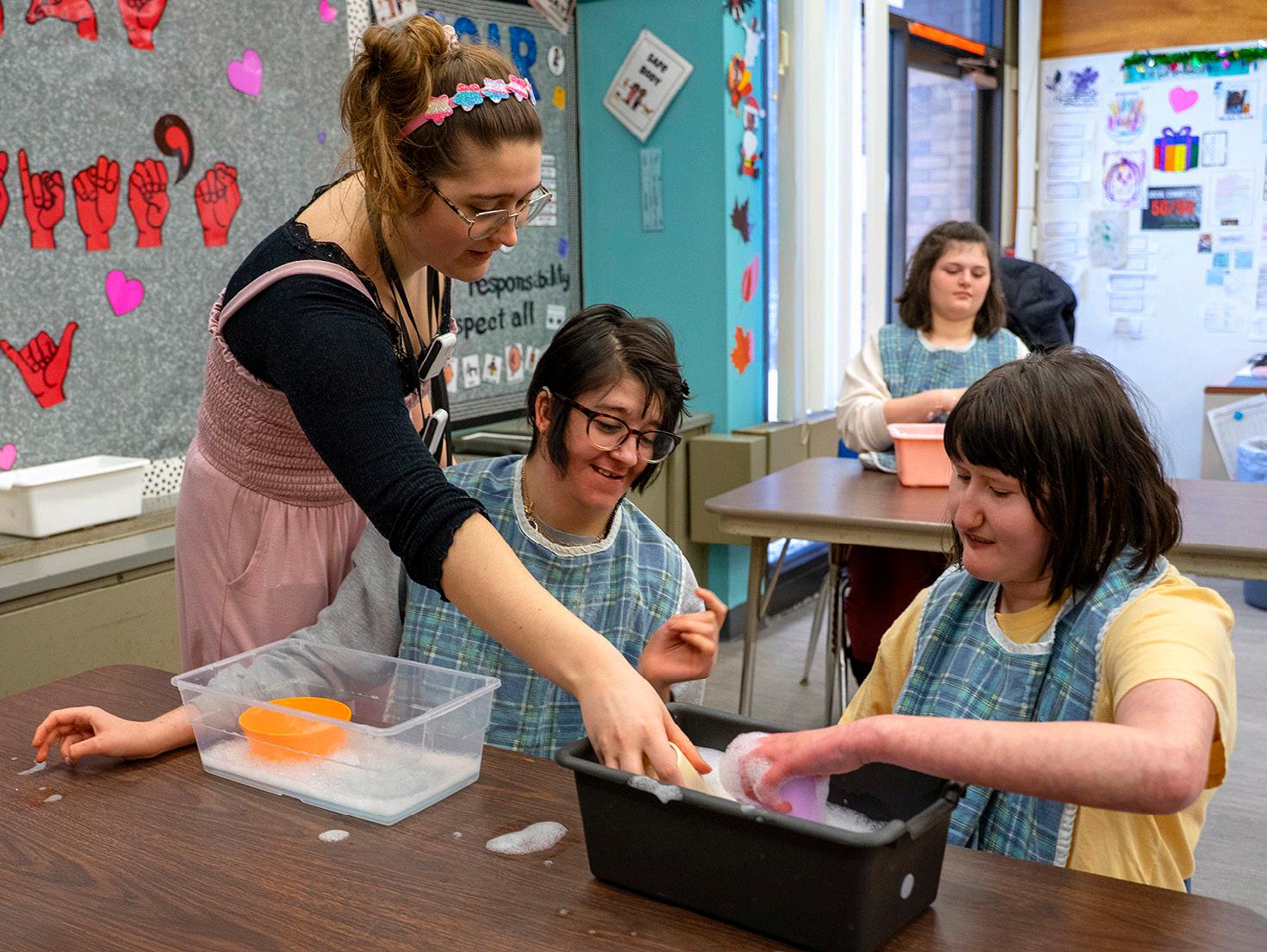
Gia is a 16-year-old student at Sunrise School, where a dedicated team of teachers, therapists, and staff supports her learning using a comprehensive, coordinated approach. Through the Allegheny Intermediate Unit (AIU), Gia receives hearing support, educational interpretation, occupational and physical therapy, speech therapy, communication support, and nursing services to manage medications. Together, these services allow Gia to access instruction and participate fully in the school day.
“I wanted her to be somewhere where she could communicate with her peers. That was always the goal.”
“Gia communicates using American Sign Language, though her signing is uniquely her own.” m ary a nn
Born with bilaterial, moderate to severe hearing loss, Gia has additional disabilities that affect her communication and motor skills. Her mother, Daria Mochan, described a long journey through multiple states, schools, and service models before arriving at Sunrise School. “I wanted her to be somewhere where she could communicate with her peers,” Mochan said. “That was always the goal.”
Gia previously attended a school for the deaf, which provided critical early language access. However, her needs became more complex as she got older, and opportunities for inclusion and peer connection became more limited. Those challenges intensified during the COVID-19 pandemic.
Homeschooling, intended as a short-term solution, lasted far longer than expected. “It wasn’t supposed to happen that way,” Mochan said. “But that’s what a lot of families went through.”
In 2024, Principal David Campos of Sunrise School facilitated many months of conversations involving Gia’s family, Franklin Regional School District, the AIU, and Sunrise staff. The process, he explained, required ongoing collaboration to ensure Gia’s needs could be met across academic, social, and functional areas. Once those supports were in place, the focus shifted from planning to implementation. For Gia, that began with communication access.
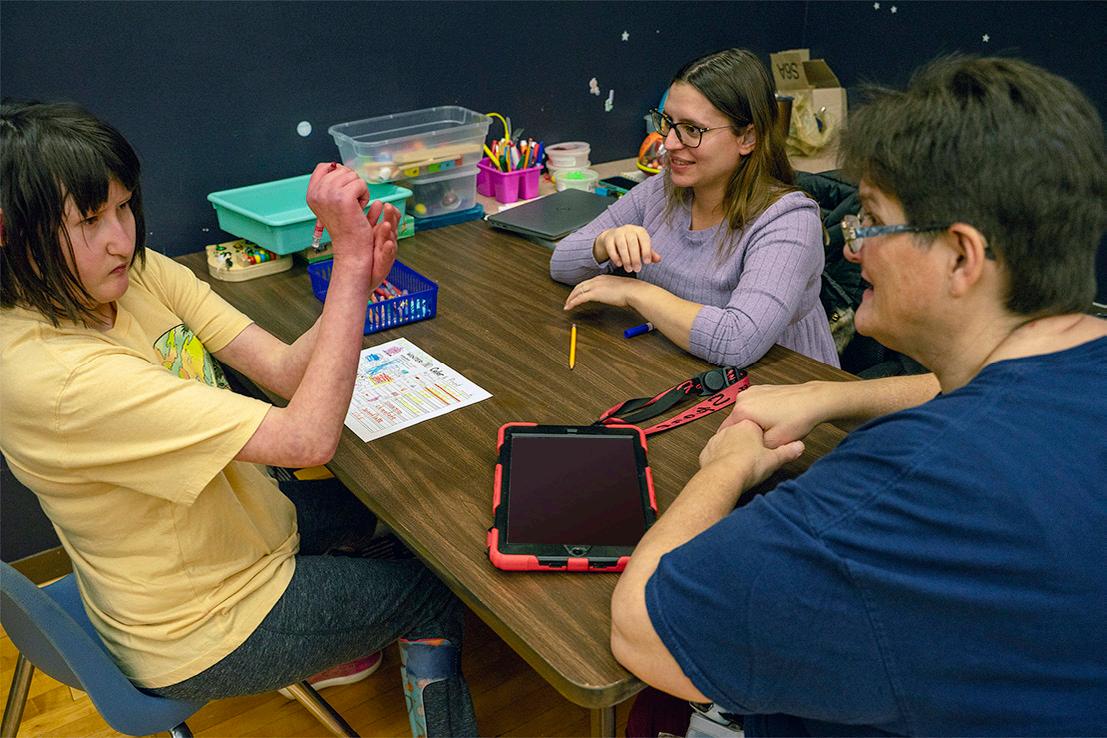
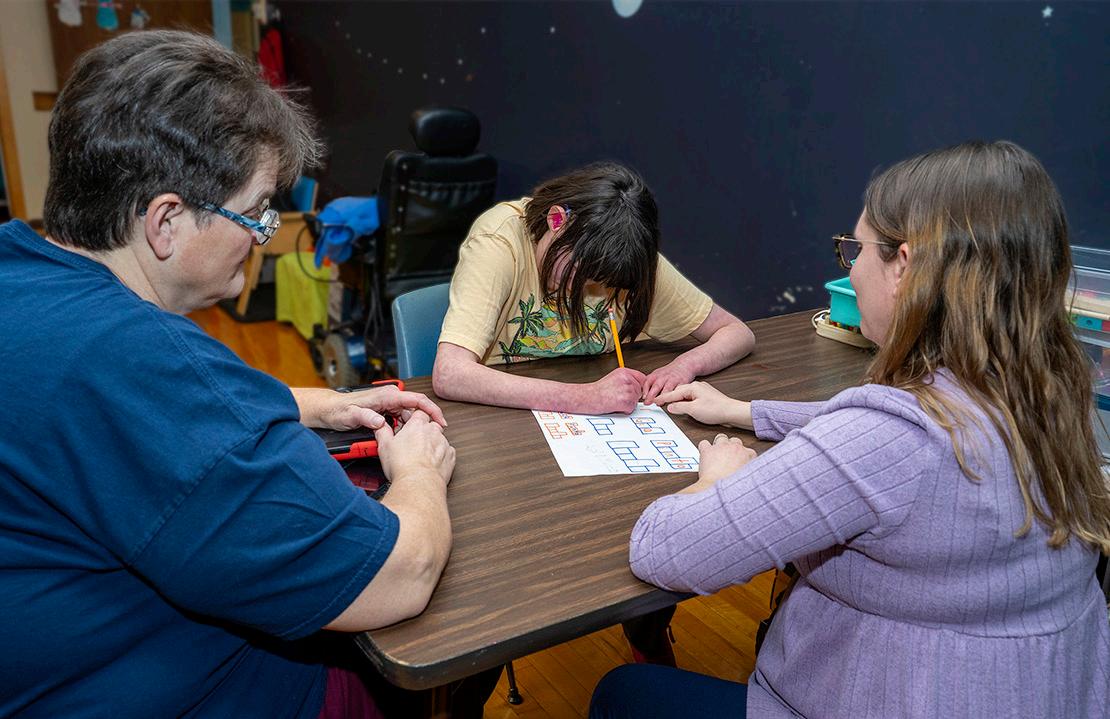
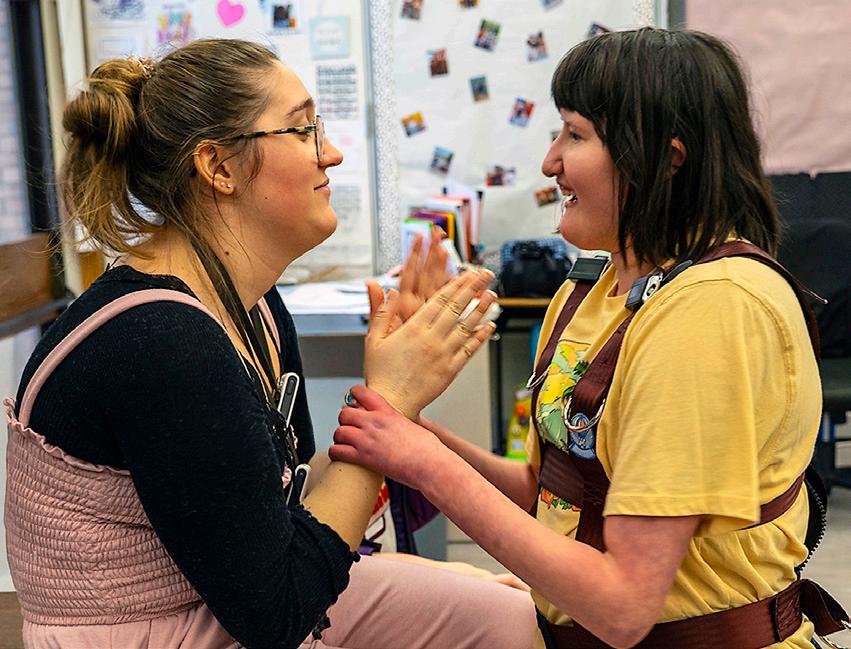
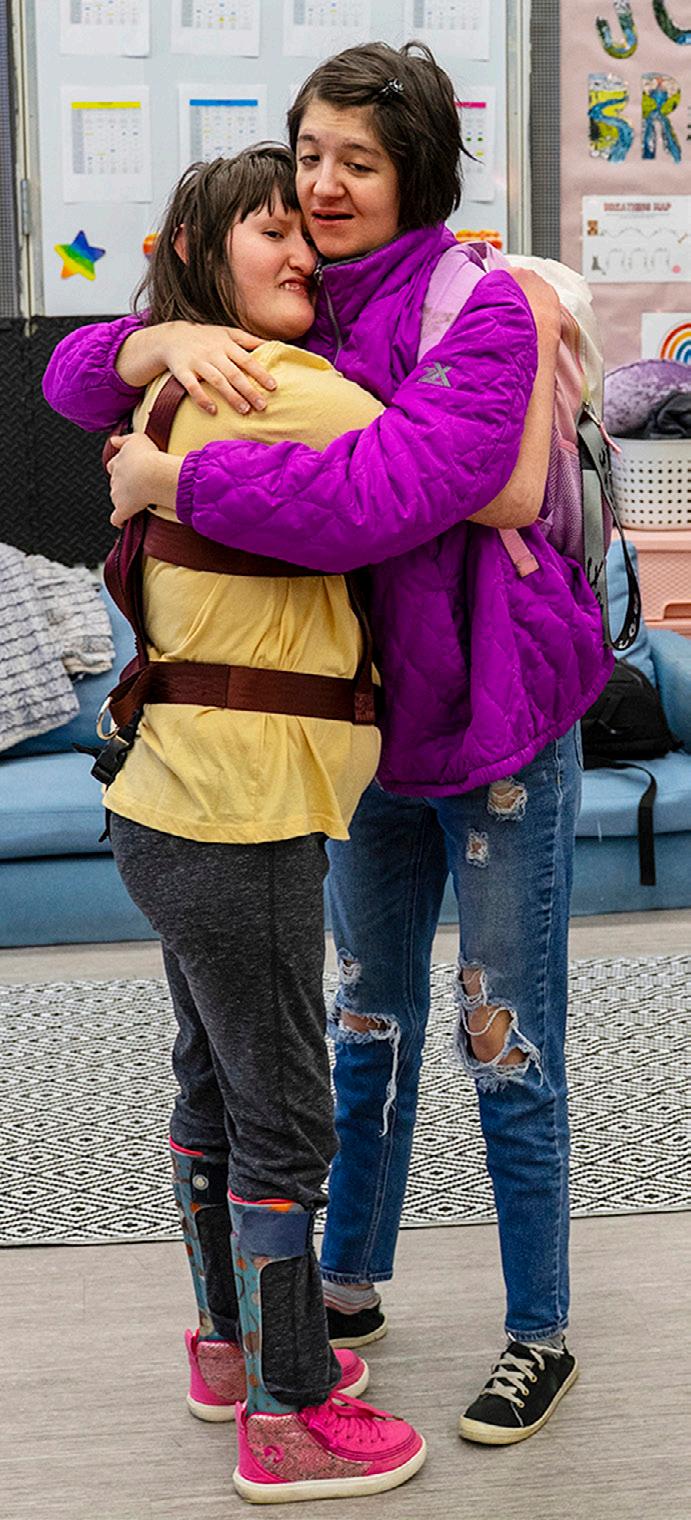
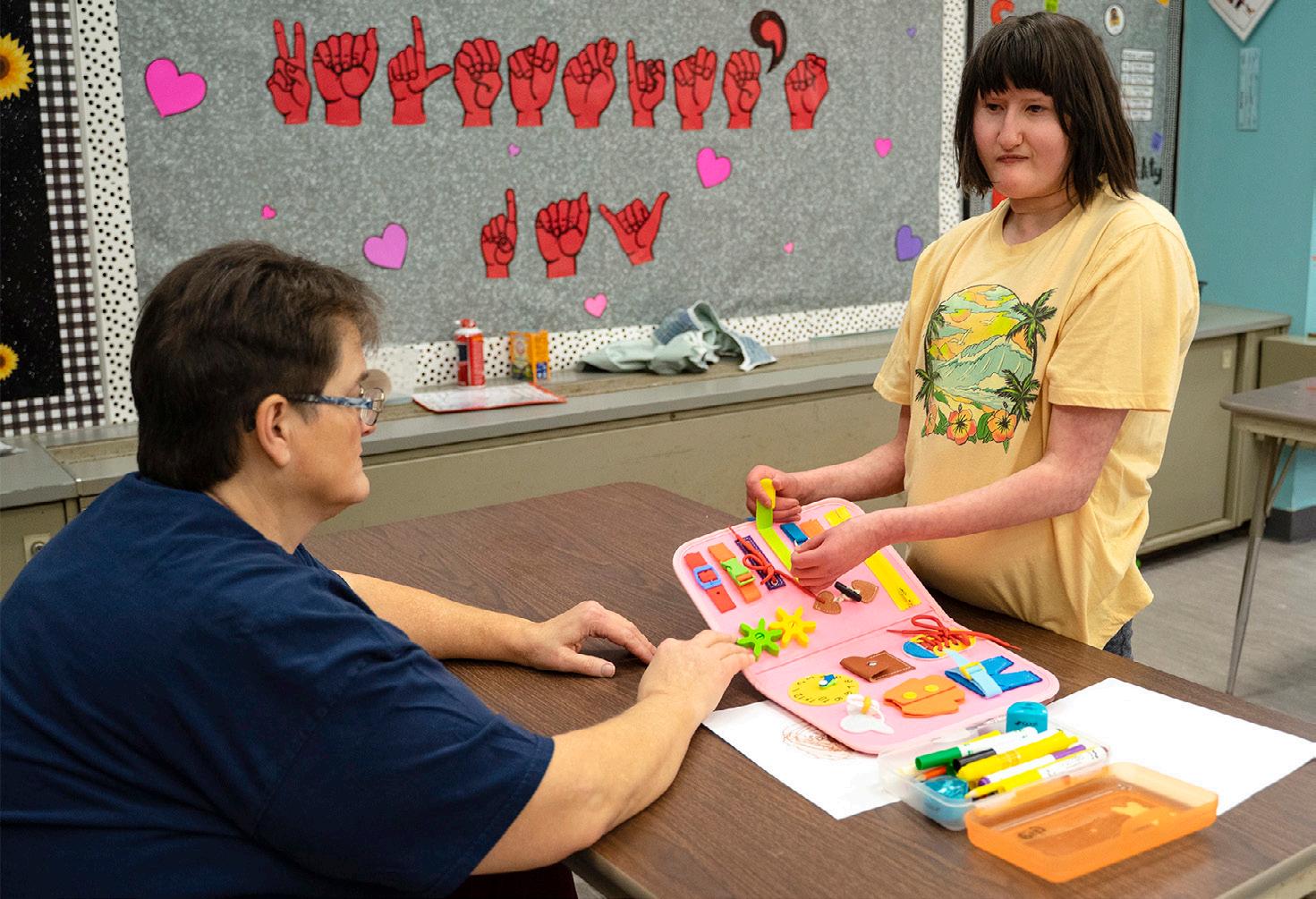
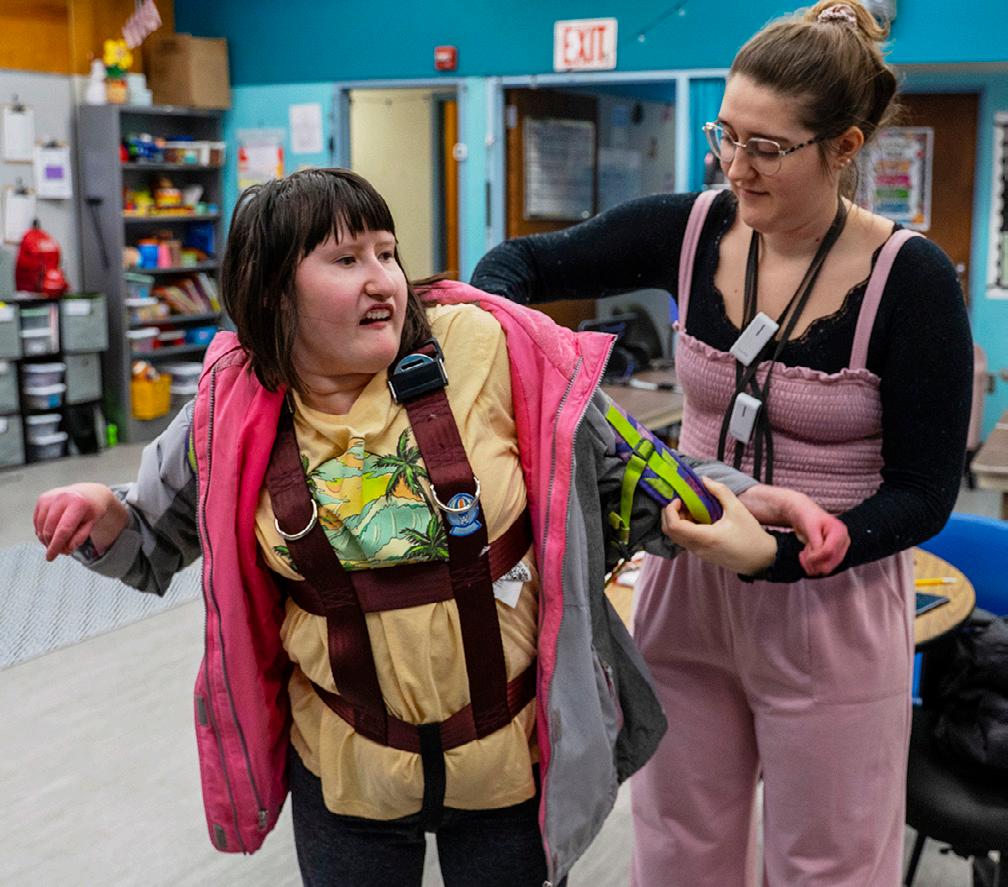
Above, Amanda Andreuk (right), occupational therapist, and Mary Ann Dank, interpreter (left), guide Gia through a therapy session.
Her educational interpreter, Mary Ann Dank, is with her all day, every day— in classrooms, hallways, and extracurriculars. Their relationship provides continuity and trust, allowing Gia to focus on learning rather than navigating barriers.
Gia communicates using American Sign Language, though her signing is uniquely her own. Because of motor challenges, her signs are not always produced in a textbook way. Instead, she has developed what Dank describes as “Gia signs”—meaningful movements understood by those who know her. “Sometimes the signs aren’t produced the way you’d expect,” Dank explained. “But she assigns meaning to them, and we know exactly what she’s saying.”
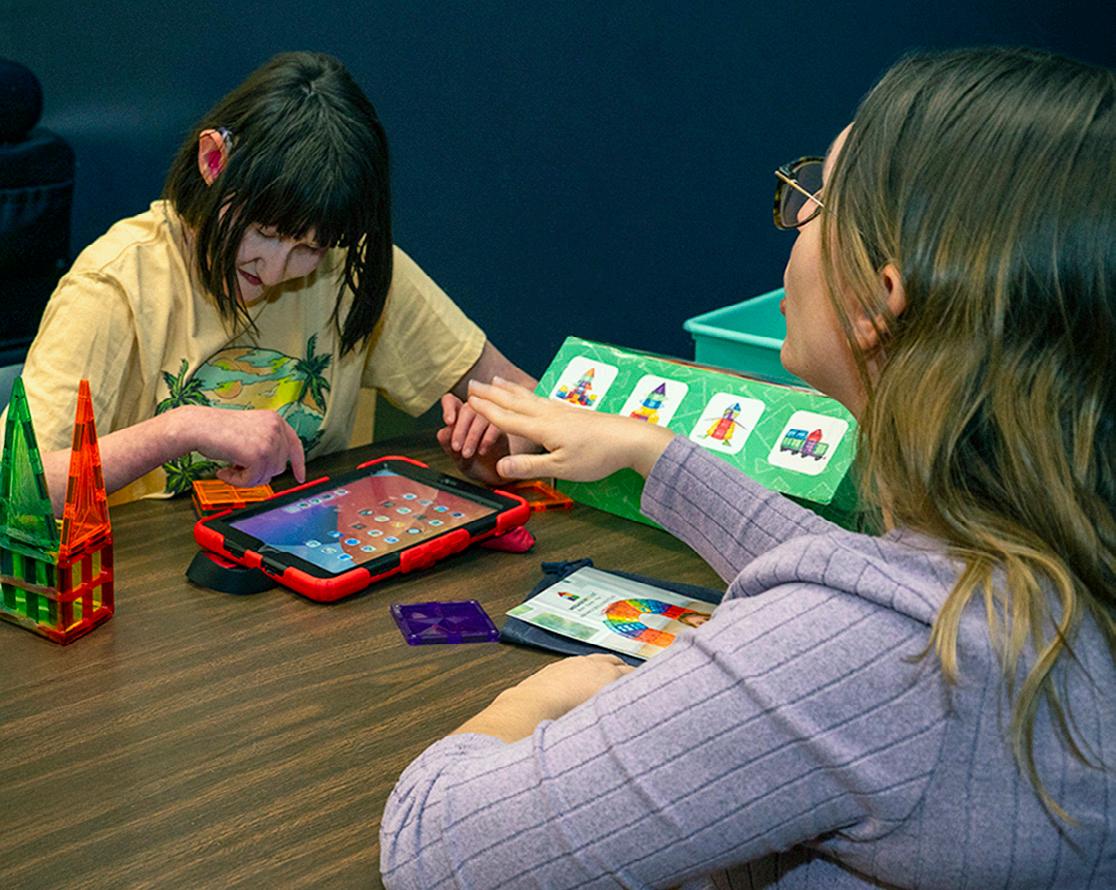
In addition to sign language, Gia uses an augmentative and alternative communication (AAC) device, particularly when interacting with people who do not sign. Her classroom teacher, Katie Aguglia, said the device was challenging at the beginning of the school year. “Now she’s able to use it very effectively,” she said.
Staff described similar progress with Gia’s hearing assistive technology. “She went from about five minutes of tolerance to wearing her hearing aids for the entire school day,” said Meghan Cakmur, teacher of the Deaf and hard of hearing. “That was a huge success.” Educational audiologist Natalie Panaia emphasized that this kind of progress requires ongoing monitoring and collaboration to ensure access is maintained throughout the day.
With these tools in place, Gia is better equipped to engage with people and participate in functional learning opportunities like pushing the snack cart through the building. Using her AAC device, she initiates interactions with classmates and staff, asks if they would like to purchase an item, and completes exchanges.
This type of engagement requires intentional support to help Gia maintain focus. She is deeply curious about the world, and at times, that curiosity can pull her attention in many directions. What helps her refocus is structure,
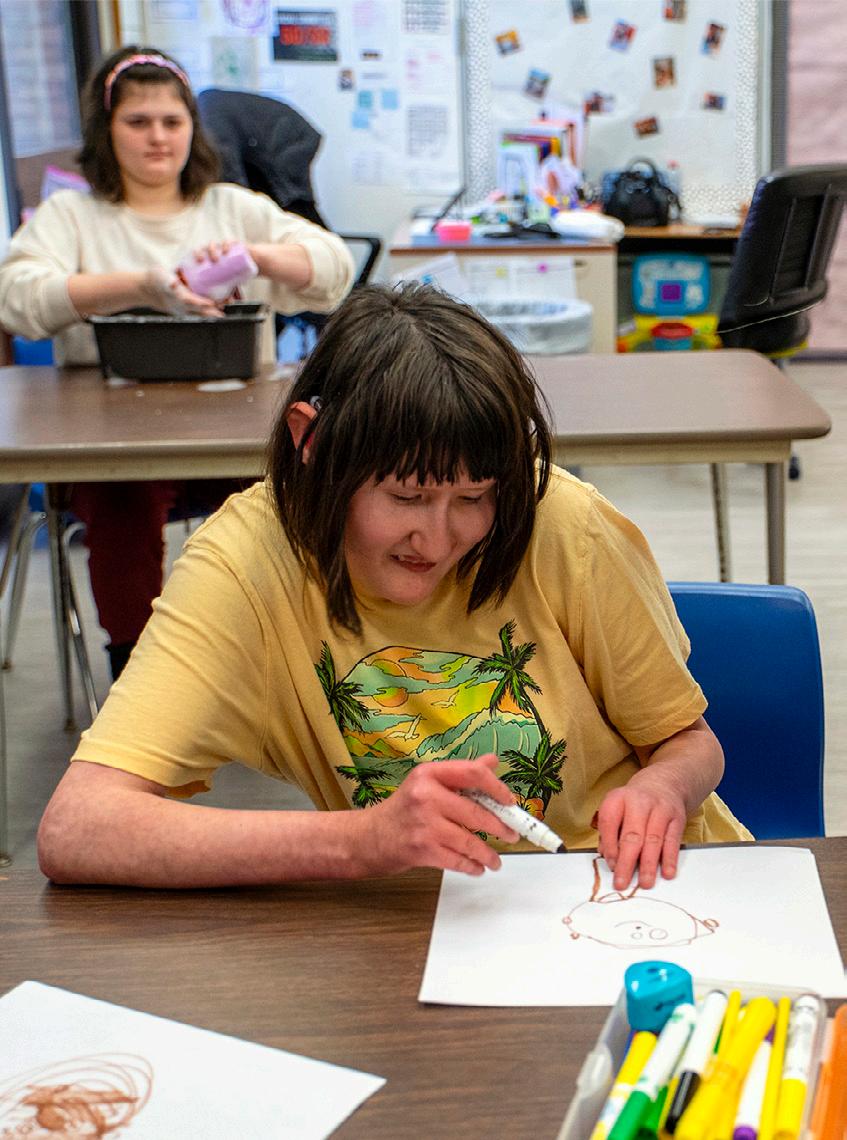
Gia’s classroom teacher, Katie Aguglia, sets up interactive learning stations for Gia and her classmates.
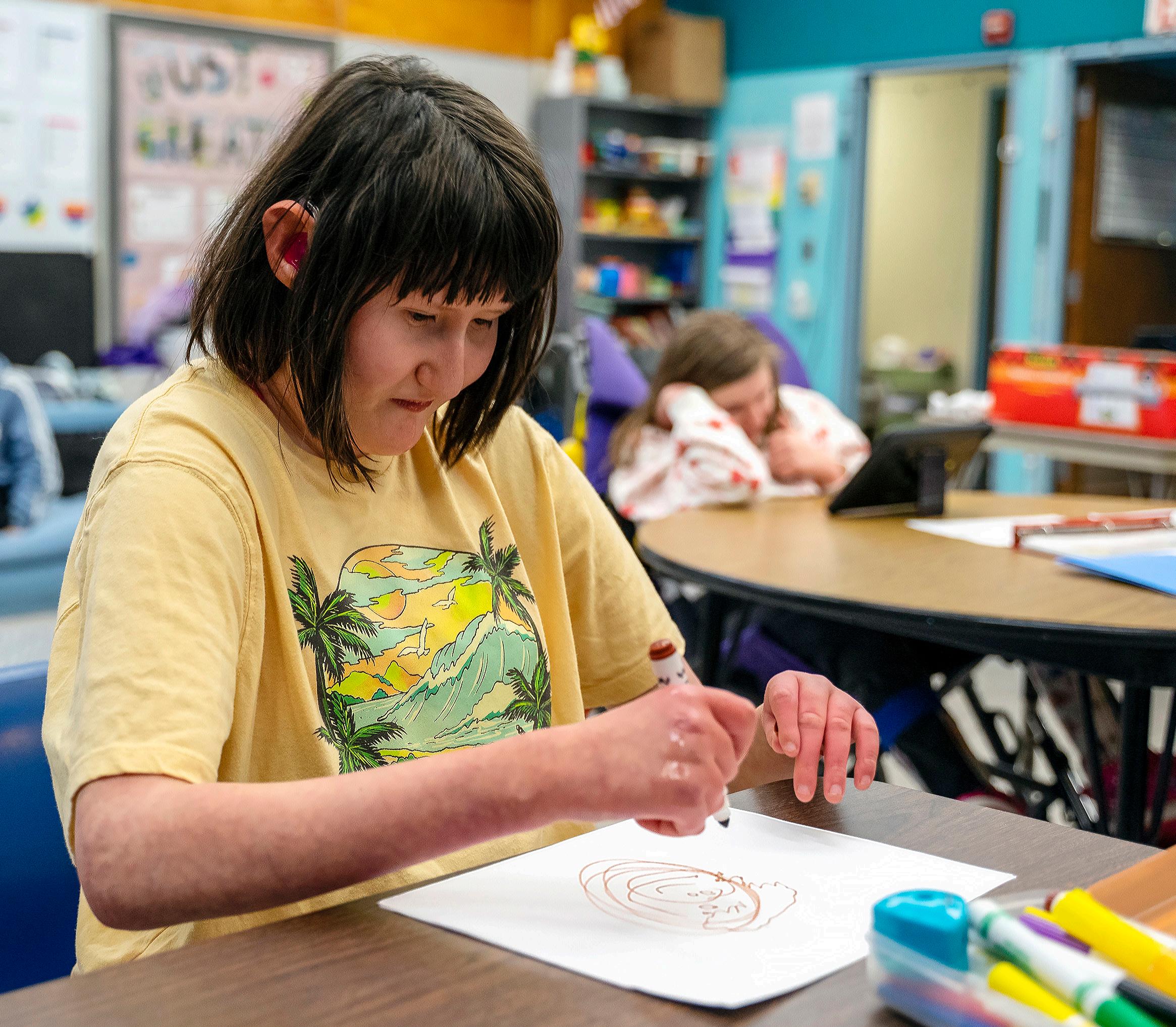
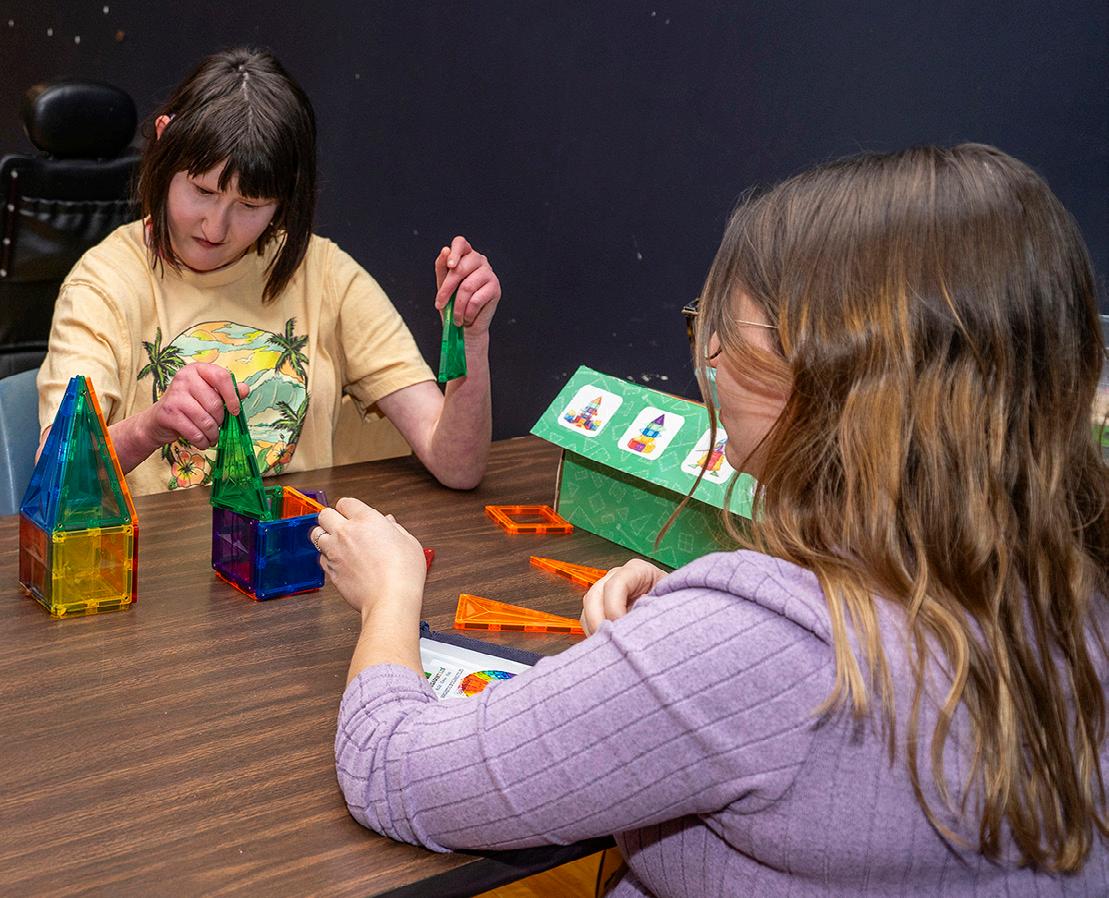
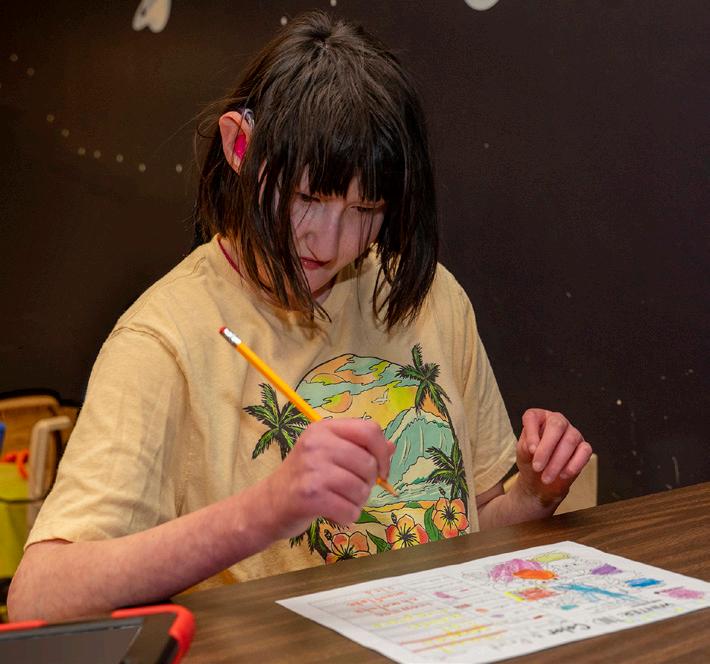
skilled support, and Dank’s consistent cue—“It’s true work time, Gia”— which gently brings her back. Music and movement are also important to how Gia experiences the world. “She loves music and anything with a beat,” Mochan said. “She’s a dancer.” At Sunrise School, those interests are integrated into Gia’s instruction and therapy. This is evident during an occupational therapy session when Gia taps together magnetic tiles to create a steady rhythm.
“If she’s regulated through movement, we build from there,” said Amanda Andreuk, occupational therapist. This responsive, embedded practice reflects the AIU’s service model, in which therapeutic supports are incorporated into daily routine.
Perhaps the most significant change since Gia started at Sunrise School has been the opportunity to make friends.
Before arriving at Sunrise, Gia was closest to adults, not because she preferred it, but because they were the ones who understood her. “She really wanted to have friends,” Mochan said. “Seeing her make friends—friends she can talk to — is heartwarming.”
Gia formed an immediate bond with Bianca, a classmate who communicates in similar ways. Together, they dance. They sign. They laugh. They are two teenage girls enjoying their time together. Gia joined cheerleading with Bianca, plays in bocce tournaments, and attended prom last year—experiences that were not available to her just a short time ago.
When asked what she likes most about school, Gia signed, “My friends … Bianca … We dance … Cheerleading … Miss Amanda.” Even with limited responses, Gia clearly identifies friendship and movement as central to her school experience.
As Gia approaches the later years of her education, the focus increasingly shifts toward transition. Aguglia explained an intentional emphasis on daily functional communication and independence designed to prepare students for what comes next.
“It’s hard to imagine her working,” Mochan said. “But I know that’s where we’re headed.” What gives her confidence is the consistency of support Gia receives every day. “She’s surrounded by people who want her to succeed,” she added. “That matters.”
Many of Gia’s teachers described how her presence positively impacts the energy in a room. She draws people to her through music, movement, and curiosity. That balance — honoring who Gia is while providing structure and support—demonstrates the AIU’s approach to designing systems that serve every learner.
Gia’s story is ultimately about belonging and what happens when coordinated supports make meaningful connection possible.
Partnership in action: Advancing Zeke’s independence at Elroy Elementary School
When it’s time for outdoor recess, you’re likely to find Ezekiel “Zeke” Bush playing soccer with his fifth-grade classmates at Brentwood Borough’s Elroy Elementary School. Despite vision and physical challenges, Zeke approaches each day with determination. If he had to choose a career today, becoming a soccer player or teacher would top his list.
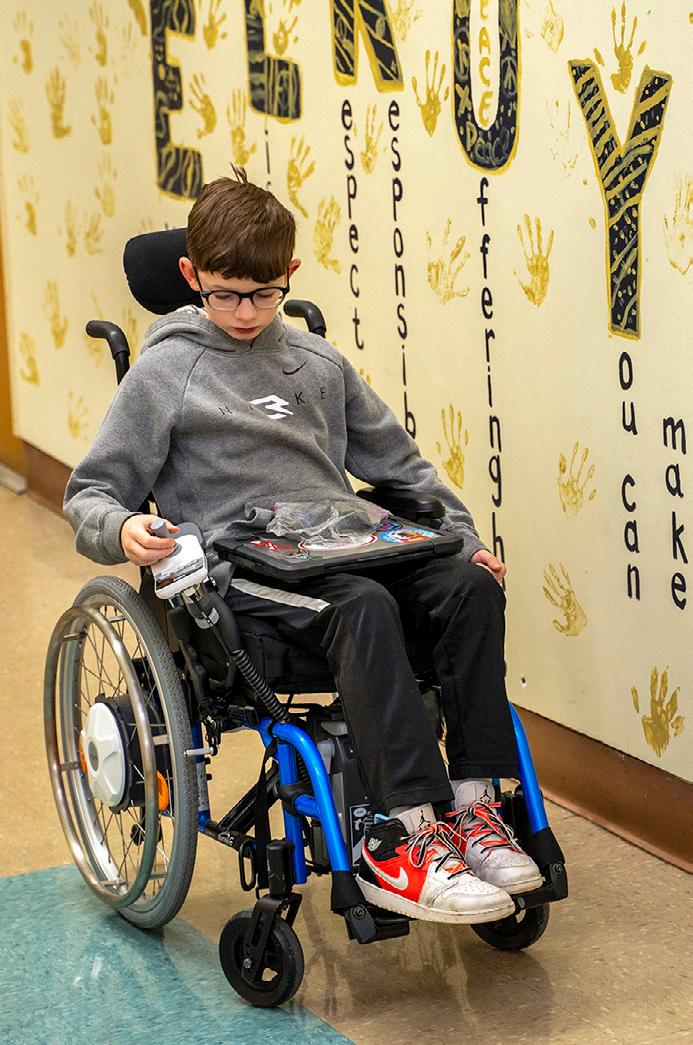
Keeping pace on the playground isn’t always easy for Zeke. He has cortical visual impairment (CVI) and muscle myopathy, conditions that impair visual information processing and contribute to increased fatigue. With coordinated support from Elroy Elementary staff and Allegheny Intermediate Unit (AIU) professionals, Zeke is making meaningful progress in independence, confidence, and academic success.
Zeke attended kindergarten at the Western Pennsylvania School for Blind Children, where he thrived. Based on that success, his family made the decision to transition him to Brentwood Borough School District for first grade. “Brentwood was very open to helping him transition into the district,” said Zeke’s mother, Katherine Bush. “They asked, ‘What can we do to help make this happen?’”
That commitment extended into a partnership with the AIU. As an Elroy first grader, Zeke began working with Melissa Kenderes, Teacher of the Visually Impaired and Certified Orientation and Mobility Specialist. Over the past four
B y J E ff n ELS on
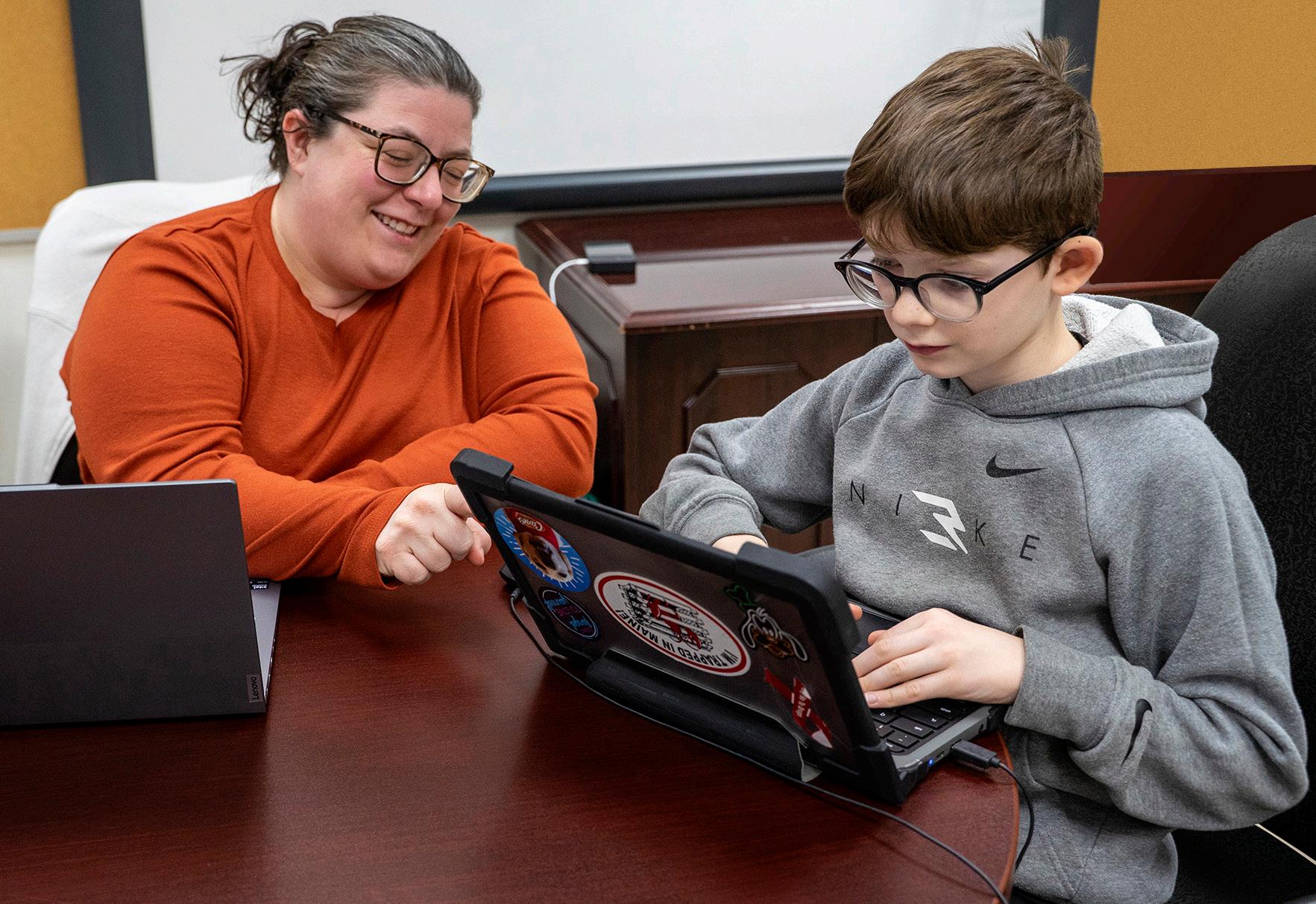
Melissa Kenderes from the AIU Blind/ Visually Impaired Support Program provides Zeke with vision and mobility support.
“How his brain processes the information that his eyes are seeing,” is the challenge Zeke faces.
years, “Mrs. K” has provided vision and mobility services designed to help Zeke safely access his school environment and build independence.
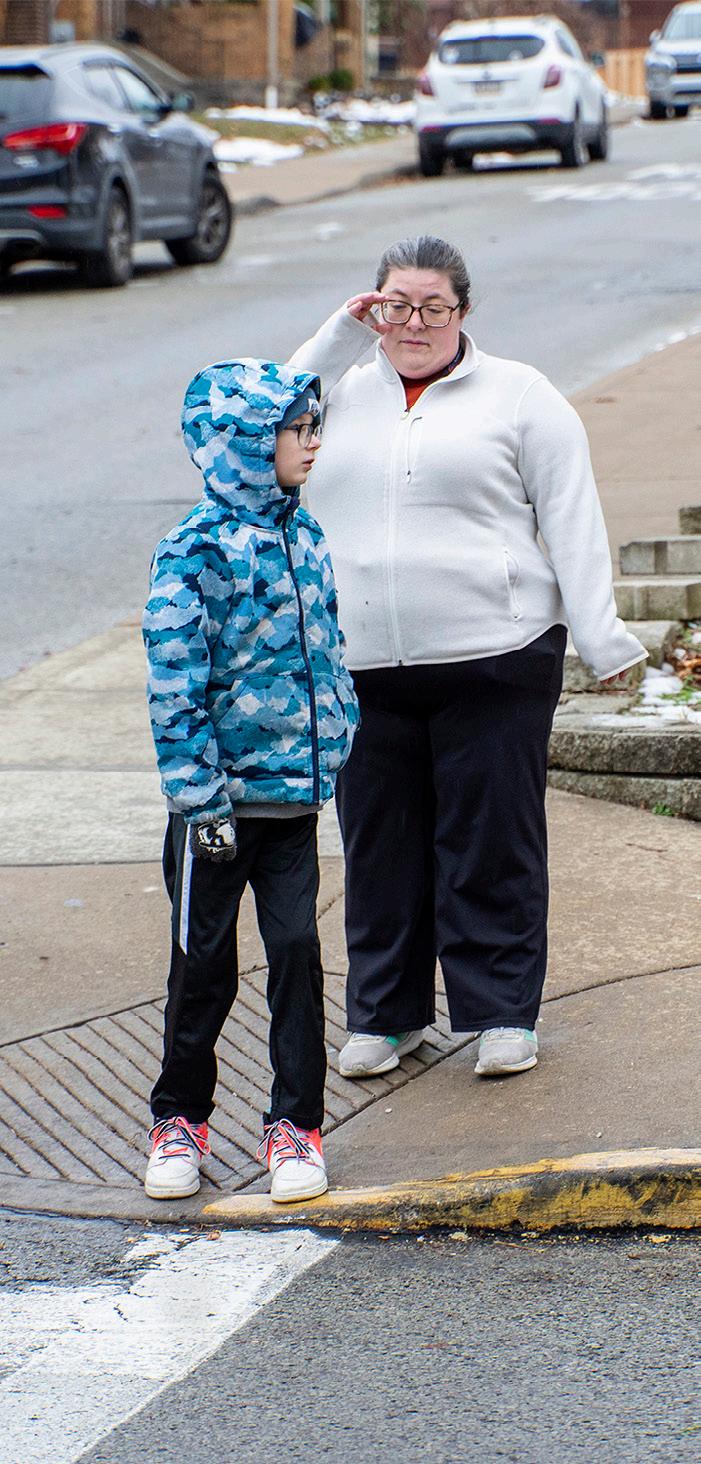
“How his brain processes the information that his eyes are seeing,” is the challenge Zeke faces, according to Kenderes. “Busy hallways, intersections, and areas with a lot of traffic can be overwhelming.”
To address those challenges, Kenderes works with Zeke both inside and outside the school building, gradually exposing him to more complex environments. They take short walks from Elroy up to busy Brownsville Road, where Zeke practices assessing traffic patterns at a four-way stop and determining when it is safe to cross. As he prepares for the transition to middle school, their focus continues to shift to self-advocacy.
“He will likely use a wheelchair more frequently in middle school,” said Kenderes, noting that it will help him navigate a larger and busier building.
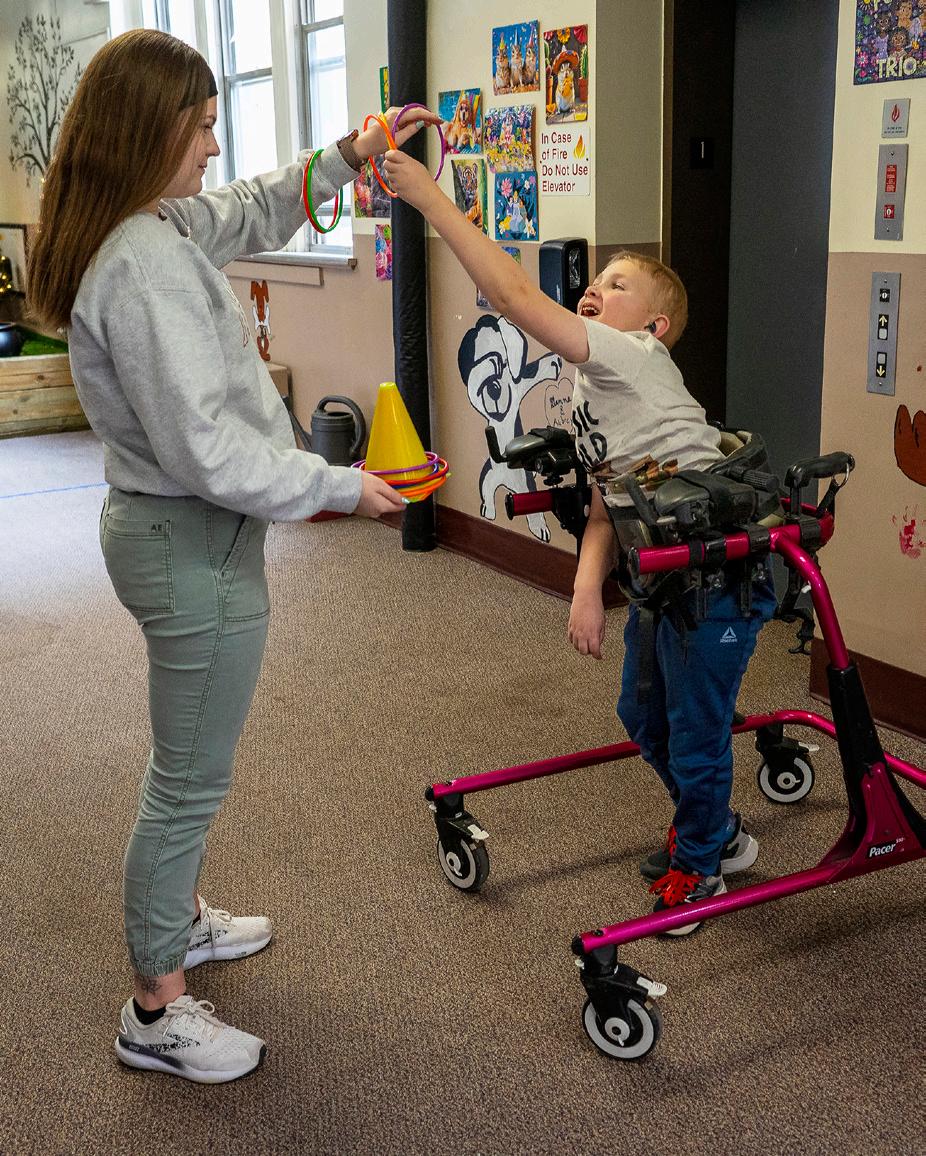
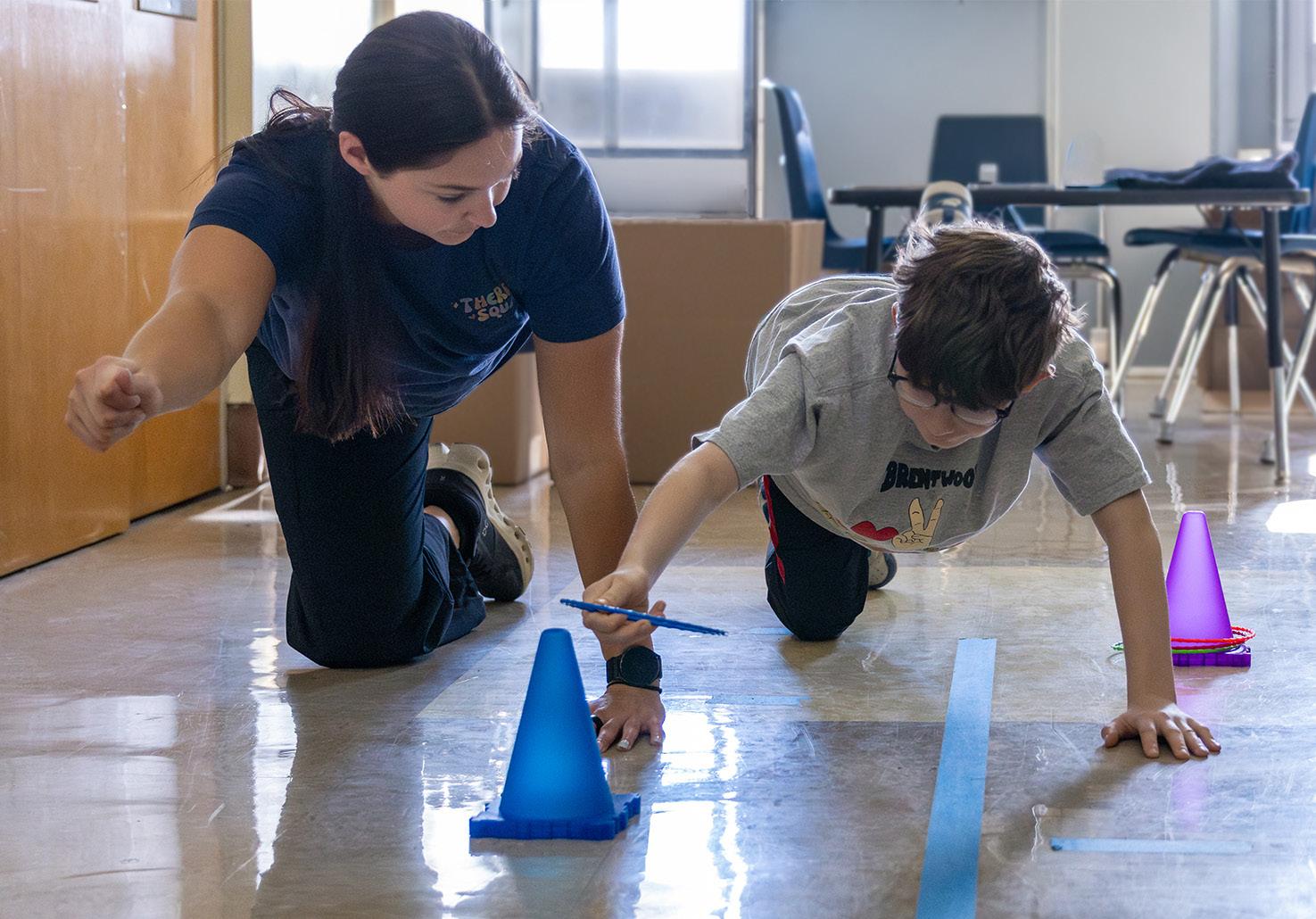
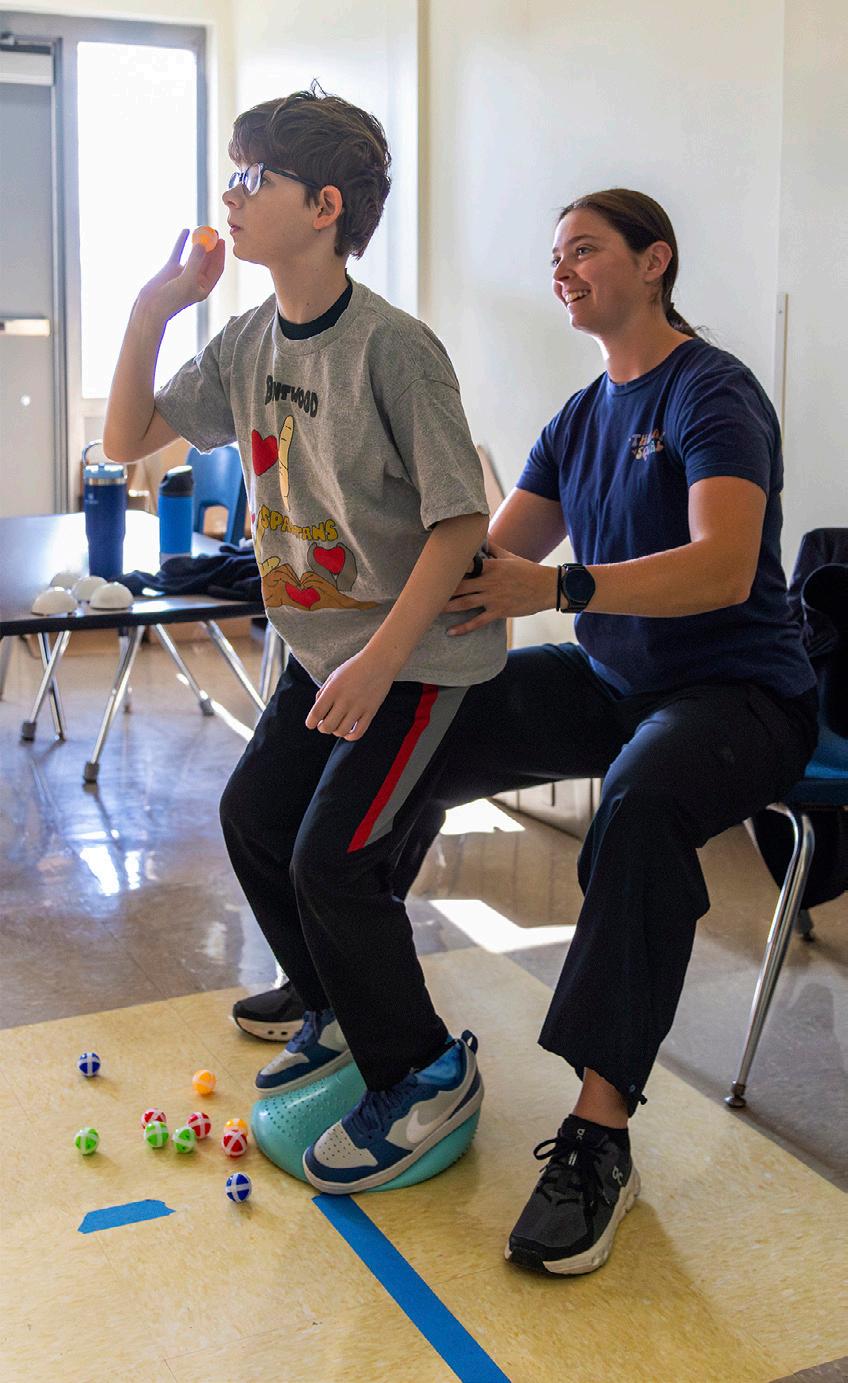
In addition to vision services, Zeke receives regular occupational and physical therapy through the AIU. Occupational therapy assistant Megan Pack supports his fine motor skills and handwriting, while physical therapists work closely with Zeke, his parents, and teachers to provide activities designed to improve his sitting posture, core strength, and endurance. They also collaborate with his physical education teacher to ensure he can fully access class activities. “Zeke enjoys physical activity and always tries his best,” said Holly McElhinny, director of the OT/PT Support Program.
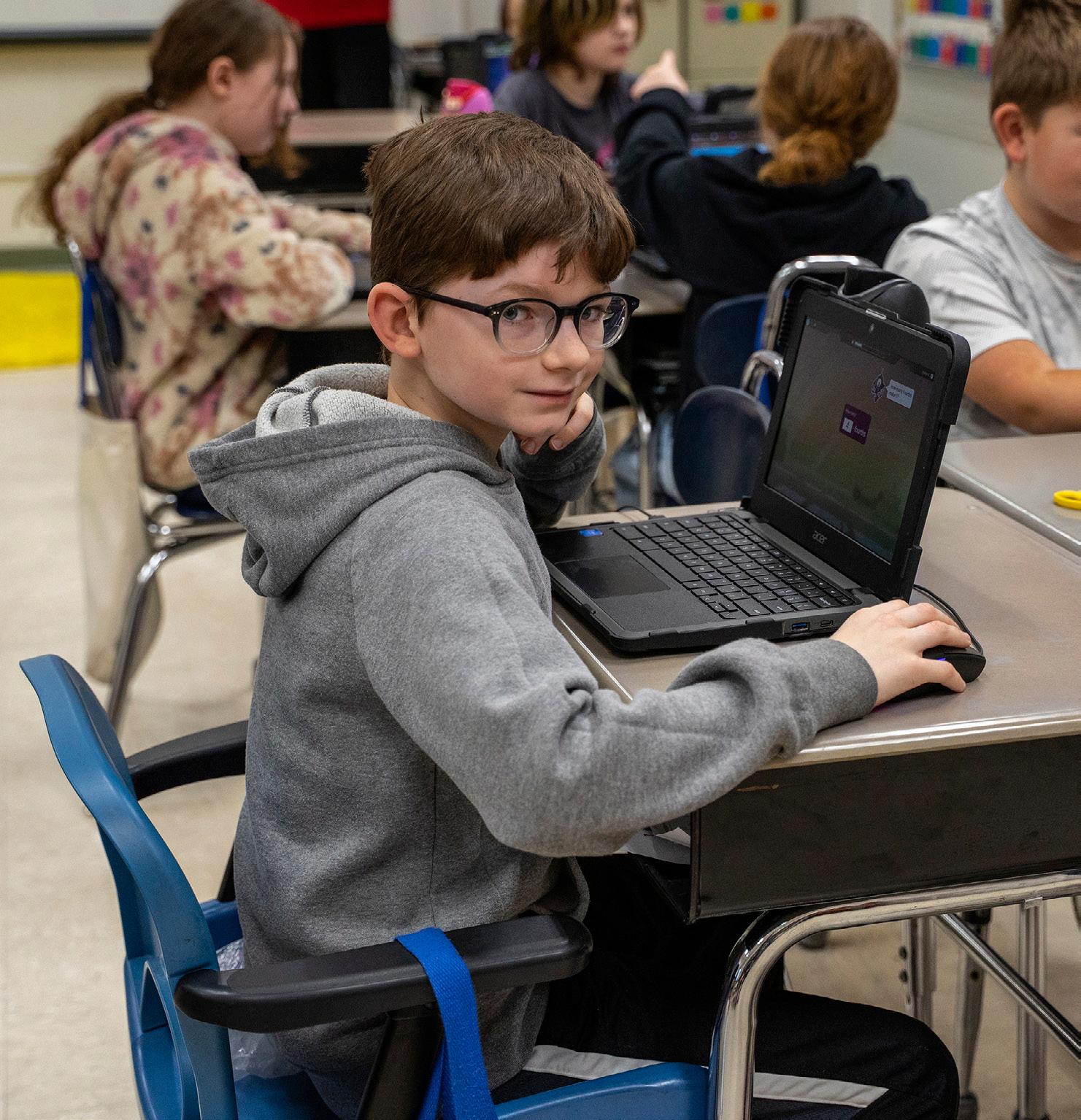
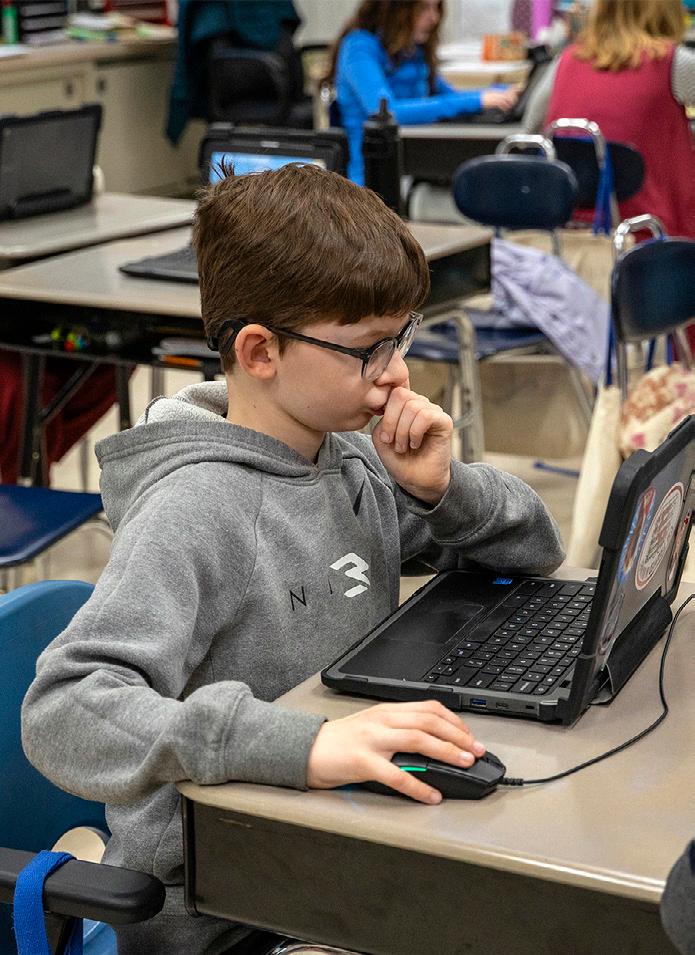
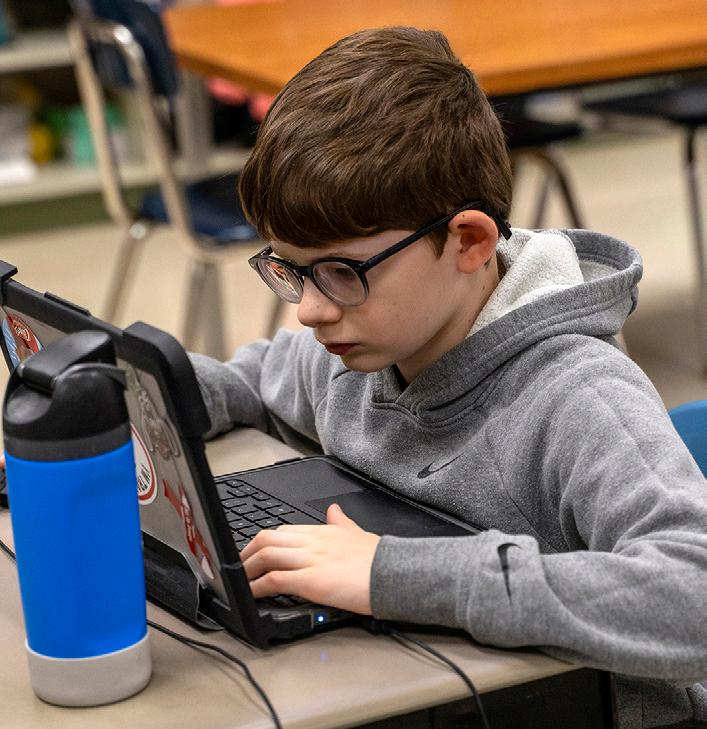
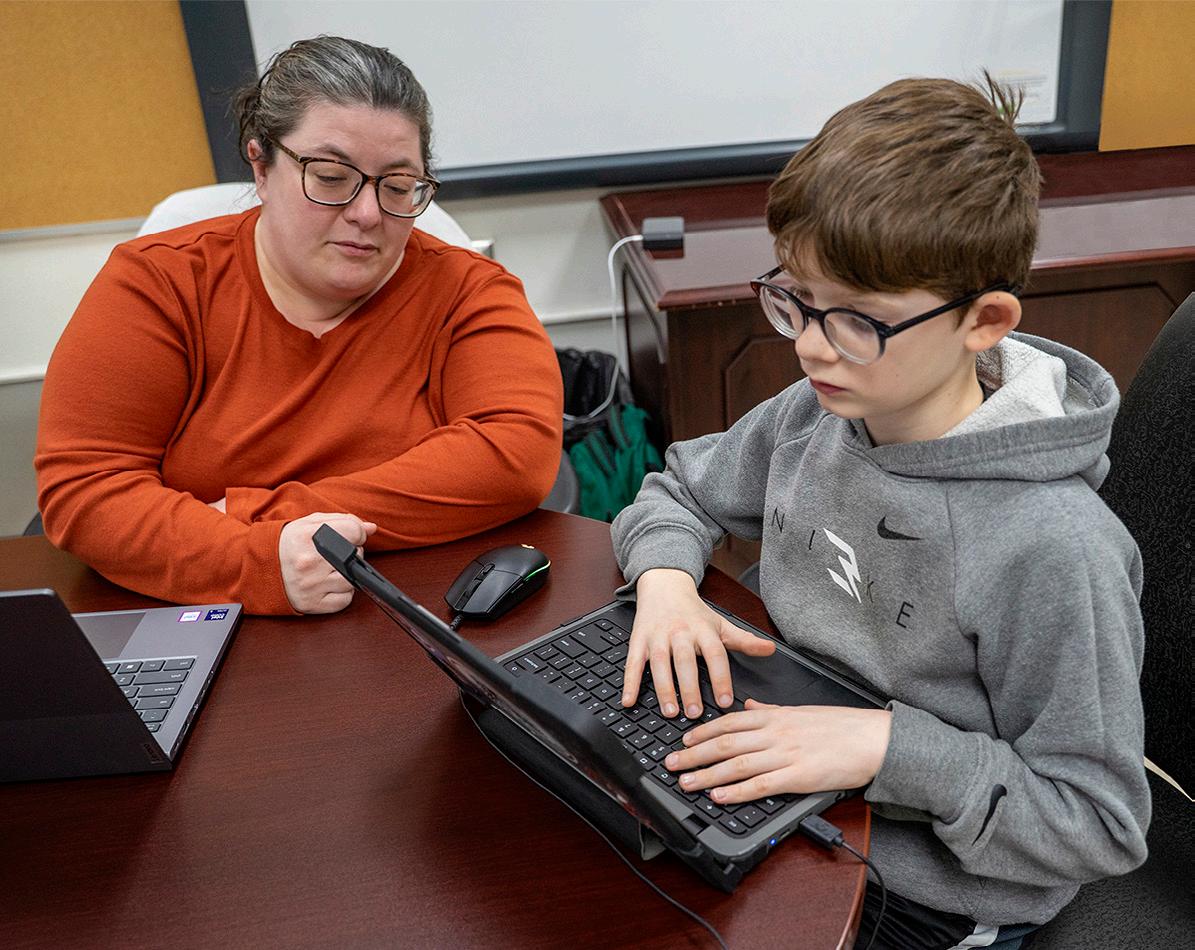
Technology is another key component of Zeke’s support plan. Working with Mrs. K on the laptop, he is able to complete assignments efficiently and independently. “She taught me how to type and how to use keyboard commands,” said Zeke, who is a strong student with primary interests in math and science. He is also a two-time Scripps Spelling Bee champion at Elroy.
Zeke’s success is the result of more than direct services. The collaboration between the AIU and Brentwood Borough School District extends beyond individual sessions, with intentional planning and ongoing communication among educators and specialists.
Physical therapist Amanda Shiflet leads Zeke in exercises to build his core strength.
“We meet before the school year begins,” said Jamie Dobson, Zeke’s homeroom teacher. “The AIU staff come in and discuss how frequently they will meet with Zeke, on which days, and then determine a time that is the least disruptive for him.” She noted that maintaining a steady routine is especially important for him.
Dr. Ali Rendulic, Brentwood’s director of special education, emphasized the value of working with the AIU. “Our partnership with the AIU for related services has been very productive and beneficial for our students,” Rendulic said. “The referral procedures are easy to navigate, and the staff are helpful and collaborative.”
Through the combined efforts of AIU professionals and Zeke’s own willingness to learn, he has grown significantly both as a young man and in how he manages his disabilities.
Blind/Visually Impaired Support Program
The AIU Blind and Visually Impaired Support Program provides specially designed instruction for students whose visual impairment impacts educational performance. Services focus on skill development within the Expanded Core Curriculum, including compensatory and functional academic skills, orientation and mobility, social interaction, independent living, recreation and leisure, career education, assistive technology, and visual efficiency.
325 Students served
24 Teachers of the Blind/ Visually Impaired
11 Certified Orientation and Mobility Specialist
1 Accessible Instructional Materials Support Coordinator
56 LEAs served
Certified Teachers of the Visually Impaired deliver instruction aligned to IEP goals, ensuring students build the competencies necessary to access curriculum and participate meaningfully in inclusive settings. The program also provides specialized assessments, low vision support, Braille instruction, orientation and mobility training, assistive technology evaluation and training, and preparation of instructional materials in appropriate formats.
Consultation and professional development support district teams in ensuring students with visual impairments have equitable access to curriculum and opportunities for long-term independence.
“Zeke is an amazing fifth grader. He perseveres during challenging tasks. He is respectful, thoughtful, organized, and a great role model.”
J ami E d o BS on
More than two years ago, Zeke began walking part of the way home from school with friends, independently navigating a long outside stairway before he’s met at the bottom by one of his parents, Katherine or Timothy.
“I’ve seen a lot of growth in his confidence and his physical abilities,” Dobson said. “He’s speaking up more for what he needs. He has friends. He’s running around at recess. It’s great to see him growing into his own individual. He doesn’t let his diagnosis stop him.”
Elroy Principal Jennifer Zunic echoed that sentiment. “Zeke’s a wonderful kid. He’s not afraid to ask for help. He’s been getting better advocating for himself,” she said. At home, Bush sees those skills translating into his everyday life. “He’s more aware of what is happening around him,” she said. “I can see he remembers to stop, look, and listen when we come to an intersection.”
As Zeke prepares for the transition to Brentwood Middle School, AIU services continue to focus on future readiness. “The strength of the team is that they’re proactive,” Bush said. “We have a lot of conversations not just about what’s happening now but setting the stage for the future when the asks will become heavier. I really value that.”
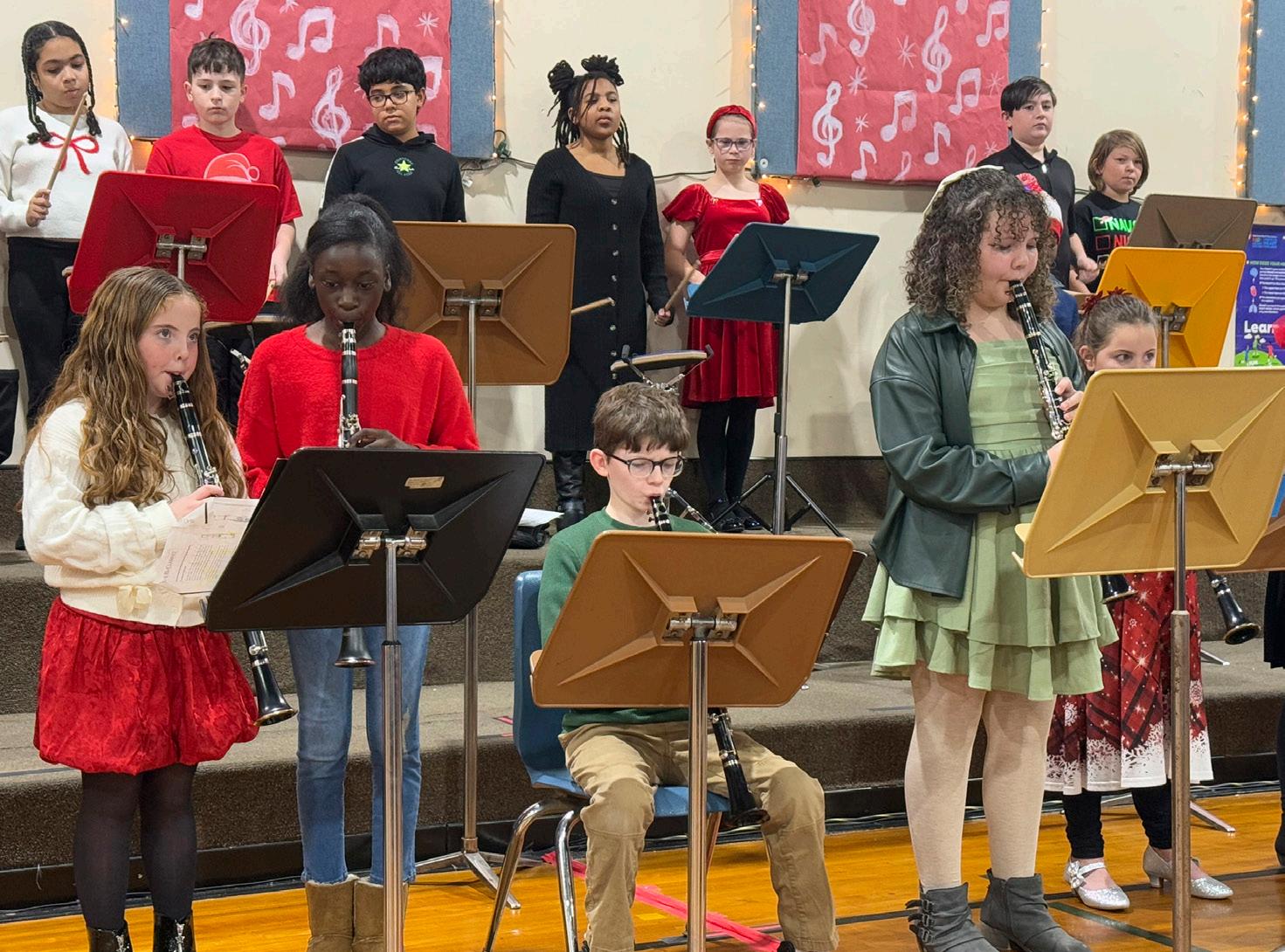
Zeke is a typical fifth grader, despite the challenges he faces. He plays the clarinet in the Elroy Band and sings in the school chorus. He likes playing video games, working on jigsaw and logic puzzles, completing crosswords and Rubik’s cube, and playing basketball in the driveway with his older brother, Gideon.
“Zeke is an amazing fifth grader,” Dobson said. “He perseveres during challenging tasks. He is respectful, thoughtful, organized, and a great role model.”
Photography: Andrew Chiappazzi
Jeff Nelson
Michael Tarquinio
Zeke’s journey reflects the impact of a strong, coordinated partnership between the AIU and Brentwood Borough School District. Through collaborative planning, specialized services, and shared commitment, the team is helping Zeke build the skills he needs not just for school—but for life beyond the classroom.