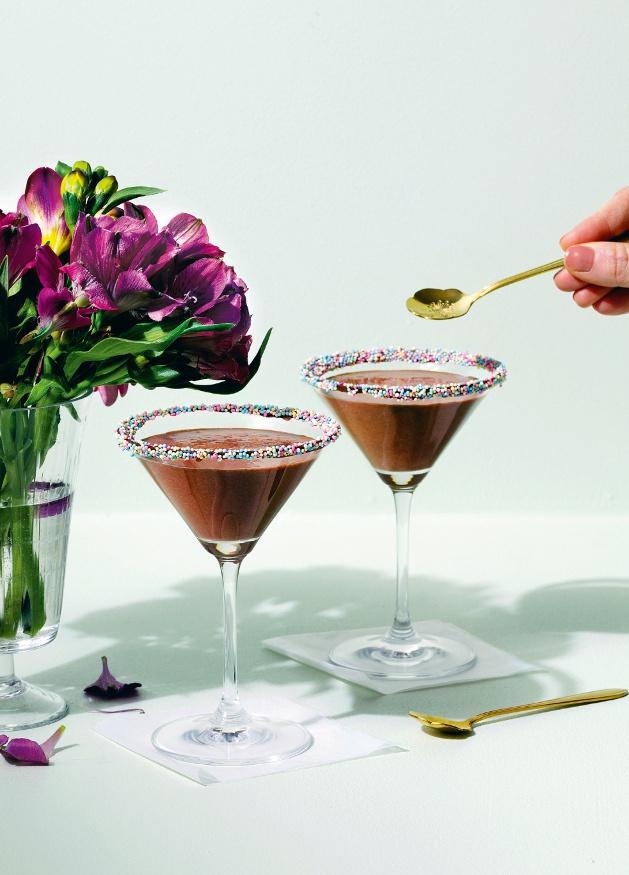
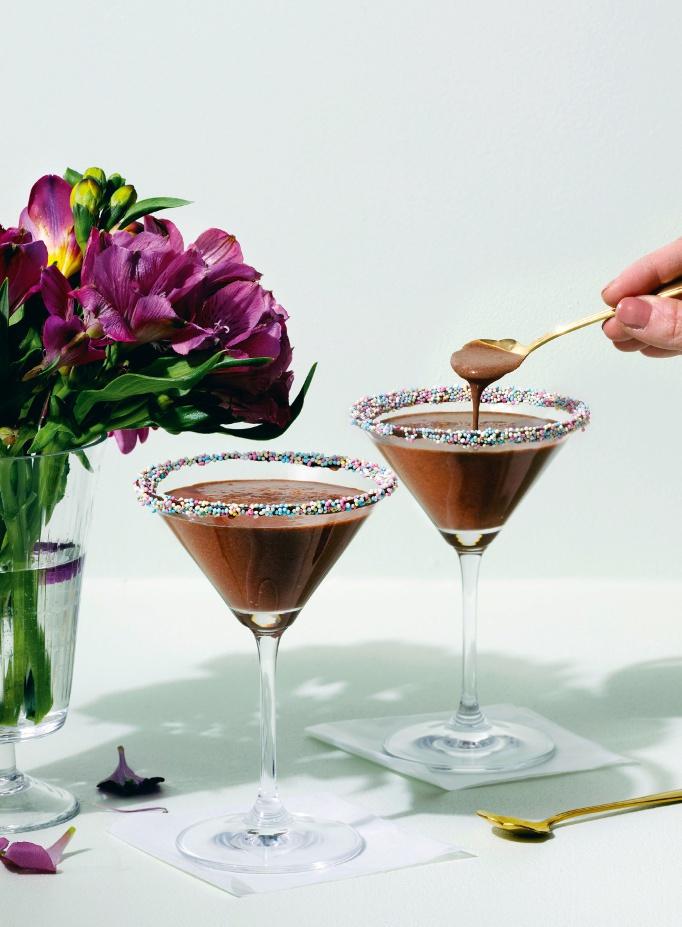
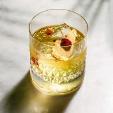
Have you ever sipped on a chocolate brownie? Try our recipe for this hit drink!
CLIMATE
Will Finland become a Riesling country?
ALKO'S REVIEW OF THE YEAR´S BEVERAGE TRENDS
QUIZ
Are you a beer mastermind? TASTE
Everything from IPA to champagne
WELLBEING
Hope for the lonely
Responsibly involved in change
TWO YEARS of the coronavirus pandemic lie behind us – a seemingly endless number of unexpected changes and constant adaptation to evolving situations. The coronavirus has hindered our international supply chain in many ways, and there is no relief in sight. Container shortages, a shortage of ingredients and packaging materials, delayed deliveries and the resulting upward price pressures are the talk of the industry.
Future beverage trends are probably easier to predict than how the pandemic will progress. In this trend review, we will be focusing on things such as the outlook for local products and the rapidly growing trend for non-alcoholic, low-alcohol and low-sugar products. We will explore dessert-like drinks and hybrid beverages that combine several types of products. Responsibility is becoming increasingly important, and companies are being required to shoulder more social responsibility in their supply chains.
Climate change is shaking up agriculture and wine production. Rainfall, droughts, intense heat and other extreme weather phenomena are forecast to increase in the future. In our interview with Taina Vilkuna, Alko’s Master of Wine, she tells us how climate change impacts will be reflected in the wine sector. Responsible producers are already doing a great deal of work to create a foundation for sustainable production.
I hope reading our trend review will also open up some new perspectives for you!
Trend review 2022
Publisher: Alko
Anu Koskinen, Executive Vice President, Assortment and Procurement
Editor-in-chief: Sari Karjalainen
Produced by: Genero
Executive producer Katja Tarnanen
AD Katarina Lönnström
Content strategy Anu Mäkelä
Contributors: Susanna Cygnel, Lotta Ehrnrooth, Sanna Lehto, Kristiina Kurronen, Mika Rampa and Niina Meriläinen
This is a carbon-neutral publication
PANTONE 17-3938 VERY PERI
The periwinkle blue seen in this magazine is the Pantone Colour Institute’s Colour of the Year 2022. It symbolises our changing world, the future, and a vivacious and creative attitude. You are bound to see this trendy colour pop up in many areas of design.
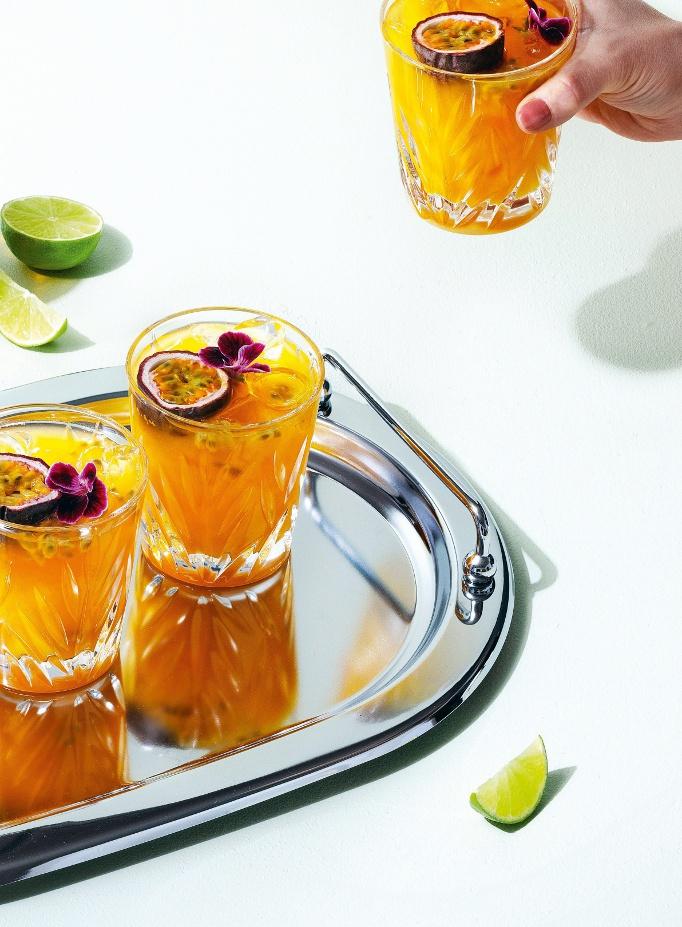
Mango IPAssion
6 cl mango puree
the juice of 1 lime
2–4 cl syrup
10 cl IPA beer
1 fresh passion fruit ice
Pour the lime juice, syrup and mango puree into a glass. Mix well. Add the ice and beer. Cut the passion fruit in half and scrape the pulp into the glass. Stir, and garnish with fresh lime and passion fruit.
TREND NO. 1
Hybrid is the new black
HYBRID DRINKS BREAK STYLE BOUNDARIES with their exciting variations. With hybrids, your creativity is the limit! Most hybrid drinks have arisen from their producers’ desire to try something new.
“Hybrid drinks draw on familiar drink types, but don’t fit into official EU classifications, as they use non-traditional production methods or ingredients,” says Kasper Kukkonen, Category Manager, Spirits and Brewery Products.
For example, flavourings may be added to rum to make it more interesting, and the resulting beverage will be categorised as a flavoured spirit rather than a rum. However, the name will indicate that the product has a rum base.
Different types of beverages can be combined to make hybrids: wine beer is an up-and-coming hybrid trend, while bottled versions of classic cocktails are already popular the world over. Innovations that employ different alcohol or fermentation bases, flavourings or maturation methods can already be seen in everything from whiskies to wines, and these experiments look set to expand beyond beverage categories. How about some truffle whisky?
Addressing loneliness is responsible 2
TREND NO. 2
People are demanding corporate responsibility
COMPANIES ARE BEING REQUIRED
to shoulder more social responsibility in their supply chains. The EU’s duty of care aims to prevent human rights violations in corporate value chains.
Alko is committed to promoting safe working conditions and living wages for people working in its supply chain. Alko aims to ensure and promote the realisation of human rights by, for example, providing a broad range of training for its goods suppliers and producers. In beverage production, social responsibility is most often neglected at harvest time or in
seasonal work. Working hours may be long, and the living conditions, occupational safety and employment contracts of an externally acquired workforce may sometimes be inadequate.
“Alko commissions inspections of subcontractor supply chains, particularly in areas where negligence may occur. Any shortcomings will be addressed, and corrective measures will be monitored until the situation is rectified,” says Kasper Kukkonen, Category Manager, Spirits and Brewery Products.
RUM PRODUCTION UNDER THE MICROSCOPE
The most challenging situation is to be found at sugarcane plantations, where a combination of heat, dehydration and heavy physical labour exposes workers to life-threatening chronic kidney disease. Sugarcane is used in the production of rum and other products. In collaboration with the other Nordic countries, Alko is promoting better working conditions for people working on sugarcane plantations. Although some positive results have already been achieved, there is still a lot of work to be done.
In cooperation with MIELI Mental Health Finland and HelsinkiMissio, Alko aims to reduce loneliness in our society and prevent the alcohol-related harms caused by it. Our products are not medicine for loneliness. You can find hope by trying the following:
1. Identify the stage. If your loneliness is a recent thing, such as the result of a divorce or moving to a new area, you can actively seek company by attending events, calling someone you know, or going out for a run or coffee with someone. You can also use the Kaverisovellus app to find new friends. If you have been lonely for a longer period and feel that you will always be alone, you might be experiencing cognitive distortions that need changing. You can use HelsinkiMissio’s Loneliness exercise book to examine your feelings and thoughts relating to loneliness.
2. be your own friend. No one would speak as harshly to another person as many lonely people speak to themselves. When you take care of yourself and nurture your own wellbeing and self-esteem, you will be more confident with others as well.
3. Be friendly. Smile, say hello, exchange a word with your neighbour. When you do a good deed for someone, you also get a lot in return. One in five experience loneliness at some point in their life. A friendly act can make someone’s day – or even their whole week. Everyone wants to be accepted for who they are.
These tips are from Niina Junttila, a loneliness researcher and professor of educational psychology
If you prefer local products, you can easily spot small producers by looking out for this symbol on the edge of the shelf.
3
Local beverages
LOCAL FOOD NOW HAS a companion: local beverage culture is also flourishing! Finns are becoming increasingly interested in local production, and we are particularly proud of our homegrown products.
Local products are sold in Alko stores all across Finland, and are inquired after by both tourists and regulars. Microbrewery beers have been super popular for a long time, and these gems are made by more than a hundred microbreweries all across the country. Ciders from small producers are another local treat.
The kings of locally produced beverages include Finnish berry wines, which are a great accompaniment for desserts, and the small distillery gins and whiskies that have quickly shot to fame.
LOCAL EXPERIENCES
“When you cook local food, you can complete your menu with Finnish and locally produced beverages. If you want to try the traditional delicacies of Finland’s different regions, you can also find beverages to complement them,” says Ville Heinonen, who works in customer service at Alko’s Arkadia store in central Helsinki. If you find a new favourite drink on your travels around Finland, you can ask for it to be stocked by your local Alko store at Alkotoive.fi. A local product is also a great idea when you are looking for a distinctive gift.
Wine first, then food
WE USED TO CHOOSE our food before choosing our wine – now, it’s the other way round. Pairing wine and food is easy – just go with how you feel!
“More and more people are visiting Alko before heading to the supermarket with a bottle of wine under their arm. People shop with an open mind, checking out special offers and what’s on offer at the meat and fish counters. The wine serves as an inspiration,” says sales assistant Valtteri Paakkari from the Prisma Alko in Järvenpää.
People often choose wine based on what type of wine or grape they prefer. The salesperson can then give them a food tip, which could be anything from a main ingredient or taste palette to a theme, flavour intensity or cooking method. Just relax and try out different pairings, as you can make great new discoveries through experimentation! You can find more ideas for pairing food and drink in Etiketti magazine and online at alko.fi/juomaruoka.
The profound expertise of Alko salespeople is based not only on thorough training but also on cooperation and shared knowledge. For example, observations made during store tastings and staff training are always logged in Alko’s own digital tool, Makupankki (Taste Deposit), which contains notes on things such as aromas and suitable food pairings.It enables Alko employees all across Finland to share their expertise and enrich their colleagues’ product knowledge. There are over 160,000 notes on products alone!
Only white wine with fish? No way!
A nuanced and structured white wine made from the Sauvignon Blanc grape
A refreshing red wine with berry notes, such as one made from the Pinot Noir grape
Generous and toasty champagne
Citrus-cured fish, such as sea bass
smoked salmon
fish soups, such as bouillabaisse or burbot soup
Zander à la Meunière or other white fish, preferably pan-fried in butter
Warm
Provence rosé wine
Richer
TREND NO. 5
Cake in a glass
FAMILIAR FLAVOURS FROM classic desserts such as ice cream, cakes and other baked goods have made their way into not only liqueurs but also brewery products. They can be identified from their labels, which may mention familiar baked goods such as mudcake or tiramisu. These kinds of liqueurs will usually be found on the flavoured and cream liqueur shelf. For beers, you should check out the dark stouts and porters. Pastry stout is already an established concept to describe a dessertlike beer. In addition to dark beers, fresher and more fruity “pastry-style” flavours can also be found in ales and sour beers, which may have hints of ango-melon milkshake or lemon cheesecake. A beer that draws on dessert flavours is a dessert in itself, and is something to grab when you want to treat yourself or try something new.
Chocolate brownie milkshake
2–3 servings
2 dl vanilla ice cream 1 dl milk
4 cl chocolate sauce
2 tbsp cocoa powder
3–4 digestive biscuits
8 cl coffee liqueur Chocolate sauce and hundreds and thousands to garnish
Put all the ingredients in a blender and blend until smooth. Decorate the glass by coating the rim in chocolate sauce or melted chocolate, and then dipping it into a plate filled with hundreds and thousands. Pour the milkshake into a glass.
Try it out!
Hold a blind tasting of three dessert beers. Who will be best at identifying the classic dessert that has inspired each beer?
Timo Vallo, Product Manager, Brewery Products
When customers approach Jukka Viitanen by the wine shelves at Alko’s Arkadia store in central Helsinki, they will receive assistance from a salesperson whose “heavyweight knowledge” has been been built up over many years – as Viitanen’s notebooks will attest to. His handwritten notes on more than 45,000 wines display both passion and a methodical approach.
“Taking notes locks it in your memory. And when you have experience, you have more to give to your customers,” says the self-taught Viitanen. He likes working with customers. Wine brings people together.
6
A new type of enthusiast
THE TERM “BEVERAGE ENTHUSIAST” often brings to mind expensive vintages from traditional wine producers. But you can also be an enthusiast by looking for something different and original – preferably something that very few people have heard of.
“For example, it could be an idiosyncratic winemaker who produces small batches at the base of Mount Etna, or a small vineyard in the Loire Valley that produces natural wines according to traditional methods.The smaller their production volume, the more interesting they will be to an enthusiast,” says product and service trainer Anri Lindström
Major producers have also noticed this phenomenon, and their selections may therefore include wines branded in small producer style.
When it comes to spirits, enthusiasts are interested in exclusive or limited edition distillery-bottled whiskies, such as single-cask and cask strength whiskies.
“I never get bored, as I’m always looking for something new and interesting.” A HEAVYWEIGHT MASTERMIND
“I must have done something right, as I’m often asked for recommendations for wine club evenings.”
When Viitanen joined Alko more than 30 years ago, he noticed that some customers asked very specific questions. The young salesman took this as a challenge, which gave rise to a team that sought to find the answers. Viitanen soon noticed that he is an accurate taster: he can distinguish the various aromas from just a tiny splash of wine. He started out tasting wines at home, but his learning journey became easier when Finland got its first private wine cellars, and the team acquired their own wine cabinets and facilities. And this tasting journey continues to this day.
IPA, the word on everyone’s lips
ALTHOUGH BOTTOM YEAST BEER (aka lager) is one of the best selling types of beer, IPA (India Pale Ale) is one of the most talked about. IPAs have their own devout fans. Alongside traditional, heavily bitter-hopped IPAs, we now have Juicy IPAs and NEIPAs (New England IPAs). These variations have made IPAs more accessible to those who aren’t that into the more traditional IPAs or even beer in general.
“IPAs are also perfect for those who like to experiment, as it’s a style that’s in perpetual motion. And there’s plenty to choose from: Alko’s selection has almost three times as many IPAs as lagers,” says Timo Vallo, Product Manager, Brewery Products.
The latest trend has seen IPA trade the “over fruity” and smoothie-like cloudiness for a more bitter and traditional West Coast style. There is also a race to make the strongest IPA – instead of just double, it has to be treble or even quadruple strength. At the other extreme are low-alcohol and non-alcoholic products, of which there is a rapidly diversifying range.In 2022, glasses will be foaming with NEIPA in particular. And what are we going to be drinking next? With IPA, it’s impossible to say.
RESULTS
0–2 correct: Novice. The answers were on the tip of your tongue – and stayed there. But at least you’re seven beer facts smarter than before. That’s a great start!
3–5 correct: Enthusiast. Not bad! You’re familiar with the subject, but still have some new things to learn – and what’s more fun than that?
6–7 correct: Mastermind. You know this subject like the back of your hand. Prosit!
ARE YOU A MASTE RMIND? BEER
1. What does the acronym NEIPA stand for?
a) Next Epic India Pale Ale
b) New England India Pale Ale
c) Northern European India Pale Ale
2. Which of these are lagers, that is, bottom yeast beers?
a) Märzen, Zwickel
b) Dubbel, Blonde
c) Kölsch, Alt
3. All Lambic breweries are located along which river?
a) Senne
b) Maas
c) Garonne
4. The female inflorescence of hops used in beer production is known as a:
a) Seed
b) Flower
c) Cone
5. How many microbreweries are currently operating in Finland?
a) about 100
b) about 200
c) about 300
6. Where does the richly aromatic hop variety Nectaron come from?
a) New Zealand
b) Australia
c) USA
7. Which of the following beer styles will be trendy in 2022?
a) Wine Beer
b) Cold IPA
c) Pastry Stout Correct answers: 1) b 2) a 3) a 4) c 5) a 6) a 7) Time will tell!
Better choices
Have you noticed,
that you can now buy wine in small bottles and even cans? Many people think that small is both beautiful and convenient, and this is also evident in the popularity of small package sizes among Alko customers.
OUR DESIRE TO NURTURE OUR HEALTH AND wellbeing is also evident in our beverage choices. More and more Alko customers are choosing non-alcoholic beverages, of which there is already an interesting and extensive selection.
Low-alcohol products have also risen alongside non-alcoholic beverages, as their modest alcohol content gives them a slightly fuller body and richer taste. In addition to low-alcohol beers, there are also low-alcohol wines and lighter versions of spirits.
“Many people want to cut down on their sugar intake, which may be one reason why low-sugar seltzers have recently grown globally in popularity. Seltzers are fresh, low-calorie mixers that resemble alcoholic flavoured waters,” says Kasper Kukkonen, Category Manager, Spirits and Brewery Products.
Nutritional labelling, which is already mandatory for non-alcoholic beverages, is now becoming more commonplace for alcoholic beverages as well.
The beverages in our trend review were created by Alko product and service trainer Santeri Saarinen. For more drinks inspired by trends, see Santeri’s recipes in Etiketti magazine and online at alko.fi/juoma-ruoka.
Did
you know,
that lists of ingredients and nutritional contents are being added to alcoholic beverage labels? Nutritional labelling must indicate at least the product’s energy content. This information may also be available online, if it can for example be read from the label using a QR code.
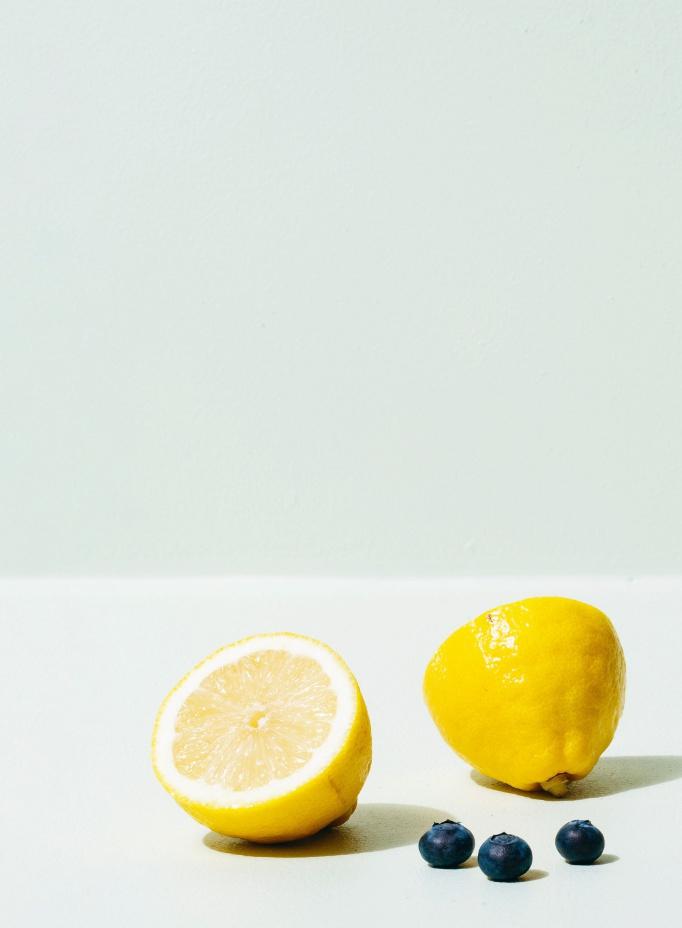
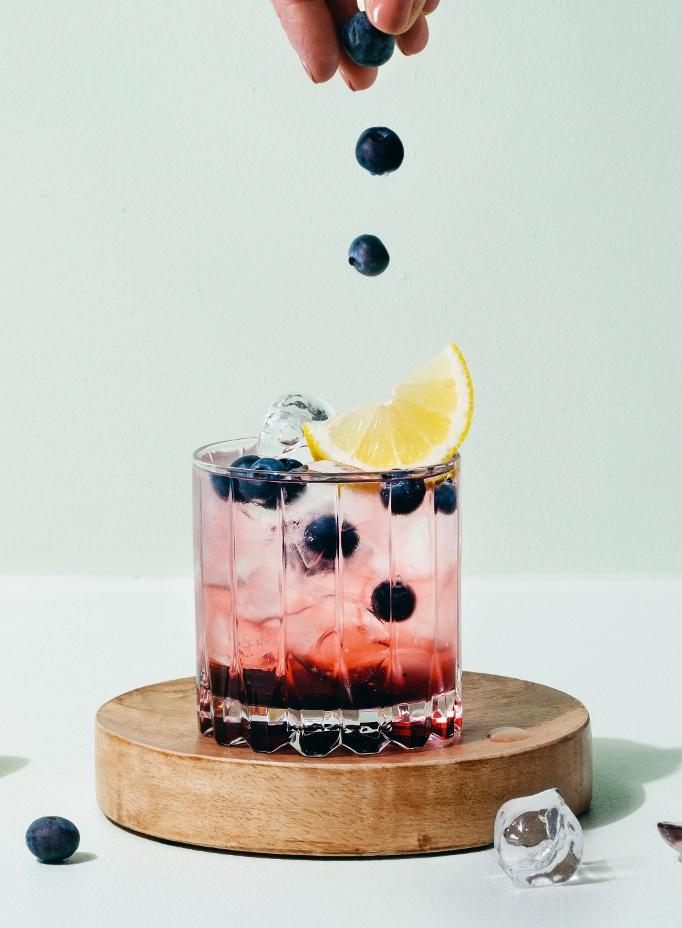
Blueberry tonic
4 cl blueberry syrup
12 cl tonic water
Lemon slices and blueberries to garnish
Fill a glass with ice. Add the syrup and tonic water. Stir, garnish and enjoy.
BLUEBERRY SYRUP
2 dl frozen blueberries
2 dl sugar the juice of 1 lemon the zest of 1 lemon
1 cm piece of fresh ginger
Put the ingredients in a saucepan and heat for about 10 minutes. Strain the liquid into a bowl.
If you want to organise a non-alcoholic tasting session, why not try out a variety of tonic waters or non-alcoholic wines?
Everyone wants to weigh in
CONSUMERS WANT to have their say and make a difference. Their requests and ideas can be seen in everything from the appearance and content of a product to the makeup of Alko’s product selection. Are you familiar with the Alko request service at Alkotoive.fi? You can request your local Alko to stock your favourite beverages from a selection of no less than 10,000 products.
“During the service’s first year, we received more than 40,000 requests, of which we were able to fulfil about one in three specific requests,” says Alko’s Jussi Tan, Head of Development, Purchases.
The most requests were made for wines, sparkling wines and liqueurs. Beer enthusiasts have also discovered the service, with “cold ones” coming in at number four.
You can also help develop Alko’s services by becoming an Advisor. The only requirements are being of legal age and having a passion for development. Advisors get to tell us their ideas and opinions on both Alko’s services and its selection- and responsibility-related themes. There are already more than 5,000 eager Advisors.
“Our Advisors have been involved in developing things such as our mobile app, our request service, and the selections at their local stores," says Päivi Kiiskinen, Customer Experience Specialist at Alko.
When shopping, you may also run into influencers in the form of familiar faces on product labels. This phenomenon is most common with wines.
Customers are requesting different kinds of product groups in different parts of Finland:
EASTERN FINLAND
Have your say!
Can’t find your favourite beverage at your local Alko store? Or maybe you’d like more non-alcoholic beverages to choose from? Send your requests at Alkotoive.fi.
Beer
White wines
Sparkling wines
Liqueurs and bitters
Liqueurs and bitters
Alko will be celebrating its 90th anniversary this year.
The first Alko opened at 10 am on 5 April 1932. There were only 48 Alko stores at that time, while now you can find 512 stores and pick-up points from Hanko to Nuorgam. Yet even though the world has changed since then, our important mission has remained the same: the responsible sale of alcohol.
TREND
Champagne –always in fashion
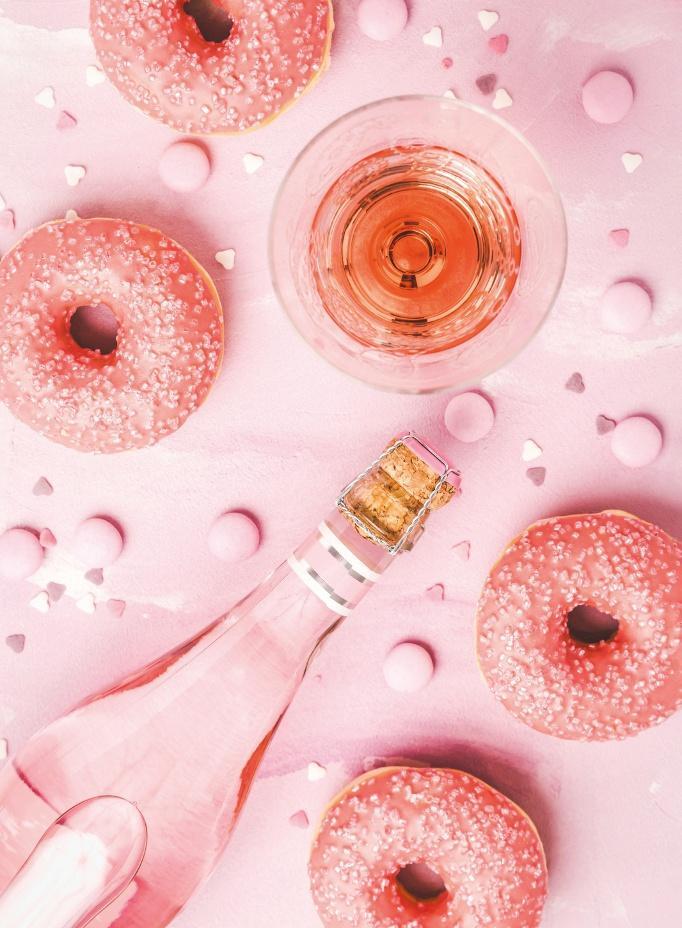
ROSÉ CHAMPAGNE is the queen of this trend. The rise of the rosés began with non-sparkling wine and continued with bubbly – for example, the production of rosé prosecco was permitted in Italy about a year ago.
Its delightful pink colour adds a dash of luxury to the dark winter evenings and looks cute on Instagram!
“Champagne is now a drink to accompany food. You can enjoy it throughout your meal. A glass of refreshing rosé champagne can also be a great palette cleanser: it washes away the grease and prepares your mouth for the next flavours. Just a cool, refreshing sip is enough – perhaps between each course,” says Communications Manager Taina Vilkuna
Be open minded, and pair rosé champagne with lamb or veal. It’s also an excellent companion to salmon.
What will happen with wine ?
Here are five claims about the wine industry, which is being shaken up by climate change. This is the future of the wine industry.
TEXT LOTTA EHRNROOTH
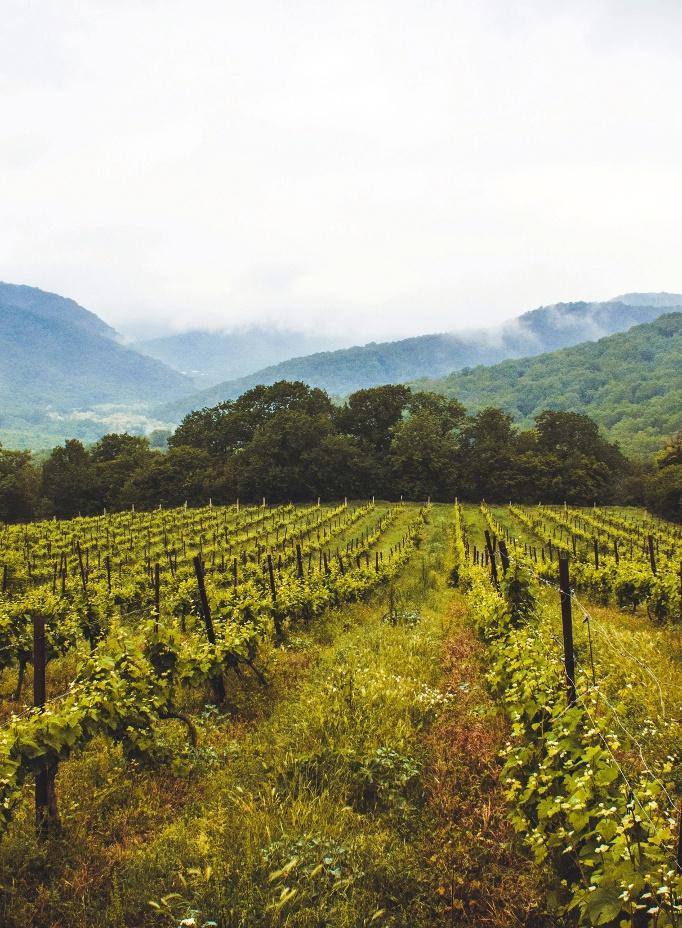
Grape cultivation has always been a risky form of agriculture, but as extreme weather phenomena intensify all across the world, farmers are thinking about how to safeguard their production and livelihoods, not only in flood- and droughtplagued Australia, but also in an uncertain Europe.
In 2021, severe spring frosts and disease resulted in France producing so little beaujolais nouveau wine that Alko was unable to obtain any for the first time in 30 years.
Although wine production is not yet in crisis, major challenges lie ahead. For example, French wine production fell by almost 30 per cent on the previous year, and Spain surpassed it as Europe’s second largest wine country after Italy. One consolation is that the industry has thus far been a master of adaptation. We discussed the impacts of climate change on the wine industry with Product Communications Manager and Master of Wine, Taina Vilkuna
A 30-year career at Alko has given Taina Vilkuna, Product Communications Manager and Master of Wine, a grandstand view of the changes occurring in the wine industry.
1. Finland will become a leading Riesling country.
“HOPEFULLY NOT, as that would mean that climate change has gotten out of hand. On the other hand, it is true that northern wine countries are benefitting from climate change. Germany has been the biggest single winner to date. Germany used to have only one or two good wine years every decade, but that has flipped on its head, as there are now only a couple of poor years per decade. On the other hand, the traditional pearl of German wine – Eiswein –is already difficult to make, as the frosts required by legislation at the end of the harvest season are fewer in number.
Yet one consolation is that the wine industry is flexible. In the future, German ice wine might be produced by harvesting suitably ripe grapes at the end of the year and freezing them at the winery. This is how ice wine is produced in many wine countries where legislation allows. A lot of thought is also going into where vineyards should be established. At least not anywhere that is already too hot and dry. For example, many cultivators in the Champagne region are preparing for change by buying land in England, where the soil is very similar to that of Champagne in terms of winemaking.”
2. Viticulture can
help
to mitigate climate change.
“THE MORE GREENERY WE HAVE ON EARTH, the better. All green things bind carbon dioxide, even though wine production is only a minor factor on a global scale. And grape cultivation is not taking anything away from food production, as vineyard soils are usually too barren to grow food. Whether the soil is full of sand, chalk, clay or slate, the vines will be thankful for all of them and absorb their various aromas.
One solution is hybrid varieties.
Easy energy-saving solutions have long been in place. For example, solar power is already commonplace and and every last drop of water is recycled. Water is a sensitive topic, as when shortages occur, more resources will naturally be used as drinking water or directed towards food production rather than wine production.
Is organic wine always the best choice for the Earth? Organic wine production respects the soil, but is not necessarily the most environmentally friendly choice overall, as more work may end up being done with the aid of fossil-fuelled machinery than in ordinary grape cultivation. Of course, it may be possible for a small vineyard to use a horse rather than a tractor, and this could also be used in marketing.”
3. Fewer people will be able to drink wine in the future.
“THERE WILL ALWAYS BE A MARKET FOR good wines with an affordable price tag. Which means that producers will hardly be able to raise their prices – not even in the future. The industry will be characterised by tough competition, and countries like Chile and Argentina will produce good products with attractive prices.
Another question is whether the top wines of the future will come from the same areas and grapes as they do now. Most likely not. In the Bourgogne region, there are already fears that Pinot Noir, which is less resistant to heat, will be replaced by the more resistant Syrah.
Bordeaux also permitted the experimental use of seven new grape varieties last year. These grapes come from areas such as the Douro Valley in Portugal, where they have adapted to warmer conditions.
The development of new hybrid varieties is seen as one solution. They would combine the quality and taste properties of the vitis vinifera with those of other varieties that are more resistant to mould and plant diseases. The problem — at least for the time being – is that consumers want to enjoy familiar wines, such as Chardonnay, Merlot and Cabernet Sauvignon, rather than a strange-sounding Solar or Seyval Blanc.”
4. Wine will be genetically modified and made in a laboratory.
“I DOUBT IT, as there are no signs that grape cultivation is ending or becoming impossible. But production methods and components of the production process are changing, as has happened before throughout the history of wine.
One concern has been whether climate change will lead to alterations or a degradation in the taste of wine. For example, in only a few decades, the alcohol percentage of Bordeaux red wines has risen from 12.5 to as much as 15 per cent, and the wines’ taste profile has become more intense, even jamlike. However, climate change is not the only reason for this: the preferences of consumers and wine critics are changing both the taste and production methods of wines.
Genetically modifying grapes to make them more resistant to mould and plant diseases would save both work and the environment, as it would reduce the need for pesticides. It is probable that there will be more debate on this topic in ten years’ time.
Finland, which is an openminded country free of winerelated traditions, could be the first market area for hybrid wines with greater disease resistance. After all, we were quick to accept New World wines, boxed wines, and screw caps. Boxed wines were initially praised for practical reasons, but are now also a climateresponsible choice.”
5.
We’ll soon be pouring wine from cartons, just like milk and juice.
“THERE’S NOTHING WRONG WITH CARTONS. Smart packaging is interesting, and with good reason, as packaging and transport are one of the biggest factors influencing the carbon footprint of wine. The most important thing is to develop the recycling system globally. Here in Finland, the recycling of cans, cartons, wine boxes, and glass and plastic bottles is very well organised. But this isn’t the case everywhere.
Glass bottles have a large carbon footprint, but are also indispensable when wine benefits from long storage or maturation times.However, it’s importance should not be overstated. It’s estimated that more than 90 per cent of the wine sold globally is drunk within two days of purchase.
A storage time of just over a year – as promised by plastic bottles, boxed wines, cartons and cans – is enough for most wines, even though stylish glass bottles are pleasing to the eye and can be saved for special occasions.
We’re already moving away from onekilo bottles, and glass bottles are getting lighter all the time. A glass bottle weighing about 330 grams is still durable,” says Taina Vilkuna.
HOW TO BE A RESPONSIBLE CONSUMER
IF YOU’VE ONLY GOT TIME TO CONSIDER ONE ENVIRONMENTAL ISSUE, then think about packaging. The lighter and more recyclable the packaging is, the smaller its carbon footprint will be and the better it will be from an environmental standpoint. If you feel the packaging doesn’t look festive enough, you can always pour your wine into a beautiful carafe.
LOOK FOR PRODUCTS with a Green Choice or Ethical symbol. Alko’s Green Choice labelling indicates the producer’s commitment to environmental efforts and sustainable development. Green Choice symbols include Carbon neutral, Certification of sustainable development, Organic, Biodynamic, and Environmentally responsible packaging. Climate action in the alcoholic beverage industry is progressing, and the Green Choice concept is being developed in line with this work.
REMEMBER to recycle. The recycling rate of plastic bottles is already more than 90 per cent. This may sound like a lot, but it means that more than 2.5 million bottles were not recycled last year. When recycling plastic bottles, you should remove metal caps, but can leave plastic caps in place.
SURPRISINGLY, it can be smarter to import wine over long distances rather than transport it from Europe in trucks. This is because wine can be packed in 23,000-litre Flexitank containers for maritime transport, and then bottled at the destination. This enables wine to travel light – that is, with lower emissions.
Special editions showcase current and future trends
AS THEIR NAME SUGGESTS, special editions are slightly more exotic products that may be rarities from around the world or represent some of the latest trends.
Alko sells its special editions using a variety of themes, such as food pairings or the beverage’s method or region of production. When choosing these products, we also listen to our customers’ wishes and keep an eye on current trends both in Finland and abroad.
Special editions are available in stores in major cities and from the Alko online shop. Sometimes a special edition will showcase rare small batches that will go on sale at Alko’s flagship store in Helsinki (Arkadia), in the online shop, and occasionally in other individual Alko stores as well.
A few basic facts about special editions: Psst,
if you’re an enthusiast interested in specialities, you should also check out Alko’s limited editions. These carefully selected top finds from around the world are very rare indeed – there may only be a couple of bottles or one crate available.
Which one for you?
In late 2021, we asked Alko’s Instagram followers how trends were currently being reflected in their lives. What would you say now?
With or without alcohol?
Safe and familiar or new and surprising?
First food, then wine or first wine, then food Let’s go with lager or IPA of course Do you prefer products with eco-labels?
Want to be among the first to hear about Alko’s new products?
YOU CAN USE ALKO’S FREE MOBILE APP to find out about our new products a week before they go on sale. On the home page, just scroll down and click on “Products coming soon” to see which products will be arriving next week. The product list shows each product’s name, price, product category, taste style, package size, alcohol percentage and arrival date.
“The new products will be available through the app and online shop from 9 am on the stated arrival date,” says Antti Tanaka, Online and Digital Development Manager at Alko.
If you’re not yet familiar with the Alko app, you can download it from the App Store or Google Play. The app makes it easy to explore Alko’s selection, find Alko stores, and order products from a range of more than 10,000 products.
KEEP UP WITH THE TRENDS – JOIN OUR WEBINAR!
Audiobooks and podcasts are here to stay, and webinars have also become a regular way to learn new things and participate in hobbies. This year Alko's customer magazine Etiketti will expand into webinars (in Finnish). Read more on what's to come at: alko.fi/etiketinwebinaarit.
UP-AND-COMING TERMS
Buzz phrases to check
DIVERSITY AND INCLUSIVITY
– terms that are now commonplace in many other areas of life – also crop up in wine-related debates. Associations established in the USA and South Africa, such as The Roots Fund and Wine Unify, are seeking to promote the position of women and people of colour (POC) in the sector with the aid of training and financial support. A lack of inclusivity is particularly evident in the marketing of wines, which gives a very narrow picture of wine consumers.
“USING BLOCKCHAIN IN THE
SUPPLY CHAIN creates transparency at all stages of a beverage product’s lifecycle. All of the parties in the supply chain – and in the future also consumers – will be able to follow a product all the way from the fields to store shelves. It brings a sense of security and reliability to the supply chain, and also reinforces responsibility. ”
“REGENERATIVE VITICUL-
TURE is a form of cultivation that respects and regenerates the environment. It enables vineyards to take care of themselves while also reducing carbon dioxide emissions. For example, it seeks to revitalise and improve soil quality, the water cycle and biodiversity,
so that everything functions in its own naturally balanced way. It’s very similar in approach to organic and biodynamic cultivation. At vineyards, you can see regenerative viticulture in the form of ground cover vegetation, rather than ploughed land, between vines. Grazing livestock, such as sheep, will be used to fertilise and tend this vegetation.”
And one final perspective on responsibility. “If someone says they’re SOBER CURIOUS, they’re questioning their own alcoholrelated habits and are curious about sobriety. They don’t take standard behaviours and practices as given, and have realised that there are other ways of doing things.”
And finally...
Please welcome STRONG AND DISTINCT FLAVOURS! Covid-19 has also attacked our senses, so we will be seeing both a simplification and strengthening of flavours.This phenomenon also represents a return to the safe and familiar. In an era in which things easily appear difficult and complicated, beauty is simplicity – and the same goes for flavours.
Anri Lindström, product and service trainer
Kasper Kukkonen, Category Manager, Spirits and Brewery Products
Marja Aho, Alko’s Sustainability Manager
5.4.1932 at 10 am, the very first Alko stores were opened. The world has changed many times in 90 years, and so have we. Back then, Alko was a whole di erent company. Today, the cornerstone of our service is listening to our customers. That is why we’re confident that Alko will reinvent itself again and again. We think that’s what makes great service.