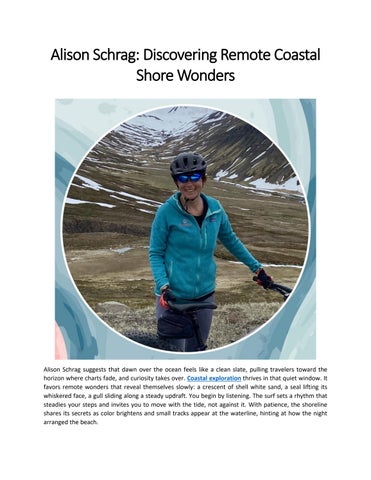
Alison Schrag: Discovering Remote Coastal Shore Wonders
Alison Schrag suggests that dawn over the ocean feels like a clean slate, pulling travelers toward the horizon where charts fade, and curiosity takes over. Coastal exploration thrives in that quiet window. It favors remote wonders that reveal themselves slowly: a crescent of shell white sand, a seal lifting its whiskered face, a gull sliding along a steady updraft. You begin by listening. The surf sets a rhythm that steadies your steps and invites you to move with the tide, not against it. With patience, the shoreline shares its secrets as color brightens and small tracks appear at the waterline, hinting at how the night arranged the beach.
Start where dunes meet beach grass and the first line of wrack marks last night’s highest reach. Footprints of plovers and foxes knot into small riddles, hinting at lives lived out of view. Low tide uncovers tide pools clear as glass, each one a tiny city of anemones, scuttling crabs, and coins of young fish. The joy of coastal exploration comes from slow looking. Carry a small notebook to log clouds, tides, wind, and birds. These details sharpen the senses and keep you grounded. Even a short walk can reveal remote wonders that become favorite places. Sketch the headland outline and note how the light shifts slowly across it.
Pack simple gear that respects the shore. A light daypack, a refillable bottle, and sturdy water shoes make a strong base. A mask and snorkel open a second world in calm coves, where striped bass hover over rippled sand and kelp forests comb the current. If conditions allow, launch a kayak at first light and trace the contour of cliffs. You may find caves brightened by reflected sun, sea stars clinging like jewels, and seals cutting arcs beside the bow. Keep distance, never feed wildlife, and favor quiet observation over noise and crowding. Carry a small repair kit and a dry bag to guard maps.
Navigation on lesser-known coasts demands awareness. Study charts, check local advisories, and note the day’s high tide, low tide, and swell height. A small compass and an offline map can solve real trouble when cell service vanishes behind a headland. Weather can pivot in minutes, so carry a warm layer and a hat, even in summer. Shorelines may be slick with algae, and cliff edges can crumble without warning. Move with care, test each foothold, and avoid shortcuts. The goal is to return with stories, not bruises. Tell someone your route and expected return before you set out.
Respect also guides how we leave beaches better than we found them. Pack out everything. Pick up fishing line, bottle caps, and stray plastic as part of a daily ritual. Choose reef-safe sunscreen and steer clear of nesting areas marked by twine and simple signs. Speak with local fishers or rangers about seasonal closures, and follow their lead. The best coastal exploration adds value to the places visited. Buying snacks from a harbor shack, tipping a local guide, and sharing tide data with the community turn a personal trip into a helpful presence. Choose local ferries over long drives when water transport is available.
Not every remote stretch is silent. Some shores hum with small towns where boatyards clang, and coffee shops warm stiff hands. Sit at a counter and ask about wind shifts, hidden coves, and shelves where fog settles all afternoon. Locals often point beyond the familiar overlook to a footpath that threads between boulders and opens onto a pocket beach that no map names. This human element adds depth to remote wonders. Stories of storms, rescues, and yearly migrations give shape to the rocks and bays, and you become part of that living memory.
As the sun drops, colors thicken. Wet stones darken like ink, and the sea takes on a slow silver. This is when coastal exploration feels complete. Settle on a driftwood log, sip something warm, and watch the tide erase your own footprints with gentle precision. The day’s notes become a simple plan for tomorrow. Rise early, check the tide, carry light, move slowly, and let curiosity lead. Remote wonders are patient. They reward travelers who move with humility, leave room for surprise, and remember that every coastline is a classroom as well as a sanctuary. Leave a little energy for stargazing if the sky cooperates.