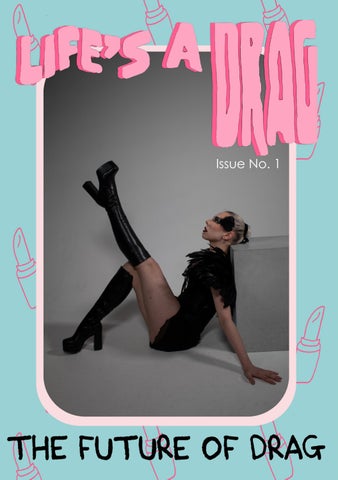
Issue No. 1
Racers, start your engines! We’re about to dive into the world of drag; past, present and future. Future? I hear you ask. Yes, by looking at how the past has influenced the current drag scene, I want to present to you what I think Drag could look like in 10 years’ time. But we can’t talk about the future without looking at the past.
Before we look at where drag can go, we need to look at where it all started. For those reading who don’t know, the first self-proclaimed drag queen that we know of is none other than the first ‘queen of drag’ William Dorsey Swann. Born in 1858, Swann was a leader of the local queer community and hosted drag balls in his hometown of Maryland. For a long time, ‘queen’ in the queer community meant ‘leader’ and was stemmed in the US, but the word ‘drag’ originated from 19th Century Britain, referring to the way petticoats would drag across the floor.
Some of the earliest signs of British drag back to the 16th century where the ban on women performing in plays meant that men had to take over these roles, wearing long dresses and heavy makeup. However, the term ‘drag’ did not enter the queer community until the 1920s, and from then the recognition of drag as an art form only continued. Stonewall in 1969 was where drag queens and kings stood amongst their queer companions and fought for the rights of LGBTQ+ individuals.
Around this time, the drag scene really started to boom in Northern UK, with Manchester-based drag queen Foo Foo Lammar inspiring others and helping build Manchester as the gay capital of the UK. Referred to as the Northern version of Danny LaRue, she ran the biggest drag venue in the North West. British icon David Bowie helped drag become a more accepted art form in the 80s, allowing stars like RuPaul to emerge in the 90s with his first hit single Supermodel and from then the drag scene only continued to expand worldwide.
When we say ‘drag queen’ nowadays, we think of starts like Trixie Mattel, Bimini Bon Boulash, and Sasha Velour, all of which have gained at least some of their fame from being contestants on RuPaul’s Drag Race. Ultimately, we think of Drag Race, with its lip-syncs, runway looks, and the infamous Snatch Game. Since 2009, RuPaul has been giving drag performers a platform to express themselves, helping drag become more accepted. It has allowed for more representation by including more AFAB, trans, and POC queens, showing viewers that drag is not just for cis white men. I love how drag has influenced the world beyond as well, with cut creases and contouring being makeup techniques created by queens that is now being used by the Kardashians. Drag now has amazing impact on the fashion industry too, with queens like Tayce and Gottmik attending Fashion Weeks, and Aquaria appearing on front covers of magazines.
However, I have an issue with how Drag Race is the one of the only definitions of what drag should be. It sets an impossibly high standard that all performers should be able to afford the most glam dresses and expensive wigs. It highlights the challenges for drag performers that are just starting out who maybe can’t afford these things, making them feel like they’re not ‘real’ drag queens. Modern day drag really seems to lack authenticity considering it originates from it being a form of protest and power. It’s heart-breaking to see less-known queens being compared to Rugirls, and queens believing that the only way of ‘making it’ is through Drag Race, when in fairness RuPaul would not have his huge platform if it wasn’t for people like Swann and Marsha P Johnson. Even today, there is still a lack of representation for drag kings, despite them being around just as long as drag queens. I mean, why aren’t drag kings seen on Drag Race when they’ve paved for the way for you as well, RuPaul?
So, we’ve discussed where drag has come from and what the scene looks like now, but I wonder where it could go? What does the future hold for the most popular queer programme on TV? Over the next couple years, I see the drag scene continuing to be more inclusive and blurring the lines of gender. Non-binary, trans, AFAB, POC queens and drag kings will have more representation as drag expands beyond the male/female binary. Due to these changes, the first Drag King will compete in the show. However, with this there could be consequences. The fanbase of Drag Race have been labelled as highly toxic so I see this toxicity expanding as a result as well. With racism and transphobia already rife amongst Drag Race fans (and RuPaul himself) I wouldn’t be surprised if RuPaul and his show eventually gets cancelled. Although I am not a fan of cancel culture myself, I believe that the comments RuPaul made surrounding the trans community in 2018 needs some form of punishment.
As the need for more representation and inclusivity increases, I believe that in around 5 years’ time the show will drop in views as it fails to keep up with times and becomes rather outdated. As the show becomes more repetitive and over-saturated, it gets cancelled. But what does this mean for the drag scene in 10 years? I believe that it means that drag performers will have to find other ways of ‘making’ it. It means that drag will genuinely be based on charisma, uniqueness, nerve, and talent, instead of who can death-drop or lipsync better. With the current political climate across the UK and the USA, I see drag returning to its roots as a form of protest and change and breaking free from the standards and norms set by Drag Race. This includes performers being less weighed down by beauty standards. I want to see drag queens with non-shaved legs, not being afraid to wear flats on stage, and I want to see some f***ing H&M.
I hope to see more performers becoming more DIY with both costumes and makeup, creating looks themselves in order to develop a more genuine and personal style. In terms of the UK, we already know Manchester as the gay capital of the UK, but does this change in the drag scene mean it could become the drag capital too? As drag falls back into its roots, queens will take inspiration from who pioneered drag in the UK. I mean, who’s to say that Foo Foo’s Palace won’t reopen and become the biggest drag venue in the Northwest again? Does this mean that drag will be elevated in other places too, such as Brighton and Blackpool? Drag kings, like Baron Lavey and Victor Velvet, will be given a bigger platform, gain recognition, and perform alongside some of the biggest British drag queens as there becomes less of a focus on drag kings and queens separately and more on drag as a performance art as a whole.
With there being less restrictions on the ideals of drag created by RuPaul, drag will be less about getting on stage for lip syncs and runways (although these will always be an essential part of drag) and more about using it to incite change. As the need for change in society continues, drag queens and kings will return alongside their queer companions to protest and riot. Therefore, the 2032 drag scene really looks like something we can look forward to.
Issue 1: The Future of Drag - April 2022 Written by: Alice Dowdall Clark Featuring: Georgia Rand, Izzy Forbes, Kai Brooks