Ali Ata on Community Integration as a Strategic Development Principle
Aligning Real Estate Development with Community Priorities with Ali Ata

Real estate development often focuses on financial feasibility, site conditions, and construction planning. Yet long-term project performance frequently depends on another factor that receives less attention during early planning stages. Developments that align with the character and priorities of surrounding communities often maintain stronger stability over time. Ali Ata notes that projects integrated with local identity often gain broader support during planning and remain more resilient across market cycles.
Across Greater Chicago, neighborhoods vary widely in terms of history, land use patterns, and planning priorities. Urban districts, established suburbs, and evolving commercial corridors each carry distinct expectations for new development. Projects that reflect these local conditions often move forward with clearer direction.
Understanding Local Priorities
Community priorities often shape how new projects are perceived and evaluated. Residents and municipal leaders may focus on issues such as traffic flow, building scale, public space, and neighborhood compatibility.
Developers who review community planning documents and neighborhood plans gain insight into these expectations. Many municipalities outline long-range goals that guide redevelopment efforts, housing strategies, and infrastructure improvements. Projects designed with awareness of these priorities often encounter fewer obstacles during public review and planning discussions.
Respecting Neighborhood Character
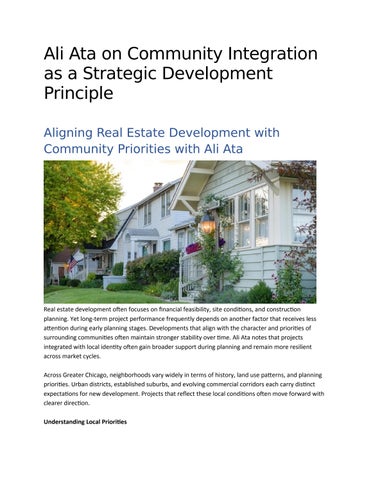
Neighborhood identity also influences how development fits within its surroundings. Building design, land use mix, and public space considerations often affect whether a project complements existing development patterns. Projects that reflect local character and community priorities are more likely to gain public support and long-term relevance. This alignment can contribute to smoother approval processes and stronger stakeholder engagement. Over time, thoughtful integration with neighborhood identity can enhance both property value and community cohesion.
Residential neighborhoods may prioritize walkability, open space, and architectural compatibility. Commercial corridors may emphasize accessibility, street activity, and economic vitality. Developers who consider these characteristics during early planning stages often create projects that integrate more naturally within their environments.
Building Long-Term Local Relationships
Community engagement often extends beyond formal approval processes. Productive relationships with municipal officials, planning staff, and neighborhood groups frequently support smoother development timelines. Early conversations allow developers to address concerns before plans reach formal review stages. These discussions can highlight opportunities to refine design features or adjust project elements that affect surrounding properties.
Ali Ata emphasizes that long-term project success often reflects the strength of these early community relationships. Developers who approach engagement thoughtfully often build greater trust throughout the planning process.
A Strategic View of Community Integration
Real estate projects operate within broader neighborhood contexts that shape how developments perform over time. Community priorities, local planning frameworks, and neighborhood identity all influence long-term outcomes.
Developers who treat community integration as part of strategic planning often position projects for stronger acceptance and lasting value. Across Greater Chicago markets, developments aligned with local character often maintain stability through changing economic conditions.