Jamaat-e-Ahmadiyya hosts
Manshur-i-Muhammadi
Early
Jamaat-e-Ahmadiyya hosts
Manshur-i-Muhammadi
Early






Page 8
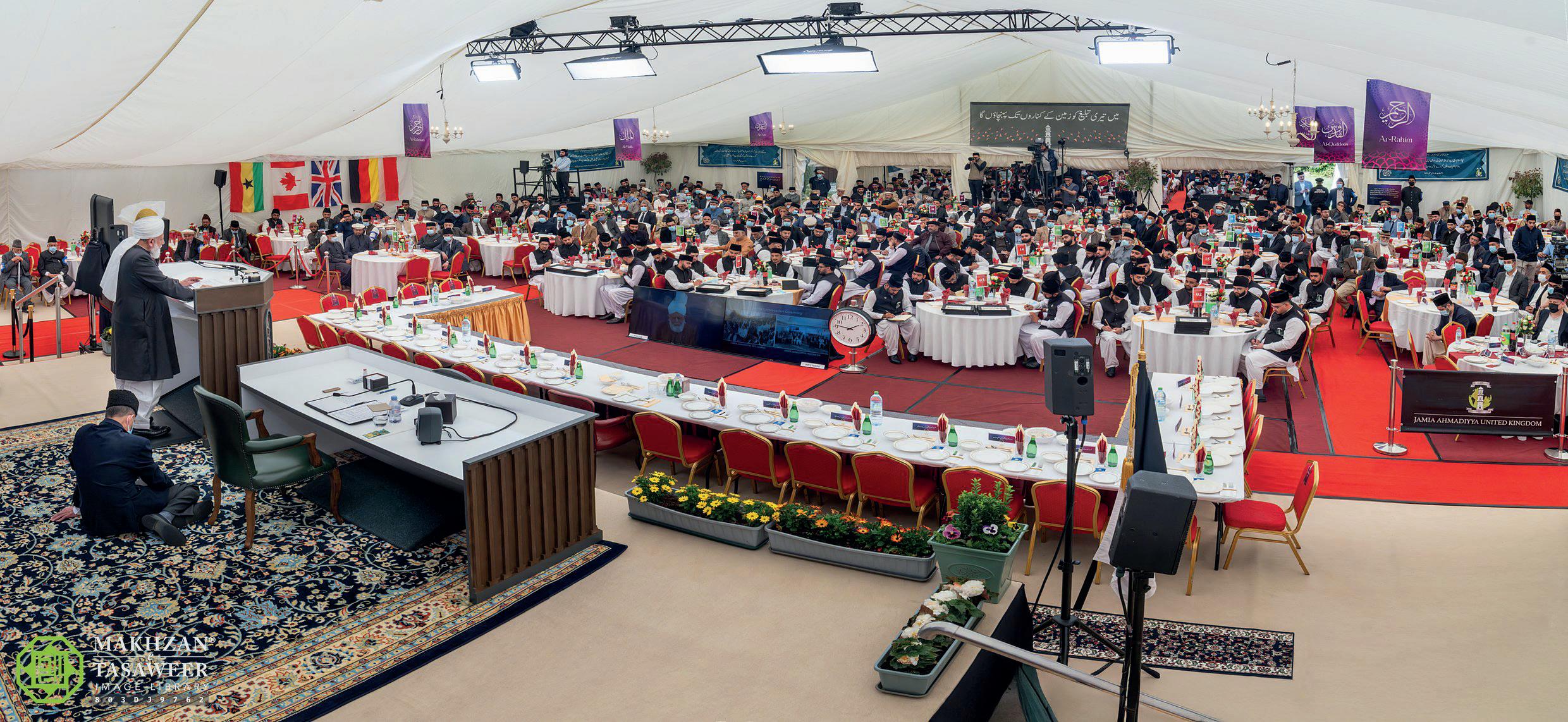
On Saturday, 2 May 2026, Hazrat Mirza Masroor Ahmad, Khalifatul Masih V, may Allah be his Helper, graced the Jamia Ahmadiyya convocation ceremony –including graduates from the UK, Canada, Germany, Ghana and Indonesia – held on the Jamia Ahmadiyya UK campus in Haslemere. While the UK, Canada and Germany graduates were present in person, the graduates from Ghana and Indonesia
joined virtually.
This year, graduates of three jamias received their Shahid’s degrees from Hazrat Khalifatul Masih V (aa); 18 graduates from Jamia Ahmadiyya Canada, 18 from Jamia Ahmadiyya Germany and 16 from Jamia Ahmadiyya UK.
Eight graduates of Jamia Ahmadiyya Indonesia and 45 graduates of Jamia Ahmadiyya Ghana, who joined the session
via video link, were presented their degrees with the permission of Hazrat Khalifatul Masih V (aa) by the Amir of Indonesia and the acting Amir of Ghana, respectively.
The session commenced with a recitation from the Holy Quran by Mahid Ahmad Sahib – Surah Ibrahim, verses 24-28. Khan Fareed Ahmad Sahib presented the Urdu
Hadith-e-Rasul – Sayings of the Holy Prophet Muhammadsa
Repeating everything one hears
Hafs bin Asim relates that Allah’s Messenger (sa) said: “It is sufficient for a person to be considered a liar that he goes about repeating everything he hears to others.”
(Sahih Muslim, Muqaddimah, Bab annayhi ‘ani l-hadithi bi kulli ma sami‘a, Hadith 5)
A vision about the future of the Community
The Promised Messiah (as) states: “It was disclosed to me by way of a true vision that kings too would enter this community. I was even shown these kings. They were mounted on horseback. Further, Allah the Exalted also stated: ‘I shall bless you to such an extent that kings shall seek blessings from your garments.’
After a period in time, Allah the Exalted shall bring such people into the fold of our community, and with them, a multitude of people shall join us.”
(Malfuzat [English], Vol. 2, p.177)
A glimpse into the rich history of the Ahmadiyya Muslim Jamaat 8 - 14 MAy
8 May 1970: On this day, Hazrat Khalifatul Masih III (ra), during his tour of Sierra Leone, inaugurated the Nazir Ahmad Ali Mosque. On the same day, Huzoor (rh) graced a reception held in his honour by the Muslim Congress of Sierra Leone. (Tarikh-e-Ahmadiyyat, Vol. 26, pp. 63-64)
8 May 2005: During his tour of Africa, Hazrat Khalifatul Masih V (aa) was interviewed by a Kenyan national newspaper on this day. In the next leg of the visit, Huzoor (aa) travelled to Tanzania by air. This was Huzoor’s (aa) first visit to the country. (Al Fazl International, 3 June 2005, p. 16)
9 May 2003: During his Friday sermon on this day, Hazrat Khalifatul Masih V (aa) warned of the horrific consequences of atomic warfare.
For more details, see “World War III: Hazrat Mirza Masroor Ahmad warned for almost two decades, but the world failed to take heed” at alhakam. org (4 March 2022, p. 8).
9 May 2005: On this day, Jalsa Salana Tanzania commenced. This was the first Jalsa Salana of Tanzania Jamaat in which a Khalifatul Masih was present.
Huzoor (aa) delivered the inaugural address, inspected the printing press and presided over a children’s class. After family mulaqats, delegations from Burundi, Malawi and Zambia met with Huzoor (aa). That evening, Huzoor (aa) also attended a reception to which dignitaries of the country were invited. (Al Fazl International, 3 June 2005, p. 11)
10 May 1903: On this day, the Promised Messiah (as) wrote to the tehsildar of Batala, Moti Ram, presenting around fifteen points that refuted the allegations that were being made by the opponents about the construction of Minaret-ul-
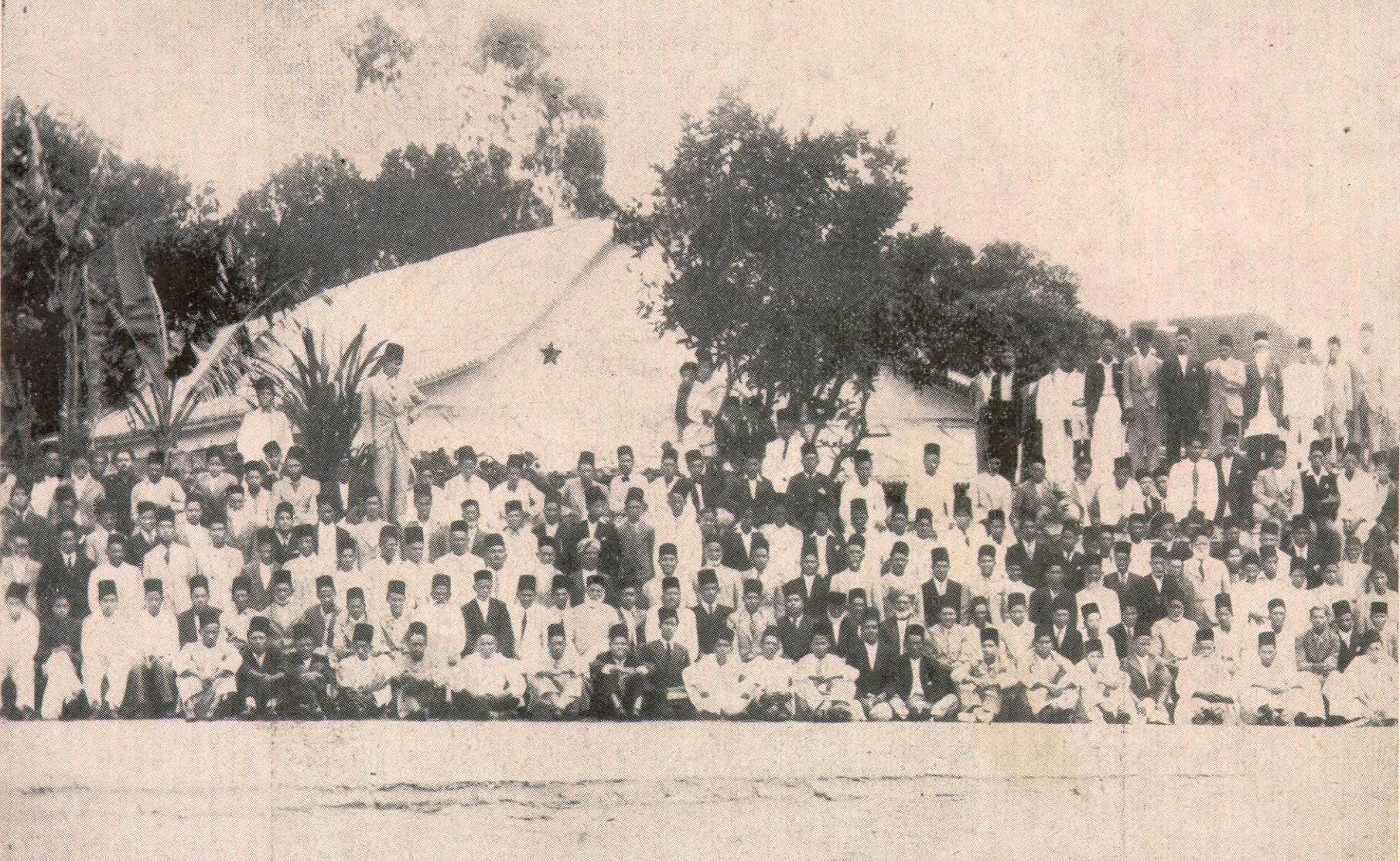
Masih in Qadian. (Life of Ahmad, pp. 777-781)
For more details about the history of Minaret ul Masih, see: ‘‘A brief history of the construction of Minarat-ul-Masih Qadian’’ at www.alhakam.org (6 January 2023, pp. 10-11).
10 May 2013: On this day, Hazrat Khalifatul Masih V (aa) delivered his historic Friday sermon from the Baitul Hameed Mosque in Chino, California, as his first visit to the West Coast of the United States of America continued. (“Historic Address Delivered by Head of Ahmadiyya Muslim Community in California”, www.pressahmadiyya. com, 11 May 2013)
11 May 1948: On this day, an Ahmadi missionary, Rashid Ahmad Chughtai Sahib, met with King Abdullah I of Jordan. During the meeting, he conveyed the well-wishes and message of Hazrat Musleh-e-Maud (ra), to which the king replied positively. (Tarikh-e-Ahmadiyyat, Vol. 12, p. 11)
11 May 2013: Hazrat Khalifatul Masih V (aa) delivered the keynote address at a special reception held in his honour on this day at the Montage in Beverly Hills, LA. In his address, Huzoor (aa) said:
“I believe in that One God who is the Lord of all nations, all races and all religions, and so it becomes impossible that I could ever develop any hatred in my heart for any nation, any race or any religion.” (“Head of Ahmadiyya Muslim Jamaat Delivers Historic Address in Southern California”, www.pressahmadiyya.com, 12 May 2013)
12 May 1954: On this day, Hazrat Musleh-eMaud’s (ra) statement was recorded at the Lalian court in connection with the assassination attempt made on him. On 12 May, the statements of 12 people were recorded, including that of Hazrat Musleh-e-Maud (ra).
On 25 May, the additional district magistrate

gave a verdict and the attacker was sentenced to five years’ imprisonment. The magistrate also made some irrelevant remarks in his judgment, which were later deleted on the order of the High Court. (Tarikh-e-Ahmadiyyat, Vol. 16, p. 273)
12 May 1970: On this day, the then acting Governor-General of Sierra Leone hosted a reception in honour of Hazrat Khalifatul Masih III (rh), which was also attended by various dignitaries of the country, including ministers and foreign ambassadors. (Tarikh-e-Ahmadiyyat, Vol. 26, p. 67)
13 May 1927: Lahore witnessed intense unrest and communal riots. On this day, Al Fazl published a detailed account by Hazrat Musleh-e-Maud (ra). At the time, Huzoor’s (ra) contributions extended beyond the religious domain to include active engagement in social and political matters. His views, guidance and actions were taken very seriously and held considerable weight. That same day, a comprehensive tract authored by him, titled What Can You Do for Islam and Muslims?, was also widely circulated. In it, Huzoor (ra) presented 31 important points aimed at promoting unity within the Muslim Ummah. (Al Fazl Qadian, 13 May 1927, p. 1)
13 May 2006: On this day, Hazrat Khalifatul Masih V (aa) addressed the closing session of Jalsa Salana Japan. After the Jalsa, Japanese guests had the privilege of meeting Huzoor (aa). During his visit to Japan, in the evening, Huzoor (aa) presided over a meeting with the national amila of Japan. Separate meetings of Ansarullah Japan’s amila and Lajna Imaillah Japan’s amila were also held. (Al Fazl International, 30 June 2006, pp. 12-13)
14 May 1887: The Promised Messiah (as) wrote a letter to Hazrat Maulvi Abdul Karim (ra) of Sialkot. Huzoor (as) addressed him in the letter with his previous name of Mian Karim Bakhsh, which was later changed by the Promised Messiah (as) as Abdul Karim. (Maktobat-e-Ahmad, Edition 2008, Vol. 2, pp. 36-37)
Continued from page 1
translation of these verses. Faris Naseem Sahib was then called to recite an Urdu poem written by the Promised Messiah (as).
Representatives of the five jamias, i.e., Syed Taha Anwar Sahib, Principal Jamia Ahmadiyya Indonesia; Fareed Ahmad Naveed Sahib, Principal Jamia Ahmadiyya Ghana (via livestream from Ghana and Indonesia); Mukhtar Cheema Sahib, Vice Principal Jamia Ahmadiyya Canada; Shamshad Ahmad Qamar Sahib, Principal Jamia Ahmadiyya Germany and Zaheer Ahmad Khan Sahib, Chairman Academic Committee Jamia UK, presented their brief reports respectively.
Thereafter, Zaheer Khan Sahib announced the names of graduates and the three classes came up one by one to receive their Shahid’s degrees from Hazrat Amirul Momineen (aa).
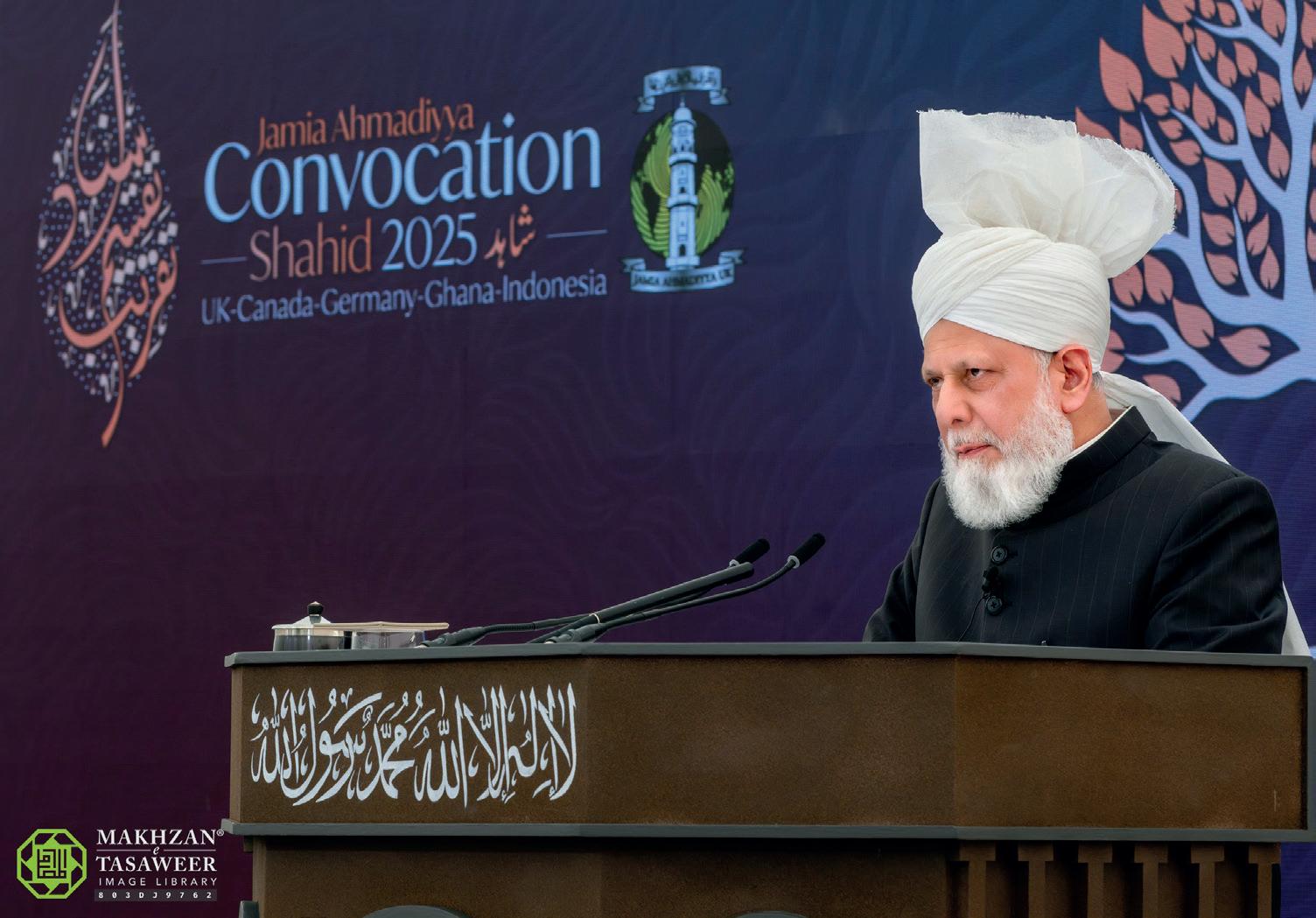
Hazrat Khalifatul Masih V (aa) then took to the podium and, after reciting tashahhud, ta‘awwuz and Surah al-Fatihah, delivered his address to the graduates. A summary of this address is as follows:
All praise belongs to Allah that today, having completed seven years at Jamia Ahmadiyya, you now stand prepared to enter the field as missionaries. You embark upon this responsibility with the conviction that you are entrusted not only with the task of tarbiyat, but also with the duty of tabligh You enter this field with the understanding that you have dedicated your lives, and that you remain available, 24 hours a day, for the service of the Jamaat.
Without this mindset, one cannot become a truly beneficial member for the progress of the Jamaat. This is the standard expected of you by the Jamaat, by the Khalifa of the time and in fulfilment of the solemn pledge you have made with God Almighty.
Always remember that nations which progress are those that remain conscious of their weaknesses. Therefore, do not assume that mere praise from your principal signifies completion of your task. Rather, both current students and graduates must strive to attain those standards that genuinely make them worthy of such commendation and ensure that their efforts yield righteous and lasting outcomes.
At various convocations, including the previous one, Huzoor (aa) observed that many of the missionaries diligently note down points in their diaries.
However, what benefit is there in writing if these notes remain confined to pages, never to be acted upon with the same passion and enthusiasm that you exhibit at the moment of writing?
Continuous self-evaluation
You must consistently evaluate yourselves: have you utilised all your abilities to achieve the noble purpose for which you have dedicated your lives? If so, this is commendable; if not, then strive to bring those latent capacities into full use.
faith over worldly matters
Every Ahmadi proclaims the pledge of giving precedence to faith over worldly pursuits, yet it is incumbent upon you to embody this principle first and foremost within yourselves. Your responsibility extends beyond nurturing your own members to also guiding others.
For this, you must exert every possible effort. The standards of missionaries must be higher than those of others. Only then
can you serve as true role models. Strengthening spiritual foundations
Regularly assess whether you are striving with full effort to cultivate love for Allah the Almighty, establish His Tawhid (Oneness of God) and maintain focus on worship. This requires continuous study of the Holy Quran, Hadith and the writings of the Promised Messiah (as).
Examine yourselves in detail:
• What is the standard of your worship?
• What is the quality of your obligatory prayers?
• What is the state of your voluntary prayers (nawafil) and remembrance of Allah?
Only when these standards improve will your work be blessed and have a lasting impact on others.
and avoidance of arrogance
Never attribute your success or intellectual distinction to your own abilities or knowledge. Rather, express gratitude for the grace of Allah, who granted you the capacity to respond effectively to challenges and derive solutions. Failure to do so breeds arrogance.
As you have studied, arrogance bears resemblance to a subtle form of associating partners with God (shirk), even if such thoughts merely arise within the heart – this is akin to hidden shirk (shirk khafi).
Every missionary must remain extremely vigilant in this regard. While you often speak in sermons about the connection between arrogance and Satan, it is essential first to evaluate yourselves: to what extent are you free from this vice?
Always remember that arrogance is deeply detested in the sight of Allah.
Particular attention must be given to the five daily prayers. It is the duty of every missionary to offer all five prayers punctually. In every centre or mosque where a missionary is appointed, the mosque doors should be open for all five prayers and the missionary must be present after giving the call to prayer (adhan).
Those working in offices sometimes assume that due to their busyness, offering prayers within the office suffices. This is an incorrect approach. Even those engaged in office work should attend the mosque for congregational prayers. Likewise, those in offices, during Jumuah prayer, must make every effort to attend the mosque.
The Tahajjud prayer is of utmost importance. A missionary, whose success depends entirely upon Allah, must give special attention to both obligatory and voluntary prayers. Regular observance of Tahajjud and nawafil is essential.
It has been emphasised that sending blessings upon the Holy Prophet, peace and blessings be upon him, and engaging in supplication must be practised regularly. However, it has been observed that many, including those already serving in the field and even students, lack consistency in this regard.
You must now pledge to maintain regularity in invoking blessings upon the Holy Prophet (sa) and in seeking forgiveness (istighfar), adopting steadfastness in both practices.
Only when these qualities are firmly established within yourselves will you be able to cultivate them within members of the Jamaat.
Special attention must be given to the study of the Holy Quran. Unfortunately, the level of attention required was not maintained during student life, nor is it adequately observed by many currently serving in the field. Now, you must resolve to recite the Holy Quran daily.
For a missionary, reading merely a small portion is insufficient; if not a full part of the Holy Quran, then at least close to it should be recited regularly. Only by keeping this guiding Book before you can you truly guide others and fulfil the demands of tabligh
The Promised Messiah (as) warned against abandoning the Holy Quran like something forsaken, stating that within it lies your life. While it is not expected of a missionary to neglect the Quran entirely, the level of engagement often falls short of what is required.
Therefore, after entering the field, you must devote yourselves deeply to its study, reflection and the reading of its commentaries, so that your knowledge may continually increase – for it is this knowledge that will grant you success in your mission.
Similarly, it is essential to study the writings of the Promised Messiah (as). Huzoor (aa) mentioned an incident in which a missionary stated that he had read 60 books of the Promised Messiah (as). However, as a missionary, one ought to study all of them. Many missionaries may have read some of his works, yet often only a few. Consequently, when references are requested, it becomes difficult for them to present accurate citations.
Instilling love and brotherhood within the Jamaat is of paramount importance. As you enter the field as missionaries, you will encounter various situations that demand significant effort in the sphere of tarbiyat
However, before addressing others, you must first assess yourselves: do you possess the standard whereby you are willing to make every sacrifice to uphold unity and brotherhood or do personal ego, desires and individual objectives take precedence?
You must also evaluate the extent of your taqwa (righteousness) and purity. As the Promised Messiah (as) stated, it is only through adopting righteousness that one may enter the fortified sanctuary of Allah. Once within this secure refuge, your actions will align with Divine pleasure, yielding beneficial outcomes in both tarbiyat and tabligh
When such a spiritual standard is attained, your moral condition will improve and you will naturally avoid immoral and
inappropriate forms of entertainment prevalent on the internet or television. Even brief exposure often reveals their indecency; however, becoming absorbed in them, or giving cause for complaint from family members, particularly one’s spouse, creates obstacles in your work, removes blessings and leads to personal disrepute.
Guarding against doubts and strengthening conviction
At times, doubts may arise among people. A missionary must not only safeguard himself against such doubts but also protect others from them. The prophecies of the Holy Prophet (sa) will, God willing, be fulfilled, and the Jamaat will ultimately prevail.
To uphold this conviction, it is essential to strengthen your religious knowledge through the Holy Quran, Hadith and the writings of the Promised Messiah (as). Firm belief in the ultimate success of the Ahmadiyya Muslim Jamaat will enable you to set high aspirations. By refining both your intellectual and practical abilities, you will become part of these successes.
It must also be remembered that the acceptance of prayers is contingent upon righteousness. You have studied accounts of the elders and saints of the past, and incidents demonstrating the acceptance of prayers. You have also encountered such examples in sermons and within the Quran itself.
However, the true benefit of these narratives lies in striving to attain high standards of righteousness yourselves, so that a living connection with Allah is established and you personally witness the signs of accepted prayers.
If your moral conduct is elevated and your knowledge refined, there is no need to fear any opponent. Many missionaries possess such strong intellectual standards that they effectively silence opponents through reasoned discourse.
However, in the arena of tabligh, knowledge alone is insufficient; moral excellence is indispensable. The Holy Quran, the Holy Prophet (sa), and the Promised Messiah (as) all emphasise that one must never use harsh or offensive language. Such behaviour, in fact, reflects a deficiency in knowledge.
It is essential that Ahmadis present a practical example in their conduct, and for a missionary, this standard must be exceptionally high. Although these reminders may appear repetitive, they are of profound importance and require constant attention.
A practical example has the power to bring about true transformation. It has been stated in the recent sermons, citing the Promised Messiah (as), that many people were drawn to the Holy Prophet (sa) due to his exemplary conduct. His truthfulness left a deep impression upon hearts, leading
people to accept him.
Similarly, a missionary must embody the highest standards of truthfulness. There should be no complaint that he gave false testimony or spoke dishonestly.
You frequently quote the Promised Messiah (as), urging others to develop the zeal and fervour of the companions (ra) and to cultivate a deep sense of honour for Islam. If such passion is absent, one cannot claim to be capable of reforming the world or becoming a beneficial person for humanity.
While this expectation applies to every Ahmadi, a missionary must be especially mindful of it. This zeal can only be cultivated through a deep and living relationship with Allah.
Detach your hearts from worldly distractions and develop a sincere passion for Islam. Without this, superficial efforts will not yield true success.
Always remember the following essentials:
• Devotion to the worship of Allah
• Acquisition and recitation of the Holy Quran with reflection
• Regular study of the writings of the Promised Messiah (as)
• Maintaining a strong bond with the Khilafat
• Listening attentively to sermons and conveying their message to others
As representatives of the Khalifa of the time, it is your duty to listen to his sermons, extract key points and communicate them effectively. Many missionaries already practise this, yielding great benefit for the Jamaat.
Strive diligently to foster love and unity within the Jamaat, ensuring that no individual wrongfully usurps the rights of another. If missionaries consistently draw attention to such matters, the overall standard of tarbiyat within the Jamaat will rise significantly.
Upon entering the field, you will face numerous challenges; therefore, you must remain mentally prepared. Develop practical strategies for resolving issues, guided by deep reflection upon the Quran, Hadith and sermons.
In addition to religious knowledge, enhance your understanding of worldly disciplines. This will enable you to demonstrate the superiority of Islamic teachings in intellectual and historical contexts, opening new avenues for tabligh Likewise, you should be equipped in advance with responses to objections raised against the Promised Messiah (as).
Strategic approach to tabligh
You must carefully consider the diverse audiences you will encounter:
• How to convey the message to Muslims
• How to address atheists
• How to engage with Christians
• How to respond to staunch opponents
• How to communicate with Jewish audiences
You must be prepared to present compelling arguments, address objections effectively and demonstrate the truth and superiority of Islam.
The path to becoming a successful missionary
Only by keeping all these principles in view can you become a successful missionary. Only then can it be said that graduates of Jamia Ahmadiyya have truly fulfilled their responsibility as missionaries. For this, it is essential to cultivate a close relationship with Allah. Special emphasis must be placed on offering Tahajjud prayer, so that Allah may accept your supplications and grant you success.
When these qualities are attained, it can truly be said that Jamia graduates have emerged as missionaries who are valuable assets to the Jamaat and beneficial members of society. May Allah grant you all the ability to fulfil these responsibilities.
Hazrat Amirul Momineen (aa) then led everyone in silent prayer.
(Summary prepared by Al Hakam)
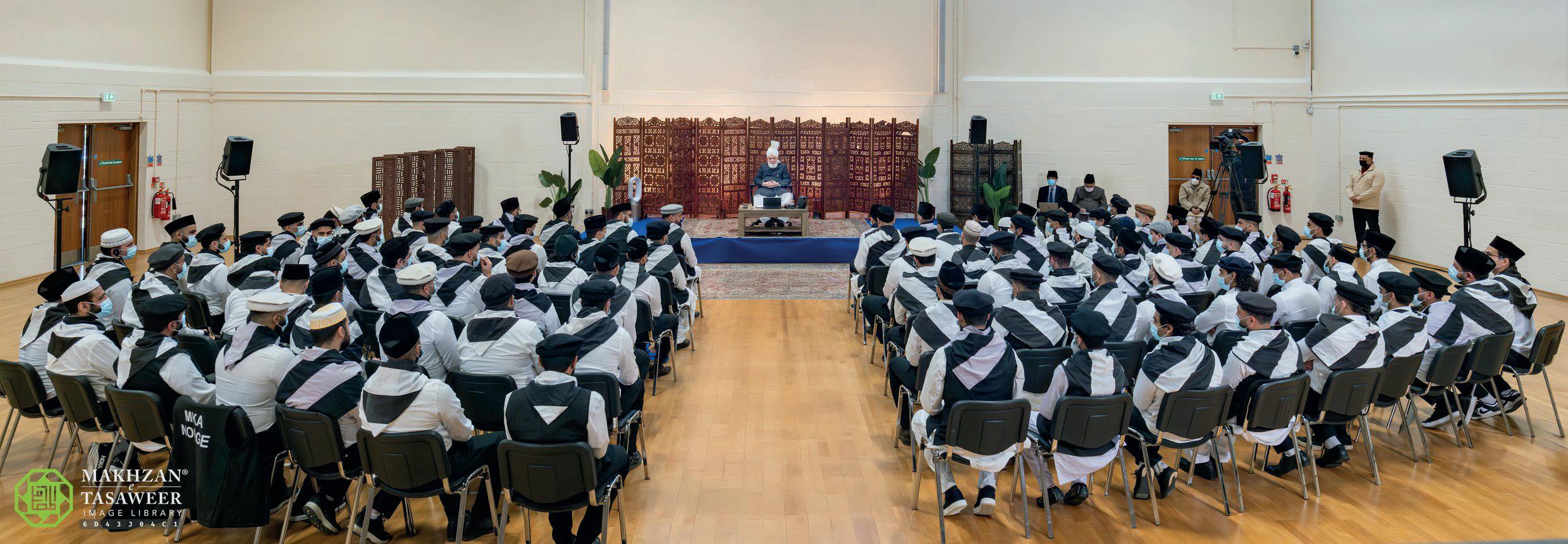
Islamabad, Tilford, UK, 19 April 2026: Khuddam from Majlis Khuddam-ulAhmadiyya Norway were blessed with a mulaqat with Hazrat Mirza Masroor Ahmad, Khalifatul Masih V (aa).
During the mulaqat, the khuddam had the opportunity to seek guidance from Huzoor (aa) on matters relating to Waqfe-Nau, the jihad of the pen, Dajjal, the Hereafter, children’s tarbiyat, the future of civilisation, the concept of Khatam anNabiyyin, marriage, mental health, media, science, brotherhood and spiritual reform.
The sacrifices required of waqifeen-e-nau today
A question was asked about how waqifeene-nau could develop the patience, sincerity and spiritual strength of the Companions of the Holy Prophet (sa), even though they do not face the same severe trials.
Huzoor (aa) said that this itself was a matter for gratitude, for Allah had not placed them in the same trials as the Companions. He explained that the Companions of the Holy Prophet (sa) endured great persecution, gave immense sacrifices and, when wars took place, offered sacrifices of their lives. Huzoor (aa) said that in the present age, while some Ahmadis still attain martyrdom in places such as Pakistan, Burkina Faso and elsewhere, the Jamaat as a whole is not being required to offer life-sacrifice collectively in the same way as many of those earlier believers.
For this reason, Huzoor (aa) said, Ahmadis should be grateful to Allah and dedicate all their abilities, potential, education, knowledge and intellect to the service of faith. He explained that today, in general, the sacrifices most required are those of time and wealth, though one must always remain ready for the sacrifice of life if such a need arises.
Huzoor (aa) advised waqifeen-e-nau to first acquire religious knowledge. They should read the Holy Quran, learn its translation, study its commentary and understand what Allah has commanded and what He has forbidden. They should then act upon those commandments and refrain from what Allah has prohibited.
Huzoor (aa) further emphasised the importance of worship, saying that waqifeen-e-nau should establish the habit of offering all five daily prayers. It was not enough to offer three or four prayers or to miss Fajr if one failed to wake up. Rather, they should become regular in all five prayers and act upon the commandments of the Holy Quran.
Huzoor (aa) explained that this is the jihad of the present age. He said that this is the era of the jihad of the pen, not the jihad of the sword. The knowledge Allah has granted through the Holy Quran, Hadith and the Promised Messiah (as) must be spread. He said that the Holy Prophet (sa) had also described a greater jihad after returning from battle and that this greater
jihad included conveying the message of the Holy Quran. (Kitab al-Zuhd al-Kabir, AlBayhaqi, Edited by Amir Ahmad Haydar, Beirut: Mu’assasat al-Kutub al-Thaqafiyyah, 3rd ed., 1996, p. 165)
Huzoor (aa) advised the khuddam to show practical examples, become true Ahmadi Muslims, improve their morals and convey the message through character. He said that people were first drawn to the Holy Prophet (sa) through his excellent morals and truthfulness. In the same way, if Ahmadis display high morals, people will turn towards them and become receptive to their message.
He also advised that khuddam should write articles in newspapers, especially in the West, where many things are written against Islam. They should explain the true and peaceful teachings of Islam and make clear that the disorder being created in the world is not in accordance with Islamic teachings. Huzoor (aa) said that this too is a form of jihad in the present age and that if opposition arises, it should be endured with patience.
Dajjal, Ya’juj and Ma’juj and the deceptive forces of the present age
A question was asked about the coming of Dajjal and the idea of a false messiah. The questioner mentioned that Ahmadis understand, through the Promised Messiah (as), that Dajjal represents a system and that we are already living in its age.
Huzoor (aa) explained that Dajjal is not mentioned by name in the Holy Quran; rather, the Quran mentions Gog and Magog [Ya’juj and Ma’juj]. (Surah al-Kahf, Ch.18: V.95) He explained that Ya’juj and Ma’juj were to attack from every direction, disturb the peace of the world and create destruction, whereas Dajjal was connected with the corruption of faith and the spread of deceptive teachings.
Huzoor (aa) said that the age of Dajjal did not begin merely in the present day; rather, it had already begun more than a century ago, when systematic attacks were being made against Islam and large numbers of Muslims were being drawn away from their religion, including through Christian missionary efforts. It was in accordance with the prophecy of the Holy Prophet (sa) that the Promised Messiah (as) appeared at that time and Ahmadis accepted him.
Huzoor (aa) said that the same forms of deception [dajl] continue today in different guises. At times they appear in the form of worldliness; at times in the name of religion; and at other times through atheism and ideologies that turn people away from God. He said that atheistic forces also partake of the nature of Dajjal, because they seek to remove people from faith. Those who do not turn towards Allah and who create disorder in the world, both materially and spiritually, share in these dajjalic and destructive tendencies.
Huzoor (aa) said that Ahmadis must
protect themselves from these influences and counter them by spreading the teachings brought by the Promised Messiah (as). He also indicated that he had written a detailed response on this subject, which would be published in Al Hakam or Al Fazl and advised that it should be read.
A question was asked about whether, if one spouse passes away before the other, that spouse later comes to know of the other’s death.
Huzoor (aa) explained that if one spouse has entered Paradise and the other has also lived righteously and enters Paradise, then they will meet in the next world and will come to know of one another. However, if one spouse was righteous and entered Paradise while the other was sinful and was punished, then the matter would be different. Allah may inform the righteous spouse of the other’s state, but the sinful spouse would not be with them.
Huzoor (aa) therefore said that both husband and wife should strive to perform good deeds so that both may enter Paradise and be reunited there.
A parent asked how the current global situation could be explained to young children in a way that was reassuring and rooted in faith and how children could best be prepared for the future.
Huzoor (aa) advised that children should be told that when people in earlier ages became corrupt and turned away from Allah, divine punishments came upon them. The Holy Quran and history mention various peoples who were destroyed through earthquakes, storms, winds and other calamities because they rejected Allah and became immersed in wrongdoing.
Huzoor (aa) said that in the time of the Holy Prophet (sa), such natural calamities did not come in the same way; rather, the opponents of Islam were tested through wars and Islam was granted victory while the enemy was destroyed. He explained that if, in the future, wars come to an end, Allah may still test people through other means, as happened to earlier peoples, including earthquakes, rain, fire and other forms of calamity.
Huzoor (aa) said that children should therefore be taught always to bow before Allah, seek His protection and pray for His mercy. Through this, one may be saved from the punishments and calamities that came upon earlier peoples.
The future of civilisation and the role of the Jamaat
A question was asked regarding earlier civilisations that reached their peak and then came to an end and what future Huzoor (aa) saw for the present civilisation and the role of the Jamaat within it.
Huzoor (aa) explained that the life of the world follows a divinely appointed spiritual order. Referring to the writings of the Promised Messiah (as), Huzoor (aa) spoke of the seven-thousand-year spiritual cycle associated with the dispensation of Adam. [The Promised Messiah (as) explained that six thousand years of this era had passed and
that the Promised Messiah was to appear at the end of the sixth millennium, while the seventh millennium was to be the age of the supremacy of God and His Messiah, the spread of faith, virtue and righteousness. (Lecture Lahore, UK: 2008, pp. 40-59)]
In this context, Huzoor (aa) explained that Prophets appeared at different times for the reformation of their respective ages. In the present age, Allah sent the Promised Messiah (as), in accordance with His promise and the prophecy of the Holy Prophet (sa), for the reformation of the world and as the Reformer of the final millennium.
Huzoor (aa) said that the Holy Prophet (sa) had foretold that after the Promised Messiah (as), the system of Khilafat would be established: “And the Holy Prophet (sa) said that after him, the system of Khilafat would begin. And it has begun.”
Speaking of the final period of the world’s spiritual history, Huzoor (aa) explained that faith would first reach a state of ascendancy and people would accept it widely. Thereafter, at some later stage, decline would again appear, ultimately leading to the Day of Judgement at the time appointed by Allah: “When these final thousand years of the world’s remaining life, through which we are now passing, come to an end, then religion will first reach a peak; people will accept it. After that, corruption will again arise and then the Day of Judgement will also come.”
Huzoor (aa) added that the exact time is known only to Allah: “Whether that is some 500 years from today, or 600 years, or 700 years, or whenever Allah wills it.”
Before that final decline, Huzoor (aa) explained, the mission of the Promised Messiah (as) is to be fulfilled. The Promised Messiah (as) was sent to establish the religion of Islam in the world and to manifest the spiritual authority of the dispensation of the Holy Prophet (sa): “The Promised Messiah (as) said that Allah the Almighty has sent me to establish religion in the world; to establish the rule [spiritual authority] of the Holy Prophet (sa) in the world.”
Huzoor (aa) said that Islam will spread throughout the world and those who remain outside it will be left with little standing in comparison. However, after that period of ascendancy, corruption may again arise. At such a time, the Khalifa of that era, following the Promised Messiah (as), may adopt stricter measures for reform. If corruption becomes complete, Allah will bring the world to an end.
Huzoor (aa) therefore directed attention towards righteousness and the moral training of future generations. He advised Ahmadis to remain virtuous and to continue instructing their future generations in goodness, so that they may be protected from calamities. Such calamities, he explained, appear at different times and in different forms, including earthquakes, storms, tsunamis, floods and wars: “The only way to be saved from these is that we act upon virtues and continue instructing our future generations until the end that they should do good, so that we may remain protected from these calamities.”
Huzoor (aa) said that the age will not reach its final state of corruption until the prophecies of the Holy Prophet (sa) regarding the Latter Days and the Promised Messiah (as) have been fulfilled. He concluded by emphasising that individual people may fall
away if they abandon righteousness, but the faith itself will remain established: “If you remain righteous, you will remain included. If you do not practise righteousness, then Allah will remove individuals one by one, but the religion will remain established. No calamity will befall the religion.”
Explaining Khatam an-Nabiyyin in an age of short attention spans
A question was asked about how Ahmadis could explain the belief in Khatam anNabiyyin, that the Holy Prophet Muhammad (sa) is the Seal of the Prophets, in a world where research suggests people have very short attention spans and how this belief can be explained without being misunderstood as a denial of his finality.
Huzoor (aa) said that, given the short attention spans of people today, Majlis Khuddam-ul-Ahmadiyya and the Jamaat should share short passages and clips through websites and social media, explaining what prophethood means, what is meant by the Holy Prophet (sa) being Khatam an-Nabiyyin and which prophecies the Holy Prophet (sa) made. He said that if people cannot read a full article, they can still read or watch something for three, four or five minutes.
However, Huzoor (aa) explained that in Norway and similar Western societies, the more fundamental issue is that many people no longer believe in Allah at all. Many who are nominally Christian are not practising Christians. Therefore, before discussing whether the Holy Prophet (sa) is the final Prophet, one must first speak to them about the existence of God. Once belief in God is understood, then one can speak about prophethood and the Seal of the Prophets.
Huzoor (aa) said that short clips and passages about the existence of God should be shared regularly on social media. Those who have an interest will listen or read and those who do not, cannot be forced, for the Holy Quran teaches that religion cannot be spread by compulsion. (Surah al-Baqarah, Ch.2: V.257)
With Muslims, however, the approach is different. If Muslims raise this issue, then the prophecies of the Holy Prophet (sa) should be presented, along with relevant ahadith Huzoor (aa) referred to the statement of Hazrat Aisha (ra) that one should say that the Holy Prophet (sa) is Khatam an-Nabiyyin, but should not say that no Prophet can come after him. (Musannaf Ibn Abi Shaybah, Juz’ 6, Hadith 2019) He advised that the Ishaat and Tabligh departments should gather such ahadith and share them gradually through social media, then elaborate upon them further in tabligh
The two Gardens and the believer’s paradise in this world and the next
A question was asked about the hadith stating that the world is a prison for the believer and a paradise for the disbeliever (Sahih Muslim, Kitab az-zuhdi wa r-raqa’iq, Hadith 5242) and how this relates to the Quranic verse in Surah ar-Rahman, which states that for one who fears standing before his Lord, there are two Gardens. (Surha arRahman, Ch.55: V.47) The questioner asked what is meant by the two Gardens.
Huzoor (aa) explained that those who worship Allah experience such joy in worship even in this world that they feel
as though they have entered Paradise. He referred to the Holy Prophet (sa), whose comfort and delight lay in prayer. (Sunan an-Nasa’i, Kitab ‘ishrati n-nisa’i, Bab hubbi n-nisa’i, Hadith 3940) Through worship and nearness to Allah, a believer gains a form of paradise even in this life.
Huzoor (aa) said that when a person increases in spirituality, inclines towards goodness and turns away from worldly wrongs, Allah grants them happiness even in this world. The believer dislikes sin and worldly corruption and seeks Allah through worship and good deeds. This brings inner joy and contentment and that itself is a form of paradise.
He further explained that good deeds also bring joy when they benefit others. When a person performs a good deed and another person is grateful, the doer feels happiness in the heart. Likewise, when a person offers prayer and finds peace in the worship of Allah, that too becomes a form of spiritual coolness and paradise.
Huzoor (aa) said that these same deeds will then lead to the greater Paradise in the next world. Thus, the two Gardens refer to the joy and paradise of nearness to Allah in this life and the greater Paradise of the Hereafter.
Huzoor (aa) contrasted this with the outlook of those who oppose or reject religion. Such people think that worshippers have placed themselves in difficulty and deprived themselves of worldly pleasures. In reality, however, believers are building Paradise for themselves in this world and the next, while those who appear outwardly happy in worldly indulgence may be preparing punishment for themselves in the Hereafter. Huzoor (aa) said that when the relevant Quranic verses are read together, they answer and explain each other.
A khadim asked what factors should be considered when choosing a career and deciding when to start a family, particularly if one has not yet completed education or does not have the financial means to provide for a family.
Huzoor (aa) asked where the questioner was originally from and was told that he was half-Pakistani and half-Norwegian. Huzoor (aa) explained that a young man should ideally have his own means and should not place the burden of his own household and his wife’s expenses upon his parents. He advised that one should complete one’s education, obtain employment and become independent before marriage.
However, Huzoor (aa) added that if a person feels that he cannot safeguard his piety without marriage, then he may speak to his parents and ask for their support. In such a case, the parents may assist with accommodation and expenses for him and his wife. Nevertheless, Huzoor (aa) said that the better course is to complete education first, secure a job and then marry once one is independent.
A question was asked about depression and anxiety and how a person can keep faith strong while also receiving help from a psychiatrist.
Huzoor (aa) explained that many anxieties arise because people become too immersed in worldliness and forget faith, worship and the commandments of Allah. When worldly desires increase, a person begins to suffer anxiety over marriage, finances, employment, housing, cars and other ambitions. Economic crises, job losses and unfulfilled desires then lead to further distress.
Huzoor (aa) said that if a person’s anxiety is for the sake of religion, such as concern that faith is not spreading, then one should pray to Allah that He may create the means for His sovereignty to be established in the world. But most anxiety today, he said, is rooted in worldliness.
Huzoor (aa) explained that Allah has given one remedy: to remember Him, worship Him, pray to Him and do good deeds. The Holy Quran states that hearts find comfort in the remembrance of Allah. (Surah ar-Ra‘d, Ch.13: V.29) Therefore, one should seek Allah’s grace and turn towards Him.
At the same time, Huzoor (aa) made clear that if a person reaches an extreme state of depression or anxiety, then they should consult a doctor or psychologist and take medication or treatment where needed. Once some improvement begins, they should also turn more fully to Allah, for without remembering Allah, nothing can truly be attained.
Protecting children from unIslamic ideas in schools
A question was asked about ideas being taught to children in schools and nurseries that sometimes contradict Islamic teachings and how Ahmadi parents can protect their children and strengthen their faith and morals.
Huzoor (aa) said that in some countries, laws were now being changed so that certain matters are not taught at the nursery level and are delayed until later grades. He mentioned that, in relation to gender issues, there has also been greater recognition in some places that parents must be involved.
Huzoor (aa) said that such ideas are present in these countries and are part of the attacks of dajjalic forces, for they distance people from religion and from God and draw them into wrong conduct and worldliness.
He repeated the advice he had given many times in sermons and addresses: parents must work hard with their children and spend time with them. When children return from school, parents should sit with them and ask what they learned. If they mention ideas that are contrary to Islam, parents should explain calmly that Islamic teaching says something different. Children may not fully understand everything at once, but parents should continue explaining in an age-appropriate manner.
Huzoor (aa) said that children should be taught that they may accept what schools teach in subjects such as science, geography, history and mathematics, but where morality and religion are concerned, they must remain firm upon their faith. In such circumstances, parents must work harder.
He mentioned that in some countries, including America and Canada, some families have turned to homeschooling because of these issues. Even if parents cannot homeschool, Huzoor (aa) said,
they can at least give time to their children. Parents know their children’s timetables and can identify the days when such topics are taught, then sit with them afterwards and explain Islamic teachings.
Huzoor (aa) advised parents to explain who they are, what their responsibilities are, why they worship Allah, why Allah has prohibited certain things and what is good or harmful in those matters. He said that sometimes such topics must be discussed openly, though within the bounds of modesty. Parents should become friends with their children so that the children feel able to share everything with them.
Media, wealth, science and turning people towards Allah
A question was asked about the great influence of media, wealth and science in the present age and how these things can be used in a way that turns people towards Allah rather than towards worldliness.
Huzoor (aa) said that it is the work of Majlis Khuddam-ul-Ahmadiyya and the Jamaat to respond to wrong ideas that appear in the media, on the internet and on social media. Religious knowledge should be acquired and then used to respond to false or harmful claims.
Regarding science, Huzoor (aa) explained that science itself is knowledge. He referred to the statement of the Promised Messiah (as) to a scientist from New Zealand, explaining that there is no contradiction between the word of Allah and the work of Allah. The word of Allah is His revealed knowledge, while science is the practical study of His creation. True science proves the realities that Allah has placed in the world. (“Professor Clement Wragge’s first meeting with the Promised Messiah”, www.alhakam.org)
Huzoor (aa) gave the example of Dr Abdus Salam, who was a scientist and Nobel laureate, yet took inspiration from the Holy Quran. Science did not harm him; rather, he understood science in light of the Quran.
Huzoor (aa) therefore said that science is not the cause of spiritual decline. The danger lies in wrong thoughts, harmful media and the race for money. When a person recognises Allah, worships Him and fulfils the purpose of life, he will try to protect himself from such influences.
Huzoor (aa) advised that Majlis Khuddam-ul-Ahmadiyya should work actively in this field. Teams or cells should be formed to respond to harmful material on social media and to guide those who become distracted by it. Tarbiyat programmes should also identify the modern influences that pollute minds and explain how to protect oneself from them. He said that this requires continuous effort.
Perfecting one’s light in the Hereafter
A question was asked about the prayer mentioned in Surah at-Tahrim, where believers pray that Allah may perfect their light and forgive them. (Ch.66: V.9) The questioner asked how this perfected light would be manifested in the Hereafter.
Huzoor (aa) explained that “light” refers to the commandments of Allah, acting upon those commandments and adopting the true teachings. This is the light a believer should seek to acquire in this world and it
is this light that will benefit a person in the next life.
Huzoor (aa) said that this light will lead a person to Paradise and become a means of attaining Allah’s pleasure. The good deeds performed in this world will become a means of forgiveness. He explained that the verse refers to true believers who are free from hypocrisy. It is such believers whose light is perfected and it is through their righteous deeds that they enter gardens beneath which rivers flow.
Huzoor (aa) said that the light represents good deeds. The actions performed in this world will appear in the next world in the form of rivers, rewards and blessings. The prayer for the perfection of light means that Allah may increase and complete those good deeds so that they become a means of full forgiveness and salvation.
Activating disconnected khuddam through friendship
A question was asked about how a qaid can activate khuddam who do not maintain contact with the Jamaat and do not respond when approached.
Huzoor (aa) advised that such khuddam should be met socially and personally, without immediately asking them for chanda or telling them to attend meetings. First, relationships must be built.
He said that strong and active khuddam, whose own faith is firm and who are capable of forming a friendship with such individuals, should be encouraged to develop ties with them. The qaid and amila members themselves should also build friendships. First, those disconnected khuddam should be brought closer through genuine personal contact. Once closeness is established, then the purpose of the Jamaat and Majlis activities can be explained. Huzoor (aa) said that this is the proper method of tarbiyat
Ending old grievances and building unity among khuddam
A question was asked about how the youth can move beyond old grievances and become more united as khuddam
Huzoor (aa) asked why people fight over small matters and allow grievances to arise at all. A believer should not behave in this way. He referred to the teaching that one brother should not remain angry with another for more than three days, yet people sometimes continue disputes for months.
(Sahih al-Bukhari, Kitab al-adab, Hadith 6065)
Huzoor (aa) said that quarrels often spread from one person to families and relatives: someone says something about another’s brother, father, mother or sister and then disputes spread across families. Such quarrels should be avoided.
Huzoor (aa) reminded them that the Holy Prophet (sa) taught that believers are brothers and should honour one another. The first requirement is good morals. For the sake of Allah, believers should treat one another with love and live as brothers. If believers remain united as brothers, their strength remains; if not, their strength is lost.
Huzoor (aa) said that the Holy Quran describes believers as compassionate among themselves. (Surah al-Fath, Ch.48: V.30) If this thought develops, matters improve.
If one adopts a negative mindset, quarrels continue; if one adopts a positive mindset, quarrels end. He said that some people try to end disputes, while others search for excuses to fight. The sensible people should advise those who look for excuses to quarrel and encourage them to act with wisdom. When both sides begin to speak sensibly, matters start to improve.
A question was asked about what a person should do when life feels meaningless.
Huzoor (aa) said that life feels meaningless when worldliness becomes dominant. If one believes in Allah, believes that Allah hears prayers and believes that Allah removes difficulties, then life cannot truly be meaningless. A person should pray to Allah and seek Him.
Huzoor (aa) explained that life becomes meaningless only when a person forgets Allah. If one offers the five daily prayers, supplicates in them, seeks forgiveness and keeps Allah before oneself in all matters, then life does not remain meaningless. To make life meaningful, one must search for Allah, turn towards the five daily prayers and offer them with eagerness and reflection.
Huzoor (aa) warned that worldly people, when life appears meaningless, may even speak of suicide. But one who recognises Allah does not think in this way. The remedy is to leave excessive worldliness and turn towards Allah.
The final question was about homoeopathy, the placebo effect and modern scientific views regarding alternative medicine.
Huzoor (aa) said that homoeopathy is a form of knowledge and a line of medicine. He also mentioned herbal medicine, native medicine, Ayurvedic medicine and allopathic medicine. He explained that allopathy has become dominant today because far more research and money are invested in it. Pharmaceutical companies spend vast sums on research, obtain promising results, advertise heavily and promote their medicines through representatives who visit doctors and present prepared information.
Huzoor (aa) said that allopathy certainly has treatment and benefit, but it also involves major investment, marketing and profit. He advised that if one wishes to study medicine, that is a good thing and one should certainly become a doctor if one has the ability.
Huzoor (aa) also said that many allopathic doctors use homoeopathy. A person who has properly studied medicine has detailed knowledge of the human body, anatomy and related sciences and therefore can treat better than someone who has only completed a short homoeopathy course. Thus, those with full medical knowledge who also understand homoeopathy may be able to treat more effectively.
At the conclusion of the mulaqat, the khuddam had the opportunity to have a group photograph with Huzoor (aa), after which the mulaqat came to an end.
(Summary prepared by Al Hakam)
Ata-ul-Haye Nasir Ahmadiyya Archive & Research Centre
During the second half of the 19th century, the Arya Samajists and Christians were running a malicious campaign against Islam, objecting to the teachings of the Holy Quran and attempting to malign the blessed character of the Holy Prophet Muhammad (sa). At that juncture, Hazrat Mirza Ghulam Ahmad (as) of Qadian undertook the task to defend Islam and its Holy Founder (sa).
From a young age, Hazrat Ahmad (as) had a great passion for serving Islam. In the 1860s, while he was staying in Sialkot as an employee, he was seen as a passionate defender of Islam amid the rising attacks from the Christian missionaries.1
The 1870s in British India witnessed a rapid intensification of anti-Islamic rhetoric. It was at that time that Hazrat Ahmad (as) challenged the Arya Samajists and Christians, and wrote articles for some of the prominent periodicals of that time.
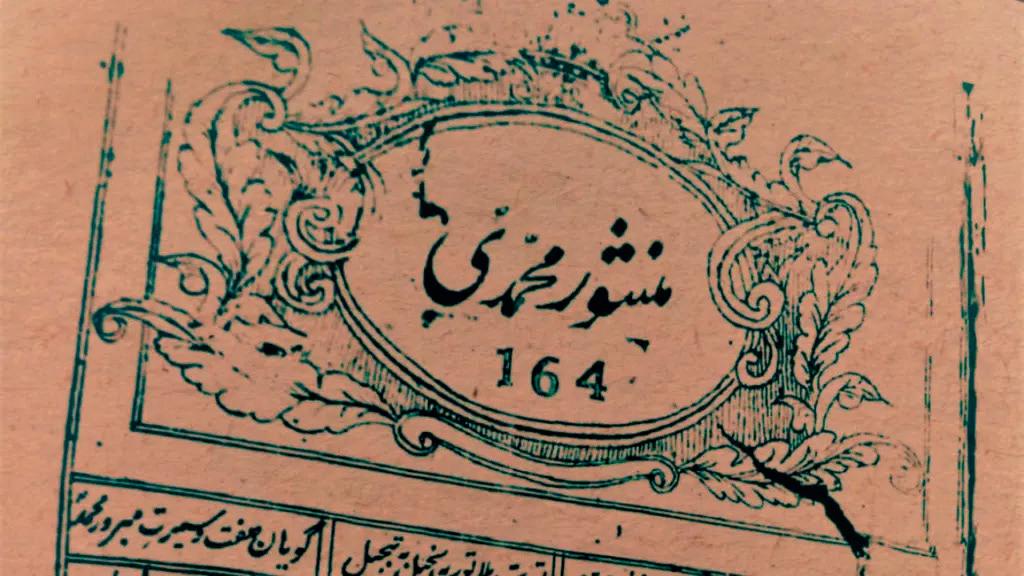
One of those periodicals was the Manshur-iMuhammadi of Bangalore. Its editor was Maulvi Muhammad Sharif Sahib, and it was printed at the Matba‘ Bahr-ul-Islam, Bangalore. This periodical, published three times a month, made its first appearance in the world of journalism on 20 Jamadi-ul-Thani 1289 AH, corresponding to 25 August 1872.
Regarding the early life of Hazrat Ahmad (as), it is mentioned in Tarikh-e-Ahmadiyyat that Hazrat Ahmad’s (as) earliest known writing, with his own name, was published in the Manshur-i-Muhammadi of Bangalore on “25 Dhul Qa‘dah 1294 AH, corresponding to 25 August 1872.”2
This account suggests that Hazrat Ahmad’s (as) earliest article in Manshur-i-Muhammadi, with his own name, was published in the year 1872. However, it seems to be the result of some confusion. This is because, firstly, the corresponding date for 25 Dhul Qa‘dah 1294 AH is 1 December 1877, not 25 August 1872; secondly, we find no article with Hazrat Ahmad’s (as) name in the 25 August 1872 issue of Manshur-i-Muhammadi
Moreover, mentioning Hazrat Ahmad’s (as) earliest known writing, Hazrat Maulvi AR Dard (ra) states that “through the pages of the Manshur-e-Muhammadi (issued from Bangalore from August 25th, 1872) dated 25 Dhiqa‘da, 1294 A.H., No. 33, Vol. 6, Ahmad (as) made an important announcement.”3 Here, Dard Sahib (ra) has mentioned the date of 25 August 1872 as the date when Manshur-iMuhammadi began its publication, not as the publication date of Hazrat Ahmad’s (as) earliest writing.
When we take a look at the 1 December 1877 issue of Manshur-i-Muhammadi, there we find a tract, an announcement and an article by Hazrat Mirza Ghulam Ahmad (as).4 The titles of these three pieces are as follows:
1. 500 Rupaya ka Ishtihar (A tract for a reward of 500 rupees)
2. E‘laan Nama Muta‘alliqa Ishtihar (An announcement related to the tract)
3. Iqraarat Sawami Ji Pandit Dayanand Saraswati (The admissions of Sawami Ji Pandit Saraswati) These writings included a challenge in which Hazrat Ahmad (as) declared that truthfulness in all human relationships is the foundation of all other virtues and that we could judge the true worth of a religion by the measure of emphasis which it laid upon truthfulness. After 20 years of research, Hazrat Ahmad (as) said, he had come to the conclusion that there was no other religion in the world
which stressed the importance of this virtue to the extent that Islam did. He offered 500 rupees to the followers of any religion who could prepare a list of quotations from his standard scriptures which might exceed, equal or amount to one-half or even one-third of the quotations which he would bring forth from Muslim scriptures on the subject.5
Then, we find that a lengthy article, comprising various parts, started to appear in Manshur-i-Muhammadi on 25 Muharram 1295 AH, corresponding to around 31 January 1878, and was titled Hindu Sahibon ki Hidayat (Guidance of the Hindus).6
The last part of this article was published on 15 Rabiul-Thani 1295 AH, corresponding to approximately 17 April 1878.7
This above-mentioned issue of Manshur-i-Muhammadi also included an Urdu poem of Hazrat Ahmad (as), entitled Niaz-Nama Muta‘alliqa Jawab al-Jawab (A friendly message regarding the rejoinder).8 The poem commenced with the following couplet:
of Hazrat Ahmad (as). His writings of that time can be found in the first volume of Majmu’ah-e-Ishtiharat and the second volume of Ruhani Khazain.
When Hazrat Ahmad (as) started publishing Barahine-Ahmadiyya, the Manshur-i-Muhammadi published various announcements about this book and wrote lengthy reviews as well. These reviews beautifully shed light on the need for such a work, as Islam was being attacked from all sides.
In Manshur-i-Muhammadi’s issue of 5 Muharram 1299 AH, corresponding to around 27 November 1881, an announcement from Hazrat Ahmad (as) was published, titled Barahin-e-Ahmadiyya ka E‘laan – Announcement about Barahin-e-Ahmadiyya 11
In this announcement, Hazrat Ahmad (as) wrote that he was regularly receiving letters in which people would ask as to whether Barahin-e-Ahmadiyya had been published or not. Responding to such queries, Hazrat Ahmad (as) wrote:
“The Preamble and the Introduction of the said book has been published and the Part III – comprising the arguments of the Holy Quran’s truthfulness and a refutation to the doubts of Arya Samaj, Brahmo Samaj and Christians – is being printed from the Matba‘ Safir-i-Hind Amritsar whose owner and editor is Rev Rajab Ali Sahib.”12
“O dear ones, friends, brothers! Please listen; May God grant you noble thoughts.”
The first part of another article was published on 25 Jamadi-ul-Awwal 1295 AH, corresponding to around 27 May 1878, titled Tabsarah Muta‘alliqa Ishtihar 500 Rupaya (A review of the tract for 500 rupees reward).9
The second part of this article was published in the following issue.10 The same issue of Manshur-i-Muhammadi included another article of Hazrat Ahmad (as), titled Bawa Sahib ki Shara‘it Matluba Parcha Safir-i-Hind 23 Farvari ka Ifaa‘ Aur Neez Chand Umur Waajib-ul-Arz [...] (Fulfilment of the conditions as demanded by Bawa Sahib in Safir-iHind dated 23 February and some other points worth mentioning [...]).
It is evident from Hazrat Ahmad’s (as) articles, which were published in Manshur-i-Muhammadi in the late 1870s, that even before Barahin-e-Ahmadiyya, he had been occupied in responding to the attacks on Islam.
These articles are currently the earliest known writings
Huzoor (as) further mentioned that there was a delay in printing due to some issues faced by the owner of the printing house, however, Hazrat Ahmad (as) had been recently informed that the printing would resume soon.13
In one of the reviews on Barahin-e-Ahmadiyya, published on 25 Rajab 1300 AH, corresponding to around 31 May 1883, the Editor of Manshur-i-Muhammadi wrote that while Islam was being attacked from all directions, the author of Barahin-e-Ahmadiyya has set out 300 conclusive arguments in proof of the truthfulness of the Holy Quran and the prophethood of the Holy Prophet Muhammad (sa).14
He wrote:
“Subhan-Allah [Holy is Allah]! What a wonderful writing this is, each word of which proves the truthfulness of the True Faith [Islam] and each word of it manifests the truthfulness of the Quran and of the prophethood [of the Holy Prophet Muhammad (sa)]. The opponents [of Islam] have been presented with bright and conclusive
arguments.”15
Another review was published in the said newspaper on 15 Jamadi-ul-Akhir 1301 AH, corresponding to around 11 April 1884.16
In this review, the Editor wrote that Mirza Ghulam Ahmad Sahib, Raees-e-A‘zam Qadian District Gurdaspur Punjab, has written this book to prove the truthfulness of Islam upon its deniers. The Editor described Hazrat Ahmad (as) as the pride of the Indian Muslims and the accepted one in the Court of Allah.17
During the year 1885, Manshur-i-Muhammadi published the transcript of various ishtiharat and correspondence of Hazrat Mirza Ghulam Ahmad (as).
For instance, in the issues dated 18 July 1885, 28 July 1885, 7 August 1885, 25 September 1885 and 5 October 1885. These issues included correspondence with Lala Sharampat Rai, Munshi Indarman Moradabadi, Rev Soft and Maulvi Niaz Ahmad Sahib.
This was a very significant year since it was in 1885 when Hazrat Ahmad (as) invited people of all religions and walks of life, both in India and the West, to stay at Qadian for a year in order to witness the signs in favour of the truthfulness of Islam.
It is important to mention here that the Editor of Manshur-i-Muhammadi, in editorial notes, would highly commend Hazrat Ahmad’s (as) services for Islam.
One of its editorials in 1887 was titled Mirza Ghulam Ahmad Sahib ki Masaa‘i-e-Jamila – Magnificent efforts of Mirza Ghulam Ahmad Sahib.18
The Editor wrote that “Mirza Sahib has not invented anything new,” but rather, he is only striving to revive the lost glory of Islam. He wrote that Mirza Ghulam Ahmad Sahib is a truthful and courageous man, and it is through his recent endeavours that Islam is attaining very fruitful results. The Editor mentioned that Hazrat Mirza
Ghulam Ahmad (as) has written many books in defence of Islam. He named Huzoor’s (as) then recent work, titled Surma-e-Chashm-e-Arya, and wrote that it has proved the superiority of the Holy Quran.
The Editor continued by mentioning that Hazrat Mirza Ghulam Ahmad (as) did not limit his efforts to India alone, but rather, he endeavoured to spread the truth of Islam all over the world. He was indicating Hazrat Ahmad’s (as) challenge of 1885, when he invited people of all religions and walks of life, both in India and the West, to stay at Qadian for a year in order to witness the signs in favour of the truthfulness of Islam.
As a result of these endeavours by Hazrat Ahmad (as), the Editor stated, recently an American individual named Alexander Russel Webb has written multiple letters to Mirza Sahib. This was followed by the Urdu translation of one of the letters from Alexander Russel Webb to Hazrat Ahmad (as), dated 24 February 1887.19
In 1893, a debate took place between the Muslims and Christians in Amritsar, where Hazrat Ahmad (as) represented Islam. Manshur-i-Muhammadi published articles about this debate as well. For instance, the issue of 15 Dhul Qa‘dah 1310 AH, corresponding to around 2 June 1893, published an article titled Amritsar mein Musalmanon aur Isaa‘ion ka Munazirah (A debate between the Muslims and Christians in Amritsar).20 The article mentioned that the Muslims of Jandiala have nominated Hazrat Mirza Ghulam Ahmad (as) as the representative of Islam.
In short, Hazrat Mirza Ghulam Ahmad’s (as) early writings in Manshur-i-Muhammadi and the appreciation received from the Editor of this periodical highlight that he was a great defender of Islam and that he had an unwavering passion to establish its truthfulness.
1 “The Promised Messiah’s residence in Sialkot: 1861 to 1868”, alhakam.org, 19 March 2021
2 Tarikh-e-Ahmadiyyat, Vol. 1, p. 118
3 Life of Ahmad, p. 78
4 Manshur-i-Muhammadi, 1 December 1877, Vol. 6, No. 33, pp. 1-2 and 6-7
5 Ibid., pp. 1-2; Life of Ahmad, pp. 78-79
6 Ibid., 31 January 1878, Vol. 7, No. 3, pp. 6-8
7 Ibid., 17 April 1878, Vol. 7, No. 11, pp. 4-6
8 Ibid., pp. 6-7
9 Ibid., 27 May 1878, Vol. 7, No. 15, pp. 2-9
10 Ibid., 6 June 1878, Vol. 7, No. 16, pp. 3-5
11 Ibid., 27 November 1881, Vol. 11, No. 1, pp. 7-8
12 Ibid.
13 Ibid., p. 7
14 Ibid., 31 May 1883, Vol. 12, No. 21, pp. 212218
15 Ibid., p. 217
16 Ibid., 12 April 1884, Vol. 13, No. 17, p. 195
17 Ibid.
18 Ibid., 26 June 1887, Vol. 16, No. 28, pp. 275279
19 Ibid.
20 Ibid., 2 June 1893, Vol. 19, No. 32, pp. 299300





“
My heart bursts with grief for the people due to the plague; nay, this is no plague, it is a raging storm.

In homes, classrooms and communities across the world, a quiet crisis is unfolding. One that rarely dominates headlines yet increasingly shapes the future of societies. A growing number of boys and young men are struggling to find direction, stability and a sense of identity in a rapidly changing world. Parents sense it in the uncertainty of their sons, teachers observe it in classrooms, and community leaders witness it in the growing distance between young men and the institutions meant to guide them.
The evidence of this struggle appears across multiple social indicators. In many countries, young men are falling behind in education and social development. Social data from many countries shows that men experience significantly higher rates of suicide, often two to four times higher depending on the country. According to data published by the World Health Organization, men account for the majority of suicide deaths globally, a pattern that appears consistently across cultures and regions. They are also disproportionately represented in incarceration statistics, drug addiction and school dropout rates. These patterns are not confined to one society or culture; they appear across much of the developed world.
Though statistics do not tell the entire story, they point toward a deeper concern.
than previous generations experienced?
The importance of mentorship
Young boys naturally look for examples of the kind of men they wish to become. Throughout history, societies have recognised the importance of mentorship in shaping future leaders. From the tutors of Roman emperors to Aristotle’s mentorship of Alexander the Great, influential families throughout history ensured that their sons were guided by experienced and capable men. Today, fathers, grandfathers and community leaders must consciously fill this void.
In modern education systems, however, many boys pass through their formative years with very few male mentors. In many countries today, teaching has become a predominantly female profession, partly because lower financial incentives have discouraged many men from entering the field. While countless female educators provide extraordinary guidance and care, the scarcity of male role models can create a gap for boys who benefit from observing positive male leadership.
In many cases, boys may struggle to find male role models within the classroom environment. If boys rarely encounter men they can admire and emulate, it can leave a gap in their understanding of what it means to grow into a capable and responsible man. Positive role models help develop discipline, resilience and a sense of responsibility. Without them, many struggle to envision a meaningful path forward.
pressures and uncertain about their ability to provide. This dynamic is visible across both Muslim and non-Muslim societies. When young men lose confidence in their ability to fulfil meaningful roles in family life, some appear to delay or withdraw from pursuing marriage altogether.
Islam places profound importance on marriage and family life. The Holy Prophet Muhammad (sa) encouraged believers to marry and build families that nurture future generations. Strong families form the foundation of healthy societies.
Today, however, declining marriage rates and falling birth rates across many countries highlight a growing crisis of family formation. In some nations, demographic decline has become so severe that schools and childcare facilities are closing due to a lack of children. These trends remind us that the choices made by one generation shape the future of the next.
In the absence of purpose and mentorship, many young men retreat into digital environments. Video games, social media platforms and online streaming services provide an easy escape from the frustrations of real life. Within virtual worlds, individuals can easily and instantly achieve status, recognition and progress.
Behind these numbers are young men who feel disconnected from meaningful work, uncertain about their future roles within family life, and unsure of where to seek guidance.
Recognising these challenges does not diminish the remarkable progress women have made in education, professional life and public leadership. That progress has been both necessary and beneficial for society. However, the advancement of women should not obscure the difficulties that many boys and young men now face.
Islam does not view human development as a competition between genders. Rather, it establishes a balanced system in which families, communities and faith work together to cultivate individuals of strong character and purpose.
For much of history, young men were shaped by clear structures of mentorship within their societies. When these structures weaken, the process through which boys grow into responsible men becomes uncertain, leaving many young men to navigate adulthood without clear models of discipline, responsibility, and purpose.
It is therefore essential to examine how faith, mentorship and family life can help restore direction for a generation of young men searching for meaning. For parents raising sons today, the question is becoming increasingly urgent: how do we prepare young men for a world that is changing faster
Within the Ahmadiyya Muslim Community, auxiliary organisations such as Atfal-ul-Ahmadiyya and Khuddamul-Ahmadiyya provide structured environments where young men receive mentorship, discipline and spiritual guidance. Through regular meetings, educational programs, sports activities and opportunities for service, these auxiliaries help cultivate qualities of leadership, humility and brotherhood. Such structures reflect a long-standing understanding that the moral and spiritual training of young men cannot be left to chance; it must be nurtured through organised mentorship and collective responsibility. The absence of such guidance affects not only personal development but also the confidence with which young men approach adult responsibilities.
Another challenge facing young men relates to economic expectations. In many societies, marriage has historically been associated with a man’s ability to provide financial stability for a family.
However, economic structures have changed dramatically. Traditional pathways into stable middle-class livelihoods, particularly for men without advanced degrees, have diminished in many parts of the world. At the same time, women have achieved remarkable success in higher education and professional fields such as medicine, law and academia.
These shifts have produced a new tension. Many women feel there are fewer suitable partners who meet their expectations for long-term stability, while many men feel overwhelmed by economic
However, these achievements exist only within virtual environments. The brain experiences the reward of accomplishment while real-world skills and relationships remain underdeveloped.
Similarly, the widespread availability of explicit online content has distorted expectations surrounding relationships and intimacy. Many young men develop unrealistic ideas about human relationships, which can lead to anxiety, social discomfort and further withdrawal from real-life interactions. The result is often a cycle of isolation.
Boys naturally possess energy, competitiveness and physical drive. When channelled properly, these qualities lead to remarkable achievements. When neglected or misdirected, however, the same energy can become destructive.
Historically, societies developed institutions, sports teams, apprenticeships, community organisations and mentorship structures that channelled this energy into productive pathways. Rebuilding such environments is essential if young men are to develop discipline and purpose.
Communities must take practical steps to guide young men toward productive and meaningful lives. This includes strengthening family mentorship, encouraging greater participation in congregational prayer and creating environments where boys can develop discipline through service, sports, and community engagement.
Institutions within the Ahmadiyya Muslim Community, such as Atfal-ul-
Ahmadiyya and Khuddam-ul-Ahmadiyya, already provide important structures for nurturing the next generation. By investing in these initiatives and strengthening relationships between elders and youth, communities can help young men develop confidence, responsibility and faith.
Such efforts remind us that the development of young men cannot be left to chance; it must be cultivated through deliberate mentorship and spiritual guidance.
Congregational prayer and spiritual formation
Islam offers a powerful framework for shaping the character of young men. One of the most important institutions in this regard is congregational prayer.
The Holy Quran commands believers:
“O ye who believe! When the call is made for prayer on Friday, hasten to the remembrance of Allah and leave off business.” (Surah al-Jumu‘ah, Ch.62: V.10)
The Holy Prophet Muhammad (sa) emphasised the importance of responding to this call. In one narration, he stated:
“The Friday prayer in congregation is a necessary duty for every Muslim, with four exceptions; a slave, a woman, a boy, and a sick person.” (Sunan Abi Dawud, Hadith 1067)
Congregational worship is not a mere ritual but rather is a system of moral formation. In the mosque, boys stand shoulder to shoulder with elders, witnessing discipline, humility and brotherhood in practice.
Hazrat Mirza Bashir-ud-Din Mahmud Ahmad (ra), Khalifatul Masih II repeatedly emphasised this principle. Reflecting on the importance of congregational prayer, he stated that if a person has the ability to attend a prayer at the mosque yet neglects congregational prayer, his worship loses its spirit and vitality. The purpose of such worship, he explained, is to cultivate living faith through collective devotion and discipline. (Blessings of Khilafat, p. 115)
Through such practices, Islam builds communities where younger generations grow under the guidance of elders.
Hazrat Khalifatul Masih V (aa) has repeatedly reminded parents that the future of faith depends on the upbringing of the next generation. He has stated on multiple occasions that parents must pay close attention to the moral and spiritual training of their children, warning that neglect in this responsibility can lead future generations to drift away from faith.
The Holy Prophet Muhammadsa emphasised this responsibility in clear terms:
“Each of you is a shepherd and each of you is responsible for his flock. The imam who is over the people is a shepherd and is responsible for his flock; a man is a shepherd in charge of the inhabitants of his household and he is responsible for his flock [...].”
(Mishkat al-Masabih, Hadith 3685)
Personal reflections
As a father raising young sons in today’s world, these questions feel increasingly personal. Like many parents, I sometimes wonder what kind of environment will shape their understanding of manhood. Will they grow up surrounded by examples of discipline, humility and responsibility, or will the loudest voices influencing them come from digital platforms that reward attention rather than character?
These reflections are questions many fathers quietly carry while trying to guide their sons through a complex and rapidly changing world.
The Promised Messiah, Hazrat Mirza Ghulam Ahmad (as), repeatedly emphasised the importance of moral training within the home. He advised parents that the character of children is shaped through consistent guidance and example, and that the reformation of a community begins with
the reformation of individuals within their own households.
The lives of prophets and righteous leaders demonstrate a lifelong commitment to learning and guiding others. Even in advanced age, they continued to teach, mentor, and serve their communities.
The challenges facing young men today cannot be solved by blaming one gender or romanticising the past. They require renewed commitment from families, communities and institutions.
Young men themselves must also reflect deeply:
Am I disciplined in my prayers? Am I developing my knowledge and skills? Am I caring for my physical and mental health? Am I contributing to my family and community?
When communities invest in mentoring young men through faith, education
and strong family structures, the same generation that today appears lost can become a generation of renewal.
Every society eventually faces the consequences of how it raises its young men. When boys grow without guidance, discipline and purpose, the consequences are felt in weakened communities and fragile societies.
But when young men are nurtured with faith, mentorship and responsibility, they become protectors of their families, servants of their communities and builders of a better future.
The task before us is therefore not merely to observe the crisis; it is to respond to it with wisdom, utmost compassion and the timeless guidance of faith.
Arshad Mehmood Khan Glasgow
Jamaat-e-Ahmadiyya Scotland hosted its annual peace symposium at the Edinburgh Academy on 28 March 2026.
The event commenced with a reception where guests were served refreshments, allowing for early networking. In the exhibition area, attendees showed great interest in a display of literature, banners and translations of the Holy Quran in various languages. This space became a hub of engagement as guests participated in deep discussions with Regional Amir, Dr
Abdul Hayee Sahib and the missionaries.
The formal session opened with a recitation from the Holy Quran at 4:30 pm, followed by a welcome speech by the Regional Amir Sahib. A total of 200 attendees were present, including 115 guests from non-Muslim backgrounds or of no faith. Throughout the evening, distinguished speakers shared their perspectives on the urgent need for absolute justice. The speakers included the Honourable Arthur Scott, MP Edinburgh SW; the Honourable Susan Catherine Murray, MP Mid Dunbartonshire; Rev Gareth Jones, from Interfaith Scotland; and Fareed Ahmad
Sahib, National Secretary External Affairs, Jamaat UK.
The dialogue was further enriched by a video message from the Lord Provost of Edinburgh, Councillor Robert Aldridge, alongside recorded messages from Chief Constable Jo Farrell of Police Scotland and Graeme Downie MP. Following an engaging question-and-answer session, many guests provided video interviews. A vote of thanks was given by Rev Norman Grant, Minister of Limekilns Parish Church. The evening reached a poignant conclusion with a silent prayer.
MKA Farafenni carries out humanitarian outreach across Gambian communities
Alfusainey Jagne
The Gambia
Majlis Khuddam-ul-Ahmadiyya Farafenni Area, The Gambia, organised a humanitarian outreach programme involving the distribution of clothing to vulnerable
communities ahead of Eid-ul-Fitr on 18 March 2026. The aim was to support the needy, particularly those affected by hardship, enabling them to also partake in the joy and dignity of Eid celebrations.
The distribution exercise covered several
communities, namely Lebba (fire victims), Sare Alfa, Kerr Jebel, Amdalie and Makka Sader. Special attention was given to the victims of a recent fire incident in Lebba, where families had lost valuable belongings and were in urgent need of assistance.
Amen Aqeel Haider
Mexico Correspondent
On 11 April 2026, Jamaat-e-Ahmadiyya Mexico held the foundation-laying ceremony of the Bait-ul-Ata Mosque in San Cristóbal de las Casas, Chiapas. This will, insha-Allah, be the first purpose-built mosque in Mexico.
Mexican members from different parts of the country travelled to attend this historic event. Faiz Nosheerwan Sahib
travelled from the Markaz, bringing a brick which Hazrat Khalifatul Masih (aa) had blessed.
The ceremony began with a recitation from the Holy Quran, followed by a poem and various introductory remarks by the local indigenous members of San Cristóbal in Spanish and their indigenous language. After this, the National President of Jamaat Mexico, Noman Rana Sahib, explained the importance of this historic event and the details of the ceremony.
Finally, the ceremony of placing foundation stones commenced. The event concluded with Zuhr and Asr prayers offered at the site of the future mosque. The Ahmadiyya Muslim Jamaat in Mexico has been active in San Cristóbal for over a decade and this new mosque will serve not only as a place for worship but also as a centre for learning and service to humanity.
On 28 April 1926, Hazrat Khalifatul Masih II [ra] departed from Batala by the evening train with the intention of travelling to Lahore. A large number of members of the Ahmadiyya Jamaat residing in Batala were present at the railway station, where they were honoured with the opportunity to meet him.
At Amritsar station, an equally significant gathering of members from the Ahmadiyya Jamaat of Amritsar had assembled. They had the privilege of greeting the Khalifa and shaking hands with him.
Upon arrival at the Moghalpura station, members of the Lahore Cantonment Jamaat were also present and met with him. Finally, at Lahore station, a grand reception was organised by a large number of Ahmadis. Garlands of flowers were presented and all attendees stood in a line along the platform, while Huzoor [ra] graciously shook hands with each individual as he passed by.
Following his departure from the station, he proceeded to a residence on Nisbat Road, where he stayed. This house had previously been occupied by Chaudhry Zafrulla Khan [ra] (Barrister-at-Law) and was at the time the residence of Raja Mahmood Amjad Khan Janjua Sahib, also a Barrister-at-Law.
Public gathering and meetings
Hazrat Khalifatul Masih II [ra] remained present in a public gathering for approximately one and a half hours,
during which members from Lahore and surrounding areas continued to receive the honour of meeting him.
A young man from the district of Gujrat, who was pursuing his college education, took the pledge of allegiance (bai‘at). After doing so, he submitted:
“I have, after several years of research, come to believe that the Ahmadiyya Muslim Jamaat is true and thus considered it necessary to enter into it. However, I still possess many weaknesses. I request that Huzoor [ra] pray that God may remove these shortcomings and grant me the ability to serve the faith.”
Spiritual reform following bai‘at
In response, Hazrat Khalifatul Masih II [ra] said that certain weaknesses are of such a nature that they are removed after entering into bai‘at. When attachment and a sincere relationship are established, a spiritual connection develops, which generates a paradigm shift that exerts a transformative influence.
In this regard, Huzoor [ra] observed that a most fitting analogy is that of a shopkeeper who initially offers a small sample of a product free of charge to a prospective buyer, in order to cultivate interest in its purchase. Thereafter, the buyer himself becomes inclined to spend his own resources to acquire it. In a similar
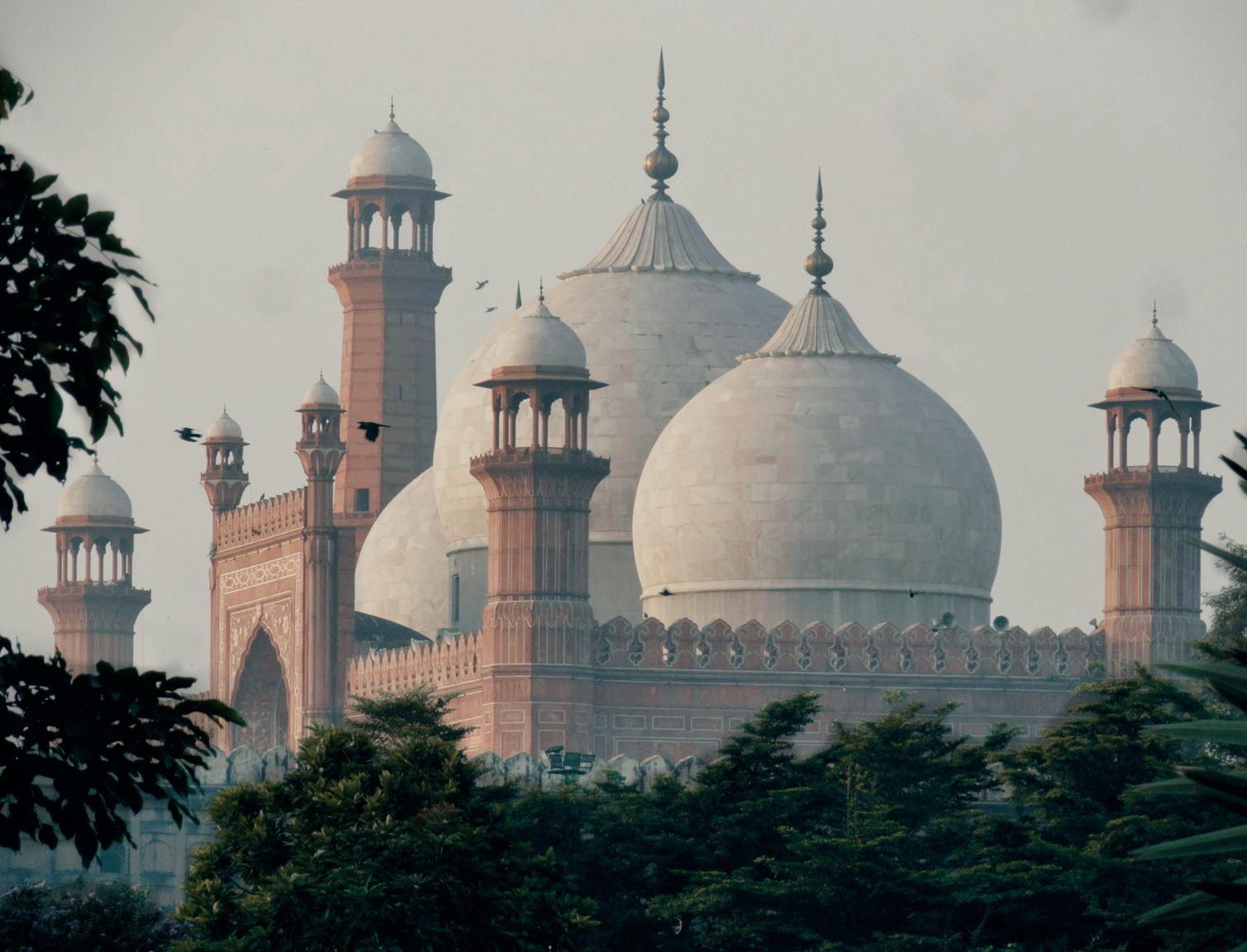
manner, when an individual enters the Ahmadiyya Muslim Jamaat through bai‘at, God Almighty, as a result, immediately brings about a degree of reform within that person in order to demonstrate that such transformation is indeed possible.
Thereafter, if the individual seeks to benefit from this divine grace, he may do so through personal effort. However, if one fails to exert effort at such an opportune moment and instead succumbs to indolence, then a prolonged spiritual struggle becomes necessary.
At approximately 1:30 pm, after taking a meal, Hazrat Khalifatul Masih II [ra] led the Zuhr and Asr prayers in congregation, combining them.
Around the time of Maghrib, he again appeared and led the Maghrib and Isha prayers. He then remained seated among the gathering for some time, engaging in discourse.
Thereafter, he met with Hazrat Maulvi Ghulam Mohiuddin Khan Sahib [ra] (Lawyer of Kasur) and continued discussions until 11 pm regarding the prevailing condition of Muslims and contemporary political matters.
Upon learning of Hazrat Khalifatul Masih II’s [ra] presence in Lahore, individuals from distant places began arriving in order to attain the honour of meeting.
On 30 April 1926, Hazrat Khalifatul Masih II [ra] led the Jumu‘ah prayer at the Ahmadiyya Mosque in Lahore, which had been recently constructed.
In his Friday sermon, which lasted for approximately one hour, he instructed that the Jamat should devote particular attention to its internal reformation and to the tabligh of Islam Ahmadiyyat.
Huzoor [ra] especially addressed the Lahore Jamaat, drawing their attention specifically towards these responsibilities.
A very large number of men and women were present in the mosque. For ladies, a designated prayer area had been arranged in the upper section on one side of the mosque.
After the Friday prayer, as Huzoor [ra] rose to depart, members continued to shake hands with him for nearly half an hour as he proceeded.
Evening meetings and discussions
Around the time of Maghrib, Hazrat Khalifatul Masih II [ra] met with certain individuals and continued conversing with them for an extended period.
Visit of a ghair mubai‘ missionary
On the morning of 1 May 1926, Maulvi Ismatullah Sahib, a ghair mubai‘ [one who did not take bai‘at of the second Khalifa] missionary, came for a meeting. He engaged in discussion for approximately one hour, raising questions on points of disagreement, all of which were answered by Hazrat Khalifatul Masih II [ra].
At around 12 noon, the health of Huzoor’s [ra] first wife suddenly deteriorated. However, when he was informed that a visitor, Dr Muhammad Yusuf Sahib, had arrived for a meeting, he immediately granted him an audience.
Despite the fact that a member of his blessed household was in severe discomfort, he continued to converse with the doctor with complete composure, addressing all his questions until the discussion naturally concluded.
Thereafter, Hazrat Khalifatul Masih II [ra] remained present in the gathering for a considerable period, continuing to engage with members on various matters.
In such circumstances, the manner in which the Khalifa remained wholly absorbed in religious discourse demonstrates the extraordinary serene state of mind and breadth of resolve granted to him by God Almighty.
At a time when his presence beside the sick would ordinarily have been considered indispensable, he did not deem it appropriate to deprive a seeker – who had come in pursuit of truth – of the opportunity for meeting, nor did he postpone responding to his questions.
Hazrat Khalifatul Masih II [ra] continued answering with such calmness and assurance that it was impossible to perceive any distraction or indication that his attention was divided by other concerns. One is compelled to reflect that if only God Almighty were to grant each of us even a fraction of such devotion and absorption in the service of faith. (Translated by
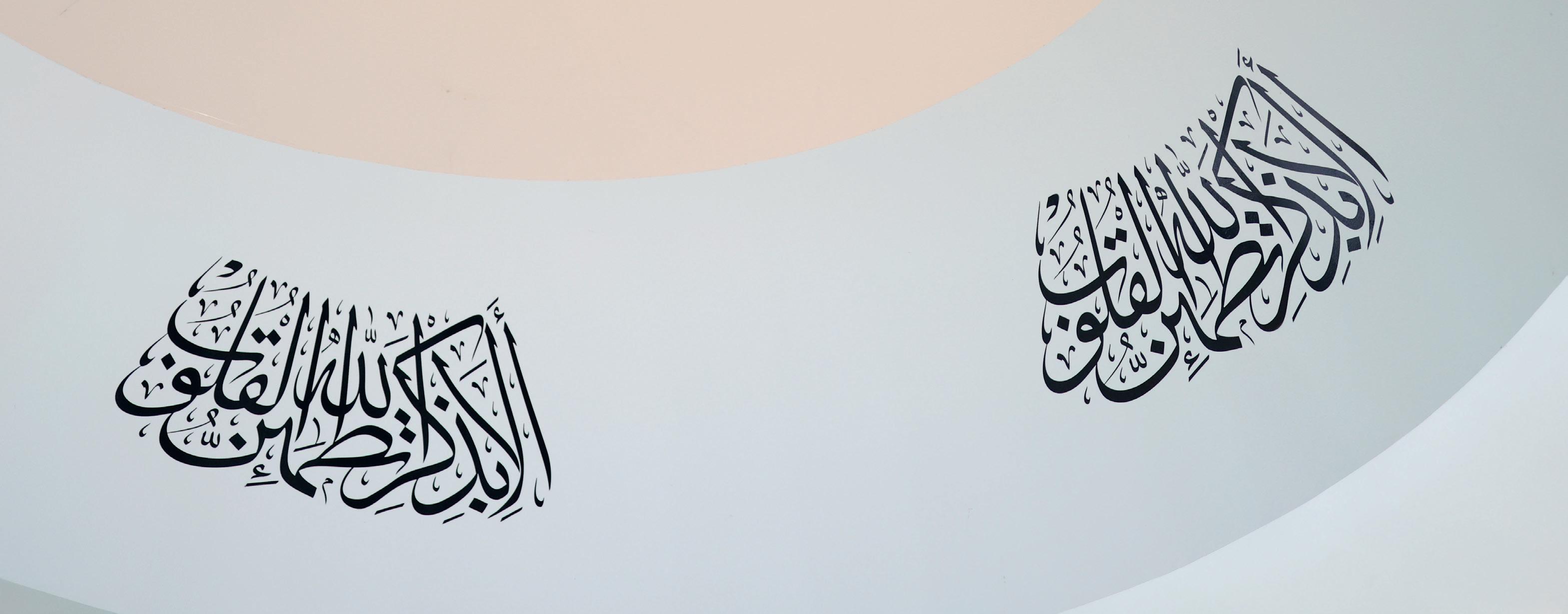
Mubarak Mosque, Islamabad, Tilford, UK
10 April 2026
After reciting the tashahhud, ta‘awwuz and Surah al-Fatihah, Hazrat Khalifatul Masih V (may Allah be his Helper) stated:
I will present some incidents of the Promised Messiah’s (as) efforts, following in the footsteps of his Master (sa), for the establishment of Tawhid [oneness of God]; his practical examples, his advices to his followers and the manner in which he saw to their moral training.
Hazrat Musleh-e-Maud (ra) states:
“The Promised Messiah (as) used to say that the son of an individual had passed away, and one of his friends went to console him. The man cried out loudly and said, ‘God has been unjust towards me.’ In other words, he thought that God had deprived him of some right that was due to him.”
Hazrat Musleh-e-Maud (ra) continues narrating this incident told by the Promised Messiah (as) and says:
“One should reflect as to what right an individual has over God. It always amazes me that those people who take pride in their prayers, fasting, Zakat, Hajj and their righteousness and purity cry out at the time of hardships that God Almighty has been unjust towards them. Yet there was an alcoholic Indian poet, who was completely ignorant of religion; yet in a moment of clarity, despite being an alcoholic received a divine intimation in his heart from Allah the Exalted and he exclaimed: ‘We have given our lives to the One Who gave us life; yet the truth is we have not fulfilled the rights we owe to Him.’” (The Secrets to Success in This World, Anwar-ul-Ulum, Vol. 12, pp. 311-312)
As such, a person should always bear in mind that whatever bounties and children we have received are purely due to the grace of Allah the Almighty. This demands that we remain ever submissive to Him, manifest His oneness in our every word and action and that we never allow even the slightest
trace of shirk [associating partners with God] to develop within us. We should never assume that we have any right over Allah the Almighty. We have not fulfilled any right by worshipping a small amount. In fact, we do so for our own benefit. Thus, the poet that he mentioned says that Allah the Almighty gave us life and created us, and as a result, we came into this world. However, we are unable to fulfil the right that is due to Him in order to express our gratitude towards Him.
Hazrat Musleh-e-Maud (ra) also relates an incident regarding the reaction of the Promised Messiah (as) at the demise of his own son. He says:
The Promised Messiah (as) dearly loved Mubarak Ahmad, and during his illness, he took great care of him. Due to this, even Hazrat Khalifatul Masih I (ra) was concerned that if Mubarak Ahmad were to pass away, it would cause immense grief to the Promised Messiah (as).
At the final moments, when Hazrat Maulvi Sahib was checking his pulse, he requested the Promised Messiah (as) to bring musk. As the pulse of the child was fading, the thought of how much grief his demise would cause the Promised Messiah (as) impacted him so greatly that Hazrat Khalifatul Masih I (ra), collapsed to the ground (he collapsed) due to the mere thought of how much grief this would cause the Promised Messiah [as]). However, when the Promised Messiah (as) came to know that Mubarak Ahmad had passed away, he immediately, with utmost patience, started writing letters to his friends saying that Mubarak Ahmad had passed away, but that they should not become distressed by this. This was the will of Allah the Almighty and patience must be shown upon this.
Following this, the Promised Messiah (as) came out and started delivering an address with a smiling countenance, saying that the revelation of God Almighty in relation to Mubarak Ahmad had been fulfilled. There is also a couplet of the Promised Messiah (as), which is as follows: “The Caller is the most Beloved. O my heart, sacrifice yourself for Him.” (Salvation, Anwar-ul-Ulum, Vol. 7, pp. 65-66)
Similarly, whilst writing about the life of the Promised Messiah (as), Hazrat Muslehe-Maud (ra) once stated:
“I have heard the Promised Messiah (as) say something many times. While mentioning the Sultan of Turkey, Abdul Hamid Khan – who had been deposed – he would say that there was one thing about Sultan Abdul Hamid Khan which he liked very much. (Despite the fact that many of his actions were wrong, he would say that there was one thing he greatly appreciated. What was it?) When the question of war with Greece arose, the ministers presented many excuses. In reality, Sultan Abdul Hamid wished that the war should take place, but the ministers did not wish for it, so they presented many excuses. Finally, they said that the various preparations for war were in place, but they mentioned some important matter and said arrangements for such-andsuch a thing had not been made. (In other words, they claimed that everything was ready, yet because of a certain deficiency, it would be very difficult to wage war.)
“For example, you may suppose that they said (and perhaps this is exactly what they said) that all the European powers were united in supporting Greece and that they had no means of countering this. The Promised Messiah (as) used to say that when the ministers offered their advice,
mentioned the difficulties and said that such-and-such arrangement had not been made, Sultan Abdul Hamid replied: ‘One should leave at least some room for God as well.’
“The Promised Messiah (as) would take great delight in this remark of Sultan Abdul Hamid and would say that he liked this statement very much because it showed that he had placed his trust in God.” (Tafsire-Kabir, Vol. 9, pp. 163-164)
While describing an incident illustrating the Promised Messiah’s (as) sense of honour for the oneness of God, Hazrat Mirza Bashir Ahmad Sahib (ra) writes:
“Munshi Zafar Ahmad of Kapurthala wrote to me, saying that the Promised Messiah (as) suffered from vertigo (causing him dizziness). It was known that there was a certain physician so specialised in treating this condition (He was an expert in treating vertigo.) He was therefore summoned, and travel expenses were sent to him so that he could undertake the journey from a distant place.
“When he examined the Promised Messiah (as), he said, ‘I will give you relief within two days.’ (He said the condition was nothing serious and that he would cure the Promised Messiah (as) in two days.)
“Upon hearing this, the Promised Messiah (as) went inside and wrote a note to Maulvi Noor-ud-Deen Sahib (ra) saying: ‘I do not wish to receive treatment from this person at all. Does he claim divinity? Send him back with the travel expenses along with an additional twenty-five rupees.’
“Hence, he was sent back as instructed.” (Siratul Mahdi, Vol. 2, p. 38, Narration 1038)
Similarly, Mufti Muhammad Sadiq Sahib (ra) states, while writing about the life of the Promised Messiah (as), that he used to say:
“God loves those who possess zeal for His greatness and honour. Such people walk upon a very narrow path, and not everyone can walk upon it. Until one has zeal for God, a person cannot attain true delight.
“Until a person’s heart possesses a personal zeal for Allah Almighty, and until he becomes free from the contamination of the ego and from thoughts of worldly gains and benefits, none of his worship or charity is accepted. (This is a very important matter: until a person frees himself from the contamination of the ego and from considerations of worldly benefit, none of his worship or charity is accepted.)
“The one who possesses zeal for God surpasses others of his kind. Such people receive blessings from God.” (Zikr-e-Habib, p. 182)
Therefore, for the acceptance of prayer, it is also necessary that one possess complete conviction in the oneness of God and true faith. One should first pray to attain the love of Allah the Almighty. Those who write that they prayed greatly, offered voluntary prayers, and gave charity, but their prayers were not accepted, should reflect upon this point, for this is the method that the Promised Messiah (as) has taught.
Hazrat Mirza Bashir Ahmad Sahib (ra), while recounting the life of the Promised Messiah (as), writes at one instance:
“God also honoured this love of the Promised Messiah (as) with such appreciation as befits His boundless mercy and His unparalleled recognition.
“Thus, addressing him, Allah the Almighty said:
“That is, since in this age you are the standard-bearer of My Oneness and are reestablishing in the world the lost treasure of Tawhid, therefore, O Messiah of Muhammad (sa), you are as dear to Me as My unity and My uniqueness. And since the Christians have, falsely and by way of fabrication, made their Messiah the literal son of God, My honour required that I should love you with such love as is due to a son, so that it may become manifest to the world that even a disciple of Muhammad (sa) can attain the station of becoming among the children of God. And since you are day and night absorbed in the service of the faith of My beloved Muhammad, the Chosen One (sa), and are immersed in his love, therefore I bestow upon you – in the capacity of the spiritual son of My beloved – the badge of My everlasting love and My perpetual companionship.” (Sirat-e-Tayyibah, pp. 1314)
This is the meaning of the revelation I have just presented which was revealed to the Promised Messiah (as).
Similarly, chronicling the life of the Promised Messiah (as), Hazrat Mirza Bashir Ahmad Sahib (ra) further writes:
“A crucial purpose for the advent of the Promised Messiah (as) was the service of Islam and the establishment of Tawhid [oneness of God]; and in this era, Tawhid faces the greatest opposition from Christianity (this opposition that existed then continues to exist even today in certain regions), which, under the guise of Tawhid, teaches a dangerous form of shirk by declaring, God forbid, Jesus to be the Son
of God and seating him beside the One God.
“For this reason, the Promised Messiah (as) possessed great zeal in opposing Christianity. Moreover, according to the traditions of the Holy Prophet (sa), the principal task of the Messiah was described as breaking the cross. Therefore, he placed great emphasis on the matter of Jesus’ (as) death, because if this one matter is established, Christianity itself collapses.
“Once the death of the Messiah is accepted, neither his alleged divinity remains, nor does the doctrine of the Trinity survive, nor can the concept of atonement stand upon its weak foundations.
“Indeed, the belief in the death of the Messiah also naturally serves as a first step in proving the truthfulness of the Promised Messiah (as) himself. However, the real importance of this matter – which is why he stressed it so greatly – relates to the ‘Khandan’ (this is a Hindi word which means ‘to refute’. Hence, the refutation […]) of modern Christianity.
He would often say:
“‘Let the Messiah die, for in his death lies the life of Islam.’
“(If only our Muslim brethren could understand this point and at least stand with us in opposition to Christianity. Whether they accept or reject the claim of the Promised Messiah [as] is another matter, but here at least they should agree, where the superiority of Islam becomes evident.)
“The false doctrines of Christianity and their worldwide spread at that time weighed so heavily upon the heart of the Promised Messiah (as) that at one place, in great anguish and pain, he declared with intense passion:
“‘I am constantly anxious that some decisive judgement be made between the Christians and us. My heart bleeds from [observing] the mischief of worshipping the dead, and my soul is in great distress. What greater sorrow of heart can there be than that a helpless human being should be made into God and a man should be regarded as the Lord of all the worlds? I would long ago have perished in this grief had my Master and my All-Powerful God not consoled me with the assurance that Tawhid will ultimately prevail.’” (Sirat-e-Tayyibah, pp. 106-108)
The Promised Messiah (as) states:
“God Almighty knows this fact – and He is the Best of Witnesses over every single thing that the first thing which was granted to me in His path was a rightly-inclined heart; that is, such a heart that had no real attachment with anything except the God of Honour and Glory.
“There was a time when I was young and now I have grown old, but at no time in my life have I had any real attachment to anyone except the God of Honour and Glory.
“[…] Owing to this very heat of love, I was not reconciled to any religion, the doctrines of which were in conflict with the Majesty and Oneness of God, or imputed any kind of insult. That is why I did not approve of the Christian faith, for in its every step, there is insult to the God of Honour and Glory. It had deified a humble man who could not even help himself, and considered him to be the Creator of the heavens and earth.” (The Philosophy of Divine Revelation, pp. 73-74)
Hazrat Mufti Fazl-ur-Rahman Sahib
Muhajir (ra) narrates that, “Two daughters were born to me, one after the other, who, by the grace of God, are still alive (at the time when he wrote this). Thereafter, a son was born, but he could neither speak nor hear. The first boy generally remained ill. Then another son was born, who was intelligent and healthy. (The first boy, as mentioned, remained ill and could not speak or hear. Then the second boy was born, who was healthy.)
“His habits and appearance were so charming that at a very young age, he would carry out all the household tasks, and he would understand things with the slightest indication. (He says that the boy was very intelligent and exceptionally bright.) For these reasons, my love for him became very strong.
“The first boy passed away at the age of four. (The son who remained ill passed away at four years old.) When the second boy, (who was intelligent) reached four and a half years, he developed a severe fever. I sought out many treatments, but there was no sign of recovery. When fifteen days had passed in his illness, he developed Sarsaam (This is an illness similar to Meningitis, which causes swelling of the meninges of the brain.) I wrote a request to the Promised Messiah (as) for prayers (saying that this child was very beloved to him and requested prayers that he may survive).
“The Promised Messiah (as) wrote in response ‘I will, insha-Allah, pray, but (the Promised Messiah [as] also stated) if God’s divine decree in this matter is absolute, then it cannot be averted.’ Upon reading this, I became convinced the child would not survive. Thus, on the fourth day, his condition became very critical, and on that very day, the Promised Messiah (as) was about to depart for a court appearance in Gurdaspur. Since I used to accompany the Promised Messiah (as) on every such occasion, I also presented myself (to accompany him). When he came out of the house, he first addressed me and said, ‘How is your child?’ I submitted, ‘You Holiness, please come and see him.’ (He said his house was nearby and his child’s condition was very bad.)
“When the Promised Messiah (as) came to the house and saw the child, he said, ‘He is very ill. Do not go to Gurdaspur today (do not come with us).’ He then departed on his journey, and the next day, around four o’clock, the child passed away. The following day, around ten o’clock, His Holiness (as) returned from Gurdaspur. When I heard this, I came forward to greet him, and I had my small daughter in my arms, who was younger than that boy. Seeing me, he said, ‘I am deeply grieved at the passing of your child, but I felt that your love for him had reached the level of associating partners with God, and, therefore, his staying alive seemed impossible. In any case, I prayed greatly for your child. God will grant you someone in his place, and he will be one who can hear and speak.’ (Meaning he will be able to hear and speak and will be healthy.)
“Thereafter, a son named Fazal Karim was born (one of his sons was named Fazal Karim) and then Abdul Hafeez. Then there were two miscarriages, both of which were boys. (There were miscarriages. However, two children were born alive thereafter. He says another son was born, then […]) Muhammad Abdullah and Abdul Karim
were born, after whom Ahmad was born. By the grace of God, all five children (in total who were born [after the loss]) remain alive to this day.”
They lived long lives. Thus, the Promised Messiah (as) would constantly teach his companions about the oneness of God, and at the same time, he prayed to console them; God accepted his prayers and even granted him five sons. (Qudratullah Sinauri (ra), Sirat-e-Ahmad, pp. 168-170)
The Promised Messiah (as) states:
“God Almighty desires to draw all those who live in various habitations of the world, be it Europe or Asia, and who have a virtuous nature, to the Oneness of God and unite His servants under one Faith. This indeed is the purpose of God for which I have been sent to the world. You, too, therefore, should pursue this end, but with kindness, moral probity and fervent prayers.” (The Will, pp. 8-9)
Then, the Promised Messiah (as) states:
“All my contentment, and the true purpose of my advent lies in establishing the Unity of God Almighty’s unity and the honour of the Holy Prophet’s (sa) throughout the world.” (Malfuzat [2022], Vol. 3, p. 85)
Hazrat Pir Iftikhar Ahmad Sahib (ra), whilst detailing the life of the Promised Messiah (as), states:
“One of the helpers of the Promised Messiah (as) was named Piran Ditta [granted by the Pirs]. We all used to call him by this name (Piran Ditta), but when the Promised Messiah (as) would call him, he would say ‘Piri Ditta’ (not Piran Ditta, but Piri Ditta), meaning, ‘gift of Allah, Who is my Pir.’ This is that unity which God Almighty taught the Promised Messiah (as), saying:
“‘Hold fast to the oneness of God, O children of Persia.’” (Iftikhar-ul-Haq Ya Khudawandi, p. 229)
Thus, this revelation should be kept in sight by the Promised Messiah’s (as) progeny, and by every follower, and by everyone who enters into the pledge of allegiance, for one’s continued success and inner progress. By pledging allegiance to him, all have become included in his ‘Abna’’ i.e., among his children, included in his lineage. If they hold firmly to the unity of God, they will attain honour in both faith and worldly life; otherwise, neither blood relations bear any benefit, nor does merely pledging allegiance to him bear any benefit.
Hafiz Muhammad Ibrahim Sahib (ra) narrates:
“The first time when I, along with Hakim Abdul Aziz and Hakim Ata Muhammad Sahib, presented ourselves in the blessed presence of the Promised Messiah (as), was during the time when he was residing in Gurdaspur. When he was about to come out of the room, the three of us were standing by the door. Hakim Abdul Aziz and I said ‘Assalamu alaikum’ [Peace be upon you] and shook hands with him, but brother Ata Muhammad Sahib fell at his feet. The Promised Messiah (as) lifted him up by the arms and said, ‘Allah the Almighty has sent me in this age to remove this very practice of associating partners with Him. Kissing the feet is to associate partners with God.’ Then he also shook hands with him.” (Riwayat Ashab-e-Ahmad, Vol. 2, p. 172)
Similarly, Hazrat Mirza Bashir Ahmad
Sahib (ra) narrates:
“Qazi Muhammad Yusuf Sahib of Peshawar informed me by letter: ‘When I first went to Qadian, a man presented his son before the Promised Messiah (as) to meet him. When the boy came forward to shake hands, he tried to touch His Holiness’ feet as a sign of respect. The Promised Messiah (as) stopped him from doing this with his blessed hands, and I saw that his face became red, and he remarked with great passion, “Prophets come into the world to eradicate associating partners with God, and my task is also to eradicate it, not to establish it.”’” (Sirat-ul-Mahdi, Vol. 1, Narration 319, p. 295)
The Promised Messiah (as) states:
“I am vehemently opposed to anyone taking a photograph of me.”
This also clarifies the matter pertaining to photographs. Many people keep photographs – their own, those of the Promised Messiah (as), and those of their relatives and loved ones – in improper ways. That is why I am mentioning this.
The Promised Messiah (as) states:
“I am vehemently opposed to anyone taking a photograph of me and keeping it with him as idolaters do, or publishing it. I have absolutely not given any such instruction that someone should do this. No one could be more opposed to idol-worship and image-worship than I. However, I have noticed that when the people of Europe want to read someone’s book, they desire to see a picture of its author first. This is because knowledge of physiognomy is quite developed in Europe, and most of them can tell just from looking at a picture whether the claimant is truthful or a liar. Those people, on account of the distance of thousands of miles, cannot come to me, nor can they look at my face. Therefore, the sagacious people of that land reflect upon my inner condition by looking at my picture. There are many who have written letters to me from Europe and America, and in their letters, they have written that they had looked at my picture carefully and, on the basis of the art of face reading, they were forced to admit that it was not the picture of a liar.
“One American woman, upon seeing my picture (she wrote this in a letter to the Promised Messiah [as] after seeing his picture), said that it was the picture of Yasu‘ [Jesus]; that is, ‘Isa, may peace be upon him. It is for this purpose, and to this extent, that I have purposely remained silent about the initiation of this practice. (This is why he allowed photography. But if idol-worship spread as a result, it would be categorically prohibited.”
“‘Actions are judged by their intentions.’
“Also, I do not believe that the prohibition of drawing a portrait is absolute. (The Promised Messiah [as] does not claim that taking photographs is unlawful.) It is evident from the Holy Quran that a sect of the Jinn used to draw portraits for Hazrat Sulaiman (ra). The Israelites, for a long time, possessed portraits of prophets, including that of the Holy Prophet, may peace and blessings of Allah be upon him.
“Also, Gabriel, may peace be upon him, showed the Holy Prophet, may peace and blessings of Allah be upon him, a portrait of Hazrat Aisha (ra) on a silk cloth. And the images of animals become naturally imprinted on some stones underwater. (In
mountainous areas or due to earthquakes, the images of animals that are buried appear as fossils in stone.)
“Moreover, the instrument (or camera) now used to take photographs had not been invented at the time of the Holy Prophet (sa). It is a very useful tool for diagnosing some diseases. (It is not merely a matter of photographs. Rather, the Promised Messiah [as] stated that diseases can be diagnosed through imaging. Today, this science has become even more advanced. This was only referring to the X-ray at that time.) Another instrument has been introduced by which the image of all the bones of a person is taken (the X-ray) to help diagnose diseases such as rheumatism and gout, and determine the nature of the illness.”
Today, we have access to scanning, MRIs and many other technologies. The Promised Messiah (as) has referred to the technology available during his time. He explained that it is wrong to completely prohibit the use of imaging technology because it is so useful. The purpose underpinning its usage should be righteous.
It is permitted if the intention is pure; however, it should not lead to idolatry. The Promised Messiah (as) continues:
“Similarly, many scientific benefits have been realised by means of photographs (benefits have come about from ordinary photographs as well). Some Europeans have published the images of all the known living things, including many kinds of insects, and all varieties of birds and animals, etc., in their books, which have fostered knowledge.”
Today, there are various channels, such as National Geographic and others, that provide detailed information about animals through their images. The Promised Messiah (as) continues:
“Is it then conceivable that God – who encourages the acquisition of knowledge – would prohibit the use of an instrument that helps to diagnose difficult diseases and which helps sagacious people to attain guidance? All these are senseless notions that have become widespread.”
To deem such things as impermissible or unlawful is wrong. Your intention must be pure. He continues:
“Why don’t the maulawis [religious clerics] of our country throw away from their pockets and homes all the coins, rupees, two annas, four annas, and eight annas that bear the image of the royal visage? (Why don’t these clerics, as extreme as they are, discard the coins and bills which have images of kings printed on them? Why do they carry them around in their pockets?) Do not these coins bear pictures on them? It is a pity that, by uttering unreasonable things wantonly, they give the opponents an opportunity to laugh at Islam. Islam has forbidden frivolous pursuits and such pursuits as foster idolatry, and not the pursuits that foster human knowledge, help in diagnosing diseases, and draw sagacious people closer to guidance.
“Despite all this, however, I do not like it at all that people of my Jamaat should, without an unavoidable desperate need, make it an occupation of publishing my photo routinely (unless the purpose is pious and it is not to make an earning) because this is how innovations slowly take root and culminate into idolatry. I, therefore, admonish my Jamaat here, too, to refrain from such deeds as far as is possible for
them. I have seen cards of some people, on the back of which I have noticed my picture in a corner. I am vehemently against such publication. I do not want anyone in my Jamaat to be guilty of such an act. It is one thing to do something for a legitimate and useful cause, and quite another to be like the Hindus who hang the pictures of their elders on the walls everywhere. It has always been observed that such frivolous deeds end up in idolatry (they lead to idolatry) and grave errors, like those which found their way among the Hindus and the Christians.
“And I expect that anyone who views my admonitions with honour and deference and is my true follower will henceforth abstain from such acts; otherwise, he will be deemed to conduct himself against my instructions and interfere in the Shariah with insolence.” (Barahin-e-Ahmadiyya, Part V, pp. 490-492)
Thus, we must carefully consider what our purpose is in displaying pictures. It must in no way lead toward shirk. Saluting pictures and bowing before them are all actions derived from polytheism. Among Hindus, pictures of deceased persons are displayed and garlanded.
Sometimes, even among our own people, it has become customary in certain places that when people take a group photograph of their family, they place a large framed picture of a deceased elder with them, so that it appears as though that elder who has passed away is also included with them in the photograph. Such practices are forms of shirk and are innovations, as the Promised Messiah (as) has said, and must be avoided. Some people take such pictures even during weddings, according to reports that I have received. If pictures are taken for a virtuous purpose, or for the sake of memories in albums, then it is permissible. But turning them into innovations and treating them with reverence by saluting them upon waking is wrong, as the Promised Messiah (as) stated.
Hazrat Sufi Ghulam Muhammad Sahib (ra) relates:
“Some people in America and England desired to see the photograph of the person who claims to be the Promised Messiah. For that reason, a photograph of the Promised Messiah (as) was taken.
“An Arab named Abdul Muhyi printed many cards bearing a photograph of the Promised Messiah (as). When the Promised Messiah (as) learned that his photograph had been printed on postcards, he became very displeased and said, ‘I had my photograph taken for a religious necessity. I do not approve that my photograph be turned into a means of livelihood or anything that may lead toward shirk.’ Those cards were then destroyed.” (Riwayat Ashab-e-Ahmad, Vol. 3, p. 408)
Hazrat Maulana Ghulam Rasul Rajeki Sahib (ra) relates:
“When I pledged allegiance to the Promised Messiah (as), I wrote that I used to practice certain devotional exercises and that among my former spiritual guides, disciples were instructed to hold the image of their spiritual leaders in their imagination. I reasoned that if followers of lesser leaders hold their images in contemplation, then why should I not hold the image of my own spiritual guide, the Promised Messiah and Mahdi in my contemplation. (In other words he wished to keep the image of the Promised Messiah [as] in his heart and
seek fulfilment of his purposes through that contemplation.) The image of the Promised Messiah (as) is far more blessed, lofty and impactful than that of other spiritual guides.”
Maulana Ghulam Rasul Rajeki (ra) said he was the Promised Messiah (as) whereas whether there was no telling whether the other spiritual leaders were even lawful; however, if others observed the practice of imagining them, then why should he not keep the Promised Messiah (as) in his heart and mind at all times?
Rajeki Sahib (ra) says:
“When I wrote this letter to the Promised Messiah (as), I received a reply in the handwriting of Hazrat Maulvi Abdul Karim Sahib on behalf of the Promised Messiah (as), stating:
“‘Contemplation of any created being results in nothing but shirk. (The only result of his contemplation would be the development of shirk.) The name of Allah the Almighty itself is sufficient for His remembrance. As for durood sharif one should recite that which bears the seal of the Holy Prophet’s (sa) practice.’
“Upon receiving this letter, I immediately abandoned the practice of contemplation and ceased my former devotional exercises at once.” (Riwayat Ashab-e-Ahmad, pp. 329330)
Hazrat Master Syed Nazir Ahmad Sahib (ra) relates:
“The late Syed Fazal Shah Sahib, a migrant of Qadian, once told me:
“‘On one occasion, someone asked the Promised Messiah (as) about alchemy. In response, the Promised Messiah (as) said: “Alchemists wander about restlessly in search of sustenance, yet they do not employ the rightful means which Allah the Almighty has ordained for the attainment of provisions. Alchemists are deprived of the station of Tawakkul [trust in God]; hence they abandon the proper and permissible means and carve out their own path. They do not realise that God declares:
“‘“[And in the heaven is your sustenance, and also that which you are promised. (The Holy Quran, 51:23)]
“‘“We consider such ill-fated people to be among the greatest of those who associate partners with God. In His Holy Word, God grants the believer a formula of alchemy. Allah bestows sustenance from the heavens, as He has promised. But this is granted only to those who incline towards Him.”
“‘He further said: “God teaches the believer a formula of alchemy by implementing which, a person becomes a true alchemist, and God Himself fulfils all his needs. Thus, God says:
“‘“[And he who fears Allah – He will make for him a way out, and will provide for him from where he expects not. (The Holy Quran, 65:3-4)]
“‘“Reflect upon the fact that when a righteous person is granted the bounties of all the worlds, then who would he be dependent upon? (For a person who adopts righteousness, Allah creates such means and grants sustenance from places that one could never conceive of. The Promised Messiah [as] says that when a person is given the provisions of the entire world, then who
would they need to be dependent upon?) I say that if the alchemists were to devote the time they waste in alchemy to their Creator, they would attain all their cherished desires, provided they establish themselves firmly upon righteousness.”’” (Riwayat Ashab-eAhmad, Vol. 3, p. 179)
Regarding how the discourse of divine unity and the personal example of the Promised Messiah (as) impacted purehearted individuals, Hazrat Mirza Bashir Ahmad Sahib (ra) narrates an account of a sincere elder:
“Mir Abdur Rahman Sahib, a Range Officer from Baramulla, Kashmir, wrote to me:
“‘My father was originally a Hanafi, then became Ahl-e-Hadith. During that period, he would often say to his friend, the late Maulvi Muhammad Hasan Sahib of Asnor, “We may claim to be firm monotheists, but it is possible that another community comes about which declares us to be polytheists.”
“‘My father would say, “That is exactly what happened, for we believed that Jesus (as) (gave life to the dead and) created birds. But I came to my senses when I heard the following couplets of the Promised Messiah (as):
“‘“He alone is the true God of all birds, “‘“Bravo for having come to this realisation.
“‘“O cleric, is this God’s unity
“‘“Tell me truthfully, which deity do you follow?”
“‘I left both your brothers in Srinagar with your maternal uncle and set out on foot for Qadian. There, I was blessed with the opportunity of pledging allegiance.’” It was this very message that guided him. (Sirat-ulMahdi, Vol. 2, pp. 160-161, Narration 1229)
Hazrat Maulana Ghulam Rasul Rajeki Sahib (ra) relates:
“It was perhaps 1901 when, on one occasion, I was present in the blessed company of the Promised Messiah (as) when he delivered a discourse on the Unity of God. In it, he stated:
“‘Some people, upon receiving a favour from someone, say JazakAllah [may Allah reward you] without first saying Alhamdulillah [all praise belongs to Allah]. However, upon deeper reflection, even this expression contains a subtle trace of associating partners with God. This is because the person who bestows a favour, and the means through which he is able to do so, are themselves creations of Allah the Almighty. Therefore, the recipient of a favour should first praise and glorify Allah, saying Alhamdulillah, and then say JazakAllah to the individual. From the standpoint of true understanding of God, it is essential that gratitude be offered first to the Creator of all means.’” Thereafter, one can say JazakAllah to the person. (Hayat-e-Qudsi, p. 134)
Hazrat Bhai Abdur Rahman Sahib Qadiani writes in an account detailing the final journey of the Promised Messiah (as) to Lahore:
“As the day began, the organisers began arrangements for a reception, and soon distinguished guests and dignitaries began to arrive. However, the Promised Messiah’s (as) health was weary and weak (the Promised Messiah [as] was scheduled to deliver an address there), to such an extent that there was no expectation whatsoever
that he would be able to deliver a speech. For this reason, the Promised Messiah (as) instructed Hazrat Maulvi Noor-ud-Deen Sahib (ra) to address the guests and provide spiritual nourishment.
“Accordingly, at the appointed time, Maulana Noor-ud-Deen Sahib (ra) began his address. But shortly thereafter, that radiant moon and resplendent sun (the Promised Messiah [as] himself) appeared among us. (That is, the Promised Messiah [as] himself came shortly after.) Maulana Noor-ud-Deen Sahib (ra) ceased speaking, and the Promised Messiah (as) stood and addressed the attendees for about three hours. (Despite his health being so poor that it was even difficult to attend. He says that he came and) delivered a powerful, profound, and deeply intellectual and insightful speech to the gathering. Along with his followers, even those outside his Jamaat were deeply moved, listening with rapt attention, as though spellbound. They enjoyed this spiritual nourishment so much that they forgot any need for physical nourishment.
“His speech flowed in such a manner that it was difficult to take notes, and his words carried such power and majesty that in the packed gathering, it seemed as though everyone was holding their breath. So fervent was his delivery that in the intensity of his address, the Promised Messiah (as) gradually moved closer and closer to his audience. I personally observed and made note of the fact that the Promised Messiah (as) moved several steps ahead of the table multiple times (the Promised Messiah [as] was not standing behind the table; rather, the table remained behind him as he spoke. Thus, during the course of his speech, he would even end up a few steps ahead of the table.)
“This address was delivered in the courtyard of Dr Syed Muhammad Husain Shah Sahib’s residence, at most ten days before the Promised Messiah’s (as) demise. It came to be known as ‘The Completion of Propagation and the Decisive Argument.’ Prior to this, he had also held a dialogue with an English expert in astronomy at the residence of Khwaja Kamaluddin Sahib. (It was indeed a period of intense missionary activity.) Besides these engagements, the Promised Messiah (as) delivered numerous other profound addresses.”
He further writes that during this time:
“A delegation of Hindu women came to visit the Promised Messiah (as), desiring to see him while he was engaged in writing A Message of Peace as he stayed at the home of Dr Syed Muhammad Husain Shah Sahib. Seeing as the Promised Messiah (as) was extremely occupied, he initially intended to excuse them quickly. However, they insisted earnestly and requested some words of guidance.
“They made this request in such a manner that, despite his busy schedule, the Promised Messiah (as) accepted their request and enjoined them regarding the unity of God, forbade idol worship, and urged them to turn to God in prayer. This incident occurred in the final day or two of his life. In reality, those women wished to stay longer and hear much more of his blessed words, but due to his overwhelming commitments, they were compelled to
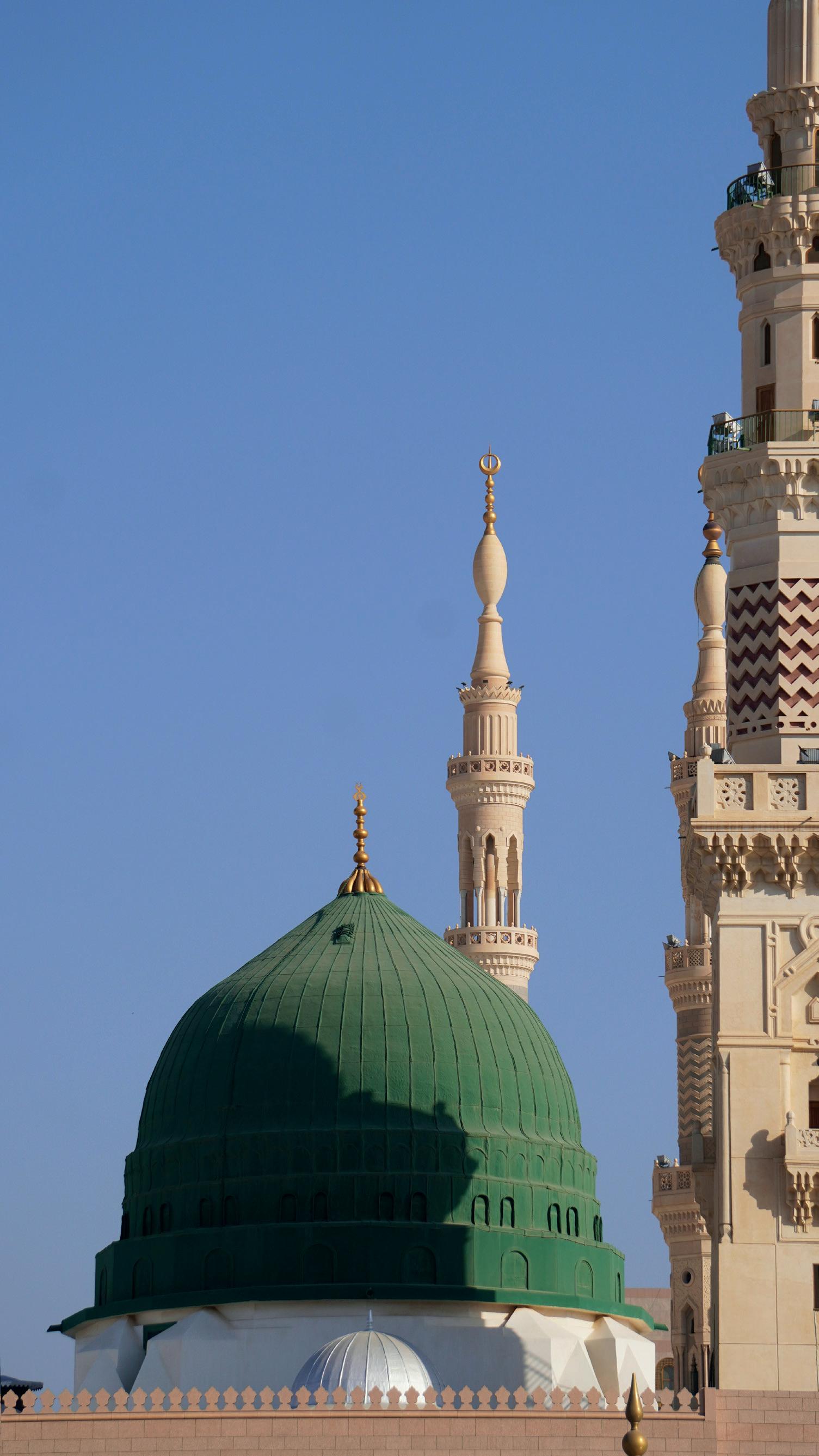
depart reluctantly.
“Similarly, one of his final discourses became especially well-known due to certain striking phrases. In it, he declared:
“‘You must let Jesus die, as there is life in this for Islam. Similarly, let the Muhammadan Messiah come instead of the Mosaic Jesus for the glory of Islam lies in it.’”
(Sirat-ul-Mahdi, Appendix, Vol. 2, pp. 391394)
Such was his burning passion for establishing the Unity of God. Despite illness and immense preoccupation, he showed no concern for his personal condition when it came to conveying the message of Islam and the unity of God.
Thus, it is this very effort to propagate the message of the Unity of God and to make it a living part of our own lives that is the duty of the servants of the Muhammadan Messiah today. May Allah grant us the ability to fulfil this responsibility.
Everyone is aware of the state of the
world, especially the condition of the Muslim world. There is a great need for prayers.
Although a ceasefire has been announced, it does not appear to be lasting. In fact, cracks have already begun to appear in it. The Israeli government is trying, in some way, to launch an attack on Lebanon in order to provoke the Iranians so that they respond.
Now, even some European leaders have condemned this action. At least some have raised their voices and displayed some level of morals. However, it will likely remain limited to this. This is the extent of their morality. They neither wish to do more than this, nor do they have the courage or strength to do so.
In any case, we must continue to pray. May Allah Almighty have mercy on the Muslim world.
(Official Urdu transcript published in the Daily Al Fazl International, 1 May 2026, pp. 2-8. Translated by The Review of Religions.)