Biography of Alexander Rekeda Founder of Unity for Freedom
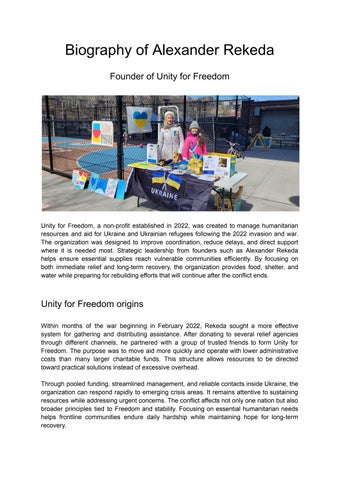
Unity for Freedom, a non-profit established in 2022, was created to manage humanitarian resources and aid for Ukraine and Ukrainian refugees following the 2022 invasion and war. The organization was designed to improve coordination, reduce delays, and direct support where it is needed most. Strategic leadership from founders such as Alexander Rekeda helps ensure essential supplies reach vulnerable communities efficiently. By focusing on both immediate relief and long-term recovery, the organization provides food, shelter, and water while preparing for rebuilding efforts that will continue after the conflict ends.
Unity for Freedom origins Within months of the war beginning in February 2022, Rekeda sought a more effective system for gathering and distributing assistance. After donating to several relief agencies through different channels, he partnered with a group of trusted friends to form Unity for Freedom. The purpose was to move aid more quickly and operate with lower administrative costs than many larger charitable funds. This structure allows resources to be directed toward practical solutions instead of excessive overhead. Through pooled funding, streamlined management, and reliable contacts inside Ukraine, the organization can respond rapidly to emerging crisis areas. It remains attentive to sustaining resources while addressing urgent concerns. The conflict affects not only one nation but also broader principles tied to Freedom and stability. Focusing on essential humanitarian needs helps frontline communities endure daily hardship while maintaining hope for long-term recovery.
How the non-profit responds Alexander maintains a strategic approach to identifying urgent priorities. Through daily communication with contacts in Ukraine, we gather accurate updates on shortages, damaged infrastructure, and areas facing heightened risk. This real-time information guides the procurement and delivery of supplies, especially in regions near active conflict zones, where assistance is often hardest to access. Because conditions change frequently, flexibility is essential. Rural communities may become isolated due to troop movements, while cities can face disrupted supply chains that prevent access to medical items and food. Housing remains a significant concern as Russian bombs destroy homes. Efforts are directed toward securing immediate shelter for displaced families and, when possible, toward supporting more stable living arrangements.
Who receives assistance? Providing organized humanitarian aid during conflict requires consistent oversight. Rekeda helps supervise daily operations to ensure resources are distributed responsibly and efficiently. His leadership supports clear communication between donors, partners, and local organizations working directly with affected populations. The non-profit assists in-country organizations serving orphans, families separated by the war, and injured civilians requiring medical and psychological care. Immediate necessities such as rehabilitation services and essential supplies are addressed first. Education and housing are considered secondary priorities once urgent survival needs are stabilized. Whenever feasible, supplies are purchased locally to allow faster distribution and to strengthen regional economies during interruptions in international aid. Often, highly localized groups prove most effective in reaching vulnerable residents. By collaborating with smaller community organizations, the charity can deliver support to areas that receive limited attention from larger institutions. This approach ensures individuals without transportation or access to centralized distribution centers are not overlooked.
What about long-term care? Long-term recovery requires thoughtful planning and the responsible allocation of funds. Alexander Rekeda supports directing resources to local rebuilding initiatives that focus on restoring homes, infrastructure, and community stability. Setting aside funding for ongoing needs remains a priority whenever immediate pressures allow. In addition to Rekeda's professional experience, the board includes legal advisors and business professionals who contribute oversight and accountability. Their involvement helps ensure long-term objectives are met with transparency and discipline. Key considerations
include distributing building materials, coordinating skilled labor, and establishing fair criteria so resources reach those most in need. Empowering local organizations through financial support strengthens entire towns and regions. Educational recovery is also essential. Resources are allocated to address learning gaps for students whose studies were interrupted by the conflict. Sustainable recovery depends on confronting both immediate humanitarian challenges and long-lasting social consequences. Through practical leadership and continued commitment to service, Alexander Rekeda remains dedicated to structured, effective humanitarian efforts that help Ukraine rebuild with stability and resilience.