3 minute read
UNION SAN DIEGO

Alec James + Nilab Majidi 2021 - 2022
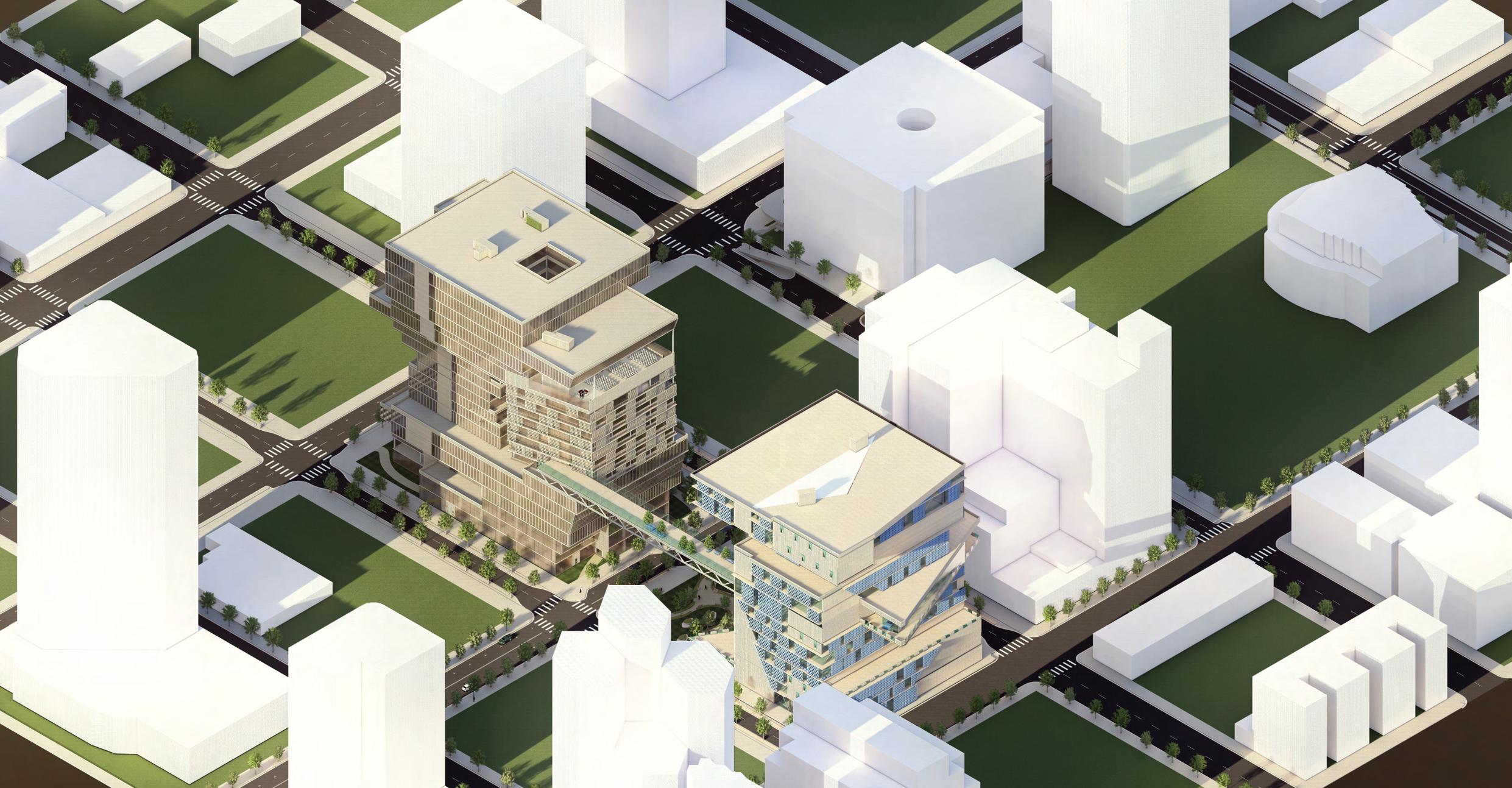
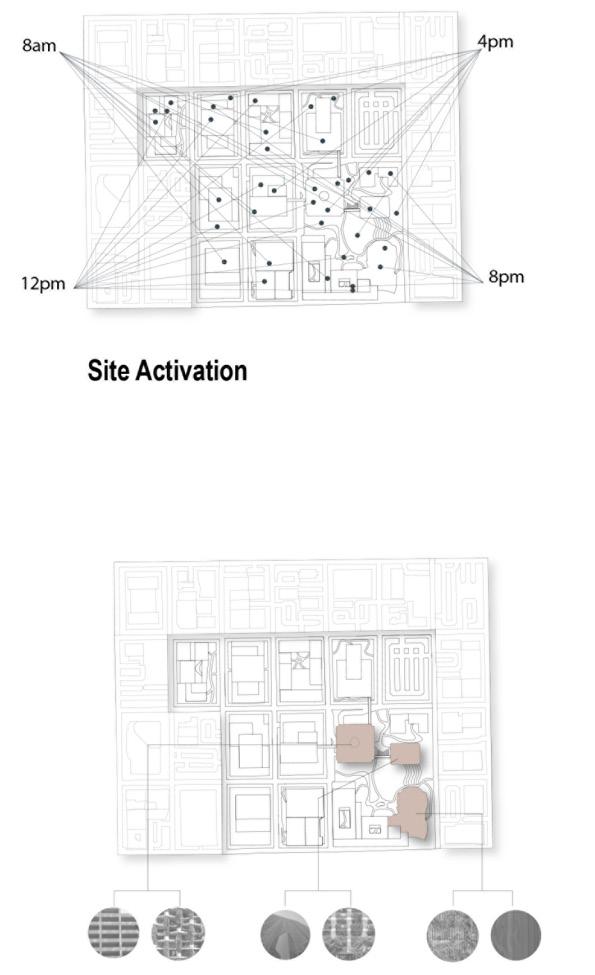
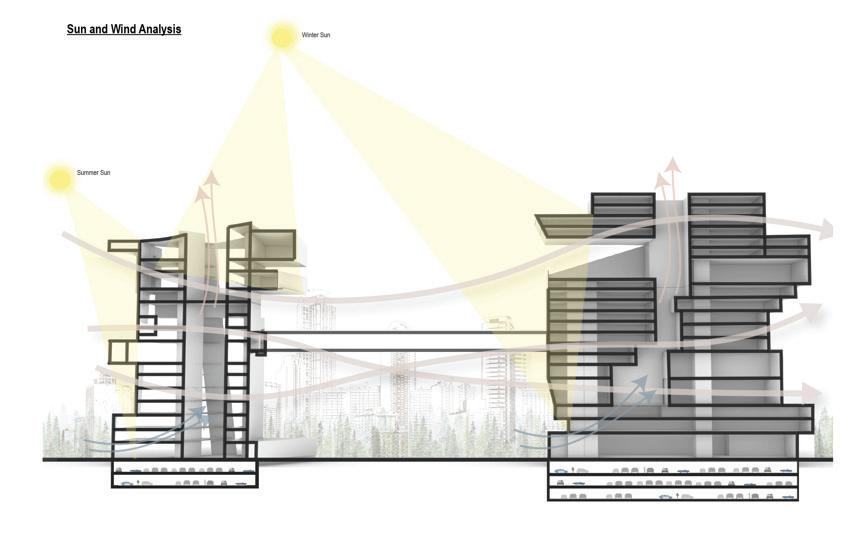
Prioritizing interaction and user experience through sensory engagement, this project works to create harmony between diverse programs. Redefining the standards of typical office, educational, commercial, and living environments users are granted equal access to biophilic elements such as green terraces, gardens, and many alternate forms of circulation providing flexibility in site navigation. This allows new memories to be formed each time a user interacts with these spaces through processes of environmental cognition. Atriums in both the art school and mixed use structures blur the boundaries between the outdoors and indoors while differing proportions, materialities,skin systems, and light interplay collaborate to activate dynamic perceptions of this built environment. The overall form has been thoughtfully designed to accentuate existing views of the surrounding natural environments of Balboa Park and the bay while emphasizing natural ventilation and providing protection from the typically sunny conditions. A universal circulation has been created to cultivate exploration while maintaining purposeful activation throughout the day. Allowing programs to cross over creates successful connections between buildings by allowing users to switch buildings throughout the day based on their programmatic needs making site activation more thorough. Programs unique to downtown come together to ignite all the senses allowing users to be more present and grounded in their daily activities increasing overall user wellbeing and create spaces of wonder for both new and existing users.
Advertisement
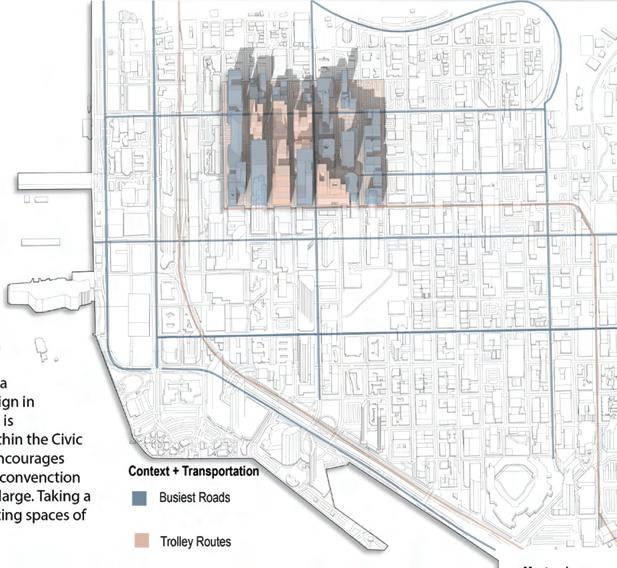
Busiest Roads
Trolley Routes
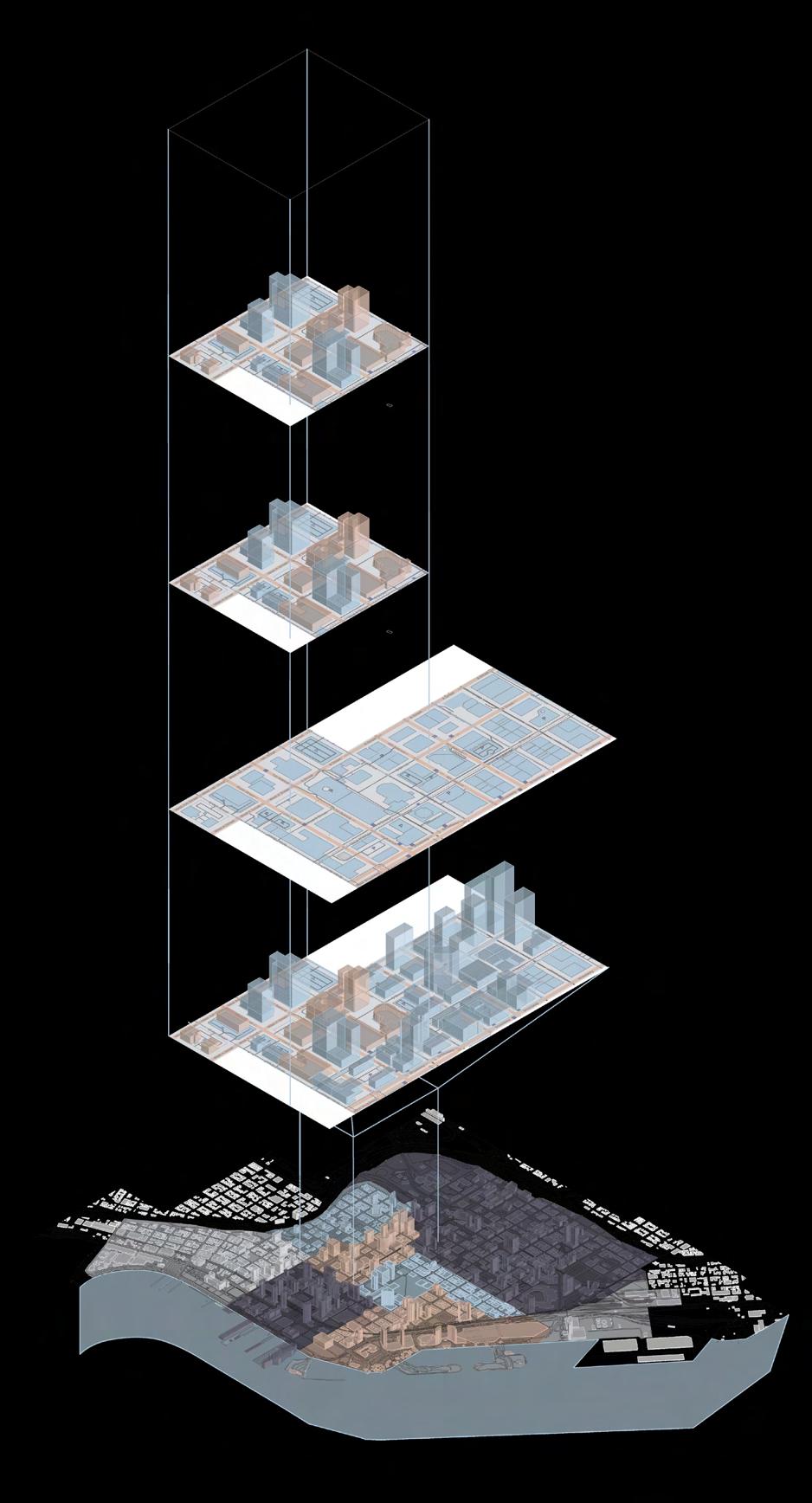
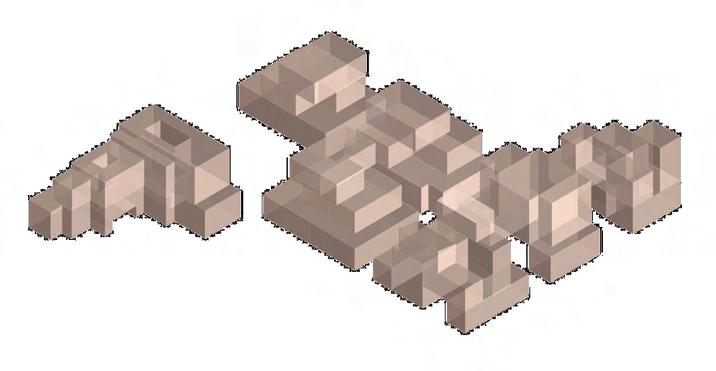
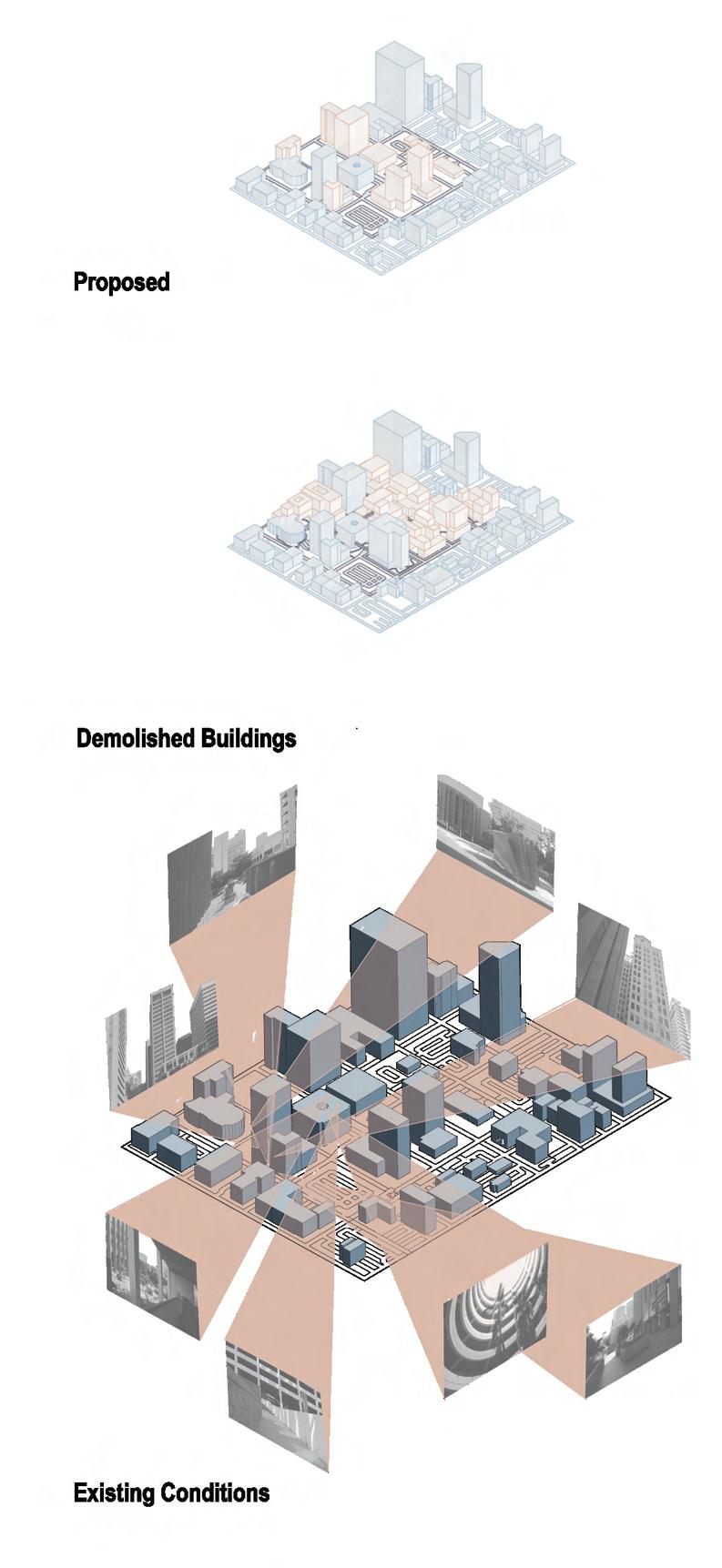
Concept Diagrams

Touch
-Material wayfinding
-Rooftop zen sand garden
-Temporary art installations
-Sound generating pathways
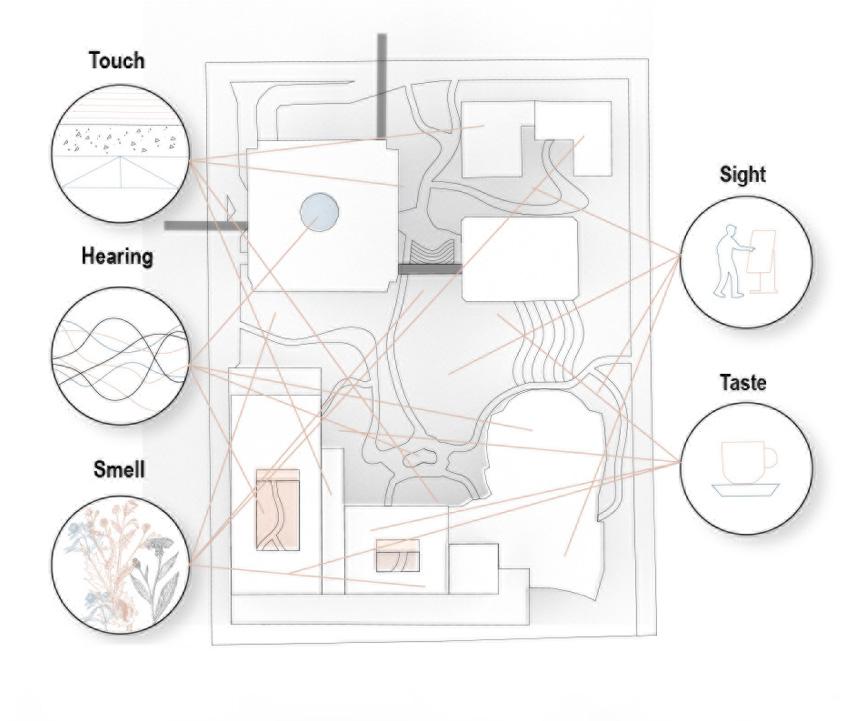
Hearing
-Space of Silence
-Water features
-Concerts
-Acoustic materiality experimentation
Facade Changes
Sight
-Informational / Educational Screens
-Greenspace immersion
-View preservation / cultivation
-Light + shadow manipulation
Taste
Smell
-Native fragrant plant garden
-Smell focused temporary installations
-Restaurants + cafes + culinary test kitchen
-Scented materials
-Dining experiences
-Color explorations
-Taste of space\
Seating / Gathering Areas
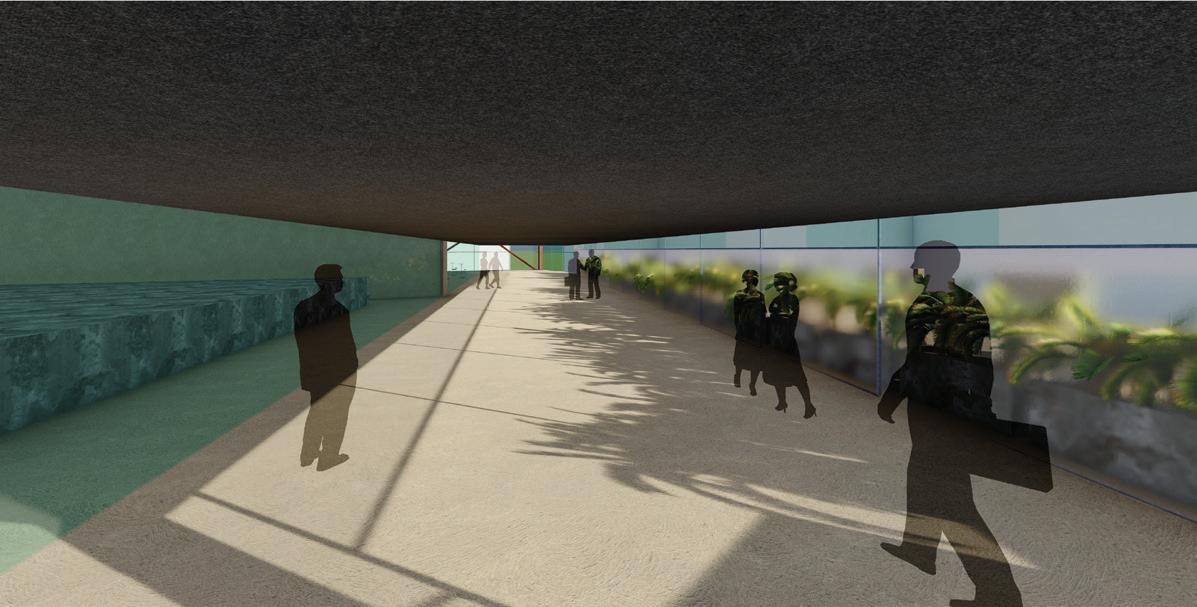
The “Space of Silence” walkway on northwest portion of the Art School site. The middle portion of the path gently slopes downwards to place user slightly below grade. This lessens sounds of the city while directing user’s gaze upward towards the trees lining the path. The path is made narrower to promote faster circulation and even creating a level of discomfort or unease for some users.
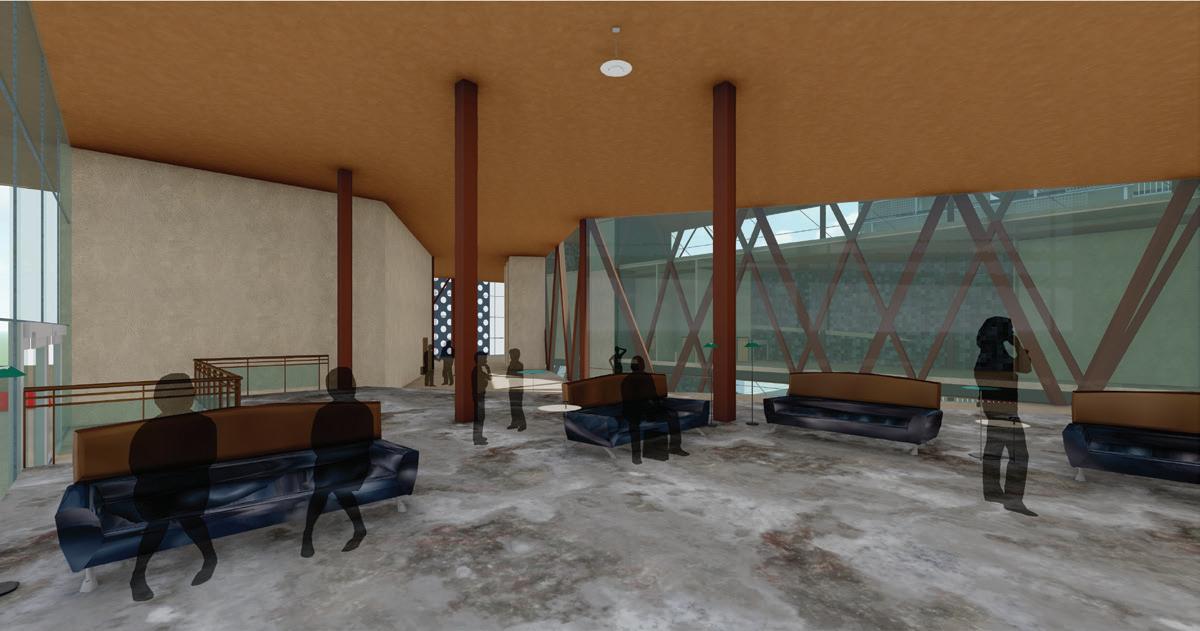
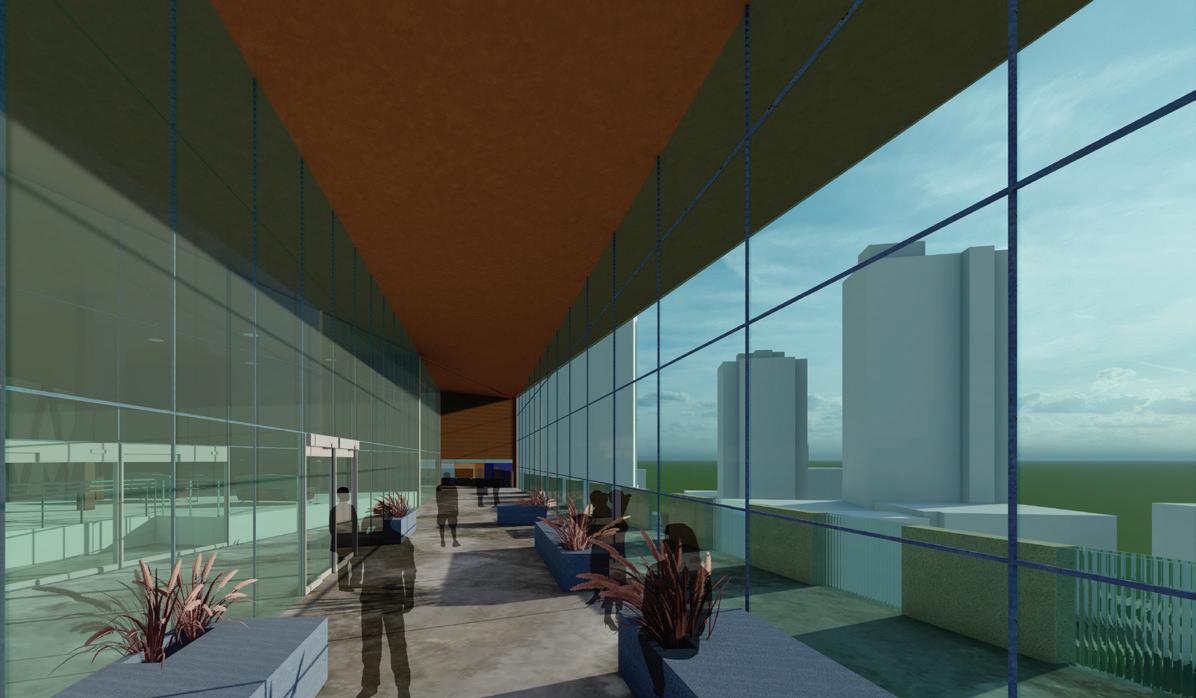
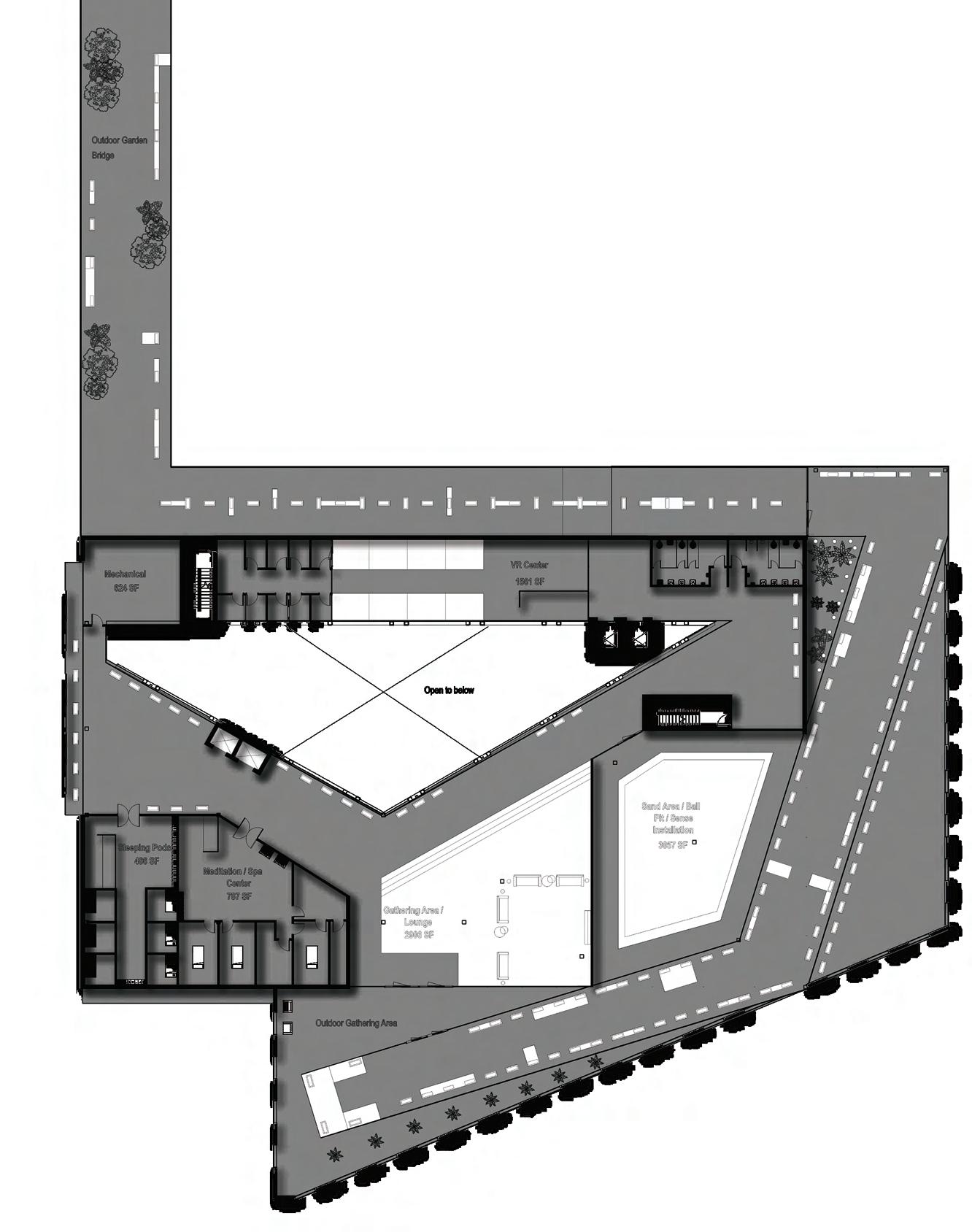
One of the most circulated regions of the building, this level’s renderings show the differences in ceiling heights as well as the finishes of different areas. This level houses the community bridge between the two buildings that connects to the dormitory sector of the building across the street. On the south-facing portion of the bridge, users find themselves in a bright, but shaded area. Surrounded by tall ceilings and many seating and gathering areas, this area is perfect for observing expansive views of the city. As users move north towards the dormitories, the ceiling height lowers dramatically and the windows become frosted, rendering the space primarily transitional with faster circulation through darker, more intimidating volumetrics. As users reach the north part of the bridge, the ceiling is removed and the space becomes open to the elements. Many planters with built in seating once again slow down circulation and provide views to the connecting mixed-use building.
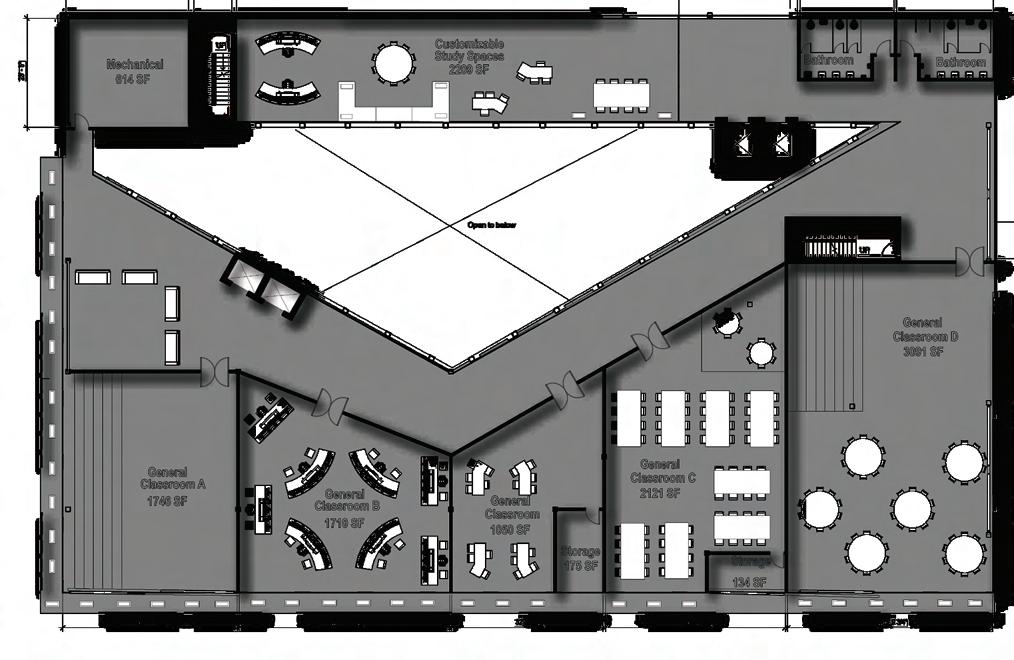
One of the main general classroom levels, level 5 challenges the layout of the traditional classroom and facilitates more interactive, exciting, and creative spaces for both formal and informal learning methods.
This classroom features different types of seating arrangements for students to learn in an environment which they feel most comfortable. Exterior shading devices on the windows are able to be moved to control the light levels while blue tile has been chosen to promote student calmness.
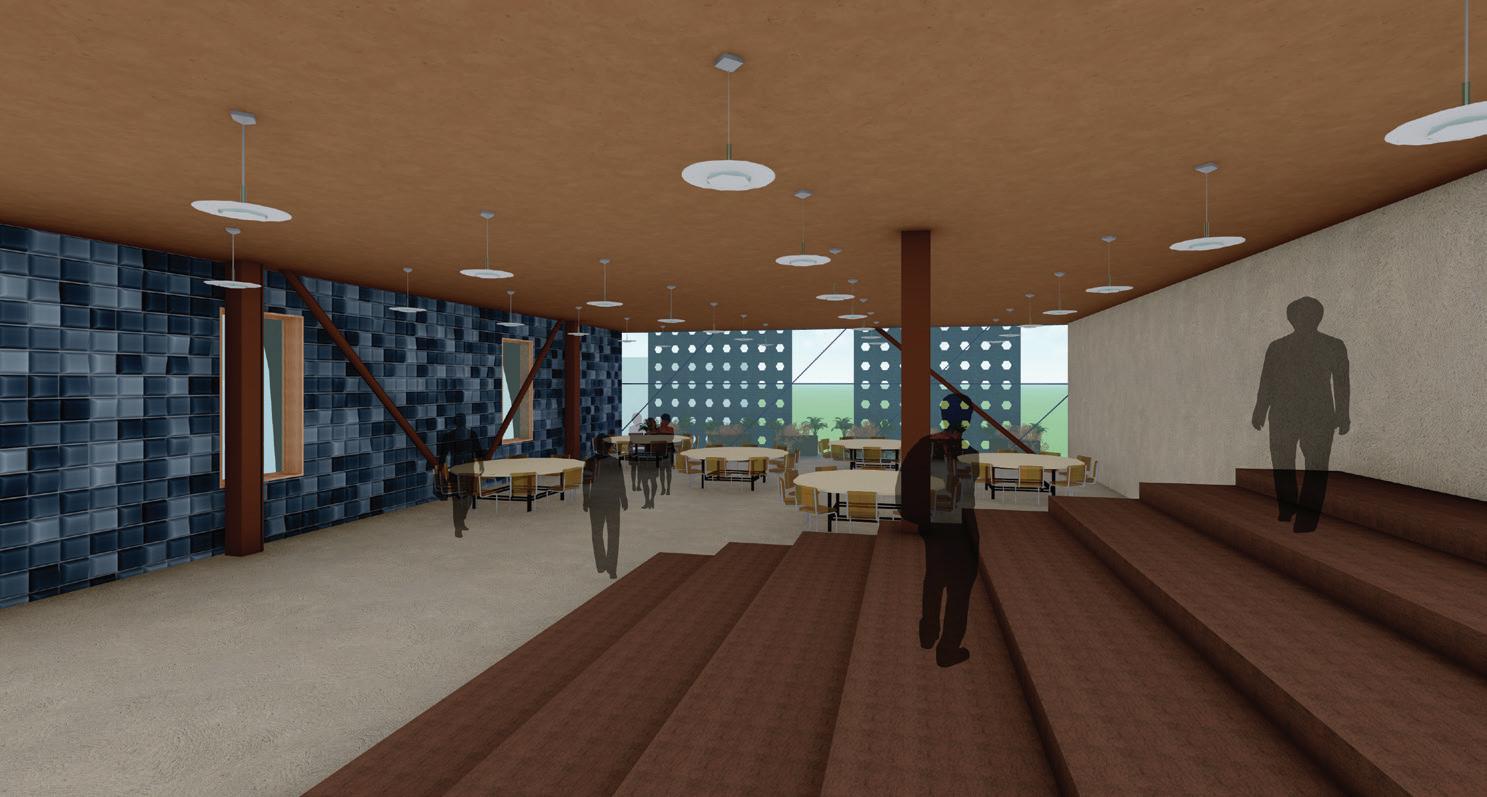
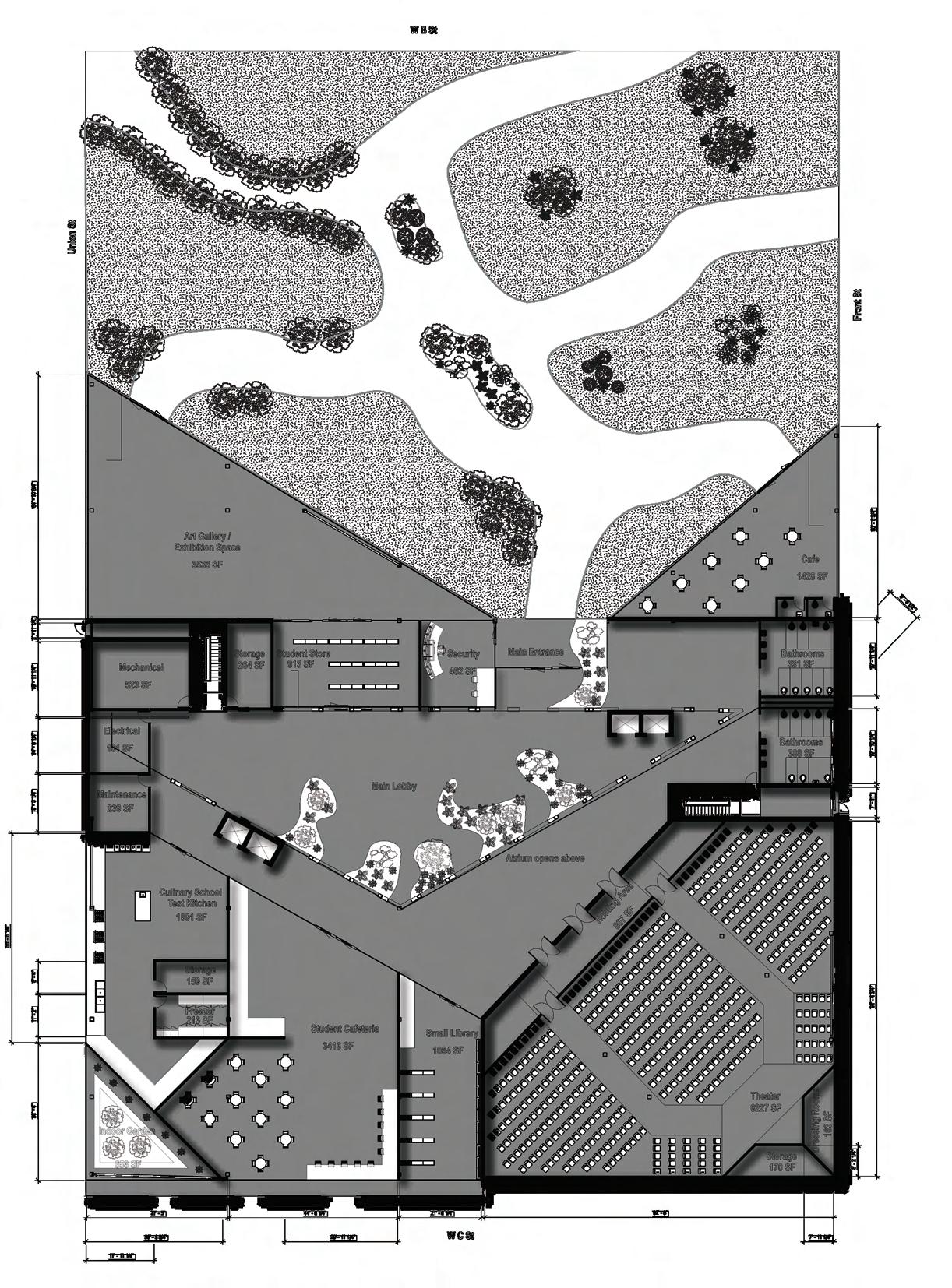
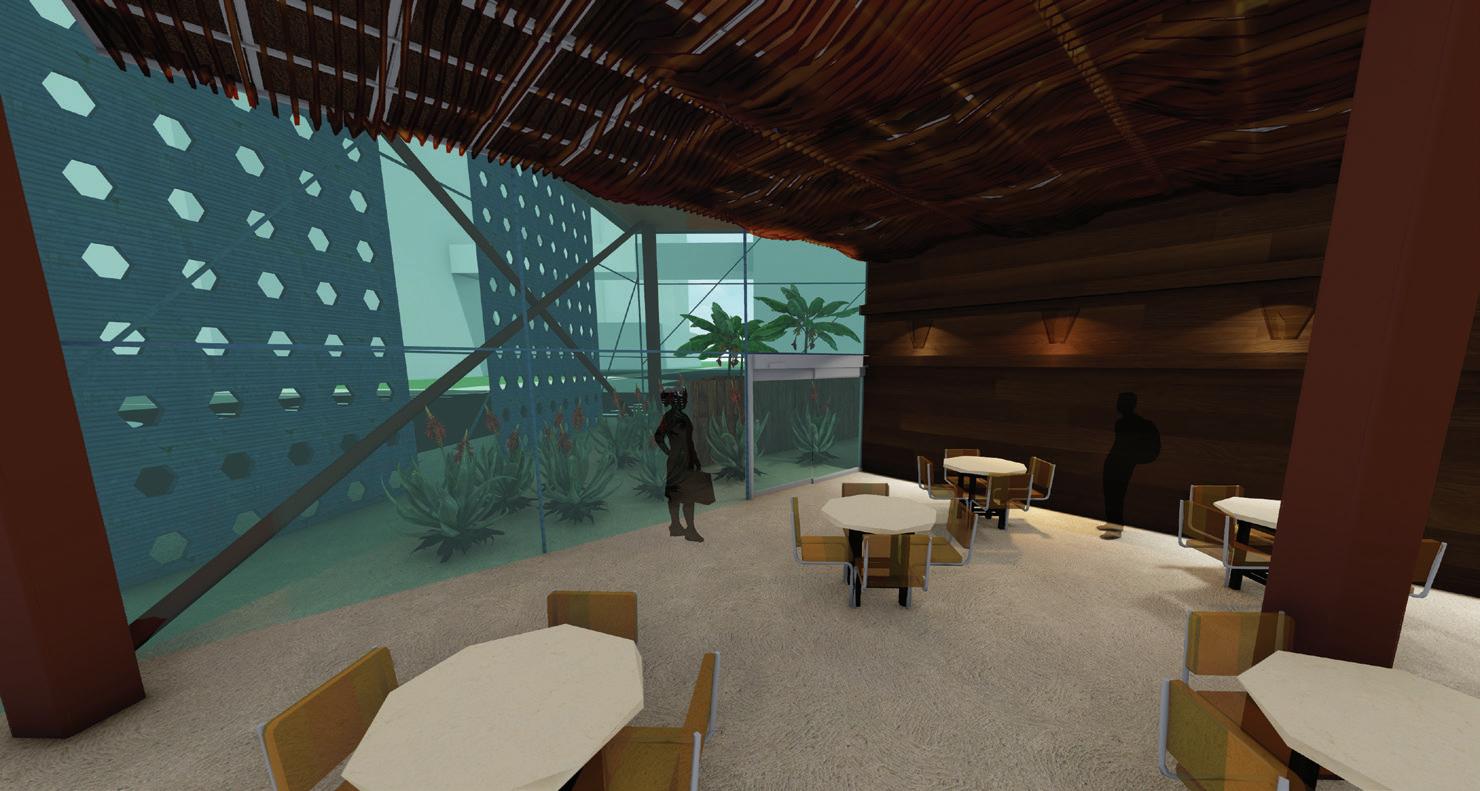
An indoor garden atrium is placed adjacent to the student cafeteria to create a direct visual connection to nature and helps blend the indoor and outdoor environments for students to enjoy while eating, gathering, or studying.
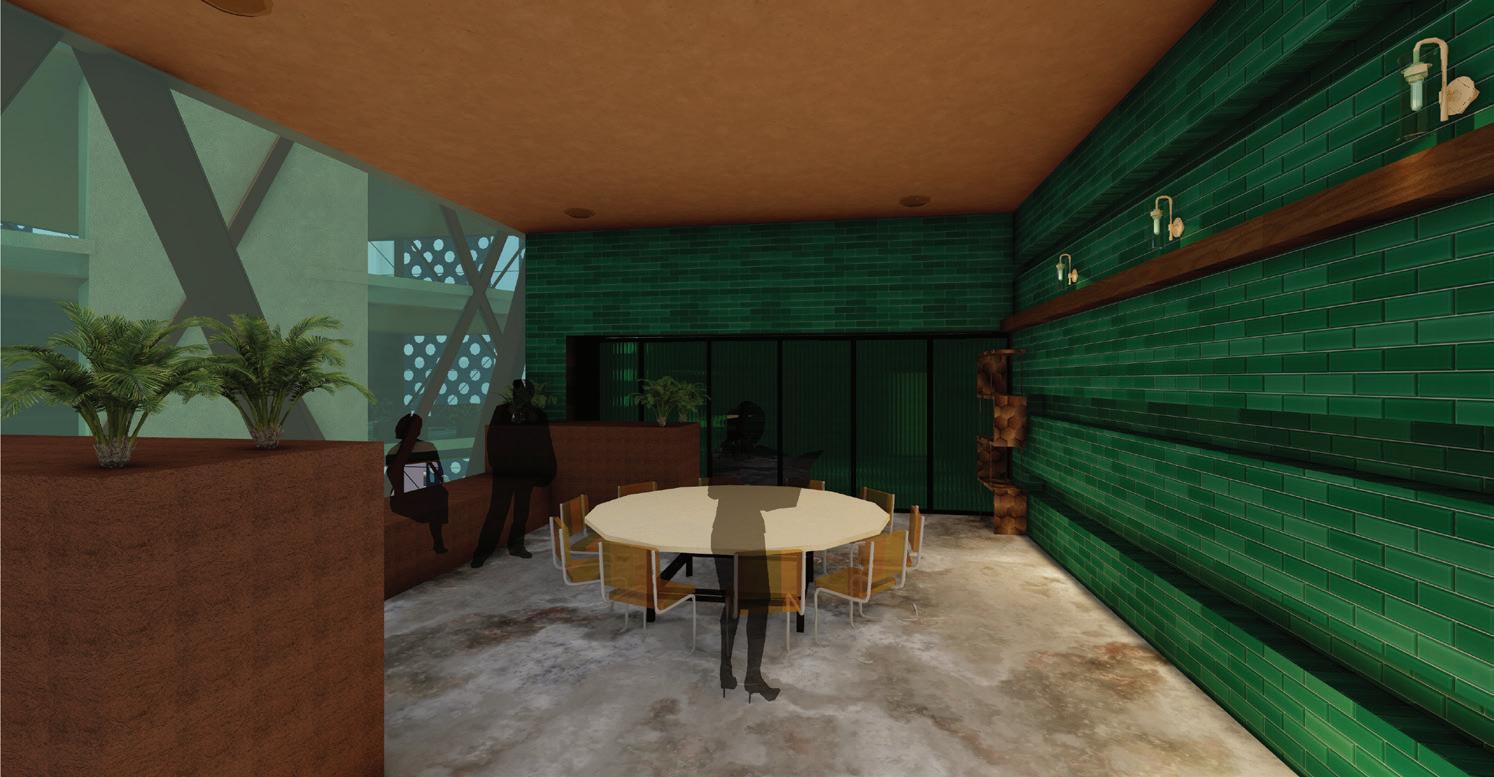
Green tiles used in study rooms as low wavelength colors help with focus and task efficiency levels while also promoting feelings of restfulness. The walls of the study room are able to be moved to enhance space flexibility.
1.Beginning with half lot coverage ( 150’ x 200’ x 250’
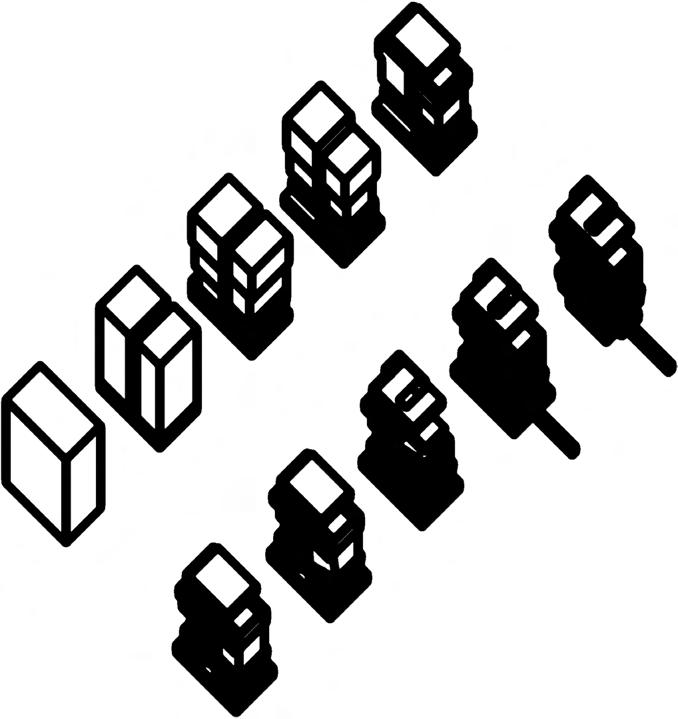

2. Stepback of 25’ applied along C street as per code requirements Two additional asymmetric stepbacks applied higher up to allow for covered outdoor spaces on West and East sides while promoting better ventilation.
3. Central atrium created to increase natural light and ventilation while giving whole building visual access to greenspace in lobby and frame the sky on groundlevel.
4. Bridge created to allow for stronger crossing over of program between buildings. Promotes collaboration and cultivates interaction between a wide vareity of users
5. Overhangs added to the South and East portions of the bridge to shade from intense sunlight in order to mitigate heat gain and make a more engaging sensory experience with this portion being darker and gradually getting lighter as the user traverses between the buildings and programs.
6. Triangulated spaces added on ground level to create a better framed, more inviting, and directional entrance.
7. Masses added as overhangs to north facade to generate more square footage on upper levels and to play with proportions and ceiling height.
8. Underground parking and vertical circulation elements added.