




Teacher: María Miranda

Student: Alba R. Santos. Z

Andrea Santiago

May 2024




 Esta foto de Autor desconocido está bajo licencia CC BY-SA-NC
Esta foto de Autor desconocido está bajo licencia CC BY

General Object
Develop a project where we will see the different verb tenses. What are they? What are they for? Present, past future, uses, characteristics, and rules of the verb be. In order to understand and write the English language by developing written material.
Specific Objective
• Make a piece of writing that allows you to explain each verb tense in order to understand it.
• Practice pronunciation in order to speak the English language.
• Contribute the knowledge acquired from the research so that other colleagues also understand.

In this paper we will look at the different ways of using the verb be. As well as the times in which it is used. As everyone knows, the English language is and will be our second language, which is why it is so important to speak and understand it fluently. That is why we will explain below rules, uses, characteristics and more in this written material
• The verb to be is the most commonly used verb in the English language and also the most important. It is used as both the main verb and the auxiliary, and is irregular in the past tense. It has 4 meanings, although the main ones are to be and to be.

• Meaning of the verb to be
• The verb to be is one of the most chameleonic verbs in English, so on many occasions its meaning depends on the context in which you find it. However, its main meanings are as follows:
• Be
• He is smart = He is smart
• Be
• It is cold today = Today it's getting cold
• Have
• Is there anybody inside? = Is there anyone inside?
• Power of Attorney (Permission)
• Tell her she is not to open the door to strangers = Tell her she can't open the door to strangers.

Using different forms of "be", you need to follow a few rules to convey all the messages and ideas accurately. First, remember to follow the subject-verb match. That means that the form of the verb changes depending on the number and person of the subject. For example: We am going to the school. (incorrect) We are going to the school. (correct)
There are more cases where the sentence structure could change. One of them is to use the existential constructs "there is" and "there are." Below are some more common situations.
• Oraciones negativas
• En inglés, el verbo "be" se usa en oraciones negativas para indicar lo opuesto o la negación de una declaración. Dependiendo del tiempo, algunas oraciones negativas con "to be" podrían confundir a los estudiantes de idiomas.
• Para formar una oración negativa usando "be" en tiempos presente y pasado, generalmente necesitas agregar la palabra "not" después de la forma apropiada de "be".
1. I’m not hungry.
2. You are not late.
3. Jake was not at the party.
4. His teammates weren’t prepared for the game.
• En tiempo futuro, hay dos reglas:
1. Con "will", debes poner "not" justo después del verbo "will". También puedes conjugar "will" + "not", formando "won’t".
1. I will not be a doctor.
2. She won’t be rich anymore.
2. Con "be going to" debes poner "not" justo antes de la parte "going to".
1. I am not going to be at Jake’s party.
2. She is not going to be an actress.
• Interrogative sentences
• Interrogative sentences are those used to ask questions. To form questions with the verbs 'to be', inversion or interrogative words are used. In the inversion to form an interrogative sentence with 'be', the subject and the appropriate form of 'be' are typically reversed. The structure is: 'be+subject+another part of the sentence'. Here are some examples:
• Am I late? (Interrogative sentence using 'am')
• Are you coming to the party? (Interrogative sentence using 'are')
• Is she your sister? (Interrogative sentence using 'is’)
• Were they at the concert? (Interrogative sentence using 'were')
• In interrogative sentences with 'be', you can use interrogative words (who, what, how, and so on) to search for specific information. The structure is 'interrogative word+be+subject+another part of the sentence'. Here are some examples:
• Who is at the door? (Using 'who' to ask about the person's identity)
• What are you doing? (Using 'what' to ask about an action or activity)
• Where were they last night? (Using 'where' to ask about a location)
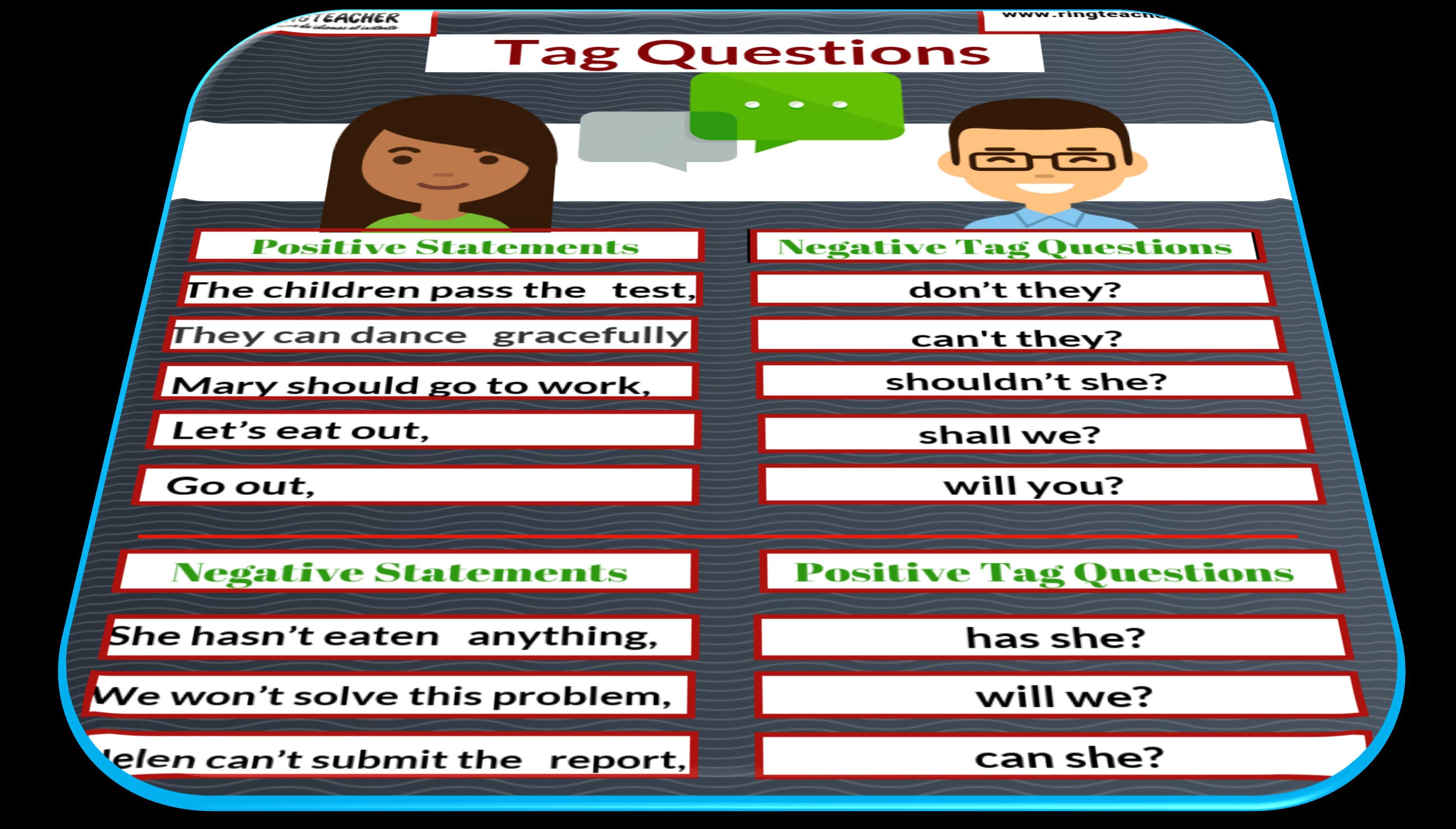
Another type of interrogative sentence is tag questioning. Tag questions are short questions added to the end of a statement to seek confirmation or agreement. When using 'be' in a statement, you can form a tag question by using the appropriate form of 'be' as the tag. You should always add 'not' to the correct form of 'be' in tag questions. Here are some examples: You are coming to the party, aren't you?
She is your friend, isn't she? They were at the store, weren't they?
These rules should help you form grammatically correct interrogative sentences using the verb 'be' in various contexts. Remember to adjust the 'be' form and sentence structure based on the specific question you want to ask.
• Imperative Sentences
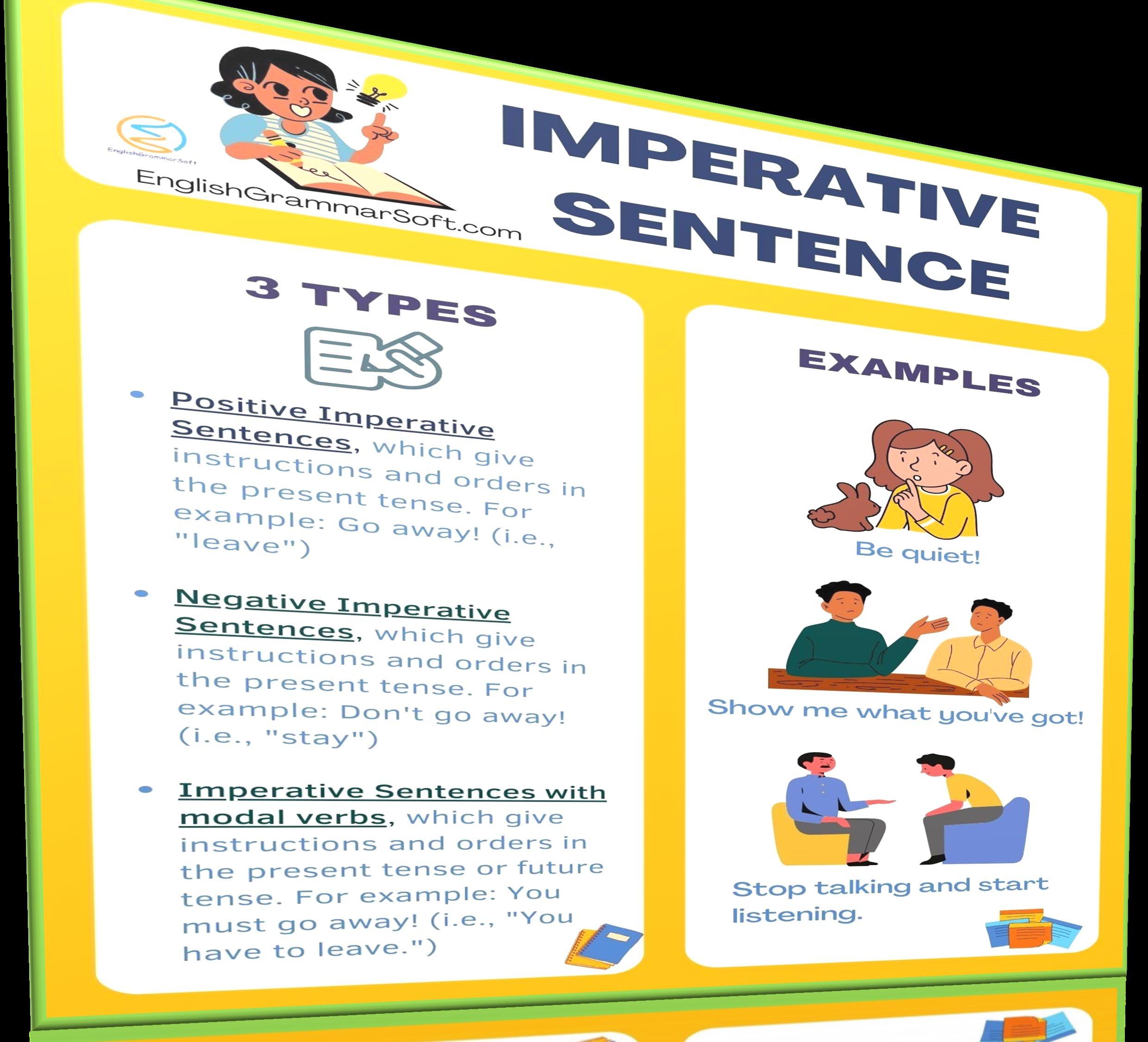
• Imperative sentences are used to give commands, instructions, or make requests. They can be affirmative, negative, and interrogative (the latter is usually used to be polite).
• When giving an order or instruction, you should use the simple infinitive of the verb 'be'. For example:
• Be quite!
• Be careful!
• In negative imperative sentences you should put an auxiliary verb 'do' with 'not' before the verb 'to be'.
• Don't be late.
• Don't be rude. Imperative sentences can also be used to make polite requests. To do this, you can add phrases like "please" or use a more polite tone when giving the command. In such cases, you still follow the same rules mentioned above for forming imperative, affirmative, or negative sentences.
• Please be quiet.
• Could you be there on time, please?
• Regular expressions with "to be"
• The English language is rich in expressions that incorporate the verb 'to be', each with its own unique nuance and implication. Explaining the use of 'to be' is incomplete without a list of such expressions.
• To be up to: Implies being busy with something or being responsible for something. For example, "What are you up to this weekend?"
• To be into: Suggests having an interest or passion for something. For example, "She is really into classical music."
• To be over: Indicates that something has ended or come to an end. For example, "The movie is over."
• To be off: It can mean to leave or start a journey, or indicate that something is wrong. For example, "I will be off for the night."
• To be down to: Often involves being willing to do something or having a reduced amount of something. For example, "I'm down to go hiking this weekend", or "We are down to the last piece of cake".
• To be out of: Indicates a lack or exhaustion of something. For example, "We are out of milk."
• To be on to: Suggests becoming aware of something, often a truth or idea. For example, "I think he's on to us."

• Main Uses of the Verb to Be


• vez que ya conocemos sus significados más conocidos, podemos conocer los usos más comunes de este término:
• Verbo
• Sirve para mencionar una acción o estado del sujeto en cualquier tiempo.
• I am Mexican = Soy mexicano.
• I was a doctor = Yo era doctor.
• Verbo auxiliar
• Se usa en compañía de otros verbos para dar a entender que las acciones o estados se desarrollan en el momento. Para ello se usa la conjugación –ing.
• I am still working= Todavía estoy trabajando.
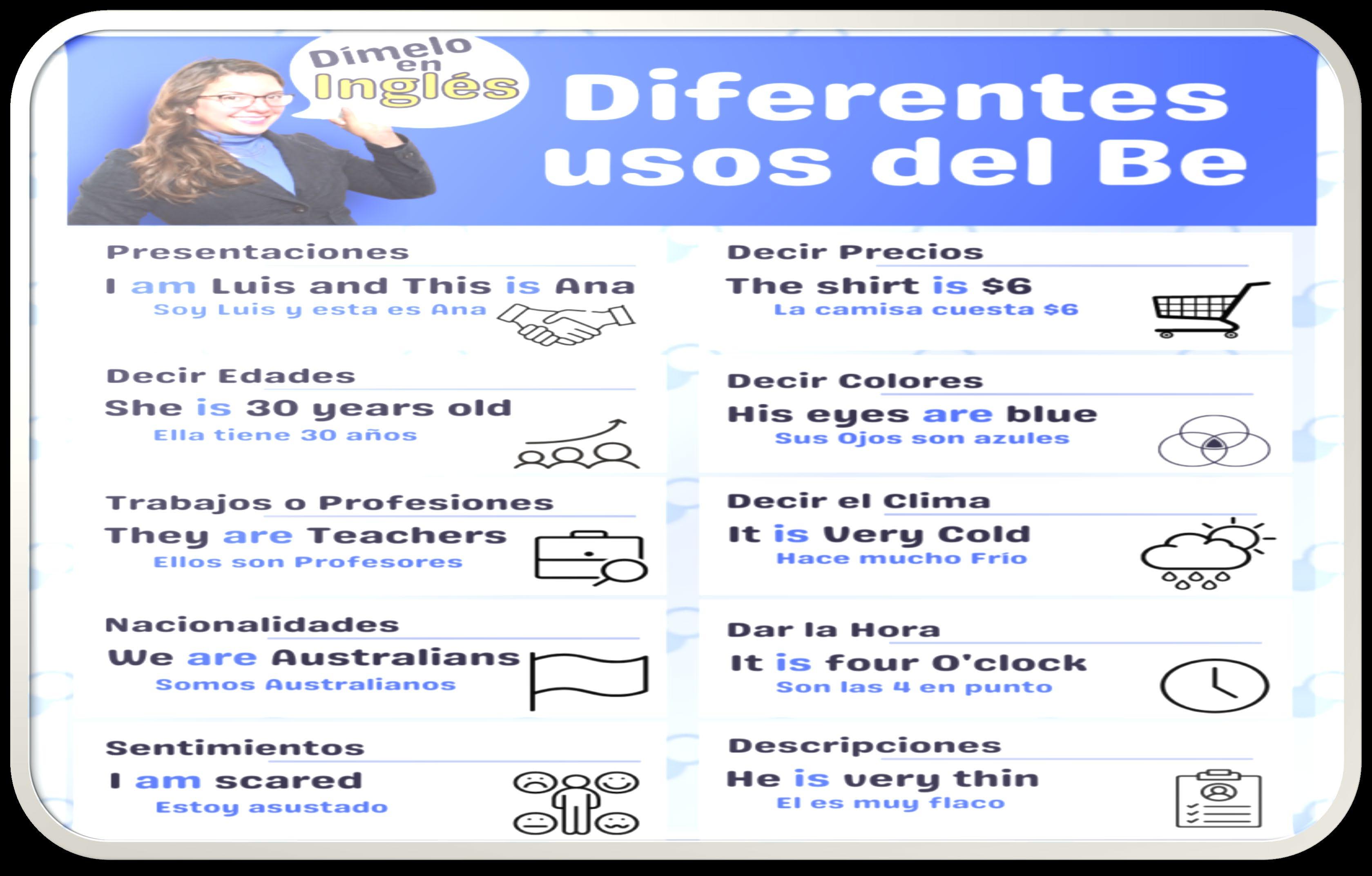
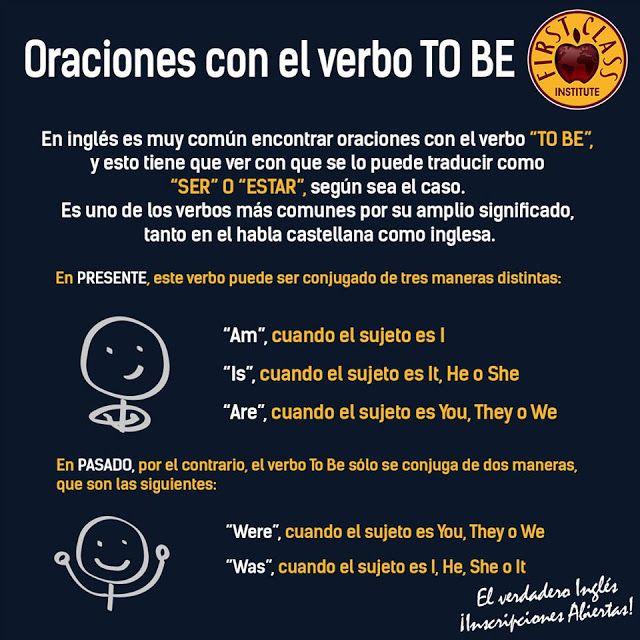
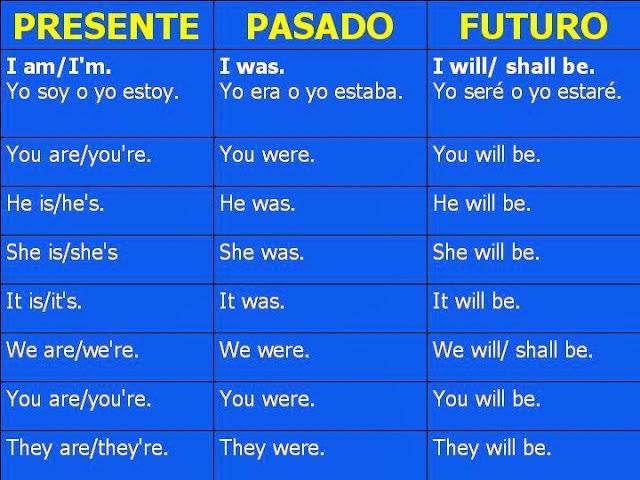
• The verb to be in the present tense is mainly used to refer to something true in the present or to give basic information. The present tense forms of the verb are am, is, are.
• The verb to be in the past tense is used to talk about true information, facts, or data that happened in the past. The verb takes the form of was and were, depending on the personal pronoun with which it is conjugated.
• The verb to be in the future tense uses the form will be and is used to talk about something that will be or will be in the future.
• Present simple
Affirmative Negative Interrogative
I am I am not Am I ?
You are You are not Are you ?
He/She/It is He/She/It is not Is he/she/it ?
We are We are not Are we ?
You are You are not Are you ?
They are They are not Are they ?



He is a pilot
He is not a pilot Is he a pilot?
She is a Nun She is not a Nun Is she a Nun?
It is a tv It is not a Tv Is it a tv? They are in Costa Rica They are not in Costa Rica Are they in Costa Rica


Affirmative Negative Interrogative

I was I was not Was I ?
Affirmative Negative Interrogative I will be I will not be Will I be?
You were You were not Were you ?
You will be You will not be Will you be?
He/She/It was He/She/It was not Was he/she/it ? We were We were not Were we ?
He/She/It will be He/She/It will not be Will he/she/it be?
We will be We will not be Will we be?
You were You were not Were you ? They were They were not Were they ?
You will be You will not be Will you be? They will be They will not be Will they be?





Affirmative Negative Interrogative
I have been I have not been Have I been?
Affirmative Negative Interrogative
I had been I had not been Had I been?
You have been You have not been Have you been?
You had been You had not been Had you been?
He/She/It has been He/She/It has not been Has he/she/it been?
He/She/It had been He/She/It had not been Had he/she/it been?
We have been We have not been Have we been?
We had been We had not been Had we been?
You have been You have not been Have you been?
They have been They have not been Have they been?
You had been You had not been Had you been?
They had been They had not been Had they been?


Affirmative Negative Interrogative
I will have been I will not have been Will I have been?
You will have been
He/She/It will have been
We will have been
You will not have been
He/She/It will not have been
We will not have been
You will have been
They will have been
Will you have been?
Will he/she/it have been?
Will we have been?
You will not have been
They will not have been
Will you have been?
Will they have been?
Affirmative Negative Interrogative
I would be I would not be Would I be?
You would be You would not be Would you be?
He/She/It would be He/She/It would not be Would he/she/it be?
We would be We would not be Would we be?
You would be You would not be Would you be?
They would be They would not be Would they be?

Affirmative Negative Interrogative
I would have been
You would have been
He/She/It would have been
We would have been
I would not have been
You would not have been
He/She/It would not have been
We would not have been
You would have been
They would have been
You would not have been
They would not have been
Would I have been?
Would you have been?
Would he/she/it have been?
Would we have been?
Would you have been?
Would they have been?
Examples present simple
• He goes to school every morning.
• She understands English.
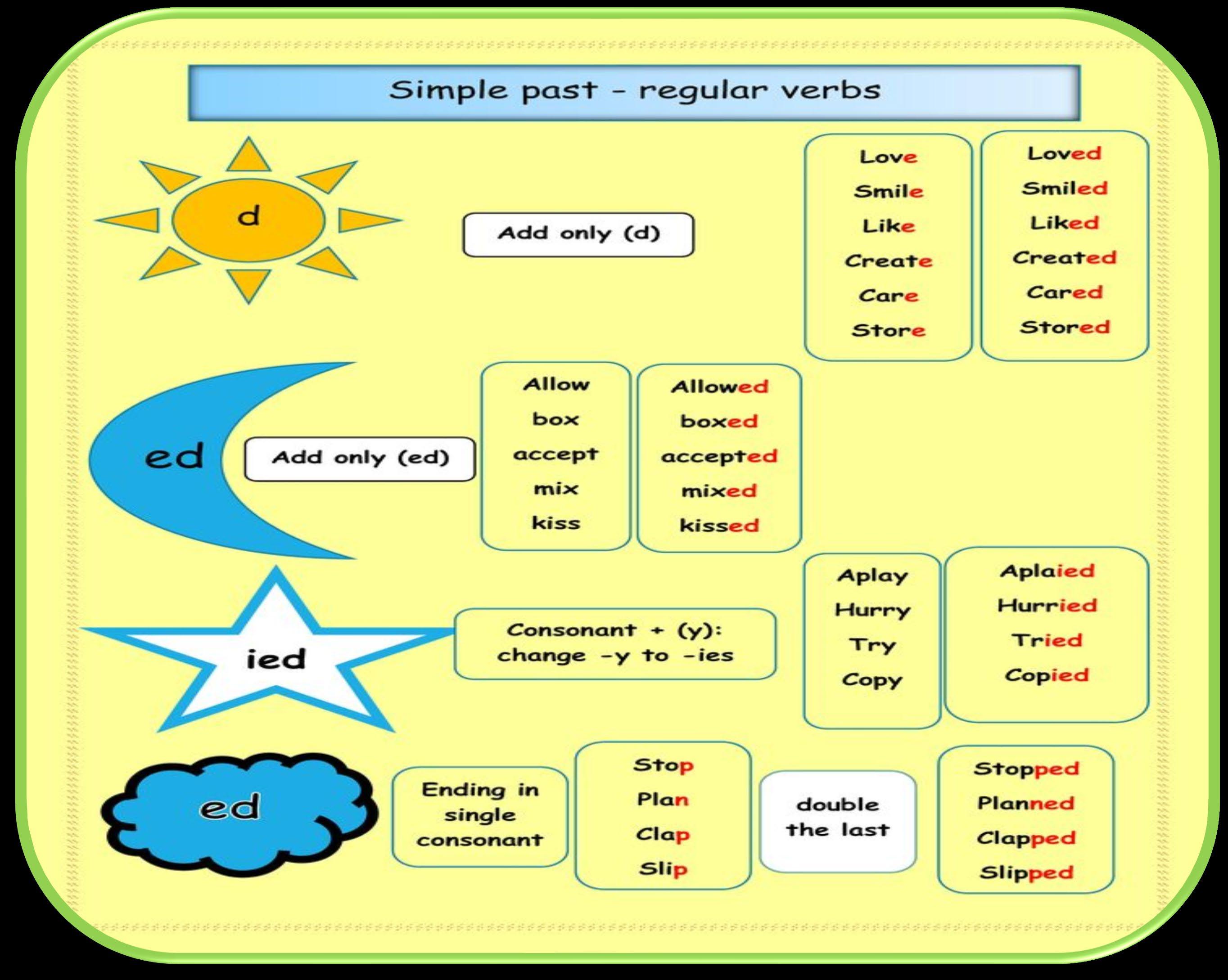
Example past Simple
• She played piano every night
• He tried to be vegetarian
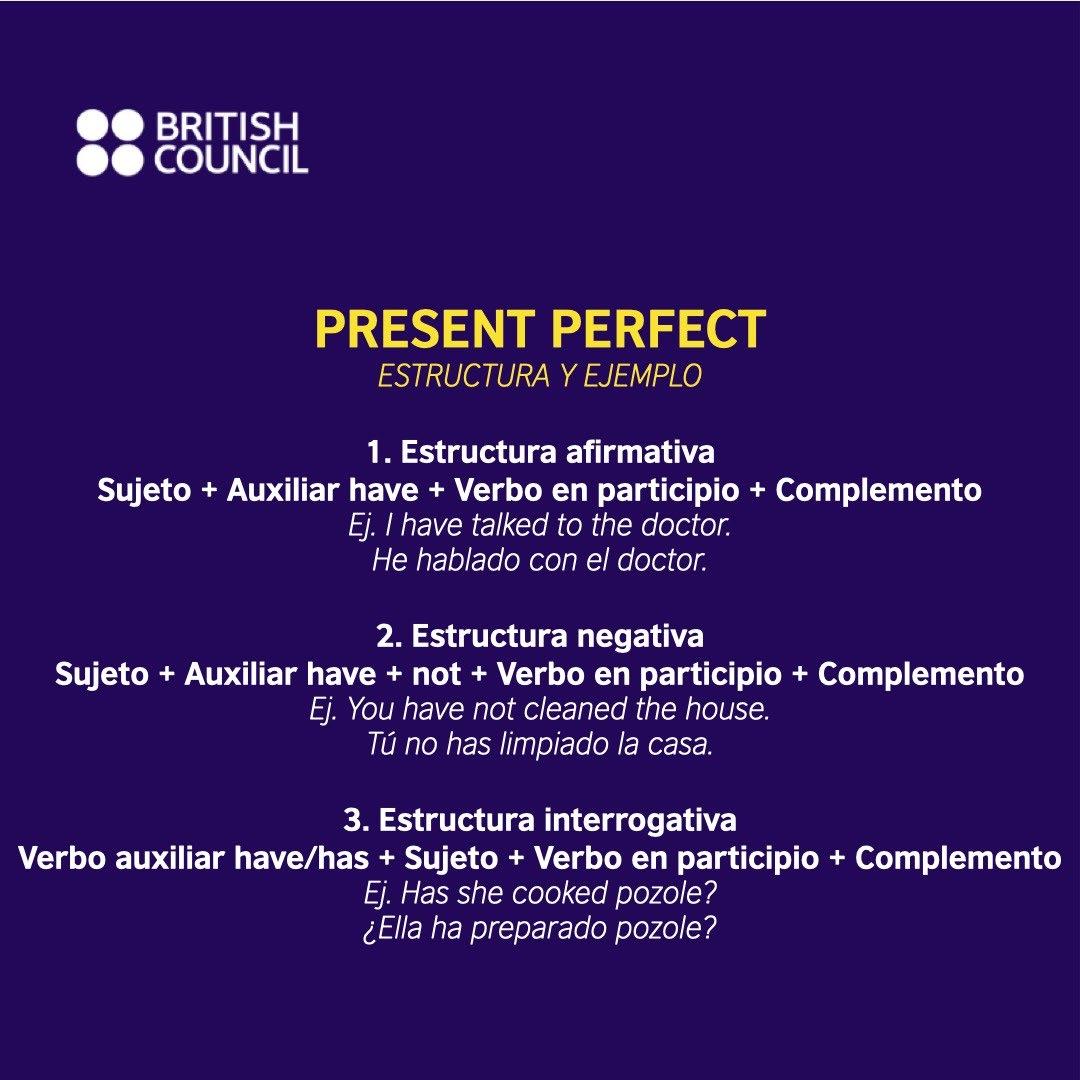
Example perfect present simple have just finished my exam
The teacher has not corrected the homework yet

Example Past perfect simple
She hadn't listened to me and so she was lost
He had visited me three times before
Example future perfect
I will have been here for six months on June 23rd.
By the time you read this I will have left.
Example Conditional
If I have time, I'll finish that letter.
What will you do if you miss the plane?
Example perfect conditional
• If it had rained, you would have gotten wet.
• You would have gotten wet if it had rained.

Teacher Explaining the verb to be
We can conclude that learning to use the verb "to be" is very important to be able to express ourselves in the English language. It is also the basis of the grammatical structure of the other tenses. In these times it is very necessary to learn the English language since every day more and more cas is used in all areas of human development

https://www.britishcouncil.org.mx/blog/verbo-to-be
https://conjugador.reverso.net/conjugacion-ingles-verbo-be.html
https://idiomas.gcfglobal.org/es/curso/ingles/gramatica/como-se-conjuga-el-verbo-to-be
https://www.ingles.com/guia/usos-del-verbo-to-be-en-presente