Reproduction in whole or in part without written permission is prohibited.
Opinions expressed in Alberta Senior Living are those of the authors and do not necessarily reflect the views of the publisher. While every effort has been made to ensure accuracy, Allard Group of Companies Inc. assumes no responsibility for errors or omissions.
Printed in Canada
ISSN 2819-7577 (Print)
ISSN 2819-7585 (Online)
Letter from The Editor
If there’s one thing Albertans know how to do, it’s make the most of summer.
After enduring (what feels like) a million months of cold, we’re all ready to feel the happy, vacation-like vibes that July and August tend to bring. My personal favourites are dining on patios, checking out the amazing festivals around the province, and puttering in my yard…plus two new ones! My husband and I bought a travel trailer this year…which we are obsessed with, and my daughter’s partner is one of the soldiers in Lord Strathcona’s Horse (Royal Canadians), so he and the rest of the Strathcona Mounted Troop will be what we’re binge-watching this summer!
As I worked on this issue, I noticed a common thread running through many of the stories you’ll find in these pages: saying yes. Yes to new experiences, to lifelong learning, to friendships, creativity, travel, volunteering, and trying something you’ve always wanted to do. (A big shout-out to saying no, though. The older I get, the more I embrace my right to say no. Sometimes, it just feels GREAT!)
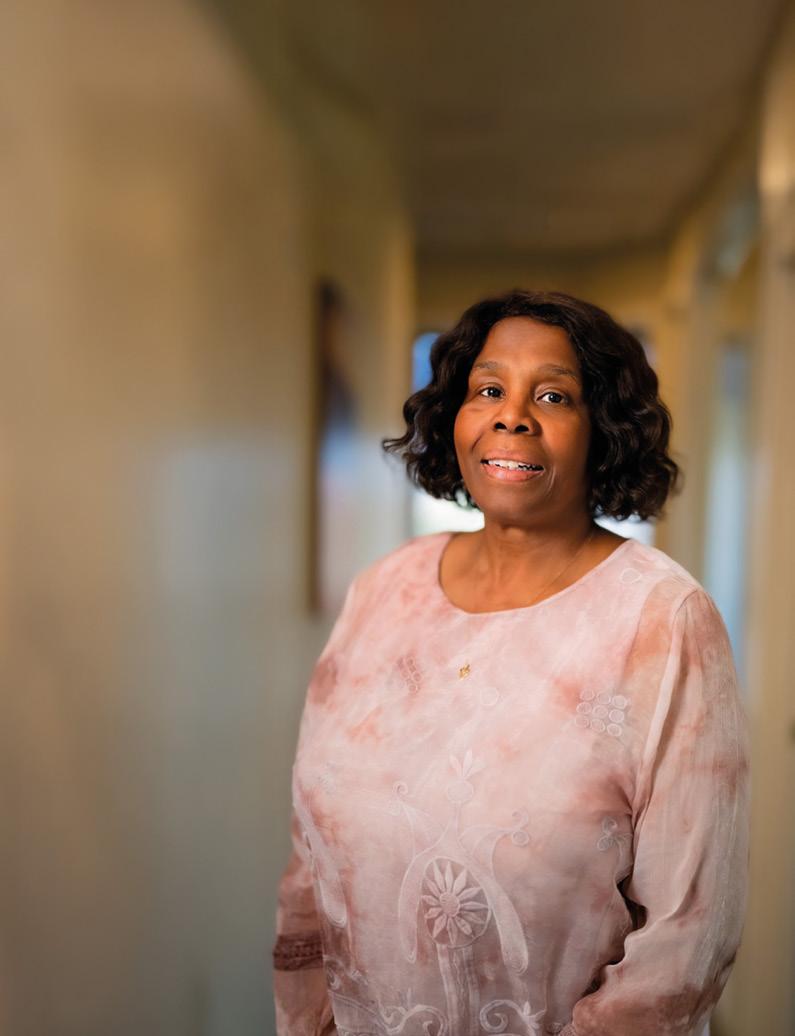
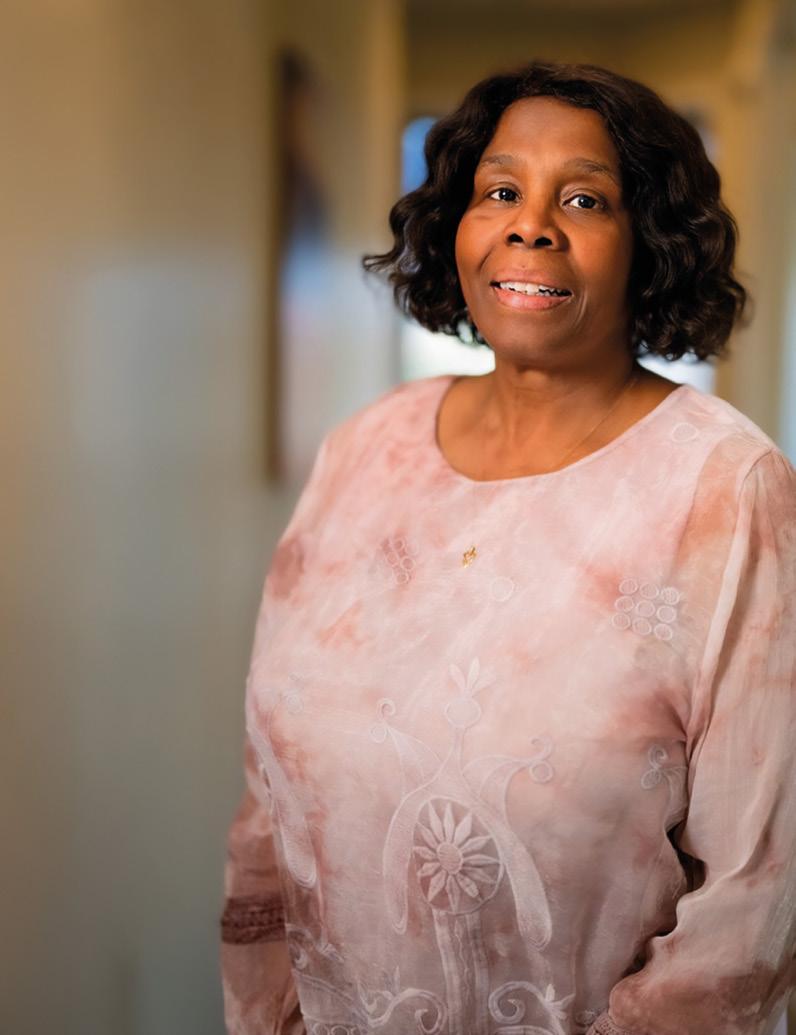
Our cover story features the inspiring Suzanne Sovdi, who recently completed
a master’s degree and became a provisional psychologist at an age when many people think their biggest accomplishments are behind them. Suzanne’s story is a wonderful reminder that it’s never too late to learn something new, pursue a dream, or take a completely unexpected path.
You’ll also meet photographer Don Campbell, who at 85 is still travelling the world with a camera in hand and the curiosity of someone half his age. We explore Alberta’s best summer festivals, discover a thriving community of woodcarvers, share ideas for staying connected, and highlight ways to stay safe while enjoying Alberta’s lakes, rivers, and outdoor spaces.
What I love most about this issue is that it celebrates the idea that life doesn’t stop being interesting after 55. In many ways, it becomes even more interesting. We often have more freedom to pursue hobbies, travel, volunteer, spend time with family, and focus on the things that truly matter.
One of my favourite articles in this issue talks about connection, and I think that’s something many of us are craving these days. In a world that often feels busy and disconnected, summer gives us countless
opportunities to reconnect with family, friends, neighbours, communities, and even ourselves.
Maybe that means attending a festival you’ve never been to before, or joining a club, or taking a class, or calling an old friend. Or maybe it simply means sitting on the deck with your morning coffee and appreciating a beautiful Alberta summer day.
Whatever brings you joy, I hope you make time for it!
Thank you, as always, for spending some of your time with Alberta Senior Living. I love sharing these stories with you, and I hope they inspire you to make the most of this season.
Here’s to sunshine, laughter, good company, some yummy food, and a summer filled with wonderful memories.
Warmly,
Kerri Leland Publisher & Editor-in-Chief Alberta Senior Living
Expert Home Care When It Matters Most
HOME CARE REFINED AND RN-LED
Tailored companionship, respite, nursing, and dignified palliative/endof-life support delivered with presence, discretion and respect.
Locally owned and guided by decades of clinical experience, we partner closely with families, adapting care as needs evolve.
“Compass Rose Care stepped in during the most overwhelming time of my life. Their Registered Nurse–led team didn’t just care for my parents, they supported me through every decision, every pivot, and every fear. I truly could not have done this without them.”
—Sylvia, Family Caregiver, Calgary
ADULT DAY PROGRAM “THE BRIDGE”
Structured daytime support for older adults who cannot safely be left alone, featuring meaningful social engagement and thoughtfully planned activities tailored daily to the group.
A supportive bridge for families seeking connection, structure, and a plan for what’s next.
Space is limited. Call to secure your spot today.
Letter from Minister Minister of Public Safety and Emergency Services Mike Ellis
Summer is a great time to enjoy Alberta’s beautiful scenery and long daylight hours, but it can also bring storms, high temperatures and increased fire risk. Many of this magazine’s readers have likely experienced floods, wildfires or tornadoes firsthand, and many seniors have been instrumental in helping Alberta’s communities recover from disasters. While we can’t control the weather, we can prepare for summer hazards.
Whether you live in the mountains, the foothills, the prairies, or a forest town, each community has its own challenges. Knowing the hazards you and your neighbours could face will help you take appropriate steps to prepare. Find a trusted source of information, like a reliable radio or television news channel, or an app for your phone, like Alberta Emergency Alert or Alberta Wildfire Status. Bookmark a government web page, such as your
town’s home page, or Alberta.ca, which has a wide variety of preparedness tips. Follow your local government on your favourite social media platform, such as Instagram, Facebook or X.
I also encourage everyone to build relationships with others in your community. Get to know your neighbours, the folks at church, slo-pitch teammates or pickleball partners. These connections can help us stay safe and recover faster. Together, we are stronger and more resilient.
Also, make sure to build an emergency plan and emergency kit. Your plan should include how you will contact friends and family and where you will go if you need to evacuate. Your emergency kit should include essentials like medication, food, and water to last a week. If you have pets or the grandchildren are visiting, don’t forget to include food, snacks and toys for them.
Preparedness doesn’t happen overnight, but we can move towards it every
day. It’s a journey unique to everyone, and to help you along the way, staff at the Alberta Emergency Management Agency have contributed an article to this edition of the magazine that will give readers new tools and strategies to prepare for an emergency. I understand other writers and specialists have also provided feature pieces on important topics like how to travel safely and beat the heat. I hope this copy of Alberta Senior Living helps you stay safe and be well over the summer.
Preparedness is how we protect ourselves and the people around us. By taking a few practical steps now, we can all enjoy a safer, healthier summer.
Honourable Mike Ellis Deputy Premier of Alberta, Minister of Public Safety and Emergency Services
Listening with Heart
The Remarkable Journey of Suzanne Sovdi
By Kerri Leland
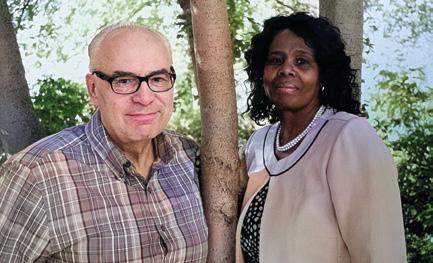
At 68, Suzanne Sovdi is still learning, growing, and embracing new challenges.
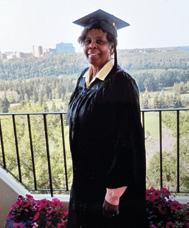
After more than 25 years spent supporting others through life’s struggles and triumphs, she recently achieved a milestone many people would consider daunting at any age: earning a Master’s Degree in Psychology and becoming a provisional psychologist in Alberta.
Photo courtesy of Tailor Made Wellness
For Suzanne, however, the achievement is less about credentials and more about purpose.
“I can continue to learn and grow at the age of 68,” she says. “It’s been an interesting and sometimes gruelling journey, but also very fulfilling.”
That spirit of curiosity, resilience, and lifelong growth has defined much of Suzanne’s life, from her childhood as one of the few Black families in Moose Jaw, Saskatchewan, to her decades of counselling work, faith leadership, and community involvement.
Today, as she counsels clients through difficult seasons at Capstone Counselling and Lighthouse Counselling Centre in Edmonton, Suzanne brings something that can’t be taught in a classroom: a lifetime of listening, learning, and living.
FROM BARBADOS TO THE PRAIRIES
Suzanne’s story begins on the Caribbean island of Barbados.
Born Suzanne Valencia Sealy, she was just four years old when her parents, Eustace and Genetha Sealy, made the life-changing decision to immigrate to Canada with their three children.
“My parents and two siblings came to Canada when I was four years old,” she recalls. “Arriving from a tropical island to
the cold winter of the Saskatchewan plains was quite a shock to the system, and an overall cultural shock.”
Her father had accepted an invitation from his younger brother, who had arrived in Canada a year earlier. The family settled in Moose Jaw, where they became one of only a few Black families in the city.
For her parents, the transition involved far more than adapting to winter weather.
“It was a new way of living, being a minority, finding new foods to eat and heavier clothes to wear while attempting to assimilate into a new culture,” Suzanne says.
While she was young enough to adapt relatively easily, she sensed the challenges her parents faced. Her mother emphasized the importance of embracing Canadian life while maintaining their heritage and values.
School was another place where Suzanne became aware of being different.
“Other than my older brother and younger sister, the colour of our skin was our defining difference,” she says. “People, for the most part, were kind and helpful, but there were often undercurrents of tension which we felt at different times.”
Despite those experiences, Suzanne remembers her childhood as one rich in family, friendship, and community. Her parents welcomed immigrants from many different backgrounds into their home, creating an environment filled with laughter, food, and connection.
“We had so much fun, enjoyed great parties and learned to appreciate different foods from around the world,” she says.
THE POWER OF BEING HEARD
One of Suzanne’s earliest influences was her father.
“As a child and teenager, my dad was a significant influence in showing me what a quiet and gentle spirit could accomplish,” she says. “Sometimes with words, often in silence, with love and forgiveness.”
His encouragement helped shape her confidence during years when she often felt different from those around her.
“At different times, my dad would offer me words of encouragement which accented my uniqueness,” she says. “He often would ask my opinion or inquire how I was feeling about certain situations. I knew he cared for me and was looking out for me.”
But Suzanne never originally planned to become a counsellor.
After high school, she considered a career in dietetics and spent a summer working in a hospital dietary department. It quickly became clear that path wasn’t for her.
The turning point came during a conversation with a friend at Bible College.
“She asked me if I had considered counselling, which I hadn’t,” Suzanne recalls. The reason surprised her.
“Her main reason for suggesting that was she saw that I really listened to people.”
As Suzanne reflected on the observation, she realized her friend was right.
“I started to notice that I did give specific attention to what people were sharing. I realized I was listening because I cared about what they were saying and also experiencing. I also wanted to know what they were not saying and who they were.”
She laughs softly when she reflects on that moment today.
“I have been giving my ear and heart ever since.”
FAITH, FAMILY, AND FINDING HER WAY
Suzanne’s educational journey eventually led her from Saskatchewan to the United States, where she earned a degree in psychology. The experience proved transformative.
“My time at Evangel University was the catalyst for shaping my worldview,” she says.
When she returned to Canada, she accepted a position as Dean of Women at a Bible college in Moose Jaw. Alongside administrative responsibilities, she taught classes, worked as a librarian, and continued counselling.
The position also introduced her to a young man named Leslie Sovdi.
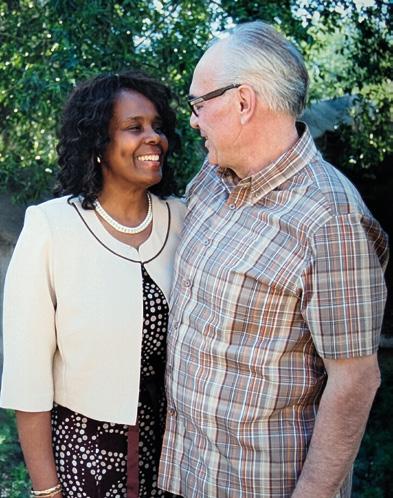
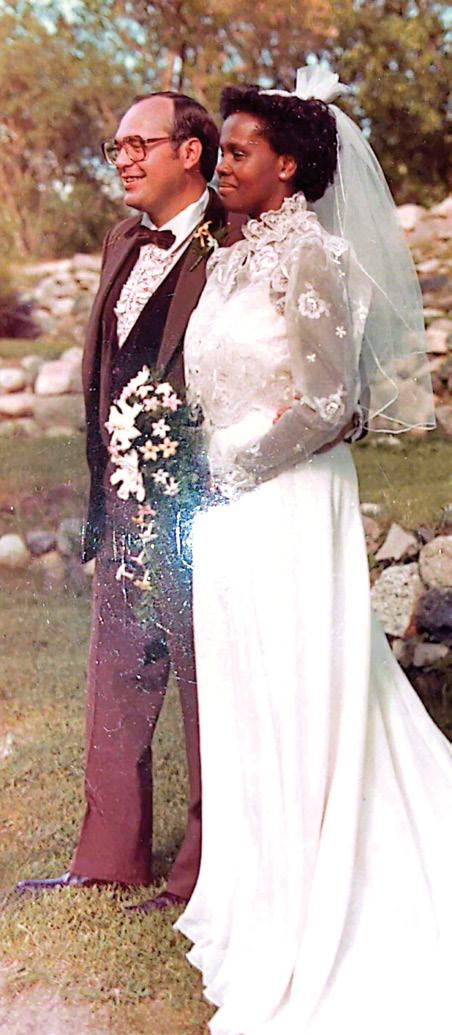
The couple married in 1985 and recently celebrated their 40th wedding anniversary.
“When I met my husband, he challenged the way I did my faith and was passionate about his relationship with God,” Suzanne says. “He has helped me think about the deeper things of faith.”
Together, they helped plant a church in Moose Jaw before making another major life transition in 1991.
“We took a step of faith and moved to Alberta,” she says.
The move marked the beginning of a new chapter that eventually brought them to Edmonton, where they live today.
Throughout the years, Suzanne continued counselling in various capacities while balancing family life, faith commitments, and community involvement.
Looking back, she sees relationships as one of the greatest shaping forces in her life.
“When I consider who I am today, there are key relationships that have given my life a structure that has stood for me in the face of joys and difficulties.”
At the centre of those relationships is her faith.
“I would not have withstood the many storms and upheavals that have been part of this journey without God’s help,” she says.
RETURNING TO THE CLASSROOM AT 60
Most people approaching retirement are looking for ways to slow down. Suzanne decided to go back to university.
In 2018, at age 60, she enrolled in a Master’s program in psychology through Yorkville University. The timing couldn’t have been more challenging.
“The challenge of doing online courses, learning new computer skills, and functioning during COVID for someone over 60 was truly a feat,” she says.
Yet she persisted, and the experience tested her in unexpected ways.
“I am learning that I can still learn and I can remain curious,” she says. “My capacity for retention was put to the test. I asked more questions than I had asked in school the first time around.”
Along the way, she discovered new strengths and new insights about herself.
“I learned what was new in my field and also what was new in me.”
The result was not only a graduate degree but a renewed sense of purpose.
“I am discovering ways of thinking, ways of being and ways of doing,” she says. “Some I want to keep, some I am working at discarding—old patterns that don’t work at this stage of life.”
WHAT DECADES OF COUNSELLING HAVE TAUGHT HER
Few professions offer as intimate a view of the human experience as counselling.
Over the years, Suzanne has listened to stories of grief, trauma, resilience, healing, and hope. The experience has profoundly changed her.
“This type of work makes it possible to look closer at one’s own stuff,” she says. “Some of the unravelling moments for me have come as I have listened to people’s stories.”
The work has also deepened her appreciation for the strength people possess.
“When you hear people’s stories, you gain a better understanding of what they have had to do to be in my office, and it is very humbling.”
While counselling often focuses on challenges, Suzanne also witnesses remarkable victories.
“My clients’ improvements and victories help me know that I am doing what I can do.”
Ultimately, she sees counselling as more than a profession.
“I don’t see it as something I do, but rather an extension of who I am and how God has created me.”
LEARNING TO CARE FOR HERSELF
Supporting others emotionally requires intentional self-care, a lesson Suzanne says took years to learn.
“It has taken me quite a few years to learn self-care and setting healthy boundaries,” she says.
Today, she regularly checks in with herself by asking a simple question: What do I need right now?
From there, she evaluates five key areas of life: emotional, physical, mental, spiritual, and relational well-being.
“If I don’t know what I need, it’s fairly difficult to adjust my expectations of myself or others,” she says.
Another important lesson has been learning the difference between wants and needs.
“That helps clear some of the rubble from my life.”
CREATIVITY, FRIENDSHIP, AND JOY
Outside of work, Suzanne finds renewal through creativity.
Whether she’s baking, making handmade cards, working on visual projects, or assembling puzzles, creative pursuits provide a welcome balance.
“Creativity brings renewal into my life,” she says. “When I sit to make a card or work on a project, I am able to let go of the expectations or restrictions I sometimes place on myself.”
For someone who once doubted her own creativity, discovering those outlets has been surprisingly liberating.
“A friend helped fuel the possibilities by showing me ways to uncover creativity,” she says.
Friendships have also remained a vital source of joy throughout her life.
Some of her closest friends date back to grade school and university. Others
are newer relationships that continue to encourage and challenge her.
“I have been overwhelmed with the love that has come through these people,” she says.
AGING WITH INTENTION
As she approaches her seventh decade, Suzanne has become increasingly intentional about how she spends her time and energy.
“Growing old is not for the faint of heart,” she says.
Rather than longing for the past, she focuses on embracing the present.
“I could spend an inordinate amount of time wishing for things to be back to the way they were at a certain age, or I can move ahead with how things are now.”
That shift in perspective has made a significant difference.
“Changing my attitude has made a significant difference.”
She also recognizes the importance of accepting limitations without guilt.
“I can’t do what I used to do at 40 or 50. Setting realistic limits is key for me.”
Perhaps most importantly, aging has helped her focus on what truly matters.
“As I am closer to the end of my life than before, I want to make sure that the decisions I make are ones I can live with.”
LIVING LIFE FULLY
These days, Suzanne continues to counsel clients, travel with loved ones, read, laugh, try new foods, and spend time with family and friends.
She remains deeply grateful for the life she has built and the lessons she continues to learn.
One piece of wisdom still guides her every day.
“My Dad used to say to me, ‘Live, live life fully.’”
It’s advice she continues to embrace.
Recently, she read a book called Living Life Backwards, which reinforced the importance of making the most of the time we have.
“Without having a fatalistic perspective on life, it’s important to live each day, each moment and be grateful for the time that I have here.”
At 68, Suzanne Sovdi is still listening, still learning, and still growing.
And perhaps that is the greatest lesson her story offers: that purpose doesn’t have an expiration date, curiosity doesn’t retire, and some of life’s most meaningful chapters are still waiting to be written.
I Was a Skeptic... Until This Happene
Mart i n’s Per i pheral Neuropathy Recover y
If you had asked me a year ago what I thought about acupuncture, I would have told you—honestly—I didn’t believe in it.
I’m Martin, and I consider myself a practical, evidence-based person. I trusted western medicine, and I was skeptical of anything that sounded like an “alternative.” But life has a way of challenging your assumptions.
In 2024, I went through one of the most difficult years of my life. I suffered a serious, nearly fatal heart attack. Thankfully, I recovered well enough within seven months to undergo a full hip replacement surgery. It was a long road, but by early 2025, I was finally starting to feel like myself again. Then, out of nowhere, something new started.
I noticed a strange loss of feeling in the sole of my foot. At first, I didn’t think much of it. But then the same sensation appeared in my other foot. And it didn’t go away. In fact, it got worse.
The best way I can describe it is this: it felt like I was walking around in heavy, cold clay sandals all the time. It was constant, uncomfortable, and very concerning. On top of that, I had numbness, tingling, and pain in my feet.
Days turned into weeks. Weeks turned into months. I wasn’t improving, I was getting worse. It wasn’t going away by itself.
That’s when my wife suggested I look into acupuncture. She had come across a patient's story that sounded very similar to what I was going through. I’ll admit, I was hesitant. I didn’t want to jump into something without fully understanding it, especially given everything I had already been through medically.
I decided to gather information and book my consultation. That first appointment changed my perspective.
What stood out to me immediately was how professional and straightforward the consultation was.
There were no unrealistic promises. No pressure. Just a clear explanation of what might be going on.
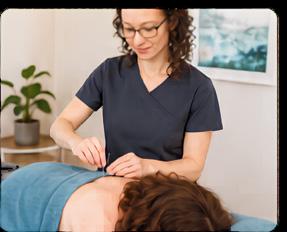
Dr. Melanie Morrill, Dr. Ac, assessed my idiopathic neuropathy and walked me through a treatment plan. She explained what it would involve, how long it would take, and what kind of results I could realistically expect.
Most importantly, she gave me time to think about it. I didn’t feel rushed into a decision. I went home, did my research, spoke with my doctor, and carefully considered my options.
I decided to move forward with treatment. Looking back now, I’m very glad I did.
As of December 2025, I’ve completed a series of acupuncture treatments, with more scheduled as part of the plan. Throughout the entire process, I’ve been consistently impressed, not just with the care itself, but with the people.
The staff at Accessible Acupuncture are knowledgeable, professional, and genuinely kind. That matters more than you might think when you’re dealing with a condition that affects your daily life.
But what matters most is this: I’ve improved significantly.
Today, I’m able to walk comfortably again.
I can go up and down stairs without needing a banister. I’m back at the gym. I can ride a bicycle, do my yard work, handle daily tasks, and live my life the way I did before these symptoms started.
I don’t have pain anymore. There’s still a slight tingling in the soles of my feet, but compared to where I was, it’s a dramatic improvement.
If you had told me a year ago that I’d be saying this about acupuncture, I wouldn’t have believed you. But here I am.
I’ve also learned that acupuncture, when done properly, is not invasive or intimidating. It’s a straightforward, low-risk treatment that, in my case, delivered real results.
There are no guarantees. But if you’re dealing with neuropathy like I was, I believe it’s worth serious, honest consideration.
Don’t wait and hope it goes away on its own. That’s what I did at first, and it only got worse.
If you’re experiencing numbness, tingling, or unusual sensations in your feet, take the next step.
Call 587-879-7122 to book your consultation today.
HYS Centre 600, 11010 101 NW ST Edmonton, AB AccessibleAcupuncture.ca
Connection as Preventive Care Summer Mental Health
By Melanie Hval, MN, RN
Summer in Alberta has a particular quality to it. After months of cold and shortened days, the light returns. People get outside. There is movement and noise in the neighbourhood again.
For many older adults, though, summer does not automatically bring connection. It can quietly deepen isolation instead. A neighbour who checked in during the winter disappears into family vacations. Grandchildren are busy. The community programs that ran through the school year wind down. Weeks can pass without a meaningful conversation.
As a nurse, I want to be direct about what that means clinically. Social isolation is not just uncomfortable. Research consistently links it to increased risk of depression, cognitive decline, and earlier mortality in older adults. The evidence on this is strong and has been building for years. Connection is not a nice-to-have. It is part of what keeps people well.
“Connection is not a nice-to-have. It is part of what keeps people well.”
The good news is that the interventions do not need to be complicated. What follows are practical suggestions, most of them low-cost or free, with options for those living in cities and those in smaller or rural communities.
START WITH A REGULAR ANCHOR
Routine matters more than most people realize. A standing weekly commitment, even a small one, creates a predictable reason to be somewhere and to see the same people. This could be a Saturday morning coffee with a friend, a weekly walk with a neighbour, or a consistent chair at a community centre program.
For urban residents, options are plentiful. Calgary and Edmonton both operate extensive seniors programming through parks, recreation, and libraries. Many of these programs are low-cost and specifically designed for older adults. The barrier is often not availability but knowing where to look. A call to your local library branch or a search on your city’s recreation website is a reasonable starting point.
For those in rural or smaller communities, formal programming is thinner. Here, the anchor often needs to be informal. A standing weekly phone call with a sibling or friend. A regular coffee at the same diner. A commitment to attend a local faith community or service club. These informal structures carry the same benefit when held consistently.
GET OUTSIDE, WITH PURPOSE
Summer daylight and warmer temperatures lower the barrier to outdoor activity. Research supports the benefit of outdoor time on mood, and even a short daily walk in natural light supports better sleep and reduced anxiety. The key word here is purpose: a walk to a destination, however modest, is more sustainable than a walk for its own sake.
A walk to pick up a few groceries, to sit in a park with a coffee, or to check on a neighbour creates structure and often produces an incidental conversation. Incidental conversations add up. They are not a replacement for close relationships, but they maintain a sense of being part of a community.
A note on safety: if balance, joint pain, or vision concerns make outdoor
mobility more challenging, please speak with your physician or nurse practitioner before starting a new walking routine. Mobility should be supported, not pushed through.
STAY USEFUL TO SOMEONE
A sense of purpose is one of the most consistently protective factors for mental health in older adults. Volunteering, mentoring, or simply being someone a neighbour can count on all contribute to this. Summer often creates natural openings: community gardens need hands, local festivals need volunteers, and families with young children need grandparent energy.
In rural communities where formal volunteer organizations may be limited, the same principle applies informally. Offering to drive someone to an appointment, helping a neighbour with yard work, or being available to a family that is managing a difficult season all create a reciprocal relationship. That reciprocity is part of what makes the connection meaningful.
KNOW THE SIGNS THAT SOMETHING MORE IS NEEDED
Community connection supports mental health, but it does not replace clinical care when clinical care is what someone needs. If you or someone you love is experiencing persistent low mood, loss of interest in things that used to matter, significant changes in sleep or appetite, or withdrawal that is
deepening over time, that warrants a conversation with a healthcare provider.
In Alberta, your family physician, nurse practitioner, or Health Link (811) are all reasonable starting points. Rural residents can also access virtual mental health supports through the province, which has expanded considerably in recent years.
The suggestions above are practical and backed by solid evidence. But they work best as prevention. When someone has already moved into a significant depressive episode or is experiencing anxiety that limits their daily functioning, connection alone is rarely sufficient.
A FINAL THOUGHT
The older adults I work with are not waiting for someone to organize their social lives. What they often need is a prompt to take one step, and a reminder that the research supports it. Connection is not soft medicine. It is legitimate preventative care, and summer is a reasonable time to be intentional about it.
One standing commitment. One reason to be somewhere on a regular basis. That is a meaningful place to start.
MELANIE HVAL
Melanie Hval is a Master’sprepared Registered Nurse and Founder of Compass Rose Care, a nurse-led private home care company based in Calgary. For more information, visit compassrosecare.com.
Overdose Awareness Month Opioid Use Among Older Adults
In partnership with Canadian Coalition for Seniors’ Mental Health
When many people think about the opioid crisis, they picture younger adults or illicit drug use. Yet opioid-related harms also affect older Canadians, often in ways that go unnoticed.
Prescription opioids are commonly used to manage moderate to severe pain, particularly among adults aged 55 and older. While these medications can provide important relief, age-related changes in the body can increase the risk of side effects, dependence, falls, hospitalization, and overdose. As Overdose Awareness Month shines a light on this growing public health concern, it’s important for older adults and their loved ones to understand both the benefits and risks of opioid use, recognize warning signs, and learn about safer approaches to managing pain and protecting wellbeing.
WHAT ARE OPIOIDS?
Opioids are a class of drugs that are derived from (or are chemically designed to act like) opium from the poppy plant. They work in the nervous system to produce feelings of pain relief and pleasure, among other things. Opioids include both legally prescribed drugs and illegal street drugs. Sometimes, legal prescription opioid drugs are illegally sold on the street as well.
EXAMPLES OF OPIOIDS INCLUDE:
• Buprenorphine
• Codeine
• Fentanyl
• Heroin
• Hydrocodone
• Methadone
• Morphine
• Oxycodone/Oxycontin
• Tramadol
WHY DO OLDER ADULTS TAKE OPIOIDS?
Prescription opioids are usually used to treat moderate to severe pain. Some people take non-prescribed opioids because they can also make you feel very relaxed and “high”.
OUR BODIES AS WE AGE
Our bodies change as we age. We break down substances more slowly, and we have less water and muscle than when we were younger. These changes can affect how medication works.
WHAT ARE THE HEALTH RISKS OF TAKING OPIOIDS?
If we take opioid drugs for long periods of time, our bodies get used to them. Because of this, they can stop helping with pain the way that they used to. Sometimes people start taking too much of their opioid medicine to try to get pain relief. This can be very harmful. People taking opioids need to be carefully monitored by their healthcare providers in order to minimize risk.
SIDE EFFECTS OF OPIOIDS
Potential side effects of taking opioids include:
• Nausea and vomiting
• Itching
• Constipation
• Trouble urinating (peeing)
• Confusion and changes in mood
• Drowsiness
• Falls
• Slowed breathing
• Sleep apnea (pauses in breathing or periods of shallow breathing during sleep)
Healthcare providers are advised to avoid prescribing opioids to older adults whenever possible because of the risks of side effects. If an opioid is prescribed to treat short-term pain (for example after an injury or surgery), the lowest possible dose should be prescribed, for no more than 3 to 7 days in most circumstances.
POSSIBLE SIGNS OF ADDICTION
Talk with a healthcare provider if you have experienced two or more of these symptoms in the last year:
• Taking a larger amount of the opioid than what was prescribed
• Taking the opioid for a longer period of time than what was prescribed
• Wanting to cut down and control intake of the opioid but finding it difficult
• Spending a lot of time taking and thinking about taking the opioid
• Feeling like you must always take the opioid
• Having difficulty maintaining responsibilities at home or at work because of opioid use
• Using the opioid even though it has negative effects on personal life and/ or on mental and physical health
• Using the opioid even when it is not always safe to do so
• Feeling the need to take more of the opioid to feel it working
• Feeling like the opioid does not work as well as it used to
• Taking the opioid because you feel a lot of physical pain if you do not take it
DID YOU KNOW?
Older adults (55+ years old) have a good success rate in recovering from opioid addiction. Speak with your healthcare provider about options if you think you may have an addiction to opioids.
CAN OPIOIDS BE TAKEN AT THE SAME TIME AS OTHER MEDICATIONS OR SUBSTANCES?
The risks of harmful effects, drug interactions, and hospitalizations increase when you use several medications, drugs, or supplements at the same time. If you are taking an opioid, you should not take any of the following substances at the same time or on the same day:
*It can be dangerous to stop using benzodiazepines too abruptly. If you use benzodiazepine sedatives, talk with your healthcare provider before stopping their use.
ARE THERE OTHER WAYS THAT I CAN MANAGE MY PAIN WITHOUT USING AN OPIOID?
Yes. Talk with your healthcare provider about non-medicine-based therapies and non-opioid medications to manage pain before considering the use of an opioid.
NON-MEDICINE-BASED THERAPIES
Here is a list of things that can help you manage your physical and emotional pain. Check off the ones that are of interest to you and ask your healthcare provider for more information.
• Physical Therapy
• Chiropractor Care
• Massage Therapy
• Acupuncture
• Counselling
• Exercise
• Mindfulness and Meditation
• Yoga
NON-OPIOID MEDICATIONS
Non-opioid medications that can help relieve pain include:
• Acetaminophen
• Non- steroidal anti-inflammatory drugs (NSAIDs) such as ibuprofen and naproxen
• Topical NSAIDs, such as creams and gels that you rub into the affected area
Note: Non-opioid medications can also cause side effects, so speak with your healthcare provider to find out what medications are safe for you to try.
WHAT SHOULD I DO IF I AM ALREADY TAKING AN OPIOID?
If the dose that you are taking is helping to relieve pain, is helping you be active and is not causing side effects or other problems, it might not be necessary to stop using it. If you continue to use a prescription opioid, your healthcare provider will want to see you for regular follow-up visits to monitor your pain relief and any negative effects.
If there are concerns about the opioid(s) that you are taking, your healthcare provider can work with you to develop a plan to slowly reduce the amount that you are using or even to eventually stop using it altogether (if that is right for you).
DID YOU KNOW?
Do not change your dose of opioids without talking with your healthcare provider first.
HOW WILL MY HEALTHCARE PROVIDER CHANGE MY OPIOID DOSE IF WE ARE TRYING TO REDUCE (OR STOP USING) OPIOIDS? We are all different. Your healthcare provider will help you develop an opioid-reduction plan that works for you, and that helps make a reduction in opioid use as easy as possible.
Your plan will probably involve reducing your dose of opioids very slowly (by 10%-20% every 1-4 weeks, with the last third of the program taking the longest). This slow, gradual reduction helps to prevent withdrawal symptoms and will help you continue to feel well.
IF I GRADUALLY DECREASE THE DOSE OF MY OPIOID, WILL MY PAIN GET WORSE?
Gradually reducing your dose of an opioid will usually not worsen your pain. In fact, pain, function, and quality of life often improve when opioids are lowered, then stopped. This happens because over time, opioids can become less effective, and increasing doses only increases side effects.
HOW CAN I ENSURE SAFETY FOR MYSELF AND OTHERS WHILE TAKING OPIOIDS?
1. Always store opioids in a lockedaway cabinet
2. Never share opioids with family members, friends, or others
3. Consider asking a pharmacist to help supervise your medication. Pharmacists offer many strategies for helping you monitor your medications. For example, they can give you small amounts of your prescription at a time, so that you don’t have too much at home with you; they can package your medicines in ways that can help you keep track (e.g., blister packing, labelled pill organizers); and they can help you dispose of any unused opioids that you may have in your home.
4. Have a naloxone* kit in your home and make sure that someone who lives with you or who visits you often is trained in how to use it.
* Naloxone is a drug that is used to help reverse an opioid overdose. It is given to a person through their nose or is injected into a muscle.
QUESTIONS TO ASK YOUR HEALTHCARE PROVIDER WHEN BEING PRESCRIBED AN OPIOID
To start a conversation, here are some questions you can ask your healthcare provider about opioid medicines before taking them (or if you are already taking them):
1. What is the goal of being on this medication?
2. What are the possible benefits and harms of this medication?
3. Can it affect my memory or cause me to fall?
4. How long will I have to take this medication for?
5. Can I stop or reduce the dose of this medication when I want to?
6. Who do I follow up with about this medication and when do I follow up?
This information is adapted from the Canadian Coalition for Seniors’ Mental Health (CCSMH) Canadian Guidelines on Opioid Use Disorder Among Older Adults.
Disclaimer: This article is intended for information purposes only. It is not intended to offer medical advice or be interpreted or used as a standard of medical practice.
Powering Progress
How a clinical trial in Alberta rewrote a terminal diagnosis
After an exhausting cross-country search for answers, an Alberta mother found a life-saving medical breakthrough waiting right in her own backyard.
In the dark days of 2020, Sara Spearey sat in her home, doing a heartbreaking calculation. Diagnosed with a rare, terminal neuroendocrine cancer that had metastasized extensively into her bones, she was told she might only have months to live. She began to wonder what milestones she would miss in her children’s lives, desperately hoping she might just survive to see her 60th birthday.
This August, Sara is celebrating that landmark 60th milestone with her cancer at a complete standstill, thanks to a groundbreaking clinical trial offered in Alberta backed by donors.
“One of the biggest gifts of this trial is that it’s allowed me to forget about
my disease,” says Spearey. “That’s a huge trajectory from where I started. Now I can actually go about my life, and I feel better than I’ve felt in years.”
Cancer had always loomed large in Spearey’s family; her grandmother, mother, and sister all faced breast cancer, and her father passed away from multiple myeloma. Determined to protect herself, Sara did everything right. She maintained an active lifestyle, worked with a nutritionist and never smoked or drank alcohol.
Still, cancer found a way through.
In late 2016, a routine scan uncovered a rare adrenal gland tumour. What was initially expected as a straightforward surgery with a six-week recovery instead became a gruelling, multiyear struggle. Following her tumour removal in 2017, Sara was left with a deep fatigue that permanently derailed her career.
In 2020, a routine follow-up scan revealed the cancer had returned, spread-
ing aggressively through her spine, ribs, and clavicle. Because it was a rare neuroendocrine tumour with no standard cure, local options were initially limited to a “watch and wait” approach.
Refusing to give up, Sara sought specialized care in Toronto, where her family was from, flying across the country every three months for a year for treatments.
The turning point came when her team identified a global clinical trial for a targeted oral medication called Belzutifan. Crucially, Calgary’s Tom Baker Cancer Centre was one of only two sites in Canada equipped to host it. Sara transitioned her care back to Alberta under oncologist Dr. Dean Ruether.
Four years later, her cancer remains completely stable. Sara’s health has returned so profoundly that she now travels internationally to advocate for quicker cancer diagnoses, better access to specialized treatments, and more
Photo: The Arthur J.E. Child Comprehensive Cancer Centre in Calgary, Alberta.
funding for local clinical trials. Most importantly, she has been there to witness her son’s graduation from the University of Alberta and her daughter’s entry into university.
Sara’s extraordinary outcome is a snapshot of a much larger story unfolding across the province. Over the past 20 years, Alberta’s cancer survival rate has increased by 8.7 per cent—the most significant improvement in Canada, moving the province from one of the lowest survival rates to one of the highest.
This progress is the result of a deliberate, decadeslong effort driven by the power of community investment. Over the last 40 years, approximately two million individual donors, corporations, and foundations have given to the Alberta Cancer Foundation, helping it power the clinical advancements that elevate provincial care.
“No other charitable organization supports Albertans facing cancer as completely as we do,” says Wendy Beauchesne, CEO of the Alberta Cancer Foundation. “Our role is to ensure our cancer system has the resources to constantly evolve, innovate, and deliver tomorrow’s medicine today.”
Money raised by the Alberta Cancer Foundation stays in Alberta, supporting Alberta patients, Alberta researchers and Alberta’s 17 different cancer centres. By keeping investments local, the foundation fuels homegrown expertise, ensuring Alberta remains a global leader—not a follower—in cancer care.
This funding model has driven landmark advancements that deliver world-class care close to home. These include the mobile Screen Test program, providing advanced breast cancer screening to 120 rural and Indigenous communities; the Patient Financial Assistance Program, helping thousands manage treatment-related expenses; and the acquisition of two donor-funded MR-Linac machines at the new Arthur J.E. Child Comprehensive Cancer Centre in Calgary—a Canadian first that can cut radiation schedules from 39 sessions down to fewer than 10. Importantly, the Foundation also helps support every cancer clinical trial that runs in Alberta.
For Sara, who continues to receive treatments at the Arthur J.E. Child Comprehensive Cancer Centre, donor-fueled innovation didn’t just change her prognosis—it redefined her future.
“The funding of these trials changes people’s lives,” says Spearey. “I know I’m only one person, but that one person has a family, kids, and a husband. It has given me my life back. It has given my kids their mother. I’m just so grateful.”
Top right and above: For Sara, celebrating life’s milestones became even more meaningful following her cancer diagnosis: Sara Spearey enjoying a warm vacation in 2019 and Sara and her husband, Peter, on their wedding day in 2019.
Top left: Wendy Beauchesne, CEO of the Alberta Cancer Foundation. Above right: Arthur J.E. Child Comprehensive Cancer Centre in Calgary, Alberta.
Finding Connection After 55
By Elizabeth Smith
Community is such a big part of feeling connected and living well, but for a lot of seniors in Alberta, that sense of connection isn’t always there. As families move and life changes, loneliness has become a real challenge for many older adults here, and even more so in rural Alberta.
According to the Canadian Coalition for Seniors’ Mental Health and Statistics Canada, nearly one-third of Canadians over 65 report feelings of loneliness or social isolation. In a province known for its friendly spirit and wide-open spaces, that statistic may seem surprising, but the causes are familiar. Retirement can reduce daily social contact, mobility issues make outings harder, and Alberta’s long winters can keep even the most outgoing people indoors. Add to that the loss of friends or partners, and it’s easy to see how connections become more fragile over time.
WHY CONNECTION MATTERS
Loneliness isn’t just “feeling alone”. While that in itself is a problem, it can also negatively affect your health. Research links chronic loneliness to
higher risks of heart disease, depression, and memory decline. The flip side, though, is powerful: staying socially engaged can boost mood, sharpen cognition, and even strengthen the immune system. The American Psychiatric Association states that one of the most critical things you can do for your brain health is to stay active and engaged.
Community programs, companionship services, and volunteer opportunities give seniors a chance to stay active and connected. Sometimes all it takes is a weekly chat, a shared walk, or a visit to the local seniors’ centre. It can make a huge difference when there is a weekly visit to look forward to.
ALBERTA’S SPIRIT OF TOGETHERNESS
Alberta has always been built on neighbourliness. In smaller communities, many seniors still live where everyone knows everyone, but as populations shift, that support can fade. That’s why new models of connection are taking hold. Community leagues, churches, and libraries across the province now host “friendly cafés,” social teas, or drop-in craft mornings designed specifically for older adults.
“Sometimes all it takes is a weekly chat, a shared walk, or a visit to the local seniors’ centre. It can make a huge difference when there is a weekly visit to look forward to.”
Some programs focus on bridging generations. In Red Deer, one library hosts a storytelling club where seniors share memories with local youth. In Calgary, volunteer drivers help connect older adults with art classes or medical appointments, turning practical errands into chances for companionship. And across rural Alberta, phone-based “friendship visit” programs check in with seniors who live miles apartproof that even a simple conversation can travel great distances.
SMALL MOMENTS, BIG IMPACT
For many older Albertans, connection isn’t about hanging out in large crowds; it’s about meaningful, consistent interaction. That might mean gardening with a neighbour, joining a book club, or cooking a shared meal with a visiting companion. Even volunteering from home - knitting for local charities or mentoring younger people online - can offer purpose and belonging. Whether it’s sharing a memory over coffee or planning the week’s meals together, connection builds resilience.
MOVING FORWARD TOGETHER
Loneliness doesn’t define aging; it’s something we can change together. Every phone call, visit, or invitation helps weave the net that keeps our communities strong. If you know an older neighbour living alone, knock on their door. If you’re retired and missing daily interaction, look into volunteer roles, walking groups, or art programs near you. Small steps can open big doors.
Alberta may be vast, but its people are wonderfully close at heart. The spirit that built our province - kindness, cooperation, and courage - still runs deep through every town and city. When seniors stay connected, that spirit shines its brightest. Because at its core, Alberta life isn’t just about where we live - it’s about how we live, together.
ELIZABETH SMITH
Elizabeth Smith is the Founder of Simplifying Your Life and has been finding ways to make people’s lives simpler and more joyful since 2018. In 2025, recognizing her senior clients were craving companionship and more support, she shifted her business to Companion Care. You can read more articles about the loneliness epidemic in Canada and ideas for staying connected on her blog simplifyingyourlife.ca/blog.
Hearing Loss Cognitive Health and
The Connection is Real. The Solutions Are Here.
Research shows that untreated hearing loss is linked to increased risk of cognitive decline, memory challenges, and dementia.
Embracing Your Next Chapter This Summer A Season for Joy
By Connie Kobylko
There is something about an Alberta summer that feels a little magical. Perhaps it’s because we’ve spent months bundled up against winter’s chill, watching the seasons slowly shift and wondering when spring will finally decide to stay. Or perhaps it’s seeing the first signs that warmer days are ahead.
Garden centres begin overflowing with vibrant colours. We find ourselves drawn to rows of flowers and hanging baskets, imagining how they might brighten our decks, patios, and front steps. Seed packets are purchased with optimism. Planters are refreshed. The garden is prepared for another season of possibility.
There is an excitement that returns. After months of spending much of our time indoors, we begin taking our lives back outside. Family gatherings move to the backyard. Grandchildren run through parks and playgrounds. Picnics are packed. We see our neighbours enjoying the sunshine, happy to
be mowing the lawn instead of shovelling 2-foot-high snowfalls. Even our morning coffee somehow tastes better when enjoyed on the deck while the birds provide the soundtrack.
Summer invites us back into life. Not because we suddenly become busier, but because we become more aware of the opportunities surrounding us.
As a Joy Facilitator, I often ask people a simple question: “What brings you joy?”
The answers are very rarely extravagant. A phone call from someone you haven’t spoken with in a while. A conversation that leaves you smiling long after it ends. Watching birds visit a feeder outside your window. Sitting around a table with people you enjoy. Taking a drive with no particular destination in mind. Listening to a favourite song that instantly takes you back to another chapter of your life.
What I have learned over the years is that joy is often found in the moments we are most likely to overlook. It arrives quietly throughout our day, a
warm breeze on your face. A genuine laugh shared with a friend. The smell of fresh-cut grass.
I received a handwritten note in the mail the other day, and it made me feel so special. I instantly smiled as I thought of the sender. What a heartfelt gesture on her part. These moments may seem small at the time, yet they often become the memories we treasure most.
I believe they become the golden threads that weave together a meaningful life.
One of the greatest gifts that comes with age is perspective. We begin to understand that life isn’t measured by how busy we were or how many items we crossed off a list. It is measured in moments, relationships, experiences, and the people who shared them with us.
Summer gives us countless opportunities to gather those moments. Perhaps this is the year you finally stop in that little Alberta town you’ve driven through dozens of times. One never knows what treasures you may find.
Joy isn’t found in doing more. Joy is found in being present for what is already here.
Maybe it’s saying yes to a community event, a concert in the park, or an invitation for coffee.
Perhaps it’s revisiting a hobby or interest that once brought you joy and making it part of your life again. Or maybe you’ll decide to try something entirely new, like the much-talkedabout game of pickleball that seems to have captured the attention of people of every generation.
The activity itself isn’t really the point. The willingness to remain curious is. Joy isn’t found in doing more. Joy is found in being present for what is already here.
Several years ago, after overcoming a life-changing injury, I found myself standing at an unexpected crossroads. The future I had imagined looked different than the one unfolding before me. Like many people who encounter challenges, I could have focused on all that had changed. Instead, I found myself asking a different question. “What is still possible?”
That simple question opened doors I could never have imagined.
It inspired me to begin a new business in my fifties. It introduced me to remarkable people throughout Alberta. It led me into retirement communities where I witness friendship, resilience, laughter, and connection every single day.
Today, as I embrace another era of life, I can honestly say I am living one of the most meaningful chapters of my journey. Not because everything has unfolded perfectly. But because I discovered that “becoming” does not stop
when we reach a certain age. Dreams do not come with expiry dates.
One of my own dreams has followed me since childhood. I always wanted a tree house. The kind built for imagination. A special place tucked among the trees where books could be read, adventures imagined, and the world could be viewed from childlike eyes.
Instead of allowing it to gather more dust over the years, I’ve decided that perhaps it’s time to create a grown-up version. It may not sit fifteen feet above the ground, but I can certainly imagine a small elevated retreat in my backyard where I can enjoy a morning coffee, read a good book, and share it with my grandchildren. It can become their playhouse too!
The lesson isn’t really about the tree house. It’s about giving ourselves permission to keep dreaming. When we share our dreams with others, they often become the beginning of new memories, new traditions, and stories that are talked about for years to come. I have met people who thought their best chapters were behind them, only to discover something unexpected waiting ahead.
One gentleman who had played music for most of his life recently joined a local group of musicians who gather simply for the joy of playing together. What began as a way to keep his skills sharp quickly became a source of friendship and belonging.
Another woman decided to volunteer at a local community organization. She expected to give her time; instead, she discovered new friendships and a renewed sense of purpose.
These stories don’t make headlines. Yet they quietly transform lives. Perhaps embracing our next chapter isn’t about reinventing ourselves at all. Maybe it’s about being open to new experiences. Open doors to new friendships. Revisit old dreams that still whisper to us. Give thought to the possibility that some of life’s most meaningful moments have yet to arrive.
As you move through this summer, I invite you to pause and consider a few questions.
• What brings a genuine smile to your face?
• Who would you like to spend more time with?
• What dream has been patiently waiting for your attention?
• What experience would you regret not trying?
• And what might happen if you took one small step toward it?
You don’t have to dive right in. It starts with just one step.
I have come to realize the best chapters rarely begin with huge changes, but often, they begin with a simple conversation, an invitation accepted, or a decision to try something different. This summer, take time to notice the good that surrounds you. Collect moments that become cherished memories. Laugh often and without apology. Reconnect with the people and activities that bring light to your life. Give yourself permission to dream again, regardless of your age.
After all, life isn’t simply about growing older. It’s about continuing to grow. And perhaps your next wonderful chapter is waiting just outside your front door.
CONNIE KOBYLKO
Connie Kobylko believes the best chapters of life are often the ones we never saw coming. As a Joy Facilitator, Life Celebrant, speaker, and author, she helps people discover meaning, connection, and joy through every season of life. Whether leading workshops in retirement communities, speaking to audiences across Alberta, or honouring loved ones through personalized celebrations of life, Connie’s work is rooted in helping others live fully and love deeply. A lifelong dreamer with a passion for possibility, she is happily creating her own next chapter and intends to be living it vibrantly at 102 years young.
An Interview with Photographer Don Campbell
For many people, retirement is a time to slow down. For photographer Don Campbell, it has been a time to keep exploring, creating, and seeing the world through an ever-curious lens. After a remarkable career spanning film, television, and education, Don has continued to pursue photography with the same passion and sense of wonder that first drew him to a camera as a teenager.
Don has travelled to more than 100 countries, capturing extraordinary wildlife, landscapes, and candid human moments along the way. His work is thoughtful, patient, and deeply observant, revealing not only the beauty of the world, but the many ways we each interpret what we see. Whether photographing lions in Zambia, people in Ethiopia, or quiet moments closer to home, Don approaches photography less as taking pictures and more as “framing” life itself.
In this conversation, Don reflects on creativity later in life, the lessons travel has taught him, and why it is never too late to pick up a camera — or pursue any passion that sparks curiosity and joy.
KL: After a long career in film, television, and education, what drew you more deeply into photography later in life, and what has it given you personally?
DC: Every part of my career was driven by visuals; I primarily think visually. The reward lies in being able to express my views of the world by sharing images. I began photography in high school, and my first paying job was during grade 12. CHBC TV had gone on the air in the Okanagan Valley in December of 1958, and when the staff was put together, they had forgotten a photographer to take images of products for local advertisers. With no budget, they went to the high school to hire a kid, which was me.
KL: You’ve travelled to more than 100 countries photographing wildlife, landscapes, and people. Which experiences changed the way you see the world — or yourself — the most?
DC: Most of my work is in photographing wildlife, yet the most interesting country I have visited is Ethiopia. There is little wildlife, but the people there are pure eye candy. My camera loves them.
KL: Many of our readers are entering a stage of life where they finally have time to pursue creative passions. What would you say to someone in their 50s, 60s, or 70s who feels it may be “too late” to begin photography or another artistic pursuit?
DC: I can only speak for photography, but my message is that it is never too late to pick up a camera. The secret is to consider what you see through the viewfinder before touching the trigger. Limit the scope to your subject, and ensure the foreground and background support, rather than distract.
What I see is unique to my perception of the world, and once I make it public, how it is perceived is entirely up to the viewer.
potential for a profitable crop, an artist will see the waving of the plants in the breeze and shifting colours, while a glider pilot will view the best way to land on it in an emergency.
KL: You’ve spoken about the idea of “framing” rather than “composition.” Can you explain that philosophy, and how it applies not only to photography, but perhaps to life itself?
KL: Your work captures candid, unscripted moments. What do you think photographs reveal about people that words sometimes cannot?
DC: What I see is unique to my perception of the world, and once I make it public, how it is perceived is entirely up to the viewer. When we listen to music or go for a walk, everything that strikes our senses must first negotiate the filters we all have. A farmer will view the grain field by its
DC: Composition is the word we use to describe what a painter does while placing elements in the frame, to provide a certain tension, balance and structure to an image created on a blank canvas. A photographer finds all elements already in place, and chooses a place and angle to observe the elements to achieve the same thing. This applies also to how we observe the elements in life, and how they interact.
I believe patience, adaptability and curiosity become a larger part of our lives as we mature. The balance differs with individuals.
KL: Of all the places and wildlife you’ve photographed, is there one image that still stops you in your tracks emotionally? What’s the story behind it?
DC: My reaction is better expressed as different rather than favouring one over another. The images that bring me a strong reaction are usually to do with mothering. One that immediately comes to mind is from Tanzania. It captures a close-up profile of a cheetah with her neck arched, her nose almost touching the head of one of her cubs.
KL: Travel and photography often require patience, adaptability, and curiosity. Have those qualities become more important as you’ve gotten older?
DC: I believe patience, adaptability and curiosity become a larger part of our lives as we mature. The balance differs with individuals.
KL: In a world where everyone has a smartphone camera, what separates a meaningful photograph from just another picture?
DC: The quality of an image has less to do with the instrument than the nut behind the camera. The biggest aspect is the consideration of the elements, rather than a snapshot.
KL: Looking back over your career, what moments or accomplishments are you most proud of, not necessarily professionally, but personally?
Pride is not my metric for success. The happiest experiences are when I am in the right place at the right time, often thanks to the skill and knowledge of a good guide.
DC: Pride is not my metric for success. The happiest experiences are when I am in the right place at the right time, often thanks to the skill and knowledge of a good guide. My happiest experience was a trip to Zambia in May and June of 2024. Our guide brought us to a super-pride of 15 lions, and the next day to three leopards in a small space, competing for a gazelle.
KL: What still inspires you to pick up a camera today, and what do you hope people feel when they view your work?
DC: My primary inspiration is recognizing how much there is to see, and so many ways of viewing what is there. Picking up my heavy camera and getting out there keeps me strong and not feeling my 85 years. In my youth, I believed 50 was old, but I’m still losing sleep over what I’m going to do with my life when I grow up. My hope for others is that my work inspires them to travel and see the richness of the world. It’s not necessary to fly, as there is so much to see in our own backyards.
Fellowship, Wood Chips & Pretty Good Coffee
The
Northern Alberta Woodcarvers Association
By Erin Wallace
It’s 6:30 on a Wednesday evening, and things are picking up in Duggan Hall in Edmonton. Tables are pulled out and set up, refreshments are put out in the kitchen, and people are drifting in. The Northern Alberta Woodcarvers Association (NAWCA) is starting its weekly meeting.
Since its foundation 46 years ago, the group has been a haven for people who like to work with their hands, try new things, and just love carving wood. Four decades, several venue changes, and a global pandemic later, the club is still going strong. The club’s membership ranges in age from teens to octogenarians, with the majority of the members aged 55 plus. I spoke with some of these core members to find out what makes this club great.
Llew Bertsch has been here since the beginning. After retiring from a career at Telus, he worked at Lee Valley Tools, teaching classes including bark and relief carving. Many members joined the club after taking a class with Llew, and after 46 years (with an eight-year hiatus to sing in a barbershop quartet), he’s a source of knowledge and club history, who also carves really excellent horses and cowboys. Members like Llew are the solid foundation that the club is built on, and grows from.
Mentorship and collaboration are vital features of the club. Whether it’s sharing tips on how to sharpen your knife or what type of wood to use, “everybody is willing to help everybody,” says Lance Love, 82. “Everybody grows
from it…that’s why the club is great.” A member since 2009, Lance enjoys relief carving, a style which was featured in one of the biggest group projects that NAWCA has accomplished to date. For Canada’s 150th birthday, the group created four wooden “quilts” (panels of 35 individually-carved 5” x 5” bass wood tiles) in the theme of “My Canada”, one of which is permanently displayed in the International Arrivals area of the Edmonton International Airport.
NAWCA does demonstrations at various venues around the Edmonton area, including Fort Edmonton Park and the Ukrainian Cultural Heritage Village. It was at the latter venue that the group caught the attention of their current club President and Secretary. Harold Hough, 60, joined in 2011 and became club President in 2014. Soon his wife, Faye, 61, also joined and became a show director and club Secretary. Harold enjoys carving as a relaxing, slower craft, completing a project “knowing that it is the best you can do…and [moving] on to the next one.” Faye values the social aspect of the group: “There are friendships developed here…people come because they have like-minded interests and it’s nice that you can sit…and chat with people.”
Both Harold and Faye are pleased to see the group recovering after the COVID pandemic caused membership to go from 110 to just eight or nine. Today, NAWCA is fresh from their 40th annual Show and Competition, which was held at the hall on April 18 and 19. With 176 competitive entries
and 130 display pieces, plus great visitor turnout, the show was a resounding success, reflecting the commitment of the 40-plus members who now make it out to each weekly meeting.
It’s now 8:30. There is a sudden flurry of activity as chairs are stacked and tables put down. Someone sweeps up the wood chips. There are so many other members to talk to, but the meeting is done for tonight. The official mission of NAWCA is to promote and support the art of woodcarving, but the club achieves so much more: art, talent, and a bunch of really great people.
NAWCA meets every Wednesday at 6:30 pm, at Duggan Hall, 3728 106 St in Edmonton
Alberta’s Best Summer Festivals for the 55+ Crowd
By Kerri Leland
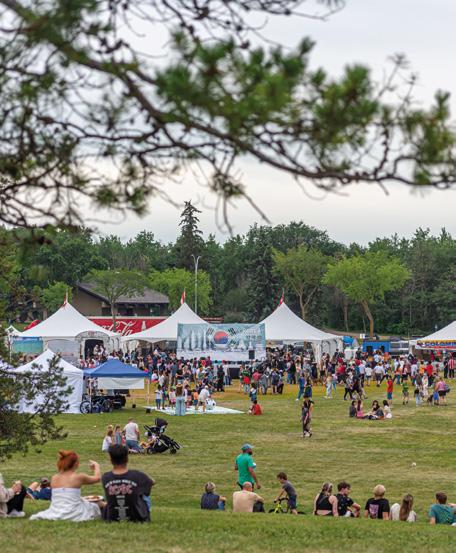
Summer in Alberta is festival season. From world-class music events to cultural celebrations and small-town traditions, there is no shortage of opportunities to get outside, connect with others, and make lasting memories. For adults 55+, festivals offer the perfect combination of entertainment, exploration, and community spirit. Whether you enjoy live music, local food, art, history, or simply soaking up the atmosphere, Alberta has a festival for you.
CALGARY STAMPEDE
July 3 - 12, 2026
Known as “The Greatest Outdoor Show on Earth,” the Calgary Stampede offers far more than chuckwagon races and rodeo events. Visitors can enjoy agricultural exhibits, Indigenous cultural programming, live entertainment, western heritage displays, and some of the best people-watching in the province. Many older Albertans appreciate the nostalgia and sense of tradition that the Stampede brings each summer.
TASTE OF EDMONTON
July 14 - 22, 2026
Food lovers won’t want to miss Taste of Edmonton, Western Canada’s largest food festival. Held each summer in downtown Edmonton’s Churchill Square, the festival brings together dozens of local
restaurants, food trucks, artisans, and live performers for an eleven-day celebration of Alberta’s culinary scene. Visitors can sample a wide variety of dishes in smaller tasting portions, making it easy to try several different cuisines in a single afternoon. The festival also features live music, cultural programming, and plenty of seating areas, making it an enjoyable outing for older adults who prefer a leisurely pace. Since its founding in 1984, Taste of Edmonton has become a beloved summer tradition that attracts hundreds of thousands of visitors each year.
CALGARY FOLK MUSIC FESTIVAL
July 23 - 26, 2026
Held each July on beautiful Prince’s Island Park, the Calgary Folk Music Festival is one of Canada’s most beloved music festivals. With multiple stages, shaded green spaces, artisan vendors, and a relaxed atmosphere, it’s an ideal choice for mature festival-goers. The festival features a diverse lineup spanning folk, blues, roots, world music, and more, making it easy to discover new favourites while enjoying established performers.
CANMORE FOLK FESTIVAL
August 1 - 3, 2026
For those who love music and mountain scenery, the Canmore Folk Music Festival is hard to beat. Held
during the Heritage Day long weekend in Centennial Park, the festival combines outstanding folk, roots, blues, and world music with breathtaking Rocky Mountain views. Its intimate size and walkable location make it especially appealing for those who prefer a more relaxed festival experience.
EDMONTON HERITAGE FESTIVAL
August 2 - 4, 2026
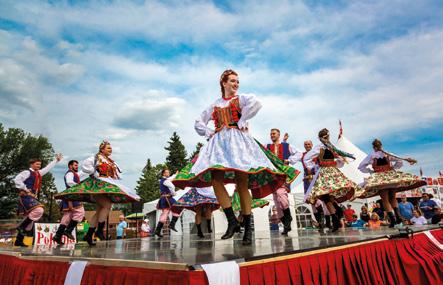
Every August long weekend, Edmonton’s Heritage Festival transforms the city into a celebration of cultures from around the world. Visitors can stroll through pavilions representing dozens of countries, sample international cuisine, enjoy cultural performances, and learn about traditions from across the globe. It is one of the easiest ways to travel the world without leaving Alberta.
EDMONTON FOLK MUSIC FESTIVAL
August 6 - 9, 2026
Set against the scenic backdrop of Gallagher Park, the Edmonton Folk Music Festival has earned an international reputation for its exceptional programming and welcoming community spirit. Since 1980, it has attracted music lovers from across Canada and beyond. Bring a lawn chair or blanket, settle onto the hillside, and enjoy performances while taking in one of the city’s most beautiful views.
FESTIVAL ESSENTIALS:
HOW TO MAKE THE MOST OF ALBERTA’S SUMMER EVENTS
A little planning can go a long way toward making your festival experience enjoyable, comfortable, and stress-free. Before you head out, keep these tips in mind:
• PACK SMART
Bring a refillable water bottle, sunscreen, sunglasses, a hat, and a lightweight jacket. Alberta weather can change quickly, even on the warmest summer days.
• PRIORITIZE COMFORT
Comfortable walking shoes are a must. Many festivals cover large outdoor areas, and you’ll likely spend more time on your feet than expected.
• CHECK ACCESSIBILITY FEATURES
Many festivals offer accessible parking, shuttle services, mobility-friendly pathways, and designated seating areas. Visit the festival website ahead of time to review available accommodations.
• ARRIVE EARLY
Getting there before peak hours often means easier parking, shorter lines, and more opportunities to enjoy exhibits and entertainment at a relaxed pace.
• TAKE ADVANTAGE OF DAYTIME PROGRAMMING
Many festivals schedule workshops, demonstrations, and performances during the day. These events are often less crowded and can provide a more intimate experience.
• BRING A LAWN CHAIR
For outdoor music festivals, a lightweight lawn chair or picnic blanket can make hours of entertainment far more comfortable.
• STAY CONNECTED
If attending with friends or family, agree on a meeting spot in case you become separated. A fully charged cellphone can also provide peace of mind.
• PACE YOURSELF
You don’t have to see everything in one day. Schedule breaks, enjoy a leisurely meal, and leave room for spontaneous discoveries along the way.
• CONSIDER PUBLIC TRANSIT
Many major festivals offer shuttle services or are easily accessible by transit. This can eliminate parking hassles and make for a more relaxing day.
• MAKE IT A MINI GETAWAY
If you’re travelling to a festival outside your community, consider extending your visit with an overnight stay. Exploring local shops, restaurants, museums, and attractions can turn a festival outing into a memorable summer escape.
Most importantly, have fun. Alberta’s festivals are about celebrating community, culture, music, food, and the joy of summer. Whether you’re attending for a few hours or an entire weekend, there’s always something new to discover.
Frequency Hearing is proud to be Beaumont’s first local hearing clinic serving Beaumont, Leduc, Edmonton, and the surrounding region.
4920 50 Avenue, Beaumont, AB T4X 1J9 Open Weekdays: 9:30 a.m. to 4:30 p.m. Late appointments are available by request T: 780-737-7117 frequencyhearing.ca
Plan Ahead With Cooperative Memorial Society
Since 1966, the Cooperative Memorial Society (CMS) has helped Albertans plan ahead with compassion and integrity. As a nonprofit, we partner with locally owned funeral homes to offer affordable, straightforward funeral and cremation plans at member prices—helping families avoid financial strain and stressful last-minute decisions. Peace of mind. No prepurchase required.
Make a Splash, Not a Tragedy
Keeping you and your loved ones safe in, on, and around the water this summer
By The Lifesaving Society Alberta and Northwest Territories
Branch
Whether it’s casting a line at your favourite fishing spot, taking the grandchildren to the pool, or enjoying a peaceful walk along the lake, water offers countless ways to relax, connect, and stay active. For many of us, these moments are part of what makes the summer so special.
As inviting and fun as water can be, it also comes with hidden risks. Understanding those risks and how to make a few simple, preventative choices is key to keeping you and your loved ones safe in, on, or around the water.
THE DROWNING PROBLEM
Each year, more than 450 people lose their lives to drowning in Canada. Most of these drownings happen during the summer months and in outdoor, unsupervised settings like lakes, ponds, and rivers. Unlike in the movies, drowning is often silent and can happen within seconds.
Older adults are particularly at risk, accounting for roughly 42% of drowning fatalities in the country. Those who drown are frequently alone, not wearing a lifejacket, or impaired by alcohol or other substances that affect judgment and reaction time.
Another important, and often underestimated, factor is cold water. Canadian waters remain cold year-round, even on warm summer days. Cold water can impair even the strongest swimmers, making it hard to move, breathe, and think. These effects can happen within minutes and make an unexpected fall into the water dangerous.
While these realities can sound alarming, there are a few simple, lifesaving decisions you can make to ensure everyone has a fun and safe summer.
KNOW YOUR LIMITS
As we age, our relationship with the water can change. Understanding these changes is key to staying safe and enjoying everything the outdoors has to offer. It is not uncommon to experience reduced strength, slower reaction
times, or changes in balance that can all increase the risk of falling into the water or difficulty getting out of tricky situations. Even strong swimmers may find they get tired more quickly than they did in the past.
Listening to your body is one of the smartest safety strategies you have
This does not mean giving up the activities you love; it simply means adapting how you approach them. Being mindful of your limits, avoiding going out alone, and checking in with yourself often, especially in open water swimming conditions, can make a significant difference. Listening to your body is one of the smartest safety strategies you have.
WEAR A LIFEJACKET
Lifejackets are for everyone! Wearing a lifejacket drastically reduces your risk of drowning. In the event of a fall, a properly fitted lifejacket keeps your head above water, conserves energy, and helps protect against the effects of cold water.
Lifejackets are like seatbelts. By the time you need one, it is too late to put it on. Wear yours when you go boating, fishing, paddling, or spend time near unfamiliar or slippery shorelines. They are also great to use when going swimming in a pool or open-water conditions.
TAKE A SWIMMING CLASS OR LESSONS
If you have ever thought about learning how to swim or improving your swimming skills, there is no better time to start. There are programs available for all ages and abilities, whether you are a beginner looking to overcome your fear of water or a confident swimmer looking to refresh your skills. Learning or strengthening skills like treading water and safe entry techniques can make a significant difference in an emergency and can add to your enjoyment in the water.
You can also take an aquatic exercise class. These lowimpact workouts are designed for a wide range of abilities, meaning even non-swimmers or those less confident in the
water can participate comfortably. From gentle movement classes to more active sessions, aquatic exercise offers a fun, joint-friendly way to stay active, improve balance, and connect with others.
Contact your local facility to find a program right for you.
HYDRATE RESPONSIBLY
Drinking alcohol can have several effects on the body, including balance, coordination, and judgment. These effects can also grow stronger if you spend time under the sun. Staying sober while you are boating, swimming, or even bathing can help you stay alert, react quickly, and make sound decisions. It is always better to save any celebratory drinks for when you are back on shore (or your couch).
Staying hydrated is just as important for your safety and health. Drinking water supports your body in several ways, helping you stay cool and energized. Time outdoors and aquatic activities (even less intensive ones) can gradually dehydrate your body before you realize it. Keeping water on hand can make it easy to hydrate throughout your day. Many indoor and outdoor recreation areas offer water fountains or refill stations that you can use to replenish when you need it.
WITHIN ARMS’ REACH AND ACTIVE SUPERVISION
If you plan to take the grandchildren to the lake or the local pool, it is important to remember how you can help them stay safe as their caregiver. Active supervision is vital for ensuring that children stay safe while they are in or around water. This means bringing the supplies you need, like sunscreen or towels, and keeping them nearby so they are there when you need them. It also means staying close enough to touch, see, and hear your grandchildren. A good way to do this is to be involved - talk and play together. Do not leave children unattended in, on, or around water.
It is also important to know your limits as a caregiver. If you are unable to provide constant, close supervision on your own, bring another responsible adult or choose a lifeguardsupervised setting so you have someone who can help.
BE PREPARED
It is always better to come prepared for the expected and unexpected when you take a trip out on a boat, canoe, or other watercraft. A basic rule for everyone is know before you go! Check the weather and your watercraft. If it has a motor, then the person driving the craft should be trained on how to operate it and have their Pleasure Craft Operator card. You should also make a plan for where you will go and ensure a trusted friend or family member knows it too. Bring the appropriate safety equipment for your trip - this should include lifejackets for everyone on board.
ANYONE CAN DROWN, NO ONE SHOULD
With summer comes many ways to get outside and be active in, on, and around water. Swimming, kayaking, or even a walk along the lake are great ways to relax and connect with family and friends, but it is important to be aware of the risks associated with water. Drowning and water-related injuries can happen to anyone, but they can also be avoided. Understanding the risks and how you can make informed choices about them will help you and your loved ones stay safe while you have fun. Everyone has a role to play in keeping our communities safer around water. Whether by learning new safety skills, taking the Lifesaving Society’s free Water Smart Advocate Course, or donating to drowning prevention efforts, there are many ways to get involved and make a difference.
The Lifesaving Society Alberta and Northwest Territories Branch is a charity with a mission to prevent drowning and water-related injury. As a leader in drowning and water-related injury prevention, the Society provides expertise to communities and decision-makers while delivering comprehensive programs, products, and services that promote safety in and around water. Through training programs, Water Smart® public education, aquatic safety management services, lifesaving sport, and water incident research, the Society works to save lives and build safer communities across Alberta and the Northwest Territories. Learn more or get involved at lifesaving.org.
Recommended Reads from the Fairview Public Library
By Zane Moffatt-Toews
There are countless reasons why two strangers may connect, but one common reason that has connected all ages is the commonality of stories. As a child, discovering a classmate reads and loves the same book series as you, an immediate conversation and connection occur.
The ability to speak passionately about the characters, what will happen next, and why each of you enjoys the series as much as you do creates a connection. This does not go away with childhood; if anything, it intensifies.
Reading doesn’t only form friendships, but entire communities. Your local book club, online review communities, and specific fan clubs for different series or genres are just a few examples of how this traditionally solitary activity can bring people together. It may be the fact that each person reading the book will interpret the pages differently and see it from a different viewpoint than the next, and we as humans have a desire to understand one another through these insights.
Literature allows us to step into the shoes of others, while communities give us a space to discuss these stories, breaking down divides and fostering a deeper understanding.
The books that follow explore themes of connection, resilience, belonging, and community. Several also offer a distinctly Albertan perspective, whether through local history, landscapes, food, neighbourhoods, or the people who call this province home.
ZANE MOFFATT-TOEWS
Zane has worked at the Fairview Public Library for a total of eight years, beginning as a high school student volunteer and finding her passion and place to belong in the library world. She is currently taking her Library Information Technician Diploma through Mohawk College. She has a passion for finding the right book for the right person at the right time and suggesting your next perfect read is something she takes particular pride in. She notes how truly lucky she is to be able to work in her favorite childhood place and is living her dream surrounded by books and book lovers. She is ultimately incredibly grateful to be able to fulfill these passions in her hometown surrounded by family, friends, and her miniature dachshund, Spike.
EAT ALBERTA FIRST: A YEAR OF LOCAL RECIPES FROM WHERE THE PRAIRIES MEET THE
MOUNTAINS
By Karen Anderson
Eat Alberta First is an award-winning Canadian cookbook and locavore manifesto. It features 90 recipes highlighting local ingredients like bison, beef, root vegetables, honey, and red fife wheat. This book also includes forage guides, pantry stocking tips, and beautiful photography. Organized into six uniquely Alberta seasons, such as “The Long Dark and Deep Winter”.
FIRE WEATHER: THE MAKING OF A BEAST
By John Vaillant
Fire Weather is a gripping, investigative, and sometimes terrifying account of the 2016 Fort McMurray wildfire. It blends thrilling survival stories with deep dives into climate science and the fossil fuel industry. Vaillant often describes the fire as a living, breathing predator, and this book illustrates how fire has evolved in the 21st century to hunt, consume synthetic building materials, and strategize in ways that overpower traditional firefighting methods.
LITTLE YELLOW HOUSE: FINDING
COMMUNITY
IN A CHANGING NEIGHBOURHOOD
By Carissa Halton
Little Yellow House by Carissa Halton is an essay collection/memoir exploring urban revitalization, inner-city living, and the power of community. Halton and her family move to Edmonton’s Alberta Avenue, a neighbourhood with a tough reputation, where they discover profound beauty and connection through their diverse neighbours.
THE
PREPPER’S PANTRY: NUTRITIONAL BULK FOOD PREPPING TO MAINTAIN A HEALTHY DIET AND A STRONG IMMUNE SYSTEM TO SURVIVE ANY CRISIS
By Ted Riley
Ted Riley is a survivalist, educator, and experienced homesteader. In this book, Riley offers a comprehensive guide to preparing for not just surviving an emergency, but thriving. Riley emphasizes the importance of immunity in crisis situations and lost skills previous generations had down to an art, and how you can pick up these techniques once again.
THE ROAD TO WOODSTOCK
By Michael Lang
The Road to Woodstock is a 2009 behind-the-scenes memoir by festival co-creator Michael Lang and Holly George Warren. It details the inception, organization, and cultural impact of the historic 1969 Woodstock Music & Art Fair, tracing the logistical hurdles, counterculture dynamics, and financial realities of the event. This narrative is enhanced by firsthand anecdotes from performers like Jimi Hendrix and Santana, as well as key players in the making of Woodstock.
TILLY AND THE CRAZY EIGHTS
By Monique Gray Smith
This heartwarming, poignant novel is about eight Indigenous Elders who embark on a bucket list road trip across North America. Driven and guided by the titular protagonist, the group – who dub themselves “the Crazy Eights” –travel from the Pacific Northwest to the Gathering of Nations Pow Wow in Albuquerque. The text explores themes of healing, intergenerational trauma, resilience, and the unifying power of love. Smith heavily emphasizes that joy, love, laughter, and cultural connection are potent medicines that can mend broken hearts and help communities move forward from historical oppression.
HOW WE SHOW UP: RECLAIMING FAMILY, FRIENDSHIP, AND COMMUNITY
By Mia Birdsong
In How We Show Up, Birdsong shows that what separates us isn’t only the everpresent injustices built around race, class, gender, values, and beliefs, but also our denial of our interdependence and need for belonging. In response to the fear and discomfort we feel, we have built walls, and instead of leaning on one another, we find ourselves leaning on concrete. Through research, interviews, and stories of lived experiences, “How We Show Up returns us to our inherent connectedness where we find strength, safety, and support in vulnerability and generosity, in asking for help, and in being accountable” (Birdsong). This book challenges us to question what we have been socialized to believe about what it means to be successful and instead, look at what we long for.
BAD BAD GIRL
By Gish Jen
This genre-bending fictionalized memoir explores a fraught mother-daughter relationship. Spanning from 1920s Shanghai to modern-day America, the book is Jen’s frank, emotionally raw attempt to understand her late mother’s harshness as well as the lasting impact of generational trauma.
THE BOOKSHOP ON THE CORNER
By Jenny Colgan
The Bookshop on the Corner follows Nina Redmond, an introverted librarian who abruptly loses her job and relocates to a remote Scottish village, buying a bread van that she then turns into a mobile bookstore to serve this new community. Nina acts as a literary matchmaker, finding the perfect book for someone as a way to heal, connect, and enrich their lives. Set against the backdrop of real-world UK library closures, Nina’s mobile shop bridges the geographical service gap, transforming her from a displaced urban worker into an integral, valued member of a close-knit rural community.
Canadian Wines Perfect for Summer Raise a Glass to Canada
By Alison Phillips
’Tis the season to celebrate our beautiful country in the great outdoors. Canadian summers are meant to be enjoyed outside. In Alberta, we love a good barbecue! So we encourage you to try the fabulous array of Canadian wines to sip on and enjoy with summer meals.
Beef is King on the barbecue here, and a good red wine works every time. A great one to try is Henry of Pelham’s Baco Noir. Hailing from Ontario, this hearty North American hybrid grape produces deeply coloured, high-acid, smoky-fruit wines that deliver a rustic, robust punch that holds its own when paired with a good barbecued steak.
If a juicy hamburger is more your style, I recommend a bold BC Syrah or a Cabernet Merlot blend.
Blasted Church Vineyards Syrah VQA from the southern Okanagan offers a rich, complex taste. With notes of blueberry, plum, and violet, and a
hint of gaminess on the nose, the palate gives a rounded attack with blueberry, blackberry, and ripe red berries, leading into flavours of wild sage and plum. It is balanced with good acidity and finegrained tannins throughout the finish.
Sumac Ridge Private Reserve Cabernet Merlot is a popular, budget-friendly blend featuring notes of blackberry, cherry, and mocha. Although the Summerland, B.C. Winery closed in 2023 after 43 years, the operation moved south in the Okanagan, and their brand is still being produced and sold.
Nothing shouts out Patio Wine better than Rosé! This versatile wine incorporates some of the colour from the grape skins, but not enough to qualify as a red wine. It’s perfect for sipping alone or pairing with salads, chicken dishes, BBQ salmon and even pork ribs. A couple of interesting ones from the Okanagan – Rosé Hush from Dirty Laundry Vineyards is an intriguing blend of Pinot Gris and Cabernet Sauvignon, giving it a juicy, fruity taste
while not being sweet. And, with notes of strawberry, grapefruit and kiwi, Wild Goose Vineyards Rosé is a perfect light patio sipper.
If white wine is more your style, Canada produces excellent choices, as we are classified as a cool climate wine region in the world. Pinot Gris and Chardonnay from Niagara and the Okanagan are outstanding, but some grapes you may not have heard of are worth trying. Be adventurous and try a crisp, fruity off-dry Ehrenfelser from Gehringer or Gray Monk, or a crisp, citrus Chenin Blanc from Quails Gate, all from the Okanagan. Ontario Riesling is world-class, known for its high acidity, mineral notes, and versatility, ranging from bone-dry to lusciously sweet ice wines.
Primarily grown in the Niagara Peninsula, they taste like summertime in your mouth. Pair with chicken and fish dishes or local Canadian cheeses.
It’s noteworthy to add that in the past few years, many Okanagan wineries
Food & Home
were hit by the severe 2024 winter cold snaps, destroying local vine crops. The B.C. government allowed wineries to import U.S. grapes, extending this program into 2025 to manage a 10,000-tonne shortage. It did save many wineries from bankruptcy, but the move created tension, as some local grape growers struggled to sell their own fruit. Then, the 2025 Tariffs imposed by the US further added insult to injury. Some B.C. wines state on their labels that their wine is produced in B.C. with grapes grown in Washington. This practice has sustained many B.C. wineries waiting for their own grapes to grow back. The geography of the Okanagan Valley does, in fact, extend into Washington state, and as far as we know, grapes are not politically biased.
Sante!
ALISON PHILLIPS
Mention this article in store and receive 10% off your purchase of any of these wines while in stock.
Your Compass in the Complex World of Senior Living
When the System Feels Overwhelming, You Don’t Have to Navigate It Alone.
At Nana’s Navigator, we provide trusted, personalized guidance for seniors and families navigating Alberta’s senior services system.
Backed by 25+ years of industry leadership and lived experience, we help families move forward with clarity, dignity, and informed choice —every step of the way.
Book your complimentary 15-minute discovery call today!
After living in Vancouver for more than 25 years and building a career in the travel industry — working with airlines, serving as a sales manager for tour operators, and teaching at the Canadian Tourism College — Alison took a major leap of faith in 2007 when she moved to Edmonton with her partner to open a wine and spirits store at West Edmonton Mall. Together, they have spent the past 19 years building a successful business, while Alison also earned her Level II Sommelier certification and became a French Wine Scholar. Passionate about lifelong learning, Alison believes the wine and spirits industry offers endless opportunities for growth and discovery. Through Aligra, she has helped create a vibrant community experience by hosting tastings, winemaker dinners, charity events, and educational classes both in-store and throughout Edmonton. Alison has combined her love of sharing knowledge, writing, and travel from her previous career, continually finding new ways to elevate the customer experience in a competitive industry.
Her travels have taken her throughout Asia, Africa, the South Pacific, North America, and Europe, both as a solo traveller and tour escort. Alison especially enjoys the dynamics of group travel, sharing stories and insights while ensuring every trip is well organized and filled with memorable experiences. Although exploring destinations on foot at a grassroots level remains her favourite way to travel, she has also developed a deep appreciation for exceptional accommodations, fine dining, and unique cultural experiences.
Now that the store is well established, Alison is dedicating more time to her lifelong passion for travel. She has led several international wine tour groups to destinations including Bordeaux, the Loire Valley, the Okanagan, South Africa, Portugal, and Hungary. More recently, she has spent winters in Mexico and travelled to Costa Rica earlier this year. Her next adventure, Winos & Rhinos II to South Africa, is scheduled for September 2026.
For more information on upcoming tours with Alison, visit travelswithalison.com.
Alberta on the Plate Taste Your Way Across the Province
By Alberta on the Plate
Alberta on the Plate has become one of the province’s most anticipated culinary celebrations, not just because of the food, but because of the people behind it. Every August, more than one hundred participating establishments across twenty-five cities and towns open their doors with a shared purpose. For 10 days, chefs, farmers, producers, and diners come together to celebrate what it means to support local food in Alberta. It is a moment when communities gather around the table, when neighbours support neighbours, and when choosing a local meal becomes an act of connection. Each establishment creates a special menu that reflects the region they call home, and the taste of place is unmistakable. Southern Alberta’s grains and grasslands show up in everything from heritage wheat pasta to grass-fed beef. Central Alberta’s vegetable growers and dairy producers inspire bright, seasonal dishes. Northern Alberta’s boreal flavours bring berries, honey, bison, and wildcrafted ingredients to the table. These regional expressions remind us that Alberta cuisine is not one story. It is many stories, shaped by land, climate, culture, and the people who care for both.
The festival’s impact reaches far beyond the dining room. Alberta on the Plate highlights more than three hundred farms and producers every year, giving them visibility with chefs and consumers who want to support local. Many restaurants use the festival as a catalyst to build new relationships with growers and processors, often continuing those partnerships long after the event ends. When diners choose a festival menu, they help strengthen supply chains, open new markets for producers, and keep more food dollars circulating within the province. A single meal becomes a small but meaningful investment in Alberta’s food future.
This sense of connection deepens through Alberta Open Farm Days, which works hand in hand with the festival. Open Farm Days invites Albertans to step onto farms, meet producers, and learn how food is grown and raised. Alberta on the Plate then brings those same ingredients to the plate, showing how chefs transform them into dishes that honour the land and the people behind it. Diners often recognize the names of farms they visited just days earlier, turning a meal into a continuation of a relationship that began in the field. Together, these two initiatives help bridge the gap between rural and urban communities and remind us that local food is a shared story we all contribute to.
Across the province, participating establishments bring this mission to life in ways that reflect the character of their communities. Calgary’s restaurants show how deeply the city’s roots run in Alberta’s local food movement. Long before “farm to table” was a trend, places like Rouge and River Café were building menus around relationships with growers, foragers, and ranchers. Today,
a new generation carries that spirit forward. Rain Dog Bar brings a chef-driven approach to casual dining, while 88 Brewing turns out playful, creative pizzas built on Alberta-grown ingredients. These restaurants show how Calgary continues to evolve while staying true to the producers and makers who shape its taste of place.
Edmonton blends long-standing culinary leadership with bold, contemporary energy. RGE RD remains a cornerstone of the region’s farm-to-table movement, while The Butternut Tree offers refined, ingredient-forward dining rooted in Canadian flavours. Fu’s Repair Shop brings cross-cultural creativity and cocktail
Mangalitsa Pigs at Eh Farms (Wheatland County)
Rouge Restaurant, Alberta on the Plate 2021
Eighty-Eight Brewing / Portland Street Pizza, Alberta on the Plate 2025
culture together, and Super Amigos Mexican Street Food proves that local ingredients shine just as brightly in joyful, quick-service spaces. Together, these establishments show the range of what local food can look like in a city that values both tradition and innovation.
Central Alberta embraces local food with heart. 53 on Ross offers elevated yet approachable dining in Red Deer, DNA Gardens invites visitors into a working berry farm and distillery, and Cilantro + Chive continues to champion producers through inventive menus and community partnerships. These establishments reflect the region’s spirit of hospitality and its deep pride in the land.
Southern Alberta reflects the strength of Canada’s premier food corridor, where small family producers and large-scale facilities work side by side. This is where Alberta’s sugar beets become locally produced sugar, proudly stamped with the number 22, and where processors like Rogers Lantic and Lays operate alongside ranchers and specialty growers. Nikka Yuko Japanese Garden collaborates with local producers to create serene, ingredient-focused picnics, while Medicine Hat Brewing pairs regional flavours with craft beer in a way that feels both rooted and inventive.
Northern Alberta highlights creativity, resilience, and community connection. Twisted Fork in St. Paul has participated every year, showcasing multiple producers on its menus and offering house-made preserves through its Economusée status. Cold Lake Brewing & Distilling brings lake views and local flavours together in Cold Lake, while Broken Tine Orchard champions agritourism through its haskap berry orchards and award-winning haskap wine.
In the Rockies, restaurants blend mountain character with Alberta’s culinary identity. Fence and Post near Cochrane brings thoughtful, ingredient-driven dining to the foothills. The Stirling at the Malcolm Hotel in Canmore offers an elevated experience rooted in local flavours. One98Eight adds a bright, welcoming brunch option, and Olive Bistro in Jasper leans into communal, share-forward meals that celebrate the region’s bounty.
This year’s International Year of Rangelands and Pastoralists adds a meaningful layer to the festival. Alberta on the Plate is celebrating by highlighting Alberta beef, bison, lamb, and other rangeland animals that reflect the health and stewardship of the prairie and foothill ecosystems they come from. These ingredients represent generations of ranching families, land managers, and pastoralists whose care and commitment shape Alberta’s food identity. By showcasing these proteins
and the people behind them, the festival helps diners understand the connection between responsible grazing, thriving rangelands, and the exceptional flavour Alberta is known for.
Alberta on the Plate is more than a festival. It is a province-wide invitation to show up for the people who feed us. To choose meals that support neighbours. To celebrate the landscapes that define us. And to experience the creativity that emerges when farms and restaurants work together. Every dish tells a story, and every diner becomes part of it.
Alberta on the Plate 2026 takes place August 7 to 16 in conjunction with Alberta Local Food Week. Learn more at AlbertaOnThePlate.com.
DNA Gardens, Alberta on the Plate 2024
Nikka Yuko Japanese Garden, Alberta on the Plate 2022
Broken Tine Orchard
Cattle at Westway Farms
Chef Debra Poulin serving customers at Twisted Fork
The Butternut Tree, Alberta on the Plate 2025
Super Amigos Mexican Street Food, Alberta on the Plate 2024
Eat Alberta First
Delicious Food Locally Sourced
By Karen Anderson
After 21 years as a nurse and nurse practitioner, I traded my stethoscope for a chef’s apron and a new mission: sharing the stories and flavours of Alberta’s remarkable food artisans. Since founding Alberta Food Tours in 2006, I’ve had the privilege of guiding both locals and visitors through the culinary landscapes of Calgary, Canmore, Banff, and Edmonton.
I’ve always believed that food is one of our greatest connectors. Whether I’m writing cookbooks like Eat Alberta First, championing local producers, or gathering around the table with family and friends, my heart is always in the kitchen. Cooking is how we nourish one another, celebrate community, and stay grounded in a busy world.
I’m delighted to share these three recipes with Alberta Senior Living readers. They reflect the spirit of this province I love so deeply — where prairie fields meet mountain peaks — and I hope they bring comfort, connection, and a little Alberta warmth to your table.
#EatAlbertaFirst Tip
From mid-July to late August, you’ll find U-picks across Alberta where you can fill your own buckets with haskaps, saskatoons, and raspberries. Strawberries are often of the everbearing variety and will continue until the first frost happens. At Lethbridge’s Broxburn Vegetables and Cafe, that is often not until late September.
KAREN ANDERSON
Karen Anderson is the founder of Alberta Food Tours and a multiaward-winning author whose work has been recognized by Taste Canada and the World Food Travel Association. A former healthcare professional, Karen has dedicated the second act of her career to celebrating Alberta’s culinary culture. When she isn’t promoting local food artisans, you can find her hiking, golfing, or enjoying a quiet moment with a book and a daily yoga practice.
Shades of Green Salad with Alberta Vinaigrette
SERVES 6
At Alberta Food Tours, we often create an experience where we change a classic French vinaigrette into an Alberta vinaigrette starring two of Alberta’s signature foods, canola and honey. Using an Alberta-made mustard instead of one from Dijon (which ironically is most likely made from Alberta mustard seeds) takes it to another level and makes me absurdly happy. We get our guests to do the whisking, and once they see how easy it is to make their own vinaigrette, they’re hooked. And that, my friends, is what it’s really all about.
SALAD
• 1 cup watercress, arugula, or peashoots
• 2 cups butter lettuce, green frisée, or baby romaine (or a combo of these)
• 1 green pepper, cut lengthwise into 8 strips and then sliced diagonally
• 6 baby cucumbers, ends removed and sliced diagonally with skin on
• 2 ribs of celery, sliced diagonally
• 1 ripe avocado, halved, pitted, and sliced diagonally
• 3 scallions, sliced diagonally
VINAIGRETTE
• 2 Tablespoons vinegar
• Salt
• 2 teaspoons Alberta honey
• 2 teaspoons Alberta-made mustard
• 6 Tablespoons organic canola oil
• Pepper
FOR THE SALAD
Arrange the vegetables on a platter, starting with the watercress around the outside and working in with the lettuce leaves in a circular pattern before topping with the green pepper, cucumbers, celery, avocado, and finally the scallions.
FOR THE VINAIGRETTE
• Whisk the vinegar with a pinch of salt in a medium bowl until the salt dissolves.
• Add the honey and mustard to the bowl and whisk to a smooth paste.
• Drizzle the oil into the mix slowly, whisking continuously until the dressing is thick and creamy.
• Season with pepper to taste.
• Drizzle the vinaigrette over the salad on the platter just before serving.
VARIATIONS
• Make it a Hungry Bear Salad by adding a handful of fresh berries and chopped grilled salmon or trout as desired.
• Add 1 to 2 Tablespoons of mixed chopped herbs like dill, parsley, tarragon, mint, basil, or chives to the dressing to create an Alberta Herb Vinaigrette.
Photo: Nicole Liboiron-Coles
Broek Pork Acres’ Pulled Pork
SERVES 8-10
My friend Joanne Vanden Broek shared this recipe in 2011 when I took a group of city folk to Joanne and Allan’s Broek Pork Acres farm to learn how much TLC they put into growing pasture-raised Berkshire hogs. Joanne made this pulled pork for our alfresco lunch for forty. Trust a mother of nine to have a tasty recipe like this up her sleeve. You can easily double it as well. You’ll just need either a bigger slow cooker or two slow cookers. Enjoy on fresh buns with Never-the-Same-Way-Twice Coleslaw (page 139) and a cold Alberta craft beer.
INGREDIENTS
• 4–5 lb pork shoulder or rump roast
• ¼ cup packed brown sugar
• 4 Tablespoons sweet paprika
• 3 Tablespoons kosher salt
• 3 Tablespoons pepper
• 2 teaspoons garlic powder
• 2 teaspoons onion powder
• 2 teaspoons celery seed
• 1 teaspoon cayenne pepper
INSTRUCTIONS
1. Rinse the roast, dry it with paper towels, and place it in a slow cooker.
2. Combine the sugar, paprika, salt, pepper, garlic and onion powders, celery seed, and cayenne pepper in a bowl and then rub all over the surface of the meat.
3. Cook on high for 8 hours, or on low for 12 hours, turning once at the halfway mark. I like to throw this together in the morning and serve it for dinner. Just before serving, use 2 forks to pull the tender meat apart and let it soak up the juices that have accumulated.
Pro-tip: Substitute an equal weight of jackfruit for the pork to make this vegan, and reduce the cooking time to 2 hours.
Prairie Berry Squares
MAKES 24 SQUARES
This is an old Mennonite recipe shared by my friend Ingrid Friesen. We rented cabins side by side for a decade out in BC’s Okanagan. Naturally, over the years, we started cooking the evening meal for our families together. Ingrid could make this recipe blindfolded. And ever since she introduced us to it, it’s been a keeper in my repertoire of quick and easy go-to recipes.
INGREDIENTS
• 2 cups + 1 Tablespoon flour, divided
• 1½ cups sugar, divided
• Salt
• 1 cup butter, softened, plus a bit more for the baking pan
• 2 cups fresh or frozen berries (saskatoons, haskaps, sea buckthorn, blueberries, huckleberries, or a combo, enough to cover the crust in a single layer)
• 1 cup unsweetened shredded coconut
• 3 eggs, beaten
• 2 Tablespoons butter, melted
INSTRUCTIONS
1. Preheat the oven to 350°F and butter the baking pan.
2. Use a pastry blender or your hands to mix 2 cups of the flour, ½ cup of the sugar, a pinch of salt, and the softened butter in a bowl until the butter is completely distributed. Spread this mixture evenly in the baking pan and press it down to form a crust.
3. Cover the crust with the berries.
4. Sprinkle the berries with the coconut.
5. Mix the remaining 1 cup of sugar and 1 Tablespoon of flour with the eggs and melted butter, and pour it over the coconut layer.
6. Place on the middle rack in the oven and bake until golden brown, about 30 minutes.
7. Cool in the pan, cut into squares, and enjoy as a quick and easy dessert any time you need one.
Photo: Jeremy Fokkens
Photo: Nicole Liboiron-Coles
Dear Garage, You Deserve Better
By the Eazy Peazy Downsizing Team
Dear Garage,
I know it’s been a while since I showed you any love. Sure, I see you briefly in the mornings before I head out, but I know I’ve been neglecting your space the rest of the day. I want to make it up to you and promise from this day forward, you will be my top priority.
I know I need to decide what our relationship is all about. I don’t want you to be the place where I dump clutter and remnants from a past life. No sir. I first recognize you are a brilliant space to store my beloved vehicle – you’re so talented at that – but you’re also a room that contains useful items. I really desire that our space be sleekly organized so I can find items with ease. How does that sound?
Now that we know how to recover our starry-eyed friendship, dearest garage, let’s set a date to get this work done. I am sincerely requesting Monday, July 20, for its completion. We are also going to use the S.P.A.C.E. method of organizing ourselves, advancing onward. First, we will SORT, followed by PURGING and then ASSIGNING a home for each item. For instance, that
far corner can become the sports gear area; the long wall would be a great place for our tools and how about the west corner housing my rakes and shovels. CONTAINERIZE comes next. I plan to use a bench and totes, plus make good use of your tall vertical wall space and apply handy hooks. Finally, I assure you that I will EVALUATE this process every new season. You mean the world to me, and I want to show you I mean business.
The thought of organizing our garage space is sweet music to my ears, and I hope you will feel adored too.
Until we meet again soon, Yours truly…
EAZY PEAZY DOWNSIZING TEAM
Eazy Peazy Downsizing is celebrating its fifth year in business. Founded by Nicole Skiba, a Professional Home Economist and Trained Professional Organizer, the company was inspired by Nicole’s experience helping her own dad through the downsizing process. Today, Nicole and her dedicated team, Nancy, Lindsey and Dee, support older adults and families with practical, respectful help during life’s transitions. Contact Nicole at 587-598-6123 or eazypeazydownsizing.ca for more information.
Be Prepared
Emergency Preparedness for Older Adults
By Amanda Warren & Katie Woitas
When was the last time you experienced a disruption or emergency? Our minds often jump to headline-making events, such as wildfires that force entire communities to evacuate or tornadoes that tear through neighbourhoods. But emergencies don’t always look like that. In Alberta, where we have varying climates and risks, they could include power outages, severe storms, extreme temperatures or even wildfire smoke— and that’s just the start of it.
When you consider the different types of hazards in Alberta, it becomes clear just how frequently they can interrupt our routines, limit access to services and create uncertainty. While we can’t control when these events happen, we can be prepared for when they do occur.
The best way to start is by making preparedness part of your daily life. It doesn’t have to be a big project you undertake in one weekend. Instead, preparedness is a journey built by taking
small, manageable steps that strengthen your overall resilience. These efforts can reduce stress, lessen financial impacts, and boost your confidence when facing the unexpected.
The Be Prepared program, developed by the Alberta Emergency Management Agency, encourages Albertans to take those first steps, whether preparing for everyday disruptions or larger emergencies and disasters. Read on for practical tips to get started and build preparedness into your everyday routine.
PREPAREDNESS IS PERSONAL
Preparedness is personal. The steps we take depend on where we live, our health needs, our support systems and the unique day-to-day aspects of our lives.
As we age, our needs may change. Changes in mobility, strength or sensory awareness, along with the need for medications or medical equipment, can impact our emergency planning. Your living situation should also be considered. While some live independently, others may live in a care facility, in a
rural area or far from loved ones and support networks. Some may also care for dependents, pets or livestock. All these factors should shape the preparedness steps we take and the plans we make to keep ourselves and loved ones safe during emergencies.
EVERYDAY PREPAREDNESS STEPS
Taking one small preparedness step could be as simple as starting a conversation with loved ones, storing extra water, medications or snacks at home, or reviewing and updating your insurance. Or it could include building an emergency kit or creating an emergency plan for your household. The preparedness steps we take today can support us during different hazards and disruptions in the future.
• Get and stay informed: Identify trusted sources of information, such as local news and community communication channels, including social media and web pages. Download the Alberta Emergency Alert (AEA) app for critical, life-saving alerts.
• Make community connections: Create a buddy system with community members or friends (e.g. for checking on each other or your pets or providing a ride during an evacuation).
• Build financial resilience: Check your insurance policy annually to understand coverage, limitations and the options available to you. Create and maintain an inventory with photos of personal belongings and property in case you need to file a claim. Keep the list in a safe place.
• Prepare your emergency supplies:
- Gather emergency supplies at home for sheltering in place to support your household for a minimum of 72 hours, but ideally a week or more.
- Maintain an emergency kit with items unique to your needs, including food and water, medications and medical supplies, important documents, chargers, seasonal clothing, identification and sentimental items.
- Plan for pets, if you have them. Animals have unique needs during emergencies. A graband-go emergency kit with food, medications, carriers and first-aid supplies helps keep pets safe during evacuations or service disruptions.
• Make a plan:
- Talk to your health-care provider about how to fill prescriptions if you are evacuated from your community.
- If you use mobility equipment, talk with your health-care provider about alternatives in case you are unable to evacuate with it.
- If you require caregiver support, keep copies of required documentation, a list of medical devices and assistive equipment, and a backup plan in case your usual caregiver is unavailable.
These everyday preparedness actions help you build resilience towards all
hazards. Depending on where you live or travel, your risk to certain hazards may be higher. The following sections highlight common summer hazards in Alberta and tips on how to prepare for them.
WILDFIRE AND SMOKE
In Alberta, wildfire season typically runs from March 1 to October 31 but may occur year-round. Hot, dry and windy conditions increase wildfire risk.
Preparedness tips
• Stay informed by checking fire danger ratings and visiting the Alberta Wildfire website to view active wildfire locations.
• Protect your property and belongings by implementing FireSmart methods to reduce fire risk.
• Include personal protective equipment like respirators (e.g., N95, KN95 or P100) or high-quality medical masks in your emergency kit. Standard paper or cloth masks offer limited protection.
• Pack an emergency blanket or fire-resistant covering in your kit to protect against embers.
• Bring emotional coping items, such as a list of support contacts, blankets, photos, books and journals, to help manage stress.
Smoke and ash tips
• Monitor local air quality conditions and follow the directions of air quality alerts as conditions can change quickly.
• Wildfire smoke can cause various symptoms and health effects.
If you experience symptoms, talk to a health-care provider, or seek medical attention if they are severe.
• Reduce your exposure by minimizing your time outdoors. Cancel or reschedule activities.
• Stock up on essentials to reduce lastminute trips outside.
• Contact local authorities to locate clean-air locations. Public spaces, including malls, libraries and recreation centres, can provide temporary relief.
• Monitor animals for signs of distress and seek veterinary care if symptoms occur. Wipe or brush them off after coming indoors to remove smoke particles from their fur.
EXTREME HEAT
Extreme heat events are becoming more common. High temperatures, especially when overnight cooling is limited, can be dangerous. These events, especially if prolonged and with high humidity, can pose serious health risks for everyone.
Preparedness tips
• Find a buddy who can help cool your home, find a cooler location, check on you regularly, recognize the signs of heat-related illness and know when to call for help.
• Make a list of places with air conditioning (e.g., homes of loved ones, libraries, shopping malls, community centers) and outdoor areas with cooling features such as parks with water fountains, misters, spray parks, etc. If you have pets, include some petfriendly options.
• Identify areas in your home that stay the coolest and consider how to keep them cool and set them up for sleeping.
• Install curtains, window coverings, reflective film or heat control coverings for windows.
• Inspect, and replace if needed, weather-stripping on doors, windows and window air conditioners to stop hot air from coming into your home.
Never leave people or pets in a vehicle when temperatures can spike quickly. If you see an unattended person or pet in distress during extreme temperatures, call 911. When an extreme heat event occurs with wildfire smoke, prioritize keeping cool because overheating can be more dangerous to your health.
SEVERE STORMS
Severe storms occur frequently. Thunderstorms, lightning and hail can develop quickly and threaten life and property.
Preparedness tips
• Monitor local news and weather reports for up-to-date information on thunderstorm conditions, weather warnings and storm maps.
• Identify safe shelter locations and plan the supplies, medical equipment and comfort items you and your loved ones may need for several hours or days.
• Secure loose objects outdoors in case of strong wind and cover your vehicle in case of hail.
• If there’s a tornado in your area, seek shelter immediately and remain in place until the severe weather passes. If you are outdoors, get to low-lying ground, lie flat and protect your head from flying debris.
COMMUNICATION TIPS FOR AN EMERGENCY
Emergencies can impact your usual services, like telecommunications and power, making communicating with loved ones a challenge. What can you do now, when the risk is low, to prepare if an evacuation order arises?
• Develop a communications plan
- Create a contact list, including who you will contact and who will check in on you during emergencies, such as caregivers, loved ones and community organizations.
- Designate someone who lives out of town as a central point of
contact for you and your loved ones. Ensure you all have their contact information.
- Pick three meeting places to reunite with your loved ones or household if separated: one near home, one outside of your immediate community and one out of town.
- Create print and digital copies of your communications plan. Ensure your household and support network have copies.
• If you use social media, use the “Safety Check” feature, if applicable, on your platforms. This feature allows you to mark yourself safe and inform others of your well-being. You can also search for and find loved ones to see if they are safe.
• Keep extra batteries or a charger for your mobile device in your emergency kit(s), and don’t forget to take them out and charge them a few times a year.
EVACUATION PLANNING
Emergencies can happen quickly and may require you to evacuate with little notice. Preparing in advance and understanding emergency alerts can help keep you and your household safe.
• Understand the difference between evacuation alerts, orders and rescinded notices so you can prepare, respond and return safely when directed.
• Review your insurance coverage. Most policies provide financial assistance or short-term housing if you are evacuated.
• If you live in a multi-storey building, know your building’s evacuation plan. Review stairwell locations and exits. Know evacuation routes and avoid using elevators during emergencies.
• If you’ve experienced an evacuation before, identify potential emotional or environmental triggers, and develop coping strategies to help remain calm ahead of time.
No matter our age, lifestyle or circumstances, we all have a role to play in emergency preparedness. When we are better prepared for disruption, emergency personnel can focus on supporting those most impacted, and communities can recover more quickly.
The idea of emergency preparedness might feel overwhelming, but it’s not about being ready for the next disaster; it’s about making it a part of our day in a way that makes sense for us. Knowing the risks around you and taking small steps to prepare over time builds resilience during uncertain situations. The Be Prepared program is here to help, with free programming and resources that can support your preparedness learning at alberta.ca/BePrepared.
WHAT IS THE BE PREPARED PROGRAM?
The Government of Alberta’s Be Prepared program strengthens emergency preparedness by encouraging Albertans to be ready for emergencies by taking preparedness steps year-round. The program supports individuals, households, and communities by providing free tools, resources, and education to increase risk literacy and encourage preparedness actions before, during, and after an emergency.
KATIE WOITAS
Katie Woitas is a risk reduction communications specialist with the Government of Alberta. Katie develops resources to help Albertans prepare for emergencies as part of the Alberta Emergency Management Agency.
AMANDA WARREN
Amanda Warren is a personal preparedness program consultant with the Government of Alberta. She works closely with subjectmatter experts to develop programs and resources that provide Albertans with current, evidence-informed emergency preparedness best practices.
Around Alberta Events Worth Getting Out For
As July and August roll around, Alberta settles into some of its very best days of the year. Farmers’ markets are bustling, patios are full, festivals pop up in every corner of the province, and there’s something special about those long summer evenings that seem to invite us to slow down and enjoy them.
Whether you’re looking for live music, community celebrations, outdoor activities, or a reason to take a day trip somewhere new, summer offers countless ways to stay connected and make memories. It’s also a wonderful time to check out what’s happening through local seniors’ centres, community leagues, and neighbourhood organizations, many of which offer special seasonal programming and events.
Here are just a few ideas to inspire your next outing and help you make the most of Alberta’s sunny season.
JULY 2026
• July 1 - 5: Spruce Meadows North American in Calgary. The ‘North American’, presented by Rolex, is a celebration of the close ties between the horse and the military. The pounding hooves of the competitors are amplified by the marching cadence of our military celebrations. The pageantry of the Lord Strathcona’s Horse (Royal Canadians) 100 Man Guard as they perform the Feu de Joie ceremony on Saturday and Sunday is spectacular when we Salute our Heroes. With the Lord Strathcona’s Horse Musical Ride, live entertainment, displays, shopping and more, this week is perfect for a family trip or an outing with friends, or even a date!
• July 3, 4, 5 at the Vegreville Agricultural Grounds: 53rd Annual Pysanka Festival. Enjoy a three-day event at the Vegreville Exhibition Grounds with grandstand shows, dance competitions, Pioneer demonstrations, a Cultural Showcase, Ukrainian cuisine, Folk Art Displays, crafts, workshops, a farmers’ market, Yarmarok Market shopping, and evening Zabavas with live bands. On-site camping available.
world of competitive spelling, six awkward adolescents face off with more than a trophy on the line. Bursting with clever wordplay, infectious songs, and laugh-outloud humour, only one will be crowned champion of the bee! Tickets start at $40 and are available at citadeltheatre.com or by calling Box Office at 780-425-1820.
• July 9 from 9 a.m. to 1 p.m. at GFLS (Greater Forest Lawn 55+ Society) in Calgary: Stampede Breakfast. Join us for a fun-filled Stampede Breakfast & Dance at the GFLS Centre. Enjoy a hearty westernstyle breakfast, lively line dancing, and live music throughout the morning. It’s the perfect way to celebrate the Stampede spirit with friends, food, and fun!
Confederation Park 55+ Activity Centre has moved!
Effective July 15, you will find them at 110 111157 Ave N.E, Calgary.
• July 3 - 12: Edmonton Street Performers Festival. What do unicyclists, puppeteers, tightrope walkers and acrobats all have in common? You’ll find them all at the Edmonton International Street Performers Festival this July, celebrating over 40 years! Performance artists will transform the city into busker central with their zany, witty or just plain silly performances.
• July 3 - 12: Calgary Stampede. From rodeo action to midway games, live music and so much more, the Calgary Stampede brings 10 days of excitement in July.
• July 4 - August 2 at The Citadel Theatre in Edmonton: The 25th Annual Putnam County Spelling Bee. In the high-stakes
• July 9 from 11:30 a.m. to 2:30 p.m. at Confederation Park 55+ Activity Centre in Calgary: Stampede BBQ. Savour a delicious lunch accompanied by live music. $20.00 for Members and Super Members; $35.00 for non-members.
• July 11: Wetaskiwin Reynolds Museum: The Ultimate Car Show. Stroll the grounds to see a stunning line-up of cars, from the ordinary to the extraordinary, and exchange stories with their owners along the way. Watch starting demonstrations of Museum vehicles from the early 1900s. Purchase your admission tickets in advance. Admission includes the car show, access to the main Museum building and the Aviation Display Hangar. The display is very large with more than 600 vehicles in a grass field, and there will be no shuttle service, so be prepared.
• July 14 - 22: Taste of Edmonton at Sir Winston Churchill Square. Taste of Edmonton is back, bigger, and more delicious than ever! Dig into Western Canada’s largest outdoor food festival! Sample over 200 mouth-watering menu items from 50+ of Edmonton’s favourite local restaurants and food trucks, including some exciting new additions. Bring your crew for the ultimate outdoor feast, then dance it off with live music all day and into the night on the McLennan Ross LLP Stage, featuring 180+ local performing artists and Canadian headliners. THE MARKET by Wholly Handmade returns with 75+ local artisans, while a newly expanded Kids Area makes this a festival the whole family can enjoy.
• July 16 - 19: Wild Rose Old Time Fiddle Festival at the Dow Centennial Centre in Fort Saskatchewan. Join for the ultimate gathering of fiddle enthusiasts at the 41st Annual Wild Rose Fiddle Festival! From July 16-19, 2026, the Dow Centennial Centre in Fort Saskatchewan will come alive with traditional music, spirited competitions, and lively Old Time dancing. Don’t miss this vibrant community event featuring talented performers and exciting contests with over $16,000 in prizes.
• July 17 from 12:00 p.m. to 3:00 p.m. at BSC (Bowness Seniors’ Centre) in Calgary: Monthly BINGO; Card sales begin at 11:00 a.m. There’s always a variety of games to play, including Early Bird, Odd or Even, Regular Card games, and a Progressive Pot. Concession items are available. Come out and join us for a fun afternoon!
• July 17: Lac La Biche FCSS Senior Staycations. For seniors 55+, join us for our summer staycations as we tour
around. Prices and times vary by trip. For this Staycation, we’ll be visiting Bellis Greenhouse. For more information, contact Kristen at Kristen.shewchuk@ laclabichecounty.com.
• July 17 - 19: Hardisty Rodeo. Get ready for an action-filled weekend at the Hardisty Rodeo! Enjoy two exhilarating days of rodeo events, the Combine Crunch, and thrilling chuckwagon and chariot races. Be sure to check out the parade, street fair, pancake breakfast, car show, beer gardens, games, races, and dances.
• July 24: ASSIST Taste of Heritage at 810 and 820 Saddleback Road in Edmonton. A free community event open to everyone to experience a vibrant celebration of diversity. Free sample foods and drinks from over 20 countries and enjoy captivating cultural performances. Feel free to drop by and enjoy the day with us. For more information, please call (780) 429-3112 or email info.assistcsc.org.
• July 24 - 25: Legal Fête au Village. Join us in Legal, Alberta, where community spirit comes alive. This vibrant annual festival brings locals and visitors together for a weekend packed with excitement! From the roar of the demolition derby and classic car show to delicious food trucks, dazzling fireworks, and a high-energy parade. With family-friendly fun, kids’ entertainment, outdoor games, and a lively evening cabaret, there’s something
for everyone to enjoy. Come for the fun and stay for the connections, laughter, and memories that make Fête au Village truly special.
• July 25 - 26: Sherwood Park Highland Gathering at Broadmoor Lake Park. Join us for an incredible weekend at the Sherwood Park Highland Gathering! Held at Broadmoor Lake Park’s Salisbury High School Athletic Fields, the event features piping and drumming competitions, massed band performances, Highland Dance competitions, and thrilling Scottish heavy games. Enjoy children’s activities, food trucks, beer gardens, a community market with local makers and Scottish Clan booths, and more! You won’t want to miss this exciting event!
AUGUST 2026
• August 1 -3: Edmonton Heritage Festival. This is your one-way ticket to a world of flavours! Take a peek at Pakistan, taste the flavours of Fiji, feel the beat of Burkina-Faso, and explore cultures from Afghanistan to Wales. The Edmonton Heritage Festival is a familyfriendly mingling of nations sharing their entertainment, music, culture, and cuisine! You can attend this legendary festival at Borden Park located beside the Edmonton EXPO Centre!
Edmonton Heritage Festival photo by Chris Stambaugh
Community & Connection
• August 6-9: Edmonton Folk Music Festival. The hills are alive with the sound of Folk Fest! Four magical days of eclectic performers, delicious food and drinks, plus a remarkable setting make the Edmonton Folk Music Festival the summer’s premier musical event. Nestled in the natural amphitheatre of Gallagher Hill, you’ll find toetapping performances and so much more!
• August 7 - 9: Cariwest Caribbean Arts Festival in Edmonton. Cariwest, Edmonton’s annual celebration of Caribbean arts, music, and culture, is taking over Churchill Square! The 3-day event includes a Friday Night Costume Extravaganza, the iconic Saturday Cariwest Parade, and a Caribbean Village throughout the weekend, including live entertainment, the Kids Korner, savoury Caribbean cuisine, and the Caribbean Marketplace.
• August 14 from 12:00 p.m. to 3:00 p.m. at BSC (Bowness Seniors’ Centre) in Calgary: Monthly BINGO; Card sales begin at 11:00 a.m. There’s always a variety of games to play, including Early Bird,
Odd or Even, Regular Card games, and a Progressive Pot. Concession items are available. Come out and join us for a fun afternoon!
• August 16: Ukrainian Day at Ukrainian Cultural Heritage Village. Enjoy a vibrant afternoon of traditional music, song and dance at this annual celebration of Ukrainian culture and heritage.
• August 20: Lac La Biche FCSS Senior Staycations. For seniors 55+, join us for our summer staycations as we tour around. Prices and times vary by trip. For this Staycation, we’ll be visiting Christy Creek Honey Farm. For more information, contact Kristen at Kristen.shewchuk@ laclabichecounty.com.
• August 29 from 11:00 a.m. to 3:00 p.m. at BSC (Bowness Seniors’ Centre) in Calgary: Community Garden Grand Opening and BBQ; Bring the whole family and come celebrate the opening of our Community Garden with us! Ceremonial ribbon cutting at 11:00 a.m. and BBQ at 12:00 p.m. A fun afternoon filled with music and dance!
SEPTEMBER
• September 11 from 10:00 am to 2:30 pm at Confederation Park 55+ Activity Centre in Calgary: Seniors Olympics 2026. Free registration. Lunch is available for $15.00. A wide range of events. Amazing prizes for the winner of each event.
• September 23: Lac La Biche FCSS Senior Staycations. For seniors 55+, join us for our summer staycations as we tour around. Prices and times vary by trip. For this Staycation, we’ll be visiting Mayfield Dinner Theatre. For more information, contact Kristen at Kristen.shewchuk@ laclabichecounty.com. LOOKING FURTHER AHEAD
Edmonton Heritage Festival photo by Rob Hislop
Supporting Local in Retirement Smart Spending that Strengthens Your Community
By Trixie Rowein
As I approach my 26th anniversary with Raymond James, I’ve had the privilege of helping Edmonton families navigate retirement, market cycles, life transitions, and the many financial decisions that shape their futures. One lesson stands above the rest: wealth is most meaningful when it helps improve the lives of others.
Retirement offers something many people spend decades working toward: choice. You have more freedom to decide how you spend your time, your energy, and your money. Those choices can have a powerful impact not only on your own quality of life but on the community around you.
One of the simplest ways retirees can make a difference is by supporting local businesses. Whether it’s dining at an independently-owned restaurant, shopping at a neighbourhood retailer, attending local arts events, or hiring local service providers, every dollar spent locally tends to circulate within the community and support local jobs.
I saw this firsthand during the pandemic. As we looked for ways to stay connected with clients, I made a point of purchasing gifts from Edmontonarea businesses whenever possible. Supporting local entrepreneurs not only strengthened our economy but also helped preserve the unique character and spirit of our city.
Smart spending in retirement doesn’t mean spending less; it means spending intentionally.
I often encourage retirees to think about three questions:
Does this purchase support my values? Choose businesses and organizations whose missions align with what matters most to you.
Can my spending create a local impact? Supporting local businesses, farmers’ markets, cultural events, and community initiatives helps strengthen the city we call home.
Am I creating a legacy beyond my family? Many retirees find tremendous fulfillment in supporting charities that have touched their lives.
For me, community involvement has always been important. Over the years, I’ve proudly supported organizations such as Little Warriors, Ronald McDonald House, the Canadian Cancer Society, Plan International, Doctors Without Borders, and many other worthy causes.
Retirement is also an ideal time to explore strategic charitable giving. Donating appreciated securities, establishing a donor-advised fund, or incorporating charitable gifts into your estate plan can allow you to maximize both your philanthropic impact and tax efficiency.
After 26 years in this profession, I remain convinced that the most successful retirement plans are not measured solely by portfolio values. They are measured by purpose, connection, generosity, and the difference we make in the lives of others.
When we spend thoughtfully, support local businesses, and invest in our communities, we create a legacy that extends far beyond our balance sheets. And that may be the most rewarding investment of all.
TRIXIE ROWEIN
Trixie Rowein is known for her work ethic and commitment to the community and clients. She started her career at Raymond James in 2000 as a financial advisor and has been empowering and guiding clients to make smart decisions for 25 years. She and her team specialize in advising clients going through a transition, including retirement, loss of a spouse through death or divorce and transitioning wealth to the next generation. Growing up in Edmonton in an immigrant family, she saw firsthand how smart financial planning could transform lives.
As a lifelong learner, she has earned several designations, including the Certified Professional Consultant on Aging (CPCA) designation, as serving our aging population matters to her. She values education - writing a weekly e-newsletter, in addition to hosting regular seminars and speaking to high school and UofA students. Trixie is on the Board of Directors of Little Warriors charitable organization, and part of the Raymond James Canada Foundation (RJCF) Advisory Committee. She and her husband Ian enjoy travelling, gardening and spending time out at their acreage. Trixie has two daughters and is fluent in Spanish.
Information in this article is from sources believed to be reliable; however, we cannot represent that it is accurate or complete. It is provided as a general source of information and should not be considered personal investment advice or solicitation to buy or sell securities. Raymond James advisors are not tax advisors, and we recommend that clients seek independent advice from a professional advisor on tax-related matters. The views are those of the author, Trixie Rowein, and not necessarily those of Raymond James Ltd. Investors considering any investment should consult with their Investment Advisor to ensure that it is suitable for the investor’s circumstances and risk tolerance before making any investment decision. Raymond James Ltd. is a Member of the Canadian Investor Protection Fund. Raymond James Ltd. is a Member of the Canadian Investor Protection Fund.
MWhat Your Family Needs to Know A Simple Guide to End-of-Life Planning
By Marq Jeffrey
ost people know they should have an end-of-life plan. Yet many families find themselves making dozens of difficult decisions with little direction during one of the most emotional times of their lives.
The reality is that planning ahead is not about preparing for death; it is about making life easier for the people you love.
A few simple conversations and a handful of organized documents can save your family stress, confusion, conflict, and unnecessary expense.
START WITH THE ESSENTIAL DOCUMENTS
Having key information organized and accessible can make an enormous difference when a death occurs. Consider creating a folder that includes:
• Will and estate documents
• Enduring Power of Attorney
• Personal Directive
• Birth certificate and marriage certificate
• Insurance policies
• Banking and investment information
• Pension and benefit information
• Property and vehicle ownership documents
• Password and digital account information
• A list of professional contacts such as lawyers, accountants, and financial advisors
Just as important as gathering these documents is ensuring someone knows where to find them.
HAVE THE CONVERSATIONS THAT MATTER
Many families know very little about their loved one’s wishes.
Ask yourself:
• Who would make decisions on my behalf if I couldn’t?
• Would I prefer burial or cremation?
• Do I want a traditional funeral, a celebration of life, or something more private?
• What values or traditions are important to me?
• Have I shared these wishes with my family?
These conversations can feel uncomfortable, but they often provide families with confidence and peace of mind when decisions need to be made.
COMMON PLANNING MISTAKES TO AVOID
Even well-organized people can overlook important details. Some of the most common mistakes include:
• Waiting too long to start. Planning is easiest when there is no immediate crisis.
• Not updating documents. Life changes such as marriage, divorce, births, deaths, and moves may require updates.
• Assuming family members know your wishes. Many do not.
• Failing to name decision-makers. Uncertainty about who is responsible can create tension and delays.
• Overlooking digital assets. Online accounts, subscriptions, photos, and financial information are increasingly important parts of modern estates.
A SIMPLE CHECKLIST TO GET STARTED
You don’t need to complete everything at once. Start with these five steps:
• Locate or create your Will
• Review your Power of Attorney and Personal Directive
• Make a list of important accounts and contacts
• Discuss your wishes with your family
• Write down where important documents are stored.
Even completing one or two of these steps can make a significant difference.
PLANNING IS A GIFT
One of the greatest gifts you can leave your family is clarity.
When people know your wishes and have access to the information they need, they spend less time searching for answers and more time supporting one another.
End-of-life planning doesn’t have to be complicated. By taking a few practical steps today, you can help your family feel more prepared, more confident, and better supported when they need it most.
MARQ JEFFREY
Marq Jeffrey has spent nearly 40 years helping families through some of life’s most challenging transitions.
A Funeral Director by background and a Certified Grief Educator, she specializes in advance planning, aftercare, document completion, and grief support.
As Family Service Manager with Connelly-McKinley Funeral Homes, Crematoriums and Event Centres, Marq is passionate about helping people make informed decisions that bring clarity, confidence, and peace of mind to the families they love.
Summer Scams in the Wild How Fraudsters Target You at Festivals, Markets & More
By Julie Matthews
Summer festivals and outdoor events are a great way to enjoy your community and have some fun in the sun. Unfortunately, they can also provide the perfect environment for scammers.
Fraudsters know people are often less cautious at public gatherings. Many victims do not even realize they have been targeted until long after the event ends.
VENDORS AND VANISHING SELLERS
Fake vendors set up booths selling counterfeit products that look genuine. Others collect payments for items that never arrive.
A shopper may pay for handmade goods or specialty items with a promise that the product will be shipped later. Once the event ends, the seller disappears along with the money.
Temporary events can make it difficult to track down fraudulent vendors afterward. Many people assume organizers carefully screen every booth, but often that is not the case.
Before buying items, take a moment to research. Legitimate sellers usually have clear contact information available through business cards, social media pages, or a professional website. Be cautious if a seller refuses to provide receipts.
Use a credit card if you can, as it offers better fraud protection than a debit card if something goes wrong.
QR CODE SCAMS
QR codes have become part of almost every public event. They appear on posters, food truck menus, parking signs, and donation boards. QR codes are not inherently bad; they are simply a shortcut to a website. Most people scan them without thinking twice. However, scammers take advantage of that habit by placing fake QR code stickers
over legitimate ones. Instead of directing users to a real website, the code may lead to a fraudulent site designed to steal passwords, banking details, or credit card information.
In busy settings, people rarely stop to examine the website that appears after scanning.
There have been numerous reported cases in Alberta of fake QR code stickers being used in parking lots or on parking machines and meters. A family I spoke to had this happen to them in an Edmonton hospital parking lot. The parking sign with the QR code looked very convincing! They quickly discovered it was fake when their bank alerted them of numerous charges trying to go through their credit card simultaneously.
Protect yourself by checking the web address carefully before entering any personal information. Scams are becoming more sophisticated. I don’t recommend scanning any QR codes in public places unless you trust the person or company who made it, and it’s in a location that can’t be tampered with.
TAP FRAUD AT POP-UP BOOTHS
Portable payment terminals are now common at outdoor events. Some criminals have found ways to exploit tap payments.
Some scammers use altered card readers that capture payment information. Others rely on distraction. In busy environments, customers may tap their card without noticing the amount displayed on the screen.
Always check the total before tapping. If a vendor blocks the screen or rushes the transaction, that is a red flag.
Don’t hand your debit or credit card to anyone else to tap, insert or swipe.
Monitor your bank account after attending events. Small, unauthorized charges are sometimes used to test whether a stolen card is still active before larger purchases are attempted.
TICKET SCAMS SURGE IN SUMMER
Fake concert and event tickets are commonly sold outside venues and through social media marketplaces.
Some scammers sell screenshots of digital tickets that have already been used multiple times. Others create fake profiles claiming they can no longer attend an event and pressure buyers to send payment quickly. In many cases, as soon as you send the money, the seller will block you. There are no tickets.
The safest option is to purchase through official ticket sellers or verified resale platforms. If buying from an individual, know that this is risky. Avoid e-transfers to strangers whenever possible.
Too good to be true prices are also a red flag.
A LITTLE AWARENESS
GOES A LONG WAY
Most summer events are filled with hardworking vendors, talented performers, and genuine community organizations. You can enjoy yourself and yet still be aware of the presence of scams in every space.
Enjoy the summer, have fun, and stay alert.
JULIE MATTHEWS
Julie Matthews provides dynamic fraud prevention presentations across Western Canada to seniors, businesses and communities. Before starting her own business, Julie was an Investigative TV reporter for 19 years and an investigator with the Government of Alberta’s Consumer Investigations Unit. She is a certified fraud examiner and has the popular weekly segment “Scam Alert” on 840 CFCW radio. For more information or to book Julie, visit her website at juliematthews.ca
Fibromyalgia doesn’t have to control your life.
Customized care that targets the root cause of your pain so you can finally
feel like yourself again.
REAL RELIEF IS POSSIBLE. REAL PEOPLE ARE GETTING THEIR LIVES BACK.
Are you living with?
Widespread pain and tenderness
Overwhelming fatigue
Poor sleep or waking unrefreshed
Brain fog and trouble concentrating
Headaches, stiffness, and muscle tension
Flare-ups that disrupt your life
A different approach. Real results.
At Accessible Acupuncture, we combine 4000-year-old acupuncture with advanced microcurrent technology to restore your body’s natural balance and reduce fibromyalgia pain at the source.
Covered by most extended health benefit plans.
Why patients choose Accessible Acupuncture
PROVEN RELIEF
90% success rate in relieving fibromyalgia symptoms.
NATURAL & DRUG-FREE Safe, effective, and supports natural healing.
PERSONALIZED CARE
Dr. Melanie Morrill, Dr. Ac creates a plan tailored to your unique needs.
FAST APPOINTMENTS Get the help you need within 2 to 4 weeks.
I was willing to try anything. I couldn’t keep living like that.
— Lorraine
"After years of constant pain and exhaustion from fibromyalgia, I finally feel like myself again. Acupuncture helped calmed my pain, improve my sleep, and give me
DON’T WAIT ANOTHER DAY TO FEEL BETTER.
RELIEF IS CLOSER THAN YOU THINK.
Consultations available within 2 to 4 weeks.
Compassionate care from a Doctor of Acupuncture who understands Fibromyalgia. Trusted by patients. Focused on your well-being.