
Alamance County’s Ripples of Change:
Choosing Hope
Over Division
PREPARED BY THE HARWOOD INSTITUTE FOR PUBLIC INNOVATION
WRITTEN BY
RICHARD C. HARWOOD AND MICHAEL PRIHODA

The Harwood Institute for Public Innovation
4915 St. Elmo Avenue, Suite 402 Bethesda, MD 20814
phone 301-656-3669
email info@theharwoodinstitute.org
web theharwoodinstitute.org
Impact Alamance
133 E. Davis St. Burlington, NC 27215
phone 336-221-0011
email impactalamance@conehealth.com
web impactalamance.com
The Harwood Institute for Public Innovation is a nonprofit, nonpartisan organization that equips people, organizations, communities, and networks with the tools to bridge divides, build capacity, and tackle shared challenges. The Harwood Institute’s work is rooted in a philosophy of Civic Faith and the practice of Turning Outward. Founded in 1988, the Institute’s approach has spread to all 50 US states and 40 countries worldwide.
Impact Alamance is a community health foundation created from the merger of Alamance Regional and Cone Health. Impact Alamance works to create healthy environments and build healthy communities by investing in collective, long-term, measurable change. We serve as a hub in the community, sparking new partnerships and linking people together in a county-wide effort to reach shared goals. Each year, the foundation invests $3 million into Alamance County communities through numerous partnerships, initiatives, and investments aimed at making Alamance County healthier, smarter, and stronger. We believe in putting our values into action, and that by working together, we can build a healthier, better prepared, more just, and prosperous future for us all.
Alamance County’s Ripples of Change: Choosing Hope Over Division was prepared by The Harwood Institute for Public Innovation in partnership with Impact Alamance
Written by Richard C. Harwood and Michael Prihoda
Research by Oluwagbemiga Dasylva and Michael Prihoda
Edited by John Conroy
Design by Dresden Branding & Design
Illustrations by Ashley Jablow
Photography by Marla Crockett, Tara France, Alejandro Garcia, Impact Alamance, Tami Kress, Mollie Lund, Keren Rivas, and Jocelyn Williams
©2026 The Harwood Institute for Public Innovation
No part of this report may be reproduced in any form or by electronic or mechanical means, including storage and retrieval systems, without written permission from the copyright owners.
Introduction
Alamance County is one of the fastestgrowing counties in North Carolina— indeed, in all of America. There’s a good reason for this. People love living here due to friendly neighbors willing to lend a hand to the area’s beautiful geography to the community’s historic roots that predate the American revolution.
But Alamance also happens to be one of the most divided places in the country— around growth, old vs. new residents, where you live in the county, and the role of law enforcement. Race and racism have cast a long shadow, with many Black and Latino residents feeling frustrated and undervalued. It’s all led some people to give up, believing progress is impossible no matter how hard they try. And some have even used the motto “No chance Alamance” to describe the ingrained negative narrative.
Alamance is full of “friendly” and “giving” people. But beneath the surface are strong undercurrents. “People give back to you as long as you don’t cross the line,” one resident said. “Cross the line, it’s a whole different ballgame.”
Alamance County’s divides sit in a larger national context of heightened division, toxic partisanship, and overheated social media. So many of these
This is the story of Alamance County’s journey to choose hope over division by coming together.
forces have increasingly invaded local communities in recent years. Alamance is no exception.
This is the story of Alamance County’s journey to choose hope over division by coming together to take action on issues that matter to people while strengthening its civic culture. This promising tale showcases the meaningful progress being achieved in Alamance. It also demonstrates what is possible for any community that actively seeks a more productive, hopeful path forward.
An Urgent Choice
Just prior to COVID, much progress was being made in Alamance despite the prevailing negative conditions. Schools were showing improvement. Different leaders and groups were finding better
Ultimately, Alamance County faced a choice: be overrun by its deep divides and rampant mistrust or find new ways to build bridges and forge its own future.
ways to work together. And progress seemed to be taking hold in healthcare, workforce development, and other key areas.
Then the pandemic hit. It felt like the bottom fell out, as happened across so much of America. Progress in Alamance stalled. Different groups and organizations retreated from the public square. Toxic national politics increasingly rushed in. Mistrust and divides surged even more to the forefront.
Meanwhile, George Floyd’s murder in summer 2020 heightened racial tensions. Then the Confederate statue in Graham took center stage when the national news outlet ProPublica conducted a series of investigative reporting into racial justice issues in the county, which culminated in the 2021 documentary “Sound of Judgment.” It was another example of the community getting attention only for the things that were tearing it apart.
Ultimately, Alamance County faced a choice: be overrun by its deep divides and rampant mistrust or find new ways to build bridges and forge its own future.
Recognizing the need to innovate, Impact Alamance—a health foundation focused on creating a healthier, stronger, and smarter community—partnered with The Harwood Institute for Public Innovation in early 2021 to undertake a different kind of community-led initiative. “We wanted to engage our community differently,” Impact Alamance’s president noted. “The Harwood Institute and its approach gave us a practical way to do that effectively.”
A New Path Forward for the Community
The first step in Impact Alamance’s partnership with The Harwood Institute was to engage people across Alamance County about their aspirations and concerns for the future. Months of conversations with residents and indepth interviews with leaders led to
the report Alamance Choosing Hope: A New Path Forward for the Community. The report showed how people see and experience life in Alamance County and identified key areas for strengthening the community’s civic culture.
When the report came out, Impact Alamance and The Harwood Institute held roundtables with leaders and residents to explore the focus of the work moving forward. Then in early 2023, over 50 local residents and leaders attended Harwood’s Getting Started Public Innovators Lab to learn the Turning Outward approach to catalyzing community-led change. Five action teams ultimately emerged after the Lab to focus on Arts & Culture, Youth Wellness, Faith, Bridging, and Narrative as part of what came to be called the For Alamance initiative.
Not all went well as this story unfolded. Each team experienced numerous ups and downs, with some even stalling out for a time. Leadership changes occurred. Many actions panned out, others didn’t. The community as a whole made progress, then slid backwards for a time, only to later surge forward. Through it all, leaders and residents doggedly kept working. They are proving what it really takes to make real, meaningful progress in these divided times.
While so many other community initiatives fizzle out or fade away, Alamance County is creating lasting change by unleashing a chain reaction of actions that simultaneously addresses what matters to people and strengthens the community’s civic culture.
While so many other community initiatives fizzle out or fade away, Alamance County is creating lasting change by unleashing a chain reaction of actions that simultaneously addresses what matters to people and strengthens the community’s civic culture. Hundreds of individuals and scores of organizations have joined this initiative and are working together in new ways. Even more promising, the work is spreading now to new areas well beyond the five teams. All this in just three short years.
Alamance County’s Ripples of Change is a progress report and a roadmap for growing and accelerating progress over
time—both in Alamance County and other communities across the country. Consider the following:
– W here people once saw deep divides, today action is being taken to bridge these divides and create a stronger sense of belonging and connection across the county.
– W here people once described organizations operating in silos, competing over resources, and just trying to survive, today there is a growing network of leaders and groups who are working together with shared purpose on behalf of the community.
– W here people once felt like their voice wasn’t heard and didn’t matter, today a new ethic of authentically
engaging the community and taking action on what matters to people is growing.
– W here a pervasive negative narrative held Alamance back and people only expected the community to make the news for conflict and unceasing division, today the community is creating and lifting up wins that are generating a new, can-do narrative about moving forward together.
So many of the efforts you will read about in this report didn’t depend on new funding to get going. Instead, the community started by tapping its innate capacities and resources and stayed relentlessly focused on strengthening its civic culture over time.
Chain Reaction Snapshots
ARTS
ARTS & CULTURE TEAM
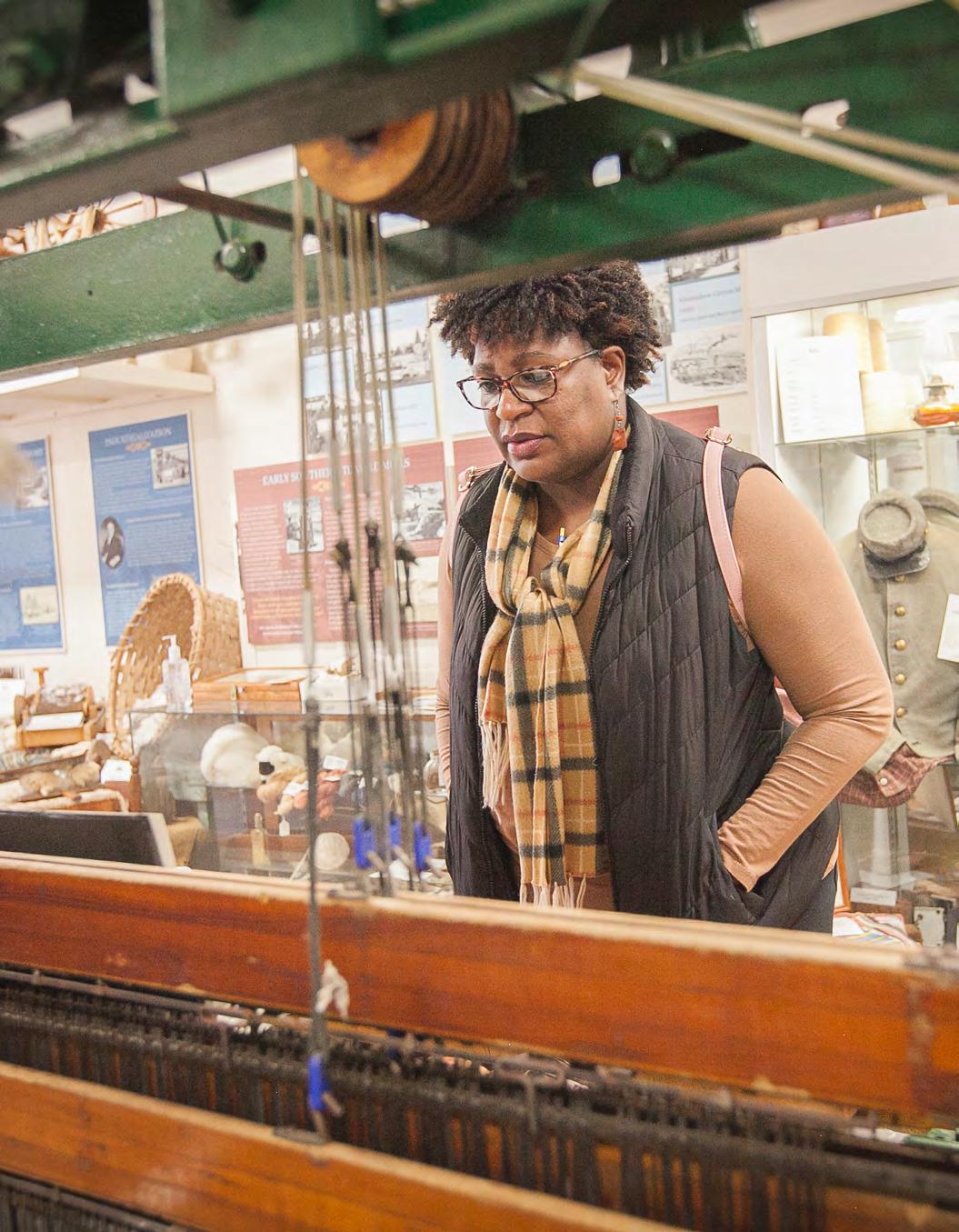
The Arts & Culture Team started with significant energy and was one of the largest teams. Yet the very act of coming together proved the arts community itself was highly fragmented. Groups were working in silos and competing for attention and funding. If they hoped to use the arts for a civic purpose, they first needed to get their house in order. So the team convened the arts community to establish new norms for working together. Exciting ripples followed. A new partnership between Studio 1 and the Burlington Writers Club. An Arty Party Bus that took people clear across the county on an artistic tour to bridge divides and showcase Alamance’s many artistic assets. An Arts and Culture Night at a Sock Puppets baseball game. And a new partnership with the Alamance Burlington School System that is breaking down the walls between schools and the arts community.
These stronger ways of working together then propelled the team to undertake historic preservation efforts at Snow Camp Outdoor Theater, which itself triggered a whole host of ripple effects. Growing momentum led the arts community to pursue a long-held aspiration with renewed energy and purpose: a cultural arts center. None of this would have been possible had arts groups and leaders not turned outward, broken down silos, and begun to work together in a new way. Art is now more visible and relevant to the community and is increasingly used to bring people together across divides. The civic culture is shifting positively in Alamance County at long last. The Arts & Culture Team is leading the way.
YOUTH
YOUTH WELLNESS TEAM
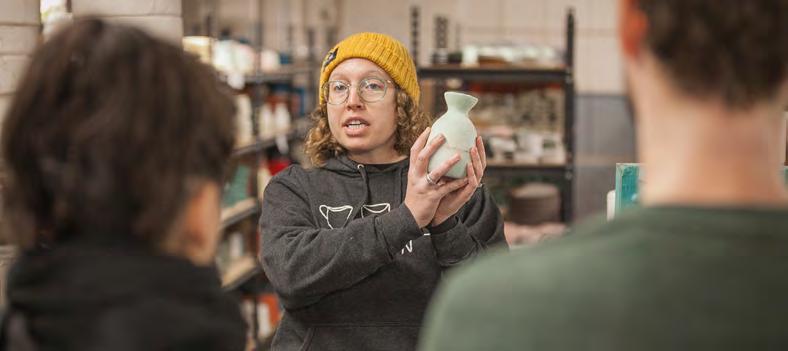
Originally, a Youth Team and a Wellness Team set out to address distinct issues in the community. Both struggled to get going. Efforts to engage the community at times floundered. But both teams heard similar issues about mental health and a lack of youth support in schools. An opportunity emerged: combine the teams around this more precise focus. Still, the merger brought new challenges. Yet the team persisted, choosing to focus on the Graham/East Burlington corridor where youth needs were high. Engaging youth directly led to a breakthrough discovery: Youth aspired to a greater sense of belonging. This was an issue the community needed to help address rather than just one that mental health professionals could solve.
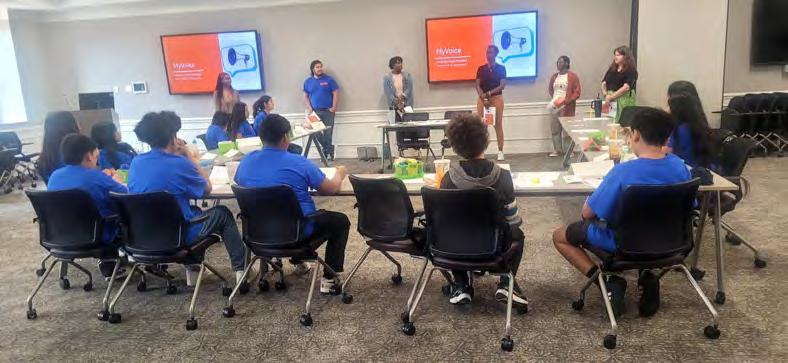
Action grounded in what mattered to youth soon followed as the team catalyzed important efforts to restore quality drinking water at Cummings High School and fix faulty baseball and softball field lighting. That led students to ask for training in how to keep using their voice effectively. So the team provided advocacy training. Students then hosted a demonstration on a busy street corner, which sparked the My Voice initiative to give students an ongoing way to share their perspective with the community.
All the while, the team didn’t lose sight of the deep mental health challenges teens faced. They provided mental health first aid training to youth-serving adults and continued to engage young people around their needs and aspirations. Despite a rocky start, the Youth Wellness team has now created a chain reaction of action that continues to grow. And they are beginning to shift the relationship between youth and the community—from youth being overlooked and undervalued to being seen as advocates for change and valued members of the community.
FAITH TEAM
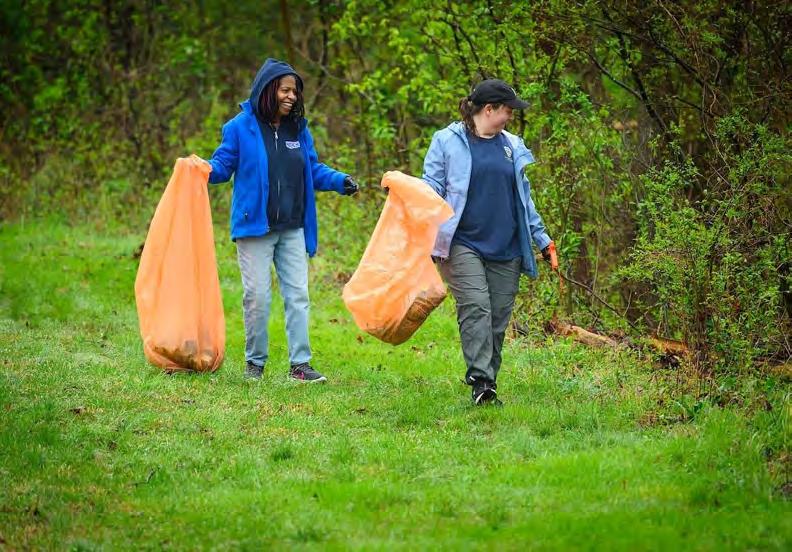
The Faith Team’s work has at times come in fits and starts. Yet where Alamance’s faith community was once highly-fragmented, the team’s persistent efforts have demonstrated the promise and impact of faith leaders working together around “civic faith with a civic purpose.” More people of faith are working for the public good today than before this initiative began through multiple Love for Alamance days, ongoing efforts to support students at Eastlawn Elementary and other schools, and a new and growing network of food pantries popping up in churches across the county. These are all vital down payments toward a new set of norms for how churches can work together across lines of difference.
In a divided place like Alamance County, where faith is so important to so many people, it is critical for churches to be at the forefront of working with shared purpose and commitment. That’s beginning to play out. What’s more, new and exciting ripples are emerging as individual churches and faith leaders continue to embrace the Harwood approach. The Faith Team’s persistent efforts demonstrate that “civic faith with a civic purpose” doesn’t mean giving up individual beliefs; it means transcending them to work on behalf of the wider community.
FAITH
BRIDGING
BRIDGING TEAM
The story of the Bridging Team is one of perseverance and intentionality. One team member initially Turned Outward to catalyze important work supporting formerly-incarcerated individuals. That culminated in a stronger network of support for those reentering society and led to the creation of a formal reentry council for Alamance County. Outside of that effort, the team struggled to get going. Yet they forged ahead.
They finally unlocked a new way forward when they began to engage the community in a new way. The team then became an important community convener, bringing together small groups across the county to have meaningful conversations about people’s aspirations. Those conversations, important in and of themselves, led to a crucial, actionable discovery: people all across Alamance County aspired to a stronger sense of belonging. This sparked the creation of a Bridging Agenda. Engaging people with the agenda then began to catalyze other individuals and groups to work on creating a stronger sense of belonging. Along the way, they innovated Cottage Dinners to foster a different type of conversation in Alamance County. That eventually turned into an entire series of events called Belonging at the Table.
The Bridging Team demonstrates the persistence required to do this work, especially in a place as divided as Alamance County. They are ultimately helping the community reimagine and reframe what is possible: from a focus on deep divides to a focus on people’s shared aspirations for belonging and connection.
NARRATIVE
NARRATIVE TEAM
The Narrative Team’s journey is a reminder of what it takes to build a can-do narrative in a divided, fragmented community like Alamance County. A diligent focus on creating small wins and making down payments toward building the foundation needed for a new narrative kept the team moving forward amid adversity and setbacks. They applied what they were learning, remained persistent, kept innovating, and ultimately figured out what worked and what didn’t.
The team has now built a promising, though still developing, foundation for producing and distributing a new type of story in the community. This is important to the community’s future. While much work remains to more deeply address the community’s ingrained negative narrative, new glimmers of hope and possibility poke through as a new trajectory begins to take hold.
How Civic Culture is Shifting
IN 2023:
Many groups and leaders talked at the community and failed to listen and act on what mattered to people.
Mistrust ran rampant and people did not believe positive change was possible.
Fragmentation and silos were common and many organizations struggled to even get together.
Different organizations and groups competed over resources and didn’t work together with a shared purpose.
The community lacked strong, catalytic leaders.
Youth felt neglected by leaders, organizations, and the local school system.
New efforts prioritized comprehensive plans that often fizzled out or failed to create deep impact.
A negative narrative focused on deep divides dominated the community.
TODAY IN 2026:
More and more leaders and organizations root their actions in what matters to the community.
Trust is being rebuilt as residents see proof that change is possible and is happening.
Community leaders and organizations are not only getting together, they are working together more in new ways on behalf of the community.
The community marshals its collective resources to work with a stronger sense of shared purpose.
A new and growing cadre of unexpected change agents has emerged.
Youth voices are catalyzing real action on issues that matter to them.
New efforts are “starting small to go big,” building momentum, jumping to new areas, and being sustained over time.
The community is creating a new, can-do narrative focused on the visible wins this work is producing.
Moving From Between
“The Waiting Place” and “Impasse”
“Catalytic”
to Early
In 2023, people pointed to some positive efforts taking place in the community, like Alamance Forward—a partnership between LatinxEd, Alamance Achieves, and CityGate Dream Center—alongside important efforts from Impact Alamance, the Chamber of Commerce, and the Health Equity Collective, among others.
Yet overall, people described a community that was stuck.
In The Harwood Institute’s framework Community Rhythms: The Five Stages of Community Life, every community is in one of five stages, and each stage has fundamentally different implications for where a community is and how it
can most effectively move forward. People in Alamance County reported that the community was somewhere between “The Waiting Place” and “Impasse” stages.
Groups and organizations in Alamance County rarely agreed on issues, problems, or aspirations. People increasingly said, “Enough is enough!” A lack of trust, leadership, and organizational capacity blocked the community’s ability to get things done and move forward. And a disconnect existed between leaders and the community. Alamance Choosing Hope documented this stark reality.
As you will read in this report, noticeable progress was being made after the first 18 months of this initiative, especially within particular teams. There was a growing sense that the community was moving beyond “The Waiting
Some people began to wonder if this was yet another effort doomed to fail. But leaders and residents kept at it and didn’t give up.
Place”/“Impasse” and entering the early “Catalytic” stage. But midway through, energy faded. National divides and acrimony intensified. Alamance County followed suit. Multiple teams faced setbacks and were in danger of stalling out. The community slipped back fully into “The Waiting Place.”
Some people began to wonder if this was yet another effort doomed to fail. But leaders and residents kept at it and didn’t give up. The teams discovered new ways to get moving and began to produce more and more action. A growing sense of possibility took hold as people proved to themselves that they could work through challenges and regain momentum. Meanwhile, other promising things in the community occurred. A new school superintendent came in. A promising early childhood initiative got off the ground. And movement around a nonpartisan news outlet accelerated.
Things began adding up, the work spread to new areas, and momentum built until Alamance County ultimately propelled itself into the early “Catalytic” stage.
This progress is the result of the community strengthening its civic culture—the fundamental structures, relationships, leaders, networks, and norms essential for a community to work effectively. The community should take great pride in the progress it has made.
Now, it is time for Alamance County to build upon this stronger civic culture to sustain and accelerate this effort into the future.
The Five Stages of Community Life
The Waiting Place Impasse
In over 35 years of research and on-the ground initiatives in communities across the United States and in other countries, The Harwood Institute for Public Innovation finds that change happens in stages over time. We have developed the Five Stages of Community Life framework that captures how this change happens and what it looks and feels like in a community. Each of the five stages has its own implications–do’s and don’ts–for creating impact. By understanding which stage it is in, a community can develop strategies, programs, and actions that fit its local context and can then work intentionally to accelerate and deepen positive progress.
There is an inkling that something is off in the community, but people can’t name it. There’s no agreement on issues, problems, or aspirations. A disconnect exists between leaders and community.
The community is at loggerheads.
There’s clarity about “What’s wrong,” but little agreement on what to do. A lack of trust, leadership and organizational capacity block the community’s ability to get things done.
To learn more about the Stages of Community Life, see Community Rhythms by The Harwood Institute for the C. S. Mott Foundation
Catalytic Growth Sustain and Renew
There are pockets of change emerging, with new ways of working together. But a lack of trust, leadership and organizational capacity still plague the rest of the community. A new competition arises between an ingrained negative narrative and a new can-do narrative.
There is an abundance of community capacity, networks and productive norms for getting things done. Communitywide efforts are making progress.
Clear progress has been made on key issues, but questions about “What’s next?” are arising. Often there are underlying tensions on unresolved systemic issues. Tensions between old and new leaders exist.
An Intentional Strategy
The key challenge in 2023 was how Alamance County could begin to get on a more promising trajectory with increasing momentum and everexpanding civic confidence.
Over nearly 40 years, The Harwood Institute has learned that it is essential to meet a community where it is—not where we wish it might be. Wishful thinking does not help to address real challenges.
Communities regain their health and vitality by growing new efforts and renewing their strength over time. These efforts must be rooted in what matters to people, and these efforts must be largely shaped and created by the community itself.
Short-term wins must be coupled with longer-term gains. People need to see progress being made along the way if they are to engage for the long haul, especially if they are to believe it is possible to come together to get things done.
The seedbed for this growth is the development of strong, positive underlying community conditions, including trusted leaders, organizations and groups that span dividing lines, productive norms of engagement, and a can-do narrative. When these conditions exist, a community can accelerate and deepen its progress.
This intentional strategy is underway in Alamance County and is producing results by addressing the issues that people care about and forging a stronger civic culture that enables change to take root, grow, and spread.
Truth be told, most communities take a fundamentally different course, pursuing a set of activities that fail to produce the progress they hope for. The Harwood Institute typically sees these things happening in communities across the country:
– M any community efforts overpromise and under-deliver, thus deepening people’s sense of frustration, even cynicism, and leading to lost hope.
– C omprehensive plans get designed that are too big for a community to take on and which fail to realistically take into account a community’s capacities and needs.
– Strategies are imposed upon communities from outside—lacking critical local context and undermining people’s sense of local ownership.
– L arge sums of money are expended long before anyone has a clear view of where investments are most needed and what it takes for those investments to succeed.
Over and over again, an unspoken assumption persists: You can “fix” a community and its problems. As if people and their community somehow need to be fixed. As if persistent issues like belonging or a lack of opportunities can somehow be easily solved.
But no community nor its people can be fixed. Communities regenerate themselves by coming together and marshaling their resources, often in unexpected ways. It is never possible to know exactly where people’s efforts will lead or what ripples they will create, but a community can be proactive about setting the right conditions for this emergence to occur. The Harwood Institute calls this “planned serendipity.” This approach is unfolding in Alamance County.
The Alamance County Story
During a Harwood workspace in late 2025, members of Alamance County’s five teams came together to reflect on the past few years and the progress they have made.
One team member shared a sentiment that resonated with the entire group. They said, “It’s clear that this work is different. It is actually working.” Another noted why it is working, saying, “We are making sure people are seen and heard and are taking action on what the community needs and wants.”
Real, lasting change is beginning to take hold in Alamance County. Five distinct teams—alongside Impact Alamance as a catalytic, boundary-spanning organization—have driven this progress over the past few years, addressing key issues and strengthening Alamance County’s civic culture in critical ways.
Rather than work in isolation, each team’s actions are contributing to an interconnected effort aimed at building
“We are making sure people are seen and heard and are taking action on what the community needs and wants.”
a community that works for everyone. What follows is the story of these five teams, Impact Alamance, and the ripple effects they collectively unleashed.
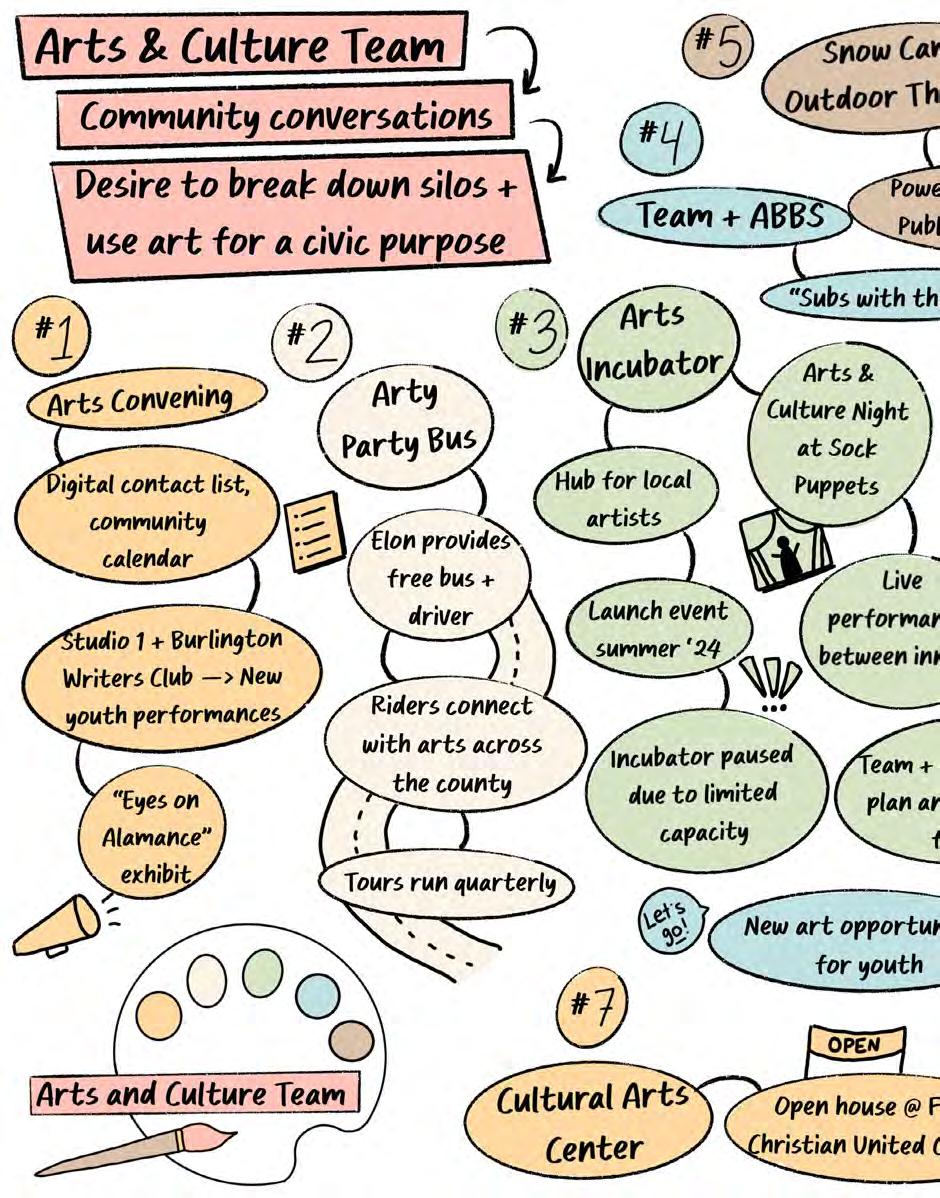
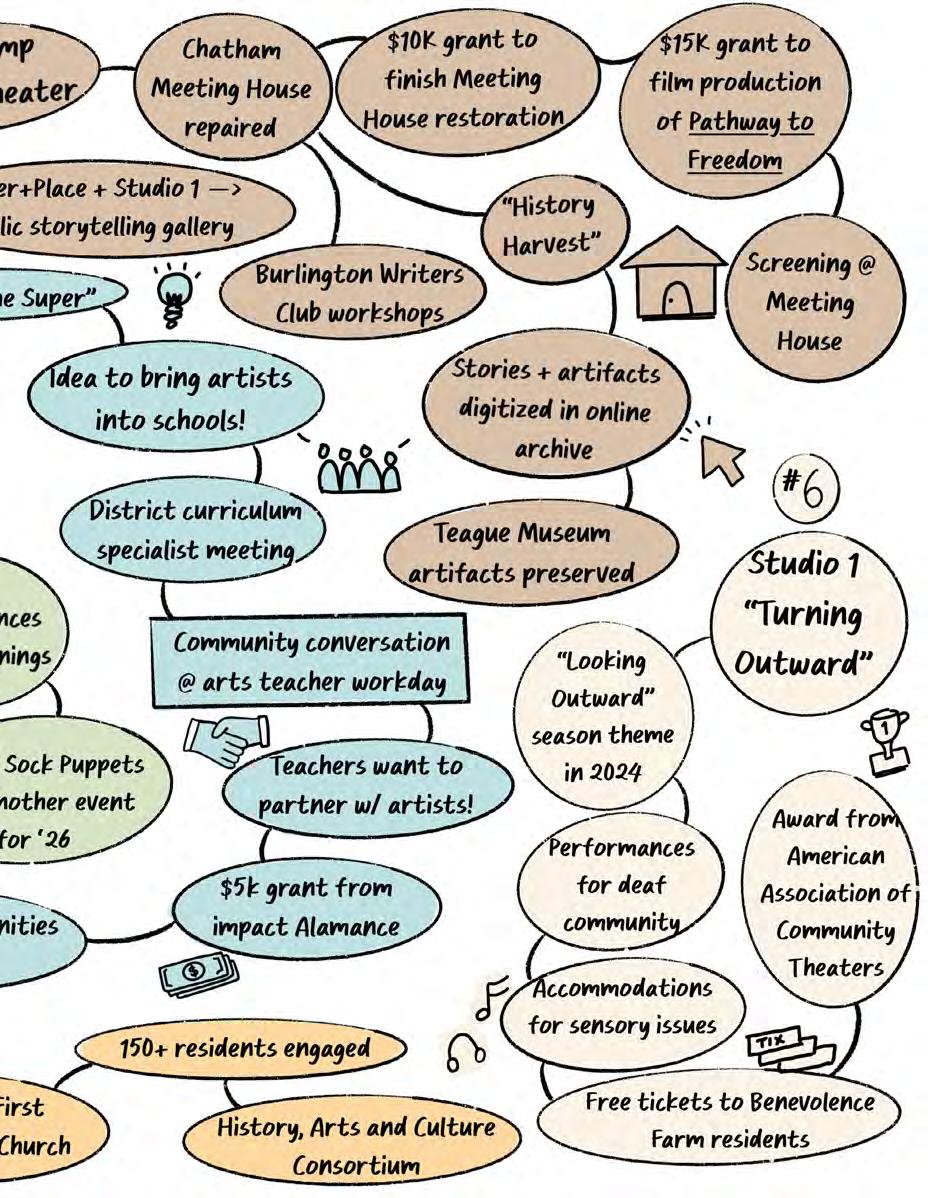
At the end of each team’s story, you will find an illustration that visualizes how their efforts unfolded and evolved over time. The numbered sections of each team’s story correspond to the numbers in each illustration to help you track individual efforts and how they relate to each team’s overall arc.
To download and print copies of each team’s ripple effects illustration, scan the QR code below.
SCAN TO DOWNLOAD ILLUSTRATIONS
Arts & Culture Team
The Arts & Culture Team came out of the Getting Started Lab ready to roll. It was one of the largest teams, made up of artists and nonprofit leaders from groups like Studio 1, Elon University, Alamance Community College, Alamance Arts, and the Burlington Writers Club.
The team initially organized six community conversations at arts-related locations like Snow Camp Outdoor Theater in southern Alamance County and Studio 1 in Burlington. Some of their conversations focused on engaging people already connected to the arts while others engaged residents. Three key themes emerged from conversations with residents:
1. A f eeling that the arts were disconnected from, even invisible to, many residents; some residents even said they felt the arts were “not for people like me”
2. A l ack of shared identity due to the community’s longstanding divides on issues of race, geography, and long-time vs. new residents
3. A yearning for more spaces and gatherings that create connection and foster community pride
But the very act of coming together to hold these conversations revealed something to the team: The arts community itself was deeply fragmented and rarely worked together. Individual artists and arts groups were siloed; operated in survival mode; and competed over funding, audiences, and recognition. To address residents’ aspirations and concerns, the team realized they first needed to build a stronger ethic of collaboration and mutual support within the arts community itself. Many of these individuals and groups already knew
The team believed the arts could benefit from engaging the community and that the community could benefit from engaging with the arts.
each other. But the challenge was whether they could work together in a new way.
Ultimately, the team believed the arts could benefit from engaging the community and that the community could benefit from engaging with the arts.
As you read on, recall that each of the numbered sections below corresponds to sections of the illustration that follows this story.
1
The team began by convening the arts community to share what they learned from community conversations. This was meant to be a down payment toward creating stronger connections in the arts community and forging a new way of working together. Importantly, according to one team member, “the discussions were not all rainbows and glitter.” Participants grappled with tough questions in small groups:
– H ow can we share resources while ensuring we individually survive?
– H ow can we begin to move past longstanding mistrust and turf wars?
The convening gave leaders the space to be real with each other, which fostered new bonds of trust and created new possibilities for collaboration. It also
revealed a gap that contributed to isolation and working in silos: There was no comprehensive resource for artists and arts groups to find and connect with one another in Alamance County. So the team developed a digital contact list to connect artists and arts groups to one another. Meanwhile, Alamance Arts already had a free online Arts & Culture Community Calendar where artists and groups could post their events and classes. As the team built new and stronger connections among the arts community, more and more artists took advantage of Alamance Arts’ calendar, bringing greater visibility to what already existed in the county.
Another idea emerged from these early conversations. The Arts & Culture Team co-leaders decided to model the Harwood Turning Outward approach by working together in a new way. One of them was the then-president of the
“‘Start small to go big,’ struck home for me. I’ve always believed that the arts can be a part of changing the trajectory for our community.”
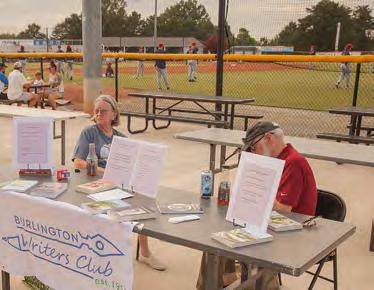
Burlington Writers Club. The other is executive director of Studio 1, a performing arts center in Burlington.
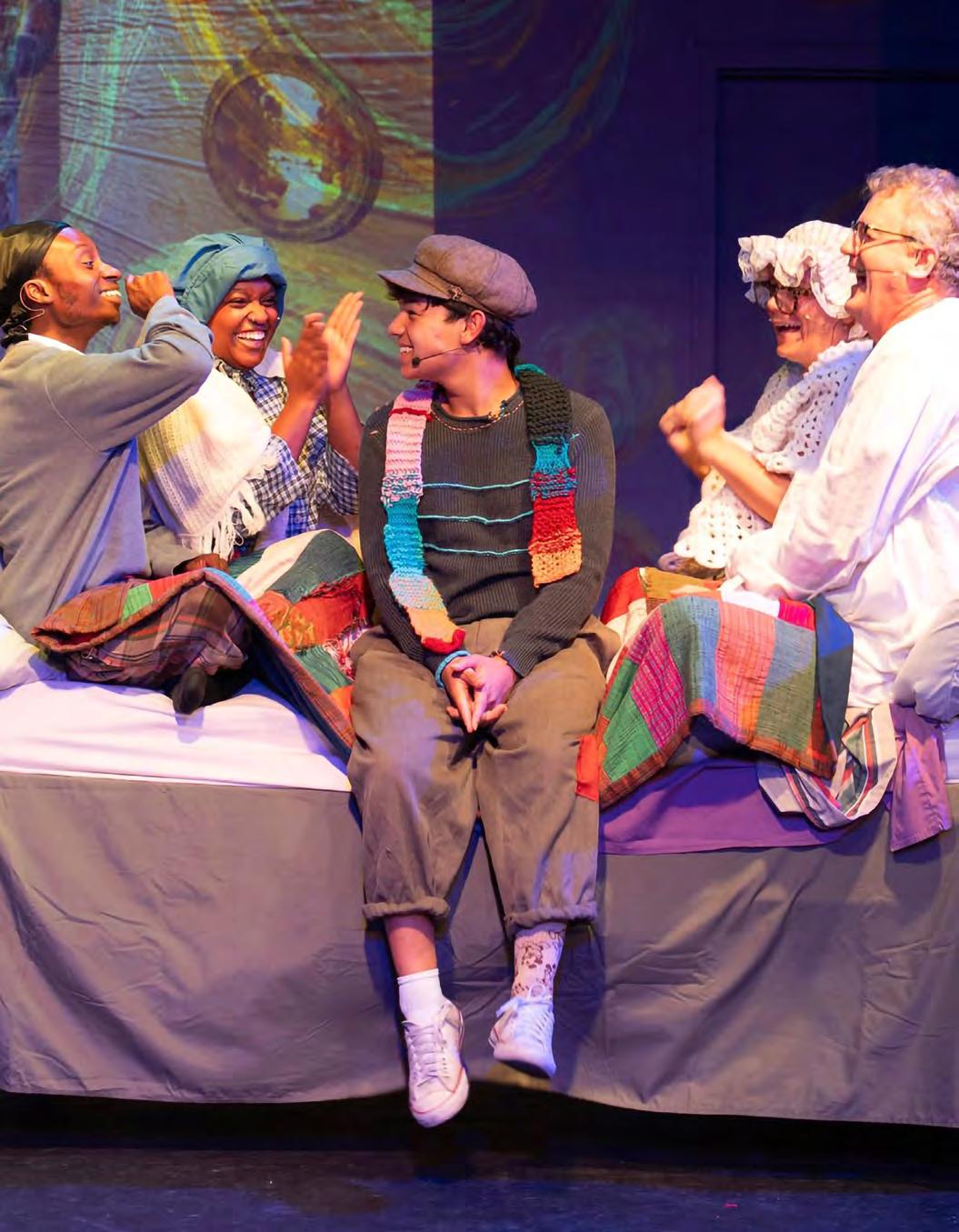
These leaders had formed a relationship during the Getting Started Lab and now saw an opportunity to bring their groups together to work on a Studio 1 production. Burlington Writers Club members helped Studio 1’s youth performers craft original monologues focused on things that mattered to youth. Youth then performed these monologues during a Studio 1 production. This effort forged a stronger relationship between the two groups and gave youth a larger platform to share their voices, which were often not heard in the community.
They credited Harwood’s Key Mantra of “start small to go big” as an inspiration for the partnership. Studio 1’s executive director said, “‘Start small
to go big,’ struck home for me. I’ve always believed that the arts can be a part of changing the trajectory for our community.”
Then yet another idea emerged. Alamance Arts’ new executive director had joined the organization in 2022. From the start, she and the Alamance Arts staff sought to create stronger connections between the arts and the wider community. Alamance County had a long history of artists hosting solo exhibits, many of which Alamance Arts had themselves hosted. Participating on the Arts & Culture Team now sparked a new idea for Alamance Arts: create an exhibit that showcased artists from across the county together.
They called the exhibit “Eyes on Alamance.” Numerous artists eagerly stepped forward to be involved and have their photography, painting, and other types of art included. They launched the exhibit—which featured artists who live in or have ties to Alamance County—with an opening reception in early 2024. It was an incredible success. The reception and ongoing exhibit drew scores of visitors and created greater connectivity between local artists and the wider community. It proved so successful that Alamance Arts committed to making it an annual exhibit, with the third edition set to launch in January 2026.
2
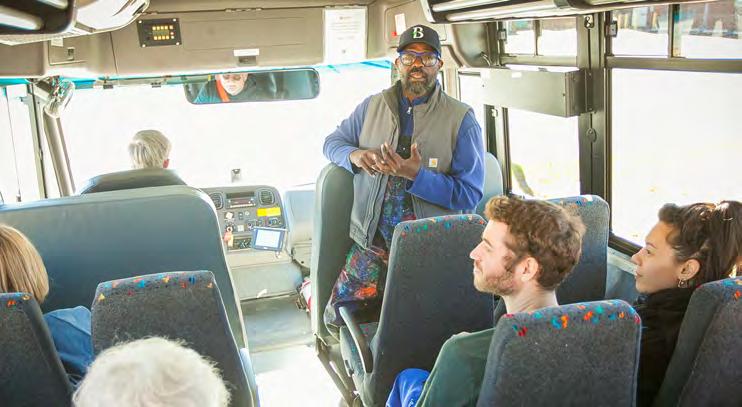
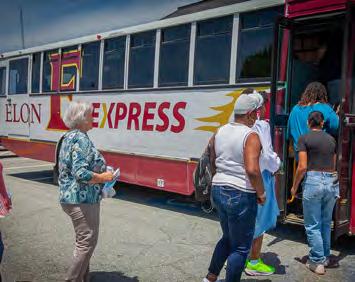
The team next landed on an innovative idea called the Arty Party Bus: a literal guided bus tour of Alamance County that would take residents to visit public art installations, theaters, pottery studios, dance schools, and cultural landmarks. They chose the idea for three main reasons:
1. I t bridged divides by putting people in a shared space and giving them a shared experience together.
2. I t showcased the county’s hidden assets and made the arts more visible to the wider community.
3. I t modeled collaboration and broke down silos by getting different arts groups to work together in crafting and holding each tour.
Only one problem: where to find a bus? Brainstorming ideas led one team member to activate a connection they had at Elon University. Compelled by the deeper purpose behind the effort, Elon stepped forward to provide the bus and driver for free.
The team then launched the first bus tour in June 2024. An emcee engaged bus riders with Alamance County trivia and told stories about local arts and history.
A local artist met the group at each stop to host and welcome the tour. And the bus ride itself gave team members the chance to engage people from all walks of life about their aspirations for the community. Many riders said this was their first experience with the arts in Alamance County. People left the tours energized, more aware of the
community’s vibrant artistic identity, and more connected to others across the county.
The success propelled the team to make the bus tours a recurring event. Team members took turns crafting a unique itinerary for each tour and made sure to incorporate “hidden gems” by sourcing suggestions from artists and residents across the county. For example, one tour included the “Tapping Time” sculpture by Raleigh-based artist Thomas Sayre
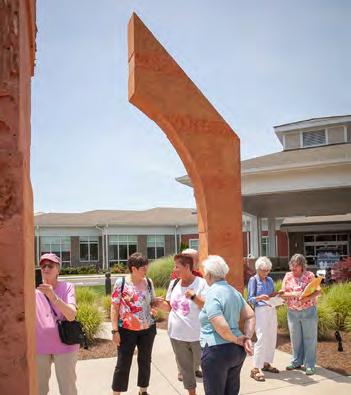
at Twin Lakes, an art piece even many arts group leaders said they didn’t know about.
One team member said, “The Arty Party bus helped expose people to groups from all over the county—everything from pottery to dance to furniture to museums. Even if people were not able to ride the bus, they saw the posts and learned about what was out there.” The team continues to host the Arty Party Bus rides on a regular basis and are now in talks with local organizations to find a long-term, sustainable home for the program.
3
Another early idea was to create an Arts Incubator using space at Studio 1. The goal: establish a local hub for artists from different disciplines to work side by side, form connections, spark new collaborations, and showcase their work to the community. All in one place.
The team held a launch event for the incubator in summer 2024. Despite the team’s best efforts to promote the launch, attendance was low. Even fewer artists took advantage of the space following the launch and energy quickly fizzled. The team realized the project was too ambitious given their current capacity and commitments, so they
paused the incubator. Running into such challenges isn’t unusual for teams at this stage.
Rather than viewing the outcome as a failure, the Arts & Culture Team learned from the experience. As one leader said, “We tried what artists asked for and found out more about what it takes to sustain something like this.” Importantly, the team transparently shared back with local artists and other leaders about why they were pausing the incubator.
Soon after, a different idea emerged. One team member proposed hosting an arts dinner at an upcoming Burlington
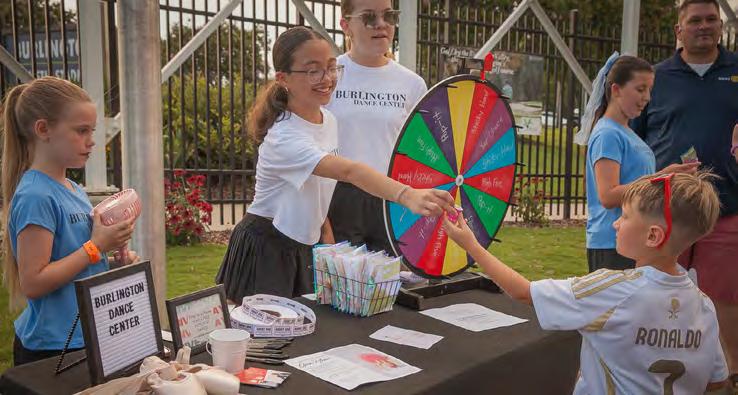
Sock Puppets baseball game. Another team member knew a leader in the Sock Puppets organization, so she approached him with the idea. But instead of just a night out at the game for local artists, they expanded the idea to be an Arts & Culture Night for the whole ballpark.
The team got in motion lining up arts groups to host info tables and tapping local artists to create art displays throughout the stadium’s concourse. This gave attendees a chance to meet local artists and connect with arts organizations. Meanwhile, the team and Sock Puppet leaders carved out multiple
The Arts & Culture Night at the Sock Puppets game proved to the Arts & Culture Team that the arts can and should be integrated into everyday public spaces, not just confined to typical arts venues.
opportunities for live performances. For example, youth musicians from Alamance Strings—a local orchestral group—performed live before the game. Other groups performed in between innings, like a local a cappella group called Quad County Sound who sang a rousing rendition of “Take Me Out to the Ballgame” during the seventh inning stretch. One group member told the team it was by far the biggest crowd they’d ever performed in front of.
The Arts & Culture Night at the Sock Puppets game proved to the Arts & Culture Team that the arts can and should be integrated into everyday public spaces, not just confined to typical arts venues. The event’s success also propelled the Sock Puppets organization to ask the team if they wanted to join forces for another Arts & Culture Night in 2026 when the new season commences. Plans are now in motion. 4
Meanwhile, other members of the team had sought to forge new relationships with arts teachers in the Alamance Burlington School System. It was proving difficult to make headway given the district’s predicament. Financial mismanagement, leadership instability, and concerns over aging facilities plagued the district. Hoping to
right the ship, the district hired a new superintendent prior to the 2024-25 school year.
To better engage the district’s families and begin to rebuild trust, the new superintendent started hosting “Subs with the Super” events across the county. These events gave parents and families the chance to share a meal with the superintendent and ask questions.
One team member, who happened to have a student in the district herself, attended one of the events. She asked the superintendent if he was open to bringing artists into the schools as guest teachers to broaden student experiences. He said yes and connected her with the district’s communications officer. That led to this team member talking with a high school visual arts teacher—who had been named the district’s Teacher of the Year in 2023-24. This teacher loved the idea too, and put the team member in touch with the district’s curriculum specialist.
Finally, in winter 2024, this team member and the curriculum specialist met. Rather than tell teachers her vision, this team member proposed holding a community conversation with visual arts teachers to hear what support they needed; only then would they figure out what bringing artists into schools should look like. The curriculum specialist agreed. After inclement weather cancelled
the originally scheduled conversation with teachers, it finally happened in August 2025.
It was a breakthrough. Arts teachers told the team it was the best workday they’d ever had because someone actually asked them about their aspirations and what they needed to achieve them. The teachers said they wanted to be able to provide more arts opportunities for students, including through partnerships with local groups and artists. As this was happening, Impact Alamance set aside a pool of funds for teams to accelerate their work. The Arts & Culture Team was awarded a grant to pair seven district arts educators with seven local artists.
This effort brings arts into the classroom, exposes youth to unique experiences, and fosters meaningful connections. It also signals to youth that the community cares about them. And, importantly, it is breaking down the walls between schools and the community in meaningful ways. The team is now running an application process to pair interested artists with educators. They hope to complete the program by summer 2026.
5
The team’s growing momentum created even more opportunities to use art to bridge divides and create spaces where residents can forge new relationships
and celebrate Alamance County through the arts. One team member reached out to Elon University’s Power+Place Collaborative to have them host one of their History Harvest events at Snow Camp Outdoor Theater as part of Snow Camp’s larger Fall Festival. The purpose of the History Harvest is to “collect, preserve, and share oral histories and digital stories in partnership with residents from diverse communities across Alamance County.”
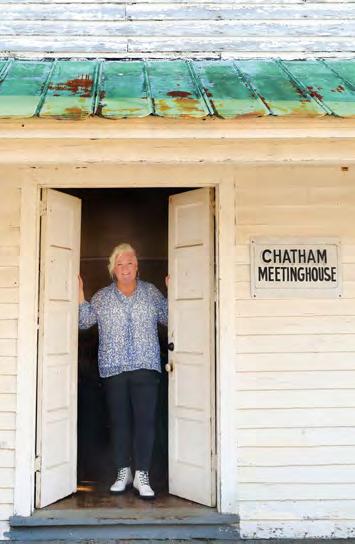
Planning for this event catalyzed an exciting ripple. Snow Camp’s grounds are home to multiple historic buildings, including the Chatham Meeting House. Once an important Quaker site, it had fallen into severe disrepair. Deciding to host a History Harvest event at Snow Camp propelled the Studio 1 team
to clean up and restore the meeting house—including doing needed electrical work—so the space could be used to host the History Harvest during the Fall Festival.
During the event, residents brought photos, documents, and other artifacts of historical value related to Alamance County and its people. These were then digitized and added to Elon University’s online archive as part of Power+Place’s ongoing storytelling efforts across the county. What’s more, the Studio 1 team’s efforts to restore the meeting house became about more than using the space for a one-off event. It was a way to reclaim an important part of the county’s history, create a new community gathering space, and be a point of pride for residents in the southern part of the county.
A further ripple followed when a leader from Snow Camp and a history professor at Elon connected because of the History Harvest. That sparked new conversations about preserving artifacts housed in other buildings on Snow Camp’s expansive grounds to create a deeper sense of pride among residents. They landed on starting with items in the Teague Museum, which is a 1780s house that’s home to a number of important historical artifacts, including a logbook from a local textile mill. It’s not a weather-controlled space, putting the artifacts in danger of decay. Nor
could the public view or enjoy the artifacts given the building’s disrepair. So Snow Camp and Elon agreed to have a museum studies student salvage the artifacts. They will clean them up, digitize them for display through an online archive, and ultimately bring them back to Snow Camp for display as part of a pop-up exhibit.
More ripples soon emerged. Seeing the Chatham Meeting House being used and celebrated by the community during History Harvest emboldened Snow Camp leaders to pursue grant funding to further renovate the meeting house to use as a year-round gathering space and performance venue. They soon secured a $10,000 grant from the Covington Foundation to redo the building’s damaged foundation and finish other important work.
Meanwhile, Snow Camp leaders had received a $15,000 grant from the National Educational Endowment to professionally film the behind-thescenes making and performance of an upcoming main stage production
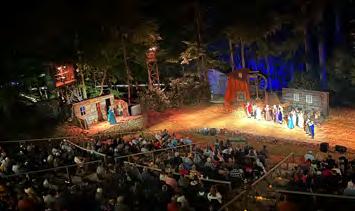
of Pathway to Freedom. The play tells the story of the Quaker community’s role in the Underground Railroad in the Alamance County area. Once full renovations on the Chatham Meeting House are complete, Snow Camp plans to hold a screening of the film there given its Quaker history.
Still the ripples continued! Some time after History Harvest, a different Elon professor involved in the Power+Place Collaborative reached out to Studio 1’s executive director. Power+Place had conducted oral history interviews with community members across Alamance County and turned them into personal narratives that they’d begun sharing digitally and through visual installations and story walks in parks, schools, and libraries. This professor was looking for additional ways to amplify these stories in the community, specifically hoping to get them displayed in the Holly Hill Mall due to its high foot traffic.
Seeing natural alignment between these stories and the Arts & Culture Team’s goals, Studio 1’s leader helped
Power+Place get the stories displayed in the Holly Hill Mall’s entrance, just outside of Studio 1’s space. This turned what was otherwise an empty thoroughfare into a public storytelling gallery featuring the diverse stories and backgrounds of people across Alamance County. This once again made the arts more visible and continued to break down silos as groups worked together in new ways.
Beyond all that, a team member who was part of the Burlington Writers Club decided to host a series of writing workshops in historic sites across the county. Doing so was meant to get participants “writing in place,” informed by their surroundings and more deeply connected to the county’s history. This team member had long dreamed of the idea. But they directly credited being on the Arts & Culture Team with helping build the relationships needed to advance the effort. Workshops are now being planned at Snow Camp Outdoor Theater, the Textile Heritage Museum, and other places in 2026. It’s
The writing workshops are another example of the team using arts for a civic purpose by getting people out of their comfort zones and creating connections across different parts of the county.
another example of the team using arts for a civic purpose by getting people out of their comfort zones and creating connections across different parts of the county.
6
One organization in particular was transforming itself through this work: Studio 1 in Burlington. Their executive director had served as an Arts & Culture Team co-lead from the beginning. They were deeply influential in many of the team’s actions. But Studio 1 also leveraged the initiative to rethink how they engaged the community and lived out their mission as an organization.
When the initiative began, Studio 1’s executive director noted that they often felt isolated, as if they were just “doing our own thing” disconnected from the county’s arts community. Learning the Turning Outward approach propelled her to view Studio 1’s work differently. “We stopped asking what would sell tickets and started asking what would connect with people,” she said.
That reorientation was at the heart of many team efforts that Studio 1 influenced. It also catalyzed a series of profound moves for Studio 1 itself. Studio 1 made “Looking Outward” the official theme for its 2024 season and tied every main performance to a community-focused project to
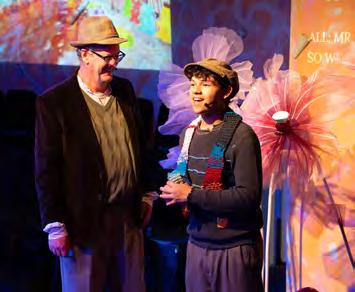
create a stronger sense of belonging and inclusion among residents. They offered performances specifically designed for the deaf community; shows that accommodated the sensory sensitivities of those with autism or sensory processing disorders; and free tickets to residents of Benevolence Farm, a program for formerly incarcerated women.
“We shifted from being seen as a little theater in Burlington to being seen as a civic player with county-wide reach,” Studio 1’s executive director noted, a shift they credited to the adoption of the Harwood approach. In late 2024, their transformation gained national recognition when the American Association of Community Theaters (AACT) honored Studio 1 with its Twink Lynch Organizational Achievement Award. AACT’s write-up honoring Studio 1 noted, “The company has worked diligently to learn about its community and how it can partner, support, and
reflect all those who live there… [by using] a mission-driven approach indicative of the company’s philosophy that theatre is about coming together to create something larger than ourselves, and not just on stage.”
7
The arts community had long aspired to have a central hub for the arts in Alamance County. Meanwhile, one team member, who had inherited a large collection of historical artifacts, had long championed the idea of a cultural museum for Burlington. While other cities in Alamance County had one, Burlington didn’t. As this team member said, “Our history isn’t visible. We need a place to tell our story.” These two ideas came together on the team and became part of what they pursued amid their wider efforts.
Civic culture is shifting positively in Alamance County at long last. The Arts & Culture Team is leading the way.
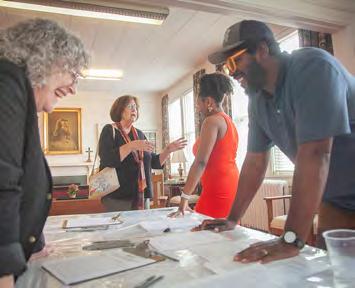
A possible space to meet this dual need emerged when the congregation of First Christian United Church of Christ invited the community to help envision their historic building’s future, which sits at the northwest edge of downtown Burlington. The team joined forces with Preservation Alamance and the church to hold an open house in May 2025. They engaged over 150 residents about their shared aspirations for the building and the possibility of it becoming a community hub for arts and culture.
The open house’s success propelled the team to create a History, Arts, and Culture Consortium— a formal network of groups and organizations—to harness the growing momentum for a cultural arts center among newly-elected local officials. One team member will lead the consortium in a paid, parttime position. An Arts & Culture team member noted, “This consortium will address what we learned from the community. People want community groups to move together as a force
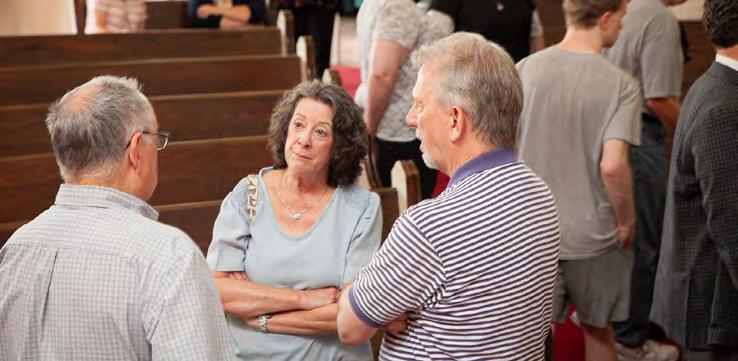
to demonstrate consistency in action, increase opportunities across divides, and share resources.” Importantly, this team member credited the feasibility of creating a consortium to the team’s previous efforts to strengthen the arts community’s civic culture by proving that groups could break down silos and work together in new ways.
divides and showcase Alamance’s many artistic assets. An Arts and Culture Night at a Sock Puppets baseball game. And a new partnership with the Alamance Burlington School System that is breaking down the walls between schools and the arts community.
The Arts & Culture Team started with significant energy and was one of the largest teams. Yet the very act of coming together proved the arts community itself was highly fragmented. Groups were working in silos and competing for attention and funding. If they hoped to use the arts for a civic purpose, they first needed to get their house in order. So the team convened the arts community to establish new norms for working together. Exciting ripples followed. A new partnership between Studio 1 and the Burlington Writers Club. An Arty Party Bus that took people clear across the county on an artistic tour to bridge
These stronger ways of working together then propelled the team to undertake historic preservation efforts at Snow Camp Outdoor Theater, which itself triggered a whole host of ripple effects. Growing momentum led the arts community to pursue a long-held aspiration with renewed energy and purpose: a cultural arts center. None of this would have been possible had arts groups and leaders not turned outward, broken down silos, and begun to work together in a new way. Art is now more visible and relevant to the community and is increasingly used to bring people together across divides. Civic culture is shifting positively in Alamance County at long last. The Arts & Culture Team is leading the way. ��
Youth Wellness Team
A team focused on youth and a team focused on wellness both formed after the Getting Started Lab. Many members on both teams were nonprofit leaders whose intense professional lives made it difficult to align on how to focus their efforts, let alone organize community conversations and start to take action.
Rather than build momentum, both teams got stuck. Energy was dwindling. But the community conversations they
did hold produced similar themes around youth mental health and a lack of support in schools. These common concerns, paired with a lack of progress on the individual teams, presented an opportunity to combine them into a single Youth Wellness Team. The need for a new direction like this isn’t unusual, especially in light of the community’s starting point between “The Waiting Place” and “Impasse.”
Students did face mental health challenges and lacked support. But on a more fundamental level, they lacked belonging.
A group of educators, nonprofit leaders, and staff from the Alamance County Health Department became the core of the new team. The merger proved challenging, as the combined team struggled to find cohesion. Efforts remained stop-start. But enough leaders kept meeting, determined to find a way forward.
In an attempt to bring greater thrust to their work, the team decided to sharpen its focus on the Graham/East Burlington corridor. They knew the needs among youth were high. Then, in hopes of deepening their understanding of what the two separate teams previously heard, they held a new round of conversations with social workers, educators, and other adults who served youth.
Adults described being “overwhelmed” by the youth mental health challenges they saw daily. There were simply too few mental health professionals for the number of students in need. “We’ve been so stressed. We don’t have the manpower,” one leader shared. The conversations also revealed limited follow-through on referrals, which meant too many youth were slipping through the cracks. Conversations also revealed that many families lacked transportation to access important resources in schools and the community.
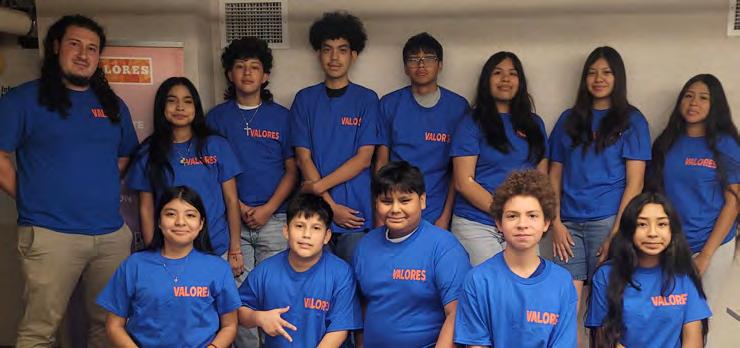
The team felt lost as they wrestled with how to even begin addressing such deep challenges. But they stayed in motion by organizing a series of conversations with youth at Graham Middle School, Cummings High School, and Valores—an organization focused on serving Latino youth in Alamance County—to hear directly from youth about their aspirations and concerns.
The youth voices were clear about the mental health challenges they faced. One said, “It feels like we’re often left counseling our friends,” because adults weren’t available. For Latino students, this was compounded by a feeling that they didn’t belong in school or the community. They even named instances of educators, community members, or other students telling them to “go back where you came from.”
Ultimately, engaging youth produced a crucial discovery. Students did face mental health challenges and lacked support. But on a more fundamental level, they lacked belonging. This wasn’t necessarily a “clinical” mental health problem, but one of needing to engage youth and ensure they felt seen and heard. What’s more, conversations with youth revealed concrete—and doable —starting points.
As you read on, recall that each of the numbered sections below corresponds to sections of the illustration that follows this story.
1
Two examples of potential action stood out during community conversations with youth at Cummings High School. Both made students feel like the community didn’t value them:
1. Students avoided drinking from water fountains because of expired filters that jeopardized water quality; and
2. Baseball and softball teams often had to practice off-campus and couldn’t host home games because of faulty field lighting.
The team quickly took what they learned to other leaders and groups. Almost immediate wins followed. One team member shared about the issues at Cummings High School at a Juvenile Crime Prevention Council meeting. Hearing about the water fountain issue led a county judge to make a series of phone calls—including to the school district’s head of maintenance. That propelled action to replace the expired filters and restore water quality. Meanwhile, other leaders the team engaged, including an Alamance Burlington School System board
Seeing their voices create real change energized Cummings High School students.
member, got in motion to address the lighting issue at the baseball and softball fields.
Rather than pointing fingers or casting blame for these issues, the Youth Wellness Team applied a key part of the Harwood approach by sharing what they learned—what The Harwood Institute calls “public knowledge”—with the community. This catalyzed others to take action on what really mattered to youth. Finally, a team that experienced numerous obstacles getting started was off to the races.
2
Seeing their voices create real change energized Cummings High School students. They wanted to keep going and decided to ask the team to provide advocacy training. As one student said, “We know the problems, we just don’t know how to say it.”
In response, the team partnered with NC Youth and Family Voices Amplified—an organization in North Carolina focused
on amplifying the voices of youth and families regarding mental health and well-being—to provide advocacy training that equipped Cummings students with conversation skills and exposed them to roleplaying scenarios to build their confidence. Multiple students said, “This is the first time we felt heard.”
A group of Hispanic students and others wanted to take immediate action. So they organized a demonstration at a busy intersection near the school with the theme “We belong here” in response to conversations during the training about belonging, the fear of deportation, and unlawful stops.
Rather than let the demonstration be a one-off, the team took another major step forward by developing “My Voice,” an ongoing outlet for students to share their perspectives and advocate for change. Based on the national Photovoice concept, the My Voice project will equip students to take photos or videos with captions that lift up their aspirations and concerns. The team and students will share these stories with community leaders and others in Alamance to catalyze the change youth hope to see. Impact Alamance provided a $5,000 grant to support the My Voice project.
3
The team was still determined to address youth mental health issues more directly. They knew they alone couldn’t solve mental health staffing shortages or address longstanding funding gaps. But they stayed focused on what they could do given their capacity and relationships. As a next move, they organized two mental health first aid certification courses for adults who work with youth, including teachers, coaches, mentors, and faith leaders.
Impact Alamance then provided financial support to make the training free for all participants, eliminating a key barrier to participation. The trainings greatly expanded the number of youth-serving adults who are able to recognize warning signs of mental health issues and suicidal thoughts and support youth in getting the help they need. Based on high demand, the team is now planning additional sessions, one specifically for parents and another held in Spanish to reach Spanish-speaking adults in Alamance County.
4
In winter 2025, the team held new community conversations with the Burlington Police Department’s Teen Squad and the mentoring program at the Mayco Bigelow Community Center with nearly 50 youth. The team also used
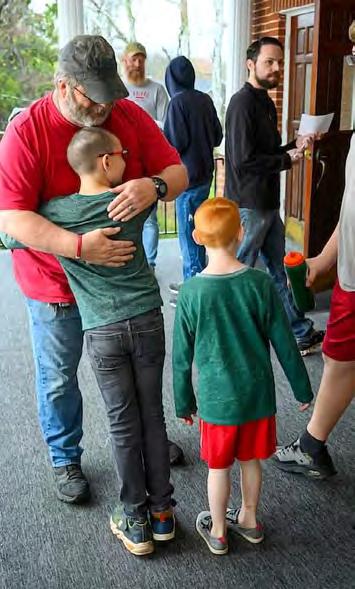
grant funds from Impact Alamance to provide gift bags to youth that were packed with basics like snacks and hygiene kits.
These conversations revealed that youth didn’t have enough safe places to hang out with friends and reinforced that youth felt unheard and undervalued by adults. A third conversation with students from Alamance Community College is now in the works. The team will use what they learn from this most recent round of conversations to inform future actions.
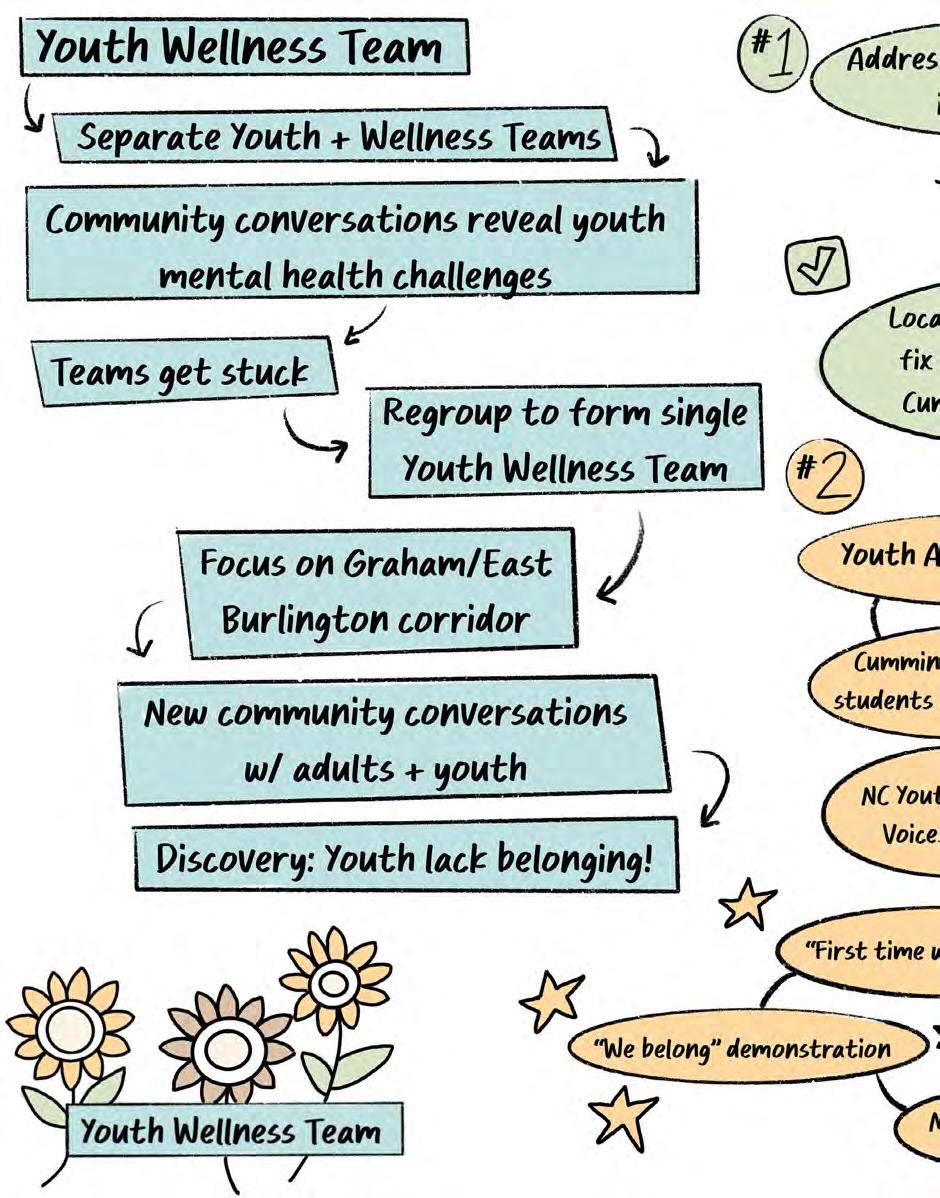
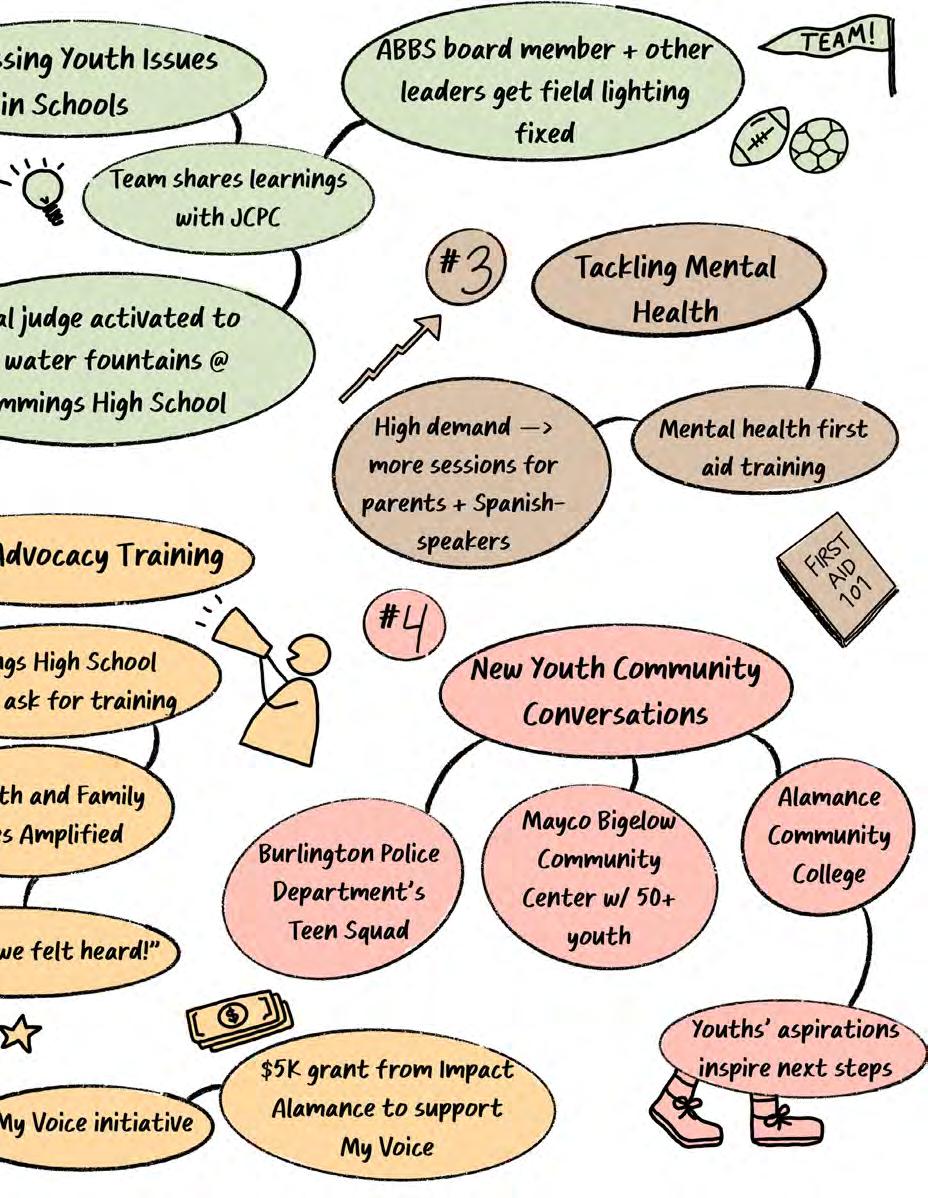
Originally, a Youth Team and a Wellness Team set out to address distinct issues in the community. Both struggled to get going. Efforts to engage the community at times floundered. But both teams heard similar issues about mental health and a lack of youth support in schools. An opportunity emerged: combine the teams around this more precise focus. Still, the merger brought new challenges. Yet the team persisted, choosing to focus on the Graham/East Burlington corridor where youth needs were high. Engaging youth directly led to a breakthrough discovery: Youth aspired to a greater sense of belonging. This was an issue the community needed to help address rather than just one that mental health professionals could solve.
Action grounded in what mattered to youth soon followed as the team catalyzed important efforts to restore quality drinking water at Cummings High School and fix faulty baseball and
softball field lighting. That led students to ask for training in how to keep using their voices effectively. So the team provided advocacy training. Students then hosted a demonstration on a busy street corner, which sparked the My Voice initiative to give students an ongoing way to share their perspective with the community.
All the while, the team didn’t lose sight of the deep mental health challenges teens faced. They provided mental health first aid training to youth-serving adults and continued to engage young people around their needs and aspirations. Despite a rocky start, the Youth Wellness team has now created a chain reaction of action that continues to grow. And they are beginning to shift the relationship between youth and the community—from youth being overlooked and undervalued to being seen as advocates for change and valued members of the community. ��
The Youth Wellness team is beginning to shift the relationship between youth and the community—from youth being overlooked and undervalued to being seen as advocates for change and valued members of the community.
Faith Team
Alamance County is home to more than 300 churches. In The Harwood Institute’s original report, Alamance Choosing Hope, many residents said that their churches served as important hubs for them and fellow congregants and individual faith leaders commanded trust and respect among their congregants. But at the same time, many churches were fragmented from one another and focused on their own survival. Working together to effectively address issues or needs in the community was rare.
Still, many faith leaders expressed a desire to come together for a common purpose and take action across congregational dividing lines. Given the historical credibility and energy of the faith community, this could provide an important thrust for this initiative. As a result, a Faith Team formed shortly after the Getting Started Lab. Leaders from Northside Fellowship Church, Ebenezer
United Church of Christ, and St. Mark’s Community Church stepped forward to form the team’s core.
Getting folks to show up was not easy. Team members said the struggle reflected the faith community’s widespread fragmentation and tendency to go it alone. But enough faith leaders kept showing up to make a go of it.
The team began by holding community conversations with their own congregations, which they considered to be a good starting point. After that, they branched out and held additional conversations at an affordable housing community for seniors, local schools, and the Dream Center, among other places. They also attended community events to engage individual families about their aspirations. Three key themes emerged from these different efforts:
Things shifted when one team member proposed framing their work around “civic faith with a civic purpose.”
1. Parents and youth felt disconnected from and neglected by the community. Many pointed to schools in disrepair—like Eastlawn Elementary School—as symbols of this neglect.
2. Se niors and youth named a generational divide that they aspired to bridge through visible acts of service and care.
3. M any families no longer saw churches as relevant or somewhere to belong, often describing them as “judgmental” or simply absent from community life.
Turning conversation into action proved difficult due in part to existing silos in the faith community. But some leaders also worried about damaging their reputation by working in a new way with other churches that professed different beliefs. One said, “I’ll lose my standing with my minister’s circle if I start talking about doing this kind of work with other churches.” It’s a concern The Harwood Institute hears often from faith leaders in communities across the country. But the Faith Team was determined to find a way to work together on behalf of the community. They kept meeting.
Finally, things shifted when one team member proposed framing their work around “civic faith with a civic purpose.” Civic faith is a key concept in The Harwood Institute’s philosophy. Under
this banner, taking action on behalf of the community was an expression of shared values—care, service, devotion— rather than a departure from a particular faith’s beliefs. With this frame, churches and faith leaders did not have to fully align on doctrine to work together. It was the breakthrough the team needed. New possibilities immediately emerged.
As you read on, recall that each of the numbered sections below corresponds to sections of the illustration that follows this story.
1
The team decided to put a twist on a day of service, something many churches were already accustomed to. Rather than involving a single church, they planned “Love for Alamance: a Day of Service” in March 2024 as a communitywide effort with leaders and churches representing different faith backgrounds working together.
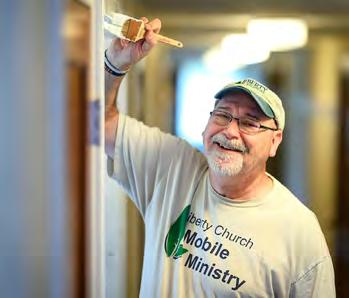
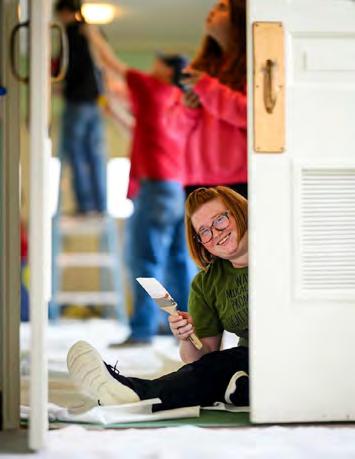
The team organized and supported different service projects across the county, including painting at Eastlawn Elementary School, a clean-up at Robinson Park in collaboration with the City of Burlington and Habitat for Humanity, and food and clothing distribution with the Dream Center. More than 100 community members turned out, representing St. Mark’s Church, Beyond Measure Ministries, the City of Burlington, Northside Fellowship Church, the Dream Center, Impact Alamance, the Burlington Police Department, and other groups. One team member kicked off the event by saying, “We’re gathered here because part of our faith is to have civic purpose.”
The day was a major success. It addressed all three community conversation themes at once by restoring neglected spaces, bringing elders and youth together through acts of service, and making churches more visible in the community in a way that built greater trust. It also helped the Faith Team establish new relationships with groups who participated, including individuals from the Alamance County Parks Department and Roots & Wings, a local family advocacy organization. Still, there were challenges. For example, the team noticed volunteers clustered with members of their own congregation or those they knew. This limited the event’s ability to forge new connections across different faiths.
They soon created an opportunity to address this learning. Multiple groups involved in Love for Alamance were already asking when they could do another one. So the team organized a second day of service a few months later. Once again, more than 100 community members showed up. This time, the team intentionally placed people from different denominations and faith backgrounds on projects together to build new connections. This time, projects included cleaning up the grounds of three schools and helping distribute food and clothing at the Allied Churches of Alamance County’s homeless shelter.
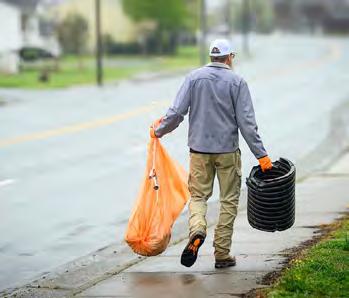
As word spread among other community groups, ripples soon emerged from these Love for Alamance days. One story illustrates the transformative impact that can reach to individual families when working with “civic faith for a civic purpose.” One participant in the second Love for Alamance day learned more about Northside Fellowship through the event. He then reached out to Northside leaders to see if they could assist a middle-schooler he’d been mentoring. The student was struggling with grades and behavior, and his single mother felt overwhelmed juggling work and family responsibilities. Northside leaders quickly established a connection with the family.
That spurred the middle-schooler to convince his mom to attend Northside Fellowship. They soon became regulars, even inviting other family members to attend as well. The student’s behavior stabilized and his grades improved. This
student could have fallen through the cracks. But the team’s efforts created ripples that helped him find the sense of connection and belonging needed to reach his full potential.
Reflecting on the deeper meaning of the Love for Alamance days, one faith leader said, “Doing the service project is important. But our goal is to also bring together people who might not otherwise interact with each other.” The Faith Team was demonstrating that it is possible to “bring people together to learn from one another and crush stereotypes throughout our community” in the process.
2
Around that time, a leader from the United Way of Alamance County who served on that organization’s Housing Action Committee joined the Faith Team. Part of their responsibility was to head up a faith leader working group at the United Way. Like with the early efforts of the Faith Team, the United Way group had only been meeting sporadically and attendance was low. But this team member saw an opportunity to reenergize the group by applying the Faith Team’s “civic faith with a civic purpose” framing and focusing the group’s efforts on housing.
As the group met with renewed purpose, attendance grew, and new energy around tackling this longstanding issue emerged. That led the United Way to partner with Impact Alamance and Allied Churches—a local faith-based organization that works to provide food and shelter to homeless residents—to host a three-part Housing Lunch & Learn series for faith and nonprofit leaders in summer and fall 2024.
Over 80 faith and nonprofit leaders attended at least one session to learn more about the community’s housing challenges and available resources so they could better connect people to basic support. The series broke down silos within and between the faith and nonprofit worlds by fostering connection, communication, and collaboration between leaders who might not otherwise work together. It also helped to bring conversations about housing back to the forefront in the community.
3
Amid these larger efforts, Northside Fellowship and its founding pastor sought to quietly live out “civic faith with a civic purpose” in their immediate community. The church was founded just prior to the For Alamance initiative in East Burlington. Located in a diverse neighborhood approximately one-third
Hispanic, one-third Black, and one-third white, the church aimed to be as much a community center as a church.
Learning the Harwood approach at the Getting Started Lab both affirmed this pastor’s efforts and gave him a new mindset in his work. He began embedding “Turned Outward” language and concepts from the Harwood approach in his sermons. He also applied the approach in the church’s work to engage their neighborhood and bridge divides of race and class.
One small example is Northside’s “At Home on Homewood” gatherings, whose name is a play on the church’s street address. The monthly gatherings happen around a fire pit in front of the church and are a way for church leaders to turn outward to their community and engage people authentically. There was no formal program or agenda. Just
“Doing the service project is important. But our goal is to also bring together people who might not otherwise interact with each other.”
space for unstructured conversation, presence, and time to create a greater sense of belonging and understanding.
During one gathering, a Northside leader noticed a neighbor whose car wouldn’t start. He went over to check on the man. While he couldn’t fix the issue with the car, the neighbor was deeply appreciative. To this Northside leader, it was a moment of turning outward made possible by intentionally being in the community in a different way. And it reflects how they hope the community increasingly views churches in Alamance: as “the house you go to when you need help,” not just institutions looking to put people in seats on Sunday morning.
Northside’s pastor also hosted a morning talk show on Hope Radio, a contemporary Christian radio station in Alamance County. He used the platform to amplify the Faith Team’s efforts and the For Alamance initiative to shine a light on efforts that bring people together and restore hope. For example, he spoke about the Love For Alamance days as an opportunity for the community to get involved and communicated the Love For Alamance days’ impact after the fact. While Hope Radio went off the air in early 2025 due to a lack of funding, this leader continues to seek other ways to contribute to a more positive narrative in Alamance County.
While the work of individual churches seeking to turn outward is slow and at times fragile, Northside Fellowship exemplifies what it looks like to put the community at the center of their efforts.
4
Sometime after the second Love for Alamance day, the Faith Team as a whole began to lose momentum again. This reflects the challenging ups and downs of such efforts and happened for a variety of reasons. One of the team leads experienced a family tragedy and had to step back from the initiative. Meeting attendance among other leaders began to dwindle. And the team as a whole became disconnected from their “civic faith with a civic purpose” frame and reverted back to status quo ways of working in silos. Stalling out like this is not uncommon, particularly at a moment when the community was falling back into “The Waiting Place.”
But one team member from St. Mark’s was determined to keep the team active. They organized a day of service at Eastlawn Elementary School and invited other team members to join them. During the service day, another team member engaged Eastlawn’s principal to ask how they could support the school. The principal named an immediate opportunity: a testing window was coming up but the school didn’t have enough proctors to administer the tests.
So the Faith Team got in motion to provide volunteers, quickly filling every slot the school needed.
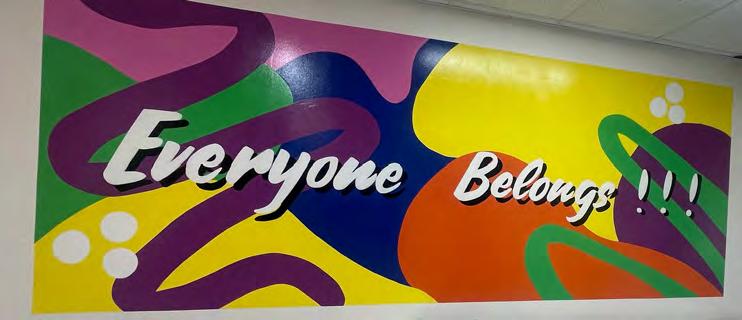
But the team didn’t stop there and continued to engage Eastlawn leaders. That led to another idea to create a sense of pride and belonging for Eastlawn students by painting a mural in one of the school’s main hallways. The Faith Team connected with a local artist through the Arts & Culture Team to design and paint the mural, whose inspiration was “everyone belongs.” Those words were literally woven into the mural. It was a theme the team drew from the Bridging Team’s “Bridging Agenda,” which is described in more detail later in this report. The mural’s
existence now sends an important signal to students every day that they belong as they walk the halls.
Momentum kept building from there. Leaders at Broadview Middle School in Burlington heard about the Eastlawn mural and got in touch to partner with the team to create a similar mural that will be completed by spring 2026. This time, the team used the Harwood approach to involve parents and students to create the mural. Meanwhile, a faith leader affiliated with the Positive Attitude Youth Center reached out to have the team do yet another mural at the youth center in early 2026. Impact Alamance then gave the team a $5,000 grant to fund the Broadview mural along with two additional murals at other
These murals reflect the team’s determination to live out “civic faith with a civic purpose.” They are fostering a deeper sense of pride, hope, and belonging among students and families.
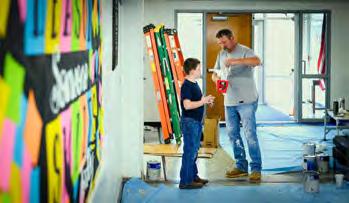
schools. Funds will also be used to host community celebrations at each school after the murals are completed.
Ultimately, these murals reflect the team’s determination to live out “civic faith with a civic purpose.” They are fostering a deeper sense of pride, hope, and belonging among students and families.
5
In late 2025, the longest government shutdown in American history and political battles over food stamp funding intensified needs across the county. Existing food pantries couldn’t meet increased demand. That’s when one Faith Team member who worked at the health department got connected through a colleague to SAFE, a local organization focused on delivering food assistance and other basic resources to families in need.
SAFE had already partnered with Trailhead Church to establish a food pantry there. Trailhead was serving hundreds of families per week. But
they were at capacity and more needs remained. SAFE had access to food, but needed additional sites to distribute it to the community.
Leaders from SAFE and the Faith Team quickly got in motion together in October 2025. They engaged faith leaders across the county, framing these conversations with questions from Harwood’s Ask Tool, which gets people to talk about their aspirations for the community and their potential contribution. They also allayed feasibility concerns by demonstrating how Trailhead Church made the pantry work at their facility.
Conversations propelled First Baptist Church and Miracle Temple to join a growing network of food pantry locations at churches in the county, which already included Trailhead Church and Ebenezer United Church of Christ.
Through this effort, churches that never worked together before were now working with a shared purpose on behalf of the wider community.
SAFE then provided training to First Baptist Church and Miracle Temple alongside support and a ready-made playbook for operating a food pantry. Importantly, SAFE’s model puts dignity at the core. It’s not just handing people in need bags of food. Families are allowed to “shop” for what they need. Volunteers are trained to greet people by saying, “Hello neighbor,” and are expected to keep a consistent schedule to provide a familiar face. Operating hours are also convenient for working families, with a priority on pantries being open in the early evening and on Saturdays.
There’s a long tradition of churches in communities across the country hosting food pantries. Alamance was no exception. But through this effort, churches that never worked together before were now working with a shared purpose on behalf of the wider community. Churches that were previously just hubs for their own congregations were becoming
hubs for the community as their food pantries served people far beyond their own congregations. On top of that, team members began to notice these churches engaging people who showed up to their pantries in new ways, using Harwood’s Ask Tool questions to understand what really mattered to people. This simple act—alongside delivering basic needs—is creating a stronger sense of belonging and making these churches even more trusted and relevant in the community.
This work also triggered an important ripple when a team member who worked at the health department visited Broadview Middle School’s food pantry. The school had long offered students in need food to take home over weekends. They wanted to bolster their services by offering perishable food, like fresh fruits and vegetables, but didn’t have access to a supply. So this team member leveraged their connection with SAFE to help Broadview expand their food pantry to include perishable items.
In a divided place like Alamance County, where faith is so important to so many people, it is critical for churches to be at the forefront of working with shared purpose and commitment.
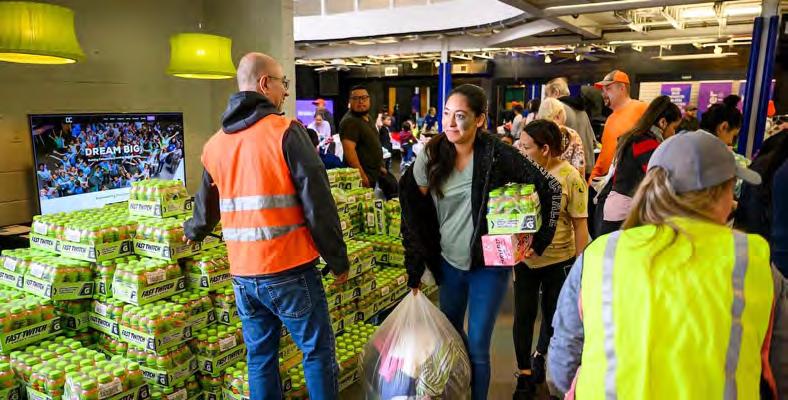
Describing the underlying value of these efforts, one team member said, “The pantry work isn’t a ‘project.’ It’s a response to what people need. Churches previously in silos are now working together as a network to feed the community. Churches are not just looking at their congregations; they’re looking to serve the entire community. That’s what the faith team is all about.”
The team now hopes to get even more churches involved and spread the word about this emerging network of food pantries.
this initiative began through multiple Love for Alamance days, ongoing efforts to support students at Eastlawn Elementary and other schools, and a new and growing network of food pantries popping up in churches across the county. These are all vital down payments toward a new set of norms for how churches can work together across lines of difference.
The Faith Team’s work has at times come in fits and starts. Yet where Alamance’s faith community was once highlyfragmented, the team’s persistent efforts have demonstrated the promise and impact of faith leaders working together around “civic faith with a civic purpose.” More people of faith are working for the public good today than before
In a divided place like Alamance County, where faith is so important to so many people, it is critical for churches to be at the forefront of working with shared purpose and commitment. That’s beginning to play out. What’s more, new and exciting ripples are emerging as individual churches and faith leaders continue to embrace the Harwood approach. The Faith Team’s persistent efforts demonstrate that “civic faith with a civic purpose” doesn’t mean giving up individual beliefs; it means transcending them to work on behalf of the wider community. ��
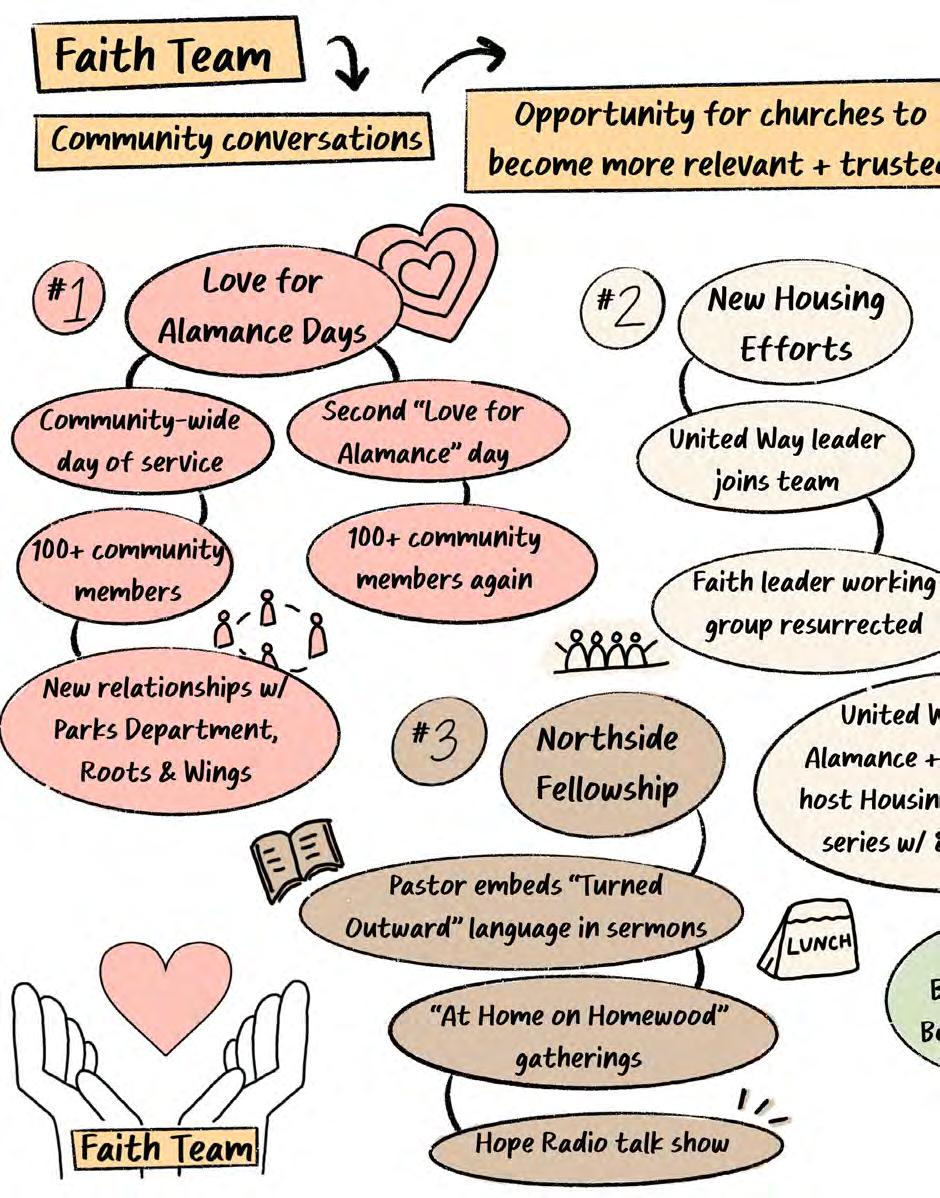
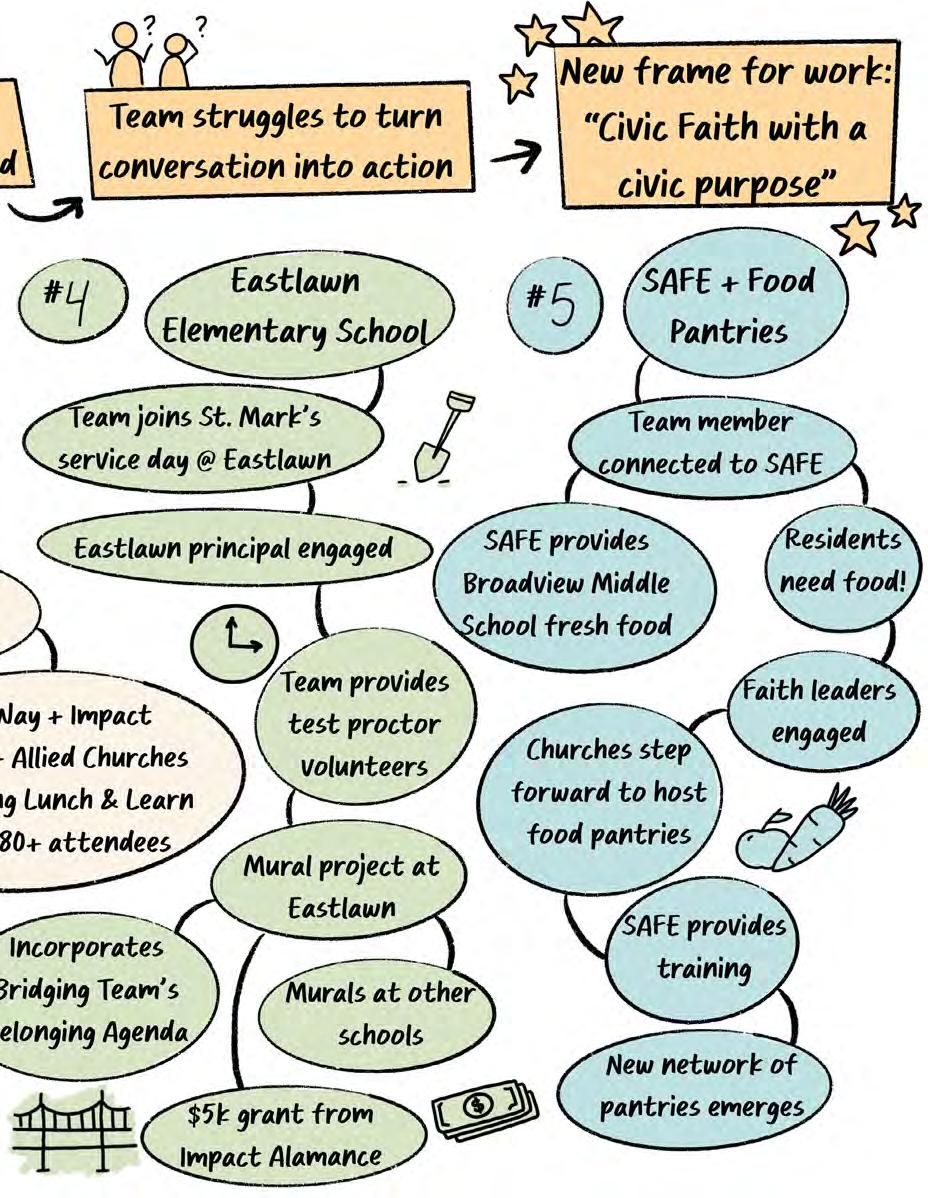
Bridging Team
Alamance County is home to potent, longstanding divides on issues like growth, old vs. new residents, where people live in the county, the role of law enforcement, and race and racism. The forces and fear at work run deep.
The For Alamance initiative originally had five teams: Arts & Culture, Youth, Wellness, Faith, and Narrative. But soon after the publication of the report Alamance Choosing Hope, the need to launch the action phase with a Bridging Team became clear.
Thus, a Bridging Team formed shortly after the initial Getting Started Lab. It was a “bonus” team that didn’t receive the same Harwood coaching support as the other teams. Two individuals with deep experience working across the county stepped forward as team leads. As the team began to meet, three things were at play:
1. T he team was incredibly diverse, representing a variety of backgrounds and perspectives, and thus felt the need to spend more time building relationships internally;
2. T hey wrestled with how they could get people across the county who didn’t trust each other to
come together and discuss their aspirations and what they felt was holding the community back; and
3. T hey struggled to figure out what it was they were supposed to create together.
This all conspired to slow the team down and delayed them in moving from conversation to action.
As you read on, recall that each of the numbered sections below corresponds to sections of the illustration that follows this story.
1
Despite a slow start overall, a moment during the Getting Started Lab presented an unexpected opportunity. One Lab assignment was to call three people to discuss their aspirations for the community using questions from the Harwood Ask Tool. These include:
– W hat kind of community do you want to live in?
– W hy is that important to you?
– H ow is that different from how you see things now?
– W hat are some of the things that need to happen to create that kind of change?
One team member called a man who had just been released from spending over 15 years in federal prison. He spoke to the struggles he was experiencing reentering society and said a lack of connection and support was hindering him from getting back on his feet. In essence, he was struggling to build a bridge back into society. It was a moving conversation, but this team member thought it was a one-off.
Then, a few weeks later, this man unexpectedly called her back, wanting to continue the conversation. This time, he asked if she could help him convene a group of his friends who had also been in prison to hold a small group discussion around those same aspiration-based questions.
Joining with two other Bridging Team members, she set up a first meeting. Some of the men had been released less than a year ago. Others had reentered society three or more years before. But they all struggled to find steady employment and secure housing and felt a deep sense of isolation and disconnection from the community.
The conversation sparked a new sense of hope and possibility in these men as it was again framed around the four questions from Harwood’s Ask Tool.
One participant noted, “Nobody has ever asked us these kinds of questions or cared what we have to say.” In fact, participants asked if they could begin meeting regularly. So Bridging Team members organized a monthly meeting and dubbed this ad-hoc support group, “Men in Transition.” Even as the Bridging Team continued to wrestle with its overall purpose, it had sparked something important.
As Men in Transition kept meeting, team members began to connect group members with service providers and local and state leaders. This helped foster a stronger network of support, a key factor in a successful transition back into society. As one Men in Transition group member noted, “It isn’t about what you know but rather about who you know. We’re trying to build better connections with various people in the community, to make it easier for people when they do come home.”
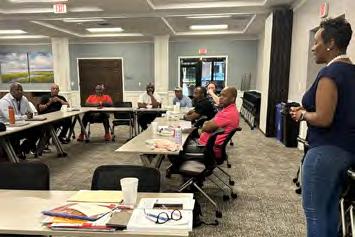
These meetings also sparked new ideas to support the men’s needs. For example, the team discovered the men often struggled to navigate current technology and felt lost in an increasingly digital world. So team members partnered with the Right Here, Right Now Project to provide digital literacy training for the group. The men learned vital technology skills and each participant who finished the coursework received a free laptop.
Another ripple followed when Alamance Academy came to a Men in Transition meeting and shared their mental health and substance abuse support services. That spurred a participant to get certified by Alamance Academy as a peer support specialist so he could better help others through their mental health challenges.
Bridging Team members further leveraged the momentum being created by this growing network to more deeply address the lack of belonging, connection, and support people in Alamance County experience after prison—especially the gaps in accessing basics like food, housing, and employment. One meeting in spring 2024 brought together a county commissioner, multiple leaders from the North Carolina Department of Corrections, and local organizations that support the reentry process. The team did a simple exercise with those leaders
and the Men in Transition participants by having each group answer questions about their aspirations and concerns for helping people navigate reentry.
The two groups’ answers had multiple overlaps. Both named the need for non-judgmental spaces for support; stronger connections to resources and information; and a desire for a safe community where diversity is valued. The exercise also revealed the need for a formal Reentry Council to support formerly-incarcerated people with a successful transition. Alamance County didn’t have a council to connect people to basic needs when they first got released despite the community’s proximity to a federal correctional facility just outside Durham.
One of the groups in attendance, Sustainable Alamance, had been trying to get state recognition as a formal Reentry Council for some time. The group had long helped various individuals navigate reentry. But a lack of funding and formal coordination meant many people were not served effectively, with some even falling through the cracks entirely. For example, one gentleman during the meeting noted, “Alamance County’s reentry plan doesn’t work. Nobody has contacted me since I was released. I’ve been going to the food pantry to survive.”
This meeting—which centered these men’s experience and brought together key stakeholders who were positioned to make something happen—created new momentum to address the issue. By fall 2024, after working with state leaders and other groups, Sustainable Alamance was recognized as Alamance County’s official Reentry Council, which comes with new state funding. This recognition has contributed to improved referral processes and stronger integration of formerly-incarcerated people in society.
Now, Alamance County has both a formal Reentry Council to help people access initial resources to get back on their feet and a mechanism for ongoing social support and networking with the Men in Transition group. It all followed from that one initial phone call.
Amid these exciting ripples, the team hadn’t lost sight of their core mission. They still had other work to do.
2
The Bridging Team overall remained stuck, still swirling around how to approach bridging the community’s divides and what their real contribution to moving the community forward should be.
They needed a reset. So Impact Alamance and The Harwood Institute decided to provide formal coaching to help the team move forward. The
The team’s new coach helped them pivot from internal conversation to better turn outward and engage
the community in a new way to discover people’s shared aspirations.
team’s new coach helped them pivot from internal conversation to better turn outward and engage the community in a new way to discover people’s shared aspirations. After all, it was engaging the community differently that unleashed the Men In Transition effort. The same could be true for the team’s core work.
So the team embarked on a series of community conversations across the county, “going to the corners and the cupboards that we don’t usually go into as leaders,” as one team member said. Finally, the whole team was in motion. One conversation quickly followed another and momentum began to build.
Over a period of months, the Bridging Team engaged in over a dozen small group conversations in every corner of the county—with farmers in southern Alamance, retirees at Twin Lakes, African
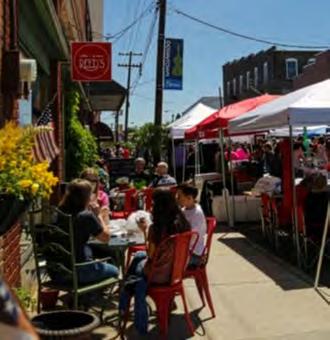
American residents in Burlington neighborhoods, immigrants, LGBTQ+ residents, and others.
Even as people named their aspirations, many spoke to Alamance’s deep divides, often wondering why they remained so dominant. One leader recounted hearing, “People in Southern Alamance saying, ‘I don’t know why I don’t talk to anybody in East Burlington.’ And people in East Burlington saying, ‘I don’t know why I don’t talk to anybody
in Southern Alamance.’” Engaging people ultimately helped reframe the team’s understanding of its role in the community. One team member said, “Being a Bridging Team means talking to everyone, not just people like us. We have to be responsible for bringing people together who may not have the same lived experiences or opinions or who live in different parts of the county.”
Still, the team wrestled with what to do about these divides beyond simply getting more people around the table. Community members spoke about common divides in very different ways, so it seemed there was little overlap in how people viewed key issues like safety. As one leader said, “Safety for our agricultural community is about losing farmland… safety means a whole lot of different things to youth at Cummings High School who are dealing with different kinds of safety issues.”
“Being a Bridging Team means talking to everyone, not just people like us. We have to be responsible for bringing people together who may not have the same lived experiences or opinions or who live in different parts of the county.”
People from very different walks of life didn’t feel included. They didn’t feel like they had a voice. And they ultimately wanted a stronger sense of belonging in Alamance County.
But the team kept at it. Eventually, they realized there was a common thread in what they heard across the county. It boiled down to this: People from very different walks of life didn’t feel included. They didn’t feel like they had a voice. And they ultimately wanted a stronger sense of belonging in Alamance County.
The team determined that they could focus on this shared aspiration for a greater sense of belonging and inclusion to guide their work moving forward. That in turn crystallized their purpose: to catalyze others to focus on strengthening people’s sense of belonging. The Bridging Team’s story to this point demonstrates how turning outward and engaging the community can help people reframe what actually needs to be addressed.
This ultimately led the team to create a “Bridging Agenda” to lift up the community’s voice. Designed to be a conversation starter and thus spark action by others in the community, the agenda used the words of Alamance County residents to define belonging
as “a feeling of safety, power, wholeness, and welcome.” It then centered recurring themes from people across the county, such as:
–“ We want a community where you know your neighbors.”
–“ We want a community where everyone cares for youth.”
–“ We want a community that’s safe and welcoming.”
–“ We want a community where we collaborate across lines of difference.”
These themes formed the basis for two possible action areas: “Our Youth, Our Future” and “Your Voice, Your Impact.”
The former focused on emotional and academic support for youth and was another example of youth-focused issues rising to the top of people’s aspirations. The latter focused on building a community where people feel empowered to use their voices and engage in community life.
BRIDGING AGENDA
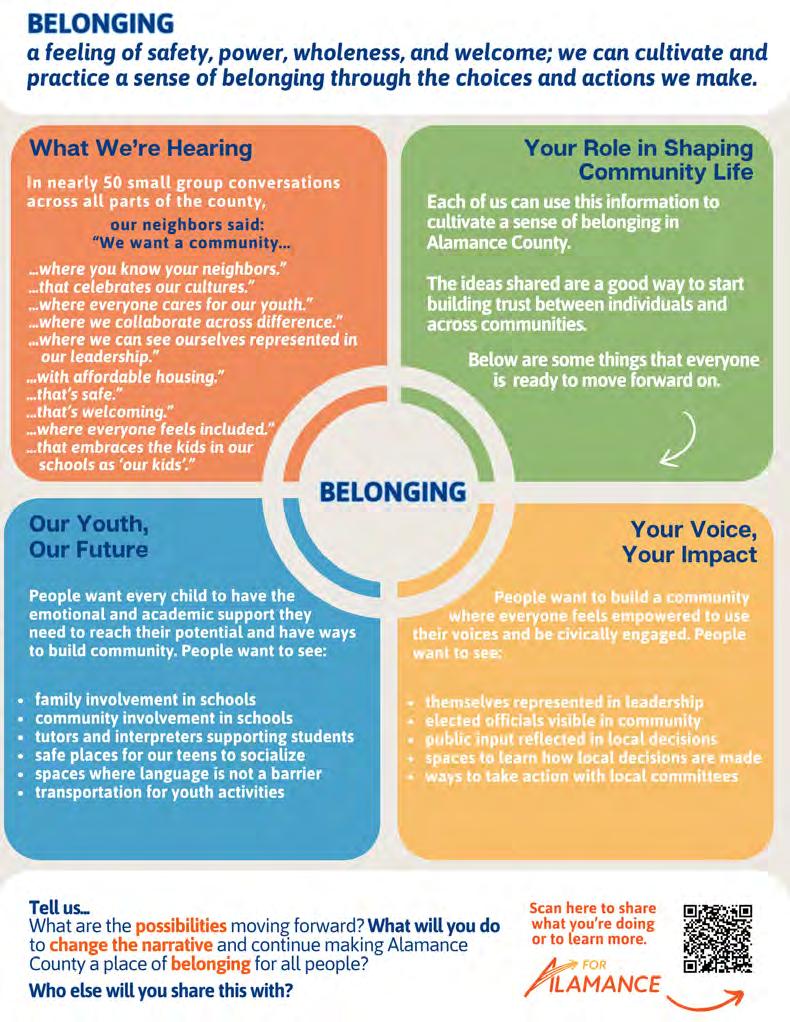
Having the agenda was a huge step forward. But to effectively engage people with it, the team needed to package the agenda in an attentiongrabbing way. So they turned their Bridging Agenda into a simple, visually engaging one-pager. They also created a video using key elements of the agenda as another way to reach people.
With new tools in hand, the team began to share the agenda with people and groups across the county to spark new action that bridged divides and created a stronger sense of belonging. They met with Rotary Clubs, public libraries, nonprofits, and other groups. They also shared the agenda with different community leaders, including the Impact Alamance board, community and nonprofit leaders through Impact Alamance’s Leadership Table, and the Alamance Chamber of Commerce.
Slowly but surely their efforts began to produce ripples. For example, the team engaged a group LGBTQ+ advocates, who afterward began to meet regularly to work on safety and inclusion issues faced by LGBTQ+ people in the county.
The team then innovated “cottage dinners” to engage more community members in a different type of space. These were small gatherings in people’s homes meant to create an “intimate, informal, and safe” setting to discuss
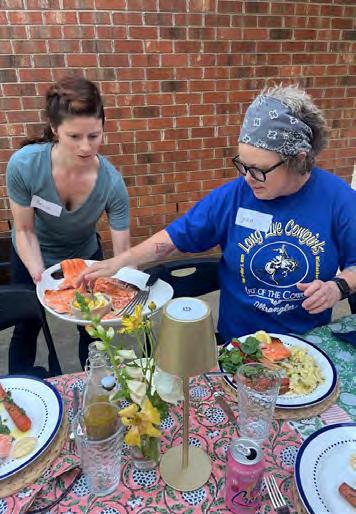
the agenda and spark action to create more belonging. The success of cottage dinners also prompted the team to create a toolkit to enable other groups and organizations to host their own cottage dinners. The agenda was spreading.
Finally, the team received a small grant from Impact Alamance in late 2025 to evolve their Cottage Dinners into a formal, ongoing series called “Belonging at the Table.” The team will organize 12 such events in 2026. They also hope to hold larger community events to amplify the learnings and possibilities that emerge from this series and further activate other groups.
The story of the Bridging Team is one of perseverance and intentionality. One team member initially Turned Outward to catalyze important work supporting formerly-incarcerated individuals. That culminated in a stronger network of support for those reentering society and led to the creation of a formal reentry council for Alamance County. Outside of that effort, the team struggled to get going. Yet they forged ahead.
They finally unlocked a new way forward when they began to engage the community in a new way. The team then became an important community convener, bringing together small groups across the county to have meaningful conversations about people’s aspirations. Those conversations, important in and of themselves, led to a crucial, actionable discovery: people all across Alamance County aspired to a stronger sense of belonging. This sparked the creation of a Bridging Agenda. Engaging people with the agenda then began to catalyze other individuals and groups to work on
They finally unlocked a new way forward when they began to engage the community in a new way.
creating a stronger sense of belonging. Along the way, they innovated Cottage Dinners to foster a different type of conversation in Alamance County. That eventually turned into an entire series of events called Belonging at the Table.
The Bridging Team demonstrates the persistence required to do this work, especially in a place as divided as Alamance County. They are ultimately helping the community reimagine and reframe what is possible: from a focus on deep divides to a focus on people’s shared aspirations for belonging and connection. ��
The Bridging Team is ultimately helping the community reimagine and reframe what is possible: from a focus on deep divides to a focus on people’s shared aspirations for belonging and connection.
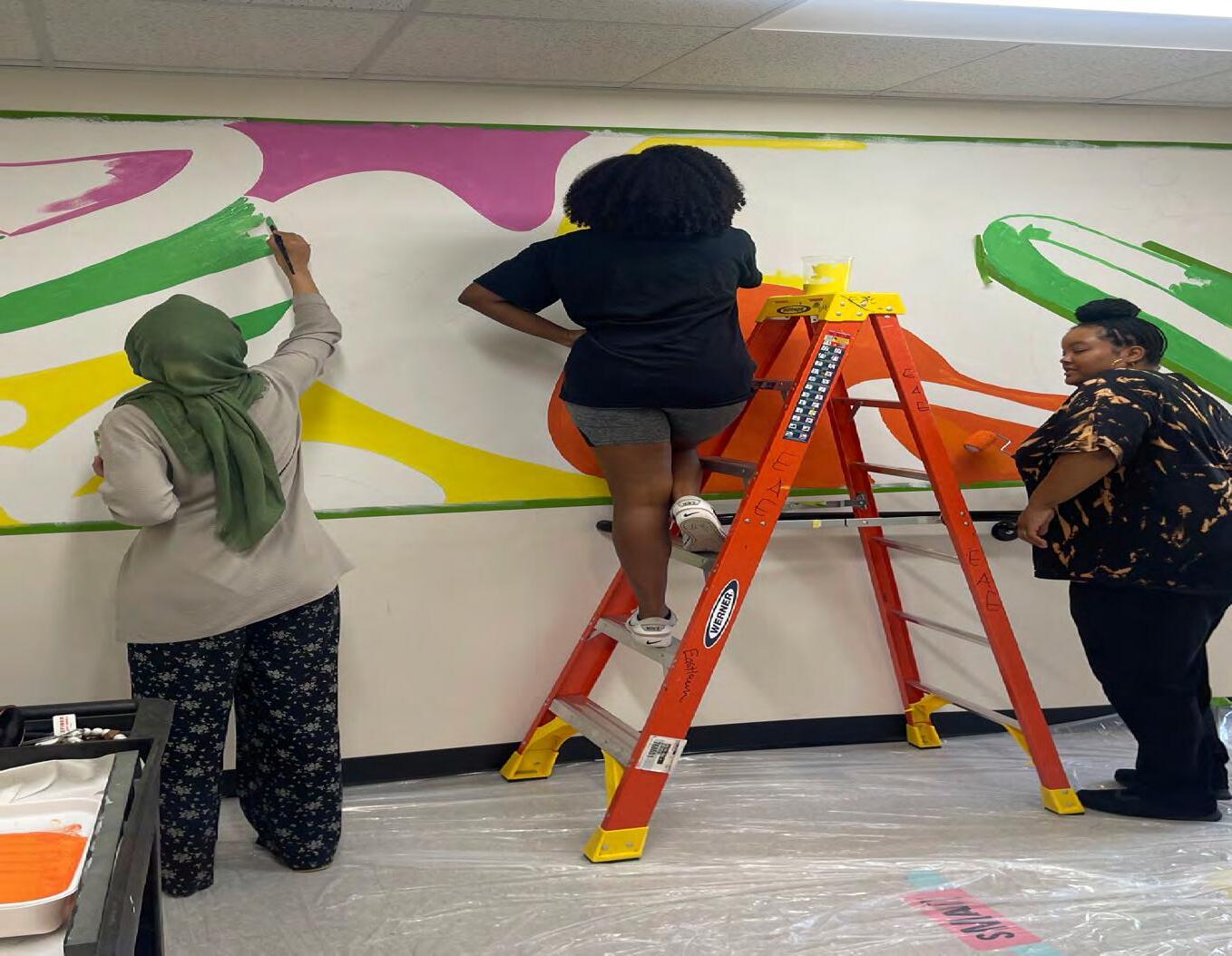
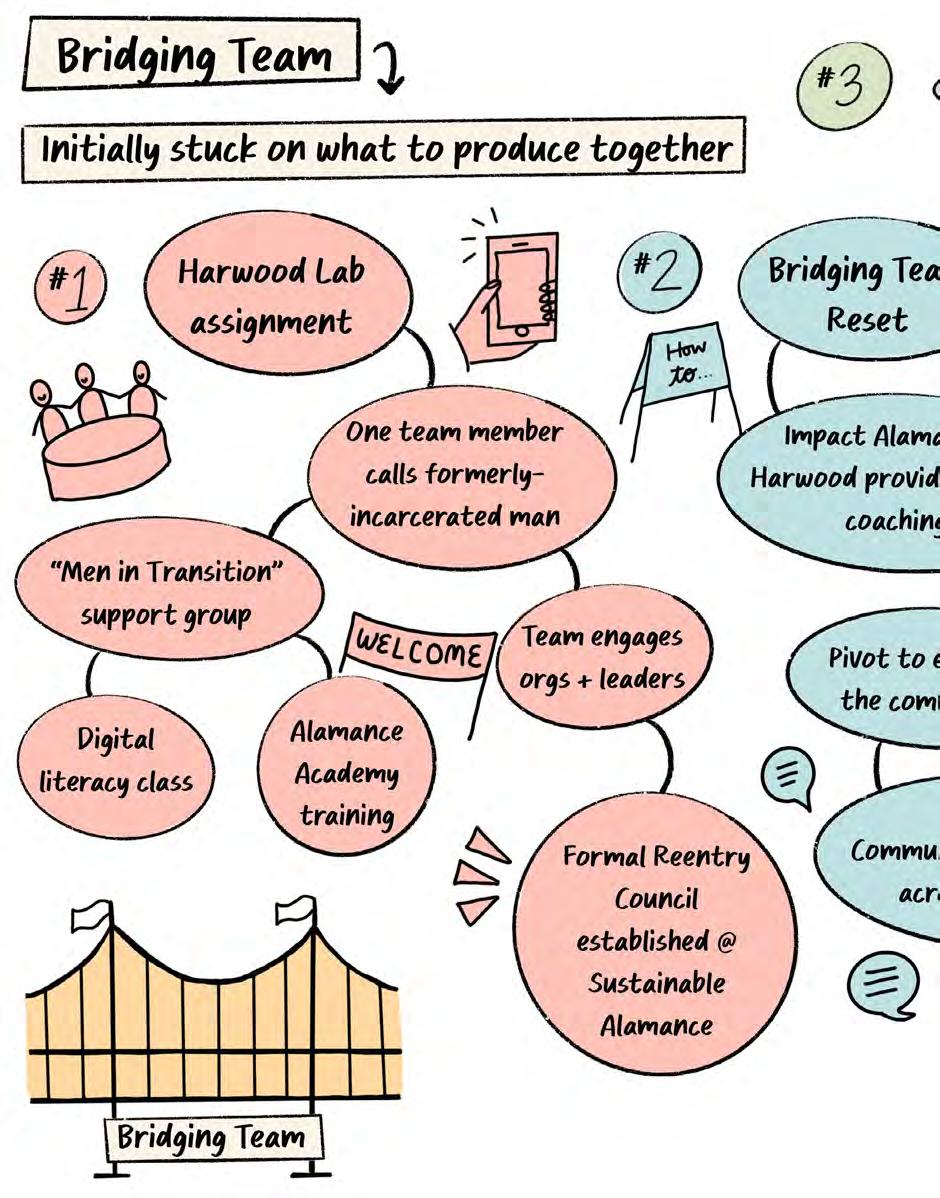
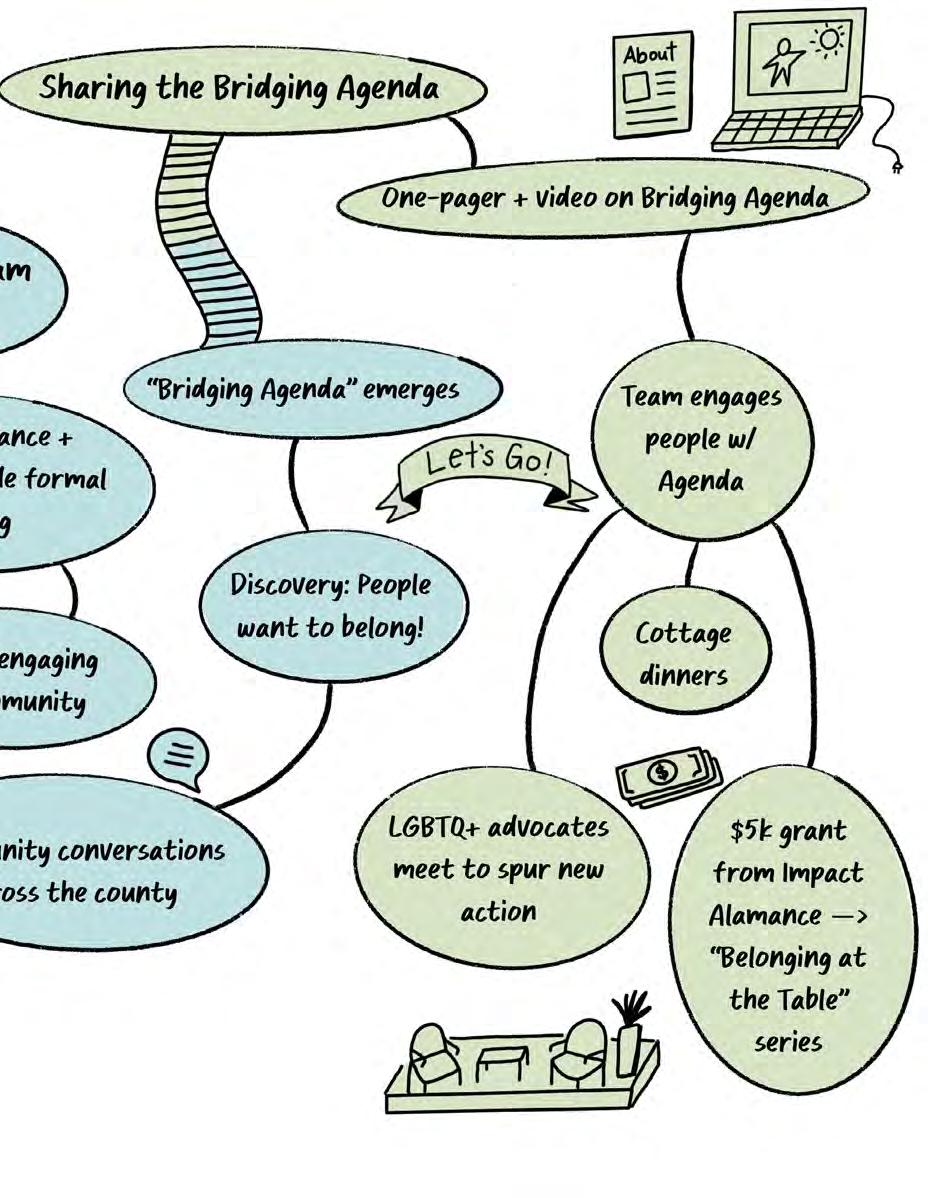
Narrative Team
A community’s shared narrative shapes people’s mindsets, attitudes, behaviors, and actions. The stories communities tell about themselves are a critical factor in whether or not they move forward. In Alamance County, various negative narratives have taken hold in the community over the years. As previously noted in this report, the divides in Alamance are myriad and run deep. Resignation and a lack of hope are all too common. Some people have given up entirely, believing that no matter how hard they try, progress is impossible. An ingrained negative narrative pervades the community.
Issues of race and racism have also cast a long shadow, leaving many Black and Latino residents feeling frustrated and undervalued. Many folks who live in more rural areas view disappearing farmland and rapid development as damaging to the Alamance they love, as if their home was being taken from them. Meanwhile, the county’s news ecosystem had weakened, with growing divisiveness on social media often filling the void.
To get on a more hopeful path—and create a community that works for everyone—Alamance needed to invest in generating a can-do narrative about how people and groups can work
together in more productive ways to take action on issues that matter to people. Some good and important efforts in this vein already existed prior to the For Alamance initiative— especially Elon University’s Power+Place Collaborative, which aims to lift up the stories of the diverse individuals who call Alamance County home. But much more was needed.
That’s why a Narrative Team composed of Elon University School of Communications faculty and others in the community with a journalism background formed after the Getting Started Lab. The team’s very existence is an example of Alamance County’s innovative spirit. No other community The Harwood Institute has worked with in roughly forty years began an initiative with a Narrative Team. Putting this kind of stake in the ground from day one sent an important signal to the community that the community’s negative narrative didn’t have to win the day.
While they didn’t know it at first, three key questions emerged over time whose answers were critical to the team:
– Q uestion 1: How can we produce stories—and enough of them—to shift the community’s negative narrative?
– Q uestion 2: How can we distribute these stories widely enough to have our intended impact?
– Q uestion 3: How can we create sustainability for producing and sharing these stories over time?
All of their efforts—the different things the team tried, what they learned from them, and how they kept moving—were an attempt to answer one or more of these questions. Thus, they serve as key guideposts for the team’s own story.
As you read on, recall that each of the numbered sections below corresponds to sections of the illustration that follows this story.
1
“You put a group of former journalists together and they’re gonna want to start a newspaper. That’s exactly what happened,” one team member recalled when the team initially began to meet. But launching a news outlet wasn’t their purpose. To begin answering Question 1, they needed to write stories.
They didn’t have just any kind of story in mind though. They aspired to tell stories about people and groups in
Alamance County working together in new ways. This is different from highlighting “feel-good” stories of positivity or producing hard news stories, as important as those things are. The team’s stories were expressly aimed at shifting the underlying conditions that allowed the community’s negative narrative to calcify. Importantly, many of their early stories made an explicit effort to acknowledge the good work already taking place before the For Alamance initiative launched.
One early story highlighted the Dream Center’s youth soccer program, which started in summer 2023 as a way to build a stronger sense of belonging and connection among the community’s youth, especially the first- and secondgeneration immigrants served by
The Narrative Team aspired to tell stories about people and groups in Alamance County working together in new ways. This is different from highlighting “feelgood” stories.
the Dream Center. That first year, the Dream Center’s newly-formed team won a National Championship in the Under 14 Five on Five division and was invited to the United Kingdom to train with professional soccer players. Another story focused on how the other four Harwood teams engaged people differently through community conversations by focusing on shared aspirations instead of problems. A third featured the Faith Team’s Love for Alamance day of service. From the start, the team diligently tracked each story, how they distributed it, and the expanding bank of future story ideas in a simple Story Spreadsheet.
Team members noted they were able to tell this different kind of story because they were willing to ask different types of questions. Informed by the Harwood Institute’s “Making the Invisible Visible” tool, the Narrative Team gathered story material by focusing on what people were building, what they were trying to create together, the ripple effects they saw, and the challenges they faced along the way.
This wasn’t your typical journalism. The questions they asked in sourcing stories inherently built trust with the people they engaged because they weren’t motivated by trying to get spicy soundbites or lurid details that might pit one group’s success against another’s. Nor were these stories intended to hype results by inflating what different individuals or groups had accomplished; this all too often happens in communities and engenders mistrust.
Instead, the team was creating a new way to identify and tell a different kind of community story, one that helps to shift a negative narrative to a more can-do narrative. Around this time, the team also developed a Storytelling Guide, which was a simple tool that anchored them in the basic principles that drove their story creation process.
They proved to themselves they could produce the kind of story they felt the community was missing. Thus, they had part of an answer to Question 1. They now also began to answer Question 2 by realizing they needed to build a distribution system from scratch. But they had available assets to begin with. They first tapped into the For Alamance newsletter and social media platforms. They also leveraged the growing network of Public Innovators to spread their stories through word of mouth and tapped the different groups and
organizations they encountered in the process of gathering story material as additional allies in distribution.
Despite these efforts, they knew they weren’t reaching as many people as they wanted to, which caused consternation on the team. “That first year, we were paralyzed by distribution. We kept hitting our heads against the wall trying to solve this big issue,” one team member related. They tried leveraging Alamance’s remaining news outlets, but, as another team member shared, “We would write a story and send it out, like, ‘Hey, you might be interested in covering this.’ Nothing happened. It was very demoralizing.”
Still, they were creating a new type of story and getting them out. Not as widely as they hoped. But these small efforts still mattered. Step by step, a new foundation was emerging. Then a different challenge related to Question 1 popped up: Limited capacity meant they couldn’t identify and produce the number of stories they wanted to over time.
In an effort to add more capacity, one team member who worked at Elon University suggested they partner with students in Elon’s “Reporting for the Public Good” class. They hoped students could be a story production pipeline and free the team up to focus more on leveling up their efforts to
address Question 2 around distribution. “We felt like, ‘Bingo!’ We were very excited,” a team member related.
New challenges quickly surfaced. Students were given limited instructions from the team and ended up producing stories that didn’t match their vision. The team learned they needed to provide more structure if they were going to activate others as storytellers. So they tried again the next semester with students in an English class at Elon. Providing more structure and specific story ideas to students produced better results. But the student stories still weren’t grounded enough in the language of the Harwood approach and what mattered to people in the community. They didn’t yet have a full answer to Question 1. But neither were these experiences in vain, as they learned more about what it would take to build a lasting foundation that answered all three Questions. Undaunted and persistent, they pivoted again, prioritizing quality over quantity.
In another attempt to more fully answer Question 1, they created a “beat” system that assigned team members— based on their interests, connections, and strengths—to follow and document the progress of the other teams. They already knew the teams were producing actions that made for good story content. The Narrative Team was betting these closer ties would help them discover story ideas with more frequency and use less capacity in doing so.
The team also continued to innovate answers to Question 2 for story distribution. In addition to leveraging the For Alamance newsletter and social media accounts to distribute each story, they kept reaching out and sending stories to other groups and organizations to broaden their reach. On top of that, they tested a new idea by distributing physical Story Cards— with scannable QR codes that directed people to read their catalogue of stories online—at public libraries, local businesses, events, churches, and more.
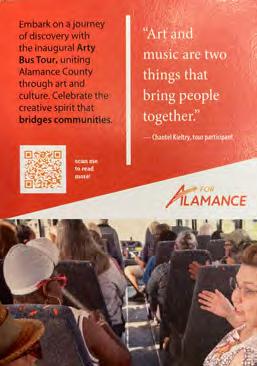
The very act of distributing the Story Cards generated new word of mouth about the Narrative Team’s efforts as they engaged people while dropping them off. The Story Cards made their efforts more visible to the community and sent an important signal that something new and different was happening. They also continued to send stories out to the growing, informal network that was emerging through the For Alamance initiative.
All of these stories focused on how the team’s actions were strengthening the community’s civic culture and getting people and groups to work together in new ways.
These small yet dogged efforts were beginning to add up. Their answers to Questions 1 and 2 were getting clearer as they strengthened how they produced and distributed stories. And they received an unexpected boost when a community member with deep storytelling experience joined the team and added new capacity to produce a steadier stream of stories.
As of the writing of this report, the Narrative Team has written and distributed 16 stories that highlighted the other teams’ efforts, such as the Arty Party Bus tours, the mural project at Eastlawn Elementary School, and the “Men in Transition” support group, among other things. All of these stories focused on how the team’s actions were strengthening the community’s civic culture and getting people and groups to work together in new ways.
Continuing to diligently produce stories also began to organically address the distribution challenge. For example, their efforts sparked a bigger ripple when a Greensboro-based publication, Burlington Latino, saw one of the team’s stories, asked to translate it into Spanish, and amplified it on their website. This exponentially increased the story’s reach. Meanwhile, team members noticed Story
“We’ve created a new category of stories that previously didn’t exist and is based on what matters to people. This kind of story would have been hard to find in the county before.”
Cards increasingly being taken from distribution sites, leading them to drop off more at local businesses.
The team was producing stories that began to spread a new, can-do narrative by demonstrating the ways Alamance County’s civic culture was shifting. And they were distributing these stories in ways that increasingly reached a wider and wider swath of people. The team was finally making considerable headway on the first two Questions.
But the Narrative Team hadn’t lost sight of Question 3: How to create sustainability in producing and sharing these stories over time?
Their growing momentum and stronger ways of working together helped them tackle this question. The team developed a Narrative Playbook that built atop their Storytelling Guide by telling the full story of the Narrative Team and documenting the kind of stories they sought to write and how they aimed to distribute them. Where the Storytelling Guide was part of an answer to Question 1, the Narrative Playbook was a comprehensive way to codify the team’s work and answer all three Questions in one fell swoop to better guide their ongoing work.
The team also created a summary of the Playbook to engage other groups and organizations in Alamance County. They will use the summary to enlist more allies for distribution and expand the community’s capacity for telling stories that help shift the community’s civic culture. Then in late 2025, Impact Alamance provided the team with a grant to hire a student writer from Elon University to add even more capacity for sourcing and producing stories. Based on earlier learnings, the student will serve as a formal member of the Narrative Team and be fully embedded in the team’s efforts.
Speaking to the overall impact of the Narrative Team’s work, one team member noted, “We’ve created a new category of stories that previously didn’t exist and is based on what matters to
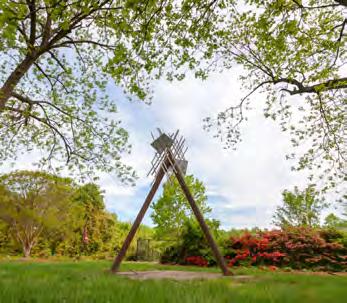
people. This kind of story would have been hard to find in the county before. Now we’re trying to grow it.”
The Narrative Team’s journey is a reminder of what it takes to build a cando narrative in a divided, fragmented community like Alamance County. A diligent focus on creating small wins and making down payments toward building the foundation needed for a new narrative kept the team moving forward amid adversity and setbacks. They applied what they were learning, remained persistent, kept innovating, and ultimately figured out what worked and what didn’t.
The team has now built a promising, though still developing, foundation for producing and distributing a new type of story in the community. This is important to the community’s future. While much work remains to more deeply address the community’s ingrained negative narrative, new glimmers of hope and possibility poke through as a new trajectory begins to take hold. ��
Stories from the Narrative Team
Scan the QR codes to read the full stories.
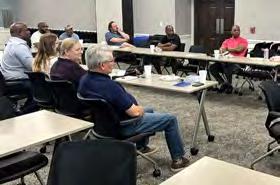
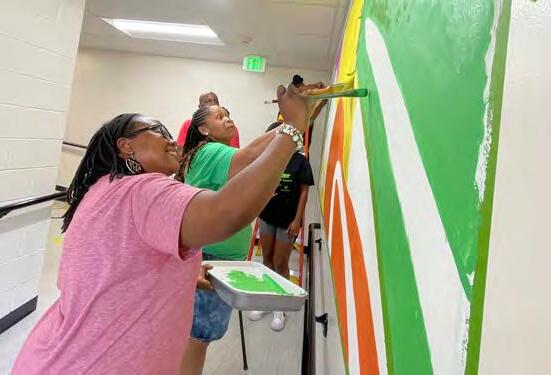
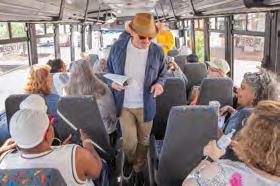
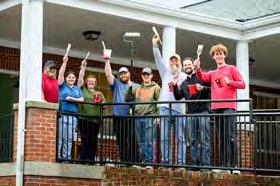
MEN IN TRANSITION
These meetings connected formerly incarcerated men with community stakeholders and service providers at the state and local levels, fostering an honest dialogue about the reality of reentry in Alamance County.
A MURAL BORN FROM FAITH AND CIVIC PURPOSE
Everybody belongs. That message now greets students and staff in the hallway at Eastlawn Elementary School each morning, encouraging everyone to embrace each other as a valued member of the school community.
INAUGURAL ARTY PARTY BUS TOUR
Twenty local art enthusiasts came together on June 1 at Holly Hill Mall in Burlington to set out on a three-hour exploration of four arts and culture sites in Alamance County.
GROUP SHOWS LOVE FOR ALAMANCE THROUGH SERVICE
A lifelong resident of North Carolina, Kurt Ward is working tirelessly to create a more collaborative community in Alamance County.
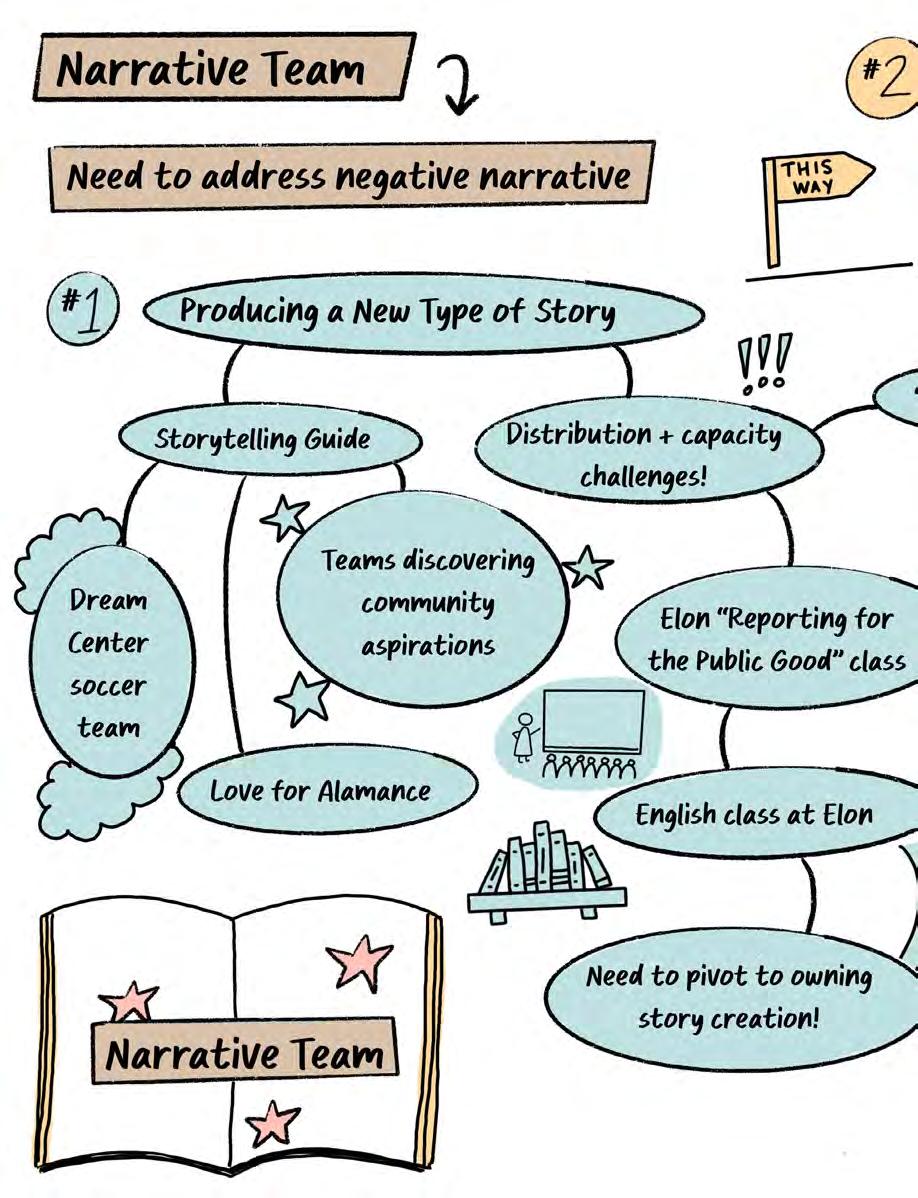
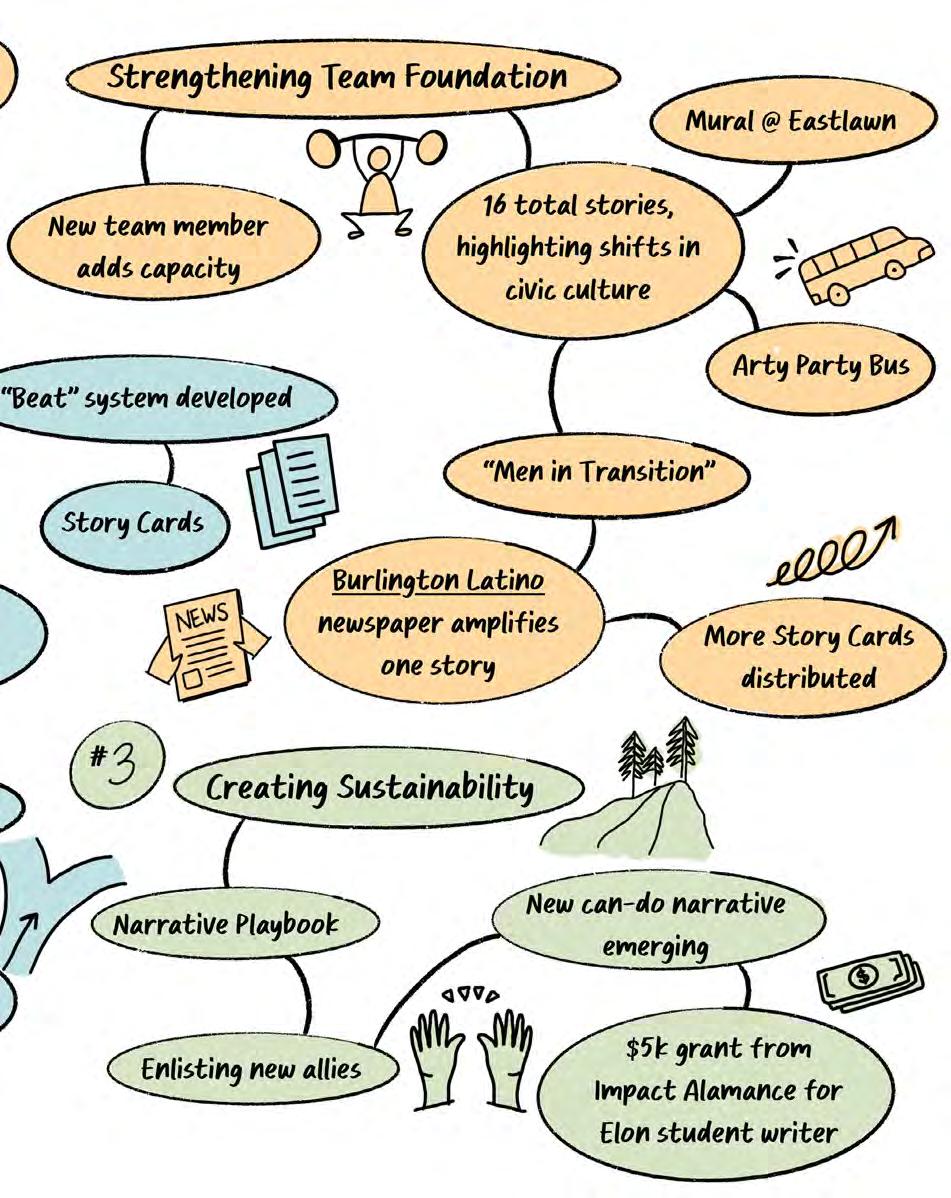
The Impact Alamance Story
The community struggled to move forward as a whole. Impact Alamance wanted to figure out why and what they could do to spark deeper, more transformative efforts.
Impact Alamance was founded in 2013 as a result of the merger between Alamance Regional Medical Center and Cone Health with a mission to achieve hope, health, and prosperity for everyone in Alamance County. Investments over their first years led to important impact in numerous areas such as healthcare, education, and new public parks and spaces. But critical inequities and disparities remained. The community struggled to move forward as a whole. Impact Alamance wanted to figure out why and what they could do to spark deeper, more transformative efforts.
As they wrestled with what direction to take, Impact Alamance’s president attended a Philanthropy Southeast Conference in 2019. During one session, she heard The Harwood Institute’s President and Founder Rich Harwood explain how funders could leverage
the Harwood approach to catalyze community-led change. He was presenting alongside a philanthropic leader from the Greater Clark Foundation in Clark County, KY, who had been using the Harwood approach in their community.
Soon after, this Impact Alamance leader was accepted to participate in the Passing Gear Philanthropy Institute, a network of southern philanthropic foundations working to address inequities in their communities. The Greater Clark Foundation leader was in the same cohort. These two leaders engaged deeply about how the Harwood approach could help Alamance County get on a more hopeful path.
Then COVID hit. As happened in so many American communities, Alamance was hit hard. Established leadership networks frayed. Divides between and
among people widened. Mistrust grew. And pre-existing challenges intensified. Between hearing that original presentation about The Harwood Institute’s approach and engaging the Greater Clark Foundation leader over time, Impact Alamance’s president came to a crucial realization: Alamance County wasn’t ready for comprehensive efforts. They’d previously invested deeply in a collective impact initiative that hadn’t produced the results they hoped for. “It felt like pushing a rock up a hill for years,” an Impact Alamance leader said. “We couldn’t figure out how to make it take off.”
The community needed a different approach: one that focused on civic culture and grew with the community over time. Impact Alamance’s president reached out to The Harwood Institute and established a formal partnership in 2021. “We wanted to engage our community differently,” said Impact Alamance’s president. “The Harwood Institute and its approach gave us a practical way to do that effectively.”
What follows is the story of how Impact Alamance created the For Alamance initiative and leveraged it to transform how they work as an organization and their approach to catalyzing change. That in turn has unleashed a series of ripples that are now spreading throughout the community.
The
community needed a different approach: one that focused on civic culture and grew with the community over time.
As you read on, recall that each of the numbered sections below corresponds to sections of the illustration that follows this story.
1
Impact Alamance and The Harwood Institute introduced the For Alamance initiative through a series of candid roundtable discussions with leaders from different sectors. These roundtables gave leaders space to discuss what they were wrestling with and ask questions about the initiative. This built trust and sent an important signal that a different kind of work was about to take place.
Then, rather than jump immediately into action, Impact Alamance and The Harwood Institute engaged residents and leaders across the county about their aspirations and concerns. Months of conversations with residents and in-depth interviews with leaders led to the report, Alamance Choosing Hope
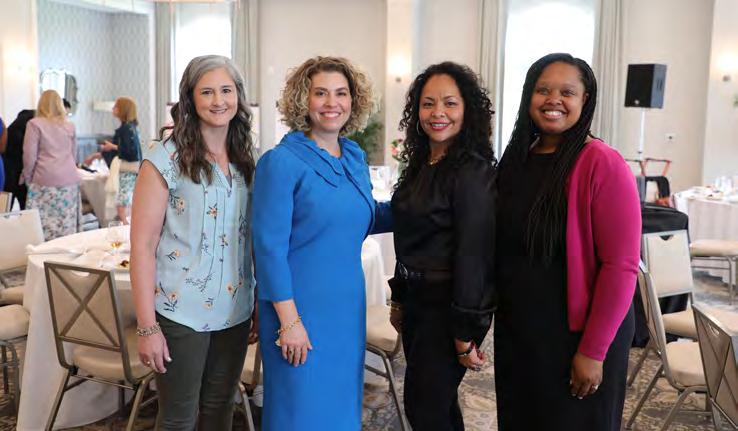
Importantly, the report didn’t conclude with a rigid set of action steps. It instead offered a practical pathway forward by emphasizing the community’s strengths to build on and opportunities for catalyzing change.
Upon the report’s release, Impact Alamance convened leaders in roundtable discussions for a second time to discuss the implications of the report and build momentum for the next phase of the work. Those discussions led to the first Harwood Getting Started Lab in Alamance, which equipped dozens of community members and leaders with the Turning Outward approach. Five teams emerged after the Lab, whose stories appeared earlier in this report.
Beyond the efforts of the five teams, Impact Alamance made the intentional decision to embed the Harwood approach across their organization. They started by sending multiple staff through the Getting Started Lab. They also sent their entire senior leadership team through the Harwood Catalytic Guide program soon after the initiative began. What Impact Alamance leaders learned in The Harwood School prompted a fundamental transformation and upended many of the ways Impact Alamance approached their work as a funder, convener, and catalyst by helping them:
1. Reframe how change really happens in communities and the implications for the space Impact Alamance needed to occupy.
2. A dopt a Turned Outward orientation that put the community and what really mattered to people at the center of their efforts.
3. De velop the catalytic mindset and behaviors needed to drive community-wide efforts in a way that unleashes a chain reaction of change that grows and spreads over time rather than fizzles out.
4. I ncorporate key Harwood tools into their everyday efforts to accelerate and deepen their impact.
All this movement prompted other ripple effects too. Impact Alamance expanded who they worked with. Forged deeper relationships with other groups and leaders across the community. Propelled their own staff to work with increased intentionality. And doubled down on making their building available for use as a space by other organizations and community groups. They also began to focus on what it really means—and takes—to spark fundamental shifts in the community’s civic culture. This all positioned Impact Alamance in a new and more visible way in the community. Ultimately, they had transformed their own view of what it meant to be a catalyst, convener, and funder.
Over time, Impact Alamance also adopted key tools and concepts from The Harwood Institute to deepen and accelerate their internal and external
efforts. They began holding regular “Innovation Spaces,” a type of meeting that creates space for people to pause, take stock of learnings, and create a practical action plan. They also started using Harwood’s “Making the Invisible Visible” tool to help them better tell the story of the ongoing initiative to demonstrate proof that something promising was unfolding. To make all this happen, Impact Alamance also rethought the mix of staff they needed and the capabilities required to do this work effectively.
What’s more, embracing the Harwood approach led Impact Alamance to enhance and evolve multiple existing initiatives. One was their Community Forward Grants, a funding strategy launched in 2021 to provide support to neighborhood associations and residentled efforts, not just formal 501(c)3 nonprofits. Learning the Harwood approach informed how Impact Alamance made funding decisions and ultimately helped their board and staff see the importance of such a strategy.
As one Impact Alamance leader noted, “Even giving a small amount of money to people to do something considered miniscule in the grand scheme of things was a mindset shift for our organization and our board. Because before, it was always: ‘let’s go big.’ But these efforts showed us ‘starting small to go big’ matters too.”
Another example is the Alamance Wellness Collaborative. Formed by Impact Alamance in 2015, the collaborative convenes leaders from public health, parks and recreation, education, and other sectors to work on physical health and wellness issues. When the For Alamance initiative was starting, the group saw an opportunity to take their efforts farther by embedding the Harwood approach.
They first held a series of community conversations, which revealed residents wanted to be more connected to Alamance’s outdoor spaces and aware of what was going on in the community. That propelled the collaborative to create a resource map of parks, trails, community centers, upcoming events, and more. The resource map then catalyzed the development of an app to put this information into residents’ hands. The app formally launched in July 2025 and earned over 4,000 downloads in just its first six months. Importantly, this project was the first time all seven
parks and recreation departments in Alamance worked together to connect residents to available resources.
Yet one more ripple emerged. Through their partnership with The Harwood Institute, Impact Alamance forged a relationship with Honda of America. Networking with Honda leaders through the Harwood Catalytic Guide program and other experiences led Impact Alamance to pursue new funding opportunities to address a significant need among local nonprofits: the lack of general operating support. Impact Alamance ended up securing a $200,000 grant from Honda to establish a Flex Fund, which supports nonprofits with general operating funds. Meanwhile, Impact Alamance received another $100,000 grant from Honda to support STEAM projects led by teachers in the Alamance-Burlington School System.
An Impact Alamance leader captured the essence of all these shifts and ripple effects by saying, “Working with
“This work has taken a while to take hold because that’s a reality of our starting point. But we can now point to real things happening, and that’s drawing new people into the work and spreading things over time.”
Harwood, going through the Labs, and doing the Harwood Catalytic Guide program has completely changed how we work internally and externally. We weave the approach into all our efforts. The tools and language help us be more effective in what we do. We engage our community differently compared to three years ago.”
2
Their internal transformation helped Impact Alamance steward the For Alamance initiative and catalyze the five teams to unleash their chain reactions and strengthen civic culture. For example, with The Harwood Institute’s active support, Impact Alamance:
– S upported and grew the network of Public Innovators across the county.
– H eld regular “Orientation” sessions to bring new community members into the work over time.
– C onvened multiple workspaces at key points during the initiative to convene Public Innovators to take stock of wins and create action plans to accelerate their work.
– I nvested in three different Getting Started Labs instead of the typical one a community will do when an initiative first begins.
Impact Alamance leaders joined many of the team’s community conversations to hear people’s aspirations and shared what they heard with other leaders and groups in the community, including the Impact Alamance board, other local funders, the Alamance County Chamber of Commerce, and school district leaders, among others. This helped ground leadership across the county in what really mattered to people and prompted a new ethic of turning outward to the community to take hold.
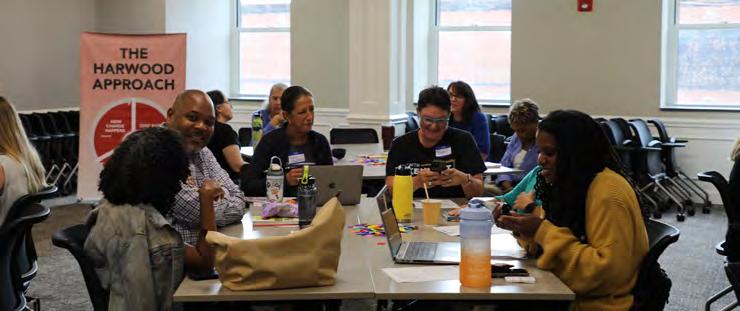
By engaging other groups and leaders, Impact Alamance sought to catalyze new mindsets and ways of working in the community. For example, they made sure to discuss The Harwood Institute’s “Stages of Community Life” framework, how Alamance County was between the first two stages, and the implications for the kind of efforts the community needed to move forward. “When we bring leaders in, they are shocked by the stages of community life,” said one Impact Alamance leader. Alamance County’s “diagnosis” of being between “The Waiting Place” and “Impasse” surprised many leaders. But it helped them understand why progress had been so difficult to come by for years, especially following COVID, and why a different way of working together was needed.
Impact Alamance also directly supported the teams to generate more proof points to move the community forward. For example, they provided funding to support the Arts & Culture Team’s Arty Party Bus, the Youth Wellness Team’s advocacy training and mental health first aid training, and the Faith Team’s Love for Alamance days. They also leveraged their communications channels to amplify the teams’ efforts and developed tracking documents to ground the teams in what they learned from community conversations. The tracking documents helped the teams better tell their
stories as they developed and led Impact Alamance to create a special newsletter—the For Alamance Five—to regularly celebrate the teams’ wins. This is one way Impact Alamance seeks to “make the invisible visible.” Furthermore, Impact Alamance regularly convened team leads and Harwood Catalytic Guides to provide support, offer space for reflection, and help them work through key challenges.
All the while, Impact Alamance proactively found ways to capitalize on growing interest in the For Alamance initiative. People saw something promising happening and wanted to get involved, which led them to host multiple Getting Started Labs instead of the typical one. This is a testament to their stewardship of the initiative and how civic culture was strengthening. But that’s not all. In November 2025, Impact Alamance awarded each team a $5,000
grant to accelerate their work in key areas. These awards are accelerating the teams’ efforts.
Thinking about the initiative’s larger impact, one Impact Alamance leader said, “Some teams have moved faster than others. This work has taken a while to take hold because that’s a reality of our starting point. But we can now point to real things happening, and that’s drawing new people into the work and spreading things over time.”
3
During the initiative, Impact Alamance innovated new spaces to ensure sustainability and spread the work to new groups and areas in the community over time.
The first example is the Leadership Table, which includes leaders from the Alamance County Chamber of Commerce, the school district, and Alamance Community College, among others. One Impact Alamance leader noted, “We had great community energy but also a bunch of leaders who weren’t in the mix who didn’t know what was happening. We needed a space for institutional leaders to come together and learn about what’s happening with the For Alamance initiative.” The Leadership Table meets regularly and
has created an informal network for people within and beyond the initiative to more regularly interact.
The Leadership Table is accomplishing at least five important things: 1) Connecting the community work to larger organizations and leadership in the community; 2) Spreading the approach beyond the five teams; 3) Catalyzing others to help address key issues the teams are working on, like youth and belonging; 4) Developing stronger relationships among key leaders; and 5) Demonstrating that the community can work together and get things done.
Impact Alamance also created a new space called the Open Tent, based on a Harwood framework and tool. This space convenes a mix of community members to evaluate what’s happening in the community and explore ways to spark greater action and collaboration. Each meeting focuses on key questions about what is being learned, how leaders and residents show up, and what it will take to make this work sustainable.
Both the Leadership Table and The Open Tent are critical to further spreading the Harwood approach, sparking action, bringing new people into the effort, and ensuring community ownership.
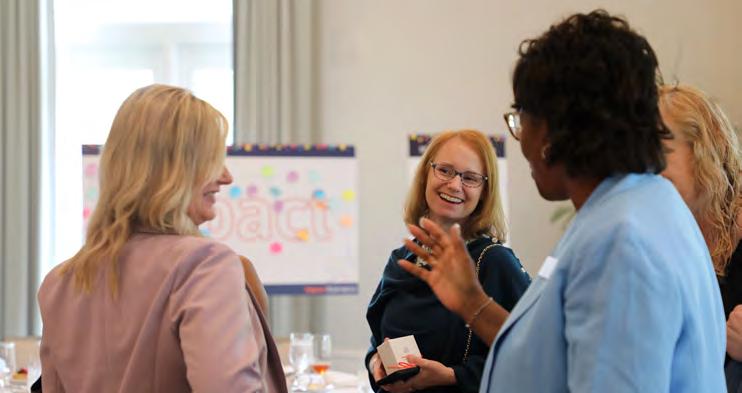
4
In the community conversations they attended, Impact Alamance leaders heard residents repeatedly speak about the need for increased access to news and information. Simply put, the community lacked a trusted, accessible news source. Residents’ widespread desire for one propelled Impact Alamance to begin addressing this longstanding concern.
In 2024, Impact Alamance partnered with NC Local—a statewide nonprofit news organization, which at the time was still housed under Elon University’s NC Local News Workshop—to engage people about their aspirations for local news and take stock of what did exist. The study found widespread interest in a new, credible, nonpartisan local news
source. Community members believed such a reliable information source was necessary to get more people involved, create stronger connections, and inform the public.
These findings propelled Impact Alamance to invest $125,000 in NC Local to develop The Alamance Fabric, a digital local news hub for the county. A public launch event in late 2025 engaged residents about their aspirations for the news outlet. NC Local also shared its plans to make the work locally-rooted and locally-driven by developing a community-led advisory board, hiring local staff, and forging county-wide partnerships prior to the outlet’s launch.
“This is about more than just delivering news—it’s about building civic trust, strengthening community connections, and ensuring every resident of Alamance
County has access to the information they need to participate in local life,” said Impact Alamance’s president.
“We’ve listened to our community, and they’ve told us they want to feel proud of where they live—to be more connected and have better access to information about key issues in Alamance County. This is our response to meeting that need.”
An important ripple emerged during this larger effort when NC Local connected Impact Alamance to New Public. Conversations between Impact Alamance and New Public led to Burlington being selected as one of five pilot communities to launch New Public’s Roundabout app in 2026. The app is an innovative type of social media focused on creating local digital spaces for connection and civic engagement.
Both The Alamance Fabric and Roundabout Burlington will help rebuild Alamance County’s information ecosystem. A challenge that once had no meaningful movement is now being addressed in profound ways. That’s due to Impact Alamance turning outward and rooting their efforts in what matters to people.
5
The For Alamance initiative also propelled Impact Alamance’s president to personally step forward as a founding
member of the Harwood CIRCLE of Catalytic Funders in 2024. The CIRCLE is a national network that explores how funders can catalyze change by leveraging financial and nonfinancial resources to tackle pressing issues and strengthen civic culture in their communities.
She helped found the network for multiple reasons, saying, “The CIRCLE is creating a different space for organizations looking to work differently, connect, and feel supported. It’s making leadership less lonely for funders. And it’s helping bring other foundations nationally into this kind of work.”
The CIRCLE has even helped Impact Alamance activate more local allies to address old issues in the county in new ways, particularly early childhood education. Both the Alamance County Community Foundation and the chamber of commerce were interested in tackling the issue due to the high need in the community. Impact Alamance’s president invited leaders from both organizations to a national CIRCLE event to expose them to the Harwood approach and the impact it was creating around the country.
Leaders from these groups had already planned to conduct an early childhood education needs assessment. After attending the event together, they saw an opportunity to conduct and release
the assessment in a turned outward way. Rather than simply release a lengthy report filled with dense data, they created a digestible one-pager to frame their conversations. Then, using the principles of the Harwood approach, rather than merely “presenting” their findings and a series of pre-set recommendations, they engaged people in a discussion about what they thought these findings meant and the implications for taking action.
Moreover, instead of seeking to launch a new comprehensive plan, they embraced the mantra of “starting small to go big.” This alternative approach is now surfacing new opportunities for collaborative action. It also serves as an example of how the Harwood approach organically spreads as people experience new possibilities for taking action.
Simultaneous to efforts on early childhood education, Impact Alamance joined The Basics Learning Network, which is an international movement made up of local communities that seek to better support early learning and brain development in children from birth to age five. The network is an offshoot of The Basics—a national organization founded by a Harvard University researcher—which has developed a whole-community, public health approach to raise awareness about early childhood development and help caregivers be their child’s first and best teacher. While this work is still emerging, Impact Alamance and its partners are catalyzing new momentum for tackling this critical issue because they embraced a different approach.
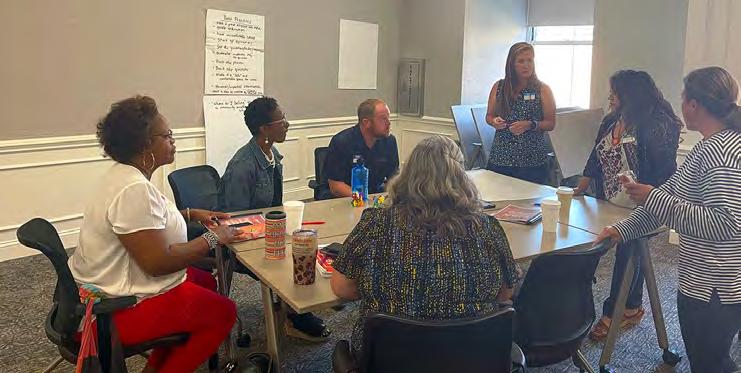
During their 2025 board retreat, Impact Alamance’s team explored how they can further strengthen civic culture in the community. The exercise reinforced the organization’s role in sparking new efforts and bringing people together across dividing lines. Impact Alamance decided to implement a new process to evaluate their programs’ and initiatives’ impact on civic culture to better gauge effectiveness. This impact tracking will build on their existing efforts to engage the community, center people’s aspirations, spark action, and convene leaders.
Later in 2025, Impact Alamance celebrated their 10th anniversary as an organization. As part of the celebration, leaders reflected on Impact Alamance’s journey and impact. One shared, “Impact Alamance has brought a spirit of innovation to the county and to problemsolving. They’re bringing about positive change in all sorts of collaborative ways.”
Another said, “Impact Alamance is a backbone organization in the community that exists to pull people together.” And a third noted, “Impact Alamance has played a big part in helping us expand our vision of what we can be as a county.”
Meanwhile, the organization’s persistent efforts to develop new leaders stood out to the community. One leader noted, “Impact Alamance is encouraging new
The community has moved into the early “Catalytic” stage and is finding practical ways to address longstanding issues and deeplyrooted divides. And Impact Alamance was the catalyst that set it all in motion just three years ago.
leaders to come to the table. They are inviting people who have been in the shadows, people who weren’t necessarily the named leaders up to this point. [By] listening to them, I think we’re going to move forward at a faster pace.”
A new sense of shared responsibility and shared purpose has emerged through this work. The community has moved into the early “Catalytic” stage and is finding practical ways to address longstanding issues and deeply-rooted divides. And Impact Alamance was the catalyst that set it all in motion just three years ago. ��
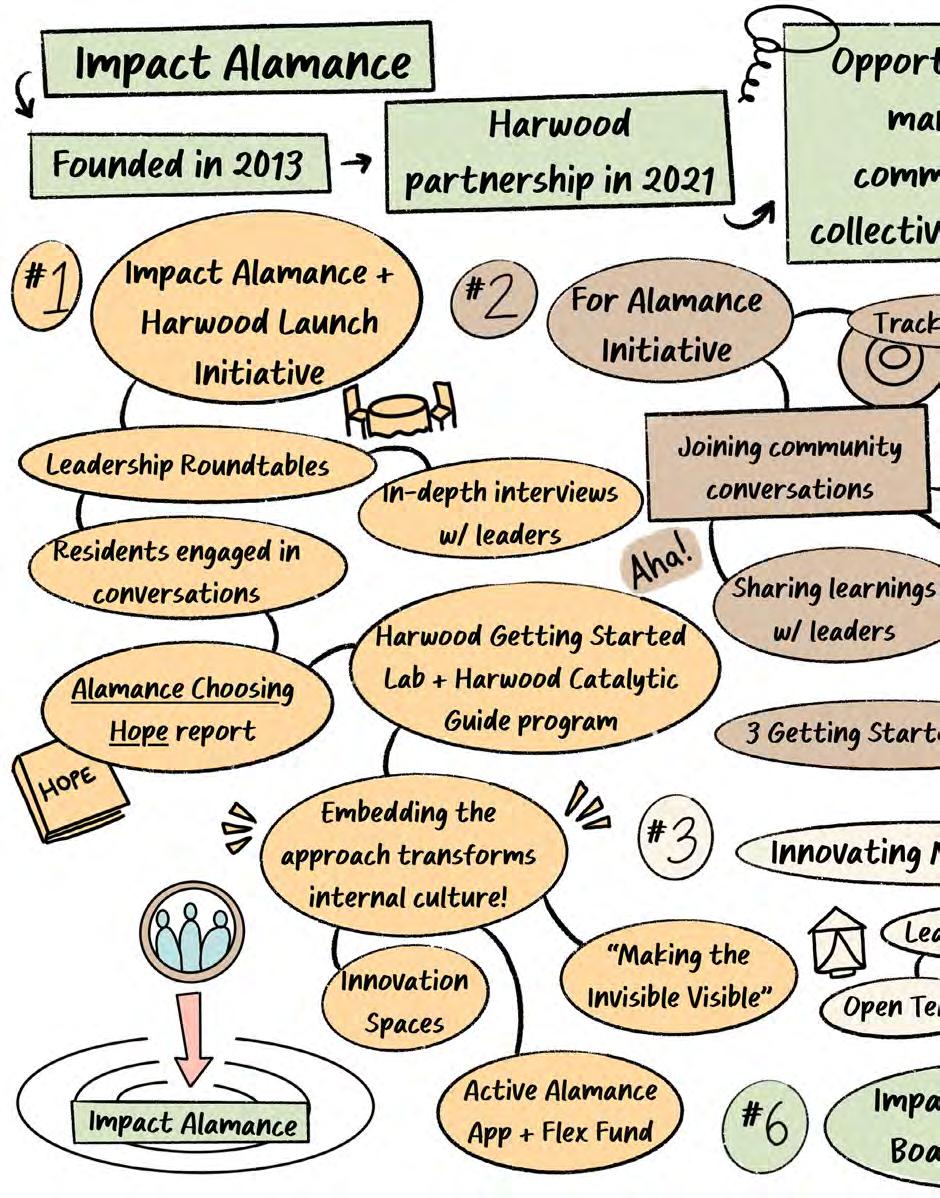
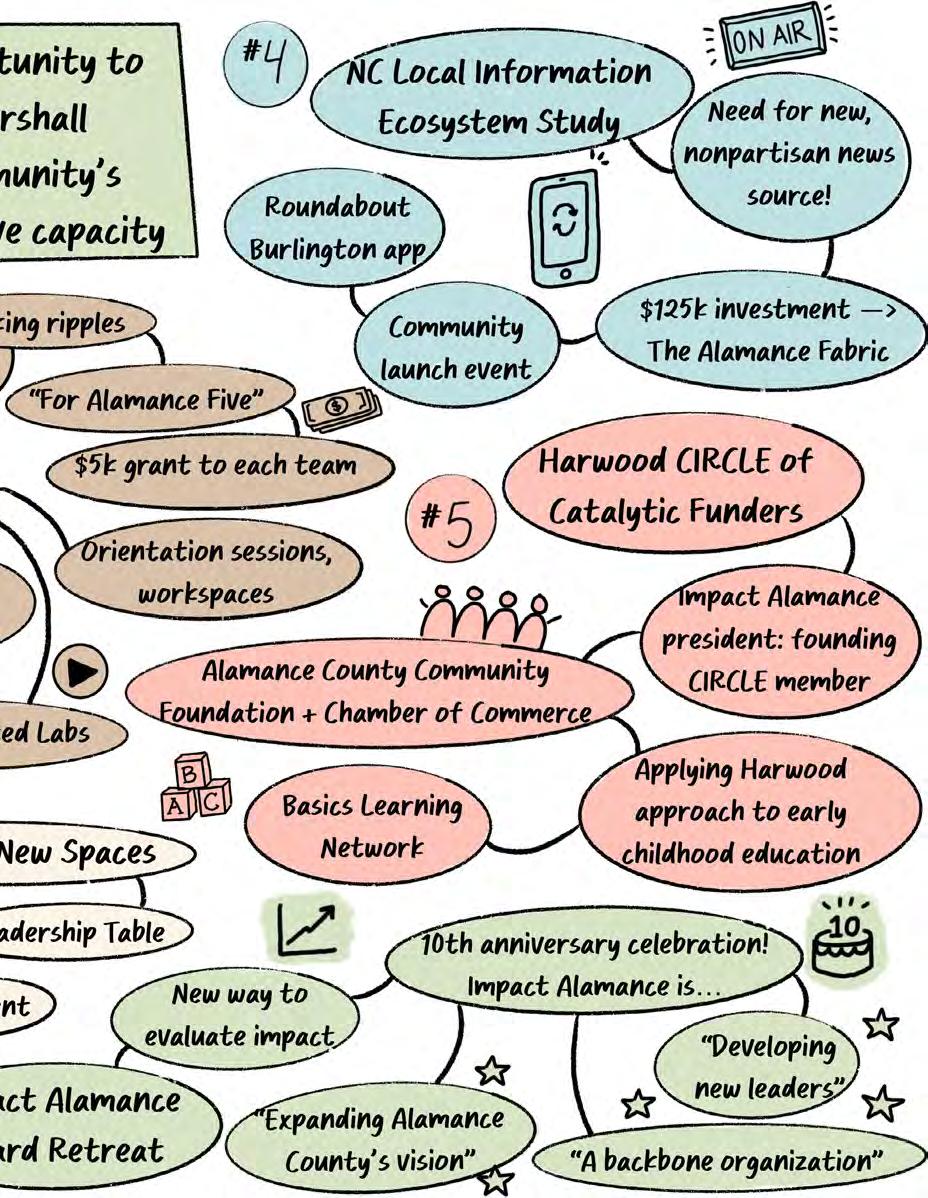
Conclusion
Alamance County is choosing hope rather than be overrun by division.
Alamance County is choosing hope rather than be overrun by division.
Residents and leaders are coming together in new ways to take shared action. More and more groups and organizations are turning outward toward the community. Chain reactions of lasting change have been unleashed and grow by the day. And Alamance County’s civic culture has fundamentally strengthened in profound ways over the past three years.
While many communities fall deeper into their divides or remain stuck, Alamance County—once known for and defined by its deep divides—is proving what is possible when a community chooses to get on a new civic path.
The work hasn’t come easy. There is much more to do. But Alamance County is on a fundamentally different trajectory today than compared to three years ago when they were between “The Waiting Place” and “Impasse.”
Now, the community has entered the
early “Catalytic” stage and is poised to accelerate its movement, build momentum, and grow and sustain its future.
This is the task before Alamance County. Here are five key actions for continuing to move forward:
1. Grow the chain reactions.
The community has successfully grown a whole series of chain reactions of actions and ripples over the past three years through the work of the five action teams and other efforts that emerged across the county. To move forward, the community should:
– B uild on each team’s wins. While progress has been made, it cannot be taken for granted.
– C ontinue to invest in existing chain reactions to deepen progress. It can be easy—tempting, even—to move on to the next new initiative, program,
or focus area. But doing so may leave behind efforts that require continued support and attention.
– B e intentional with time and energy. Specific efforts within a given chain reaction may naturally fade. Their main purpose may have been to help get Alamance County on a better trajectory. Accelerating progress in the early “Catalytic” stage requires continued trial and error and a willingness to make choices about what not to focus on. As some efforts fade, others will emerge to fuel continued progress.
– S cout for opportunities to spread the work to new groups, networks, and areas of concern in the community.
2. Bridge divides.
New and growing efforts to bridge Alamance County’s deep divides have emerged through this work, though they remain young. To move forward, the community should:
– Engage people in different parts of the county about their aspirations for continuing to move forward. Leaders, groups, and organizations must continue to develop the capabilities needed to engage community members authentically and consistently. This must become a stronger habit.
– C reate more spaces that bring people together across dividing lines. People from different parts of the county with different lived experiences need to see and hear each other, discover their shared aspirations, and build together. These spaces are important to instill a stronger sense of connection and belonging.
– S hare real examples of people coming together to create positive change. These stories will give people real hope that bridging divides is possible and already happening in Alamance County.
3. Develop the emerging cadre of leaders.
A growing number of Public Innovators and local change agents have emerged in the past three years. Importantly, many of them did not consider themselves leaders prior to this initiative. This cadre of leaders is essential to future progress in Alamance County. To move forward, the community should:
– C onvene this emerging cadre of leaders to solidify and grow the network. No leader can go it alone. Creating progress remains hard, trying, and tiring. Leaders need personal and emotional support and to know others are standing next to them.
– I nvest in these leaders’ continued development. The days ahead will bring new challenges, require leaders to navigate uncharted waters, and demand yet more innovative ways of working together. Developing the capabilities of these leaders to be Turned Outward is essential to long-term sustainability.
– G row this cadre of leaders with intentionality. Some turnover is natural. Leaders will burn out, move to other communities, switch jobs, and encounter major life changes. Moreover, new opportunities will emerge, requiring new people to step forward. It is critical to strengthen and expand the base of Turned Outward leaders in Alamance County.
4. Nurture informal networks for learning and innovation.
An informal network of leaders and organizations has emerged in Alamance County. This is evidenced by the numerous examples of individuals who have joined the five teams, gone through orientations to learn about the For Alamance initiative, or attended one of the multiple Getting Started Labs. To move forward, the community should:
– I nvest in spaces for leaders and organizations—including those not already connected to the work—to come together and discuss their efforts and how they can support one another. This is essential to encouraging sustainability.
– Pl ace special emphasis on learning and innovation. Focus on what people are learning from their individual efforts, how that relates to what others are learning, and the resulting insights, lessons, and implications for accelerating progress.
– H elp people and groups see possibilities for breaking down silos and fragmentation, but do not force collaboration or coordination. This can stymie innovation and learning in a place like Alamance County where divides remain prevalent. Only when groups are ready and willing should they collaborate.
5. Keep building a can-do narrative.
Early stories of progress have emerged in Alamance County. But they are just beginning, and many exist in isolation from one another. Moreover, most people in the community have yet to hear about them or be directly impacted by them. Even some Public Innovators
and other change agents may not be aware of what they are creating. To move forward, the community should:
– M ake the invisible visible by helping Public Innovators and other change agents identify, describe, and share the change they are creating. This process must become a habit as things continue unfolding.
– H ighlight stories of change to ensure more of the community sees and hears them. Do not assume people know about what is taking place. Most people will not know about success stories until they hear them directly.
– K nit together individual stories of change into a larger narrative that enables people to see a new trajectory of hope taking shape. At the same time, avoid over-selling the impact and success of these stories.
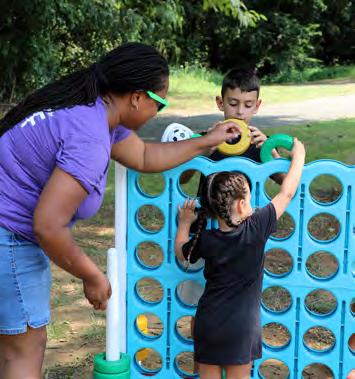
“We are making sure people are seen and heard and are taking action on what the community needs and wants.”
Continued progress is not a given. There are no guarantees in this work. Yet Alamance County has what it takes to keep moving forward and build a community where everyone thrives. In fact, Alamance is already demonstrating what is possible when a community starts to take shared action on issues that matter to people and works to strengthen its civic culture.
Recall the two leaders quoted at the end of the introduction. One said, “It’s clear that this work is different. It is actually working.” Another noted why it is working, saying, “We are making sure people are seen and heard and are taking action on what the community needs and wants.”
Three years ago, who would have thought this kind of progress—indeed, this kind of proof of what is possible in a divided nation—would have come from Alamance County? ��
Nine Missteps to Avoid In
the Early “Catalytic” Stage
In thinking about the next steps Alamance County can take to grow progress and safeguard sustainability, The Harwood Institute has identified nine missteps that communities often make in the early “Catalytic” stage. Seek to avoid them.
1. O verpromise and under-deliver. This deepens frustration, even cynicism, and leads to lost hope.
2. D esign comprehensive plans that are too big to take on and fail to realistically determine the capacities and needs of the community.
3. S pend time and resources trying to get everyone on board and around the table.
4. Fail to make room for small efforts and miss out on potential allies.
5. H yper-coordinate activities and participants to get everyone moving in unison. This stifles innovation and creativity.
6. E xpend large sums of money before anyone has a clear-eyed view of where investment is most needed and what it will take for those investments to produce results.
7. I nvest only in established organizations that produce measurable results when what is most critical is to spark forward movement, strengthen local capacities, and create a new sense of possibility.
8. O ver-hype success and impact.
9. M ove on to the next new thing while leaving behind emerging pockets of change.