Hope Cassebaum Vice President | Southwest, Lillian
Steve Dunn Secretary-Treasurer, Evergreen
DIRECTORS
Dorman Grace | Jasper
Charles Butler | New Hope
David Bailey | Dawson
Darrell Lee | Addison
Will Gilmer | Sulligent
Phillip Hunter | Birmingham
Mahlon Richburg Auburn
Stewart Koon Gordo
Bill Cook Montgomery
Trip Horne | Louisville
Mark Kaiser | Daphne
Jerry Peak | Chancellor
Lisa Lake | Vinemont
Forrest Anders | Hartselle
Neighbors (ISSN 0162-3974) is published monthly by the Alabama Farmers Federation, 2108 East South Boulevard, Montgomery, Alabama 36116 or (334) 288-3900. For information about Alabama Farmers Federation member benefits, visit the website www.alfafarmers.org. Periodicals postage paid at Montgomery, Alabama, and additional mailing offices. Printed in the U.S.A.
MEMBERSHIP AND SUBSCRIPTION CHANGES 800-392-5705, Option 4 or BWatkins@alfafarmers.org
ADVERTISING REPRESENTATIVE
Ben Shurett, (256) 997-7922 BenShurett.alfafarmers@gmail.com
DISCLAIMERS: Advertisements in Neighbors do not represent an endorsement by the magazine or Alabama Farmers Federation. Editorial information from sources outside the Alabama Farmers Federation is sometimes presented for our members. Such material may, or may not, coincide with official Alabama Farmers Federation policies. Publication of information does not imply an endorsement by the Alabama Farmers Federation.
www.AlfaFarmers.org
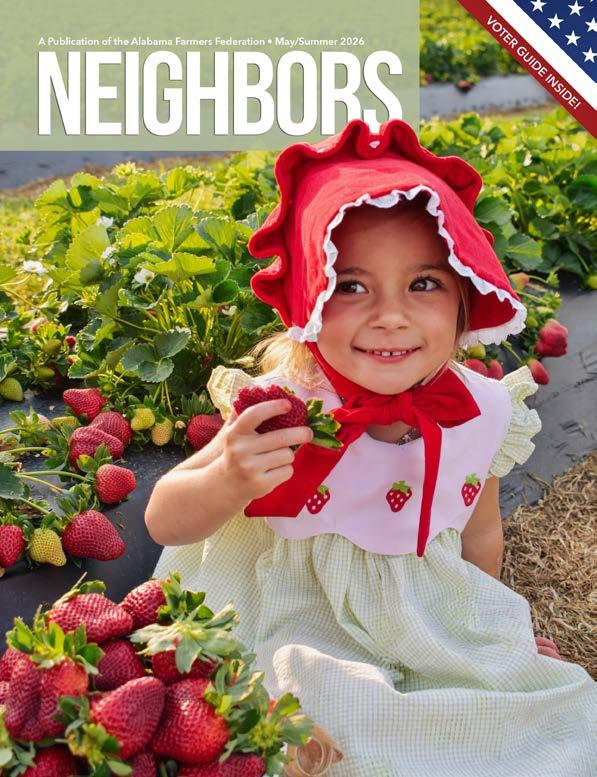
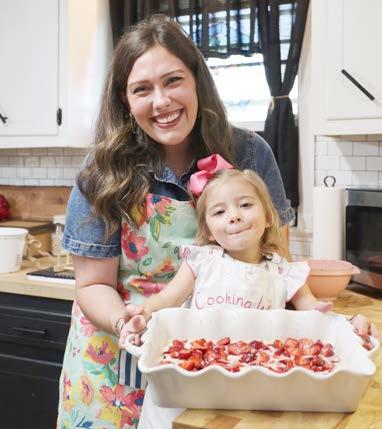
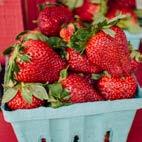
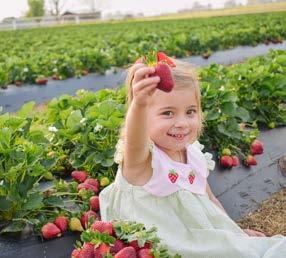
Spring and early summer herald strawberry season in Alabama. Celia Scott of Escambia County enjoys picking bright-red berries before beelining to the kitchen to whip up strawberry cobbler with her mom, Kelsey.
Photo By Kelsey Scott
Bankston Reflects on Blessings of Farm Bureau Journey
By Jeff Helms
When Emmanuel Bankston traveled to Washington, D.C., last month as the newest member of Farm Bureau’s Young Farmers & Ranchers (YF&R) Committee, it marked the pinnacle of a leadership career that’s spanned 14 years and three states.
“Being able to tell people their food is healthy, nutritious and was grown sustainably by hard-working American farmers is a story worth telling,” said the Henry County farmer. “If I can do any little part to promote our industry and help the consumer understand where their food comes from, that’s my life’s work.”
Bankston is uniquely equipped for the task. The son of a U.S. Marine, the 35-year-old moved a lot as a child, but he never felt more at home than on his grandparents’ farm.
“I’m what you would call a ‘skip-generation farmer,’” he said. “My granddad raised cattle in Georgia. That’s where I picked up the love and the passion for agriculture.
“When I moved to Alabama, I really
wanted to get back into the cattle business.”
Bankston’s journey to his 400-acre spread wound through Clemson University, where he earned a bachelor’s degree and was elected to the South Carolina YF&R Committee. Then it was on to New Orleans for his first job with Archer-Daniels-Midland (ADM) and a stint on the Louisiana state committee.
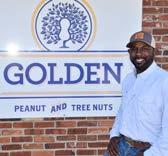
When ADM brought him to Headland to run the Golden Peanut buying point, Bankston began working to make his farming dreams a reality.
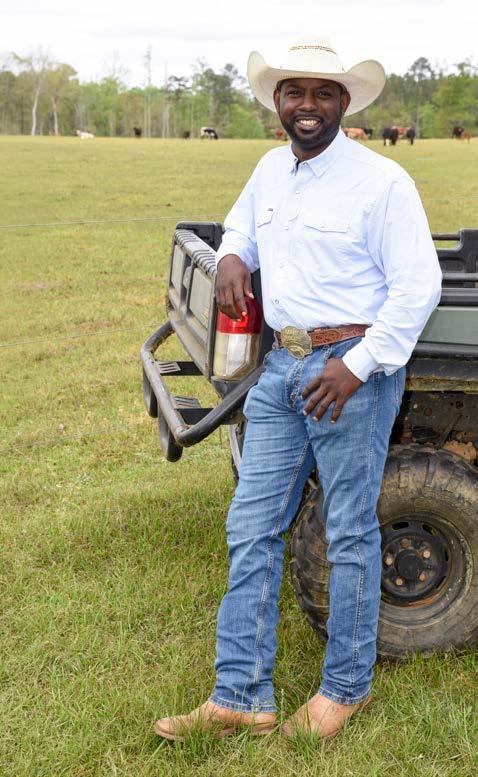
“This is my first farm. I purchased it back in 2020 before COVID,” said Bankston as he surveyed lush spring grazing, his shoulders straightening. “It’s my pride and joy.”
A beef herd that started with two calves in Bankston’s backyard now numbers 150 cows. His work to improve forage quality, build cross-fencing for rotational grazing and install off-stream watering troughs was a labor of love. Recently, he purchased an adjacent 72-acre farm with 50 acres under irrigation, noting it’s a “game changer” for his operation.
Bankston credits wise counsel from seasoned local farmers and encouragement from Farm Bureau friends across the country for his success.
“I wouldn’t be able to build my farm to where it is today had I not been involved in three different Farm Bureaus,” he said. “Their stories inspired me to say, ‘I could be a farmer.’ I knew I probably wasn’t going to inherit my family farm in Georgia, but I was able to build a network of people who understood agriculture.”
He added, “Most of the people I work with, that I’m friends with, are involved in Farm Bureau. I’ve been to a lot of weddings and a lot of funerals of Farm Bureau members. They all mean a lot to me. Most of the great leaders I know are members of Farm Bureau.”
Bankston is on the Henry County Farmers Federation board, where he revitalized the county Young Farmers program. He also won the 2020 state Excellence in Agriculture contest and competed nationally. In December, Bankston completed four years on the Alabama Farmers Federation State Young Farmers Committee, including a term as vice chairman. A month later, American Farm Bureau Federation
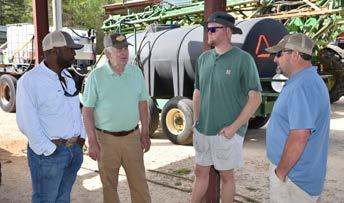
Deep relationships with local farmers continue to pay dividends for Emmanuel Bankston. From left are Bankston and Henry County farmers Ed White, Rein Rippey and Jason White of Turkey Creek Farm.
Emmanuel Bankston initially moved to Alabama to run ADM’s Golden Peanut buying point.
President Zippy Duvall appointed him to the national committee.
Bankston said it’s an opportunity to give back to the organization.
“I want to make it better and make sure that if you’re a young person involved in agriculture, the first thing you think about when you want to get involved is, ‘I want to be part of Farm Bureau,’ or ‘I want to be part the Alabama Farmers Federation,’” he said. “My goal is to build a culture, recruit more members and get those young kids who are finishing college or in high school involved and help them understand what Farm Bureau does.”
Federation Young Farmers Division Director Hunter McBrayer said Bankston embodies the organization’s heritage of leadership development.
“From collegiate Farm Bureau to YF&R and through service on three different state committees to the national level, Emmanuel has built a strong network, remained deeply engaged in the process and established himself as a respected leader among farmers — no matter their age — across the country,” McBrayer said. “He understands the grassroots organization as well as anyone I know, and I am excited to watch him serve young farmers nationwide.”
For Bankston, it’s all about sustainability — whether he’s revitalizing irrigation and grazing in his pastures, helping other producers improve soil health as ADM’s regen ag manager for the Southeast or inspiring the next generation of young farmers.
“If someone asks me what my greatest blessing is, I tell them I’ve been blessed to be around good people,” he said. “From the time I was a little kid with my granddad who taught me about agriculture to now, I’ve gotten to meet generations of farmers and help make sure they stay in business and help make sure their story is told. I get to live my dream every day.”
Emmanuel Bankston credits his growing cattle farm to involvement in three Farm Bureaus — from South Carolina and Louisiana to his current service in Alabama.
Soil Science: Carver’s Influence on Southern Agriculture
George Washington Carver charted the course for American agriculture.
Born in Missouri in 1864, Carver endured a childhood marked by adversity. Despite challenges, he earned a master’s degree in agriculture and led research that improved farming in the South.
After coming to Alabama’s Tuskegee University in 1896, Carver revolutionized farming by promoting cash crops such as peanuts and soybeans. At a time when cotton dominated the region, Carver encouraged farmers to diversify crops to restore soil health and improve yields.
profitability. Carver is most widely known, however, for his research on the diverse uses of peanuts.
Known as the “Peanut Man,” he identified 300 ways to use what is now Alabama’s official state legume, including oils, dyes and cosmetics. These innovations brought new economic opportunities for farmers.
Carver also emphasized the importance of crop rotation, a technique widely used today. His introduction of soybeans, peanuts and sweet potatoes improved soil fertility while increasing
The pioneer also developed an agricultural extension program in Alabama to better serve farmers through research and education.
Carver was instrumental in bringing practical farm knowledge to rural communities through his mobile classroom, a horse-drawn Jesup Wagon. He packed seeds, tools, soil samples and demonstration materials in the farm-school-on-wheels. His goal was to help improve agriculture and quality of life for farmers.
A go-getter, Carver is remembered for saying, “When you can do the common things of life in an uncommon way, you will command the attention of the world.”
His work captured the attention of the nation, including three U.S. presidents — Theodore Roosevelt, Calvin Coolidge and Franklin D. Roosevelt — earning him national accolades.
Beyond scientific contributions, Carver was an advocate for stewardship. More than a century later, his work continues to shape modern agriculture and influence sustainable farming across the U.S.
Editor’s Note: This is the second in a four-part series highlighting agriculture’s prominent role in U.S. history as America celebrates the 250th anniversary of the signing of the Declaration of Independence. Learn more about semiquincentennial events in Alabama at America250AL.org.
Farm-City Grows Alabama Through Service, Student Success
By Maggie Gaddy
Service and community involvement took center stage as farmers, leaders and students came together for the Farm-City Awards Program April 9 in Auburn, recognizing achievements and
embracing the theme, “Grow Alabama.”
That concept was a callback to the “Agriculture & Forestry Grow Alabama: An Economic Contribution Study” released last year by Alabama Agribusiness Council, Auburn University and Alabama Extension.
Alabama Farm-City Committee Chairman Jeff Helms said the committee hoped “Grow Alabama” would help students and volunteers understand the importance of agriculture while learning about farmers and forest landowners in their local areas.
“We were amazed at the talent this year,” said Helms, also the Alabama Farmers Federation Communications Department director. “From brightly detailed posters and carefully crafted essays to top-notch Farm-City tours and banquets, 2025 was a big year for county participation. The theme was wonderfully incorporated in so many unique ways. ‘Grow Alabama’ is a great reminder of the role farmers play in our state and national economies.”
Top-Performing Students
Eighteen kindergarten through 12th grade students were honored for displaying ways agriculture grows Alabama in poster, essay and video formats.
Winners and runners-up in poster and essay contests received cash prizes from Alabama Ag in the Classroom,
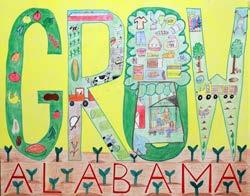
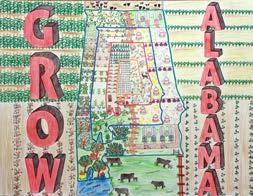
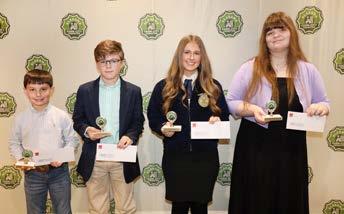
From left are kindergarten-third grade poster contest winner Maxston Blankenship of Dale County; fourthsixth grade poster contest winner Frasier Johnson of Etowah County; 10th-12th grade essay contest winner Emma Rambo of Franklin County; and video contest winner Emily McDaniel of Jefferson County.
Maxston Blankenship’s first-place poster for kindergarten-third grade
Frasier Johnson’s first-place poster for fourth-sixth grade
while Alabama Farmers Cooperative (AFC) sponsored the video contest. Schools of first- and second-place scorers received matching cash prizes.
Winning works will be featured in the 2027 Alabama Farm-City Calendar.
Poster Contest, Kindergarten-Third Grade
n First and $200: Maxston Blankenship, Ariton School, Dale County
n Second and $100: Adah Morris, The Lakeside School, Barbour County
n Third and $75: Blakely Johnson, Woodland Elementary School, Randolph County
n Fourth and $60: Ian Romero, Sacred Heart School, Cullman County
n Fifth and $40: Laelah Cottingham, Ashville Elementary School, St. Clair County
n Sixth and $25: Avery Langley, Chambers Academy, Chambers County
Poster Contest, Fourth-Sixth Grade
n First and $200: Frasier Johnson, Pathways Academy, Etowah County
n Second and $100: Elyse Williams, homeschool, Marshall County
n Third and $75: Eliana Countryman, Ashville Elementary School, St. Clair County
n Fourth and $60: Eli Humphries, Red Bay Elementary School, Franklin County
n Fifth and $40: Jazmine Perry, West Point Intermediate, Cullman County
n Sixth and $25: Kase Riley, Bagley Elementary School, Jefferson County
Scan to learn more!
Farm
of Distinction
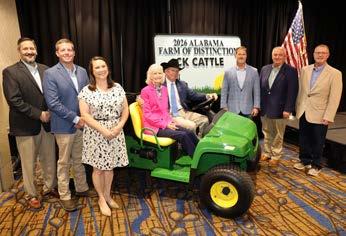
During the program, CK Cattle of Lowndes County was named the 2026 Farm of Distinction for its commitment to stewardship, support of young farmers and community impact.
Chuck and Katie Madaris manage the three-generation cattle operation in Hope Hull alongside family. CK Cattle produces Angus, Chiangus and SimAngus seedstock cattle and commercial cattle.
As Farm of Distinction winners, the Madaris family will receive an engraved farm sign from Alfa Insurance and the Federation; a zero-turn Grasshopper mower from Alfa Farmers Member Perks; a John Deere Gator from John Deere, SunSouth and TriGreen; $1,000 from First South Farm Credit; and a $1,000 gift card from AFC.
Additionally, Chuck will represent Alabama during the Sunbelt Ag Expo Southeastern Farmer of the Year contest this fall.
Essay Contest, Seventh-Ninth Grade
n First and $300: Timber Cunningham, Vernon Intermediate, Lamar County
n Second and $200: Kathryn Moore, G.W. Long High School, Dale County
Essay Contest, 10th-12th Grade
n First and $300: Emma Rambo, Phil Campbell High School, Franklin County
n Second and $200: Shelemiah Kelly, Central High School, Coosa County
Video Contest, Ninth-12th Grade
n First and $300: Emily McDaniel, Corner High School, Jefferson County
n Second and $200: Ella Hicks, G.W. Long High School, Dale County
CK Cattle in Lowndes County was named Alabama’s 2026 Farm of Distinction for its commitment to stewardship, support of young farmers and community impact. From left are Joseph Fureigh and Doug Thompson of First South, Tiffany Lester of Alabama Farmers Cooperative, Katie and Chuck Madaris, Neal Stanford of SunSouth, Federation and Alfa Insurance President Jimmy Parnell, and Paul Brown of Member Perks.
Scan to learn more about CK Cattle!
Video
Cunningham Rambo McDaniel
Top-Performing Counties
In addition to selecting student winners, judges pored over exceptional entries from county Farm-City committees.
Division winners scored $300 from the Alabama Farmers Agriculture Foundation, while runners-up received $200. Each category win netted committees $100.
Division I
n Lee County: Best Farm-City Committee, Best Farm-City Tour
n Cullman County: Runner-Up Best Farm-City Committee
n St. Clair County: Scrapbook Award
n DeKalb County: Innovative Idea Award, Best Special Activities
n Jefferson County: Best Farm-City Dinner
n Marshall County: Best Media Coverage/Proclamation
n Houston County: Best Civic Club Programs
n Montgomery County: Target Award
Division II
n Geneva County: Best Farm-City Committee, Best Farm-City Dinner
n Dale County: Runner-Up Best Farm-City Committee, Scrapbook Award, Target Award
n Cherokee County: Best Farm-City Tour
n Henry County: Innovative Idea Award
n Clay County: Best Media Coverage/Proclamation
n Franklin County: Best Civic Club Activities
n Fayette County: Best Special Activities
Additionally, Debbie Dunn and Sharon Turner of Geneva County were honored as the Volunteers of the Year, while Zandi Foss of Dale County received the Farm-City Service Award.
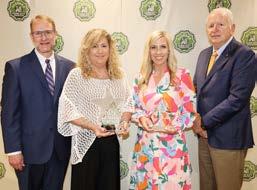
Lee and Geneva counties were named the best Farm-City committees in Alabama. From left are Alabama Farm-City Committee Chair Jeff Helms, Lee County’s Penny Walters, Geneva County’s Nikki Dyess and Alabama Farmers Agriculture Foundation board member Mahlon Richburg.
of made it a natural fit. It’s about serving them and helping the community.”
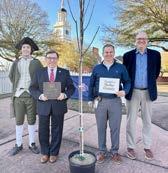
Those Princeton elms are now developing deep roots in Alabama counties as Liberty Trees, a project of America 250 Alabama. The 68th tree is planted on the grounds of the American Village in Montevallo, a sprawling educational facility dotted with replica buildings and costumed historical interpreters who focus on Founding Era history.
By Marlee Jackson
When Green Valley Farms in Montevallo grew 68 extra Princeton elms last year, the Byrd family wasn’t just potting and pruning a fast-growing, disease-resistant tree.
They were playing a special part in celebrating America’s 250th anniversary.
“I was at work one day when Michael Bass from the American Village called and asked, ‘Hey, would you grow us some trees?’” remembered Lance Byrd. “I asked, ‘What tree do you want me to grow?’”
“We grow Princeton elms anyway, so I bought extra stock and put them in the size container they wanted. Being so close to the American Village just kind
It’s also Alabama’s Celebration Capitol for the U.S. semiquincentennial. (The tongue-twisting Latin term simply means “250.”)
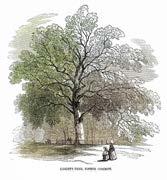
Natalie Steed is executive officer of America 250 Alabama. She said the committee intended the elms to pay homage to the sprawling canopies under which Founding Fathers hailed ideas of liberty leading up to the American Revolution.
“We picked the Liberty Tree for our Legacy Project because Liberty Trees represented community back in colonial times,” Steed said. “It’s a place where people gathered. They talked about news, they debated ideas, and they celebrated together. Our hope is this is going to be a living monument for future generations to continue to come and gather at these trees and discuss our shared history.”
Earlier this year, county commissions requested their respective elms at America250AL.org. Steed’s team worked with the Alabama Sheriff’s Association to deliver the elms during Arbor Week in February — a purposeful melding of industries and organizations.
“One of our goals at America 250 Alabama is to make sure we provide resources and find ways for everybody to participate,” Steed said. “Green Valley has been a phenomenal partner in this whole initiative, and we couldn’t have done it without them.”
Each elm was accompanied by a
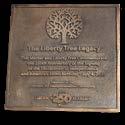
special bronze plaque. Poured at The Foundry in Shelby County and designed by artist Nelson Grice, the plaques commemorate the 250th anniversary of when the Declaration of Independence was signed July 4, 1776.
Steed said while the Princeton elms are not descendants of the original Liberty Trees, they were chosen for heat tolerance, disease resistance and propensity for quick growth. Byrd said the tree limbs could grow 3 to 4 feet a year and will eventually display the elm’s hallmark peeling bark.
“This tree is pretty forgiving,” said Byrd, who chairs the Alabama Farmers Federation State Greenhouse, Nursery & Sod Committee. “As long as they plant them correctly and keep enough moisture in the ground, these trees will take right off and flourish.”
It’s an honor to play a small part in honoring American independence, Byrd added.
“A lot of people don’t sit down enough to think about what the previous generations have done for them,” Byrd said. “The forefathers who founded the country, they were very insightful in the ways that they did it. It affects all of us today.”
Learn more about America 250 Alabama at America250AL.org.
Lance Byrd of Green Valley Farms in Montevallo grew 68 special Princeton elms last year — one for each Alabama county, plus the American Village.
To mark America’s 250th birthday, the American Village in Montevallo planted a Liberty Tree grown at nearby Green Valley Farms.
Federation Welcomes New Face to Broadcast Team
Alabama Farmers Federation welcomed a new face to stage and screen in March as Ryan Hall joined the Communications Department and Simply Southern TV.
An experienced broadcaster, Hall served two years as the State House reporter for WIAT-42 Birmingham and other Nexstar stations in Alabama. He will work alongside Federation Broadcast Production Manager Matt Wilson as a multimedia journalist.
Hall will utilize writing, videography, editing and communications skills to create content for Simply Southern TV while also fulfilling other Federation and Alfa Insurance video needs.
“Ryan had the opportunity to attend our annual meeting in December, where he developed an even stronger appreciation for
the Federation’s mission, members and staff,” said Communications Department Director Jeff Helms. “I’m confident his enthusiasm and shared values will make Ryan an outstanding member of the communications team and Alfa family.”
Hall’s interest in video production and politics was sparked while a student at Oak Mountain High School in Birmingham, where he revamped the school’s television show to include interviews with community leaders.
Hall is a graduate of Auburn University and former student correspondent for Jim Dunaway’s The Next Round Live. He also worked in Washington, D.C., as a communications fellow for U.S. Rep. Barry Moore.
“I cannot say how excited I am to join the team at Alfa,” Hall said. “Our farmers are the backbone of our state, and I
am grateful for the opportunity to help share their stories. We can all learn from the unwavering faith of our farmers and their steadfast commitment to service.”
Hall’s reporting will debut on Simply Southern TV this summer, and he will transition to co-host later this year alongside Alabama Extension’s Mary Wilson. Hall also will lend his voice to Alfa and Federation events as emcee, following in the footsteps of longtime Broadcast Director Kevin Worthington, who retired in December. Hall notched his first emcee experience during the Farm-City Awards Program in Auburn April 9.
Smiles stretched ear to ear across the faces of nearly 200 ladies who attended the Alabama Farmers Federation Women’s Leadership Conference April 8-10.
Held during the International Year of the Woman Farmer, the event
celebrated the impact of Alabama farmers, farm wives and industry leaders. The stacked speaker lineup included Monica Carroll — a Dale County farmer, former State Women’s Leadership Committee (WLC) member and the first female to lead Alabama’s division of the Farm Service Agency.
“A woman knows how to get the job
done,” Carroll said to her peers during the closing address. “We’re not just participating. We are driving billions of dollars in impact. We are making decisions that impact the future of ag.”
She continued, “You are the heartbeat of women in ag. You are the strength of agriculture.”
Federation External Affairs Department Director Brian Hardin hailed women’s impact in the public policy arena. He and Federation National Affairs Director Mitt Walker offered state and federal legislative updates during the conference.
“If this session has shown us anything, it’s the influence of women,” Hardin said. “You are mothers, daughters, grandmothers. You bring a connection, a credibility and a passion no one else can bring. You are Proverbs 31 women; that makes a difference. You live differently. Know the power you have with your House member and senator.”
State WLC Chair Lisa Lake of Cullman County commended the ladies — who represented every corner of Alabama — for their work.
State Women’s Leadership Committee Chair Lisa Lake encouraged ladies to use their voice to impact agriculture and their communities.
Monica Carroll, the first female to lead Alabama’s division of the Farm Service Agency, attended the Women’s Leadership Conference in Auburn.
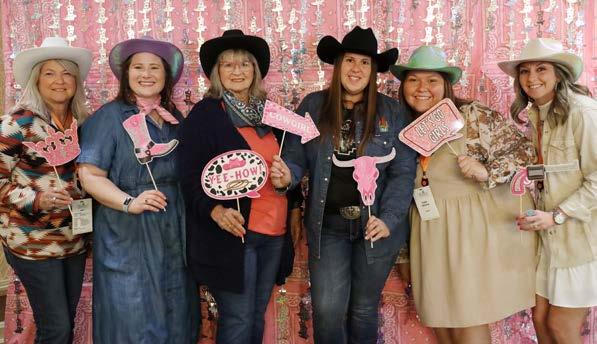
The Wiregrass Region was well-represented during the Women’s Leadership Conference in Auburn April 8-10. New this year, farmers participated in a themed Western Partner Roundup, where they networked with new friends from across the state.
“Use your voice,” Lake said. “Use it forcefully with lovingkindness.”
In addition to encouraging advocacy, sessions focused on healthy habits to strengthen physical, financial and social wellbeing.
Sarah Zastrow brought humor and hard topics to the table. Zastrow is a farmer, certified exercise physiologist and host of the podcast Throwing Wrenches, Mending Fences. Her keynote comments empowered women to shift their mindsets to combat stress. An additional session emphasized exercise, debunked diet myths and encouraged social activities.
“Perfectionism is a total myth we
waste a lot of time battling,” said Zastrow, the Michigan Farm Bureau Young Farmers & Ranchers Committee chair. “As we go through life…keeping this in perspective is a great tool.”
Additionally, Farm Bureau Bank’s Neal Zeanah shared practical strategies to avoid fraud and identity theft, while Melissa Lester of Victoria and Southern Lady magazines discussed the art of creating a gracious home.
“So often, we complicate inviting people into our homes,” Lester said. “Simplicity is best when it comes to hospitality. We can become stressed and overwhelmed during times of entertaining, or we can be purposeful
and focus on connecting rather than try to create something that is perfect.”
During Day 1, the ladies sported their favorite farm T-shirts during registration, which included a floral photo station, flower bar, vendors and complimentary massages. Regional meetings allowed attendees to share suggestions on ag promotions, events and advocacy efforts.
During Day 2, the conference joined with the Alabama Farm-City Awards Program to recognize successful agricultural advocacy efforts. That night, a themed Western Partner Roundup roped attendees into networking with new friends from different counties.
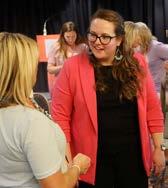
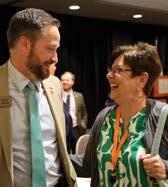
Federation External Affairs Department Director Brian Hardin visits with Henrietta Taylor of Lawrence County.
The registration photo backdrop and flower bar are perennial favorites during the Women’s Leadership Conference.
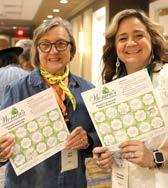
Jane Elliott of Chambers County and Amanda Sanders of Geneva County networked during the themed Western Partner Roundup.
Certified exercise physiologist Sarah Zastrow of Michigan encouraged attendees to stay active, get social and prioritize healthy eating.
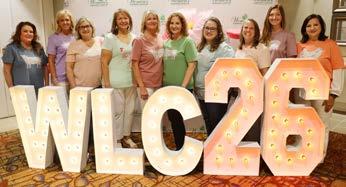
From left are Federation Women’s Leadership Division Director Kim Earwood with committee members Shelley East, Cherokee County; Debbie Miller, Mobile County; Amy Belcher, Montgomery County; Chair Lisa Lake, Cullman County; Dixie Black, Butler County; Melissa Palmer, Elmore County; Rachel Chastain and Caitlin Carpenter, Talladega County; and Vickie Watkins, Tallapoosa County.
Fertilizer Spikes Could Shake Up Growing Season
By Marlee Jackson
Surging fertilizer prices joined a growing list of concerns for Alabama farmers as they entered planting season with drought conditions and depressed commodity prices.
In early April, the American Farm Bureau Federation (AFBF) reported nitrogen fertilizer prices have risen more than 30% during escalating tensions in the Middle East, while combined fuel and fertilizer costs have increased 20% to 40%. Urea prices have risen by 47% since the end of February.
Will Richardson said those spikes make him thankful for a regional resource available due to Southern poultry production.
“Luckily, a few years ago we decided to start using chicken litter (a natural fertilizer) again,” said Will, who grows row crops in west Alabama. “That has helped a lot to keep our input prices down. But that has nothing to do with
this year is our acreage. We want to make sure we don’t overfertilize or overspray or make extra passes.”
That caution is increasingly urgent with the state of the farm economy, said Alabama Farmers Federation’s Carla Hornady, a commodity director who works with row crop farmers.
In April, AFBF conducted a survey that showed nearly 80% of Alabama respondents say fertilizer is so expensive they will not be able to buy all the fertilizer they need.
Just 12% of those surveyed prebooked fertilizer in advance of planting season.
Planting Predictions
Fertilizer spikes could also reverse a predicted upswing in Alabama corn acres.
energy prices, fertilizer supply and trade agreements, Hornady said.
“All crops benefit from fertilizer, but corn is especially reliant on fertilizer to increase growth and yields,” Hornady said. “We could see some farmers turn to a crop that needs less fertilizer and is still yielding an OK market price, like soybeans; however, we always take these reports with a grain of salt. Even without global conflicts, there’s a chance farmers change their intentions on what to plant. On the other hand, many farmers will stick to a strong rotation or the plan they penciled out months ago.”
USDA’s report expects cotton acres to flatline at 290,000 acres, while peanuts could tick up slightly by 3% to 200,000 acres. Soybeans could trend downward by 2% to 290,000 acres. Winter wheat, planted last fall, is down around 9% to just 100,000 acres.
Trimming the Fat
The U.S. Department of Agriculture’s (USDA) Prospective Planting Report released March 31 estimated Alabama corn would skyrocket 17% from 2025, reaching 410,000 acres. USDA conducted the annual survey before recent global conflicts pressured
Will Richardson farms with his father, Rod, and brothers Walt and David. While their home farm is nestled around Leroy in Washington County, they’ve
Brothers Walt and Will Richardson discuss work on their family’s Washington County row crop farm in April. They farm with their father, Rod, and brother David.
spent more than a decade also working land farther north into the Black Belt Region.
They’ve scaled back that acreage, thanks in part to high input costs, pressure from deer and wild pigs, and accessibility.
“If commodity prices were higher, we might still be there,” Rod said.
Hornady said she’s heard stories of other farmers trimming the fat on acreage — leaving ground fallow and prioritizing the most productive acres, often those closest to home. Others are picking up acreage to spread risk and cover the cost of production.
It’s a sign of uncertain times, Hornady added.
Nearly 92% of Alabama farmers reported financial conditions are the same as or worse than last year, according to AFBF. Nationally, that statistic reaches 94%.
“A few bad seasons used to put a farmer out of business,” Will said. “Now, it just takes one.”
The Richardsons said they’re holding out hope for bumper crops, a boost
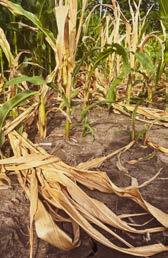
in commodity prices and a break in current drought conditions. Alabama is alarmingly behind its average yearly rainfall, with no notable rain in sight as of April 20.
“If I was being honest, as much as anything, I just hope we come out this
year,” Will said. “We don’t want to sit around and wait on a Trump check. We hope to be profitable.”
He continued, “In the end, we’re always hopeful. You’ve got to be as a farmer.”
Farmers began planting corn in early March as fertilizer price swings started in earnest.
This planting season, farmers remain hopeful for bumper crops and a break in drought conditions.
Field to Fabric: Choosing Cotton Clothing Matters
By Maggie Gaddy
Decades of cotton farming are woven into Garrett Dixon’s life.
“Often times, when people think about farming, they think about food,” said Dixon, a Lee County cotton farmer. “There are three things you need to survive — food, shelter and clothing. American cotton has been the main clothing fiber for years. It’s important that tradition continues.”
Dixon said demand for natural fibers has declined with the rise of synthetic materials on the market. Studies show 67% of global fabric production is synthetic. Polyester represents 57%.
To highlight the importance of cotton and reconnect consumers to the source of their clothing, the National
Cotton Council launched its Plant Not Plastic campaign last fall.
Plant Not Plastic promotes cotton as a natural, sustainable alternative to petroleum-based fabrics.
“This program was needed throughout the cotton industry,” said Dixon, a Lee County Farmers Federation board member. “We have seen the decline in demand in an already-volatile market. Sustainability is a driving force in agriculture right now, and cotton is the sustainable fiber. Farmers like me plant it yearly and cycle nutrients through the ground. It is good for the environment — and good for consumers. When you wear cotton clothing, you aren’t exposed to microplastics like you are with synthetic fibers.”
Alabama Extension Cotton Specialist Dr. Josh Lee said microplastics can enter bodies simply by wearing synthetic clothing.
“As we make health-conscious decisions about food, clothing often gets put on the back burner,” Lee said. “When American consumers pick clothing, they base it off fashion and trends. The new trend needs to be cotton. We have been wearing it
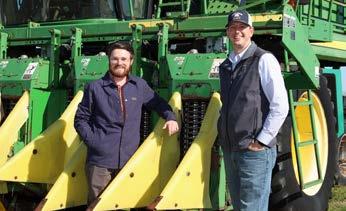
Alabama Extension’s Dr. Josh Lee and Lee County farmer Garrett Dixon are strong advocates for the U.S. cotton industry and encourage consumers to choose cotton or cotton-blend fabrics.
thousands of years, and it doesn’t have potential harmful health effects like polyester and other synthetics.”
Lee said good farm management practices also matter.
“Growers like Garrett are passionate about what they do,” Lee said. “My goal is to provide tools and solutions to help farmers be profitable and sustainable while they grow a quality product. Cotton is complex in nature. It’s hard to manage, but good management is key for fiber quality and yields.”
Dixon said another advantage of cotton clothing is how it ties back to the local economy.
“I source the inputs needed for my farm within 75 miles from my doorstep,” Dixon said. “Money required to grow a crop is spent locally. Cotton is taken to a gin 35 miles from here. That finished bale goes to a warehouse 50 miles up the interstate. All of that stays here in Alabama while creating
Farmers like Dixon recognize cost is a
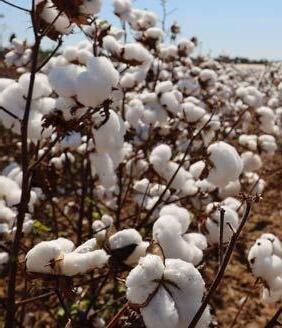
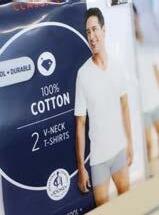
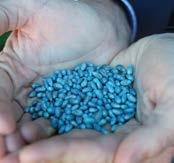
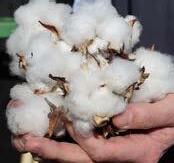
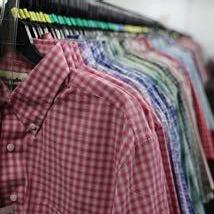
From seeds and bolls to textile mills and clothing racks, U.S. cotton is a safe, durable fiber option for Americans. It’s also sustainable for the environment and good for local economies.
that isn’t harmful and is durable,” Dixon said. “Cotton products meet that. Even if natural fibers cost more at the purchase point, the longevity makes them cheaper in the long run.”
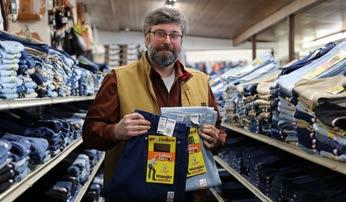
Local retail owner Neal Smith echoed Dixon, saying his goal is to offer the best products for his customers — often cotton-blend apparel.
Smith operates Sikes & Kohn’s Country Mall in Troy, a well-loved department store specializing in men’s work clothes, shoes and women’s fashion. He also owns K-Bar-K Boot Center in Prattville and Don Walker’s Western Wear in Troy and Auburn.
“We sell a lot of work clothing…that especially needs to be made of cotton,” Smith said. “It needs cotton to hold up. It
doesn’t tear, and it breathes better. The selling point is cotton clothing lasts.”
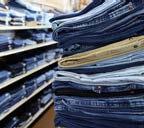
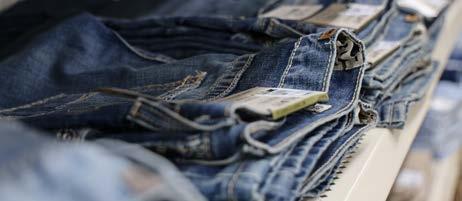
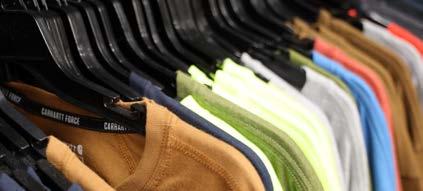
Sifting through racks of Carhartt T-shirts and stacks of Wrangler jeans at Sikes & Kohn, Smith found a wide variety of cotton items. That’s proof the product is there; consumers just need to know what labels to look for with help from the Plant Not Plastic campaign.
It gives Dixon hope the industry is moving in the right direction.
“Cotton has been my family’s livelihood for decades,” Dixon said. “Cotton is important to us. We want it to be important to consumers so they will choose plant not plastic, because what they wear matters.”
Learn more about Plant Not Plastic.
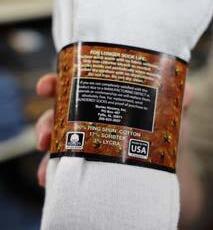
Neal Smith said he’s proud to sell cotton-blend apparel in his stores — Sikes & Kohn’s Country Mall, Don Walker’s Western Wear and K-Bar-K. Stacks of denim jeans, racks of cotton-spun T-shirts and made-inAlabama socks are proof U.S. cotton products are available for purchase.
Legislative Recap: Federation Fights for Farmers
By Tanner Hood
The Alabama Farmers Federation External Affairs team stepped into the 2026 legislative session expecting a fast pace focused on looking ahead to primary elections.
That attention quickly shifted to fighting for Alabama farmers.
“Our team encountered legislation we didn’t initially anticipate,” said Federation External Affairs Department Director Brian Hardin. “There were significant wins for farmers, including a utility tax exemption for specific operations, sound-science standards for state environmental rules and level funding for concentrated animal feeding operations (CAFOs). However, we also had to defend Alfa Health Plans and other coverage from undue mandates,
attacks on private property rights and other issues affecting farmers.”
The Federation supported legislation by Rep. Danny Crawford, R-Athens, and Sen. Jack Williams, R-Wilmer, that excluded natural gas and electricity used for greenhouse, pivot irrigation, poultry houses and catfish farms from the state utility gross receipts and utility service tax statutes.
Support from House Speaker Nathaniel Ledbetter, R-Rainsville; Senate President Pro Tem Garlan Gudger, R-Cullman; and House Ways & Means Committee Chairman Rex Reynolds, R-Huntsville, ensured CAFO operators would pay no out-of-pocket costs for the program.
Efforts then turned to defending affordability — such as standing against coverage mandates affecting insurance providers and Alfa Health Plans.
F“Several proposed bills mandating specific health coverage threatened affordability,” Hardin said. “Those bills risked shifting costs from providers to policyholders, increasing plan costs during tough economic times. While three mandate bills passed, including one setting a price for ambulance reimbursements, others were defeated before they could drive up plan costs.”
Hardin cited private property rights as a key concern. This included supporting proper treatment of all animals while pushing back against a bill outlawing dog-tethering. The Federation argued it amounted to government overreach, as adequate laws already exist.
Other legislative actions included passing record General Fund and Education Trust Fund budgets; Public Service Commission and judicial reform; data center incentives and protective measures; rural hospital investment; and career tech and education promotion.
Agriculture Feeds U.S. Economy
ood and agriculture impact nearly 20% of the U.S. economy, according to an annual farm-to-fork report that analyzes the entire agricultural supply chain.
Now in its 10th year, Feeding the Economy spells good news for an essential industry that’s still feeling the pinch of economic pressures, said Alabama Farmers Federation President Jimmy Parnell.
generate $10.42 trillion nationally in economic value.
20% Food and Agriculture
U.S. Economy
“Farming and farm products provide security for so many American families, not just in the food they eat but in the jobs they’re able to keep,” said Parnell, a Chilton County farmer whose family runs a timber and cattle operation. “We need to remember that and support the folks who keep this country going.”
The report, which was released in March, confirms food and agriculture
This marks an increase of nearly $894 billion year-over-year, reflecting growth across the agricultural value chain amid ongoing inflation pressures, a challenging farm economy and an uncertain global trade environment.
Those industries make up a large portion of Alabama’s proverbial economic pie, too. In Alabama, food and agriculture directly provide:
n 351,999 jobs
n $13.26 billion in wages
n $57.85 billion in economic impact
When accounting for food, agriculture and associated businesses, the impact doubles. Those industries contribute:
n 666,481 jobs
n $35.31 billion in wages
n $134.82 billion in economic impact
Additionally, Alabama’s farm and food sectors contribute more than $13.67 billion in business taxes.
Nationally, food and agriculture’s employment opportunities have grown by 6.5% in the last decade, though job growth slowed in 2025.
U.S. food and agriculture directly provide:
n 24.30 million jobs
n $1.08 trillion in wages
n $4.33 trillion in economic impact
Combined with associated industries, national numbers climb even higher to:
n 48.73 million jobs
n $3.01 trillion in wages
n $10.42 trillion in economic impact
The industries’ cumulative business taxes are responsible for $1.35 trillion in tax contributions.
Scan to learn more at FeedingTheEconomy.com.
Public Notice
By Alabama Pork Checkoff and National Pork Board
The election of pork producer delegate candidates for the 2027 National Pork Producers (Pork Act) Delegate Body will take place May 29, 2026, at 5:30 PM CDT, in conjunction with a Board of Directors meeting of the Alabama Pork Checkoff at Full Moon BBQ located at 5042 Bond Blvd, McCalla, AL, 35022. All Alabama pork producers are invited to attend.
Any producer, age 18 or older, who is a resident of the state and has paid all assessments due may be considered as a delegate candidate and/or participate in the election. All eligible producers are encouraged to bring with them a sales receipt proving that hogs were sold in their name and the checkoff deducted.
Years of Alabama Trails Highlight Rural Communities
By Tanner Hood
“Alabama the Beautiful.”
For decades, signs bearing those three well-known words welcomed travelers to Alabama.
Today, the oft-repeated phrase pays homage to the diverse landscapes and ecosystems showcased during the Years of Alabama Trails. This initiative between the Alabama Trails Foundation, the Alabama Department of Tourism, the Alabama Forestry Commission (AFC) and other stakeholders shines a spotlight on some of the state’s hidden jewels, said Joe Watts.
“There are so many great trails that are an important part of our state, so this covers a couple of years,” said Watts of the Alabama Trails Foundation. “We work with Tourism to highlight the best trails while showcasing lesser-known spots.”
Connecting in- and out-of-state visitors to Alabama’s rural communities is a project priority, Watts said.
“Alabama has so many natural resources, and while some residents are aware of that, others are not,” he said. “We’re trying to educate people about
what is in their backyard and inspire people to experience Alabama in a way they may not have realized was even out there. It’s also to let people from outside the state know what we have and increase their economic footprint, which is where Tourism really plays a big role.”
The initiative’s impact on rural communities extends beyond recreation, Watts said.
“This can be a very impactful piece of the rural economic puzzle,” he said. “There are communities that can build an economic base using the recreation industry. Having a strong recreation infrastructure brings people to invest in Alabama.”
That’s where organizations like AFC come in.
“This is a chance to showcase the natural beauty of Alabama and let people see what great opportunities there are in this state to go outside and enjoy the forests, rivers, mountains, valleys and prairies,” said Alabama State Forester Rick Oates. “We also partner with other groups such as the Trails Foundation to make improvements on properties owned and supported by AFC.”
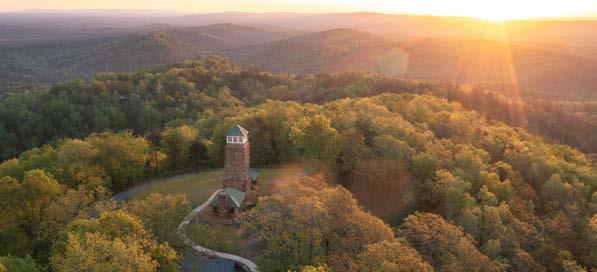
Such improvements are evident at places like Coosa County’s Flagg Mountain, the Southern terminus for the Pinhoti Trail.
As a gateway to the Appalachian Trail, the park draws visitors from across the nation to one of Alabama’s most rural counties.
Cheaha State Park
Features like wheelchair accessibility, natural stone benches and a low handrail make Flagg Mountain accessible to everyone.
Getting into nature benefits all — even farmers who already spend most of their time outdoors, Watts noted.
“There is something to be said about experiencing different parts of Alabama,” he said. “Putting one foot in front of the other on a trail is a different way to experience nature and a way to see new parts of the state.”
Learn more about the Years of Trails.
Coldwater Mountain
Flagg Mountain photo by Art Meripol. Inset photos by Joe Watts.
Alabama Extension Celebrates America With 250 Pound Challenge
By Mike Clardy
In celebration of America’s 250th anniversary, the Alabama Cooperative Extension System is issuing a bold statewide challenge.
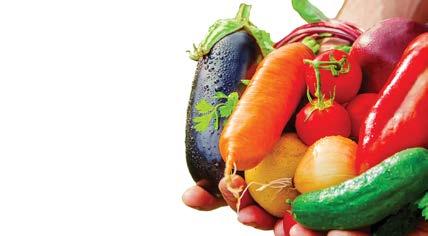
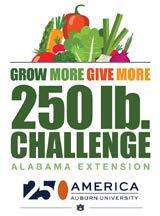
As part of the Grow More, Give More initiative, the new 250 Pound Challenge hopes to encourage gardeners in every county to contribute to growing and donating 250 pounds of fresh fruits and vegetables.
Bethany O’Rear, home horticulture agent for Alabama Extension at Auburn University, has led the Grow More, Give More project since 2020.
“The roots of Grow More, Give More date back to the pandemic,” O’Rear said. “It was a modern-day Victory Garden approach. Since the beginning, we’ve encouraged gardeners to plant an extra row with the purpose of donating the surplus. Now, the 250 Pound Challenge will take the Grow More, Give More initiative to a new level.”
250 Pound Challenge Participation
The 250 Pound Challenge runs from Memorial Day, May 25, through Labor Day, Sept. 7. O’Rear said participating is simple.
“The first step is planting a garden and adding an extra row or more container plants than usual,” O’Rear said. “At harvest, intentionally set extra
aside as a donation. All donations count — whether given to a local food bank, place of worship or a neighbor. Just remember to weigh and record the pounds of produce you donate.”
For amounts to count toward county totals, gardeners must report donations through an online survey, which is available at aces.edu/go/250Challenge. People can also access the survey at aces.edu/go/GiveMore, which includes a link to donation sites that accept fresh produce.
O’Rear said gardeners can grow on their own or as part of a group. They can grow any crops, but certain types may help gardeners reach their goal faster.
“Some of the hardiest and best-producing options in Alabama include beans, squash, cucumbers, zucchini, peppers, tomatoes, southern peas and okra,” O’Rear said. “Of course, a few donations of watermelons and cantaloupes will tip the scales toward 250 pounds quickly!”
Making a Difference While Celebrating America
In Alabama, food insecurity affects approximately 2 million residents, including 1 in 4 children. Grow More, Give More empowers home gardeners to be part of the solution.
“In a year when we celebrate 250 years of our nation’s history, we have an opportunity to show what service and community truly mean,” O’Rear said. “This is about neighbors helping neighbors.”
In 2025, Grow More, Give More participants donated 21,563 pounds of produce, benefiting thousands of Alabama families.
More Information
Visit aces.edu and search Grow More, Give More or 250 Pound Challenge to find more information.
For additional assistance, contact O’Rear by emailing bao0004@aces.edu or calling (205) 612-9524.
YOUR SOYBEANS ARE THE RIGHT FEEDSTUFF FOR
ANIM ALS
Alabama’s 2,500 family poultry farms are our state’s No. 1 agricultural industry. And they count on over 2.3 million tons of your soybean meal a year as a high-protein ingredient in their feed. That’s 98 million bushels of your soybeans every year. As your Alabama Soybean Checkoff, we’re working with the Alabama poultry industry to make sure this stays one good-looking figure. Learn more about the story of soy at unitedsoybean.org/hopper.
Establishing a New Lawn
By Brian Brown
Establishing a new lawn is an investment, so it pays to start with the right information.
Before planting, begin with a soil test. Local Alabama Extension office staff can provide instructions and a soil sampling kit. Soil testing gives a snapshot of soil, including critical information about soil composition, nutrient levels and pH. This can be used to identify and correct any soil problems before seeding or sodding.
One of the most important decisions is selecting the best grass species, based on location and lifestyle. North Alabama can grow some cool-season grasses better than south Alabama, while the opposite is true for warm-season grasses. Cool-season grass, such as fescue, tends to struggle in the Alabama summer heat. Conversely, a warm-season grass, such as St. Augustine, can suffer cold injury in cooler parts of north Alabama. Bermudagrass and Zoysiagrass are typically well-adapted for the entire state.
Each grass type comes with advantages and disadvantages. For
example, Bermudagrass has better wear tolerance, but it requires frequent mowing and fertilization due to its aggressive growth. Centipedegrass is low-maintenance and requires very little fertilizer or mowing but has poor wear tolerance and can be susceptible to winterkill in north Alabama. Zoysiagrass has moderate shade tolerance but establishes slowly.
Lawn grasses are established by seed, sod, sprigs or plugs. The method of establishment depends on species, budget and time. Planting seed is by far the most economical method, yet the lawn will be much slower to establish. Sodding provides instant curb appeal but is the costliest method. Sprigging and plugging can be used, but complete coverage will take time. Regardless of the species or method, proper site preparation is
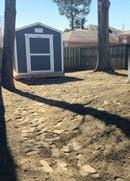
essential for a successful lawn. For a healthy lawn, remove existing weeds and improve drainage. Prepare the ground by removing rocks or tree roots. Also, break up the soil and create a smooth surface for good soil-toseed or soil-to-sod contact. Timing is also important. Warm-season grasses should be planted in late spring or early summer when soil temperatures are consistently warm enough to support growth. Cool-season grasses can be planted in the fall.
After planting, water the new grass lightly and often. Do so for the first couple weeks, until the seeds have germinated or the sod is well-rooted. Be sure to provide complete coverage and water deeply, about 1 inch per week, to ensure the new lawn will stay healthy and attractive throughout the growing season.
The Alabama Gardener is provided by Alabama Extension’s Home Horticulture Team. Learn more at
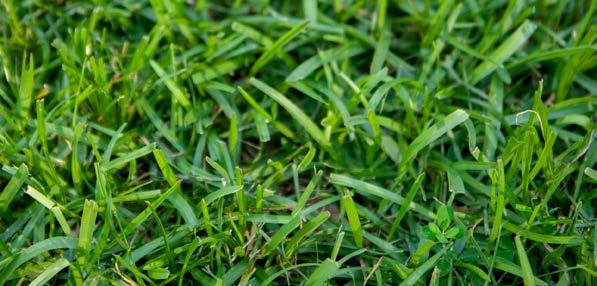
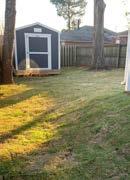
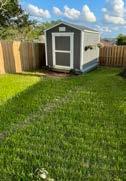
Lawn grasses can be established by seed, sod, sprigs or plugs. Sodding, as seen above, provides instant curb appeal but is costly. No matter the method, it’s important to prepare the ground and create a smooth surface for good soil-to-seed or sod-to-seed contact. Water new grass lightly and often.
This
KBy Maggie Gaddy
elsey Thompson Scott grew up forming biscuit dough in the shadow of her Mawmaw Carolyn.
“My love for cooking began with her,” said Kelsey, the Escambia County Young Farmers Committee chair. “She taught me to make biscuits when I was 7. A lot of people used canned, but she didn’t. She put flour on her hands and tossed dough back and forth until cathead biscuits formed. She was a from-scratch cook.”
Kelsey recalls the kitchen was chronically messy — a sign of hard work and homemade meals.
“She allowed me to have fun in the kitchen,” Kelsey said. “I want to
Celia’s Strawberry Cobbler
Strawberry Filling
3 cups fresh ripe strawberries, hulled and diced
1/2 cup sugar
Cobbler Crust
1 cup all-purpose flour
2 teaspoons baking powder
1/2 teaspoon sea salt
1/2 cup sugar
1 cup warm milk
1/2 teaspoon vanilla extract
1/2 cup unsalted butter, melted
do the same for my daughter, Celia. I don’t want her to depend on store-bought items. My goal is to teach her to feed her family the way my grandmother did. If someone wouldn’t have stopped with me and showed me things, I wouldn’t be able to do it now.”
At just 3, Celia has caught on quickly. Her tiny hands now stir together delicious strawberry cobbler made with fresh, Alabama-grown strawberries. Her “Cookin’ with Celia” social media videos are adored by locals, too.
“One day we were cooking, and Celia was in my way,” Kelsey said. “I moved and let her take over and started videoing her. She wanted to be involved, so I put her on the counter to help me.”
Kelsey and husband Jacob value family time with their children — Thomas,
Heat oven to 375 F. Grease an 11-inch-by-8.5-inch-by-2-inch dish. In a medium bowl, toss strawberries and sugar. Set aside and let sit until juicy and syrupy. In a large bowl, whisk together flour, baking powder, salt and sugar. Gradually add milk, vanilla and melted butter. Stir gently. A few lumps are normal. Don’t overmix. Pour batter into prepared dish. Spoon strawberries evenly over the top using a slotted spoon, leaving excess syrup behind. Do not stir. Bake 35 to 40 minutes, or until golden brown. Let rest and serve warm with vanilla ice cream.
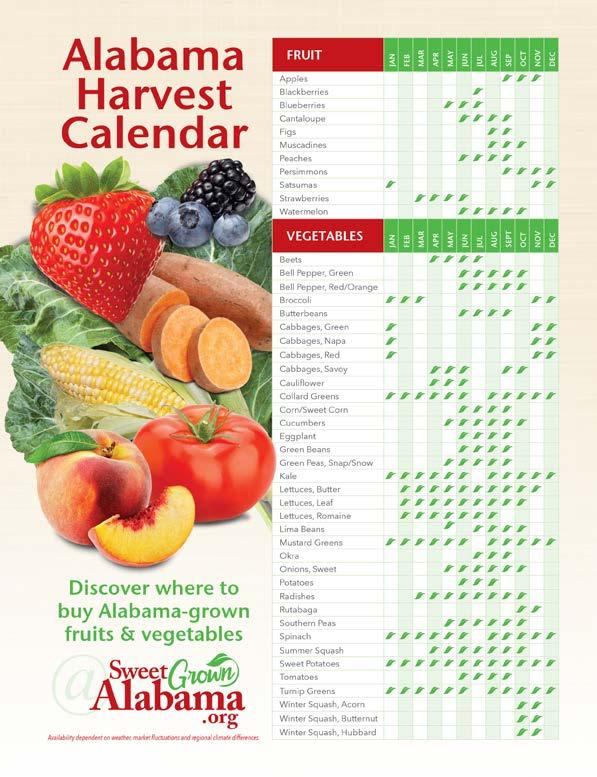
Recipe note: Find local strawberries at SweetGrownAlabama.org.
12, Gage, 11, and Celia. Jacob grows row crops, while Kelsey drives a school bus and handles marketing for a flower shop. The Scotts live near Kelsey’s family cattle operation and logging business.
With Mother’s Day approaching, Kelsey said she’s grateful for time spent learning beside her Mawmaw — and for the chance to pass on those traditions.
“I hope Celia will remember this one day,” Kelsey said. “I gave her life, but she gives me life. I don’t remember life before being a mom. She does drive me nuts, but she gives me a purpose. I have little eyes on me every day. I want to do right by her. I had wonderful grandmothers. I have a great mom. I want to continue that legacy with Celia and our boys. I want them to always feel loved.”
month’s recipes shared by Kelsey and Celia Scott
Southern Smothered Pork Chops & Rice
1 pack thin pork chops (about 4)
Seasonings of choice (I use garlic powder, salt, pepper and Conecuh seasoning.)
2 packages Knorr mushroom-flavored rice
1 small container heavy cream
Season pork chops generously with garlic powder, salt, pepper and Conecuh seasoning (or preferred seasonings). Heat a cast-iron skillet over medium and cook pork chops until browned. Remove from skillet and set aside. In a separate pot, prepare mushroom rice according to package directions. Once rice is cooked, cover and simmer briefly. Add cooked rice to the cast-iron skillet. Reduce heat to medium and pour in heavy cream. Stir until well combined. Let cream and rice warm together. Return pork chops to skillet and coat with the creamy mushroom rice. Cover 5 to 7 minutes. Remove lid and serve.
Kathy’s Kickin’ Corn Casserole
1 can corn, drained
1 can Mexicorn, drained
1 container chive and onion cream cheese, room temperature
1 container jalapeño cream cheese, room temperature
1/4 cup candied or fresh jalapeños, finely diced
1 roll Ritz crackers, crushed
1 stick butter, melted
Heat oven to 350 F. In a bowl, combine corn, Mexicorn, chive and onion cream cheese, jalapeño cream cheese and jalapeños. Mix well until evenly combined. Spread mixture into a baking dish. In a separate bowl, mix crushed Ritz crackers with melted butter. Sprinkle the cracker mixture evenly over the top of the casserole. Bake 30 minutes, or until the casserole is hot and the topping is golden and crispy.
Carolyn’s Cathead Biscuits
2 cups self-rising flour
1 1/2 cups buttermilk (plus more if necessary)
1 spoonful Crisco (plus more to grease the pan)
Melted butter
Heat oven to 425 F. In a mixing bowl, combine self-rising flour, buttermilk and spoonful of Crisco. Mix until ingredients form a soft dough. Grease the inside of a large cast-iron skillet with additional Crisco. Lightly flour hands. Scoop a spoonful of dough and gently toss back and forth between hands until it forms a rough biscuit shape. Place biscuit in the skillet. Repeat, shaping biscuits and placing them in the skillet until it is full. The biscuits should sit close together. Bake until golden brown. Remove from oven and brush butter over the tops while warm.
1/2 package mild sausage, browned (I use Tennessee Pride.)
Salt
Pepper
In a cast-iron skillet, add oil and flour. Whisk over medium heat until mixture turns deep brown, forming a roux. Slowly add water, stirring constantly, until mixture becomes a smooth brown gravy. Add tomatoes and stir well. Stir cooked sausage into the gravy mixture, stirring occasionally until everything is heated through. Add salt and pepper to taste. Serve over warm homemade cathead biscuits.
BISCUIT MAN
Hayden from Maryland sent me a letter asking what my favorite food is. Hayden says her personal favorite food is apple pie with melted cheese on top.
Hayden, you can enjoy that pie all by yourself. But then, who am I to judge? Someone wise once said: “Just because we can’t agree doesn’t mean that you’re not a complete wacko.”
Anyway, to answer your question, my all-time favorite foods have changed. When I was a baby, my mother said I would eat entire blocks of cheddar while in my high chair. I eventually moved onto:
Mashed potatoes.
The women in my family use an ancient family recipe:
— 1 potato.
— 80 sticks of butter.
Also, my mother did not whip her potatoes with electric mixers. She had an actual hand masher, covered in rust so that it looked like a tiny tetanus-covered farm implement. I would always lick the masher when she finished. This explains a lot of my developmental problems.
Also, I love collards. The only way to cook greens is with the ugliest, most deformed ham hock you can find.
REPORT DROUGHT CONDITIONS
Scan to submit comments and photos.
And, bacon. I do not believe that all bacon is created equal. The bacon I like is the hand-cut kind your granddaddy would spend his hard-earned money on.
Let the record show that I also love fried chicken.
I love fresh-caught redfish, speckled trout, red snapper, grouper cheeks, fresh shrimp and raw oysters. My granny made oyster dressing every holiday season. My father-in-law made a great oyster stew. We received oysters for presents each Christmas. (“Oh,
look what Uncle John got you, Sean! A dozen raw!”)
I love pound cake. Banana pudding. Chess pie. Lemon icebox pie. And, of course, Conecuh sausage.
I remember when you couldn’t find Conecuh anywhere but rural convenience stores or the IGA in Brewton.
When I used to go fishing with my buddies, it was a special treat to have this sausage. We would cook up a few packages and eat it all day long until our cardiologists disowned us. For entire periods of my life, I survived on two things. Conecuh sausage and: Biscuits.
Ah, biscuits. Long ago, a friend wrote a short biography for one of my magazine articles. In the bio, my friend referred to me as a “biscuit connoisseur." Pretty soon, people started calling me this. And whenever I would deliver a speech at, say, a Rotary Club bingo night at Craters of the Moon, Georgia, they would introduce me as “Sean Dietrich, biscuit connoisseur.”
I have eaten biscuits in 34 states. Mississippi has light, fluffy ones that remind you of heaven.
The Florida Panhandle has big fat ones that stick to your ribs.
Georgia and Alabama make biscuits that will make you believe in the power of lard.
West Virginians eat biscuits with two hands.
Tennesseans eat them with three. Canadians eat croissants.
I would list all the other foods I love, Hayden, but I’m out of room. And there are way too many foods to name. Remember: Friends don’t let friends put cheese on apple pie. ■