
LAKEHEALTHYLIVING.COM // 1 AQUAPONICS A GROWING TREND TRACI OLIVER: THE LATEST SKINNY HEALTHY INSPIRATION OFFICER LOSES 228 LBS, GAINS RESPECT MEDICAL MYSTERIES CAN YOU HANDLE THE TRUTH (SERUM)? A NEW WAY TO PRINT BODY PARTS Researchers are looking to use 3D bioprinters to do the unimaginable — print living, working human organs. that are reshaping health care as we know it. 9 MORE ADVANCES IN MEDICINE PLUS Winner FLORIDA MAGAZINE ASSOCIATION’S BEST OVERALL MAGAZINE Under 20k circ. 4 YEARS in a row!
Leesburg Regional Medical Center Nationally Recognized for Orthopedic Care
JOINT REPLACEMENT
FIVE-STAR RECIPIENT
2011-2013
OVERALL ORTHOPEDIC SERVICES
FIVE-STAR RECIPIENT 2013
Leesburg Regional Medical Center has been named by Healthgrades® as a 5-Star Recipient for Overall Orthopedic Services in 2013 and has been
TOTAL KNEE REPLACEMENT
FIVE-STAR RECIPIENT
2011-2013
recognized as a 5-Star Recipient for Joint Replacement and Total Knee Replacement in 2011, 2012 and 2013.

Healthgrades is the leading online resource for comprehensive information about physicians and hospitals.


Mount Dora Podiatry 3651 Lake Center Dr., Mount Dora, FL 32757 www.MountDoraPodiatry.com // 352.385.9156 Your Feet Our Passion Wound Care Specialists Foot, Ankle and Leg Injuries Pediatric Foot Disorders Custom Orthotics Sports Injuries Diabetic Shoes Fractures and Heel Pain Diabetic Care Numbness/Tingling Ingrown Toenails Infections of Skin and Nails Bunions and Neuromas Second Opinions Residency Trained in Foot and Ankle Surgery Dr. Janet L. Black DPM, FACFAS Diplomate of the American Board of Podiatric Surgery, Fellow of the American College of Foot & Ankle Surgeons aaaaaah...
The area’s finest practicing healthcare professionals combine state of-the-art technologies with state-of-the-heart compassion.

A SERVICE OF
Including INSTITUTE
EXCELLENCE Ocala
ocalaice.com
OF CARDIOVASCULAR
4730 SW 49th Rd. // 352.854.0681
INSTITUTE OF MEDICAL EXCELLENCE
Summerfield 10435 SE 170th Place // 352.233.4393
The Villages 1950 Laurel Manor Dr., Bldg 240 // 352.509.9295
Williston 412 W. Noble Ave. // 352.528.0790 ocalaice.com
LIMBSTITUTE
Summerfield 10435 SE 170th Place // 352.233.4393
Tavares 2754 Dora Ave. // 352.259.5960
The Villages 1050 Old Camp Road // 352.259.5960 limbstitute.com
• compassion
excellence
innovation
•

FALL PROMOTION Purchase two syringes of Juvéderm™ and receive 25 units of BOTOX® free!* Offer Ends October 31, 2013 or while supplies last. IN EYECARE * THE PATIENT AND ANY OTHER PERSON RESPONSIBLE FOR PAYMENT HAS THE RIGHT TO REFUSE TO PAY, CANCEL PAYMENT, OR BE REIMBURSED FOR PAYMENT FOR ANY OTHER SERVICE, EXAMINATION OR TREATMENT WHICH IS PERFORMED AS A RESULT OF AND WITHIN 72 HOURS OF RESPONDING TO THIS ADVERTISEMENT FOR THE FREE, DISCOUNTED FEE OR REDUCED FEE SERVICE, EXAMINATION, OR TREATMENT. A leader IN COSMETIC PROCEDURES: With daily stress, lack of sleep and improper nutrition, your skin may be needing some professional help to restore a youthful appearance. Cosmetic, Plastic and Reconstructive Surgeon, Stacia H. Goldey, MD, FACS, specializes in procedures which give immediate results without surgery, as well as cosmetic and reconstructive procedures. Have your beauty products let you down, literally? • Thermage® • Photo Rejuvenation • Laser Hair Removal • Juvéderm™ • BOTOX® • Latisse™ • Dysport® • Fractional Laser for Wrinkles Jeffrey D. Baumann, MD Gregory J. Panzo, MD • Ray D. Maizel, MD Stacia H. Goldey, MD, FACS • Keith C. Charles, MD Call 888.820.7878 or 352.735.2020 to schedule your appointment! Find out more information online at Mount Dora • Leesburg • The Villages/Stonecrest • Apopka Board-Certified • Fellowship-Trained Participating Medicare Provider • Two Surgical Locations MidFloridaEye.com NEW LOCATION: Mid Florida Eye Center The Villages/Santa Fe Crossing 8630 E. CR 466, Suite A SantaFeCrossing ProfessionalCenter CR466 441 27 MORSE BLVD. BUENA VISTA BLVD. R O L L I N G A CRES RD
CONTENT NT
October 2013
FEATURING
28 ADVANCES IN MEDICINE


Every year it seems like new medical treatments and procedures are being discovered that change the face of health care. While some may cause more controversy than others may, no one can dispute the fact that as technology progresses, the possibilities of the world becoming a diseasefree utopia may not be science fiction.

WRITER: SHEMIR WILES
46

LET ’ER DRIP

Technology meets beauty at Maria Tracy’s Lady Lake farm where her latest venture is aquaponics, a sustainable and symbiotic food production system. Lettuce, tomatoes, kale, and herbs are some of the crops that she grows organically with the help of a few hundred catfish and tilapia.
WRITER: MARY ANN DESANTIS
58


HALFWAY THERE


As Traci Oliver continues losing weight, she is able to achieve extraordinary feats that once would have been a source of embarrassment. Since we last visited with her, she has gone whitewater rafting down a wild Colorado River and worn a swimsuit at a crowded Central Florida resort. For Traci, healing mentally is every bit as challenging — yet rewarding — as healing physically.
AS TOLD TO: JAMES COMBS
ON THE COVER
DIRECTION: JAMIE EZRA MARK
PHOTOSHOP: JOSH CLARK
PHOTOGRAPHER: FRED LOPEZ
MODEL: CALEB W. JENSEN, Twitter @calebwjensen
HAIR: NATALIE HUNTER, REGIS SALONS
LAKEHEALTHYLIVING.COM // 7
HEALTHYBODY
SHAPE
72 CORE LORE
Transform your tummy from flabby to fit.
WRITER: TRACY DRAPER
EAT FIT/NOT FAT
ATTACHED 82 SIGNS OF AN UNHEALTHY, CODEPENDENT RELATIONSHIP Recognize the red flags of overdependence.
HEALTHYSPIRIT
INNERVENTION
88 LIFE’S MOST IMPORTANT ROLE
Being a mom isn’t always easy.
WRITER: JENNIFER DEMPSEY
IN EVERY ISSUE
HEALTHYFINANCE
RECLAIM
92 PAY DOWN, SCORE UP
It’s never too late to improve your credit score.
WRITERS: THOMAS FROSS AND ROBERT FROSS
76 HEALTHY FOOTBALL FARE
Fill up on this caloriefriendly game day grub.
WRITER: SHEMIR WILES
CARE
78 DOCTOR’S ORDERS
Medical compliance requires responsibility.
76 Medical compliance responsibility
84 Beeating rststartswith you
MENCOURAGEMENT 90 THE REAL CAPED CRUSADER
90 CAP p attent stuff
Super-hero parents have to pay attention to the small stuff.
WRITER: RICHARD BURGUET
PREPARE
94 UNDER 30? WHO WANTS TO BE A MULTIMILLIONAIRE?
To retire comfortably, the time to start saving is now.

WRITER: TOM RUGGIE, CHFC, CFP
RICHARD T.
WRITER: RICHARD T. BOSSHARDT, M.D., FACS
8 // HL // OCTOBER 2013 CONT PATIENT I thought aspirin was good for me? PATIENT What is the best food to eat with it? PATIENT How long do I wait before I can drink? PATIENT How long do I wait? PATIENT My mom can t take one? MD MD MD MD MD
HEALTHYMIND
PREVAIL 84 FINDING SUPPORT Beating addiction first starts with you.
10 PUBLISHER’S CORNER
12 HEALTH MATTERS
18 HEALTHY INSPIRATION
20 MEDICAL MYSTERIES 96 CALENDAR 100 COMMUNITY 106 HEALTHY VIEWS
78
H //OCTOBER 200113 3
M.D., 84 94


Every Cup&Kick Countsf or theCause. Join Dr. Sebby and show your support for Breast Cancer Awareness Month and wear pink at these great events! Visit www.CenterForAdvSurgery.com for more information. Every Cup Counts High Five for Breast Cancer Awareness Thursday, October 17th 4:00 to 7:00 pm High Five Frozen Yogurt, Mount Dora Have a cup or a cone and 10% goes back to the cause. Wear pink and Dr. Sebby will donate $5 per person for awareness and research!
Kick Counts Pink Zumbathon Saturday, October 12th 9:00 to 11:00 am Golden Triangle YMCA, Tavares Pick up your free pink water bottle. This event is open to the community and begins at 9:00 am. FHMG-13-14500
Every
HAPPY BIRTHDAY HEALTHY LIVING!
As I mentioned in my letter last month, October marks the fifth anniversary for Healthy Living. I would like to celebrate this milestone by inviting you to join me as I reminisce on how Healthy Living came to exist.
In 2008, things were not going so well for many people. The market was on the verge of a crash and people were losing their jobs and even losing their homes. Relationships were strained because of the financial burdens and the divorce rate skyrocketed; depression and suicide rates were at an all-time high.
Due to the economic downturn, the company I worked for was also facing financial hardships and I realized that I might have to change careers. I thought about what to do with my future and I knew that I wanted to stay in publishing. Magazine publishing is in my blood and community is in my soul. Therefore, my husband and I brainstormed and thought about what type of magazine our community needed. We wanted a publication that didn’t just show the glamorous lives of Lake and Sumter. We wanted a magazine that was for everyone and filled with real stories about real lives. We also wanted to inspire people to live their best life. Thus, we developed Healthy Living
The timing could have not been any better. Immediately after publishing our first issue, we received numerous emails and phone calls from readers sharing their stories and telling us that Healthy Living’s message of inspiration was exactly what they needed in their lives. Since then, Healthy Living has inspired thousands of residents within Lake and Sumter counties and far beyond. Professionally, the magazine has been recognized for publishing excellence with multiple awards, including being named Florida’s Best Overall Magazine four years in a row by the Florida Magazine Association.
I am very grateful to the readers who stay engaged each month and the advertisers who have made all of this possible by supporting the magazine and choosing Healthy Living as a venue to market their businesses.
It is a dream come true to be the publisher of this magazine. Thank you for the past five years, and I look forward to serving this community for many more to come.
KENDRA AKERS publisher/editor-in-chief kendra@akersmediagroup.com
DOUG AKERS vice president doug@akersmediagroup.com
JAMIE EZRA MARK chief creative officer jamie@akersmediagroup.com
EDITORIAL // DESIGN
TINA MORRISON editorial/community relations director tina@akersmediagroup.com
MARY ANN D ESANTIS editor-at-large maryann@akersmediagroup.com
SHEMIR WILES copy editor/writer shemir@akersmediagroup.com
JAMES COMBS staff writer james@akersmediagroup.com
HEATHER TOOTLE office manager heather@akersmediagroup.com

contributing writers RICHARD T. BOSSHARDT, MD RICHARD BURGUET
TRACY DRAPER
ROBERT FROSS
THOMAS FROSS
FRED HILTON JENNIFER DEMPSEY
THOMAS H. RUGGIE, CHFC, CFP
STEVEN J. CODRARO associate creative director steve@akersmediagroup.com
JOSH CLARK senior designer/advertising josh@akersmediagroup.com
ANTHONY CASTO senior designer/editorial anthony@akersmediagroup.com
FRED LOPEZ chief photographer fred@akersmediagroup.com
AUBREY AKERS receptionist
contributing photographer MORGAN ELLIS RON VANDEVANDER
SALES // MARKETING
TIM MCRAE vice president of sales and marketing tim@akersmediagroup.com
MIKE STEGALL senior marketing representative mike@akersmediagroup.com
LORI STRONG marketing representative lori@akersmediagroup.com
HEIDI RESSLER marketing representative heidi@akersmediagroup.com
JIM LAW marketing representative jim.law@akersmediagroup.com
MICHAEL GAULIN production director michael@akersmediagroup.com
DISTRIBUTION
SCOTT HEGG distribution manager scott.hegg@akersmediagroup.com
Kendra Akers publisher
10 // HL // OCTOBER 2013 All contents are copyright © 2013 by Akers Media Group, Inc. DBA Lake County’s Healthy Living Magazine. All reproduction or use of content without written persmission is strictly prohibited under penalty of law. The contents of the Lake County’s Healthy Living Magazine are for informational purposes only. The information is not intended to be an alternative to professional medical advice, diagnosis or treatment. Always seek the advice of your physician or other qualified health provider before starting any new diet or exercise program. The ideas and opinions contained in this publication do not necessarily reflect the thoughts or opinions of Akers Media Group. Phone: 352.787.4112 // Fax: 352.323.8161 P.O. Box 490088 Leesburg, FL 34749 www.akersmediagroup.com
questions for our publisher? Please email
Our goal is to provide you with the best quality publication, so your feedback is vital.
Publisher’s corner Comments or
kendra@akersmediagroup.com.
Let us help you get back in the game

Villages
Rehab & Nursing Center
Rehab
Let us help you get back in the game & Nursing Center
The brand new and state of the art Villages Rehab and Nursing Center is now open and accepting seniors in need of a helping hand recovering from a recent hospital stay to quickly and thoroughly return to their previous active lifestyle. We are proud to bring to the area pioneering concepts to make rehab a personalized and positive experience for the patient and their family.
For more information or to schedule a visit please call 352-430-0017
SCORE A TOUCHDOWN WITH HEALTHIER FOOD

Football season is in full swing. Watching a game is exciting, highlighted by beautiful cheerleaders, marching bands, highfives, and bone-crushing tackles. And then there’s the pregame party where we socialize with family and friends while feasting on a delicious, but usually high-caloric meal. Rather than packing on unnecessary pounds before kickoff, consider forming a solid game plan well in advance to enjoy the usual football food in a healthier way.
HERE ARE A FEW IDEAS:
1. If you are a fan of nachos and cheese, swap the fried tortilla chips for baked lentil chips. This will reduce total

fat, trans fat, and calories. Instead of using processed cheese, use a tomato-based salsa.


2. Sure, takeout pizza requires little work on your part, but a homemade pizza is much healthier. Use whole wheat tortillas or pita bread to save calories. Use vegetable toppings and part-skim mozzarella cheese to reduce fat.


3. What’s football without Buffalo wings? Remember to bake or broil them instead of frying. This way you will inevitably use less butter and add less fat. Spice up the taste with cayenne pepper or crushed red pepper flakes.
Source: http://www.mycynergyhealth.com/healthful-foods/healthy-tailgating-snacks/


12 // HL // OCTOBER 2013 Matters Personal health / Safety / Hygiene /
THE NATURAL NAIL SPA
For a relaxing and enjoyable spa experience, try the Natural Nail Spa, a podiatrist-owned and certified modern nail lounge that maintains a pampering, relaxing atmosphere and the utmost sterilization and safety techniques. Even the nail polish bottle goes home with the client — just another step to heighten the “safe pedicure experience.”
Center for Ankle & Foot Care
We Focus on Foot: Health, Beauty and Comfort
ORTHAHEEL SHOES
Having proper support, comfort and pain relief for your feet doesn’t mean having to wear shoes that lack style. The Center for Ankle & Foot Care proudly offers a wide variety of fashionable Orthaheel shoes, which are designed to help restore the foot’s natural alignment and offer relief to individuals who suffer from plantar fasciitis or heel pain.
PINPOINTE LASER TREATMENT
The Center for Ankle & Foot Care uses the state-of-the-art PinPointe Laser to cure embarrassing and unsightly toenail fungus. This FDA-approved treatment is a safe and effective way to kill fungus and improve the appearance of your nails. Our practice also sells the SteriShoe. This patented ultraviolet shoe sanitizer kills the microbes that cause athlete’s foot, toenail fungus, and offensive shoe odor.
Center for Ankle & Foot Care

TAVARES 2515 Dora Ave
CLERMONT 3150 Citrus Tower Blvd Suite B
SUMMERFIELD 16920 Hwy 441 Suite 104 (Laser Foot Center)
352.242.2502
www.centeranklefootcare.com www.nailsnaturalspa.com
FOOT AND ANKLE CARE
Board-certified foot surgeons Dr. Michele McGowan and Dr. Timothy Henne offer a number of foot and ankle services for comprehensive foot care and ankle disorders. They are trained to handle problems as small as ingrown toenails and warts to as large and complex as bunions, hammertoes and heel pain.
W
HALLOWEEN SAFETY TRICKS
Halloween should be a hauntingly happy and “spooktacular” experience for everyone. Unfortunately, it can also be a tragic experience for those who fail to take simple safety precautions.
The Centers for Disease Control and Prevention offer these tips for adults and young trick-or-treaters for a safe holiday:
WATCH CHILDREN
HHold a flashlight to see what is going on around you.
AAlways test makeup on a small area of your skin first to prevent skin irritation.
THE SCARY TRUTH
LLook both ways before crossing the street.
Lower your risk for an eye injury by avoiding decorative contact lenses.
LOnly walk on sidewalks or on the far edge of the road facing traffic.
OWear wellfitting masks and costumes to avoid blocked vision and accidental falls.

WEat only factorywrapped treats and avoid homemade treats from strangers.
EEnter homes only if you are with a trusted adult. Only visit houses that are well-lit.
NENever wear a costume unless it is flameresistant.
Children are more likely to be hit by a car on Halloween than any other day of the year, according to Safe Kids USA, an organization committed to preventing accidental childhood injuries.

DON’T BLOW OFF SAFETY MEASURES
Though it has been quiet in the Gulf and Atlantic, hurricanes can still occur in October and November. Central Florida is certainly not immune to hurricanes, as evidenced in 2004 when several came roaring through the area. Here are some precautions you should take to ensure your safety in case we have late season hurricanes this year:
• Compile necessary items for an emergency kit and make a family communications plan.

• Familiarize yourself with hurricane evacuation routes. Determine in advance where you would go and how you would get there if evacuation becomes necessary.
• Cover all windows in your home. The best protection for windows is permanent home shutters. You could also board up windows with marine plywood. Unfortunately, tape is ineffective in keeping windows from breaking.
• To reduce roof damage, install straps or additional clips to securely fasten your roof to the frame structure.

• Bring all outdoor furniture, decorations, garbage cans, and anything else not tied down inside your home.
• Make sure you have flashlights and batteries.
• Keep a stash of bottled water or clean drinking water.
Source: www.whitehouse.gov/blog/2012/08/28/how-prepare-hurricane-during-and-after
HURRICANE FACTS:
The United States Weather Bureau calls a storm a hurricane when the wind blows faster than 74 miles per hour.
Hurricane Andrew blew across South Florida in 1992 at speeds of 160 miles per hour. It caused $25 billion in damages.
Approximately 90 percent of deaths associated with hurricanes result from drowning in floods.
The worst hurricane in terms of lives lost occurred in 1970 in Bangladesh. The hurricane created a massive flood that killed more than 1 million people. Water temperatures must be 75 to 80 degrees for hurricanes to last. That is why most hurricanes in North America occur over the Atlantic Ocean and Gulf of Mexico and not on the Pacific coast.
Source: www.siue.edu/MLTE/Thematic%20Units/The%20 Weather%20Around%20Us/hurricane_facts.htm
14 // HL // OCTOBER 2013
Matters
Personal health / Safety / Hygiene /
We help you yourbecome best self.
“I was diagnosed with breast cancer in 1995 at age 45. My treatment involved reconstructive breast surgery with implants. Because I had issues with existing implants, I needed an implant exchange. In August 2013, I went to Bosshardt & Marzek Plastic Surgery Associates for the procedure. I experienced compassion, concern, and understanding from the physicians and entire office staff. The result of my surgery exceeded my expectations. When you are dealing with breast cancer, it is wonderful to have a supportive medical team that is so supportive.”
 — Jackie Butts, Leesburg
Richard T. Bosshardt, M.D., FACS and Peter A. Marzek, M.D., FACS
Suite
| Tavares,
— Jackie Butts, Leesburg
Richard T. Bosshardt, M.D., FACS and Peter A. Marzek, M.D., FACS
Suite
| Tavares,
PLASTIC SURGERY ASSOCIATES Imagine the possibilities...
1879 Nightingale Lane,
A-2
FL 32778 Call 352.742.0079 for a cosmetic consultation. www.bosshardtandmarzek.com
TREATMENT
Child care
Believe it or not, the demand for pediatric care in The Villages is growing.
The Children’s Medical Group is now serving Florida’s Friendliest Hometown. This is important as more than 2,500 students are enrolled in The Villages Charter School for the 2013-2014 academic year. The practice’s Laurel Manor location is convenient for parents as they drop off and pick up their children.
Dr. Juan Del Rio, one of the practice’s newest doctors, brings a wealth of experience to The Villages area. He served as an
assistant professor and pediatric-attending physician at the University of Central del Caribe School of Medicine in Puerto Rico. In addition, his experience as a medical director and emergency physician for pediatrics, coupled with his service in the public sector as a senior physician, has given him a broad knowledge about pediatric care.
“I love my job,” says Dr. Del Rio. “As a pediatrician, I get to see patients grow up, counsel them through life, and teach them how to live healthy.
tending ral del to dical for in the iatric care. o. “As a ow up, ch them
Dental health brush up
October is National Dental Hygiene Month. Does that make you smile or frown? If you answered “frown,” then you might want to follow these dental health tips. After all, a beautiful smile and pearly white teeth go a long way in making an excellent first impression.
• Brush at least twice a day, preferably after meals.
• Use fluoridated toothpaste, which reduces your teeth’s risk of decay.
• Brush between two and three minutes.
• Floss your teeth daily by utilizing a slow and gentle sawing motion.
• Limit acidic drinks such as soft drinks and fruit drinks because they can cause cavities and tooth decay.
• Limit sugary foods because bacteria in dental plaque changes sugars into acids.
• When playing sports, consider wearing a mouth guard or full-face helmet to protect your teeth.
• Only use your teeth for chewing food. Don’t use them to crack nuts, remove bottle tops, or rip open packaging.
• Go to the dentist for regular checkups and when any problems arise.
FAST FACT:
More than 19 percent of children ages 2–19 have untreated cavities.

Source: Centers for Disease Control and Prevention
A CASE FOR SUPERIOR HEALTH CARE
The fourth annual Memory and Movement Case Manager/Social Worker Symposium will be held October 25–26 at Mission Inn Resort and Club. During the two-day event, health care employees can earn up to 12 continuing education units (CEUs). The event is for care coordinators, certified disability management specialists, discharge planners, social workers, nurses, and educators.
On Friday, attendees can enjoy a wonderful reggae concert from 7:30 to 9:30p.m. featuring local orthopedic surgeon Dr. John Williams. Food and beverages will be available for purchase.
All proceeds will benefit the Dwight M. Cearley Endowment Fund for Families Challenged by Memory and Movement Disorders.
For more information, call Lorraine Barcelowsky at 352.751.8385.
16 // HL // OCTOBER 2013
Matters
Source: www.betterhealth.vic.gov.au/bhcv2/bhcarticles.nsf/pages/10_tips_to_look_after_your_teeth
Personal health / Safety / Hygiene / EVENT
We Love to See You
“I have been going to Dr. Barr’s office for years and truly appreciate his approach to dental care. I have had many problems with my teeth, and even when I had to be referred to a specialist, Dr. Barr took the time to follow through with them every step of the way. He always kept in touch to make sure I was receiving the best care possible. I also love his caring staff. I always feel a sense of relaxation when I step into his office.”

980 Mt. Homer Rd. • Eustis, FL 32726 www.adambarrdds.com
— Toni Cornell
GETTING FIT FOR DUTY
Jason Kilcrease used to tip the scale at over 450 pounds, but with hard work and dedication, he has been able to shed the weight to achieve his dream of becoming a police officer.
For Jason Kilcrease, graduating from the College of Central Florida Criminal Justice Institute in Ocala in August was one of the greatest day of his life. As a law enforcement recruit, he endured countless two-mile runs, was slammed to the ground during defensive tactics classes, ran an obstacle course after being pepper sprayed in the face, and completed 100 pushups on a daily basis.
These feats would have been physically impossible for Jason just several years ago when he weighed 456 pounds and was grossly out of shape. Tired and disgusted with the way he looked and felt, Jason incorporated healthy eating and exercise into his lifestyle in 2011. He has unfailingly stayed the course and now weighs 228 pounds.
Because so many people dedicated their time and effort to support him in his lifestyle change, the 37-year-old Summerfield resident feels an obligation to pay it forward.
“I might not be a fitness trainer or nutritionist, but as a police officer I can chase down a bad guy or stop and change a tire for a single mother stranded on the side of the road,” he says. “I have always believed in helping people and being in law enforcement will allow me to do just that.”
He is now working toward his associate degree in criminal justice, a huge feat in itself considering he had to drop out of high school during his senior year to support and raise his child.
Several years ago, he and his younger brother Paul, who was also obese, flew to Los Angeles in hopes of appearing on the NBC show “Biggest Loser.”

“I told producers during the interview that they could keep the money if I could have the opportunity to lose weight,” he says. “I said I would donate the money to a charity of their choice.”
Those heartfelt words fell on deaf ears. Fortunately, Jason mustered the willpower to change his eating and exercise habits without accountability from a national audience. “I no longer feel knee, hip, or ankle pain, and my confidence is through the roof.”
JASON’S FAVORITE FOODS:
• Grilled chicken, fish, steak, asparagus, broccoli, salad
JASON’S FAVORITE EXERCISES:
• Jogging, walking, pushups, situps, planks, and calisthenics. He works out five days a week.
Healthy inspiration
18 // HL // OCTOBER 2013

CALL TOLL FREE 1-855-GULFCOAST (1.855.485.3262) GULFCOASTSPINE.com
DR. FRANK BONO
BOARD-CERTIFIED SPINE SURGEONS SPECIALIZING IN THE TREATMENT OF BACK AND LEG PAIN DUE TO: • Failed Laser Spine Surgery • Spinal Stenosis • Herniated Disc • Degenerative Disc Disease • Scoliosis • Spinal Fractures Due to Trauma or Osteoporosis 2012 LEADERS IN SPINE SURGERY SHOWCASE THE VILLAGES 785 Hwy. 466 INVERNESS 2300 E. Norvell Bryant Hwy. SPRING HILL 7101 Mariner Blvd.
K
DR. JAMES RONZO
RON
‘I CANNOT TELL A LIE’: IS TRUTH SERUM REAL?

We have all heard the story about 6-year-old George Washington chopping down his father’s cherry tree and then confessing by saying, “I cannot tell a lie.” And, of course, President Abraham Lincoln was known as “Honest Abe.”
Therefore, we can conclude from this that American presidents always tell the truth, right? And if you believe that, there is some nice land in southern Okeechobee County I can sell to you for cheap.
What if those lying presidents (you know their names) had taken a truth serum? Would they have been honest with us? Well, maybe… but probably not. So-called truth serums have been tried for nearly a century, but there has never been any firm proof they work.
Truth serums are barbiturates, which act on the central nervous system to calm anxiety, induce drowsiness, eliminate pain, or even knock someone out. These drugs include scopolamine, sodium amytal, and the best-known truth serum, the brand-name Sodium Pentothal.
“The way most of the popular truth serum drugs typically work is by placing the patient into a ‘twilight sleep,’ a state where the patient is conscious and unable to feel pain. While truth serums do work in some cases, in just as many other instances the same drugs don’t work,” Emily Upton wrote for TodayIFoundOut.com.
Alan Bellows, writing for the website DamnInteresting. com, was more direct about whether truth serums work: “The short answer is no,” he wrote. “The long answer is ‘Noooooooooooo!’ while running in slow motion.”
y pping down his hen e.” And, of course, as that American n now had been honest with us? led truth serums have e has never any act on the central drowsiness, eliminate e include est-known truth hal. erum typically wilight ble to feel While as other uth serums work: he long answer is w motion.” sions made
While researchers found some confessions made by people under the influence of truth serums to be true, they “admit despairingly that they know of just as many confessions that were demonstrably false,” wrote Cecil Adams for StraightDope.com. In many ways, truth serums act on an individual like alcohol. In Ancient Rome, Pliny the Elder told us that in vino veritas, or “in wine, truth.” Alcohol lowers
your inhibitions and you are likely to say things you would normally keep secret. “Unfortunately for cops and CIA interrogators,” Adams says, “what you spill isn’t necessarily the truth.”
secret. for and CIA
In many cases, truth serums simply cause people to provide answers that they think their interrogators want to hear. Drugs can also reduce someone to unintelligible babbling. In addition, just because someone thinks something is true does not mean it is.
In cases, truth serums cause to want to hear. can also reduce someone to In is true does not mean is
Some of us, like George Washington and Abraham Lincoln, simply always tell the truth. Let me tell you more about that land in southern Okeechobee County…
Some of us, like George Washington and Abraham Lincoln, tell the truth. Let me tell more about that land in southern Okeechobee County
20 // HL // OCTOBER 2013
Sources: “Does Truth Serum Work?” by Chris Suellentrop. Slate. www.slate.com/articles/news_and_politics/explainer/2001/10/does_ truth_serum_work.html; “Do Truth Serums Work?” by Cecil Adams. www.straightdope.com/columns/read/2911/dotruth-serums-work; “The Truth About Truth Serum,” by Alan Bellows. www.damninteresting.com/the-truth-about-truth-serum; “The Tr uth Behind Truth Serum Drugs,” by Emily Upton. www.todayifoundout.com/index.php/2013/06/is-there-really-truth-serumdrugs; “What truth does ‘truth serum’ sodium pentothal actually reveal?” by Esther Inglis-Arkell. http://io9.com/5902559/what-t ruths-does-truth-serum-actually-reveal (Accessed August 27, 2013)
Medical mysteries
WRITER: FRED HILTON
FRED HILTON spent 36 years as the chief public relations officer/spokesman for James Madison University in Virginia and 10 years prior as a reporter and editor for The Roanoke Times in Roanoke, Virginia. He is now happily retired in The Villages with his interior designer wife, Leta, their Cadillac Escalade golf cart, and their dog, Paris. (Yes, that makes her Paris Hilton).
TAKING CONTROL OF YOUR BREAST HEALTH


Breast cancer is the second-leading cause of death among women in the United States. However, if the disease is confined to the breast and diagnosed in its early stages, the five-year survival rate is 100 percent, according to the American Cancer Society. Regular screening is vitally important. Women in Lake County trust their breast care to South Lake Hospital’s Centre for Women’s Health. Having achieved accreditation as a Breast Imaging Center of Excellence by the American College of Radiology (ACR), the center provides the same level of care and expertise as large medical centers with a personal touch of a community hospital.
Patients receive a full spectrum of breast cancer screening and diagnostic services when necessary. These include digital screening and diagnostic mammography, as well as stereotactic-guided biopsies, MRI-guided biopsies, and ultrasound-guided biopsies.
“Digital mammography provides clearer images and uses less radiation than film,” says Dr. Darwin Clark, a board-certified radiologist since 1991. “It allows for better manipulation of the images and reveals more pathology.”
Dr. Clark is part of Medical Center Radiology Group in Orlando, which provides radiology services for all of South Lake Hospital. There is always a board-certified radiologist on site during business hours.


“Not all imaging centers are staffed by radiologists, and therefore, the images are funneled to a location off-site,” Dr. Clark explains. “If a patient at Centre for Women’s Health needs additional imaging, we can help streamline the process because there is a radiologist on-site. Another advantage is we can tailor additional testing specifically to a patient’s needs. The combination of quality imaging and highly skilled radiologists helps us obtain the most accurate information to help detect breast cancer so treatment can begin immediately.”
Not all breast imaging centers achieve accreditation as a Breast Imaging Center of Excellence. The Centre for Women’s Health met rigorous requirements established by the ACR and earned voluntary accreditation in breast ultrasound and general mammography.


Being proactive could potentially save your life. The Centre for Women’s Health provides patients with a full spectrum of breast cancer imaging by combining state-ofthe-art technology, experienced radiologists, and personalized care.

Please call 352.241.7135 or visit southlakehospital.com.


With October being Breast Cancer Awareness Month, it is an ideal time to remind women about the importance of breast health.
SPECIAL PROMOTIONAL FEATURE

22 // HL // OCTOBER 2013 DR. JOSÉ DIAZ Board-Certified in Internal and Pulmonary Medicine. Privileges at LRMC, The Villages Regional Hospital, Florida Hospital Waterman and Promise Hospital. DR. MARJERY LOPEZ Board-Certified in Internal and Pulmonary Medicine. Privileges at LRMC, The Villages Regional Hospital, Florida Hospital Waterman and Promise Hospital. LEESBURG: 1038 W North Blvd, Ste 102 VILLAGES: 1400 US Hwy 441, Bldg 900 Ste 906 352.315.1627 • www.pg-cf.com • INTENSIVE AND ICU MANAGEMENT • COPD • ASTHMA • DISEASES OF THE LUNGS • SLEEP DISORDERS • NOW ACCEPTING NEW PATIENTS • MOST INSURANCES ACCEPTED Excellence with a personal touch. Exclusively offering pulmonary rehab with an experienced respiratory therapist. Specializing in pulmonary and critical care. strategicthought::creativevision::measurableresults 352.787.4112 contact us for more information strategic thought :: creative vision :: measurable results strategicthought::crstrategicthought::creativevis :: measurable re strategic thought :: creative vision : resultstrategicthought::creativevision::measurabler ble results strategic thought :: creative vision :: measura

// INSTITUTE OF MEDICAL EXCELLENCE // Diabetic care Managing the numbers // LIMBSTITUTE // Case study: Healing from within A SERVICE OF ice OCTOBER 2013 ISSUE www.ocalaice.com // INSTITUTE OF CARDIOVASCULAR EXCELLENCE // A CLOSE LOOK AT antiplatelet drugs
Face to face
I am one of those individuals who believe the power of the Internet is a blessing and a curse, particularly as it relates to the ones that give diagnoses. And while these sites can be educational and informative, the truth is, nothing can substitute for the unique face-to-face relationship between you and your doctor.
Many websites allow individuals to input symptoms they are experiencing and after a few clicks, receive an output of a diagnosis that was generated by key words, right from the comfort of their home computers. Most of these sites include disclaimers—as they should—but what concerns me about these sites is there are so many variables that need to be considered before a proper and accurate diagnosis.
This is because we each bring valuable and critical information to the table. First, a patient who is open about their feelings, what stresses they are under, their family history and what aches and pains they experience gives me a picture of their unique self. And, in turn, as the physician, I have the responsibility to foster a close relationship with the patient and to channel my inner-scientist. Take for example the results of the three studies related to acute coronary syndromes (ACS) mentioned in this issue of Impulse. We consider the latest research in medical and scientific journals, combine that with what our patients tell us about their health and map out a plan that can help us properly diagnose, prescribe, monitor and treat our patients.
All these variables are best understood and interpreted by a professional, proving the necessity of the very personal patient-doctor relationship—a relationship that I continuously learn from and personally enjoy.
Yours,
Asad U. Qamar, MD

 FACC, FCCP, FSGC, FACP, FSCAI Cardiologist
A close look at antiplatelet drugs
Finding the best medication to fit a patients’ needs means that physicians need to know not only what is going on at the ‘bedside’, but also what scientists are learning in their labs.
Take treatments for acute coronary syndromes (ACS), for example. First, ACS is a broad term for any condition that prevents the blood from flowing properly to the heart. Heart attack are examples of ACS, which occur as a result of blockage in the coronary arteries. The blockage is formed by platelets, or remnants of cells. While blood clots are important as they stop bleeding from a cut, they are very dangerous when formed in the arteries. As a result, individuals who are at risk are prescribed an antiplatelet medication to prevent and even reverse blockage.
One popular antiplatelet


medication has come under scrutiny in recent years. Dual antiplatelet therapy (DAPT), which usually consists of Plavix (clopidogrel) and acetylsalicylic acid (aspirin), seems to be related to a growing number of major cardiac events including heart attack and stroke. Researchers say that the reason is because the clopidogrel does not provide the body with enough of the ADP-mediated platelet inhibition activity it needs to be successful in preventing or reversing arterial blockage. The reasons, they say, are typically related to either interactions with other medications or a person’s genetics.
A look at three different studies can shed some light on how researchers work to find new options for treating and preventing ACS. In one study, scientists looked
INNOVATION • COMPASSION • EXCELLENCE
put ice on it.
“nothing can substitute for the unique face-to-face relationship between you and your doctor.”
ADVERTISEMENTENT //
//
— Dr. Asad Qamar
INSTITUTE OF CARDIOVASCULAR EXCELLENCE
TOM TRAN, P.A.-C , conducted a study on 71 patients of a new process of spraying the leg with a cold anesthetic.
at new antiplatelet drugs including Effient (prasugrel) and Brilinta (ticagrelor) and conducted a randomized clinical trial with patients who suffered from acute coronary syndromes (ACS).
The results of this study were positive, showing that both of these antiplatelet drugs were superior to the other medications in terms of the occurrence of adverse cardiac events. Ticagrelor showed a mortality benefit over the other medication, but the study revealed that both compounds significantly increased the risk of spontaneous bleeding. But overall, they reported that the compound prasugrel and ticagrelor has a higher safety ratio than clopidogrel. Based on these results, the new drugs found their way into recent international guidelines for treatment of patients with ACS.

Researchers found similar results in two additional clinical trial named TRITON-
TIMI 38 and the PLATO trial. TRITON-TIMI 38 also found that in patients with ACS and scheduled PCI, prasugrel reduced cardiovascular mortality and morbidity but increased bleeding as compared with clopidogrel. And in the PLATO trial they discovered the superiority of ticagrelor over clopidogrel in reducing cardiovascular mortality and morbidity.
At the end of the day, how can physicians and individuals apply this sometimescomplicated information to their practices and lives? An understanding that not all medications are perfect and their success varies depending on an individual’s genetics and overall health. And, for physicians, it is critically important to stay aware of their patients’ unique situations and of latest discoveries in their field.
Case review: healing from within
A patient came to us with multiple, non-healing, venous ulcers that he had tried to heal with other physicians for more than five years. He presented with skin color changes, swelling in his legs, and large bulging varicosities.
To diagnosis the severity of his problems, we ran a venous reflux ultrasound.
We look at the size of the deep veins and superficial veins to see how much blood is pooling in them. We also look at the different perforated veins and structures that normal ultrasounds don’t treat.
His great saphenous vein was enlarged with a lot of blood pooling. The great saphenous vein is the underlying vein that causes all the symptoms that appear on the outside of the leg, such as wounds, ulcers, and swelling.
We proceeded with radio frequency ablation, a new procedure out to treat vein disease. The procedure is done through one little needle hole so there is no cutting, no suture, and no down-time. We use a new process of spraying the leg with cold anesthetic, which differentiates our vein center from others, so patients feel little to no pain.
Since his procedure, the patient’s ulcers have not returned and his veins continue to be closed. He has been able to resume activities without any pain, discomfort, or leg swelling.
// THE LIMBSTITUTE //
The study found a 58.2% reduction in the pain scale of patients just by using the cold spray alone.
ADVERTISEMENT
ch wo me ar tw nam
“I couldn’t stay on my feet more than 10 or 15 minutes at a time. Dr. Qamar performed a series of [procedures] and now I can perform 80 percent of the things I used to do.”
— Carl Trent Ocala
Diabetic care— managing the numbers
When addressing diabetes, it is all about numbers. That is because early signs of diabetes are silent, making glucose testing even more critical to prevention and care.
Diabetes is a result of the body having high blood glucose, or blood sugar, because the body is not producing enough insulin or the body’s cells are not responding to insulin. One critical number related to diabetes is 86 million — this is the number of adults and children in the U.S. that are undiagnosed and pre-diabetic. That is approximately 28 percent of the population.
So, is there good news behind staggering statistic?
Anis Shahmiri, M.D., who is a physician at the Institute of Medical Excellence, says there is.
“I catch it early by way of diet, exercise, weight loss, and lifestyle changes,” he says. “Diabetics are managed with medication, and thankfully, we now have access to a larger range of medications, which allows customization of treatment.”
At the Institute of Medical Excellence, the primary and family medicine division of the Institute of Cardiovascular Excellence (ICE), a tailored plan includes tools such as logbooks and smartphone apps, access to a dietician, and

Source: Centers for Disease Control and Prevention
other resources that help patients manage their numbers. And because it is housed in the same facility as ICE, diabetes patients can receive necessary vascular testing and care under one roof — a winning number for patients.
// INSTITUTE OF MEDICAL EXCELLENCE //
“Diabetics are managed with medication, and thankfully, we now have access to a larger range of medications, which allows customization of treatment.”
INNOVATION • COMPASSION • EXCELLENCE put ice on it. FAST FACTS Diabetes affects 25.8millionpeople DIAGNOSED 18.8 millionpeople UNDIAGNOSED 7 millionpeople
— Anis Shahmiri, M.D.
ADVERTISEMENT Ocala 4730 SW 49th Rd. // 352.854.0681 Summerfield 10435 SE 170th Place // 352.233.4393 Tavares 2754 Dora Ave. // 352.259.5960 The Villages 1950 Laurel Manor Dr., Bldg 240 // 352.509.9295 The Villages 1050 Old Camp Road // 352.259.5960 Williston 412 W. Noble Ave. // 352.528.0790 A SERVICE OF ocalaice.comocalaice.comlimbstitute.com
When it comes to orthopaedic procedures as complex as total ankle replacements, reverse shoulder replacement and joint replacements of the hip and knee, why trust anyone besides a specialist?


Our board certified orthopaedic surgeons are specialists who are fellowship trained in their areas of expertise. They are known for their advanced skill, training and experience. It’s their names you will find scrawled on referral notes from physicians from across the state or featured on the front covers of a surgeon’s training manual. From conservative care for sports injuries to advanced ankle, shoulder, hip and knee replacements, trust the specialists trusted by other surgeons.


REALLY
Is Your SPECIALIST…
A SPECIALIST?
Our specialties include: Call today for an appointment. Compassionate Specialized Care by Board Certified Fellowship Trained Surgeons • Total Joint Replacement • Arthritis Evaluation • Non-Surgical Back Evaluation • Osteoporosis Evaluation • Physical Therapy • Diagnostic Radiology • Sports Medicine • Shoulder Surgery • Foot & Ankle Surgery • Trauma & Fracture Management • Arthroscopic Surgery (Pictured front row L to R) J. Mandume Kerina, MD Founder of Tri-County Orthopaedics Fellowship Trained, Board Certified, Advanced Joint Replacement Surgery Claudia L. Thomas, MD Fellowship Trained, Board Certified, Orthopaedic Trauma, General Orthopaedics (Pictured back row L to R) Isaac L. Mitchell, MD Fellowship Trained, Board Certified, Shoulder/Upper Extremity & Sports Medicine Cedric J. Tankson, MD Fellowship Trained, Board Certified, Foot and Ankle Specialist, Joint Replacement of the Ankle John T. Williams, Jr., MD Past Director, Total Joint Program at Albert Einstein Medical Center, Philadelphia Fellowship Trained, Board Certified, Advanced Joint Replacement Surgery Alfred J. Cook, Jr., MD Fellowship Trained, Board Certified, Sports Medicine and Cartilage Rejuvenation 701 Medical Plaza Dr., Leesburg • 326-8115 Summit Medical Park, 765 Highway 466, Lady Lake • 753-9105 ORTHOPAEDICS Center for Advanced Joint Replacement Surgery
EXPERTISE MATTERS.

28 // HL // OCTOBER 2013 / H OCTOOBER 20 20113 3
ADVANCES IN MEDICINE


INTRODUCING 10 MEDICAL BREAKTHROUGHS that have pushed the envelope, sparked debate, and are reshaping health care as we know it.
WRITER: SHEMIR WILES


Things we once thought could only happen in the movies or books have now become reality — or at least are close to becoming true. Every year, scientists and medical researchers blaze trails that open the possibilities of never-ending life spans and cures for some of mankind’s deadliest diseases.
Just when you think nothing else could be unearthed, a new discovery or a new advancement shakes the world. And along the way, some breakthroughs cause more controversy than others, which begs the question: what are the boundaries when it comes to medicine?
Nevertheless, one thing is always for certain: as technology continues to advance, the characterization of traditional medicine will continue to broaden. And in the end, these innovations may help medical professionals reach their dream of providing care that could help us achieve better, longer, healthier lives.


LAKEHEALTHYLIVING.COM // 29
1 PRINT-ON-DEMAND BODY PARTS


Living in a world where a heart valve or a liver could be printed with the click of a mouse may sound like an elaborate plot from the newest sci-fi fiction series. This scenario, however, is currently being explored in what is considered the new frontier of modern medicine: 3D bio-printing technology.
Dr. Anthony Atala, director of the Wake Forest Institute for Regenerative Medicine in Winston-Salem, N.C., wrote in a CNN article that 3D bio-printing and regenerative medicine could be the answer to improving the quality of life for millions while also combating the rising costs of health care.
“Early estimates project that regenerative medicine therapies will result in direct health care cost savings in the United States of $250 billion per year for the chronic diseases of renal failure, heart failure, stroke, diabetes, burn and spinal cord injuries,” he writes.


Currently, 3D printers are already being used in the areas of engineering and construction, architecture, automotive, dental care, aerospace, footwear, industrial design, education, geographic information systems, and civil engineering. However, with continued efforts from institutes like Wake Forest and pioneering bioprinting companies like San Diego-based Organovo, the use of 3D printers in medicine could one day make the jump from experimental to conventional.
Similar to how a 3D printer can layer plastic to make airplane parts or a toy, cells are “printed” in layers to create human tissue, starting first with a tier of cells that is then followed by a tier of hydrogel that operates as scaffolding material. The process repeats until the tissue is built. Once the cells fuse, the hydrogel
ADV A NCES IN MEDICINE
Sources: “Regenerative medicine’s promising future,” by Dr. Anthony Atala. CNN.com. www.cnn.com/2011/OPINION/07/10/atala.grow.k idney/index.html; “5 Discoveries That Will Change The Future of Organ Transplants.” Time.com. healthland.time.com/2013/06/06/5-
discoveries-that-will-change-the-future-of-organ-transplants/slide/ bioprinting-machine-for-organs; “How 3-D Printing Body Parts Will Revolutionize Medicine.” Popsci.com. www.popsci.com/science/a
is removed, leaving a piece of material completely made from human cells. The material is then moved to a bioreactor where the tissue continues to mature until it reaches its final structure.
Across the world, bioengineers have already begun to print prototype body parts. In February, Cornell University used 3D bio-printing to create an artificial ear, and Organovo’s NovoGen MMX Bioprinter, the world’s first commercial 3D bio-printer, is being used to “print” functional liver tissues for testing new drugs.
In looking to the future, researchers hope by using a patient’s cells to build tissues and organs, it will lessen the chance of bodies rejecting the new organs, eliminate the need for donors and transplants, and reduce the number of patients who die waiting for transplants. We may be decades away from using this type of technology on a regular basis, but as more funding is poured into bio-printing and regenerative medicine, a revolution sets on the horizon that is destined to cure disease instead of treat it.
rticle/2013-07/how-3-d-printing-body-parts-will-revolutionize-medicine;
inese-scientists-are-3d-printing-ears-and-livers-with-living-tissue/ (Accessed Sept. 13, 2013)
“5 Body Parts Scientists Can 3-D Print.” Popsci.com. ww w.popsci.com/science/gallery/2013-07/5-body-parts-scientists-can-3-dprint?image=4;“Chinese Scientists Are 3D Printing Ears and Livers –With Living Tissue.” thediplomat.com/tech-biz/2013/08/15/ch
FOUR BODY PARTS THAT HAVE BEEN 3-D PRINTED
EARS
Researchers at Hangzhou Dianzi University in China were the first to 3D print ears using living cells instead of plastic. To produce the ears, the researchers built their own 3D printer. Xu Mingen, the developer of the printer, said the printer can produce a mini liver sample or a four- to five-inch ear cartilage sample in under an hour. In the future, it may become possible to print fully functional organs, and these ears could be used to treat congenital ear deformities such as microtia, a condition characterized by hearing loss due to an underdeveloped or malformed outer ear.
BONES
To make a bone, Washington State University researchers print the framework with a ceramic powder using the same kind of 3D printers that are used to make metal parts found in electric motors. The ceramic is then covered with a layer of plastic binder and baked at more than 2,000 degrees for 120 minutes. Lastly, it is placed into a culture with human bone cells, and after a day, the scaffold supports the cells. Since millions of automobileaccident survivors suffer from hard-
to-fix complex fractures each year, it is believed that doctors could use bioprinters to print a custom graft that seamlessly matches the fracture.
KIDNEYS
Two years ago, Dr. Anthony Atala of Wake Forest Institute For Regenerative Medicine revealed the world’s first 3D printed kidney. However, the kidney was not made with actual living human tissue. Now, a team from eastern China

has successfully printed a series of living kidneys, which is a huge step forward in the quest for 3D printed replacement organs. Nevertheless, these kidneys only have a lifespan of four months, so they are far from being used as a viable option when it comes to transplantation.
SKIN GRAFTS
Wake Forest bioengineers use a custom bioprinter that scans and maps

a patient’s wound. One inkjet valve ejects the enzyme thrombin; the other ejects cells mixed with collagen and fibrinogen. The printer then deposits a layer of human fibroblasts, followed by a layer of skin cells called keratinocytes. In the near future, researchers hope to be able to print new skin directly into a wound and build a portable printer that can be used to treat the injured in war and disaster zones.
 PHOTO: Courtesy of Wake Forest Baptist Medical Center
LAKEHEALTHYLIVING.COM // 31
PHOTO: Courtesy of Cornell UNiversity
IMPROVED STROKE DETECTION


Strokes are a leading cause of death in the U.S., but researchers are finding ways to improve survival rates with early detection.


When a stroke happens, time is of the essence. However, because the stroke-like symptoms can be caused by other, less serious conditions, it becomes imperative for physicians to confirm that the patient has indeed experienced this potentially life-threating medical event. CT scans are usually performed, but they are not conclusive. And MRIs are costly and not typically available for such an emergency situation. Meanwhile, lifesaving minutes tick away.
Recently, a team from Johns Hopkins Medicine developed a cheaper, more accurate solution that has so far performed better than CT scans and MRI exams in recognizing strokes. The system uses special goggles to track eye movements while a clinician performs head impulse testing (HIT), which requires moving the patient’s head from side to side while he or she looks at a stationary object. The goggles are connected to a webcam and laptop that records video of the eyeballs. For example, if a patient is complaining of dizziness, the video will show the eyes just wandering off if it is just dizziness. If the dizziness is caused by a stroke, the eyes will stay focused on the fixed target.
According to developer Dr. David Newman-Toker, the test is 99 percent accurate in determining the cause of symptoms. Doctors hope to prevent the misdiagnosis of as many as 100,000 strokes a year.

STOPPING STROKES BEFORE THEY STRIKE
Diagnosing a stroke when it happens is important, but detecting a stroke before it occurs greatly improves a patient’s chance to survive. Thanks to the efforts of an Israeli start-up, a solution for rapid stroke treatment may become a reality.
The start-up Neurokeeper has created a prototype, wearable head device that may transform how strokes are detected and treated. Using technology similar to that found in the common electroencephalogram (EEG), the monitor, which costs around $200, observes the brainwaves of people at risk of stroke and compares the incoming information against an algorithm. The system then checks for discrepancies that could signal a stroke event. For people who have already suffered from a stroke and those who suffer from carotid stenosis — a narrowing of the carotid artery that is the main blood vessel running to the brain — this device could be a great way to identify early warnings of an approaching stroke at home. As a result, individuals could seek early medical treatment and improve their chances of survival.
Currently, several devices are available for stroke monitoring; however, Neurokeeper CEO Shay Bar-Haim says none of them can claim to be portable and highly affordable. In addition, the Neurokeeper device can continuously monitor the patient and give a picture of the whole brain, which would be helpful to physicians.
Neurokeeper hopes to be able to conduct a large-scale clinical trial, which, if successful, may allow the company to apply for U.S. Food and Drug Administration clearance by the end of 2014.
3 ‘BACK’ ON
Low back pain and/or leg pain from sciatica can be debilitating. According to the American Academy of Orthopedic Surgeons, treatment for back pain costs roughly $100 billion a year.
Oftentimes, the culprit of back pain is one of the Oreosized, cartilage-filled discs that hold vertebrae together. There are 23 of these discs in
the human spine — six in the neck (cervical region), 12 in the middle back (thoracic region), and five in the lower back (lumbar region). Severe pain can occur when these discs degenerate or herniate.

Many patients who fail to find relief through physical therapy, medication, or epidural steroid injections are turning to a new treatment for degenerative


SOURCES:

32 // HL // OCTOBER 2013
“Hopkins Stroke Detector Uses Video-Oculography for Faster Diagnosis.” www.medgadget.com/2013/03/hopkins-stroke-detect or.html; “Neurokeeper, a new EEG headset from Israel detects strokes, minimizes brain damage.” neurogadget.com/2013/01/03/neurokeeper-a-new-eeg-headset-from-israel-detects-strokes-minimiz es-brain-damage-video/6722; “Scientists: Portable deavice acts as early detector of strokes.” www.rawstory.com/rs/2012/12/27/scientists-portable-device-acts-as-early-detector-of-strokes/ (Acces sed Sept. 6, 2013)
2
ADV A NCES IN MEDICINE
SOURCES: “Medical marijuana supporter: Florida won’t be another California.” Sarasota Herald-Tribune. politics.heraldtribune.co m/2013/08/01/medical-marijuana-supporter-fl orida-wont-be-beanother-california/; “Medical marijuana slows petition drive until high court rules.” Miami Herald. www.miamiherald.com/2013/08
/15/3565544/medical-marijuana-slows-petition.html; “Proponents say legalizing medical marijuana in Florida could help those suffering.” Orlando Sentinel. articles.orlandosentinel.com/2013-09-07/ news/os-medical-marijuana-disabled-boy-20130907_1_medical-marijuanamarijuana-use-fl orida-supreme-court;
“For Patients with Back, Neck Pain, Artifi cial Disc Replacement Has Cost, Outcome Advanatg es Over Standard Fusion Surgery.” www.cedars-sinai.edu/About-Us/ News/News-Releases-2011-/For-Patients-with-Back-Neck-Pain-Artifi


cial-Disc-Replacement-Has-Cost-Outcome-Advanatges-Over-Standard -Fusion-Surgery.aspx; “Lumbar Disk Replacement.” www. hopkinsmedicine.org/healthlibrary/test_procedures/neurological/lumbar_disk_replacement_135,1/ (Accessed Sept. 13, 2013)

4 MEDICAL MARIJUANA SHOWDOWN

In 20 states and the District of Columbia, medical marijuana has already been decriminalized to treat a wide range of medical conditions such as glaucoma, HIV/AIDS, cancer, and hepatitis C. In Florida, a battle is brewing between marijuana opponents and proponents as a grassroots effort pushes to make the use of medical marijuana legal in the state.

Personally bankrolling the campaign is Orlando attorney John Morgan, who purports marijuana helped his quadriplegic brother fight neck and head cancer and provided relief for his father who died 25 years ago from cancer and emphysema. The group People United for Medical Marijuana has been championing a petition drive to secure nearly 700,000 confirmed signatures by February to get the issue on the November 2014 ballot. So far, the petition has garnered more than 100,000 signatures, enough to prompt the Florida Supreme Court to review the ballot language of the initiative.
Those supporting the legalization of medical marijuana claim the drug has a variety of therapeutic applications and is


less addictive and causes fewer side effects than prescription medications. Proponents also point to CNN doctor Sanjay Gupta, who recently reversed his stance on medical marijuana, stating the drug could have medicinal benefits for some people.
However, staunch opponents believe marijuana is not only addictive and harmful to the body, but it is also a gateway drug that could pave the way for recreational use and the abuse of marijuana and other illicit drugs. Both the Florida Medical Association and the Florida Police Chiefs Association are opposed to legalization. The Florida Police Chiefs Association believes legalizing medical marijuana could open up opportunities for abuse, addiction, and crimes related to marijuana use.
Nevertheless, Morgan assures what he is proposing for Florida is a restrictive and tightly regulated system where dispensing to medical doctors would be limited. The drug would only be available for use to seriously ill Floridians who are battling debilitating illnesses.
TRACK
disc disease: artificial disc replacement. During this procedure, the degenerated disk is removed and replaced with an artificial replacement disc made of medical-grade metal.
According to two recent studies published in the SAS Journal of the International Society for the Advancement
of Spine Surgery and the Society for Minimally Invasive Spine Surgery, artificial disc replacement patients are “four times less likely to need additional surgery than those who had fusion operations.” In addition, disc replacement surgery allows more mobility in the spine and creates less stress on adjacent discs.


Of course, as with any type of surgery, the procedure does not come without its fair share of risks. Possible complications may include an infection in the area surrounding the artificial disc, dislodgement of the disc, stiffness or rigidity of the spine, and other problems associated with a poorly positioned implant.

LAKEHEALTHYLIVING.COM // 33
fSpineSurgeryandthe Ofcourse,aswithanytyp
PROTECTING YOUR HEAD IN THE GAME
Head injuries are a constant concern for athletes who play hardhitting contact sports. And while many injuries may be caused by a single blow on the field, some of the more minor, yet still jarring, hits that occur may go unnoticed, even though these hits could still lead to serious health issues.
To track hits to players’ heads during games and practice sessions, two wearable devices may soon make it much easier, helping soothe the fears of parents, coaches, and athletes everywhere. Developed by Reebok and MC10, the CheckLight is a washable beanie that can be worn under or without a helmet. The sensors within the beanie come equipped with an LED light that will blink when there is a blow to the head. The light blinks yellow if the impact is moderate and red if the impact is severe. Launched this summer, CheckLight can be purchased for $150 at shop.reebok.com/us/content/CheckLight.

Also slated to launch next year is the X-Patch from X2 Biosystems in Seattle. The sensor attaches directly behind a player’s ear and transmits data about head impacts wirelessly to a computer on the sidelines.

6
SNIFFING OUT CANCER


Over the years, our faithful canine companions have been trained to sniff out everything from bad guys to drugs and deadly explosives. But now, researchers are finding dogs also have a knack for sniffing out something that could potentially save thousands of lives — ovarian cancer.
Researchers at the University of Pennsylvania’s Working Dog Center are training three dogs — McBaine, a Springer Spaniel; Ohlin, a Labrador Retriever; and Tsunami, a German Shepherd — on how to sniff out samples that contain ovarian cancer markers.
While using dogs to detect cancer is not new, this is the first time such research may be used to develop reliable methods of


cancer detection and diagnosis in the near future. The reason dogs are so good at detecting cancer is they have a higher density of smell sensors and more olfactory genes than humans. They also have larger olfactory bulbs — the part of the forebrain that processes information gleaned from smells — than humans. The hope is these dogs will eventually be able to detect ovarian cancer in blood and even saliva or urine samples. In turn, this discovery may be able to help improve the survival rate for this disease, which claims more deaths than any other cancer of the female reproductive system but only accounts for 3 percent of all women-related cancers.
7 A TOUGH TRANSMITTER TO SWALLOW

Don’t you hate it when you can’t remember if you took your medication? Well, last year the FDA cleared a new “digital pill” that can text relatives and your doctor from inside the body to show you have indeed taken your meds.

The size of a poppy seed, this monitor can be placed inside a pill. When it encounters stomach acid, the sensor will send data to a skin patch worn by the patient. That patch will then send information via email or text message saying the pill has been taken. Andrew Thompson, chief executive officer at the U.S. firm Proteus Digital Health that has developed the digital pill, believes the invention could cut the number of drugs that are wasted each year, as well as help doctors and family member monitor compliance.

34 // HL // OCTOBER 2013 3 SOURCES: “A Wearable Alert to Head Injuries in Sports.” NYTimes.com. www.nytimes.com/2013/06/16/business/a-wearable-alert-to-he ad-injuries-in-sports.html?_r=0; “New Diabetes Drug Invokana Has Major TreatmentAnd Market –Potential.” Forbes.com. www.for bes.com/sites/melaniehaiken/2013/04/01/ invokana-a-potential-blockbuster-diabetes-drug-approved-by-the-fda/; “University of Pennsylvania training dogs to sniff out ova rian cancer.” CBSNews.com. www.cbsnews.com/8301-204_162-57597863/university-of-pennsylvania-training-dogs-to-sniff-out-ovariancancer/; “The pill that can text from inside the body.” www.telegraph.co.uk/health/healthnews/10279007/The-pill-that-can-text-from-inside-the-body.html; “Most Amazing Medical B reakthroughs.” Discovery.com. news.discovery.com/human/health/breakthrough-medical-miracles-130219.htm (Accessed Sept. 9, 2013)
ADV A NCES IN MEDICINE
5
8 ZAP AWAY HEADACHES
Anyone who suffers from cluster headaches can attest to the excruciatingly severe pain and misery an attack can inflict.
In an effort to control the pain associated with these types of headaches, Cleveland Clinic doctors surgically implanted an almond-sized device behind the upper jaw of 32 patients during a study. When the device was activated by remote control, it released a high frequency of stimulation through the cheek. At the end of the study, 67 percent reported pain relief when they would activate the device.
Currently, the team is planning a FDA study to test the device on those who experience cluster headaches and migraines.
9 DIABETES DRUG ‘FIRST IN CLASS’
For Type 2 diabetes sufferers, the Food and Drug Administration (FDA) approved a new drug in March that is set to change the way people manage their blood sugar.
Instead of taking medications that lower the amount of glucose your body absorbs from food, Invokana (generic name canagliflozin) instead attacks blood sugar as soon as it enters your body and prevents putting sugar removed by the kidneys back in the bloodstream. Any excess sugar is then flushed out in your urine.
This new drug will help curb many of the side effects caused by diabetes, such as vision loss, kidney damage, and increased risk of heart attack and stroke.
10 TELEMEDICINE: THE DOCTOR WILL SEE YOU RIGHT NOW
Considered a game changer in terms of making health care universal, telemedicine is slowly becoming a useful tool to communicate more quickly and conveniently with patients.
In technical terms, telemedicine is the use of applications and services such as twoway video, email, smartphones, and other forms of telecommunication to facilitate medical care at a distance, especially to those who live in rural areas. According to PsychologyToday.com, telemedicine use has grown 10 percent annually in recent years and has become a $4 billion per year industry in the United States.
The rising popularity of telemedicine can be closely attributed to its accessibility. Programs such as Apple’s FaceTime and Skype are being used not only to reduce the number of canceled appointments, but also to consult with patients in far-away cities. For example, doctors in many specialties, such as plastic surgeons, are using video-chat services to give e-consultations to potential patients in different states. And at South Lake Hospital in Clermont, they combine clinical medicine and online networking to make real-time consultation and education possible on medical procedures.

Nevertheless, many medical professionals are aware of the drawbacks of using telemedicine. For issues of privacy, doctors have to make sure their communication is secure and encrypted in order to adhere to the Health Insurance Portability and Accountability Act (HIPAA). And under current laws, doctors must be licensed in their home state, as well as in any other states they are seeing patients on a more-thanoccasional basis, according to the American Telemedicine Association.
When discussing telemedicine, physicians still agree nothing can replace reallife, face-to-face interaction, particularly when it comes to new patients. Looking to the future, medical professionals believe the key will be striking a balance between telemedicine and in-office care. While Skype may be great to use with long-established patients who require just a quick check-in, patients may still need an office visit to understand certain nuances that can only be communicated in person. Still, as technology continues to be an important facet in daily living, experts know the number of people making e-appointments with their physicians will only continue to mushroom.
LAKEHEALTHYLIVING.COM // 35
SOURCES: “Doctor Will Skype You Now: More MDs Use Web for House Calls.” LiveScience.com. www.livescience.com/10372-doctor-skype -mds-web-house-calls. html; “What is Telemedicine.” American Telemedicine Association. www.americantelemed.org/learn (Accessed Sept. 9, 2013)
Urology: informed patients make better decisions

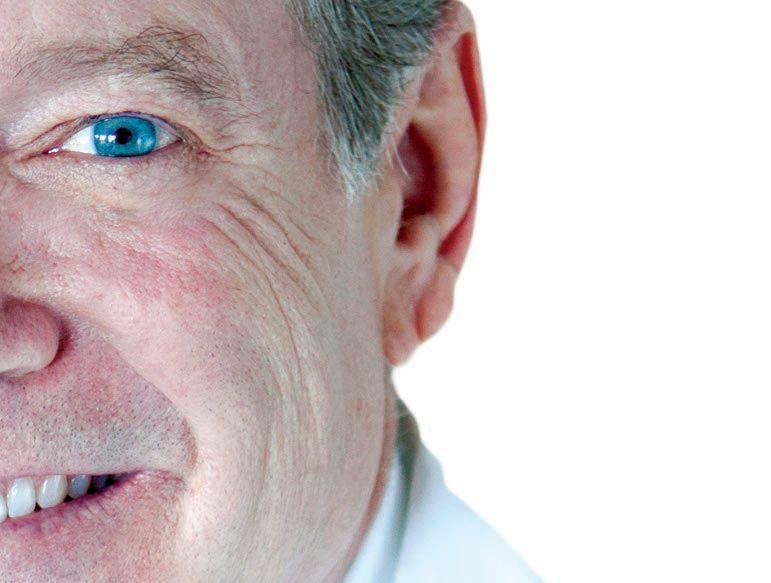
Men can trust their prostate health to Dr. James Young at Physicians for Accountable Care, Lake County’s prostate specialists.
Dr. James Young fondly remembers his fi rst visit to Eustis shortly after completing his residency at the University of Arkansas Department of Urology in 1982.
The smell of oranges blossoming from the endless rows of groves and the sight of picturesque lakes and rolling hills were enough to capture his heart. Although he had job offers in larger and more exciting cities such as Houston, Atlanta, Dallas, and St. Louis, he knew Lake County would be a wonderful place to practice urology and call home.
Having been raised in Crawfordsville, Ark., a small community of 500 people, Dr. Young felt Eustis offered the same small-town qualities to which he was accustomed: safe living, genuine hospitality, close-knit friends, and a community-minded spirit.
For him, those traits were much more appealing than the bright lights of a big city.
Today, 31 years later, Dr. Young owns and operates two thriving practices, Urology Associates of Lake County in Eustis and The Prostate Center in Lady Lake.

Without question, he can proudly say that he has enjoyed a big career in a small town.
A heart for health care
Patients are no doubt elated Dr. Young opted to practice in Lake County years ago. A board-certified urologist, Dr. Young’s genuine compassion and caring approach have earned him trust, respect, and admiration throughout the years. That is particularly evident when you visit doctor review websites such as Vitals.com or Healthgrades. While one would assume most people would not take the time to review a doctor unless they’re extremely upset, patients rave about their experience with Dr. Young.
“A life-changing experience.”
“He is the best in his specialty.”
“Have recommended Dr. Young to friends and am very confident in doing so.”
“Dr. Young and his staff are very knowledgeable, considerate, efficient, and honest.”


“Changing to Dr. Young was one of the smartest moves I have ever done.”
These are just a few examples of the glowing praise offered to Dr. Young by his patients. Of course, there’s a reason why they have taken the time and effort to write such comments. For starters, Dr. Young is a fi rm believer in patient education.
“My philosophy is, the more informed patients are, the better decisions they’ll be able to make and the happier they are going to be with their ultimate treatments,” he says. “Over the years, I’ve heard many fi rst-time patients, after spending 30 minutes with me, say I told them more than their previous urologist told them over the past 10 years.”
Dr. Young has also written articles on numerous urologyrelated health topics and posted them on his website. This is another avenue to help patients understand their condition and treatment options.
“Let’s suppose a patient comes in to review prostate biopsies done the previous week, and one or more are positive. The patient is going to be devastated and not hear every word I say. I’ll tell them to visit the website and read the articles because that reinforces everything we discuss.”
In addition to patient education, he also takes an extremely conservative approach in the care of all his patients. For instance, when it comes to prostate cancer, he offers the option of active surveillance for 40–45 percent


36 // HL // OCTOBER 2013
SPECIAL PROMOTIONAL FEATURE




LAKEHEALTHYLIVING.COM // LAKEHEALTHYLIVING.COOM M 37 SPECIAL PROMOTIONAL FEATURE
of his patients. Active surveillance means Dr. Young will watch a patient’s cancer closely through regular checkups to see if any symptoms appear or if the tumor is growing. For patients with slow-growing tumors, this is often a much more feasible and safer option than surgery or radiation — both of which have serious side effects.
For comparison, only 8–10 percent of all prostate cancer patients nationwide are given the choice of active surveillance.
“I treat my patients the way I want myself or my family to be treated. I try to put myself in every patient’s shoes. My job is to fi nd out what’s going on and thoroughly explain to each patient what their condition is and how we can treat it. If I have done a good job at teaching, they will pick the correct option.”
Ultimately, Dr. Young’s goal is to keep patients from being admitted to the hospital. Early in his career, Dr. Young knew he would not be performing surgery as an older man who has lost some of his skills. Therefore, he decided in his 30s that he would quit doing surgery at age 50. He has never looked back.
“I look at myself like former major league baseball player Sandy Koufax — I went out at the top of my game.”
This 30-minute in-office procedure involves using lowlevel radiofrequency energy to destroy the obstructing component of the enlarged prostate. It is much less invasive than traditional BPH treatments such as transurethral resection of the prostate (TURP), which requires hospitalization and carries risks such as bleeding, infection, loss of bladder control, and, on rare occasions, death.
Urologix, which markets Prostiva-RF Therapy for the manufacturing company Medtronic, sends physicians from around the country to train under Dr. Young. And thanks to the success Dr. Young has experienced using this procedure, Urologix consistently features his practice in all of its marketing materials.

As further evidence of his success, he maintains a happy list, a non-academic way to track the progress of patients who have undergone the Prostiva-RF Therapy treatment. Six months after the procedure, he asks patients two questions: Are you glad you did it and would you refer a family member or friend? Those who answer yes to both find themselves on his “happy list.”
“Ninety-eight percent of my patients have made it to the happy list. That is a remarkable number. The only procedure I can think of that might have a higher success rate is cataract surgery.”
Leader in enlarged prostate treatment
Without question, Dr. Young has established himself as one of the nation’s leading urologists in the treatment of enlarged prostate (BPH). As a matter of fact, he has performed more procedures using Prostiva-RF Therapy than any physician worldwide. Patients have come from far away as South Carolina, Alabama, and Kansas to have this treatment performed by Dr. Young.
“This year, I will perform approximately five percent of all Prostivas in the world,” he says.
Outside the practice
For Dr. Young, life has been equally gratifying outside of medicine. In 2010, he married Kristin Beall Ludecke, a lifelong Lake County resident and former pageant contestant who won the titles of Miss Florida America in 1995 and Miss Florida USA in 2000. However, Kristin is best known in her role as vicepresident of Charlie Johnson Builders, a Mount Dora-based company owned by her parents, Carl and Cheryl Ludecke.

On May 31, the couple welcomed their fi rst child, a beautiful baby girl named Grace Genevieve. Longtime patients of Dr. Young need not fear. While he is now happily married with a daughter, he has no immediate plans to retire from medicine.
“Retirement is not in my vocabulary. My goal has always been to practice for 50 years. Up to now, I’ve practiced for 31 years. I’ve been happy my entire life, but this is the happiest
38 // HL // OCTOBER 2013
“I treat my patients the way I want myself or my family to be treated. I try to put myself in every patient’s shoes.”
AT RIGHT: PHOTOS BY MALCOLM YOUNG PHOTOGRAPHY SPECIAL PROMOTIONAL FEATURE
— Dr. James Young
I’ve ever been. Not only do I have a beautiful family, I also have the honor and privilege of helping patients on a daily basis. I wouldn’t trade places with anybody in the world.”

Even when he receives an occasional 2a.m. phone call from a patient experiencing a medical problem, Dr. Young leaves the comfort of his bed and meets the patient at his office.
“At least I can keep them from visiting the emergency room and ultimately, out of the hospital,” he says. “Patients know that if they have an emergency they can call my cellphone. I make myself accessible 24/7. I truly appreciate that my patients have confidence in me to take care of them.”
Urology Associates of Lake County is located at 801 Northshore Drive in Eustis. For more information, please call 352.357.6786. The Prostate Center is located at 920 Rolling Acres Road, Suite 201, Lady Lake. Please call 352.751.4990 for further information.
Also, be sure to visit his website at www.prostateevaluation.com to read his insightful articles pertaining to various urologyrelated medical topics.
LAKEHEALTHYLIVING.COM // 39
Kristin and Dr. James Young
SPECIAL PROMOTIONAL FEATURE
Grace Young
All clear
Lake ENT will have you breathing easy in no time!
Before, sinus relief meant facing invasive surgery that required a hospital stay, a week of downtime, and extreme discomfort. Now, those with sinus issues can breathe easy as the professionals at Lake Ear, Nose, Throat & Facial Plastic Surgery offer what has been dubbed a breakthrough in endoscopic sinus surgery: balloon sinuplasty.

“Sinus problems affect a lot of people, and while most people can manage them with decongestants or antibiotics, there are a number of people who don’t receive any relief with medications,” says Dr. Michael Freedman, who is boardcertified in otolaryngology, has been with Lake ENT & FPS for more than three years, and has been an ENT physician for 19 years. “Therefore, for the past five years, we have been offering our patients balloon sinuplasty to help alleviate symptoms without resorting to traditional sinus surgery methods.”
During a balloon sinuplasty, a small balloon catheter is inserted into the sinus and inflated to open up blocked sinus passageways. Unlike conventional sinus surgery, there is no cutting or tissue removal, eliminating the need for packing or concerns about complications and bleeding. Balloon sinuplasty can be performed in-office without the need for
general anesthesia, a visit to the operating room, and costly hospital bills. In addition, there is no downtime, so patients can immediately resume their normal activities, and most health insurance companies pay for the procedure.
“During the five years we have done this, we have had a 90 percent success rate in terms of symptom relief and scans that show the sinuses are staying open after the procedure,” says Dr. Freedman. “The results are amazing, and patients are happy about how convenient and easy this procedure is.”
When it comes to those who respond well to balloon sinuplasty, Dr. Freedman says it’s usually individuals who have mild sinus issues. “Many times when someone has a sinus-related complaint, a CT scan may only show a mild infection; therefore, their doctor may say everything is normal or there’s no problem,” he says. “Only when the sinuses are completely filled with infection or polyps is when a patient is finally referred to an ENT. However, those who really do well with balloon sinuplasty are those with minor problems who shouldn’t have to undergo invasive surgery.”
By offering this medical breakthrough, Dr. Freedman and his colleagues, Drs. S. Dwight Vaught and Judith
asy in no time!
Milstead, who also perform this procedure, are able to give the option of relief to sinus sufferers living with sore throats, stuffiness, and drainage.
the option of relief to sinus sufstuffiness, and
“I am personally excited to be able to offer like
Lake ENT & FPS is the this techDr. Freedman says. a value procedure on both sides of the
to be able to use minisafe, and effec-
we can
“I am personally excited to be able to offer something like this to our patients. I’m also proud Lake ENT & FPS is the only practice in Lake County offering this amazing technology,” Dr. Freedman says. “There is a lot of value in this procedure on both sides of the coin, and as always, we are happy to be able to use minimally invasive, safe, and effective methods whenever we can because that is what we’re all about.”
40 // HL // OCTOBER 2013
SPECIAL PROMOTIONAL FEATURE
A leg up on competitionthe
Critical limb ischemia is the most serious form of peripheral arterial disease (PAD). It occurs when a patient suffers severe blockage in the lower extremities, which greatly reduces blood flow. For years, the standard form of treatments has been major arterial bypass surgery and more commonly, amputation.
When amputation occurs, patients have to deal with not only the emotional consequences, but the physical consequences, as well. Most often, patients lose their second leg, and once the disease sets in, survival outcomes are poor.
But thanks to the team of cardiologists at Cardiac and Vascular Consultants, an effective, minimally invasive option is available to help treat critical limb ischemia.
The procedure is known as the TAMI technique, or tibio-pedal access. According to Dr. Shrikanth Upadya, this technique allows cardiologists to access tiny arteries in the feet to re-establish blood flow that has been blocked by plaque. They can insert balloons and atherectomy devices up the leg to reach and cross arterial blockages so that the blockages may be opened. In addition, plaque is removed to help establish better blood flow.
Drs. Upadya and Vishnu Yelamanchi have been performing the TAMI for almost two years. They were the area’s first practice to offer this innovative procedure.

“The vast majority of patients who have undergone this procedure have seen improvment,” says Dr. Yelamanchi. “We then put them on the right track for prevention of heart attack and stroke.”
Before, patients had to undergo bypass surgery, which led to a lengthy hospital stay and carried the risk of severe complications, including bleeding and infections. The TAMI technique is an outpatient procedure.
“There are no bleeding issues,” says Dr. Upadya. “By performing this procedure, our goal is to prevent amputation because of the high death rates that follow amputation in their future years.”
Dr. Yelamanchi strongly urges anyone who is experiencing leg pain to visit a physician as soon as possible. “Critical limb ischemia is a serious problem. Imagine the damage a heart attack has on your heart or a stroke has on your brain. Critical limb ischemia has that kind of effect on your legs and feet.”
It’s little wonder why patients of Cardiac and Vascular Consultants continually send friends and family members there. The physicians possess vast experience and impressive credentials, stay abreast of the latest advancements in their field, and provide appropriate care of patients’ individual needs. This thriving practice offers a vast array of cardiovascular services under one roof, including consultative cardiology, diagnostic testing, cardiovascular screening, and numerous treatment options.
Cardiac and Vascular Consultants at 1050 Old Camp Road, Suite 270, in The Villages, 709 Physicians Court in Leesburg, and 510 County Road 466, Unit 105, in Lady Lake. For more information, please call 352.633.1966 or visit www.cvcfl.com
SPECIAL PROMOTIONAL FEATURE ease hich ajor nal s lose theiir ants, an schemia. arteries y can rial oved or e ng es it a magine e ritical inually rience r ing ding FEATURE RE
Vishnu Yelamanchi, MD, FACC
Shrikanth Upadya, MD, FACC
Cardiac and Vascular Consultants lead the way for saving lives — and limbs.
Laser-like focus
As a chiropractor, Dr. Jeffrey Glover treats much more than ailing necks and painful lower backs. Sure, that’s part of his business, but he has also been successful in treating neuropathy, a disease most people would assume is managed more often by neurologists or neurosurgeons.
Dr. Glover, who owns Glover Chiropractic Clinic in Leesburg, has seen firsthand how neuropathy can affect a patient’s emotional and physical well-being, as well as their overall quality of life. After all, they endure sensations of burning, tingling, cramping, numbness, and pins and needles on a constant basis.
Rather than relying on surgery, medication, or injections — all of which come with risks — Dr. Glover utilizes a drug-free, nonsurgical approach to effectively treating neuropathy. He has the only chiropractic office in Leesburg equipped with the LiteCure Laser LCT-1000.
This state-of-the-art technology targets soft tissue with laser light and energizes damaged cells. As a result, the body’s natural healing powers are activated and inflammation is reduced. This helps reduce pain considerably.
While treating nerve damage stemming from chemotherapy or radiation can be tricky, he has had success treating patients

42
// HL // OCTOBER 2013
SPECIAL PROMOTIONAL
Using the latest technology, Glover Chiropractic is a force to be reckoned with.
FEATURE
with compressed nerves or those with diabetic neuropathy. All neuropathy patients can be helped to a lesser or greater extent through an individualized treatment plan that includes regular chiropractic care and an improvement in diet.
“Our patients are enjoying excellent results,” he says. “We have an 85 to 90 percent success rate using the LiteCure Laser. Some patients have neuropathy so bad that they’ve gone 10 years without feeling the carpet underneath their feet. After several treatments, they are now getting their feeling back.”
The laser has also helps treat sports injuries, sprains, strains, arthritis, shoulder pain, knee pain, and other inflammatory conditions.
To complement the LiteCure Laser therapy, Glover Chiropractic also offers lymphatic drainage therapy through licensed massage therapist Tracy Zito. This helps release toxins and built up waste in the lymphatic system and also increases blood flow and tissue oxygenation to the injured area. She spent one year studying lymphatic drainage at the Upledger Institute under Dr. Bruno Chikly, who was the first physician to develop this technique.
“I open up various pathways throughout the body so the body can begin healing naturally,” says Tracy, who is also a certified trainer. “It is also effective for people with high blood pressure and high cholesterol.”
Chiropractic: It’s in his bones
Dr. Glover’s desire to become a chiropractor began at age 9. After suffering from nocturnal headaches and undergoing numerous diagnostic tests, doctors could not determine the underlying cause. He received an adjustment while accompanying his mother to a local chiropractor and the headaches disappeared.
“That chiropractor made a big impression on me,” he says. “I knew then that I wanted to be a chiropractor and help other people who could not find solutions to alleviate their pain.”
He pursued that dream and graduated from Palmer College of Chiropractic in 2007. While he could have opened a practice anywhere in the country, he decided to return to his roots and open a practice in Leesburg, which undoubtedly has a special place in his heart.
“I was born and raised in Leesburg, so I’ve always felt a special bond here,” says Dr. Glover, who graduated from Leesburg High School in 1999 and Lake-Sumter State College in 2002. “The people here are special to me, and I always try to go above and beyond to give them the best care possible.”
because, as he puts it, “money should never get in the way of care that someone needs.”
His compassionate approach is one reason why the majority of his business comes from patient referrals. “If you treat people right and help them feel better, they spread the word pretty quick,” he says.
Glover Chiropractic Clinic is located at 312 N. 14th St. in Leesburg. For more information, call 352.787.9995 or visit www.gloverchiro.com.

state-of-the-art a touch He offers ver y affordable services
That is precisely what he has been doing since opening his practice in November 2012. Glover Chiropractic offers the best of both worlds by blending state-of-the-art holistic healthcare with a hometown touch. He also offers very affordable services
LAKEHEALTHYLIVING.COM // 43
LA LAKEKEHEHEAALTH T YLIVVINNG. G COM M /
SPECIAL PROMOTIONAL FEATURE
(L–R) Elizabeth Sellers, Tracy Zito, LMT, Dr. Jeffrey Glover, and Kathy Murphy
saving limbs, saving lives
Mike Richards, PA-C, MPAS, and Tom Tran, PA-C, MPAS, of Limbstitute have their finger on the pulse of artery and vein care.
For years, Comprehensive Vein Center has earned a stellar reputation for treating venous problems.

Similarly, the Institute of Cardiovascular Excellence has achieved equal status
as a leader in treating arterial disease.
The reason for that is simple. Tom Tran, P.A.-C and Mike Richards, P.A.-C of Comprehensive Vein Center and Dr. Asad Qamar of Institute of Cardiovascular Excellence all pride themselves in delivering high-tech care with a very personalized touch.
In July, their thriving practices joined forces and formed the Limbstitute, which is based in Summerfield. Having a comprehensive medical facility like the Limbstitute allows them to render treatment under one roof to patients who are suffering from arterial and/or
venous disorders. Thus, both limbs and lives are saved.
“The biggest advantage of combining specialties is we can provide rapid diagnosis and rapid treatment,” says PA Richards. “All too often, patients end up losing limbs because they are referred to other physicians, then await test results, and then have to make an appointment with the physician. The process becomes delayed. At the Limbstitute, the process is streamlined to achieve maximum results for patients.”
Time is critically important, especially considering mortality rates are extremely high after lower extremity amputation. “Both arterial and venous diseases are prevalent in this country, so our goal is to address these problems quickly and come to a resolve,” he says. “Between early intervention and utilizing minimally invasive procedures to treat patients, we can help them regain a high quality of
life without lots of downtime.”
The Limbstitute also offers a big advantage for patients who suffer from both peripheral arterial disease (PAD) and venous disease. They can be treated in the same facility by practitioners who specialize in these disorders.
“Our practitioners only focus on what we’ve been trained to do,” says PA Richards. “We don’t try to do more than we’re capable of. If a patient has a vein problem, he will see either myself or Tom. If a patient has an arterial problem, he will see Dr. Qamar.”
More importantly, the practitioners take an active role in educating patients so they can take charge of their health care going forward.
“Education is vitally important,” he says. “We pride ourselves on empowering patients through education and encouragement to take charge of their journey toward wellbeing. High-quality care is not only about helping a patient
44 // HL // OCTOBER 2013 H // OC OCTOTOBEBER 2 20013 3
SPECIAL PROMOTIONAL FEATURE
“…empowering patients through education and encouragement to take charge of their journey toward well-being.”
— Mike Richards
feel better; it’s also about successful communication and trust. We truly want our patients to embrace a healthier approach to life.”For most people, the occasional skinned knee or bruised arm requires only a few days to heal.
A MATTER OF LIFE AND LIMB
Unfortunately, there are times when wounds simply do not heal and cause longterm pain. When this occurs, patients may end up visiting numerous physicians and specialists only to find their problem is not relieved. Patients find that coping with chronic, non-healing wounds is frustrating, timeconsuming, and often cause emotional stress.
But there’s good news. Limbstitute, a partnership between Comprehensive Vein Center and Institute of Cardiovascular Excellence, offers a more comprehensive approach to wound healing. That’s very encouraging, especially considering so many people suffer from chronic wounds caused by diabetes, circulatory problems, and other conditions.
Limbstitute utilizes advanced technologies and proven protocols to treat chronic, non-healing wounds. One of these treatments is Apligraf, a safe, non-surgical procedure using denaturized baby foreskin to stimulate and accelerate the healing process. Apligraf has proven to be extremely effective in healing venous ulcers, arterial ulcers, and diabetic ulcers.
Other advanced procedures include maggot therapy, synthetic grafts, and on-site surgical debridement.
“We’ve helped treat many patients with extremely complicated cases,” says PA Tom Tran of Comprehensive Vein Center. “Most wounds on average take six months to heal, but we help their wounds heal much faster than that. That’s because of the advanced therapies we have access to.”
Another reason for Limbstitute’s success in treating chronic wounds is because the team of physicians looks at the whole person rather than simply treating the wound. In other words, they examine a patient’s lifestyle and nutrition to help manage the disease that may be preventing proper wound healing. They also work closely with patients’ other physicians and home health care agencies to ensure they receive adequate ongoing care.
“Looking at the whole person is important,” PA Tran says. “No matter how you treat the wound it will not heal unless you take care of the underlying issue. Whether the underlying issue is a blocked artery or diabetes, we can treat it here under one roof.
Because of that, there is no miscommunication that often happens in the medical world. The physicians here talk to each other in person or can review each other’s notes to ensure optimal patient results.”
If you are suffering from chronic wounds, let Limbstitute’s expert team of specialty trained physicians address your problem utilizing the latest technologies and techniques.

LAKEHEALTHYLIVING.COM // 45
LAKEHEEALALTHTHYL Y IVING.COM / 4 o ds ed s y SPECIAL PROMOTIONAL FEATURE
“Looking at the whole person is important… no matter how you treat the wound, it will not heal unless you take care of the underlying issue.”
— Tom Tran
“Limbstitute is a center for comprehensive treatment of peripheral, venous and arterial diseases.”
A service of 10435
— Dr. Asad Qamar
SE 170th Place, Summerfield / 352.233.4393 / limbstitute.com
Follow the intricate maze of pipes running through Maria Tracy’s Lake organic produce at the end. Her soilless venture into


County greenhouse and you will find lush, aquaponics may be the agriculture of the future.
WRITER: MARY ANN DESANTIS // PHOTOGRAPHER: FRED LOPEZ
Let ‘er drip
Step into Maria Tracy’s greenhouse and you will think you are inside a Claude Monet painting. Butterflies swirl through the early-morning light, making circles around the softly muted greens, reds, and purples of all kinds of plants. Unlike the stillness of a Monet canvas, however, Maria’s garden is punctuated by gurgling water and the splashing of fish in 500-gallon holding tanks.
Welcome to the world of aquaponics where technology meets beauty and the results are truly organic.
Maria’s six-acre Lady Lake farm Heather Oaks has been known for years as a U-PickEm place for blackberries, blueberries, and more recently, Muscadine grapes. In February 2012, she ventured into aquaponics, a system that combines conventional hydroponics (cultivating plants in water) with aquaculture (raising of aquatic fish) in a symbiotic environment. Maria currently has 300 tilapia and 150 catfish in her aquaponics system.
“I don’t know what triggered my interest in this,” she says with a laugh. “I knew nothing about fish.”

In all seriousness, she recalls
visiting a pool pump store with her sons who own and operate a pool service business. The store’s owner, who knew Maria owned a farm and was into growing a variety of produce, showed her an aquaponics kit system he had set up behind the store.
She didn’t buy the kit, but with the help of her husband, Bob, and her sons, she soon had an elaborate maze of pipes and tanks near the end of a long driveway leading into Heather Oaks, the farm she’s owned since 1989.
“We set it up and literally stood at one end waiting for the first drip of water,” she remembers. Within a few months, she was successfully growing lettuce, Swiss chard, tomatoes, broccoli, kale, rhubarb, and a variety of herbs in what looks like waterbeds for plants.
“I don’t want to worry about what I put in my mouth,” says Maria about why she delved into aquaponics. “You know what you are eating. It’s not tainted by pollutants or chemicals.”
Maria’s longtime customer and neighbor Jean Robinson says the quality difference between produce from a grocery and Maria’s aquaponics system is huge. “After eating Maria’s lettuce and Swiss chard, I couldn’t eat the grocery store varieties,” she says. “They had a metallic taste that you don’t get in Maria’s.”
Maria’s aquaponics system is a labyrinth of pipes that circulates water from the fish tanks into gravel beds where it is filtered. Maria adds natural and beneficial bacteria, similar to the kind found in yogurt, to break down the toxic ammonia in the fish waste. The waste becomes nitrite and then nitrogen, key
nutrients for plant development. The filtered, nutrient-enriched water is pumped into long, rectangular growing beds filled with whatever is in season and whatever Maria wants to grow. Eventually, the water flows from the growing beds back into the fish tanks and the process begins again.
“The temperature makes a difference as to what will grow, and the heat is challenging,” explains Maria. “Cooler temperatures in the fall are better than the heat of the summer, and the aquaponics plants will be at their peak after the first of the year.”
Keeping the system in balance is important. If there are too many effluents, the water can become toxic to the fish; if there is not enough, the plants suffer. And only organic nutrients will do — anything else will hurt the fish.
“If the fish are doing well, the produce is doing well,” explains Maria, who has an aquaculture license. “It’s a checks and balances system.”
The State of Florida checks her operation once a year to make sure everything is clean and running properly. And because she does have a state aquaculture license, she can sell fish as long as they are whole and on ice.
Creating an aquaponics system isn’t the first thing that Maria has jumped into feet first. Five years ago, she began growing Arbequina olive trees and is getting her first harvest this year, enough she says to make boutique olive oil. Scattered around her property are a few apple trees and pomegranate trees — things that normally do not
grow in Florida. In fact, her pomegranate trees are part of a research project for the University of Florida Institute of Food and Agricultural Sciences to see if they may someday become a viable commercial crop in Florida.
“Maria just touches things and they grow,” says her friend Jean. “She’s a walking Farmer’s Almanac.”
The petite and effervescent Maria comes by her green thumb naturally. Her father, Joe Stephany, was one of the first to grow the hybrid Delicious grapes in this area. Although she began her career as a law enforcement officer, Maria’s love of nature won out and an Iris-growing hobby became a business in 2001. Heather Oaks was the place to go for buying the colorful, showy flowers. Before long, she was growing and selling blueberries, blackberries, tomatoes, peaches, and even honey.
The aquaponics system at Heather Oaks Farm is in its infancy, and Maria hasn’t harvested enough from it to sell to markets. Nor has she had to because her customers coming in to pick blueberries or grapes see the gigantic heads of lettuce or healthy vegetables sprouting from the long-growing beds and ask to buy them immediately. She has also hosted a number of garden clubs that wanted to see the operation. However, she would really like to have schools visit.
“I’m very open to teaching children about this,” she says. “The more people involved the better. When I have a problem, I have no one to call. I would love to be able to bounce ideas around with others.”
48 // HL // OCTOBER 2013
// H // OC OCTOTOBBEER 20 2013 13 PORTRAIT:
MARY ANN DESANTIS
A “PONICS” PRIMER
The Greek word ponos means to work and usually refers to laboring in agriculture. Hence, ponics is the root word for many types of soilless growing adventures. Here is a look at the most popular:
AEROPONICS – the process of growing plants in air or mist without the use of soil or a growing medium. Plants are usually grown in vertical towers and pumps are used to push the nutrient solutions up to the plants. An aeroponics gardening club recently formed in The Villages. Information is available from Sharon Starke at 352.259.8021.
AQUAPONICS – a sustainable and symbiotic food production system that combines aquaculture (the raising of aquatic animals such as fish, snails, or prawns) with hydroponics (a method of cultivating plants in water).

HYDROPONICS – a method of growing plants using mineral nutrient solutions in water without soil. Almost any terrestrial plant can grow hydroponically. Not all hydroponic systems are organic. The method has been around since the 18th century when researchers discovered that plants absorb essential mineral nutrients as inorganic ions in water.

300,000 heads of lettuce and 200 tons of fish are produced in the world’s largest aquaponics system in the Baniyas Centre in the United Arab Emirates.
SOURCE: ZEITNEWS.ORG/NODE/2871
LAKEHEALTHYLIVING.COM // 49

50 // HL // OCTOBER 2013 SPECIAL PROMOTIONAL FEATURE
The keys to mobility
Central Mobility and Rehab Equipment will go above and beyond to get you moving!
Pierre Amadis lives with spina bifida and cannot walk. For him, an ultra-lightweight manual wheelchair is enabling and mobilizing, much like a bicycle or vehicle is to an able-bodied person.
Having a functional, reliable manual wheelchair is paramount for Pierre to maintain quality of life. That is why he has purchased two ultra-lightweight manual wheelchairs at Central Mobility and Rehab Equipment in the past 10 years. Not only is he buying a quality product, he also knows he’ll receive superb follow-up care whenever it needs periodic maintenance work.
Although the 32-year-old lives in Lake Panasoffkee, he has no qualms about making the drive to Tavares. Sure, there are durable medical equipment companies closer to his home, but he enjoys the superior service and attention at Central Mobility. He is particularly impressed with owner Mike Toro, who opened the company in 2003.
“Mike is a personable, genuine guy who truly cares about his clients,” Pierre says. “The reason I’ve been a client of Central Mobility for a decade is because I’m impressed with the staff’s attention to detail and willingness to make sure my manual wheelchair is in tip-top condition. They have always worked with me on a one-on-one basis and treated me as if I was a member of their family. I cannot say enough good things about the company, and I would highly recommend them to anyone who needs durable medical equipment.”
Tackling complex cases
For the past decade, Central Mobility has made an equally positive impression on countless other clients. While the company has grown considerably and now features a 5,500-square-foot showroom, Mike and his team have never wavered in their philosophy of maintaining excellent customer service and going above and beyond for each client.
SPECIAL PROMOTIONAL FEATURE
Central Mobility has become a one-stop shop for durable medical equipment that ranges from wheelchairs and walkers to canes and bathroom safety equipment. However, in recent years, the company has made an increasingly large impact in the field of complex rehab. Complex rehab technology meets the medical and functional needs of people with severe disabilities such as multiple sclerosis, amyotrophic lateral sclerosis (ALS), cerebral palsy, muscular dystrophy, Parkinson’s disease, and severe spinal cord or brain injuries.
Mike hired two full-time certified assistive technology professionals (ATP), David Bedard and Andrew Crooks, who have extensive knowledge with assistive technologies like powered wheelchairs and touchless bathing systems. When facilities such as Lucerne Rehabilitation Hospital or Hallifax Health — both in Orlando — call Central Mobility needing equipment for an individual patient, David and Andrew work with that patient’s team of physicians, physical therapist, and occupational therapist to determine what equipment will help said patient become as functional as possible.
“When we receive a call from an inpatient rehabilitation facility, we visit the client and the team of therapists at the hospital or rehabilitation center,” Mike says. “We tell them what we can offer but leave it up to the family to tell us


what to ultimately do. We recommend they research and educate themselves before making a final decision. We are not pushy at all. This is an important decision for the client, as well as the family. We encourage them to take their time so they can make the best decision possible. The ultimate goal is to provide them with complex rehabilitation technology that will help them be as independent as possible in every environment they encounter.”
Make no mistake, being involved in complex rehab technology can be extremely stressful. It’s one thing to assist a patient with a sprained ankle, yet quite another to meet the needs and demands of patients with challenging medical caseloads. In addition, trying to satisfy difficult-toplease family members can be equally taxing.
The reason Mike and his team have been successful is because they have an unwavering passion to help these patients. For them, few things in life are as rewarding as making a difference in the
lives of people with severe disabilities.

“You have to have passion for this job,” David says. “Mike and I always say you don’t pick this career; it picks you. You are either 100 percent in or you cannot do this job efficiently.”
David often finds himself driving as far away as Daytona Beach or Jacksonville to deliver, service, or repair equipment for clients.

“One time, I did a custommolded body contour for a boy with cerebral palsy,” David
says. “The body contour is made with molded foam and fits on the seat of a wheelchair. This helps with body posture support and provides relief to sensitive areas of the body. The boy’s mom was so happy that she sent us a wonderful home-cooked meal. Instances like that remind us why we do this job. Oftentimes, people will write letters or send postcards to us. Without question, the sun shines on us.”
Both Mike and David are also passionate when it comes to educating the community about assistive mobile technology. They donate their
52 // HL // OCTOBER 2013 ‘ ‘
SPECIAL PROMOTIONAL FEATURE
… few things in life are as rewarding as making a difference in the lives of people…
time by providing lectures to hospitals, physical therapists, and support groups.
“The reason we give back is because of our passion for this industry,” Mike says. “I am amazed by the number of people out there who have a disease or injury that affects their mobility. We expect our clients to help us help them. If they do that, then we are the right company for them. Work with us and trust us and you will see our relationship flourish. Our goal here is to have patients for life.”
Come visit Central Mobility
Central Mobility combines the latest equipment advances with years of experience and a burning desire to improve lives. Realizing that not everyone has the same mobility limitations, they treat each client as a unique individual.

With a wide range of equipment, the company can service everyone from pediatrics to geriatrics The company’s beautiful 5,500-square-foot showroom features support cushions, C-PAP sleep aids, crutches, toilet seat rails, foam bed pads, patient

gowns, PRIDE lift chairs, PRIDE Scooters, diabetic socks, foot orthotics, canes, handheld shower sprays, stockings, and much more. The facility also has a repair shop, a waiting room, a conference room to meet with clients, and a warehouse to stock new equipment.
Central Mobility is located at 11433 U.S. 441 in Tavares. For more information, call 352.742.7878 or visit www.centralmobility.com.
LAKEHEALTHYLIVING.COM // 53 SPECIAL PROMOTIONAL FEATURE


IT’S NEVER TOO LATE TO FEEL GREAT. ® used at FMI Trauma & Fracture Care MD

PROVEN DESIGN. PROVEN MATERIALS. FIND AN ORTHOPAEDIC SURGEON NEAR YOU. www.exac.com/surgeonlocator SOME OF THE SYSTEM’S UNIQUE FEATURES INCLUDE:
retina care improving through research

In the ever-expanding field of retina care, vitreoretinal specialist and surgeon Dr. Shalesh Kaushal is excited that the Retina Specialty Institute continues to play a key role in furthering medical advances through its participation in clinical trials and giving patients access to the most advanced care.
A clinician scientist with a strong academic background, Dr. Kaushal takes great pride in being involved in cutting-edge clinical trials to treat many conditions of retinal disease. He earned his medical degree from Johns Hopkins University School of Medicine in Baltimore, Md., and his Ph.D. from Massachusetts Institute of Technology.
His work as head of the retina division at the University of Florida in Gainseville has helped cultivate his passion for solving problems for both his patients and the scientific community. As result, he has earned a reputation as being a selfless visionary and compassionate practitioner.
As an avid researcher, Dr. Kaushal has participated in numerous clinical trials involving revolutionary breakthroughs in retina care such as gene therapy, stem cell treatment, and new drugs. And he is bringing these breakthroughs to Retina Specialty Institute’s Villages office, which is conveniently located in the Sharon Morse building Suite 532.
High on the list of innovations is the use of stem cells. “There are many types of stem cells, but there are two basic kinds that we look at. There are cells that can rejuvenate tissue and then there are types that can actually regenerate and replace cells that are lost through normal wear and tear, injury, or disease,” says Dr. Kaushal. “We want to bring those types of trials to The Villages.”
The Retina Specialty Institute is also highly involved in researching the use of nutraceuticals to treat a variety of visionthreatening diseases, especially within his field of specialty: inherited retinal and macular diseases like retinitis pigmentosa


(RP) and Stargardt disease as well as age-related macular degeneration (ARMD). “Instead of patients receiving injections to treat dry macular degeneration, we are hoping to find oral medications to mediate the disease,” he says. “We’re bringing exciting research to Central Florida.”
As a FDA-approved clinical trial study center, Retina Specialty Institute is known widely among major pharmaceutical companies, peers, and patients for delivering continual peak performance. The goal is to use the research to provide patients with better results while being less intrusive.


Aside from his contributions and active involvement in clinical research, Dr. Kaushal carries a real passion for charity — as proven by his many diligent hours caring for and treating underserved populations in local communities as well as abroad.

Dr. Kaushal also enjoys the sacred relationship between doctor and patient and makes it a point to communicate in a way that is both clear and understandable. He considers it a great honor to provide quality patient care that not only restores sight and improves vision but also increases quality of life.
The surgeons of Retina Specialty Institute are lending shape to the unknown, forging the next generation of knowledge and technology that help preserve the gift of sight from retina diseases like diabetic retinopathy and macular degeneration.
SPECIAL PROMOTIONAL FEATURE
Experience visionary retina care. Preserving. Treating. Advancing Now accepting patients at The Villages. Call today for an appointment at 850.529.7077
vein care on the forefront of


Vascular Vein Centers leads the way in improving the health of your veins.


With the introduction of laser and radiofrequency ablation around the turn of the new millennium, the whole landscape of venous therapy changed. Previously, patients underwent an operation that required general anesthesia and lengthy recovery. However, due to other conditions and their age, many of these patients couldn’t have surgery with general anesthesia.

Now, there is a treatment that requires only local anesthesia and doesn’t cause any debility. As the medical director of Central Florida’s first wound care center, where a large percentage of patients suffer with venous ulcers around their ankle, this new technology has been a godsend. Those of us who embraced laser and radiofrequency ablation early noticed a significant reduction in the time to heal these ulcers. Additionally, we have seen a very low reoccurrence rate.

Before, compression was often the only treatment, but resulted in prolonged outcomes and frequent recurrence.
The new technology has also been a game changer, especially for those with
symptoms of vein disease (aching, throbbing, pressure, cramps, and heaviness) and early signs of vein disease, such as swelling, shin dryness, and thickening. In the past, patients would have shied away from an operation because of what was entailed

or rumors from a friend or family member who had the operation but experienced a less-than-optimal experience. Now, patients can rest easy knowing they will receive nothing but the utmost care.
With the greatest experience
of any vein center in Florida, Vascular Vein Centers was one of the earliest practices to utilize this new, revolutionary laser technology. Let our experience in treating the most challenging cases throughout Central Florida benefit you!
 Samuel P. Martin, MD, FACS Vascular Surgery/Phlebologist Founder and Medical Director
Daniel L. Arnold, MD, FACS Board Certified General Surgery/Phlebologist
Samuel P. Martin, MD, FACS Vascular Surgery/Phlebologist Founder and Medical Director
Daniel L. Arnold, MD, FACS Board Certified General Surgery/Phlebologist
 Hugo V. Hart, MD, FACS Board Certified General Surgery/Phlebologist
56 // HL // OCTOBER 2013 SPECIAL PROMOTIONAL FEATURE
EATURE
Stop by our clinic to receive a ‘Healthy Legs by VVC Kit’

I am whitewater rafting with my family down the Cache La Poudre River in Colorado. Toward the beginning of the trip I fall out and immediately think, “They’ll never be able to pull me back in the boat.”


I am in total panic and my daughters are laughing hysterically. Fortunately, the guide lifts me out of the water and back onto the boat very easily. That wouldn’t have been the case eight months ago. Of course, I never would have attempted whitewater rafting eight months ago, so I guess it wouldn’t have mattered. I’m proud that I put myself out there.
Growing up, I was a cheerleader and gymnast. Today, I started teaching pompom routines at The Villages Charter School for an afterschool activity program. It allows me to continue doing things with students and helps me achieve physical fitness at the same time. Again, I am participating in something I never would have tried eight months ago.

At 8:45a.m. I am preparing to run by myself. Being a people person, I miss being around fellow teachers and students. I’m having a pity party this morning. I take a picture of myself in front of a mirror and send the picture and a text message to my nutritionist Lori Esarey and two friends, B.E. Thompson and Jaime Alonzo. The message reads:

DAY 214 DAY 235 DAY 242 226 DAY

I treat myself to a pedicure today. Whenever I tried to lose weight in my prior life, I would always reward myself with unhealthy food. So instead of doing that, I now treat myself to pedicures, manicures, or shopping trips. I recently purchased a Michael Kors purse and watch.


Sometimesit’salonely journey…Headingout formyrun/walk…Being a mom/wife/friend/ andhealthyishardto balance…ButIamdoing it...God’sgrace.


Here’s part of what B.E. text messages me back!: Wow… can’t believe the difference! I know that feelingalltoowell.My personalexperience— I had to decide not to allow others’ decisions to impact whether or not I’d get up and do what I knew I had to do for me. You know what’s right for you and you’re obviously getting it done. It’s worth it!”


LAKEHEALTHYLIVING.COM // 59
“If nothing else, I hope my journey encourages women and lets them know they can accomplish the same thing,” she says. “It is difficult being a mother, working a job, and juggling a lot of things. The key is to make a plan, make that plan your priority, and remain disciplined with the plan.”
Today, I added another member to my health journey. I am now working with Laine D’Souza, a fitness trainer at LB CrossFit Gym in Lady Lake. When you are healing mentally, it is a positive thing to try something new along the journey. Like a smorgasbord, you want to try a little of everything. Laine is very uplifting and makes me focus on the positive while putting the negative away. When you are a woman who is overweight, it is nice to have a female in the mix because she has so much compassion. For me, it is so important to surround myself with a positive army during this important life journey.
I take the kids to a late-night football game. They are hungry after the game so at 10:45p.m. we stop at Steak N’ Shake. The kids order burgers and shakes, and they look so good. However, I order a grilled chicken salad with no dressing. The temptations are always there, but I work real hard at not slipping up.
My husband and I spend a weekend at Omni Championsgate in Kissimmee with a group of friends from Heritage Community Church. The resort has a large swimming pool and lazy river, so naturally I am terrified about wearing a swimsuit in front of people. While there, a woman named Summer approaches me and says she had been following my progress. She asks if I would lead an accountability group at church for people who are dealing with food-related struggles. For me, this is a wonderful opportunity to pay it forward and share with people what I have learned along the way.
DAY 243 DAY 243 DAY 245 DAY 250
I have finally mustered the courage to begin shopping in department stores. Before, I would always shop at Lane Bryant because they have a nice selection of plus-sized clothes. I’d always shop there for bras, underwear, and clothing items. On this day, though, I am shopping at Belk. A nice clerk offers to help me pick out some items and takes a size 14 pair of pants and large shirt off the rack for me to try. I’m thinking she is crazy and they’ll never fit me. In my mind, I still need size 20 pants and a 2XL shirt. But the clothes she picked out did fit me. I still see a heavy person in the mirror, but the tag sizes on my new clothing items are proof that I’m losing weight.
COMING IN DECEMBER
Be sure to check back with us in December to learn about Traci’s latest feats, challenges, and obstacles. If you are unfamiliar with Traci’s amazing journey, please read her stories in our April, June, and August issues of Healthy Living online at lakehealthyliving.com.

60 // HL // OCTOBER 2013
Pictured: Shopping, exercising, and enjoying adventurous activities has become easier for Traci since she adopted a healthier lifestyle.
Lending Helping Hands in the Dominican Republic
Last year, Vascular Vein Centers completed their first medical samaritan trip to the Dominican Republic to take vein care to their impoverished citizens. Under the direction of Dr. Hugo Hart, a total of 56 vein procedures were performed on 11 local patients at the Hospital Buena Samaritano, a non-profit hospital located in La Romana. This was the first recorded use of laser therapy for leg veins in the Dominican Republic.


Through the Hispaniola Medical Charity, Dr. Hart, along with VVC staff and techs, will be donating their time and talent once again this October. Some medical supply vendors are making donations of medical supplies. VVC is not financing this trip this year, so they need your help to cover living expenses.


HOW CAN I HELP?
We are accepting tax-deductible monetary donations to the Hispaniola Medical Charity at all of our clinics. You can also visit our website at www.VVCmission.com.


“Hispaniola Medical Charity” a non-profit organization 501(c) (3), organized in honor of the Hart Family. Dr. Hugo Hart and his brother, Dr. Umbert Hart, Jr. set up the non-profit organization in honor of their father, a retired physician from the Dominican Republic who served as a surgeon. The mission is to provide medical, dental and surgical care to the impoverished people of Hispaniola, the island comprised

of the Dominican Republic and Haiti. Serving Central Florida Centra Improving the health of your WE SPECIALIZE IN THE NON-SURGICAL TREATMENT OF THESE PROBLEMS for over 12 years! Tired, achy, heavy-feeling legs • Leg cramps • Swollen ankles Skin Changes Venous Ulcer Spider Vein Varicose Vein Samuel P. Martin - MD, FACS Vascular Surgery/Phlebologist Founder and Medical Director Daniel L. Arnold - MD FACS Board Certified General Surgery Hugo V. Hart - MD, FACS Board Certified General Surgery ALL DOCTORS ARE MEMBERS OF THE AMERICAN COLLEGE OF PHLEBOLOGY MOST INSURANCE ACCEPTED INCLUDING MEDICARE Orlando, Kissimmee, Lake Mary, The Villages, GOLF CART FRIENDLY, Waterford Lakes and Davenport www.BestVeinTreatment.com Accredited Vascular Lab at Vascular Vein Centers Get a leg up on your health $10 off any compression sock (not valid with other offers. Limit 2 pairs) legs
The Knee Replacement Nature Envisioned
• Conservative, bone sparing technique


• Does not sacrifice any ligaments
• 20+ years of successful patient outcomes


• Restores your knee to a more natural state
Natural Knee
ACL and PCL critical for knee stability
TKO Knee
Unlike most knee implants, the ACL and PCL are not sacrificed with the TKO

Total knee replacement is intended for individuals with degenerative, rheumatoid and post-traumatic arthritis of the knee. Knee replacement surgery is contraindicated for patients with certain types of infections, some mental or neuromuscular disorders, compromised bone stock, skeletal immaturity, severe instability of the knee, or excessive body weight.
As with any surgery, knee replacement surgery has certain risks. Speak to your surgeon to decide if knee replacement surgery s appropriate for you. Individual results vary and not all patients will return to the same activity level.

BioPro, Inc., 2929 Lapeer Road, Port Huron, Michigan 48060 USA 800.252.7707 • 810.982.7777 • www.bioproimplants.com
The future of orthopedic surgery
Dr. Vrej Manoogian is the only doctor in Florida to offer this revolutionary tendon-sparing BioPro TKO knee implant
Dr. Vrej Kristapor Manoogian is offering the most advanced treatments available for hip, knee, and shoulder problems.
Dr. Manoogian is the inventor of the “Living Hip” total hip replacement. This is the most bone-conserving total hip available and has the ability to maintain bone integrity throughout the entirety of a patient’s life.

With regards to shoulders, Dr. Manoogian performs arthroscopic rotator cuff repairs through incisions only millimeters in length. He also performs a multitude of other completely arthroscopic shoulder treatments, open procedures, and, when necessary, total shoulder replacement arthroplasty.
When it comes to knees, Dr. Manoogian offers the TKO implant, a complete ligament-sparing total or partial knee replacement. He offers other surgical knee replacement procedures, as well. Rather than using a one-size-fits-all approach, he carefully examines the ligament and functional status of the patient’s knees to see which option would best suit the individual patient.
Dr. Manoogian’s treatment philosophy has been and always will be to proceed with the most conservative treatments available to restore function to normal or as normal as possible.
SPECIAL PROMOTIONAL FEATURE Manoogian & Guru Orthopedic Center, P.A. l 1945 Bay Road in Mount Dora 352.483.5633 l www.manoogianorthopedics.com
has
already arrived in Lake County!
M The BioPro® Living Hip Stem Horizontal Platform Support
OUR NEW FALL EYEWEAR IS SO
Stylish and Smart,
YOU WON’T BELIEVE YOUR EYES.
SEE every detail WITH BRILLIANT CLARITY.

If you haven’t changed your eyewear in awhile, consider this: eyesight and styles change over time. Fall is the classic time for a fashion update, and the right correction and eyewear will illuminate both your vision and your appearance. At Lake Eye Associates, you’ll get everything you need for sharp vision and smart styling, all in one convenient place.
Our full-service optical department features the latest selection of name-brand designer fashion frames – including the newest trends for fall – as well as contacts, sunglasses and sport and specialty eyewear in sizes ranging from infants to adults. You’ll find everything you need for crisp vision and impeccable style.
at
Our experienced Opticians spend time custom-fitting customers of all ages.
THE right choice FOR BRIGHT VISION.

Our highly-trained licensed opticians of Lake Eye are happy to help you choose the latest technology and styles to update how you see understanding to pinpoint what will work best for your unique vision, lifestyle and fashion demands, so finding just the right eyewear and accessories is fun, not overwhelming. made the smart choice for your eye-care needs. Visit us online or call to schedule an appointment at one of our convenient locations:
TAVARES - 352-343-2020
LEESBURG - 352-365-2020
THE VILLAGES - 352-750-2020
(Golf Car Accessible)


|
This Holiday Season, Get the Look Before You See Your Family & Friends—Act Now!
Each year, as the holiday season approaches, we start getting excited for tradition, gift-giving, and time spent with relatives and old friends. But for ourselves taking an extra-closer look in the mirror, examining wrinkles and age spots, and wondering how old we’re going to look in this year’s family photo. If one of your biggest concerns around the holidays is looking older than you feel (or looking older than some of your family members), get the look you need before the season’s hustle and bustle sets in.
There is nothing like seeing friends and relatives to make us feel younger than your appearance shows. Fortunately, you can restore your youth with the natural-looking results you’ve been searching for. At ImageLift®,
we offer a variety of safe and effective minimally invasive procedures that can aid you in looking years younger, with or without surgery.

As each procedure’s downtime varies, it is important to get your free consultation today to make sure you’re ahead of the game. Review these common patient
corresponds with your needs:


How can I remove the sun damage on my face and neck?

After you set up your complimentary consultation, one of our double-board
Dr. Richard Castellano or Dr. Randall Weyrich will evaluate which sun damage reversal treatment method is right for you.

Some of Imagelift’s most popular sun damage treatments include:
• Laser technology, like the highlyeffective CO2 laser treatment


• Peels, like the PCA Peel with Hydroquinone and Resorcinol
• Prescription-grade topical products containing tretinoin, the proven sun
I have deep wrinkles on either side of my mouth and on my forehead, what kind of treatments will help reduce their appearance?
Imagelift offers treatments for the and wrinkles around the mouth and forehead, as well as other areas on the face and neck. The severity of your wrinkles is pivotal in determining which treatment is right for you. Fat grafting, ®, and other treatments containing botulinum toxins have the ability to restore volume to the areas that are creased with wrinkles and each offers different results. For long-term ® is the
treatment for the correction of smile lines.
DOUBLE BOARD CERTIFIED FACIAL PLASTIC SURGEONS, RANDALL WEYRICH, M.D. AND RICH CASTELLANO, M.D.
DOUBL SURGEO RICH CA face an wrinkl treatm contai ar offers non-re correc
non-resorbable
Our wrinkle reducing solutions include:
• ® ,
Juvederm®, Juvederm Ultra Plus®, Perlane® or Restylane®
• Sculptra®
• ®
• Fat grafting
• Botulinum toxins, such as Botox®, Dysport®, and Xeomin®
I’m looking to reduce wrinkles and tighten excess skin around my face and neck, but I don’t know how I feel about a traditional facelift. What should I do?

Imagelift has customized the facelift to bring you a less painful, minimally invasive alternative to traditional facelifts. The ImageLift surgeons have performed over 5,000 cosmetic procedures, and have been featured on ABC, CBS, NBC and FOX. The appropriately named ImageLift facelift is customized to your anatomy, desires, and desired downtime. We have categorized this specialized facelift into three options: small, medium, and large.
SMALL – You like what you see when you pull on your neck and jawline in the mirror and pulling the skin in the direction towards your ears.
MEDIUM – You need the most improvement right under your chin, the
LARGE – You need the most improvement you can have with one
procedure, you are OK with undergoing general anesthesia, and are comfortable with extended recovery times.
Keep in mind that any of these lifting procedures can be combined with our state-of-the-art laser technologies for additional enhancements that many surgeons do not offer.
So before you dust off your famous pie recipe, pull down the holiday décor, and start eyeing the hottest gifts of the
season take a moment to do something for yourself. And remember, when it comes to your face don’t settle for less than the best. Many inexperienced providers offer cosmetic procedures like those outlined in this article, but few are experts at achieving artistic results.
Meet our experts today, what have you got to lose? Call one of our Patient Care Coordinators at 877-789-3223 or visit ImageLift.com to learn more!
Thursday, October 10th @ 1:00 PM Candler Hills Restaurant
Thursday, October 17th @ 11:00 AM
Tuesday, October 22th @ 1:00 PM The Waterfront Inn
Wednesday, October 23rd @ 1:00 PM Lake Jovita Country Club Restaurant
RESULTS ARE TYPICAL AND DO VARY.
The Villages | 8630 East County Road, Suite 466 | 877.789.3223 | ImageLift.com
DIANE CHOSE LASER IMAGELIFT AND LONG-TERM FILLERS.
Call 877.789.3223 Or Visit ImageLift.com For More Information. ...you can restore your youth with the naturallooking results you’ve been searching for.
Meet The Docs At An Upcoming Seminar! 10 17 22 23
“ ”
Treating PAD
This is a common excuse heard from people who endure constant leg pain or cramps when walking, numb feet or toes, ulcers that do not heal, and color changes in the legs or feet. Oftentimes, these symptoms are the result of peripheral artery disease (PAD), which is a narrowing and hardening of the arteries in the lower extremities due to plaque build-up. According to the American Heart Association, this disease affects nearly eight million Americans. If left untreated, PAD can lead to heart attack, stroke, gangrene, high blood pressure, erectile dysfunction, and limb loss.


When patients visit The Florida Leg and Vein Center of Excellence, in affiliation with Florida Heart and Vascular Center, they are putting themselves in capable hands. Throughout the years, David C. Lew, M.D., FACS, FSCAI, and his talented team of cardiologists have provided countless PAD patients with superior delivery of care, safe and rapid interventions, and excellent outcomes.
“Many people with PAD experience leg pain (claudication) when they walk, and once they stop walking, the pain disappears,” Dr. Lew says. “It is caused by a reduction in the amount of blood that flows to the legs. Diabetics and smokers are at high risk, as well as those who suffer from high cholesterol, high blood pressure or have a family history of heart disease.”
Florida Heart and Vascular Center’s state-of-theart cardiac catheterization lab plays a key role in the diagnosis and treatment of peripheral artery disease. The lab is equipped with advanced technology, including digital imaging systems that allow the medical team to see the workings of the arteries with extraordinary clarity.


SPECIAL PROMOTIONAL FEATURE
“I am simply growing old.”
To determine whether a patient has PAD, Dr. Lew will perform an ankle-brachial index (ABI), described as a painless procedure that compares blood pressure in your feet with the blood pressure in your arm. From there, he utilizes either computed tomography angiogram (CTA), magnetic resonance angiogram (MRA), or an invasive angiogram to determine which arteries are blocked, the severity of the blockages, and condition of the vessels surrounding the blockage.
Several minimally invasive treatment options are available, depending on the severity of the condition. Angioplasty involves inflating a balloontipped tube at the site of the blocked artery to compress the plaque and widen the artery. The disease can also be treated with a stent, which is a small

metal-mesh tube that is placed at the blocked site to prop the artery open, maintaining adequate blood flow. The cardiologists also utilize atherectomy, which removes plaque deposits in patients whose arteries are heavily calcified.
Dr. Lew says patients with peripheral artery disease frequently develop coronary artery disease. Fortunately, he and Dr. Jose Rosado, Dr. Sanjeev Bhatta, Dr. Patrick Williams, Dr. Leonard Victores, and Dr. Ilie Barb are vastly experienced in treating both diseases. Therefore, patients receive a continuum of treatment under one roof with cardiologists they are comfortable with and trust.
“It is an advantage for patients because we know their medical histories and what medications they are taking,” Dr. Lew says.
ADVERTISEMENT ADV A AD D DVVEERT ER ISE SE SEMEN M MENT
Patrick K. Williams M.D., FACC
Jose Rosado M.D., FACC
David Lew M.D., FACC, FSCAI
Sanjeev Bhatta M.D., FACC
CENTER OF EXCELLENCE at Florida Heart & Vascular Center LEESBURG 511 Medical Plaza Dr., Suite 101 // 352.728.6808 THE VILLAGES 1560 Santa Barbara Blvd. // 352.750.5000 www.FLHEARTCENTER.com SPECIAL PROMOTIONAL FEATURE
Leonardo Victores M.D. Ilie T. Barb M.D., FACC
FLORIDA LEG & VEIN

70 // HL // OCTOBER 2013 Oaks Professional Center (North of Bealls on Hwy. 441) 8575 NE 138th Lane, Ste. 105 352.364.0064 or Toll Free 866.324.5330 www.DrPisano.com Imagine Yourself with a new smile! ALL PRODUCTS MADE IN AMERICA! Located on HWY 301 • 368 Shopping Center Dr. Wildwood, FL 34785 HOURS: MON-FRI 9-5, SAT 9-4 352.539.0220 www.WKandB.com VISIT OUR 10,000 SQ. FT. SHOWROOM! Greg and Denise Berlin COUNTER TOPS SHOWERS CABINETS • 120+ Colors • 600 Slabs of Granite in Stock • Quartz • Solid-Surface • Laminate • The World’s Best Name Brands! • Newest and Most Popular Styles • All Tastes and Budgets • Extensive Selection of Better Quality Lines of Cabinetry • Jetta Stone Solid Surface Shower Wall and Pan Combinations • No Grout Lines • Non-Porous Surface • Made Locally in sinceWildwood 1994


BODY SHAPE // EAT FIT/NOT FAT CORE LORE 72 HEALTHY FOOTBALL FARE 76 DOCTOR’S ORDERS 78
SHAPE
CORE LORE
WRITER: TRACY DRAPER // PHOTOGRAPHER: FRED LOPEZ
With so many myths and magical fixes for the midsection, how do you know what exercises really work? Let’s take a look at the facts first.
1. There is no such thing as spot reducing.
2. Cardiovascular exercise is required to uncover the muscles that lie underneath that layer of fat.
3. The only right way to truly be in charge of your fitness is by proper nutrition and exercise.
OBLIQUE TWIST MACHINE
This is one of the most abused machines in the gym. Why? Because so many users go too fast and add too much weight. Follow these instructions, and you will find better results when working your waist.

1. Kneel upright with abs pulled in and back straight. Select a light weight that you can lift and hold in position.
2. Exhale, and by contracting your abdominals, twist to one side as far as you can.
3. Hold the position for two seconds, inhale, and return to start.
4. Repeat 12–15 times for three sets and do the other side.
Start position
TRAINER’S TIPS
• The slower the better; force the muscles to do the work — not momentum.
• Too easy? Add one more weight or hold for three seconds.
• When you feel a slight pinch just above the front hipbone, you know you are working the right muscle group.
MUSCLE GROUPS
TARGETED: internal and external obliques
BODY
//
72 // HL // OCTOBER 2013
Second position
Our core (trunk) muscles are in use every day. They help us bend, balance, and twist. They are not limited to the abdominals!
ON THE GO, JOE
Is your hotel not equipped with a gym? No worries, all you need is a chair, something that weighs a few pounds (3–5 is fine) and a desire to tone up those middle muscles.

• Sit on the edge of your chair with feet firmly planted on the ground and hold a weighted object in front of your chest (water bottles, a heavy book, or lunchbox).
• Exhale and twist to the right, moving only from the waist. Hold for two seconds. Twist to the left.
• Repeat 10–15 times for each side, holding in your belly tightly each time. Remember to breathe!
LAKEHEALTHYLIVING.COM // 73
SIDE CRUNCHES
Stay-at-home parents, this one is for you. All you need is an open space on the floor and a rug or mat.
1. Lie on the floor on your side with bottom arm extended overhead, top hand for balance on floor. Hips are stacked, not rolling forward or to the rear.
2. Contract the abs and lift both legs off the floor a few inches slowly.

3. Repeat 10–15 times for three sets. Change sides and repeat.
Second position Second position
The obliques are the largest abdominal muscle group and are closer to the surface than the others in the torso.
TRAINER’S TIPS
• If you feel any discomfort in your lower back, discontinue this exercise.
• Your “love handles” will go away only with cardio, but these exercises will help tighten up the muscles that lie underneath that muffin top.
• This exercise can be done at the gym, at home, or while traveling! All you need is a 6-by-2 space!
Start position
MUSCLE GROUPS
TARGETED: internal and external obliques
74 // HL // OCTOBER 2013
TWISTING CRUNCH
1. Sit on the floor with abs in and pelvis tilted under.
2. Lean back slightly and try to touch each elbow to the ground behind you.
3. Move slowly and intentionally.
4. Repeat 10–25 times as long as you don’t feel any discomfort.
TRAINER’S TIPS
• Myth: “I can’t do abs every day”. Truth: Yes, you can, as long as you are not sore. However, vary your exercises.
• Do cardio at least three to five times a week for a minimum of 30 minutes to melt away fat.

WRAP UP
In order to get that strong core that aids in posture and movement, it is critical to work not only the obliques but also the entire abdominal region of muscles. Always add twisting exercises to your workout to keep things in balance structurally, as well as visually. Do not fall for quick fixes or shortcuts that will make you lose belly fat or give you that six pack overnight!
MUSCLE GROUPS
TARGETED: internal and external obliques, serratus anterior
Start position
Second position
TRACY DRAPER is an AFAA-certified personal trainer with over 12 years’ experience in personal fitness training. As a wife and mom, she discovered a few years ago that she could once again be an athlete, as well. In 2014, she is leading a team of cyclists on a cross-country ride. Visit www. RideAcrossUSA.com for more details.
MODEL: Tracy Draper and Andreas Moraitis on loacation at Golds Gym, Mount Dora SOURCES: YYorke, Mary. Personal Fitness Training : Theory & Practice, Sherman Oaks, CA: 2010
LAKEHEALTHYLIVING.COM // 75
EAT FIT/NOT FAT
HEALTHY FOOTBALL FARE
WRITER: SHEMIR WILES
Score a touchdown in the kitchen by snubbing the pizza man and preparing this healthy game day snack.


Football season is upon us and you know what that means: tailgating and football parties. Nothing can be more fun and exciting than cheering on your favorite team alongside friends and family. It’s a great time to strengthen bonds and build relationships, but unfortunately, football season is also a time when consuming an ungodly amount of calories becomes the norm every single weekend. But don’t fret! You can still have a good time and eat healthy. The trick is making snacks that will not only satisfy hunger but will also please the palate.
BE AWARE
Nothing tastes better than a piece of greasy pizza. But two slices of a 14-inch pepperoni pizza will cost you approximately
596 calories
24g total fat
68g carbohydrate
26g protein
BETTER
To satisfy that pizza craving, a cheese pita bread pizza may do the trick. You will consume

239 calories
2g fat
42g carbohydrates
15g protein
Researchers found that football fans’ saturated-fat consumption increased by as much as 28 percent following defeats and decreased by 16 percent following victories. SOURCE: well.blogs.nytimes.com/2013/09/16/when-teams-lose-fans-tackle-fatty-food/?_r=0
76 // HL // OCTOBER 2013
BODY
BEST
For all the taste without the guilt, try this recipe for wonton pizza rolls. One roll equals
30 calories
1g fat
5g carbohydrates
2g protein
Ingredients:
24 wonton wrappers
1/2 cup mozzarella cheese, shredded
1/2 cup tomato sauce
20 turkey pepperoni slices
3/4 teaspoon dried oregano
3/4 teaspoon dried basil
1/2 teaspoon garlic powder
Pinch of black pepper
Parmesan cheese to sprinkle on top
Directions:
1. Preheat oven to 450 degrees and gather ingredients.
2. Cut turkey pepperoni slices into quarters. Combine turkey pepperoni pieces, mozzarella cheese, tomato sauce, and seasonings in a large mixing bowl. Mix well.
3. Lay out wonton wrappers and place about a tablespoon of the mixture into the center of each wrapper. Try not to overstuff them.
4. Seal the wrappers by dabbing a finger into a bowl of water and running it along two edges of the wrappers. Once the edges are moist, seal the wrappers closed by pressing the dry edges against the wet edges.
5. Place each wrapped pizza roll on a large baking sheet lined with parchment or aluminum foil that has been sprayed with nonstick cooking spray.
6. Sprinkle Parmesan cheese on top of each rolls and bake for 10–15 minutes or until golden brown.
Adapted from Survival Guide by The Working Mom, www.guide4moms.com
PHOTO HTTP://PALEYELLOW.NET/2013/04/05/BAKED-PIZZA-ROLLS/
CARE
DOCTOR’S ORDERS
WRITER: RICHARD T. BOSSHARDT, M.D., FACS
Apediatric surgery colleague recently told me a story about a mother who called him at 2a.m. to report her 7-year-old son had just thrown up. Perplexed, still a little groggy, and knowing that kids throw up all the time, my friend asked why she was so concerned.
“My son had surgery for pyloric stenosis,” she answered. Pyloric stenosis is a condition in which a thickened muscle blocks the outlet of the stomach. Children with this condition have projectile vomiting (yes, it is exactly what you imagine), but it is easily fixed by a simple surgery. Because the problem becomes evident as soon as the infant begins to feed, surgery is done when the baby is still a newborn.
“Didn’t I do his surgery when he was a baby?” my friend asked.
“Yes,” replied the mother, “but the papers I received said to call if he vomits.” It was the first time the boy had vomited in seven years! She had kept her postoperative instruction sheet all those years and followed the instructions to the letter.
In a world where it seems patients go out of their way at times to not comply with our instructions, this degree of compliance and follow through, funny though it may be, is rare. The problem of non-compliance is so pervasive in medicine that some have
labeled it an epidemic. Some studies show as many as half of patients fail to comply with instructions for something as simple as taking a medication for their blood pressure. Why is this?
Some of the blame lies with doctors themselves. Doctors are being squeezed by increasing regulatory demands on how they practice, lowered reimbursement from insurers for the care they render, an increasing population of older, sicker patients, and more. All these lead to crowded waiting rooms and less time with patients. Sometimes they fail to take the time to explain the treatment plan thoroughly and/or in a manner intelligible to patients who do not have a medical degree. Some doctors are simply poor communicators.
Paramedical personnel such as nurses, nurse practitioners, and physician’s assistants have helped. They take some of the burden off physicians and often tend to communicate better with patients.
However, patients bear a lot of the blame for non-compliance. Some of this is not their fault. Medicine has become more complex, and it is now more important than ever for patients to actively participate in their medical care. Patients who are invested in their medical care will likely be more compliant than those who expect their physician to shoulder the
entire burden.
Many older patients are on multiple medications. Although people over 65 make up only about 13 percent of the population, they use 30 percent of all prescriptions. The average elderly person takes four to five prescription drugs plus several over-the-counter medications. This, coupled with the decreased intellectual capacity that often accompanies aging, can lead to inadvertent non-compliance.
Communication is a two-way street. Patients must listen to their physicians and make sure they understand the instructions. Cartoonist Gary Larson, whose syndicated cartoon the Far Side ran from 1980 to 1995, had a classic cartoon about communication. The first panel, titled “What we say to dogs,” showed an owner speaking sternly to his pet, Ginger, about staying out of the garbage. The second panel, titled “What they hear,” shows the dog hearing, “Blah, blah, Ginger. Blah, blah, blah… .” I can totally identify with this cartoon, as I am sure most physicians do also.
All of us have sat in front of patients and spoken at length to them about their medical condition. We have explained the treatment program and rationale for its recommendation, provided advice for how to correct or prevent problems in the future, and tried our best to communicate
78 // HL // OCTOBER 2013
Many patients do not follow their doctor’s instructions or fail to take medications properly. The problem of non-compliance with medical care is costing the health industry $150 billion annually.
BODY
intelligibly for their benefit only to wonder how our words were being received or even if we were being understood at all.
gibly ur
f edical issue n
n medications alone. This does clude
le such as diet, exercise, oughly not medications properly or ir ts their p mpromise for
nt of ens with reduced oads or
ver, in actual of
b, fewer
t. be
Medical compliance is a huge issue with an estimated annual cost of $150 billion per year because of the adverse effects of non-compliance with medical care in taking medications alone. This does not include the cost of non-compliance with lifestyle changes such as diet, exercise, etc. Roughly 125,000 people die each year due to not taking medications properly or at all. About 21 percent of patients never fill their prescriptions. Sixty percent of patients do not know all their medications, and up to 50 percent of patients ignore or compromise instructions for taking their medications. In the laboratory, 85 percent of patients on new anti-AIDS drug regimens have responded with reduced virus loads to low or undetectable levels. However, in actual practice outside of the lab, fewer than 50 percent of patients benefit. The main reason appears to be non-compliance with the regimen.

ompliance with ysicians
PATIENT
I thought aspirin was good for me?
PATIENT
What is the best food to eat with it?
PATIENT
How long do I wait before I can drink?
lain ts
theless, have a
n and with their care. If
o not understand their doctor’s ctions, should ask and satisfied until know
t
ctions in and take the time to hem. Medicine is serious
l procedures, medications, and ions have the for harm, as
Physicians have a responsibility to explain their treatment plan for patients clearly and in understandable terms. Anything less is poor medicine. Nevertheless, patients have a responsibility to listen and comply with their care. If they do not understand their doctor’s instructions, they should ask questions and not be satisfied until they know exactly what it is they need to do. If necessary, get instructions in writing and take the time to read them. Medicine is serious business, and all procedures, medications, and operations have the potential for harm, as well as benefit.
s
M.D. , & first to full-time cosmetic and reconstructive 1989
PATIENT
How long do I wait?
PATIENT
My mom can’t take one?
LAKEHEALTHYLIVING.COM // 79
LAKEHEALTHYLIVING.COM
RICK BOSSHARDT, M.D., graduated from the University of Miami School of Medicine in 1978. He founded Bosshardt & Marzek Plastic Surgery Associates, Lake County’s first practice to provide full-time cosmetic and reconstructive plastic surgery services, in 1989.
MD MD MD MD MD
PHOTO ILLUSTRATOR: ANTHONY CASTO

80 // HL // OCTOBER 2013 Board Certified in Gastroenterology and Internal Medicine. 352.242.1665 www.slgdocs.com CLERMONT • LEESBURG • OCOEE - SCREENING COLONOSCOPY - HEARTBURN/ACID REFLUX - DIARRHEA/CONSTIPATION - IRRITABLE BOWEL SYNDROME - LIVER DISEASE - RECTAL BLEEDING - HEMORRHOIDS - PEPTIC ULCER DISEASE - LIVER CIRRHOSIS - HEPATITIS - PANCREATITIS Rajab Abu Khadrah, MD, FACG Khalid Maqsood, MD, FACP, FACG SPECIALIZING IN THE DIAGNOSIS AND TREATMENT OF DIGESTIVE SYSTEM DISORDERS INCLUDING: Lake Center of H.O.P.E. Nick M. Ungson, M.D. Board Certified Psychiatrist Services Include: Psychiatric Evaluation Competency/Guardianship Evaluation Medication Management Individual, Couples, Adolescent, Family and Marital Counseling Substance Abuse and Alcohol Abuse Treatment Court Ordered Psychiatric Evaluation Anger Management We Treat Conditions Such As: Most Insurances Accepted 352-787-0081 Mood Disorder Depression Bipolar (Manic Depression) Anxiety Disorder Phobia, GAD, Panic Disorder, OCD, PTSD Schizophrenia Dementia - Alzheimer’s Substance Abuse Alcohol Drugs Adjustment Disorder ADHD Personality Disorder Other Emotional and Behavioral Problems Board Licenses: Florida Board of Medicine Alabama Board of Medicine Professional Memebership: American Psychiatric Association Florida Psychiatric Society Hospital Affiliation: Leesburg Regional Medical Center Florida Hospital - Waterman Years in Practice: From 1997 to Present Counselors: Dr. James Moore, Jr., Lic. PsychologistTalana Kersey, MS, LMHC Hershel Tidwell, MS, LMHC Sue Bingle, LCSW Amoree Lanaha, LCSW 33057 Professional Dr. Suite 102, Leesburg Tuesday, Thursday, Friday 9am-5pm The Summit of Lady Lake 737 Hwy. 466 • Lady Lake Monday, Wednesday 9am-5pm the green a le health f ds 352-350-2191 724 south U.S. hwy 441, lady lake, fl 32159, plaza 1 greenapple.healthfoods@yahoo.com schedule of events 28th: 3pm ribbon cutting, 11-4 "Garden of Life" sampling 29th: all day vitamins and food samples 30th: 9am-3pm local vendors 6:30pm free lecture "turmeric: the miracle spice" (register in store, limited seating) organic gluten-free non-gmo natural groceries vitamins herbs supplements 3 DAY GRAND OPENING EVENT! October 28th-30th New health food store n town, everyday low pr ces


LAKEHEALTHYLIVING.COM // 81
SIGNSOFANUNHEALTHY,CO-DEPENDENTRELATIONSHIP 82 FINDING SUPPORT 84 ATTACHED // PREVAIL
MIND
ATTACHED
SIGNS OF AN UNHEALTHY, CO-DEPENDENT RELATIONSHIP


IF YOU HAVE A HABIT OF PUTTING YOUR SIGNIFICANT OTHER’S NEEDS BEFORE YOUR OWN, CHANCES ARE YOU MAY HAVE A CO-DEPENDENT RELATIONSHIP.
If you are in a co-dependent relationship, you will view the relationship as being of primary importance. While this does not at first sound like a bad thing, co-dependence usually means a person will even sacrifice his or her own happiness or well-being in order to sustain the relationship at all costs.
People who already suffer from low selfesteem most often encounter this sort of problem, and it unfortunately exacerbates feelings of worthlessness rather than eradicating them. In most cases of codependency, the other half of the couple is a person who is selfish and erratic, leaving the more insecure partner with the feeling that they are entirely responsible for whether the relationship will succeed.
It is important to note that people who are co-dependents will unfortunately not always realize there is a problem and may, in fact, feel proud of how they “hold the relationship together” with their strength and sensitivity. In addition, co-dependent partners who are aware that something is wrong often feel that their current relationship represents their only chance at happiness and will stay in the situation out of fear.
The key to breaking out of a codependent situation lies in viewing your behavior and thoughts more objectively and learning how to prioritize your own
needs. However, it can be hard to face the reality of being co-dependent, so you may be wondering how to determine whether this is a problem for you. Here are seven main warning signs that you are in an unhealthily co-dependent relationship.
1. BEING IN THE RELATIONSHIP REQUIRES PAYING A HIGH PRICE.
You may be thinking it is hard to work out whether you are paying too high a price for the reward of being in a relationship with the person you love. However, one effective way to gain some objectivity about this matter involves taking some time to make a list of everything that you can remember giving up in order to sustain the relationship. When you read over the list, pay close attention to what it tells you. Have you changed your whole life to suit your partner? Are your own needs often ignored? Does your life revolve around your partner’s priorities and desires? If the answer to any of these questions is ‘yes,’ it is highly likely that you are in an exhaustingly codependent relationship.
2. YOU HAVE A HARD TIME EXPRESSING NEGATIVE EMOTIONS WHEN YOU ARE IN THE RIGHT.
If you are co-dependent, you might struggle to confess to feeling wounded by your partner because you suspect that your negative emotions are probably your own fault. Some co-dependent people are also used to being blamed outright for any feelings that their partner doesn’t like or being told their anger or sadness is irrational, inappropriate, or even ridiculous.
3. WHEN YOU ARE AWAY FROM YOUR PARTNER, YOU FEEL LOST OR FRIGHTENED.


Although it is normal and indeed healthy to miss your partner’s company, something is amiss if you are feeling extremely anxious and out of place whenever you are away from them. In order to avoid being co-dependent, you need to believe you can survive after a break up and that your partner isn’t the center of the whole world.
4. YOU BLAME YOURSELF FOR YOUR PARTNER’S NEGATIVE BEHAVIOR.
When your partner does something that makes you feel hurt, disappointed, or betrayed, it is vital that you are able to recognize this truly is your partner’s fault and not your own. If you are codependent, you will always find a way to take responsibility for your partner’s bad
82 // HL // OCTOBER 2013
MIND
D
behavior. This can be devastating to your self-respect.
5. YOU BELIEVE YOU ARE LESS SIGNIFICANT THAN THE RELATIONSHIP YOU ARE IN.
A solid and loving relationship requires both parties to make sacrifices for each other at appropriate times. If you feel as though you are the only one who ever makes sacrifices, or if you feel that you would be willing to endure limitless emotional (or physical) pain to keep the relationship alive, then you may be a co-dependent partner in danger of losing your worth and sense of identity.
6. YOU VALUE YOUR PARTNER’S SUCCESSES MORE THAN YOUR OWN.
You should support your partner’s ambitions, but you should also feel entitled
receive similar support in return. If you are in a co-dependent relationship, you will most likely believe your partner has much more lofty and worthwhile goals than the ones that you have. As a result, you feel willing to miss opportunities to succeed so your partner will enjoy success.
7. YOUR PARTNER DOES NOT PUT THE SAME AMOUNT OF EFFORT INTO NURTURING AND MAINTAINING YOUR RELATIONSHIP.
It is easy to become exhausted and overburdened when you are the only person fighting for the relationship’s survival. In a healthy partnership, both halves of the couple make sustained efforts to stay close and keep each other happy. If you feel like you are the only one
constantly trying to improve and sustain the relationship, you may be co-dependent. If these signs are particularly familiar to you, you may be in a co-dependent relationship. However, the good news is this does not mean the relationship is unsustainable. Rather, it means if you both want to continue dating, you will probably need to attend relationship counseling. A counselor can help you discover why you have this dynamic and learn how you can go about changing your less healthy patterns of behavior.
Unfortunately, not all partners of codependent people are able to admit things are amiss in the relationship. If your partner is not willing to meet you in the middle and create a more equal relationship, you may need to prepare for the possibility that you will be better off if you break up.

LAKEHEALTHYLIVING.COM // 83 SOURCES: “Are You in a Codependent Relationship?” WebMD.com. www.webmd.com/sex-relationships/features/signs-of-a-codependent-re lationship
Measuredinasampleof105depressedwomen, 36percentwerefoundtobemoderatelyto severelyco-dependent.SOURCE: www.ncbi. nlm.nih.gov/pubmed/9868824
PREVAIL

FINDING SUPPORT


Recognizing drug or alcohol addiction is very difficult because people who are addicted tend to tell themselves and others that they can stop at any time. They believe they are in control. This type of denial is the first sign of addiction. It is also the biggest obstacle to overcome before seeking help. One of the most important steps toward recovery is honesty.


If you’re wondering if you have an addiction, take an honest look at the way you live. If you drink or use drugs daily, chances are you have a problem.
Another good way to find out if you have a drug and/or alcohol problem is to go a full 24 hours without habitual drinking or drug use. Then try to last another 24 hours. If you cannot last 48 hours, it may be time to get some help.


Getting help for a drug or alcohol problem is another difficult step but one that you won’t regret. People who are close to you care and are a valuable source of support. Once you have reached this point of decision, approach someone you trust and talk to him or her about your problem. Ask if he or she would be willing to help you do what is needed to beat your addiction. Both you and the person who supports you will need to recognize the road ahead will probably be a difficult one.


Once you have discussed your problem with a person you love and trust, it is time to be more public about it. Find a support group. The beauty of today’s technology is you don’t necessarily have to join a local group. You can go online and join chat rooms to talk about your problem. Support groups can give you both support and valuable information on where you can receive professional help.
Many professional institutions can help you deal with your addiction. Depending on its seriousness, you could be helped as an outpatient. In such a case, it is important to understand that you will need to be extremely disciplined


and minimize your access to the substance to which you are addicted. You can also ask family members and friends to help monitor your progress and make sure you don’t fall back into your habit. If your addiction is severe, you may need to be admitted to an institution that can help you overcome your addiction.
Support is absolutely vital if you are to overcome addiction. Friends and family can help you stick to your plan. Support groups can understand your day-to-day struggle. However, the first step is to understand you have a problem in the first place. You can only change if you believe there is a need for change.
84 // HL // OCTOBER 2013
MIND
SOURCE: “Overcoming drug addiction.” Helpguide.org. www.helpguide.org/mental/drug_abuse_addiction_rehab_treatment.htm (Accessed Sept. 11, 2013)
OVERCOMING DRUG AND ALCOHOL ADDICTION BEGINS WITH HONESTY AND THE HELP OF PEOPLE WHO CARE. E.
Presenting Sponsor
LifeStream’s 23rd Annual “Gala of Hope-an Evening in Vegas” will feature superior cuisine, live and silent auctions, and entertainment—with all proceeds going to provide much-needed services to members of our community who otherwise wouldn’t be able to afford them.

6:30-10:30 PM
4425 Highway 19-A, Mt. Dora
Our 23rd
Feeaaturing a V Veeggas-SStyylle V Variieety
w ® Ernie Morris Enterprises, Inc. / HON Leesburg Regional Medical Center J. Smith Lanier & Co., Inc. VALIC Financial Advisors Insight Credit Union McLin Burnsed Century 21 John C. Thomas Realty ~ WellFlorida ~ NAMI Lake-Sumter—Claire Hedgcock ~ Reunion Bank of Florida ~ Beacon College
Presents
Annual G Gala of Hope
Shoow
a fresh start
The Green Apple Health Foods brings healthy eating home to Lake County.


If you are one of the millions of Americans who suffer from food allergies, you know that the phrase “You are what you eat” takes on a completely new meaning. Gluten, dairy, or pesticides can become your enemy, and one of the problems most people with food intolerances face is finding a place to buy food items that still taste great but don’t trigger an allergic reaction or break the bank.
Fortunately, Michelle and Aaron Mommaerts saw the need for such a place in Lake County and decided to open The Green Apple Health Foods in Lady Lake, the neighborhood health food store where everyone is treated like family. The Green Apple offers more than just a large variety of vitamins and supplements. The store is home to a wide selection of organic, gluten-free, dairy-free, and natural groceries.
“Our goal is to give you quality products and excellent customer service at a good price,” Michelle says. “A lot of local residents have food allergies, so we have people who come in every day to shop for all their dietary needs under one roof. Also, even if you don’t have a food allergy but are looking for ‘clean foods,’ we offer organic and natural foods.”
What truly inspired Michelle and Aaron to open The Green Apple was their oldest daughter Ashley, who is allergic to gluten. As a result, Michelle says her entire family adjusted the way they ate. However, shopping gluten-free in Lake County proved challenging. “Since my husband works in Tampa, I would give him the grocery list so he could buy our food there,” she says.
“Though there are health food places in Ocala and Orlando, we found there was nothing in the Lake County area that was 50 percent groceries and 50 percent vitamins and supplements. So we decided to open our own place.”


Inside The Green Apple, customers can expect to find fresh, organic produce like tomatoes, cucumbers, kale, and leafy lettuce. The store also has a refrigeration aisle filled with tasty gluten-free and non-dairy products and specialty items perfect for maintaining good nutrition. In addition, The Green Apple sells a variety of vitamins, herbs, protein, and supplements, as well as health and beauty aid products.
“We aim to get a discount from our wholesalers so we can pass along those savings to our customers,” Michelle says. “We know that eating healthy can be costly, but my husband and I work hard to keep our prices low. We want to make it affordable so you are not choosing between your pocket and your health. We want eating healthy to be something you can do and afford at the same time.”
SPECIAL PROMOTIONAL FEATURE 724 South U.S. Hwy. 441, Plaza 1, Lady Lake, FL 32159 352.350.2191 greenapple.healthfoods@yahoo.com Monday–Friday, 9a.m. to 6p.m.; Saturday, 9a.m. to 4p.m.

LAKEHEALTHYLIVING.COM // 87 L LAAKEKEHE H ALTHYYLIVINNG. G CO COM M / INNERVENTION // MENCOURAGEMENT SPIRIT LIFE’S MOST IMPORTANT ROLE 88 THE REAL CAPED CRUSADER 90
INNERVENTION R
LIFE’S MOST IMPORTANT ROLE
WRITER: JENNIFER DEMPSEY // PHOTOGRAPHER: FRED LOPEZ
From as far back as I can remember, I have always wanted to be a mother. I had my first child, a boy, when I was only 19, and even at that tender age I knew the most important and meaningful role I would ever have in my life would be that of “Mom.” Marc eventually became the oldest sibling of three younger brothers: Nicholas, Clayton, and Jackson.
In 2005, life changed drastically for us all when I became a single mom to these four precious boys. More than just my children, they became my world. Then in 2008 as a volunteer cast member for the Lady of the Lakes Renaissance Faire, fellow performer and co-founder of the event Michael Dempsey swept me off my feet. We married just nine months later and our happiness multiplied when in August of 2010 we discovered we were expecting! With grateful hearts, we joyously welcomed our daughter Joscelyn Grace Dempsey into the world on May 19, 2011.
Joscelyn appeared very healthy for the few first months of life. She rolled over early and always seemed very bright and energetic. My pregnancy with her had been uneventful. None of the prenatal testing or sonograms had ever indicated any abnormalities.
Then one day when she was 2 months old, I put her down for a nap after feeding her and heard her make a strange, gasping sound. I had never seen a child have a seizure before, but as my little girl’s arms flew out in front of her and went rigid, I knew what I was
witnessing. I immediately rushed her to the emergency room for help.
After several days of testing, which included an EEG, we were told that Joscelyn had a gastrointestinal condition called reflux. Some babies with reflux resort to a type of posturing in order to protect themselves from acid reflux. This posturing, which can mimic seizure activity, is known as Sandifer’s syndrome. Since Joscelyn’s EEG appeared normal when reviewed, doctors diagnosed her with Sandifer’s syndrome and gave her a prescription for Prevacid.
The next few months became a frustrating cycle of visits to the pediatrician’s office, then to the gastroenterologist’s office, and back. Joscelyn would seem to be fine for weeks, even months, but then the “episodes” would return. Joscelyn was often fussy, and at six months of age, she didn’t show any interest in crawling. She just wanted to be held and comforted. As her mother, I wanted nothing more than to take her pain and discomfort away, but I had no idea how.
In the midst of this confusion and anxiety, we faced the worst tragedy imaginable. Our 14-year-old son Nicholas was killed in a personal watercraft accident on Lake Joanna over Thanksgiving weekend.
Six-month-old Joscelyn and her surviving brothers became my reason for living. They became my purpose — the only motivation I had for getting out of bed every morning and continuing to put one foot in front of the other. Oblivious to the sadness around her, Joscelyn would wake up and beam at me from her
crib. Her smile gave me the courage to go on despite the pain and emptiness in my heart.
A few months after Nick’s accident, the Educational Foundation of Lake County, which sponsors the Lady of the Lakes Renaissance Faire, and the Lake County Water Authority dedicated a magnificent tree in Nick’s honor at Hickory Point Park, the site where Nick had volunteered as a cast member in the faire each year. At the ceremony, Joscelyn had a massive episode that left her struggling for breath and her lips blue. A second neurologist performed another EEG. This time the results came back “extremely abnormal.”
A follow-up MRI was ordered and on the day before Joscelyn’s first birthday party, we were told our baby girl had been born with a very rare, debilitating congenital disorder called hemimegalencephaly, a condition in which the left hemisphere of Joscelyn’s brain was larger than the right hemisphere and malformed. This malformation was causing her to have seizures. If left untreated, her brain function would continue to deteriorate until she would be unable to walk, talk, or even recognize us. By 12 months of age, the condition had already caused significant developmental delays. Joscelyn couldn’t crawl or sit up for longer than a few seconds at a time. She also wasn’t walking or speaking. Even more frightening, her doctors also warned us that the types of seizures that stemmed from hemimegalencephaly were often intractable and did not respond favorably to medication. If we couldn’t stop
88 // HL // OCTOBER 2013
SPIRIT
“The natural state of motherhood is unselfishness. When you become a mother, you are no longer the center of your own universe. You relinquish that position to your children.” – Jessica Lange
Joscelyn’s seizures, she was at risk of SUDEP, or sudden unexplained death in epilepsy.


I couldn’t lose another child.
Her doctors explained her best chance at a normal life was a radical procedure called hemispherectomy, the surgical removal and/ or disconnection of the entire left hemisphere of her brain.


Hemispherectomy is commonly known as the most invasive surgical procedure in existence today. It leaves the patient with pronounced and lifelong widespread weakness on the side of the body opposite of the hemisphere that is removed. Allowing the surgery would mean we were sentencing our little girl to years of physical, occupational, and speech therapy. We would be limiting her field of vision and risking her ability to ever speak.
But what choice did we have?
Nick was taken from us so quickly; I never had time to fight for him, but I could fight for my little girl.

The surgery took place on July 5, 2012. I spent the following day — what would have been Nick’s 15th birthday — at Joscelyn’s bedside in the same hospital where I’d given birth to him all those years earlier.

Unfortunately, the surgery was not successful. Just days after undergoing the hemispherectomy, Joscelyn’s seizures returned. Over the course of the next five weeks, she underwent three more surgeries to remove additional “bad brain” from the left hemisphere. The cycle left us emotionally drained. She would have surgery, we would
get our hopes up, and then her seizures would return. Finally in early August we took our baby girl home.
However, the seizure monster would prove to be a more formidable foe than we could have ever imagined. In September, her seizures returned once again. Her doctors and I puzzled over the cause for months, fearing that perhaps her right hemisphere was also malformed in some way. My desperate need to find an answer led me to send her scans and reports to several other hemispherectomy experts around the country for their review. Joscelyn’s doctors sought outside opinions from their colleagues, as well. Finally, the source of her seizures was identified. It was a small piece of remaining malformed brain tissue on her left hemisphere, measuring no more than one centimeter by one centimeter and located in an area of the brain that was typically not thought to initiate or transmit seizure activity. On Feb. 27, Joscelyn underwent her fifth and what we hope will be her last surgery.
On August 27, we celebrated her six-month, seizure-free anniversary. The hemispherectomy surgery was so successful in eliminating her seizures that she no longer needs to take anti-seizure medication.
She is beginning to walk and is learning to talk with the aid of sign language and a speech device. She is an active, happy toddler who combat crawls and gets into all sorts of mischief. She plays happily with her toys and blows kisses to her family, friends, and therapists. She also loves to swim in the pool,
swing on the swings at the playground, and watch Elmo.
In addition to going to physical, occupational, and speech therapy twice a week, she enjoys attending Kindermusik and My Gym classes with her peers and spending time at the zoo.

Thanks to dedicated doctors and devoted therapists, the love of her family, friends, and community, and the support of organizations such as the Hemispherectomy Foundation and the Brain Recovery Project, Joscelyn’s prognosis is now excellent.
Being the mother of a special needs child isn’t always easy, but every time I look at her I feel the same way I did when I was 19 and stared into the face of my firstborn child: Nothing I do in my life will ever be as important as this.
LAKEHEALTHYLIVING.COM // 89
JENNIFER DEMPSEY graduated from Full Sail University with a bachelor’s degree in Internet marketing. She owns Fifth Monkey Interactive Marketing. She is currently writing a grief recovery manual for those who have lost a loved one and serves as coordinator of the Lake County Children’s Memorial Garden, which will be built at Lake Idamere Park in Tavares. She was recently elected as a board member of Cornerstone Hospice.
MENCOU


THE REAL CAPED CRUSADER


You probably don’t have to try too hard to see them. There is actually a relatively long list of them — super heroes. If you have caught a movie trailer in the last year, you have certainly been exposed to the resurgence of these beings of great strength and courage. I am fascinated by our interest in these champions. Our preoccupation with the super hero phenomenon and the renewed interest in the comic book characters of our childhood reveals something about who we are as adults.
Most of the readers of this article are adults. Some of us grew up in the age of the comic book; some of us grew up with these champions flashing across our television screens every Saturday morning, setting every wrong right once again. Now that we are all grown up and have children and maybe even grandchildren, we want to be the super hero that our children revere. Some of us will go to amazing lengths to become what we believe will make us that “highly esteemed man of great power” we think our children expect us to be. We will work long hours to earn big wages to “give our kids what we never had.” We will be at every sporting event that little Johnny ever participates in. We will move heaven and earth to attend the ballet performance in which Suzy crosses the stage as gently as a flower. We somehow have convinced ourselves this is the kind of super-hero parent children need today.


Observations of families as a pastor over my years have caused me to redefine my ideas of what a genuine super hero dad or mom actually looks like and what they do. Instead of trying to become heroic in the eyes of our offspring by doing the exceptional or even sacrificial things we think our children want or need, we need to attain the status of super-hero parent in the things we consider the mundane. Dads and moms need to provide for the well-being of their child. It is a good thing to attend the plays, the ballet recitals, the basketball and football games, and other events in the lives of their youngsters, but far more important are the small, day-to-day ways that we communicate our love to them. Our consistent love and discipline for them is critical. Our willingness to let them see us struggle with the hard things in life and sometimes fail is
what makes a hero genuine. Letting our kids see us love our spouses sacrificially is a great super heroic activity. Not being afraid to apologize to our kids when we have wronged them in some way is also a super hero activity. Teaching your children that loving and obeying God is more important than anything else may help them respect you far more than they do Batman or Cat Woman. Super-hero parenting actually boils down to authenticity with our children. It is not swooping into their lives for the big rescue. Rather, if you want to be a parent who is of great strength and courage, you will be consistent and honest as you live out life in front of them.

In the Bible, one of the great super heroes who actually did live was a man named Moses. After Moses received the Ten Commandments, he wanted the Israelites to know how to become genuine super heroes of faith like himself. These were his words to them: “You shall love the Lord your God with all your heart and with all your soul and with all your might. And these words that I command you today shall be on your heart. You shall teach them diligently to your children, and shall talk of them when you sit in your house, and when you walk by the way, and when you lie down, and when you rise. You shall bind them as a sign on your hand, and they shall be as frontlets between your eyes. You shall write them on the doorposts of your house and on your gates.” Moses told the people of his day that becoming a super hero was done in the everyday and the mundane times of life lived out in authenticity before their children.
All of this is not to say that donning a cape every now and then isn’t a fun thing to do, too!


90 // HL // OCTOBER 2013
SPIRIT
WRITER: RICHARD BURGUET
DADDY,YOU AREMYHERO HEROYOUAREMYTOO,SON PHOTO: HTTP://WWW.HUFFINGTONPOST.COM/2013/01/28/DAD-AND-SON-SUPERHEROES_N_2567314.HTML PHOTO ILLUSTRATION:
RICHARD BURGUET, B.A., M-Div., has been ordained in the Presbyterian Church in America for more than 30 years. He has served churches in South Carolina, Mississippi, Maryland, and Georgia. Richard is pastor of New Hope Presbyterian in Eustis and is co-author of Covenants Disciples Workbook. New Hope is at 19535 Eustis Airport Road and on the web at www.newhopepca.com.
es h
ANTHONY CASTO


FINANCE PAY DOWN, SCORE UP 92 UNDER 30? WHO WANTS TO BE A MULTIMILLIONAIRE? 94 RECLAIM // PREPARE
RECLAIM
PAY DOWN, SCORE UP
WRITERS:
High credit balances and hefty finance charges can be a real drain on your finances and limit your ability to achieve important goals like taking a vacation or buying a house. Improving your credit is a lot like getting healthy: it’s a process that takes time and consistency and there are no shortcuts. There are many so-called quick fixes that can actually damage your credit score, and we recommend avoiding any advice that claims to be able to improve your credit quickly.
Don’t be disheartened if you have bad credit because it doesn’t mean that you’re out of options. While the best way to improve your credit is to pay bills on time and keep your credit balances low for years, paying off high-interest credit debt can be the first step toward financial health and prosperity.
In order to know how to improve your credit, it’s important to understand how your credit score is
calculated. Credit agencies calculate your credit score by taking into account a number of positive and negative factors in your credit history.
The amount you owe on credit cards and other types of debt, known as your credit utilization, contributes 30 percent to your credit score calculation. High balances can damage your score, which means that paying off debt and staying below 25 percent of your total available credit can significantly improve your credit score.

Getting organized is the first step to paying down your debt and boosting your credit score. Check your credit report for free at annualcreditreport. com and report any errors to each credit bureau. Since an estimated 79 percent of credit reports contain a mistake, getting any errors cleaned up could quickly make a difference in your score. Check your most recent credit card statements to determine how much you owe, the interest rate on each card, and how close you are to the limit on
each. Calculate a total amount that you can afford to put toward paying off your debt each month.
Getting a handle on your credit card debt can be challenging, and we strongly recommend consulting a qualified financial professional who can help you understand your current financial circumstances and develop a plan to stay financially healthy in the future.
Here are three different strategies that can help you systematically reduce your debt and start improving your credit score:

Pay off the card that’s closest to its limit first.
Your credit score is also affected by how close you are to the credit limit of each card. If you have cards that are nearly maxed out, paying them off first can boost your score. Using this strategy, increase your payment to the card that’s closest to its limit first while making minimum payments on the other cards. Once you have paid off one
card, move on to the card that’s next closest to its limit.


Pay off the card with the highest interest rate first.
This strategy will help you reduce your monthly finance charges by paying down your most expensive debt first. Increase your monthly payment to the card with the highest interest rate first while making the minimum payment on your other cards. Once you have paid off the first card, move on to the next.
Pay off the card with the lowest balance first.
This strategy can help you build momentum by accomplishing a goal quickly. It’s easier to pay off a small debt, and successfully paying a credit card off will give you a psychological boost. Increase your payments to the card with the lowest balance while continuing to make minimum payments on the other cards. Once you have reached a zero balance, move on to the next card.
Whatever debt reduction


92 // HL // OCTOBER 2013 Securities and advisory services offered through SII Investments, Inc., member FINRA, SIPC and a Registered Investment Advisor. Fross and Fross Wealth Management and SII Investments, Inc. are separate companies.
FINANCE
THOMAS FROSS AND ROBERT FROSS
PAYING DOWN CREDIT CARD DEBT IS LIKE GETTING HEALTHY: IT TAKES TIME AND CONSISTENCY TO IMPROVE YOUR CREDIT SCORES.
SOURCES: “Tips for a Better FICO Score”; Fair Isaac Corporation. www.scoreinfo.org/FICO-Scores/Pages/Tips-for-a-Better-FICOScore.aspx (Accessed September 2, 2013); “Mistakes Do Happen: A Look at Errors in Consumer Credit Reports”; National Associatio n of State PIRGs. georgiapirg.org/sites/pirg/fi les/reports/MistakesDoHappen2004-1.pdf (Accessed August 31, 2013)
strategy you choose, it’s critical that you stick with it.
Maintaining consistency in your credit payments is key to successfully reducing your debt. Once you’ve calculated how much you can afford to pay off each month, keep the momentum going until your
balances are paid off. It can be tempting to ease back on your payments once your balances get low, but it’s important to remember that your goal is to lower your debt and boost your credit score.
When working on a debt reduction plan, it’s vital that

you curb your spending and not add to your balance each month. Pay with cash, check, or a debit card to avoid accumulating more debt. Manage your credit responsibly in the future by only charging what you can pay off in a month or two.
ROBERT AND THOMAS
FROSS founded Fross & Fross
Wealth Management with the shared vision of creating a truly world-class experience for their clients. Specializing in offering comprehensive financial planning to high net-worth retirees, Fross & Fross manages over $300 million in assets and maintains a stellar reputation of professionalism and experience throughout The Villages.
LAKEHEALTHYLIVING.COM // 93
PREPARE FINANCE
UNDER 30? WHO WANTS TO BE A MULTIMILLIONAIRE?
WRITER: THOMAS H. RUGGIE, CHFC, CFP
RETIREMENT SAVINGS MAY BE YOUR LIFELINE
If you’re between 20 and 30 years old, odds are you haven’t thought about retirement. If you have, student loans and credit card debt may provide a set excuse why you can’t save money right now, much less plan for your golden years.
So why do you need to save for retirement? Because lucky for you, chances are good you will live to a ripe old age. And when you’re approaching 60 and 70, you may want to do something other than work.
Those in the Gen Y, or millennial, demographic can no longer count on receiving Social Security benefits after a certain age. And if you do, most likely there will not be enough to live on.
Truth is, the earlier you start saving for retirement, the better. The more time your investments grow, the less money you have to stash away in the first place. Albert Einstein famously declared, “The most powerful force in the universe is compound interest.” But the magic only happens by consistently saving over time.
Consider:
Make saving a way of life
You work hard for your money, and with the economy just beginning to recover, your paycheck may not accurately reflect your achievements. At the same time, you may find a dizzying array of ways to spend. Maybe you are saving for your first home or have one baby or more to provide for. Even the dog needs to be fed. How do you get started?
Pay yourself first.
Saving may be easier than you think. Invest the money you would spend on one decaf mocha latte a day. Pack lunch a few days a week. Save $5 a day, $35 a week, and pretty soon, you’ll see real savings adding up.
KICK OFF YOUR RETIREMENT SAVINGS
• If your current job offers a 401(k) plan or other employersponsored fund, start contributing even if you can only contribute a small amount. Ideally, at this age, contribute up to what your employer will match. Later, you can begin maxing out your contributions.
• Begin building an emergency fund to serve as your safety net in case of car trouble, sudden job loss, medical emergencies, or other unexpected expenses.
• Try to pay off “bad”, high-interest debt (like credit cards) as you steadily pay down “good” debt (student loans, mortgage, and possibly a car payment). High interest debt can cost you thousands of additional dollars that could go in your pocket later on.
• Knowing why to save and creating a roadmap for your journey to retirement will help keep you from taking unpleasant and costly detours. Consider working with a team of professionals to ensure proper management of your retirement assets and effective retirement planning. Possible members of your team include your fee-based financial advisor who can help you with portfolio design and other investment decisions, your tax professional who can help you to minimize income tax, and an estate-planning attorney.
94 // HL // OCTOBER 2013
Amount You’d Need to Save Per Year (Assuming 8% Return) Lifetime Contributions By Age 65 You Will Have Age You Start Saving in a Roth IRA 20 $5,200 $234,000 $2 Million 30 $11,600 $406,000 $2 Million 40 $27,400 $685,000 $2 Million Thirty-seven
720
percent of American adults admit they do not know their credit score. SOURCE: www.statisticbrain.com/credit-scorestatistics/
• Talk about the benefits of other goal-based investment accounts, including an IRA. Whether you choose a Roth IRA or traditional IRA, you will need to choose how to invest the money. Choosing from the entire universe of investments is more intimidating than selecting from among a few mutual funds in a 401(k) plan, so proceed carefully. Whatever you do, resist the urge to do a lot of trading. Even if you get lucky, commissions and fees will eat up your returns, especially when you’re starting out.

Your financial planner can also discuss options such as short-tolong-term accounts, which are more liquid and can be used to take advantage of future opportunities or emergencies.
Credit where credit is due
Monitor your credit score and pay your bills on time to avoid marks on your credit report. You will get lower interest rates and better deals.
Breathe easy
You don’t have to reach all of your goals at once. However, it is better to start saving for retirement early. It allows your money to work for you.
Making a commitment to start is the hardest part. So, what are you waiting for?
LAKEHEALTHYLIVING.COM // 95 LA E KE K HE HEALALTTH H L YL Y IV IVININGG. O CO C M /
THOMAS H. RUGGIE, CHFC, CFP is the founder of Ruggie Wealth Management. With more than $425 million in assets under management, he has been ranked among the nation’s 50 Fastest Growing RIA Firms , the Top 100 Wealth Managers, Top 100 Independent Advisors, Top 40 Most Influential Advisors, and again, as one of Barron’s Top 1,000 Advisors. truggie@ ruggiewealth.com
We do what others promise.

OCTOBER 2013
Latin Night (October 5)
At 7p.m., join Starlight Ballroom and Dance Center for dinner, live music, and dancing at 414 W. Main St., Leesburg. This fundraiser for the Lazarus Free Medical Clinic in Wildwood will feature Latin music from The Castillo Kids and Voces Libres. Tickets are $100 per person; attire is semi-formal. Information: 352.350.0598 or erin@pg-cf.com
Buses n’ Backpacks 8K and 5K
A fun walk/ run in partnership with Unity in the Community. The event starts and finishes at Clermont’s Waterfront Park. The course is flat and fast on the South Lake Trail on beautiful Lake Minneola. It is a great family affair from 9a.m. to 3p.m. Information: 352.243.1155
Annual Red Hat Luncheon & Health Fair
Join Action 9’s Todd Ulrich for a special luncheon program from noon to 2p.m., but come early to visit vendors and health care booths. Doors open at 10:30a.m. Accent Entertainment’s DJ Ronn Redd will provide music. Cost: $30. Location: Lake Receptions. Information: 352.253.3270
Breast Cancer Fundraiser
Multiple fun activities, including live performance art, a photo booth, silent auction, and raffle tickets, are planned. Submit pictures or names of your loved ones who have battled cancer for a special display. Make sure to wear your pink T-shirt and be in front of Michael’s Couture Salon in downtown Leesburg for a special group photo and a flash mob to “I Will Survive.” From 5–8p.m. Information: 352.787.2767
Signature Chefs’ Auction for The March of Dimes
Local chefs will feature samples of their signature dishes during this evening reception to benefit The March of Dimes. Adding to this unique evening are once-in-a-lifetime packages during both silent and live auctions, as well as live entertainment. Tickets: $50 for individual; $450 for a table of 10. From 6–9p.m. Location: Mission Inn Resort & Club. Information: 352.942.3780
5 10 12 17 18
LifeStream’s Gala of Hope
The Vegas-themed event will feature superior cuisine, live and silent auctions, and entertainment. All proceeds benefit LifeStream Behavioral Center to provide much-needed services to those who otherwise could not afford them. Tickets: $100 per person/ $1,000 for a table sponsor of eight. Location: Lake Receptions. Information: 352.315.7512
96 // HL // OCTOBER 2013
Calendar
SINCE 1990 • LICENSED & INSURED CALL FOR A FREE ESTIMATE Commercial Cleaning Services & Supplies
352.753.8653
Brunch with the Doctors (October 18 and 25)
Join Drs. Richard Bosshardt and Peter Marzek for an open discussion exploring options to help rejuvenate and enhance your natural beauty using state-of-the-art procedures that will result in beautiful, natural results. Door prizes and refreshments. 9:30–11a.m. Locations: The Waterfront Inn, Lake Sumter Landing/ Oct. 18; Katie Belle’s, Spanish Springs/Oct. 25. Information: 352.742.0336
Fourth Annual Florida Tandem Rally (October 25–27)
The Florida Panthers Tandem Club will host tandem bicycle riders and other tandem clubs for the rally, which will include 25 to 49 mile-long rides. Events begin at the Waterfront Inn, Lake Sumter Landing. Registration fee for a tandem team is $175 and includes an ice cream social on Friday; lunch and buffet dinner on Saturday; and continental breakfasts. Information: floridatandemclub.org or 352.750.9754
Memory and Movement Case Manager/Social Worker Symposium (October 25–26)
During the two-day event, health care employees can earn up to 12 continuing education units (CEUs). The event is for care coordinators, certified disability management specialists, discharge planners, social workers, nurses, and educators. On Friday, attendees can enjoy a reggae concert from 7:30-9:30p.m. featuring local orthopedic surgeon Dr. John Williams. Location: Mission Inn Resort & Club. Information: 352.751.8385
We Can Weekend (November 2)
Free local event for those affected by cancer. If you are coping with cancer or are a cancer survivor, you and your family are invited to attend this one-day educational retreat. Attend educational seminars, learn about community programs, and experience a day of renewal and positivity with others. Location: Harbor Hills Country Club. Information: 352.259.2200 or www.rboi.com
Angel Flight Southeast Pilots Award Gala and Golf Tournament (November 10–11)
Held at Arlington Ridge Golf Club, the Pilots Awards Gala on Sunday will honor the volunteer pilots who help provide more than 3,000 free flights every year for people needing necessary medical care. Teams participating in the golf tournament on Monday are assigned a sport celebrity or VIP who joins the foursome on the course. Several additional activities are planned for the day of golf, including a chance to win $1 million for a hole-in-one. Information: 352.326.0761 or www.angelflightsoutheast.org/events
$25.00 Convenience Fee for blood draw and delivery of blood to Laboratory
Having your blood drawn is easy and convenient with Vista Mobile Services. Vista Mobile Services will draw your blood in the comfort of your home or office.
Vista Mobile Services is the practical solution for patients who have transportation issues, use a wheelchair, walker, scooter or for patients who are homebound or rehabilitating from surgery or an illness.

LAKEHEALTHYLIVING.COM // 97
25
877-259-1139
2 10
WAIVED FOR HOMEBOUND PATIENTS
FEE
CALL NOW TO SCHEDULE YOUR APPOINTMENT 877-259-1139 Convenient Mobile Services www.vista-clinical.com OFFERS IN HOME BLOOD DRAWS Convenient Private Affordable Professional EXPERIENCED Phlebotomy services Appointments available with-in 24 hours Monday-Friday 7am-4pm Most major insurances accepted Results to physicians with-in 24 hours Low self pay rates for non insured

Scan the code to view Peg’s ww success story video. THE VILLAGES 352.753.8448 LEESBURG 352.728.2404 TAVARES 352.343.7279 LakeENT.net Lake Ear Nose Throat & Facial Plastic Surgery
LAKE EAR NOSE THROAT & FACIAL PLASTIC SURGERY


Q&A
By providing quality, comprehensive care that is tailored to the unique needs and desires of each patient, our accomplished board-certified physicians, physician assistants, and doctors of audiology can effectively diagnose and treat individuals who come to our offices looking for answers and solutions.
Q:
Q: How are allergies diagnosed?
A:


Allergies are diagnosed most accurately by performing skin or blood testing. Skin testing not only determines what someone is allergic to but also the severity of that particular allergen and, if someone is a candidate for allergy desensitization, where to safely begin allergy shots.
Dr. Michael A. Freedman
How do I know if I am a candidate for facial plastic surgery? Am I a good surgical candidate from a medical health perspective? What can be achieved with noninvasive techniques such as Botox, fillers, lasers, etc.? What type of surgery best addresses areas of concern? Is the cosmetic surgeon board-certified? What type of services does he or she offer?


A: Schedule a consultation and let’s talk face to face.
Dr. Dino Madonna

Learn more about sinus conditions and the Balloon Sinuplasty procedure at our dedicated website www.LakeSinusRelief.com


The team at Lake Ear, Nose, Throat & Facial Plastic Surgery is dedicated to being an advocate for your health and giving you an experience that is convenient and comfortable. Our health care professionals believe that patient care is of the utmost priority.
Offices located in Leesburg, Tavares, and The Villages LakeENT
.net
HITTING BACK AGAINST THE HOMLESSNESS, HUNGER
South Lake Hospital and New Beginnings of Lake County teamed up and hosted an annual celebrity softball game to benefit homeless and hungry people. The event, which was held at the National Training Center’s softball complex, featured recognizable names such as U.S. Rep. Daniel Webster, professional wrestler Scotty 2 Hotty, pro bowlers Norm Duke and Jason Couch, and South Lake Chamber of Commerce President Ray San Fratello.


1. Scotty 2 Hotty and Sean Parks

2. Chief Charles Broadway
3. U.S. Rep. Larry Metz and John Harris
4. Jason Couch and Norm Duke

5. Megan Clementi

2 4 5
PHOTOGRAPHER: MORGAN ELLIS
1 Community 3 100 // HL // OCTOBER 2013

CURTAILING CRIME
Waterfront Park in Clermont was the site for National Night Out. This unique event, which is organized by the Clermont Police Department and the City of Clermont, focuses on crime prevention, community awareness, family resources, and networking. During the free event, attendees had an opportunity to interact with personnel from the Clermont Police Department, Emergency Medical Services, and Fire Rescue. The popular Taste of Clermont was held as well, allowing participants to satisfy their taste buds.


1. Donna Killam with “Trey” and Missy Ziler with “Woolf”

2. Tim O’Brien and Nate Pickens
3. Sgt, Stepnowski, Sgt. Brigs, Officer Perez, Officer Longbehn, and K-9 “Roxy”


4. Ed Hall and Jo Yearicks
5. Lim Buck and Angelo with “Crash”

102 // HL // OCTOBER 2013
2 4 5
PHOTOGRAPHER: MORGAN ELLIS
1 3
DOCTORS:
• BRING 10 MEMBERS OF YOUR STAFF AND HELP SPONSOR THIS CHARITABLE EVENT FOR $250
• TREAT YOUR OFFICE TO A GREAT EVENING CONCERT
• NETWORK WITH KEY HEALTHCARE MARKETING PROFESSIONALS
• SUPPORT A WORTHWHILE CHARITY
• SUPPORT DR. WILLIAMS AS HE SUPPORTS
OUR COMMUNITY
• WEAR YOUR FAVORITE ISLAND ATTIRE
This Years’ Event Features:
• Friday Night Reggae Concert featuring John Truth & Reflexx

• 12 CEUs available for Case Managers, Nurses and Social Workers
• Recognition of Case Managers of the Year from Each Hospital or Organization
• Nationally-Recognized Speakers and Educators
• A Cruise Giveaway
For information contact: Amy Cearley ~ ACearley@SumterPlace.com ~ (352) 342-2554, or visit:
READY FOR BUSINESS


The Lake County Economic Development and Tourism Department showcased the county’s potential future business development during a reception at Mission Inn with representatives from the Metro Orlando Economic Development Commission. They also took members of the Metro EDC on a tour to show them available land and buildings ready to accommodate businesses. During the reception, more than 130 Lake County businesses were represented from a variety of industries.


104 // HL // OCTOBER 2013
1 6 5
PHOTOGRAPHER: RON VANDEVANDER
1. Joyce Huey and J. Scott Berry
2. Cody Canell
3. Leslie Campione and Don Buckner
4. Jose Zamperlini and Bonnie Lefoley
5. Rick Weddle
2 Community 3 4
6. Gus Grizzard and Tom Grizzard


FRED LOPEZ CHIEF PHOTOGRAPHER HEALTHY VIEWS
106 // HL // OCTOBER 2013
“When you celebrate the positive things in your life, you can have your cake and eat it, too!”
For four years, Marilyn Moran lived with excruciating pain in her right foot. With each step, pain would radiate from her foot up to her ankle. Although she visited multiple podiatrists throughout the years, none provided her with any relief.
The pain intensified after she returned home from a vacation several months ago. “I could hardly move my foot,” she says. “I figured the pain was here to stay.”
As luck would have it, Marilyn’s daughter Shannon received tremendous relief from a foot ailment after undergoing treatment with Dr. Johnny Wu at Tri-County Podiatry. Shannon strongly urged her mother to go see him.
After taking an X-ray of her foot, Dr. Wu diagnosed her with Morton’s neuroma in her right foot. However, it was another biomechanical ailment that was contributing to her pain. And once he prescribed the right treatment, the foot started feeling better. Much to Marilyn’s surprise, she was pain-free in three weeks. Today, she incorporates the foot-stretching exercises she learned in physical therapy at home.
“I am so happy with Dr. Wu and the physical therapy team,” Marilyn says. “Dr. Wu is very calm and very comforting. For me, it is such a delight that I do not have to live with pain on a daily basis. I can enjoy life again. My only regret is not going to Tri-County Podiatry sooner. I cannot believe I had to live with so much pain for four years of my life.”
 — Sandra Groller
“Footcare for people of all ages with active lifestyles.” Office Hours: Monday-Thursday 8am-5pm and Fridays 8am-12pm MOST INSURANCES ACCEPTED Learn more about Tri-County Podiatry when you scan this with your smart phone www.tricountypodiatry.net MEDICAL & SURGICAL TREATMENT OF: • Bunions and Hammertoes • Corns • Morton’s Neuromas • Ingrown Nails and Warts • Heel and Arch Pain • Thick Painful Toenails • Foot Injuries • Diabetic & Geriatric Foot Care • Sports Medicine • Orthotics • Diabetic Shoes • Numbness/Tingling of Feet Same-day appointments often available for emergencies. 1585 Santa Barbara Blvd. • Suite B • The Villages, FL *NOW OFFERING IN-OFFICE PHYSICAL THERAPY MEDICARE ACCEPTED 352.259.1919
From Left: Larry Erlinder, DPM; Michael Palma, PTA; Johnny Wu, DPM; Felix Esarey, DPM; Ivelisse Rosa, DPM; and Keri Brooks, RPT
WE CAN DO IT! DECLARE WAR ON BREAST CANCER.

As a leader of diagnostic servi
ces, Florida Hospital
Waterman is recognized as a Breast Imaging Center of Excellence (BICOE) es a full continuum of and provid including: extensive breast care services
• gital Mammography Screening and Diagnostic Di
• Breast Ultrasound • MRI Breast • Nuclear Medicine
• Interventional Breast P uresroced
• Cancer Care Navigator
•
JointhePinkArmy.com. Get screened. Donate.
We’re at war. Let’s arm ourselves to win. By enlisting passionate soldiers, getting your annual mammogram for the best intelligence on what the enemy is doing and spreading the word, our mission can be accomplished!
Enlist today at JoinThePinkArmy.com.
Pam Breast Cancer Sur vivor
