LOOK GOOD FEEL EVEN BETTER! INNERVENTION ‘BACK’ IN THE GAME



HEALTHY INSPIRATION A RAW PERSPECTIVE

HOWL AT THE MOON ARE FULL MOON MYTHS FAR OUT?
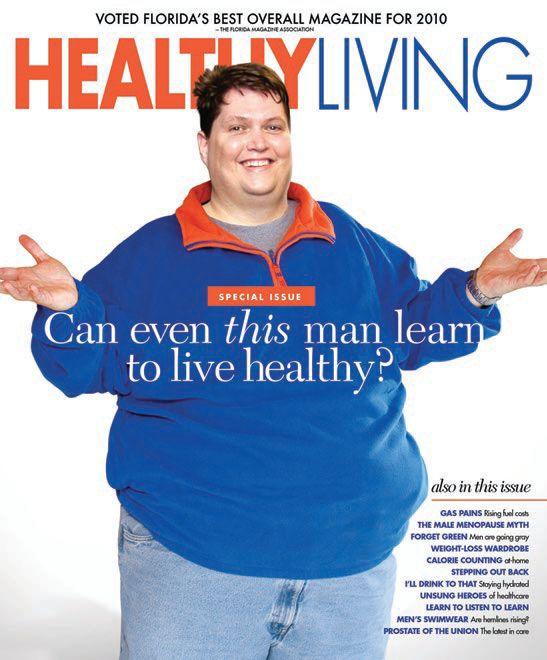
B.E. Thompson is now a much smaller man, but his heart is as big as ever! Find out what he’s been up to and how he has inspired others to live healthy since he last appeared on our cover.




The only practice
PROCEDURES:
Colonoscopy: Colorectal cancer screening • HALO: Treatment of Barretts/Gastric AVM
Bravo PH: Study of acid reflux • Esophageal Manometry: Testing motility and non-cardiac chest pain evaluation
Anorectal Manometry: Testing for incontinence/anorectal disorders

EGD/Enteroscopy: Procedure to view upper GI tract • ERCP: Pancreatic/biliary tract evaluation
Video capsule studies: Procedure to study the small bowel
IRC: Treatment for internal hemorrhoids • PEG: Feeding tube insertion into the stomach
EVALUATION AND MANAGEMENT OF:
Reflux • Colon screening • Internal bleeding • Abdominal pain • Hepatitis • Gallbladder • Colitis
Crohn’s disease • Swallowing difficulties • Barretts/Gastric AVMs • Non-cardiac chest pain
Gastrointestinal CONSULT ANTS WWW.GASTROBAY.COM // 352.383.7703 THE VILLAGES // 1580 SANTA BARBARA BLVD LAKE SUMTER LANDING // 910 OLD CAMP RD, BLDG 200, SUITE 202 LADY LAKE // 13940 US HWY 441, BLDG 100, SUITE 102 TAVARES // 2134 VINDALE RD AAAHC Certified // Medicare & Most Insurance Accepted // Payment Plans Available
Board-Certified in Gastroenterology, Digestive Tract, Liver, and Pancreatic diseases LEONOR
Board-Certified in Gastroenterology
Board-Certified in Gastroenterology
SHAMS S. TABREZ, MD
SANTOS, MD
DAVID ELIJAH, MD
Premier to offer comprehensive GI services and an onsite lab Surgical Center
Please call 352.383.7703 to schedule your appointment today!
Board-Certified in Gastroenterology, Digestive Tract,
LAL S. NAGABHAIRU, MD
Liver, and Pancreatic diseases
PAUL B. GOLDBERG, MD, FACP, FACG, AGAF
Board-Certified in Gastroenterology
SCREENING FRIDAYS

A ONE-ON-ONE CONSULTATION WITH ONE OF OUR SPECIALISTS











CALL TO FIND OUT ABOUT FREE



INVERNESS 308 W. Highland Blvd Inverness, FL 34452 352.726.8353 CRYSTAL RIVER 760 S.E. 5th Terrace Crystal River, FL 34429 352.795.4165 LEESBURG 801 E. Dixie Ave., Suite 107 Leesburg, FL 34748 352.315.0627 THE VILLAGES 910 Old Camp Rd., Bldg. 210 Lake Sumter Professional Plaza The Villages, FL 32162 352.751.3356 www.citruscardiology.org Left to right: Brian Saluck, D.O., FACC, FACOI B. Govindarajan, M.D., FACC Javier Gonzalez, M.D., FACC Srinivas Attanti, M.D., FACC Vinod Miryala, M.D., FACC Abel Rivero, M.D. IT’S OBVIOUS WHEN YOUR HEART’S IN THE RIGHT PLACE.
July 2013 FEATURING
Don’t stop B.E.lieving!
B.E. Thompson has a big smile, a big heart, and a big weight loss story. Many wonderful things have happened to the Eustis resident since he shed 340 pounds naturally. While he has found himself in the national spotlight, he continues giving his time to help locals who are struggling with obesity. Though his body may be smaller, his impact is still quite large.
WRITER: JAMES COMBS
LOOK GOOD, FEEL GOOD
There is more to health than gorgeous skin, well-groomed hair, sparkling eyes, and toned bodies. It is vitally important to also maintain optimal health mentally, spiritually, and financially. We are providing you with valuable tips to help you become beautiful on the inside ‘and’ outside.
WRITER: DEBBIE INGRAM
SPECIAL PROMOTIONAL FEATURE HEALTHY REFERRALS
When we hear doctors talk about their superior technology and excellent bedside manner, many of us take this with a grain of salt. What else would you expect a doctor to say? However, when patients offer up glowing praise about a doctor, we are naturally more attentive and inquisitive. If word-of-mouth is indeed the best form of advertising, then several doctors in Lake County will be very satisfied by what patients are saying about them.

LAKEHEALTHYLIVING.COM // 7 LAKEHEALTHYLIVING.COM /
28
38
45 ON THE COVER
PHOTOGRAPHER: FRED LOPEZ
DIRECTION: JAMIE EZRA MARK
PHOTOSHOP: JOSH CLARK
MODEL: B.E. THOMPSON
HEALTHYBODY SHAPE
72 KILLER QUADS
You’ll love your legs after performing these three exercises..
WRITER: TRACY DRAPER INSIDE
76 BEAT THE HEAT
Take the necessary precautions to avoid heatstroke.
EAT FIT/NOT FAT
78 THE RIGHT FOOD
We truly are what we eat.
WRITER: LORI ESAREY QUENCH
80 CUCKOO FOR COCONUT WATER
Learn about the many health benefits of this ‘miracle drink.’ LOOK
82 LOOK GOOD WITHOUT PLASTIC SURGERY
Maintain your lovely appearance sans going under the knife.
WRITER: RICHARD T. BOSSHARDT, M.D., FACS
HEALTHYMIND
CONDITION 86 PROTECTING THE MATURE MIND
Slow the process of aging through mental fitness.

COMPULSIVE 88 OVERCOME OBSESSIVE THINKING
Don’t let repetitive, negative thoughts overwhelm you.
HEALTHYSPIRIT
INNERVENTION 92 ‘BACK’ IN THE GAME Disease doesn’t mean the end.
WRITER: JAMES COMBS
GLEE 94 HAPPINESS 101: START THINKING POSITIVELY Stop sulking and get happy.
MENCOURAGEMENT
96 REALITY, X-RAY SPECS, AND BEER GOGGLES
True beauty is more than skin deep.
WRITER: RICHARD BURGUET
IN EVERY ISSUE
HEALTHYFINANCE
WELL-BEING
98 THE HEALTH BENEFITS OF FINANCIAL SECURITY
Stable finances mean overall wellness.
WRITERS: THOMAS FROSS AND ROBERT FROSS
SHIFT
100 CHANGE COMING?
Know how to spot the signs of a downturn in the stock market.
WRITER: THOMAS H. RUGGIE, CHFC, CFP
CHOICES
102 DAVE SAYS
Life is full of major financial decisions.
WRITER: DAVE RAMSEY
8 // HL // JULY 2013
PUBLISHER’S CORNER
HEALTH MATTERS
HEALTHY INSPIRATION
MEDICAL MYSTERIES
CALENDAR
COMMUNITY 114 HEALTHY VIEWS are what we eat. I OR out nefits D URGERY ce sans HARD T. nancial 86 80 98
10
12
20
22
103
108
ORTHAHEEL SHOES
Having proper support, comfort and pain relief for your feet doesn’t mean having to wear shoes that lack style. The Center for Ankle & Foot Care proudly offers a wide variety of fashionable Orthaheel shoes, which are designed to help restore the foot’s natural alignment and offer relief to individuals who suffer from plantar fasciitis or heel pain.
Center for Ankle & Foot Care

We Focus on Foot: Health, Beauty and Comfort
PINPOINTE LASER TREATMENT
Nobody likes to deal with embarrassing and unsightly toenail fungus. To treat this curable condition, the Center for Ankle & Foot Care uses the state-of-the-art PinPointe Laser. This FDA-approved treatment is the safest and most effective way to kill the fungus and improve the appearance of your nails. The Center for Ankle & Foot Care also sells the SteriShoe. This is a patented ultraviolet shoe sanitizer that kills the microbes that cause athlete’s foot, toenail fungus and offensive shoe odor.
THE NATURAL NAIL SPA
For a relaxing and enjoyable spa experience, try the Natural Nail Spa, a podiatrist-owned and certified modern nail lounge that maintains a pampering, relaxing atmosphere and the utmost sterilization and safety techniques. Even the nail polish bottle goes home with the client — just another step to heighten the “safe pedicure experience.”
FOOT AND ANKLE CARE
Board-certified foot surgeons Dr. Michele McGowan and Dr. Timothy Henne offer a number of foot and ankle services for comprehensive foot care and ankle disorders. They are trained to handle problems as small as ingrown toenails and warts to as large and complex as bunions, hammertoes and heel pain.
kle dle as small as wn toenails and warts to as nd as bunions, ertoes ain.
TAVARES 2515 Dora Ave
CLERMONT 3150 Citrus Tower Blvd Suite B
SUMMERFIELD 16920 Hwy 441 Suite 104 (Laser Foot Center)
1.866.840.1405
www.centeranklefootcare.com www.nailsnaturalspa.com
W
Center for Ankle & Foot Care
B.E. INFLUENTIAL
Each month I tell you how excited I am to present the newest issue of Healthy Living magazine. However, this month I am extremely excited. As I’m sure you noticed on the cover, we are featuring one of my dear friends, B.E. Thompson. I met B.E. years ago when I was joining several different community boards on which B.E. also served. B.E. instantly became my friend but back then, he was different. You see, B.E. was overweight and what the medical professionals call obese. It was difficult to watch B.E. struggle with his weight and all the health issues that accompany obesity.
Shortly after meeting B.E., he shared with me that he was going to begin a journey to become healthier and requested that Healthy Living magazine sponsor him and follow him through the process. He was certain that publicizing his journey would not only keep him motivated but also inspire others along the way.
We featured B.E. as the cover story in the June 2011 issue, and he shared his amazing and very successful story. At that time, B.E. had lost more than 300 pounds. He had done it — or so we thought. We soon discovered that his journey had actually just begun. B.E. continued to lose weight and become healthier day by day, but he had no idea at that time how much of an inspiration he would be to others.
B.E.’s courage and willingness to share his journey has affected so many people within our community and across the nation. He continues to receive emails, letters, and phone calls from people who are experiencing the same struggles that he went through. And most importantly, B.E. takes the time to respond to them all.
It has been such a great pleasure to be involved in B.E.’s journey and follow him through it in the magazine. It seemed only appropriate to have B.E. as our main feature again in our annual Look Good, Feel Good issue.
Here’s to you B.E.! Thank you for being such a fantastic inspiration to us all.
KENDRA AKERS publisher/editor-in-chief kendra@akersmediagroup.com
DOUG AKERS vice president doug@akersmediagroup.com
JAMIE EZRA MARK chief creative officer jamie@akersmediagroup.com
EDITORIAL // DESIGN
TINA MORRISON editorial/community relations director tina@akersmediagroup.com
MARY ANN D ESANTIS editor-at-large maryann@akersmediagroup.com
SHEMIR WILES copy editor/writer shemir@akersmediagroup.com
JAMES COMBS staff writer james@akersmediagroup.com
HEATHER TOOTLE office manager heather@akersmediagroup.com
contributing writers
RICK BOSSHARDT RICHARD BURGUET
TRACY DRAPER
LORI ESAREY
ROBERT FROSS
THOMAS FROSS
FRED HILTON
DEBBIE INGRAM
DAVE RAMSEY
THOMAS H. RUGGIE, CHFC, CFP
STEVEN J. CODRARO associate creative director steve@akersmediagroup.com
CIERRA CHAPPELL production manager/designer cierra@akersmediagroup.com
JOSH CLARK senior designer/advertising josh@akersmediagroup.com
ANTHONY CASTO senior designer/editorial anthony@akersmediagroup.com
CALEB WAYNE JENSEN contributing designer caleb@akersmediagroup.com
FRED LOPEZ chief photographer fred@akersmediagroup.com
AUBREY AKERS receptionist
contributing photographer SHAENA CHASTAIN
SALES // MARKETING
TIM MCRAE vice president of sales and marketing tim@akersmediagroup.com
MIKE STEGALL senior marketing representative mike@akersmediagroup.com
LORI STRONG marketing representative lori@akersmediagroup.com
HEIDI RESSLER marketing representative heidi@akersmediagroup.com
JIM LAW marketing representative jim.law@akersmediagroup.com
MICHAEL GAULIN production director michael@akersmediagroup.com
Until next month,
Until next
DISTRIBUTION
SCOTT HEGG distribution manager scott.hegg@akersmediagroup.com
Kendra Akers publisher
best quality publication, so your feedback is vital.
10 // HL // JULY 2013 All contents are copyright © 2013 by Akers Media Group, Inc. DBA Lake County’s Healthy Living Magazine. All reproduction or use of content without written persmission is strictly prohibited under penalty of law. The contents of the Lake County’s Healthy Living Magazine are for informational purposes only. The information is not intended to be an alternative to professional medical advice, diagnosis or treatment. Always seek the advice of your physician or other qualified health provider before starting any new diet or exercise program. The ideas and opinions contained in this publication do not necessarily reflect the thoughts or opinions of Akers Media Group. Phone: 352.787.4112 // Fax: 352.323.8161 P.O. Box 490088 Leesburg, FL 34749 www.akersmediagroup.com
Publisher’s
Comments or questions for our publisher? Please email kendra@akersmediagroup.com. Our goal is to provide you with the
corner

currentCallfornew&memberspecials! ValidthruJuly31 ValidthruJuly31 Get Fit Anytime! MEMBERSHIP FEATURES State-of-the-art cardio Free weight and strength equipment FREE personal fitness orientation upon joining Private restrooms and showers Around-the-clock security with remote monitoring and surveillance Tanning available Personal training Ask about corporate discounts and hero discounts (military, police, fire, emt, teachers) . Get a friend to join – get a free month (refer 12– get a free year). 24-hour secure access Co-ed facility Secure access to more than 2,500 clubs worldwide
LEESBURG 352.742.2008 SUMMERFIELD 352.307.0700 BUSHNELL 352.569.1015 LADY LAKE 352.633.0868 MOUNT DORA 352.308.8126 You have your own key! SH .56 p hero discounts teaache h r rs) rs – (refe feer 1 122– ge get g a fre fr f e y eyyea a earr). 24 h 24-hourrsecureaccess r secure access BU 352 LD 0 dwide MERFIEL 307.070 n Co-ed access to more 0 s world SUM 352. You your ow # 6 WILDWOOD LOCATION OPENING SOON! FOLLOW ON ANY OF OUR FACEBOOK PAGES TO SEE WHERE #7 WILL BE!
Mike Brashear, Owner
SPARKLE WITH SAFETY ON INDEPENDENCE DAY



































The Fourth of July is one of the most festive, fun-filled days of the year. People love to spend precious time with family and friends, enjoy nice picnics or barbecues, and conclude the evening watching a dazzling display of fireworks. Don’t spoil this fun day by being careless. There are things you can do to prevent accidents.
• Many people enjoy swimming on the Fourth of July. Do not allow children to swim without adult supervision. Statistics show that most young children who drown are only out of sight for less than five minutes.











• Drink alcohol responsibly. Mixing alcohol with swimming, fireworks, and driving is extremely dangerous.






• If you are eating outdoors, make sure to cover food and beverages to avoid being stung by bees and wasps.



• If you plan to spend the day outdoors — particularly at a lake, beach, or pool — be sure to wear sunscreen to prevent serious sunburn or skin cancer.
• It’s hot this time of the year. Drink plenty of fluids to avoid dehydration or other heat-related illnesses.


• Make sure children stay a safe distance from campfires and grills. Grill fires and explosions can occur with gas leaks, blocked tubes, and overfilled propane tanks.
LOWERING THE BOOM
15,500 In 2010, fires were reported due to fireworks, including 1,100 total structure fires and 300 vehicle fires.

8,600 In 2010, estimated people were treated in emergency rooms throughout the country for fireworks-related injuries. Of those, 57 percent suffered injuries to their extremities, and 37 percent suffered injuries to the head.


5–14, Children ages had the highest risk of injury with more than twice the risk for the general population.



Matters Safety / Superfood / Med‘tech’ / Local health :securoS ycnegAnoictetorPreiFalnotiaN ,
S o ur c e s: “ 1 1 T ip s fo r a Safe Fourth o f July ”by Melissa Stoppler, MedicineNet.com, www.medicinenet.com/script/main/art.asp?articlekey=82131(AccessedMay28, 2013)
1=testF5%eikoco&792=DIyroegtac?psat.siLyroegtacg/roa.pfn.www
“We thought our golf days were behind us - until FMI got us back in the game.”
If you’ve lost count of the days you have spent suffering from joint pain, perhaps it’s time to start counting on the proven treatments FMI has used to help thousands of patients get genuine, lasting relief. Come talk to me about conservative non-surgical options that really work - and, for the fraction who need surgery, advances in joint replacement, including the revolutionary “perfect fit” knee procedure. It’s amazing, and it is one of my specialties.

Including revision procedures
Customized “perfect fit” knee joints
(352) 753-4366
(352) 728-3000
www.bonesandmuscles.com
MD
‘BERRY’ HEALTHY
When you are feeling tired, sluggish, and unhealthy, there is something out of the blue that may help — blueberries. A diet rich in blueberries can help lower blood cholesterol levels and reduce risk for heart disease and diabetes. According to a study presented at the 2009 Experimental Biology conference, blueberries have at least five other health benefits including the following:
• Blueberries contain the highest amount of antioxidants among all fresh fruit, including vitamins C, E, A, and B complex.
• Because they have a high amount of antioxidants, blueberries can neutralize free radicals that cause disease and aging in the body.


• Blueberries are rich in anthocyanosides compounds that help preserve vision.


• Blueberries are considered natural antidepressants that help to keep you in a good mood.
• Blueberries are good for digestive health because they contain vitamins, sodium, copper, fructose, and acids. Source: www.womenfitness.net/blueberries.htm
WHERE CAN YOU FIND FRESH BLUEBERRIES IN LAKE COUNTY?


Green Acres Fernery, Blueberry & Peach Farm: 8635 High St., Yalaha. 352.324.3333
Blue Bayou Farms: 26921 Bloomfield Ave., Yalaha. 352.324.4069
H&H Berry Farms: 15217 County Road 455, Montverde: 321.436.5830

Lake Catherine Blueberries: 5849 Lake Catherine Road, Groveland: 352.551.4110

Lake Jem Nursery: 27205 County Road 448A, Mount Dora: 352.223.4445
Lazy Bear Blueberries: 46002 State Road 19, Altoona: 323.420.8663.
Mark’s U-pick Blueberries: 18900 County Road 561, Clermont: 352.394.2135


Southern Blues Berry Farm: 5410 Mitchell Bridges Road, Clermont: 352.267.0468
Valley View Vineyard: 22310 County Road 455, Howey-in-the-Hills: 352.243.4032
Note: Always make sure to call ahead to check availability.
Matters
Safety / Superfood / Med‘tech’ / Local health 14 // HL // JULY 2013
Make No Bones About It.
The BioPro® Living Hip Stem Horizontal Platform Support Ho
Comprehensive Care:
People from all over the United States and countries around the world have come to Dr. Vrej Manoogian for total knee and hip replacement. He designed “The Living Hip”, a unique hip prosthesis that is unmatched in its ability to imitate the natural functions of the hip joint. The direct anterior approach, combined with “The Living Hip” prosthesis, has provided a revolutionary treatment for patients with hip arthritis. Since opening his Mount Dora-(near Orlando, Florida) based practice in 2001, Dr. Manoogian has paid meticulous attention to the proper alignment and ligament balancing for his total knee replacements, giving his patients outstanding results. Dr. Manoogian is boardcertified and fellowship-trained.

Manoogian & Guru Orthopedic Center, P.A. l 1945 Bay Road in Mount Dora 352.483.5633 l www.manoogianorthopedics.com
With open arms
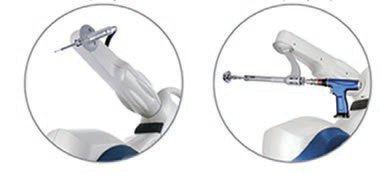
While it may seem like futuristic technology, robotic surgery is alive and well in Lake County. Dr. Jon Radnothy was the driving force in bringing MAKOplasty robotic partial knee resurfacing to Florida Hospital Waterman. Other surgeons are now performing this knee surgery at the hospital, and the results have been excellent.

This innovative surgical technique offers patients:
• Faster recovery times
• Minimal hospitalization stay
• Reduced blood loss
• A more natural-feeling knee

• Less surgical scarring
• Minimal incisions
• Less post-operative pain
• Preservation of healthy bone and healthy tissue Source: www.makoplasty.com
A h serien





Mount Dora Christian Home and Bible students had an opportunity to participate in hands-on robotics activities and view a demonstration of the da Vinci robotic-assisted surgery system.

The system enables surgeons to perform delicate and complex operations through a few tiny incisions and with increased vision, precision, dexterity, and control. It consists of several key components, including four interactive robotic arms, a high-definition 3D vision system, and an ergonomically designed console where the surgeon sits while operating. ■


How does MAKOplasty work?
Before the surgery, a CT scan is used to make a threedimensional image of a patient’s knee. Then, the surgeon calculates a customized surgical plan that precisely pinpoints where arthritic knee bones need to be removed and where an implant should be placed. An added benefit is that healthy bone, ligaments, and tendons are spared. The procedure typically lasts between 45 minutes to one hour. ■

16 // HL // JULY 2013
Matters
Safety / Superfood / Med‘tech’ / Local health
MAKOplasty® KNEEMAKOplasty® HIP

‘Ham’ming for Dimes
As dawn broke over Tavares on April 13th, the Lake County Auxiliary Communications ham radio operators were getting ready to support the March of Dimes’ March for Babies walkathon.
The operators set up a control station at Wooton Park, the staging area for the event. Fourteen volunteer ham radio operators provided radio communications to help monitor the walkathon’s fivemile course. They also helped transport walkers who could not finish the event back to the staging area.

More than 200 participants completed the walk and afterward, were treated to food and entertainment. March of Dimes raises money to help battle preterm births.
Facts about premature births
• One in nine babies is born prematurely in the United States.
• Between 1990 and 2006, the rate of premature birth increased by more than 20 percent.
• Four factors that often lead to premature birth include infections/ inflammation, maternal or fetal stress, bleeding, and stretching of the uterus.
• Lifestyle factors that could lead to premature birth include smoking, drinking alcohol, using illegal drugs, high levels of stress, and exposure to environmental pollutants
• Premature birth costs society more than $26 billion each year. ■ Source: www.marchofdimes.com/mission/prematurity_indepth.html
The future looks bright
Saad Ehtisham has been named as chief operating officer of Central Florida Health Alliance. A health care professional for more than 20 years, Ehtisham will be responsible for the health system’s operations. Most recently, he served as chief executive officer of University Medical Center, a 245-bed hospital system located near Nashville.

Seal of approval


Leesburg Regional Medical Center has been awarded a three-year term of accreditation in magnetic resonance imaging (MRI) as the result of a recent review by the American College of Radiology (ACR). The ACR gold seal accreditation represents the highest level of image quality and patient safety.

“Being accredited by the ACR is something that makes our department and staff very proud,” says MRI technologist Gloria Smith. “When you see the ACR gold seal, you know the facility has undergone a rigorous review process, the staff is well qualified to perform your procedure, and the equipment takes optimal images.”
MRI is a noninvasive medical test that uses magnetic fields to create images of internal body parts to help physicians diagnose and treat medical conditions. The hospital offers MRI of the head, body, and spine, as well as musculoskeletal MRI and magnetic resonance angiography (MRA). ■


“It is a great honor for me to join the compassionate, world-class health care team at Central Florida Health Alliance,” he says. “I look forward to being part of the rich history and legacy of excellent care. Central Florida Health Alliance is well-positioned on its path of excellence, and I embrace the opportunity to help lead the way in high-quality care and improved patient outcomes.”
In 2012, he was named as one of the top 25 minority health care executives in the United States by Modern Healthcare. ■
18 // HL // JULY 2013 Matters
Safety / Superfood / Med‘tech’ / Local health
Our Patients Say It Best...













Marie McAvoy of The Villages golfed four times a week and walked several miles a day. Unfortunately, she gave up both activities when her feet began causing her excruciating pain one year ago.

“I started going to a rheumatologist, but that did no good,” she says. “I couldn’t stand the pain any longer, so I took the bull by the horns and decided to go to Tri County Podiatry.”



Dr. Johnny Wu diagnosed her with severe arthritis and bone spurs in both feet. Always one to try conservative measures first, Dr. Wu ordered special arch supports for Marie and had her undergo several weeks of physical therapy with Tri-County Podiatry’s in-house physical therapy team. Having experienced no pain relief, her condition required surgery. Dr. Wu performed a bunionectomy with a joint implant on the big toe of her right foot. Once she fully recovers, Marie will have the same procedure performed on her left foot.
“I’m recovering nicely and no longer have any pain in my right foot,” she says. “Dr. Wu is very caring. He called me the night before my surgery to see if I had any questions or concerns.”

“Footcare for people of all ages with active lifestyles.” Office Hours: Monday-Thursday 8am-5pm and Fridays 8am-12pm MOST INSURANCES ACCEPTED Learn more about Tri-County Podiatry when you scan this with your smart phone www.tricountypodiatry.net MEDICAL & SURGICAL TREATMENT OF: • Bunions and Hammertoes • Corns • Morton’s Neuromas • Ingrown Nails and Warts • Heel and Arch Pain • Thick Painful Toenails • Foot Injuries • Diabetic & Geriatric Foot Care • Sports Medicine • Orthotics • Diabetic Shoes • Numbness/Tingling of Feet Same-day appointments often available for emergencies. 1585 Santa Barbara Blvd. • Suite B • The Villages, FL *NOW OFFERING IN-OFFICE PHYSICAL THERAPY MEDICARE ACCEPTED 352.259.1919
From Left: Larry Erlinder, DPM; Michael Palma, PTA; Johnny Wu, DPM; Felix Esarey, DPM; Ivelisse Rosa, DPM; and Keri Brooks, RPT
CULTIVATING A CANCER CURE
By the time Mary Winchell was diagnosed with stage 4 breast cancer in May 2012, the disease had metastasized to her thoracic spine. The Leesburg resident took a fresh perspective on how to successfully battle cancer — raw food.

Fourteen months later, neither of her tumors can be detected through diagnostic imaging and blood tests.
Amazingly, she never underwent chemotherapy, radiation, or surgery.
“I give all the credit to God because He provides us with the natural food we need to sustain a healthy life,” says Mary, a professional lighting consultant with Besco Electric in Leesburg.
Shortly after her diagnosis, Mary spent two weeks at Hippocrates Health Institute in South Florida. Doctors at this alternative health care facility educated Mary on healing her body and maintaining a healthy lifestyle through diet. She was also treated
IF YOU WERE EATING LIKE MARY, HERE IS WHAT YOU WOULD CONSUME IN A DAY:
BREAKFAST: Wheatgrass juice, buckwheat groats, and cereal with almond milk.
LUNCH: Salad with dark greens, chopped zucchini, oil-cured olives, cucumber, red and yellow peppers, olive oil, and lemon.
DINNER: Zucchini noodles with red pepper marinara or pesto-stuffed mushrooms. Her favorite dessert is raw Key lime pie.
EATING OUT: Living Green in Tavares and Vitality Bistro in Mount Dora.
SHOPPING: Fresh Market in The Villages, Health Basket in Mount Dora, Chamberlain’s Natural Food Market in Orlando, and Whole Foods in Orlando.
To try Mary’s raw Key lime pie, get the recipe at www.lakehealthyliving.com
to a raw and organic buffet featuring different daily dishes such as lettuce greens, radishes, sprouts, chickpeas, veggie burgers, and wheatgrass juice.
After returning home, Mary faithfully stuck to raw food and eliminated sugar. By the second month, the tumor in her spine was undetectable. “Had I not shown marked improvement by that time, I was going to follow my oncologist’s initial advice and undergo chemotherapy,” she said. “But when the tumor in my spine was gone, it gave me the confidence and strength to continue my raw diet.”
Mary grows her own wheatgrass and drinks wheatgrass juice daily. The juice is rich in chlorophyll, which closely duplicates the molecular structure of hemoglobin, a protein in red blood cells that transports oxygen throughout the body. Her exercise regimen consists of Zumba, aerobics, and weightlifting.
20 // HL // JULY 2013
Healthy inspiration





If you answered “YES” to these questions, you may be experiencing a medical condition known as “Low Testosterone” or “Low T.” UROLOGY of MOUNT DORA for more information 352.383.3773 717 N. Donnelly Street | Mount Dora, FL 32757 Dr. Jack CASSELL “NON-PATRIOTS NEED NOT APPLY...” Super Hero • Are you having trouble performing like you used to? • Do you regularly experience “equipment problems?” • Do you have less energy for activities you once enjoyed? As men age, over time they experience a decrease in testosterone. For many men, this loss of testosterone can result in reduced sex drive, less energy and decreased pleasure in life. Recent data also suggests that low testosterone may very well predispose men to developing prostate cancer. Our offices can determine if “Low T” is the cause of your symptoms and effectively treat your condition to get you back in the game. WANT TO FEEL LIKE A AGAIN?
THE FULL MOON MADE ME DO
Anumber of years ago, I was a newspaper reporter. While I was on the police beat, my cop friends swore that crime and general craziness increased dramatically whenever there was a full moon.
A few years later, I went into public relations and was employed as the media representative for a college. About that time, the streaking craze hit college campuses around the country. One warm fall night, hundreds of our fine, young male students — and a few female ones — went gallivanting across the school’s quadrangle with their bare butts shining in the moonlight. The television cameras and newspaper photographers were there in full force, capturing the moment that made so many mothers and fathers proud of their kids.
The newspaper editor called me for comment. I made a little joke about what I had learned from the cops in my days as a police reporter. The next morning the paper ran a huge photograph of dozens of shiny college bottoms. The photo caption said, “The college spokesman said there was a full moon out.”
Obviously, a full moon has the ability to make a fool out of me. However, does it cause crime to go up or convince my young college friends to expose
their derrieres? The researchers say no. One study in Miami-Dade County did show a correlation between moon phases and the homicide rate, but that study has since been rejected because of faulty data. A detailed study in San Antonio, Texas, crunched statistics on crime, weather conditions, and astronomical data over a four-year period. USA Today reported that the study debunked the evil notions about the moon: “Substantive lunar effects on crime were not found in the data analyzed here. Although popular culture, folk lore, and even certain occupational lore suggested that ‘freaks’ come out during full moons, this phenomenon was not reflected in San Antonio police data.”
“Lunar” and “lunatic” both derive from the same Latin word, so does that mean the full moon causes general foolishness? Not so, according to a study done by the Laval University’s School of Psychology in Canada. Researchers examined nearly 800 patients over a three-year period and found no link between psychological disorders and the lunar phases.


Therefore, we can conclude that the full moon really has no effect on crime or behavior. My cop and ex-cop friends will totally disagree.
So will the werewolves.


SOURCES: “Does the Full Moon Really Make People Act Crazy!” by Erin McCarthy, Mentalfloss.com: mentalfloss.com/article/31608/does-full-moon-really-make-people-act-crazy; “‘Supermoon’ Lunacy: Does the Full Moon Make Us Crazy?” by Jeanna Bryner, managing editor, LiveScience.com: www.livescience. com/13323-supermoon-lunacy-full-moon-myths.html; “Does Full Moon Increase Criminal Activity?”, Softpedia.com: news.softpedia.com/news/Does-Full-Moon-Increase-Criminal-Activity-57273.html; “Full moon eclipsed as accessory to crime,” by Dan Vergano, USA Today, August 11, 2010: usatoday30. usatoday.com/tech/science/columnist/vergano/2010-07-11-moon-crime_N.htm (Accessed May, 28, 2013)
IT! WRITER: FRED HILTON
Medical
22 // HL // JULY 2013
FRED
HILTON spent 36 years as the chief public relations officer/spokesman for James Madison University in Virginia and 10 years prior as a reporter and editor for The Roanoke Times in Roanoke, Virginia. He is now happily retired in The Villages with his interior designer wife, Leta, their Cadillac Escalade golf cart, and their dog, Paris. (Yes, that makes her Paris Hilton).
mysteries

ADVERTISEMENT JULY 2013 ISSUE www.ocalaice.com 20 J w www.ocalaic oc
Summertime Shifts
Grilling. Ice cream. Picnics. Beaches. This is the best time of the year to live in the Southeast. The sun beckons us to visit one of the many springs and lakes in the state, as well as the ever-popular Gulf of Mexico and Atlantic Ocean. On the other hand, we might choose to stay home and relax, spending time with our families so we can appreciate each other and the scenery that makes Central Florida extraordinary.
But while the weather changes to allow us to take delight in the longer days, shorter nights, and refreshing midday rainstorms, our diets tend to change, too. We celebrate the return of summer with outdoor grilling, cooling down with ice cream, and packing baskets for picnics, all of which captures what most of us enjoy during this time of year.
The smells and flavors of summer are bound to make us feel carefree, and our minds need that sense of bliss. But with this change, we want to remain diligent about our health. We must pay attention to the outside of our bodies by shielding our eyes and skin from the glare and heat of the sun. However, we should also remember to care for the invisible parts of our bodies — like our arteries and heart — because as with this month’s health topic, abdominal aortic aneurysms, you may not be able to see what needs your attention.
Yours,
Asad U. Qamar, MD
FACC, FCCP, FSGC, FACP, FSCAI Cardiologist
Seriously silent: Abdominal aortic aneurysms
Like a balloon, the wall of the aorta is quite elastic and can stretch. And like a balloon, it expands and retracts to accommodate the amount of air blown into it, or in this case, the amount of blood passing through the body’s largest blood vessel. This stretching and shrinking is normal, but what happens when the aorta wall becomes weakened with age or by health issues?
When the health of the aortal wall has faded, this blood vessel abnormally expands and swells. (Picture a garden hose with a round bubble along its otherwise sleek form.) This ballooning is called an aneurysm. It most

commonly occurs in the abdominal area, slowing down blood flow to the abdomen, pelvis, and legs. This can cause blood clots to form, break off, and travel from the belly to the legs.
What is important to understand about these abdominal aortic aneurysms is there are a few critical “mysteries.” The actual cause of the ballooning is unknown and can be so severe that the wall can rupture and tear open. And because of its hidden location in the abdomen, the aneurysm may go unnoticed because there are often no symptoms of growth until it tears or blood begins to leak from the blood vessel.
However, while the causes of aneurysms are not fully understood, we do know what makes us more susceptible to them. The fact is these abdominal aortic aneurysms most often occur in smokers, individuals with high cholesterol and blood pressure, males over the age of 60, and people who suffer from emphysema. As with many health conditions, genetics may also play a part in the likelihood of an aneurysm forming.
So when considering the best bet in preventing an abdominal aortic aneurysm, just think, “Better safe than sorry.” We may have heard this phrase repeated to us as
children, but the truth is the best way to keep your body healthy is to eat right, exercise, and to know when to seek help from professionals like those at ICE.
ADVERTISEMENT A service of the institute of cardiovascular excellence
e a. y e sm, an ard us as
Source: “Facts About Abdominal Aortic Aneurysm”: www.legsforlife.org/facts_about_aaa.htm
CASE STUDY
Robert’s at Ease

What’s unsettling about an aortic aneurysm is that there are no symptoms. For the past 20 years — since my diagnosis — I have had to rely on yearly checkups and scans to monitor my condition. The fear of the aneurysm bursting was constant. When my wife Betty and I moved here from Rochester in 2007, I was nervous about finding a new cardiologist I could be ‘cozy’ with. I was referred to ICE because my primary care physician noticed my feet were ice cold and purple.
I am big into researching my health care providers. Perhaps that’s my Army training paying off. So when I saw that Dr. Qamar was a fivestar doctor, I felt comfortable following up with ICE. He assured me they were going to watch me diligently through
periodic monitoring and care. They cleared the blockages, which improved circulation in my legs. Recently, Dr. Qamar discovered that the aneurysm had increased in size. He found it in time to take action. He referred me to a heart and vascular surgeon, Dr. Fariba Gharai. She was a wonderful, skilled surgeon and a beautiful person inside and out.
and care. kages, ulation in Qamar eurysm art ariba derful, eautit. and able y a f for
I’m 81 now and Betty and I have been married for 61 wonderful years. We are able to stay active and healthy together. And we still do a little bit of healthy arguing together, too. What a relief for the both of us.
ADVERTISEMENT
“Dr. Qamarwas a five-star doctor. I felt comfortable followingupwith ICE.WhenI met him, Iwasimmediately putatease.”
— Robert Marks
FAST FACTS
Abdominal aortic aneurysm affect as many as 5 percent to 7 percent of people over the age of 60, with males four times more likely to have AAA than females. It is the 13th leading cause of death in the US.
. m”:
Energetic Angel
I have a 7-year-old son, and when Angel Pumarol stops by my desk, we always compare stories and share pictures of our children. His are all grown up, and he always reminds me to enjoy my son because time flies by so fast. He is a regular patient so I see him often. Every time he comes in, he is nice, energetic, and talkative.
I look forward to seeing Angel and sharing our tales of parenthood.

 — Nyki Galvan Check-Out



Dr. Kalpesh Solanki, D.O., F.A.C.C.








Sunshine Cody

I see all the patients that walk through our doors, and when I see Cody Horne, my day instantly brightens. No matter what kind of day I am having, Cody is always a joy of sunlight. He has been through so much, but each time I ask him how his day is, he says that things are always getting better. He has a sunny disposition and tells me that coming to ICE makes his life so much easier. It’s the little things about him that I enjoy.
— Julie Hader Front Desk Check-In






a Fellow ular and




















ICE welcomes its newest member of the team, Dr. Kalpesh Solanki. As a Fellow of the American College of Cardiology, he practices cardiology and vascular medicine with a specialty in device therapy: pacemakers, defibrillators, and cardiac resynchronization.

“My expertise in device therapy complements the ICE team in that we are able to provide more services in one state-of-the-art building where communication between doctors is seamless,” states Dr. Solanki about joining the ICE team.

Dr. Solanki received a Bachelor of Science degree in mechanical engineering from the University of Florida and worked as an engineer for three years. He then attended medical school at Nova Southeastern University, followed by a oneyear internship at Palmetto General Hospital in Miami. He trained in internal and cardiovascular medicine for six years at the University of South Florida Health in Tampa.
He is a Florida native has been in Ocala for six years, and spends his time with his family.

e are able nication am neering s. He then onernal and Health in is time





































The Villages 1950 Laurel Manor Dr. Building 240
352.509.9295

The Villages 8489 SE 165th Mulberry Ln. 352.259.7900

Williston 412 W. Noble Ave. 352.528.0790




Lady Lake 733 County Road 466 352.751.9832

Ocala 4730 SW 49th Rd. 352.854.0681 Summerfield 10435 SE 170th Place 352.854.4582 A service of the institute of cardiovascular excellence
.C.
When it comes to orthopaedic procedures as complex as total ankle replacements, reverse shoulder replacement and joint replacements of the hip and knee, why trust anyone besides a specialist?
















Our board certified orthopaedic surgeons are specialists who are fellowship trained in their areas of expertise. They are known for their advanced skill, training and experience. It’s their names you will find scrawled on referral notes from physicians from across the state or featured on the front covers of a surgeon’s training manual. From conservative care for sports injuries to advanced ankle, shoulder, hip and knee replacements, trust the specialists trusted by other surgeons.


REALLY
Is Your SPECIALIST…
A SPECIALIST?
Our specialties include: Call today for an appointment. Compassionate Specialized Care by Board Certified Fellowship Trained Surgeons • Total Joint Replacement • Arthritis Evaluation • Non-Surgical Back Evaluation • Osteoporosis Evaluation • Physical Therapy • Diagnostic Radiology • Sports Medicine • Shoulder Surgery • Foot & Ankle Surgery • Trauma & Fracture Management • Arthroscopic Surgery (Pictured front row L to R) J. Mandume Kerina, MD Founder of Tri-County Orthopaedics Fellowship Trained, Board Certified, Advanced Joint Replacement Surgery Claudia L. Thomas, MD Fellowship Trained, Board Certified, Orthopaedic Trauma, General Orthopaedics (Pictured back row L to R) Isaac L. Mitchell, MD Fellowship Trained, Board Certified, Shoulder/Upper Extremity & Sports Medicine Cedric J. Tankson, MD Fellowship Trained, Board Certified, Foot and Ankle Specialist, Joint Replacement of the Ankle John T. Williams, Jr., MD Past Director, Total Joint Program at Albert Einstein Medical Center, Philadelphia Fellowship Trained, Board Certified, Advanced Joint Replacement Surgery Alfred J. Cook, Jr., MD Fellowship Trained, Board Certified, Sports Medicine and Cartilage Rejuvenation 701 Medical Plaza Dr., Leesburg • 326-8115 Summit Medical Park, 765 Highway 466, Lady Lake • 753-9105 ORTHOPAEDICS Center for Advanced Joint Replacement Surgery
EXPERTISE MATTERS.
DON’T STOP
Popularity and celebrity status weigh lightly on B.E. Thompson.
While he has received considerable publicity after losing 320 pounds naturally, he is still the same gentle, considerate, and downto-earth person he has always been. His body has shrunk considerably, but his heart remains as big as ever. B.E. openly shares how life has treated him since he graced the June 2011 cover of Lake County’s Healthy Living Magazine
 WRITER: JAMES COMBS
PHOTOGRAPHER:
FRED LOPEZ
28 // HL // JULY 2013
lieving!

LAKEHEALTHYLIVING.COM // 29
LA LAKEEHE H AL ALTTHHYLLIIVING.COM
Healthy Living: So B.E., it has been awhile since we’ve had the opportunity to sit down with you and talk. What exciting things have happened in your life over the past two years?
B.E. Thompson: My Fox Orlando and Huffington Post have both interviewed me about my weight-loss journey. I have also been contacted about appearing on the Dr. Oz Show. I have stayed in contact with the producers who have discussed featuring me in an episode on incredible weight-loss stories. Then last October, I met SQuire Rushnell and his wife, the lovely Louise DuArt, at the LifeStream Behavioral Center Foundation’s Gala of Hope. He is a former television executive for ABC news, and he is pitching a show to NBC called Up Island/Down Island. He wants me to be a character consultant for the show’s main character, Tyler Burns, who previously weighed 500 pounds.
HealthyLiving: How exciting! How else has life changed since you’ve lost 320 pounds?
B.E. Thompson: Well, I’ve gone from wearing size 72 pants to wearing size 34 pants. I’m half the man I used to be!
Healthy Living: I understand you are making many public appearances these days.
B.E. Thompson: I was in a fashion show sponsored by the Golden Triangle Republican Women’s Network. Who would have ever thought that several years ago? Here is a funny story about that show. Clara Schneider, who owns Em’z on Fifth in Mount Dora, organized
it. I arrived at the event dressed in nice clothes with my hair fixed up. Clara looked at me and asked if I was a professional model! After the show, she told me I could do modeling professionally because I seemed at ease onstage.
HealthyLiving: That is amazing. Being in public used to make you uncomfortable, right?
B.E. Thompson: Back when I was 540 pounds, if I had to attend a public meeting I would go hours in advance and scope out the venue to make sure there were adequate seating arrangements for someone my size. I really hated chairs with arms because I would literally have to wedge myself into the chair.
HealthyLiving: When you are making public appearances to talk about your weight loss, what is one thing you share that few people know about you?
B.E. Thompson: I was born 12 weeks premature and weighed three pounds. I was actually a decent-sized baby for someone born that early, but 44 years ago, we did not have the technology and medical advances we have today. I was in an incubator for 12 weeks. Several days after arriving home, I turned blue and stopped breathing. My mom stuck her finger down my throat and dislodged a tube to clear my airway. I tell the audience that I began to thrive after the tube was pulled out and kept going and going until I was 540 pounds. That always makes them laugh.
Healthy Living: How often do you make public appearances to speak about your journey?
B.E. Thompson: Usually two or three times a month. I have made appearances for companies and organizations such as Total Nutrition and Therapeutics, the Leesburg Area Chamber of Commerce, and the Golden Triangle YMCA. I am involved with Get Fit Lake.

Healthy Living: In addition to speaking to the public, how else do you make an impact?
B.E. Thompson: I recently served as mentor for LifeStream Behavioral Center’s five-member team that competed in the Leesburg Area Chamber of Commerce’s Business Wellness Challenge. My team ended up winning. They
30 // HL // JULY 2013
Blood pressure 160/98 120/80 Heart rate 96 80 Body fat % 56.6% 23.3% Blood sugar levels 143 83 Body fat (pounds) 226 50 Cholesterol (HDL) 135 45 Oxygen levels 25% 28% Then Now
by the numB.E.rs
I’ve gone from wearing size 72 pants to wearing size 34 pants.

I’m half the man I used to be!

We B.E. -lieve!
lost a combined total of 109 pounds and achieved a 25.7 percent reduction in body fat.


Healthy Living: There seems to be no limit to the impact you are making.
B.E. Thompson: I absolutely feel a sense of obligation to pay it forward. I have my life back. For me, there is nothing more satisfying than helping others get their lives back. God has given me a wonderful platform to help others adopt their own healthy choices in life. That is something I take very seriously.

Healthy Living: After losing the weight, you underwent three skin-removal surgeries. How did they go?
B.E. Thompson: First off, the surgeries represented the finishing touches on my transformation, and now I no longer have saggy skin or man boobs. Because I exercised religiously and ate healthy, I feel that I
“When I learned about B.E.’s success, I knew I could achieve similar success. I work out with B.E. at Infinity Fitness. He stays on me about going to the gym and eating healthy. He has definitely been my inspiration, and he is also a great friend. “
“I was inspired after reading B.E.’s story in Healthy Living Magazine. He was 540 pounds when he started losing weight. I was 300 pounds when I started losing weight. He had a mountain to climb; I had a foothill. He helped me immensely, and I did not want to let him down.”
“I am president of the Florida Coalition of the Homeless, so I’ve been a business colleague of B.E.’s for 10 years. When I saw how well he was doing losing weight, I knew I could do it, too. I reached out to him, and he was more than glad to help me. He keeps me motivated and accountable.”
toned up very well when I was losing weight. I also received lipomassage treatments regularly. Therefore, I only had two pounds of skin removed from my arms and five pounds removed from my thighs. With the central trunk lift, I had eight pounds removed. Each surgery was an outpatient procedure. The healing and recovery process after the surgeries was easy. I received lymphatic drainage and scar revision treatments. The most cumbersome aspect was dealing with the drains hanging off my body. After the central trunk lift, I had two drains on each hip, and after the thigh procedure, I had two drains on each side of my groin. Having to conceal these rubber tubes and drains is a challenge!
Healthy Living: Are you able to do things now you never thought possible?
B.E. Thompson: Since losing
all this weight, I have competed in three 5k races. I go into them with a mindset of having fun and finishing. My ultimate goal is to complete a half-marathon.
HealthyLiving: Many overweight people are afraid to go to the gym because they feel uneasy about being around people who are fit and toned. What would you say to these people?
B.E. Thompson: People fear that others might talk about them when they enter the gym. Guess what? Some might. If they do, they do. Don’t let it bother you. They are probably going to find something to talk about anyway. That is unfortunate because people should be more supportive of one another. It drives me crazy how some people are so quick to judge instead of offering support. When people saw how determined I was, they became supportive.
Healthy Living: Speaking of that, was there ever a time you were embarrassed in public?
B.E. Thompson: Numerous times. One time I was walking down the aisle of a grocery store, and I noticed an elderly woman who kept staring at me. I said hello to her. She looked at me and said, “You’re fat!” She said it in a mean tone and was visibly shaking. You could hear the anger in her voice. I was dumbfounded and embarrassed because my wife was with me. She waited for me in the front of the store and apologized. I told her that calling me fat in the manner she did was dehumanizing. I also told her I was fully aware I was overweight and how she thought I did not know that was mind-boggling.
Healthy Living: Did children ever say mean things to you?
B.E. Thompson: Several years ago, my wife and I used to
32 // HL // JULY 2013
— Jason Kilcrease, a 36-year-old Summerfield resident who has lost 230 pounds
— Richard Roe, a 67-year-old Summerfield resident who has lost 57 pounds
— Suzanne Edwards, a 56-year-old Lake City resident who has lost 51 pounds
“Whenever our workout group would see B.E. reach a new milestone, it felt like a sense of accomplishment for everybody. Seeing his success made me push myself harder. Watching him fight the good fight was very encouraging. ”
“I read B.E.’s story in Healthy Living Magazine and broke down and cried. It was as if I was reading a story about myself. Like B.E., I was also 540 pounds. He has encouraged me. He even invited me to his gym, and I have implemented some of his routines into my own workout program.”

“I met B.E. in the gym when he first started his journey. Now, I consider him a member of my family. In the beginning, I thought I could help motivate him. However, he is the one who truly motivated me. I’ve never met anyone who is as inspiring as he is.”
“I graduated from high school with B.E. He has always been uplifting and sweet. However, as I witnessed his transformation and realized how much healthier and younger he looked, I realized I could do the same for myself. Whenever I hit a speed bump, I know I can reach out to him for encouragement.”
baby-sit the young daughter of a friend. One day, as I was carrying her, she put her head down and said she was sad because I was fat. She did not say it in a mean, hurtful way, but she obviously was old enough to know that being overweight is not a good thing. I told her, “I’m sad that I’m fat, too.” That was the end of the discussion.
Healthy Living: Well, you certainly do not have to worry about anyone calling you fat these days.
B.E. Thompson: I recently ran into one of my old high school coaches. He did not recognize me at first. He kept reading my nametag. When it finally registered with him, he walked back over to me with his jaw dropped. He told me how great I look and how proud he is of me. I never grow tired of those reactions.
HealthyLiving: Having spent most of your adult life morbidly obese, what is it like these days to see yourself in a mirror?
B.E. Thompson: Because I was so obese for so long, sometimes I still think of myself as being that way. So when I see my reflection in a mirror or window, I pause and ask myself, “Who’s that?” Then I realize it is me. That helps me understand why others react the way they do.
Healthy Living: What advice would you give to people who are undergoing a lifestyle change of their own?
B.E. Thompson: First of all, you should not allow others to negatively influence you and use that as an excuse for failure. Secondly, you need to surround yourself with a good support system. Unfortunately, there are people who are no longer part of my circle of influence because they were
trying to sabotage my weightloss effort.
Healthy Living: Can you elaborate on that?
B.E. Thompson: When I was at the point where I had lost 150 pounds, a friend continued bringing me brownies and other treats. I asked this friend politely to stop baking me things. One day, this person showed up at my door with a red velvet cake. I threw it in the trash. This friend struggles with weight issues and also knew the journey I was on. To this day, I feel this friend was trying to sabotage my efforts because of jealousy. Sadly, we are no longer friends.


Healthy Living: That is too bad. However, you have made lots of new friends, right?
B.E. Thompson: This journey has allowed me to meet so many wonderful people whom I would never have met otherwise. I feel
so blessed and honored to call them my friends. They are a great addition to the wonderful friends who have supported me throughout my life.
Healthy Living: I hear you are also turning the heads of ladies.
B.E. Thompson [laughs]: I went to a funeral recently, and there was a bunch of women who I did not know. One lady I did know and we talked at the funeral. Later on Facebook, she told me the others asked her who the hot guy was she talked to at the funeral. I had never in my life been referred to as hot. It is flattering, but at the end of the day, I go home to my wife and dogs, still live in the same house, still drive the same truck, and for the most part, still have the same circle of friends. Those things keep me grounded. I’m still the same person I always was. I just have a lot more clothing options these days!
LAKEHEALTHYLIVING.COM // 33
— Gidget Gibson, a 52-year-old Wildwood resident who has lost 30 pounds
— Macey Butler, a 43-year-old Mount Dora resident who has lost 299 pounds
— Michelle Girard Smith, a 47-year-old Leesburg resident who has lost 30 pounds
— Melody Haines, a 43 year-old resident of Fruitland Park who has lost 40 pounds
Cracking a new market
Make no bones about it: Dr. Tige Buchanan is undergoing an adjustment of his own. After opening Leesburg-based Buchanan Health Group in Leesburg nearly 12 years ago, the popular chiropractor will soon be opening a second office in Mount Dora.

The office will be located inside Evolution Health and Fitness, a multidisciplinary health care company formed by local fi nancial advisor Tom Ruggie. The facility, which opened in June, combines chiropractic, massage therapy, CrossFit, and other fitness programs all under one roof so patients can utilize a holistic approach to health and wellness.
“There is a big need in Lake County for a facility that caters to the sports and wellness demographic,” he says. “I treat sports-related injuries all the time at my Leesburg practice, so having a one-stop shop where they can achieve maximum health and wellness is vitally important.”
Overseeing the CrossFit portion of Evolution Health and Fitness are Matt Kolozsvary and his wife, Ashley. They currently operate CrossFit Unmatched in Mount Dora. Outside of coaching, both have competed in prestigious CrossFit competitions.
Dr. Buchanan recently hired chiropractor Chad Eldridge to manage and run his new Mount Dora practice. A graduate of Palmer College of Chiropractic, Eldridge has extensive knowledge in sports chiropractic. In the past, he has treated National Football League (NFL) players, Olympic track athletes, and CrossFit competitors. He also has local ties to the area, having graduated from Tavares High School in 1999.
“We are bringing together the top area professionals in their respective fields,” Dr. Buchanan says. “We will have a dynamic group of people who are at the top of their game.”
PUTTING PATIENTS ‘BACK’ ON TRACK
As a well-known and respected chiropractor, Dr. Buchanan lives by a simple yet powerful philosophy.
“My goal is to see patients less often and feeling better than more often and feeling bad.”
Throughout the years, he has treated thousands of patients with debilitating neck and lower back pain resulting from automobile accidents, sports-related injuries, arthritis, and herniated discs.
Best of all, he achieves healing through a natural approach. This means no expensive surgeries that are risky and require several months of recovery time. It also means no medications that merely mask symptoms and fail to treat the underlying cause of pain. He tailors his natural treatment plans based on the unique needs of each individual patient.
“We first identify problems, formulate a treatment plan, and begin helping patients feel better,” he says. “Then we teach them about proper exercising, stretching, nutrition, and other things they can do outside my office to help them achieve a healthy lifestyle.”
Of course, he also realizes that not everyone is an ideal candidate for chiropractic care. In cases like these, he feels it is vitally important to be upfront with patients. “If I feel I cannot help someone, I am not going to waste his or her time, money, and energy,” he says. “I will refer them to another physician if it is in their best interest.”
That kind of honesty is certainly valued and appreciated. Another reason Dr. Buchanan is so popular among patients is because he adds a special hometown touch to his care. He is a native of Lake County and a Mount Dora High School alumnus. After graduating chiropractic school at Life University in Atlanta, he returned to the area to serve the wonderful people who call this county home.
“There is no other place I’d rather practice than right here,” he says. “The people are so caring and friendly, and it is an excellent place to raise a family.”
Buchanan Health Group is located at 32815 Radio Road in Leesburg. For more information, please call 352.787.8531 or visit their comprehensive website at www.buchananhealthgroup. com. Also, visit their Facebook page at www.facebook.com/ pages/Buchanan-Health-Group/105862056165400?sk=wall.
FOR MORE INFORMATION
PHONE: 352.787.8531
ADDRESS: 32815 Radio Road, Leesburg
WEBSITE: buchananhealthgroup.com
www.Facebook.com/pages/Buchanan-HealthGroup/105862056165 400?sk=wall.
ADVERTISEMENTADVERTISEMENT

ADVERTISEMENT
“We first identify problems, formulate a treatment plan, and begin helping patients feel better.”
“It is such a relief to no longer have leg aches at night! And now, my legs even look great! I’m so happy I met Tom Tran, who was personable, caring, reassuring, and professional. The best part about him is his smile!”
— Stella Whiteman Village Resident
“Comprehensive Vein Center is a great place, and the best part is they take you on time. If you have a 10a.m. appointment, they see you at 10a.m. They value your time, and the people are nice, too.”
 — Lawrence Turmel, Village Resident
“I can play golf and walk at least two miles now… the swelling has completely been eliminated. In addition, the whole staff is great; they talk to you and tell you what is happening so you feel comfortable during every visit.”
— Billy Kraft Village Resident
“I can’t believe I suffered for so many years with my painful and embarrassing varicose veins.”
— Carolyn Davis Village Resident


don’t suffer in ein New Location in Tavares Now Open at 2754 Dora Ave.! Our Villages location is golf cart accessible LEG SWELLING & LYMPHEDEMA VENOUS INSUFFICIENCY VARICOSE VEINS SPIDER VEINS LEG PAIN No downtime Non-surgical laser procedures Ultrasound-guided sclerotherapy Foam sclerotherapy Cosmetic sclerotherapy All procedures done in office setting COVERED BY INSURANCE The treatment for varicose veins is a covered procedure if medical necessity is met. FREE CONSULTATION* Ask us about two free sclerotherapy sessions* Tom Tran PA-C, MPAs, American College of Phlebology Mike Richards PA-C, MPAs, American College of Phlebology Anthony Alatriste M.D., Medical Director 1050 OLD CAMP RD, STE 202, THE VILLAGES, FL 32162 • 2754 DORA AVE, TAVARES, FL 32778 PHONE 352.259.5960 FAX 352.750.1854 TheCVC.net *The patient and any other person responsible for payment has a right to refuse to pay, cancel payment, or be reimbursed for payment for any other service, examination, or treatment that is performed as a result of and within 72 hours of responding to the advertisement for the free, discounted fee, or reduced fee service, examination or treatment.
LOOK GOOD, FEEL GOOD

Everyone wants to look and feel good, especially during the summer. So why not take time during these hot, lazy days to reflect on how you can be a better you. We have 20 health-giving tips to help you be your best physically, mentally, spiritually, and financially.


 WRITER: DEBBIE INGRAM






38 // HL // JULY 2013 2013






HEALTHY BODY
Be consistent
When it comes to exercise, consistency is more important than intensity. People often go all-out the first couple of days, only to lose motivation and fall off the wagon. Thirty minutes of exercise every day is going to pay off more than going crazy the first day and not being able to move the rest of the week.

“Exercise is important for all people of all ages,” says Mike Brashear, a local personal trainer who also owns multiple Anytime Fitness gyms throughout Lake and Sumter counties. “Consistent exercise keeps us not only physically but mentally feeling good about ourselves. When we feel good about our appearance, we’re more productive, which leads to greater success.”
Stay hydrated
Two-thirds of our body is made up of water, but we often don’t drink enough of it. Water is necessary for every metabolic reaction that occurs in the body, including metabolism. You can’t fight fat without water!
Staying hydrated also keeps your skin moist and supple and helps you stay focused and energetic. Make water your beverage of choice to keep sugar and unnecessary calories out of your diet.
Eat whole foods
There are so many different diets and nutrition methodologies that it is hard to know what to follow, but most agree that cutting out processed foods is the healthiest option. Instead, eat whole foods. They will make your skin and hair look healthier, and your energy level will soar.
Whole foods include lean meats, fish, poultry, non-starchy vegetables, fruit, seeds, and nuts.
“If it spoils, rots, molds, or goes bad, it is likely a whole food,” says Lori Esarey, a certified nurse practitioner who specializes in nutritional and metabolic medicine and the founder of Total Nutrition and Therapeutics in The Villages. “Avoid packaged and processed foods.”
Slather on the sunscreen
For decades, a deep tan was synonymous with healthy skin, but now we know the price we pay is premature aging. Prevent early aging by wearing sunscreen daily.
“The most important thing I try to teach people about sun protection is there is no ‘healthy tan,’” says Ruth Ann Byrd, a licensed aesthetician with Aesthetic Skin Solutions of The Villages. “A tan is a sign of sun-damaged skin, and when the skin sustains enough sun damage over a long period, the skin cells become permanently damaged.”
To fight early aging and skin cancer, the American Academy of Dermatology suggests slathering on sweat-proof, waterproof sunblock of 30 SPF or higher. Also, Byrd recommends wearing a sunscreen that is “broad spectrum,” meaning it blocks both UVB rays (the burning rays) and UVA rays (the aging rays).
Catch some Zzzs
Precious sleep! Although everybody knows you will feel better after a good night’s rest, most people don’t get the amount of sleep recommended for optimal health. Sleep has many benefits, besides avoiding dark circles under the eyes. Sleep helps to keep body weight down, improve athletic performance, lower stress, prevent accidents, and reduce inflammation.
w healthier Who a “If it bad, it i Esarey who sp metab Total N Villag foods LOOKGOOD FEELGOOD
“Let food be thy medicine, thy medicine shall be thy food.”
—
Hippocrates
HEALTHY MIND
Stay stimulated
The capacity to learn does not slow down with age, according to the U.S. Department of Health and Human Services. Learning, reading, and playing games improve thinking capacity and may slow the onset of Alzheimer’s disease. It doesn’t matter what the activity. Puzzles, word games, cards, adult education classes, and language studies are all great ways to exercise your mind.
Get physical
“The best prescription for mental health is physical health,” says Dr. Steven VanGelder of Adult Counseling & Psychotherapy of Lake County. “Amazing mental health recovery can stem from good eating, exercise, medical care, and other good self-care habits.”
Physical activity is one of the best ways to relieve anxiety, stress, and depression. Exercise releases endorphins, chemicals in the brain that are natural mood-enhancers.
Talk it out
When you have issues causing you stress or anxiety, talk to a professional. Often, an unbiased ear can help you make sense of complicated situations and guide you to a path of resolution.
“Counseling is like cancer treatment: If signs and symptoms are dealt with early, the prognosis is excellent,” says Dr. VanGelder. “If allowed to progress into late-stage toxicity, the prognosis for improvement decreases with time and may become untreatable.”
Simplify your life
A lot of stress comes from having too much on your plate or too much stuff in your home. There is no shame in saying “no” to one more volunteer group, committee, or jewelry party. A professional organizer can help you get both your belongings and life in order. In addition to helping clients clean out and organize their homes, they teach organization and time management skills.
Laugh it up!
Like exercise, laughter actually causes physical changes in brain chemicals, your heart rate, and blood pressure that relieve stress. Having a positive outlook in general can improve your immune system and even relieve pain. Laughter also helps us connect with other people, thereby creating relationships that can help us stay active and mentally stimulated.

HEALTHY SPIRIT

Be quiet
Life can be chaotic, so it’s important to fit in a little quiet time to examine your thoughts, feelings, and relationships with God and others. The Rev. Dr. Isaac Deas, interfaith chaplain for Cornerstone Hospice, recommends daily reflective time.
“Take time every day to be reflective, focusing your attention on spiritual things,” advises Dr. Deas. “Too many people end the day mindlessly in front of the TV. Try to spend some time being humble, apologetic, and contemplating what you can do to be a better person.”
Get grounded
Getting close to the earth can be very spiritual. Whether it’s working in your garden, collecting seashells at the beach, or stargazing at night, having an awareness of the earth helps people feel a belonging to both the physical and spiritual world. In his book “Food and Faith: A Theology of Eating,” theology professor Norman Wirzba writes about the spiritual experience of gardening.
“Gardening is never simply about gardens,” Wirzba says. “It is work that reveals the meaning and character of humanity.”
Give
There are many ways to be more giving. You can donate money or goods to charity, volunteer, perform random acts of kindness, or participate in a prayer chain. Regardless of your actions, giving is perhaps the simplest way to connect your spirit with others.
Nineteenth century theologian Nikolai Berdyaev said it best: “The question of bread for myself is a material question, but the question of bread for my neighbor is a spiritual question.”
Stay connected
Staying in touch with friends and your community is vital to maintain a healthy spirit. People can become caught up in their own routines and lose relationships outside of work and family. Having people around you who share your spiritual attitude can greatly enhance your experience. Most churches offer a variety of meetings and small groups outside of weekly services so people can meet with their peers, share thoughts, and support each other.
Keep a journal
A journal can be an intensely spiritual experience. Journals can be kept in many ways: in a notebook, on a computer, in a photo album, even in an app on your phone! Some people write about memories of their past, some record daily happenings, and others list prayers for others. There are no rules for journaling; it is a very personal and private experience. There are websites and books that offer daily prompts for those who need a little help getting started.
42 // HL // JULY 2013 2 //H H // J JUULY Y 201013
LOOKGOOD FEELGOOD
SOURCES: “What Professional Organizers Do”. The National Association of Professional Organizers. www.napo.net/default.aspx?Aspx AutoDetectCookieSupport=1; “Stress Relief From Laughter? Yes, No Joke”. Mayo Clinic. www.mayoclinic.com/health/stress-relief/SR 00034/NSECTIONGROUP=2; “Cognitive Skills and normal Aging”. Emory Univeristy, med.emory.edu/ADRC/ healthy_aging/healthy_aging/index.html; Popkin, B.M., et al. “Water, Hydration, and Health”. The National Center for Biotechnol ogy Information. www.ncbi.nlm.nih.gov/pubmed/20646222; “How to Choose a Financial Planner”. The Wall Street Journal. guides.wsj.com/personal-fi nance/managing-your-money/how-to-choose-a-fi nancial-planner/; “Surprising Health
HEALTHY FINANCE
Spend less than you make
It’s a simple formula that many people just can’t follow: live within your means. Don’t rely on credit cards or cash advances to see you through to the next payday. When shopping, ask yourself if the item is necessary to your well-being. Look for less expensive forms of entertainment, eat at home more than in restaurants, and learn to wait for sales while avoiding impulse buying.
Have goals and a budget

Make a reasonable budget, and then formulate a way to follow it. There are many computer programs and dozens of apps that can help you stay on track. You also need a plan for savings and investments.

Alyssa Sparacino. Health.com. www.health.com/health/gallery/0,,20459221,00.html; Norman Wirzba, “Food and Faith: A Theology of Eating,” 2011, p. 60 Photo illustrator Anthony Casto, Shutterstock.com ©
“People with a written financial plan are more satisfied with how their finances are managed, more confident about their financial decisions, and less worried about being financially secure at retirement,” says financial planner Thomas Ruggie of Ruggie Wealth Management in Tavares. Additionally, set goals so you know where you are headed.
“Knowing where you want to end up is a little like using GPS when you drive,” says Ruggie, “While the GPS does a great job of telling you how to get to where you want to go, it doesn’t decide the destination.
Contribute to a retirement account

If your employer offers a 401(k) retirement plan, contribute as much as you are allowed. Some companies will match what you put in, making it one of the best deals around. If you don’t have a plan at work, sign up for an individual retirement account (IRA). An IRA is
different from a 401(k). While no one is making matching contributions to your IRA, an IRA allows you to invest in stocks, mutual funds, and CD’s.
Save and invest early
All stages of life require us to make financial decisions,” says Ruggie, “Getting into the habit of saving and investing early and paying yourself first makes the process of setting and achieving financial goals more efficient and purposeful.” Ruggie also says to stick to the old adage “buy low and sell high.”
“It sounds easy, but it is often difficult. Many people fall into the trap of buying high and selling low,” he says.


Seek advice
Just as with your physical or mental health, it’s always wise to seek the advice of a professional. Whether you need help making a budget, or investing money, a financial planner can give you the tools you need to be successful. Ruggie cautions that advisors who work for commission from an institution may limit you to the products offered by their institution, whereas independent financial advisors can help you make informed and objective investment choices from a wide range of financial products.
“You want to work with an advisor who puts your financial needs first,” he says While the goal is to seize every opportunity to invest in yourself, achieving harmony in your body, mind, soul, and wallet is the key to looking good and feeling great.
Benefi ts of Sleep” by
“Everyone thinks of changing the world, but no one thinks of changing himself.”
— Leo Tolstoy
LAKEHEALTHYLIVING.COM // 43


Our state-of-the-art cardiology facilities offer a full spectrum of diagnostics and procedures to help you LIVE THE LIFE YOU DESERVE. CALL TO FIND OUT ABOUT FREE SCREENING FRIDAYS A ONE-ON-ONE CONSULTATION WITH ONE OF OUR SPECIALISTS LEESBURG 801 E. Dixie Ave., Suite 107 352.315.0627 THE VILLAGES 910 Old Camp Rd., Bldg. 210 Lake Sumter Professional Plaza 352.751.3356
HEALTHY REFERRALS


Whether it’s an aching back, diseased heart, or arthritic knee, suffering from chronic pain can reduce someone’s quality of life. But whom do we trust to help treat our medical problem? Do we find that magical doctor by surfing the Internet or thumbing through the Yellow Pages?
That is not necessary. You see, nobody says it better than patients who’ve experienced satisfying results themselves. Several came forward and shared how their doctor effectively treated their problems and gave them a renewed outlook on life. Reading these stories may very well help you discover a physician who cannot only help you overcome a disease, but also make you feel comfortable and confident as a patient.

PROMOT MO ION IO O AL FEA E FEATURURE

46 // HL // JULY 2013 H JU JULY LY 201013
HEALTHYREFERRAL BobTurner
Having an unusually large prostate was an issue 75-year-old Bob Turner had learned to deal with most of his life. Every time he had a prostate-specific antigen (PSA) test, his PSA levels would come back high but always consistent.
However, when his latest test results showed his levels had jumped significantly higher, he wasn’t sure if he should be worried. After a biopsy, it was determined Bob had prostate cancer. He immediately wanted to have his prostate completely removed, but together with the doctors at Advanced Urology Specialists and the Advanced Prostate Cancer Institute, Bob decided that the best course of action would be radiation.
“Every day I went to the office for my radiation and everyone was so professional and supportive,” he says. “The doctors are always concerned with how you are doing and how they can make the process more comfortable for you. The staff treats you with respect, and I never had to wait a minute over my appointment time. That impressed me.”
In addition to receiving stellar medical care, Bob says he also enjoyed the warm and calming atmosphere at Advanced Prostate Cancer Institute in Oxford. “It’s not like walking into a medical office. You feel like you’re walking into a lodge,” he says. “They make everything inviting and cozy.”
After finishing his treatment, Bob says he was even more touched that Dr. Michael Chancellor, Advanced’s radiation oncologist, told him his door would always be open if any other problems should arise in the future. “If I ever have to have a cancer experience again,” he says, “I’d want to go to them.”
Advanced Urology Specialists






Advanced Prostate Cancer Institute
12109 CR 103, Oxford, Florida 34484 1.855.298.CURE
Oxford Offices (next to The Villages) 12109 CR 103, Oxford, Florida 34484 352.259.4400 | 352.430.0705
Leesburg Office



616 N. Palmetto St., Leesburg, Florida 34748 352.787.4567

Ocala Offices
1901 SE 18th Ave., Bldg. 300, Ocala, Florida 34471 352.351.1313
9401 SW SR 200, Ste 3001, Ocala, Florida 34481 352.351.2801
6907 SW Hwy. 200, Ocala, Florida 34476 352.351.2801
2301 SE 3rd Ave. Building 100, Suite A Ocala, Florida 34471 352.351.0029
Homosassa Office
3475 S. Suncoast Blvd.Homosassa, Florida 34448 352.628.7671
Inverness Office

609 W. Highland Blvd., Inverness, Florida 34452 352.726.9707
www.AdvancedUrologists.com
LAKEHEALTHYLIVING.COM // 47
Dr. Michael Chancellor
SandraStephenson


A wedding coordinator and avid tennis player, Sandra Stephenson noticed a dull, aching pain in her legs whenever she was on her feet for a considerable amount of time. A friend of Sandra’s had experienced similar pain that resulted from varicose veins.


As a result, she visited Dr. Seble Gabre-Madrin (known as Dr. Sebby by her patients), a Harvardtrained, board-certified general surgeon at Center for Advanced Surgery in Tavares. Sandra knew immediately that she was in the hands of a caring, compassionate, and competent physician.

“Talking to her was like talking to your girlfriend whom you’ve known for years,” said Sandra, a worship leader at Liberty Baptist Church in Tavares. “She made me feel extremely comfortable. I felt a sense of peace when I left the office after that first visit.”
After several tests, Dr. Sebby determined that Sandra indeed suffered from varicose vein problems. Last November, she performed an in-office endovenous laser treatment on Sandra’s right leg. During this minimally invasive procedure, a laser light helps close and seal shut the varicose vein, and blood is routed to healthier veins. Several weeks later, she performed the same procedure on her left leg.
“Two days after surgery, I was able to stand for two hours at a church concert. Dr. Sebby is very precise and patient, and she takes the necessary time to ensure there are no mistakes. She is a dynamite doctor, and because of her skills, I returned to my normal activities very quickly. I also loved the fact that I did not have to have my procedure done inside a hospital or surgery center.”
Center for Advanced Surgery
Seble Gabre-Madhin, MD, FACS 3350 Waterman Way, Tavares, Florida 32778 8575 NE 138th Lane, Suite 101, Lady Lake, Florida 32159 352.742.2223


www.CenterForAdvSurgery.com


HEALTHYREFERRAL
48 // HL // JULY 2013
Dr. Seble Gabre-Madhin
Though Cynthia deVos wanted nothing more than to spend Thanksgiving in Virginia with her children, her difficulty breathing instead led her to her primary care physician.
“I then had a series of stress tests, which I failed, so it was decided I would have a heart catheterization,” she says. “But when they did the procedure, they found I had three serious blockages. I was admitted to the hospital right away and had to have open heart surgery.”
Dr. Gary Allen performed the surgery. “I had three bypasses and because my aorta was in such bad shape, Dr. Allen had to rebuild it,” Cynthia says. “Before my surgery, Dr. Allen talked to both me and my husband, and he was so reassuring. He answered all our questions and even prayed with us before I went into the operating room.”
After the surgery, Cynthia recovered just in time to return to work as a minister at First Presbyterian Church of Mount Dora and lead the Christmas Eve service. “I think I would have to say Dr. Allen was phenomenal. I was very impressed with him. He is a gifted surgeon,” she says. “If I hadn’t gone to the doctor when I did, Dr. Allen said I probably would have died during the car ride to Virginia. I just think the Lord put me in the right place at the right time. I am eternally grateful to Florida Hospital Waterman and the cardiac team. They took really good care of me.”
Mission Cardiovascular and Thoracic Surgeons
Gary S. Allen, MD, FACS and Michael D. Arizola, III, PA-C 3120 Waterman Way, Tavares, Florida 32778 352.343.1216
www.MissionCardiac.com

LAKEHEALTHYLIVING.COM // 49 LA LAKEKEHHEEAALLTHTHYLYLIVIVING.CCOM M /
HEALTHYREFERRAL CynthiadeVos
Dr. Gary S. Allen
JoeExposito
Joe Exposito suffered from bleeding related to an enlarged prostate. He also had problems urinating. He tried a minimally invasive option but the problem persisted.



When he wasn’t able to urinate, Joe went to the emergency room at Florida Hospital Waterman. It was there where he met Dr. Michael Fountain, a urologist with Urology Specialists of Lake County in Tavares. Dr. Fountain recommended surgery to stop the bleeding.


“He told me that he was going to fix me, and I told him I’d believe it when I see it,” Joe says.

Three months later, it is safe to say Joe believes it. He is now pain-free and back to working on his eight-acre farm. He has also resumed a longtime passion — training race horses.
“I suffered from prostate problems for several years, yet Dr. Fountain was able to fi x me in one day. I feel great and no longer have problems urinating. He really saved my life. I was bleeding so much internally that I had to have a blood transfusion.”
With his quality of life fully restored, Joe would be the first to recommend Dr. Fountain to any men experiencing urological problems.
“The nurses at Florida Hospital Waterman all told me how lucky I was to have him as my surgeon,” Joe says. “He is highly respected among his colleagues. He is also a very nice guy who tells it like it is. If all doctors were more like him, there would be a lot less people in this world with problems.”
Urology Specialists of Lake County


Michael
W. Fountain, DO, FACOS

1210 Waterman Way, Tavares, Florida 32778 352.343.2364
www.LakeCountyUrology.com
HEALTHYREFERRAL
Dr. Michael W. Fountain
VellmaAnnAllen
With a bubbly personality and an outgoing nature, Vellma Ann Allen loves leading an active lifestyle. Whether it is taking her three-wheeled bicycle out for a spin or walking her dog, Vellma is a woman who constantly stays on the go.

However, one day she began experiencing pelvic pain, which placed Vellma’s life on hold. “I couldn’t ride a bicycle because it was too painful,” says the 71-year-old Eustis resident. “And I couldn’t walk long distances, either.”
After visiting her primary care physician, she was referred to board-certified gynecologist Dr. Christopher Stanley, who performed minimally invasive surgery to fix the issue. Dr. Stanley specializes in the assessment and treatment of a variety of urogynecologic issues and disorders. His expertise lies in laparoscopic, minimally invasive, and alternative procedures, as well as non-surgical options.
“He explained everything to me,” she says. “He told me what would happen during surgery and what to expect in my recovery. His nurses were also extremely pleasant. He made the entire process easy and trouble-free.”
With her quality of life restored, Vellma says she was tremendously impressed with Dr. Stanley’s professionalism and bedside manner. “He is a wonderful, wonderful young man,” she says. “He was very patient and kind to me. He even knew my full medical history, which was great. He is a great doctor who I would highly recommend because he helped me get back to living my life, and I’m just so thankful.”
Center for Gynecology and Pelvic Surgery
Christopher Stanley, MD, FACOG and Stacey Gruka, ARNP-C
1210 Waterman Way, Tavares, Florida 32778 352.253.4778
www.CenterforGPS.com
LAKEHEALTHYLIVING.COM // 51 LA LAKKEHE E L AL A TH THYLYLIVIVININGG.CCOOM M / 51 HEALTHYREFERRAL
Dr. Christopher Stanley
KathyPio




When Kathy Pio fi rst learned she had breast cancer in early March, she immediately thought of the worst-case scenario. “I kept thinking about losing my hair and what I would have to go through,” she says. “I was scared of the unknown until I went to the Florida Hospital Waterman Cancer Institute.”


After diagnosis, Kathy says Drs. Maen Hussein, medical oncologist, and Borys Mascarenhas, Lake County’s only fellowship-trained surgical oncologist, completely put her mind at ease. “They explained everything to me,” she says. “Dr. Hussein went over my numbers with me and my lab report. He explained that everything would be fine because the cancer was caught early.”
To fight the disease, Kathy underwent breast-conserving therapy incorporating the state-of-the-art SAVI treatment, an advanced form of radiation therapy that only delivers radiation to the tissue where the cancer is most likely to recur. Drs. Robert Purdon and Jeffery Brabham, radiation oncologists at Florida Hospital Waterman, performed the treatment and instead of weeks of radiation or a mastectomy, Kathy only had to have five days of radiation treatment. “It wasn’t that bad. It only took me away from work for two weeks,” says the 48-year-old Eustis resident, “and that was important because I’m a dog groomer.”


At Florida Hospital Waterman Cancer Institute, Kathy says all of the doctors and staff made her feel at home. Even with her follow-ups, Kathy does not dread the visits because of the friendly atmosphere and caring employees. “They are all very nice and you can see the camaraderie, which is wonderful,” she says. “I just feel so blessed my cancer was caught early, and I feel even more blessed that the Florida Hospital Waterman Cancer Institute was there to help me.”
Florida Hospital Waterman Cancer Institute
Robert L. Purdon, M.D., Radiation Oncologist
Jeffrey G. Brabham, M.D., Radiation Oncologist 4000 Waterman Way, Tavares, Florida 32778 352.253.3600 www.fhwat.org


Dedicated to providing the most cutting-edge care available, Florida Hospital Waterman Cancer Institute (FHWCI) is home to Drs. Robert Purdon and Jeffrey Brabham. Both are board-certified in radiation oncology and represent the best of the best in their field. They are not only highly regarded professionals with years of practical experience, they are dedicated to using state-of-the-art technologies in the prediction, detection, and treatment of cancer.

HEALTHYREFERRAL
PeggyMcClelland
Sinus infections and headaches had sadly become a part of life for 47-year-old Margaret (Peggy) McClelland.
These chronic ailments always landed her at the doctor’s office, where she would often leave with antibiotics and allergy pills in hopes something would give her a bit of relief. However, after years of medications and treatments, Peggy started to believe no one could help her, until her doctor suggested she schedule an appointment with Dr. Michael Freedman at Lake ENT & Facial Plastic Surgery.
“I did a series of tests and he determined I had a chronic sinus infection, which was causing some other issues,” she says. “Therefore, Dr. Freedman recommended he perform a sinuplasty.”
Before the procedure, Peggy says Dr. Freedman was extremely thorough in explaining what would happen and what to expect
Lake ENT & Facial Plastic Surgery
601 E. Dixie Ave., Leesburg, Florida 34748 352.728.2404
1819 Salk Ave., Tavares, Florida 32778 352.343.7279
1501 U.S. Highway 441 N., Suite 1402, The Villages, Florida 32159 352.753.8448
www.LakeENT.net
afterward. However, what really impressed her was his calming, attentive nature during the procedure.
“I consider myself to be a pretty high strung person, and I had never had surgery before. But Dr. Freedman was very soothing and kept me calm,” she says. “Since it’s an in-office procedure, I was awake for it, but Dr. Freedman talked to me the entire time. He was my Jiminy Cricket, telling me everything was going to be fine.”
Almost 48 hours after the surgery, Margaret says she immediately felt relief. And at her post-op appointment two weeks later, everything else checked out fine. “The outcome has been so worth the bit of discomfort I experienced after the sinuplasty,” she says. “Dr. Freedman was great throughout the entire process, and I would recommend him to anybody.”
Scan this code to view Peg’s Sinuplasty success story video.

LAKEHEALTHYLIVING.COM // 53 LA LAKKEEHEHEAL A TH THYYLLIVIVIINNG. G COM HEALTHYREFERRAL
AnaMaria Kisnemeth
Having spent 27 years as a nurse in Romania, Ana Maria Kisnemeth is a pretty good judge of doctors.

When faced with the prospect of knee surgery on her left leg, she has no doubt that she chose one of the most talented, experienced, and caring doctors in the business.
That person is Jon H. Radnothy, D.O., an orthopedic surgeon with the Radnothy-Perry Orthopaedic Center in Tavares. Ana Maria underwent MAKOplasty robotic partial knee resurfacing, and her results were superb. After eight days, she no longer required the assistance of a walker. After 10 days, she was driving again.
“I’m a Hungarian woman who has ants in my pants and is always on the go,” she says. “Therefore, I was extremely happy with how fast I recovered. I want the entire world to know that Dr. Radnothy is the best doctor I’ve ever had. He is a star without a doubt. Before the surgery, I told him not to mess up my beautiful legs. He promised he wouldn’t and kept his word.”
In addition to the wonderful surgical results, Ana Maria is also pleased with Dr Radnothy’s bedside manner. He took the necessary time to answer her questions and address her concerns. “He explains things so well and has such a nice bedside manner, it’s refreshing.”
“Dr. Radnothy performed a surgery on a friend of mine, and she spoke so highly of him. That is why I went to Dr. Radnothy in the first place. He is very honest, very professional, and very patient. He also has a big heart and genuinely cares about his patients.”
Radnothy-Perry Orthopaedic Center
Jon H. Radnothy, D.O. 2051 Mayo Drive, Tavares, Florida 32778 352.343.2171 www.RPOCenter.com
54 // HL // JULY 2013 H JU JULY LY 201013 HEALTHYREFERRAL
GeneSmith

Gene Smith has undergone both “traditional” partial knee resurfacing seven years ago and MAKOplasty robotic partial knee resurfacing 2012. Both procedures were done by Dr. Radnothy. Yet, as well as Gene did after his “traditional” partial knee resurfacing in 2006, to say he has noticed a difference between the two procedures would be an understatement.
“I was walking around in the hospital several hours after the MAKOplasty surgery,” he says. “Everybody was impressed with how well I was walking. With MAKOplasty, my recovery time was much quicker and I regained flexibility in my knee much sooner. It is a highly advanced and extremely accurate surgery.”
Gene has been Dr. Radnothy’s patient for more than 20 years. During that time, Gene has come to know him as a kind and caring doctor who possesses incredible skill as a surgeon.
“He’s an excellent surgeon, but more importantly, he is an outstanding person. He is very particular who he operates on and whether surgery will benefit the patient. I once sent a friend to him, and because of her age, he told her that surgery would not be beneficial. He had her go through therapy instead. Dr. Radnothy is a good-hearted, honest man.”
Radnothy-Perry Orthopaedic Center





Jon H. Radnothy, D.O.
2051 Mayo Drive, Tavares, Florida 32778
352.343.2171
www.RPOCenter.com
It is no accident that once again, Dr. Radnothy has been at the forefront of the joint replacement arena in Central Florida. After all, for 20 years Dr. Radnothy has been performing partial knee replacement in Lake County’s Florida Hospital Waterman.


Now, in times of rapidly changing healthcare and innovative technology, he has also brought the latest innovations in partial knee replacement to our area as well: MAKOplasty robotic partial knee resurfacing — and it’s unmatched precision, accuracy and reliability. Here’s how it works:

Before surgery, a CT scan of the knee is obtained allowing the patient’s knee to be studied in 3D on the MAKOplasty computer. Implant images are then positioned on the computerized knee image after making adjustments according to bony anatomy, ligament tension and extremity alignment.
Next, in the operating room, temporary antennas are placed about the knee, syncing via GPS-like technology to the MAKOplasty robotic computer. After additional bony landmarks in the knee are synced to the robotic computer, a small incision is made over the knee allowing the MAKOplasty robotic arm to remove the worn out knee surface. Precise. Customized. Perfect. Average surgery time: one hour.
If you are one of many Floridians who suffer from knee arthritis, then MAKOplasty robotic partial knee resurfacing surgery may be an option for you. Schedule an appointment with Dr.. Radnothy to learn what are your best options. The MAKOPlasty Robot may be your best choice! Tavares Office 352.343.2171. Villages Office 352.750.0608.

NOW seeing patients in our Florida Hospital Villages office on Friday mornings every month! Dr. Radnothy’s hospital affiliation is only at Florida Hospital Waterman.
LAKEHEALTHYLIVING.COM // HEALTHYREFERRAL
HEALTHYREFERRAL KayRandall
Kay Randall understands that strokes leave many victims debilitated. Despite suffering a stroke himself last February, today he walks without a cane, speaks clearly, and can drive his automobile during the day.

He was one of the lucky patients who received a clot-busting drug four hours after his symptoms began. Physicians at The Villages Regional Hospital administered Activase (also called tPA), which breaks down blood clots in the body, improves neurological recovery, and reduces the risk of disability. The drug is only administered after a patient undergoes diagnostic imaging testing to prove the stroke was caused by a blood clot and not bleeding in the brain.


After being discharged from the hospital, Kay spent a week in therapy at Leesburg Regional Acute Rehabilitation Hospital, the area’s only rehabilitation hospital to be accredited by both the Joint Commission and the Commission on Accreditation of Rehabilitation Facilities (CARF).

His experience there was outstanding. “The physical therapists and occupational therapists are knowledgeable about strokes and the difference facets of rehabilitation to help stroke patients recover. They helped me regain strength in my arms and legs. All of the therapists are extremely passionate, and they communicate with patients very effectively.”
His wife, June, was equally pleased with the rehabilitation center. “The staff was kind enough to allow me to bring our new puppy to the facility to visit Randall. That meant the world to him.”

Today, the Randalls attend a monthly stroke survivor support group meeting at Leesburg Regional Medical Center.
Central Florida Health Alliance

Leesburg Regional Medical Center 600 E. Dixie Ave., Leesburg, Florida 34748 352.323.5762



The Villages Regional Hospital 1451 El Camino Real, The Villages, Florida 32159 352.751.8000
www.CFHAlliance.org


StaceyRyan
With her dark, beautiful skin, champagne blond hair, and wrinkle-free face, people often ask Stacey Ryan if she has just returned from vacation.
“I tell them, ‘No, I just returned from a treatment at Alani Medical Spa.’”



Stacey visits Alani once a month for spray tanning and in the past, has received other services such as facials, Botox, and fillers. Few people believe she is 70 years old.





“I was at Disney World with my two daughters several months ago and we went inside one of the souvenir shops. My daughter asked me, “Mom, would you like this?’ The cashier’s jaw dropped. She looked at us and said, ‘I thought you all were sisters!’”
In addition to achieving a stunning look, Stacey relishes the warm, inviting atmosphere of Alani Medical Spa. She also appreciates the hospitality of owner Halah Ismail and client care coordinator Jessica Folgore. As a matter of fact, Jessica calls Stacey on a regular basis to inform her of special offers.
“Everyone there is courteous and friendly. They go out of their way to make sure I’m happy and feel confident before, during, and after any procedure I’m having. I truly love the atmosphere, as well, because the moment you walk inside, you feel like you’re in an Old World country.”
Without question, Stacey would recommend Alani Medical Spa to anyone desiring to look his or her best. “It is the place to go if you want to maintain your appearance and be the best you can be for who you are.”

Alani Medical Spa
13838 U.S. Highway 441/27, Lady Lake, Florida 32159 352.350.1210
www.Alani.com

LAKEHEALTHYLIVING.COM // HEALTHYREFERRAL
HenryHolleyman


For most of his life, Henry Holleyman was able to say he had never been in the hospital (except to have his tonsils removed) or had a car accident. Unfortunately, that changed unexpectedly on April 8th when he was driving and lost consciousness, causing him to sideswipe two parked vehicles.
“The next thing I knew I was waking up in an ambulance,” says the 68-year-old Villages resident. “I got a pacemaker the next afternoon.”
Dr. Saleem Saiyad oversaw the installation of the pacemaker and immediately became Henry’s doctor of choice for his cardiovascular issues. “I like his office and his staff,” he says. “I won’t go anywhere else unless I have to.” That sentiment was recently tested when Henry went to Oklahoma for his son’s high school graduation and began having episodes of cardiac dysrhythmia. He insisted on waiting to return home to see Dr. Saiyad for treatment. “I knew where I wanted to go,” he says.
While staying in constant contact with medical professionals in Oklahoma, Henry was able to make it back to Florida to see Dr. Saiyad. “I made it through, and now we’re working on getting my heart rate and blood pressure synchronized,” he says.
Though he is a man of very few health problems, Henry feels lucky that he met Dr. Saiyad when he needed quality medical care the most. “I like Dr. Saiyad because he is easy to talk to and he really listens,” he says. “His office staff is also very accommodating. I would recommend him to anyone.”

HEALTHYREFERRAL
Cardiac and Vascular Consultants 510 County Road 466, Lady Lake, Florida 32159 1050 Old Camp Road, Suite 270, The Villages, Florida 32162 709 Physicians Court, Leesburg, Florida 34748 352.633.1966 www.cvcfl.com
Dr. Saleem Saiyad
RogerCarignan
Diabetic with an out-of-control blood pressure and an unhealthy weight of 260 pounds, Roger Carignan’s primary care physician suggested he see Dr. Vishnu Yelamanchi for a stress test. “The day I did the stress test I was sent right to the hospital for an angioplasty,” Roger says. “After the first one, I had two others.”

Afterward, Roger saw Dr. Yelamanchi only a few more times before being referred to a different cardiologist, but their paths would cross again on Nov. 4th, 2004. “I woke up feeling like I had the flu, and the feeling wasn’t going away. I took a couple of aspirins, but that didn’t really help,” says the 79-year-old Villages resident. “When I walked in to see my primary care physician, I was short of breath. He immediately did an EKG (electrocardiogram), and three minutes later, he was calling the ambulance. I had suffered a major heart attack.”



As Roger fought for his life, Dr. Yelamanchi happened to be the cardiologist on call at the hospital. “He was there and he recognized my wife. He told her I had a one percent chance of survival,” Roger says as he wipes away tears. “But this man — as great as he is — pulled me through.”
Since then, Roger has undergone a triple bypass, lost over 50 pounds, and has changed his entire outlook on life, all thanks to Dr Yelamanchi. “Right now, I feel great. Dr. Yelamanchi saved my life and gave me a new lease,” he says. “It has been eight and a half years, and I’m just so thankful for what he did for me. He really turned my life around.”
HEALTHYREFERRAL
Cardiac and Vascular Consultants 510 County Road 466, Lady Lake, Florida 32159 1050 Old Camp Road, Suite 270, The Villages, Florida 32162 709 Physicians Court, Leesburg, Florida 34748 352.633.1966 www.cvcfl.com
Dr. Vishnu Yelamanchi
ClariceSterba

“There is nothing we can do to help you.”


For patients, hearing doctors utter those words can be frightening. But Clarice Sterba heard those words more than once when two arteries in both her legs had 100 percent blockage. Visits to several vascular surgeons proved futile as they said her condition was untreatable.


However, Clarice’s luck immediately changed when she visited Cardiac and Vascular Consultants and met with Dr. Shrikanth Upadya. Never one to have a defeatist attitude, Dr. Upadya was positive and believed her problem could be successfully treated.

“From the first visit with him, I felt a sense of peace and ease,” she says. “The manner in which he talked instilled a lot of confidence in me.”

In April, he performed an advanced vascular surgical procedure on her left leg. He performed the same procedure on her right leg in May. Today, Clarice can proudly say that two of her main arteries in both legs are functioning properly.
“I can walk much better today. I try to walk as much as possible so I can maintain good circulation throughout my legs. I can also wiggle my toes in both feet, and accomplishing everyday tasks is much easier.”

As far as her personal health care is concerned, Clarice can say without hesitation that visiting Dr. Upadya was the best decision she has ever made.
“To say Dr. Upadya is a good doctor is an understatement,” she says. “In my opinion, he is hands down the best vascular surgeon in Lake County.”
Cardiac and Vascular Consultants


510 County Road 466, Lady Lake, Florida 32159
1050 Old Camp Road, Suite 270, The Villages, Florida 32162


709 Physicians Court, Leesburg, Florida 34748 352.633.1966 www.cvcfl.com










HEALTHYREFERRAL
Dr. Shrikanth Upadya
HowardDonaldson
Living a sedentary lifestyle had become Howard Donaldson’s existence. Because of chronic obstructive pulmonary disease (COPD), walking to the end of the driveway to retrieve the mail left him winded. “I couldn’t lie down to sleep,” says the 73-year-old Lady Lake resident,” and I was on oxygen 24 hours a day. I also had three inhalers.”
Then one day, Howard says he received a flyer in the mail for The Salt Room in The Villages and after doing some research, decided he would make an appointment. After two to three 45-minute salt therapy sessions, which include sitting in a rock salt-encased room and breathing in pulverized salt, Howard immediately began to see results. He now goes to The Salt Room every day.

“I don’t use inhalers anymore and I use oxygen only at night,” he says. Additionally, he now walks almost two miles every morning and is able to sleep lying down in his bed.
“When I went to my doctor, he listened to my lungs and said they had never been this clear,” he says. “I can do things now. There’s no more lying around. I’m not short of breath anymore so I can be active all daylong.”
Aside from the health benefits of The Salt Room, Howard also enjoys the staff’s attention to customer service. “Everyone is so outgoing and friendly. The assistant manager treats you like a long lost friend,” he says. “To me, they are the ideal business because they were able to give me relief and my quality of life back.”
The Salt Room
480 North U.S. Highway 27/441
Lady Lake, Florida 32159
352.750.9909
www.SaltRoomVillages.com
HEALTHYREFERRAL
KenSharp

From a health standpoint, life has not been a smooth road for Ken Sharp. After suffering a severe stroke in June 1993, doctors told his wife, Fran, that he would likely not live through the night. Ken defied the odds but later developed other health problems. Since his stroke, he has undergone two surgeries to repair aneurysms, battled throat cancer, had a pacemaker implanted, and underwent a hip replacement surgery.
With so many health problems, finding a competent primary care physician who could tend to all his needs was vitally important. Fortunately, Ken discovered Dr. Romulo Camogliano, who is board-certified in internal medicine. Ken offers nothing but glowing praise for Dr. Camogliano and the superior care he provides.


“If not for him, I probably would not be around any longer because of all my problems. Whenever something goes wrong, he makes time to see me as soon as possible. He is a very conscientious doctor who is caring and has great bedside manner. My son is a general practitioner in Pennsylvania, and I can only hope he is as good as Dr. Camogliano.”
Dr. Camogliano has also made an outstanding impression on Fran, who visits him whenever she is sick or needs a physical. “I always tell Dr. Camogliano that I completely trust him with my husband’s










life. He is very, very smart and knows everything about everything. When Ken is hospitalized, I feel inner peace because Dr. Camogliano makes rounds in the hospital and knows my husband’s medical history.”
Camogliano Internal Medicine

1400 North U.S. Highway 441 Bldg. 900, Suite 902 The Villages, Florida 32159 352.259.3435
www.DrCamogliano.com


HEALTHYREFERRAL
IanLord


After suffering a torn labrum in his right shoulder, Clermont resident and local firefighter Ian Lord had surgery on January 6th.

During the next two-and-a-half months, Ian underwent outpatient rehabilitation at South Lake Hospital’s Live Well Fitness Center. He quickly realized the hospital’s rehabilitation team possessed the necessary knowledge, experience, and skills to help him achieve the highest level of function possible. Therapists such as Johan Berruz, Leighanne Sims Burchfield, and Cyndi Diaz created an individualized treatment plan for Ian to help speed up the recovery process and decrease the chance of another injury.

“I was very impressed with my rehabilitation team,” says Ian, an Orange County firefighter. “They are extremely knowledgeable and walked me through each exercise to ensure I was doing them right. I was also impressed by the facilities and state-of-the-art equipment.”
During his rehabilitation, Ian lifted light weights, performed shoulder stretches, and used equipment such as pulley systems and pendulum swings. As of June, he said his shoulder is almost completely healed. He is now working out again, lifting 25 pounds, at the Live Well Fitness Center.
“The therapists at South Lake taught me proper lifting techniques, so I incorporate what I learned when I’m working out,” he says. “All the therapists are friendly, warm, compassionate, and kindhearted. They are also full of energy and know how to make patients feel comfortable and laugh. I liked that I was able to talk to them on a personal level.”
South Lake Hospital Outpatient Rehabilitation



1935 Don Wickham Drive Clermont, Florida 34711

352.241.7144, ext. 4600


www.LiveWellSouthLake.com


63 HEALTHYREFERRAL

Scan the code to view Peg’s Sinuplasty success story video. THE VILLAGES 352.753.8448 LEESBURG 352.728.2404 TAVARES 352.343.7279 LakeENT.net Lake Ear Nose Throat & Facial Plastic Surgery
LAKE EAR NOSE THROAT & FACIAL PLASTIC SURGERY
Q&A
By providing quality, comprehensive care that is tailored to the unique needs and desires of each patient, our accomplished board-certified physicians, physician assistants, and doctors of audiology can effectively diagnose and treat individuals who come to our offices looking for answers and solutions.
I have a thyroid nodule. Is this dangerous?
Thyroid nodules are very common, especially as you get older. If the nodule is larger than 1.0 centimeters (about half an inch), further diagnostic studies need to be done. Although thyroid scans can tell whether the nodule is overworking, the most useful study is a fine needle aspiration, or an FNA. A radiologist using an ultrasound machine usually performs the procedure. Once the cells are obtained, the pathologist interprets them. Fortunately, most nodules are benign and only need to be followed with serial ultrasounds. If the cells return as malignant, thyroid surgery is usually recommended.
Q: What is recovery like following a rhinoplasty (surgery of the nose)?









A:Rhinoplasty may be cosmetic or functional. Quite often, it may be both since form and function go hand-in-hand. After rhinoplasty surgery, it typically takes one to two weeks before the patient can return to work. The most common complaint after rhinoplasty is nasal congestion. Postoperative pain is not usually a problem. If you are having problems breathing through your nose, schedule an appointment for a thorough exam and we can discuss the options that apply to your situation.
Learn more about sinus conditions and the Balloon Sinuplasty procedure at our dedicated website www.LakeSinusRelief.com




The team at Lake Ear, Nose, Throat & Facial Plastic Surgery is dedicated to being an advocate for your health and giving you an experience that is convenient and comfortable. Our health care professionals believe that patient care is of the utmost priority.
LakeENT
Offices located in Leesburg, Tavares, and The Villages
.net
Dr. Judith C. Milstead
Dr. Dino Madonna

We help you yourbecome best self.
“I have always been a happy person, and I wanted my face to match the happiness I was feeling inside. As a result, I went to Bosshardt and Marzek and had a chemical peel. Since then, my life has become a storybook tale. People constantly tell me how nice my face and skin look and how happy I look. The doctors were very professional and took so much pride in their work. They even made sure I was in good health before they performed the procedure.”
— Linda Allen, Lady Lake
T. Bosshardt, M.D., FACS and Peter A. Marzek, M.D., FACS

1879 Nightingale
Call 352.742.0079 for a cosmetic
www.bosshardtandmarzek.com
SURGERY ASSOCIATES Imagine the possibilities...
Richard
Lane, Suite A-2 | Tavares, FL 32778
consultation.
PLASTIC

SEE
every detail WITH BRILLIANT CLARITY.
If you haven’t changed your eyewear in awhile, consider this: eyesight and styles change over time. At Lake Eye Associates, you’ll find everything you need to sharpen both your vision and your appearance, all in one convenient place.
Our full-service optical department features a vast selection of name-brand designer fashion, sport and protective eyewear in sizes to fit infants to adults. We also offer advanced sunwear to protect your eyes from summer glare in a selection of styles so chic, no one will guess they’re prescription.
THE right choice FOR BRIGHT VISION.

Our highly-trained licensed opticians will happily help you choose the latest technology and styles to update how you see and look. We provide the experience and understanding to pinpoint what will work best for your unique vision, lifestyle and fashion demands, so finding just the right eyewear and accessories is fun, not overwhelming.
Best of all, we warranty our products to ensure your total satisfaction.
Summer is the perfect time to schedule an appointment at one of our convenient locations. Email or call us today.
Our extensive collection of frames include:
ADIDAS
MAUI JIM
COSTA DEL MAR
RAY BAN
MICHAEL KORS
MARC EKO
GUESS
CALLOWAY
ELLE
BCBG
ELLEN TRACY
VERA BRADLEY
COACH
KATHY UNGER
JESSICA MCCLINTOCK
ESPRIT
CANDIES
LULU GUINNESS
COLE HAAN
HARLEY DAVIDSON
TED BAKER
CALLOWAY
MARCO POLO
VAN HEUSEN
PUMA
IZOD
GANT
NICKELODEON
ICARLY
VICTORIOUS
at |





$10 off any compression sock (not valid with other offers. Limit 2 pairs) Varicose veins are not just a cosmetic issue. If left untreated, they can lead to significant lifestyle changes. • Endovenous Laser Treatment • Venous Ulcer • Compression Stockings • Ultrasound-Guided Sclerotherapy • Cosmetic Vein Sclerotherapy legs Specializing in healthy www.bestveintreatment.com MOST INSURANCE ACCEPTED INCLUDING MEDICARE Central Florida Locations! 6 Lake Sumter Landing 910 Old Camp Rd., Suite 162 352.750.6191 Office in The Villages located at Serving Central Florida for 12 Years!



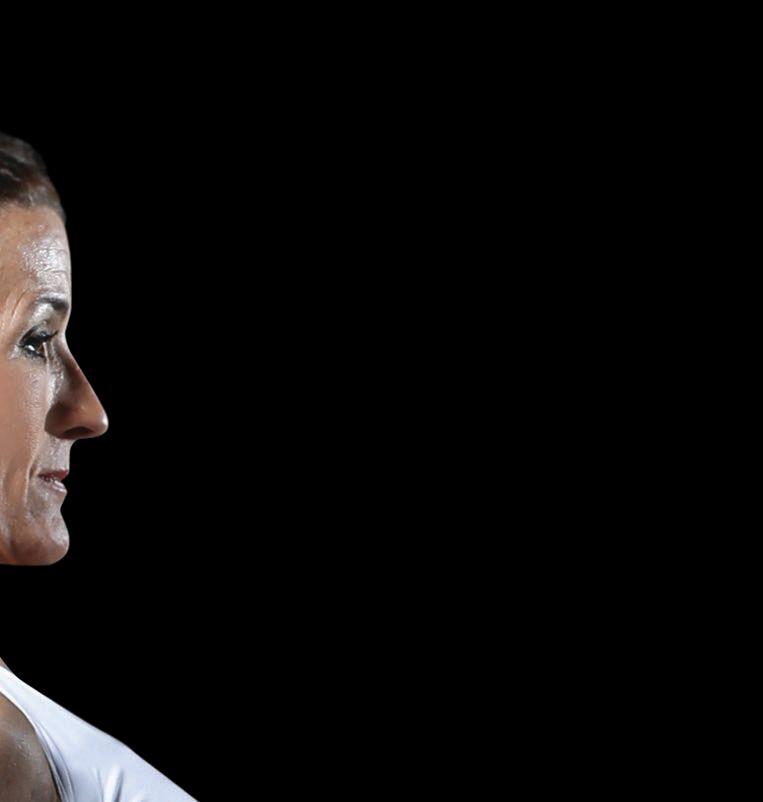


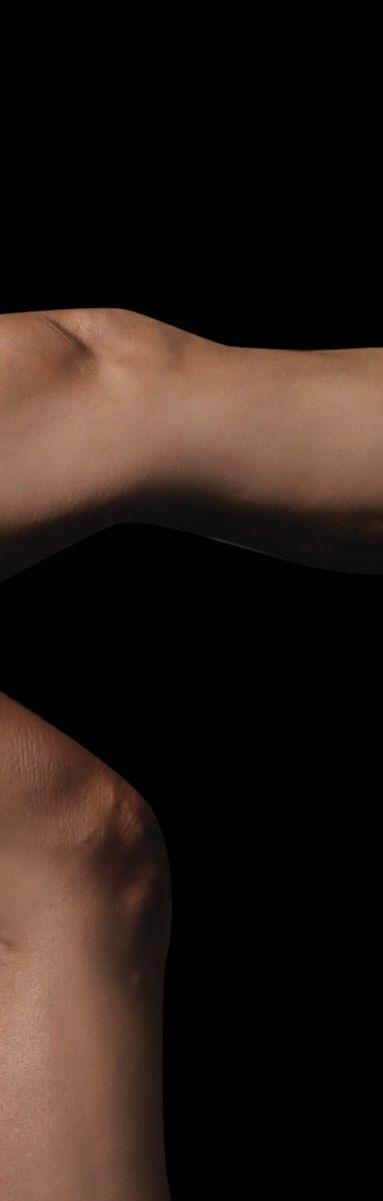

LAKEHEALTHYLIVING.COM // 71 SHAPE // INSIDE // EAT FIT/NOT FAT // QUENCH // LOOK KILLER QUADS 72 BEAT THE HEAT 76 THE RIGHT FOOD 78 CUCKOO FOR COCONUT WATER 80 LOOK GOOD WITHOUT PLASTIC SURGERY 82
BODY
BODYSHAPE
KILLER QUADS
WRITER: TRACY DRAPER // PHOTOGRAPHER: FRED LOPEZ
What can turn heads faster than Speedy Gonzalez? A nicely toned pair of quads, that’s what. Not only do strong, healthy thighs look nice, but they also help in the metabolic process. They burn a lot calories, look great in shorts, and — oh yes — even perform daily functions well. Getting out of the chair is made much easier with strong legs. Read on to find out some safe ways to strengthen and tone your legs so you, too, can turn some heads.
LEG EXTENSION
1. Sitting with your back pressed into the seat back, abs tight, and knees at a 90-degree angle, flex your thigh muscles and slowly extend your knees as you exhale.
2. Inhale and return slowly. Repeat 8 to12 times for three sets.

72 // HL // JULY 2013
MUSCLE GROUPS TARGETED: quadriceps (rectus femoris, vastus lateralis, vastus intermedius, vastus medialis)
Start position
Second position
TRAINER’S TIPS
• The last two reps should be a bit testy but attainable.
• If you cannot keep proper form and alignment, reduce the weight.
• Building strong quads also stabilizes the knee joint so that it is less prone to injury.

LAKEHEALTHYLIVING.COM // 73 LAKEHEALTHYLIV
SINGLE LEG PRESS




1. Sit with your back pressed into the seat back, abs tucked in tightly, and one leg on the footpad with your knee flexed at 90 degrees.
2. Exhale and press through heel to straighten (but not lock) knee.







3. Inhale and return to start position. Perform 8 to12 reps for strength and toning. Work up to three sets.


TRAINER’S TIPS


• The weights should not touch the stack until your set is complete.
• Need a challenge? Count to five slowly for each phase of the movement.
• To build strength, reduce the repetitions and increase the weight. Do four to six reps.





MUSCLE GROUPS TARGETED: quadriceps, glutes, hamstrings, gastrocnemius, and soleus



74 // HL // JULY 2013
position Sttarart t po posisitiion on
Start
Second position Start position
KETTLE BELL SQUAT
Here are two variations of this quad-strengthening squat. Ken’s version works well for men: toes pointing forward, weight on the heels and a slightly forward lean. Tracy demonstrates a plie’ squat, keeping her shoulders directly over the hips, heels a bit wider and toes pointed at a comfortable angle. This version works well for women or anyone with lower back issues.

th ang it on es.
TRAINER’S TIPS
• Engage abs the entire time, but be sure to keep breathing.
• Bend knees and inhale until thighs are no lower than parallel to the floor.
• Exhale, contract glutes, and return to stand. Back remains straight.
• Do 8 to12 repetitions for three sets.
WRAP UP
• Make sure your knee does not extend over your toe during squat.
o
• Keep your shoulders down and neck long.
View 2 (Tracy)
• Inhale and bend knees, keeping hips higher than knees.
• Exhale and return to start position, squeezing the glutes the entire time. Complete 8 to 12 repetitions for three sets.
These three exercises are sure to help you get the eye-catching legs you’ve always wanted. Of course, the muscles only show when you follow a low-fat diet and include aerobic activity in your weekly workout. Remember to stretch those muscles for a longer, leaner look after your workout, as well. These muscle groups love to burn calories even when you are not actively working out, so it is to your benefit to build them to be strong, sleek, and toned.
LAKEHEALTHYLIVING.COM // 75
TRACY DRAPER is an AFAA-certified personal trainer with over 12 years’ experience in personal fitness training. As a wife and mom, she discovered a few years ago that she could once again be an athlete, as well. In 2014, she is leading a team of cyclists on a cross-country ride. Visit www. RideAcrossUSA.com for more details.
MODEL: Ken Vida and Tracy Draper on loacation at Golds Gym, Mount Dora SOURCES: YYorke, Mary. Personal Fitness Training: Theory & Practice Sherman Oaks, CA: 2010
•
MUSCLE GROUPS TARGETED: quadriceps, glutes, and lower back •
lo
View 1 (Ken)
• With toes forward and slightly wider than hips, hold your back straight and keep abs pulled in.
• With toes turned out wider than hip distance, keep shoulders pulled back and down and abs contracted.
INSIDE
BEAT THE HEAT
Considered one of the most lifethreatening heat illnesses, heatstroke is caused by prolonged exposure to hot temperatures. While it can affect people of all ages, the National Institutes of Health states that children, the elderly, and people who are obese are more susceptible to heatstroke as they are less able to regulate body temperature.
If left untreated, heatstroke can cause severe health complications including shock, brain damage, organ failure, and even death.
Recognizing the symptoms is the first important step in treating this condition, followed by calling emergency services and administering first aid until medical personnel arrives.
SIGNS AND SYMPTOMS
When the body overheats, it responds with perspiration, or sweat. The sweat then evaporates on the skin, helping the body to cool down. However, as heatstroke progresses, the body loses its ability to produce sweat, leading to red, hot, and dry skin.

The early symptoms of heatstroke include fatigue, thirst, and muscle cramps. Nausea and vomiting, weakness, and a headache may soon follow along with a fever, shallow breathing, extreme confusion, irrational behavior, and seizures.
y symptoms nclude
nd a headache low ow usion, d seizures. e e stem, ntreated over ll be shunted to
Heatstroke also places a strain on the heart and circulatory system, possibly causing a fast or irregular pulse. If left untreated over time, blood will be shunted to the body’s core to protect vital organs like the brain, lungs, and heart. This may leave the fingers and toes with a somewhat bluish tinge.
The last and most severe symptom of heatstroke is unconsciousness. Always call 911 for emergency services or transport the person to the hospital to prevent further complications or death.
FIRST AID
e brain, s d toes with a sh d atstroke is s. ncy to the ent further r death.
If you suspect someone is suffering from heatstroke, immediately move him or her from the heat source to an air-conditioned or shady area away from direct sunlight. Also, remove or loosen the victim’s clothing to help with
t someone heatstroke, ve him or her urce an r oosen the o
76 // HL // JULY 2013
BODY
e
air circulation over the skin and promote cooling. Placing damp, cool towels or ice packs on the groin, neck, and armpits can help in lowering body temperature, as well as fanning or misting the body with cool water.


If the individual is awake and alert, attempt to nurse him or her sips of Gatorade or salted water every 15 minutes. If neither is available, cool, plain drinking water will suffice as long as the victim is able to consume the water without vomiting.


Never attempt to provide fluids to a person who is unconscious as he or she may choke. Emergency personnel will provide the victim fluid intravenously, which is a safer and faster alternative.

PREVENTION






To prevent heatstroke, consider performing outside activities during the cooler parts of the day. If you need to be outside when it is hot,
wear loose-fitting, lightweight clothing to help air circulate over your skin. Dressing in light-colored clothing and wearing wide-brimmed hats can also help keep the body cool. Also, stay away from direct sunlight, take frequent breaks in cool, shady spots, and drink plenty of water during hot weather.

Tight, confined spaces can speed up the effects of heatstroke. Avoid small rooms, buildings, or areas that offer little to no air circulation or air conditioning. Be especially careful sitting inside a stationary vehicle while it is hot outside. Temperatures inside a parked vehicle can be 20 degrees hotter than the outside temperature, or more. Heatstroke is easily preventable in most cases. The key is taking the necessary precautions to avoid this dangerous illness and springing into action at the first sign of any heatrelated symptoms.

LAKEHEALTHYLIVING.COM // 77
EAT FIT/NOT FAT
PART ONE:
THE RIGHT FOOD
WRITER: LORI ESAREY
Getting the right nutrition is the secret to looking good and feeling good. The fit look comes from 80 percent food, 10 percent genetics, and 10 percent exercise. And although we think there is some secret equation to getting the look and feel we want, I propose that you adopt this simple formula: eat the right food in the right amount at the right time
SO WHAT IS THE RIGHT FOOD?
There is no one-size-fitsall approach for the exact foods that everyone needs to eat. Therefore, for the sake of simplicity and with the hope this article will get you on track or help you stay on track to better health, I will speak in general terms of food groups.

The right food is nutritionally dense, not calorie dense. It provides your body exactly what it needs to run efficiently and effectively. First, understand that protein is critical to muscle development and maintenance. In addition, without protein your body will degenerate.
Amino acids are the precursors to every neurotransmitter in your brain. Without adequate
protein, your nervous system will fall apart. There are many sources of protein in both lean meats and vegan selections, and each has their own benefits. Recommendations for the amount of protein you need are based on your height, weight, fitness level, and what physique you are looking to gain.

Secondly, carbohydrates are not bad! In fact, fruits and non-starchy vegetables have many health benefits. Every day, strive to eat in the range of five-to-eight cups of nonstarchy vegetables such as kale, chard, spinach, leafy greens, broccoli, cabbage, and Brussels sprouts. Avoid foods that do not provide any or little nutritional value to your body such as peas and corn. Furthermore, it is important to consider avoiding genetically modified foods as these foods are designed in a laboratory and the longterm risks have not been fully investigated. Lastly, avoid the “dirty dozen,” a list of the top 12 pesticides-laden foods. Obtain the list at www.EWG.com.
For most people, fruit is a healthy carbohydrate. Be sure to limit yourself to no more than two servings per day and always eat your fruit with a
protein or healthy fat to slow digestion and maintain equal sugar levels throughout the day. Also, don’t forget to eat healthy fats. Seeds, such as sunflower seeds, contain manganese. Flaxseed and other seeds also have health benefits along with nuts such as almonds and walnuts. For cooking, olive oil, grape-seed oil, and coconut oil
BE AWARE
• Ribs, dark meat turkey and chicken wings. Choose lean cuts of meat (white meat, center cut pork, lean cuts of beef).


• Starchy vegetables such as peas and corn.

• Any fruit over two servings per day. For most adults, that is too much sugar. Always know the serving size of what you are eating. For example, one large apple or banana is two servings.
• Vegetable oil.
are great replacements for the hydrogenated oils.

When you eat more nutritionally dense foods, you will naturally begin to weigh less. Eating fit means focusing on getting these foods into your diet and avoiding empty calories. Balance is the key. Too much of any one thing is a prescription for metabolic imbalance.
BETTER
• Center cut pork or filet

• An occasional sweet potato and quinoa but always served with non-starchy vegetables and lean meat.

• Two servings of low glycemic index fruits such as apples, berries, and Bing cherries.


78 // HL // JULY 2013
BODY
BEST
• Wild fish, organic chicken, and grass-fed beef. Also, trim the fat. (At least 12 ounces of lean protein per day at a minimum).
• Two servings per day of seeds and/or nuts and healthy oils.
• Two servings per day of fruit.
• Lots of vegetables (five to eight cups measured raw). Make sure to eat a variety of colors to have balance. Aim for lots of green and yellow vegetables with accents of red and orange.
LORI ESAREY, ARNP, CFT opened Total Nutrition and Therapeutics in 2007. Several years later, she started a second company, Vitality Wellness and Aesthetics. Her passion is empowering people of all ages to achieve optimal health. She earned two master’s degrees from the University of South Florida in nursing and nutritional and metabolic science. She is also board-certified in anti-aging and restorative medicine.
QUENCH

CUCKOO FOR COCONUT WATER

With summer comes heat and humidity, which can cause you to sweat more and be at an increased risk for heat exhaustion. Water is still considered great for quenching thirsts, but coconut water is taking the recovery drink market by storm and the superior health benefits over plain H2O are being touted in the media. Celebrities who swear by the drink include Red Hot Chili Peppers frontman Anthony Kiedis, tennis player John Isner, and pop star Rihanna, but is it really the miracle drink people claim it to be?

Many people confuse coconut water with coconut milk, but they are actually two very different substances. Coconut water is the liquid that comes from immature green coconuts, while coconut milk comes from mature brown coconuts. There is no denying that coconut water is a delicious and refreshing drink, but it also has a number of amazing health benefits.
REPLACES LOST FLUIDS
In a study printed by the American Journal of Emergency Medicine, a hospital in the remote area of the Solomon Islands used coconut water in place of intravenous hydration fluid on a patient with no adverse effects. It was determined coconut water could be used as a temporary substitute thanks to its ability to replace lost electrolytes, including potassium, chloride, and calcium. It is also rich in amino acids, vitamin C, and fiber, which make it great for replacing fluids lost during a bout of diarrhea or vomiting. In addition, it can be a great source for rehydrating after a grueling workout.


IMPROVES SKIN
Coconut water is also rich in the plant growth hormone cytokinins, which aids in cell growth. By drinking coconut water regularly, it is believed people can slow down the
effects of aging and help to keep skin supple and youthful. Coconut water could also be applied directly to areas of damaged skin to improve the appearance of dried skin, stretch marks, and even eczema.

RELIEVES STRESS
Coconut water is packed with essential, mood-boosting B vitamins, which are able to aid in memory, ease stress, and alleviate symptoms of anxiety and depression.
REDUCES BLOOD PRESSURE
People who have high blood pressure, or who are at risk of a heart attack, may find that regularly drinking coconut water can lower their blood pressure and reduce their risk of a heart attack. This is because coconut water is rich in potassium and magnesium, both of which can lower blood pressure and prevent a buildup of plaque.

PREVENTS KIDNEY STONES
As coconut water contains a lot of potassium, it can aid the body in alkalizing urine and help dissolve kidney stones, eliminating the need for surgery.
INCREASES BLOOD CIRCULATION


Known in Jamaica as a heart tonic for its heart-health benefits, coconut water helps dilate blood vessels, increases blood flow, and reduces plaque formation in arteries, all beneficial for increasing good blood circulation throughout the body.
As a result, it can be extremely beneficial to those who suffer from diabetes because coconut water contains certain forms of dietary fiber and amino acids that help regulate sugar absorption and boost insulin sensitivity.
80 // HL // JULY 2013 BODY
SOURCE: “The Intravenous Use of Coconut Water”: 499.webfeatinternet.com/Campbell-Falck_2000_The-American-Journal-of-Emergency-M edicine.pdf; “Coconut water”: www.nuvia3. com/images/uploadedimages/coconut.pdf; “Coconut Water to the Rescue? Parsing The Medical Claims”: www.npr.org/blogs/health/2011 /08/15/139638930/saved-by-the-coconut-waterparsing-coconut-waters-medical-claims Photo illustrator Anthony Casto


LAKEHEALTHYLIVING.COM // 81
LOOK
LOOK GOOD WITHOUT PLASTIC SURGERY
WRITER: RICHARD T. BOSSHARDT, M.D., FACS
Pssst. Over here. Don’t let this get out, but I am going to tell you a closely guarded secret. If you let it be known that I told you this, I will probably be permanently exiled to an island where plastic surgeons that break the “oath” go, never to be heard from again. No, it won’t cost you a cent. In fact, it may save you money — lots of money — in the long run. Ready? Here it is. I am going to tell you how to look great without plastic surgery. Shocking, I know.
Okay, here we go. First, get out of the sun! Much of what we call aging is nothing more than years of accumulated sun damage. Unnecessary sun exposure, especially chronic tanning, will age your appearance by years. Sun damage is the result of the ultraviolet radiation in sunlight, and every exposure adds to the total. You cannot undo it, at least not without expensive procedures. Sun exposure also raises your risk of skin cancer, including deadly melanoma. Therefore, if you don’t want to spend your golden years undergoing multiple skin cancer surgeries, get out of the sun. Sunblock is fine but it doesn’t provide full protection
and must be used diligently and properly. Cover up instead using a hat, sunglasses, long-sleeved shirts, and long pants and reserve the sunscreen for those areas you just can’t cover.
Second, drink! We live in a perpetual state of relative dehydration. If your urine is yellow, especially dark yellow, you are dry. Drink enough water or other fluids to keep your urine light yellow to clear. Hydration goes right to your cells, including those on your face and helps to plump them out. Between sun damage and dehydration, you may end up resembling a prune. Make sure to exercise caution with other fluids. Why? Well, those that contain sugar contain calories (more on those in a moment). Fluids with caffeine stimulate the kidneys to release water, further dehydrating you. Alcoholic fluids both dehydrate you and contain empty calories. Water is nature’s perfect answer to our fluid needs. Besides, it’s cheap. Also, avoid disposable water bottles. They are expensive and damaging to our environment. Get a good, plastic, BPA-free bottle or a stainless steel one and keep it filled with water. Tap is fine for most. A
home water filter is a good investment, but be sure you purchase one that meets the National Sanitation Foundation standards No. 43 and No. 52. It should say so somewhere on the filter.
Third, eat! This may seem a silly thing to recommend because we all have to eat, but the secret here is what you eat and how much. There are many fad diets; some are fairly simple while some require an advance degree in nutrition to follow. Some are ridiculous. We are told to eat like cavemen, like Eskimos, like apes, like members of one social group or another… I like simplicity. Life is already too complicated and stressful for us to spend hours trying to figure out what to have for our next meal. I cannot improve on Michael Pollan’s summary of a healthy diet as stated in his book “Food Rules: An Eater’s Manual.” In seven simple words, he says all one needs to know: eat food, not too much, mostly plants. By food, he means real food made with fresh, whole ingredients. He doesn’t mean processed, pre-packaged, pre-prepared food in which the ingredient list reads like a chemistry experiment. “Not too much” speaks for itself. We
are a nation of super-sizers, and it shows. The “mostly plants” is important. This includes fruits, vegetables, grains, nuts, and beans. When did eating meat, poultry, or fish in two or more meals a day become the norm? Calories count, so count them. Pay attention and be mindful with your eating.
Fourth, move! If God had not meant for us to run, jump, throw, swing, swim, or dance, he would have made us more like Jabba the Hutt. Come to think of it, some of us are looking more and more like Jabba these days. There is nothing more attractive than a healthy glow in our appearance and nothing provides this better than regular, vigorous physical exercise. While some exercises and activities may be better than others, what you do is not as important as the fact that you are doing something First, check with your physician if you haven’t exercised in a while. Then, try to exercise for at least an hour three-to-five days per week. It should not only get you breathing hard, it will raise your pulse and make you break a sweat. Anything less and you are probably kidding yourself.
82 // HL // JULY 2013
BODY
SOURCE: www.surgery.org/media/news-releases/
Fifth, sleep! It’s called “beauty sleep” for a reason. Seven-to-eight hours for most adults is about right. Reclaim the bedroom as a place of rest (and reconnect with the spouse) and leave work, stress, and the daily stream of bad news from the world out of it. Make it dark, cool, and quiet in your room and invest in a good mattress, pillows, and bed linens. You will look great.
Sixth — and this is mainly for women — makeup! I am amazed at how much well applied makeup contributes to looking good. I don’t mean pancake makeup with Cleopatra eyes. Subtle, well applied, quality makeup can take years off. In many of the popular extreme

makeover shows, helping the participant with her makeup did as much for her appearance as all the plastic surgery combined — and sometimes more. I would include hairstyling here since a new hairstyle that suits one’s face and is in current fashion can work miracles.
You can sum it all up in two words: healthy lifestyle. If you do these things right, chances are good you will never need a plastic surgeon. If you ever decide to have something done, living healthily will greatly lower your risks for any procedure and increase your chances of a good outcome. However, no plastic surgeon, no matter how good, can erase the results of decades of neglect and/or bad choices.
LAKEHEALTHYLIVING.COM // 83 LAKEHEHEALTHHYLIVINNGG.COCOM M /
RICK BOSSHARDT, M.D., graduated from the University of Miami School of Medicine in 1978. He founded Bosshardt & Marzek Plastic Surgery Associates, Lake County’s first practice to provide full-time cosmetic and reconstructive plastic surgery services, in 1989.
The top five surgical procedures in 2012 were breast augmentation (330,631), liposuction (313,011), abdominoplasty (156,508), eyelid surgery (153,171), and rhinoplasty (143,801)
cosmetic-procedures-increase-in-2012

MIND














PROTECTING THE MATURE MIND 86 WORKING THROUGH OBSESSIVE THOUGHTS 88 CONDITION // COMPULSIVE
CONDITION
PROTECTING THE MATURE MIND
The human brain has often been compared to a sponge by many doctors, educators, and researchers. When we are born, our brains are new sponges fresh out of the package that are capable of soaking in all early stimuli it will encounter and later, all the information it can hold as we attend school and begin a lifetime of learning.
But like any other sponge, the human brain is imperfect. As a sponge is used repeatedly to clean dishes, scrub grime, and wipe up messes, it will fall apart and fail to perform as it once did. So, too, will the human brain. As we age, our brain deteriorates, physically speaking and in terms of capability. Memories become lost as nerve connections deteriorate and we fail to recover, or recover more slowly, memories, names, and knowledge.
The British Broadcasting Corporation (BBC), citing a University College London
study published in the British Medical Journal, found that the human brain begins to deteriorate at or around the age of 45. After assessing the memory, vocabulary, and comprehension skills of 7,000 men and women aged 45–70 over a decade, a 3.6 percent decline in mental reasoning was shown to begin between the ages of 45 and 49.
While memory and comprehension skills suffer the most as we age, according to the study, our vocabulary skills retain higher levels by in large as our brain begins to deteriorate. Not only was it discovered that the brain begins to deteriorate as early as 45, but it was also discovered that deterioration increases rapidly with age.
Men and women surveyed showed much higher rates of deterioration as age increased. Men aged 65–70 showed a 9.6 percent decline in mental reasoning while women in the same age ranged showed a 7.4 percent decline.
With enhanced deterioration occurring at

an older age, it is difficult to minimize or reverse some of those affects. However, if we know that deterioration can begin as early as 45, we can begin preventative procedures that will have a better chance of succeeding because our brains will be more receptive to them at 45 than at 65.
When we are born, our brain has more neurons, or brain cells, than it will ever have in the future. Human brain tissue is postmitotic, meaning it does not regenerate. When we taste, smell, or view something, our brain processes that stimulus and transmits it to the rest of our body.
This occurs because neuron A transmits information to neuron C through neuron B. If neuron B dies, that makes it more difficult, but not impossible, for A and C to communicate. Neuron A can work to build its own connection with C, but neuron B will never regrow to connect A and C.
Protecting our brains
on can festyle
Some is ere are d to rs such as ailability ne umatic l increase
from this deterioration can be aided by smart lifestyle choices as we age. Some neurodegeneration is unavoidable, but there are factors that will lead to faster degeneration. Factors such as blood sugar issues, hypoxia (lowered oxygen availability in the brain), hormone imbalances, and traumatic brain injuries can all increase neurodegeneration.
ct the generation doesn’t or Blood flow ncreased od toxins teering r intake s, and d a an be ng w estyle and e the brain evel of ealth later
It is easy to protect the brain from neurodegeneration during aging and it doesn’t take a lot of money or prescription drugs. Blood flow to the brain can be increased through exercise, food toxins can be avoided by steering clear of excess sugar intake and processed foods, and proper nutrients and a good fatty acid balance can be maintained by eating right. All it takes are a few simple changes to one’s lifestyle and habits to help ensure the brain maintains a higher level of functionality and health later in life.
86 // HL // JULY 2013
MIND
(Accessed April 11, 2013) PHOTO ILLUSTRATOR: ANTHONY CASTO
SOURCE: “Brain
function
can
start declining
‘as early as age 45’”: http://www.bbc.co.uk/news/health-16425522; “How to prevent spending the last 10 years of your life in a diaper and a wheelchair” by Chris Kresser: http://chriskresser.com/how-to-preventspending-the-last-10-years-of-your-life-in-a-diaper-and-a-wheelchair; “Healthy Aging: Keeping Mentally Fit as You Age”, Geriatric Mental Health Foundation: http://www.gmhfonline.org/gmhf/consumer/factsheets/hlthage_mental.html

LAKEHEALTHYLIVING.COM // 87 LAKEHEALTHYLIVING.COM F e w e r t h a n 1 i n 5 a d u l t s o v e r a g e 6 5 e x p e r i e n c e s mo de r a te to severe memory imp a irment. SOURCE: www.p r b.org/pdf07/TodaysResearchAging5.pdf ?
OVERCOMING OBSESSIVE THINKING
COMPULSIVE S
Obsessive thoughts are not merely repetitious. They typically feel very intrusive, even distressing; we seem to have no control over their comings and goings. For many people, obsessive thinking is strongly linked to the desire to feel in control.
Feeling out of control can happen when our sense of security is gone and our beliefs about the world and/or people have been shaken. The future feels shaky and as a result, the present seems untrustworthy. In such situations, obsessive thoughts become a sort of magic mantra. We reduce our lives to the level of our obsessions as if in this way we can achieve complete certainty and hold all possible dangers at bay.
It has become fashionable to refer to it as obsessive-compulsive disorder (OCD), and a growing number of people are labeled (or have labeled themselves) as such. But labels carry a certain risk in this situation. They encourage us to think of this coping mechanism as a disease, and this can make us feel all the more helpless in the face of our compulsive thoughts. They should not always be taken so seriously. Treating obsessive thoughts as more of an annoyance than a medical condition can help us to disarm them. After all, the determination to
fight obsession at all costs can become an obsession in itself.
Reducing obsessive thoughts to the level of annoyances also allows us to play with them a little rather than struggling against them all the time. Oftentimes, it is easier to redirect ourselves to other thoughts or activities after we have given an obsession a few seconds of our time rather than refusing to think of it at all. We can
then tell ourselves that such thinking is temporary and distract ourselves with something new.
We can also expose ourselves to the object of an obsession a little bit at a time. This could involve listening to a particular song or viewing a particular image that evokes the idea that is plaguing us. Sometimes thoughts have more power over us than the reality
ttheyrepresentespeciallyifweare esentespecial
that they represent, especially if we are in a fearful or insecure state.
Sometimes people repeat thoughts endlessly in a misguided effort to reduce stress or to “prevent” some outcome of which they are afraid. Obsessive thoughts are intimately tied in with our deepest hopes and fears. Viewed in this light, they may have things to teach us — things we can only learn if we stop fighting them directly and instead, arrive at some kind of truce. This could lead to a direct confrontation with our underlying sources of anxiety and fear.
ING OBS

educestessotopeetsoe estess outcome of which are afraid utcome Obsessive are in with our fears. an Viewed in this may have ma to us — we can learn if fighting a confrontation with our under
A variety of activities, such as meditation, yoga, tai chi, and exercise can help to reduce stress and heighten our focus as we move through this process. Focusing on the problem only feeds our anxiety, stress, and sense of helplessness. To work through obsessive thoughts, we acknowledge the problem in a non-dramatic way. Then we set about redirecting our thinking in hopes of changing our perspective. Along the way, we may learn more about why we are afraid and what the picture of our fears really looks like. This can restore our sense of personal power and insulate us against further intrusions from thoughts that we feel are “beyond our control.”
88 // HL // JULY 2013
MIND
Focusing on the problem only feeds our anxiety, stress, and sense of helplessness.
O O T SS
A SOURCES: “Dealing with obsessive thoughts” by Shelby D. Burns, BrainPhysics.com: www.brainphysics.com/articles/ocd/dealing-with -obsessive-thoughts (Accessed May 28, 2013 )

LAKEHEALTHYLIVING.COM // 89 O
LA LAKEKEHEHEALALTHTHYLYLIVVINNG.COCOM M /
O T S S

Lake Center of H.O.P.E. Nick M. Ungson, M.D. Board Certified Psychiatrist Services Include: Psychiatric Evaluation Competency/Guardianship Evaluation Medication Management Individual, Couples, Adolescent, Family and Marital Counseling Substance Abuse and Alcohol Abuse Treatment Court Ordered Psychiatric Evaluation Anger Management We Treat Conditions Such As: Most Insurances Accepted 352-787-0081 Mood Disorder Depression Bipolar (Manic Depression) Anxiety Disorder Phobia, GAD, Panic Disorder, OCD, PTSD Schizophrenia Dementia - Alzheimer’s Substance Abuse Alcohol Drugs Adjustment Disorder ADHD Personality Disorder Other Emotional and Behavioral Problems Board Licenses: Florida Board of Medicine Alabama Board of Medicine Professional Memebership: American Psychiatric Association Florida Psychiatric Society Hospital Affiliation: Leesburg Regional Medical Center Florida Hospital - Waterman Years in Practice: From 1997 to Present Counselors: Dr. James Moore, Jr., Lic. PsychologistTalana Kersey, MS, LMHC Hershel Tidwell, MS, LMHC Sue Bingle, LCSW Amoree Lanaha, LCSW 33057 Professional Dr. Suite 102, Leesburg Tuesday, Thursday, Friday 9am-5pm The Summit of Lady Lake 737 Hwy. 466 • Lady Lake Monday, Wednesday 9am-5pm Save The Date! For more information, sponsorship opportunities or tables: 352-326-9599 ext. 5706 For over a decade the Cattle Barons’ Ball is a fun filled evening benefiting the American Cancer Society in Lake & Sumter counties. This year’s event at Lake Receptions will include Live Entertainment with John Anderson, Dining, Dancing, Gaming, Live Auction, Silent Auction and of course a Diamond Drawing. Lake Receptions, Mount Dora “Your First Choice” • In-Print & On-Line www.dailycommercial.com 90 // HL // JULY 2013 237 West 4th Ave. Suite 2 * Mount Dora, FL 32757 * 352-383-3600 We are located in the Arbors & Eyebrows complex at the corner of Alexander and 4th Ave. in Historic Downtown Mount Dora. Open 7 days a week Make Us Your 2013 Baking and Cooking Headquarters Make Us Your 2013 Baking and Cooking Headquarters Unique and Hard To Find Specialty Kitchen Products Gourmet Kitchen Products We Carry USA Made Products Carry USA Made *Cooks Tools & Gadgets Galore *Nordic Ware Bundt & Baking Products *Everyday Cooking & Baking Supplies for Everyone *KYOCERA Advanced Ceramic Knives, Lifetime Warranty *LorAnn Gourmet Vanillas, Oils, Bakers Emulsions *Specialty Gourmet Salts PLUS Salt & Pepper Mills *PLUS Hard to Find Baking & Cooking Ingredients *Demo Cooking Class are now available *Gift cards available *Also shop on-line at www.KaDeeKay.com ®
SPIRIT
INNERVENTION // GLEE // MENCOURAGEMENT
‘BACK’ IN THE GAME 92 HAPPINESS 101: START THINKING POSITIVELY 94 REALITY, X-RAY SPECS, AND BEER GOGGLES 96


INNERVENTION R
‘BACK’ IN THE GAME
WRITER: JAMES COMBS // PHOTOGRAPHER: FRED LOPEZ
It will never happen to me.
Be honest. You have probably uttered those words — or at least thought them — whenever someone mentions they are suffering from a debilitating illness.
I am guilty of it. At age 37, I still maintain those youthful feelings of invincibility. Moreover, I had lost 90 pounds four years ago and religiously exercised on a daily basis. I’ve also tried to be a good person — a thorough background check will reveal that my worst offenses are several speeding tickets. Surely, a relatively healthy, law-abiding citizen like me would never be subjected to a horrible illness at this point in my life, right?
Wrong.
In December, I was officially diagnosed with arachnoiditis, a disease that occurs when the arachnoid layer of the spinal cord becomes inflamed. The arachnoid space houses many nerve roots. When inflammation occurs, these nerve roots clump together and nerves begin misfiring.
Some sufferers are permanently confined to a wheelchair and spend much of their time bedridden. In advanced stages, this incurable disease causes pain “as bad as terminal cancer without the prospect of death to end the suffering,” according to Dr. IHJ Bourne, which he wrote in the Journal of Royal Society Medicine.
Slipping into darkness
Last November, I began feeling a sensation of electrical shocks in my legs and


buzzing in my feet and thighs. While lying in bed at night, my right leg would twitch out of nowhere. And the thigh muscle in my right leg became spastic. I started wondering, “What’s going on with my body?”
Standing or sitting still for any amount of time caused me considerable pain. And at work, I would walk numerous laps around the office building just to seek pain relief. When I arrived home, I spent endless hours Googling my symptoms to figure out what was wrong.
One cold November night, I stumbled across an arachnoiditis website. As I began reading about this disease, a light bulb went off in my head. I knew this was what I had. Desperate, I convinced my chiropractor to order me an MRI. The radiologist report said my dural sac had been displaced by scar tissue at the L5-S1 level, a classic sign of arachnoiditis. Through research, I discovered Dr. Antonio Aldrete, one of the world’s leading experts on this disease. I mailed my MRI films to him, and he called back several days later with the grim diagnosis.
I was back on the Internet to learn everything I could about arachnoiditis. As I read countless horror stories, my mind wandered to a very dark place. Would I lose my job and my home? Would I have to move in with my parents? Would taking care of me ruin their relationship and lead to divorce? Would I no longer be able to drive? Would I spend my future lying in bed in agonizing pain?
The more I read about arachnoiditis, the more depressed I became. I simply went through the motions of life without any enthusiasm. Pity parties became constant. And if I had a dollar for every time I asked “why me?” I could have easily purchase that Ford Mustang with the 5.0-liter engine I desired.
Into the light
In early January, I met Dr. Aldrete at one of his offices in Chipley, a small town in north Florida. I underwent five days of intravenous steroid treatment to reduce inflammation. My pain levels dropped, and some of my more annoying symptoms disappeared. He told me patients experienced the best results when they received his treatment within four months after the disease-causing injury. It had only been four and a half months since my injury, so I felt fortunate. Many people go years before they are diagnosed with arachnoiditis, let alone receive any sort of treatment.
After returning home, I joined Arachnoiditis Everyday, a Facebook support group. This small “family” of arachnoiditis sufferers shares coping tips, provides encouragement, and discusses various treatment options. For me, it made a big difference to connect with people who are going through the same struggles. We inspire and lean on each other as needed.
In February, I purchased a recumbent bike that features an adjustable back-




92 // HL // JULY 2013
SPIRIT
rest, which is ideal for someone with my condition. Being back on a bike — even one that sits low to the ground — for the first time in seven months helped me experience a wonderful sense of freedom and accomplishment. I am now riding 10 to 15 miles each evening.
For me, the greatest spirit-lifting moment occurred in May when I met Karen Odom Burkley Kovacik, a Villages resident who also has arachnoiditis.
Although she is in year five of her diagnosis, Karen is a member of The Villages Aquatic Swim Team and recently won first place in the backstroke at the Florida Senior Games. This upbeat, positive, and determined woman undergoes a unique treatment protocol to keep her
arachnoiditis in remission. Meeting her gave me a renewed sense of hope.
What’s next?
Other than muscle relaxers, I am not taking any doctor-prescribed medication. I continue working full-time and exercising daily. I’m very fortunate because many arachnoiditis sufferers must take multiple medications just to function at a minimal level.
I have no idea what the future holds. However, I do know that maintaining a positive attitude is vitally important. It also has allowed me to enjoy more good days than bad days. With a diagnosis of any disease, it is normal to experience a wide array of emotions. You will undoubtedly mourn the loss of your former life.
However, it does no good to dwell on your limitations. You have to get busy living by discovering what you still can do — and love doing it to the fullest. Riding my recumbent bike has helped me feel more comfortable in my “new shoes.”
Diseases do not discriminate against age, race, or gender. As I learned, it can happen to you. And if you are diagnosed with something, it does not mean life is over; it simply means life has new meaning and purpose. Embrace your new life with wonder and joy and continue living!

LAKEHEALTHYLIVING.COM // 93
“The marvelous richness of human experience would lose something of rewarding joy if there were no limitations to overcome. The hilltop hour would not be half so wonderful if there were no dark valleys to traverse.”
— Helen Keller
JAMES COMBS has been a staff writer for several local publications since August 2000. He has had the privilege of interviewing some of Lake County’s many fascinating residents—from innovative business owners to heroic war veterans—and bringing their stories to life. A resident of Lake County since 1986, he enjoys target shooting, skeet shooting, and watching his beloved Kentucky Wildcats!
HAPPINESS 101: START THINKING POSITIVELY
If happiness could be taught, would you sign up for a class? Happiness isn’t a matter of sheer luck. You can cultivate happiness. In fact, a branch of psychology addresses just that: positive psychology.
According to PsychologyToday.com, positive psychology is the “study of happiness.” Where traditional psychology focuses on mental illness, psychological problems, and other forms of dysfunction, positive psychology takes an opposite approach and focuses on helping people become happier and more fulfilled. It’s important to note that positive psychology is based on science and is not some sort of motivational hocus-pocus based on positive thinking or laws of the universe.
Ordinary people can use positive psychology concepts to better their outlook on life, improve their happiness, and feel more fulfilled. But where do you start?
• Check out free resources: Start by checking with your employer’s employee and family assistance program (if available) to see if it offers some sort of health and wellness counseling, resources, or workshops. You may find that a wealth of free resources focused on improving your happiness and well-being are just a phone call or click away.
• Express gratitude: Your coworkers, family members, and friends are likely as stressed as you are, and a little goodwill can go a long way toward improving attitudes and morale (including your own). According to an article published in 2000 in the Journal of Social & Clinical Psychology titled “Gratitude as a human strength: Appraising the evidence,” people
who regularly express gratitude are healthier, more optimistic, make better progress on their goals, and help other people more.
• Challenge yourself: Using and developing your strengths is rewarding and can help you become more engaged in your work or community. Not only are you likely to impress others as a result, you will likely be more content.
• Be optimistic: According to an article on the National Center for Biotechnology Information’s website titled “Optimism and Its Impact on Mental and Physical Well-Being,” a large body of research reveals that optimism can protect people from mental and physical illness, as well as help them to cope with everyday work and social interactions.
• Take in a movie after work: Movies can bring perspective and may even be able to help you change how you think and feel. Movies can help you take a break from your troubles, make you laugh aloud, and maybe even make you cry which can be quite therapeutic. They can give you hope, help you discover more about yourself and your strengths, help you articulate concerns, and much more. When approached mindfully and under the guidance of a professional, “cinema therapy” allows you to step back and observe others in similar life situations.
While it is not easy to Don’t Worry, Be Happy, it is possible to cultivate happiness using positive psychology techniques.

94 // HL // JULY 2013 4 / H / JUULY 201013
SOURCE: “Psych Basics: Positive Psychology”: www.psychologytoday.com/basics/positive-psychology; “What Is Positive Psychology, and What Is It Not?”: www.psychologytoday.com/blog/the-good-life/200805/what-is-positivepsychology-and-what-is-it-not; “Cinema Therapy Unique Psychotherapy Technique”: www.positivehealth.com/article/psychospiritu al/cinema-therapy-unique-psychotherapy-technique; University of Pennsylvania Positive Psychology Center: www.ppc.sas.upenn.edu/index.html; “Optimism and Its Impact on Mental and Physical Well-Being”: www.ncbi.nlm.nih.gov/pmc /articles/PMC2894461/ (Accessed May 28, 2013).
SPIRIT

LAKEHEALTHYLIVING.COM // 95 LA LAKEKEHEHEALALTHTHYYLLIIVVINGG.CCOOM M / 95
MENCOURAGEM
REALITY, X-RAY SPECS, AND BEER GOGGLES
WRITER: RICHARD BURGUET
Who hasn’t seen the advertisement in the comic books for X-ray specs? You know the sales pitch:
“See the bones in your hand; see through clothes!”
Some versions of the advertisement featured an illustration of a young man using the X-ray specs to examine the bones in his hand while a voluptuous woman stood in the background, as though awaiting her turn to be “X-rayed.” There is the recent hit by Neal McCoy about a fellow named Billy who is busy chasing all the women in the bar after way too many beers:
He’s on the dance floor yelling Freebird, Singing off pitch but he knows every word, Grabs him a girl and he holds on tight, He’s chasing everything in sight…
Life looks good, good, good, Billy’s got his beer goggles...on.
I have one question to be answered: What does it take for a man to see beyond a woman’s looks to see her inner beauty?
I am the father of three beautiful, young women who possess beauty that is beyond just the external and physical. That is not to suggest that they are unattractive in any way either; it’s just there is something about them that radiates from the core of who they are that makes them beautiful. For decades, we have implied to ourselves that physical beauty is an all-important virtue. The advertisers spend billions on promoting their “beauty” products and medical procedures to improve external beauty. But what is it that actually makes someone attractive? I suspect that it is far more than just the external. How do we — especially as men — get beyond the “Barbie doll” images to see what is true and lasting beauty? Maybe as we think about the other gender, we can think about cultivating the same attributes of inner beauty within our manly selves.
Inner beauty is something that radiates from the soul. It is not something that you can see — even with $7.99 X-ray specs. Internal beauty is related to character, heart, and faith. It is proverbial wisdom that teaches us that: “The good person out of the good treasure of his heart produces good, and the evil person out of his
evil treasure produces evil, for out of the abundance of the heart his mouth speaks.” Therefore, to the fella who is looking for beauty — and for attractiveness that will not wrinkle, sag, or get age spots — I suggest that he find a woman whose words match the kind of heart that is full of genuine good.
The truth of the matter is the inner beauty that draws lasting attention is the kind that reflects heart-felt character. Men are attracted to women who know what it means to show true kindness and patience and who allow those qualities to grow and touch those around them.
To be attractive from within means that your persona isn’t something you buy in a jar; it is developed on a day-to-day basis. Self-control, faithfulness, love, and joy are not “natural products” in the human soul, but they are character traits that have to be cultivated, watered, weeded, and tended to so they can blossom. As my girls have grown, we have tried to point them repeatedly toward genuineness of character as being more important than the “latest and greatest.”
One thing I have not mentioned yet is our oldest child is our son. He is married to a woman who displays a beautiful heart that rivals her physical beauty. Through the years as he moved toward maturity, marriage, and becoming a parent himself, he and I spoke often about the kind of character his future wife might have. Part of the truth of how we, as men, find “truly beautiful wives” and see inner beauty is that we cultivate the very same values into our lives as they do.
The old saying is that “opposites attract,” but here is one time when that whole idea is absolutely wrong. You will see the inner beauty — the attractiveness of heart and soul that lasts — only as you and I develop that in ourselves. Developing a beautiful heart that radiates from your inner being involves working on the core values of your soul so that your soul and life reflect the good, the true, and the beauty of the men God created us to be.
96 // HL // JULY 2013
RICHARD BURGUET, B.A., M-Div., has been ordained in the Presbyterian Church in America for more than 30 years. He has served churches in South Carolina, Mississippi, Maryland, and Georgia. Richard is pastor of New Hope Presbyterian in Eustis and is co-author of Covenants Disciples Workbook. New Hope is at 19535 Eustis Airport Road and on the web at www.newhopepca.com.
SPIRIT

LAKEHEALTHYLIVING.COM // 97 THEHEALTHBENEFITSOFFINANCIALSECURITY 98 CHANGECOMING? 100 ASKDAVE 102 WELL-BEING//SHIFT//CHOICES
WELL-BEING
THE HEALTH BENEFITS OF FINANCIAL SECURITY

Financial stability yields obvious benefits to your lifestyle and state of mind, but it can be good for your health, as well. A lack of financial security can cause depression or anxiety, exacerbate health problems, and reduce your ability to care for yourself later in life. Everyone has different financial needs, but the basic building blocks to financial stability are savings, a realistic retirement plan, adequate insurance, and a sound long-term financial strategy.
A lack of financial security may cause serious stress, and research has confirmed that financial strain can have detrimental effects on health. A 2004 study of arthritis patients found that financial stress increased disease symptoms among participants and led to worse health outcomes over time. Financial worries can also cause anxiety, which may lead to unhealthy coping behaviors that also affect health. According to the results of a 2005 study, smokers under financial strain were less likely to quit smoking and ex-smokers were more likely to suffer a relapse. Well-managed finances can aid in giving you better health outcomes by increasing your ability to seek medical care. Avoiding medical treatment because of inadequate health coverage delays care and may lead to more serious health issues. With the changing landscape of medical insurance in
America, one of the best protective measures you can take to safeguard your physical well-being is to take care of your financial health. Developing a sound financial plan – one that accounts for your long-term medical needs and the increasing medical costs associated with end-of-life care – will help ensure that you, and your assets, are well protected. Early planning may also increase your options for paying for care. An increasing number of Americans are choosing to purchase long-term care insurance in their 40s and 50s when premiums may be lower; other individuals are choosing to self-insure or rely on supplemental insurance. An experienced financial professional can help you explore your options and ensure that health care provisions are included in your financial planning.
The better you care for your finances throughout your working life, the better you can care for yourself in retirement. Many retirees are overwhelmed by the cost of prescription medication, medical devices, and the fees associated with assisted living communities and other retirement homes. If you are worried that rising health care costs might put a strain on your family’s resources, you are not alone. A 2011 Retirement Confidence Survey by the Employee Benefits Research Institute found that 50 percent of respondents were “not too” or “not at all” confident about
being able to pay for medical expenses in retirement. A solid financial plan that covers all your bases can help you better weather the cost of health care in your golden years and help ensure that the quality of your life, health, and retirement are not diminished because of higher expenses.
Good financial health can provide a number of material benefits that also improve your mental and physical health. Managing your finances so that you can go on vacation without worrying about the credit card bills makes you better able to enjoy the time you spend traveling. Again, the research is clear: vacations and recreational activities have positive effects on health and wellbeing. Financial security means that you can actually relax and reap the mental health benefits of taking time off.
What can you do to help establish your financial health?
A good place to start is to make sure you have enough emergency savings to get through a rough patch. Whether you experience a gap in employment, an injury, or an unexpected home repair, having the money available to cover the expense without going into debt will assist in putting you in a better place to make a speedy recovery.
While every individual has unique financial needs and circumstances, there are some steps you can take to
98 // HL // JULY 2013 FINANCE
WRITERS: THOMAS FROSS AND ROBERT FROSS
help create stability for yourself and your family.
Plan for retirement. The reward for a lifetime of hard work should be a comfortable retirement lifestyle. Retirement planning and investment management can help you understand how much you need to save for retirement and put you on track to achieving your retirement dreams.
Protect your family with life and
disability insurance. The death or disablement of a primary earner can be financially devastating to those left behind. Life insurance can help your family cover critical expenses and avoid serious lifestyle changes. Disability insurance can help protect your lifestyle while you recover from serious illness or injury.
Protect your health with savings and long-term care coverage. Medical costs
are rising and many Americans will be faced with major health care expenses and reduced insurance coverage. Early planning can help ensure that you are able to cover future medical needs.

LAKEHEALTHYLIVING.COM // 99 Peo Pe ple e w whose fa f mi mil l ily y y i inco nc ncocome me e in 198 8 1 0 w was as gre greate at ate t r tha than$ n n $50 50,0,000 0 00 0 haad a d li life fe exp expeecectctaanc an n nccy a y t a a talll ll l agegest s t s ha h hat at w waas as ab aboouut ut 25 5 peerrce ce cent nt t l loon no ge geer r th than thosse se e wh who w osse e se fam a am family ily y in incom comome w e wa as s les es ess s t s thhan an $ $5,,0000000.SOUR OU OURURCCECE: E E: : w wwwww. nbe bn r.o o r r. rg/ r re e ep p report ortrter/ err//sspr pr prinng g ing in 03/ 3 h hea health lth ht .ht h ml
ROBERT AND THOMAS FROSS founded Fross & Fross Wealth Management with the shared vision of creating a truly world-class experience for their clients. Specializing in offering comprehensive financial planning to high net-worth retirees, Fross & Fross manages over $300 million in assets and maintains a stellar reputation of professionalism and experience throughout The Villages.
SHIFT
CHANGE COMING?
SHOULD WE EXPECT CORRECTIONS AFTER A LONG STOCK MARKET RALLY? WATCH FOR SOME KEY SIGNS.
 WRITER: THOMAS H. RUGGIE, CHFC, CFP
The stock market has been rising steadily higher, reaching a number of record highs since November 2012. So what happens next? Will we as investors see the markets continue on their course, or can we expect a bump in the road, a dip, a correction, a pullback, or the start of a bear market?
If you are looking to buy or sell stocks, it is helpful to know if prices are trending up or down, since many stocks seem to follow the market. It is easy to see the recent prevailing trend of the stock market has been positive.
So what are some signs that change is coming?
Going down?
Before we look for those signs of an upcoming dip — or worse — in the markets, it is helpful to look at what those downturns have looked like historically.
According to a study performed by Ned Davis Research (see graph), there have been 294 times the Standard and Poor’s Index has corrected five percent or more. Of those, there have been 94 times the market corrected 10 percent or more. However, there have only been 25 times the market has fallen 20 percent or more — a situation known as a bear market.
100 // HL // JULY 2013
m s a e x e o a arket e ve has s nly tion 0 H JULY LY 20113 STANDARD & POOR’S 500 STOCK INDEX DECLINE JANUARY 3, 1928 – APRIL 9, 2012 # OF OCCURRENCES MEAN # TIMES PER YEAR MEAN DURATION/ DAYS MEAN DECLINE (%) LAST OCCURRENCE SOURCE: Ned Davis Research: 4/9/2012 DIP 5% OR MORE MODERATE CORRECTION 10% OR MORE SEVERE CORRECTION 15% OR MORE BEAR MARKET 20% OR MORE 25 294 3.5 36 11 10/28/2011 1.1 102 19.6 4/29/2011 0.5 191 28.2 4/29/2011 0.3 299 35.7 1/6/2009 94 43 FINANCE
www.deepdyve.com/lp/springer-journals/financial-stress-predictors-and-the-emotional-and-physical -health-of-

SOURCES: Skinner, Michelle et al. Financial Stress Predictors and the Emotional and Physical Health of Chronic Pain Patients; C ognitive Therapy and Research.
V1EeGBfBrt: Siahpush, Mohammad et al. “Financial Stress, Smoking Cessation and Relapse: Results From a Prospective Study of an Australian National Sample”; Addiction. onlinelibrary.wiley.com/doi/10.1111/j.1360-0443.2005.01292.x/abstract: de Bloom, Jessi ca et al.
“Do We Recover from Vacation? Meta-analysis of Vacation Effects on Health and Well-being”; Journal of Occupational Health. www. jstage.jst.go.jp/article/joh/51/1/51_K8004/_article: The 2011 Retirement Confidence Survey: Confidence Drops to Record Lows, “R eflecting the New Normal”; Employee Benefit Research Institute. (Accessed May 16, 2013)
Therefore, looking at this data, we can see that about once a year, we can expect a 10 percent or greater correction. However, only about 26 percent of the time does this dip turn into a bear market.
According to the research, markets will “breathe or exhale”. And while pullbacks are no fun to sit through, most don’t result in a serious bear market correction.
Bullish or bearish?
It is important to have an idea what the general trend of the market seems to be and what the market is telling us about future trends.
Reading the market from one day to the next may not be helpful, but you can watch the general direction of the market and with some study, spot the warning signs that a change may be coming.
Positive trends: Are stocks trading in a positive trend that is showing higher prices? If you begin to see down days too frequently in a market that had been moving up, it may be a sign that it is about to reverse course or stall. Markets are generally thought to be healthy when more than 50 percent of stocks in any given index (such as Standard & Poor’s 500) are trading in a positive trend. When more than 50 percent are showing lower prices, this can be a sign a correction is coming.
Bullish percents: Another sign that market conditions are deteriorating is the underlying supply and demand for that stock. Stocks are on either a “buy” or “sell” signal; they are on “offense” or “defense”. While the charting of this is technical, broadly speaking, when there are more buyers than sellers, the market is trending up. When there are more sellers than buyers, the market is trending down.
Relative strength: As the name implies, this measures how one stock is doing compared to another. For example, how is Apple measuring up against Google? Relative strength calculates which investments are the strongest performers compared to the overall market and recommends those investments for purchase. When those stocks begin a downward path, this may be a sign a correction is on the horizon.
In addition, watch what mutual funds and institutional investors are doing. Volume buyers and sellers move the market. When they move in a direction, that is where the market goes. You can see it in the price and volume numbers. A market that shows sharp price movements in either direction without corresponding volume increases should be watched carefully.
If a change is coming, what next?
The truth is, regardless of the amount of research we do, there is no way for anyone to be certain which direction the market is going to move next. In fact, we commonly state the market does its best to fool the largest number of people. Our belief is a pullback (or a dip) is a perfectly natural function of the market and could happen at any time. We do not see anything currently in-place that could lead to more of a longer-term setback or a prolonged situation leading to a bear market. However, many things can trigger a quick change to this view.
Most of the time, it is not helpful for long-term investors — as opposed to traders — to watch stock market trends on a daily basis. In fact, little happening in the market today will tell you what will be happening in the market three or five years from now.
As a rule, it is probably wise to avoid big changes in your long-term investment strategy based only on market timing. Having a strategy in place that allows you to set your investment goals, contribute toward them, take advantage of opportunities for growth when they occur, and also monitors your progress will let you breathe easier when inevitable downturns occur.
THOMAS H.
CFP is the founder of Ruggie Wealth Management. With more than $425 million in assets under management, he has been ranked among the nation’s 50 Fastest Growing RIA Firms , the Top 100 Wealth Managers, Top 100 Independent Advisors, Top 40 Most Influential Advisors, and again, as one of Barron’s Top 1,000 Advisors. truggie@ ruggiewealth.com
LAKEHEALTHYLIVING.COM // 101
RUGGIE, CHFC,
CHOI
ASK DAVE
WRITER: DAVE RAMSEY


SHE WANTS TO WORK
Dear Dave,
I’m a stay-at-home mom now, and my husband brings home $2,600 a month. We’re trying to get out of debt, but we need more money coming in. I want to go back to work, but emotionally, part of me feels like I should stay home with our 2-year-old daughter. What do you think?
— Kayla


Dear Eric,
I understand the feelings involved, especially if you have spent your entire time home with your child. But don’t make the mistake of blaming the debt if you simply want to go back to work. You are not a bad person if you have kids and you work outside the home.
I have several women on my team who have young children and they work 40 hours a week. Guess what? They’re excellent mothers! Anyone who says a woman can’t be a great mom because she works outside the home is full of crap. On the other hand, if anyone says you are not fulfilling yourself as a person or you are stunting your intellectual development because you are a stay-athome mom, they are full of it, too!
I would advise you and your husband to sit down, talk about this a lot, and pray about the situation. Do not worry about what anyone else thinks because it is none of their business. You guys are in charge of your lives and your family. That makes it your job to decide what is best.
If you want to stay at home and you both can make it happen financially, that is a great thing. If you cannot stay home right now, or you simply want to go back into the workforce, that is fine, too. It will help solve your debt problem. Then after you’ve got your money under control, you might find you want to come home again. The option will be there.
For now, I think you should go back to work. Why? Because you want to!
—



 Dave
Dave
FINANCING THE COLLEGE EXPERIENCE


Dear Dave,
We live in New Jersey, and my wife and I can afford the $10,000 to send our son to a state college. However, we have a younger child who is heading to college in a couple of years, and I’m having a hard time justifying room and board when my college-bound son can commute. My wife doesn’t have a problem paying for it, even though it would mean taking out a loan. What do you think?
— Andy
Dear Ashley,
I’m with you on this one. If you had an extra $40,000 lying around, this wouldn’t be an issue. But if you’re talking about borrowing money just for him to live in a dorm, my answer is a resounding no!
If your son, or your wife, wants the “college experience” to be part of the equation, then your son can get a job to pay for the added expense. Anyone can make $10,000 a year delivering pizza while in school, and it would be a great life experience. You might spot him a little something to get him in there and get things going, but I’d make it contingent on him working to pay the remainder.



There is no reason to take out loans for something like this. It sounds like you guys can pay for the important stuff, but make sure this kid learns what work is and why it’s important. I worked full time while I was in college and still graduated in four years.
Besides, most college dorm rooms look a lot like prison cells; they are tiny with concrete block walls and maybe a window — if you are lucky. Does this really sound like an “experience” worth going into debt for? I don’t think so! But you’re right on this one, Ashley. You can go out and have plenty of fun together without spending a lot of money!
102 // HL // JULY 2013
at
at www.daveramsey.com
— Dave Dave Ramsey is America’s trusted voice on money and business. He has authored four New York Times best-selling books: Financial Peace, More Than Enough, The Total Money Makeover, and EntreLeadership. More than six million listeners hear the Dave Ramsey Show each week on more than 500 radio stations. Follow Dave on Twitter
@DaveRamsey and on the web
DAVE RAMSEY is a personal money management expert, a national radio personality, and best-selling author of The Total Money Makeover. Ramsey earned his Bachelor of Science in Finance and Real Estate from the University of Tennessee. A frequent speaker around the country at large-scale live events, he has a nationally syndicated talk show, The Dave Ramsey Show.
FINANCE

Watch our segment on presented by NEW! ComingtoTV thisAugust! Checklocallistings Watch our s N ComingtoTV thisAugust! g Check local listings Because living healthy is always in style.
At Central Florida Health Alliance (Leesburg Regional Medical Center & The Villages Regional Hospital), we make sure our employees tap into the long-term growth available at our hospitals. Known for our focus on patients, award-winning professionals and friendly atmospheres we take extreme pride in being named as one of the three hospitals on Modern Healthcare’s list of the Healthcare’s Hottest for 2012. We’ve been honored once again as one of Orlando Sentinel’s Top 100 companies for working families. It’s all about how we treat our people. We offer stability in an uncertain market.
We have a variety of great nursing positions available.
JULY 2013 2
Chair Yoga (July 2–30)
Yoga in a chair is a wonderful way for people with physical limitations to experience the relaxation and increased flexibility that yoga brings. With chair support, you still gain optimum yoga benefits, such as increased circulation in the feet, legs, knees, hips, shoulders, and elbows. The class is for beginners, adults 55 and older, or anyone with physical limitations. Cost: $10. From 11:30a.m. to 12:30p.m. Tuesdays at Vitruvian Health Center/Windhorse in Eustis. Call Amber Johnson at 352.255.1969 or email johnsonpossibilities@ yahoo.com for more information.
11 Safe Sitter (July 11–12)
The Safe Sitter course is designed to help boys and girls ages 11 through 14 learn the basics of safe baby-sitting. Six certified instructors will lead the two-day program. Students will not only learn how to administer first aid, choking child rescue, and CPR, but also how to manage their own baby-sitting business. Classes are from 8a.m. to 4:30p.m. A graduation ceremony will conclude each of the two-day sessions. Program tuition is $75 per student, which includes snacks, a CPR certification card, a Safe Sitter backpack, and other course-related materials. Call 352.253.3391 to register.
13
Central Florida Sprint Triathlon Series
Calligrapher Sandra Wright has been teaching calligraphy since 1984 and has a structured curriculum that ensures success for those willing to learn and practice. The class has two remaining sections: June 6th, 12th, and 13th will be uncial calligraphy and June 19th, 20th, 26th, and 27th will be formal italic calligraphy. Times are 2–4p.m. or 5:30–7:30p.m. Each of the sections costs $120; $90 for members. Call 352.483.2900 to register.
Cool Summer Mornings 5K Series
This 5K run starts on the residential streets of Clermont, followed by an out-and-back segment on the South Lake Trail. Take advantage of the four-race special that runs alongside the Central Florida Triathlon Series for added fun. Racers enjoy finisher’s medals, themed aid stations, accurate chip timing, and an upbeat post-race party with food and beverages. More information: 352.394.1320 or sommersports.com.
18
Retirement Financial Planning
This online webinar provides research-based financial information presented by the University of Florida Extension in partnership with Hillsborough County Extension Service, Duval County Extension, Okaloosa County Extension, and Lake County Extension. For those within 10 years of retirement, learn about how to calculate expense needs, strategies to make assets last, required minimum distributions, and how to choose a financial professional. Register at http://bit.ly/RetireIncome. For more info, call Julie England at 352.343.4101 or email julieeng@ufl.edu.

104 // HL // JULY 2013
find
Visit us at www.cfhacareers.com or call 866-298-2091 or 352-751-8856 to get started. EEO/AA/H/V. Drug-free Workplace/Tobacco-free Workplace. www.firstacademyleesburg.com Currently Enrolling K5-12 for 2013-2014 ENROLL NOW! First Academy does not discriminate and admits students of any race, color, national or ethnic origin. 219 N. 13th St., Leesburg 352.787.7762 Accredited by: ACSI, SACS Member of: FHSAA, NCPSA
We encourage you to
your balance
Calendar
Breast-feeding Class
A comprehensive class designed to teach the basics of breastfeeding, including getting started in the hospital, positioning, latch assessment, and breast-feeding management. This class is $15 per expectant mom, which includes one partner and a tour of the Life Center for Women. Call Cheryl Waxler at 352.323.5960 or cwaxler@ cfhalliance.org.
22 Community Health Fair
New Beginnings of Lake County will be conducting this free event from 10a.m. to 2p.m. at First United Methodist Wesley Center, located at 950 seventh St., in Clermont. The fair will feature more than 70 vendors offering free medical screenings, meetings with specialty doctors and dentists, lessons on how to eliminate back pain, nutritional guidance, and healthy living tips, as well as free school physicals for children 11 years old and younger. There will also be a bounce house and face painting for the children along with free door prizes. All proceeds will support New Beginnings’ homeless recovery programs. Call Sandy Farnsworth at 352.617.8788 for more information.
27 Stepping Out for Education
Watch six area celebrities strap on their dancing shoes and perform the fox trot, rumba, cha cha, swing, and tango with professional dancers from around the state for a good cause: Lake County Schools. Cocktails begin at 5:30p.m. at Lake Receptions, followed by dinner at 7p.m. and the competition at 8p.m. Seating is limited. The reservation deadline is July 9th. Tickets are $125 per person and include a five-course gourmet meal, wine and beer bar, dancing, and a vote for the star of your choice. For an additional $25 per person, you can upgrade to preferred seating. Call 352.326.1265 for reservations or purchase online at www.eventbrite.com
30 College Cooking
If you are headed to college, this class will teach you how to make easy and delicious meals that can be quickly prepared without a lot of fancy ingredients or equipment. Learn how to eat better and save money while in college. From 2 to 4p.m. at the Lake County Agricultural Center, 1951 Woodlea Road, Tavares. Cost: $7. Register by July 28th at http://collegecooking2013.eventbrite. com. Call 352.343.4101 or email julieeng@ufl.edu for additional information.
31 Diabetes EducationSelf-Management
South Lake Hospital’s Diabetes Class will help you understand how medications, nutrition, exercise, and blood sugar monitoring play a role in developing a healthy lifestyle. The class will also discuss diabetes and how to limit risk for complications. Please bring your own lunch. From 8:30a.m. to 3:30p.m. at the National Training Center, Education Department, 1935 Don Wickham Drive, Clermont. Cost: $10. To register, call 352.241.7109
The Event Event

Stepping Out For Education
Saturday, July 27, 2013 27, 2013
Presented by Presented
Stars
Saturday, July 27, 2013
Lake Receptions • Mount Dora, Florida Cocktails 5:30pm, Dinner 7pm, Competition 8pm
Six area celebrities will be dancing the fox trot, rumba, cha cha, swing and tango with professional dancers from around the state. Each dancer has received 20 hours of instruction and is ready to perform in front of nationally renowned judges and you. Audience voting will be combined with judges’ scores to name the winner of Stepping Out for Education, a local version of “Dancing with the Stars”
Stepping Out For Education
Event Rese r vation Reservation
Seating is limited and has sold out for the past 7 years. Reservation deadline is July 9, 2013. General seating assigned on reservation return. Tickets are $125 per person and include a five course gourmet meal, wine and beer bar, dancing, and a vote for the star of your choice. For an additional $25 per person you can upgrade to preferred seating. Call 352.326.1265 for reservations or purchase online at www.eventbrite.com - Stepping Out For Education
LAKEHEALTHYLIVING.COM // 105
The Stars of 2013 The Stars of 2013
Rachel Youngs Brown Perfect Cases, Inc.
The local ve rsion of The local version of Dancing with the Stars Dancing with the
John Pease
Sr. VP & Trust Investment Officer
First National Bank of Mount Dora
Stephanie McCulloch
Attorney McLin Burnsed Ricardo Rojas Branch Manager Insight Credit Union Robin Mitchell Marketing Liaison Tri-County Orthopedic Center Paul Rountree President First Green Bank
Treating PAD
This is a common excuse heard from people who endure constant leg pain or cramps when walking, numb feet or toes, ulcers that do not heal, and color changes in the legs or feet. Oftentimes, these symptoms are the result of peripheral artery disease (PAD), which is a narrowing and hardening of the arteries in the lower extremities due to plaque build-up. According to the American Heart Association, this disease affects nearly eight million Americans. If left untreated, PAD can lead to heart attack, stroke, gangrene, high blood pressure, erectile dysfunction, and limb loss.
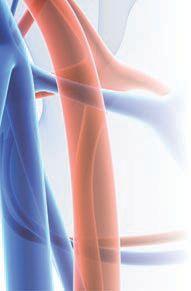


When patients visit The Florida Leg and Vein Center of Excellence, in affiliation with Florida Heart and Vascular Center, they are putting themselves in capable hands. Throughout the years, David C. Lew, M.D., FACS, FSCAI, and his talented team of cardiologists have provided countless PAD patients with superior delivery of care, safe and rapid interventions, and excellent outcomes.
“Many people with PAD experience leg pain (claudication) when they walk, and once they stop walking, the pain disappears,” Dr. Lew says. “It is caused by a reduction in the amount of blood that flows to the legs. Diabetics and smokers are at high risk, as well as those who suffer from high cholesterol, high blood pressure or have a family history of heart disease.”
Florida Heart and Vascular Center’s state-of-theart cardiac catheterization lab plays a key role in the diagnosis and treatment of peripheral artery disease. The lab is equipped with advanced technology, including digital imaging systems that allow the medical team to see the workings of the arteries with extraordinary clarity.


ADVERTISEMENT
“I am simply growing old.”
To determine whether a patient has PAD, Dr. Lew will perform an ankle-brachial index (ABI), described as a painless procedure that compares blood pressure in your feet with the blood pressure in your arm. From there, he utilizes either computed tomography angiogram (CTA), magnetic resonance angiogram (MRA), or an invasive angiogram to determine which arteries are blocked, the severity of the blockages, and condition of the vessels surrounding the blockage.
Several minimally invasive treatment options are available, depending on the severity of the condition. Angioplasty involves inflating a balloon-tipped tube at the site of the blocked artery to compress the plaque and widen the artery. The disease can also be treated with a stent, which is a

FLORIDA LEG & VEIN
small metal-mesh tube that is placed at the blocked site to prop the artery open, maintaining adequate blood flow. The cardiologists also utilize atherectomy, which removes plaque deposits in patients whose arteries are heavily calcified.
Dr. Lew says patients with peripheral artery disease frequently develop coronary artery disease. Fortunately, he and Dr. Jose Rosado, Dr. Sanjeev Bhatta, Dr. Patrick Williams, Dr. Leonard Victores, and Dr. Ilie Barb are vastly experienced in treating both diseases. Therefore, patients receive a continuum of treatment under one roof with cardiologists they are comfortable with and trust.
“It is an advantage for patients because we know their medical histories and what medications they are taking,” Dr. Lew says.
ADVERTISEMENT ADV A AD D DVVEERT ER ISE SE SEMEN M MENT
Patrick K. Williams M.D., FACC
Jose Rosado M.D., FACC
David Lew M.D., FACC, FSCAI
Sanjeev Bhatta M.D., FACC
Leonardo Victores M.D.
CENTER OF EXCELLENCE at Florida Heart & Vascular Center LEESBURG 511 Medical Plaza Dr., Suite 101 // 352.728.6808 THE VILLAGES 1560 Santa Barbara Blvd. // 352.750.5000 www.FLHEARTCENTER.com
Ilie T. Barb M.D., FACC
RECOVER PEACEFULLY
An open house was held for Recovery Village, a full-service treatment facility for people who struggle with substance abuse, mental health problems, and eating disorders. The 67,000-squarefoot facility, located in Umatilla, features 30 detoxification beds, 60 rehabilitation beds, a recreation and exercise facility, yoga and meditation rooms, indoor and outdoor pools, and saunas.
1. Karen Rogers, Jill Baird, and PJ Bopp
2. Chloe Lupo and Alex Aghoian
3. Hope Walters and Christina Rinaldi
4. Eric Voehringer with Karen and Scott Rassler
5. Connie Collins, Melissa Mathews, and Donna Musumeci
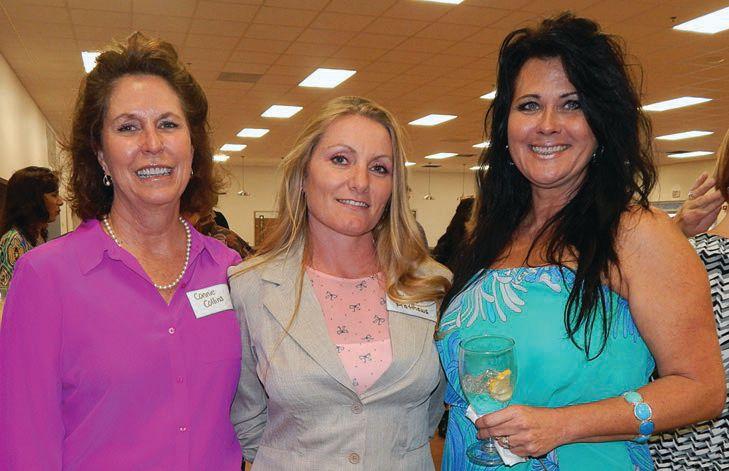
6. Peyton Grinell and Sheriff Gary Borders
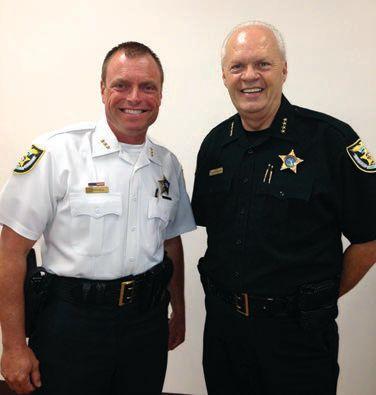
7. Allison Walsh with Senator Alan and Jeanne Hays
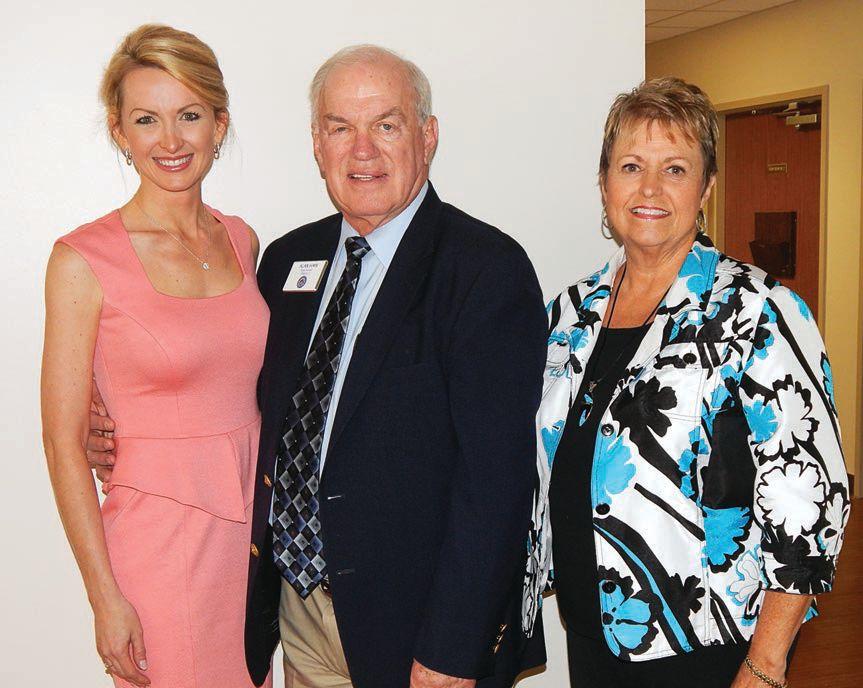
108 // HL // JULY 2013
2 4 6 5 7
PHOTOGRAPHER: SHAENA CHASTAIN
1 Community 3
VIDEO PRODUCTION Corporate Web Broadcast Event Educational Product
Visually communicate your message through video! Whether you need broadcast spots, training materials, recruitment content, or a standard web message, Akers will develop, produce and edit a video to fit your needs and your budget.
more
// 352.787.4112
LAKEHEALTHYLIVING.COM // 109
For
information
A LEG UP ON TREATING VEINS
Vascular Vein Centers has set the standard of care in Central Florida for treatment of varicose veins and other vein-related diseases. Throughout June, doctors and administrators celebrated the practice’s 12th anniversary by inviting loyal patients to its various office locations. In addition to giveaways and refreshments, guests enjoyed an opportunity to talk with the practice’s knowledgeable practitioners.
1. Rick Wiggins, Nadene Weil, and Bruce Hancock
2. Nan Wilson and Dr. Samuel Martin
3. Nan Wilson and Alex Cuellar
4. Susan Mcdowell, Catherine Heideman, and Janice Brennan
5. Alex Cuellar, Nan Wilson, Dr. Samuel Martin, Nadene Weil, Michelle Borton, and Mike Perry
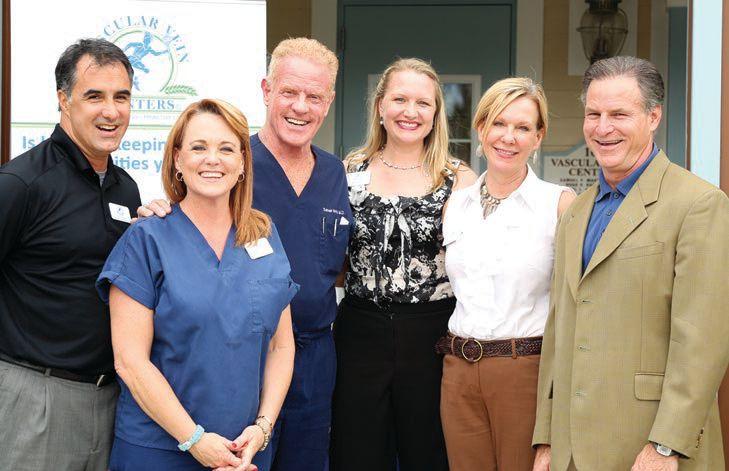
6. Dr. Samuel Martin, Nan Wilson, Joan Belpedio, Nadene Weil, and Janice Brennan
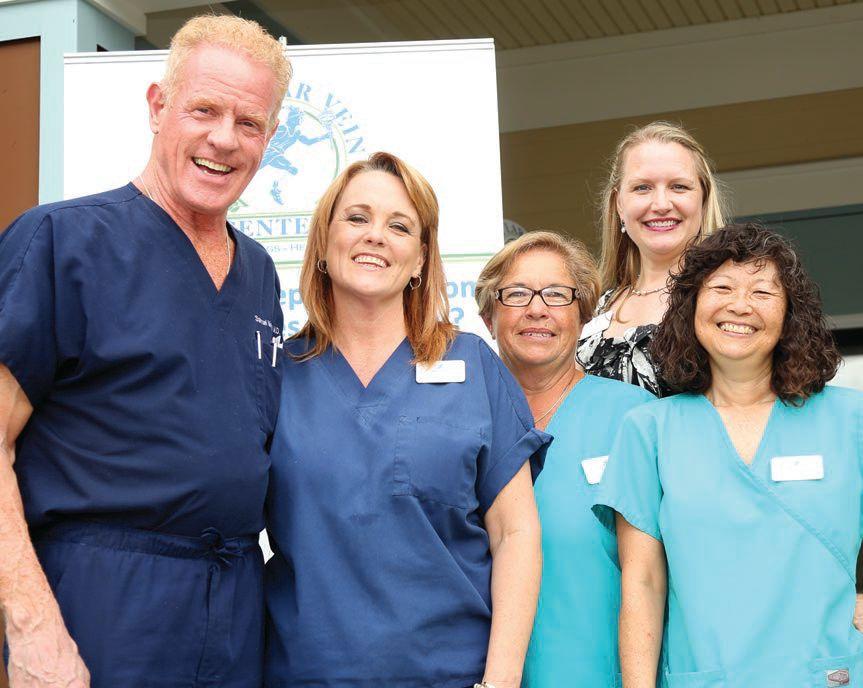
110 // HL // JULY 2013
2 4 5 6
PHOTOGRAPHER: FRED LOPEZ
1 Community 3
BRANDING
.
Brand evaluation
Strategic planning
Name generation


ADVERTISING/ DESIGN
Creative development
Copywriting
Logo identity development
. Custom publications
Product catalogs

Newsletters
Brochures
Packaging
Annual report
MEDIA
. Research/Planning
. Buying
INTERACTIVE
Website development
Search engine optimization (SEO)
Social media
E-Commerce solutions
Web analytics

PUBLIC RELATIONS/ PROMOTIONS
Press releases
Media relations
Event planning
For more information // 352.787.4112
A FABULOUS RESOURCE
Lake-Sumter Society for Human Resource Management held its 18th annual Business Conference and Expo inside the Leesburg Community Center. Guest speakers from companies such as HR Health Solutions, OMS Group, and EVP Kinetix explained how smart human resources solutions can help protect businesses. The event also included a vendor exposition, door prizes, breakfast, and lunch.
1. Tucker Harmon and Travis Childers
2. Pamela Webb and Rebecca Moreno
3. Brian and Lisa Christman
4. Joe Patton, Joe Morales, and Bruce Bender
5. Kitty Fields, Debbie Fontaine, Kay Wilson, Kelly Marcoux, and Bruce Bender
6. Mary Baker, Kay Wilson, and Kitty Fields
7. Kelly Marcoux, Cathy Lambert, and Pamela Webb
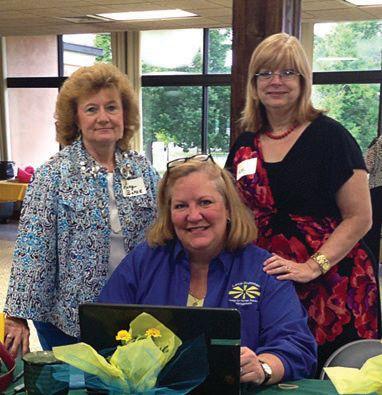
112 // HL // JULY 2013
2 4 6 5 7
PHOTOGRAPHER: HEATHER TOOTLE
1 Community 3
PHOTOGRAPHY
. Product Events
Food Location
Architectural Portraits
professional, family, school/seniors, pets
musician/bands
artist, model/actor
PRINTS
Hi-quality small & large prints
Deluxe perfect-bound albums
PHOTOSHOP RETOUCHING
. Photographic restoration
. Digital enhancement
Photo-illustration
For more information // 352.787.4112 www.akersstudio.com




HEALTHY VIEWS
“When a foundation is strong, growth knows no limitations.”
FRED LOPEZ CHIEF PHOTOGRAPHER

Local Legal Know-How Civil Litigation (bench and jury trials) Real Estate (including closings and title insurance) Business Entity and Corporate Law Consumer Bankruptcy Estate Planning Wills and Trusts Probate and Trust Administration
David M. Campione
For more information, call us at 352.343.4561 or visit our website at CampioneHackney.com Office Location: 2750 Dora Avenue, Tavares, Florida 32778
Harry T. Hackney
MAKOPLASTY®






MAY BE RIGHT FOR YOU!
If you are one of the millions of Americans who suffer from painful early to mid-stage osteoarthritis of the knee, total knee replacement may NOT be your optimal treatment solution. Now available at Florida Hospital Waterman, MAKOplasty® Partial Knee Resurfacing is an innovative option that spares healthy bone and surrounding tissue, resulting in rapid relief from pain, rapid recovery, and rapid return to daily activities.


Osteoarthiritis shouldn’t slow you down. If you have knee pain or stiffness with activity and have not responded to anti-inflammatory medication or other treatments, you may be a good candidate for the MAKOplasty® procedure. Call 352.253.3388 for more information or to find a seminar near you.