

What Is Pharm (PGx) Testing? A Clinic Guide
A plain language breakdown of pharmacogenomic testing and why more clinics are adding it as a lab partnership offering in 2026

What Is Pharmacogenomic PGx Testing, and Why Clinics Are Paying Attention
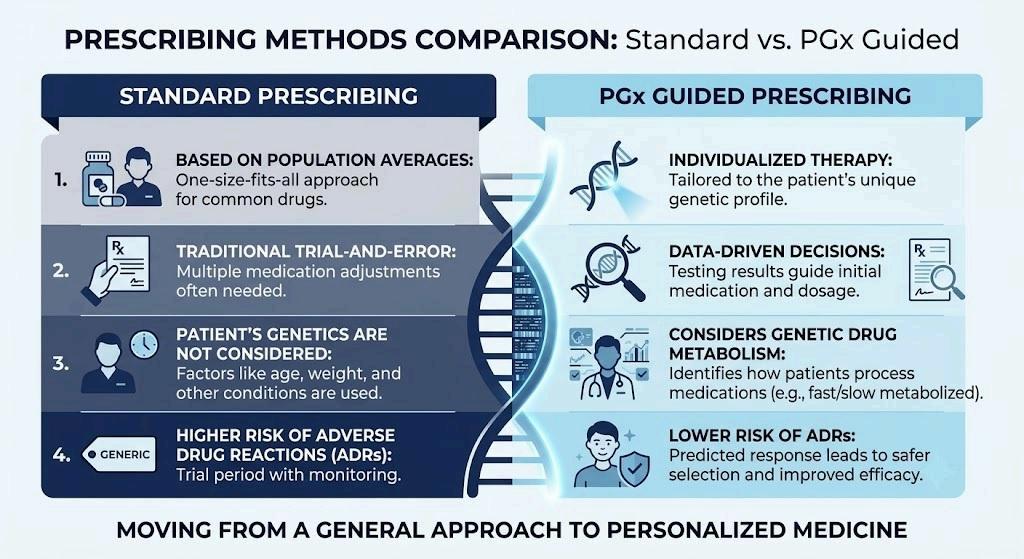
A patient takes the same dose of the same medication as everyone else in the waiting room Their body processes it completely differently That mismatch, multiplied across millions of prescriptions every year, is the entire reason pharmacogenomic testing exists.
PGx testing looks at how a person's genetic makeup affects the way they metabolize specific medications. Some people break down a drug too quickly for it to work. Others process it too slowly, which raises the risk of side effects A simple cheek swab or blood draw can flag these patterns before a prescription is even written
How PGx Testing Actu
The test analyzes specific genes tied to drug metabolism, most commonly the CYP450 family
Results come back as a report showing how a patient is likely to respond to certain medication classes, including antidepressants, pain management drugs, and some cardiovascular medications
This isn't a diagnostic test in the traditional sense It doesn't tell a physician what condition a patient has It tells them how that patient's body will likely handle treatment once a diagnosis is already on the table.
Why This Matters for Clinics Right Now
Trial and error prescribing wastes time, frustrates patients, and occasionally leads to adverse reactions that were entirely avoidable. Clinics that integrate PGx testing into their intake process, particularly in behavioral health, pain management, and weight loss medicine, are seeing fewer medication adjustments and better patient retention
There's a business case here too Lab partnerships built around PGx testing give clinics a legitimate additional revenue stream that doesn't require expanding staff or square footage AJ Pakpour has worked with clinics integrating this exact model into existing service lines.
Where the Line Sits B erreach
Not every patient needs this test A healthy adult starting a common, well tolerated medication for the first time doesn't necessarily need genetic screening first. The clearest value shows up when a patient has already had a poor reaction to a medication, or when they're starting a drug class known for wide individual variation in response
Clinics that oversell PGx testing to every patient regardless of clinical relevance risk both wasted cost and regulatory scrutiny The strongest programs build clear criteria for who actually benefits.
What This Means for Practice Owners
A lab partnership only works if the clinic has the infrastructure to interpret results and act on them That means training staff, choosing a reliable lab partner, and building the testing step into an existing workflow rather than bolting it on separately. For a broader look at how laboratory integration fits into a modern clinic's operations, review the full guide
Quick Recap
PGx testing won't replace clinical judgment. It sharpens it, and clinics that treat it as a precision tool rather than a blanket offering tend to see the strongest results from both patients and the business side of the practice