

AIT Unit: RRCAP
Project Duration: 1 July 2023 to 31 August 2025
Project Sponsor/ Client: Stockholm University
Project Partner: Stockholm University
Expected Social Impact:
⏵ Increased understanding on regional impacts of transboundary air pollution, particularly aerosols and trace gases (ABCs)
⏵ Increased understanding on interaction of ABCs with climate change factors.
⏵ Expanded capacity of young researchers, students, and policymakers of the South Asian region.
Project Description:
The project involves implementing Atmospheric Brown Cloud (ABC) activities at the Maldives Climate Observatories (MCOH) for the period of 2023 to 2025.
Activities
⏵ Conduct continuous measurements of air pollution, atmospheric components, and meteorological
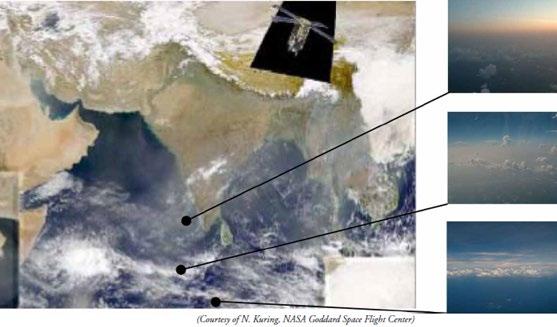
parameters, including operation and maintenance of scientific instruments.
⏵ Analyze atmospheric data combined with, as appropriate, satellite observations, model simulation outputs and other supplementary data, and prepare scientific reports/publications;
⏵ Provide training to scientists, technicians, and young researchers;


28 October 2023 - Representatives from AIT actively participated in COP 28, the 2023 UN Climate Change Conference held in Dubai from November 30 to December 12, 2023. Notable attendees included P. Abdul Salam, Dean of the School of Environment Resources and Development; Guilberto Borongan, Director of Waste and Resource Management Cluster; Ramesh Soysa, Head of the Climate Change Cluster of AIT Regional Resource Centre for Asia and the Pacific (AIT RRC.AP); and Faiz Shah, Director of AIT Yunus Center.
COP 28 witnessed a significant shift towards renewable energy and sustainable practices, with commitments from over 100 countries to triple global Renewable Energy Capacity and double Energy Efficiency by 2030. Additionally, more than 20 countries launched a ‘Declaration to Triple Nuclear Energy by 2050.’ The outcomes included the first Global Stocktake (GST), outlining a roadmap for achieving net-zero goals by 2050. Key discussions
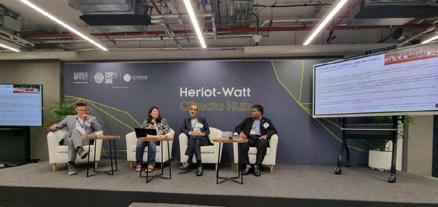
emphasizedexpediting the adoption of zero- and lowemission technologies, including renewables, nuclear energy, and carbon capture and utilization.
Website:
� https://ait.ac.th/2023/12/ait-delegation-at-cop-28advancing-sustainable-solutions-and-forging-keypartnerships-for-climate-action/
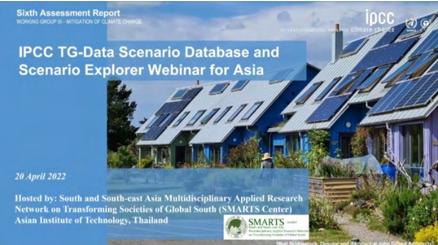
SMARTS CENTER AT SERD/AIT IS HOSTING THE IPCC TG-DATA SIXTH ASSESSMENT REPORT SCENARIOS DATABASE FOR ASIA WEBINAR FOR THOSE WORKING ON AND INTERESTED IN MODELING/SCENARIOS/ DATA.
Date: 20 April 2023
Description: The findings of the AR6 WGIII report were underpinned not just by the scientific literature, but also by quantitative data on emissions, energy, land and sectoral transformation scenarios. Substantial efforts were made to coordinate and collect scenario data, which were submitted by the modeling teams around the world and assessed by lead authors. The AR6 Scenarios Database has been publicly online since the WGIII approval, aiming to transparently support the findings of the report and also provide a useful resource for researchers.
This event has been organized to introduce the database from regional perspectives, and include a hands-on activity/ tutorial such that users can also explore the data online as the AR6 Scenario Explorer.
The webinar included the following presentations:
⏵ Welcome remark.
⏵ Jim Skea (Co-chair WGIII IPCC AR6): opening remark.
⏵ Joyashree Roy (AIT): AR 6-Global, national and regional scenarios and Bottom up assessment of global mitigation.
⏵ Shreya Some (AIT): Use of TG data portal-Specific data download.
⏵ Sebastian Vicuna, David Huard (TG-Data), Alaa Al Khourdajie (WGIII TSU), Adam Milward
(MetadataWorks): Introduction to TG Data, FAIR Principles & general guidelines, DDC overview
⏵ Edward Byers (IIASA): Introduction to AR6 Scenario explorer; Hands-on demonstration to Scenario Explorer.
⏵ Q&A
⏵ Joyashree Roy (AIT): Closing remarks.
Website:
� https://ait.ac.th/event/ipcc-tg-data-webinaron-ar6-scenarios-database-for-asia-hosted-bysmarts-center-at-serd-ait/

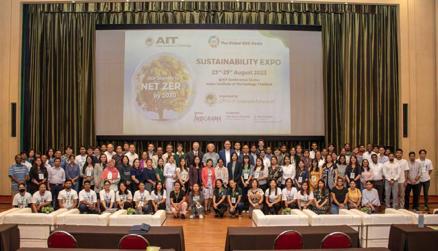
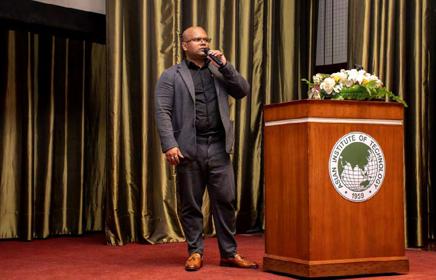
28 August 2023 – In a determined journey towards becoming net zero by 2030, AIT has been unwaveringly advancing various initiatives. Demonstrating its commitment to sustainability, AIT hosted the Sustainability Expo from August 23rd to 25th, 2023.
This expo showcased AIT’s steadfast dedication to sustainability and provided a platform for profound dialogues and collaborations on urgent global challenges. It unveiled and explored pathways to achieving the global SDGs while fostering the exchange of knowledge and expertise.
AIT President Kazuo Yamamoto emphasized that all participants have convened at the event with a profound purpose – to propel AIT’s evolution into a net-zero carbon botanical garden campus by 2030. He said, “It is a vision that drives us and defines us. We acknowledge it is a bold and ambitious goal, but we are committed and confident of achieving it. As each day unfolds, the consequences of inaction grow graver, imperiling our ecosystems, economies, and the well-being of generations to come.” Yamamoto called upon everyone to embark on this journey toward net zero, embracing it as both a responsibility and an opportunity to foster transformative change collaboratively.
Spanning three days, the AIT Sustainability Expo comprised an Inter-university Research Fair, Interuniversity Hackathon, and expert-led Sustainability Talks covering crucial topics such as water conservation, climate change, waste management, air pollution, sustainable buildings, remote sensing, social business, GIS, and sustainable farming.
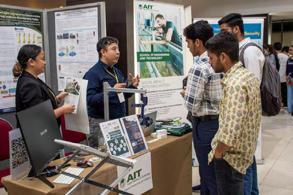
The Inter-University Research Fair showcased groundbreaking research that seeks to tackle the current pressing challenges. In addition, AIT’s research centers, including GWSC, GIC, RRC.AP, Yunus Center, AITE, and AITS, hosted captivating workshops that ranged from sustainable infrastructure and digital technologies to clean environments, Genki Campus initiatives, synergizing SDG 6 with other goals, and the concept of sustainable urban communities.
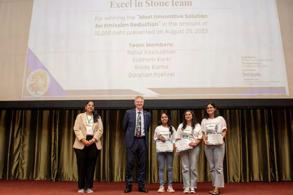
The “Hacking Zero” Hackathon co-organized by the AIT Entrepreneurship Center (AIT EC), highlighted tech’s
power for innovative green solutions through constructive green financing. AIT EC has been collaborating with diverse global partners to host a range of hackathons to address pressing issues and promote sustainability with an inclusive approach, ensuring that no one is left behind. The event facilitated teamwork to brainstorm and create practical, inventive answers for pressing environmental problems.
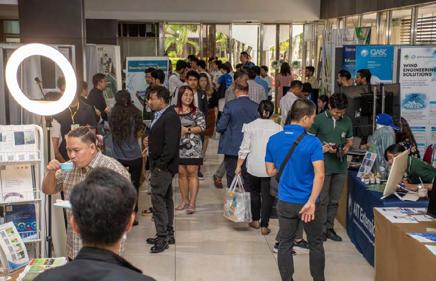
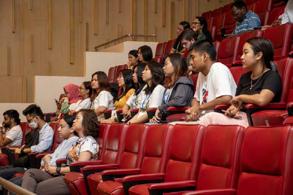
The expo was a productive networking ground for researchers, businesses, and organizations, facilitating the exchange of knowledge, expertise, and innovative projects contributing to sustainability. Participants seized the opportunity to engage with exhibitors, gain insights into sustainable endeavors, and forge potential collaborations.
The event also offered various engaging activities, with vendors outside the AIT Conference Center presenting fun games, delectable food, clothing, and other products. The event’s primary sponsor, Indorama Ventures,
along with co-sponsors including Kazuo Yamamoto, AIT President, Naveed Anwar, CEO of Computers and Structures Inc. Bangkok, and Bhargab Mohan Das, Managing Director and CEO of Christiani & Nielsen Energy Solutions Co., Ltd, played a pivotal role in making this event a reality.
Website: � https://ait.ac.th/2023/08/striding-towards-asustainable-future-aits-net-zero-commitment/

AIT Unit: SMARTS Center
Project Duration: 28 April 2023
Description:
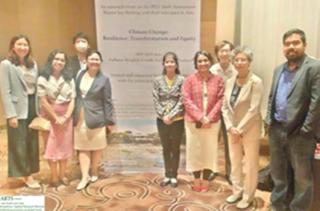
The SMARTS Center of AIT hosted the outreach event “Climate Change: Resilience, Transformation, and Equity” with the participation of the IPCC on 28th April 2023 at Bangkok, Thailand. The event disseminates results of the IPCC Sixth Assessment Report including contributions from three Working Groups and a Synthesis Report with topics relevant to Thailand and the region with inputs from the Global South. The latest @IPCC Climate Change Synthesis Report confirms that achieving the 1.5°C limit is still possible with critical action from all sectors and levels such as investing in renewable energy. During IPCC’s outreach event in
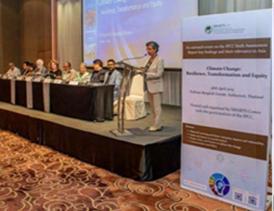
Bangkok organized by @AITasia, Parimita Mohanty from @UNEPROAP highlights how gender equality and inclusivity are essential to a just energy transition. EmPower: Women for Climate-Resilient Societies, a programme jointly implemented by UN Women and UNEP, invests in climate action by and for women. There were four sessions: Session 1: Observed Warming and Future Scenarios: Impacts and Vulnerability, Session 2: Equity and Justice in Transformation, Session 3: People, Policy, and Finance to Deliver the Change; and, Session 4: Communication and Policy. Each session had expert speakers from the IPCC, academia, and other relevant organizations. Each session had expert speakers from the IPCC, academia, and other relevant organizations.

Project Duration: Published in 2023
Description:
Urbanized coastal geographies with high population density but with low adaptive capacity are more exposed to threats of both rapid and slow onset weather events. Altered coasts along the Bay of Bengal is one such geography where general urbanization trend coupled with new policy driven tourism activity promotion is increasing exposure to frequent and intense disaster events.The current study takes a deeper dive into a 17 km long coastal stretch along Digha-ShankarpurMandarmoni in the Bay of Bengal in India. Community consultation using questionnaire-based survey is the primary source of evidence for this study. Community’s perception about threats from changing weather events and risks perceived by the coastal community engaged in various livelihood categories have been used to assess their resilience status, awareness of various local adaptive interventions and measures undertaken for local resilience building. With already predominant traditional agricultural and fisheries practices, promotion of tourism is altering the natural ecosystem faster through hard infrastructure expansion. The prevalent threats from weather events in the region lead to the loss of ecosystem services with adverse impacts on the communities whose livelihoods are closely linked to the ecosystem service flows. In this context, how to build resilience is the major research question. Nine impact indicators are used to assess risk using qualitative and quantitative methods. The analysis shows that individual and the community scale resilience increases with livelihood diversification, inclusive
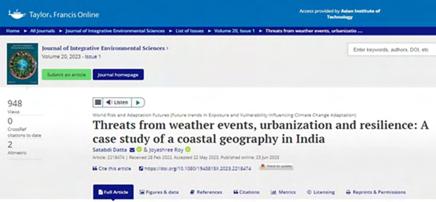
community engagement, polycentric governance structure, maintenance of diversity in ecosystem service flows, access to science based information on threats and opportunities, inclusion of local knowledge available with the communities in various livelihood categories for designing appropriate social protection measures. The study comes up with policy recommendations. It is important to avoid lack of long-term vision in the policies, enhance local institutional capacity through sector specific associations to deal with multiple threats quickly, overcome lack of awareness about preventive and soft adaptation measures, restoration actions, increase interaction and involvement of local stakeholders for local knowledge. Additionally, there is an urgent need to involve multiple even if sometimes conflicting scientific views on solutions vis-à-vis community wisdom for strengthening resilience.
Website: � https://www.tandfonline.com/doi/full/10.1080/1 943815X.2023.2218474
WEBINAR

Project Duration: 19 April 2023
Description:
AIT RRC.AP hosted a Webinar titled Accessing and Using Data and Information for Adaptation Planning on 19 April 2023. Around 70 online participants from across the Asia and the Pacific region attended the live webinar which reflected on the essential climate change adaptation tools that are freely available for use in climate scenario planning and strategic decision-making. The session started with the welcoming remarks of Guilberto Borongan, Director of AIT RRC.AP, followed
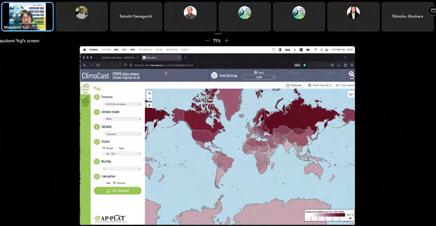
by an opening remark by Yuko Yoshida, Acting Director, Climate Change Adaptation Office, Global Environment Bureau, Ministry of the Environment, Japan. Presentations on the three tools were then delivered and all questions related to the topics were carefully answered by the panelists. The three tools presented were as follows:
⏵ Presentation 1: Introduction to FloodS, an online flood simulation tool, by Satoshi Yamaguchi, Chief Researcher, Research & Development Group, Hitachi, Ltd., Japan.
⏵ Presentation 2: Introduction to ClimoCast, an online tool for climate forecasting by Masutomi Yuji, Head
of Asia-Pacific Climate Change Adaptation Research Section, Center for Climate Change Adaptation, National Institute for Environmental Studies, Japan.
⏵ Presentation 3: Introduction of S8DS climate downscaling tool by Hnin Lai Win, Programme Offices of the RRC.AP, AIT, Thailand.
Weblink:
� http://www.rrcap.ait.ac.th/news/Pages/ vol24no1-08.aspx
Project Duration: 8-11 May 2023
Project Sponsor/ Client: Project Partner:
Description:
AIT RRC.AP organized the Regional Training Workshop on Building Cities Resilience to Climate and Disaster Risks on 8 – 11 May 2023 in Sukosol Hotel, Bangkok, Thailand. The face-to-face event was conducted with financial support from the Ministry of Environment, Japan (MoEJ) and in collaboration with the United Nations Office for Disaster Risk Reduction (UNDRR), the United Nations Development Programme (UNDP), the United Nations Office for Project Services (UNOPS), the International Federation of Red Cross and Red Crescent Societies (IFRC), the Local Governments for Sustainability (ICLEI), the United Cities and Local Governments (UCLG), the Asian Disaster Preparedness Center (ADPC), and the Educational Partnerships for Innovation in Communities Network (EPIC-N).
Around 30 participants, including municipality/city officials and academicians from Indonesia, Lao PDR,
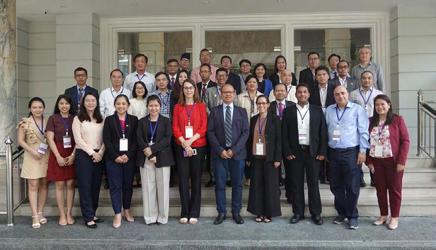
Nepal, Philippines, Thailand and Vietnam as well as representatives from the partner organisations attended the 4-day training workshop which aimed at enhancing capacities of different stakeholders to develop and implement city resilience action plans.
Weblink:
� http://www.rrcap.ait.asia/news/Pages/ vol24no1-01.aspx
Project Duration: 15 May 2023
Description:
On 15 May 2023 during the seventy-ninth session of the ESCAP at the United Nations Conference Centre in Bangkok, Guilberto Borongan, Director, AIT RRC.AP, participated and presented interventions and insights at a side event titled “Streamlining Nature-based Solutions to Enhance Mitigation and Climate Resilience in the Asia and Pacific.” The side event was co-organized by IUCN Asia and the Embassy of Japan with session focused on Nature-based Solutions (NbS) to address environmental and sustainable development challenges in the AsiaPacific region. It also discussed policy challenges and best practices from the region, and highlighted needs to support the mainstreaming of NbS for mitigation, food security, climate adaptation and resilience, financing for NbS (through the GCF, Adaptation Fund, and GEF), and transparent, inclusive governance.
Borongan discussed academia’s contribution to scaling up NbS in the Asia-Pacific region, as well as knowledge gaps and research priorities for AIT to scale up NbS in
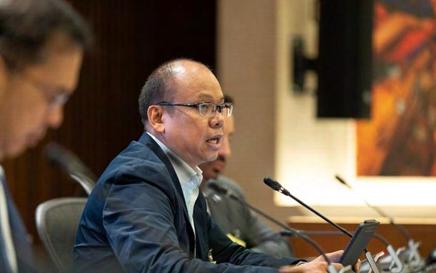
the Asia-Pacific region. He described a two-pronged approach that combines research-based data and information generation with knowledge transfer and capacity building on nature-based solutions throughout the region.
Weblink:
� http://www.rrcap.ait.asia/news/Pages/ vol24no1-01.aspx
THE REGIONAL TRAINING WORKSHOP ON NATIONAL ADAPTATION PLAN DEVELOPMENT PROCESS: STRENGTHENING CAPACITY FOR MULTI-SECTORAL INVOLVEMENT IN THE NAP PROCESS IN ASIA PACIFIC REGION, BANGKOK
Project Duration: 6-8 June 2023
Description:
The AIT RRC.AP conducted the Regional Training Workshop on National Adaptation Plan Development Process: Strengthening Capacity for Multi-sectoral Involvement in the NAP Process in Asia Pacific Region on 6 – 8 June 2023 in Sukosol Hotel, Bangkok, Thailand. The event was organized with financial support from the Ministry of Environment, Japan (MoEJ) and in collaboration with the United Nations Office for Disaster Risk Reduction (UNDRR) and the Asian Disaster Preparedness Center (ADPC). Around 20 participants, representing governments and academic institutions from 10 countries in Asia-Pacific, namely, Indonesia, Kazakhstan, Kyrgyztan, Lao PDR, Malaysia, Maldives, Mongolia, Philippines, Thailand and Vietnam, together with representatives from the partner organisations, took part of the 3-day capacity-building and training program designed to support governments in their national adaptation planning (NAP) and project development processes.
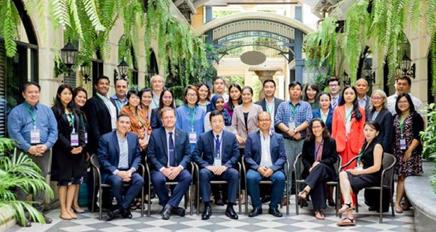
The training program which consisted of eight sessions, each comprising of informative presentations and group exercises, equipped participants with useful insights and practical knowledge encompassing various aspects of the NAP development processes.
Weblink:
� http://www.rrcap.ait.asia/news/Pages/ vol24no2-04.aspx
Project Duration: 12-16 June 2023
Description:
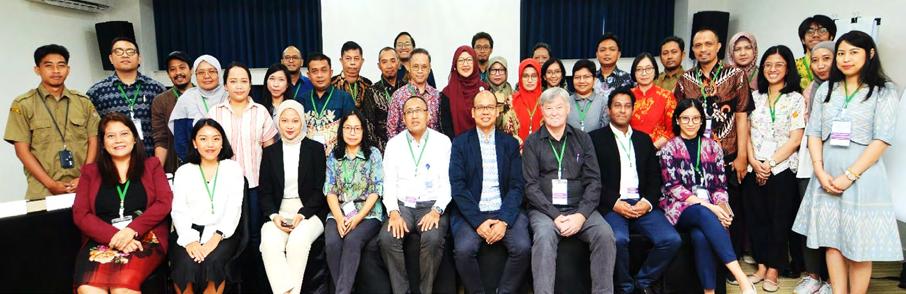
The Training Workshop on Developing Concept Notes for the Green Climate Fund: Urban Climate Resilience in Indonesia was successfully conducted on 12 – 16 June 2023 in Jakarta, Indonesia. The event was organized by the AIT RRC.AP with financial support from the Ministry of Environment, Japan (MoEJ) and in collaboration with the Fiscal Policy Agency, The Ministry of Finance Indonesia, and the Global Green Growth Institute (GGGI), Indonesia. There were around 35 participants, representing National Designated Authority (NDA), Accredited Entities (AEs), Direct Access Entities (DAEs), and representatives from various Local Government Units (LGU), civil society organizations, and consultancy firms in Jakarta and
the nearby provinces in Indonesia, who took part in the national training program designed to empower these stakeholders to develop high-quality concept notes aimed at securing climate finance, with a specific emphasis on the GCF.
The comprehensive 5-day training program which consisted of lectures, group exercises, and presentations, enabled the participants to successfully deliver four concept note project proposals relating to water/flood management, agriculture system, public health system and solid waste management, as a final output of the training workshop.
Weblink:
� http://www.rrcap.ait.asia/news/Pages/ vol24no2-05.aspx
AIT SUSTAINABILITY EXPO 2023: A SEMINAR BY AIT
“CLEAN
Project Duration: 24 August 2023
Description:
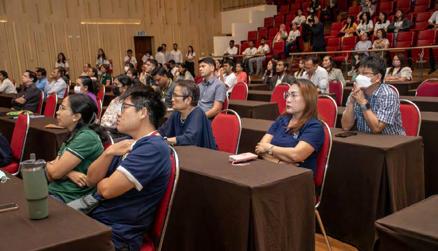
RRC.AP successfully hosted a seminar focused on the “Clean and Sustainable Environment in Changing Climate” on the morning of second day, 24th August 2023 of the AIT Sustainability Expo 2023, at the AIT Conference Center, Thailand. The seminar aimed to share knowledge and insights about RRC.AP’s work program and activities, particularly in assisting countries across the region in their sustainability efforts. Approximately 100 participants from both on-site and online attended
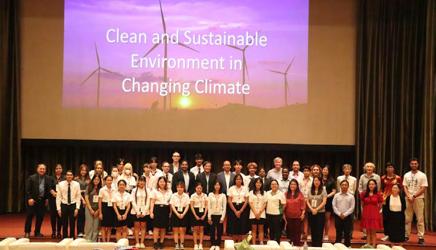
this meaningful seminar, representing government policymakers, academics, scientists, young researchers, students, and members of community organizations. The diverse range of topics covered in the seminar, including waste and resource management, air pollution, and climate change, showcased the multidisciplinary approach necessary for achieving a sustainable and climate resilient future.
The seminar commenced with the welcome speech by Guilberto Borongan, Director of AIT RRC.AP, followed by Yuko Yoshida, Deputy Director, Climate Change
Adaptation Office, Global Environment Bureau, Ministry of the Environment, Japan (MoEJ), who delivered the welcome remarks virtually. Then, the opening speech by Roger Levermore, Vice President for Development, AIT. Participants in the seminar gained significant insights and networks that may lead the way for new solutions and valuable contributions to both global and regional sustainability goals.
Weblink:
� http://www.rrcap.ait.asia/news/Pages/vol24no3-09. aspx
LOCAL TRAINING ON ADAPTATION PLANNING TOOLS
Project Duration: 7 November 2023
Description:
The AIT RRC.AP Climate Change Cluster played a pivotal role in organizing the “International Forum on Climate Change - Never Again Yolanda: Lessons Toward Resiliency” during the 2nd Regional Disaster Resilience Forum (RDRF) on November 6-7, 2023, at the People’s Center in Tacloban City, Philippines. Dr. Guilberto Borongan, Director of AIT RRC.AP, actively participated and represented RRC.AP at The RDRF 2023, which coincided with the 10th anniversary commemoration of Super Typhoon Yolanda. In alignment with this event, RRC.AP conducted the Adaptation Planning Tools and Green Climate Fund Concept Note Development Seminar in collaboration with Eastern Visayas State University (EVSU) and with funding from the MOEJ. The forum successfully convened approximately 70 participants from various stakeholders, including representatives from regional line departments such as DENR, DAR, DILG, DOT, as well as local government units (LGUs), NGOs like
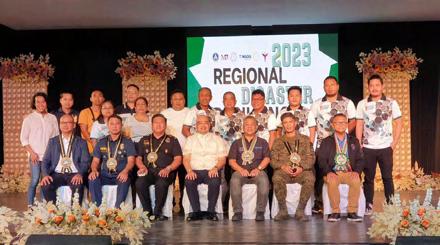
Save the Children, and participants from EVSU. Tacloban City, Philippines, bore the brunt of Typhoon Yolanda (Haiyan) in 2013, and the forum aimed to dissect lessons learned from the disaster and explore effective strategies for enhancing climate resilience across the Philippines.
Weblink:
� http://www.rrcap.ait.asia/news/Pages/ vol24no4-03.aspx
Project Duration: 2 - 8 December 2023
Description:
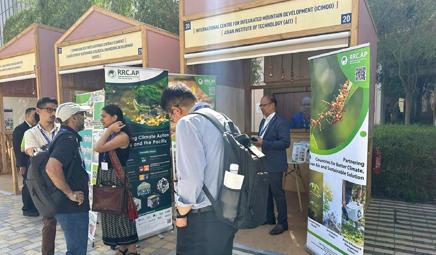
On 2-8 December 2023, Dr. Guilberto Borongan and Dr. Ramesh Soysa of AIT RRC.AP participated in the COP 28 side events and exhibition in Dubai, The United Arab Emirates. AIT RRC.AP actively participated in COP 28 by showcasing and promoting through an exhibition booth, jointly organized with ICIMOD. The exhibition, held from December 4 to 6, 2023, attracted around 200 participants. During this event, introductions were made for both the AIT and RRC.AP, along with showcasing MOEJ Adaptation Tools like FloodS. These tools were effectively introduced, marketed, and demonstrated - which is accessible in APPLAT.
Key highlights, notable experiences, and insights from COP 28 encompassed significant declarations and prominent side events tackling vital themes like Climate Change and Health, Climate Change and Cities, and Climate Empowerment and the Gender Action Plan. The COP President emphasized that the outcomes of COP 28 represent a pivotal moment in climate action rather than a conclusion. UN Climate Change Executive Secretary Simon Stiell stated, “While we didn’t close the fossil fuel era in Dubai, this outcome signals the beginning of its end.”
During the COP closing, key takeaways for the Meeting of the Parties to the Paris Agreement were highlighted.
These include the Work Programme on just transition pathways, the Sharm el-Sheikh mitigation ambition and implementation work programme, and the Glasgow Sharm el-Sheikh work programme on the global goal on adaptation, including the Youth Climate Champion as the UAE Consensus. Loss and damage funding arrangements were discussed, with parties pledging a total of USD 700 million. It was unanimously agreed that Azerbaijan will host COP 29 and Brazil will host COP 30, with dates set for November 11-22, 2024, and November 10-21, 2025, respectively.
Weblink:
� http://www.rrcap.ait.asia/news/Pages/ vol24no4-01.aspx
SECTORAL CLIMATE CHANGE MITIGATION OPTIONS. SUSTAINABILITY SCIENCE.
Project Duration: Published in 2023
Description:
Mitigation actions needed to achieve the ambitions of the Paris agreement to limit global temperature rise to 1.5 °C or below 2 °C have to align with sustainable development. In the near term, this implies a better understanding of context- specific challenges in integrating sustainability with climate policies during the designing, planning, implementation and financing stages. Through a review of selected studies across regions, this paper draws out conclusions focussing on SDG trade-offs, with implications on costs and equity for different development contexts. Studies show that trade-offs depend on how the option is implemented and at what scale; mitigation
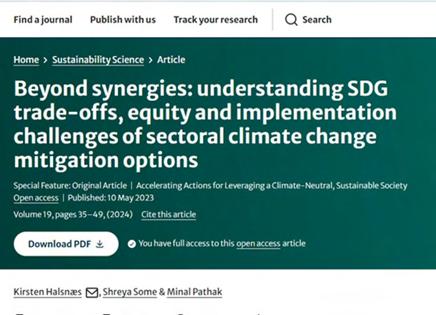
options such as afforestation, biomass production and digitalisation are examples of this. Some options could also result in significant adverse environmental impacts as in the case of battery waste and raw material resources for electric vehicle (EV) or air pollution associated with compact urban development. We find the most important factors influencing equity include unequal access (e.g. urban green spaces and public transportation), high costs (e.g. EV) and financial constraints. Major knowledge gaps include (i) limited empirical evidence of SDG-related trade- offs associated with scaling up mitigation options, (ii) limited understanding of the extent to which benefits
are experienced by different groups, (iii) an understanding of the extent to which local context was considered when assessing mitigation–SDG interaction, including the engagement of stakeholders and (iv) synergies and trade-offs associated with cross-sectoral policies. The paper recommends ex-post analysis of detailed and place-based cases that document how synergies and trade-offs emerged and how these were addressed.
Weblink:
� https://link.springer.com/article/10.1007/ s11625-023- 01322-3
Project Duration: Published in 2023
Description:
A mid-century net zero target creates a challenge for reducing the emissions of emissions-intensive, tradeexposed sectors with high cost mitigation options. These sectors include aluminium, cement, chemicals, iron and steel, lime, pulp and paper and petroleum refining. Available studies agree that decarbonization of these sectors is possible by mid-century if more ambitious policies are implemented soon. Existing carbon pricing policies have had limited impact on the emissions of these sectors because their marginal abatement costs almost always exceed the tax rate or allowance price. But emissions trading systems with free allowance allocations to emissions-intensive, trade-exposed sectors have minimized the adverse economic impacts and associated leakage. Internationally coordinated policies are unlikely, so implementing more ambitious policies creates a risk of leakage. This paper presents policy packages a country can implement to accelerate emission reduction by these sectors with minimal risk of leakage. To comply with international trade law the policy
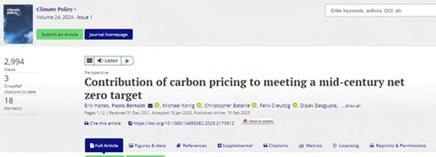
packages differ for producers whose goods compete with imports in the domestic market and producers whose goods are exported. Carbon pricing is a critical component of each package due its ability to minimize the risk of adverse economic impacts on domestic industry, support innovation and generate revenue. The revenue can be used to assist groups adversely impacted by the domestic price and production changes due to carbon pricing and to build public support for the policies.
Weblink:
� https://www.tandfonline.com/doi/full/10.1080/ 14693062.2023.2170312#:~:te xt=Relying%20 solely%20on%20a%20carbon,sectors%20 with%20high%20cos t%20mitigation
AIT Unit: Geoinformatics Center
Project Duration: 1 October 2022 to 31 December 2026
Project Sponsor/ Client: European Research
Executive Agency (REA)
Expected Social Impact:
The project follows a Responsible Research and Innovation approach as a process where all societal actors (citizens, transport infrastructure managers and operators, public authorities, business and industry, academia, Research and Innovation (R&I), and other relevant stakeholders) work together during the whole R&I process to align R&I outcomes to the values, needs, and expectations of the society, enabling easier access to scientific results, as well as the take-up of gender and ethics in the R&I content and process. The project will create an impact by increasing awareness of the benefits of a gender perspective in research, development, and innovation. From a long-term perspective, the gender mainstreaming approach will contribute to favorable conditions for innovation systems and a more secure and sustainable society.
Description:
The ongoing pandemic and climate crisis have taught us hard lessons about the systemic impact of compounding disasters. Stakeholders in disaster risk management are faced with the challenge to adapt their risk reduction policies and emergency plans but lack the tools to account for the cross-sectoral impacts and dynamic nature of the risks involved. The PARATUS project aims to fill this gap
by developing an open-source platform for dynamic risk assessment that allows to analyze and evaluate multi-hazard impact chains, risk reduction measures, and disaster response scenarios in the light of systemic vulnerabilities and uncertainties. These services were co-created within a unique transdisciplinary consortium of research organizations, NGOs, SMEs, first and second responders, and local and regional authorities. To gain a deeper understanding of multi-hazard impact chains, PARATUS will first conduct forensic analysis on historical disaster events, augment historical disaster databases with hazard interactions and sectorial impacts, and exploit remote sensing data with artificial intelligence methods. Building on these insights, PARATUS will then develop new exposure and vulnerability analysis methods that enable systemic risk assessment across sectors (e.g. humanitarian, transportation, communication) and geographic settings (e.g. islands, mountains, megacities). These methods will be used to analyze risk changes across space and time and to develop new scenarios and risk mitigation options together with stakeholders, using innovative serious games and social simulations. The results will be hosted on two stakeholder hubs related to crisis management and humanitarian relief, and provide stakeholders with a range of tools for risk reduction planning in dynamic multi-hazard environments. The service-oriented approach with active stakeholder involvement will maximize uptake and impact of the project, and help to increase European’s resilience to compounding disasters.
AIT Unit: Disaster Preparedness, Mitigation and Management
Project Duration: 1 October 2022 to 31 March 2023
Project Sponsor/ Client: IGES APN
Project Partner: IGES
Expected Social Impact:
By centering on the Sustainable Development Goals (SDGs), this project aims to provide a clear and actionable vision of integrated approaches that address economic, social, and environmental dimensions in a holistic manner. This initiative aspires to enhance the understanding of interlinkages and synergies at local scales, thereby contributing to more effective and sustainable development outcomes tailored to specific local needs, priorities, and opportunities.
Description:
The Regional-CES National Workshop in Thailand, focused on promoting the Regional Circular and Ecological Sphere (Regional-CES), brought together local, sub-national, and
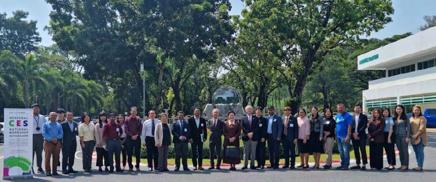
national-level policymakers, decision-makers, practitioners, and private sector representatives. The workshop familiarized participants with the prospects of the RegionalCES framework in integrating climate change issues with the circular and ecological economy. It also scoped activities and interventions that address these issues simultaneously. Additionally, the workshop aimed to codevelop development plans and priorities that incorporated and adapted key elements of the CES framework to the specific local needs, priorities, and opportunities.
AIT Research Theme: Climate Change
AIT Unit: Regional Resource Center for Asia and the Pacific
Project Duration: 18 August 2022 to 30 June 2024
Project Sponsor/ Client: Institute for Global Environmental Strategies (IGES)
Project Partner: IGES
Expected Social Impact:
⏵ Local Adaptation and Resilience through Waste Management and Resource Management strengthened
⏵ Climate Change Adaptation and Disaster Risk Reduction mainstreamed in the SDGs
Description:
Two video development projects:
1. E-learning video on Strengthening Local Adaptation and Resilience through Waste Management and Resource Management
2. E-learning video on Integration of Climate Change Adaptation and Disaster Risk Reduction:

Activities :
1. The video script for the E-learning video on Integration of Climate Change Adaptation and Disaster Risk Reduction has been completed and accorded approval from the Ministry of Environment, Japan
2. The video script for the E-learning video on Integration of Climate Change Adaptation and Disaster Risk Reduction is in the final review process and will be submitted for approval.
3. Video development contractor has been sourced and the contract signing is underway.
AIT Research Theme: Climate Change
AIT Unit: Agricultural Systems & Engineering
Project Duration: 9 November 2022 to 08 November 2024
Project Sponsor/ Client: Sebelas Maret University, Indonesia
Description:
The AIT research project, under the “Climate Change” theme, is hosted by the Agricultural Systems & Engineering unit and spans from 9 November 2022 to 8 November 2024. Sponsored by Sebelas Maret University, Indonesia, the project centers on organizing a conference aimed at accommodating and discussing regional findings related to adaptation and mitigation strategies for climate change. The conference provides a platform for researchers, policymakers, and
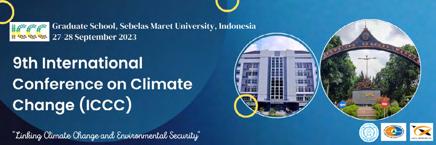
practitioners from around the world to share insights and develop actionable strategies to address the global challenges posed by climate change. By facilitating dialogue and collaboration, the conference aims to enhance understanding of effective climate change responses, promote the exchange of best practices, and foster international cooperation in implementing sustainable solutions to mitigate the impacts of climate change.


AIT Unit: Entrepreneurship Center
Project Duration: 15 March 2023 to 15 March 2024
Project Sponsor/ Client: AirTrunk Singapore Holding Pte. Ltd.
Project Partner: Carthago Consultancy International Levant Consultant 360 Engineering & Management Solutions Z-Tech Solutions
Expected Social Impact:
⏵ Improved waste management through 3R (Reduction, Re-use, Recycling) approach
⏵ Enhanced urban food production (agriculture and aquaculture) utilizing waste nutrients for safe productof-value generation (initially for AIT community, eventually for commercial sale)
Description:
AirTrunk Singapore Holding Pte. Ltd. is funding the project on carbon capturing and green economy to extend the existing AIT Mangrove Museum and test new mangrove, planting and cultivation methods, extending the biodiversity of the museum.
⏵ Enhanced Carbon storage by highest rate C sequestration characteristic of mangrove trees constituting climate change mitigation.
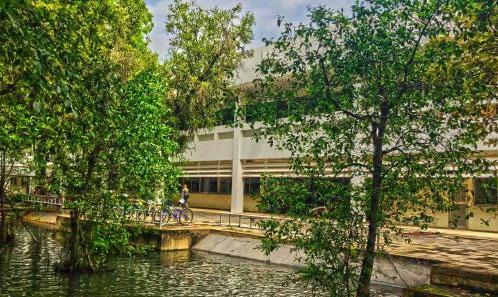
⏵ Dramatic landscape improvement to university campus and other involved urban environments leading to greater
⏵ Expansion of the Freshwater 3R Mangrove Museum based on the novel 3R biotechnology across the AIT campus.
⏵ Undertake a one-year expansion of the Freshwater 3R Mangrove Museum based on the novel 3R biotechnology across the AIT campus
⏵ Undertake a one-year diversification of mangrove trees and associates, introducing new species, thereby enhancing ecological value of the novel freshwater mangrove ecosystem
AIT Unit: RRC.AP
Project Duration: 1 July 2022 to 31 December 2025
Project Sponsor/ Client: Ministry of the Environment, Government of Japan (MOEJ)
Project Partner: Ministry of the Environment, Government of Japan (MOEJ)
Expected Social Impact:
The project will enhance the knowledge and capacity of stakeholders from the region on climate issues to develop resilient climate plans and actions, thereby continuing to support climate adaptation for the most vulnerable people in the region.
Description:
Contribution by RRC.AP to support National Adaptation Planning in the Asia-Pacific, and activities under flagship of Asia-Pacific Adaptation Network.
i. Capacity building and mentoring of nationally identified Direct Access Entities (DAE), National Designated Authorities (NDA), and project developers to have access funding from the Green Climate Fund (GCF) for climate adaptation projects.
ii. Capacity building of the national and city government officials and planners to strengthen their knowledge and equip them with new tools, methodologies, and guidelines in climate change adaptation and disaster risk reduction, and to support them in building resilient cities through wider city development plans and strategies.
iii. Making the S8 downscaler tool relevant and readily available online for the users and bridging knowledge gaps on climate data and information both at the local
and regional level in understanding and predicting climate change and mainstreaming them into adaptation plans.
iv. Introduction of a new tool called Flood to forecast floods to help countries implement an integrated climateresilient flood risk management approach and improve their existing capacity to understand the potential impacts of climate change on flooding and flood risk management and enhance the resilience of vulnerable communities.
v. Advocate nature-based solutions for climate adaptation in the region to enhance understanding of the application of NbS for climate adaptation, their effectiveness, and financing mechanisms to benefit planners, climate researchers, project developers, and academic personnel. vi.Capacity building of country National Adaptation Plan (NAP) focal, decisionmakers responsible for the overall launch and steering of the NAP process, and also Non-Governmental Organizations (NGOs) and stakeholder groups involved in the NAP process from the least developed countries to raise their awareness on the NAP process, challenges and opportunities, identifying institutional and financial needs, and provides specific knowledge, tools, models, and methodology on the NAP development and implementation process.
AIT Unit: Artificial Intelligence Technology Center
Project Duration: 6 January 2023 to 31 December 2024
Project Sponsor/ Client: The World Bank
Project Partner: Carthago Consultancy International Levant Consultant 360 Engineering & Management
Solutions Z-Tech Solutions
Expected Social Impact:
A making flood management decisions during the planning stage, flood fighting stage and post flood recovery stage, requires comprehensive support in order to properly account for all flood impacts. By using
an enhanced system Sindh Irrigation Department and other related agencies will make better planning and better decision making to mitigate the floods or minimize the impact of floods. In the proposed system a user or decision making authorities the affected areas and possible solutions to manage the disaster at community level to minimize the human and economical losses.
Description:
Flood risk mitigation during real time flood events comprising heavy rain fall under hydrological uncertainty is particularly challenging. Giving this due consideration, the aim is to expand and enhance a Decision Support System for the real time operation of embankments and the lower indus channel downstream. The objective of this
project is to enhance preparedness planning, response, and recovery with emphasis on flood monitoring, emergency response, and public involvement.
1. Ground Survey and Hotspot Identification
2. HEC-River Analysis System (RAS) for 2D unsteady river analysis and flood inundation mapping
3. Batch processing all the Flood Models with Scenarios and Hazard Mapping
4. Database Development and Integration with current system
5. Redesign Decision Support System
6. Data Center and Sub Centers Expansion
AIT Unit: SERD/EEM
Project Duration: 29 November 2022 to 31 May 2024
Project Sponsor/ Client: Bangchak Corporation Public Company Limited
Expected Social Impact: Initiate the movement toward Net Zero Emission community.
Description:
The project objective is to provide suggestions for Bangchak Refinery to achieve Carbon Neutral and Net Zero and identify market-scale technology for Carbon Capture and Utilization.
1. Conduct desk study on the policies regarding Carbon Neutral and Net Zero Emission
2. Provide roadmap for Bangkok Refinery to meet Carbon Neutral and Net Zero Emission target
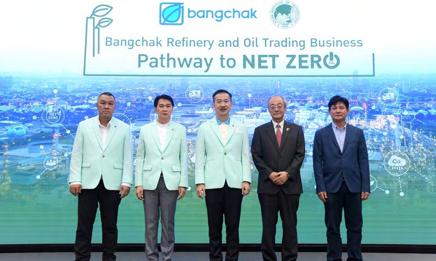
3. Investigate available Carbon Capture and Utilization technologies for refinery
4. Suggest the best Carbon Capture and Utilization technologies for Bangchak refinery
AND INTEGRATION OF KIRTHAR MODEL AND OPERATIONS AND MAINTENANCE OF DATA CENTER UNDER SINDH FLOOD EMERGENCY REHABILITATION (SREFP)
AIT Unit: Artificial Intelligence Technology Center
Project Duration: 1 April 2023 to 31 December 2024
Project Sponsor/ Client: The World Bank
Project Partners: Levant Pakistan 360 Engineering and Management Solutions Carthago Consultancy
International Z-Tech Solutions MERIDIAN PF GENERAL TRADING LLC (Hardware)
Expected Social Impact:
Overall, the project’s expected social impact on the right bank of the Indus River includes improved disaster management, sustainable resource management,

informed development planning, employment opportunities, stakeholder engagement, and technological advancement. These outcomes can contribute to the well-being, resilience, and sustainable development of the local communities in the region.
Description:
Design and implement a sophisticated model that integrates data from various sources to provide comprehensive insights and facilitate informed decisionmaking processes. Coordinate with selected vendors to procure the required hardware components, such as servers, networking equipment, storage systems, and infrastructure devices. Ensure timely delivery and installation of hardware, adhering to project timelines.
Establish seamless integration of diverse data sources, including satellite imagery, weather data, population demographics, and infrastructure information. This integration will enable the Kirthar Model to generate accurate and up-to-date analysis, predictions, and recommendations for improved decision-making.
Set up and maintain a robust data center infrastructure to ensure the secure storage, processing, and accessibility of critical data. This includes implementing industry best practices for data security, backup systems, server maintenance, and disaster recovery procedures to minimize downtime and safeguard information.
Identify and hire skilled personnel with expertise in data center operations and management. Recruit individuals experienced in network management, database management, hydro-informatics and technical support. Build a competent team capable of effectively managing the data center’s day-to-day operations.
AIT Unit: Sustainable Energy Transition
Project Duration: 1 May 2023 to 30 June 2024
Project Sponsor/ Client:: UNOPS
Expected Social Impact:
⏵ Access to cleaner, environment-friendly technologies
⏵ Improvement of socio, economic and environmental conditions
Description:
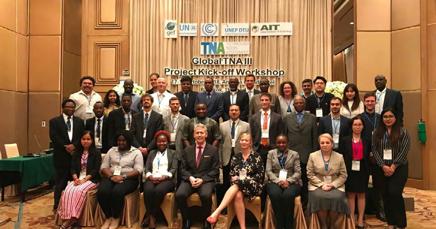
Technology needs assessment (TNA) is grounded in national sustainable development plans, builds national capacity, and facilitates analysis and prioritization of climate technologies to support the implementation of the UNFCCC Paris Agreement. In 2009, the first TNA was initiated and concluded in 2013. In this fourth phase of TNA, AIT is supporting three countries in the Asia Pacific region, namely Maldives, Timor-Leste, and Papua New Guinea.

AIT Unit: Centre for Water and Climate Adaptation
Project Duration: 1 August 2023 to 31 December 2026
Project Sponsor/ Client: Alliance of International Science Organizations
Project Partners: Institute of Geographic Sciences and Natural Resources Research, Chinese Academy of Sciences (CAS), China Institute of Water Problems, Hydropower and Ecology, National Academy of Sciences of Tajikistan Institute of Water Problems, Hydropower and Ecology National Academy of Sciences of Tajikistan
Institute of Geology, National Academy of Sciences of the Kyrgyz Republic (NAS KR) Department of Space Science, Institute of Space Technology, Islamabad Pakistan
Expected Social Impact:
The project will help in increasing the awareness and knowledge related to climate change impacts and adaptation in the region. It will be useful in improving the water management and support to achieve sustainable development. It is expected to overall reduce the social and economic costs/damages associated with climate change by building social cohesion and resilience among the various actors in the society. The findings of the research will also support the policy and decisionmakers in formulating measures to cope with the adverse impacts of climate change and achieving SDGs in the region.
Description:
As the world strives to achieve SDGs, climate change could significantly hinder the progress. Understanding the impacts of climate change on water resources and sustainable development is paramount to devising
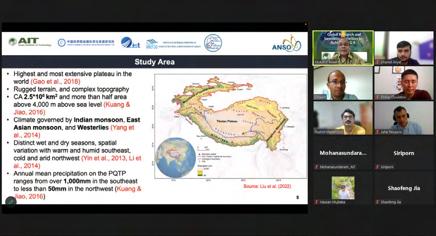
measures to enhance resiliency. The Pan-Qinghai Tibetan Plateau (PQTP) is one of the hot spots as the observed impacts of climate change in the region is higher than the global average. PQTP is also called the water tower of Asia, as many large rivers, such as Yangtze, Yellow, Mekong, Indus, etc., originate from this region and the region has been considered as an amplifier of global climate change. A population of over one billion people depends on the rivers originating in PQTP for their livelihoods and is vulnerable to any changes in the water resources in the region resulting from changing climate. This study will improve the future projections of regional climate in PQTP by using state-of-the-art climate models and dynamic downscaling techniques. Hydrological modeling and machine learning techniques were applied to assess the impacts on the water resources in the region. The combined impacts of climate change and changes in water resources on SDG6 and SDG13 in the region were be assessed using the indicator/ indices-based approach. Finally, the study will rigorously explore the adaptation options for building resiliency and adaptive capacity of communities.
AIT Unit: Regional Resource Center for Asia and the Pacific
Project Duration: 24 October 2023 to 31 May 2024
Project Sponsor/ Client: IGES
Project Partner: Institute for Global Environmental Strategies
Expected Social Impact: Enhance resilience to climate catastrophes. Enhance adaptive measures to combat floods and coastal catastrophes. Enhance resilience in vulnerable communities.
Description:
1. E-Learning materials “ Integrating Gender and Indigenous Factors into Locally-Led Adaptation “ (tentative name) (about 3 modules, about 2 hours total, in English, narrated by a native speaker, video format, the other materials shall have a similar structure)
2. “Using the FloodS, a Flood Forecasting Tool for Adaptation Planning at the City Level “ (tentative name) will be developed and provided as a service. (about 3 modules, about 2 hours total, in English, narrated by a native speaker, video format, the other materials shall have a similar structure)
Expected users of these e-learning materials are government officials (central and local government

line ministries and agencies) in disaster prevention, agriculture, water resources, and transportation infrastructure sectors, mainly in in developing countries in the Asia-Pacific region, and development consultants involved in the ODA project formulation in the same fields in the same region (private companies that conduct projects by AP-PLAT partner organizations). The module should aim to enhance the capacity of GCF certified AEs and National Designated Authorities (NDAs) staff.
Description:
On 18 September 2023, Nophea Sasaki delivered an insightful seminar titled “Innovating for a Greener Tomorrow: Carbon Markets and the Path to Sustainability” to an audience of graduate students, researchers, and faculty members at Mahidol University in Thailand. The presentation provided a deep dive into the significance of carbon markets as a strategic tool for mitigating climate change impacts. It covered the objectives of the Paris Agreement, analyzed trends in carbon markets, and distinguished between compliance and voluntary markets. The seminar also elucidated the mechanisms of emission trading, including cap-and-trade and baselineand-credit schemes, bolstered by examples from around the world. Highlighting innovations such as blockchain and carbon capture and storage technologies, Sasaki showcased how these advancements are revolutionizing carbon market efficiencies. Through case studies on Verra and the Thailand Voluntary Emission Reduction Program (T-VER), the seminar emphasized the importance of
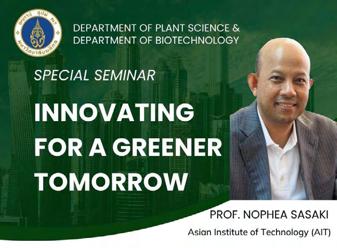
global collaboration, technological innovation, and market-based strategies in advancing net-zero emissions and achieving sustainability goals.
AIT Unit: Internet Education and Research Laboratory
Project Duration: 1 July 2022 to 30 June 2024
Project Sponsor/ Client: TEIN*CC and ThaiREN
Expected Social Impact:
The expected outcome of this proposal, SEAHAZEMON@TEIN- II, will have a strong impact on environmental research, especially in the field of wildland fire and public health. Besides, the proposed project also aims to build the Future Internet Architecture testbed by developing the Information Centric Networking on a live IoT platform.
Description:
This project is an extension of SEA-HAZEMON@TEIN which is co-funded by EU and NRENs under the 5th call of Asi@Connect research program. The project aims to exploit the use of Information Centric Networking (ICN) on the SEA-HAZEMON air quality monitoring platform. The project also aims to introduce advanced network architecture with IoT applications and edge/fog computing. Research collaborations are to be conducted


through meetings and joint workshops discussing the research components and roadmap for further collaborations. This is to provide capacity development for TEIN community for the Information Centric Network for IoT which is one of the key areas in Future Internet agenda.
⏵ Activity 1:Workshop on Information Centric Networking on Internet of Things (ICN-IoTs)
⏵ Activity 2: Development of ICN-IoT platform
⏵ Activity 3: System Validation