
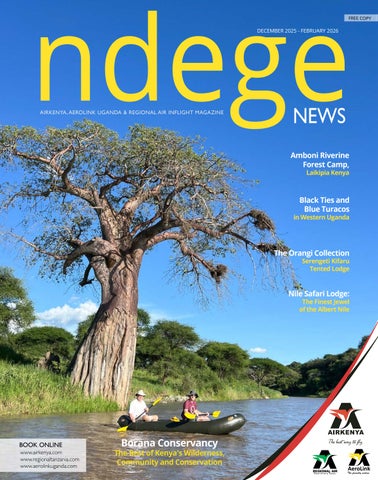
Amboni Riverine Forest Camp, Laikipia Kenya
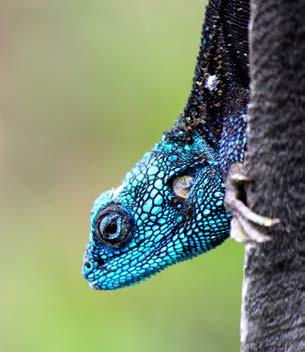
Black Ties and Blue Turacos in Western Uganda
The Orangi Collection Serengeti Kifaru Tented Lodge
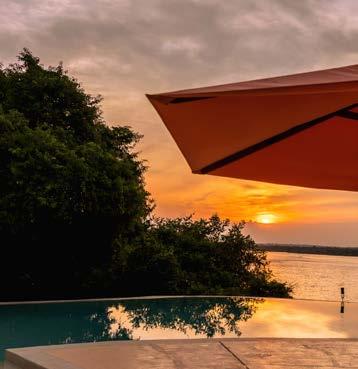
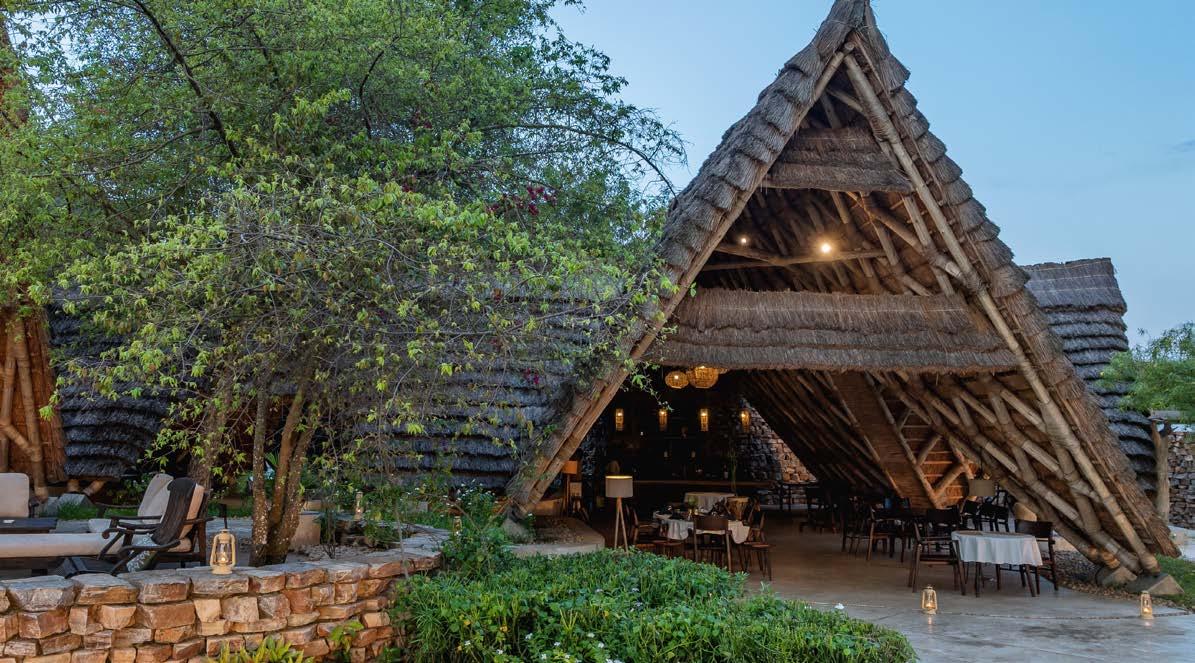
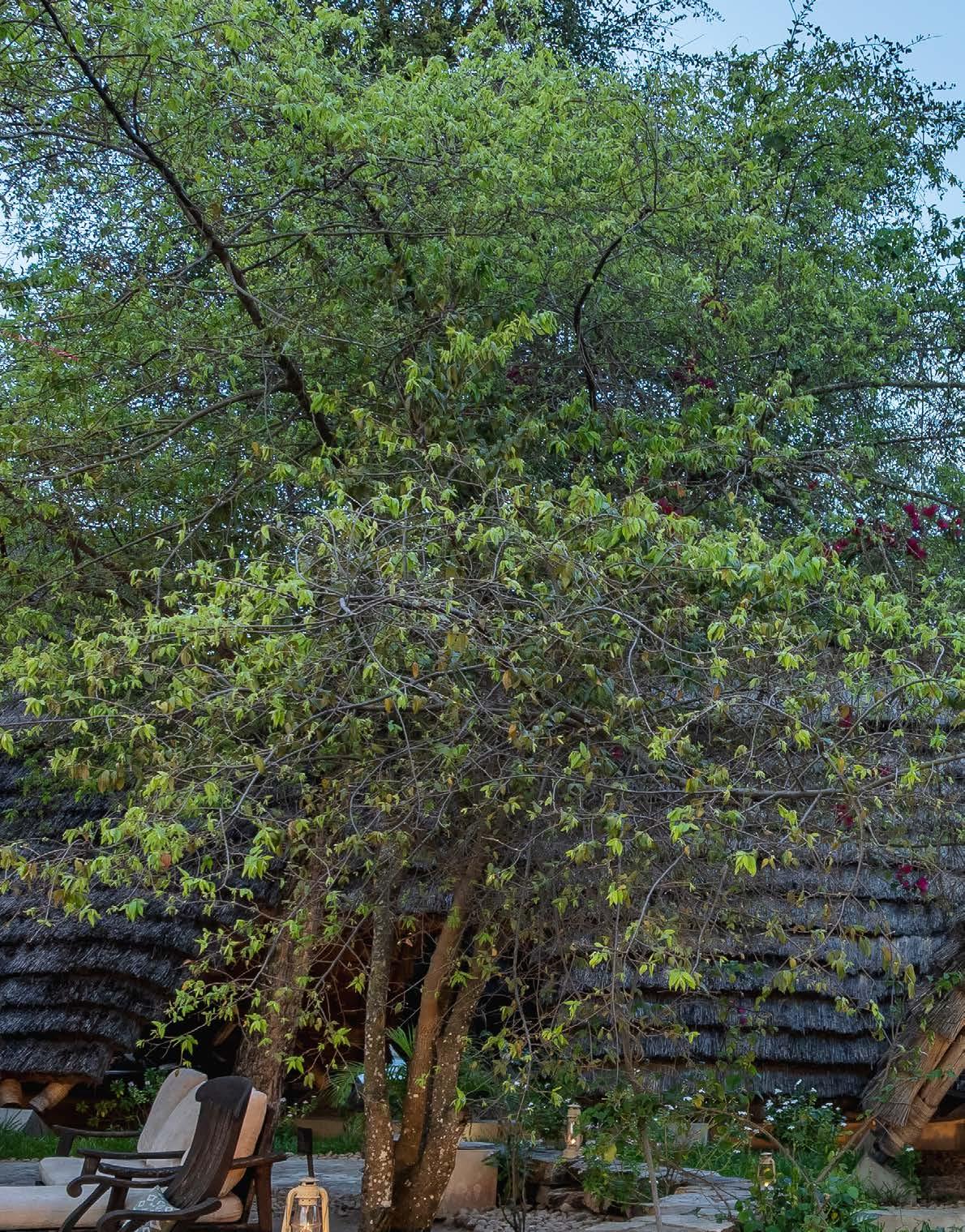
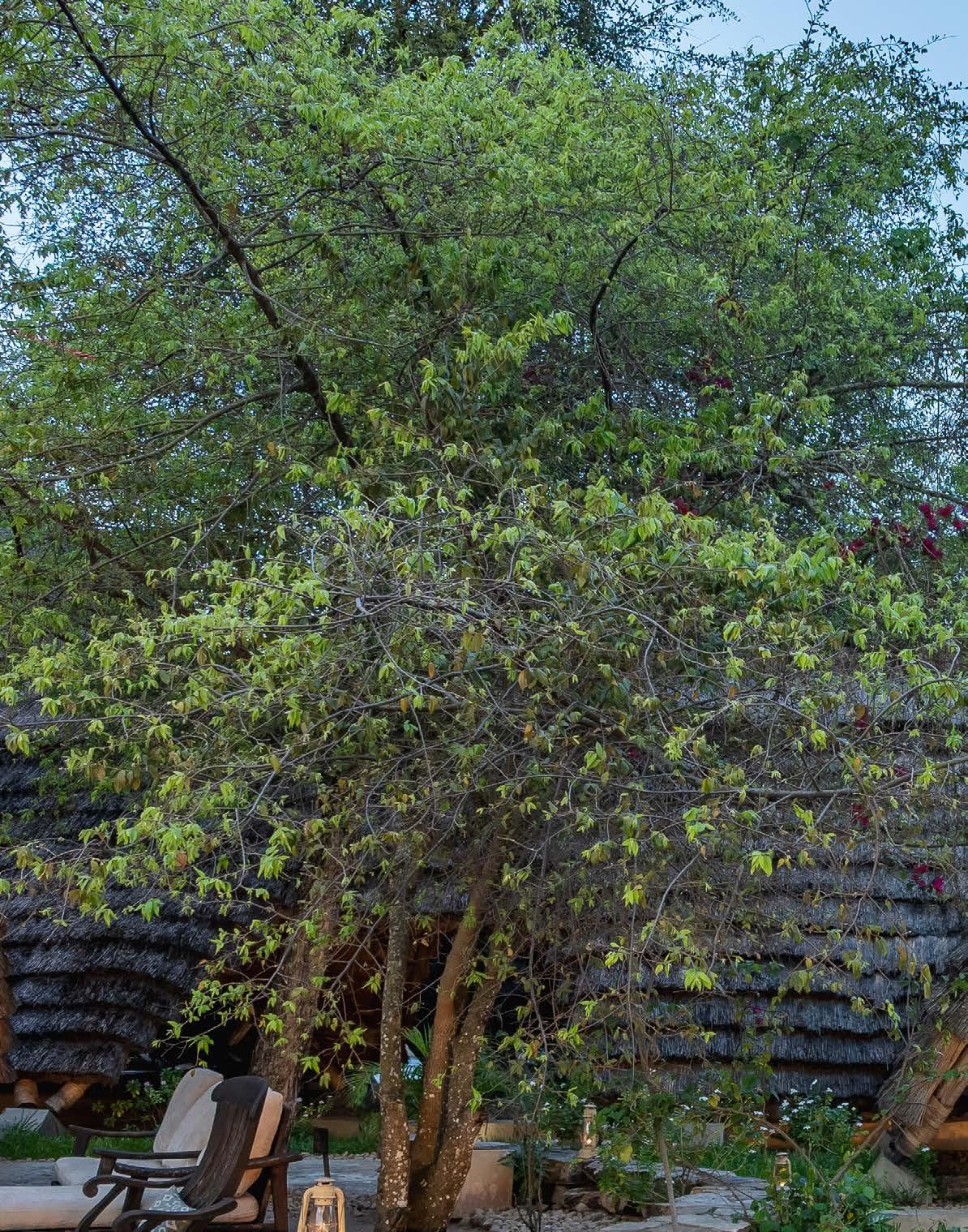
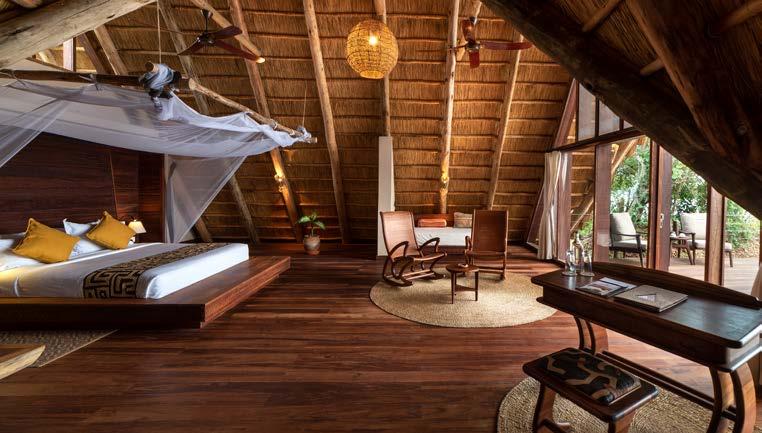
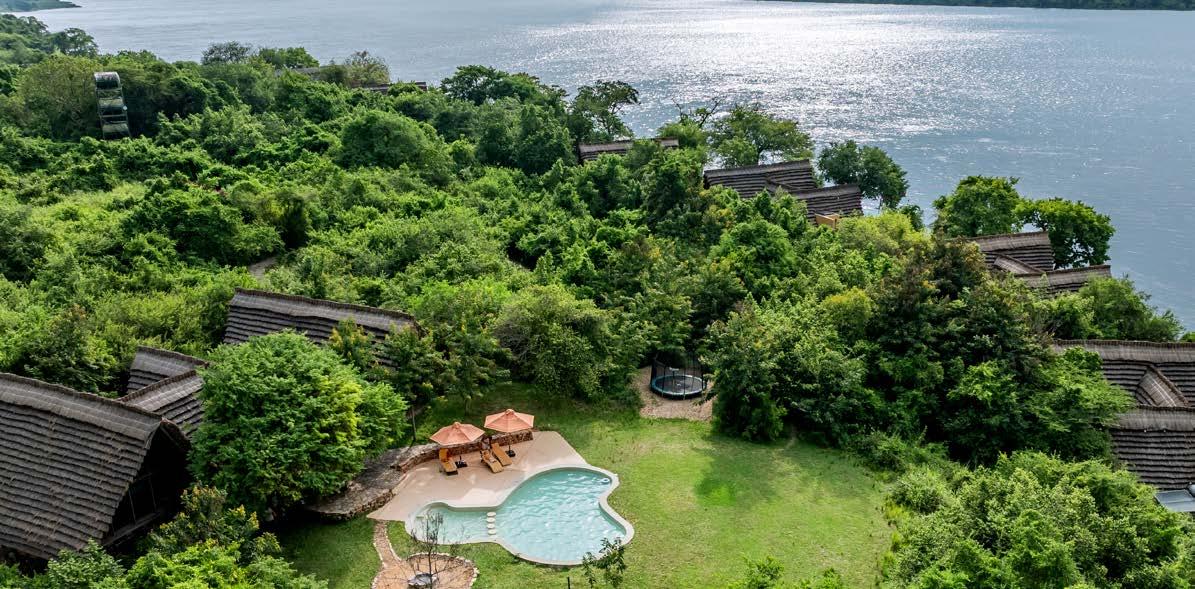
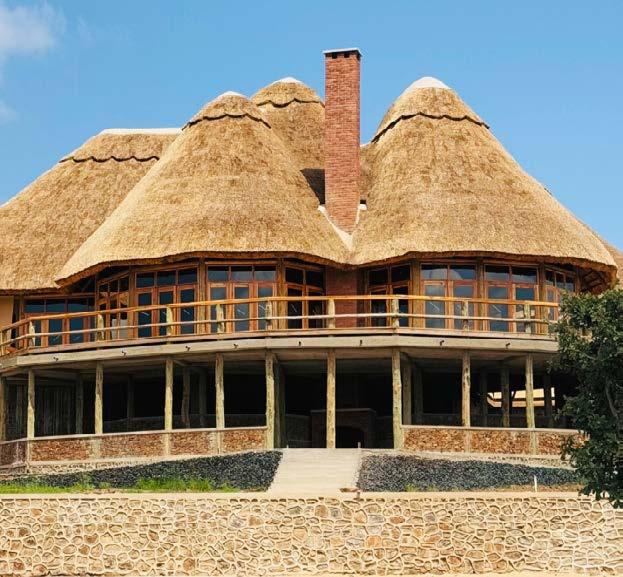
Nile Safari Lodge: The Finest Jewel of the Albert Nile

















































As we close another remarkable year, my thoughts turn to the core of what we do. While we are in the business of flying, our true mission is defined by ensuring we provide exceptional Customer Service and an elevated Passenger Experience. This year has seen us make several initiatives to ensure we do just that. Offering a reliable and safe service to our customers remains at the core of our values.
Earlier in the year, we added a third luxury bus to transfer passengers transiting from the Maasai Mara to the Serengeti. The modern 33-seater bus equipped with wifi, air-conditioning and cold water ensures that passengers travel in comfort once they are dropped at Migori Airstrip by AirKenya and transit to the Tarime airstrip in Tanzania where they find a Regional Air plane waiting for them. Our Migori Station Manager and her team are on hand to accompany and guide the passengers through the immigration and customs border post to ensure a smooth transit for all passengers.
In September, we unveiled AirKenya’s new state-of-the-art website. The new website is visually appealing and easy to navigate, thus assisting in making your safari planning effortless. We have also launched a Safari Package section within the website where you can directly book your flights and accommodation at some of the most luxurious camps in the Maasai Mara. Through the year, we have been intentional in monitoring and
improving our On Time Performance (OTP) and Dispatch Reliability. We measure our OTP within 11 minutes of our published departure and arrival times at Wilson Airport, while Dispatch Reliability is the percentage of scheduled flights that depart without delay due to technical or mechanical issues. I am pleased to report that we have improved significantly on both fronts. AirKenya’s OTP reached 82% during the high season, putting us among the world’s top airline performers, who typically measure OTP within 15 minutes of published departure and arrivals times. Dispatch Reliability reached 98% which is the globally accepted standard.
Our pilots continue to go for their refresher training at Flight Safety International in Toronto, Canada and in line with our commitment to promoting a safe flying culture, we recently sponsored the Navex Air Rally held by the Aero Club of East Africa, where our Captain Albert won a prize for exemplary skills in spot landing.
In October, we commemorated Customer Service Week by celebrating the professional drivers and tour guides who give our guests a warm and professional welcome on arrival at our exclusive arrival terminal at Wilson Airport and at the various airstrips we fly to in the bush. Regional Air celebrated both its passengers and its committed team members with branded caps as tokens of appreciation, while AeroLink delighted guests with “Gorilla Carvings” - unique treats sourced directly from the Bwindi community.

Finally, a truly meaningful passenger experience is one that gives back to the destinations we fly to. We are honored to continue our support for the Mara Elephant Project Ultramarathon and the students of Emarti School. I am also delighted to welcome two new CSR partners to our family: The Pangolin Project and The Maa Trust. By flying with us, you are directly supporting these critical efforts in conservation and community empowerment.
Going into the new year, we will continue reflecting on how we can serve you better, making every touchpoint of your journey; from the moment you book, to your final landing, smoother, warmer, and more memorable.
Thank you for choosing to fly with AirKenya, AeroLink, and Regional Air. We are privileged to be your partners in discovery.
I wish you and your families a very Merry Christmas and a peaceful, prosperous New Year.
John Kimondo Group CEO



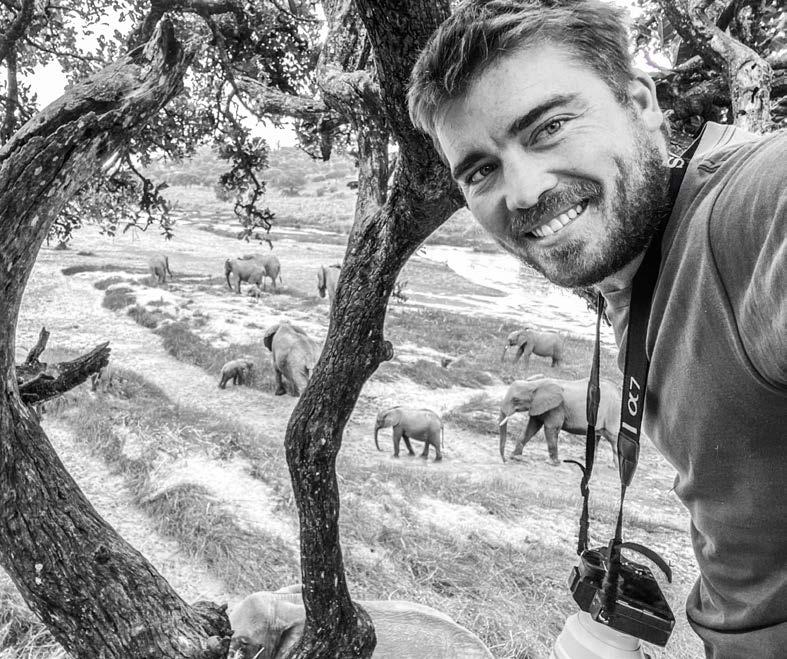
“Hey Doris!” I called out with some volume she was quite a distance away. No reaction whatsoever. Maybe she didn’t hear me? Or perhaps she’d had a long day and wanted some quiet family time. She glanced over her shoulder, then began to walk towards me, slow and deliberate.
“Hi Mama,” I called again, certain she could hear this time. Doris, ever the tease, kept playing with grass and avoiding
me, she stretched out her trunk and wrapped it around the bull bar, giving it two slow, deliberate shakes. I was thrilled. Doris and I were bonding — or at least, I dared to think so.
I’d often wondered if she even recognised hundreds of tourists come and go. But that evening felt
to reach my car. Did she know my voice, my scent, or the sound of the Landy? It didn’t really matter. That moment was pure connection the kind that roots you to a place.
Tarangire has been my home for as long as I can remember. Growing up here, surrounded by wildlife and guided by strong mentors my father among them I’ve learned that respect earns respect. You listen, you wait and the land speaks back.
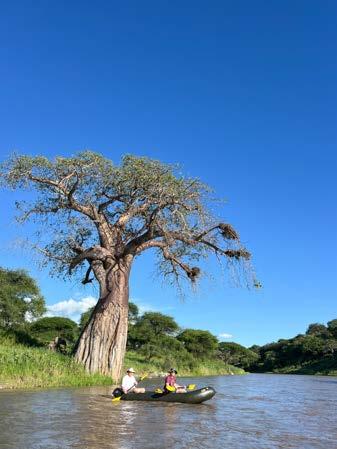
That same feeling carries through when I guide boat
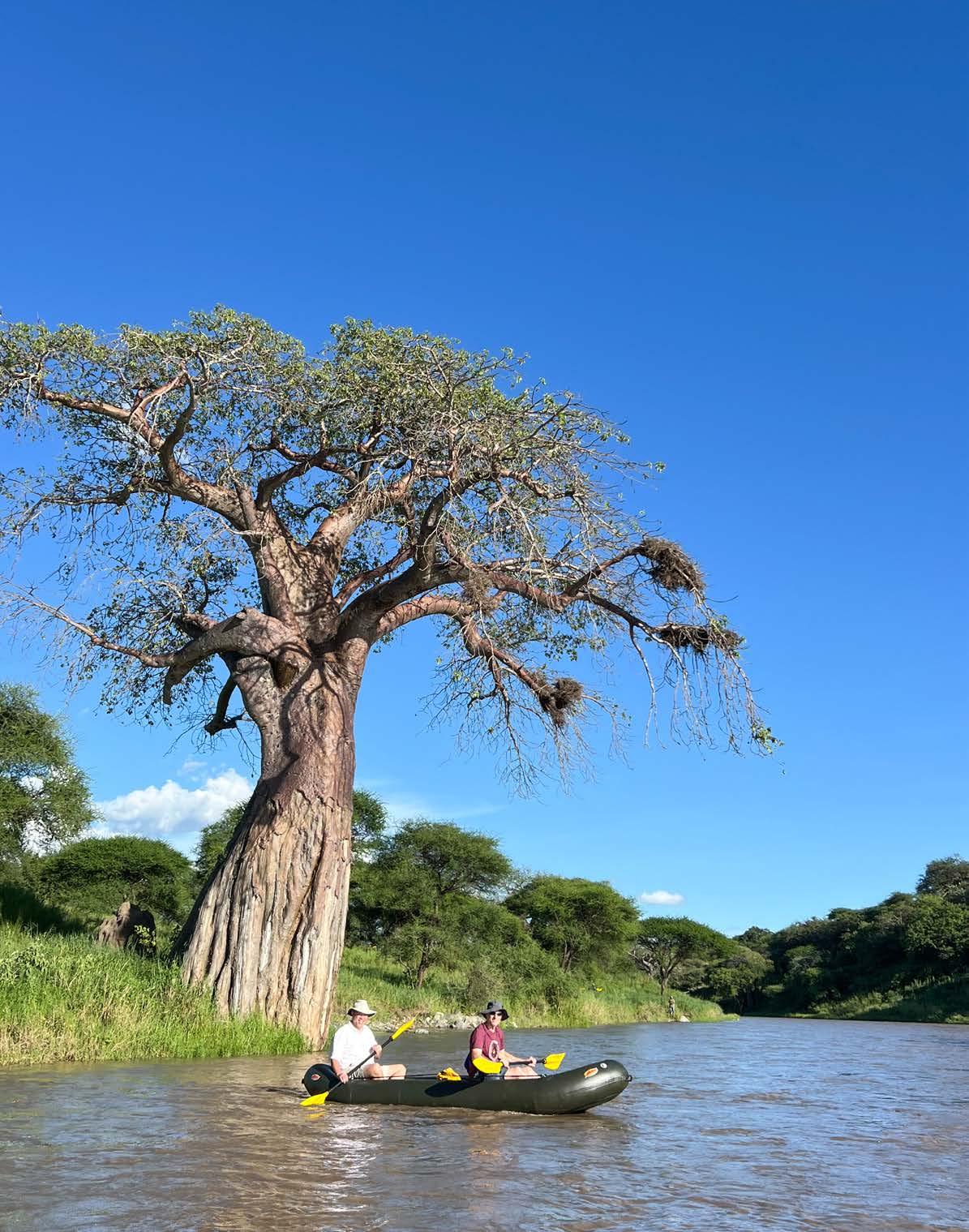
Tarangire River. Doum palms rasp in the wind, baobabs stand sentinel, elephants cross with from that quiet waterline that I (and perhaps you to capture in every photograph a shared understanding between animal, landscape and human.
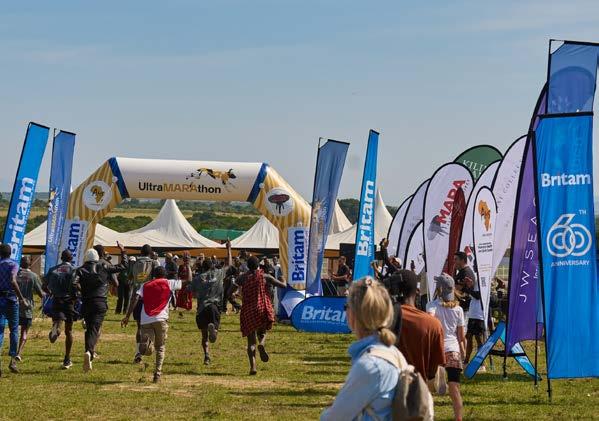
AirKenya was deeply honoured and excited to support the Mara Elephant Project Ultramarathon, a powerful event that took place on November 15th. This unique 50km race through the northern Mara conservancies was more than just an athletic challenge; it was a vital fundraiser that brought runners, rangers and the community together for a common cause. As an airline that connects travellers to the heart of Kenya's wild spaces, we were proud to champion this initiative, which directly funded the critical work of wildlife rangers, supported essential community health services, and ensured the conservation of the Mara's iconic ecosystem for generations to come.

AirKenya is proud to celebrate our ongoing relationship with the students at Emarti School. Our team, led by Reservations Manager Maryanne, recently visited the school with full hearts, continuing a relationship that has seen us support the building of their classrooms and, annually stocking vital school supplies for the Grade 6 and Grade 9 exams. We believe in fostering the potential of our communities and cheering these students on as they pursue their dreams is a core part of our mission.
We've given our online home, www. airkenya.com, a stunning new look and a complete refresh! We're thrilled to unveil our redesigned website, crafted to make planning your East African adventure smoother and more inspiring than ever. It's now even easier to explore our destinations, discover our seamless connections and book










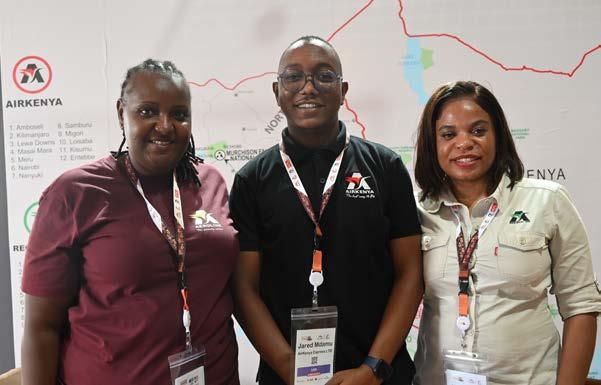
AirKenya was proud to stand alongside our sister airlines, AeroLink (Uganda) and Regional Air (Tanzania), at this year's prestigious Magical Kenya Travel Expo (MKTE) held at Uhuru Gardens in Nairobi on 1st to the 3rd October. Our combined presence highlighted our unique strength
across East Africa. It was a fantastic opportunity to engage with valued trade partners from around the world, showcase
shared commitment to promoting the vibrant, world-class tourism industry that connects Kenya, Uganda and Tanzania.
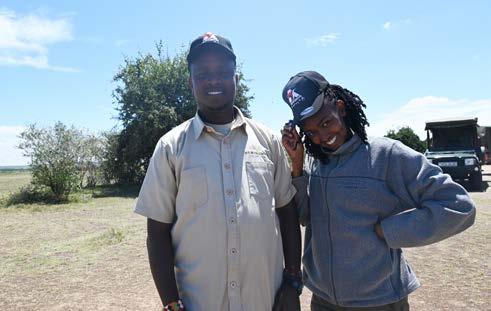
This past Customer Service Week, we tipped our caps to some of the unsung heroes of our operation: the airport transfer drivers, rangers, driver guides, county government workers and fuel attendants. We proudly celebrate these dedicated professionals who pick up passengers at our exclusive AirKenya arrivals terminal and the various airstrips we land at. Their professionalism
passenger's ground experience. They ensure every signature warm East African touch. Thank you for being such a vital and appreciated part of the journey.
AirKenya was thrilled to sponsor the recent Navex Air Rally, hosted by the Aero Club of East Africa on October 4th at Orly Airpark. The event was a resounding success, bringing together aviators from across the public, private and commercial sectors for a fantastic
Morowa, demonstrate incredible skill and precision to secure 2nd place in the highly competitive Spot Landing category. Congratulations to Albert and to all participants and organisers for a wonderful event celebrating East African aviation.

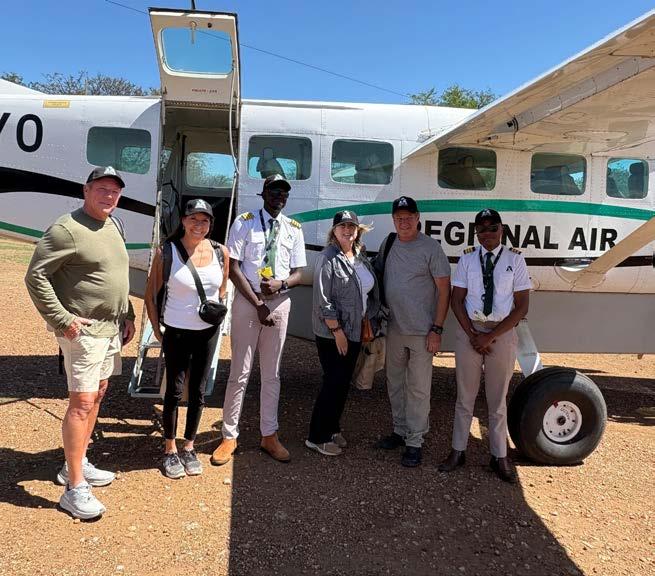
This past Customer Service Week, Regional Air celebrated the people who make our journeys possible, our passengers and our dedicated team! To mark the occasion and share our appreciation, we gave out special branded caps at our airstrips. It was a small token of thanks for the trust our passengers place in us and a nod to our incredible team members who deliver exceptional service every day. We believe great service
the spirit of appreciation with everyone.
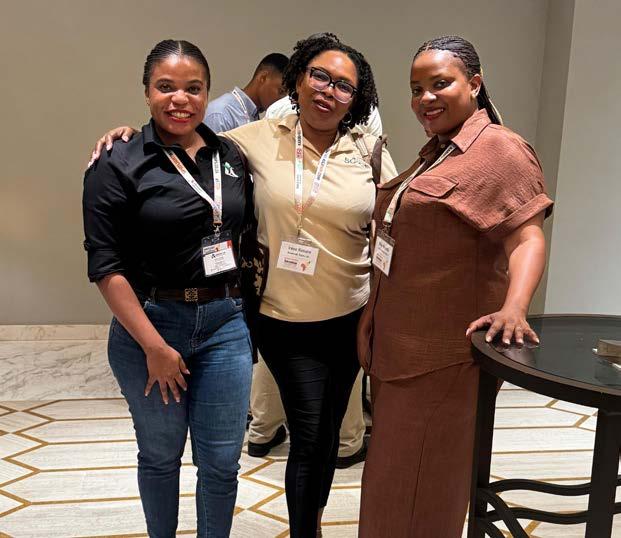
Regional Air was delighted to participate in the recent Spotlight Travel Expo, a highly successful event held at Johari Rotana in Dar es Salaam. Our Sales and Marketing Manager, Neema, had a productive day, strengthening our relationships with valued industry partners. Every conversation and connection forged is a vital step toward our goal of creating more seamless and exciting travel experiences for our guests across Tanzania and the wider East African region. We are excited about the future of travel!
This past Customer Service Week, AeroLink celebrated our passengers with a special taste of Uganda. We were thrilled to just share some gorilla carvings sourced directly from the local community in Bwindi. It was our special way of saying “thank you” to our valued guests, while also championing the local artisans and producers who live alongside the incredible wildlife we fly to see. We are proud to connect our service with meaningful community partnerships.
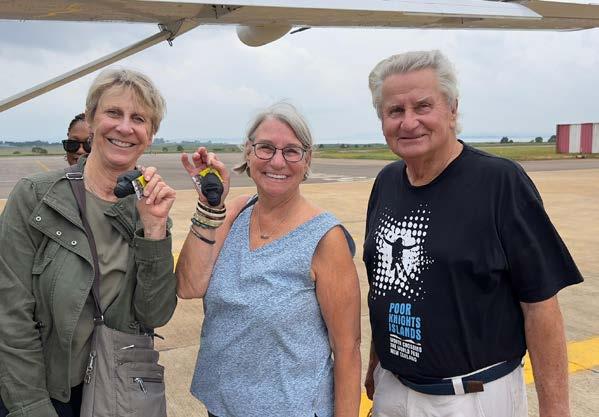
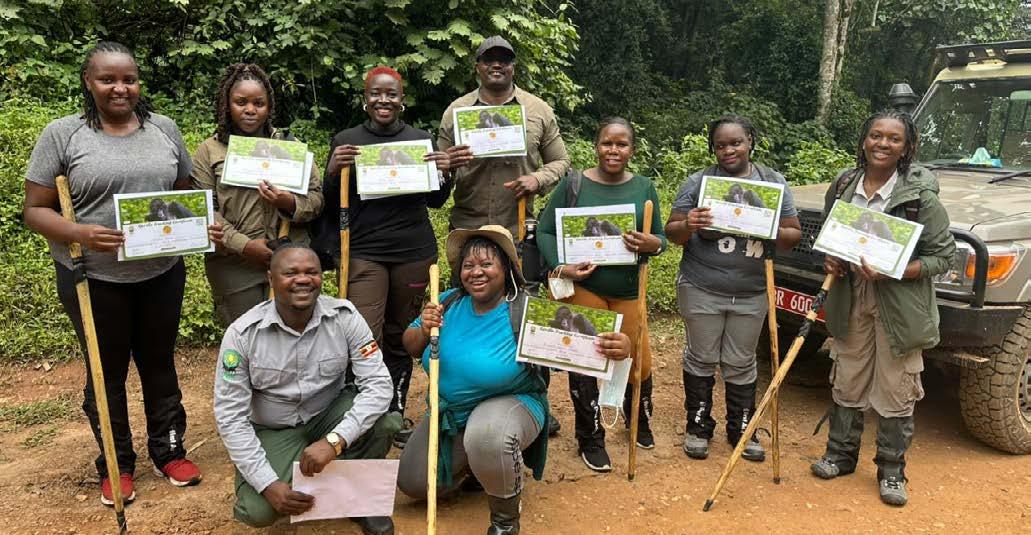
AeroLink has been buzzing with excitement, hosting two incredible familiarisation trips to showcase the Pearl of Africa. We recently gave a warm ¡Bienvenidos! to a fantastic group of Spanish-speaking agents, organised with The Africa Travel Boutique, for an unforgettable Ugandan adventure. We were also thrilled to host a
group of amazing local agents, alongside A&K Sanctuary, guided by our Sales Manager, Rajah Njeri, who successfully completed a magical gorilla trek. It is a pleasure to provide the wings for our partners who so passionately share Uganda’s magic with the world.
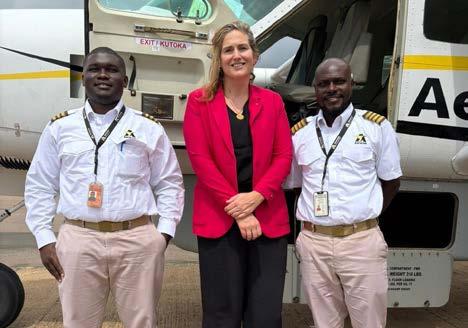
AeroLink was recently honored to welcome a distinguished guest on board, Her Excellency Frederieke Quispel, the Ambassador of the Kingdom of the Netherlands to Uganda. It is always our privilege to host esteemed diplomats and visitors, providing safe and

AeroLink was honored to join industry partners and friends at the Association of Uganda Tour Operators (AUTO) "Roots & Routes" Tourism Dinner, held on October 17th at the Mestil Hotel. It was a wonderful evening celebrating the incredible 30-year milestone of AUTO, an organisation vital to the growth and success of tourism in Uganda. We are proud to be partners in this vibrant industry. Congratulations again to AUTO on three decades of excellence!
In an age of bubble-wrapped childhoods and constant digital supervision, Pembroke House School stands apart as a place where children are trusted to explore, make mistakes, and learn from them.
Set across 140 acres of open Rift Valley countryside, Pembroke is a rare pocket of freedom. Here, pupils race barefoot across lawns, climb trees in Shackland, and learn to light fires under the watchful eye of their teachers. Risk is not forbidden - it’s appreciated as a core part of learning.
Headmistress Deborah Boyd-Moss believes that courage and curiosity go hand in hand. “Children flourish when they are trusted,” she says. “They need clear expectations along with time and space to discover who they are and find a sense of integrity and responsibility.”
Recent research supports this approach. A 2023 study from the University of Cambridge’s Centre for Family Research found that children exposed to ‘managed risk’ develop higher resilience and stronger emotional regulation. The British Psychological Society (2024) reported that over-supervision
can inhibit flexible thinking and self-efficacy, while the American Psychological Association (2022) concluded that moderate risk in childhood directly supports later-life confidence and problem-solving ability.
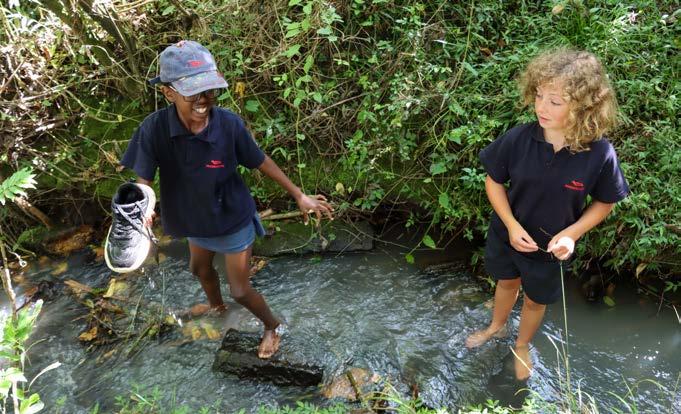
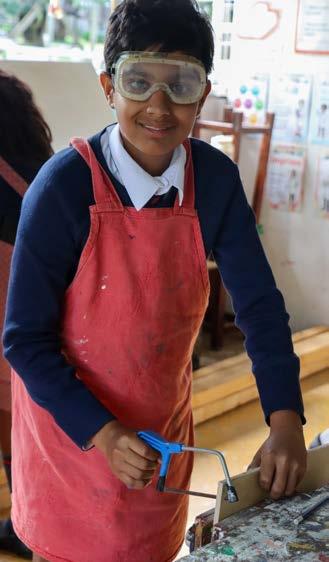
In classrooms, that same spirit of independence translates into enquiry-based learning, where children take ownership of their ideas and discover that getting something wrong can be the start of getting it right. Theoretical learnings come to life with Pembroke’s Adventure Learning curriculum. Pupils learn to orienteer and navigate, build bridges over rivers, life rafts and survival shelters. Alongside this, they learn about how to use weapons safely, mechanics, and butterfly identification. These skills come to fruition on their annual camping trip, when tents are erected, cooking is done over fires, and shelters may need to be constructed. Pembroke children are gently guided, yet never stifled.
“Children need to learn resilience. They need a nurturing environment where they can develop the ability to face challenges and work things out for themselves. Our role is to keep them safe enough to be brave.” says Deborah Boyd-Moss, Headmistress.
The academics are every bit as inspiring as the outdoors. Following the British curriculum, Pembroke pairs rigour with imagination, supported by an outstanding Learning Support department. In 2024–2025, 42% of leavers were awarded scholarships to leading senior schools in the UK and beyond - a reflection not just of achievement, but of attitude. The Pembroke child brings confidence, an ability to think through problems, and a level of teamwork and kindness that is rare to find.
At Pembroke House, education is not about eliminating risk. It’s about learning how to meet it with confidence, curiosity, and grace.
www.pembrokehouse.sc.ke




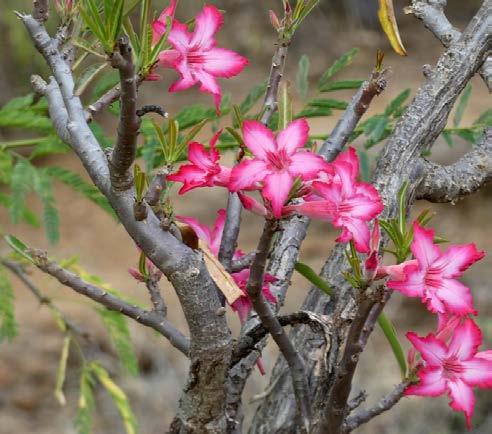
It is almost indecently beautiful a bloom too vivid, too sculptural to seem real. In the dry heart of East Africa, where acacias gnarl against the wind and the earth burns red, the Desert Rose ( blooms as though mocking the heat. Its trunk is swollen and from its hardy
pink, white-edged, luminous against the dust.
sun-blasted rocky river banks. They anchor themselves in cracks of stone and pockets of sand, sculpted by scarcity. Each one feels intentional, like a bonsai trained by the wind. Guides point them out casually “Desert Rose” while travellers fumble for cameras, unable to resist the
Despite its name, it’s not a rose at all, but a succulent — kin to the frangipani and milkweed and it has mastered the art of survival. Its swollen base, called a caudex, stores precious water for the long, merciless months between rains. Leaves are an afterthought, appearing only when the world softens. Every contour of its form tells a story of drought endured and beauty distilled by necessity.
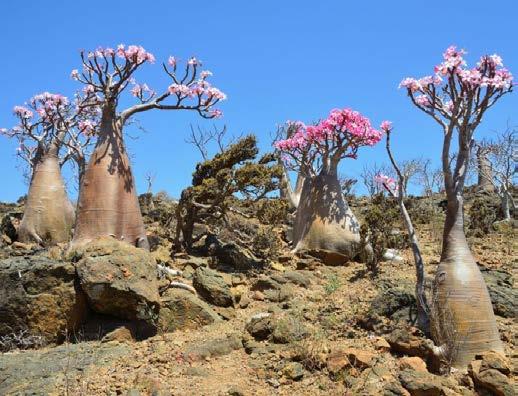
The Desert Rose doesn’t bloom for long, but when it does, the landscape transforms. Even elephants, those judges of endurance, pass by without disturbance as though acknowledging an equal. Safari-goers who notice them often describe a quiet moment of disbelief: something so ornamental, so seemingly deliberate, growing untended in bloom again, as if the drought never existed.
instruments of seduction, luring sunbirds and long-tongued bees with nectar hidden deep within the petals. Once pollinated, the plant releases its promise to the wind — twin pods splitting open to free silky seeds that drift away in search of another impossible foothold.
In some communities, the Desert Rose is respected and avoided in equal measure. Its milky sap is laced with potent toxins once used to tip arrows for hunting. A reminder that beauty, in Africa’s drylands, is rarely without consequence.
In a world obsessed with abundance, the Desert Rose is a masterclass in minimalism a plant that has edited itself
is to glimpse luxury of another kind: life pared back to its essentials, and still radiant.
By Ulrich Oberprieler of Ulrich Ecoventures South Africa
Both the Western Barn Owl and the Spotted Eagle-Owl play an important role, not only as interesting additions to our urban wildlife, but also as controllers of rats and mice. Assist them! Protect them!
The Western Barn Owl
Ever heard an eerie screech at night? That will be a medium sized owl that is found all over the world. If you see it, you will notice a distinctive heart-shaped facial disc. This owl preys mainly on rodents, although small birds, shrews, lizards and insects may also be taken.
Pairs occupy and defend territories, the size of which depends on the food supply and the available nesting sites. The beginning of their breeding season induces frequent aerial displays and calling. Like other owls, this owl does not build its own nest but uses suitable cavities. Disintegrated pellets form a soft bed for the eggs of which there will be up to thirteen if food is good. Mother
laid which means the chicks hatch over several days, each after an incubation period of 30–32 days per egg. It does mean that the oldest chick will be considerably larger than the youngest. They will stay in the nest for 50 - 55 days, kept warm by mum and fed by dad. Once the
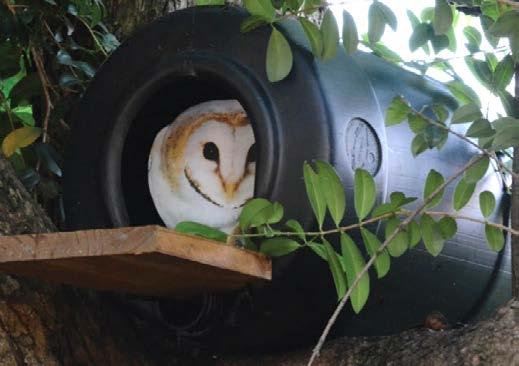
oldest chick is about one month old, the female frequently leaves the nest to assist the male in hunting.
You can persuade them to nest in your garden and hunt your a sloping roof and a suitable perch below the entrance. Or a 20-litre container, cut open and provided with a wooden box. Placed in a quiet, sheltered spot, such as a shady tree, under the roof on the side of a building, at least 3 m above the ground.
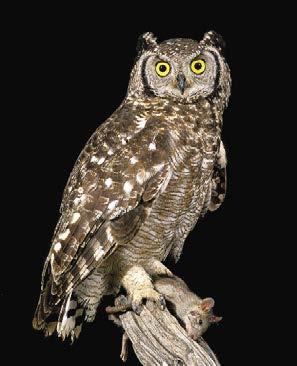
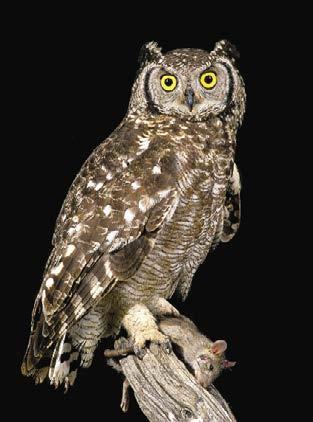
Perhaps the owl you saw had prominent ear-tufts? This opportunistic and adaptable spotted Eagle-Owl calls with a two-syllabled and is often answered by the female’s distinctive three-syllabled , and will prey on small mammals, birds and arthropods, lizards and frogs.
These owls vary their nest sites but they breed mostly on the ground in a rocky breed on a building or in a tree hole, the hollow formed by a multiple fork in a tree or even on an old nest of another bird species, such as a Hamerkop. Three eggs
Want these in your garden? The nest box base should be 50cm squared, with a sloping roof 50cm above, the sides 100–150 mm high. A layer of wood shavings will provide a suitable base for the eggs to be laid on. Remember to use a quiet site, as Spotted Eagle-Owls are very protective parents that will not hesitate to
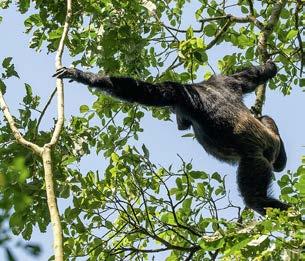
Chimpanzees cannot brachiate (swing hand-over-hand through the trees) in the same way gibbons or cartoon monkeys do. Gibbons are the masters of brachiation: their shoulder joints, elongated arms, and hook-like hands are perfectly adapted for that continuous, pendulum-style motion. Chimpanzees, on the other hand, are semi-arboreal. They do climb, swing short distances, and brachiation. Their arms are strong and long, but their shoulders and wrists are built more for climbing, clambering and pulling.
Image credit: Dr. P. Marazzi
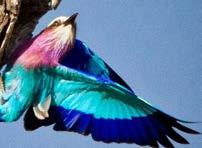
It is true that the colours seen in bird feathers are a result of the spacing of air particles in the feather’s microscopic structure, which scatters light to produce structural colours, while melanin pigments contribute browns, blacks and can also enhance the brightness or durability of other colours.
Image Credit: Allan Block
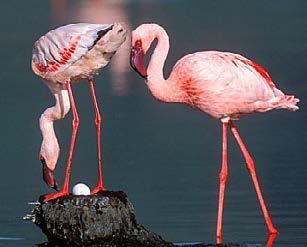
they make out in the lake to keep safe from predators. It is also true that both
They do this when conditions right soft mud, low water, isolation from predators. These early nest mounds are often made weeks before actual breeding, and not all of them are used. They’re thought to serve several functions: testing soil consistency, reinforcing pair bonds, or stimulating reproductive behaviour.
Image credit: Denis Huot
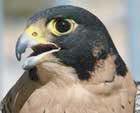
causing the air rushing into their nostrils to curve in a spiral manor. This slows down the air which prevents the air pressure entering through the nostrils from rushing straight in and causing lung damage.
Image credit: Draper Museum
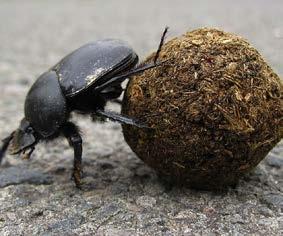





endocoprids (coprid meaning poo) who lay their eggs inside the dung ball. Paracoprids who take the dung ball below the dung pile. Telecoprids who roll the ball away from the dung pile and kleptocoprids who steal dungballs of telecoprids. Most of the time the dung beetles that we see are telecoprids – rolling their dung ball away from the dung pile like a telescope.
Image credit: Unkown
From the moment you first glimpsed a towering elephant against the majestic backdrop of Mount Kilimanjaro, you understood that Amboseli is a place of profound magic. It’s a land where wildlife roams free and ancient cultures thrive. This November, that magic was amplified as Amboseli became the stage for a powerful fusion of heritage and hope during the third Maa Cultural and Tourism Festival, a celebration that also marked a historic turning point for conservation.
From November 4–9, 2025, the Kimana Gate of Amboseli National Park buzzed with a vibrant energy. Thousands gathered, mesmerized by the rhythmic pulse of traditional dances, the brilliant colours of Maasai regalia, and the captivating tales of community elders. Yet, beyond the celebration of a rich cultural identity, the event centred on a monumental announcement: the official handover of Amboseli’s management to the Kajiado County Government.
President William Ruto, donned in full Maasai attire, presided over the ceremony on November 8, declaring the transfer as “not a weakening of conservation; it is a renewal.” This historic move, gazetted in October, initiates a phased revenue-sharing model, ensuring that the benefits of tourism flow directly back to the communities who have coexisted with this wildlife-rich landscape for generations. It is a bold new chapter of shared stewardship.
Born Free: Weaving Coexistence into the Fabric of Community
Amid the celebrations, the Born Free Foundation’s Pride of Amboseli Programme stood as a beacon of practical, proven conservation. For over 15 years, Born Free has been a quiet but powerful force here, addressing
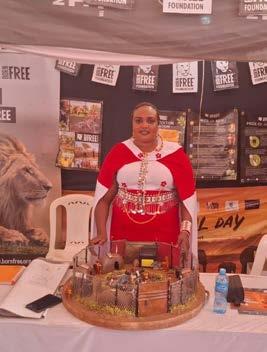
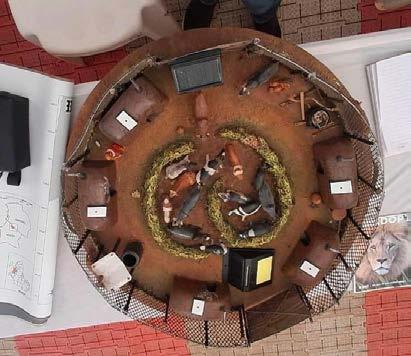
the most critical challenge at the human-wildlife interface: conflict.
The Maasai, legendary pastoralists, face daily tensions. The loss of a cow or goat to a lion or hyena is not just an economic blow; it’s a threat to a family’s livelihood. Historically, such losses have led to retaliatory killings, threatening the very predator populations that make this ecosystem so iconic.
Born Free’s solution is both simple and revolutionary, the predator-proof boma. These sturdy enclosures, built with metal posts and chain-link fencing, have proven staggeringly effective. Since 2010, Born Free has constructed over 400 of these structures, safeguarding approximately 83,000 livestock and, in turn, protecting countless lions, hyenas, and cheetahs from conflict. Studies show a 91% reduction in nocturnal livestock losses in areas where these bomas are installed. This isn’t just a statistic; it’s a story of transformed lives and a future where both people and predators can thrive.
The festival’s success was a testament to robust partnerships, from the Kenya Wildlife Service and Kajiado County Government to conservation champi-
ons. Together, they envision Amboseli as a global model for community-centric conservation, a park where tourism revenue fuels local growth, cultural pride is preserved, and wildlife corridors are protected. In a powerful display of commitment, the community has already allocated one million acres for wildlife dispersal, a profound act of tolerance and coexistence.
As a visitor to this incredible land, you have witnessed the result of decades of dedication. The wildlife you photograph, the landscapes you admire, and the cultures you respectfully engage with are all part of a delicate balance. Now, you have the opportunity to become a part of its future.
The work of organisations like Born Free is vital, but it relies on the support of people like you, who have been touched by the magic of Africa. You came for the wildlife. Now, help protect it. Visit the Born Free Foundation’s website to learn how you can support our critical work in Amboseli, or contact us directly through our partnerships manager at caroline@ bornfree.or.ke.


You rarely see more than a ripple. A sleek shadow cuts through the current, then vanishes beneath a curtain of reeds. A soft chirp follows part whistle, part giggle — and suddenly another head pops up, water streaming from its whiskers. Africa’s otters don’t need an audience, but if into a secret performance.
Three species make their living along Africa’s waterways: the African Clawless Otter (Aonyx capensis), its Congo cousin ( ), and the smaller, spotted-necked sprite ( . They are the continent’s liquid acrobats restless, playful, endlessly curious and each an indicator of clean, healthy water. When otters vanish, so too does the river’s pulse.
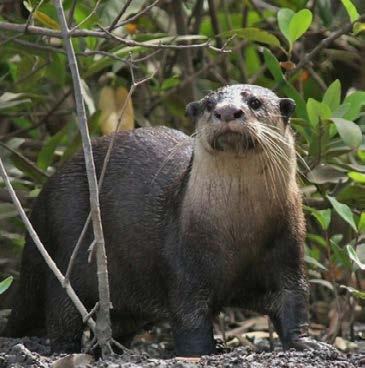
The African Clawless Otter is the one most likely to share your coastline, rivers or dam. Broad-faced and powerful, it pads along mudbanks and sometimes mangroves, white
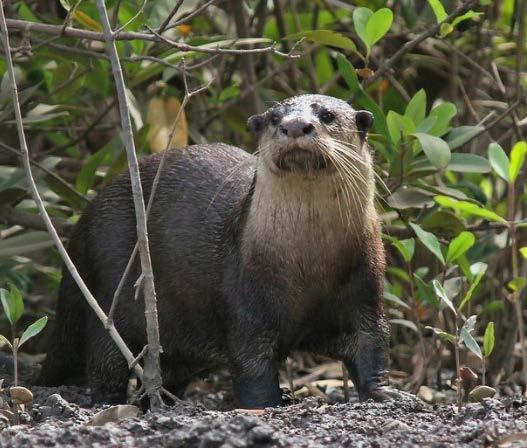
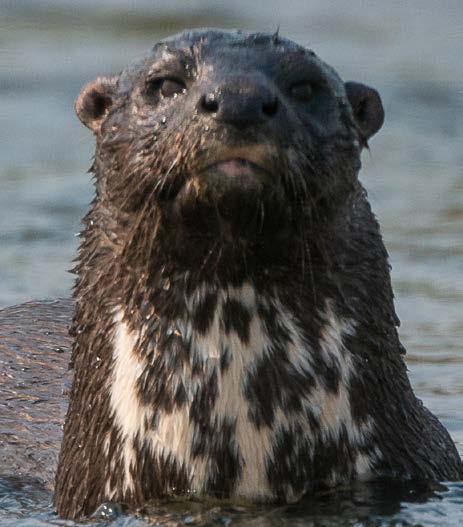
throat gleaming against chocolate fur. Its dextrous, clawless forepaws are built for touch: it feels for crabs and frogs under rocks as if reading Braille. In clear that belies its bulk. The Congo species looks much the same, though it carries a darker mask between dappled chest, quick movements and a taste for open,
Wherever they live, otters are the embodiment of motion. They roll in grass, slide down muddy banks, and chatter constantly. A family group sounds like a busy nursery: whistles, squeaks and mock growls
overlap as they groom, argue and reunite. African Clawless Otters tend to be loners, a mother with her pups at most, but the Spotted-necked kind are far more sociable hunting cooperatively, playing for the sheer joy of it, and proving that even in the animal kingdom, teamwork has its perks.
They live in dens known as holts, often hidden among grass or polished slides down the riverbank give away their presence, as does the sharp scent of spraint otter dung used as a calling card. Spraint isn’t just waste; it’s a message board, laced with oils from scent glands. To the untrained nose, it’s pungent. To another otter, it’s poetry. Breeding happens throughout the year, usually when rivers are low. One to three pups are born blind and helpless, tucked away in the holt for several weeks before
And yet, joy alone can’t keep them safe. Otters across Africa face shrinking habitats, poisoned rivers and disturbance from humans. All three species are listed as Near Threatened. Each pollution slick, each drained wetland, erases a playground. To conserve otters is to protect the arteries of the landscape the rivers, lakes and estuaries that sustain everything else.
The next time you stand by an African river at dusk, listen.
African Clawless Otter Up to 1.6 m long; feeds
Congo Clawless Otter Slightly smaller; swamp specialist of the lower Congo Basin.
Spotted-necked Otter by sight in clear water.
Tracks Five toes, webbed feet, and often a smooth slide nearby.
Bonus Quirk Otter dung (spraint) smells musky and is used to mark territory. It’s often found in communal latrines riverside social media for the semi-aquatic set.
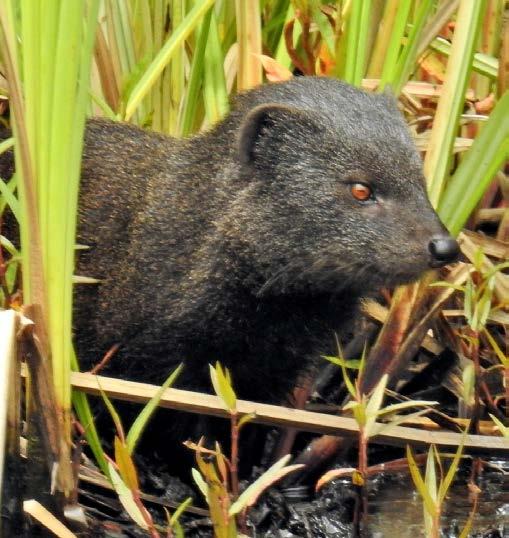
Otters may be confused with the Marsh Mongoose.
That faint splash in the reeds might not be the wind. It could be one of the continent’s most charismatic conservation ambassadors, returning home under the silver shimmer of the moon — still wild, still wonderful.
The Marsh Mongoose , often called the Water Mongoose, shares the freshwater habitat with otters. It is roughly half a metre in total length, reddish-brown to blackish in colour, has a characteristically shaped head and a bushy tail. The track is much smaller than that of the otters, about 45 mm in length and typically shows only 4 toes with ground the touches rarely thumb the – marks claw
mongoose. Although it contains mostly remains of insects, snails, frogs and even fruit, berries and small mammals. It is between 15 and 22 mm in diameter. Marsh Mongoose are common and widespread in Africa’s suitable habitats.
By Hollie M’gog
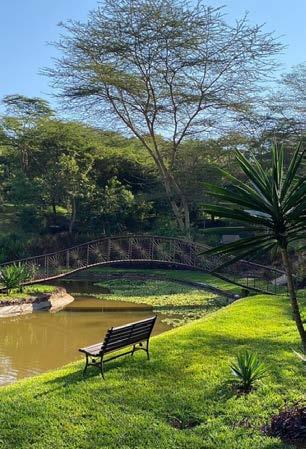
Amboni Riverine Forest Camp is not an escape from the world — it’s a re-entry into one that still remembers how to breathe. For anyone seeking something wilder, quieter, and truer, it’s a place that reminds you why Laikipia still leads the conversation on conservation travel in East Africa.
The approach is almost deceptive. For miles, Sangare stretches out in a vast, level expanse dry, ochre and scattered with plains game and cattle.
the glare, and you think you’ve seen all there is to see. Then the ground simply drops away. A steep, winding track plunges into a green rift, a complete transformation. The air changes; it’s cooler, wetter, alive with sound. Below, a river gleams and rushes through dense forest and you’ve arrived at Amboni Riverine Forest Camp.
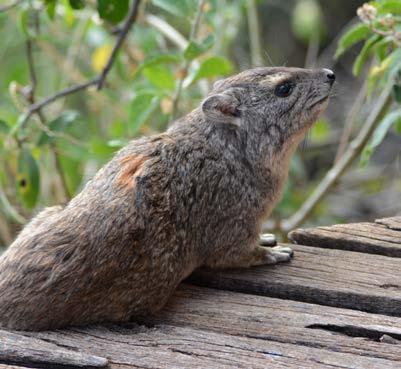
We’d come as mammalwatchers — a rare breed of traveller in search of equally rare creatures: the elusive crested rat, the secretive suni antelope, and close, nocturnal encounters with a genet, a tree hyrax, or perhaps an African pouch rat. Amboni is one of those rare places
Its microhabitat riverine forest creates a pocket of life you don’t expect in Laikipia’s semi-arid plateau.
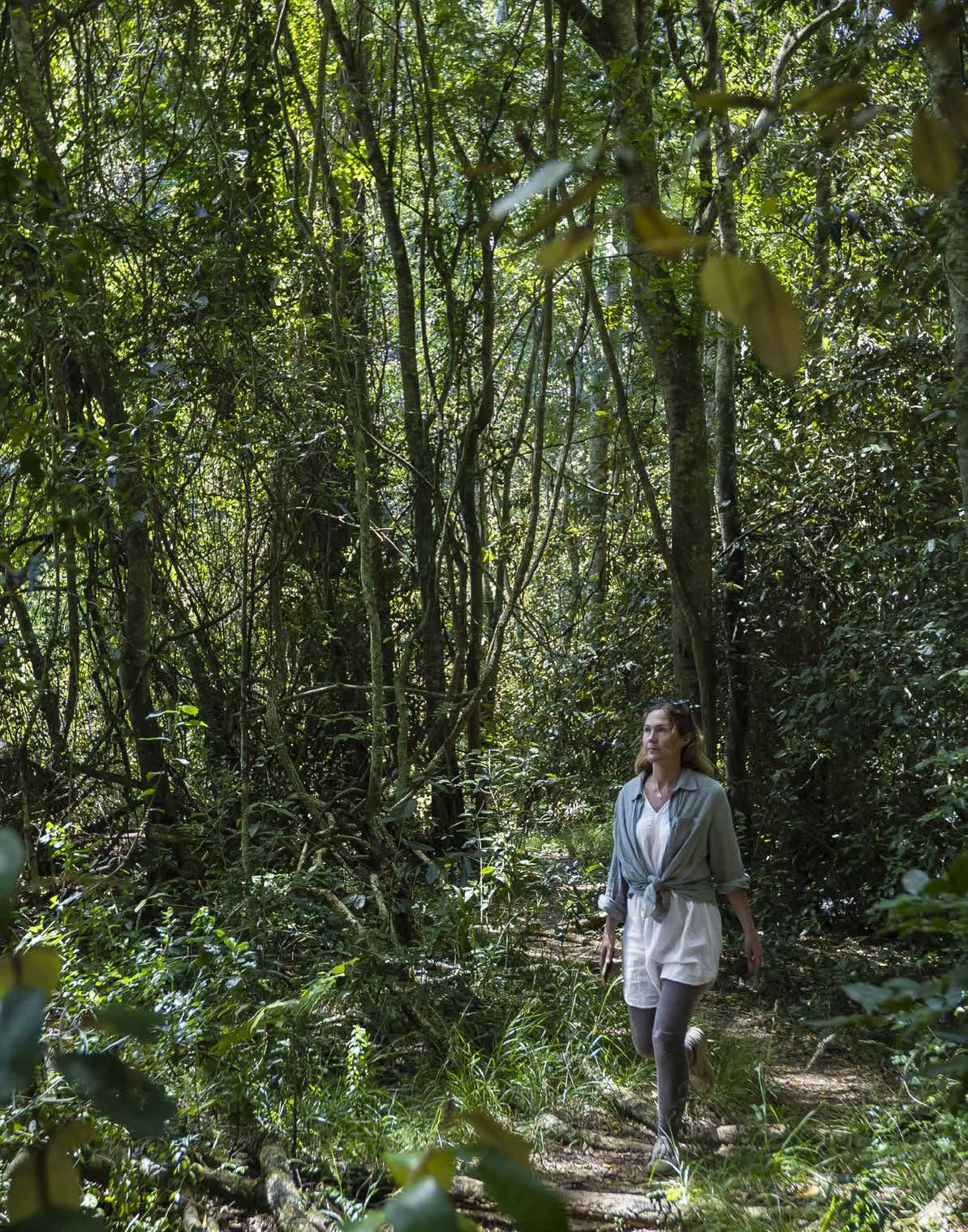
and eagles circle, and fringed by forest thick with wild olives, and podo trees. Phoenix reclinata palms reach up through the canopy, adding a faintly coastal silhouette to the cool air. The soundtrack is constant: rushing water, cicadas, bubbling of unseen birds.
cold but its sparkly clear mountain waters beckon children irresistibly
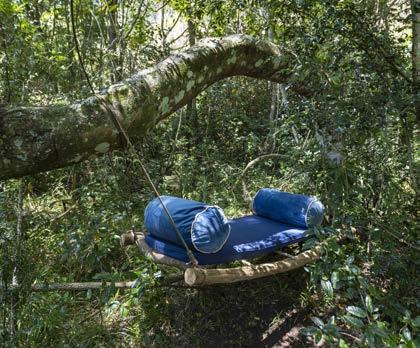
Running the entire length of the river is a delightful little trail. For there is the suspended swing net - a giant square hammock high up and anchored between four trees which entertained the kids we had with us for hours on end.
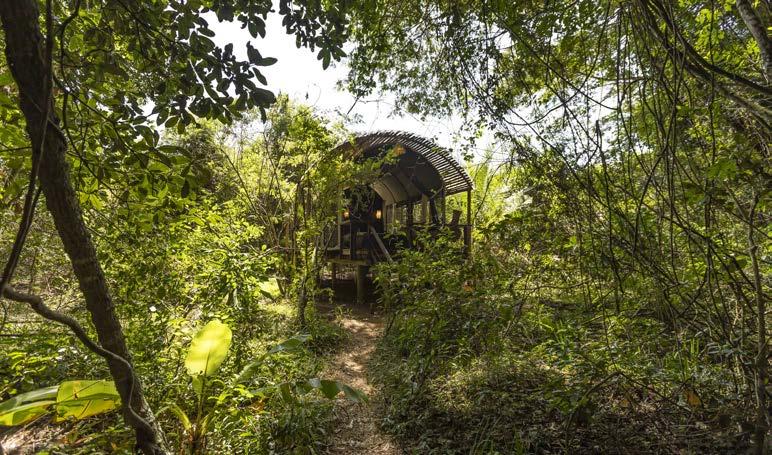
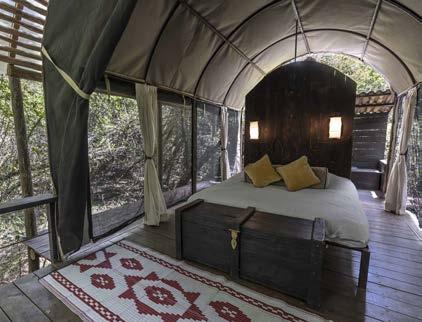
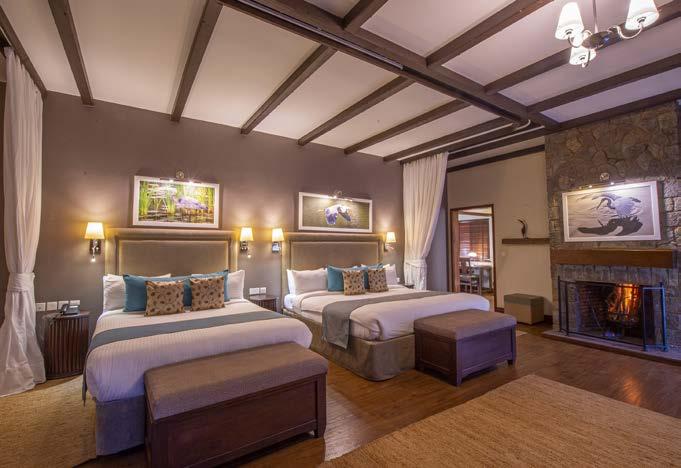
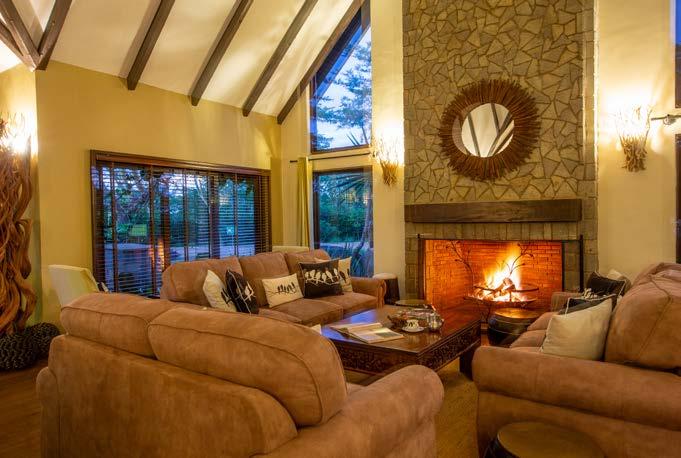
Accommodation here isn’t luxury in the conventional sense it’s better. Four elevated forest chalets, curved like covered wagons, blend into the landscape with an organic, almost sculptural grace. Inside, the comfort is genuine: a proper bed facing the trees, a chimoner to take the evening
option to open everything wide so the forest itself becomes your walls. You can lie in bed, sip tea while watching
practical modern comforts discreetly integrated into the wilderness setting. The rooms provide charging points, electricity (solar powered), and fresh drinking water.
The bathrooms are small masterpieces of ecological design — open-air, surrounded by greenery, with both a hot shower and deep bath. The water, cold from the Aberdares, is invigorating, and there’s always the option of a long hot soak under starlight. Composting
hardly notice their presence except
to admire the thought behind them.
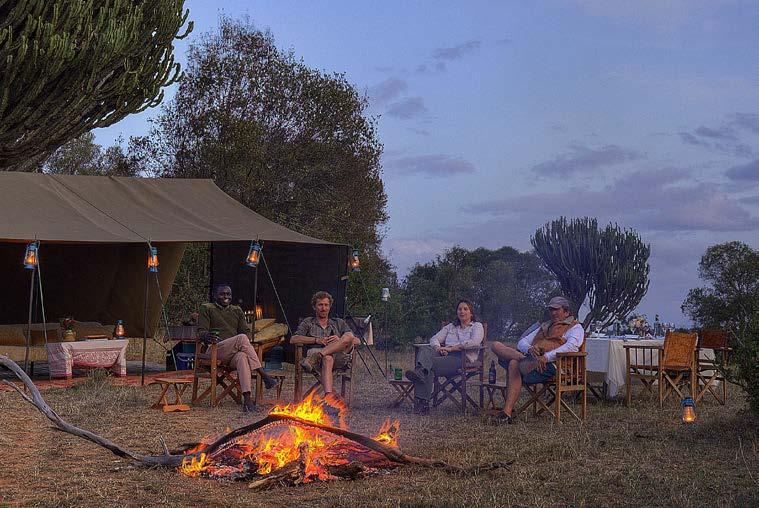
Meals are cooked and shared on a communal deck that feels suspended in time. There’s an open kitchen for self-caterers, or you can simply hand over the reins and let the resident team prepare bush breakfasts and candlelit dinners. In the evenings, the river glows faintly under solar
crackle of comfort that reminds you how far from the world you’ve come.
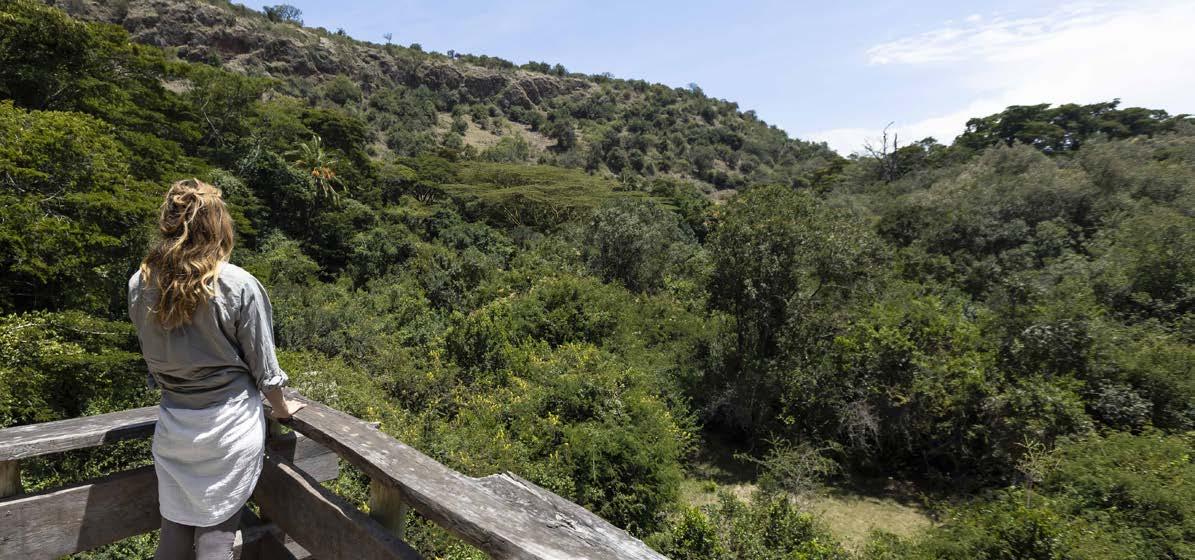
Then there’s the tower. Built around a living tree, its spiral staircase climbs some 30 feet into the canopy. From the top, the valley opens like a secret world: monkeys rustling below, falcons wheeling above, and the river threading through the green. It’s an unbeatable place for a sundowner, birdwatching, or even sleeping out under the stars — though not for anyone nervous of heights. The tower’s viewing platform is rendered even more spectacular
and Martin, who have meticulously decorated the area with a collection of incredible feathers. This collection spans numerous species, from delicate roses to vibrant roccocos, and includes feathers from the helmeted guinea fowl, majestic crowned eagles, and various turacos. The display is absolutely beautiful. Looking over the top of the canopy
from this altitude provides the most stunning view of the surrounding valley and forest.
One of the most profound and unique attributes of this valley paradise is a natural blessing that elevates comfort to an art form: there are absolutely no mosquitoes. This singular fact fundamentally transforms the experience of staying here!
As night descends upon this paradise and guests collect together, the sounds of the valley take over. The darkness brings with it the most special soundscape: the cacophony of the calls of the tree hyraxes.
The communal mess area itself is a marvel of design: a beautiful, low wooden deck. It incorporates two distinct dining areas and numerous spots to recline. The design is open plan and includes a chiminier, creating a special atmosphere for socialising and dining. There are signs that improvements are ongoing, as the presence of two
standing lights suggests they must be working on installing more robust electricity, even if it is solar-based. Sitting under the stars here provides an unparalleled vista, a perfect setting to welcome the resident nightlife, including the beautiful large spotted Genet and the African pouch rat, who came to visit during the evening.
all the forest trees have yet to be diversity contribute to the incredible ecosystem. The cheeky squirrels, however, are slightly less welcome kitchen, requiring vigilance from guests to keep food stowed away.
Amboni, this valley paradise and forest lodge on Sangare Ranch, standard luxury travel. It is an intense, immersive and deeply personal encounter with a truly unique ecosystem. The sheer, overwhelming beauty, the unique accommodation, the specialised wildlife, and the sheer audacity of the forest tower ensure that the time spent here is absolutely, totally worth it. It remains an indelible memory of Eden.

• Location: In one of three valleys within Sangare Conservancy, between the Aberdare Range and Mount Kenya.
• Habitat: biannually with rainbow trout.
• Accommodation: Four forest tents on raised decks with ensuite bathrooms (bath, shower, and composting loo).
• Power: 100% solar for lighting and hot water.
• Dining: Open-plan lounge and kitchen deck with verandah dining,
• Activities: Birdwatching, river hikes, forest exploration, canopy Unlimited).
• Access: viewpoints, and nearby excursions to Solio Ranch and Aberdare National Park.

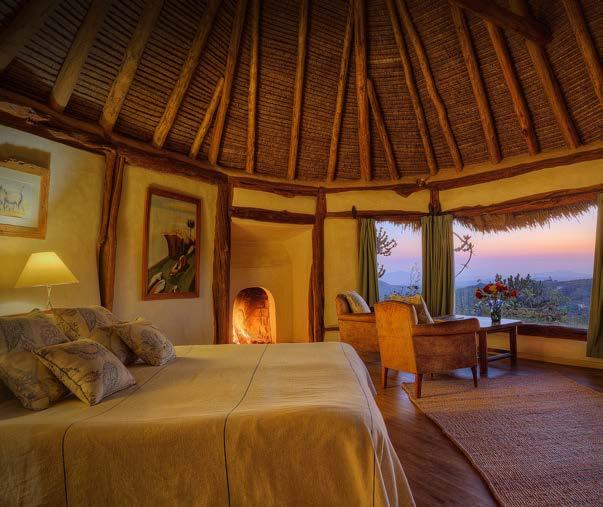
Borana Lodge is perched atop a hillside with sweeping views, plush accommodations that harmonise local materials with modern by our feathered friends to take a sip of water, as well as an open-air bar and relaxation area. The main house features a lounge, a bar with comfortable seating and a huge table where dinner is served. Thatched roofs, timber beams and open verandahs frame the wilderness without disturbing it.
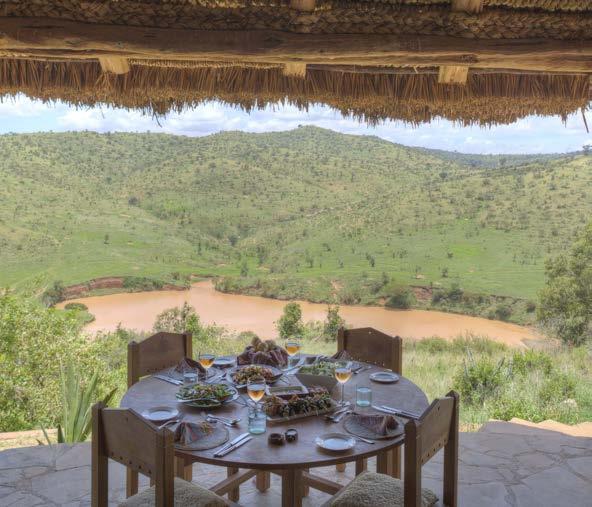
Dining at Borana is a gastronomic journey. Menus are crafted from organic produce – much of it grown in Borana’s own gardens or sourced from neighbouring communities. The
most hailing from local villages, share their warmth and knowledge with everyone. I joined the dinner table with guests from Canada, Britain and with laughter and fun.
For those seeking adventure, Borana’s activity menu is as diverse as its landscapes. Guided game drives at dawn or dusk reveal an astonishing array of wildlife, from
stately elephants to impressive lions, from graceful Thomson’s gazelle to diminutive dikdik antelope, from dwarf mongoose to endangered Grevy’s zebra, from goliath herons to scarlet-chested sunbirds. Guides Peter and Joram were exceptional. When encountering a herd of elephants on the road, Peter interpreted their behaviour and intensions with ease: neither I nor the elephants were alarmed at any time. Walking safaris with
immersive exploration, where every
track and bird call becomes part of the narrative.
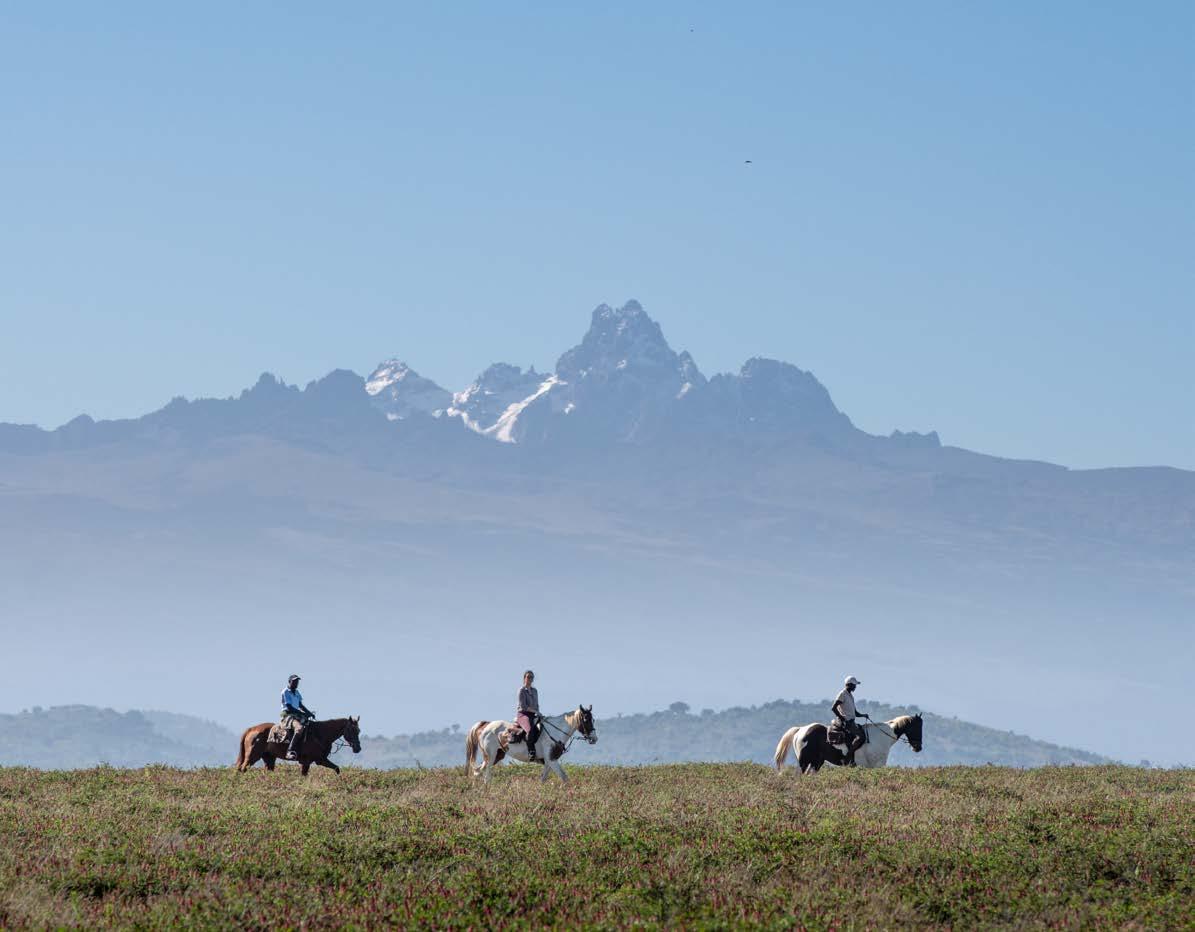
Horseback safaris are a Borana hallmark, allowing guests to ride or canter alongside Grant’s zebra across open plains. For the more adventurous, mountain biking and trail-running routes crisscross the and panoramic views. After the day’s adventures, guests can unwind with yoga sessions, indulge in spa treatments, or simply soak in the distant hills.
Borana is a haven of biodiversity.
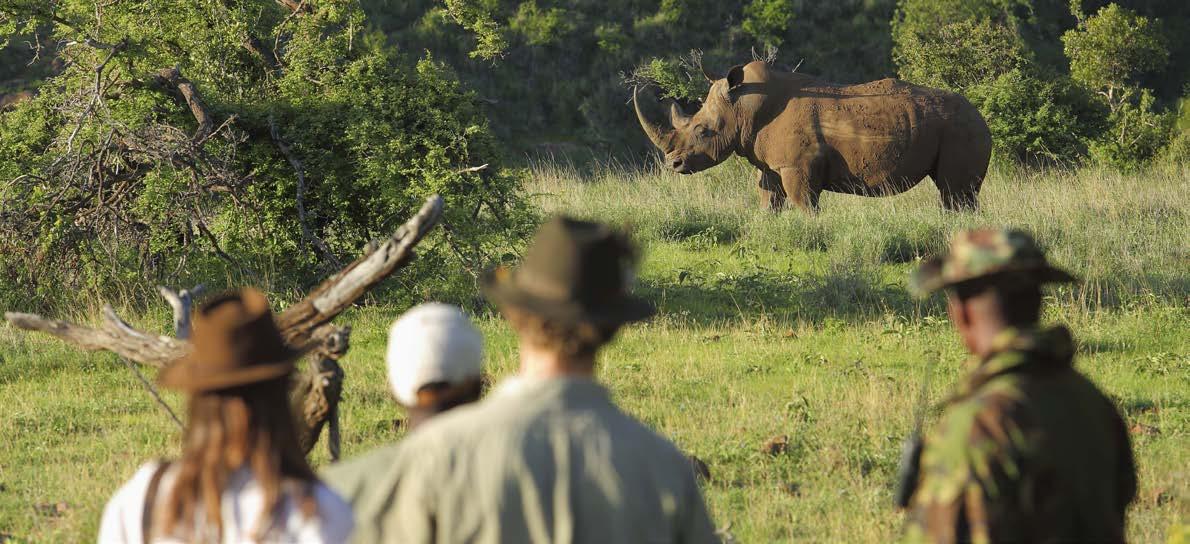
some of Africa’s most charismatic mammals thrive in healthy numbers. The conservancy is renowned for its population of both black and white rhino, carefully monitored and protected. Guests are encouraged exercises or even night patrols, deepening their appreciation for the intricate balance between predator, prey and the land itself.
The soul of Borana Conservancy is as much about people as it is about wildlife. Integral to its mission is the upliftment of neighbouring communities, ensuring that ecotourism and conservation are not
Borana partners with local schools to drive educational advancement. Through the Borana Education Support Programme, scholarships are awarded to promising students, teacher training is facilitated, and infrastructural improvements (like classrooms, libraries and solar power) are provided. Conservation education is woven into the
curriculum, nurturing a generation of future stewards for Laikipia’s natural heritage.
As access to healthcare in remote areas is a challenge, Borana addresses this with an innovative
medical professionals, the clinic travels to villages on a rotating such as maternal care, vaccinations, health screenings and health education. This initiative not only improves well-being but also builds trust between the conservancy and its partner communities.
Recognising that pastoralism is central to local culture and livelihood,
Borana has pioneered the Livestock to Market initiative of economic empowerment. This programme provides training in sustainable grazing, livestock health and market access, enabling herders to maximise the value of their cattle without degrading rangelands. By linking herders to fair markets and supporting livestock management, Borana helps to break cycles of poverty while fostering harmonious land use alongside wildlife.
Borana’s conservation model is dynamic, adaptive and deeply collaborative, blending technology, tradition and grassroots action.
At the heart of Borana’s anti-poaching strategy is the Earth Ranger project. This technology-driven platform integrates real-time data (such as rhino locations, ranger patrols and security alerts) on a central digital dashboard, allowing rapid response to threats. Rangers, equipped with GPS devices and supported by aerial surveillance, monitor vast tracts of land, ensuring that both wildlife and communities are kept safe.
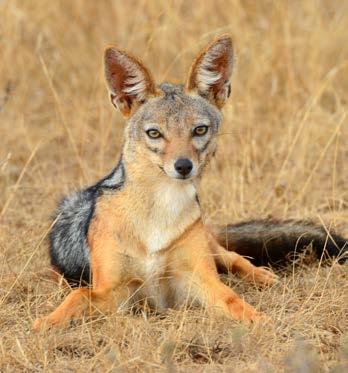
in East Africa. Both black and white rhinos were re-introduced after an absence of nearly half a century. Ongoing monitoring, community engagement and anti-poaching patrols have resulted in a steadily growing population. Guests are sometimes invited to join the rhino patrols. I accompanied two rangers, enjoying the opportunity to view a family of three black rhinos on foot. This also allowed us to look at footprints left by lions and jackals. Borana’s rhino success has become a model for other conservancies across Africa.
Borana invests heavily in restoring and protecting diverse habitats. Invasive species are removed, indigenous trees replanted and eroded riverbanks rehabilitated. Rotational high-density grazing regenerate grasslands, improving both wildlife habitat and forage for livestock. Guests are invited to participate in tree-planting or
monitoring walks – experiences that deepen the connection to this living landscape.
Borana Conservancy is more than a destination; it is a living, breathing example of what’s possible when tourism, community and conservation work hand in hand. Visitors leave not
only with memories of wild beauty and gracious hospitality, but also with the knowledge that their journey contributes to a greater legacy – for the people, the animals and the land that binds them together.
A stay at Borana Lodge starts at $930 USD per person per night including a 24% contribution to conservation, all Borana Conservancy based activities, full board accommodation and local airstrip transfers. Children under 5yrs are free of charge, children under 15yrs are half price. To book contacts bookings@borana.co.ke or visit www.borana.co.ke






























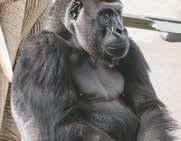









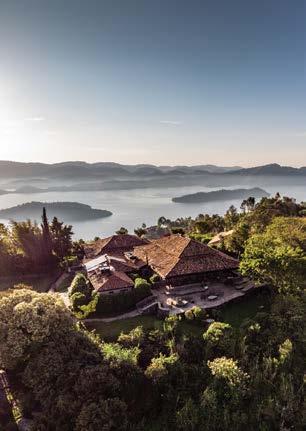
Imagine a destination so profoundly split between the demands of wild adventure and the pleasures of sophisticated leisure that you will chimpanzees at dawn and playing lawn croquet or pickle ball before afternoon tea, all set against a landscape crafted by millennia of volcanic drama. This is Ndali Lodge, a place of intoxicating contrasts, where the reach of the fast-disappearing Guinea-Congolese rainforests encompass the polish of an old English country home.
The crater lake region of western Uganda, looping around Fort Portal, has gone delightfully, geographically
By Hollie M’gog
mad: A jigsaw of volcanic bowls, each
to be thinking. Few are still forested and seductive; others are opaque and vaguely menacing, the sort of places where myths are born and swimmers reconsider their choices. The land itself heaves and folds like a rumpled blanket, stitched with banana groves the ridges with the slow grace of people accustomed to altitude and patience. In the late afternoon, when the light slants and the air smells faintly of rain and roasted maize, the entire landscape feels like a secret — one Uganda has been kind enough not to share too widely.
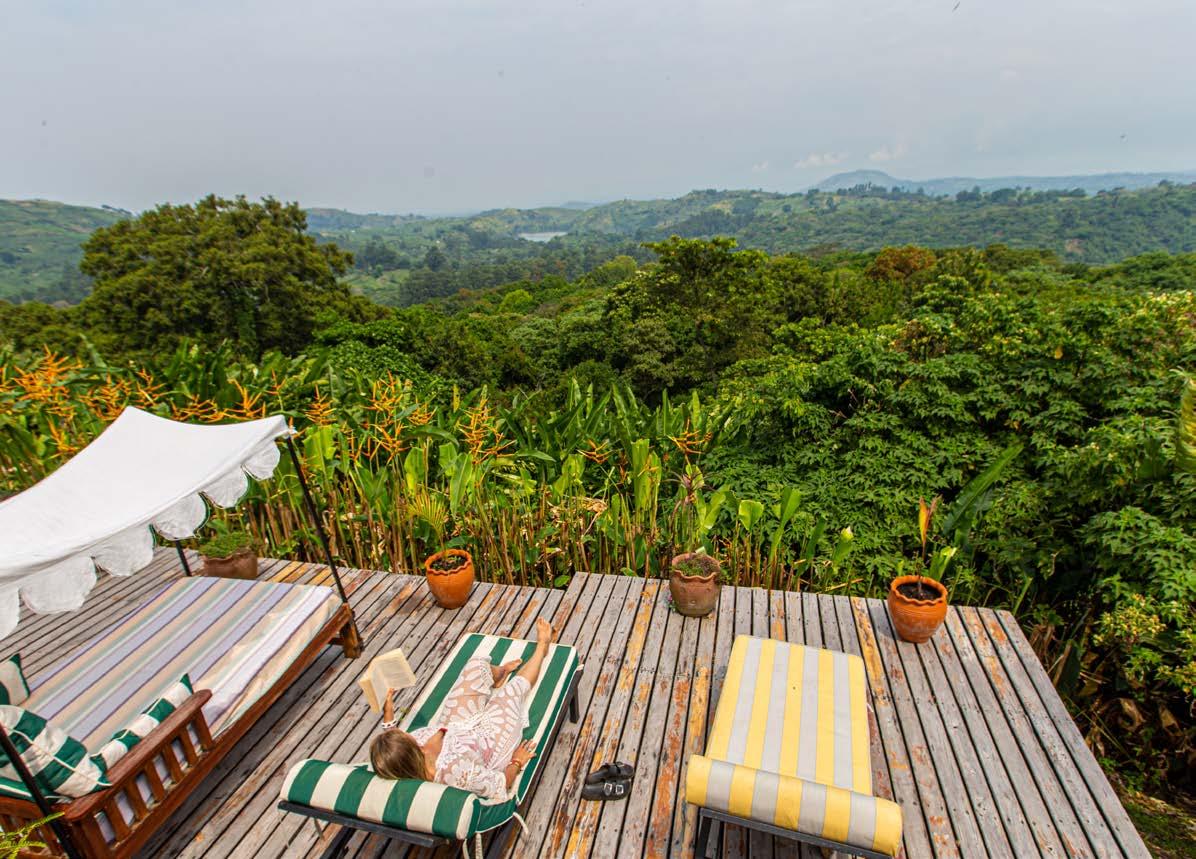
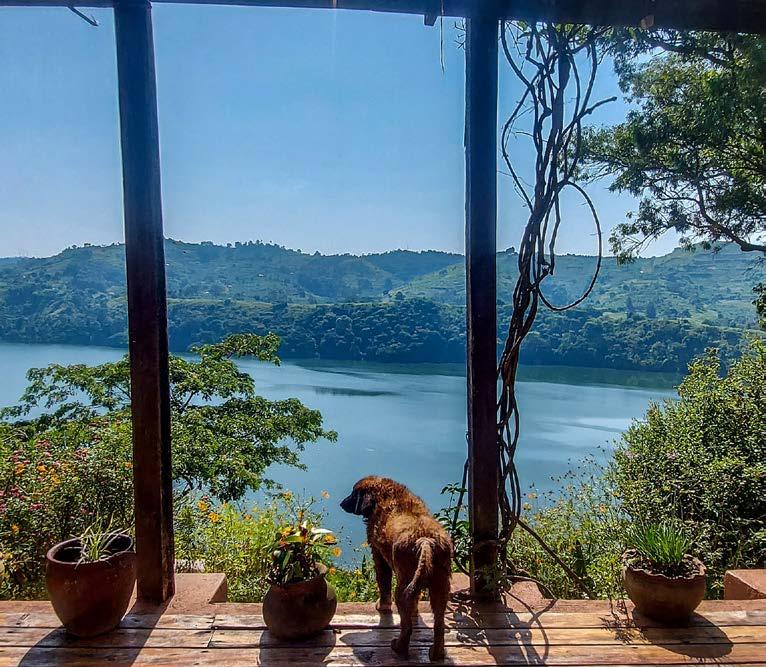
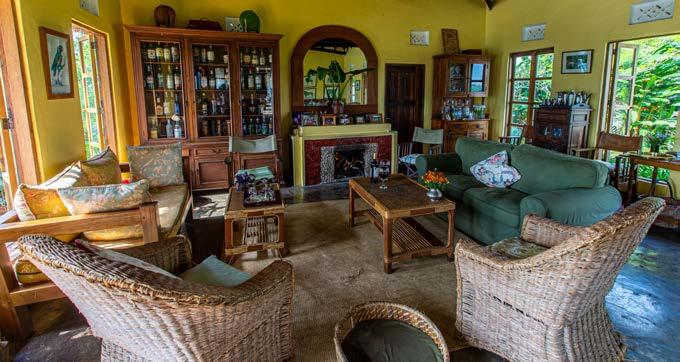
From the very moment you arrive, the atmosphere communicates a sense of privileged removal. Ndali is often referred to as a "home away from home", but perhaps more accurately, it has the feel of an esteemed family estate transplanted onto the edge of Nyinambuga crater lake. It is Aubrey’s and Claire’s home, a home welcoming guests into a beautiful, yet intensely comfortable environment where there are wonderfully few rules. You must, however, be a dog lover, as the experience comes complete with a changing number of resident dogs ready to curl at your feet.
This old vibe extends to the services, creating an atmosphere that has
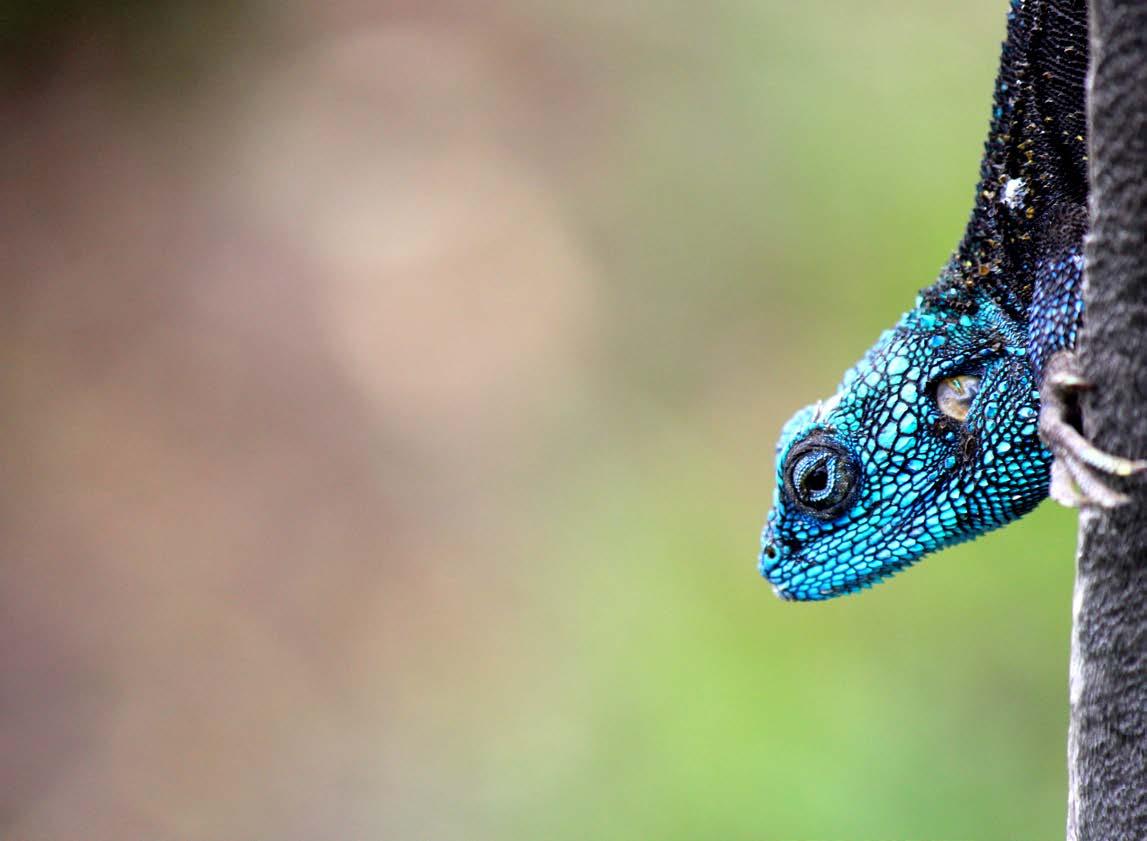
drawn top celebrities and earned features in magazines like Vanity Fair
One feels as though Ndali should have its very own coat of arms. When evening falls, snow-capped Rwenzoris in view if you are lucky,
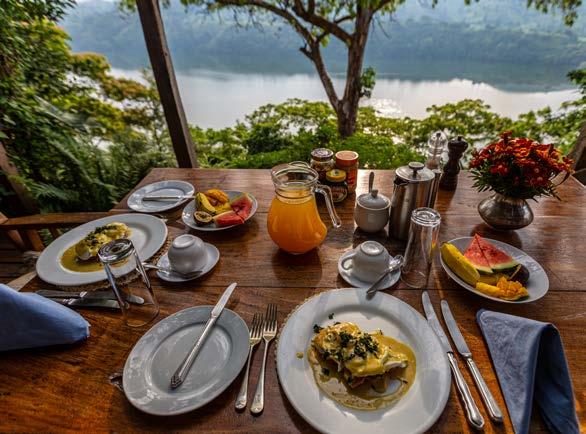
exquisite meals, typically served in two or three generous courses, are often enjoyed outside, candlelight overlooking the pool and a valley of lush vegetation. Inside, the glow of candelabras, holding six or seven candles, casts a beautiful light over the dining area. Depending on who is staying, a single, large table may be set up, encouraging guests to mingle and share the stories of their day, perhaps recounting a sighting as I did with a Spanish family or two Americans from San Francisco. And completing this sense of heritage and formality, the evening waiters are immaculately suited and booted.
Yet, surrounding this stately comfort is the glorious, unbridled abundance
stay here is not a delicate songbird, but the deep, powerful of the black-and-white-casqued hornbill in
they chatter nineteen-to-the-dozen, sometimes gathering in imposing
exquisite crater lake that sits directly in front of the lodge. Look up, and the trees are alive with colour, especially the Great Blue Turacos, whose blues and yellows are beautiful against the sun as they scamper up the branches. Ross’ turacos, distinguished by their beautiful crimson wings and iridescent blue plumage clamber beside sunbirds
the air is heady with the scent of Cape chestnuts.
This immense natural richness leads, inevitably, to Ndali’s greatest adventure: the quest for the
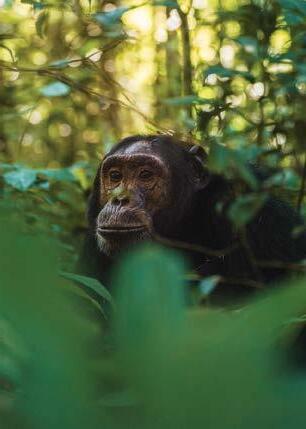
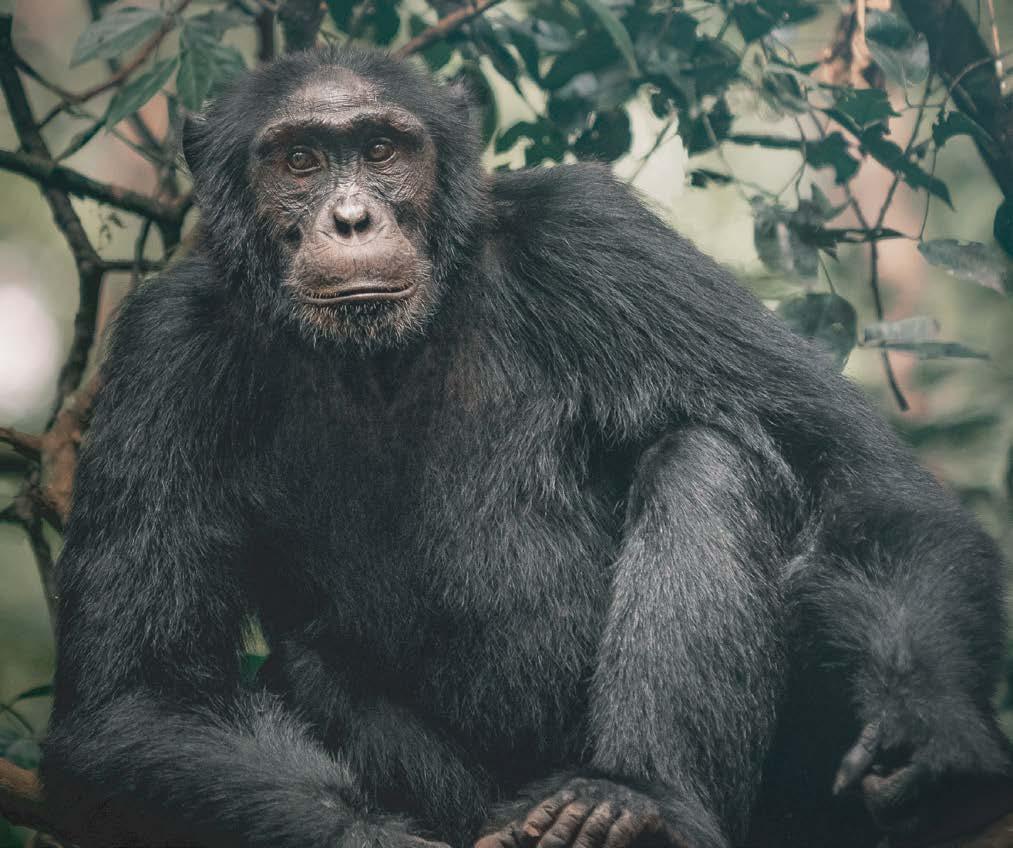
chimpanzees. Chimp trekking demands dedication, requiring an early start sometimes as early as 4 in the morning. The journey involves an hour of travel on rural tracks
road that cuts through the Kibale forest. Perhaps your chimp trek is long and muddy or maybe short and sweet (I’m not sure chimps can ever be described as ‘sweet’ but a trek
you can often be back at Ndali by mid-afternoon, providing the perfect window to transition from rugged explorer to relaxed connoisseur.
Ndali is not just a lodge but a custodian of the land too, caring for extensive tracts of forest,
forest walks where you are likely to encounter two or three distinct types of monkeys, including the delightful small, heart-shaped white nose.
But the true, unique magic of Ndali lies in how intimately it weaves its agricultural heritage into the luxury
experience. Guests are invited to take a view a visit to their very own factory operates. Imagine strolling through the lush grounds and witnessing the extraordinary sight of vanilla growing up the trees. This tangible connection to the land and its productivity elevates the lodge
from a simple retreat to an immersive cultural landscape.
The entire area rests on a geological history that is "so very old", formed by volcanic activities that left the region dotted with deep crater lakes. From the lodge itself, three of these ancient craters are visible, with the forested one directly in front being wholly owned by Ndali.
This dramatic, millennia-old landscape provides the playground for the lodge’s modern leisure
a game of pickle ball, though be warned: the court is situated down the hill, ensuring you get a good walk back up again before your next planned indulgence.
That indulgence often takes place at the beautiful swimming pool, which fertile farmland. On days when the horizon is clear, you can even see the glaciers of the Rwenzori mountains, peaks sometimes clad with snow.
The ultimate Ndali experience, however, embraces the hot and cold
landscape and the modern lodge facilities. In the evening, one can relax in the sauna, following the heat with
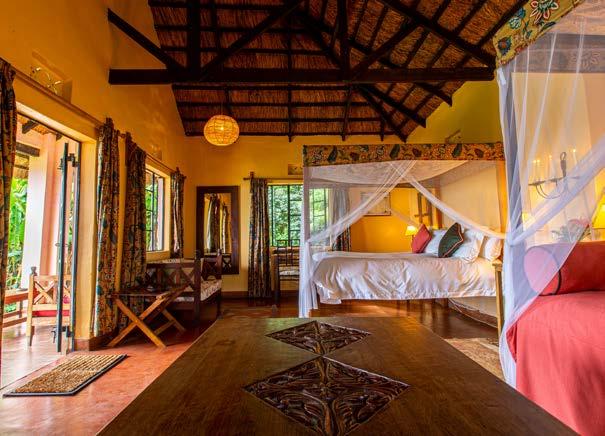
a revitalising dip into the swimming pool between steams.
For the truly intrepid, Lake
of the bold. A wooden jetty stretches out into the water, a polite invitation to stand upright on a paddle board or skim across the surface in a kayak, dwarfed by the sheer walls of the crater and the impossible height of the sky above. But for those with a open-water swim on earth six hundred metres of cold, inky depth that swallows the echoes of the world. It’s bracing, it’s beautiful and I think it feels faintly prehistoric.
Should the weather shift, as it sometimes does in this pock-marked crater region, and the mist sweep in, or the wind pick up, Ndali transforms
its comfort into cosy refuge. The guests to gather around, snuggled friendly lodge dogs curled securely at your feet, perhaps enjoying a nice wine or a whiskey in hand.
to embrace both the ancient wildness and the highest standards of relaxation. You may come because you need just a relaxing day between carries that distinguished ring to its name – Nd-a-li – faintly darkest central Africa but pronounceably distinguished. Either way, you arrive at a place where the grandeur of an old English estate meets the thrilling spectacle of bold turacos
an escape that is both profoundly comfortable and truly unforgettable.




communities who cultivate them just outside the park boundaries. This arrangement, while supportive of the local economy, comes with the constant challenge that these community gardens are frequently raided by local wildlife, including elephant, porcupine and pig.
enhance the luxury experience. They are described as “tremendous and exceptionally well-trained in the tenets of high-end hospitality.” More impressively, they possess the innate knowledge of when to step back — knowing precisely when to just let you be.
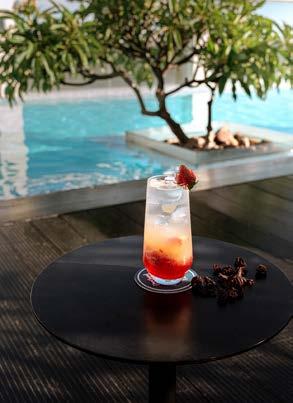
The central pool area encapsulates the lodge’s innovative approach to comfort and service. Running parallel to the water is a bar, meaning guests never need to leave the cool embrace of the water to order a refreshment. You can actually reach out and order drinks directly from the pool! Even better, there are underwater bar stools, allowing guests to sit and discuss the morning’s safari activities without having to emerge from the shaded area a thoughtful design element that allows continuous
enjoyment of the pool while escaping the relentless sun.
The attention to detail extends even to the retail space; the gift shop is
aesthetic.
Nile Safari Lodge exists in harmonious proximity to the wild heart of Murchison. Though there is no resident pod of hippo right below the lodge, sightings are common. I saw them swimming across from the opposing bank of the river and emerging onto the banks in the evening. Due to the presence of dangerous, animals, guests must be escorted to their rooms at night.
This spectacular lodge, with its spectacular ambiance, operates on a highly exclusive basis – only a reservation will do, and its popularity means this might be hard to get!
Nile Safari Lodge is more than a destination in itself. It provides a rare blend of architectural sophistication, gastronomic excellence and absolute serenity, ensuring that your time on the banks of the Nile is remembered not just for the wildlife viewed, but for the profound peace attained. The executive suites
unparalleled seclusion and luxury, cementing Nile Safari Lodge’s status as Uganda’s premier riverine retreat, wilderness.

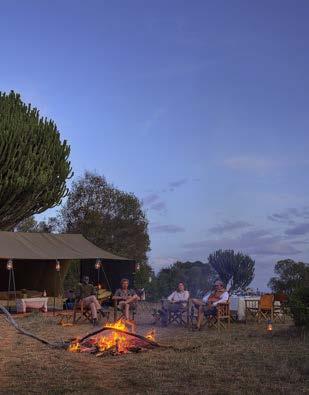
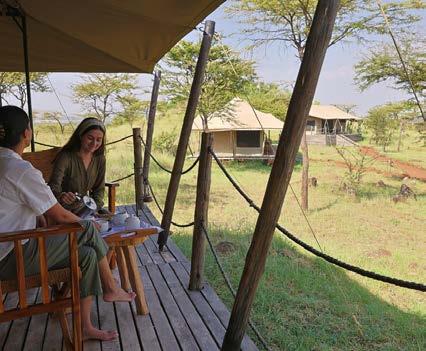
Serengeti Kifaru Tented Lodge isn’t about frills. It’s about raw, sun-drenched plains, the low rumble of lions at night and comfy beds waiting for you when the day’s excitement ends. One TripAdvisor guest put it best:
Another wrote: “Very
Getting there is half the magic.
By CE
Regional Air is a window-seat dream skimming over the Ngorongoro highlands and dropping low into the sunlit sprawl of the Serengeti. If you’re lucky, your pilot might be one of Regional’s skilled female captains,
that says they’ve seen elephants on runways before breakfast. Keep your
appear like paper-cutouts on golden cloth.
Landing at Seronera airstrip feels like stepping into a Hemingway
daydream: wildebeest grazing just
lined up like safari taxis, and a gust of dry, warm air carrying the scent of dust, dung and something wild. The 45-minute drive to the lodge delivers a prelude to your safari: zebra crossings (the real kind), lounging lions (possibly) and plains that morph with every turn of the track.
By the time you reach Kifaru, perched on a gentle rise with expansive views across the savannah, you’ve already alone is reason to pause. It’s not unusual to sip a post-safari drink on
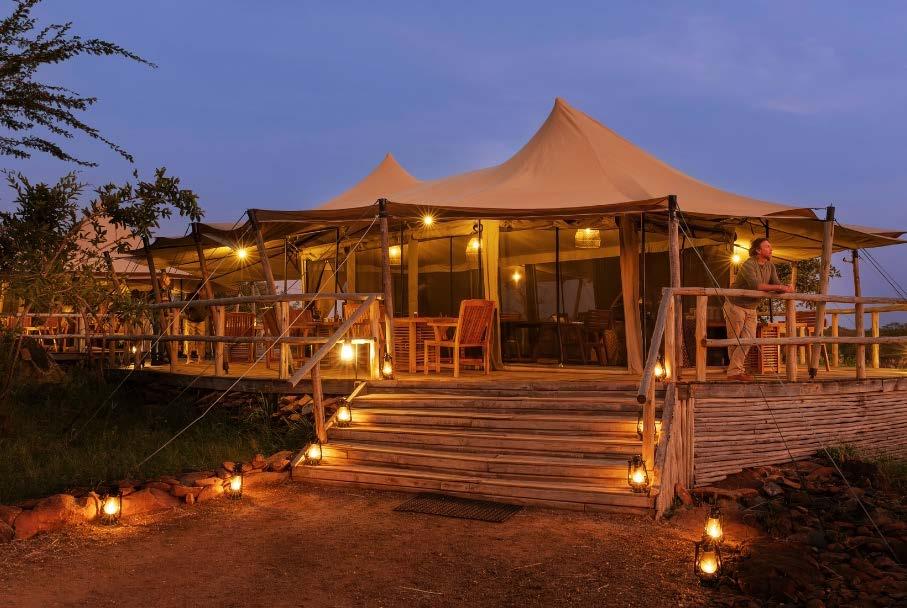
your deck while watching elephants on the horizon and listening to hyenas warming up their midnight howls. Speaking of which; do not, under any circumstances, leave snacks lying about. The hyenas here are seasoned professionals. They’ve learned to raid bins and know their way around the kitchen tent better than some junior chefs.
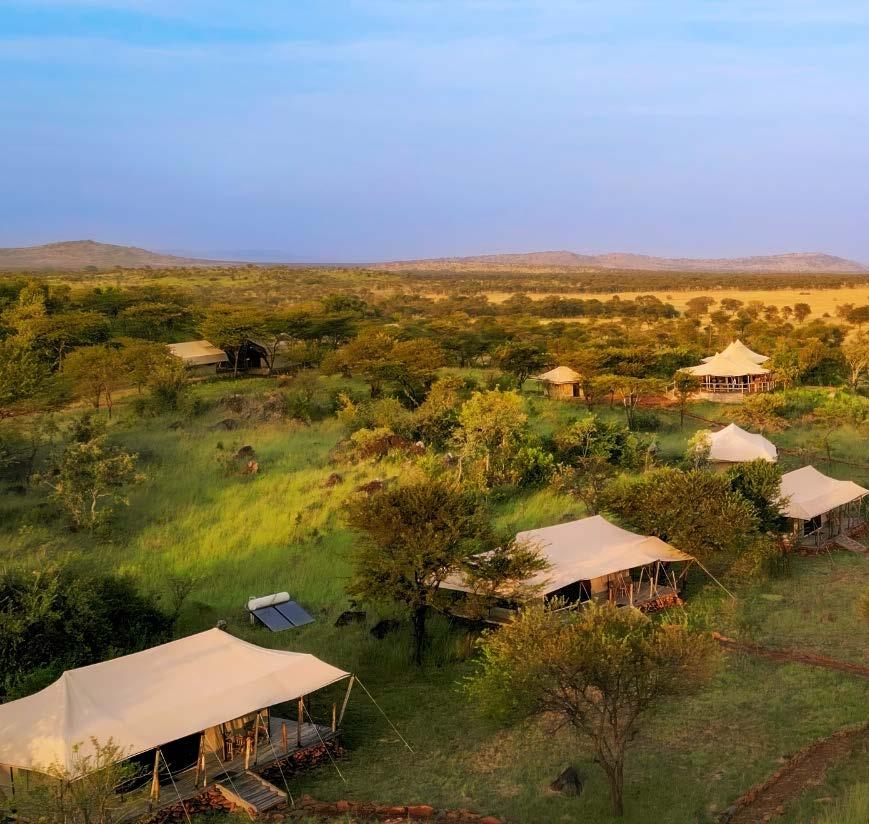
There are thirteen safari tents and two family-units, all raised on wooden platforms and spread out for privacy without needing a GPS.
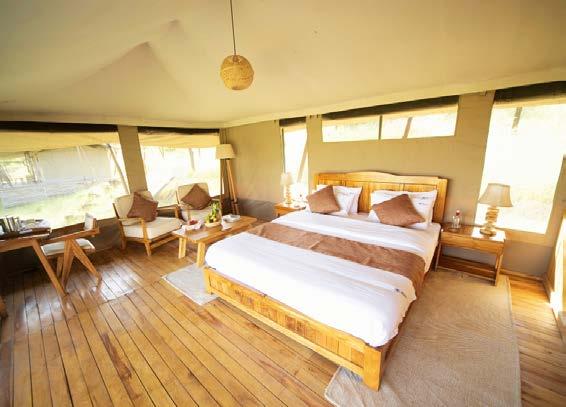
are tidy, functional and IKEA-esque — but the beds? “amazing,” according to one guest review. Each tent has a desk, torch, bottled water, chairs inside and out and three or four
the main lodge, the social hub where sunrise stories meet sundowner tales.
Bathrooms don’t pretend to be boutique spas, but they’re spotlessly modern: solar-heated showers with actual pressure, double basins, cypress-wood dividers, reliable hot water, hairdryers, fresh towels. Guests consistently praise their quality (Tripadvisor).
cooked-to-order eggs at breakfast and warming dinners in the evening. Nothing showy, but tasty and satisfying especially when you consider the logistic gymnastics required to stock a bush kitchen. Food reviews are upbeat:
Wi-Fi exists, albeit patchy. That’s expected in the Serengeti, where baboons are more reliable than broadband. Embrace it. You might even thrive without Insta!
Bedtime at Kifaru comes with
a ritual that’s as functional as it is theatrical. Being led past glinting hyena eyes and the distant swish of feeding elephants is nothing short of cinematic. And the team? Calm, professional and friendly; speaking English, Swahili and some Italian,
ready with a joke or a helpful tip.
nearly as many compliments as their genuine warmth.
The lodge’s Travellers’ Choice award and top-tier reviews speak to consistent levels of cleanliness, value and that intangible feeling of being in the wild, not just visiting it.
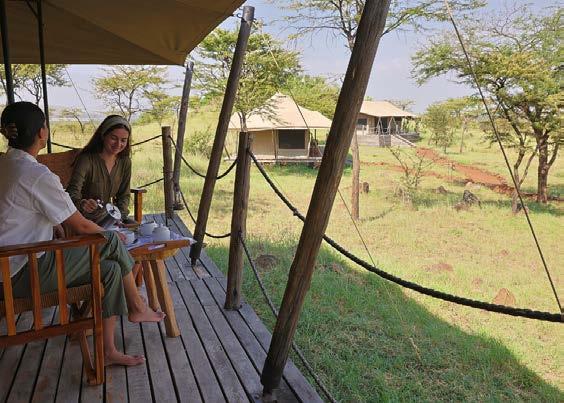
Serengeti Kifaru is for those who want their savannah served straight-up: with big skies, wildlife in your earshot at night, warm service and the reassurance that you’ll sink into a proper bed at the end of it all. You’ll arrive as a guest, leave with a wild story.
If Kifaru gives you a deep-in-thebush, boots-on-the-deck safari feel, its sister property, Serengeti Orangi , catapults
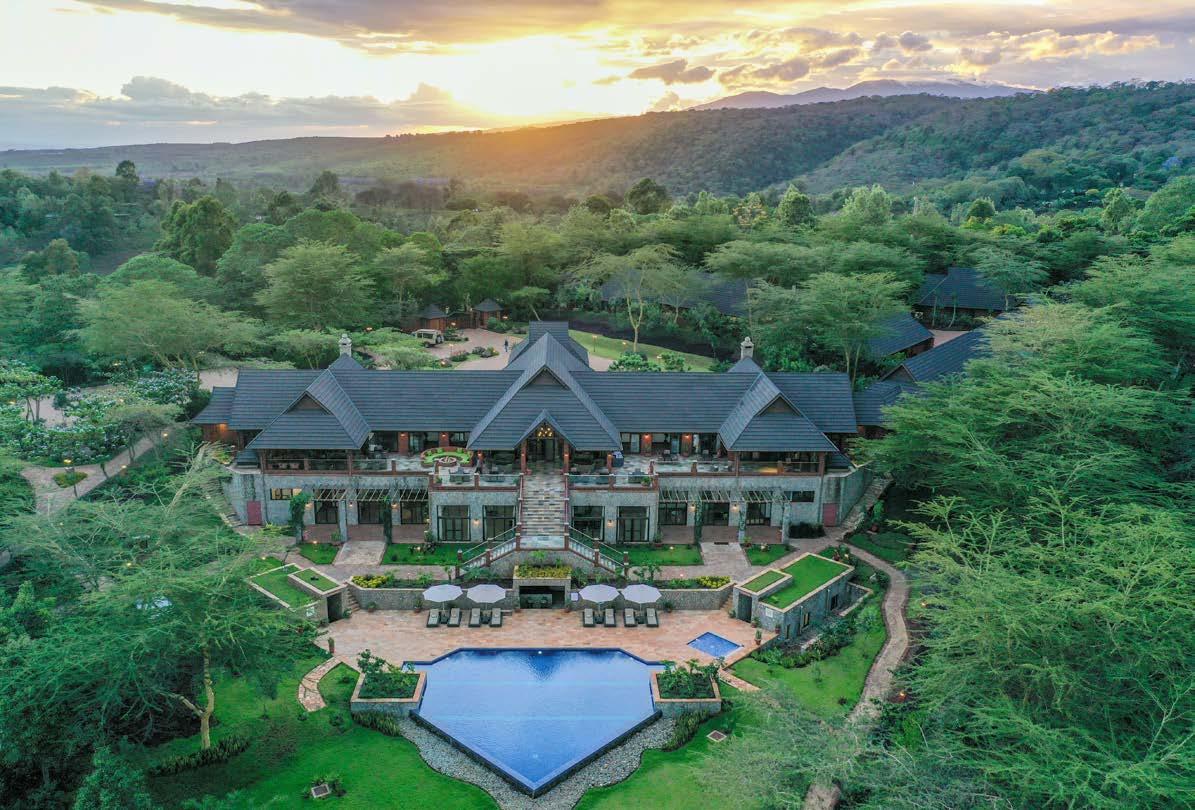
of comfort. Set along the banks of the Orangi River, this bold new addition to The Orangi Collection is all sweeping views, wide skies and serious architectural ambition. From the deck of your suite or the open-air restaurant and pool terrace, paved
with enough artistic cement to host a small football tournament, you’ll take in the iconic Serengeti riverine plains in all their majesty. And when the rain falls (it didn’t when I was there), I
into the river below.
This is where the rustic, lesser price
Think champagne in hand while lazing in a massive bathtub while elephants wander the river below.
under the stars. The open-air decks mean one can be surrounded by the warm textures of wood, African art and elegant, locally sourced materials. The rooms are designed for quiet indulgence, each a tranquil retreat blending the region’s natural soul with soft lighting, beautiful
city hotels can only dream of faking.
Of course, there’s a curio shop. And not just a casual display shelf with
beadwork; this is a full-on walletwhisperer of a boutique, stocked with enough beautiful objects to make even the most minimalist traveller consider buying a second suitcase.
If Kifaru is about being in the wild, Orangi River is about watching it
from above with a cocktail in hand and someone else worrying about the mosquitoes.
For bookings or questions, contact +255 759 969 200 / +255 758 022 890 or email info@theorangicollection. com.
By Hollie M’gog
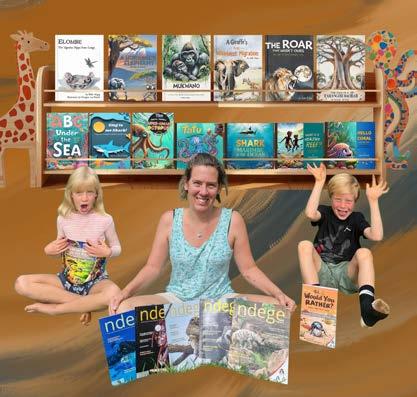
Two nights at The Retreat at Ngorongoro wasn’t nearly enough but it was just long enough to recalibrate something in me. I didn’t arrive hot and dusty from the bush like so many safari-goers. I arrived wired. I’d carved out this stay to work on a children’s book series full-on creative mode. My laptop was fully charged, and my head was spinning with ideas and adventures that would make great illustrations. What I needed wasn't go-go-go, but silence, concentration and the kind of beauty attention but quietly sharpens it.
The Retreat delivered exactly that
and more. Mornings began with deep, focused writing on the cottage’s shaded deck, a slender mongoose creeping across the lawn, forest birds
there on the grounds. When the words started to blur, I’d swim laps in the wide, heart-shaped glinting pool that seemed to pour straight into the trees. Or I’d steal an hour in the gym, then a massage in the Oasis Spa — enough to unclench body and mind. I walked the gardens alone, tracing the gentle paths through trees and sculptures, stopping to read the quiet little signs tucked in the foliage. “Listen to the wind, it talks.” I Listened
your own paradise. Sometimes you just need a break in a beautiful place
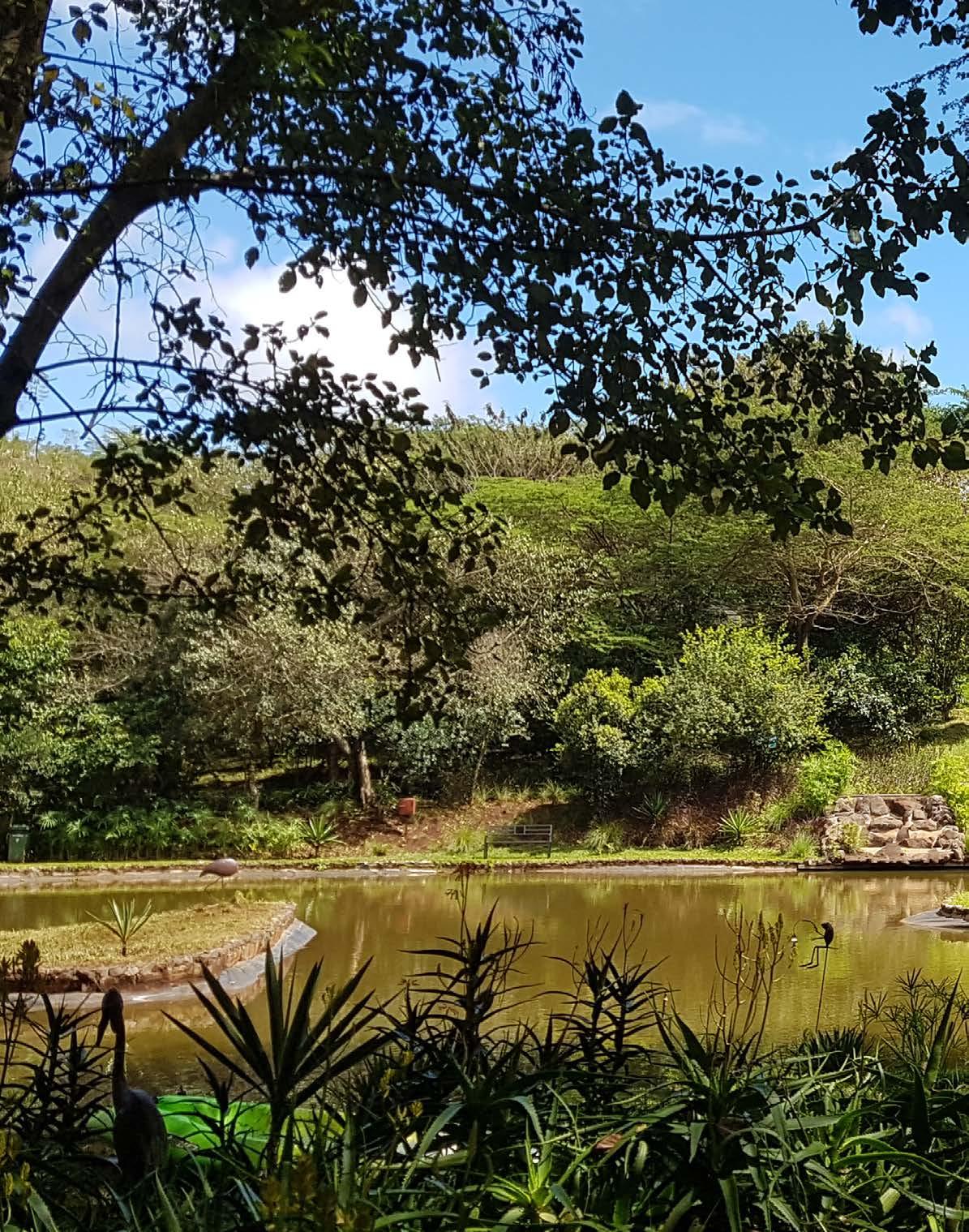
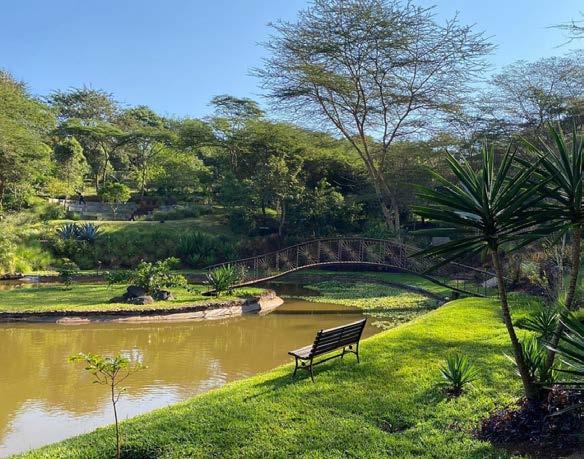
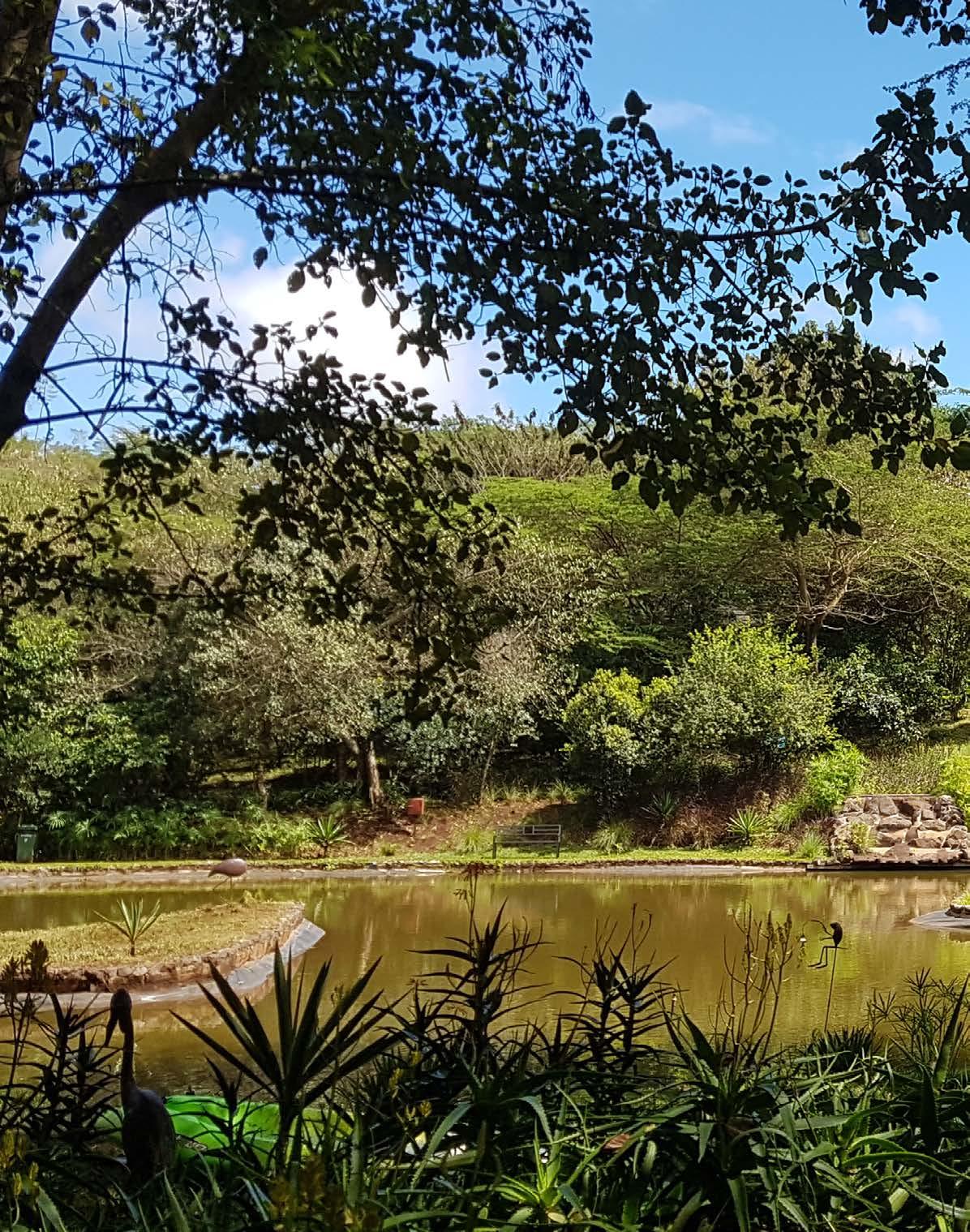
The property itself was once just bare maize plots hard to imagine now, surrounded as I was by over 40,000 indigenous trees that have been caringly planted over the years. This isn’t landscaping; it’s ecosystem revival. Wrought-iron bird and
there's this sense that every inch of space has been invited back into curated wildness rather than tamed.
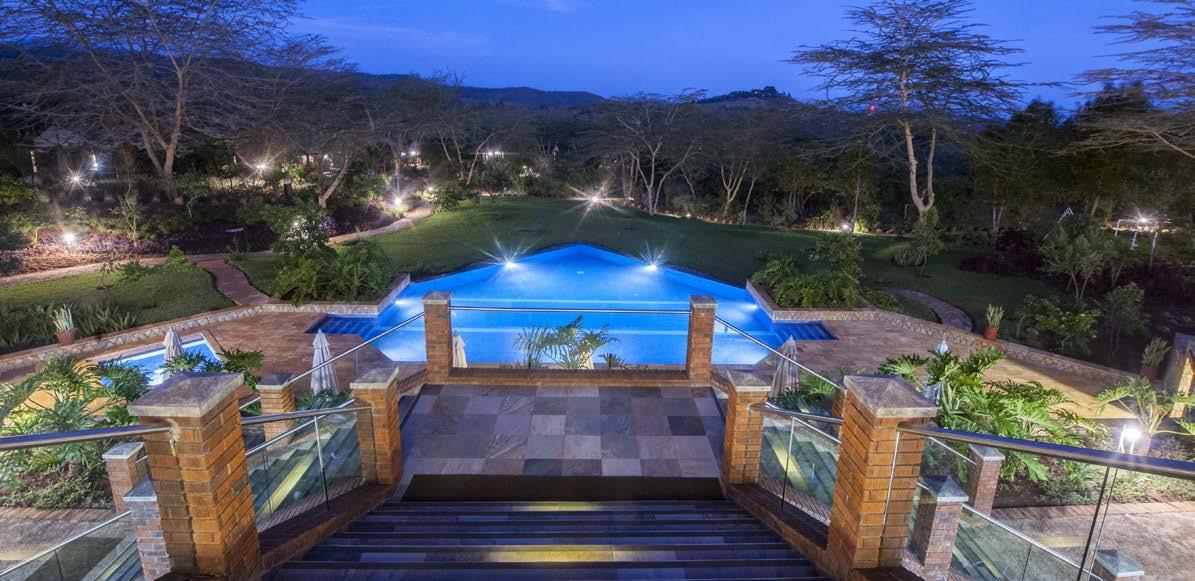
My cottage was one of the most comforting spaces I’ve ever worked
bathroom was vast and indulgent, divided into three separate rooms. And each evening, just as the mountain air began to bite, a gentle knock at the door would announce a hot water bottle delivered to my bed. That kind of detail stays with you.
But the real turning point came with the rain. Not a passing drizzle no!
Three proper highland storms rolled through during my stay, turning the sky pewter and the garden paths slick and gleaming. I’d barely
noticed the chill until the room butler up an armchair, and handed me a work," he said with a smile. It felt like being looked after by someone who’d read your mood better than you had.
laptop on lap, rain on the windows, birds still chattering in the distance.
Meals were another kind of grounding. Most ingredients are grown right there: guavas, bananas, herbs, squash, wild leafy greens. I visited the vegetable gardens and the orchards, I nibbled strawberry-
guavas from the tree! Chef has a quiet brilliance, able to conjure vegetarian feasts or work around dietary quirks it had just been harvested because, from the same land no food miles, just food metres.
Sustainability isn’t performative here has a story. They’ve planted several
collect the fallen branches, and when needed, thin the trees enough to drawing from native forests. It’s the kind of thoughtful, integrated system
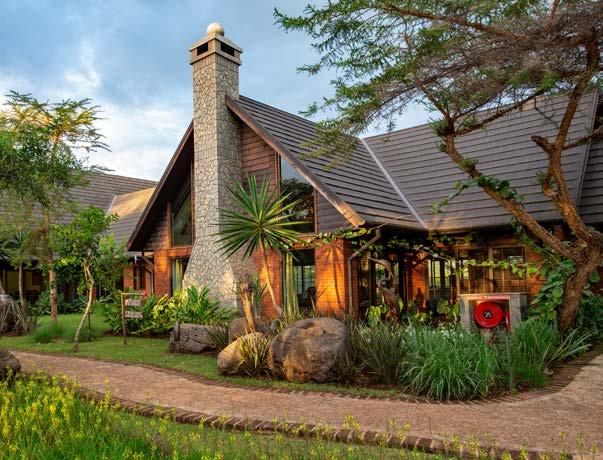
that makes you realise how clumsy many 'eco-luxury' claims elsewhere really are.
I didn’t leave the lodge for grand excursions though you certainly could. Ngorongoro Crater is only an hour away, and Lake Manyara and Tarangire both within reach. But The Retreat is layered enough to keep even a restless mind anchored. I took a kayak out on the dam one still morning. I jogged (okay –walked!) the 1.6km trail that loops between valleys and back around the cottages. I wandered to the forest amphitheatre a well-though-anddesigned glade used for yoga or bush dinners and sat there doing absolutely nothing for an hour. The birds carried the silence.
One afternoon I rode a mountain bike through the outer paths, past
walking home, waving and laughing. It reminded me that this wasn’t an isolated bubble of comfort. The Retreat sits with and among its surroundings grounded, giving back.
The Retreat has layered its days so well that even a conference room (yes, there is one, seating up to 100 people) feels like part of the wider rhythm rather than an interruption to it. And that’s the thing about The Retreat. It doesn’t try to be dramatic. It doesn’t rush you with ‘bucket list’ pressure. It holds space gently, expertly for whatever you bring. Exhaustion. Deadlines. Wonder. It
unfurling slowly, like one of the ferns growing in the garden paths.
What elevated the entire stay, beyond the food, the space, the forest, and the hot water bottles, was the
encountered greeted me with the kind of warmth that’s impossible to
just an ease, a generosity of spirit. I felt taken care of, not catered to.
The Retreat at Ngorongoro isn’t just a place to stay it’s a place to think, to write, to be remade. A quiet engine for your best ideas, and your softest exhale.
Other activities include a 3 and-a-half-hour forest walking round-trip to Endoro Falls and the elephant caves, you can
you can plant trees to add to the ever-growing forest and you can meet the local Iraqw peoples around the lodge.
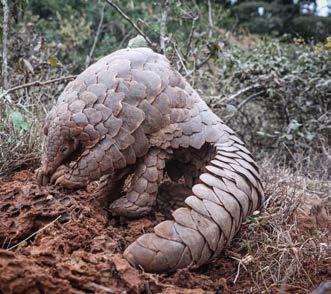
The Pangolin Project is the only organisation in Kenya dedicated to protecting pangolins - the world’s most trafficked mammal.
Our mission is simple and urgent: the protection of pangolins and the habitat on which they depend. More than 70% of Kenya’s wildlife is found outside of protected areas and Pangolins are no exception. As human populations grow and agricultural development expands, space for wildlife is shrinking outside of parks and reserves. Contact between wildlife and people is increasingly putting species like pangolin at risk. Creating safe space for pangolin (and the wildlife they live alongside) is essential for sustainable conservation success in Kenya.
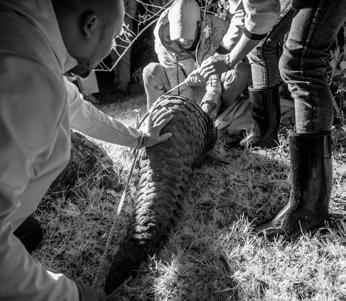
Pangolin are shy and gentle creatures that only eat ants and termites and are adapted to do so with their long tongue, exceptional sense of smell and strong front claws. When in danger their only defence mechanism is to curl into a ball. Their protective outer scales form an effective barrier against predators. They depend on a large variety of ant and termite species which can only be supported on healthy soils and vegetation. Pangolin are therefore an excellent indicator species of ecosystem health.
In Kenya there are 3 species: Temminck’s Ground Pangolin are the most widespread and can be found in savannah, dry land and dry forest areas. White Bellied Tree Pangolin and Giant Ground Pangolin are limited to remnant pockets of Congo Guinea forest in western Kenya.
Our primary focus is the Nyekweri Eco-
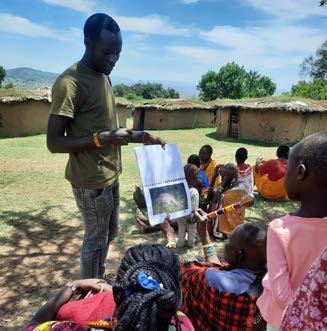
system - an area not formally protected - that lies on the west side of the Maasai Mara - and home to the only known population of Giant Ground Pangolin.
Forest clearing, agricultural expansion and the spread of electric fences around individual land parcels have resulted in an unprecedented pressure on The Giant Ground Pangolin. We estimate that just over 30 individuals remain in the area. Conservation must provide competitive and tangible benefits to community members.
The Pangolin Project has partnered with 2 community conservancies: Oloirien Forest Trust and Kimintet Forest Trust Conservancy - to create a 10,000 Ha Pangolin Sanctuary. Working with the community and our part-
ners and Kenya Wildlife Service (KWS) and Wildlife Research and Training Institute (WRTI) we focus on 5 critical programmes:
- Monitoring Giant Ground Pangolin
- Securing safe habitat through long term leases
- Removing deadly fences
- Safeguarding natural resources
- Restoration of degraded forest
The Pangolin Project approach begins and ends with the people living in this area. Engagement and collaboration is essential and hundreds of hours are spent in conversation with landowners, elders, women’s groups, and youth. Real changes are being seen: 181 landowners have committed to conservation as a land use protecting more than 12400 acres (5,000 hectares). Electricity has been removed from over 100 Km of fencing and 1486 Ha of standing forest is protected in this area.
The results are building - this year 2 pangolin pups were captured on camera, several individuals are seen within the same week, and even evidence of young pangolins dispersing into new areas. Each sighting is a reminder that when habitat is made safe, pangolins quietly endure.
This is a pivotal time for Nyekweri and the Giant Pangolin. Together, with partners like Air Kenya we can achieve our goal. Thank you for joining us!

The Maasai Mara is one of the world’s most iconic landscapes; a place where wildlife, culture and community coexist in a delicate balance. The Maa Trust is a community-based organisation working hand in hand with Maasai families to ensure that conservation is not only sustainable, but beneficial and transformative for the people who call the Mara home.
Since 2009, The Maa Trust has partnered with local communities to improve livelihoods, strengthen social systems and support conservation efforts across Narok West. Its mission is simple yet powerful: to ensure that communities benefit from the protection of wildlife and habitat through evidence-based community development.
Today, the organisation works across education, child protection, healthcare, water and sanitation, women’s economic empowerment, youth leadership, gender equality and sustainable livelihoods. Each programme is designed with communities and responds directly to needs identified

through research and household engagement.
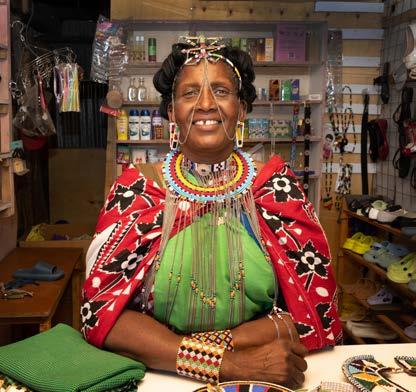
Women’s economic empowerment remains one of the Trust’s flagship areas. Through Maa Beadwork and Maa Bees, more than 800 women earn dignified income through beading and honey production, enabling them to support their families, pay school fees and expand opportunities for their children. In 2025, Maa Beadwork’s sales grew by more than 20 percent, supported by partnerships with safari camps and international design houses.
In health, The Maa Trust’s collaboration with CHP Talek Community

Health Centre has transformed access to medical care across the Mara. Serving over 200,000 people, it is the only facility in the region with a full time medical doctor, a functioning operating theatre, a neonatal high dependency unit and a blood transfusion unit. This year the facility launched a new state of the art X ray machine, significantly improving diagnostic capacity. Alongside facility based care, outreach teams have brought maternal services, family planning, immunisation and health education directly to villages, reaching more than 6000 community members through door to door and mobile clinic activities.
Education and child protection continue to be cornerstones of the Trust’s work. From building classrooms and water systems in schools to providing scholarships for bright students from vulnerable backgrounds and addressing female genital mutilation, The Maa Trust is investing in the next generation of community and conservation leaders.
None of this is possible without strong partnerships. The Maa Trust is delighted to welcome Air Kenya as its newest partner. This support will facilitate safe and efficient travel for staff, trustees and medical specialists, strengthening the Trust’s ability to reach remote communities and create lasting change.
As you fly over this extraordinary landscape today, know that beneath you are thousands of families working together for a stronger, healthier and more sustainable Maasai Mara.
Learn more: www.themaatrust.org

































• Daily service; minimum of 2 pax to operate.
• Flight from Amboseli to Wilson connects to Nanyuki, Lewa Downs, Samburu, Meru, and Loisaba at 09:45; Maasai Mara at 10:30 and Arusha at 13:30.
•
• Arusha service is non-operational 1st April - 20th May and 1st Nov - 15th Dec
• This airport is your gateway to a safari between Kenya and Tanzania as it easily connects to Manyara, Seronera and Lobo with Regional A r Services at 15:30
• Daily service; minimum of 2 pax
pending on aircraft routing over multiple airstrips.
• Flight from Masai Mara connects to Lewa via Wilson at 09:45.
• Flight from Lewa to Wilson connects to Arusha at 13:30 and to Masai Mara at 14:15. airstrips.
• Daily Service; minimum of 2 pax per strip to operate.
• The inbound flight Masai Mara to Wilson arriving at 09:35 connects to our Wilson - Northern Kenya Services i.e. Lewa, Loisaba, Meru, Nanyuki and Samburu at 09:45 and to Arusha at 13:30
• Masai Mara services operates into multiple airstrips, therefore timings may vary depending on aircraft routing.
• The arrival and departure times depict the first stop.
• Call Airkenya operations on departure date to confirm arrival and pick up times for various airstrips
• Daily service; minimum of 2 pax to operate. aircraft routing over multiple airstrips.
• Flight from Masai Mara connects to Meru via Wilson at 09:45.
• Flight from Meru to Wilson connects to Arusha at 13:30 and to Masai Mara at 14:15.
• Flights from Meru to Samburu is a one-direction service.
airstrips.
/ KAMOK
• Daily service to Nanyuki Civil and Kamok airstrips; minimum of 2 pax per strip to
pending on aircraft routing over multiple airstrips.
• Flight from Masai Mara connects to Nanyuki Civil/Kamok via Wilson at 09:45.
• Flight from Nanyuki Civil/Kamok to Wilson connects to Arusha at 13:30 and to Masai Mara at 14:15.
• Flight from Nanyuki Civil/Kamok to Masai Mara may route via Wilson in low season to connect on
FLT
P2 871 WILSON SAMBURU 09:45 10:45
P2 872
WILSON 11:00 13:10
P2 862 SAMBURU MASAI MARA 11:00 13:00
• Daily service to Samburu Buffalo and Kalama airstrips; minimum of 2 pax per strip to operate.
pending on aircraft routing over multiple airstrips.
• Flight from Masai Mara connects to Samburu Buffalo and Kalama via Wilson at 09:45.
• Flight from Samburu Buffalo and Kalama to Wilson connects to Arusha at 13:30 and to Masai Mara at 14:15.
• Flight from Samburu Buffalo and Kalama to Masai Mara may route via Wilson in low season to con-
P2 453
P2
P2 454
• Daily service; minimum of 2 pax per strip to operate, except 1st April - 20th May when its non-operational.
• 1st Nov - 15th Dec requires minimum 4 pax.
• Tarime to Migori arrive at 1045hrs.
• Service operates into multiple airstrips therefore timings may vary depending on aircraft routing.
• AirKenya provides road transfer and ground handling between Migori and Tarime.
• The service connects Airkenya Masai Mara services with Regional Air/Auric Air/Coastal Aviation Serengeti services.
• Arrival and departure time to/from Migori may vary significantly by up to 45 minutes depending on aircraft routing over multiple airstrips.
from 21st December 2025 to 31st December 2026
MASAI MARA - SERENGETI VV (VIA MIGORI/TARIME)
FLT NO FROM TO DEPART ARRIVE
P2/8N 453/424 MASAI MARA SERONERA 08:05 12:30
8N/P2 423/454 SERONERA MASAI MARA 08:00 11:45
P2/8N 453/424 MASAI MARA KOGATENDE 08:05 12:30
8N/P2 423/454 KOGATENDE MASAI MARA 08:00 11:45
P2/8N 453/002 MASAI MARA MANYARA 08:00 12:45
8N/P2 423/454 MANYARA MASAI MARA 08:05 11:45
P2/8N 453/424 MASAI MARA FORT IKOMA 08:05 12:30
8N/P2 423/454 FORT IKOMA MASAI MARA 08:00 11:45
P2/8N 453/424 MASAI MARA NDUTU 08:05 12:45
8N/P2 423/454 NDUTU MASAI MARA 08:00 11:45
P2/8N 453/424 MASAI MARA LOBO 08:05 12:30
8N/P2 423/454 LOBO MASAI MARA 08:00 11:45
P2/8N 453/424 MASAI MARA SERENGETI SOUTH 08:05 12:30
8N/P2 423/454 SERENGETI SOUTH MASAI MARA 08:00 11:45
P2/8N 453/424 MASAI MARA SASAKWA 08:05 12:30
8N/P2 423/454 SASAKWA MASAI MARA 09:00 11:45
P2/8N 453/424 MASAI MARA GRUMETI 08:05 12:30
8N/P2 423/454 GRUMETI MASAI MARA 08:00 11:45
• Daily service; minimum of 2 pax per strip to operate, except 1st April - 20th May when its non-operational.
• 1st Nov - 15th Dec requires minimum 4 pax.
• Flight services route via Migori and Tarime
• AirKenya provides road transfer and ground handling between Migori and Tarime.
• Service operates into multiple airstrips therefore pick up and drop off tmings may vary depending on aircraft routing.
• Service operates into multiple airstrips therefore pick up and drop off timings may vary depending on aircraft routing.
• The service connects Airkenya Masai Mara services with Regional Air/Auric Air/Coastal Aviation Serengeti services.
• CHECK IN is done 60 minutes to departure time in Nairobi (Wilson)and Arusha Airports. Passengers will not be allowed to check in 30 minutes to departure time on the mentioned airports
• Check in time for all bush airstrips is 30 minutes before flight departure time
• Contact Airkenya Operations department on the morning of the scheduled flight to get approximate arrival and departure times for various bush airstrips
• Airkenya guarantees all its connecting flights within Kenya and across Tanzania in conjunction with its subsidiary; Regional Air Services.
• Contact the Charter department for tailor-made services or if the scheduled service does not meet your requirements: charters@airkenya.com
• Airkenya reserves the right to change departure times or carrier when so required for operational, weather or safety reasons.
Email resvns@airkenya.com or call +254 (0)20 391 6000 for further clarification.
Contact the Charter department for tailor-made services or if the scheduled service does not meet your requirements: charters@airkenya.com
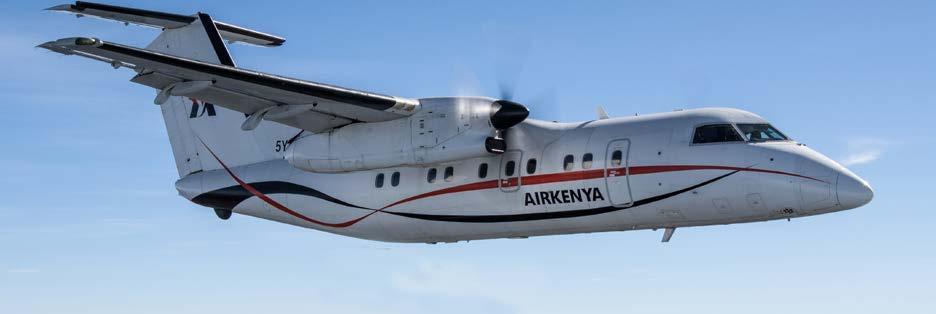
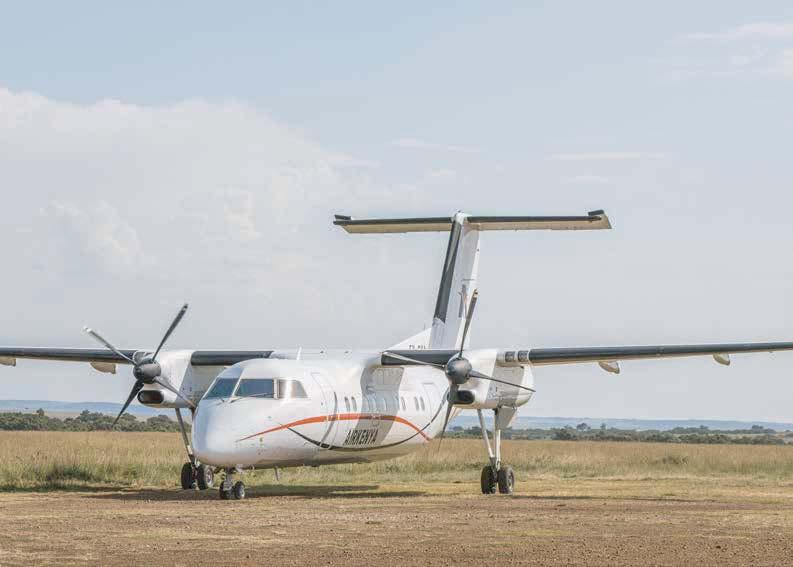
BOMBARDIER DHC 8-202 (DASH 8)
Manufacturer: Bombardier
Crew: 5 (2 pilots, 1 flight attendant, 1 engineer, 1 baggage Master
Passengers: Maximum 37
Description: Pressurised aircraft ideal for both African bush and city flying No in Fleet: 3
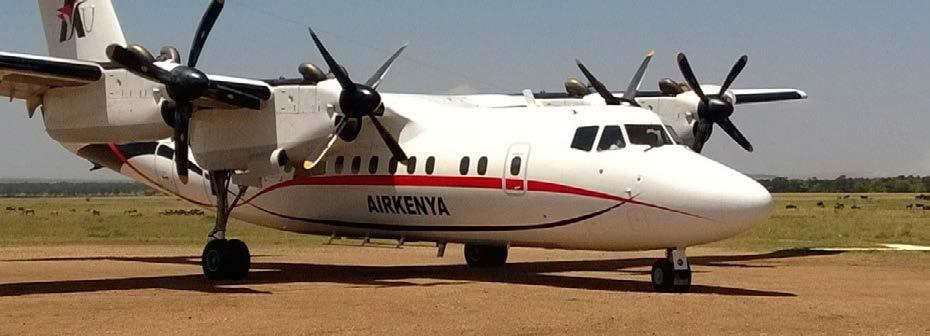
DHC 7-100 (DASH 7)
Manufacturer: Dehavilland Canada
Crew: 5 (2 Pilots, 2 Flight attendants, 1 Engineer and 1 Baggage Master)
Passengers: Maximum 49
Description: Pressurised STOL (short take-off and landing) aircraft ideal for African bush flying No in Fleet: 1
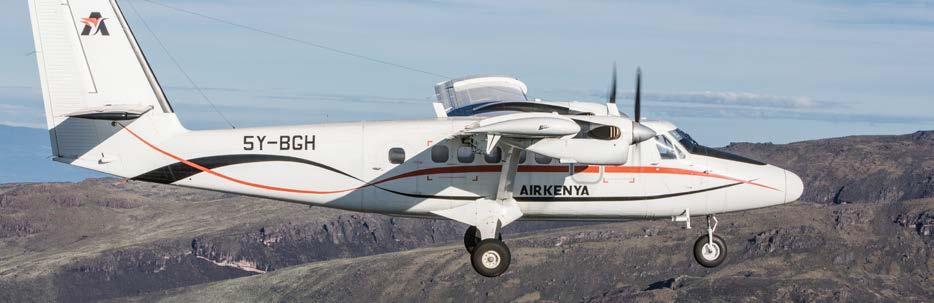
DHC 6-300 (TWIN OTTER)
Manufacturer: Dehavilland Canada Crew: 2 pilots
Passengers: Maximum 18
Description: STOL (short take-off & landing) aircraft with fixed landing gear ideal for African bush flying No in Fleet: 3
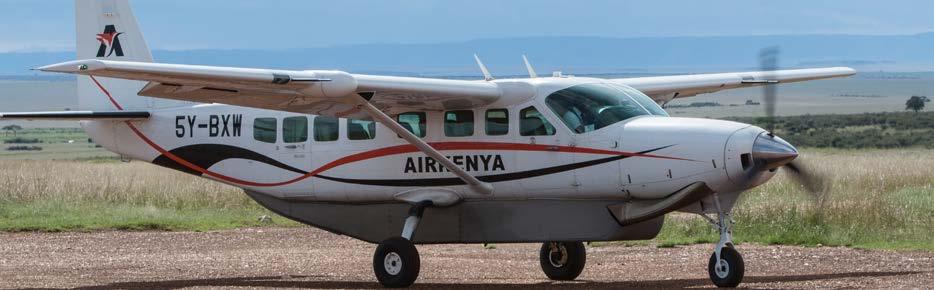
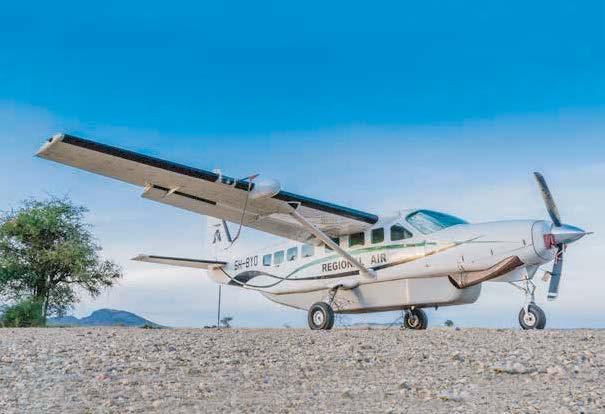
CESSNA GRAND CARAVAN C208B
Manufacturer: Cessna Aircraft Company Crew: 2 pilots
Passengers: Maximum 11
Description: STOL Aircraft with fixed undercarriage ideal for African bush flying No in Fleet: 1
VALID FROM 01 JANUARY 2025 TO 31 DECEMBER 2025
Timings
Lobo
Manyara
Manyara Ndutu *** Seronera
seronera Seronera
Seronera
Kilimanjaro Manyara 16:25
Seronera
Kilimanjaro
Timings above are estimates and will vary depending on aircraft routing
Zanzibar
Zanzibar
Zanzibar
Timings above are estimates and will vary depending on aircraft routing
Kilimanjaro PM Manyara 16:25
Seronera
Ndutu*** Lobo
Timings above are estimates and will vary depending on aircraft routing 12:15
Kilimanjaro Kilimanjaro Lobo
Manyara Manyara 12:55 Ndutu ***
Seronera
Seronera
Zanzibar
Zanzibar
Tarime Masai Mara
Timings above are estimates and will vary depending on aircraft routing 12:15
Kilimanjaro Kilimanjaro Lobo
Manyara Manyara 12:55
Zanzibar
Zanzibar
Tarime
Masai Mara
Timings above are estimates and will vary depending on aircraft routing 12:15
Kilimanjaro Kilimanjaro
Manyara Ndutu *** Seronera
Zanzibar
Zanzibar
Tarime
Masai Mara
Timings above are estimates and will vary depending on aircraft routing
Timings above are estimates and will vary depending on aircraft routing Ndutu 12:15
Kilimanjaro ***
Lobo ***
Manyara *** Seronera *** Tarime *** Masai mara*** Zanzibar ***
Timings above are estimates and will vary depending on aircraft routing
Masai Mara
Lobo*** Ndutu*** Seronera***
Tarime***
Timings above are estimates and will vary depending on aircraft routing
Tarime Seronera***
Lobo*** Ndutu***
Timings above are estimates and will vary depending on aircraft routing
Ndutu***
Timings above are estimates and will vary depending on aircraft routing
Nairobi, Wilson
Kilimanjaro Lobo
Manyara Ndutu*** Seronera
Kilimanjaro - Wilson sector is operated by AirKenya Express
Timings above are estimates and will vary depending on aircraft routing
Nairobi, Wilson
Kilimanjaro Manyara 16:25
Seronera
Wilson - Kilimanjaro sector is operated by Airkenya Express
Timings above are estimates and will vary depending on aircraft routing
REQUEST
INDUCEMENT 4 passengers or more
Manufacturer: Cessna Aircraft Company, USA
Crew: 2 pilots
Passengers: Maximum 12
Fleet No.: 3
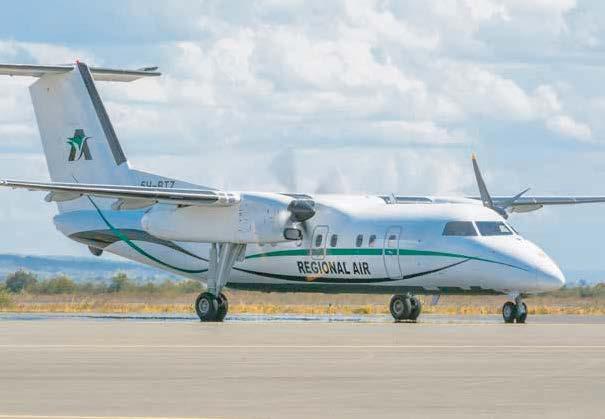
Manufacturer: Bombardier engineer)
Passengers: Maximum 37
Description: Pressurized cummuter aircraft
Fleet No.: 1

KIBALE FOREST NATIONAL PARK AND QUEEN ELIZABETH NATIONAL PARK DAILY SERVICE: Flight to/from Kasese will operate with a minimum of 2 passengers
• Flight A8 121/122 will operate all year except March, April, May and November
• Flight 121 may route via Murchison Falls National Park subject to loads
• The arrival and departure times depict the first stop.
• Timings may vary depending on aircraft routing.
• Due to the prevailing weather conditions, Kisoro will operate in the early morning and midmorning
• Kisoro has a surcharge of USD 70 per person
• From Kisoro airstrip passengers can connect to:- Kihihi and Kasese airstrips on request at seat rate
• Flight A8 117/118 will operate all year except March, April, May and November
• The arrival and departure times depict the first stop.
• Timings may vary depending on aircraft routing.
• Flight A8 117/118 will operate all year except March, April, May and November
• From Kihihi Airstrip passengers can connect to: - Kisoro and Kasese airstrips on request at seat rate.
• The arrival and departure times depict the first stop.
• Flight A 121/122 will operate all year except March, April, May and November
• Flight A8 121 may route via Murchinson Falls National Park subject to loads
• The arrival and departure times depict the first stop.
• Flight A8 131/132 will operate all year except March, April, May and November
• The arrival and departure times depict the first stop.
• Timings may vary depending on aircraft routing.
• Flight A8 117/118 will operate all year except March, April, May and November
• From Kasese Airstrip passengers can connect to: - Kihihi and Kisoro airstrips on request at seat rate.
• The arrival and departure times depict the first stop.
• Flight A8 131/132 will operate all year except March, April, May and November
• The arrival and departure times depict the first stop.
• Timings may vary depending on aircraft routing.
• Flight to/from Murchison will operate with a minimum of 4 passengers per airstrip
• Flight A8 121/122 will operate all year except March, April, May and November whereby the service will be non-operational.
• From Murchison, passengers can connect to:- Kasese and Kihihi airstrips
• The arrival and departure times depict the first stop.
• Timings may vary depending on aircraft routing.
• Flight from Murchison to Kasese/Kihihi will operate with a minimum of 4 passengers per airstrip
• Flight A8 121will operate all year except March, April, May and November whereby the service will be non-operational.
KFNP- Kibale Forest National Park (Kasese airstrip)
QENP - Queen Elizabeth National Park (Kasese airstrip) BINP - Bwindi Impenetrable Forest National Park (Kihihi airstrip)
• The arrival and departure times depict the first stop.
Notes
• CHECK IN TIME is 60 minutes to departure time at Entebbe International Airport
• Check in time for all bush airstrips is 30 minutes
• Contact AeroLink Operations department on the morning of the airstrips.
• AeroLink ONLY guarantees connections within its route network.
• Flight to/from Jinja to Kisoro/Kihihi/Kasese/ Murchison Falls on request at a surcharge of USD 1000
• AeroLink reserves the right to change departure times or carrier when so required for operational, weather or safety reasons.
• Contact the Charter department for tailor-made services or if the scheduled service does not meet your requirements:
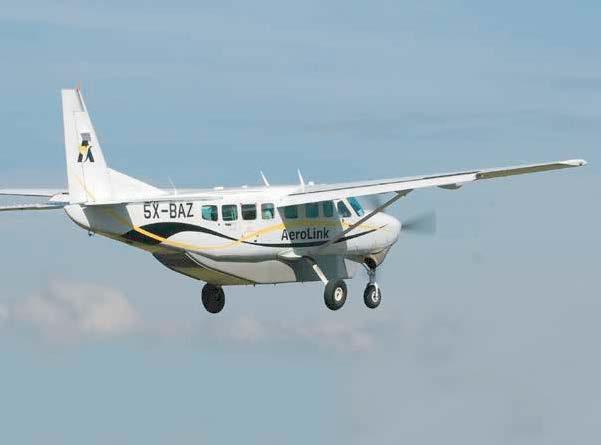

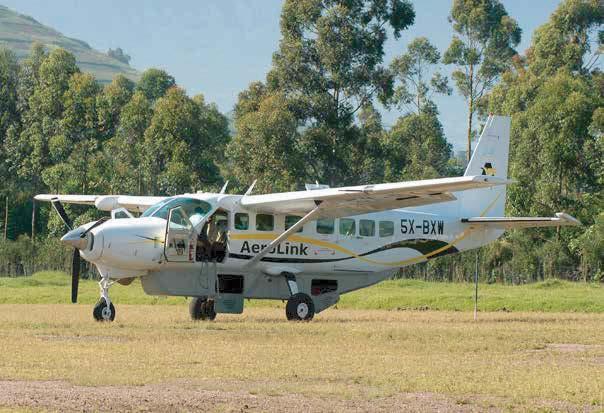


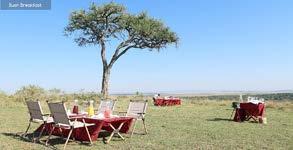
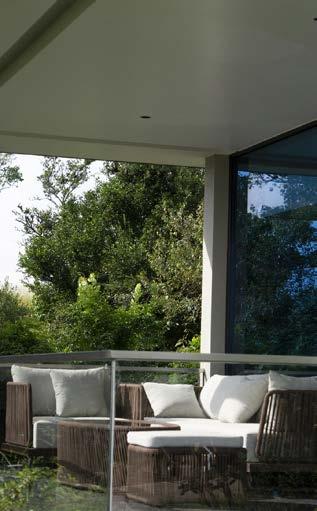
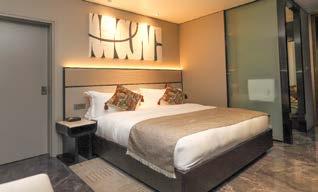

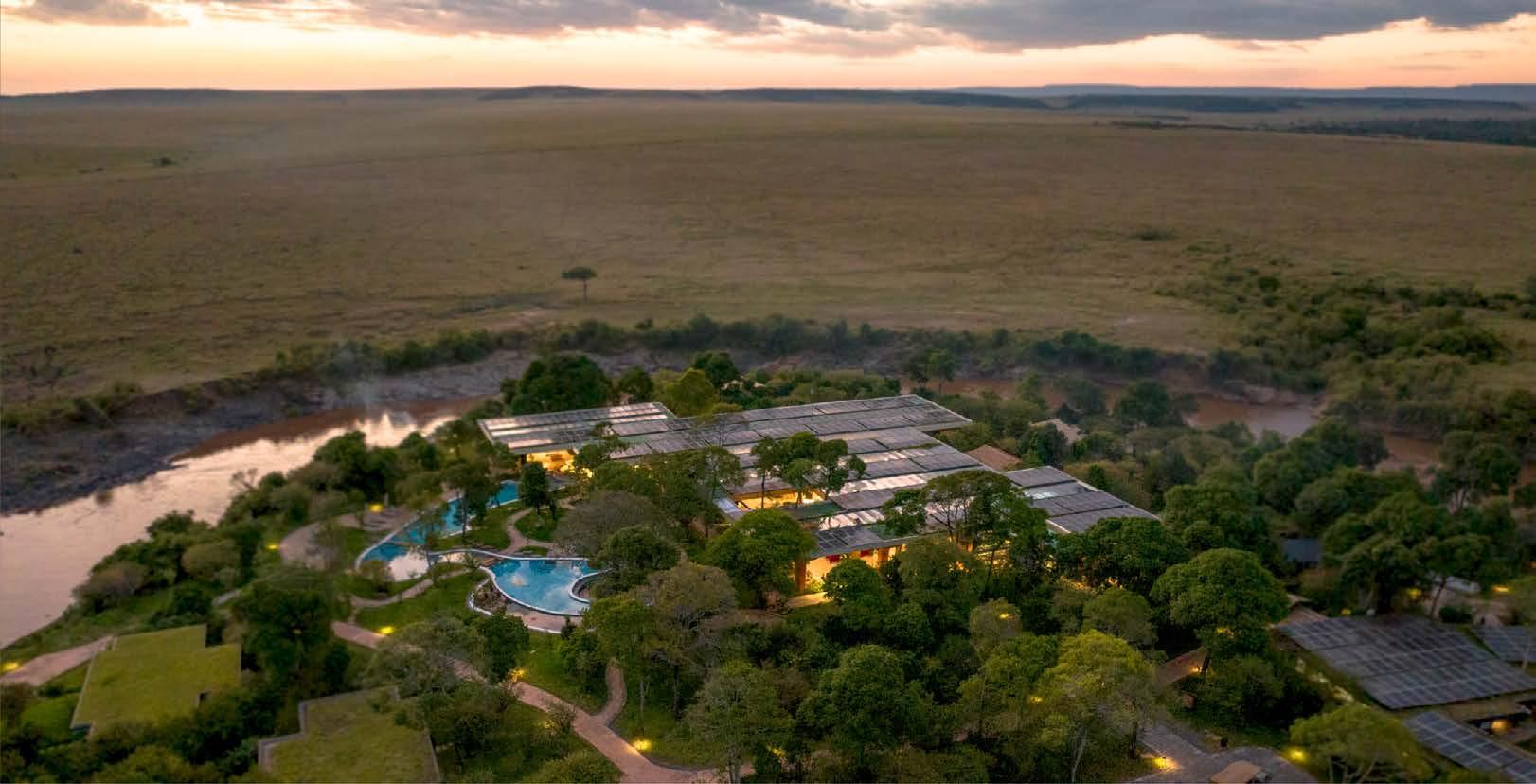
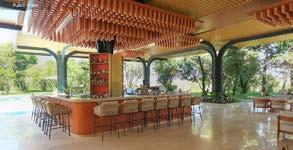
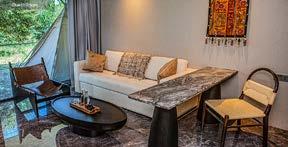
For Those Who Travel Beyond the Ordinary
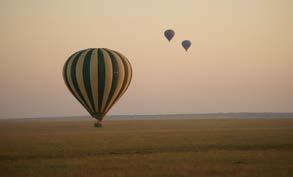
Hidden within the remote western edge of the Maasai Mara, Pristine Mara Bay Lodge welcomes a privileged few to one of Africa’s last truly untouched frontiers Here, helicopter smooth horizons meet year-round big game drama, with some of the Mara’s densest lion concentrations, iconic black rhino sightings, and private vantage points of the Great Migration’s secret western corridor
Designed for the sophisticated explorer, our 100% solar powered riverfront sanctuary blends sustainable elegance with uninterrupted seclusion Each expansive suite offers unfiltered wilderness views through floor-to-ceiling glass, an indulgent private plunge pool, and bespoke butler service, ensuring your safari unfolds precisely the way you desire
From unhurried bush breakfasts and sommelier curated sundowners to immersive chef encounters and starlit boma dining, every moment at Pristine Mara Bay Lodge is crafted around you Reconnect with nature through private yoga sessions, riverside spa rituals, or curated photographic safaris guided by experts who know this land intimately
When your journey demands more than a destination, this is where you arrive










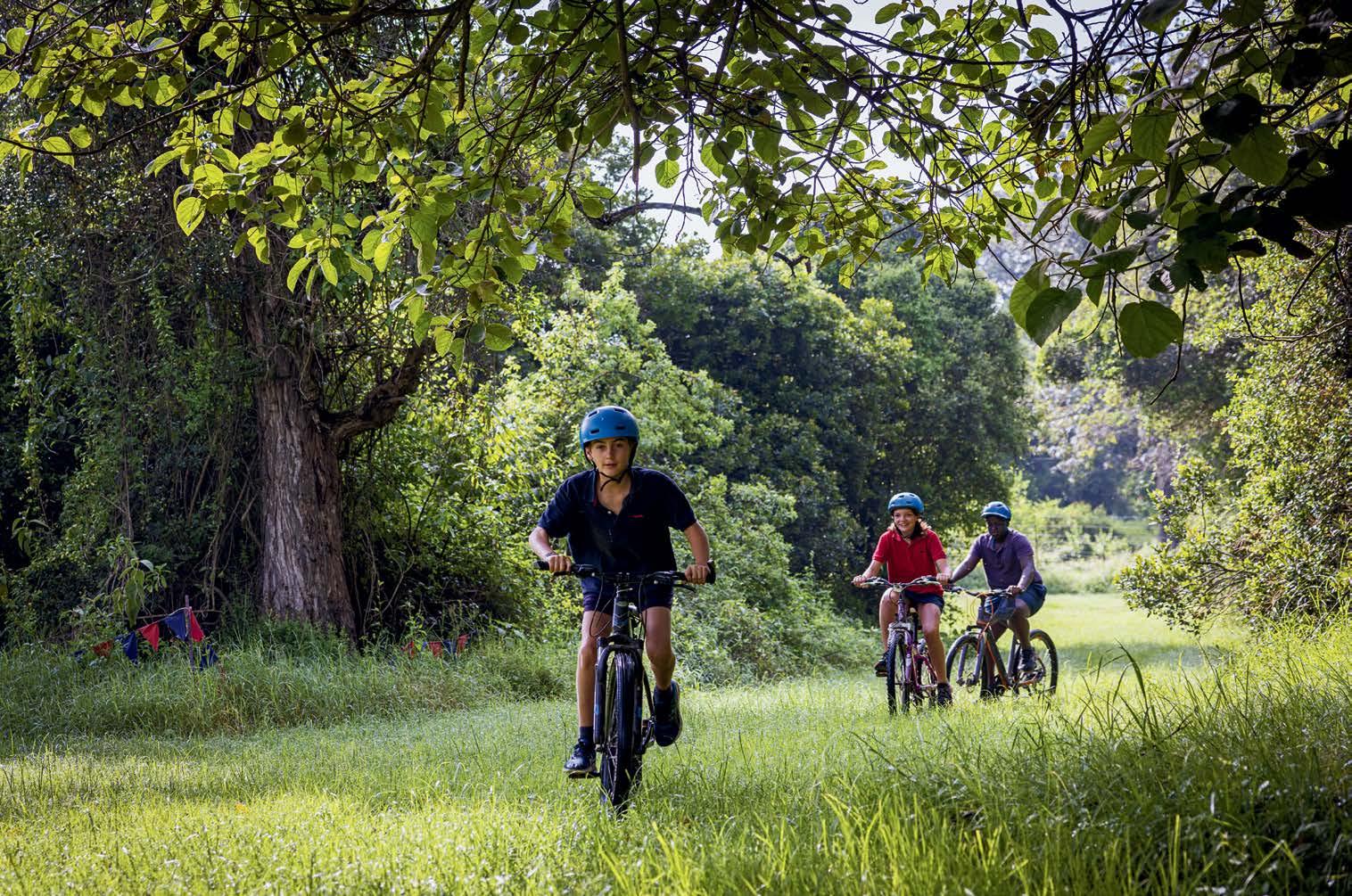

We’ve got the academics covered - but it’s the device-free childhood, the muddy knees, the adventures, and our outstanding values that make Pembroke unforgettable.