



For over 60 years, King Air operators have trusted Stevens Aerospace and Defense Systems (Stevens) to provide the best upgrade and MRO service solutions. The company proudly continues that tradition with the introduction of its proprietary STC, enabling Gogo Galileo HDX high-speed satellite connectivity in King Air 200 and 300 series aircraft.
Back in 1964, when Beechcraft introduced the King Air model 65-90, the company never imagined that, some 60 years later, it would have delivered over 7,500 various models and that the fleet would have amassed well over 60 million flight hours, making it the most popular twin-turboprop of all time.
Paralleling the King Air’s popularity has been Stevens’ reputation for providing individuals, businesses, and government entities with an ever-expanding array of upgrade and MRO service offerings to help make the “King” even better.
Keeping a close eye on what its customers need has helped Stevens maintain its leadership role. In today’s world, nothing is higher on a King Air operator’s “must have” list than reliable, high-speed, WiFi connectivity.
“Our decades of technical expertise with King Airs made us the ideal choice to partner with Gogo on the Galileo HDX STC,” explained Stevens’ Director of Avionics, Rob Reed. “From developing the engineering, to the prototype installation and earning the FAA STC, the whole process went very smoothly.”
While the company’s technical prowess is unmatched, its long-standing reputation with King Air owner/operators was equally important. Customers have been coming to Stevens Aerospace and Defense Systems for MRO services since 1950, and for the past 25 years, the company’s been the go-to source for their aircraft connectivity needs.
“We average 20 connectivity installations a year, and as technologies have advanced, so have our capabilities and offerings,” Reed said. “We are experienced and authorized to install all of the latest air-to-ground (ATG) and low- (LEO)
and geostationary-earth orbit (GEO) satellite solutions for all classes of business aircraft.”
GOGO GALILEO MAKES KING AIRS GO FASTER.
“Like all business aircraft owners, King Air 200/300 series operators want the best highspeed, low-latency, WiFi connectivity, and no other system does it better than Gogo’s Galileo HDX,” Phil Stearns, Director, Sales and Marketing for Stevens Aerospace and Defense Systems, said. “With six passengers, two crewmembers, all using multiple devices, we’ve seen download speeds as fast as 58 Mbps and uploads at 11 Mbps, connected to the Eutelsat OneWeb Low Earth Satellite constellation, with zero buffering.”
Gogo’s Galileo isn’t only fast; it’s also very low-latency, making it ideal for real-time streaming and video conferencing with anyone, anywhere in the world.
“Speed is important, but another benefit of Gogo’s Galileo HDX system is that King Air crewmembers and passengers can connect to the Internet at any altitude – even on the ground, so they’re never out of touch,” Stearns added. “It makes flight planning and altering schedules to meet passenger needs so much easier because they can check weather and confirm reservations at their destination while still on the departure ramp. Bottom line, you can run your business in the air like you do on the ground.”
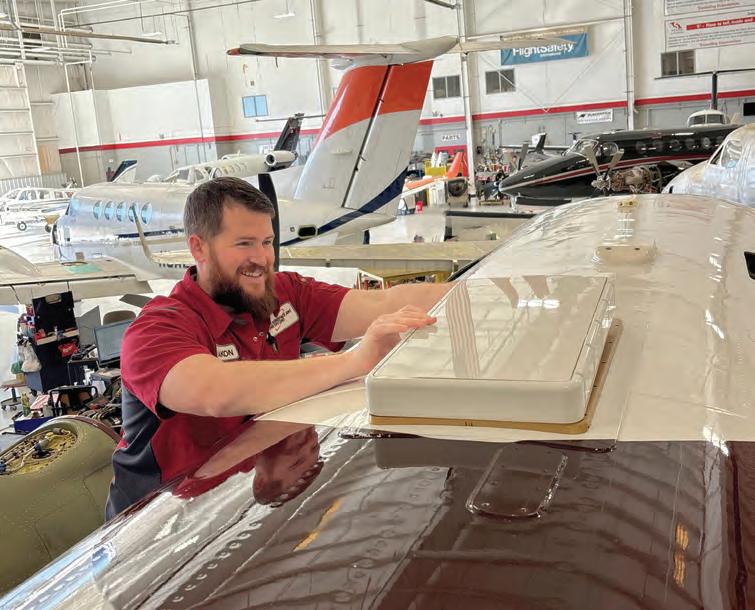
While all the speeds and capabilities of the Gogo Galileo system are amazing, what truly sets it apart is housed in an unobtrusive box on top of the King Air’s fuselage – Gogo’s revolutionary HDX electronically steerable antenna (ESA).
“The Gogo Galileo HDX is the lightest and smallest form factor antenna available for enterprise-grade satellite connectivity,” Reed said. “The STC also allows us to place the HDX antenna and Gogo SCS internal router in optimal locations across the different King Air models, further simplifying installations.”
“Unlike other satellite systems, with the Gogo Galileo HDX system, there are no LRUs installed in the cabin area, saving that precious space for passenger use,” he continued. “If the King Air operator already has a Gogo Avance L3, L5, or LX5 ATG system, they can easily upgrade to Galileo by adding the HDX antenna and a few wires.”
Complementing the Gogo Galileo HDX’s ease of installation is the simplicity of updating the system’s software, ensuring the owner always has the best performance and reliability Gogo can deliver.
“ Unlike other satellite systems, with the Gogo Galileo HDX system, there are no LRUs installed in the cabin area, saving that precious space for passenger use... ”
“Our customers trust Stevens to provide them with not only the best solutions today, but for the foreseeable future,” Stearns said. “Fulfilling that trust is another reason we developed the Gogo Galileo HDX STC in the first place.”
“Like our long list of other King Air cockpit and cabin upgrades, including our recent installation and certification of the first Garmin Autoland/Autothrottle STC in a King Air 350,” he continued. “the Gogo Galileo HDX STC continues our commitment to provide our customers with the services and ongoing support to make their aircraft as capable, reliable, and safe as possible.”
» Only FAA STC for Gogo’s Galileo HDX system in King Air 200 and 300 aircraft.
» Delivers high-speed, lowlatency cockpit and cabin connectivity anywhere in the world.
» From Gogo connectivity to Garmin Installations and Upgrades, Stevens is the leader in King Air upgrades.





1 14 3 15 4 16 6 18 9 19 12 20 13 21


“
Based on over 35 years of supporting all types of FBOs, AEG Fuel’s Connect Network has been created to help facilitate growth not only through the reliable delivery of bulk fuel but also by providing member FBOs with the strategic business and marketing support to attract and retain more customers.
The more you know about the actual reasons why a customer will select one FBO over another, the more you realize that the price of fuel is only a small part of their decision.
“We’ve interviewed thousands of FBO customers, and the number one thing they all want is ‘clean bathrooms,’” explains AEG Fuels Vice President of General Aviation, Marc Ramthun. “Other top priorities include friendliness, easy ramp access, and whether the customer service representative can solve problems quickly.”
“Many FBOs have beautiful facilities, but the bottom line is it’s the people at those facilities that make the difference,” he continues. “People make the difference, and it’s those with the commitment to excellence we want in the AEG Connect Network.”
Associated Energy Group LLC created the AEG Connect Network of FBOs in 2020 to provide an array of support services to standout facilities and their team members, helping fuel their growth.
“In 2020, we had two Connect Network FBOs, and today we have over 50, including three in Canada, and our first in Mexico,” he adds. “We provide everything to our network FBOs, from bulk fuel to GSE equip-
ment leasing to marketing and sales support.”
Ramthun explains that one of the keys to the program’s popularity is that AEG Fuels has a team of 40 general/business aviation sales specialists who analyze a Connect Network FBO and its customers to identify hidden opportunities.
“We’ve had some great examples of success, and that’s what it’s all about,” he says. “That’s part of our true value proposition with our network FBO partners.”
One success story Ramthun shared was with Wilde Air, an AEG Connect Network FBO located at Huron Regional Airport (KHON) in North Dakota.
“The FBO had mainly supported the spraying operations in the area, but we were able to leverage the relationship of our commercial group to get the local air carrier to start serving that airport,” he says. “That enabled us to help arrange for some university sports teams’ charters through that FBO.”
“They say it’s the biggest uplift in business they’ve ever had, and it is something they had never even thought about doing,” Ramthun continues. “Our goal is that when people visit that airport, Wilde Air is the FBO they want to use.”
“Our priority is to develop a long-term partnership that contributes to the growth of all our FBOs,” he said. “If we bring true value, based on results, and not a contract, they will want to stay with us for the long run. That’s how we’ve built our business.”
» AEG Connect Network FBOs benefit from bulk fuel pricing, GSE leasing, and marketing support
» AEG Connect Network Customers benefit from consistent pricing and high-quality services
» AEG Connect Network delivers proven tools to help FBOs grow in any location and situation

By enabling technicians to drop in a “known-good box,” Duncan Aviation’s unique avionics loaner program helps avionics shops and MROs save untold hours and dollars troubleshooting and resolving complex avionics, instruments, and autopilot systems problems.
When today’s integrated avionics suites work, there’s nothing better at helping pilots fly safer and more efficiently. When they don’t work, troubleshooting the problem pushes even the most experienced avionics technician to the brink.
Why? Because the systems are so “integrated,” the problem with system “A” may actually be caused by a seemingly unrelated component. So technicians can spend countless hours and dollars chasing the wrong cause.
But Duncan Aviation has a solution: its avionics Loaner Program gives technicians the capability to swap out a suspect LRU for one of their “known-good” units. It can cut literal days out of the troubleshooting process and save a technician’s sanity.
“The idea of ‘loaners’ actually started back when our founder, Donald Duncan, was selling Learjets in the early 1960s,” explains Dustin Johnson, Duncan Aviation’s assistant manager, component services. “There would be instances where an owner would fly their Learjet here for an avionics or instrument problem, but instead of having their aircraft down while our bench technicians fixed it, they would ‘box swap’ theirs with another owner whose aircraft was in for maintenance.”
“Then when their component had been fixed, they would come in, and we would replace both units in their original aircraft,” he continues. “That sparked the idea of Duncan Aviation creating a dedicated loaner inventory. While a customer’s component was in for repair, we
would ‘loan’ them a replacement to keep their aircraft in the air.”
And keeping the aircraft in the air is paramount in today’s world. That’s the value of Duncan Aviation’s Loaner Program and the knowledge of the people behind it.
“We will get a call from an aircraft owner or MRO that’s run into a difficult troubleshooting problem. Our Customer Account Representatives are very experienced and can help them narrow the problem down,” Johnson says. “The availability of a loaner unit enables them to perform cross-diagnostics and confirm the cause.”
This simple step eliminates the guesswork and prevents unnecessary and costly no-
fault-found (NFF) cycles that occur when a “healthy” unit is pulled for repair due to a misdiagnosis during troubleshooting.
“Once they have identified the suspected issue, we can ship them a loaner or two so they can swap them out to see if that either solves the problem or further narrows down the cause. Most of the time it does,” he explains. “The customer has the option of keeping the loaner in the airplane to continue flying while we repair their original unit.”
Johnson says that because the customer agrees to send their unit in for Duncan Aviation to repair, the cost of the loaner is negligible compared to an OEM rental.
Once the original component is repaired, part of the loaner agreement is that the “loaner” be returned to Duncan Aviation, in good working order, within 14 days of the original unit being shipped to the customer. Johnson says that once the loaner unit is returned, Duncan Aviation runs it through its testing and recertification process, during which it receives a new 8130 tag.
comes to these legacy avionics and instruments, the OEM doesn’t have anything available.”
As to which types of legacy components the company offers for loan, he explains that it is strategically aligned with Duncan Aviation’s in-house repair capabilities. If they have the experience, specialized bench tools, and technical data to repair a component, they will likely have a loaner available.
“ Duncan Aviation’s Loaner Program saves customers quite a bit of time and greatly reduces AOG impact and costs... It’s the only program of its kind in business aviation today...”
“We maintain a robust pool of legacy Honeywell, Collins, BendixKing, and JET Systems components,” he says. “But it changes, so the best solution is to contact one of our Customer Account Representatives to discuss your specific needs.”
To help ensure that the loaners perform as promised, Johnson says that each component in Duncan Aviation’s 1,200-plus part-number inventory is tested and certified as “known good.”
“Duncan Aviation’s Loaner Program saves customers quite a bit of time and greatly reduces AOG impact and costs,” Johnson explains.
» Business aviation’s only loaner program dedicated to legacy avionics and autopilots
» Known-good loaners dramatically reduce troubleshooting and AOG times
» Over 1,200 individual part number loaners are available for immediate shipment
“It’s the only program of its kind in business aviation today,” he continues. “And it’s proven to be a convenient and cost-effective way to maximize aircraft availability, while reducing overall maintenance downtime and costs. It’s another way we deliver the high level of services our customers expect.”
“We do charge a ‘loaner recertification fee,’ to cover that cost, but it’s very small compared to getting a unit through an OEM’s rental program,” he says. “But, in most cases, when it
“That’s why we’ve set up the program the way that we have. Technicians can swap boxes to solve problems faster, and owners can keep flying their aircraft while the original unit is being repaired.”
For aircraft owners and flight departments, fuel remains one of the most significant operating expenses. As fuel prices continue to fluctuate, operators are increasingly seeking practical ways to control costs without sacrificing flexibility, service, or efficiency.
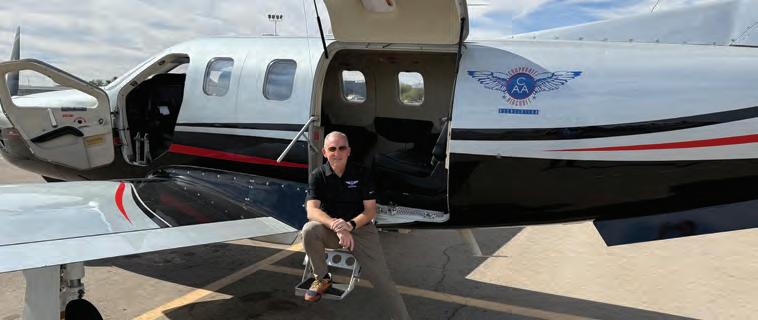
For nearly 30 years, the Corporate Aircraft Association (CAA) has helped Part 91 turbine-powered aircraft operators address that challenge through a straightforward approach: leveraging collective purchasing power to secure preferred fuel pricing and operational savings.
Today, more than 13,000 member aircraft participate in the program, benefiting from negotiated pricing through CAA’s network of Preferred FBO partners and aviation service providers. By combining the purchasing volume of thousands of operators, CAA can provide access to discounts that may not be available to individual aircraft owners or smaller flight departments on their own.
“CAA was founded on the belief that operators can achieve greater value when they work together,” says David Scobey, President and CEO of CAA. “Our goal has always been to help members reduce operating costs while maintaining the flexibility and independence that define Part 91 flying. At the same time, we are working to increase the volume of business for our Preferred FBO partners.”
While fuel savings remain the cornerstone of the program, members also have access to a range of aviation related benefits designed to support day-today operations. These include preferred pricing on selected services, trip planning, rental cars, insurance, and sustainability initiatives.
To help operators make informed decisions before every flight, CAA members have access to the CAA Jet Fuel App. This platform offers visibility into negotiated fuel pricing, participating locations, and airport-specific information, enabling pilots and flight departments to evaluate costs and identify potential savings opportunities as they plan their trips.
“Access to accurate pricing information allows operators to make smarter decisions and better manage their operating budgets,” Scobey says. “Having that information available before departure creates greater transparency and helps maximize the value of every flight.”
As operating costs continue to be a focus for owners and flight departments, programs that combine buying power,
• Lower fuel and operating expenses: on every flight through negotiated member pricing
• Make more informed operational decisions: with access to transparent pricing and trip-planning tools
• Maximize the value of aircraft ownership: through a program designed exclusively for Part 91 owner / operators
technology, and industry partnerships are becoming increasingly important. For many operators, the ability to reduce fuel expenses while gaining access to additional operational resources can have a meaningful impact on annual operation budgets.
CAA offers a FREE 90-day membership, allowing Part 91 operators to evaluate the program and determine how it can support their operational and financial objectives.
JAMES HOLAHAN (1921-2015), FOUNDING EDITOR
WILSON S. LEACH, FOUNDER & CHAIR EMERITUS
EXECUTIVE CHAIR
Dave Leach PRESIDENT Ruben Kempeneer
HEAD OF PEOPLE AND BRAND
Jennifer Leach English
SENIOR DIRECTOR, INDUSTRY AFFAIRS AND EVENTS
Nancy O’Brien
ADVERTISING SALES
Victoria Tod – Northeastern U.S./Eastern Canada/United Kingdom, +1 (203) 733-4184
Michelle James – Western U.S./Western Canada, +1 (520) 343-0236
Joe Rosone – Midwestern U.S., Southeastern U.S./Caribbean/Brazil, +1 (301) 693-4687
Diana Scogna – Europe/Middle East, +33 6 62 52 25 47
DIRECTOR OF MARKETING AND CLIENT SERVICES – Lisa Valladares
AUDIENCE DEVELOPMENT DIRECTOR – Eileen Silberfeld
SENIOR MARKETING SPECIALIST – Alyssa Barry
EVENTS SPECIALIST – Brien O’Brien
SOCIAL MEDIA MARKETING – Zach O’Brien
SALES ADMINISTRATOR – Cindy Nesline
FINANCE & HUMAN RESOURCES DIRECTOR Tracy Britton
ACCOUNTS PAYABLE MANAGER Mary Avella
ACCOUNTS RECEIVABLE MANAGER
Bobbie Bing
PRODUCTION MANAGER
Martha Jercinovich
GRAPHIC DESIGNER
Gzegorz Rzekos WRITER
Dale Smith
U.S. HEADQUARTERS
214 Franklin Ave., Midland Park, NJ 07432, +1 (201) 444-5075
Advertising Inquiries: +1 (201) 345-0085, sales@ainonline.com
Circulation Inquiries: +1 (201) 345-0085, subscriptions@ainonline.com


Dear Reader,
Now in its eighth year, AIN Media Group’s Solutions in Business Aviation (SIBA) returns as a glossy, pullout content section within the August issue of Aviation International News. This sponsored resource for industry professionals has grown into an essential annual guide, and we are proud to continue delivering it alongside the AIN news, data, and analysis our readers rely on.
Business aviation is an industry defined by its ability to adapt. Market conditions shift, operational demands evolve, and the landscape of talent and resources continues to change, yet the companies featured in SIBA have met those challenges with purpose and resolve. From managing rising costs to building and retaining skilled teams, these organizations are finding smart, innovative ways to serve their customers and strengthen their operations.
This year’s Executive Insight question asked contributors to share how costs related to materials, staffing, and government fees are evolving— and what steps their companies are taking to manage those changes. Their responses reflect the resilience and resourcefulness that have always defined this industry.
We found their viewpoints illuminating and suspect you will too.
Lisa Valladares Director of Marketing & Client Services
lvalladares@ainonline.com
As the needs of its business aviation customers have evolved to require bigger MRO facilities, Sheltair Aviation has expanded on its core foundation as a “services-driven culture” to provide an array of acquisition, engineering, and build-to-suit hangar solutions that meet the precise requirements for servicing today’s larger corporate aircraft.
You can’t spend 63 years building a successful network of FBOs without knowing that it takes more than discounted fuel and clean bathrooms to satisfy the changing needs of business aviation customers.
As Sheltair Aviation’s late founder, Jerry Holland, and its current President, Lisa Holland, know, innovation and diversification are the keys to sustained success. That’s why the company expanded into the specialized field of airport real estate development.
Today, Sheltair Aviation has 19 FBOs, hangars, and mixed-use facilities across four states, totaling over 4.7 million square feet (MSF). Building on that success, the company recently began developing purpose-built MRO hangars.
As business aircraft continue to grow in size and sophistication, the demand for larger, purpose-built hangars has increased to support evolving safety standards, maintenance requirements, and operational efficiencies. explained Sheltair Aviation’s COO, Todd Anderson. With decades of experience in designing, developing, and operating aviation infrastructure, Sheltair offers a level of expertise and operational insight that is unmatched by most developers in the industry.
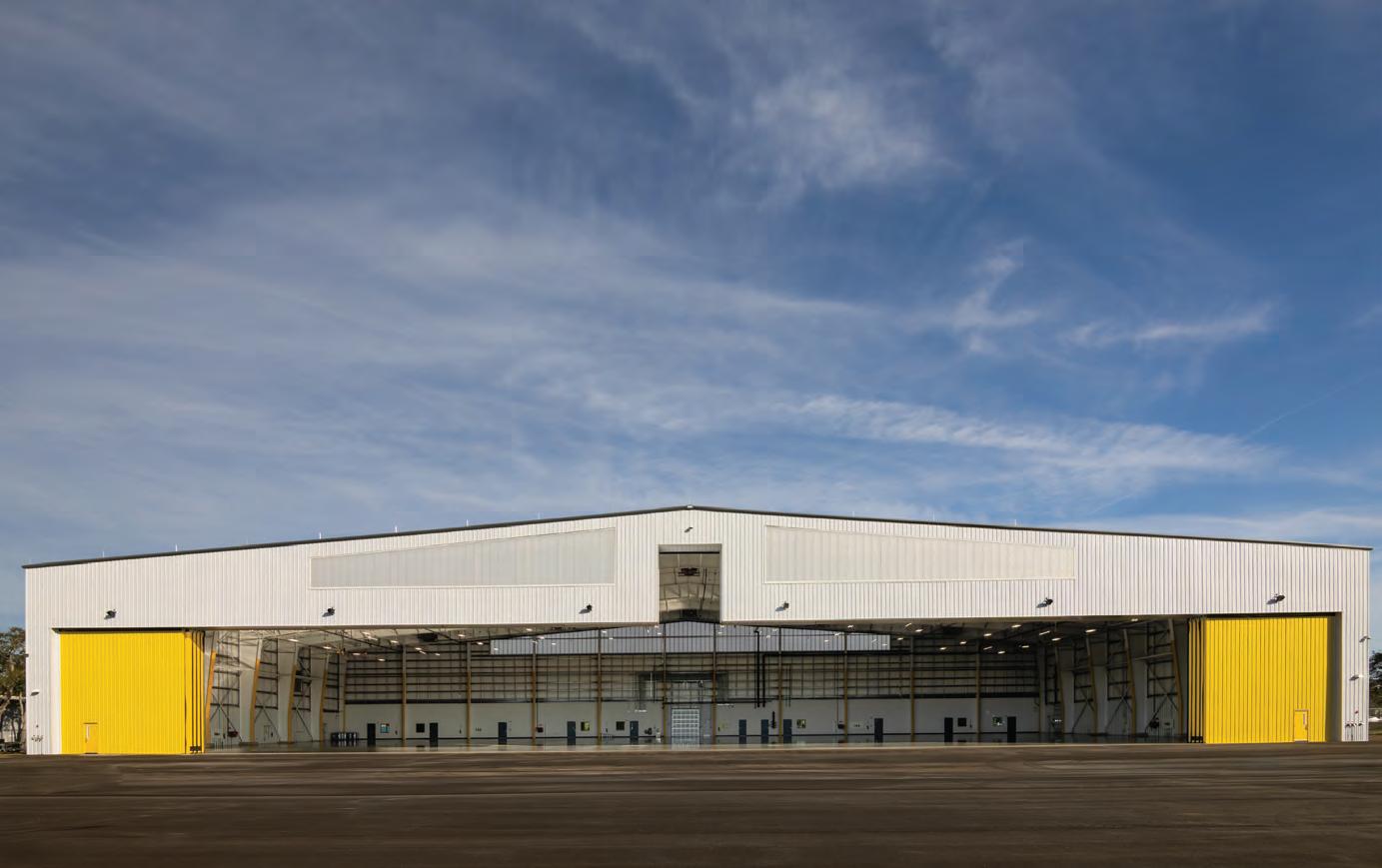
The company recently celebrated the completion of Hangar 9, located at Tampa In -
ternational Airport (TPA). Featuring nearly 60,000 sq ft of combined hangar and office space, and a 50,000-sq-ft apron, the $15 million MRO complex is the showpiece of Sheltair Aviation’s purpose-built facilities.
“By combining our expertise in the development and management of premium aviation facilities with the strong relationships we have built with airport and local officials, we are well positioned to support MROs seeking to establish or expand their presence in Florida, Georgia, Texas, and Colorado. That strategy continues to gain traction, with two additional developments currently in the planning pipeline.”
Of course, a purpose-built MRO hangar is more than just a bigger box. “A modern MRO facility needs a myriad of features that assist in the safe and efficient maintenance of aircraft,” he explains. To provide space for safely maintaining large aircraft you need increased door and ceiling heights, reinforced beams, ample ramp space, high-capacity electrical systems, and appropriate safety features within the facility.
“With over six decades of experience in hangar development, we have developed a deep understanding of customer requirements and the ability to anticipate and respond to their evolving needs” Anderson continues. “We’ve successfully delivered projects like these across our network, so we understand what it takes to move from concept to completion efficiently,” Anderson says. “Throughout the
» Over 60 years of success with developing over 4.7 MSF of hangar, FBO, and MRO facilities
» Unique experience in the design, engineering, and construction of very large hangar facilities
» Established relationships and projects in Florida, Georgia, Texas, and Colorado
years we have built expertise to anticipate customer requirements and deliver solutions that support their long-term operational needs.”
“Our track record demonstrates our ability to develop purpose-built MRO facilities quickly and cost-effectively,” he continues. “In today’s competitive MRO market, having the right facility available when customers need it is a critical factor in their success.”
How are costs related to materials, staffing, and government fees evolving, and what steps has your company taken to manage or offset these changes?




Equipment and staffing costs were elevated but are now stabilizing as inflation has moderated. We have offset these pressures strengthening supplier partnerships and investing in technology, as well as through disciplined workforce planning—allowing us to create operating leverage while continuing to deliver reliable service at competitive prices. Navigating the regulatory environment has become more costly, but it also creates a barrier to entry that sets our firm apart from others in the space. We engage proactively on compliance and regulatory matters to create opportunities for AEG and our customer base.
When operational expenses rise, client experience guides our decision-making. We first identify an efficiency that minimizes pass-through costs. If it preserves our clients’ access to safe, anticipatory, and hospitable service, we implement it. Recently, we’ve focused on consistently filling empty-leg charter flights to mitigate the impact of rising fuel prices.
Duncan Aviation has seen continued pressure in materials, labor, and regulatory costs. We’ve responded by strengthening supplier partnerships, investing in workforce development, and improving operational efficiency through technology and process enhancements. These steps help us manage costs while maintaining the quality and reliability our customers expect.
Across the board, compared to five years ago, you can pick almost anything we use for an engine event, double it, and that is the current cost. We stabilize our pricing escalations so that our clients don’t have to feel the entire burden of these actual market escalations from year to year.

SPONSOR CONTENT





Due to many factors, higher education must be flexible to enrollment challenges, policy changes, and funding variables. As a result of disciplined financial decisions and strong philanthropic support, Embry-Riddle has experienced over a decade of year-over-year revenue increase. This success has allowed us to invest in people, facilities, and programs.
The cost of labor, materials, insurance, and regulatory compliance continues to rise across the aviation industry. Rather than simply passing those costs along, we’ve focused on improving efficiency, investing in technician development, and expanding regional maintenance support capabilities. Our goal is simple: deliver exceptional service, minimize unnecessary aircraft downtime, and create value for our customers while maintaining the safety, compliance, and quality standards the aviation industry requires.
Naples Airport, which currently has no debt obligations with a healthy reserve, practices a conservative, zero-based budgeting methodology based on expected activity to ensure safe, efficient operations. The airport receives no local taxpayer support, instead relying on fuel sales, hangar rentals, and other related services to fund operations and capital expenditures.
The industry continues to face challenges related to construction costs, labor availability, and an evolving regulatory environment. Our focus has been on building strong partnerships, leveraging operational efficiencies, and making strategic investments that create scale across our network. That approach allows us to remain competitive, deliver value to our customers, and continue supporting growth in key markets.
Costs continue to trend upward—many beyond our direct control. At Thornton Aviation, we’re focused on what we can control: execution and efficiency to consistently deliver on time and on budget. In 2026, we launched an initiative to optimize workflows and material management. It’s already yielding results by reducing labor hours at the aircraft. We’re also strengthening vendor and parts strategies to drive both cost savings and performance improvements for our customers.

SPONSOR CONTENT
For the past 10 years, Engine Assurance Program (EAP) has provided operators of legacy Pratt & Whitney Canada, Rolls-Royce, General Electric, and Honeywell engines and APUs with not only maintenance event cost predictability, but also the parts, rental engines, and AOG expertise they need to keep their valued aircraft flying.
Having decades of experience with legacy aircraft, Sean Lynch founded Engine Assurance Program (EAP) because he, like other owners, was having trouble finding affordable service and parts for various engines and APUs.
Now, 10 years later, with over 350 engines/ APUs enrolled on its program, EAP is one of the largest independent providers of hourly maintenance programs for Honeywell and most models of legacy GE, Pratt & Whitney Canada and Rolls-Royce engines and APUs.
“When you enroll the engines on an hourly program, you also help to ensure the ongoing value of the aircraft,” Lynch, EAP’s managing director, says. “This is especially true for out-of-production models. We are here to fill that void and keep those aircraft flying.” There is a massive trickle-down revenue stream that feeds the entire industry if we can keep these aircraft flying for their entire useful life.
Controlling the rapidly escalating costs of engine maintenance is EAP’s primary focus. Lynch adds that service and parts costs have doubled in the last five years, and the company provides other benefits, like delivering critical parts when others can’t.
“It’s been six years since a customer of ours has had to wait more than 24 hours to get a fuel control unit shipped,” he explains. “It’s routine for other operators to be grounded for weeks waiting for the same part.”
While having the parts readily available is critical, EAP customers still need qualified technicians to install them. That’s why the company created its RAPID TEAM.
“The RAPID TEAM is our commitment to providing the fastest AOG responses for all engines covered by an EAP program, helping to find available vendors to dispatch to the aircraft,” Lynch says. “Parts aren’t much good if you have to wait days to get trained technicians to install them.”
Another advantage EAP’s RAPID TEAM provides is getting the engine’s MRO plugged into the troubleshooting process as quickly as possible. “Their expertise makes it pretty clear what the issue is, and we can then send our technicians out with parts in hand,” Lynch says. “All by itself, that solves the problem days faster than it takes other providers.”
He adds that the benefits of EAP’s RAPID TEAM aren’t limited to AOGs but extend

into scheduled engine maintenance events.
“If you don’t have an expert standing behind you while your engines or APUs are in the shop, you are much more likely to pay more and have longer shop events,” Lynch says. “We have great relationships with all the leading engine MROs, and we all work as partners to solve customer problems faster and more cost-effectively.”
SEE THE ENGINES AND APUs WE COVER Visit eap.aero/about or call +1 (214) 350-0877 for a quote.
» Dedicated RAPID TEAM of technicians with the tools and parts to return AOGs to flight faster
» Robust rental engine pool and spares inventory to help customers achieve 99.98% dispatch reliability
» Supporting many di erent models of engines and APUs
Travel to, from, and between the islands is easier than ever with Bohlke Aviation, a Caribbean-based group that has supported travelers and operators for nearly 70 years.
After serving as a military pilot and building and operating Spring Valley Airport, William Bohlke Sr. took off from upstate New York with sights set on bolstering general aviation in the U.S. Virgin Islands. Sixty-seven years later, we know that this choice set the stage for a remarkable influence on Caribbean flying.
“What began as a single operation—and the region’s first FBO—has grown into a wellrounded service portfolio with teams and facilities at four Caribbean airports,” explains Sam Black, Bohlke Aviation’s president. “Our capabilities and longevity, especially as a family-owned group, are truly unique in the local market.”
Reinvesting in client experience remains central to the Bohlke family’s approach. Over the last decade alone, this has led to projects that enhanced employee training, extended after-hours availability, built luxury terminals

and modern fuel infrastructure, secured secondary energy sources, and expanded service offerings.
Today, Bohlke Aviation is the only Caribbean group with in-house FBO, aircraft charter, revenue-generating management, scheduled maintenance, and mobile AOG solutions. Expert personnel and personalized care are available in the U.S. Virgin Islands at STX (St. Croix) and STT (St. Thomas), and in Puerto Rico at RVR (Ceiba) and SJU (San Juan). This range of services, alongside unmatched regional and industry knowledge, creates greater flexibility for travelers and operators. When needs arise or shift, Team Bohlke takes action to accommodate.
“From CSR to CEO, everyone understands their impact on client experience and works together to protect seamless travel,” Black shares. “If you need creative solutions for high-season logistics, a last-minute charter to the states, help with complex catering orders,

guidance on local requirements, or immediate AOG assistance, we have people and resources available 24/7.”
While idyllic destinations and year-round warmth are major draws, Black notes that several factors are bringing people to the islands. In addition to rich history and culture, an abundance of world-class experiences and economic opportunities awaits. No matter the “why,” Team Bohlke aims to provide anticipatory, hospitable care throughout every journey.
“Ensuring first-time and returning travelers are warmly welcomed and well supported is a privilege our team members value deeply,” Black adds. “It shows in our safety-focused, personalized service, and in every on-site and remote interaction. While our group and the industry continue to evolve, we’re committed to these timeless priorities and providing the Caribbean’s leading aviation experience.”
» Full-service FBOs at STX (St. Croix), STT (St. Thomas)*, and RVR (Ceiba)*
» Curated international and interisland private charters operated by M+N Aviation, Inc. and Bohlke, LLC
» Responsive AOG support, provided by sister company TFC Jet Services, a San Juan-based 145 MRO
Whether it’s a simple repair or a complex aircraft upgrade, every MRO visit can be stressful for the aircraft’s owner. Thornton Aviation mitigates that anxiety by combining its 42-plus years of experience with a commitment to fostering a collaborative environment that keeps customers informed and engaged throughout the process.
There are two parts to every MRO project: the technical part, with all its manuals, task cards, and checklists, and the non-technical part, that often times has little to no structured instructions—that’s the part that too many shops struggle with.
“Successful projects depend on more than technical expertise,” explains Thornton Aviation’s Chief Revenue Officer, Don Milum. “Success is the result of seamless collaboration, open communication, and enduring trust. Thornton Aviation’s growth has been built on trust and unwavering commitment to proactive collaboration with our clients and vendors alike.”
“Open collaborations allow us to fully understand what the customer wants and needs before we start planning,” he continues. “It’s also a wonderful aid in helping reduce the customer’s stress if or when we run into challenges during the project. Collaboration and transparent communication eliminate those worries.”
Thornton Aviation’s commitment to collaboration was instrumental in the on-time, on-budget completion of significant upgrades, including the installation of Universal Avionics InSightTM IFD in both Michael Rasa’s Falcon 900B and Freeman Spogli’s Falcon 2000.
“Their team knows our aircraft inside and out, and we trust them to handle both routine maintenance and major upgrades,” says Tyler Thomas, Freeman Spogli’s chief pilot. “The new InSight cockpit from Universal Avionics is a game changer for our operations, and the ALTO Aviation Cadence cabin system upgrade has been very well received by our passengers. It’s rare to find a partner that brings this level of dedication and expertise to every project.”
Another example of Thornton Aviation’s collaborative mindset is its willingness to further an idea proposed by Rasa during early testing of his 900B InSight installation. He suggested an enhancement to the system, which was shared with Universal Avionics Engineering. It is now being integrated into the software update for all InSight IFD customers.
“Success is about relationships,” Rasa says. “It’s doing the right thing and being a man of your word. That’s how I run my business, and that’s what I see in Thornton Aviation.”
“Front-end communication with a customer isn’t any good if you don’t have the same with the people doing the work,” Milum adds. “So many things can impact the ultimate success
» Collaborative approach to the MRO process keeps the customer involved and confident
» FAA Part 145 Repair Station Certificate approvals for over 61 business aircraft types
» MROs at Van Nuys (KVNY) and Burbank (KBUR), with both scheduled and AOG support at Las Vegas (KLAS)
of any project, and we’ve learned that open communication is the key in any situation.”
“In the complex world of business aviation, Thornton Aviation stands out as a company that values relationships as much as results,” he continues. “Approaching each project with a commitment to trust and collaboration is the only way to achieve consistently successful outcomes and set the standard for what partnerships in aviation can truly mean.”

Go ahead. Take a look. (818) 787-0205 or visit www.thorntonaviation.com.
For over four decades, The Weather Company has delivered the industry’s leading weather forecasts and insights to help global aviation transform atmospheric risk into operational resilience.
Modern flight operations require hyper-local, high-fidelity forecasts to ensure safety, protect high-value assets, and maintain schedules. For more than 40 years, the aviation industry has trusted one foundational source to meet those demands: The Weather Company.
“Many know us for our consumer apps, but aviation is a core pillar of our business,” explains Ravi Vanmali, Senior Vice President of Aviation. “Every day, over 25,000 commercial flights rely on our data. With our new Maverick® ecosystem, we are bringing that same enterprise-grade precision directly to the unique demands of business aviation.”
Optimizing a modern business fleet requires specialized tools. Maverick leverages advanced AI and machine learning to re-engineer robust weather data into tailored, context-aware insights delivered precisely when flight crews, ground operations teams, or dispatchers need them.
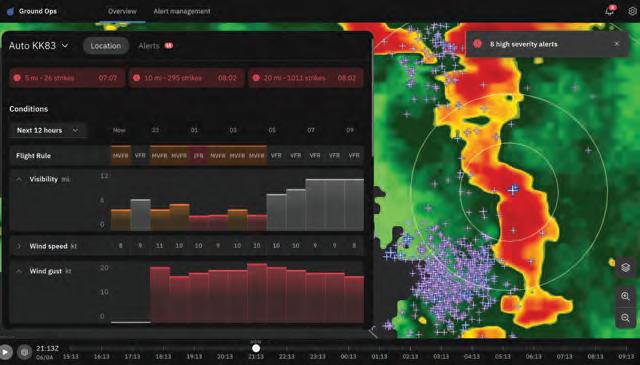
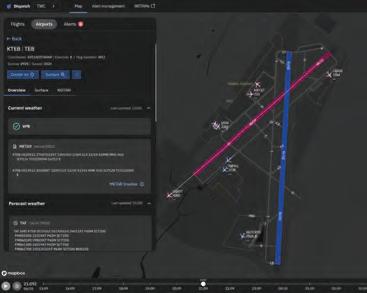
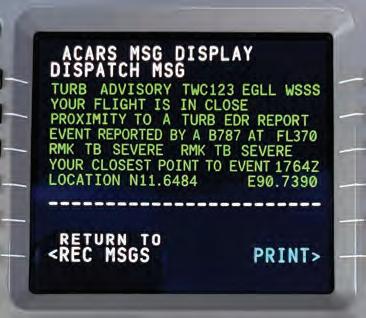
The Maverick portfolio streamlines data complexity, filtering out the noise to eliminate “alert fatigue” and reduce cognitive load. Instead of requiring crews to manually sort through hundreds of disjointed NOTAMs and SIGMETs, the AI-driven system aggregates and summarizes the critical information needed for specific flight paths via Maverick Dispatch and Pilotbrief ® Safety is further modernized through Maverick WXAlert™ and Maverick Ground Ops™, which leverage real-time turbulence and lightning detection to protect assets and save time.
To complement this digital workflow, The Weather Company also offers custom Weather Forecast Services, placing expert aviation meteorologists directly inside corporate flight departments for real-time consultation.
“Ultimately, our innovation is measured by its impact,” Vanmali says. “If we aren’t helping flight departments operate more safely, efficiently, and predictably, nothing else matters. That’s what Maverick is built to do.”

» Proven Global Scale: Over 40 years of expertise; more than 25,000 daily flights rely on The Weather Company’s data to power safe, e cient operations.
» A Widening Accuracy Lead: Recognized as the world’s most accurate forecaster—and our lead is growing, widening from 2X to nearly 4X over the next-best provider between 2017 and 2024, even as competition intensified. 1
» Purpose-built Innovation: Introducing Maverick®, a sophisticated suite of advanced aviation weather products optimized for business and commercial workflows.
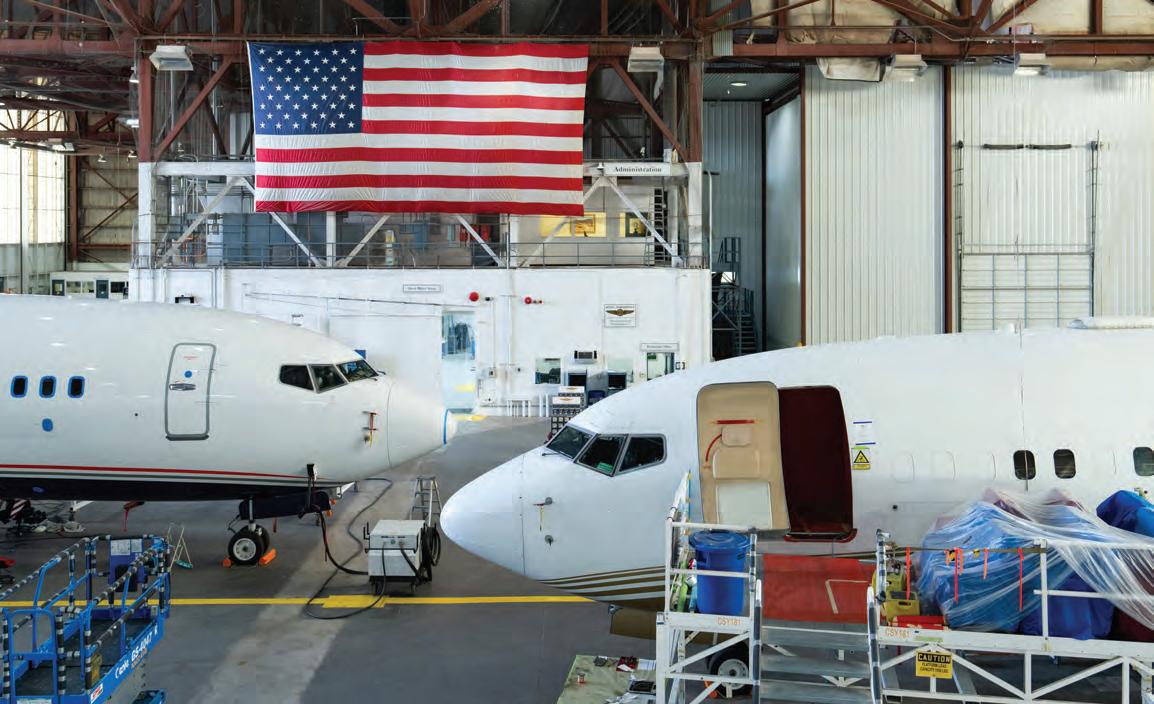
Since 1992, King Aerospace has carved out a unique niche by combining decades of experience supporting the country’s most critical government and military aircraft in service, including the U.S. presidential fleet, with a growing portfolio of services for Boeing Business Jets (BBJs) and other corporate and VIP aircraft
That overlap between those markets has become one of King Aerospace’s greatest strengths. Chief Operating Officer Sam Jackson credits company Founder and President Jerry King’s prior experience running a large VIP aircraft maintenance and completions center before founding his own company more than 40 years ago.
“This isn’t a segment of the aviation maintenance world that you just want to jump into,” Jackson said. “Customers expect no issues, no faults, no discrepancies. They expect a perfect aircraft rolling out.”
That is also true when supporting military and government aircraft used in missile testing, the nation’s nuclear program and special operations in hostile environments, among other missions. Precise standards, demanding regulations and multiple, rigorous inspections are all part of ensuring optimal quality and readiness.
“We provide that same commitment to our corporate customers,” Jackson continued. “That includes a ‘no excuses’ approach to quality and to taking ownership. It’s all in this company’s DNA.”
Or, as King himself often says, “Our job is to make a significant difference in the lives of others. We just happen to work on airplanes.”
King Aerospace has also earned a strong reputation in the Boeing Business Jet operator community. Jackson noted the company
counts more than 60 percent of the total U.S. BBJ market as customers.
“We ensure that they have a reliable and quality aircraft, and we also help them see what might be coming down the road,” he said. “That helps them operate their fleets not only safely, but also efficiently.”
That forward-looking support can range from promptly addressing service bulletins and regulatory issues to long-term planning decisions affecting aircraft upgrades and operations. “We continue to refine our expertise in that area,” Jackson said. “That’s a good thing for us, and it only gets better every day.”
Ron Soret, the company’s senior director for special projects, sees that crossover firsthand with the King Aerospace “Road Show,” a dedicated team that works on-site at customer locations to support specialized aircraft projects. “The requests that we’re seeing come through require us to be adept in both fields,” he said.
For example, one recent assignment involved major structural repair work on a military platform alongside interior refurbishment work on a VIP aircraft operated by the U.S. government. Projects like these require technicians capable of moving seamlessly between military maintenance work and high-end interior refurbishment.
“Besides the mechanical, structural and avionics skills needed for the majority of the programs,” Soret noted, “we also have to be able to draw from some of our [business aviation] resources to work on interiors and maintaining some of these VIP aircraft assets that belong to our government.”
The result is an organization able to blend military precision with corporate aviation responsiveness. According to Soret, the overlap between government and business aviation customers is often closer than many people realize.
“Many of the military aircraft we work on are based on civilian platforms,” he said. “The work we do is not mutually exclusive to either the government or the commercial side.”
While King Aerospace offers maintenance, repair and interior refurbishment services for a wide variety of private jets, the company is also known for its premier paint services on aircraft ranging from Citation jets to executive transports, including the U.S. presidential fleet.
The company has also expanded its collaborative approach within the BBJ market, including its recent hosting of a BBJ Operators Forum that brought together operators, pilots, maintainers and technology providers in an informal setting to discuss operational challenges, maintenance issues and future upgrades.
“Anytime you can get a group of people together who have a common theme in any realm of life that you can learn from someone else, it’s always a good thing,” Jackson said. “We’ve managed to create an environment where customers can openly share both successes and frustrations.”
Those discussions also help operators make smarter long-term planning decisions. “Shar-
“ Our mission is to make a positive difference for those we employ, those we serve and those we encounter. It’s not about sales or growth, but about living the principles and values we profess. ” – Jerry King, Chairman and Founder
ing ideas is always a good thing,” Jackson said. “When you bring together diverse opinions and diverse viewpoints on tackling a problem, you can sit down and discuss ways to resolve the situation while also making gains.”
King emphasized the company’s success in both the private and government aviation sectors is driven by “King Kulture,” rooted in the fundamentals of servant leadership. “Our mission is to make a positive difference for those we employ, those we serve and those we encounter,” he added. “It’s not about sales or growth, but about living the principles and values we profess.”
“Our goal is to stay hungry and humble at the same time,” Jackson added. “You get to the size of [the country’s largest aerospace and defense companies] and you’re not near as nimble as you once were.
“Well, we are that little guy,” he concluded. “The Titanic can’t avoid an iceberg, but we’re that 27-foot Mercury with two 250s on the back. We can zip around an iceberg pretty quick.”
» King Aerospace o ers customers the combination of the rigorous standards demanded by the U.S. military and presidential fleets with VIP-level customer service
» The company now supports more than 60% of the U.S. BBJ market by o ering not just expert maintenance, paint and interiors services, but also strategic operational guidance
» King Aerospace di erentiates itself from larger competitors through agility, diversity and the ‘King Kulture’ of servant leadership

While other satellite networks may struggle with balancing the data congestion from commercial and millions of residential users, Eutelsat’s OneWeb low-Earth-orbit (LEO) constellation is designed to exclusively serve the high-speed, high-reliability global connectivity needs of enterprise and mobility customers, and deliver a better experience to business, commercial, and military aviation users.
In the past few years, satellite and terrestrial high-speed connectivity technologies have advanced at a rate that would make Moore’s Law envious. But that doesn’t mean every user’s in-flight experience is as good as they expect. Too often, network performance is severely degraded to the point that the passengers become disconnected.
Thanks to Eutelsat’s OneWeb network, a low Earth orbit satellite constellation with global services, today, flight crews and passengers can enjoy a greatly enhanced in-flight connectivity experience – with high-speed, low-latency connectivity that enables the use of modern-day applications, no matter the location or altitude.
“Our LEO connectivity solution is redefining what’s possible for business aviation, and
users benefit from consistent performance throughout the flight,” explains Eutelsat’s Head of Business and Government Aviation, Jason Sperry. “Passengers and crew increasingly expect the same fast, reliable connectivity in the air that they rely on at home and in the office. The result is a truly seamless and dependable onboard connectivity experience.”
Speaking of “connected,” Sperry says that Eutelsat is the exclusive LEO satellite network partner for Gogo’s new Galileo global connectivity solution.
“Gogo is a great partner with a rich history for delivering an exceptional online experience and unmatched customer support,” he adds. “We worked closely with Gogo’s engineers to design the compact HDX electronic steered array an-

» Only LEO constellation designed to deliver the reliability and performance aviation requires
» Seamless coverage across polar and equatorial routes enables global high-speed connectivity
» Proprietary satellite network enabling Gogo’s new Galileo highspeed connectivity solution
tenna, which is compact enough to bring global, broadband connectivity to any business aircraft.”
By operating much closer to Earth than geosynchronous (GEO) satellites, Eutelsat’s LEO OneWeb network delivers greater reliability, lower latency, and higher speeds, resulting in a richer, more responsive user experience and forever changing user expectations for inflight connectivity.
As Sperry explains, “With OneWeb LEO, latency-sensitive applications like video conferencing and live streaming applications can now perform as well in the aircraft as they do anywhere in the world.”
Eutelsat is investing in an LEO constellation that will serve the aviation sector over the long term. Today, the OneWeb constellation has more than 600 LEO satellites in orbit, with another 440 scheduled to launch in the coming years.
Beyond 2030, the company plans to expand its constellation further through the new European IRIS² program, delivering additional capacity and capabilities to ensure operators can continue to rely on Eutelsat.
Sperry says, “No matter where they are in the world, we consistently hear how excited and satisfied our customers are to have Gogo Galileo and the OneWeb network on their aircraft today.

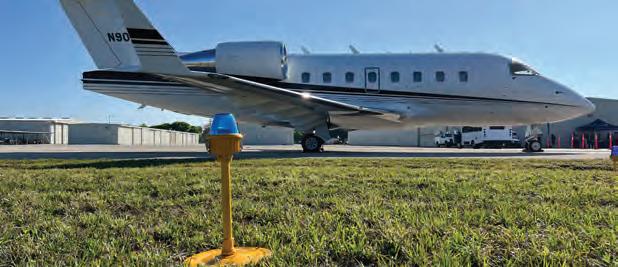
New proposed airfield light.
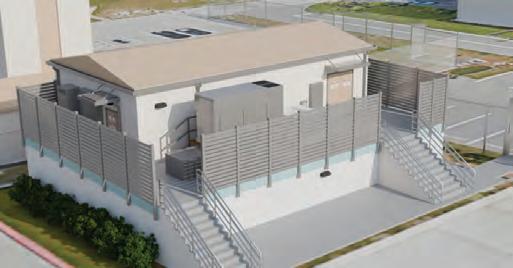
Rendering of new Vault Replacement.
Recognizing the critical role the airport plays not only in the region’s growing economy but also in posthurricane recovery efforts, the Naples Airport Authority is investing millions to ensure the airport is readily available to serve the community, no matter what Mother Nature sends its way.
Located just four miles from downtown Naples and all the social and recreational amenities, Naples Airport (KAPF) is the go-to destination for anyone wanting to enjoy all that Florida’s ‘Sun Coast’ has to offer.
But that convenience comes at a cost. Naples Bay, which opens into the Gulf of America, is just a ‘stone’s throw away’ from the threshold of runway 23. So, when a hurricane strikes, between the heavy rainfall and ensuing storm surge, the airport can quickly find itself under feet of standing water.
As the Executive Director of the Naples Airport Authority, Chris Rozansky explains, the airport is not only critical to the success and continued growth of the community but has also played a key role in post-hurricane recovery efforts by providing a staging point for first responders.
But unfortunately, the airports’ barelyabove-sea-level elevation means recovery efforts can be stalled by standing water on runways and roads – not to mention the high cost of flood-related repairs.
“We’re undertaking a multifaceted approach to bolstering the resistance and resiliency of all of the airport’s facilities,” Rozansky says. “We’ve invested a lot of time and money implementing a program that will ensure that the airport is resilient and available when our residents need us the most.”
Four of the projects highlighting the extensive ‘storm-resiliency’ program include:
• Purchasing 3,000 linear feet of Tiger Dam, a water-filled, anchored, flood barrier system to help protect the airport’s buildings, vital equipment, and technologies against water intrusion.
• Airfield lighting rehabilitation and electrical vault replacement, including raising all runway and taxiway lighting to 20 inches, and installing 1,100 watertight, LED lights.
“We’re also going to run all the underground cabling through conduit and install a new experimental freshwater system to flush out corrosive saltwater,” Rozansky explains. “In addition, we’re elevating all of the generators and power controls to keep them above storm surge levels.”
• Modernization of the safety systems, access roads, and operations facilities for the airport’s fuel farm, which will include a dedicated storage tank for sustainable aviation fuel (SAF).
» Convenient access to downtown Naples, luxury resorts, and “Sun Coast” amenities
» Nearly $26M for runway lighting, storm water containment, fuel farm, and other upgrades
» Beginning North Road Terminal Phase II update to enhance the overall visitor experience
• The airport has been actively replacing windows, hangar doors, and modifying various structures to accommodate the current code of withstanding 170 mph winds.
“Everyone involved with the Naples Airport Authority is focused on safety and service excellence from arrival to departure,” Rozansky adds. “That includes enhancing the resiliency and readiness of our facilities, people, and equipment to be here when they are needed the most.”
Founded on the belief that MRO’s services should be focused on safety, responsiveness, and the operator’s needs. Empire Aviation USA has grown from one FAA Part 145 repair station into a broad mobile maintenance support network serving more than 500 customers across the U.S.
Empire Aviation USA was founded on a simple idea: build an MRO around solving real customer problems safely and efficiently.
“Aircraft operators have long struggled with MROs that expected customers to adjust their expectations to fit the service providers’ model. “That’s not the way we’re built,” explained Mike Barley, a founding partner at Empire Aviation USA. “Our commitment is simple: deliver timely, safe, and compliant maintenance solutions that meet our customers’ needs”.
Today, from its FAA Part 145 repair station at Palm Beach International Airport (KPBI), Empire Aviation USA provides maintenance, inspection, and repair support for Part 91 and Part 135 aircraft operators within its approved ratings, procedures and capabilities.
“Because we’re focused on supporting the needs of our customers, we continue to build practical, flexible maintenance solutions across the aircraft, engine, and avionics platforms we are approved and equipped to support,” Barley said. “Where permitted under our FAA-approved procedures, we can deploy mobile AOG support to assist customers away from our repair station while maintaining safety, compliance, and proper return-to-service standards.”
Whether it’s an AOG event or maintenance support away from the company’s fixed repair station, delivering flexible solutions requires qualified technicians, approved procedures, and disciplined oversight.
“Working around an operator’s needs and schedule is a more flexible approach to business aircraft maintenance,” Barley explained. “Through our mobile AOG support
teams, we can often bring qualified technicians, tools, and technical expertise to the customer’s aircraft, with the goal of reducing downtime and schedule disruption without compromising safety, compliance, or quality.”
Because aviation is a relationship-based business, Barley stressed that Empire Aviation USA’s customers trust the company’s technicians for their commitment to safety, technical discipline, transparent communication, and accountability.
“No matter the situation, we don’t promise what we can’t deliver,” Barley said. “We understand that aircraft owners want their aircraft returned to service safely, properly, and as efficiently as possible. Every commitment we make is focused on that outcome.”

“ Our commitment is simple: deliver timely, safe, and compliant maintenance solutions that meet our customers’ needs”
“We’ve seen too many MROs built around what is easiest for the provider,” he concluded. “We’ve built Empire Aviation USA around supporting the customer’s needs — safely, responsibly, and with the flexibility today’s operators expect. That alone sets us apart.”

» 100% commitment to deliver customer-centered MRO solutions for Part 91 and 135 operators
» Scheduled inspections, airframe, engine, and avionics maintenance and repair support within Empire Aviation USA’s approved ratings, procedures and capabilities.
» 24/7 mobile AOG support, with teams strategically positioned in key service markets to provide rapid-response maintenance support at more than 75 airports.
Rooted in Embry-Riddle Aeronautical University’s leadership in aviation education, the school’s Worldwide & Online Campus’ College of Business provides a career-focused platform for aviationminded professionals to earn an advanced degree and achieve their highest levels of professional success.
There’s no debating that from manufacturing to airport development to the emerging Urban Air Mobility market, every sector of aviation is experiencing unprecedented growth. The problem is that there aren’t enough professionals with real-world insights to help guide these various programs to success.
Embry-Riddle Aeronautical University’s Worldwide College of Business is providing a solution. With global access to top instructors and an industry-focused curriculum, it equips aviation-career-minded professionals with the tools to develop the skills and knowledge the industry demands, without upending their current jobs or family lives.
“The online programs deliver flexible, career-focused education designed for students balancing professional and personal commitments. Now they can learn anywhere, anytime,” explained Dr. Aaron Glassman, Fellow of the Royal Aeronautical Society (FRAeS), Department Chair and Associate Professor in the Department of Management at Embry-Riddle Aeronautical University. “Graduates of the College of Business are prepared to advance their careers, lead within their organizations and quickly adapt to the evolving demands of today’s aviation business environment.”

Graduates from Embry-Riddle Aeronautical University’s Worldwide & Online Campus. (Photo/ Embry-Riddle Aeronautical University)
HAVE “BEEN THERE AND DONE THAT.”
One way Embry-Riddle helps ensure that graduates of the Worldwide College of Business achieve the success they want is the unique way that the classes are structured. This isn’t “textbook-based” learning.
“I like to tell people that we have built a ‘Day in the Life’ curriculum that concentrates on what they need to know to do a job,” Glassman said. “For example, if someone is studying airport management, the classes are taught by someone who did that job. There’s complete alignment between the curriculum and the requirements of that career.”
And it’s not only the hard skills that receive emphasis. He explained that in ‘softer’ areas like leadership, the programs stress meeting the challenges of today’s workforce. “You aren’t going to be a successful leader using yesterday’s techniques. Today’s forward-facing workforce has different goals, motivations and incentives. Good leaders need to be ready to meet those needs,” Glassman said.
“And beyond our academics, being part of Embry-Riddle’s College of Business fosters a strong sense of connection and collaboration with peers from diverse backgrounds and industries,” he continued. “With tens of thou-
sands of alumni around the world, that’s a huge part of our value as an institution now.”
“It’s an extension of your professional ‘family,’” Glassman said. “It’s a community with shared values, shared goals and an extraordinary list of achievements that touch all corners of someone’s career and life. Not many groups have that connection.”
THE SOLUTION
» Aviation-focused curriculum created to achieve successful solutions to ‘real-world’ challenges
» Embry-Riddle’s Worldwide Campus enables students to earn a career-enhancing degree while continuing to work
» Study with instructors who have current experience in the career you are working toward
erau.edu/worldwide-business