


OEMS: FALCON 10X'S FIRST FLIGHT
SAFETY: FIRST-HALF BIZAV ACCIDENTS
HIGHER PLANE: SAVING THE SURVIVORS
Avionics Report: Collision Prevention

OEMS: FALCON 10X'S FIRST FLIGHT
SAFETY: FIRST-HALF BIZAV ACCIDENTS
HIGHER PLANE: SAVING THE SURVIVORS
Avionics Report: Collision Prevention
AIN readers weigh in on business jet, turboprop, and helicopter aftermarket support








Embraer’s Q2 deliveries strongest in 16 years
KDCA
places
UNSTOPPABLE PERFORMANCE
EXCEPTIONAL SUPPORT
ONLY GULFSTREAM

Request your private consultation

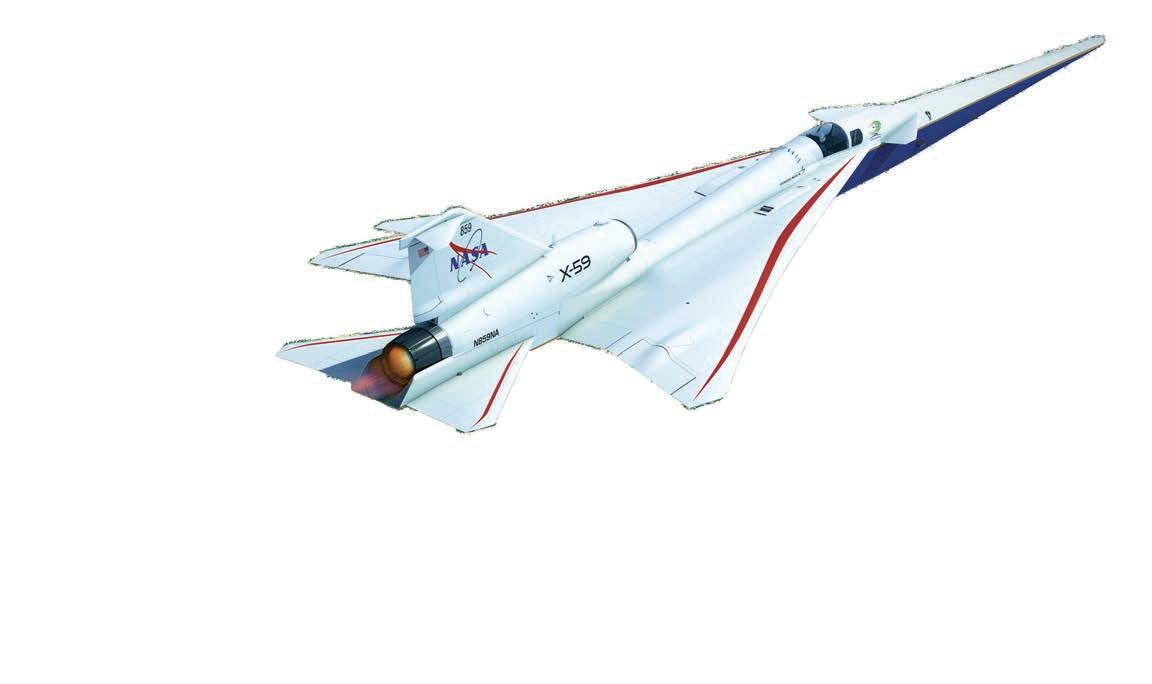
NASA’s Low Boom Flight Demonstrator program, which oversees the development and testing of the X-59 experimental supersonic aircraft, aims to soften the sonic boom to a quieter “thump.”
BY HANNEKE WEITERING
The FAA has proposed replacing its decades-old ban on civil supersonic flight over land with a noise limit, allowing aircraft to fly faster than Mach 1 over the United States as long as the sonic boom they produce does not reach the ground above a set threshold.
Under the notice of proposed rulemaking signed by FAA Administrator Bryan Bedford on June 30, operators could fly supersonically without a special authorization if sonic boom overpressure at the surface stays no higher than 0.11 pounds per square foot. That performance-based standard would replace the speed-based prohibition the FAA enacted in 1973.
Initial supersonic operations would rely on a technique known as Mach cuto ff , in which an aircraft’s speed and altitude, combined with atmospheric conditions, refract the sonic boom upward so it bends back into the atmosphere instead of striking the ground. Agency officials cited Boom
Supersonic’s February 2025 “boomless cruise” demonstration and NASA flight research as evidence the approach works.
This proposed rule covers only en-route cruise noise. Separate landing and takeoff standards, which the FAA plans to propose later this year, would still be needed before manufacturers could certify a supersonic civil aircraft. The FAA aims to finalize both rules by mid-2027.
Executive Order 14304, signed in June 2025, set the rulemaking in motion, directing the FAA to lift the overland ban. In March, the House passed the Supersonic Aviation Modernization Act, which directs the FAA to allow overland supersonic flights that do not produce a boom at the surface. That bill awaits Senate action.
The FAA has issued special flight authorizations for supersonic test flights to Boom Supersonic for the XB-1 demonstrator in 2024 and to Hermeus for the Quarterhorse Mk 2.1 this year. z
Gulfstream set its 800th city-pair speed record and subsequently completed what the company claims is the farthest and fastest flight in business aviation history. The missions highlighted the Gulfstream G800’s speed (Mach 0.935 Mmo) and 8,200-nm range. A G800 secured the milestone city-pair speed record on a flight from Reykjavik, Iceland, to the OEM’s headquarters in Savannah, Georgia, flying 2,973 nm in 5 hours 52 minutes at an average cruise speed of Mach 0.91. On June 28, a G800 completed a record-setting mission from Melbourne, Australia, to Moline, Illinois, covering 8,303 nm in 16 hours 56 minutes, averaging a cruise speed of Mach 0.85.
Bombardier and Rolls-Royce have launched an enhanced aircraft engine health monitoring program for the Global 5500 and 6500. Applicable to the Rolls-Royce Pearl 15 engine that powers both twinjets, the system combines Bombardier’s Smart Link Plus predictive maintenance technology with the latter’s engine vibration and health monitoring unit (EVHMU). According to Bombardier, this specific “advanced service o ering” is a first in business aviation. Around 450 Bombardier aircraft are already flying with the Smart Link Plus service, which can now be combined with the EVHMU.
Embraer’s Praetor 500E received a trio of certifications from the FAA, EASA, and Brazil’s ANAC in late June. The midsize business jet was introduced in February alongside the Praetor 600E as the first evolution of the Praetor family; the super-midsize 600E obtained the same triple certification in April. Deliveries of both of the upgraded jets will begin in 2029.

BY CURT EPSTEIN
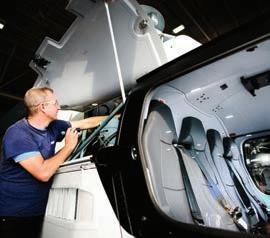
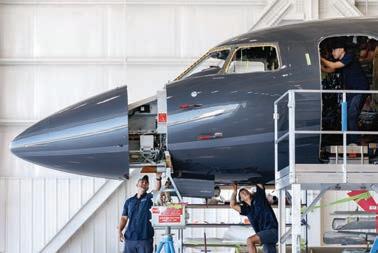
Embraer’s delivery performance in the just-ended quarter marked its strongest second quarter over the past 16 years. The airframer—the only one to manufacture aircraft in both the commercial and business sectors (excluding bizliners)— saw its overall deliveries increase by 48% quarter over quarter and 7% year over year (YOY).
Its executive aviation division delivered 45 business jets during the quarter, up from 29 aircraft (+55%) in the first quarter and up from 38 aircraft (+18%) in the same period a year ago. The OEM noted that growth was driven by higher deliveries across both the light and midsize-jet segments, reflecting sustained demand
and continued operational execution.
In the second quarter, Embraer handed over four Phenom 100 and 20 Phenom 300 light jets, along with nine midsize Praetor 500s and 12 super-midsize Praetor 600s.
For the first half, Embraer logged 74 business jet deliveries. The company’s previously issued guidance calls for between 160 and 170 executive jet deliveries in 2026—a 6% YOY increase for the midpoint of that range.
During the second quarter, the Brazlian aircraft manufacturer also announced that its upgraded Praetor 500E and 600E— both scheduled to enter service in 2029— received simultaneous certifications from the FAA, EASA, and Brazil’s ANAC. z

Embraer experienced a banner second quarter in terms of deliveries. It tripled the output of its super-midsize Praetor 600 from the first quarter of 2026, putting it well on pace to meet its executive jet delivery forecast for the year.
The European Union General Court in late June reversed a 2023 ruling by the European Commission excluding business aircraft manufacturing from the EU’s green taxonomy process. Lawyers for Dassault Aviation, which in 2024 filed a case against the ruling, supported by EBAA, successfully argued that it unfairly excluded the industry from economic activities in support of environmental sustainability. According to EBAA, the ruling resulted in the industry being excluded from sources of financing because it did not meet sustainability criteria required by some investors.
Onex Partners, along with TriWest Capital Partners and other co-investors, are acquiring Canadian fractional jet operator AirSprint, with the deal expected to close by October. The deal will support fleet expansion, operational enhancements, and other initiatives to strengthen AirSprint’s position in Canada’s private aviation market. AirSprint founder and chairman Judson Macor, president and CEO James Elian, and certain other current shareholders will remain investors. Macor will become AirSprint’s chairman emeritus, while Elian will continue in his executive role and remain on the board.
Chinese private charter operator Deer Jet has become the launch operator for the Comac Business Jet (CBJ). The aircraft, registered in China as B-65A9, made its first commercial flight between Shanghai Hongqiao Airport (ZSSS) and Beijing Capital (ZBAA). Based on Comac’s C909 regional airliner, the CBJ can carry 29 passengers in a 62-foot-long cabin. Deer Jet—the business aviation arm of airline and services group HNA Aviation—will base the bizliner in Shanghai.

VOICE CALLS AND READBACKS AREN’T ALWAYS CLEAR. UPGRADE TO FAA DATA COMM FOR TEXT-BASED ATC CLEARANCES. AVAILABLE NOW ON SELECT GTN™ X i- AND TX i ™-EQUIPPED AIRCRAFT.

BY CHARLES ALCOCK
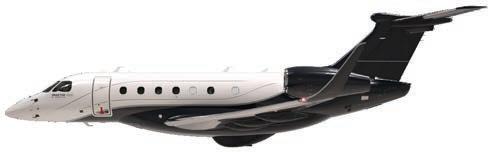
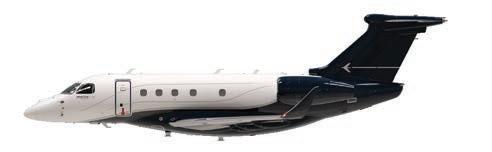
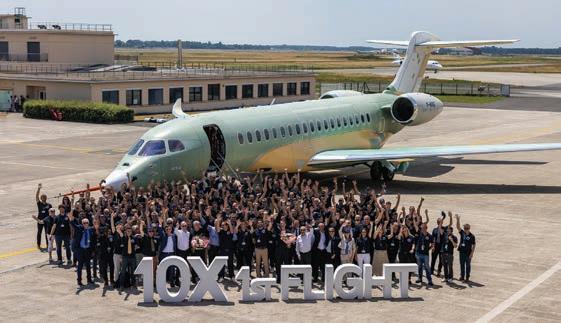
Dassault Aviation made the first flight with its Falcon 10X on June 19, kicking off a test campaign the company hopes will lead to type certification in 2027. The ultra-long-range business jet took off from Runway 23 at Bordeaux-Mérignac Airport (LFBD) at 11:10 a.m., landing twoand-a-half hours later at 1:40 p.m., the French manufacturer reported.
Test pilots Sébastien Dupont de Dinechin and co-pilot Fabrice Dougnac were at the controls to conduct an initial evaluation of the 10X’s handling qualities at 15,000 feet. Then they retracted the landing gear and all movable surfaces before climbing to 40,000 feet, where they accelerated to Mach 0.82.
The first example of the new jet will soon be joined by a second test aircraft that is nearing completion at Dassault’s Mérignac factory. This will be followed by a third 10X fitted out with a full cabin interior that will be used mainly for evaluating aircraft systems and cabin functionality and reliability.
“Today’s flight was the culmination of years of work by thousands of Dassault employees and partners,” de Dinechin commented. “It paid off in a flight that went as planned and was a delight to fly.”
Dassault rolled out the first of the new Falcons at an event in Bordeaux on March 10. With the widest cabin in its class, the 10X is expected to o ff er an eight-passenger range of 7,500 nm along with a top speed of Mach 0.925.
“This inaugural flight is another milestone for Dassault,” said the group’s chairman and CEO Eric Trappier. “It is a reflection of the dedication and high skill of our engineering, production, and flight teams, and also the quality of our global network of partners. All of us are excited to see this day as we launch the new phase of the 10X.”
The clean-sheet design is powered by a pair of Rolls-Royce Pearl 10X turbofans, delivering more than 18,000 pounds of thrust. The flight deck features the NeXus avionics suite developed with Honeywell. z
Organizers of the annual Aero show in Friedrichshafen, Germany, are targeting an increased business aviation presence at next year’s event to be held April 14 to 17. Fairnamic reported that the April 2026 show had 37,000 visitors, more than 400 exhibitors, and around 50 business aircraft on display, making it Europe’s largest trade show for business aviation. Aircraft orders worth an estimated $500 million were also confirmed there. The 2027 show will feature even further expanded space dedicated to business aviation exhibitors.
London-area Farnborough Airport is seeking approval to increase weekend movements and also for somewhat heavier aircraft than current limits permit. The airport filed an appeal to the UK government’s Planning Inspectorate to increase the annual limit for weekend flights from 8,900 to 13,500. In November, the privately owned business aviation airport filed a local planning application to increase permitted annual movements from 50,000 to 70,000. This application remains unresolved, prompting the airport to seek resolution with the central government.
Roughly 130 aircraft flew Special Olympics athletes home from St. Paul Downtown Airport (KSTP) on June 27, closing out the ninth Special Olympics Airlift organized by Textron Aviation. Held every four years in concert with the Special Olympics, the mission brought about 800 athletes to and from the USA Games this year aboard donated business aircraft using the call sign “Dove.” Athletes arrived on June 19. This year’s largest Dove was a Boeing 777, donated by the Arizona Cardinals and Gridiron Air.

BY GORDON GILBERT
The 81 fatalities in the first half of this year stemming from turbine business airplane accidents worldwide remained unchanged from a year ago, according to AIN research. But the distribution of fatalities within segments did change year over year.
Non-U.S.-registered business jets marked the only segment to witness a significant
decrease in accidents in the first six months, while fatalities from accidents involving U.S.-registered business jets ticked up by one more than first-half 2025.
In the first half of 2026, nine people died in three fatal accidents involving U.S.-registered business jets, including the first fatality on record involving a Part
The African Business Aviation Association (AfBAA) has launched a research initiative to build a comprehensive assessment of the continent’s business aviation sector. The first phase of the project includes fleet, economic, and maintenance analyses and a review of how the industry is portrayed in media. The research covers nonscheduled aviation activity among business jets, turboprops, helicopters, and drones. Initial findings will be presented at the Aviation Africa event in Nairobi, Kenya, on September 9 and 10.
A NetJets-operated, fractional-share-owned Cessna Citation Latitude landed on a road near Laredo International Airport (KLRD) on June 16 and caught fire after reportedly diverting to KLRD due to an emergency. NetJets confirmed that N523QS was involved in an accident in Laredo with injuries and a passenger fatality. This marked the first fatal accident of any fractional operator since NetJets created this segment in 1986. A video showed the jet’s fuselage resting on its right side, and people trying to break the cockpit windows. Then the cabin door opened, and people exited, with fire burning on the aft fuselage. Another video showed the tail section completely separated from the fuselage.
E ective July 9, Palm Beach International Airport changed its name to President Donald J. Trump International Airport. Its associated FAA and ICAO identifiers are now KDJT, while its IATA code is DJT. The change stems from a Florida state law passed in March that renamed the airport. FAA publications and aeronautical systems have been updated to reflect these changes.
Step into the future of business aviation at the 2026 NBAA Business Aviation Convention & Exhibition (NBAA-BACE).
NBAA-BACE is where you can get up close with the newest business aircraft, meet legendary heroes of flight and witness epic announcements. It’s where business aviation comes together – not just to do business, but to connect, belong and celebrate the shared passion that unites our industry.


BY CURT EPSTEIN

In years past, the top business jet OEM in AIN’s annual product support survey tended to lead its nearest competitor by just a few hundredths of a point, but Bombardier decisively took the top spot this year with a nearly one-third-point lead, averaging an overall 8.37 score. The Montreal-headquartered business jet manufacturer also dominated in six of the 10 categories rated by AIN readers in the survey—cost-per-hour programs, parts availability, cost of parts, AOG response, warranty fulfillment, and technical reps—and placed second in all but one (authorized service centers) of the others.
Dassault, whose Falcon line improved on its score year over year, ended up in second place among business jet manufacturers in this year’s survey, leapfrogging rivals Gulfstream and Embraer with an overall score of 8.08. Savannah-based Gulfstream, which tallied an average score of 8.05 in this year’s survey, led in the overall aircraft
reliability category with a 9.01, and its factory-owned service centers topped that category as well (8.18).
Textron Aviation moved up to the fourth spot among the top five business jet makers this year, advancing past Embraer.
With a limited sample size of responses, Pilatus earned high marks for aircraft reliability and parts availability, the latter a source of contention for most OEMs.
In the rotorcraft segment, only Leonardo tallied enough responses to meet the AIN threshold in this year’s survey. Similar to Pilatus, however, both Airbus Helicopters and Bell barely missed that threshold, and AIN this year opted to highlight those scores with a note of lower sample size.
As for the overall issues faced by the airframers, supply-chain choke points are still being felt—repercussions from the global pandemic a half-decade ago. Jean Kayanakis, Dassault’s senior v-p of worldwide Falcon
customer service and service center network, noted that there are still a few vendor challenges. “For example, for spare engines and for landing gear overhaul times,” he told AIN.
As a result, aircraft manufacturers are taking steps to insulate themselves from any further disruptions. “Gulfstream brought a great deal of third-party supplier work in-house years ago, including wing and empennage production, to take control of key elements within our supply chain and further ensure oversight of safety and quality measures,” said Lor Izzard, the Savannah-based company’s senior v-p of customer support.
Vittorio Della Bella, his counterpart at Leonardo, added, “Supply-chain pressures across the helicopter industry remain real and multi-layered,” requiring manufacturers to predict their needs for long-lead parts well in advance.
*Lower sample size
AIN ’s annual Product Support Survey aims to quantify and rate through statistical analysis the product support functions of aircraft manufacturers over the past year. The survey, whose respondents include operators of business jets, pressurized turboprops, and turbine-powered helicopters, endeavors to encourage continuous improvement in aircraft product support throughout the industry.
For the fourth year, AIN conducted the survey via a questionnaire developed in partnership with Rolland Vincent Associates, a Texas-based consultancy focused on aviation market research, strategy, and forecasting. Designed to provide improved ease of use and to encourage
more participants to complete the entire questionnaire, the English-language survey tool includes clear language and imagery around the categories and evaluation scale. The survey asks respondents to evaluate one full aircraft at a time, including airframe, engines, avionics, and cabin management systems.
AIN emailed qualified readers from its list of subscribers a link to the password-protected survey website active from late February to May 31, 2026. It asked respondents to rate individual aircraft and provide the tail number, aircraft age, primary region of service, and whether they used factory-owned or authorized service centers, or both. The survey also asked respondents to rate, on a scale from 1 to 10, the quality of service they
received during the previous 12 months in the following categories: Factory Owned Service Centers; Authorized Service Centers; Cost Per Hour Program; Parts Availability; Cost of Parts; AOG Response; Warranty Fulfillment; Technical Manuals; Technical Reps; and Overall Aircraft Reliability.
In total, 710 unique respondents representing 1,152 aircraft from 62 countries completed the survey. AIN did not receive enough ratings to verifiably report results for Cirrus Aircraft, Honda Aircraft, Piper Aircraft, Daher, and Robinson Helicopters. However, we included those that nudged up against the threshold, including Airbus Helicopters, Bell, and Pilatus. Rolland Vincent Associates reviewed and analyzed the data to ensure accuracy
Bombardier’s significant investment in service centers, parts inventory, and predictive maintenance over the past five years is paying dividends for its product support standing. Repeating as the overall highest-rated business jet manufacturer in this year’s survey, the Canadian OEM was also the most-improved in the segment, boosting its overall score by 0.23 from last year to 8.37.
The company’s efforts were further highlighed as it led multiple categories and showed signficant jumps in areas such as technical reps (from 8.82 in 2025 to 9.21) and AOG response (from 8.41 to 8.68).
The company’s aftermarket services grew by nearly 133% from 2020 to 2025, with corresponding division revenues rising from $998 million to $2.305 billion, smashing Bombardier’s goal of reaching $2 billion annually in services revenue by the end of 2025.
“This growth has been supported by the continued expansion of our service and support network around the globe, designed to deliver greater convenience for our customers,” Bombardier v-p of customer support Anthony Cox told AIN “Since 2022, our footprint has grown by more than 1 million square feet. We have added new service centers in Berlin (2021) and Miami and Melbourne (2022), along with expanded facilities in London Biggin Hill and Singapore (2022).
“In parallel, we’ve opened 12 new line stations since 2017 and pursued strategic acquisitions, such as Velocity Maintenance Solutions in 2026.”
Over the past year, Bombardier also announced additional investments, including a new service center in Fort Wayne, Indiana, further expansions at its Singapore
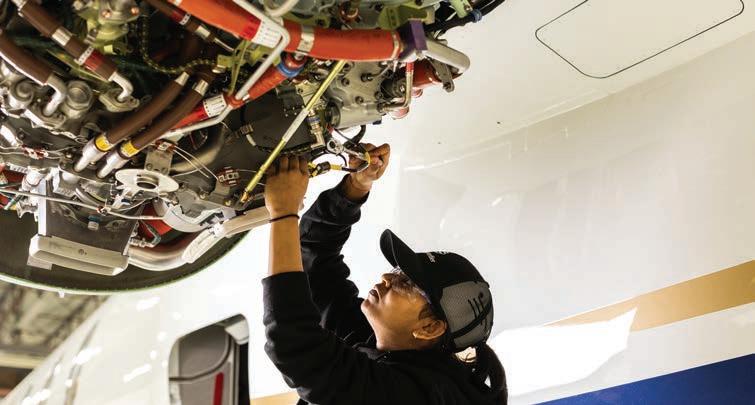
Bombardier leads the Product Support Survey ratings this year with an overall average of 8.37.
A slight 0.13 uptick in ratings from Falcon operators in this year’s AIN Product Support Survey delivered a welcome boost to Dassault Aviation’s product support team.
The factors driving the French airframer’s improved recognition include strong scores for its authorized service center network (8.62), AOG response (8.32), technical manuals (8.59), and technical representatives (8.82). However, as with other OEMs, survey numbers suggest there is room for improvement around the cost of parts (6.37) and parts availability (7.23).
service center, a new paint shop at Biggin Hill, and a future facility in Abu Dhabi. The company also expanded its Smart Link Plus predictive maintenance program to include an engine vibration and health monitoring unit for Rolls-Royce Pearl 15 turbofans on Global 5500s and 6500s.
According to Cox, Bombardier maintains $1.2 billion in parts inventory across its service network, moving 70,000 parts monthly to customers around the world. “This proactive approach to parts availability optimizes workflow efficiency and reduces lead times,” he said. “While isolated constraints remain in areas where supplier capacity has not fully kept pace with rising demand, we continue to manage these proactively—working with suppliers and prioritizing critical components to mitigate any impact to customers. Regional parts hubs around the world ensure we are close to our customers wherever they operate. As a result, our offthe-shelf parts availability has reached a record high this year.”
Cox said Bombardier continues to invest in targeted innovations that will help simplify the service experience, increase responsiveness, and enable more proactive, data-driven operations. These innovations include more intuitive technical publications, Smart Link Plus, digital dispatch for mobile maintenance resources, deploying AI at its customer response center, and the MyBombardier digital platform.
While acknowledging ongoing challenges with some vendors in areas such as spare engines and landing gear overhauls, Dassault’s Kayanakis told AIN that progress has been made. “Tier one suppliers in particular are making great strides to
improve turn times and availability,” he explained. “This is not always immediately apparent because ramping up involves long lead times, going all the way back to acquiring sufficient stocks of titanium and other materials, for example. But we are truly seeing progress and expect this picture to improve over the next year.”
Dassault is also pleased with its recent record in the recruitment and retention of skilled personnel, who generally have been in short supply across the maintenance, repair, and overhaul sector. When the company was preparing to open its new service center in Melbourne, Florida, Kayanakis was very pleased with the caliber of applicants for technical jobs, with a group that included many military veterans with strong aircraft support backgrounds.

“The way we bring people aboard and the supportive work environment has led to high employee retention,” Kayanakis said, “which means more experienced hands servicing customer aircraft.”
Dassault has also invested in technology to better serve the needs of operators, as evidenced by the recent introduction of the
FalconAssist app. This connects teams from engineering, the Falcon Command Center, and service facilities directly with customers to make problem-solving easier through functions such as sharing video and data.

Around 80% of spare parts orders now come to the OEM through its customer portal. “In the last year, we’ve streamlined ordering to make it even more
user-friendly,” Kayanakis said. “Customers like the convenience. For the other 20%, there is always a knowledgeable human being on the line to help out. We are at
Gulfstream continues to invest in new and existing service facilities as it works closely with its more than 3,500 in-service aircraft customers to gain deeper insight into their product experience. In terms of overall aircraft reliability, it earned a score of 9.01 this year, the only one among the top five business jet makers to score over nine in that category.
The company’s support network, with more than 5,000 team members globally, now lists more than 80 locations including 11 company service centers (8.18, the highest score among business jet manufacturers this year); six factory authorized service centers at sister company Jet Aviation locations (8.23); 27 authorized warranty facilities; two field and airborne support team (FAST) locations; and 12 spare parts distribution locations, with more than $2 billion in inventory in its global network. While the OEM received a score of 7.54 in parts availability—second highest among the top business jet manufacturers—AIN’s readers gave it the lowest score for their cost (5.96).
The Georgia-based airframer noted a milestone last year when it opened its $21 million Texas Repair and Overhaul Center in the Dallas-Fort Worth area, its second such facility. The new center, which encompasses 100,000 sq ft, houses more than $5 million of dedicated parts and inventory for repairs. Activities at the center include wheels, brakes, batteries, hydraulics, structures, and composites. Plans call for adding avionics, landing gear, and other
the early stages on integrating AI into the process, which has many applications for inventory management, but also improving the online customer experience.”

Gulfstream’s field and airborne support teams are based at two locations for quick response.
components to the menu. “By increasing control over critical repairs, we can reduce downtime, improve service efficiency, and deliver a better experience for our customers,” said Gulfstream’s Izzard. “As the fleet grows, our service network continues to evolve to provide high-quality support worldwide.”
Gulfstream’s technical representatives tallied an 8.79, its second-highest score in this year’s survey. At its Mesa, Arizona service center, the manufacturer recently opened a new technical training center featuring more than 10,000 sq ft of classroom and lab space. This marks its second training center, following the debut of its first in 2015 at its Savannah headquarters.
Last year, Gulfstream’s customer support team logged more than half a million training hours, in the process setting
a new company record. Supported by an investment of more than $20 million in dedicated training tools, the curriculum included a significant focus on on-the-job training, according to Izzard, reinforcing the airframer’s commitment to safety, quality, and technical excellence.
Outside of North America, Gulfstream recently established a dedicated customer support office and team in Singapore. Located at sister company Jet Aviation’s facility at Seletar Airport, it provides Gulfstream operators in the region with direct access to company personnel, expertise and resources.
“We believe supporting a great product is just as important as building one,” Izzard told AIN , “positioning our service network as an essential component to our company’s long-term growth and success.”
With an overall average score of 7.84 in this year’s survey, Textron Aviation improved on its business jet results from last year by
0.14. The manufacturer, whose portfolio includes the Cessna Citation and Hawker lines (Textron’s support of the Beechcraft
King Air family is addressed in the turboprop section), received an 8.66 overall product reliability rating.
The company’s service business has grown steadily over the past decade, according to Brian Adams, v-p of innovation and business operations. “What guides us through that growth is customer feedback—it’s what tells us where and how to invest so we can better support our customers and keep their aircraft flying.”
Technology is a key area of investment for the company, which equips its Citation business jets with flight data monitoring. With its proprietary data reporting, Textron’s operators can now choose to transfer their flight data through GE Aerospace, ForeFlight, or Acron Aviation, giving them more insight into how their aircraft are performing.
The OEM operates 20 company-owned service centers worldwide, which handle the most complex maintenance and modifications. They tallied a score of 7.30 in this year’s survey, while its more than 55 mobile service units earned a 7.39 in the AOG response category, the latter representing a slight uptick from 2025. The more than 300 authorized service centers in its global network fared better, receiving an 8.48 score from the respondents.
“Customer support is one of the biggest drivers of long-term relationships— and, ultimately, future sales—for Textron

Aviation,” said Adams. “When we take great care of an airplane, we’re also earning the right to sell the next one.”
In May, Textron opened a new service facility at Essendon Fields Airport (YMEN) in Melbourne, Australia, more than doubling its previous footprint in the city. According to the Wichita-based OEM, the 35,000-sq-ft complex will support more than 1,400 Cessna, Beechcraft, and Hawker aircraft operating across the Asia-Pacific region. Features include expanded service space, an onsite parts stockroom, and a customer lounge. It followed a relocation of its Perth location to a larger facility at Jandakot
Over the past eight years, Embraer’s business jet services and support division has seen its revenues nearly double from $980 million to $1.926 billion as a result of its fleet expansion, higher utilization, and continued investment in aftermarket capabilities. The division’s backlog has grown even more rapidly in that same span, rising from nearly $2 billion to just under $5 billion.
“This performance reflects strong demand across maintenance, retrofit, connectivity, and support services, reinforcing services and support as a key pillar of Embraer’s long-term strategy,” said Simone Gobo Barcellos, Embraer Executive Jets v-p of
worldwide customer support and aftermarket sales, adding that as operators increasingly prioritize efficiency, reliability, and life-cycle value, those services play a critical role. “Beyond supporting operations, it drives customer retention, recurring revenue, and long-term customer preference.”
The airframer recently doubled its executive jets MRO capacity in the U.S. with new maintenance lines in Dallas and Cleveland, as well as in Sanford, Florida. The company has nine owned service centers worldwide dedicated to its executive jets, which tallied a score of 8.00 in this year’s survey.
Airport, which provided increased space for servicing aircraft and improved scheduling. Textron increased its parts availability score from last year (6.89), earning a 7.21 in the latest survey. The manufacturer announced plans to expand its European parts distribution center by 50% to further improve its fulfillment performance.
Adams noted that these moves “are aligned with the continued growth we’re seeing in the aftermarket globally, and reflect a long-term commitment to supporting our customers across the full life cycle of their aircraft.”
Embraer’s authorized service centers (ASCs), however, earned the highest score in the category this year (8.81), and it recently expanded that network in South America and Canada. Late last year, it named Aerocardal as an ASC in Chile. Based at Arturo Merino Benítez International Airport in Santiago, Aerocardal provides line maintenance services for the Embraer Phenom 300, including unscheduled maintenance, AOG support, and dropins for customers operating in the country.
To further support its customers in Canada, the OEM recently added Execaire Aviation to its ASC network in the Great White
North. It provides line maintenance at its facility at Toronto Pearson International Airport (CYYZ) for Phenom 100s and 300s, as well as the mid- and super-midsize Legacy 450/Praetor 500 and Legacy 500/Praetor 600.
Parts availability is still an issue for the company, according to AIN’s readers, who gave it the lowest score in the category (6.29). This helped push down its overall rating this year to 7.75. “We are recovering from supply-chain issues, despite the problems the industry still faces,” Barcellos told AIN. “Embraer is also working on several initiatives to increase collaboration within the supply chain network to improve efficiency and add more value to our customers.”

Long-lead-time parts such as forgings are considered a potential choke point in the aviation manufacturing supply chain, and in an effort to address this, Embraer recently signed a new supplier agreement with India’s Bharat Forge. In addition to supporting the airframer’s global supply chain with high-quality forged products, the move reinforces its strategy to expand and diversify its supplier base.
The airframer’s efforts to digitize customer platforms and support tools were recognized by this year’s survey respondents, who gave it the highest score among jet manufacturers (8.86) in the technical manuals category.
Honda Aircraft had insufficient responses to post a valid sample of scores.
“Over the past year, we’ve really focused on making the ownership experience as seamless as possible—whether that’s expanding where customers can get service, improving how quickly we can deliver parts, or using data to stay ahead of maintenance needs,” said Amod Kelkar, senior v-p, chief commercial officer, and business unit
leader for Honda Aircraft. “Aircraft uptime has always been one of the main key performance indicators for our aftermarket teams.”
Since its entry into service, the HondaJet fleet has certainly amassed uptime, surpassing 300,000 flight hours, and the company has continued to grow its global service footprint to reduce downtime and improve access for customers worldwide.
It now offers a network of 21 HondaJet

authorized service centers throughout North and South America, Europe, Southeast Asia, China, and Japan, the latest being the appointment of Straight Flight as an ASC for its aircraft based in the Rocky Mountain region earlier this year. Located at Denver Centennial Airport (KAPA), Straight Flight has more than 30 years of aircraft maintenance experience, operating from facilities that span 55,000 sq ft of hangar space and 20,000 sq ft of back shop and support areas. The MRO has a staff of 50 to maintain a high volume of aircraft work.
“A large portion of MRO work is performed at our Greensboro, North Carolina service center, and we are actively increasing capacity due to service demand from our customers,” Kelkar told AIN. “We also rely heavily on our robust global network of authorized service partners to share in full-service maintenance, upgrade capabilities, and AOG response for our customer base with strong demand throughout the network.”
He added that the airframer has made significant investments in parts inventory
and logistics processes to improve availability and speed of delivery.
According to Kelkar, Honda is investing in technologies to enhance customer support, including data analytics and predictive maintenance tools to anticipate
service needs and improve aircraft availability and reliability, as well as advanced diagnostic capabilities to improve troubleshooting efficiency. “We’ve advanced the use of digital tools and data-driven maintenance insights, dedicated to enabling
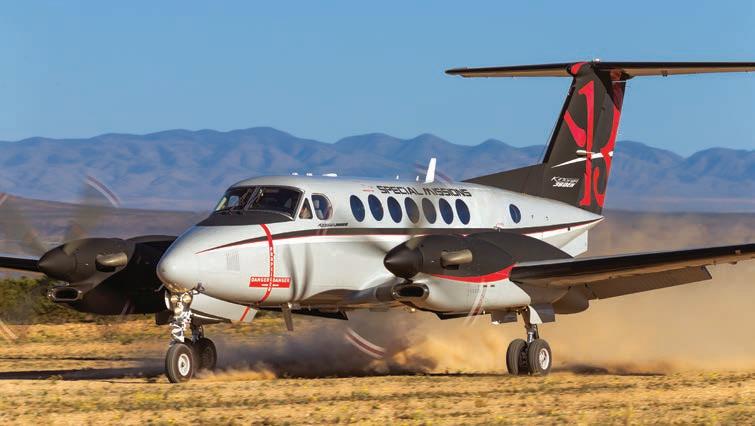
Textron Aviation’s turboprops (the Beechcraft King Air family specifically) earned their highest score (8.28) in the aircraft reliability category in this year’s survey, although that score was down by more than half a point from last year, according to AIN’s readers.
The support rating for the King Air brand declined overall (7.02) by more than eighttenths of a point year over year, with respondents highlighting the cost of parts (5.87) as an issue.
For King Air maintenance support, the company’s authorized service centers were rated at 8.06 this year, higher than the 7.31 score given to the company’s factory-owned service centers. The airframer also lagged in AOG support and warranty fulfillment, both the lowest among the OEMs in this year’s survey.
“To enhance our customer service capabilities, we partnered with Microsoft to develop Textron Aviation Maintenance Intelligence (TAMI), a generative AI
Pilatus is known for its popular turboprop single PC-12 as well as a growing fleet of rugged PC-24 light jets. In this year’s AIN Product Support Survey, however, the Swiss airframer received a limited number of responses, which contributed to a low sample size in several categories. For the PC-12, the Swiss OEM earned an overall score of 8.71, including a 9.42 for overall aircraft reliability, according to AIN readership’s limited ratings.
As its fleet grows, so does the service center network that serves as the backbone
reliability improvements and a smoother ownership experience,” he explained. “We are investing in the latest digitization strategies for our technical publications as well as FRACAS [Failure Reporting, Analysis, and Corrective Action System] teams.”
assistant,” said Textron Aviation’s Adams, adding that the system is used by 1,600 technicians across 20 global service centers, helping speed up maintenance, reduce downtime, and get customers back in the air sooner.
of Pilatus’ customer service organization. That growth has taken several forms, including facility additions, increased service capacity within existing locations, and the addition of new satellite service centers in key markets. For its company- owned service facilities, AIN ’s readers rated it an 8.92. “We’ve been working to integrate our service centers that recently became part of the Pilatus organization into the Pilatus company image, and continue to utilize their expertise to develop centers of
“TAMI gives our technicians fast access to exactly the information they need, pulling from more than 60,000 pages of maintenance documentation and records so they can spend less time searching and more time working on the aircraft.”
excellence in our network,” said Colin Marrer, the company’s v-p of customer support.
In January, Pilatus broke ground on a $50 million, 70,000-sq-ft sales and service facility at Sarasota Bradenton International Airport (KSRQ), with opening set for fourthquarter 2027. The manufacturer expects that the facility will support the growing concentration of Pilatus owners and operators throughout Florida and the Southeast.
Three months later, construction began on a new customer delivery center at Rocky
Mountain Metropolitan Airport (KBJC) in Broomfield, Colorado. The building will enable customers from all over the U.S.— the Swiss airframer’s top market—to configure and personalize their aircraft.
The company’s authorized service network performs well, according to AIN readership. “We work closely with our service center partners to continuously evaluate where aircraft are operating and where additional support resources may be needed,” Marrer said, adding that Pilatus’ fleet has nearly doubled in size over the past decade. “As the fleet expanded, our service center network has grown alongside it to ensure customers continue to receive the level of support they expect.”
One area of specific strength for the company is in the warranty fulfillment category, earning a 9.75. To further enhance the ownership experience, Pilatus has continued

to grow the team at its Stans headquarters dedicated to connected aircraft technologies. “As we collect more real-time aircraft health data, we’re able to expand our aircraft health
Daher had insufficient responses to post a valid sample of scores.
While Daher received enough responses last year to make its AIN Product Support survey debut and performed extremely well, the airframer did not carry enough reviews in this year’s edition for its scores to be reported in the survey results.
The France-based company has continued to focus on the enhancement of the Daher Care Network’s resources, including the incorporation of Kodiak maintenance, repair, and overhaul into its well-established TBM network, according to Raphaël Maitre, the airframer’s v-p of customer support. Daher acquired the rugged utility turboprop single Kodiak line in 2019. Over the past year, it expanded the network’s footprint with the addition of North Carolina-based Victory Lane Aviation, Synergy Flight Center (in Bloomington, Illinois), and Silver Sky Aviation in Wasilla, Alaska. The company lists four factory-owned service centers split between France and the U.S., part of a total of 69 authorized service centers worldwide.
Last month, the OEM inaugurated its new spare parts, maintenance, equipment overhaul, and logistics center in western France, expanding its support capabilities for a broad range of aircraft—from helicopters and training airplanes to legacy general aviation types built by its predecessor companies. Occupying a purpose-built
monitoring capabilities, identify potential issues earlier, and help operators maximize aircraft availability and reliability,” Marrer told AIN.
64,583-sq-m building at Jonzac-Neulles Airport (LFCJ) in France’s Charente-Maritime Department, the new facility replaces Daher’s previous Merpins location, 15 miles away.
Having originally launched its Me & My TBM cloud-based application in 2018, the platform is now in its eighth iteration. Used

by more than 400 operators, with an average of 120 flights recorded every day, Daher has continually increased its capabilities to include real-time remote monitoring of aircraft data such as fuel levels, oxygen, outside air temperature, battery status, and location, and provide database updates via PlaneSync and the GDL 60 datalink. That is in addition to full access to TBM technical publications covering checklists, maintenance manuals, service bulletins, and more. It also features an enhanced embedded PDF viewer to improve the usability of large technical documents. Earlier this year, the airframer rolled out a sister platform for Kodiak operators.
Though the last Mitsubishi MU-2 rolled off the assembly line four decades ago, the turboprop twin is still going strong with a devout following, and more than 220 are still flying out of the approximately 700 built.
“Mitsubishi Heavy Industries America (MHIA) continues to support the remaining fleet of MU-2 airplanes and enthusiastic owners through offering replacement parts, safety enhancement systems, flight training support, and updated maintenance information,” said Yoshiaki Asako, the company’s director of engineering and technical support. “MHIA proudly provides this support as a testimonial to its commitment to all products it has developed.”
That support earned Mitsubishi the highest overall average score (8.81) among airframers in this year’s AIN Product Support Survey, and it also received the top score for overall aircraft reliability (9.39).
Remarkably—for an aircraft manufacturer that ceased production of new units back in 1986—the availability of parts is not an issue, according to the survey results, which gave the company the highest score in the category among OEMs (8.67) this year.
Over the past decade, Intercontinental Jet Service Corp. (IJSC), an MHIA-owned factory service center located in Tulsa, Oklahoma,

has grown significantly and nearly doubled its staff AIN’s readers gave the facility a 9.39 score this year, making it the only OEM to achieve a nine or higher in the category.
In 2026, IJSC is celebrating its 20th anniversary under MHIA ownership, and it promises to provide continued service to MU-2 owners and operators. “IJSC is currently engaged in expansion efforts at Tulsa International Airport and expects to triple the hangar space for new product lines and FBO services,” said IJSC president Mark James. Jet Air Group in Green Bay, Wisconsin, and Carolina Turbine Support in Aiken,
South Carolina, are two other prominent authorized service providers (which contributed to the OEM’s 8.63 in that category in this year’s survey).
Last year, after a seven-year hiatus, MHIA revived its Pilot’s Review of Proficiency (PROP), a flight safety seminar for MU-2 pilots. The well-attended event covered operational tips, flight training requirements, best practices, and knowledge-based learning opportunities, and it highlighted some of the onboard safety enhancement systems specific to MU-2. MHIA is currently planning for PROP 2027 to be hosted in Dallas.
Italy’s Leonardo Helicopters has seen its fleet flight hours grow sharply over the past few years, according to Leonardo’s Della Bella, adding that that is a clear sign of recovery and renewed mission demand. “As fleets remain in service for longer and operational requirements become more demanding, integrated support, maintenance, training, and logistics services are increasingly important di ff erentiators in the market,” he explained. “This makes the service business a significant contributor to recurring revenues and an important driver of future growth for the company.”
In this year’s AIN Product Support Survey, Leonardo received an overall product support score of 7.90, bolstered by the score of 9.36 given to its technical representatives by AIN’s readers. In terms of product reliability, its product lineup earned an 8.85.
Leonardo has more than 30 authorized service centers and repair center partners in the Americas, a 30% increase from recent years. They received a score of 8.23 this year.
The rotorcraft maker’s factory-owned service centers scored even higher (8.31).
“While we prioritize partnership, certain capabilities are best managed directly by the OEM,” Della Bella noted, adding that its U.S. flagship base of operations in Philadelphia has maintained Leonardo/AgustaWestland products for more than 45 years and is an MRO center of excellence on all AW models.
Leonardo’s newest OEM maintenance facility opened last year at Whiting Aviation Park in Northwest Florida, with a new main gearbox test stand set to be fully in service by July 2026. The facility also includes jigs and fixtures for structural repairs, a paint booth, and parts warehousing.
Parts availability proved a sticking point for the survey respondents, who gave the

manufacturer a 6.48 for the category. “We are still experiencing challenges in fully recovering from some specific logistics-critical items,” Della Bella told AIN, adding that geopolitical disruptions have an impact on raw material flows. “There are extended lead times for titanium and composite components.”
To resolve this, the company has become more proactive. “Across the Americas, we are increasing U.S.-stocked inventory, placing orders 18 months ahead to give supply-chain partners forward
In this year’s AIN Product Support Survey, Bell received a limited number of responses, which contributed to a lower sample size in several categories. The Textron Inc. rotorcraft manufacturer, which now has more than 10,000 helicopters in operation worldwide, earned an 8.21 overall average product support score this year.
Earlier this year, Bell CEO and president Danny Maldonado noted that it ramped up its aftermarket support and its investment in its people, facilities, and products. The airframer’s global customer solutions teams provided support services to nearly 9,500 customer support requests in the last year. “By investing in a maintenance network, predictive analytics, and customer-focused solutions, we help ensure every Bell aircraft
visibility, expanding domestic MRO capabilities, and qualifying alternate suppliers for critical components.” Della Bella noted that over the past year, many previously critical part numbers have been resolved. In addition, he explained, regulations have also caused some bottlenecks. “The updated Section 232 trade compliance requirements introduced in March 2025 have added a new layer of complexity to parts moving through U.S. ports of entry, but our teams have adapted quickly to navigate them.”

stays mission-ready and efficient,” said Lane Evans, Bell’s managing director.
He noted that while bottlenecks still exist in the supply chain, the company remains steadfast in its commitments to its customers and continues to evaluate and mitigate risks to production. “We have taken steps to encourage more performance accountability from our suppliers and to build a more resilient supply chain by pursuing alternate or multiple sources,” Evans explained to AIN “We continue to utilize a wide range of tools to proactively mitigate risk to minimize downstream impact to our customers. We
have a focused team and effort to minimize impacts across production, but it will take some time to get where we want to be.”
Customer solutions are at the forefront of Bell, and its Bell Training Academy (BTA) in Fort Worth, Texas, offers opportunities to learn directly from Bell’s instructor staff. The BTA uses flight simulators, interactive academics, and hands-on maintenance training to elevate the OEM’s customer training experience. In November, the FAA granted interim Level C qualification for the Bell 525 flight simulation training device (FSTD) at the BTA. Designed and manufactured by
Tampa, Florida-based sister company TRU Simulation + Training, it is equipped with high-fidelity visual systems, realistic cockpit environments, and advanced motion platforms, which collectively create a training experience that mirrors actual flight conditions. The simulator enables pilots to virtually fly the super-medium twin helicopter prior to its certification. Earlier this year, the first customer pilots were able to log time in the new helicopter after completing a four-day familiarization course at BTA. This included eight hours in the Level C 525 FSTD and three days of instructional courses.
In this year’s AIN Product Support Survey, Airbus Helicopters received a limited number of responses, which contributed to a low sample size in several categories. The OEM’s overall average score came in at 7.15, as indicated by AIN ’s readership.
“Ultimately, our main objective is to become the absolute best in the industry for customer support,” said Romain Trapp, executive v -p of customer support and services, adding that the company’s product support strategy is built on three clear pillars: being a reliable supplier, a strategic partner, and deeply customer-centric.
“While we know we aren’t there yet, our recent progress is encouraging, and we are striving to keep pushing in this direction.”
He noted that Airbus’ service revenue has expanded by 50% over just the past five years, with a steady trajectory that has continued over the past year.
In the parts availability category, the airframer has increased its focus on its priority item list, which includes the 450 most critical parts needed by its operators. “We’ve drastically reduced our parts backorder backlog,” Trapp told AIN. “I’m proud to say we have reduced our backlog by more than 50% over the last two years. It’s a good trend that means parts are getting to our customers much faster.”

With operators increasingly desiring predictability, Trapp pointed to a major rise in customers signing up for the OEM’s By-TheHour support contracts. “To give you an idea of the scale, 53.4% of all flight hours clocked by our twin-engine fleet worldwide are now covered under these comprehensive hourly support agreements,” he stated, adding that Airbus has achieved significant time between overhaul extensions for its main gearboxes on both the H145 and H160. “This directly lowers direct maintenance costs and keeps aircraft in the air longer.”
He noted that the H160, which entered service in 2021, has seen a very smooth start, maintaining an availability rate of
around 90% and successfully passing its first 900-flight-hour inspections right by the book.
In terms of new technologies, the airframer is leveraging AI through the use of its FlyScan predictive service. “By applying AI algorithms to the data pulled from an aircraft’s health and usage monitoring systems, FlyScan catches tiny, weak signals of wear or component stress before they ever cause an issue,” explained Trapp. “Our customers can use this AI-driven insight to schedule corrective maintenance proactively—preventing unscheduled delays and keeping fleets flying safely.” z
— Charles Alcock and Chad Trautvetter contributed to this report
BY AMY WILDER

Above the clouds in a small aircraft and not long into her flight, a young woman who wouldn’t look her pilot in the eye five minutes earlier began repeating a question: “When are we going to descend?” Stephanie Lamar showed her the map for the fifth time. They still had an hour to go. Finally, Lamar asked the young woman why she kept asking.
“I want to go through a cloud,” the woman said.
Minutes earlier, this survivor of human trafficking had sat silent at the airport, unable to speak, unwilling to make eye contact. Private investigators and police had shadowed her arrival at the airport, ensuring that her trafficker hadn’t followed. Now, released from the threat on the ground, she wanted to fly through clouds. Lamar called air traffic control to
request a descent and vectors into nearby clouds, amazed at how the woman’s whole demeanor had transformed. They recorded a video for her to keep. By the time they landed, she was asking questions, making plans, and engaging with the world.
“I feel like psychologically, there is a shift that happens when we get in the air,” Lamar said. “We hear over and over, ‘He can’t touch me. This is the first time I felt safe.’”
That transition from fear to hope for the future is at the heart of Freedom Aviation Network. Founded in October 2022 by Lamar and Jared Miller, the Tennesseebased nonprofit mobilizes volunteer pilots and their aircraft to fly survivors of human trafficking to safety, to shelter, to court dates, and to new lives. They provide the service to survivors completely for free.
Lamar co-founded Freedom Aviation Network after a circuitous path back to aviation that began with a childhood dream, detoured through 15 years of motherhood, and landed at the intersection of flying and humanitarian work through a phone call about a missing girl.
She started flying in 1996, fresh out of college with aspirations of becoming an airline pilot. Then life intervened. She had kids. Flying went on hold.
What brought her back was a chance encounter in England with a 77-year-old pilot who hadn’t earned her certificate until age 50 and then went on to break world records. “I was like, you know what? I still have more life to live,” Lamar recalled. She pursued her flight instructor rating and commercial certificate and started teaching.
Along the way, she got involved with Nashville Peacemakers, a nonprofit founded by a woman whose son had been murdered. The founder ran Mothers Over Murder, working with inner-city residents on forgiveness and trauma recovery. Lamar served as board president for three years. Then came the call that changed everything. The founder needed to reschedule a meeting. One of the mother’s daughters had gone missing in Ohio. She was being trafficked. The mother was trying to figure out how to get her back.
Lamar called a friend who worked in human trafficking response. He helped with the situation, but mentioned something that stuck: “Transportation is really an issue with a lot of these things.” The mother ended up driving to Ohio to retrieve her daughter, but Lamar kept thinking about what her friend had said. “I just thought, she’s up in Ohio. I could have flown up there, and that would have been faster.”
She asked her friend directly: Could you use help from volunteer pilots? He said yes. Lamar and one other pilot became a test group, volunteering to fly survivors. Her initial assumption was that Angel Flight, the established medical transport volunteer network, might be able to help. She reached out to ask.
However, trafficking victim flights require advocates to accompany survivors, and those advocates need return transportation. The requirements and potential risks differed from typical medical transportation mission. But people with Angel Flight provided information about how to get started.
For two years, Lamar waited for calls to fly missions for the anti-trafficking organization, Rescue 1 Global. Only two came. Lamar learned that the nonprofit viewed volunteer pilots as a limited resource. If they used Lamar for one flight, they feared she might not be available for the next urgent case. So they held back. She encouraged the nonprofit to call, letting them know the impression was mistaken.
Lamar and co-founder Jared Miller filed paperwork to establish their own nonprofit. It came back approved in two weeks. At almost the same moment, calls started coming. Fifteen flights in three months. “That overwhelmed me,” Lamar said. “I started calling all the pilots I knew. ‘Hey, do you want to help with this?’ And they were overwhelmingly responding, ‘Yes.’”
Those became Freedom Aviation Network’s first volunteer pilots. In the first year, they flew around 100 missions.
The organization operates similarly to other charity flight organizations, serving as a conduit between organizations representing those who need help and pilots who can provide transportation. All flight requests come through referrals from advocates or agencies working with survivors. When a request arrives, Freedom Aviation Network contacts eligible pilots in the region. Minimum requirements: a private pilot certificate, 250 hours of flight time, and access to an aircraft with at least four seats. Survivors always fly with an advocate, so seating and sufficient useful load are necessities.

LAMAR CO-FOUNDER, FREEDOM AVIATION NETWORK
The advocate serves multiple crucial roles. “We never want to put [a trafficking survivor] in a plane with some guy they don’t know taking them across the country,” Lamar explained. “That can be scary for them, too.” The advocate provides a trusted presence, handles any complications, and ensures the pilot doesn’t bear responsibility beyond flying the airplane safely.
A significant number of flights are rescue missions, involving immediate extractions
from dangerous situations. These happen fast, often with little notice. Other missions involve transfers between facilities, home visits for survivors in longterm restoration programs, or trips to court appointments.
The organization categorizes flights as low, medium, or high risk based on information from referring agencies. Most are routine. But the possibility of complications is always present, which is why Freedom Aviation Network emphasizes to pilots: you’re just the pilot. The advocate handles everything else.
That structure has allowed the network to grow despite operating in an environment where word-of-mouth spreads quickly among anti-trafficking nonprofits, but slowly among pilots. “One of the biggest volunteer pilot organizations is Pilots N Paws,” Lamar noted, “and that’s because every time a pilot does a flight, they take a picture of some cute dog, they put it on their social media, and it kind of goes from there. For us, we ask our pilots not to post anything. We don’t want pictures of the girls out there. It’s very private.”
The privacy requirements create barriers to recruitment. Growth happens through aviation publications, podcast appearances, and one-on-one conversations that overcome pilots’ initial concerns.
“The first question I get is about liability,” Lamar said, “which is interesting, because you’re taking on the same liabilities if you’re flying a cancer patient.” When she points that out, pilots usually realize the liability profile isn’t substantially different. “I think there’s more liability in flying cancer patients. These people are probably more with it, but if something goes wrong, they’re going to sue you. These women probably aren’t going to think that way. They’re just kind of trying to survive.”
Perception is the bigger barrier. “When they hear ‘anti-trafficking,’ I think people have seen too many movies,” Lamar said with a chuckle. “They think the trafficker is going to be out there, guns blazing, and
it’s a whole showdown, we’re getting shot at, we’re flying o!. That’s just not the case. The trafficker couldn’t care less that we have this person. They’re just going to find a new person.”
The scale of the problem is staggering. In 2024, the National Human Trafficking Hotline received 32,309 reports of potential trafficking situations involving 21,865 potential victims in the U.S. alone, including 8,024 contacts directly from survivors seeking help. The reported cases included 6,647 sex trafficking situations, 2,220 labor trafficking situations, and 1,360 situations involving both. Among identified victims, 2,666 were minors. Yet these numbers likely represent only a fraction of actual cases.
Contrary to what many Americans imagine, most trafficking doesn’t involve foreigners smuggled across borders. “Most people that we’ve flown have been U.S. citizens,” Lamar said. The average age of entry into trafficking is around 13. The average time spent in trafficking before finding a way out is 10 years.
When Freedom Aviation Network began, Lamar felt overwhelmed by the impossibility of the problem. She prayed about it. An image came to her: Jesus as a shepherd, leaving 99 sheep behind to search for the one that was lost. After that, Freedom Aviation Network adopted a guiding principle: “For the One.”
“We’re going to go through this effort,” Lamar said. “We’re going to do this for one person. It’s worth it for that one person. And it makes a di!erence. It makes a di!erence in their life.”
The differences show up in moments that carry enormous weight. One survivor said her pilot was very kind to her, that it was the first time in as long as she could remember that someone treated her like a person, and that she knew things were going to be okay at that point.
One survivor was being prayed over during her rescue. The prayer included the phrase, “Let God give you His best.” When she arrived at the airport, her pilot flew

a Vision Jet. “God’s best is pretty good!” she commented.
Freedom Aviation Network provides “go bags” that include toiletries, feminine hygiene products, snacks, blankets, and sunglasses, because survivors often leave their situations with nothing. No possessions. No identification. Going through TSA with inadequate ID or none at all can prove deeply traumatizing. Private aviation eliminates that barrier.
The organization now has nearly 200 volunteer pilots spread across 39 states. They’ve flown hundreds of missions, with five to 10 requests coming in per month from middle Tennessee alone.
One of Freedom Aviation Network’s early volunteers was Philip Porter, a pilot in North Carolina. When a request came in for a rescue mission involving a minor girl and her friend, Porter called Lamar back about weight and balance with two survivors, two advocates, and the pilot. “Is it okay if a friend and I rent a King Air and we fly these girls to where they need to go?”
They did. The bill came to over $10,000. Afterward, Porter and his friend told Lamar to let them know when they could do it again.
Porter flew numerous missions for Freedom Aviation Network before he and
his wife died in an aircraft accident. The organization is establishing an award in his name to honor volunteer pilots who embody his spirit of generous service.
The costs add up quickly. Last year alone, Freedom Aviation Network spent $35,000 on commercial airline tickets for advocates who needed to return home or for situations where general aviation couldn’t meet the need. Support from corporate flight departments could help the organization’s mission. “They’re always traveling, or they might have an empty leg that they could help with,” Lamar said. So far, cracking that market has proven difficult.
What keeps volunteers coming back is the impact. Survivors say things like, “This is the first time I felt safe,” and “It’s almost like leaving the earth.”
For survivors of human trafficking, that sensation carries literal truth. The person who controlled them, who threatened them, who exploited them, often for years, is on the ground. In the clouds, in a four-seat airplane flown by a stranger who volunteered their Saturday morning and their fuel money, the survivor is untouchable. Freedom Aviation Network has flown almost 200 of those flights. One at a time. “For the one.” z

Dear Reader,
Now in its eighth year, AIN Media Group’s Solutions in Business Aviation (SIBA) returns as a glossy, pullout content section within the August issue of Aviation International News. This sponsored resource for industry professionals has grown into an essential annual guide, and we are proud to continue delivering it alongside the AIN news, data, and analysis our readers rely on.
Business aviation is an industry defined by its ability to adapt. Market conditions shift, operational demands evolve, and the landscape of talent and resources continues to change, yet the companies featured in SIBA have met those challenges with purpose and resolve. From managing rising costs to building and retaining skilled teams, these organizations are finding smart, innovative ways to serve their customers and strengthen their operations.
This year’s Executive Insight question asked contributors to share how costs related to materials, staffing, and government fees are evolving— and what steps their companies are taking to manage those changes. Their responses reflect the resilience and resourcefulness that have always defined this industry.
We found their viewpoints illuminating and suspect you will too.
Lisa Valladares Director of Marketing & Client Services lvalladares@ainonline.com


For over 60 years, King Air operators have trusted Stevens Aerospace and Defense Systems (Stevens) to provide the best upgrade and MRO service solutions. The company proudly continues that tradition with the introduction of its proprietary STC, enabling Gogo Galileo HDX high-speed satellite connectivity in King Air 200 and 300 series aircraft.
Back in 1964, when Beechcraft introduced the King Air model 65-90, the company never imagined that, some 60 years later, it would have delivered over 7,500 various models and that the fleet would have amassed well over 60 million flight hours, making it the most popular twin-turboprop of all time.
Paralleling the King Air’s popularity has been Stevens’ reputation for providing individuals, businesses, and government entities with an ever-expanding array of upgrade and MRO service offerings to help make the “King” even better.
Keeping a close eye on what its customers need has helped Stevens maintain its leadership role. In today’s world, nothing is higher on a King Air operator’s “must have” list than reliable, high-speed, WiFi connectivity.
“Our decades of technical expertise with King Airs made us the ideal choice to partner with Gogo on the Galileo HDX STC,” explained Stevens’ Director of Avionics, Rob Reed. “From developing the engineering, to the prototype installation and earning the FAA STC, the whole process went very smoothly.”
While the company’s technical prowess is unmatched, its long-standing reputation with King Air owner/operators was equally important. Customers have been coming to Stevens Aerospace and Defense Systems for MRO services since 1950, and for the past 25 years, the company’s been the go-to source for their aircraft connectivity needs.
“We average 20 connectivity installations a year, and as technologies have advanced, so have our capabilities and offerings,” Reed said. “We are experienced and authorized to install all of the latest air-to-ground (ATG) and low- (LEO)
and geostationary-earth orbit (GEO) satellite solutions for all classes of business aircraft.”
GOGO GALILEO MAKES KING AIRS GO FASTER.
“Like all business aircraft owners, King Air 200/300 series operators want the best highspeed, low-latency, WiFi connectivity, and no other system does it better than Gogo’s Galileo HDX,” Phil Stearns, Director, Sales and Marketing for Stevens Aerospace and Defense Systems, said. “With six passengers, two crewmembers, all using multiple devices, we’ve seen download speeds as fast as 58 Mbps and uploads at 11 Mbps, connected to the Eutelsat OneWeb Low Earth Satellite constellation, with zero buffering.”
Gogo’s Galileo isn’t only fast; it’s also very low-latency, making it ideal for real-time streaming and video conferencing with anyone, anywhere in the world.
“Speed is important, but another benefit of Gogo’s Galileo HDX system is that King Air crewmembers and passengers can connect to the Internet at any altitude – even on the ground, so they’re never out of touch,” Stearns added. “It makes flight planning and altering schedules to meet passenger needs so much easier because they can check weather and confirm reservations at their destination while still on the departure ramp. Bottom line, you can run your business in the air like you do on the ground.”
While all the speeds and capabilities of the Gogo Galileo system are amazing, what truly sets it apart is housed in an unobtrusive box on top of the King Air’s fuselage – Gogo’s revolutionary HDX electronically steerable antenna (ESA).
“The Gogo Galileo HDX is the lightest and smallest form factor antenna available for enterprise-grade satellite connectivity,” Reed said. “The STC also allows us to place the HDX antenna and Gogo SCS internal router in optimal locations across the different King Air models, further simplifying installations.”
“Unlike other satellite systems, with the Gogo Galileo HDX system, there are no LRUs installed in the cabin area, saving that precious space for passenger use,” he continued. “If the King Air operator already has a Gogo Avance L3, L5, or LX5 ATG system, they can easily upgrade to Galileo by adding the HDX antenna and a few wires.”
Complementing the Gogo Galileo HDX’s ease of installation is the simplicity of updating the system’s software, ensuring the owner always has the best performance and reliability Gogo can deliver.
“ Unlike other satellite systems, with the Gogo Galileo HDX system, there are no LRUs installed in the cabin area, saving that precious space for passenger use... ”
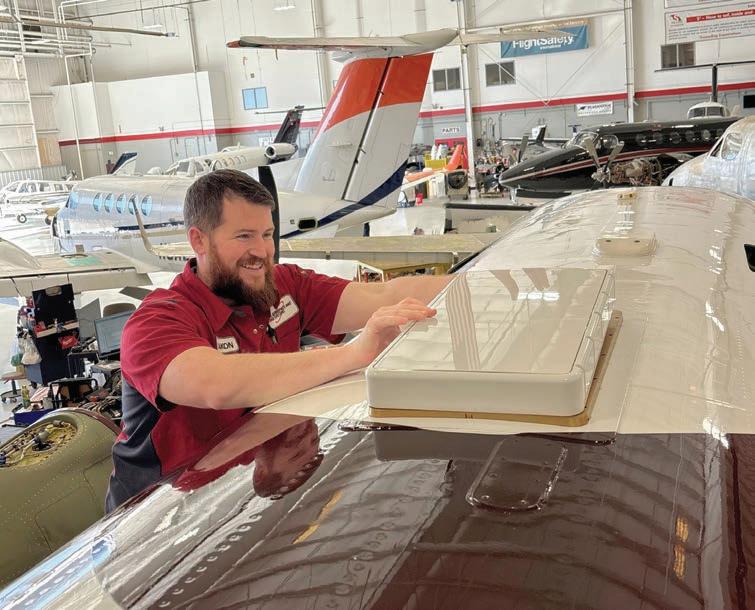
“Our customers trust Stevens to provide them with not only the best solutions today, but for the foreseeable future,” Stearns said. “Fulfilling that trust is another reason we developed the Gogo Galileo HDX STC in the first place.”
“Like our long list of other King Air cockpit and cabin upgrades, including our recent installation and certification of the first Garmin Autoland/Autothrottle STC in a King Air 350,” he continued. “the Gogo Galileo HDX STC continues our commitment to provide our customers with the services and ongoing support to make their aircraft as capable, reliable, and safe as possible.”
» Only FAA STC for Gogo’s Galileo HDX system in King Air 200 and 300 aircraft.
» Delivers high-speed, lowlatency cockpit and cabin connectivity anywhere in the world.
» From Gogo connectivity to Garmin Installations and Upgrades, Stevens is the leader in King Air upgrades.


“ Our priority is to develop a long-term partnership that contributes to the growth of all our FBOs.”
Based on over 35 years of supporting all types of FBOs, AEG Fuel’s Connect Network has been created to help facilitate growth not only through the reliable delivery of bulk fuel but also by providing member FBOs with the strategic business and marketing support to attract and retain more customers.
The more you know about the actual reasons why a customer will select one FBO over another, the more you realize that the price of fuel is only a small part of their decision.
“We’ve interviewed thousands of FBO customers, and the number one thing they all want is ‘clean bathrooms,’” explains AEG Fuels Vice President of General Aviation, Marc Ramthun. “Other top priorities include friendliness, easy ramp access, and whether the customer service representative can solve problems quickly.”
“Many FBOs have beautiful facilities, but the bottom line is it’s the people at those facilities that make the difference,” he continues. “People make the difference, and it’s those with the commitment to excellence we want in the AEG Connect Network.”
Associated Energy Group LLC created the AEG Connect Network of FBOs in 2020 to provide an array of support services to standout facilities and their team members, helping fuel their growth.
“In 2020, we had two Connect Network FBOs, and today we have over 50, including three in Canada, and our first in Mexico,” he adds. “We provide everything to our network FBOs, from bulk fuel to GSE equip-
ment leasing to marketing and sales support.”
Ramthun explains that one of the keys to the program’s popularity is that AEG Fuels has a team of 40 general/business aviation sales specialists who analyze a Connect Network FBO and its customers to identify hidden opportunities.
“We’ve had some great examples of success, and that’s what it’s all about,” he says. “That’s part of our true value proposition with our network FBO partners.”
One success story Ramthun shared was with Wilde Air, an AEG Connect Network FBO located at Huron Regional Airport (KHON) in North Dakota.
“The FBO had mainly supported the spraying operations in the area, but we were able to leverage the relationship of our commercial group to get the local air carrier to start serving that airport,” he says. “That enabled us to help arrange for some university sports teams’ charters through that FBO.”
“They say it’s the biggest uplift in business they’ve ever had, and it is something they had never even thought about doing,” Ramthun continues. “Our goal is that when people visit that airport, Wilde Air is the FBO they want to use.”
“Our priority is to develop a long-term partnership that contributes to the growth of all our FBOs,” he said. “If we bring true value, based on results, and not a contract, they will want to stay with us for the long run. That’s how we’ve built our business.”
» AEG Connect Network FBOs benefit from bulk fuel pricing, GSE leasing, and marketing support
» AEG Connect Network Customers benefit from consistent pricing and high-quality services
» AEG Connect Network delivers proven tools to help FBOs grow in any location and situation
As the needs of its business aviation customers have evolved to require bigger MRO facilities, Sheltair Aviation has expanded on its core foundation as a “services-driven culture” to provide an array of acquisition, engineering, and build-to-suit hangar solutions that meet the precise requirements for servicing today’s larger corporate aircraft.
You can’t spend 63 years building a successful network of FBOs without knowing that it takes more than discounted fuel and clean bathrooms to satisfy the changing needs of business aviation customers.
As Sheltair Aviation’s late founder, Jerry Holland, and its current President, Lisa Holland, know, innovation and diversification are the keys to sustained success. That’s why the company expanded into the specialized field of airport real estate development.
Today, Sheltair Aviation has 19 FBOs, hangars, and mixed-use facilities across four states, totaling over 4.7 million square feet (MSF). Building on that success, the company recently began developing purpose-built MRO hangars.
As business aircraft continue to grow in size and sophistication, the demand for larger, purpose-built hangars has increased to support evolving safety standards, maintenance requirements, and operational efficiencies. explained Sheltair Aviation’s COO, Todd Anderson. With decades of experience in designing, developing, and operating aviation infrastructure, Sheltair offers a level of expertise and operational insight that is unmatched by most developers in the industry.
The company recently celebrated the completion of Hangar 9, located at Tampa In -
ternational Airport (TPA). Featuring nearly 60,000 sq ft of combined hangar and office space, and a 50,000-sq-ft apron, the $15 million MRO complex is the showpiece of Sheltair Aviation’s purpose-built facilities.
“By combining our expertise in the development and management of premium aviation facilities with the strong relationships we have built with airport and local officials, we are well positioned to support MROs seeking to establish or expand their presence in Florida, Georgia, Texas, and Colorado. That strategy continues to gain traction, with two additional developments currently in the planning pipeline.”
Of course, a purpose-built MRO hangar is more than just a bigger box. “A modern MRO facility needs a myriad of features that assist in the safe and efficient maintenance of aircraft,” he explains. To provide space for safely maintaining large aircraft you need increased door and ceiling heights, reinforced beams, ample ramp space, high-capacity electrical systems, and appropriate safety features within the facility.
“With over six decades of experience in hangar development, we have developed a deep understanding of customer requirements and the ability to anticipate and respond to their evolving needs” Anderson continues. “We’ve successfully delivered projects like these across our network, so we understand what it takes to move from concept to completion efficiently,” Anderson says. “Throughout the
» Over 60 years of success with developing over 4.7 MSF of hangar, FBO, and MRO facilities
» Unique experience in the design, engineering, and construction of very large hangar facilities
» Established relationships and projects in Florida, Georgia, Texas, and Colorado
years we have built expertise to anticipate customer requirements and deliver solutions that support their long-term operational needs.”

“Our track record demonstrates our ability to develop purpose-built MRO facilities quickly and cost-effectively,” he continues. “In today’s competitive MRO market, having the right facility available when customers need it is a critical factor in their success.”

By enabling technicians to drop in a “known-good box,” Duncan Aviation’s unique avionics loaner program helps avionics shops and MROs save untold hours and dollars troubleshooting and resolving complex avionics, instruments, and autopilot systems problems.
When today’s integrated avionics suites work, there’s nothing better at helping pilots fly safer and more efficiently. When they don’t work, troubleshooting the problem pushes even the most experienced avionics technician to the brink.
Why? Because the systems are so “integrated,” the problem with system “A” may actually be caused by a seemingly unrelated component. So technicians can spend countless hours and dollars chasing the wrong cause.
But Duncan Aviation has a solution: its avionics Loaner Program gives technicians the capability to swap out a suspect LRU for one of their “known-good” units. It can cut literal days out of the troubleshooting process and save a technician’s sanity.
“The idea of ‘loaners’ actually started back when our founder, Donald Duncan, was selling Learjets in the early 1960s,” explains Dustin Johnson, Duncan Aviation’s assistant manager, component services. “There would be instances where an owner would fly their Learjet here for an avionics or instrument problem, but instead of having their aircraft down while our bench technicians fixed it, they would ‘box swap’ theirs with another owner whose aircraft was in for maintenance.”
“Then when their component had been fixed, they would come in, and we would replace both units in their original aircraft,” he continues. “That sparked the idea of Duncan Aviation creating a dedicated loaner inventory. While a customer’s component was in for repair, we
would ‘loan’ them a replacement to keep their aircraft in the air.”
And keeping the aircraft in the air is paramount in today’s world. That’s the value of Duncan Aviation’s Loaner Program and the knowledge of the people behind it.
“We will get a call from an aircraft owner or MRO that’s run into a difficult troubleshooting problem. Our Customer Account Representatives are very experienced and can help them narrow the problem down,” Johnson says. “The availability of a loaner unit enables them to perform cross-diagnostics and confirm the cause.”
This simple step eliminates the guesswork and prevents unnecessary and costly no-
fault-found (NFF) cycles that occur when a “healthy” unit is pulled for repair due to a misdiagnosis during troubleshooting.
“Once they have identified the suspected issue, we can ship them a loaner or two so they can swap them out to see if that either solves the problem or further narrows down the cause. Most of the time it does,” he explains. “The customer has the option of keeping the loaner in the airplane to continue flying while we repair their original unit.”
Johnson says that because the customer agrees to send their unit in for Duncan Aviation to repair, the cost of the loaner is negligible compared to an OEM rental.
Once the original component is repaired, part of the loaner agreement is that the “loaner” be returned to Duncan Aviation, in good working order, within 14 days of the original unit being shipped to the customer. Johnson says that once the loaner unit is returned, Duncan Aviation runs it through its testing and recertification process, during which it receives a new 8130 tag.
comes to these legacy avionics and instruments, the OEM doesn’t have anything available.”
As to which types of legacy components the company offers for loan, he explains that it is strategically aligned with Duncan Aviation’s in-house repair capabilities. If they have the experience, specialized bench tools, and technical data to repair a component, they will likely have a loaner available.
“ Duncan Aviation’s Loaner Program saves customers quite a bit of time and greatly reduces AOG impact and costs... It’s the only program of its kind in business aviation today...”
“We maintain a robust pool of legacy Honeywell, Collins, BendixKing, and JET Systems components,” he says. “But it changes, so the best solution is to contact one of our Customer Account Representatives to discuss your specific needs.”
To help ensure that the loaners perform as promised, Johnson says that each component in Duncan Aviation’s 1,200-plus part-number inventory is tested and certified as “known good.”
“Duncan Aviation’s Loaner Program saves customers quite a bit of time and greatly reduces AOG impact and costs,” Johnson explains.
» Business aviation’s only loaner program dedicated to legacy avionics and autopilots
» Known-good loaners dramatically reduce troubleshooting and AOG times
» Over 1,200 individual part number loaners are available for immediate shipment
“It’s the only program of its kind in business aviation today,” he continues. “And it’s proven to be a convenient and cost-effective way to maximize aircraft availability, while reducing overall maintenance downtime and costs. It’s another way we deliver the high level of services our customers expect.”
“We do charge a ‘loaner recertification fee,’ to cover that cost, but it’s very small compared to getting a unit through an OEM’s rental program,” he says. “But, in most cases, when it
“That’s why we’ve set up the program the way that we have. Technicians can swap boxes to solve problems faster, and owners can keep flying their aircraft while the original unit is being repaired.”
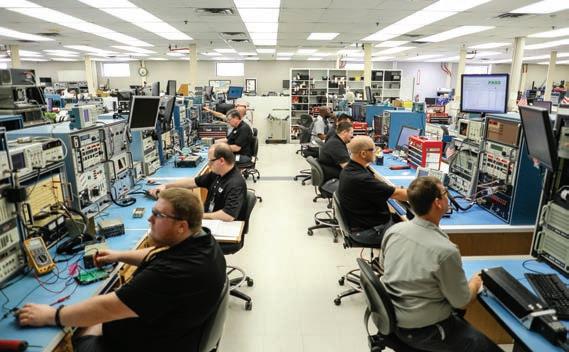

For aircraft owners and flight departments, fuel remains one of the most significant operating expenses. As fuel prices continue to fluctuate, operators are increasingly seeking practical ways to control costs without sacrificing flexibility, service, or efficiency.
For nearly 30 years, the Corporate Aircraft Association (CAA) has helped Part 91 turbine-powered aircraft operators address that challenge through a straightforward approach: leveraging collective purchasing power to secure preferred fuel pricing and operational savings.
Today, more than 13,000 member aircraft participate in the program, benefiting from negotiated pricing through CAA’s network of Preferred FBO partners and aviation service providers. By combining the purchasing volume of thousands of operators, CAA can provide access to discounts that may not be available to individual aircraft owners or smaller flight departments on their own.
“CAA was founded on the belief that operators can achieve greater value when they work together,” says David Scobey, President and CEO of CAA. “Our goal has always been to help members reduce operating costs while maintaining the flexibility and independence that define Part 91 flying. At the same time, we are working to increase the volume of business for our Preferred FBO partners.”
While fuel savings remain the cornerstone of the program, members also have access to a range of aviation related benefits designed to support day-today operations. These include preferred pricing on selected services, trip planning, rental cars, insurance, and sustainability initiatives.
To help operators make informed decisions before every flight, CAA members have access to the CAA Jet Fuel App. This platform offers visibility into negotiated fuel pricing, participating locations, and airport-specific information, enabling pilots and flight departments to evaluate costs and identify potential savings opportunities as they plan their trips.
“Access to accurate pricing information allows operators to make smarter decisions and better manage their operating budgets,” Scobey says. “Having that information available before departure creates greater transparency and helps maximize the value of every flight.”
As operating costs continue to be a focus for owners and flight departments, programs that combine buying power,
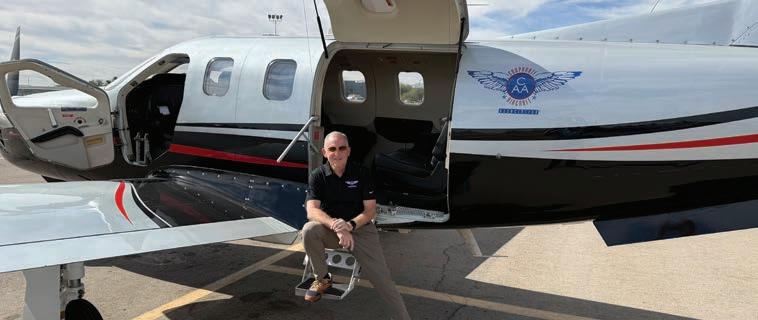
• Lower fuel and operating expenses: on every flight through negotiated member pricing
• Make more informed operational decisions: with access to transparent pricing and trip-planning tools
• Maximize the value of aircraft ownership: through a program designed exclusively for Part 91 owner / operators
technology, and industry partnerships are becoming increasingly important. For many operators, the ability to reduce fuel expenses while gaining access to additional operational resources can have a meaningful impact on annual operation budgets.
CAA offers a FREE 90-day membership, allowing Part 91 operators to evaluate the program and determine how it can support their operational and financial objectives.
For the past 10 years, Engine Assurance Program (EAP) has provided operators of legacy Pratt & Whitney Canada, Rolls-Royce, General Electric, and Honeywell engines and APUs with not only maintenance event cost predictability, but also the parts, rental engines, and AOG expertise they need to keep their valued aircraft flying.
Having decades of experience with legacy aircraft, Sean Lynch founded Engine Assurance Program (EAP) because he, like other owners, was having trouble finding affordable service and parts for various engines and APUs.
Now, 10 years later, with over 350 engines/ APUs enrolled on its program, EAP is one of the largest independent providers of hourly maintenance programs for Honeywell and most models of legacy GE, Pratt & Whitney Canada and Rolls-Royce engines and APUs.
“When you enroll the engines on an hourly program, you also help to ensure the ongoing value of the aircraft,” Lynch, EAP’s managing director, says. “This is especially true for out-of-production models. We are here to fill that void and keep those aircraft flying.” There is a massive trickle-down revenue stream that feeds the entire industry if we can keep these aircraft flying for their entire useful life.
Controlling the rapidly escalating costs of engine maintenance is EAP’s primary focus. Lynch adds that service and parts costs have doubled in the last five years, and the company provides other benefits, like delivering critical parts when others can’t.
“It’s been six years since a customer of ours has had to wait more than 24 hours to get a fuel control unit shipped,” he explains. “It’s routine for other operators to be grounded for weeks waiting for the same part.”
While having the parts readily available is critical, EAP customers still need qualified technicians to install them. That’s why the company created its RAPID TEAM.
“The RAPID TEAM is our commitment to providing the fastest AOG responses for all engines covered by an EAP program, helping to find available vendors to dispatch to the aircraft,” Lynch says. “Parts aren’t much good if you have to wait days to get trained technicians to install them.”
Another advantage EAP’s RAPID TEAM provides is getting the engine’s MRO plugged into the troubleshooting process as quickly as possible. “Their expertise makes it pretty clear what the issue is, and we can then send our technicians out with parts in hand,” Lynch says. “All by itself, that solves the problem days faster than it takes other providers.”
He adds that the benefits of EAP’s RAPID TEAM aren’t limited to AOGs but extend

into scheduled engine maintenance events.
“If you don’t have an expert standing behind you while your engines or APUs are in the shop, you are much more likely to pay more and have longer shop events,” Lynch says. “We have great relationships with all the leading engine MROs, and we all work as partners to solve customer problems faster and more cost-effectively.”
» Supporting many di erent models of engines and APUs SEE THE ENGINES AND APUs WE COVER Visit eap.aero/about or call +1 (214) 350-0877 for a quote.
» Dedicated RAPID TEAM of technicians with the tools and parts to return AOGs to flight faster
» Robust rental engine pool and spares inventory to help customers achieve 99.98% dispatch reliability

Travel to, from, and between the islands is easier than ever with Bohlke Aviation, a Caribbean-based group that has supported travelers and operators for nearly 70 years.
After serving as a military pilot and building and operating Spring Valley Airport, William Bohlke Sr. took off from upstate New York with sights set on bolstering general aviation in the U.S. Virgin Islands. Sixty-seven years later, we know that this choice set the stage for a remarkable influence on Caribbean flying.
“What began as a single operation—and the region’s first FBO—has grown into a wellrounded service portfolio with teams and facilities at four Caribbean airports,” explains Sam Black, Bohlke Aviation’s president. “Our capabilities and longevity, especially as a family-owned group, are truly unique in the local market.”
Reinvesting in client experience remains central to the Bohlke family’s approach. Over the last decade alone, this has led to projects that enhanced employee training, extended after-hours availability, built luxury terminals
and modern fuel infrastructure, secured secondary energy sources, and expanded service offerings.
Today, Bohlke Aviation is the only Caribbean group with in-house FBO, aircraft charter, revenue-generating management, scheduled maintenance, and mobile AOG solutions. Expert personnel and personalized care are available in the U.S. Virgin Islands at STX (St. Croix) and STT (St. Thomas), and in Puerto Rico at RVR (Ceiba) and SJU (San Juan). This range of services, alongside unmatched regional and industry knowledge, creates greater flexibility for travelers and operators. When needs arise or shift, Team Bohlke takes action to accommodate.
“From CSR to CEO, everyone understands their impact on client experience and works together to protect seamless travel,” Black shares. “If you need creative solutions for high-season logistics, a last-minute charter to the states, help with complex catering

orders, guidance on local requirements, or immediate AOG assistance, we have people and resources available 24/7.”
While idyllic destinations and year-round warmth are major draws, Black notes that several factors are bringing people to the islands. In addition to rich history and culture, an abundance of world-class experiences and economic opportunities awaits. No matter the “why,” Team Bohlke aims to provide anticipatory, hospitable care throughout every journey.
“Ensuring first-time and returning travelers are warmly welcomed and well supported is a privilege our team members value deeply,” Black adds. “It shows in our safety-focused, personalized service, and in every on-site and remote interaction. While our group and the industry continue to evolve, we’re committed to these timeless priorities and providing the Caribbean’s leading aviation experience.”
» Full-service FBOs at STX (St. Croix), STT (St. Thomas)*, and RVR (Ceiba)*
» Curated international and interisland private charters operated by M+N Aviation, Inc. and Bohlke, LLC
» Responsive AOG support, provided by sister company TFC Jet Services, a San Juan-based 145 MRO
Whether it’s a simple repair or a complex aircraft upgrade, every MRO visit can be stressful for the aircraft’s owner. Thornton Aviation mitigates that anxiety by combining its 42-plus years of experience with a commitment to fostering a collaborative environment that keeps customers informed and engaged throughout the process.
There are two parts to every MRO project: the technical part, with all its manuals, task cards, and checklists, and the non-technical part, that often times has little to no structured instructions—that’s the part that too many shops struggle with.
“Successful projects depend on more than technical expertise,” explains Thornton Aviation’s Chief Revenue Officer, Don Milum. “Success is the result of seamless collaboration, open communication, and enduring trust. Thornton Aviation’s growth has been built on trust and unwavering commitment to proactive collaboration with our clients and vendors alike.”
“Open collaborations allow us to fully understand what the customer wants and needs before we start planning,” he continues. “It’s also a wonderful aid in helping reduce the customer’s stress if or when we run into challenges during the project. Collaboration and transparent communication eliminate those worries.”
Thornton Aviation’s commitment to collaboration was instrumental in the on-time, on-budget completion of significant upgrades, including the installation of Universal Avionics InSightTM IFD in both Michael Rasa’s Falcon 900B and Freeman Spogli’s Falcon 2000.
“Their team knows our aircraft inside and out, and we trust them to handle both routine maintenance and major upgrades,” says Tyler Thomas, Freeman Spogli’s chief pilot. “The new InSight cockpit from Universal Avionics is a game changer for our operations, and the ALTO Aviation Cadence cabin system upgrade has been very well received by our passengers. It’s rare to find a partner that brings this level of dedication and expertise to every project.”
Another example of Thornton Aviation’s collaborative mindset is its willingness to further an idea proposed by Rasa during early testing of his 900B InSight installation. He suggested an enhancement to the system, which was shared with Universal Avionics Engineering. It is now being integrated into the software update for all InSight IFD customers.
“Success is about relationships,” Rasa says. “It’s doing the right thing and being a man of your word. That’s how I run my business, and that’s what I see in Thornton Aviation.”
“Front-end communication with a customer isn’t any good if you don’t have the same with the people doing the work,” Milum adds. “So many things can impact the ultimate success
» Collaborative approach to the MRO process keeps the customer involved and confident
» FAA Part 145 Repair Station Certificate approvals for over 61 business aircraft types

of any project, and we’ve learned that open communication is the key in any situation.”
“In the complex world of business aviation, Thornton Aviation stands out as a company that values relationships as much as results,” he continues. “Approaching each project with a commitment to trust and collaboration is the only way to achieve consistently successful outcomes and set the standard for what partnerships in aviation can truly mean.”
» MROs at Van Nuys (KVNY) and Burbank (KBUR), with both scheduled and AOG support at Las Vegas (KLAS) Go ahead. Take a look. (818) 787-0205 or visit www.thorntonaviation.com.
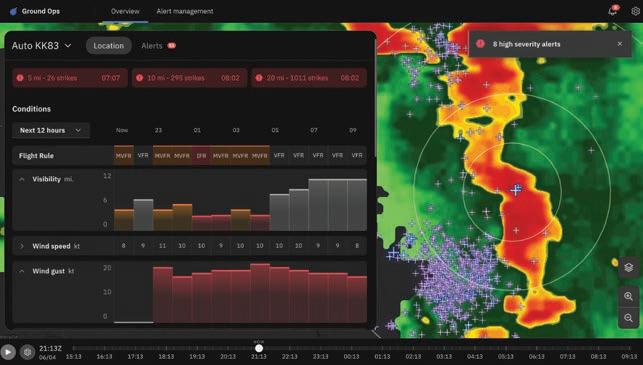
For over four decades, The Weather Company has delivered the industry’s leading weather forecasts and insights to help global aviation transform atmospheric risk into operational resilience.
Modern flight operations require hyper-local, high-fidelity forecasts to ensure safety, protect high-value assets, and maintain schedules. For more than 40 years, the aviation industry has trusted one foundational source to meet those demands: The Weather Company.
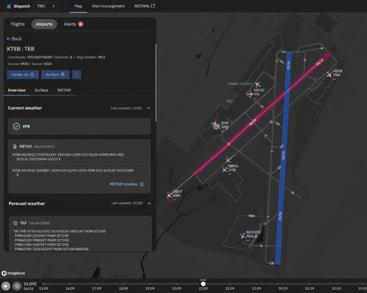
“Many know us for our consumer apps, but aviation is a core pillar of our business,” explains Ravi Vanmali, Senior Vice President of Aviation. “Every day, over 25,000 commercial flights rely on our data. With our new Maverick® ecosystem, we are bringing that same enterprise-grade precision directly to the unique demands of business aviation.”
Optimizing a modern business fleet requires specialized tools. Maverick leverages advanced AI and machine learning to re-engineer robust weather data into tailored, context-aware insights delivered precisely when flight crews, ground operations teams, or dispatchers need them.
The Maverick portfolio streamlines data complexity, filtering out the noise to eliminate “alert fatigue” and reduce cognitive load. Instead of requiring crews to manually sort through hundreds of disjointed NOTAMs and SIGMETs, the AI-driven system aggregates and summarizes the critical information needed for specific flight paths via Maverick Dispatch and Pilotbrief ® Safety is further modernized through Maverick WXAlert™ and Maverick Ground Ops™, which leverage real-time turbulence and lightning detection to protect assets and save time.
To complement this digital workflow, The Weather Company also offers custom Weather Forecast Services, placing expert aviation meteorologists directly inside corporate flight departments for real-time consultation.
“Ultimately, our innovation is measured by its impact,” Vanmali says. “If we aren’t helping flight departments operate more safely, efficiently, and predictably, nothing else matters. That’s what Maverick is built to do.”

» Proven Global Scale: Over 40 years of expertise; more than 25,000 daily flights rely on The Weather Company’s data to power safe, e cient operations.
» A Widening Accuracy Lead: Recognized as the world’s most accurate forecaster—and our lead is growing, widening from 2X to nearly 4X over the next-best provider between 2017 and 2024, even as competition intensified. 1
» Purpose-built Innovation: Introducing Maverick®, a sophisticated suite of advanced aviation weather products optimized for business and commercial workflows.
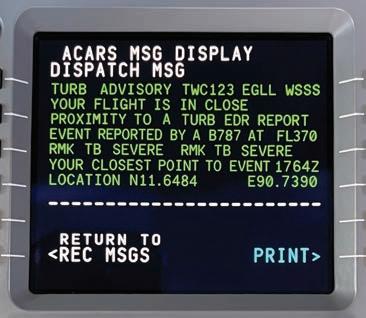

Since 1992, King Aerospace has carved out a unique niche by combining decades of experience supporting the country’s most critical government and military aircraft in service, including the U.S. presidential fleet, with a growing portfolio of services for Boeing Business Jets (BBJs) and other corporate and VIP aircraft
That overlap between those markets has become one of King Aerospace’s greatest strengths. Chief Operating Officer Sam Jackson credits company Founder and President Jerry King’s prior experience running a large VIP aircraft maintenance and completions center before founding his own company more than 40 years ago.
“This isn’t a segment of the aviation maintenance world that you just want to jump into,” Jackson said. “Customers expect no issues, no faults, no discrepancies. They expect a perfect aircraft rolling out.”
That is also true when supporting military and government aircraft used in missile testing, the nation’s nuclear program and special operations in hostile environments, among other missions. Precise standards, demanding regulations and multiple, rigorous inspections are all part of ensuring optimal quality and readiness.
“We provide that same commitment to our corporate customers,” Jackson continued. “That includes a ‘no excuses’ approach to quality and to taking ownership. It’s all in this company’s DNA.”
Or, as King himself often says, “Our job is to make a significant difference in the lives of others. We just happen to work on airplanes.”
King Aerospace has also earned a strong reputation in the Boeing Business Jet operator community. Jackson noted the company
counts more than 60 percent of the total U.S. BBJ market as customers.
“We ensure that they have a reliable and quality aircraft, and we also help them see what might be coming down the road,” he said. “That helps them operate their fleets not only safely, but also efficiently.”
That forward-looking support can range from promptly addressing service bulletins and regulatory issues to long-term planning decisions affecting aircraft upgrades and operations. “We continue to refine our expertise in that area,” Jackson said. “That’s a good thing for us, and it only gets better every day.”
Ron Soret, the company’s senior director for special projects, sees that crossover firsthand with the King Aerospace “Road Show,” a dedicated team that works on-site at customer locations to support specialized aircraft projects. “The requests that we’re seeing come through require us to be adept in both fields,” he said.
For example, one recent assignment involved major structural repair work on a military platform alongside interior refurbishment work on a VIP aircraft operated by the U.S. government. Projects like these require technicians capable of moving seamlessly between military maintenance work and high-end interior refurbishment.
“Besides the mechanical, structural and avionics skills needed for the majority of the programs,” Soret noted, “we also have to be able to draw from some of our [business aviation] resources to work on interiors and maintaining some of these VIP aircraft assets that belong to our government.”
The result is an organization able to blend military precision with corporate aviation responsiveness. According to Soret, the overlap between government and business aviation customers is often closer than many people realize.
“Many of the military aircraft we work on are based on civilian platforms,” he said. “The work we do is not mutually exclusive to either the government or the commercial side.”
While King Aerospace offers maintenance, repair and interior refurbishment services for a wide variety of private jets, the company is also known for its premier paint services on aircraft ranging from Citation jets to executive transports, including the U.S. presidential fleet.
The company has also expanded its collaborative approach within the BBJ market, including its recent hosting of a BBJ Operators Forum that brought together operators, pilots, maintainers and technology providers in an informal setting to discuss operational challenges, maintenance issues and future upgrades.
“Anytime you can get a group of people together who have a common theme in any realm of life that you can learn from someone else, it’s always a good thing,” Jackson said. “We’ve managed to create an environment where customers can openly share both successes and frustrations.”
Those discussions also help operators make smarter long-term planning decisions. “Shar-
“ Our mission is to make a positive difference for those we employ, those we serve and those we encounter. It’s not about sales or growth, but about living the principles and values we profess. ” – Jerry King, Chairman and Founder

ing ideas is always a good thing,” Jackson said. “When you bring together diverse opinions and diverse viewpoints on tackling a problem, you can sit down and discuss ways to resolve the situation while also making gains.”
King emphasized the company’s success in both the private and government aviation sectors is driven by “King Kulture,” rooted in the fundamentals of servant leadership. “Our mission is to make a positive difference for those we employ, those we serve and those we encounter,” he added. “It’s not about sales or growth, but about living the principles and values we profess.”
“Our goal is to stay hungry and humble at the same time,” Jackson added. “You get to the size of [the country’s largest aerospace and defense companies] and you’re not near as nimble as you once were.
“Well, we are that little guy,” he concluded. “The Titanic can’t avoid an iceberg, but we’re that 27-foot Mercury with two 250s on the back. We can zip around an iceberg pretty quick.”
» King Aerospace o ers customers the combination of the rigorous standards demanded by the U.S. military and presidential fleets with VIP-level customer service
» The company now supports more than 60% of the U.S. BBJ market by o ering not just expert maintenance, paint and interiors services, but also strategic operational guidance
» King Aerospace di erentiates itself from larger competitors through agility, diversity and the ‘King Kulture’ of servant leadership

While other satellite networks may struggle with balancing the data congestion from commercial and millions of residential users, Eutelsat’s OneWeb low-Earth-orbit (LEO) constellation is designed to exclusively serve the high-speed, high-reliability global connectivity needs of enterprise and mobility customers, and deliver a better experience to business, commercial, and military aviation users.
In the past few years, satellite and terrestrial high-speed connectivity technologies have advanced at a rate that would make Moore’s Law envious. But that doesn’t mean every user’s in-flight experience is as good as they expect. Too often, network performance is severely degraded to the point that the passengers become disconnected.
Thanks to Eutelsat’s OneWeb network, a low Earth orbit satellite constellation with global services, today, flight crews and passengers can enjoy a greatly enhanced in-flight connectivity experience – with high-speed, low-latency connectivity that enables the use of modern-day applications, no matter the location or altitude.
“Our LEO connectivity solution is redefining what’s possible for business aviation, and
users benefit from consistent performance throughout the flight,” explains Eutelsat’s Head of Business and Government Aviation, Jason Sperry. “Passengers and crew increasingly expect the same fast, reliable connectivity in the air that they rely on at home and in the office. The result is a truly seamless and dependable onboard connectivity experience.”
Speaking of “connected,” Sperry says that Eutelsat is the exclusive LEO satellite network partner for Gogo’s new Galileo global connectivity solution.
“Gogo is a great partner with a rich history for delivering an exceptional online experience and unmatched customer support,” he adds. “We worked closely with Gogo’s engineers to design the compact HDX electronic steered array an-

» Only LEO constellation designed to deliver the reliability and performance aviation requires
» Seamless coverage across polar and equatorial routes enables global high-speed connectivity
» Proprietary satellite network enabling Gogo’s new Galileo highspeed connectivity solution
tenna, which is compact enough to bring global, broadband connectivity to any business aircraft.”
By operating much closer to Earth than geosynchronous (GEO) satellites, Eutelsat’s LEO OneWeb network delivers greater reliability, lower latency, and higher speeds, resulting in a richer, more responsive user experience and forever changing user expectations for inflight connectivity.
As Sperry explains, “With OneWeb LEO, latency-sensitive applications like video conferencing and live streaming applications can now perform as well in the aircraft as they do anywhere in the world.”
Eutelsat is investing in an LEO constellation that will serve the aviation sector over the long term. Today, the OneWeb constellation has more than 600 LEO satellites in orbit, with another 440 scheduled to launch in the coming years.
Beyond 2030, the company plans to expand its constellation further through the new European IRIS² program, delivering additional capacity and capabilities to ensure operators can continue to rely on Eutelsat.
Sperry says, “No matter where they are in the world, we consistently hear how excited and satisfied our customers are to have Gogo Galileo and the OneWeb network on their aircraft today.

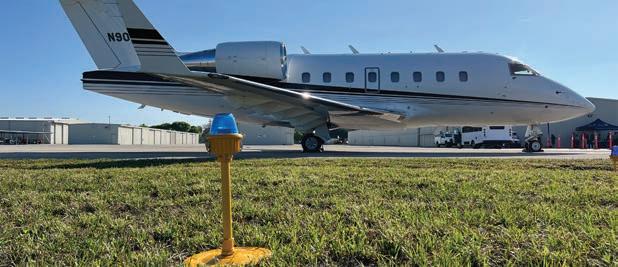
New proposed airfield light.

Rendering of new Vault Replacement.
Recognizing the critical role the airport plays not only in the region’s growing economy but also in posthurricane recovery efforts, the Naples Airport Authority is investing millions to ensure the airport is readily available to serve the community, no matter what Mother Nature sends its way.
Located just four miles from downtown Naples and all the social and recreational amenities, Naples Airport (KAPF) is the go-to destination for anyone wanting to enjoy all that Florida’s ‘Sun Coast’ has to offer.
But that convenience comes at a cost. Naples Bay, which opens into the Gulf of America, is just a ‘stone’s throw away’ from the threshold of runway 23. So, when a hurricane strikes, between the heavy rainfall and ensuing storm surge, the airport can quickly find itself under feet of standing water.
As the Executive Director of the Naples Airport Authority, Chris Rozansky explains, the airport is not only critical to the success and continued growth of the community but has also played a key role in post-hurricane recovery efforts by providing a staging point for first responders.
But unfortunately, the airports’ barelyabove-sea-level elevation means recovery efforts can be stalled by standing water on runways and roads – not to mention the high cost of flood-related repairs.
“We’re undertaking a multifaceted approach to bolstering the resistance and resiliency of all of the airport’s facilities,” Rozansky says. “We’ve invested a lot of time and money implementing a program that will ensure that the airport is resilient and available when our residents need us the most.”
Four of the projects highlighting the extensive ‘storm-resiliency’ program include:
• Purchasing 3,000 linear feet of Tiger Dam, a water-filled, anchored, flood barrier system to help protect the airport’s buildings, vital equipment, and technologies against water intrusion.
• Airfield lighting rehabilitation and electrical vault replacement, including raising all runway and taxiway lighting to 20 inches, and installing 1,100 watertight, LED lights.
“We’re also going to run all the underground cabling through conduit and install a new experimental freshwater system to flush out corrosive saltwater,” Rozansky explains. “In addition, we’re elevating all of the generators and power controls to keep them above storm surge levels.”
• Modernization of the safety systems, access roads, and operations facilities for the airport’s fuel farm, which will include a dedicated storage tank for sustainable aviation fuel (SAF).
» Convenient access to downtown Naples, luxury resorts, and “Sun Coast” amenities
» Nearly $26M for runway lighting, storm water containment, fuel farm, and other upgrades
» Beginning North Road Terminal Phase II update to enhance the overall visitor experience
• The airport has been actively replacing windows, hangar doors, and modifying various structures to accommodate the current code of withstanding 170 mph winds.
“Everyone involved with the Naples Airport Authority is focused on safety and service excellence from arrival to departure,” Rozansky adds. “That includes enhancing the resiliency and readiness of our facilities, people, and equipment to be here when they are needed the most.”
Founded on the belief that MRO’s services should be focused on safety, responsiveness, and the operator’s needs. Empire Aviation USA has grown from one FAA Part 145 repair station into a broad mobile maintenance support network serving more than 500 customers across the U.S.
Empire Aviation USA was founded on a simple idea: build an MRO around solving real customer problems safely and efficiently.
“Aircraft operators have long struggled with MROs that expected customers to adjust their expectations to fit the service providers’ model. “That’s not the way we’re built,” explained Mike Barley, a founding partner at Empire Aviation USA. “Our commitment is simple: deliver timely, safe, and compliant maintenance solutions that meet our customers’ needs”.
Today, from its FAA Part 145 repair station at Palm Beach International Airport (KPBI), Empire Aviation USA provides maintenance, inspection, and repair support for Part 91 and Part 135 aircraft operators within its approved ratings, procedures and capabilities.
“Because we’re focused on supporting the needs of our customers, we continue to build practical, flexible maintenance solutions across the aircraft, engine, and avionics platforms we are approved and equipped to support,” Barley said. “Where permitted under our FAA-approved procedures, we can deploy mobile AOG support to assist customers away from our repair station while maintaining safety, compliance, and proper return-to-service standards.”
Whether it’s an AOG event or maintenance support away from the company’s fixed repair station, delivering flexible solutions requires qualified technicians, approved procedures, and disciplined oversight.
“Working around an operator’s needs and schedule is a more flexible approach to business aircraft maintenance,” Barley explained. “Through our mobile AOG support
teams, we can often bring qualified technicians, tools, and technical expertise to the customer’s aircraft, with the goal of reducing downtime and schedule disruption without compromising safety, compliance, or quality.”
Because aviation is a relationship-based business, Barley stressed that Empire Aviation USA’s customers trust the company’s technicians for their commitment to safety, technical discipline, transparent communication, and accountability.
“No matter the situation, we don’t promise what we can’t deliver,” Barley said. “We understand that aircraft owners want their aircraft returned to service safely, properly, and as efficiently as possible. Every commitment we make is focused on that outcome.”

“ Our commitment is simple: deliver timely, safe, and compliant maintenance solutions that meet our customers’ needs”
“We’ve seen too many MROs built around what is easiest for the provider,” he concluded. “We’ve built Empire Aviation USA around supporting the customer’s needs — safely, responsibly, and with the flexibility today’s operators expect. That alone sets us apart.”

» 100% commitment to deliver customer-centered MRO solutions for Part 91 and 135 operators
» Scheduled inspections, airframe, engine, and avionics maintenance and repair support within Empire Aviation USA’s approved ratings, procedures and capabilities.
» 24/7 mobile AOG support, with teams strategically positioned in key service markets to provide rapid-response maintenance support at more than 75 airports.
Rooted in Embry-Riddle Aeronautical University’s leadership in aviation education, the school’s Worldwide & Online Campus’ College of Business provides a career-focused platform for aviationminded professionals to earn an advanced degree and achieve their highest levels of professional success.
There’s no debating that from manufacturing to airport development to the emerging Urban Air Mobility market, every sector of aviation is experiencing unprecedented growth. The problem is that there aren’t enough professionals with real-world insights to help guide these various programs to success.
Embry-Riddle Aeronautical University’s Worldwide College of Business is providing a solution. With global access to top instructors and an industry-focused curriculum, it equips aviation-career-minded professionals with the tools to develop the skills and knowledge the industry demands, without upending their current jobs or family lives.
“The online programs deliver flexible, career-focused education designed for students balancing professional and personal commitments. Now they can learn anywhere, anytime,” explained Dr. Aaron Glassman, Fellow of the Royal Aeronautical Society (FRAeS), Department Chair and Associate Professor in the Department of Management at Embry-Riddle Aeronautical University. “Graduates of the College of Business are prepared to advance their careers, lead within their organizations and quickly adapt to the evolving demands of today’s aviation business environment.”

Graduates from Embry-Riddle Aeronautical University’s Worldwide & Online Campus. (Photo/ Embry-Riddle Aeronautical University)
WHO HAVE “BEEN THERE AND DONE THAT.”
One way Embry-Riddle helps ensure that graduates of the Worldwide College of Business achieve the success they want is the unique way that the classes are structured. This isn’t “textbook-based” learning.
“I like to tell people that we have built a ‘Day in the Life’ curriculum that concentrates on what they need to know to do a job,” Glassman said. “For example, if someone is studying airport management, the classes are taught by someone who did that job. There’s complete alignment between the curriculum and the requirements of that career.”
And it’s not only the hard skills that receive emphasis. He explained that in ‘softer’ areas like leadership, the programs stress meeting the challenges of today’s workforce. “You aren’t going to be a successful leader using yesterday’s techniques. Today’s forward-facing workforce has different goals, motivations and incentives. Good leaders need to be ready to meet those needs,” Glassman said.
“And beyond our academics, being part of Embry-Riddle’s College of Business fosters a strong sense of connection and collaboration with peers from diverse backgrounds and industries,” he continued. “With tens of thou-
sands of alumni around the world, that’s a huge part of our value as an institution now.”
“It’s an extension of your professional ‘family,’” Glassman said. “It’s a community with shared values, shared goals and an extraordinary list of achievements that touch all corners of someone’s career and life. Not many groups have that connection.”
» Aviation-focused curriculum created to achieve successful solutions to ‘real-world’ challenges
» Embry-Riddle’s Worldwide Campus enables students to earn a career-enhancing degree while continuing to work
» Study with instructors who have current experience in the career you are working toward
BY MATT THURBER
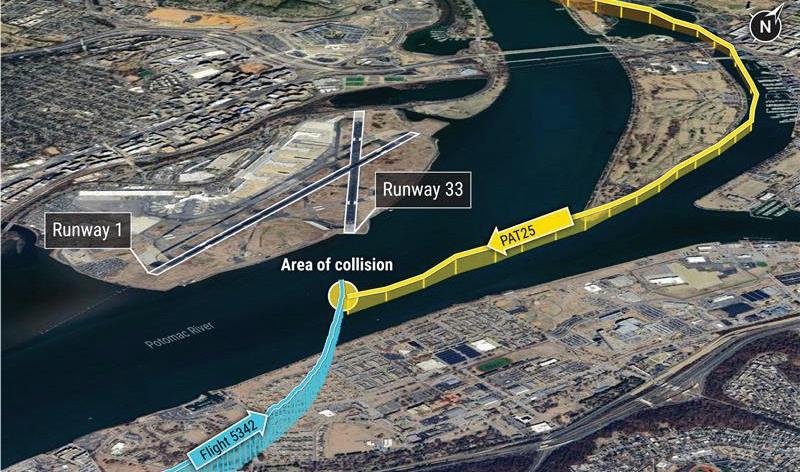
The deadly Jan. 29, 2025 midair collision has spurred e orts to require installation of new collision-avoidance systems.
In the wake of the midair collision near Ronald Reagan Washington National Airport (KDCA) on Jan. 29, 2025, NTSB recommendations spurred two pieces of congressional legislation that have put a spotlight on collision-avoidance systems: the ROTOR Act and the ALERT Act. The ROTOR Act passed the Senate in December but failed in the House of Representatives, and the ALERT Act passed in the House in March. At press time, the respective bills were undergoing a House/Senate Conference, but substantial debate swirled around how to mandate ADS-B In and/or ACAS X. Both acts address the installation of these systems, but differ
in the specifics of requirements and the timelines. In the end, operators are facing a mandate to install at least ADS-B In but possibly ACAS X as well.
The simplest place to begin is with the NTSB’s recommendations on collision avoidance, although these are just a handful of the dozens that address many different aspects that surfaced during the investigation of the accident. Basically, the NTSB believes that aircraft flying in airspace where ADS-B Out is required should be equipped with ADS-B In and a
cockpit display of traffic with audible alerts. The board also wants aircraft that require TCAS installations to be retrofitted with ACAS X, or installed in new production aircraft, and for ACAS X to provide more information. This would include exploring lowering the inhibit altitude for traffic advisories (TAs) and resolution advisories (RAs), a feature that was highlighted in the KDCA midair collision. Accordingly, the NTSB recommendations state:
» Modify airborne collision avoidance system traffic advisory aural alerts to include clock position, relative altitude, range, and vertical tendency.
» Require existing and new traffic alerting and collision avoidance system (TCAS) I, TCAS II, and airborne collision avoidance system (ACAS) X installations to integrate directional traffic symbols.
» Require all aircraft operating in airspace where Automatic Dependent Surveillance–Broadcast (ADS-B) Out is required to also be equipped with ADS-B In with a cockpit display of traffic information that is configured to provide an audible alert to the pilot and/or flight crew.
» Require the use of the appropriate variant of ACAS X on new-production aircraft that are subject to TCAS equipage regulations.
» Require existing aircraft that are subject to TCAS equipage regulations to be retrofitted with the appropriate variant of ACAS X.
» Evaluate the feasibility of decreasing the tra ffi c advisory and resolution advisory inhibit altitudes in ACAS Xa to enable improved alerting throughout more of the flight envelope.
» If the evaluation resulting from the safety recommendation finds that the inhibit altitudes can be safely decreased, require retrofitting of the applicable ACAS X variant incorporating the reduced traffic advisory and resolution advisory inhibit altitudes on all aircraft that are subject to TCAS and equipage regulations.
» Require that all rotorcraft operating in Class B airspace be equipped with ACAS Xr technology once the ACAS Xr standard has been published.
TCAS is simply one implementation of an overarching concept called the airborne collision avoidance system (ACAS). Collision avoidance is the final layer in the conflict management model, as explained by Eurocontrol, and comes into play when the previous two layers—involving air traffic control—have failed.
It was a midair collision on Aug. 31, 1986, when a Piper Cherokee ran into an Aeromexico DC-9 over Cerritos, California,
that spurred Congress to mandate TCAS II in U.S. airspace. Development of TCAS accelerated after the 1956 midair collision of two airliners over the Grand Canyon. Bendix Aviation scientist John Morrel had published a white paper on a collision avoidance concept a month before the accident, but it wasn’t until about two decades later that the technology translated into full-scale production. Implementation, as is often the case, came about after the Cerritos accident.
For the systems installed in aircraft, the latest standard is TCAS II version 7.1. But a successor to TCAS, ACAS X, has been developed, and the baseline variant, ACAS Xa, is designed to replace TCAS II version 7.1. ACAS Xa builds on TCAS II with new functionality that should make the system more capable, and it should address some of the NTSB’s concerns.
The improvements of ACAS X stem from recommendations the RTCA made in 2012, and these include reducing unnecessary RAs and incorporating ADS-B In. According to Eurocontrol, “Instead of using a set of hard-coded rules, ACAS X alerting logic is based upon a numeric lookup table optimized with respect to a probabilistic model of the airspace and a set of safety and operational considerations. The ACAS X probabilistic model provides a statistical representation of the aircraft position in the future. It also takes into account the safety and operational objectives of the system, enabling the logic to be tailored to particular procedures or airspace configurations.”
However, ACAS X in its present form isn’t too much different from TCAS II in the way traffic is presented to the pilot, according to Cam Morast, product manager at ACSS, a manufacturer of TCAS systems.
“The initial impetus for designing the ACAS X variant was to address the evolving airspace where we’ve now got aircraft that do unpredictable things, such as UAVs and helicopters,” he explained, “and allow a
more prescribed response to potential aircraft-to-aircraft conflicts. So instead of just a climb or descent response that you’re used to with the existing TCAS II implementation, you now have lateral maneuvers that could be injected into the pilot’s reaction options. To consider those additional options…you need a different alerting algorithm…and many more options for the resolution, for the response [by] the pilot, so that was the motivation. It is envisioned to be less nuisance-prone, so that was another motivating factor in redesigning that architecture, and that’s not a huge leap forward in functionality…but is more of an architecture that supports further growth.”

TCAS displays traffic as diamonds, circles, and squares, but there is no directional information similar to what is displayed with ADS-B In traffic. The diamonds show proximate traffic that is non-threatening, with the unfilled shape meaning no immediate danger and solid for traffic within 6 nm and plus/minus 1,200 feet. Yellow circles indicate a TA situation, where an aircraft is a potential threat, but the pilot needs to take no action other than look for the target. An RA is shown by a red square and comes with audible commands that pilots are required to follow to avoid a collision, as well as guidance on the primary flight display if equipped. The commands are vertical-only, such as “climb,” “descend,” or “adjust vertical speed.”
ACAS X will add lateral maneuvers to the mix, which should make it more
flexible, but on the whole, explained Morast, the intent with the ACAS X design standards is to make the functionality not much di ff erent to minimize training impacts during the transition to ACAS X. The technology does offer the opportunity for further improvements, however, and one that may result from the KDCA midair collision would be to reduce the alerting altitude. The midair collision happened below the altitude where TCAS is inhibited, and ACAS X may change that altitude as a result of congressional action.
ACAS X is not one system but, due to the nature of upcoming types of airborne traffic, accommodates a variety of systemlevel capabilities.
» ACAS Xa will be the main system replacing TCAS II, where required. It is already approved for operation in European airspace, although systems are not yet deployed.
» ACAS Xo is an extension of ACAS Xa that will enable certain operations, such as closely spaced parallel approaches without excessive nuisance alerts.
» ACAS Xu is for uncrewed aircraft.
» ACAS sXU is for small uncrewed aircraft with wingspans of fewer than 50 feet.
» ACAS Xr is for rotorcraft.
» ACAS Xp is passive surveillance, envisioned as a system that uses ADS-B In to track intruders and doesn’t include active interrogations of transponder signals from other aircraft. This is intended for smaller aircraft.
ACSS is developing ACAS systems, but at present, the focus is on ACAS Xu for programs with Northrop Grumman and Lockheed, according to Morast. ACAS X is effectively mandated in the commercial and general aviation segments (where TCAS II is required, for example, for business jets) because the FAA

has included the ACAS X technical standard order in the applicable minimum operational performance standards, he explained. However, ACAS Xa will be required only on newly type-certificated airplanes, in other words, not a new airplane that is certified under an amendment to an earlier type certificate, but a clean-sheet, new type certificate. That effectively means that the aviation industry will not see ACAS Xa implemented until the 2035 to 2040 timeframe, Morast tol d AIN
Congress has the option to accelerate this timeline if politicians decide to vote for something like the ROTOR or ALERT Acts, or a combined version of them. Otherwise, the FAA could begin the rulemaking process, which takes many years but is the only other way new rules are implemented. AIN asked the FAA if anyone has submitted a petition for rulemaking to make ADS-B In mandatory, but the agency suggested that AIN use the Freedom of Information Act process to find that information. AIN also asked Tim Lilley, a pilot and safety advocate whose son Sam was one of the two pilots killed in the DCA midair, if he had submitted a petition for
rulemaking, and he said, “We haven’t gone that route yet.”
The FAA, which could begin the rulemaking process on its own, told AIN, “The FAA supports ADS-B In and technologies like it that enhance situational awareness and safety.”
It appears that ACSS is the sole major avionics company making ACAS X-type equipment at this point. None of the other avionics manufacturers that make TCAS equipment responded to AIN ’s query about their ACAS efforts. There are others, however, such as Reliable Robotics, which has developed ACAS equipment for its work on uncrewed general aviation airplanes for cargo operations.
This work gives ACSS a head start in developing various forms of ACAS, according to Morast, and the company plans to certify ACAS Xu (for uncrewed aircraft) in 2027 and ACAS Xr (rotorcraft) around 2029. “We’re well-positioned to certify ACAS Xa, when that [timeframe] is required,” he said.
For some time, it seemed as though ACAS X plans were dormant. “But now with the ALERT Act, our phones have been ringing. [Asking], ‘What’s this ACAS X
they’re talking about? Who has it? When’s it going to be available?’”
There is a fundamental difference between ACAS and ADS-B In, and that is the RA instruction feature of ACAS (currently TCAS II). “TCAS II has been around for a long time,” said Scott O’Brien, v-p of legislative affairs at Reliable Robotics. “It’s a great safety-enhancing technology. Whereas ADS-B In is providing traffic alerting, TCAS II is actually providing a traffic resolution advisory, telling the pilot they have to climb or make an aversion move to avoid traffic. On its face, TCAS II is a more robust technology than ADS-B In, and that’s why it’s required on larger aircraft.”
It should be noted that, contrary to some reports, both the ROTOR and ALERT Acts call for implementation of ACAS X and ADS-B In. The ALERT Act would require ADS-B In for all turbine aircraft that already must be equipped with ADS-B Out and all civil aircraft flying in Class B and C airspace by Dec. 31, 2031. The ROTOR Act has a similar timeline, but for a broader class of aircraft types.
As for ACAS X, the ALERT Act calls for a rulemaking committee to address whether more aircraft types would require ACAS Xa, while the ROTOR Act would require the FAA to develop an ACAS X action plan.
Realistically, nothing is going to happen soon with ACAS X, regardless of the congressional language. As ACSS’ Morast pointed out, ACAS X isn’t expected to enter service until sometime in the 2030s at the earliest.
O’Brien agrees that the ACAS X will be beneficial, especially the lower-altitude RA capability, which would have been helpful in the KDCA accident. However, he also noted, “Our position is that having broader equipment with ADS-B In and Out is beneficial. We as a country should be working towards having broader ADS-B-In equipage.”
But there are other aerial vehicles, such as balloons, gliders, ultralights, and drones, that might not carry the transponders that trigger ACAS/TCAS and ADS-B In, and Reliable Robotics needs to worry about these because its uncrewed aircraft will be flying in the same airspace. “So [our airplanes will have] an air-to-air radar that’s paired with ACAS Xu, and that is enabling us to have a capability where, if it has ADS-B Out, if it has TCAS, if it has nothing, we—to an extremely high level of safety—are going to, with our radar, detect that traffic and then avoid it.”
Nevertheless, he added, “For new entrants, ACAS X is a really important technology, because this is how eVTOLs and other technologies are going to integrate into busy airspace. So having legislation that promotes ACAS X is beneficial for safety of the current aircraft we have,

FreeFlight Systems RANGR-IQ ADS-B system can include TCAS II integration.
and it’s helping invest in a technology that is going to enable new entrants to better integrate into the [national airspace].”
There appears to be widespread acknowledgment of the benefits of ADS-B In.
On February 26, less than a month after the KDCA midair collision, the NTSB urged

the FAA to “require all aircraft operating in airspace where ADS-B Out is required to also be equipped with ADS-B In with a cockpit display of traffic information that is configured to provide alerting that is audible to the pilot and/or flight crew. To provide the same situational awareness advantages to military flight crews, the NTSB recommends that the Pentagon require all military aircraft operating in the national airspace be equipped with ADS-B In with a cockpit display that is configured to provide alerting audible to the pilot and/or flight crew, and that such a requirement apply wherever the FAA requires any aircraft to operate with ADS-B Out.”
According to Tim LeBaron, director of NTSB’s office of aviation safety, “We conducted a year-long investigation, published over 19,000 pages of evidence in our public docket, and issued 74 findings and 50 recommendations aimed at preventing another tragedy and saving lives. Efforts to now water down our evidence-based recommendations are counter to safety and dishonor the lives of 67 people who died on Jan. 29, 2025.”
ACSS parent company Acron Aviation conducted research to assess the current state of ADS-B In awareness. Given the potential for the ALERT Act to become law, which would mandate ADS-B In equipage by Dec. 31, 2031, Acron surveyed 100 U.S. airline leaders about ADS-B In.
The survey revealed that 47% “report their airlines have already equipped some of their fleet with ADS-B In, with a further two in five (40%) actively evaluating it; 86% “say they are prepared to comply with a mandate within three years; “Yet over half (51%) of the professionals responsible describe their knowledge of ADS-B In as general or less.”
One-third of the respondents did not understand the difference between ADS-B Out and In, according to the survey. “Awareness of the specific benefits ADS-B In brings is also weak. The headline
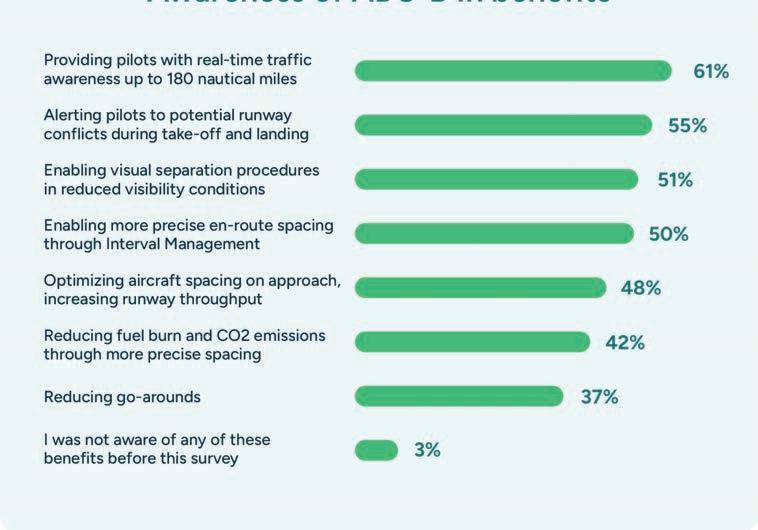
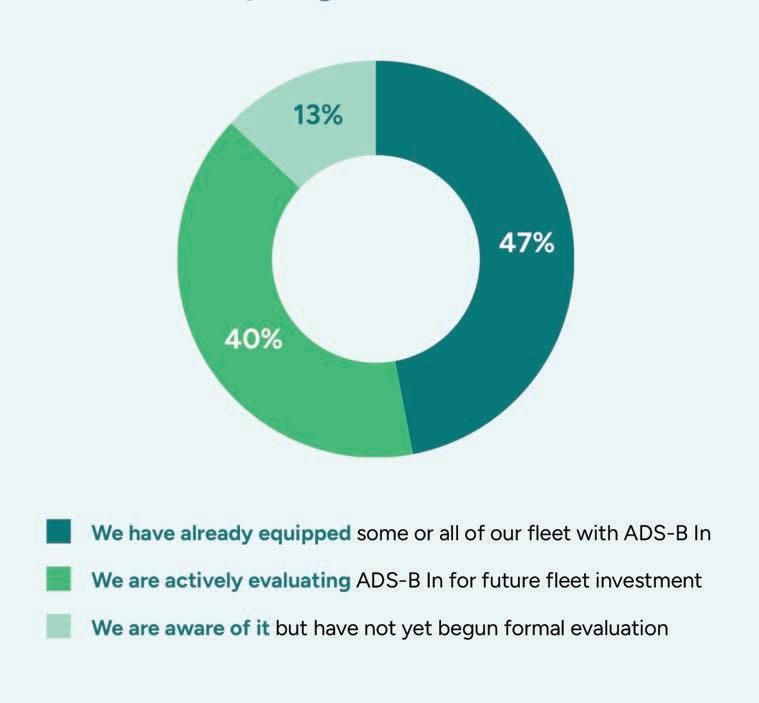
benefit, real-time tra ffi c awareness up to 180 nm, is known by six in 10 (61%). Half (50%) are aware of interval management for en-route spacing.
“Fewer know about the operational gains: two in five (42%) on reduced fuel burn and CO 2 decreases, and just over a third (37%) on the reduction of go-arounds. To be expected, “Cost is the leading barrier to investment, cited by 38%, followed by competing capital priorities (33%) and the absence of a regulatory mandate (26%). A quarter (25%) cite insufficient awareness of the technology itself.”
While airlines tend to balk at upgrades that are not regulatory mandates, the benefits of ADS-B In have been well proven by American Airlines, which conducted an extensive test of the technology. “ADS-B In can be installed in as little as one to two shifts,” said ACSS’ Morast, “so there’s no lengthy downtime for aircraft. In addition, fleets equipped with the technology will see meaningful operational returns. The twoyear FAA evaluation at Dallas-Fort Worth with American Airlines logged an average 12-second reduction in arrival spacing, equating to four to five extra landings per hour, per runway, with 490,000 pounds of fuel saved in the first year alone, and zero separation-related safety incidents.”
FreeFlight Systems, also an Acron Aviation company, was a pioneer in ADS-B Out and In technology and offers relatively low-cost and capable products for light aircraft to airliners and uncrewed aircraft.
The RANGR-IQ fuses ADS-B In and ACAS “to give pilots better situational awareness,” according to president Anthony Rios, “with all targets on one display. We think this is critical when you have different aircraft mixing togeether, giving pilots a full picture of all the traffic.”
RANGR-IQ, which works with the Arinc 735B TCAS and ADS-B specification, can easily be updated to work with ACAS X, according to Behlul Poonawalla, v-p of products, contracts, and programs. FreeFlight has tested compatibility with
existing and upcoming avionics that can accommodate Arinc 735B, including Collins Aerospace’s Pro Line 21, Avidyne’s products, and Honeywell’s new Anthem suite. “The Arinc standard enables a great amount of integration,” he said.
Lacking that Arinc 735B capability, however, doesn’t preclude the benefits of a product like RANGR-IQ. An aircraft can retain the original TCAS display in the instrument panel, while fused TCAS/ACAS traffic can be displayed on an electronic flight bag (EFB). Universal Avionics, for example, has demonstrated this capability with its FlightPartner EFB ( see image on page 52).
FreeFlight can also provide audible traffic alerts, Poonawalla explained, via the aircraft’s audio system. As for interest from aircraft manufacturers and operators, he added, “Conversations with OEMs are going on. We sit well in the cost factor.”
When ADS-B Out was mandated by 2020, there wasn’t an appetite for including ADS-B In in those rules. For ADS-B Out, even though it was a mandate, “There was a lot of pushback by the airlines,” he said, “because while it helped modernize our air traffic control management, it was really only beneficial to ATC. It didn’t bring the airlines anything; they were forced to spend money, install new equipment, but they didn’t get any real benefits out of it.”
Morast believes that airlines and other operators would have seen much more of a benefit had ADS-B In been part of the 2020 mandate. “Use of GPS as a position point for traffic is a leap forward from the ground radar tracking of aircraft. ADS-B just mandated that aircraft now broadcast their precise position and intent at one-second intervals.

“ACSS has been developing ADS-B In solutions since 2008, where we put that receiver in the flight deck, and now we give the pilots that information. Our intent, admittedly, was more on operational e fficiencies, so there were ADS-B In applications that in concept save fuel and time, and have more efficient arrival operations. It wasn’t really seen as a safety tool until the NTSB investigation around the KDCA accident highlighted the situational awareness improvement that ADS-B In and the display of ADS-B traffic in the flight deck brought to pilots.”
So while many people and aviation groups are urging the government to mandate ADS-B In, Morast said, “It’s an industry that doesn’t move really quickly, and it’s a safety-focused industry, so there are some challenges in getting something deployed that quickly. I think that’s the path we’re on right now, to look at more broader ADS-B In equipage, and that, in my opinion, is the leap forward that either the ROTOR or the ALERT Act would bring to the industry.”
However, while the ROTOR Act seems to focus more on ADS-B In, the ACAS X display of directional traffic symbology comes only with ADS-B In information. “There’s no feature of ACAS X that does that without ADS-B,” he said. “It is ADS-B information that’s brought to the flight deck to allow directional display of traffic symbology, and that again is the leap forward.
ADS-B In. “The Jan. 29, 2025, crash near Washington National Airport, which killed 67 people, exposed a critical vulnerability: not every aircraft operating near busy airports is required to share the same real-time safety information,” the association noted.
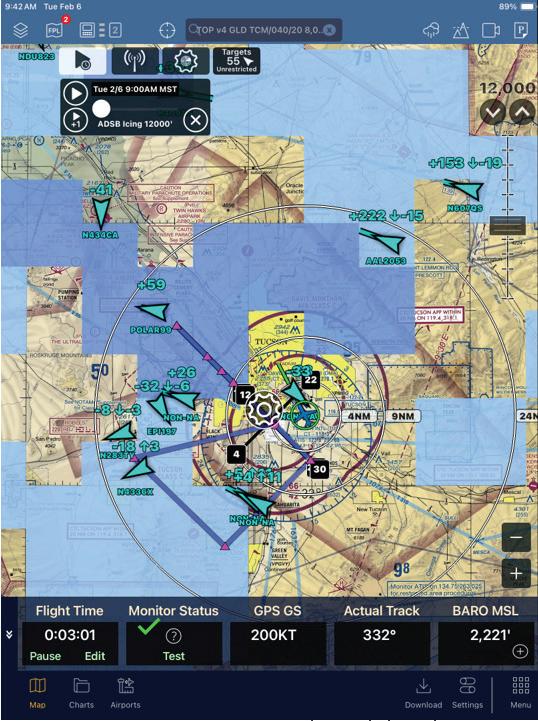
ADS-B In situation by comparing the mandate for ADS-B Out to the advent of cellphones. “I don’t understand why we made the decision of splitting ADS-B into Out and In,” he said. “It’s kind of like, let’s build a cellphone that only broadcasts my voice. I have no idea what the other person’s saying, but I just keep broadcasting. Why do we split that?
“I was around when we did the ADS-B Out mandate, and there was a large amount of discussion and study groups and economic analysis and all kinds of stuff that was focused on whether the mandate should be ADS-B Out-only or cover ADS-B In. The way the chips fell in the end was that the benefit that ADS-B In provides is so massive that an operator would be foolish not to equip with ADS-B In right now. You can’t say the same thing about ADS-B Out, and that’s why that was mandated, because the market wouldn’t take care of that on its own.
“I see a little bit of a misperception between the two acts, but I think at the end of the day we’re going to pick the best pieces of those two acts and come up with a viable path to safer airspace.”
During a recent event, the Air Line Pilots Association (ALPA) urged action on
“To be clear, this is not a matter of ROTOR versus ALERT. ALPA supports incorporating the strongest components of both pieces of legislation. The goal must be a final law that gives pilots the full picture when seconds count, strengthens real-time aircraft tracking, requires meaningful ADS-B In capabilities, and limits exemptions that could leave dangerous gaps in crowded airspace.
“As Congress works to reconcile the two bills, it must not settle for a partial fix.”
Fabrice Kunzi, president of avionics manufacturer Avidyne, summarized the
“But they said once everybody’s equipped with ADS-B Out, obviously everybody is going to equip with ADS-B In. Now the problem is, ADS-B has this unique Achilles heel, where my benefit from ADS-B In is directly proportional to the amount of equipage of everybody else. If I’m American Airlines, I’m going to get a lot of benefit once United and Delta and Southwest equip, but if they don’t, then I don’t get as much benefit. You end up in this weird prisoner’s dilemma where you’re like, ‘Okay, I’m not going to be the first, but once everybody else equips, then I’ll equip.’ And so everybody’s just kind of waiting and saying, ‘Are you going to go first? You’re going to go first, right?’ That’s what happened for the last 10 or 15 years. People just didn’t choose to equip.” z
BY JESSICA REED

Garmin’s Emergency Autoland is installed on more than 2,000 airplanes.
Garmin’s Emergency Autoland, the system that can fly an incapacitated pilot’s airplane to a runway and land it without human input, is now installed on more than 2,000 airplanes—a fleet equipage that did not exist six years ago. In that time, the technology has moved from a single high-end turboprop to piston singles and single- and twin-engine jets, become near-standard equipment across owner-flown turbines, and—in December 2025—proved itself in its first real-world emergency.
The ability to land an aircraft autonomously when no capable pilot is available is essentially synonymous with Garmin’s Autonomí architecture. Autoland was first certified by the FAA on the Piper M600/ SLS in 2020, the first aircraft of any kind approved to land itself if the pilot becomes incapacitated. Piper brands it “HALO;” within months, the same Garmin system reached the Daher TBM 940 (HomeSafe) and the Cirrus Vision Jet (Safe Return).
The achievement earned the 2020 Robert J. Collier Trophy, aviation’s premier award for technical accomplishment.
Mechanically, a single guarded button— pressable by any occupant—hands the aircraft to the avionics, which selects the nearest suitable airport using onboard terrain and obstacle databases and satellitedelivered weather, flies a GPS approach, times the flare, brakes to a stop, and shuts down the engine. The system squawks 7700, broadcasts automated voice messages on local and emergency frequencies, and briefs passengers through the cockpit displays. It can also trigger itself if the pilot stops responding to repeated prompts. Autoland requires Garmin’s high-end integrated flight decks—the G3000/G5000 family—and is available on the G1000 NXi retrofit for King Airs.
Autoland’s early footprint was concentrated where the user-facing risk is highest: owner-flown, single-pilot turbine airplanes.
The M600, TBM, and Vision Jet are frequently flown by non-professional owners, where a medical event leaves passengers with no fallback. Making the system standard equipment on these models reframed it from an exotic option into a baseline expectation for the segment, and the capability now influences residual values and brand safety credentials.
The platform list expanded to include the Piper M700 Fury, Daher TBM 960, and Epic E1000 AX. In reporting aircraft deliveries for 2025, Daher recorded 51 TBM 960s handed over, which it noted include the HomeSafe Emergency Autoland system and flight envelope protection along with other features. The TBM 980, unveiled in January, also features “advanced weather detection, icing protection, flight envelope monitoring, and the emergency descent mode, along with the game-changing HomeSafe Emergency autoland functionality,” Daher announced.
A shift came in 2025, when Garmin and Cirrus introduced Safe Return on the SR Series G7+, making the SR20 and SR22 singles the first piston-powered airplanes to carry Emergency Autoland. Until then, the technology lived exclusively on pressurized turboprops and jets costing several million dollars. Bringing it to a high-volume piston platform exposed a far larger population of ownerpilots and their families to the capability.
“We initially announced and certified into single-engine turboprops with the M600 and TBM 940, and eventually in the single-engine Vision Jet,” a Garmin spokeswoman told AIN. “Cirrus later certified it in the SR series, being the first piston aircraft. It has now been certified in twin-engine turboprops with the King Air, and twin-engine jets with the HondaJet. The most demand is in Part 23 single-pilot, but there is demand for other markets and categories as well.”
For five years, Autoland’s value was validated only in testing. That changed on Dec. 20, 2025, when a Beechcraft King Air B200 operated by Buffalo River Aviation suffered a rapid loss of cabin pressurization during a repositioning flight after departing Aspen, Colorado. The Garmin emergency systems engaged automatically once cabin altitude exceeded safe levels and landed the twin turboprop at Rocky Mountain Metropolitan Airport near Denver—the first real-world emergency use of the technology. The two pilots aboard had donned oxygen masks and remained conscious but, citing instrument conditions, mountainous terrain, and active icing, elected to let the system complete the flight.
“We are learning from this event, and the system performed as expected,” the Garmin spokeswoman said. The episode was widely read as field validation likely to accelerate adoption, and also spurred industry discussion about automation and the changing role of the human in the cockpit.

Several vectors point to continued expansion. The HondaJet Elite II received FAA certification for Emergency Autoland in February 2026, becoming the first twin-engine jet—and first twin-turbine very light jet—approved for the system, with the Beechcraft Denali also in line and Garmin’s technology slated for Textron Aviation’s next-generation Citation CJ3 and CJ4 light jets.
Retrofits of legacy fleets may be the single biggest growth lever, since the inservice fleet dwarfs annual new deliveries.
“Garmin Autoland is available for retrofit installation on the King Air 200 and the King Air 300 series,” the spokeswoman told AIN. “The retrofit certification in the King Air was a large lift, but it adds incredible capability for airplanes that can sometimes be decades old.” The company sees demand from both forward-fit and retrofit customers and is assessing requests for additional retrofit platforms.
Competition is also emerging. In March, El Segundo-based Skyryse announced plans
to bring a universal emergency autoland capability to both airplanes and, for the first time, helicopters, delivered through its aircraft-agnostic SkyOS flight control software. Where Garmin’s Autoland is tied to specific certified airframes and avionics suites, Skyryse treats “autoland” as a core function intended for scalable deployment across categories—building on a Robinson R66 retrofit that demonstrated automated autorotation touchdowns in 2025.
“For helicopters in particular, autoland represents a significant safety upgrade,” according to Skyryse. “Helicopter operations routinely involve low-altitude flight, confined landing areas, high pilot workload, and complex energy management, especially during emergencies such as pilot incapacitation, degraded visibility, or system failures. Historically, these factors have made automated landing solutions for helicopters extremely difficult to deploy.”
The capability remains an announced product rather than a certified one or one with a set timeline for market entry, but it signals that emergency automatic landing may become a contested market rather than a Garmin monopoly. z


For over 50 years, AIN has provided market-leading coverage of the most important airshows and conventions across the globe. Drive awareness and consideration with a 360-degree marketing plan including print (where available), newsletters, video, social and digital. Custom content opportunities are also available across all of our platforms.
Learn more at: marketing.ainonline.com/airshows-conventions

Modern Aviation publicly unveiled its upgraded FBO complex at New York’s Francis Gabreski Airport (KFOK). Located on the eastern end of Long Island, KFOK serves the tony Hamptons area.
Built in 2007, the FBO’s 4,785-sq-ft terminal was completely gutted starting in March and fully renovated. It features a landside porte-cochère, two passenger lounges, pilot lounge, flight-planning area, shower facilities, concierge, refreshment bar, kitchenette/dining area, business center, 10-seat conference room, onsite car rental, and a crew car. U.S. Customs is available on call 24/7.
The highlight of the $18 million project is the newly built, heated 34,475-sq-ft hangar that can accommodate ultra-longrange business jets. Constructed over the course of the past year, it brings the facility to 92,042 sq ft of aircraft shelter.
Modern acquired the location in 2021 as part of Sheltair’s divestiture of the New York market.
Jet Aviation has signed a 30-year lease to operate an FBO at Denver-area Rocky Mountain Metropolitan Airport (KBJC). The facility will be the cornerstone of an aviation campus to be jointly developed at the airport by SR Aviation Infrastructure (SRAI) and Business Aviation (BA) Group.
Scheduled to open in 2028 as the third service provider at KBJC, the 15-acre complex on the south side of the field will feature a 7,500-sq-ft terminal, 70,000 sq ft of hangar space capable of sheltering ultra-long-range business jets, and more than 4.5 acres of ramp.
Leading the investment, development, and longterm ownership of the project, SRAI plans to add private hangar infrastructure at the location. It is
working alongside BA Group, which is serving as master developer for the broader south side campus and overseeing site strategy and development execution.
Canada’s London International Airport (CYXU) in Ontario has received a new service provider with the opening of FlyXcite FBO. Under construction for nearly two years, the $15 million CDN ($11 million) facility includes a two-story, glass-sheathed 12,000-sq-ft terminal with a double-height, naturally lit lobby offering panoramic runway views, refreshment bar, pilot lounge with snooze rooms and flight-planning area, showers, concierge, conference room, and catering coordination. On the second floor are offices for guest use—either long-term or daily—and a 1,200sq-ft outdoor viewing deck with an adjoining interior kitchen.
The complex also includes a 35,000-sq-ft heated hangar that can accommodate aircraft up to the size of Bombardier Globals. Customs clearance is available on the ramp, along with full ground-handling services.
As an unbranded FBO, the location is giving operators their choice of fuel providers.
Ground handling giant Swissport is refocusing its activities in the business aviation sector through its reorganized PrivatPort division. The company is adding a pair of FBOs in Mexico to the seven other dedicated facilities it operates, and also provides handling for business aircraft at more than 70 locations across Swissport’s global network of around 300 airports in almost 50 countries.
The new FBOs are located at the international airports at Cancún (MMUN) and Tulum (MMTL).

Opened on February 2, Gama Aviation’s Business Aviation Center (BAC) at Sharjah International Airport (OMSJ) is setting a standard in the United Arab Emirates for size, convenience, and luxury. With an ocial launch planned in late 2026, the facility combines FBO and MRO support, underlining the UK-based company’s intensifying UAE involvement that began in 2012.
With a total footprint of 80,000 sq m (860,000 sq ft) and costing more than $60 million, the BAC was conceived in 2018 but delayed by the pandemic. Gama CEO Marwan Khalek is credited with overseeing details of the facility’s buildout, given his background as a civil engineer.
At more than seven times the size of Gama’s legacy 2014 FBO at the airport—an increase from 200 sq m to 1,500—the site underscores its evolution into a potential UAE front-runner for business aviation. The hangar is 12,000 sq m, making it one of the region’s largest dedicated business jet storage hangars.
“It’s the biggest investment Gama has made,” Tom Murphy, managing director of FBO for Gama, told AIN . “We have a successful track record in developing airport infrastructure that gives the business aviation market more choice. Our overriding objective is to increase operational efficiency and ease of access.”
Gama still manages Gulfstream and Bombardier aircraft in the Middle East. “We have a G650 and a number of the Global series and other Gulfstreams, as well,” he said.
Constraints at Gama’s former Sharjah FBO revolved around hangar capacity. “We were turning away a significant amount of business over a number of years at the old facility,” he said. “It’s been a challenge for the last six years.” IS-BAH Stage 3 registration is portable to the BAC, but standard

operating procedures “have to be tailored to the new facility,” he said.
Business jet movements rose 41% at Sharjah in 2025, while passenger throughput grew 25%. “We had a brilliant year last year—the perfect momentum going into this,” Murphy said. “Volume was up year on year; 2024 was our record-breaking year— and 2025 exceeded 2024 in both volumes and passenger footfall.”
The BAC lounge houses three areas: a quiet zone, the central lounge, and a food and beverage area. A private lounge o ers added confidentiality and an adjoining conference room. Upstairs, a crew lounge, with a rest area sleeping three and shower facilities, is adjacent to the operations room. An airside lounge provides further support to crew and passengers. A cigar lounge tops things o
Sharjah is an e cient airport where existing advantages—no slot restrictions, low congestion, quick ground handling—enable unusually fast turnaround times compared with other international airports. The new FBO offers dedicated onsite fueling, a 90-second taxi, and a self-maneuvering apron that reduces the need for towing.
“We’ve had significant interest…from
aircraft that usually frequent other UAE airports and have already seen new clients and aircraft using our facility,” Murphy said.
Gama’s strategy is predicated on Sharjah’s location as an alternative to Dubai International Airport (OMDB), which could shut down within a decade, and where restricted business jet access remains vexing. While a policy decision to move to Al Maktoum International (OMDW) has been clearly articulated, Dubai Airports has yet to announce a definitive closure date. The shutdown, likely in 2032 to 2034, is contingent on OMDW being fully ready.
“If it weren’t for this project, there would only be one airport for business jets to go to in the Dubai area,” Murphy said.
The biggest misconception international operators still had about Sharjah was the distance from Dubai and constant traffic at all hours of the day, a perception he believes has dissipated in recent years.
“I’m really excited by the region and also the UAE,” he said. “I think it’s very resilient. There’s just an endless list of exciting projects that I think will positively a ect aviation and all other sectors. It’s a hotbed for business.” P.S.S.
BY DAVID JACK KENNY
Fatal Air Ambulance Crash Occurred during GPS Jamming
Beechcraft C90, May 14, 2026, Lincoln, New Mexico
The King Air that crashed on approach to Sierra Blanca Regional Airport (KSRR) in Ruidoso, New Mexico, was one of four aircraft that reported losses of GPS guidance during a moonless night over rural New Mexico. All four occupants—two pilots and two flight nurses—died when the twin-engine turboprop flew into the side of the Capitan Mountains at an elevation of 9,950 feet. The collision ignited a forest fire that consumed more than 31,000 acres and remained uncontained for nearly a month.
At 23:52 Mountain Daylight Time on May 13, the aircraft departed Roswell International Air Center (KROW), New Mexico, on a positioning leg to transport a passenger from Ruidoso to Albuquerque. Skies were clear with more than 10 miles of visibility, but the moon was below the horizon, and the crew requested an IFR clearance. Albuquerque Center cleared them “as filed” at an en route altitude of 12,000 feet.
At 23:58, the frequency of their ADS-B position fixes decreased from every two to three seconds to about one-minute intervals. Less than two minutes later, the controller advised that they were 1,000 feet above their assigned altitude; the pilot replied that they were correcting but had lost GPS capability. The pilot requested vectors to KSRR and initially asked for the RNAV approach to Runway 24, then amended that to the ILS. As the King Air continued northward on a 350-degree heading, three other pilots also reported GPS
outages. At 00:05, the Albuquerque operations supervisor asked the military to suspend jamming operations, and at 00:07:34, ADS-B reports returned to intervals of two to three seconds.
At 00:08:30, still some 30 miles northeast of the airport, the flight crew reported having “a visual on Ruidoso” and said they could “go visual.” After being cleared for a visual approach, they advised that they would cancel IFR “in just a couple of minutes.” At 00:10, the Albuquerque supervisor advised the military that they could resume jamming, and ADS-B reports returned to one-minute intervals. The King Air began descending at about 00:10:27; then, at 00:14:45, it climbed from 9,400 to 9,823 feet as measured by its onboard Spidertracks data-logging system. The last fix was recorded at 00:15:26.
Notams provided to the crew before departure included notice of the scheduled GPS jamming exercises.
Cirrus SF50, June 2, 2026, Athens, Georgia
The pilot made a successful dead-stick landing following an uncontained engine failure during initial climb. Responding to an inter-turbine temperature warning and Fadec alert, he requested a hold at 10,000 feet, switched to manual throttle control, and reduced thrust. The temperature decreased and the warning cleared, but seconds after increasing power to resume the climb, “there was a loud bang and reduction in power.”
He pitched the airplane for best glide, air traffic control provided vectors to Athens-Ben Epps Airport (KAHN), and he landed without power on Runway 09. A section of turbine disk was subsequently
found protruding from the right side of the lower cowling.
Gulfstream G200, June 7, 2026, La Romana, Dominican Republic
Both pilots aboard a Gulfstream G200 were killed after the twinjet crashed while attempting an emergency return to La Romana International Airport (MDLR) in the Dominican Republic. The pilots were the only occupants aboard at the time of the accident.
The Dominican Republic’s Civil Aviation Accident Investigation Commission and the Dominican Civil Aviation Institute are investigating the crash.
The airplane, N318JF, a 2004 Gulfstream G200 registered to Puerto Rico-based Aibonito Aviation, took off from La Romana International at about 3:30 p.m. local time on a scheduled flight to Austin-Bergstrom International Airport in Texas. Shortly after departure, the flight crew declared an in-flight emergency and attempted to return to the airport.
According to reports, the crew appeared to attempt a landing on Runway 11 about five minutes after takeoff. Rather than completing that landing, the aircraft circled and lined up instead on Runway 29 for a second attempt.
Upon touchdown on Runway 29, the aircraft veered left, and the landing gear collapsed as it departed the side of the runway. Video footage from the scene captured the stricken jet skidding across the grass at a high rate of speed before it struck a ditch, bounced into the air, and shed its left engine in the process. The jet then erupted into a fireball as it collided with a runway sign.
Israel Aircraft Industries 1124, Aug. 7, 2022, Nacional de Aviação Aerodrome, Goiânia, Brazil
The jet’s ground proximity warning system (GPWS) recorded “a large variation in the aircraft’s rate of descent…in a short period of time and at an altitude below 500 feet,” indicative of an unstabilized approach. Rather than going around, the 3,071-hour airline transport pilot chose to land on Runway 32. After a ground roll of 2,600 feet, the airplane departed the right side of the 3,600-foot runway at an estimated speed of 80 knots, crossed a taxiway, and crashed into a brick wall. The collision collapsed the nose gear and damaged the main gear, the hydraulic system, and the underside of the fuselage. There were no injuries to either pilot or the sole passenger.
The aircraft departed from Nacional de Aviação Aerodrome (SBNV) in Goiânia, Brazil, at 14:10 UTC on a planned ferry flight to Santa Genoveva Airport (SBGO), also in Goiânia, that was intended to test the jet's pressurization system. After reaching FL340, the crew confirmed that there was a pressurization malfunction and requested a return to SBNV. Data recorded by the GPWS showed that as the jet descended below 400 feet on final approach, its rate of descent increased from 350 to 850, and ultimately 950 fpm.
Weather was favorable, with light northerly winds and a few clouds at 4,000 feet. The landing roll prior to the excursion already exceeded the calculated landing distance of 2,200 feet.
Accident investigators noted that the pilot at the controls had only 100 hours of jet experience and suggested this may have played a part in his failure to fly a stabilized approach. However, the final report cited no specific reasons for either
the airplane’s failure to decelerate or the loss of directional control.
Airbus Helicopters AS350BA, July 20, 2024, Paringa River, South Island, New Zealand
An uncommanded left roll during an attempted run-on landing resulted from maintenance personnel’s failure to secure the bolt connecting the left main rotor hydraulic servo to the transmission housing, allowing the bolt to back out in flight. The pilot and only passenger (the operator’s chief pilot) were able to evacuate the helicopter with only minor injuries after it crashed onto its left side from an altitude of 10 to 20 feet. The ship’s emergency locator transmitter activated, and a searchand-rescue effort launched by the Rescue Coordination Centre located the site just over an hour later.
The accident occurred during a ferry flight from Queenstown Aerodrome (NZQN) to Franz Josef (NZFJ), following nearly three weeks of scheduled maintenance, which included switching the positions of the two main rotor servos to balance wear over their service lives. A dual-inspection protocol was in use, and installation of the left servo was signed off as complete by one technician on July 6 and by the second on July 15. Track-andbalance flights were made on July 19 under a limited release-to-service authorization, and the helicopter was certified as airworthy on July 20.
The rotorcraft departed NZQN at 13:47 New Zealand Standard Time. Only the right seat was fitted with flight controls. The onboard audio/video recorder captured the pilot commenting on how smoothly the ship was flying, but 52 minutes after departure, he felt “a slight jolt” and noticed that the main rotor blades seemed to have gone out of track. After discussing possible causes, the pilot and passenger decided to
make a precautionary landing on flat grass near the Paringa River’s mouth, and the pilot set up for a run-on landing to minimize the effects of any flight-control malfunction. Just before touchdown, torque abruptly increased from 40% to 60%, and the helicopter rolled left onto the ground. The pilot shut off the engine, and both occupants evacuated through the broken left front window.
On inspection, they found the left servo disconnected from its lower attachment point. The missing bolt was discovered on the transmission deck, but its nut was not found. The Transport Accident Investigation Commission concluded that it was “virtually certain” that the nut had not been tightened to the correct torque, that the required locking pin was either not installed or installed incorrectly, and that time pressure, distraction, and cumulative fatigue allowed the error to remain undetected despite dual inspections. z
—Amy Wilder contributed to this report
BY GORDON GILBERT
This action would enable the safe, e cient, and commercially viable operation of civil supersonic aircraft over land in the U.S. Current regulations, in e ect since 1973, prohibit flight operations of civil aircraft at a true flight Mach number greater than 1.0 in the U.S., except under conditions and limitations of a specific authorization, to protect the public from sonic boom. The FAA has determined the general ban on civil supersonic flight is outdated and no longer appropriate due to advancements in technology, flight techniques that prevent sonic booms from reaching the surface, and increased interest in the development of business and commercial supersonic aircraft. In addition, supersonic aircraft would also have to be compliant with FAR Part 36 noise certification standards that are scheduled to be finalized by June 6, 2027. Comments are due by Aug. 17, 2026.
Aug. 5, 2026
An FAA proposed rule would allow specific categories of “critical infrastructure” sites to apply for restrictions on drone operations around their facilities. Restrictions would be approved based on “safety or security criteria.” Sixteen sectors would be eligible for restrictions, including communications, energy production, transportation systems, chemical facilities, water treatment plants, and defense industrial complexes. Violators could face civil or criminal penalties. Comments on the proposal are due by August 5, 2026.
Aug. 12, 2026
Issue No. 3 of EASA's proposed concept of using AI in aviation has been published for comment. The agency said this is the final proposed concept paper foreseen under the EASA artificial intelligence roadmap 2.0. This proposed new issue further broadens the framework of technical guidance by addressing additional AI techniques, including reinforcement learning and symbolic AI. It also explores Level 3 AI applications, corresponding to advanced automation. These applications “open the way to novel types of operations in which the human end user may be either
remotely present, or not present during the operation,” said EASA. Following consolidation of comments, “EASA will continue to work with stakeholders in support of the AI strategy for aviation.” Comments on Issue No. 3 are due by Aug. 12, 2026.
Aug. 25, 2026
The FAA proposes to amend various airworthiness regulations for Part 25 transport category airplanes and propulsion systems by reducing the number of exemptions, special conditions, and equivalent level of safety findings required during the certification process. The agency expects that this proposal would reduce certification costs and time to certify new and changed products without compromising safety. Special Federal Aviation Regulation No. 109 would be removed from Part 25 and its requirements relocated. Finally, this action would address industry and NTSB recommendations while also harmonizing FAA's regulations with international standards. Comments are due by Aug. 25, 2026.
Aug. 28, 2026
The UK Civil Aviation Authority released a consultation on an air traffic management policy for unmanned aircraft systems (UAS). The policy presents the CAA's initial
thoughts on the architecture and regulatory requirements for its implementation. “This serves as the first public indication of how the CAA wishes to support the safe, efficient, and scalable integration of UAS into UK airspace traffic management,” said the agency. “If you will be impacted by [this proposed policy], whether that be as an operator, a provider of [traffic management] services, or a provider of other data services, please consider responding.” Comments are due by Aug. 28, 2026.
Aug. 31, 2026
Proposed FAA regulations for aircraft mechanics would replace the inspection authorization (IA) with an inspection rating, similar to the airframe and powerplant ratings. The inspection rating would carry the same privileges and limitations as the IA but would not require renewal or have an expiration date, consistent with mechanic ratings. As a result, the agency proposes to require mechanics with inspection ratings to complete rolling recent experience activities. The FAA claims these proposed changes would reduce paperwork and resource burdens linked to complying with the existing regulations for both industry and the agency. Comments are due by Aug. 31, 2026.
Sept. 9, 2026
To address the continued growth and pro liferation of uncrewed aircraft systems (UAS), scaling of new, more complex operations, continued integration within Canadian airspace, and preparation for UAS traffic management, Transport Can ada (TC) is proposing: remote ID require ments for UAS; new airspace tools for TC to better respond to UAS-specific needs that would ensure that the agency is able to quickly put in place airspace restrictions and constraints; and regulatory changes specific to recreational UAS organizations. A “community-based organization” model could allow recreational UAS organizations to apply to TC to operate under diff requirements, including their own safety procedures when flying in fixed geograph ical areas. Additionally, TC is considering requiring “geo-awareness” functions on compatible UAS. Comments are due by Sept. 9, 2026.
Oct. 1, 2026

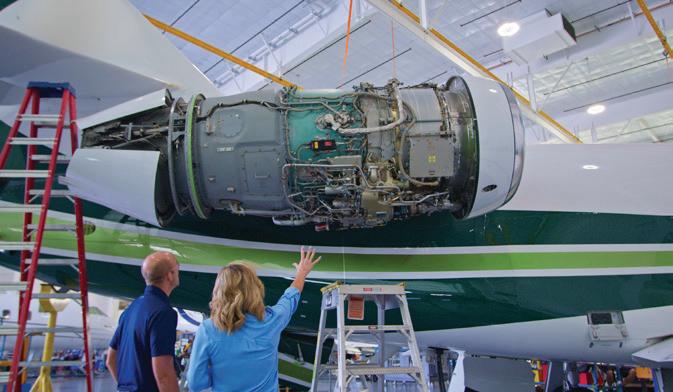

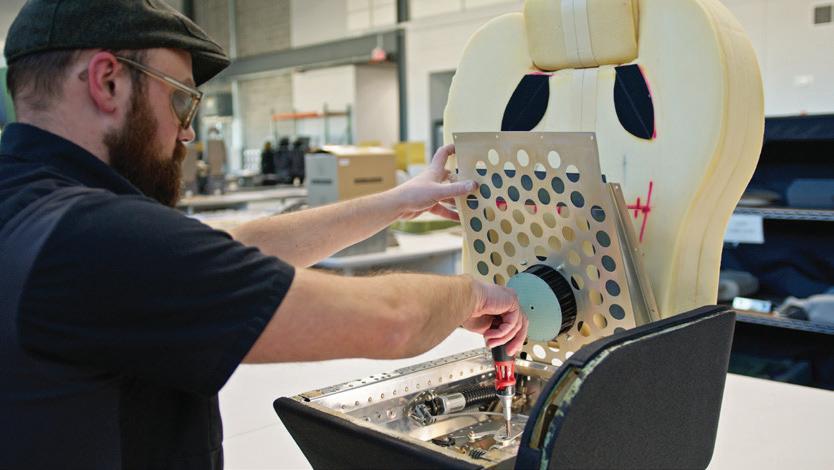

The implementation timelines for the European Union’s ETIAS (European Travel Information and Authorization System) and EES (Entry/Exit System) have been delayed again. Originally set to launch in 2022, EES will require operators to electronically verify visa validity for third-country nationals traveling to the EU. ETIAS is an online pre-travel and pre-boarding requirement applying to visa-exempt third-country nationals planning to travel to European states. The new scheduled start of Oct. 1, 2026 is not exact but won’t occur before late 2026. Business aviation flight planning organizations believe both programs will apply to passenger-carrying private and charter flights into the EU.






For the most current compliance status, see: ainonline.com/compliance
SPANNING
At Duncan Aviation, we understand that buying or selling a private jet is not just a simple asset transaction, but part of a bigger picture. As your vital advisors, we take the time to truly understand your goals and o er thoughtful insights, market intelligence, operational expertise, and comprehensive support solutions for your entire ownership experience. Our team’s dedication and vast network of industry connections ensure that every decision you make is thoroughly informed, aligning perfectly with your unique mission and aspirations. www.DuncanAviation.aero/aircraftsales
BY JESSICA REED

Ontic tapped Jean-Christophe Gallagher as its CEO, succeeding Gareth Hall, who has served as chief executive for more than 10 years. In the coming months, Hall will transition to executive chairman and continue his work on the company’s long-term strategy. Gallagher previously worked for two decades at Bombardier, most recently as executive v-p of aircraft sales and defense.
Russell Ford, CEO of StandardAero since 2013, will retire on October 1. Under his leadership, the company’s annual revenue increased from $1.6 billion in 2013 to more than $6 billion in 2025. Ford, who led StandardAero through its 2024 IPO, will continue to participate on its board of directors following his retirement. The board named lead independent director Paul McElhinney to take over as CEO later this year and become chairman at the start of 2027. McElhinney currently works for AE Industrial Partners as senior operating partner and co-head of its portfolio strategy and optimization group. His 35 years of experience in the industry include a term as president and CEO of GE Power Services and GE Aviation Services.

Bobby Jensen joined JetAviva as managing director, bringing 25-plus years of experience in aviation. He previously worked at Textron Aviation in customer-facing and sales support roles, including sales of new aircraft, gaining particular expertise with Cessna Citation M2s.
Engine Assurance Program (EAP) hired Chuck Oberfield as director of APUs. Oberfield, a licensed A&P mechanic and veteran of the U.S. Navy, worked at Honeywell Aerospace for three decades.
Atlantic Aviation subsidiary VertiPorts by Atlantic announced David Claisse as general manager of Manhattan’s East 34th Street Heliport. Claisse is a veteran of the U.S. Marines and was previously general manager for Atlantic Aviation’s facility at Bridgeport/Sikorsky Airport in Connecticut.
Craig R. Olson, v-p of aviation for Starbucks Coffee, was tapped to join NBAA’s board of directors. He served as a U.S. Navy fighter pilot for two decades and began a career in business aviation in 2014 as the safety officer for a Seattle-based aircraft operator. Olson joined Starbucks as chief pilot in 2017.

Richard Alexander has joined hybrid-electric VTOL aircraft developer Horizon Aircraft as chief engineer of certified programs. Alexander has 38 years of experience in aircraft development, having previously served as electric aircraft integrator at CAE and as head of flight physics at Vertical Aerospace.
Four Corners Aviation hired Truman Cuthbert as charter sales executive. Cuthbert has experience managing domestic and international charter operations as well as private aviation sales.

Sharon Williams was appointed executive director of aviation for the board of directors of the Massachusetts Port Authority (Massport) on July 1. David Ishihara has also been selected for the role of deputy executive director of aviation. Previously director of aviation facilities and passenger services at Boston Logan International Airport (KBOS), Williams had also held the title of director of Hanscom Field for 12 years. Ishihara is director of aviation operations, safety, and security at KBOS, having previously served as deputy director of the Volpe National Transportation Systems Center at the U.S. Department of Transportation.
ATS Aviation in Singapore named Jan Alblas managing partner. Most recently, he held the role of v-p of marketing at Nordic Aviation Capital.
West Star Aviation promoted Josh Perkins to v-p of quality and Sharon Klose to general manager of satellite shops. Matthew Selinger was promoted to master sheetmetal technician at West Star’s location in East Alton, Illinois, and Ed Riner was named v-p of programs execution. West Star hired Kyle Victor as satellite manager in Chicago and Bill Miner as director
of HR. The company also announced four promotions at its facility in Chattanooga, Tennessee: Mike Davis, master paint technician; Christopher Landry, program manager; Roger Jordan, master aircraft maintenance technician; and Patricia Spann, customer experience coordinator. Other promotions at West Star included Chad Zbin, promoted to director of scheduling and optimization, and Ryan Wilson, promoted to v-p of technical training and technical support. West Star also promoted Connor Mottice to manager of technical sales. On the MRO side, the company promoted Steven Smith to director of maintenance; Tony Meyer to master paint technician; and Isaac Scott to master aircraft technician.

Lilly Paxton joined Bismarck Aero Center as customer service representative and marketing assistant. Paxton, a recent graduate of Lake Area Technical College in South Dakota with an associate’s degree in aviation maintenance, holds a private pilot certificate and an A&P license. Bismarck Aero Center also promoted DJ Polk to the role of office manager. Polk joined the company almost four years ago and is now taking on some HR responsibilities and IT liaison efforts.
The U.S. Senate recently approved Daniel Edwards as Department of Transportation assistant secretary of aviation and international affairs and Michael Graham for another five-year term as a member of the NTSB. The reappointment of Graham comes after the White House named him NTSB vice chairman.

Paul van der Blom joined Empire Aviation Group as head of aircraft management. He most recently worked within the fleet strategy division at a Dubai-based operator. His three-plus decades of experience in aviation include roles at Airbus, DC Aviation, ExecuJet, Hawker Pacific, Luxaviation Group, and TAG Aviation.
The Royal Aeronautical Society announced Malcolm Macdonald as its next president. Macdonald serves as director of the University of Strathclyde’s Applied Space Technology Laboratory and is a visiting professor at the Centre for Space Research at University College Dublin.
He also serves as chair of the UK Space Agency’s Space Technology Advisory Committee.
SkyWorld Aviation promoted Kelli Gatewood from director of operations to president. Her father, Vietnam veteran Ron Gatewood, founded the general and business aviation aircraft maintenance and avionics repair/install shop, in 1991. z
Hal Shevers, 90, founder and longtime chairman of Sporty’s Pilot Shop, died on May 12. Shevers started one of the first three-day ground school courses in the early 1960s and later founded Sporty’s Academy, a Part 141 flight school o ering in-person instruction and online courses. In 2007, he was inducted into the National Association of Flight Instructors Hall of Fame.
NBAA president and CEO Ed Bolen was named the first inductee into the Kansas Aviation Hall of Fame class of 2026. Bolen will be recognized during the Kansas Aviation Honor Awards on November 10. Bolen, a native of Salina, Kansas, earned his bachelor’s degree in economics from the University of Kansas and, early in his career, served as a legislative director for former U.S. Sen. Nancy Kassebaum (R-Kansas). Bolen worked integrally with Kassebaum on the passage of the General Aviation Revitalization Act of 1994, which is widely credited with breathing new life into a sector that was dying. He joined GAMA in 1995 and was promoted to president and CEO a year later. He ultimately stepped into his current role at NBAA in 2004. Bolen has made a mark on aviation, serving as chair of the Management Advisory Council and as a member of the Commission on the Future of the U.S. Aerospace Industry. At Vaughn College’s annual gala, five leaders in aviation were recognized for their dedication to the industry and for developing opportunities for the next generation: Evita Garces, v-p of line operations at American Airlines and alumna of Vaughn College; Debbie Co ey, Atlas Air Worldwide chief communications o cer; Icema Gibbs, v-p of corporate social responsibility and impact at JetBlue Airways; Patricia Ornst, Delta Air Lines managing director of New York state and local government a airs; and Monica Slater Stokes, United Airlines managing director of corporate and government a airs.
91K fractional ownership operation. On June 16, a NetJets-operated, fractional-shareowned Cessna Citation Latitude crash-landed on a road in Laredo, Texas, and caught fire, killing a passenger.
The January 25 takeoff crash of a Bombardier Challenger 650 in Bangor, Maine, is under investigation for exceeding the maximum deicing holdover time, according to the NTSB. The pilot, copilot, and four passengers were killed. It was operating as a Part 91 business flight under a night IFR flight plan.
On June 7, a U.S.-registered Gulfstream G200 crashed in an attempted emergency landing at La Romana International Airport in the Dominican Republic. Both pilots were killed. Dominican officials are investigating.
Two non-U.S.-registered business jets suffered fatal accidents in the first half.
On January 28, an India-registered Learjet 45XR on a charter flight from Mumbai crashed short of the threshold while attempting a second approach to Baramati Airport in Maharashtra, India. The five occupants perished.
On April 13, a Bolivia-registered, privately operated Citation II lost contact with ATC 30 minutes after departing La Paz before crashing. The two pilots were killed. It had entered a high rate of descent from FL390.
Twenty-six people died in five crashes of U.S.-registered business turboprops in the first half, up from 18 deaths in five accidents in the same timeframe last year. One accident claimed 12 lives: on June 14, a pilot and 11 jumpers died in the crash of a U.S.-registered Pacific Aerospace 750XL.
Thirty-nine people perished in five accidents of non-U.S.-registered turboprops in the first six months, including all 14 on a chartered Cessna Caravan that crashed in South Sudan on April 27, and a pilot and 10 jumpers on a Pilatus Turbo Porter that crashed in France on June 28. In the first half of last year, there were six accidents involving non-U.S.-registered turboprops that killed 40 people. z

JAMES HOLAHAN (1921-2015), FOUNDING EDITOR, WILSON S. LEACH, FOUNDER & CHAIR EMERITUS
EDITOR-IN-CHIEF – Matt Thurber
MANAGING EDITOR – Charles Alcock
DIGITAL EDITOR – Chad Trautvetter
EDITOR AIN MONTHLY MAGAZINE – Kerry Lynch
BUSINESS AVIATION SERVICES EDITOR – Curt Epstein
SENIOR EDITOR – Hanneke Weitering – Technology Editor
COPY EDITOR – Jessica Reed
NEWS REPORTERS – Charlotte Bailey – Europe, Amy Wilder
CONTRIBUTORS – Julie Boatman, David Donald – U.K., Jennifer Leach English, Gordon Gilbert, David Hughes, David Jack Kenny – Safety, Stuart “Kipp” Lau, Robert P. Mark, Jennifer Meszaros – Southeast Asia, Richard Pedicini, Dale Smith, James Wynbrandt
PRODUCTION MANAGER – Martha Jercinovich
GRAPHIC DESIGNER – Grzegorz Rzekos
DIRECTOR OF VIDEO – Ian Whelan
SENIOR DEVELOPER – Cameron MacPherson
FRONT END DEVELOPER – David Lohmeyer
EXECUTIVE CHAIR – Dave Leach
PRESIDENT – Ruben Kempeneer
HEAD OF PEOPLE & BRAND – Jennifer Leach English
SENIOR DIRECTOR, INDUSTRY AFFAIRS AND EVENTS – Nancy O’Brien
ADVERTISING SALES
Victoria Tod – Northeastern U.S./Eastern Canada/United Kingdom, +1 (203) 733-4184
Michelle James – Western U.S./Western Canada, +1 (520) 343-0236
Joe Rosone – Midwestern U.S., Southeastern U.S./Caribbean/Brazil, +1 (301) 693-4687
Diana Scogna – Europe/Middle East, +33 6 62 52 25 47
DIRECTOR OF MARKETING AND CLIENT SERVICES – Lisa Valladares
AUDIENCE DEVELOPMENT DIRECTOR – Eileen Silberfeld
SENIOR MARKETING SPECIALIST – Alyssa Barry
EVENTS SPECIALIST – Brien O’Brien
SOCIAL MEDIA MARKETING – Zach O’Brien
SALES ADMINISTRATOR – Cindy Nesline
FINANCE AND HR DIRECTOR – Tracy Britton
ACCOUNTS PAYABLE MANAGER – Mary Avella
ACCOUNTS RECEIVABLE MANAGER – Bobbie Bing
U.S. HEADQUARTERS
214 Franklin Ave., Midland Park, NJ 07432, +1 (201) 444-5075
Advertising Inquiries: +1 (201) 345-0085, sales@ainonline.com
Circulation Inquiries: +1 (201) 345-0085, subscriptions@ainonline.com
WASHINGTON, D.C. EDITORIAL OFFICE: Kerry Lynch: klynch@ainonline.com, Tel: +1 (703) 969-9195
EUROPEAN EDITORIAL OFFICE: Charles Alcock: calcock@ainonline.com, Tel: +44 7799 907595
Aviation International News (ISSN 0887-9877) is published twelve times per year (monthly). Periodicals postage paid at Midland Park, N.J., and additional mailing o ces. Postmaster: Send address changes to AIN Media Group, 214 Franklin Ave., Midland Park, NJ 07432. Allow at least eight weeks for processing. Include old address as well as new, and an address label from a recent issue if possible. Subscription inquiries: +1 (201) 345-0085 or email: subscriptions@ainonline.com.
Aviation International News is a publication of AIN Media Group, 214 Franklin Ave., Midland Park, NJ 07432; Tel.: +1 (201) 444-5075. Copyright © 2026 All rights reserved. Reproduction in whole or in part without permission of AIN Media Group is strictly prohibited. AIN Media Group publishes Aviation International News, AINalerts, AINonline, Business Jet Traveler, BJTwaypoints, ABACE Convention News, Dubai Airshow News, EBACE Convention News, Farnborough Airshow News, FutureFlight.aero, VAI Convention News, LABACE Convention News, MEBAA Convention News, NBAA Convention News, Paris Airshow News, Singapore Airshow News, Mobile Apps: Aviation International News; AINonline. PUBLICATION MAIL AGREEMENT NO. 40649046 RETURN UNDELIVERABLE CANADIAN ADDRESSES TO: PITNEY BOWES INTERNATIONAL MAIL, STATION A, P.O. BOX 54, WINDSOR, ON, N9A 6J5, returns il@imex.pb.com.
For feedback, letters to the editor, or other editorial needs, please contact AIN’s Editors at ainedit@ainonline.com
Since 1981, Corporate Angel Network (CAN) has been dedicated to one mission: helping cancer patients access the lifesaving treatment they need. anks to the unwavering support of our partners and donors, we recently completed our 70,000 cancer patient flight.
But the need continues. Join us in making a difference.
Because cancer is hard, but getting to treatment shouldn’t be.












































At RTX we build the hybrid-electric propulsion systems that will power the ne t era of fight. The pa of is real: a orld here aircraft engines f cleaner, quieter and further on less fuel. While others talk about the future of a iation, e ha e the scale, capabilit and e perience to build it.



















Learn more at RTX.com























































PERSPECTIVE IS EVERYTHING.








































































































September 15-16 | Frankfurt, Germany

and clients. The one-on-one time and small group sessions are very valuable settings.”
– CALS SPONSOR
At RTX we build the hybrid-electric propulsion systems that will power the ne t era of fight. The pa of is real: a orld here aircraft engines f cleaner, quieter and further on less fuel. While others talk about the future of a iation, e ha e the scale, capabilit and e perience to build it.
Learn more at RTX.com
PERSPECTIVE IS EVERYTHING.