
REVIEW
THE FINAL BATTLE WITH IRAN?
The background and prospects of the current US–Israel conflict with Teheran
TURNING OFF THE TAP: EDUCATION AND THE EXPLOSION OF ANTISEMITISM SINCE OCTOBER 7
SPLIT SCREEN: THE HIGHS AND LOWS OF ISRAELI PRESIDENT HERZOG’S VISIT TO AUSTRALIA
THE GAZA GAP: THE FORMIDABLE OBSTACLES TO PHASE II OF THE PEACE PLAN FOR THE TERRITORY



TEL: (03) 9661 8250
FAX: (03) 9661 8257
With Compliments
SOUTH YARRA VIC 3141
EDITOR’S NOTE
This edition of the Australia/Israel Review (AIR) – the third edition in our all new, all digital, quarterly format launched last year – comes to you as major events are again rocking the world, in the form of the major military operations currently being waged by Israel and the US against Iran’s Islamic regime, affecting almost the whole region, and indeed beyond.
Our coverage includes:
• Washington-based Iran specialist Janatan Sayeh’s look at what it would take, given the operation’s progress so far, for it to result in the Iranian people finally succeeding in overthrowing their oppressive regime.
• Colin Rubenstein’s editorial outlining why this operation was inevitable, given Iranian behaviour, and how it could transform the region.
• International human rights lawyer Arsen Ostrovsky explaining why the widespread claims that the US and Israel acted illegally in launching this operation ignore the facts that a state of war was already ongoing.
• Ahron Shapiro’s report from an Israeli bomb shelter.
• Hussain Abdul-Hussain’s look at the operation’s Lebanese front, and the possibility that Lebanon might finally be liberated from Hezbollah domination.
• Our exclusive interview with top Israeli strategic analyst Yaakov Katz on Israel’s military and political realities during the current conflict – as well as Jerusalem’s other major security challenges, especially Gaza. Also highly recommend in this edition is:
• World-renowned antisemitism specialist Dave Rich’s thoughts on using education to turn off the tap of extremism in the post-October 7 era.
• Alana Schetzer’s extensive coverage of Israeli President Isaac Herzog’s landmark trip to Australia in February. Plus, Allon Lee’s dissection of the “trial by media” Herzog was subjected to during his visit.
• Ilan Evyatar’s exploration of how the Israel-India romance is turning into an intimate relationship.
• Ran Porat’s exposé of the Islamist extremist group Hizb ut-Tahrir’s determination to double down on antisemitism and conspiracy theories prior to being banned in Australia. Your feedback about this edition – both regarding our written articles, and the extensive multimedia content – would help us a great deal. Please give us your thoughts at editorial@aijac.org.au
Dr Tzvi Fleischer Editor
Volume 51 | No. 1 MARCH-MAY 2026
ON THE COVER
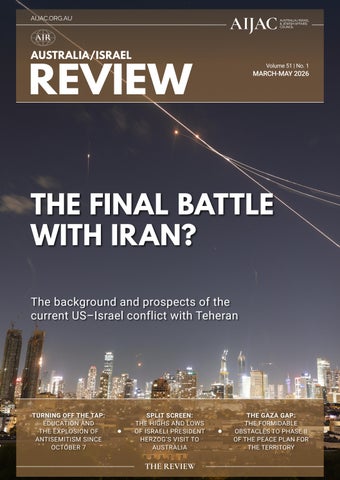
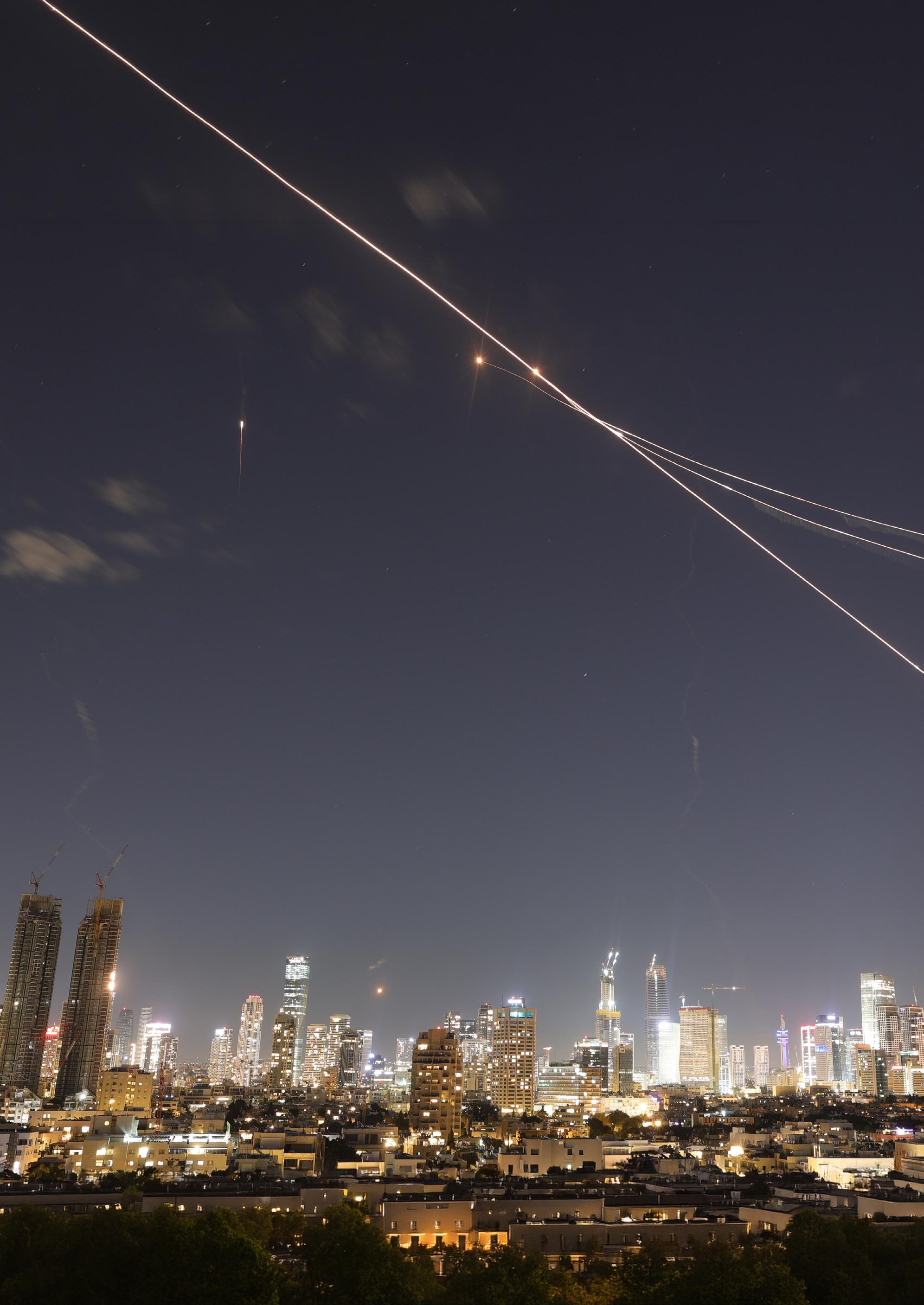
Israel's Iron Dome defence system intercepts a missile in the sky above Tel Aviv, February 28, 2026. (Image: EPA/Abir Sultan via AAP)
PUBLISHED BY THE AUSTRALIA/ISRAEL & JEWISH AFFAIRS COUNCIL (AIJAC)
EDITORIAL CHAIRMAN
DR COLIN RUBENSTEIN AM
EDITOR-IN-CHIEF
DR TZVI FLEISCHER
STAFF WRITERS
JAMIE HYAMS OAM, ALLON LEE, OVED
LOBEL, JUSTIN AMLER, ALANA SCHETZER, DR BREN CARLILL, REBECCA DAVIS
PUBLISHING MANAGER
MICHAEL SHANNON
CORRESPONDENTS
ISRAEL: ILAN EVYATAR
NEW ZEALAND: MIRIAM BELL
EUROPE: ALEX BENJAMIN
UNITED STATES: DANIELLE PLETKA
NATIONAL EDITORIAL BOARD
KEITH BEVILLE, RABBI RALPH GENENDE
OAM, GARY HERZ, MIRIAM LASKY, STEVE
LIEBLICH, RABBI DR JOHN LEVI AC, HON
HOWARD NATHAN AM KC
NATIONAL CHAIRMAN
MARK LEIBLER AC
NSW CHAIRMAN
PAUL RUBENSTEIN
EXECUTIVE DIRECTOR
DR COLIN RUBENSTEIN AM
DIRECTOR OF POLICY AND RESEARCH
DR TZVI FLEISCHER
EXECUTIVE MANAGER
JOEL BURNIE
SYDNEY OFFICE HEAD
ARSEN OSTROVSKY
DIRECTOR OF PUBLIC AFFAIRS
JAMIE HYAMS OAM
DIRECTOR OF SPECIAL PROJECTS
DR BREN CARLILL
SENIOR POLICY ANALYST
ALLON LEE
POLICY ANALYSTS
OVED LOBEL, JUSTIN AMLER, ALANA SCHETZER, GALIT JONES
RESEARCH ASSOCIATE
DR RAN PORAT
DIGITAL MEDIA EDITOR
REBECCA DAVIS
MEDIA PRODUCER
AREK DYBEL
DIGITAL PRODUCERS
RAFI GANDUR, SHARON FLEISCHER
COMMUNICATIONS & EVENTS MANAGER
DIONNE TAYLOR
INTERFAITH & COMMUNITY LIAISON
RABBI RALPH GENENDE OAM
ADMINISTRATION
ROSEMARY SANDLER, RENA LANGBERG
ISRAEL LIAISON: PETER ADLER
FOUNDING CHAIRMEN: ISADOR
HEAD
SYDNEY OFFICE: PHONE (02) 9360 5415, EMAIL: AIJACSYDNEY@AIJAC.ORG.AU ISSN NO. 1442-3693 WWW.AIJAC.ORG.AU
FROM THE EDITORIAL CHAIRMAN
COLIN RUBENSTEIN
SCRIBBLINGS
TZVI FLEISCHER
THE FINAL BATTLE?
JANATAN SAYEH
LEGALLY BLIND
ARSEN OSTROVSKY
SAFE SPACES
AHRON SHAPIRO
UNSANCTIONED?
OVED LOBEL
LEBANON'S SECOND CHANCE HUSSEIN ABDUL HUSSEIN
SPLIT SCREEN VISION
ALANA SCHETZER
FROM NEW DELHI, WITH LOVE
ILAN EVYATAR
RESENTFUL IN RAMALLAH
AHRON SHAPIRO
THE GAZA GAP BREN CARLILL
THE UN'S UNTOUCHABLES ANNE HERTZBERG
HATEFUL TO THE END RAN PORAT
INTERVIEW: YAAKOV KATZ AIJAC STAFF
BIBLIO FILE: LIFE AFTER... REBECCA DAVIS
BIBLIO FILE: HAUNTING PARALLELS ALLON LEE
CINEFILE: THE UNRAVELING JUSTIN AMLER
ESSAY: EDUCATING AGAINST ANTISEMITISM
DAVE RICH
ASIA WATCH
MICHAEL SHANNON
EUROPA EUROPA ALEX BENJAMIN
WASHINGTON HEIGHTS
DANIELLE PLETKA
AIR NEW ZEALAND
MIRIAM BELL
MEDIA MATTERS ALLON LEE
KEEPING FAITH
RABBI RALPH GENENDE
DATA THAT MATTERS
FROM THE EDITORIAL CHAIRMAN
A TRANSFORMATIONAL OPPORTUNITY
COLIN RUBENSTEIN
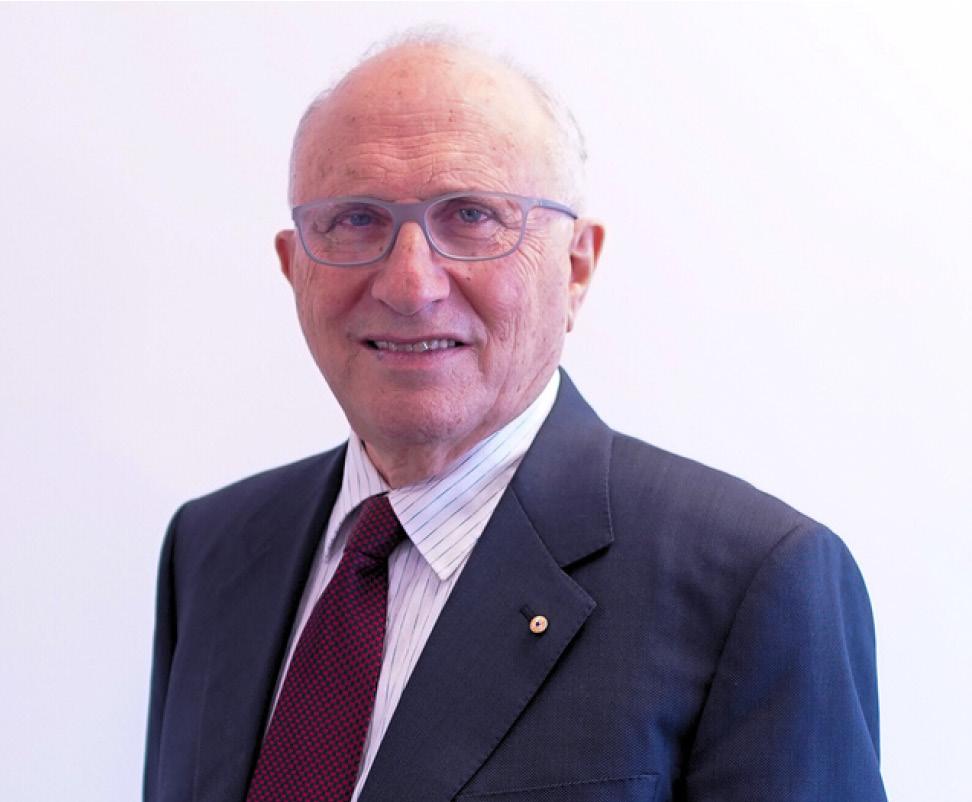
TDR COLIN RUBENSTEIN is the Executive Director of the Australia/Israel & Jewish Affairs Council
he US–Israeli operations launched against Iran on February 28 quickly prompted a predictable chorus of criticism. Some commentators insist the strikes are illegal because force can supposedly only be used in response to an actual attack or immediate risk of an imminent attack, while others argue that the campaign risks destabilising the international order. Both claims rest on a profoundly misleading understanding of the nature of the Iranian regime and the conflict it has waged for decades against both the United States and Israel.
The most basic reality is that Iran has been waging a war of aggression against the United States since the Islamic Republic came into existence in 1979. The seizure of the US Embassy in Teheran and the holding of American diplomats hostage for 444 days was not merely a diplomatic incident, but the opening act of a long, violent and aggressive confrontation between the revolutionary regime and Washington. Since then, the regime has consistently pursued that conflict through a combination of direct attacks and proxy warfare.
American forces have been targeted repeatedly over the past four decades, from the bombing of the US Marine barracks in Beirut in 1983 to the Khobar Towers bombing in Saudi
Arabia in 1996 to Iranian-backed militias attacking US troops, with Iranian-made weapons, in Iraq.
Israel has faced an even more sustained campaign of violence. Hezbollah in Lebanon, Hamas and Palestinian Islamic Jihad in Gaza and the West Bank, and a range of militias elsewhere in the region have all received Iranian funding, training and weaponry with the explicit aim of attacking Israel. And, in 2024, Iran twice directly launched huge salvos of missiles and drones against Israel, decisively removing the shield of deniability Iran had been able to employ to fool far too many people as it waged a war the regime openly declared was intended to wipe Israel off the map.
As international human rights lawyer Arsen Ostrovsky argues in this edition, the current operations should thus not be viewed as the beginning of a new war but as another phase in a long-running one. To pretend that the current conflict somehow begins only when Israel or the United States respond directly to Iran’s overt and covert aggression turns the spirit of the laws of armed conflict on their head.
What’s more, the Islamic Republic has, for decades, been one of the most determined and disruptive opponents of the international order.
It has not merely attacked Israel and American interests via proxies, it has also systematically undermined the sovereignty of the states in which those proxies operate. Hezbollah’s long domination of Lebanese politics and security have almost completely hollowed out the authority of the Lebanese state. Iranian-backed militias in Iraq have similarly eroded Baghdad’s ability to exercise control over its own territory. In Yemen, the Houthis have prolonged a devastating conflict that has destabilised the entire Arabian Peninsula, and led to hundreds of thousands of deaths.
The Iranian regime gravely threatens all its regional neighbours, not just Israel – as epitomised by the firing of missiles during the current campaign at Saudi Arabia, the United Arab Emirates, Qatar, Kuwait, Oman, Bahrain, Jordan, Syria, Azerbaijan, Turkey and even distant Cyprus. Moreover, despite Teheran’s claims, it is clearly not just targeting US military bases but many civilian sites.
Globally, Iranian intelligence services and their proxies have been implicated in attacks and plots against Jewish and Israeli targets around the world – as Australia witnessed in 2024 – as well as against Iranian dissidents abroad. At the same time, the regime and its affiliated networks have long been linked to large-scale drug trafficking and cooperation with organised crime groups.
Taken together, this behaviour represents a sustained and fundamental challenge to the rules and norms that underpin international stability. And if, as critics claim, international law says there is no lawful, effective means for victims to respond to this blatant aggression, it is hard to see how the current system of international law is sustainable.
Of course, the Islamic Republic is not merely aggressive abroad; it is also deeply, and uniquely, oppressive at home. The same institution responsible for projecting Iranian power across the region, the Islamic Revolutionary Guard Corps, is central to maintaining the re-
gime’s brutal grip on its own population, together with its Basij militia subsidiary.
They have been responsible for suppressing protests, imprisoning and killing dissidents and enforcing the ideological strictures of the state in the face of an Iranian population that numerous credible polls show overwhelmingly hate the regime they live under and desire its fall by almost any means necessary.
Regime change is not the stated objective of the current US–Israeli campaign – though clearly there is great hope in both Washington and Jerusalem that it might be an indirect outcome. Nonetheless, strikes that have targeted facilities and assets associated with the Revolutionary Guards and the Basij are significant. If the regime’s instruments of repression are degraded, it may create conditions in which the Iranian people feel both the courage and the capacity to once again demand a different future.
If that were to happen, the effects would be profound – with positive consequences well beyond the Middle East, including on counter-terrorism, nuclear non-proliferation and other weapons proliferation, energy stability, and international crime, as well as the prospects of democratisation and improved human rights in many nations currently under pressure, directly or indirectly, from Iran.
What’s more, it is hard to think of any action that would do more to encourage movement toward real and sustainable Israeli–Palestinian peace than removing the existential Iranian threat to Israel, along with Teheran’s continuous sponsorship of the most extreme, violent and rejectionist elements of the Palestinian national movement over the past four decades.
WATCH: A New Iran, A New Middle East? – AIJAC's Ran Porat outlines the prospects for change in Iran with Rebecca Davis
Happily, Australia has, on balance, been responding to the unfolding Iran conflict with a degree of realism that is welcome, even if some of the Government’s broader Middle East policies remain contentious and ill-considered. Canberra has supported the operation and acknowledged the destabilising role Iran has played across the region, including its repeated missile and drone attacks on civilian targets.
The decision to deploy an Australian military aircraft to assist in detecting incoming threats to the United Arab Emirates reflects an understanding that Iranian aggression affects the security of numerous Australian partners well beyond Israel.
The Government also made the right call in its decision to grant asylum to the brave members of the Iranian women’s soccer team who were in Australia for the Women’s Asian Cup. That gesture, modest though it may be, recognises the reality of Iran’s deeply repressive political system.
Ultimately, the current campaign was a predictable result of Iran’s own behaviour and policies. For decades, Teheran has pursued a strategy of confrontation, intimidation and destabilisation while benefiting from the reluctance of its adversaries to respond directly and also hiding behind distorted interpretations of international law. If the present operation reduces the regime’s capacity to wage that campaign, it will have served an important purpose that extends well beyond the immediate battlefield, making the world a better place.
However, imagine if the current conflict does create the opening the Iranian people so desperately need to finally throw off a murderous, authoritarian, revanchist regime that they hate, and replace it with one that actually looks after their needs and serves their real interests. That would be an outcome that would be transformational in almost too many ways to envisage.
AIJAC MOURNS HELEN 'HELSIE' BRUSTMAN OAM

AIJAC is in mourning for our friend and long-standing colleague, Helen 'Helsie' Brustman OAM Z”L, who passed away on March 2, 2026.
Helsie was a proud Australian Jew who gave her all to everything she did, endlessly dedicated to the Melbourne and broader Australian Jewish community and to the security and welfare of Israel.
An irrepressible character, almost a force of nature, Heslie knew everybody and everybody knew her. She was much beloved by all of her colleagues at AIJAC, and we benefited enormously from the nearly three decades of tireless commitment she devoted to our cause.
Her passing leaves a void which will be impossible to fill, and she will be sorely missed by us all.
SCRIBBLINGS
TZVI FLEISCHER
MENTAL HEALTH ISSUES IN THE ANTIISRAEL MOVEMENT?
Readers may be aware that Francesca Albanese, the Italian veteran anti-Israel activist given the title of “Special Rapporteur on human rights in the occupied Palestinian territories” by the UN Human Rights Council (UNHRC), gave a speech in February at an Al Jazeera conference in which she appeared to say that Israel is the “common enemy of humanity.”
Her defenders say she actually meant that those who “control vast amounts of financial capital, algorithms or weapons” and support Israel are the “common enemy of humanity.” As if that is better. Either way, it’s a pretty crazy claim, one showing an unhealthy level of obsession with portraying Israel as the ultimate evil. However, it is actually not that much of an outlier amongst the pro-Palestinian activist community, in which Albanese is a leading light.
On March 7, Irish novelist Sally Rooney told a pro-Palestinian conference in the Netherlands that humanity’s very “future on this earth” depends on pro-Palestinian activism. She argued that the enemies of the Palestinian movement – the United States, Israel, the military industrial complex, corporate finance and Big Tech – are the “same forces” driving “catastrophic climate change” and “destroying the very basis of our shared survival.” So, she argued, “by standing in solidarity with Palestine, we are learning how to fight for life on earth.”
Extraordinarily, she then appeared to admit that this hyperbolic belief system has a psychological basis – it is essential to give her life meaning.
She said of Palestinian solidarity, “What else… can give us a reason to go on, to fend off despair, to
live with ourselves, and to fight for our future?” It is the only thing that can “make our lives endurable.”
No wonder people like Albanese and Rooney go bigger and bigger, and crazier and crazier, given the personal priority they place on opposing Israel. As Rooney admits, anti-Israel activism is essential to their lives. Questioning its value and importance would be unthinkable, destroy the whole basis of their ego, self-regard and worldview, causing an extreme existential crisis.
Yet that worldview is absurd and illogical – divorced from reality, impervious to facts and obsessive to a pathological degree. Are we looking at elements of psychopathology amongst the most extreme activists in the pro-Palestinian movement?
FRESH THINKING WANTED
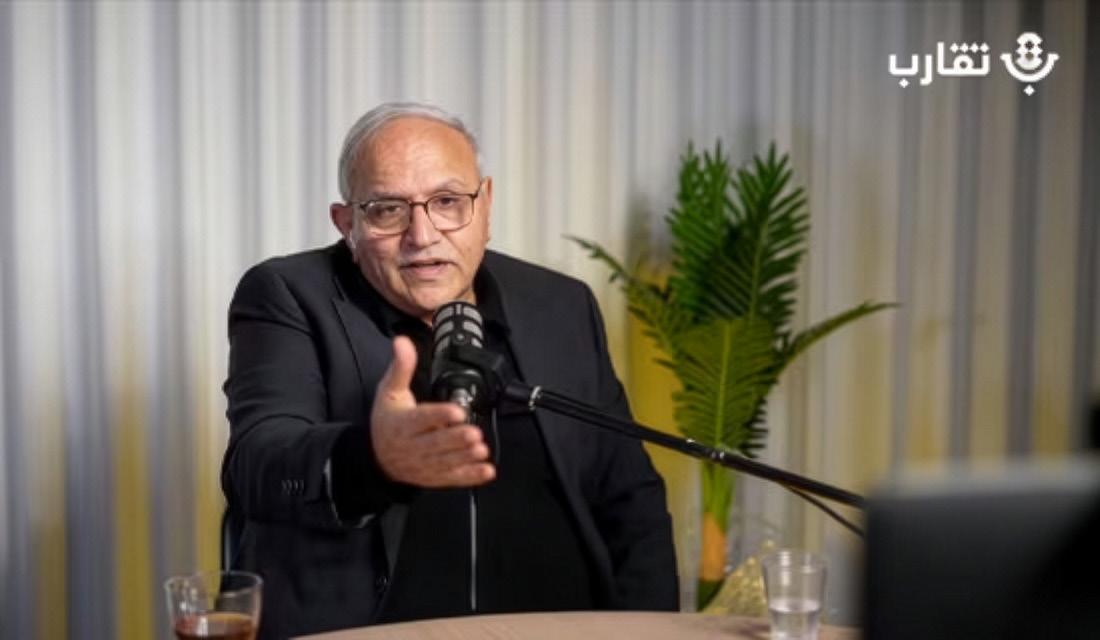
I want to give a sincere thumbs-up to two Palestinians whom I don’t know much about, but who gives me some hope for the future. One is Ali Daragma, host of “Sabah Filastin” (“Morning Palestine”), on an-Najah NBC, a radio station affiliated with Nablus University. The other is Palestinian political analyst and former PA official Hani al-Masri, now Director-General of the Palestinian Centre for Policy Research and Strategic Studies. Daragma interviewed al-Masri in a reel the station posted on Facebook in mid-February.
The subject of the interview was very simple: What is wrong with Palestinian thinking that is keeping them from solving their many problems?
Daragma opens by saying:
I want to take you to a place we have never been before. I want to ask: why do we think the wrong way?... Why isn’t our thinking right? Why is our logic so arbitrary and reactionary?
Al-Masri replies by implying that Palestinians are used to blaming others for things that go wrong and refuse to look at how their own behaviour and think-
ing contribute to the bad place they are currently in: Whenever a problem occurs – even when you are a child in school, if you didn’t get good grades, the fault lies with the teacher, or the questions were too hard, or “my genes are bad,” or “my parents aren’t smart enough” – notice all these answers relate to others. There is never a question of, “What did I do to understand the questions, answer correctly and succeed?” This is the prevailing pattern that feeds this failure... You grow up being told that your fate is “written for you,” and that you must simply accept what is written. This is a misunderstanding of religion… Instead of believing that “he who seeks shall find,”… we always look for external causes – whether related to parents, family, neighbours, the school, the [Palestinian] Authority or the party. Never look for a cause related to yourself, even though the only thing you can actually change is what is related to you. What relates to others is their responsibility… He then recommends two books his centre has published designed to encourage fresh thinking, before warning about the dangers of relying on existing ways of thought and slogans without rethinking them in the face of changing realities:
If you continue to use old methods in a completely new situation, you cannot advance. This is why you make mistakes in both personal and public matters. Self-criticism and
evaluation are vital. Thought doesn’t come in the abstract; it must interact with reality.
The two then, somewhat gingerly, tackle how the repressive forces in the PA are preventing fresh thinking and change. Daragma brings up how journalists are being threatened on social media because they criticise certain actions of the Palestinian security services.
Al-Masri says that this repression: …threatens civil peace and social security. We are entering areas that should be off-limits.
Just because someone criticised the Authority or demanded an investigation and trial for criminals, they become a target for attack and defamation… Preventing people from thinking and criticising is dangerous.
The whole interview is only about five minutes, but it was nonetheless heartening. I have no doubt that if Palestinian society was able to do what they urge – rethink old slogans and thinking, be willing to stop blaming others and take responsibility for their own plight, look at reality in a clear-eyed way in formulating their approach, and end the culture of repression and forced conformism that stifles original thinking – we would be a lot closer to stable Israel-Palestinian coexistence, and eventual permanent peace.
Unfortunately, the bad news is that the Daragma–al-Masri interview was very much an outlier, broadcast only on a small community radio station. It is currently unimaginable that something similar would appear on official PA radio or TV, which have a vastly larger audience, and generally follow an editorial line that says questioning traditional Palestinian positions is unthinkable, and all problems in Palestinian society are because Palestinians are victims of Israel and other evil forces beyond their control. Hopefully, people like Daragma and al-Masri are a sign that this might change some day.
Fresh thinking: Former PA official Hani alMasri (Screenshot)
With Compliments
Abe & Marlene Zelwer




THE FINAL BATTLE?
War with Iran was inevitable, but it can't end now
JANATAN SAYEH
JANATAN SAYEH is an Iran analyst at the Foundation for Defense of Democracies in Washington, DC, and focuses on Iranian domestic affairs and the Islamic Republic’s regional malign influence. Previously, he held various research roles at the International Republican Institute, Washington Institute for Near East Policy, and the American Enterprise Institute. Born and raised in Teheran’s Jewish community, he studied Hebrew and Arabic at the Hebrew University of Jerusalem and received his BA in political science from the University of California, Berkeley.
one of
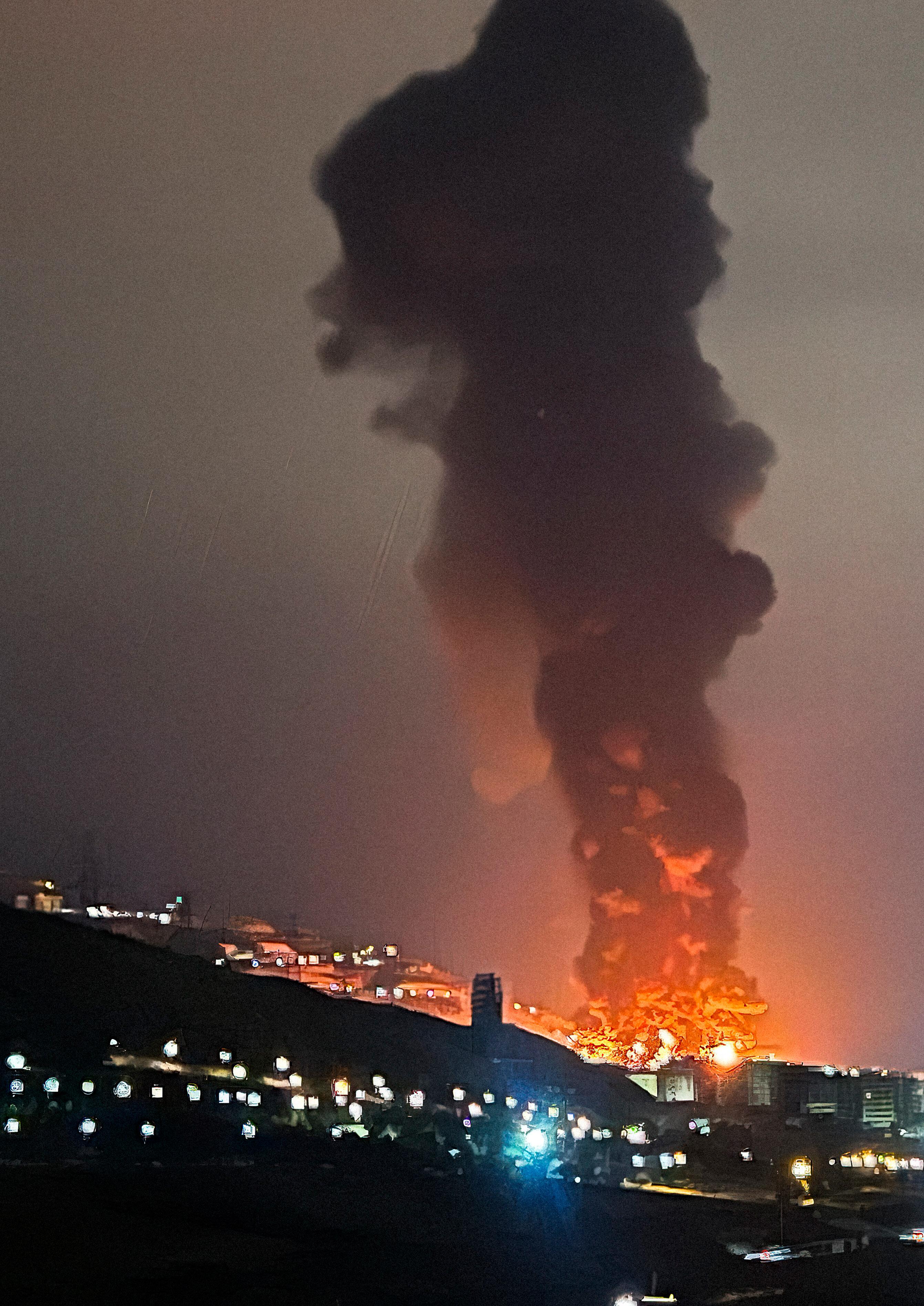
largest fuel storage facilities, engulfed in massive flames following US-Israel joint strikes, March 8, 2026. (Image: Salampix/ ABACAPRESS.COM/via AAP)
Shahran oil depot in Teheran,
Iran's

Moments that can reshape the globe rarely arrive, but this may be one of them. Days after the United States and Israel turned the tables on the world’s largest state sponsor of terrorism, US President Donald Trump declared that he would accept nothing short of the Islamic Republic’s “unconditional surrender”. Militarily, the early results of the joint campaign are historic, but battlefield success alone is not the endgame. The true measure of victory will be the emergence of a government in Teheran that represents the Iranian people’s interests and integrates into the democratic world order.
Iranian Supreme Leader Ali Khamenei, Teheran’s chief theocrat, is dead, the regime’s military has been severely degraded, and its repression apparatus has taken a major blow. Yet the Islamic Republic still stands, with Khamenei’s son Mojtaba now inheriting the mantle. The greatest strategic mistake now would be to halt the campaign before conditions allow the Iranian people to deliver the final blow and shape their own destiny.
Few conflicts this century have presented a clearer justification for US military action. For decades, the Islamic Republic pursued nuclear weaponisation, cultivated a vast global terror network, developed the Middle East’s largest ballistic missile arsenal threatening Israel and Europe, and killed tens of thousands of its own citizens. Neutralising such a spectrum of threats through coordinated military action is a significant achievement, but declaring victory prematurely would risk squandering those achievements.
What made Teheran’s nuclear program so dangerous was the combination of intent and capability. By 2025, the IAEA had lost confidence in its ability to certify the program as peaceful. That mattered because Iran had already moved into territory no other non-nuclear weapons state occupied, enriching uranium to 60% purity and positioning itself within rapid reach of a bomb’s core ingredient. The danger was compounded by a long record of undeclared nuclear activity, evidence of weapons-related research, and intelligence indicating that such
work had not truly stopped. Although operation Midnight Hammer in June of last year devastated the regime’s enrichment capabilities, Teheran still retained a substantial quantity of highly enriched uranium after the 12-Day War and overtly threatened nuclear weaponisation. The June 2025 targeted bombing campaign temporarily eliminated capabilities, but couldn’t remove the intent.
The regime’s ballistic missile program was inseparable from its nuclear ambitions, as many of its systems were capable of carrying a nuclear warhead Lacking a modern navy or air force, Teheran relied on this vast missile arsenal as its primary instrument of military leverage. The regime launched hundreds of these missiles at Israeli civilian infrastructure in two separate attacks in 2024 and again during the 12-Day War, killing dozens of Israelis and wounding thousands. Several of these systems already had ranges capable of reaching parts of Europe from Iran, even as Iranian variants are already striking the continent in Russia’s war against Ukraine. The Islamic Republic’s advancing space program pointed toward an eventual pathway to intercontinental missiles capable of striking the United States.
Beyond conventional military capabilities, the regime’s Islamist ideology sustained a transnational network of terrorist groups across the region. Teheran funded, armed and trained organisations ranging from Hezbollah in Lebanon and Shi’ite militias in Iraq, and the Houthis – a tribal Shi’a faction in Yemen, to Palestinian Islamic Jihad, while also maintaining strong ties with Sunni jihadist actors such as Hamas in Gaza, al-Qaeda and the Afghan Taliban. This
WATCH: Will the Iranian people topple the regime? AIJAC research associate Dr Ran Porat speaks to Rebecca Davis

US President Donald Trump with Secretary of State Marco Rubio and other officials in the Situation Room during the military offensive against Iran (Image: Whitehouse. gov/ Flickr)
ecosystem of proxies amplified the regime’s reach far beyond its borders. Iranian backing played a role in enabling Hamas’ October 7 mass terror attack on Israel and has been linked to the deaths of hundreds of US personnel across the Middle East over the past decades.
Teheran’s malign network also reached into criminal underworlds in Europe and the Americas. It orchestrated terror attacks against Jewish targets in Australia and Argentina. The regime used the Hells Angels biker gang to target Jewish sites in Germany and to assist in assassination plots tied to US soil. It leveraged Sweden’s Foxtrot criminal gang to target Israeli diplomatic sites in Western Europe and even maintained contacts with a Mexican cartel in a plot to assassinate the Saudi ambassador in Washington.
The regime’s harshest brutality was reserved for its own people. Iran records the highest executions per capita in the world and ranks second only to China in total executions. The state maintains a network of prisons dedicated to torturing and executing political detainees, some jailed for acts as minor as a social media post. The regime has violently suppressed every major wave of unrest, from the 1999 student protests and the 2009 Green Movement to the nationwide uprisings in 2017, the bloody crackdown of November 2019, the 2021 environmental demonstrations, and the 2022 Women, Life, Freedom movement. The most extreme episode came in January 2026,
when the regime deployed thousands of foreign terrorist militias to kill roughly 40,000 unarmed Iranians within two days.
None of the regime’s four core threats – nuclear development, ballistic missiles, terrorism, and repression – have proven amenable to negotiation. Teheran refused to abandon uranium enrichment and would not even entertain talks over its missile arsenal or support for proxy militias. Neither pressure nor accommodation altered this posture. Successive US approaches, from the first Trump Administration’s maximum pressure campaign to the Biden Administration’s reduced enforcement of sanctions, failed to produce meaningful concessions. Even the shock of the 12-Day War did not shift the regime’s course. The ideological character of the Islamic Republic left little room for reform or behavioural change.
The current joint campaign has sharply degraded the regime’s ballistic missile threat, not only by striking missile silos but, more importantly, by destroying the launchers and launch sites that make those weapons operational. Iranian naval assets and much of its air force have also been largely neutralised. Beyond infrastructure, the strikes have eliminated senior military leadership, disrupting the regime’s command structure and its ability to coordinate military operations.
Even more consequential have been the targeted strikes against the regime’s extensive repression apparatus, including bases belonging to the Islamic Revo-
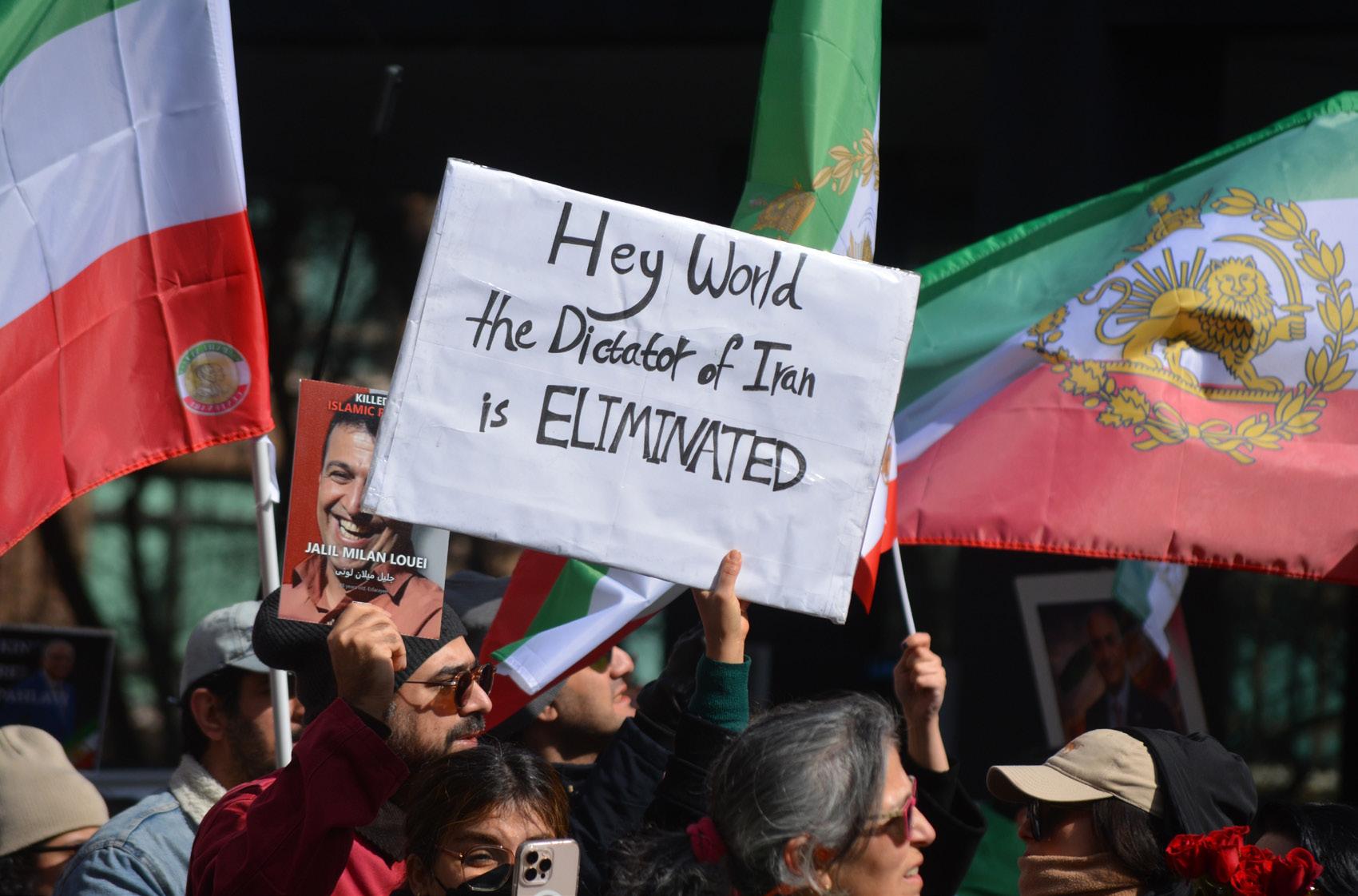
Celebrating the death of Ayatollah Ali Khamenei in New York City (Image: Christopher Penler/ Shutterstock)
lutionary Guard Corps (IRGC) and its subordinate Basij militia. Dozens of these sites were hit, particularly in Teheran but also across multiple provinces. These strikes are more than symbolic gestures for an Iranian population that has long called for international humanitarian intervention. They represent an initial step toward weakening the regime’s internal control mechanisms and enabling Iranians themselves to challenge the system that has ruled them for decades.
“None
of the regime’s four core threats – nuclear development, ballistic missiles, terrorism, and repression – have proven amenable to negotiation. Teheran refused to abandon uranium enrichment and would not even entertain talks over its missile arsenal or support for proxy militias”
Although much of the repression infrastructure has been damaged, the regime’s security forces have not disappeared. Increasingly, they are using civilian infrastructure as cover to deter further strikes. Since the start of the war, militia units have taken positions in schools and hospitals, tactics long used by groups like Hamas. These forces still patrol neighbourhoods, intimidate civilians, and even open fire on residential buildings where residents chant antiregime slogans from rooftops.
Following directives by Trump and Iranian opposition leader-in-exile Crown Prince Reza Pahlavi, many Iranians have refrained from taking to the streets while the bombing campaign continues. But the country’s anti-regime movement remains intact and is waiting for the right moment to act. The momentum has not vanished. Many Iranians view this as a rare revolutionary opening, one that may not return for generations if it is lost. Having repeatedly risked their lives in past uprisings, they remain prepared to do so again.
For that reason, the military campaign must continue and move into its next phase. Neither this war nor the earlier 12-Day War pushed the Iranian public closer to the regime, despite long-standing warnings from many supposed experts that this would be the likely outcome of any military action targeting Iran. On the contrary, the clear message that this campaign targets the regime rather than the Iranian nation has resonated with many inside the country. Maintaining that distinction will be critical. Any strategy that seeks to exploit separatist or ethnically driven movements that threaten Iran’s territorial integrity risks alienating one of the most pro-American and pro-Israel populations in the Middle East.
LEGALLY BLIND
The US and Israel were justified under international law in striking Iran
ARSEN OSTROVSKY
No sooner had US President Donald Trump ordered a joint military strike with Israel against Iran’s nuclear infrastructure and ballistic missile program, as well as against Supreme Leader Ayatollah Ali Khamenei, than a predictable chorus of condemnation followed across much of the international community, including Australia.
Critics quickly alleged that the United States and Israel had acted recklessly, destabilised the region, and violated international law. Yet such claims rest on a fundamental misunderstanding of the legal framework governing the use of force. When examined through the proper lens of the Laws of Armed Conflict, the joint US-Israeli action against the Iranian regime was not only lawful, but entirely justified.
The central legal point is this: the United States and Israel were not initiating a new war with Iran. Rather, they were acting within the context of a long-running armed conflict that Iran itself initiated and has sustained through decades of direct attacks and proxy warfare.
Once that reality is acknowledged, the legal analysis changes dramatically.
AN ONGOING ARMED CONFLICT
For nearly five decades, the Iranian regime, led since 1989 by Ayatollah Khamenei, waged an un-
relenting campaign of terror against the United States and its allies, chanting “Death to America”, whilst plotting, preparing and initiating attacks on US troops, officials, and civilians, including even Trump himself.
From the 1983 Marine barracks bombing in Beirut that killed 241 Americans, to attacks on the USS Cole, and the October 7 massacre by Hamas, Iran’s record is a litany of deliberate assaults on American lives. Its proxies across the region have continued to wage this war across the Middle East, from Hezbollah in Lebanon to Hamas in Gaza, from the Houthis in Yemen to terror networks operating in South America and Southeast Asia.
The threat to the US was thus real, imminent, and growing by the day.
Intelligence confirmed that Iran was developing intercontinental ballistic missiles capable of reaching the continental United States. At the same time, it was rebuilding its nuclear weapons program. Trump made it plain: “They’ve rejected every opportunity to renounce their nuclear ambitions, and we can’t take it anymore.”
Iran has also repeatedly threatened Israel with annihilation and, given its attempt to rebuild its illicit nuclear weapons and long-range missile program, forcing the Jewish state’s hand in joining this military operation with the United States.
The reality is that, notwithstanding the best efforts of the US Administration, diplomacy had failed, with President Trump saying that the Iranians were not negotiating in good faith, despite repeated warnings.
Taken together, Iran’s actions constitute a sustained armed conflict that has persisted for decades.
The recent joint US-Israeli operation must therefore be understood within that broader context. It was not the beginning of a war, but rather part of an ongoing one.
THE LAWS OF ARMED CONFLICT
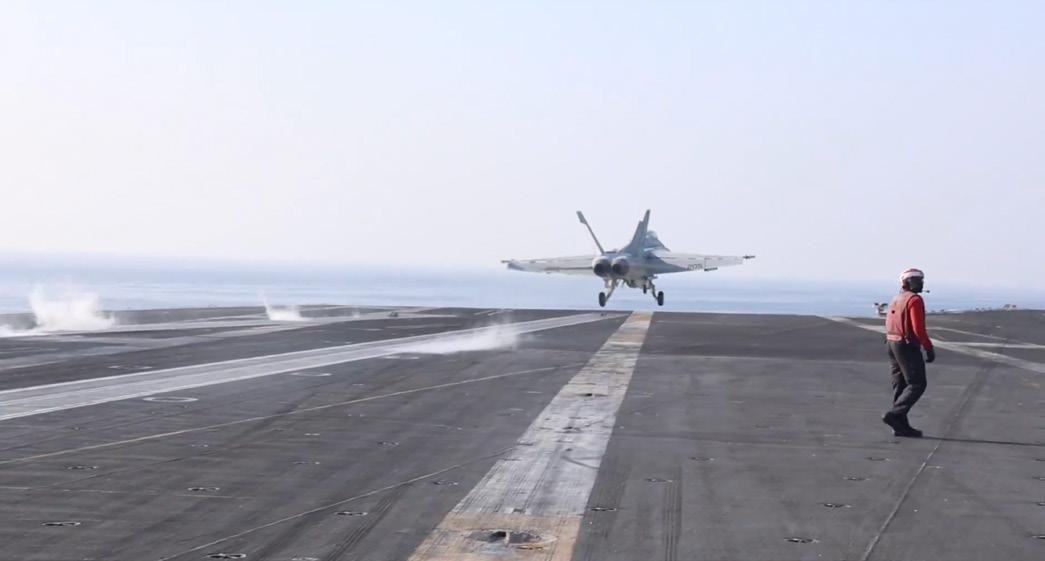
US forces targeting Iran are obeying the laws of armed conflict, which is the proper framework for understanding the legality of their actions give a state of armed conflict has long existed with Iran (Image: CENTCOM)
American forces, allies and global stability.
Once an armed conflict exists between parties, the conduct of hostilities is governed by the international law of armed conflict, also known as international humanitarian law.
Under this framework, parties to a conflict may lawfully target military objectives, provided they comply with the core principles of distinction, military necessity and proportionality.
A military objective is defined as any object or person that by its nature, location, purpose or use makes an effective contribution to military action and whose destruction offers a definite military advantage.
Iran’s nuclear weapons program, ballistic missile infrastructure and associated military facilities clearly fall within this definition. These capabilities form the backbone of Iran’s ability to project power, threaten its adversaries and support its network of proxy forces across the region.
Neutralising such infrastructure directly degrades Iran’s capacity to conduct further attacks.
Statements by senior US officials make clear that this was precisely the objective of the operation. US Secretary of War Pete Hegseth described the strikes as a targeted effort to eliminate capabilities that posed a “clear and growing threat” to
Similarly, US Secretary of State Marco Rubio emphasised that the operation was directed specifically at the infrastructure enabling Iran’s nuclear and missile programs, the very capabilities that have underpinned the regime’s strategy of aggression across the region.
Under the laws of armed conflict, targeting such military objectives during an ongoing conflict is entirely lawful.
TARGETING LEADERSHIP IN ARMED CONFLICT
Some critics have also questioned the legality of targeting senior Iranian leadership, including the regime’s Supreme Leader Ali Khamenei.
Yet international humanitarian law is clear on this point as well.
Individuals who exercise command authority over military operations may constitute lawful military objectives during an armed conflict. Under Iran’s own constitutional system, the Supreme Leader serves as commander-in-chief of the armed forces and exercises ultimate authority over the country’s military and security apparatus.
In that role, Khamenei has overseen the development of Iran’s nuclear and missile programs, as well
as the strategic coordination of its proxy forces throughout the Middle East.
Neutralising such leadership, as well as the senior Iranian command echelon in the armed forces, including the Islamic Revolutionary Guard Corps (IRGC), therefore provides a concrete and direct military advantage by disrupting the enemy’s command structure and reducing its capacity to plan and execute attacks.
INTERNATIONAL LAW IS NOT A SUICIDE PACT
Perhaps the most troubling aspect of the criticism directed at the United States and Israel is the underlying suggestion that international law somehow requires states to remain passive in the face of existential threats.
International law was never intended to function as a suicide pact.
Consider, for a moment, what Australia would do in a similar situation. What if a hostile regime openly called for Australia’s destruction while simultaneously developing nuclear weapons and long-range ballistic missiles capable of striking Australian cities, and attacking Australia twice with massive missile barrages to demonstrate the regime’s abilities? What if that same regime was also arming proxy terrorist groups to carry out attacks against Australians at home and abroad?
Would Canberra simply wait until those weapons were launched? Would it sit idle while those proxy groups carried out repeated attacks, insisting that nothing could be done until catastrophe had already occurred?
Of course not.
No responsible government would allow such a threat to mature unchecked. Faced with a regime openly pursuing the capability to inflict catastrophic harm, Australia – like any other nation –
would act decisively to neutralise that threat before it materialised.
In fact, last August, Australia already recognised the grave national security threat posed by the Iranian regime, with Canberra designating the IRGC as a terrorist organisation and expelling the Iranian Ambassador after irrefutable evidence emerged of Iranian-directed terror attacks on Australian soil.
The first duty of any government is the protection of its citizens.
International law recognises that fundamental reality. Interpreting it in a way that prevents states from defending themselves would not strengthen the international legal order, but would entirely undermine and erode it.
Such an interpretation would reward regimes that exploit terrorism, proxy warfare, and weapons of mass destruction while hiding behind international law.
THE ADDITIONAL CONTEXT OF SELF-DEFENCE
Although the primary legal basis for the operation lies in the existence of an ongoing armed conflict governed by the laws of armed conflict, the strikes are also reinforced by the inherent right of self-defence recognised under the United Nations Charter.
Article 51 preserves the right of states to defend themselves against armed attacks.
Given Iran’s decades-long campaign of violence against both Israel and the United States, that threshold has long been satisfied.
Moreover, as noted above, intelligence assessments indicated that Iran was rapidly advancing its nuclear weapons program while continuing to develop ballistic missiles capable of delivering those weapons over long distances.
Trump made clear that diplomacy had been exhausted and that Iran had repeatedly rejected op-
portunities to abandon its nuclear ambitions. Allowing such capabilities to mature further would only increase the threat posed to millions of people.
While this self-defence argument reinforces the legality of the operation, the central legal point remains unchanged: the strikes occurred within the context of an existing armed conflict and were directed at lawful military objectives.
CONCLUSION
When viewed through the proper legal framework, the joint US–Israeli strike against Iran was entirely justified under international law, given both countries were already involved in a long-standing state of armed conflict with Iran.
For decades, the Iranian regime has directed a relentless campaign of violence against both coun-
tries through direct attacks – including two direct attacks on Israel in 2024 involving hundreds of missiles and UAVs – and by proxy forces. Iran has also waged an unrelenting campaign of terror around the world, including Europe, South-East Asia, South America and on Australian soil as well.
The Australian Government explicitly acknowledged this, noting that the necessity of this military action did not arise in a vacuum, before offering its support to the ongoing campaign by the United States and Israel.
In striking Iran’s nuclear weapons and ballistic missile program, Trump stated, “Our objective is to defend the American people by eliminating imminent threats from the Iranian regime.”However, in doing so, the United States and Israel are also making the entire world, including Australia, safer.
INSTAGRAM CAROUSEL (click on image to view): Arsen Ostrovsky explains why US-Israel attack on Iran was justified under international law
SAFE SPACES
Reflections from inside a bomb shelter
AHRON SHAPIRO
We were still a few steps away from the basement miklat, or bomb shelter, in our building when we heard the swooshing sounds of launching interceptors, followed quickly by loud booms, somewhere in the dark outside our apartment in Jerusalem.
From the moment the air raid siren begins, you have 90 seconds to get to a shelter. It seems like enough, and maybe it is, but just barely – once you factor in the fumbling for shoes and something to wrap around yourself in the winter cold.
Once we left the shelter after the “all clear” came over our phones and the kids tumbled back into bed, I paused by my teenaged son’s room and whispered, “We did well tonight, but maybe let’s aim to get down there just a little sooner next time.”
I didn’t say, but I knew what the consequences of not getting to the bomb shelter in time can mean, if you’re unlucky. Those few last steps could be the difference between life and death.
Israel’s dusty old bomb shelters are like airbags. You never really notice them until the moment that you need them.
By law, all Israeli buildings built since 1951 are mandated to have bomb shelters. For decades, these were situated on the ground floor or basement. Public housing is an exception, typically opting for more economical shelter placement, out-
side, in an oversized underground space.
Following the 1991 Gulf War, regulation moved away from the shared shelter model in favour of a mamad, a safe room constructed as part of each individual apartment. These are super-convenient, but not optimal in terms of protection – the underground placement of the older shelters actually offers natural protection from explosive forces better than similar reinforced construction in aboveground apartments.
Everything is a trade-off. On one hand, my family envies people in modern apartments with a mamad as they can weather missile attacks with much less disruption of work or sleep. On the other hand, there is a special kind of camaraderie you get out of going through these attacks with your neighbours in a shared bomb shelter which you can’t get by staying locked in at home.
Buildings built before 1951 have neither private nor communal shelters. For these residents, cities provide government-maintained public shelters. These spacious shelters have modest individual living spaces for multiple families (first come, first served), toilet blocks, emergency water tanks, communal areas and CCTV cameras for protection.
In fact, while researching this article, I was stopped by police who questioned me on the spot, took my name and informed me that, journalist or
not, I could not go around photographing bomb shelters because such photos could provide intelligence to Iran. Apologising profusely, I told them it was something that had never even occurred to me. For this reason, this article is illustrated only by authorised photographs, and the information I’m discussing certainly doesn’t reveal anything that isn’t available in the public domain.
“For all the endless debates on Western university campuses about “safe spaces”, for Israelis, bomb shelters are at times the only “safe spaces” that matter. In those terrible moments, those thick concrete walls provide precious protected space to live, breathe deeply, and seize a few moments of feeling alive”
The current conflict with Iran – with all the sprints to the bomb shelters and long minutes inside that have come with them – has given me time to pause and think about them. What’s
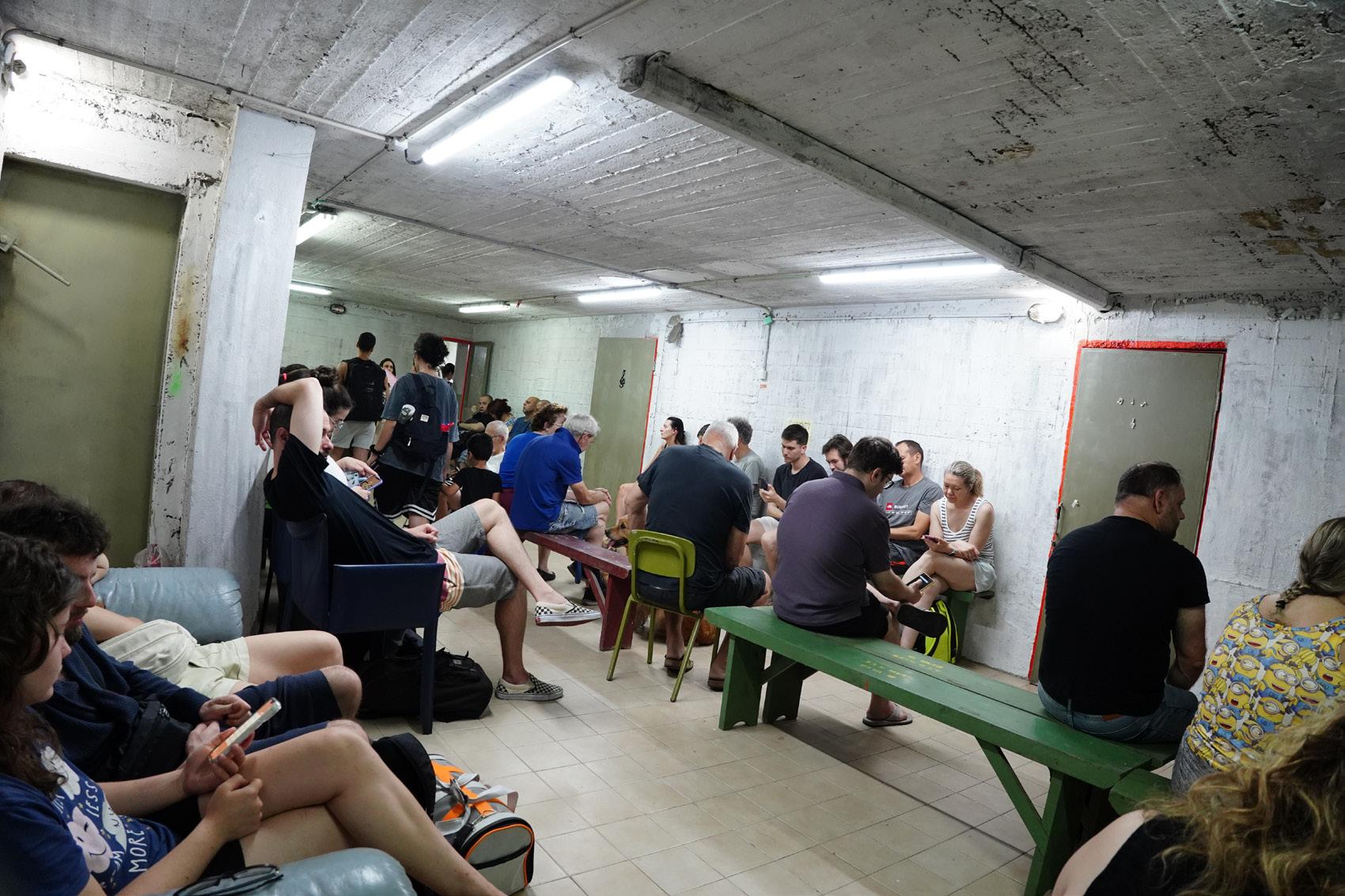
An older Israeli public bomb shelter. In newer housing, Israelis now have a fortified room inside their home (Image: Vladi Konov/ Shutterstock)
obvious is that the shelters built from the ‘50s to the ‘90s – like ours – were never built with the expectation that people might be able to safely pop in and out of them several times a day.
Nobody back then anticipated that threats would ever be detected with the precision they are today. Rather, the spaces were built based on the same knowledge that every single Israeli had before 1967 – that every town in the country was either in mortar or artillery range. Therefore, an escalation or war meant living in your bomb shelter 24/7 until you heard over the radio that some sort of truce had been reached and the danger had passed.
For some Israelis in the border kibbutzim, even that kind of lifestyle was beyond their reach. History tells us of the children who slept in the kibbutz bomb shelters every single night, and of the armoured tractors that were used to till the fields – and even that wasn’t always enough protection.
This is why, post-October 7, the idea of having the country’s borders being reduced to the armistice lines of June 4, 1967 – as narrow as 14 kilometres – is now seen as unrealistic and indefensible to most Israelis. It’s the demand made by people who have never had to guard their own country’s borders while neighbourhoods of innocent people were literally just behind your back.
They also likely cannot imagine a situation where your life and that of everyone you love can depend on an alert that wakes you out of a deep sleep and requires you to get to safety before you are even completely awake.
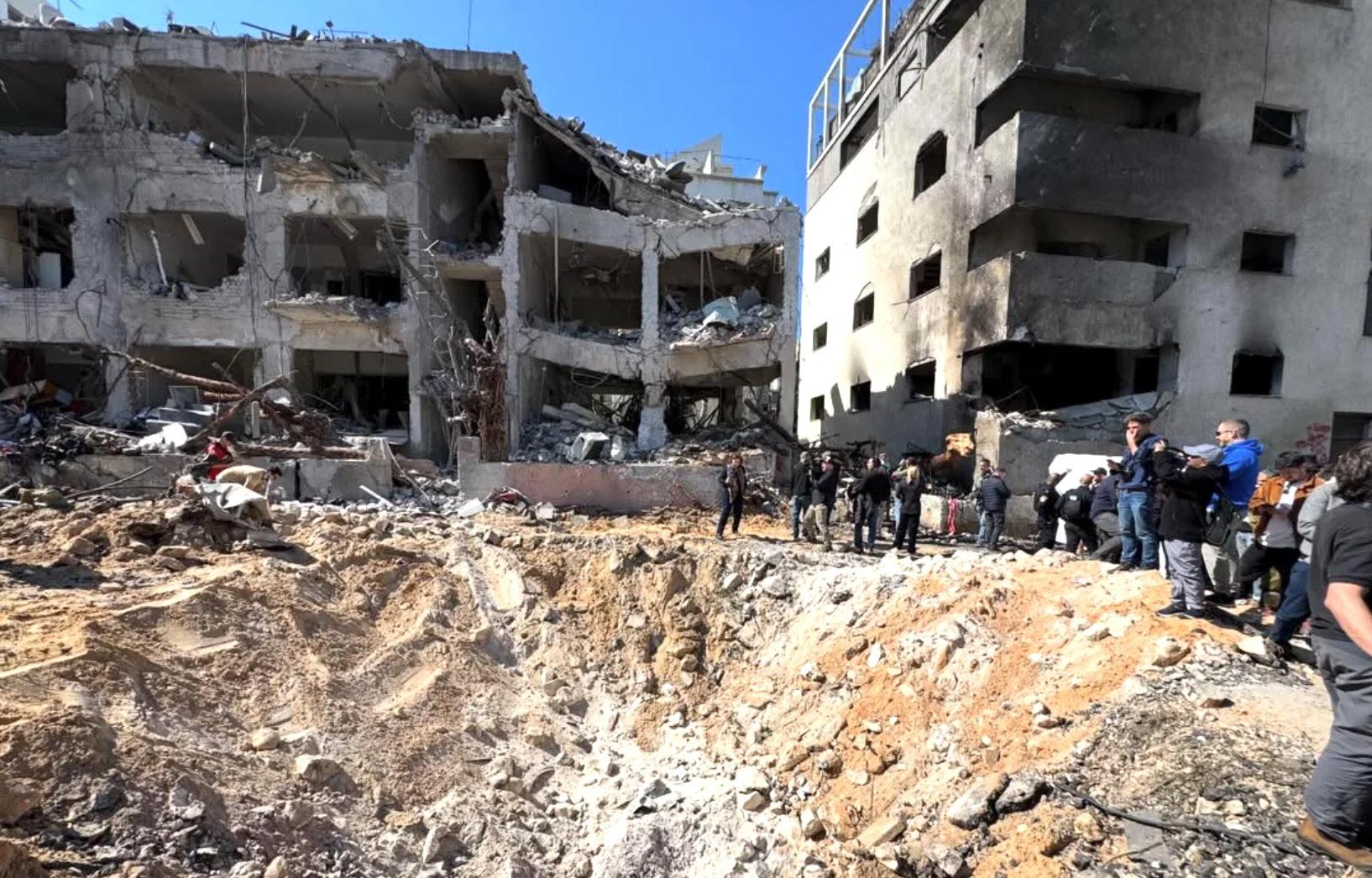
This explosion in Tel Aviv caused major damage to a historic apartment block (Image: Screenshot/ Bauhaus Centre)
For all the endless debates on Western university campuses about “safe spaces”, for Israelis, bomb shelters are at times the only “safe spaces” that matter. In those terrible moments, those thick concrete walls provide precious protected space to live, breathe deeply, and seize a few moments of feeling alive.
As the Iran war began during the first week of March, Israel, together with the rest of the Jewish world, celebrated the holiday of Purim, which commemorates a miraculous reprieve from the plots of murderous Persian enemies over two and a half millennia ago.
Our neighbors brought down craft supplies and balloons for the kids to make Purim decorations for the shelter, and distributed homemade hamentaschen, triangle-shaped holiday treats.
On the night of Purim itself, we all gathered in the shelter and followed the age-old tradition of hearing the story of Purim read from a scroll, a story of the victory of the few over the many and the weak over the strong, and the enduring survival of the Jewish people despite the antisemitism that follows us from generation to generation.
It is a story where God is never mentioned, and yet where God’s protection and guiding hand are found between every line.
In one memorable line from the story, the heroine Esther is asked at a fateful moment, “Who knows whether you have [been placed in this position] for just such a time as this?”
For Jerusalem’s dusty, trusty bomb shelters in today’s war, that’s more than just a rhetorical question.
WATCH: How would the end of Iran's regime affect Israel? AIJAC research associate Ran Porat speaks to Rebecca Davis
UNSANCTIONED?
The current war and the economic embargo on Iran
OVED LOBEL
The long-awaited large-scale military campaign against the Iranian regime was finally launched by the US and Israel on February 28, dubbed “Epic Fury” by the former and “Roaring Lion” by the latter. On the first day, the Supreme Leader Ayatollah Ali Khamenei was killed, alongside most of the regime’s senior political and military leadership, while much of what remained of Iran’s offensive and defensive military capacity after the 12-Day War in June 2025 is, at the time of writing, in the process of being destroyed.
Even if this proves to be the end of the Islamic Republic and the 1979 Islamic Revolution, the “maximum pressure” campaign of crushing sanctions targeting Iran will need to still be maintained until a democratic transition has clearly taken hold there.
But if the regime, though decapitated and crippled, somehow survives and reconstitutes, as remains quite possible, then the issue of how to continue utilising sanctions as part of a comprehensive strategy to contain and further degrade that regime – alongside the option of the further use of force –will remain on the table.
But how to more effectively implement sanctions so that they increase economic pressure is a separate question to whether economic pressure can realistically alter this regime’s conduct or poli-
cies. To this latter question, the historical and contemporary record provides a disheartening answer.
“Economic sanctions by the US and its allies or by the UN in general would have no deterrent effect upon Khomeini, a man who simply cannot yield under pressure. Indeed, Khomeini would mount a counter escalation of his own,” stated a January 1980 CIA assessment regarding the founder and first Supreme Leader of the Islamic Republic, Ruhollah Khomeini. The same, unfortunately, applied to his successor, Ali Khamenei. It will also likely apply to Khamenei's successor, his son Mojtaba Khamenei.
There are inherent limits to what sanctions can accomplish in terms of changing specific policies, particularly when they’re paired with stringent demands that the target would regard as against the raison d’être of the regime.
While supporters of the Obama-era Iran nuclear deal will often cite sanctions as being key to bringing the regime to negotiate, the only reason any deal was signed was American, not Iranian, concessions – most importantly the Obama Administration’s decision to drop the demand, based on binding UN Security Council resolutions, for Iran to cease all uranium enrichment.
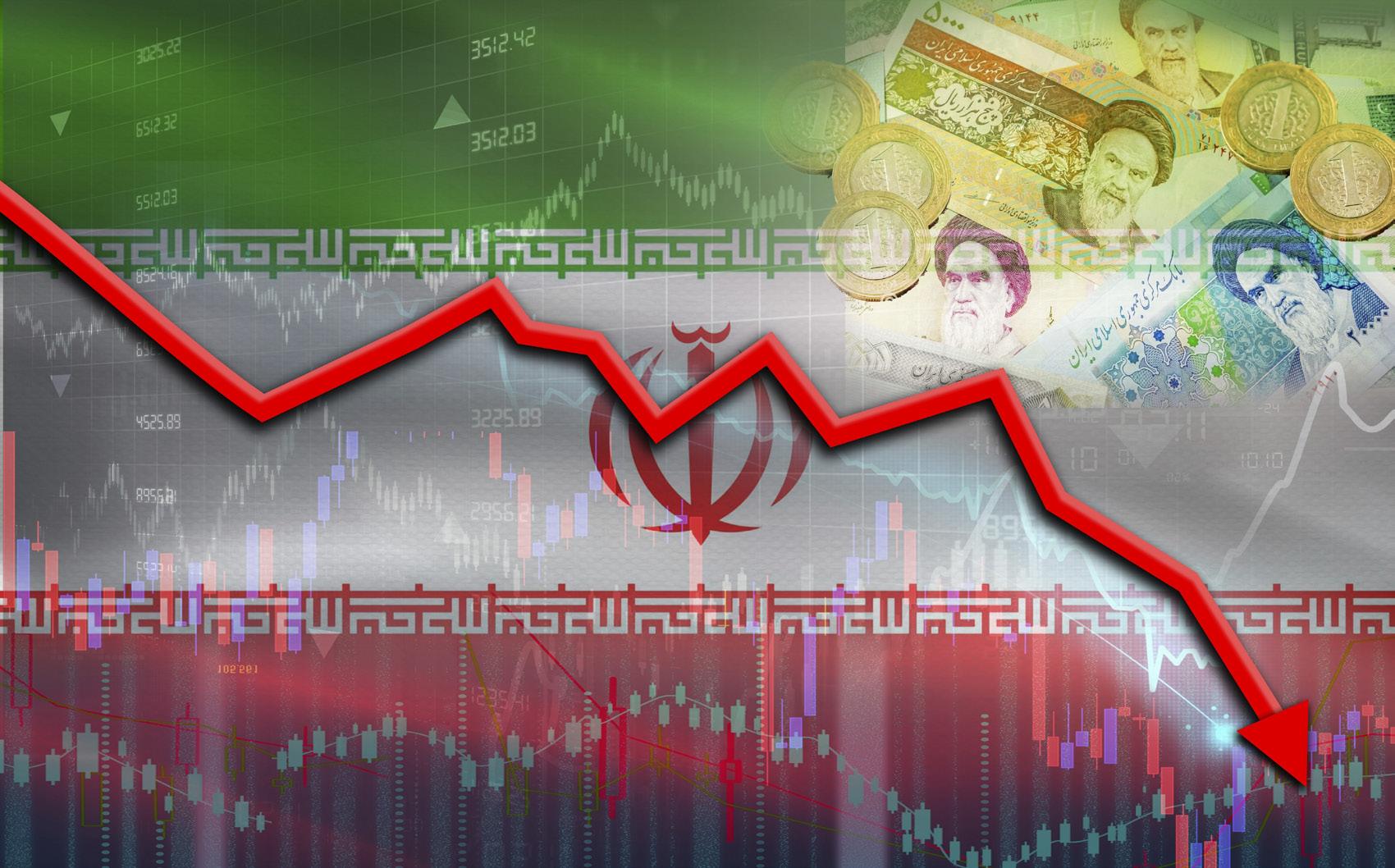
Sanctions may not be able to convince an ideologically-inflexible regime to compromise, but by affecting the economy and currency, they limit its ability to do damage (Image: Shutterstock)
No policy based solely on economic pressure or even on the credible threat of force was likely to convince this regime to take actions viewed as tauntamount to capitulation on its core goals. Born as a supranational Islamic Revolution predicated on driving US influence from the Middle East and destroying Israel, the regime was very unlikely to sacrifice its raison d’être under almost any circumstances. On the contrary, the regime aspired to a self-sufficient “resistance economy”. It is not constitutionally capable of responding rationally to economic pressure or threats.
Moreover, the Islamic Revolution always prioritised relatively cheap, asymmetric jihad, meaning that sanctions could only have limited impact on the proxies run by the Islamic Revolutionary Guard Corps (IRGC), such as Hezbollah in Lebanon, the Houthis in Yemen , Hamas and Islamic Jihad in the West Bank and Gaza, or various groups in Iraq and across the Gulf.
The total the regime was estimated to be spending annually on all of its regional organs and proxies combined was less than US$2 billion. Many of these IRGC arms were self-sustaining, whether through taxation, criminal activity or parasitic control of parts of their host countries.
However, sanctions were clearly one contributing factor – alongside corruption, mismanagement and misallocation of resources – that led to the precipitous economic decline in the Iranian economy and currency in recent months, which, in turn, was the key spark of the anti-regime protests that began in December.
While sanctions, regardless of how effective, were never likely to fundamentally alter regime decision-making, their ability to inflict real pressure was substantially undercut by the Chinese purchase of Iranian oil through ostensibly independent “teapot” refineries, which kept the regime financially afloat. This had reportedly begun to change
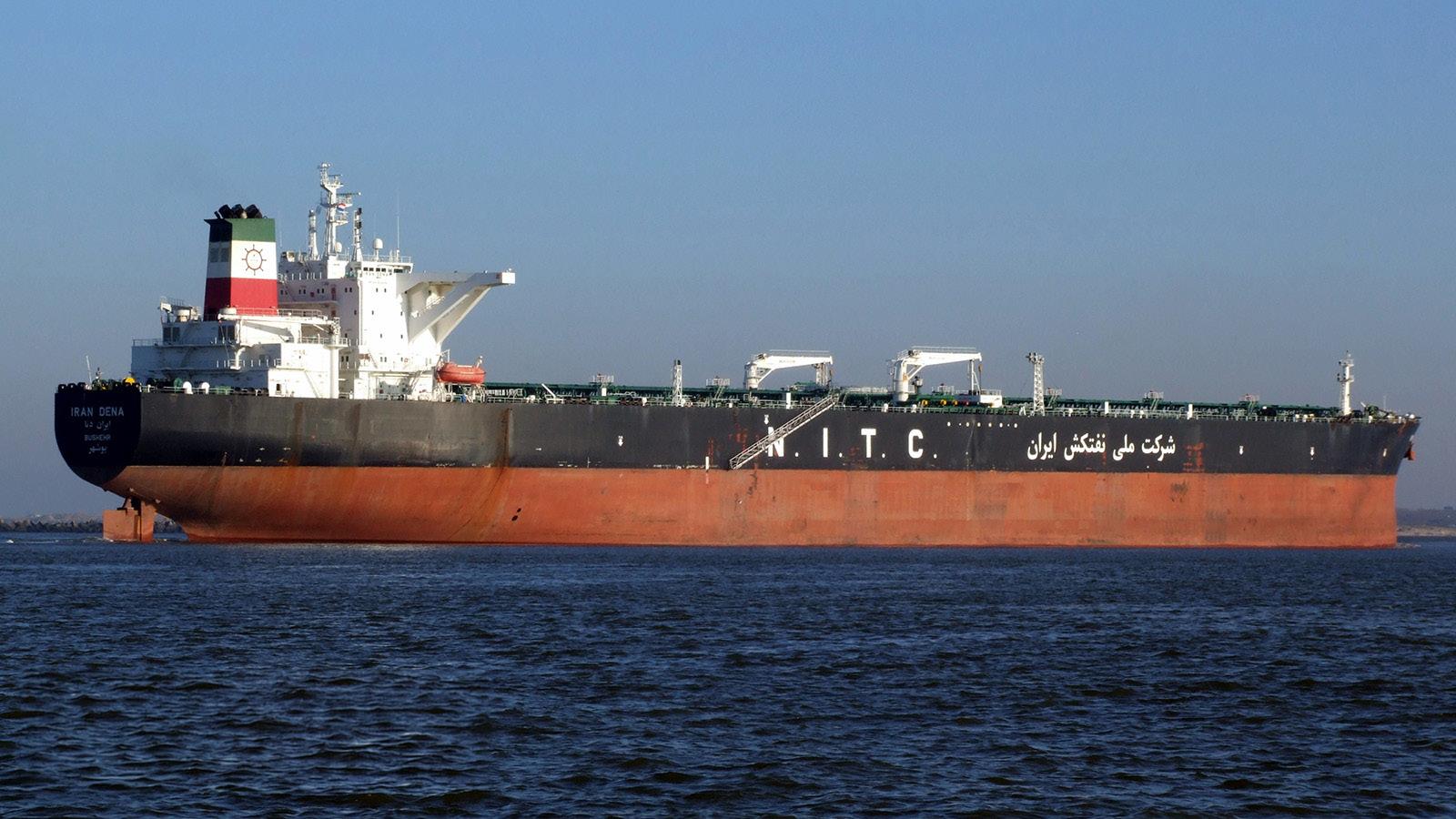
The key to maintaing economic pressure on Iran is direct interdiction of the so-called "shadow fleet" – more than 1,000 tankers that are illegally moving Iranian and Russian oil (Image: Creative Commons) recently – which may help explain the precipitous deterioration in Iran's economic situation before the war. Iran’s exports to China were allegedly down to 800,000 barrels per day (bpd) in 2026, the lowest level in two years, although these levels have previously fluctuated
This has to do with not only more expansive sanctions against the so-called “shadow fleet” of about 1,300 old tankers moving illicit oil from Iran and Russia, among others, but the active pursuit and boarding of these vessels by the US and others in 2026. For the first time, India seized three shadow fleet ships previously sanctioned for carrying Iranian oil, while not only the US, but France and the UK, have started boarding shadow tankers. In addition, UN sanctions on Iran, lifted by the JCPOA, were reimposed through the “snapback” mechanism in late 2025.
If it proves necessary, attempts to collapse the regime’s oil budget could be made even more effective with improved enforcement. In October 2025, Saeed Ghasseminejad and Aidin Panahi outlined several steps in the National Interest to improve en-
forcement and expand sanctions to degrade Iran’s ability to use the shadow fleet. For example: Protection and Indemnity (P&I) coverage should be contingent on verified documentation, including uninterrupted AIS tracking, validated bills of lading [i.e. the receipt of goods in good order], and clear port histories. Any vessel failing to meet these criteria should lose recognition from the International Group (IG) of P&I Clubs… Effective sanctions would therefore require three linked actions: IG clubs withdrawing coverage for deceptive vessels, port-state control denying entry to uninsured ships, and refiners refusing to offload cargoes without IG liability certificates.
Former senior US official John Bolton recently advocated the recreation and repurposing of the 2003 Proliferation Security Initiative (PSI) model to go after the shadow fleet, writing, “The objective of PSI 2.0 should be to sweep oil-tanker ghost fleets from the seas entirely, delegitimizing them across the board, by interdictions, seizures and financial
and commercial means.”
Physical interdiction rather than sanctions would be the most effective method, since it is virtually impossible to ensure universal enforcement of sanctions, even from allies and partners, much less adversaries. However, intense pressure would nevertheless need to be applied against Turkey, the
The purpose of sanctions on Iran, if they remain necessary after the death of Khamenei and his leading military commanders, should be to ensure the regime cannot revive itself in any recognisable form, and is only allowed to access funds in exchange for complete capitulation on enrichment, terrorism, kidnapping, piracy, internal repres-
“The purpose of sanctions on Iran, if they remain necessary after the death of Khamenei and his leading military commanders, should be to ensure the regime cannot revive itself in any recognisable form, and is only allowed to access funds in exchange for complete capitulation on enrichment, terrorism, kidnapping, piracy, internal repression”
UAE and other historical sanctions-busting hubs. What’s more, as in Venezuela, the US Navy could partially blockade all Iranian ports and stop any oil, ballistic missile precursor chemicals or weapons and weapons components from entering or leaving.
The United States must also be willing to weather Chinese economic retaliation when sanctioning important entities involved in the Iran–China oil-forinfrastructure trade and general bartering system
Iran’s economy is a veritable command economy, complete with five-year plans, unsustainable subsidies, ecological destruction and self-destructive mismanagement and corruption. After more than 45 years in power, it will be very difficult for that economy to be disentangled from the IRGC industrial conglomerate and its clerical overseers, which have been controlling every relevant element of this “resistance economy” through the “military–bonyad (foundation) complex”.
Like all such ideological-economic systems, it is both unsustainable and politically and financially impossible to reform. As noted, its poor performance is severely exacerbated by sanctions.
sion and, most importantly, the disbanding of the Houthis, Hezbollah and the alphabet soup comprising IRGC control in Iraq, not to mention an end to supporting Palestinian terrorist groups.
When Mikhail Gorbachev took power in the Soviet Union in the 1980s and surveyed the economic and political wreckage of the system he’d inherited, he attempted to preserve it through social, political and economic reforms that inadvertently destroyed the entire entity.
If someone eventually emerges from within the Iranian regime to cooperate with the US, as happened in Venezuela, they will probably, like Gorbachev, attempt to reform the system in order to preserve its ideological foundations.
While these steps should be encouraged – especially if they include abandoning Iran’s regional empire, as Gorbachev did in Europe – and some sanctions should be removed in response to certain changes on the nuclear, missile and terrorism front, sanctions should only be fully lifted in the event Iran achieves a full transition away from the Islamic Revolution and the fanatical, murderous system it created.
LEBANON'S SECOND CHANCE
This conflict could finally free Beirut from Hezbollah
HUSSAIN ABDUL HUSSAIN
Lebanese-born HUSSAIN ABDUL-HUSSAIN is the author of The Arab Case for Israel (Wicked Son, Feb. 2026) and a research fellow at the Foundation for the Defense of Democracies (FDD).
When Hezbollah launched attacks on northern Israel on October 8, 2023, ostensibly in solidarity with Hamas, Israel initially considered confronting its stronger northern adversary first before shifting focus south to take on Hamas in Gaza. The Biden Administration vetoed this approach, warning of potential regional or global escalation. Israel therefore prioritised operations in Gaza while engaging in tit-for-tat exchanges with Hezbollah.
As fighting in Gaza wound down, Israel turned its attention north. Washington pushed for a diplomatic resolution, and Israel agreed to an immediate ceasefire. In a televised speech, Hezbollah leader Hassan Nasrallah rejected the proposal, conditioning acceptance on a simultaneous Gaza ceasefire. Days later, on Sept. 27, 2024, Israel assassinated Nasrallah, and launched a campaign which demolished much of Hezbollah’s military infrastructure.
Following Nasrallah’s death, his Shi'ite ally, Lebanese Parliament Speaker Nabih Berri, claimed the late leader had privately sought an unconditional ceasefire, presumably shortly after his public rejection. This time, Israel dictated the terms: hostilities would end only if Lebanon disarmed Hezbollah as required by UN Security Council Resolution 1701, which ended the 2006 war.
Bruised by the conflict, Beirut agreed. Under the November 2024 Cessation of Hostilities Agreement, Israel would halt its operations against Hezbollah and withdraw from some small buffer zones inside Lebanon once the militia was disarmed, thereby keeping it at arm’s length from northern Israeli communities.
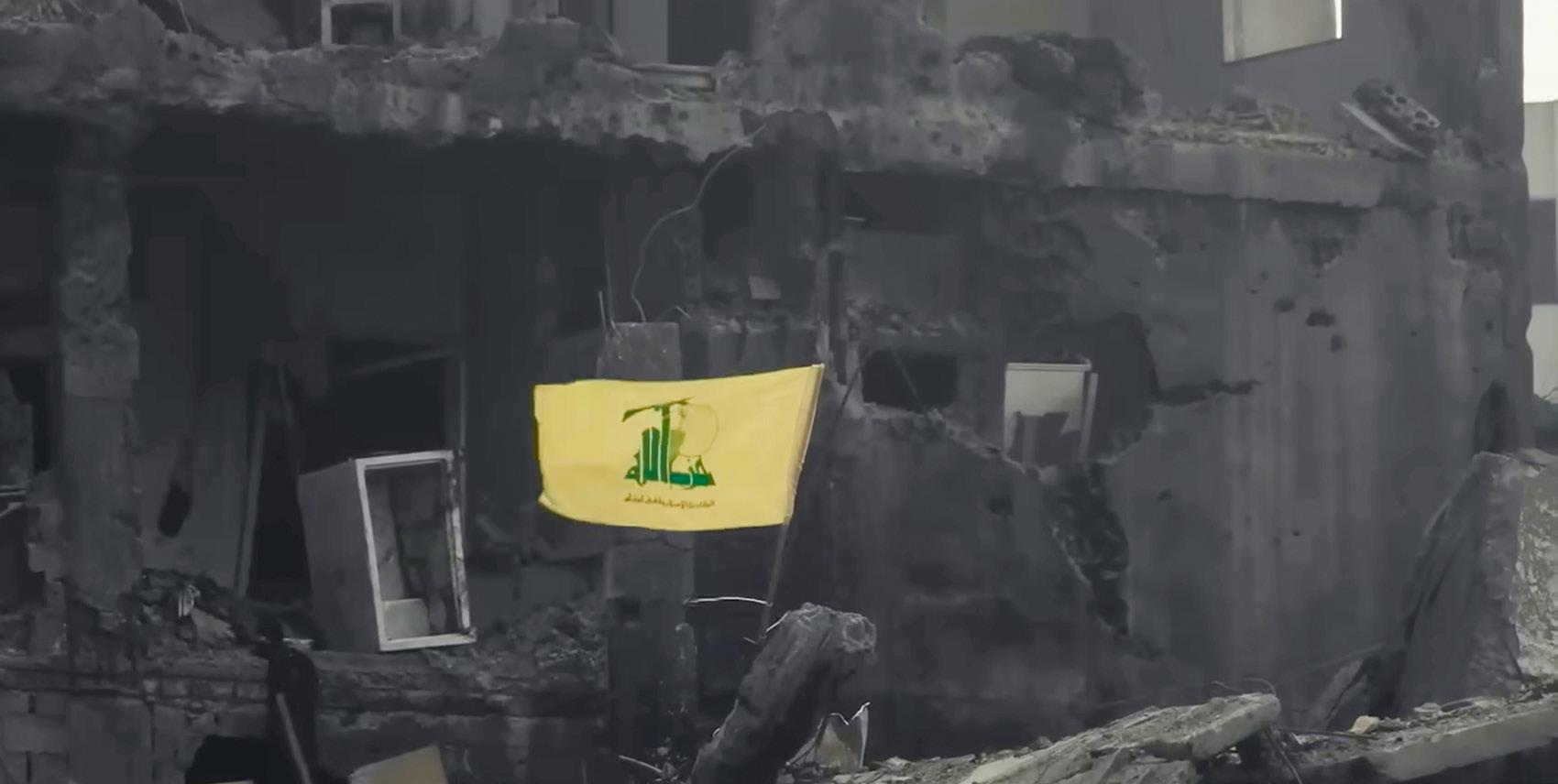
The weak Lebanese Government soon backtracked, unable – or unwilling – to disarm Hezbollah. It reversed the agreed sequence, demanding that Israel withdraw and cease operations first, with disarmament to follow. Meanwhile, Beirut declared “restoration of state sovereignty,” in line with the constitution, was only possible through the state achieving “monopoly of arms” through “disarmament of all militias.” Lebanon even invited journalists to take pictures of a few truckloads of arms hauled away from Palestinian refugee camps.
Yet, over the past year or so, Lebanon never uttered the words “disarming Hezbollah”. When others demanded that Beirut do so, President Joseph Aoun and Prime Minister Nawaf Salam said that Israel must first stop its ongoing strikes on Hezbollah targets, designed to take out weapons caches and manufacturing facilities Lebanese forces were ignoring. They also argued that forcefully disarming Hezbollah would lead to a civil war and alienate Lebanon’s Shiites.
In early 2026, Beirut even announced that it had disarmed Hezbollah in the area between the
Lebanese–Israeli border and the Litani River, 32 kilometres to its north. Lebanon pretended that the area was cleared of Hezbollah and had become operationally under the fully control of the Lebanese Armed Forces (LAF).
Israel largely ignored this Lebanese posturing until March 1, 2026, the day after the assassination of Iranian Supreme Leader Ali Khamenei on Feb. 28, when Hezbollah fired six rockets into Israel, apparently testing Israel’s response amid the broader US-Israeli campaign against Iran. Already on edge, Israel retaliated with overwhelming force.
Beirut’s failure became undeniable. The Hezbollah rocket fire demonstrated that the zone south of the Litani River was far from cleared, proving Lebanon was either unwilling or unable to enforce disarmament. Fifteen months after the November 2024 agreement, Beirut had failed to deliver.
Rushing to address the embarrassment, the Lebanese cabinet met on March 2 and voted to instruct the LAF to compel Hezbollah’s disarmament, explicitly and unprecedently naming the pro-Iranian militia for the first time.
After Hezbollah started launching rockets at Israel on March 1, Jerusalem is now trying to forcibly impose the disarmament the Lebanese Government was unable to deliver (Image: Shutterstock)
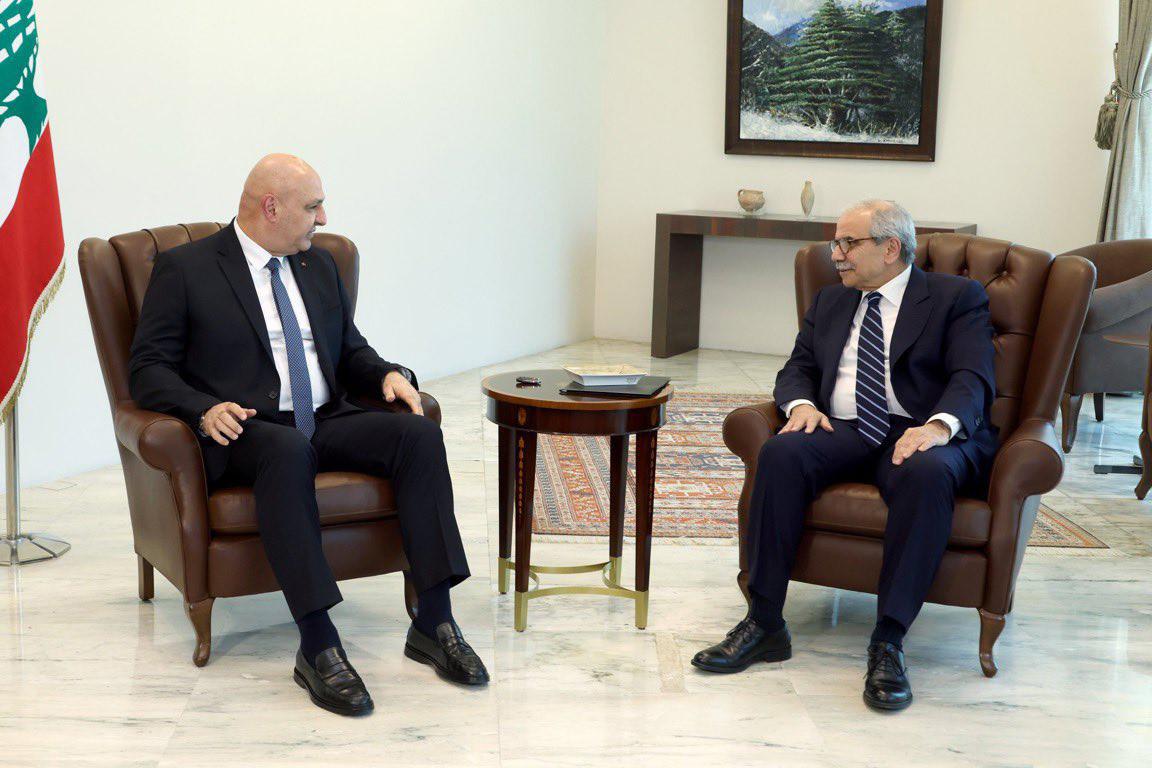
Yet the LAF did not act. Days later, its commander, Gen. Rodolphe Haykal, met with top generals and declared that preserving national unity –i.e., avoiding confrontation with Hezbollah – took priority, along with countering “Israeli aggression”. The army was clearly defying the cabinet.
The 15-month “cessation” had exposed Beirut as an unreliable partner. Jerusalem concluded it must neutralise Hezbollah itself, a formidable task. Israel had already significantly weakened the militia in 2024, but fully disbanding it would require a prolonged ground war, something which may now be underway.
Meanwhile, the Lebanese state has sought another pause in hostilities, this time dangling the prospect of face-to-face civilian talks with Israel – something Washington has long demanded as steps toward peace and normalisation – as bait to lure Israel into another truce.
However, as Lebanese President Joseph Aoun has clarified, these talks would not aim at permanent peace but merely at restoring the ceasefire. Israel, understandably, has no interest in simply repeating the 2024 Cessation of Hostilities. Lebanon had its chance to disarm Hezbollah and
squandered it. The Jewish state must now finish the job alone.
Is it feasible? Completely eliminating Hezbollah would demand major ground incursions into Lebanon, involving village-to-village, and potentially house-to-house, searches for weaponry. This would expose Israeli forces to booby-trapped homes, ambushes, and high casualties.
Even then, drawing from the Gaza experience, full and complete disarmament would be near impossible without genuine Lebanese cooperation.
A more viable path might mirror Israel’s 1982 invasion of Lebanon, which succeeded in expelling Palestinian militias and forcing Yasser Arafat to relocate to Tunisia. That outcome required enormous military pressure combined with a domestic Lebanese and regional consensus that the militias must go.
Many of these elements now again exist. The Lebanese Government, previously unable to deliver on disarmament promises, has adopted a stance unimaginable before the latest escalation. For the first time, Beirut has explicitly singled out Hezbollah for disarmament by name, resolving that the militia should be disbanded and its military activities banned.
This shift went further than ever before. Even Hezbollah ally Nabih Berri allowed his ministers to vote for the decision. Berri, attuned to the Shi’ite community, appears to recognise that the pro-Iran militia has lost substantial popular support by dragging Lebanon, and especially its battered Shi’ite population, into another devastating war with Israel.
Lebanese President Joseph Aoun (left) with PM Nawaf Salam in Beirut (Image: Lebanon National News Agency)
Arab consensus could further bolster Beirut’s position. The Arab League, often dismissed as ineffective, met on March 8 to address the broader US–Israel–Iran conflict. Its final statement endorsed the Lebanese cabinet’s vote to disband Hezbollah’s “military wing”, allowing the group to exist only as a political party.
For Jerusalem and Washington to consider halting the war and grant Lebanon another chance, they should impose stricter conditions than before.
First, Washington should demand a full overhaul of the LAF, including vetting and reshuffling officers. Following the end of the civil war in 1991, Syrian forces under Assad routinely handpicked anti-Israel, anti-US LAF generals. After the Syrian withdrawal in 2005, Hezbollah influenced promotions and battalion formations to keep the army aligned with its interests. LAF Commander Haykal’s rise likely stemmed from loyalty to the pro-Iran militia.
“The 15-month ‛cessation’ had exposed Beirut as an unreliable partner. Jerusalem concluded it must neutralise Hezbollah itself, a formidable task”
Once reformed, with its doctrine restored to pre1991 Lebanese patriotism, the LAF could seriously pursue disarming Hezbollah, thus allowing Beirut to sue not only for a ceasefire but a full peace agreement with Israel.
Unlike the Palestinians or Syrians, Lebanon has no major unresolved issues with Israel. Before October 7, 2023, the two countries demarcated their contentious (and potentially gas-rich) maritime
border. Only 13 minor land border points remain disputed – these are literal points, not vast territories. With Hezbollah’s disarmament and Israel’s release of some Lebanese it had taken as prisoners of war in 2024, the path to peace would become wide open.
A caveat persists: Lebanon’s weak Government and economy remain dependent on Gulf aid, particularly from Saudi Arabia, which has dominated Beirut’s decision. Riyadh has conditioned its own normalisation with Israel on Palestinian statehood. After October 7, the two-state solution has lost traction across Israel’s political spectrum. Tying Lebanon’s peace to Saudi Arabia’s, itself linked to a stalled process with the Palestinians, is a familiar Arab tactic for rejecting normalisation while appearing to demand it.
Lebanon appears out of ideas. After failing to uphold its 2024 commitments, and with the LAF ignoring the March 2 cabinet directive to disarm Hezbollah, President Aoun has floated a last-ditch proposal: Israel pauses first and cedes the border hilltops it held before the war; the international community arms and equips the LAF; Lebanon then disarms Hezbollah; and only afterward do the sides discuss border demarcation and a permanent ceasefire “on the way to peace.”
Lebanon still fails to grasp the sequence of cause and effect, or the realities it faces. Therefore, Israel will likely continue disarming Hezbollah unilaterally through overflights, targeted operations, and retention of strategic buffer zones (such as hilltops) until Beirut demonstrates a genuine commitment to ending perpetual conflict and embracing the rewards of bilateral peace with the Jewish state. If it wants to stop the war, Lebanon is not likely to get a break from Israel. However, it will certainly be welcomed if agrees to join the Jewish state in finishing off the pro-Iran militia.
SPLIT SCREEN VISION
The
highs and lows of Israeli President Isaac Herzog's visit to Australia
ALANA SCHETZER
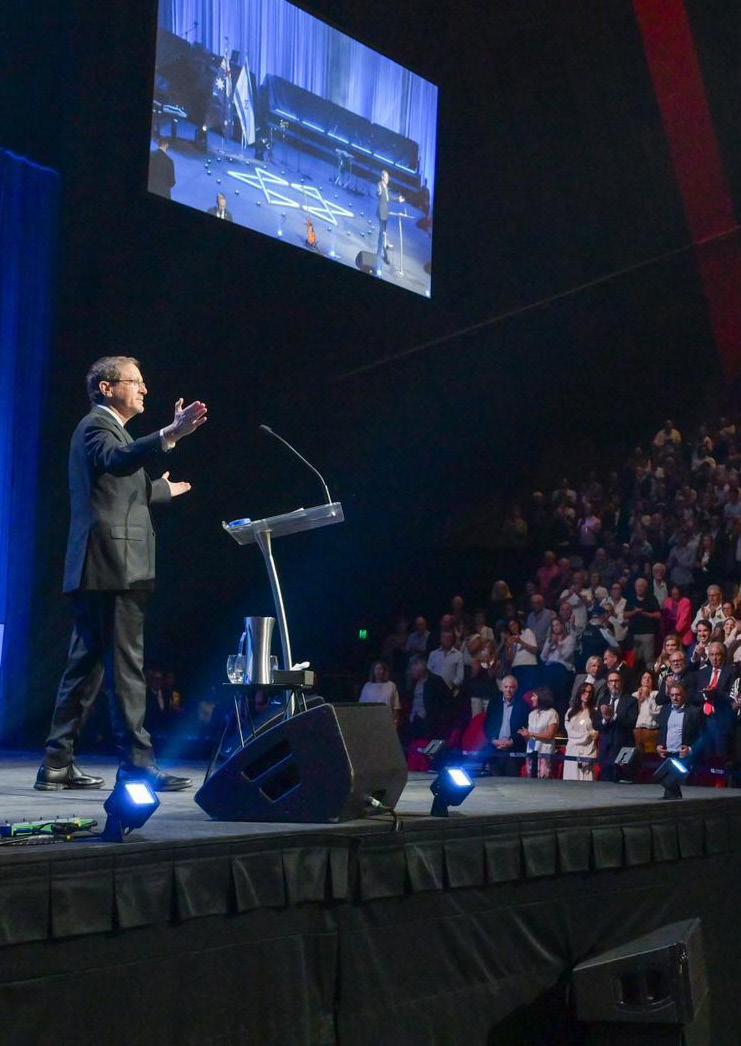
Israeli President Isaac Herzog at a community event in Sydney (Image: Ma'ayan Toaf/ GPO)
Prime Minister Anthony Albanese issued an invitation to Israeli President Isaac Herzog to visit Australia just days after two ISIS-affiliated Islamists targeted a gathering of Jews celebrating Chanukah at Bondi Beach on December 14. The two shot dead 15 innocent people and injured some 40 others in the worst terror attack and the second-worst mass shooting in Australian history.
As Israel’s President – the equivalent to our Governor-General – Herzog’s role is almost exclusively ceremonial, his visit was billed as one that was intended to bring comfort, support and solidarity to the survivors, victims’ families and the broader Australian Jewish community. The community has been reeling from years of growing antisemitism. This included numerous violent attacks before Bondi, some now known to have been sponsored by Iran’s Islamic Revolutionary Guard Corps, such as the firebombing of Melbourne’s Adass Israel Synagogue and a Sydney kosher deli in late 2024.
Herzog’s trip to Australia was the fourth such official visit by an Israeli head of state, following his father Chaim Herzog’s groundbreaking visit in 1986, a visit by then-President Moshe Katsav in 2005, and one by then-President Reuven Rivlin in February 2020.
A WHIRLWIND TOUR
Herzog’s official visit began on Feb. 9 in Sydney, where he was welcomed by local dignitaries. His schedule for the four days included privately meeting with survivors of the Bondi massacre, dinner with Jewish community leaders, a wreath-laying ceremony at the Australian War Memorial, a visit to the Melbourne Holocaust Museum, plus various meetings with the community and state and federal political leaders.
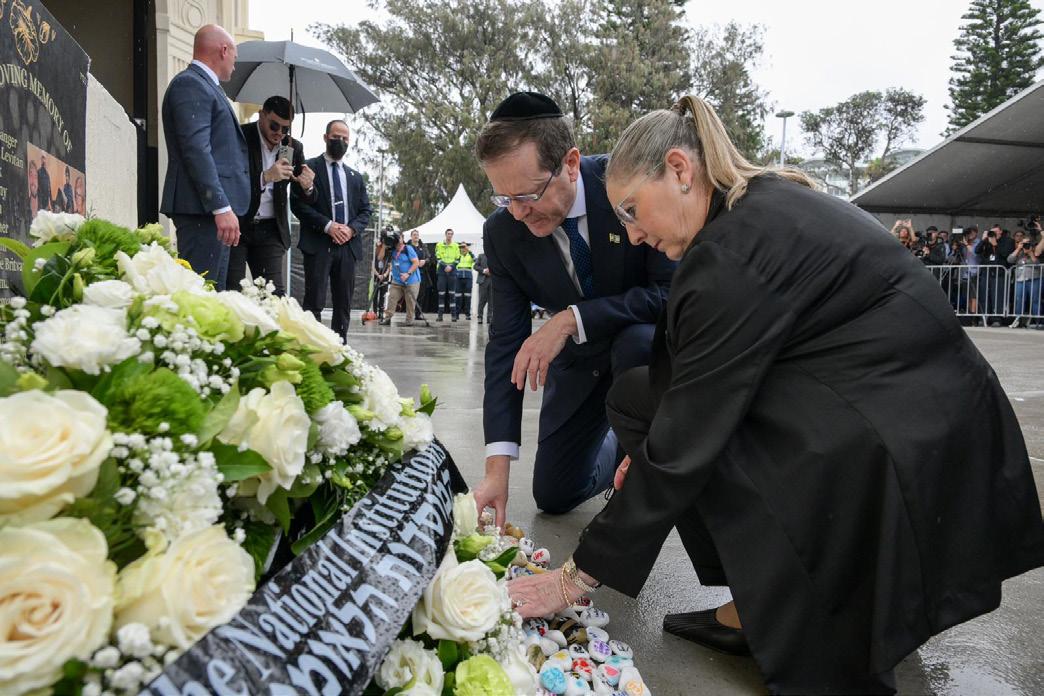
The day he arrived, he visited the site of the massacre and the Bondi Pavilion, laying down a wreath
and some stones brought from Jerusalem.
“The stones… will remain here at Bondi for eternity, a sacred memory of the victims and as a reminder that between good people of all faiths and all nations, we will continue to hold strong in the face of terror, violence and hatred, and that we shall overcome this evil together,” he said.
Herzog spoke out against the extraordinary wave of antisemitism and violent rhetoric that has risen across the world since the October 7 terror attacks in southern Israel.
“These frustrations were shared by many, many of us, including myself. I have seen this wave surge all over the world, and I have seen it in many countries, including Canada, Great Britain, the United States and Australia – all English-speaking countries,” he said.
“Antisemitism here in Australia is not a Jewish problem. It is an Australian problem and a global problem over the generations.”
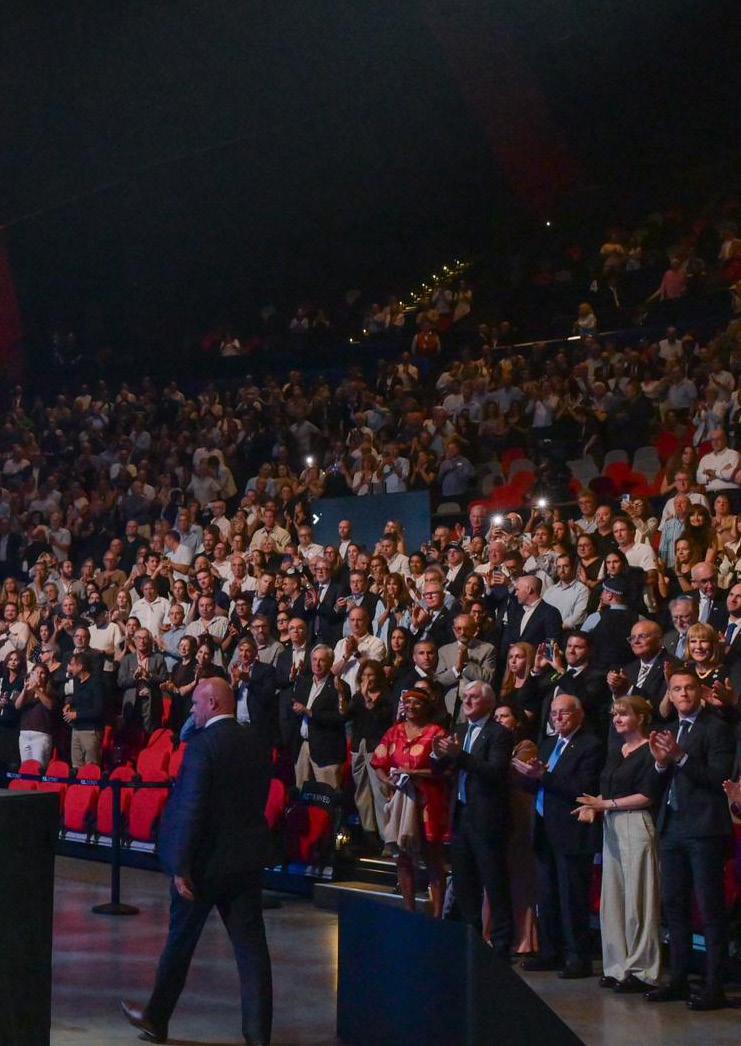
That night, he addressed a large crowd at a Jewish community event at the Sydney Convention Centre, also attended by NSW Premier Chris Minns and former Australian Prime Minister Scott Morrison among other dignitaries.
The following day, he attended a memorial service at the Bondi Chabad Synagogue together with Albanese, before a dinner at Kirribilli House, the Prime Minister’s official Sydney residence.
On Feb. 11, Herzog was in Canberra where he was officially welcomed to Government House in a ceremony attended by Governor-General Sam Mostyn and Albanese. Mostyn said she was “very, very pleased” to welcome Herzog to Australia before speaking of the importance of his state visit following the Bondi attack. “I think it is terribly important that your visit is one that stands with those who [are] still grieving, those that want to know that they are safe,” Mostyn said.
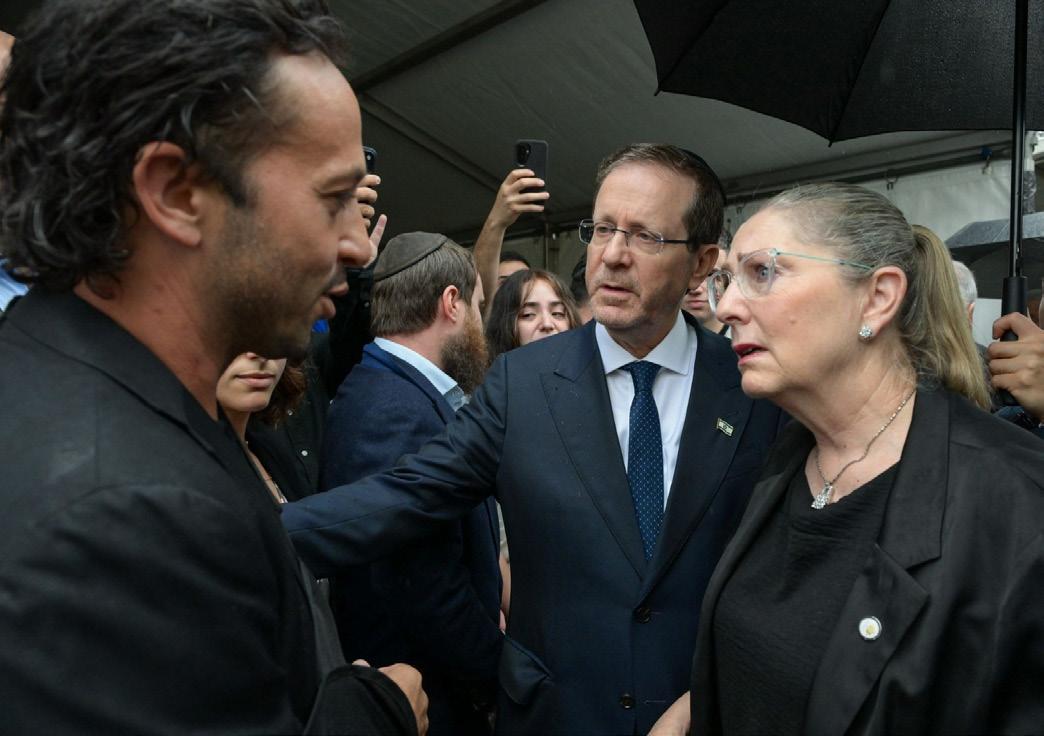
Herzog said, “I’ve come here to express our condolences and bereavement and pain and love to the Jewish community of Australia.”
For the final day of his trip, he met with Victorian Premier Jacinta Allan at Victoria’s Government House before attending a Jewish community event in Melbourne.
Herzog adressed the extraordinary security required for his visit and the constant presence of protesters at the Jewish community event. “To me, it’s obscure and odd that we need to have so many incredible police officers protecting us for the inherent right for us to gather here as proud Jews… to host the president of the only Jewish state on Earth, without any harassment,” he said.
Herzog wrapped up his Australian visit saying to the crowd “We came to remind you that you are not alone here in the diaspora, and we leave understanding more than ever before that we have each other… The resolve and solidarity of this community are key to the future that we all share in Melbourne and in Jerusalem.”
SECURITY
Security for Herzog’s visit was extraordinarily tight and reflected ongoing high levels of antisemitism and threats towards the Australian Jewish community.
On Feb. 5, 19-year-old Sydney man Darcy Tinning was charged with threating to kill Herzog. NSW Police
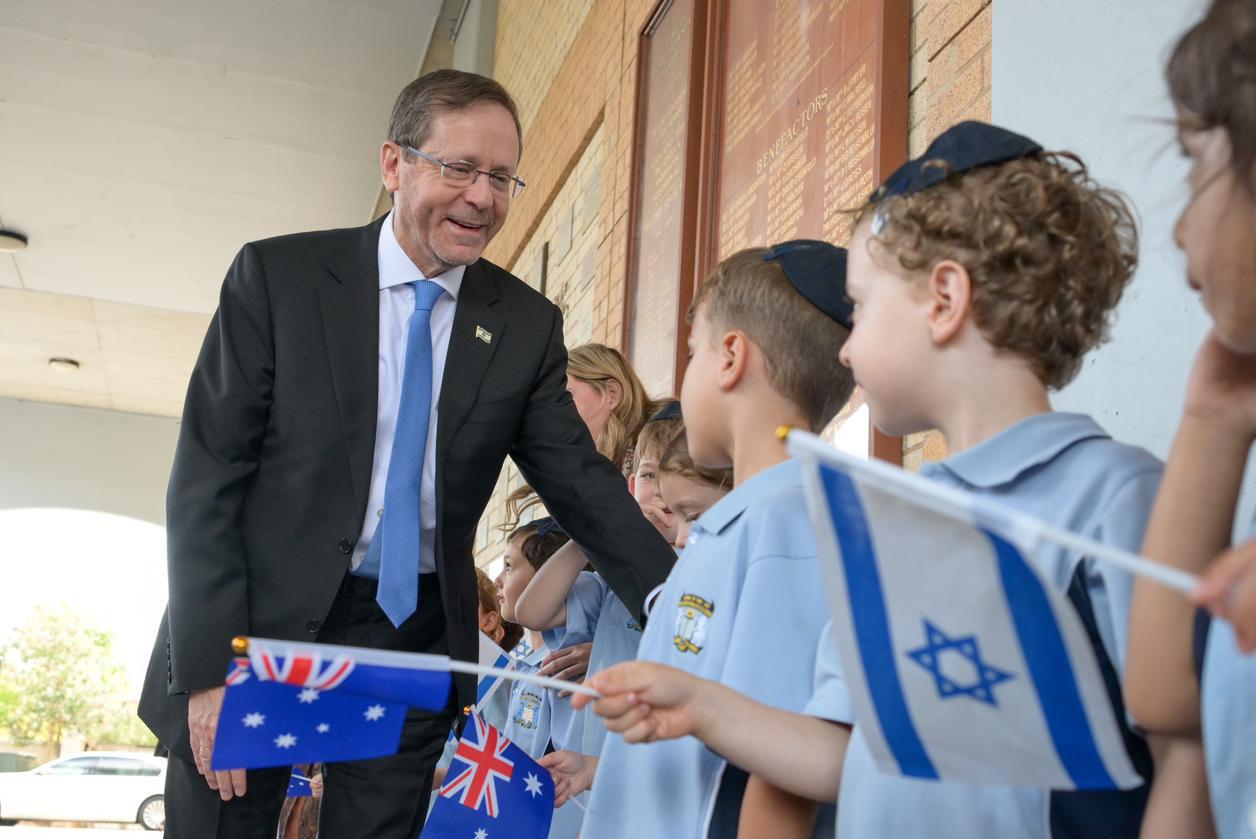
Israeli President Herzog pays tribute to the Bondi victims and visits Moriah College in Sydney (Images: Ma'ayan Toaf/ GPO)
Commissioner Mal Lanyon revealed days earlier that police were aware of ten antisemitic incidents in NSW over the previous fortnight, including threats to Jewish leaders.
The NSW Minns Government declared the visit a ‘major event’ under state law, meaning that police had additional powers to ensure Herzog’s safety and that of the Jewish community attending events. In a press release issued the day before Herzog’s visit began, the Minns Government stated, “The Government is asking everyone to approach the coming days with patience and respect for others ”
Minns said NSW Police would “ensure the community’s safety as well as the President’s safety” during the visit. He added, “We cannot allow a situation where mourners and protesters come into close contact on city streets without strong police presence.”
“This is about keeping people safe, lowering the
temperature and ensuring Sydney remains calm and orderly.”
In addition, Lanyon extended the state’s protest restrictions, in place since Bondi, for a further 14 days with respect to certain parts of Sydney due to “significant risk to community safety by public assemblies.” These restrictions, known as Public Assembly Restriction Declaration (PARD), limited protests and rallies in parts of the CBD and eastern suburbs.
ACT Police stated that “a highly visible and significant police presence would be in place in Canberra… ahead of expected protests to coincide with the visit of the President of Israel.” That police presence would include the AFP Protection and Specialist Operations.
In preparation for Herzog’s Melbourne visit on Feb. 12, the Supreme Court granted Victoria Police additional powers for specific areas, allowing them to search people and vehicles, cordon-off areas,
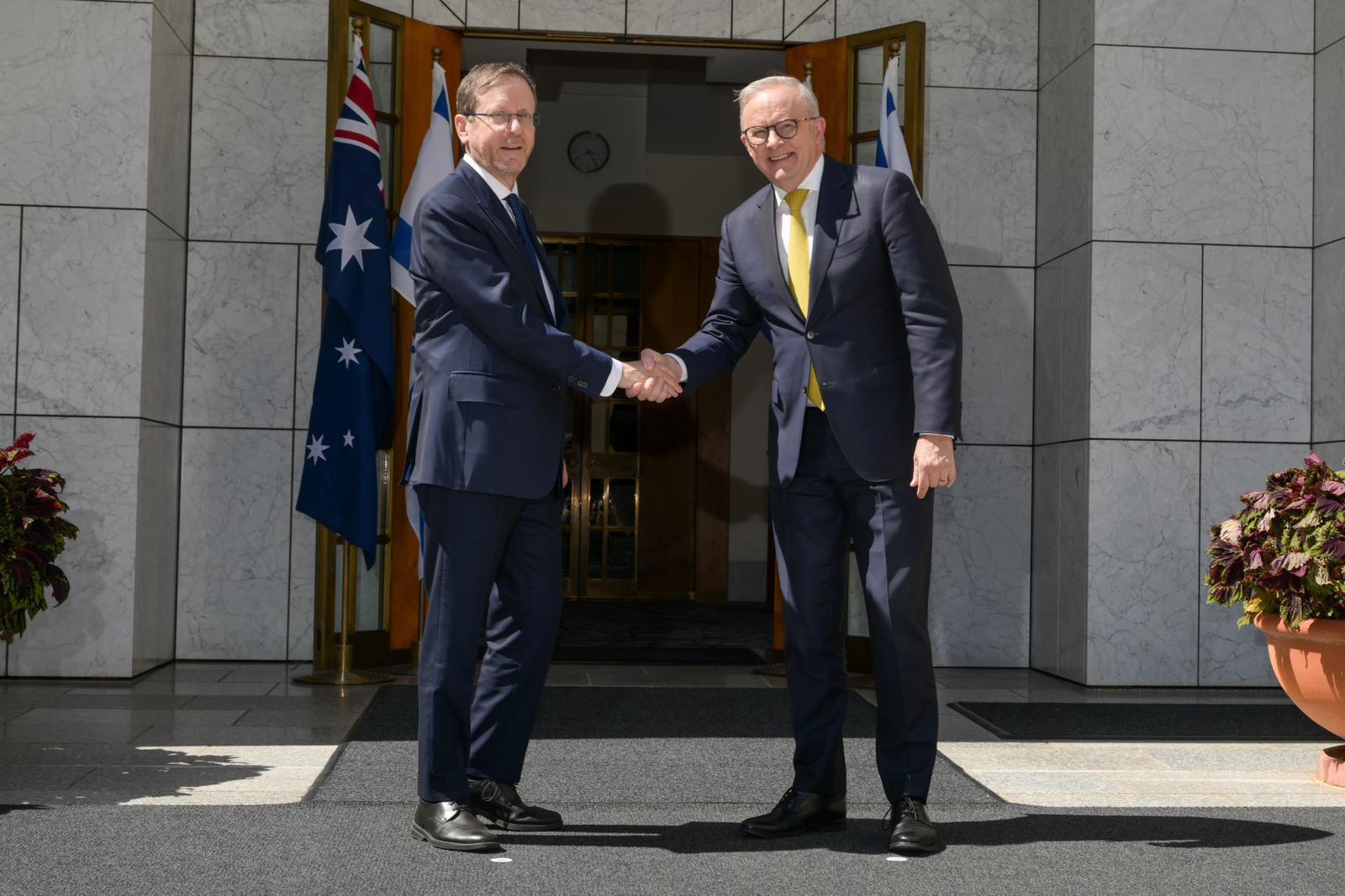
Israeli President Herzog with PM Albanese in Canberra (Image: Ma'ayan Toaf/ GPO )
and seek the identities of people passing through the areas covered by the court order.
In Sydney on Feb. 12, a 45-year-old man was charged with stalking/intimidation/intention to cause fear/physical harm, after he allegedly sought to approach and harass Herzog in defiance of police orders.
During Herzog’s travel and appearances, he was escorted by a heavy police presence, with snipers positioned on rooftops during some appearances and helicopters flying overhead.
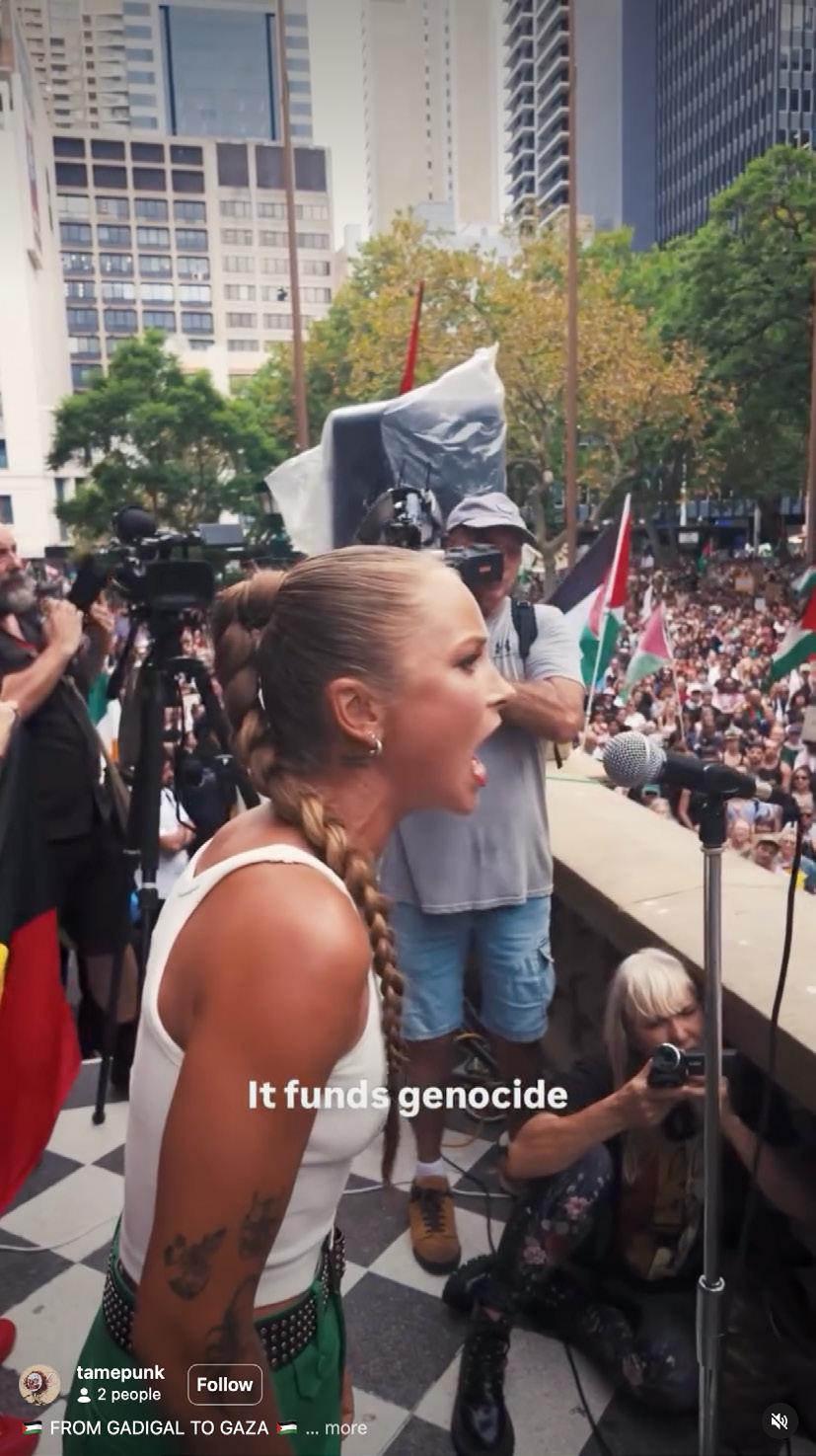
PROTESTS AND VIOLENCE
The anti-Zionist movement, led by the Palestine Action Group (PAG), organised multiple protests across Australia opposing the visit, both before and during Herzog’s trip, with both Sydney and Melbourne CBDs and several suburbs heavily vandalised with flyers and posters promoting the protests.
PAG launched an urgent legal challenge in the NSW Supreme Court on Feb. 8 against the Minns Government decision to classify Herzog’s visit a ‘major event’, arguing that the law is usually used for commercial events. It also said that it sought to peacefully protest. However, Justice Robertson Wright found in favour of the Government, saying that its chief motivation was not to suppress protests but to protect public safety.
The PAG immediately announced it would ignore the Court’s ruling and go ahead with its planned protest. After delivering speeches outside Town Hall – which included former Australian of the Year Grace Tame leading chants of “globalise the intifada” – and despite police issuing move-on orders under PARD restrictions, protesters repeatedly attempted to march and breach police lines. Violence broke out.
Videos of the violent chaos show protesters being pepper-sprayed (as well as police being overwhelmed by the substance), people being punched and police being assaulted.
One journalist present reported that “Protesters yelled ‘F**k the police’, often going right up into officers faces, one protester in the midst of a brawl laid down directly in front of the police line, I heard another encourage protesters ‘We have the numbers to march, we just need to get past these c***s’.”
He also said that protesters singled out and attacked individual officers based on their appearance.
Former Australian of the Year Grace Tame at a Sydney rally (Image: X)
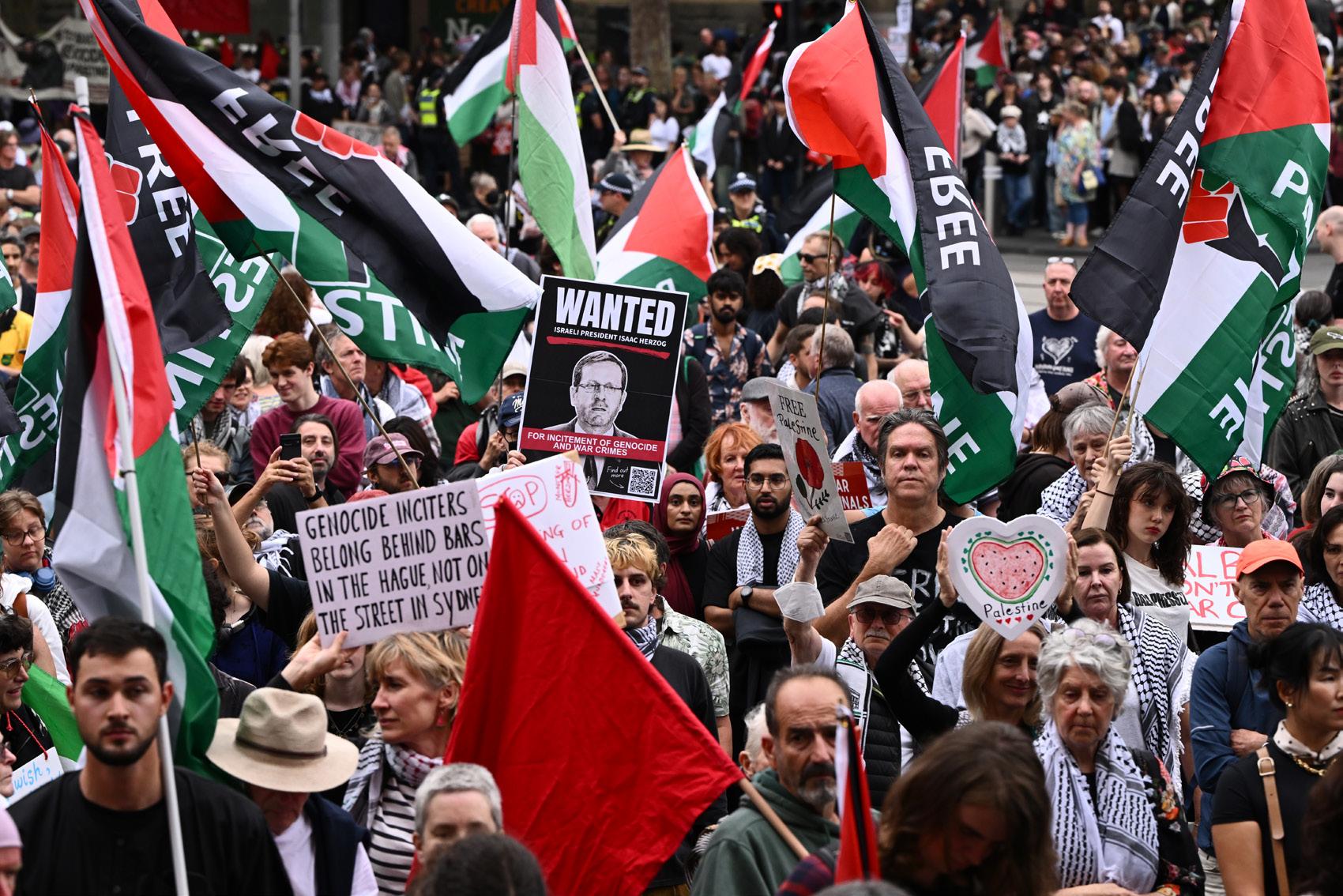
The PAG claimed that protesters acted peacefully and that police used excessive violence; in a social media post, the group condemned “the brutal attack by the NSW Police.”
The NSW Police watchdog has opened an investigation into allegations of police misconduct after receiving a “significant number of complaints.”
Albanese – who described the events as “confronting” – said in Parliament that protesters actively chose to breach the PARD.
“There were systems put in place to make sure, sensible, frankly, to separate where President Herzog was and where the demonstrations were and people sought to break that separation, and therefore, to create a circumstance that was not going to be peaceful,” he said.
NSW Police stated that ten officers were injured during the violent brawl and that 27 people were arrested, with nine charged with a range of assault
and public order offences. One protester allegedly bit an officer
Minns, calling the situation “incredibly combustible”, defended the police, saying, “I know that some of the scenes on media are short clips, but people have to understand the circumstances where protesters breached police lines and ran amok in Sydney would have been devastating.”
Police Association of NSW President Kevin Morton said officers were forced to stop protesters from physically coming into contact with Jewish mourners.
He said that larger groups of protesters ignored warnings and charged at police lines.
“Some sections of this protest left our members with no choice. They were people just hellbent on causing a reaction and creating chaos,” Morton said. “This was an outcome police did not want and did what they could to avoid. But when the ac-
Protesters against Israeli President Isaac Herzog’s visit at Flinders Street Station in Melbourne, February 9, 2026 (Image: AAP Image/ Joel Carrett)
tions of people in that crowd made it impossible, our members took the necessary action to maintain order and safety.”
He added that police had “urged protesters to take a different route. To identify an option that allowed action to go ahead and maintain safety. But this was refused.”
During Herzog’s brief stay in Canberra, several hundred protesters descended upon Parliament House chanting the slogan “From the river to the sea,” which calls for Israel’s destruction.
On the day that Herzog arrived in Melbourne, Feb. 12, “Death to Herzog” was graffitied on a building at the University of Melbourne, along with an inverted triangle, the symbol used by Hamas to designate a target for attack. The Australasian Union of Jewish students said, “Calls for violence against any individual or nation are not legitimate criticism of government policy.”
Victorian Premier Jacinta Allan called the graffiti “absolutely contemptible”.
“We all want peace to come and causing hurt and grief – and indeed violence as we’ve seen as a result in Sydney – that does not cause peace,” she said.
Herzog’s Melbourne trip was to begin with a visit to the site of the Adass Israel Synagogue, which was destroyed in a terror attack in December 2024, but this visit was cancelled due to security concerns.
Thousands of anti-Israel protesters gathered around Flinders Street Station in the early evening, blocking traffic. Protesters claimed that 30,000 people attended but Victoria Police said the number was closer to 10,000. The media reported that multiple slogans were heard , including “All Zionists are terrorists” – subsequently found to be a violation of racial vilification laws by a Victorian tribunal – and “death to the IDF.” However, unlike Sydney, and despite the inflammatory slogans, the protest was not physically aggressive.
During that afternoon’s event, Herzog said protesters should instead “go protest in front of the Iranian embassy,” referring to Iran’s regime’s massacre of as many as 36,500 Iranian civilians since Dec. 28.
POLITICAL THEATRE
Political tensions remained high throughout the week of Herzog’s visit, spurred by repeated accusations by the Greens that Herzog was complicit in genocide and should not be allowed into the country.
The Australian Federal Police declared that Herzog, as a visiting head of state, had full immunity during his Australian visit, after a group of pro-Palestinian lawyers had announced they would seek to have him arrested.
Albanese himself was highly supportive of the visit. “President Herzog is coming in the context of the devastating antisemitic terrorist attack that occurred at Bondi on 14 December,” he told reporters in Perth on Feb. 7.
“I hope that people are respectful of the fact that this is a difficult time for families, particularly in the Bondi community, from the Chabad community there.”
However, the ruling ALP was publicly split over the visit; Labor Friends of Palestine wrote an open letter to Home Affairs Minister Tony Burke urging him to block Herzog’s visit on the grounds that he failed the ‘character test’ for a visa.
“The presence of this Israeli leader will distress and anger millions of Australians, including Labor members and Labor voters,” Peter Moss of Labor Friends of Palestine later added.
In late January, Multicultural Affairs Minister Anne Aly initially refused to say whether she welcomed the visit, only acknowledging that, “Well, President Herzog was invited in the aftermath of
the Bondi attacks, as is protocol and as is something that is usually done.” She later partially backtracked, saying “I welcome anything” that assists in the healing process after Bondi.
NSW state ALP backbenchers Sarah Kaine, Stephen Lawrence, Anthony D’Adam and Cameron Murphy joined Sydney’s anti-Herzog protests.
In their own open letter, Jewish Labor urged their colleagues to support the four-day visit, saying it came “at a moment of deep trauma for Australian Jewry.”
“It is about solidarity, reassurance, and the simple human need to be seen and heard in a time of fear. We therefore ask, respectfully but firmly: why would anyone seek to deny that?”
The letter noted that Herzog is not “a symbol of extremism” and is a former leader of the Israeli Labor Party.
The Coalition was supportive of Herzog visiting Australia. Then-Opposition Leader Sussan Ley said the visit “provides a constructive platform to rebuild trust and deepen engagement.” She also
denounced the protest movement for disturbing mourners.
“It is deeply disappointing to see protests surrounding this visit in the aftermath of a national tragedy. While peaceful protest is a democratic right, the timing and tone of these demonstrations risk compounding division at a moment that calls for unity and reflection.”
During the actual visit, divisive political discourse remained prevalent. In Parliament on Feb. 10, Albanese denounced the Greens – who had demanded that he condemn “police violence” and send Herzog back to Israel – saying that Herzog was in Australia to offer “sympathy and solidarity to people who are mourning and offer his support to Australia’s Jewish community.”
“I will not, as a number of the crossbenchers have suggested, walk away from my support for his presence,” he insisted.
For coverage of the media controversies surrounding the Herzog trip, see Allon Lee’s piece here.
WATCH: Israeli President Isaac Herzog addresses Sydney Jewish community
FROM NEW DEHLI, WITH LOVE
War fails to overshadow deepening Israel-India "romance"
ILAN EVYATAR
In early March, standing amidst the destroyed remains of a synagogue in Beit Shemesh where an Iranian missile strike had killed nine people, Israeli PM Binyamin Netanyahu told an Indian TV crew that he had just spoken with “our great friend, Prime Minister Narendra Modi.”
This statement came only days after Modi had stood beside Netanyahu in the Knesset during a landmark visit to Israel, his first in nine years. In retrospect, it meant that the leader of the world’s most populous nation was in Israel on the eve of the joint United States-Israeli strike on Iran and the assassination of its Supreme Leader, Ayatollah Ali Khamenei. This timing exposed Modi to harsh criticism from his country’s opposition, which accused him of a “betrayal of India’s values, principles, concerns, and interests.”
The possibility of a US-Israeli attack on Iran had been widely discussed for months, yet Modi decided to proceed with the visit regardless, knowing the risks.
Dr Oshrit Birvadker, an India expert and senior fellow at the Jerusalem Institute for Strategy and Security, said the decision reflected Modi’s
leadership style.
“He makes bold decisions that go against the hesitation we often associate with traditional Indian policy. And that is true not only in foreign policy, but in many other areas as well,” Birvadker said.
Birvadker also emphasised the broader symbolism of the visit. India, she noted, is the world’s largest democracy and an influential voice in the Global South. It maintains strong relations with the Muslim world, the Gulf states and major global powers.
“For such a country to embrace Israel and upgrade relations to a level reserved for only a handful of countries – such as the United States and Germany – is a very significant statement, especially at a time like this.”
During the visit, the two countries elevated their existing relationship from a “strategic partnership” to what they described as a “special strategic partnership”, reflecting the rapid expansion of ties between Jerusalem and New Delhi.
Defence cooperation – which Birvadker described as “the core of India–Israel relations” –
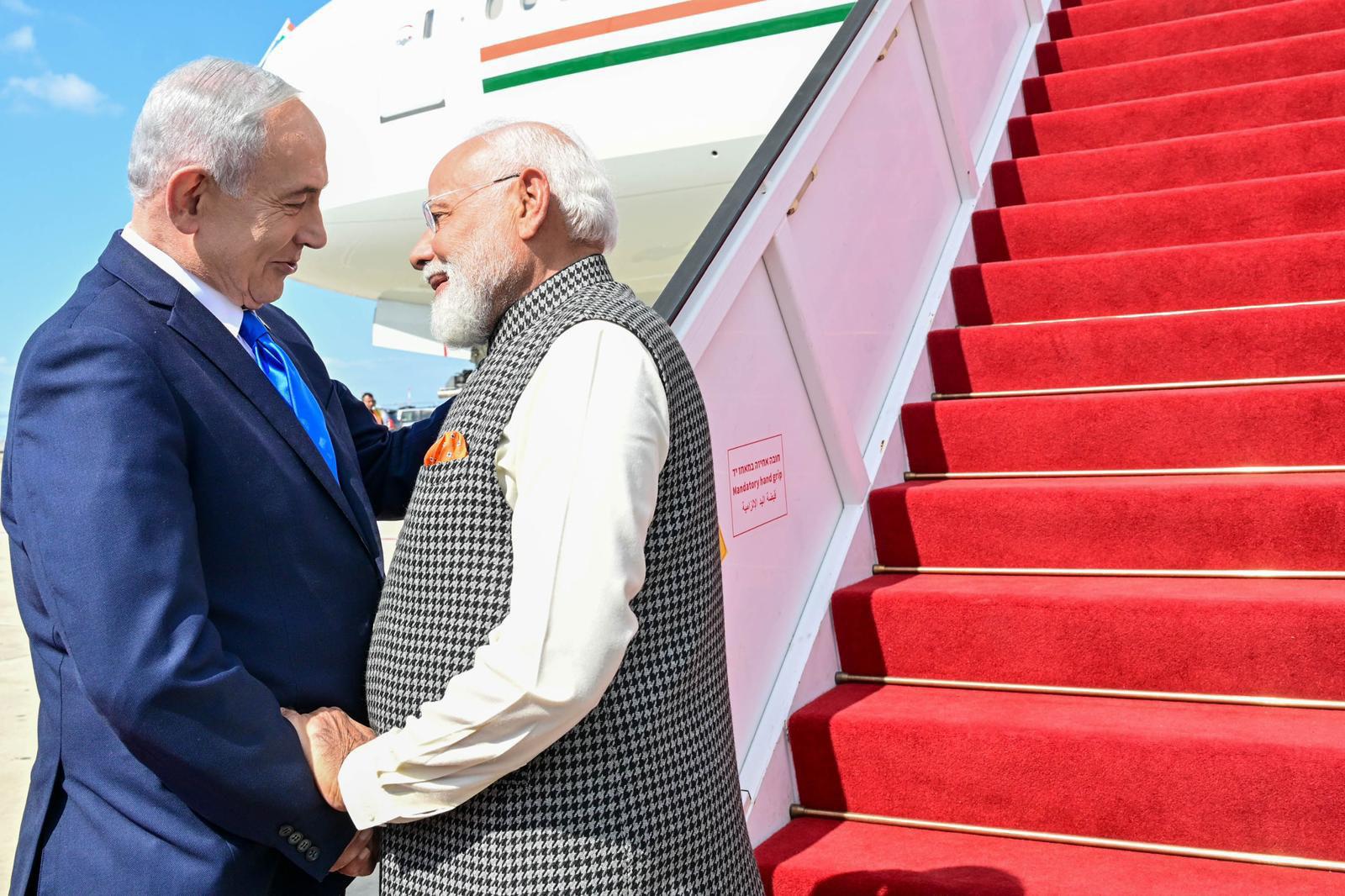
Israeli PM Netanyahu welcomes Indian PM Modi to Israel (Image: Mohammad Bash/ Shutterstock)
continues to dominate the partnership, with the two countries recently signing defence deals worth billions of dollars.
What’s more, new mechanisms are also expected to facilitate discussions on cooperation in areas such as air-defence systems and emerging technologies, including the integration of Indian capabilities with Israel’s Iron Beam laser interception system.
At the same time, Birvadker stressed, “both countries are now seeking to diversify the relationship and deepen cooperation beyond the defence sphere.”
Reflecting this shift, 17 memoranda of understanding and 11 joint initiatives were signed during the Modi visit, spanning fields from critical and emerging technologies to agricultural innovation, cultural cooperation, and research and development. Among the most significant steps taken
during the visit was the agreement to establish a special committee with high-level ministerial engagement focusing on defence co-production, cyber defense, artificial intelligence, and quantum technologies.
The visit also carried a strong political message. Addressing the Knesset, Modi expressed his “deepest condolences” for the Israeli lives lost in Hamas’ October 7 attack and declared that “India stands with Israel firmly, with full conviction, in this moment and beyond.”
Taken together, the visit underscored the accelerating strategic convergence between Israel and India – a partnership increasingly embedded in wider regional frameworks linking the Indo-Pacific with the Middle East.
A CHANGING REGIONAL ARCHITECTURE
India has been gradually repositioning itself
within a new regional architecture that includes Israel, the United States, and key Gulf states, at the same time as its once valued relationship with Iran has receded in importance.
New multilateral initiatives are central to this shift. Among the most prominent is the I2U2 grouping, which brings together India, Israel, the United Arab Emirates and the United States. Initially focused on economic cooperation and food security, the framework has increasingly been viewed as a platform for broader technological and strategic collaboration.
triggered by the October 7 attacks and the war that followed.
“Despite the attention the announcement generated, and the geopolitical weight such a project could have for global trade, only a few weeks later the events of October 7 occurred, followed by a prolonged regional war. These important plans were therefore delayed.”
Nevertheless, she believes the project remains strategically important for the future of the region.
“Now that we may be approaching a new Middle East, it would be worthwhile to move these projects
“For Israel, closer ties with India offer access to one of the world’s largest and fastest-growing economies. For India, cooperation with Israel provides technological capabilities and strategic connections that support its ambitions as a rising global power.”
Similarly, the proposed India–Middle East Corridor (IMC) aims to connect India with Europe through a network of ports, railways and digital infrastructure linking the Persian Gulf and Israel.
Announced at the G20 summit hosted by India in New Delhi in September 2023, the project is widely seen as a potential counterweight to China’s Belt and Road Initiative.
Birvadker argues that such frameworks align well with India’s strategic preferences.
“When we talk about formats such as the economic corridor or I2U2, India has a great deal to gain. These are essentially positive platforms focused on trade, food security, and energy – areas that India has no difficulty promoting.”
She noted that the corridor plan’s original launch was quickly overshadowed by the regional upheaval
forward. They could provide a strong foundation for building cooperation – a platform that might later evolve into something political, although for India that will take time.”
“This is precisely the kind of project that embeds the regional integration that Israel has sought since the early days of its establishment.”
THE “HEXAGON” AND INDIA’S STRATEGIC LIMITS
Not all emerging frameworks, however, fit comfortably within India’s strategic outlook.
Netanyahu has recently spoken of a broader strategic “Hexagon” linking Israel, India, the United States, and other regional partners in what he described as “an alliance of countries that stand together against the radical axis” – presum-
ably meaning primarily Iran and its proxies and partners.
Birvadker believes India is unlikely to embrace such a concept too quickly.
“I find it difficult to believe that India would formally join such an alliance for the simple reason that, in general, India does not favour alliances or binding agreements,” she said.
“When it does join such platforms, they are usually ones with a positive agenda rather than those explicitly defined against a specific country.”
She cautioned that joining a framework framed explicitly against specific states could limit India’s diplomatic flexibility, but noted that it is still too early to make a decisive assessment.
“We need to see where this idea goes. India will need to understand what joining such an alliance would actually give it. Ultimately, India maintains good relations with all sides, and joining such a framework would reduce India’s room for manoeuvre – which is a cornerstone of Indian foreign policy and of its broader strategic outlook.”
STRATEGIC AUTONOMY IN A NEW MIDDLE EAST
The outbreak of open confrontation between Israel, the United States and Iran has only sharpened the dilemmas facing Indian policymakers.
India maintains ties with all sides in the region –including Iran, the Gulf states and Israel – and has historically sought to balance these relationships under a doctrine known as strategic autonomy.
“I think we should not flatten the analysis of this relationship into black-and-white categories of being ‘on our side’ or not,” Birvadker said.
“For India, the situation is much more complex.”
India’s approach, she explained, reflects a broader worldview shaped by the emergence of a more multipolar international order.
“We are moving toward a multipolar world in which American hegemony is weakening. In such a world we see different poles of independent power interacting with one another. India is one such pole.”
New Delhi is unlikely to align itself fully with any single bloc, even as it deepens partnerships with a range of countries.
“India is not willing to submit to external dictates or entangle itself in wars that are not its own,” Birvadker said. “But it is interested in cooperating with everyone, developing partnerships, and strengthening its resilience against the uncertainties of a changing world.”
THE FUTURE OF THE PARTNERSHIP
Despite these constraints, the trajectory of Israel–India relations over the past two decades suggests that the partnership will continue to deepen across multiple domains.
Defence cooperation may remain the backbone, but collaboration in technology, infrastructure and trade is steadily transforming it into a broader strategic relationship.
For Israel, closer ties with India offer access to one of the world’s largest and fastest-growing economies. For India, cooperation with Israel provides technological capabilities and strategic connections that support its ambitions as a rising global power.
Modi’s February visit underscored how far the relationship has evolved. What was once a discreet security partnership has become an increasingly visible strategic alignment linking the Indo-Pacific and the Middle East.
“In the past,” says Birvadker, “analysts used to call the relationship between Delhi and Jerusalem a ‘romance’, others called it a ‘long-term relationship’, and many viewed Modi’s historic 2017 visit as the ‘wedding’.” Today, she concludes, “We are in the stage of ‘Strategic Intimacy’.”
RESENTFUL IN RAMALLAH
What the Palestinian Authority seeks in Gaza
AHRON SHAPIRO
The US-brokered ceasefire agreed between Israel and Hamas that went into effect on October 10, 2025, and apparently ushered the twoyear Gaza War into a closing stage, has thrust the Palestinian Authority (PA) back into discussions about the Gaza Strip’s future. This is in spite of the fact that the multi-phased ceasefire agreement itself actually bypassed the PA.
Predictably, the PA insists it’s entitled to the territory and should be simply handed it back giftwrapped, 19 years after losing it to Hamas in a bloody coup. Israel maintains doing that would reward Palestinians for the October 7 massacre, and give the PA – an entity still fundamentally unwilling to call an end to the Palestinian conflict with Israel’s existence, even if it uses different means than Hamas – strategic advantages that could potentially lead to the imposition of an enemy state created on Israel’s doorstep. These are legitimate concerns, even if some Israelis raising them may be seeking political advantage in doing so.
The PA’s response to the ceasefire and its postwar strategies vis-à-vis Hamas and Gaza are worth a closer look. However, before delving more deeply
into the PA and its Gaza hopes, the current context should be established – namely, that the ceasefire has only been partially successful.
FROM ACTIVE COMBAT TO ATTRITION
Crucially, Hamas’ continuing refusal to disarm or yield power, along with its repeated violations of the ceasefire, have led to a low-intensity war of attrition. Nevertheless, US President Donald Trump and his newly created Board of Peace (BOP) are pushing forward with their 20-point plan. This involves, in part, bringing in foreign troops – called the International Stabilisation Force (ISF) – to gradually replace IDF soldiers in forward positions and move ahead with an IDF withdrawal from most of the Gaza Strip.
The possibility of Hamas reneging on its ambiguous verbal promises and failing to disarm or relinquish power was anticipated and implicitly factored into the plan. Washington seems to have imagined that, if this occurred, Israel would still be expected to gradually withdraw and yield territorial control to foreign forces in areas of the Gaza Strip it currently occupies, while Hamas would be left to
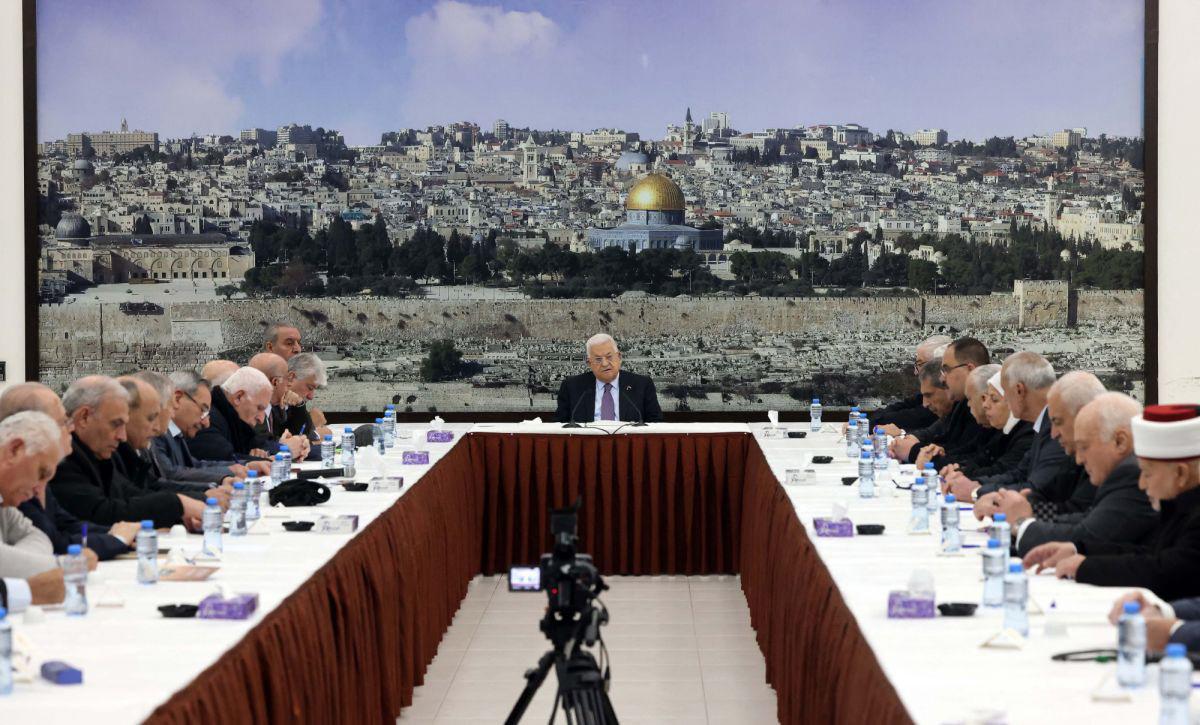
rule over a rump Strip without the means to rebuild or rearm.
The Israeli Government, as well as the heads of Israel’s security agencies, doesn't see how foreign forces would risk their own lives to prevent Hamas from recapturing any area vacated by the IDF. They therefore insist the IDF must remain in place, with complete freedom of action, until disarmament proceeds.
For the time being, it remains a moot issue. Trump’s BOP has only rounded up five countries to send forces to the ISF so far – Indonesia, Morocco, Kazakhstan, Kosovo, and Albania. None of them are interested in anything riskier than peacekeeping duties. It took until Feb. 19 to even convene the first meeting of the BOP. The entire process is moving very slowly, so it’s unlikely Israel will feel much pressure for Gaza withdrawals anytime soon.
HOW IS THE PA RESPONDING TO ALL THIS?
Officially, the PA endorses the Trump ceasefire
and accepts the BOP’s role in managing the reconstruction of Gaza as a fait accompli. This goes against the grain for the Palestinian nationalist PA, but to rationalise its stance, Ramallah emphasises the BOP’s control over Gaza as a temporary but necessary evil to stop the bloodshed, with a silver lining of further “internationalising” the conflict. Even so, in live interviews, PA pundits and more than a few officials often trash the ISF and BOP roles as neo-colonialism which obstructs the rightful unification of the West Bank and Gaza under PA control.
PA officials are also openly resentful towards Hamas for agreeing to a ceasefire deal that placed them on the margins of the future of Gaza. To make matters worse, on Feb. 8, Fatah leaders in northern Gaza were summoned for interrogations by Hamas – in case they had forgotten who’s really in charge.
The PA leadership’s post-ceasefire messaging has rested on three major themes, which emanate from its various different political organs, including
The Palestinian Authority ostensibly supports the Trump ceasefire plan, but has been sending very mixed messages about it (Image: Thaer Ghanaim/PPO)
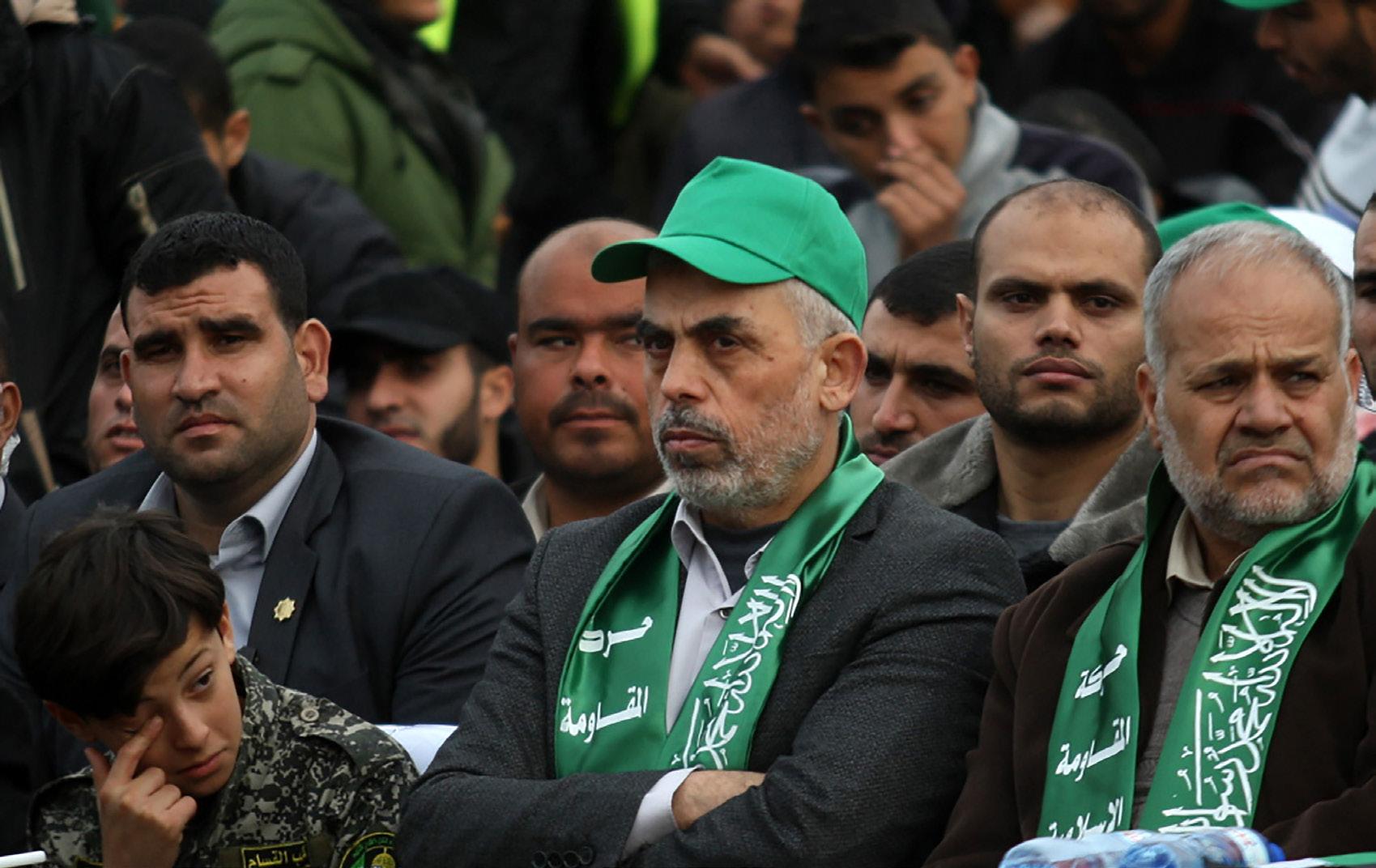
the Palestine Liberation Organisation (PLO), Fatah and the PA.
What are the differences between these groups?
The PLO is a body that claims to represent the whole Palestinian people. It was created in 1964 –before Israel’s defensive war of 1967 that led to the West Bank and the Gaza Strip being captured from Jordan and Egypt, respectively. Fatah is the PLO’s dominant faction. The PA is a PLO-dominated governing structure for Palestinian self-rule areas, created through the 1993-1995 Oslo Accords. Palestinian Authority President Mahmoud Abbas heads all three of these bodies.
PALESTINIAN LEADERSHIP’S POST-GAZA MESSAGING
1. Renewed efforts to get Hamas to join the PLO: On Feb. 22, Egyptian media reported that PLO Executive Committee Secretary Azzam alAhmad had met with emissaries from Hamas
and Palestinian Islamic Jihad to discuss having these groups join the PLO. The overture is nothing new – Palestinian “unity” talks were practically an annual ritual before October 7 and they always led nowhere. The fundamental problem is that Hamas is only willing to join on terms that will facilitate it eventually coming to dominate and control the PLO, while Fatah is determined to prevent this.
In October 2025, around the time of the ceasefire, Abbas’ senior adviser Mahmoud al-Habbash invited Hamas to join the PLO on the condition it disarmed. On Feb. 23, 2026 – in an interview with Egypt’s Shorouk News’ Mohammed Khayal, al-Ahmad went further.
“All talk about disarming Hamas and it being a terror organisation is unacceptable to us, because Hamas is not a terror organisation,” al-Ahmad told Khayal.
“You mean clearly that you in the PLO do not
PA figures have criticised Hamas' October 7 attack as a strategic blunder (Image: Anas Mohammed/ Shutterstock)
view Hamas as a terror organisation?” Khayal pressed, to which al-Ahmad responded, “We have never viewed it as a terror organisation, and we always oppose when a decision is made by any international institution or any government classifying them as a terror organisation, because they are part of the Palestinian national fabric.”
The February push followed statements by Mahmoud al-Habbash in October 2025, who said that “our hands are extended, and our hearts are open to rapprochement with Hamas.” Similarly, in November 2025, Fatah Central Committee Secretary Jibril Rajoub called on Egypt to help “bridge the gaps” that were preventing the PLO and Hamas from reconciling.
2. Outbursts against Hamas – not for October 7 – but for mishandling the war: Even while some in Fatah have been wooing Hamas, others have also been criticising it. This bipolar behaviour can be attributed to Fatah’s Achilles heel – that it still has security cooperation with Israel and PA forces don’t challenge the IDF in the West Bank, which hurts their legitimacy on the Palestinian street. So, to save face, it blames Hamas for giving Israel a pretext to continue a war that has led to so many inevitable civilian casualties.
Fatah’s spokesman in Gaza, Mundhir al-Hayek, told Fatah Radio on Jan. 6, 2026,
“I described the Hamas leadership as failing, especially after October 7... I’m not talking about the operation itself [i.e., the massacre], but rather about what happened after October 7. There should have been Palestinian logic and sense to rescue our people... It was possible to accept any proposal [from the Israelis] in the first six months [of the war].”
Al-Hayek continued, “The Gaza Strip before October 7 was a paradise. The situation was very good. But Hamas exploited this and took over all
the economic areas and collected taxes, and, unfortunately, the result was moving towards the uncalculated October 7. We needed 10% of October 7 to [capture the world’s attention]. But the political leadership [Hamas] failed.”
Fatah criticisms of Hamas are usually relatively restrained, but in a six-minute YouTube editorial for Fatah Lebanon’s news site Falastinuna TV on Feb. 2, titled “Blood is not an achievement,” the Fatahaffiliated presenter Zainab Abu Daher didn’t hold back.
“With the beginning of the Flood – meaning October 7 – they said that the operation came to ‘whiten’ [i.e. empty] the prisons. Well, beautiful words. Okay, the number of prisoners on October 7 was approximately 5,200 prisoners. The number after the Flood reached more than 12,000 prisoners.”
On the civilian losses, Abu Daher said, “Yes, Israel is the one doing the wiping out, but the Divine Movement [Hamas] provided it with a pretext on a golden platter – no, not a golden platter, a diamond platter even. And which is more important to you: a foreigner raising the Palestinian flag, or a Palestinian child remaining alive?”
To be sure, Abu Daher’s self-righteous indignation was cynical. Fatah also glorifies martyrdom, exploits children through the Fatah “Shebab” youth and “scouts” and indoctrinates them with murderous hatred of Jews and Israelis. But in the continuous struggle to gain an upper hand in Palestinian politics, hypocrisy comes with the territory.
3. Appropriating Gazan hardships: This messaging should be obvious to just about everyone by now. We’ve all seen it in Australia, going back to the very beginning. Even on the afternoon of October 7, 2023, when ABC NewsRadio ’s Glen Bartholomew asked the PLO-appointed Palestinian representative to the UK Husam Zomlot what
“the PA’s position on the events unfolding today” was.
“Well, first of all, we must understand the context,” Zomlot said. “What we are seeing today is a direct consequence of decades of occupation, of the denial of Palestinian rights, and the lack of a political horizon.”
“The Palestinian leadership is still pursuing a push towards unconditional statehood – without making any concessions through peace agreements – which they could then use to intensify their conflict with Israel. If they can’t have that, they would rather not accept a state at all”
In other words: never mind that Abbas was completely surprised by the Hamas attack and Hamas couldn’t have cared less about “political horizons” when it launched the massacre. Let’s make everything happening all about the PA, the PLO and the failure to follow their agenda.
Since the ceasefire, this reappropriation has ramped up tenfold. Daily PA news programs crank out story after story about Gazan hardships, stories that almost never mention Hamas or the real reason why Gazans are living in tents. They simply, shamelessly milk the situation for political gain daily.
WHAT’S AHEAD?
The Palestinian leadership’s strategy for the months ahead is beginning to take shape. At the beginning of February, the Palestine Institute for National Security Research (PINSR) – a policy advisory body related to the PA’s Security Forces, held a
conference, “Palestine 2026: Where to?... Realising the State.”
While recordings of the sessions were not made public, PINSR Director-General Habis al-Shrouf told Fatah Radio about a number of outcomes. Those included “No state in Gaza and no state without Gaza” – meaning, bringing about the end of the Hamas de facto state in Gaza and incorporating the territory into the PA’s own statehood ambitions. The way to achieve this, he said, would be through unity under the umbrella of the PLO.
Sound familiar?
Al-Shrouf stressed the PA’s planned (local) elections later this year and the creation of a PA constitution as the means to persuade the world that PA has “reformed” and deserves to be recognised as a fully-fledged state.
Agreeing to a peace deal with Israel was not even discussed as an option. What we are witnessing, in the words of the Israeli Middle East expert Ehud Ya’ari, is a continuation of the Palestinian strategy of obtaining either “runaway statehood” or else “running away from statehood.”
That is, the Palestinian leadership is still pursuing a push towards unconditional statehood – without making any concessions through peace agreements – which they could then use to intensify their conflict with Israel. If they can’t have that, they would rather not accept a state at all.
In this way, then, the PLO’s endgame is not all that different from Hamas'. Neither have come to terms with the permanence of Israel or prioritise the wellbeing of their people over the ideological imperative of continuing the conflict until the outcome of the 1948 war can somehow be reversed. They disagree only on the best way to achieve these goals, and who should call the shots. The PAHamas struggle over Gaza’s future reflects these goals and priorities.

THE GAZA GAP
Phase II of Trump's peace plan vs Palestinian reality
BREN CARLILL
In January 2026, Trump Administration officials announced the commencement of ‘Phase II’ of US President Donald Trump’s ‘20-point plan’ for Gaza. In Phase I, Hamas was to release all hostages (alive and dead), and Israel was to release nearly 2,000 prisoners, as well as to withdraw to the ‘yellow line’, which divides Gaza into an eastern half remaining under Israeli control and a western half under Hamas control.
Phase II is, at its core, a state-building project.
Strip away the diplomatic language and what remains is an attempt to construct a new governing model in Gaza. The goal is a technocratic government administering a rules-based order enforced by a combination of international and local forces, in place of a disarmed Hamas.
Putting aside the vexed question of who, exactly is supposed to disarm Hamas, Phase II assumes, first, that administrative competence will generate legitimacy, second, that the technocratic government (in concert with the local and international security forces) will have the monopoly on the use of force, and, third, that the security forces will impartially enforce the law.
In short, it is attempting to set Gaza up as a normal, modern state.
This article does not ask whether such a state is desirable. Rather, it asks whether Phase II’s vision aligns with the views on sovereignty, legitimacy and law held by Gazans.
Polling data gathered over the past decade suggests the answer is, well, “no”.
Instead, what emerges from the data is a political culture in which law is conditional, legitimacy flows from ‘resistance against Israel’ rather than administrative prowess, and political identity is embedded in religious meaning.
That combination complicates any externally designed technocratic template, and flies in the face of Phase II’s objectives.
LAW AS CONDITIONAL, NOT ABSOLUTE
At the heart of Phase II lies a simple premise: Governing authority must monopolise force and enforce the law consistently.
In the context of Gaza, this means that armed factions cannot operate independently, and that security forces must prevent attacks launched in the name of “resistance”.
Yet Palestinian polling consistently reveals significant discomfort with this idea.
In the three surveys between December 2022
and June 2023, Palestinians were asked whether the Palestinian Authority (PA) security forces should prevent armed groups from attacking Israel. The PA had asked these groups to surrender their arms to the PA security forces, to prevent them from being attacked by Israel. Asked about this, an average of 80% of Gazans were against the groups surrendering their arms.
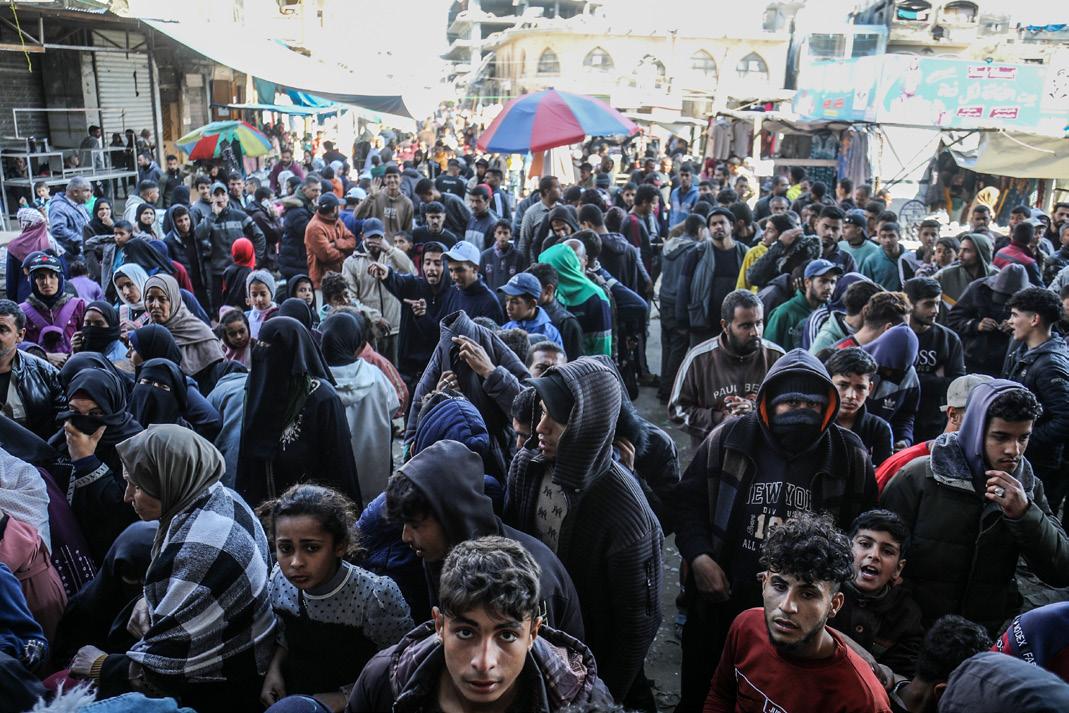
When asked whether the PA had a right to arrest members of these groups in order to prevent them from attacking Israel (or being attacked by Israel), an average of 87% of Gazans said it did not.
These results came four years after an average of 68% of Gazans, in the four surveys between June
Gazan views on disarming armed groups
2018 and March 2019, supported the presence of armed groups alongside the PA’s security services, thereby explicitly rejecting PA President Mahmoud Abbas’ call for “one government and one gun.”
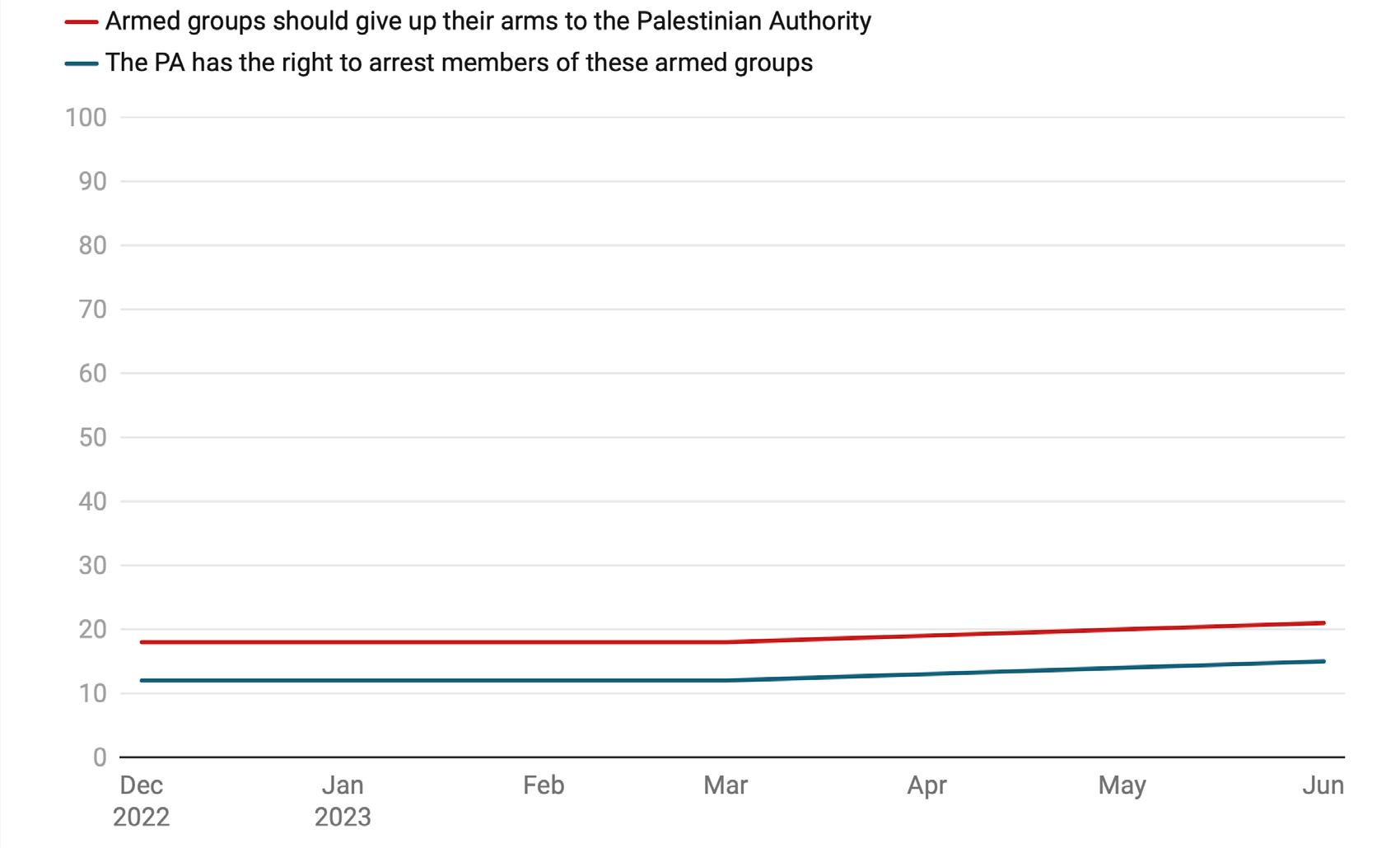
Gazans certainly want an end to the war, but polls show they oppose many key components of the current ceasefire agreement (Image: Dave Primov/ Shutterstock)
Back in July 2015, Gazans were asked under what conditions the armed groups in Gaza should be dissolved. A plurality said they should never be dissolved.
The implications of these and similar results are profound. They suggest that violence framed as national struggle occupies a moral category distinct from ordinary criminality. In that domain, the law becomes negotiable.
However, a rule-of-law society requires the law to be applied universally and for the legitimacy of force to rest with government forces. If armed action by non-state actors is viewed as legitimate then sovereignty is not fully transferred to central authority.
Phase II assumes that a reconstituted security apparatus in Gaza will suppress unauthorised force in the name of institutional order. But polling has long told us that, for many Gazans (indeed, for many Palestinians in the West Bank as well), the si-
ren call of struggle against Israel is a higher value than institutional order.
That tension has long sat at the core of the Palestinian state-building challenge. It has long been ignored by well-meaning Western officials – including in Phase II of Trump’s plan.
LEGITIMACY THROUGH STRUGGLE, NOT ADMINISTRATION
In theory, technocratic governance depends on performance legitimacy, such as the ability to deliver services, restore infrastructure, pay salaries and maintain order. Legitimacy follows competence.
Yet Palestinian polling tells a more complicated story.
Figures with violent credentials routinely outperform technocratic administrators in hypothetical elections. Marwan Barghouti, head of an ‘armed wing’ of a Palestinian political party and imprisoned
President Abbas says that he will not nominate himself for new presidential elections. If it is up to you, who do you want to be the president after him? (Selected responses)
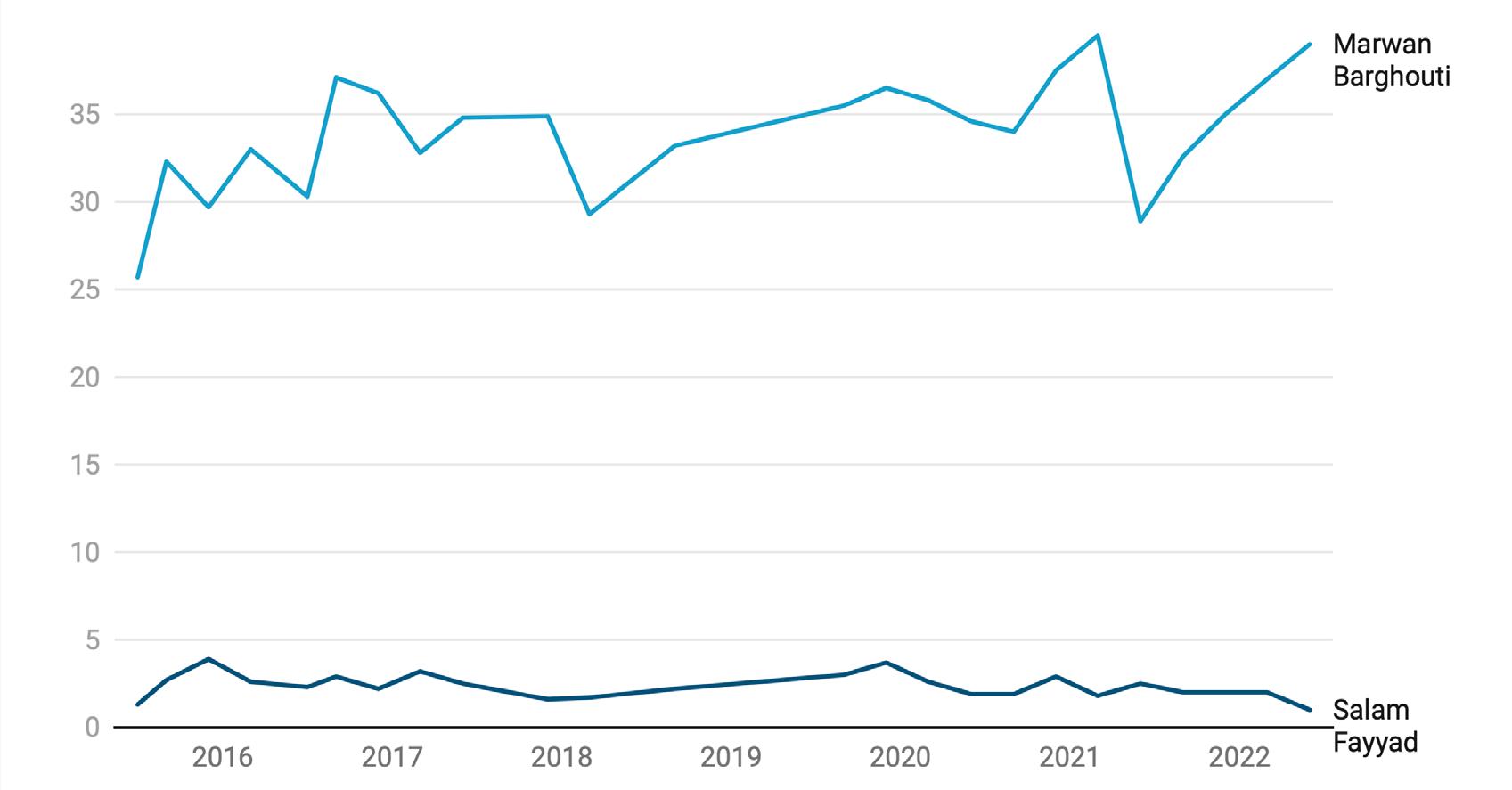
Created with Datawrapper. For an interactive version of this graph, click here
From among the following vital national goals, which in your view should the first most important goal that the Palestinian people should strive to achieve?
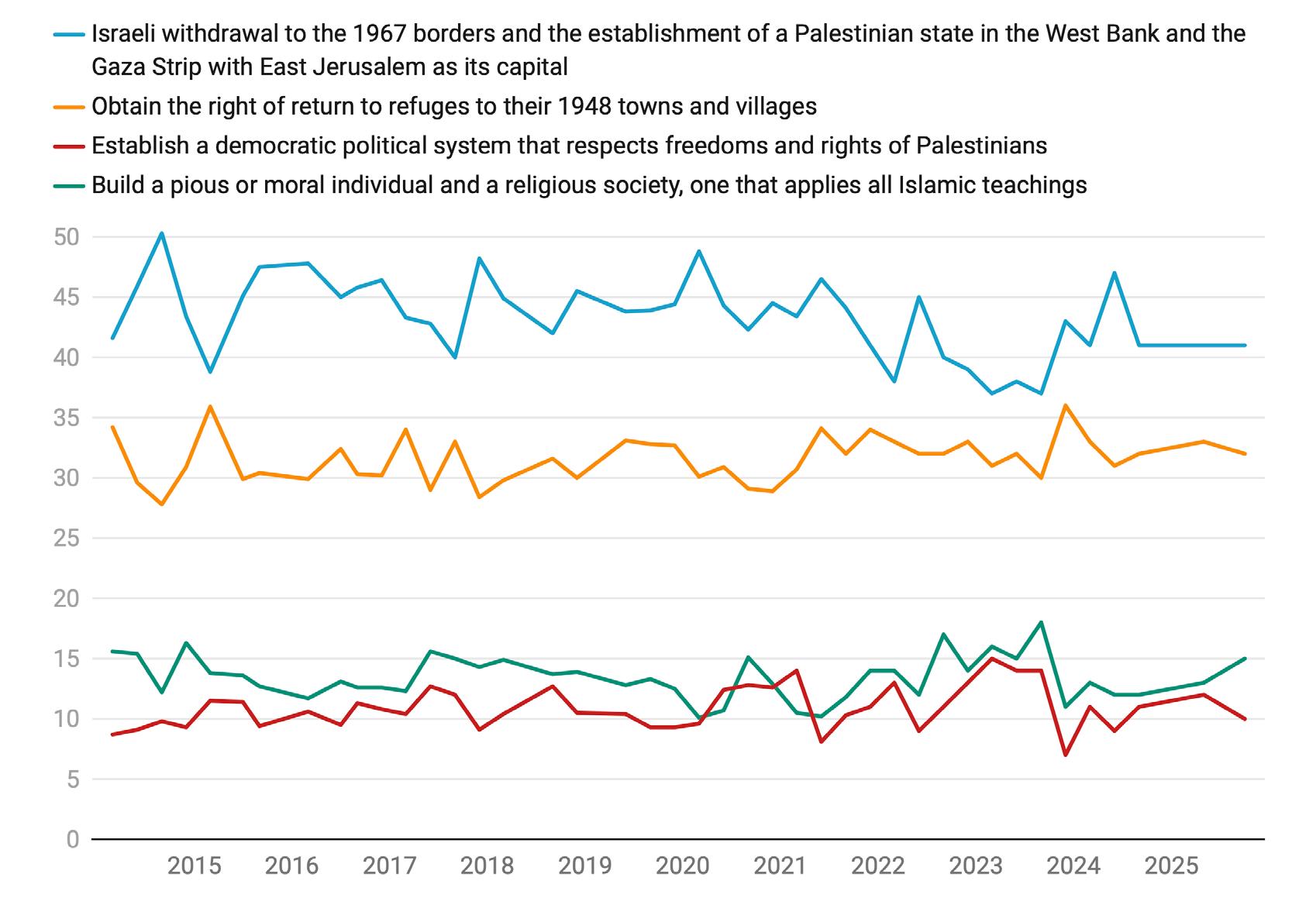
Created with Datawrapper. For an interactive version of this graph, click here
for orchestrating murderous terrorist attacks, consistently polls ahead of politicians who advocate non-violence.
Salam Fayyad, widely respected internationally for technocratic, institution-building efforts, has historically polled poorly.
This pattern is not reducible to frustration with corruption. It reflects a deeper source of political capital. In Palestinian political culture, legitimacy is often derived from perceived steadfastness and resistance, not administrative and managerial skills.
Phase II, however, imagines the opposite dynamic. It assumes that if Gaza receives competent governance, public support will consolidate around those institutions.
That may be true in some contexts. However, polling over many years suggests that in Gaza (and
the West Bank), symbolic legitimacy outweighs technocratic competence. A leader’s standing in the struggle carries more weight than their ability to balance a budget.
POLITICAL IDENTITY EMBEDDED IN RELIGION
The Western state-building template assumes institutional neutrality. Politics is, at least formally, separated from theological doctrine.
But Palestinian polling suggests that this separation is not widely embraced in Gaza and the West Bank.
In almost every survey since 2014, Palestinians were asked what was the most important goal the Palestinian people should strive to achieve. While a Palestinian state and the so-called ‘right of re-
turn’ were always the first and second most popular choice, what is of note is that, typically, there were more Palestinians who thought that building a more pious society was more important than those who favoured establishing a democratic political system.
Over the entire 11-year period, 14% of Gazans thought that building a more pious society was the single most important goal for the Palestinian people, compared with 13%, who thought that establishing a democratic political system was.
In July 2016 and eight months later in March 2017, Palestinians were asked about the separation of religion and state. An average of 57% of Gazans disagreed with the notion that religion is a private practice that should be separated from socio-political life.
This does not mean that Gazans seek a theoc-
racy. Nor does it mean they oppose elections or public accountability. But it does indicate that political order is understood, by many, as religiously infused.
Phase II, by contrast, presumes a form of administrative rationality detached from theological identity. It assumes that governance can be framed in terms of efficiency, transparency and service provision, rather than nationalist or religious struggle.
This is particularly important when it comes to Gaza, because the Hamas religious narrative is tied to ongoing violence against Israel until the latter is destroyed.
It is worth recalling that the Hamas Charter reads, in part: Nationalism, from the point of view of Hamas, is part of the religious creed... Initiatives, and so-called peaceful solutions
What solution should Palestinians seek to achieve?
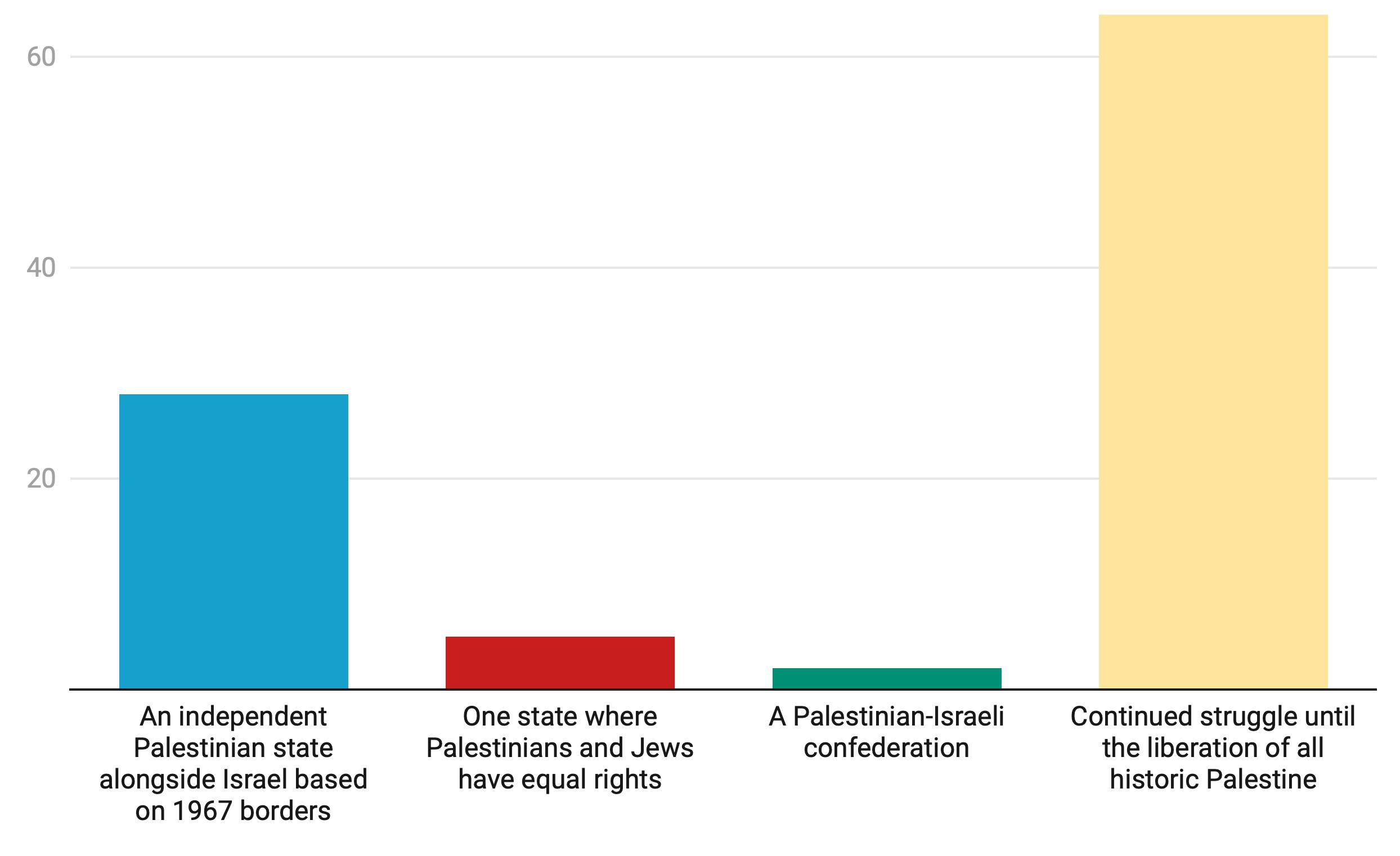
and international conferences, are in contradiction to the principles of Hamas... There is no solution for the Palestinian question except through jihad. Initiatives, proposals and international conferences are all a waste of time and vain endeavours...
Phase II seeks to form a centralised authority that monopolises force, enforces law impartially and derives legitimacy from administrative performance. But Palestinian public opinion suggests a more complicated social landscape, in which law is not supreme when national struggle is involved; le-
“Palestinian public opinion suggests a... complicated social landscape, in which law is not supreme when national struggle is involved; legitimacy flows heavily from resistance credentials; and political identity is intertwined with religious meaning”
Secularism completely contradicts religious ideology. Attitudes, conduct and decisions stem from ideologies... The Islamic nature of Palestine is part of our religion and whoever takes his religion lightly is a loser. Hamas took control of Gaza in 2007, so an entire generation has been brought up on this dogma. If public understanding of and respect for governance are tied to religious and national narratives, a purely technocratic authority will struggle to generate emotional allegiance. It might function – it might even be a marked improvement over the endemically corrupt Palestinian Authority in the West Bank and Hamas in Gaza – but it will likely never embody the meanings that Gazans attach to sovereignty or governance.
WHAT THIS MEANS FOR GAZA
None of this implies that Gazans prefer corruption, disorder or perpetual war. Polling also shows widespread frustration with weak policing and institutional corruption. But frustration with current institutions does not automatically translate into support for a liberal-technocratic model.
gitimacy flows heavily from resistance credentials; and political identity is intertwined with religious meaning.
These are not insurmountable obstacles. Societies do evolve. But we are faced with a structural dilemma that goes to the heart of Western attempts to establish viable Palestinian statehood: On the one hand, state-building cannot succeed by ignoring the society it seeks to govern, while on the other hand, a Palestinian state built in line with current Palestinian societal expectations of governance –not least its preferences for violent resistance over the rule of law – will lead to a failed state eternally at war with Israel.
Ultimately, much or all of this boils down to longterm Palestinian desires. Do Palestinians want to continue hurling their society against the rock of Israel’s permanence, or will they as a society finally make peace with the fact that the realisation of a Palestinian state requires the realisation it can only be next to – not instead of – the Jewish state.
Phase II has assumed the latter, but Palestinian society isn’t there yet. This fundamental flaw is the reason Phase II will very likely fail.
THE UN'S UNTOUCHABLES
Why won't the UN Human Rights Council fire Francesca Albanese?
ANNE HERTZBERG
ANNE HERTZBERG is the Legal Advisor and UN Representative for NGO Monitor, a Jerusalem-based research institution.
On February 7, 2026, UN Human Rights Council (UNHRC) Special Rapporteur Francesca Albanese appeared at a conference sponsored by Al Jazeera that included participation from Hamas leader Khaled Meshal and Iranian Foreign Minister Abbas Araghchi. In her remarks, Albanese invoked tropes of Jewish conspiracy and control in relation to Israel, while branding Western support for the country as the “common enemy of humanity.”
Also in February, another UNHRC figure generated significant controversy in advance of Israeli President Isaac Herzog’s state visit to Australia. Although Herzog was travelling to Australia primarily to comfort members of the Jewish community still reeling from the Bondi Beach massacre, Chris Sidoti, an Australian member of the UNHRC’s permanent Commission of Inquiry on Israel, was widely featured in the media opposing the visit, and insisting Herzog was guilty of incitement to genocide (see Allon Lee’s column on media coverage of the Herzog visit for more details). In his interviews, Sidoti called Herzog, the former leader of the Israeli left Labor Party, “one of the most divisive figures in the world.” He called it “nuts” to bring Herzog to Australia, and claimed that aside from a 1966 visit by then-US President Lyndon Johnson, Herzog’s visit was “probably the most divisive state visit to Australia.”
Antisemitic or hostile and extreme remarks regarding Israel made within the confines of UNHRC proceedings are certainly not new. People like Albanese and Sidoti are selected by the UNHRC precisely because
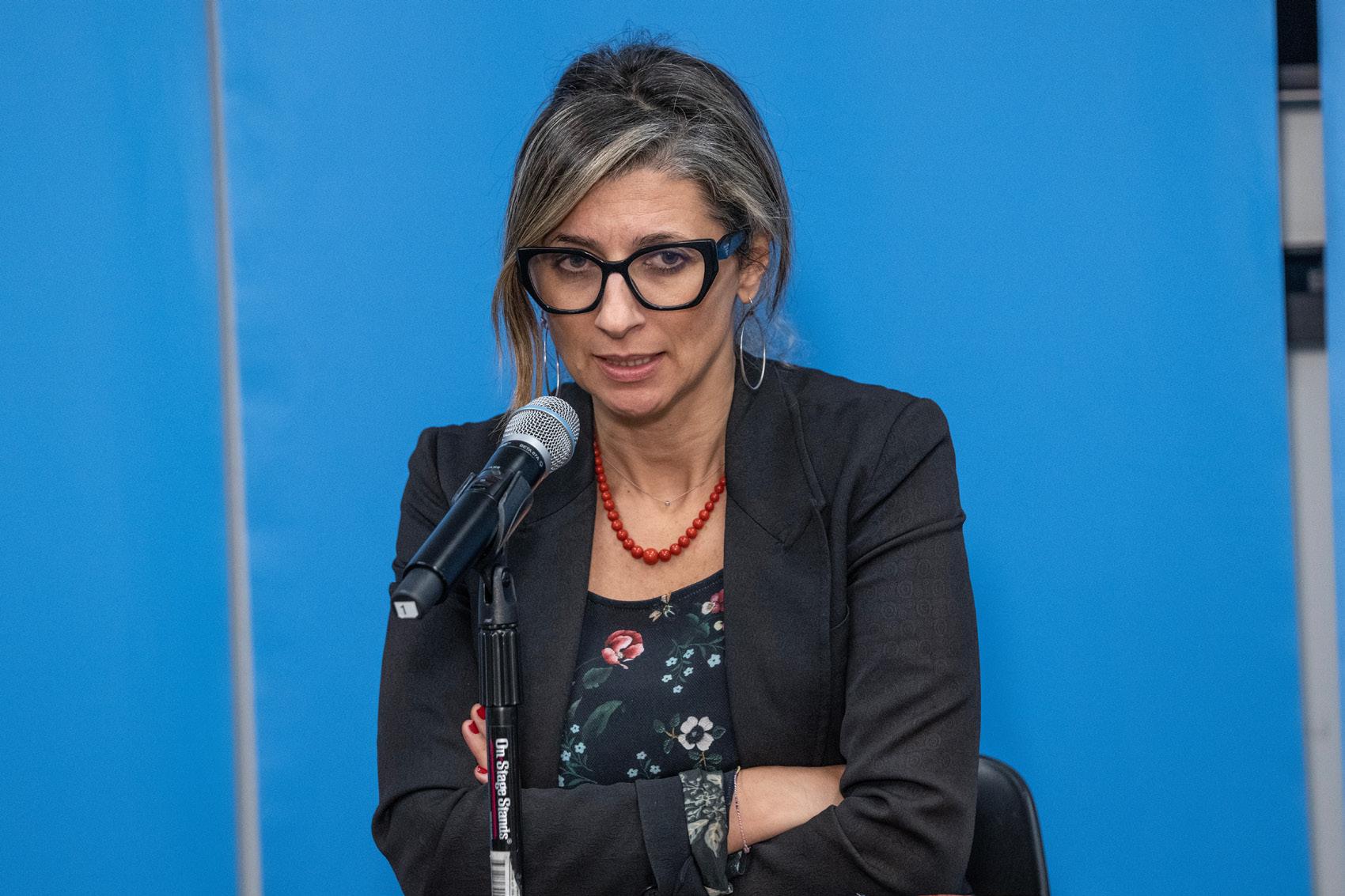
of their pre-existing records regarding the Jewish state. In recent years, however, such public statements by UNHRC “experts” have become increasingly common and more brazen. Their reach has also expanded far beyond the confines of fringe conferences and obscure UN reports and meetings. Yet there is little ability for the UN to sanction or fire those who violate UN rules or engage in unprofessional conduct.
This is particularly the case for individuals, like Albanese and Sidoti, who are working under the auspices of the UNHRC’s Special Procedures. Special Procedures covers the mandates of UNHRC rapporteurs and members of fact-finding missions and commissions of inquiry. Known as “independent experts”, these rapporteurs and commissioners are not UN employees, nor are they UN officials. They are unpaid, though their expenses are covered by the UN and they are provided logistical,
research, and office support by the UN Office of the High Commissioner for Human Rights. Perhaps far more valuable to them is that, due to their position, they are given prominence, UN legitimacy, and a UN platform from which they can disseminate and amplify their personal views. While mandate holders are bound by a Code of Conduct, there is no clear mechanism to enforce it.
As a result, Special Procedures mandate holders operate in a zone of impunity where they are rarely held to account for activities and statements that cross the line. This is all the more true when those activities and statements promote antisemitism or are extreme comments regarding Israel.
There are many examples of UNHRC special rapporteurs abusing their platforms, but few have achieved the notoriety of Francesca Albanese, an Italian national and former UNRWA employee.
Francesca Albanese, Special Rapporteur on the Situation of Human Rights in the Occupied Palestinian Territories at UN Headquarters (Image: Shutterstock)
Since taking up the post of the Special Rapporteur on “the situation of human rights in the Palestinian Territory occupied since 1967” in 2022, and thanks to the perks of the position, Albanese has become a superstar in anti-Israel circles for her shameless comments. At a 2022 conference organised by a former Hamas leader and including members of Hamas and Palestinian Islamic Jihad, Albanese reportedly told attendees they had a “right to resist”. In media appearances since October 7, she claimed, “the motives [of October 7] were not antisemitic – because the attack was against Israel and Israelis… because they are occupiers.” She denied October 7 atrocities stating that, “there were
fabrications attached to it, like the mass rape and other horror stories,” and “what’s the need to talk about mass rapes? There is no evidence of rape.”
Albanese's conduct has sparked multiple condemnations from many countries. The French Foreign Minister called her February remarks “outrageous and reprehensible”, noting further that “she presents herself as a UN independent expert, yet she is neither an expert nor independent – she is a political activist who stirs up hate.”
Germany, Austria, Italy and Czechia, among others have joined France in demanding her dismissal. In July 2025, the US Government sanctioned her, objecting to her “biased and malicious activities… that have long made her unfit for service as a Special Rapporteur.” It noted she “spewed unabashed antisemitism, expressed support for terrorism, and open contempt for the United States, Israel, and the West.”
Sidoti’s swipes at Herzog were also not an aberration and similarly extreme and offensive comments have plagued other members of the UNHRC COI of which he is a part. In June 2022, following the COI’s presentation of its first report to the UNHRC, Sidoti denigrated the IHRA international consensus working definition on antisemitism (adopted by the government of Australia in 2021) as being “promoted by the government of Israel, and its GONGOS [governmental non-governmental organisations].” He also derisively contended that “accusations of antisemitism are thrown around like rice at a wedding.”
In July 2022, Sidoti’s then-fellow Commissioner Miloon Kothari
From top: Chris Sidoti, Miloon Kothari (Images: X)
claimed on a podcast that the “Jewish lobby” controls social media and questioned whether Israel should have UN membership. The third commissioner in the COI trio, former UN High Commissioner for Human Rights Navi Pillay, refused to condemn Kothari’s remarks, stating his comments “have deliberately been taken out of context… [and] deliberately misquoted” – even though Kothari himself admitted making them.
tion was taken. Reportedly fearing US sanctions, in August 2025, Pillay and Kothari resigned. Sidoti remains on the COI.
Under published UNHRC guidelines, Special Procedures mandate holders are expected to “do no harm” and act with “objectivity” and “professionalism”. As mentioned, they are bound by a Code of Conduct. Passed in June 2007 un-
“Mandate holders operate in a zone of impunity where they are rarely held to account for activities and statements that cross the line. This is all the more true when those activities and statements promote antisemitism”
Kothari’s remarks were widely condemned by many countries, including Albania, Bulgaria, Czechia, the Federated States of Micronesia, Germany, Guatemala, Hungary, Liberia, the Marshall Islands, Palau, Republic of Nauru and the US. Many of these countries also denounced the failure of the UNHRC to repudiate these statements or remove him from his position. Nevertheless, no punitive ac-
der Resolution 5/2, Article 3 of the Code obligates mandate holders, among other duties, to “uphold the highest standards of efficiency, competence and integrity, meaning, in particular, though not exclusively, probity, impartiality, equity, honesty and good faith” and to “adopt a conduct that is consistent with their status at all times.” Under Article 12, they must “ensure that their personal political
Former UN High Commissioner for Human Rights Navi Pillay at UN Headquarters (Image: UN Photo)
opinions are without prejudice to the execution of their mission,” and “show restraint, moderation and discretion so as not to undermine the recognition of the independent nature of their mandate.”
Yet, despite these obligations, the Code is not legally binding and is almost purely self-enforcing. A Coordination Committee for Special Procedures was established in 2005, ostensibly to serve as an oversight body. The role of the Committee, however, is relatively limited. There is a complaint function under which the Committee can review the conduct of a mandate holder and submit its findings to the President of the UNHRC, but these procedures are generally non-transparent and have no binding import. Oftentimes, moreover, the Committee has acted to protect the interests of the rapporteurs rather than serve as a real check on behaviour. Indeed, in relation to Albanese’s remarks last month, the Committee actually “con-
demned” the criticism of her as “vicious attacks, rooted in disinformation” and declared those states which criticised her were “on the wrong side of history” and “contributing to lawlessness and world disorder.”
Given the lack of enforcement measures under the UNHRC Code of Conduct, what else can be done? Under UNHRC rules, the UNHRC President can exercise their power to convene an interactive dialogue of the UNHRC to review a mandate. The President can express their opinions and make recommendations to member states relating to issues of misconduct, but there is no means to remove or sanction mandate holders. The UNHRC (or alternatively, as the parent UN body, the UN General Assembly) could propose a resolution, ordering a rapporteur’s removal and/or cancelling the mandate. However, given the over-
A refuge for extremists?: The UN Human Rights Council chamber in Geneva (Image: Jean-Marc Ferré/ UN Photo)
whelming control of both the General Assembly and the UNHRC by countries hostile to Israel, it
fessional conduct. Individual countries can impose their own sanctions or, at the very least, refuse all
“While anti-Israel activists may remain smug that an Albanese or Sidoti cannot be forced to resign, they ignore the real consequences of this impunity. First, their tenure provides yet further evidence for the view that the UNHRC is a farce – hopelessly biased and discredited.”
would likely be impossible to pass such a decision.
While anti-Israel activists may remain smug that an Albanese or Sidoti cannot be forced to resign, they ignore the real consequences of this impunity. First, their tenure provides yet further evidence for the view that the UNHRC is a farce – hopelessly biased and discredited. Second, the UN is currently undergoing a severe liquidity crisis. Many countries, most notably the US, have not paid their dues, and the activities of Albanese and the COI are a significant reason why not. They are also the reason the US withdrew from the Council in February 2025. It is also one reason the Trump Administration has formed a Board of Peace to lead Gaza reconstruction efforts rather than entrusting it to the UN.
Importantly, due to the long-standing failures of UNRWA, and its unwillingness to implement real reforms, it is now being blocked from having a role in Gaza going forward. The expansion of US sanctions is also a significant possibility and could expand to the Special Procedures unit as a whole or even the entire Office of the High Commissioner for Human Rights.
In the meantime, the primary recourse available remains to continue to vociferously name and shame these actors, exposing their bias and unpro-
cooperation with Albanese and others who violate their professional codes. They can exclude rapporteur reports as source material for government activities or bar reliance on information using such reports. They can also be blocked from appearing at official events or engaging in activities receiving governmental funding. Countries could also withhold funding to the UNHRC and OHCHR overall until such individuals resign or are removed from their positions.
In the long term, the UNHRC must be pressed to enact reforms which would include the adoption of a removal mechanism. The UN is currently undergoing the UN80 (in honor of the UN’s 80th anniversary) reform process, and this must be included as part of this initiative.
The UN already has a major credibility problem. The longer individuals like Albanese are allowed to remain in their positions, the more the UN will haemorrhage funding and influence. Albanese and Sidoti will likely continue to benefit from their elevated profiles and the notoriety gained through their UN platforms long after their mandates have ended. However, it is not these individuals, but the UN, that will have to live with the consequences for failing to root out those who bring that institution into disrepute.
HATEFUL TO THE END
Hizb ut-Tahrir's final antisemitic outburst
RAN PORAT
DR RAN PORAT is an AIJAC research associate. He is also a research associate at the Australian Centre for Jewish Civilisation at Monash University and a research fellow at the International Institute for Counter-Terrorism at the Reichman University in Herzliya.
In 2026, it seems most Australians have heard of Hizb ut-Tahrir (HUT), the “Party of Liberation”. This pan-Islamic fundamentalist movement, which seeks to resurrect a global caliphate, operates branches in several countries, including Australia. AIJAC has documented HUT’s record of aggressively disseminating hate, conspiracy theories, extremism and antisemitism in this country for nearly two decades.
Thankfully, on March 5 Australian authorities joined numerous other nations in banning the group. Back in January, it was already clear such a ban was one likely outcome of the reforms introduced in the Federal Parliament in the wake of the Bondi massacre. This was a long-overdue step AIJAC had advocated for some time. While the Australian HUT website ceased activity in mid-January, the group released one final explosion of toxic and antisemitic content before vanishing from the internet, seemingly sensing that its time in Australia was finally coming to an end.
ISRAEL BEHIND THE BONDI ATTACK
First, HUT rushed to respond to the December 14 Bondi beach terror attack, publishing (Dec. 18) on its website a manifesto titled “Bondi Attack – A Conversation with the Muslim Community.”
While the text describes the Bondi massacre as “horrifying personally, politically and religiously,” it immediately ties the tragedy to the war in Gaza: “The world is no longer the same after the genocide in Gaza. We have been numbed to exceptional levels of violence... Witnessing the events of Sunday only invokes the horrors of what we all experienced over the last two years.”
Worse, according to HUT, some of the Jewish victims in Bondi were not innocent, but were instead accomplices in the “genocide” of Palestinians: “If we are honest to ourselves and each other, realising some of the
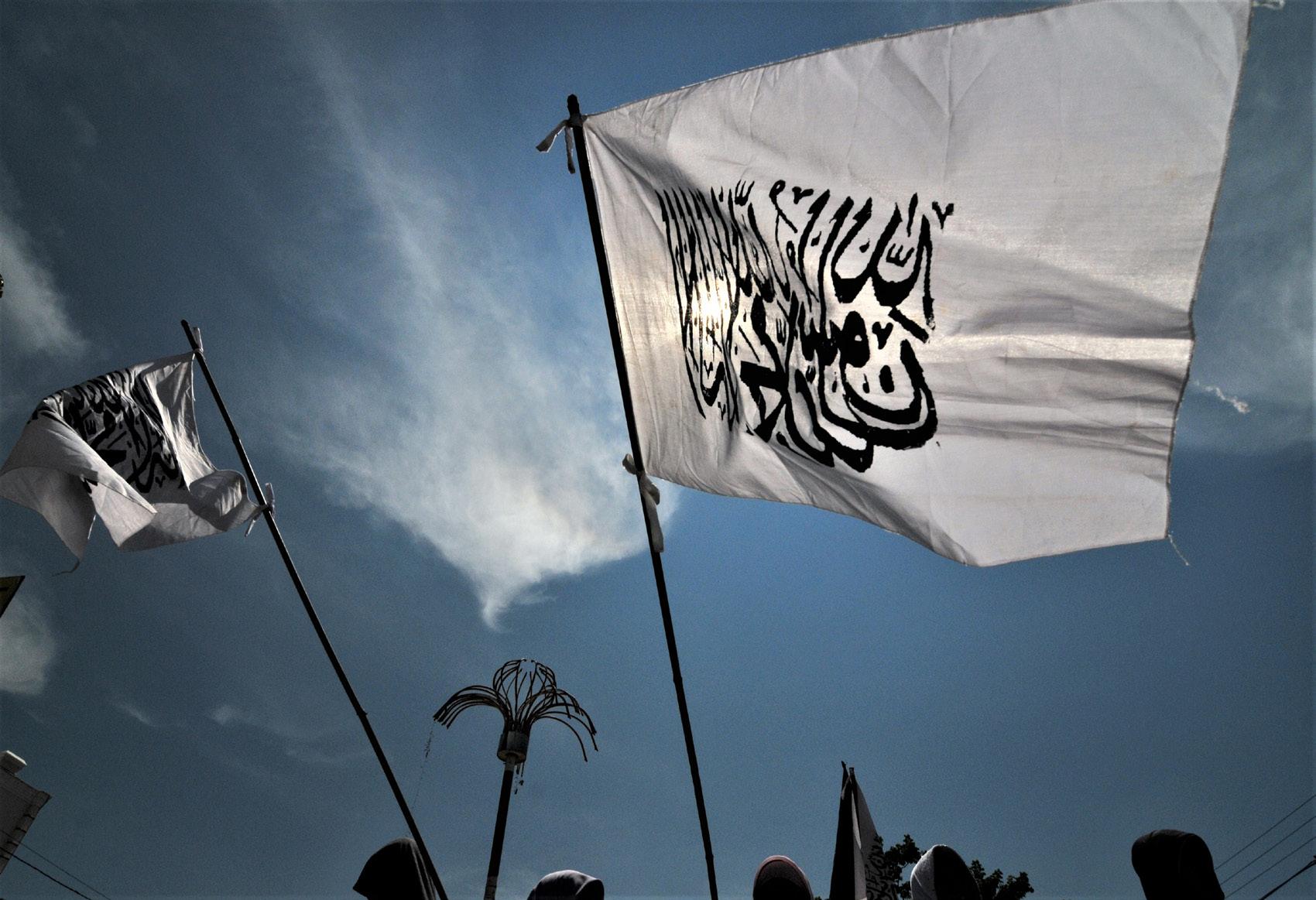
dead are proud champions of such a genocide leaves us with mixed emotions.”
After refusing to condemn the Bondi massacre – citing the “futility of community condemnations” of terror – HUT floats a conspiracy theory alleging the Jewish state used the attack to divert attention from Gaza: “The elephant in the room which the genocidal entity [Israel] wants to bury is Gaza... which invariably invokes a cycle of reactionary violence.”
The rhetoric against “Zionists” continues, with HUT claiming that “Zionist occupiers... seek to paint themselves as victims... [and] instead inflame antiMuslim sentiment as a means of political distraction.” As expected, HUT expresses disdain for the then-upcoming — and since enacted — laws designed to combat extremism and the rise of antisemitism in Australia, which HUT dismisses as the “lie of the ‘wave’ [of antisemitism] narrative.”
Conspiracy theories ran amok when HUT hinted that Israel was behind the Bondi attack, using ISIS as a cover: “Netanyahu previously threatened Australia with a wave of antisemitic attacks... which was followed by exactly that... the ISIS bogeyman has conveniently reared its head again.”
“You don’t have to be a believer in conspiracy theories to appreciate that only Zionists will benefit from this tragedy,” it concluded. As “proof,” HUT introduced another conspiracy theory – that Israel was central to the Jeffrey Epstein scandal in the US: “If the Epstein scandal has taught us anything, it is that the world is sick of countries being extorted to appease Zionist demands.”
Like ISIS and other extreme Islamist groups, Hizb ut-Tahrir aims to establish a global Islamic caliphate, and spreads hateful propaganda as part of mobilisation toward that end (Image: Shutterstock)
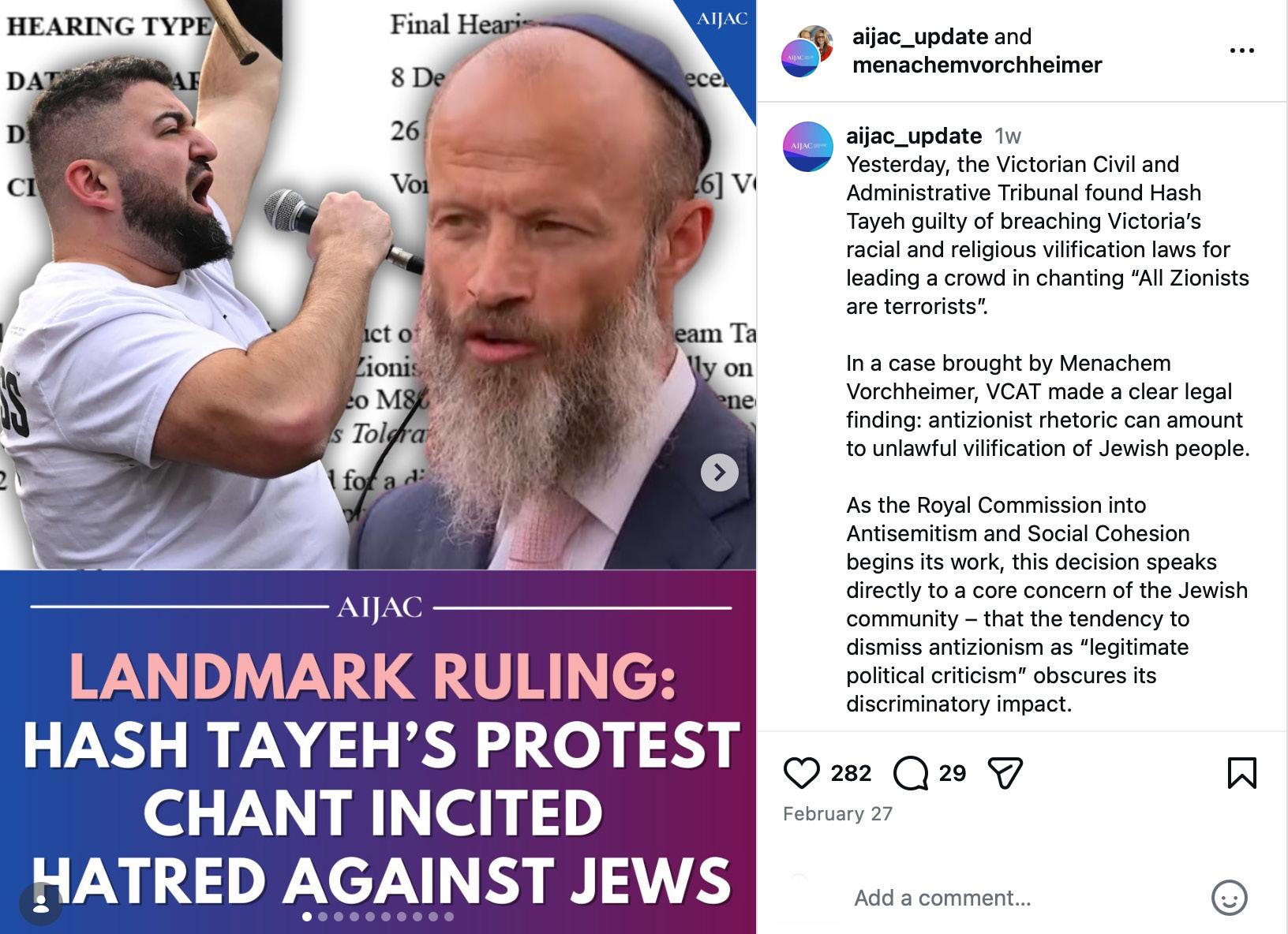
The manifesto reaches a crescendo with innuendos regarding the loyalties of pro-Israel Australians, implying that “Zionists” should be banned from speaking: “Why are we accepting of local genocidal advocates advancing the interests of the Zionist entity... when it is only making this country less safe? ... Zionism is truly making us all less safe!”
NETANYAHU BEHIND THE ‘FAKE’ ANTISEMITISM WAVE
The following day (Dec. 19), HUT escalated its conspiratorial antisemitic tirade by posting, “The Bondi tragedy as a cover for the Zionist entity” on its website. According to the article, HUT is appalled by “the extent to which pro-Zionist advocates are prepared to exploit this [Bondi terror attack] tragedy for political gain.”
The HUT fundamentalists lamented supposedly being the target of a “malicious” campaign “instigated from halfway across the world” by Israeli PM Binyamin Netanyahu. The aim of this “Jewish-controlled process”, they claimed, is “to lay the blame on a particular form of antisemitism, ostensibly rooted in a radical, perverted Islam.” They argued that “the ISIS bogeyman made a dramatic reintroduction... after an extended hiatus,” leading to demands for surveillance and proscriptions. HUT’s narrative was that ”Muslim pathology is [seen as] the problem, not occupational violence and the reactionary violence it induces.”
INSTAGRAM CAROUSEL
(click on image to view): Hash Tayeh’s protest chant incited hatred against Jews
A few weeks later, sensing the threat of an impending ban in Australia, HUT launched a campaign to protect its status. It addressed an open letter (Jan. 7) to Prime Minister Anthony Albanese that was a masterpiece of broken logic and warped historical interpretation.
The letter again focused upon Gaza while, in a revealing choice of historical narration, minimising the Holocaust. It argued instead that “the post-WWII world order was constructed precisely to enable such a genocide [in Gaza], just as it facilitated the first genocide in Palestine in 1947.”
It is unclear why HUT chooses to attack the PM so aggressively – implying he is a Zionist stooge and genocide enabler – if it seeks his favourable intervention. It claims his “continued defence of occupational violence leaves the Australian government forever condemned,” and accuses him of abandoning his activist roots for “political machination that... has its roots outside of Australia.” It also “reminded” Albanese to “put the interests of the Australian people first, not the interests of a foreign genocidal entity” — a striking comment from an organisation explicitly seeking to establish a global Islamic caliphate.
Furthermore, the letter accuses “Zionist advocates” of prioritising “loyalty to the genocidal entity” over Australia, a classic antisemitic trope. HUT repeats the claim that the recent wave of antisemitism in Australia is “fake” and blames Israel supporters for “hoping to rehabilitate the Zionist entity’s image by irrevocably damaging Australia’s.” Regarding new hate speech laws, HUT charges Albanese with Islamophobia, alleging he intends to “raise the spectre of Muslim hate speech... offering nothing but lies and misinformation.”
Still crazy after all these years: HUT online posts since Bondi
The letter was accompanied by a campaign statement in which HUT depicts itself as a victim of the “monstrousness of current pro-Zionist demands.” It concludes by claiming HUT has been “cast as the first convenient Islamist bogeyman” and argues that Zionist advocates are “unironically, hoping to tap into [institutional] racism to criminalise the entire Muslim community.”
In other words, if HUT is banned, it certainly wants to exit the scene while staying true to the hateful, antisemitic, extremist and conspiratorial worldview that has always characterised its existence in Australia.
THE INTERVIEW
FROM IRAN TO GAZA
An interview with senior Israeli journalist and author Yaakov Katz
AIJAC STAFF
Yaakov Katz is one Israel’s foremost strategic affairs journalists and author of four books, including, most recently, the bestseller While Israel Slept: How Hamas Surprised the Most Powerful Military in the Middle East, which he coauthored with Amir Bohbot (St. Martin’s Press, Sept. 2025).
Between 2016 and 2023, he was editor-in-chief of the Jerusalem Post, where he continues to write a popular weekly column. Prior to that, he served as a senior policy adviser to Naftali Bennett during his tenure as Israel’s Minister of Economics and Minister of Diaspora Affairs.
Katz is currently a senior fellow at the Jewish People Policy Institute (JPPI). He spoke with AIJAC’s Joel Burnie in early March, just as the current escalation with Iran was erupting.
Joel Burnie: So, I’ll start with the obvious situation… the war with Iran has started. The United States and Israel are currently doing their thing in Iran. And, unfortunately, the citizens not only of Israel [are] having to run to shelter, but the whole region has been gripped by war.
What are your initial assessments as to the beginning of the operation by the Israelis and the United States? And can you give our audience an idea of what you think the goals of Israel are specifically and whether or not you think they’ll be successful in achieving them?
Yaakov Katz: Well, the operation was launched with the purpose of trying to remove or change, essentially, the leadership… in Iran, to try to install a moderate government, one that can free the Iranian people and give those brave Iranians, hundreds of thousands, who took to the streets, the reins of power in their country... And the way the operation began showed exactly that type of strategy. The initial assault was aimed at the decapitation of the Iranian leadership, taking out not only the Supreme Leader Ali Khamenei, who had ruled the country for pretty much 37 years, but also the commanders of the IRGC, the
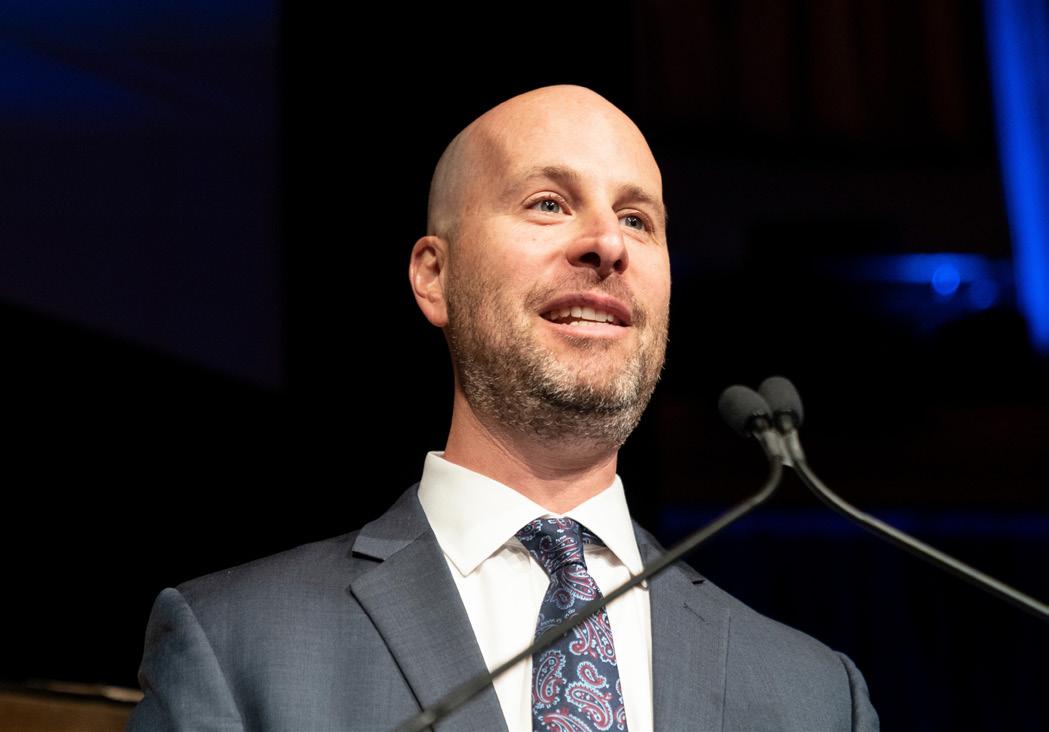
Defence Minister and other top aides and advisers and officials…
Then the sequence went to eliminating, of course, Iran’s radar systems, air to ground missiles, air defence systems, and [degrading] their ballistic missile capability…
What we see in this operation, in contrast to the 12-day war in June, was that, then, the focus was the nuclear sites. This time around, nuclear is secondary, right? Those targets are still relevant… to… cause even more damage, to make it more difficult for Iran to one day rebuild. But that’s not the main objective here. And this loose objective of giving the Iranian people the opportunity to seize power, it’s not something that is going to be very easy… we’ll have to wait to see if it’s even possible...
…I’m not even sure exactly who it is inside the country that is leading the opposition, that has the greatest opportunity to potentially grab… control of it. I want to believe, and I have reason to believe, that the covert or intelligence agencies of Israel, the United States, and maybe others in Europe have been working on this for a number of years and identifying who are these opposition figures, giving them resources and supplies and equipment so that, when the day comes, like we’re seeing playing out, they have the best chance to stand up. Now, this is a big leap of faith, and we can’t ignore that…
I think everyone who’s looking at this maturely… understands that regime change is not something that’s easily achieved at all, even with boots on the ground, but even more so when this is just a standoff operation from the air.
The best example of where something similar did happen was back in Libya, when, after the so-called Arab Spring, the people of Libya rose up against their regime, then led by Muammar Gaddafi. Barack Obama, who was then the President, together with European allies, launched a 70-day operation against the Libyan military… Gaddafi eventually was captured, was killed, and Libya was freed to an extent, but then splintered into so many different offshoots and became a country that I don’t think anyone can call a success. So that’s the last thing anyone would want to see happen in Iran.
Let’s not forget that Iran does have not just enriched uranium still somewhere in the country, but a significant and sizable, powerful military. We would not want to see that fractured and start to proliferate throughout the region into the hands of even, let’s say, more dangerous actors… But I hope and I believe
Yaakov Katz (Image: Shutterstock)
that there is planning to try to [make] the best effort possible to make something like [regime change] possible.
Joel Burnie: You noted firstly, Libya… a 70-day campaign from the Obama Administration. So, one easy question is, do you think that the United States has 70 days in them, if the campaign requires it…?
And I guess the second question is, in terms of the surprises that that President Trump can, you know, throw up… one that’s been discussed is the potential for him to find a current regime member to negotiate terms with… someone who’s currently within the structures of the current regime. Is there potential for President Trump to make a deal with someone like that?
Yaakov Katz: I do not believe that this Administration has a 70-day operation in it. Not at all. I think that if we’re looking at the initial comments that have been made by the President himself in various interviews, he speaks about, you know, in classic Trump fashion, four weeks or less. Right. So you don’t really get much out of that. But I don’t… anticipate that they have the bandwidth and the attention to sustain a long-term operation. Let’s also not forget, from just from a pure military perspective,… this operation is eating up a great deal of the United States military’s capabilities… with two aircraft carrier strike groups in the region… with the squadrons that have been deployed here, the Air Force capabilities and also the missile defence capabilities. This is a big chunk of what America has to… deploy anywhere. And… you in Australia can definitely
WATCH: Joel Burnie’s full interview with Yaakov Katz
appreciate this… everyone is definitely concerned with China, a Chinese aggression. Potentially, if China wanted to go into Taiwan right now, there’s not really a US military that can easily come to the Pacific or to Southeast Asia and try to help… So… I don’t see it taking that long.
With that said, we also have to recognise… the Venezuela operation. Donald Trump sent the Delta Force into Caracas and took out… Maduro, the President, and his wife and brought them to… the United States to stand trial. There wasn’t a regime change in the sense of what we thought. The people who remain in power now in Venezuela, the Vice President and all the other people who were already there, they’ve now elevated themselves and the Trump Administration is working with them.
So if we apply that model here… I don’t think… it would work here, although I do hear Administration officials talk about the Venezuela model and applying it to Iran.
You know, you remove Khamenei, there’s no less evil a guy waiting in the wings…
Now, does Trump think that maybe he can work with someone? Maybe there’s somebody there a little more moderate? Maybe there’s somebody there that they already have access to that they’ve been speaking with that maybe they’ve been prepping for this day. One hundred percent possible that we just don’t know that yet.
But it is hard to imagine the Venezuela model being applied here in Iran… I would not bank on that. I would actually argue that we need to remove all these people. And I think for the people of Iran…what they have wanted is a new beginning with real democratic leadership, with real liberties that you and I, Joel, take for granted…
This began not because of nuclear uranium enrichment and not because of the ranges of ballistic missiles. This began because of brave Iranians who took to the streets to fight for freedom. And…I think, in a principled world, they should not be forgotten.
A REGION TRANSFORMED?
Joel Burnie: Before we move on to other issues, this is definitely a regional conflict… there is no doubt about that. We’ve seen, you know, the Iranians target multiple cities in the region, Kuwait, Dubai, Abu Dhabi, Cyprus, Bahrain and many others. But we’ve also seen again, not the first time, but again, another example of Israel and Arab, Sunni Arab allies and Gulf allies, working hand in hand with the United States to [meet] the threats coming from Iran.
Is this an illustration of where the region is at now that countries that were
formerly foes or potentially still are, at least in public rhetoric, are able to come together, work under CENTCOM with the United States to defeat a threat?
Yaakov Katz: Well, where we are right now is not yet what I think we would all want to see. And that is a united region of Israel, the United States, [and] the Arab states that are under attack. I mean… they’re attacking Saudi Arabia and the UAE and Bahrain and Oman and Kuwait and Iraq and Jordan. They’re attacking everywhere.
Imagine a reality where all these countries were flying together with America and with Israel to attack and to weaken and to topple the oppressive regime of the ayatollahs and Iran. I mean, is that not what I think all of us would… pray for, would want to see happening here in the Middle East?
I think that this is the perfect example, an illustration, of how for decades we heard that Israel is the great source of instability in the Middle East, that it’s Israel’s colonialistic so-called ambitions, it’s the conflict with the Palestinians, it’s the so-called occupation, as people like to refer to. It’s the expansion of the communities, what people call the settlements, in Judea and Samaria, in the West Bank.
“I
try not to give too many predictions. I’m not a gambling man. But if the [Iranian] regime were to fall and there would be a democratic, free government in Iran, within a year, you would see normalisation of Israel’s ties with probably almost the entire Middle East.”
That’s nonsense. Those are issues that, of course, have to be dealt with. I’m not trying to sweep them under the rug. But there is a source of instability that we’re now seeing playing out before our eyes. And that’s… the Islamic regime of Iran, which is attacking everywhere. And they are the enemy of everyone. And as long as they are there, and as long as they are in control of their country, this will not change.
And I think that this is a new era because for once we are seeing that Israel is not alone in this… As we’re recording this, on a day… I had to go down to the bomb shelter because there were missile sirens in Jerusalem… at the same time, there were explosions in Dubai and in Bahrain.
They are attacking all of us together. So, if, in a normal reality, we would stand as one. Now, there’s a lot of suspicion and there’s a lot of history and a lot
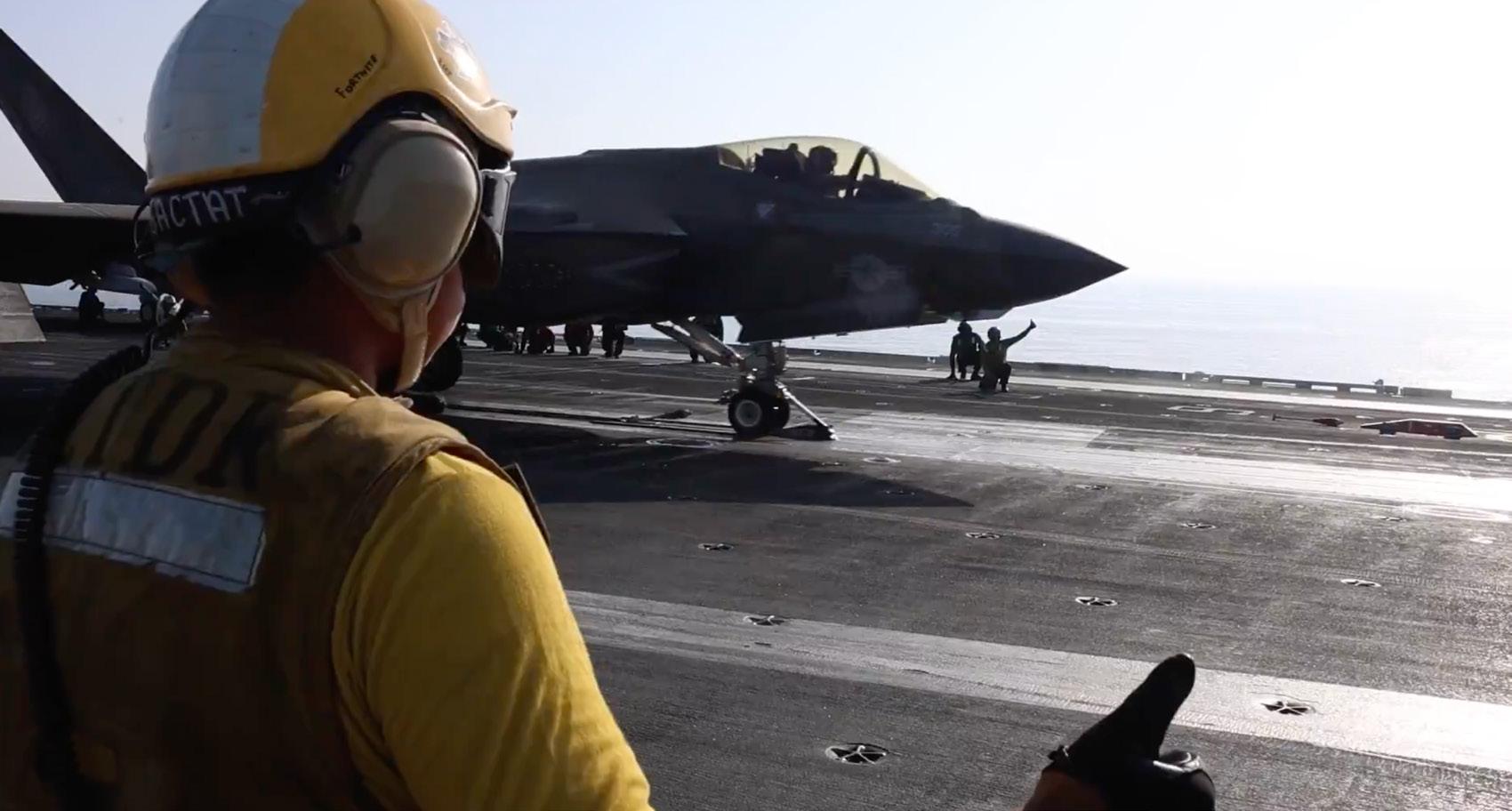
Operations in Iran are eating up a great deal of the US's military capabilities, suggesting it will have to be a relatively short war, Katz suggests (Image: CENTCOM)
of issues that have to be dealt with within this region. Not a simple place. But I think that if there’s ever been a moment for people to look at this reality and to look at the Middle East and say, okay, we get it now. This is about changing the future trajectory of an entire region, which will have implications for the entire world. And the way to do that is to remove Iran, because the moment Iran is out of the picture, the moment Iran is in different hands… Think of the ripple effect this has. Think of what you can do. There’s no Hamas anymore. I mean, there’s still Hamas, but not with the support it had. There’s no Hezbollah anymore. Lebanon becomes free.
Syria no longer has to worry about Iranian intervention. The whole region is now going to be able to align itself in a different way…
I try not to give too many predictions. I’m not a gambling man. But if the [Iranian] regime were to fall and there would be a democratic, free government in Iran, within a year, you would see normalisation of Israel’s ties with probably almost the entire Middle East.
BACK INTO GAZA?
Joel Burnie: So obviously, before this conflict with Iran, one of the major issues that Israel was grappling with was the situation in Gaza. So, we have Stage I [of the Gaza peace plan] complete, where Binyamin Netanyahu has been able to achieve something that I didn’t think he would be able to achieve – that is the repatriation of all living and dead hostages.
And now we are in this Stage II, where the clear objectives of the Trump Ad-
ministration not only are yet [to start] to happen, but I don’t see a clear pathway for Hamas to give up their weapons and also give up… the area of Gaza that they currently control. So how do you see the events in Iran playing out directly in terms of the implementation of Stage II in Gaza?
Yaakov Katz: Hamas is not going to easily give up its weapons, and it’s not going to easily change its ways just because Donald Trump has asked them nicely to do so. This is the great challenge of what’s happening in Gaza.
I would believe that while they do seem to be two very different arenas, they are connected. If Hamas sees the Iranian regime toppled, if it sees a determined American military and political leadership willing to go the distance to get the job done… that would make the Hamas leadership, whether in Gaza or Doha, think twice about defying the President. I think that this is definitely going to be a calculation.
Hamas, its gamble has been, and so far they’ve been proven right, that they can hold on to 50% of Gaza, pretty much 47% to be exact, and keep their weapons and replenish their ranks. They don’t yet have the same capabilities they had prior to October 7, 2023, but they’re getting there.
And Israel will be in control of the other half of Gaza. But if things stay quiet, eventually pressure will build on Israel to pull out of those areas. So that’s Hamas’ kind of gamble at the moment. I think that for the time being, this is going to be a real tense situation. It’s not going to be easily solved. And here’s one thing that gives me some confidence, is that when you talk to members of the Board of Peace and within the Administration... they’re [not of] two minds… there’s an unequivocal position. And that is that for this to advance, for reconstruction to advance, Hamas has to disarm. And I think that’s the linchpin. Thank God they understand that, because if Hamas is able to hold on to its weapons, then we will be back at where we were on October 6, 2023.
Joel Burnie: So, given Israel’s very noticeable and very clear change of posture post-October 7, meaning they will not allow threats to be maintained anywhere near their borders, and they are significantly more aggressive in nullifying those threats… in the Gaza context, if Hamas doesn’t choose to give up their weapons, do you think Israel will go back into… the enclave to disarm Hamas themselves?
Yaakov Katz: I think eventually, yes… I don’t think it’s something that we’ll see in the immediate future. But ultimately, over time, Israel will not allow this situation to fester. The lesson of October 7 is that you cannot contain your enemy, and you cannot allow your enemy to grow. Because… if you do allow that to happen, it will grow to monstrous proportions and will eventually explode on
your borders and invade your territory. And therefore, the understanding I think across the Israeli political and military leadership is that if Hamas does not disarm, and if they don’t give up their weapons, and they don’t somehow integrate into a new Gaza, then Israel will have to go into it.
And no one’s going to do it for Israel. No international stabilisation force… as is supposed to be deployed there under the 20-point Trump plan. The United States is not going to do it. The Arab countries are not going to do it. It’s going to have to be Israel.
Israel would prefer not to… Israel agreed to the ceasefire not only to get back the hostages, the living and the deceased, but also to end the conflict, to give the people of this country an opportunity to heal, to recover from two long years of war. We’re still not there, right? We’re talking as rockets are landing in Israel, as Israeli pilots are risking their lives in Iran, as now Hezbollah has opened and joined the fray…
But I think that if this is to work, it needs to see Hamas disarm and if it doesn’t… there’s no question in my mind that, no matter who is the leader of Israel, they will know what they have to do. And that is to send the IDF back into Gaza.
SEE ALSO: Inside Washington’s Middle East Strategy: Dana Stroul, formerly the Pentagon’s top civilian official for the Middle East and currently Director of Research at The Washington Institute for Near East Policy, in conversation with AIJAC's Rebecca Davis
ISRAEL’S UPCOMING ELECTIONS
Joel Burnie: Now, you co-authored a book called While Israel Slept. It’s an incredible investigation to what Israel’s position was before the events of October 7 and goes into some pretty intense details as to what happened on the day and the military and intelligence failures that allowed it to happen. Your book is a phenomenal piece of research. However… it’s been published at a time where the Government is yet to confirm the operation of its own commission of inquiry into the events that led up to… October 7, 2023. So, given the fact that it’s an election year… what’s the impact of that on the Israeli voting public?
Yaakov Katz: You know, Israelis, for better or for worse, they vote based on security. They vote for the person that they feel can keep them safe. We have economic issues. We have major social issues. One of them, for example, is the issue of the draft of the ultra-Orthodox who continue to not serve in the military. That is a real lightning rod…
I think that unfortunately we’re still stuck in a reality where Israelis are going to vote on whether they want to see Benjamin Netanyahu continue as prime minister or they want to finally see him removed from office. That’s going to be the big question. The second question is definitely going to be, who do they feel will keep them safer and more secure?
And of course, there will be those other issues. The ultra-Orthodox issue is going to be up there, but maybe number three… economics even lower.
Now, it’s still early. Elections won’t be held until at the earliest in June, at the latest in October, but it’s very possible we’ll have new leaders emerge, new candidates, new parties.
But for the time being… we’re still a bit stuck politically. And if you look at the polling numbers… now, there’s no clear winner and there’s no clear government. And… if I had to gamble right now… I would say the most likely scenario is that there’s no winner and we roll again to another election.
Joel Burnie: On that point of security being the major motivating preference, I agree with you on that. But, in the context of Prime Minister Netanyahu, you have obviously clear and immediate security successes, including in its current mission in Iran, but that comes off the backdrop of what was Israel’s greatest military and intelligence failure and security failure… October 7. So, do you think that Prime Minister Netanyahu has done a good job politically to reconcile that dichotomy with the voting electorate?
Yaakov Katz: Look, you mentioned my book While Israel Slept. Netanyahu, as the prime minister, bears the most responsibility for the failures that led to
October 7, especially considering that he was prime minister pretty much for 14 years uninterrupted, except for a year and a half, from 2009 up until October 7. It was his policies that were in place, those that he created and installed and set.
But, at the same time, I recognise that he is also the person who deserves the credit for the re-engineering of the Middle East and for everything that we spoke about until now. The taking on of Iran, the weakening and degradation of Hamas, of Hezbollah, the return of the hostages, the toppling of Bashar alAssad in Syria, and so much more. So, can we ignore that? No. Can we look at him through both prisms? 100%. And that is what Israelis are going to have to do… when that election day comes – look at the complexity of the situation and try to make a decision of what is best for them as they move forward.
I wish and hope and pray that there will be a state commission of inquiry because I think that is existential for Israel. I think we need to investigate, we need to study and learn to make the corrections and repairs and reforms so this does not happen again. But… if Netanyahu is re-elected and he does not want a commission of inquiry, as he has made plain and very clear, then this is the decision that the Israeli people are making.
Joel Burnie: Final question…the Israeli public has gone through a very, very tough time over the past two-and-a-half years. War is very difficult on any nation, but Israel is a small country of just… over ten million people with a reservist army, and the burden that is on that society to fight such a long war is very, very difficult. But given that we are in election year and given that, as you’ve noted, there has been a complete realignment in the region, what is your feeling [about] the future of the people of Israel and the State of Israel?
Yaakov Katz: I’m very hopeful. I’m hopeful because I recognise and I believe in the Israeli people… I look at the straight-up reality that we’re at in right now. We are more safe. We are more secure than we were two-and-a-half years ago… This is a dangerous region, but Israel is strong. It is powerful. We’re watching,… as we speak, the perfect illustration of the close intimate alliance between Israel and the United States. Hundreds of jets from both countries flying together, refuelling one another, sharing intelligence with each other, carrying out combat raids together. This is power. This is the strength and the resilience of the Israeli people… If we have to stay in the bomb shelters to free Iran, to give the Iranian people a better future that will also be a better future for us, we’ll stay… a week, two weeks, three weeks, we’ll stay, because we want to see them get freedom. We want to see ourselves live in a more secure reality. So, this is… resilience.
[That] spirit gives me a lot of hope. I hope that that can also translate into the deep change that we require within society as well.



69 Bourke Road, Alexandria 2015 PO Box 6088, Alexandria NSW 2015
Sydney, Australia
Tel: (02) 9693 8888
Fax: (02) 9693 8899
LIFE AFTER...
Resilience and defiance amidst anger, grief and fear post-October 7
REBECCA DAVIS
Ruptured: Jewish Women in Australia Reflect on Life Post-October 7
Edited by Lee Kofman and Tamar Paluch
Lamm Jewish Library of Australia, 2025, 252 pp. $34.95
“I had to remember what life was like before October 7 and that’s hard to do. It is like trying to remember a faded romance or the texture of life when I was at high school.”
With these words, writer Julie Szego captures the profound fracture experienced by many Jews worldwide following October 7 – and the emotional terrain explored in Ruptured: Jewish Women in Australia Reflect on Life Post-October 7.
Edited by Lee Kofman and Tamar Paluch, the anthology brings together 36 essays by Jewish women across Australia reflecting on how the Hamas atrocities of October 7, 2023 – and the global response that followed – reshaped their lives and sense of belonging.
For many Jewish Australians, that rupture was not only geopolitical; it was personal, social and psychological. Something fundamental shifted in how Jewish identity was experienced in public life, professional environments and even private relationships. Assumptions about belonging – long taken for granted in multicultural Australia – suddenly felt far less certain.
Ruptured seeks to record that moment.
The collection captures how a distant war reverberated across the Australian Jewish diaspora, reshaping the lives, identities and sense of security of Jewish women. The result is a work that functions simultaneously as personal testimony, communal record and social document.
The contributors span an extraordinary breadth of backgrounds and experience: millennials and octogenarians; queer women; women living in regional Australia; migrants from the former Soviet Union and Israel; Mizrahi women and women of mixed heritage; descendants of Holocaust survivors and those whose families have lived in Australia for generations.
Some are prominent public voices – including Ramona Koval, Dani Valent, Kylie Moore-Gilbert, Deborah Conway, Kerri Sackville, Lisa Goldberg and Rachelle Unreich. Yet equally com-
pelling are the lesser-known voices: first-time writers whose reflections bring a rawness to the collection.
What emerges across the essays is not a single story, but a chorus of dislocation, grief, anger and rediscovery.
Yet despite the diversity of backgrounds and viewpoints, several themes emerge with striking consistency.
THE ABANDONMENT BY THE FEMINIST MOVEMENT
were
to hide it
One of the most jarring aspects of the aftermath described in the essays is the absence of solidarity from many feminist and progressive circles.
Writer Sharon Sztar gives voice to a sentiment that recurs throughout the book:
“Where were the strong feminist voices? Why weren’t they demanding our girls to be released from captivity? Where was the outrage about the desecrated bodies of the Nova festival’s young partygoers?”
The question hangs over the anthology. Contributors describe waiting for solidarity that never came.
THE BETRAYAL BY THE LEFT
Author Joanne Fedler reflects on the ideological dislocation she experienced within progressive politics.
“I began to see the toxic fascism in parts of the left, my once political home,” she writes. “Its performative selective outrage masquerading as ‘anti-Zionist pacifism’; the Jew-hate, finally aired.”
Fedler recounts the moment her rage overtook her fear, describing the painful process of “unfriending” and blocking people on social media.
“It was self-care. I had to arrest the thousand daily assaults on my nervous system as I just couldn’t take another smug, ill-informed post about the Israel-Hamas war.”
“My idealism about ‘peace’ is gone,” she writes. “It died with Vivian Silver and those young dancers at the Nova festival.”
THE LGBTQI+ EXPERIENCE
For student Noa Gomberg, the rupture manifested in a fracture between communities.
“I had to choose: the Jewish community or the queer community.”
Many women reacted to the aftermath of October 7 by further embracing their Jewish identity, even as others
driven
(Image: Roman Yanushevsky/ Shutterstock)
Her essay describes the anger and isolation she felt watching LGBTQI+ influencers accuse Israel of “pinkwashing”, all while brainwashing her generation that being queer must mean being anti-Zionist.
“How dare someone say I – a queer woman – don’t belong at a Pride parade because of the Star of David around my neck?”
WHEN HATRED APPEARS ON YOUR DOORSTEP
Writer and performer Elise Esther Hearst describes how the events of October 7 reverberated into everyday life in Australia.
“Soon after that hellish day I caught the first few whiffs of anti-Jewish racism in Australia,” she writes. Her children’s Jewish school advised parents not to send students in uniform. A casual clothes day became a week, then another.
“Author Joanne Fedler reflects on the ideological dislocation she experienced within progressive politics. ‘I began to see the toxic fascism in parts of the left, my once political home,’ she writes. ‘Its performative selective outrage masquerading as ‘anti-Zionist pacifism’”
Each morning on the way to school, her children witnessed posters of Israeli hostages being torn down from light poles, replaced and ripped down again.
“The child hostages, Kfir and Ariel Bibas, looked eerily similar to my son, all redheads,” she writes.
Hearst captures the emotional dissonance many Jewish Australians felt: “In a distant land, a death toll was rising, and here in my backyard hatred was mounting.”
TO CONCEAL OR TO REVEAL
This theme of conflicting realities is further expressed by Olympic race walker Jemima Montag.
“This duality of fear and pride dominated my year,” she writes.
As Montag prepared to represent Australia at the 2024 Paris Olympics, she wrestled with whether to conceal her Jewish identity.
“I stood in front of microphones, on start lines and in airports, hyper-aware of my safety as a Jewish athlete,” she writes.
The approaching Games reminded her of the 1972 Munich massacre, when 11 Israeli athletes were murdered by terrorists.
“I was set to compete in the 20-kilometre race-walk and the mixed marathon race-walk relay, both in open public spaces with unprotected exposure.”
Montag wears a bracelet that once belonged to her grandmother, a Holocaust survivor. In past interviews she spoke proudly about its meaning. But now, she stays silent.
“In some ways, the choice to conceal my Jewish identity this year has made me feel disappointed in myself,” she admits. “I hope that I can feel safe enough to speak about Nana’s bracelet again soon.”
Yet for some contributors, October 7 sparked a personal awakening.
Grief and trauma counsellor Irena Zilberman recounts listening to American commentator Ben Shapiro declare simply: “I am a Jew.”
“There is grief in his voice, but also a deep rage,” she writes. “Tears start streaming down my face, tears of relief at finally having this emotional mess inside me reflected back.
“For the first time in my life I can feel it in my body – a spark of my Jewish identity.”
Zilberman’s story carries an added tragedy: her uncle Serzhik and aunt Vicka were shot dead in their Ofakim home on October 7.
TRAUMA IN THE BODY
Psychoanalyst and artist Julia Meyerowitz-Katz introduces another dimension to the rupture: the physiological toll of collective trauma.
“My acupuncturist tells me that, as with all her Jewish patients, my nervous system is in a frenzy,” she writes. A physiotherapist makes a similar observation – Jewish bodies, she says, appear to be “in trauma mode”.
After October 7, Meyerowitz-Katz herself was diagnosed with two rare illnesses. A health insurance broker tells her that serious diagnoses among his Jewish clients have surged.
“Trauma has affected us biologically, making us ill. This is how epigenetic changes occur.”
But the sense of threat is not confined to the body. It permeates the everyday.
“I find I am hyper-aware of being Jewish. Wherever I go, I wonder if it is safe. Will I be accepted as a Jew? Should I reveal that I am a Jew?”
That unease becomes painfully real when a fellow resident artist tells her that “Jews have all the power.”
“That relationship has never recovered,” she writes. “Now even my studio feels unsafe.”

The voices of Jewish women (from top): Joanne Fedler, Julie Szego, Ramona Koval, Deborah Conway, Lee Kofman, Sharon Sztar
ECHOES OF HISTORY
Writer and broadcaster Ramona Koval contributed one of the anthology’s most reflective essays, drawing historical parallels that are both sobering and unsettling.
“The time has come for us – Jews, non-Jews, all of us who love this country – to open our eyes to the truth of history,” she writes. “To the bloody, bestial, vicious, murderous truth of what can happen when we wilfully ignore the parallels between what is now and what was then.”
“Taken together, the essays in Ruptured form more than a collection of personal reflections. They are a testimony of a moment when Jewish Australians felt the ground shift beneath them. There is grief in these pages. Anger. Disillusionment. Fear. But there is also resilience – and defiant strength.”
Koval warns against complacency. The lesson of Jewish history, she argues, is that divisions between Jews never protect anyone.
“It would be a mistake to think that the Nazis distinguished between good Jews and bad Jews, sophisticated ones and shtetl ones, Zionists or anti-Zionists. In the end, all the hair was shaved, the gold teeth were pulled and the bodies were burned.”
But Koval’s essay is also about resilience and responsibility.
“Since October 7, like many of us, I am strengthened in my Jewishness,” she writes.
“After all, there is no hiding place now. We must not bury our manuscripts in metal boxes and milk pails. We must continue to challenge and speak up and write openly. Courage is what I was bequeathed by those who survived. I didn’t know it when they were alive, but now I do.”
HINENI – WE ARE HERE
Taken together, the essays in Ruptured form more than a collection of personal reflections. They are a testimony of a moment when Jewish Australians felt the ground shift beneath them.
There is grief in these pages. Anger. Disillusionment. Fear.
But there is also resilience – and defiant strength.
If the anthology has a unifying message, it is captured in a single Hebrew word that echoes throughout Jewish history: Hineni – “I am here”.
Despite rupture, despite abandonment, despite hatred, Jewish life continues. And the women of Ruptured will not be silenced.
To order the book, or learn more, go to ruptured.com.au.
HAUNTING PARALLELS
From 1929 to October 7
ALLON LEE
Ghosts of a Holy War: The 1929 Massacre in Palestine That Ignited the Arab-Israeli Conflict
Yardena Schwartz Hearst, 2025, 336 pp, A$54.95 [purchase here]
Arefusal to accept the Jewish people’s legitimate and historic right to their own state anywhere in the territory encompassing contemporary Israel, Gaza and the West Bank lies at the heart of the century-old Israeli-Palestinian conflict.
Several books have explored this theme in recent years, particularly after the October 7 massacre. American journalist Yardena Schwartz’s Ghosts of a Holy War is an example whose starting point is the massacre of the ancient Jewish community of Hebron on Aug. 24, 1929. Schwartz argues that this event deserves to be seen as a defining moment in the Arab-Israeli conflict – what she calls its “ground zero”. Her book traces the massacre’s legacy right up to the present day.
Roughly 3,000 men armed with swords, axes and daggers descended on Hebron’s Jewish quarter, where they murdered, raped and mutilated men, women and children. By the time the violence ended, 67 Jews had been murdered and hundreds more wounded. The violence was not confined to Hebron; across British Mandatory Palestine a total of 133 Jews were killed in various riots.
The aftermath marked a profound historical shift. British authorities forcibly evacuated the survivors, ending a Jewish presence in Hebron that had been sustained for hundreds of years. The savagery also reshaped Jewish political thinking in Palestine. Zionist leaders concluded that coexistence without organised self-defence was no longer viable and accelerated efforts to build professional security forces.
What made the violence particularly shocking was that Hebron’s Jews were not Zionists, yet were still targeted.
For many of the older non-Zionist Jewish communities in Mandatory Palestine, the events of 1929 made it clear that their survival depended on aligning with the Zionist movement. Hebron was particularly vulnerable because of the absence of any organised Jewish defenders.
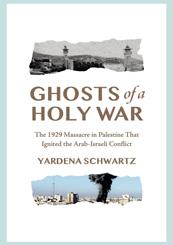
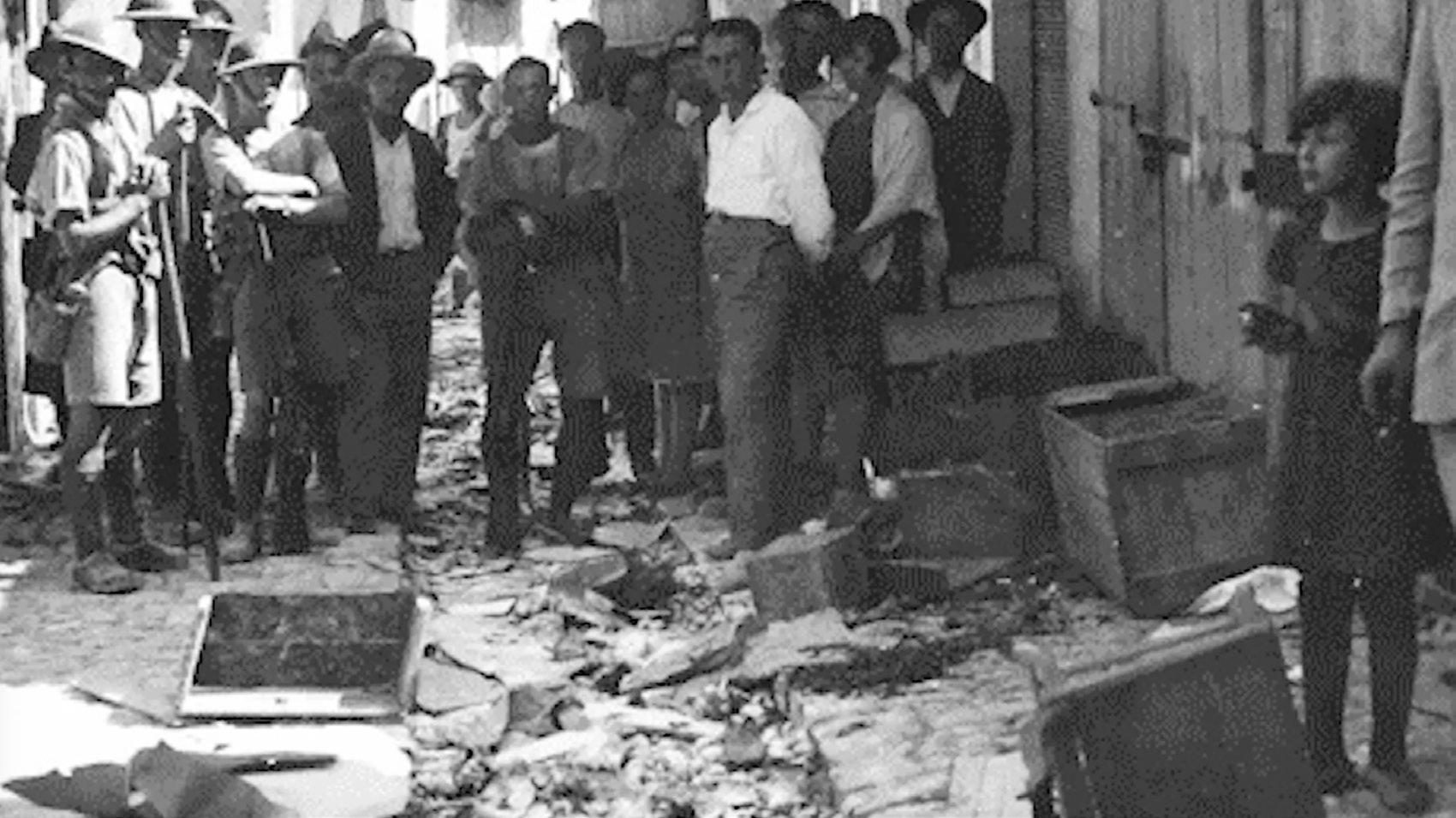
Indeed, the city’s Jewish leaders had rejected offers from the Zionist leadership to provide security assistance.
Schwartz’s interest in the massacre began after she was given access to a cache of correspondence written by David Shainberg, a young American Jew from Memphis. At the age of 22, he moved to Hebron in 1928 to study at a yeshiva (religious school) there. Like most of Hebron’s Jews, he did not support Zionism. Shainberg was among the massacre’s victims.
At the time, Hebron was home to about 700 Jews, most of Sephardic (Middle Eastern and North African) origin. They lived among a much larger Arab population in what appeared to be relatively stable coexistence, although they certainly had to know their place – a distinctly subordinate place – in the social pecking order. Jews were barred from entering the Tomb of the Patriarchs, where tradition holds that Abraham – the founder of the Jewish faith and people – and other biblical patriarchs are buried.
Few members of this community could have imagined that their neighbours – including members of the city’s police force – would one day turn against them so savagely.
The massacre, however, did not erupt spontaneously. It was fuelled by the incitement of Haj Amin al-Husseini, the Grand Mufti of Jerusalem, who spread a conspiracy theory claiming that Jews were plotting to destroy the al-Aqsa Mosque and replace it with a third temple.
Although the 1929 massacre marked a turning point, it was not the first outbreak of organised mass violence against Jews in Mandatory Palestine. That grim distinction belongs to the Nebi Musa riots of April 1920, which were also fuelled by false claims about alleged Jew-
The aftermath of Hebron pogrom of 1929 (Image: Jewish Virtual Library)
ish designs on al-Aqsa Mosque. Al-Husseini played a role in that earlier outbreak of violence as well. His role and legacy are a key focus of Ghosts of a Holy War.
Despite the horror of the massacre, the author finds hope in the story of the 22 Arab families that risked their lives to shelter Jewish neighbours during the 1929 pogrom in Hebron.
Yet, dispiritingly, when the author visited the descendants of these rescuers in 2019, many refused to speak with her, fearful of being labelled collaborators.
By contrast, when she visited the small Jewish community now living in Hebron, she discovered that the settlers there maintain a museum of Hebron’s Jewish history that acknowledges the Muslims who saved Jewish lives.
Given the reputation of Hebron’s current Jewish residents as settler extremists, “the space that was given to the Muslim heroes of Hebron took me by surprise,” she writes.
She wonders how different life might be if Palestinians could learn to honour their own suffering without erasing the Jewish historical connection to the land.
An alternate subtitle of the book might well have been “No Good Deed Goes Unpunished.”
In one section of the book, Schwartz notes how Israeli prisoner exchanges have repeatedly produced unintended consequences. In 1985, Israel released Sheikh Ahmed Yassin in a swap; three years later he founded Hamas.
A similar pattern followed the 2011 prisoner exchange for kidnapped Israeli soldier Gilad Shalit, which included Yahya Sinwar – the Hamas leader who would later mastermind the October 7 massacre, dubbed “Operation al-Aqsa Flood” – again invoking false claims about plans to destroy the mosque as a justification and catalyst for bloody violence.
The author argues that there are many parallels between 1929 and October 7 beyond the libel accusing Jews of seeking to tear down the al-Aqsa Mosque and the sickening brutality inflicted on civilians.
Looming large over the narrative is the pattern of Palestinian leaders rewriting history and weaponising Islam to both justify terrorism and further their own personal political objectives. So too is the repeated willingness of Western governments to placate Palestinian extremists, whose goal is not to reach a settlement to end the conflict but to perpetuate it.
In response to the 1929 pogrom, London established the Shaw Commission. Although its report placed responsibility for the violence on the Arab side, it was the Jews who ultimately paid the price, with the complete destruction of the ancient Hebron community, and gradual British moves away from support for creating a “Jewish national home” – the explicit purpose of the British Mandate for Palestine.
Likewise, she notes how, after Hamas’ October 7 massacre, Western governments moved to recognise a Palestinian state, reinforcing the perception that terrorism yields political rewards.
In this respect, Schwartz is clearly right – the ghosts of 1929 do indeed still haunt the present.
THE UNRAVELING
A forensic examination of international failure
AMLER
Unraveling UNRWA
Directed by Duki Dror, Writers: Duki Dror, Galia Engelmayer-Dror, Ilan Sheizaf Winner of the Investigative Documentary Award at the Haifa International Film Festival 2025
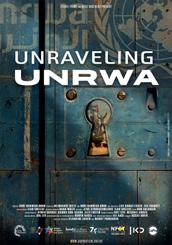
Since October 7, the word “Hamas” has become synonymous with the terror inflicted on Israel on that disastrous day. But another emergent word has received a new symbolism since then; “UNRWA” should now be regarded as synonymous with international failure and humanitarianism gone bad.
For decades, the United Nations Relief and Works Agency for Near East Refugees (UNRWA) has enjoyed a protected status in the global imagination, cloaked in the blue-and-white sanctity of the UN logo. But, as the documentary Unraveling UNRWA demonstrates with devastating precision, what that cloak was covering was not only failure and corruption, but a case study in how supposedly humanitarian agencies can come to do actual harm.
What makes this film unique is that it takes the viewer on a historical journey to the very beginning of the troubled agency. It is, in effect, an “origin story”. At its inception, in the wake of the 1948-49 war, the agency’s intentions appeared noble – to be a temporary humanitarian bridge to help victims of war recover and build new lives. However, the film meticulously tracks how this mission underwent a metamorphosis into something very different. It illustrates how a relief agency lost its own identity as it found itself subject to the conflicting political forces in the Middle East, turning what should have been an 18-month mission into one now lasting over 75 years with no end in sight.
Using archival material, director Duki Dror takes us on a fascinating journey through history, showing UNRWA’s deeply flawed institutional evolution. From humble beginnings, UNRWA evolved into a mechanism that rewards permanent victimhood and punishes integration, including through its education system. UNRWA has steered generations of Palestinians towards endless conflict.
JUSTIN
The documentary’s most vital contribution is its exposure of the UNRWA “refugee” anomaly. While every other refugee group on the planet falls under the mandate of the United Nations High Commissioner for Refugees (UNHCR) – which has a clear goal of resettlement –UNRWA operates on a unique, self-serving logic, both in terms of who it regards as a refugee and what it is supposed to do for them.
Zlatko Zigic, a former director of the UN Migration Agency, highlights the absurdity of this logic in a very effective interview. Working in the former Yugoslavia, he recounts how, between 1992 and 1995, one million Bosnians were expelled from their homes, effectively becoming refugees. Yet today there are none. So, he questions how a population of refugees of about 700,000 in 1949 could have increased over 77 years to a population of 6 million today. Zigic mentions UNRWA’s particular mandate, allowing refugee status to be passed down through generations like an inheritance. How is this possible, he asks? “There is a political agenda behind this,” he concludes.
Zigic goes on to explain why UNRWA is such a major problem; because it promotes the concept of an “endless struggle”, while the “right of return” it supports and promotes “has become a tool to perpetuate the conflict.” Most Israelis understand clearly that granting an unfettered “right of return” would demographically mean the end of the Jewish state.
Perhaps the most harrowing parts of the film take us inside UNRWA classrooms. For those who have long warned about the incitement inherent in Palestinian textbooks, the hidden-camera footage is a “smoking gun”. We see children being taught that their identity
WATCH: The official trailer for “Unraveling UNRWA”
is inseparable from “liberation” through radical jihadism. What is particularly disturbing is how the Palestinian Authority rewrote all the textbooks in 2016 for every subject and grade, eliminating all mentions of peace, effectively re-educating children for a more violent future.
This should serve as a warning bell for those who still believe the Palestinian Authority is a voice of moderation.
“Perhaps the most harrowing parts of the film take us inside UNRWA classrooms. For those who have long warned about the incitement inherent in Palestinian textbooks, the hidden-camera footage is a ‘smoking gun’.”
The documentary captures teachers – paid by Western tax dollars – glorifying terrorists as “martyrs”, radicalising children instead of educating them. The film argues persuasively that, by funding this curriculum rather than building the foundations of a future state, the international community is instead subsidising the foot soldiers of the next conflict.
It should come as no surprise then, as the film suggests, that many of the terrorists on October 7 were educated in UNRWA-run schools.
A particularly insightful aspect and “nice touch” in the film is the behind-the-scenes look at Israeli representative Danny Danon at the UN. These moments provide a window into the uphill diplomatic struggle of presenting facts and evidence to a body that doesn’t want to hear them – preferring the comfort of the status quo over the moral clarity required for reform.
The film brings in UNRWA expert Dr Einat Wilf to offer a devastating comparison between UNRWA and UNKRA, the international agency set up for Korean refugees that operated during roughly the same period as when UNRWA came into being. More than three million Korean refugees were able to be resettled within four years by UNKRA, with just a third of UNRWA’s budget. She also notes how Palestinians remain designated as refugees by UNRWA even when they gain citizenship in other countries – showing a deliberate political decision NOT to solve the refugee problem.
In the wake of the recent Gaza war, which was as much about ideas as firepower, Unraveling UNRWA should be an essential tool in the ongoing fight. It brings a deeper understanding of UNRWA to those who might know of recent controversies but not the full history, showing how an institution set up to do good can be corrupted into actively making things worse.
The film makes it clear that there can be no peaceful future with UNRWA around; it is an organisation too tainted in radicalism and terror.
In a refreshing moment of candour in the film, Scott Anderson, head of UNRWA operations in Gaza from 2023 to 2025, admits UNRWA was “never meant to be around this long.” It’s a “flawed agency”, he says, “born a failure”.
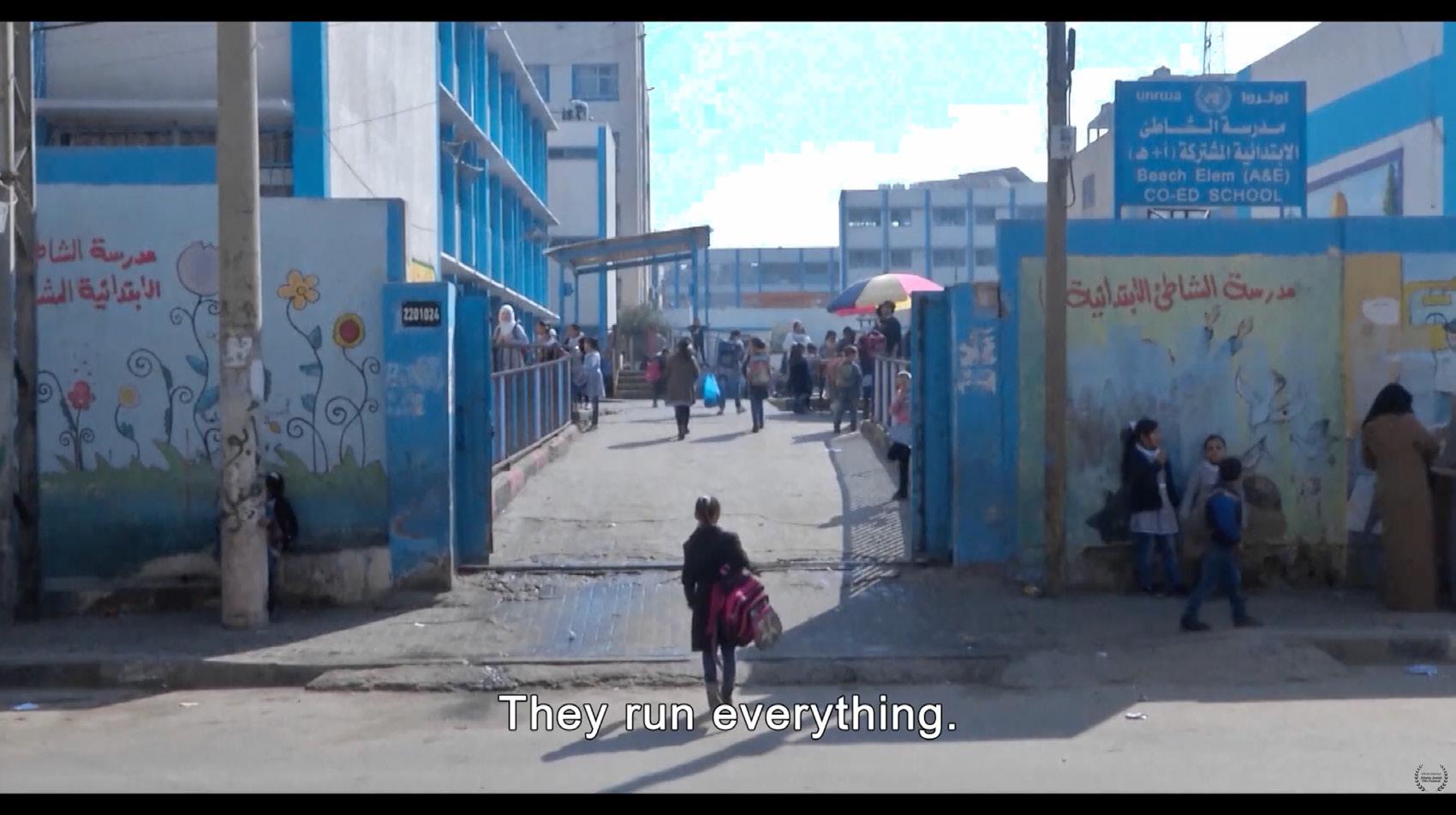
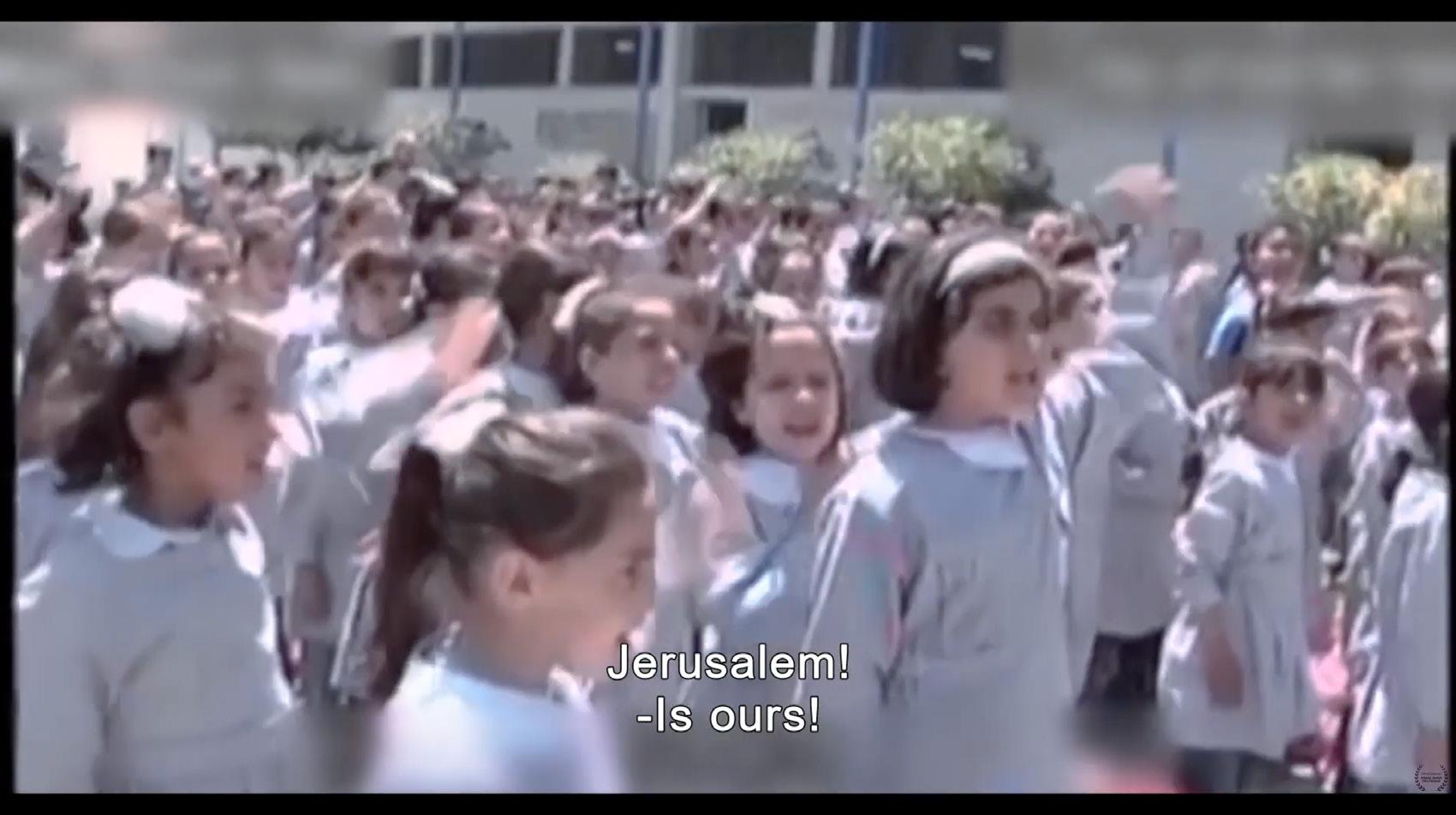
Unraveling UNRWA demonstrates that if the international community continues to refuse to address that failure, then a future of Israeli-Palestinian peace will remain a pipe dream, to the detriment of everyone – not least the Palestinians who UNRWA is ostensibly supposed to be helping.
Stream Unraveling UNRWA for A$15.14 at https://www.unrwafilm.online/ or https://vimeo. com/ondemand/unravelingunrwa
Students at UNRWA schools are not taught to accept the existence of Israel (Screenshots)
ESSAY
EDUCATING AGAINST ANTISEMITISM
How to turn off the tap of extremism
DAVE RICH
Dr DAVE RICH is one of the UK’s leading authorities on antisemitism. He has worked for almost 30 years for the Community Security Trust, a Jewish charity that protects the UK Jewish community and advises the police, the Crown Prosecution Service, football clubs, the Labour Party and many other organisations on how to tackle antisemitism. He appears regularly in the media to discuss antisemitism, and is the author of Everyday Hate: How antisemitism is built into our world and how you can change it (Biteback Publishing, July 2025).
The following is based on the keynote address given in Sydney on March 17, 2026 at the “Dialogue with UNESCO on the National Approach to Combating Antisemitism in Australian Schools”, a conference for educators organised by Australia’s Special Envoy to Combat Antisemitism and hosted by the NSW Department of Education.
Ilast visited Sydney in November 2023, at a time when the Jewish community here, like the community in the UK, and others around the world, were reeling from the shock of October 7. And now we are reeling once again, from the horror on Bondi Beach on the first day of Chanukah, and the attack on a synagogue in Manchester, the city where I was born and grew up, on Yom Kippur. Many people, in the Jewish community and beyond, draw a connection between those events. Not a direct line perhaps, but in the idea that there is an unavoidable link between the hatreds unleashed on 7 October 2023, and the murderous terrorism that landed on our communities, in Australia and in Great Britain, at the end of 2025.
A SHIFT IN THE ATMOSPHERE
In many ways, October 7 is the day that things changed for Jewish communities around the world. There was a shift in the atmosphere for Jews, a darkening of the skies. Anti-Jewish hatreds that had been largely marginal in our societies became open and proudly declared, by people unashamed of their prejudice. Hate crimes against Jews soared around the world. And there was a sense, a foreboding, that this explosion of antisemitism – seemingly unprecedented yet chillingly familiar – would lead to an atrocity like that suffered on the first day of Chanukah here in Syd-
ney, and on Yom Kippur in Manchester. When I was last here, in November 2023, I addressed the Kristallnacht commemoration that year, and I said at the time that “it feels like we are entering a new phase.” Well, here we are.
Jewish festivals are supposed to be days of happiness, occasions to enjoy and to embrace. Whether they are festive and celebratory, like Chanukah, or days of contemplation and solemn prayer, like Yom Kippur – they share a sense of community, of coming together, a day for Jewish people to connect with each other, not just locally, but globally too. Jews around the world celebrate Chanukah in just the same way, lighting menorahs and eating donuts, wherever we are – but now, these festivals are becoming days of mourning. October 7, Manchester, Bondi, the Halle synagogue attack in Germany: all terror attacks on Jews that took place on Jewish festivals. It’s a reminder that antisemitism is not limited to the taking of Jewish lives. It is an attempt to stop the Jewish way of life, to inhibit Jewish identity and destroy Jewish dignity.
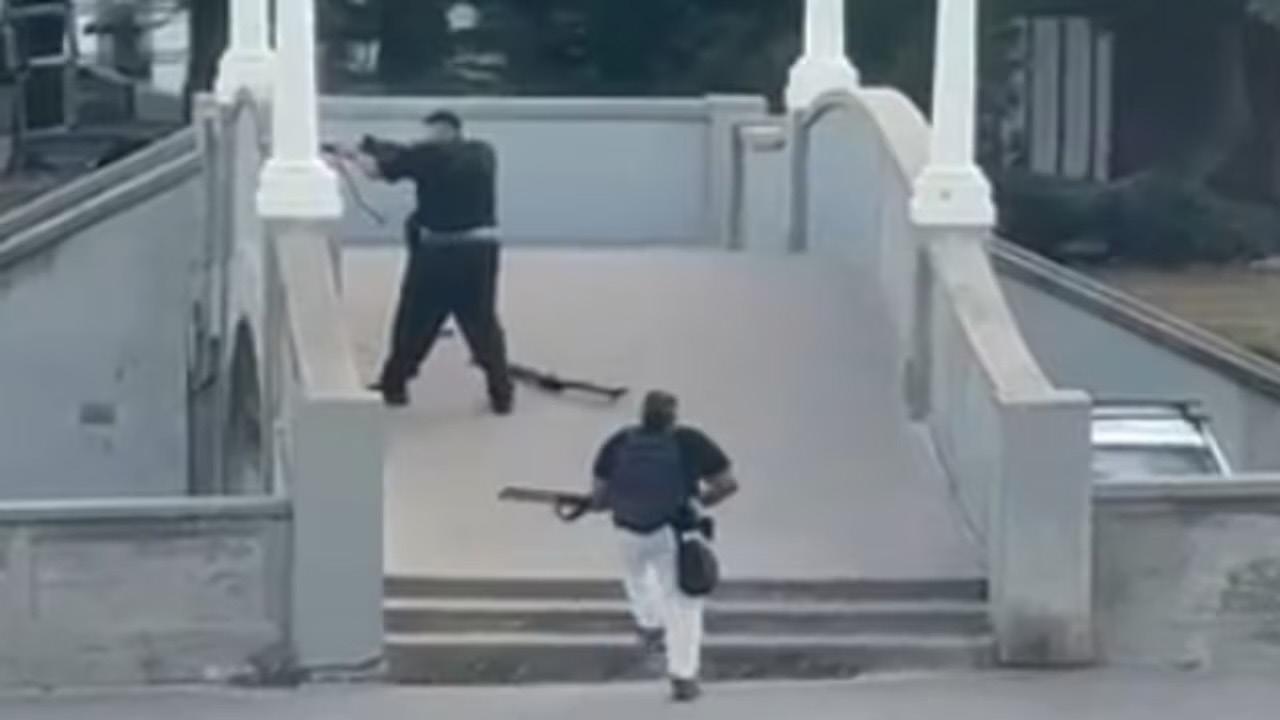
The Bondi terrorists: An attack on Jews, but also an attack on all of us (Image: X/ screenshot)
I’m talking a lot about the Jewish community and the Jewish way of life. But of course, most of the people murdered at Bondi were Australians. Those killed in Manchester were British. These are not only attacks on Jews, but on all of us, Jewish or not, and on our societies as a whole. If Bondi Beach is not safe, then our entire way of life is in question. If Jews cannot pray safely in synagogue – then the fundamental basis of our shared society is in doubt. If hatred and extremism become the norm, then we are all in danger. Public safety, equality for all, the rule of law – these are the pillars of liberal democracy. If we cannot all count on that, then society is failing.
We are not alone in this, whether in Australia or in Britain. Nor is it new, no matter how immediate it feels. Jews have been murdered in recent years in Washington DC and Boulder, Colorado; in Pittsburgh and Halle, Germany; and before that, in Paris, Copenhagen, Toulouse, Brussels, Istanbul, Mumbai, Buenos Aires – and many other places too. This is where antisemitism leads. We know it, but still, it never loses the capacity to shock us when it happens in our own homes, in the places we are so familiar with, the places where we have walked and prayed and lived ourselves.
Since October 7, 2023, there have been over 150 terrorist attacks, foiled plots, and acts of extreme violence targeting Jews and Israelis in over 40 countries around the world – not including in Israel itself. Synagogues have been burnt on five different continents since that date. The world is a small place when it comes to antisemitism: no corner of the Earth is immune. This is a global movement, and a global problem.
It’s been a difficult lesson for many people to absorb. In the UK, back in the early 2000s, we watched as terrorism and antisemitic murders took Jewish lives in France, just across the English Channel, and thought "What if it happens here?" – meaning in the UK. And I know, from talking to my Australian Jewish friends, that for a long time it was assumed that Australia was a haven from the kind of hatreds that washed over European and American Jewish communities. Meanwhile, Jews in the United States thought they were permanently shielded from the antisemitism their families had left behind.
No longer.
QUESTIONING OUR FUTURE
Every Jewish community, everywhere in the world, is questioning its future right now. The question of whether our home will still be safe for our children when they grow up, is staggeringly common around Jewish family dinner tables. But when murderous antisemitism can take Jewish lives in Manchester and in Bondi within weeks of each other, in the name of the same extremist ideology, then there is no escaping this danger by moving from one country to another. This hatred can reach all of us, wherever we are, and we need to work together to find an answer. We cannot face this problem alone, but nor can we leave it to others. We all have to take responsibility for dealing with it within our own countries, while cooperating with each other to find what works.
The immediate answer is to build higher walls and fences, to install ever-more intrusive security measures, to make it as difficult as possible for terrorists to reach our children. When people visit Jewish schools, they are often shocked at the amount of security – even as we Jews are so used to it that we barely notice. But this is no kind of answer, really. Not in the long term. We need to find a way to turn off the tap of extremism, to reduce the hateful ideas and harmful stereotypes that fuel this terrorism and hate crime in the first place. That’s the only longterm answer, and it must have education at its heart.
We also have to face up to some difficult truths about where this comes from. As I said, the wave of antisemitism shaking Jews around the world began on October 7, when Hamas attacked Israel and killed 1,200 people, mostly civilians, and took over 250 hostages. The war in Gaza since then has been devastating, and has kept the fires of anti-Jewish incitement
Tightened security at Jewish institutions is essential, but walls, cameras and guards are no kind of genuine answer to the explosion of antisemtism (Image: Shutterstock)
burning fiercely. Most of the antisemitism we have seen since then has either been stirred up in response to that conflict or is expressed in a way that uses the language of anti-Israel hatred to target Jews.
Now we are dealing with the latest wave, with the latest war in Iran and the wider Middle East. Earlier this month, four Iranians were arrested in the UK for allegedly spying on the Jewish community in London on behalf of Iranian intelligence. Why would Iranian intelligence want to spy on my community? The answer lies in the long record of Iranian terrorism, attacking Jews and Israelis around the world, including arson attacks targeting the Jewish community here in Australia. The pressure on Jewish communities ever since October 7 has felt relentless, and there’s no sign of it stopping. So we need to take action ourselves.
Tackling this violent rhetoric, not allowing it to become normalised – that has to be our first challenge. Anti-Jewish terrorism does not occur in a vacuum. It is not like a natural disaster, terrible and sad but impossible to predict or explain. Rather, it is the most violent expression of a much wider body of prejudice and bigotry, of myths and libels about Jews, of dehumanising stereotypes and wild conspiracy theories that create an atmosphere in which attacks like this happen.
“THE FOOTHILLS OF TERRORISM”
We have a saying at the organisation I work for in the UK, the Community Security Trust, that came from one of our mentors in the 1990s – a truly great man named John Grieve. He was a senior police officer in London’s Metropolitan Police who pioneered new ways to tackle hate crimes and build community confidence, after the Metropolitan Police had hit rock bottom in their policing of black communities. And he had a saying: “Hate crimes are the foothills of terrorism.” Find ways to address hate crimes and you go some of the way to preventing terrorist attacks. The antisemitism that is shouted in the street or paraded on a protest placard, or posted on social media, often goes unchallenged: too trivial and commonplace to justify the effort involved in tackling it. But if you ignore it, then you allow a mindset of hatred and dehumanisation to build that provides the foundation for more violent, harmful acts. And it starts young.
The evidence is all there, if you look for it. The annual reports from the Executive Council of Australian Jewry lay it out in stark terms, with the number of incidents going up and up –more than three times as many antisemitic incidents last year as there were in 2023, just two years before. And a lot of this involves young people. There was the group of Jewish school students at an aquatic centre here in Sydney, told “F*** the Jews”, “We hate the Jews,” and “We hate Israel” by students from a different school. The Jewish primary school students who were on a school trip in Melbourne, called “dirty Jews” by students from a local secondary college, along with chants of “Free Palestine” and “Free Hezbollah”. Or the Jewish Year 9 student, told by a classmate to “F*** off and die in a gas chamber” at a state high school in Brisbane.
WATCH: "Antizionism...doesn't care who's in power. It doesn't seek to change Israel. It seeks to erase it,” says AIJAC's Justin Amler
Sure – nobody was hurt in these particular incidents. A lot of the time, it’s just words. But if you let them pass, let this become normal, then what comes next? What do these children think and do as they grow older, if there is no intervention now?
Racism happens to people of many backgrounds. All forms of prejudice and bigotry, sadly, remain all too common today. But nothing is quite like this, where a conflict thousands of miles away can trigger a wave of racist hatred on our streets and in our schools, that ranges from playground insults to murderous terrorism, and that happens all over the world in such synchronised fashion. This isn’t normal. This wave of hatred within our own societies doesn’t happen for any other foreign conflict, however awful, however many innocent people are killed or displaced, their homes damaged or destroyed. The war in Ukraine did not unleash a wave of violent terrorism and hate crime against Russians around the world. There have not been any arson attacks on Russian Orthodox churches here in Australia – but synagogues and other Jewish buildings have been burnt, as we know.
It is a simple, observable fact that the way that some people react to war involving Israel, on our streets, online, and, yes, in our schools, is fundamentally different to the way people respond to any other country, no matter what those other countries do. Not just worse, more accentuated or extreme – but fundamentally different. And it happens too often for us to treat each incident as isolated, the product of a disturbed individual or a random anomaly. Terrorism and hate crimes don’t drop out of a clear blue sky. Antisemitic violence and harassment, like all racism, is the product of a much broader way of thinking, a set of ideas and attitudes that creates a permissive environment in which hatred can take root and spread.
SOUNDING THE ALARM
This is why, after October 7, the Jewish community here in Australia, just like my community in the UK and others around the world, sounded the alarm about the hate speech we were hearing and seeing, and pleaded for action to be taken. Violent language, full of venom for Jews, Israelis, or “Zionists”, leads to violent action, if nothing is done. What passes for acceptable discourse on protests and online quickly transfers into all those minor racist interactions that never make the news but spread through community networks like wildfire. Jewish people sounded that alarm, not because we wanted to supress free speech or stop people from criticising Israel – far from it. But because we know where such inflammatory language leads.
The terrorists tell us this themselves. According to a police report after the Bondi massacre, Naveed and Sajid Akram, the perpetrators of that terrible attack, attempted to justify the mass slaughter of Jews on a beach in Sydney by condemning “the acts of ‘Zionists’.”
Mohamed Sabry Soliman, who used a makeshift flamethrower and Molotov cocktails to attack a hostage vigil in Boulder, Colorado, in June last year, killing 82-year-old Karen Diamond and injuring 11 others, said he did it because he wanted to “end Zionists” who, he said, were killing children. The previous month, Elias Rodriguez shot dead Sarah Milgrim and Yaron Lischinsky, two Israeli Embassy staffers leaving an American Jewish Committee event at the Jewish Museum at Washington DC, and then shouted, “Free Palestine” and, “There is only one solution, Intifada Revolution,” after the shooting.
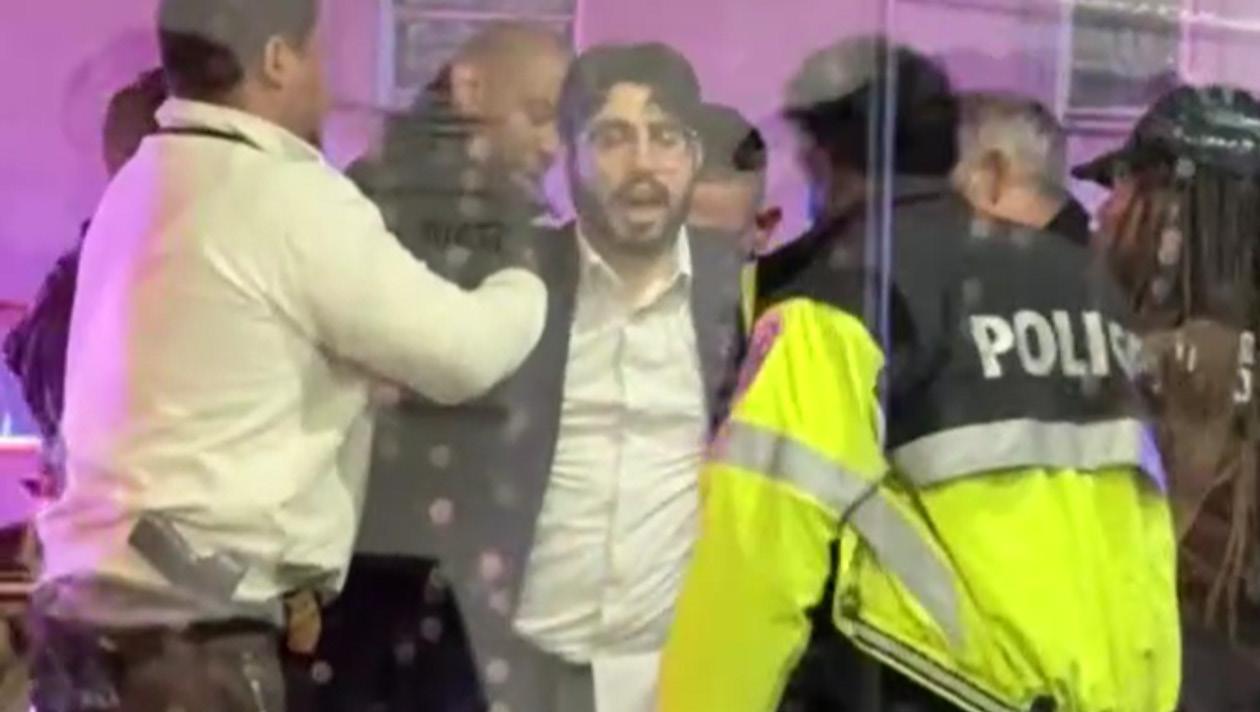
And when Jihad al-Shamie was trying to batter down the doors of Heaton Park Synagogue in Manchester, having already killed Melvin Cravitz and injured others, he was heard to shout: “This is what you get for killing our children.”
Four terror attacks, three different continents, all targeting Jews and, significantly, all using similar language to justify their actions. It’s so striking. Protesting against Israel is legitimate, and many people would say it is necessary. But the most extreme end of antiIsrael activism – not all of it, perhaps not even most of it, but definitely part of it – now includes murdering Jews because they are Jewish. I know this may be hard to hear. It certainly complicates things. If we only had to worry about antisemitism by neo-Nazis, if the people attacking and harassing Jews always wore swastikas rather than keffiyehs, I think a lot of people would find it much easier to recognise and to talk about. But this is
Elias Rodriguez shouted "Free Palestine" after shooting two Israeli Embassy staffers in Washington DC (Image: X/ screenshot)
the reality of the lethal danger that Jewish communities face today. And the language that these anti-Jewish terrorists use is the same language that is used by peaceful, democratic protestors.
WHAT CAN WE DO?
Like I said, it’s complicated. But we have to act. So what can we do?
The first point, I think, is to recognise hateful language when we hear it. I’m not talking about people campaigning for peace and for Palestinian rights. There is an obvious difference between calling on a government to change its policies and its military actions, and endorsing death and violence. Last June, a relatively unknown band called ‘Bob Vylan’ went on stage at the Glastonbury Festival in Somerset, deep in the English countryside, and invented a new chant: “Death, death to the IDF.”
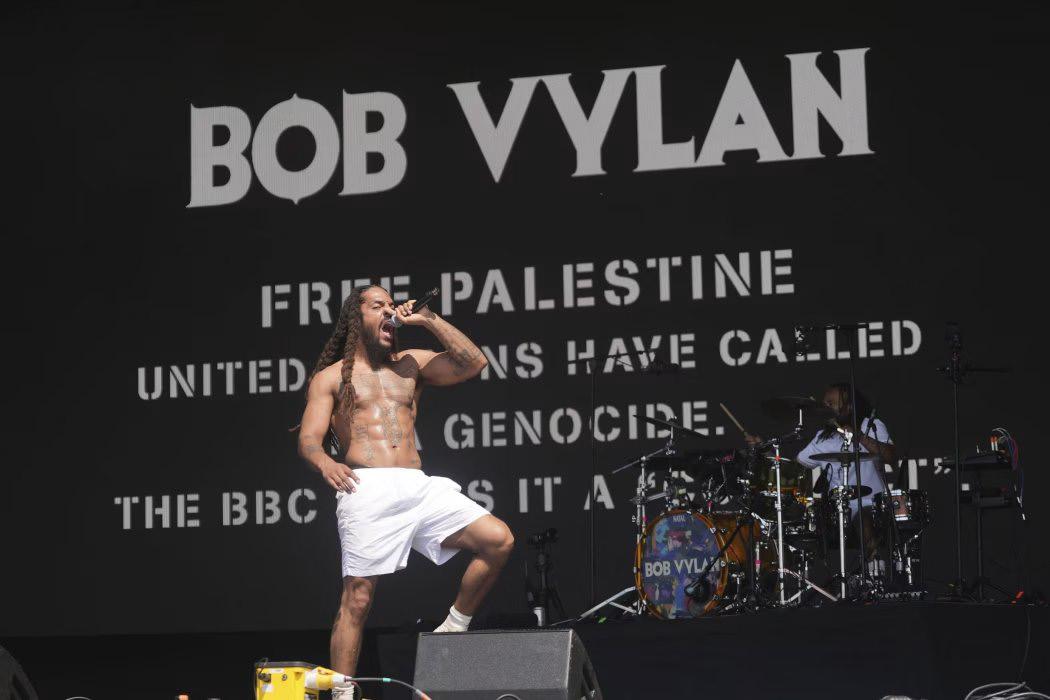
A week later, a mob stormed an Israeli-owned restaurant in Melbourne, chanting exactly the same slogan.
There is a conceptual link, and an emotional one, between calling for Israel, the Jewish state, to be killed off, and thinking it is acceptable to kill Jews in Australia in pursuit of that goal. Once death and violence are firmly embedded as part of the rhetoric, nobody should be surprised when they become reality.
This point was made in an important speech after the attack on the Heaton Park Synagogue in Manchester, by Jonathan Hall KC, a senior lawyer who is the UK’s Independent Reviewer of Terrorism Legislation and Independent Reviewer of State Threats Legislation. In this speech, delivered just a few weeks ago, he addressed the dangers of failing to act against violent rhetoric, saying: “If the law fails to intervene when protestors openly call for death, if strong and regular and violent hatred becomes the norm, then violence, terrorist violence, even genocidal violence (as in Rwanda and Myanmar) is a plausible consequence. Hatred is distinct from terrorism,” he said, “but it raises the risk. It invites a state of psychological extremism in which conspiracies make sense and violence seems the only solution.”
He was talking about the need for police intervention and prosecutions. But policing can only tackle the symptom: it can’t address the wider reasons why antisemitism happens in the first place. That’s where we come in. Hatred, prejudice, conspiracy theories, dehumanising language – it isn’t too hard to find all of that amongst younger age groups. Schools are
Bob Vylan at the Glastonbury Festival, June 2025 (Image: X)
settings where young people are forming their ideas about the world, and about the people they share their world with. They are at an age when they are increasingly exposed to a much wider range of influences and information – much of it false or misleading – than used to be the case in the days before smartphones and social media.
“When people come to hate Jews, or even try to kill them, they aren’t just influenced by the latest social media reel they’ve seen on their phones. They are following in a long tradition of antisemitism that has built over generations”
Extremists have long been early adopters of every new technology, using it to spread their propaganda and lure in new recruits to their cause before anyone catches up with what they are doing. And in recent years, social media has been not just an arena for the encouragement of antisemitism, but a key engine in propelling it forwards. Algorithms that reward engagement, combined with a psychological understanding that outrage keeps people scrolling and posting more than agreement or ambivalence, has generated an online environment in which antisemitism is rewarded and encouraged, branching across networks quicker than any fact-checker or moderator can keep up with.
EDUCATED TO HATE
This is also a form of education: but in this case it is antisemites doing the educating, using a stock of anti-Jewish ideas and motifs built up over centuries and deployed by some of our best-known and most-loved cultural creators.
This is not an exaggeration, by the way. Some of the greatest works of English literature include startling expressions of antisemitism, and are still loved and celebrated by millions. Geoffrey Chaucer’s Canterbury Tales, generally seen as the foundational work of English literature, contains a straightforward blood libel tale – that old medieval myth that Jews habitually murdered Christian children at Easter. The most famous Jewish figure in all English literature is Shylock – the cruel, bloodthirsty, merciless Jewish moneylender at the heart of Shakespeare’s Merchant of Venice. And today, some of the most popular podcasters around – Tucker Carlson, Candace Owens, Joe Rogan, and others – either spread anti-Jewish libels themselves, or give space to guests who do the same. I’m not suggesting that they are on a par with Shakespeare. But you don’t need to search out the wildest fringes of our society to find the most potent and dangerous anti-Jewish myths. It’s all there, in plain sight, and has been for centuries. Social media is just the latest vehicle for these ideas: old wine in digital bottles.
When people come to hate Jews, or even try to kill them, they aren’t just influenced by the latest social media reel they’ve seen on their phones. They are following in a long tradition of
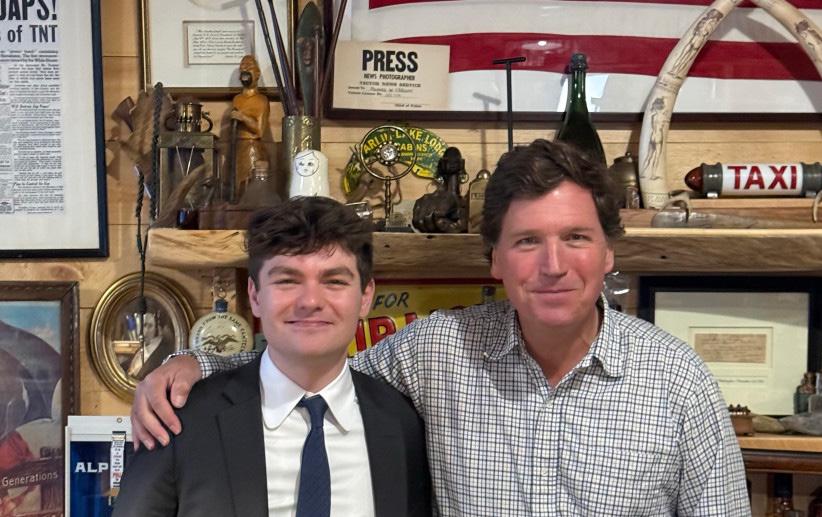

antisemitism that has built over generations, with the same set of antiJewish ideas and bigoted beliefs replicating and adapting to fit each social and political moment. This isn’t always violent – in fact, most antisemitism isn’t violent at all – but there are common themes that run through all types of antisemitism, whether they seek to spill Jewish blood or merely to cause Jewish fear and shame. It is the idea that, as the slogan of Nazi propaganda put it, “The Jews are our misfortune.” That Jews cannot be trusted; they are always up to something, conspiring and plotting behind the scenes. That they are cruel and bloodthirsty, the enemy of morality, seeking only chaos and harm, standing between humanity and a more peaceful, just world.
This body of ideas is taught. I can’t stress that enough. Extremists are using the most modern technology and compelling content to teach people to hate Jews and to want to kill them, or not to care if they are killed by others. Sometimes, the message is to kill “Zionists”, or not to care when they are killed – and nobody bothers too much about how to define “Zionists”. The danger is not in the exact words but in the emotional language. It’s in the sentiments that are being taught. A constant diet of calls for death, killing, ending, eradicating; it numbs people to the reality of what this looks like, until it happens, red and raw and right in front of us, and then it’s too late.
Australia’s ban on social media use for under-16s is hopefully a positive step forward in this respect, and we’ll have to wait to see what impact it has. But we cannot only be reactive. We have to be proactive in what we teach, and in trying to shape not just knowledge but also values. Because if we are to properly understand what we face, we need to recognise that antisemitism goes deeper than hatred.
ANTISEMITISM AS A SET OF IDEAS
It isn’t – or isn’t only – blind fury. It’s a compelling and simplifying set of ideas, a way of viewing the world that always frames the Jews as an enemy. That’s the belief that drives all
Tucker Carlson – pictured with white nationalist Nick Fuentes – and Candace Owens, two highly popular podcasters who are spreading anti-Jewish libels, and helping create a growing online ecosystem of antisemitic hate (Images: X; YouTube screenshot)
antisemitism. It’s the belief that justifies shooting ordinary people dead on a beach in Sydney, stabbing them to death at a synagogue in Manchester, or burning them in a park in Colorado: and also justifies shouting “baby killers” at random Jewish people in the street, or daubing it on a synagogue wall.
The emotional side of this is very important. Antisemitism is one of the most successful ideas in history, able to take root in all different societies, no matter the social, political, economic or religious context, and repeatedly able to persuade people that it remains relevant to their lives. It appeals to wealthy and successful people as well as to life’s losers.
It’s also politically useful sometimes, because it has such deep roots. When Russia sent people to daub antisemitic graffiti onto Jewish homes in France after October 7, it wasn’t because Putin is personally antisemitic: it was because Russian intelligence has long understood that antisemitism has the power to inflame emotions and divide Western societies. This all means that tackling antisemitism is not only a challenge of communicating facts. It is about understanding and addressing the emotional appeal of antisemitism; about countering the stories that antisemites and demagogues tell with positive stories of our own to embed and reinforce the positive values that we want to shape our societies.
If it was simply a matter of education, on its own, then there wouldn’t be so much antisemitism in universities. What we teach, how the message is framed, and who the messengers are, are all part of the package. And we need to be more compelling and persuasive than the extremists who are teaching our young people the negative values of division and the suspicion of difference.
This is the challenge that you all face. I know how shocked everyone in Australia was on December 14 last year, as news spread about the horrors on Bondi Beach. It seemed to be, not just an unimaginable crime against the Jewish community, but an affront to the Australian way of life. I must tell you, it struck hard in the UK too. Pretty much everyone who has ever visited Sydney has been to Bondi Beach, and Bondi Beach represents everything that hateful extremism is not. It stands as a symbol of exactly what we are fighting for.
So it is absolutely appropriate that this conference is happening now, and I am grateful to be a part of it. As I understand it, this educational program will be bespoke for Australia but will also be an example for other countries in the world. I hope that the United Kingdom learns from your example in the way we roll out our own education on this subject, because education, done in an effective, sustained and smart way, must be at the heart of our response.
In the short term, we will build bigger walls and fences to protect our Jewish communities, but ultimately, that is no sort of life. We need to find ways to reduce the flow of antisemitism, and to ensure that our values of dignity and respect win out in the struggle against those of division and hatred. This is why taking on this work is not just a necessary responsibility, but also a momentous opportunity. I thank you for joining this fight, and wish you success in all your efforts, because all Australians, Jewish or not, will benefit from it.
With Compliments
PASAT PROPERTIES

2-6 Clevedon Street, Botany NSW 2019 PO Box 283, Botany NSW 1455 Investment Group (Aust) Pty Ltd
Specialising in retail and shopping centre investments, syndication and management.
29 Claremont Street, South Yarra, VIC 3141 P 03 249 0000 E mail@lascorp.com lascorp.com
ASIA WATCH
MICHAEL SHANNON
UNEXPLAINED VACATION
Revelations in the days after the Bondi terror attack that father and son Sajid and Naveed Akram spent four weeks in the southern Philippines in the lead up to the massacre highlighted the continuing relevance of the region as a hub for violent Islamist groups.
Initial investigations by Philippines police indicate that the two men rarely ventured from their hotel in Davao City and did so only for short periods and therefore could not have received military training from Islamist groups in the region.
While the reasons for the visit remain opaque for now, consider the following: two homemade Islamic State flags were found in the attackers’ car in Bondi; they spent time in an area that has been a hotbed of Islamist violent extremism since the 1980s and a staging post for Islamic State-aligned groups for more than a decade; and the trip concluded little more than two weeks before the appallingly single-minded attack.
No doubt, the circumstances surrounding the visit will emerge during the interrogation and trial of the surviving attacker, Naveed Akram, but security analysts frequently describe time spent overseas in the company of committed and experienced militants as the “X-factor” that can transform naïve ambition into a competently executed attack.
The Philippine military reported late last year that the number of active IS-linked militants across Mindanao has plummeted from over 1,200 in past decades to around 50 as of late 2025. There has been no record of foreign terrorist activities in recent years, Gen. Romeo Brawner said in the days after the Bondi attack. “That’s why we cannot see
the credibility of reports that the gunmen… underwent training here,” he said.
Indeed, the landscape of violent Islamist extremism in the southern Philippines has transformed dramatically in the years following the dramatic Marawi siege of 2017. The military attributes the drastic decline to relentless security operations, peacebuilding efforts and collaborative community programmes. According to Armed Forces of the Philippines (AFP) spokesperson Maj. Gen. Ramon Lagasan, quoted in the Daily Tribune, “The dismantling of leadership structures has significantly weakened the command and control capabilities of extremist factions. What remains are isolated, defensive bands – not coordinated terror cells capable of significant operations.”
Yet the threat, while diminished, is not extinguished. Major organisations once capable of holding ground and executing high-profile attacks have been significantly degraded, but concerns persist that fragments of radical networks remain active, exploiting weak governance, geographic isolation and enduring grievances in the Bangsamoro Autonomous Region in Muslim Mindanao (BARMM) and adjacent provinces.
Dr Rommel Banlaoi, a Manila-based security analyst, told Agence France Presse that many Islamist insurgent groups were “on the run” but sounded a note of caution: “There are still many active training camps in (central) Mindanao. Those did not disappear,” adding that even weakened insurgent movements maintained connections “locally and globally online.”
Security analysts also caution that the capacity of decentralised factions to regenerate cannot be discounted. A security brief by Kenneth Yeo at the International Centre for Political Violence and Terrorism Research in Singapore notes that “several factions remain operative” and that the region’s ge-
ography and historic insurgent networks provide enduring opportunities for clandestine mobilisation.
Over decades, groups such as the Abu Sayyaf Group (ASG) and the Bangsamoro Islamic Freedom Fighters (BIFF) posed severe threats to both regional security and global counter-terrorism efforts. Founded as splinters of broader Moro struggle, these factions pledged allegiance to the Islamic State in the mid-2010s, adopting more militant tactics including bombings, kidnappings and ambushes.
As recently as September 2025, however, ten suspected Abu Sayyaf supporters surrendered in Sulu province, handing over firearms and pledging to reintegrate into society via government reintegration programs. “The attrition of these fighters reflects the effectiveness of combined military and social strategies,” Col. Eduardo Torre, senior
adviser to the national task force on local armed conflict, told the Philippines Star. “These surrenders are encouraging, but they do not mark the end of extremist sentiment.”
Factions of BIFF remain operational in isolated corners of Maguindanao del Sur and surrounding areas, albeit in heavily diminished numbers. In 2025, the group reportedly had around 30 fighters, compared with hundreds in previous years. Leaders from these factions have been killed, surrendered or scattered, yet they maintain their interpretation of jihad and continue to resist government presence.
Although the last large-scale suicide bombing occurred years ago, sporadic encounters and isolated incidents continue to occur. Military officials confirmed the death of Mohammad Usman Solaiman, a suspected bomb expert linked with a
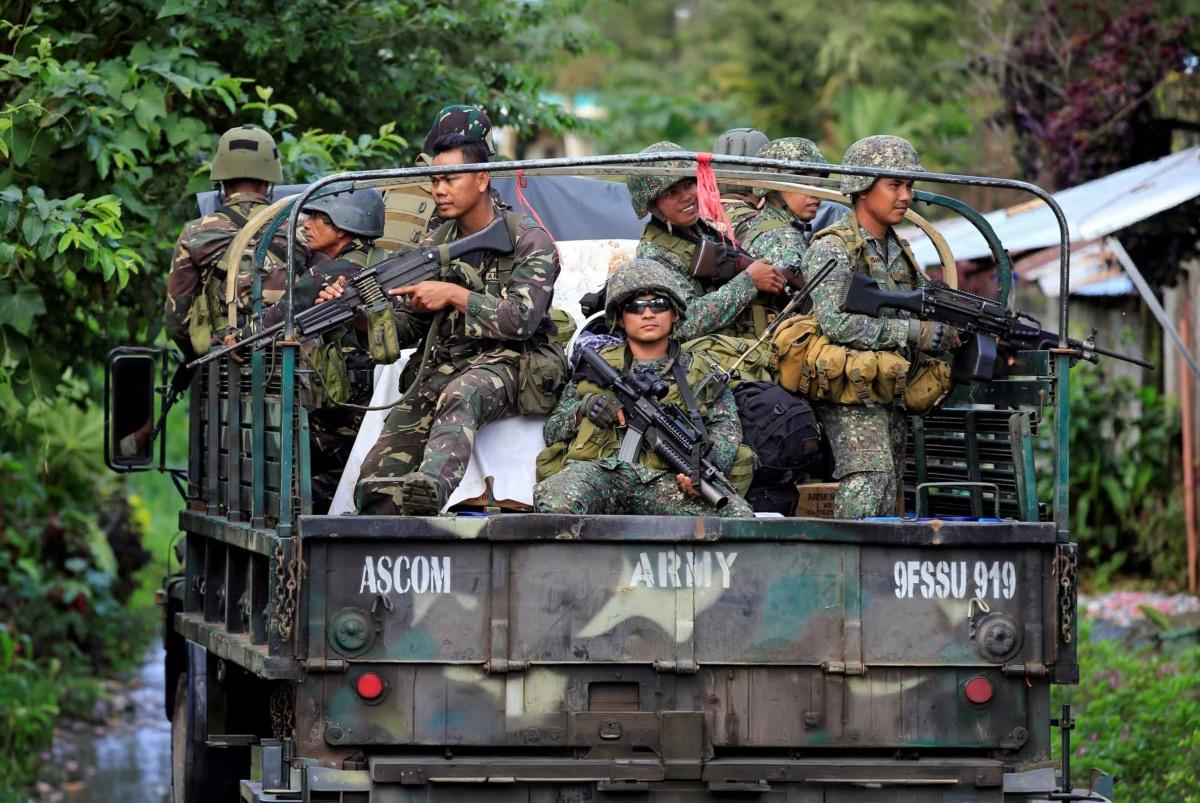
The Philippines military has made significant gains against jihadist groups, yet isolated pockets remain (Image: Armed Forces of the Philippines)
Dawlah Islamiyah faction, during an encounter in December 2025, underscoring that remnants of insurgent networks still choose violence. “His group was implicated in several attacks,” an AFP official told the Daily Tribune.
Security analysts suggest the focus should not be solely on formal training camps – which have largely been dismantled – but on informal networks and ideological propagation. “Local conditions can serve as incubators for radical thought even if organised cells are weak,” said Dr Hassan Malik, a counter-terrorism adviser and former consultant to the AFP. “The absence of terror camps does not equate to the absence of extremist ideologies.”
Government officials emphasise a dual strategy – combining counter-terrorism operations with socio-economic initiatives aimed at alleviating the conditions that fuel radicalisation. The BARMM government has spearheaded reintegration programs for former militants, offering vocational training, education scholarships and health services.
Even so, the drivers of radicalisation remain: socio-economic marginalisation, clan-based feuds, and lingering resentments tied to historical grievances. These conditions still create fertile soil for extremist recruitment.
AFP’s Maj. Gen. Lagasan remains cautiously optimistic: “We have degraded these networks, but we remain vigilant. Our work transitions from battlefield engagement to community resilience.”
ALEX BENJAMIN EUROPA EUROPA
TORQUEMADA’S HEIRS
Last summer I visited the achingly beautiful Spanish city of Toledo. In the main square I marvelled at the beautiful architecture and saw a palace with a series of balconies that reminded me of the balustrade that the popes use to address the crowds at the Vatican. I asked the guide why there were so many. She replied that the multiple balconies were built expressly for the great and good of the city to observe the auto-da-fe (act of faith) executions in comfort, without the smoke, noise and smell of being amongst the rabble. The most horrific of these public executions happened in late February 1501, some 9 years after the 1492 expulsion of Jews from Spain – 38 baptised “New Christian” men accused of secretly practising Judaism, and 67 Jewish women from the area, were executed.
Forty-two years later, in Germany, Martin Luther wrote On the Jews and their lies, where he stated:
“When you lay your eyes on or think of a Jew, you must say to yourself: Alas, that mouth which I there behold has cursed, execrated and maligned every Saturday my dear Lord Jesus Christ, who has redeemed me with his precious blood; in addition, it prayed and pleaded before God that I, my wife and children might be stabbed to death and perish miserably.”
I bring this up, because in the modern Western mind it’s hard to fathom the hatred that led to the construction of the equivalent of stadium business boxes to watch public burnings of Jews and Conversos. It feels as distant from us as gladiatorial combat, bear baiting and the ducking stool.
Yet, across Manila and international capitals alike, analysts warn that the Philippines’ battle against violent Islamist extremism is far from over. Even with diminished manpower and fractured leadership, the ideological undercurrent persists –a shadow that is nigh on impossible to eradicate entirely. The Bondi attack is evidence enough that just two radicalised individuals can wreak a devastating toll.
But search the message boards or social media platforms frequented by the Spanish Left, using the
word Zionist, and you will find that Luther’s hatred is alive and well there: Cancerous, Satanic, the most evil people to have walked the Earth, look at their eyes: they are murderous demons.
In Spain, it seems that the ghost of Grand Inquisitor Torquemada is stalking the corridors of power, with a new victim in his sights: the Zionist, and more specifically, the entirety of the State of Israel.
Torquemada has found a successor in Pedro Sanchez, Spain’s Socialist Prime Minister, who since October 7 has banned the sale of arms to Israel, repeatedly pushed for the cancellation of the EU-Israel association agreement, unilaterally recognised a Palestinian state, was the first European leader to openly call Israel a genocidal state and has now permanently withdrawn his country's Ambassador to Israel. Oh, almost forgot, he also suggested using nuclear weapons on Israel.
It’s not just him. Second Deputy Prime Minister
Yolanda Díaz proudly announced, with the Spanish flag fluttering behind her for good measure, that “From the river to the sea, Palestine will be free.” Spanish Minister of Youth Sira Rego openly celebrated the Palestinian “resistance” mere hours after the October 7 mass terror attack.
The Spanish Government’s hatred even trickled down to the state broadcaster, which threatened to not only abstain from taking part in the Eurovision song contest, but also to refuse to broadcast it, if Israel was not banned from participating.
And yet Spanish society as a whole is largely supportive of its Jewish communities and much less anti-Zionist than the Government. This is evidenced by the high numbers of Israeli tourists visiting, flourishing Jewish community growth in Spain, and by the entirely unscientific fact that the Spanish public awarded 12 points to Israel last year in the Eurovision song contest.
Spanish Prime Minister Pedro Sanchez (Image: Shutterstock)
Given this disconnect between public and government, why is the Spanish Government so obsessed with Israel?
Let’s take a look first at the wafer-thin coalition that keeps PM Sanchez in power. The Third Sanchez Government consists of the Socialist Party and the harder left Sumar Platform. The Government relies on external support from various parties, including the Catalan separatist parties, Basque parties, the Galician Nationalist Bloc and the Canarian Coalition.
extinction rebellion flags beside queer flags beside Samidoun flags beside Black Lives Matter flags beside communist flags, at pro-Palestinian protests across Europe.
What makes Spain unique is that these same voices are today in government.
And this is what makes the Spanish Prime Minister so dangerous. He uses hatred of “Zionists” and the Jewish State as red meat to feed the worst impulses of his coalition, as a means of controlling a narrative, and as a means to stay in power.
“The ruling Spanish Left’s attitude to Israel starts and stops with the insistence that it must cease to exist. Anyone who engages with Israel or ‘Zionists’ is lambasted as a traitor”
The general consensus, even in large sections of the Spanish media, and certainly amongst the commentariat, is that Sanchez is obsessively pursuing the Zionist/Israel issue as a matter of political expediency.
Sure, as a Socialist, Sanchez’s anti-Zionism fits a pan-European socialist narrative of ideological opposition to Israel and sympathy with the Palestinian cause. Yet his apparent obsession with Israel also unites his harder-left coalition partners and keeps them all together. Above all, it exists to distract attention from the serious problems within his party, his family and the massive corruption issues Spain is facing. In short, his daily elevator pitch to his coalition partners is simple: we may not agree on much, but we can all agree that Israel and Zionism unite us, so let’s just keep talking about that.
This in itself is not unusual amongst the Left. Disparate radical groups have found common cause, or to use the trendy parlance, points of intersectionality, on the issue of Zionism. You will see
The ruling Spanish Left’s attitude to Israel starts and stops with the insistence that it must cease to exist. Anyone who engages with Israel or “Zionists” is lambasted as a traitor. It’s a horrible glue for sure, but it seems to work for Sanchez.
But the Government is not the Spanish people, just as any current coalition government anywhere does not represent the entire spectrum of society. Thankfully, many parts of Spain are governed at municipal level by parties that are not part of the Government. For instance, Isabel Díaz Ayuso, President of the Madrid municipality, is very supportive of Israel and the Jewish communities in and around the Spanish capital.
Eventually, this Spanish Government will run out of road. This may be cold comfort right now in the face of a Spanish left-wing ruling coalition that sustains its existence around a Lutheranesque hatred of Zionism. However, right now, Spanish and European Jews, the vast majority of whom are Zionists, will take any comfort we can get.
WASHINGTON HEIGHTS
DANIELLE PLETKA
HOW TO UNDERSTAND DONALD TRUMP’S FOREIGN POLICY
The question of what makes US President Donald Trump tick is an object of shared fascination the world over. Indeed, there is little agreement in Washington DC about the President’s guiding principles, his “vision”, or the nature or existence of a “Trump doctrine”. In truth, however, it’s not that complicated. Sui generis, for certain, but not that complicated. Here’s a primer.
The first Trump Administration, 2017–2021, was, in many ways, more conventional than his second. The President hired established Washington figures like former CENTCOM (the US military’s MidEast region command) Commander James Mattis to be Secretary of Defense; former Exxon-Mobil CEO Rex Tillerson to be Secretary of State; former South Carolina Governor Nikki Haley to be Ambassador to the United Nations; and (after a quick flameout by the erratic Gen. Michael Flynn), General H.R. McMaster, the hero of Fallujah, to be National Security Advisor.
While Trump’s relationship with these officials was decidedly different from his predecessors’ –few of whom tweeted their views of their cabinet –the group was well within the bounds of American political convention.
Trump’s cautious adherence to convention in his first term reflected his own political novice status, and the relative newness of his M[ake] A[merica] G[reat] A[gain] movement. Among the Washington chattering classes, many believed that MAGA was a flash in the pan, and that traditional Republicans would again assert themselves once Trump began floundering. How wrong that was.
Looking back at Trump’s first term, the foreign policy highlights included, in no specific order, an
innovative approach to the Middle East that resulted in the Abraham Accords; a deep scepticism of international institutions like the United Nations and NATO; a hostility towards agreements – like the Iran nuclear deal (JCPOA) and the North American Free Trade Agreement (NAFTA) – inked by Trump’s predecessors; and suspicion of the People’s Republic of China on both the national security and trade fronts. Underlying it all was a healthy contempt for the salon society of America’s capital and a heretofore unseen willingness to ignore almost entirely the counsel of Washington’s self-labelled “best minds”, and act on instinct.
As Trump settled into his new role, he found increasingly that he did not like many of those he was advised to hire for his cabinet. Firings – including over Twitter, poor Rex Tillerson – became a regular event. Nonetheless, the first Trump term looked more like other presidencies than not.
Thus, Trump’s efforts at renegotiating the JCPOA were reasonably conventional, though they ended, as so much does, with Trump throwing up his hands at his negotiators and tearing up the agreement.
Ditto the underpinnings of a fresh approach to the Middle East, which included the traditional obsession with bringing the Palestinians along for a two-state solution. Ultimately, when the Palestinians proved incapable or unwilling to play ball with the new team, Trump dumped them unceremoniously and moved on.
Now consider Syria and Iran: Many had hoped that Trump would be more robust in the face of the Assad murder machine that had taken hundreds of thousands of lives. Whereas Barack Obama had labelled the abandonment of Syria as a bold rejection of Washington’s “conventional wisdom”, Trump was reportedly horrified about the Syrian Government’s mass murder and bombed it twice. In addition, he
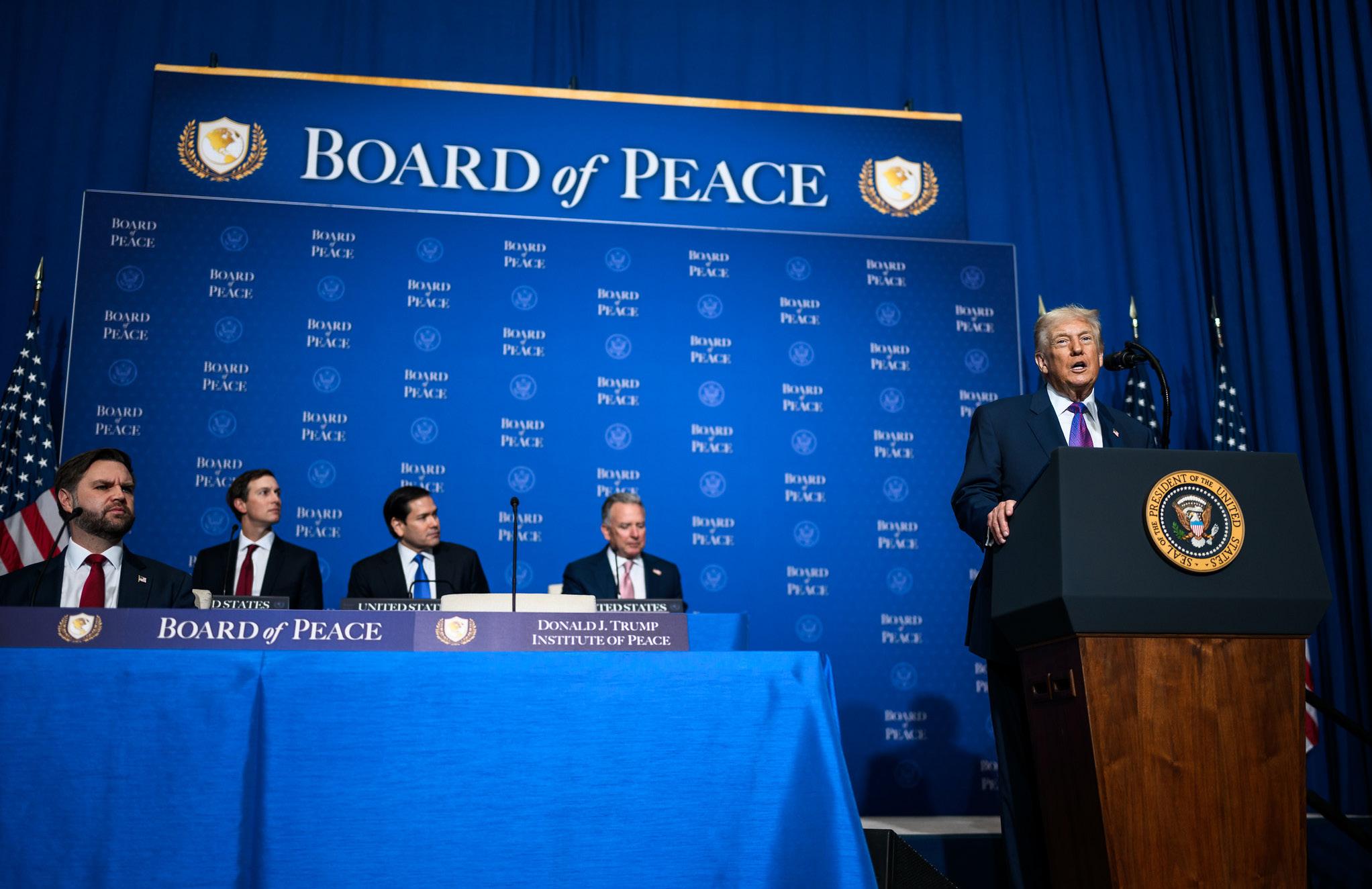
gave standing authorisation to the US troops stationed there to support Syrian Democratic Forces to take military action to defend US (and therefore SDF) positions. Over February 7–8, 2018, US forces killed several hundred pro-Assad forces, including at least 200 Wagner Group fighters serving the Russian military.
The Qassem Soleimani assassination is even more instructive: An Iranian-backed Iraqi terrorist group, Kata’ib Hezbollah (KH), attacked an airbase in northern Iraq, killing an American contractor, and wounding several US and Iraqi troops. The US retaliated with air strikes on five KH camps in Syria and Iraq, killing roughly two dozen terrorists. Following the funeral, Iranians and Iranian-backed Iraqis attacked the US embassy in Baghdad. Four days later, presented with a range of options, Trump decided to eliminate the infamous Quds Force commander, Qassem Soleimani.
Analysts have become distracted by the intervening events of Jan. 6, 2021 and Trump’s own obsession with election fraud. As a result, they have ignored his growing confidence in his own judgement and the evolution of something that could be called a Trump Doctrine and a Trump “court” (in the royal, not legal sense).
In his second term, the President did not name any traditional types to high office, excepting perhaps Rep. Mike Waltz to the United Nations and former Senator Marco Rubio to the dual role of National Security Advisor and Secretary of State. Certainly, Iraq war veteran and ex-Fox News host Pete Hegseth is not a traditional choice for Secretary of Defense (now ‘War’). Nor was ex-Democratic congresswoman and avid Assad-lover Tulsi Gabbard for Director of National Intelligence.
However, for the most part, Trump pays little attention to his advisers outside the White House. On
Not so mysterious: Donald Trump and his newly created Board of Peace (Image: Whitehouse.gov/ Flickr)
Gaza, Ukraine and Iran, Trump has relied on his close personal friend Steve Witkoff, now supplemented by Trump’s son-in-law Jared Kushner. All of these figures are advisers; Donald Trump is the decider. And the way he calculates American priorities and action looks a lot like some of the first term decisions. On Iran, the question ultimately was whether the regime would agree to curbs on its missile and nuclear programs. It would not, and was clearly just trying to string Trump along. He lost patience, and bang.
Similarly on Venezuela, the White House engaged in several months of outreach, seeking to change Venezuelan behaviour on everything from drug trafficking to support for terrorism and close ties with Iran. No dice, and the President lost patience; now Maduro is in a New York prison awaiting trial.
Why, allies ask, is Trump not better on Ukraine? Why doesn’t he follow through on Gaza? Again, these questions are eminently answerable. Trump wants a deal to end the Russian war on Ukraine, but has turned personally on Volodymr Zelensky because of last year’s confrontation in the Oval Office. In the President’s view, he was partnering with Ukraine in a way that would set Kyiv on a path to economic security and solid ties with Washington. And Zelensky upended that calculus completely.
On Gaza, again, we see the President using his own negotiating skill to help cement an end to the war, and then a loss of interest in the details of implementation. This is characteristic.
MIRIAM BELL AIR NEW ZEALAND
THE AFTERMATH OF BONDI IN NZ
News of the horrific antisemitic terror attack at a Chanukah celebration at Bondi Beach in Sydney on December 14 left the New Zealand Jewish community reeling and deeply sorrowful, but not surprised.
By contrast, the broader community in New Zealand did seem to find the fatal attack at Bondi a major shock. That is despite repeated warnings from Jewish communities around the world, including New Zealand’s local community, about the sharp rise in antisemitism since October 7.
As has been the case elsewhere, those warnings largely fell on deaf ears. Instead, antisemitism was dismissed, denied, normalised and even justified by too many.
Yet, following the Bondi attack, there was an outpouring of support and sympathy for the Jewish community from community leaders, politicians and the general public.
The New Zealand Jewish Council said at the time, “It reassures Jewish New Zealanders that we are not alone, and that our safety and belonging are taken seriously.”
The Jewish Council also commended the “clear and ongoing commitment from the Government and security and law enforcement agencies to protect communities here at home.”
Prime Minister Christopher Luxon met with Jewish community leaders privately the day after the attack, and then attended a vigil in Auckland, along with Deputy Prime Minister David Seymour, and Minister for Ethnic Communities and Police Mark Mitchell.
For those still desperately searching for a traditional White House or a conventional president, they will not find one in the Trump Administration. But Donald Trump is neither incomprehensible nor mysterious. He is abundantly clear about his priorities, his timelines, and his likes and dislikes. It’s not that complicated.
Luxon said the Government stood in solidarity with people of the Jewish faith in Australia, New Zealand and all around the world.
“Terrorism and hate have no place in our societies: violence of any kind is unacceptable whether it is targeted at people of Jewish or any other faith. We all need to call out intolerance where we see it.”
The police were working with Jewish communities, and there would be additional police presence at sites of significant Jewish worship around the country, he said.
Later in the week, more than 30 MPs from across the political spectrum attended a Chanukah candle lighting outside Parliament in Wellington. There was also a Parliamentary session featuring speeches from each political party leader addressing the Bondi attack.
All the speakers condemned antisemitism, along with violence and hate, but there was a divergence in approach, as Radio New Zealand noted.
“In a left-right divide, all three left-leaning party leaders from Labour, Green and Te Pāti Māori specifically mentioned the 15 March mosque attacks [in Canterbury in 2019], but no-one from the governing coalition parties did.” There was also divergence in the messages of the four smaller parties.
Green Party co-leader Chlöe Swarbrick and Te Pāti Māori co-leader Debbie Ngarewa-Packer spoke about wider human rights and injustice, while ACT Party leader David Seymour “broadened into a paean to libertarian values” and New Zealand First leader Winston Peters stuck to a focus on antisemitism.
Both Seymour and Peters also discussed the antisemitism and intolerance which the New Zealand Jewish community had experienced since October 7.
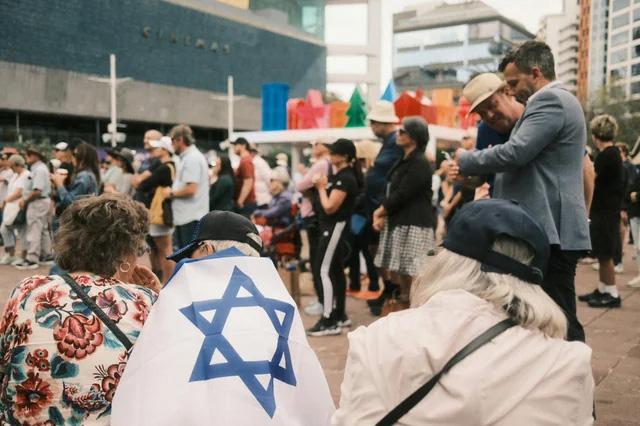
A vigil for the Bondi victims in Auckland (Image: Reddit/ r/newzealand)
Peters referenced rhetoric from “some politicians” which had encouraged antisemitism, and had “raised the temperature and caused division.” “That was wrong before and it is wrong now,” he said. Seymour made some similar points.
Swarbrick and Ngarewa-Packer, along with some other MPs, have been aggressively pro-Palestinian – regularly accusing Israel of genocide, apartheid and colonialism, and calling for sanctions and the expulsion of the Israeli Ambassador.
Last year Swarbrick, who regularly sports a keffiyeh, was suspended from Parliament after a series of heated exchanges during a debate over recognising Palestinian statehood. In 2023, the Jewish community raised concerns about her use of the slogan “From the river to the sea” at a rally.
Following the Parliamentary session, Greg Bouwer of the Israel Institute of New Zealand wrote a piece critical of Swarbrick’s speech.
She had diluted Jewish particularity, the reason those attacked at Bondi were targeted, into universalised suffering, he said. “The massacre of Jews celebrating a distinctly Jewish festival is reframed as a moment to reflect on human rights and interfaith solidarity more broadly.”
Her response highlighted a recurring problem, he said. “Jewish identity is often acknowledged only to be dissolved. Jewish suffering is valid only if repurposed for universal lessons.”
The weekend after the Bondi attacks saw well-attended rallies around the country. At the Auckland March Against Antisemitism, speakers, Jewish and non-Jewish alike, once again issued warnings about the rise in antisemitism. There was also criticism of academics, politicians, union leaders, the media, and the Government for their inaction in response.
The Auckland event’s non-Jewish organiser, Lucy Rogers, told the rally that Bondi did not hap-
pen in a vacuum. “It is not antisemitic to criticise Israeli policies, but much of the reaction of certain sections of the population to Israel over the past two years is deeply problematic.”
Rogers pointed to a string of examples of that intellectual dishonesty, including one from the Palestinian Solidarity Network Aotearoa in the days after the Bondi attack.
On the group’s Facebook page, someone shared an article titled “Bondi attack the bitter fruit of genocide in Gaza.” The person who shared it said, “It is the scale of Israel’s own crimes in Gaza over the past two years, and the complicity of the Australian government, that breeds terrorism.”
That was victim blaming, but it was apparently considered OK when it came to Jews, Rogers said.
Other examples of post-Bondi victim-blaming Rogers referred to could be seen in letters to local media, in comments on articles and on social media.
Jewish Council President Juliet Moses explored this in an opinion piece on Stuff, noting it took less than 24 hours after the Bondi massacre for “the now-familiar discourse to emerge that Jews were responsible for their own murders, erasing the agency of the perpetrators.”
“In New Zealand it has been advanced by scholars and other academics, politicians, commentators and prominent members of civil society who, after clearing their throats to condemn the attack, either explicitly or implicitly claim that the Jews brought it on themselves.”
Moses said she had phoned a friend in Sydney to check on him after the attack, and he had said, “I think Australia is lost to its Jews.” New Zealand was not lost to its Jews, she wrote – but “it requires self-reflection, education and change to ensure it stays that way.”
ALLON LEE MEDIA MATTERS
TRIAL BY MEDIA
Few allegations are freighted with more moral, legal, political, public and diplomatic consequences than a charge of genocide. The term describes the gravest crime recognised in international law – the deliberate attempt to destroy a people.
Little wonder then that anti-Israel activists working at the UN and other NGOs have been eager to brand the Jewish state with this modern mark of Cain. Even before Israel responded militarily to Hamas’ October 7 massacre, the accusation that it was carrying out genocide in Gaza was being bandied about more freely than rice at a wedding.
Israeli President Isaac Herzog’s recent visit to Australia is a case study of the media’s role in the dissemination of the genocide calumny.
At the invitation of Prime Minister Anthony Albanese and Governor-General Sam Mostyn AC, Herzog travelled to Australia to comfort and grieve with the Australian Jewish community following the terror attack by two Islamists that left 15 people dead at a Chanukah gathering on Bondi Beach on December 14 last year.
In this instance, Australian human rights lawyer
Chris Sidoti was front and centre of a media campaign to smear Herzog in the week before he arrived on Feb. 9.
Sidoti was not merely critical of the trip. He insisted it be cancelled on the basis that Herzog, in a media conference five days after October 7, had supposedly incited Israelis to carry out genocide against Palestinians in Gaza. (AIJAC’s comprehensive dissection of the baseless allegation against Herzog is here.)
To most people, genocide means the deliberate attempt to annihilate a people. Yet Israel’s conduct during the war shows the exact opposite of an intention to carry out genocide. The IDF dropped millions of leaflets and made millions of calls warning Gazans of impending military operations, established designated safe zones, permitted large quantities of humanitarian aid to enter Gaza and implemented humanitarian pauses. These actions fly in the face of any claim that the Israeli military entered Gaza with the intention of annihilating the Palestinian population there.
Yet journalists rarely raised such considerations or provided even the most basic alternate perspective in the overwhelming majority of Sidoti’s media appearances.
ACTS OF COMMISSION
Since 2021, Sidoti has served on the United Nations Human Rights Council’s “Independent International Commission of Inquiry on the Occupied Palestinian Territory, including East Jerusalem, and Israel.”
Last September, this Commission released a tendentious report that claimed it had “found” Israeli officials, including Herzog, were responsible for genocide in Gaza.
Chris Sidoti (Image: ABC News screenshot)
It’s important to understand that the Commission’s report broke no new ground and simply recycled the claims of NGOs with long records of seeking to delegitimise Israel and its defensive war against Hamas –which has promised to repeat October 7 “again and again” until the Jewish state’s elimination.
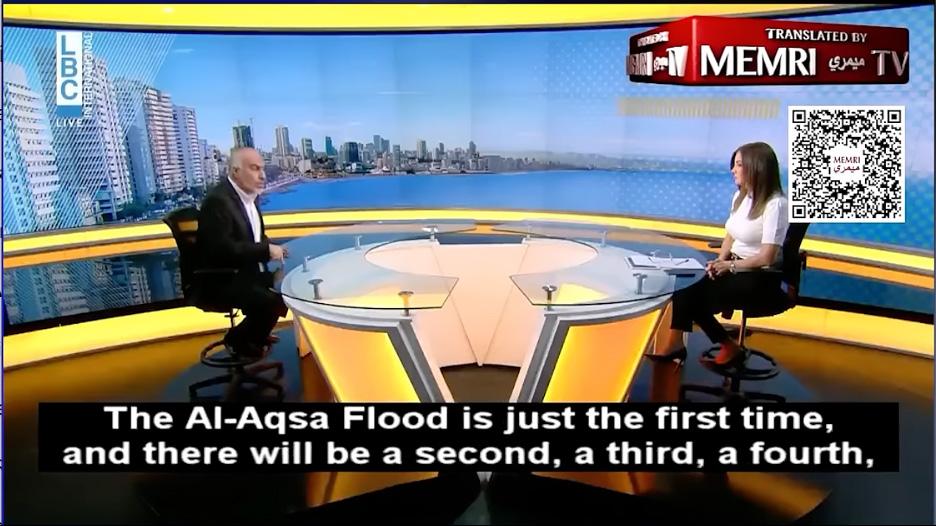
The Commission itself has been controversial since its creation. Unlike all other UN investigative bodies, which are established to examine specific incidents or defined periods of conflict, this Commission was given a mandate with no fixed end date and was tasked with investigating not only alleged violations of international law, but also the “root causes” of the IsraeliPalestinian conflict. The original Commissioners, including Sidoti, have long records of extreme antiIsrael commentary. (A factsheet by NGO Monitor on the founding members of the Commission can be read here).
On Feb. 4, a media release appeared in Australia under a headline quoting Sidoti directly: “Israel’s President Herzog should be arrested on arrival for the crime of incitement to genocide.”
The release noted Sidoti was available for interviews. The result was predictable.
Trading on the halo effect surrounding the United Nations, Sidoti became the media’s man of the moment – appearing mostly without serious scrutiny or pushback.
SIDOTI’S PAST MEDIA FAILS
Spruiking the Commission’s report in the Australian media in September/October 2025, Sidoti’s commentary had been marked by what one could generously call “schoolboy errors”.
Writing in the Age and Sydney Morning Herald
On Oct. 24, 2023, Hamas’ Ghazi Hamad promised October 7 would not be a one-off (Image: MEMRI/ Screenshot)
on Sept. 18, Sidoti asserted that the International Court of Justice had put states “on notice that there was an existing plausible risk of genocide in Gaza.”
As AIJAC has pointed out repeatedly, this claim is just wrong.
Nowhere in the ICJ’s January 2024 interim finding, did it state that “there was an existing plausible risk of genocide in Gaza” or anything close to this.
Indeed, no less an authority than the ICJ’s own President at the time, Joan Donoghue, explained very directly on the BBC in April 2024 that the Court did not find there was a plausible genocide in Gaza.
As Judge Donoghue said:
“You know, I’m glad I have a chance to address that because the court’s test for deciding whether to impose measures uses the idea of plausibility, but the test is the plausibility of the rights that are asserted by the applicant, in
Former ICJ President Joan Donoghue (Image: Screenshot)
this case South Africa. So, the court decided that the Palestinians had a plausible right to be protected from genocide and that South Africa had the right to present that claim in the court… it didn’t decide that the claim of genocide was plausible… the shorthand that often appears, which is that there’s a plausible case of genocide, isn’t what the court decided.”
Yet, Judge Donoghue’s intervention barely made a ripple – UN officials (like Sidoti) and media professionals have repeatedly claimed the opposite.
Sidoti was also deceptive in his February 2026 interviews by repeatedly implying that the question of Israeli culpability for genocide had already been decided by courts of law, rather than just his commission, which has no legal authority. On Feb. 9, Sidoti told Channel 7 that Israel is a “state that has been found by courts already, by the Commission of Inquiry, the UN Commission of which I’m a member, and by many others, as having been responsible for war crimes, crimes against humanity and genocide.”
No journalists asked Sidoti about the evidentiary standards underlying the Commission’s conclusions.
CAUGHT OUT BY THE FACTS
Another area where Sidoti was sloppy related to the International Criminal Court (ICC).
In November 2024, the Court issued arrest warrants against Israeli Prime Minister Binyamin Netanyahu and former Defence Minister Yoav Gallant for war crimes and crimes against humanity.
The charge sheet did not include genocide and no charges have ever been sought against Herzog. More than a year later, there is no indication whatsoever that Herzog is even being investigated.
On ABC TV “News” (Feb. 5), host Joe O’Brien challenged Sidoti, pointing out that the ICC had issued arrest warrants for Netanyahu and Gallant but not for Herzog. Sidoti ignored the question.
O’Brien also pointed out that “in that same media conference [Herzog] also said Israel always operates according to international law and that there are many innocent Palestinians.”
“In interviews where Sidoti himself appeared, the media failed to do the basic legwork required to examine his claims, even as his flimsy allegations of incitement to genocide received near saturation coverage”
Yet, with a few exceptions, the media reports featuring Sidoti smearing Herzog failed to probe the accusation itself or include opposing views.
Most failed to note that the Commission of Inquiry is not a judicial body, that its findings do not constitute legal verdicts or reflect any criminal law standards.
O’Brien played footage of Herzog from the media conference angrily denying he was calling for collective punishment of all civilians in Gaza and then asked Sidoti “why did you conclude in your investigation that he was?”
Sidoti responded:
It was only when he was challenged about
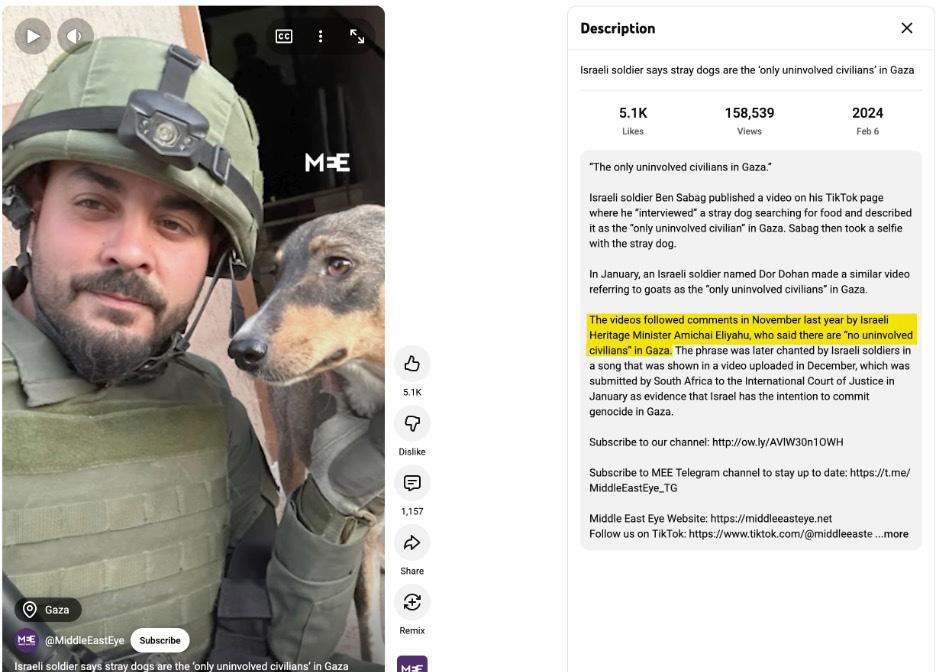
that that he started to qualify it or back away from it. But his meaning was clear.
The entire nation, were the words he used, is responsible, meaning clearly all Palestinians in Gaza were responsible for the actions of Hamas. Those words were so clear that they were picked up by Israeli soldiers in the field. We have seen videos of soldiers chanting, they are all responsible.
We have seen that phrase used as graffiti by soldiers on Palestinian buildings in Gaza. So, his meaning was clear to the soldiers, as it was to us, as it was to the journalist who asked the question.
Sidoti was referring to the supposed ‘evidence’ in the Commission of Inquiry’s report relating to Herzog – which is flimsy to the point of absurdity.
The evidence that his words incited Israeli soldiers is found in two footnotes with links to three social media reports.
One of the videos is to a short from the YouTube account of Middle East Eye – a pro-Palestinian news service – which features a social media reel of a stray dog in Gaza and an Israel soldier saying the dog is the “only uninvolved civilian” there.
The description with the video offers context for the phrase and attributes it to a far-right Israeli MK. Herzog is not mentioned.
Contrary to Sidoti’s claim that there was graffiti repeating the “no uninvolved civilians” claim on “Palestinian buildings in Gaza,” the footnote in the Commission of Inquiry report takes you to a 2024 Amnesty International report which actually shows an Israeli military watchtower in the West Bank.
An example of Sidoti's so-called "evidence" against Herzog (Image: YouTubeScreenshot)
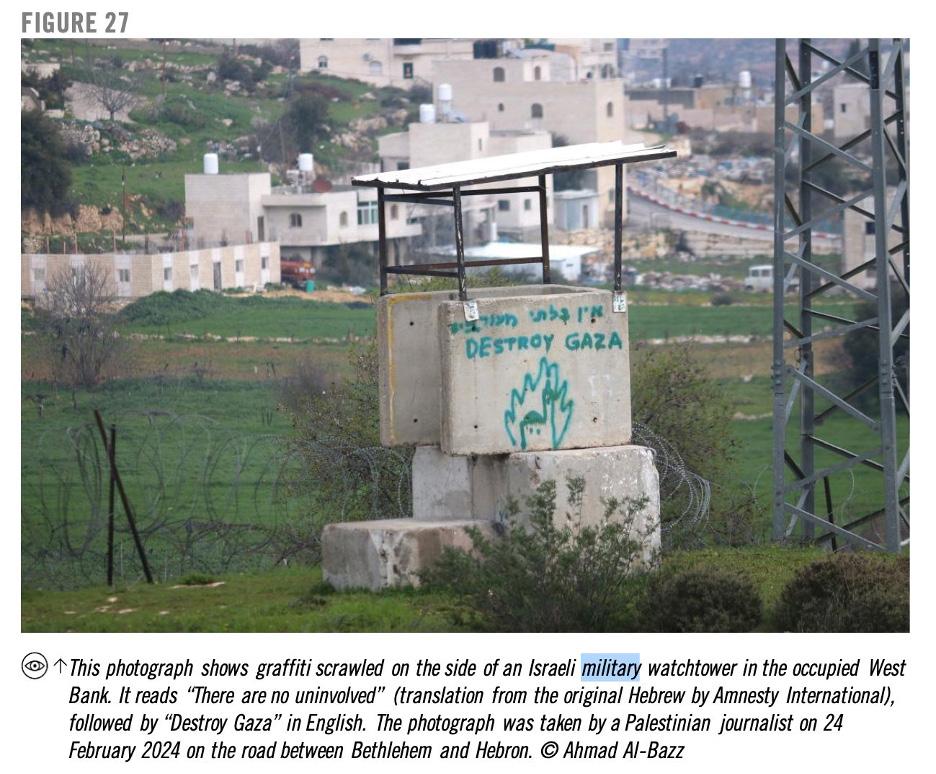
The Amnesty report is significant because it unintentionally debunks the claim Herzog’s comments can be linked to the “evidence” cited by the Commission. Ridiculously, it accuses Herzog of inciting genocide even though it concedes:
Amnesty International recognizes that the general assertion that there are no ‘uninvolved’ or ‘innocent civilians’ predates this current conflict. It is therefore unable to conclude with certainty whether Israeli soldiers echoed statements by President Herzog and other senior officials or merely repeated a widely held belief.
In fact, a footnote to this paragraph provides evidence that the phrase was used by IDF soldiers dur-
ing the 2014 war Hamas fought with Israel.
Another absurdity in the Commission of Inquiry’s September 2025 report which accuses Herzog of inciting genocide is this section:
While the direct and public incitement to commit genocide is a crime in itself, whether anyone acts on it or not, the Commission nevertheless refers to the actions of the Israeli security forces personnel on the ground in Gaza who could be seen celebrating their conduct in demolishing Palestinian properties.
Again, most people would not accept “demolishing Palestinian properties” as evidence of genocide.
Image from an Amnesty report that was misrepresented by Sidoti
SIDOTI’S PROCEDURAL PLOY
Central to Sidoti’s campaign was a demand that the Australian Federal Police arrest Herzog upon arrival.
Yet Sidoti must have known such an outcome was extremely unlikely given heads of state enjoy diplomatic immunity – particularly if they have not been charged with a crime by any court!
But that didn’t prevent Sidoti repeatedly suggesting, as he did in his Guardian Australia op-ed (Feb. 5) that:
There is now strong legal argument that this immunity does not apply in relation to atrocity crimes, namely war crimes, crimes against humanity and genocide. Australia should not apply immunity in relation to these crimes.
One of the few media reports that bothered exploring the immunity issue was from acting ABC Middle East correspondent Nick Dole (Feb. 6).
Buried in Dole’s report was a quote from Australian National University professor of international law Donald Rothwell stating his belief that a prosecution would ultimately fail, noting that “an incitement charge probably wouldn’t meet [the] threshold” to override Herzog’s immunity.
SHORT, BUT NOT SWEET
Aside from those two ABC items, most media coverage, especially short news reports, were characterised by serious factual errors and omissions.
SBS TV “World News” (Feb. 5) reporter Rayane Tamer incorrectly claimed the ICJ “found in 2024 it’s plausible Israel is committing genocide in Gaza.”
Nine’s national affairs editor Andrew Probyn (Feb. 5) said Herzog had “infamously signed an Israeli missile to be deployed during the Gaza war that’s killed up to 70,000 Palestinians.” In fact it was
an artillery shell used by the IDF to create a smokescreen – not a “missile”.
On the ABC podcast “News Daily” (Feb. 10), Global Affairs Editor Laura Tingle’s attempt to address the issue of Herzog’s alleged incitement to genocide was unprofessional. Instead of playing the full exchange from the October 2023 press conference, in which Herzog clearly said Israel should obey international law and no one should ever target civilians, the program broadcast only a short excerpt that reinforced the accusations.
On Feb. 11, ABC Radio’s AM program host Sara Tomevska told listeners the ICJ had found it “plausible” Israel’s actions could violate the genocide convention – despite an ABC Ombudsman ruling in July 2024 confirming that such an interpretation was factually incorrect.
Media commentary questioning Sidoti’s allegations did appear in outlets such as Sky News Australia and News Corp papers, and ABC presenter Joe O’Brien also interviewed AIJAC’s Colin Rubenstein.
But in interviews where Sidoti himself appeared, the media failed to do the basic legwork required to examine his claims, even as his flimsy allegations of incitement to genocide received near saturation coverage.
Among the most basic questions journalists should have asked Sidoti:
• If the International Criminal Court is already investigating Israeli officials, why not leave the matter to that court?
• If the ICC did not seek an arrest warrant for Herzog, why should Australia arrest him?
It is ironic that Sidoti demanded the cancellation of President Herzog’s immunity as a head of state, because, during the media storm surrounding Herzog’s visit, it was Sidoti himself who appeared to enjoy near-total immunity from serious media cross-examination.

www.gillmanandassociates.com.au




KEEPING FAITH
RABBI RALPH GENENDE
FRESH EYES?
The great French Jewish novelist Marcel Proust once said, “The real voyage of discovery consists not in seeking new landscapes, but in having new eyes.”
For many, if not all, of those engaged in interfaith work, the horrific attack on the Jewish community at Bondi Beach on December 14 was a painful and rude awakening – a moment of reckoning. It set off a painful voyage of discovery into an old landscape, one that demands fresh eyes.
After October 7, there was confusion and hesitancy in many interfaith interactions. Many well-meaning faith leaders (especially in the mainstream churches) found it hard to disentangle their sympathies for the suffering of citizens in Gaza and their compassion for the suffering of Israeli citizens and Jewish people across the world.
There was a failure to recognise that the anti-Zionism of the professional protesters was so very often a camouflage for antisemitism. There was also an undercurrent, even amongst supposed friends, that we Jews were paranoid – or even worse, exploitative, using our suffering to gain public sympathy and support. They didn’t seem to appreciate our feelings of abandonment, our deep fears or the existential trauma of our people. It feels different now. If something has emerged from the blood-stained beach at Bondi, it is hopefully a sea change amongst the Australian people. The prodigious outpouring of grief and support after Bondi from ordinary Australians suggests this.
And there’s a different spirit amongst some of our interfaith interlocutors. The critical question is how deep and wide is this spirit and will it endure as the months pass? This new mood of openness is manifest, for example, in the comments of Robyn Whitaker, Director of the Wesley Centre, affiliated with the Uniting Church.
She notes that Christianity has “ongoing work to come to terms with our own history of antisemitism… that continues to exist in churches… we desperately need education and conversation including an examination of the misinformation and conspiracy theories about Jews that fuel extremism.”
Her thoughts have been echoed by leaders in the Catholic and Anglican churches. One Catholic academic is brutally honest:
Of course, I think you know that the situation between Jews and Christians is only marginally better than it was after October 7th. I want to acknowledge the Jewish pain [and our pain] that it has taken Bondi for Christians to be more outspoken in their solidarity with Jews, even if there were some bold voices in the intervening years. Why does it take a Bondi tragedy to finally make us wake up?... It’s also complicated by a growing Christian evangelical voice, echoing trends in the US, which makes mainstream churches in Australia nervous. As long as there is that complication, I think mainstream churches will always be seen to be slow in responding…
From the Jewish side, Rabbi Aharon Lavi of the Ohr Torah Interfaith Centre says superficiality has characterised much of interfaith work over the years. He suggests that the main question we need to ask ourselves as Jewish leaders is with whom do we work and who do we condemn and marginalise? “For too long”, he suggests, “the Jewish establishment has been fooled by fake interfaith dialogue… we need to be able to choose and cultivate the right partners.”
Rabbi Nagen from Ohr Torah differentiates between “inter-fake” and real interfaith relations. This also certainly reflects my experience with faith leaders – some, including some rabbis, choose the photo opportunity over the genuine encounter.
Notwithstanding this, changes in interfaith relationships are most likely to start with the Jewish-Christian relationship. Despite the way we have often danced
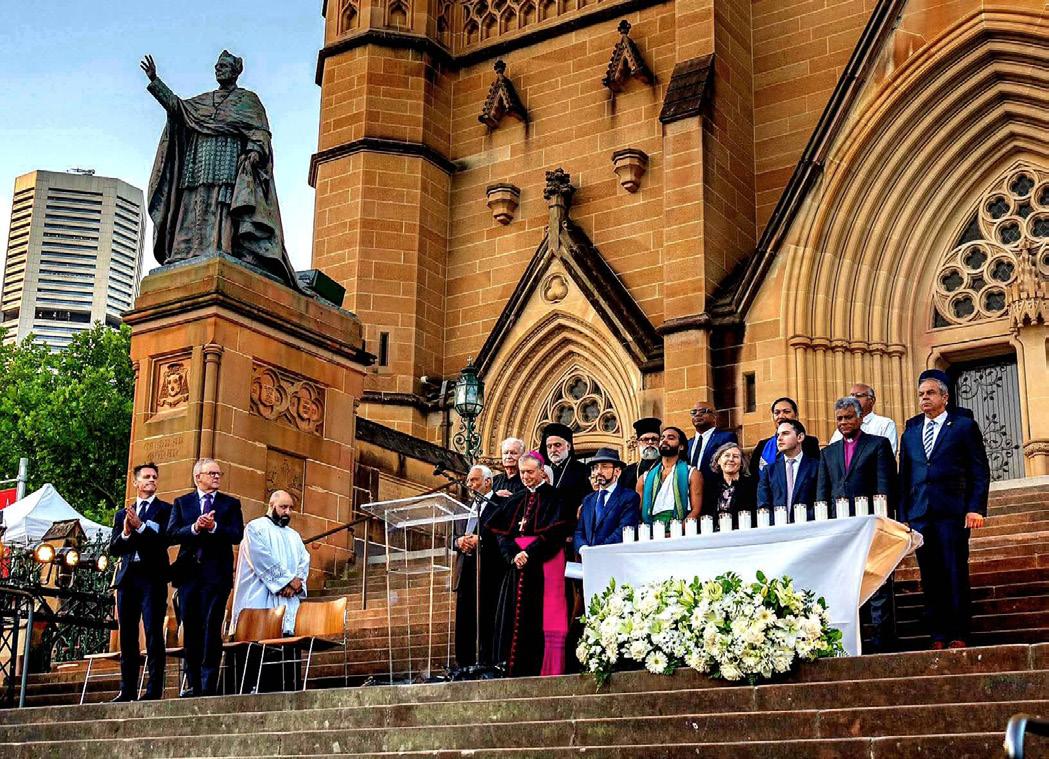
around each other, usually avoiding the hard discussions, there has been significant progress in JewishChristian relationships over the last 60 years. This was initiated by the Roman Catholic Church with its 1963 document called Nostra Aetate, followed by similar Protestant parallels.
There has always been more ease with Asian faiths like Buddhism, Hinduism and Sikhism. Australian Jews live in a multicultural country where our community is just a tiny fragment of a large and diverse patchwork.
Yet after Bondi, the burning interfaith question is whether the landscape has changed for Muslims. Do our counterparts in those communities have fresh eyes or is it lamentably a case of ‘they have eyes but do not see’?
Since October 7, Jewish-Muslim interactions across the world have stalled if not completely broken down. That was our experience in Australia where antisemitism, fuelled in part by popular, often Muslim-led, proPalestinian protests, went through the roof, culminating in the horror of Bondi.
After December 14, Muslim organisations put out swift statements condemning the attack – does that mean they will re-engage on interfaith dialogue?
Jewish leaders involved in interfaith work who I
have spoken to tell of many messages they received from their Muslim counterparts and friends. For my part, of the countless messages I received, a large number were from Muslim contacts and colleagues.
Will these messages translate into pragmatic actions and a resumption of engagement? Co-Chief Executive Officer of the Executive Council of Australian Jewry (ECAJ), Peter Wertheim, who has a long history of interfaith interaction, is sceptical. His reply to my question of whether anything has changed was terse; “No, they were tense before and remain tense now.”
He believes there won’t be any real change until the Muslims “accept the internationally endorsed right of the Jewish people to determine their own future in their historic home” and stop trying to define us on their terms, not ours.
Rabbi Zalman Kastel, one of Australia’s foremost champions of Jewish-Muslim dialogue, disagrees, saying: “I think this (the Bondi attack) will prove to be a turning point… it is still unfolding. The future of JewishMuslim relations in Australia is still to be negotiated. I am cautiously optimistic but also concerned we really don’t know how this will unfold…”
I personally have moved from cautious optimism to hopeful pessimism. There are massive mountains to be climbed and many to be moved before Israel and Jews will have a different and better relationship with the varied followers of Islam, and vice versa.
I worry that demonisation of Zionist Jews and antisemitism are entrenched in Muslim schools, mosques and homes in Australia. I don’t believe there will be any real change until we can sit down together with our Muslim counterparts and have those difficult, deep, honest and frightening conversations about what divides us.
Interfaith Memorial Service for the Bondi victims at St Mary's Cathedral in Sydney (Image: Nine/ Facebook)
DATA THAT MATTERS
INDICES OF FREEDOM AND
HUMAN RIGHTS
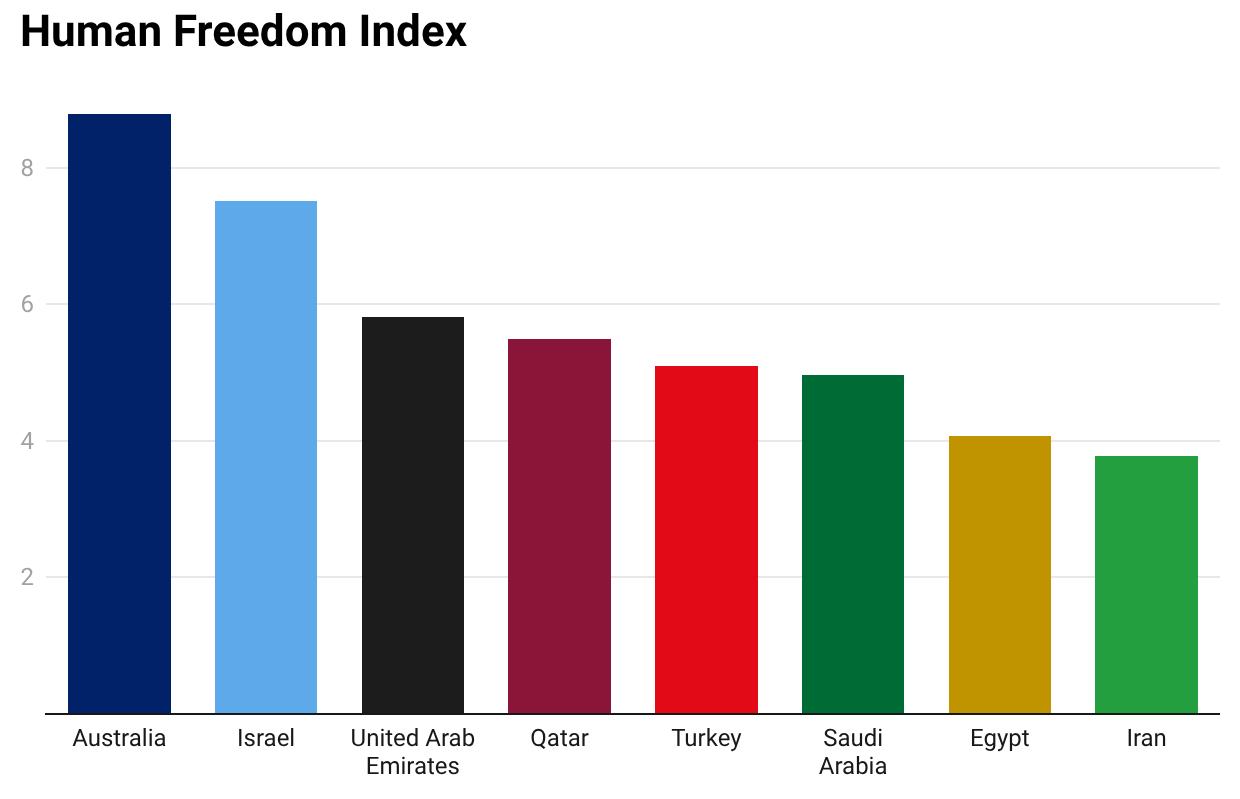
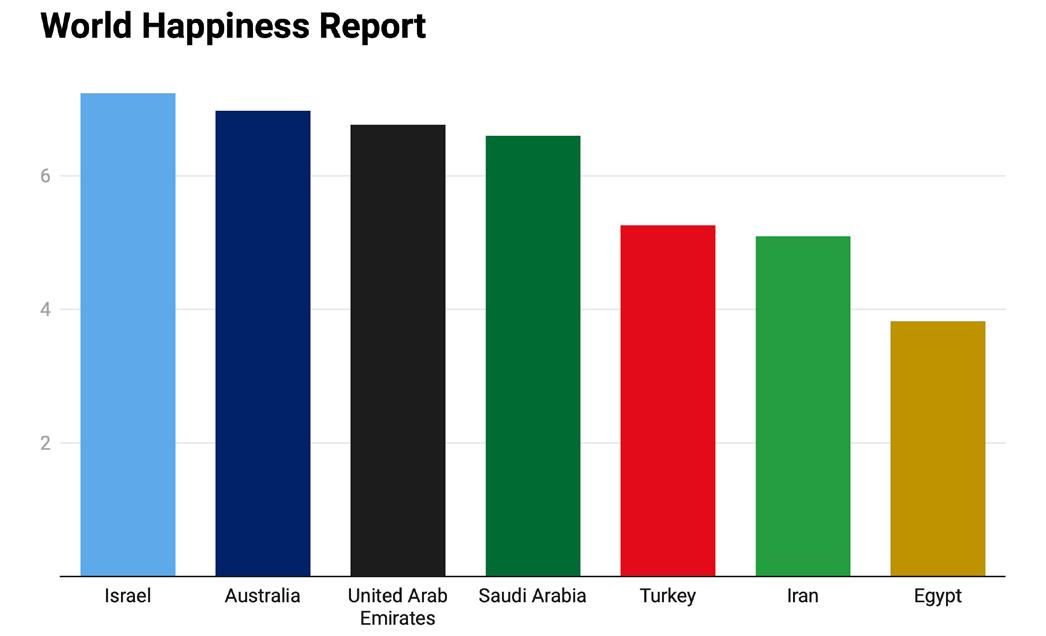
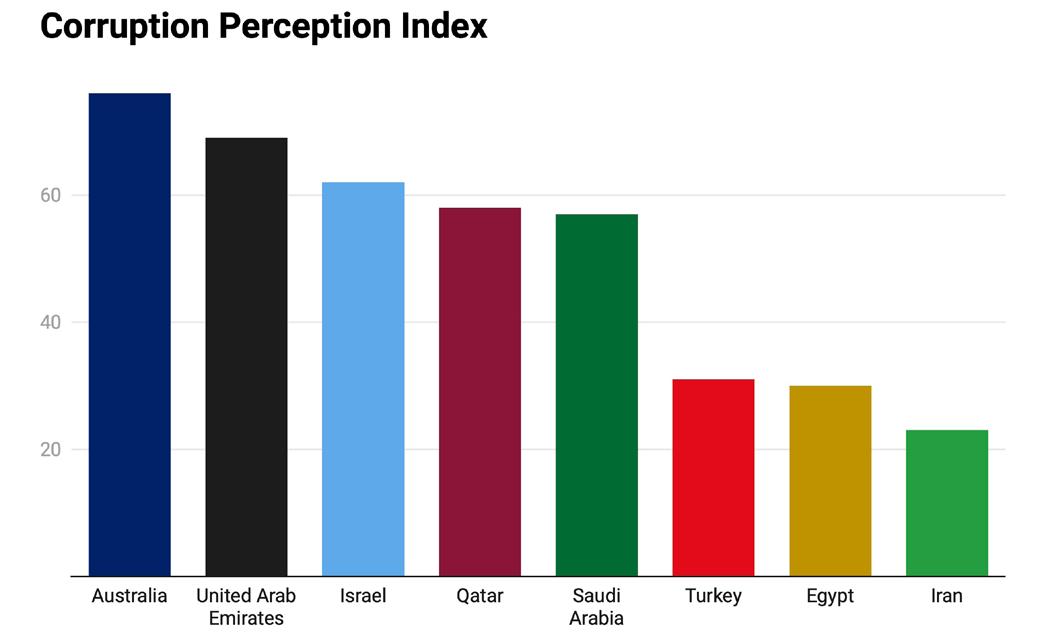
• The Human Freedom Index, by the Cato Institute, combines personal and economic freedom into a single score between 0 and 10. The score is constituted from over 80 indicators, including rule of law, freedom of speech, movement and religion, and economic freedom.
• The World Happiness Report, produced for the UN by the Sustainable Development Solutions Network, ranks countries according to average life evaluations reported by residents. The score is based on survey responses and is informed by factors including income, social support, healthy life expectancy, freedom to make life choices, generosity and perceptions of corruption.
• The Corruption Perceptions Index, produced by Transparency International, ranks countries according to perceived levels of public sector corruption. Countries receive a score between 0 and 100 based on data from multiple expert assessments and business surveys, with higher scores indicating lower levels of corruption. A higher score indicates lower perceived corruption.
Created with Datawrapper. For an interactive version of this graph, click here
Created with Datawrapper. For an interactive version of this graph, click here
Created with Datawrapper. For an interactive version of this graph, click here