
REVIEW
“ DEAL TO MAKE A DEAL”

WITH COMPLIMENTS


EDITOR’S NOTE
The June-August 2026 edition of the Australia/Israel Review (AIR) marks a full year of our all new, all digital, quarterly format – and recent major developments in the multiple conflicts centred on Iran are again a key focus of this edition. Coverage of the Iran conflict includes:
• A detailed AIJAC backgrounder on the controversial Iran-US Memorandum of Understanding signed on June 17 – including its implications for Israel’s battle with Hezbollah in Lebanon.
• An original look at the West’s options for dealing with the multiple threats emanating from Iran – nuclear, terrorist, missile and economic – from AIJAC’s Dr Bren Carlill.
• Dr Colin Rubenstein’s editorial outlining why this MOU with Iran could be costly for Australia.
• Top experts Miad Maleki and Daniel Swift look at the Iranian regime's desperately difficult – and potentially fatal – economic situation in the wake of recent conflicts.
• Washington insider Danielle Pletka explores the chaotic decision-making processes in the Trump Administration throughout the conflict with Iran. Another focus of this edition is the recent dramatic testimony at the Royal Commission on Antisemitism and Social Cohesion:
• We feature a collection of some of the most memorable testimony from the Commission’s session on the “lived experience of antisemitism” and its impacts.
• Jamie Hyams details the often ugly campaign that has been launched in multiple platforms against the Commission and its work.
Also highly recommended:
• Ilan Evyatar’s explanation of why the upcoming Israeli election will be like no other
• Strategic experts Seth Frantzman and Sarit Zehavi detail the current situations in Gaza and Lebanon respectively.
• Asia specialist Lauren Dagan-Amoss’ look at the politics of Indonesia’s still pending promise of troops to help police Gaza
• An illuminating encounter with the acclaimed veteran American Jewish leader David Harris.
• Rising young scholar Adam Louis-Klein offering up some essential facts and insights into what the global “antizionist” movement is and is not.
We invite your feedback about all aspects of this edition – both regarding the written articles as well as the extensive multimedia content – at editorial@aijac.org.au
Dr Tzvi Fleischer Editor
Volume 51 | No. 2 JUNE-AUGUST 2026
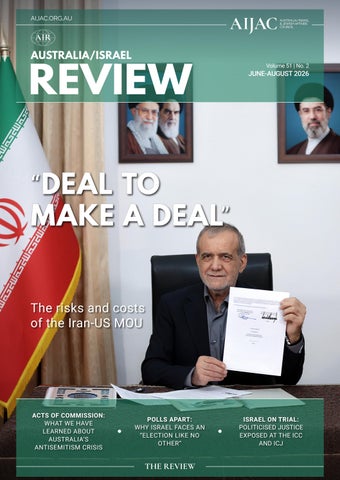
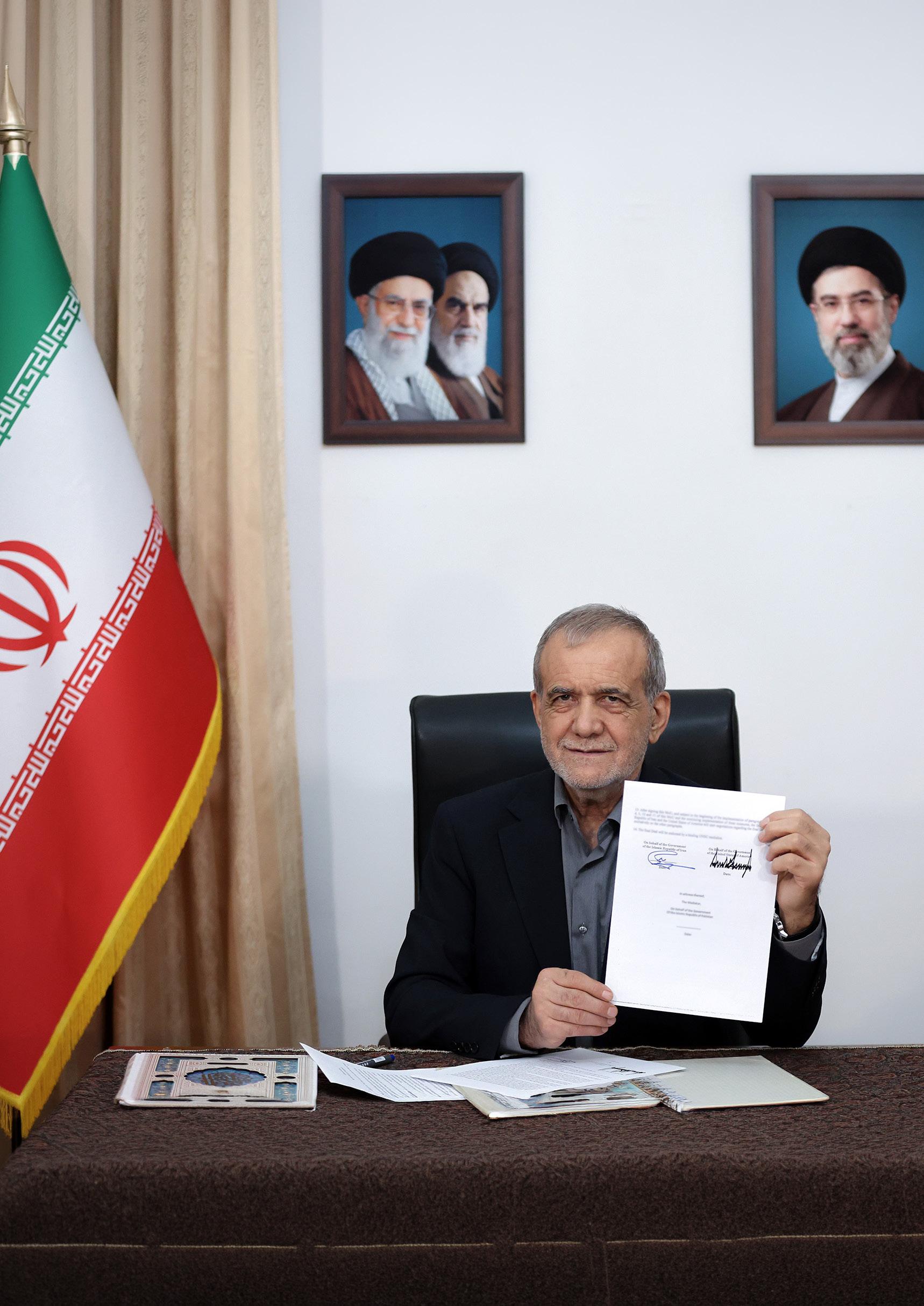
ON THE COVER Iranian President Masoud Pezeshkian showing a signed Memorandum of Understanding with the US in Teheran, Iran, June 18 2026 (Image: EPA/Iranian Presidential Office via AAP)
PUBLISHED BY THE AUSTRALIA/ISRAEL & JEWISH AFFAIRS COUNCIL (AIJAC)
EDITORIAL CHAIRMAN
DR COLIN RUBENSTEIN AM
EDITOR-IN-CHIEF
DR TZVI FLEISCHER
STAFF WRITERS
JAMIE HYAMS OAM, ALLON LEE, OVED LOBEL, JUSTIN AMLER, ALANA SCHETZER, DR BREN CARLILL, REBECCA DAVIS
PUBLISHING MANAGER
MICHAEL SHANNON
CORRESPONDENTS
ISRAEL: ILAN EVYATAR
NEW ZEALAND: MIRIAM BELL
EUROPE: ALEX BENJAMIN
UNITED STATES: DANIELLE PLETKA
NATIONAL EDITORIAL BOARD
KEITH BEVILLE, RABBI RALPH GENENDE OAM, GARY HERZ, MIRIAM LASKY, STEVE
LIEBLICH, RABBI DR JOHN LEVI AC, HON HOWARD NATHAN AM KC
NATIONAL CHAIRMAN
MARK LEIBLER AC
NSW CHAIRMAN PAUL RUBENSTEIN
EXECUTIVE DIRECTOR
DR COLIN RUBENSTEIN AM
DIRECTOR OF POLICY AND RESEARCH
DR TZVI FLEISCHER
EXECUTIVE MANAGER
JOEL BURNIE
SYDNEY OFFICE HEAD
ARSEN OSTROVSKY
DIRECTOR OF PUBLIC AFFAIRS
JAMIE HYAMS OAM
DIRECTOR OF SPECIAL PROJECTS
DR BREN CARLILL
SENIOR POLICY ANALYST
ALLON LEE
POLICY ANALYSTS
OVED LOBEL, JUSTIN AMLER, ALANA SCHETZER, GALIT JONES
RESEARCH ASSOCIATE DR RAN PORAT
DIGITAL MEDIA EDITOR REBECCA DAVIS
MEDIA PRODUCER AREK DYBEL
DIGITAL PRODUCERS
RAFI GANDUR, SHARON FLEISCHER, ILAN JANET
COMMUNICATIONS & EVENTS MANAGER
DIONNE TAYLOR
INTERFAITH & COMMUNITY LIAISON
RABBI RALPH GENENDE OAM
ADMINISTRATION
ROSEMARY SANDLER, RENA LANGBERG
ISRAEL LIAISON: PETER ADLER
FOUNDING
HEAD
EMAIL: AIJAC@AIJAC.ORG.AU
SYDNEY OFFICE: PHONE (02) 9360 5415, EMAIL: AIJACSYDNEY@AIJAC.ORG.AU ISSN NO. 1442-3693
FROM THE EDITORIAL CHAIRMAN
COLIN RUBENSTEIN
SCRIBBLINGS
TZVI FLEISCHER
WHAT'S THE DEAL?
AIJAC STAFF
AFTER THE WAR
BREN CARLILL
IRAN'S ECONOMIC CATASTROPHE
MIAD MALIKI & DANIEL SWIFT
THE IMPACTS OF ANTISEMITISM
AIJAC STAFF
ACTS OF COMMISSION
JAMIE HYAMS
POLLS APART
ILAN EVYATAR
DECISION OR STAGNATION IN GAZA?
SETH FRANTZMAN
FROM JAKARTA TO JERUSALEM
LAUREN DAGAN AMOSS
FATAH GETS A FACELIFT
AHRON SHAPIRO
HEZBOLLAH IS WEAKENED
SARIT ZEHAVI
ISRAEL ON TRIAL
MARK GOLDFEDER
INTERVIEW: DAVID HARRIS
AIJAC STAFF
BIBLIO FILE: FROM THE ABYSS
JULIE SZEGO
BIBLIO FILE: POLITICS TIMES THIRTEEN
AHRON SHAPIRO
CINEFILE: THE NAZIS IN OUR SUBURBS
ALANA SCHETZER
ESSAY: WHAT IS ANTIZIONISM?
ADAM LOUIS-KLEIN
WASHINGTON HEIGHTS
DANIELLE PLETKA
ASIA WATCH
MICHAEL SHANNON
EUROPA EUROPA
ALEX BENJAMIN
AIR NEW ZEALAND
MIRIAM BELL
MEDIA MATTERS
ALLON LEE
KEEPING FAITH
RABBI RALPH GENENDE
DATA THAT MATTERS
FROM THE EDITORIAL CHAIRMAN
A RESPITE, BUT AT WHAT COST?
COLIN RUBENSTEIN
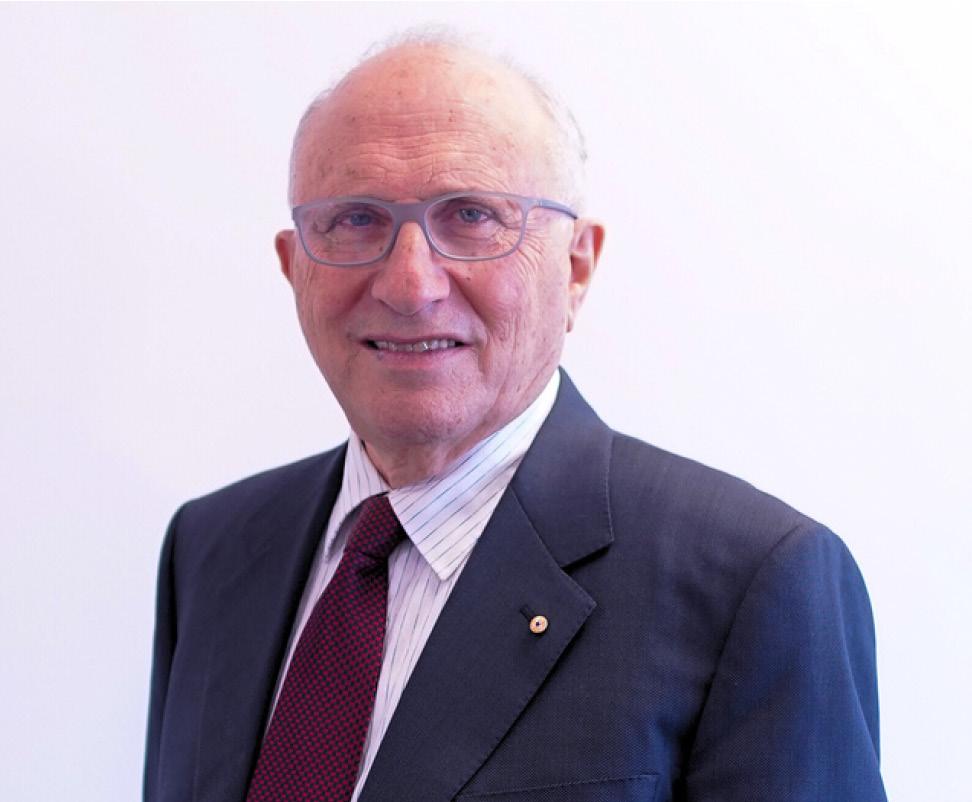
NDR COLIN RUBENSTEIN is the Executive Director of the Australia/Israel & Jewish Affairs Council
o responsible Australian should wish for endless war in the Middle East. The reopening of the Strait of Hormuz, the easing of immediate energy pressures and the prospect of a pause in fighting will naturally be welcomed by governments looking for relief from another destabilising global crisis.
But relief is not security, nor a resolution. The Memorandum of Understanding (MOU) signed between the United States and Iran on June 17 risks turning a temporary respite from conflict and economic uncertainty into a strategic windfall for one of the world’s most dangerous regimes.
The most obvious losers from this agreement are Israel, most Gulf states and the Iranian people. Israel is being asked to accept limits on its freedom of action against a regime that has spent decades seeking its destruction, arming Hezbollah, Hamas and the Houthis, and developing missiles and nuclear capabilities to shield that strategy. Limitations being imposed on Israel’s ability to continue efforts to end the threat still posed to northern Israeli towns by Hezbollah in Lebanon are particularly worrying.
Gulf states, having faced unprovoked attacks by Iranian missiles and drones, now see Iran financially rewarded through sanctions relief, plus the prospect of a US$300 billion fund to rebuild Iranian infrastructure – but not the infrastructure in Gulf countries damaged by Iran.
The Iranian people face the grim prospect that sanctions relief and renewed oil revenue will strengthen the regime that represses them, and murdered some 40,000 Iranian protestors back in January.
Yet the risks of the MOU are an Australian problem, too.
Only last year, the Australian Government concluded that the Iranian regime, through the IRGC, directed at least two antisemitic terrorist attacks on Australian soil. That was an extraordinary finding. Iran was targeting Australians, Australian Jews and Australian social cohesion here at home.
That should shape how Canberra assesses any agreement that releases Iranian assets, eases oil sanctions and promises economic reconstruction, without first dismantling Iran’s terrorist infrastructure. Every dollar that stabilises the regime frees other dollars for the IRGC, its proxies and its foreign operations.
“Peace bought by rewarding coercion rarely remains peaceful for long. For Australians, the costs of learning that lesson yet again will likely be counted in security terms, in terms of our strategic influence and even in families’ weekly household budgets”
Empowering Teheran means increasing the capacity of a state sponsor of terrorism that has shown both the intent and the reach to harm Australia and Australians.
The second danger is economic. Australians have just seen how vulnerable our cost of living is to conflict around Hormuz. Roughly one-fifth of global oil, a significant share of LNG and 20-30% of fertiliser normally transit that narrow waterway. Even countries that do not buy most of these products directly from the Gulf are exposed through global prices, shipping costs, insurance premiums and supply chain inflation.
The MOU may help reopen Hormuz for now. But Iran has learned that threatening or restricting this corridor compels Washington to lift pressure and offer concessions. What’s more, the MOU even encourages Iranian plans to control Hormuz by explicitly giving Teheran a role in the future “administration” of the Strait. No one could think it’s a good thing that Australia’s future fuel bills, grocery prices and manufacturing costs could depend on whether or not Teheran decides to weaponise geography again.
The third danger is strategic credibility. Australia’s security environment is becoming harsher, especially because of China’s growing power and coercive behaviour in our region,
as the current Government is quietly acknowledging. We rely heavily on the credibility of American deterrence, through the alliance, AUKUS and the broader US-led balance in the Indo-Pacific.
That credibility is damaged when Washington appears to begin a war with sweeping objectives, then settles for an agreement that leaves Iran’s missiles, proxies and nuclear leverage – the stated reasons for the war – largely unresolved, while asking allies to absorb the consequences. Beijing, Moscow and every other revisionist capital will study this precedent. If the United States can be pressured into rewarding a battered but defiant Iran by real but limited global economic pain, what does that say to allies who may one day need Washington to hold firm closer to home, and be prepared to pay some significant costs to do so?
Diplomacy with Iran is not inherently wrong. A verifiable agreement that removed enriched uranium, dismantled nuclear infrastructure, ended missile proliferation and cut off support for terror proxies would be a major achievement.
This MOU is not anything like a final agreement, only a “deal to make a deal”, but it does not appear likely to lead to anything of the sort. It front-loads relief, defers the central nuclear questions and leaves Iran’s regional terror networks and ballistic missile program largely intact.
Australia should therefore resist the temptation to treat it as a welcome end point to the pain of the recent conflict. It should urge Washington to make any final agreement conditional on the destruction or export of all enriched uranium, strict missile limits, enforceable constraints on proxies and consequences for Iranian terrorism abroad.
Peace bought by rewarding coercion rarely remains peaceful for long. For Australians, the costs of learning that lesson yet again will likely be counted in security terms, in terms of our strategic influence and even in families’ weekly household budgets.

A NECESSARY RECKONING
The first two hearing blocks of the Royal Commission on Antisemitism and Social Cohesion have already vindicated the Australian Jewish community’s insistence that only the nation’s most powerful form of inquiry was adequate to investigate the national antisemitism crisis that culminated in the Bondi massacre.
The second block, much of which was behind closed doors, examined the security, intelligence and law-enforcement failures preceding that horrific attack. But the first block brought into public view the environment in which those failures occurred: an extraordinary, pervasive and increasingly normalised campaign of hostility that has transformed the daily lives of Jewish Australians.
The testimony was harrowing.
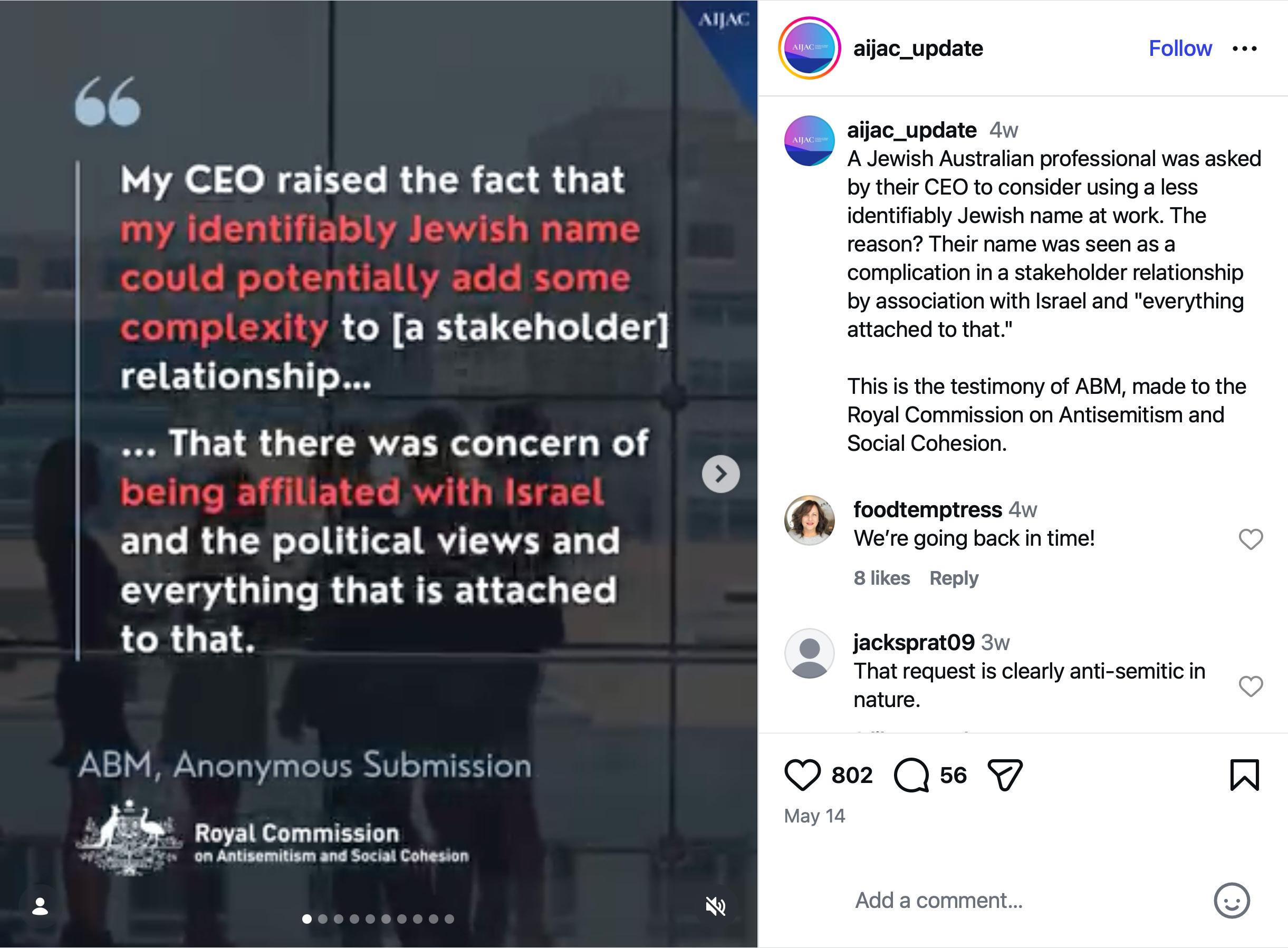
The Commission heard of a Jewish employee asked to use a less identifiably Jewish name at work; children subjected to Holocaust taunts and abuse during junior football matches; Jewish students unable to travel into Melbourne’s CBD in school uniform; and a healthcare patient who concealed the fact that she required kosher food because she feared for her safety while under anaesthetic.
These were glimpses of a much larger reality. Together they describe a community progressively deprived of freedoms other Australians take for granted: the freedom to wear a religious symbol in public, attend university, play sport, enter hospital, travel on public transport or invite a tradesperson into one’s home without first calculating the danger of being identified as Jewish.
Many Australians outside the Jewish community understandably failed to grasp the true scale and intensity of this experience. That helps explain the gulf, following Bondi, between the urgent communal demand for a royal commission and the initial surprise, or resistance, among some in the wider community.
Jewish Australians had spent more than two years watching their warnings dismissed, incidents minimised and anti-Jewish intimidation rationalised as political passion. Bondi confirmed, with unbearable finality, where unchecked hatred can lead.
The broad support for a royal commission from victims’ families, lawyers, business leaders, sporting figures, politicians, security experts and thousands of concerned Australians was therefore deeply appreciated. At an appalling moment, it reassured Jewish Australians that many fellow citizens had heard them and understood that the threat extended beyond our one small community.
Some argued that the inquiry should instead examine every form of racial and religious prejudice. Indeed, bizarrely, there are still some arguing that looking exclusively at antisemitism amounts to some sort of “special treatment” for Jews.
But while all racism and religious hatred deserve serious attention and effective action, every effective inquiry requires a defined problem and a clear causal question. This Commission was established after an antisemitic terrorist massacre, following an unprecedented
WATCH: AIJAC's Justin's Amler on Australia's moment of truth
surge in antisemitism and repeated warnings that this specific hatred was escalating. Expanding its focus into a general review of discrimination would have badly blurred the chain of responsibility it was created to expose and severely diluted the chance of producing concrete, usable answers.
The Royal Commission’s forthcoming examination of traditional and social media will be especially important. The ABC and SBS must account for any antisemitism within their organisations, their handling of complaints and the adequacy of their policies.
However, the inquiry must go further. It should examine whether the relentless platforming of extreme, inflammatory and frequently distorted claims about Israel, especially by the ABC, helped create an atmosphere in which violent hostility towards Zionists, Israelis and ultimately Australian Jews became respectable.
“Witnesses before the Commission repeatedly described being held personally responsible for a distant war, excluded as ‘Zionists’ and told that Jewish identity itself carried a moral stain. The
media did not invent antisemitism, but it has immense power either to challenge the narratives that animate it or to help normalise them”
Criticism of Israel is entirely legitimate. Yet when Israel is not only obsessively presented as uniquely evil, but Jewish attachment to it is treated as morally indefensible and antizionist activists are repeatedly offered sympathetic platforms despite their extremism, the social consequences cannot simply be dismissed as normal political argy-bargy.
Witnesses before the Commission repeatedly described being held personally responsible for a distant war, excluded as “Zionists” and told that Jewish identity itself carried a moral stain. The media did not invent antisemitism, but it has immense power either to challenge the narratives that animate it or to help normalise them.
Commissioner Virginia Bell now has the opportunity to trace how hatred moved from the margins into institutions, workplaces, schools, sporting fields, hospitals and, finally, Bondi Beach.
Australia owes the Bondi victims, survivors and the entire Jewish community an unflinching account of how this happened, before it can begin the difficult task of ensuring it never happens again. The Commission’s horrifying but revealing initial public hearings provided some important progress in creating the conditions for meeting that goal.

SCRIBBLINGS
TZVI FLEISCHER
THE PALESTINIANS AND THE US-IRAN MOU
It was no surprise that Hamas, which is an Iranian proxy, hailed the US-Iran Memorandum of Understanding (MOU) signed on June 19, welcoming it and extending “to the Islamic Republic of Iran, its people and its leadership… our appreciation for its steadfastness and its commitment to its national rights and interests in the face of pressures and challenges, which contributed to thwarting attempts to impose dictates and projects of hegemony on the region.”
But how did the “moderate” Fatah, which runs the Palestinian Authority (PA), react to the MOU? In general, Fatah and the PA are not friendly to Iran, because Iran provides material support for both Hamas and Palestinian Islamic Jihad as they seek to overthrow Fatah and take over the leadership of the Palestinian national movement. Officially, the PA welcomed the MOU as hopefully contributing to “enhancing regional stability”, but some Fatah officials were less positive.
Mundhir Al-Hayek, the Fatah Spokesman in the Gaza Strip, slammed Iran on Fatah-run Awdah TV on June 15, 2026 for signing the deal, but perhaps not for the reasons you might think. He said: Iran had promised us for many years that it would erase the existence of Israel. Unfortunately, it has not erased it. We’ve heard all the grand slogans from Iran, such as the US being the Great Satan, but it signed an agreement today with the US to protect its country. So an official spokesperson for the “moderate” Fatah party is angry that Iran is signing deals with the US instead of pressing ahead with eradicating Israel.
Meanwhile, there are also reports that Washington is actually negotiating a second MOU with the
PA. This would see the PA agree that money Israel is currently withholding from the PA because of payments to terrorists (including taxes collected from Palestinians who work in Israel) can be transferred to the “Board of Peace” for use in Gaza, and vow to finally carry out long-promised reforms under Saudi tutelage, to get to the stage where it is ready to be part of eventual US-led peace talks with Israel. Mr Hayek’s remarks about the Iran MOU underscore how great the reform challenge is before Fatah and the PA can become serious partners for a renewed push for peace.
SMELLING A RAT
Wild Boars.
Sharks.
Griffon Vultures.
European bee-eaters.
Kestrels.
Dolphins.
Lizards.
Various rodents.
All these animals have at various times been accused – in official Palestinian or Arab state media – of being deployed by Israeli Zionists for nefarious purposes. The wild boars, it has been alleged on numerous occasions in Palestinian media – were “trained” or “released” by Israel to destroy Palestinian crops and attack Palestinians. The lizards are supposed to have spied on Iran’s nuclear program. Plague rats are supposed to have been released by Israel to drive Palestinians out of Jerusalem’s Old City. The sharks were supposedly controlled by the Mossad to attack tourists in Egypt and ruin the local economy. The dolphin was a robot assassin. Most of the others were supposed spies.
Animal conspiracy theories about Israeli plots seem irresistible for the anti-Israel media, activists and often even governments of the region.
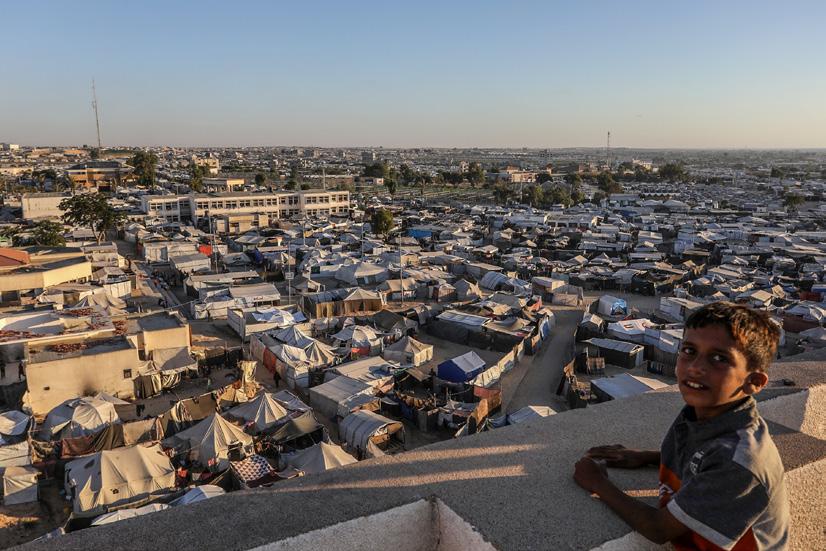
The tent camps of Gaza have attracted not only rodent pests, but conspiracy theories about them (Anas Mohammed/ Shutterstock)
Indeed, official Fatah media has been running hard on such an animal conspiracy theory this year.
Gaza today is largely a mix of tent refugee camps and ruined buildings, with sanitation less than ideal, a lot of open-air cooking and limited food storage options. Sadly, but not surprisingly, these conditions have created a large presence of rats and mice around the densely populated areas in the Hamas-controlled half of Gaza.
But according to Palestinian media, these are not ordinary rats and mice. They are rodents that have been “genetically engineered” to not only attack people, but to specifically attack “the weak” especially “children and the elderly, particularly diabetics.” According to Palestine Broadcasting Corporation Director in the Gaza Strip Rafat Al-Qudra, who first made the claim about these “genetically engineered” rodents – sometimes said to be large mice, or on another occasion “Jerboas” – on official Fatah radio on April 28, these rodents are “almost certainly… part of the occupation’s (i.e. Israel’s) war against the Gaza Strip.”
Since the “genetically engineered” rodents claim was launched in April, it has appeared in official Fatah media at least twice more.
Meanwhile, it is this long-standing local obsession with animal-related conspiracy theories – together with the utter credulousness with which
some Western intellectuals approach anything related to the Palestinians – which, in my view, explains the scandalous claim published by New York Times columnist Nicholas Kristof on May 11, 2026.
Kristof accused Israel of having systematically “coached” police dogs to rape Palestinian prisoners, something almost all experts on dogs and their training agree is physiologically impossible. Indeed, there is no evidence in the scientific record that such coercive dog rape has ever, in history, been a real phenomenon.
Various journalists and commentators such as Haviv Rettig Gur, Yuki Zeman and Eli Kawaz have traced the origins of this dog rape story. It appears to have originated from a single claim by a Palestinian “journalist” to have been raped by a dog in Israeli custody, one of a series of lurid claims. This was then picked up and expanded on by some Hamaslinked NGOs with a history of spreading false, extreme and conspiratorial claims about Israel, to claim that Israel was systematically training dogs to rape Palestinians. These “reports” from NGOs then spread like wildfire to various influencers devoted to promoting the Palestinian “cause”, mostly online, but also including a British journalist. So by the time Kristoff got hold of it, he could point to many sources and reports, and ample “evidence” for the claim – all of them actually just people repeating the original “reports” without providing actual concrete evidence beyond the single claim by the “journalist”.
In other words, this appears to be yet another case of a conspiracy theory about Israel using animals to abuse Palestinians being irresistible for anti-Israel circles in Arab societies. And this then spread more widely into Western pro-Palestinian circles. And this time, unlike the trained wild boars, the genetically modified rodents, the assassin dolphins and the spy lizards and birds, it made it all the way to the New York Times.






WHAT'S THE DEAL?
The US-Iran Memorandum of Understanding (MOU): A backgrounder
AIJAC STAFF
Image: Shutterstock
The Memorandum of Understanding (MOU) signed by the United States and Iran on June 17 has sparked serious debate among analysts over its implications.
Overall, the 14-point MOU is a 60-day ceasefire extension, which also applies to Israel’s war with Hezbollah in Lebanon, to enable Iran-US negotiations on a final nuclear agreement to continue. It can be extended indefinitely by mutual consent.
Its key provisions include:
• An immediate end to hostilities between the US, Iran and their allies, including in Lebanon, and that none of them “shall initiate any war or any military operation” or threaten or use force against one another in the future.
• Progressively reopens the Strait of Hormuz over 30 days.
• Establishes a 60-day negotiating period, extendable by mutual consent, for a final nuclear agreement, which, “at a minimum”, will involve the “down blending”, that is, unenriching, of Iran’s enriched uranium stockpiles under International Atomic Energy Agency (IAEA) supervision.
• Iran reaffirms it will not develop or acquire nuclear weapons.
• The US begins facilitating Iranian oil exports immediately and undertakes to release frozen or restricted Iranian funds and assets as part of the implementation of the MOU.
• After a final nuclear deal is reached, the US undertakes to lift all sanctions, to develop with regional partners a plan worth at least US$300 billion for the reconstruction of Iran and also promises to remove US forces from Iran’s vicinity.
The core of the MOU is immediate sanctions relief for Iran, including the end of the US naval blockade and the US issuing sanctions waivers, to enable it to sell its oil in exchange for Iran’s commitment to fully reopen the Strait of Hormuz within 30 days.
The deal also says the US “undertakes to make fully available” all frozen and restricted Iranian funds and assets but it says the two sides will have to “mutually agree on the procedures related to the release of these funds.” The US Administration has argued that the latter provision means these funds will only be released based on Iran meeting benchmarks for cooperation with the MOU. Estimates of the assets covered by this clause vary between US$12 billion and US$28 billion.
AIJAC has collated some of the concerns analysts and political leaders have expressed with the provisions and the broader implications of the agreement:
IRAN’S REAFFIRMATION OF ITS PLEDGE NOT TO ACQUIRE OR DEVELOP NUCLEAR WEAPONS IS EMPTY
Critics have pointed out that this pledge reflects what has always been Iran’s public position, and that had there been confidence that such pledges have any substance, there would have been no need for negotiations, sanctions or military action since 2003.
Iran ratified the Nuclear Non-Proliferation Treaty (NPT) in 1970, which the regime founded after the 1979 Islamic Revolution never abrogated. Article II of the NPT explicitly pledges signatory states (who did not possess nuclear weapons prior to the NPT) not to receive, manufacture, acquire or control nuclear weapons.
The regime reiterated in the 2015 nuclear deal, the Joint Comprehensive Plan of Action (JCPOA), “that under no circumstances will Iran ever seek, develop or acquire any nuclear weapons.”
Iran has always falsely maintained that its nuclear program was exclusively peaceful, even while the IAEA has found it advanced its illegal weaponisation and enrichment programs in ways inconsistent with its NPT obligations. A cache of documents captured by Israel in 2018 confirmed Iran planned to produce at least five nuclear weapons.
ABSENCE OF CLAUSES RELATING TO IRAN’S MISSILES AND PROXIES
One of the many criticisms levelled by US President Donald Trump against the 2015 JCPOA agreement negotiated with Iran by the Obama Administration was its failure to address Iran’s ballistic missile program. Following his repudiation of the JCPOA in 2018 during his first term, his Administration pursued a policy of “maximum pressure”, a web of crushing sanctions meant to force Iran to fully capitulate to 12 demands outlined by then Secretary of State Mike Pompeo in May 2018. Among these demands were ending support for terrorist proxies (such as Hezbollah) and halting both ballistic missile proliferation and the launching and development of “nuclear-capable” missiles (meaning missiles that can be mounted with an atomic warhead).
Trump himself, when he announced the launch of Operation Epic Fury in March this year, emphasised Iran’s historical and current support for terrorist proxies and development of long-range missiles as part of his justification for the war.
In early April, the US gave Iran a 15-point list of demands as the basis for further negotiations, the provisions of which reportedly included substantial limits on Iran’s ballistic missile program as well as the end of support to its terrorist proxies.
Critics note that the MOU does not address either of these concerns and appears to make no provision for future discussion of these issues. Trump has since downplayed the ballistic missile threat and said it would be “unfair” for Iran not to possess an arsenal of such weapons, given the fact that other countries in the region (he noted Saudi Arabia as an example) also have these abilities.
Critics also argue that the unconditional sanctions relief promised in the MOU will be used by Iran to rebuild its proxies, including Hezbollah, which has been dramatically weakened by Israel since 2024.
THE STATUS OF THE STRAIT OF HORMUZ
According to many critics, the fifth clause of the MOU implicitly affirms Iran’s control over the Strait of Hormuz, with Teheran only required not to charge tolls or fees for 60 days. The Strait’s future status and management, according to the MOU, will be determined by Iran in “dialogue” with Oman (situated at the other side of the Strait) and “in discussion with” other Persian Gulf states, which some analysts argue means that Hormuz has effectively been conceded to Iran and is no longer an international waterway. This is a strategic asset Iran did not possess before the war.
US officials argue in response that Iran will not in practice be allowed to levy fees or tolls on the Strait under future arrangements because of the require-
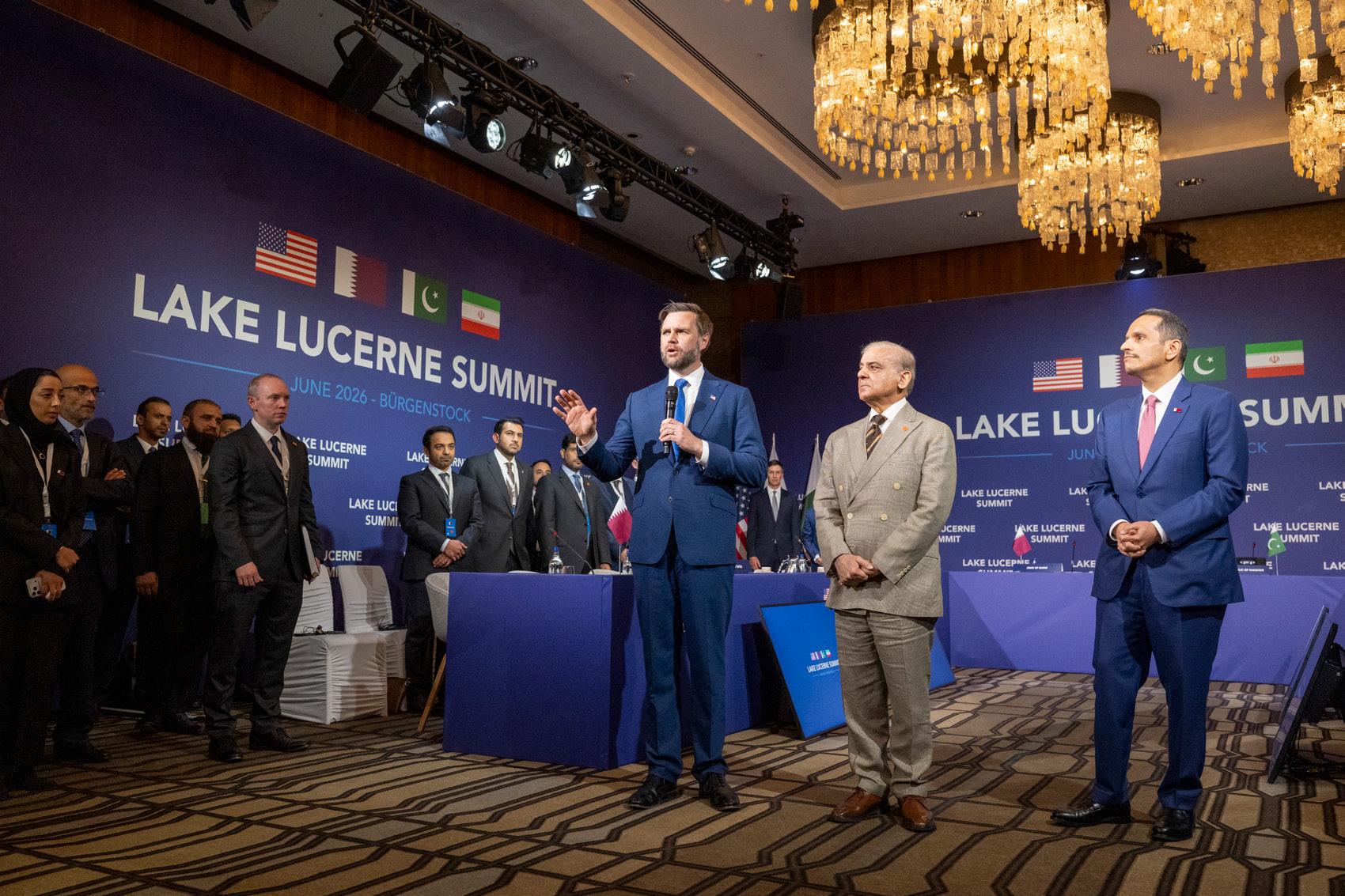
US Vice President JD Vance (centre), flanked by Pakistan's Prime Minister Shehbaz Sharif (second right), and Qatar's Prime Minister Mohammed bin Abdulrahman bin Jassim Al Thani (right) during talks between the US and Iran, mediated by Pakistan and Qatar, at the Buergenstock resort in Obbuergen, Switzerland, June 21, 2026 (Image: EPA/URS FLUEELER / POOL/ AAP)
WHAT THEY SAID: RESPONSES TO THE US-IRAN MOU
“We reached an agreement with Iran that achieves everything we set out to accomplish, everything and much more, ending the current conflict, reopening the Strait of Hormuz, and preventing Iran from ever obtaining a nuclear weapon… We’re going to bomb the hell out of them if they violate the agreement. I don’t want them to. I want them to honour the agreement… it’s not final. It’s a memorandum of understanding. And if I don’t like it, we’ll go back to shooting at them, dropping bombs on their head.”
US President Donald Trump after signing the MOU electronically, June 17.
“If your alternative is just to drop bombs without any clear goal or any clear American interest implicated, then you’re not making the wise decisions on behalf of the American people. The President is.”
US Vice President JD Vance, June 16.
“This will be regarded as one of the biggest American disasters, and it’s because Trump started this war.”
Senator Chuck Schumer, US Senate Minority Leader (D-NY), June 17.
“Reagan is rolling over in his grave.”
US Senator Bill Cassidy (R-LA), June 17.
“A really important breakthrough… I’ve seen a summary has been read out of what is in the MOU, and it is positive… providing, firstly, an immediate de-escalation that we are seeing, an opening of the Strait of Hormuz.”
Australian PM Anthony Albanese, June 18.
“This agreement was made by the United States, by the President of the United States. And he believes that he can truly combine both the opening of the [Strait of Hormuz] and the cancellation of the nuclear program… And I repeat and say that this is his decision, and he is leading it.”
Israeli PM Binyamin Netanyahu, June 15.
“We will not compromise on Israel’s security interests and the protection of our citizens, and we will not withdraw from the security zones [in Lebanon]… if Iran attacks Israel because of the events in Lebanon, we will strike it with full force.”
Israeli Defence Minister Israel Katz, June 15.
“There has never, ever, been a more absolute failure than Netanyahu’s diplomatic failure on the Iranian front.”
Israeli Opposition Leader Yair Lapid, June 15.
“It would have been better for Netanyahu to say, ‘I erred, I set false goals that I wasn’t able to achieve’… This would have given Netanyahu much more credit and respect from the people, if he had admitted he made empty declarations.”
Gadi Eisenkot, former IDF Chief of Staff, and leading Opposition political candidate, June 15.
“The memorandum of understanding that has been drafted is the result of months of dialogue and persistent follow-ups in this regard, and if all its provisions are properly implemented, it can be considered a document of pride for the country.”
Iranian President Masoud Pezeshkian, June 15.
“This memorandum does not mean trusting the enemy; it has been written with active distrust.”
Kazem Gharibabadi, Iran’s deputy foreign minister, June 15.
“This represents a critical step towards the peaceful settlement of the conflict.”
UN Secretary-General António Guterres, June 14.
“The dawn of peace has arrived.”
Chinese Foreign Minister Wang Yi, June 17.
“Iran must never acquire a nuclear weapon. We stand ready to work with the US, Iran and the IAEA to this end. We are prepared to lift relevant sanctions in response to clear, verifiable steps by Iran on its nuclear programme.”
UK, France, Germany & Italy (E4) joint statement, June 17.
“All Hezbollah has to do is get one rocket across into an Israeli town in northern Israel, and then the pressure on Netanyahu – which he’s already hearing from his own base and from the opposition... will ramp up.”
Daniel Shapiro, former US Ambassador to Israel; analyst, Atlantic Council, June 15.
“Iran successfully linked this agreement with events in Lebanon, which is a defeat and great worry for Israel. Like Lebanon’s elected government, Israelis want Iran to butt out of Lebanon, but it seems that the agreement instead calls for an end to Israeli action there.”
Elliott Abrams, US Council on Foreign Relations expert on Middle East policy; former senior US official, June 18.
ment to discuss administrative arrangements for Hormuz with all Persian Gulf states, which will never agree to tolls or fees.
LIMITING US AND ISRAELI FREEDOM OF ACTION
Analysts and Israeli leaders have expressed alarm regarding the first two clauses of the MOU, in which not only does the US undertake never again to threaten or initiate military action against the regime, but also imposes these conditions on Israel, including in Lebanon.
The agreement’s language appears to promise that Israel, which was not consulted and is not a party to the agreement, must cease to threaten to attack, much less actually attack, Hezbollah in Lebanon. Language referring to “ensuring the territorial integrity and sovereignty of Lebanon” also appears to amount to a call for Israel to withdraw its forces from the territories the IDF currently controls in southern Lebanon as part of its efforts to distance Hezbollah forces from the Israeli border, following repeated attacks on northern Israeli towns.
“Critics say that the US has allowed Iran to tie the Lebanon and Iran fronts together in US policy, enabling the Iranian regime to leverage US pressure on Israel to sustain the ceasefire and thus preserve and rebuild Hezbollah with funds from oil sales and unfrozen assets”
Critics say that the US has allowed Iran to tie the Lebanon and Iran fronts together in US policy, enabling the Iranian regime to leverage US pressure on Israel to sustain the ceasefire and thus preserve and rebuild Hezbollah with funds from oil sales and unfrozen assets – including its military infrastructure above and below ground, along Israel’s northern border. This also appears to be a blow to efforts to disarm Hezbollah by the Lebanese state, further weakening the Beirut government and allowing Iran to again dominate Lebanon.
FINAL AGREEMENT PROVISIONS: US MILITARY WITHDRAWAL, FULL SANCTIONS RELIEF AND REPARATIONS IN EXCHANGE FOR VAGUE NUCLEAR COMMITMENTS
Under the MOU, Iran is allowed to maintain the status quo of its nuclear program until a final agreement is reached, and analysts note that the current state of that program is unknown without International Atomic Energy Agency
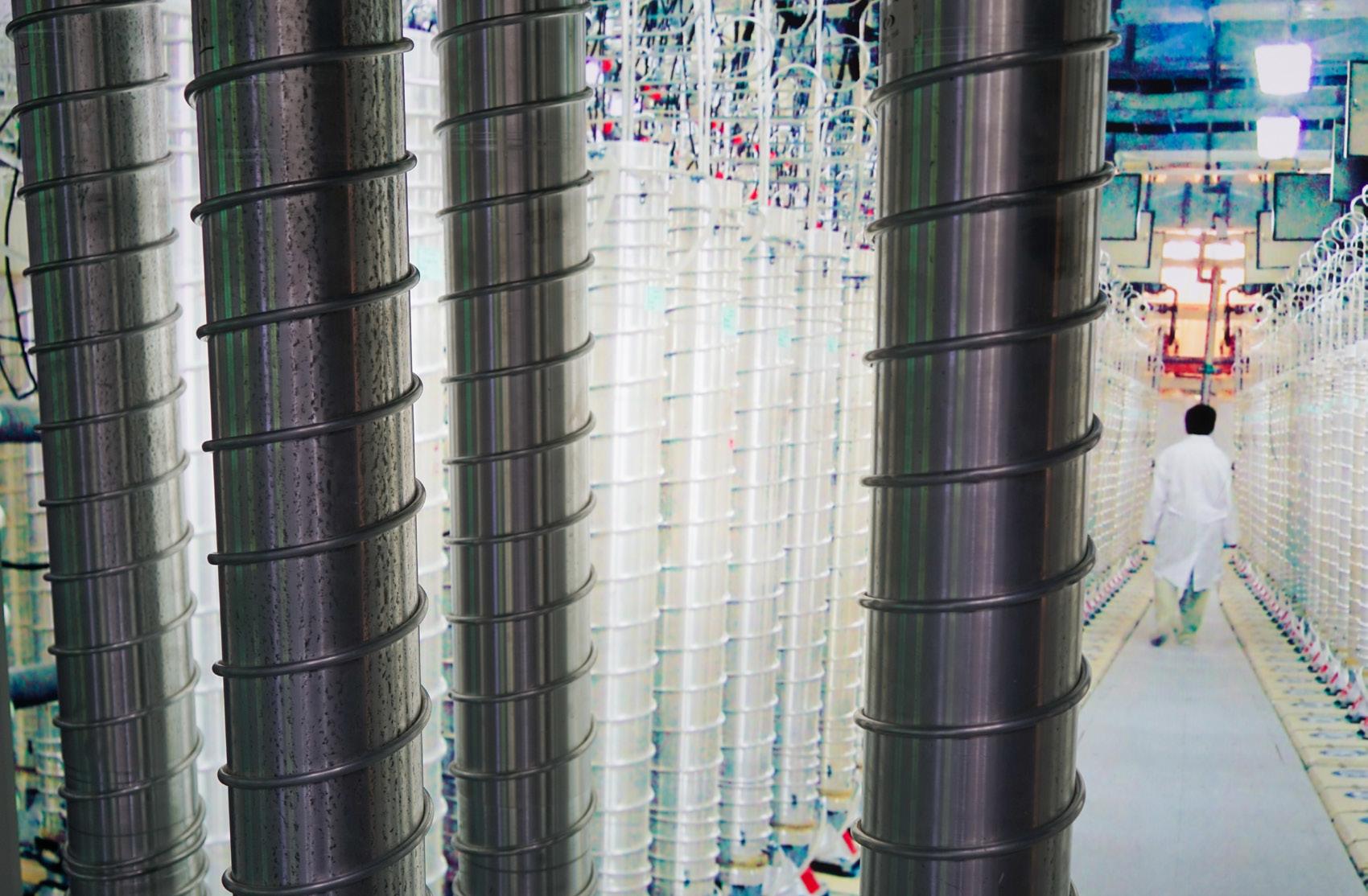
The state of Iran's nuclear infrastructure is unknown, and the MOU does not promise the IAEA inspections which would resolve this uncertainty (Image: Shutterstock)
(IAEA) access – which Iran has not promised to grant in the MOU. At the same time, most experts believe Iran is not currently engaged in enriching uranium, given the extensive damage inflicted on its nuclear infrastructure by the US and Israel in the two campaigns since 2025. If that is the case, any effort to renew enrichment would arguably be a violation of the MOU pledge to maintain the nuclear “status quo”.
The US, meanwhile, promises not to impose any new sanctions on Iran or deploy any additional forces to the region.
On the nuclear front, Iran has committed only to resolving the issue of its highly enriched uranium stockpile – enough to make at least nine nuclear bombs quickly if further enriched – by “at a minimum” allowing the IAEA to observe Iran “down blending” it (meaning reducing its enrichment level) on Iranian territory. While explicitly agreeing to the “down blending” does appear to be a new concession by Iran, critics note that much is left ambiguous. For instance, it is unclear which of Iran’s many different grades of highly enriched uranium this clause applies to. Future control of this material is also left ambiguous – the US had previously demanded it be removed from the country – and analysts say it presents a risk if left under Iranian control, as the “down blending” process may be reversible.
While Iran further commits “to discuss” enrichment, the regime continues to insist as it always has that it will never abandon domestic uranium enrichment, which it claims as a sovereign right.
If a final nuclear deal is reached, the US, in exchange, promises to permanently lift all remaining US and international sanctions on Iran, to withdraw its military forces from Iran’s proximity within 30 days of such a deal, and undertake to develop a minimum US$300 billion “reconstruction and economic development” fund for Iran with Gulf State money. The last, critics charge, amounts to a concession to Iran’s demand for “reparations” for recent US and Israeli military attacks on Iran.
Critics also assert that sanctions relief needs to be conditioned on verified compliance and be reversible if Iran violates the future agreement, as was the case under the JCPOA “snapback” mechanism – but the terms of the MOU appear to preclude this. Questions regarding enforcement, inspections and penalties for non-compliance, they say, remain unresolved, and no detailed, measurable and independently certifiable benchmarks are apparent.
THE IRANIAN PEOPLE ABANDONED
Despite the war being presented by the US Administration as a means of helping the Iranian people, and President Trump’s encouragement of protesters and threats against the regime for its brutal crackdown and mass slaughter of protesters back in January, the MOU includes a US commitment not to interfere in Iran’s internal affairs in the future. Analysts note this means the regime can in the future engage in the killing of thousands of protesters with impunity and with the US being barred from responding in any concrete way.
GLOBAL IMPLICATIONS
Critics also worry that the gap between US rhetoric prior to and during the war and what is contained in the MOU will severely damage US credibility globally.
Furthermore, they say, the extent of US concessions, primarily due to impatience as well as the economic fallout and subsequent domestic political backlash, will further undermine US deterrence. They argue that other adversaries – especially China and Russia – will draw lessons about how to defeat the US by dragging out conflicts and imposing economic costs on Americans, particularly during election cycles.
The separate agreement signed by the US and then unilaterally imposed upon Israel, the US’s partner in this war and arguably its closest ally in general, without consultation, will also give pause to other US partners and allies, including Australia, when they are expected to participate in US military undertakings, critics warn.
AFTER THE WAR
A comprehensive Iran strategy is now an urgent necessity
BREN CARLILL
Despite suffering enormous military damage, Iran arguably emerged from its war with the United States and Israel strategically stronger than when it started. This is largely because the US did not have a settled understanding of the minimum conditions for victory.
But Iran did. The Islamic Republic’s strategy has long boiled down to a simple premise: if you attack us, we will unleash chaos. That strategy, which involved proxies, missiles, drones and the Strait of Hormuz, had successfully deterred its enemies for years.
But with proxies degraded by two years of war with Israel, and the June 2025 “12-Day War” showing that Iran’s missiles weren’t as effective as feared, the US and Israel pulled the trigger on a new round of conflict, apparently hoping a short, spectacular air campaign would fatally weaken the regime.
But regime change almost never happens from the air, and rarely without a strategy.
Iran’s proxies, as expected, didn’t initially respond with any meaningful action. Iran’s missiles caused damage but didn’t lead the Arab states to clamour for the US to end the war.
Blocking the Strait of Hormuz was more effective. While closing Hormuz didn’t force the US to end the war, Iran showed that it could impose enormous costs on the entire world while Washington
showed that it didn’t have an effective answer.
Iran’s campaign against the West is decades old but, in recent years, this campaign has seriously affected the cost of living across the West. We have moved beyond the need to manage the Iran problem to the need to solve the Iran problem. This is especially the case since, as will be discussed below, a key conclusion that Iran will draw from this war is the need to rush to nuclear weapons capability.
To map a way forward, Western policymakers need to understand Iranian defence strategy before the war, deduce what it learned from the war and then determine a comprehensive and coherent strategy that is achievable, implementable and aligns with our interests and values.
IRANIAN DEFENCE POSTURE BEFORE THE WAR
Iran’s reliance on asymmetric warfare is as much a product of history and geography as it is ideology. Iran is an enormous country with many different ethnic groups. To manage this, the Safavid Empire, (which ruled Iran and its surrounds from 1501 to 1736 CE), relied on multiple armed groups within Iran (to ensure both territorial integrity and regime continuity), and what today might be called proxy groups outside Iran, to advance its interests and act as a “forward defence”.
The Qajars and Pahlavi dynasties which followed tried to create strong central armies, but these did not prevent successful invasions by Imperial Russia and an Anglo-Soviet coalition, respectively.
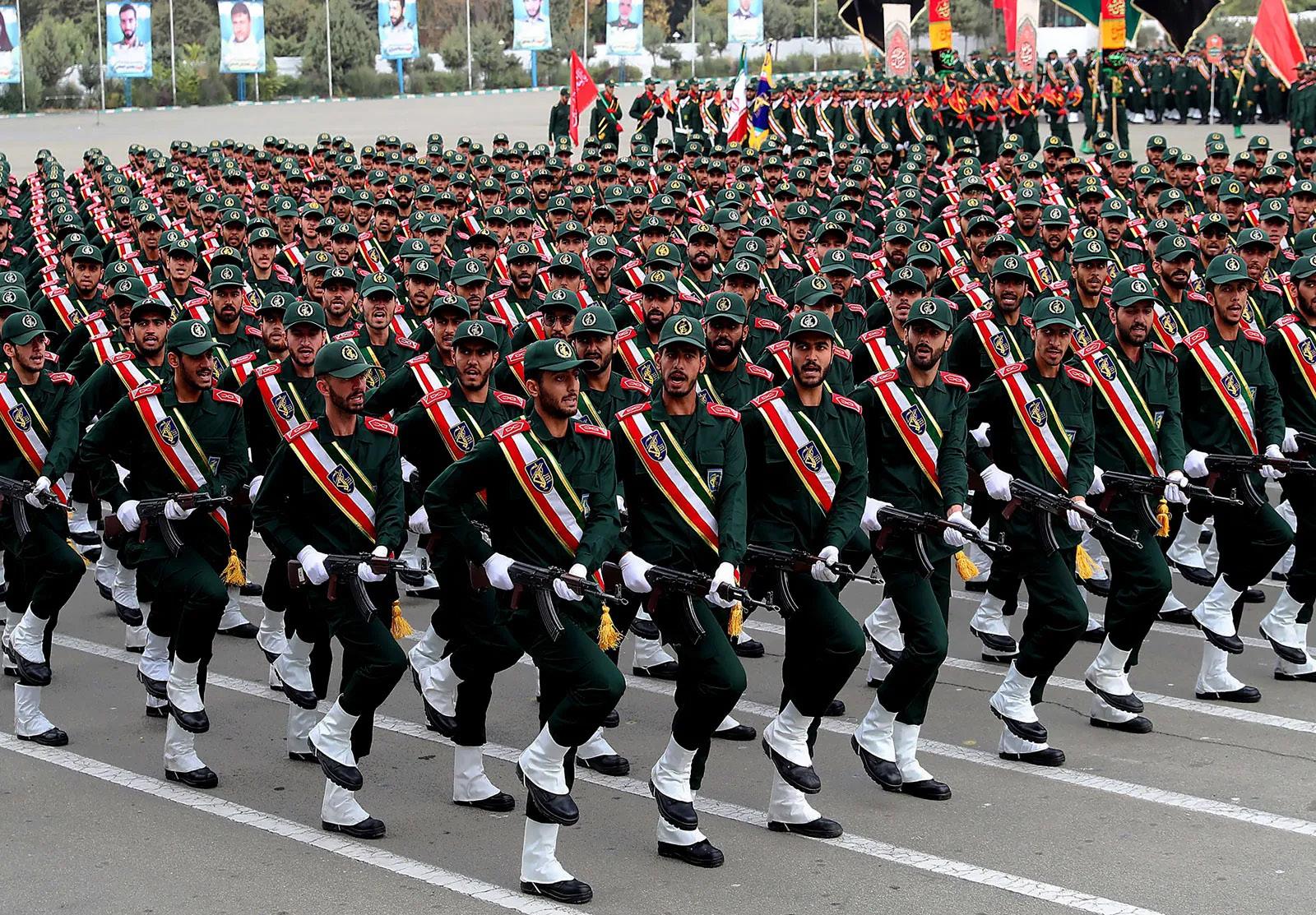
Learning from both Iranian history and post-colonialist liberation movements, the Islamic Republic developed a strategy of asymmetric warfare. Iran retains a central army whose role is territorial defence, but this army is kept weak to prevent it from threatening the regime. The Islamic Revolutionary Guard Corps (IRGC) was created after the revolution to defend the regime from enemies within and without. In turn, the IRGC created or supported a whole range of proxies and allied militias around the region, including Hezbollah, Hamas, Palestinian Islamic Jihad, the Houthis in Yemen and multiple armed Shi’ite groups in Iraq.
Collectively, these proxies acted to hollow out
their host countries in order to reduce resistance against Iranian will; kill enemies (of themselves and the Iranian regime) both within their own countries and around the world; generate income through drug trafficking and other forms of international crime; and, most importantly, act as a forward defence – the idea being that if someone attacked Iran, the regime would unleash its proxies.
Iran’s missiles and drones were for a similar deterrent purpose.
The threat to Hormuz was in the same vein; if Iran was attacked, it would impose a cost on the world. (That Washington and Jerusalem appeared to discount this threat is staggering, given the fact that for decades such a scenario was included in US ‘war games’ simulating an attack on Iran. Perhaps decision-makers and planners thought the war would be completed within a few days, or that the
The Islamic Revolutionary Guard Corps was created, in part, based upon lessons in asymmetric warfare learned from Iranian history (Image: Britannica.com)
Hormuz weapon wouldn’t be effectively deployed.)
WHAT THE WAR REVEALED
The war offered Iran painful lessons but strategic benefits. First, it learned that its proxies, drones and missiles did not have the planned deterrent effect. This is partially the result of Israeli degradation of Hezbollah and Hamas capabilities, but also partly because Iran’s proxies, other than Hezbollah, chose not to act. For instance, Israel had barely touched the Iraqi proxies, but they were mostly quiet during the war, as were the Houthis.
Hezbollah’s pre-October 2023 threat to target Israel with missiles and invasion was largely defeated before the war, but Hezbollah adapted and is now successfully deploying drones with deadly effect.
Three months after the war started, the Houthis announced a renewed blockade on Israeli-linked shipping in the Red Sea, but as we go to print, it is
unclear if they will enforce this.
Iran’s missiles, which rained down on its Gulf neighbours as well as Israel, imposed a cost, but not enough to make the US end the war. They have likely further convinced most of Iran’s neighbours that the current Iranian regime imposes an unacceptable risk, and it would be strongly in their interests for the current regime to go the way of the Qajars – but they will only act if they see the West strongly aligned in this strategic vision.
Second, Iran learned that global economic coercion works. In blocking Hormuz, Iran hoped the entire world would successfully pressure the US to stop the war. That didn’t happen, but it did provide Iran with leverage – a central motivation for the US in its negotiations with Iran was to re-open the Strait. Put differently, Iran has obtained significant financial and diplomatic benefits as a result of its blockade.
Iran blockaded Hormuz by attacking just a hand-
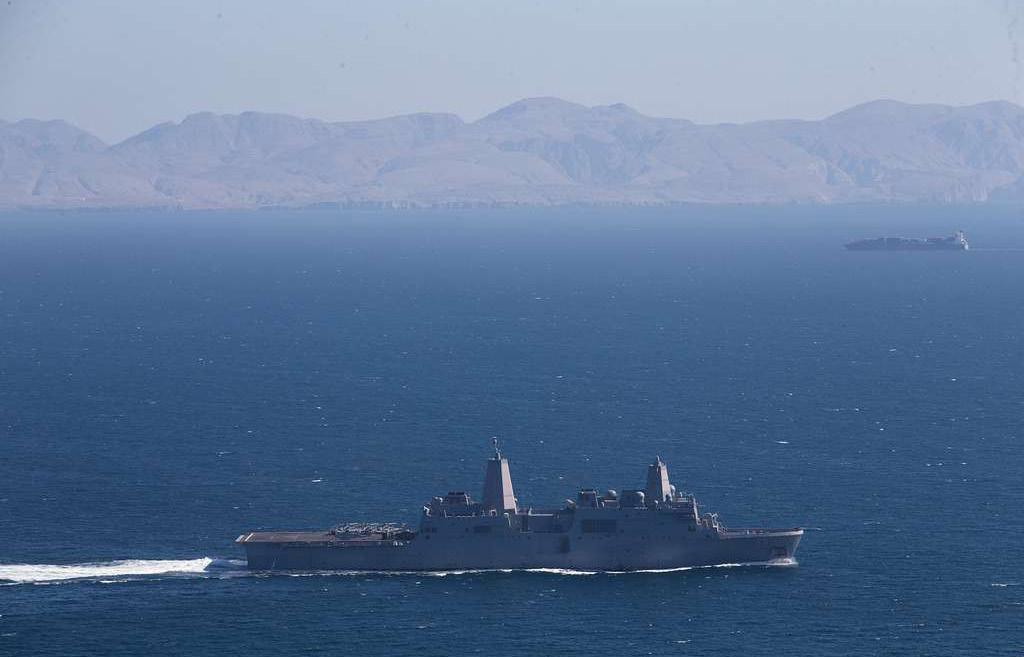
A US warship in the Strait of Hormuz: Further Iranian attempts to exploit the Strait as political leverage look all but guaranteed (Image: Shutterstock)
ful of ships and deploying a few mines, despite no longer having a functioning navy. In other words, Iran’s military losses did not remove the coercive power of its geography. It thus seems likely that the presumed costs of another major operation against Iran have significantly increased – meaning Iran is better off, strategically, than it was before the war.
The third and most important lesson Iran will have learned is about nuclear weapons. The Iranian regime has long presumed that the US wants regime change. The decapitation strikes at the beginning of the current conflict, which killed Supreme Leader Ali Khamenei and many other top leaders, will have confirmed that in Iranian minds. This confirmation, together with the knowledge that its three-pillar deterrence strategy did not prevent attack, leads to an unavoidable conclusion for regime leaders: Iran must obtain a deployable nuclear capability as soon as possible. Certainly, had Iran possessed nuclear weapons before this war, there is no way it would have started.
Thus, Western policymakers need to acknowledge that any agreement based on Iranian promises to limit nuclear development will not withstand the overriding regime priority of possessing this ultimate deterrent.
WHY IRAN THREATENS WESTERN INTERESTS
Iran’s renewed priority to achieve nuclear weapons capability underlines the other ways that Iran threatens Western and regional interests.
Iran’s strategy is to export chaos and then exploit the resulting disorder. Iran’s proxy network undermines governments and creates instability throughout the region. Consider the scale of death and destruction that Iran has caused, facilitated or prolonged since 2003 in Iraq, Lebanon, Syria, Yemen, Israel and Gaza. An Iranian quasi-nuclear
umbrella extended over its proxies will dramatically increase their confidence to act and dramatically reduce regional countries’ willingness to confront them.
Iran’s blockade of Hormuz, the Houthis’ blockade of the Red Sea and Iranian strikes on regional oil infrastructure increased living costs around the world. These were not one-off tactics; they will be deployed again if Iran believes doing so is in its interests.
Iran also facilitates terrorist attacks around the world, including in Australia.
Finally, given the chaos the regime spread when it felt its existence was threatened, plus the eschatological beliefs openly invoked by key regime figures, it is not unreasonable to consider that a nuclear-armed regime facing a successful internal revolt might seek to go down amidst nuclear strikes against its religious and ideological enemies abroad.
The idea that a theocracy that actively undermines regional states, encourages and facilitates proxy warfare and engages in international terrorism could obtain nuclear weapons has worried many, for many years. Decades of negotiations and sanctions – and this and last year’s wars – were attempts to delay such an outcome. That the regime has now definitively decided that its existence urgently requires such a weapon should focus Western minds like nothing before.
WHAT A WESTERN STRATEGY SHOULD LOOK LIKE
Just as Iran’s unavoidable conclusion from this war is that it needs to acquire nuclear weapons as soon as possible, the West should finally internalise that military and economic pressure has never altered the regime’s overall ideological objectives –but neither have diplomacy or sanctions relief.
The only durable outcome compatible with Western interests is the replacement of the Islamic Republic.
Invasion would be disastrous, so change must come from the Iranian people. Western efforts should therefore be used to weaken the institutions that protect the regime, roll back its regional influence, strengthen its internal opposition and prepare for the day after.
The West has long treated Iran as a tactical nuisance to manage. Now, it needs a sustained, cumulative policy directed towards a clear political end: the dissolution of the regime.
To succeed, this strategy must be a Western strategy, even if it is authored and largely enforced by the US – in this way, it shares similarity to Western Cold War strategy.
The Berlin Wall’s collapse was a moment in time, but its crumbling resulted from years of sustained policy aimed at bringing it down. The same patience is required here.
Notwithstanding any strategic gains Iran derived from the war, the West can and should exploit the significant blows it inflicted on Iran’s economic and military capabilities to advance its strategy.
A starting principle for any Iran strategy is that Iran’s proxies must not be allowed to win.
Iranian use of proxies is patient and strategic. The regime nurtured them over decades, while also exploiting unexpected events, including the US invasion of Iraq and the rise of Islamic State, to advance its existing strategy.
The West, on the other hand, usually supports local sub-state actors only tactically and temporarily. However, in every arena in which Iran deploys proxies, there are parties willing to fight them. These actors do not always align fully with Western values, but they usually strongly align with Western interests. The West should use generous carrots
and big sticks to ensure partners and proxies in the Middle East act against mutual enemies in ways that advance Western interests over the short and long term.
“The West has long treated Iran as a tactical nuisance to manage. Now, it needs a sustained, cumulative policy directed towards a clear political end: the dissolution of the regime.”
For example, Western- and UAE-backed forces in Yemen should receive the weapons, intelligence and strategic support required to defeat the Houthis.
Israel is the West’s most capable strategic partner in the Middle East and is willing and able to fight Hamas, Hezbollah and Islamic Jihad, all of which are part of Iran’s network. Since October 2023, Israel has fought them with US backing, while facing increasing diplomatic isolation from other Western countries.
Those countries have also become increasingly strident over Israeli policies they see as preventing Palestinian statehood, while paying much less attention to the Palestinian actions that produced those policies.
Israeli-Palestinian peace would be a blow to Iranian strategy – which is why, through its proxies, Iran has helped make such an outcome all but impossible. Sustained Western pressure must be applied to the Palestinian Authority to reform so it can regain domestic credibility. Only then can it be a realistic partner for peace. Israel should be pushed to help facilitate that outcome.
A transition in Gaza cannot begin until there is a credible partner willing and able to resist Hamas’
inevitable efforts to stymie progress. Despite all its rhetoric, the West has been missing in action on this front. In the absence of such a partner, the West must encourage Israel to continue its campaign against Hamas. Creating a credible replacement for Hamas in Gaza would be a strategic defeat for Iran and a victory for Gazans.
The Lebanese Government finally appears desirous of wresting sovereignty back from Hezbollah. Israel is helping by degrading Hezbollah’s capabilities whenever it can, and should receive full Western backing. The West should also provide Lebanon with considerable, carefully conditioned financial aid – enabling it to pay soldiers a salary that makes fighting Hezbollah worthwhile, and also implement essential domestic reforms.
Iraq likewise needs carrots and sticks. Western and Gulf investment could help reduce dependence on Iranian energy. In return, Baghdad should remove Iranian-backed militias from ministries, state contracts and independent chains of command.
The Islamic Republic must also be deprived of the revenue that sustains its proxies and tools of repression and allows it to provide financial incentives to its key loyalists. Any US-Iran deal that provides Iran with billions of dollars plus sanctions relief – as the US-Iranian Memorandum of Understanding (MOU) signed on June 19 reportedly does – is a strategic own-goal that should be reversed.
Secondary sanctions should target the banks, businesses and intermediaries in third countries that enable Iran’s shadow banking. Iran’s shadow oil fleet should likewise be targeted through sanctions on the ports, insurers, refiners and financial institutions that service it. Where lawful, ships and cargoes should be seized.
Ultimately, the Islamic Republic must be brought down from within. Iran’s internal opposition is frag-
mented, and each round of mass protest has been ruthlessly crushed. The West needs to provide internal and external opposition groups with money, secure communications, strike funds and organisational training. Minority communities, especially Kurds, Balochis and Arabs, should receive the means to protect themselves from regime forces.
Finally, the West must prepare for the day after. Libya showed the consequences of helping local forces topple a regime without securing the country afterwards. Contingency planning and in-principle coalition commitments should be developed now, with foreign troop deployments possibly occurring at the invitation of a recognised transitional Iranian authority. Such a force would secure nuclear and missile sites, protect essential infrastructure and prevent organised regime remnants from starting a civil war.
CONCLUSION
The Islamic Republic emerged from this war battered, but with new strategic advantages and with a clear goal: to acquire nuclear weapons capability as soon as possible.
That is a dangerous outcome.
The West can still exploit the damage inflicted on Iran by the conflict, but only if Western tactics become subordinate to strategy. Iranian proxies must be denied victory; the regime must be deprived of the resources that sustain repression and regional aggression; internal opposition must be strengthened; and plans must be made for the day after.
Iran has pursued its strategic objectives for decades. The West has, at best, managed crises as they arose. That approach has failed. It is beyond time for Western policy to become sustained, cumulative and a coherent grand strategy towards a clear political end: creating the conditions in which Iranians can replace the Islamic Republic.
IRAN'S ECONOMIC CATASTROPHE
Decay, damage and the long road back
MIAD MALEKI & DANIEL SWIFT
MIAD MALEKI is a senior fellow at the Foundation for Defense of Democracies (FDD), specialising in sanctions policy. A veteran of the US Air Force, he previously served as an executive at the US Treasury’s Office of Foreign Assets Control (OFAC). DANIEL SWIFT is a senior research analyst for economics, finance, and trade for the Center on Economic and Financial Power (CEFP) at the Foundation for Defense of Democracies (FDD). He is a retired US diplomat.
On February 28, 2026, American and Israeli forces launched Operation Epic Fury. The country they targeted was already in economic crisis: inflation had topped 50%, the currency was in free fall, merchants had shuttered their shops in protest, a major private bank had just collapsed. When the bombs began to fall on Iran’s petrochemical plants and military installations, they did not break a functioning economy, they shattered one already in advanced decline. Rebuilding the country will require political transformation the Islamic Republic has spent 47 years resisting — and without that transformation, the foreign capital needed for recovery will not come.
A CRISIS YEARS IN THE MAKING
By late 2025, Iran’s economy was unravelling. The International Monetary Fund had already estimated consumer price growth at 42.4% for 2025, with no expectation for improvement in 2026. Iranian merchants shuttered their shops in protest at the end of 2025, triggering mass demonstrations that the regime suppressed with brutal force.
The roots go further back than 2025. Per capita income had already collapsed from roughly US $8,000 (~A$11,300) in 2012 to approximately US$5,000 (~A$7,100) in 2024, hollowed out by decades of mismanagement, endemic corruption and layered American and other international sanctions. Overall economic growth had averaged little more than one percent per year over the prior two decades – with per capita income contracting for much of that period. Iran’s once-sizeable middle class had shrunk from 58.4% of the population in 2011 to 48.8% in 2019 – a
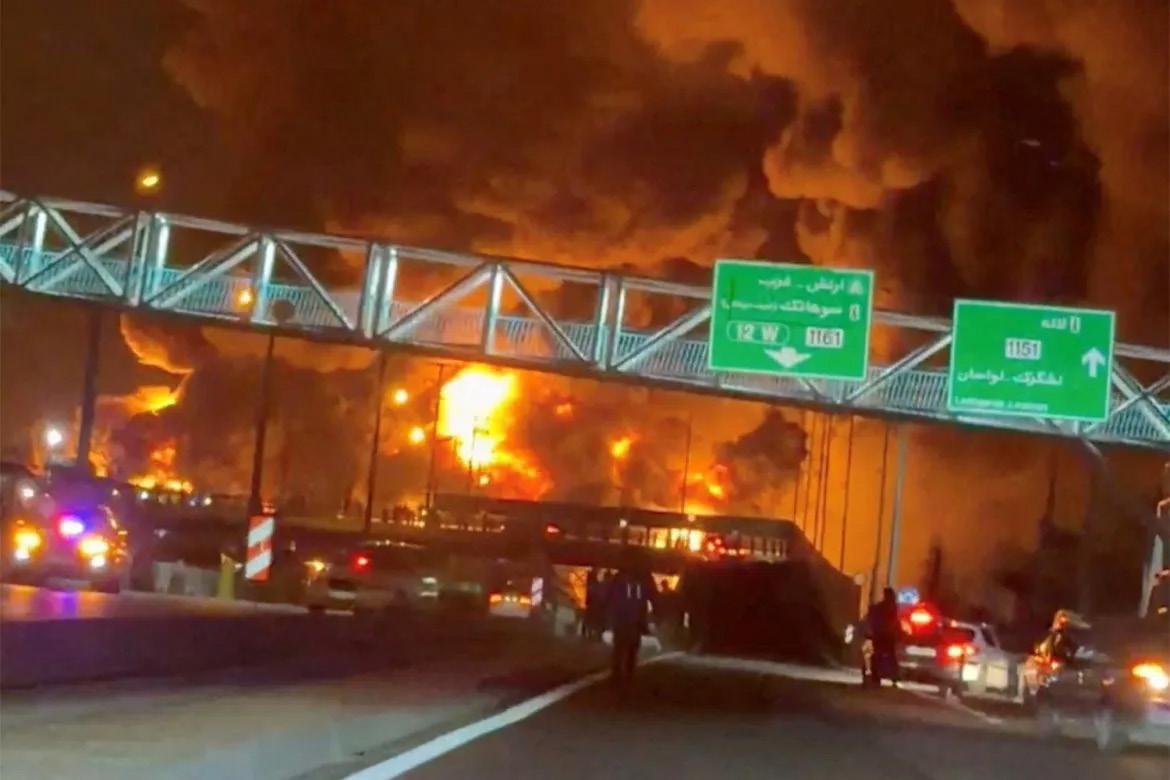
Oil storage facilities ablaze in Teheran (Screenshot/ X)
figure that continued to erode through additional sanctions rounds, the COVID-19 pandemic, and the 2022 protests.
Even Iran’s most productive sectors were struggling in peacetime. Chronic natural gas and electricity shortages forced factories to operate well below capacity. The country ranked near the bottom of regional logistics performance indices, which measure the relative ease, speed, and connectivity of a country’s supply chains. Iran’s leading financial daily, Donya-e-Eqtesad, had modelled 2026 inflation scenarios as early as late 2025 at 49% under a peaceful settlement with the United States, 67% under the status quo, and 123% in the event of open conflict. That last figure, in retrospect, proved prescient.
THE COSTS OF THE WAR
The Foundation for Defense of Democracy’s
(FDD’s) Center on Economic and Financial Power (CEFP) estimated the total economic damage at approximately $144 billion (~A$203.5 billion) — roughly 40% of Iran’s pre-war GDP – with a plausible range of $50 billion to $300 billion. The Iranian regime’s own spokesperson, Fatemeh Mohajerani, put the figure even higher than CEFP’s central estimate: US$270 billion in direct and indirect damage from the 40-day war.
The FDD model rests on two additive components: approximately US$53 billion in oil, gas, and petrochemicals losses and US$91 billion in physical replacement costs (military hardware and physical infrastructure). Critically, the US$144 billion estimate deliberately excludes categories identified as real but not yet reliably quantifiable — human capital losses, the cost of reconstituting Iran’s regional proxy network, informal economic costs from internet shutdowns, long-term foreign direct
investment deterrence, wartime inflation costs, and reconstruction financing premiums under sanctions. The estimate is, in other words, a floor rather than a ceiling.
Two-thirds of the economic damage came from the US and Israeli air campaign itself, with the remaining third attributable to the US naval blockade imposed on April 13. The air campaign’s most consequential strikes hit Iran’s two main petrochemical hubs at Mahshahr and Assaluyeh, including a devastating strike on the South Pars complex — responsible for more than 48% of Iran’s pre-war petrochemical output — on March 18. Iran had invested an estimated US$70 billion over decades in building this petrochemical infrastructure. Depending on the scope the damage, rebuilding it under sanc-
tions, without access to international capital markets or Western technology, could take more than a decade.
The US naval blockade has proven to be the most economically precise instrument deployed. Iran exported zero crude oil in May 2026 – down from just over 2.1 million barrels per day (bpd) in February, the last full month before hostilities. Estimated export revenues for May fell below US$200 million, against a pre-war monthly revenue baseline more than 20 times that figure. Oxford Economics estimated the blockade could cut off 70% of Iran’s export income. FDD estimates that combined daily economic damage from the blockade ran at approximately US$435 million per day.
The macroeconomic consequences are severe.
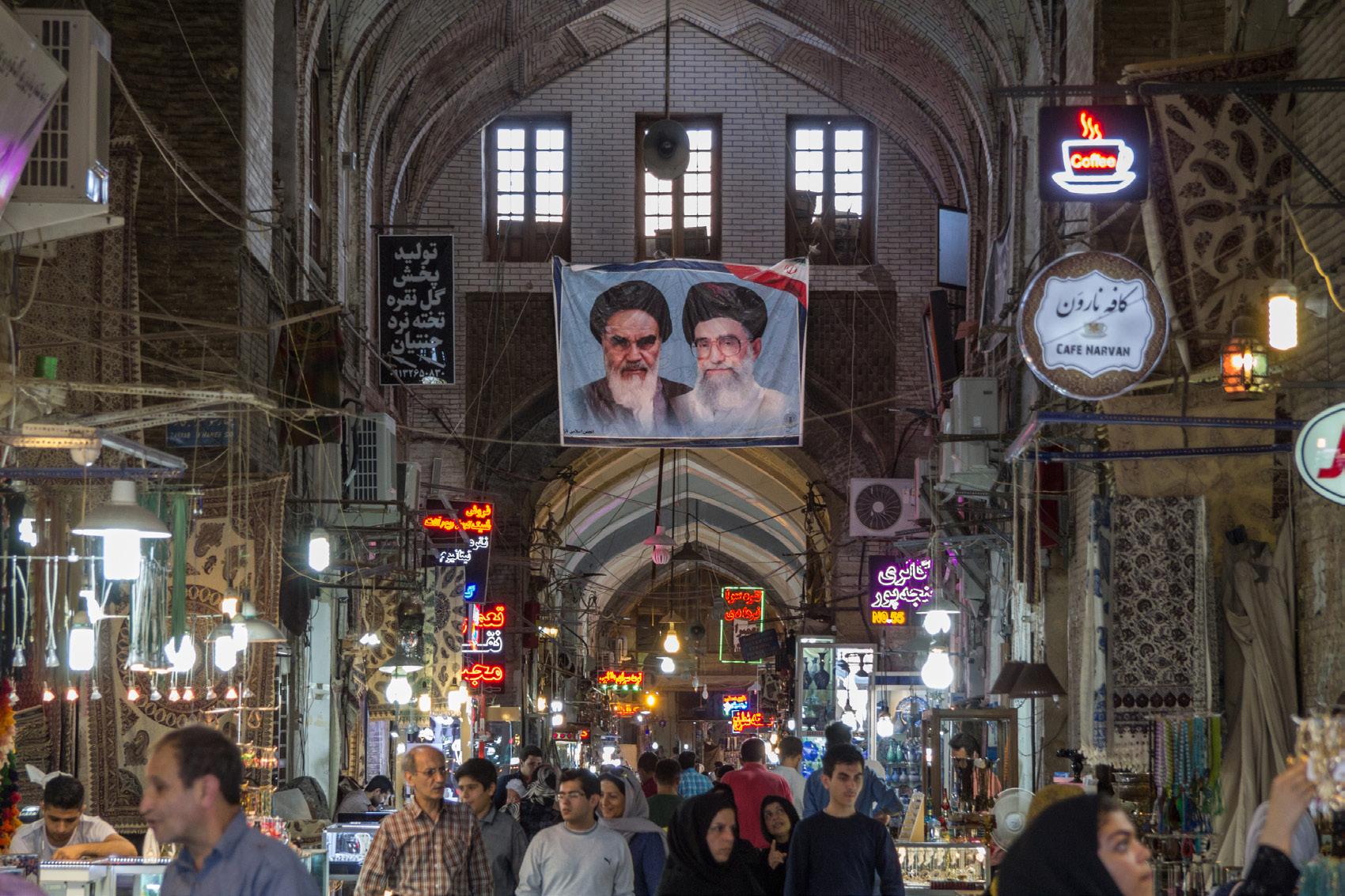
Teheran's famous bazaar, where even before the recent conflict, merchants said they could not keep up sustainable businesses in the face of the national currency's collapse (Image: Shutterstock)
Monthly inflation in May reached 8.8%, pushing the annual average to 57.7%. The Iranian rial fell to a record low of approximately 1.9 million per US dollar by late April. Bread and cereals prices rose 140% year-on-year through March 2026. Meat prices were up similarly 135% and dairy products increased 116.8%
Meanwhile, industrial damage produced an employment catastrophe. More than 20,000 factories and industrial units – roughly 20% of Iran’s production base — were damaged or destroyed. Iran’s largest steel complexes halted production. According to Iran’s semi-official Jamaran news agency, approximately 50 petrochemical complexes shut down.
Iran’s Deputy Labor Minister Gholamhossein Mohammadi confirmed at least one million direct job losses from the war. Economist Hadi Kahalzadeh, a former analyst at Iran’s Social Security Organisation, estimated the cumulative effect put ten to 12 million jobs at risk — approximately half of Iran’s entire workforce. A months-long internet blackout, imposed as a wartime security measure, was felt particularly hard by home-based workers — women accounted for one-third of all unemployment insurance claims in the 60 days after the war began, roughly three times the prior year’s rate for the same period.
The internet shutdown – which began on Jan. 8, 2026, when the regime severed connectivity in response to nationwide protests, and continued for at least 88 days, was itself a self-inflicted economic wound of significant scale. Independent estimates ranged widely: daily costs to the digital economy ran between US$30 and $80 million, while broader estimates reached as high as US $250 million per day when factoring in the paralysis of banking and traditional businesses unable to process payments or coordinate with sup-
pliers. The blackout has been characterized as the longest in history, with businesses severed from clients, foreign trade halted, and import-export operations ground to a standstill, since even basic functions like issuing pro forma invoices, confirming shipments, and transferring funds depended on connectivity. Freelancers, teachers, crypto traders, and digital entrepreneurs, who had built Iran’s fast-growing informal digital economy, were wiped out virtually overnight.
THE OBSTACLES TO RECOVERY
Even setting aside the scale of destruction, Iran’s path to a potential economic recovery faces structural obstacles that distinguish it sharply from postwar reconstruction in other contexts.
The most significant is the sanctions architecture. Key sanctions — including US Treasury counterterrorism designations on the National Iranian Oil Company (NIOC) and Iran’s Ministry of Petroleum — are not measures that a president can waive unilaterally. Reinforced in US legislation, they constrain not only government actors but deter private-sector participation from banks, insurers, and energy companies that face secondary sanctions risk. Any reconstruction program funded through international capital would require not merely an executive order but would require major political changes – including verifiable constraints on its nuclear program, dissolution of the Islamic Revolutionary Guard Corps (IRGC), an end to proxy financing (Hezbollah, Hamas, and the Houthis), human rights improvements, and limits on Iran’s ballistic missile program -- to satisfy the stack of statutory sanctions restrictions. These are no technical adjustments -- they would likely require the end of the Islamic regime itself.
Iran’s frozen assets held overseas, estimated at over US$100 billion (~A$141 billion) by Iranian
officials and independent analysts, represent a potential but deeply uncertain lifeline. Approximately US$12 billion is believed to be held in Qatar, US$10 billion in Iraq, and tens of billions in China. But not all these funds would be recoverable even under a full sanctions-relief agreement: some are entangled in legal disputes entirely separate from the sanctions regime. As of early June 2026, negotiators were discussing an immediate package of roughly US$12 billion — less than 10% of the estimated damage.
The IMF’s April 2026 World Economic Outlook projected Iran’s economy will contract by 6.1% in 2026, with an inflation rate of 68.9%. Senior Iranian economic officials have reportedly warned President Masoud Pezeshkian that restoring the waraffected economy could take more than a decade. Even Iranian Central Bank Governor Abdolnaser Hemmati reportedly urged Pezeshkian to pursue immediate peace and restore internet access as emergency economic stabilisation measures.
Iran’s traditional partners offer little comfort. China, wary of secondary sanctions exposure, has maintained a cautious posture throughout the conflict. Russia, consumed by its own war budget pressures, is in no position to provide major reconstruction financing. The Gulf neighbours that Iran’s strikes targeted — Saudi Arabia, Qatar, and others — are now actively seeking to reroute energy infrastructure to bypass the Strait of Hormuz rather than assist in Iran’s recovery.
THE ROAD BACK – IF THERE IS ONE
Diplomatic activity is ongoing. The 60-day Memorandum of Understanding signed in mid-June envisions phased sanctions relief, oil export waivers, a reconstruction fund, and the gradual unfreezing of Iranian assets. Reports of a proposed US$300 billion (~A$424 billion) reconstruction fund have
circulated as part of US negotiations with Iran, but many details still remain unresolved.
Donya-e-Eqtesad, the Iranian business paper, (currently off-line) laid out a four-stage domestic reconstruction model this month. First, macroeconomic stabilisation through currency reform and budget consolidation; second, institutional reform including anti-corruption measures over five years; third, development of non-oil export sectors over ten years; and fourth, a gradual transition to a market economy over 12 years. The publication acknowledged frankly that Iran requires a “native reconstruction model” – one adapted to its specific political conditions – rather than any imitation of post-war cases like Germany or Japan, which were rebuilt with open access to international capital and genuine institutional reform.
The Donya-e-Eqtesad roadmap is, in its way, an admission of how long this will take – and how much must go right. The regime, for its part, made a different calculation. It bet that an economy hardened by 47 years of sanctions could absorb the pain longer than Washington could sustain the blockade. That logic has precedent: Iran has outlasted pressure before, and its leaders know it. But Operation Epic Fury has simultaneously stripped Teheran of nearly every coping mechanism it has historically relied on — oil revenues, petrochemical exports, industrial capacity, and access to external finance.
For ordinary Iranians, who are bearing the brunt of food inflation exceeding 115%, mass unemployment, and destroyed social services, it is a bitter irony, as economist Kahalzadeh observed, that the oppressed people of Iran, with whom President Donald Trump expressed solidarity, are now bearing the greatest burden. The road to reconstruction begins, not with foreign capital, but with whether or not the Islamic Republic falls.

THE IMPACTS OF ANTISEMITISM
The Royal Commission testimony that shocked so many Australians
AIJAC STAFF
The well-documented explosion in antisemitism and antizionism in Australia since Hamas’ October 7 attacks was obvious to anyone paying attention, and something to which AIJAC has been drawing attention for more than two years.
When Jews were targeted at a Chanukah event on Bondi Beach by jihadists on December 14, 2025, an attack that killed 15 people and injured dozens more, including AIJAC’s Arsen Ostrovsky, AIJAC joined other Jewish organisations and other leading Australian figures across business, politics, defence, sports, academia and law in calling for a royal commission into what was clearly a systemic issue of antisemitism. The Government initially rejected these calls, but eventually agreed on January 9 to establish a Royal Commission on Antisemitism and Social Cohesion.
From May 4 to May 15, the Royal Commission held its first block of public hearings devoted, primarily, to the “Lived experiences of antisemitism, and its impacts on Jewish Australians in various domains” as well as defining and measuring antisemitism as a phenomenon.
It would seem fair to say that, as bad as the an-
tisemitism issue in Australia appeared in terms of statistics and media reports, the lived experience of antisemitism presented via the oral testimony heard by the Royal Commission was still shocking and harrowing, even for those who abstractly knew the extent of antisemitism in Australia.
Here are excerpts from some of those testimonies:
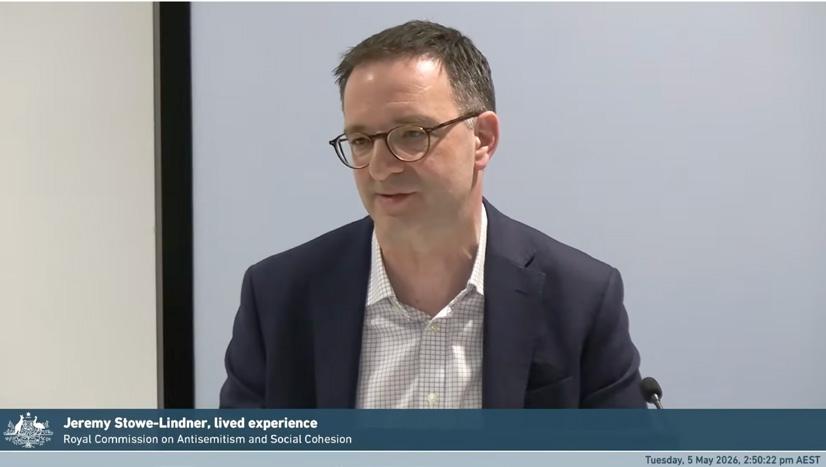
JEREMY STOWE-LINDNER (Principal, Bialik College)
“...Since October the 7th, we have faced... an avalanche of experiences... People driving by the school yelling ‘effing Jews’, ‘Jewish c...’ and fill in the rest, Nazi salutes... giving a gun symbol to our staff as they go past.
...Some of our students were once asked to leave public transport by an educator from another school…
We can’t go into the CBD in Melbourne anymore in school uniform because of what we’ll face. At sporting events, we have had Hitler salutes and Jewish slurs. Children attending university campuses have been spat on.
We have had to auto-block certain words on so-
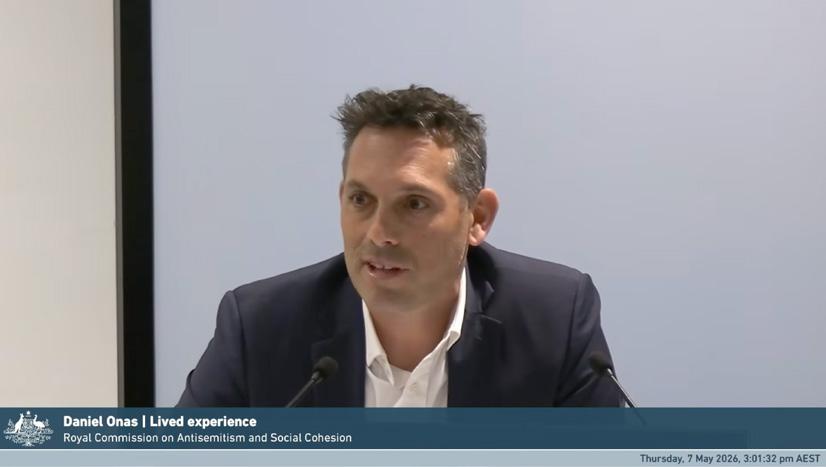
DANIEL ONAS (President, AJAX Junior Football Club)
“In this game involving one of our under-14 teams… an opposition player asked one of our players if they were Jewish. The player responded that he was, to which the opposition player remarked, ‘Hitler should have finished you off.’
In [another] game involving under-12s – an even younger age group – the opposition player remarked to our players, ‘Imagine being Jewish. F the Jews,’ after the siren of the game finishing.
In an under-18 game… there were several comments made towards our players. One player, said to one of our players, ‘You f’ing Jews’. Another player called a parent of our players who was attending the match, ‘A bloody Jew’ and a ‘Jewish dog’…
The number of individual references and continued aggression shown towards our players was incredibly dehumanising, just very confronting.”
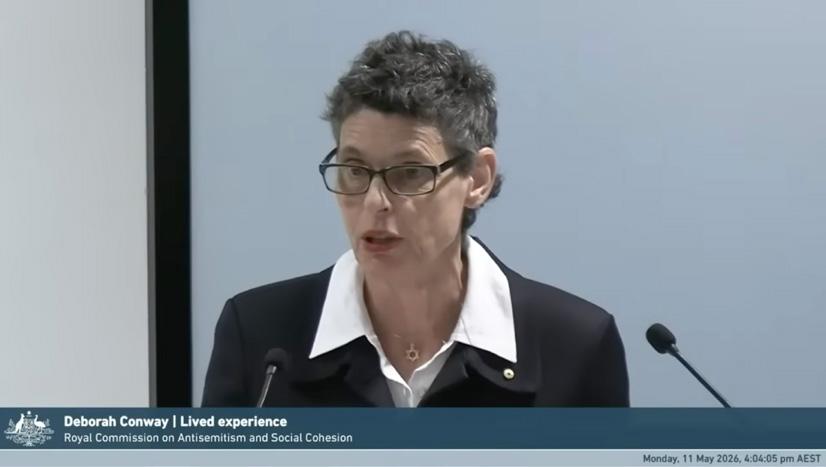
DEBORAH CONWAY (musician)
cial media. Kike, Hitler, hoax, pigs, scum, dirty, filthy, gas, vermin, parasite, Hitler, c... These have been of such volume... that we’ve developed an auto-blocking system and have shut down comments…
We’ve had a member of the Muslim community coming to pray at the school gates, presumably looking to generate a social media moment of being moved on, which obviously we didn’t feed into.
On a personal level, I’ve been called a Zio-Nazi, a fascist, a genocidal, a Zionist pig... I’ve had to upgrade my home security... putting gates and cameras and alert systems. None of that... would have taken place before October 7th.”
“Because I… had written this book, I had a whole series of writers festivals lined up. And one of the first writers festivals that had booked me was the one over in Western Australia. And I received a call from the festival director saying, ‘Look, I don’t want you to worry, but there’s been quite a lot of pushback about your being part of our program’… he said, ‘Don’t worry… it’s all fine, it’s under control.’ So, I thought, ‘Okay, well, it’s under control.’ Then I received a couple more phone calls and I thought, ‘Well, maybe it’s not as under control as they thought’… I turned up to this writers festival, there was a whole slew of security people that were there to keep me safe, maybe the audience safe, and they had included another bunch of writers…
The first two sessions were sold out, and they were fine… And the third session was a panel… and all these people rose to their feet within the audito-
(From top) Jeremy Stowe-Lindner, Daniel Onas, Deborah Conway (Screenshots)
rium and unfurled their signs and started screaming things at me, and I was shocked… offstage security came in, they removed these people, and then we resumed the discussion. But I did feel very shaken by it…
I think one of the most horrific things that I had to encounter was a bookshop in Brisbane, a small suburban bookshop in Brisbane… and there’s a dozen people outside, and they’re wearing masks, and they’ve got massive signs saying, ‘Globalise the Intifada’… and they’re screaming at us, and they literally screamed for the next 45 minutes and pounded on the glass. And one of the worst things was that the police turned up, and there were a lot of police, maybe ten… and they just stood there, and they thought that was okay, because that was freedom of speech.”
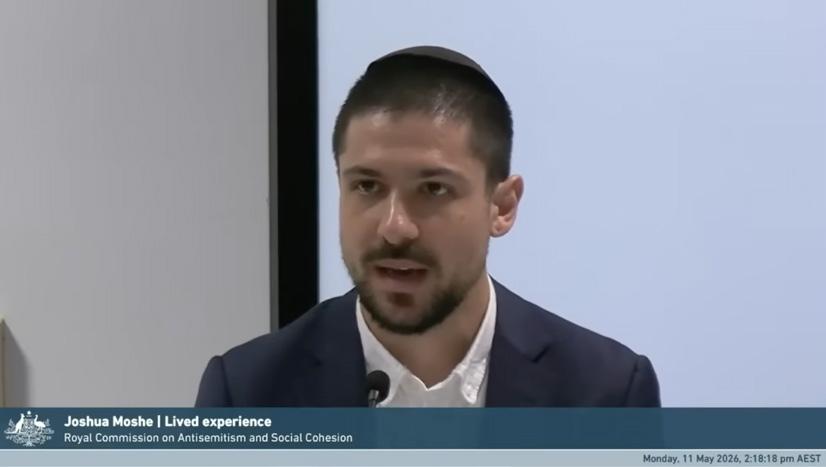
JOSHUA MOSHE (musician)
Moshe, a saxophonist, was publicly condemned by and expelled from the band 30/70 in January 2024 when a comment he made in the doxxed Jewish creatives Whatsapp group leaked. The band ultimately issued an apology under legal pressure in March 2026.
“[In December 2023], I had dropped my wife off at emergency and I went to park the car. And as I got out of the car and I was using the app that they use in that area to pay for parking, someone drove past and wound down their window and they screamed out the window of their car: ‘You fucking Jewish rat. Palestinians – you effing rat…Take another effing photo, you filthy Jew.’…
(Following the doxxing, the shop run by Joshua and his wife was forced to close due to relentless targeting.)
“[People were] targeting our shop, images of us, like taken screen grabs from our shop’s social media, and plastering like, ‘Zionists’ or boycott. There
were images of me taken from my press photos as a musician saying that I’m a Zionist or a Zio, and that I have been plotting for the Zionist entity… it was every communication channel that people had access to. It was via all of those means. We were receiving emails. We were receiving Google reviews. Facebook messages. It was relentless…
I was feeling extremely anxious, devastated, feeling like my life was starting to unravel… Yeah, I struggled to sleep. I had elevated heart rate. I had night sweats…
(Following the band denouncing and expelling him, he received a phone call through the shop.)
“The caller said: ‘You racist MFs, better keep watching your MF back. All us black girls know where you are now.’… and that message was accompanied with a photo of our son that was taken somewhere on social media…
The front of the shop had been stickered with boycott stickers and that included the Magen David and the flag of Israel with a red cross line through it and the word ‘boycott’ and they were stickered all over the front of the shop [the next day]…
Every few days or a few times a week, the shop would be stickered… Then it turned into spray-paint graffiti…
Someone drove past as we’re unloading boxes [while closing the shop to move to another location] and screams out the window, ‘Good. We don’t want Zionists in Thornbury anyway.’ Someone else pulled the finger at my wife Maggie as they walked past.
Joshua Moshe (Screenshot)
And someone else in the street called Maggie a Zionist bitch…
I was removed from a record label I was on. I had threats called in to venues where I was performing where, both times, the venues had to organise additional security and implement additional security measures so that the performances could go ahead…
A musician who was booked to perform with me called me quite distraught and said that they were really sorry, they had to pull out of this performance with me because they felt unsafe because if they associated with me, they would lose work…"
ABM (anonymous employee, anonymous submission)
ABM started a position at the Australian office of an international company in August 2025 and
was told to change her identifiably Jewish name to one that wasn’t, which she did. Her predecessor had been an Israeli and an international stakeholder had refused to work with them on that basis.
“My CEO raised the fact that my identifiably Jewish name could potentially add some complexity to [a stakeholder] relationship… That there was concern of being affiliated with Israel and the political views and everything that is attached to that. He suggested, or requested, that I go by a different name in the workplace... and use a name that was less obviously Jewish. To be honest, I think I was in pure shock that this was a conversation being had.
My Jewish identity – my name being synonymous with being Jewish... tied to a foreign conflict I had nothing to do with and no personal involvement in...
[It] was really simply about me being Jewish... I
INSTAGRAM CAROUSEL (click on image to view)
was perceived through that geopolitical lens on a conflict on the other side of the world. The impact was quite profound. I felt a sense of shame that I hadn’t felt before…
It really made me question whether or not I can be outwardly and openly Jewish in professional workplaces.”
BENJAMIN F
“When I converted to Judaism, it was really a process of coming out again... It was quite horrific, actually. When I came out as gay, I had support from close friends around me. When I began telling people that I was embarking on this Jewish journey, I lost a significant number of friends…
I’ve had people who I would have considered lifelong friends and companions who have abandoned me. I’ve been subjected to slurs. I’ve been called a genocide supporter. I’ve been told that I’m immoral…
Spaces I once considered safe, I once considered my community… I no longer feel culturally or physically safe in anymore... I can’t talk about being Jewish... without someone feeling the need to refer that back to... the political situation in Israel and the Middle East.
...No matter what you say, it seems that you can’t win... They will say, ‘Oh, you’re justifying genocide’ ... They will call you a ‘Zio’, which is the new insult that seems to be used...
I feel alone... I have had lifelong friendships that have disintegrated, some subtly, others more overtly. And it’s lonely. It’s lonely…
[At the Mardi Gras] I was scared for my life. It was a guttural fear. [We] genuinely thought we were going to be attacked. It was a real and genuine fear…
We were advised by the president of Dayenu [the Jewish LBGTQI+ society] not to wear anything identifiably Jewish [after the parade]... We were asked
to remove any of those items of clothing before we would go on to other venues, and that’s what many of our members did.”
MIA KLINE (university student)
On May 7, 2024, Mia’s two housemates, and friends, called her for a house meeting...
“I entered the living room a couple of minutes late and both of my housemates were sitting on the couch with notebooks in front of them… my housemates, kind of started speaking about how, for the past couple of months since 7 October and the war, they felt like they’ve been walking on eggshells in the house around me and that the house wasn’t a safe space for them…
And that they couldn’t reconcile my views with their values and that we couldn’t live under one roof. This was all in relation to me being a Zionist… they said that they couldn’t live with me. They then asked if I had anything to say. I was sitting there, distraught. Sobbing. And I said, no, I’m going to go for a drive…
I packed a bag and that was the last time I saw my housemates…
These were some of my best friends at the time. To have two of your best friends turn around and say they can’t live under the same roof as you because are you a Zionist, I was incredibly isolated. I withdrew from social circles. I had to postpone my exams because my exams were the next month… I took off my Magen David, my Star of David, and I didn’t wear a necklace that said ‘Mia’ in Hebrew for a very long time.”
ABJ (crisis hotline volunteer counsellor)
“After 7 October, from the next shift on, you would take five to eight calls a shift, depending how long the calls took, but after that, I would get at least one call per shift, sometimes two, sometimes
three. But at least one call per shift where initially, straight after 7 October, it would be about Israel or and the war even before, you know, Israel even responded. But then it quickly commenced to we know about Zionism, about Jews, about what happens in this country with the Jewish lobby and that kind of thing…
[One said] everything is controlled through the Jewishness, through Trump, everything is controlled through that. And then, you know, he went on a rage about that. Or I would get a call that –they would have to say they were in crisis to use the line, so they would say they’re in crisis they couldn’t go into McDonald’s. They can’t go to McDonald’s. Why? ‘Because we know who owns McDonald’s. The Jews own everything. They have their tentacles everywhere and they just own everything.’ I also had one caller who was unemployed and never went to apply for work because, ‘You know who runs all the companies in Australia; they’re all Jews.’”
JOSHUA GOMPERTS (paramedic)
“I was around the age of 13 years old. I was walking home from synagogue, quite obviously Jewish with a black hat on, wearing a suit. I was almost at home as well when I had another youngish person that lived in my street throw and break a glass bottle over me while swearing and screaming antisemitic slurs…
At the age of 14 I was walking to synagogue with my family, and we had a group of people throw eggs at us from a moving vehicle while screaming antisemitic slurs at us as well…
At the age of 16 I went to a culinary school in the evenings… and there was a particular person in that class, and every time he would make a mistake, it was always the same comment of ‘fucking Jew’. And I called him out on that and I said, ‘Why do you say those comments? You can see I’m obviously
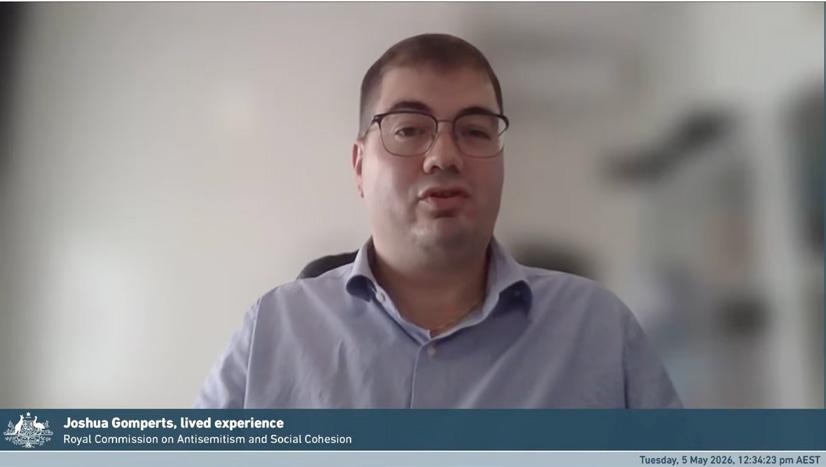
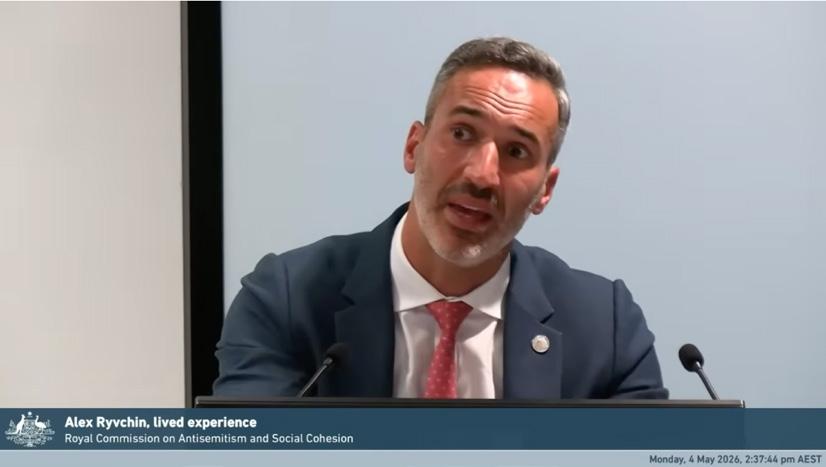
Jewish.’ He said to me, you know, ‘The Jews are the bane of existence,’ but he couldn’t really explain any further why…
We were in an Emergency Service compound [on New Year’s Eve in 2011]… And we were sitting around, as we do, with the other services, and one of the firefighters looks at me and he goes, ‘You’re a Jew’. And I was a little bit thrown off as to what the statement had relevance for.
And he pulls out a large hunting knife and looks at me and goes, ‘I would skin you the way my family skinned yours in the camps…’
We were sitting around at a standby for emergency event that had gone on, a natural disaster that had taken place, [In 2023], and this particular colleague out of nowhere just says to me, ‘As a Jew, how can you support the killing of babies?’ And I was a bit bewildered, because we hadn’t been talking about Israel.”
ALEX RYVCHIN (Jewish community leader, whose former home was targeted in an
(From top) Joshua Gomperts, Alex Ryvchin (Screenshots)
antisemitic vandalism attack in Sydney in January 2025)
“We have had to appoint a security agency that reviews all the online content and the threats, because if I had done it myself it would consume my life and I would have time for nothing else… Week after week, streams of pages with abuse directed at myself. Not merely abuse; I mean abuse is like water off a duck’s back at this point. We are talking about death threats, threats against my children, my wife. People seeking out my address, threatening my home. Fixated individuals. I’ve dealt with dozens of individuals who day after day post about me in a personal way, who trawl through family photos and repost photos of my children.
commotion behind me and then I heard someone screaming words to the effect of, ‘How many babies would you need to kill in Gaza before you will be happy, you effing Jew.’ So I turned around and I could see people – there were probably 10 or 15 people on that train with me started to move away from that individual.
And as I turned around, I saw he was a rather large man. He was dishevelled looking, but he was aggressive and he was actually looking to try and bait me into some sort of altercation…
I must say that I don’t allow my children or my children even of their own volition don’t wear their Star of David necklaces in public and they have toned down their Jewish visibility when in public
“I’ve been abused on the street… To be called a ‘Jewish dog’ on the streets of Sydney, it shocked me. I stood there hearing these words and it stopped me in my tracks”
I’ve been abused on the street… To be called a ‘Jewish dog’ on the streets of Sydney, it shocked me. I stood there hearing these words and it stopped me in my tracks. And it made me realise the low point to which we have fallen as a society…
It has impacted on my wife and my children, our ability to live spontaneously – to walk down the street, to walk our dog, to go to the shops without having to plan beforehand and ensure security is in place.”
KOVI PANETH (businessman)
“I was in Sydney on business… and I was on the Skytrain back to the airport… I heard a bit of a
out of concern and fear…
My [daughter] just several weeks ago was at a bar on Saturday night on Chapel Street here in Melbourne where, I suppose, a gentleman came up to her and tried to get her phone number from her. And she politely said no thank you. He was quite persistent and then he turned around and said to her, ‘I’m a Muslim. You’re a Muslim. Why won’t you give me your number?’ To which she said, ‘No, I’m actually not a Muslim.’ And his response was then, ‘Oh, are you a dirty effing Jew?’…
She was floored by the comment, but she actually had the wherewithal to take out her camera and start videoing and say to him, ‘Do you want to say that again?’ And one of his friends came over, saw
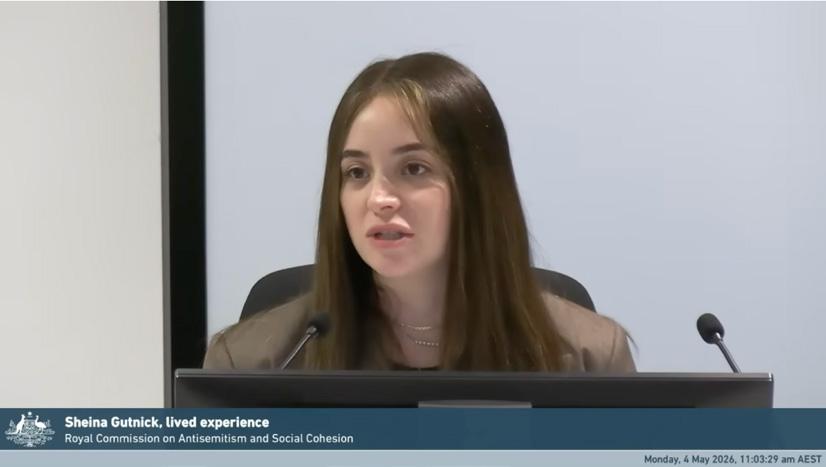
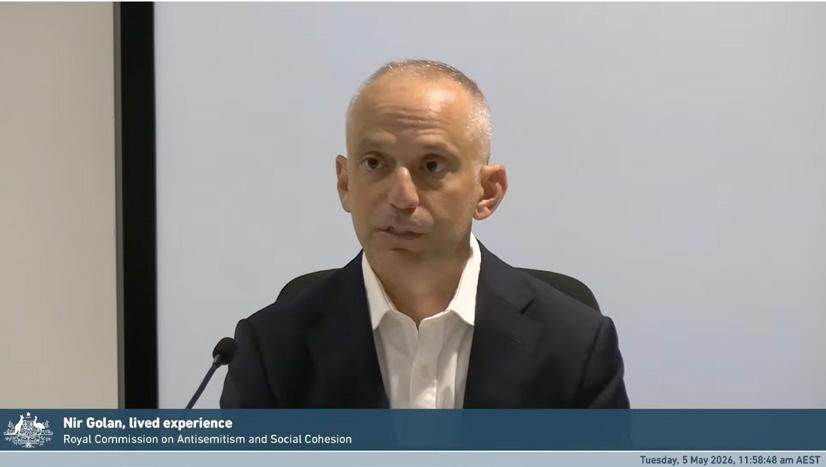
what was going on, grabbed the phone out of her hand and refused to give it back to her and then said to her, ‘Ignore him, he’s drunk. I’m sure not all Jews are dirty effing dogs’…”
SHEINA GUTNICK (daughter of Bondi attack victim Reuven Morrison and Public Affairs Officer for the Combat Antisemitism Movement)
“On several occasions in both Sydney and Melbourne in the last two and a half years I have witnessed cars driving past on main roads with passengers shouting ‘Free Palestine’, followed immediately by ‘F the Jews’…
My child was scheduled to undergo surgery shortly after the widely-publicised incident involving nurses at Bankstown Hospital. During that time, I felt genuinely terrified about entering the hospital system. I was frightened about who would be responsible for her care, whether any staff involved might hold hostile views towards Jewish people, and whether that hostility would affect the standard
of care she received or place her at risk of negligent harm.
In December 2024 I was walking through Westfield Bondi Junction holding my 12-month-old baby. A man pointed at my Star of David and called me an ‘effing Terrorist’. I felt shocked, exposed and unsafe. There were many people around me but no one intervened…
I have received and seen hundreds of comments including people stating in response to posts that both I and the organisation, Combat Antisemitism Movement, that I should have been killed in the Bondi attack; calls to kill Israelis; comments celebrating violence against Jews; as well as claims that attacks against the Jewish community are false flags staged by Jews themselves for attention or sympathy.”
NIR GOLAN
“I was coming back from the city [in late October 2023]. I had taken the train into Bondi Junction… It was rush hour, about 5 o’clock in the afternoon, and I decided to walk from the train station to the bus station on Oxford Street, and as I started walking, a man, a white man, wearing military-style clothing and a military backpack approached me and started shouting and getting in my face very aggressively. He appeared very coherent at the time and deliberate in his actions and started calling me all sorts of racial slurs, among them ‘dirty Jew’, started doing the Nazi salute and started doing a gun finger at my forehead imitating like he wanted to kill me…
It was in broad daylight. There were many people around us. And so after a bit of – after he put out the gun finger, I actually took my phone out to record him and said this is a hate crime and I’m going to be reporting it, and this enraged him and he started getting physical. No one intervened, unfortunately, except for one tourist, an American tour-
(From top) Sheina Gutnick, Nir Golan (Screenshots)
ist, who jumped in. That tourist ended up getting bashed pretty badly…
I wear a kippah [Jewish religious skullcap] but I now cover it up with a baseball cap. And at home, we have had to change our children’s behaviour. Our children go to a Jewish school here in Sydney. Their school uniform has very identifiable Jewish symbols on it and so we make sure that as soon as they come home from school, they take their uniform off. We don’t let them out of the house with their kippah on.”
AAT (businessman, testifying about the experience of his then 13-year-old son’s experience in school in 2025)
“He entered school in term 4, but in the beginning of term 1 the following year, a few weeks in, he said that he was being called ‘dirty Jew’, ‘stinky Jew’ and there were other Nazi style slurs against him. Kids would make the Nazi salute and he heard kids say, ‘Glass the juice’ which is a way of saying ‘gas the Jews’ and that ‘Hitler didn’t finish the job.’…
In the beginning of the year I checked in on him often in the beginning to see if it was happening again, and he assured me that it wasn’t. But then in September he told us that it was and, in fact, it had been happening really, there was a few weeks break but it just kept on building and he didn’t want to disclose it because he knew that if he did, it would just be too hard for him to keep going to the school…
I think the most important thing in the context of this Commission is that in my red flag to the school, I mentioned that my son was experiencing racism and bullying and physical bullying, and after 10 days for the vice principal to come back to me, you know, with his investigation, with the results of his investigations, and in that email he referred only to the physical bullying, nothing about the racism. But also, in referring to only to the physical bul-
(From top) AAP, Maya Hockey (Screenshots)
lying, he implicated my son, saying that it was part of play fighting… But I think what the really relevant here and what we’re seeing a pattern of is that he completely ignored anything to do with racism…”
(His son was pulled out of that school and put in a different one, where antisemitic behaviour and slurs continued)
AAG (High School student)
“I’m very open about how I am Jewish in school… [other students have] thrown coins at me and asked if I was going to pick it up. They’ll normally say, ‘I hate juice,’ which is [used as a euphemism for] Jew… Sometimes they try to rile me up by pretending to sneeze. Instead of saying ‘atchoo’ they say, ‘a Jew’. And a couple of people have done the Hitler salute…
They would do Hitler salutes to me while the teacher was turned around [while teaching The Boy in the Striped Pyjamas]…
I try to stand up for other Jewish kids who get bullied because sometimes they don’t openly refer
themselves to being Jewish because of what has happened to us in the past. On the school bus one day, I heard another student calling another student, bragging about how he made a Jewish kid cry…
Not many people want to let other people know that they are Jewish because of safety reasons.”
AAP (testifying about her children’s experience in school)
“Very soon after [October 7], the sentiment towards Jewish people became very negative, and that was shown through the way that the kids spoke at school, through social media. So very soon after, both my older kids came home telling me that they didn’t want to be Jewish…
They are comments thrown around by ordinary kids… And it’s constantly like, ‘You dirty Jew.’ So they won’t call another Jew that; they’ll call each other that, it’s kind of a joke/insult. ‘You dirty Jew’. ‘We hate Jews’. There’s a chant, ‘Jew, Jew, Jew, Jew.’ Things about Jews and money, just all the time, it’s prolific…”
MAYA HOCKEY (first-year university student testifying on her own and her brother’s school experience)
“When students initially found out that I was Jewish, whether it be because, you know, my mother was Israeli and was asking questions about my background or just naturally came up in conversations, the immediate recognition of what a Jew was, was associated with antisemitic comments such coming up to me and ‘Heil’ing Hitler or telling me that I should be gassed. And the fact that for these 12-year-old kids were not exposed to much, and most of their knowledge would have come from media or parents, and the fact that their association with Jewish people… was immediately negative tropes associated with the Holocaust and
thinking that it was normal and acceptable to come up to me and harass me daily…
(After moving to a Christian school in year 8)
“At this point, I was 13, 14 and still very ashamed of my identity. I did not want anybody to know I was Jewish, as I thought that if I hid that then maybe I wouldn’t be subject to comments and I could maybe fit in. And as people, again, found out that I was Jewish, as it is a part of me and will always be a part of me, I experienced the same kind of remarks. Again, my friends would harass me, would do the ‘Heil Hitler’ salute, would tell me that I should be gassed. I even remember a conversation with one of my very close friends where she casually said, ‘Aren’t the Jews the ones with all the money? They hold all the power.’ And everyone laughed along as if it was just a joke…
Comments had reduced, and then after 7 October, they increased. And initially it was almost daily… those comments you mentioned [‘Free Palestine’, ‘How do you feel about Israel’s killing of Palestinian babies’] before were being made, and it became such a big burden for me to have to carry…
We approached the school after my brother had reluctantly told us certain things that were happening. I think the first incident was he was sitting in class with friends and they told him that because he was a Jew that he should be gassed. Further, students in my year group would harass him yelling, ‘Free Palestine’…
There was a group chat that was created with kids in his year, with the title of the group chat ‘Swastikas’, where kids all sent photos of themselves ‘Heil’ing Hitler…”
As a depressing coda to this testimony, many of the who publicly named witnesses who testified were subsequently targeted online with intimidation, death threats and antisemitic abuse.
ACTS OF COMMISSION
Inquiry into antisemitism brings out the haters
JAMIE HYAMS
As the Royal Commission on Antisemitism and Social Cohesion held public hearings on lived experiences of antisemitism, a flood of articles appeared in the usual online sources seeking to minimise the problem of antisemitism, to blame Israel, and to denigrate witnesses, Zionists generally, and the Commission itself. Some propounded conspiracy theories about it. Many complained that it was largely mainstream Jews who were heard, as if that’s somehow inappropriate. Some, ironically, made antisemitic comments themselves.
Pearls and Irritations
In an edited version of his submission to the Commission, posted on May 18, website founder John Menadue complained about the alleged “use of the term ‘antisemitism’ to describe criticism of genocide in Gaza,” adding, “The upsurge in antisemitism, and the conduct of Israel’s military campaign in Gaza, have occurred simultaneously and are plainly connected.”
He referred to “the structural weaponisation of accusations of antisemitism,” claimed, in an echo of antisemitic tropes about undue Jewish influence, “We need a public inquiry into the [Zionist]
lobby’s activities more than we need one on antisemitism,” and asked, “When will perpetual victimhood end?”
On May 7, retired Commonwealth public servant Paddy Gourley claimed, “If the Bell Royal Commission is to succeed, it must… make its recommendations in the appreciation that the Netanyahu Government… is significantly responsible for the stimulation of antisemitism here and around the world.”
In an edited version of her submission, posted on June 3, Jepke Goudsmit, a member of Jews against the Occupation ’48, claimed the Commission itself is racist, writing, “Exceptionalising antisemitism is a form of racism in itself.”
She followed with an anti-Israel rant, and then wrote, “To counter the shift in public opinion about Israel, the apologists of genocide… accuse anyone criticising Israel and standing up for Palestinian rights of antisemitism.” In fact, mainstream Jewish community bodies endorse the IHRA definition of antisemitism, which specifically states that criticising Israel as you would any other country is not antisemitism.
She continued, “Antisemitism will increase as
long as Zionist peak bodies of Australian Jewry hold power over our politicians and public institutions, and millions of taxpayers’ dollars are spent on protecting the so-called Jewish community.” There’s that Jewish power trope again.
Goudsmit’s piece also appeared in Green Left Weekly on June 12.
On May 5, in a column his paper printed on May 2, Canberra Times columnist and former editor Jack Waterford insisted that “what the Jewish community has complained of as an avalanche of antisemitism has mostly developed in popular hostility to the actions of… Israel: not in any outbreak of hostile feeling against the Jewish religion or against individual Jews.”
Then came a screed against Israel typical of Waterford before he claimed Jewish organisations, “particularly those with Zionist in their name… regard any criticism of Israel as being inherently motivated by antisemitism…”
He then said that “the brutal October massacre” was merely “a particularly bloody example” of Palestinians revolting against Israeli occupation.
On May 21, an edited submission by “community activist” Paul Laris accused Israel of a litany of crimes including genocide. He then claimed, “This historical well of antisemitism had the pathological potential to be reactivated and exploited. The atrocious behaviour of Israel has done exactly that in Australia... Israel and its Zionist supporters, who claim to represent all Jewish people, have deliberately conflated public outrage against Israel with antisemitism.”
Green Left Weekly
Janet Parker, a member of Socialist Alliance and Jews for Palestine WA, wrote in her submission, published on May 4, that “Israel has spent 78 years trying to erase the Indigenous people; taking over
their land and seeking to destroy their existence… Seeking to deny this reality with disingenuous accusations of antisemitism… is both grotesque and has the perverse consequence of fuelling antisemitism.” She described Israel’s war in Gaza as “the holocaust of our time.” She also claimed that “exceptionalising Jews by holding a royal commission only into antisemitism… likely increases antagonism toward Jews.”
On May 18, Shamikh Badra, a convener of the Coalition for Justice and Peace in Palestine and PhD candidate, wrote, “there are concerns that the commission will expand the definition of antisemi-
WATCH: After Bondi – AIJAC's Joel Burnie with a message every Australian must hear
tism to include criticism of Israel, or Zionism, or even pro-Palestine protest movements.”
Michael West Media
NSW Upper House ALP MP Stephen Lawrence wrote, on May 14, “witnesses have sought to conflate criticism of Israel with antisemitism… This conflation, however, seems to be worsening antisemitism. The [far left] Jewish Council of Australia spoke in their evidence of ‘a politicised and divisive discourse which seeks to label any criticism of Israel as antisemitic, thereby increasing antisemitism by linking Jewish identities to the state of Israel and its human rights abuses.’”
On May 12, Professor David Heilpern, Southern Cross University’s Dean of Law, said he had sympathy for victims of antisemitism, “But then I say to myself, ‘Well, at least they have all their limbs.’” He wrote a long article seeking to debunk one witness who complained about a lack of reaction to
antisemitic attacks.
Stephanie Tran, in her May 6 piece, complained that “the hearings are dominated by established, pro-Israel Jewish organisations, while progressive and non-Zionist voices remain marginal.” She quoted prominent anti-Zionist Jew Antony Loewenstein saying, “Conflating Israel and Judaism, pursued by the so-called mainstream Jewish groups in Australia, is both historically inaccurate and dangerous, tying Jews to the actions of a genocidal Jewish state.” In fact, Zionism is an essential part of Jewish identity for the vast majority of Jews.
Deep Cut News
An unattributed May 12 article claimed “many of the testimonies” framed “political disagreements over Zionism, Israel and Palestinian advocacy as ‘antisemitism’,” and stated, “Progressive Jewish voices, such as the Jewish Council of Australia (JCA), warn that ‘genuine concerns’ of antisemi-
WATCH: Grace Tame calls October 7 sexual violence "debunked propaganda", but here are the facts…
tism ‘are being manipulated by the right wing proIsrael lobby to silence criticism of Israel’s genocide in Gaza and annexation of the West Bank.’”
Another unattributed article, on May 26, claimed the testimony featured “numerous statements led by pro-Israel lobby groups, seeking to equate antisemitism to criticism of Israel, Zionism and displays of Palestinian culture.”
On May 27, Alex McKinnon complained that antizionist Jewish groups who said the antisemitism they experienced had only come from other Jews weren’t given leave to appear and that the Commission was “giving pro-Israel organisations an uncritical platform to spread misinformation.”
Ironically, many on the left will claim antizionism can’t be antisemitism because there are antizionist Jews, while also accusing mainstream Jews of antisemitism towards antizionist Jews.
Independent Australia
Tom Tanuki, on May 16, complained that antizionist Jews weren’t appearing, adding, “But this Commission, pushed for by the pro-Israel lobby and by the right-wing press in Australia, has a political agenda on fairly evident display…
“[The Commission] is being used to prevent another pro-Palestine movement. Curated lived experience works as a kind of weaponised identity politics deployed to help speed up the process.”
On April 27, Independent Australia published former academic Evan Jones’ submission. He asserted, “Dismantle apartheid Israel and see socalled ‘antisemitism’ disappear overnight, save for a small ineradicable but prosecutable fringe.” Apparently, according to Dr Jones, antisemitism barely existed before Israel.
He claimed the Commission will “compound antisemitism” because it will “reinforce the influence of the Australian Zionist lobby and thus the ongoing
impunity of Israel,” and then let loose with a laundry list of the most extreme, unhinged criticism of Israel.
He claimed, “The sadistic murder of Gazans since October 2023 is reminiscent of the Germans’ feverish pursuit of Jews and Bolsheviks,” and later, reinforcing his antisemitic comparison of Jews and Israel with the Nazis, added, “No doubt the Commission hearings will consider the mental health of anti-Zionist Australian Jews who experience the mental anguish of seeing Jewish Israelis acting like Nazis.”
He also claimed, “One cannot have social cohesion as long as a particular Australian community coheres and operates actively as a fifth column in support of a foreign rogue state and influences Australian politics, both foreign and domestic, and media towards that end.” So two more antisemitic tropes – that Jews have too much influence and are more loyal to Israel than their own country.
Retired psychologist Lyn Bender, a self-described Jewish Council of Australia supporter, wrote on June 1, “The current identification of antisemitism as any criticism of Israel bears a stark resemblance to the search for the communist peril… The Australian Palestine Advocacy Network (APAN), a peak Palestinian body, has been denied permission to present at the Commission.”
She added, “Many have noted that Zionism has become like Nazism, imprisoning, killing and torturing the Palestinians…” She means many antisemites. Then, ironically, she said, “My view is that the Royal Commission is harming social cohesion.”
Red Flag
On May 17 Jasmine Duff claimed, “The commission is in effect an extension of the long-term campaign by pro-Israel groups for a crackdown on freedom of expression of those who stand for Pal-
estinian justice… The commission is an attempt to intimidate the left and to make resistance to war, fascism and racism more difficult.”
Overland
Prominent anti-Israel activist and Academic Vice President of the Sydney University branch of the National Tertiary Education Union Nick Riemer claimed, of the witnesses, “Overwhelmingly, they are offended by demands for Palestinian freedom or attempts to oppose the current war… The overall message is clear: wherever Jewish people are present, expressions of solidarity with Palestine must be neither seen nor heard. This can only mean the obliteration of Palestinians as political actors in Australia. It is, to all intents and purposes, a call for a form of social and political apartheid.”
Antizionism is a new form of antisemitism, but to Riemer, “Modern anti-Zionism is a form of antiracism that opposes anyone committed to an exclusivist Jewish ethno-state in historic Palestine…”
On June 11, Dr Sara Cheikh Husain, a researcher and writer specialising in Islamophobia, and Executive member of the Australian Association of Islamic and Muslim Studies, characterised the testimonies at the Commission as “Islamophobic and divisive calls” which “went unchallenged… given the Commission refused to hear from anti-Zionist voices – an exclusion that deserves to be investigated under the Racial Discrimination Act.” So the Commission itself is actionably racist, according to her.
She then alleged “the Royal Commission is about what the state is preparing to do to Australian Muslims — the community perceived as the domestic face of opposition to the settler-colonial project Australia is so invested in protecting…
“Consequently, just as the annihilation of Palestinians is framed as synonymous with Israeli
security, the domestic control and disciplining of opposition to that annihilation is reframed as the fight against ‘antisemitism’ as the ‘new antisemitism’. Within this logic, Jewish safety, everywhere, becomes achievable only through the suppression of Palestinian political existence, resistance and opposition to colonisation — and, by extension, the criminalisation of Muslim identity…
“And under the IHRA definition, the ‘antisemitic’ Muslim is any Muslim who expresses solidarity with Palestine… The zero-sum logic that the Royal Commission’s witnesses have voiced through the IHRA definition is a colonial act of oppression.” In case you didn’t get all that, hating Israel is integral to Muslim identity and explaining antisemitism is a colonial act of oppression targeting not only Palestinians, but all Muslims.
Newcastle Herald
On June 12, Dr Niko Leka, convenor of Hunter Asylum Seeker Advocacy, implored the Commission “to recognise that the greatest danger to Jewish people lies in them being blamed for the Zionist-led actions of the Israeli government. Zionism is today the greatest danger to them, not anti-Semitism.”
Randa Abdel-Fattah
In a May 12 Instagram post, Palestinian activist Randa Abdel-Fattah wrote, “The clearest finding so far from the Royal Commission into anti-semitism is that we need a Royal Commission into anti-Palestinian, anti-Arab racism. And we can even skip our ‘lived experience’ and just tender the transcripts in this farce of a royal commission as evidence.”
Conclusion
These often unhinged writers may feel they’ve damaged the Commission. In fact, many of them just demonstrated very clearly why we need it.
POLLS APART
What makes this Israeli election different
ILAN EVYATAR
When Israelis last voted, in November 2022, Gaza was seen as containable and Hamas appeared more concerned with governing the territory than confronting Israel. Hezbollah was seen as a major threat, but one that appeared to be deterred. The conflict with Iran was still a shadow war. Bashar al-Assad was still clinging tenuously to power in Damascus. The Houthis were almost unheard of. The Abraham Accords were still fresh in the public’s memory and further normalisation deals, including with Saudi Arabia, seemed a distinct possibility. That election was another round in the Bibi (Binyamin Netanyahu) or not Bibi contest that had been the central theme of the four electoral contests over the previous three years.
That country, where Israelis cast their votes in 2022, is not the country in which they will vote this year.
The next election, expected sometime between September 8 and Oct. 20, will be Israel’s first since the Hamas attack of October 7, 2023. It will also be the first after nearly three years of a war that continues to redraw the regional strategic architecture. Israel controls much of Gaza, a territory that lies in ruins; Hezbollah has been badly damaged, but is still able to direct fire at Israeli troops controlling southern Lebanon and into northern Israel; Iran and
Israel have been direct conflict; the Assad regime has fallen (and the Syrian Golan is now an Israeliheld buffer zone); Yemen is no longer a distant front, and the prospect of normalisation with Saudi Arabia has faded, at least for now.
This year’s campaign is likely to revolve around two questions that the war has made impossible to avoid. The first is October 7 itself. Nearly three years after the attack, no state commission of inquiry has been established to investigate the failures that allowed Hamas’ assault, and attribution of the responsibility for that catastrophe remains fiercely contested. Netanyahu’s opponents argue that the Prime Minister has evaded accountability for the greatest security failure in Israel’s history, while his supporters place most of the blame on the military and intelligence establishment, and insist investigations must wait for the war’s end. The debate has only intensified as Israelis weigh their subsequent military achievements against the traumas of the massacre and its aftermath.
The other key issue will be the exemption of ultra-Orthodox yeshiva (religious seminary) students from military service. This has long been one of the most contentious questions in Israeli politics and was a central issue throughout the 2019-2022 election cycle. But after three years of war, with
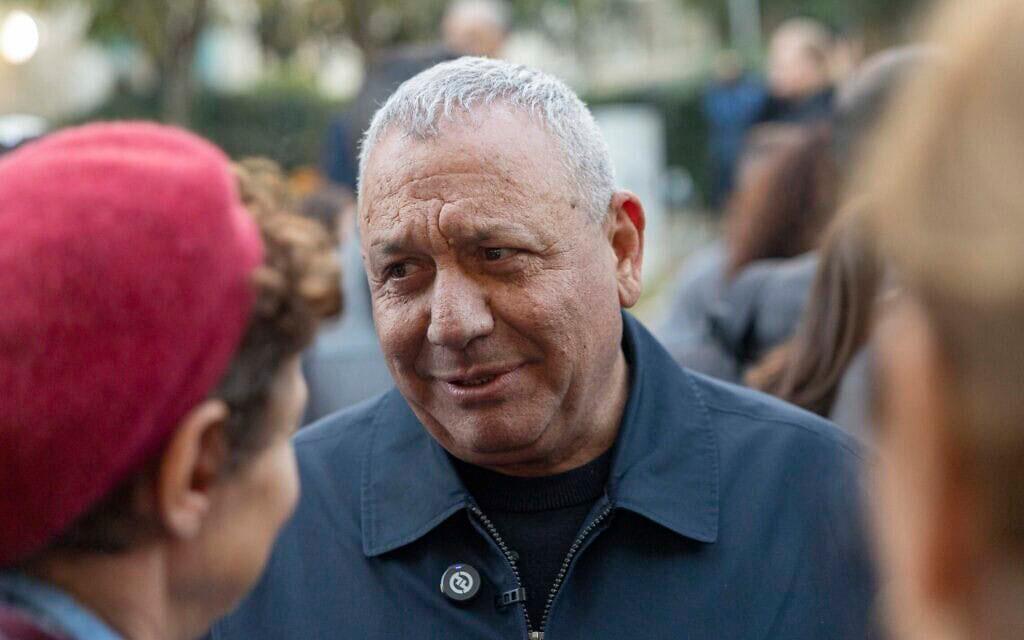
some reservists having spent hundreds of days in uniform, with the IDF’s growing manpower needs, and amid a mounting death toll, the question has become much more urgent.
Beyond these two issues will be discussion of more familiar political concerns: the cost of living, housing prices, the unfinished debate over judicial reform, and the deeper arguments that have divided Israel for years – over religion and state, institutional constraints, and what kind of shared civic contract can still hold Israeli society together.
In the immediate aftermath of October 7, many observers assumed that the attack would fundamentally reorder the political landscape. Instead, nearly three years later, the same broad blocs
continue to dominate Israeli politics, Netanyahu remains the pivotal figure in Israeli politics, and the election appears unlikely to result in any dramatic realignment.
That reality is reflected in the polls. Most polls point to the same conclusion: Netanyahu is weakened and will struggle to form a governing coalition, even though Likud will likely remain Israel’s largest party. However, the opposition bloc will have also difficulty forming a “Zionist coalition”; in other words, gain 61 seats in the 120-seat Knesset without joining forces with Arab-dominated parties, such as Mansour Abbas and his United Arab List.
This picture is complicated by unusually large discrepancies between various Israeli polling firms. Some surveys – mostly associated with right-leaning media – place Netanyahu’s bloc within touching distance of a majority, while others show it falling well short of the 61 seats required to form a government. The differences reflect competing assumptions about turnout, the Arab vote, the strength of the ultraOrthodox parties, and the willingness of right-wing voters disappointed by Netanyahu to abandon him after nearly two decades of helping keep him at the centre of Israeli politics.
The most significant change inside the opposition is the rise of former IDF Chief of Staff Gadi Eisenkot. His new Yashar (“straight” or “direct”) party has climbed steadily in recent polls. In some cases, it has come close to the alliance between former prime ministers Naftali Bennett and Yair Lapid, the Beyahad (“Together”) party, that is still predicted to be the largest opposition group. Eisenkot
Leading opposition figures Gadi Eisenkot (top), of the Yashar party, and Naftali Bennett and Yair Lapid (bottom) running together as leaders of the Beyahad party (Images: X)
Long-serving Israeli PM Binyamin Netanyahu will need to counter opposition attacks sheeting home to him political responsibility for the October 7 disaster (Image: X)
offers something different from the old-guard antiNetanyahu leadership: he is a reserved military figure, a bereaved father (his son was killed in action in Gaza), and a politician whose appeal may extend beyond the traditional opposition electorate into parts of the centre-right.
Bennett and Lapid want Eisenkot to join them in a single list, arguing that a united bloc would create momentum and possibly produce a party larger than Likud. Eisenkot, however, sees little reason to rush. Running separately may allow him to draw voters who would not support a list headed by Bennett or Lapid, especially since many right-wing voters are still angry at Bennett for forming a government with the support of the United Arab List in 2021. If Yashar were to overtake the Bennett-Lapid axis, lead the opposition bloc, and become the largest party, Eisenkot, who is of Moroccan origin, would have a shot at becoming Israel’s first prime minister from a Mizrahi (Middle Eastern) background. In a political system
long dominated by Ashkenazi (originally European) elites, this could give him an appeal that extends beyond the traditional opposition electorate and complicate Netanyahu’s efforts to retain his support among working-class Mizrahi voters.
This leaves the opposition with some familiar dilemmas. Unity might generate momentum, but it might also reduce the bloc’s reach. Separate lists might attract a broader pool of voters, but also risk fragmentation, wasted votes, and the personal rivalries that have repeatedly weakened the anti-Netanyahu camp. Netanyahu’s strategy will likely be to exploit these tensions. Against Bennett, he can revive the charge of betrayal over the 2021 government with Lapid and Abbas. Against Eisenkot, this will be harder – the former chief of staff is more difficult to portray as left-wing, and his military record gives him credibility with voters Netanyahu needs to keep.
Netanyahu had hoped to enter the election with a major achievement that would change the public mood: the collapse of the Iranian regime, a dramatic expansion of the Abraham Accords, or a major achievement on the Gaza front that would allow him to argue that October 7, however terrible, had been followed by a fundamental improvement in Israel’s regional position. That has not yet happened. The Iranian regime has been weakened but not overthrown, normalisation with Saudi Arabia remains distant, Hamas remains firmly in charge of the parts of Gaza it still controls. Israel’s wars have produced impressive military results without delivering the kind of clean political victory that could transform an election campaign.
“Netanyahu will try to turn the election into a choice about who can manage the next phase of the war. His opponents will try to make it a judgment on how Israel arrived there in the first place”
Still, Netanyahu will argue that his government has reshaped the regional strategic balance: weakened Hamas, badly damaged Hezbollah, confronted Iran directly and expanded Israel’s freedom of action across the region, thus removing the threats that existed in 2023 when Iran’s “ring of fire” of proxies created a chokehold around Israel. He is also likely to emphasise his relationship with Donald Trump. Yet reports of tensions between Washington and Jerusalem over Israel’s operations against Hezbollah, together with the June 7-8 ceasefire imposed under American pressure and the problematic terms for Israel in the MOU the US signed with Iran on June 17, might provide the opposition with
grounds to challenge Netanyahu’s claims regarding his special ties to the US President. Netanyahu might also be hoping that Trump will pay a visit to Israel ahead of the election to boost his chances. That, however, will likely depend on the state of their relationship and developments in negotiations between the United States and Iran.
Netanyahu may also use the United Nations General Assembly in late September to tout his achievements and claim that only he can navigate Israel through the storm. His opponents will counter that battlefield successes cannot erase the political responsibility for the disaster that made the war necessary.
The difficulty for Netanyahu is that these arguments are hard to refute. Israel has achieved significant military gains since October 7, but none of them settles the question of responsibility for the disaster that preceded them. The opposition’s difficulty is the reverse: October 7 remains a powerful charge against Netanyahu, but the polls suggest anger about what happened might not be enough to generate change.
That tension is likely to define the campaign. Netanyahu will try to turn the election into a choice about who can manage the next phase of the war. His opponents will try to make it a judgment on how Israel arrived there in the first place.
Ultimately, however, polls suggest Israel might well end up with a stalemate – and that could suit Netanyahu. Between April 2019 and June 2021, Netanyahu remained prime minister despite three inconclusive elections, first as head of a caretaker government and later through a rotation agreement with Benny Gantz that collapsed before Gantz could take over.
Netanyahu might not be able to win this election, but he could still conceivably remain in power through similar means and further expand his record as Israel’s longest-serving prime minister.
DECISION OR STAGNATION?
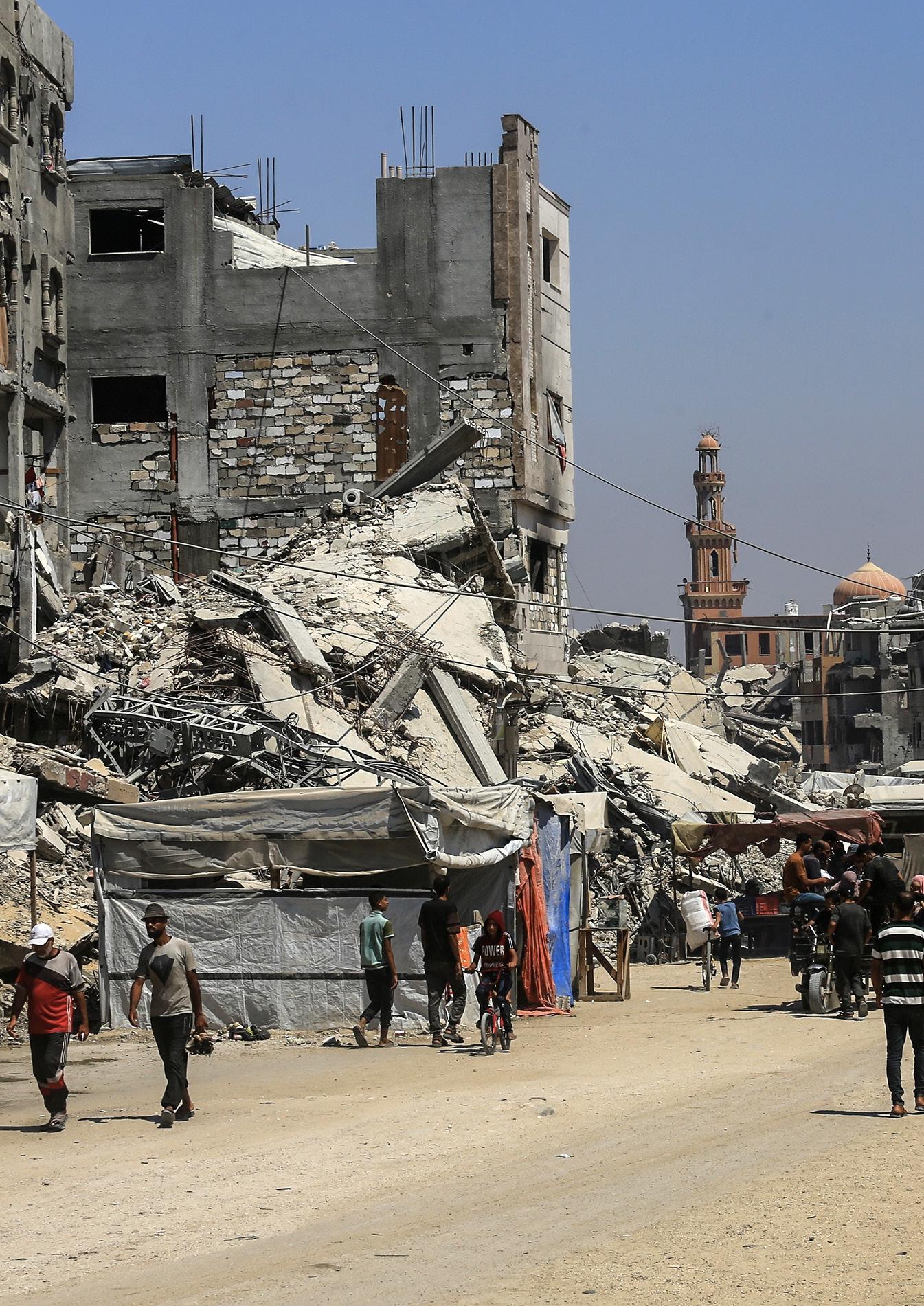
Eight months after the ceasefire, Hamas still controls half of Gaza
SETH J. FRANTZMAN
Dr SETH J. FRANTZMAN is the senior Middle East Correspondent and analyst at the Jerusalem Post He is the author of three books including, most recently, The October 7 War: Israel’s Battle for Security in Gaza (2024).
Displaced Palestinians move amongst destroyed buildings in Khan Younis, southern Gaza Strip (Image: Anas Mohammed/ Shutterstock)
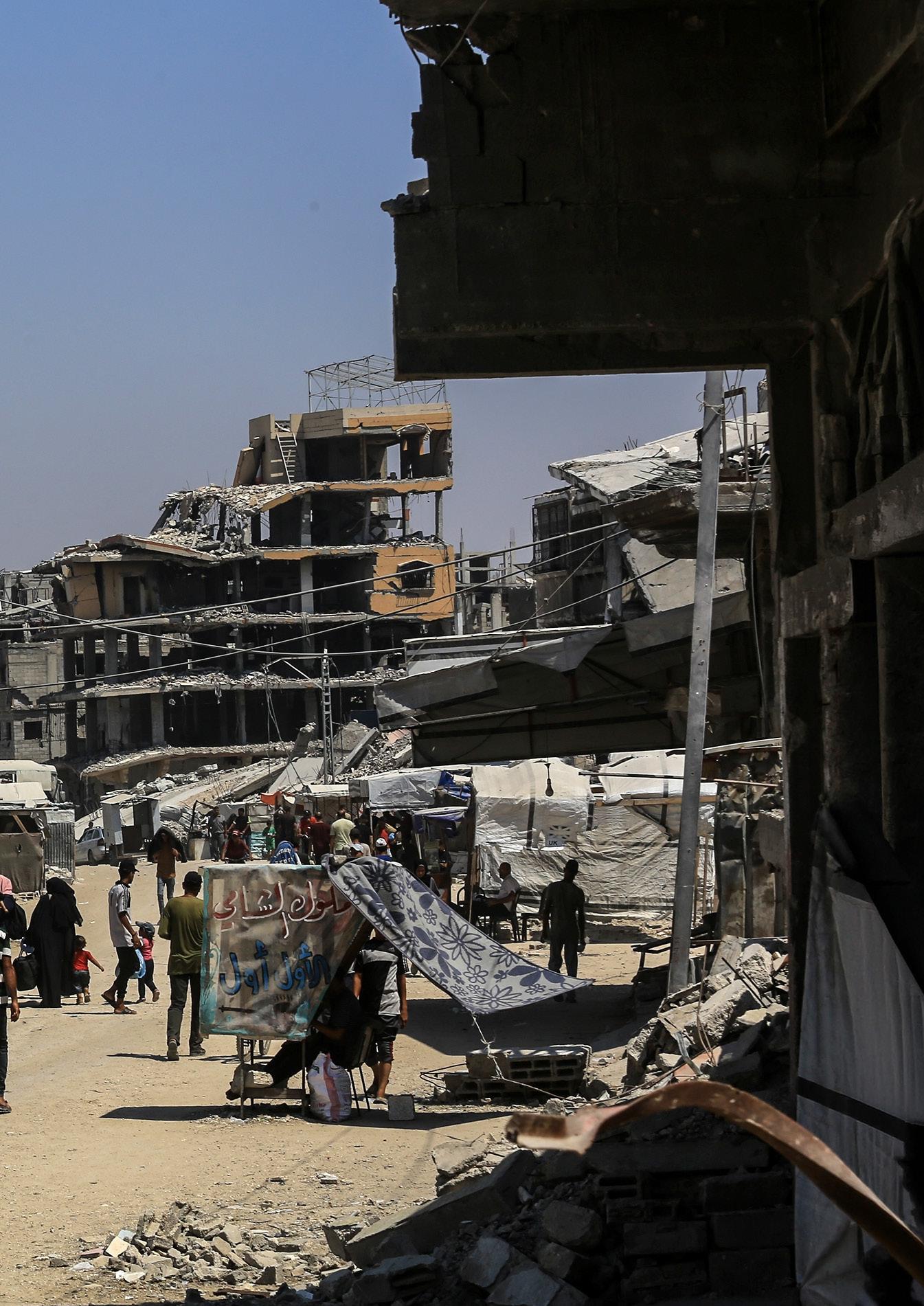
On June 4, 2026, the Board of Peace, established in the wake of the US-brokered Gaza ceasefire in October 2025, highlighted Egypt’s contributions to the International Stabilisation Force (ISF). The ISF is intended to be a key feature of the plan to enable Gaza to return to normal after years of war and more than a decade and a half of Hamas rule.
“Egypt’s contributions will help the #ISF scale up operations to create a safer & more secure Gaza. As a country sharing a border with Gaza, the participation & leadership of Egypt in this shared effort is critical to mission success,” the Board of Peace posted on social media platform X. Photos accompanying the post showed a member of the International Stabilisation Force presenting an Egyptian officer with a patch for the ISF. Egypt is the latest
country to commit to the ISF, after Kosovo and Albania sent a delegation to Gaza in April.
The ISF appears to have only begun its first steps in terms of bringing together the 20,000 personnel once envisioned by the ceasefire plan. The reasons for this are complex. Indeed, every plan of this type is complex and the Israeli-Palestinian conflict has always been one of the most difficult conflicts to solve. The October 7 Gaza War was tremendously destructive. As of early June 2026, around two million Gaza civilians continue to live under Hamas rule in around 40% of Gaza. The rest of Gaza is controlled by the Israel Defence Forces. The two parts of Gaza are separated by what Israel calls the “Yellow Line”.
There is a lot of uncertainty about what might come next in Gaza.
Recently, Israel’s 252nd Division completed a four-month rotation in Gaza. The IDF often has elements of two divisions deployed in the enclave. The 99th Division is continuing its mission in Gaza, patrolling the Yellow Line and eliminating Hamas threats with precision strikes.
The uncertainty and lack of clear, large commitments to the ISF and other operations from the international community have made it hard for real change to happen. Instead, there has been stagnation and weekly precision strikes by the IDF targeting Hamas leaders and commanders.
In late May, Israeli Prime Minister Binyamin Netanyahu hinted that Israel might launch a new offensive in Gaza to obtain control over 70% or more of the area. “We are now in 60% of the territory of the Gaza Strip. We were at 50%. We moved to 60%... My directive is to move to – take it step by step –first of all, 70. Let’s start with that,” he said. He did not spell out what would happen to the civilians in Gaza, who continue to live under Hamas rule.
Asked about the comments about Israel taking 70% of Gaza, US Secretary of State Marco Rubio told members of Congress on June 2 that the current US-backed plan does not envision changes in Gaza. “We have a plan, it doesn’t call for that… And, at the end of the day, we understand that what we want, and I think what the Israelis would ultimately want, is a Gaza that is governed by a non-Hamas entity.”
HIGH HOPES
There were high hopes for Gaza when the US brokered a ceasefire deal in October 2025. At the time there had been two years of difficult war. It’s worth looking back at how we got to the current situation in Gaza, in order to understand why the situation appears to have stagnated over the last months. The Hamas attack on October 7, 2023 was devastating for Israel. With more than 1,000 people murdered and 250 taken hostage, Israel was faced with no choice but a huge invasion of Gaza. This was an operation Israel had attempted
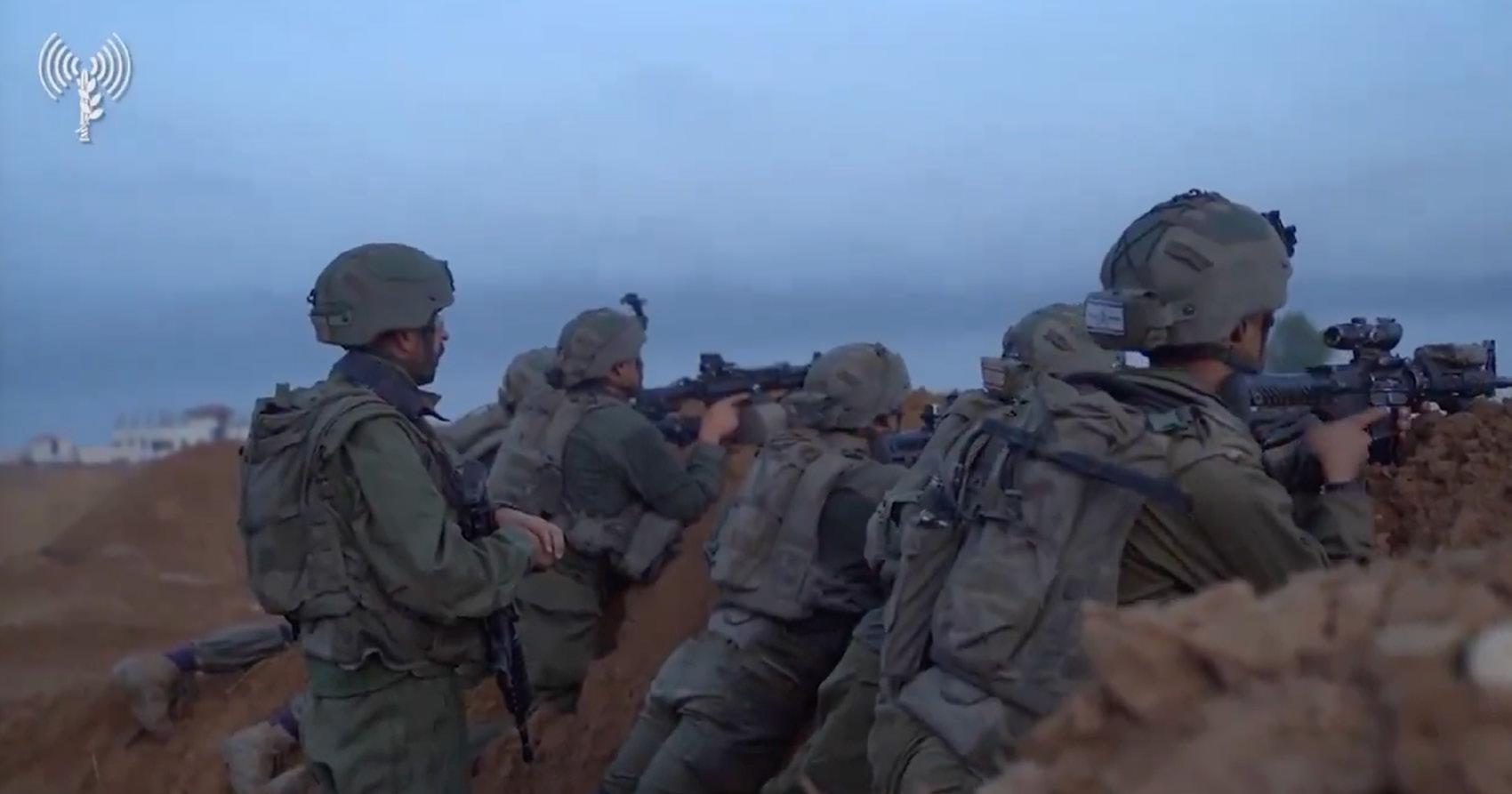
Israeli forces in Gaza have been engaged in constant low-level conflict with Hamas, even as they are slowly expanding the area under their control (Image: IDF)
to avoid ever since the Hamas takeover of Gaza in 2007. Hamas had always been strong in Gaza. Men like Yahya Sinwar came from Khan Younis and joined the Muslim Brotherhood-linked movement in the 1980s.
cess came in September 2025 when the Trump Administration was able to push regional countries towards a deal. Instead of a trickle of hostages being released, Hamas released all the remaining Israeli hostages, alive and deceased in October 2025.
"There were high hopes for Gaza when the US brokered a ceasefire deal in October 2025... It’s worth looking back at how we got to the current situation in Gaza... to understand why the situation appears to have stagnated..."
By the time of the Hamas takeover in 2007, much had changed. Israel had left Gaza in the Disengagement of 2005. Chaos followed. Hamas captured Israeli soldier Gilad Shalit in 2006. Rather than resuming control over Gaza until he was released, Israel chose to fight a short conflict and then negotiate. Five years later, Shalit was released in exchange for 1,027 prisoners. Sinwar, who became the architect of the October 7 attack, was released in that deal.
Israel preferred to manage the conflict in Gaza between 2011 and 2023. Funds flowed to Gaza, Hamas thrived and, on the eve of October 7, there were four Israelis already held in Gaza (two deceased soldiers from the conflict in 2014, and two civilians).
The October 7 War was incredibly destructive. Even though Israel deployed more than five IDF divisions to fight Hamas, and was able to defeat most of the Hamas brigades and battalions in Gaza, Hamas continued to cling to power. US President Donald Trump came into office with the goal of bringing the Israeli hostages home and ending the conflict. He deduced that this long war was not good for Israel or anyone else in the region. Suc-
The Trump Administration showed it was serious about keeping the peace in Gaza. US Central Command deployed forces to a large warehouse in the southern Israeli city of Kiryat Gat. Dubbed the Civil-Military Coordination Centre, the warehouse brought together military personnel and civilians from a number of partner countries and international organisations to support stabilisation in Gaza. Initially, this was about getting humanitarian aid into Gaza and, within days, trucks were crossing in very large numbers. This was important because during the war Israel had sometimes prevented or limited aid entering Gaza at times. Even after the ceasefire deal in mid-October 2025, Israeli officials claimed they would stop aid deliveries to Gaza on October 19 after Hamas violated the ceasefire. The Trump Administration made it clear aid would continue to enter the enclave and the decision was reversed.
With the Trump Administration in the driver’s seat of the Gaza deal, the White House was able to notch a number of early successes. This included UN support for a 20-point Gaza roadmap, including the ISF. The US established the Board of Peace and
a Palestinian technocratic committee, the National Committee for the Administration of Gaza (NCAG), which was supposed to run Gaza. The White House spoke about “lasting peace, stability, reconstruction, and prosperity in the region.” A High Representative for Gaza, former UN official Nickolay Mladenov, was appointed. However, the optimism has turned to stagnation.
The US and Israeli strikes on Iran beginning on Feb. 28 of this year shifted focus from Gaza. Israel has also been fighting Hezbollah in Lebanon, mov-
WATCH: The Gaza Flotilla wasn't the story. The coverage was | AIJAC's Rebecca Davis
ing the spotlight from Gaza to Beirut. In late May, the IDF killed Hamas’ Gaza leader Mohammed Odeh days after eliminating his predecessor Izz al-Din al-Haddad. As of June 2026, the IDF is said to be ready for a possible new offensive in Gaza. At the same time, even though there appears to be a Hamas leadership vacuum in Gaza, there is no clear strategy for removing Hamas from power or enabling civilians in Gaza to live under non-Hamas rule in an area of the Strip.
The situation in Gaza has remained largely unchanged over the last few months. The IDF carries out almost daily strikes on Hamas. For instance, on June 5 the IDF struck a Hamas terrorist in northern Gaza who posed a threat to Israeli troops. It also struck “senior members of Hamas’ General Security Apparatus.” On June 4, the IDF said it “eliminated the terrorist Ahmed Abu Mughaysib, the head of a rocket-launching cell in the Islamic Jihad terrorist organization.”
Hamas appears to be firmly in control of around 40% of Gaza. Even though some small anti-Hamas militias have emerged in areas under IDF control, they don’t appear to offer a real challenge to Hamas so far. There have been no reports of major opposition to Hamas within the 40% of Gaza where Hamas is in charge. Hamas has appeared to be able to rebuild its networks, even though IDF precision strikes have killed Hamas commanders. This is not a surprise. Hamas has done this in the past. In the 1990s and early 2000s, it also saw its leadership killed, expelled and detained and each time it regrew its networks and even emerged stronger.
Hamas has maintained its control through executions, according to a UN report released in early June. The UN Office of the High Commissioner for Human Rights documented Hamas abuses. “These cases involved executions, kneecapping,
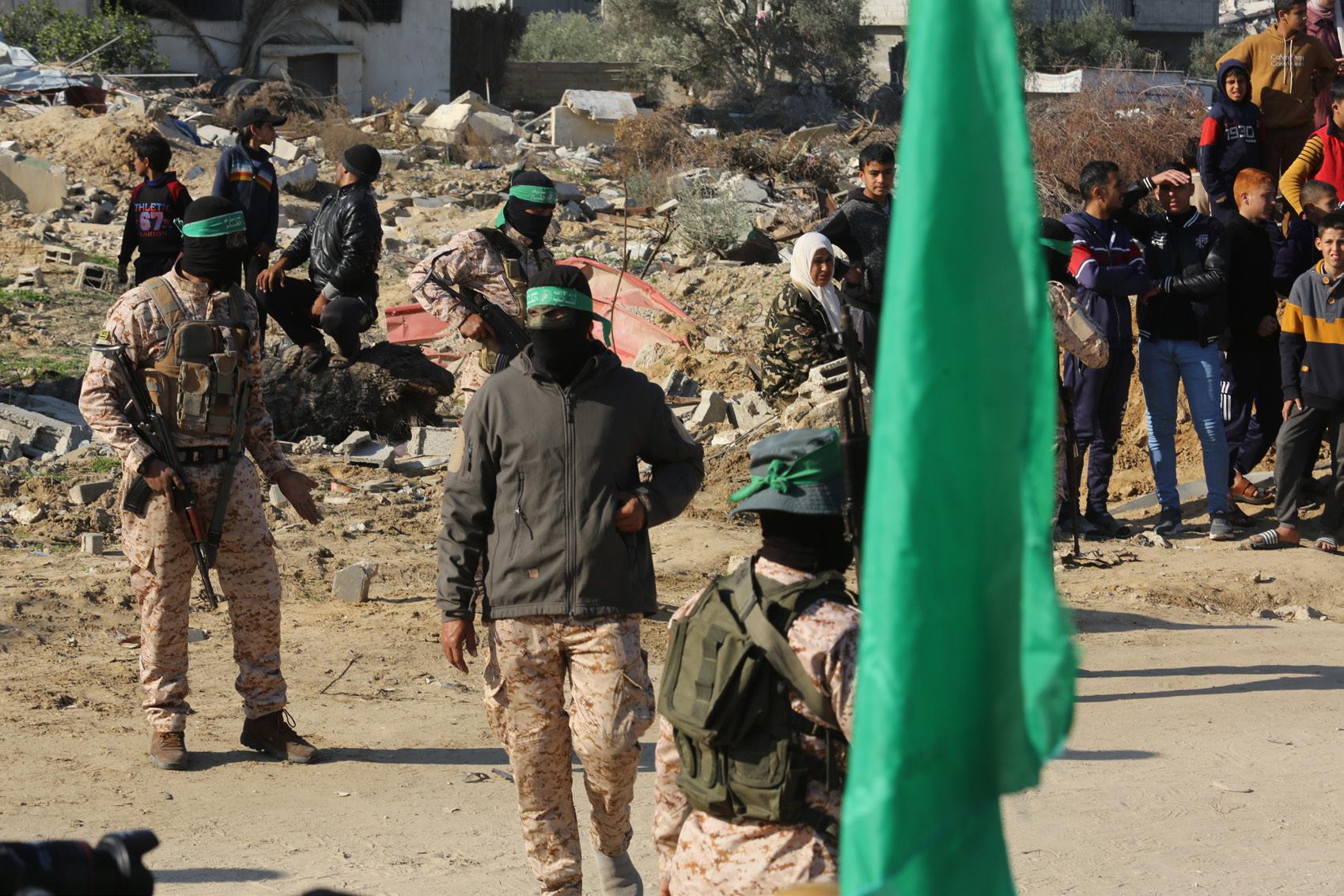
bone-breaking with metal pipes or cement bricks and beatings and were framed by the perpetrators as punishments for alleged collaboration with Israel, looting humanitarian aid, theft, drug-related offenses or affiliations with internal rivals,” it said. Hamas has often used a mix of terror and patronage networks to maintain control in Gaza. Meanwhile, aid continues to flow into Gaza. The Israel Defence Forces have prevented some smuggling, including of tobacco products to Gaza. Sources in Gaza told The Guardian that they continue to lack many items, such as spare parts for things like generators and engine oil. On June 14, head of Israel’s Coordination of Government Activities in the Territories (COGAT), Maj. Gen. Yoram Halevy, met with UNICEF Special Representative Jonathan Veitch. The meeting focused on water
issues relating to Gaza, including “improving access to water for the population.” COGAT, which deals with humanitarian aid entering Gaza, also noted on June 14 that “Israel continues to allow and facilitate the entry of humanitarian supplies on a large scale. If there is a need for additional equipment and supplies, the approvals are already in place and the organizations have the ability to utilise them.”
As of now, the IDF continues to confront threats in Gaza using limited strikes on Hamas. These are precision strikes but in terms of a long-term strategy it is not clear what will happen in Gaza. With only a handful of personnel committed to the ISF and with the new Palestinian technocratic committee unable to govern anything in Gaza, it appears the status quo will remain for now.
In the Hamas controlled sector of Gaza, Hamas fighters are using a mixture of terror and patronage networks to maintain control (Image: Anas Mohammed/ Shutterstock)
BETWEEN JAKARTA AND JERUSALEM
Indonesia's strategic gambit in Gaza
LAUREN DAGAN AMOSS
DR LAUREN DAGAN AMOSS
is a lecturer in political science at Bar-Ilan University, a research associate at the Begin-Sadat Centre for Strategic Studies (BESA) and member of Forum Dvora.
When Indonesian President Prabowo Subianto stepped up to the podium at the UN General Assembly on September 23, 2025, the international community witnessed a distinct shift in Jakarta’s diplomatic rhetoric. Amidst a worsening global climate of polarisation and expanding anti-Israel sentiment, Prabowo delivered a speech defined not by ideological fire, but by pragmatic reconciliation. He pointedly avoided direct recriminations against Jerusalem, called upon the descendants of Abraham to find a path toward harmony and underscored his vision by concluding with the Hebrew word “Shalom”.
Yet, Prabowo’s rhetoric was merely the prelude to an incredibly ambitious policy manoeuvre. Following the UN Security Council’s endorsement of the American-led blueprint for post-war Gaza, Indonesia has positioned itself as a primary candidate for the temporary International Stabilisation Force (ISF) designed to provide security there. Going far beyond traditional rhetorical solidarity, Jakarta has indicated a willingness to deploy a massive contingent, potentially up to 20,000 personnel, and also sit alongside Israel on the newly conceptualised Board of Peace.
For an archipelago whose modern identity was forged in an anti-colonial struggle, and whose 1945 constitution explicitly mandates the eradication of colonialism, this is a high-stakes gamble. It reflects Jakarta’s long-standing foreign policy doctrine of being “independent and active”, alongside Prabowo’s personal ambition to catapult Indonesia into the top
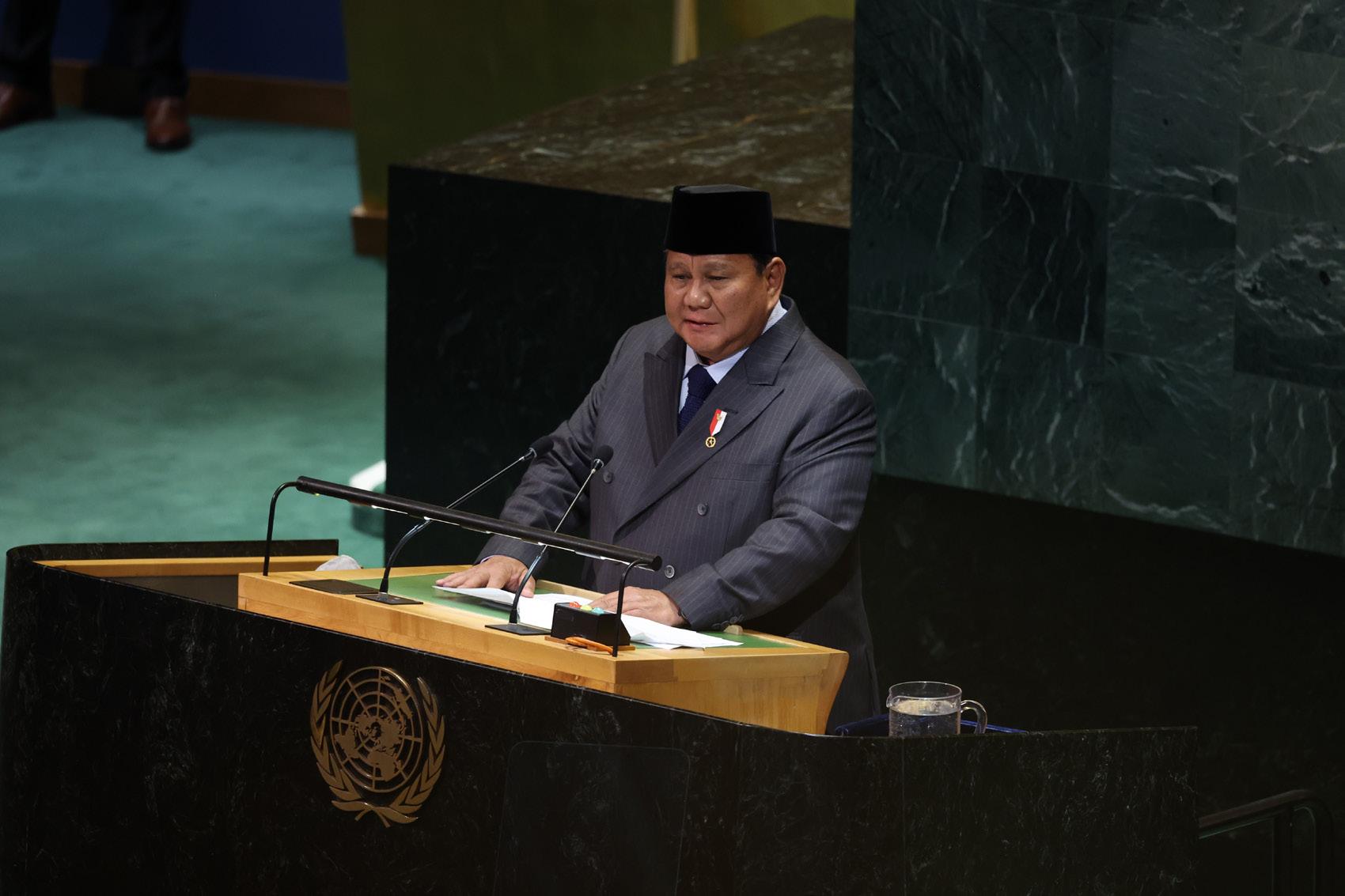
tier of global statesmanship. However, beneath the veneer of diplomatic goodwill lies a complex web of structural constraints, domestic anxieties and regional frictions that Jerusalem, Washington, and Canberra must carefully parse.
THE DOMESTIC TRAP: THE QUICKSAND OF MANDATE AND MISSION
While the strategic rewards of aligning with an American-backed peace plan are clear to the elites in Jakarta, the operational realities of the ISF are causing deep institutional hesitation. For decades, Indonesia has built a stellar international reputation through its elite contributions to UN peacekeeping operations, the so-called “Blue Helmets”. Crucially, those deployments occurred under a clear, neutral UN mandate with institutionalised command-and-control and collective international funding.
The current post-war Gaza framework presents a radically different landscape. As a non-UN mission heavily steered by Washington, the ISF risks being perceived by the Indonesian public not as a peacekeeping force, but as an enforcement mechanism for an American-designed order that favours Israeli security.
This structural ambiguity has triggered acute alarm bells among Indonesian policymakers and military strategists.
The domestic Indonesian electorate overwhelmingly views Hamas not as a terrorist organisation, but as a legitimate resistance movement. If the ISF’s mandate involves the demilitarisation or disarmament of Gaza’s factions, Indonesian troops could find themselves in direct, lethal combat with Palestinians. Explaining to the public at home why Indonesian soldiers are trading fire with Gazans while operating under a US-led umbrella
Indonesian President Prabowo Subianto in the UN General Assemby, September 2025 (Image: Shutterstock)
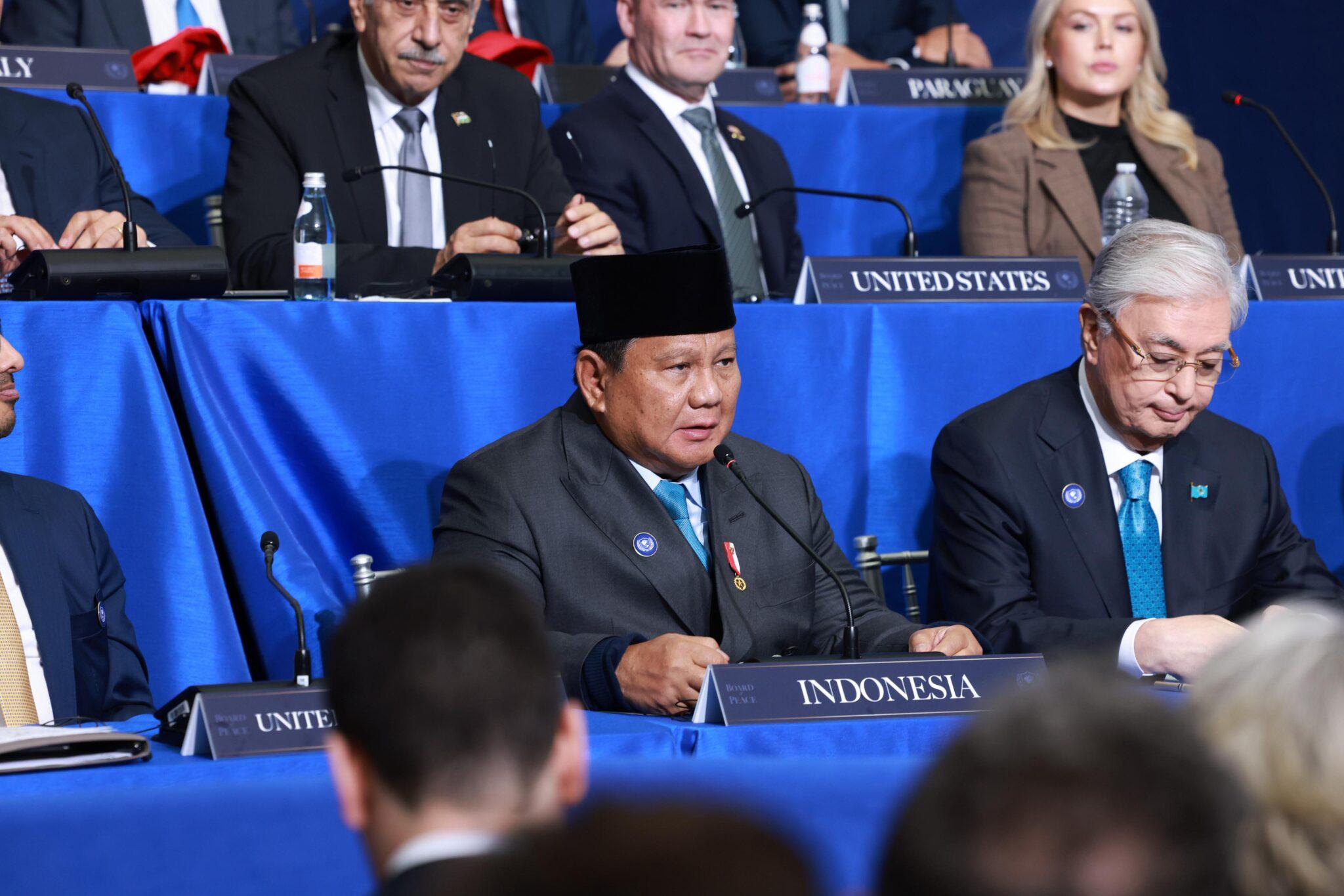
Probowo's Gaza plans are part of his broader ambitions for Indonesia to play a larger role on the world stage (Image: Flickr/ Whitehouse.gov)
would be a political catastrophe for the Prabowo Administration.
This explains why, shortly after the plan’s initial approval, Jakarta’s defence establishment moved quickly to narrow the scope of its involvement. The current emphasis coming from the Ministry of Defence is that any Indonesian deployment must focus strictly on medical aid, engineering, and infrastructure rehabilitation, carefully sidestepping hard security enforcement.
REALISM OVER RHETORIC: THE SAUDI CATALYST AND ABRAHAMIC ECHOES
Optimists in Jerusalem and Washington have occasionally pointed to Prabowo’s softened stance as a sign that formal normalisation between Israel and the world’s most populous Muslim nation could be just around the corner. Indeed, Prabowo subtly altered Indonesia’s traditional formula by stating
that Jakarta would recognise Israel the moment Israel recognised an independent Palestinian state, a slight rhetorical softening from Jakarta’s historical demand for a full Israeli retreat to the 1967 borders before any engagement.
However, a cool assessment rooted in political realism reveals a strict ceiling to this goodwill. For Indonesia, the Palestinian issue is not a diplomatic bargaining chip; it is an internal constitutional anchor and a deeply embedded societal consensus. Prabowo cannot dismantle this consensus singlehandedly without facing immense domestic backlash from powerful Islamic civil organisations.
The only potential bridge over this chasm is Saudi Arabia. As the custodian of Islam’s holiest sites, Riyadh holds the ultimate keys to legitimacy in the Muslim world. If Saudi Arabia moves forward with normalisation with Israel, it will provide the necessary political and religious cover for
Jakarta to deepen its own engagement. Without such a Saudi catalyst, any independent Indonesian leap toward Jerusalem remains a domestic impossibility.
to formal diplomatic ties remains firmly blocked by the domestic Palestinian veto and is entirely contingent upon a prior breakthrough between Israel and Saudi Arabia.
“President Prabowo’s conciliatory rhetoric and his willingness to engage with the Board of Peace demonstrate a level of pragmatic goodwill that would have been unthinkable under previous administrations”
Ultimately, this regional dynamic is inextricably linked to the broader resilience and continuity of the Abraham Accords. Jakarta is not operating in a vacuum; it is meticulously stress-testing the geopolitical waters through these regional precedents. Until Riyadh moves, the structural coordination anticipated in upcoming ISF manoeuvres in Gaza (if they ever actually go ahead) may yield functional cooperation, but will not see formal embassies established.
CONCLUSION: THE DAWN OF FUNCTIONAL NORMALISATION
Ultimately, Indonesia’s calculated steps toward the Gaza post-war architecture reveal a sophisticated paradox. President Prabowo’s conciliatory rhetoric and his willingness to engage with the Board of Peace demonstrate a level of pragmatic goodwill that would have been unthinkable under previous administrations. The strategic benefits of the move – currying favour with Washington, positioning Indonesia as a responsible global middle power and securing a seat at the table in Middle Eastern affairs – are simply too lucrative for Jakarta to ignore.
However, Western observers must avoid the illusion of an imminent, warm normalisation. The path
What we are witnessing instead is the birth of “Functional Normalisation”. The massive logistical realities of a potential Indonesian deployment, combined with daily operational coordination within the Board of Peace, will force Israeli and Indonesian defence, intelligence and diplomatic officials into unprecedented direct contact.
A stark preview of this reality occurred recently with the interception of the Global Sumud Flotilla, where the detention of Indonesian activists forced Foreign Minister Sugiono to utilise the Board of Peace as a direct de-escalation channel with Jerusalem. This crisis proved that while institutional ambiguity can be “quicksand”, the operational imperatives of crisis management create an unavoidable, functional dialogue.
For Israel, securing the active involvement of the world’s largest Muslim nation in securing its post-war periphery is an extraordinary geopolitical achievement. For Indonesia, it is a high-risk domestic tightrope walk. Therefore, functional, quiet and deeply cautious coordination is the maximum the current geopolitical architecture can bear, and even that is only feasible if the ISF mandate remains strictly defined and a Saudi catalyst remains on the horizon.
FATAH GETS A FACELIFT
Rare General Conference raises succession issues
AHRON SHAPIRO
The Palestinian faction Fatah has been in the “Zionist enemy”-loathing business since 1964 – that’s right, since the time when Jordan still occupied the West Bank and Egypt the Gaza Strip –but its General Conference from May 14 to 16 this year was only its eighth ever. It was also the first in a decade.
You might say democracy isn’t Fatah’s strongest suit.
I’m not trying to be flippant. The group, which dominates the Palestine Liberation Organisation and Palestinian Authority, still generally refers to Israel as the “Zionist entity”, or the “Occupation”. So let’s not mince words. Peace-making isn’t on Fatah’s agenda. It wasn’t after the seventh General Conference in 2016, and it certainly isn’t now.
The decision to hold its first General Conference in years, however, offered Fatah a chance to give its lineup a bit of a facelift. The 21-person Central Committee, that holds most of the power in the organisation regarding PA policies, budgets and security appointments, had an age spread somewhere between geriatric, and – in the case of former top Palestinian negotiator and Central Committee member
Saeb Erekat – no longer among the living.
Out of the 18 Central Committee spots up for grabs during this conference, nine went to incumbents and nine to newcomers. According to Fatah by-laws, an additional three members will be chosen later by Fatah’s leader – that is, Mahmoud Abbas – and not elected.
While the Central Committee was the big-ticket campaign, most of the younger generation invested their efforts running for the much larger and less powerful Revolutionary Council (80 seats elected at the Conference itself, with many more to be appointed later).
More than 2,500 votes were cast, and for the first time there was the option of participating remotely in Fatah’s regional strongholds of Beirut and Cairo, via a video link.
SYMBOLISM AND EXTREMISM
This conference was timed to overlap with May 15th’s Nakba Day (Catastrophe Day), which was the day on the Gregorian calendar when the British Mandate ended and Israel declared statehood. Conference attendees left no room for doubt
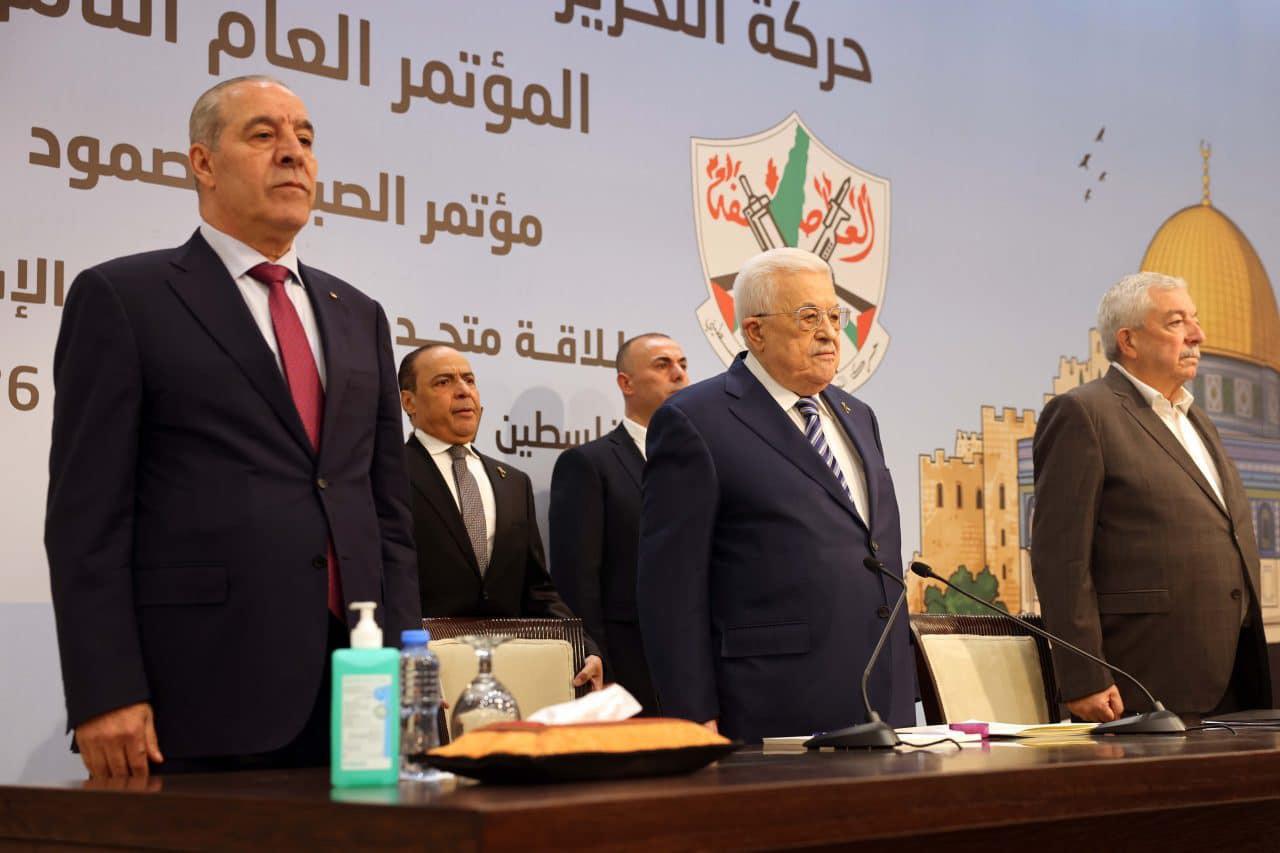
90-year-old PA President Mahmoud Abbas (centre) with colleagues at the Fatah General Conference in Ramallah in May (Image: PPO)
about the symbolic significance of the chosen conference date, or their extreme overall goals:
Falestinona (“Our Palestine”) TV reporter: Today marks the anniversary of the Nakba and the second day of the conference. What is the significance of this connection between the two events?
Fatah official:…The Palestinian cause began its tragedy from the day of the Nakba, which falls on this day – this Nakba that turned the Palestinian people into displaced people. Since that day, this brutal enemy – the Zionist enemy – has been carrying out a policy of displacement, killing, and destruction, and we are still suffering to this day from this Zionist aggression.
Of course, the convening of the Eighth Fatah Conference comes under these circumstances to emphasise the need to revitalise the Fatah
movement – which is the backbone of the Palestinian revolution and the owner of the Palestinian national project – which must remain on the path of struggle until the liberation of Palestine, all of Palestine. [“All of Palestine” of course includes all of Israel in this context]
Many other Conference attendees parroted similar claims.
PANDERING TO PRISONERS AND REFUGEES
The Egyptian venue came in handy since Fatah had extended membership and voting rights to freed Palestinian prisoners. The party’s spin ahead of the conference was that no less than 20% of conference members would have spent 20 years in Israeli jails – in other words, they were terrorists with blood on their hands.
In the recent hostage deals, these terrorists were deemed so incredibly dangerous that Israel would
only agree to release them into Egypt. The 388 prisoners in the conference fell a little short of the promised percentage, but the emphasis on released prisoners was a very popular gimmick nonetheless, given the glorified status of so-called “fighters” in Palestinian society. Fatah’s Lebanese TV channel Awdah bragged that the combined sentences of all the Fatah members in attendance added up to over 10,000 years!
Arch-terrorist Marwan Barghouti, who remains jailed in an Israeli prison serving multiple life sentences, received the highest number of votes of any of the Central Committee candidates, although he can’t actually do anything from behind bars.
Zakaria Zubeidi – the former Jenin commander of Fatah’s Al-Aqsa Martyrs’ Brigades, who was released in a January 2025 hostage deal – and Taysir al-Bardini – another major terrorist who was released in the 2011 Gilad Shalit deal – rode a wave of pro-prisoner sentiment and were both promoted to the Central Committee.
In the few weeks since the conference, Zubeidi has already proven his worth to President Abbas. He had been acting as a mediator and go-between, negotiating Pay-for-Slay deals between the Palestinian leader and protesting families of prisoners, wounded and “Martyrs” (i.e. deceased terrorists) who don’t trust Abbas when he says repeatedly that he will continue paying them their stipends “even with the last penny” in the cash-strapped PA’s coffers, even as he promises Western nations that “Pay-for-Slay” has been phased out.
Abbas himself seems to bristle at the lack of confidence in his determination to continue Pay-
for-Slay. During the conference’s opening speech, Abbas ad-libbed a comment into his prepared remarks, saying that Israel needs to stop withholding Palestinian tax clearance funds because “...all this needs to be paid to public employees, to prisoners.”
Meanwhile, much as having the Cairo venue was helpful for giving a platform for exiled terrorists, the Beirut secondary venue helped Fatah cater to its power bases in Lebanon’s refugee camps.
Former Palestinian President Yasser Arafat called these refugee camps “reservoirs” to be used to flood Israel with descendants of refugees of the 1948 war under the pretext of a “right of return”. Fatah’s power in these camps depends on the faction’s commitment to vanquish Israel, with generations raised to settle for nothing less.
THE SUCCESSION PLOT THICKENS
The Central Committee vote rekindled discussions over who will succeed 90-year-old Mahmoud Abbas when nature takes its course. Abbas’ son Yasser made it into the top eight but likely too far behind Barghouti to have a realistic path to leadership.
However, 63-year-old Majed Faraj, the head of the Palestinian General Intelligence Services, finished
Senior Fatah figures Majed Faraj and Hussein al-Sheikh (Image: Yaffa News/ X)
just nine votes behind the lead. Sixty-five-year-old Hussein al-Sheikh, who is also the PA’s Vice President, came in fourth behind Jibril Rajoub and was named Fatah’s Deputy Leader after the Conference, replacing Mahmoud al-Aloul.
The strong finish for al-Sheikh and Faraj, both close to Abbas and both of whom have career experience engaging with American and Israeli officials, would, for those still supportive of an eventual twostate resolution, seem to be the least bad of all the potential Fatah leadership outcomes, if the Conference is any bellwether for the future.
FATAH’S ELECTION STRATEGY
The Fatah Conference was the second election in the PA recently – the first being Palestinian local council elections on April 25 that were held in the West Bank and a small part of Gaza. That election was held under rules favourable to Fatah and was actually boycotted by many other political factions. In dozens of districts, Fatah lists ran unopposed.
And they’re not done – Abbas has already planned the National Council election for Nov. 1. All these costly elections come at a time when the PA is teetering on the verge of bankruptcy.
Many commentators believe these elections are being used to give the current Palestinian Authority Government a veneer of legitimacy while at the same time sidestepping the elections with the highest stakes – those for the President and Palestinian Legislative Council.
Interviewed on radio on June 3, Hani Al-Masri, a veteran Nablus-based political analyst whose candour has made him a persona non grata on most PA-run media outlets, said that such elections not only threaten Abbas, but Barghouti’s popularity embarrasses Abbas and his loyalists.
If we try to interpret why the leap was made over the legislative and presidential elections,
we say: first, because in the presidential elections there is a big problem by the name of leader Marwan Barghouti, who previously expressed — during the previous elections when a date was set for them in 2021 — his readiness to run for the presidency. And it is well known that if Marwan runs, according to all polls, he will win no matter who his competitors are — whether from within Fatah or from outside Fatah, his chances are far greater. So, first, they avoided the knot of the presidential elections, especially the question of whether the President will run or not, and who is the successor who could be presented — a major stumbling block…
Al-Masri added that it’s not only who Barghouti is, but how his tactics against Israel differ from Abbas’, that drive his support among Palestinians: Marwan is not just a prisoner, he has a wellknown approach, and this approach is different from the prevailing approach. If the prevailing approach were changed and Marwan’s approach adopted, that would indeed be a big step forward, but let us say it… is not a likely scenario at all.
This carefully worded comment requires a little decoding. What al-Masri is saying is that Barghouti, who was jailed for orchestrating numerous terror attacks against Israelis during the Second Intifada, supports launching a third Intifada.
Meanwhile, Abbas’ Fatah still believes it can achieve all of its goals against Israel without taking such a risk and endangering the leadership’s fortunes and personal welfare.
This should be a sobering reality check for anyone who may have come to believe Barghouti somehow would be more likely to lead his people to peace than Abbas has been.
HEZBOLLAH IS WEAKENED
But Israel's northern border remains unstable
Lt. Col. (ret.) SARIT ZEHAVI is the founder and President of the Alma Research and Education Centre, specialising in research and analysis on Israel’s security challenges on its northern borders. She previously served for 15 years in the Israel Defence Forces, primarily in military intelligence, and holds an M.A. in Middle East Studies from BenGurion University.
SARIT ZEHAVI
Hezbollah members carry coffins of deceased fighters in Nabatiyeh, south Lebanon (Image: mahdi313/ Shutterstock)
To understand Hezbollah’s current situation in Lebanon, one must simultaneously hold in mind two observations that appear, at first glance, to contradict one another.
On the one hand, the organisation is far from the level of power it possessed on the eve of the current war in 2023. It has lost many operatives; a significant portion of its infrastructure in southern Lebanon has been damaged; the IDF is applying sustained pressure; and the immediate threat to northern Israeli communities has changed.
On the other hand, Hezbollah has not been defeated. It is still firing at Israel, continues to use drones and rockets, opposes any direct diplomatic process between Israel and Lebanon, and continues to enjoy some havens in which it can attempt to rebuild its strength, primarily in Beirut and the Beqaa Valley. From Hezbollah’s perspective, survival
itself means victory, regardless of the cost. The question, therefore, is not whether Hezbollah has “won” or “lost” in absolute terms, but rather where it is managing to preserve its status and dominance, where its power has been damaged, and how all of this affects Israel’s security.
Militarily, Hezbollah has suffered a significant blow. According to estimates, the number of rockets in its possession has dropped to as few as 15,000 (and maybe less) from perhaps ten times that many in 2023, and since March 2 of this year, more than 2,600 operatives have been killed. Many commanders and key holders of essential expertise have been killed over the past two and a half years; smuggling routes have become more difficult to operate; and the Syrians are regularly intercepting smuggling attempts.
In addition, some 50 Shi’ite villages in southern
Lebanon, which served as Hezbollah terrorist bases, were destroyed because of the organisation’s decision to hide weapons and build tunnels inside or beneath large numbers of homes. The operational significance is clear: Hezbollah today is not the Hezbollah of three years ago. Its Shi’ite base of support has been displaced and is frustrated, but it is still not taking to the streets in protest against the organisation.
THE IDF’S GREATEST ACHIEVEMENT
Israel’s greatest achievement has been the removal of the immediate ground threat from the border. On the eve of October 7, Hezbollah was fully prepared for a major ground invasion into northern Israeli communities. The heavy price paid by the residents of southern Lebanon, and the fact that they are unable to return to their homes, is what pushed both the invasion threat and the anti-tank missile threat away from Israeli communities. Israel is also operating in southern Lebanon according to a new security concept: no longer waiting for the threat to entrench itself along the fence, but seeking to create a buffer between Israeli civilians and Hezbollah. That buffer zone is currently held by IDF soldiers. Yet even this buffer does not eliminate the threat entirely: recently, there were two attempts by Hezbollah terrorists to infiltrate Israeli communities, despite the IDF’s presence in southern Lebanon.
In the direct negotiations between Israel and Lebanon – taking place for the first time – the full disarmament of Hezbollah is being discussed, with the first stage being its withdrawal to north of the Litani River, as the Lebanese Government committed to in a joint declaration with Israel on June 3, 2026. All of this is taking place while IDF forces remain inside Lebanon.
Yet despite the damage Hezbollah has sustained, the threat has not disappeared. Since the
beginning of the ceasefire on April 17, the organisation has carried out approximately 1,000 attack waves: about a quarter directed into Israeli territory, and the rest targeting IDF soldiers operating in southern Lebanon. More than half of the attacks on both sides of the border involved drones and UAVs, while around 300 involved indirect fire.
Most Israeli fatalities were soldiers, but the impact on civilian life in Israel’s north has been substantial: schools have been closed frequently, daily life has been disrupted, and, even after ceasefire declarations and the resumption of classes, daily sirens continue to send civilians into shelters, thus preventing civil and economic life from recovering. It can be said that the number of daily attacks into Israeli territory has dropped to only a few, but that is precisely the nightmare of northern Israel’s residents: being dragged into a life under constant sporadic daily fire.
THE IRAN FACTOR
What’s more, Iran continues to use Hezbollah as a bargaining card in its negotiations with the United States. The Iran-US MOU appears to effectively recognise Iran’s patronage of Hezbollah, and by extension, acknowledge Iran’s involvement in Lebanon as well. Teheran presents itself as committed to responding to any Israeli action against Hezbollah anywhere in Lebanon. There are different assessments regarding the level of the Iranian regime’s commitment, but in any case, June 7 and 8 saw a first round of ballistic missile barrages launched from Iran in response to an Israeli strike in Beirut’s Hezbollah-dominated Dahieh district. These barrages completely paralysed routine life across the State of Israel and led to heavy American pressure for a ceasefire – again. Israel, for its part, made clear that any Hezbollah fire on Israeli communities would be met with Israeli fire against Hezbollah
sites in Beirut, and therefore struck there.
At the same time, on the ground, Iran appears to be deeply involved in Hezbollah’s strategic guidance and training new leadership to replace those who were killed, both political and military.
Returning to Israel’s northern front, from a military standpoint, new forms of drones are currently one of the central challenges. This matters because it points to Hezbollah’s ability to adapt; even when some of the organisation’s capabilities are badly damaged, it searches for new ways to continue harming Israel and to keep northern Israel under threat. Therefore, Israeli achievements in southern Lebanon require continued enforcement and sustained efforts to neutralise the threat, rather than settling for a sense of tactical victory. The main current concern in Israel is that Hezbollah will succeed
in acquiring more sophisticated drones, with longer ranges, launched in larger swarms, as we are seeing in Ukraine.
THE BATTLE OF BEAUFORT CASTLE
The case of Israel’s capture of Beaufort Castle on May 31 illustrates the connection between the military, psychological, and political dimensions of the current conflict in Lebanon. Beaufort Castle, about ten kilometres from the Israeli border, was one of Hezbollah’s most important strategic and symbolic assets: an area that for years served as a command centre, weapons storage site, and firemanagement hub, beneath which a complex Hezbollah tunnel system was found. Beaufort Castle also dominates key routes and was, in effect, one of the organisation’s centres of gravity in southern
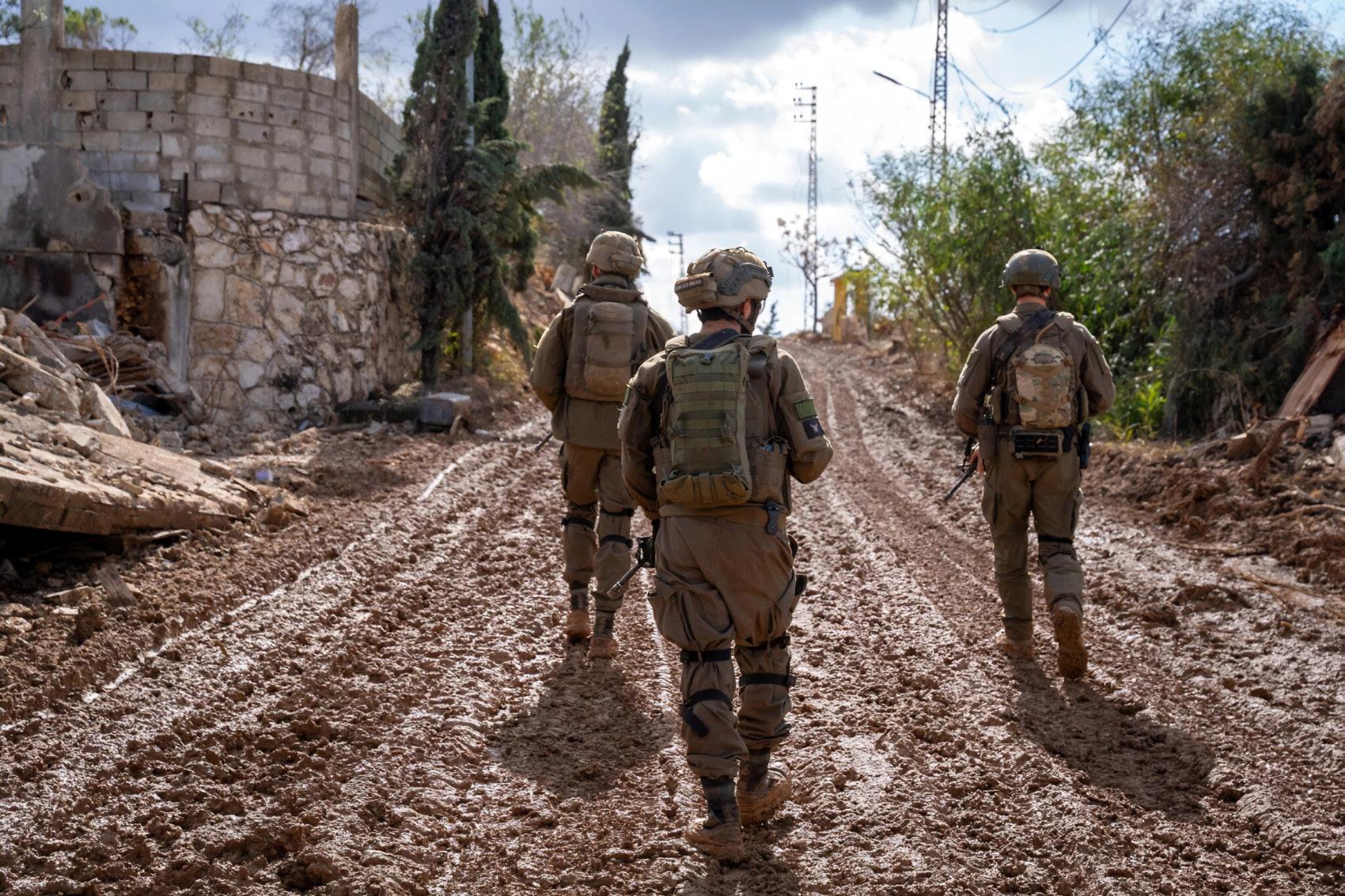
Israeli soldiers in southern Lebanon (Image: Shutterstock)
Lebanon. Its capture was not merely an operational achievement. The IDF’s takeover is a symbol of a broader trend: the ongoing degradation of Hezbollah’s assets and capabilities.
Economically, Hezbollah appears to be having to prioritise its expenditures, with its main focus on military rehabilitation. Its Shi’ite base of support in southern Lebanon has been displaced, and in the Beqaa valley and Beirut as well, not all the damage from previous operations has yet been repaired. Hezbollah’s efforts to preserve loyalty and social support are now limited, and there are many complaints about this, particularly on social media. For example, the National Relief Authority “Samidoun,” which is affiliated with Hezbollah, announced an aid program for Lebanese families displaced from their homes as a result of the fighting with Israel, in which each displaced Lebanese family is supposed to receive a one-time grant of just US$200. This is a considerable sum in Lebanese terms, but far from sufficient to cover the damage caused by the war.
Al-Qard al-Hassan, Hezbollah’s financial arm, is also under growing pressure due to American sanctions and measures taken against it by the Lebanese authorities. Although there is no evidence of a complete halt to its activity, indications are accumulating of a process of structural reorganisation, including the establishment of an alternative entity named Joud, which, according to the US Treasury Department, operates under the supervision of AlQard al-Hassan.
The bottom line is that despite the difficult situation facing Hezbollah’s Shi’ite base of support, hundreds of thousands of whom are displaced, and despite the growing number of social media posts complaining about this hardship, it is still not possible to identify a significant trend indicating a collapse of Shi’ite support for Hezbollah in Lebanon. On the contrary, expressions of loyalty remain very
common. According to recent surveys conducted in Lebanon by Beirut-based research firm International Information and the Al-Jadeed news channel, around 90% of Shi’ites still oppose both a peace agreement with Israel and the disarmament of Hezbollah.
A HAVEN IN BEIRUT?
Hezbollah may still be “winning” in the sphere of immunity beginning to take shape outside southern Lebanon. The centre of gravity appears to be shifting to Beirut, where Israel is becoming more constrained in its ability to act due to American pressure, which has in turn been responding to Iranian demands.
This enables Hezbollah to renew efforts to smuggle weapons and produce weapons on Lebanese soil – Hezbollah itself has published reports about UAV production – and to rebuild its leadership, headquarters, and commander-training infrastructure. The Syrian authorities do regularly thwart smuggling attempts, but the border between Syria and Lebanon is approximately 400 kilometres long and has no barrier, such as a fence or wall. It can therefore be assumed that some smuggling attempts succeed. In addition, Lebanon’s General Security, which is responsible for Lebanon’s official border crossings, is known to cooperate with Hezbollah.
For Israel, the major strategic danger is that the IDF’s achievements in Lebanon’s south will erode if the organisation’s centre of gravity becomes entrenched in Beirut without facing any checks. If southern Lebanon is cleared of Hezbollah weapons, but Hezbollah rebuilds its power in Beirut or the Beqaa, Israel may well find itself facing a new military threat within a few years.
The Lebanese Government fears internal confrontation; so it is not expected to enforce sovereignty in Beirut unless Hezbollah is weakened there. Thus, if Israel refrains from action in Beirut
because of American restrictions, Hezbollah will receive a sphere of immunity in which it can produce the next threat: more advanced drones or other new technological capabilities.
THE DIPLOMATIC ARENA
The diplomatic arena sharpens the same problem. Direct talks have opened between Israel and Lebanon under American mediation, a historic development that many hope will lead to a peace agreement. Hezbollah opposes the talks and brands the Lebanese state leadership as “traitors”. The gap between the sides is wide: Israel wants Hezbollah disarmed; Lebanon wants a full Israeli withdrawal from Lebanon. For 20 years, the Lebanese state has failed to disarm Hezbollah, thus allowing it to destroy Lebanon as a state from within. Therefore, no peace agreement can move forward as long as Hezbollah remains armed, rejects Israel’s existence, and prevents Lebanon from functioning as a sovereign state with one army.
Above all this stands Iran. Israel’s nightmare is a superficial US deal with Iran – one that does not address the proxy network or ballistic missiles – while tying Israel’s hands in Lebanon. If that happens, as appears to be the case with the MOU, Iranian money will continue to flow to Beirut and the Beqaa, and the IDF’s military achievements in southern Lebanon may erode.
From the perspective of Israel’s security, temporary quiet is not enough. The residents of the north need more than a ceasefire; they need true peace and confidence that the threat will not reappear across the border fence.
Israel has no ideological, historical, or national interest in Lebanese territory. Its goal is to enable its citizens to live safely near the northern border –especially after Hezbollah has repeatedly launched wars against the towns and villages of the region.
The path to achieving this requires a combination of Lebanese Government action to implement its own decisions outlawing Hezbollah’s military activity; an international effort against Hezbollah and against the Islamic Republic in Iran; and an Israeli military effort against Hezbollah in Lebanon. As long as these three elements do not converge, Israel will continue to face an organisation that has been greatly weakened – but is still capable of rebuilding, threatening, and dragging both Israel and Lebanon into yet another round of war. The MOU between the United States and Iran appears to make the necessary convergence even less likely.
WATCH: Why fighting continues in Lebanon and Gaza, despite the ceasefires | AIJAC's Jamie Hyams
ISRAEL ON TRIAL
The politicised destruction of international law
MARK GOLDFEDER
MARK GOLDFEDER is CEO of the National Jewish Advocacy Center and a law professor at Touro Law School, Long Island, New York.
You can tell a legal argument from a political one by what happens when you test it. The campaigns to prosecute Israel at the International Criminal Court (ICC), and brand it genocidal before the International Court of Justice (ICJ) fail every test: jurisdiction, substance, procedure, institutional integrity. What’s left isn’t law, it’s just politics and antisemitism. If you set aside the headlines and look at what the courts have actually done, what the law actually says, and who has been driving the process, the story is very different from the one most media coverage tells.
THE ICC
Start with the ICC.
Jurisdiction is not a technicality. It is in fact the threshold question. A court that lacks authority to hear a case has no business issuing warrants. The ICC derives its power from the Rome Statute of 1998. Israel, like the United States, never became a party to that treaty. That should end the matter. The Prosecutor’s Office nevertheless built a workaround: if Palestine can be treated as a State Party to the Rome Statute, then the Court can claim territorial jurisdiction over conduct in areas claimed by ‘Palestine’. The case against Israeli officials rests on that theory.
That theory did not originate with current prosecutor Karim Khan. It was developed by his predecessor, Fatou Bensouda, who, in January 2020, asked the Pre-Trial Chamber to confirm the Court’s territorial jurisdiction. Her argument was not that Palestine had suddenly satisfied the ordinary international law test for statehood. In fact, she admitted that
Palestine does not constitute a state under general principles of international law, including the criteria established by the Montevideo Convention – permanent population under governmental control, defined territory, functioning government and capacity to enter foreign relations. Neither Hamas nor the Palestinian Authority satisfies those criteria.
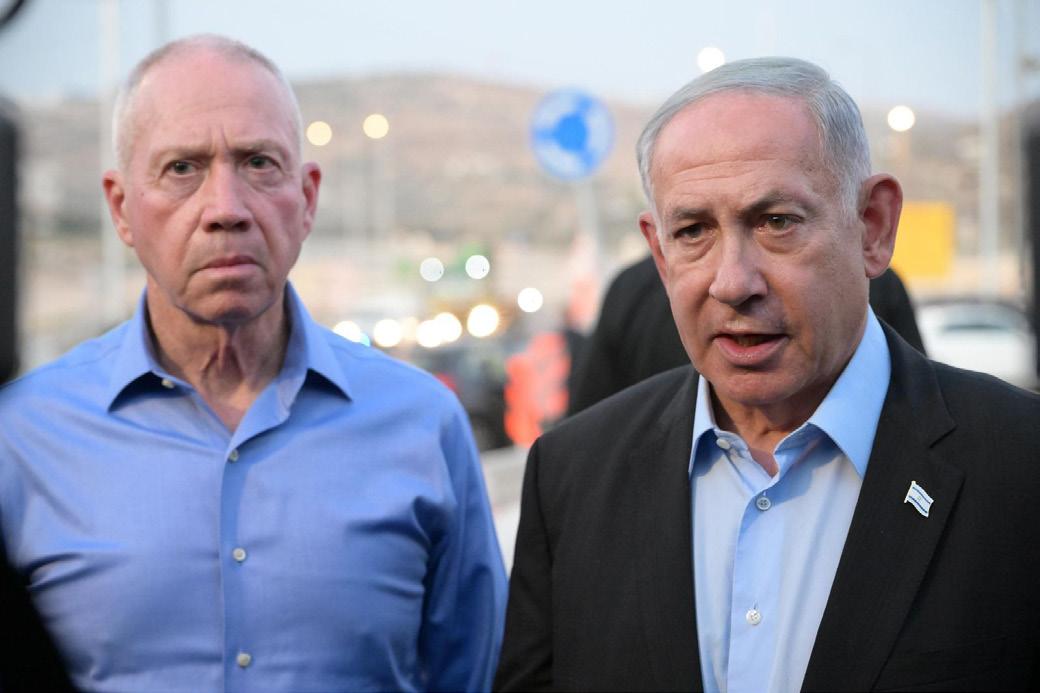
The PA’s powers are explicitly circumscribed by the Oslo agreements, which deny it jurisdiction over Israelis and external security matters. American courts have repeatedly noted that the PLO and PA lack defined territory and permanent populations under their control, and that the PA was expressly denied the right to conduct foreign relations. PA President Mahmoud Abbas himself has stated publicly that he hopes for the future establishment of a sovereign Palestinian state, making it clear that Palestinian statehood is an aspiration, not an existing fact.
Instead, the Prosecutor argued that Palestine should be treated as a State Party “for the strict purposes of the Statute only.” That formulation is its own refutation. If Palestine met the international law definition of statehood, no novel criteria would be needed. The request for a special carveout is direct proof that the standard definition cannot be satisfied.
The Prosecutor also argued that the UN Secretary-General’s mere acceptance of Palestine’s treaty instrument made Palestine a state. The Vienna Convention on the Law of Treaties (1969), however, is explicit that such depositary functions by the UN are administrative, not adjudicative. The Secretary-General himself issued statements clarifying that his actions as depositary did not resolve,
and were not intended to resolve, questions about Palestinian statehood. Using an administrative filing to bootstrap statehood is not legal reasoning, but madness.
Nor can General Assembly resolutions do the work. Under Article 10 of the UN Charter, the General Assembly may discuss and recommend. It does not make binding law, and it cannot confer criminal jurisdiction on an international court over nationals of a non-party state.
Moreover, there is a separate problem even if one accepts Palestine as a Rome Statute state party. The PA cannot delegate to the ICC criminal jurisdiction over Israelis that it does not itself possess under Oslo. Delegation cannot create authority from nothing.
The result is extraordinary: Israel is the first and only non-member state to be investigated at the behest of a non-state member. That is not equal application of international law. There is a word for applying the law differently to the Jewish state than to all others, and it is not a legal nor a nice term.
The substantive charges advanced by the ICC do not fare any better.
New information regarding the rushed ICC decision to lay charges against former Israeli Defence MInister Yoav Gallant (left) and PM Binyamin Netanyahu (right) make these charges more questionable than ever (Image: GPO/ Flickr)
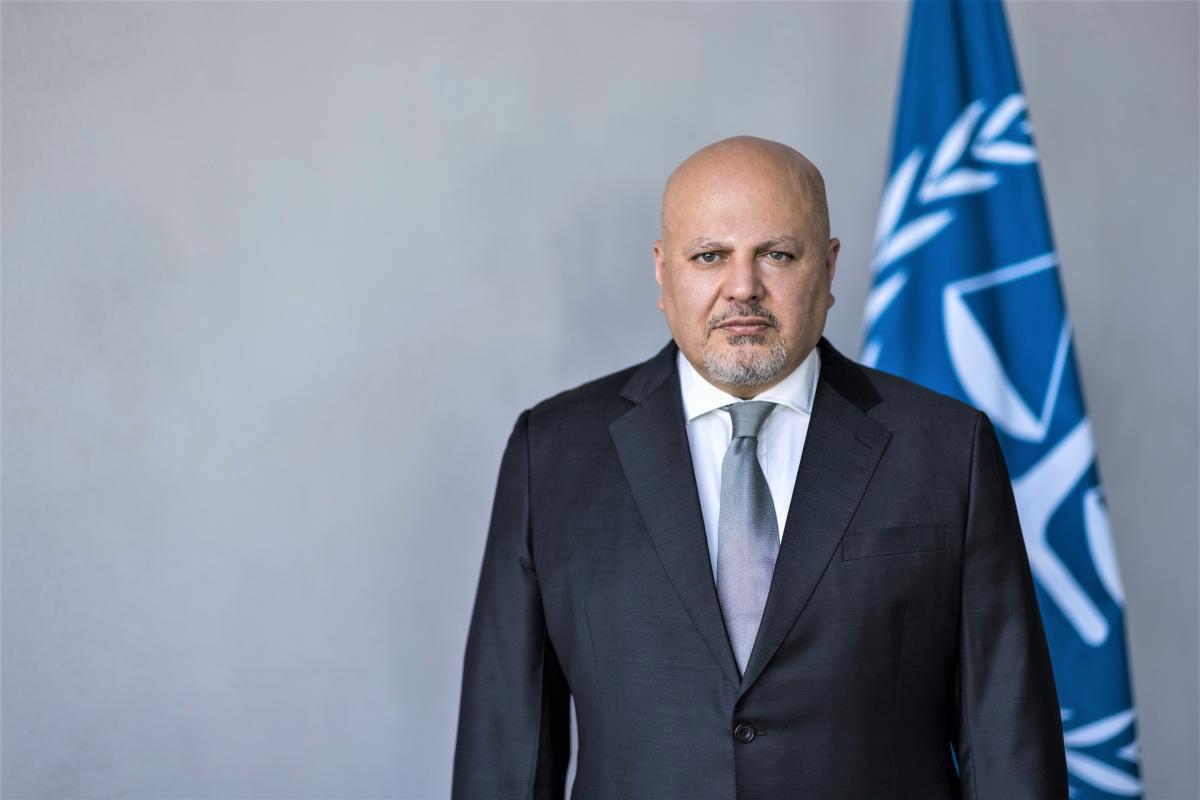
Take the allegation that Prime Minister Binyamin Netanyahu and former Defence Minister Yoav Gallant used starvation as a method of warfare. Karim Khan applied for arrest warrants on these charges on May 20, 2024, and the Pre-Trial Chamber issued warrants on November 21, 2024. The relevant Rome Statute provision, Article 8(2)(b)(xxv), criminalises intentionally using starvation of civilians as a method of warfare by depriving them of objects indispensable to survival, including willfully impeding relief supplies as provided for under the Geneva Conventions.
That is not a general negligence standard. It is not enough to show that civilians suffered, that aid distribution was chaotic or that humanitarian conditions were grave. The Prosecutor must prove the required intent: that Israel’s deliberate aim – separate from any other military objective, including compelling Hamas to surrender – was to starve the civilian population as a method of warfare.
The record does not remotely support that conclusion. Israel has repeatedly pointed to aid facilitation, inspections, humanitarian corridors and efforts to expand entry routes, while Hamas has repeatedly diverted, stolen, taxed, stockpiled or otherwise interfered with aid. Hamas also attacked hu-
manitarian crossing points, including Kerem Shalom, the very route through which aid was moving. Those facts matter because the Geneva Conventions do not require a party to a conflict to enable supplies that will be commandeered by the enemy.
The food security record also demands more care than the Prosecutor gave it. In March 2024, the IPC warned that famine was projected in northern Gaza if conditions did not change. But in June 2024, after the warrant applications had been filed, the IPC Famine Review Committee released an analysis showing that projected famine conditions had never materialised. The ICC spokesperson declined to comment on whether the Court would allow these facts to affect the charges. It should, of course, have ended them.
The ICC case is also procedurally defective on its own terms. The Rome Statute’s complementarity principle allows the Court to act only when a state is unwilling or genuinely unable to investigate or prosecute. Israel has an independent judiciary and active domestic review mechanisms. Whether one agrees with every Israeli decision or not, the ICC was required to grapple seriously with complementarity before racing to warrants. It did not.
The timing of the charges makes the process look somehow even worse. On May 20, 2024, Khan announced the warrant applications. Reuters later reported that, the same day, he had cancelled a planned mission to Gaza, Ramallah and Israel that had been under preparation for months and that would have allowed on-site evidence gathering and given Israeli leaders an opportunity to present their position and any domestic investigative steps. Why the sudden hurry?
Then came the allegations surrounding Khan
ICC Prosecutor Karim Khan (Image: International Criminal Court)
himself. Multiple reports have described sexual misconduct allegations against him by staffers, which he denies. In May 2025, Khan took leave while an external inquiry proceeded. Separately, the Wall Street Journal reported an allegation, based on witness materials, that Qatar had promised to “look after” Khan if he moved against Netanyahu, while the Guardian reported that a Qatar-linked private intelligence operation targeted the woman who accused Khan, apparently seeking material to discredit her, including by trying to connect her to Israel.
The Rome Statute requires a prosecutor not to participate in any matter in which impartiality might reasonably be doubted. The standard is not proof beyond a reasonable doubt that the prosecutor was bought. It is whether the circumstances create a reasonable doubt about impartiality. On this record, that question is unavoidable.
Khan’s lawyers call the decision unlawful and unsupported by evidence, and the underlying findings remain confidential. But consider what this means for the warrants. The man who sought arrest warrants against the Prime Minister and Defence Minister of a democratic nation, on a rushed timeline, after cancelling the evidence-gathering mission that might have complicated his theory, has now been found by his own institution’s oversight body to have committed serious misconduct grave enough to warrant removal. A court cannot suspend its prosecutor for serious misconduct and simultaneously ask the world to accept as a matter of faith that his most consequential charging decisions were made purely on their legal merits.
THE ICJ
The genocide case launched against Israel at the ICJ is no better.
“If international institutions abandon their own rules to pursue the Jewish state in ways they would not pursue others, the problem is not Israel’s disrespect for law. The problem is law being turned into a weapon”
Under the controlling ICJ standard, including Bosnia v. Serbia and Croatia v. Serbia, genocidal intent may be inferred from a pattern of conduct only when that is the only plausible inference available on the evidence. The Court has described the required proof of specific intent as exceptionally demanding. That is not a loophole; it is the core of the crime.
And now it has been answered. On June 8, 2026, the ICC’s governing body suspended Khan pending a vote by all 125 member states on whether to remove him from office – the first formal suspension of a prosecutor in the Court’s history. Reuters, citing a diplomatic source briefed on the decision, reported that the body’s executive bureau concluded after an 18-month investigation that Khan had committed serious misconduct, and recommended his removal.
Genocide is not a synonym for civilian suffering, excessive force, or even serious violations of the law of armed conflict. It requires the intent to destroy a protected group, in whole or in part, as such. That standard cannot possibly be satisfied here. Israel has the military capacity to destroy Gaza entirely. It has not done so. It has repeatedly stated that its war is against Hamas, not the people of Gaza. It has evacuated civilians before operations, issued warnings and continued to facilitate humanitarian supplies even while fighting an enemy that uses civilians as shields and civilian infrastructure
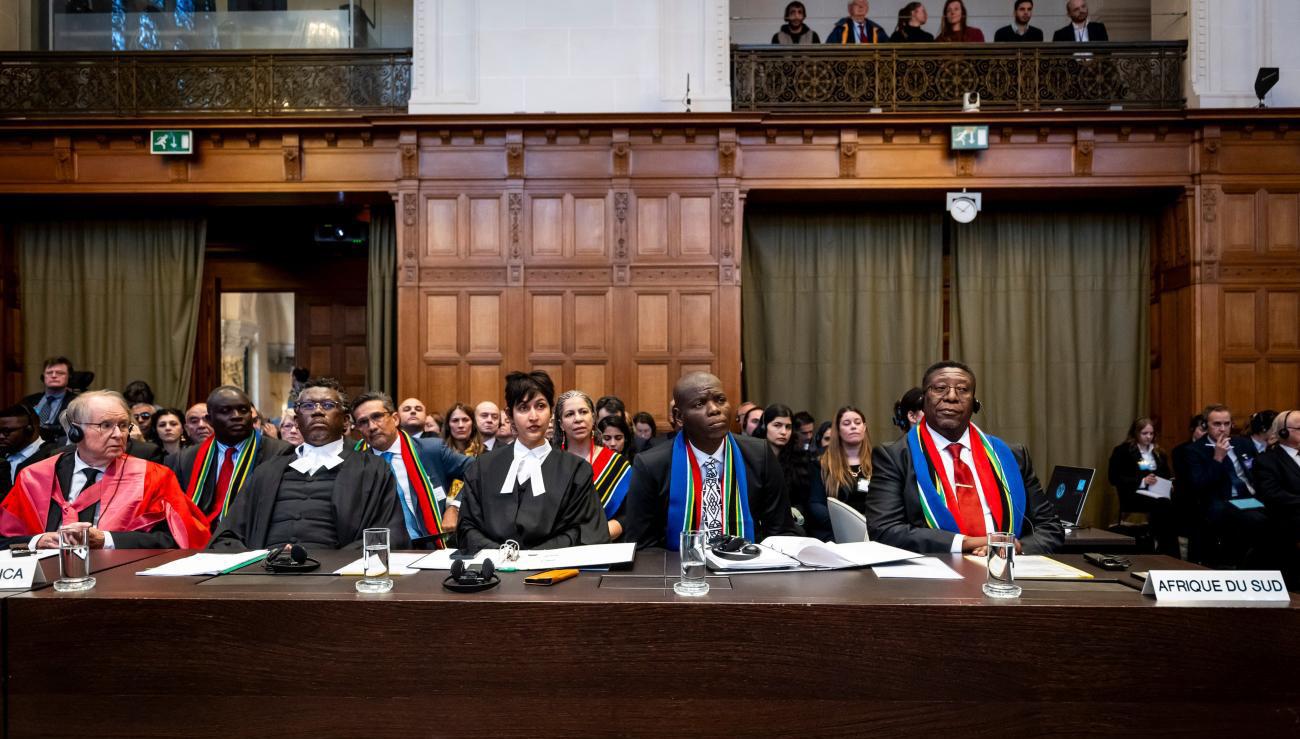
as cover, and exploits aid to fund its activities. Critics can contest particular tactics. They cannot honestly say that genocidal intent is the only reasonable inference.
And indeed, the ICJ did not say otherwise. The Jan. 26, 2024, provisional-measures orders the ICJ made have been badly misread. The ICJ did not find that it was “plausible” that Israel was committing genocide. It found that Palestinians hold rights under the Genocide Convention – specifically the rights corresponding to Articles II and III – and that those rights entitle South Africa to a full hearing. That is a procedural finding at the lowest threshold in international litigation. It says nothing about whether those underlying rights were violated. Indeed, the Court also declined to order the ceasefire South Africa demanded, which would have required a finding at the merits level that irreparable harm was sufficiently certain. What most commentary reported as a condemnation of Israel was literally just a decision to keep the case open until later when South Africa could try again to make the case.
Faced with the problem that the law’s definition does not fit the accusation, some NGOs have tried to rescue South Africa’s stunt by pushing to change the law instead. Amnesty International’s December 2024 report, for instance, explicitly rejects the ICJ’s intent standard as “overly cramped” and substitutes a “holistic” test that amounts to “trust us, we know it when we see it.” Yes, they acknowledge this on page 101 of their report.
That was not legal analysis. It was an effort to lower the threshold until the desired political conclusion fits. It cheapens the term genocide in ways that dishonour every actual genocide in history.
The Holocaust was genocide. Darfur was genocide. Rwanda was genocide. What Israel is doing in Gaza – fighting a terrorist organisation that deliberately uses its own civilian population as shields and has publicly vowed to destroy the Jewish state –cannot meet any recognised definition of the word. And yet, in an effort to save South Africa’s standing, countries like Ireland and the Netherlands have brazenly asked the Court to please lower the legal
The South African legal team at The Hague (Image: UN Photo/ICJ-CIJ/Frank van Beek)
threshold and expand the definition of genocide to try to find the Jewish state guilty. Again, when you are not enforcing the law but trying to change it to manufacture a charge against one particular state, there is a word for that.
The merits schedule (the timetable set by the court) tells its own story. South Africa filed its case in December 2023 using the language of urgent catastrophe. Israel filed its counter-memorial in March 2026 – roughly 1,000 pages, accompanied by approximately 4,000 pages of exhibits. South Africa then asked the ICJ for an 18-month extension to respond. On May 21, 2026, the Court set the new schedule: South Africa’s Reply is due Nov. 22, 2027; Israel’s Rejoinder is due May 22, 2029. No additional hearing is likely before 2029 or 2030.
South Africa says a second round of written pleadings is normal in Genocide Convention cases, and procedurally that is true. But the extension request is South Africa’s own. The party that invoked emergency needed 18 more months after seeing Israel’s actual legal response. Israel’s Foreign Ministry put it plainly: the claims of urgency have become requests for more time.
South Africa’s retreat is not a legal manoeuvre. It is a concession, even if an unspoken one, that its case does not survive contact with actual evidence and legal standards. Some Israeli sources believe the delay is also strategic – South Africa might be waiting for a different American administration before returning to court, since politics reliably influences how certain ICJ judges vote. That itself is a confession about what kind of proceeding this actually is.
The ICJ’s own provisional-measures posture also matters. In 2022, in Ukraine v. Russia, the Court ordered Russia to immediately suspend military operations. In South Africa v. Israel, the Court did not order Israel to suspend its military operations.
It ordered Israel to comply with the Genocide Convention, prevent and punish incitement, preserve evidence, report to the Court, and facilitate humanitarian assistance. Those are serious measures, but they are not the ceasefire South Africa requested.
That difference matters because it reflects the legal posture the Court understood. Unlike in South Africa’s brief, which barely mentioned Hamas, Israel’s military campaign was framed from the beginning against the background of October 7. A state acting against the military capabilities of a terrorist organisation might still violate particular rules of war. But that legitimate military objective is a powerful alternative inference to genocidal intent, and under the ICJ’s own standard, an alternative plausible inference should be fatal to any genocide claim.
International law has content. Genocide has a definition. Jurisdiction has rules. Starvation as a war crime requires proof of intent. Complementarity is a central consideration for jurisdiction, not a suggestion. Process matters because process is what separates law from politics.
None of those rules have been applied faithfully here. The ICC built jurisdiction on a contested legal fiction, pursued charges that do not match the evidentiary record, and did so under a cloud that should have required extraordinary procedural care.
The ICJ case tried to stretch genocide beyond recognition and then slowed down enormously once Israel filed its evidence.
Calling out what is happening is not an attack on international law. It is a defence of international law. If international institutions abandon their own rules to pursue the Jewish state in ways they would not pursue others, the problem is not Israel’s disrespect for law. The problem is law being turned into a weapon. Far from being an attack on international law, calling that out may instead be the only thing that saves it.
THE INTERVIEW
"WE ARE AT WAR"
An interview with David Harris
AIJAC STAFF
David Harris served as CEO of the American Jewish Committee (AJC) from 1990 to 2022. During that time, he helped transform the AJC into a global diplomatic force – engaging extensively with world leaders and playing a meaningful role in strengthening Israel’s international relationships. He is today Executive Vice-Chair of the Institute for the Study of Global Antisemitism & Policy (ISGAP) and is widely regarded as one of the world’s foremost experts on antisemitism and issues affecting world Jewry.
One of the most decorated Jewish organisational leaders in US history, Harris was also instrumental in laying the groundwork for the Abraham Accords. Shimon Peres once labelled him the “foreign minister of the Jewish people.”
The author of numerous books, his most recent publication, Antisemitism: What Everyone Needs to Know (Oxford Press, 2025), explores how, in the 21st century, antisemitism has once again become resurgent, providing a detailed, accessible and timely examination of antisemitism in both historical and contemporary contexts.
He visited Australia in early May as a guest of AIJAC and The Joint, the Australian arm of the international Joint Distribution Committee. He was interviewed by Australian newspaper columnist Gemma Tognini at an AIJAC event in Sydney on May 14. An edited transcript appears below:
Gemma Tognini: Listening to Colin’s breakdown of your incredible career, I wonder… in terms of advocacy, do you feel like this season, this book, this time, is the most meaningful work that you’ve done?
David Harris: I think a lot depends, a great deal depends, on our getting this set of challenges right.
And I say that both as someone involved in the Jewish world forever, and … quite frankly, as a father and a grandfather, I’m not so sure… what awaits my Jewish grandchildren.
What if we get this wrong?... I’m here in Australia… not just to talk about the book, but the book gives me the vehicle or the platform to talk about, “Okay,
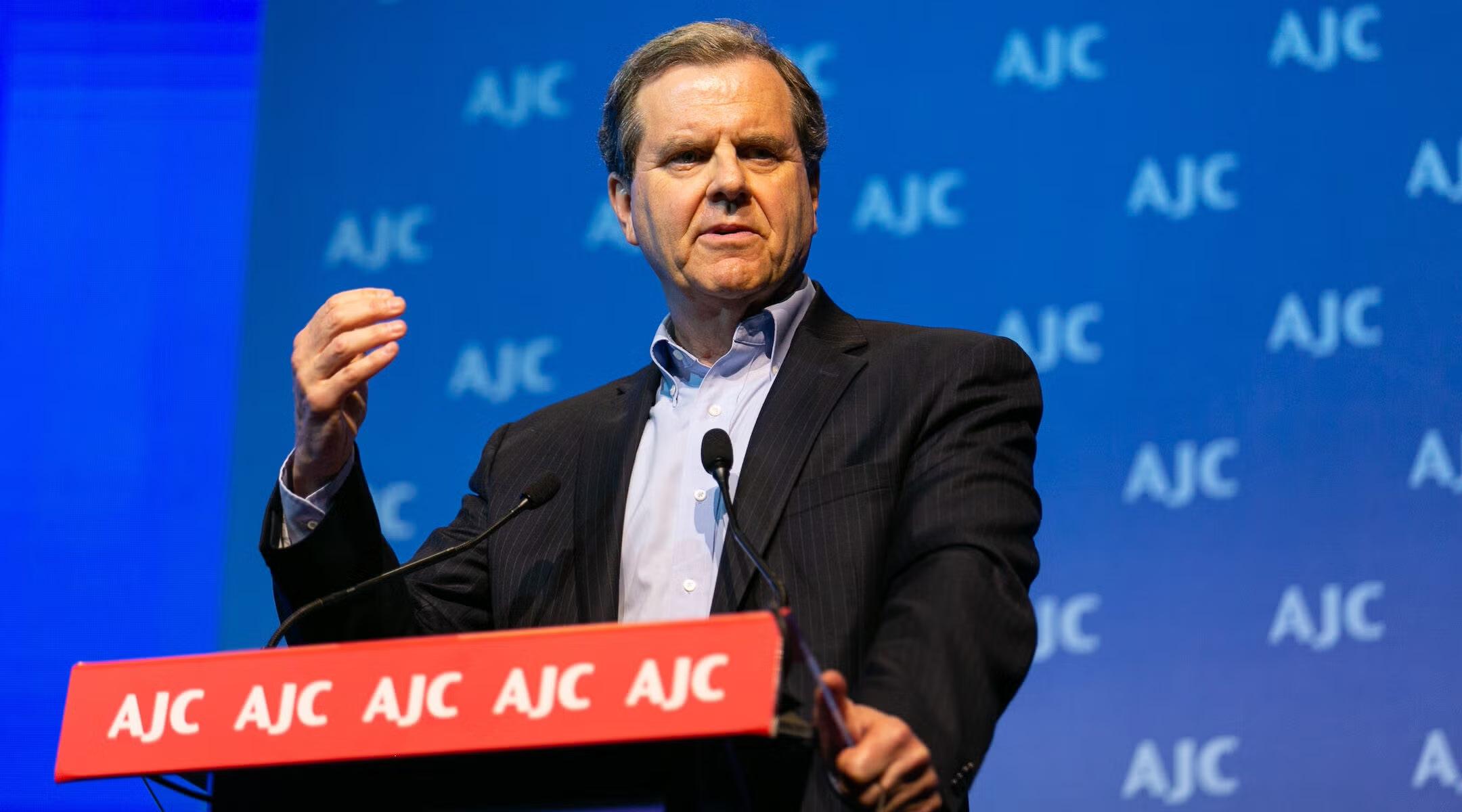
what next?” I think that that is the most crucial question we have. If we get it right, I think there’s a lot to look forward to. If we get it wrong, I think the cost can be quite high.
Tognini: Are you able to articulate what ‘getting it right’ might look like?
Harris: I think it really… means two things. It means, one, mobilising the Jewish community. And I’m not speaking specifically of Australia…
But mobilising a global Jewish community… to wake up and to understand that this is not a momentary skirmish. This is not the passing minute. This is not all the responsibility of an Israeli government or an American government or whatever other pretext or excuse people might try to find.
It means, secondly, coming together.
Believe me, I understand the organisational landscapes of Jewish communities. I come from the belly. But if we’re in a war imposed upon us… we’re all fighting the war separately…
Just imagine for a moment that this theory were applied to June 6, 1944, the [Allied] invasion of Europe, where the army didn’t talk to the Navy and the Navy didn’t talk to the Air Force and the Canadians didn’t talk to the Americans who didn’t talk to the British.
And we are in a war.
It’s not a war we sought. It’s not a war we triggered, but it’s a war imposed upon us.
So we need to reduce the barriers.
David Harris (Image: American Jewish Committee)
And then we need a war room. We need a war plan. We need war commanders. We need divisions of responsibility.
And I believe we’re capable of all of that.
But it doesn’t happen simply by wishing it to happen. But I also think that there’s something even bigger at stake…
And we know it as almost a kind of cliche.
It begins with the Jews. It never ends with the Jews.
We have in the United States of America today, and you have in Australia, great liberal democracies.
You have any number of people, especially young people, from good universities, who not only are vilifying and demonising and libelling Israel and by association with the Jewish people, but by extension are associating themselves with… the most demonic, bloodthirsty, totalitarian, regressive forces on Earth.
And if that’s the case, it reveals something profoundly wrong. Wrong in the education system, wrong in social media, wrong in the ether space…
You want to criticise this or that Israeli policy on any given day, half of Israel is doing the same thing.
But you want to associate yourselves implicitly or explicitly with Hamas, Hezbollah, the Iranian revolutionary regime?
What in your life story, what in your education, what in the sources of “information”, has led you to do that?
And to prove the point… did you notice that all those people who rush to the
WATCH: Gemma Tognini's full interview with David Harris
Sydney Opera House or who march religiously in Melbourne and all the rest were completely MIA in January of this year as the reports of tens of thousands of innocent people, progressive people, women’s rights people, students, LGBTQ people, went to the streets praying for freedom in Iran…
Why didn’t they show up?
Because if they had showed up to protest… their whole world view would have collapsed.
After all, Hamas and Hezbollah are arms of the octopus.
So if you condemn Iran, you can’t escape the condemnation of its proxies.
So they were willing to countenance the murders through their silence, in effect their complicity, in order to protect themselves… And I ask us collectively the question, what’s gone wrong?
Tognini: In Melbourne… my friend Tammy asked you a question… she has four kids and [asked] what do you practically, how do you practically build… not resilience, it is deeper than resilience… but where do you start [providing this] with your four children who are Jewish in Australia at the moment?
Harris: I think you start with understanding that they’re going to be facing very inevitable, difficult, challenging moments.
Somewhere, we don’t know where, but we know it will happen.
It may happen in a school, on a public bus or in a park or on a sports field. It will happen in social media.
But do our kids not just have the resilience, but do they have the character, the conviction, the confidence when that moment comes or those moments arrive to stand up to the moment, to lean in? Or are they going to pull back?
I told a story in Melbourne about a friend of mine whose daughter at 14 said she wants to opt out.
And when the mum asked, “What do you mean?” She said, “I want to opt out of the Jewish people.”
Now this is a very Jewish home and the young girl’s explanation was five words that continue to haunt me.
And I don’t think those five words were unique to this young Maya.
“The price is too high.”
I didn’t pay a price [for being Jewish] growing up in post-war America, not at all. Our children paid even less of a price.
And I already know that my Jewish grandchildren will not be able to say that… So I think even as we talk about external strategies, and we have to, I think we have to begin with and focus on the internal strategy of our children and grandchildren, who are the front lines…
And I think as part of it [is]… we can build all the walls we need and put out all the guards… But do we ask ourselves how our children see that?
We see it as necessary and almost normalised… But you’re three years old, four years old, five years old, and all of a sudden one day the wall is not six feet high but eight feet high. And instead of one friendly unarmed guard, there are now three or four policemen or police cars or, who knows, police dogs.
Don’t we need to stop and think how that impacts our children?
And whether they ask the question or not, nonetheless, truly they must be thinking, what’s going on? Does someone hate me? Why do they hate me? What have I done? Maybe they have reason to hate me. Then you begin a selfloathing process.
Tognini: One of the other external strategies I guess we discussed [was] lawfare… You said something about… in a perfect world, you would literally just hire the most qualified lawyers, put a team together and just let slip the dogs of war. That’s my paraphrase obviously…
Harris: I think we have to move from an October 6 playbook to an October 8 playbook.
It’s late in the day.
Israel accomplished it much more quickly.
October 7, we all know [about] the conceptzia, the word used in Israel for [the assumption] that Hamas would not attack. Notwithstanding what the young, largely female intelligence agents were reporting from the Gaza envelope… the deeply rooted conceptzia was, no, Hamas will not attack. They got that wrong. They paid a huge price.
By October 8th and 9th and 10th, they were developing a new conceptzia
And the new conceptzia was not a defensive strategy to hold them back, but an offensive strategy, which ultimately resulted in seven kinetic fronts, as we know.
And Israel has [had] some… truly brilliant, achievements on those seven military fronts.
Well, we are the eighth front, the eighth front of [enemies] trying to stir up antisemitism, whether it’s masqueraded as anti-Zionism or just raw, unadulterated antisemitism, [to] weaken us, isolate us, fragment us, and ultimately weaken the relationships of our countries with Israel.
What’s our conceptzia?
I go back to where’s the war room and where’s the war mindset, but the theme of the new conceptzia for me is wars are never won by defence alone.
So we’re going to spend the rest of our lives saying, ‘no, no, no, you have to understand, Israel is not committing genocide.’ ‘No, no, no, Israel is not an apartheid state.’ ‘No, no, no, Israel does not intentionally use dogs as sexual [torture devices] for Palestinian prisoners.’ ‘No, no, no.’ And keep going, keep going, keep going. That’s a war we’re never going to win.
Why in the world haven’t we taken the war on offence? On our terms…
And after all, who are our adversaries? The most demonic, diabolical, bloodthirsty, cynical forces on earth.
We can’t come up with a strategy that takes the war to them, the war of the streets, the war of the media, the war of social media, the war of the classrooms? We can’t do that?
We’re going to let the Iranian revolutionary regime and its tentacles Hamas and Hezbollah and the misogynistic, homophobic, antisemitic, regressive forces win this battle because the rest of our lives, we’re going to be trying to
"Who are our adversaries? The most demonic, diabolical, bloodthirsty, cynical forces on earth. We can’t come up with a strategy that takes the war to them?"
say, ‘no, no, no, you have it wrong.’
And a key weapon in this, where appropriate and possible, is lawfare.
We thought in the October 6 playbook that our best weapon was reason. Reason.
If only we could meet with the media… with the university leadership… with political parties across the spectrum and have a half-hour to an hour with them in our reasonable, reasoned way, we could explain to them why Israel is a decent, good country, a worthy partner, and why any manifestation of antisemitism is not true.
Well, unfortunately, and I say it with pain, reason no longer is sufficient. So, roll up the sleeves, raise the money, find the best lawyers, find the best specialists in technology and communications… We can figure this out.
Let’s rethink allyship.
Let’s become smarter political strategists. Any party that comes knocking on the door wanting our vote, dangle it. Dangle it. But name your price.
And I say this especially in an American context. Don’t allow political parties… to take the Jewish vote for granted, even as they betray us...
I still want to believe – and I hope it’s not a naive belief, a belief of desperation – that our liberal democracies are largely comprised of decent people. It doesn’t mean that they’re all ready to rush into the streets to march or to clamour or to petition. But at heart, they… want to live and let live. And they are, let’s call them for this purpose, the silent majorities.
And maybe part of our strategy has to be how to engage the silent majority to make clear that this stuff, whether the netball incident [in Sydney] or the Melbourne incident or the tragedy on Bondi Beach is not our Australia. It’s not us. And it will not happen on our watch with our complacency, much less complicity. If I’m right, we have a potentially extraordinary allyship.
If I’m wrong, then once again, it reveals something way deeper. And anyone who cares about the future of Australia or the United States or Canada needs to give this urgent attention.
Audience Member: I go back to that comment that you made quite early, which was, ‘what’s gone wrong?’ And that strikes me very close because my daughter, who is, you know, a child of the left, is pro-Palestinian, even though she knows that that makes me angry and that she’s not standing with us or my father or my grandfather in their battles.
So… for someone who’s from the left, what’s gone wrong in our families and our universities and our political parties and everywhere else down the track?
Harris: I’ll speak from an American perspective. American higher education, and increasingly often it appears elementary and secondary education, has become the preserve of the left. Especially in the social sciences and humanities…
It began quite some time ago.
There are many reasons, I’m sure.
One of them, which we’ve been looking at very carefully through ISGAP… is foreign penetration, foreign funding… I want to investigate what foreign money is coming, and not just from China, yes from China, obviously, but from the Middle East, and specifically countries like Qatar.
And the reason I joined ISGAP specifically, is because they were the organisation that put this issue of “follow the money”, merged with the Muslim Brotherhood ideology, funded by Qatar especially, and supported by Turkey, on the map in Washington DC.
And I don’t know the degree to which it’s on the map in Canberra, or in the states of Australia…
That’s not the only explanation, but it’s a starting point.
Who allowed the hijacking of the social sciences, Middle East studies, related issues?
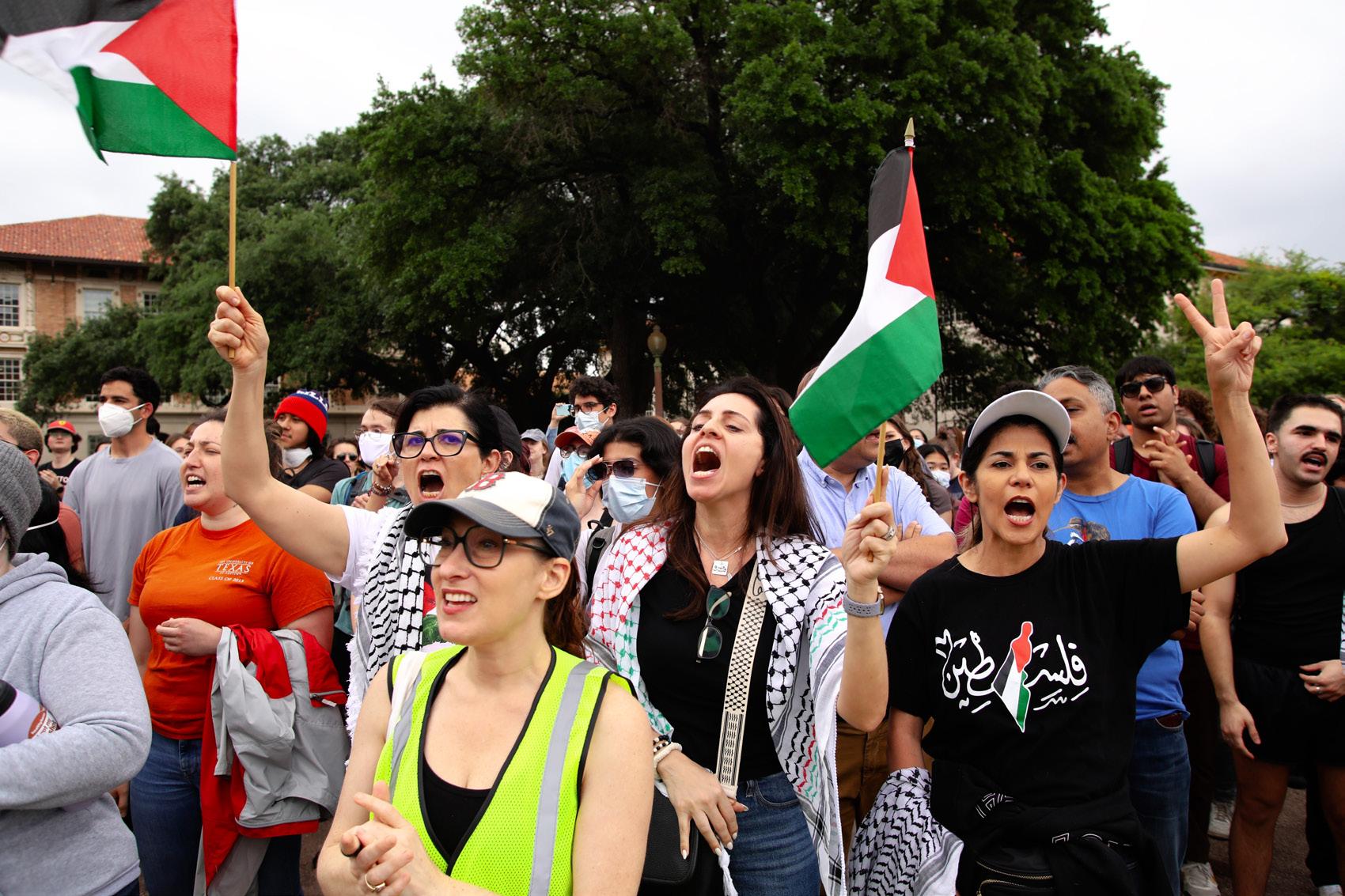
Colin Rubenstein went to Columbia University for his doctorate.
Most recently, there’s been… many studies of what went wrong at Columbia University, which became ground zero for the insanity of universities.
And they found, as I recall, that not a single faculty member in the Middle East Studies departments even recognised Israel’s right to exist.
That kind of thing takes a long time… they’re playing the long game.
Audience Member: Melanie Phillips says in her current book that antisemitism is such a paranoid and irrational hatred, we cannot combat it with facts and information. Would you agree with that…?
Harris: I think Melanie Phillips is an extremely important voice and perhaps a prophet in our time.
Because she was writing and speaking about these issues while too many others were planning their next vacations to the south of France.
I agree with her with an asterisk.
I agree with her that there’s nothing that I’ve seen to suggest that we should be spending our time trying to change [far-right broadcaster] Tucker Carlson’s mind. He’s absolutely insane, I would agree with that…
Jonathan Swift, the author of Gulliver’s Travels… said you cannot reason a
Student protests are a result of higher education becoming a preserve of the left, and foreign funding, Harris argues (Image: Shutterstock)
person out of a point of view that they did not reason themselves into.
So Tucker Carlson did not reason himself. Tucker Carlson found new sources of money or whatever it is, who knows.
But if we accept the premise that the great majority of people in our countries are the silent majority who are decent people, who reject these notions but need to be mobilised, then yes, I will spend precious time… I hope, trying to engage.
And even in this last week [in Australia] – I know it’s analysis by anecdote, dangerous – …I can count probably eight, ten, 12, 14, random comments from people [we] met along the way in strange places, in radio studios, in newspaper lobbies, who said, “Man, I’m with you.” Or, “Man, they’re nuts.”
Audience member: I’m concerned about the statement about sleepwalking. Because when I look at what’s happening in the Royal Commission at the moment… Jewish leader after Jewish leader after Jewish leader getting up and saying, “Why are they putting graffiti on our institutions? We don’t have a foreign office. Why are they blaming us? We’re not responsible for Israel.” Imputing, as Melanie Phillips correctly said, that Israel is really to blame, but why blame us?...
Demonise, delegitimise, double standards against Zionists, but that’s okay. Why are we not dealing with that? Don’t you think we should?
Harris: I think even more than the examples you offered, I’m listening to American discourse, which, I suspect, is here as well.
How about “Globalise the Intifada”?
Because Globalise the Intifada, as far as I’m concerned and I’m not alone, is… an explicit incitement to violence. And how about when people chant “We are all Hamas”?
Is that simply permissible, innocent, protected free speech?
We are all Hamas, an organisation that has been designated a foreign terrorist organisation by your country and mine.
And yet people on the street are prepared to openly associate themselves with that foreign terrorist organisation designated by our respective governments. The sleepwalking – let me be provocative if I haven’t been so until now…
Colleagues in the Henry Jackson Society in London just calculated that in the recent council elections there, in the UK, close to 600 candidates were elected as sectarian candidates with a transnational Muslim agenda.
Meaning they might have been elected for the local council… but the agenda on which they ran was the so-called genocide in Gaza, or the so-called war crimes in Israel, or the so-called culpability of Zionists in Britain.
Is sectarian politics coming to Australia?
Is Britain simply a sneak preview?
Again, I refer to sleepwalking because it’s not as if we haven’t been warned. We’ve been warned, but we’d rather enjoy our sleep.
Audience Member: On the one hand, we’ve seen activists such as Bret Stephens in the US say that it’s actually about time that Jews do not define themselves by antisemitism and continue to be engaged, proactive Jews through education and other means. On the other hand, we see in the UK, Kemi Badenoch, the… leader of the Tories, saying that in the UK there is a national emergency.
So these are quite extreme positions, and I just wondered what your thoughts were on those.
Harris: I know Bret Stephens well. I admire Bret Stephens a great deal…
And in theory, at least, he reaches an audience through the New York Times that may not be on our side…
I think he was trying to make a point, and he certainly got the attention for the point he was making, when he looked at the head of the Anti-Defamation League in a speech, and he said we should shut down the ADL and use all the money for internal education.
I think I take the point about Jewish education, I spoke about it earlier, as the first line of our response, but hey, I don’t think we’re forced into binary choices.
I think we are big enough, sophisticated enough, potentially strategic enough, and certainly resourced enough to be able to do two things at once.
…And yes, what the Tory party leader said is amazing.
It’s amazing. We have friends.
I spoke earlier about allyship. I wouldn’t give up on allies. I wouldn’t give up on the silent majority. We need to do both. And the last thing in the world we need to do as a strategy, I believe, is to own these issues as if they were only our own.
Yes, these are Jewish issues, but they’re not only Jewish issues, they’re Australian, American, Canadian, British, liberal, democratic issues. And why in the world would we choose a strategy which narrows the argument and narrows the potential reception?
I don’t want to end on a downer.
Nor do I want to be seen as… trying to create a contrived message of hope… That’s not this. This is something else.
I am an optimist.
I’m an optimist because I spent enough time seeking to understand the Jew-
ish journey. And if one takes the time to understand the Jewish journey, which did not begin yesterday or on October 7, there is absolutely no reason to believe that we are going to succumb to defeat.
And there’s every reason to believe that, though we may have been too slow, at too great a cost, we’re going to rebound and recover because we have in the end met every challenge.
I look at May 9th, 1945.
I was not yet born but tried to imagine what the Jewish world must have looked like to the surviving Jews and their compatriots around the world… the realisation that two-thirds of European Jews had been annihilated… while the vast majority of the world looked the other way; while this country closed its borders and my country closed its borders; while, after the war, survivors who went back to Poland and Hungary and elsewhere too often were either killed or forced out, only to land in displaced persons camps on German soil.
Bergen-Belsen went from being a concentration camp to being a DP camp. Can you imagine the people who had to live in the DP camp – even without German guards? Amid the layers of blood and ash and bones?
Two thousand Jewish children were born on the island of Cyprus behind barbed wire because the British even after the war and even after Auschwitz
SEE ALSO:
Israeli diplomat and negotiator Tal Becker sits down with AIJAC Executive Manager Joel Burnie for a wide-ranging discussion on the Abraham Accords, Iran and the future of regional cooperation in the Middle East.
and Birkenau and Belzec and Buchenwald would not allow them into mandatory Palestine.
The Jewish community of Lithuania, gone. Poland, gone. Greece, gone.
And American Jews, safe on the other side of the ocean, could not… convince the President – for whom they had overwhelmingly voted four times – to allow 930 passengers from the St. Louis fleeing Nazi Europe, seeing the skyline of Miami, Florida from the deck of their ship, to disembark.
And when Canada was asked, the answer was the same.
That was 1945, 1946, 1947.
And one could understand if Jews sat down and said, you know what, like my little friend Maya, the price was too high.
They didn’t. They didn’t. And miracle after miracle after miracle occurred, many in our lifetime.
The rebirth, not the birth, the rebirth of the State of Israel on May 14th, [1948], 650,000 people in the Yeshuv arrayed against five Arab armies, including the British-trained Trans-Jordanian army.
A country today of more than ten million people, whose per capita GDP just surpassed Britain and France.
And whose young people returned from the beaches of Goa and the salt flats of Bolivia, when called on October the 8th, to fight the most demonic enemy, and succeed brilliantly.
The American Jewish community said, no, never again.
And when we heard the words, “Shelach et ami”, “Otpusti moikh lyudey”, “Let my people go,” come from the Soviet Union, a hermetically sealed country, we responded. And millions of people were able to leave a country in which the word “emigrazia”, emigration, did not exist in the vocabulary.
Ethiopian Jews, in another modern-day Exodus, thinking they were the only Jews left on earth, yet praying daily to Yerushalayim, are now living in Israel, studying, serving in the IDF, representing Israel as ambassadors...
If I were in a charismatic Christian church, perhaps, I would stand up and say, “Hallelujah!”
Count me in. Count me in. I’m a believer. I believe. I believe in the Nefesh Yehudi [the Jewish spirit].
I believe.
And though we’re slow to respond… I believe that we will respond, and we will create a new “Nes Gadol,” a new big miracle. And it will be because of people like the people in this room and the organisations represented here, from AIJAC to The Joint, to Central Synagogue and the many elsewhere in this country and in the United States. We will prevail… Thank you.


FROM THE ABYSS
Chronicles of Israeli hostages
JULIE SZEGO
When We See You Again
Rachel Goldberg-Polin
Hachette, 2026, 288 pp. $34.95 [purchase here]
Hostage: The unflinching first memoir by an Israeli hostage
Eli Sharabi
Swift Press, 2025, 208 pp. $34.95 [purchase here]

It will be years before the full story of October 7, Israel’s worst-ever massacre, is told. Two recent memoirs – When We See You Again from Rachel Goldberg-Polin, the global face of the hostage families movement, and Eli Sharabi’s self-explanatory Hostage – intersect and complement one another.
For some of his harrowing 491 days in captivity, Sharabi was held alongside Goldberg-Polin’s son, Hersh, in a tunnel in Gaza. Hersh, abducted from the Nova Music Festival, where a Hamas grenade blew off half his dominant left forearm, endured for 328 days what his mother describes as “an odyssey of suffering, starvation, and torment that is hard for me to cook into digestible words.” In late August 2024, he was executed at close range along with five others, who became collectively known in their anguished homeland as “The Beautiful Six”.
JULIE SZEGO is a freelance journalist and author. She writes a Substack newsletter: Szego Unplugged. Her non-fiction book, The Tainted Trial of Farah Jama, was shortlisted for the Victorian and NSW Premier’s Literary Awards for 2015.
Sharabi, wrenched from his wife, Lianne, and daughters, Noiya, 16, and Yahel, 13, on Kibbutz Be’eri, yearned for their reunion, only to find, upon his release from gruelling captivity that, contrary to what his kidnappers had encouraged him to believe, his whole family had been murdered on October 7.
His journey through loss takes place beyond the last page. GoldbergPolin, by contrast, writes from within a maelstrom of forever grief. She is under the “metaphorical 18-wheeler semitruck” that suddenly hit her and
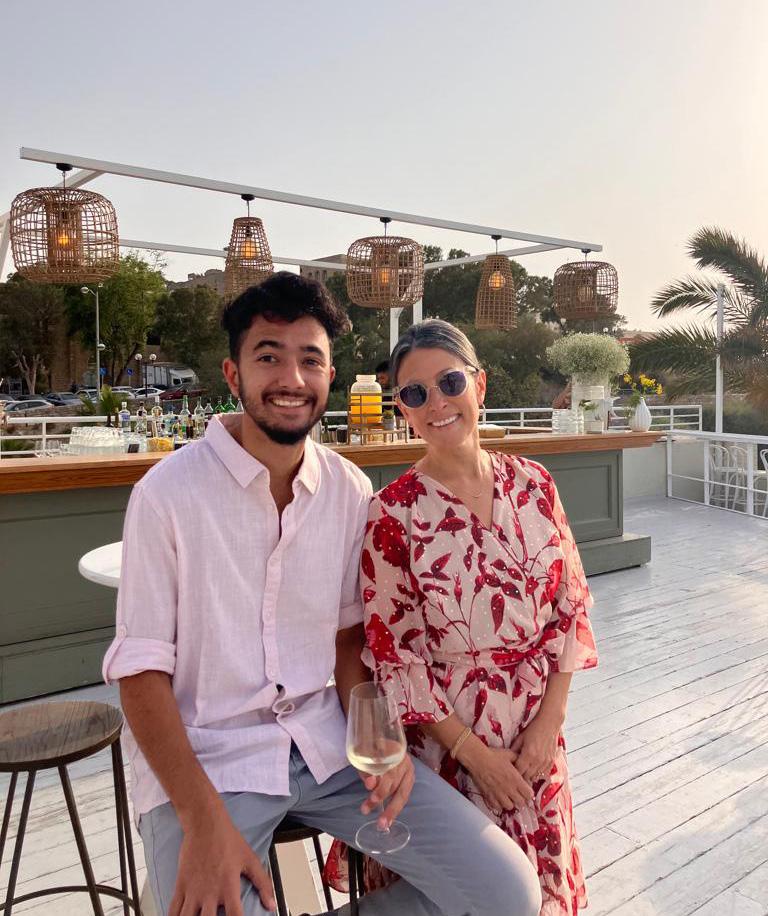
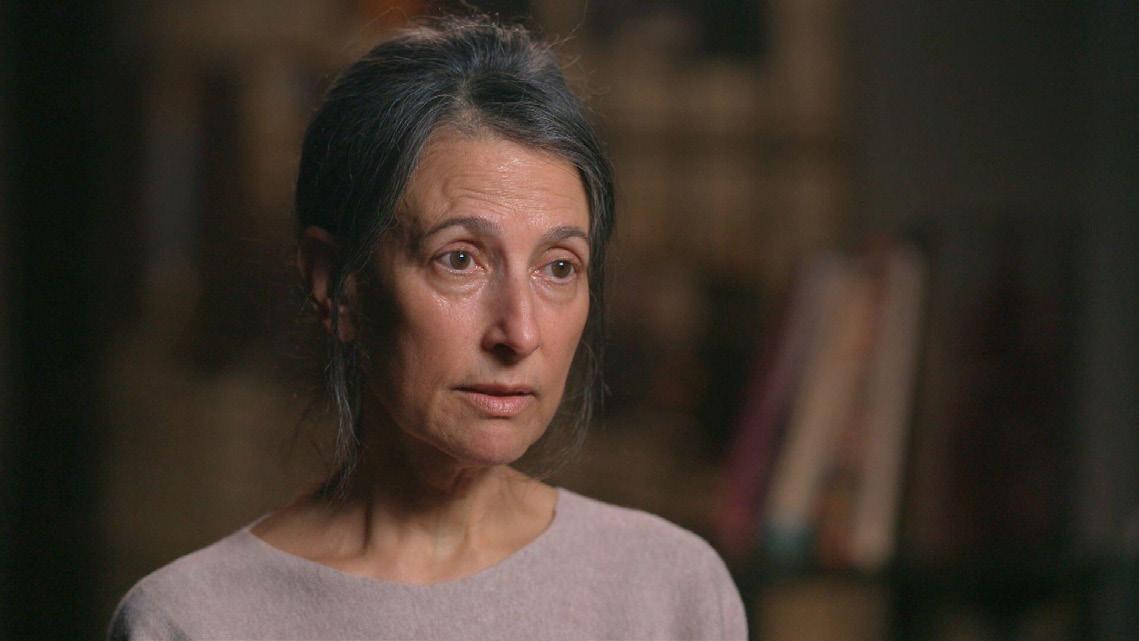
husband Jon (and their two daughters) as they were “meandering down the road” of what she, somewhat unconvincingly, calls their “beige” lives.
For her, October 7 ruptured time into Before and After, the latter bleeding into the former. She shifts back-and-forth between past and present with fatalism, or sometimes with faith. She finds comfort in philosophy through the ages, from the mythological Sisyphus to the Biblical Job, the grieving father whose “four simple words” speak to her: “God gives, God takes The rest is commentary.”
The reader wanting the inside story of Goldberg-Polin’s epic lobbying campaign for her son and the other hostages won’t find it here. Most of those episodes, including her meeting with the Pope, are rendered impressionistically — as if viewed from the aeroplanes in which she finds temporary respite. “I don’t remember how it came together, but somehow we were going to the United Nations,” she writes.
“I remember… being on a Zoom call with the US president [Joe Biden isn’t named] and the twelve families of Americans who were missing.” One of the mothers left the (virtual) room only to return with news her second daughter was also found dead. “The president put his head into his hands on his desk and wept.”
She remembers a “worrisome and unsettling” trip “to a land where we should not have been... meeting with people who knew the people holding Hersh and the others.” This is possibly a reference to what we know was her and Jon’s lobbying of Qatari officials. She alludes to a potential deal sunk by the “loose lips” of an “Important Person” in Israel, but her sense of grievance about the Netanyahu Government’s handling of hostage negotiations is detectable only to readers already in the know. Nor does this inspiring teacher of Jewish studies dwell on the humanist, religious Zionism that led her and Jon to migrate to Israel or on the jihadists who exploited her son in propaganda videos before killing him.
The global outbreak of Jew-hatred is mentioned only in passing. She was warned she’d be “hated off the stage” at the Democratic National Convention but instead received a standing ovation. We’re left to contemplate the moral dissolution signified in the warning that a des-
Rachel Goldberg-Polin before and after the anguish of losing her son Hersh (Images: YouTube screenshot, X)
perate mother of a civilian hostage might be hated off a stage, just as we’re left reeling at the officials from the International Committee of the Red Cross in Geneva who “talked forever” about why they could not and would not demand access to the hostages.
At times her prose is devastating. When Jon tells her of online rumours that six bodies were found in a tunnel under Rafah with Hersh among them, “Something flew out of me and went directly up through the ceiling.”
And yet as October 7 marks the ravaging of Goldberg-Polin — her period stopped, “even my teeth have shifted” — we glimpse in a shadow narrative Hersh’s untimely personal becoming. For much of the book he is the good-natured, soccer-mad festival-goer with a “cliche” feather earring, a plane ticket booked for Goa and The Art of Happiness bookmarked on his bedside table.
But gradually a portrait emerges of a young man who drew on his extensive reading about the Holocaust to meet his own tragic historical moment with astonishing grace and courage that made him an emblem at home.
As the returned hostage Or Levy told the grateful Goldberg-Polins, in the tunnels, Hersh had spread the gospel of Holocaust survivor and psychologist Viktor Frankl, author of Man’s Search for Meaning. We can withstand hell, Frankl wrote, so long as we have a Why, a purpose for living.
When Sharabi hears Hersh’s incantation of Frankl during their three days together in the tunnel, the words “feel like a gift,” he recounts in Hostage.
Where Goldberg-Polin uses abstraction to give shape to her torment, Sharabi’s narration is spare and unsentimental, as concrete as the airless tunnels in which he was held. We’re riveted from the first line: “Five terrorists enter with weapons drawn.”
Former Israeli spokesperson Eylon Levy is credited with the Sharabi book’s English translation. And that’s fitting because Hostage demolishes the edifice of anti-Israel propaganda with unvarnished facts.
Driven into Gaza alongside Khun, a Thai guest worker from a nearby kibbutz, Sharabi must rely on his terrorist captors as a shield against the “sea of people... trying to rip me from limb to limb.”
His account provides evidence for myriad Israeli claims about the Hamas military’s commandeering of civilian infrastructure: he is held, variously, in mosques, from which shafts lead deep into the tunnels, in private homes, and in a children’s bedroom with windows “branded in the letters: UNRWA” and from where he hears Hamas’ rockets being launched.
“For the first time,” he writes at one point, “we see UN aid boxes” in the tunnel. (So Hamas exploited civilian aid after all.)
At every turn our hunger for details is satisfied. Most intriguing are the Hamas operatives, so finely observed despite the fact that Sharabi’s glasses were shattered on the 7th — just as well, as he’s spared from seeing the worm infestation in the tunnel where sewage overflowed
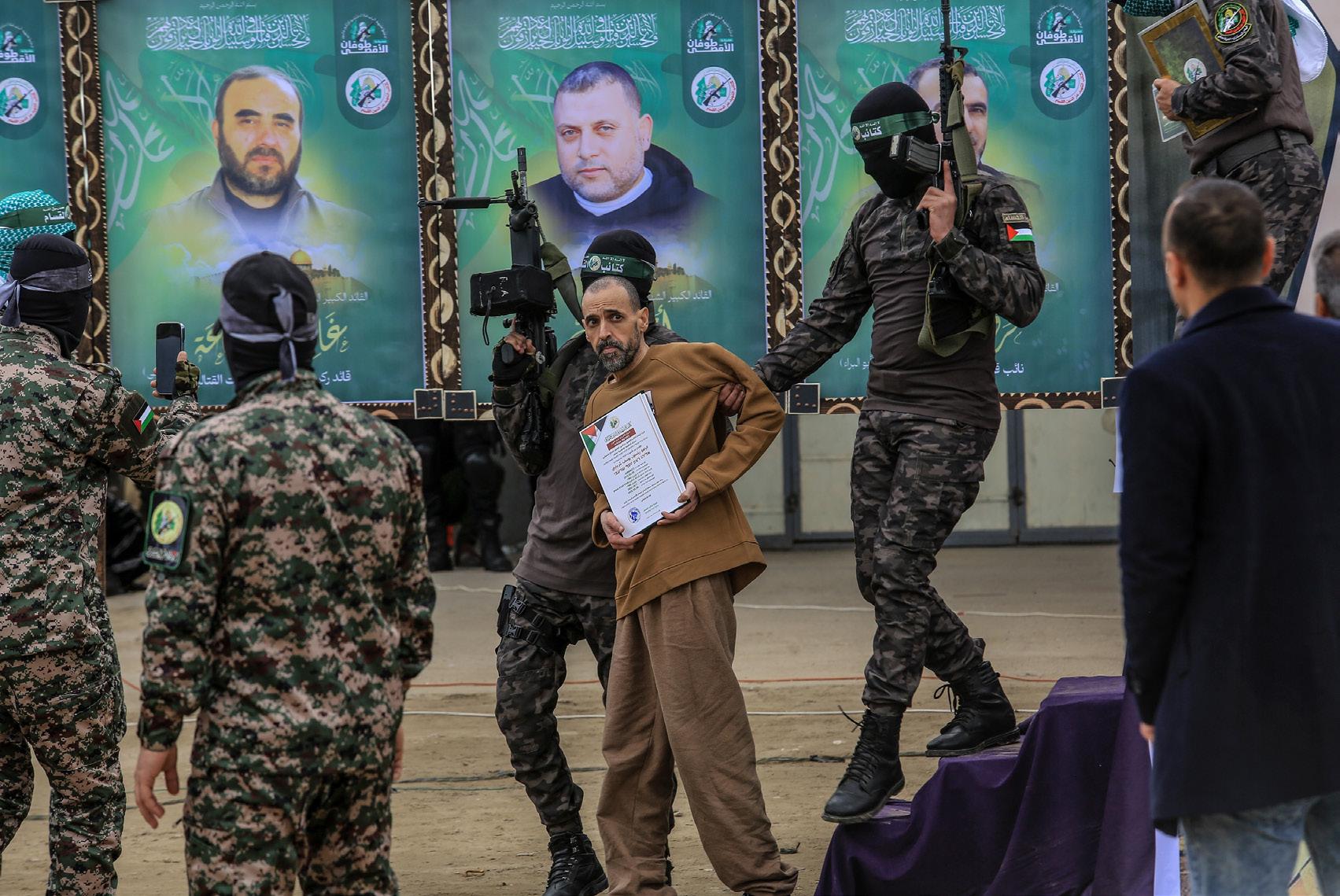
Eli Sharabi shortly before his release by Hamas (Image: Anas Mohammed/ Shutterstock)
the cesspit. He and his fellow prisoners give their captors nicknames based on their appearance, roles or personalities, such as The Mask, The Cleaner and The Nightingale (for his nice singing voice.)
There is the chilling figure of The German, a courteous blonde with flawless English who turns up to film propaganda videos and check on the hostages’ health. And The Trash — who metes out a beating that leaves Sharabi immobile for a month.
Of another he writes, “The best indicator of his mood is how tightly he fastens our leg cuffs.”
The captors’ moods change according to the “martyrs” tally — when one day the hostages are given sweets, “they gleefully tell us Iran launched a massive missile at Israel.” But their ideology is rigid. Arabic-speaking Sharabi is told he should go back to Morocco or Yemen from where his grandparents came. The hostages are offered bribes to embrace Islam — they refuse, doubling down on Jewish rituals. We learn that the gunmen’s ultimate term of abuse is “Abbas”, after the despised Palestinian Authority President.
The terrorists are variously studies in paranoia (a bruise on Sharabi’s arm sparks fears of an IDF tracking device) and envy — there are incessant questions about prices and salaries in Israel. (“Hada millian!” They’re millionaires, the terrorists proclaimed as they butchered the kibbutzniks of Be’eri.) One of Sharabi’s “host” families treat him with reverence after learning he has a degree in economics.
As a group, the gunmen revel in humiliating the prisoners; as individuals they talk lovingly to their children on the phone, and as the war grinds on, cry softly at night.
Sharabi’s a father figure to his three fellow hostages, especially to the gentle Ohel, stopping the younger men from succumbing to self-pity. “I realize they’ve got a basic lack of situational awareness,” he notes, somewhat comically. As food rations dwindle, Sharabi’s collectivist ethos of “unto every man what he needs and deserves,” likely saves them all.
In his telling, he breaks down only once – when he is safely in a Red Cross vehicle with “Felicity”, a New Zealander with kind eyes, on his way to release. His fellow prisoner berates her for abandoning the hostages but Sharabi is impatient for his future.
In captivity he dreamed of moving his family to Lianne’s native UK where he’d never again confront terror in their eyes. But on the helicopter ride to Tel-HaShomer Hospital, the now bereft husband and father contemplates his “beautiful, green, wounded beloved land of Israel.” Asked upon landing if he wishes to disembark wrapped in an Israeli flag, his response is an emphatic affirmative.
Lest the question was ever in doubt, the calamity of October 7 showed Israel has a “Why”, and it’s not giving up any time soon.
POLITICS TIMES THIRTEEN
The crisis points that shaped Israel's history
AHRON SHAPIRO
A Call at 4 AM: Thirteen Prime Ministers and the Crucial Decisions that Shaped Israeli Politics
Amit Segal
Wicked Son, 2025, 248 pp, $40.00 [purchase here]
If you are a regular listener to Dan Senor’s Israel-oriented insider podcast “Call Me Back” – and if you aren’t yet, you really should be – then you would already be familiar with political analyst Amit Segal, a regular guest for the last two years.
Israelis, however, have known him for many years longer than that. You could say he has become something of a household name there through his long tenure on Channel 12 news,
and as a weekly columnist for the top-circulating papers, first Yedioth Ahronoth and today Israel Hayom. Whether on podcasts or live television, or in the weekend papers, Segal has developed a reputation for serving up tasty insights that few other journalistic commentators can.
His long-awaited English adaptation of his 2021 book, The Story of Israeli Politics, came out last October, revamped and rebranded, complete with a new focus, as reflected in the different title.
Segal clearly set out to write a book that would cover Israel’s prime ministers but in a way that would be lively and maintain the readers’ interest. So, he focused on certain fateful decisions made by one or more of them that made their mark on Israeli history.
Not every prime minister got a chapter, or even tacit recognition. Moshe Sharrett, PM from late 1953 to late 1955, barely gets a mention at all. Meanwhile, Yair Lapid wasn’t counted because at the time the Hebrew edition was published, he had yet to succeed Naftali Bennett under the rotation deal they had made.
Also, not every decision that is a focus of the book carries the same significance. The section on Ehud Olmert deals mainly with his canny move to demand that then PM Ariel Sharon agree to make him his official successor if Sharon were to “become incapacitated”. Soon afterwards, Sharon had a stroke and lapsed into the coma from which he never recovered. I don’t think I’m giving away too much by saying that Olmert’s chapter is the thinnest – and yet still feels overly long.
The remaining chapters are, thankfully, much more interesting. Beginning with explaining how Israel’s political system came to be and why it operates the way it does, Segal moves, mostly chronologically, through the country’s political history, from leader to leader, and decision to decision.
There are a couple of exceptions.
Golda Meir, Israel’s fourth PM, who was in office during the costly Yom Kippur War, is bumped up to Chapter 2 in order to make a crucial point about Israeli voters’ tendency to place security above all other issues.
Menachem Begin is promoted to Chapter 3 because of the political sig-
Golda Meir faced her most crucial test during the 1973 Yom Kippur war (Image: Wikimedia Commons)
nificance of his Likud party’s 1977 electoral upset that drove the Labor party “Alignment” into opposition for the first time in Israel’s history.
Levi Eshkol, who was prime minister before Meir, gets to share the next chapter with Yitzhak Shamir owing to the fact that both PMs formed unity governments. Then things move more or less chronologically.
However, even within chapters, Segal keeps readers on their toes by peppering the stories with anecdotes that might require some less familiar with Israeli political history to keep a cheat sheet of “who’s who” in order to keep up and absorb it all.
I felt conscious of this, even though I am personally lucky enough to have spent sufficient time over the years learning about these political leaders – even meeting some of them – to get the point where Segal’s narrative almost took on the flavour of gossip among old friends.
Segal does say in his introduction that his book “does not claim to be a biography of all of Israel’s prime ministers – there are enough books for that.” What’s more, the translators have made an extra effort to add explanatory text where needed to engage novices to the Israeli political scene.
However, those who have previously read some of the biographies of PMs that Segal refers to and gotten to know these characters ahead of time will surely extract the most enjoyment out of this book.
SEGAL NEVER CLAIMS TO BE IMPARTIAL
Another point that should be made about this book, as is the case with all political books, is that the author, as a fellow Israeli colleague of mine once reminded me, “has a worldview”. He’s an analyst and a commentator with unapologetically right-wing views. To his credit, he is open and self-aware about this. He writes in Chapter 3:
[If]… my left-wing colleague Amnon Abramovich had been born to settler parents in [the West Bank settlement of] Ofra like I was, and had I grown up on his kibbutz, he probably would have been the one calling for Israel to extend its sovereignty to Judea and Samaria while I would have been rooting for a minority government propped up by Arab votes.
Nevertheless, these biases are worth bearing in mind when you consider Segal’s own personal decisions in writing a book about political decisions – especially his choices
Menachem Begin permanently changed the Israeli political landscape when he won the premiership in 1977 (Image: Wikimedia commons)
in deciding which stories to include, and which to leave out.
That doesn’t mean this book wouldn’t appeal to people of all political persuasions. Segal’s lifelong passion for Israeli politics shines through and he doles out praise and criticism in a bipartisan way throughout the book.
A POST-OCTOBER 7 BOOK WRITTEN ON OCTOBER 6?
All the praise written above notwithstanding, I found it jarring that the book feels so dated – because it is.
Despite the addition of a brand-new epilogue for the English edition that mulls, in Segal’s own way, the political impact of Hamas’ October 7 war against Israel, it felt painfully obvious from the get-go that this was a book written in the Israel of “October 6” – in the nation that existed before the trauma struck.
Segal’s treatment of the four elections in rapid succession that Israelis were subjected to between April 2019 and March 2021 feels like boring ancient history now. The 11th and final historical chapter, which deals with the 2021 “Change” unity government headed by Naftali Bennett, alongside Yair Lapid, comes across as rushed and clumsy, probably because that government had only launched shortly before the Hebrew edition of the book was published.
"Beginning with explaining how Israel’s political system came to be and why it operates the way it does, Segal moves, mostly chronologically, through the country’s political history, from leader to leader, and decision to decision"
What’s more, confoundingly, there is no mention whatsoever of either Israel’s current Government or even the events of October 7, until the epilogue.
I’d like to be able to say that this didn’t detract from the reading experience, but I did find it distracting.
For example, in Chapter 2, discussing the consequences of Golda Meir’s decision not to launch a pre-emptive strike before the Yom Kippur War, Segal wrote:
The Israeli public had gone to sleep peacefully, having entrusted the Alignment with safeguarding their security, only to discover that the guards had fallen asleep on duty. Forget about corruption and economic failures: This is the only sin for which there is no atonement in Israel. The Labor Party has been carrying out its painful sentence ever since.
In a book that has no qualms about jumping back and forth around Israeli history to make
larger points, here was Segal’s golden opportunity to weigh in on whether this same principle applies in the case of the security failures surrounding October 7.
Indeed, two and a half years after the worst massacre of Jews since the Holocaust, most polls find the Likud would still be Israel’s largest party if elections were held tomorrow, while the chances that Prime Minister Binyamin Netanyahu will be returned to office or voted out later this year remain as clear as mud.
Yet the author just left the chapter as it was. And while he did add some general thoughts on the matter in the epilogue, by then it feels like too little, too late.
CINE FILE
THE NAZIS IN OUR SUBURBS
Remembering Australia's moral failure on war criminals
The Hunt for the Last Nazis
Directed by Dan Goldberg, Producers: Danny Ben-Moshe, Dan Goldberg, Jaya Balendra Mint Pictures P/L, 2026, 80 mins
The Hunt for the Last Nazis does not pull any punches. It immediately starts out by noting that, for decades, Australia has been infested by Nazis – not neo-Nazis – but actual Nazis, hiding in plain sight.
A relentless pace is one of the hallmarks of Dan Goldberg’s new documentary, which is direct and unapologetic in peeling back the multi-layered history of how and why Australia became a sanctuary for some of the most despicable war criminals in human history. Given the volume of Nazi documentaries, podcasts, movies and television shows, etc.
ALANA SCHETZER
that have been released over the years, it might be difficult to imagine what possible new information or angle this latest offering could uncover.
Turns out – although this obviously depends on your prior knowledge of Australia’s postwar practice of harbouring and protecting thousands of Nazis – plenty.
Personally, I was aware of the Nazis’ mass flight to South America and that the United States government coopted Nazi scientists and engineers for its Cold War battle against the Soviet Union. I was also aware that, after the end of World War II, the RSSAILA – the forerunner to the Returned and Services League – lobbied the then-Chifley Government to prevent Jewish immigration to Australia. I was not aware, however, of the actions of successive Australian governments in facilitating an influx of former Nazi officers and officials to Australia or their active efforts to protect said Nazis from prosecution for their crimes.
Goldberg – a former editor of the Australian Jewish News and multi award-winning filmmaker, including a Cannes World Film Festival prize and New York Festivals Film & TV Award – appears on camera throughout the documentary as a sort-of anchor. He ably links the interviews with historians, professors and journalists, as each provides vital pieces of information to add to the puzzle being assembled. Goldberg even adds a tasteful dose of levity at times, gently contrasting with the bleak subject matter without disrespecting it.
Associate Professor Jayne Persian from the University of Southern Queensland, Professor Ruth Balint from the University of New South Wales, Konrad Kwiet, former chief historian of the Special Investigations Unit (SIU), and former journalist David Bevan are featured interviewees, among others. They each provide clues to the key mystery – why did Australia let so many Nazis in? Why were they allowed to settle into routine, suburban lives and raise families? Why did successive governments – until Prime Minister Bob Hawke acted against
Director Dan Goldberg (left) examines the archives with groundbreaking researcher Mark Aarons (Image: screenshot)
the advice of a majority of his own cabinet and established the SIU in 1987 – actively prevent investigations into their alleged war crimes?
Kwiet explains that, in all, some 4,000 to 5,000 former Nazis were allowed to immigrate to Australia, where they lived, “in the suburbs and became ordinary, silent, lovely neighbours.”
Meanwhile, Professor Persian exposes the horrifying fact that, despite the 1.2 million Jewish refugees at the end of World War II and the Holocaust, Australian immigration officials were instructed to disfavour Jewish applicants when selecting those allowed to come to this country. Countries were ranked preferentially and those with the largest Jewish populations were ranked at the bottom. Persian explains that the ideal immigrant was explicitly described as “young, white, not communist, not Jewish.”
The Hunt for the Last Nazis focuses on three particularly egregious alleged Nazi war criminals: Ukrainian-born Ivan Polyukhovich, and Karolis Ozols and Konrad Kalejs, both from Latvia. With the use of extensive b-roll film from 1950s Australia suburbia intercut with archive footage spanning the 1970s to 1990s and previously confidential evidence, the documentary splices different realities – contrasting an idyllic Australia of yesteryear that never quite matched its sales pitch with the mass graves rediscovered in a quiet forest in Serniki, Ukraine.
The documentary cleverly uses the present tense when it covers the trial of Polyukhovich, generating a genuine sense of intense suspense and uncertainty to great effect.
WATCH: The official trailer for “The Hunt for the Last Nazis”
For those already familiar with the scandalous history of Nazi war criminals in Australia, the documentary does not reveal brand-new information so much as bring together a contextual framework with a timeline of the work of the SIU from 1987 until its closure in 1993. It also lets the viewer fully appreciate the dedication and efforts of the journalists and historians who worked tirelessly over many years to collect the evidence of the heinous crimes committed by hundreds of Nazis who lived quietly on the same land that also gave refuge to so many of their surviving victims.
Near the end of the documentary, Goldberg asks a question that, sadly, appears particularly pertinent today, with our streets flooded by farleft extremists, Islamists, and far-right groups, all increasingly unabashed about expressing antisemitism.
They [the Nazi war criminals] were able to live their lives in peace and prosperity and security and safety. And the families of the victims of the Holocaust are still trying to, I think, come to grips with what happened. ‘White, young, not Jewish.’ Hitler could not have done better. How does it make you feel about being Australian? Indeed.
Given the climate we live in today, and the Albanese Government’s hesitant response to the unprecedented wave of antisemitic hate crimes over the two years leading up to the Bondi massacre, this documentary provides another reminder that the Australian Jewish community absolutely cannot be complacent about the benevolence and good intentions of Australian governments.
The Hunt for the Last Nazis raises many important questions without posing them directly – not just about extraordinary past government perfidy and the failed hunt for justice, but about the reality that today, Australia allegedly still continues to harbour war criminals from Rwanda, Sudan, and the Balkans.
How can we prevent such a shameful history from repeating itself?
That’s a question I was still asking myself long after the end credits rolled.
The Hunt for the Last Nazis is available to watch for free on SBS on Demand.
WATCH: Warsaw Ghetto uprising, 83 years On | They didn’t fight to be erased
WHAT IS ANTIZIONISM?
A beginners guide
ADAM LOUIS-KLEIN
ADAM LOUIS-KLEIN is a PhD candidate in anthropology at McGill University in Montreal, Canada, and is the founder of the Movement Against Antizionism (MAAZ). He is a postgraduate fellow at the London Centre for the Study of Contemporary Antisemitism (LCSCA) and an adjunct fellow at the Z3 Institute. He has written for the Free Press, Tablet, Sapir and other publications. ESSAY
For many years, Jews have been dealing with a strange phenomenon, a hatred that did not look like the classical antisemitism of the Nazis. It wasn’t about casting Jews as race polluters of the nation, and it didn’t usually come from the right. Particularly in the wake of 1967, antizionism started to show its head in the West. Here were people who claimed they didn’t hate Jews, but sought to carve out a space of permissibility for a radical hatred of Israel. These antizionists, who claimed to oppose the “racist” and “colonial” ideology of “Zionism”, came from the left and they claimed to stand in solidarity with Palestinians.
For many years, Jews have attempted, here and there, in fragments, to make sense of antizionism, without developing any systematic institutional response. At first, authors like Jacques Givet or diplomats like Abba Eban named the phenomenon “the new antisemitism” or variants of that term. Others, like Richard Cohen, the Associate Executive Director of the American Jewish Congress in 1970, simply rejected that there was any “difference” between “anti-Israel sentiment and antisemitism.” Antizionism, on this reading, was simply a “cover”, or mask, for antisemitism.
Yet the impulse to talk about a “new” antisemitism suggested that even if Jews could feel in their bones that antizionism targeted them as Jews, something indeed was new. The people who expressed hostility to Israel were different, the aesthetics were different, the political concerns, and most importantly, the core tropes and libels were different.
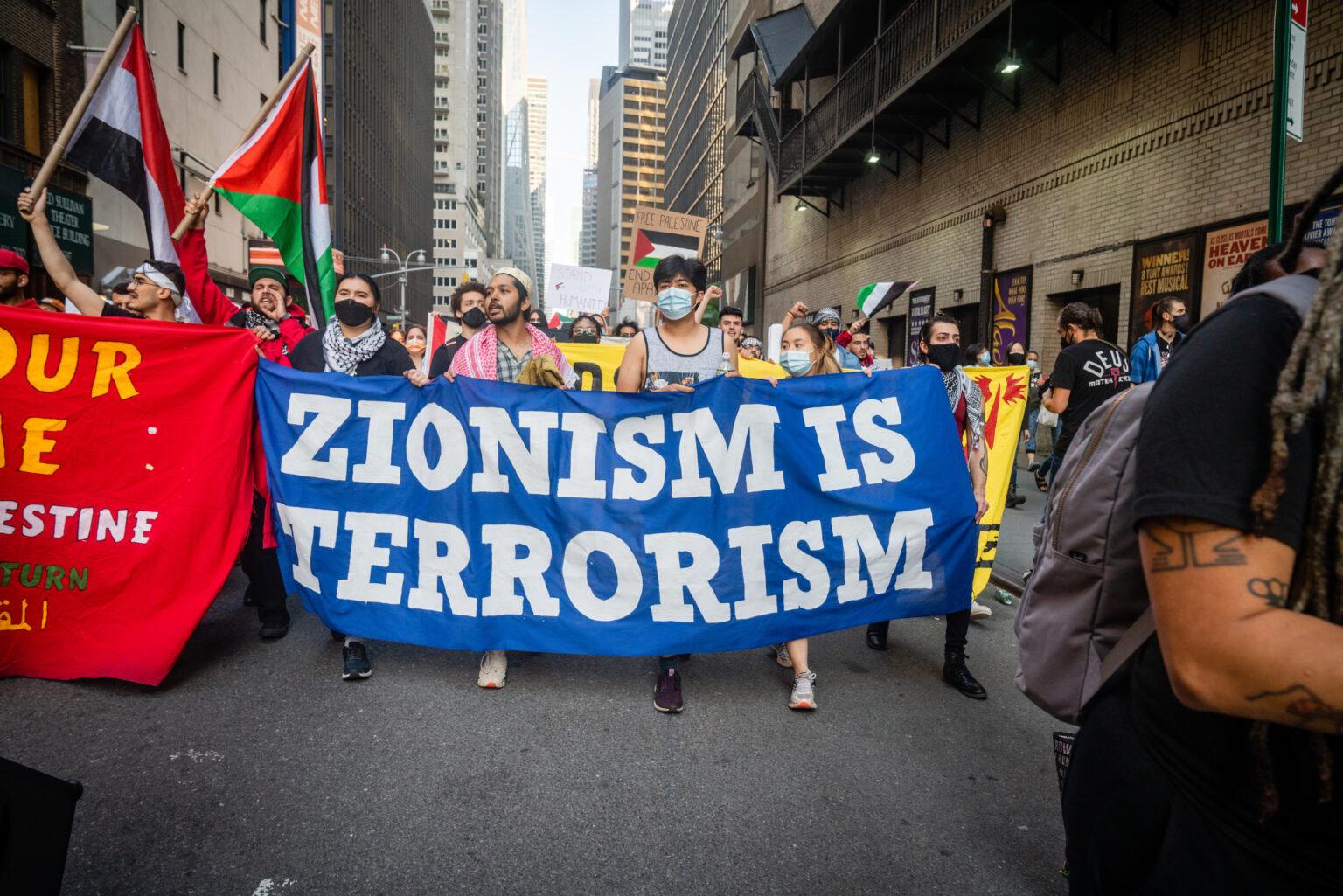
Antizionism amounts to a new way of imagining Jews (Image: Shutterstock)
The conspiracy theory that accused Jews of being behind communism was gone. Jews were now colonisers, imperialists, fascists, and everything the left opposed. Now it was the Soviet Union itself that was becoming the world’s great disseminator of anti-Jewish agitation, having launched a massive propaganda campaign against Israel – termed “Operation SIG” – in the wake of Israel’s 1967 victory over the USSR’s Arab allies.
Since October 7, antizionism can no longer be treated as secondary. Almost overnight, after the genocidal massacre of Israeli civilians, a simple narrative meme flooded online spaces. According to this narrative, Jews are foreign European colonisers, who came to the Land of Israel with the racist intent to displace its true indigenous inhabitants, and who could ultimately only establish their presence through an ongoing genocide.
As a PhD candidate in anthropology, I saw how this narrative was flowing from the ivory towers of academia and being granted expert authority. It erased both Jewish indigeneity and Jewish peoplehood, aiming to redefine the facts of war through a flood of propaganda and repeated, unfalsifiable assertions that refused contestation.
I started to observe antizionists closely and to apply the same critical tools I had studied in the same academy to this ideology. What I came to understand was that antizionism has invented a new way of imagining Jews. It is not a legitimate criticism of policy, but a way of constructing Israel as the site of modern evil, as a rogue state whose very existence violates the international and moral order. “The white settler” – cast as the embodiment of Western sin, an avatar of the ancestors of white Australians, Americans, Canadians, and
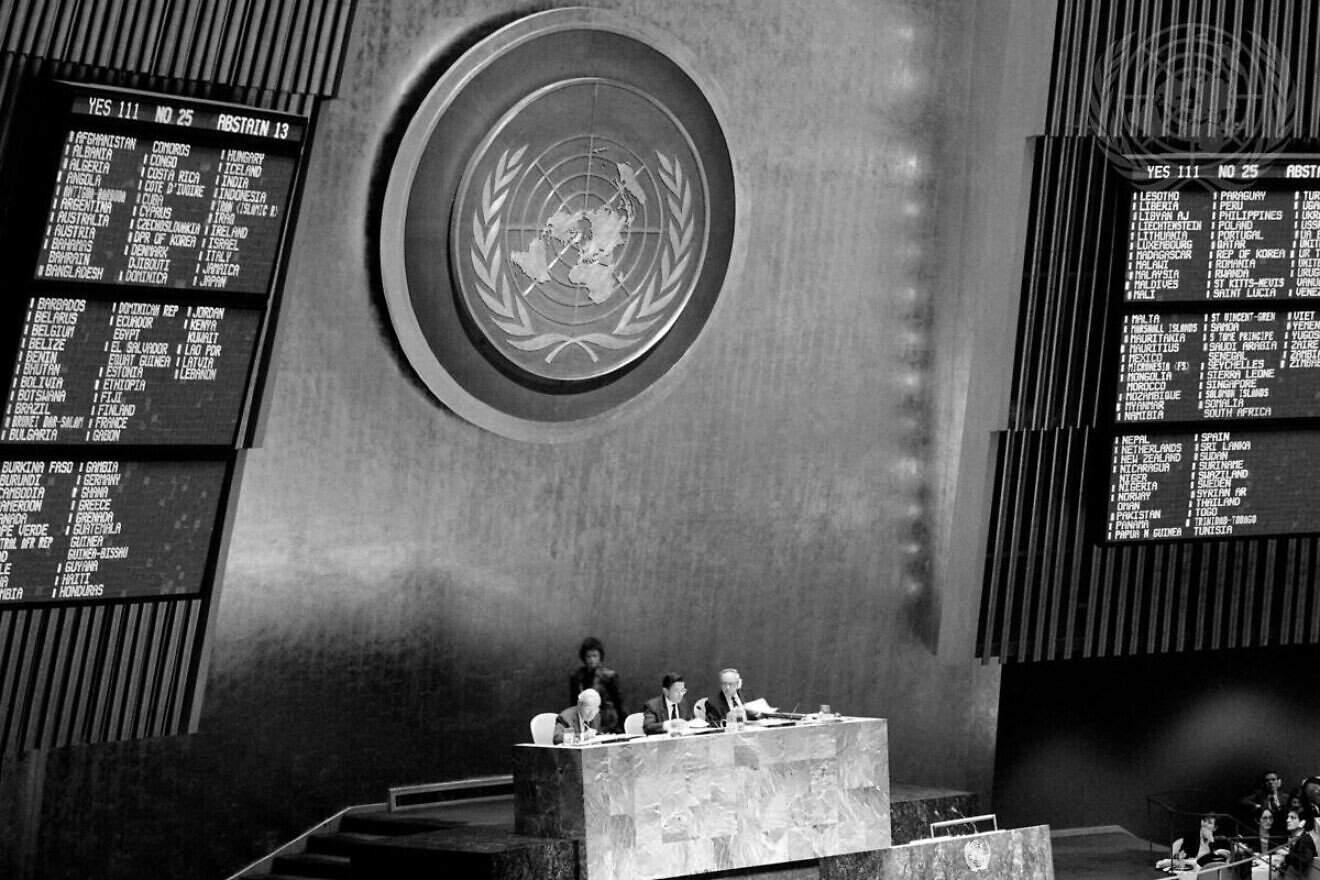
The Soviet-Arab campaign to have Zionism labeled as "racism" at the UN in the 1970s is a major source of inspiration for the antizionist movement today (Image: Shutterstock)
others – now casts the Jew (labelled as a “Zionist”) as a civilisational scapegoat.
Antizionism takes on a moral sheen, adapted as it is to the international order of human rights, anti-racism, and postcolonialism, but its history in totalitarian propaganda has gone largely unexamined.
The role of the Nazi-Arab radio disseminated from Berlin during the war, as documented by Jeffrey Herf, which spread the notion of a Western-Zionist conspiracy to steal Arab land and commit genocide, is barely known in the public. The Arab nationalist Fayez Sayegh, who had been influenced by the Nazis in his youth, and who coined the term “settler-colonialism” in 1965 and wrote the “Zionism is racism” UN resolution in 1975, is a forgotten figure, even though he was foundational to the development of antizionist ideology.
Across the Nazi-Islamist axis, the Soviet-Arab alliance, and the Western academy, three core libels repeatedly established themselves: the coloniser, apartheid and genocide libels.
These accusations became ways of marking Jews – as “Zionists” – for stigma, collective guilt, and violence. As “white colonisers”, Jews were oppressors, not legitimate victims. As defenders of an apartheid state, they were opposed to the forces of progress, one which had dismantled apartheid South Africa’s brutal regime. As supporters of genocide, particularly in the wake of October 7, “Zionists” were treated as unworthy of belonging to civil society. A
full reckoning with the campaign to mainstream the genocide libel in major institutions and public culture still needs to be completed. A targeted effort is needed to explain to the public how the genocide libel has functioned as a standing accusation of antizionist ideology, one that treats Israelis as inherently genocidal “white settlers” and rejects the possibility of counterevidence.
Antizionists stage a moral drama designed to call into question the moral status of Jews. Antizionists believe – or claim to believe – that “Zionists” are evil people; that “Zionists” support horrific crimes; that “Zionists support genocide.” In this sense, the moralised dimension of antizionism does not flow from a genuine progressive position, but is a retooling of the rhetoric of virtue to defame others. It is not a position on “the conflict” and certainly not support for Palestinians. It is an active hate movement.
Antizionism has in fact repeatedly harmed Palestinians. The endless wars waged by antizionists to annihilate Israelis – a protected national group under the Genocide Convention – has continually subjected Palestinian civilians to suffering. Genocidal antizionist militias – not only Hamas, but Islamic Jihad, Hezbollah, the Houthis, and many others – colonise entire regions and subjugate their populations to an endless war machine. Antizionism, at its foundation, substitutes the endless pursuit of Israel’s annihilation for the possibility of peace.
Fragmentary responses to antizionism, continually mulling over whether or not antizionism ‘is’ or ‘is not’ antisemitism, no longer meet the needs of the moment. Pretending antizionism, which constructs Jews as white colonisers, Jewish supremacist “racists” and genocide
“Antizionists stage a moral drama designed to call into question the moral status of Jews. Antizionists believe – or claim to believe – that 'Zionists' are evil people; that 'Zionists' support horrific crimes; that 'Zionists support genocide.'”
supporters, can be dealt with in the framework of classical antisemitism, defers the issue.
Antizionism casts Jews as “white colonisers”, rather than non-European infiltrators polluting society, as 19th and early 20th century antisemites did. It legitimises violence against Israelis for the simple reason that they are Israeli, while allowing token antizionist Jews to claim that extreme hatred of Israelis is legitimate if it doesn’t seem to be “antisemitic”.
The so-called debate over whether antizionism is antisemitism or critique has gone on so long because antizionism has not been named and condemned in and of itself. But antizionists are murdering Jews, they are pushing them out of civil society, and are illegally dis-
criminating against Jews in numerous domains and professions. A third category is needed, one that is neither ‘antisemitism’ as classically conceived, nor legitimate criticism of Israel. The conceptual and linguistic tools of Jewish communities and their allies must become adapted to the new reality. Jews must assert with confidence their right to define their lived experience of antizionist persecution and to translate it to the public with effective and clear language.
That means naming antizionism consistently and demanding that politicians make statements that acknowledge not only ‘antisemitism’ as the problem but also antizionism . They also need to specifically condemn the coloniser, apartheid and genocide libels. It means teaching antizionism’s real history, which comes not from Jewish debates over whether to create a state pre-1948, but the Nazi-Islamist axis of the 1930s and 1940s, Soviet–Arab nationalist propaganda in the wake of the 1956 Suez crisis and particularly after 1967, and, since the 2000s, Western settler-colonial theory that erases Jewish indigeneity.
The world changed on October 7. Jew-hatred was unleashed on the world in ways that we have not seen since prior to the Holocaust. Its mutation – what first appeared as ‘the new antisemitism’ – is complete. A full-scale reorientation is necessary from Jewish communities to be able to deal with the scale of the problem. We need all hands on deck to start making antizionism the focus of communal and intellectual attention, making clear to the wider public that the Jewish community refuses to accept this new form of antiJewish racism.
WATCH: SPECIAL REPORT – 'Silenced No More', the Kristof NY Times Op-Ed & Jewish Hatred | AIJAC’s Rebecca Davis

With Compliments
PASAT PROPERTIES
With Compliments
Citadel Group Properties P/L.
With Compliments
Newbart Investments P/L.
With compliments
Rosslands P/L.

WASHINGTON HEIGHTS
DANIELLE PLETKA
TRUMP’S CHAOS ON IRAN HAS BEEN DISASTROUS
On June 19, the Trump Administration signed a Memorandum of Understanding (MOU) with Iran that, even on the White House’s own interpretation and public messaging – let alone Iran’s – amounts to a 60-day extension of the shaky ceasefire in place since April 8, and an agreement to reopen the Strait of Hormuz, along with hope that with substantial enticements, this will pave the way for an agreement to give up, send off, or otherwise address certain elements of Iran’s nuclear program. Maybe. [Ed. For more on the details of the MOU, and its implications, see p. 16]
The conflict with Iran launched on Feb. 28 has seen 13,000+ strikes on Iran’s military industrial base. Iran’s ability to reconstitute its weapons programs has been set back. Nonetheless, absent a nuclear deal of the kind no Iran expert of any stripe believes Teheran would agree to, it is safe to say that while the new regime in Iran has not come out of this confrontation stronger right away, it appears clear that shortly it will be much stronger.
How did we get here?
This deeply troubling outcome is part and parcel of the fact that, on the question of Iran, the chaos and disinformation that is the Trump Administration has been uniquely disastrous.
The President is far from scripted; indeed, what he says on one day often contradicts what he says on another. There is no process inside the National Security Council, nor at the Department of State. Thousands of positions in both Washington and overseas are unfilled. As a result, the field is open for unauthorised leakers claiming to speak for, speak to, listen in on, and otherwise know what
Donald Trump is thinking at any given moment.
Arguably, the notion of American strikes on Iran began with the hugely successful Israeli Operation Rising Lion in the dog days of June 2025. Jerusalem launched its war on the Islamic Republic with a view to stymieing an increasingly hardened nuclear, missile, and WMD program that promised to be unassailable in the future. Targeting those sites, Islamic Revolutionary Guard Corps and other military leadership, nuclear and political and scientific leaders, the Israelis operated with near impunity over Iranian territory. But the hardest targets were Iranian nuclear sites at Fordow, Natanz, and Isfahan.
On the night of June 20-21, two waves of B-2 Stealth bombers launched from Whiteman Air Force Base in Missouri. One wave headed east, another west as decoys, eventually joining their compatriots over the skies of Iran.
“This deeply troubling outcome is part and parcel of the fact that, on the question of Iran, the chaos and disinformation that is the Trump Administration has been uniquely disastrous”
Hours later, per Chairman of the Joint Chiefs Dan “Razin” Caine, “the lead B-2 dropped two GBU-57 Massive Ordnance Penetrator weapons on the first of several aimpoints at Fordow.” More followed against Natanz. It was the largest B-2 operation in history.
Notwithstanding a barrage of pro-Iran disinformation and spurious “intelligence assessments” that suggested the damage to Iran was minimal, the reality of the 12-day Israeli-American war on Iran was debilitating – though not devastating – to
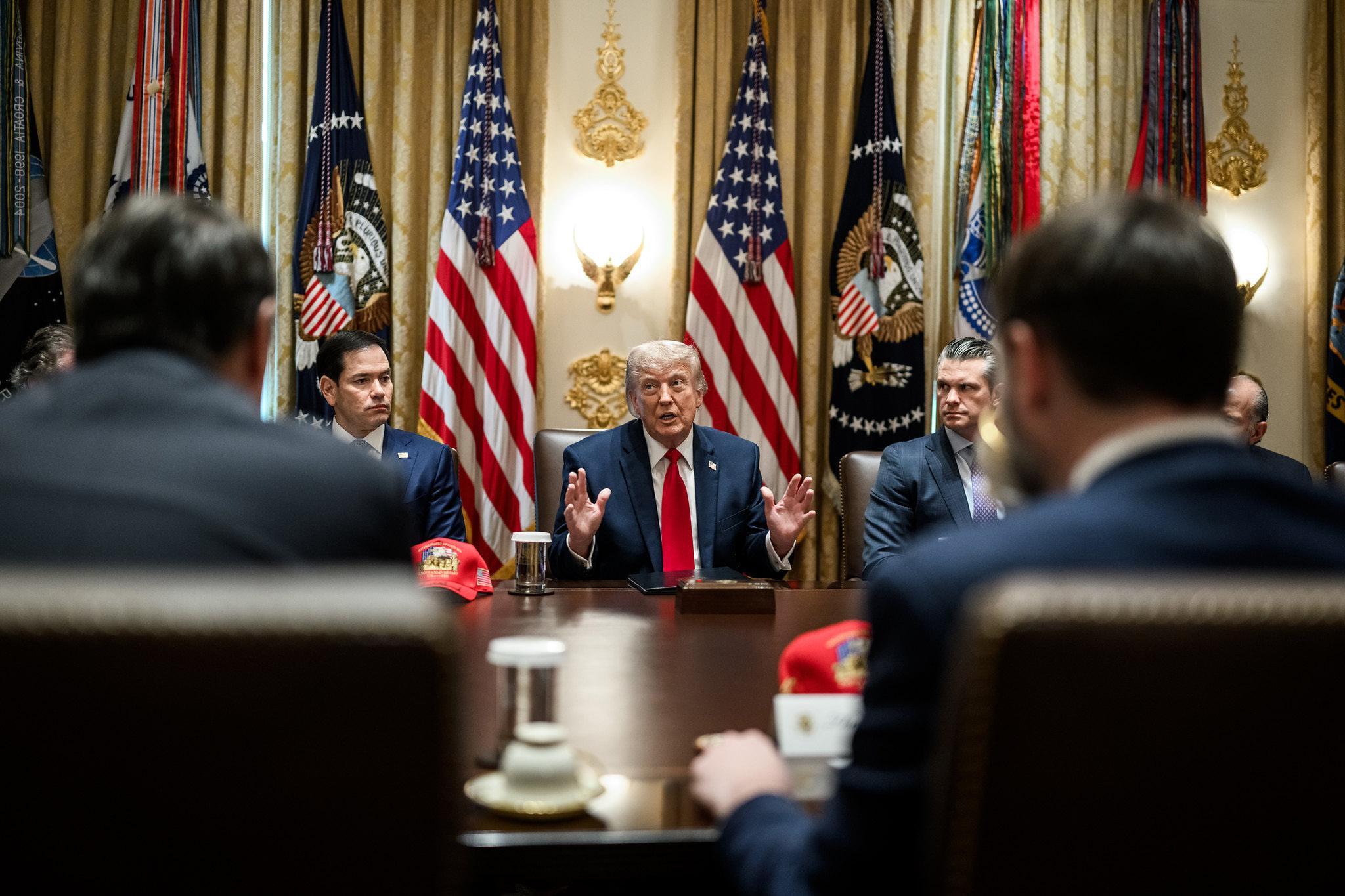
Not only is President Trump unpredictable, there are no proper policy making processes inside the National Security Council or at the Department of State in this Administration (Image: Whitehouse.gov/ Flickr)
Iran’s ability to operationalise and deliver a nuclear weapon. However, what the brief and hugely successful operation did was to eliminate any hesitation about what a larger such operation might mean. And thus, when the United States and Israel watched Iran work assiduously to resuscitate its missile program in the wake of that war, the idea of going back in seemed… appealing. Too easy.
It was not.
The entire old guard of the Iranian regime has been eliminated; per America’s CENTCOM Combatant Commander Adm. Brad Cooper, more than 13,500 US airstrikes have demolished more than 85% of Iran’s military industrial base. Iran has lost all control of the airspace above the country. And yet, the regime remained in control of the country, and worse yet, was able to exert nominal control of the Strait of Hormuz for months.
Critics have asked, reasonably, why President Trump, outraged by the regime’s wanton killing of some 42,000 Iranians seeking freedom, promised that help was on the way. They have wondered why it is that the United States appeared not to have expected Iran to close the Strait. And why, having demanded that Iran accept limits on its missile program, end its oppression of its people, and give up, lock, stock, and barrel, its nuclear program, including centrifuges and “dust” (highly enriched uranium stocks), the United States now appears to be settling for a deal to negotiate to pay billions of dollars to the Iranian regime in exchange for… a promise not to seek a nuclear weapon and little more.
The answer to every question comes back to the disarray in the White House, the lack of process, and the capricious nature of Trumpian decision making.
Why are we not supporting the Iranian people? Because the plan to help them was derailed by Trump himself following a call from Turkish leader Recep Tayyip Erdogan. Why did we not expect the Iranian takeover of the Strait of Hormuz? We did, but the President wouldn’t allow US forces in the region to drive them out.
Why are we now giving up on missile restrictions? Because the Iranians won’t accept them. Why are we defining down victory on the nuclear weapons file? Because our negotiators know very little about nuclear weapons proliferation. Why has Trump turned on Israeli PM Netanyahu? Because Netanyahu thought the regime would fall more quickly.
Was anyone lying? Was the Israeli Prime Minister misleading the President? No. War is hell, and rarely goes according to plan. And it never goes according to plan when the Commander in Chief can’t decide what he wants to do. When he gives conflicting orders. When he tells the US military to go, then stop, then go again. When he isn’t entirely sure what his aims are because he has never articulated them clearly.
The real problem is that the President of the United States changes his mind based on the advice of incompetent confidantes, pernicious foreign leaders, outside players, and pretty much anyone who has his cell phone number.
Is the battle against the Islamic Republic salvageable? Of course. Donald Trump, notwithstanding evidence to the contrary, does not like the regime. They have overplayed a weak hand, just as he has underplayed a strong hand. Trump could still decide he is fed up with Teheran’s efforts to lead his hapless negotiators around by the nose and restart military operations. He could turn back to the original plan to empower the Iranian people.
But that doesn’t look likely right now.
MICHAEL SHANNON ASIA WATCH
RIPPLE EFFECTS
As missiles streaked across Middle Eastern skies and oil tankers rerouted away from the Strait of Hormuz, governments across Southeast Asia found themselves confronting a familiar nightmare: a distant war with immediate consequences at home.
As fuel prices surged, governments acted quickly. In the Philippines, President Ferdinand Marcos Jr. declared a state of national energy emergency, allowing the Government to take measures to alleviate rising energy prices. In Malaysia, Indonesia, the Philippines and Myanmar, civil servants were told to work from home one day per week. Laos reduced the school week to three days. Airlines in Vietnam reduced flights on some domestic routes to conserve jet fuel, while Myanmar suspended them altogether and introduced fuel rationing. To prevent domestic unrest, Indonesia pledged to continue fuel subsidies for the rest of the year but also introduced fuel rations. Rising government expenditure forced President Prabowo Subianto’s signature free school meals program to be reduced by one day a week. Malaysia, whose fuel subsidy bill increased fourfold in March, temporarily reduced the monthly subsidised fuel quota.
Even as talks haltingly begin under the MOU between Washington and Teheran and Israeli military incursions continue in Lebanon, Southeast Asian governments have scrambled to adapt to what many officials now fear is no longer a short-term crisis but a prolonged geopolitical rupture.
At a recent ASEAN summit in the Philippines, regional leaders devoted unusually extensive attention to the Iran war and its economic fallout, while a joint foreign ministers statement warned that the Middle East conflict threatened “regional and global
peace and stability” and urged “sustained diplomacy and restraint amid developments in the Middle East”. The diplomatic phrasing masked growing alarm about the apparent deadlock in negotiations to end the conflict.
Yet, some initial responses to the war were relatively cautious.
Philippine President Marcos called for a ceasefire but refused to condemn any of the belligerents, offering instead his support for “countries under attack”.
Thailand, Myanmar, Vietnam, Laos and Cambodia expressed concern and called on the parties to resolve the conflict through diplomatic means.
Indonesia stopped short of condemning the attacks and merely said it “deeply regretted” the failure of talks between the US and Iran. Reflecting his aspiration to play a more proactive role in world affairs, President Prabowo offered to mediate the dispute, however none of the warring parties took
up his offer. In response to domestic pressure, Prabowo suspended Indonesia’s participation in US President Trump’s Board of Peace for Gaza.
But as the conflict continued, more critical voices came to the fore.
Former Indonesian vice-president Jusuf Kalla said many Indonesians viewed Israel’s role as part of a broader pattern of destabilisation in the Middle East. “There is a feeling among Muslims, not only in Indonesia but globally, that Israel continues to act without meaningful restraint,” he said after meeting Iran’s ambassador in Jakarta. “People see Gaza, they see Lebanon, now they see attacks reaching deeper into Iran, and they ask whether international law still applies equally to everyone.”
Meanwhile, the Muhammadiyah Islamic mass movement warned in a statement, “The world cannot accept endless cycles of retaliation and collective punishment. Powerful nations must stop treating military dominance as a substitute for diplomacy.”
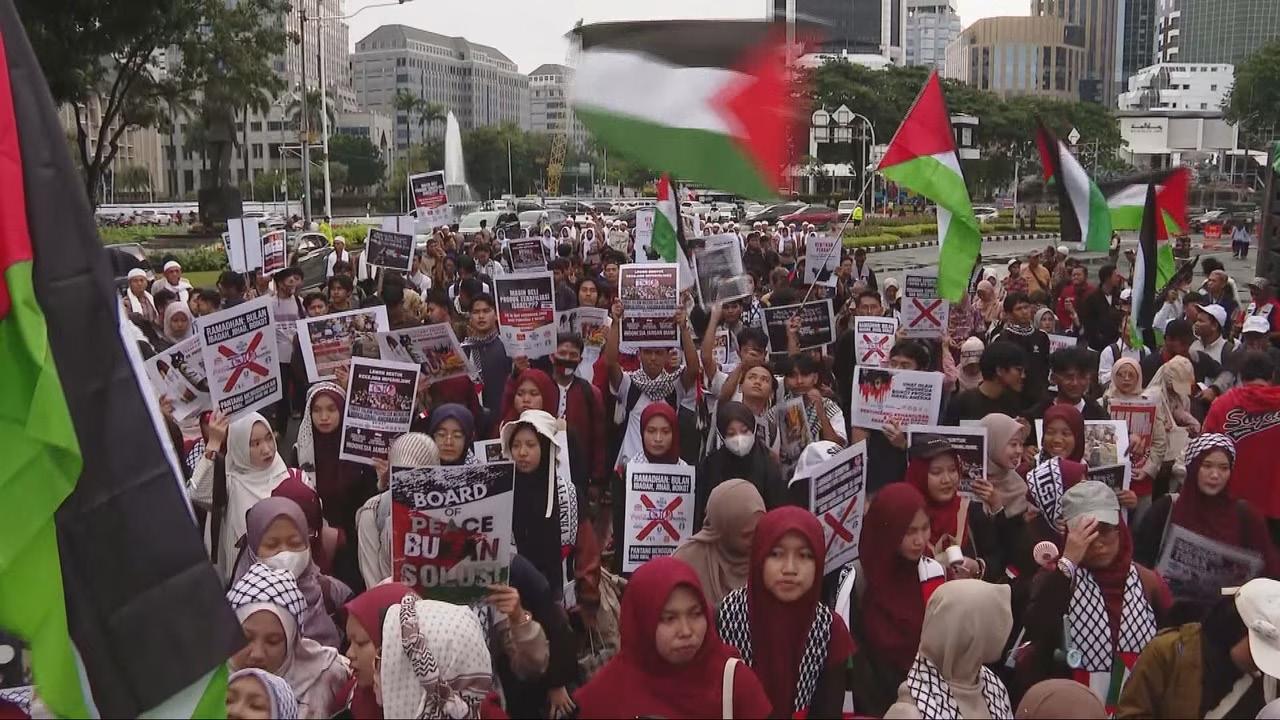
Indonesian protesters denounce the Iran war and the Indonesian Goverment's ties to the US (Image: Shutterstock)
To no one’s surprise, Malaysia’s Prime Minister Anwar Ibrahim has sharply criticised the joint US-Israeli strikes and what he described as a broader pattern of impunity surrounding Israeli military actions.
“We cannot continue preaching justice and the rule of law only when it suits powerful countries,” Anwar said during a parliamentary session. “When sovereign territory is attacked, when civilians continue to suffer, and when escalation is defended or excused by major powers, people across the Global South notice the hypocrisy immediately.”
Anwar went further after the assassination of Iranian Supreme Leader Ali Khamenei early in the conflict, describing it as “a vile attempt to destroy regional stability” and accusing Israel of acting “without humanity”.
Even governments maintaining diplomatic relations with Israel have become increasingly alarmed by the war’s economic consequences. Singapore Foreign Minister Vivian Balakrishnan warned that instability around Hormuz now posed direct threats to Asian economies.
“What happens in the Strait of Hormuz does not stay in the Strait of Hormuz,” Balakrishnan told a regional security forum. “It affects shipping costs, insurance premiums, energy markets, food supply chains and investor confidence across Asia and indeed globally.”
Singapore’s vulnerability is particularly acute because the city-state remains one of the world’s largest refining and shipping hubs for Middle Eastern crude oil.
Analysts warn that Southeast Asia faces structural vulnerabilities if the conflict drags on.
Ian Storey of the Singapore-based ISEAS – Yusof Ishak Institute said the war had exposed the region’s dependence on imported energy and fragile maritime trade routes. “The war is having a severe economic impact on Southeast Asia because the
region remains heavily dependent on Middle Eastern energy supplies and maritime trade,” he wrote recently. “Higher oil prices are feeding directly into transportation costs, electricity prices and food inflation.”
Political analyst Thitinan Pongsudhirak argued that the war was also reshaping Southeast Asia’s geopolitical outlook, particularly perceptions of the United States.
“The Iran war presents Southeast Asian governments with an array of challenges to manage from increased religious tensions to lower economic growth and the security of overseas workers,” Thitinan wrote for Asialink.
“Even governments maintaining diplomatic relations with Israel have become increasingly alarmed by the war’s consequences. Singapore Foreign Minister Vivian Balakrishnan warned that instability around Hormuz now posed direct threats to Asian economies”
He warned that US backing for Israeli operations was accelerating regional scepticism toward Washington while pushing some governments towards China, which has attempted to capitalise diplomatically, portraying itself as a supporter of restraint and negotiations. Chinese Foreign Minister Wang Yi recently warned that the ceasefire remained “very fragile” and opposed “further military adventurism” in the region.
For Southeast Asia, the Iran war is no longer a distant conflict. It has become a test of diplomacy, economic resilience and the region’s uneasy place within a rapidly fragmenting global order.
EUROPA EUROPA
ALEX BENJAMIN
THE EU AND ISRAEL AFTER ORBAN
About a month before the Hungarian elections in April, I spoke to a Jewish leader in Budapest. It was looking increasingly likely that incumbent Viktor Orban was about to be ousted in a landslide. I asked him what a new Petr Magyar government would be like for Hungarian Jewry. He answered that he simply had no idea, but one thing he was sure of – that the election would touch every Zionist in Europe very soon.
Turns out he was right. And it took less than a month.
A couple of weeks after the April 12 election, the 27 foreign ministers of the European Union ap-
proved new sanctions against Israeli settlers. The EU’s foreign policy chief, Kaja Kallas, said it was “high time we move from deadlock to delivery... extremism and violence carry consequences.”
The change in government in Hungary had ended months of delays for the EU’s plans for sanctions, which had been blocked by former right-wing Hungarian PM Orban.
Blocked how exactly? A quick 101 in European foreign policy is needed here: There are some areas where European institutions can, by a process called qualified majority voting (QMV), pass decisions if they are supported by at least 55% of member states (15 out of 27) that collectively represent at least 65% of the total EU population. And there are other more sensitive areas where Member States absolutely don’t want to cede any power to
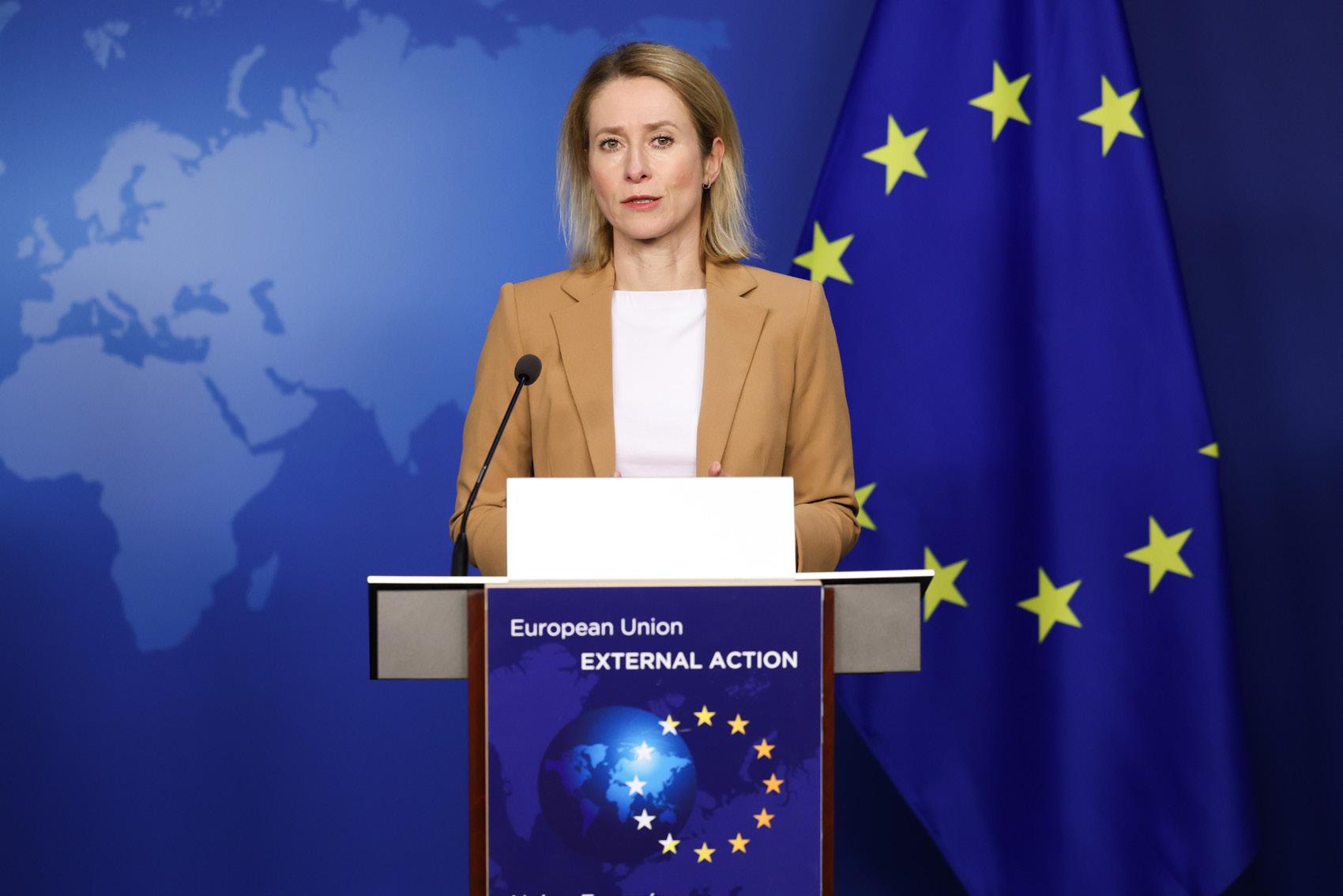
EU foreign policy chief Kaja Kallas (Image: Alexandros Michailidis/ Shutterstock)
the European institutions. Foreign policy is one of these. And any decision taken at EU level can only be passed with unanimity.
Hungary, a close ally of Israel, effectively held a veto, and habitually voted down any sanctions, thus making unanimity impossible. Therefore, there was a collective gnashing of teeth, howls of anger and repeated attempts by some European governments and the EU to move foreign policy to QMV – but a decision to do that would also requires unanimity. All fell on Orban’s deaf ears and rhino-like hide. In fact, he appeared to take a great deal of pleasure in spoiling the party.
With Orban now out of the frame, and a new Hungarian PM wishing to rejoin the European family (and who has shown little interest in, much less commitment to, Israel), is this the start of open season on the Jewish State by an EU itching to assert some influence?
Not quite.
Banning trade with “illegal” Israeli settlements in the West Bank and Golan Heights was the hot topic in Brussels as May drew to a close, after France and Sweden had floated the idea.
Questions were swirling around the Belgian capital over when the Commission might produce a proposal, or even a paper laying out the legal options, with countries like Spain, Belgium and Ireland piling on the pressure.
The idea being floated was to impose tariffs so high on settlement produce that exports to Europe would become effectively impossible.
Kaja Kallas felt the very real limits of her powers when she tried to pass the buck to the Trade Commissioner (where decision making by QMV is the norm). The European Commission circled the wagons and told her to focus instead on advancing existing sanctions proposals against Israel that have so far stalled. One measure would end research
cooperation; another would suspend the trade pillar of the EU-Israel association deal. Neither has enough political support from European countries to pass, and there are plenty of countries and commissioners who feel their continued presence on the agenda is doing needless damage, while also underlining their collective impotence.
Even the Commission’s own army of lawyers say that as far as EU law goes, trade restrictions on settlements cannot be imposed through tariffs. Any proposal, it said, would require a foreign policy legal basis – which, you guessed it, again required unanimity.
“With Orban now out of the frame, and a new Hungarian PM wishing to rejoin the European family... is this the start of open season on the Jewish State by an EU itching to assert some influence?”
It also doesn’t help that the European Commission’s Trade Department, in a due diligence exercise, crunched figures showing just how microscopic trade with the settlements really is – less than 1% of Israel’s already small exports to the bloc.
So they passed the ball back to Kallas to propose sanctions – measures that would, once again, require unanimity, which doesn’t exist. She should be pulling her hair out.
“The situation is still terrible,” Kallas told MEPs in Strasbourg in May. “The problem is that we don’t have that leverage over Israel even with those measures that are on the table now because we are not united.”
So, who is the new fly in the ointment for Brussels with Orban gone?
“Czechia will oppose any further EU trade sanctions against Israel,” Foreign Minister Petr Macinka said, after talks in Prague with Israeli counterpart Gideon Sa’ar in late May.
Macinka added that Czechia had serious reservations about the EU sanctions package targeting violent Israeli settlers in the West Bank.
“We got into a situation where we would have been completely alone and blocking all 27 member states,” he said, adding that Prague ultimately backed what he described as a compromise because it did not include Israeli politicians.
“But from now on, our position can be more selfconfident,” he said, metaphorically slipping on Orban’s mantle for size.
Czech support for Israel has long stood out within Europe, rooted in historical ties dating back to former Czechoslovak President Tomáš Garrigue Masaryk and reinforced after the fall of communism. Ben Gurion himself even went so far as to say that it was Czech weapons and aircraft that saved the nascent State of Israel.
Indeed, Eastern Europe in general had often been happy to stand up against the foreign policy “consensus” coming out of Brussels. For one thing, these nations have no great love for the Socialist and hard-left parties that are pushing these initiatives at EU level. What’s more, due to stringent language requirements for citizenship, most of these countries are not blighted by the anti-Israel ideology that has travelled with so many migrants to the EU, and do not have the domestic electoral pressure that comes with these migrants in Western European nations.
MIRIAM BELL AIR NEW ZEALAND
A SILENCE AMONG CREATIVES THAT SPEAKS VOLUMES
The world of art, literature and music is supposed to be one that supports a rich tapestry of diverse stories and perspectives. Yet in New Zealand’s cultural environment, Jewish voices are quietly being shut down or forced out, veteran creatives say.
Perhaps the most well-known example is a situation involving artworks commissioned for a “celebration of diversity” at the Waikato Settlement Centre in Hamilton.
Local artists of different ethnicities produced a panel each, but a group called Palestine Waikato group complained a Jewish artist’s panel was “artwashing” that could distract attention from Israel’s “genocidal” actions in Gaza. The resulting furor led to artworks from both Jewish and Muslim artists being pulled.
That example hit the headlines, but most instances of withdrawal or silencing do not.
Nadine Rubin is an arts journalist and literary agent who is co-founder of High Spot Literary. She told the Australia/Israel Review that one major problem was that boycotts and politically motivated cancellations were incredibly hard to prove.
“It’s like a sort of a quiet boycott, and you can’t even prove it’s a boycott. That also goes deeply to the heart of any creative person’s insecurity to begin with – that they’re not good enough,” she said.
“But when you know that in the past you seemed good enough, and now suddenly doors are closed all around you, it’s hard not to jump to conclusions in this current climate.”
And so, for those of us engaged in defending good relations with the state of Israel in the face of an increasingly hostile EU, the cry of “Czech do Toho” (“Come on Czechs”), has replaced the previous Hungarian iteration.
Her own story stemmed from an “artists for ceasefire” petition that was circulated after Israel first went into Gaza in 2023. It did not mention Oc-
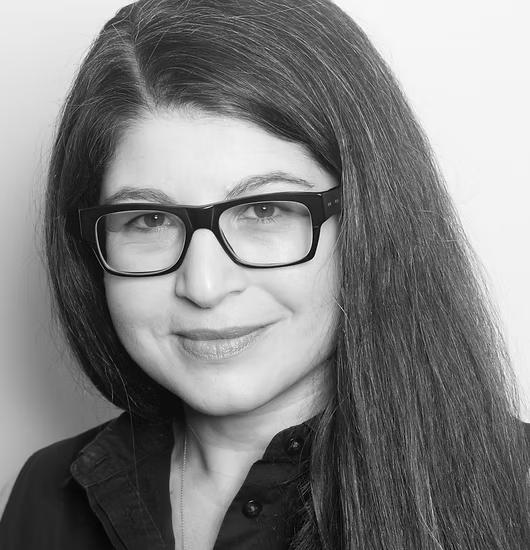
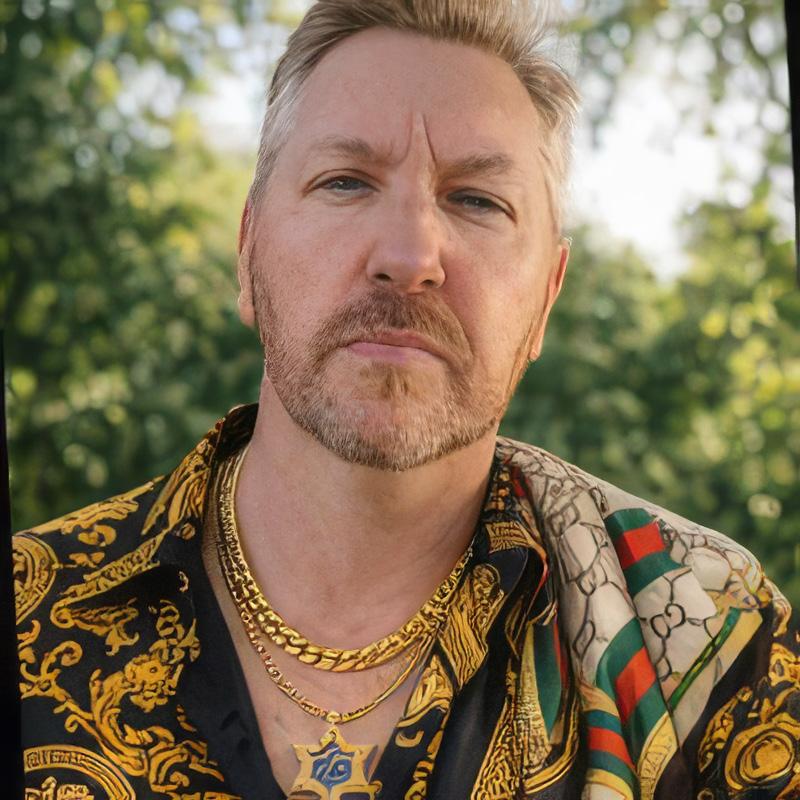
tober 7. Commenting on an Instagram post that was sharing it, Rubin said that, as a Jewish creative, she would struggle to sign it for that reason.
This led to a journalist who runs a popular book section in a local publication contacting her to say he wanted to write a story about her comment; “Some quite big names had signed the petition, and he was aggressively asking me if I was accusing those people of not having a moral compass,” she said.
“I was surprised there wouldn’t be an acknowledged difference of opinion on the issue, especially as in the Jewish community here there are many people who had lost family or friends, or who knew people who had.”
She pushed back, saying she did not see how it was a story. But then she learned this same journalist had contacted most of the authors she represented to ask if they were happy to continue being represented by Rubin, knowing she felt this way.
“I mostly got quite concerned emails from people I work with and many people I know refused to respond to him… But one author I was working with, Dominic Hoey, said we couldn’t continue to work together, and resigned from the agency.
“From my perspective I had been discriminated against… and I no longer have a relationship with that author after working hard to get three of his novels published.”
Across the arts and culture sector there was unquestioning support for “Palestine”, and a complete lack of understanding of what it means to be a leftleaning Zionist, she said; “In New Zealand you are either a genocidal maniac or you support Palestine, there’s no middle ground.”
Rubin said she was hearing more and more stories, many from the visual arts, of Jewish creatives being sidelined, of work being rejected, and of a kind of erasure.
There had been a lot of support from Jewish philanthropists for the arts, but now those names seem to get left off relevant information. While it might be a mistake, it never used to happen, she said.
Dane Giraud is a Jewish screenwriter, filmmaker, comedian and podcaster who has experienced two difficult situations since October 7.
In one, a podcast series that he had pitched to a
Jewish creatives Nadine Rubin and Dane Giraud (Images: LinkedIn)
major New Zealand media organisation had gotten past the initial screening, and they wanted to talk more. On a Zoom call with several people, he was asked whether the fact that he was pro-Israel was going to create a problem for people in the office.
He said no, because he is a solo Dad and needed the work, and the conversation moved on, but he felt humiliated, he said.
“Also, why can’t I be pro-Israel? I don’t understand how it would be difficult for people in the office. The insinuation was I’d be this aggressive Jew stomping around the office wearing an Israeli flag – which is ridiculous, but it illustrates what is going on.”
Another situation involved a young, female Māori comedian, Charde Heremaia, who he once tried to pitch a show for. The pitch didn’t work out, and they fell out of touch – until two years ago when he saw some nasty anti-Jewish comments she made on social media.
He contacted her, said he did not think she knew many Jews, and asked if she would like to talk about it, but she responded negatively. “Then, recently I caught a nasty rant on social media where – without overtly naming me – she claimed I destroyed her stand up career because she wouldn’t ‘bow down to the Jews.’”
The post got thousands of responses, most supportive of her, and many overtly antisemitic ones, saying “Jews” controlled the industry.
“The claim that I could be a string-puller that could get her fired is ridiculous. I don’t really even know how that would have worked as the reality is Jews in the industry here are quite marginalised,” he said.
“People are just losing their minds. But what’s really depressing is that she’s a talented person who’s decided that antisemitism is a good brand, and there are other performers who have decided the same.”
Holocaust Centre Chair Deborah Hart said the Centre had supported several artists who had suffered nasty incidents.
One was the artist caught up in the Waikato art panel situation, while another was an artist who had been invited to show their work at a gallery.
“But the gallery director called them in and insisted they say they did not support the State of Israel and were not a Zionist,” she said. “They wouldn’t, and their show was cancelled because the gallery ‘did not want to platform a Zionist.’”
Cancellation of venues for exhibitions and events was something the Holocaust Centre had experienced itself, she said.
“We had three different contracts at various spaces to host one of our exhibitions, which happened to be the Anne Frank exhibition… after October 7, all three contracts were cancelled. Each cited things unrelated to October 7, but we haven’t been able to rebook them, or book other exhibitions into them.”
There have also been problems booking venues for events, such as International Holocaust Remembrance Day and the annual Kristallnacht concerts, with security concerns usually given as the reason, Hart said.
“It feels like we’re being told we’re not going to stand with you, and support Jewish culture and art, when we have to put up with security issues. And if it was any other ethnic group, they wouldn’t say that.
“But if you don’t publish Jewish books, if you don’t hear Jewish music, if you won’t countenance a memorial service about the Holocaust, what you’re actively doing is shutting down Jewish culture, Jewish voices, and Jewish memory,” she said.
ALLON LEE MEDIA MATTERS
LEARNING THE ABCs OF LAURA TINGLE’S “JOURNALISM”
Laura Tingle is one of the ABC’s most influential journalists. As Global Affairs Editor and a staffelected member of the ABC Board, she occupies a position of authority within Australia’s national broadcaster.
As a four-decade print and broadcast veteran, one might reasonably expect her work to embody the ABC’s charter obligations to be “accurate and impartial according to the recognised standards of objective journalism.”
Yet Tingle’s reporting and analysis on Israel frequently fall short of those standards.
A revealing example is her April 25, 2026, analysis, “Israel’s killing of journalists in Lebanon shows a lack of guardrails on its actions.”
Israel’s position that some of those killed were members of terrorist organisations operating under journalistic cover was dismissed by Tingle as “unsubstantiated” and based on “flimsy evidence”. Yet beyond references to the Committee to Protect Journalists, she makes no attempt to address the apparently indisputable open-source material identifying many supposed “journalists” as having terror links.
While Tingle briefly concedes that some deaths may have been accidental, she asks why similar numbers are not seen in conflicts such as Ukraine or Sudan, ignoring the very different battlefield conditions that exist in Gaza and southern Lebanon, where Hamas and Hezbollah have embedded military infrastructure and personnel within civilian areas.
The article’s central case study concerns Lebanese journalist Amal Khalil, who was killed during an Israeli strike in southern Lebanon.
Readers are told that Israel claimed its forces
“What should have been a straightforward correction of an incorrect factual claim instead raised broader questions about the independence of the ABC’s accountability mechanisms”
The article begins with the claim that journalists are a “vital barometer” of understanding the world, especially due to the “the lack of credibility that has been proved to be attached to pronouncements from the Trump administration.”
However, Tingle goes on to argue not merely that many journalists have died during Israel’s military operations in Gaza and southern Lebanon, but that Israel effectively “murders” journalists as part of those campaigns.
targeted vehicles after identifying an immediate Hezbollah-linked threat. Yet the overwhelming thrust of the article is that Israel’s account is not credible, and that Khalil must have been deliberately targeted.
But crucial context is absent.
The article noted that vehicles involved had reportedly departed from a Hezbollah-associated military facility and crossed a forward Israeli defence line but not the fact that they entered into a restricted
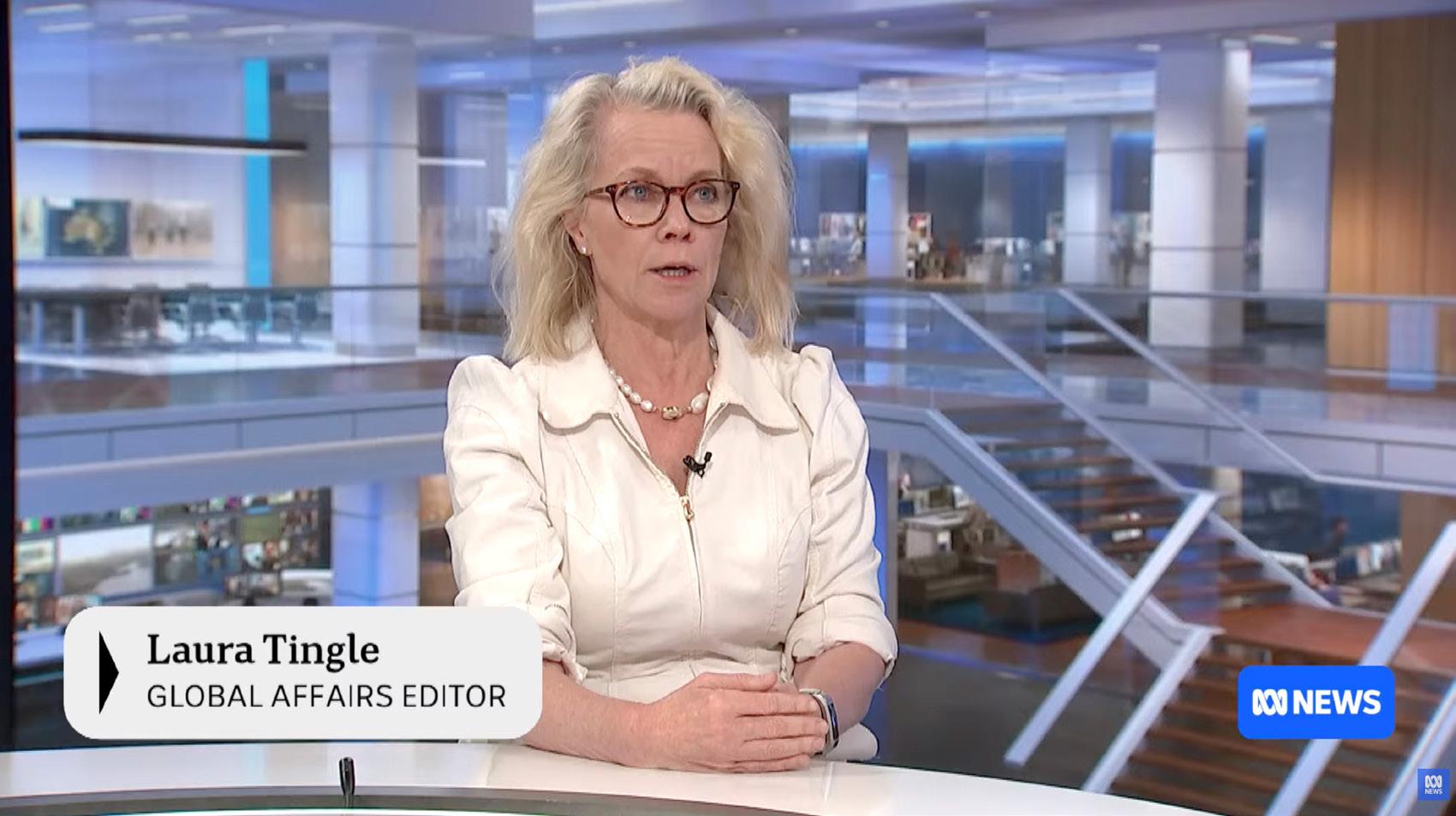
zone. Two occupants travelling in the vehicle ahead of Khalil – Ali Nabil Bazzi and Mohammed Al-Hourani – were identified by Israel as Hezbollah operatives Whether one accepts those claims or not, they are plainly relevant to assessing the incident, and Tingle doesn’t even include them.
Nor does Tingle meaningfully examine Khalil’s professional and ideological background.
Readers are told that Khalil worked for Al-Akhbar and came from a Shi’ite village in southern Lebanon. They aren’t told that Al-Akhbar is a newspaper politically aligned with Hezbollah. Nor are they told that Khalil described her journalism as “resistance by other means” and had acknowledged that she engaged in self-censorship to avoid undermining Hezbollah operations.
These are not incidental details, but critical facts readers would expect to be included in any serious assessment of the circumstances surrounding Khalil’s death.
The same omissions characterise Tingle’s reference in the article to the IDF’s tragic killings of World
Central Kitchen aid workers, including Australian Zomi Frankcom, which she claims is evidence that Israel rarely conducts “proper investigations”.
Tingle totally omits the findings of Australian Air Chief Marshal (Retd) Mark Binskin, who was appointed by the Albanese Government to assess Israel’s response.
Binskin’s report found that the strike was not deliberately directed at the aid workers. He said he had full cooperation from the Israel Defence Forces and that he was comfortable with the accuracy of the information provided.
Tingle’s omissions matter because she frames her article as evidence that Israel is a “rogue state” which acts with “apparent impunity”.
On ABC TV “News” (March 31, 2026), Tingle falsely stated that Binskin had not been given access to some of the drone footage from the incident. He actually had, just not the Hebrew language audio of it.
This pattern extends beyond the Khalil and World Central Kitchen cases.
Laura Tingle seems to be allowed to operate without adequate editorial guardrails by the ABC (Image: ABC/ screenshot)
On Feb. 11, 2026, in an online article, Tingle asserted that approximately 800,000 Palestinians were “expelled” from their homes during the creation of Israel in 1948.
The wording departed from the ABC’s usual description of the “Nakba”, the Arabic word used to describe either the “displacement and dispossession” of Palestinian Arabs during the 1948 war, during which Palestinians “fled or were driven out of their homes.”
AIJAC lodged a formal complaint with the ABC’s Ombudsman’s Office, a position established in response to longstanding criticism that the previous complaints setup was flawed and biased in favour of the broadcaster.
Yet the Ombudsman did not investigate the complaint.
Instead, it was referred to ABC News – the division responsible for the original content. ABC News acknowledged that “displaced” may have been a better word than “expelled” but nevertheless refused to amend the article. Following an appeal, the Ombudsman refused to investigate AIJAC’s complaint, even though AIJAC supplied past correspondence from the ABC confirming the “fled or were driven from their homes” definition of the Nakba is
ostensibly part of its editorial guidelines.
The coda to this four-month saga came on June 16, 2026, when a Tingle article that referred to the 1948 war accurately noted that Palestinians “fled or were forced from homes in what became Israel.”
What should have been a straightforward correction of an incorrect factual claim instead raised broader questions about the independence of the ABC’s accountability mechanisms.
Not for the first time, the process created the appearance that senior ABC journalists are insulated from meaningful scrutiny.
Indeed, two days after two ISIS supporters slaughtered 15 innocent people and wounded dozens more celebrating the start of the Jewish festival of Chanukah at Bondi Beach, Tingle told ABC “News Daily” (Dec. 16) that the terrorists’ actions were “not based on their religion.” In the face of widespread outrage, the ABC’s Managing Director Hugh Marks issued a public statement defending her.
Tingle’s handling of events post Hamas’ October 7 massacre has also been marked by what appears to be ideologically driven activism, particularly with respect to the unfounded genocide smear.
On the ABC podcast “News Daily” on Feb. 10, 2026, Tingle discussed allegations that Israeli President Isaac Herzog had incited genocide during an October 2023 media conference.
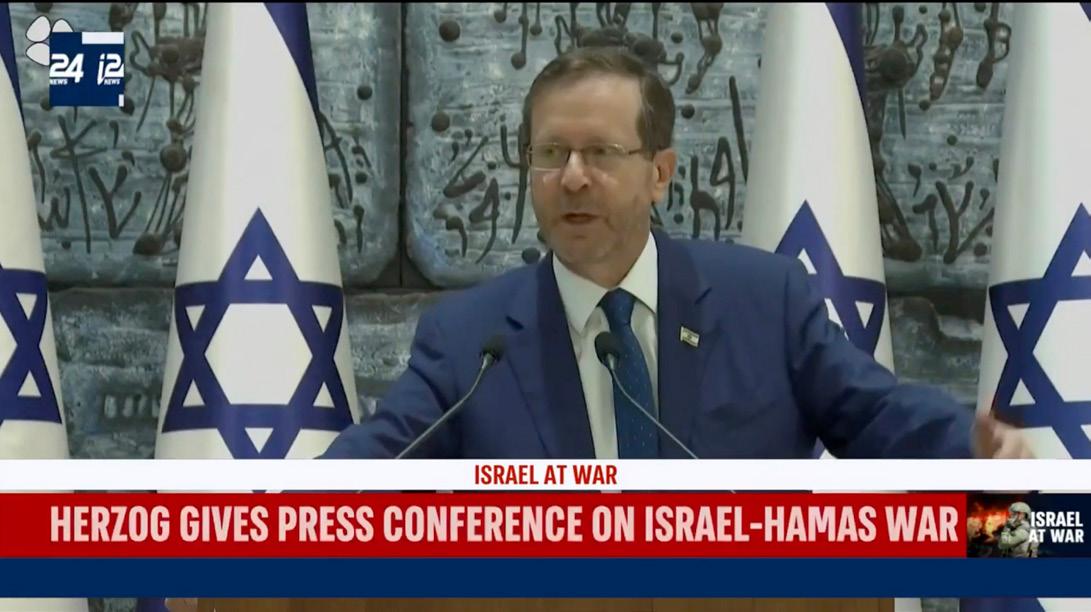
Rather than airing the full exchange, in which Herzog explicitly stated that civilians should never be targeted, and that Israel must act in accordance with international law, Tingle broadcast only a short excerpt that appeared to reinforce the inciting genocide accusation.
Selectively edited: Israeli President Isaac Herzog (Image: YouTubeScreenshot)
On ABC TV’s 7pm News (July 24, 2025), she reported allegations of mass starvation in Gaza in a manner that largely treated the claims as established fact while giving little attention to competing evidence regarding aid distribution, Hamas’ conduct or disputes surrounding humanitarian data. She reinforced the perception of her activism by telling viewers the ABC had asked Foreign Minister Penny Wong’s office whether Australia would now reconsider joining South Africa’s genocide case against Israel before the International Court of Justice.
While accepting that Hamas’ crimes on October 7 were horrific, Tingle refrains from calling Hamas a proscribed terrorist organisation, or discussing its openly anti-liberal, anti-feminist, anti-LGBTQI and antisemitic ideology. Moreover, while she will refer to statistics from the Hamas-run Health Ministry in Gaza, she won't point out, as many news stories do, that its published death tolls don’t differentiate between civilians and combatants.
Whatever one’s view of the conflict, such assertions involve highly contested factual questions, and Tingle frequently presents them with a degree of certainty that is difficult to reconcile with the ongoing disputes surrounding casualty figures, combatant status and the reliability of information emerging from Gaza.
What’s more, for a professional held up as an authority on subjects she frequently discusses, Tingle’s knowledge appears limited.
On ABC Radio National’s “Late Night Live” on June 16, 2026, discussing Israeli Defence Minister Israel Katz’s rejection of attempts to include Lebanon in the Trump Administration’s ceasefire MOU with Iran, host David Marr asked whether she could recall another instance of a foreign leader publicly rebuffing an American president in the manner of Katz. Tingle replied, “Um no, I can’t.”
That answer overlooked, to give one obvious
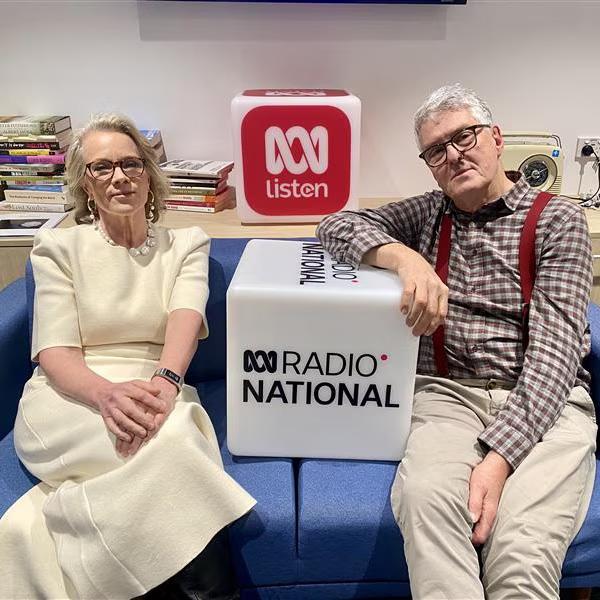
example of many, Prime Minister Binyamin Netanyahu’s highly controversial public address to the US Congress in 2015 opposing then President Obama’s Iran nuclear agreement.
Individually, any one of these examples might be dismissed as an error of judgment, an omission or a poor choice of wording. Taken together, however, they seem to reveal a consistent pattern of flawed and factually ill-informed reporting and commentary on Tingle’s part.
Tingle is one of the ABC’s most senior editorial figures. The ABC asks Australians to trust its journalism because of its commitment to accuracy, impartiality and accountability. This requires a willingness to present the full picture.
The examples discussed here span questions of terrorism, casualty reporting, international law and the ABC’s own complaints process.
Taken together, the result is the impression of a senior journalist operating with considerable impunity and insufficient editorial guard rails – which in turn raises broader questions about standards, oversight and accountability across the ABC as a whole.
Laura Tingle with "Late Night Live" host David Marr: No pushback on misleading statements (Image: ABC)
(03) 9501 5588

KEEPING FAITH
RABBI RALPH GENENDE
OUT OF AFRICA
About 30 years ago, shortly after leaving South Africa for Australasia, I wrote a poem titled Homelands . In it, I explored my simultaneous sense of belonging to Africa and estrangement from it because of my Jewishness. I reflected, too, on how deeply I had come to feel part of this southern continent while remaining strongly connected to both Australia and to the land of my ancestors, Israel. Here is an excerpt:
But it burns, Africa burns: this is the flame of some sharp Karoo night, this is the ember of a star-sated sky. This coal bears my imprint, yet it is not mine, for I am the bastard son of this cunning black continent. I carry my father’s burden (still heavy with the terror of a cold Lithuanian night).
And, even now, as I tread with love and unease in this land of long dreaming, sometimes I catch a glimpse of Jacob wrestling his starry dark dreams into his homeland.
I thought of this poem when I returned to South Africa this year to visit my ageing mother and family. Its themes of connection and identity, belonging, home and the fragile uncertainty of being, resonated with particular force this time.
South Africa is vastly different from the country in which I grew up. The dystopian order of apartheid has given way to a dysfunctional government marked by endemic corruption, crime and violence. Potholes scar suburban streets, power outages are routine and, in Johannesburg at least, the water system urgently needs repair. High unemployment and limited welfare are evident in the severe poverty of many suburbs, and in the vagrancy and rubbish lining the streets.
The Jewish community, too, has changed – shrinking dramatically and changing in character. It is both more frum [religious] and more fearful. The epicentre of Jo-
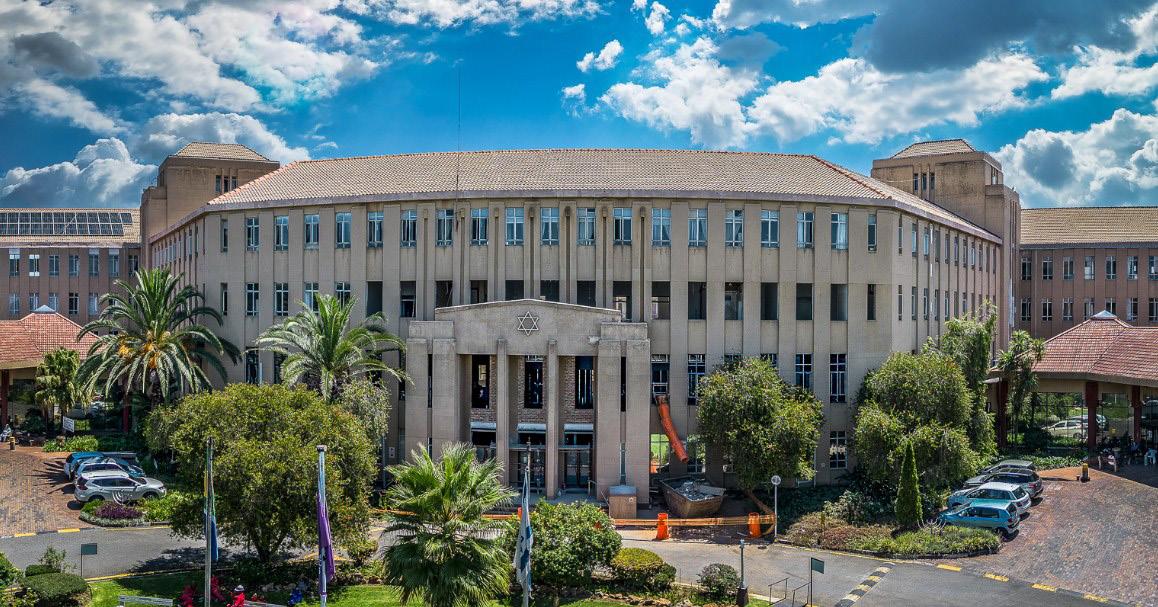
hannesburg’s Jewish life is Glenhazel and, within its boundaries – protected by a highly efficient private armed force (GAP), vigilant community security groups, private guards, high walls and electrified fences – you can enjoy the beautiful Highveld winter, azure skies and a wide choice of excellent kosher restaurants. You can also access an astonishing range of synagogues and shtiebels [smaller prayer centres], learning centres and schools. On Shabbat, the streets and synagogues I attended were filled with energy and a strong sense of community and camaraderie. Despite reduced numbers, this remains a highly organised community that serves its members with care, courage and commitment. This is manifest not only in the burgeoning religious community, led by the Chief Rabbi, but also in the leadership of the SA Jewish Board of Deputies and the vitality of Limmud South Africa.
“South Africa is vastly different from the country in which I grew up. The dystopian order of apartheid has given way to a dysfunctional government marked by endemic corruption, crime and violence”
This caring support is most evident in the work of the Johannesburg Chevrah Kadisha, (literally “sacred society”) founded in 1888 during the gold rush and still the oldest and largest Jewish welfare organisation on the African continent. Like Jewish Care
Johannesburg's Chevrah Kadisha (Image: Donald Gordon Foundations)
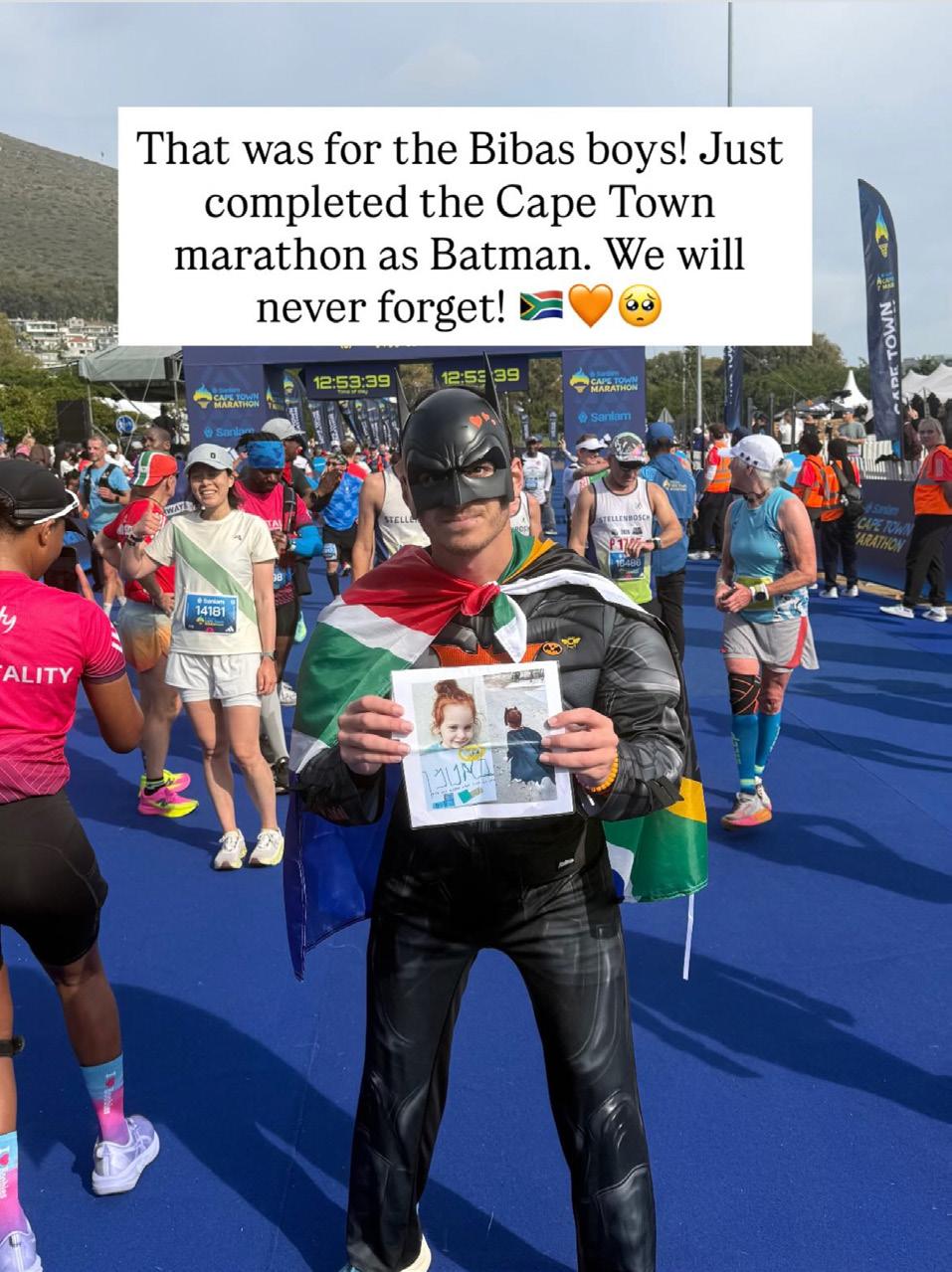
in Australia, it provides a wide range of essential services and support, including financial assistance to more than a thousand families in need. It offers school subsidies, student funding, loans, protected employment opportunities, residential accommodation, aged care, health support, counselling, disability services and funeral services. Its ethos – “no Jew is left behind” – is especially admirable given the limited government assistance and the pervasive insecurity of life in South Africa.
The generous communal spirit of this still largely Litvak community, with its strong Chabad presence, is also reflected in the many chesed [charitable] initiatives that support not only struggling members of the Jewish community but also the wider society around them. Again and again, I encountered examples of what in Zulu is called ubuntu.
The philosophy of ubuntu centres on interconnectedness, compassion and communal harmony. It is captured in the phrase, “people become people through other people,” or – as Nelson Mandela famously put it – the profound recognition that “I am because we are.” I saw this at the home of a friend who opens her house
“Despite the toxic hostility of the South African Government towards Israel, many South Africans who are aware of the small Jewish community in their midst remain broadly positive in their attitudes towards Jews and in their perception of Israel”
each week to a large group of elderly Jewish women, offering them an engaging speaker and a splendid tea, and in the work of Sue Krawitz, who established a baby saver box where mothers can safely place their babies as an alternative to unsafe abandonment – a vital initiative in a country facing a critical shortage of shelters for
Capetown Marathon runner Yoel Levi's tribute was met with harassment and abuse (Image: Instagram)
vulnerable mothers. I also witnessed it in the remarkable care shown by the Black staff at the Jewish aged home, Sandringham Gardens. These predominantly Christian women, with hearts wider than the Limpopo River, largely belong to a church called the Church of Zion.
They are also deeply supportive of Israel and of South Africa’s Zionist community, as are an extraordinary number of tribes across Africa. Despite the toxic hostility of the South African Government towards Israel, many South Africans who are aware of the small Jewish community in their midst remain broadly positive in their attitudes towards Jews and in their perception of Israel. This was evident in a study by the University of Cape Town’s Kaplan Centre for Jewish Studies and Research several years ago. Anecdotal evidence and personal conversations suggest that this is still the case, despite October 7 and the demonisation of Israel since then.
Of course, the pandemic of antisemitism is present in South Africa too. This was evident during the Cape Town Marathon, where British fitness coach Yoel Levi – who runs marathons dressed as Batman in memory of the murdered Israeli Bibas children – was harassed and threatened with antisemitic abuse both online and along the route. Even so, the South African Jewish community feels safer than we do in Australia and has not been subjected to the same barrage of Palestinian protest and anti-Jewish rhetoric that we have experienced.
On a personal level, there is nothing quite like returning to a childhood home, reconnecting with family and old friends, and being welcomed into the cocoon of a warm and generous community. We remain tethered to the umbilical cord of childhood, no matter where we wander. The connection we share as Jews – in our love, passion and anxious concern for Israel – also binds us in our personal journeys. Africa still lives within me, alongside the fire I feel in this dreamtime country of Australia, even in this age of my people’s existential loneliness.
WATCH: Rabbi Ralph Genende – Is there a future for interfaith dialogue?
DATA THAT MATTERS ISRAEL
AND SOUTHERN LEBANON
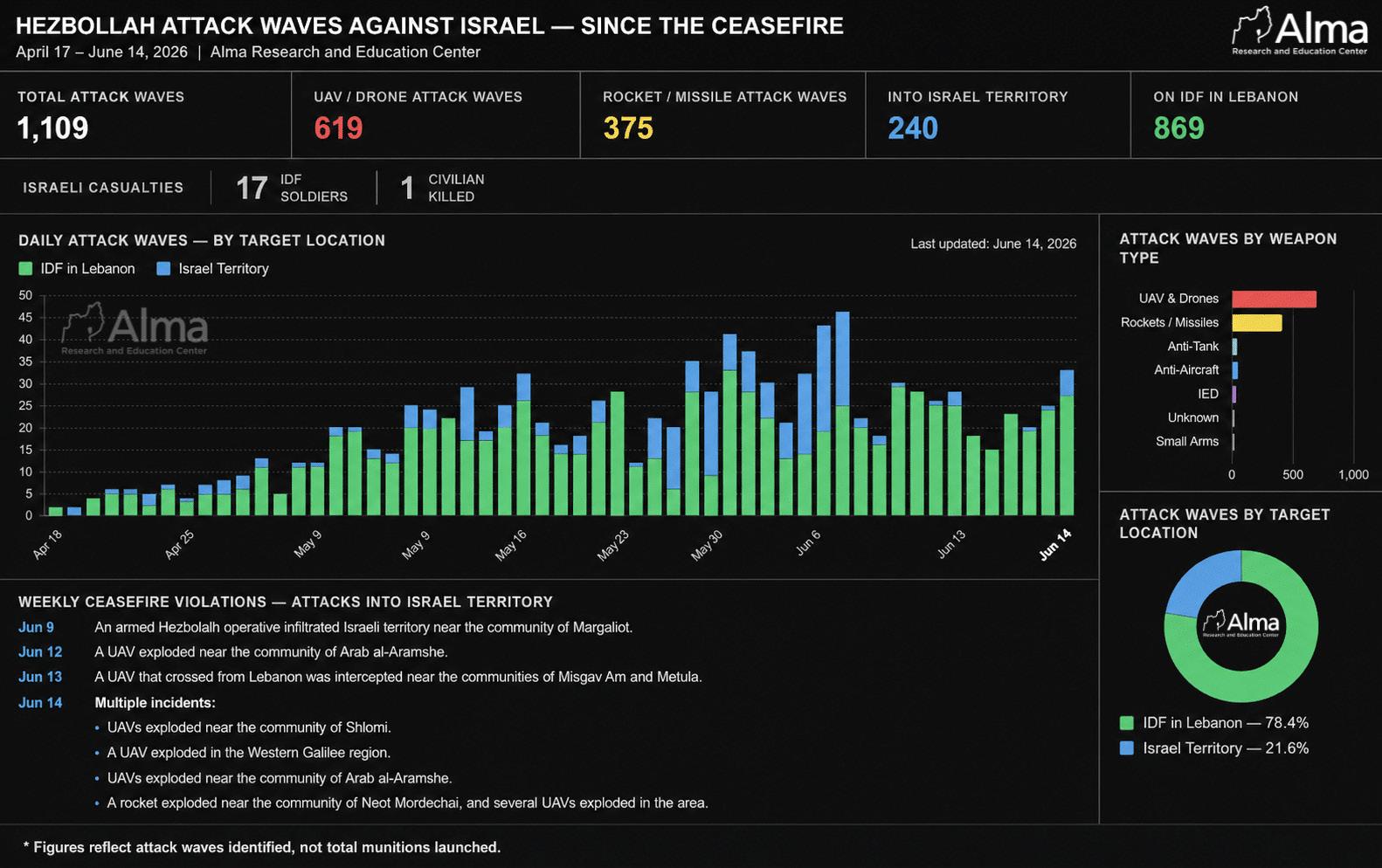
• Data and graphic: Alma Research and Education Centre
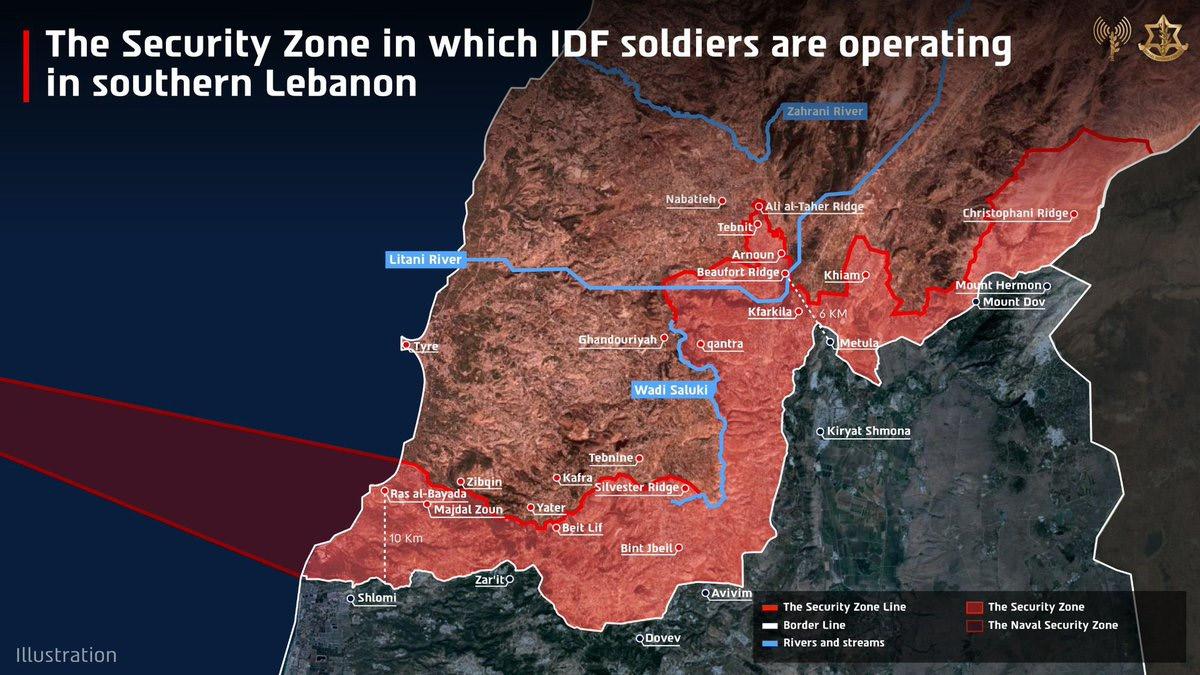
• Image: IDF