Flags is the semi-annual international magazine for alumni and friends of the Adventist International Institute of Advanced Studies (AIIAS), a graduate-level educational institution of the General Conference of Seventh-day Adventists.
ISSN 1908-1693
GENERAL INQUIRIES
AIIAS
Lalaan I, Silang, Cavite 4118, Philippines
Phone: +63 (46) 414-4300
Fax: +63 (46) 414-4301
Email: admissions@aiias.edu
Website: www.aiias.edu
SOCIAL MEDIA
facebook.com/aiias
twitter.com/aiiasedu
instagram.com/aiiasedu
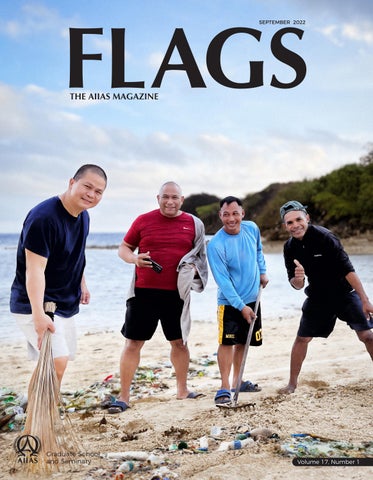
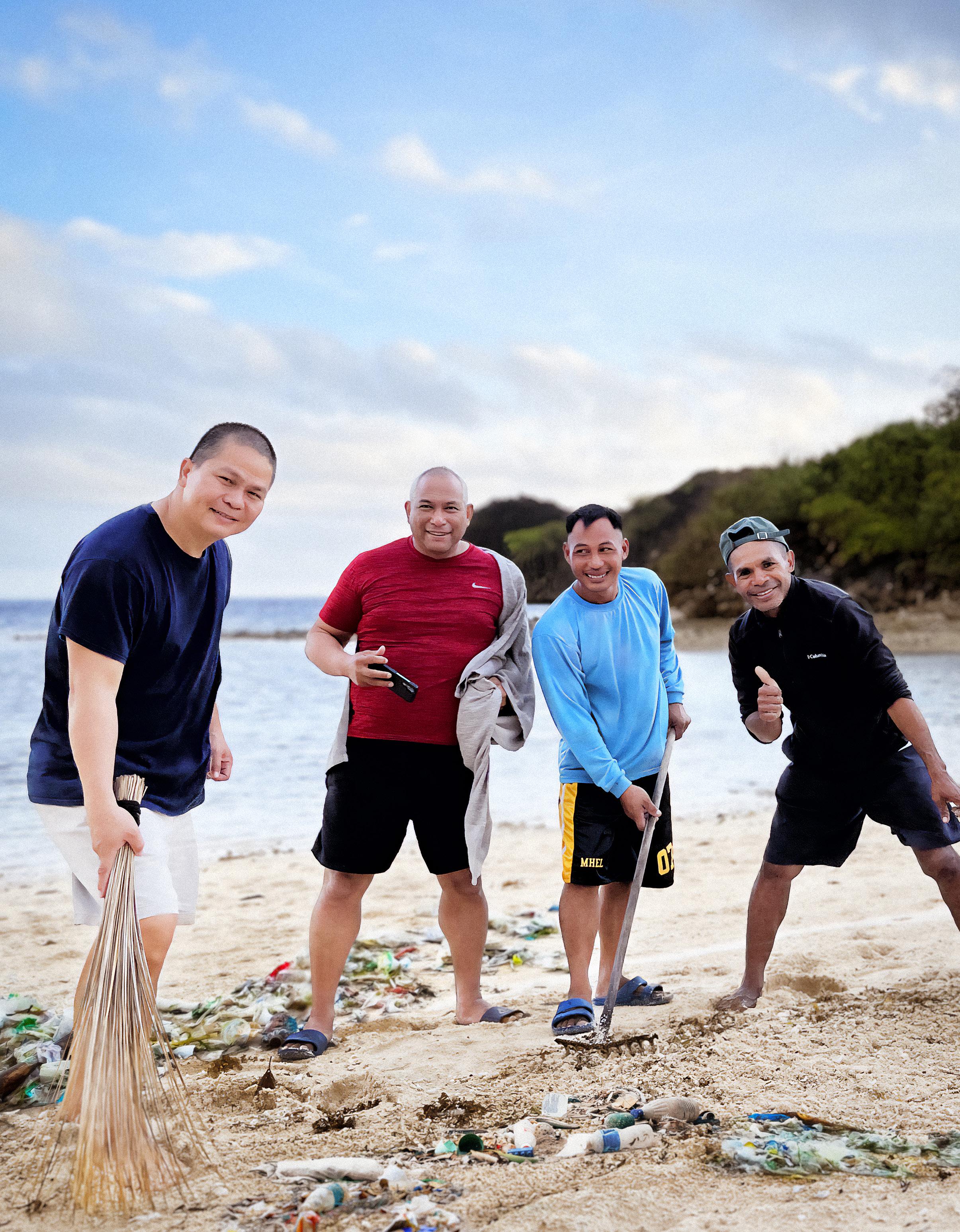
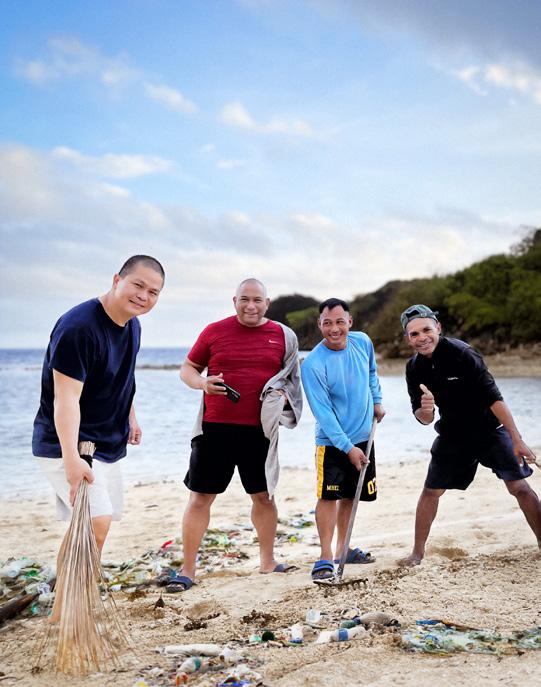
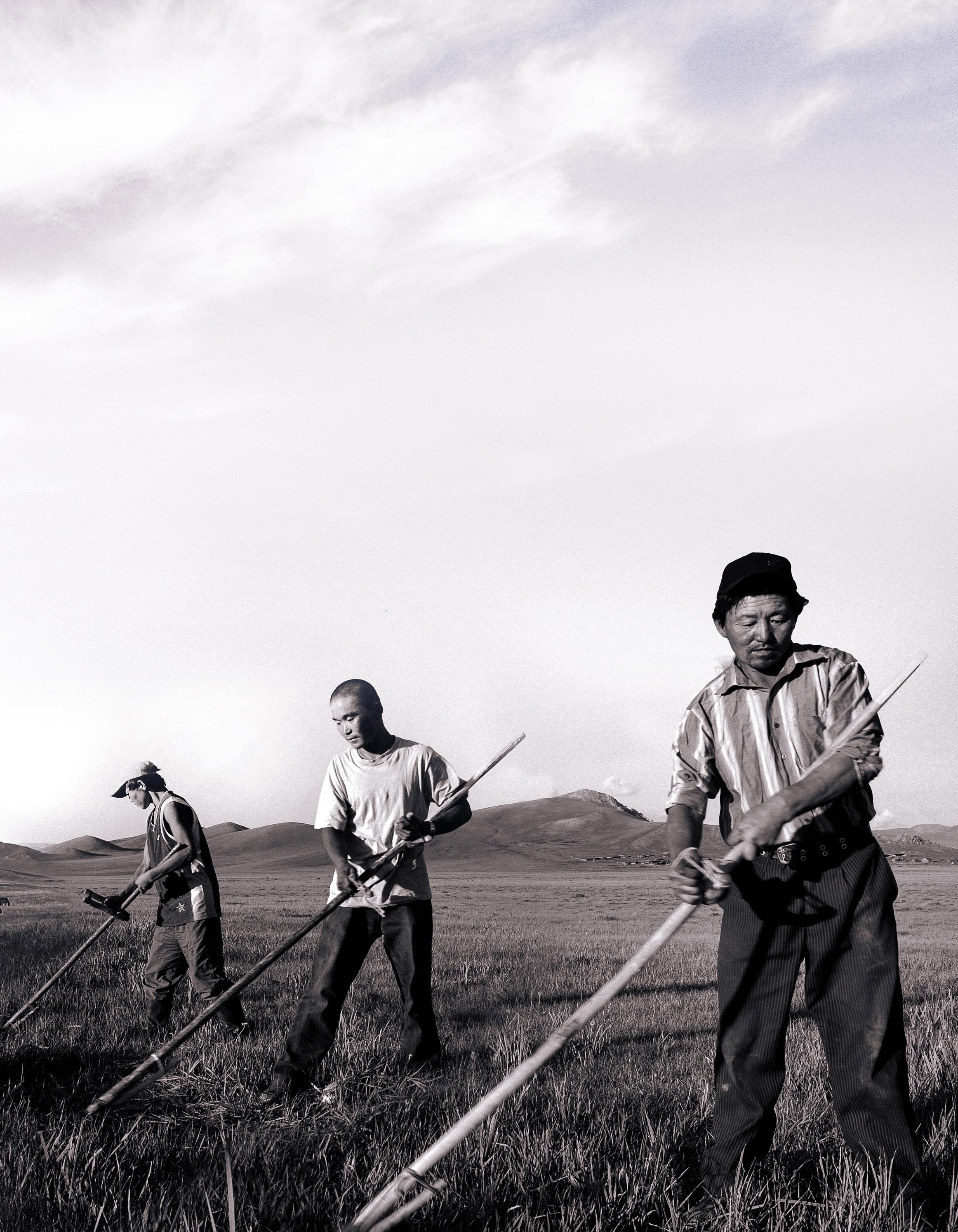
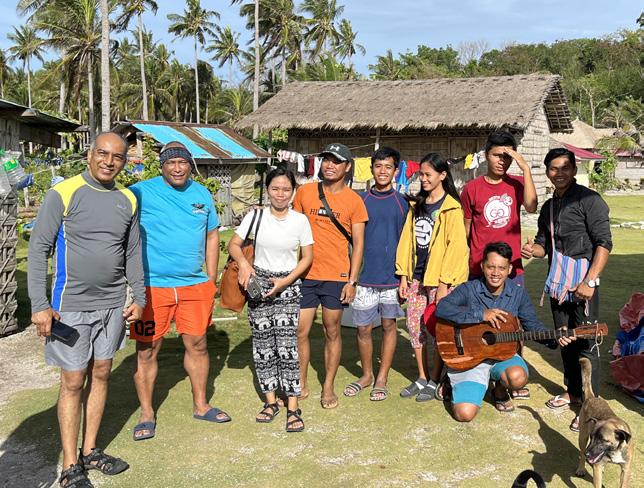
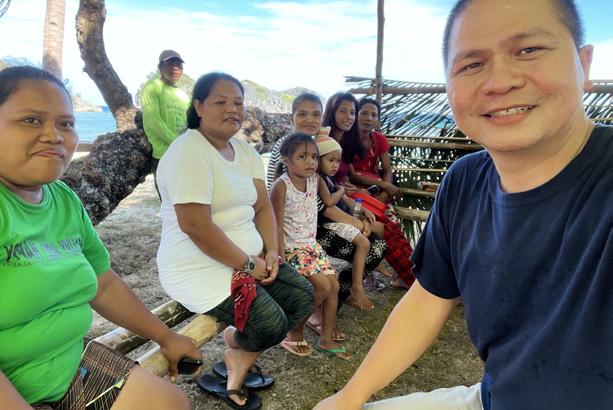
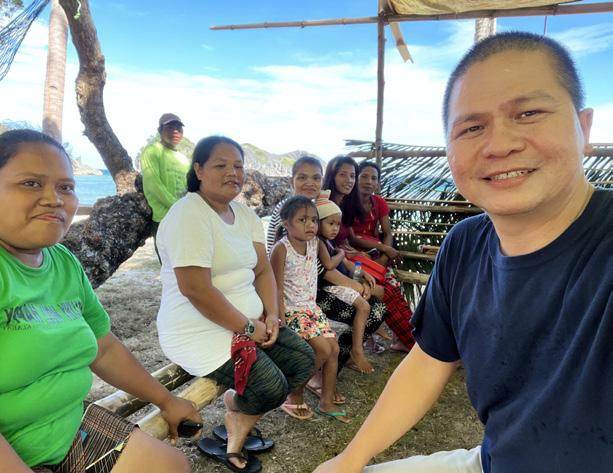
The mission of AIIAS is “to develop leaders through distinctively Seventh-day Adventist graduate education, excelling in spirituality, scholarship, and service.” This issue of Flags is devoted to highlighting the service that AIIAS students, faculty, and staff give in a variety of ways to the Seventhday Adventist Church, to the community, and to our own campus residents. Business faculty members, David Lumowa and LeRoy Ruhupatty, and Doctor of Ministry student James Watopa exhibit the act of servant leadership as they led a beach cleanup drive during a mission trip in Oriental Mindoro, Philippines.
THE PRESIDENT’S BANNER:
By Ginger Ketting-Weller
Serve Wholeheartedly
“Serve wholeheartedly, as if you were serving the Lord, not people, because you know that the Lord will reward each one for whatever good they do….” Ephesians 6:7,8 (NIV; emphasis added)
The mission of AIIAS states that our goal is to “develop leaders through distinctively Seventh-day Adventist graduate education, excelling in … service.” This issue of Flags is devoted to highlighting the service that AIIAS students, faculty, and staff give in a variety of ways to the Seventh-day Adventist Church, to the community, and to our own campus residents. According to Paul, service must be given “wholeheartedly,” with the same devotion we would display if we were serving the Lord Jesus Christ Himself, right here among us.
This is easier said than done. How do we serve wholeheartedly when we are born with self-serving human natures? So much of our service gets sidetracked by our own desires: desires to look good, desires to earn social power, and desires to gain points with God. There are a myriad of motivations that can turn service into selfservice. Jesus pointed out that when we serve in order to be noticed by others (can we talk about what we post on social media, displaying our good works?), our service has gone off the rails, so to speak. The fact that we add words such as “Praise the Lord,” or “Glory be to God” doesn’t hide our attempts to lift ourselves up. I suspect that none of us perfectly escapes the temptation to make our service— and thus our worth—seen and recognized by others. And yet God can bring beauty and blessing from all our service, no matter what our tendencies or flaws are. Let us not be paralyzed by waiting to serve until our motives are completely pure.
“So when you give to the needy, do not announce it with trumpets, as the hypocrites do in the synagogues and on the streets, to be honored by others,” said Jesus. “…But when you give to the needy, do not let your left hand know what your right hand is doing, so that your giving may be in secret. Then your Father, who sees what is done in secret, will reward you.” (Matthew 6:2-4, NIV)
Why, then, would we publish an entire issue of Flags highlighting the service given by people at AIIAS? Should it not be kept secret? Here are three thoughts about this:
1. Currently, each issue of Flags is highlighting one of the values of our mission statement: Spirituality, Scholarship, and Service. Service is life-giving. We must demonstrate it and practice it.
2. Modeling is powerful. When we see models of service, we are encouraged to also serve. And we glean good ideas to try in our own lives.
3. You should know that people did not offer up these stories for this issue of Flags. We heard of them via the grapevine or personal conversations and asked for details. We wanted to share just a few examples of the many quiet service activities that go on, day in and day out, at AIIAS. It’s part of who we are.
You’re invited to enjoy reading these examples of wholehearted service that use our energies and in turn energize our lives. Perhaps you can share your good service ideas with us. We’re all on a journey of learning to serve more fully. Service is our way of saying “Thank You”
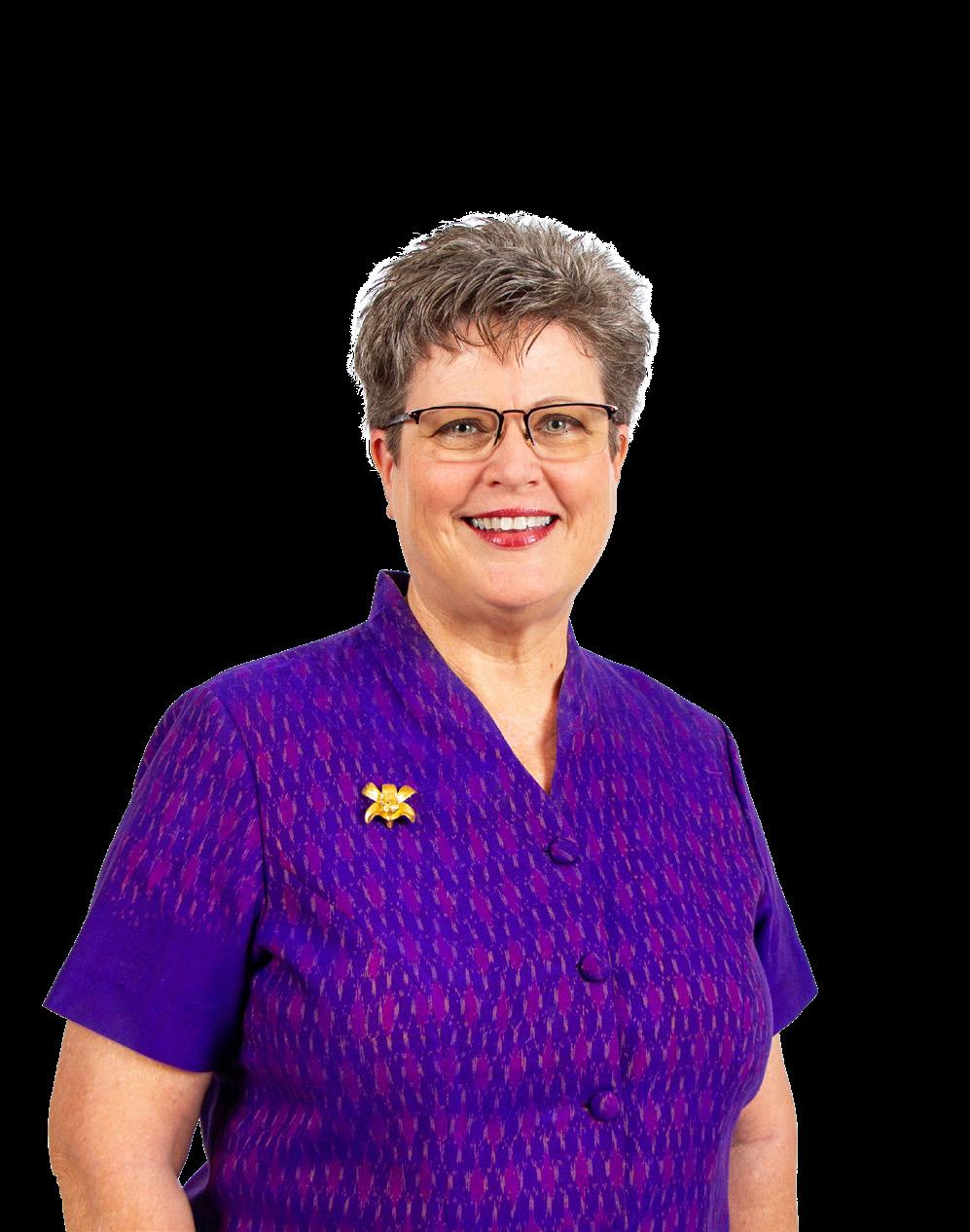
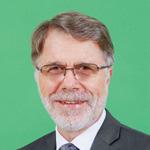
Ginger Ketting-Weller, PhD, is the president of AIIAS.
DEVELOPMENT
INTRODUCING OUR ANNUAL FUND CAMPAIGN!
During April, 2022, AIIAS launched an Annual Fund campaign. Emails went out to alumni, inviting them to give to a special project: to raise funds for STEM equipment for the newly constructed high school building of AIIAS Academy, which is designated in the Philippines as a STEM school. Our project is completed, and as of July 1, 2022, partnering with our Office of Institutional Advancement, we have USD $25,000 (from the original request of $20,000) now credited to the AIIAS Academy for this restricted purpose.
USD $25,000
Annual Fund campaign. The sewage treatment system? Not a likely candidate. Equipping a small wellness center in the gymnasium complex after the academy students move out? Maybe. Moving the store and opening a café in a renovated, better, larger, more attractive space? Possibly. But in the end, we thought that most students and employees have been blessed by their children’s experience at AIIAS Academy, and they would want to see continued progress for the programs there.
As of this writing, the academy will soon welcome North American Division STEM specialist Ophelia Miraflores Barizo to consult on building and enhancing their STEM. Barizo led Highland View Academy in Maryland to become the first nationally accredited Seventh-day Adventist STEM school in the United States. Now that we have funds in hand to procure some of the equipment she will recommend, the AIIAS Academy will have a state-of-the-art curricular jump start.
APRIL
USD $0 MAY JUNE JULY
If you missed this year’s Annual Fund campaign, here is what you need to know!
Each year, with input from students, faculty, and alumni, a small-goal fundraising drive will be launched for you to partner with AIIAS on a specific project that will be followed through to completion.
In 2022, following a campus wide survey of every department, we considered project ideas for our first
AIIAS Academy is very grateful for the alumni and friends who were able to give this year. Their generosity and sacrifice will directly benefit students this school year. We look forward to reporting on equipment purchased and utilized for the classrooms and labs at AIIAS Academy in the near future.
What will be the Annual Fund campaign project for 2023? We welcome the ideas of our students, faculty, and alumni. Email advancement@aiias.edu and share your ideas with us.
Service and Grace An Ancient Story for the Service-Minded Christian
By Aivars Ozolins, compliments of Dr. Luke, the Evangelist
Awell-to-do farmer had two sons, Abe and Jude. He had raised them well in a Christian home. They both attended church, participating in the Sabbath School and the Pathfinder activities. They went on mission trips with Adventist Youth and worked in a food pantry, serving the less fortunate. At home they both worked hard in the fields, caring for the various needs of the farm. They grew up serving well.
While working on the farm, the brothers used to daydream. Abe had set his sights on life in the big city. He wanted to be his own man, independent, not constrained by the rules. It was not that he did not like the Father. He knew that Dad loved him a lot, but it was just a tad tiring. And, to tell the truth, it felt a bit vexing to talk to Dad. He desired to experience freedom, to be able to do what he wanted, command respect, and have fun.
Jude, however, was different. He had no dreams about the big city. He just liked to be around the house and serve. However, he couldn’t wait for the day when he would be
in charge of the farm. “Yes, it’s hard now, but I’ll get my reward when the old man is gone. I will be the boss then,” he kept encouraging himself. So Jude persevered and continued working and obeying the Father… just to make sure he remained in his good graces. But truthfully, it felt like slavery.
Abe, after an especially hard week at the harvest time, could no longer carry on, so he gathered his courage to talk to the Father.
“You know, Dad, I’ve been dreaming about independence. I really want to be somebody!”
“But you are somebody, son. You are everything to me!”
“Not like that, Dad. I want to move out.”
“Could I have an advance on my inheritance?” Abe blurted out, fully expecting the Father to let him have his wrath.
But the Father just looked at him with love in his eyes and a tinge of sadness.
“I would gladly give my life for you, son. Yes, you can have your share.”
Abe got his money and left without even looking back, while Jude, wiping sweat from his brow, blurted out, “What a brat!”
Abe went to the big city and enjoyed every bit of it. He had everything his heart had desired: money, friends, girls, booze and best of all—he commanded a great deal of respect. “Oh, what a sweet life,” he thought.
However, that life did not last for very long. First, the money, then friends, and finally respect were all gone. Before long nothing was left and he ended up utterly destitute. That’s when he started to dream again. Not about the big city, though, but about home.
Deep down he knew he had no right to be part of the family again. But, perhaps he could get a job and serve the Father well and prove to him that he had changed! So he went home, dreading the encounter a bit, but was surprised when Dad rushed out to greet him. When he tried to apologize and ask for a job, the Father did not let him finish.
“Son, you can’t work your way back home. The only way of return is by accepting the fact that you are forgiven and welcome back in the family.”
The Father threw a big party to celebrate the return of his son. Everybody was invited.
“I can’t believe it! I thought I had lost my Abe, but he’s back! Come, let’s celebrate!” The Father could hardly contain his excitement. The whole village rejoiced with them. Everyone came to the big party, except one. Jude refused to come in. “It’s not fair,” he said. “Besides, someone has to work. There is so much to do.”
So Jude trudged back to the fields to serve, quite irritated by the sound of music and dancing.
“Do I ever get anything for my hard work? I’ve been slaving for years!”
The following day, after the big party was over, Abe went out to work in the fields. He took a deep breath and let out a sigh of tranquil elation and relief while absorbing the enchanting scenery of the hills and meadows, birds chirping in the air, and butterflies fluttering in the flowers.
“Oh, what a privilege it is to serve. I love you, Dad!” he whispered softly.
Luke wrote about a truly serving community. “The whole congregation of believers was united as one—one heart, one mind!…They shared everything…and grace was on all of them” (Acts 4:32-33, The Message).
It is good to serve out of duty, but it is much better to be motivated by God’s grace and have His love in the heart.
Aivars Ozolins, PhD, is a former faculty member of AIIAS Seminary Applied Theology Department. He comes from Latvia.
Working One’s Way Toward a Healthy Lifestyle
A Community Project Led by the AIIAS Pathfinder Companion Class
By Sharnie Love Zamora-Belarmino
Mission trips that provide community service are some of the highlights of spiritual life at AIIAS. During the past two years, the pandemic has limited the outreach movement of our AIIAS community greatly. However, it is a breath of fresh air to know that there are numerous mission trips on the drawing board, one of which was held right after the pandemic restrictions were lifted.
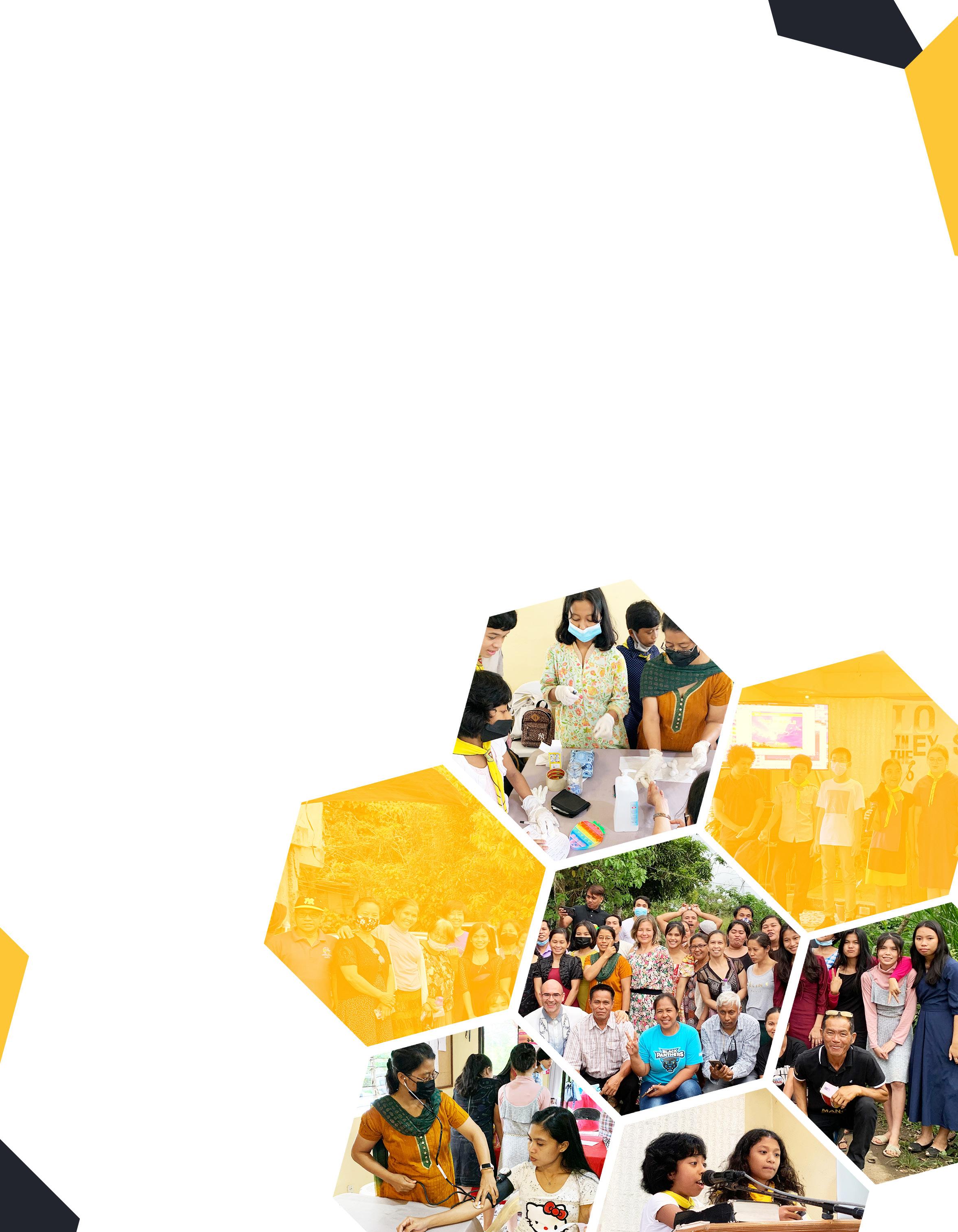
AIIAS Missions Professor, Pavel Zubkov, and AIIAS Seminary student, Ronald Marjee, organized a commu-nity outreach program and health fair by members of the AIIAS Pathfinder Companion Class on February 26, 2022. The beneficiaries were the members of the neighboring Mango Seventh-day Adventist Church, and the less privileged families within its vicinity. What prompted the organizers to reach out to this community was the visible need for health checkups, as observed during their gift-giving activity last December.
After a dynamic biblical motivation during the divine service, a lecture on ways to bounce back from COVID-19 through a healthy lifestyle was presented by Dionisio Tuapin Jr., AIIAS librarian and Master Guide adviser of the class. The Companion Class presented an interactive NEWSTART lecture accompanied by songs, while Marjee emphasized the importance of using natural resources to spring one’s health back to its optimum state.
Following the morning service, a health assessment and screening activity was provided by a team of
parents of the class members. The goal of the activity was to bring awareness to a healthy lifestyle. Fortyfour people from the church and surrounding community registered for the activity. Out of this group, 18 people participated in a special health counseling session for specific health considerations. Participants were given access to free monitoring of body mass index, blood pressure, and blood sugar.
Obesity leads to some of the most chronic lifestyle diseases such as high blood pressure, diabetes, cancer, stroke, and heart disease. It was highly emphasized during this mission activity that these diseases, which do not show any signs and symptoms at first, can strike at any given time. Through the health fair, the
Companion Class helped the community to be aware of these lifestyle diseases and how these can be managed and avoided.
Since lifestyle management is highly in demand, the Pathfinders look forward to leading out in similar activities in the future.
Ronald Marjee and Dionisio Tuapin Jr. contributed to this story.
Sharnie Love Zamora-Belarmino, MBA, RN, is the editor of Flags. She serves as the assistant for institutional writing at AIIAS. She comes from the Philippines.
“On Fire” for Evangelism and Community Development
By LeRoy Ruhupatty
Sharing the gospel of Jesus Christ is a life calling for every Christian (Matthew 28:18-20).
The AIIAS Business Department has embraced this call and is actively engaged in outreach programs that touch the lives of the community. From March 27 to April 2, 2022, the business department, with the support of the Southern Asia-Pacific Division (SSD) of Seventhday Adventists took the opportunity to minister to a small community on Buyayaw Island, off the coast of Oriental Mindoro, Philippines.
Buyayaw Island is about a 20-minute boat ride from Mindoro island, and 210 km south from AIIAS if you draw a straight line. The SSD and Adventist World Radio (AWR) Philippines have built a relationship with the small community on Buyayaw Island. The business department accepted their call to nurture this community. Business faculty Kenneth Swansi, David Lumowa, and LeRoy Ruhupatty partnered with SSD Treasurer Max Langi, and AIIAS Seminary doctoral student Pastor James Watopa,
and traveled 11 hours to reach this island.
The business department joined with pastors and a youth group from the Bulalakaw district in the outreach program during their stay at Buyayaw island, visiting local residents and praying with them. A lady who had been ill for more than a week started attending the nightly evangelistic programs.
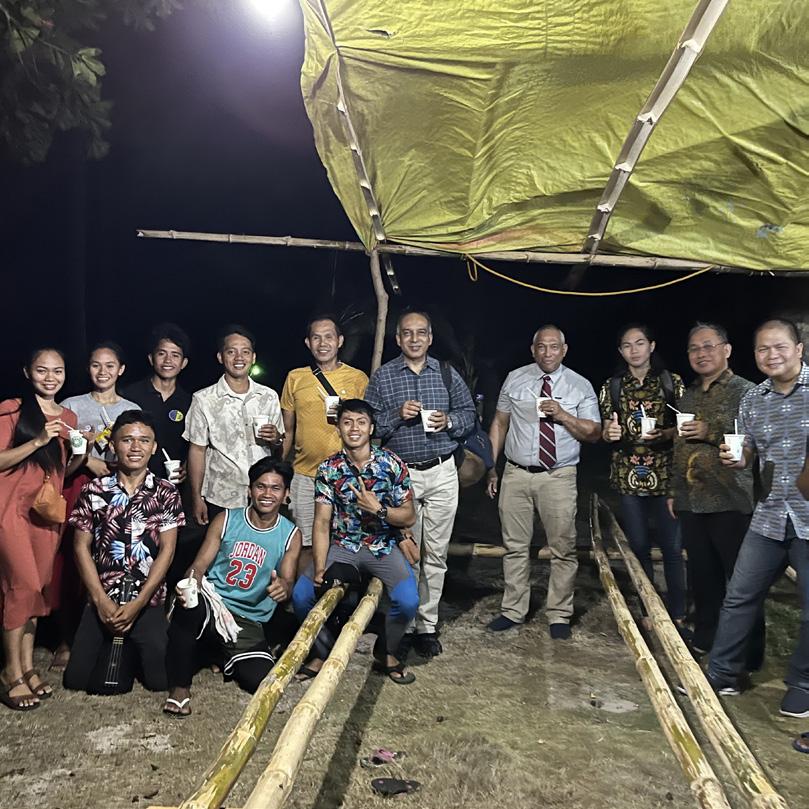
The program was a five-night evangelistic series with the theme, “A Better Future”. It included visiting and praying with the community and livelihood consultations. The people faithfully attended the nightly meetings. By God’s providence, the temporary tent made from bamboo and old tarpaulins withstood the consistently strong north-easterly wind.
At the end of the program, one of the community leaders announced, “I am ready to accept Christ through baptism and look forward to having our little chapel for Sabbath worships.” SSD and AWR are working towards helping build a chapel for the community.
Through community livelihood consultations, the team found that four households lived solely from simple tourism, while others switched from being fishermen to farming, depending on the weather. None engaged in valueadded efforts to increase the sales value
of their produce. Their life aspirations are simple: to be able to send their children to school, to have food on their tables, and to have happy lives.
Residents expressed interest in learning how to create value-added products from banana, cassava, and coconut tree derivatives. Marketing these products was identified as a challenge faced by the community. Pavel Zubkov, a professor from the Applied Theology Department of AIIAS Seminary, who later visited Buyayaw, indicated the need to plant vegetables and manage garbage in a way that supports vegetable planting and landscaping.
The business department is developing an integrated outreach plan that will address the spiritual nurture, livelihood improvements, and the environmental management of the community. The integrated outreach plan will involve support for the Buyayaw residents from faculty and students from the seminary, public health, education, and business programs.
LeRoy Ruhupatty, PhD, is the chair of the AIIAS Business Department. He comes from Indonesia.
Servants with a Heart for Mission: Lessons Learned from the Gaikwads
By Edivaldo Abel
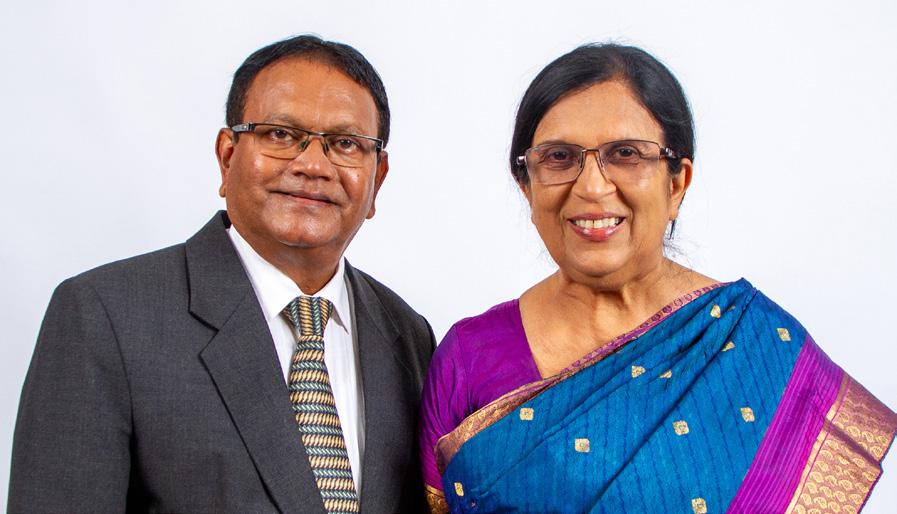
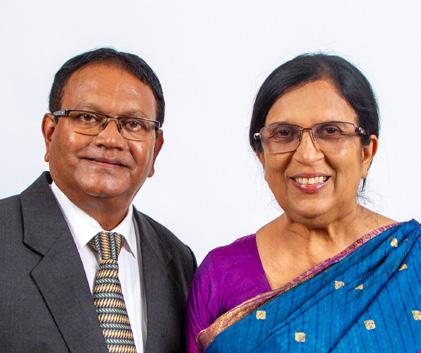
Apioneer of servant leadership in 1970, Robert K. Greenleaf, coined the phrase “servant leadership.” He said, “It begins with the natural feeling that one wants to serve first. Then conscious choice brings one to aspire to lead… The difference manifests itself in the care taken by the servant-first to make sure that other people’s highest priority needs are being served.” (Northouse, 2019, p. 349). Greenleaf’s servant leadership definition describes well the life of educators Drs. Samuel and Prema Gaikwad. They are servant leaders with a heart for mission who have served at AIIAS for 18 1/2 commendable years.
It is challenging to forget Dr. Samuel’s insightful devotionals and his simple explanations of complex concepts in advanced statistics courses. I always made sure to arrive early to his class so as not to miss his devotionals and life lessons. In his soft-spoken way, Dr. Samuel would take time to demonstrate a step-by-step guide to understanding the principles of advanced statistics.
“Alright, everyone,” is how a very cheerful and energetic Dr. Prema would begin each class. She would prepare her classroom to transmit a conducive learning
atmosphere, which would make learning enjoyable. She would write a class agenda on the board, and at the end of the class, she made sure we finished every part of the plan.
The Gaikwads demonstrated a heart for teaching and serving. I learned several lessons from their way of teaching and administration. I would like to share three personal lessons:
1. Inspired to become a teacher: One day, Dr. Prema asked if I would like to become a teacher. I replied, “I enjoy teaching, but I am unsure if teaching enjoys me.” She laughed and then taught me a lesson that changed my teaching perspective. She said, “Teaching is a calling. I see you have it, but of course, you will need to learn tools to equip you for teaching.” From that moment forward, I started to understand why the Gaikwads teach the way they teach. They view teaching as a calling.
2. Teachers beyond classroom walls: The Gaikwads ensured that relationships between teachers and students did not end within
classroom walls. They cared for the students and if a student missed class for health or other reasons, they would say, “We are praying for him or her.” On one occasion, I got sick and could not make it to class. I emailed Dr. Prema and within hours, they came to my apartment with soup and prayed for me. That day I was not able to eat because I could not cook. When they left, I was in tears. Indeed, I would love to pass along this kindness to my students.
3. Excellence: It’s impossible to speak of the Gaikwads’ teaching without mentioning excellence. They are competent scholars who seek the best from their students, and they know how to share their expertise in an excellent manner. They taught me to strive for excellence in every aspect of life.
During a farewell party hosted by one of the AIIAS communities, Dr. Prema, with a tearful eye, said, “We are to treat our students with respect, for you are the next professors at our schools.” Those words taught me never to disrespect anybody because we do not know where life might take us.
Reference:
Edivaldo Abel, MBA, is a student in the graduate school, where he is in the Doctor of Philosophy program in Business student of AIIAS Graduate School. He comes from Angola
Northouse, P. (2019). Leadership: Theory and practice (8th ed.). Sage Publications.
Sharing Hope, One Ride at a Time
By Eric Ejercitado/Sharnie Love Zamora-Belarmino
I will say of the LORD, “He is my refuge and my fortress, my God, in whom I trust.” Surely He will save you from the fowler’s snare and from the deadly pestilence. He will cover you with His feathers, and under His wings you will find refuge; His faithfulness will be your shield and rampart (Psalm 91:2-4).
We have lived through very difficult times for the past two years because of the ongoing COVID-19 pandemic, but we have been incredibly blessed as our work and classes at AIIAS continued.
One of my primary responsibilities as a liaison officer is to assist students and professors with processing their visa and travel documents. It is my duty to personally transact at various government offices, specifically the immigration office, on their behalf. On a typical day, this wouldn’t have been a problem. However, traveling multiple times to Manila during the pandemic became more challenging because of the strict government regulations on interzonal travel. During the 1.5-hour drive to Manila, I would pass through numerous police checkpoints. However, what seemed to be the most daring part of my travels was the fact that Manila was the epicenter of the pandemic, yet God kept me safe. With countless blessings and protection that God provided for my family and me throughout this period, a thought came to my mind, “Is there something that I can do for Him?”
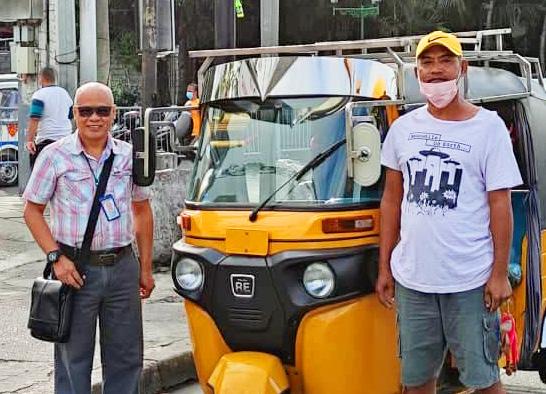
While in Manila, I have to travel to offices in different locations by taxi or tricycle. I thought to myself, “What if I gave books to all taxi and tricycle drivers that I meet?” As this thought inspired me further, I decided to rush to the AIIAS Church Office before leaving for my next trip. There I bought books entitled “Hope in Troubled Times” and from then on, I began distributing the books to taxi and tricycle drivers for free.
I was not expecting to see any results from this personal ministry. But, surprisingly, after a month of handing books to taxi drivers, I was encouraged when I received a response. During one of my taxi rides, the driver caught my attention and told me that he remembered that I had given him a book. He shared that he read it as soon as he got home after a long day’s work. He told me how much he enjoyed the book. It never dawned on me that out of the thousands of taxis in Manila that I would meet this same taxi driver again.
Later that day, I was having difficulty flagging a tricycle. Then, out of the blue, one driver stopped and agreed to take me to my destination. After 10
minutes of non-stop conversation with him, I learned that his name was Alvin, that we were both from the same city, and that we spoke the same dialect.
After succeeding trips on Alvin’s tricycle, I took the chance to learn more about him. Before he moved to Manila, he shared that he used to work for the Jamandre Family in Iloilo City, on the island next to my hometown. The moment I heard this, I inquired if he was an Adventist as I knew that the Jamandres are wellknown Adventists. Alvin responded, “I am not an Adventist, but for the length of time I worked for them, I almost got baptized because I went to church every Sabbath.” After sharing this with me, I told him about the Adventist church close to his residence and encouraged him to attend worship services, take Bible studies, and get baptized.
I would like to ask you to pray for Brother Alvin and the others that they may yearn to seek God and learn more about His message. There is so much work to be done, but who will do it? Let’s start today.
Sharnie Love Zamora-Belarmino, MBA, RN, is the editor of Flags. She serves as the assistant for institutional writing at AIIAS. She comes from the Philippines. Eric Ejercitado serves as the immigration officer of AIIAS. He comes from the Philippines.
By The AQRA Leadership Team
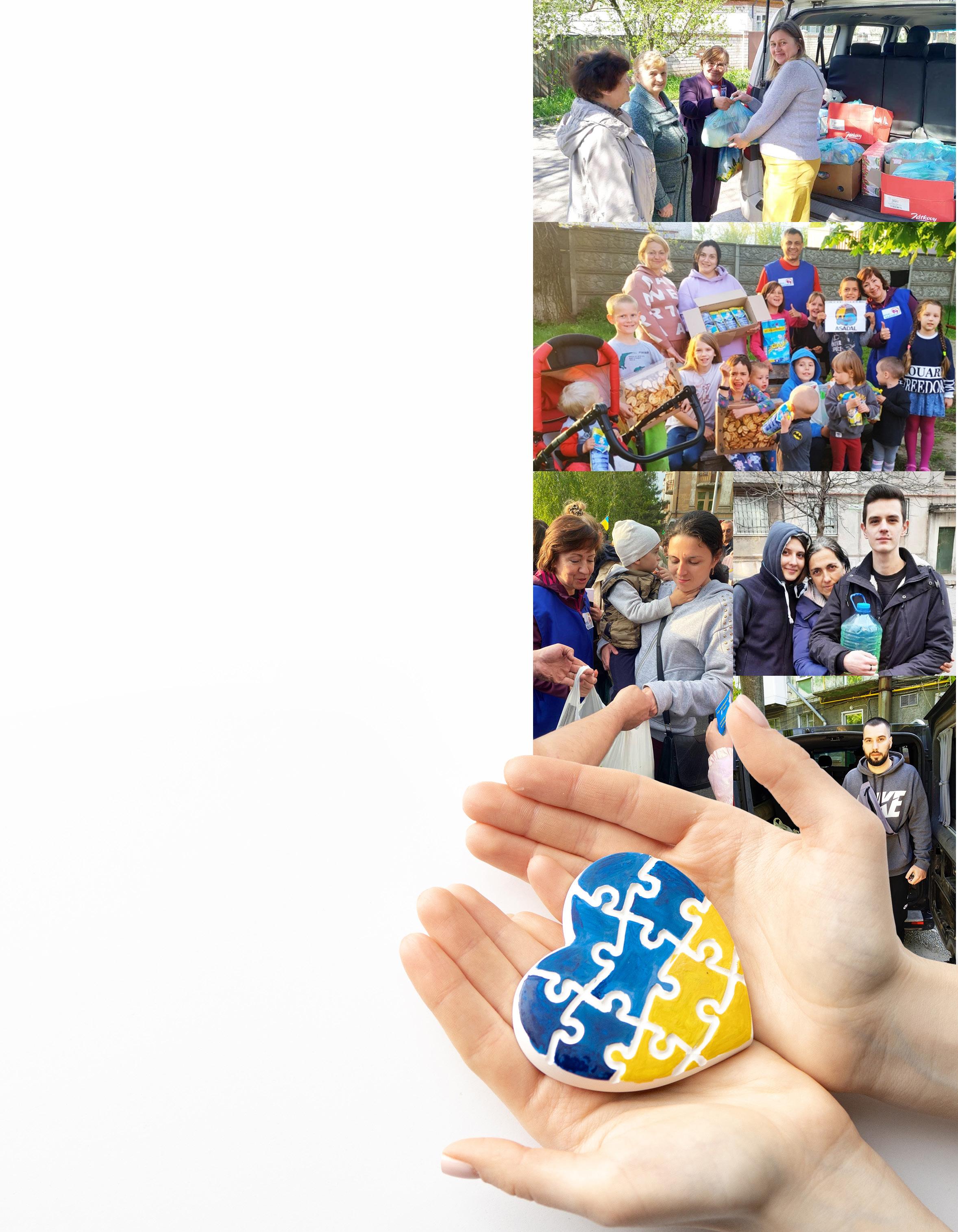
True to “Service”, one of the core values of the Asian Qualitative Research Association (AQRA), the AQRA leadership team launched the “Love Fund for Ukraine” when the Ukraine-Russian war broke out in February 2022. Their goal was to provide a platform for the AQRA community to help the victims of war in Ukraine. This project was introduced on the AQRA Facebook page and during the AQRA colloquia, which is held every second and fourth Thursday of the month.
The AQRA community has responded to the invitation to be part of the Love Fund for Ukraine. Donations have been coming in and have been sent to humanitarian service providers serving on the frontlines, specifically to those who provide transportation for war-trapped victims who need to be taken to safe places. As of September 2022, AQRA has sent a total amount of $962.00 to Ukraine.
The Love Fund for Ukraine is an ongoing cause. Your contributions are welcome. The need in Ukraine is real and urgent. So, take this opportunity to be blessed through giving and to be an instrument of love and hope. Let those in Ukraine know that there are people who care, and that one of them is you.
Arceli Rosario, Pavel Zubkov, David Lumowa, Gracel Ann Saban, and Jasmin Tuapin contributed to this article.
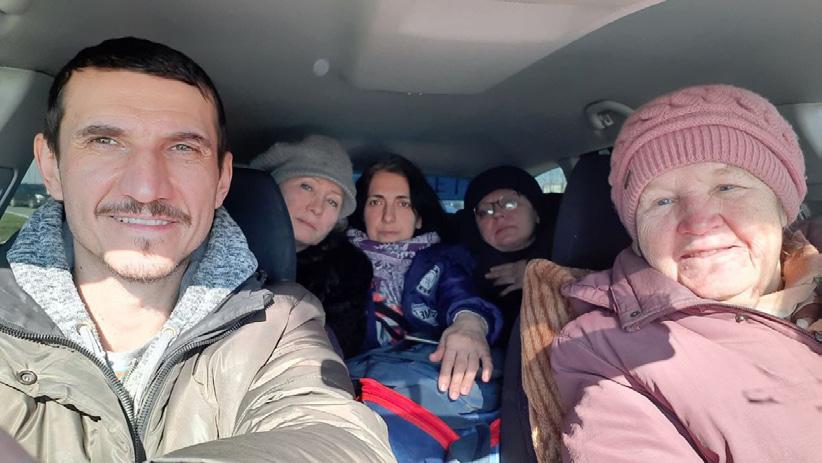
Adventist volunteers in Ukraine bringing people out of the war zone to a safe place.
Photo credit: Inna Kampen and Tetiana Gololobova
During the war, a container filled with ordinary gas is as precious as life.
Volunteers handing out food and necessities.
Buy-A-Book, Teach-A-Child
By Jisty Dana Frias
Schools were closed. Libraries were dusty. Thousands of books were left unread and untouched as students, both young and old, endured the effects of the COVID-19 pandemic. We all thought it would end soon, that we would go back to normal within 2020: face-to-face classes resuming, children running around the soccer field with joy, and AIIAS students participating in outreach. This was my vision when I, as the Education Department Student Association (EDSA) vice-president for religious affairs A.Y. 2020–2021, planned the spiritual outreach program, “Buy-ABook, Teach-A-Child”.
The goal of this program was to share Bible stories with students of EDSA’s adopted school, Silang Adventist Elementary School (SAES). In addition, it aimed to gather book donations from the AIIAS Community to the library of SAES. To introduce the newly donated books to the students, we thought we could visit the school in person, gather the students, and conduct an exciting and engaging Read-Aloud Program. However, the visit was not possible due to the pandemic restrictions, so we opted to hold a virtual Bible Books Read-Aloud Program through Zoom instead.
Preparations began in November 2020 as the Read Aloud Program
was set to be held the following month. We secured permission from the principal of SAES for this activity. Invitations for book donations were then posted on the AIIAS Community and EDSA Facebook pages and were also emailed to the AIIAS students.
At first, only the education students— mostly EDSA officers and sponsors— participated in the book donation. However, as the deadline for donations drew nearer, more students and teachers began to donate their books. I also offered a book-ordering system in which students could send cash, so that we can buy the books of their choice. I was most surprised when a Chinese student gave us P2,000.00 and told us to buy whatever books were needed with that money. Therefore, we were able to buy books from various bookstores and online. In the end, there were a total of 96 books donated to the SAES library.
The Read-Aloud Program was held on December 19, 2020. There were around 20 participants in the virtual meeting, including the EDSA officers and book readers. The book readers were assigned to read the Bible stories to the students. The students’ reactions to the Bible stories amused us book readers and organizers. They enjoyed them so much and kept responding to the book readers’ questions. When we informed the students that these
books would belong to their library, they cheered! Some even said, “I want to go to school right now and read those books!” A few weeks after the program, we brought the books to the school.
It is always a blessing to hold programs like these because the recipients showed much appreciation. Some of the SAES students may not have these Bible books at home, so to fill up a school’s library is to give students the opportunity to learn more about God and develop a love for reading.
As far as we know, this “Buy-A-Book, Teach-A-Child” outreach program is the first of its kind, primarily due to its virtual nature. However, this activity can easily be repeated with other recipients and other schools. AIIAS is filled with dedicated teachers and students alike who are willing to spread God’s love through language and literature.
Jisty Dana Frias, MA, is a Master of Arts in Education alumna of AIIAS, Class of 2022. She is the 8th grade adviser and high school English teacher at the AIIAS Academy. She comes from the Philippines.
REACHING NONCHRISTIANS IN THE 10/40 WINDOW: TEN THINGS TO LEARN AND UNLEARN
By Abner Dizon
The serious intent behind the slogan “I Will Go” can be seen in the strategic objectives of the General Conference of Seventh-day Adventists and the missional rallying of all departments and institutions of the world church to achieve those objectives. With the participation of many leaders and members globally, we will see the world’s evangelization in our generation. True? We sincerely hope for that.
However, this is not the first time we have aimed to reach the whole world with the Advent Message. The most recent and perhaps the most far-reaching in terms of missionfocused realignment was in 1990 when the General Conference launched “Global Strategy.” Then GC President Neal Wilson wrote that “for the first time, the Seventh-day Adventist Church is seriously recognizing in its plans and not just its words that the whole world is its mission field.”[i] The church had high hopes for Global Strategy, which aimed to enter 2,000 population segments of 1 million people without an Adventist congregation by the year 2000. From the General Conference to the local church, the entire Adventist Church machinery was pointed in that direction. Yet, today, 22 years later, the church still has not established an Adventist presence in all of the targeted 2,000 population segments.
The causes of the church’s failure to achieve its objective in 22 years is varied and complicated. In 2015, the church recognized a major factor contributing to that failure—the need for spiritual revival and reformation. The General Conference’s Revival and Reformation Committee has done its best to address this spiritual need. However, another factor needs to be addressed—the lack of missiological training for those trying to reach non-Christians in the 10/40 Window. Research and experiences on the ground have
demonstrated that simply directing people to “Go” to nonChristians does not automatically result in the establishment of Adventist congregations among them. Those who “Go” need to learn new ways, and to unlearn old ways, of doing ministry and mission.
Without minimizing the centrality and indispensability of the Holy Spirit’s empowerment, we need to also learn from the field of missiology (the study of the basis, history, and methods of doing missions).
Let’s begin by listing four assumptions that missionaries and pastors need to unlearn (or at least be cautious about) if they will go to the 10/40 Window.
1. Assumption: What works in their home country or region will work in the 10/40 Window. Whether developing programs or evangelistic materials, context is important. It is not adequate to translate existing programs or materials into local languages. Missionaries must study the context and develop programs and materials that fit the target audience.
2. Assumption: Putting up buildings results in establishing congregations in the 10/40 Window. The church is people, not buildings. We need to develop meaningful relationships through natural relational networks instead of depending on expensive infrastructures that often become “white elephants” once the pioneer missionaries leave.
3. Assumption: Short-term mission is the answer to the lack of workers in the 10/40 Window. Local short-termers who already speak and understand the culture may do well with proper pre-field orientation. But short-term expatriate
missions typically benefit those who go, more than those they visit. Short-term missions sometimes do more harm than good because the short-termers are not sensitive to the local culture.
4. Assumption: Public evangelism is the best way to reach people in the 10/40 Window. The jolting reality is that in most countries in the 10/40 Window, public evangelism is not allowed. Entering and remaining in many of these countries remains a creative endeavor. Reaching most non-Christians in the 10/40 Window will largely come through personal evangelism rather than a public campaign.
Considering the above incorrect assumptions, what should missionaries and pastors learn as they endeavor to reach non-Christians in the 10/40 Window?
1. Think “People Groups”. Not just territory or population segments. People groups have unique sociological characteristics (religion, ethnicity, culture, language, etc.), which we should consider when seeking to reach them. Don’t lump everyone together. Think of their unique “groupness” and plan outreach or ministry strategies specifically for them. Study their beliefs, practices, worldview, and needs.
2. Minister to people’s felt needs. Needs-oriented evangelism is proven to be effective across the board. Ministering to felt needs gives us a recognized reason to be in the community. It enables us to find witnessing opportunities and to develop meaningful relationships. A word of caution: conduct field research before launching a ministry or center of influence. Address what they feel they need rather than what you think they need.
3. Think discipleship rather than mere membership accession. Most of the time when we talk about discipleship it means just “baptizing” people! We need to plan in advance for spiritual growth and mentorship of new converts. Remember, the purpose of Adventist evangelism and mission is to win people to Jesus, make them responsible members of the church, involve them in reaching people around them, and prepare them for the return of Jesus.
4. Contextualize. Don’t just translate evangelistic and nurturing materials from the West. Develop materials and programs that fit the need and context of the people you are reaching. A prerequisite to contextualization, of course, is a solid understanding of the Advent message to avoid a distortion of that message.
5. Think “house church” rather than “regular congregation.” House churches are biblical. They are also the most practical way to establish an Adventist presence among resistant non-Christian people groups. Furthermore, starting house churches is faster, safer, and inexpensive. It’s also a good way to nurture and train converts.
6. Engage in spiritual warfare. Most resistant groups are deeply immersed in spiritualism and witchcraft. Non-Christian religions are often steeped in animism. We need the full armor of God when engaging in ministry and mission to non-Christians because when we go to them, we venture behind enemy lines. We need God’s power and the Lordship of Jesus to be evident in our ministry.
Abner P. Dizon, DMiss, is the Interfaith Services Director for Muslim, Secular, and Postmodern Ministries of the Southern Asia- Pacific Division of Seventh-day Adventists. He is a former faculty member in the applied theology department of AIIAS Seminary.
At the Forefront of COVID-19: Paying Tribute to our Campus Physician
Interviewee: Dr. Evelyn V. Almocera, MD
By Sharnie Love Zamora-Belarmino
The longest-serving and pioneering campus physician of AIIAS, Dr. Evelyn Villaflor Almocera, has served as the compass that guided AIIAS through the COVID-19 pandemic. I interviewed her to have an inside look into what it was like to view the pandemic through the lens of the sole frontline school physician.
AIIAS is immensely grateful to Almocera for her tireless efforts to care for the health of the AIIAS Community.
How has COVID-19 impacted your practice?
When the COVID-19 outbreak was declared a global pandemic by the World Health Organization, it placed extreme demands on my time and clinical practice. The work was not limited to addressing disease treatment but expanded to include many other responsibilities.
It required a lot of time to learn about the new virus, its mode of transmission, its changing signs and symptoms, and its preventive and curative measures. I had to keep myself updated as there were many inquiries that needed to be answered, yet the answers were few and changing. In addition, I had to stay abreast of the everchanging quarantine levels to adapt to the national, provincial, and local guidelines.
The work went beyond being a school physician as I served as a liaison to local and national government agencies. I had to coordinate with the barangay and town officials, the local health office, and nearby hospitals.
Thoughts of getting infected were the uppermost concern for most frontliners, especially during the beginning of the pandemic. I realized that my job had suddenly become more dangerous. I had fears of getting infected and bringing the virus home to my family members. That fear further intensified as I heard of friends and colleagues in the profession that had contracted the disease and died.
Balancing the commitment to help others and protecting oneself and others became a test of my professional vow.
What have you found to be the most difficult/challenging and most rewarding aspects of the COVID-19 pandemic?
The COVID-19 pandemic has affected our daily life, affected our mental health, and compelled us to separate from each other for fear of being infected. Since the disease was new and had moved to pandemic status, the greatest challenge was managing the new situation which we were not ready to address. I will describe the challenges and difficulties.
The Most Challenging
Rapidly changing and inconsistent information led to increased frustration and uncertainty. This resulted in confusion and a lack of trust in the information received.
Getting the Barangay Quarantine Pass and timely distribution to the AIIAS residents.
Decision making, such as which hospital a patient will be sent to, knowing that the facilities were full. Counseling students regarding their fears. I was able to discuss their fears as a physician, but some students needed professional help from a trained counselor.
Our first case in AIIAS was in March 2021. Contact tracing was very difficult since some contacts were not cooperative. As the cases increased, the contact tracing effort became more labor-intensive.
Some residents did not fully disclose their state of health or COVID-19 symptoms for fear of being quarantined. Networking with the government authorities to get the vaccines and have everyone vaccinated.
Counseling those who were hesitant to be vaccinated.
Meeting the requirements of CHED for resumption of face-to-face classes by submitting weekly reports.
Keeping the community aware that though the cases are low, the virus is still around and can mutate anytime.
The Most Rewarding
Gaining new knowledge and skills for handling a pandemic.
We recorded only a few cases as compared to other communities. When those infected recovered with just home treatment. We became resourceful. Residents developed the vegetable plots by planting vegetables for their consumption and some to share. Change in lifestyle. Many of the residents began following a healthier lifestyle than they had in the past. Families had the opportunity to bond well during this time as students and workers stayed at home with their families.
Because of the quarantine, fewer residents got sick with non-COVID infections.
Making new acquaintances whom I could not have met under normal circumstances.
What was it like being the primary medical resource person for AIIAS during the entire pandemic?
The pandemic challenge was overwhelming, and there were times I felt exhausted, confused, discouraged, frustrated, burned out, and alone in facing this task. Despite the hard work and time invested, I did not always get positive commendations, but sometimes criticism for the decisions I professionally made. Above all, the experience made me more resilient, patient, and compassionate, and it taught me to cling to God’s promises. It reminded me to take mental health seriously by finding ways to connect to friends and family, and God.
Please share your interactions with the government and how they supported AIIAS during the most challenging period.
During the pandemic, I realized that long-standing friendships matter and how invaluable networking is. In the past, I thought that helping the immediate community through medical missions, providing services, and sharing resources was just an act of helping them as part of our church’s mission and passion. Still, these activities have led to lasting friendships and professional collaboration, which were very helpful during the pandemic.
The following institutions helped AIIAS in several ways:
Barangay Lalaan I, under the leadership of Honorable Romeo Toledo, was very supportive of us:
. They allowed AIIAS residents to continue our scheduled market days inside the campus. They kept our Quarantine Pass updated regularly.
. The barangay health workers kept us updated on our barangay’s COVID status and helped us coordinate with other government agencies.
. They assisted us in the smooth processing of travel passes as required in crossing provincial borders during the early stage of the pandemic.
I am very grateful to our Municipal Health Officer, Dr. Armin Garcia Guarin, and her team for keeping us updated on available slots for vaccines at different vaccination centers. In addition, she brought her team thrice to AIIAS to provide COVID vaccination for residents who failed to get it from vaccination centers.
How did you manage to take care of yourself and AIIAS residents during the COVID-19 crisis?
Being a frontliner and a senior citizen during the pandemic contributed to my being vulnerable to the infection. This caused me to reevaluate my lifestyle to boost my immunity. Eating a balanced healthy diet and getting regular exercise significantly lowered my risk of getting infected despite my exposure. Getting adequate sleep is promoted by researchers as one way to enhance the immune system’s capacity to fight the infection. Unfortunately, my sleep was disrupted during the time of the pandemic, not only by calls I received at night but also by preparing for an online/hybrid class the following day.
Observance of the minimum public health protocol helped me minimize exposure to the virus. Communicating via text message or email about COVID-related issues was very useful in reducing face-to-face contact. I reminded myself every day that I needed to protect myself so that I could help others.
I coped with the challenges faced in my workplace with the support of my family, who provided a supportive environment by understanding the nature of the challenges I was facing. I was also moved by how my family members did volunteering activities in the community during this crisis. This was
very helpful in maintaining sanity in times like this.
Colleagues were supportive with regular soothing conversation, assurance, and encouragement. Trusting God provided me with a sense of mental strength and encouraged me to stay positive during this crisis. Family worship and personal meditation offered inner peace, calmness, and better emotional health.
What is your advice to healthcare workers facing similar challenges? Please include any overall insights and observations.
We chose to be in this profession and we made a vow to help lessen the suffering of those afflicted by the disease. However, to maximize our contribution to the healing ministry, we need to protect ourselves first by practicing a healthy lifestyle. Be a model to others in observing public health protocols. We need to be consistent in implementing the guidelines without being harsh. It is necessary to be aware of one’s mental health needs. Seek psychological counseling and post-trauma care if you recognize the red flags of being burned out or depressed. Look for peer support and take advantage of networking with friends to ease the burden.
The COVID-19 pandemic was very memorable as it allowed me to meet people I hadn’t had the chance to be acquainted with. Being a part of the task force addressing pandemic issues has taught me many things, including being compassionate and that transparency about decisions is very central to the effective implementation of policies.
Caring for both adults and children from different countries has given me a better understanding of people of different cultures and medical practices. I thank AIIAS for these experiences, roles, and opportunities that enhanced my professional career as a physician.
Sharnie Love Zamora-Belarmino, MBA, RN, is the editor of Flags. She serves as the assistant for institutional writing at AIIAS. She comes from the Philippines.
Theologians Discuss Methods for Effective Gospel Communication
By Bohdan Koval
The Annual Theological Forum is a prominent event in the life of AIIAS. It summons every year a significant number of researchers, administrators, seminary professors, pastors, missionaries, and other interested professionals from different countries to share and exchange new and relevant ideas regarding theoretical and practical issues of Seventh-day Adventist theology.
This 24th forum, held November 11-13, 2021, was entitled “Message, Media, and Mission: Communicating the Gospel in the Pandemic and Other Challenging Times.” It opened with the greeting address of Elder Ted N.C. Wilson, president of the Seventhday Adventist World Church, who pointed out the challenges of doing missionary outreach during pandemic restrictions. He called participants of the Theological Forum for faithful service and completion of the Great Commission of Christ, despite all emerging obstacles.
The speakers addressed the main issue from different perspectives. Marcelo Dias, professor of applied theology from the University of São Paolo, Brazil, systematically presented pandemic challenges as actual opportunities to develop Adventist outreach; Gary D. Krause, associate secretary and Adventist Mission
director of the Seventh-day Adventist Church world headquarters, stressed that our message “Should be clear, adapted for the audience’s needs, and narrated through interaction, as once Jesus Christ did in his ministry;” Wagner Kuhn, professor of world mission from Andrews University, USA, also advised pastors, administrators, and teachers to pay due attention to making our theology practical for the better spiritual care of people who want to join the church; Derek Morris, president of Hope Channel International, Inc., gave a detailed report on the current state of Adventist media ministry.
Numerous respected presenters, both faculty and students, introduced their vision of the issue in breakout sessions. They represented different world educational institutions, such as Spicer Adventist University in India, Angolan Adventist Institute of Bongo, Pacific Adventist University in Papua New Guinea, Adventist University of the Philippines, Universitas Advent Indonesia, and, certainly, AIIAS.
The forum climaxed with the solemn Sabbath online worship, where G. T. Ng, former executive secretary of the Seventh-day Adventist Church world headquarters, delivered a passionate message highlighting methods of “unusual mission” in the end times.
Gary D. Krause
Assoc. Secretary and Adventist Mission Director, General Conference of Seventh-day Adventists
Derek Morris President, Hope Channel International Inc.
Wagner Kuhn Professor of World Mission, Chair of Dept. of World Mission, Andrews University, Berrien Springs, Michigan
He shared inspiring testimonies from fields all over the world.
Participants of the 24th AIIAS Theological Forum felt blessed to be a part of this great event. They gained valuable insights and tips for practical ministry in current changing and challenging circumstances.
Donny Chrissutianto, a faculty member of AIIAS Seminary and one of the forum organizers, expressed his impressions and hopes in this way: “Our experience regarding the 2021 AIIAS Theological Forum indicates that our influence is wider than I thought. The attendees, as well as the speakers, came from several continents. In order to maintain the wide influence of this forum next year, I believe it would be good to have a hybrid event. That would help those who cannot attend in person to have an opportunity to be involved virtually.”
This year you are invited to a holistic study of the motifs in the Book of Psalms as the 25th AIIAS Annual Theological Forum is scheduled to happen on November 10-12, 2022, with the theme “Reading the Psalms: Songs of Struggle, Hope, and Promise.” For event inquiries, please contact seminaryforum@aiias.edu.
Marcelo Dias
Professor of Applied Theology, Adventist University of São Paulo, Brazil
G. T. Ng
Former Executive Secretary, General Conference of Seventh-day Adventists
Bohdan Koval, MAR, is a student in the seminary, where he is in the Doctor of Philosophy program in Religion. He comes from Ukraine.
Scholars Explore How to Equip and Empower in the New Normal
By Sharnie Love Zamora-Belarmino/Blessing Obaya
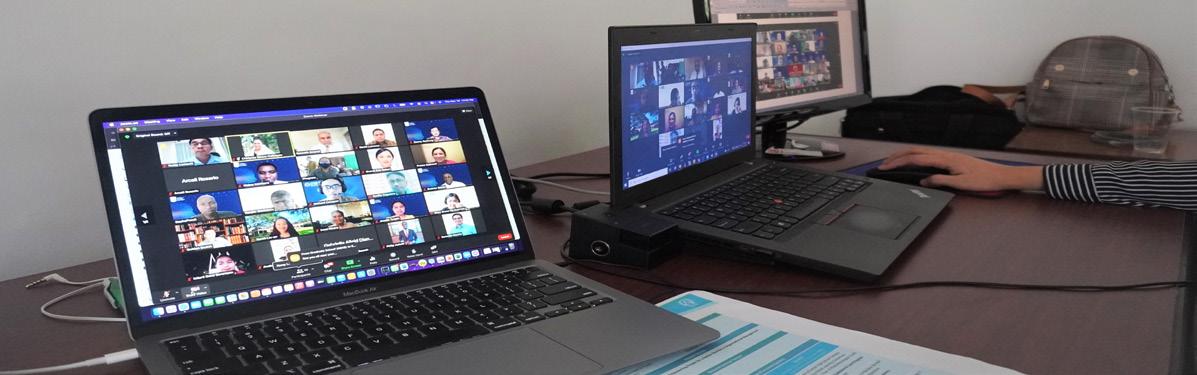
The AIIAS Graduate School hosts the annual International Conference on Business, Education, and Public Health wherein research conducted in these fields are presented to a body of scholars from all over the world. Held on November 15-17, 2021, over 300 attendees from 33 countries participated in the virtual event.
With the pandemic restrictions normalizing the use of online learning, a virtual session allowed attendees to participate in the event from their own separate locations. “Empowering People for a Better Normal” was the chosen theme. Scholarly contributions designed to address the fast-changing course of research in higher education had the central goal of empowering people and organizations.
The keynote speakers for the conference were leaders from the Seventhday Adventist Church headquarters in Maryland, USA. Guest speakers Ella Simmons, general vice
president; Hudson Kibuuka, associate director of the education department; and Paul Douglas, treasurer, generously imparted their wisdom to the attendees. Their presentations addressed topics such as development through leadership and relationships for organizational recovery, resiliency, and growth; the processes and benefits of empowering human beings for a better future; and developing organizational resilience through a culture of risk preparedness.
In Simmons’ keynote address, she encouraged the attendees to plan to move on with a mission and to find new possibilities for achieving goals. “Circumstances are your help, not your hindrances,” she said in her speech. Kibuuka emphasized the impact that empowerment has had in helping educators in their journey to the new normal, while Douglas encouraged resilience in organizations to face challenges that may arise in the future.
Conducting valid research is a primary academic requirement for graduation. AIIAS ensures that its students have
access to top-notch resources to prepare them for their chosen field of study. In line with this, the international conference hosted a three-day research seminar. The daily seminar sessions focused on different aspects of research led by Jimmy Kijai, retired professor of research and statistical methodology at Andrews University in Michigan, USA, and Ronny Kountur, professor of PPM School of Management in Jakarta, Indonesia. Their presentations included insight on how to achieve and enhance the quality of social science research and relevant considerations for publishing scholarly works and how to deal with research challenges.
The recurring theme in all presentations was on the difficulties people faced during the pandemic and how they are finding new ways around them. Building skill sets to navigate the new normal and empowering people in organizations was the overall conclusion of the studies presented.
Sharnie Love Zamora-Belarmino, MBA, RN, is the editor of Flags. She serves as the assistant for institutional writing at AIIAS. She comes from the Philippines.
2021 iConference Organizing Team Behind the scenes with Jim C Weller
Blessing Tomisin Obaya, MA, is a student in the graduate school, where she is in the Doctor of Philosophy program in Education. She comes from Nigeria.
An Appeal to the Reality of Personal Brokenness
By Bethel Jane Taglos
The AIIAS Preaching Lectureship fosters growth, learning, and a passion for Christ-centered expository preaching. The lectureship brings in lecturers with diverse experiences and professional backgrounds. Their personal Gospel experience and their unique personalities give rise to a variety of distinctive approaches. Still, all are geared toward one purpose, preaching the gospel of Christ from the heart.
The seventh AIIAS Preaching Lectureship held via Zoom on January 20-21, 2022, with the theme “Preaching and You,” brought a fresh, reflective, retrospective, and personal approach to Christ-centered preaching. The speaker, Mike Tucker, speaker emeritus of Faith for Today Television, and co-host of the awardwinning television program, Lifestyle Magazine, comes from a pastorcounselor background. He introduced his theme with an emphatic and personal appeal for preachers to keep their emotional and psychological health well-balanced.
The lectureship was attended by a group of approximately 175 pastors, laymen, missionaries, and institutional workers from the Philippines, Southern Asia, and Europe. Tucker’s seven lectures were focused in two main areas: the Gospel preaching and the preacher, as summarized below:
The Gospel is always the good news of Jesus Christ as our substitute. It is always a message of assurance that hope and love are the most powerful motivators for internal change leading to external change. Gospel preaching is a profoundly lifechanging encounter with Jesus, not just research-based knowledge on the types and approaches of effective sermon delivery. It is more than talent; it is the work of the Holy Spirit in the heart of the preacher, growing daily in love with Jesus.
The preaching of the Gospel leads the preacher to deep and personal introspection on his or her brokenness.
“Because all are broken, no one is exempt!” There is an important question that preachers need to ask, “Is my preaching from the Scriptures, or is it spilling over from my pain deep inside?” If necessary, the preacher is personally responsible for seeking professional help to facilitate the healing process. The bravest thing a preacher can do for self and congregation is to be honest and vulnerable about his or her emotional and psychological health and, finally, do something about it.
Tuckers’ approach provided a safe environment for attendees to identify and recognize the human reality of brokenness. He stressed that “Emotionally unhealthy preachers do themselves harm. We have so many broken pastors throughout the world where brokenness was not dealt with properly. They did a tremendous amount of damage to the people who listen to them, and the people they lead.”
Another aspect of the lectureship that deepened attendees’ interest and engagement was the Q&A time during the live sessions, to which Tucker responded generously. Benjamin Casimiro from the Philippines, a seminary student at AIIAS, noted that “The preaching seminar was very informative. It is so helpful and practical. The question-and-answer portion was great.” Florian Diehl, AIIAS alumnus and assistant to the chair of the Seventh-day Adventist Health Ministries Department in Germany, commented, “Having studied at three different seminaries, these lectures are a fresh look at the underlying foundations of effective preaching. The focus is Christ-centered, and knowledge of this theory finally puts flesh on the bones.”
Aivars Ozolins, then the Applied Theology department head and the lectureship coordinator, closed the two-day series with appreciation for the awakening that the lectureship
brought to the preaching ministry of the attendees. He also highlighted a brief restatement of the lectureship’s direction: to seek to develop an awareness of the deeper essence of the preaching ministry, Jesus Christ. Ozolins noted that this has been a blessed and fruitful yearly tradition at AIIAS during which attendees get a real taste of Gospel preaching. AIIAS will continue with this tradition in the coming years.
In keeping with tradition, the lectureship climaxed with a Sabbath sermon, an exposition of Psalm 23 entitled, “You Need a Shepherd” by Mike Tucker. It was a sermon preached to hearts at AIIAS from the heart of a preacher who has personally experienced the Great Shepherd.
Bethel Jane Taglos, MDiv, is a Master of Divinity alumna of AIIAS, Class of 2021. She is currently serving as an Adventist Volunteer Service (AVS) missionary in Hiroshima, Japan. She comes from the Philippines.
Enabling Effective Transition Amidst Tribulations
By Alberto Ocaranza
Christ’s Method of Management (CMM) is an annual event strongly aligned with the mission of AIIAS. Like AIIAS, CMM aims to promote and strengthen the spiritual, academic, and mental well-being of the participants through a biblical business perspective.
It is undeniable that we live in a world coping in a period of transition. Since the arrival of the COVID-19 pandemic, most business, government, and social organizations have been looking for the best way to face the challenges that these last few years have brought. These challenges have forced the different entities to ask questions about the correct decisions that they must take. To face the transition successfully, one must consider certain principles that must be followed. The CMM webinar, held February 23-25, 2022, aimed to answer these questions from a biblicalbusiness perspective. The ultimate goal of the webinar was to deliver essential tools for participants to utilize when faced with transitions between the present and the future.
This year, the chosen theme for the event was “Transition in Times of
Tribulation”. During the event, guest presenters from different countries had the opportunity to provide important insights on this exciting topic.
Treasurer and Chief Financial Officer of the Seventh-day Adventist Church world headquarters Paul Douglas, shared two ingredients for churches facing tribulations during a transition in his presentation entitled “Treasury in Turbulent Times”. First, he postulated that “The effectiveness of the church’s tasks should be based on serious work and firm faith.” He further explained that both must work together to prove effective.
“Mentors in life play a role in our personal and professional development, but we must always remember that our only reliable mentor and our rock is our Creator,” emphasized AIIAS Vice President for Institutional Advancement Dr. Richard Nelson in his presentation entitled “Biblical Values Applied in Community Business”. “Our core values must be evidence-based in the Bible and faithfully lived in our personal and business lives,” concluded Nelson.
To further complement and provide a broader picture of the theme, presentations by a distinguished body of speakers included the following: “Enabling Successful Transitions” by AIIAS Graduate School Dean Kenneth Swansi; “Leading Transition” by AIIAS Business Department faculty member Jasmin Tuapin; “Christ’s Method of Transition in Times of Tribulation” by PhD in Business student Edivaldo Abel; and a motivating lecture on “God as CEO” by Eric Ksau Whipps, an alumnus of AIIAS, and CEO of Surangel and Sons Co. in Palau. Student presenter Edivaldo Abel mentioned that this year’s theme brought a different perspective on how to view adversity and suggested effective ways to maneuver through them.
MBA student Bintang Wardoyo commented that the CMM webinar inspired him to be a professional who continues to keep God’s commandments while serving others.
This year’s webinar proved to be a timely reminder for all who participated in the event, as the world currently transitions from the pandemic period back to a more normal way of life. The organizers of the event believe that the presentations richly empowered all webinar participants to face the present and future adversities ahead.
Alberto Ocaranza, MBA, is a student in the graduate school, where he is in the Doctor of Philosophy program in Business. He comes from Chile.
ALUMNI PENNANTS
SAMUEL GAIKWAD, PhD, and PREMA GAIKWAD, PhD, former education professors in the AIIAS Graduate School have retired and moved back to their home based in Pune, India. The Gaikwads leave AIIAS after 18-anda-half commendable years of service in various leadership positions.
ABNER DIZON, DMiss, (MA-R, ‘07), former AIIAS Seminary faculty member and missions program director is serving at the Southern Asia-Pacific Division (SSD) of Seventhday Adventists as the director for Interfaith Services for Muslim and Secular-Postmodern Ministries.
AIVARS OZOLINS, PhD, former chair of the AIIAS Applied Theology Department, and JUTA OZOLINA, former campus counselor, have moved back to their hometown in Southern California, USA.
ARCELI ROSARIO, PhD, former chair of the AIIAS Education Department, has left to serve as president of Adventist University of the Philippines (AUP) in Silang, Cavite.
GRACEL ANN SABAN, PhD (PhD Education, ‘09; Philippines), former associate professor of the AIIAS Education Department, is now serving as vice president for academics, AUP.
FLORIAN DIEHL (MDiv, ‘06, MPH, ‘14; Germany) is the assistant to the chair of the Seventhday Adventist Health Ministries Department in Germany. He and his family have served as missionaries for the Adventist church in Finland from 2014-2017. His son Abijah is almost 13 and his daughter Amelie, 10. Both attend the local Adventist school. They are hoping to move abroad as missionaries soon.
IAN RUDDY MAMBU (MPH, ‘15; Indonesia) is a faculty member of the School of Nursing in Universitas Pelita Harapan in Indonesia. He is married to VERONICA KORENGKENG (MPH, ‘17; Indonesia). They are parents to their two-year-old son, Mark.
HUNLEDE TONOU KOMLAN (MA-R, ‘16; Guinea) is a church pastor at Gulf Field, UAE. After graduating from AIIAS, he served in Guinea as a church pastor, then moved to Laos as a missionary. Beginning in 2019, he served as chaplain at the Adventist College of Nursing and Health Sciences in Malaysia. In June 2021, he moved to the UAE. He married Cassandra Andrews in 2017 and they now have two sons.
PUM KHAN SUAN (MMin, ‘19; Myanmar) is the publishing and communication director of Upper Myanmar Mission. He and his wife, Nuam Khat Nem, have a daughter and two sons.
DAVIED ZEBEDEUS (MDiv, ‘20; Indonesia) is the church pastor of Upper Room Seventhday Adventist Church in Jakarta, Indonesia. He is happily married to Stephanie Simbolon and together they are enjoying family life with their first-born daughter. He is publishing a journal and organizing a church.
MYUNGHOON RHA (MMin, ‘22; South Korea) is a pastor in the Japan Union Conference. He was assigned as a director of Hokkaido district.
Newly Appointed Adventist Leaders from the Global Alumni Community
RICHARD APELLES
SABUIN (MMin, ‘01; PhD Religion, ‘06; Indonesia), to serve as associate director of education, General Conference of Seventh-day Adventists.
NILDE ITIN, former AIIAS registrar, to serve as associate director of Women’s Ministries, General Conference of Seventh-day Adventists.
WENDELL WILCOX MANDOLANG (MPTh, ‘97; Indonesia), to serve as executive secretary, SSD.
ORATHAI CHURESON (PhD Education, ‘15; Thailand), to serve as Children’s Ministries director, General Conference of Seventhday Adventists.
ROBERT OSEI-BONSU (PhD Religion, ‘09; Ghana), to serve as president, West-Central Africa Division of Seventh-day Adventists.
WATLAND FRANÇOIS (PhD Religion, ‘22), to serve as vice president for academic affairs, Adventist University of Haiti.
SAW SAMUEL (DMin, ‘16; Myanmar), to serve as associate secretary, General Conference of Seventh-day Adventists.
ROGER OMALLAO CADERMA (MPH, ‘99, Philippines), to serve as president, Southern Asia-Pacific Division (SSD) of Seventh-day Adventists.
GERARDO CAJOBE (MMin ‘11; Philippines), to serve as president, North Philippine Union Conference of Seventhday Adventists.
Are you an AIIAS Graduate? Your classmates and professors would love to read about what you’re doing and more. Help us to make “Alumni Pennants” a place to reconnect and update each other.
We are requesting the following information about you:
1. Achievements/promotions
2. Recently published books
3. Professional development
4. Volunteer/mission work stories
5. Ministry involvement stories
6. Experiences in the field of academics or a recent transition that has happened to you or your family.
Kindly submit your complete name, present occupation, and place of work, 100 words maximum. We will notify you if your submission has been selected. Send your entries to flags@aiias.edu or scan this QR code to submit your entry.
ABOUT AIIAS
The Adventist International Institute of Advanced Studies (AIIAS) is a graduate-level Seventh-day Adventist educational institution that offers quality education while keeping the tuition very affordable. AIIAS provides four modalities: online learning, distance learning centers (DLCs), on-campus cohorts, and full-time programs.
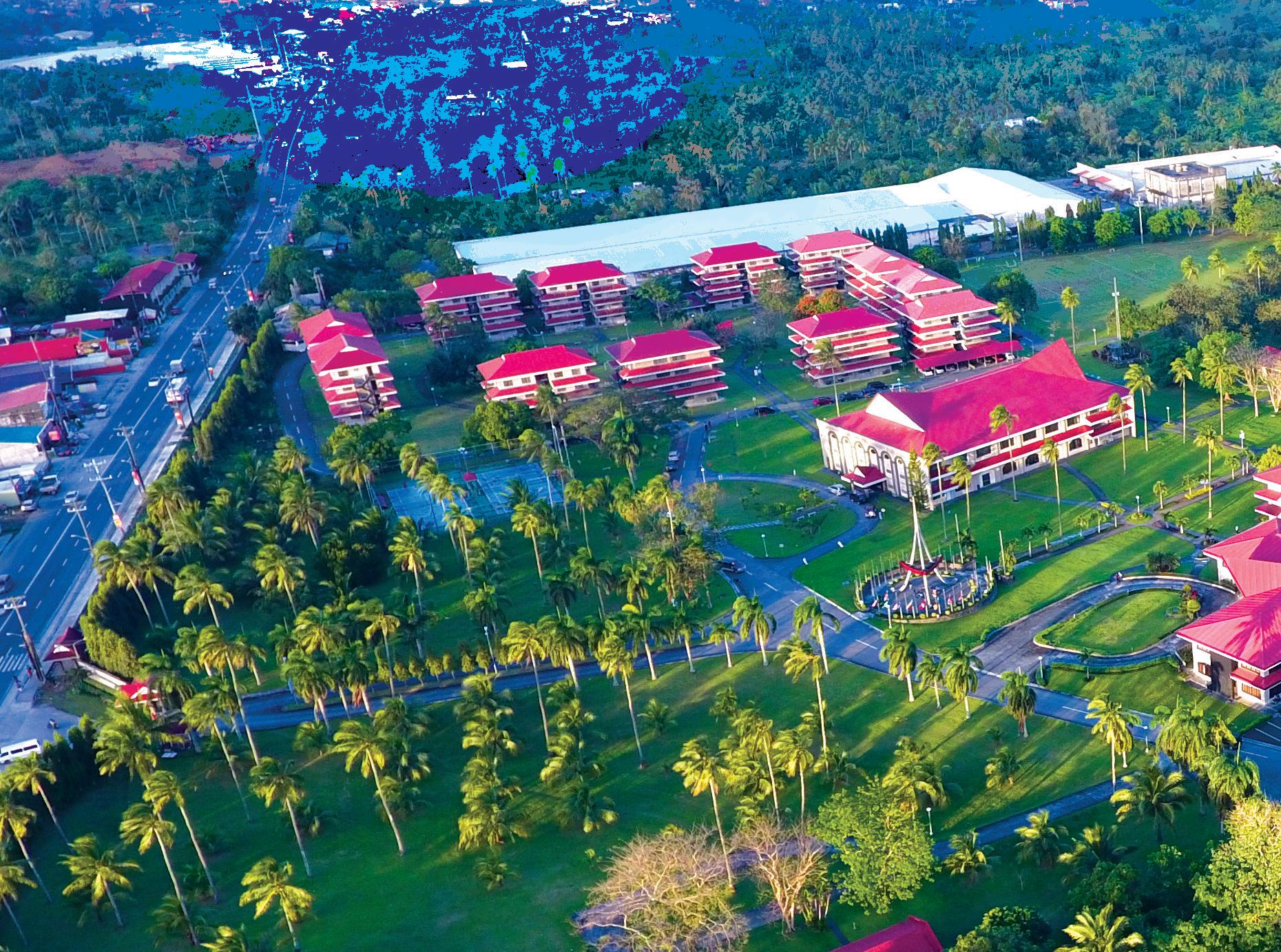
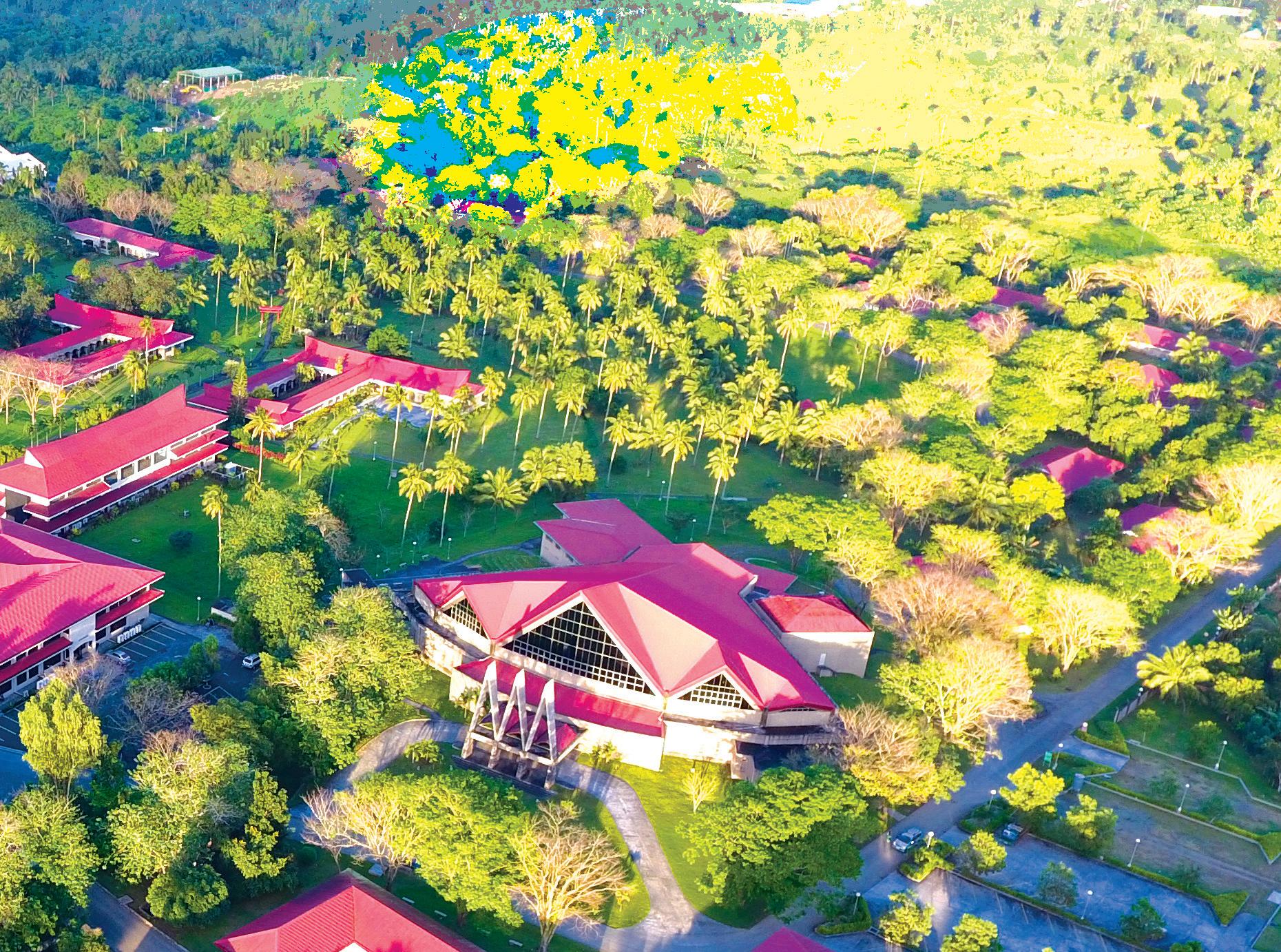
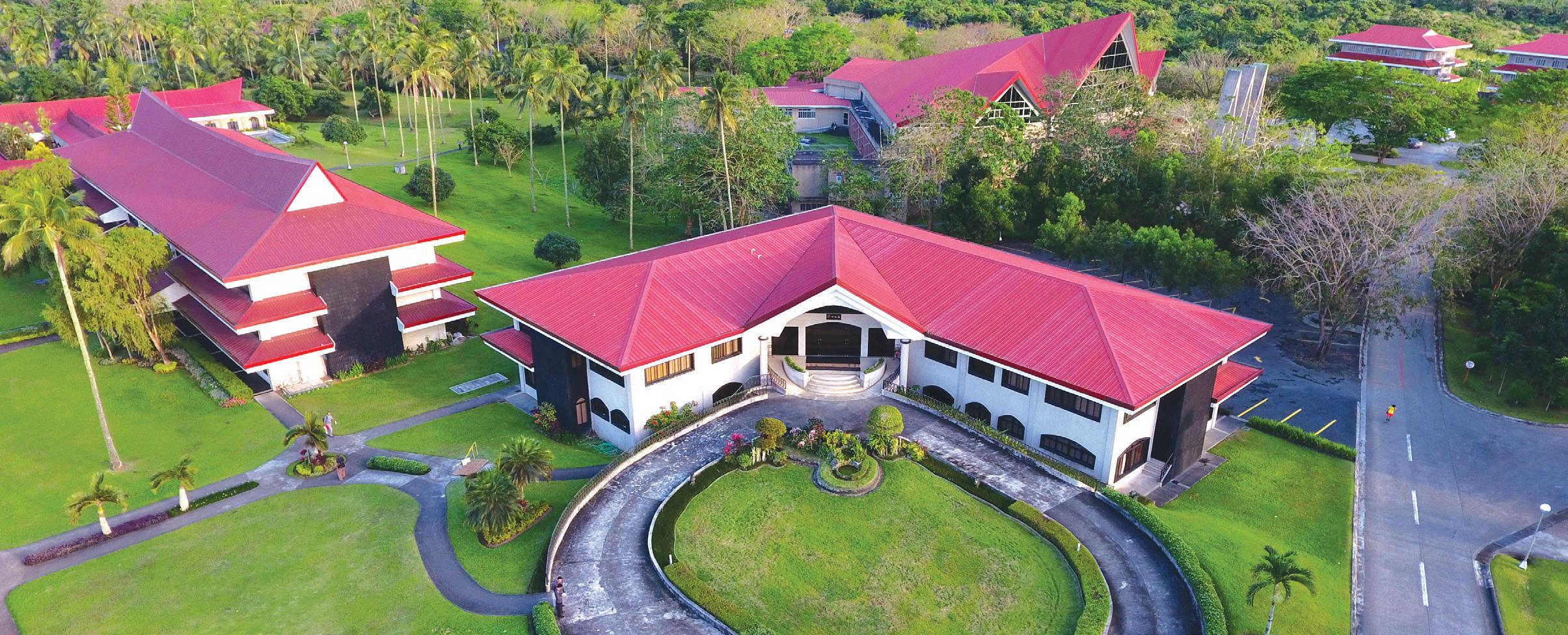
AIIAS is located on a beautiful tropical campus 45.5 kilometers outside of Manila, the capital city of the Philippines. This location offers easy access to opportunities for mission trips and community outreach both locally and internationally, especially within the 10/40 Window.
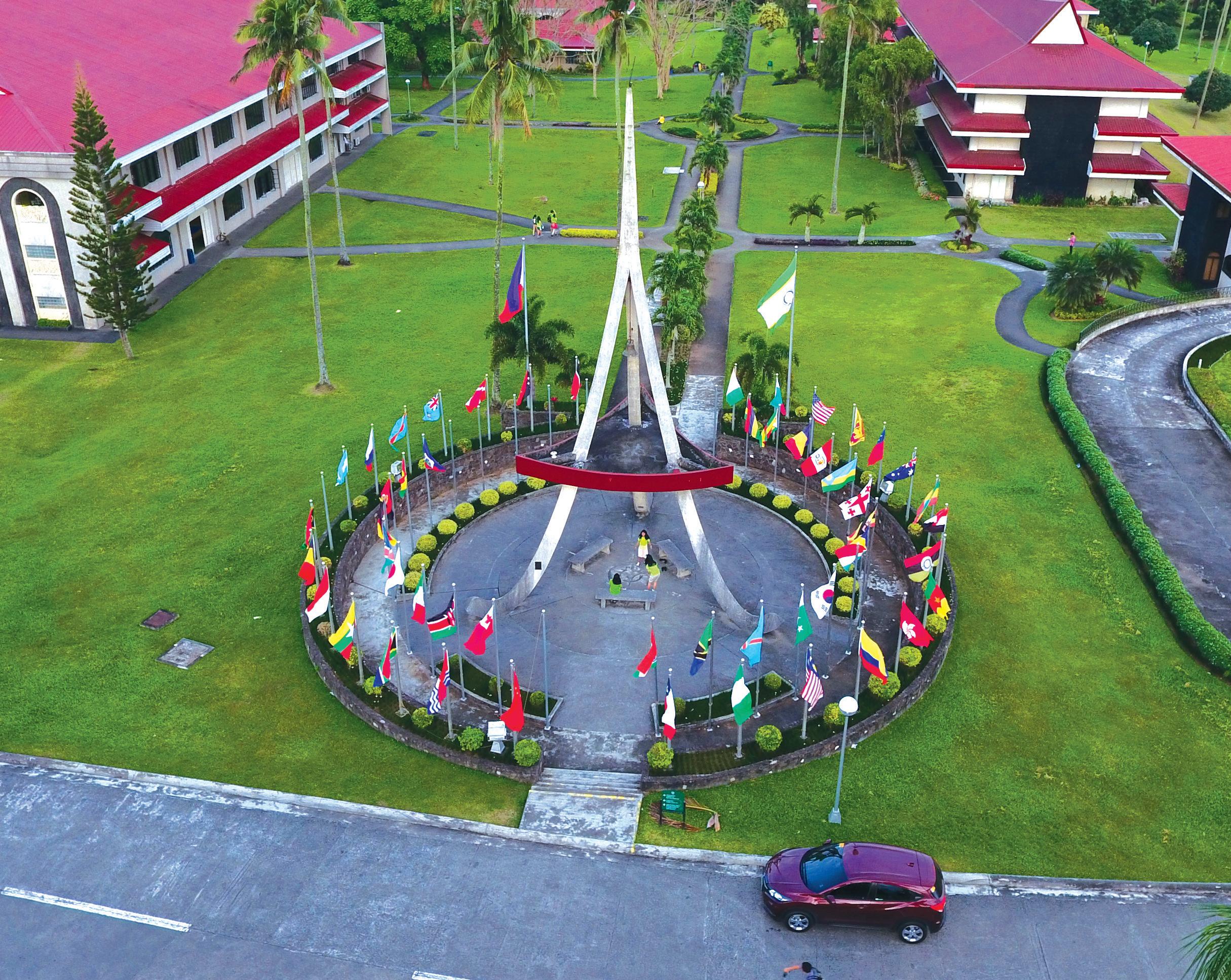
The AIIAS community includes over 300 graduate students from more than 60 countries around the world. The faculty members come from 17 different countries. The teacherstudent ratio is low, giving students the opportunity to work closely with their teachers. Typically, a class of 10 students will represent a variety of nationalities, providing access to diverse insights and global perspectives.
AIIAS alumni hold positions of leadership throughout Asia and the world. Alumni serve as teachers, pastors, world church leaders, university presidents, administrators, business executives, NGO leaders, and public health professionals. Many of these alumni have come to AIIAS to build a strong foundation on excellent, world-class graduate education.
RECOGNITION & ACCREDITATION
AIIAS is recognized by the government of the Republic of the Philippines as a graduate educational institution of international character, as certified by the Commission on Higher Education (CHED) pursuant to Presidential Decree No. 2021. The institution and all its programs are accredited by the AAA1. In addition, the graduate school programs are accredited by PAASCU2 and those from the seminary by ATESEA3
1 The Adventist Accrediting Association of Seventh-day Adventist Schools, Colleges, and Universities of Maryland, USA.
2 The Philippine Accrediting Association of Schools, Colleges and Universities which is a full member of APQN and INQAAHE.
3 The Association for Theological Education in South East Asia which is a full member of WOCATI thereby networked with other regional associations like the ATS.
THE AIIAS ADVANTAGE
In addition to high quality graduate education, there are many benefits to living on a campus filled with fellow students and their families.
“AIIAS provides a wholesome experience by developing each person academically, spiritually, mentally, and physically.”
Living on campus provides rich cultural experiences among a diversity of friends, thoughts, and activities. The AIIAS student will meet fellow students from every continent except Antarctica. The diversity allows students to find commonalities and gain knowledge from other cultures.
AIIAS cultivates a family-friendly environment where children of different age groups from various countries interact and freely play together. This develops cultural awareness and appreciation at an early age. The community allows parents peace of mind about their children’s safety as they focus on studying, for the walled campus has a secure entrance.
ADMISSION DEADLINES
Second Semester – Term A December 5, 2022
Second Semester – Term B February 16, 2023
Intersemester 2023 April 25, 2023
First Semester – Term A July 6, 2023
First Semester – Term B September 12, 2023
AIIAS provides an abundance of opportunities for spiritual growth, whether it is through prayer meetings, Sabbath worship programs, or outreach ministries off-campus. There are many other opportunities that allow students to receive a blessing, and be a blessing.
GRADUATE SCHOOL
The AIIAS Graduate School develops internationally-minded, ser vice-oriented professionals known for integrity and scholarship in the fields of business, education, and public health.
THEOLOGICAL SEMINARY
The AIIAS Theological Seminary prepares mission-driven, professional faculty and other church leaders in a wholistic, multicultural, and collaborative approach to learning. The AIIAS Theological Seminary promotes biblicallyinformed scholarship, spirituality, and a meaningful field experience.
ENGLISH CENTER
The AIIAS English Center takes students through intensive and personalized instruction in the English language in an English-speaking environment. The English Center approach is aligned with well-recognized English language programs.
ONLINE
AIIAS Online delivers quality graduate Christian education that is accessible and affordable through student-centered and contextualized learning experiences for better service to the church and society.
Why choose AIIAS?
Distinctively Adventist
We champion the educational philosophy, teachings, and lifestyle of the Seventh-day Adventist Church and a clear sense of its mission and identity.
Academic Excellence
We maintain the highest academic quality, highest accreditation level, and employ outstanding faculty recognized in their field.
Affordable Cost
All AIIAS students enjoy the highest quality of education through the benefit of financial subsidy by the Adventist world church.
Exotic Location
Dive to undisturbed coral reefs, enjoy unspoiled tropical beaches, or shoot the rapids. All these activities can be enjoyed within a short distance from AIIAS campus.
Mission-Oriented
AIIAS, being strategically located in the Philippines, provides greater access to the 10/40 Window for research opportunities and field experiences.
Excellent Supporting Resources
An exemplary graduate research library with a collection of more than 80,000 volumes means easier access to a growing gold mine of library resources.
Alumni Impact
AIIAS alumni have become well-equipped leaders around the world committed to the church and its mission.
AIIAS Program Offerings
Graduate Education with a Heart for Mission
GRADUATE SCHOOL
Business
Master of Business Administration (MBA)*
Master of Science in Administration (MSA)*
Doctor of Philosophy (PhD) in Business
Education
Master of Arts in Education (MA)*
Education Specialist (EdS)
Doctor of Philosophy (PhD) in Education*
Public Health
Master of Public Health (MPH)*
THEOLOGICAL SEMINARY
Professional Programs
Master of Arts in Church Ministry (MA-CM)*
Master of Divinity (MDiv)*
Master of Arts in Ministry (MA-Min)
Doctor of Ministry (DMin)
Doctor of Missiology/Doctor of Intercultural Studies (DMiss/DIS)