Flags is the semi-annual international magazine for alumni and friends of the Adventist International Institute of Advanced Studies (AIIAS), a graduate-level educational institution of the General Conference of Seventh-day Adventists.
ISSN 1908-1693
GENERAL INQUIRIES
AIIAS
Lalaan I, Silang, Cavite 4118, Philippines
Phone: +63 (46) 414-4300
Fax: +63 (46) 414-4301
Email: admissions@aiias.edu
Website: www.aiias.edu
SOCIAL MEDIA
facebook.com/aiias
twitter.com/aiiasedu
instagram.com/aiiasedu
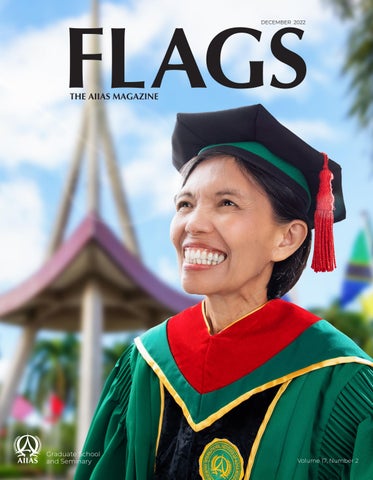
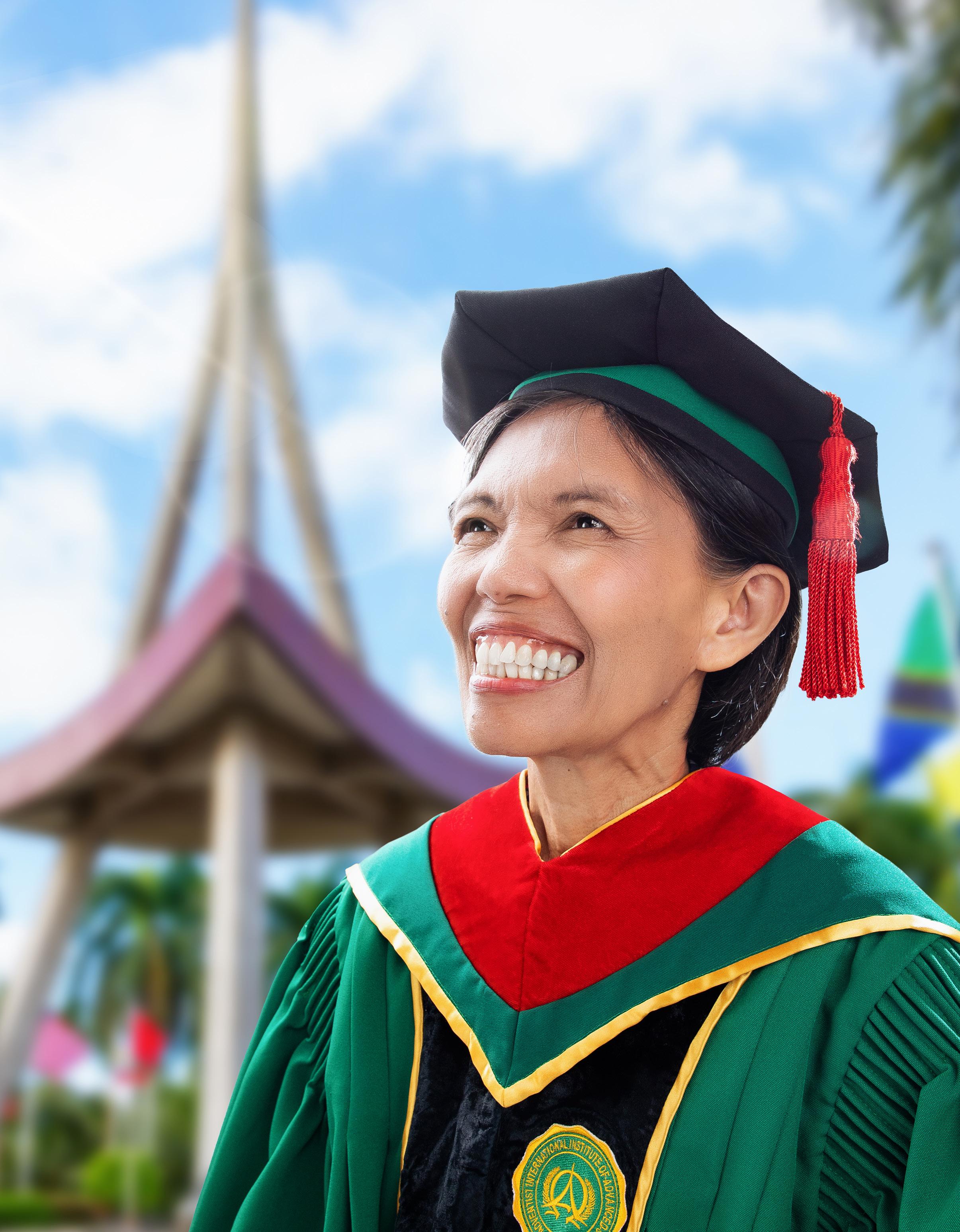
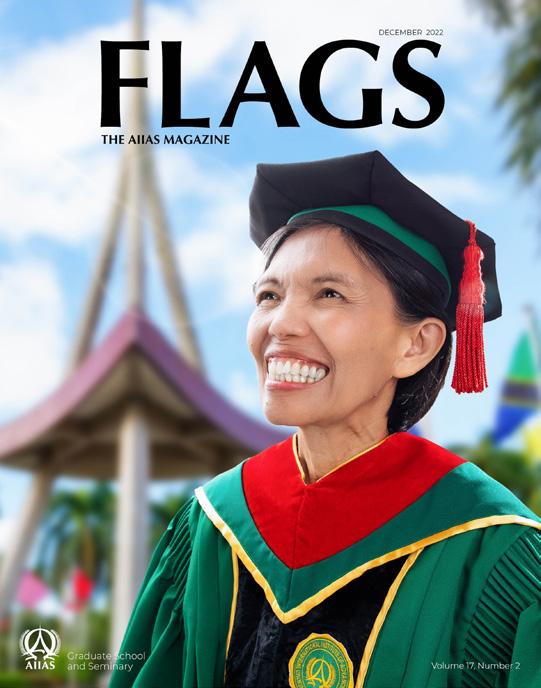
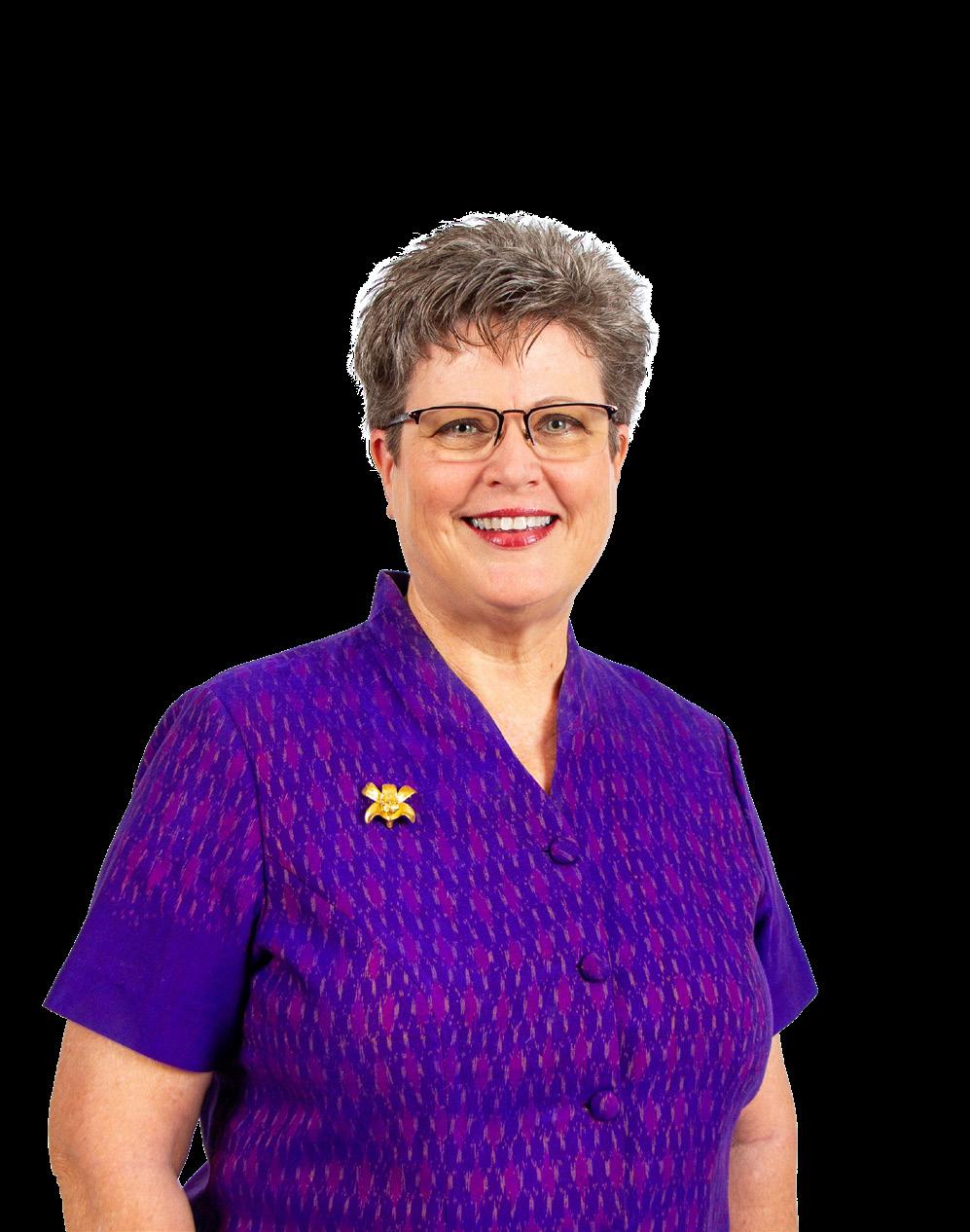
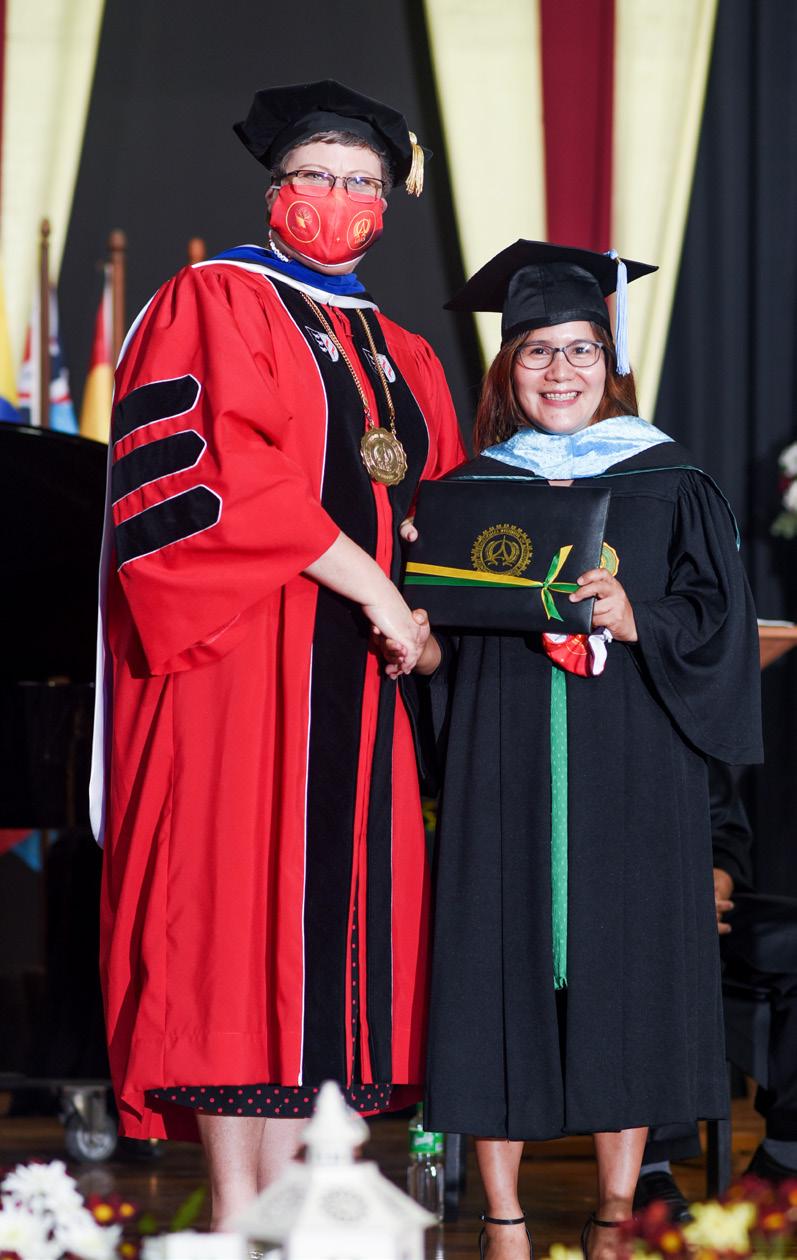
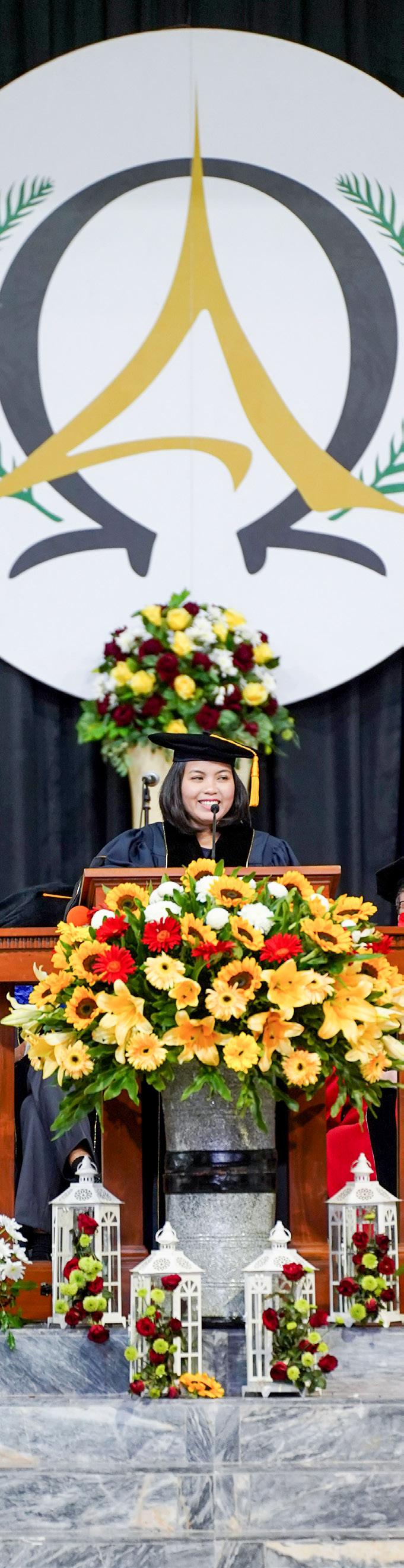
The vision of AIIAS is “A Christ-centered community of leaders with a heart for mission.” This issue of Flags is devoted to the influence of AIIAS on our alumni from around the globe. They answer the call to serve and make a difference worldwide. Master of Divinity alumna Mariju Pimentel represents all alumni who have emerged triumphant through both personal challenges and the rigorous academic experience at AIIAS, ready to serve and expectant for the joy of humble service that lies before them.
THE PRESIDENT’S BANNER: THE INFLUENCE OF AIIAS ALUMNI WORLDWIDE
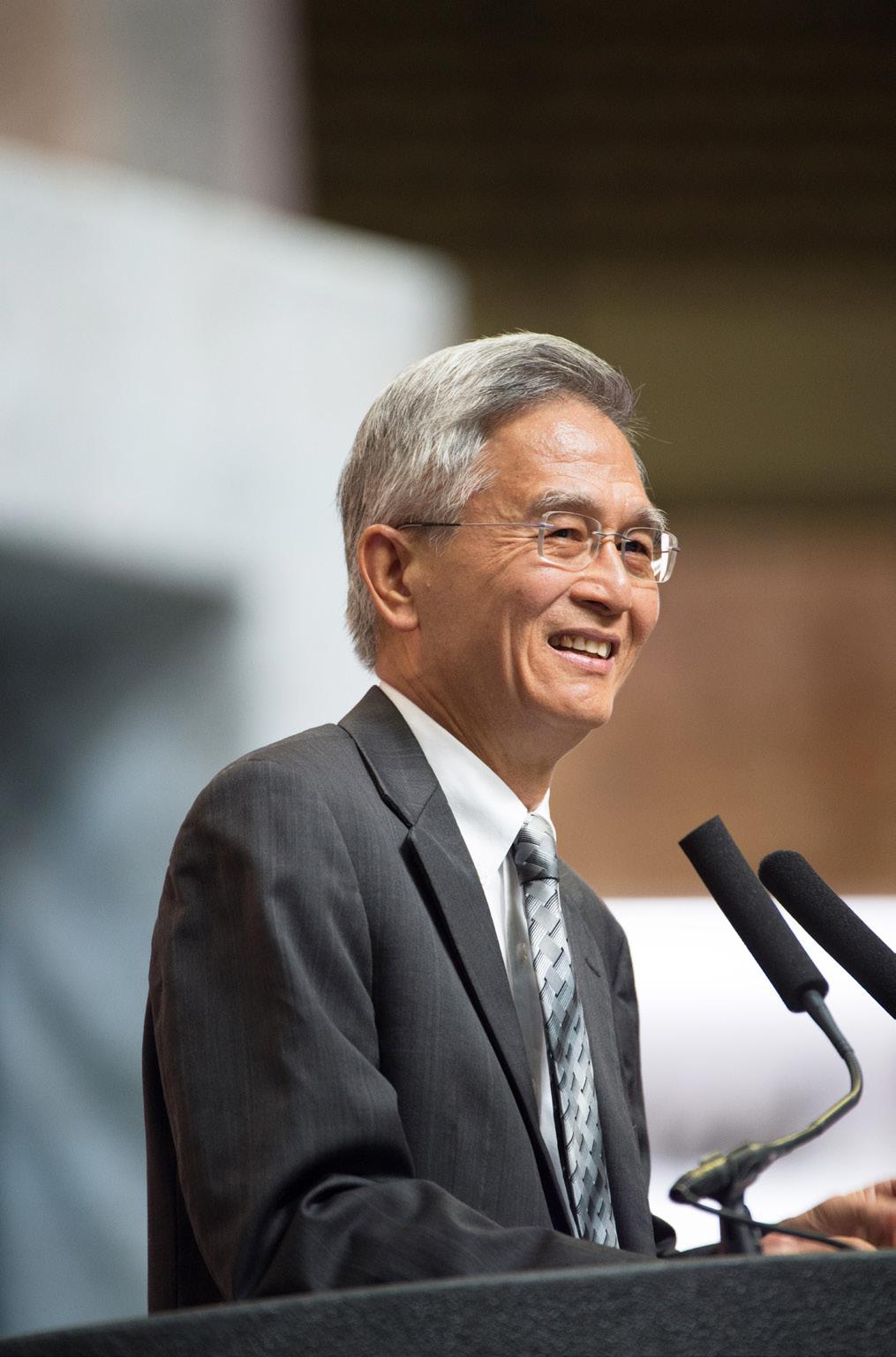
By Ginger Ketting-Weller
Until I got to AIIAS I had not seen Adventist education at its best.” This was the sincere testimony given by Dr. Paul Bhaggien, AIIAS alumnus and vice chancellor at North East Adventist University in India. He was describing the experience of committed Seventh-day Adventist faith fully integrated into rigorous academics and combined with a spiritually dedicated campus community. It’s a combination which should characterize the program of every Adventist educational institution.
The loyalty and love relationship between AIIAS alumni and their alma mater is remarkable to witness. I believe this is due to the experience that the alumni have had with their faculty, fellow students, and the staff who support them all at AIIAS. It’s the outcome of being exposed to the world within the microcosm of the academic community at AIIAS. It’s the fruit of relationships that transcend tribes, countries, races, and languages. It’s the product of this unique experience of marinating in the mission of the church while diverse people educate one another and the exchange of ideas stretches us all.
AIIAS truly lives out its current vision: “A Christ-centered community of leaders with a heart for mission.” The three key elements of the vision—“Christ-centered,” “leaders” and “mission”—are what keep all of us, including alumni, grounded and united in what really matters. The responsibility of leadership weighs heavily on AIIAS alumni, but the calling is compelling and meaningful. When we focus together on following Christ, on His commission to us to engage in mission, and on our obligations as leaders to serve in humility wherever He places us, it focuses our perspective. We come through AIIAS and go out to make a difference in this world; in doing so we learn to release divisive distractions and render true, stable and loving service within God’s church.
AIIAS alumni are the evidence of the institution’s continuing success in achieving its mission. Many AIIAS students arrive from positions of leadership in the field. They’re developed even further by their graduate studies to enter challenging situations and to lead with a worldview that has been expanded because of their graduate studies. As they come to see the diversity
of the world church, to hear the stories of differences and challenges in other fields, and to be educated by exposure to approaches and solutions they might not have encountered without AIIAS, their subsequent journeys speak of the ways in which AIIAS equips its people. AIIAS alumni serve all over the world, many in difficult settings. Our church leaders tell us that they depend on AIIAS alumni.
AIIAS alumni are also our most effective recruiters of new students because they share their experience with others. They send new students to benefit from the same experience that they appreciated so much. They are not easily able to return to their alma mater because their places of service circle the globe, but AIIAS always lives on in their hearts. Meeting up with another AIIAS alumnus always provides an instant bond.
In this issue of Flags, we focus on the influence of AIIAS alumni. We hope you’ll enjoy and be inspired by reading about what our alumni are doing. As our school song’s
Ginger Ketting-Weller, PhD, is the president of AIIAS.
Quiz # 1 What is one advantage to being 105 years old?
Answer There’s no peer pressure! If an Adventist lives to be 105, he or she is probably a beneficiary of the illustrious “Adventist Advantage.”
Where did the phrase “Adventist Advantage” come from?
The term “Adventist Advantage” did not originate with the Seventh-day Adventists. The phrase can be traced back to a Time magazine article on Seventh-day Adventists in Southern California who lived longer and had less incidence of lung disease (Time, October 28, 1966. “Cancer: Adventists’ Advantage”). The article explores factors leading to this remarkable phenomenon that has captured the attention of the medical world in its quest for longevity. Research on longevity has long been the holy grail of medicine. Since that first article, the term has spawned countless other articles and books extolling the Adventist lifestyle which contributes to better and longer life.
The “AIIAS Advantage”
Did you know that the “Adventist Advantage” has a first cousin in AIIAS? It’s called the “AIIAS
THE AIIAS ADVANTAGE
Advantage.” The phrase appeared for the first time in Flags in 2017, in reference to its academic programs being offered in a unique, multinational environment.
The “AIIAS Advantage” comes in many shapes and forms. Some are quantifiable; others are not. Some are more visceral than others. As of May 2022, the count was at more than 4,000 AIIAS graduates since the presidential decree that established AIIAS was signed in 1986. Those who
have lived and studied on the central campus have first-hand knowledge about life on campus. The inimitable experience students go through makes it a campus like no other.
By the time they graduate, full-time students will be able to describe what it is like to be beneficiaries of the full impact of the unbeatable “AIIAS Advantage.” They will have become culturally perceptive, globally connected, missionally enlightened, scholastically
challenged, administratively equipped, academically competent, and spiritually energized.
1. Culturally Perceptive
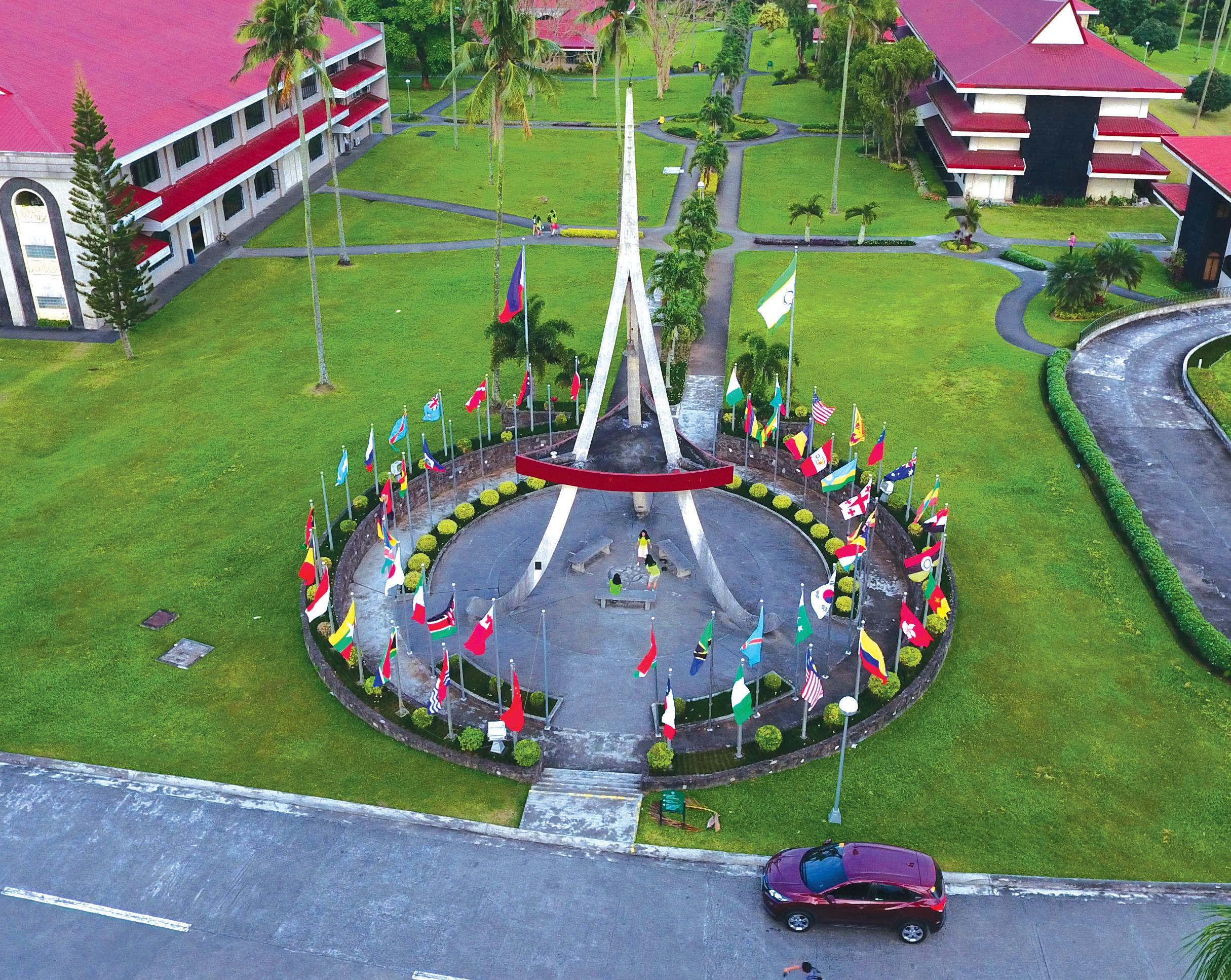
AIIAS is a cultural melting pot. Over the years, AIIAS students have come from some 137 countries (There are currently 193 countries in the United Nations). For a few years of their lives, full-time students on campus put aside their own
Josafat Zemleduch
Adventist Media Exchange (CC BY 4.0)
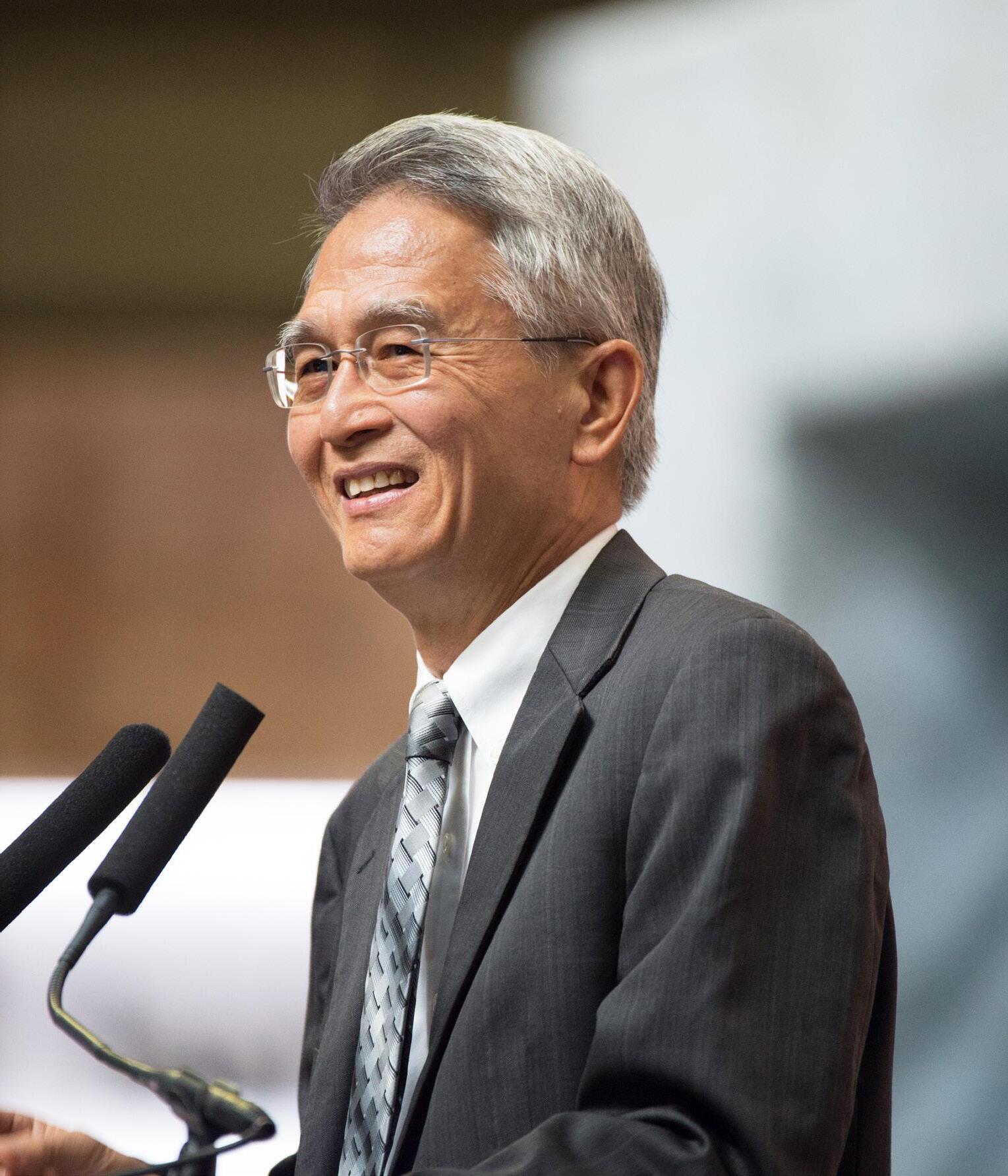
By G. T. Ng
culture and immerse themselves into the strange but fascinating world of multiculturalism.
It is not uncommon for new students to experience culture shock when they first arrive. They hear strange tongues being spoken and smell peculiar aromas from strange food. They wonder why the Chinese, Japanese, and the Koreans all use different types of chopsticks, and why some cultures are obsessive with punctuality, while others enjoy time rather than keeping it. They stand in utter amazement that social distancing is almost impossible for some people, because hugs and kisses are cultural imperatives.
Over the course of time, the inexplicable begins to make sense, and the unfathomable becomes comprehensible. They learn to suspend judgment when confronted with the idiosyncrasies of culture. They learn that to accept a friend’s culture is to embrace humanity. By and by, their limited horizons expand, and narrow perspectives broaden. They recognize not everything can be seen in black and white. When they set aside their monocultural lenses and make room for multiculturalism, they have become international citizens. That’s the “AIIAS Advantage.” One of the key factors affecting the process of enculturation is the oneof-a-kind AIIAS brand of campus
potluck. One time when I was the graduation speaker, after the service was over, my wife and I received more invitations to graduation celebrations than our stomachs could accommodate. We went to every single potluck, not necessarily to eat, but to cherish the unique AIIAS experience. Almost literally, AIIAS offers up the flavors of the world. Cultural integration happens in AIIAS to a greater degree than in other schools of higher learning.
At AIIAS, book knowledge without food knowledge is incomplete education. At first there may be dishes we don’t even care to sample, but over time, conversion takes place. When at long last you move from loathing to loving kimchi and durian, you have finally graduated from the school of cultural integration! That’s the “AIIAS Advantage.”
2. Globally Connected
Another “AIIAS Advantage” is international networking. AIIAS is probably one of the most socially divergent campuses in the world. There are really no strangers on the AIIAS campus. Strangers are simply friends we haven’t met yet. Because students come to AIIAS from everywhere and go out from AIIAS to everywhere, they have plenty of opportunities to associate with fellow students from other
parts of the world. The relationships that begin in AIIAS often blossom into lifelong friendships through cyberspace or in-person meetings. Such relationships are invaluable for career development and professional growth. In the meantime, spouses also develop precious and endearing relationships with other spouses. The exchange of contact information is only the beginning of continuing relationships spanning decades.
Connectivity extends even to the second generation, regardless of geographic location and national origin. Children of AIIAS students go to school with children of other AIIAS students. These children maintain their own international friendships, and express a desire to study at AIIAS when they grow up. For many families, AIIAS becomes a destination.
Recently I was in a town which I had never visited before, and didn’t know anyone there. Astonishingly, I met people who know people that I know, and with that, they welcomed me like a long-lost brother! The Adventist world is a small world! The AIIAS world is an Adventist world of global connectivity, linking every student, faculty, and staff member to every conceivable corner of planet earth. That’s the “AIIAS Advantage.”
3. Missionally Enlightened
Mission is paramount at AIIAS. The school is truly a microcosm of the international church, the end time movement of Revelation 10 to 14. After the Great Disappointment in 1844, those who remained were told to continue their Advent journey and to “prophesy again about many peoples, nations, tongues, and kings” (Rev. 10:11). The Seventh-day Adventist Church is what it is today because of obedience to that mission mandate. Praise God that AIIAS is an integral part of that precious heritage. It is at the front and center of mission.
AIIAS students are cognizant of the prophetic mission and message of the church. They have been taught to expand their parochial vision to a world vision. They understand the responsibility of not only evangelizing their countries of origin, but also other areas of the world where the gospel has not gone. AIIAS students are mindful of the immense challenge of the “10/40 Window” where two-thirds of the world’s population lives, and where the majority of people are Muslims, Hindus, and Buddhists.
Another neglected mission area has been urban mission. More than half of the world’s population lives in cities. About a million people join the Seventh-day Adventist church every
year, but the great majority of them come from islands and villages. The sprawling metropolises are sadly overlooked. Ellen White pleaded with the church for more than 20 years (9T, p. 97) to enter the city work in earnest, but most of her counsels fell on deaf ears.
These twin challenges of the “10/40 Window” and urban mission compel God’s people to refocus on mission and to strategically channel more human and financial resources to these destitute areas. T. M. Robinson said, “The saints of God are not going anywhere until the Three Angels messages go everywhere.” The battle cry for mission has always been “from everywhere to everywhere.” AIIAS serves as a conduit for students coming from everywhere and sends them out to everywhere. That’s the “AIIAS Advantage.”
4. Scholastically Challenged
Being a student means coming under the tutelage and mercies of professors. All previously held lofty positions are laid aside. All past accolades and achievements account for nothing. The dawning of the new reality of the “naked self” can be so painfully humiliating that it is not for the faint of heart. To some, it means a loss of self-worth. To others, it’s an identity crisis.
Writing a thesis or dissertation can be humiliating. To be scholastically challenged is to be intellectually humbled. D. L. Moody once said that “Moses spent the first 40 years thinking he was somebody. He spent the second forty years learning he was a nobody. He spent his third 40 years discovering what God can do with a nobody.” At AIIAS, students discover initially to their dismay they are nobodies. But then, at the end of their journey in AIIAS, they discover that God can use a nobody much better than a somebody.
Herein lies a leadership lesson for all: to be an effective leader means first and foremost to be humbled. I routinely tell doctoral students that getting a doctorate is a revelation of how much we don’t know. When we know that we don’t know, we assume a spirit of humility. Pathetic and arrogant are those who don’t know that they don’t know. To be humble is to be human again. Through the doctoral journey, being a student marks the beginning of transformation to personhood and sainthood.
While students learn humility, professors exhibit meekness by inviting students to their homes for meals or games. Students have told me time and time again how much they appreciated being invited to our home for meals and fellowship.
They even remember the dishes served on those occasions. In AIIAS it is not uncommon to see students and professors playing basketball or badminton together. That’s collegiality and humility of the first degree.
influencers on the international scene around the world.
Quiz #2 What’s the difference between influencer and influenza?
Answer The answer is, one wants to go viral, the other is already viral! AIIAS influencers go viral in the
While students go through the rigors of academics and learn humility along the way, they also learn humility from their caring and downto-earth professors. That’s the “AIIAS Advantage.”
5. Administratively Equipped
AIIAS is a school for leadership education and development, irrespective of the student’s major area of studies.
It is a well-known fact that AIIAS graduates are incredibly marketable.
They are sought after for leadership positions. AIIAS graduates are
Faculty have untold influence on their students. Some class lectures are forever etched in students’ memories, for better or for worse. It’s a humbling experience when my former students tell me to my face about statements I had made in class which I don’t recall ever making. Faculty cannot be too careful with what they teach in class.
international arena, not because they have influenza, but because they are agents of change. Wherever our graduates go, they showcase the vision of AIIAS, extol multiculturalism, and reinforce the mission and message of the Adventist Church. They are marketing executives that other schools can only dream about.
Let professors beware. It’s the privilege of faculty to influence change in students’ worldviews. My philosophy of teaching is to highly esteem every student in class. They are not “students” per se, but future leaders and colleagues in the making. They need to be treated with respect because someday they will be the ones voting our retirement!
Academic freedom notwithstanding, words negatively spoken may come back to haunt us. Words fitly spoken will be fondly cherished.
Students leave AIIAS academically, spiritually, and experientially prepared to serve wherever they are needed. That’s the “AIIAS Advantage.”
6. Academically Competent
AIIAS academic programs are fully accredited by their respective accrediting agencies in religion, education, business, and public health. The AIIAS curriculum is comparable to that of other Adventist universities. Admission standards are stringent, and degrees are
scrutinized. The process of thesis and dissertation writing is as rigorous as any.
AIIAS is known for holding high academic and ethical standards. Once an AIIAS student was caught cheating in an exam. When caught by the professor, he had the audacity to rationalize, “I am not cheating. I am doing cooperative learning!” Whether in the theological seminary or the graduate school, AIIAS keeps its students academically honest.
In ensuring academic competence, AIIAS fosters both qualitative and quantitative research. Faculty and students explore new perspectives and push the envelope on the frontiers of scholarship. The annual Theological Forum of the seminary and International Research Conference of the graduate school are occasions to cultivate and stimulate further research. AIIAS faculty and students write articles, book chapters, and books in peer reviewed journals. The 2,800-member Asian Qualitative Research
7. Spiritually Energized
The Philippines is home to 1.3 million Seventh-day Adventists, comparable to the 1.3 million in Zambia, or the 1.7 million in Brazil. The church in the Philippines is a kaleidoscope of robust educational, medical, and publishing institutions. It has myriads of initiatives and programs generated by departments such as youth and women’s ministries. The culture of voluntary lay participation in evangelism is particularly notable and admirable.
Being physically located in the Philippines, AIIAS has a front seat view of the robust church life in the country. AIIAS students routinely join various mission activities. On the macro level, they are inspired and energized by participating in mission trips, prison ministries, and evangelistic meetings.
On the micro level, the AIIAS campus is conducive to spiritual enrichment. The survey conducted by the Student Association in 2020 reveals two major
Association (AQRA) was founded and continues to be led by AIIAS faculty, students and alumni.
AIIAS graduates regularly participate in local and international academic and professional conferences. They stand shoulder to shoulder with fellow academics from other Adventist schools of higher learning. They present papers and give presentations with poise and confidence. They are academically competent. That’s the “AIIAS Advantage.”
resilience and resoluteness of the local people in the face of natural disasters such as typhoons and earthquakes. The Filipinos’ joy and gratitude amidst hardships and their unequivocal faith in God to provide shelter and security are awe-inspiring.
It is not uncommon for students to experience an epiphany of sorts when they listen to class lectures, sermons on Sabbath, or casual conversations with fellow students and professors. Those significant moments enhance their walk with God and cement their commitment to service. That’s the “AIIAS Advantage.”
Conclusion
The impact of AIIAS on students and their families has been incalculable scholastically, socially, and spiritually. Its impact on the world church has also been immeasurable. For many of us, AIIAS has touched our lives and left its footprints in our hearts, and we will never be the same.
events highlighted as effective by the students: week of prayer and mission outreach (July 2021 AIIAS Flags, p. 8). The former is an in-reach program, and the latter is outreach activity. Students believe both are major enhancers to spiritual growth. Anecdotal evidence suggests that the Prayer Garden is a favorite spot. It is the go-to place where they wrestle with the Lord in their spiritual journey.
International students often deepen in their spirituality because of the vibrant campus community. They are impressed by hearing daily morning and evening worships. They are captivated by the inconceivable
Yet, the existence of AIIAS is by no means inviolable. Its prosperity is contingent on God’s manifold mercies and providence. We believe the school was providentially established. Our prayer is that the Lord will make His face shine on this special institution, that it may continue to fulfill the missional purpose for which it was established. Along with 22 million Adventists, AIIAS will persevere until the gospel is preached to every inhabitant on planet earth, thus ushering in the glorious return of our Lord Jesus. Amen and amen.
THE AIIAS INFLU alumni feature
Icurrently serve as a Senior Program Director for Public Health Programs at Loma Linda University School of Public Health (LLUSPH). My responsibilities include overseeing the MPH in Health Education and Wellness Coaching as well as the DrPH programs that LLUSPH offers. It has been exciting to be a part of the curriculum development effort to ensure our programs remain relevant for our stakeholders, which of course, include our students, and make an impactful difference in the way our graduates will serve their communities.
How I Found out about AIIAS
At the time of our first mission appointment in the early 2000’s in Kazakhstan, Central Asia, my husband and I were working with multiple conferences in promoting the work of the health ministries department across the five nations that our union encompassed. I still remember the day when we received an email sent out to all health ministries departments across the world sharing the new online program opening up at a school called the Adventist International Institute of Advanced Studies. This really caught my attention, as at the time, (and I had researched!), there were no online programs available in any of our Adventist institutions across the world. My good friend Julia, who was working with us, and I both sent in an inquiry and that is how we “met” Dr. Dolf Oberholster, who at the time was in charge of the online learning, as well as Leni Casimiro, and the rest is history! AIIAS welcomed us warmly, and despite the fact we never set foot on campus, we felt we belonged to the AIIAS community.
My AIIAS Experience
Although the AIIAS program was new, I was impressed with how well organized it was. The faculty had understanding and respect for working students. They gently encouraged us to move forward in our courses despite the limited contact due to the “online”
asynchronous format. Many of our course experiences included applied practice skills, requiring us to seek out opportunities to engage with our own communities as we grew as health educators. This was not difficult for me, as this was the nature of my job. The online format of the degree allowed me to continue with my studies while maintaining a job and taking care of two young children, one of whom was born during my time in the program. During my coursework, I traveled all across Central Asia conducting Health Expos and workshops. I also helped train a number of regional leaders, many of whom continue to serve the church in greater capacity today.
I must commend AIIAS for being the pioneer in offering a format of education that has become ubiquitous in this new era. It was groundbreaking at the time, and I am honored that Julia and I became the first online graduates of the school.
The AIIAS Influence
The academic experience I received at AIIAS was instrumental in guiding my future. Completion of the degree coincided with our family moving to a new post in the Middle East, where I was invited to teach undergraduate students at Loma Linda University’s Saudi campus. There, I discovered my love for teaching. I later enrolled in a DrPH program and today have a solid connection with academia.
How AIIAS Shaped Me
The value of “service” emphasized during my
academic journey at AIIAS made an indelible impact on me, and continues to guide me in everything I do personally and professionally. While academics is essential, it is the character-building experience at AIIAS that makes the journey stand out.
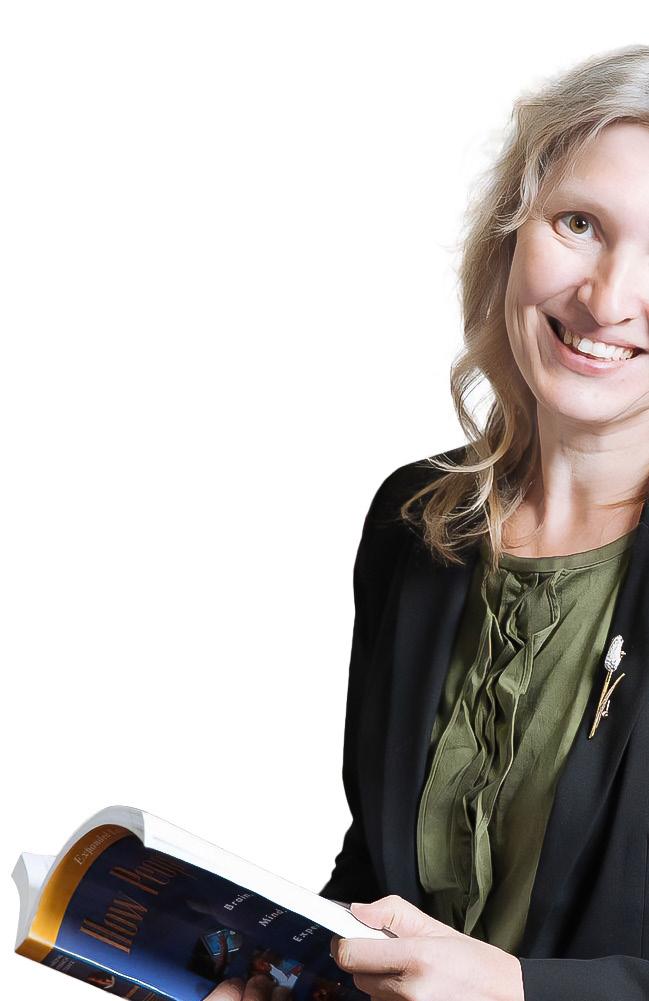
Anna Nelson, DrPH, (MPH, ’07), is the senior program director for public health programs at Loma Linda University School of Public Health (LLUSPH). Anna is a health educator who combines her passion for health and
Photo credit: Loma Linda University/Anna Nelson
INFLUENCE
Iam currently serving as an assistant professor in the theology department at Ethiopia Adventist College. My service here includes teaching, preaching, agriculture, and community service. I also serve in our Overseas Elementary School, teaching students Bible and English subjects.
How I Found out about AIIAS
I learned about AIIAS from my professors, friends, and coworkers at Ethiopia Adventist College who completed their graduate studies at AIIAS. Not only did they highly recommend AIIAS, but there was something in the way they lived and served and talked that I wanted to experience for myself. I knew I had to study there.
My AIIAS Experience
My experience at AIIAS was absolutely wonderful. Everything was so delightful from the moment of my arrival to the day of my departure. For me, AIIAS was a small taste of heaven. The reason is that AIIAS has a very diverse international student population, with individuals coming from many different countries and cultures, yet we all lived together as one family.
We worshiped together, studied together, ate together, laughed together, and cried together. There was always a spirit of selflessness that pervaded the campus, especially among the student population. Everyone came willing to learn and more than willing to help.
The AIIAS Influence
The AIIAS faculty and staff, from the president down to the daily laborers, were so caring and considerate that I never once felt like a stranger. My professors and lecturers were filled with wisdom, knowledge, and a heart for mission. Let me not forget that the AIIAS Leslie Hardinge Library is a strong tower of knowledge, and its staff are some of the most helpful and pleasant persons I have ever met.
How AIIAS Shaped Me
AIIAS has greatly impacted my life. It equipped me with knowledge and skills that will help me be a better professional; it also provided me with countless experiences that have helped me to become a better servant in the LORD’s vineyard. AIIAS has also helped me grow in personal spirituality, and inspired me to be more dedicated and passionate in the great mission of winning souls for Christ. AIIAS press on!
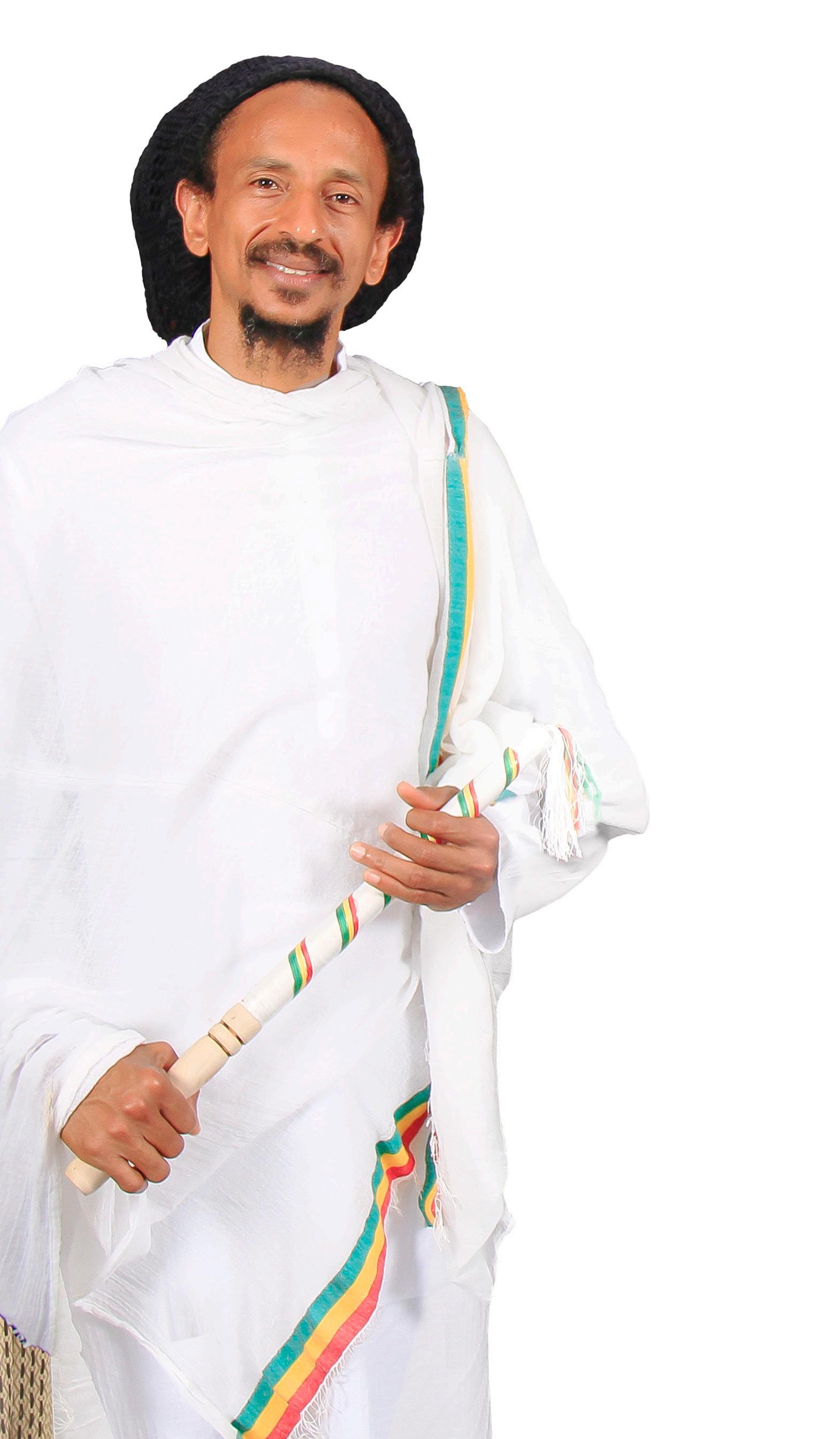
Stkesworth Shadeed, DMin, (DMin, ’20) is an assistant professor of theology at Ethiopia Adventist College in Shashamane, Ethiopia. He is from Ethiopia.
THE AIIAS INFLU
Iam serving as the president of Chinese Adventist Seminary (CAS). My major responsibilities are setting the direction of CAS in order to advance its mission, vision, and values; providing spiritual guidance; developing short term and long term strategic plans; executing, administering, and enforcing the policies and regulations for the operation and development of the school; developing a sound, efficient administrative structure for CAS so that all faculty and staff may be properly assigned and supervised; secure sufficient funds for the operation and development of the school; acting as the medium of communication from the Board of Governors to the faculty and staff and vice versa; developing effective channels of communication among faculty, staff, and students of CAS; planning for regular dissemination of information about CAS to faculty staff, and students; serving as the director for accreditations and affiliations; conferring degrees and diplomas upon recommendation from the appropriate academic bodies; being an ex officio member of most committees of CAS and calling
and presiding at such meetings as necessary; and exercising discretionary powers in the execution of committee actions and in all other responsibilities.
My AIIAS Experience
AIIAS was introduced to me by a senior pastor who visited my church many years ago. I came to AIIAS to take a Master of Divinity degree, and eventually did my Doctor of Ministry (DMin) in Church Leadership.
Studying at AIIAS was an eye-opening and life-changing experience. It was a time of personal spiritual discovery as well as growth in the knowledge of God and His Word, and in my relationship with Him.
The AIIAS Influence
AIIAS equipped me with the Word of God, theology, and sound doctrines. It helped me to focus on God’s mission and provided a loving, spiritual environment which encouraged me to draw closer to God and to be sensitive to others’ needs. AIIAS taught me how to equip our seminary students with God’s love and truth.
The Spiritual Leadership course of the DMin program changed my concept of church leadership. I desire to apply Jesus’ servant leadership to my ministry.
“Shaping souls for Jesus through biblical training at the AIIAS Seminary has an impact that lingers for a lifetime.”
How AIIAS Shaped Me
AIIAS has warm-hearted, missionminded administrators, faculty, and staff. They are a rich source of wisdom for students, ministers, and aspiring Christian leaders. The biblical teaching of educators in the seminary deepened my sense of need for the Savior. The doctrines and principles of the gospel as found in the scriptures and the words of the prophets are taught in a way that leads to understanding and edification. Christ-like examples in the lives of the administrators, faculty and staff deeply influenced me, and those experiences have shaped who I am today.
Hope Zhang, DMin, (MDiv, ’99; DMin, ’14), is the president of Chinese Adventist Seminary (CAS) in Hong Kong. She is from China.
Author’s photograph not available at the time of publication.
INFLUENCE
THE AIIAS INFLU
Iam the director of education for the General Conference of Seventh-day Adventists. In 2010, I was elected as the first woman to hold the position. My responsibilities include oversight of the worldwide educational work of the Seventh-day Adventist Church. That oversight is primarily through the Accrediting Association for Seventh-day Adventist Schools, Colleges and Universities (AAA). There are 9,589 Adventist schools, 111,476 teachers, and 2,064,741 students.
I have served as the General Conference liaison for higher education for the East-Central African, North American, South Pacific, Trans-European, South-Africa Indian Ocean, and West-Central Africa Divisions. By virtue of my position, I chair the Academic Committee of the boards of AIIAS, Andrews University, Loma Linda University, and the Adventist University of Africa. Right now, I am focused on supporting our schools in Ukraine.
In the area of publications, I am the editor-in-chief of Dialogue journal and senior consultant for The Journal of Adventist Education. These two publications extend the philosophy of Adventist education to university students who study at public campuses and educators, respectively.
Of course, I do not do all of this alone! I have four very capable associate directors, three of whom have worked at AIIAS: Dr. Julian Melgosa (former AIIAS president and professor), Dr. John Wesley Taylor (former AIIAS department chair, associate dean, director of distance learning and professor), and Dr. Richard Sabuin (former professor and dean). Even the fourth associate, Dr. Hudson Kibuuka, has been a long-time AIIAS board member.
INFLUENCE
How I Found out about AIIAS
I was a theology student at Newbold College in England in 1978 when I heard about a new seminary affiliated with Andrews University. I applied to what then was called the Seventh-day Adventist Theological Seminary, Far East (today a part of AIIAS). When I arrived at the Puting Kahoy campus (now home to the Adventist University of the Philippines), I discovered that I was the only one who had not completed a bachelor’s degree (and the only woman). The registrar enrolled me in a Bachelor of Theology (BTh), but I took graduate-level theology courses with all the seminarians.
My AIIAS Experience
My time at AIIAS was a great experience academically, spiritually, and culturally! Classes were small then. I was the only student for a few courses that were required for the BTh. Our Biblical Greek professor (John Jones) paid me to grade the homework assignments even though my fellow students were in the master’s degree program. Thank you, Dr. Jones, for your confidence in me!
The AIIAS Influence
My job takes me worldwide to evaluate universities and conduct faculty development. I have been delighted to reunite with old classmates, now colleagues in education or ministry in various countries. The social capital and cultural insight developed at AIIAS are invaluable in our shared work.
How AIIAS Shaped Me
Public Evangelism was a required course. For several weeks during the Metro Manila evangelistic crusade, the other seminarians and I stayed in the dorms on the Philippine Union College (PUC) campus, then in Baesa, Caloocan City. We worked long, hard days. The humid heat at the end of the typhoon season was stifling day and night.
One night, one of our classmates called for a meeting. We filed off the bus that shuttled us between the tent meeting site and Baesa and sat in the dark on the grass outside the dormitories. Palms rustled overhead, and the stars were
dim and distant. “This is too much!” the first voice growled into the darkness. Another classmate complained, “I’ve run dozens of evangelistic meetings in my country—I don’t need to write 25 sermons in English just to satisfy a course requirement!” Another added, “It’s hot, the food is terrible, we’re not getting enough sleep—we don’t even get to see our families!” Another one muttered, “I’m going to change our plane tickets and take my family back home. I don’t speak Tagalog—this is a waste of my time.”
How could these men talk this way? These were men of God, pastors, and leaders in the church in their own countries! I hadn’t written ANY sermons before, much less the required 25 on the fundamental doctrines, and I was tired and frustrated, too. But I looked up to and respected these men. Each bitter complaint was a visceral blow to me. “If this is how men of God are, then there can be no God!” I concluded to myself.
I was distraught, but said nothing to the PUC students who had become my roommates while I was in Manila. I said nothing to them the next night. What was there to say? Instead, I rehearsed to myself, “There can be no God if these are men of God.” On the third night, my Thai roommate reached down from her bunk above mine. She thrust an open book under my mosquito net. “Here,” she said, “read this.” I was astounded to read, “God often permits those in whom we place confidence to fail us, in order that we learn the folly of trusting in man and making flesh our arm. Let us trust fully, humbly, unselfishly in God.” (Ellen G. White, Ministry of Healing, p. 486).
From that experience, I learned one of the most important lessons in my life. Only God is perfect. Family, friends, and respected colleagues may disappoint. But no disappointment in others or myself has ever again shaken my trust in God.
Lisa Beardsley-Hardy, PhD, (BTh, ’80), is the director of education for the Seventh-day Adventist Church world headquarters. She is from Finland.
THE AIIAS INFLU
Ihave been serving in Taiwan Adventist College for the past four years. Here, I can serve in a great capacity to train up the next generation.
“There are a lot of challenges, but by God’s grace, all those challenges are met and overcome one by one.”
After I graduated from my Theology degree at Hong Kong Adventist College, our Union arranged for pastors to upgrade to the Master of Ministry (MMin) program at the AIIAS extension site in Taiwan.
My AIIAS Experience
In the year 2000, my wife and I were to attend intensive classes during the summer for my final three MMin courses. We decided that it was best to finish them on the AIIAS campus.
I remember feeling that I didn’t just want to study—I wanted to develop my relationship with God. This realization brought me to love the AIIAS Prayer Garden. Every day, my wife and I would get up at 4:15 a.m. and proceed to the Prayer Garden. From 4:30 in the morning, we prayed individually for 45 minutes and then spent another 45 minutes reading the Bible. During one of our prayer sessions, I mentioned to her that I’d like to see three converts during our two-month stay in the Philippines. We prayed to God every day, asking that He would lead us to convert three souls.
By God’s miraculous providence, I was introduced to three seekers who wanted to receive Bible studies. We would have our Bible study sessions every Friday night and go out to visit the nearby villages or prison every Saturday afternoon to share the gospel. Just before we finished our coursework at AIIAS, we finished the Bible study sessions, and the candidates accepted to join the church through baptism. I had my friends arrange their baptism with the pastor because I was not able to stay in the Philippines until that day. Years later, one of those baptismal candidates was hired to work in the same college where I served. We became colleagues.
There were three classes which helped a lot in my ministry. The first was Dynamic Sermon Design, with Dr. G. T. Ng. He taught us inductive preaching and I learned a lot from him. To conclude our class, each student was required to preach a sermon using the
inductive method. During my turn, I made sure to use plenty of illustrations. When I finished, my professor said that I used a preaching style that was preached like Billy Graham, and it sounded like an evangelistic sermon. This commendation helped me much later in all of my preaching work. I used this method when I became an evangelist. Now, I teach a similar class at our college.
The second class that stands out was on church growth. I applied the principles I learned when I worked as a pastor in Hong Kong. Later, I was given the opportunity to do the Doctor of Ministry program in church growth and evangelism at Andrews University. By God’s grace, my wife and I were able to grow our church more than all the churches in the conference for three years in a row, resulting in the highest number of baptisms in the past four decades.
The third one that really helped me was an evangelism class taught by Dr. Carlos Martin. He came to my church and conducted a series of evangelistic meetings. During one of the afternoons, he asked me to preach his sermon. Although I was scared, he trained and encouraged me until I was able to do it. The congregation accepted the message and shared positive comments in return. A month later, I conducted my first evangelistic series.
That was 23 years ago, and I have conducted a total of 109 evangelistic meetings. Without the training that our class got from our coursework at AIIAS, I would not have become an evangelist. God led me to become an evangelist for 7 years, traveling around the world primarily to the Chinese population in different cities. After that, I was called to serve at Taiwan Adventist College as the academic dean. There, God provided me with a platform to train more than 230 students to become evangelists.
I am amazed by God’s leading. In the three years before the pandemic, we were able to conduct 348 evangelistic series, resulting in the baptism of 3,348 souls. That was quite a record for the college. We never had that many baptisms since it began.
How AIIAS Shaped Me
AIIAS laid the foundation for me through courses leading to my success. From the subjects taught by outstanding professors, the principles from the Bible and the writings of Ellen White, I studied and applied them to my ministry.
INFLUENCE
I have many responsibilities now in my role as president. I also still teach classes. AIIAS provided me with the foundation for the subjects I teach. One of my current roles is to raise funds for the school. Our evangelistic efforts inspire donors, and they continue to support us and provide scholarships for our students.
When I worked as an evangelist for seven years, I also had to fundraise so that my wife and I, and one young Bible worker on the team could plant Chinese Adventist churches worldwide.
When approaching donors who could provide us with financial means, I also had to make sure that I would deliver what I promised. I knew that donors would prefer to give to projects that have results.
Later, when I worked at the college, I still needed to raise funds. On average, I told donors that they could support a theology student who would conduct an evangelistic series every year, and this would produce ten baptisms a year. I emphasized that they would get their money’s worth as the students proceeded with their studies. Donors were inspired, knowing that the funding they provided went into training effective church workers. I also accompanied the students to many evangelistic meetings. Donors were inspired by regular stories of effective evangelism, and they continued to support our students.
My motto is “success without successes is failure.” As a Chinese evangelist, no matter how successful I was in evangelism, I will eventually get older, retire, and will no longer be able to preach. When I look back at my life and see that there were no successes by others, even if I was very successful, I would consider this to be a failure. Now, I strive to pass on my knowledge to the younger generation, and AIIAS laid the foundation for me as an educator.
Even if I didn’t see it directly in the lessons or intensive courses, I was taught and influenced by the integrity and character of my professors. Personal time with God in the quietness of the morning also helped shape my character. AIIAS provided a place for my wife and me to meditate, study the Word, and become the leaders that we are today.
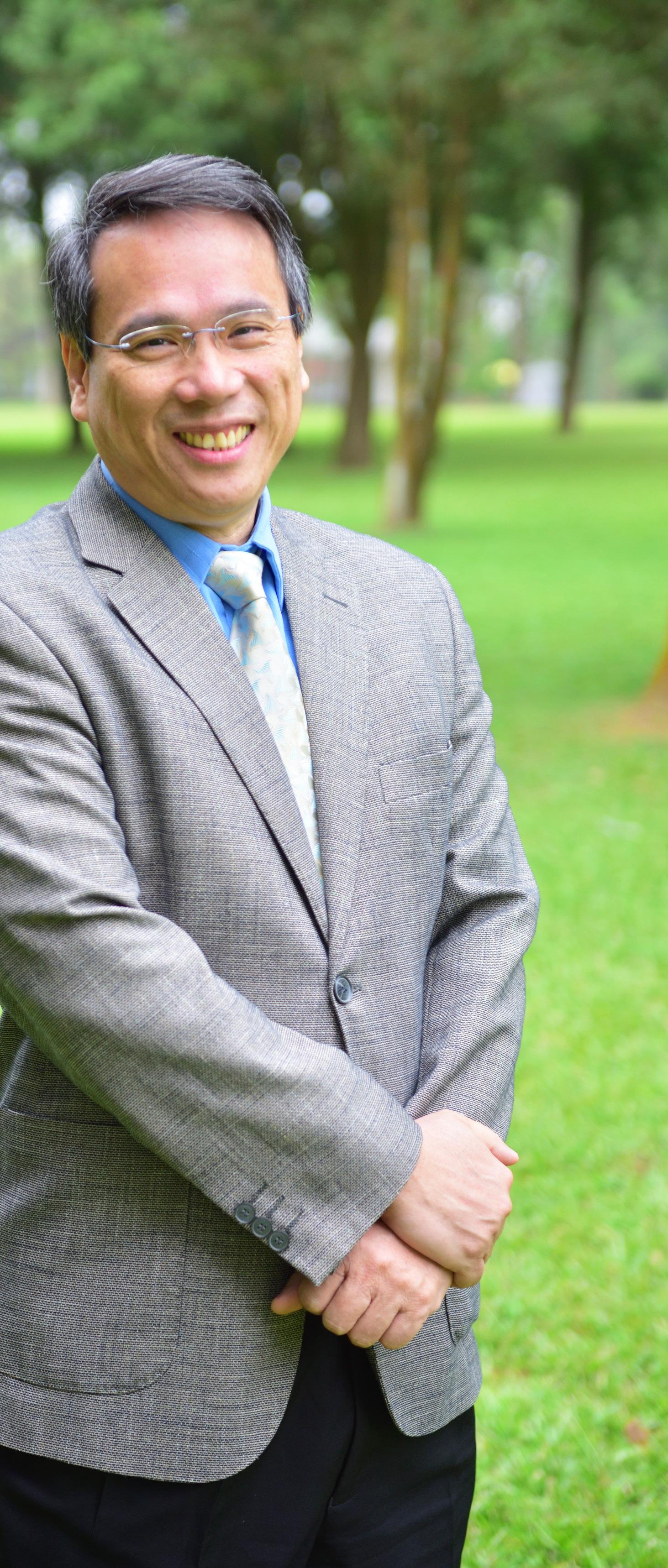
Terry Man-Yuen Tsui, DMin, PhD, (MMin, ’00), is the president of Taiwan Adventist College. He is from Hong Kong.
By Diói Cruz
Three decades ago, in his classic book Information Anxiety, Richard Wurman (1989) affirmed that “a weekday edition of The New York Times contains more information than the average person was likely to come across in a lifetime in seventeenth-century England” (p. 32).
Today, we swim in a sea of information, which can easily drown us in a deep and bottomless pit of worthless data. And if facts are not enough, fake information is available for all tastes and preferences, opening the way to unbridled hunger for more evidence in an uncontrolled trend of “infobesity” and “infoxication.”
The information we consume shapes our character, outlines the viewpoints we hold and articulate, and flavors our worldview. This is not entirely a problem. “God designs that His servants shall possess more intelligence and clearer discernment than the worldling, and He is displeased with those who are too careless or too indolent to become efficient, well-informed workers” (White, 1977, p. 602). But we do need to be careful of what and how much we consume.
Fortunately, we don’t have to know about everything—we just need to be able to find everything we need through a discerning mind. Discernment is different from intelligence, sophistication, and erudition. An intelligent person is quick and insightful. An erudite person has great academic knowledge, but the discerning person, in turn, perceives things that are only clear to those who see life from certain principles. The apostle Paul clarifies,
spiritual life DISCERNMENT
DISCERNMENT
The world is unprincipled. It’s dog-eat-dog out there!
The world doesn’t fight fair. But we don’t live or fight our battles that way—never have and never will. The tools of our trade aren’t for marketing or manipulation, but they are for demolishing that entire massively corrupt culture. We use our powerful God-tools for smashing warped philosophies, tearing down barriers erected against the truth of God, fitting every loose thought and emotion and impulse into the structure of life shaped by Christ. Our tools are ready at hand for clearing the ground of every obstruction and building lives of obedience into maturity. (2 Cor. 10:3-5, The Message)
Jesus demonstrated discernment in all His actions and words. When preaching, He spoke kindly, using “captivating words,” which astonished everyone (Luke 4:22). Jesus’ commitment to His mission resulted from a discerning mind. He made
preaching the good news His career (Luke 4:43). He made decisions that enabled Him to stay focused on His ministry until it was finished. He wisely decided to keep His life simple and surrendered His time, talents, resources, and energy to this work (Luke 9:58).
Discerning Christians speak and act in a way that pleases God. They choose words that encourage others (Prov. 11:12, 13). They are “slow to anger” (Jas. 1:19), and they “walk uprightly,” that is, they make good decisions throughout their life (Prov. 15:21). In other words, discernment is not merely a personal quality you are born with, nor some knowledge you learn in the classroom, but a gift you develop and refine in your daily relationship with God, leading you through a heart change. You’ll know it’s happening to you when you move from being self-centered to being other-centered. You will become God-centered in motivation and committed to empowering others.
In a post-pandemic world of conflicts and wars, our minds are still the real battlefield: it is our thinking that can lead us to defeat, as well as to victory. Despite the mind being so decisive in the direction of our life, however, it is largely neglected by most of us. Since we don’t see or touch what we think, we risk inadvertently welcoming and harboring highly destructive thoughts.
By deciding to “fit every loose thought, emotion, and impulse into the structure of life shaped by Christ,” (2 Cor. 10:5, The Message) you eliminate the enemy’s lies, arguments, theories, reasoning, and all evil devices that are intended to contradict or
weaken the Word of God in your heart. “The Devil fights from behind barricades of linguistic complexity, but a war of words will be won by those armed only with simplistic truths” (Cavanagh, 2022).
Discernment is conditioning yourself to always reflect on the thoughts that might cross your mind, weighing them against the Word of God so you can reject or accept them. Our responsibility is not to allow wrong thoughts to lead us to wrong feelings since they can lead us to decisions contrary to God’s plans for our lives.
Does this seem difficult? This kind of discernment is perfectly possible if you maintain intimacy with the Word of God. It will have a “hygienic effect” on your mind and will strengthen it. Start today to discipline yourself not to automatically accept just any information or thought, but to select only those that build you up, so you can “grow in the grace and knowledge of our Lord and Savior Jesus Christ” (2 Pet. 3:18).
Cited Works
Cavanagh, D. (2022). Goodreads quotes. Retrieved 15 November 2022, from https://www.goodreads.com/ quotes/1460923-the-devil-fights-from-behindbarricades-of-linguistic-complexity-but
White, E. G. (1977). Mind, character, and personality, (Vol. 2). Ellen G. White Estate.
Wurman, R. S. (1989). Information anxiety: What to do when information doesn’t tell you what you need to know. Bantam Books.
Diói Cruz, DMin, is a faculty member in the AIIAS Seminary. He is from Brazil.
READY TO SERVE FOR GOD’S GLORY
By Ajalon Mañalac and Cloe Diane Nahine
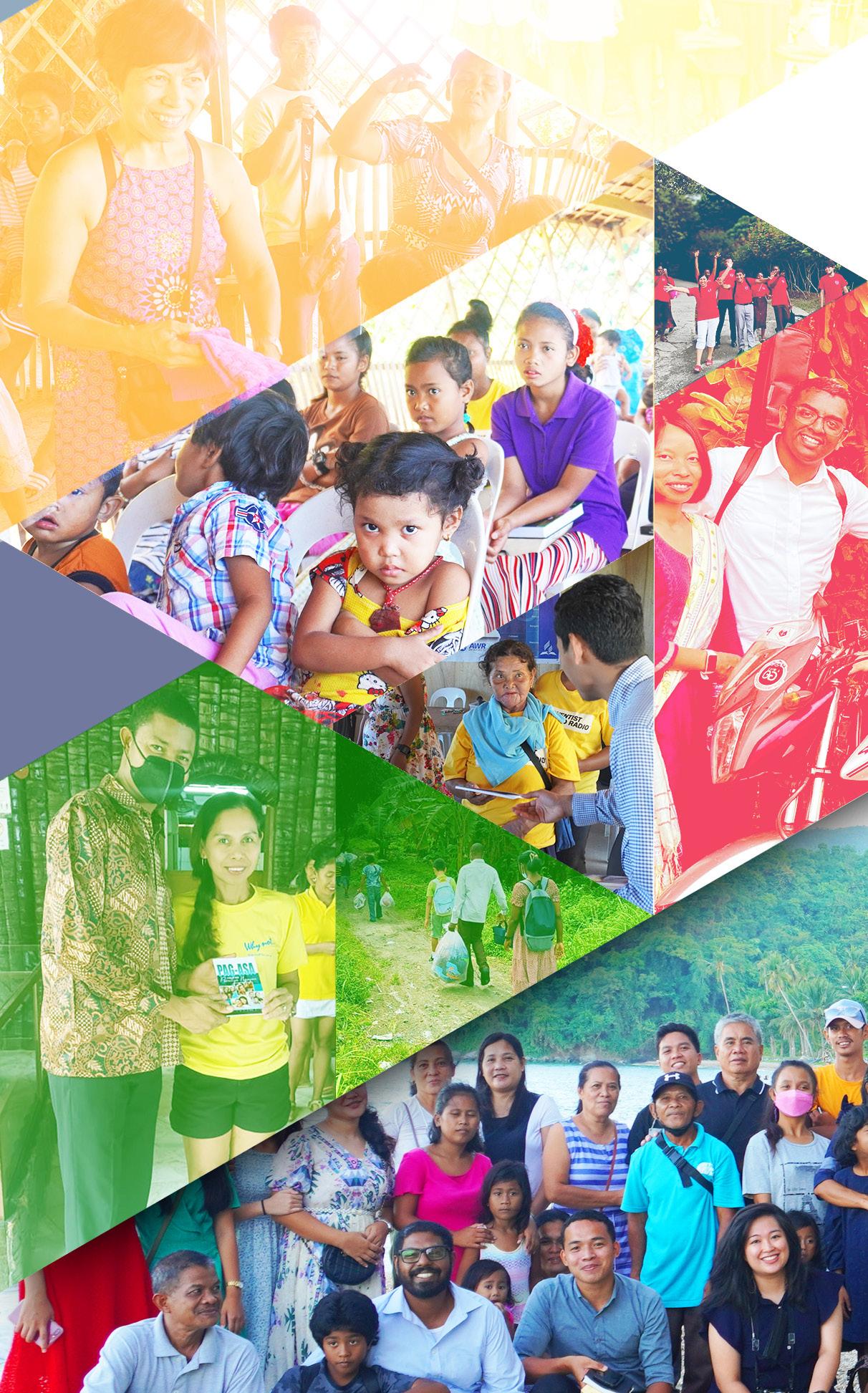
AIIAS has been true to its mission statement when it comes to service. The Southern Asia-Pacific Division (SSD) has partnered with AIIAS on a three-part mission trip organized by the AIIAS Student Association for the academic year 2021-2022.
An evangelistic campaign, which began on November 13, 2021, was spearheaded by SSD, the Adventist World Radio, and Seventh-day Adventist world church president, Elder Ted Wilson. This campaign resulted in the baptism of around 2,000 people across the island of Mindoro.
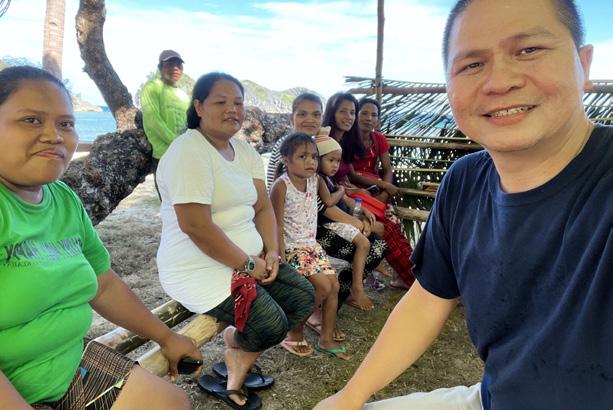
As part of the plan to follow up, nurture, and mature the faith of the newly baptized members, AIIAS student mission trips were organized on March 25-27, May 27-29, and July 29-31, 2022. The central goal of these mission trips was to “Adopt a Church” in Puerto Galera, Oriental Mindoro where there are more or less 250 individuals living in the vicinity. The students served the Adventist churches in Bihiya, Calumpang, Aninoan, Minolo, and Balatero towns.
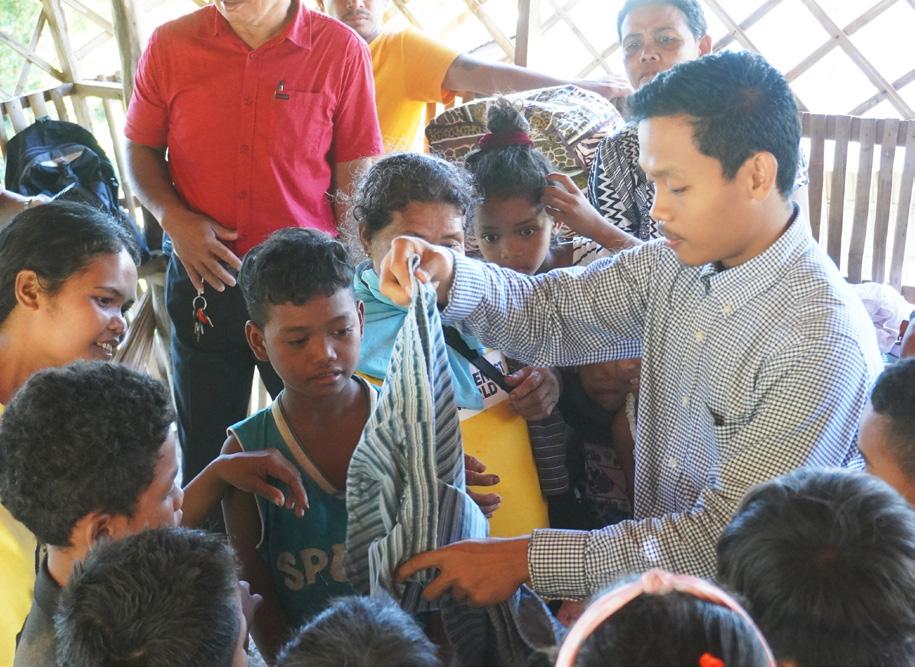
Welcomed by the members of these local churches, the students delivered both goods and the good news of God’s love, mercy, and
salvation. In addition to delivering donations of clothing and personal necessities, the students also handed out gospel tracts translated into the local language to the communities.
The AIIAS students who participated in these mission trips were from different parts of the globe, but they showed unity and resilience as they served. There were obstacles during the trip, but they all felt blessed as they shared.
During the third trip, the students were also privileged to be joined by Dr. Jeffrey O. Brown, associate editor of Ministry Magazine and associate ministerial secretary of the Adventist Church world headquarters. Dr. Brown spent several days in the Philippines, as he was invited to speak for the AIIAS Week of Prayer. He took the opportunity to participate with us in bringing the Lord’s ministry to the people of Mindoro.
Service for the Lord is a blessing experienced firsthand, and the students were beyond blessed to have been part of this purposeful trip. On this mission trip, friendships were formed, the gospel was shared, and lives were changed. Through mission trips like this, AIIAS students are further inspired to continue serving and advancing Christ’s ministry, not only in the Philippines but also in other parts of the world, until Christ returns.
“The unexpected and long jeepney ride was never boring after we sang ‘When We All Get Together With the Lord.’”
Tatiana Roa Perdomo, MA Education student from Colombia, Trip 1, March 25-27, 2022
“We went through the most unforgettable experience of climbing the muddy mountain during a torrential downpour while carrying musical instruments. We engaged the church members to take part in activities such as coloring pages, a dynamic sabbath school discussion, and a musical concert. It’s so sweet to be involved in God’s mission with the whole family. This mission trip is not only a blessing for those we served but also for those who participated in it.”
Osee Fumakwa, MDiv student from D. R. Congo, Trip 2, May 27-29, 2022
It was a very significant time to personally be able to meet the Filipino church members who had an impressive desire for the Word of God. I saw how they endured suffering and poverty throughout their dayto-day life. Even though many had stopped attending the Sabbath worship service, there were still some who remained faithful Adventists. I was delighted to see the growth of the church as more attendees got baptized. By participating in this mission trip, I was able to do something, no matter how little, to support them.
Also, it was my son’s first mission trip and he was very excited. My son and I have never had an opportunity to join a group for a public mission trip, so I wanted him to observe and experience first-hand what it was like to serve God by serving the people who are in need.
The rest of our group mates were families with children of different ages. We relished getting to know more about one another during our three-day trip. We fellowshipped and formed a stronger bond as the days went by. My son was able to interact with them and observe what other children contributed to the mission trip through their different talents. We also enjoyed hosting the activities for the local community and leading the ministry in the local church. We marveled at the beautiful view of the ocean and the nearby beach. Spending our vacation time doing something meaningful was memorable.
I encourage all AIIAS students to go on these mission trips. The people in the Philippines are hungry for the gospel and they need us to motivate their faith. These mission trips also expose our children to mission service, and we pray they will grow in zeal to use their talents for the Lord’s service.
Yun Xia, PhD in Religion student from China, Trip 3, July 29-31, 2022
Ajalon Mañalac is a Master of Arts in Church Ministry student of AIIAS Seminary. He is from the Philippines.
Cloe Diane Nahine is a Master of Arts in Education student of AIIAS Graduate School. She is from the Philippines.
HOW A SIMPLE QUESTION CREATED AN ASSOCIATION
By Megumi Flores
Libraries were among the public service entities greatly affected by the pandemic. They had to close their doors, stop the circulation desk, and empty all spaces for patrons. Academic libraries at schools had to shut down since the schools themselves were mandated to be closed.
Because of this situation, librarians had to innovate and come up with creative ways of serving their faculty and students. Unfortunately, for some libraries, coping with this drastic change was an impossibility, and they remained closed and ceased to provide any services for their clients.
At AIIAS, however, the librarians developed effective strategies to continue serving their patrons during the quarantine period. As they did so, they also thought of their sister institutions, who were struggling with the realities of the shutdown. AIIAS librarians decided to schedule an online meeting with their fellow librarians from Adventist institutions in the Philippines to ask how they were doing during the lockdown. They also wanted to share their newly-developed services and the health protocols they had implemented. The invitation was extended to other Adventist librarians working in government and private institutions. Over thirty librarians attended the meeting, sharing their experiences, challenges, solutions, newly-developed services, and plans during the pandemic. Towards the end of the session, many of the attendees expressed their desire to have an association of Adventist librarians in the country.
On July 22, 2020, a week after the first meeting, the Association of Adventist Filipino Librarians (AAFL) was born! This association is a testimony of how the pandemic became a blessing to libraries. AAFL was able to support the librarians during this difficult time by conducting webinars, sharing best practices and testimonies, holding an online acquaintance event, and producing a newsletter. They also spent a couple of sessions planning and identifying the goals and direction of the association.
The AIIAS librarians, led by Megumi Flores and Lyra Ilagan, served as the facilitators of the group. They decided to spend some time getting to know the group members and studied how they could establish a strong foundation in running the association. The first year after its organization, the group became unproductive because of heightened pandemic restrictions and adjustments to doing library services in a new way. The association convened again on July 21, 2021, with renewed spirit and energy and on March 30, 2022, they selected their officers through online voting. The set of founding officers are as follows: Megumi Flores, president, Glydel Franche, secretary (Naga View Adventist College), Cyrus Bobier, treasurer (Adventist University of the Philippines), and Lyra Ilagan, newsletter editor.
At the very first meeting, the attendees longed for a family of professionals to support them. This is the reason that the mission of AAFL is “to support Adventist Filipino librarians in their practice of the profession, engaging them in continuous learning, communication, and collaboration.” To achieve this, there are several goals they have set. First, the association is geared to provide professional growth and mentorship opportunities for its members because a number of the members are working as “one-man” librarians in their schools. Other members are new to their posts or new in library leadership, and some librarians, after graduating from library schools, are not able to attend seminars and conferences. Secondly, there are librarians who have become successful in implementing specific projects in their libraries and others have done research in librarianship. AAFL wants to be a platform to share their success stories and research findings. Lastly, the association wanted to create
a consortium where resources could be shared across institutions.
Most of the member schools felt the need for online resources during the pandemic and they are hopeful that their colleges and universities will engage in this collaborative project.
As AAFL commenced its activities as a formally organized association this year, there are still several things they plan to explore in the future. The group wants to affiliate AAFL with the Association of Seventh-day Adventist Librarians (ASDAL) and be part of this larger association of Adventist librarians. Second, they want to extend this association to librarians within the Southern-Asia Pacific Division (SSD) of Seventh-day Adventists, and third, they want to seek accreditation from a Philippine government agency to become a Continuing Professional Development (CPD) provider. Earning CPD credits is a requirement for license renewal among professionals in the country.
The AIIAS librarians did not expect that their simple question of concern about their sister institutions during the pandemic would turn into an association of over 70 Adventist librarians in the Philippines, but that is what happened. It is the hope of the group that with the support of church leadership, AAFL can be an effective service tool to help Adventist libraries and librarians not only within the Philippines, but across the AsiaPacific region.
Megumi Flores, MLIS, MA, is the director of the AIIAS Leslie Hardinge Library. She is from the Philippines.
GRADUATION SPEAKERS DRAW LESSONS ON RESILIENCE
By Sharnie Love Zamora-Belarmino
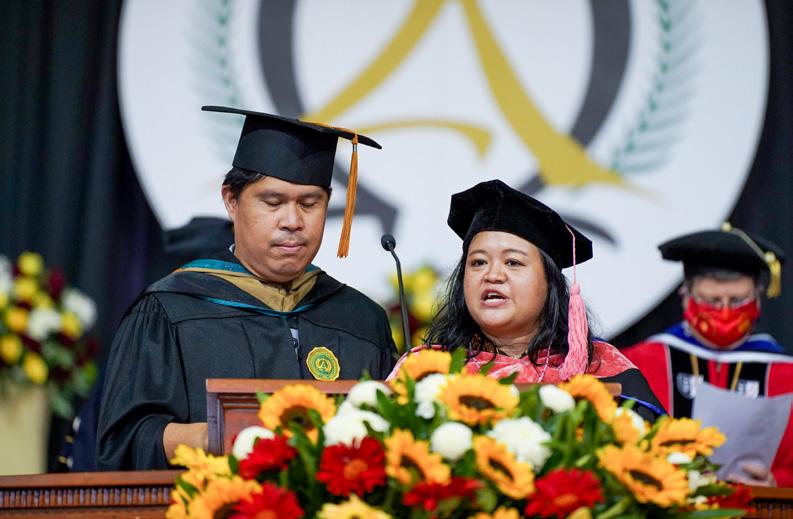
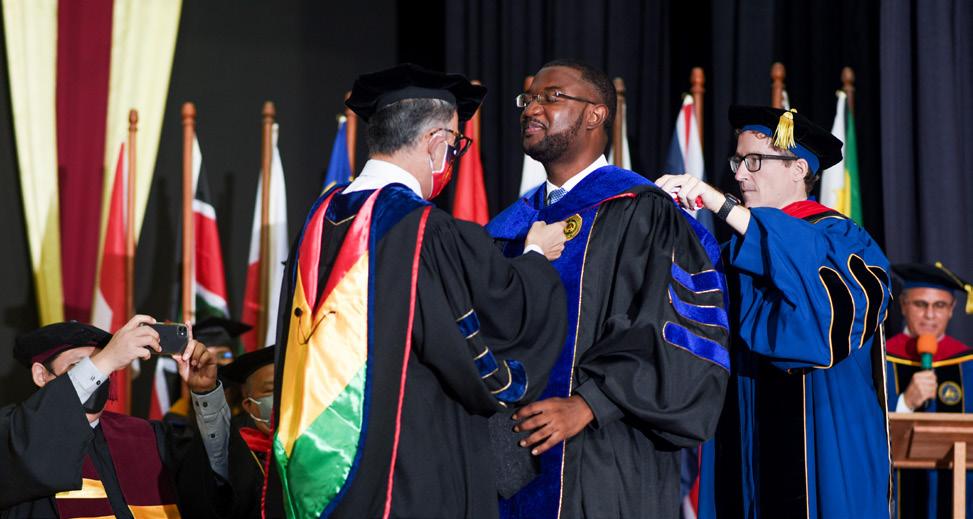
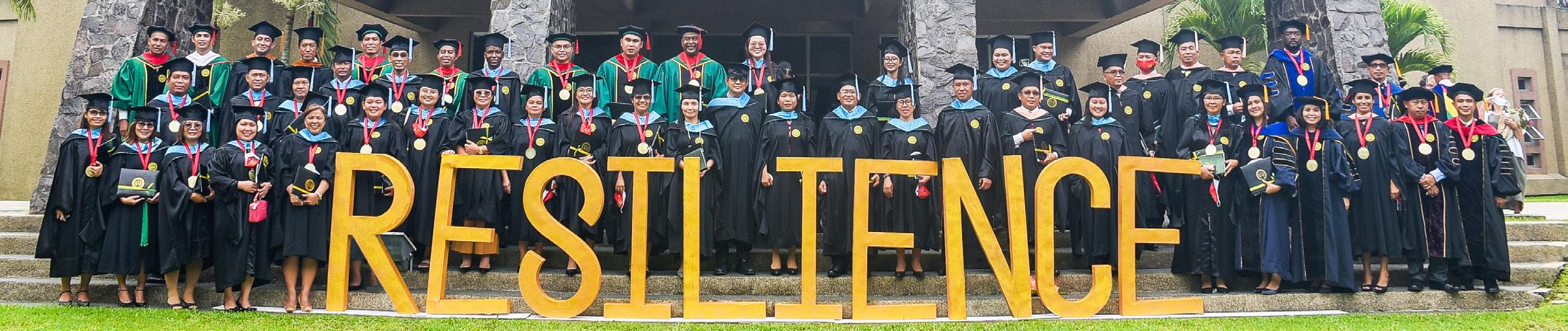
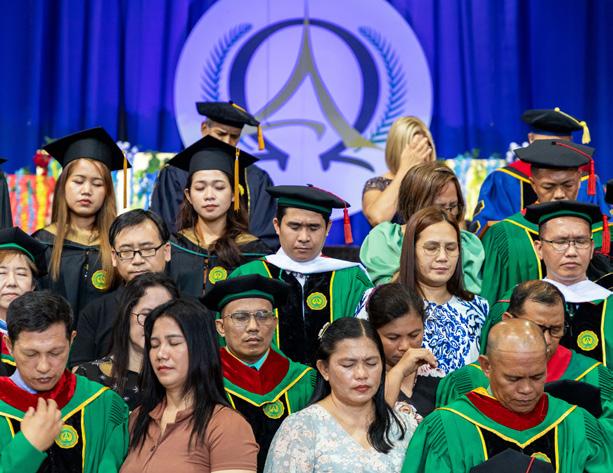
The Class of 2022, represented by a total of 98 graduates, received their degrees during the in-person 106th AIIAS Graduation Ceremonies held over the weekend of May 20-22, 2022 in the Siew Huy Auditorium.
The graduating class chose the theme “Resilience: Thriving in Adversity,” since the majority of the graduates began their classes right before the eruption of the Taal Volcano in January 2020, and did much of their coursework during the community quarantine which followed two months later due to the COVID-19 pandemic.
When God Calls, He Empowers
Erton Köhler, executive secretary of the Seventh-day Adventist Church world headquarters, spoke for the commencement service, focusing his remarks on the parable of the Good Samaritan. He developed his message around the idea that it is one’s mission to be like the innkeeper: willing to assist and take care of God’s children who are in need. “The Lord does not ask us to do a work which He has not given us the means to do,” Köhler said. “When God calls, He empowers.”
Köhler encouraged the graduates to think about the mission to which they will be assigned rather than the diploma. “More than getting your diploma today, you are receiving a
mission. Commit to using all your abilities to care for, to restore, and to save the wounded that the Good Samaritan (God) puts into your hands, using the provision He has already given you, and trusting in the reward that He has already prepared for you. Trust that anyone who accomplishes the work of God using God’s methods will achieve God’s desired outcome,” Köhler concluded.
God’s Guidance Throughout Adversity
The consecration message was delivered by the speaker/director of the Jesus 101 Biblical Institute, Elizabeth Viera Talbot. In her address, she highlighted lessons from the biblical story of Joseph. She explained how Joseph’s robes and one’s metaphorical “gowns” symbolize seasons of change.
Talbot emphasized that God-given resilience is developed as a person goes through adversity. She added that it is God’s presence in one’s life that provides the antidote to fear. “Resilience comes from believing what Joseph believed at all times: that God was with him. . . . When there is adversity, you can thrive . . . because you have a big God who not only has saved you eternally, which is the gospel, but also gives you His presence, His provision, and His purpose for your life, now.”
Called To Be Resilient
The Friday evening consecration service was facilitated by graduating class sponsors Raimond Luntungan, faculty of the AIIAS Education and Business Departments, and his wife, Grace Mang, IMRC supervisor. During the dedication, the couple encouraged the graduates to uphold their theme by relying and “hanging on” to Jesus amidst life’s challenges.
A number of graduates who, in addition to the pandemic challenges have experienced various struggles, testified about how God made them resilient and able to finish their coursework successfully.
“Class ‘Resilience 2022,’ you are called to continue to be resilient in this turbulent world. You can make a difference in this world by starting a difference within yourself, your family, and others.” The Luntungans challenged the class: “Let your light, the light that comes from God, shine out of the darkness of this world.”
Great Things Happen to Those that Trust in God
During the baccalaureate address, the speaker, Kim Si Young, president of the Northern Asia-Pacific Division of Seventh-day Adventists, spoke on the biblical story of Joshua and the Israelites who conquered the city of Jericho. Kim noted that Joshua, being a man of faith, in the moment of crisis and despair, looked up to God in heaven for a solution to a battle that seemed impossible without His help. “If we look at the large city of Jericho, the way is not seen,” he said. “We feel frustrated and scared. Our strength is weakened and we are discouraged. Instead of looking at Jericho, Joshua lifted his eyes to the face of the mighty God. Let us lift our eyes and look up to the great God who is ready to go before us and walk on behalf of us.”
Kim urged the graduates to put their faith in the God who will do great things for those that trust in Him.
“As you graduate today and start a new career, please remember that wherever you go, God will go before you. He will draw His sword and fight
for you,” he assured them. “You can be greater in resilience, and thrive in adversity when you trust in our God.”
Virtual Graduation Turned In-Person Celebration
AIIAS conferred degrees on a total of 98 graduates representing 23 countries, from 11 of the 13 world divisions of the Seventh-day Adventist Church. The AIIAS Seminary presented 37 graduates, and 61 graduates were presented from the AIIAS Graduate School.
From the beginning of the pandemic, all of AIIAS’ events were broadcast online as strict precautionary health measures were nationally mandated by government authorities. This included the 2021 graduation ceremony, which was held solely online. With an improvement in the pandemic situation, in-person commencement was permitted by the authorities, provided all participants and attendees were fully vaccinated against COVID-19. This opened up an exciting opportunity for the graduates who had expected they would be unable to celebrate their graduation with their friends and family members.
Because this year’s graduation ceremony was initially planned as an online-only event, the guest speakers were unable on short notice to physically travel to AIIAS, so each spoke via a video address as originally planned. The event was also graced by the presence of then Mayor-elect of Silang, Cavite, Atty. Kevin Amutan Anarna, also an alumnus of AIIAS Academy, who attended the entire ceremony and took significant time to interact with well-wishers afterwards.
With him was the Honorable Romeo Toledo, Captain of Lalaan I, the local governmental administrative unit where AIIAS is located. Response from the graduates and attendees attested to their appreciation of the local governmental support at the event.
Sharnie Love Zamora-Belarmino, MBA, RN, is the editor of Flags. She serves as the assistant for institutional writing at AIIAS. She is from the Philippines.
“AIIAS AIRWAYS”: TAKING A VOYAGE
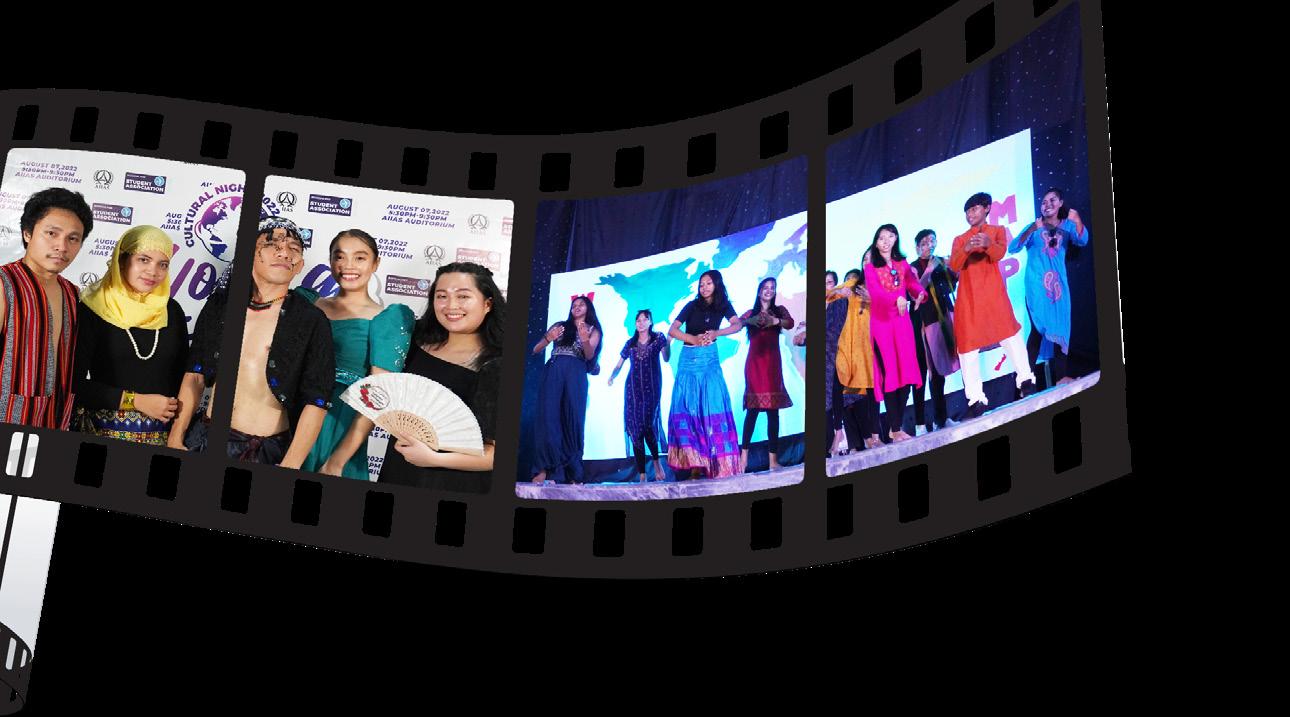
AIIAS is the temporary home of students representing approximately 63 nationalities that are grouped into communities integrated on one residential campus. With the many diverse cultures residing in AIIAS, it has been a yearly tradition to hold an evening of togetherness, known as “Cultural Night,” which is one of the most highly anticipated events at AIIAS.
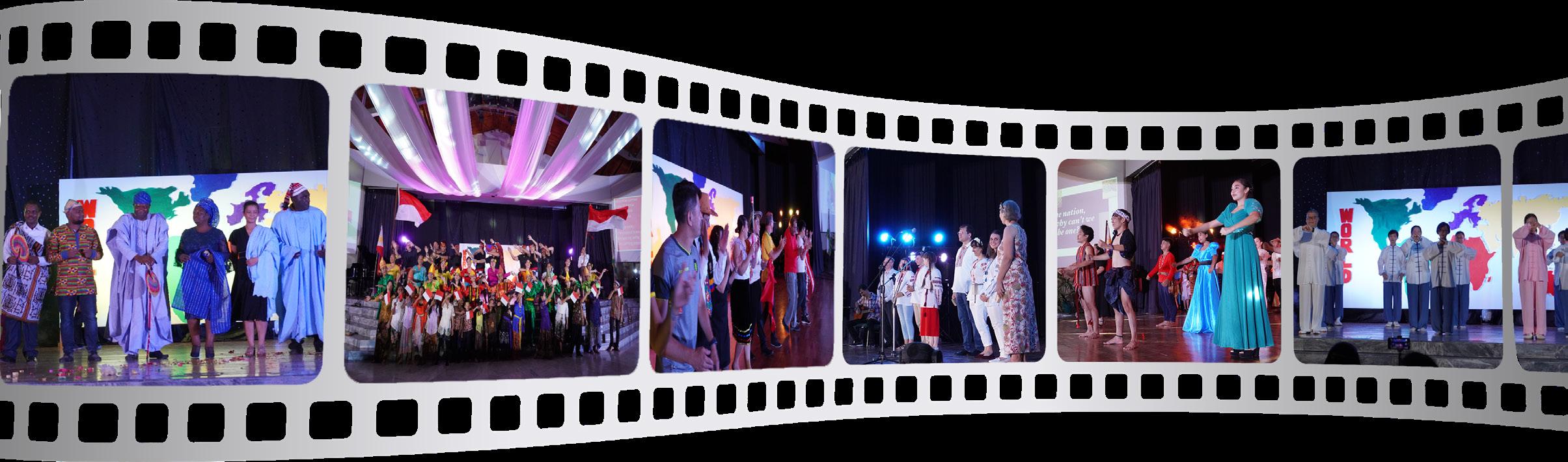
To cap the academic year, the Student Association hosted the Cultural Night program on August 7, 2022, embracing the theme “A Voyage Beyond Borders.” The concept featured the transformation of Siew Huy Auditorium into “AIIAS Airways,” an airline that took its audience on a journey through the homelands from which its passengers have come.
The event began with a brief international food festival where attendees enjoyed tasting street food-style delicacies from different countries. Then the program opened with a parade of national flags and a brief introduction to each featured country’s national capital, geographic features, climate, population, and neighboring countries. After a safety demonstration by the AIIAS Airways “cabin crew,” two hosts played the part of travelers who took the audience through a whirlwind of performances by various communities of AIIAS. The performances included children and adults, students, and employees of AIIAS, forming a unique array of entertaining presentations.
“We weren’t just watching a travelog tonight. We were remembering how big the world is and how diverse the world is,” remarked AIIAS President Ginger Ketting-Weller in her closing comments. “I could see personally as I was watching this tonight that there was a need for Pentecost, not only for languages to be heard but for cultures to be heard.” The Student Association officers expressed appreciation for the efforts of all who participated and supported from behind the scenes to make the event memorable.
Selected communities presented the best features of their regions around the world:
The Chinese Community presented a graceful rendition of Tai Chi, a traditional martial art practiced for exercise, defense training, health benefits, and meditation.
The Southern Asian Community performed the Cheraw Dance from Mizoram, India, a dance by ladies following rhythmic steps between beating pairs of bamboo. This was followed by Bangladeshi and Bollywood dance numbers featuring the festive colors of the Holi festival.
The Filipino Community presented an informative number on the diversity and beauty of 11 of the 182 ethnolinguistic groups in the Philippines. They also performed an interpretative dance with a song highlighting the unity of the Filipinos who dream of a peaceful nation.
The European Community demonstrated the Russian practice of sharing bread and salt as a symbol of friendship and hospitality. Following this was a tour of famous architectural places, national heritage sites, and Adventist universities around Russia, Ukraine, Belarus, Romania, and Moldova. A historical background of the Russian Federation and the legacies left by their emperors and kingdoms were explained. The section also featured a Ukrainian song speaking of kindness and love, affirming that Christ and His love will always prevail.
The African Community displayed the African culture and the spirit of Ubuntu, which stands for “humanity to others,” as they presented a skit about hospitality offered to guests visiting Nigeria, ending in a joyful song by the whole community.
The Latin American Community treated the audience to a video presentation of various places, natural resources, and scenic splendors in South America, then rendered a song of unity, brotherhood, and friendship.
The Indonesian Community presented four spectacular performances from various regions of their country: The Gemu Fa Mi Re dance of East Nusa Tenggara, an angklung song from West Java, the Kecak dance from Bali, and the Saman dance from Aceh Province. They concluded with a song praising the natural beauty of Indonesia and emphasizing their love for their country.
Sharnie Love Zamora-Belarmino, MBA, RN, is the editor of Flags. She serves as the assistant for institutional writing at AIIAS. She is from the Philippines.
ABOUT AIIAS
The Adventist International Institute of Advanced Studies (AIIAS) is a graduate-level Seventh-day Adventist educational institution that offers quality education while keeping the tuition very affordable. AIIAS provides four modalities: online learning, extension sites, on-campus cohorts, and full-time programs.
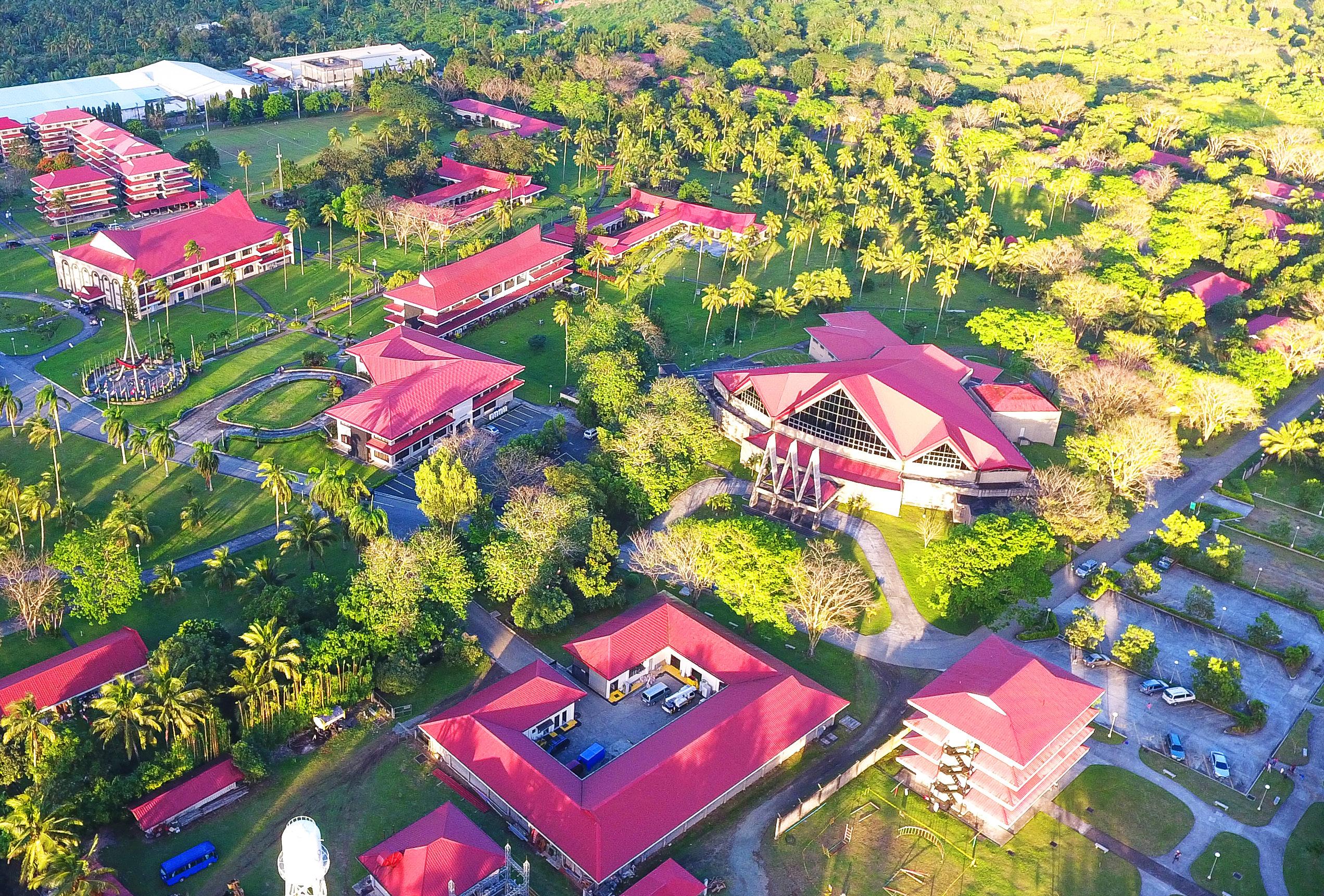
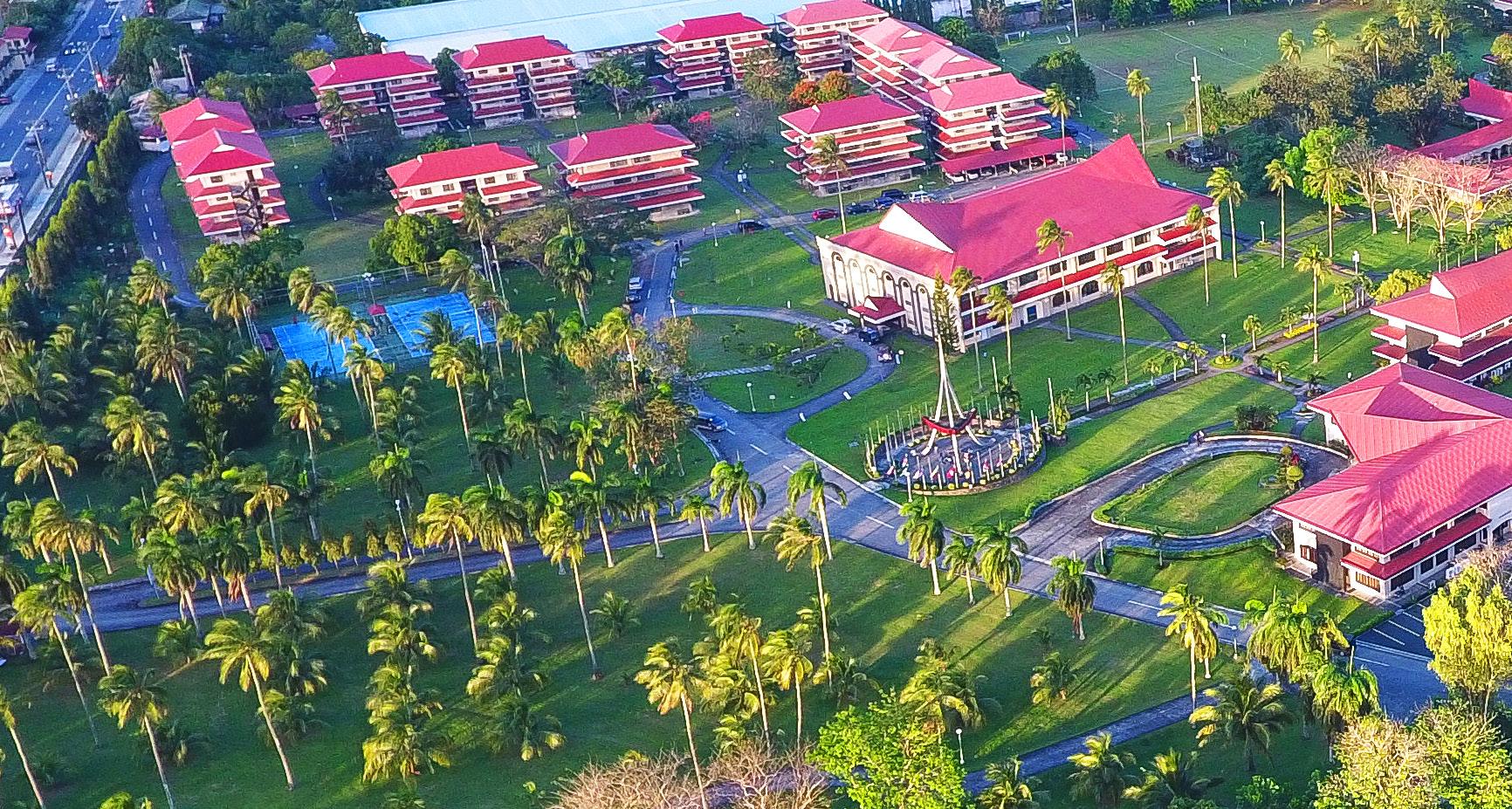
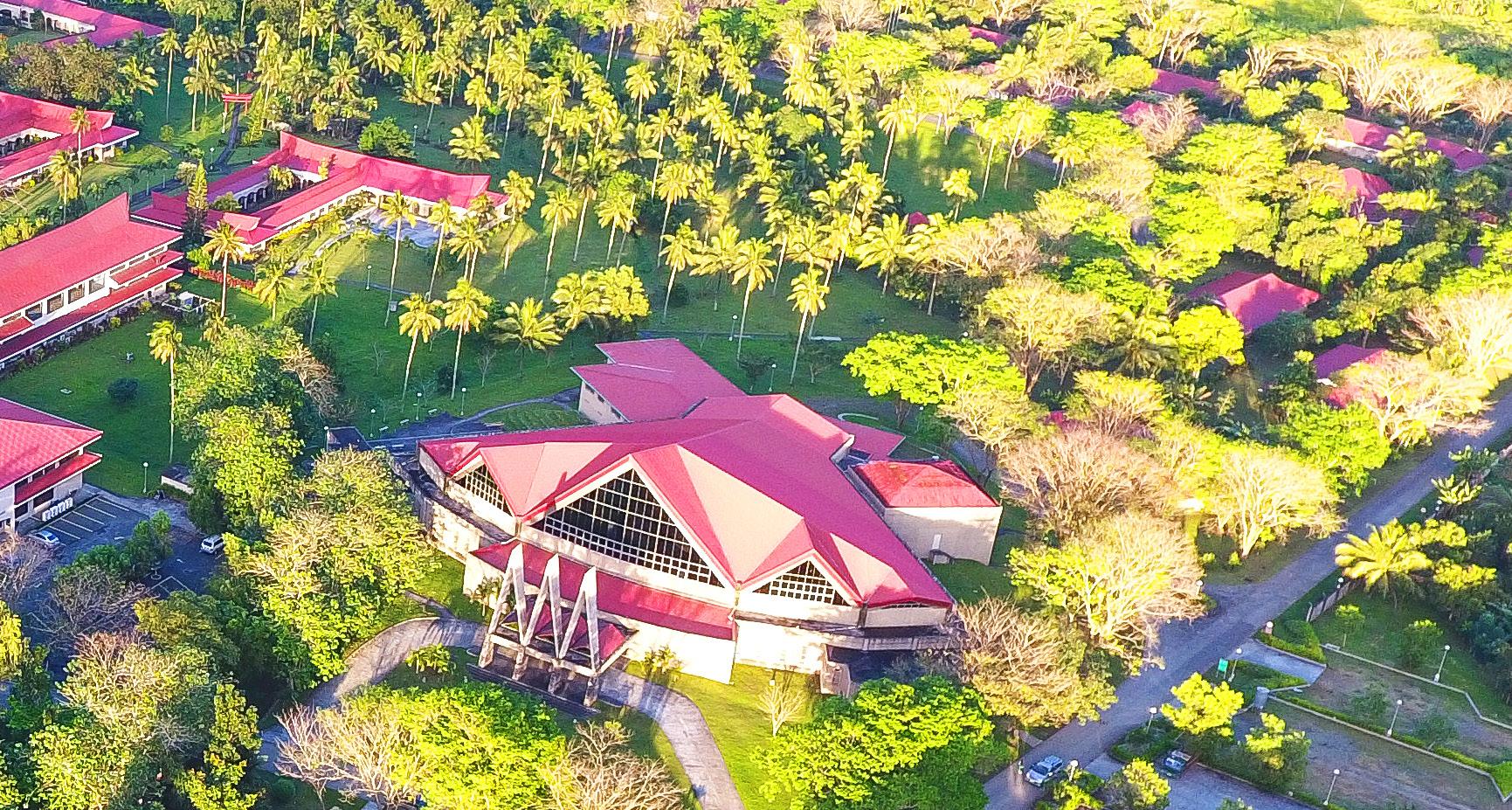
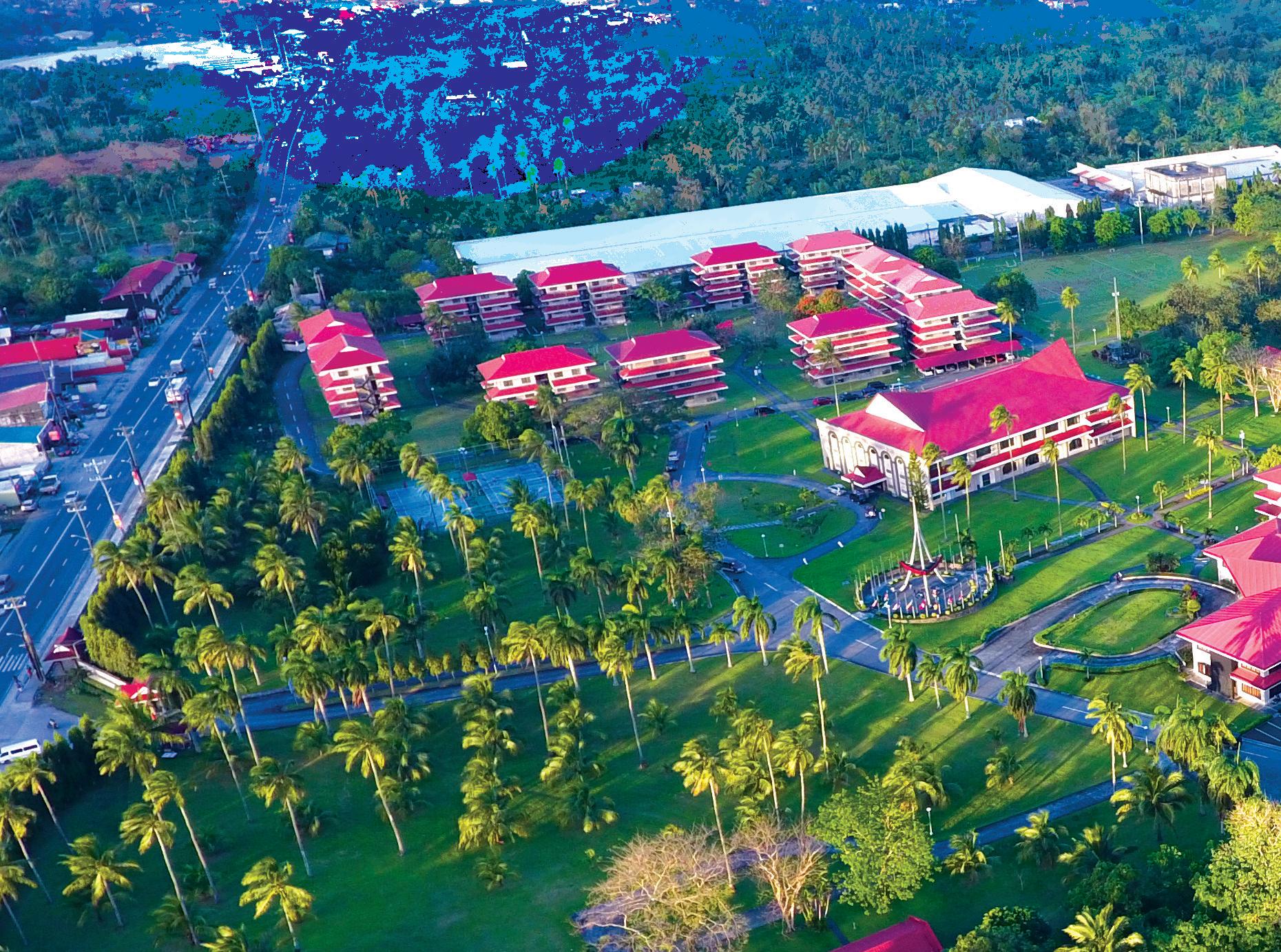
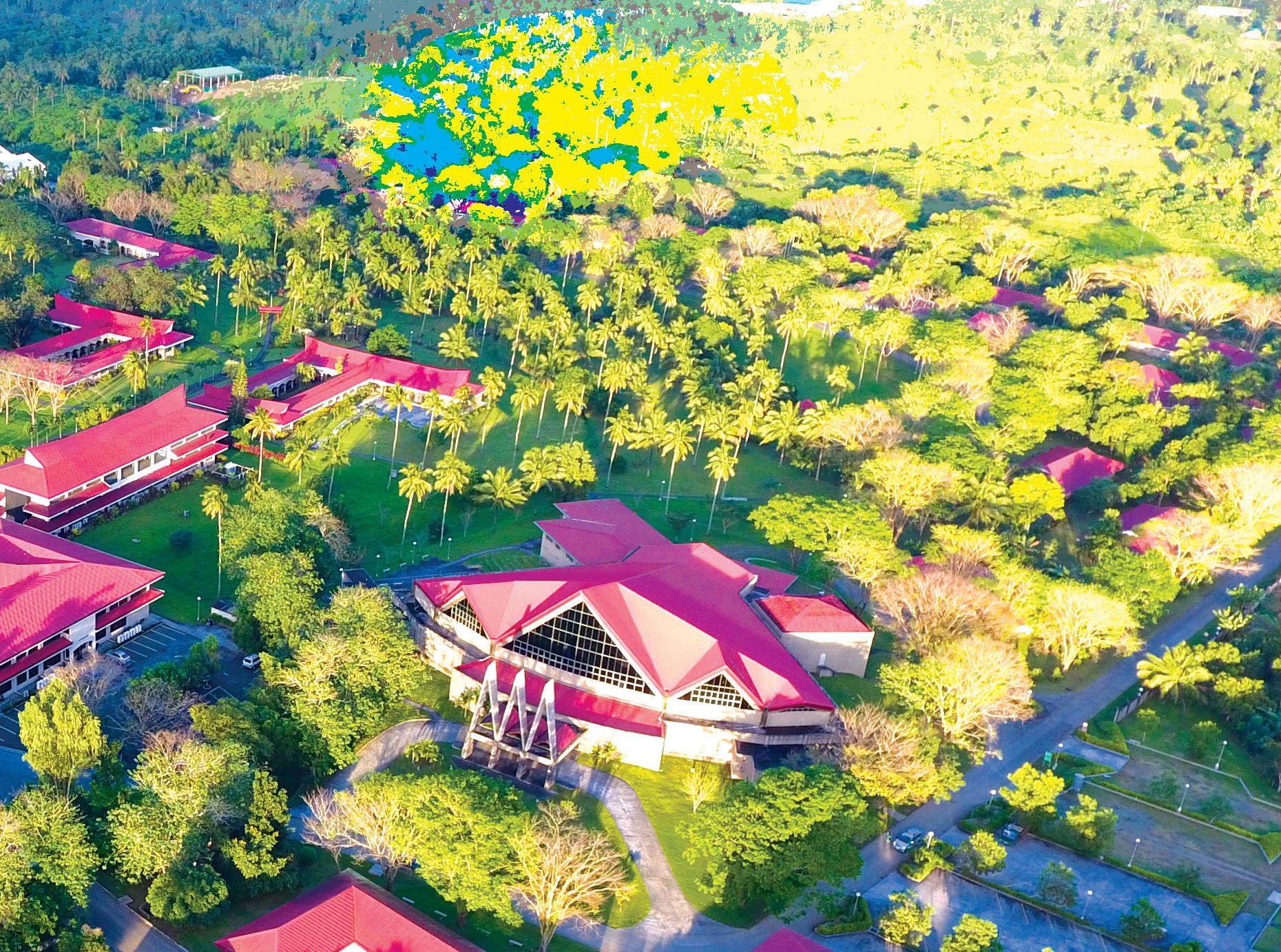
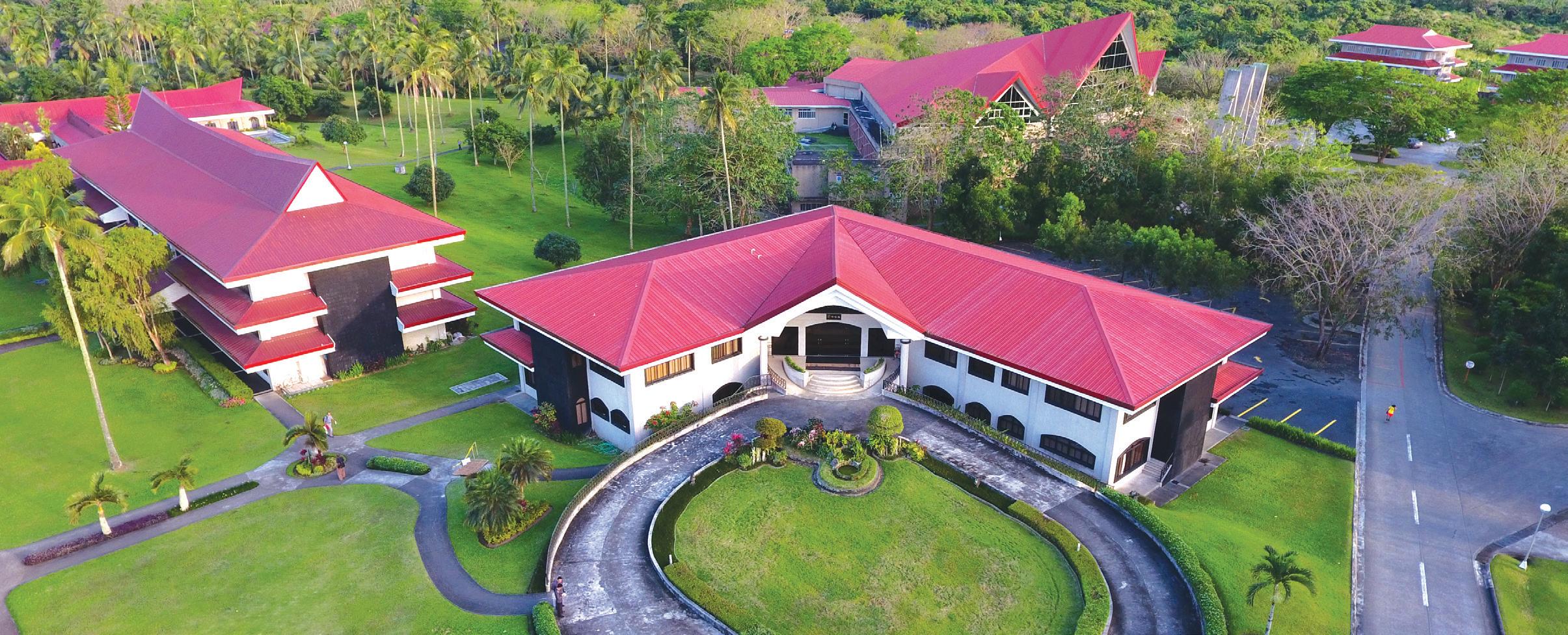
AIIAS is located on a beautiful tropical campus 45.5 kilometers outside of Manila, the capital city of the Philippines. This location offers easy access to opportunities for mission trips and community outreach both locally and internationally, especially within the 10/40 Window.
The AIIAS community includes over 300 graduate students from more than 60 countries around the world. The faculty members come from 17 different countries. The teacherstudent ratio is low, giving students the opportunity to work closely with their teachers. Typically, a class of 10 students will represent a variety of nationalities, providing access to diverse insights and global perspectives.
AIIAS alumni hold positions of leadership throughout Asia and the world. Alumni serve as teachers, pastors, world church leaders, university presidents, administrators, business executives, NGO leaders, and public health professionals. Many of these alumni have come to AIIAS to build a strong foundation on excellent, world-class graduate education.
RECOGNITION & ACCREDITATION
AIIAS is recognized by the government of the Republic of the Philippines as a graduate educational institution of international character, as certified by the Commission on Higher Education (CHED) pursuant to Presidential Decree No. 2021. The institution and all its programs are accredited by the AAA1. In addition, the graduate school programs are accredited by PAASCU2 and those from the seminary by ATESEA3.
1 The Adventist Accrediting Association of Seventh-day Adventist Schools, Colleges, and Universities of Maryland, USA.
2 The Philippine Accrediting Association of Schools, Colleges and Universities which is a full member of APQN and INQAAHE.
3 The Association for Theological Education in South East Asia which is a full member of WOCATI thereby networked with other regional associations like the ATS.
THE AIIAS ADVANTAGE
In addition to high quality graduate education, there are many benefits of living on a campus filled with fellow students and their families.
“AIIAS provides a wholesome experience by developing each person academically, spiritually, mentally, and physically.”
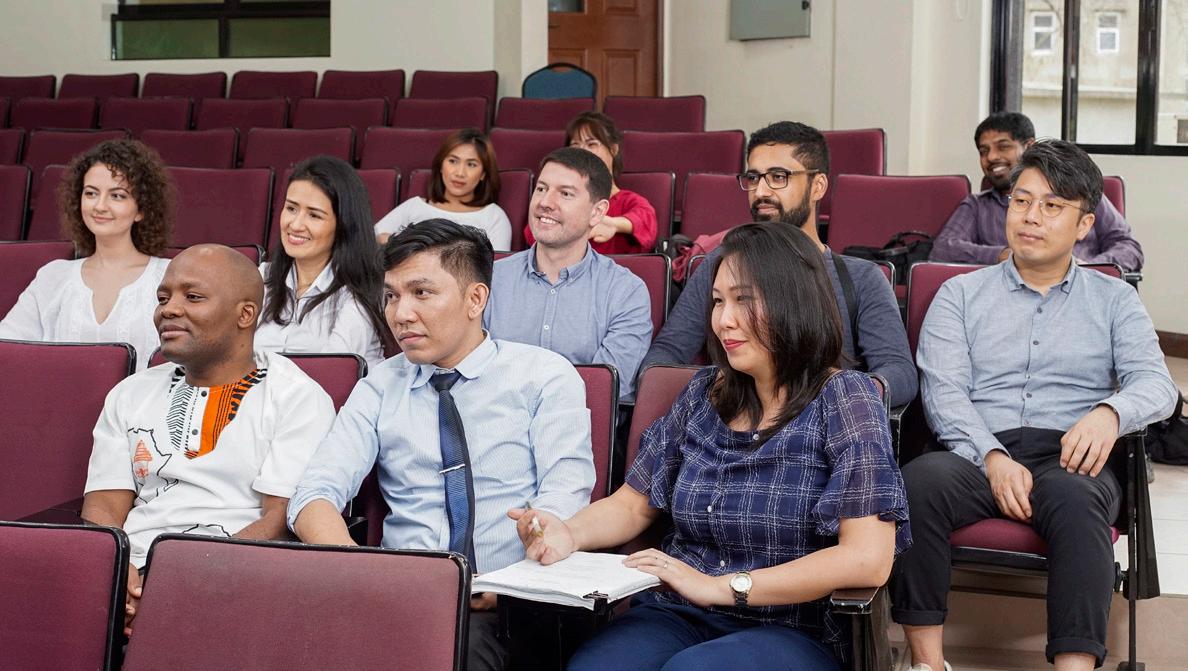
Living on campus provides rich cultural experiences among a diversity of friends, thoughts, and activities. The AIIAS student will meet fellow students from every continent except Antarctica. The diversity allows students to find commonalities and gain knowledge from other cultures.
AIIAS cultivates a family-friendly environment where children of different age groups from various countries interact and freely play together. This experience develops cultural awareness and appreciation at an early age. The community allows parents’ peace of mind about their children’s safety as they focus on studying, for the walled campus has a secure entrance.
ADMISSION DEADLINES
Intersemester 2023 April 25, 2023
First Semester – Term A July 6, 2023
First Semester – Term B September 12, 2023
Second Semester – Term A December 7, 2023
Second Semester – Term B February 13, 2024
AIIAS provides an abundance of opportunities for spiritual growth, whether it is through prayer meetings, Sabbath worship programs, or outreach ministries off-campus. There are many other opportunities that allow students to receive a blessing, and be a blessing.
GRADUATE SCHOOL
The AIIAS Graduate School develops internationally-minded, serviceoriented professionals known for integrity and scholarship in the fields of business, education, and public health.
THEOLOGICAL SEMINARY
The AIIAS Theological Seminary prepares mission-driven, professional faculty and other church leaders in a wholistic, multicultural, and collaborative approach to learning, promoting biblically-informed scholarship, spirituality, and a meaningful field experience.
ENGLISH CENTER
The AIIAS English Center takes students through intensive and personalized instruction in the English language in an English-speaking environment. The English Center approach is aligned with well-recognized English language programs.
ONLINE
AIIAS Online delivers quality graduate Christian education that is accessible and affordable through student-centered and contextualized learning experiences for better service to the church and society.
Why Choose AIIAS?
Distinctively Adventist
AIIAS champions the educational philosophy, teachings, and lifestyle of the Seventh-day Adventist Church and its clear sense of mission and identity.
Academic Excellence
AIIAS maintains the highest levels of academic quality and accreditation, employing outstanding faculty who are well-recognized in their fields.
Affordable Cost
AIIAS students enjoy high quality education at an affordable price thanks to the financial subsidy provided by the Adventist world church.
Dive to undisturbed coral reefs, enjoy unspoiled tropical beaches, or shoot the rapids. All these activities can be enjoyed a short distance from the AIIAS campus.
Mission-Oriented
Being strategically located in the Philippines, AIIAS provides ready access to the 10/40 Window for field experience and research opportunities.
Excellent Supporting Resources
An exemplary graduate research library with a collection of more than 80,000 volumes means easy access to a growing gold mine of library resources.
Alumni Impact
AIIAS alumni have become well-equipped leaders around the world and are committed to the church and its mission.
AIIAS Program Offerings
GRADUATE SCHOOL
Business
Master of Business Administration (MBA)*
Master of Science in Administration (MSA)*
Doctor of Philosophy (PhD) in Business
Education
Master of Arts in Education (MA)*
Education Specialist (EdS)
Doctor of Philosophy (PhD) in Education*
Public Health
Master of Public Health (MPH)*
THEOLOGICAL SEMINARY
Professional Programs
Master of Arts in Church Ministry (MA-CM)*
Master of Divinity (MDiv)*
Master of Arts in Ministry (MA-Min)
Doctor of Ministry (DMin)
Doctor of Missiology/Doctor of Intercultural Studies (DMiss/DIS)
Academic Programs
Master of Arts in Religion (MA-R)
Master of Theology (MTh)
Graduate Education with a Heart for Mission *also offered Online