July/August 2026

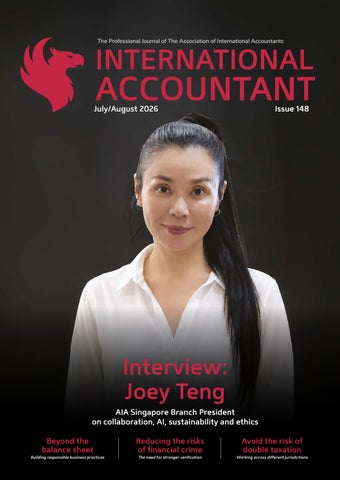
July/August 2026
AIA Singapore Branch President on collaboration, AI, sustainability and ethics
Avoid




The future accountant
In an age of artificial intelligence and sustainability, we explore how the AIA Professional Qualification equips students with the technical, digital and professional skills needed for a rapidly evolving accountancy profession.

Jenny Herrera (Good Business Charter) believes that accountants can build organisational resilience, improve performance and support sustainable growth by embedding responsible business practices such as social sustainability, employee wellbeing and stakeholder trust. Interview
Meet Joey Teng, AIA Singapore Branch President
Accountants(AIA).

Joey Teng discusses the future of the accounting profession, highlighting the importance of governance, regional collaboration, AI and continuous learning, and how accountants can combine technical expertise with ethical leadership. Artificialintelligence
AI is no longer optional

Catriona Loughran (ExtraTax Training) explains how double tax agreements allocate taxing rights between countries to prevent the same income being taxed twice, examining the common pitfalls and the practical application of double tax relief.

Dr Tim V. Eaton and Addison Lemon (Miami University’s Farmer School of Business) explain why AI literacy is becoming an essential skill for accountants, and explore its practical applications, governance and implementation strategies. Financial
Fraud has learned to pass the test Phil Cotter (SmartSearch) explains why accountants are increasingly targeted by sophisticated financial criminals, exploring the growing risks posed by AI-generated identities, beneficial ownership and evolving regulatory expectations.

Turning reputation into revenue
Mark Hayward (Sway PR) explains how accountancy firms can use PR to build credibility, raise their profiles and attract new clients by taking part in media commentary, thought leadership, speaking opportunities and podcasts.



One of the privileges of editing International Accountant is seeing how often the same conversations are taking place in different parts of the world. Whether they concern artificial intelligence, sustainability, governance or professional standards, the challenges facing accountants today are increasingly shared across jurisdictions.
That spirit of international collaboration runs strongly through this issue. In our Members’ News, AIA Chief Executive Philip Turnbull’s recent visit to Singapore, Hong Kong and China highlighted the value of building relationships across borders, exchanging ideas and strengthening professional partnerships. The discussions centred on many of the same issues explored throughout these pages: the opportunities presented by AI, the importance of ethics and professional judgement, sustainability and preparing accountants for an increasingly complex future.
Those themes continue in our interview with Joey Teng, recently elected President of the AIA Singapore Branch. Having met Philip during his visit, she shares her vision for strengthening regional collaboration and explains why governance, continuous learning and ethical leadership will become even more important as AI reshapes the profession.
Her perspective reinforces an important message running throughout this issue: while technology continues to transform accounting, trust, judgement and international cooperation remain at its heart.
Technology is explored further by Dr Tim V. Eaton and Addison Lemon, who argue that AI is becoming an essential professional skill, while Phil Cotter examines how firms can respond to increasingly sophisticated financial crime by combining technology with stronger oversight and professional judgement. Jenny Herrera considers how accountants can create long-term value by integrating financial, social and environmental thinking, and Mark Hayward explains why reputation and visibility have become powerful commercial assets in an increasingly competitive profession.
Our technical feature from Catriona Loughran illustrates another aspect of today’s international profession, explaining how double tax agreements help businesses and individuals navigate an increasingly cross-border world. Taken together, these articles reflect a profession whose influence continues to grow. Today’s accountants are expected not simply to report on organisations, but to help shape their future through insight, integrity and leadership. Those qualities transcend borders. As the conversations taking place across Asia demonstrate, they are becoming the shared foundations of a truly global profession.

Phil Cotter is CEO of SmartSearch, and helps regulated firms to strengthen anti-money laundering controls and manage financial crime risk.

Dr Tim V. Eaton is Professor of Accountancy and EY Teaching Scholar at the Farmer School of Business, specialising in accounting education, AI and curriculum.
MARKHAYWARD

Mark Hayward is Managing Director of Sway PR and a Fellow of the Chartered Institute of Marketing, helping businesses build reputation and growth.
JENNYHERRERA

Jenny Herrera is CEO of the Good Business Charter, promoting responsible business practices and helping organisations embed sustainability.

Addison Lemon is an EY Undergraduate Scholar studying Accountancy and Information Systems at Miami University’s Farmer School of Business.
CATRIONALOUGHRAN

Catriona Loughran is Managing Director of ExtraTax Training, delivering international tax training and online courses for the CIOT’s ADIT qualification.
The Institute of Chartered Accountants of India (ICAI), one of the world’s largest professional accountancy bodies representing more than 400,000 members and students, has announced a series of initiatives to strengthen AI capabilities across the profession, highlighting the growing importance of AI skills for accountants worldwide.
Unveiled at the AI Innovation Summit in June, the measures include an advanced AI certification programme, a partnership with Indian AI company Sarvam AI, and new guidance to help accountants integrate AI into
professional practice. Together, the initiatives are intended to support members in developing practical AI expertise while promoting responsible and ethical use of the technology.
As AI becomes increasingly embedded in finance, audit and advisory work, professional bodies are placing greater emphasis on equipping members with the skills needed to use AI effectively, while maintaining professional judgement, scepticism and accountability. Organisations increasingly regard AI competence as a core professional capability.
The Financial Reporting Council (FRC) has introduced a revised Audit Enforcement Procedure, giving the UK regulator greater flexibility in how it investigates and resolves cases involving auditors and audit firms.
The new framework came into effect on 1 July, replacing a more limited approach that generally resulted in either a full investigation or informal engagement. Under the revised procedure, the FRC can use a broader range of regulatory responses, enabling it to deal with concerns more quickly while encouraging improvements in audit quality across the profession.
According to the FRC, the changes are intended to support a more proportionate and responsive enforcement regime. The new process will allow cases to be resolved more efficiently, while ensuring that serious misconduct continues to attract appropriate sanctions. The reforms also place greater emphasis on
identifying lessons that can be shared across the profession to strengthen audit practices and reduce the likelihood of similar issues arising in future.
For international accountants, the changes illustrate a broader regulatory trend towards faster, more flexible oversight of the audit profession. Firms operating across multiple jurisdictions are increasingly expected not only to comply with professional standards but also to demonstrate robust quality management systems capable of identifying and addressing issues at an early stage.
While the revised procedure applies to the UK, it reflects wider efforts by regulators to improve audit quality through earlier intervention and continuous improvement. International firms with UK operations should familiarise themselves with the new approach and consider whether their governance and quality control procedures remain fit for purpose.
The European Commission has adopted revised European Sustainability Reporting Standards (ESRS), aiming to reduce the reporting burden on businesses while maintaining the quality and usefulness of sustainability disclosures.
Announced on 3 July, the revised standards form part of the EU’s wider programme to simplify corporate reporting requirements. The changes reduce the number of mandatory disclosure datapoints by more than 60%, while cutting the overall volume of reporting requirements by more than 70%. The Commission estimates that the revisions will reduce reporting costs for companies by over 30%.
The Commission has also adopted a voluntary sustainability reporting standard for smaller companies outside the scope of the Corporate Sustainability Reporting Directive (CSRD). The aim is to provide a proportionate reporting framework while helping smaller businesses respond to sustainability information requests from customers, investors and lenders.
For international accountants, the revisions reflect a growing emphasis on making sustainability reporting more practical without abandoning transparency objectives. While the overall direction of travel remains unchanged, companies operating in or trading with the EU should find the revised standards easier to implement, with greater flexibility and a stronger focus on material information.
The revised standards must now be scrutinised by the European Parliament and the Council of the EU before taking effect. Accountants advising multinational businesses should monitor the legislative process closely and begin assessing how the requirements could affect future reporting and assurance processes.



AIA Chief Executive Philip Turnbull recently completed a strategic visit to Singapore, Hong Kong and China, meeting with professional bodies, regulators and AIA representatives to strengthen relationships, explore opportunities for future collaboration and promote the continued development of the accountancy profession across the region.
In Singapore, discussions focused on the opportunities and challenges created by AI, and the importance of ensuring that accountants continue to serve as trusted advisers in an increasingly technologydriven environment. Meeting with the new AIA Singapore Branch President, Dr Joey Teng, Philip explored how professional

judgement, ethics and continuous professional development will play an even greater role as AI becomes more deeply embedded across business and finance.
Philip also attended the Singapore Branch Committee meeting, where discussions centred on corporate governance, expanding access to the AIA qualification, enhancing professional development opportunities and preparations for AIA’s forthcoming centenary celebrations. The committee also emphasised the importance of supporting members as they adapt to technological change while maintaining the highest ethical standards.
In Hong Kong, Philip met with senior representatives from both the Hong Kong
Institute of Certified Public Accountants (HKICPA) and the Accounting and Financial Reporting Council (AFRC).
Discussions focused on the future of the profession, professional education, sustainability, public trust and the impact of AI on attracting, developing and retaining the next generation of accounting professionals.
The meetings provided valuable opportunities to exchange views on regulatory developments, professional standards and quality assurance, while identifying potential areas for future collaboration in continuing professional development, training and professional learning initiatives. A recurring theme throughout the discussions was the need to balance technological innovation with robust ethical frameworks, effective regulation and strong professional oversight.
The final stage of the visit took Philip to China, where AIA continues to strengthen its presence and recognition. During the visit, AIA welcomed the announcement that its membership qualification has been added to the Catalogue of Overseas Professional Qualifications recognised by the Hainan Free Trade Port. The recognition further enhances career mobility and professional opportunities for AIA members within one of China’s fastest-growing economic regions.
Philip also met representatives of the Hainan Institute of Certified Public Accountants to discuss opportunities for future collaboration in accounting education and professional development. Discussions focused on continuing professional development, AI, sustainability and ethics, reflecting the shared priorities and long-term aims of both organisations.
Reflecting on the visit, Philip said the discussions demonstrated a shared commitment across the region to maintaining the highest professional standards while embracing innovation, sustainability and emerging technologies. He also highlighted the importance of international collaboration in ensuring accountants are equipped to meet the evolving needs of businesses, regulators and society.
The visit reinforces AIA’s commitment to supporting members around the world, strengthening professional relationships and advancing opportunities for accountants across Asia and beyond.
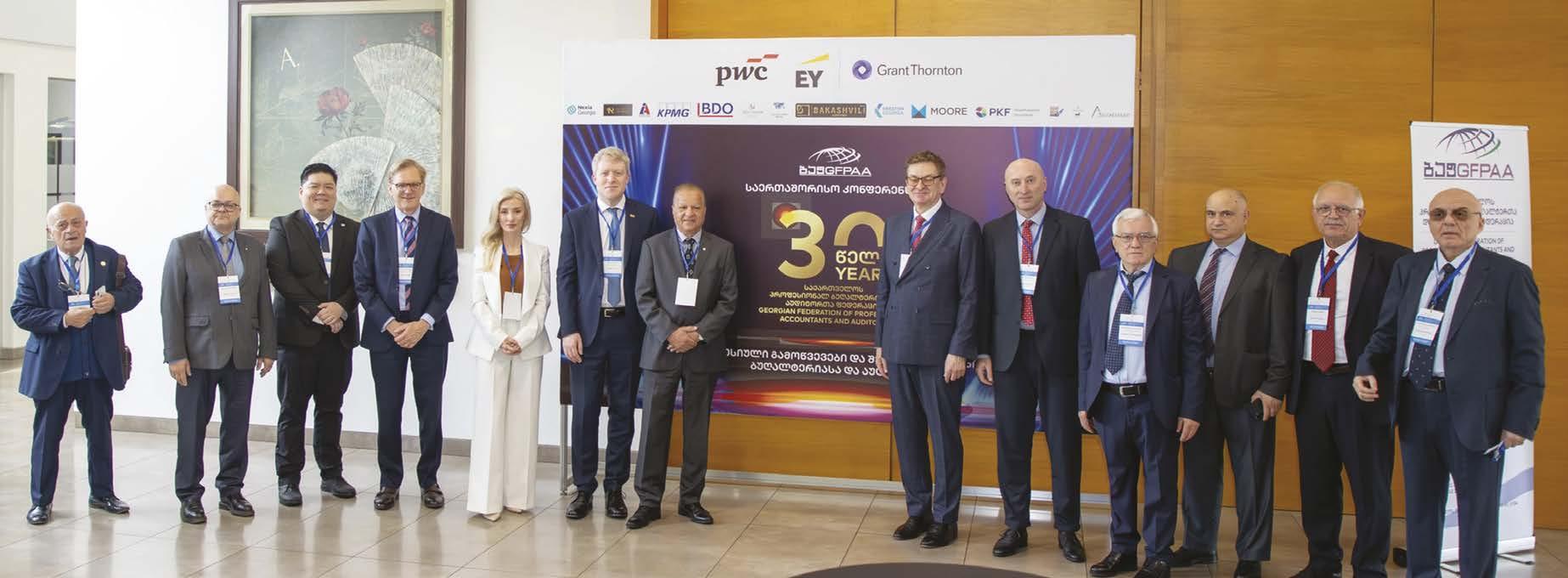
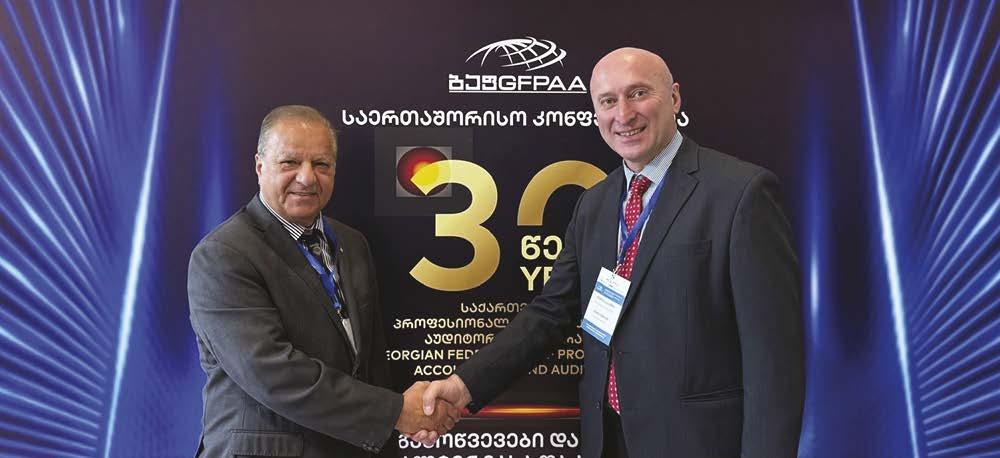
AIA was proud to contribute to the GFPAA International Conference on Professional Challenges and Opportunities in Accounting and Auditing, held in Georgia.
Hosted at Expo Georgia in Tbilisi, the conference brought together international voices to explore how the accountant’s role is evolving amid technological change, institutional reform and wider economic shifts. Across a series of highlevel discussions, participants focused on strengthening financial reporting, improving audit quality, advancing professional education and reinforcing ethical standards across the profession.
AIA played an active role throughout the conference, with representatives contributing to multiple panel discussions alongside international peers.
Philip Turnbull, AIA Chief Executive, contributed to discussions on professional
education and ethics, highlighting the importance of strong ethical foundations and continuous learning in maintaining trust and relevance across the profession.
David Potts, AIA Director of Policy & Regulation, took part in panels on audit quality and the future of the profession, sharing insights on regulatory approaches, quality assurance and the growing impact of technology on practice.
Throughout the conference, AIA shared perspectives on audit quality monitoring, professional standards, ethics, education and the practical implications of emerging technologies for practitioners and regulators.
A key theme was the importance of international collaboration in addressing shared challenges across jurisdictions. Representatives from government bodies, the World Bank, the Asian Development Bank, IFAC, ACCA, national regulators
and leading audit firms came together to exchange experience and strengthen professional cooperation.
AIA welcomed the opportunity to engage in these discussions, reinforcing the value of cross-border collaboration in strengthening financial reporting systems, supporting public sector reform, and promoting consistent, high-quality audit practices.
The programme also emphasised the need for the profession to adapt to technological change while upholding core principles of integrity, objectivity and responsibility in the public interest. Sessions explored the impact of artificial intelligence and automation, alongside the evolving skills and competencies required to meet future demands, highlighting the importance of aligning innovation with continued investment in education, ethics, and professional judgement.
AIA extends its sincere thanks to the Georgian Federation of Professional Accountants and Auditors (GFPAA) for hosting an insightful and forward-looking conference and for bringing together an international community committed to advancing the profession.
The Association valued the opportunity to contribute to these discussions and share perspectives on the future of accounting and auditing, and looks forward to continued engagement in global forums that support high-quality financial reporting and strong professional standards.
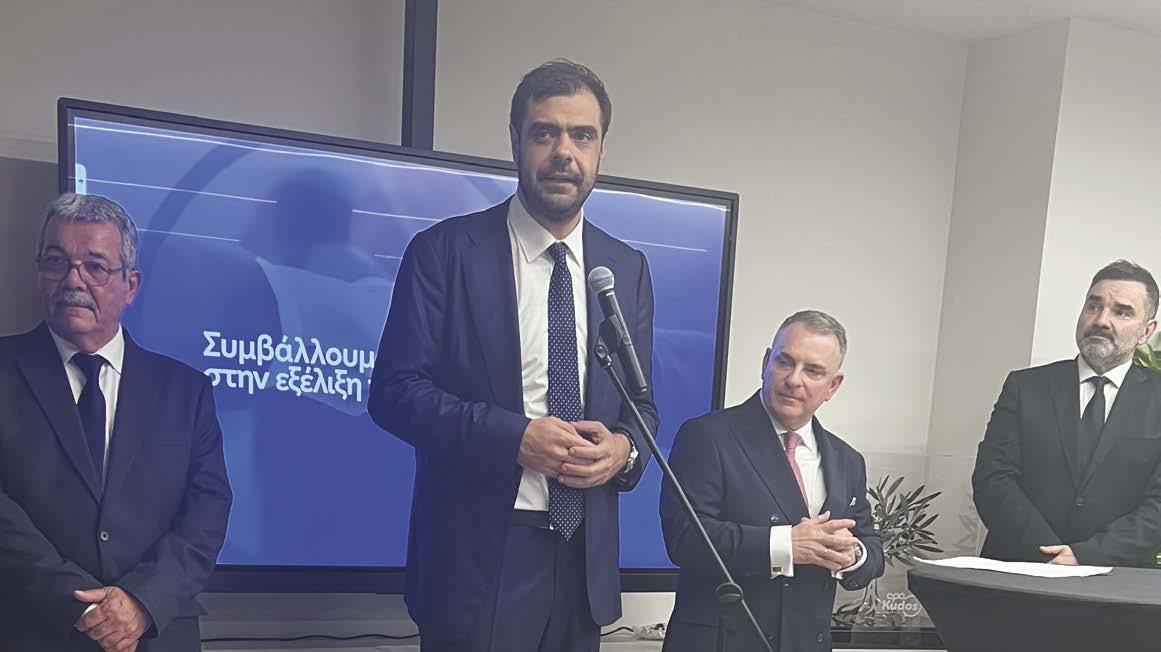
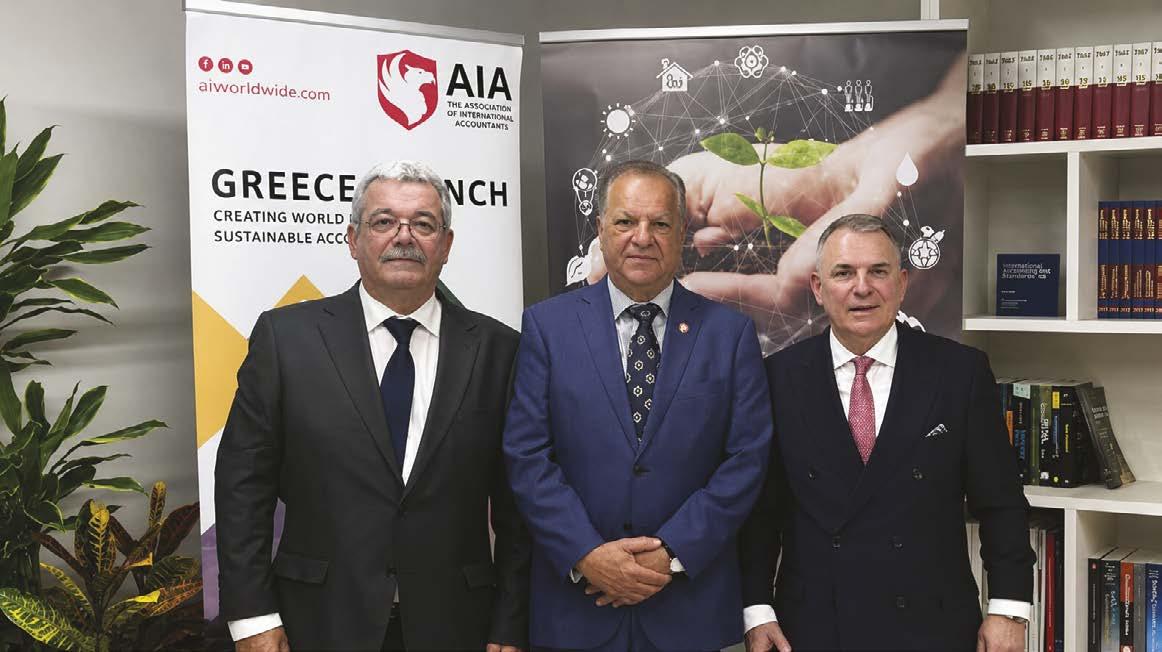
AIA marked the official opening of the CPA Kudos office in Athens, Greece, with AIA President Shahram Moallemi joining AIA Council Member George Josephakis to celebrate the occasion.
The event highlighted the strength of AIA’s international network and the contribution its members continue to make in senior leadership positions across the global accountancy profession.
The new Athens office is led by AIA members in key roles. Since January 2026, George Josephakis has served as Chairman of the Board of Directors and Audit, Assurance and Compliance Leader at CPA Kudos Greece, alongside
his established audit practice in Cyprus.
The firm’s Founder and CEO, Dimitris Demetriou, is also an AIA member.
George has made a significant contribution to AIA’s international community through his work in regulation, governance and member engagement. As Chair of AIA’s Regulatory Oversight Committee, he helps to oversee the Association’s regulatory responsibilities as a recognised supervisory body under the Money Laundering Regulations. An expert in anti-money laundering and a member of the International Compliance Association, George has helped to develop policies and guidance that support members in
meeting increasingly complex regulatory requirements.
Beyond his regulatory work, George serves as President of the AIA branches in both Cyprus and Greece, where he has worked to promote professional recognition, strengthen member engagement and expand continuing professional development opportunities. He is also actively involved in advancing AIA’s recognition in Greece.
His contribution extends beyond AIA. George is a member of the European Federation of Accountants and Auditors (EFAA) for SMEs Digital Working Group, contributing to discussions on the future of digitalisation within the SME accountancy sector across Europe. He also supports the next generation of accountants through mentoring students and early-career professionals.
The opening of the Athens office reflects the increasingly international nature of the accountancy profession and the opportunities available to professionals who operate across borders. It also demonstrates how AIA members are applying their expertise and leadership in different markets while maintaining high professional, ethical and regulatory standards.
The presence of the AIA President, an AIA Council Member and an AIA member who serves as CEO at the opening provided a visible example of the connections that exist across the Association’s global membership. As AIA continues to grow its international presence, member-led initiatives play an important role in strengthening professional relationships, supporting business development and promoting excellence within the profession.
For AIA, the occasion was not only a celebration of a new office opening, but also a reflection of the impact that its members are making internationally through leadership, collaboration and service to the profession.
AIA is proud to stand alongside fellow signatories of the Sustainable Finance Education Charter (SFEC) in reaffirming its commitment to building a more sustainable future for the finance profession.
The newly published SFEC Annual Progress Report 2025 showcases the collective progress made by the Charter’s 14 professional body signatories, representing more than one million finance
professionals worldwide, in embedding sustainability into education, professional standards and continuing development.
During the reporting period, more than 122,000 finance professionals participated in sustainability-focused events delivered by Charter members. New qualifications, enhanced learning programmes and expanded international collaboration have also strengthened the profession’s ability to respond to climate

and broader sustainability challenges.
As a signatory, AIA continues to place sustainability at the forefront of its strategy, ensuring members and students are equipped with the knowledge, skills and professional judgement needed to support the transition to a more sustainable economy and create long-term value for organisations and society.
Read full report at:

On 18 June 2026, the AIA Hong Kong Branch held its 51st Annual General Meeting, during which Mr Savio Ho was elected Branch President, while Mr Ebony Chiu and Dr David Pun were elected Vice Presidents.
Following the AGM, members and guests gathered for the AIA Hong Kong Branch Annual Dinner 2026. AIA Chief Executive Philip Turnbull and Hong Kong Branch President Mr Savio Ho both addressed attendees, reflecting on the Branch’s achievements, recognising the contributions of its members, and outlining its ambitions for the future.

In his speech, Savio introduced the Kowloon Bowling Green Club, a Grade 3 historic building with a history spanning over 125 years, drawing a parallel with AIA’s own proud and distinguished heritage. He also reaffirmed the Hong Kong Branch’s commitment to enhancing member services, while strengthening collaboration across the Greater Bay Area and with professional bodies in Hong Kong.
The event was attended by a distinguished group of guests, including the AIA Hong Kong Branch Legislative Councillor Hon Dr Webster Ng, Deputy
Commissioner of the Inland Revenue Department Mr Leung Kin Wa, China Liaison Office Representative Mr. Wang Hao Bin, and senior representatives from professional accountancy organisations across Hong Kong.
The evening celebrated the strength of AIA’s professional community and the continued success of the Hong Kong Branch.
Congratulations to the Executive Committee, Branch team and all AIA members and students whose dedication continues to strengthen AIA’s presence and reputation in Hong Kong.
In an age of AI and sustainability, the AIA qualification prepares students for a dynamic, future-focused accounting career.
The world of accounting is changing faster than ever before, and for today’s students, that is something to celebrate. The accountancy profession is entering one of the most transformative periods in its history. Advances in artificial intelligence (AI), the expansion of digital technologies and the growing importance of sustainability are redefining the role of accountants across every sector.
This is not a disruption. It is an opportunity. The future of accounting is dynamic, impactful and full of potential. Today’s students are preparing for careers that extend far beyond traditional financial reporting, encompassing advisory, strategy and global sustainability leadership.
Aprofessionintransformation
Historically, accountants were responsible for recording transactions, producing financial statements and ensuring compliance. While these responsibilities remain essential, modern accountants are increasingly expected to provide deeper analysis, interpretation and strategic guidance.
This shift reflects a broader evolution in business. Organisations today operate in complex, fast-moving environments where real-time insights and informed decision-making are critical. As a result, accountants are becoming integral to shaping strategy and driving performance.
The AIA Professional Qualification is designed with this evolution in mind. It develops not only technical knowledge, but also the cognitive skills of application, analysis, synthesis and evaluation, ensuring that students are equipped to meet contemporary professional demands.
This is not the end of accounting. It is its evolution. The emerging accountant is:
● a data analyst, interpreting trends and patterns;

● a business adviser, influencing strategic decisions;
● a risk manager, ensuring control in complex systems; and
● a trusted professional, balancing technology with ethical judgement.
In short, the future accountant sits at the centre of business.
The AIA qualification and study materials reflect this reality clearly. Technology has shifted the role of accountants from providers of information to providers of insight, enabling them to support strategic decision-making and organisational performance.
TheriseofAI:opportunity,notthreat AI is perhaps the most talked-about development shaping the profession. But rather than replacing accountants, AI is enhancing what we can do.
AI systems can:
● process vast amounts of financial and non-financial data quickly;
● identify patterns and anomalies to detect fraud or risk;
● predict future performance through analytics; and
● automate repetitive tasks with greater accuracy and speed.

Within organisations, AI enables finance professionals to move more efficiently from gathering and processing data through to generating insights, influencing decisions and supporting their implementation. This enhances both the speed and impact of value creation. This means that, instead of spending hours compiling reports, accountants now focus on interpreting insights, challenging AI-generated outputs and guiding strategic decisions.
As AI becomes more widely adopted, accountants are also developing new skills in data analytics and interpretation, AI governance and oversight, and digital literacy and cybersecurity awareness.
Critically, AI complements but does not replace professional judgement. Accountants continue to play a vital role in interpreting outputs, ensuring accuracy and maintaining ethical standards. The AIA qualification incorporates these developments, ensuring that students understand both the opportunities and responsibilities associated with emerging technologies.
Alongside digital transformation, sustainability is redefining the purpose of accounting. Organisations are increasingly expected to demonstrate not only financial performance
but also their environmental and social impact. Stakeholders expect transparency on environmental, social and governance (ESG) issues such as climate impact, diversity and ethical practices.
Modern accountants therefore play an increasingly important role in measuring environmental impact, monitoring social and governance performance, supporting sustainability strategy and decision-making, and preparing and assuring sustainability reports.
Global frameworks such as IFRS Sustainability Disclosure Standards S1 and S2 have expanded the reporting landscape. Accountants are now central to collecting, validating and communicating both financial and non-financial information. Organisations that integrate ESG considerations into their operations are better positioned to manage risks, create long-term value and respond to global challenges.
The AIA materials emphasise that sustainability is not just a reporting exercise; it is a core part of strategy, risk management and decision-making. For students, this opens exciting opportunities to work on issues that matter globally. Accounting is no longer limited to financial stewardship; it is increasingly about supporting sustainable development and long-term organisational success, while building a meaningful career.
Technologyhas shiftedtherole ofaccountants fromproviders ofinformation toprovidersof insight.
Anewskillsetfortomorrow’saccountant
The future accountant needs more than technical expertise. The profession is becoming increasingly interdisciplinary, combining finance, technology and sustainability knowledge. Key skills include:
● Digital and data skills: Understanding AI, cloud systems and data analytics is essential. Accountants must be able to work with technology, validate outputs and generate insights from complex data sets.
● Strategic thinking: With automation handling routine tasks, accountants are increasingly expected to provide advice, support planning and contribute to business strategy.
● Communication and influence: Accountants must explain complex financial and sustainability information clearly to stakeholders across an organisation.
● Ethics and professional judgement: In a digital and data-driven world, ethical issues such as data privacy, bias in AI and sustainability claims are more important than ever.
The AIA qualification has been developed to foster these competencies. Through its progressive structure, students advance from knowledge and comprehension to application, analysis and finally synthesis and evaluation at Professional 2 level. This ensures that students are not only technically capable, but also commercially aware and professionally confident.
A defining feature of the AIA Professional Qualification is its strong focus on real-world application. The programme is structured across Foundation, Professional 1 and Professional 2 levels, building knowledge and skills in a coherent and integrated way. The inclusion of a Multi-Disciplinary Case Study (MDCS) enables students to apply their learning to realistic business scenarios, reflecting the challenges encountered in professional practice.
In addition, students complete three years of Initial Professional Development (IPD). This combination of academic learning and practical experience ensures that AIA students develop the competencies, behaviours and professional judgement expected of modern accountants.
The qualification also incorporates:
● international accounting and auditing standards;
● ethical and professional practice;
● governance and risk management; and
● business and financial strategy.
This integrated approach ensures that AIA students are prepared to operate effectively across a wide range of roles and industries.
Accounting remains a globally respected and highly transferable profession The AIA qualification aligns with global standards, equipping students with skills valued across sectors and countries. The skills developed through the qualification prepare
students for careers in public practice, corporate finance and industry, public sector organisations, and advisory and consultancy positions.
As the profession continues to evolve, the demand for skilled accountants remains strong. Indeed, the expanding scope of accounting, particularly in areas such as AI and sustainability, creates new and diverse career pathways for future professionals.
It is natural to feel uncertain about technological disruption. However, the future of accounting is overwhelmingly positive. It is not defined by replacement but by transformation. The accountant of the future is not just a financial professional, but also a trusted adviser, technology specialist and sustainability leader. By embracing AI and sustainability, the profession is becoming more innovative, more strategic and more impactful. For students, this means more engaging and varied work, greater opportunities to make a difference, and a career that evolves alongside global trends.
AIA is committed to ensuring that students are fully prepared for this future. The Professional Qualification is designed to be rigorous and forwardlooking, equipping students with the knowledge, skills and ethical foundations needed to succeed.
The accounting profession stands at the forefront of change. Far from diminishing its importance, technological innovation and sustainability are strengthening the role of accountants in shaping the future of organisations and society. As the next generation of accountants, AIA students have the opportunity to lead with confidence, innovate with integrity and make a real difference to organisations and society.
The future is clear: accounting is becoming more innovative, more strategic and more impactful than ever before, and AIA students are uniquely placed to lead the way. The future is not something to fear; it is something to embrace. ●


These highly practical tax books offer expert guidance on how to approach real-life computations by providing all the relevant points from current legislation, case law and other official material. Numerous worked examples, with detailed explanatory notes, are included enabling you to gain a thorough understanding of the relevant law and practice.
Jenny Herrera argues that accountants have a vital role to play in creating long-term value through responsible business practices.
The role of the accountant has been evolving rapidly for some time, and both individuals and firms are having to adapt quickly. When I think back to the start of my career in 1998 as a junior auditor with PwC, it is hard to imagine what that role would look like today, particularly in a world where AI is rapidly becoming part of everyday accountancy. Gone are the days of pulling files off the shelf and manually hunting down a sample of invoices.
JennyHerrera CEO,GoodBusinessCharter

Nearly three decades on, I work in a very different sector, leading the Good Business Foundation, the charity behind the Good Business Charter, an accreditation recognising responsible business practices. It has given me a fresh perspective on the changing role that accountants can play in creating long-term value, whether working in industry or practice. Accountants have an increasingly important part to play that extends far beyond balancing the books. Attending a PwC seminar last year on the Corporate Sustainability Reporting
The Good Business Charter is a UK accreditation that recognises organisations committed to responsible business practices. It is designed to provide a practical framework that helps organisations demonstrate their commitment to treating employees, customers, suppliers and the wider community fairly, while embedding responsible business behaviour across the organisation.
The Charter is produced by the Good Business Foundation, a registered charity established to promote responsible business conduct. It was developed in consultation with leading business and workforce organisations, including the Confederation of British Industry (CBI), the Federation of Small Businesses (FSB) and the Trades Union Congress (TUC), with the aim of creating a broad, accessible standard that organisations of all sizes can adopt.
The accreditation covers a wide range of responsible business practices, including fair pay, employee wellbeing, diversity and inclusion, environmental responsibility, prompt payment to suppliers, responsible tax conduct and ethical sourcing. Rather than focusing on a single aspect of sustainability, it encourages organisations to consider how their decisions affect all key stakeholders. The Good Business Charter illustrates how governance, financial stewardship and responsible business practices increasingly work hand in hand to support long-term organisational resilience and sustainable growth.
Around theworld, regulators, investors andother stakeholdersare placinggreater emphasisonthe socialimpactof business.
Directive, I was struck by how closely my world now overlaps with that of finance directors and auditors, and by the depth of understanding and evidence they are increasingly expected to provide.
As assurance requirements for sustainability disclosures expand, accountants are having to dig deep into the detail of what their organisations are doing to protect people and the environment, and ensure that their reporting is supported by robust evidence.
This is not simply a UK trend. Around the world, regulators, investors and other stakeholders are placing greater emphasis on the social impact of business, alongside its environmental performance. Many European countries have gone further than the UK in embedding employee voices within corporate governance, with board-level employee representation required in 17 states. While approaches vary between jurisdictions, the direction of travel is clear: accountants are increasingly being asked to demonstrate how organisations create long-term value for all their stakeholders, not just shareholders.
One unintended consequence may be that, at least in the short term, organisations devote more time to documenting and evidencing existing activity than to introducing new sustainability initiatives.
For some time, sustainability experts have been in high demand. Stories of specialists being recruited from audit firms into industry reflect the growing value being placed on these skills, while also highlighting the challenge of securing sufficient expertise to meet expanding reporting requirements. The accounting profession faces
a significant green skills gap, not just in the environmental sector.
Thebusinesscase
If we take a step back from all this regulation, there is no doubt in my mind that these initiatives are ultimately good news for the long-term sustainability of companies of every size. They help to rebalance the short-term pressures of quarterly performance and shareholder expectations with a broader understanding of the wider impact that businesses have on people and the environment, and how that can contribute to long-term financial success.
Through my work with small scale-ups, and with our founder, entrepreneur Julian Richer, I see a genuine appetite to do the right thing, not simply because it is morally sound, but because it makes commercial sense. There is, however, a risk that larger, more established organisations underestimate the importance of socially responsible business practices. Could they be left behind if they adopt such an approach?
While environmental impacts have become easier to measure and reporting frameworks more mature, the social dimension of ESG still too often receives less attention. Yet it matters.
Poor treatment of key stakeholders, particularly employees and suppliers, creates measurable economic costs. Here are some key ones:
● Mental ill-health is estimated to cost UK employers billions each year through absence, presenteeism and reduced productivity.
● Employee turnover generates significant direct and indirect costs through recruitment, onboarding and lost productivity.
● Low employee engagement is associated with lower productivity, weaker organisational performance and poorer customer service.
● Late payment restricts SME cash flow, creates financial pressure throughout supply chains and damages goodwill between customers and suppliers.
The flip side of this is that responsible business practices genuinely deliver bottom-line benefits for an organisation. Secure employment reduces financial stress and improves workforce reliability, while fair pay helps organisations attract and retain talented people. Over time, strong employment practices reduce recruitment costs, improve continuity and create a more experienced workforce capable of delivering better customer service. Employees who feel valued and fairly treated are also less likely to become disengaged, reducing the risk of behaviours that can harm the organisation, including fraud and theft.
Evidence suggests that investment in employee wellbeing generates measurable
returns through improved attendance, engagement and performance (see tinyurl.com/ 3bukkrwn).
For every £1 spent on supporting the mental health and wellbeing of their workforce, employers receive an average return of about £4.70 in increased productivity. Companies with more diverse leadership teams typically bring broader perspectives, stronger challenge and more adaptable decision-making, and so are likely to outperform their peers.
Research by the Institute of Business Ethics consistently shows that trust remains one of the strongest drivers of customer loyalty (see tinyurl.com/yda3n962), making the link between treating employees well and delivering excellent customer service stronger than ever.
Responsible business practices strengthen reputation by increasing perceptions of fairness, reliability, transparency and consistency. They also help organisations to attract and retain talented people, build stronger relationships with customers and suppliers, and create longterm commercial value.
Whether preparing management accounts, providing assurance or advising clients, finance professionals are increasingly expected to bring together financial and non-financial information to support better decisions. This places accountants in a unique position to help organisations embed responsible business practices into long-term strategy.
Accountants therefore have an exciting opportunity to add real value to the organisations they work in, or the clients they audit, by helping organisations on their sustainability journey. They will find allies at every turn, especially among younger generations.
In a climate where we have ricocheted from one hugely challenging backdrop to another, long-term sustainability matters more than ever. Accountants who focus solely on the next 12 to 18 months may be diligently complying with accounting and auditing standards. However, they are missing the opportunity to add greater value by helping organisations invest in the practices that will make them more resilient for years to come. That may involve difficult decisions, such as raising wages to a living wage or introducing systems so that suppliers are paid promptly rather than being squeezed by late payment.
Though such measures may involve shortterm costs, they can deliver long-term benefits through stronger relationships, improved resilience and an enhanced reputation.
Sometimes we can be surprisingly reluctant to make a clear declaration of what we stand for. The modern world needs bold leadership, and I applaud efforts by organisations to amplify the voices of young, emerging leaders and inspire us all to strive for better.
Frameworks such as the Good Business Charter provide organisations with a practical way of demonstrating their commitment to responsible business. Measuring compliance typically involves cross-departmental conversations between HR, sustainability, procurement and finance.
I love it when my main point of contact is the Head of Finance because of our shared accountancy background. I have seen finance directors take the reins of something like this and really drive these initiatives through their businesses. They understand that although investing in stakeholders requires funding, it is in their long-term interest.
One company established a Responsible Business Group, chaired by the finance director, which met quarterly to keep these issues firmly on the agenda. The group also produced an annual report explaining, in an accessible way, how the organisation was putting responsible business into practice. Sometimes it is the simple things that cut through in a content-overloaded world.
For accountancy firms themselves, there is also real value in demonstrating that they operate as responsible businesses, caring for all their stakeholders and leading by example. It is, after all, a highly competitive profession, both when recruiting talented people and attracting new clients. I remember having four offers for my own training contract. In the end, my decision came down to where I felt I would be most comfortable based on the people I met.
Young graduates and apprentices are increasingly interested in how firms demonstrate their responsible business credentials, and clients are equally keen to know that their advisers share their values. Clarity about what you stand for, supported by a recognised framework such as the Good Business Charter, can be a powerful way to differentiate your firm. As the role of the accountant continues to expand well beyond compliance, there is a real opportunity to lead from the front and inspire clients to do the same. ●
Author bio

Jenny
Herrera
JennyHerreraisCEOoftheGoodBusinessCharterandachartered accountant.ShehelpeddeveloptheCharteraheadofits2020launch andhasalsoco-foundedthecharitiesActs435andASBHelpwith retailentrepreneurJulianRicher,promotingresponsiblebusinessand supportingvulnerablecommunities.
Joey Teng, President of the AIA Singapore Branch, discusses regional collaboration, AI, sustainability and why ethical leadership will be critical to the future of the accounting profession.

Yourcareerspansaccountancy, compliance,governanceandbusiness administration.Whatfirstattractedyou totheprofession?
I have always been drawn to mathematics, analytical thinking and problem-solving. My professional journey began in accountancy and finance, where I developed a strong grounding in accounting principles and financial management.
As my career progressed, I realised that financial expertise alone was not enough. Organisations succeed when finance is integrated with leadership, operations, HR, technology and strategy. That understanding led me to pursue further studies in business administration, culminating in both an MBA and a Doctorate in Business Administration.
Alongside this, I developed a growing interest in governance, risk and compliance. These disciplines play a vital role in protecting organisations from fraud, strengthening internal controls and ensuring long-term resilience. Together, these experiences shaped my belief that effective leaders need both technical expertise and a broad understanding of how organisations operate as a whole.
WhatareyourprioritiesasPresidentofthe AIASingaporeBranch?
My first priority is ensuring that the branch continues to maintain the highest standards of governance and compliance. Strong internal controls provide the solid foundation that allows any organisation to successfully pursue growth opportunities.
I also want to expand AIA’s presence and engagement across Asia. Singapore is a highly regulated but relatively small market, making regional collaboration essential. I see significant opportunities to build stronger relationships with members and professional communities in Indonesia, the Philippines, Hong Kong, China and beyond.
Through partnerships, joint initiatives and knowledge-sharing activities, we can raise AIA’s profile and strengthen its influence throughout Southeast Asia.
Governance,complianceandsustainability arecentralthemesinyourwork.Whyare theysoimportantfortoday’saccountants? Governance and compliance are the foundations of sustainable organisations. Without them, organisations expose themselves to unnecessary risks and may struggle to meet regulatory obligations.
Once those foundations are in place, businesses can focus on sustainability and creating long-term value. Today’s accountants play an increasingly important role in balancing financial performance with social and environmental responsibilities.
Sustainability is about much more than reporting. It requires organisations to think carefully about profitability, social impact and environmental responsibility, while ensuring their strategies remain viable for future generations. Accountants are increasingly at the centre of these discussions because they help to measure, communicate and monitor organisational performance across all three areas.
Howdoyouhopetostrengthen engagementwithAIAmembersacross theregion?
Digital engagement is critical. Our members work in an increasingly global profession, and maintaining strong communication channels helps everyone to stay informed, connected and responsive to change.
One initiative I am particularly keen to develop is a stronger LinkedIn presence, which will enable members to communicate, exchange ideas and build professional relationships internationally.
I also plan to offer consultation support for members facing business challenges, alongside hosting regular knowledge-sharing sessions
With a distinguished background spanning accountancy, business administration, compliance, governance and corporate services, Joey Teng brings a uniquely broad perspective to her role as President of the AIA Singapore Branch.

Having earned advanced qualifications in accounting, business administration and compliance, she has built a career focused on strengthening governance, mitigating risk and helping organisations to achieve sustainable growth.
A passionate advocate for continuous learning, professional excellence and ethical leadership, Joey is committed to strengthening member engagement, expanding regional collaboration and ensuring that AIA members are equipped to thrive in an increasingly digital and interconnected world.
where members can discuss emerging issues and industry developments. These activities will create opportunities for professional development, while strengthening the sense of community within the Singapore Branch.
ArtificialIntelligenceistransforming everyprofession.Whatopportunitiesand challengesdoyouseeforaccountants?
AI will undoubtedly transform many routine accounting processes and significantly improve efficiency. Tasks such as bookkeeping, data processing and certain compliance activities can increasingly be automated.
However, AI remains a tool. It can analyse large volumes of information quickly, but it cannot replace professional judgement, ethical reasoning or human oversight. Accountants will continue to play a critical role in verifying information, interpreting results and ensuring compliance with evolving regulatory requirements. When new regulations emerge or unexpected market developments occur, professionals must apply their experience and understanding, which technology alone cannot provide.
Rather than replacing accountants, I believe AI will create opportunities for the profession to deliver greater value by focusing on advisory services, strategic decision-making and risk management.
Howcanaccountantspreparethemselves forthisrapidlychangingenvironment?
Continuous learning is essential. Professionals must remain curious and actively expand their knowledge throughout their careers.
I have personally begun studying AI to better understand both its capabilities and limitations. The profession must do the same. Continuing professional development, practical training and professional certification will become even more important as technology evolves.
I also see significant opportunities for AI-supported learning, particularly in areas such
AIcanprocess information, butprofessional judgement creates confidence.
as compliance, KYC, customer due diligence and updates to financial reporting standards. These tools can help practitioners to stay current while improving the efficiency and accessibility of professional education.
Singaporeisoneoftheworld’sleading internationalbusinesshubs.What opportunitiesdoesthatcreateforAIA members?
Singapore offers excellent opportunities for professionals seeking international careers. It attracts global investors and multinational organisations, creating demand for people who understand both local regulations and international business practices.
For AIA members, this creates opportunities to develop expertise in cross-border business, taxation, compliance and governance. As regulations and markets continue to evolve, professionals who combine technical knowledge with a global perspective will be particularly well positioned for success.
The key is remaining adaptable, continuously developing new skills and staying informed about international developments that may affect businesses and their clients.


Lookingahead,whatwouldsuccesslook likeattheendofyourpresidency?
Success would mean building a stronger, more connected and more visible AIA Singapore Branch. I would like to see deeper engagement among members, stronger partnerships throughout the region, and greater recognition of AIA within the wider business and professional community.
Most importantly, I want our members to feel supported and equipped to succeed in an increasingly complex environment. If we can strengthen governance, encourage collaboration and help members to continue developing professionally, I will consider that a meaningful achievement.
Finally,whatmessagewouldyouliketo leavewithAIAmembersacrossSingapore andthewiderregion?
Stay curious, continue learning and never underestimate the importance of professional integrity. The profession is evolving rapidly, but the qualities that define trusted accountants remain the same. If we embrace change while maintaining strong ethical foundations, we will continue to create value for businesses, communities and future generations. ●

Tolley+ AI™ combines Tolley’s authoritative tax content with advanced generative AI to deliver fast, precise and fully verifiable answers in seconds. From research and drafting to analysis and review, it’s designed for tax professionals who need speed, accuracy and certainty in every task.
94% of users say Tolley+ AI makes them faster, see what that difference looks like in your day-to-day work. Start your 7-Day
Artificial
intelligence
is becoming an essential skill for accountants, write Dr Tim V. Eaton and Addison Lemon.
Addison Lemon EYUndergraduate Scholar,Accountancy andInformationSystems
Major,FarmerSchool ofBusiness,Miami University
Dr. Tim V. Eaton
EYTeachingScholar, ArthurAndersen Alumni Professor,Professorof Accountancy,Farmer SchoolofBusiness, MiamiUniversity

very decade brings a new technology that reshapes the accounting profession. When personal computers entered the workplace in the 1980s, some professionals embraced the technology, others took a wait-and-see approach, and some resisted the change altogether. This pattern has remained consistent through every major innovation, from the internet and cloud computing to smartphones and now artificial intelligence (AI).
WheredoesAIstandtoday?
AI is one of the most discussed topics in the accounting world, and rightly so. From aiding in decision-making to exponentially increasing output, AI is no longer optional in the workplace. Deloitte’s 2026 ‘State of AI in the Enterprise’ report (see tinyurl.com/yke2ke2x) found that employee access to company-sanctioned AI tools increased by approximately 50% in just one year, demonstrating that AI is quickly becoming a standard workplace technology. As adoption grows, employers increasingly expect new graduates and experienced professionals alike to know how to add value with
AI. PwC’s 2026 ‘AI Global Jobs Barometer’ (see tinyurl.com/yc3j6mx4) reports that junior-level positions are now seven times more likely to require senior-level skills, as AI increasingly automates many of the more mundane tasks.
Despite concerns that AI will replace the work of accountants because of its ability to accurately record and summarise data, PwC found that companies making the greatest use of AI are increasing both headcount and wages. By reducing routine work, AI enables accountants to focus on high-value activities, such as strategic analysis, client service and business growth.
Like the technologies before it, AI will reward professionals who learn to use it well. The technology is already evolving beyond chatbots and content generation into agentic systems and intelligent automation that can plan, reason and execute multi-step tasks with limited human intervention. Workflow automation can include processing invoices, entering data into accounting software, monitoring transactions and responding to routine client requests.
For many accountants, however, the challenge is not recognising AI’s potential but knowing where to start.
Workloads continue to grow, regulations are becoming increasingly complex and client expectations are rising. Accountants need tools that maximise efficiency and productivity. AI has considerable potential to help meet these expectations and benefit the profession.
Unlike previous technological shifts that primarily changed how accountants communicate or collaborate, AI is revolutionising how work itself gets done. Tasks that once took hours, such as researching guidance, summarising reports, drafting communications or building presentations, can now be completed in minutes.

Research shows that accountants who use AI spend 8.5% less time on traditional transaction processing, allowing them to devote more attention to higher-level analysis and decision-making (see tinyurl.com/3cwkr3yc).
Additionally, AI users produce reports with 12% greater detail, suggesting that the technology can enhance both efficiency and the quality of financial insights. Rather than replacing accountants, AI gives professionals more time to exercise judgement, build client relationships, and deliver strategic advice.
As AI becomes more capable, employers increasingly value AI literacy: the knowledge and skills required to work with AI, including the ability to understand how AI systems work, create effective prompts, critically evaluate outputs and apply appropriate human judgement and oversight.
Many professionals struggle to identify practical applications for AI. The diagram Practical applications of AI in accounting illustrates how AI can streamline everyday accounting tasks, categorising AI applications according to the importance of speed and the value they create beyond routine or compliance-focused work.
AI can significantly enhance productivity and support better decision-making, but it complements rather than replaces professional expertise. It excels at analysing data, researching guidance, preparing draft communications, and supporting audits or client meetings. However, professional judgement, scepticism, ethics, communication and client relationships remain fundamentally human responsibilities. AI cannot sign an audit opinion, accept professional accountability or exercise ethical judgement. While it can automate many routine tasks, accountants remain responsible for evaluating AI-generated outputs, rather than relying on them uncritically, and making the final decisions.
AI exists across a wide range of platforms, each with different strengths, costs and security features. Many large accounting firms have invested heavily in developing internal AI tools that include secure governance frameworks and security controls, while offering features similar to popular platforms such as ChatGPT or Microsoft Copilot. In an EY survey in 2024, half of senior leaders reported they expect to allocate 25% or more of their organisation’s budget to AI initiatives in the coming year.
Smaller firms, however, are more likely to rely on publicly available platforms and must evaluate them to determine which best fit their budget, support needs and security requirements.
Speed is less important
Document analysis: By surfacing important insights, summarising complex information, and comparing files, Al helps accountants to review documents more efficiently and make betterinformed decisions.
Research assistant: Access to vast amounts of information allows generative Al to quickly identify relevant findings, organise key insights and provide source references that accelerate the research process.
Communication: Al can quickly draft, edit and refine emails and other written communications, helping accountants to save time while creating clear, professional messages for clients and colleagues.
Productivity support: From organising information and managing tasks to generating ideas and formatting data, Al helps to streamline workflows and improve daily productivity.
Speed is more important
Several platforms dominate the market:
● ChatGPT is widely used as a general-purpose AI assistant for drafting, research, data analysis and problem-solving.
● Microsoft Copilot offers similar capabilities but is tightly integrated with Microsoft 365 applications such as Word, Excel, Outlook and Teams.
● Google’s Gemini integrates with Google Workspace, supporting applications such as Gmail, Docs, Sheets and Drive.
● Claude, developed by Anthropic, is known for producing clear, well-structured writing and handling long documents effectively.
While each platform has its own strengths, they all continue to evolve rapidly and increasingly offer similar core capabilities.
When selecting an AI platform, businesses should consider functionality, cost, security and compatibility with existing workflows. While many AI tools offer free versions for individual users, business and enterprise plans come at an additional cost but often provide enhanced security features, governance controls and collaboration capabilities. The best platform is ultimately the one that enables employees to use AI effectively and responsibly.
Successful AI adoption requires more than selecting the right technology. Organisations should develop a clear implementation strategy, align AI initiatives with business objectives, establish governance policies, and invest in workforce training to maximise benefits while minimising risks.
While AI literacy is becoming a mandatory skill for accountants and integrating AI into company technology is necessary to keep up with the competition, AI still has room for improvement and has risks associated with its use.
Hallucinations remain one of the greatest risks associated with AI use due to its ability to generate inaccurate or entirely fabricated information, while presenting it with confidence. Other concerns include data privacy, bias, lack of transparency and overreliance. Organisations must safeguard sensitive information and understand how AI systems store and process data. Because AI reflects patterns found in its training data, outputs should be reviewed for potential bias and ethical differences.
Additionally, since users often cannot fully understand how an AI model arrives at a conclusion, it can be difficult to explain, validate or defend AIgenerated recommendations to clients, regulators or auditors, creating a lack of transparency. Critical thinking, professional scepticism, and oversight remain essential in an AI-enabled workplace.
As AI adoption continues to grow, organisations should ask when and how they can implement a responsible AI use policy. A well-designed policy should establish guidelines for what information can be entrusted to AI systems, expectations for verifying AI-generated outputs, requirements for human oversight, and procedures for addressing confidentiality, bias and ethical concerns. These policies are becoming increasingly important as AI moves from experimentation to everyday use.
A 2025 survey found that only 43% of organisations had implemented an AI governance policy, highlighting that many companies are still developing formal safeguards for AI use (see tinyurl.com/4hs8bse2).
Learning to use AI effectively is becoming an essential workplace skill, but getting started does not have to be complicated. A practical roadmap includes the following steps:
● Start small: Begin with a simple task, such as drafting an email or summarising a public article, and then experiment consistently to build familiarity with the technology.
● Write better prompts: Detailed instructions produce stronger results. Specify the audience, tone, length, style and purpose of an email to generate more useful responses.
● Refine your results: Improve your results by using an iterative approach. Review outputs and refine your prompts until you achieve the desired outcome.
● Explore different tools: As your confidence grows, experiment with different AI tools and
QuestionstoaskbeforeimplementinganAIplatform
1. How will sensitive or confidential data be protected?
2. Does the organisation have clear policies governing AI use and oversight?
3. How will AI-generated outputs be verified for accuracy and reliability?
4. How will employees be trained to use AI safely and strategically?
5. What level of human oversight will be required for AI-assisted work?
features to identify the applications that provide the greatest value in your work.
● Always verify outputs: Approach AI-generated content with healthy scepticism. Check facts, validate conclusions, and never rely on AI without appropriate human review.
● Build on your accounting expertise: Foundational accounting knowledge remains essential, as professionals must evaluate and validate AIgenerated information and apply sound professional judgement. Professional credentials will become even more valuable.
● Keep learning: Developing AI literacy is an ongoing process built through practice, experimentation and continuous learning as AI evolves. Continue exploring new tools, experimenting with practical applications, and building your knowledge through professional development and trusted industry resources.
The accountants who embraced spreadsheets became more productive. Welcoming the internet led to more efficient research, and adopting cloud technologies resulted in greater collaboration. AI represents the next stage in that evolution.
While every major technology shift creates uncertainty, history shows that accountants have repeatedly adapted and continued to create value through each new invention. In today’s workplace, AI literacy represents a vital skill that will set apart professionals, corporations and the accounting field as a whole.
Knowing how to use AI effectively can propel a company ahead of its competitors and improve results for everyone. The future of accounting will not be determined by whether AI exists, but by how effectively accountants combine its practicalities with professional judgement, ethical responsibilities and human expertise. ●
Author
bio


Dr.TimV.Eaton isanEYTeachingScholar,ArthurAndersenAlumniProfessorand ProfessorofAccountancyatFarmerSchoolofBusiness,Miami University,andhasbeeninvolvedincaseandcurriculumdevelopment bothinhisclassesandintheprofession.
AddisonLemon isanEYundergraduatescholarandAccountancyandInformation SystemsMajoratMiamiUniversity’sFarmerSchoolofBusiness,Miami University.

Phil Cotter explains why accountants are increasingly targeted by criminals and how stronger verification can reduce financial crime risks.
PhilCotter CEO,SmartSearch
Accountants sit at a point in the financial system that criminals find hard to resist. They advise businesses on the transactions and corporate structures that shape them, and they lend the assurance that gives commercial dealings their credibility. This is a trusted role, which makes the profession critical to legitimate businesses looking to stabilise or grow. It is also what makes it an attractive target for anyone wanting to route illicit activity through verified financial channels.
No reputable firm would knowingly assist money laundering or sanctions evasion. But where a bad actor sits behind a corporate structure, or has quietly infiltrated a genuine client relationship, a firm can end up supporting criminal activity without ever being aware of it. This can lead to regulatory fines, damaged client trust and lasting commercial consequences.
The difficulty is that many of the checks designed to guard against financial crime were built for a more conventional threat landscape. Criminals now build synthetic identities using AI, layer ownership through nominee directors and offshore vehicles, and move funds through digital assets faster than any manual
review can follow. Identity checks confirmed at onboarding and during periodic due diligence reviews may satisfy the rulebook on paper, but emerging threats are accelerating at a rate and volume that traditional compliance models were not built for.
For accountants, the question has moved beyond whether compliance, anti-money laundering and identity checks were completed to whether a firm can still be sure who it is dealing with at all. This is no longer simply about meeting an obligation. It is about protecting clients, safeguarding a firm’s reputation and ensuring that the practice never becomes an unwitting gateway for financial crime.
Start with ownership, because according to our research, this is where uncertainty bites hardest. Some 56% of accountancy firms that we surveyed over the past year said they struggle to verify the ultimate beneficial owner of the businesses they act for, meaning that they cannot say with confidence who ultimately controls a client on their books.
Layered holding companies, trusts, nominee directors and overseas entities all have legitimate uses, but the same arrangements can allow an individual to sit several steps back from a business relationship, obscuring the involvement of a sanctioned individual or an organised crime group moving the proceeds of fraud. Verify the company without pinning down the person controlling it, and the relationship rests on incomplete information.
The criminal risk and financial liability then fall on the firm rather than the client.
Even where a name does surface, it can no longer be taken at face value, because fraud itself has changed significantly. Criminals have moved well beyond forged passports to synthetic identities generated with AI, stitching genuine but compromised personal data together with fabricated detail until the persona is built to pass a standard check. There is also growing concern over the abuse of digital identity and certified ID processes. The systems introduced to make verification faster and more secure are now being manipulated by fraudsters to gain the credibility they were designed to provide.
The two threats feed each other: a convincing synthetic identity is precisely what allows a fraudster to abuse a digital ID system, and a compromised digital ID system gives that fabricated identity an official seal of approval.
That is a difficult backdrop for a profession where 52% of identity checks are still being carried out manually, because experienced staff are being asked to spot fraud engineered specifically to slip past human review. AI compounds this problem by working at scale, turning one convincing fake into thousands, faster than any manual process can keep up with.
Therisksextendbeyondmoneylaundering Anti-money laundering tends to dominate compliance conversations, but the risk landscape is now considerably broader. Client wealth increasingly originates in cryptocurrency, where funds can move rapidly through multiple digital wallets and overseas exchanges. This flexibility is a genuine feature for legitimate clients, but it is also exactly what allows criminals to exchange illicit funds at scale and at pace, making the true source of wealth much harder to establish.
Sanctions exposures also shift by the day, as names can be added at short notice and a change of ownership can rewrite an existing client’s profile overnight. Terrorist financing warrants its own attention. Although it surfaces less often in compliance discussions, the legal consequences of becoming involved in transactions linked to terrorism are severe, regardless of whether a firm knowingly facilitated the activity.
These risks are interconnected. Criminals combine fabricated identities, opaque structures and fast-moving money through hard-to-detect financial channels to avoid detection. No single check addresses all of these threats.
Of the regulated firms we surveyed, 87% said they would drop a client after a confirmed instance of money laundering, fraud or a non-compliance breach. Meanwhile, 77% said the reputational fallout from association with a major fraud scandal was a significant concern. The gap here is less about awareness and more about the difference between who a client claims
to be and who genuinely stands behind their business activities. A firm can fall into that gap unknowingly while doing everything it believes the rules require it to do.
Regulators have reached the same conclusion and are raising the bar accordingly. The Economic Crime and Corporate Transparency Act 2023, alongside proposed amendments to the Money Laundering Regulations, places greater emphasis on beneficial ownership and on a firm’s ability to demonstrate that it understands –and can evidence – who its client is throughout the life of a business relationship, not just at onboarding.
The Failure to Prevent Fraud offence will reinforce this further, expecting firms to demonstrate that reasonable steps were taken to identify, manage and mitigate fraud risks, potentially leaving senior individuals and directors personally exposed if those controls are found to be ineffective.
Evidence and continuous oversight are replacing periodic exercises, and this shift follows the logic of emerging threats. A client who presents little concern today can acquire a new beneficial owner, become politically exposed or appear on a sanctions list tomorrow, leaving a firm that waits for its next scheduled compliance review exposed in the meantime.
Turningcomplianceintoanadvantage
Continuous monitoring or perpetual Know Your Client (KYC) checks offer a more practical response to this reality. Rather than treating due diligence as a one-off event, firms can monitor live changes in client risk as they occur, creating an ongoing picture of who they are acting for and whether new risks require further investigation. This is not about creating additional friction or burdening clients with repeated requests for information. Used effectively, technology automates routine monitoring, allowing compliance professionals to focus their expertise where it matters most.
Framed this way, compliance stops being a cost to contain and becomes a strategic capability: one that strengthens client trust, protects a firm’s reputation and enables faster, more confident decision-making. Good verification tools improve the experience for legitimate clients while making it significantly harder for criminals to exploit weaknesses in outdated manual processes.
The firms that thrive over the coming years will be those that pair experienced people with technology built for accurate verification and continuous oversight. Financial crime will keep evolving, and so will regulatory expectations. However, the profession has always adapted to changing risks, and this is simply the next stage of that evolution. ●
Author bio

PhilCotter
Phil
Cotter
Research referenced is drawn from SmartSearch’s 2026 Compliance Report, a Censuswide survey of 1000 UK decisionmakers within regulated firms, 250 of which are within accountancy firms.
isCEOofSmartSearch,aleadingUKproviderofanti-money launderinganddigitalcompliancesoftware.Hehasmorethana decade’sexperienceincompliancetechnology,helpingregulated firmstomanagefinancialcrimerisk.
Double tax agreements help prevent the same income being taxed twice across different jurisdictions, as Catriona Loughran explains.
CatrionaLoughranFCA CTAADIT ManagingDirector, ExtraTaxTraining
Once a business expands beyond its home country, double taxation becomes a risk – the potential for the same income to be taxed in two jurisdictions. To reduce this risk, countries enter into bilateral double tax agreements (DTAs), allocating taxing rights between them. While these agreements are highly beneficial to international trade, providing important reliefs, care should be taken when applying them.
With businesses and individuals increasingly operating across borders, there are a variety of situations in which a DTA may be relevant, including:
● employees working outside their home country, whether at their employer’s request or through taking advantage of a ‘work from anywhere’ policy;
● individuals spending significant time in two countries, and so becoming resident in both under domestic law;
● receiving dividends, interest or royalties from overseas;
● renting or selling real estate located in another country; and
● business operations in another country creating a permanent establishment there, for example, by undertaking a construction project lasting over 12 months.
Whatisdoubletaxation?
Double taxation arises when two countries seek


to tax the same income or capital gain. This most commonly occurs in one of two situations.
The first is where both countries have the right under their domestic law to tax the person receiving the income or gain. For example, a company may be treated as tax resident in both the UK and another jurisdiction because of differences in the two countries’ rules on corporate residence. Both countries may therefore seek to tax the company’s profits under their domestic laws.
The second is where the country in which the income or gain is generated (known as the source state) taxes it, while the country where the recipient is resident (known as the residence state) also taxes the same income or gain. For example, a UK company makes a gain on selling an office block in Ireland. As the property is situated there, Ireland can tax the gain under its domestic rules. As the company is UK resident, it is also taxable in the UK on its worldwide income and gains under UK domestic rules.
Whatisadoubletaxagreement?
DTAs are bilateral agreements made between countries under international law with the aim


of eliminating both types of double taxation. Each country gives effect to a DTA through its own domestic legislation and administrative procedures.
Countries typically use a framework agreement as the basis for negotiating a DTA. The two most influential Model Tax Conventions are:
● the OECD Model Tax Convention: generally used by developed countries, including the UK; and
● the United Nations Model Tax Convention: generally used by developing countries, as it allocates greater taxing rights to the source state.
Both Model Tax Conventions are accompanied by a commentary that discusses each of their articles and acts as an aid to interpreting the model treaty. These commentaries can be used to help interpret articles of bilateral DTAs based on them.
It is important to consider the wording of the relevant DTA between the two countries, as there can be differences between a Model Tax Convention
and an individual DTA, reflecting the provisions agreed by the two countries during negotiations.
The taxes typically covered by a DTA include income tax, capital gains tax and corporation tax.
Social security contributions or inheritance and gift taxes are not generally covered. Countries may make separate agreements for these matters, but they are less common than DTAs. This can create practical difficulties. For instance, a DTA may mean that an employee working overseas for a period does not need to pay income tax in the overseas jurisdiction, avoiding double taxation. However, employer and employee social security contributions may still be payable in both the home and host jurisdictions unless a separate social security agreement applies.
Countries negotiating a DTA will agree how taxing rights are allocated between them for different types of income and gains.
Where there is a dispute over the residence of an individual or entity, a tie-breaker test in the DTA will usually determine where that person or entity is to be treated as resident for the purposes of the treaty. For example, DTAs typically set out a series of tests to determine where an individual who is resident in both countries under domestic law is to be treated as treaty resident.
Where double taxation arises because a resident of one country receives income or gains from another, the allocation of taxing rights is based on the principle that:
● the country where the income or gain arises (the source state) should have the right to tax certain types of income and gains; and ● the country where the recipient is resident (the residence state) should have the right to tax the worldwide income and gains of its residents, but must provide relief for tax paid in the source state (known as double tax relief).
In certain cases, the source state has full taxing rights, for example, over income or gains arising from real estate situated within its jurisdiction. In other cases, the source state’s taxing rights are limited, such as the rate of withholding tax that may be applied on dividends or interest.
In some circumstances, such as royalty income under the OECD Model Tax Convention, the source state has no taxing rights, meaning that only the state of residence may tax the income.
Article 6 of the OECD Model Tax Convention covers the taxation of income from immovable property, such as land or buildings situated in a state.
David has always been tax resident in the UK. He owns an apartment in Spain, which he lets out for short-term holiday rentals. As David is resident in the UK, he is subject to UK income tax on his worldwide income and gains, including rental profits from the apartment in Spain. As the apartment is situated in Spain, the rental profits are also subject to Spanish tax under its domestic law.
Article 6(1) of the UK/Spain DTA gives Spain the right to tax the rental profits in full under its domestic tax rules. The UK, as the state of residence, retains its taxing rights.
To avoid David suffering double taxation on the same income, the UK gives double tax relief using the credit method. This means that David may offset the tax paid in Spain against the UK tax payable on the Spanish rental profits. If the Spanish tax is lower than the UK tax liability, he will have to pay the difference to HMRC. However, if he has paid more tax in Spain than is payable in the UK, he will not receive a refund from HMRC. In practice, the credit method generally means that the higher of the two countries’ effective tax rates is ultimately borne.
Lion Ltd is resident in Olympus. It receives a dividend from its subsidiary, which is resident in Atlantis. Assume that the two countries have a bilateral DTA based on the 2017 OECD Model Tax Convention. Under its domestic law, Atlantis applies withholding tax at 20% on dividend payments to non-residents.
Article 10 gives Atlantis, as the source state, the right to tax the dividend. However, Article 10(2) limits the withholding tax to 5% where the beneficial owner of the dividend is a company resident in Olympus, holding at least 25% of the share capital of the paying company for at least one year.
The conditions are met in this case. Therefore, Lion Ltd and its subsidiary should follow the appropriate formalities to claim a reduction of the withholding tax rate on the dividend from 20% to 5%.
Olympus, as the residence state, also has the right to tax the dividend income. However, it is obliged under the DTA to provide double tax relief, using either the exemption or credit methods. Assume that Olympus has a dividend participation exemption for companies receiving dividends from subsidiaries. Therefore, under its domestic law, Olympus does not tax the dividend income. This is an example of the exemption method of double tax relief.
Article 6(1) gives taxing rights to the state where the property is located. This is because most countries want to ensure that they can tax income arising from land and other immovable property situated in their territory. The recipient’s state of residence also has taxing rights. See Example: Overseas rental income
Article 10 of the OECD Model Tax Convention provides that dividends may be taxed in both
states. The source state, where the company paying the dividend is located, may tax the dividend, usually by applying a withholding tax. The residence state, where the person receiving the dividend is resident, may also tax the dividend. The residence state is generally responsible for relieving double taxation, either by exempting the dividend income from tax or by giving credit for the foreign tax suffered.
Article 10(2) proposes limiting the rate of withholding tax chargeable by the source state to 15%, with a lower limit of 5% where the paying and receiving companies are related, as defined by the DTA. This is an example of a limited taxing right, as it restricts the amount of tax to be applied by the source state. See Example: Reduced withholding tax on dividends for further details.
The UK does not impose withholding tax on dividends paid by UK companies. Although the UK, as the source state, generally has taxing rights under its DTAs, it has chosen not to tax dividends paid to non-residents. This illustrates how DTAs allocate taxing rights; they cannot create a tax charge where a jurisdiction does not have the domestic rules in place to impose one.
Article 10 is one of the articles most frequently adapted when countries negotiate DTAs. Therefore, while the commentary accompanying the Model Tax Conventions can help interpret the article, it is essential to review the provisions of the relevant DTA rather than relying on the Model Tax Convention alone.
Article 11, covering interest income, operates in a similar way, giving limited taxing rights to the source state. However, care must be taken when dealing with related-party lending, as the limitation on the source state’s taxing rights only applies to the arm’s length amount of the interest. To minimise the risk of challenge by the tax authorities, the transfer pricing treatment of the loan should be fully considered and documented when it is advanced.
A common pitfall with cross-border dividend and interest payments is assuming that the reliefs available under a treaty can be applied automatically. This is often not the case. Most countries have procedures that must be followed before reduced rates of withholding tax can be applied. Where these procedures include obtaining documentation from the tax authorities, they can take many months to complete and should therefore be initiated well in advance of the payment date.
Author bio

CatrionaLoughran
CatrionaLoughranFCACTAADITistheManagingDirectorofExtraTax Training,whichdeliversbespoketaxtrainingtoprofessionalservices firmsandmultinationals,alongwithonlinecoursesfortheCIOT’sADIT qualification.
DTAs facilitate international trade, encouraging businesses to expand beyond their own borders. However, applying them correctly requires careful consideration of both domestic tax law and the relevant treaty provisions. Professional advice can help businesses avoid costly errors and ensure that treaty relief is claimed where available. ●
Mark Hayward explains how accountancy firms can use public relations to build credibility, strengthen reputation and win more clients sustainably.
The accounting market is crowded, and technical expertise alone is no longer enough to win new clients. In a market with more than 40,000 accountancy firms across the UK, visibility and reputation increasingly determine which firms grow and which stand still.
Whether you’re a sole practitioner serving local businesses or a national firm competing for larger clients, standing out is one of the biggest challenges facing the profession today.

Most firms offer similar core services, from accounts preparation and tax compliance to payroll and advisory support. The question is: why should a prospective client choose your firm over another?
The answer often comes down to reputation.
Whyisreputationsoimportant?
Reputation is a direct driver of client acquisition and client retention and, ultimately, revenue. When prospective clients compare
firms offering similar services, a strong reputation can be the deciding factor.
Accounting is fundamentally a trust-based purchase. Clients are putting their finances, businesses and sometimes family inheritances in your hands. Even the slightest shred of doubt on their part could cost you business.
The challenge is that most clients cannot easily assess technical expertise before appointing an accountant. They may not know whether one tax adviser is technically stronger than another or whether one firm provides better compliance services than its competitors. You need to impress them with your reputation and trustworthiness, before you can impress them with your professional skills.
Accountingisfundamentallya trust-basedpurchase.Clientsare puttingtheirfinances,businesses andinheritancesinyourhands.
A firm that is regularly quoted in the media, visible at industry events and active on LinkedIn appears established, knowledgeable and accessible, all of which are crucial for customer confidence. Visibility helps to build familiarity and reduces perceived risk.
A strong reputation won’t necessarily make someone employ you as their accountant, but it will make people more likely to choose your services over your competitors when they next need support.
Public relations (PR) is one of the most obvious ways to develop your reputation. Yet for many accounting professionals, media relations and communications can feel far removed from tax returns, audits and financial reporting. Here are five practical ways that accountancy firms can leverage PR to build their reputation and win more business.
Accounting trade media titles are always looking for expert insight into the accounting landscape. But there’s a world of opportunities in the titles that your customers are actually reading, too.
For example, your city is full of architects who need accountancy support for cost control, tax compliance, payroll and business planning, but they’re not reading accounting magazines. They’re reading architecture titles.
To speak to this target market, write articles
sharing insight and expertise specifically for architects, calling out their pain points and offering solutions to problems they face every day. You could cover how architecture firms can improve cashflow without compromising creativity, or how to manage projects profitably.
The same principle applies across many sectors, so consider writing for healthcare titles, construction magazines and technology firms, as well as many others.
The key is to demonstrate expertise in the issues your target clients face every day. By appearing in the publications they already trust and read, you position your firm as a specialist adviser rather than simply another accountancy practice.
Many business owners are surprised by the types of company updates that can generate media coverage in local and even national business titles.
The business community in your area or sector is interested in significant staff appointments, promotions, office openings, expansions, mergers, acquisitions and notable client wins. These developments demonstrate growth, ambition and momentum. Sharing company news helps to raise your profile and can inspire new clients to get in touch. It also reinforces the message that your business is thriving and actively investing in its future.
Have you ever watched the morning news around Budget time and seen the CEO of an accountancy firm providing expert commentary? You may have wondered how they secured that opportunity.
Whenever a major news story breaks or an important policy announcement is made, journalists look for experts who can provide insight, analysis and informed opinion. Reaching out to the media before, during or immediately after these events can position your firm at the centre of relevant news stories.
Much of the daily news agenda is influenced by money, business and taxation. From Budget announcements and interest rate changes to employment legislation and economic forecasts, there are frequent opportunities for accountants to contribute expert perspectives.
By responding quickly and providing clear, practical commentary, firms can build relationships with journalists and increase their visibility among potential clients.
Every year, events like Accountex and Xerocon attract professionals from across the accounting profession. Speaking at these industry events
helps accountants to convert their expertise into credibility and trust.
Speaking at a conference or other high-profile event signals confidence, specialist knowledge and leadership within the profession. It helps to distinguish your firm from competitors and creates opportunities for valuable networking conversations.
The same principle applies beyond the accounting sector. Consider speaking at conferences, exhibitions and events attended by your target clients, or contribute feature articles in the publications they are reading. If you specialise in supporting construction businesses, for example, look for opportunities to speak at construction industry events. If your focus is technology companies, seek out technology conferences and networking groups.
Speaking directly to the audiences you want to attract at industry events and conferences will boost your visibility in the markets that those target customers occupy.
Podcasts continue to grow in popularity. In the UK, over half the adult population (51%) listened to or watched a podcast in the last month.
Podcasts help to humanise your expertise, allowing listeners to hear how you think, how you explain complex topics and how approachable you are as an adviser.
Potential clients are often buying confidence in the individual as much as they are buying technical expertise. Podcasts provide a platform for building trust and demonstrating personality in a way that written content cannot always achieve.
Securing media coverage is not the finish line. To maximise its value, firms should look for ways to extend the reach and lifespan of every piece of content.
Repurposing coverage across multiple channels can significantly increase visibility. LinkedIn is an excellent platform for sharing articles and media mentions, particularly when accompanied by additional context, commentary or practical takeaways.
Press coverage can also strengthen business proposals, newsletters and social content. Including media coverage in business proposals can also strengthen your credibility by demonstrating that your firm has been featured in respected publications. By extending the lifespan of earned media, firms can generate a significantly greater return on their PR investment.
Once you’ve decided that PR is right for you,
FivePRopportunitieseveryaccountancyfirmshouldconsider
● Write for your clients, not your peers: Contribute articles to the trade publications your target sectors already read.
● Share business milestones: Announce promotions, office openings, mergers and other significant developments.
● Comment on the news: Respond quickly to Budget announcements, tax changes and other stories where accountants can provide expert insight.
● Speak where your clients are: Look beyond accounting conferences to events attended by your target industries.
● Make the most of every success: Share media coverage across LinkedIn, proposals, newsletters and your website to maximise its impact.
the decision will need to be made whether to go in-house or hire an agency. There are benefits and drawbacks to both, depending on your budget, resources and specific goals.
An in-house PR person will have a deep understanding of the firm, which could mean faster approvals and stronger brand consistency. That being said, they will be building media relationships from the ground up so it could take time to achieve results. One internal hire will have faster access to partners and information, but they are unlikely to have specialist press contacts and established relationships with journalists.
Using a PR agency can be more costly than hiring someone in-house, typically charging a project fee or a daily rate. An agency can bring established relationships with journalists and editors, experience across different sectors and access to specialists in areas such as media relations, content creation and digital communications.
An in-house PR professional will dedicate their time to your marketing activities, so total hours spent on PR is likely to be higher than if you bring on an agency. However, working with an agency means you can ramp activity up or down more easily during key events.
The right approach depends on your firm’s budget, objectives and the level of PR activity you want to undertake. Some firms combine both models, using in-house PR for ongoing communications while bringing in agency support for specific campaigns, launches or major announcements.
Whichever you choose, PR is a powerful commercial growth tool. In a crowded marketplace where technical expertise is expected as standard, visibility and credibility are often what make one firm stand out from another. ●
Author bio

MarkHayward
MarkHaywardismanagingdirectorofSwayPRandaFellowof theCharteredInstituteofMarketing.Withmorethan20years’ PRexperience,hehasledaward-winningcampaignsandhelped businessesbuildtheirreputation,increasevisibilityandachieve sustainedcommercialgrowth.
Sustainable Finance and ESG Due Diligence
Date: 10 September 2026
Time: 10.00 – 11.00
Venue: Online Webinar
CPD Units: 1

Speaker: Sunita Devi Sunita Devi is a Certified Sustainability Reporting Specialist at Devcom Trends, working with public listed companies to adhere to standards in reporting requirements.
As organisations face increasing pressure to manage climate risk, topics such as climate finance, transition financing and decarbonisation investments have become key boardroom priorities. From financing electric vehicle fleets to negotiating sustainable loan terms, businesses need to understand how ESG performance can influence access to finance and borrowing costs. This session will explore how organisations can evaluate sustainable financing opportunities, engage effectively with lenders, and understand the reporting requirements that support ESG-linked financing. The webinar will also examine the banking perspective, including how green loans and credit facilities are structured, the impact of financed
ETHICSINTHEACCOUNTINGPROFESSION: ROLES,INTEGRITYANDPROFESSIONAL IDENTITY
Date: 11 August 2026
Time: 10.00 – 11.00
Venue: Online Webinar CPD Units: 1
Explore the vital role that ethics plays in shaping the accounting profession. This webinar examines professional responsibilities, the importance of integrity and how ethical behaviour strengthens trust, credibility and professional identity in today’s evolving business environment. Ideal for accountants looking to reinforce their professional values and uphold the highest standards of integrity. Register for the webinar at: tinyurl. com/47ay44xp
emissions on banks’ ESG strategies, and the due diligence and screening requirements that underpin sustainable finance decisions. Participants will gain practical insights into the relationship between sustainable investment strategies, climate risk, and ESG reporting.
By the end of this session, participants will be able to understand:
● how climate finance, transition finance and decarbonisation investments support business sustainability objectives;
● sustainable financing options and how ESG performance can influence lending terms and interest rates;
● ESG reporting requirements that businesses need to meet when accessing sustainable finance;
● how banks assess and structure green loans and other sustainable finance products;
● the role of financed emissions, ESG screening and due diligence in sustainable lending and investment decisions; and
● different sustainable investment strategies and approaches to managing climate-related financial risk across asset classes.
Register for the event at: tinyurl.com/4eexu3d5
PREPARINGFORCARF,CRS2.0ANDNEW ADMINISTRATIVEMEASURESINHONG KONG
Date: 13 August 2026
Time: 18.30 – 20.00
Venue: Acclime Limited Office, 10/F, Lee Garden Three, 1 Sunning Road, Hong Kong CPD Units: 1.5
AIA is one of the supporting organisations of this seminar, hosted by The Association of Hong Kong Accountants (AHKA). With the new AEOI legal framework fast approaching, the potential impact is significant. This session will discuss how different sectors can be better prepared , including the practical implications of CARF, CRS2.0 and new administrative measures. Register at: tinyurl.com/4dkx4kc3
THEFIRSTMTDQUARTERISDONE:WHAT HAPPENSNEXT?
Date: 26 August 2026
Time: 10.00 – 11.00
Venue: Online Webinar CPD Units: 1
Join AIA partner Coconut for a practical session designed for accountants and bookkeepers supporting sole traders and landlords under Making Tax Digital for Income Tax. We’ll review lessons from the first filing period, common client issues, HMRC’s current expectations, and how to build a scalable process ahead of the next quarterly deadline.
Register at: tinyurl.com/2s6kph4a
GOVERNANCE,REGULATIONAND CORPORATERESPONSIBILITYINPRACTICE
Date: 08 September 2026
Time: 10.00 – 11.00
Venue: Online Webinar
CPD Units: 1
Gain a practical understanding of the governance, regulatory and corporate responsibility principles shaping today’s business environment. This webinar explores the accountant’s role in promoting accountability, supporting compliance and contributing to effective organisational governance. Strengthen your understanding of governance frameworks and responsible business practices.
Register at: tinyurl.com/5x8t2m5z
HOWTOEARNMOREFROMFEWER CLIENTS
Date: 30 September 2026
Time: 10.00 – 11.00
Venue: Online Webinar
CPD Units: 1
Many accounting firm owners deliver exceptional work yet still charge less than they are worth. Drawing on 28 years’ experience working with more than 10,000 accountants, Shane Lukas explores why pricing conversations can be difficult and shares practical strategies to help firms charge confidently, improve profitability and build better-rewarded client relationships.
Find out more at: www.aiaworldwide.com/cpd/events
The International Accounting Standards Board (IASB) has issued IFRS 20 Regulatory Assets and Regulatory Liabilities, introducing a comprehensive accounting model for entities operating under specified forms of rate regulation.
Published on 27 May 2026, the new Standard aims to improve the transparency and comparability of financial reporting for companies whose prices are set by regulators, particularly those in sectors such as electricity, gas, water and transport. It becomes effective for annual reporting periods beginning on or after 1 January 2029, although earlier application is permitted.
IFRS 20 addresses a longstanding gap in IFRS Accounting Standards. Under many regulatory regimes, companies are permitted to recover costs through customer charges over several reporting periods, rather than when the costs are incurred. As a result, revenue recognised under IFRS 15 Revenue from Contracts with Customers has not always reflected the full economic performance of a business during a reporting period.
The new Standard introduces
IASBprogressesreformstothe equitymethodofaccounting
The International Accounting Standards Board (IASB) has made further progress on its project to modernise the equity method of accounting, reaching a series of tentative decisions at its meeting on 20 May 2026. The project aims to resolve longstanding application issues within IAS 28 ‘Investments in Associates and Joint Ventures’ and improve consistency in how investors account for interests in associates and joint ventures.
A key decision is the introduction of an accounting policy choice for recognising gains and losses on transactions with associates. Subject to limited exceptions, entities would be permitted to choose either full recognition or restricted recognition of gains and losses, provided the policy is applied consistently. Transfers
requirements to recognise regulatory assets, regulatory liabilities, regulatory income and regulatory expense arising from these ‘differences in timing’. This enables entities to report the total compensation to which they are entitled for providing regulated goods or services in the same period those goods or services are supplied, giving users of financial statements a more faithful representation of financial performance and financial position.
IFRS 20 replaces IFRS 14 Regulatory Deferral Accounts, which was introduced as an interim Standard for first-time adopters of IFRS Accounting Standards. Unlike its predecessor, IFRS 20 establishes a comprehensive recognition, measurement, presentation and disclosure framework that applies to qualifying rate-regulated activities, rather than allowing entities to continue using previous accounting policies.
The IASB expects the Standard to reduce diversity in accounting practice across jurisdictions and improve comparability between companies operating in regulated industries. Development of IFRS 20 followed
involving businesses would continue to require full recognition.
The Board also confirmed that, where an investor’s share of an associate’s losses exceeds the carrying amount of its investment, the investor should first recognise its share of profit or loss before recognising its share of other comprehensive income. In addition, the IASB decided to withdraw an earlier proposal that would have required investors to continue recognising losses after the carrying amount of the investment had been reduced to nil.
The IASB has also confirmed the withdrawal of the unfinalised 2014 proposals on the sale or contribution of assets between an investor and its associate or joint venture, opting instead to develop a more practical and consistent approach.
Although the decisions remain tentative, they represent another significant milestone in a project that has been underway for several years.
extensive international consultation, including more than 300 comment letters, over 200 stakeholder meetings and field testing across 22 jurisdictions.
For finance teams, implementation is likely to require significant preparation despite the 2029 effective date. Entities will need to assess whether their regulatory arrangements fall within the scope of the Standard, identify regulatory assets and liabilities created by existing agreements, and review systems capable of measuring and tracking regulatory balances. Additional disclosures explaining regulatory rights, obligations and related cash flow effects will also be required.
For accountants, auditors and investors, IFRS 20 represents one of the most significant developments in financial reporting for regulated industries in recent years. By providing a consistent international framework for recognising the effects of rate regulation, the Standard should improve the usefulness of financial statements and provide clearer insight into the financial performance and future cash flows of affected entities.
Organisations with significant investments in associates or joint ventures should continue to monitor developments, as the eventual amendments could affect accounting policies, financial statement disclosures and the reporting of transactions with investees.
Globalmomentumgrowsbehind ISSBsustainabilitystandards
The International Sustainability Standards Board (ISSB) has reported growing global momentum behind the adoption of its sustainability disclosure standards, with an increasing number of jurisdictions either implementing or preparing to implement IFRS S1 ‘General Requirements for Disclosure of Sustainability-related Financial Information’ and IFRS S2 ‘Climate-related Disclosures’. At its May 2026 meeting, the Board highlighted lessons emerging from the first wave of implementation.
Since the standards were issued in 2023, they have become the foundation for sustainability reporting frameworks across many major economies. Jurisdictions including Australia, Brazil, Singapore and the UK have either adopted ISSB-aligned standards or are introducing mandatory reporting based on the global baseline, while many others are progressing through endorsement or consultation.
The ISSB said one of the biggest implementation challenges is achieving stronger connectivity between sustainability disclosures and financial reporting. Many organisations continue to prepare sustainability information outside the finance function, making it more difficult to ensure consistent governance, effective internal controls and clear links between sustainability risks and financial performance.
The Board is developing additional implementation support while continuing work on projects, including nature-related disclosures and amendments to industrybased guidance.
For multinational organisations, wider adoption of ISSB standards offers the prospect of a more consistent global reporting framework, reducing the need to prepare different sustainability reports for multiple jurisdictions. However, local implementation timetables and jurisdiction-specific modifications mean companies will still need to monitor regulatory developments carefully.
For accountants and finance professionals, the direction of travel is clear. As more jurisdictions move towards mandatory ISSB-aligned reporting, finance teams will play a central role in integrating sustainability information with financial reporting and strengthening governance over non-financial data.
The International Accounting Standards Board (IASB) has extended the consultation period for its Exposure Draft on Risk Mitigation Accounting, giving stakeholders additional time to comment on proposals intended to improve the accounting treatment of financial risk management activities. Announced following the Board’s May 2026 meeting,
the consultation will now remain open until 30 November 2026.
The project forms part of the IASB’s wider programme to improve the application of IFRS Accounting Standards in areas where preparers have identified practical challenges. The proposals are designed to better reflect how organisations manage financial risks, particularly those arising from interest rate exposures that cannot always be addressed using existing hedge accounting requirements.
Risk Mitigation Accounting would provide an optional accounting model for qualifying risk management activities that fall outside the scope of current hedge accounting rules. The IASB believes the proposals would enable financial statements to provide a more faithful representation of an entity’s risk management strategy while reducing accounting mismatches that can arise under the existing requirements.
The Board decided to extend the comment period after requests from stakeholders, allowing additional time for outreach activities and field testing. The revised timetable is intended to encourage broader participation from preparers, auditors, regulators and investors before the IASB considers whether to proceed with a final standard.
For finance teams, the proposals could have important implications for entities that actively manage interest rate and other financial risks but have found existing hedge accounting requirements difficult to apply in practice. Organisations are encouraged to review the Exposure Draft and consider participating in the consultation process.
FRCrevisesUKauditingstandards toimprovetransparencyandreduce reportingburden
The Financial Reporting Council (FRC) has revised three UK auditing standards to make auditors’ reports shorter, clearer and more useful to investors, while updating guidance to reflect the revised UK Corporate Governance Code. Published on 24 June 2026, the changes are intended to improve audit reporting while reducing
unnecessary complexity. The revised standards apply to audits of financial statements for periods beginning on or after 15 December 2026.
The revisions affect ISA (UK) 700 ‘Forming an Opinion and Reporting on Financial Statements’, ISA (UK) 701 ‘Communicating Key Audit Matters’ and ISA (UK) 720 ‘The Auditor’s Responsibilities Relating to Other Information’.
The FRC said auditor reports have become increasingly lengthy and often contain standardised wording that adds little value for users. The revised standards therefore place greater emphasis on entity-specific information and more meaningful communication of key audit matters.
The changes also reflect the revised UK Corporate Governance Code. For companies subject to the Code, auditors will be required to explain how the company’s system of internal controls influenced the audit and communicate significant control deficits where appropriate. The FRC has also issued guidance clarifying auditors’ responsibilities in relation to Provision 29, covering boards’ declarations on the effectiveness of material controls.
The regulator has also withdrawn two older corporate governance bulletins whose guidance has been superseded by the revised standards.
For audit teams, the revisions should result in more focused and informative reports, while requiring updates to reporting templates and implementation methodologies.
FRCexpandsinnovationprogramme withnewAIandreporting sandboxes
The Financial Reporting Council (FRC) has expanded its innovation programme with three initiatives designed to help audit firms and companies adopt emerging technologies, simplify corporate reporting and reduce regulatory burdens. Announced on 4 June 2026, the programme aims to encourage innovation while maintaining high standards of audit quality.
The centrepiece is a new Audit Tech and AI Sandbox, open to audit firms of all sizes, which will enable them to work
directly with the FRC to explore how auditing standards apply to technologies including generative and agentic AI, and other innovative audit tools. Rather than endorsing products, the regulator aims to provide guidance that supports responsible innovation.
Alongside the sandbox, the FRC has launched a research project, ‘Unlocking barriers to audit tech’, examining why many smaller firms have been slower to adopt new technologies. It has also opened applications for a second round of its Simplifying Annual Reporting Sandbox, which will work with businesses to reduce the length and complexity of annual reports while improving the usefulness of disclosures.
The expanded programme signals a more collaborative regulatory approach, helping firms test new technologies and reporting practices, while supporting the future development of UK audit and corporate reporting.
The Financial Reporting Council (FRC) has introduced a revised Audit Enforcement Procedure, updating the way it investigates and sanctions auditors and audit firms. Published on 23 June 2026, the new framework is designed to make enforcement more proportionate, transparent and efficient, while maintaining confidence in the UK’s audit profession.
The revised procedure gives the FRC greater flexibility in how cases are handled, introducing new mechanisms to resolve appropriate cases more quickly while ensuring that serious breaches remain subject to robust enforcement action. It places greater emphasis on identifying and sharing lessons that can improve audit quality across the profession.
Developed following public consultation, the revised framework forms part of the FRC’s wider programme to modernise regulation while balancing fairness for firms and individuals with the need to protect investors and the public interest.
For audit firms, the changes should provide greater clarity about enforcement decisions and encourage earlier engagement with the regulator. At the
same time, the FRC has stressed that it will continue to take decisive action where audit failures undermine confidence in corporate reporting.
The European Banking Authority (EBA) has published revised Guidelines on the Supervisory Review and Evaluation Process (SREP) and supervisory stress testing, introducing a more streamlined and risk-focused approach to banking supervision across the European Union. Published on 26 June 2026, the revised Guidelines form part of the EBA’s programme to simplify the EU prudential framework while maintaining effective oversight of the banking sector. They will apply from 1 January 2027.
The revised Guidelines retain the existing SREP framework but introduce targeted improvements to make supervision more proportionate, consistent and forward-looking. The EBA has clarified its supervisory risk taxonomy, strengthened the links between Pillar 1 and Pillar 2 capital requirements, and incorporated recent legislative developments, including the Digital Operational Resilience Act (DORA), the latest banking package under CRR III and CRD VI, and new requirements relating to environmental, social and governance (ESG) risks.
The revised framework also places greater emphasis on supervisory efficiency. Previous guidance on ICT risk assessments has been consolidated into a single document, reducing duplication and allowing supervisors to focus more closely on institutions presenting the greatest risks. Smaller and lower-risk banks are expected to benefit from a more proportionate approach.
For banks, the revisions are unlikely to change the fundamental principles of prudential supervision, but they will influence how supervisors assess emerging risks and apply supervisory judgement.
Finance, risk and compliance teams should review the changes ahead of their implementation in 2027, particularly
in relation to governance, operational resilience and ESG risk management.
Europeanregulatorscallfor balancedsimplificationof sustainabilityreporting
Europe’s financial regulators have welcomed the European Commission’s proposals to simplify sustainability reporting requirements, while warning that reforms should not undermine the quality or comparability of corporate disclosures. In a joint opinion published in June 2026, the European Banking Authority (EBA), European Securities and Markets Authority (ESMA), European Insurance and Occupational Pensions Authority (EIOPA) and the European Central Bank (ECB) broadly supported the Commission’s plans to streamline the European Sustainability Reporting Standards (ESRS) but stressed that key investor information should be retained.
The proposals form part of the Commission’s Omnibus initiative, which seeks to reduce regulatory burdens while preserving the objectives of the Corporate Sustainability Reporting Directive (CSRD).
The regulators acknowledged that simplification should improve reporting efficiency, particularly for companies preparing sustainability disclosures for the first time. However, they cautioned that greater flexibility must not reduce consistency between companies or weaken the links between sustainability and financial reporting.
The joint opinion also emphasises the importance of maintaining alignment with the International Sustainability Standards Board’s (ISSB) global baseline wherever possible. Continued interoperability between the ESRS and IFRS Sustainability Disclosure Standards would reduce reporting burdens for multinational groups while supporting greater comparability of sustainability information across jurisdictions.
While simplified standards may reduce compliance costs, organisations will still need robust governance, reliable data collection processes and effective internal controls. The regulators’ response underlines Europe’s commitment to maintaining high-quality sustainability reporting while reducing unnecessary complexity.
FASBintroducesnewaccounting rulesforenvironmentalcredits
The Financial Accounting Standards Board (FASB) has issued new guidance establishing a consistent accounting framework for environmental credits and environmental credit obligations under US GAAP. Published on 19 May 2026 as Accounting Standards Update (ASU) 2026-02, the amendments are intended to improve the consistency, transparency and comparability of financial reporting in an area where accounting practices have varied significantly.
Environmental credits, including carbon credits, renewable energy certificates and similar instruments, have become increasingly important as organisations pursue decarbonisation strategies and respond to regulatory and voluntary sustainability commitments. Until now, US GAAP has provided little specific guidance on how such credits should be recognised, measured and disclosed.
The new standard establishes a single accounting model covering both environmental credits acquired by an entity and obligations arising under environmental programmes. It introduces clearer requirements for initial recognition, subsequent measurement, derecognition, presentation and disclosure, giving investors better information about the financial effects of environmental credit transactions.
Finance teams will need to review existing accounting policies, internal controls and systems used to monitor environmental credit balances and related obligations. Organisations participating in voluntary or mandatory emissions programmes should also consider the impact on financial statement disclosures and reporting processes.
FASBproposestargeted improvementstohedgeaccounting
The Financial Accounting Standards Board (FASB) has published an Exposure Draft proposing targeted improvements to hedge accounting under US GAAP, with the aim of simplifying implementation while ensuring financial reporting better
reflects how organisations manage financial risk. Released on 17 June 2026, the proposals form part of the Board’s ongoing review of existing accounting requirements. The proposed amendments focus on reducing operational complexity, particularly when accounting for derivatives used to hedge interest rate and foreign currency. They include refinements to hedge designation and documentation requirements, making it easier for entities to demonstrate that hedging relationships qualify for hedge accounting.
The Exposure Draft follows feedback from companies, auditors and investors that aspects of the current guidance can be difficult to apply in practice. FASB is seeking further comments before deciding whether to finalise the amendments.
For finance teams, the proposals could reduce the administrative burden of applying hedge accounting, particularly for organisations with complex treasury operations or extensive use of derivatives. The proposals indicate the direction of travel for future hedge accounting requirements under US GAAP.
The Monetary Authority of Singapore (MAS) has launched a consultation on proposals to strengthen the country’s sustainability reporting and assurance framework, marking another step in Singapore’s adoption of internationally recognised sustainability disclosure standards. Published in June 2026, the proposals aim to improve the reliability, consistency and comparability of sustainability information reported by listed companies while supporting investor confidence.
The consultation builds on Singapore’s commitment to adopt the International Sustainability Standards Board’s (ISSB) global baseline. MAS is seeking feedback on measures to strengthen governance over sustainability reporting, improve board oversight and expand the use of independent assurance over climaterelated disclosures.
The proposals also seek to improve alignment between sustainability reporting and financial reporting by encouraging organisations to embed sustainability data within existing governance, risk management and internal control frameworks.
For finance teams, the consultation highlights the need to prepare for more rigorous reporting and assurance expectations. Companies may need to strengthen data collection processes, enhance internal controls and ensure boards have appropriate oversight of sustainability reporting as the regulatory framework develops.
By aligning its framework closely with international standards while strengthening reporting quality, Singapore continues to reinforce its position as one of Asia’s leading centres for sustainable finance and corporate reporting.
The Accounting and Corporate Regulatory Authority (ACRA) has published updated guidance to help Singaporean companies prepare for expanding sustainability reporting requirements, as the country continues its transition towards mandatory reporting aligned with the International Sustainability Standards Board (ISSB) standards. Issued in May 2026, the guidance provides practical support for organisations as they strengthen their sustainability reporting processes and governance arrangements.
The guidance focuses on the practical challenges of implementation, including establishing appropriate governance structures, improving data quality and embedding sustainability reporting within existing financial reporting processes.
ACRA also emphasises the importance of integrating sustainability reporting into wider governance and internal control frameworks rather than treating it as a standalone compliance exercise.
For finance teams, the guidance provides a practical roadmap for preparing Singapore’s evolving reporting framework. As reporting requirements expand, organisations will need robust processes to support reliable sustainability information and future assurance requirements.
HMRC-recognised cloud software for Self Assessment.
25% Discount for AIA members

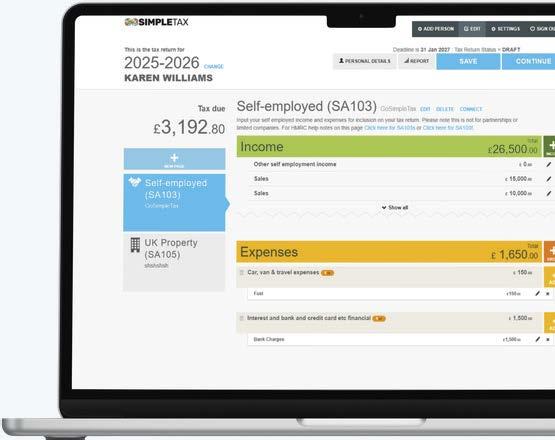

Includes standard Self Assessment pages, plus: Partnership Non-resident Previous year returns