The American Institute of Architects
Kansas City
The National Organization of Minority Architects
Kansas City

The American Institute of Architects
Kansas City
The National Organization of Minority Architects
Kansas City



Charles Evans Whittaker Courthouse. Kansas City, MO.
Architects: Ellerbe Becket & ASAI Architecture.
Architectural style: Postmodernism.
Read more about this building’s design: https://www.mow.uscourts.gov/outreach/whittaker_courthouse
Ready to explore an exciting career in architecture? AIA Kansas City and NOMAKC are here to help!

AIA Kansas City provides services and benefits that empower architects to create environments that enhance quality of life and our collective future.
NOMAKC’s mission is to champion diversity, multicultural design professionals, and allied organizations who desire to influence the greater community by advancing the profile of minority design professionals and multicultural business interests.
NOMAKC desires to be a united force to enact change that enhances opportunities for the increased exposure and contribution of minority professionals.

Our team of architects and designers—of all ages, ethnicities, backgrounds, and genders—have teamed together to bring you this guide to a career in architecture. We want to help you understand what architects do, the path towards becoming an architect, and other useful information to help you explore this meaningful career. Our world is changing constantly whether it be in the fabric of our streets or via economically and socially charged issues, architects are part of shaping healthier and more equitable communities.
We are excited to bring this Explore Architecture guide to you. We hope you learn more about the profession and what exactly it is that we do. Use this guide as a tool to work with your teachers and parents to challenge your creativity and develop your interests.
Now, go get started on designing your future!
I don’t think architecture is only about shelter, it is only about a very simple enclosure. It should be able to excite you, to calm you, to make you think.
- Zaha Hadid, British-Iraqi Architect
Design can be difficult to define but it is all around us! Think about the chair you are sitting on or the shoes you are wearing. How did they come to exist? Someone or a group of people DESIGNED them — they identified a problem and found a solution. Both of these items perform a function and appealed to you more than the other options available. The layout of your city, the parks in which you play in, the buildings you spend time in, the vehicle you use to get around town, the computer you use, and even the pattern on your shirt are all examples of design!

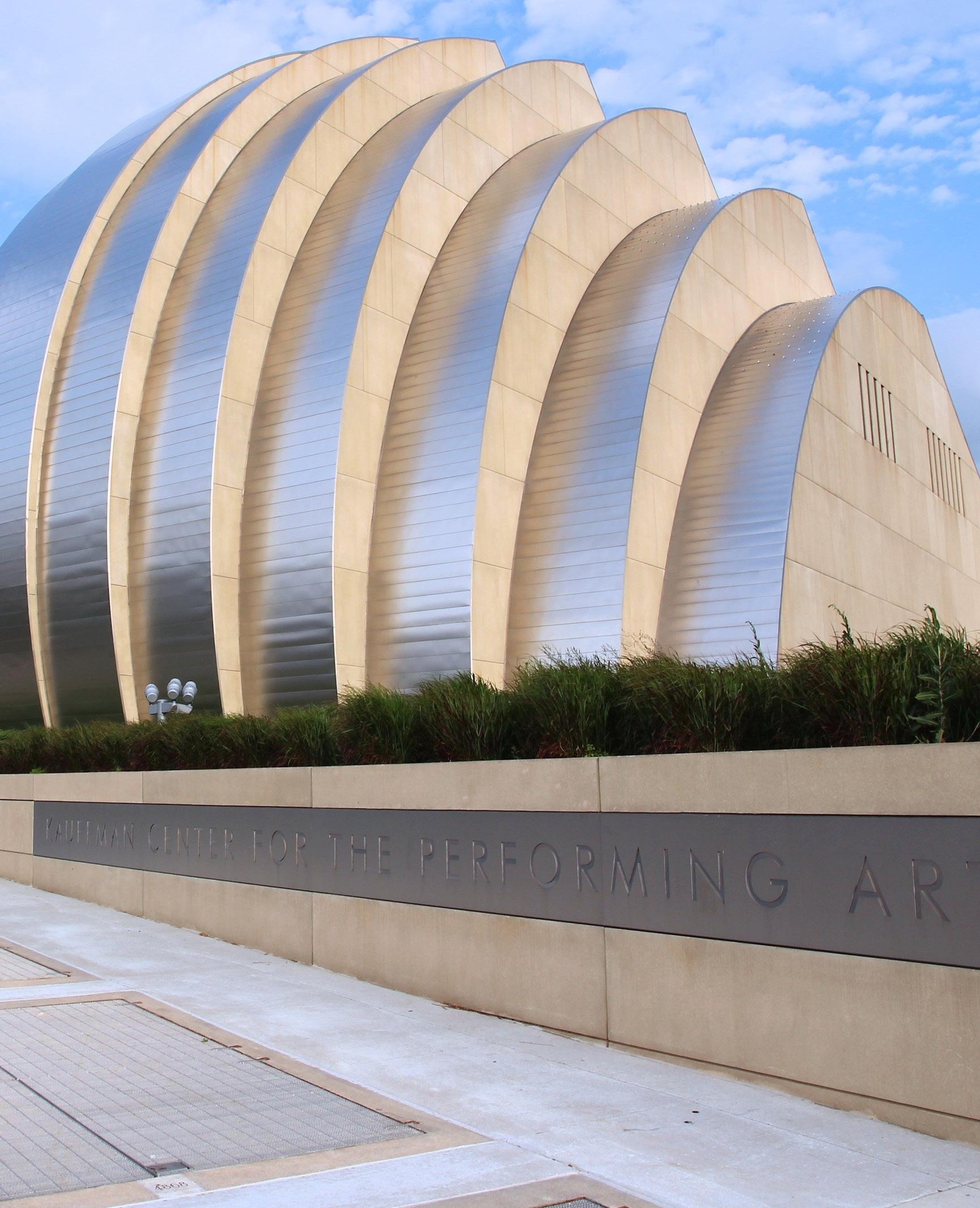
Kauffman Center for the Performing Arts. Kansas City, MO.
Architect: Moshe Safdie.
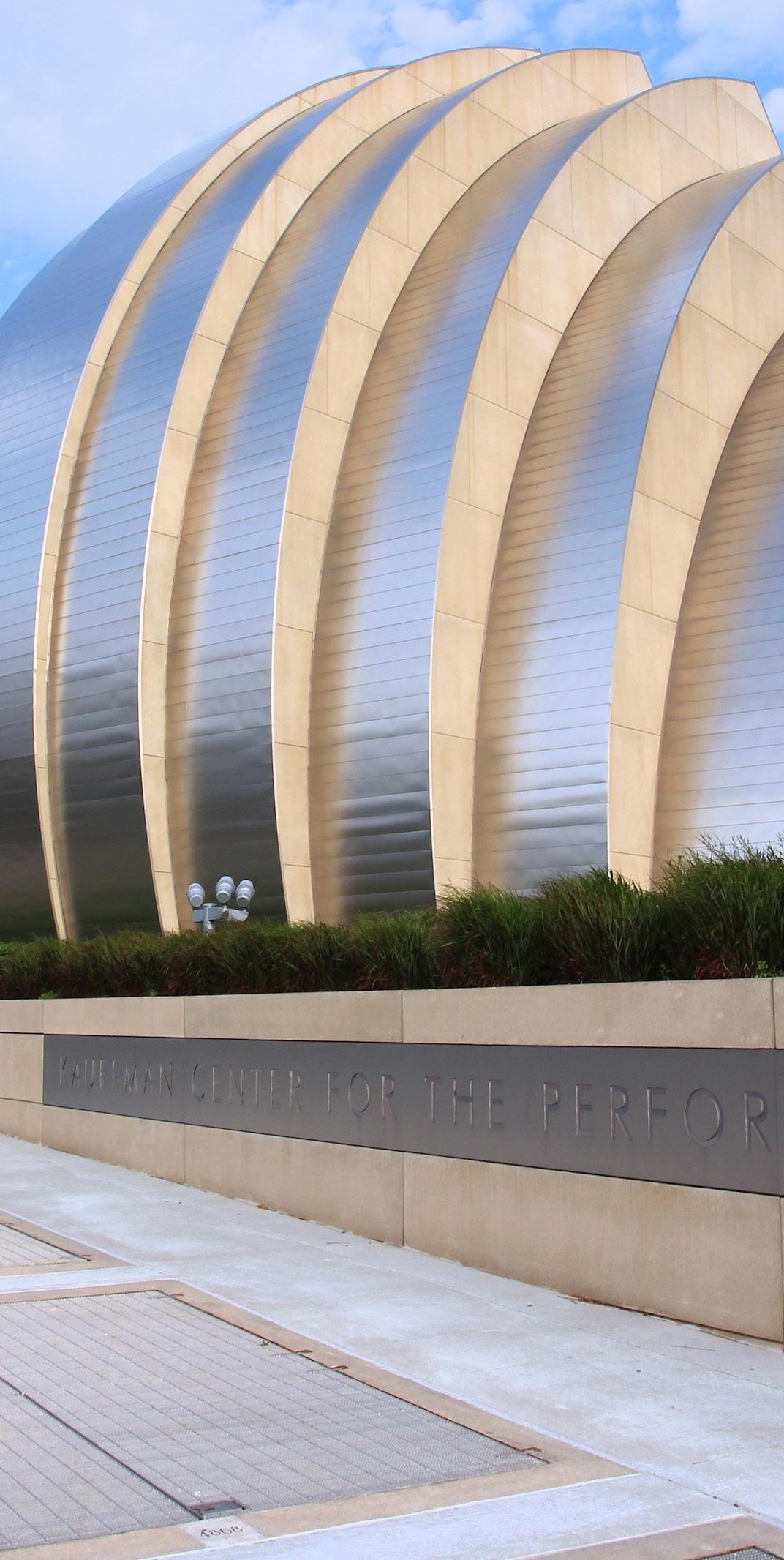
Architectural style: High-tech architecture.
Read more about how this building was designed: https://www.archdaily.com/151008/kauffman-center-for-theperforming-arts-moshe-safdie Image by: Tupungato / Shutterstock.com

Sketching, models and diagrams are some of the ways that designers visually express abstract ideas and make sense of the world. Below is a diagram example that helps explain a design process.
prototype & test
Design thinking requires us to know who will be the user and then work to understand their needs on a deep level. We must challenge any assumptions we’ve brought to the table so that we can uncover problems that may not be obvious. We then need to brainstorm ideas to uncover ways to address the user’s problems. This is an iterative process and we keep checking in on any trade-offs we may be making or if there are implications to what we’re designing. Despite being called design thinking, it is a very hands-on process.
Each of the items listed below contribute to the overall design process. Many of these steps occur parallel to one another, not in sequential order.
1. Problem is uncovered.
2. Constraints are established, such as: cost, size, location. A successful designer recognizes constraints and is still enthusiastic about working creatively within these constraints; often times these constraints can be used to make the project stronger and better.
3. Brainstorming and discussion with peers or your client.
4. Feedback is given.
5. Refinement and further testing.
6. A solution discovered.
Design is
never a
linear
process,
it is it is an endless pursuit of research, analysis, and exploration.
As students, you learn about science, technology, engineering, art and math.
Designers use all of these each day in their job.
Design is the creative side of STEAM which is very technically focused.
Architecture is one of the traits that defines a civilization and its culture. As an architect, you will literally shape the way the designed world evolves. Buildings shape the way we move and can even effect us subconsciously.
An architect is someone who is specifically trained and licensed to work on the planning and design of buildings in which people live, work, play and learn.
The role of an architect is varied. It involves bringing together the creative ideas and visions of the client and keeping in mind the needs of those who will be using the new space. These are professionals who lead the process of creating functional spaces, from concept and design, to overseeing the construction of those designs.
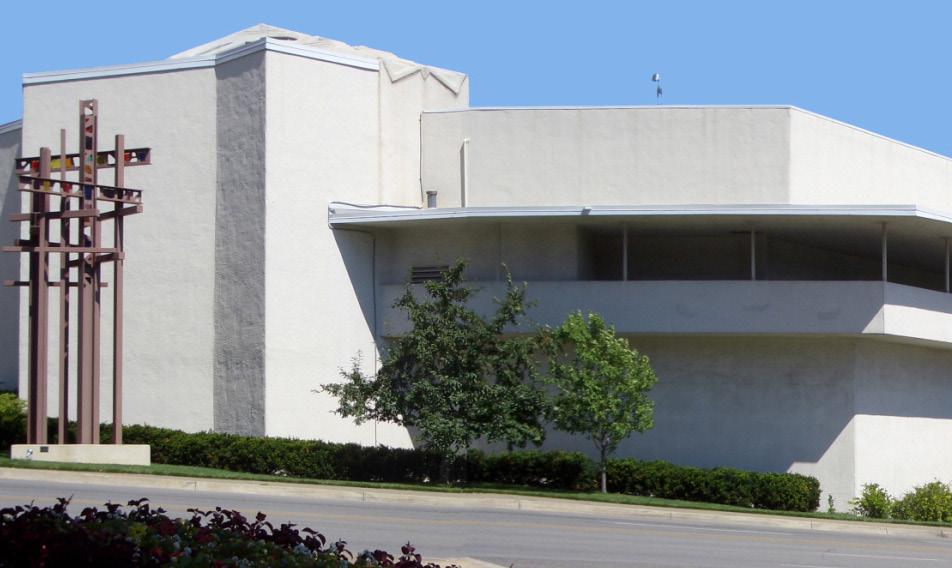
“ARCHITECT” IS DERIVED FROM TWO GREEK WORDS: ARKHI MEANING “CHIEF” AND TEKTON MEANING “BUILDER”
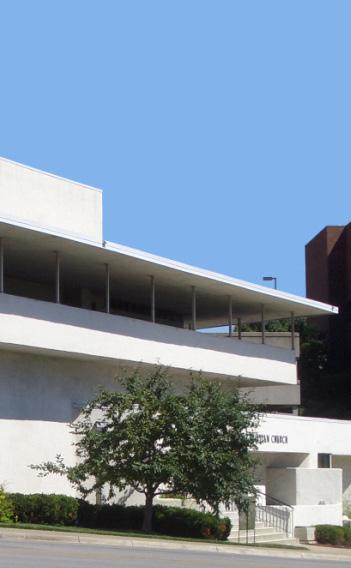
Community Christian Church. Kansas City, MO. Architect: Frank Lloyd Wright.
Architectural style: Usonian.
Read more about this building’s design: https://franklloydwright.org/site/community-christian-church/
Architects everywhere must recognize that our profession can harness the power of design to contribute to solutions addressing the most significant needs of our time.
“ - AIA Framework for Design Excellence
As licensed professionals, Architects are called on to protect the health, safety and welfare of the public who enter every space. They are uniquely positioned to improve not only the daily life and well-being of individuals but are responsible to protect the public of being free from risk of danger, damage or injury. Even among these critical challenges, the world is facing broad and complex challenges such as climate and sustainability on a daily basis. Water and energy conservation are important aspects considered with each design as it seeks to reduce negative impacts of the built environment on nature. The basic objectives of sustainability are to reduce consumption of non-renewable resources, minimize waste and create healthy, productive environments. Sustainable design is no longer the way of the future, it is an all-important obligation that Architects must face and embrace in the present.
Their responsibilities require specific skills — designing, engineering, managing, supervising and communicating with clients and builders. Architects spend a great deal of time explaining their ideas to clients, construction contractors and others. Successful architects must have a thorough knowledge of the construction of a building and be able to design and communicate their unique vision effectively.
“
Good ideas come from everywhere. It’s more important to recognize a good idea than to author it.
- Jeanne Gang, American Architect
Skills beneficial to architects:
• design thinking
• STEAM Education
• sketching
• drawing
• time-management
• organization
• versatility
• client relations
Beginning salary range of $46 - 56k for the Kansas City region.
Architects use the Design Process to design buildings. They also work with various consultants such as engineers, contractors, interior designers, landscape architects, urban planners and graphic artists to design buildings. The following pages will go into the specifics of this process in more detail.
“

T-Mobile Center. Kansas City, MO.
Architects: Downtown Arena Design Team: HOK Sport, 360 Architecture, Ellerbe Becket, Rafael Architects. Architectural style: Futurist architecture. Image by: TommyBrison / Shutterstock.com

CURRENT SOFTWARE USED BY ARCHITECTS:
Revit Architecture
SketchUp
Office Suite (Word, Excel, PowerPoint, etc)
Adobe Suite (Photoshop, Illustrator, InDesign)
A building begins with an idea, or a problem which the architect works to design a solution for. It starts with an idea, develops through iterations, detailed in construction plans and results in a building after construction.
Here is a summary of the many steps involved in the building design process.
Research • Gather Info • Summarize
CONCEPT & IDEAS
The programming or the pre-design phase, is about problem-seeking. During this phase, the scope is determined for the work to be designed.
The building process is like the lens of a magnifying glass. It starts as a big picture and gets more and more detailed as you zoom in.
Form • Function • Choices
SPATIAL PLANNING
During the schematic design phase, the basic form of the building starts to take shape.
Develop • Guide • Enhance
DECIDING ON THE DETAILS
The design development phase builds on the basic idea from schematic design and begins to refine and enhance the project.
Cost • Estimates • Dollars & Cents Details • Refine • Collaborate
This phase is about preparing detailed drawings of the project and coordinating with multiple team members. These drawings will be used to build the project on-site.
This phase breaks the project into pieces that can be estimated and a cost can be applied to the project. This cost can range depending on the market at the time.
Coordination is a big factor in design—structural, electrical, mechanical, plumbing—all factors will affect the overall design and end result. The process may appear linear, but it is rarely linear. Typically architecture is a back and forth process.
Review • Observe • Build
OBSERVING CONSTRUCTION
This is where the project goes from a drawing to a real building. The architect ensures the built project matches the design drawings.

The core of the downtown area was developed in an early 20th-century building boom that continued into the Great Depression. Emporis ranks Kansas City among the top ten US cities for art deco architecture.
So how can you start preparing to become an architect now? Education is a critical step in the journey, so let’s dive into what areas are most important.

“
“ Architecture should speak of its time and place, but yearn for timelessness.
- Frank Gehry, American Architect
Honors and AP courses of any type, to prepare for rigorous college coursework.
Studio art classes are extremely important. This includes drawing and 3D design. Mechanical drawing and CAD (Computer Aided Design) classes are not required, but could prove beneficial in the 2nd and 3rd year of college design programs.
A solid background in physical sciences, including physics as this is a course that you will likely need to take on the university level.
English and humanities classes, including developed writing abilities.
Foreign languages, suggested, but not required.
Speech or debate classes to assist in presenting during critiques and practice at public speaking.
Math, including trigonometry; calculus recommended but not required
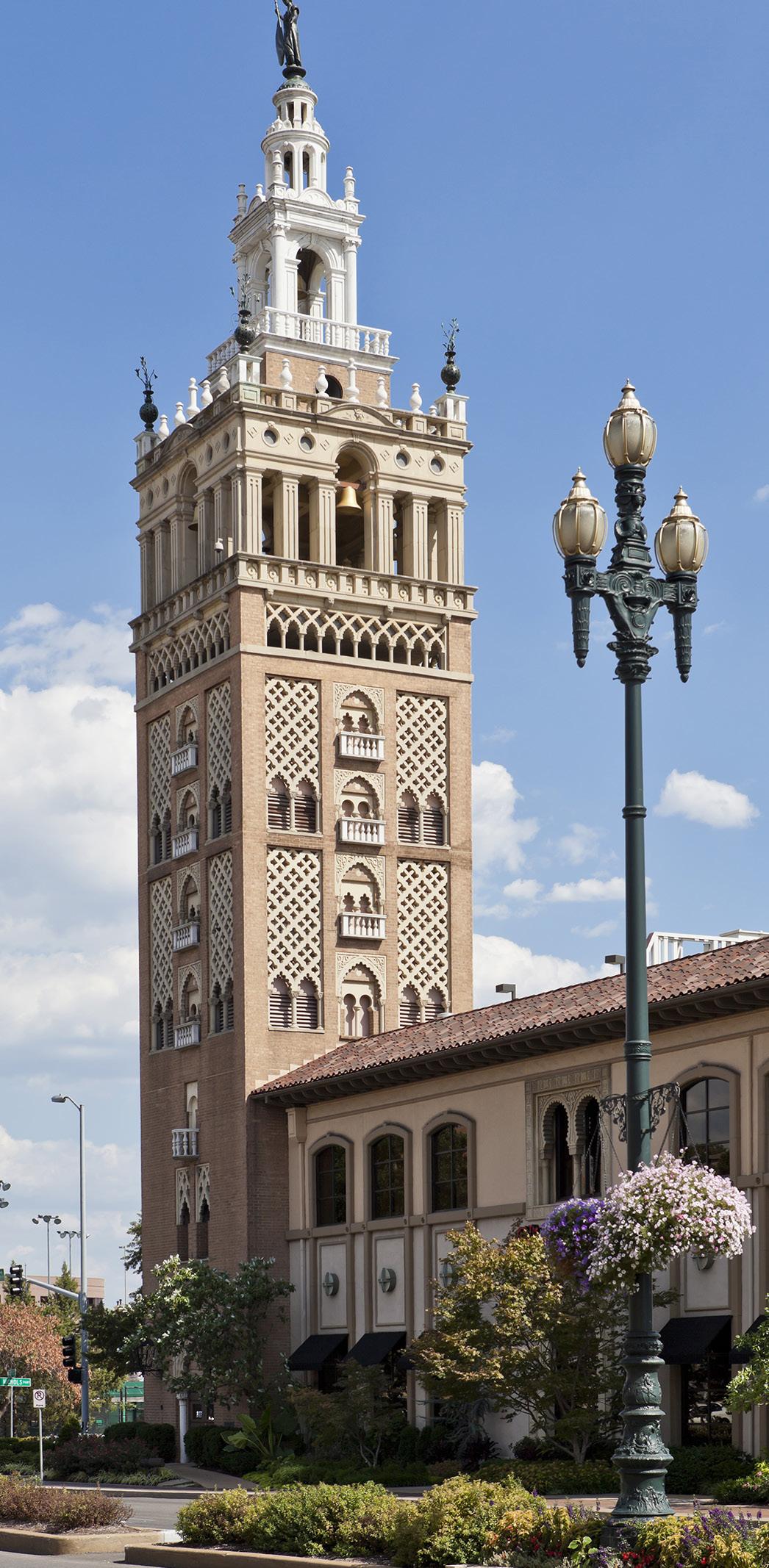
The Country Club Plaza in Kansas City, MO was designed in Moorish Revival style echoing the architecture of Seville, Spain.
Architecture programs across the US offer different experiences for their students. Generally speaking, you will be required to take standard core classes (e.g. Freshmen Seminar, Psychology, English, etc.) however you will also dive into architecture specific studies. After your first couple of years of school, you will be in architecture courses exclusively. Classes you can anticipate taking as part of an architecture program include:
• Design Studio*
• Design Principles
• Architecture History
• Computer Programs (Revit, Adobe Suite Programs, SketchUp, etc.)
• Structures
• Materials and Methods
• Drawing (Freehand, Perspective)
• Site Design
• Programming
• Environmental Systems (Mechanical Engineering)
• Professional Practice
• Speech/Presentation
Additional opportunities:
• Studying Abroad
• Competition Teams
• Student Organizations
*Studio Life: As part of design studio, you will be given a dedicated desk and area to work from. You’ll keep your materials, drawings and models here so you don’t have to trek across campus with them. You’ll be able to meet with instructors and your peers to discuss your designs and bounce ideas off of one another. Your studio mates will become your closest friends as you will spend a lot of your free time in studio working on your projects. Here is where the phrase ‘work hard, play hard’ is truly revealed. This mentality will translate into the working profession.
Liberty Memorial Tower.
Designer: Harold Van Buren Magonigle. The Liberty Memorial was dedicated “in honor of those who served in World War One in defense of liberty and our country.” It remains today as this nation’s only major memorial and museum specializing in the Great War of 1914-1918.

I really like the endless possibilities that architecture offers. The idea of designing something that is entirely unique in which the only limits are your own imagination yet have a specific function that can help to conquer prevalent world problems. Architecture is different than so many other professions in that I can leave a lasting positive impact on this world.
– UMKC Student

KANSAS STATE UNIVERSITY
College of Architecture, Planning and Design
https://apdesign.k-state.edu/arch/academics/index. html
• Masters of Architecture (5 years)
• Master of Architecture (2-3 years post bachelor)
• Master in Science of Architecture (2 years) Incoming Freshman Requirements
The admission decision will be based on cumulative high school grade point average and composite ACT or SAT scores without the writing portion. If you apply before the Feb. 1 deadline and have a 3.5 GPA and a 25 ACT or 1200 SAT or above, you will be offered early admission to AP Design.
UNIVERSITY OF KANSAS School of Architecture & Design
https://arcd.ku.edu/
• Master of Architecture (5 years),
Western Auto Building. Kansas City, MO.
Designed by: Arthur C. Tufts & Co.
Architectural Style: Chicago School - Commercial. Its multi-story lighted sign still tops the building. This visibility, together with the structure’s longevity, has made the Western Auto Building a city landmark.
©CC by 2.0
• Master of Arts in Architecture, (2-3 years post bachelor)
• Doctor of Philosophy in Architecture (Ph.D.), (2-3 years post bachelor)
Incoming Freshman Requirements, see page 17
https://architecture.ku.edu/undergraduateadmissions
Deadlines
• For Spring semester: Oct. 1
• For Fall and Summer semesters: Nov. 1 Applications received after Nov. 1 are reviewed on a rolling basis until final deadline Feb. 1
What I like about architecture is you can show and bring out your creativity on paper and then have it come to life. Architecture can bring out who you are as a designer. You can make the world look aesthically pleasing, and have these buildings last for generations.
– Student
DRURY COLLEGE
Hammons School of Architecture
https://www.drury.edu/architecture
• Masters of Architecture (5 years)
• B.S. in Architectural Studies (2-3 years post bachelor)
WASHINGTON UNIVERSITY IN ST. LOUIS
Sam Fox School of Design & Visual Arts
https://samfoxschool.wustl.edu/archprograms
• B.S. in Architecture
• B.A. in Architecture
• Masters of Architecture (2-3 years post bachelor)
UMKC
Department of Architecture, Urban Planning & Design
https://info.umkc.edu/aupd/academic-programs/
• Architecture Studies (2 years with transfer to KSU)
• Historic Preservation
• Urban Planning + Design (4 years BA)
JCCC – JOHNSON COUNTY COMMUNITY COLLEGE
https://www.jccc.edu/academics/credit/architecture/
• With 28 to 31 hours of architecture classes, you can transfer to a four-year university.
• JCCC works with KU on a transfer program
UMKC
Department of Architecture, Urban Planning & Design
https://info.umkc.edu/aupd/academic-programs/
• Architecture Studies (2 years with transfer to KSU)
RESOURCES:
www.aia.org/pages/2651-getting-licensed www.ncarb.org/become-architect/basics

3-STEPS TO BECOME A LICENSED ARCHITECT
• Must hold a professional degree in architecture (Bachelor or Master of Architecture) from an institution accredited by the National Architectural Accrediting Board (NAAB). Currently there are over 100 architecture schools to choose from.

• All states require that you work under a supervising architect to gain valuable work experience and to earn credit in the AXP (Architectural Experience Program) through the National Council of Architectural Registration Board (NCARB).
• The AXP identifies 96 key tasks that fall into six practice areas:
i. Practice Management (160 hours)
ii. Project Management (360 hours)
iii. Programming & Analysis (260 hours)
iv. Project Planning & Design (1,080 hours)
v. Project Development & Documentation (1,520 hours)
vi. Construction & Evaluation (360 hours)
TOTAL = 3,740 hours (~2 years)
• Credits can be earned while performing a paid academic internship under certain criteria that must be met. Unpaid internships will not qualify.
• Credits can also be earned while simultaneously taking the exams.
One of the primary requirements for becoming a licensed architect is passing the Architect Registration Exam (ARE). The multi-division exam covers six practice areas that correspond with the AXP areas of focus to assess your knowledge and skills regarding the practice of architecture.
Once you’ve earned your degree, met your required hours of experience and passed the exams, you may need to meet additional requirements in your jurisdiction to apply for a license to practice. Continuing Education credits will be required on an annual or biannual basis to maintain your license.
KCAF awards 8-10 scholarships each year; each award ranging from $3,000 to $5,000
If you live in the metro (5-county) Kansas City area and are planning to attend an accredited architecture or design school for college, you can apply for scholarships from Kansas City Architectural Foundation (KCAF).
THE ANNUAL SCHOLARSHIP CYCLE:
• February: Applications open; apply online aiakc.org/about/kansas-city-architecturalfoundation
• April: Applications are due.
• By July 1: Scholarship winners are notified; others are notified and encouraged to reapply next year.
• Early to mid-August: Reception for scholarship winners and families, where students receive their scholarship checks (not a requirement for winners).
TWO OPTIONS:
KCAF Scholarships Eligibility: Selections are made by the Scholarship Committee and are available to local (KC metro) students at any level of study for an architectural degree from an accredited school of architecture anywhere in the US. Selection for KCAF scholarships is based on need, academic excellence, and demonstrated leadership.
Women in Design Scholarship Eligibility: Selections are made by the Scholarship Committee and are available to students at any level of study for women pursuing a degree in design-related fields such as Architecture, Interior Design, Landscape Design, Industrial Design, or Product Design. Selection for WiDKC scholarships is based on need, academic excellence, and demonstrated leadership.
Kansas City Architectural Foundation 1801 McGee St., Ste. 100 Kansas City, MO 64108 | 816-221-3485


I was most suprised about architecture with how many different kinds of architecture structures you can design. For instance, with the major of architecture you can design buildings, stadiums, restaurants, etc.
– Student

GET OUT IN THE WORLD
EXPLORE ARCHITECTURE
ALL AROUND YOU

Shuttlecocks. Artist: Claes Oldenburg & Coosje van Bruggen.
Location: Nelson-Atkins Museum of Art, Kansas City, MO.
The artists imagined the wide lawn around the museum as a badminton court, inspiring them to produce four 18-foot-tall shuttlecocks.
Architects spend an entire life with this unresonable idea that you can fight against gravity.
“
Take a walk and see how many of these architectural elements you can mark off to get a bingo(s).
CANTILEVER PARAPET
AQUEDUCT PERGOLA BUTTRESS
STEEPLE
GARGOYLE
ARCADE
KEYSTONE
COLUMN
BALCONY
FACADE
CORNICE
FRIEZE
DOME
GABLE ROTUNDA
ARCH
CANTILEVER AQUEDUCT

I think architecture, to be really intense and fulfilling, doesn’t have to be large.

- Steven Holl, American Architect
Ready to dive in a little deeper into the world of architecture? Here are a few handy resources to help support and guide you on this adventure.

AIA Kansas City
The Kansas City Chapter of the American Institute of Architects: aiakc.org
NOMAKC
The Kansas City chapter of the National Organization of Minority Architects https://www.nomakc.com/
The American Institute of Architects: aia.org/pages/6323261-parentsstudents
The National Organization of Minority Architects: noma.org
KC Global Design
A cohort of Kansas City design and construction entities, aimed at cultivating, retaining and recruiting talented professionals to the Kansas City area. https://kcrising.com/trade/kc-global-design/
The American Institute of Architecture Students: aias.org
Association of Collegiate Schools of Architecture: www.acsa-arch.org
13 Things Aspiring Architects Need to Know http://architecture.about.com/cs/careers/a/bearchitect.htm
Architecture Career Guide: www.ARCHCareersGuide.com
National Council of Architectural Registration Boards: www.ncarb.org
PrepKC
A community organization aimed at improving the college and career preparedness of Kansas City’s Urban Students http://www.prepkc.org/ https://prepkc.nepris.com/home/v4
KC STEM Alliance
KC STEM Alliance is a collaborative network of educators, business partners and organizations that inspires interest in Science, Technology, Engineering and Math careers to generate a robust workforce of related professionals for our community.
Online Architecture Publications: Archdaily.com & Contemporist.com
AIA Cleveland Home Architecture Camp https://www.aiacleveland.com/home-architecture-camp
Center for Understanding the Built Environment: https://cube-education.org/
Center for Architecture & Design: www.cfadkc.org



Thank you to Kansas City Architectural Foundation for funding this Career Guide.
This book was created by the AIA Kansas City Education Outreach Committee and NOMA Education and Outreach Committee.
Our thanks to the following individuals for making this book possible:
James Evrard, AIA
Jennifer Berka, AIA
Sarah Kempf, AIA
Erin Flaherty, AIA
Laura Beth Cochran, AIA
Dominic Musso, Assoc. AIA
Matthew Hollingsworth, AIA
Bill Bourne, AIA
Wilson Meeks, NOMA
Sarina Shanks, NOMA