ISSUE 59 FALL 2026
S P E C I A L
S E C T I O N
TAKE AWAY
B Y H A I R R E S T O R AT I O N S P E C I A L I S T S | F O R H A I R R E S T O R AT I O N S P E C I A L I S T S
contents 11
18
23
Turning Down the Volume
Hair Loss & Healing in the Black Community
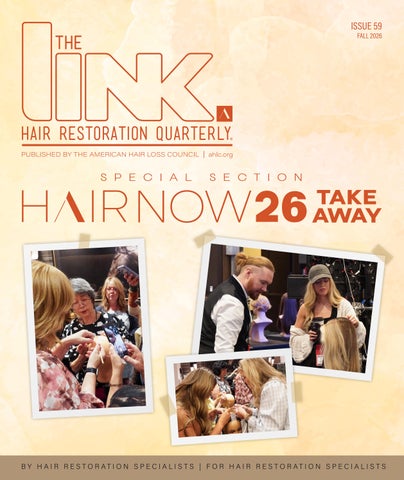
Special Section: HairNow26 Conference Review
5 Changing Perceptions, Restoring Confidence
18 Hair Loss & Healing in the Black Community
7 Genetic vs. Epigenetic Testing in Hair Loss Care
20 Helping Clients With Trichotillomania
11 Turning Down the Volume
23 Special Section: HairNow26 Conference Review
15 Welcome New Members!
34 AHLC Academy
THIS ISSUE MADE POSSIBLE BY THE SUPPORT OF THESE ADVERTISERS | PLEASE SHOW YOUR SUPPORT IN RETURN
THE LINK MAGAZINE
3
contributors KIM CRUZ
STYLIST & COLORIST SALON AT 10 NEWBURY
NADIA HUGHES
JANA MCDANIEL
OWNER, HOLISTIC PRACTITIONERS OF TRICHOLOGY
SMART SOLUTIONS RX
NOELLE SPINOSA
ROBERTA KOZEL
OWNER, NOELLE SALON & DAY SPA
OWNER, SALON IAOMO
IN THIS ISSUE:
MOMENTS AND MEMORIES FROM OUR TIME TOGETHER
THE LINK STAFF
The Link Magazine is the official, quarterly publication of the American Hair Loss Council. The Trade Association Serving the Hair Restoration Industry. For advertising or contributing editorially, please contact us: THE AMERICAN HAIR LOSS COUNCIL 615-721-8085 or info@ahlc.org
Publisher: Janine Farro Editor: Jarred Wilson Editorial Committee: Lisa Ferestad, Kelly Nemitz
AHLC Board of Directors
Randy Clark, Board Member Joseph Ellis, President Janine Farro, Administrator Susan Kettering, Executive Director
Graphic Design Paul Scheuer
4
THE LINK MAGAZINE
SUBSCRIPTIONS
LEGAL
Subscriptions to The Link Magazine are mailed FREE to AHLC members within the continental U.S. International members are provided digital copies. Please contact us for additional shipping rates if you are an AHLC member outside the US and wish to receive a printed edition.
The opinions expressed in The Link Magazine are those of the authors and may not reflect the views of the AHLC. Advertisements in The Link may not reflect the beliefs, opinions or attitudes of the AHLC and do not imply endorsement.
To become an AHLC member or renew your membership please call 615-721-8085 or log on to AHLC.org.
© 2026 The American Hair Loss Council, All rights reserved. Reproduction in whole or in part without written permission is prohibited.
Changing Perceptions, Restoring Confidence By Kim Cruz, Stylist/ Colorist, Salon at 10 Newbury, Boston, MA When I first entered the beauty industry, hair replacement was never something I imagined becoming passionate about. Like a lot of young stylists, I assumed it was mostly geared toward older generations and honestly saw it as a small, outdated corner of the salon world. At the time, I was just an assistant working in a salon that happened to offer hair replacement services. I had no idea that experience would eventually shape my career and completely change the way I viewed beauty, confidence, and connection. What surprised me most was the variety of people who walked through our doors. Hair loss wasn’t limited to one age group or one type of person. I saw children dealing with medical hair loss, teenagers struggling with alopecia, young adults experiencing thinning much earlier than expected, mothers navigating postpartum hair loss, and older clients trying to feel like themselves again. It made me realize very quickly that hair loss can affect anyone, and that the industry needs to stop treating it like something that only belongs to one generation. As someone who’s naturally introverted, I think I first connected with the creative side of wigs and hair replacement before I fully understood the emotional side of it. I loved the artistry, the customization, and the transformation process itself. It felt like a safe space for me creatively. Over time, hair replacement became familiar — almost too familiar. It became my comfort zone. At one point, I decided to step away and explore other parts of the beauty industry because I wanted to grow outside of what I already knew. I wanted to challenge myself, build confidence, and experience more of the traditional salon world. Looking back now, that part of my journey was important
because it helped me realize that hair replacement wasn’t something I accidentally fell into — it was something I genuinely cared about. When I came back to this side of the industry, my perspective had completely changed. I returned with stronger technical skills, but also with more confidence in myself and my place in this field. I realized being young doesn’t mean being inexperienced, and I think that’s something the hair replacement industry still struggles with. There’s this stereotype that it’s outdated or only meant for older professionals and clients, but that simply isn’t true anymore. One thing I’ve noticed is that a lot of younger stylists are actually curious about hair replacement, but they’re scared of it too. I understand that fear because I’ve had it myself, and honestly, I still do sometimes. In beauty school and on social media, success is usually presented one way — building a traditional clientele behind the chair, specializing in color or extensions, and growing your own personal brand. Choosing to work in a hair replacement salon can sometimes feel like you’re stepping away from that path or falling behind everyone else while they build steady clientele and visibility. I’ve watched younger stylists come through our doors interested in learning, but many of them leave because they don’t fully see the future in it yet. And honestly, I don’t blame them. Hair replacement is still treated like this hidden niche of the beauty industry when in reality it has the potential to be so much bigger than that. Because the truth is that this work is about so much more than hair. One of the biggest misconceptions about hair replacement is that it’s purely cosmetic. In reality, it’s deeply emotional and personal. Hair loss can affect someone’s confidence, identity, mental health, and everyday life
in ways people don’t always realize. Helping someone feel comfortable looking in the mirror again is incredibly meaningful. Whether it’s a child wanting to feel normal at school, a young woman regaining confidence after thinning hair, or an older client reconnecting with themselves, every transformation matters equally. I honestly think the future of this industry depends on making it bigger, more visible, and more modern than it’s ever been before. Younger stylists need to see that hair replacement is not separate from modern beauty, it’s part of it. It deserves the same attention as extensions, color transformations, and luxury salon services because the impact goes even deeper. I also think younger professionals have an important role in changing the image of this industry. We bring fresh creativity, modern techniques, openness, and a different understanding of how appearance and confidence affect people today. Social media and younger generations are already helping remove the stigma around wigs and hair systems by making conversations about beauty and hair loss more honest and normalized. Clients are becoming more comfortable asking questions and exploring solutions without shame, and I think younger stylists can continue pushing those conversations forward in a really positive way. For me, this career became about so much more than hairstyling alone. It became about empathy, connection, creativity, and confidence, not just for my clients, but for myself too. I used to think hair replacement was just where I happened to end up. Now I see it as the place where I can make the biggest impact. The industry is evolving, and so is the image of who belongs in it. Hair replacement isn’t outdated, and it isn’t only for older generations. It’s for anyone experiencing hair loss and searching for confidence, regardless of age. And as a young stylist, I’m proud to be part of changing that narrative. THE LINK MAGAZINE
5
Genetic vs. Epigenetic Testing in Hair Loss Care
Understanding the Difference — and Why It Matters for Hair-Loss Professionals By Jana McDaniel, Smart Solutions RX Hair loss is far more common than many people realize, and the biological changes associated with thinning may begin well before a client notices a visible difference. By the time someone seeks help, that person may already have tried supplements, topical products, salon treatments or medical therapies — with varying degrees of success. For professionals working in trichology, hair replacement and hair restoration, this presents both an opportunity and a responsibility. Clients are not only seeking cosmetic solutions. Many also want to understand why their hair loss is happening, why previous treatments may not have worked and whether anything can be done to protect the hair they still have. The answers are rarely found in a single test. Hair loss may be influenced by inherited tendencies, medical conditions, hormonal
changes, nutritional status, medications, stress, aging, scalp health and environmental exposures. Two people can present with similar patterns of thinning while having very different contributing factors and treatment considerations. This is why personalized hair-loss care is becoming increasingly important. The goal is not to replace professional evaluation with a laboratory result. It is to understand what each layer of information can — and cannot — tell us.
DNA Testing and Genetic Testing The terms DNA testing and genetic testing are often used interchangeably. In most hair-loss and wellness settings, they refer to the analysis of selected variations within an individual’s DNA. Genetic tests commonly examine variations called single-nucleotide polymorphisms, or SNPs. These variants may
Genetic vs. Epigenetic Testing Genetic Testing
Epigenetic Testing
• Examines selected variations in the DNA sequence
• Examines selected regulatory marks associated with gene activity
• Reflects inherited biological tendencies
• May reflect influences associated with age, health, environment and behavior
• The inherited variants tested generally remain stable
• Some findings may change over time
• May add context about predispositions and biological capacity
• May provide time-sensitive information about the markers measured
• Does not independently diagnose the cause of hair loss
• Is not a complete real-time picture of the body or scalp
• Should be interpreted with history, examination and other findings
• Its relevance depends on the sample, markers, validation and intended use
be associated with differences in biological processes such as androgen metabolism, nutrient utilization, oxidative defense, collagen and tissue integrity, vascular signaling, cellular energy and follicular growth signaling. The inherited variants evaluated generally remain stable throughout a person’s life. This makes genetic testing potentially useful as one layer of long-term planning. Results may identify biological tendencies that deserve consideration when interpreted alongside the client’s history, current presentation and other findings. A genetic variant is not, however, a diagnosis. It does not prove that a particular pathway is causing someone’s current hair loss, nor does it guarantee that the person will develop a condition associated with that variant. Most common forms of hair loss involve multiple genes interacting with age, health, hormones, environment and behavior. Genetic testing is therefore best understood as context — not a verdict. A result may suggest that a person has a greater or lesser inherited capacity within a particular biological area. Whether that tendency becomes meaningful depends on what else is happening in the person’s body and life.
Predisposition Is Not Predetermined Outcome Clients may hear the word genetic and assume there is nothing they can do. In reality, genes can influence biological strengths and vulnerabilities, but they operate within a much larger system. Nutrition, stress, illness, medication use, hormonal changes, sleep, aging and environmental exposures may all affect the conditions surrounding the follicle. Some of these factors are modifiable, while others require medical evaluation or ongoing management. CONTINUED ON PAGE 9 THE LINK MAGAZINE
7
BEHIND EVERY PIECE is a Process
THE JOURNEY BEGINS Long before a hair system reaches a stylist’s chair, every detail has been carefully considered. From selecting premium human hair to the final quality inspection, exceptional craftsmanship is what transforms a product into something that looks effortless and feels natural.
POPULAR BASE SYSTEM DESIGNS
Dermasilk Wefted
Unisex
Volume Part Deluxe
Mono Top Cutaway
• Coverage: Full Head
• Coverage: Full Head • Lengths: 4”
• Base: Top of Head, Mono Lace with 1” PU Perimeter
• Hair: Virgin
• Lengths: 14”
• Base: Top of Head, Front Lace,Mono Lace with 1” PU Perimeter
• Hair: Pre-Blended
• Mediterranean Human Hair
• Mediterranean Hair
• Density: Medium
• Cap Sizes: XS - 50cm / 19.5’’ S - 52cm / 20.5” M - 54cm / 21.3”
• Cap Sizes:
• Cap Sizes: 4” x 6.5”
• Density: Medium
• Perfect for Elegant length with beautiful balanced volume • Lengths: 12” & 16”
• Perfect for Effortless style for everyone
S/M - 52cm / 20.5”
• Lengths: 16”
• Cap Sizes: 8” x 9”
949.520.7212 info@berlinhaircompany.com www.berlinhaircompany.com @berlinhaircompany
CONTINUED FROM PAGE 7
Genetic information may help a qualified provider determine which areas warrant closer attention, which expectations are realistic and which additional assessments may be appropriate. It may also contribute to an understanding of why two people with similar-looking hair loss do not necessarily respond identically to the same intervention. Genetic findings should not be used to create rigid treatment recipes. Their value lies in helping professionals ask better questions and build a more individualized understanding of the client.
Why Timing and Evaluation Matter Not every form of hair loss behaves in the same way. Some types of shedding may improve or regrow when the contributing condition resolves. Other disorders can cause progressive miniaturization or permanent follicular damage, particularly when scarring is present.
What About Epigenetic Testing?
Earlier recognition may preserve more options, but testing should never be used to create false urgency or promise that every follicle can be recovered. The priority is understanding the presentation and determining whether the client should be referred for medical evaluation.
Epigenetics involves changes in gene regulation that occur without changing the underlying DNA sequence. Certain chemical marks can influence when and how genes are activated or reduced. These patterns may be affected by age, nutrition, stress, illness, environmental exposures and behavior.
Hair-replacement services remain an essential part of the continuum. Wigs, toppers, extensions, and hair systems can restore confidence and quality of life whether a client is pursuing treatment, awaiting a diagnosis, managing permanent hair loss, or choosing not to undergo medical intervention.
This has led to a popular comparison: genetics is the blueprint, while epigenetics is a snapshot of what is happening now. The analogy is useful, but it has limitations.
Cosmetic support and clinical care are not competitors. When appropriate, they can work alongside one another while respecting the client’s goals and each professional’s scope of practice.
An epigenetic test does not capture everything occurring within the body at a given moment. It measures selected markers from a particular sample, such as blood, saliva, or cells collected from inside the cheek. Because epigenetic patterns can differ among tissues and cell types, findings from one type of sample should not automatically be presented as a direct measurement of activity within the scalp or hair follicle. Its meaning depends on what markers were measured, what sample was used, what the test has been validated to assess, and how closely those findings relate to the decisions being considered. Genetic and epigenetic testing are not opposing technologies. They examine different aspects of biology and may sometimes provide complementary information. Neither replaces a medical history, scalp examination, trichoscopic imaging, laboratory evaluation, or biopsy when those assessments are indicated.
What Hair-Replacement Professionals Can Do • Observe and document visible changes in the hair and scalp. • Encourage appropriate medical evaluation when needed. • Recognize findings that warrant referral to a dermatologist or other qualified provider. • Avoid presenting genetic or epigenetic findings as a diagnosis. • Coordinate cosmetic solutions with the client’s broader care plan when appropriate. • Support clients, whether they choose treatment, hair replacement, or both.
From Information to Action Collecting more data does not automatically create better care. Information
becomes useful only when professionals understand where each piece belongs. A diagnosis identifies the recognized condition. Genetic findings may add context about inherited tendencies. Epigenetic findings may offer information about selected regulatory markers. Medical history, medication use, laboratory results, scalp imaging, trichoscopy and clinical presentation provide additional — and sometimes more immediate — information. These layers should be integrated, not confused with one another. Within Smart Solutions RX, HALO organizes genetic findings alongside relevant history and contraindication information, while the STIMUL8 Method provides a framework for integrating those findings with other assessment layers and translating them into a structured, individualized strategy. The test itself is not the treatment plan; it is one source of information within the decisionmaking process.
The Future Is Personalized — and Collaborative Hair restoration is moving away from one-size-fits-all protocols. Clients increasingly expect recommendations that reflect their biology, health history, current presentation, priorities, and comfort with treatment. Advanced testing and scalp-analysis technologies can contribute meaningful information, but technology should support professional judgment rather than replace it. The strongest approach combines appropriate assessment, responsible interpretation, realistic expectations and collaboration across disciplines. For hair-replacement professionals, this evolution expands the opportunity to become a knowledgeable and trusted resource throughout the client’s journey. The future is not simply genetic testing, epigenetic testing or another emerging technology. It is knowing how to place each source of information into context — and helping every client move forward with greater clarity, confidence and support. THE LINK MAGAZINE
9
THE
NON-INVASIVE OPTION FOR IMMEDIATE RESULTS FOR THE CLIENT WHO WANTS A COMFORTABLE, BELIEVABLE LOOK WITH:
NO SURGERY NO MEDICATION NO LASERS NO NEEDLES NO WAIT And because American Hairlines systems aren’t permanent, clients can even change it up at each salon visit. Start short and “grow” the length. Go darker or lighter. Add highlights or rooting. Try textures from super straight to waves or curls. BEFORE
1. The application area
2. Once your system has been customized to
3. Trim, shape
4. Visit your barber
is shaved for the most
match the density and color of your natural hair, its
and style.
or stylist for regular
secure attachment.
micro-thin base is carefully bonded to your scalp. The excess base is then trimmed away.
SCAN TO LEARN MORE
@AMERICANHAIRLINESOFFICIAL 1-888-766-6832
maintenance.
Turning Down the Volume Roberta Kozel, Owner, Salon IAOMO, Pittsburgh, PA As hair restoration specialists, we know the systems we receive are not always perfect. If you have struggled with devolumizing your systems, you are not alone, and there are simple solutions to help you create the best look for your clients. We have all been in a situation where the venting on a system is going the wrong way or the system you just cut in doesn't lay properly. Maybe it’s too full on one side or the whole unit just isn't cooperating. These simple steps can assist you in devolumizing your unit, whether human or synthetic, without cutting or thinning.
SYNTHETIC HAIR hair system Items needed: Synthetic Steamer (Though any steamer will
Styrofoam head or cork block Brush and/or comb
Pins Instructions
work, I recommend the Jiffy steamer.)
1. While the steamer is warming, secure the unit to the head with the pins. The steamer is warm when steam is visibly coming from the mouth.
2. Keep the mouth of the steamer roughly three inches away from the hair and use the brush to pull the hair away from its base.
3. If you just want to lessen the volume of the hair directly, use steam toward the unit and you will see the hair fall towards the base of the system.
NOTE: It will eventually go completely straight if you hold it in place for too long, pull the hair too tightly, or repeat the process too many times.
If by chance you straighten the system too much, you can reconstruct the curls using a curling iron on low heat or by applying the steam directly to the hair and using a cold iron, or by putting in perm rods the size of the desired curl and steaming each rod.
If by chance you straighten the system too much, you can reconstruct the curls using a curling iron on low heat or by applying the steam directly to the hair and using a cold iron, or by putting in perm rods the size of the desired curl and steaming each rod.
CONTINUED ON PAGE 13 THE LINK MAGAZINE
11
CRLAB HAIR SPA
A new era of relaxtion & science
WHERE SCIENCE MEETS WELLNESS
Scientific analysis Sensorial comfort Enhanced application Outstanding products
CONTACT US TO KNOW THE DETAILS crlab.com
crlabusa
jodie.vanderhoof@crlab.com
karen.harvey@crlab.com
crlab_usa
Turning Down the Volume, continued HUMAN HAIR
Items needed
Human hair system (This works on any base.)
1. Secure the unit to the styrofoam head with the pins.
5. Apply the neutralizer, and proceed to comb it in the same direction you did with the perm solution. The flatter you keep the comb the better. This will keep the hair closer to the base and give a flatter result.
Tinted perm (I used Design Freedom. If the unit is blonde, I use ISO.)
2. Apply the perm solution to the unit. (The unit can be damp or dry, but you will see better results when the unit is damp and it must be clean.)
6. Allow it to process per timing directions, usually 10 minutes. (Be sure to check directions.)
Comb Styrofoam head Pins
3. Comb the hair in the direction you want it to lay with a cutting comb. I usually keep combing in the direction I want it to lay roughly 8-10 times.
4. Rinse out the perm solution and blot with a towel. Be sure you rinse the hair in the same direction that you want it to lay.
7. Rinse the neutralizer then blot the unit with a towel. When the above steps are complete, the unit should lay flatter and not appear as "puffy".
THE LINK MAGAZINE
13
MEET SYDNEY The newest addition to the Amani Hair Family, designed to create the perfect fit for today’s modern hair replacement clients.
�� Crafted from 100% Virgin European Human Hair with Soft, modern layered cut with elegant curtain bangs
�� Premium French Lace Top for the most
natural scalp appearance, multi-directional parting for unlimited styling versatility
�� Available in three cap sizes: XS, S & M
for a superior fit, lightweight, breathable construction for all-day comfort
�� Can be professionally cut, colored, and customized
Follow us on: www.amanihair.com amani.hair
Learn more:
Welcome New Members! Alexis Baxter Philly Hair Healer at Cosset Beauty Lounge, Philadelphia, PA Alexis is a respected leader in the beauty, hair restoration, and hair loss advocacy communities, bringing nearly two decades of expertise and innovation to her clients. A State Board Licensed Cosmetologist, Certified Hair Loss Practitioner, and Non-Surgical Hair Replacement Expert, she has dedicated her career to helping individuals restore not only their hair, but also their confidence and sense of self. Beyond her work behind the chair and in the clinic, Alexis is a passionate advocate for individuals experiencing hair loss. She founded the Alopecia Angel Network for Women, creating a supportive community that empowers women navigating alopecia and other hair loss conditions. She is also the author of the Alopecia & Me children's book series, which helps young readers build confidence, selfacceptance, and resilience while raising awareness about hair loss from an early age.
Crystal Christianson Studio C Salon, Alexandria, MN With more than 30 years of experience behind the chair, Crystal has built a reputation for technical excellence, uncompromising integrity, and an exceptional client experience. She specializes in custom color, luxury hair extensions, and personalized hair replacement solutions that restore confidence while preserving hair health and integrity. Driven by a passion for education and innovation, Crystal continues to expand her expertise in hair loss and scalp wellness, combining advanced techniques with the industry's most respected professional products to deliver natural, beautiful results. She believes every client deserves individualized care, honest guidance, and solutions tailored to their unique needs. Known for her meticulous attention to detail and genuine compassion, Crystal's approach blends artistry with science to help clients look and feel their very best. Her mission is simple: to provide an elevated salon experience where healthy hair, lasting relationships, and renewed confidence are at the heart of everything she does.
Robyn Clark A Plus Wigs & Cuts and Belleza Salon, St. Peters, MO I've been blessed to serve the beauty industry for more than 30
years and have proudly owned Belleza Salon for the past 17 years. My greatest passion is helping women look and feel beautiful from the inside out, and I’m excited to be part of the American Hair Loss Council to learn from industry leaders, collaborate with fellow members, and continue growing so I can better serve those experiencing hair loss. Along with my background in hair, I also have extensive experience in mindset coaching and personal development, which allows me to support not only the hair restoration journey but also the confidence and emotional healing that often comes with it. I’m a wife of 30 years, a proud mom of three, “Mimi” to four wonderful grandchildren, and I love country life, serving others, and lifelong learning. I look forward to meeting each of you, building meaningful relationships, sharing ideas, and making a positive difference together in the lives of the people we are privileged to serve.
Kelly Engram Prairie Fire Hair, San Marcos, TX After living with alopecia and wearing wigs herself for more than 15 years, Kelly founded Prairie Fire Hair to create the kind of personalized, supportive wig-buying experience she wished had existed during her own journey. Prairie Fire Hair offers both accessible and luxury human hair collections, with an emphasis on natural density, comfortable cap construction, realistic color, and individualized fit. Kelly is also an Assistant Professor of Instruction at Texas State University, and her background as an educator is central to Prairie Fire Hair’s mission of helping women understand their options and feel confident choosing and wearing alternative hair. Through both her San Marcos studio and online community, Kelly is committed to making the wig-buying experience more personal, transparent, and empowering.
Michael and Kimberly Garfinkel Thursday's Hair Solutions in Calabasas, CA We've built our careers around one core belief: When people feel confident in how they look, every part of their life improves. We've dedicated ourselves to helping clients throughout Southern California reclaim confidence through non-surgical hair restoration. Kimberly, a licensed cosmetologist, and Michael, who guides the daily operations of their 24-year hair replacement salon, are thrilled to be members of the AHLC and look forward to connecting and establishing relationships with industry colleagues throughout the US.
Mandy Kinn Hair Revival Ltd, Bluffton, OH Mandy is a double-certified Clinical Trichologist and accredited by the AMCA for the last 4 years, as well as an accomplished educator, stylist and owner of Spectrum Salon in Bluffton, Ohio for over 28 years. Recognizing the growing need for comprehensive hair loss and scalp services, she pursued advanced clinical training to better serve clients who are experiencing hair thinning, shedding, and scalp disorders. She specializes in hair and scalp health, utilizing a holistic, multi-therapeutic approach to achieve optimal outcomes and integrates clinical trichology with practical salon experience to bridge the gap between cosmetic and corrective hair care. Passionate about strong foundational skills and ongoing education, Mandy is committed to elevating standards within the industry while empowering clients to regain confidence through improved hair and scalp health.
Deborah Lavio Hair Suite by Deb, Farmingville, NY I have been working in the hair replacement industry for over 18 years, and for the past 8 years, I have operated my own hair replacement and wig/topper business, Hair Suite by Deb. As a Hair Replacement Specialist, I take great pride in providing personalized solutions for individuals experiencing hair loss, with a strong focus on enhancing each client’s confidence, comfort, and overall appearance. I am excited to be a part of such a wonderful organization as the AHLC. I look forward to staying current with the latest information, education, techniques, and products available to better serve my clients. I am also excited about the opportunity to connect with and learn from other professionals who share my passion for the hair replacement industry.
Kasie Peterson Flourish Trichology & Hair Solutions, Englewood, FL Kasie Peterson is a Certified Trichologist through the World Trichology Society and a licensed cosmetologist with nearly 20 years of experience in CONTINUED ON PAGE 17 THE LINK MAGAZINE
15
CONTINUED FROM PAGE 15
the hair industry. She continues to work behind the chair while also owning Flourish Trichology & Hair Solutions, a private studio in Englewood, Florida, specializing in hair and scalp consultations, wigs, toppers, and personalized hair-loss solutions. She is also a Certified Service Provider and Hair Donation Specialist with Wigs for Kids, volunteering her time to assist children experiencing medically related hair loss. Kasie is passionate about continuing her education in alternative hair and hair-replacement systems. Her goal is to provide individualized solutions that help clients feel confident and supported throughout their hair-loss journey.
Leslie Rossi StyleOnsite, Palatine, IL I am a licensed cosmetologist, cosmetology instructor, certified trichologist, certified in scalp care, and salon owner with more than 25 years of beauty industry experience. Throughout my career, I have taught in beauty schools and worked as a color and product educator for professional brands. My personal health journey inspired me to focus more deeply on scalp health, hair loss, and alternative hair solutions. I am passionate about providing compassionate education, private consultations, and naturallooking solutions that help clients feel confident and supported. I am committed to continuing my education and making a meaningful difference for people experiencing hair loss.
Svitlana “Lana” Sandurska, RN, WTS, MS DeUnum/Advanced Hair Solution, Huntingdon Valley, PA Svitlana is a Certified Trichologist, Registered Nurse, and co-owner of DeUnum Trichology & Skin Associates in the Philadelphia area, bringing more than 15 years of clinical healthcare experience to her practice. In addition to her nursing background, she holds a Master’s degree in psychology and has advanced education in Trichology and Functional Nutrition. Her integrative approach combines advanced diagnostic methods — including digital trichoscopy and polarized hair microscopy — with evaluation of nutritional, hormonal, inflammatory, metabolic, and lifestyle factors that may contribute to hair loss
and scalp disorders. She has a special interest in scalp microbiome health, follicular regeneration, and innovative non-surgical approaches to hair restoration. Lana is passionate about advancing clinical trichology through evidence-informed practice, international continuing education, and collaboration with medical and hair-restoration professionals.
Noelle Spinosa Noelle Salon & Day Spa, Melrose, MA Noelle has specialized in hair loss solutions and hair extensions for more than 35 years. Throughout her career, Noelle has dedicated herself to helping women experiencing all types of hair loss, including trichotillomania, alopecia, chemotherapyrelated hair loss, female pattern hair loss, and scarring alopecias such as Lichen Planopilaris. She specializes in creating individualized, natural-looking solutions using hair toppers, mesh integration, meshless integration, wigs, and customized hair extensions designed around each client's unique needs. Noelle has been featured by WCVB Chronicle, NECN, The Boston Globe, and other media for her work helping individuals experiencing hair loss. She is also passionate about educating women through her writing, sharing the lessons she has learned from thousands of consultations and more than three decades of experience. Her philosophy is simple: hair replacement should never begin with the hair — it should begin with the person. She believes that listening, compassion, and understanding are just as important as technical skill, and that helping someone regain confidence is one of the greatest privileges of her profession. Noelle is honored to join the American Hair Loss Council and looks forward to learning from and collaborating with fellow members who share a commitment to advancing compassionate, ethical, and innovative hair loss care.
Myisha Stratton D.D. Daughters Lace Wig Beautique, Willow Grove, PA Myisha is a licensed cosmetologist, cranial prosthesis specialist, educator, and founder of D.D. Daughters Lace Wig Beautique in Willow Grove, Pennsylvania. With nearly 30 years in the beauty industry and a professional background in healthcare,
Did we miss you?
she blends compassionate care with expert hairloss solutions for clients experiencing alopecia and medically related hair loss. As a breast cancer survivor, Myisha understands firsthand the emotional impact of hair loss and is passionate about helping every client regain confidence, dignity, and a sense of self. She is also the founder of Wig Whisperer Academy, where she trains beauty professionals to build successful cranial prosthesis businesses through insurance education, proper documentation, ethical practices, and exceptional client care. As a proud member of the American Hair Loss Council, Myisha is committed to advancing the hair-replacement industry while creating greater access to knowledgeable and compassionate support.
Julie Taylor NHR Studios, Nashville, TN NHR Studios is Nashville premiere destination for private, personalized hair replacement services. Led by salon owner and specialist Julie Taylor, our team has more than eight years experience creating natural, undetectable results. We combine advanced hair system expertise with exceptional cutting, coloring, and blending techniques. Our mission is to restore confidence thru great hair and experience you can trust.
Zinaria Williams, MD Well by Messer, Great Neck, NY Dr. Zinaria Williams is a board-certified, fellowshiptrained hair restoration surgeon and oculofacial plastic surgeon with a combined 20 years of surgical experience in hair transplantation, reconstruction of the face and scalp, and facial aesthetics. Her holistic approach begins with finding the root cause of each patient's hair loss, then treating it with the full range of options, from medical therapy, PRP, and regenerative treatments to transplantation for the scalp, eyebrows, and eyelashes. She welcomes the patients others turn away: women with textured hair and traction alopecia, those with stable scarring alopecia (CCCA and FFA) or cutis verticis gyrata (CVG), for whom she offers scalp reduction surgery, and patients seeking hairline feminization or hairline reduction. She partners closely with stylists, hair replacement professionals, and medical dermatologists to get real answers and help restore confidence to her patients.
If you missed getting your photo and bio in The Link when you became an AHLC Member, please contact us. THE LINK MAGAZINE
17
Hair Loss and Healing in the
BLACK COMMUNITY A
B I O L O G I C A L
A N D
C U LT U R A L
L E N S
By Nadia Hughes, Owner, Holistic Practitioners of Trichology Hair is more than a physical structure. In many cultures, and especially within the Black community, it carries identity, heritage, social belonging, and emotional meaning. Because of this deep significance, hair loss is rarely a superficial concern. It can be a visible marker of internal suffering, a manifestation of unresolved trauma, and a disruptive force affecting confidence, social relationships, and well-being. Emerging research in psychoneuroimmunology and functional medicine helps us understand why trauma and chronic stress have measurable biological effects on the hair growth cycle. These scientific frameworks, placed in conversation with the lived experiences of the Black community, reveal that hair loss linked to trauma is not imagined, exaggerated, or purely cosmetic; it is biologically legitimate.
Trauma, Stress Biology, and Hair Follicles Psychosomatic trauma alters body systems at every level, neurologic, endocrine, immune, and tissue specific. Acute or chronic distress activates the hypothalamic-pituitary-adrenal (HPA) axis and the sympathetic nervous system, increasing cortisol, catecholamines, and pro-inflammatory cytokines. Hair follicles are highly stress sensitive mini organs, and these hormonal shifts can push follicles into premature shedding (telogen effluvium), trigger 18
THE LINK MAGAZINE
inflammation driven miniaturization (as in some cases of central centrifugal cicatricial alopecia), or impair follicular stem cell activity needed for regrowth (Paus et al., 2014).
innervated and hormonally responsive, explaining why identity-based stress, common in marginalized communities, can directly manifest in the scalp.
Chronic trauma shifts cytokine profiles toward higher IL-6 and TNF-ɑ, generating a low-grade inflammatory state. In this environment, tissue healing becomes less regenerative and more fibrotic (Heinrich et al., 2021).
• Microbes as Repair Agents: During healing, microbes participate in tissue remodeling. This aligns with emerging research showing that the scalp microbiome shifts during repair and inflammation (Rodrigues-Barata et al., 2020).
For the scalp, this means that repeated inflammatory insults whether emotional trauma, physical tension (traction), or chemical irritation can tilt the balance toward scarring alopecia. Over time, microvascular changes and sympathetic overdrive also reduce blood flow to the follicular niche, making regrowth more difficult.
• Illness as Biological Adaptation: From this perspective, hair loss during trauma is not a failure of biology, but a programmed stress response, redirecting energy away from non-essential systems (like hair) to survival pathways.
In trichology, we view the follicle as a reflection of the internal state. When the nervous system is dysregulated, the scalp ecosystem and regeneration capacity reflect that imbalance.
A Biological Lens Through the Five Biological Laws The German New Medicine framework proposed by Dr. Ryke Geerd Hamer suggests that illness begins with an unexpected emotional shock that impacts the psyche, brain, and body simultaneously (Hamer, 2000). While the model is still controversial, several of its concept's parallel modern psychoneuroimmunology: • The DHS (Shock Conflict): A sudden emotional trauma initiates a cascade of neurologic and endocrine responses, precisely what we see in acute telogen effluvium after grief, violence, or destabilizing life events. • Two Phases of Healing: When the conflict is active, the body stays in the high cortisol, sympathetic driven “fight or flight” state. Once the conflict resolves, the healing phase begins, characterized by inflammation, fatigue, swelling, and repair. This mirrors the shift from stress-induced shedding to the rebound regrowth phase. • The Organ-Brain Connection: Different emotional conflicts affect different types of tissues. Hair follicles are richly
Why the Black Community Is Disproportionately Affected Trauma has multiple layers within the Black community: generational trauma, social discrimination, hair-based bias, and chronic microaggressions related to appearance. Hair is policed in schools, workplaces, and media. Textured hair is often politicized and scrutinized, making the hair–identity connection even stronger. This creates a neurological environment where hair loss carries amplified emotional weight, intensifying the stress response that fuels further shedding. The cycle becomes self-perpetuating. In addition, certain culturally rooted grooming practices, tight protective styles, frequent tension, chemical relaxers, and thermal trauma, interact with stress biology, increasing the risk of traction alopecia and inflammatory scalp disorders. Studies show that chronic psychosocial stress is significantly associated with higher rates of telogen effluvium, autoimmune alopecia areata, and scarring alopecia (Callender et al., 2016). When stress intersects with mechanical and chemical stressors, the risk becomes even higher.
Healing Requires Both Internal and External Approaches Addressing hair loss in the Black community requires more than topical solutions.
Effective treatment integrates: • Nervous system regulation (trauma therapy, somatic work, breath practices) • Anti-inflammatory nutrition • Microbiome balancing scalp care • Reduced mechanical tension • Psychological support for identity and self-esteem • Lab testing to assess inflammatory markers, nutrient status, and hormonal imbalances Hair loss triggered or worsened by trauma cannot be treated by focusing only on the scalp. We must treat the human behind the hair. The psychology of hair loss is inseparable from biology. For the Black community, where hair is a cultural, emotional, and ancestral symbol, trauma can have a uniquely powerful impact on the scalp. Understanding the neuroimmune pathways behind trauma induced alopecia allows us to treat clients with scientific precision and deep cultural empathy. Healing hair means healing the nervous system, the identity, and the internal biology shaped by lived experience. References Callender, V. D., Wright, D. R., Davis, E. C., & Sperling, L. C. (2016). Hair loss in African-American women: Clinical presentations and central centrifugal cicatricial alopecia. Journal of the American Academy of Dermatology, 74(2), 255–265. Hamer, R. G. (2000). Summary of the New Medicine. Amici di Dirk. Heinrich, M., Müller, T., & Brunner, P. (2021). Stress-induced cytokine dysregulation and its impact on tissue regeneration. Frontiers in Immunology, 12, 678–690. Paus, R., Arck, P., & Tiede, S. (2014). Hair as an indicator of systemic health: Psychoneuroendocrine biology of the hair follicle. Trends in Molecular Medicine, 20(12), 649–659. Rodrigues-Barata, R., Tosti, A., & Gkini, M. A. (2020). Scalp microbiome and alopecia: Current insights. International Journal of Trichology, 12(2), 47–56. THE LINK MAGAZINE
19
Helping clients with
Trichotillomania By Noelle Spinosa Owner, Noelle Salon & Day Spa, Melrose, MA
Twenty-five years ago, a woman came into my salon asking for hair extensions. She ended up changing the course of my career. At first, I assumed she was like many women experiencing thinning hair, but something didn't make sense. One area would begin filling in while another became thin. The pattern kept changing. Finally, I gently said, “I need you to tell me the truth, because your hair is growing back.” She quietly admitted she pulled her own hair. That conversation introduced me to trichotillomania and completely changed my career. Since then, I've had the privilege of working with hundreds of clients and moderating a large private support community. Those experiences have taught me lessons no textbook ever could. Today, clients travel from across the country because they cannot find a stylist who understands this condition. While I'm grateful for their trust, it also reminds me that our profession needs more education so fewer people have to travel simply to find someone who understands.
The Consultation Isn't About Hair Most clients arrive wearing a hat, scarf, or head covering. Some have never been to a salon. Others stopped going years ago 20
THE LINK MAGAZINE
after feeling embarrassed, judged, or told they couldn't be helped. Before discussing a hair system, you need to earn their trust. One of the best decisions we made was offering private consultations. I never ask someone to immediately remove a hat or scarf. I ask permission and let them move at their own pace. I've learned not to pry. Trust comes first. The story comes later. One consultation has stayed with me for years. After a client removed her scarf, I realized she wasn't ready to see her own reflection. Before she looked in the mirror, I gently turned her chair away. We talked first. I wanted her to know she wasn't the first person to sit in my chair with trichotillomania, and she wouldn't be the last.
I normalized the situation before she ever looked at herself. When she was ready, I turned the chair back toward the mirror. That experience reinforced something I still believe today: the first consultation isn't about hair replacement — it's about helping someone feel safe.
Trichotillomania Is Different Even if you already work with hair loss, trichotillomania presents unique challenges.
Hair loss patterns often change as recovery progresses, so flexibility is just as important as technical skill. Many clients call asking for hair extensions, but that request is often simply the stepping stone that brings them through the door. After a thorough consultation, the best solution may be a customized topper, mesh integration, meshless integration, partial mesh integration, carefully placed hair extensions, or another non-surgical option. Don't become attached to one technique. Become attached to finding the right solution for the person sitting in front of you.
Hope Can Be a Powerful Motivator One of the most rewarding moments comes during maintenance appointments when clients begin seeing healthy hair growing beneath their cosmetic solution. For many, seeing that regrowth provides hope and reinforces that recovery is possible. Hair replacement is not a treatment for trichotillomania, but in my experience an appropriate cosmetic barrier — combined with appropriate medical or psychological care when needed — can become an important part of helping someone break the cycle of pulling. Every maintenance appointment becomes more than a service. It's an opportunity to celebrate progress, encourage the client, and remind them that setbacks don't erase how far they've come.
Recovery Isn't Linear Recovery is rarely a straight line. Hair may regrow, pulling may return during stressful periods, and the affected areas often change. That doesn't mean anyone has failed. It simply means the plan changes too. One of the most reassuring things I tell clients is, “We'll handle this together.” Sometimes we modify a topper. Sometimes we redesign a mesh integration system. Sometimes we transition to hair extensions. Sometimes a client no longer needs hair replacement at all. Our job is to meet people where they are today.
Working with Families Some of the most emotional consultations aren't with the client — they're with the parents. Listening is often just as important as recommending a cosmetic solution. I also encourage families to contact their insurance company about cranial prosthesis benefits. Many are surprised to learn they may have coverage with the appropriate documentation.
When You Normalize the Condition, Everything Changes Many clients arrive convinced they're the only person living with trichotillomania. One of the first things I do is normalize the conversation. I let them know they've come to a place where trichotillomania is understood. I don't react with surprise or ask questions that create embarrassment. I simply reassure them they are not alone. That reassurance changes everything. Clients who initially requested complete privacy often become comfortable enough to sit in the main salon. As they notice other clients with trichotillomania, a quiet community naturally develops. They encourage one another, celebrate progress, and support each other through setbacks.
The Reward Working with clients who have trichotillomania requires patience, flexibility, compassion, and a willingness to adapt. Many continue seeing me long after their hair has grown back. They return for haircuts, color, and everyday salon services because the trust we built during one of the most difficult periods of their lives doesn't disappear when their hair recovers. They bring their spouses, children, parents, coworkers, and friends because they know they'll be treated with kindness rather than judgment. As hair professionals, we may become the first person a client truly trusts with something they've hidden for years. That trust is both a privilege and a responsibility. Looking back I've realized that hair replacement is only one part of what we do. We restore confidence, provide hope during setbacks, and create a place where people know they'll be understood. If this article encourages even one stylist to welcome a client with trichotillomania instead of turning them away, then together we've made it easier for someone to ask for help. Here are some resources for you and your clients. International OCD and Related Disorders https://mghocd.org/ The TLC Foundation for Body-Focused Repetitive Behaviors https://www.bfrb.org/ Boston University Center for Anxiety & Related Disorders https://www.bu.edu/card/ I also created a FaceBook support group: Hair Loss Support Group | Trichotillomania, Alopecia & Hair Solutions. People can find support, get advice or chat with others with tricholtillomania. They can request to join this private group. https://www.facebook.com/groups/968433249868620/members
THE LINK MAGAZINE
21
TURN HAIR LOSS INTO
BUSINESS GROWTH Wholesale & Affiliate Programs Built For Success
LaserBand
Laser Cap
Bring clinically proven, FDA-cleared* hair growth devices and restorative hair care to your clients/patients to support long-term results and recurring revenue.
LaserComb
RESULTS THEY’LL THANK YOU FOR. Before
After
Before
Hairmax Laser Before & After Photos After 6 months of use. Individual Results May Vary. Contact: Joseph Sopracasa, Director of Sales joseph.sopracasa@hairmax.com www.hairmax.com 561-417-0200 Ext.120 *Hairmax laser devices are indicated to treat Androgenetic Alopecia, and promote hair growth in males who have Norwood Hamilton Classifications of IIa to V and in females who have Ludwig (Savin) I-4, II-1, II-2, or frontal patterns of hair loss and who both have Fitzpatrick Skin Types I to IV.
After
S P E C I A L
S E C T I O N
TAKE AWAY The AHLC is a community that unites the entire hair replacement industry. Whether you specialize in hair systems, hair replacement, trichology, extensions, or software, our goal is the same: to help those who are experiencing hair loss have hope and restore their confidence. We create a space where professionals from across the industry can come together, learn from one another, share ideas and experiences, build relationships, and support each other. Even more, we provide the opportunity to connect with people who understand what you do — without feeling like you are competing with them. From our active member forum where you can gain insight and ideas to our social media where you can stay up to date on the newest trends and products from your favorite — the connections made are unmatched. Through networking and collaboration, we are able to strengthen not only one another, but the entire industry. And when our industry becomes stronger, the people we ultimately serve — those in our chairs — benefit the most.
BEHIND THE SCENES: THE MAKING OF A CONFERENCE Ever wonder how HairNow comes together? We are often asked what goes into the organizing of the conference — What determines the ticket price? Why three days? Why do I have to stay at the hotel? These are just a few, but each of them is valid. There is a LOT of preparation! From site procurement to vendor connections to backend administration — our goal is to provide the most exciting, innovation, and beneficial experience. The AHLC is a non-profit, membership-based, trade association, so we don't sell product, subscriptions, etc. to pay for the conference (aside from the annual participation fees). Every penny we secure from the sale of conference tickets and the vendor fees go into things like audio/visual fees, food and beverages, printed material, graphic design, and web hosting. Essentially, HairNow wouldn't be possible without our members! Another big topic is the length of the conference. We offer three days for several reasons. From a logistical standpoint, hotels require a certain number of rooms over a minimum number of days (known as "room blocks") in order to secure the conference space. We also have food and beverage minimums (sometimes upwards of $200k) that we must meet in exchange for the meeting spaces. This is also why we require attendees to stay onsite at the hotel. In terms of experience, we want members to get the most out of their time. Holding conference for three days allows us to provide a more efficient and effective class schedule, offer each class multiple times to eliminate scheduling conflicts, and hold certifications to add to your resume. It also gives attendees ample time to network with peers and vendors to make those intimate connections that make being part of the AHLC so special. THE LINK MAGAZINE
23
“HairNow26 was a successful event for Smart Solutions RX. The option to participate in the Friday pre-conference class provided valuable opportunities to meet and network with trichologists interested in hair restoration, while creating new relationships and potential business opportunities. Overall, it was a worthwhile event that helped expand our presence within the trichology and hair restoration community.” Connie Coggin, Regional Sales Director Smart Solutions RX Glen Mills, PA
My experience at HairNow26 was incredibly empowering. The industry we knew is changing fast and the classes that were offered this year touched on topics that are affecting the guests we already have in our chair. Being able to network and bounce ideas off like-minded professionals is something to cherish. Mia Hanson Nedia Hair Loss Salon, Plymouth, MN
24
THE LINK MAGAZINE
“The event was excellent, and the hotel accommodations were exceptional. As a Marriott Bonvoy member, I particularly appreciated the club lounge, which provided a professional environment to meet privately with colleagues from across the industry to discuss business. Additionally, the hotel's location made airport transfers seamless, and the flight accessibility and pricing were very convenient. The conference itself was highly productive. I attended specifically to source highquality hair, and I was pleased to find that several vendors offered exactly what I was looking for. The educational sessions were both plentiful and impactful. I carefully curated my schedule to attend classes most relevant to my goals and left feeling thoroughly satisfied. Beyond the formal education, the AHLC provided a wonderful opportunity to discover new products and hair systems — many of which I am already in the process of integrating into my center — as well as the chance to foster new professional connections and revisit long-standing friendships. The experience has been so inspiring that I have already scheduled follow-up visits to other centers for continued networking and learning. I truly cannot say enough good things about the AHLC and the value this meeting brought to my practice.” Leslie Robinson, Patient Coordinator/CEO Mane Image Hair Merrillville, IN
THE LINK MAGAZINE
25
“Our experience at HairNow26 was truly exceptional. The Networking was the most important part of HairNow26. The more you know the more you grow. People, ideas collaboration, opportunity growth and a stronger industry is what makes this organization and this conference strong. Can't wait for next year.” William Coker, Owner Iambillco Hair Replacement Center Houston, TX
“What an incredible weekend at Hair Now 2026! The Amani and Berlin Hair team loved connecting with passionate salon owners, stylists, and hair-loss professionals, sharing our collection, and exchanging ideas.” Nazy Curtis, Owner Amani/Berlin Hair Co. Newport Beach, CA
26
THE LINK MAGAZINE
“Hair Now 2026 was such an amazing experience! This was my first time attending, and I am so glad I went. Janine was absolutely wonderful and incredibly welcoming, and so was her entire team. I learned so much about the growing concern of hair loss and the many solutions available to help people feel confident and beautiful again. There were so many great vendors! Some I was already familiar with, but I also discovered many new companies and products and had the opportunity to start building some wonderful new relationships. I brought three people from my team with me, and they had a great experience as well. The hotel was awesome, the conference was informative and welcoming, and we had such a great time together. If you are already in the hair loss industry or are thinking about breaking into it, I would highly recommend attending HairNow next year. There is so much to learn, so many resources available, and an incredible community of people who truly care about helping those experiencing hair loss.” Robyn Clark, Owner A Plus Wigs and Cuts St. Peters, MO
THE LINK MAGAZINE
27
“HairNow26 in Nashville was incredible! it brought together some of the best minds in our industry. The caliber of people we met with this year was top-notch, and it was so inspiring to connect with growthminded business owners focused on elevating their offerings with high-end, luxury hair. Follea by Daniel Alain is proud to partner with such a dedicated group of professionals!” Kimberly Flores, Director of Business Development Follea Newport Beach, CA
“The real value of attending the annual AHLC Conference is the chance to connect with our clients and potential new clients. My biggest takeaway from the 2026 conference was the class presented businessowner Flora Fuentes of Unique Hair Concepts and Stacey Handel, Garde Bien Spa Salon. I love the insight successful business owners share — whether with those just entering the industry or with established owners who still value learning from experienced peers. The trichology focus on Monday was also truly inspirational. The panel of experts shared valuable insights into how scalp care is the critical link in addressing hair loss. So much knowledge was shared, and I believe we can expand on this even further at next year’s conference.” Jodie Vanderhoof, COO CRLAB North America Encinitas, CA
28
THE LINK MAGAZINE
“We've exhibited at HairNow Conference three times, and I highly recommend it. It's a smaller show, usually 200 to 300 attendees, but the quality is high. Attendees have plenty of time to walk the floor and actually connect with exhibitors. What really sets it apart is Janine. She's detail-oriented, provides a personal human touch, and genuinely respectful of exhibitors. Most conferences put all the focus on attendees, but Janine goes out of her way to ensure exhibitors get a real return on their time, money, and energy. In this soft economy, that's a very big deal. There are exclusive exhibitor hours, every exhibitor gets two classes, and there's an option to teach a longer class before the show. Their quarterly print magazine is excellent too. HairSmart used to be available only through medical providers. AHLC opened up the hair replacement salon channel for us, and we've grown leaps and bounds because of it.” Prerna Khemka, Founder & CEO HairSmart Highland Heights, OH
THE LINK MAGAZINE
29
“As a business owner, I need to be around other business owners. Who am I going to tell my issues to, my wife? My employees? Being around other business owners is key. There’s really detailed education here, detailed classes from all different kinds of people. People such as business owners, suppliers, etc. from cutting, bonding, coloring, styling. Where the magic actually happens is where you least expect it here. In the line at the buffet, I maybe stood next to somebody who I don’t even know, and I learn a little tip for my business. Even in a class, I might meet somebody. Everyone is so friendly, it’s not a place where people hide what they’ve got. The members here really share resources and education.” James Todd, Founder Dimples Los Angeles, CA
“Attending the American Hair Loss Council event in Nashville was an incredible experience. The practical tips, expert demonstrations, and meaningful connections I gained showed me how small improvements can make a significant difference in both business growth and client care. I returned home inspired and motivated to apply what I learned, refine my techniques, and strengthen Extravagant Techniques. By putting these new insights into practice, I can continue expanding my business while providing clients with even more personalized, effective, and high-quality hair replacement services.” Lance Tatum, Owner Extravagant Techniques Rockwall, TX
30
THE LINK MAGAZINE
“Attending HairNow26 was truly worth the trip. I learned so much and especially appreciated how the education brought dermatologists and trichologists together. The trichologist panel was excellent — informative, practical, and very engaging. I also gained valuable knowledge about hair replacement, including realizing that I needed to adjust my pricing structure for hair systems. Learning the proper 3–4× pricing approach gave me clarity and confidence to price my services correctly in my salon. I am so glad I attended and appreciate the AHLC for creating such a meaningful, educational experience for professionals in the hair-loss industry.” Yvette Morrison, Owner Adventa's Hair Center Douglasville, GA
THE LINK MAGAZINE
31
“Our experience at HairNow26 was truly exceptional. The education was top-notch, with the trichology classes being an absolute must-see for anyone in the hair loss industry. We gained valuable knowledge and new insights that we’re excited to bring back to our clients and team. The distributors were equally impressive, showcasing an incredible array of wigs, toppers, hair enhancement solutions, and the latest innovations in the industry. It was an inspiring experience filled with education, connection, and so many new ideas for helping women experiencing fine and thinning hair.” Paul and Joann Gustafson, Owners Salon East Naples Naples, FL
“This year’s conference was one of the best yet! I enjoyed meeting new vendors, learning about their products, and stepping outside my comfort zone to connect with new people. I’m grateful for the experience and excited to bring what I learned back to Restoration Hair Studios.” Mitzi Morris Restoration Hair Studios by Mitzi Nikkole Martin, TN
32
THE LINK MAGAZINE
“Our team had a great experience at the AHLC HairNow26 conference in Nashville. We had the opportunity to meet with new vendors and network with new attendees. As always, we returned home with valuable education and products to introduce to our clients. This is one of our favorite conferences of the year, and we always look forward to the opportunity to learn, connect, and bring fresh ideas back to our salon and our clients. A few highlights from the weekend: • Connected with new vendors and discovered exciting new products • Learned from top educators in the hair replacement industry • Networked with fellow retailers and hair-loss stylists from across the country • Picked up the latest tips, techniques, and industry trends to bring back to our salon We’re always investing in education so we can continue to provide the best options, expertise, and care for the clients we serve. We are already looking forward to HairNow 2027!” Salon 10 Newbury Boston, MA
THE LINK MAGAZINE
33
AHLC MEMBER SPONSORED EDUCATION ½ Day, Hands-On Ventilating Training December 7, Amani Headquarters and Training Center, Newport Beach, CA Cost $890 Learn the essential craft behind every natural-looking wig and topper. Our hands-on ventilating training teaches you how to hand-tie hair into lace and mono bases using professional techniques that create realistic hairlines, natural movement, and long-lasting results. What You’ll Learn • Proper needle and hand positioning • Single, double, and split knotting • Natural density building and hairline graduation • Parting, direction control, and crown patterns • Finishing techniques for an invisible scalp look • Training Experience You’ll practice on real lace bases from day one, receive personalized guidance, and complete your own ventilated section to take home. Ideal for beginners and professionals looking to refine their craft.
Email info@amanihair.com to Register 1-Hour Lunch & Learn Zoom Session, Color Q&A with Ashton Kaufman November 12, 12pm (Pacific Time) Cost: $100 per person Unlock the secrets to fast, beautiful color customization. Join Berlin Hair Company for an exclusive, hands-on one-hour Lunch & Learn designed for hair replacement professionals who want to confidently customize luxury wigs and top pieces for their clients. Discover what makes Berlin Hair Company different and learn professional techniques for achieving beautiful, natural-looking color results on European human hair. • Hands-On Color Education: Learn how to quickly and safely customize wigs and top pieces to meet your client’s individual needs. • Color Tips & Formulas: Get insider techniques, professional tips, and practical guidance for achieving consistent results. • Real-World Q&A: Bring your color questions and learn from Ashton Kaufman’s experience and expertise. • Explore the Collection: See Berlin Hair Company’s luxury wigs and top pieces designed for today’s modern hair replacement client. • Exclusive Seminar Offer: Place your first order during the session and receive 10% off.
To reserve your session email info@berlinhaircompany.com
34
THE LINK MAGAZINE
We’re excited for our upcoming trainings. Get ready to learn, grow, and connect with us as each session brings valuable insights, practical hands-on techniques, and the latest innovations from the CRLAB world.
CNC HAIR PROSTHETIC TRAINING US Trainer Caiden Gage Back To The Basics October 12, 9:30-4, CRLAB Laguna Hills, CA Cost $300 Learn all the steps for designing a beautiful CNC hair prosthetic with CRLAB US Trainer Caiden Gage. This one-day training will go over the art of effective consultation to set the expectation for success, creating a CNC, using the 3D scanner, application, UltraSonic Bath, removal, customization, and cut-in.
CRLAB One-day training New & Improved Intensive CRLAB Trichology Course October 11, 9:30 - 4pm, HairLab Chicago, Deerfield, IL Cost $300 This hands-on training with Italy Trainer Elisabetta Benini This class covers the core pillars of CRLAB trichology, including scalp and hair anatomy, and precise scalp analysis using our Trico test software. Participants will explore the full CRLAB product lines, treatment protocols, and professional equipment usage to deliver effective, personalized trichology solutions. Practical sessions include, Performing and receiving the Trico test; reviewing in salon treatments, explanation of the Trico-Press and Trico Glam Pro equipment. This course also reviews the complete trichology consultation process, service menu, and best practices for in-salon and at-home product applications.
CRLAB Hair Spa One-day training Discover the New Era of Scalp Care & Wellness October 12, 9:30-4, HairLab Chicago, Deerfield, IL Cost $300 A one-day immersive small group training with Italy Trainer Elisabetta Benini. Explore the new CRLAB Hair Spa product line: learn how to design premium treatment menus, elevate the client experience, and create a truly relaxing spa-inspired environment without losing CRLAB’s scientific edge. Includes practical guidance on integrating the Hair Spa line into your trichology and CNC services. A game-changing course you won’t want to miss—boost your skills and transform your business!
Curated Education Education is key to running a successful alternative hair business carrying Follea wigs and toppers. We understand our partners have different educational needs. That’s why our education and training program caters to each individual business to maximize effectiveness. Along with an online educational course (best suited for our newest partners) and virtual training, we also offer in-person learning and training curated to our retail partners’ needs. On a case-by-case basis, our B2B sales representative is available to travel to your store/salon after mapping out staff training needs and what you would like to review from a product and logistics perspective.
For more information contact 949-612-5922.
American Hairlines Two-Day Non-Surgical Hair Replacement Certification November 8-9, Kansas City, MO Included In The 2-Day Certification *One-On-One Virtual and In-Studio Training opportunities also available. • Understanding Hair Loss And Hair Growth • Non-Surgical Solutions For Hair Loss • Detailed Review Of System Construction • Client Consultations For Men And Women • Live Model Demonstrations Of American Hairlines Systems • Hands-On Template-Making • Hands-On System Removal And Maintenance • Hands-On Men’s System Application Customization • Hands-On Women’s System Application And Customization • Home Care Instructions • Added for 2026 – A dedicated one-on-one virtual follow-up 30 days post training to address any questions. Curriculum and schedule are subject to change.
Mention AHLC The Link when you register for $100 off your Certification registration. Contact your American Hairlines Account Executive, 866-618-1200 or education@hairuwear.com. HairUWear On The Road Two-Day Hands-On Workshop November 1-2, Atlanta, GA Transform your business and elevate your skill with hands-on training by the industry’s best instructors. Our new extended program covers everything you need to know about wigs and readyto-wear toppers over two incredible days. (**Hands-On Activities ) Mastering The Basics • Heat Styling Tru2Life® Fiber** • Wig Styling & Steaming** • Stages of Hair Loss & Ready-To-Wear Solutions • Topper Customization & Styling** • Wig Construction • Restoring Tru2Life® Fiber** • Cutting Techniques for Wigs** • Cap Customization** • Customizing Hair Density** • ·Human Hair Care & Styling ** Hands-On Activity
Your Own Hair System and Wig Personal Trainer Are you tired of saying "I don't know" or "I'm not sure" to your clients? Do you want to be the best hair replacement center in your territory? With private, personalized expert training from Doris Yu, you can be. Doris is a highly experienced and certified hairstylist who has been in the hair replacement industry for over 40 years and owns three hair replacement salons — two in Los Angeles and one in Phoenix. She has a wealth of knowledge and expertise that she can share with you so that you can confidently answer any question your clients may have, and capture the hair replacement clients in your area. In this training, Doris will cover everything from consultation skills, custom wigs molding and hairline design to hair piece perms and bleach, attachments, resizing, cut and thinning, stock and custom order form use with accurate specs and more; whatever you specifically need to advance your center's skills and services. She will also provide you with telephone or online support after class so that you can always get the help you need and you'll have access to House of European hair systems wholesale. Don't miss this opportunity to learn from the best.
To schedule your training call 888-HAIRART, ask for Wig Education (option #2), or scheduling@hairartinc.com. Free Educational Webinar Series Presented by Rex Paxton, WTS-Certified Trichologist Hosted and Moderated by Connie Coggin
November 2 at 11:00 AM EST Influence Hair Wellness
The Gut–Hair Connection How Gut Health and Nutrition
November 16, 11:00 AM EST The Art of the Consultation Bringing Genetics, Diagnostics, and Clinical Findings Together
November 30 at 11:00 AM EST Scope to Strategy Using Scalp Findings to Guide Biologic Selection
December 14 at 11:00 AM EST LOCKrx Product Knowledge Selecting Targeted Home-Care Solutions for Every Client
December 28 at 11:00 AM EST The LOCKrx Red Light Cap Integrating Light Therapy into Long-Term Hair Care
January 11 at 11:00 AM EST From Consultation to Complete Plan Building Personalized Hair Restoration Strategies Join Rex Paxton, salon industry executive and educator with over 20 years of experience, for an eight-part series focused on hair restoration, hair loss, and advanced scalp health solutions. Hosted by Connie Coggin, each session explores how to integrate HALO diagnostics, the STIMUL8 Method, and LOCKrx products to better understand hair loss, develop personalized treatment plans, support long-term hair health, and grow your practice.
To register for the free webinar series, call 239-451-5650, scan QR code, or visit www.SmartSolutionsRX.com
Curriculum and schedule are subject to change. Contact your HairUWear Account Executive or email education@hairuwear.com to register.
These classes qualify for AHLC Master's Certification points! THE LINK MAGAZINE
35