WE BUILD MICHIGAN
Alpena Cement Plant Alpena, MI
plant proudly supplies the Michigan to support the region’s growth and remain strengthening the US building industry, supporting serving as a local partner of choice for builders. label gives our cement customers confidence raw materials processing to manufacturing, the United States. You can trust Amrize U.S. performance standards. amrize.com
market. We are honored to support the region’s growth and remain committed to strengthening the US building industry, supporting

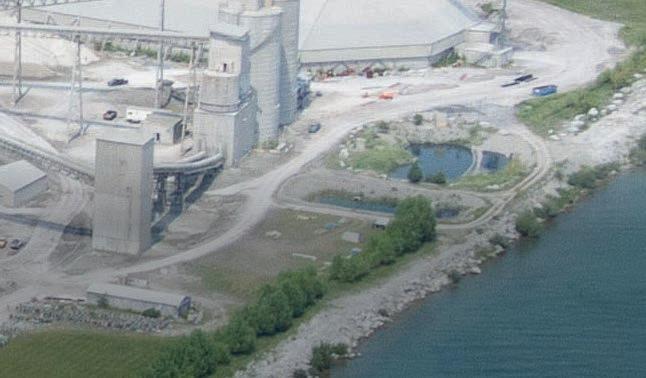
Our Alpena, MI cement plant proudly supplies the Michigan market. We are honored to support the region’s growth and remain committed to strengthening the US building industry, supporting American jobs, and serving as a local partner of choice for America’s professional builders.


Our Made in America label gives our cement customers confidence that every step, from its raw materials processing to manufacturing, are verified as made in the United States. You can trust Amrize cement meets rigorous U.S. performance standards.
Our Alpena, MI cement plant proudly supplies the Michigan market. We are honored to support the region’s growth and remain committed to strengthening the US building industry, supporting American jobs, and serving as a local partner of choice for America’s professional builders.
Learn more at amrize.com
Our Made in America label gives our cement customers confidence that every step, from its raw materials processing to manufacturing, are verified as made in the United States. You can trust Amrize cement meets rigorous U.S. performance standards. Learn more at amrize.comAlpena
Our Made in America label gives our cement customers confidence that every step, from its raw materials processing to manufacturing, are verified as made in the United States. You can trust Amrize cement meets rigorous U.S. performance standards.

Learn more at amrize.com
ONE NATION STRONGER TOGETHER
Honoring our past. Proud of our present. Excited for our future.
ONE FLAG WE STAND UNITED
ONE FUTURE LIMITLESS POSSIBILITIES.
We’re proud to be part of the Sunrise Side community. Here’s to the innovators, organizations, and community members who keep us all moving forward.

Josh Jambor
News Staff Writer
ALPENA – As the United States prepares to celebrate the 250th anniversary of the signing of the Declaration of Independence on July 4, three local veterans are offering powerful reflections on duty, leadership, and what it means to serve a nation now entering its semiquincentennial year.
Their stories span World War II in the Pacific, the Vietnam era aboard aircraft carriers, and Operation Desert Shield and Desert Storm in the sands of the Middle East.
Together, they form a living thread connecting the founding ideals of liberty and self-government to the sacrifices made across generations to preserve them.
America 250: Local Veterans Reflect on Service, and Sacrifice
The nationwide America 250 initiative, coordinated by the U.S. Semiquincentennial Commission and America250.org, is encouraging communities across the country to reflect on the nation’s past, honor the contributions of all Americans, and commit to service and giving back as the country marks this milestone.
From the Shores of Okinawa:
Ernest “Ernie” Zubalik
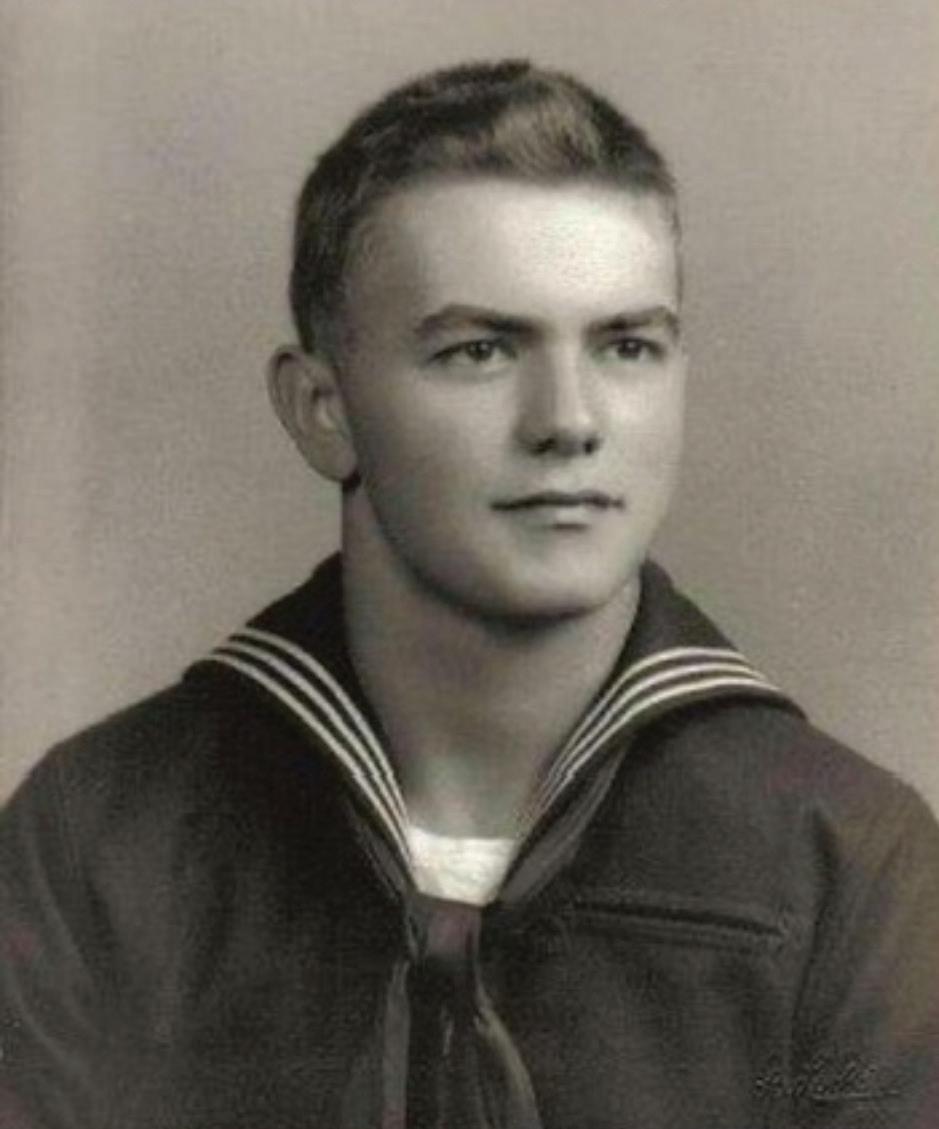
Ernest “Ernie” Zubalik, a 100-yearold Harrisville resident profiled by The News in January for his centennial birthday, was drafted in 1943 and soon transferred to the Navy at his request. Serving as a Coxswain in the Pacific for two years, he operated landing craft that shuttled troops from ships to enemy beaches during major amphibious assaults.







One of the most intense moments came during the Battle of Okinawa, the largest such operation in the Pacific theater. On April 1, 1945, which was Easter Sunday and April Fool’s Day, Zubalik participated in the initial landings of Operation Iceberg, part of a massive force supporting the push toward Japan. Amid the chaos he recalled thinking, “that was the day I thought I was going to die.”
After the war, like many returning servicemen, Zubalik experienced an emotional homecoming upon returning to Michigan. He and others were taken to Tiger Stadium for a ball game, where Tigers pitcher Stubby Overmire delivered a standout performance that left a lasting impression on the young veteran. “I do not recall what date it was, but we were in Detroit for a ball game,” Zubalik remembered. “Stubby Overmire was on the mound, and he pitched a perfect game.”
Zubalik went on to a long career at the General Motors plant in Pontiac before retiring to the Harrisville area. Carrier Deployments and Global Perspective: Stanley Wahoski Stanley Wahoski of Alpena served a decade in the Navy, reaching Petty Officer First Class (E6) as an Aviation Hydraulic & Pneumatic Specialist Mechanic, He maintained and supported aircraft such as the P-3C Orion, A-7D Corsair II, T-39 Sabreliner, and T-2B Buckeye, during the Vietnam War era. His time at sea included challenging extended deployments and training periods. “On the bad side, there were many 8-to-10-month deployments on the USS America, USS Independence, and the USS Roosevelt aircraft carriers. Along with many weeks of training on the USS Lexington,” Wahoski recalled. Yet those years also offered lasting highlights. “What I remember most is all of the friends that I made and the
many countries that I got to see,” Wahoski said.
Wahoski expressed profound pride in his service and what it represents for the nation.
“Proud to have worn the uniform that keeps this country free and safe. Traveling to other countries in person makes America look as if God has his blessings and smiles upon this great country,” he said.
Leadership in the Desert:
Edwin Olsen
Edwin Olsen, who served in the U.S. Army from 1974 to 1994 and attained the rank of Sergeant First Class (E7) provided critical leadership during Operations Desert Shield and Desert Storm in 1990-1991. As a Platoon Sergeant, he shouldered heavy responsibilities for those under his command.
“As Platoon Sergeant I always worried more for my troops than I did for myself, I had the responsibility of taking
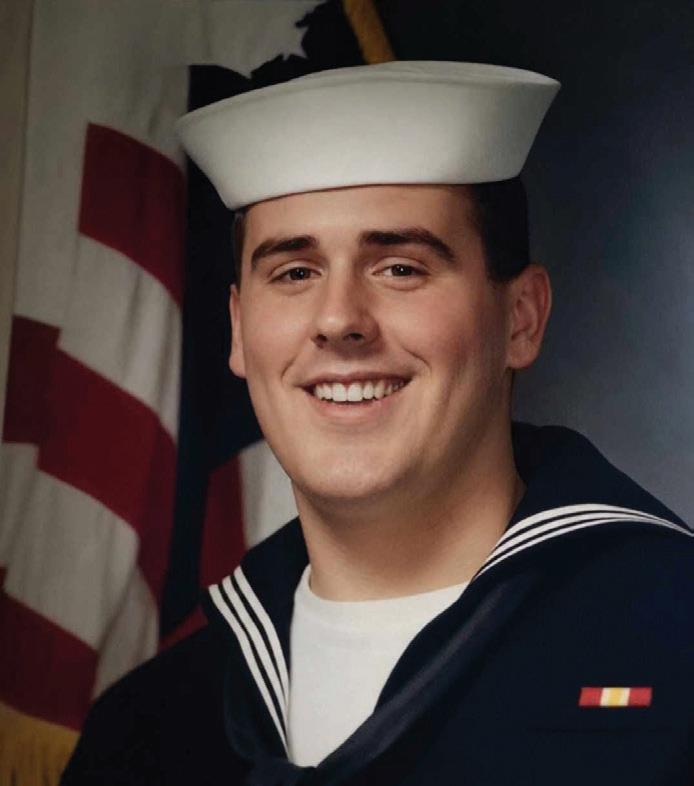
Courtesy Photo Stanley Wahoski during his U.S. Navy service.
care of 70 men. Then I got transferred to a field artillery support team and there I was responsible for 20 men,” Olsen said. His service earned him Desert Storm campaign ribbons, the Meritorious Service Medal, and other accolades.
Now active as a driver for the Disabled American Veterans (DAV) chapter in Alpena, Olsen stresses the importance of ongoing community involvement. He encourages younger generations to contribute to veterans’ organizations such as the American Legion, VFW, and DAV. Reflecting on the 250th anniversary, Olsen noted some aspects of modern life that he wished were different but expressed appreciation for broader societal shifts. “There are some things I wish were different, however, I am glad patriotism is a much bigger thing these days. Even among non-veterans, we have a lot more support today than troops returning from war did long ago,” Olsen said.
A Living Chain of American Service
Spanning more than five decades of conflict, the stories of Zubalik, Wahoski, and Olsen illustrate the consistent themes of sacrifice, adaptability, and commitment that have sustained the nation.
From navigating landing craft under fire in the Pacific to keeping carrier aircraft operational far from home and leading troops through desert operations, each man answered the call in his era.
In Alpena County, local groups like American Legion Post 65, VFW posts, the DAV, and the Alpena County Veterans Office carry forward this legacy by assisting veterans and their families. Olsen’s advocacy for greater youth participation highlights a timely opportunity, especially as campaigns like America250 (America250.org) promote volunteerism and charitable giving.
As fireworks and celebrations mark Independence Day 2026, let the accounts you have read from local veterans serve as a poignant reminder. The freedoms at the heart of America’s founding document have been preserved through the efforts of ordinary citizens who stepped up in extraordinary times. In Alpena and beyond, their reflections invite residents not only to celebrate 250 years but to ensure the next chapter remains one of strength, gratitude, and continued service.
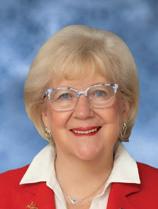
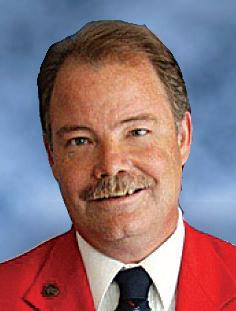
Ernie in uniform: Ernest “Ernie” Zubalik, U.S. Navy Coxswain, during his service in the Pacific Theater of World War II. Drafted in 1943, Zubalik transferred to the Navy and operated landing craft that delivered troops to shore during major operations, including the Battle of Okinawa.
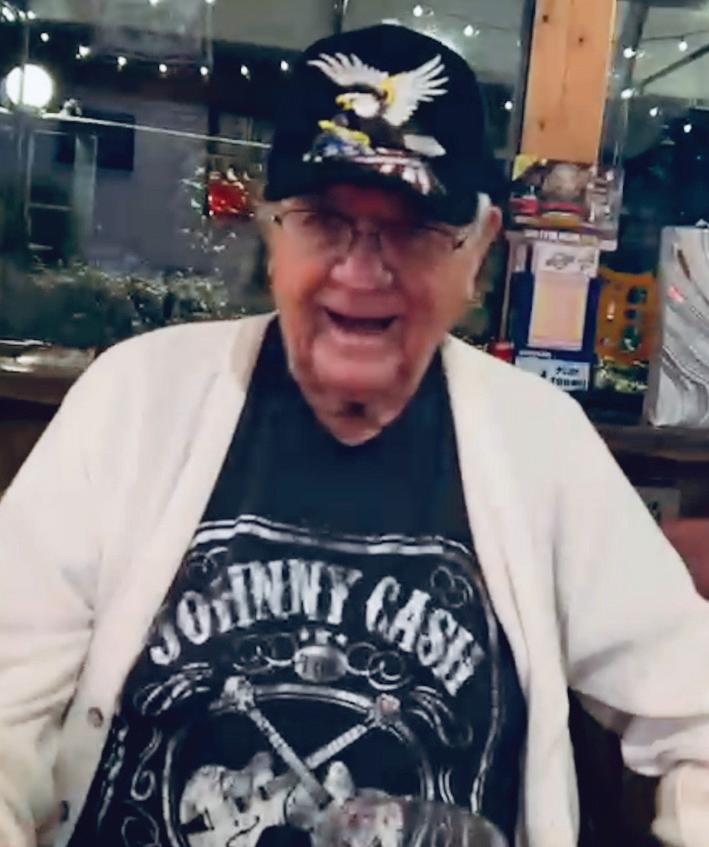
Older Ernie: Ernie Zubalik of Harrisville in recent years. The World War II veteran, who turned 100 earlier this year, embodies the spirit of service and community pride that defined his life after returning from the Pacific.




Courtesy Photos

Presidential assassin with a Northeast

Donavon. “It wasn’t referred to in any way. There was no discussion of making away with anyone—with the President or anybody else.”
On July 29, 1900, King Humbert I was assassinated in Monza, Italy, by Gaetano Bresci. Donavon implies that this may have been the tipping point to which Czolgosz began strategizing a terroristic plot as afterwards he became restless and bothersome to his family, requesting a sum of money he lent to purchase a farm for the Czolgosz family.
According to Donavon, Czolgosz clipped a newspaper account of the assassination of King Humbert I, and he “read and reread it, and for weeks took it to bed with him.”
On May 5 1901, Czolgosz attended a lecture by Emma Goldman, a Russian-born anarchist revolutionary. Donavon stated that afterwards, Czolgosz made more deliberate attempts to align himself with anarchist groups, such as the Liberty Club.



On Aug. 31, 1901 about a week before the President was due in Buffalo for his public presentation, Czolgosz rented a hotel room for a week and paid in advance, according to Donavon. Czolgosz bought an owl’s-head revolver for about four dollars, and later told police this was the period in time he decided to assassinate McKinley.
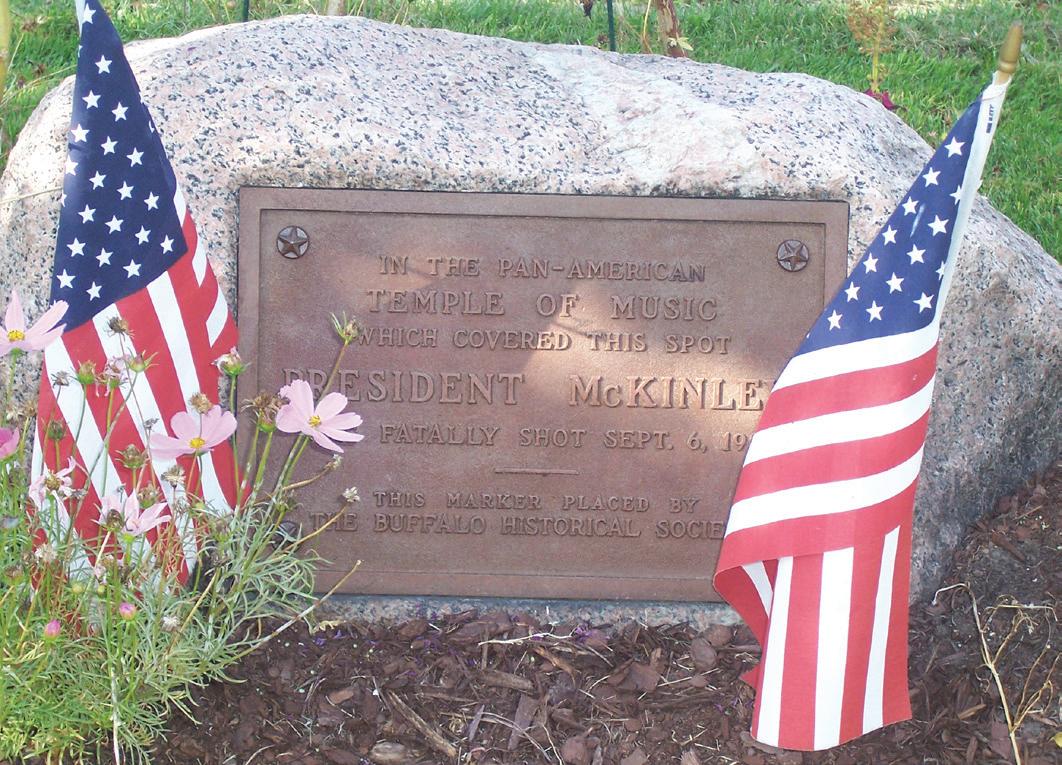
On Sept. 6, McKinley attended his public presentation at the Temple at the Pan-American Exposition.
According to Donavon, McKinely hosted a reception for the public and openly shook hands with attendees. This event was one of many stops for McKinely as part of a tour across the country.
Donavon implied in his article that security misjudged Czolgosz as a harmless bystander. He waited in the line with other attendees and hid his revolver in a handkerchief, blending into a crowd. When he reached McKinley, and as the president reached out his hand to shake Czolgosz’s, Czolgosz struck the president’s
Continued on Page 9
Courtesy Photo
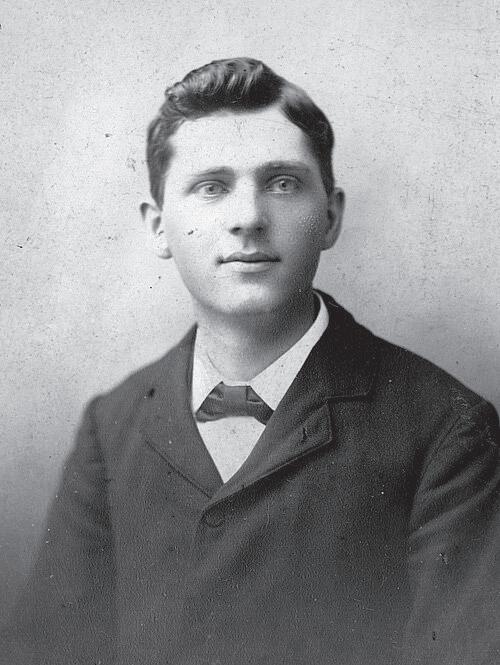
This is a photo of Leon F. Czolgosz, a Northeast Michigan native, who shot and killed President William McKinley.

Addison Wesaw
Freedom is one of those things you do not really think about until you realize not everyone has it. Most of us grow up treating freedom like air. It is invisible, always there, something we assume will never disappear. But freedom is not guaranteed. It never has been. The more I have learned about the rest of the world, the more I have realized how rare the kind of life I get to live really is.
I think about girls my age in other parts of the world whose futures have already been decided for them. Who they will marry. Whether they are allowed to go to school. What careers they can pursue, if any. What they are allowed to say, and to whom. These are not stories from history books. They are real people living real lives. When I think about that, I feel an overwhelming sense of gratitude. That could have been my story, and it is not. America gave me a different story. Not a perfect one, but one I get to write myself. America is more than a place on a map. It is a place where people are given opportunities to dream, grow, and build a better life. It is a country shaped by generations of ordinary people who sacrificed to protect those opportunities. Their work and sacrifice are the foundation we stand on every day, whether we think about it or not.
An overwhelming sense of gratitude
For me, what America means most is simple. It is the gift of being in charge of my own life. I wake up every morning knowing that my future is largely shaped by my choices, my effort, and my values. That may seem obvious to those of us who have grown up here, but it is not obvious everywhere. It is not common, and it should never be taken for granted.
I am a citizen of the Pokagon Band of Potawatomi Indians, a federally recognized Native American tribe. My heritage is one of the most important parts of who I am. The traditions, history, and stories passed down through my family connect me to something much bigger than myself. Carrying that culture forward is not just something I want to do. It is something I feel responsible for. At the same time, I am a Christian. My faith shapes how I see the world, how I treat people, and how I find meaning during difficult times. It is woven into every part of my life.
In many places around the world, holding both of those identities could make life very difficult. People are often forced to hide parts of themselves or choose between them. America, at its best, does not ask me to choose. I can walk into a room as a Native American Christian teenager from Michigan and not leave any part of my identity at the door. The freedom to be your whole self is something I do not think we talk about enough.
America is often called a melting pot, but I think that phrase is sometimes misunderstood. It does not mean everyone becomes the same. It means people from different backgrounds, beliefs, and histories can live together and build something greater. Real unity does not require everyone to be identical. You can belong without disappearing, and that idea is beautiful.
As a young woman, the freedom that means the most to me is the freedom to
choose my own future. In many countries, girls do not have that opportunity. Their education may end early, their careers may be limited, and major life decisions may be made for them.
I have never had to live that way. I have the freedom to pursue an education, attend college, study what I love, and build a career that matters to me. I have the freedom to choose who I love, where I live, and the life I want to create. These freedoms shape my everyday life, even when I am not thinking about them.
I also have a voice. I can speak about the issues that matter to me and participate in my government through voting. My vote carries the same weight as anyone else’s, regardless of wealth or status. That is not a small privilege. It is an extraordinary right.
Along with that right comes the ability to seek justice. America was founded on the idea that no one is above the law. That principle has not always been perfectly upheld, but the fact that we can demand accountability and work toward justice matters.
At the same time, loving America means being honest about its history. Our nation has experienced some of the darkest chapters imaginable, including slavery, the forced removal of Native peoples, and discrimination written into laws and institutions. As a Native American, that history is personal, painful, and impossible to ignore.
But here’s what I keep coming back to: the American story isn’t finished. Every generation has inherited a country that was both more and less than what it was supposed to be. Every generation has had to decide what to do with that. Whether to look away from the gaps between our morals and our reality, or to step into those gaps and try to close them. The fact that we can even have that conversation, that
we can openly criticize our government and push for change without fearing for our safety, is itself one of the freedoms that make this country worth fighting for.
Perfection doesn’t happen overnight, and it certainly doesn’t happen in 250 years. Building a truly just and free society is the work of every generation, not a problem that gets solved once and stays solved. Positive change requires constant attention, honesty, effort, and a genuine willingness to listen to the people who have been left behind. Progression requires the kind of everyday kindness and patience that doesn’t make headlines but quietly holds communities together. And for me, personally, these changes require trusting in something bigger than myself. Trusting that the work matters, even when progress feels slow.
When I think about my own future, I feel something that I think is pretty rare: genuine hope. Not the kind of hope that ignores hard things or pretends everything is fine. But the kind of hope that comes from actually believing that what I do matters, that the choices I make will shape something real, and that the country I live in is capable of becoming more than what it is right now. I am standing in front of a blank canvas. That canvas is my life, but it’s also part of something larger. A national story that is still being written, by all of us, every single day. I get to decide what I contribute to that story. What I stand for, what I work toward, what I refuse to accept. That is the gift America has given me. Not a perfect country. Not a finished one. But a place where I have the freedom, the voice, and the responsibility to help make it better. And honestly? I can’t think of anything more worth showing up for than the country that has shown up for us.
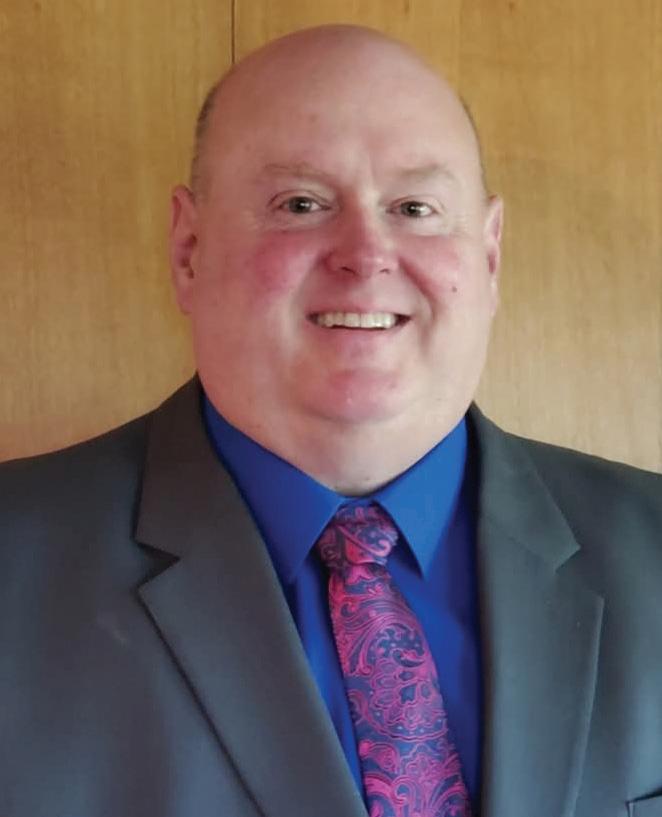
Steve Murch
Local Columnist
At 250 years old, the United States is actually a young country. But getting to this
The people make America great
point is still an achievement. We’ve fought other countries, we’ve fought each other, we’ve fought along other countries all in the name of freedom.
How did we get here? People like you.
America is a collection of caring, helpful people. We come together to help our neighbors, to celebrate our achievements and help each other get through our sorrows.
I’m a member of the Alpena Lions Club; I can tell you that our goal is to make a stronger community. Lions International’s motto is We Serve and our belief is Kindness Matters. Alpena has several service organizations and other agencies all trying to help the less fortunate in our community. All using those same beliefs but maybe expressed in a slightly different way.

I’m proud to be a Lions Club member because it helps me continue my belief in trying to make everything I get involved in better than when I found it. That includes my hometown.
Americans love a celebration. We love the Fourth of July, we love championship parades for our sports teams, we love New Year’s Eve. But we also love to celebrate life’s more personal achievements like gender reveal parties, high school graduation and wedding anniversaries.
The World Cup – taking part in the U.S., Canada and Mexico – is showing the joy of people from all over the world coming to celebrate their love for soccer/football/futbol. These people all come from places where Americans’ ancestors came from originally. People are people, who have ancestors from other parts of the world. We are not our collective governments. We are Irish, French, Native American, Indian, Japanese, Arab, Spanish, and so much more – we are a melting pot.
We are a strong nation, and our differences have helped us get strong. There was a time when compromising for the good of all ruled, and we will get to that point again.
We need to get past the pseudo-patriotism, where someone believes they are the ultimate patriot and anyone who doesn’t believe exactly as they do isn’t patriotic. Quite the opposite is true. If you believe there is


only one way to be patriotic, then you aren’t a true patriot. There are over 340 million people in this country, which means there are over 340 million different personalities, over 340 million belief systems, and over 340 million ways to be patriotic. The people of this country are the reason we are strong. Politics is never really who we are. At times it is more of a wedge than anything else. It never plays a role in day-to-day life, though it does affect it.
There was a time when you couldn’t go into a convenience store or gas station where there was a jar filled with money, asking people to help a family in need. The counter jar has been replaced by GoFundMe, but the concept is the same – people helping people. It always has been the strength and resilience of the people that makes this country strong after 250 years. All people, not just the select few.
We need to take to heart the last line of the Pledge of Allegiance: With liberty and justice for all. It says all, not everyone who happens to agree with us. When we become more selfless and consider everyone, whether we agree with them or not, then we become closer to the greatness as a nation we have been and continue to long to be.
So as you are celebrating America’s 250th anniversary, celebrate all the people – past, present and future – who strive to make this country the best place to live.

hand aside and fired two shots at close range into McKinely’s abdomen.
Donavon stated that after shooting the president, Czolgosz was tackled by soldiers and Secret Service agents. Czolgosz was beaten and restrained, then dragged from the scene. Czolgosz was moved to a small room off the stage and later taken to police headquarters, where he was placed under harsh interrogation conditions.
He was eventually arrested and charged with the murder of the president.
According to reporting from The San Francisco on Sept. 7, 1901, two bullets from Czolgosz’s revolver struck the president. One was extracted while the second caused more serious injuries.
The report stated that at the time of the publication, attempts had been made by the public to track down Czolgosz and hang him.
The report also stated that at the time of publication, the president’s “temperature and pulse had improved” after he had undergone surgery.
According to a Sept. 17, 1901 publication of the Hopkinsville Kentuckian, the president died from his wounds on Sept. 14 at 2:15 a.m. The president had been unconscious
This is a photo of President William McKinley’s grave site after he was assassinated by Leon F. Czolgosz a native of Alpena and Posen.
since 7:50 p.m. the evening leading up to his death.
“He was reconciled to the cruel fate to which an assassin’s bullet will be a state funeral,” the report stated.
Rosevelt was subsequently sworn in as president following McKinely succumbing to his deadly wounds.
Paralleling other reporting of the time, the Hopkinsville Kentuckian stated that the public was enraged by the president’s assassination and sought out Czolgosz for justice.
“The rage of the people of Buffalo against the President’s assassin, when they learned tonight that he was dying, was boundless,” the publication reported.
On Sept. 24, 1901, after a speedy trial following the assassination, the Buffalo court system found Czolgosz guilty and denied Czolgosz’s council plea of insanity request, according to the Richmond Dispatch. The jury in this case decided on its guilty verdict after 34 minutes of deliberation.
The conclusion of the saga ended with Czolgosz’s death, at 28 years old, via the electric chair on Oct. 29, 1901 at the Auburn State Prison. He was buried in an unmarked grave on the prison grounds.


As we celebrate America’s 250th birthday, we have an opportunity to reflect on the courage, sacrifice, and unwavering belief in freedom that built the greatest Nation in history.
For 250 years, Americans have overcome every challenge because generations before us chose duty over comfort, faith over fear, and freedom over tyranny.

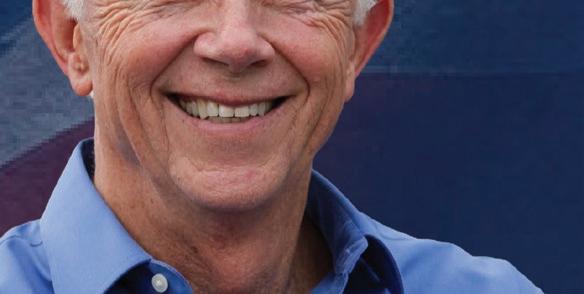


Let’s honor those who came before us by defending the principles that made America exceptional and ensuring the next generation inherits a Nation that is stronger, freer, and more prosperous than ever before.
Happy America 250. God bless Michigan’s First District, and God bless the United States of America.

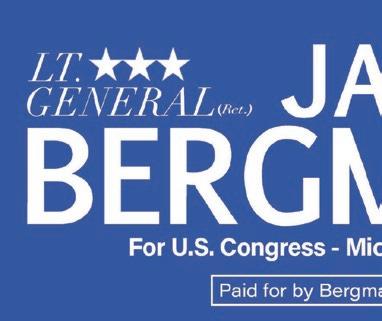

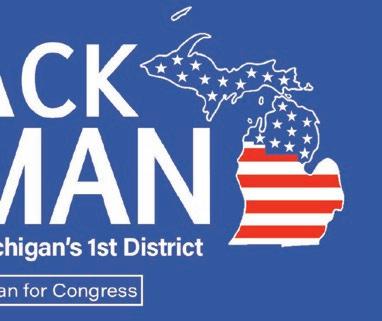

Courtesy Photo

250+ Years of Perspective
On July 2, 1776, the Second Continental Congress meeting in Philadelphia formally voted to support Virginia delegate Richard Henry Lee’s resolution for independence from the British system of government, which he had motioned earlier on June 7 as the Lee Resolution. The Declaration itself was drafted in the meantime by Thomas Jefferson between June 11 and 28, 1776, a little more than a year after the first shots at Lexington and Concord on April 19, 1775, and the battle at Bunker Hill on June 17, 1775.
While Thomas Jefferson was the primary author, John Adams, Benjamin Franklin, Roger Sherman, and Robert R. Livingston comprised the Committee of Five, tasked by the Second Continental Congress with drafting the formal Declaration. The Continental Congress adopted and approved the Declaration of Independence in its final form on July 4, 1776. Most of the delegates signed an original version of the document
nearly one month later, on August 2, 1776.
Immediately upon ratification of the final statement, on the night of July 4, two hundred copies of the document were printed by John Dunlap for immediate dissemination throughout the colonies. The Declaration was publicly read for the first time on July 8, 1776, by Colonel John Nixon in the yard of the Pennsylvania State House, now known as Independence Hall. This historic site later witnessed the drafting of the Articles of Confederation (1777) and the eventual drafting of the federal Constitution of the United States (1787), a nearly decade-long process born of the war of secession we call the “American Revolution,” itself a nearly decade-long pursuit.
Independence was not the starting point but rather a last resort pursued after repeated efforts to seek redress of grievances from our own government, the British government, and it would not be the end of the long road in pursuit of independence or a more perfect union grounded in liberty. We were British after all, part of the more enlightened and certainly most powerful political, economic, and military system of the day. It is important to remember that the events of the revolution occurred more than a year after fighting had already begun between the colonies and the empire’s center.


The Declaration listed 27 grievances as justification for separation, following attempts at redress, and reflected a particular understanding of good government and individual liberty. These were difficult and uncertain times, marked by much debate, tension, and the potential for lessthan-desirable outcomes. Not everyone agreed on independence, and different people held differ-

ent visions of what freedom and self-government, much less a new union, should look like.
As the states uniting around the common cause of liberty and independence approach a 250th anniversary, we find ourselves living in difficult and uncertain times by almost any measure. Yet even amid challenges and divisions, we still have much to rally around as a common cause, much to be thankful for, and many reasons to remain hopeful for the continued evolution of America’s promise.
That enduring promise of the future has always been one of the greatest strengths of what became the United States of America—a belief that each generation has both the opportunity and responsibility to move the nation closer to its ideals of a more perfect union grounded in liberty as one nation under God indivisible in pursuit of the liberty and justice for all involved.
Perspective matters. History provides grounding. Human history, and especially American history, has never been a straight path of uninterrupted progress. Hills and valleys, ebbs and flows, moments of triumph and moments of profound struggle, contradictions, and tragedy have marked it. Nothing in history is inevitable, and the promise of “America” or more specifically these “United States” itself was never guaranteed. That reality should compel us to reflect carefully on what we have inherited and what we choose to do with our own moment in time, just as the founders were challenged to do in 1776 in their own historical context.
The American Revolution was not guaranteed. Today, independence is often viewed as a foregone conclusion, aided by the clarity of hindsight and generations of patriotic zeal. The situation was ex-



traordinarily fragile and uncertain. The movement toward independence required vision, persuasion, sacrifice, perseverance, and sustained commitment. Nor did independence become reality with the signing of the Declaration alone. They were a bunch of words on a piece of parchment, albeit profound words.
It took just over eight years of violent war to secure those principles in practice and many additional years to strengthen and refine any sense of “union” beyond the common cause of independence that emerged from that struggle, for the purpose of protecting that independence and the promise of liberty. The War of 1812 demonstrates that the questions surrounding American independence and national survival persisted long after 1776 or 1781, when Lord Cornwallis surrendered at Yorktown, ending the fighting in the war for independence and making the words of the Declaration a reality with the Treaty of Paris (1783), when Britain formally recognized the independence of the colonial states of America.
There was also a long prelude to the Declaration itself. In many respects, the Revolution was less a sudden upheaval than an evolutionary culmination of ideas and experiences that had been developing for generations. The assertion that all people are created equal and endowed by their Creator with certain unalienable rights—including life, liberty, and the pursuit of happiness—remains among the most influential statements in human history. Equally significant, perhaps most revolutionary, was the proposition that governments derive their legitimacy from protecting the inalienable rights of nature and nature’s God for the people, concepts our founders drew from their readings of the great English, Scottish, and French Enlightenment thinkers of a generation earlier.
The Revolution did not emerge suddenly. It grew from nearly 170 years of colonial development and experience with local self-government. Over generations, from the get-go, the colonies developed elected representative institutions and expectations of liberty that increasingly conflicted with Parliament in London and its expanding purview over its vast realm. Colonists came to view certain restrictions as incompatible with rights

they believed were inherent, rather than granted by the government.
It is also important to remember that after the Glorious Revolution of 1688, the British monarchy itself operated within constitutional limits. As tensions increased, the principal conflict shifted toward Parliament and its relationship with the colonies, despite obsessions with kings and absolute power, the prevailing form of government worldwide at the time. When Parliament asserted greater authority over colonies that had spent generations self-governing many of their own local affairs, conflict even with a Parliament where the colonists had no representation became increasingly difficult to avoid.
Freedom, as envisioned by the founders, was never intended to mean unlimited liberty detached from responsibility. Rather, it depended upon citizens governing themselves responsibly within society and participating in representative government, holding it accountable when and where necessary. Liberty and self-government were inseparable concepts, sustained through civic engagement, earnest intelligent debate, constitutional processes, the competition of ideas, and, of course, respect for loyal opposition. This was understood within the context of freedoms of expression, speech, press, assembly, petition, religion, and mutual self-defense, etc., as enshrined initially by colonial charters, state constitutions, and further and later in the Bill of Rights to the United States federal Constitution in 1791 as a bit of a bargaining chip for a stronger perpetual federal union to be agreed upon.
The eight years and months of war that followed the Declaration transformed political thought worldwide regarding liberty and self-government. Yet the British constitutional system itself remained intact, reinforcing the view that this was more a matter of separation than a revolution (or a revolving) of the British system of government or anything already occurring in the colonies, for that matter. Britain retained its monarchy and parliamentary system, going on to become the empire upon which the sun never set, controlling land on virtually every continent until after World War II. Eventually, Britain continues to liberalize
its hereditary practices by democratizing its system. What changed in the moment, however, was that the colonies broke away and continued the development of self-government through the election of representatives and the pursuit of liberty that had already been evolving for generations, now focused on sustaining independence and defining a separate yet common national purpose.
What eventually emerged in the United States, although not overnight and without serious debate and political struggle, symbolized something unprecedented: the possibility that people could govern themselves through an evolving constitutional process while preserving, perhaps even expanding, liberty and promoting the common good with selfgovernance through elected representatives over a broad span of people and territory. The nation’s development was not instantaneous. It unfolded through continual experimentation, first through confederation (loose association) and later through federation (tighter association mainly for economic benefits, mutual defense, and general welfare as the Preamble to the US Constitution states), each carrying its own strengths, weaknesses, challenges, and tensions, some rationally deliberated and others devolving into violence.
The enduring tension within the American experience is itself profound. From early debates over state and federal authority relative to individual liberties following independence, through the decades leading to the Civil War, and through the 160 years since that devastating conflict, and all that persists, the nation has continued striving to sustain the broader promise of liberty and equality while maintaining union among diverse states, peoples, and belief systems.
Part of that promise is found in the continuing effort to realize freedom and equality across generations more fully. Every era has wrestled with balancing rights and responsibilities, liberty and order, local authority and national authority, and concentrated powers with each level of government and between them. We see these tensions in the upheavals of the Gilded Age and Progressive Era, in the evolution of the two-party system, the checks and balances of powers, the necessary symmetry among the branches and levels of govern-


ment and their Constitutional functions, and in the ongoing effort to reconcile the uneven and often incomplete realization of American ideals. The American story has never been one of perfection achieved, but of principles continually pursued through civic discourse, earnest debate, and selfcorrection.
And yet there remains hope—hope that America can continue moving toward a fuller realization of its promises. That is the enduring story of the United States: the perpetual effort to maximize liberty and equality within a viable and sustainable society. We remain a comparatively young nation in the broader course of human history, constantly refining our institutions and continually challenged to live up to the principles articulated at our founding and expanded to their fuller measures ever since.
For 250 years, the idea of independence and a united people as large and diverse as ours governing themselves through elected representatives has stood as both an experiment and an example to the world—not because it has been flawless or inevitable, but because it has continued to confront imperfections while preserving the possibility of improvement through civil dialogue, elections, and holding government and one another to higher standards of fulfillment. That same spirit animated those who challenged the forces opposed to independence two and a half centuries ago, much less those who opposed a union grounded in liberty rather than division and persistent oppression. It remains the responsibility of each generation to carry that promise forward by exercising our liberty through self-governance.
These United States have always been constituted of diverse peoples by ethnicity, religion, politics, class, sex, race, identity, etc., just as the colonies experienced from the start, striving to determine how best to live together in their individual and collective pursuit of liberty within shared spaces. Perhaps that remains our greatest challenge and our greatest strength: the continuing effort to preserve liberty for one and for all while sustaining the union that makes that liberty anything truthful, meaningful, genuine, and just.










Josh Jambor News Staff Writer
HARRISVILLE – Hazen Shirley “Kiki” Cuyler, one of Major League Baseball’s most dynamic outfielders in the 1920s and 1930s and a native son of this small Lake Huron community, remains a proud symbol of perseverance and excellence for Alcona County.
Elected to the National Baseball Hall of Fame in 1968 by the Veterans Committee, Cuyler’s journey from local high school athlete and factory worker to World Series hero exemplifies the classic American sports story.
Born on August 30, 1898, in nearby Sturgeon Point, Cuyler was the son of George and Anna Cuyler, Canadian immigrants who settled in Michigan. His father had played semipro baseball, and young “Cuy” grew up active in fishing,
Harrisville Native Kiki Cuyler: From Michigan Sandlots to Baseball Hall of Fame
hunting, and sports. He excelled in baseball, basketball, football, and track at Harrisville High School, graduating as valedictorian of his small class in 1917. After a brief stint at West Point and service in the U.S. Army during World War I (without overseas deployment), he married his high school sweetheart, Bertha Kelly, and moved to Flint. There, he worked at the Buick factory and pitched in competitive industrial leagues. (wikipedia.org)
Cuyler’s professional path began in 1920 with the Bay City Wolves of the Michigan-Ontario League. Initially as a pitcher, he shifted to the outfield after an injury and .317 with 16 triples in his second season, drawing big-league interest. The Pittsburgh Pirates purchased his contract for around $2,500. After seasons in the minors – including a stand-

out .340 season with the Nashville Vols in 1923, where his nickname “Kiki” originated from teammates calling for fly balls. (sabr.org)
In his first major league season with the Pirates, the 5-foot-10, 180-pound right-handed hitter batted .354 in 117 games, scored 94 runs, and stole 32 bases, helping spark Pittsburgh’s rise. His breakout continued in 1925 when he led the majors with 26 triples and 144 runs scored, posted a .357 average with 220 hits and a franchise-record 369 total bases, and delivered the decisive two-run double in game 7 of the World Series against the Washington Senators,
clinching the Pirates’ championship. Cuyler played for the Pirates from 1921 to 1927. A contract dispute and clash with manager Donie Bush in 1927 led to his benching for much of the year and eventually a trade with the Chicago Cubs. With the Cubs (1928-1935), he thrived as a right fielder, batting .325 over eight seasons. He led the National League in stolen bases four times overall (1926, 1928-1930), scored over 100 runs in multiple seasons, including a career-high 155 in 1930 with 228 hits, and helped the Cubs reach the World Series in 1929 and 1932. He was an allstar in 1934.
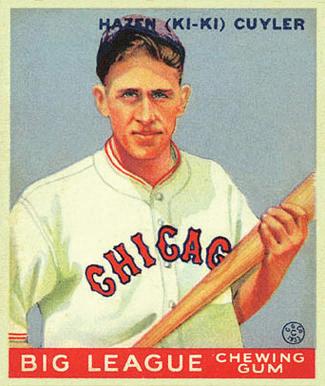
Courtesy Photo
This is an old baseball card of Kiki Cuyler, who was a professional baseball player from Harrisville and a member of the National Baseball Hall of Fame.
Later career stops included the Cincinnati Reds,1935-1937, where he hit .326 in 1936, and a final season with the Brooklyn Dodgers in 1938 as the NL’s oldest player. Over 18 seasons, 1,879 games,, Cuyler compiled a .321 batting average, 2,299 hits, 1,305 runs, 128 home runs, 1,065 RBIs, and 328 stolen bases. He batted over .300 in 10 seasons and collected 200+ hits three times. Injuries and the benching incident in 1927 left a mark on his career, but his speed, arm and clutch hitting defined him as a five-tool talent, which is an athlete who
excels in all five fundamental skills of the game.
After retiring as a player, Cuyler managed in the minor leagues, winning a pennant with the Chattanooga Lookouts in 193), coached for the Cubs from 1941-1943, and the Boston Red Sox in 1949. Cuyler was expected to take on another coaching role but returned to Harrisville, where he enjoyed ice fishing and community life.
Tragically, Cuyler suffered a heart attack while ice fishing near Glennie on February 2, 1950. Complications from a blood clot led to his death en route to the hospital in Ann Arbor on February 11, at age 51. He was buried in St. Anne’s Cemetery in Harrisville Township.
His legacy endures locally. In 1954, Cuyler opened Ki Cuyler’s Dugout in Harrisville (which was originally owned by Max Carvo), a beloved tribute to his Hall of Famer Dad, which became a community landmark for decades. Over the decades, the family-run business transitioned into a popular local sports bar and grill. The iconic establishment, burned down in an early morning fire in late November 2018, was a significant loss for the village that saddened residents and highlighted Cuyler’s lasting impact.
In 2008, State Highway M-72 in Alcona County was designated the “Hazen
Shirley ‘Kiki’ Cuyler Memorial Highway. Cuyler Memorial Park in Harrisville stands as another tribute, dedicated to the hometown hero and hosting community events like old-timers’ baseball games that celebrate his memory.
Cuyler was inducted into the Michigan Sports Hall of Fame as well as the Pirates and Cubs Hall of Fame. Described as polite, shy, and a model citizen, he exemplified sportsmanship. Hall of Famer Joe Cronin (inducted in 1956) offered this praise: “He was one of the finest and cleanest living fellows I ever met in baseball. Cuyler was an established star when I joined the Pirates in 1925, but he was always willing to help.”
Today, Kiki Cuyler’s story, from Harrisville sandlots to Cooperstown, continues to inspire local athletes and remind Northeast Michigan of its rich baseball heritage.















































The Association of Lifelong Learners presents programs (open to both members and guests) that commemorate our past and keep community members aware of both current and future events and activities that impact our lives. We are proud to be included in this special edition of America’s 250th Celebration. Visit associationoflifelonglesrners.org or contact via email all@alpenaacc.edu or telephone 989-358-7207.


Thru Thursday 4:00 to 9:00 p.m. & Friday 4:00 to 10:00 p.m.

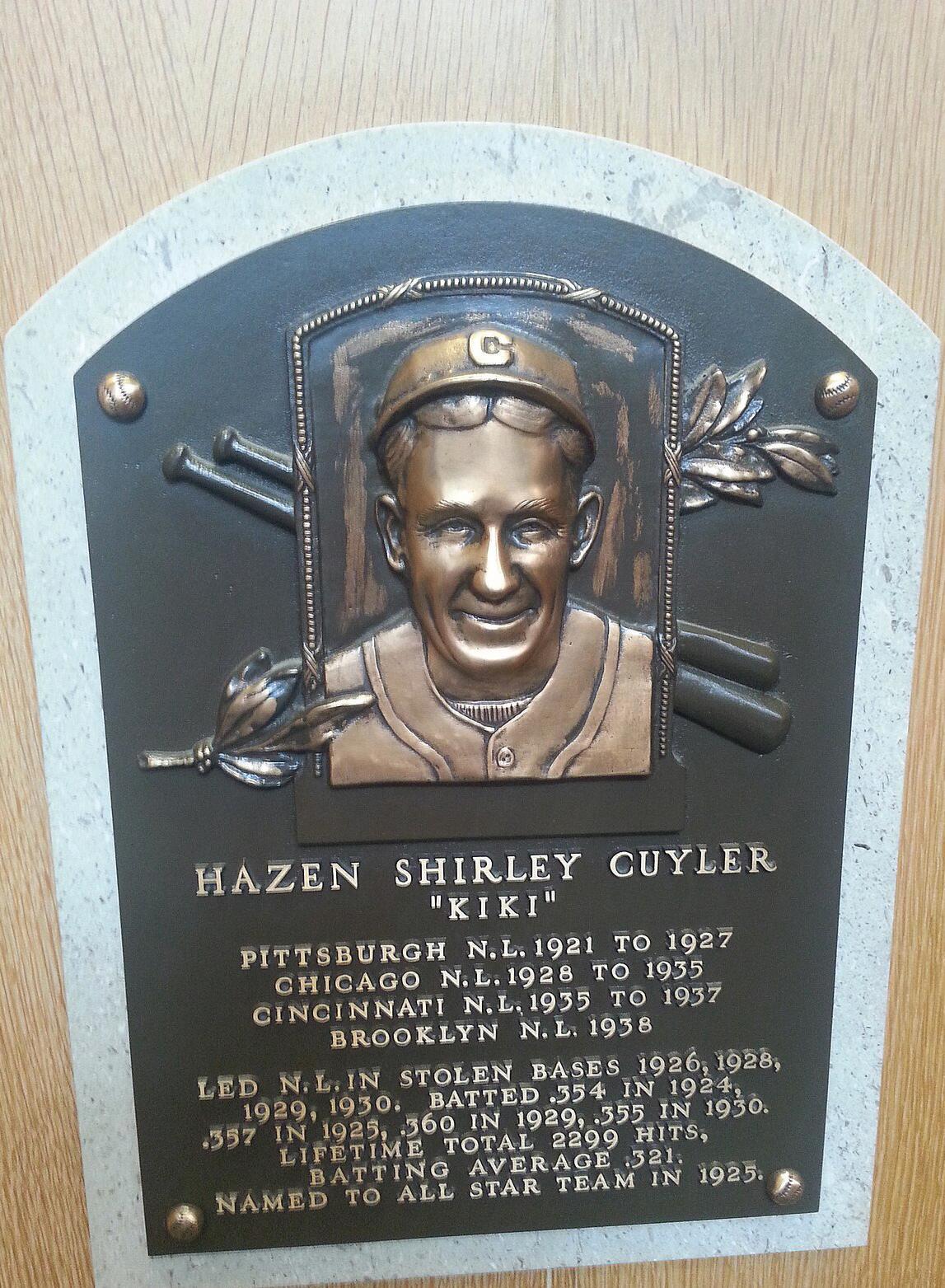
Courtesy Photo
This is the plaque on display of Kiki Cuyler in the National Baseball Hall of Fame.
Cuyler was from Harrisville before playing major league baseball.
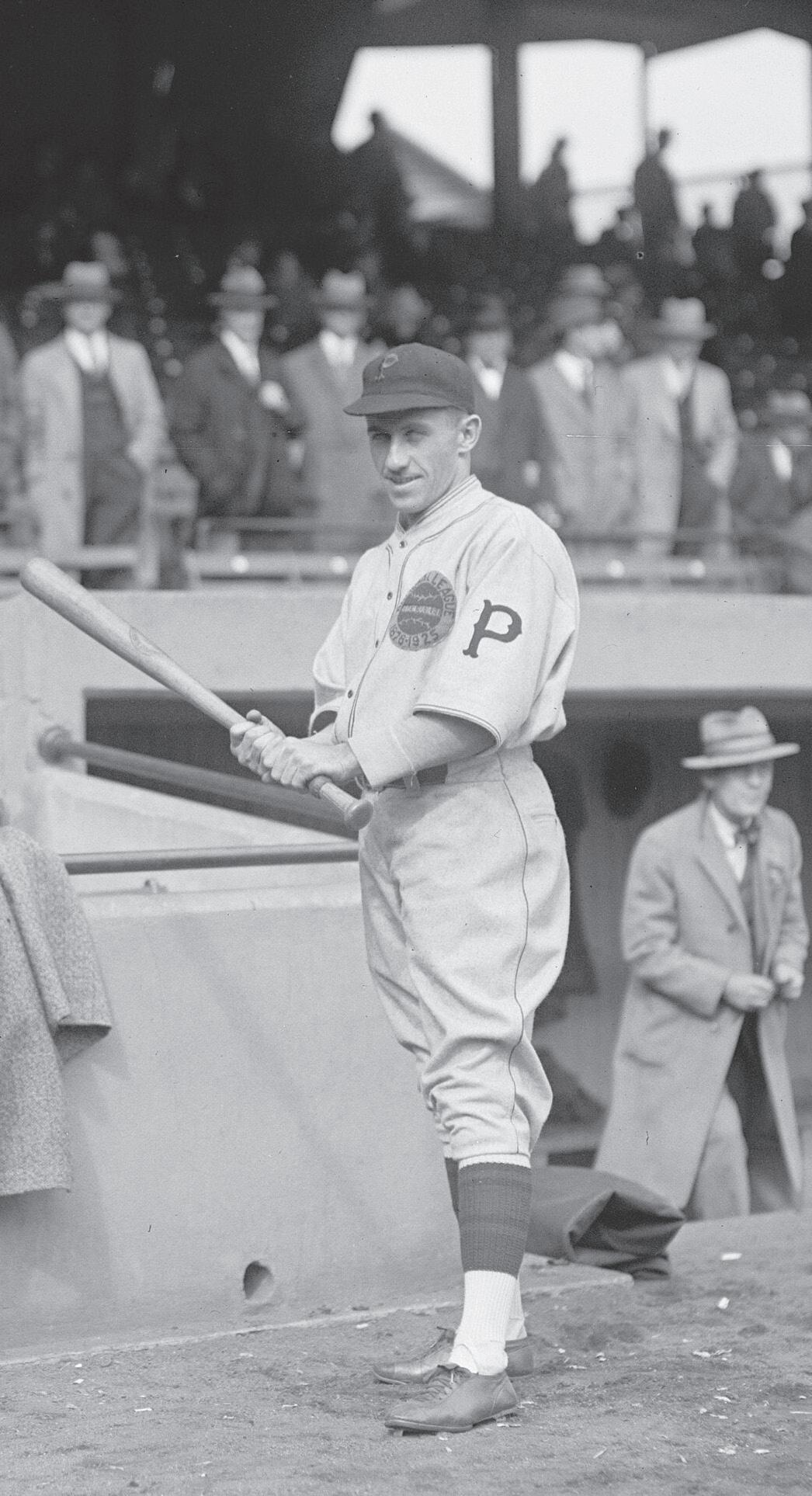
Courtesy Photo
This is a photo of Kiki Cuyler when he played for the Pittsburgh Pirates.
A nation gets a name
September 9, 1776, may not be the first date Americans think of when pondering their nation’s history, but it’s a significant day nonetheless. According to the National Constitution Center, on September 9, 1776, the Second Continental Congress adopted a new name for a collective of colonies that had been referred to as the “United Colonies.” The name chosen on that day in late summer 1776, the United States of America, has endured. While the opening sentence of the Declaration of Independence, which was issued on July 4, 1776, refers to the “thirteen united States of America,” it was a little more than two months later when the Congress passed a series of resolutions, including one in which it replaced “United Colonies” with “United States” as the fledgling nation’s new name.

The Library of Congress is the largest library in the world
An act of the United States Congress approved in 1800 continues to have an impact even today, when it’s still paying dividends for lawmakers, librarians, scholars, and the general public. As Congress prepared to move the national government from Philadelphia to Washington in 1800, founding father and then-President of the United States John Adams approved an act allocating $5,000 for books to be used by Congressmen. Thus marked the beginning of what is now known as the Library of Congress, which has since become the largest library in the world as well as the home of the U.S. Copyright Office. In 1802, President Adams’s successor, Thomas Jefferson, made the job of Librarian of Congress a presidential appointment, and it remains so today.
The Library of Congress continually adds to its collection, which currently consists of millions of books in roughly 470 languages.




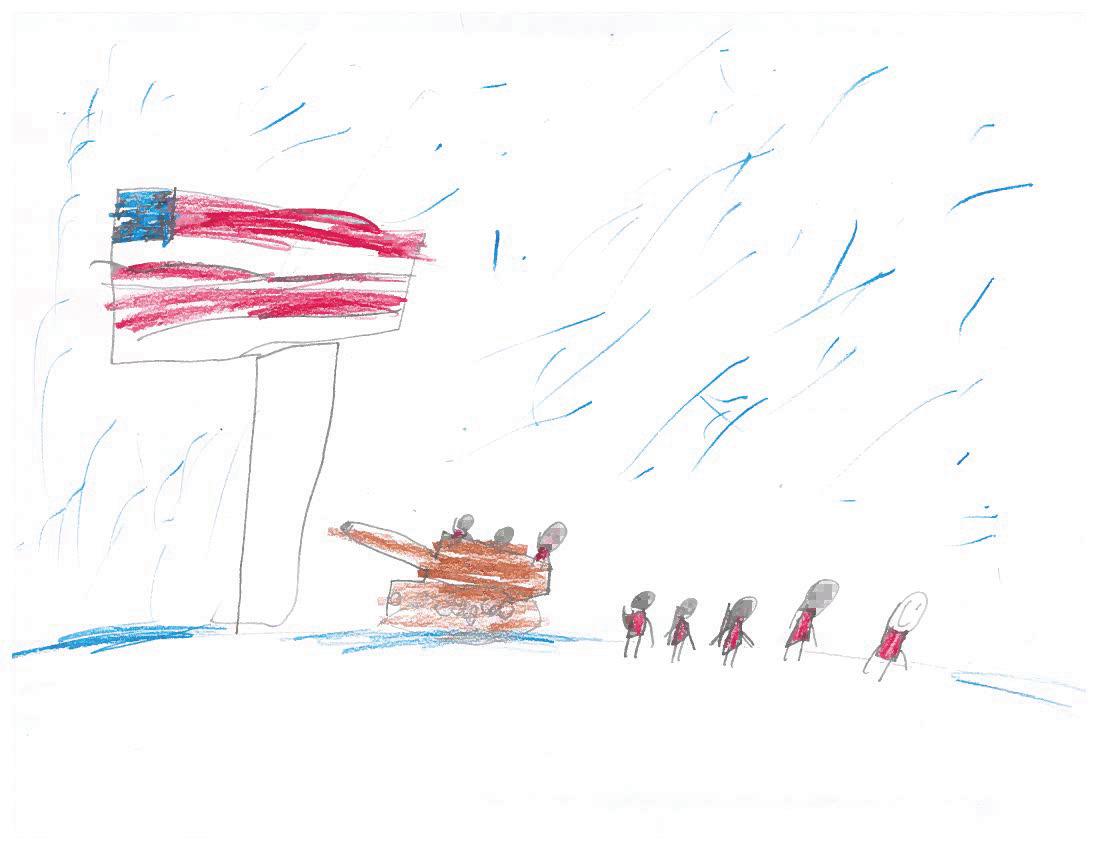
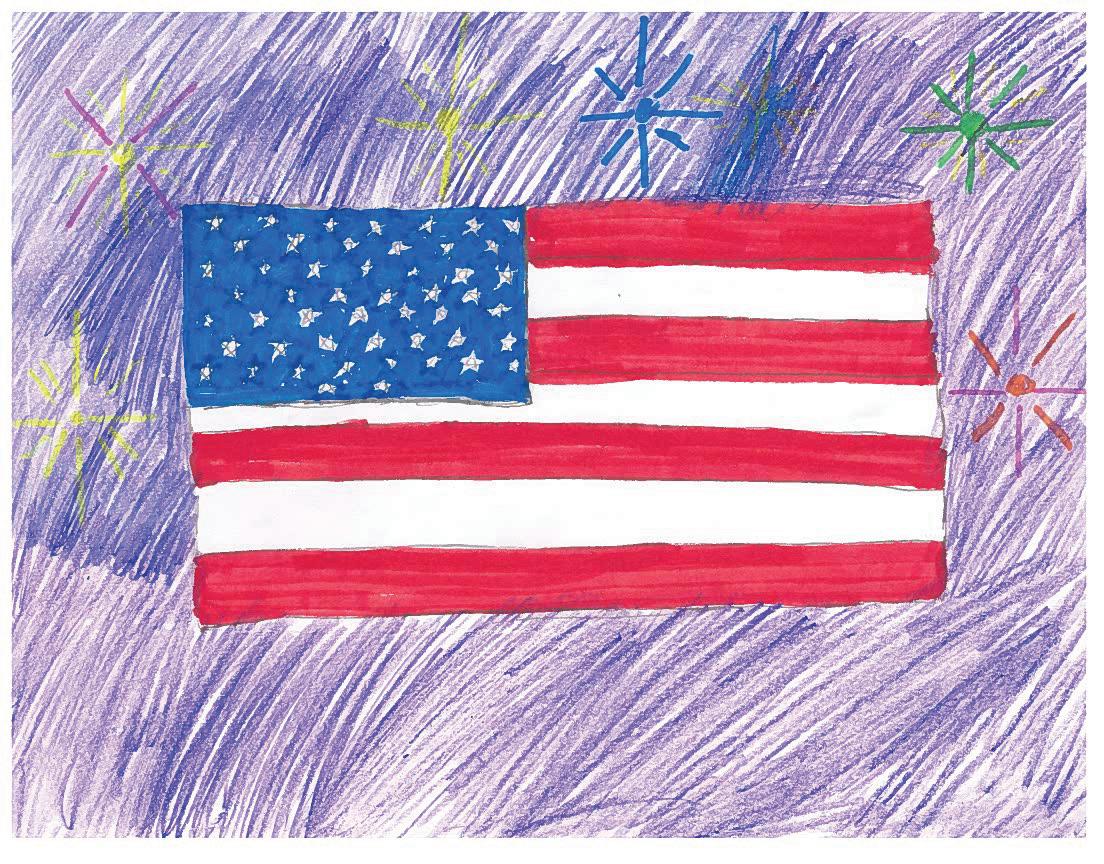
at
Ella
White Elementary School
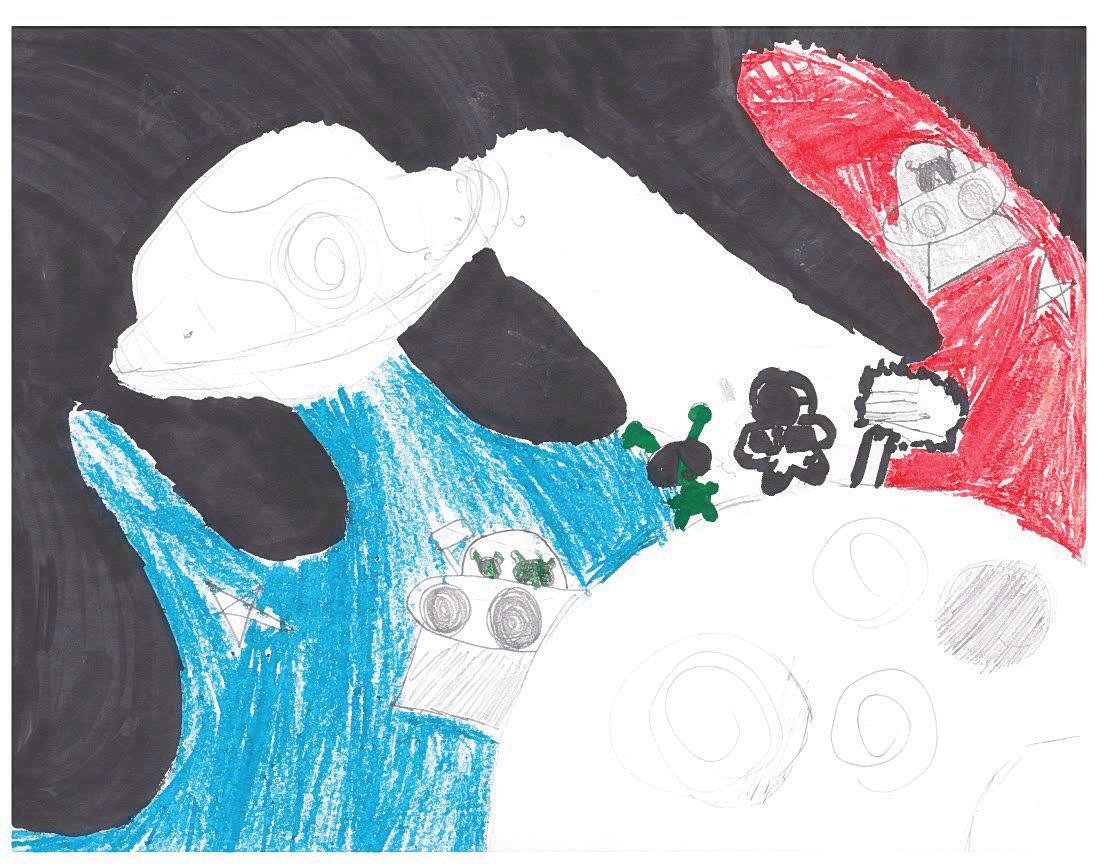
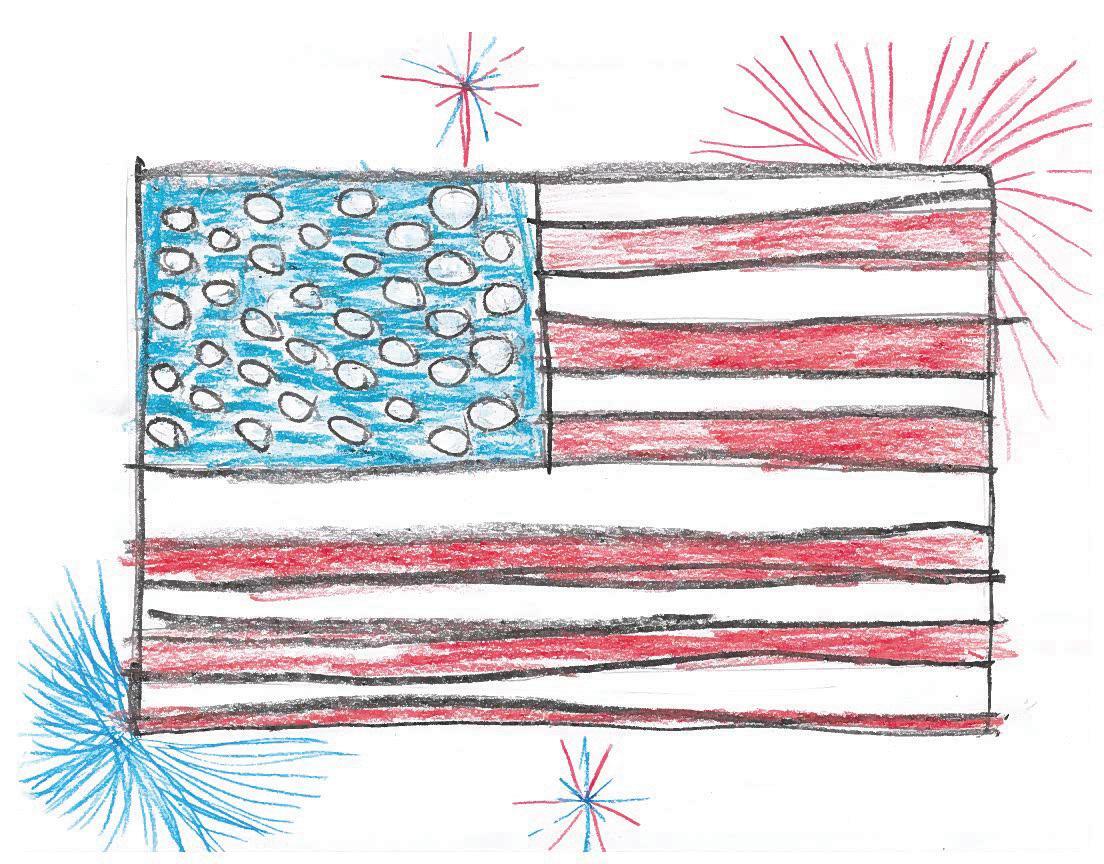
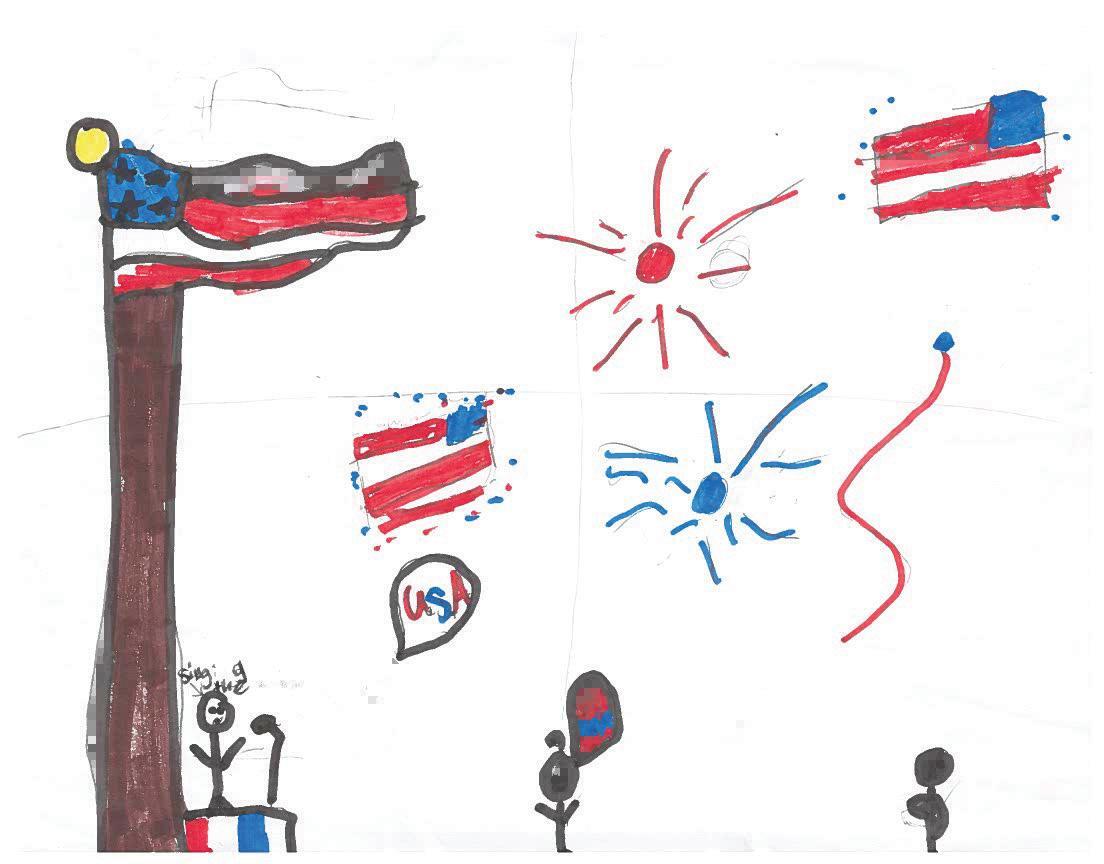
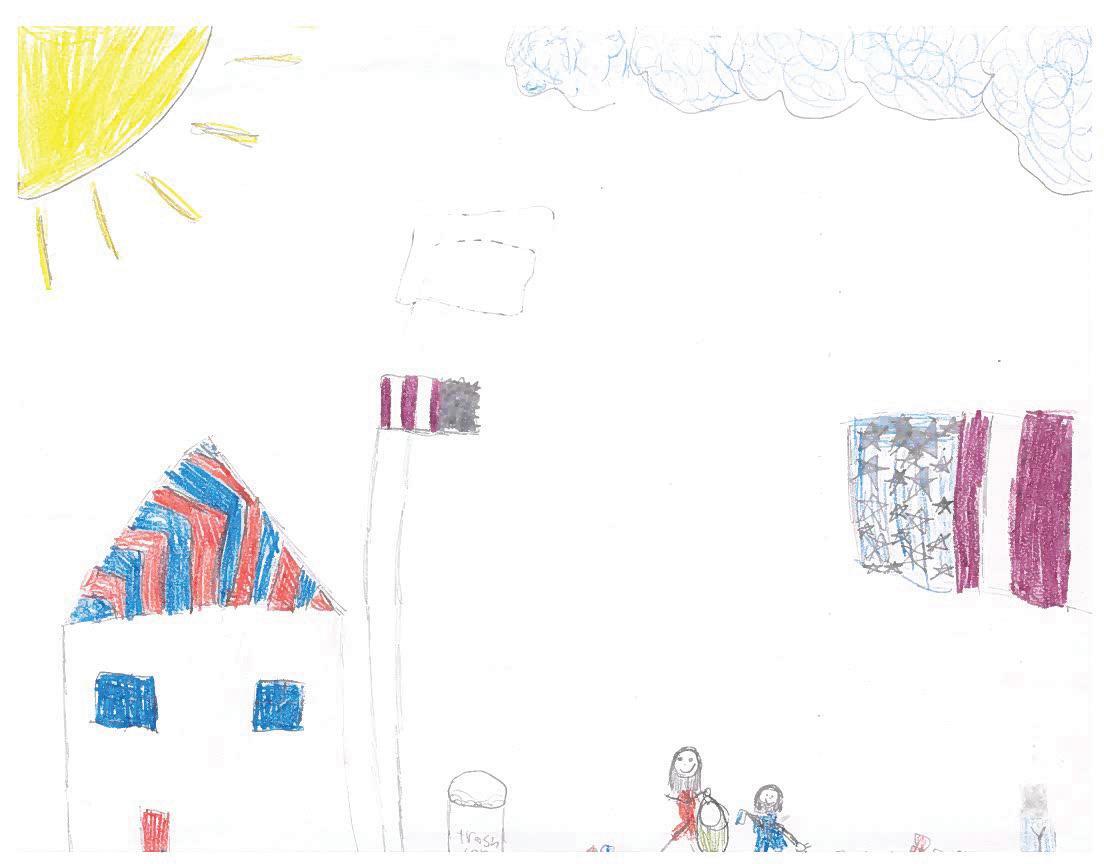
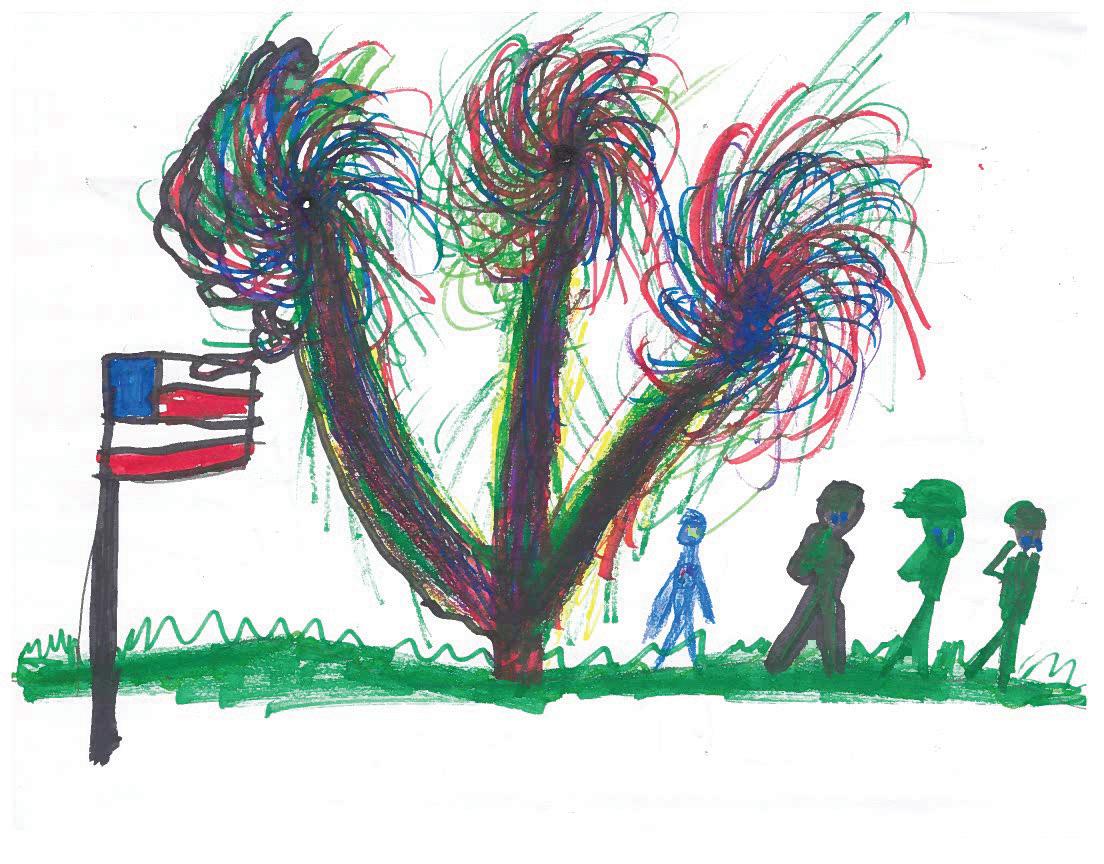
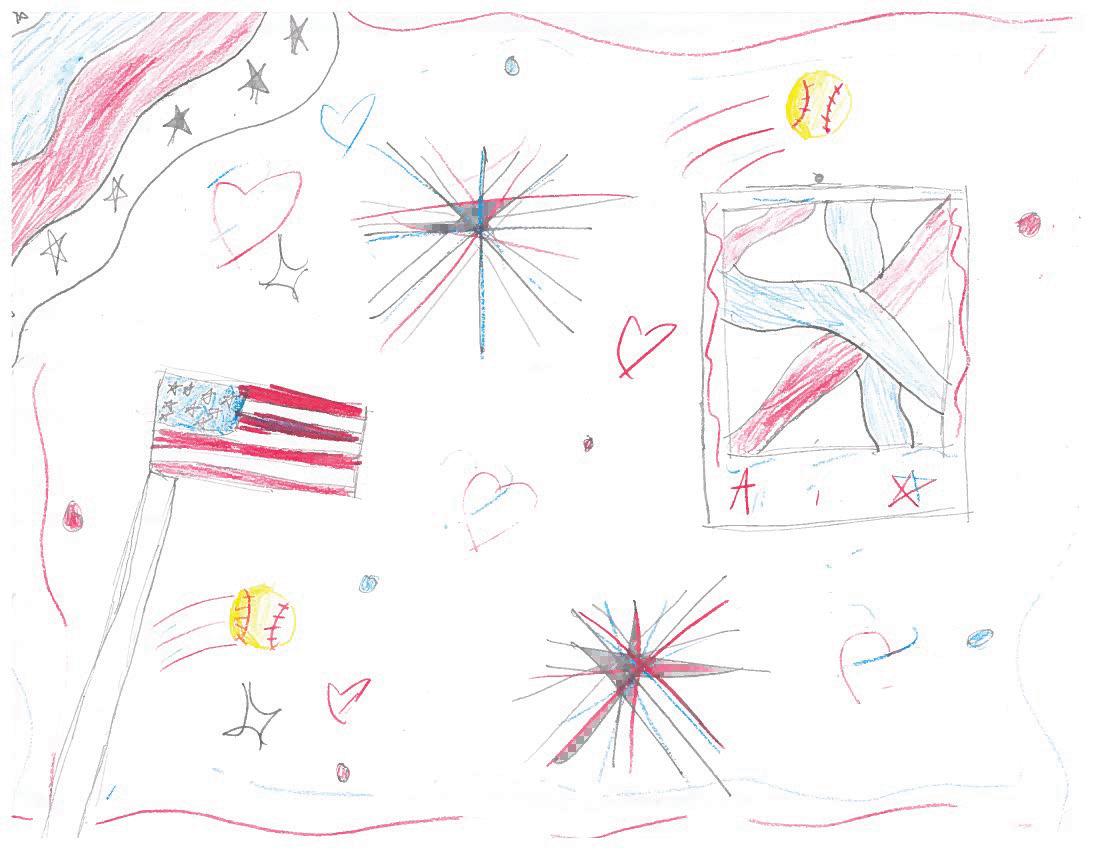
at
Ella
White Elementary School
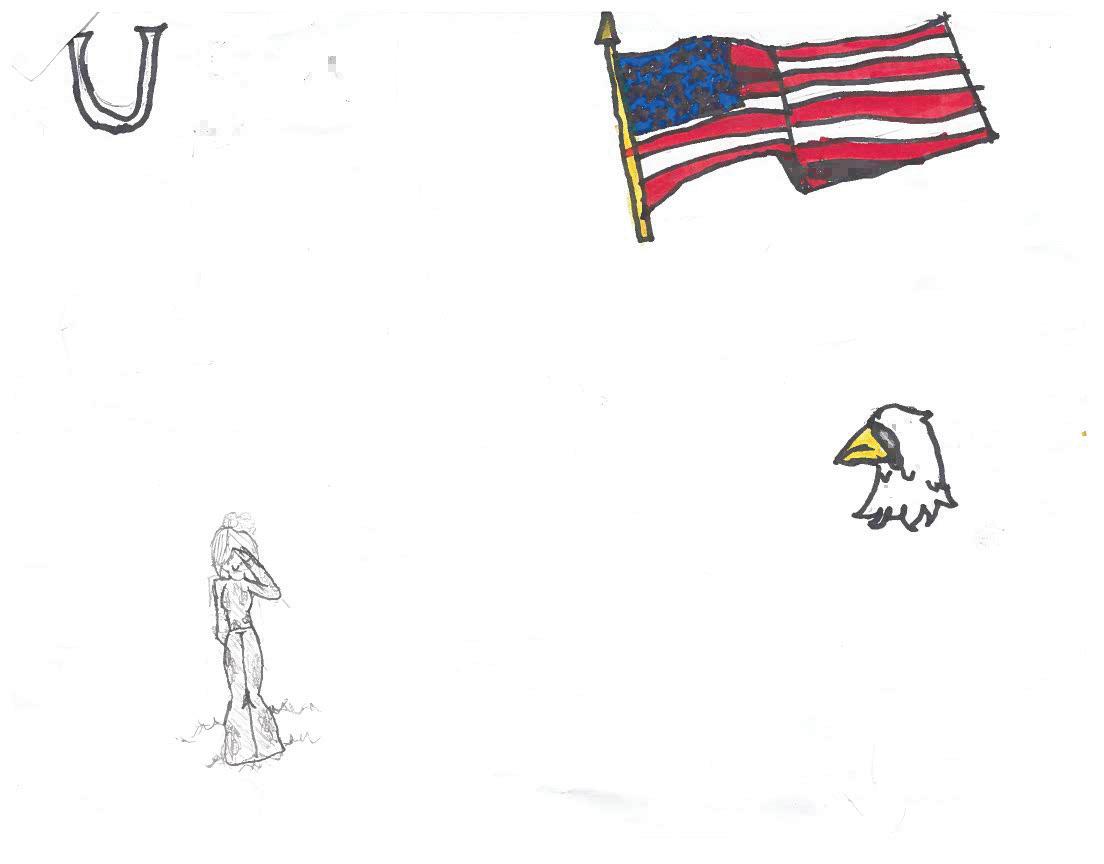
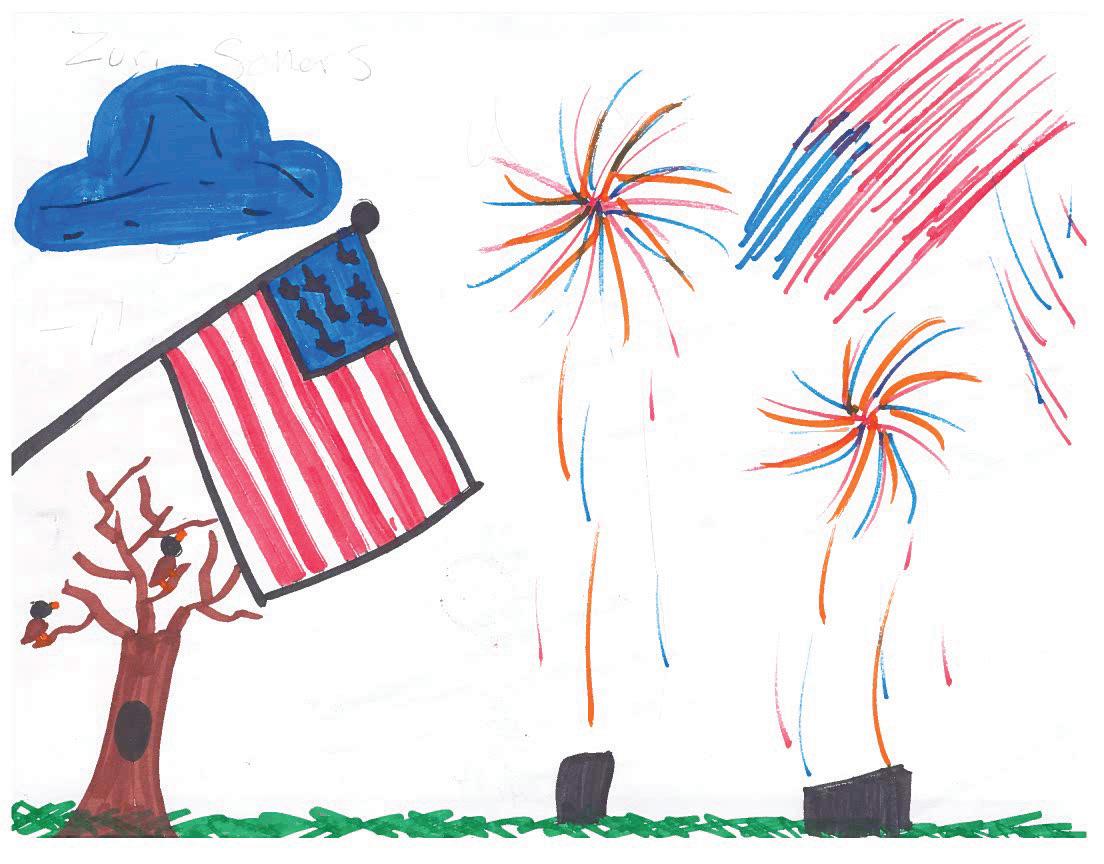
Submitted by 4th Graders at Ella White Elementary School
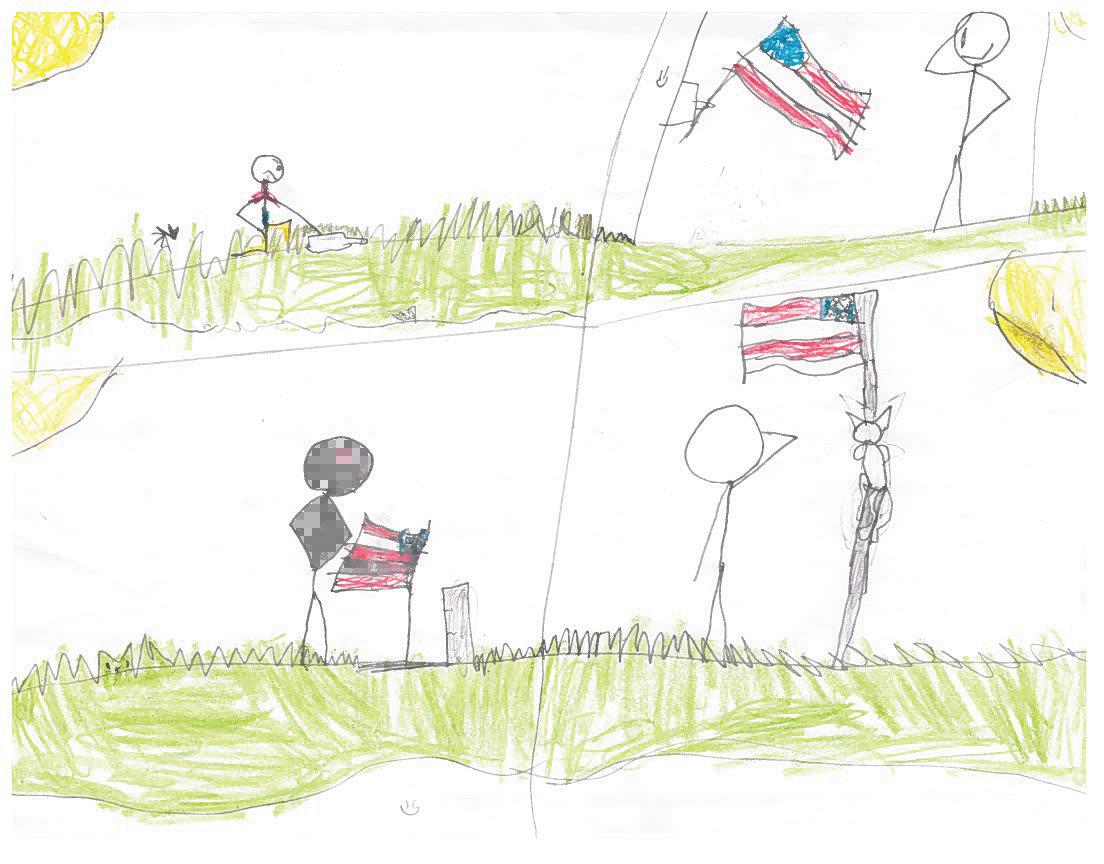
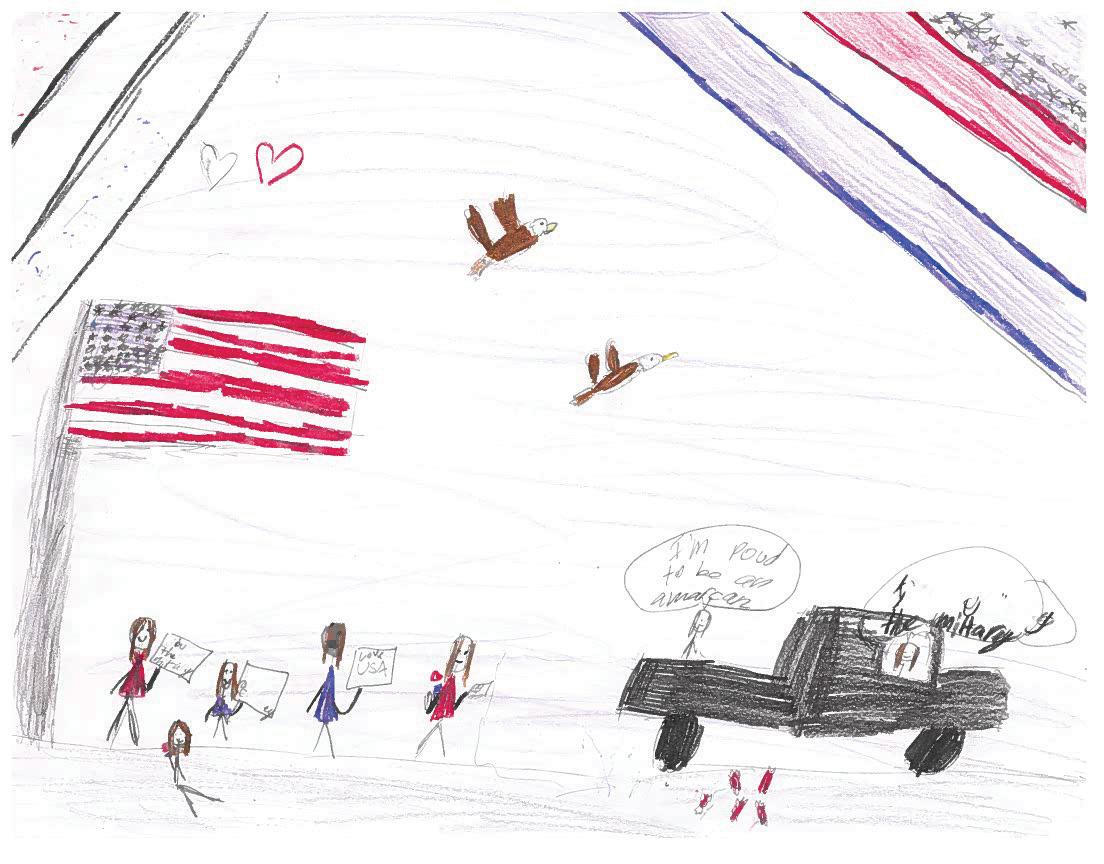
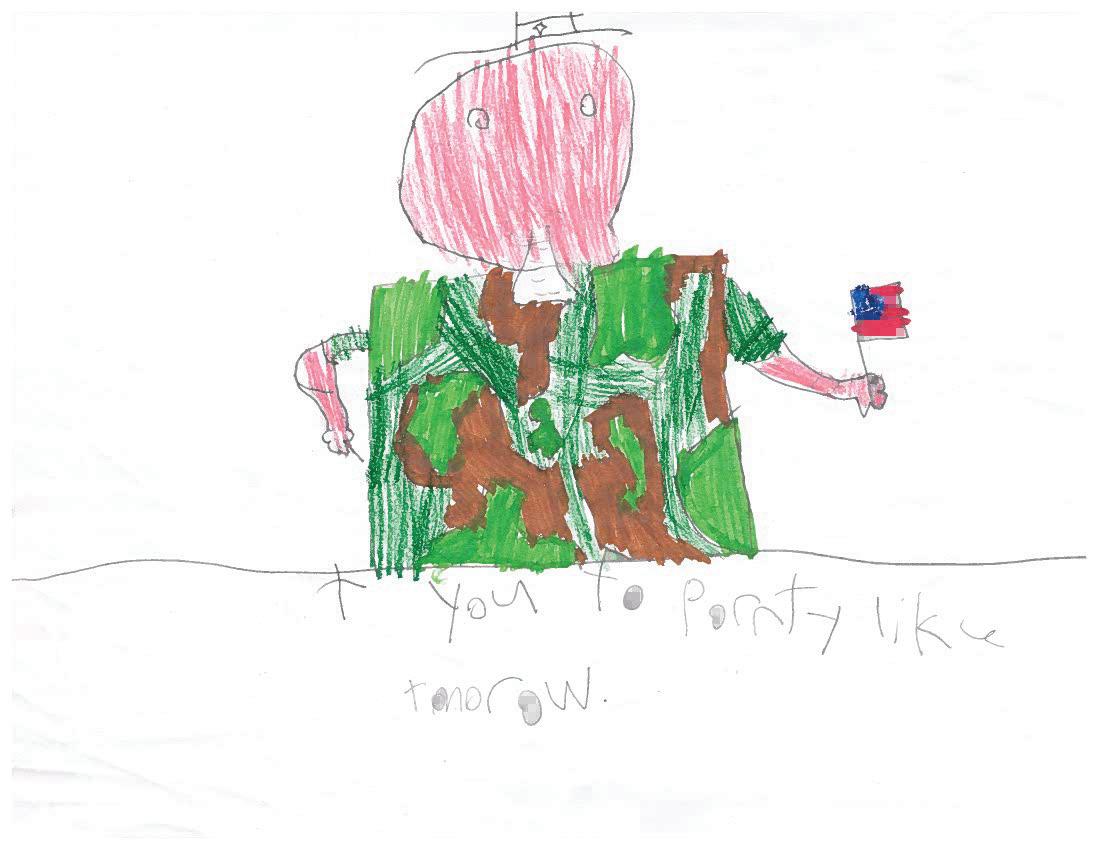
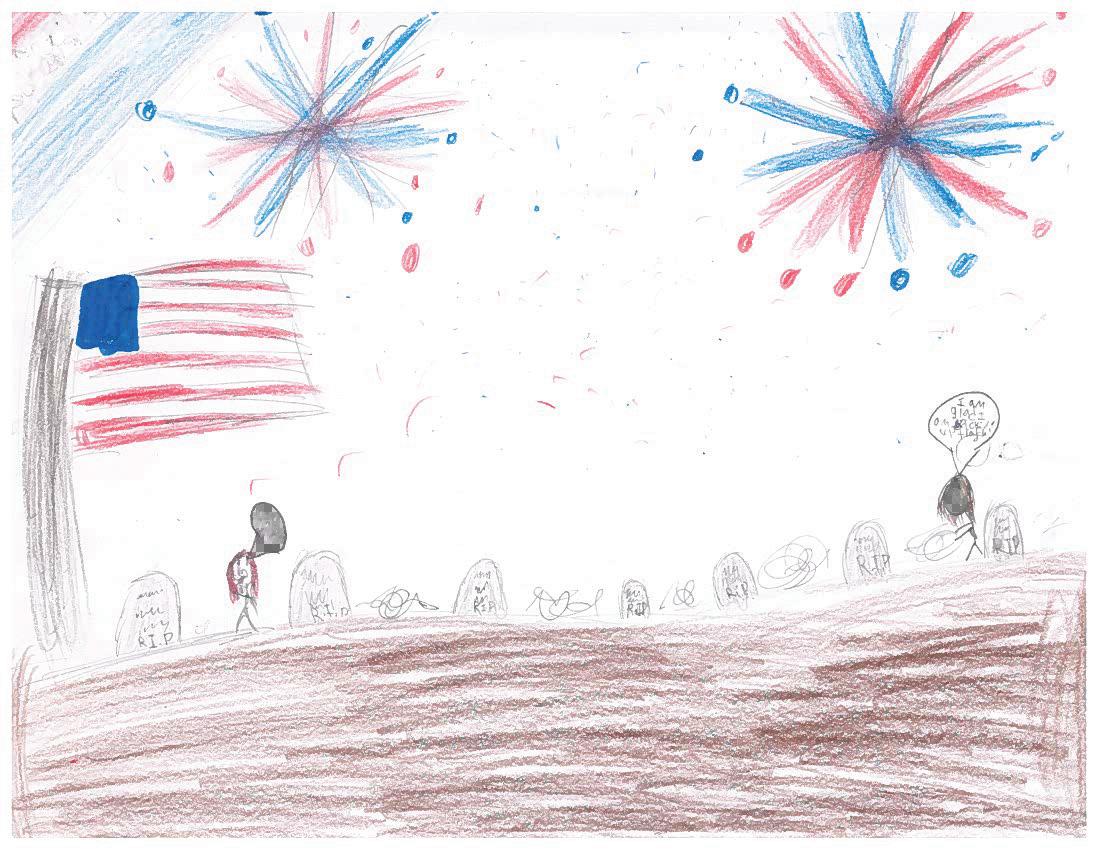
How a cannon from the USS Maine reached Alpena Reagan
Voetberg
News Staff Writer
The City of Alpena has a unique historical artifact on its front lawn: a cannon from the battleship USS Maine.
The cannon is displayed on the front lawn of Alpena City Hall. The U.S.S. Maine was destroyed by an explosion in the harbor of Havana, Cuba on Feb. 15, 1898. The event precipitated the Spanish-American war.
U.S.S. Maine, a second-class battleship built between 1888 and 1895, was sent to Havana in January 1898 to protect American interests during the long-standing revolt of the Cubans against the Spanish government. In the evening of Feb. 15, 1898, Maine sank when her forward gunpowder magazines exploded. Nearly three-quarters of the battleship’s crew, 260 people, died as a result of the explosion, according to the naval history and heritage command website.
The ship’s remains were eventually raised in 1912 and at that time Republican George A. Loud of Michigan forwarded to the Navy Department a series of resolutions sent to him by the chamber of commerce and the common council of the city of Alpena requesting the loan “of a piece of naval ordinance of historical interest”. In March of 1912 the Naval Department decided to loan Alpena a six-inch gun taken off of the Maine.
The people of Alpena were ecstatic when the cannon arrived in Alpena on May 19, 1912. The common council planned a festive Independence Day on July 4, 1912 for its unveiling and more than 7,000 visitors flocked to the city, eager to see the unveiling of the cannon from the martyred U.S.S. Maine.
Hon. Charles Henry gave an address at the dedication of the cannon, according to a
news article from July 5, 1912.
“The cannon which has just been unveiled is one of the two secondary or broadside batteries, of three guns each, which the Maine carried,” said Mr. Henry. “And The Maine was the first battleship constructed,” he continued. “Its armament consisted of four 10-inch guns, two forward on turrets two in the after? part of the vessel. Aside from that, there were two secondary or broadside batteries of three guns each on either side of the boat.”
“At the time of the destruction of the Maine, the two forward were hurled into the bay and were never, afterward discovered, In recognition of the services of the citizens of Havana to the United States, the two guns in the after part of the ship were donated to the people of that city and are now in the public square overlooking the bay which forms the graves of the heroes of the Maine.”
“The six guns which formed the secondary or broadside batteries of the Maine when they had been raised were placed in the service of the United States. By the efforts of Colonel Doud, one of these broadside guns was obtained for the city of Alpena and is the gun which has been unveiled today. Alpena is the only city in all the United States which can boast the possession of one of these guns.”
On Spanish-American War battleships, it took five minutes to load and fire a gun, according to the newspaper clipping. Battleship cannons hit their target an average of 3% of the time. The range of the cannons was 3,000 to 5,000 yards. A ship could travel at a speed of about 16 knots.
Alpena at the time was the only city in the U.S. that could boast a cannon from the battleship Maine. The silent memorial to honor the loss of one of America’s greatest warships still sits today in front of City Hall on the corner of Water Street and First Avenue.
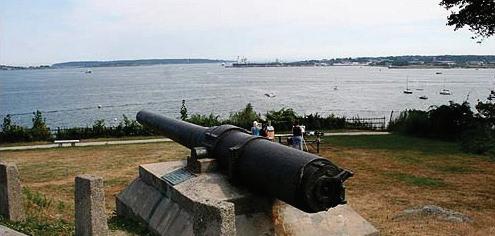
There is one other cannon placed in Fort Allen Park in Portland, ME. That cannon was sent to Fort Allen in 1915 and was restored in 2014, according to Portland, ME Parks, Recreation, and Facilities website. Other parts of the U.S.S. Maine are located on the east side of the country. A deck gun and spare propeller are located at the National Museum of the United States Navy,
Courtesy Photo
This is a photo of the U.S.S. Maine before it was destroyed and sank during battle. One of the ship’s cannons is now displayed in the front yard at City Hall in Alpena.
Courtesy Photo
Naval history and Heritage Command in Washington D.C. The ship’s mast is located in Arlington National Cemetery, the foremast is located on the grounds of the US Naval Academy at Annapolis, and a ventilation funnel is located in Pompton Lakes, NJ. Additionally, the anchor is located in Reading, PA.
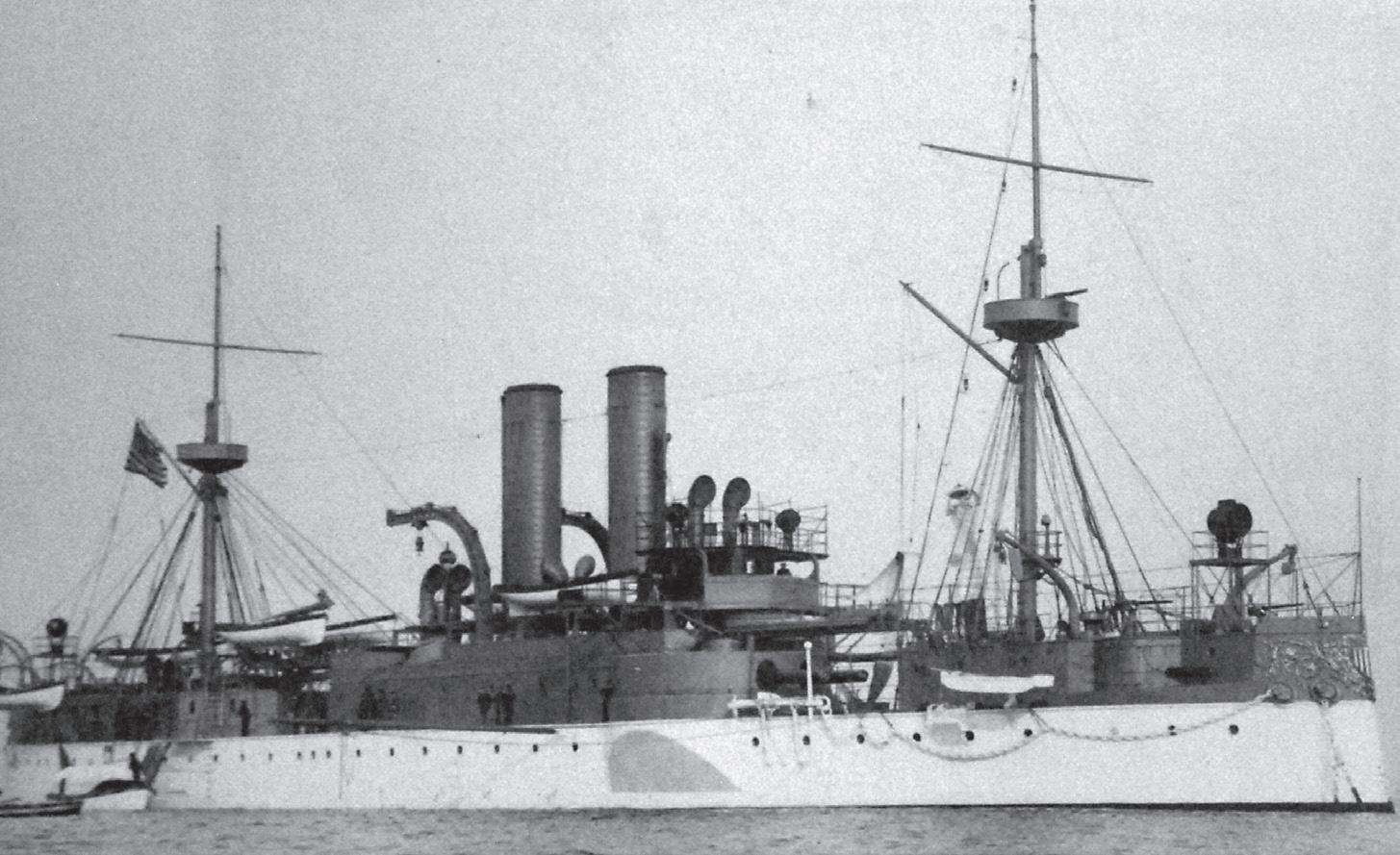
This is a photo of one of the six-foot guns on the U.S.S. Maine before it was destroyed. There is one like it on display in Alpena.



Steering through Michigan history
The lost history of the car industry in northern Michigan Grace Walker
Michigan News Group Writer
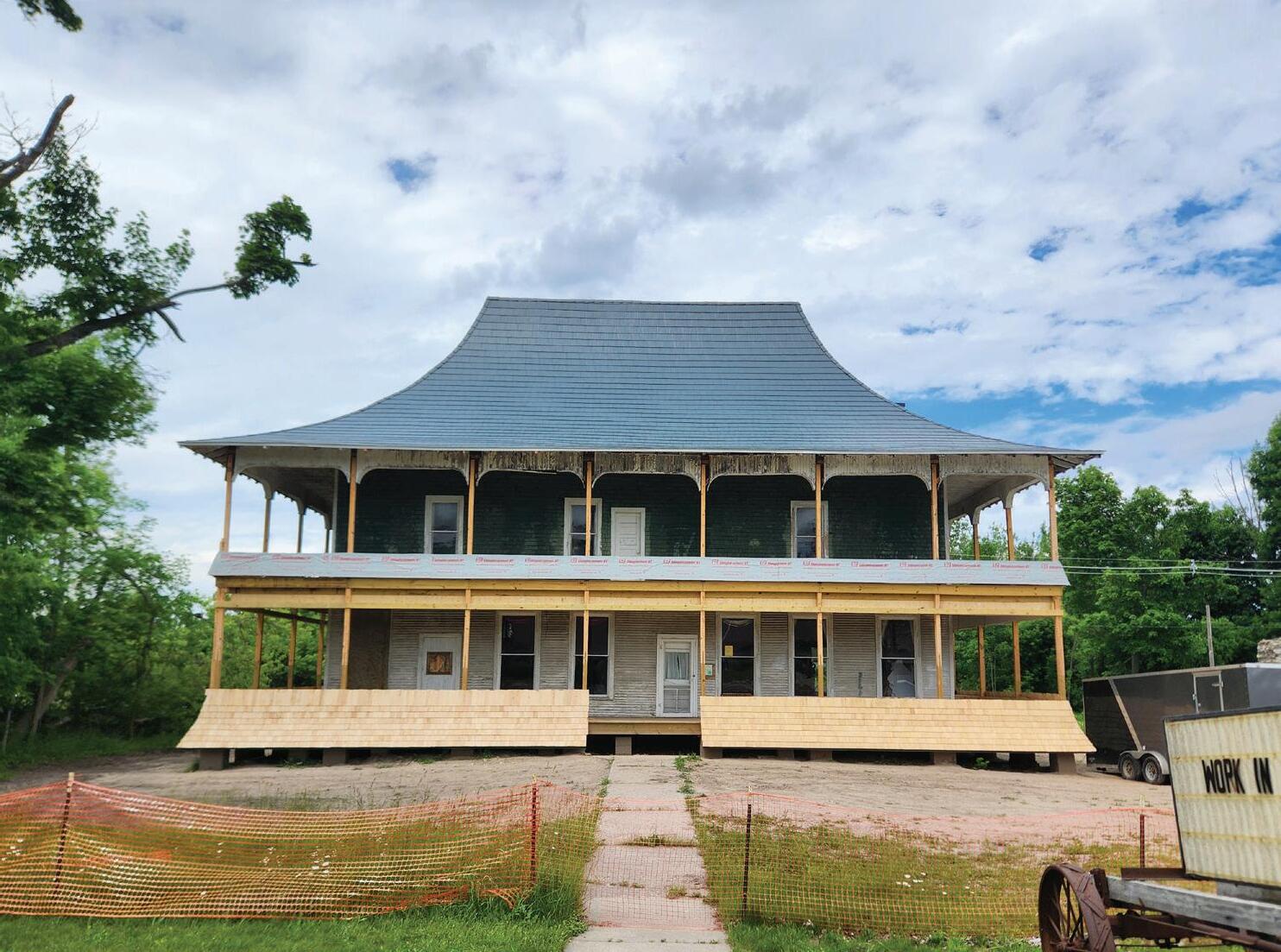
ONAWAY —Colleen Janeczek and Roxanne Dean walk through the old Lobdell-Emery Administration building in Onaway, Michigan, dreaming of the future. Cracks in the plaster creep throughout the walls, dust is spread across outdated carpet and old furniture lay abandoned from years past.
Janeczek and Dean are both members of the Onaway Historical Museum, heading a project to renovate the run-
down building back into its original state.
“So our goal is to, once we get this renovated, to move some of our exhibits there,” Dean said. “[We’ll] move our steering wheels and all the other displays that we have pertaining to the American Wood Rim factory.”
The building once housed the offices for the people that ran the world’s largest steering wheel factory called the American Wood Rim Company. It’s the only building that’s left. At the turn of




the century, nearly half of Onaway’s 4,000 residents worked at the factory before it was engulfed in flames in 1926.
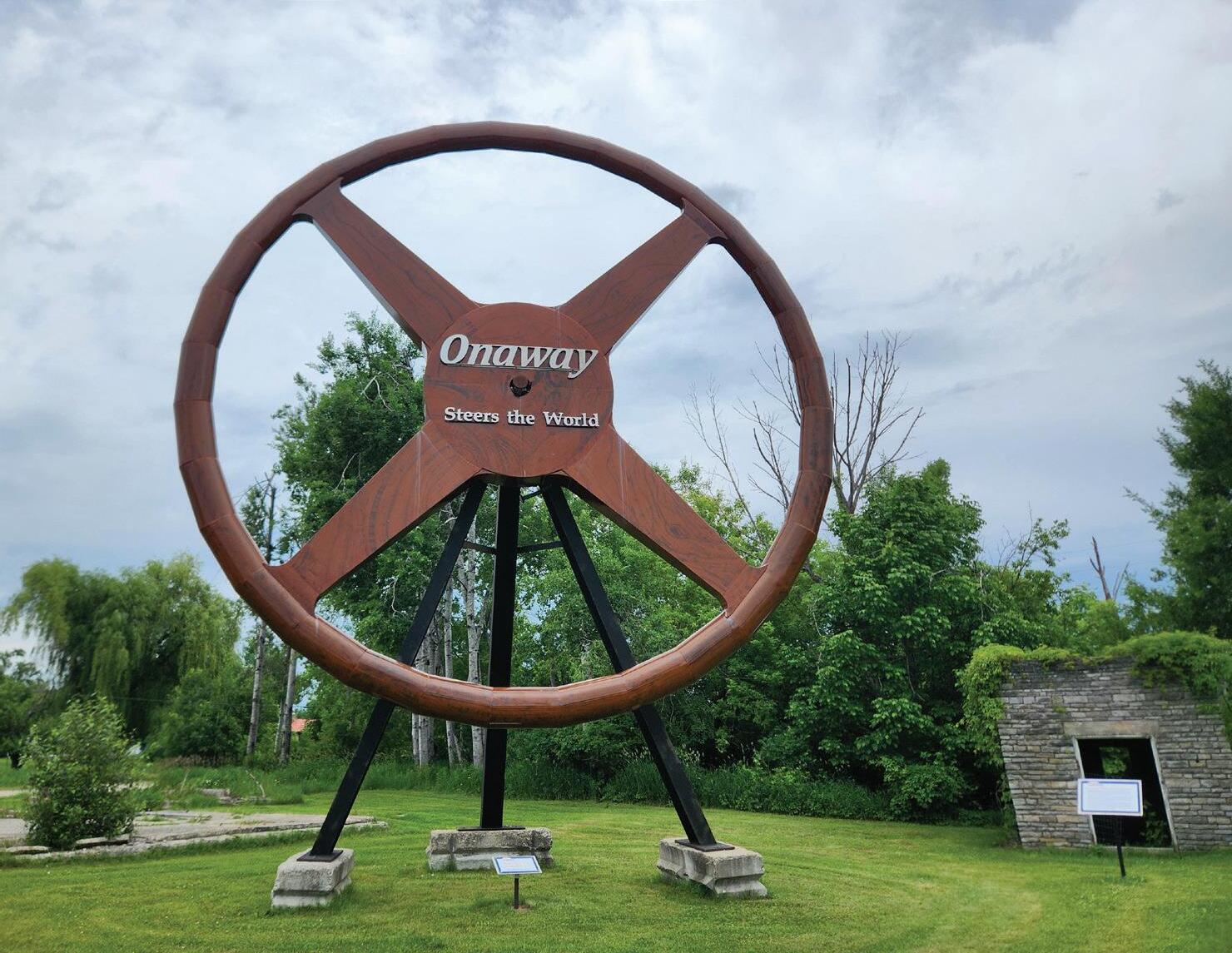
125 years later, the small town with just under 700 people stands on the remnants. Its slogan is still “Onaway Steers the World.”
The American Wood Rim Company was owned by E.J. Lobdell, a man who manufactured bike parts, saddles and wheels in Marietta, Ohio. Onaway historian, Newt Chapman, said Lobdell moved to Onaway in 1901 for the lumber. This was when he was inspired to make steering wheels for the cars being built in Detroit.
Months before he came, the Alpena lumbering company The Huron Handle accepted an invitation from Onaway founding father Merrit Chandler to come up to Onaway in 1901. After settling down and starting the project to make the Northern Michigan Railroad, Lobdell bought Huron Handle Company in August of the same year.
Chapman said the American Wood Rim Company consolidated four different companies which included Huron Handle and three other wood rim manufacturer plants.
The factory grew in its early years. With partnership with Huron Handle, the factory was not only making steering wheels, but also bike wheels and
rims, hangers and broom handles.
The company went on to sell steering wheels to most of the major companies including Packard, Cadillac, Oldsmobile and more.
According to the Historical Society of Michigan, Onaway even owned 22 patents from the way the wood was mended together to create the wheel to their very own tilt steering wheel design, which allowed users to move the steering wheel up when getting into the car.
But all of that came crashing down on the morning of Thursday, January 14, 1926 when a fire broke out in one of the sanding machines. The fire ended up spreading to the rest of the factory, engulfing every wooden piece into flames and killing four workers. Everything from the factory, to the lumber yards were destroyed.
After the fire, the company decided they would move their company to Alma, and invited their workers to go with them. They ended up being known as the Lobdell-Emery Manufacturing Company. Citizens ended up moving away, leaving the rest of the town in shambles.
“It kind of, I hate to say, but the fire destroyed the town, not just the factory. I mean the whole town took a hit, the restaurants, the bars, everything,” Janeczek said.





























Courtesy Photo
The world’s largest steering wheel stands over the remnants of the American Wood Rim Company in Onaway, Michigan on Wednesday, June 24, 2026.
ALPENA HISTORY
Sixty miles south of Onaway, Alpena was also trying to make a name for themselves in the auto industry, like many small towns across northern Michigan in the early 20th century.
The Alpena Motor Car Company only lasted four years, but within those years, their car, the Alpena Flyer, was sold across the nation.
AMCC president Daniel Hanover and a board of directors created the company on June 15, 2010. The company received its manufacturing equipment from the closed down Mt. Clemens Wolverine Motor Car Company, according to The News. Its factory was at what is now the Besser World Head Quarters.
The prototype was created by William C. French.
“They built the first prototype, and that was done in his machine shop, and then he kind of stuck around as like a local legend here in Alpena,” Sarah Honeycutt, the collections manager at the Besser Museum said.
Honeycutt said when business started rolling in November of 1910, it was projected that 2,500 cars would be made yearly.
Several models were created, each only in a royal blue color. Some of the models included the Model J, a car that accommodated four passengers and the Model G, a roadster, which was an open two-seat car. The prices ranged from $1,450 to $1,600. Today, those prices would have been around $48,100 to $53,100, according to the Bureau of Labor Statistics.
“They did sell these cars nationally,” Honeycutt said. “They did actually end up going to the New York City Car Show, and it was recognized as one of the best ten cars in the world.”
But, the company only produced 500 cars by 1913. By 1914, everything stopped.
According to The News, the North American Vehicle Company sued the Alpena Motor Car Company for using its three-point suspension design. The company offered a $450,000 settlement, according to Motor Cities Heritage Area.
The company declared bankruptcy by February 1914.
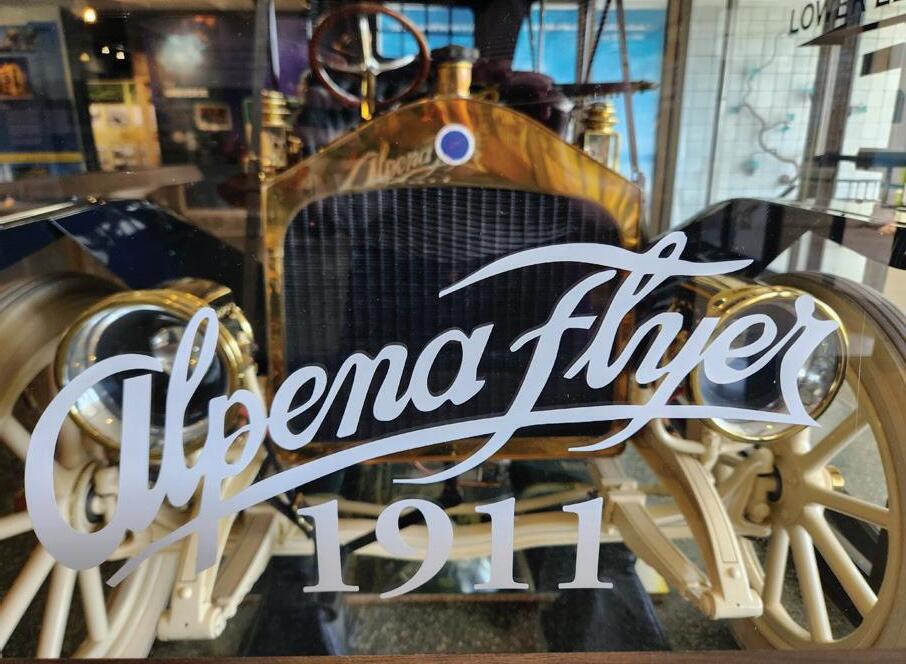
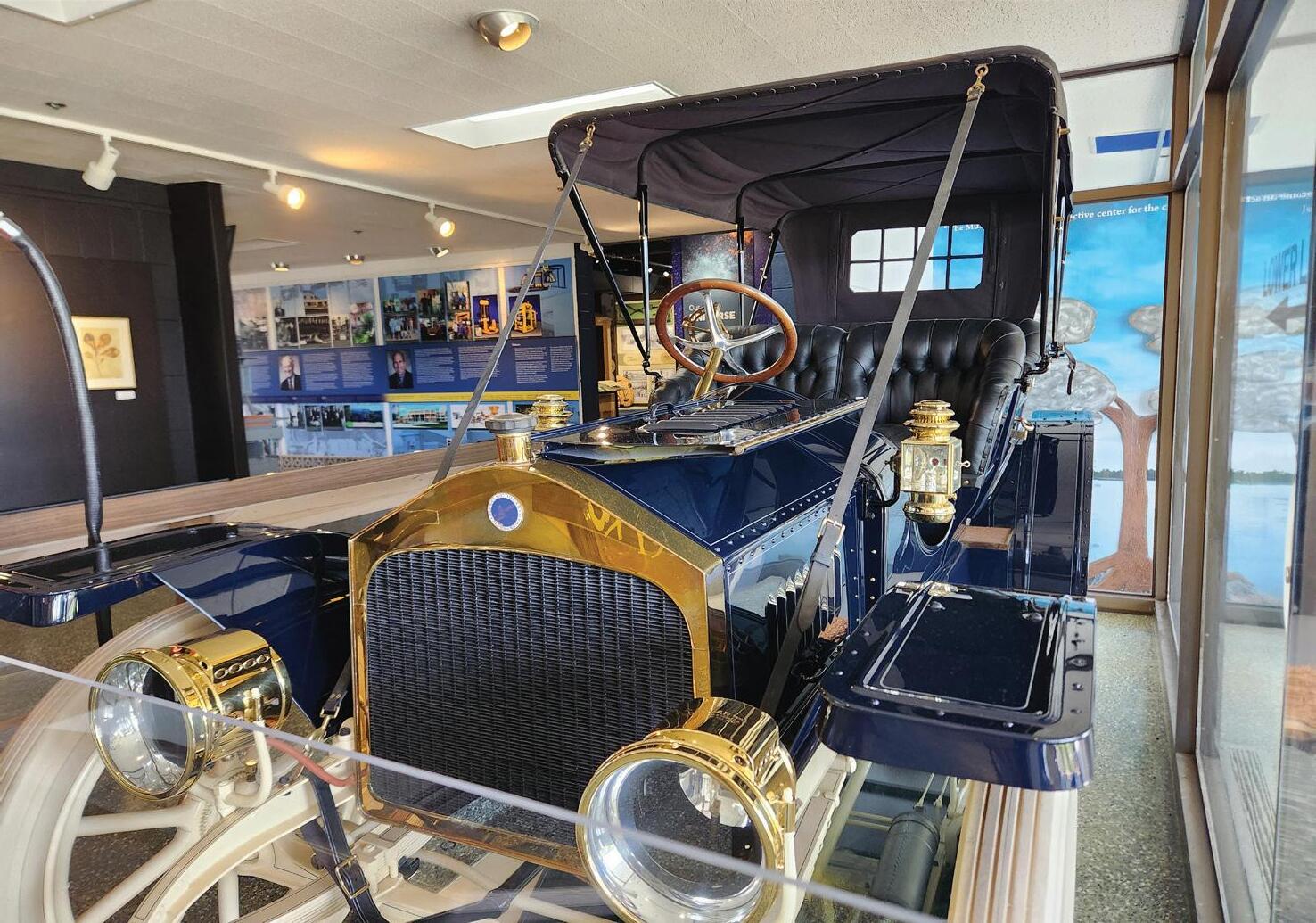
The last known remaining Alpena Flyer sits in the Besser Museum for Northeast Michigan.
June 24, 2026.




Courtesy Photo
The Lobdell Administration building stands in Onaway, Michigan on Wednesday,
The building housed the offices of those that ran the American Wood Rim Company. The Onaway Historical Museum is renovating the building back to its original design.
Courtesy Photos
The last known remaining Alpena Flyer sits in as a display in the Besser Museum for Northeast Michigan in Alpena, Michigan on Tuesday, June 23, 2026.
Kayla WikaryaszNews Staff Writer
ALPENA
— The “Mighty Mac,” is an iconic landmark not only for Michigan but for the entire United States of America. The Mackinac Bridge remained one of the four longest suspension bridges in the world for more than 40 years since its construction, accord-
The Mighty Mac’s Alpena origins
ing to the Mackinac Bridge Authority.
Alpena and the surrounding area played a key role in making needed parts for the bridge and holding the large tower shafts in place.
The authority claims that the Mackinac Bridge is currently the twenty fourth longest suspension bridge in the world, and the third longest suspension bridge in North America.
“By total length the Mackinac Bridge, at 5 miles long, remains one of


Rides to Wellness is a premium, non-emergency medical transportations program throughout Alpena, County
Hours: Monday-Friday, 8am to 4pm
$15 a ride, one-way in Alpena county One Additional Stop is an extra $10 A Companion can ride along FREE

For additional information, or to book a ride, please contact Mobility Coordinator, Brandi Anderson at 989-354-2487or andersonb@thunderbaytransportation.com
the longest bridges of its kind,” the authority’s web page states.
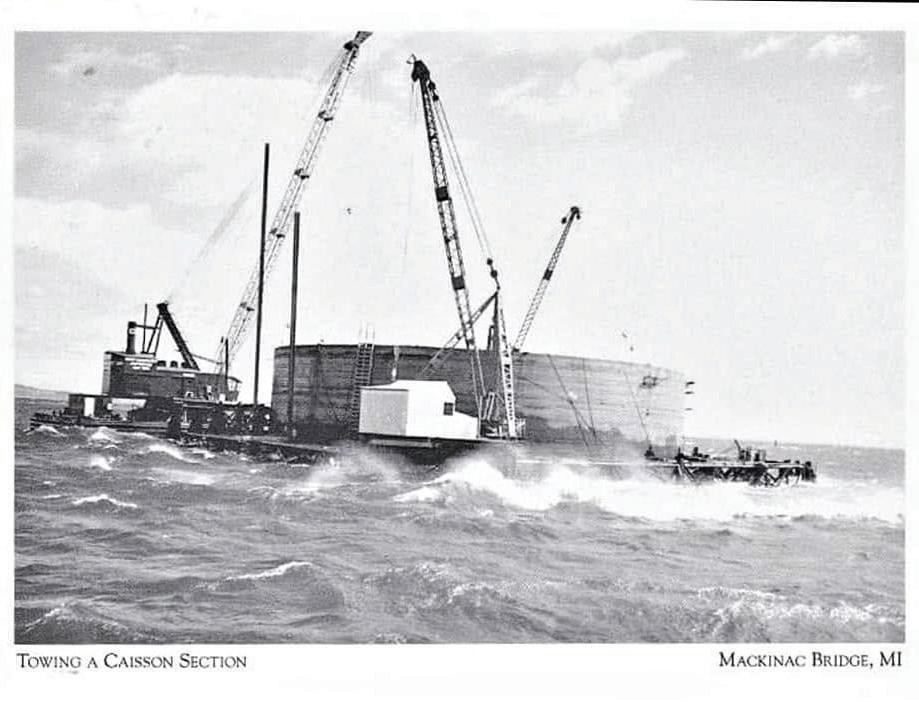
The construction of this unique bridge represents American ingenuity, grit, and determination. The two largest open caissons that form the foundation of the suspension bridge — caisson No. 19 and 20 — were constructed by the Wiltse Bros. Construction company, which was once located at present day Rockport State Recreation Area in Presque Isle County.
Construction on the Mackinac Bridge began on May 7, 1954, though the planning stages and legal processes began nearly four years earlier to make the bridge a reality, according to the Mackinac Bridge Authority.
The bridge connected the two peninsulas of Michigan which had historically been isolated from each other by the Straits of Mackinac, the body of water that separated the two land masses at their closest points. Here, the Mackinac Bridge was constructed.
The steel for the caissons was sourced from steel mills in Gary, Indiana but were shipped to the Wiltse Brothers Shipyard at Rockport in early June 1954, according to the book Miracle Bridge at Mackinac by David B. Steinman, the architect of the bridge, and in collaboration with John T. Nevill. The pieces of the caissons arrived separate, and laborers at the shipyard welded the first 48 feet of the structures.



The Merritt-Chapman & Scott company led the marine construction of the bridge, and subcontracted the initial construction of caissons No. 19 and No. 20 to the Wiltse Bros. The rest of the caissons were constructed in place at the Straits.
The two pillars that rise into the air, more than 550 feet above the water surface, are secured by open caissons that extend about eight feet from the water surface to 200 feet below into bedrock. Each of these structures is as tall as a twenty-story building, weighing 155,000 tons each. The caissons make up approximately one-third of the entire bridge’s weight, according to Steinman and Nevill.
The story of the two caissons, which Steinman and Nevill nickname “Mackinac’s Troublesome Twins,” is mired with construction delays, difficult weather conditions, and the sheer challenge of sinking two massive steel structures into the bedrock under 200 feet of water.
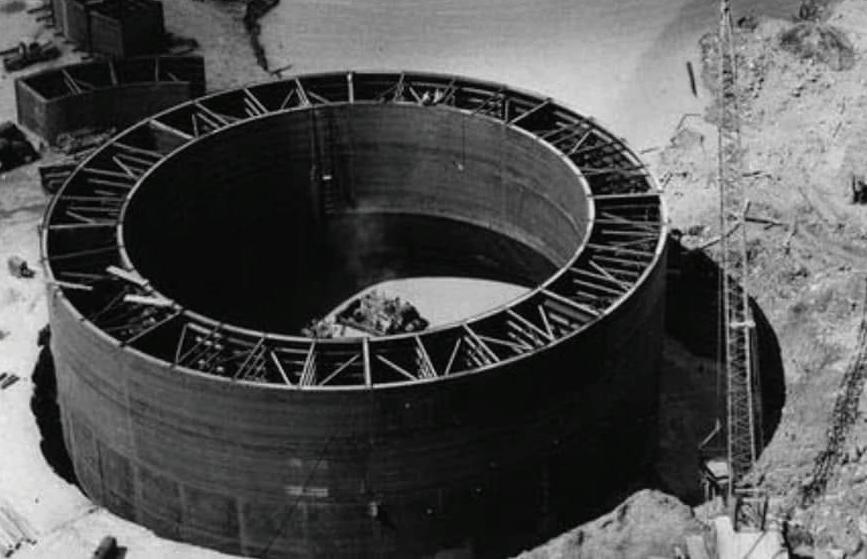
The caissons themselves were constructed with an outside circular wall 86 feet in diameter with eight compartments sectioned between them to hold concrete. According to Steinman and Nevill, the caissons required additional tiers to be added to accommodate the depth.
Grover Denny, a supervisor for the bridge construction, had hoped for all six of the bridge’s piers to be secure at

- Wednesday, July 1, 2026
Courtesy Photo
This is a photo of one of the Mackinac Bridge caissons being moved on a large barge from the Alpena area to the Straits of Mackinac where the Mackinac Bridge was under construction.
the end of ‘54. Four of the six were completed by the year’s end, however caissons No. 19 and No. 20 delayed progress.
In their book, Steinman and Nevill stated that the caissons were late to arrive at the construction site due to “a series of unfortunate circumstances no one could anticipate.” Constructing the caissons ran behind schedule and both caissons arrived at the construction site “weeks late.” These circumstances were coupled with bad weather and ultimately a blizzard and harsh wintry conditions that lead to a work shutdown from Jan. 14 to April 2, 1955.
Crews worked from September 1954 until early May 1955 to sink the caissons, utilizing dynamite to move the structures along to the bedrock. Still, Steinman and Nevill claim that the sinking of No. 19 and No. 20 went “virtually unnoticed by the public.”
According to the Mackinac Bridge Authority, the bridge officially opened to traffic on Nov. 1, 1957 with a formal dedication from June 25 to 28, 1958. The 50 millionth crossing occurred on Sept. 25, 1984 and the 100 millionth crossing occurred on June 25, 1998.
Coincidentally, a Presque Isle County resident had the honor of being the 100 millionth driver to cross the bridge, a full circle to the humble origins of the construction of the bridge nearly 45 years earlier.
According to a The News special feature “Unusual stories from the Mighty Mac Bridge” by Jeffrey Braise, well over four million vehicles cross the Mighty Mac annually. Daniel J. Gilmet earned the coveted title of “100 millionth vehicle” on June 25, 1998. He was riding his 1981 lowrider, Harley Davidson motorcycle.
Gilmet received complimentary hotel accommodations, meals and beverages, passes to tourism sites, golf and recreation passes, and more.



Courtesy Photo
photo
one of the caissons for the Mackinac Bridge being built in Alpena.
1. The United States declared independence from Great Britain on July 4, 1776.
2. George Washington was the nation’s first president.
3. The Louisiana Purchase doubled the size of the country.
4. The American Civil War remains the deadliest war in U.S. history.
5. Abraham Lincoln issued the Emancipation Proclamation in 1863.
6. The Transcontinental Railroad linked the East and West coasts.
7. The Wright brothers’ first flight launched the aviation age.
8. Henry Ford popularized the assembly line.
9. The Great Depression was the worst economic downturn in U.S. history.
10. Franklin D. Roosevelt was elected to four terms.
America at 250: 50 Fast Facts Thank You
11. The Attack on Pearl Harbor brought the U.S. into World War II.
12. The United States helped lead the Allied victory in World War II.
13. The Apollo 11 Moon Landing put Americans on the Moon.
14. Neil Armstrong took the first lunar step.
15. Martin Luther King Jr. delivered the “I Have a Dream” speech in 1963.
16. The Civil Rights Act of 1964 outlawed segregation in public accommodations.
17. The Voting Rights Act of 1965 strengthened ballot access.
18. Jonas Salk created the first effective polio vaccine.
19. Thomas Edison held more than 1,000 patents.
20. Alexander Graham Bell invented the telephone.

21. Walt Disney built one of the world’s most influential entertainment companies.
22. Jackie Robinson broke Major League Baseball’s color barrier.
23. Babe Ruth became America’s first great sports superstar.
24. Muhammad Ali became a global symbol of courage and conviction.
25. Michael Jordan helped globalize basketball.
26. The Gold Rush accelerated westward migration.
27. Sacagawea aided the Lewis and Clark Expedition.
28. Susan B. Anthony fought for women’s voting rights.
29. The Nineteenth Amendment to the United States Constitution granted women the right to vote.
30. Thurgood Marshall helped end school segregation.
31. Justice Ruth Bader Ginsburg advanced gender equality.
32. Benjamin Franklin was an inventor, diplomat and writer.
33. Alexander Hamilton built the nation’s financial system.
34. John Marshall established judicial review.
35. The Monroe Doctrine warned Europe against colonizing the Americas.
36. Theodore Roosevelt created a lasting conservation legacy.
37. Yellowstone National Park was the world’s first national park.

38. The Interstate Highway System transformed travel and commerce.
39. Grace Hopper helped pioneer computer programming.
40. Bill Gates helped bring personal computers to millions.
41. Steve Jobs reshaped consumer electronics.
42. Oprah Winfrey became one of the most influential figures in modern media.
43. The Marshall Plan helped rebuild Europe and strengthened America’s global leadership.
44. Clara Barton established one of the nation’s most important humanitarian organizations.
45. Mark Twain helped define American literature.
46. Elvis Presley popularized rock and roll worldwide.
47. Jonas Salk created a vaccine that virtually eliminated one of the most feared diseases of the 20th century.
48. The Manhattan Project brought together American scientists and engineers to create the first atomic weapons.
49. Katherine Johnson performed calculations that helped send American astronauts into orbit and to the Moon.
50. In 2026, the United States celebrates its 250th birthday—its semiquincentennial.











































Staff Writer
ALPENA — Alpena was once a hiding spot for an infamous gang, all the way back in 1887. Three gang members, including the gang’s leader, were eventually captured there.
The Blinky Morgan Gang was infamously known throughout the midwestern region for murdering police officers and innocent civilians, according to the Besser Museum website.
The gang was headed by Charles ”Blinky” Morgan, which was an alias for Charles Conklin. Other gang members included Harry McMunn alias Matthew Kennedy, James Robinson, and John Coughlin. Robinson and Coughlin’s aliases were Pat Hanley and Billy Harrington.
The Blinky Morgan gang was known

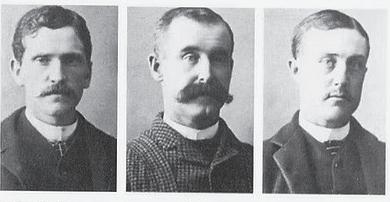
“Blinky Morgan,” infamous gang leader,

as a violent, pre-prohibition gang headquartered in Cleveland.
The Irish mob,also known as the Irish mafia, Irish-American mafia or IrishAmerican organized crime, is a collection of organized crime groups composed of largely ethnic Irish members which operate primarily in the United States, and have existed since the early 19th century,
Before the Blink Morgan Gang’s historic capture in the summer of 1887, The gang committed one of Cleveland’s most notorious crimes beginning the night of Jan. 26, 1887, according to the Encyclopedia of Cleveland History.
The gang robbed downtown Cleveland’s Benedict and Ruedy store of a large quantity of valuable furs. Several weeks later one of the gang members, McMunn, was captured in Allegheny
City, PA. Cleveland police officers Detective William Hulligan and Captain Henry Hoehn were sent to retrieve McMunn. At the Ravenna train station in Ravenna, OH, three gang members ambushed the officers and freed McMunn. Hulligan and Hoehn were beaten; Hulligan died from his injuries, while Hoehn recovered.
The crime was extensively covered in the newspapers of the day, according to the Encyclopedia. Rewards totaling $16,000 were offered for the capture of the criminals. Cleveland police officer Jack Reeves was credited with infiltrating the gang and discovering their headquarters in Alpena.
On June 28, 1887, three members of the gang—Morgan, Robinson, and Coughlin—were captured in Alpena.
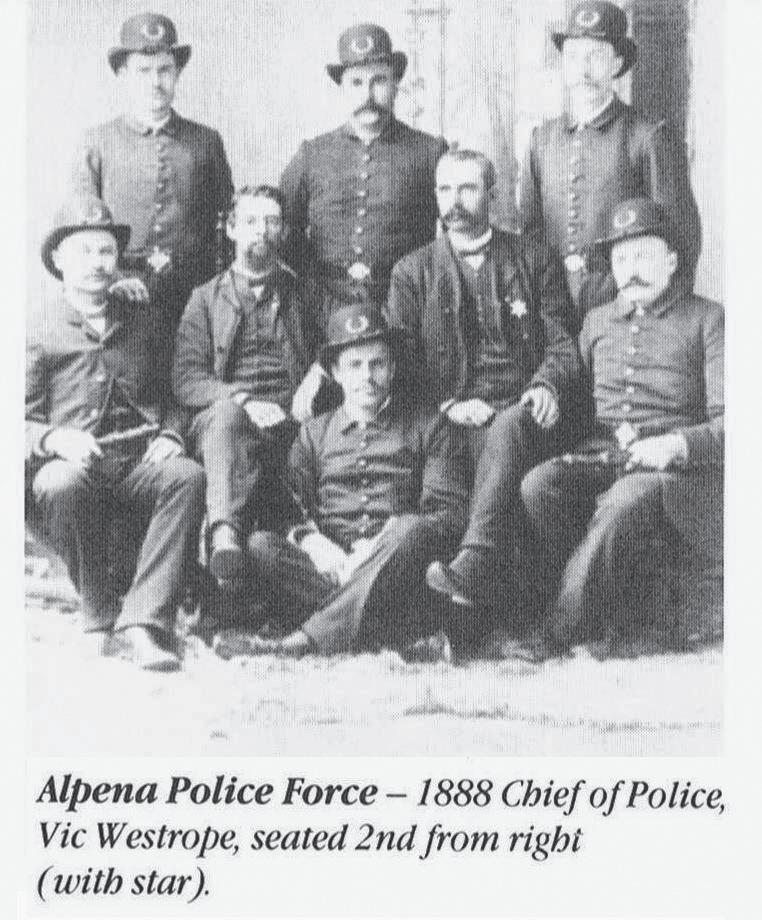
Sheriff Charles Lynch of Alpena heard the news that Morgan and his posse were stowed away in a local townhouse. Lynch and City Marshal Westrope kept a sharp watch on the men and just a few days later gathered the town’s law enforcement team and raided Morgan and his crew, according to the Besser Museum. The team consisted of Lynch, Undersheriff J.E. Denton, Deputy Sheriff G. W. Jones, A.C. McDonald, James Connors, City Marshal Westrope, and A.E. Westrope.
Lynch was the first to enter the townhouse. He surprised Morgan, who was sitting in a chair behind a table. Lynch

made a dash at him and Morgan grabbed his pistol and started shooting. Lynch was shot by Morgan above the knee and later died from blood poisoning due to complications from the bullet wound. Morgan was caught at the townhouse. His accomplices were caught on the steamer Mackinac, a vessel bound for Oscoda, according to the Besser museum.
Lynch’s funeral is described in detail in the Alpena Weekly Argus from Aug. 24, 1887. At his death bed were his wife and son, his sister and her husband the Rev. Potter, and Denton.
“During the time he served as sheriff, he proved very popular and gained public confidence,” the Argus states. “He possessed the qualities that made a first class sheriff, being brave, cool, self possessed, and not easily excited.”
Morgan later said he didn’t know if the people entering the home were robbers or thugs with intent to harm him, and he didn’t know it was the law and was just trying to defend himself, according to a documentary from The Ohio Channel.
The three gang members spent some time in a Michigan jail before being transported from Alpena to Ohio by steamer. When the ship docked in Ohio, a crowd of more than 2,000 were gathered, according to The Ohio Channel. The three gang members were brought to trial in Ravenna.
Courtesy Photo
This is a photo of members of the Blinky Morgan Gang. Leader Charles “Blinky” Morgan is pictured in the center. Members of the gang used Alpena as a hideout until they were captured locally.
Morgan was found guilty of murder by a jury trial on Oct. 10, 1887 and hanged in the summer of 1888. Robinson and Coughlin were also found guilty, but later set free after a new trial. McMunn was never recaptured and the stolen goods from the heist in Cleveland were never recovered.
A newspaper clipping from Aug. 10, 1888 in the Ann Arbor Argus details the hanging of Morgan.
“Columbus, Ohio, Aug. 4 - Charles, alias “Blinky” Morgan, the principal figure in the Ravenna rescue and the murder of Detective Hulligan, of Cleveland, Ohio, was executed at the Ohio penitentiary shortly after midnight,” the clipping states. “The prisoner spent a quiet day, refusing to see visitors except those with whom he had been intimate and who had taken an interest in the commutation of his sentence. To all with whom he talked he protested his innocence of the crime.
“Morgan made out an order turning his body over to Dr. Clemmer, the physician of the prison, with the request that it be used for the benefit of the sciences and afterward cremated,” the clipping continues. “After giving the order he received a letter from Nellie Lowery, of Cleveland, who is reputed to have been his mistress, asking that his body be sent to her. She had been refused the pleasure of seeing him alive, and she claimed that it was no more
than right she should see his face after death. Morgan changed his mind after reading the letter and asked the physician to relinquish his claim, which was done.”
“The execution was witnessed by thirty persons,” the Argus states. “Morgan was on the scaffold when the spectators entered the execution department. He looked like a high-toned gentleman dressed for an evening ball. The warrant was read, and Morgan refused to say a word, but stood like a statue as the ropes were adjusted. When all was ready, the cap drawn down, and the rope began to tighten, Morgan spoke in a loud tone, ‘Good-bye, Nellie,’ and passed through the trap…He slowly strangled to death.”






Dylan J. Wallace
Emilee M. Manning Chelsea M. Koss Sean E. Harkins
Courtesy Photo
This is a photo of the Alpena Police police force in 1888.
Courtesy Photo
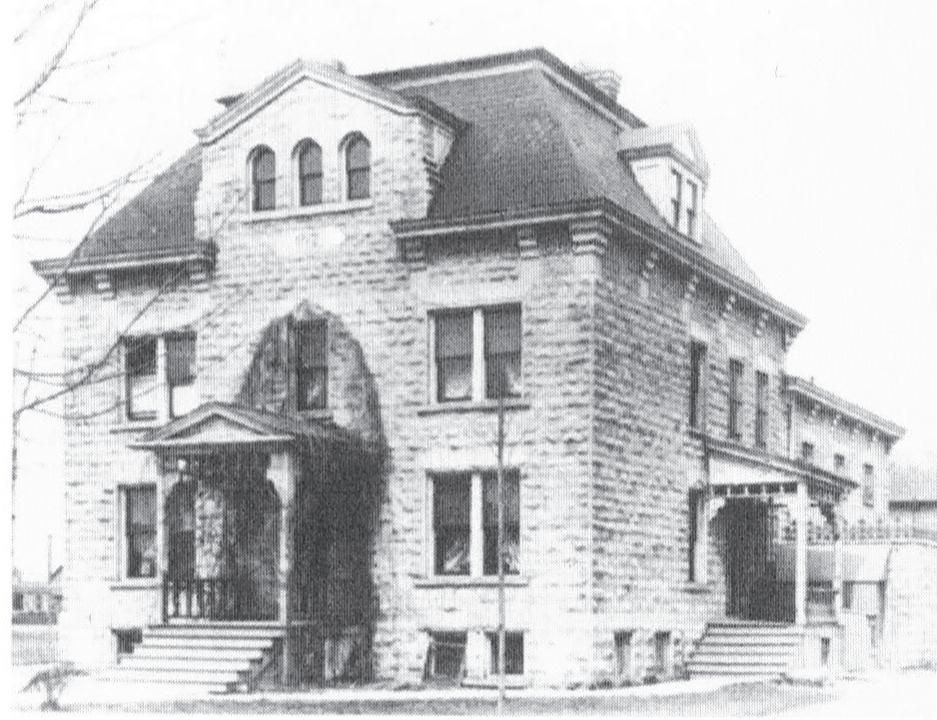
This is a photo of the Alpena County Jail in 1888.
Scott McLennan Guest Columnist
As Americans celebrate the 250th anniversary of our nation’s founding, it is fitting to remember that the history of the United States was not written only in Philadelphia, Boston, or Washington. It was also written in small communities like Rogers City, where hard work, natural resources, innovation, and determination helped shape the growth of an expanding nation.
Although the United States declared its independence in 1776, Rogers City would not be founded until nearly a century later. Established in 1871, our community grew from a rugged stretch of Lake Huron shoreline into one of Michigan’s most important industrial centers. What happened here would have an impact far beyond northeastern Michigan.
The story begins with limestone.
Beneath Rogers City’s rolling landscape lies one of the world’s largest deposits of high-quality limestone. In the late nineteenth century, visionaries recognized the significance of this remarkable resource. Quarries expanded, railroads arrived, and ships began transporting millions of tons of limestone throughout the Great Lakes.
The limestone quarried in Rogers City became an essential ingredient in building America’s infrastructure. It was used in roads, bridges, harbors, steel production, agriculture, and countless construction projects that fueled the nation’s industrial growth. Every ship leaving our harbor carried a small piece of Rogers City to communities across the country.
During World War II, that same limestone took on even greater significance. It became a vi-
tal component in the production of steel needed for warships, tanks, aircraft, factories, and other materials essential to the Allied war effort. While the battlefields were thousands of miles away, Rogers City’s quarries quietly helped supply the industrial strength that earned America the title of “The Arsenal of Democracy.” Our community’s contribution to victory was measured not in headlines, but in the millions of tons of stone that helped build the weapons, ships, and infrastructure that defended freedom.
Generation after generation of quarry workers, sailors, railroad employees, craftsmen, merchants, teachers, farmers, healthcare workers, and small business owners built more than an economy, they built a community defined by resilience, faith, and pride.
Like much of America, Rogers City experienced both prosperity and hardship. It weathered economic downturns, changing industries, and the challenges that have affected many rural communities. Yet through every generation, its people demonstrated the same qualities that have always defined America: perseverance, ingenuity, and a willingness to work together.
Our community also understands sacrifice.
Veterans from Rogers City answered the call in every major American conflict, serving with honor from World War I to the present day. But sacrifice has also come on the waters that have sustained this community for generations.
The shipping industry has long been the lifeblood of Rogers City, and many local families have earned their living aboard the Bradley Fleet and other Great Lakes vessels. That proud heritage has also carried unimaginable loss. The sinkings of the Carl D. Bradley in 1958 and the Cedarville in 1965 left an indelible mark on Rogers City. The loss of so many local sailors, husbands, fathers, sons, brothers, and friends forever changed our community. Their families bore burdens that continue to be remembered today, and their stories remain a powerful reminder that service and sacrifice are not confined to military battlefields. The courage of those Great Lakes mariners and the resilience of the families they left behind are woven into the very identity of Rogers City.
The waters of Lake Huron continue to shape who we are. Great Lakes shipping remains part of our daily life, connecting Rogers City to ports throughout North America. Watching a freighter enter the harbor is more than a scenic experience—it is a reminder that this small city contin-
ues to play an important role in the movement of commerce across the continent.
Today, Rogers City is writing another chapter in its history.
Downtown revitalization efforts, historic preservation, public art, waterfront improvements, community events, and investments in small businesses are helping create a vibrant future while honoring our past. Becoming both a Redevelopment Ready Community and a Michigan Main Street community reflects our commitment to thoughtful growth and long-term prosperity.
As we celebrate America’s 250th birthday, Rogers City has every reason to celebrate as well.
Our history reminds us that the greatness of the United States has always depended on communities of every size. While major cities often receive the headlines, it is towns like Rogers City that supplied the raw materials, the skilled workforce, the manufacturing strength, and the enduring values that built this nation.
For 155 years, Rogers City has quietly con-

tributed to the American story.
Its limestone helped build America. Its workers helped strengthen America.
Its sailors served America. Its families sacrificed for America.
And today, its citizens continue building a community worthy of those who came before them.
As we commemorate 250 years of American independence, may we also celebrate the communities that transformed the ideals of our nation’s founders into places where families could live, work, worship, raise children, and pursue the American Dream.
Rogers City may be small in population, but its contribution to our nation’s history is immeasurable. Our story reminds us that America’s strength has always rested not only in its great cities, but also in the hardworking communities whose people, resources, and sacrifices helped build and continue to sustain the United States of America.
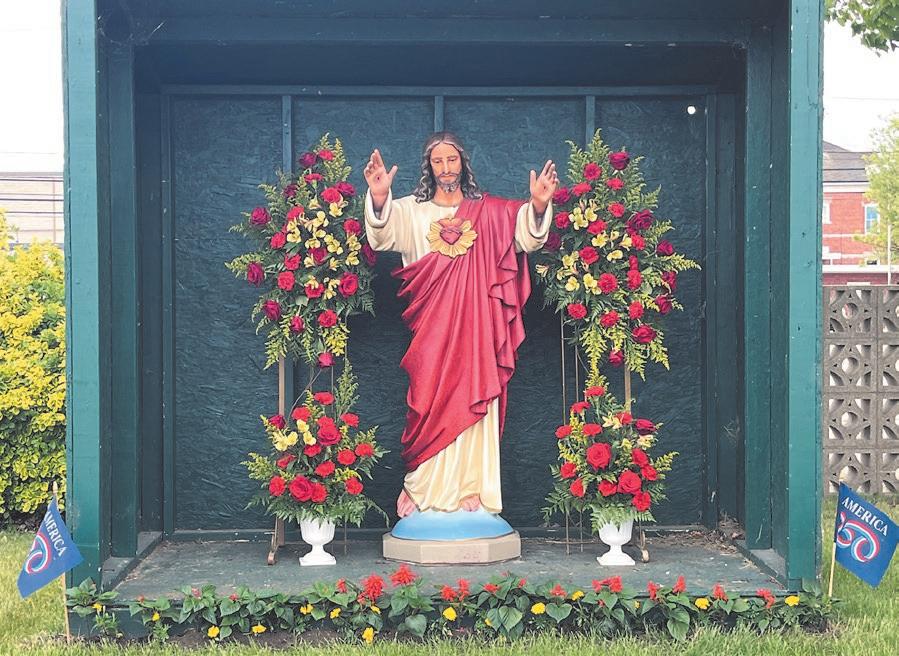
As the 350th Anniversary of the Sacred Heart coincided with the 250th Anniversary of the nation’s founding this year, the United States bishops consecrated the United States to the Sacred Heart of Jesus. We marked the historic occasion by featuring the Sacred Heart of Jesus as our oral installation this year in front of St. Bernard Church Come, encounter Christ!
PARISH and

Ava Kelly
Special to the News
When I think of the American dream, I always think of an immigrant family moving to America, starting a business, and
With help, all of my dreams are possible
becoming successful. As a kid I was always taught that the US provided that opportunity for anyone; I guess I didn’t register that starting a business means coming from money, or that immigrating here (legally) in the first place is ridiculously hard. I never realized that I, as an American citizen, had the right to even consider following my own American dream, I always just thought my dreams were accessible regardless of how lucky I am to have been born in Northern Michigan. I never put together how much this state and country have helped me in following my dreams. While I was growing up, I didn’t know about different socioeconomic classes, and how I very much wasn’t in a good one. In order to travel the world and follow your



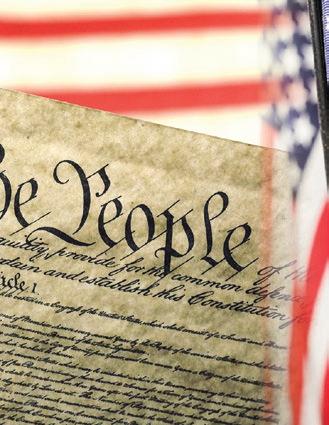

dreams, money needs to be involved in some way, shape, or form. Granted, I have been lucky enough to have been to Europe twice, and taken a gap year between college and the workforce, but as a kid I was not aware that the American dream required money and status.
I started working at 14 in my hometown so that I could become more self-sufficient. Luckily, this helped me immensely when it came to affording college, and working towards things I wanted. My mother is also extremely hardworking and has helped me accomplish my dreams. She worked her hardest to drive us out of poverty and helped me afford my dream school while also getting to travel the world.
When I think of successful examples of the American dream, I think of my mom. Even though our lives are not perfect, she is a prime example of a hardworking, resilient citizen.
Maybe the American dream is more than just a classic example of the American melting pot, maybe it’s happiness, accomplished goals, and a satisfactory life.
Ever since growing up, I haven’t even thought about the American dream. I didn’t realize that it was something any citizen could pursue. The declaration of independence says that all Americans have the right to life, liberty, and the pursuit of happiness; I think it’s important to put an emphasis on the pursuit. How easy is it to be happy today? Instead of pursuing a blue collar career, I decided to go to college, like most teenagers from our area of the state. I had an amazing time, learned a ton, and ranked up student debt in the process. After graduating I decided to follow a childhood dream, working for The Walt Disney Company. I lived in Orlando for eight months and operated a roller coaster at Disney’s Animal Kingdom. Barely being able to survive after making rent is a real
eye opener and definitely didn’t feel like I was living a dream; but luckily my family helped me. They supported me while I took part in the Disney College Program and helped me move back home to begin my career.
Without such a loving family, none of my dreams would have ever been possible. I didn’t realize that getting a college degree is a huge deal until I moved back home and reflected on the education levels in my own community.
I would not have made it through college without all of the support for future teachers that the state of Michigan provides. From the Teach Grant to the Future Teacher Stipend, my American dream would not exist without the Michigan State government.
In today’s political climate, I don’t even know if the American dream exists anymore amongst most middle class citizens. As a young woman who values herself as more than a hopeful wife and mother, I want to further my education, build a career that I love, and take care of myself to the best of my ability. If I was to truly accomplish the American dream, I’d honestly just be debt free and happy, but as a middle class citizen those both seem like a stretch sometimes. Luckily, I have accomplished so many life goals at just my young age of 22, and I hope to continue to build the life that I’ve always dreamed of.
I’m beyond thankful for Michigan. For a state that protects my rights and my humanity. For a state that values my career as an educator and sees the value in a formal education. I’m grateful for my family, for not giving up on me even when all I did was drain their bank accounts. Lastly, I’m grateful to have been born into so much privilege as a white woman in America, where with help, all of my dreams are possible.