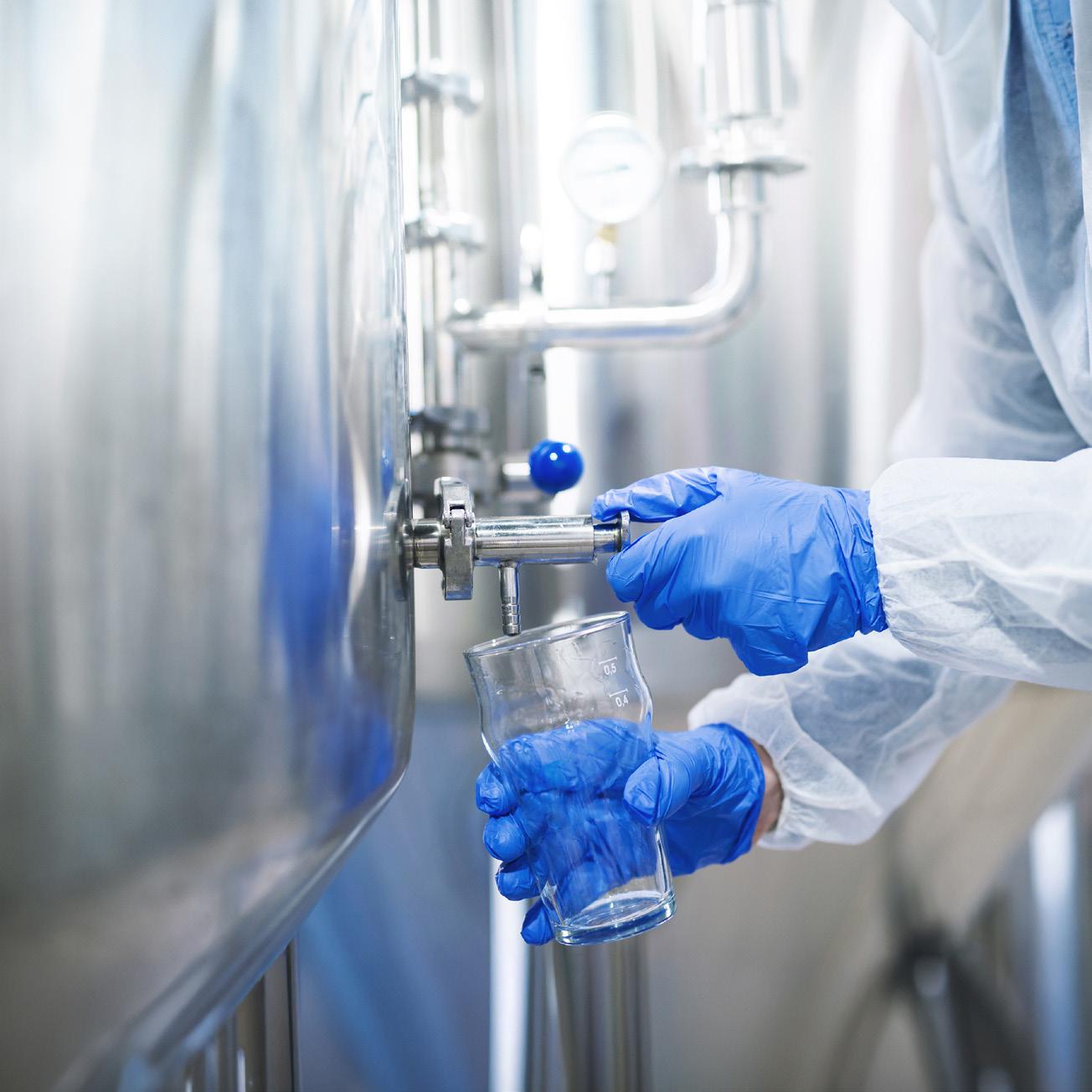
SOURCE OF LIFE, NOW DIRECTLY FROM THE SEA WE GIVE NEW LIFE TO SEAWATER
A PROJECT FOR ALL OF US FROM THE SEA IS BORN THE WATER THAT WILL PROTECT THE ALGARVE MORE FRESH WATER, MORE FUTURE FOR THE ALGARVE FROM THE SEA TO THE PEOPLE
TECHNOLOGY
AT THE SERVICE OF SUSTAINABILITY
WE ARE BUILDING AN INFRASTRUCTURE THAT TRANSFORMS SEAWATER INTO DRINKING WATER
ALGARVE REGION DESALINATION SYSTEM
Project owner Consortium (ACE)
THE
COMPANY
A ÁGUAS DO ALGARVE
The mission of Águas do Algarve is to guarantee the wholesale supply of water for human consumption and the treatment of wastewater in accordance with the highest quality and reliability standards, within an economically, socially and environmentally sustainable framework in the Algarve region.
Águas do Algarve is responsible for managing the multimunicipal water supply and sanitation system throughout the Algarve region. It ensures the provision of this essential public service to the 16 municipalities it serves.
In a territory particularly vulnerable to climate change, the company has focused on strengthening water resilience, investing in the diversification of water sources, the production of water for reuse (ApR – Water for Reuse), as well as implementing innovative, efficient, and sustainable solutions.
The company guarantees the supply of water for human consumption and the proper treatment and valorisation of wastewater 24 hours a day, every day, through a complex and integrated system of infrastructure, including dams, underground abstraction, treatment plants and a vast water transport and distribution network.
In parallel, it develops strong activities in the field of communication and environmental education, close to communities, schools, and different audiences. These activities aim to raise awareness of the responsible use of water and the importance of preserving this vital resource.
Águas do Algarve plays a strategic role in protecting water resources, safeguarding public health and preserving the environment, thereby contributing to the balance of ecosystems and the quality of life in the region.
As part of the Águas de Portugal Group, Águas do Algarve is a leading example of sustainable water management. The company is actively contributing to the development of the territory and the construction of a more balanced future, where every drop counts.
IN A TERRITORY PARTICULARLY VULNERABLE TO CLIMATE CHANGE, THE COMPANY HAS BEEN STRENGTHENING ITS ACTIONS IN PROMOTING WATER RESILIENCE.
ENQUADRAMENTO DA NECESSIDADE - RESILIÊNCIA
WATER SCARCITY
A NEW WATER SOURCE FOR THE ALGARVE
The Algarve region has historically faced a structural problem of water scarcity, exacerbated by recurring prolonged periods of drought and reduced water availability in dams and aquifers.
This has jeopardised the continuity of the public water supply service and normal economic development in the region (tourism, agriculture and urban activities).
Today, the Algarve is facing one of the greatest challenges in its recent history: ensuring there is enough water for a growing region in the context of structural drought and increasingly significant climate change.
A region that hosts more than one and a half million people during the peak season, produces food products for European markets, and relies heavily on tourism, has the added responsibility of ensuring a secure and reliable water supply for its population and economic activities.
The Algarve is characterized by by a structural water shortage,, exacerbated by climate change and seasonal tourist pressure.
The Algarve Seawater Desalination Plant (EDAM - Estação de Dessalinização de Água do Mar) represents one of the responses to this challenge. With an investment of 109 million euros, this infrastructure is set to transform the Atlantic Ocean into a permanent and secure source of drinking water, independent of weather conditions and complementary to existing conventional sources, with operations scheduled to start in 2028.
The Regional Water Efficiency Plan 2020 identified desalination as a priority structural measure for the region’s water supply.
EDAM WILL BE THE FIRST LARGE-SCALE SEAWATER DESALINATION PLANT IN MAINLAND
PORTUGAL, A LANDMARK OF NATIONAL ENGINEERING AND A NEW WATER SUPPLY GUARANTEE FOR THE ALGARVE, INDEPENDENT OF WEATHER CONDITIONS.
THE CHALLENGE
THE ALGARVE AND WATER: AN INCREASINGLY
FRAGILE
BALANCE
The Algarve is one of the regions in Europe most exposed to the effects of climate change on water resources. The combination of a progressive structural drought with a growing and highly seasonal water demand places the supply system under enormous challenges, making the diversification of available water sources urgent.
Today, the Algarve is facing a structural challenge in terms of water management. In recent decades, the region has experienced a significant reduction in precipitation, estimated at around 20% over the last 20 years, worsening to cumulative values close to 30% since 2012 and according to data from national entities such as the Portuguese Institute for Sea and Atmosphere (IPMA). This scenario reflects a clear trend: hydrological drought has ceased to be episodic and has become part of the region’s climatic reality.
Added to this context is the fact that the demand for water is particularly high and complex. The Algarve’s dynamics are characterised by a combination of demographic, tourist, economic, and climatic factors, which translate into high pressure on available resources.
Not only is the volume of water needed at stake, but also its strong variability throughout the year, with highly pronounced peaks in the summer months.
The public supply system essentially depends on three large reservoirs—Odeleite, Beliche, and Odelouca—with a combined storage capacity of around 268 hm³. However, over the last decade, which has been marked by consecutive dry years, these levels have fallen below the desirable, reducing the system’s safety margin.
Meanwhile, there are signs that groundwater reserves are under increasing pressure. According to the Portuguese Environment Agency (APA), a significant portion of the region’s groundwater bodies have recorded worrying quantitative states, reflecting overexploitation and the decrease in natural recharge.
THE CHALLENGE
The pressure on the system is further intensified by seasonality. The Algarve has approximately 492,747 permanent residents, according to INE estimates for 2025/26, but this figure rises substantially in summer, potentially exceeding 1.5 million. This variation has a direct impact on water consumption, especially in a tourism context.
In this context, consumption for public supply represents around 72 hm³ per year, reflecting only a portion of the overall pressure on this resource.
It is important to emphasize that tourism accounts around 40% of the regional Gross Value Added (GVA), making it one of the main economic engines of the region. Agriculture, is equally relevant and contributes significantly to the economy and employment, However, it is also a water-intensive sector.
In quantitative terms, recent estimates suggest an annual water demand of around 230 to 240 hm³, very close to the resources currently available. This proximity significantly reduces the system’s responsiveness to prolonged periods of drought or consumption peaks. Projections indicate an increasing demand trend, potentially reaching approximately 250 hm³ per year, while natural water availability could decrease by 10–20% in the coming decades.
In view of this scenario, it is evident that the traditional supply model, based essentially on precipitation, reservoirs, and groundwater, faces increasing limitations.
Ensuring a water supply in the Algarve is no longer just a matter of management. It is, increasingly, a matter of adaptation to a new climatic and territorial reality.
>1,500,000 people in the Algarve in the summer
The solution for the Algarve Seawater Desalination Plant was supported by an extensive set of studies carried out since 2020preliminary studies, demand modeling, multi-criteria evaluation of alternative locations, preliminary study, and technical-economic analysis, as well as an environmental impact study. These studies involved a wide range of institutions and were subject to public consultation under the environmental impact assessment procedure. The design-construction contract was awarded in 2024.
THE SOLUTION
AN INFRASTRUCTURE FOR THE FUTURE OF THE ALGARVE
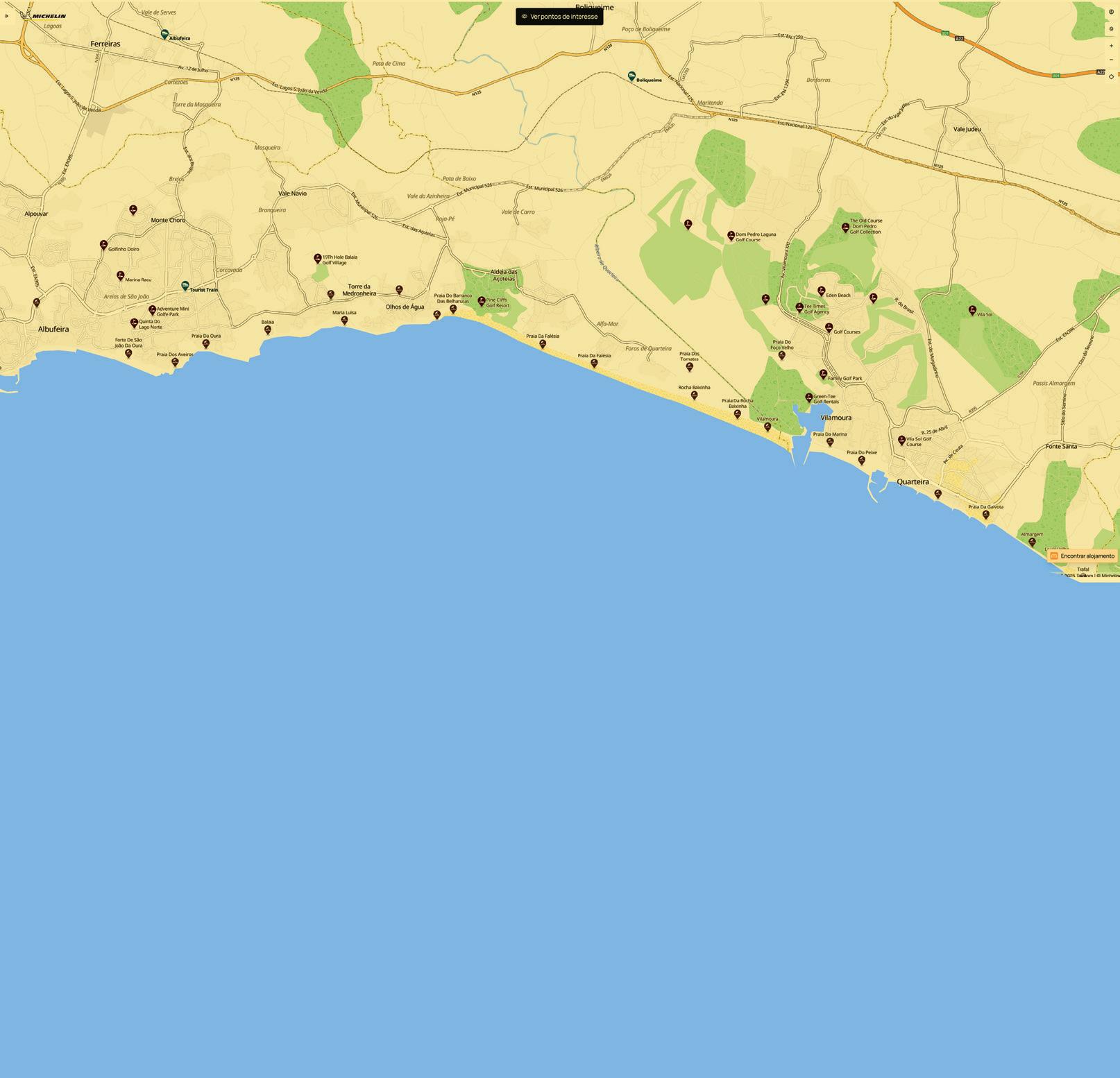
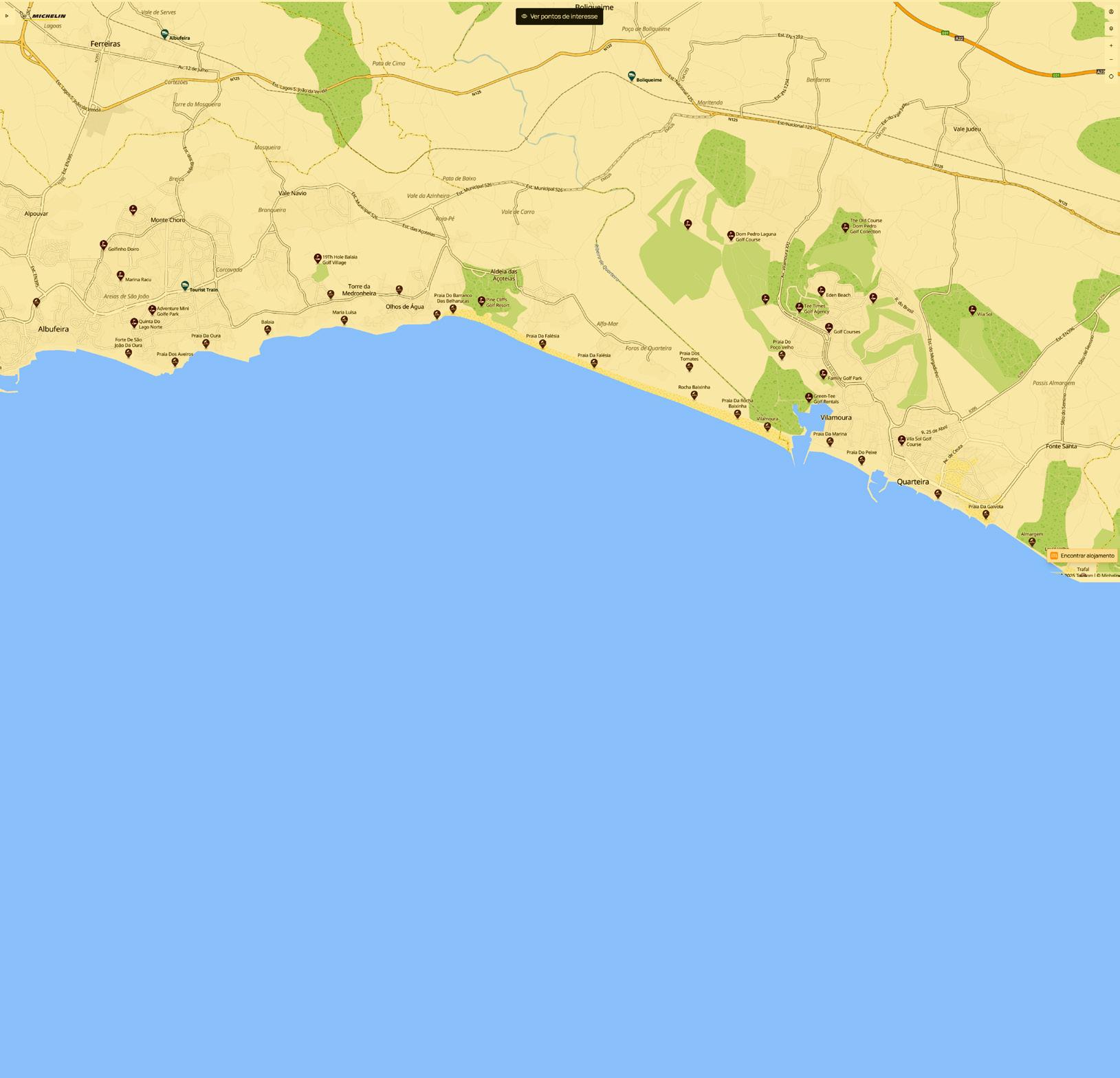
EDAM will be the first large-scale seawater desalination plant in mainland Portugal. The intake of raw water is done off the coast of Rocha Baixinha Beach, near Quarteira, through two submerged intake towers at the bottom of the ocean.
Reverse osmosis technology is the most widely used worldwide, representing around 70% of the global desalination capacity. It allows saltwater from the ocean to be transformed into drinking water that fully complies with European standards. Integrating solar panels for selfconsumption further strengthens our commitment to energy-efficient production.
Under the management of Águas do Algarve, a company of the Águas de Portugal Group, EDAM starts with a production capacity of 16 hm³/year, with the possibility of expansion up to 24 hm³/year, as the region’s needs grow.
KEY PROJECT NUMBERS
THE PROCESS
HOW SEA WATER IS TRANSFORMED INTO DRINKING WATER
The process takes place in five sequential steps, from ocean intake to distribution in an Águas do Algarve reservoir. Each phase is monitored in real-time to ensure system quality and efficiency.
Two submerged intake towers collect water directly from the Atlantic. From there, two submarine pipelines—each about 2 km long—transport the raw water to the onshore plant. The intake is located at a distance and depth that guarantee the quality of the collected water and minimize any interference with marine life.
Before reverse osmosis treatment, the water undergoes a series of progressive cleaning stages: screening to remove solids, coagulation and flocculation to bind fine particles, flotation, multimedia filtration, and microfiltration. The result is clarified water, ready for the main process.
Under high pressure, the water is forced through ultra-fine membranes that retain dissolved salt and contaminants, allowing only pure water molecules to pass.
Installed Energy Recovery Devices reuse the energy in the brine, reducing the power required by the high-pressure pumps by over 97%.
04
05 post-treatment
transport to águas do algarve’s wholesale reservoir
The water produced by reverse osmosis is then mineralized and adjusted to meet the parameters of the European Drinking Water Directive (current legislation on water quality for human consumption). This stage ensures the water has the appropriate characteristics for consumption, including taste, odour and microbiological safety.
The treated water is pumped through a rising main to the Águas do Algarve multi-municipal wholesale supply network, where it is blended with treated water from other sources, integrating into the distribution system that serves the entire region.
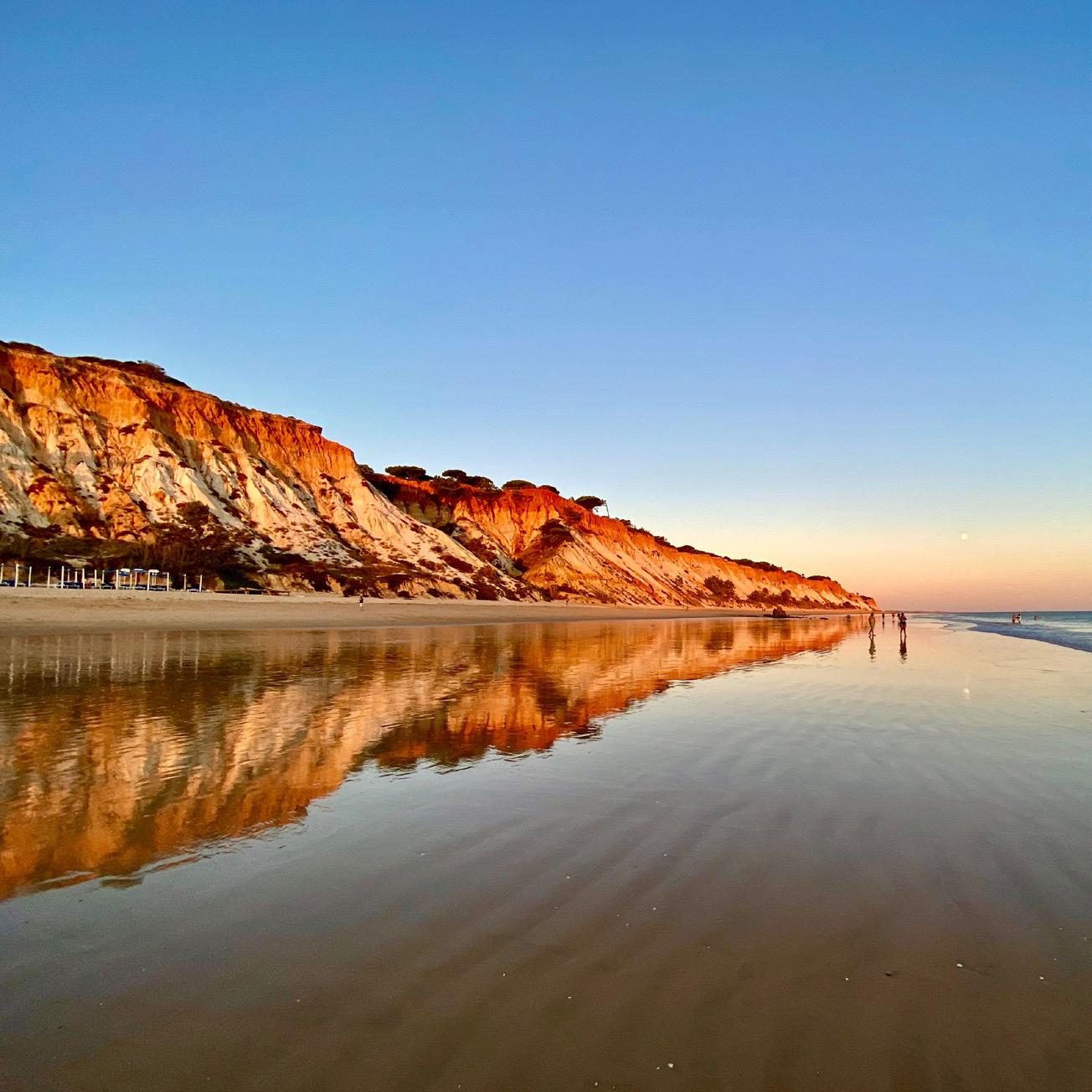
Falésia Beach
Maximum variation between the intake zone and Falésia Beach: 0.1 g/L
Artificial reef zone
Maximum variation between the intake zone and the artificial reefs zone: 0.7 g/L
Intake zone
Maximum variation in the intake zone resulting from brine discharge: 0.2 g/L
ENVIRONMENT
THE SEA IS IN GOOD HANDS
Every detail of the EDAM process has been designed to preserve the balance of the oceans.. The brine resulting from the desalination process is returned to the sea using systems that guarantee its rapid dispersion and dilution.
The desalination process separates salt from the water. This salt is then returned to the ocean in a controlled manner. The diffusers installed at the seabed, with duckbill nozzles spaced 8 meters apart and tilted at 30°, ensure that the brine mixes with the surrounding water. Scientific studies conducted, including three-dimensional modeling of currents and dispersion, confirm that salinity variation in the receiving environment remains within the limits established in the project.
between 500 m and 5 km from coast
Maximum variation between a point 500 m from the diffuser and a point 5 km from the coast: 0.7 g/L
intake zone and seabed
Maximum variation between the intake zone and the seabed in the brine impact zone: 5 g/L
SEAWATER SALINITY VARIES NATURALLY WITH EVAPORATION, RAIN, AND CURRENTS. THE STUDIES CONDUCTED FOR EDAM CONFIRM SALINITY VARIATIONS IN THE RECEIVING ENVIRONMENT ARE WITHIN THE LIMITS ESTABLISHED IN THE PROJECT.
ENERGY
ENERGY EFFICIENCY AND GREEN ENERGY
Producing drinking water from the sea requires energy. EDAM was designed to minimize this consumption by integrating a power generation unit for self-consumption.
Energy Recovery
In the reverse osmosis process, brine is discharged at a high pressure. Energy Recovery Devices harness this pressure and convert it into reusable mechanical energy, reducing the power required by the high-pressure pumps. This system is over 97% efficient and requires no additional maintenance.
All of EDAM’s electric motors comply with the IE3 efficiency level, designated Premium, and are equipped with variable frequency drives that adjust energy consumption in real time, thereby eliminating waste.
To put this into perspective, a modern desalination plant consumes around 3 kWh per cubic meter of water produced. This is equivalent to saying that the energy required to supply a family of four for a year is similar to their refrigerator’s consumption over the same period.
Solar power for self-consumption
EDAM will feature a Self-Consumption Production Unit (UPAC) which is equipped with photovoltaic panels. This will reduce reliance on the public power grid and lower the operation’s environmental footprint.
HERITAGE
HERITAGE SAFEGUARD & TERRITORIAL INTEGRATION
Building for the future does not mean ignoring the past. EDAM was developed with a clear commitment to respect the surrounding territory, protecting its natural, cultural, and landscape heritage at all stages of the work, from the project’s inception to the start of full operation.
The desalination plant project was developed with one clear concern in mind: ensuring the protection of the surrounding area’s natural, cultural and landscape heritage in all phases of its implementation.
In this context, specific heritage safeguarding and archaeological monitoring measures are planned, particularly in areas subject to soil interventions such as excavation, earthworks, and underground work. This monitoring also extends to the underwater environment, ensuring continuous monitoring of operations carried out in the maritime areas covered by the project.
During construction, any eventual identification of archaeological or heritage remains will be handled according to legally established procedures. This includes immediate notification of the relevant authorities, specialised technical
assessments and, if necessary, adaptation of construction methodologies to ensure the protection and enhancement of the identified elements.
In parallel, the landscape component was integrated from the project’s environmental assessment phase. Specific minimization and visual integration measures were defined, adjusted to the infrastructure’s location and characteristics, with the aim of ensuring a balanced relationship with the territory.
This commitment goes beyond merely complying with legal requirements. it reflects a responsible and conscious approach: protecting the past, respecting the present, and building sustainable solutions for the future.
THE PROJECT
AN INFRASTRUCTURE BUILT TO LAST
EDAM is a highly complex project involving simultaneous onshore and offshore interventions. The consortium awarded the contract — GS Inima Environment, Aquapor and Luságua — is responsible for designing, constructing and initially operating the infrastructure.
The construction contract is valued at 102.8 million euros and has an execution period of 1,115 days (approximately 37 months). Independent inspection is ensured by the Prospectiva/Sondeos Estructuras y Geotecnia consortium, and the project review by COBA Consultores de Engenharia e Ambiente. The total estimated investment, including all contracts, is 117 million euros.
However, the true timescale of this project is measured in decades. EDAM was designed to last, with the useful lifespans of its components ranging from 25 years for electromechanical equipment to 100 years for marine civil works. It is infrastructure designed not just for today, but for generations to come.
MARITIME COMPONENT (OFFSHORE)
Intake Towers: 2 raw water intake towers anchored on the seabed
Intake Pipelines: Double intake line consisting of microtunneling (2 x 560 m) and marine trench excavation (2 x 1,460 m)
Brine Discharge: Brine outfall with microtunnelling (850 m) and marine trench excavation (1,350 m)
Degassing System: Degassing chamber and brine discharge header
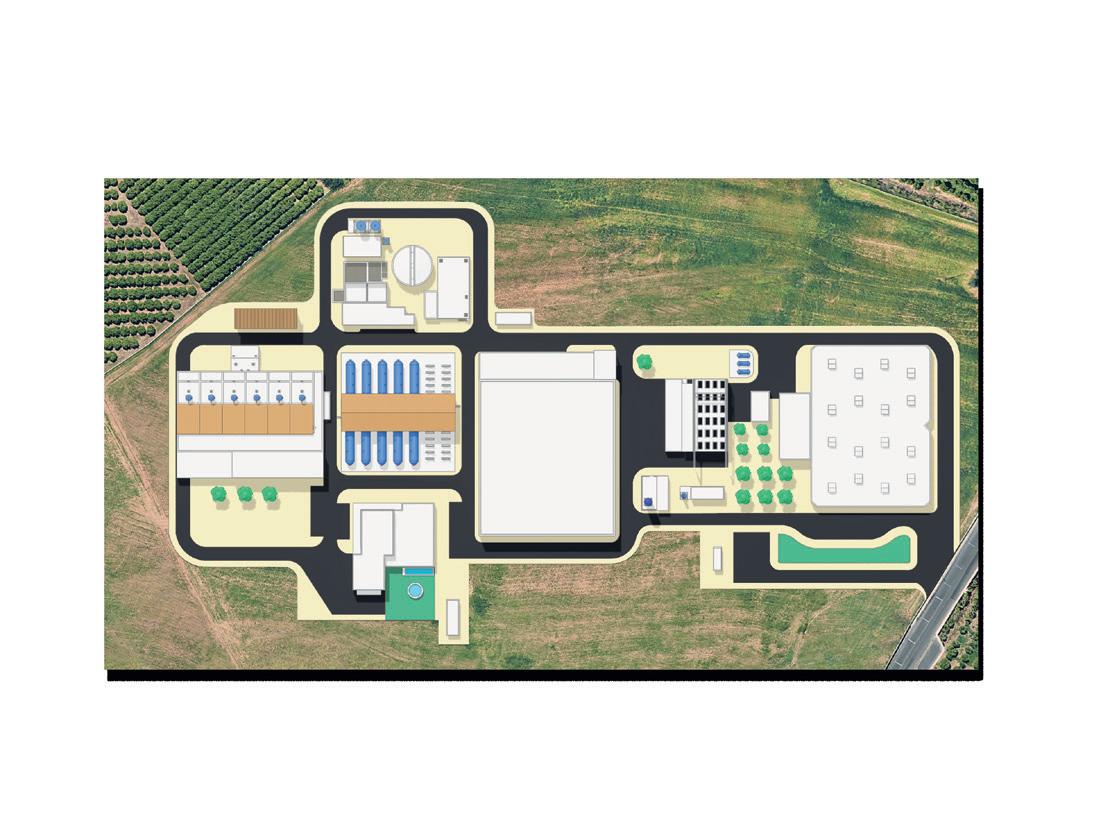
EDAM Plant: Complete facility including pretreatment, reverse osmosis, mineralization, and final disinfection
Connection: l Drinking water rising main (~ 250 m) connecting directly into the multi-municipal water network managed by Águas do Algarve
Self-Consumption: Photovoltaic production unit for self-consumption (UPAC)
FROM DESIGN TO OPERATION PROJECT TIMELINE
The path to EDAM began in 2021, with its inclusion in the Recovery and Resilience Plan (PRR - Plano de Recuperação e Resiliência)—the instrument that enabled financing and signalled the start of one of the largest ever investments in water infrastructure in Portugal.
From the initial studies to the award, and from the public tender to the start of construction, each phase has been executed in line with the estimated deadlines. EDAM will enter into operation in 2028, at which point the Algarve will benefit from an independent water source.
Project design under the PRR framework
Preliminary studies and tender preparation
Tender documents, public bidding, and contract award
Design, construction, and initial operation
Start-up
FREQUENTLY ASKED QUESTIONS
COMMON QUESTIONS, ANSWERED
The construction of infrastructure on this scale raises legitimate questions. Here are the answers to the questions we are asked most frequently.
Why is this project necessary?
To strengthen the resilience of the Algarve’s water supply and diversify the available sources for public consumption. Desalination provides a water source independent of precipitation—essential in a region where hydrological drought is increasingly frequent and prolonged.
Which areas are affected by the project?
The works cover the EDAM plant area, the path of onshore pipelines (EM-526/M526, Caminho da Roupeira, access road to Rocha Baixinha), the coastal area near the pumping station, and the marine intake and discharge area.
Will there be any road closures or traffic restrictions?
There may be temporary traffic restrictions during the construction phase, with alternating single-lane traffic carried out in sections, always with appropriate on-site signage.
How will the sea change during construction?
Will beach access be closed?
Access to Rocha Baixinha Beach will be maintained throughout the construction. There may be alternating traffic and partial road occupation during specific periods.
Will there be night work?
Generally, the work is planned for daytime hours. However, specific technical situations may occasionally require temporary night-time work, always with appropriate advance notice.
During vessel operations and the installation of submarine pipelines and diffusers, there will be buoyed areas with temporary restrictions on navigation, fishing, and diving. These restrictions will be communicated in advance by the competent authorities.
Is desalinated water the same as the water I already have at home?
Yes. The water produced by EDAM enters directly into the multimunicipal supply network of Águas do Algarve, blending with other sources. It fully complies with the European Drinking Water Directive (2020/2184) and is subject to the same quality controls as water from reservoirs.
How can I monitor the works and receive updates?
Águas do Algarve provides regular updates through its website, local notices, and public communications. The company also provides a QR Code on various communication materials linking directly to the project page on the company’s website.
WHAT IS IMPORTANT TO KNOW 5 FACTS ABOUT DESALINATION
Designed, built and operated efficiently, desalinated water is not expensive
The current production cost is between €0.50 and €1.00 per cubic meter, a figure which already includes infrastructure depreciation, operation, maintenance and energy costs. The trend is toward reduction, driven by process optimization, falling equipment costs, and growing use of renewable energy.
Desalination can be energy-efficient
A modern plant consumes around 3 kWh of energy for every cubic metre of water produced. To understand the scale: the energy required to supply a family of four for a year is equivalent to what that family’s refrigerator consumes over the same period.
Safe discharge of brine does not harm the sea
With the right diffusion systems in place, controlled brine discharges will not significantly impact marine ecosystems, and Águas do Algarve will monitor the evolution of these ecosystems.Just a few metres from the discharge point, the water is virtually indistinguishable from the surrounding seawater in terms of salinity and quality.
Desalinated water is of excellent quality.
Water produced by reverse osmosis fully complies with the European Drinking Water Directive (2020/2184). Desalination removes chemical and biological contaminants—including viruses and bacteria. Postmineralization ensures organoleptic characteristics suitable for consumption.
Desalinated water is only for drinking
All water produced by EDAM is destined for the taps of consumers throughout the Algarve, including homes, hotels, restaurants, hospitals and other services. This investment is designed exclusively for the population to ensure a constant water supply, even during severe droughts.
PREPARING THE ALGARVE FOR A FUTURE WITH WATER
The Algarve Seawater Desalination System represents a strategic response to a challenge that is no longer temporary, it is structural.
In a context of increasing climate uncertainty, this infrastructure strengthens the security of the public supply, adding a new, reliable, controllable water source independent of precipitation.
Desalination does not replace the need to make better use of water. It does not eliminate the need for efficiency, reuse, or loss reduction. Instead, it is integrated into a broader, more demanding, and responsible approach to water resources management.
The future of water in the Algarve does not depend on a single solution. It depends on the ability to combine knowledge, technology, and collective commitment. That is what is being built here.
More than an infrastructure, it is a decision that defines the future of our region, and a guarantee of resilience for the generations that follow.
Because the water of the future begins with the decisions of today.
SOURCE OF LIFE, NOW DIRECTLY FROM THE SEA WE GIVE NEW LIFE TO SEAWATER
A PROJECT FOR ALL OF US FROM THE SEA IS BORN THE WATER THAT WILL PROTECT THE ALGARVE MORE FRESH WATER, MORE FUTURE FOR THE ALGARVE FROM THE SEA TO THE PEOPLE
TECHNOLOGY
AT THE SERVICE OF SUSTAINABILITY
WE ARE BUILDING AN INFRASTRUCTURE THAT TRANSFORMS SEAWATER INTO DRINKING WATER