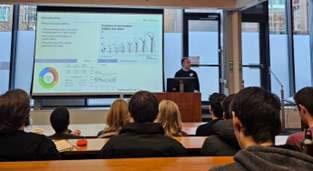
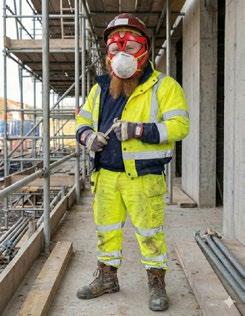
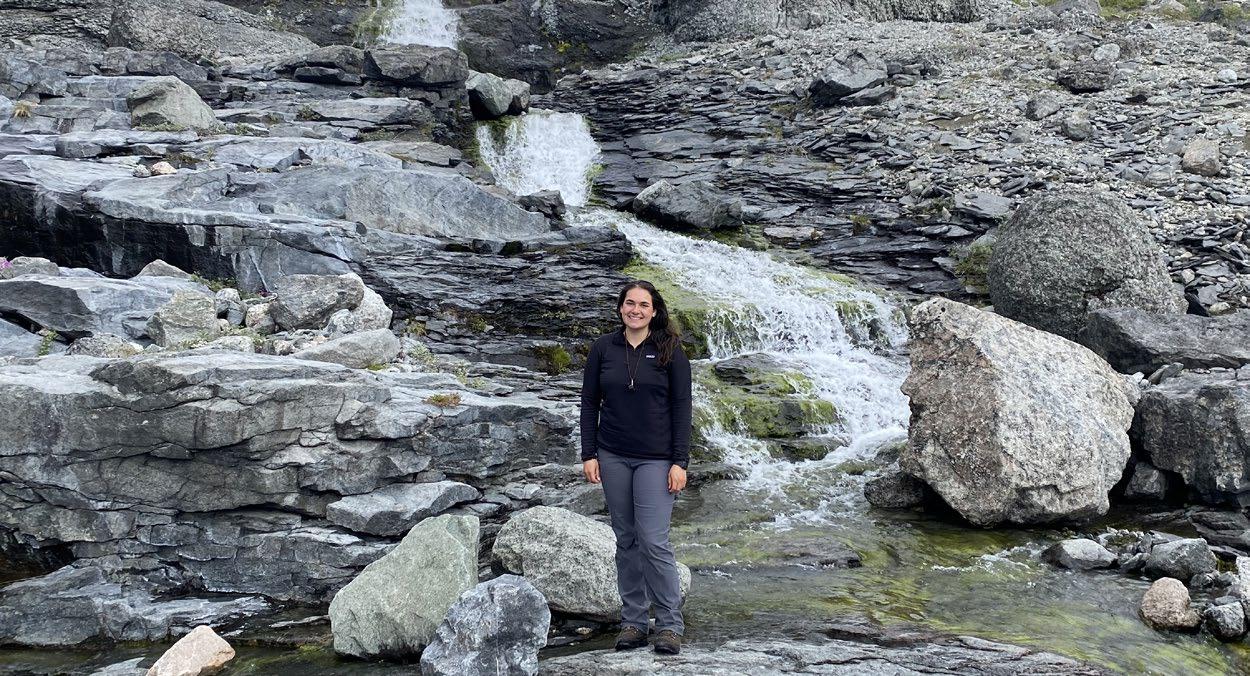
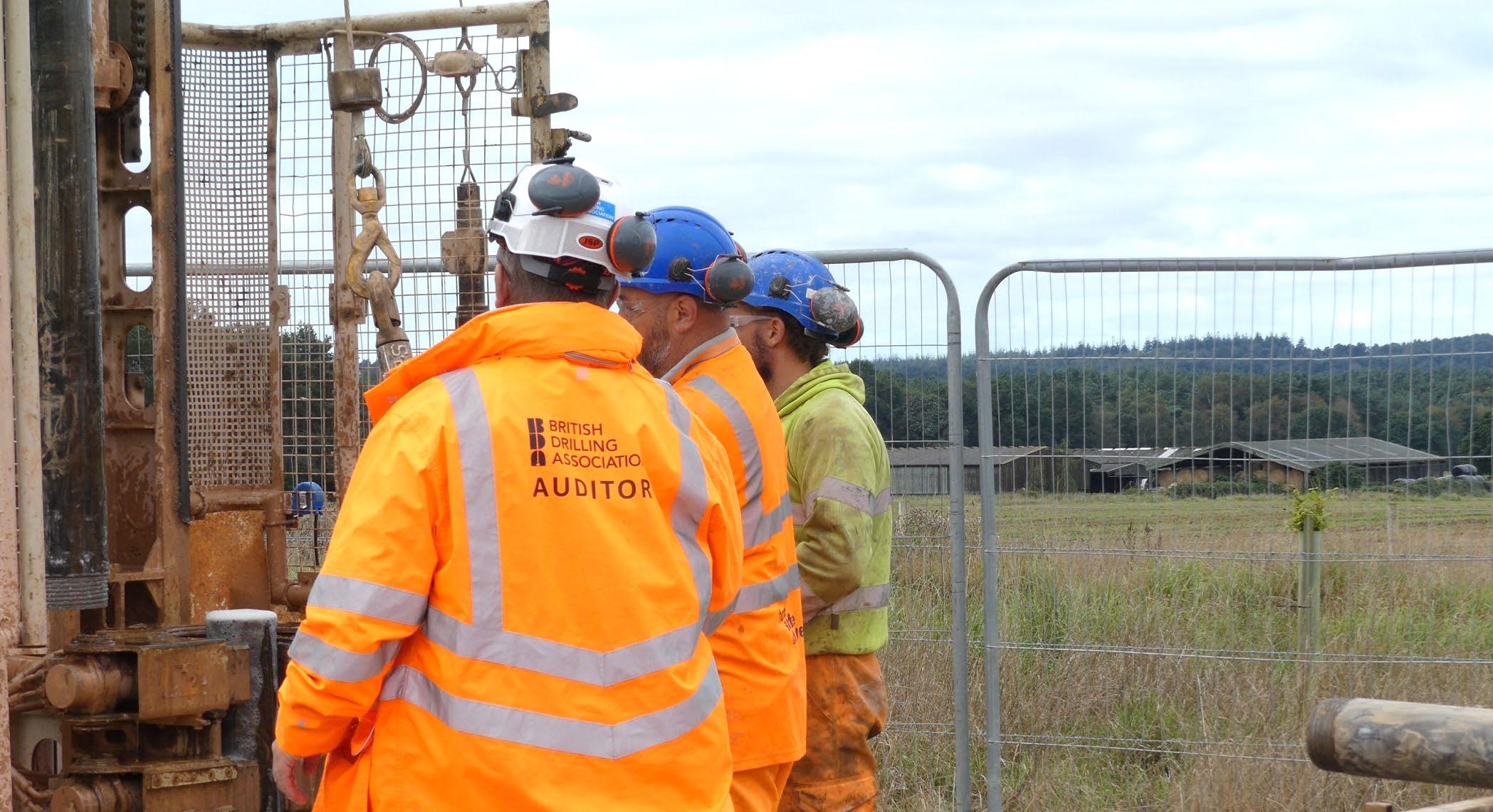
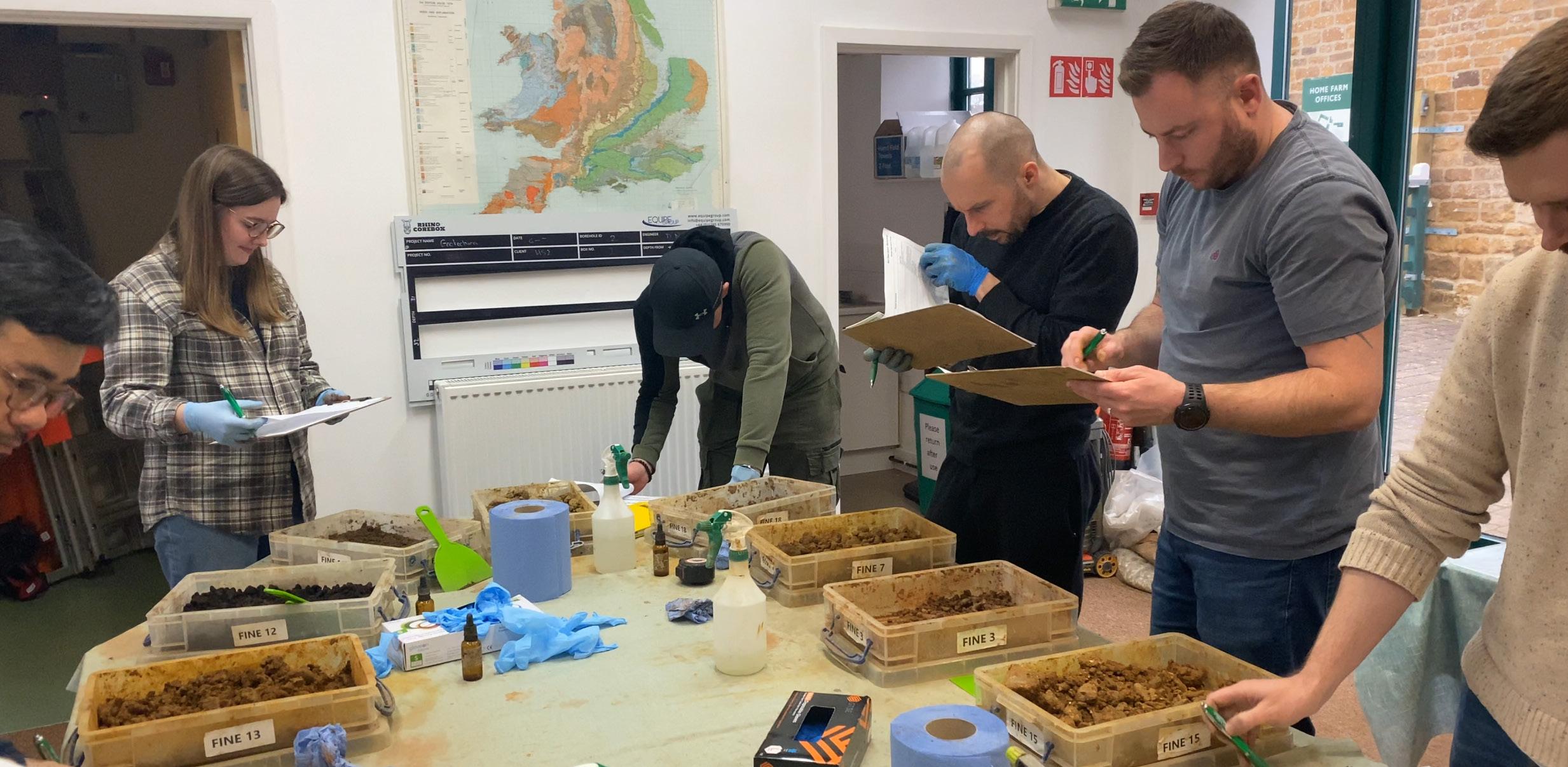
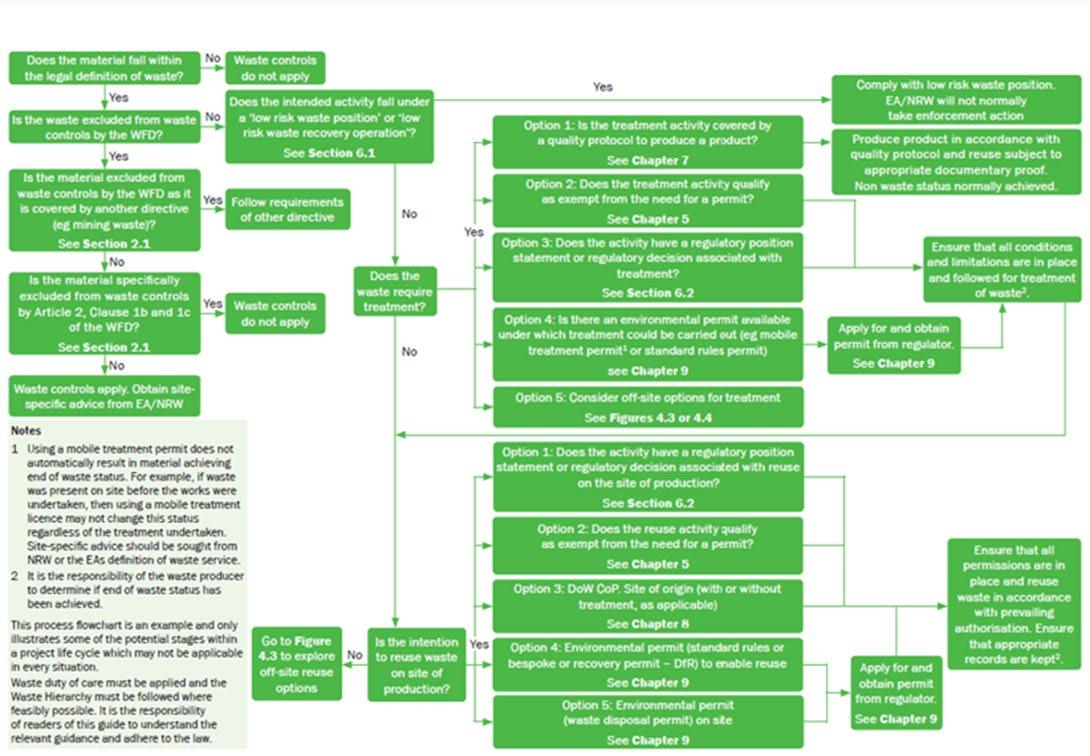
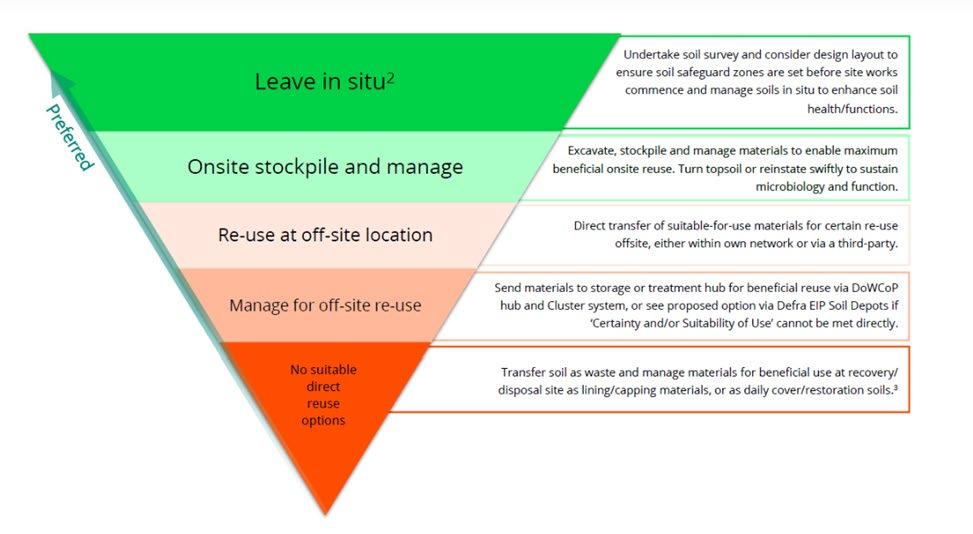
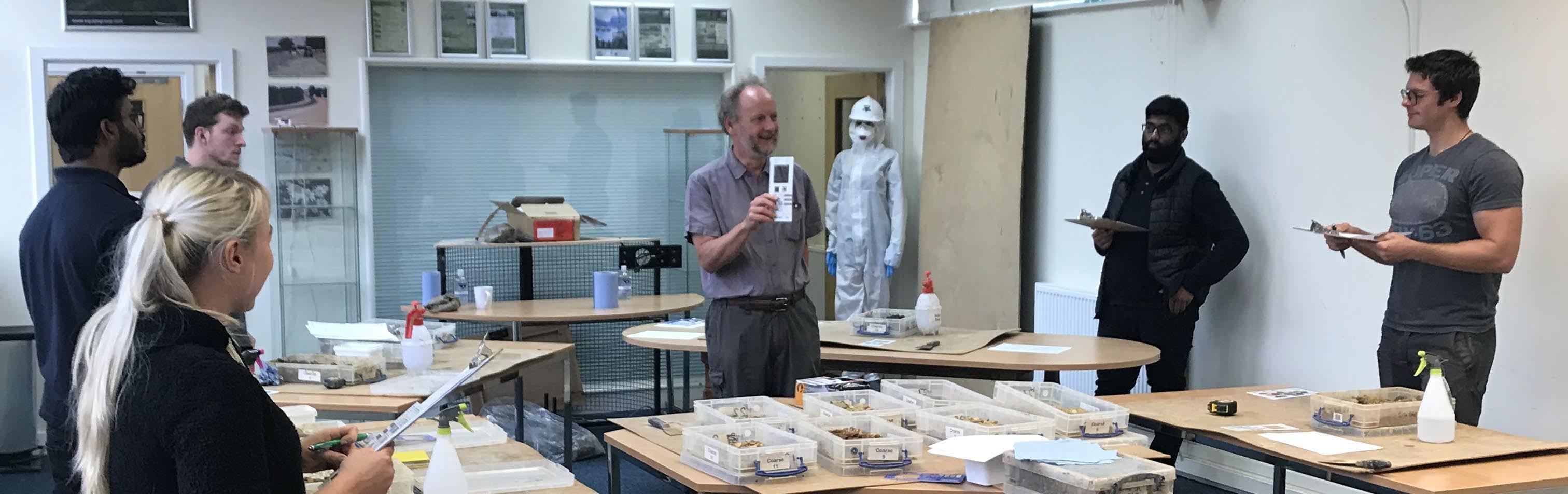
A review of the proceedings at the recent event held in March 2026
INDIVIDUAL COMPETENCE
WEBINAR
A preview of the next webinar from the AGS focussed on competence
May 2026
SUSTAINABLE SOIL MANAGEMENT
How to turn the Cinderella into a Princess
Chair’s Foreword
This issue reminded me that the geosciences sharpen fastest when we pair technical rigour with wider stewardship, proving competence, elevating data quality, and using digital and sustainability tools to turn ground uncertainty into clearer, safer decisions while bringing the next generation with us.
This issue shows a sectorsharpening technical practice while widening horizons. Our AGS Annual Conference (240 delegates) centred on “Challenges in Geosciences”: contracts and unforeseen ground, deep boreholes under CDM, and the reality of embedding digital tools (carbon calculators included) into everyday delivery.
A forward-looking panel tackled sustaining early career professionals through mentoring, apprenticeships and clearer ways to articulate the value of good site investigation.
On contaminated land, we preview October’s CPD event, The Changing Landscape of Land Contamination, covering BS 10175 updates, PFAS remediation, low limits of quantification asbestos in air sampling, methane in groundwater, and the shifting legal context of risk, liability and compliance.
Competence, safety and data quality feature strongly. A June webinar explores the post Grenfell move from assumed expertise to demonstrable individual competence; the BDA Health & Safety update
highlights hydraulic hose awareness, manual handling training, safer rotary rig practices, and lessons on transport and load securing; and the AGS Instrumentation & Monitoring Working Group has launched a survey to steer future guidance.
Data and sustainability run through the edition too. BGS’s Common Ground project is scaling from Glasgow pilots toward a national geotechnical properties data service, drawing on ~200,000 boreholes to cut delay and overspend driven by ground risk. Technical depth comes via 1,2,4 triazole, challenging hydrophobicity based fate models for highly polar contaminants. Finally, soil is recast as a resource, supporting reuse, shared definitions and practical guidance across project stages. We are always on the lookout for additional, informative content for the magazine, so if you have an opinion piece, a case study, a technical article or a wider issue that you think the geotechnical and geoenvironmental public would find beneficial, please do get in touch.
We would be interested in your feedback on the magazine and our future plans. Please contact ags@ags.org.uk if you have any comments.
ABOUT THE AGS
The Association of Geotechnical and Geoenvironmental Specialists (AGS) is a not-for-profit trade association established to improve the profile and quality of geotechnical and geoenvironmental engineering. The membership comprises UK organisations and individuals having a common interest in the business of ground investigation, geotechnics, geoenvironmental engineering, engineering geology, geochemistry, hydrogeology, and other related disciplines.
EDITORIAL BOARD
Alex Lee, AGS Chair
Caroline Kratz, Forum Court Associates (FCA)
Katie Kennedy, FCA
Julian Lovell, Equipe Group
Calum Spires, Equipe Group
Adam Latimer, Ian Farmer Associates
Dimitris Xirouchakis, Structural Soils
Caroline Martin, Haskoning
Christos Botsialas, TRC Companies
Alison Nicholson, Buro Happold
EDITORIAL STORY
To submit an article for inclusion in the AGS Magazine, please contact the AGS on 020 8658 8212 or ags@ags.org.uk. Please note that articles should act as opinion pieces and not directly advertise a company. The AGS is under no obligation to feature articles or events received.
CONTACT US
Association of Geotechnical & Geoenvironmental Specialists Forum Court, The Alexander Centre, 15-17 Preston Street, Faversham, Kent, ME13 8NZ
Alex Lee AGS Chair
ags@ags.org.uk 020 8658 8212 Association of Geotechnical & Geoenvironmental Specialists www.ags.org.uk
Inside this month’s issue
FEATURE
PAGE 34
COVER STORY PAGE 32
Unlocking the Value of Ground Investigation Data
- BGS Common Ground
Phase Two
1,2,4-Triazole as a Model Polar Contaminant: Rethinking Environmental Fate Through Molecular Interactions
Why conventional hydrophobicity models fail for 1,2,4-triazole — and what its chemistry reveals about the mobility and persistence of polar contaminants in water systems.
AGS ANNUAL CONFERENCE SUMMARY
PAGE 4
A review of the proceedings at the recent event held in March 2026
AGS WEBINAR: INDIVIDUAL COMPETENCE
PAGE 14
Understanding How Government Reforms Will Affect You and Our Industry
SUSTAINABLE SOIL MANAGEMENT – HOW TO TURN THE CINDERELLA INTO A PRINCESS
PAGE 40
Why better soil management matters now
MORE INSIDE
PAGE 4
News in Short: Incl. Publication Updates
PAGE 18
Q&A with Jackie Bland Principal GI Data Manager
PAGE 46
Standards Update
April 2026
News and Events
AGS Annual Conference 2026: Summary
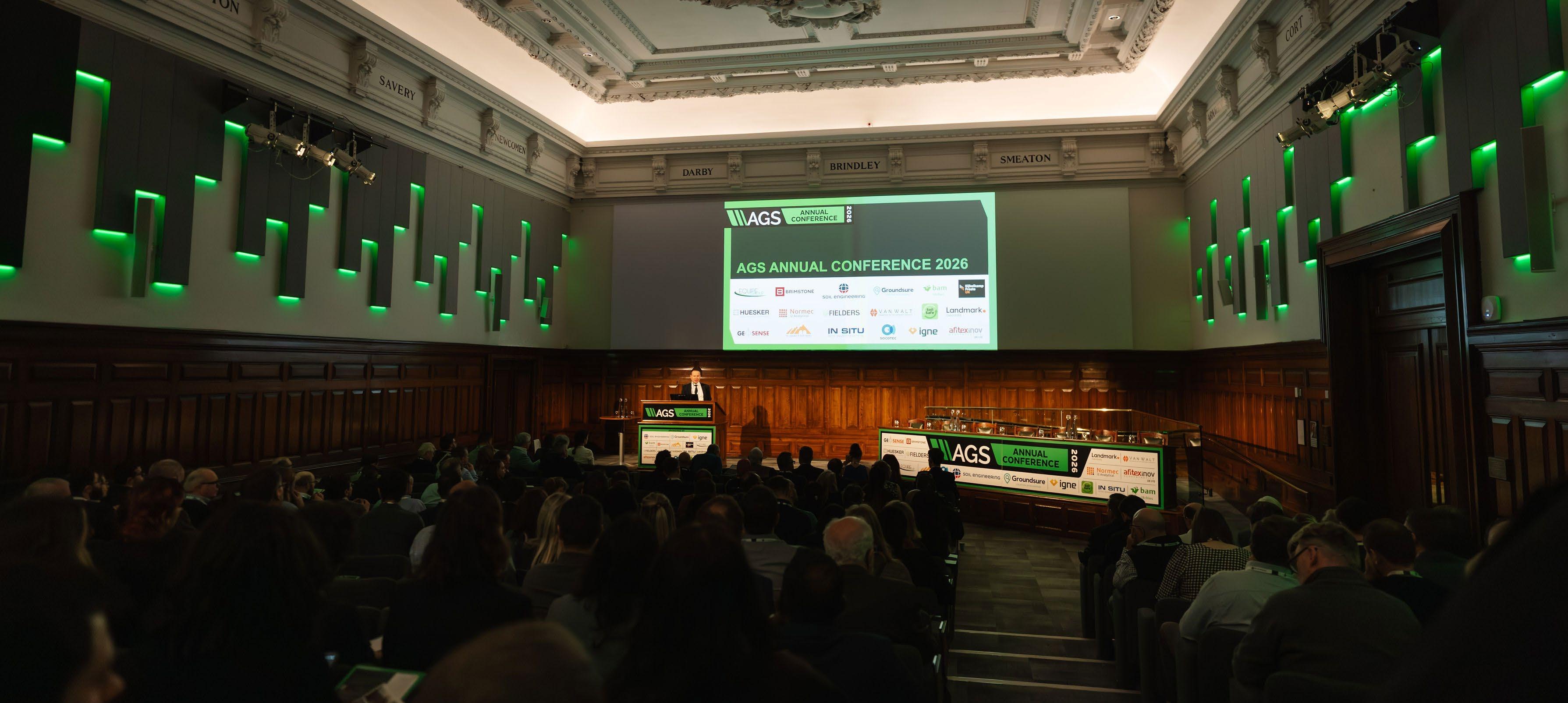
The AGS hosted its flagship event, the AGS Annual Conference, on 19th March 2026 at One Great George Street in London’s Westminster.
The event was a sell out, with 240 delegates registered to attend the full day programme and networking drinks reception.
This year’s conference featured seven guest presentations delivered across four sessions, each addressing a range of geotechnical and geoenvironmental issues under the overarching theme of Challenges in Geosciences. The programme also included a panel discussion titled “The Future of Geoscience: Inspiring and Sustaining Early Career Professionals.”
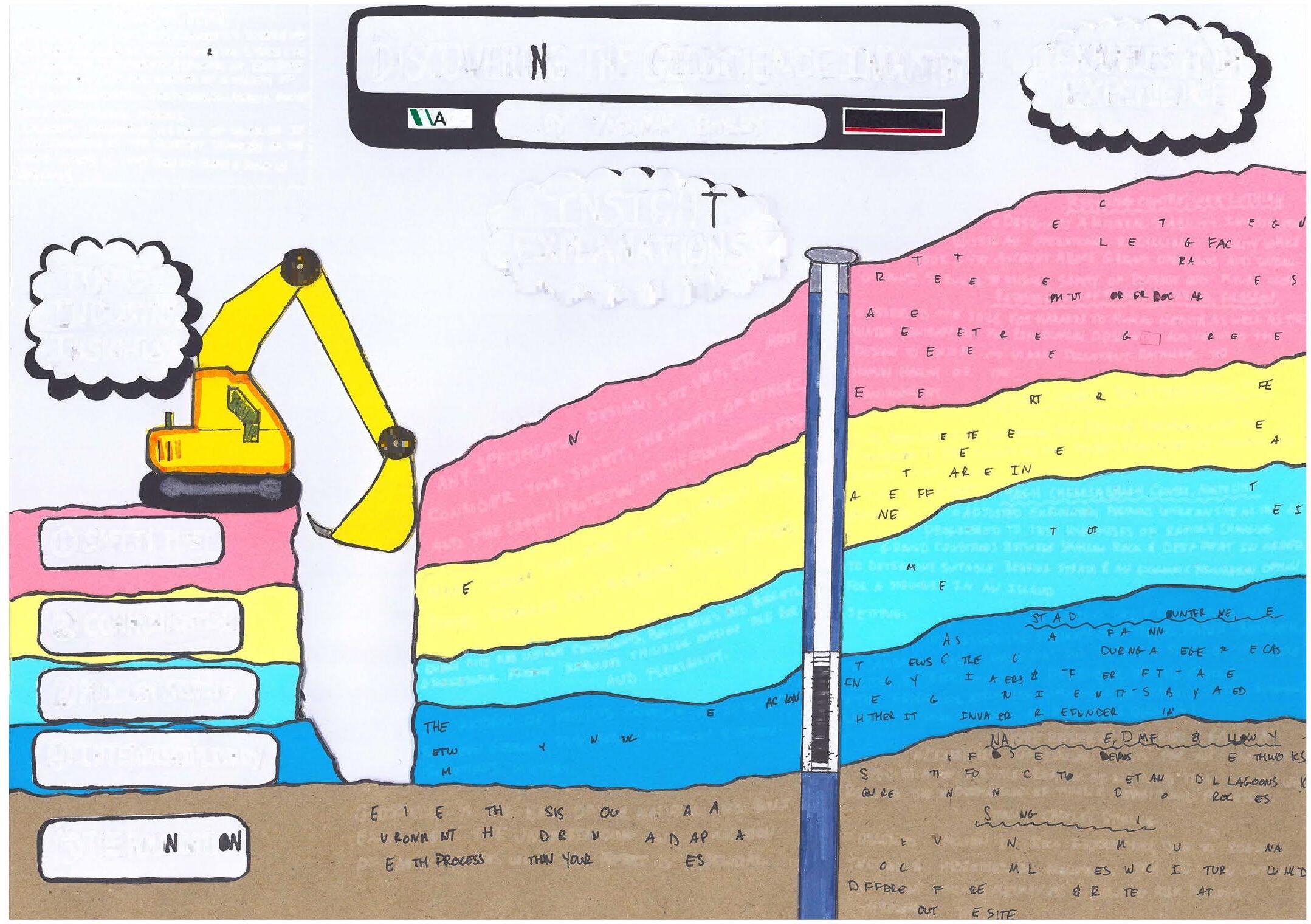
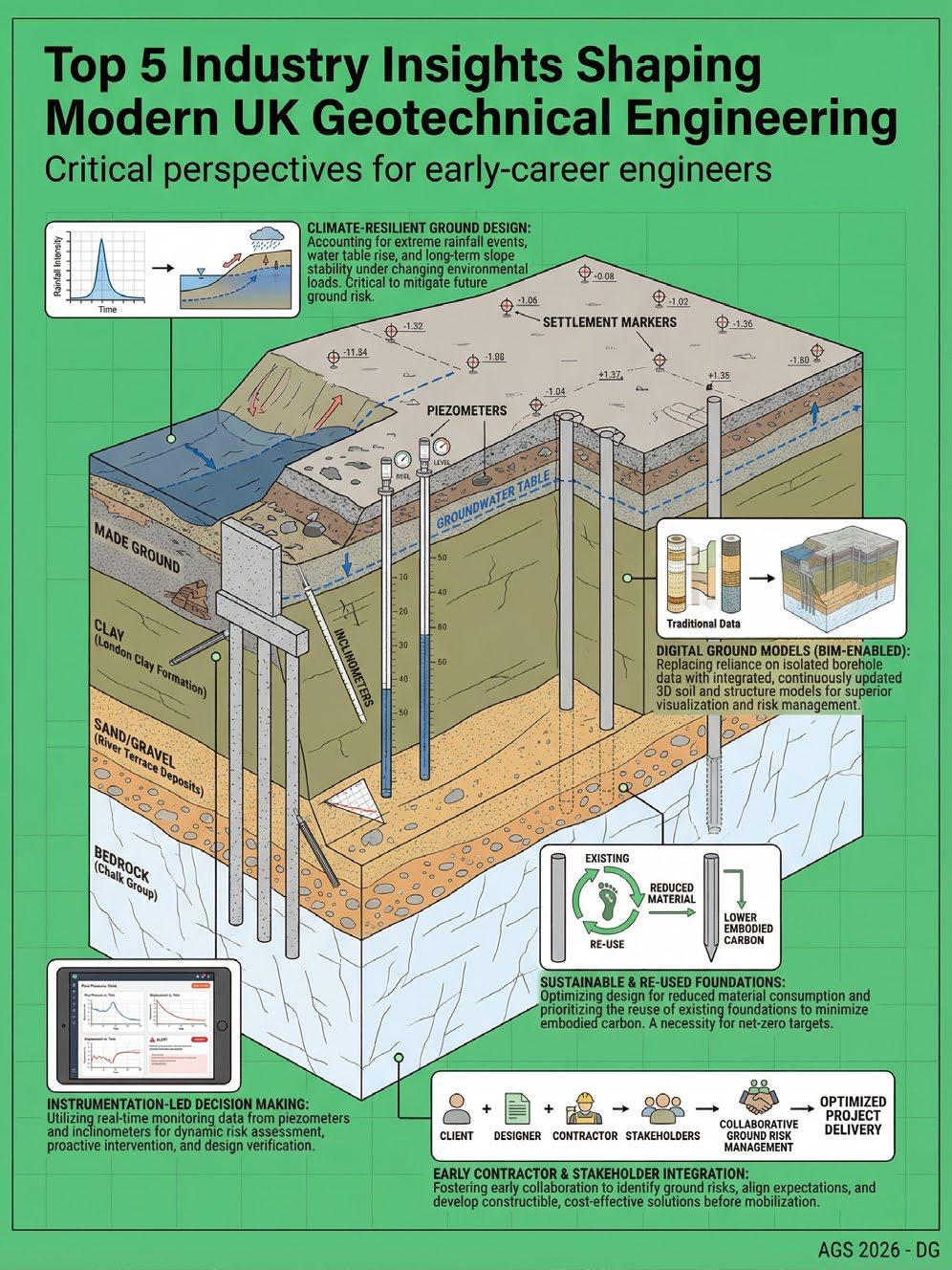
The event also showcased the entries from the AGS Early Careers Professional Poster Competition, centred on the theme Top Five Industry Insights. Winner, Yasamin Bayley was invited to attend the conference along with the
top ten runners up. Yasamin’s poster, noted for its vivid use of colour and collage, created a bright and eye catching design.
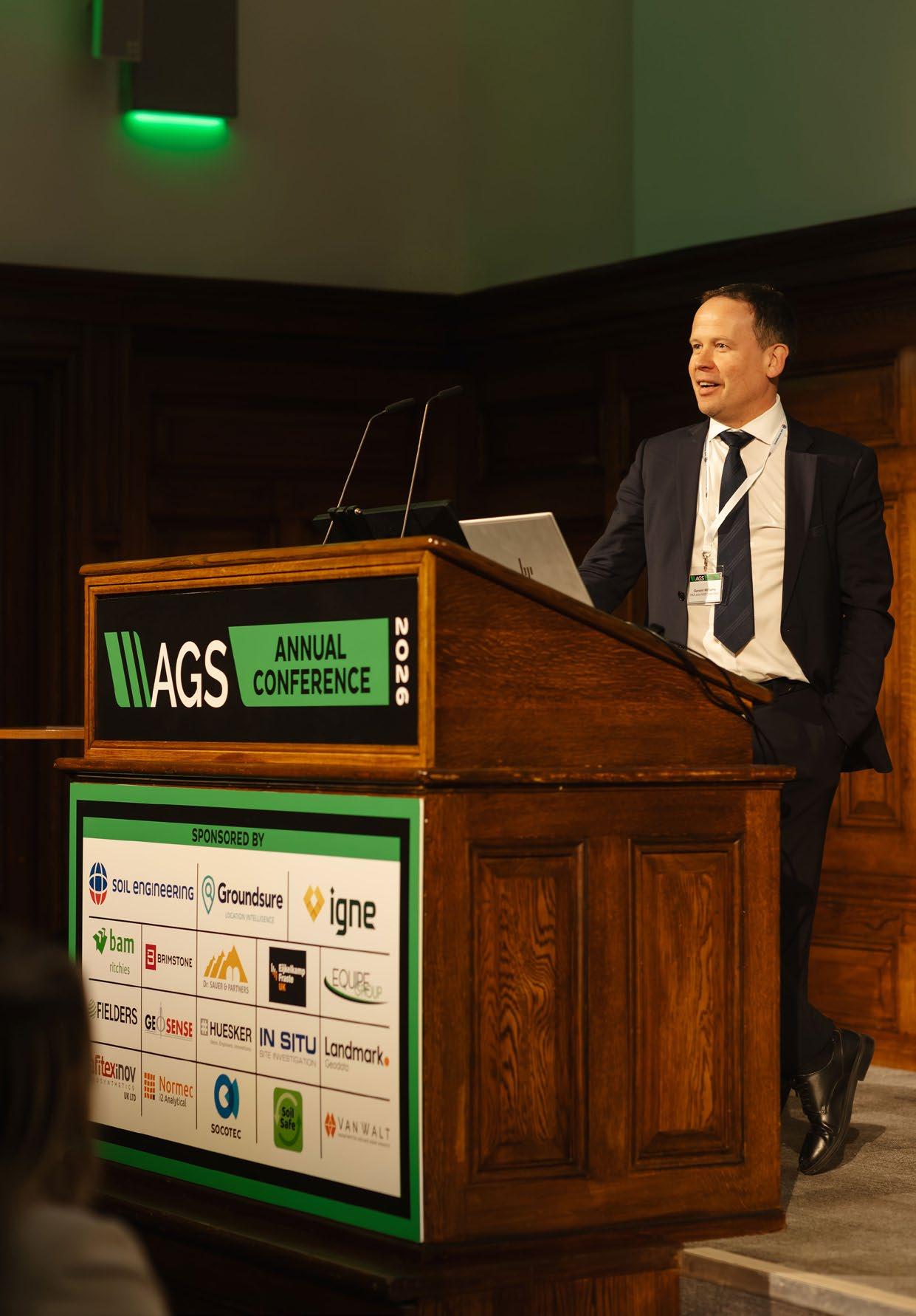
The conference opened with an introduction from AGS Chair Elect, Geraint Williams, who celebrated this year’s AGS Award Winners. Special recognition was given to Jackie Bland and Jonathan Gammon, both of whom received Lifetime Achievement Awards for their longstanding service to the AGS. Joel Carson from the Geoprofessional Business Association (GBA), who travelled over from the US followed with a short presentation.
Session 1
Chaired by Geraint Williams (AGS Chair Elect & Associate Technical Director at HKA), Session 1 began with Daniel Johnson and Joanne Wilkins (Senior Associates at HFW), who discussed how unforeseen ground conditions are addressed within construction contracts. This was followed by Simon Ruddlesden (Director at Ruddlesden Geotechnical), who examined whether BRE 365 soakaway testing should be conducted in geologies previously shown to be unsuitable for
soakaway or infiltration drainage.
Session 2
Following a refreshment break, Lucy Bethell (Technical Director (Contaminated Land) at Mott MacDonald and Deputy Chair of the SiLC PTP) chaired Session 2. Steve Wilson (Technical Director at EPG) presented on the risk assessment required under the CDM Regulations when planning the drilling of deep boreholes. Sarah Cook (Director at Onyx Geo Consulting) then explored the challenges of integrating new digital tools, such as carbon calculators, into established work practices, and discussed how these tools can support quantifying and managing the environmental impact of ground investigations.
Session 3
After lunch and networking opportunities, Session 3, chaired by Julia Nicholson (Sales Manager at Bauer Equipment and Vice Chair of the FPS Safety, Plant and Operations Committee), featured a panel discussion on The
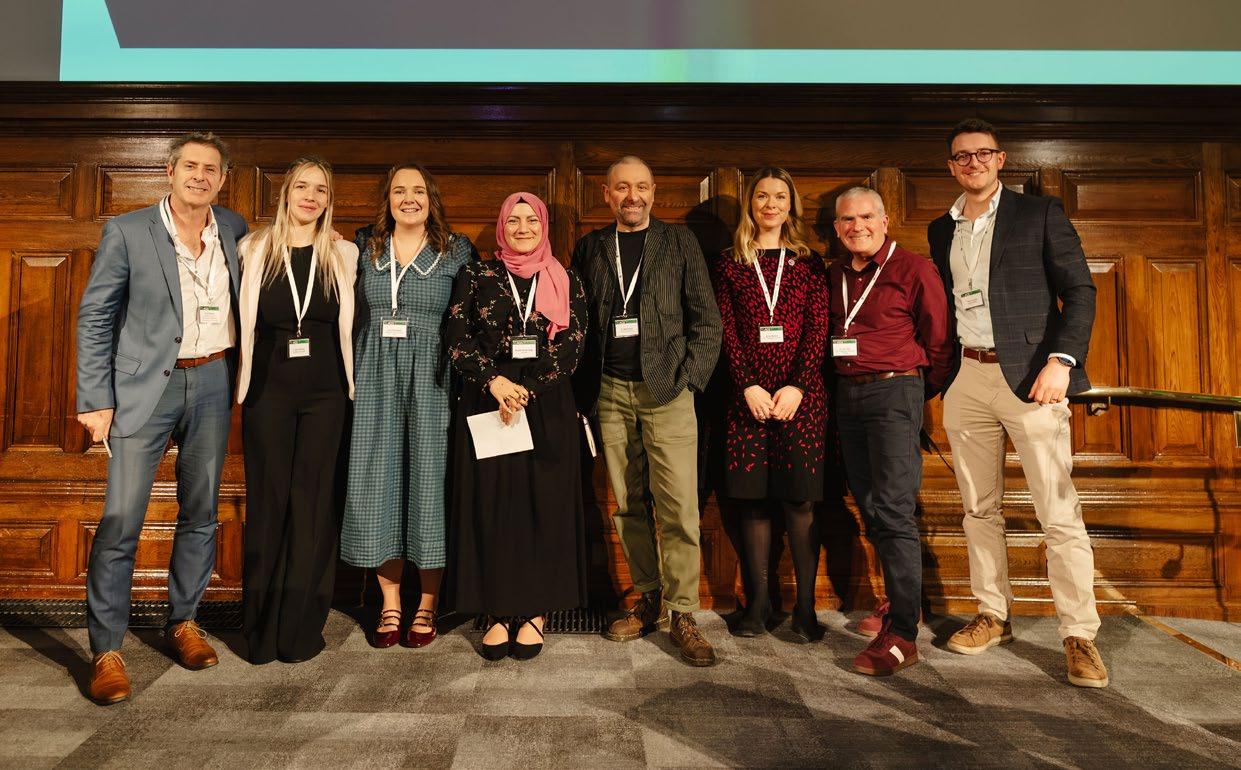
Future of Geoscience: Inspiring and Sustaining Early Career Professionals. Chaired by Dr Iain Stewart (Plymouth University), the panel included Luisa Hendry (@Scottishgeologist), Dr Nick Koor (Koor Associates), Dr Ian Carr (The College of Richard Collyer), Jenny Boland (Geological Society), Oliver Savill (AtkinsRéalis), and Hebah Abdel Hady (Arcadis). The discussion examined the industry’s current challenges and explored ways to inspire the next generation, including using social media to raise awareness and supporting degree apprenticeships.
The session concluded with Tony Putsman (Director at Xenophon Project Services), who discussed how applying a “CDM Differently” approach can help project teams set a clear strategy for minimising risk and ensuring the value of adequate site investigation is recognised from the outset.
Session 4
The final session, chaired by Laura Devoy (Contracts Manager, Scotland at Dunelm Geotechnical and Environmental and member of the BDA Technical and Standards Sub
Committee), opened with a presentation by Tim Clegg (Managing Director at Geosense).
Tim explored the importance of balancing respect for the risks associated with Instrumentation and Monitoring with an understanding of the opportunities offered by high quality data, emphasising that it need not be an “either/or” approach.
The final presentation came from Neda Mokaram (Geotechnical Project Manager (Advanced & Research Laboratory) at Geolabs), who demonstrated how proficiency testing helps highlight uncertainty in common soil and rock tests, identify procedural weaknesses, and promote consistency, confidence, and continuous improvement in geotechnical laboratory testing.
The conference concluded with a networking drinks and canapé reception in the Great Hall, offering attendees a relaxed opportunity to reconnect with colleagues and make new industry contacts.
It was a highly successful event that provided valuable opportunities for professionals across the sector to network and share insights.
The AGS extends its thanks to all speakers and sponsors, including:
Soil Engineering, Brimstone UXO, SOCOTEC UK, Eijkelkamp Fraste UK, Igne, Van Walt, Groundsure, Normec i2 Analytical, BAM Ritchies, In Situ Site Investigation, AFITEXINOV UK, Dr. Sauer & Partners, Geosense, Equipe Group, Landmark Information Group, HUESKER, SoilSafe and Fielders.
SPONSORED BY
News and Events
AGS Early Careers Poster Competition – Celebrating Emerging Talent
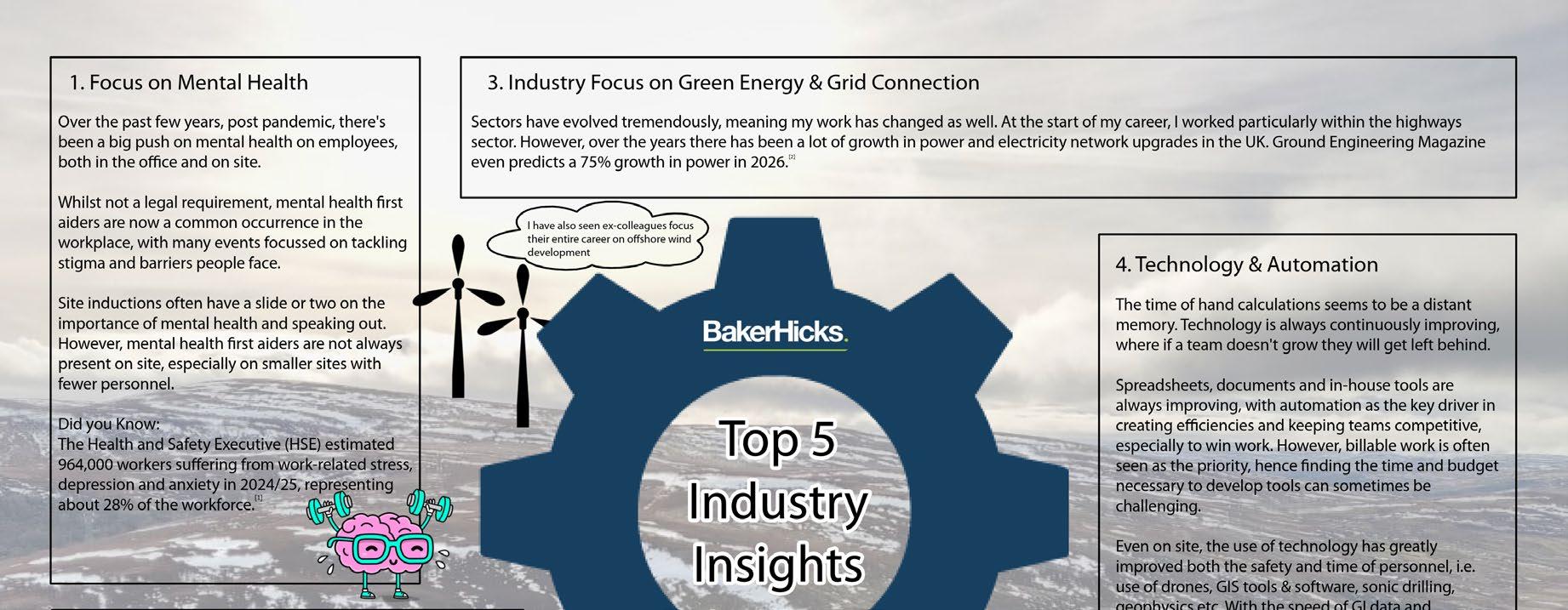
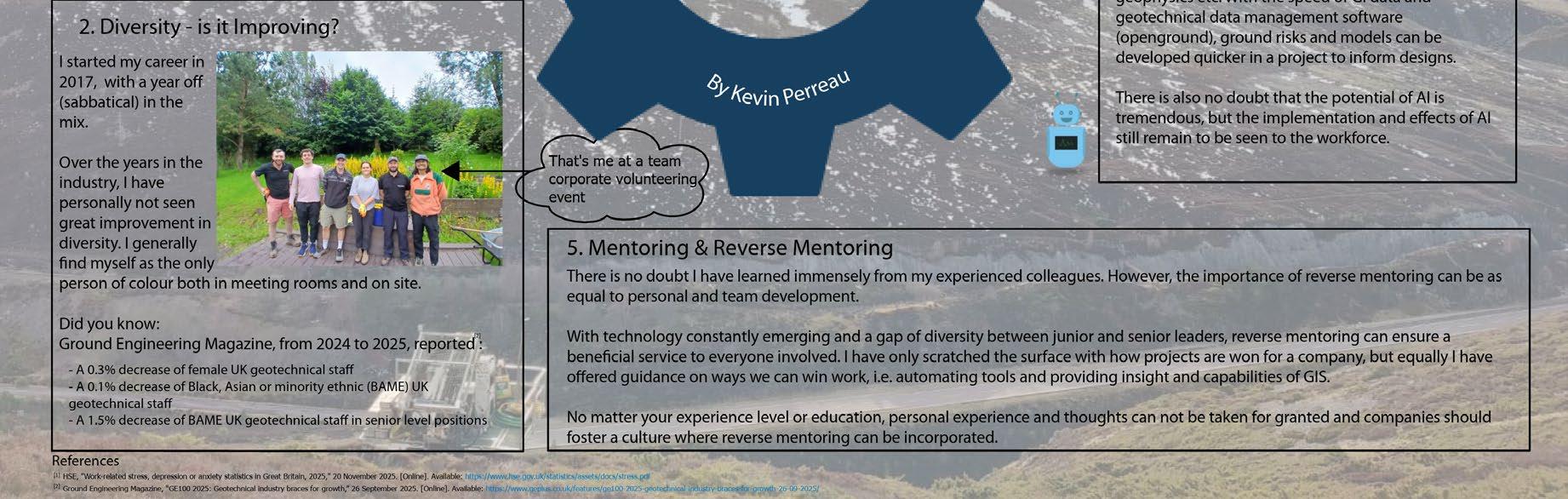
Thank you to everyone who entered this year’s AGS Early Careers Poster Competition, which followed the theme, Top Five Industry Insights. We received 16 high-quality, fullcolour submissions, each offering a unique and thoughtful interpretation of the brief.
Our judging panel, Vivien Dent (AGS Past Chair, Environment Agency), Jonathan Gammon (AGS Past Chair), Geraint Williams (AGS Chair Elect and HKA) and Bradley Falcus (Central Alliance), had the challenging task of selecting a winner from a strong field of entries. After careful consideration, they were delighted to announce Yasamin Bayley (Fairhurst) as the overall winner, who’s colourful poster was created
using collage.
Congratulations to Yasamin, who has been awarded a £100 Amazon voucher, entry to the sold-out AGS Annual Conference, and a doublepage spread in AGS Magazine, showcasing her poster and the inspiration behind it.
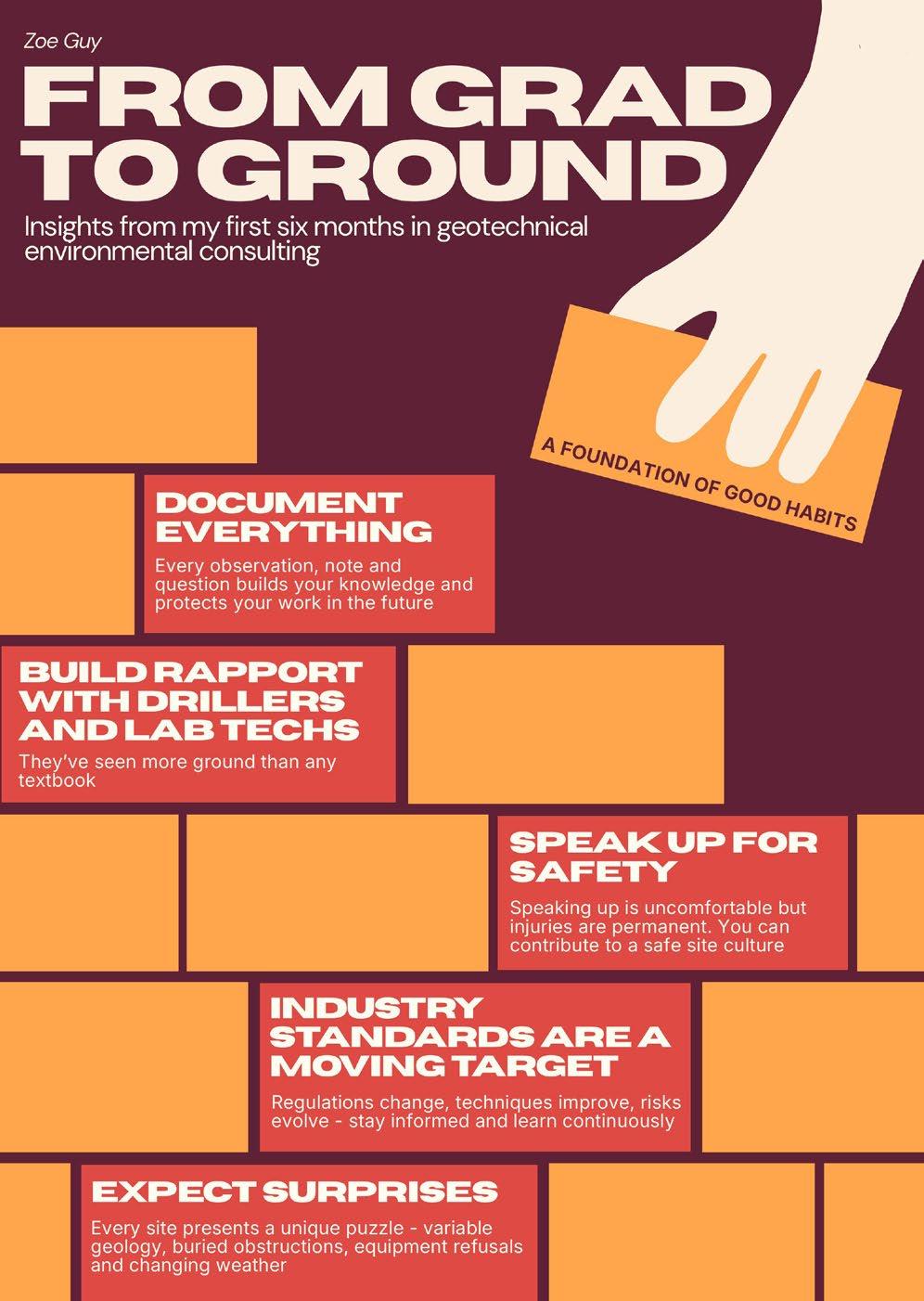
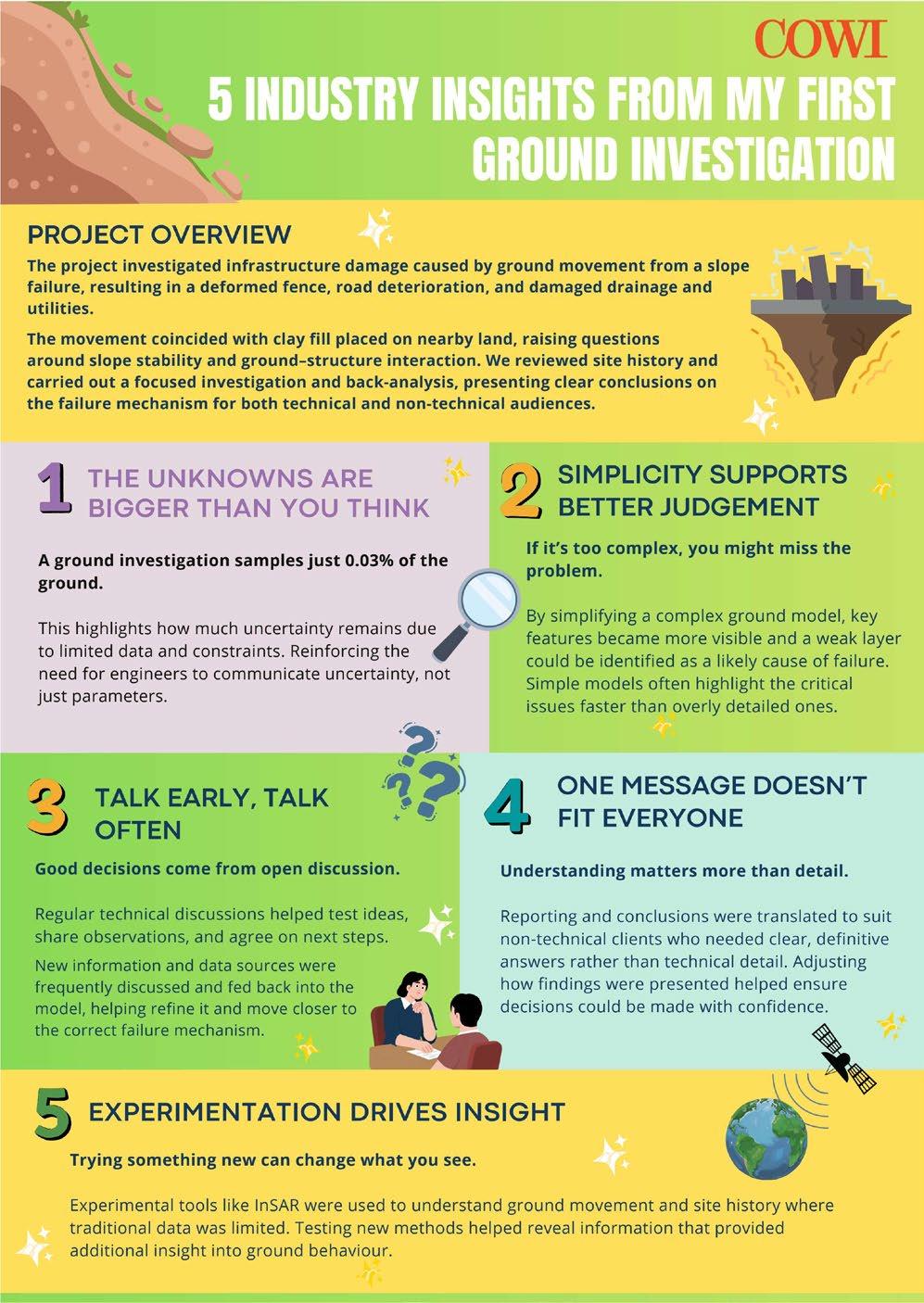
We would also like to congratulate our ten runners-up: Pagen Spooner (EPG), Arun Woods (Sutcliffe), Daniel D Gbenro (United Utilities), James Tasker (Binnies UK), Jenny Farrant (Lithos Consulting), Joanna Wilks (COWI UK), Kevin Perreau (BakerHicks), Sam Murray (Scottish Power Renewables), Visar Rugova (COWI UK), and Zoe Guy (Crossfield Consulting). Each runner-up has received entry to the AGS Annual Conference in London.
Thank you once again to all who took the time to participate. All entries were displayed at the AGS Annual Conference, where they were viewed by 240 delegates, a fitting showcase for the creativity and insight of our early career professionals.
WINNER: Yasamin Bayley (Fairhurst)
Zoe Guy, Crossfield Consulting (Left), Visar Rugova, COWI (Right)
Joanna Wilks, COWI (Below)
Jenny
Farrant, Lithos Consulting (Below)
Sam Murray, Scottish Power (Below)
MY TOP FIVE INDUSTRY INSIGHTS
FROM AN EARLY CAREER IN OFFSHORE
GEOTECHNICAL ENGINEER IN OFFSHORE WIND
02 A Good Ground Model Starts Offshore
A well -planned investigation is worth more than perfect interpretation of poor data
Offshore experience working on the installation of massive monopiles for offshore turbines!
Lecturing at Oxford Uni Earth Science depart about careers in geotechnics in offshore wind
Kevin Perreau, BakerHicks (Below)
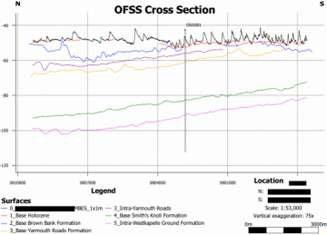
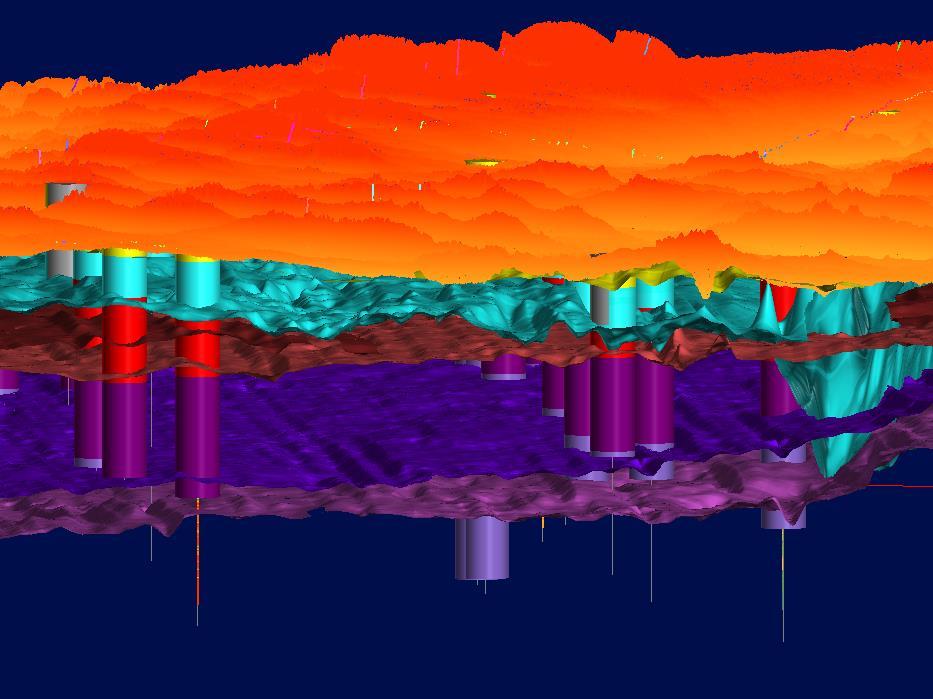
Using Leapfrog to predict a soil profile at a potential offshore substation location
Modern geotechnical engineering is not about certainty it is about understanding uncertainty and making good decisions anyway.
Lower risk by planning properly
•
•
•
•
Eliminate
•
•
•
•
Accurate
•
•
•
Robust ground models focus effort on what matters
•
•
•
Daniel D Gbenro, United Utilities (Left), James Tasker, Binnies UK (Right)
Q & A with...
Yasamin Bayley
Yasamin is the winner of the AGS Early Career’s Poster Competition 2026. Here we talk to her about her role, what attracted her into the industry and what inspired her to create her winning poster design (see page 8).
Job Title:
Graduate Engineering Geologist Company:
Fairhurst
Can you provide an overview on your career history, current role, and responsibilities?
I have been working in the industry for 3 years, having started at Fairhurst following completion of my MSc at the University of St Andrews. My current role as Graduate Engineering Geologist at Fairhurst involves a wide range of geo-environmental, geotechnical and mining projects working with residential, commercial, and infrastructure developments. I am involved in the preparation and management of geo-environmental and geotechnical ground
investigations, subsequent interpretative reporting and remediation projects for a variety of developments. I also undertake rock slope stability inspections and have experience in site supervision of rock slope remedial works construction.
What attracted you into the industry?
Having always been curious and inspired by the natural world, I was interested in a career in the natural sciences from an early age. I studied Earth and Atmospheric Science at Cornell University and had the opportunity to develop a fantastic knowledge base in earth systems which cemented my interest in the geoscience field and to my continued education. During my postgraduate degree at St Andrews, I was introduced more in depth to geotechnical and engineering geology concepts which ultimately led me to pursue a career in this particular field.
Can you talk us through your poster design? Why did you decide to produce the poster as a collage?
The idea for my poster began with thinking that a ground
model, with each insight having its own layer, would be an inspirational basis of design for reaching out to those interested in getting involved in the industry, as ground models highlight the importance of investigation and the discovery of the world around us that we achieve in our profession. I chose to do a hand-written poster as a nod to the hand sketches we often begin our design drawings with. Then I thought about the importance of the clarity in message and communication our drawings and figures need to have and that simple, block colours (like those of pieces of a collage!) would allow the text to be read by the audience most clearly. I thought the requirements for the poster to be “bold, colourful and eyecatching” would be achieved through collage as well.
What made you choose these five particular insights you have included in your poster?
This was again really driven by the requirement of the poster to be inspirational. I wanted to highlight the insights that I
felt could speak to a range of interests of those looking to get involved in the industry. I wanted to highlight both the technical, such as the foundation of geoscience and problem solving, and broader aspects of our work, such as communication. I thought each insight was best presented with examples from my experience thus far. The aim was to get across the variety of projects and sectors that engineering geologists / geotechnical professionals work in. My favourite of the five insights is “The Foundation” as one of my favourite aspects of my job is constantly learning more about the earth system and utilising geoscience knowledge on a day-to-day basis.
Looking ahead, what emerging trends or changes in the industry do you think Early Career Professionals should be paying attention to?
Like many aspects of life in the present day, data gathering and data availability is becoming more and more abundant throughout the industry. Additionally, advances in areas such as
modelling and monitoring are making data more readily available which have the potential to greatly improve the quality of our ground investigations, interpretations and designs, and ideally saving time, money and resources. With that being said, it can be easy to get bogged down in hundreds of thousands of data points, and data should be gathered “intentionally.” This process crucially begins with a thorough preliminary conceptual site model and preliminary ground model and identifying what data is required to answer whatever questions within your ground model you have or that the design requires. I recommend that Early Career Professionals take as many opportunities as possible to get experience with different types of geotechnical and geo-environmental datasets, data collection tools, and data processing tools to learn the advantages and disadvantages of each.
How did you find the AGS Annual Conference?
It was a pleasure to have been invited to this year’s AGS conference in London through being recognised
as the winner of the Early Career Poster Competition. The range of presentations and attendees from different areas of the industry was impressive and reflects the importance of inter-disciplinary and collaborative work. It was inspiring to see a common theme emerge from many of the presenters and attendees of striving to improve the industry. Overall, it was a great experience to attend the conference and I am grateful for the opportunity.
What advice or words of wisdom that would you give someone who is considering entering the industry?
I’m sure many geologists and university students are familiar with the quote “the best geologists are those who have seen the most rocks” and this is certainly true in the industry. Whether it is solid geology, natural superficial deposits or anthropogenic deposits you are working with, having as much handson experience in the field or on site is invaluable. Don’t be afraid to get outside, rain or shine, and get your hands dirty! It will make you a better geologist and build resilience.
NEWS, REPLAYS & UPCOMING EVENTS AGS WEBINARS
We’re pleased to announce an upcoming webinar exploring one of the most significant changes currently facing the industry: the reform of professional and occupational competence.
Taking place on Thursday 11th June, this two-hour virtual event entitled, Individual Competence – Understanding How Government Reforms Will Affect You and Our Industry, will provide essential insight into how evolving legislation and industry initiatives are set
to reshape the way competence is defined, developed and demonstrated.
In the wake of the Grenfell disaster, the UK has seen a fundamental shift away from assumed expertise towards demonstrable competence. This transformation is challenging longstanding approaches to training, assessment and professional recognition, with far-reaching implications for individuals, employers and the wider sector.
This webinar will explore what these changes
mean in practice for those working across the geotechnical and geoenvironmental industry. It will examine the key legislative and governmental drivers behind the reforms, introduce the Super Sector Programme at the forefront of this work, and consider the challenges and complexities the industry must address. Crucially, it will also provide clarity on how these developments are likely to impact roles across the sector and what the future timeline may look like.
Presentations
Proving Competence Across the Ground Engineering Sector
Presented by Julian Lovell, Managing Director at Equipe Group and AGS Lead on Occupational Competence
This presentation will discuss the legal implications of proof of competence for ground engineering personnel under the Building Safety Act. It will discuss the industry challenges and benefits of developing competence frameworks across the ground engineering sector and will provide an oversight of the occupations being considered and their routes to competence. The talk will also discuss the skills gaps already identified and initiatives which are currently being delivered or need to be developed to plug these to ensure we have a sufficient talent pool for the future.
Super Sectors – Trades & Installers and the Journey to
Competence
Presented by Faye Burnett, Mace Advisory Consult and Super Sector Programme Director
In this presentation, Faye will discuss how the industry is tackling the requirement for individual competence identified within the Building Safety Act, and how Trades and Installers are leading the way.
How We Are Approaching Individual Competence in Ground Engineering
Presented by Ciaran Jennings, Project Lead at the Ground Forum
Ground engineering is a complex landscape of competencies, occupations and validation processes. In this presentation, Ciaran will set out the high level approach the Ground Forum are taking to defining competence for our industry. He will touch on some of the issues we need to explore and opportunities we can seize to move the industry forward such as: What challenges can we expect for those working in the industry right now? what do we need to champion that works well and what might need reform? and critically, how do we fix the routes to becoming competent to ensure the quality of our industry for the future?
Designed for professionals at all stages of their careers, this webinar offers a valuable opportunity to gain a clearer understanding of the changing competence landscape, stay ahead of industry developments, and consider what these reforms mean for your role.
With competence reform set to influence every part of the industry, this is a timely and important session not to be missed.
Tickets and Registration
The webinar is free for AGS Members and £50 (ex VAT) for Non-Members. To register for this webinar click HERE.
Sponsorship
The AGS has both Headline and Associate sponsorship packages available for companies who wish to support this virtual event. Prices start from just £150 (plus VAT) for AGS Members. For details click HERE.
AGS Awards 2026: Celebrating Outstanding Contributions in Geoscience News and Events
Congratulations to the winners of the AGS Awards 2026, which recognise the exceptional dedication, expertise and commitment shown by members across our nine Working Groups. Each year, our Working Group Leaders nominate individuals who have made significant contributions to the AGS and to the wider geotechnical and geoenvironmental community.
This year’s winners represent a broad range of specialisms across the industry, highlighting the valuable work undertaken by AGS members to advance best practice, share knowledge and support the continued development of the profession.
The following individuals were recognised for their outstanding contributions:
Business Practice Working Group
Award: David Hutchinson, AGS Honorary Member
Contaminated Land Working Group
Award: Mike Plimmer, Geotechnical & Environmental Associates Commendation: Chris Evans, Socotec
Data Management Working Group
Award: Conrad Stewart, Harrison Group
Environmental
Commendation: Mark Bevan, Structural Soil
Geotechnical Working Group
Award: Jai Shah, Ramboll Commendation: Georgina Donbroski, RSK
Laboratories Working Group
Award: John Masters, Geolabs
Loss Prevention Working Group
Award: Kathryn Eva, Beale & Co Commendation: Peter Plumpton, Socotec
Safety Working Group
Award: Madeleine Bardsley, WSP Commendation: Will Capps, Lucion Group
Sustainability Working Group
Award: Natalie Cropp, Tony Gee and Partners Commendation: Sarah Cook, Onyx Geo Consulting
Lifetime Achievement Award
Jackie Bland, Structural Soils
Jonathan Gammon, Honorary Member
The AGS would like to congratulate all award recipients and commend them for their ongoing commitment and contributions to the Association. Their work continues to support the advancement of standards, collaboration and knowledge-sharing across the geotechnical and geoenvironmental sector.
The Awards video can be viewed here.
AGS Members’ Free Legal Helpline: Reminder
As an AGS member, you have access to a free specialist legal helpline provided by AGS member Beale & Co, an internationally recognised construction and insurance law firm.
Whether you need summary legal advice, a second opinion, or a quick clarification on an issue, their lawyers are on hand to help. Each AGS member can receive 30 minutes of free, specialist guidance, giving you early direction and helping you stay on top of issues before they escalate.
Areas of Advice Include:
Î Appointments and collateral warranties
Î Non-payment or payment disputes
Î Issues arising on ongoing projects
Î Health & safety matters
Î Regulatory matters
Î Commercial or contractual queries
Thank you, Roger Clark
On behalf of the Association of Geotechnical and Geoenvironmental Specialists, we would like to extend our sincere gratitude to Roger Clark for his dedication, leadership, and longstanding contribution to the Association.
After many years, Roger will be stepping away from the AGS Contaminated Land Working Group to enjoy a quieter life. Roger was also the AGS Director for the SiLC Board for many years.
Important Information
Î The helpline does not include document reviews. If you require documents to be reviewed, your firm will need to formally instruct Beale & Co.
Î This service is available exclusively to AGS members.
Î Members are entitled to one helpline call per issue.
Î If you require assistance with document reviews or advice in writing, then this will be outside of the helpline. Beale & Co are happy to provide an estimate if such work is required.
Î Any issues which may lead to a claim against you should be discussed with your brokers first. call per issue.
Roger has consistently given his time, expertise, and energy to support our community, strengthen our standards, and advance the profession. His willingness to step in whenever needed, and now to step back with the same grace and integrity, reflects the commitment and professionalism he has brought to every role he has undertaken.
We thank Roger wholeheartedly for the impact he has made and for the legacy of collaboration and excellence he leaves behind. His efforts have helped shape the Association for the better, and they will continue to be felt for years to come.
Thank you, Roger, for everything you have done.
Jackie Bland
This year, the AGS has presented two lifetime achievement awards.
Here, we speak to the first recipient, Jackie Bland. Jackie has been involved with the AGS for 30 years, serving as Leader of the Data Management Working Group for over 15 years, and currently sits on the Business Practice Working Group, Executive, and Development Fund.
What first inspired you to pursue a career in the geoscience industry?
Good question(!) – My route to geosciences was not a conventional one. It has been entirely from an information technology (IT) viewpoint.
I was completing my Computer Studies HND at Coventry Polytechnic (now Coventry University) when I was approached by a lecturer, Dickon Woods, from the Civil Engineering department. He, in turn, had been approached by Exploration Associates Ltd looking for someone to assist with developing their MS-DOS based systems for geotechnical reporting. It
seemed an ideal opportunity/ challenge to develop my skills in an industry that was just starting to develop its use of IT. It sounded exciting, so I jumped at the chance, and I’ve never left the industry. It’s filled with remarkable people and many technical challenges so I just can’t resist getting involved.
Looking back over your career, which achievement or moment are you most proud of?
The AGS Digital Data transfer format, creation and maintenance. The format has been developed ‘for the industry and by the industry’ to supply the ground investigation data and not digital paper (PDF) of the report. I’ve seen it develop from the initial creation and fledgeling version AGS 1.0 in 1991 to version AGS 4.2 in 2025. It’s a never ending process as Standards change, new tests are created and more items come into scope.
To confirm its worth, the format has been adopted in many other countries too, such as Australia, New Zealand, Singapore, Brazil and Hong Kong to name a few.
Has there been a particular turning point that significantly shaped your professional journey?
I feel I can take the ‘blame’ for the initial creation of the AGS Digital Data Format. My complaints to senior staff about the plethora of data interchange requirements for every new project coming through the business, all with the same data, but laid out differently within Lotus 123 (predecessor to Microsoft Excel) started a revolution - AGS called an industry meeting to discuss the issue in 1990, leading to AGS 1.0 in 1991. I feel obligated to continue maintaining what I was involved in starting!
How has the industry evolved since you first started, and what changes stand out most?
What springs to mind immediately is - from zero to hero…chalk and cheese…oil and water!
Data capture was a challenging
thing when I first started in the industry. It was all we could do to digitally create a log and not type directly onto preprinted pages with a typewriter. Microsoft, Adobe, Google, Apple, Amazon and the internet happened and today we are hard pushed to not be able to capture data - photos, videos, speech, etc… - with our handheld devices and our interconnected world.
How important have collaboration and professional bodies such as AGS been throughout your career?
Exceptionally important. What role has mentoring or supporting the development of others played in your professional life?
I have spent most of my career as a person of only one or two in the dept. It’s very hard to answer this question.
A fun day is explaining the intricacies of the company systems to be used to generate AGS data! I always enjoy being on hand to chat over issues and improvements to the day to day digital grind.
would like to think others are fortunate enough to do the same. The interactions with other professionals in the industry, the education and knowledge they are happy to share is invaluable. My motto has always been “if I don’t get something, I find someone who can make me understand it”. Always ask and keep looking till you find the expert on the subject. Perseverance is important, there really is no substitute for your own learning.
data is stored, the easiest way to access that data should be at the forefront of any software design and data collection. To make that easy you need to understand the problem you’re solving, the area of the industry its aimed at and the skill of the data collectors.
What does receiving the AGS Lifetime Achievement Award mean to you personally?
What advice would you offer to early career professionals entering the industry today?
I love what I do every day and
In your view, what skills or qualities are essential for long-term success in this field?
I’m a Data Manager and system designer, so having a ‘datahead’ helps! What do I mean by that? It is simply that however
I’m very proud to receive the award and surprised to have been nominated in the first place, as I’m not a geologist or a geotechnical engineer by training. It does, however, show what can be achieved through dogged perseverance with the same topic over a considerable period of time.
News and Events
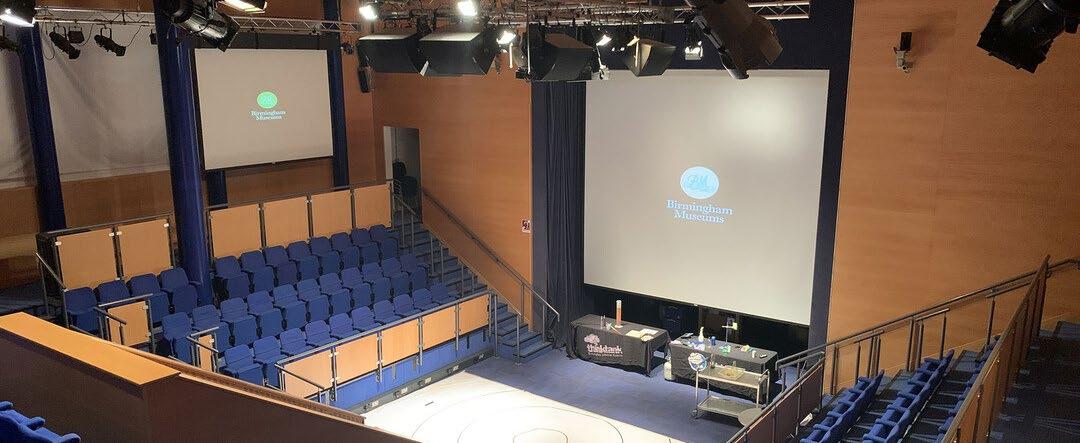
We’re pleased to announce details of a fullday CPD conference entitled The Changing Landscape of Land Contamination, which is taking place on Thursday 15th October at the Thinktank Birmingham Science Museum. As the land contamination sector continues to evolve, driven by advances in research, regulatory change and increasing sustainability demands, this timely event will bring together leading experts to explore the latest developments, challenges and best practice shaping the industry.
Chaired by AGS Chair Elect, Geraint Williams (Associate Technical Director at HKA), this one-day event will feature a diverse programme of presentations covering key technical and regulatory topics, including advances in sampling methane in groundwater, the growing importance of sustainability in land management, updates to BS 10175, and the ongoing challenges associated with emerging contaminants, low LoQ asbestos in air sampling and PFAS remediation. Speakers confirmed to date include Paul Nathanail, (Director at Land Quality Management), Pagen Spooner, (Geoenvironmental Consultant at EPG), Christopher Swainston (Independent Contaminated Land Consultancy and Training), Steve Forster, (Director at Remedia Group), Dr Anna Willetts, (Partner at Gunnercooke), Cecilia MacLeod, (Anthera Remediation Technologies), Rob Sweeney (CL:AIRE), Barry Mitcheson (WSP) and Paul McMahon (RSK).
In addition to the technical content, the conference will provide valuable insight into the legal landscape surrounding landfill
and contaminated land, helping delegates to better understand issues of risk, liability and compliance within an increasingly complex regulatory framework.
The day will also include an interactive panel discussion, chaired by Paul Nathanail, entitled, Land Contamination: Meeting Technical, Societal and Legal Expectations. This interactive discussion will bring together a range of industry perspectives to explore current issues and future challenges. This session will provide delegates with the opportunity to hear directly from experts and gain a broader understanding of the direction of the sector.
We are also delighted to welcome Session Chairs; Claire Dickinson (Geo Environmental Matters and SiLC), Rob Sweeney (CL:AIRE) and Stephanie Cox (e3p and SoBRA) to the conference. Each chair will play an important role throughout the day, guiding discussions and facilitating questions from the audience to ensure a dynamic and engaging programme.
Designed for professionals at all stages of their careers; from early career practitioners to experienced specialists, this conference offers a valuable opportunity to enhance technical knowledge, gain CPD and connect with others across the contaminated land community.
This event is currently sponsored by Groundsure, ALS, Husker and Eijkelkamp Fraste UK.
TICKETS AND REGISTRATION
Tickets for AGS member companies are available at the reduced rate of £150 (ex VAT), while nonmembers can attend for £230 (ex VAT).
A limited number of discounted places
are available for regulators, including the Environment Agency, NHBC and local authorities, priced at £59 (ex VAT). Student tickets are also available for £20 (ex VAT).
For full details and to register, please click HERE.
SPONSORSHIP
The Changing Landscape of Land Contamination conference offers a valuable opportunity to position your organisation at the forefront of a rapidly evolving sector. Bringing together industry professionals from across the sector, this event provides direct access to key decisionmakers, influencers and emerging talent.
We have the following sponsorship packages available for both members and non-members of the AGS who wish to have a presence at this highly targeted conference. All listed rates exclude VAT. For full sponsorship benefits, details and T&C click HERE
EMERALD SPONSOR (AGS Member Rate: £1350/ Non-Member Rate: £1755)
Î Full page advert in AGS Magazine (worth £400, over 7,800 subscribers) **
Î A dedicated exhibition table, enabling you to present your company’s initiatives, research, software and promotional materials in a
high-profile networking environment.
Î Entry for three delegates into the conference
Î Company logo on the conference lectern
GOLD SPONSOR – (AGS Member Rate: £1200/ Non-Member Rate: £1560)
Î A dedicated exhibition table, enabling you to present your company’s initiatives, research, software and promotional materials in a high-profile networking environment.
Î Entry for two delegates into the conference
Î Company logo on the conference lectern
Î 1/4-page advert in AGS Magazine (worth £160, over 7,800 subscribers)
ASSOCIATE SPONSOR (AGS Member Rate: £600 Non-Member Rate: £840)
Î Entry for one delegate into the conference
Î Company directory in AGS magazine (worth £50, over 7,800 subscribers)
Î Company logo on the conference lectern
Î Company logo on the event presentation holding slide
If you’d like to confirm your support or would like any further information regarding the conference please contact Caroline Kratz on ags@ags.org.uk.
SPONSORS
News and Events
Geotechnica 2026: Conference Topics Confirmed
Exhibition places at Geotechnica 2026 are selling fast, with limited numbers still available following confirmation of the conference lineup. The event will take place on 8th and 9th July 2026 at the Warwickshire Event Centre, where Equipe Group will once again bring together the ground engineering community for two days of focused discussion, demonstration and decision-making.
For members of the Association of Geotechnical and Geoenvironmental Specialists, the value of Geotechnica lies in its clarity. This is not a broad construction event diluted by competing disciplines. It is a concentrated environment where consultants, contractors, laboratories and suppliers meet with shared context. Created by the industry, for the industry. The result is simple: conversations start further along. Time is not spent explaining the basics. It is spent testing ideas, refining specifications
and building working relationships.
Equipe is delighted to announce the conference topics for 2026, structured as a series of open, panel-led sessions designed to challenge accepted thinking and encourage debate. The programme will examine whether current ground investigation techniques remain fit for purpose, question the role and rigidity of British Standards, and revisit the reliability of long-established methods such as the Standard Penetration Test. Alongside this, the conference will explore the growing influence of artificial intelligence in ground engineering and consider how data can be better shared and leveraged across projects and stakeholders.
Julian Lovell, Managing Director of Equipe Group and Conference Chair, said: “The intention with the conference for this year is not to present finished answers, but to ask better questions. Whether it is the future of drilling methods, the role of Standards, or how we use data, these are live issues that affect the industry dayin and day-out. Geotechnica's conference in 2026 is designed to bring these issues into the open, challenge assumptions and give people a clearer sense of where the industry might be heading.”
The format reflects that aim. Each session begins with a focused presentation before opening into panel discussion, where audience participation is actively encouraged. It is a structure that values experience as much as theory and allows AGS members to engage directly with the issues affecting their day-today work.
Alongside the conference, the exhibition continues to develop with a strong intake of new and returning exhibitors. Equipe is pleased to confirm companies such as Fugro GB and JKS Boyles among those joining the 2026 line-up, alongside a wide range of specialist suppliers, contractors and service providers. The outdoor exhibition remains a defining feature, offering the opportunity to see drilling rigs, tooling and equipment in in flesh, not just in a brochure.
Calum Spires, Operations Director at Equipe Group and Head Organiser for Geotechnica commented: “What makes the exhibitor line-up compelling this year is what they are physically bringing. These are not just companies turning up with brochures, mugs and pens. They are bringing equipment, expertise and practical solutions. For AGS members, that creates a rare opportunity to properly assess what is available, speak directly to the people behind it, and make more informed decisions.”
"For consultants in particular, that matters. Specification decisions are often made at a distance from the equipment and processes they relate to. Geotechnica shortens that distance. It allows engineers to see, question and compare in one place, with the people who design, build and operate the systems they rely on."
Equipe are confident that the combination of a technically focused conference and a handson exhibition will creates a setting that is both efficient and effective at driving growth and development for the geotechnical indsutry.
Calum continues: "Geotechnica is a place where ideas are tested, products are scrutinised and relationships are strengthened - all within the
context of a shared understanding of ground engineering. If you are a company that works in geotechnics, or supply into the industry - this is the single most beneficial event you can be involved with to get eyeballs onto your products and services."
A limited number of exhibition spaces remain available for 2026. Equipe look forward to welcoming AGS members to the WEC in July.
Further information about Geotechnica 2026 is available at www.geotechnica.co.uk
BDA Health & Safety Sub-Committee Meeting Update – March 2026 News and Events
The BDA Health & Safety Sub-Committee met on 5th March 2026. The meeting covered updates on training initiatives, operational guidance for cable percussion drilling, vibration exposure findings, and wider safety matters affecting the drilling industry.
Key Highlights:
Î Leadership Transition and New Members
- Paul Breslin welcomed members to the meeting and introduced David Bradley, who attended in preparation for taking on the role of Chair following the BDA AGM in May. Kostas Tsiminis of Igne was also welcomed to the committee.
Î Hydraulic Hose Training Programme - Work continues on the development of an industry awareness training resource focusing on hydraulic hose safety. Images, videos and supporting scripts highlighting common risk points have now been received and will be assembled into a training module, which will include an assessment element.
Î Manual Handling Training for the Industry
- The committee confirmed that subsidised industry training will soon be available, including manual handling and “Train the Trainer” (POPS) programmes delivered by Pristine Condition. The training has been developed following analysis of accident statistics and aims to address the most common causes of incidents across the
drilling sector.
Î Cable Percussion Drilling (Crew Competence and Supervision) - The committee reviewed a query from an external client regarding the competence and supervision required during cable percussion operations. BDA guidance was clarified, confirming that a minimum crew of two competent operatives, comprising a lead driller and a support operative, is required for key activities such as mobilisation, rig erection and casing extraction. The committee also discussed the need for improved training pathways and competency structures within the sector.
Î Future Training and Competency
Frameworks - Discussions highlighted the importance of structured competency development, including progression towards Vocational Qualification cards. In the interim, the committee considered the potential for a checklist-based approach to help support lead drillers while wider training reforms are developed.
Î CP Rig Transport and O-Licence
Clarification - The committee reviewed regulatory requirements relating to towing cable percussion rigs. Advice received from transport specialists confirmed that CP rigs do not need to be listed on an Operator’s Licence where they fall under “tools of trade” exemptions and are operated within appropriate weight and distance limits. The topic will be incorporated into the ongoing Safety Guidance review.
Î Cable Tool Safety Incident - A reported incident involving a CP rig leg vibrating off a mudguard and striking an operative was discussed. The committee recommended that mudguards should incorporate
appropriate lugs to prevent this occurring. A safety alert will be issued to raise awareness of the risk.
Î Working at Height on Rotary Rigs -
Concerns were raised regarding drillers standing on rig jaws to insert SPT rods, particularly on goose-neck systems. The committee discussed safer alternatives, including the use of drill-through tanks and shorter rods. Further investigation will be carried out with the aim of communicating best practice guidance to members.
Î HAVS and Whole-Body Vibration Findings
- Initial findings from Hand-Arm Vibration Syndrome and whole-body vibration investigations were reviewed. Higher vibration levels were observed when operating on man-made substrates, with certain equipment configurations requiring more manual intervention. Further research is underway to identify practical solutions.
The State of Instrumentation and Monitoring – Where Should We Focus?
Understanding the evolving needs of the Instrumentation and Monitoring (I&M) sector has never been more important. To support this, the Association of Geotechnical and Geoenvironmental Specialists (AGS) Instrumentation and Monitoring Working Group has launched a new industrywide survey aimed at gaining a clearer understanding of current practices, challenges, and perceptions across the field. The initiative seeks to gather valuable insights from professionals across all areas of the industry. By identifying key trends and concerns, the AGS I&M Working Group aims to ensure its future efforts are aligned with real industry priorities. The findings will directly
Î Load Securing During Rig Transport -
Following a fatal accident involving a rig falling from a trailer, the committee agreed that a safety alert should be considered regarding the securing of loads when towing rigs. A potential joint alert with the Association of Geotechnical and Geoenvironmental Specialists (AGS) will be explored.
Î Audit Update - Audit performance remained strong, with January recording particularly high activity levels. Two audit failures were noted, relating to a non-functioning emergency stop button and a guarding issue.
Î BDA Safety Guidance
Review
- The updated BDA Safety Manual continues to progress, with committee members currently reviewing this in stages and providing feedback ahead of the next meeting.
inform upcoming guidance, resources, and initiatives, helping to drive meaningful progress where it is needed most.
Participation in the survey is quick and straightforward, taking approximately 5–10 minutes to complete, and all responses will remain confidential.
The AGS is keen to hear from a broad crosssection of the industry, including consultants, contractors, suppliers, and clients. Whether you are directly involved in monitoring operations or engaged in data interpretation and decision-making, your perspective is valuable.
The survey will remain open until 17th May 2026. This is an opportunity to help shape the future direction of I&M practices, ensuring that industry efforts remain focused, relevant, and impactful.
You can take part in the survey here: https:// forms.office.com/e/9c67Rz5idY
SiLC Leadership for a New Era News and Events
The Specialist in Land Condition (SiLC) Register enters a new chapter in 2026 with a refreshed leadership team bringing deep expertise, fresh perspectives and a shared commitment to raising standards across the land condition sector. With Dr Tom Henman stepping into the role of Chair of the SiLC Board, Lucy Bethell becoming Chair of the Professional and Technical Panel (PTP), and Freddie Kennedy joining the PTP as the Recently Qualified SiLC representative, SiLC strengthens its position as a leading voice for competence, quality and professional development. Together, they represent the breadth and depth of the SiLC community from senior leaders shaping national guidance, technical directors driving innovation, to emerging professionals championing the next generation.
Dr Tom Henman: Chair of the SiLC Board
With more than 30 years of experience across consultancy, industry and academia, Dr Tom Henman brings a strategic, future focused perspective and considerable energy to his new role as Chair of the SiLC Board. A Director at RSK Geosciences, Tom provides senior technical oversight and leads on sustainability and innovation within one of the UK’s foremost geosciences consultancies. His expertise spans land contamination risk assessment, remediation, soil and groundwater impacts, and ground and mine gas risk. He is a Chartered Chemist and Scientist, Fellow of the Royal Society of Chemistry, SiLC, and SQP under the National Quality Mark Scheme.
Tom has long been at the forefront of raising technical standards across the sector, contributing to organisations such as SiLC, AGS, EIC and CL:AIRE. His leadership within SiLC has been pivotal: after serving as Deputy Chair and then Chair of the PTP from 2020 to 2024, he became Deputy Chair of the SiLC Board in 2024. He now takes on the Board Chair role for a two year term, supported by Louise Beale as Deputy Board Chair.
His interests extend beyond risk mitigation to the beneficial reuse of brownfield land, biodiversity enhancement and climate risk. He has authored numerous papers, research reports and technical guidance, and is a lead author of the first UK guidance dedicated to assessing and managing climate and extreme weather impacts on geo based risks, due for publication by CIRIA in April 2026.
Reflecting on his appointment, Tom said: "I am really pleased to take on the role of Chair of the SiLC Board and for the opportunity to contribute to leading the organisation and delivering SiLC’s mission going forward. This includes updating assessment processes for SiLC candidates, supporting higher standards in site assessment and better regulation, and integrating climate risk and sustainability issues within the land condition sector."
Lucy Bethell: Chair of the SiLC Professional and Technical Panel
With over twenty years’ experience in land contamination and environmental risk management, Lucy Bethell brings a holistic, people centred approach to her new role as Chair of the PTP.
A Technical Director at Mott MacDonald, Lucy has worked across the UK and internationally on
complex land condition projects, from intricate groundwater challenges on constrained London sites to landfill investigations in Morocco. Her passion lies in environmental protection, cross disciplinary collaboration and delivering positive societal outcomes.
Lucy is a strong advocate for diversity and technical excellence, supporting women and underrepresented groups across the environmental sector. She credits her own development to the guidance of senior role models and now plays an active role in nurturing the next generation.
Reflecting on her transition into the Chair role, Lucy shared: “It has been fantastic working with Louise Beale over the last two years and seeing the demonstrable progress that SiLC has made in a very short time under her leadership… I am delighted to now take on the role of Chairperson.”
Looking ahead, she emphasises continuity and community: “In my current role, I hope to build on the excellent work of Louise and the previous Chairs, Tom and Ian, and focus on supporting and celebrating our current and future SiLC Community. I look forward to working with, and learning from, our wonderful SiLC Volunteers… all of whom give their time and expertise to support SiLC and the wider industry.”
Freddie Kennedy: Recently Qualified SiLC Representative on the PTP
Representing the next generation of land condition professionals, Freddie Kennedy joins the PTP as the Recently Qualified SiLC representative, bringing energy, ambition and a strong commitment to sustainability.
He is particularly passionate about embedding sustainability in a value engineered, practical way, ensuring environmental responsibility enhances, rather than complicates, project delivery.
Freddie said: "I am really pleased to share that I have recently stepped into the role of Recently Qualified SiLC on the SiLC Professional Technical Panel."
His priorities are clear: “I want to help to strengthen the number of aspiring SiLCs and support recently qualified SiLCs in building a strong and visible profile for themselves in the environmental sector.”
And his enthusiasm for SiLC is unmistakable: “What I love most about SiLC is the commitment to rigour and technical excellence. My career has certainly benefited from becoming a qualified SiLC and I hope that more and more can feel the same.”
A Strengthened Leadership Team for a Sector in Transition
The appointments of Tom, Lucy and Freddie come at a pivotal moment for the land condition sector. The drive for economic growth through increased house building and infrastructure development needs to be accompanied by high quality land assessment and remediation to support safe, sustainable and climate resilient development. SiLCs refreshed leadership team reflects the organisation’s commitment to:
Î Raising professional standards
Î Supporting competence and career progression
Î Embedding sustainability and climate resilience in land condition assessments
An Associate Director at AtkinsRealis, Freddie has worked across blue chip multinationals and specialist engineering firms, assessing a wide range of sites and designing remediation strategies for complex land uses including former gasworks, landfills and PFAS impacted airfields.
Î Strengthening and diversifying the SiLC community
Î Ensuring the sector is equipped for the challenges ahead
With experience spanning senior leadership, technical excellence and early career representation, this team is well positioned to guide SiLC into its next phase.
News and Events
A
Celebration of Collaboration, Insight and Innovation
The SiLC Annual Forum returned on the 26th March with a vibrant and forward-looking programme that brought together professionals from across the land condition, remediation,
and brownfield redevelopment community. Chaired by Louise Beale, the event offered a rich blend of technical insight, practical case studies, regulatory perspectives, and future-focused discussion, all centred around the Forum’s core themes of Air, Land and Water.
Across the day, delegates explored some of the most pressing challenges and emerging opportunities shaping the sector today. Each thematic block combined a real-world case study, an update on evolving guidance or regulatory approaches, and a look ahead to innovation and what practitioners should be preparing for next.
Air: Monitoring, Emissions and Lessons Learned
The Forum opened with Professor Claire Holman, who introduced the new IAQM & LCC guidance on good practice for air quality monitoring around brownfield projects. Her session highlighted the importance of collaboration between contaminated land and air quality specialists, particularly in
the context of former gasworks sites where community reassurance is vital.
Paul Nathanail followed with a compelling exploration of a recent Part 2A case, examining whether smoke could constitute a “substance” under the regime, a thought-provoking reminder of the complexities regulators and consultants navigate.
Marie Armstrong and George Hannan from Element then provided a detailed update on PFAS in air emissions, explaining the differences between gaseous PFAS and PFAS in ambient air, and outlining the analytical methods currently prescribed by the Environment Agency.
Land: Remediation in Practice and Climate Resilience
The Land theme showcased the depth of expertise across the SiLC community. Emma Evans (Arcadis) presented the Temple Island remediation case study, a project shaped by tidal influence, complex land quality risks, and tight investor timescales. Her talk demonstrated how robust risk assessment and collaborative decision-making can unlock challenging sites.
A standout addition to this year’s programme was the candid and insightful conversation
between Joe Jackson, Neil Hopkins, and Paul Nathanail, exploring what truly helps and what hinders successful remediation delivery.
Their discussion ranged from the value of early contractor involvement in options appraisal to the importance of clear roles, planning status, and outcome-based specifications. They highlighted the practices that enable efficient, effective projects, while also addressing the realities that can derail progress.
The panel didn’t shy away from the challenges contractors face: vague definitions of “gross contamination”, major data gaps, unrealistic material standards, and unclear risk allocation. Their reflections offered an honest, practical look at what contractors need before, during and after remediation and the pitfalls the industry should avoid to ensure better outcomes for clients, regulators and delivery teams alike.
Water: Data, Tools and Open-Source Innovation
Helen McMillan (RSK) then introduced the 2026 update to SoBRA’s controlled waters and climate change guidance, highlighting new climate projection resources and the growing importance of extreme weather considerations in conceptual site models.
Closing the thematic sessions, Judith Nathanail (LQM) explored the power of open-source tools for groundwater and PFAS data management. Her presentation resonated strongly with practitioners seeking flexible, accessible solutions when commercial software isn’t available or when “all the seats are gone”.
Panel Discussion: The Value of Multiple Disciplines Working Together
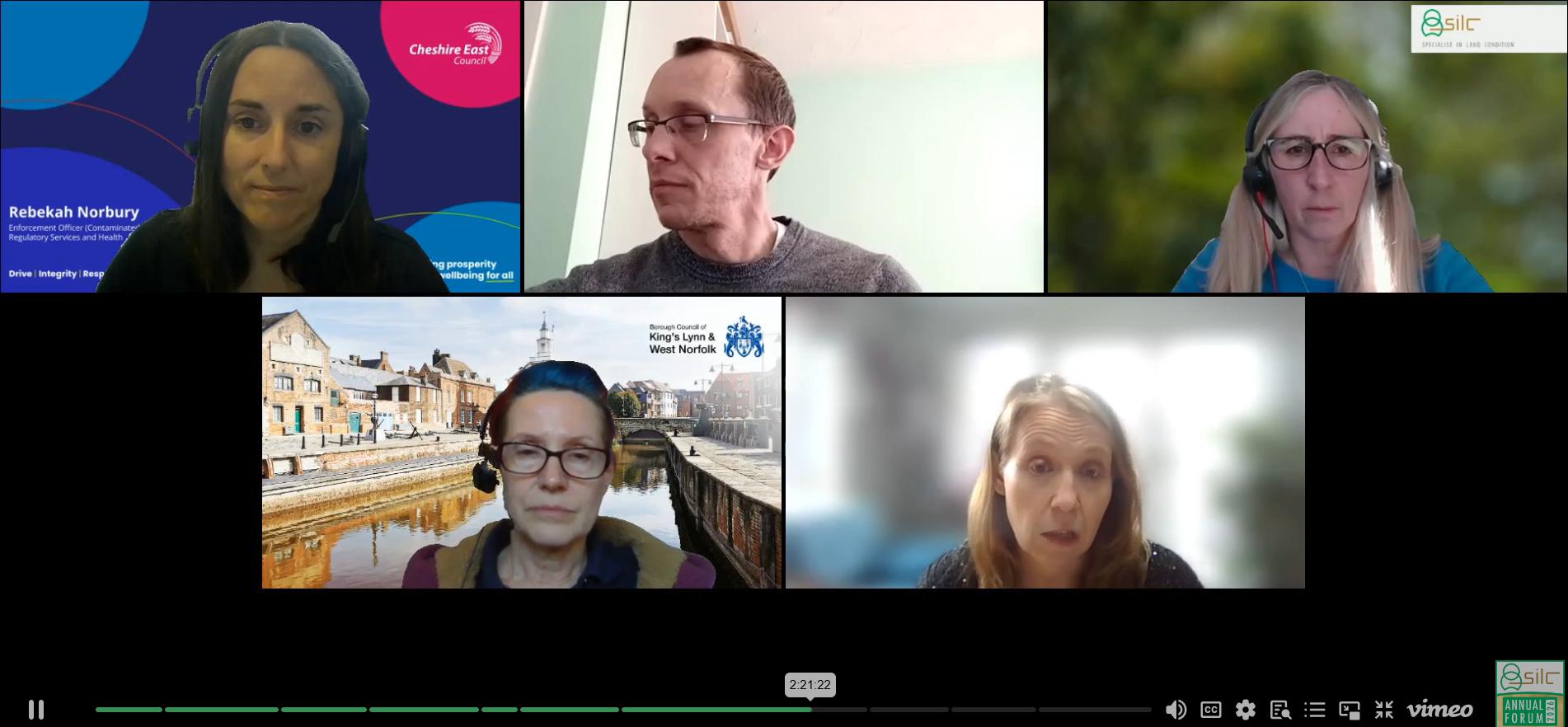
One of the highlights of the Forum was the regulator panel chaired by David Carr, featuring Sarah Hamill, Rebekah Norbury, and Fabia Pollard. Their discussion underscored the importance of cross-disciplinary collaboration in brownfield regulation, the drivers behind NCLOG initiatives, and the shared challenges faced across England, Wales and Scotland. The audience Q&A brought thoughtful questions and practical reflections from across the sector.
A Heartfelt Thank You to Our Speakers
SiLC extends sincere thanks to all speakers who contributed their expertise, experience and enthusiasm. Their willingness to share lessons learned, from remediation practice to analytical innovation, is what makes the Annual Forum such a valued event for the profession.
With Special Thanks to Our Sponsors
This year’s Forum was made possible through the generous support of our sponsors, whose commitment to excellence and collaboration reflects the values at the heart of SiLC.
Headline Sponsor
Biogenie Remediation UK Ltd - for their continued leadership in sustainable, risk-based remediation solutions.
Gold Sponsors
Jackson Remediation - long-standing supporters of the Forum and champions of transparency and excellence in remediation.
Element - providing industry-leading environmental testing and analytical expertise.
Arcadis - global leaders in sustainable design, engineering and consultancy.
VertaseFLI -delivering innovative remediation technologies across some of the UK’s most challenging sites.
We are deeply grateful for their support and partnership.
Looking Ahead
The SiLC Annual Forum continues to be a cornerstone event for the land condition community a space where practitioners, regulators, and industry leaders come together to share knowledge, challenge assumptions, and shape the future of brownfield redevelopment.
With the momentum generated this year, we look forward to continuing the conversation, strengthening collaboration, and championing high-quality, multidisciplinary practice across the sector.
Watch the Forum Recording
For anyone who couldn’t join us on the day or for delegates who’d like to revisit the sessions the full recording of the SiLC Annual Forum 2026 is now available.
Visit the SiLC website for access and further information.
News and Events
AGS announces donation to Stemettes
We’re proud to share that the AGS has donated £4,000 to Stemettes, an organisation dedicated to inspiring the next generation of women and non-binary people into Science, Technology, Engineering, Arts and Maths (STEAM).
Through showcasing diverse role models and creating inclusive opportunities, Stemettes is helping to build a more representative and innovative future for STEAM.
This charity was selected by members of the AGS Sustainability Working Group, reflecting our ongoing commitment to supporting impactful initiatives that drive positive change.
Alison Nicholson (AGS Sustainability WG Leader) explains:
“The Sustainability Working Group was
AGS Publication Updates
honoured to choose the charity for donation this year. From a long list of very worthwhile causes, our working group voted for the Stemettes to receive the generous donation of £4,000 from the AGS. The Stemettes philosophy epitomises what the AGS and our industry needs to strive for…to engage, inform and connect the next generation of women and girls into Science, Technology, Engineering, Arts and Maths (STEAM).”
Vivien Dent (AGS Past Chair) added:
“The Stemettes programmes help to break down barriers, challenge stereotypes, and open up opportunities for young people who are often under-represented in these fields. Our support reflects AGS’s commitment to equity, inclusion and the long-term growth of STEM communities.”
We’re now looking ahead to our 2026 charity and would love to hear your suggestions for charities to support. If you have an idea, please get in touch at ags@ags.org.uk.
The top three downloaded AGS publications in last month:
3. AGS Guide: The Selection of Geotechnical Soil Laboratory Testing
Recent AGS publications available on the AGS website: AGS Client Guide for Ground Investigation Activities – Trial Pitting
• A Client’s Guide to Cone Penetration Testing
To download the publications for free; click here
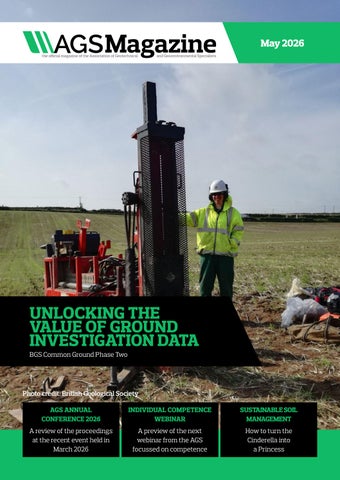
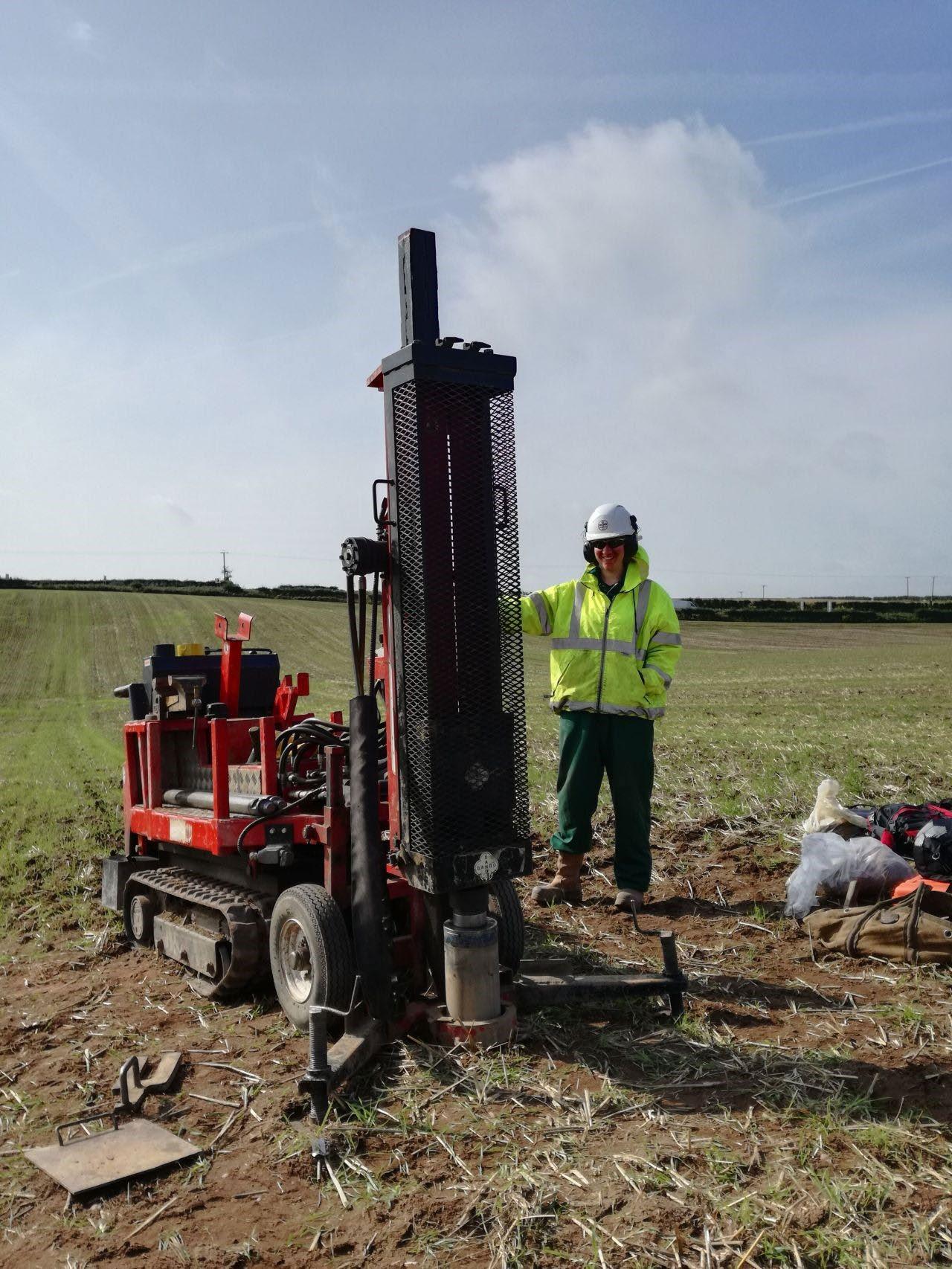
Unlocking the Value of Ground Investigation Data: BGS Common Ground Phase Two
Accurate and accessible ground investigation (GI) data is fundamental to safe, sustainable and efficient construction. In the UK alone, approximately £1.2 billion is invested every year in ground investigation activities. Yet unforeseen ground conditions are still estimated to cause significant delays and overspend — around 10% of project costs, equating to approximately
£120 million per year.
The British Geological Survey (BGS)’s Common Ground project aims to address this longstanding challenge by unlocking the value of existing ground investigation data and reducing ground-related risk across the UK construction sector.
From Pilot to National Ambition
Following the success of its first phase, which included the development of pilot geotechnical data tools for Glasgow, BGS has secured additional funding from the Government Office
Article contributed by Edd Lewis (Data Standards Lead at BGS)
for Technology Transfer (GOTT) to expand its work.
This new phase will support the development of a national-scale geotechnical properties data service, combining geotechnical data with geological knowledge to maximise the return on investment in GI data. The overarching aim is to:
Î Reduce risk associated with unforeseen ground conditions
Î Increase efficiency in planning and design
Î Unlock greater value from existing GI datasets
Î Support a more resilient and efficient construction sector
Î Contribute to carbon reduction objectives
At the heart of this initiative is the BGS
National Geotechnical Properties Database (NGPD) — a consolidated, validated and expertverified dataset containing information from approximately 200,000 boreholes . This represents a substantial knowledge asset with the potential to transform how ground risk is managed.
A Service Shaped by the Sector
A core principle of Common Ground is ensuring that users remain at the heart of product development. As part of Phase Two, BGS, working closely with partners Difference Engine, will continue market research and develop a robust strategy to ensure that the resulting service delivers the functionality that customers need.
For the geotechnical and geoenvironmental community, this presents an important opportunity. The project is actively seeking engagement from both:
Î Users of ground investigation data
Î Producers of ground investigation data
The intention is to ensure that the emerging national data service reflects real-world workflows, supports decision-making, and
integrates effectively with industry practice.
Why This Matters to AGS Members
AGS members are directly involved in the generation, interpretation, management and application of ground investigation data. The success of a national geotechnical properties data service depends on meaningful input from the professionals who:
Î Specify and procure GI
Î Collect and validate site data
Î Interpret and model ground conditions
Î Manage geotechnical risk
Î Deliver design and construction solutions
Better access to structured, expert-validated geotechnical data has the potential to:
Î Improve early-stage feasibility and planning
Î Reduce duplication of effort
Î Enhance risk assessment
Î Support more sustainable and efficient design
Ultimately, initiatives such as Common Ground aim to reduce the frequency and impact of unforeseen ground conditions — a challenge that remains persistent despite significant annual investment in GI.
Get Involved
BGS is inviting engagement from the geotechnical community as this next phase progresses.
If you are a user or producer of ground investigation data and would like to be involved in the project, you are encouraged to contact the Common Ground team via: commonground@bgs.ac.uk
By contributing insight and experience, AGS members can help shape a national geotechnical data service designed to deliver practical value, reduce risk, and strengthen the resilience of the UK construction sector.
1,2,4-Triazole
as a Model Polar Contaminant: Rethinking Environmental Fate Through Molecular Interactions
Article contributed by Ken Scally (Normec DETS and Latis Scientific Laboratories, UK, & Mount Royal University, Calgary, Canada)
The environmental behaviour of organic contaminants has traditionally been interpreted through hydrophobic partitioning frameworks, in which parameters such as the octanol–water partition coefficient (log Kow) are used to predict distribution and fate (Mackay et al., 2006). However, this breaks down for small, highly polar, heterocyclic compounds such as 1,2,4-triazole. Formed widely as a degradation product of triazole fungicides, 1,2,4-triazole exhibits physicochemical properties dominated by hydrogen bonding, tautomerism, and strong aqueous solvation, resulting in extreme mobility and persistence in aquatic systems (Kahle et al., 2009; Wu et al., 2016). This article examines the molecular determinants of
1,2,4-triazole behaviour, with particular emphasis on solvation thermodynamics, proton-transfer equilibria, and intermolecular interactions (Cramer and Truhlar, 1999; Warshel, 1981). The limitations of conventional predictive models are discussed, together with broader implications for polar contaminants that fall outside hydrophobicity-based fate frameworks (Katritzky et al., 2010; Buck et al., 2011).
The predictive framework for the environmental fate of organic contaminants has historically been grounded in hydrophobic partitioning theory, where the distribution of a compound between environmental compartments is approximated using equilibrium partition coefficients such as log Kow (Mackay et al., 2006). While this approach has proven effective for non-polar and moderately polar substances, it becomes fundamentally inadequate for small, highly polar, heteroatom-rich molecules (Hansch et
al., 1995; Katritzky et al., 2010).
1,2,4-Triazole represents a prototypical example of such a compound. Structurally, it is a five-membered aromatic heterocycle containing three nitrogen atoms, giving rise to a highly polar electronic structure and multiple sites for intermolecular interaction (OECD, 2004). It is widely formed as a transformation product of triazole fungicides and has been detected extensively in groundwater and surface water systems (Kahle et al., 2009; Reemtsma et al., 2006; VITO, 2025). Its environmental behaviour is governed not by hydrophobicity, but by tautomeric equilibria, hydrogen bonding, and strong aqueous solvation (Cramer and Truhlar, 1999).
Molecular structure and electronic properties
1,2,4-Triazole is an aromatic heterocycle in which the π-electron system is delocalised over the five-membered ring, satisfying Hückel aromaticity criteria. The three nitrogen atoms introduce pronounced electrondensity heterogeneity, yielding a highly polarised molecular framework (OECD, 2004) and enhancing intermolecular interaction potential, particularly with polar solvents such as water (Katritzky et al., 2010).
A defining feature of 1,2,4-triazole is its ability to undergo tautomerism, in which a proton is transferred between nitrogen atoms within the ring. This generates multiple energetically accessible tautomers with distinct hydrogen bonding patterns and electronic distributions (Cramer and Truhlar, 1999). Rapid interconversion between these forms in aqueous environments facilitates adaptive interactions with surrounding solvent
molecules. Proton-transfer processes of this type are well established as key determinants of molecular behaviour in solution and are extensively described in continuum solvation models and quantum chemical simulations (Cramer and Truhlar, 1999; Warshel, 1981).
Solvation and hydrogen bonding
The interaction of 1,2,4-triazole with water is dominated by hydrogen bonding, arising from both hydrogen bond donor and acceptor functionality within the molecule. The nitrogen atoms act as strong hydrogen bond acceptors, while protonated sites provide donor capability, enabling formation of multidirectional hydrogen-bond networks (Katritzky et al., 2010).
“ These interactions extend beyond simple pairwise contacts to form structured hydration shells, in which multiple water molecules are organised around the solute.
These interactions extend beyond simple pairwise contacts to form structured hydration shells, in which multiple water molecules are organised around the solute. Such structuring strongly stabilises polar solutes in aqueous environments and is a key contributor to high solubility (Cramer and Truhlar, 1999). The free energy of solvation is highly favourable due to electrostatic stabilisation and hydrogen bonding between solute and solvent (Cramer and Truhlar, 1999), leading to extremely high aqueous solubility and negligible partitioning into organic phases. This behaviour is poorly captured by traditional descriptors such as log Kow (Mackay et al., 2006) and underscores the need for alternative thermodynamic descriptors for polar compounds (Hansch et al., 1995).
Environmental behaviour as an emergent property
Hydrophobic partitioning models assume
that dispersion forces dominate solute–phase interactions, an assumption that fails for highly polar molecules (Mackay et al., 2006). For 1,2,4-triazole, hydrogen bonding and electrostatic interactions govern environmental partitioning, rendering log Kow an insufficient predictor of distribution (Hansch et al., 1995; Katritzky et al., 2010). Quantitative structure–activity relationship (QSAR) models that rely primarily on hydrophobicity and steric descriptors similarly struggle when solvation effects dominate (Katritzky et al., 2010).
The high mobility of 1,2,4-triazole arises directly from its strong stabilisation in the aqueous phase. Sorption to soils and sediments is thermodynamically disfavoured due to minimal hydrophobic surface area and the energetic penalty associated with disrupting structured hydration shells (Mackay et al., 2006). As a result, subsurface transport is subject to minimal retardation, with behaviour approaching that of conservative tracers; field observations of groundwater contamination demonstrate rapid migration and widespread distribution (Reemtsma et al., 2006; VITO, 2025).
contaminants that challenge traditional environmental fate models. Similar issues have been documented for some PFAS, which also exhibit high mobility and resistance to degradation (Buck et al., 2011). However, whereas some PFAS persistence is often attributed to strong carbon–fluorine bonds, the persistence of 1,2,4-triazole arises from different molecular mechanisms, including aromatic stability and favourable solvation energetics. This illustrates the diversity of molecular pathways leading to environmental persistence (Buck et al., 2011; Cousins et al., 2020).
“ Collectively, these observations expose the limitations of empirical, hydrophobicity-based models and highlight the need for approaches grounded in molecular chemistry.
The persistence of 1,2,4-triazole is closely linked to its chemical stability. The aromatic ring confers resistance to oxidative and hydrolytic degradation, while the absence of strongly activated functional groups limits transformation pathways (Wu et al., 2016). In addition, continuous formation as a degradation product of triazole fungicides maintains environmental inputs (Kahle et al., 2009; EFSA, 2018), leading to sustained concentrations in aquatic systems (Reemtsma et al., 2006).
The behaviour of 1,2,4-triazole is emblematic of a broader class of polar, persistent
Collectively, these observations expose the limitations of empirical, hydrophobicity-based models and highlight the need for approaches grounded in molecular chemistry. Advances in computational modelling, particularly those that explicitly treat solvation and intermolecular interactions, offer a route to improved predictive capability (Cramer and Truhlar, 1999; Warshel, 1981). Integrating such approaches into environmental fate assessment will be essential for accurately describing the behaviour of contaminants that fall outside traditional hydrophobic paradigms (Katritzky et al., 2010).
Analytical considerations
The analysis of 1,2,4-triazole is challenging due to its high polarity and low molecular weight. Conventional analytical techniques may lack sufficient sensitivity or selectivity in complex environmental matrices, although advances in high-resolution mass spectrometry have substantially improved detection limits and confidence in identification (Schymanski et al., 2014). Non-target and suspect screening
approaches are increasingly applied to detect transformation products, but they require careful interpretation in light of potential false positives, ionisation biases, and limitations in spectral libraries (Schymanski et al., 2014).
Regulation and conclusion
In Europe, regulatory oversight of 1,2,4-triazole is primarily indirect, arising from its role as a common transformation product of triazole fungicides rather than as a standalone regulated substance. Under the REACH Regulation, substances manufactured or imported above defined tonnage thresholds must be registered with the European Chemicals Agency, including provision of physicochemical, toxicological, and environmental fate data. While 1,2,4-triazole appears in chemical inventories and assessments (ECHA, 2023), its regulatory significance is more strongly linked to pesticide legislation under Regulation (EC) No 1107/2009, where it is considered in metabolite risk assessment (EFSA, 2018).
“ 1,2,4-Triazole thus provides a clear example of how molecular structure and solvation can govern environmental behaviour in ways not captured by traditional hydrophobicity-based models.
Increasing attention has been given to its occurrence in groundwater and drinking water, particularly where metabolite persistence and mobility challenge conventional risk frameworks (Reemtsma et al., 2006; VITO, 2025). This has contributed to a growing regulatory focus on “relevant metabolites,” in which compounds such as 1,2,4-triazole are evaluated not solely on toxicity, but also on persistence and exposure potential.
1,2,4-Triazole thus provides a clear example of how molecular structure and solvation can govern environmental behaviour in ways not captured by traditional hydrophobicitybased models. Its fate is dictated by tautomerism, hydrogen bonding, and solvation energetics, leading to high mobility and persistence in aqueous systems (Cramer and Truhlar, 1999; Wu et al., 2016). The increasing prevalence of such compounds highlights the need for a paradigm shift in environmental chemistry, from empirical descriptors toward mechanistic, chemistry-based frameworks.
Such an approach will be essential for understanding and managing the next generation of environmental contaminants (Katritzky et al., 2010; Buck et al., 2011).
References
Buck, R.C., Franklin, J., Berger, U., Conder, J.M., Cousins, I.T., de Voogt, P., Jensen, A.A., Kannan, K., Mabury, S.A. and van Leeuwen, S.P.J., 2011. Perfluoroalkyl and polyfluoroalkyl substances in the environment: terminology, classification, and origins. Integrated Environmental Assessment and Management, 7(4), pp.513–541.
Cousins, I.T., Goldenman, G., Herzke, D., Lohmann, R., Miller, M., Ng, C.A., Scheringer, M., Vierke, L. and Wang, Z., 2020. The concept of essential use for determining when uses of PFASs are essential and non-essential. Environment International, 137, p.105505. Cramer, C.J. and Truhlar, D.G., 1999. Implicit solvation models: Equilibria, structure, spectra, and dynamics. Chemical Reviews, 99(8), pp.2161–2200.
European Chemicals Agency (ECHA), 2023. Information on Chemicals: 1H-1,2,4triazole. Available at: https://echa.europa.eu (Accessed: 31 January 2026).
European Food Safety Authority (EFSA), 2018. Peer review of the pesticide risk assessment of the active substance cyproconazole. EFSA Journal, 16(7), e05376.
Hansch, C., Leo, A. and Hoekman, D., 1995. Exploring QSAR: Hydrophobic, electronic, and steric constants. Washington, DC: American Chemical Society.
Kahle, M., Buerge, I.J., Hauser, A., Müller, M.D. and Poiger, T., 2009. Azole fungicides: Occurrence and fate in wastewater and freshwater systems. Environmental Science & Technology, 43(15), pp.5875–5881.
Katritzky, A.R., Lobanov, V.S. and Karelson, M., 2010. Quantitative correlation of physical and
chemical properties with chemical structure: Utility for prediction. Chemical Reviews, 110(4), pp.1711–1760.
Mackay, D., Shiu, W.Y., Ma, K.C. and Lee, S.C., 2006. Handbook of physical-chemical properties and environmental fate for organic chemicals. Volume III: Mammalian and terrestrial toxicology. Boca Raton: CRC Press.
Organisation for Economic Co-operation and Development (OECD), 2004. SIDS Initial Assessment Report for SIAM 19: 1H-1,2,4Triazole. Paris: OECD Publishing.
Reemtsma, T., Alder, L. and Banasiak, U., 2006. Emerging pesticide metabolites in groundwater and surface water as determined by the application of a multimethod for 150 pesticide metabolites. Analytical and Bioanalytical Chemistry, 384(5), pp.1105–1115.
Schymanski, E.L., Singer, H.P., Longrée, P., Loos, M., Ruff, M., Stravs, M.A., Vidal, C.R. and Hollender, J., 2014. Strategies to characterize polar organic contamination in wastewater: Exploring the capability of high resolution mass spectrometry. Analytical Chemistry, 86(4), pp.1771–1778.
Tian, Z., Kim, S.K., Lee, S.Y., Park, J.H., Kim, H.J. and Lee, J., 2021. Rapid assemblage of therapeutic adeno-associated virus 1/2 vectors in ovarian cancer dissemination models. Nature Communications, 12(1), p.1234.
VITO, 2025. 1,2,4-triazool in drinkwater WestVlaanderen: bronnenonderzoek. Referentie 2025/WET/R/3487. Commissioned by De Watergroep.
Warshel, A., 1981. Computer modeling of chemical reactions in enzymes and solutions. New York: Wiley.
Wu, W., Yang, M., Feng, C., Zhang, J. and Li, J., 2016. Degradation of 1,2,4-triazole fungicides in the environment. Journal of Ecology and Rural Environment, 32(5), pp.837–841.
Geotechnical training, whenever, wherever.
Save time. Cut costs. Train better.
Tailored geotechnical courses delivered on your schedule. Designed to keep your team sharp while minimizing downtime and expenses. Regular open courses delivered from our dedicated training facility, or bespoke courses delivered at your site or offices. Whenever, wherever - Equipe can fulfill your training needs.
Health and Safety Courses
Delivered in partnership with RPA Safety Services
IOSH Safe Supervision of Geotechnical Sites (3 Days)
Learn in detail how to keep yourself and your on-site operatives safe in the fieldthe geotechnical industry’s SSSTS equivalent
IOSH Avoiding Danger from Underground Services
In accordance with the requirements and guidance set out within HSG47
Safe Working on Geotechnical Sites
The ultimate one-day introduction to safety on geotechnical projects
Geotechnical
Courses
Prof. David Norbury’s Soil Description Workshop
Providing a detailed approach to soil description practices and techniques
Prof. David Norbury’s Rock Description Workshop
Providing a detailed approach to rock description practices and techniques
Prof. David Norbury’s Chalk Description Workshop
Providing a detailed approach to chalk description practices and techniques
Detailed overview of processes involved in efficiently scheduling Geotechnical Laboratory Testing
Mastering the AGS Data Format
Get to grips with common and complex data issues
Earthworks
Slope
Sustainable soil management – how to turn the Cinderella into a Princess
Article contributed by Joanne Kwan (CIRIA Senior Research Manager and Sustainable Land Resue Programme Lead, CIRIA), Marc Perry (Principal Geoenvironmental Engineer Sustainable Soils Technical Lead, RSK Geoscience and Chairman of CIRIA Soil Community of Practice), Claire Dickinson (Independent Consultant)
Soil is a critical component of healthy, functioning ecosystems, playing a vital role in agriculture, water quality, and flood risk management, biodiversity and carbon storage. Soil underpins the new government environmental agenda, particularly in ‘ensuring nature recovery, supporting farmers to ensure Britain’s food security and protecting communities from flooding’.
Almost every construction project generates
surplus soil. Once soil becomes a waste, particularly where contaminants are also present, it’s management often becomes more complex. Sustainable and effective soil management pays dividends in both cost reduction and project efficiency. Good soil management also contributes to the 10% Biodiversity Net Gain, a requirement for all new developments in England.
The reuse and reduction of surplus soil generated by development is supported by construction professionals and links directly to the Waste Hierarchy and contributes to the circular economy. This approach prevents the need for surplus soil going to landfills. However, this is not an easy task. If we are to do better, we need to:
1. Raise the profile of soil
Greater effort is needed to elevate the importance of soil in the minds of a wider range of stakeholders across the industry. While
there is broad agreement that soil is a valuable and non-replaceable resource, its benefits are often difficult to quantify. Its role in broader environmental priorities—such as nature recovery and biodiversity—is also frequently undervalued. In addition, soil is not given significant consideration within Biodiversity Net Gain (BNG) frameworks, and there are currently no mandatory requirements to address soil in this context. More broadly, the absence of direct regulations governing soil management further limits its prioritisation in practice. Changing people’s perceptions is never easy. To address this, the construction industry should take a more coordinated and proactive approach:
Î Enhance education and awareness: Greater efforts are needed to educate biodiversity specialists, ecologists, and other professionals involved in the design and delivery of green infrastructure and nature recovery projects, so they better understand and value the role of soil. This should support the reuse of soils, particularly soil types which are needed to support ecological enhancements.
“ More broadly, the absence of direct regulations governing soil management further limits its prioritisation in practice.
Î Continue to engage with government: Ongoing lobbying is essential to ensure soil is better reflected in policy and regulation. Proposed changes—such as updates to the National Planning Policy Framework and initiatives like the Brownfield Passport—have the potential to drive improved soil management practices in the future.
Î Develop and share case studies: There is a need to collect and promote clear, accessible examples that demonstrate the benefits of good soil management. These should target a wider audience—not only consultants and contractors, but also clients, developers, and funders—and be disseminated through appropriate and effective channels.
Î Integrate soil into environmental assessment frameworks: Established methodologies such as BREEAM (including BREEAM Infrastructure), and LEED should be encouraged to more explicitly incorporate soil within their assessment criteria.
Î Promote interdisciplinary collaboration: Stronger collaboration between professionals involved in soil management and use is critical. This requires effective networks to facilitate communication and knowledge sharing. Many organisations such as the British Society of Soil Science, Chartered Institute of Waste Management, CIRIA, the Institution of Environmental Sciences, and the Society for the Environment Soils and Stones Group etc., are already working towards this goal. While these bodies have made significant contributions over the past decades, their roles are not always clearly understood. Initiatives such as CIRIA’s Soil Community of Practice, including its roundtable meetings, aim to improve coordination and dialogue across the sector. Summaries of these discussions are available at: www. ciria.org/SOILCOP/
Î Improve access to knowledge and resources: There is a need to make soil management information more accessible to those seeking to learn and apply good practice. At present, the CIRIA Soil Community of Practice web portal (www. ciria.org/SOILCOP/) is only dedicated platform providing consolidated guidance on soil management for UK construction projects.
Definitions Professionals
Soil is a mixture of mineral and organic matter that contains air, water, and micro-organisms. It provides a medium in which plants grow, a habitat for animals, and storage for water.
Soils is the combination of weathered minerals, organic materials and living organisms and the interactions between these.
Where soil occurs, it is the topmost layer of the land, forming the interface between the underlying geology and the atmosphere and is a component of terrestrial ecosystems, providing a medium for the transmissionof carbon, water, nutrients, and the growth of plants.
Soil consists of complex structures of soil grains separated by pores, channels and chambers. The solids are chemically active and are slowly but continually changing in composition and shape.
Soil is the natural medium for the growth of plants. It is also a natural body consisting of layers that are composed of weathered mineral materials, organic material, air and water.
Soil is a biologically active complex mixture of weathered minerals, organic and inorganic compounds, living organisms, air and water which provides the foundation for life in terrestrial ecosystems.
Soil is an engineering material consisting of mineral particles, organic matter, etc which provides support for structures like buildings and bridges, and is used for construction purposes such as building roads, dams, and embankments.
Ecologists
Natural capital specialists economists
Environmental impact assessors
Soil scientists
Civil engineers/ Geotechnical engineers
Soil is the result of weathering processes that occur on the earth’s surface where the atmosphere meets the geosphere and hydrosphere. Geologists
Soil is a growing medium for plants in gardens. Soil is also material they often see on construction sites. General public
2. Improve our understanding and appreciation of what soil means to different professionals.
CIRIA’s Soil community of practice recently compiled a list of soil definitions from different construction professionals (Table 1). Soil is also defined in a number of guidance documents such as British Standards, CIRIA reports, etc.
“ While it may not be possible to establish a single, unified definition of soil, fostering a broader appreciation of what soil means to different stakeholders can help reduce misunderstandings.
One of the key challenges in current soil management practices is that different professionals often think and operate in silos.
While it may not be possible to establish a single, unified definition of soil, fostering a broader appreciation of what soil means to different stakeholders can help reduce misunderstandings. This shared awareness can support more coordinated and effective management approaches, encouraging individuals to consider soil beyond their immediate needs. Ultimately, such a shift would lead to more holistic and improved soil management practices.
Table 1: Multiple definitions of soil
capital including economists
Environmental assessors
scientists
What is soil? COSMOS-UK web site - https://cosmos.ceh.ac.uk/soil
Enabling a Natural Capital Approach guidance - https://www.gov.uk/government/ publications/enabling-a-natural-capital-approach-enca-guidance/enabling-a-naturalcapital-approach-guidance
A New Perspective on Land and Soil in Environmental Impact Assessment - https://www. iema.net/media/3xejdu0u/2022-iema_land_and_soils_guidance.pdf
What is soil? British Society of Soil Science web page - https://soils.org.uk/faqs/
What is soil? Food and Agriculture Organisation of the United Nations - https://www.fao. org/soils-portal/about/all-definitions/en/
Soil Parent Material Model - British Geological Survey - https://www.bgs.ac.uk/datasets/ soil-parent-material-model/ public
3. More research on how soil function benefit construction projects
There is broad consensus that soil supports a wide range of ecosystem services and plays an important role in mitigating climate change impacts. However, further research is needed to clearly demonstrate and quantify these benefits—particularly over the short to medium term—in the context of construction projects. For example, more evidence is required to determine how much
biodiversity net gain will be achieved if a given volume of surplus soil were reused within a project.
“ There is no shortage of opportunities within industry to discuss soil-related issues. In recent years, numerous wellattended events have been organised by professional institutions, trade bodies, and other organisations.
4. More real commitment from the industry and actions
There is no shortage of opportunities within industry to discuss soilrelated issues. In recent years, numerous wellattended events have been organised by professional institutions, trade bodies, and other organisations. However, both the speakers and attendees at these events
tend to be drawn from the same group of individuals, and the topics covered are often repetitive. As a result, engagement remains limited to a relatively small segment of the industry, and these discussions rarely generate new insights or meaningful progress.
A number of guidance has been developed in this area e.g.
“ As a result, engagement remains limited to a relatively small segment of the industry, and these discussions rarely generate new insights or meaningful progress.
Î C809 Sustainable management of surplus soil and aggregates from construction. The report was published in 2023 and contains a series of flow charts which explain soil for onsite recovery or reuse. Figure 1 is for
England and Wales. There are similar charts for Scotland and Northern Ireland.
Î The Society of the Environment Soils and Stones Project has been working on this subject for many years. Last year, the project launched the Soil Management Hierarchy for Development sites (Figure 2)
Î The ReCon Soil project that aims ‘to halt the amounts being paid by the industry to dispose of waste soil from building sites across the UK and France’ finished in 2023. The project has developed a flow chart which focuses on where
Figure 1: On site recovery/ reuse for England and Wales
Figure
surplus soil can go order to comply with the different types of permits and regulations.
Although these existing resources are valuable, they do not address how soil should be managed at different stages of a construction project. To address this, CIRIA is developing a project aimed at bridging the gap between regulation, policy, compliance, and on-the-ground implementation. The project will support practitioners to make decisions so that the right soil is used or disposed in the right place and the right time. The key objectives of the work are:
Î Preserve and enhance soil functions: This includes not only ensuring soil can meet structural requirements but also maintaining and improving its broader functions for use on or off-site—such as supporting nature recovery, enhancing biodiversity, and contributing to flood mitigation—throughout all stages of a project.
Î Select appropriate reuse options: The
guidance will support more informed decision-making on soil reuse by outlining:
o the range of available on-site and offsite reuse options.
o the key practical considerations and constraints associated with each option; and
o opportunities to treat, improve, or otherwise modify soils to make them suitable for specific reuse scenarios including biocropping to reduce fertility
o how specifications can be written to maximise soil reuse (there are more soils suitable as a growing medium than BS3882 multi-purpose topsoil) .
Overall, the aim is to provide clearer, more actionable guidance that enables better soil management outcomes in practice.
If you want to be involved in this project or CIRIA’s Soil Community of Practice, please go to www.ciria.org/SOILCOP/ or contact Joanne Kwan at CIRIA (email:joanne.kwan@ciria.org)
Standards Update
April 2026
STANDARD
SUBJECT / TEST
BS 10175:2026 Investigation of potentially contaminated sites – Code of practice
RECENTLY PUBLISHED
Replaces
BS EN ISO 18227:2025 Environmental solid matrices – Determination of elemental composition by X-ray fluorescence spectrometry Replaces 15309:2007
PD ISO/TS 18718:2026 Assessment of soil functions and related ecosystem services: definitions, descriptions and conceptual framework New
PD ISO/TS 18721:2026 Assessment of soil functions: indicators and methods New
(a) This table is derived from the work programmes of BSI Technical Committees EH/4-Soil quality and B/526/7-Ground investigation
SELECTED EUROPEAN & INTERNATIONAL
CEN prEN 18674-6 ISO DIS 18674-6
CEN FprEN, ISO FDIS 18674-7
Geotechnical investigation and testing -Geotechnical monitoring by field Instrumentation — Part 6: Measurement of settlement: Hydraulic settlement systems New
Geotechnical investigation and testing – Geotechnical monitoring by field instrumentation – Part 7: Measurement of strains: Strain gauges
New
SELECTED INTERNATIONAL & EUROPEAN STANDARDS
BS 8576 (revision) Guidance on investigations for ground gas – Permanent gases and Volatile Organic Compounds (VOCs)
EN FprEN/ISO FDIS 13196 Soil quality – Screening soils for selected elements by energy dispersive X-ray fluorescence spectrometry using a handheld or portable instrument
CEN prEN/ISO DIS 16703 Environmental soil matrices – Determination of hydrocarbon content in the range C10 to C40 by gas chromatography.
ISO FDIS 18400-105 Soil quality – Sampling – Part 105: Packaging, transport, storage and preservation of samples BS
ISO FDIS 18400-206 Soil quality – Sampling – Part 206: Collection, handling and storage of soil under aerobic conditions for the assessment of microbiological processes, biomass and diversity in the laboratory
ISO DIS 19204 Soil quality – Procedure for site-specific ecological risk assessment of soil contamination (TRIAD approach)
ISO CD TS 21251.2 CEN prEN 21251.2 Soil quality – Methods to estimate biogeochemical stability or residence time of organic carbon in soils
ISO CD 25521 Soil Quality—Determination of inorganic arsenic species in soils and soil-like materials New
ISO DIS 25652 CEN prEN 25652 Sediment, soil, sludge and waste – Analysis of PFAS by HPLC and mass spectrometry New
PUBLISHED STANDARDS (a)
Replaces BS 10175:2011+A2:2017
Replaces BS ISO 18227:2014 & BS EN 15309:2007
January 2026
December 2025
New standard Published February 2026
New standard Published March 2026
investigation and ground testing. Copies of draft standards (e.g. CD, DIS) are usually available for review and comment via AGS.
“GEOTECHNICAL” STANDARDS – In preparation
& SITE ASSESSMENT - In
Training Courses
Specialist Geotechnical Courses
Equipe Training's specialist geotechnical training courses are delivered both in person at our dedicated training facility just outside of Banbury, Oxfordshire, and also online via Zoom!
Available upcoming dates are provided below:
Î 27th May 2026 - Earthworks Design & Construction (ONLINE)
Î 28th May 2026 - Slope Stability Design (ONLINE)
Î 4th June 2026 - Mastering the AGS Data Format
Î 17th June 2026 - Professor David Norbury’s Rock Description Workshop
Î 24th June 2026 - Foundation Design - Part 1 (Basic)
Î 25th June 2026 - Foundation Design - Part 2 (Further)
Î 22nd July 2026 - Professor David Norbury’s Soil Description Workshop
Î 8th October 2026 - Professor David Norbury’s Chalk Description Workshop
Places on these courses can be booked online here, or via contacting Equipe on +44 (0)1295 670990 or info@equipegroup.com
Specialist Geotechnical Heath and Safety Courses
Equipe Training and their health and safety training partners RPA Safety Services and EB Safety
Solutions are delighted to announce their collection of specialist health and safety courses for the geotechnical market have resumed being delivered in person, as well as being delivered online where required.
These courses are approved and certified by the Institution of Occupational Safety and Health (IOSH) and meet the requirements of UK Health and Safety regulations for working on geotechnical and land drilling sites. Upcoming dates include:
Î 3rd June 2026 - Managing & working with Asbestos Risk in Ground Investigation (ONLINE)
Î 9th - 11th June 2026 - IOSH Safe Supervision of Geotechnical Sites
Î 18th June 2026 - IOSH Avoiding Danger from Underground Services
Î 2nd September 2026 - Safe Working on Geotechnical Sites (ONLINE)
Places on these courses can be booked online here, or via contacting Equipe on +44 (0)1295 670990 or info@equipegroup.com
AGS Members all share a commitment to quality in the geotechnical and geoenvironmental industry. This has become widely recognised by clients, governmental bodies and other associations that touch issues to do with the ground.
We welcome both companies and individuals who want to be recognised for their quality of practice to join our growing membership of over 130 Members. We shape our industry, continually improve practice and collaborate on issues that affect us all; from clients, all the way through to the people who use the land and the buildings we help develop.
To become a Member of the AGS, please visit http://www.ags.org.uk/about/become-a-member and submit your application online. Please note that all membership applications are reviewed by the Membership Committee 6 weeks in advance of each quarterly Executive meeting. The deadline for the next round of completed applications is 6th August 2026.
How to become a Member of the AGS AGS Legal Helpline
As an AGS member, you have access to a free specialist legal helpline provided by AGS member Beale & Co, an internationally recognised construction and insurance law firm.
Whether you need summary legal advice, a second opinion, or a quick clarification on an issue, their lawyers are on hand to help. Each AGS member can receive 30 minutes of free, specialist guidance, giving you early direction and helping you stay on top of issues before they escalate.
Areas of Advice Include:
Î Appointments and collateral warranties
Î Non-payment or payment disputes
Î Issues arising on ongoing projects
Important Information
Î Health & safety matters
Î Regulatory matters
Î Commercial or contractual queries
Î The helpline does not include document reviews. If you require documents to be reviewed, your firm will need to formally instruct Beale & Co.
Î This service is available exclusively to AGS members.
Î Members are entitled to one helpline call per issue.
Î If you require assistance with document reviews or advice in writing, then this will be outside of the helpline. Beale & Co are happy to provide an estimate if such work is required.
Î Any issues which may lead to a claim against you should be discussed with your brokers first.
(Please quote ‘AGS Helpline’)
LEGAL HELPLINE
Beale & Co
Tel: +44 (0) 20 7469 0400 www.beale-law.com
Advertising and Rates
An online advertising campaign within the AGS Magazine will help to build and increase industry awareness of your company’s profile, initiatives and offerings.
The AGS can help build a package to suit your needs and budget; whether it’s a series of adverts across multiple issues, a combination of event sponsorship and advertising, or a single advertorial.
How to Advertise in the AGS Magazine
The AGS Magazine is a free email publication that looks at a range of topical issues, insights and concerns, whilst publishing new guidance notes, working group activities and information on upcoming industry seminars.
With 6 issues each year, our subscribers include industry professionals such as practitioners, chartered specialists, senior decision makers and managing directors
To receive a media pack or to discuss advertising rates, please contact Caroline Kratz on 0208 658 8212 or email ags@ags.org.uk
Advert Sizes and Rates
W: 210mm
H: 297mm
RATE: £424
W: 105mm
H: 145mm
RATE: £170
Company name, address, contact number, email and one logo.
RATE: £50
Advertising Requirements
All adverts should be sent in a PDF, PNG, JPEG, TIFF, PSD (Photoshop) or EPS (Illustrator) format.
All advertising artwork must be supplied in 114 dpi resolution.
Artwork must be delivered to the AGS using the agreed artwork specification size listed left.
Artwork should be emailed to ags@ags.org. uk no later than 10 days prior to publication.
Directory
ADVERTISE HERE FOR JUST £50
Member Reporting Service for Industry Issues
If you have any queries regarding AGS Data Format, there is a discussion forum on the AGS Data Format website, where queries can be posted and answered by the Data Format team.
If a Member has any issues with regard to Safety, Contaminated Land, Geotechnical, Instrumentation & Monitoring or Laboratories which you think the industry should be aware of please email ags@ags.org.uk, we will then forward your email to the relevant AGS Working Group.
Disclaimer
All articles in the AGS Magazine are the opinions of the authors and are not intended to be a complete or comprehensive statement of the law, nor do they constitute legal or specialist advice. They are intended only to highlight current issues from date of publication that may be of interest. Neither the writer(s), nor the AGS, assumes any responsibility for any loss that may arise from accessing, or reliance on the material and all liability is disclaimed accordingly. Professional advice should be taken before applying the content of the articles to particular circumstances.