



When reflecting on the history of the California Agricultural Leadership Foundation, it is impossible not to be inspired by the vision of those who came before us. More than five decades ago, our founders recognized that California agriculture needed leaders who could navigate complexity, build understanding, and help shape the future of our industry. Rather than simply identifying a need, they took action and created something transformational.
For us, the impact of Ag Leadership has never been about the number of classes completed or alumni graduated. The true measure of impact is what happens after Fellows return home. It is found in the businesses they build, the farms they run, the teams they lead, the boards they serve, the communities they strengthen, and the next generation they invest in. Leadership is never an individual accomplishment. It multiplies. For more than five decades, Ag Leadership has been developing leaders who create a ripple effect far beyond themselves, and California agriculture is stronger because of it.
Agriculture is changing rapidly. Ownership structures are evolving. Technology is accelerating. Public trust must continually be earned. The challenges facing our industry are increasingly complex. That reality makes leadership more important, not less. The need that inspired our Founders 56 years ago remains as relevant today as it was then, and the responsibility to prepare the next generation of leaders has never been greater.
This publication is our opportunity to highlight the people behind that impact and celebrate the ways Ag Leadership continues to shape California agriculture through the lives and leadership of its alumni.
From the early pioneers of Class 1, who participated in a program that felt both ambitious and experimental, to today’s Fellows preparing to lead agriculture through an increasingly complex world, one thing remains constant: Ag Leadership changes people, and those people go on to make a difference.
The stories shared throughout these pages illustrate the many ways leadership takes shape. Al Guillen (1), Jerry Diefenderfer (2), and Mike Campbell (3) share their experiences as members of the earliest classes. We recognize the 2025 CALF award recipients—Dr. Peggy Perry (9), Bart Fisher (5), Dino Giacomazzi (36), and Mike Boeger (7)—for their extraordinary contributions to California agriculture and Ag Leadership. Our feature story explores the creation of the Lodi Wine Grape Commission and the leadership of Ag Leadership alumni whose vision helped shape one of California’s most influential agricultural organizations. In recognition of the Year of the International Woman Farmer, we highlight Carissa Koopman Rivers (44) and Denise Moore (46) and the leadership they demonstrate within their communities and their multigenerational family farms. You’ll also hear from members of Class 54, our most recently commenced class, as they reflect on the skills gained through Ag Leadership and their optimism for the future. While each alumnus has taken a different path, they are connected by a common experience and a shared commitment to servant leadership and California agriculture.
As stewards of this Foundation, we have both an opportunity and a responsibility to help share those stories and demonstrate the lasting value of Ag Leadership. By strengthening how we engage alumni, communicate our impact, and sustain the organization, we can amplify those stories and inspire the next generation of agricultural leaders.
As you read through this publication, we invite you to reflect on your own journey since Ag Leadership. Consider the lives you have influenced, the organizations you have strengthened, and the difference you have made. Your story is part of something much larger—a collective movement of leaders committed to serving agriculture, their communities, and future generations.
One of the greatest privileges we share as alumni, board members, and staff is the opportunity to serve as stewards of something much larger than ourselves. For 56 years, each generation has inherited the responsibility of protecting the core of Ag Leadership while ensuring it continues to evolve and meet the needs of a changing industry. We are grateful for the trust placed in us and mindful that the decisions we make today will shape the experience of leaders for decades to come.
The next chapter of Ag Leadership is still being written. Together, let’s continue building that legacy, sharing those stories, and growing leaders who make a difference.
Thank you for being part of the Ag Leadership story.


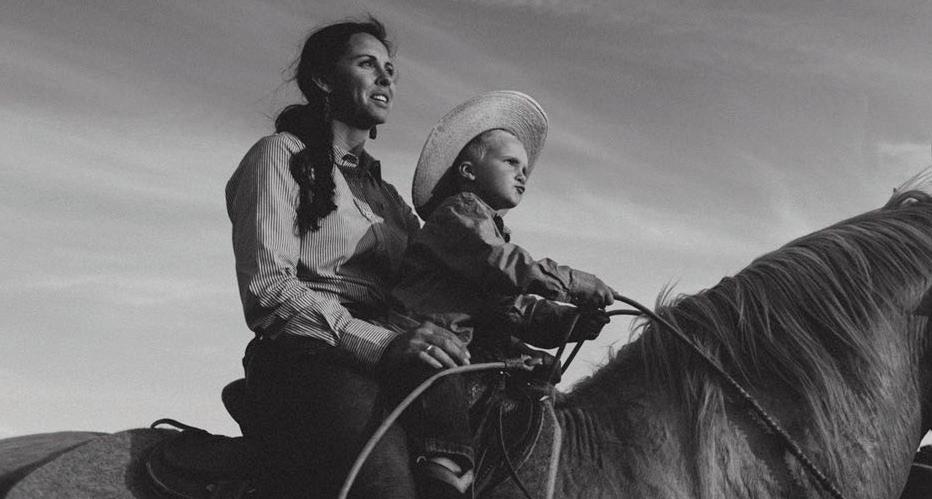
Five generations of ranching, one Ag Leadership journey, and a mother’s promise to the sixth.
On a fifth-generation cattle ranch in Sunol, leadership means tending the herd, mentoring the next generation of women in ag, and giving kids at the county fair their first real look at where food comes from.
In Sunol, California, the Koopmann family has ranched the same ground since 1918. That kind of continuity shapes a person. For Carissa Rivers (Class 44), a fifth-generation cow/calf producer, agriculture was never a career choice so much as the air she grew up breathing — daily chores, working rangelands, and a family cattle program that evolved from Hereford stock to Red Angus x Hereford genetics over the decades.
When it came time to build her own herd, Carissa followed her own instincts. In 2001, she started with registered Red Angus cattle, a choice that has since grown into Rivers Red Angus, the seedstock operation she now runs in Livermore with her husband, Vic, marketing genetics throughout California through consignment sales and private treaty.
“I realized I was no longer simply a fifth-generation rancher benefiting from the sacrifices and vision of those who came before me,” she says. “I had become responsible for helping shape the future of the next generation.”
That sense of inherited responsibility crystallized when she became a mother. Raised by parents Tim and Melinda Koopmann, who built a life around family, conservation, heritage, and agriculture, she learned early that protecting a ranching legacy was never just about land or livestock it was about carrying forward values bigger than any one generation.
Looking at her own three children Bray Lynn (10), Jake (8), and Russell (4), the family’s sixth generation — that lesson has taken on new weight. Ranching, she’s come to understand, is about preserving the next generation’s chance to stay connected to the land, understand where their food comes from, and inherit the same work ethic and stewardship passed down to her.
That instinct to look beyond her own ranch led Carissa to the California Agricultural Leadership Program. As a member of Class 44, she joined 23 fellow growers, ranchers, and ag professionals for a 17-month immersion in leadership theory, strategic agility, and change management.
For someone who had spent her life surrounded by the same ranching community, Class 44 meant sitting across the table from peers in entirely different corners of California agriculture wine grapes, tree fruit, policy, natural resources and learning to lead alongside people whose challenges looked nothing like her own.
“Some of the most meaningful growth in my life and career has come from building relationships with people whose backgrounds, experiences, and perspectives were different from my own,” she says. That lesson became a lens she carries into every room she walks into.
That belief in building for the future extends well beyond the ranch. As Executive Director of the Alameda County Fair Foundation, Carissa leads agricultural education efforts that connect young people to farming and ranching. The Foundation’s current project a four-phase, high-tech farm experience at the Alameda County Fairgrounds, now in Phase 2 will reach thousands of students annually through field trips and interactive exhibits on modern agriculture and food production.
The project carries forward the vision of the late Paul Banke, a longtime family friend, former Foundation Board President, and Ag Leadership Class 4 alumnus, whose belief in servant leadership continues to guide the Foundation’s work.
Carissa points to the Ag Leadership network itself as one of the program’s most lasting gifts a community of leaders united by a shared commitment to strengthening California agriculture. “Leadership is not limited to the ranch or the workplace,” she reflects. “It is about creating opportunities for others, building connections, and ensuring that agriculture remains relevant and accessible to future generations.”
Asked what she would tell young women considering a career in agriculture, Carissa’s answer comes back to relationships and to looking beyond the circles that feel familiar.
“Real growth often happens when you branch out and engage with people who challenge your thinking and broaden your perspective,” she says. She encourages young women to seek mentors across the industry, ask questions without hesitation, and remember that setbacks are part of the path forward.
“There is no such thing as failure if you are willing to learn from the experience,” she says. “Every challenge, setback, and unexpected outcome teaches you something that helps prepare you for the next opportunity. More people are cheering for you than you realize. Be willing to build relationships beyond your usual circles and trust that you belong at the table.”
It’s a fitting message for the International Year of the Woman Farmer one Class 44 rancher’s reminder that agriculture’s future is built the same way its past was: generation by generation, relationship by relationship, and one act of stewardship at a time.
How she turned fear into fearless advocacy and built community along the way.
FINDING HER WAY BACK TO THE FARM
There was a time when running a multi-generational nursery business would have seemed entirely off-brand for Denise Moore (Class 46). “I was definitely a high-heels, skirt, indoor, air-conditioning kind of girl growing up,” she laughs, recalling the version of herself who studied Interior Architecture and had no intention of ever working in agriculture.
Then the recession hit. She was laid off twice in six months. With few other options, she joined her family’s business, Fowler Nurseries, founded in 1912 by her great-grandfather, on what she assumed would be a temporary stop on the way
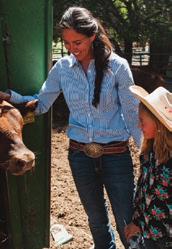
Every challenge, setback, and unexpected outcome teaches you something that helps prepare you for the next opportunity. More people are cheering for you than you realize.”
— Carissa Rivers (Class 44)
to somewhere else. Nearly 17 years later, she is still there, and she has never looked back.
“Once you get the dirt under your fingernails, it’s hard to get it out,” her mother likes to say. It proved true for both her and her brother, who each set out to build careers elsewhere and found their way back to the family farm regardless.
Falling into agriculture was only half the story. The California Agricultural Leadership Program, Class 46, supplied the other half: the confidence to act before knowing how things would turn out.
Before the program, she held back from opportunities unless she could already see the outcome, often stalled by fear of failure. “Ag Leadership taught me to share my story, use my voice, and take the leap even when the path forward is uncertain,” she says. “It gave me the confidence to step into challenging situations, advocate for what I believe in, and keep moving forward when the answer isn’t obvious.”
“Leadership isn’t about having all the answers, it’s about having the courage to show up, take action, and keep pushing forward.”
One of the proudest chapters in her journey began with an uncomfortable fact: nearly 2,000 new homes were being built directly across from her family’s farmland. Rather than treat the development as a threat, she pushed her family toward a different strategy. “We needed to embrace our new neighbors if we wanted them to embrace us,” she told them.
That mindset became a string of agritourism ventures. First, a seasonal pumpkin patch growing more than 70 varieties of pumpkins and gourds, many donated to local schools and community organizations. Next, a Certified Farmers’ Market on the farm’s own land — a concept that puzzled state regulators more accustomed to produce being sold from a strip mall parking lot than from the dirt it grew in. Most recently, the family opened a farm brewery, growing some of its own ingredients, brewing on-site, partnering with a local cidery co-owned by two fellow Ag Leadership classmates, and adding a food trailer to round things out.
Getting all three projects approved and operating has been the biggest fight of her career. Navigating local government processes tested her patience at every turn. But the lessons
Leadership isn’t about having all the answers, it’s about having the courage to show up, take action, and keep pushing forward.”
—Denise Moore (Class 46)
from Ag Leadership held: keep pushing, tell the story, and remember that servant leadership for the good of the community is worth the effort. The result is a working bridge between rooftops and rows of crops — a community that now has a real chance to understand, and even celebrate, the agriculture in its backyard.
Beyond the farm gate, her service runs deep. She serves on the Placer County Agricultural Commission and the Placer County Vintners Association, sits on the Sierra College Agriculture Advisory Committee, and volunteers with the Lincoln High School Farm Foundation. She is part of the Core Stakeholder Planning Group for the Placer County Resilience Initiative for Agriculture, hosts a radio program on gardening and agriculture, and speaks frequently at local events on farming and agritourism.
Her service on the California Department of Food and Agriculture’s Fruit Tree, Nut Tree, and Grapevine Improvement Advisory Board stands out as especially consequential. During her two terms as Chair, the Board approved a $4 million donation to Foundation Plant Services at UC Davis — funding greenhouse facilities needed to move grapevine foundation stock into a protected, clean environment after Red Blotch disease was discovered in foundation blocks. It is a behind-thescenes investment that helps safeguard the health of California’s grapevines for years to come.
She also shows up closer to home as a parent volunteer and board member at her children’s schools — a reminder that community leadership doesn’t always look like a title.
Asked what she would tell the next generation of women considering agriculture, her answer comes from experience, not theory. “There are so many different opportunities within agriculture that you can truly create your own path, and you’ll absolutely love it far more than you expect,” she says. “I certainly never imagined my career would take me in this direction.”
She is candid about the trade-offs. As a self-described introvert, there are days she wishes she could simply sit on a tractor and not talk to anyone. But most of her time is spent fighting for the ranch, the business, and the community work that has given her a sense of purpose she didn’t expect to find. “This is more than just a career.”
Today, more than 1,500 individuals call themselves Ag Leadership alumni. But every legacy has a beginning. The Fellows who joined the earliest classes stepped into something entirely new. There was no alumni network, no long list of success stories, and no way to know that the program they were helping build would still be developing leaders more than 55 years later. Their willingness to say “yes” helped lay the foundation for generations of leaders who would follow.
As part of the Ag Leadership Oral History Project, we are preserving the stories, memories, and lessons of these pioneering alumni. Their experiences offer a glimpse into the people who helped shape the program and California agriculture itself.
on page 6
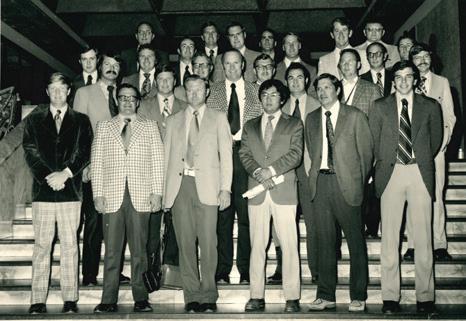
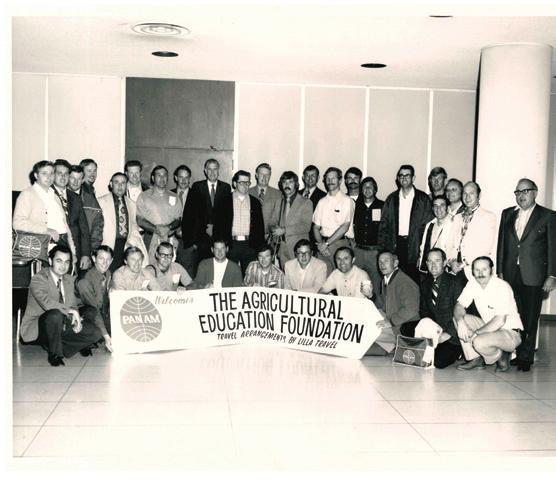
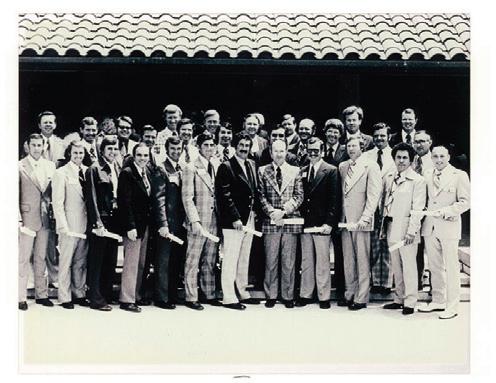
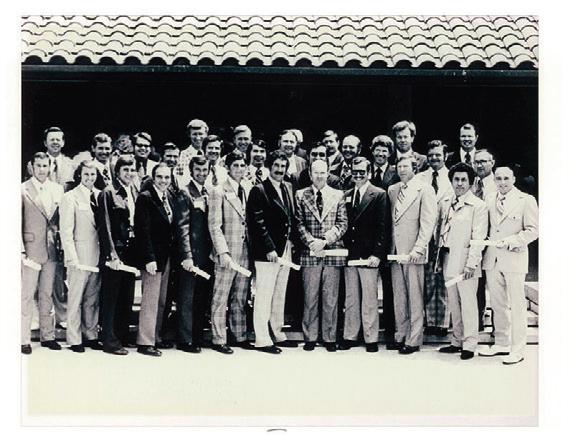
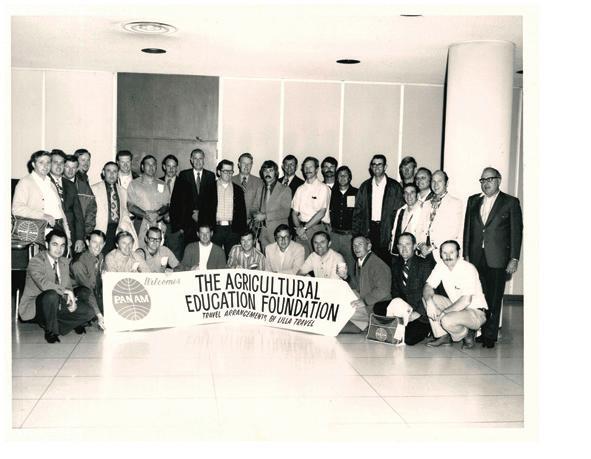
Shown above, top to bottom:
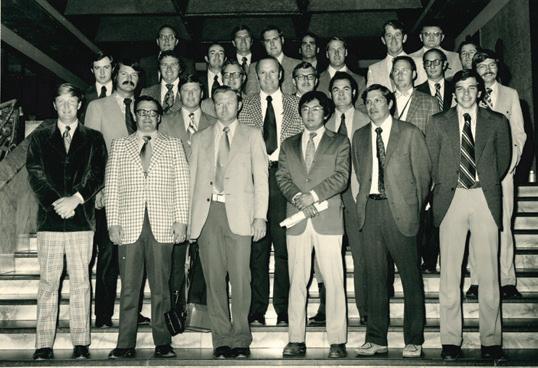
Class 1 Commencement
Class 2 Panama Trip
Class 3 Commencement

When Al Guilin joined the first California Agricultural Leadership Program class in 1970, neither he nor the other 29 participants knew they were helping launch a program that would influence California agriculture for generations.
At the time, Guilin was working for Limoneira Company. Looking back more than 55 years later, he describes Ag Leadership as one of the most influential experiences of his life.
What surprised him most was that the program wasn’t focused solely on agriculture.
“The first few years were intentionally directed away from the farm and toward the outside world,” Guilin recalled.
Through travel, discussions, and meetings with government officials, business leaders, and policymakers, participants were challenged to understand the broader forces shaping agriculture. They learned that success depended not only on production, but also on public policy, trade, markets, and relationships.
One experience left a lasting impression. During a trip to Washington, D.C., Guilin found himself seated beside former
California governor and U.S. Supreme Court Chief Justice Earl Warren. “It made me realize these people are just people like anybody else,” he said.
The lesson gave him confidence to engage with leaders at every level throughout his career. Through Ag Leadership, he met influential policymakers, including President Ronald Reagan, and gained a deeper understanding of how decisions made far from the farm gate could impact agriculture.
Just as important were the relationships formed within Class 1. Participants represented different commodities and regions of California, yet many faced similar challenges.
“It opened my eyes to how interconnected agriculture really was,” Guilin said. Those lessons shaped his career long after the program ended. Following a 30-year career with Limoneira, where he served as executive vice president, Guilin moved into consulting, teaching, public speaking, and eventually ministry. Ordained in 2000, he applied the communication and leadership skills developed through Ag Leadership to serving communities in a new way.
More than five decades later, Guilin continues to reflect on the opportunities that began with Class 1. “It opened doors, opened new vistas, and opened new perspectives,” he said.
CLASS 2
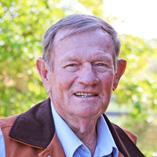
When Jerry Diefenderfer joined Ag Leadership Class 2 in 1971, California agriculture was navigating significant change. Labor challenges, evolving public policy, and growing government influence were reshaping the industry.
The program challenged participants to think beyond their operations and better understand the forces shaping agriculture around the world.
“We had an opportunity to see things that most people in agriculture never saw,” Diefenderfer recalled.
Through extensive travel across the United States and internationally, Class 2 members gained a broader understanding of government, economics, and global affairs. Equally important, they learned to share responsibility, solve problems together, and step into leadership roles when needed.
“We learned that leadership sometimes means stepping up when no one else will,” he said. That lesson would shape the next chapter of Diefenderfer’s life.
Following Ag Leadership, he developed a growing interest in public affairs
PRESERVING THE STORIES THAT SHAPED US

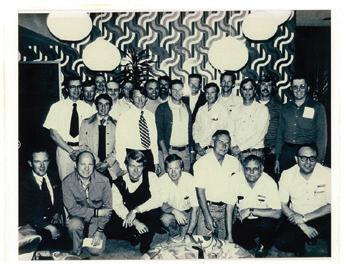
The history of Ag Leadership is more than dates, classes, and milestones. It lives in the experiences of the people who participated, the communities they served, and the impact they created throughout California agriculture.
and government. Conversations with classmates exposed him to the legislative process and sparked an interest he had never previously considered.
“I think the biggest change that occurred as a result of the leadership program was my entrée into partisan politics,” he said. What began with helping manage a California State Assembly campaign led to eight years working within the California Legislature as a district director. He later served eight years as a San Luis Obispo County supervisor, bringing an agricultural perspective to local government and public policy.
His impact on Ag Leadership itself was equally significant. Upon graduation, Diefenderfer became the first president of the Ag Leadership Alumni Association, helping establish the organization’s structure and organize its first alumni conference. He also produced the association’s first newsletter himself— writing it, taking it to town to be printed, and buying 50 stamps to mail it.
Reflecting on both his career and the opportunities agriculture provided, Diefenderfer remains grateful for the path he chose. “Those of us in agriculture consider ourselves fortunate,” he said. “We’re not here because we have to be, we’re here because we want to be.”
For Diefenderfer, Ag Leadership transformed that opportunity into a lifetime of service.
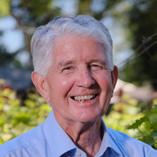
When Mike Campbell joined Ag Leadership Class 3 in 1972, he was a young farmer recently returned from military service. Being selected for the program felt like an opportunity unlike any he had experienced before. “It put me in a different orbit,” Campbell said.
What began as a group of strangers gathering for their first seminar in Monterey quickly evolved into something much more.
“We started as strangers,” he recalled. “But over time, we became a family.”
For Campbell, one of the program’s most important lessons was understanding agriculture’s responsibility to engage with the broader public.
“It wasn’t about agriculture,” he said. “It was about developing your skills to be able to communicate with urban people and urban legislators because they were making more decisions for California agriculture.”
As California became increasingly urban, the program recognized that agriculture needed leaders who could build bridges between rural communities and policymakers.
Campbell embraced that challenge. One of his most memorable experiences came in 1975 when Class 3 became one of the first State Department-authorized groups allowed to visit China after diplomatic relations were normalized. The trip exposed participants to a rapidly changing world and reinforced the importance of understanding perspectives beyond their own. The program also introduced Campbell to art, museums, and culture, sparking a lifelong appreciation for the arts.
The lessons he gained through Ag Leadership extended far beyond farming. Throughout his career, he served as an educator in agricultural economics, contributed to the development of UC Merced, and helped lead efforts to restore the oldest schoolhouse in California’s Delta region. More than 55 years later, he still credits Ag Leadership as one of the most influential experiences of his life.
“My involvement with Ag Leadership changed my life,” Campbell said. “I wouldn’t have the life that I have now. I wouldn’t have had the opportunities that I had after the Ag Leadership Program.”
Looking back, he describes the program as an extraordinary gift—one that prepared generations of agricultural leaders to advocate for their industry, serve their communities, and make a lasting difference.
Through recorded interviews, photographs, personal reflections, and historical materials, the Ag Leadership Oral History Project is building a living archive of those stories— one conversation at a time.
We invite alumni from the early classes, as well as family members and friends who may have photographs, documents, or memories to share, to become part of this effort.
Visit www.agleaders.org to watch oral history interviews, explore the growing collection of stories, and learn how you can contribute.
The leaders who came before us helped shape California agriculture. By preserving their stories, we ensure their lessons, leadership, and legacy continue to inspire those who follow.
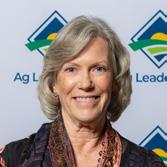
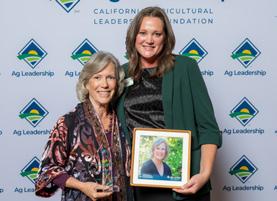
Dr. Peggy Sears Perry (Class 9)
For more than four decades, Dr. Peggy Sears Perry has shaped leaders. As a Professor Emeritus at Cal Poly Pomona and longtime member of the California Agricultural Leadership Foundation’s Education Team, Dr. Perry has influenced more than one thousand Ag Leadership fellows, helping them discover that leadership begins long before someone holds a title. It begins with self-awareness, curiosity, and willingness to grow.
Whether facilitating difficult conversations, coaching fellows through personal challenges, or encouraging them to see agriculture through new perspectives, Dr. Perry has consistently challenged leaders to think bigger than themselves.
Those who know her describe her as the “heart and soul of the Ag Leadership Program” She has helped generations of agricultural leaders recognize their own strengths while embracing vulnerability as a powerful leadership tool. Her influence reaches well beyond California agriculture. Through her work in higher education, leadership development, and community engagement, Dr. Perry has dedicated her career to preparing people to lead with integrity, empathy, and purpose.
For many Ag Leadership alumni, Dr. Perry wasn’t simply an instructor; she became a mentor whose lessons continue to guide difficult decisions years after graduation.
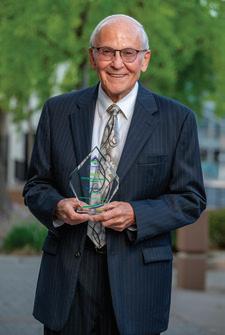
Receiving the Lifetime Leadership Award recognizes more than decades of service. It celebrates a legacy built through consistent investment in others.
Long after seminars end and fellowships conclude, Dr. Perry’s greatest accomplishment continues to live on through the leaders she helped grow, leaders who now serve agriculture, their communities, and future generations.
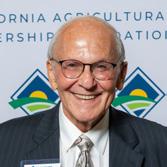
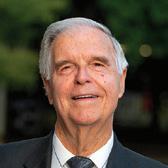
Bart Fisher (Class 5)
As a third-generation farmer from Blythe, Bart Fisher has spent his career helping shape the future of agriculture while tackling one of California’s most complex issues: water.
Known throughout the agricultural community as a thoughtful collaborator and respected negotiator, Bart has represented farmers in discussions that extend far beyond the farm. His leadership on Colorado River policy and interstate water agreements has helped protect agriculture while bringing together diverse interests to find lasting solutions.
Yet those who know Bart best rarely begin by talking about water policy.
They talk about his humility, his willingness to listen and his ability to bring people together around shared purpose. While helping guide Fisher Farms into its second century, Bart has remained deeply committed to developing the next generation of agricultural leaders. Through board service, mentorship, and community involvement, he has demonstrated that leadership is measured not only by accomplishments, but by the opportunities created for others.
Ag Leadership helped reinforce a philosophy he has lived throughout his career: strong agriculture depends on strong leaders willing to serve beyond their own operations.
Receiving the Lifetime Leadership Award honors a lifetime devoted to stewardship of land, water, relationships, and community.
His influence stretches well beyond the fields of the Palo Verde Valley, reaching every leader who has learned that meaningful change begins with collaboration.
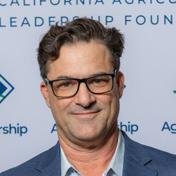
Mike Boeger (Class 7)
Whether serving as a rice farmer, education advocate, or public servant, Mike has spent decades investing in opportunities that help others succeed. His leadership extends across California agriculture, where he has strengthened the rice industry through service on the California Rice Research Board while also championing education as president of the Butte Community College Board of Trustees.
These roles may seem different, but they are connected by a common purpose: preparing people for the future.
Mike understands that agriculture depends on innovation, research, and a skilled workforce. By supporting both agricultural advancement and educational access, he has helped create lasting benefits for farmers, students, and rural communities alike. Colleagues describe him as a humble, caring and thoughtful leader.
His leadership reflects the very qualities Ag Leadership strives to cultivate thoughtful decision-making, servant leadership, and a willingness to invest in something larger than oneself.
The Profiles in Leadership Award recognizes not only Mike’s accomplishments, but also his belief that leadership creates opportunities for future generations. His impact can be measured not simply in programs or policies, but in the people whose lives have been strengthened because he chose to serve.
Dino Giacomazzi (Class 36)
As a fourth-generation farmer from Hanford, Dino has consistently challenged agriculture to think differently, embracing new technologies, advocating for responsible water management, and finding creative ways to connect consumers with California agriculture.
Throughout his career, he has launched organizations, led collaborative initiatives, and championed solutions that strengthen both agriculture and the communities it serves.
From pioneering digital outreach to advancing agricultural education and environmental stewardship, Dino has demonstrated that innovation works best when it serves a greater purpose. His willingness to embrace change while remaining deeply rooted in agriculture has inspired leaders across California.
Ag Leadership helped expand that vision by reinforcing the importance of curiosity, collaboration, and lifelong learning qualities that continue to define his leadership today. Receiving the Profiles in Leadership Award celebrates a career built on looking beyond today’s challenges toward tomorrow’s possibilities.
His work reminds us that leadership isn’t simply about adapting to change. It’s about creating change.
Thank You Dr. Peggy Perry
After more than 40 years of service to Ag Leadership, Dr. Peggy Perry retired from the Core Faculty in 2026. Throughout her remarkable career, she helped shape the leadership journeys of more than 1,000 Fellows, challenging them to think differently, lead authentically, and make a lasting difference in their businesses, communities, and California agriculture. Her legacy lives on through every leader she inspired, and we are deeply grateful for her extraordinary impact.
Jacylyn Stokes-Iniguez (Class 52) and Mark Chandler (Class 18)
In 1991, a group of California Agricultural Leadership Program alumni looked at the future of the Lodi wine industry and saw both challenge and opportunity. Grape prices were falling. Traditional varieties were losing value. Many growers wondered what the future might hold for their families and communities.
Rather than accept decline, they chose to act.
That same year, a young woman named Jacylyn Stokes was born. Three decades later, after completing the California Agricultural Leadership Program as a member of Class 52, she would become chairwoman of the very organization those alumni helped create.
Their story, and the story of the Lodi Winegrape Commission, is a powerful example of what happens when leadership takes root and grows across generations.
By the late 1980s, the Lodi wine region faced significant uncertainty. Nearly one-quarter of the region’s vineyard acreage was planted to Tokay grapes, a variety that had once defined the area but was rapidly losing market demand. Growers faced declining prices, shrinking opportunities, and difficult questions about the future.
The challenge wasn’t simply economic. The region lacked a unified voice and a clear path forward.
For a small group of local growers, many of whom had participated in the California Agricultural Leadership Program, the answer wasn’t to wait for someone else to solve the problem.
It was to lead.
Among them were Ag Leadership alumni Brad Lange (17), Randy Lange (14), John Ledbetter (12), Pat McCarty (12), Larry Mettler (9), and Richard Watts (7). Through their Ag Leadership experience, they had been exposed to public policy, regulatory systems, and the power of collective action. They understood that lasting change would require more than individual success would require an entire industry working together.
“I don’t think they would have been exposed to all the regulatory and legislative avenues open to them without Ag Leadership,” Mark Chandler said. “They understood how the system worked and how to navigate it.”
Determined to create a stronger future for Lodi growers, the group pursued an idea that did not yet exist. At the time, California law only allowed statewide wine commissions. Ag Leadership graduates worked with legislators to change the law, creating a pathway for local crushing districts to establish their own wine grape commissions.
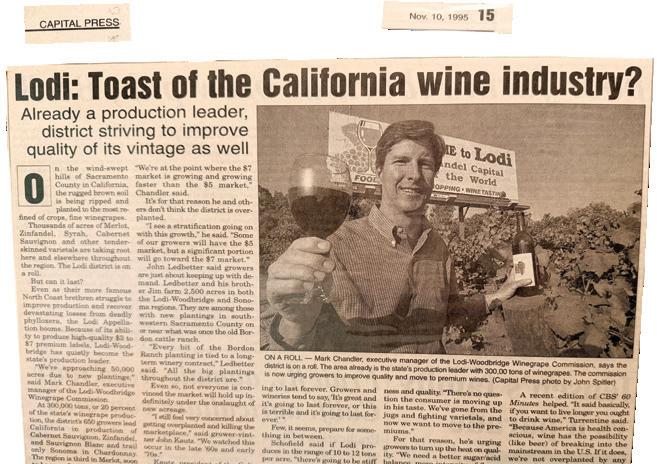
With the legislative framework in place, they organized more than 600 growers throughout the Lodi American Viticultural Area, conducted surveys, built consensus, and brought forward a referendum. In 1991, 91 percent of growers voted in favor of establishing the Lodi-Woodbridge Wine Commission, now known as the Lodi Winegrape Commission.
For Chandler, a graduate of Ag Leadership Class 18, who was hired as the commission’s first executive director later that year, the connection between Ag Leadership and the commission’s creation is undeniable.
“Growing leaders who make a difference is exemplified by what happened in Lodi,” Chandler said. “A small group of Ag Leadership graduates had a big idea. They were willing to put themselves forward, build support, and create something that fundamentally changed this region.”
More than three decades later, the impact of that decision can still be seen across the Lodi wine industry.
When Chandler arrived in Lodi, there were only eight wineries in the region. His focus was simple: create value for growers.
One early idea came from grower John Kautz, who proposed a district-wide integrated pest management program. That concept evolved into the Lodi Rules for Sustainable Winegrowing program, one of the first third-party sustainability certifications in the wine industry and a model that would later influence programs across California and beyond.
At the same time, the wine market was changing. Consumer demand increased dramatically during the 1990s, creating new opportunities for growers willing to adapt. Vineyards were replanted with varieties such as Cabernet Sauvignon, Chardonnay, and Merlot. Wineries expanded. New brands emerged.
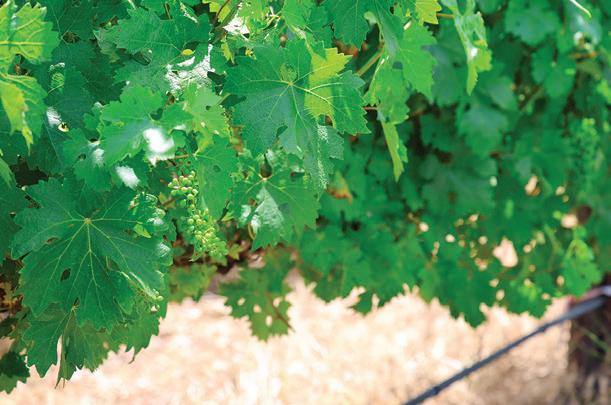
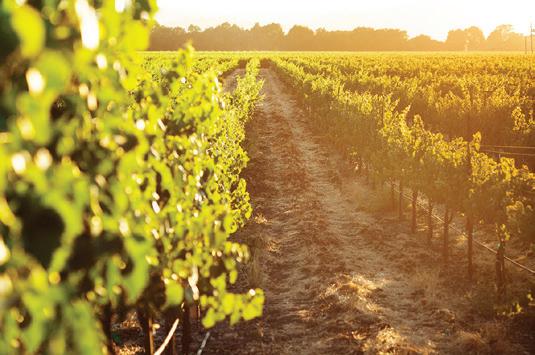
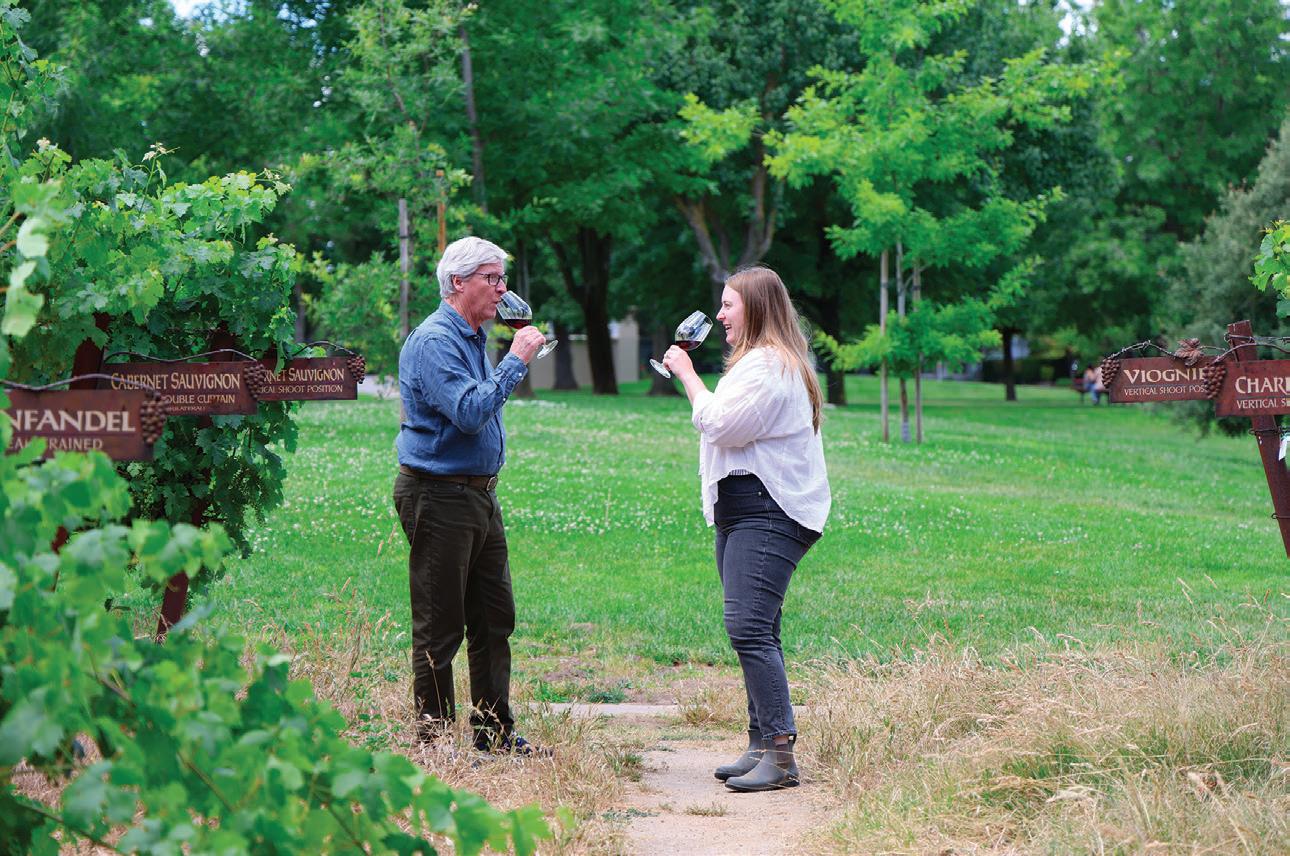
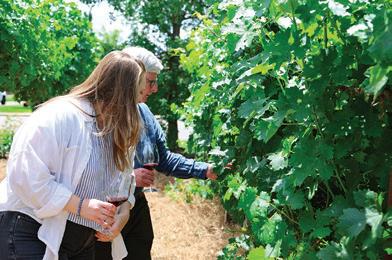
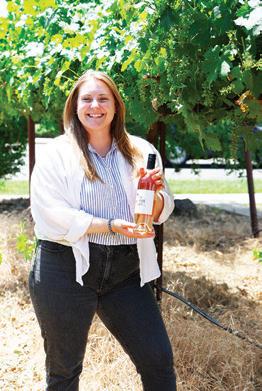
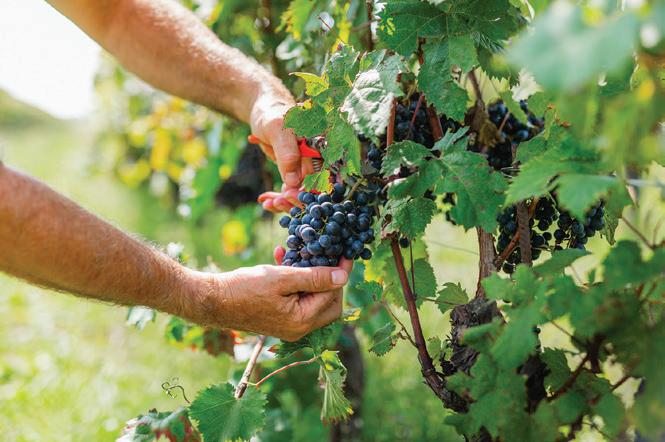
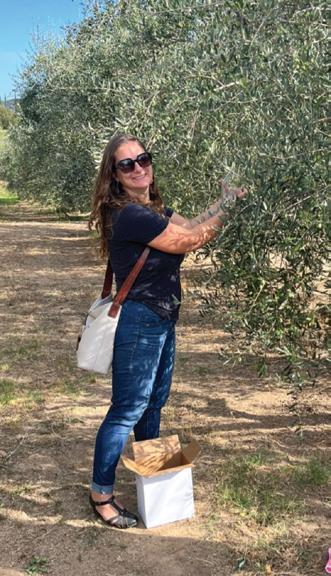
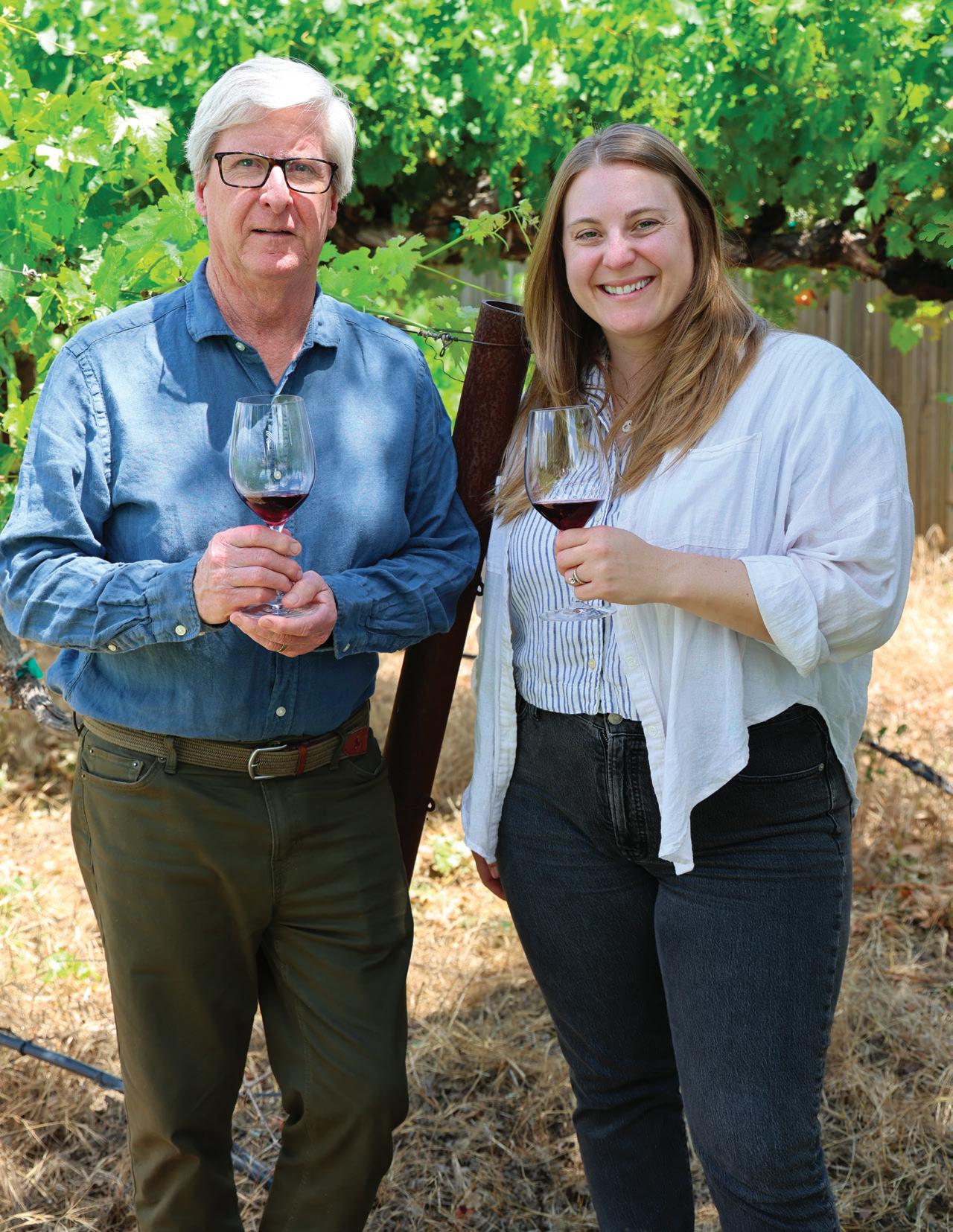
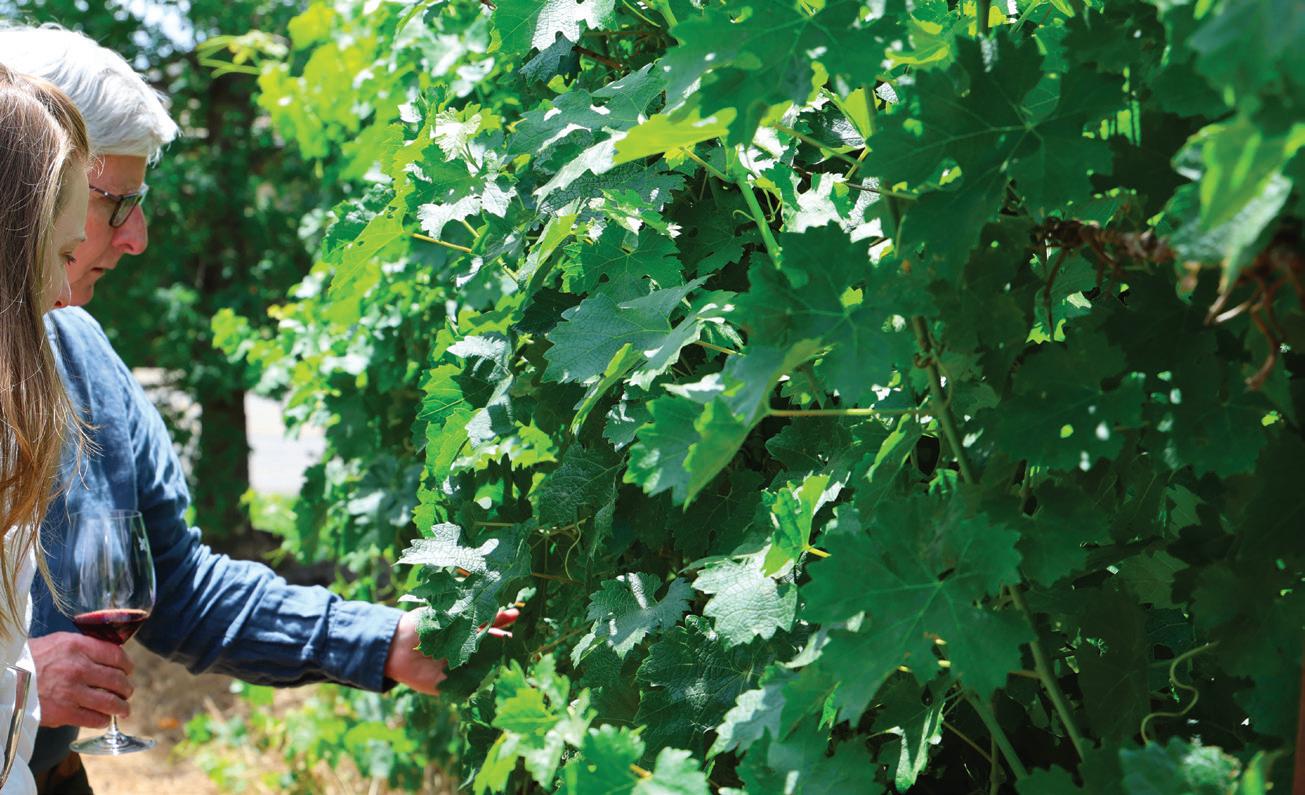
Mark and Jacylyn look at the vines in the demonstration vineyard used as an educational test plot for grape growing in the Lodi American Viticultural Area.
But the most important thing being built was not a program or a marketing campaign. It was a community.
Growers began working together toward a common vision for the future of the region. They invested in research, sustainability, education, and promotion. They believed that Lodi could become known for more than producing grapes it could become a destination and a respected wine region in its own right.
Today, the results are visible throughout the region. The Lodi wine industry has grown from eight wineries to more than 100. The Lodi Rules certification is recognized internationally. Wine writers, distributors, and tourists travel to the region each year to experience what makes Lodi unique.
Between Chandler’s generation and Stokes-Iniguez’s, there have been many Ag Leadership graduates who helped further solidify Ag Leadership’s enduring contribution to the region. Alumni such as Craig Rous, Joe Peterson, Steven Kautz, members of the Collins family, and others have continued to provide leadership in Lodi and the surrounding community. While not all have been closely involved with the commission, their service in business, agriculture and civic life reflects the same commitment to strengthening the region.
Now, more than 30 years after Chandler helped launch the commission, Ag Leadership graduate
Jacylyn Stokes-Iniguez serves as chairwoman of the organization. For Stokes-Iniguez, leadership is both a responsibility and a continuation of work that began long before her generation arrived.
“There is a generation of Mark’s, my dad’s, and others who are still involved in the wine industry because of what Ag Leadership did for them,” she said. “They’re continuing to give back and do more for their industries because of that experience.”
The wine industry faces different challenges today than it did in 1991. Then, the question was how to create opportunities

and growth. Today, growers are navigating market oversupply, shifting consumer preferences, and increasing economic pressures.
Yet the leadership skills required remain remarkably similar. “Leadership is really hard,” Stokes-Iniguez said. “You have to remember that it’s a service position. It’s not about you. It’s about everyone else.”
That philosophy serving something larger than yourself is one both leaders credit to their Ag Leadership experience.
The impact of the Lodi Winegrape Commission extends well beyond wine production.
The organization helped establish a stronger regional identity, support local businesses, attract tourism, and create opportunities for future generations of growers. It also helped demonstrate what can happen when agricultural leaders work collectively toward a shared goal.
For Chandler, there is still work to be done. “We haven’t fully accomplished our goal of being included among the world’s great wine regions,” he said. “We’re producing exceptional
wines and doing incredible things. We simply need the continued effort and resources to earn the recognition that reflects what growers here have built over generations.”
For Stokes-Iniguez, the responsibility is clear: protect and strengthen what previous generations created.
“There’s a lot of history, a lot of time, and a lot of investment that the Lodi community has put into the commission,” she said. “Something like this wasn’t built overnight, and we want it to continue flourishing. I believe we are a better community because of the Lodi Winegrape Commission.”
Both Chandler and Stokes-Iniguez remain strong advocates for the California Agricultural Leadership Program. “We didn’t do Ag Leadership to become the loudest person in the room,” Stokes-Iniguez said. “We did it to become the leader we’re meant to be.”
Chandler offers equally direct advice to prospective participants. “Lean in. Set your fears aside and do it,” he said. “Your operation isn’t going to fail because you’re gone to a seminar. The growth you’ll experience will benefit your business, your family, and your community.”
He also believes the program remains essential to the future of California agriculture. “If we didn’t have these hundreds of advocates reminding legislators, communities, and industry leaders about the importance of agriculture, where would we be today?” He said.
In 1991, a group of Ag Leadership alumni looked at a struggling wine region and imagined something more. They created an organization that would transform an industry, strengthen a community, and build a reputation recognized around the world.
Thirty-five years later, another Ag Leadership graduate now helps guide that same organization into the future.
The story of the Lodi Winegrape Commission is ultimately not about grapes, wineries, or even wine. It is about leadership, how one generation invests in the next, and how the leaders we grow today continue shaping California agriculture for the next generation.
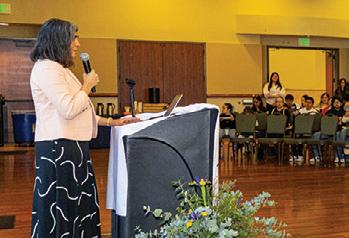
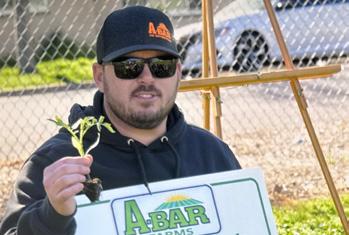
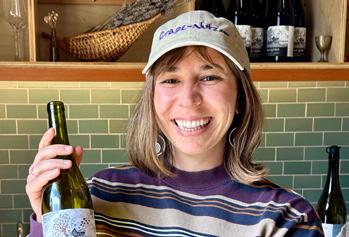
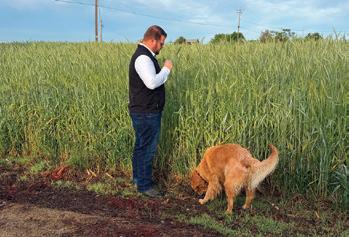
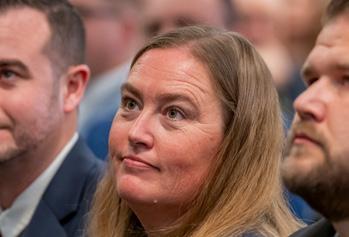
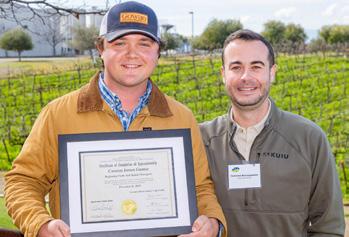
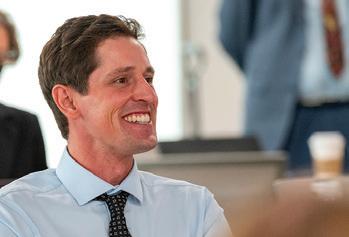
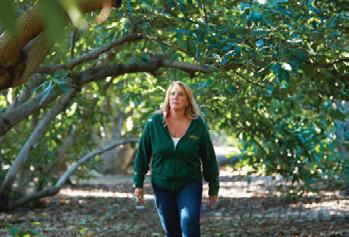
Since commencing in February 2026, Class 54 has been putting Ag Leadership lessons into action, creating meaningful impact across the industry and in their communities.
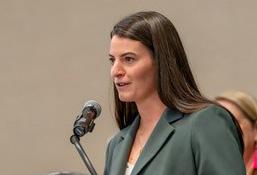
1 Marisa Alcorta
As Managing Director of Programs at the Center for Land-Based Learning and a Class 54 alumna, I advance agricultural education, workforce development, and leadership across California. I oversee programs serving youth, beginning farmers, farm employees, and employers, including the state’s first registered agricultural apprenticeship for beginning farm managers and AgHiRE, which supports Spanish-speaking employees. Guided by Ag Leadership, I now focus on coaching teams, expanding opportunity, and strengthening the next generation of agricultural leaders.
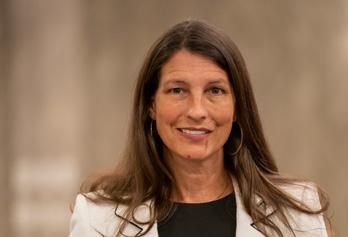
2 Jake Barcellos
As a partner at A-Bar Farms, Inc., I help lead a fourth-generation farming operation by strengthening systems, supporting team development, and balancing field operations with long-term business decisions. My greatest impact has been improving accountability, communication, safety, and workplace culture. Through Ag Leadership, I have learned to approach difficult conversations with clarity and purpose while giving back by mentoring others and supporting the future of California agriculture.
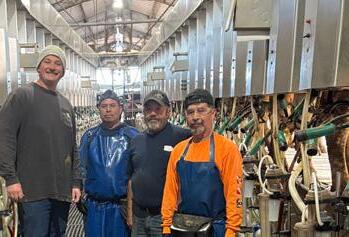
3 Megan Bell
I am transitioning from winery ownership into service with California Association of Winegrape Growers, using storytelling and policy communication to elevate growers’ voices. CALP helped inspire my pivot toward agricultural policy after closing
my winery and seeing broader opportunities to serve. I am eager to support the winegrape community in this new role while continuing to give back through volunteer work with Nourish and efforts to amplify underserved voices in the wine industry.
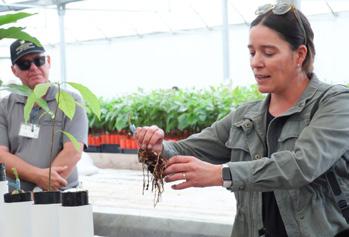
4 Hunter Berry
As Vice President of Special Assets at Yosemite Farm Credit, I help farmers address operational and financial challenges so their businesses can remain viable. Ag Leadership inspired me to move from passive involvement to purposeful service, including chairing Turlock Christian’s Agriculture Advisory Board and supporting the National FFA Farm and Agribusiness Management Competition. Through this work, I strengthen California agriculture today while helping prepare the next generation of agricultural leaders for the future.
5 Kelly Bishop
I serve as Water Conservation Program Representative II with the Imperial Irrigation District, helping growers implement practical strategies that improve irrigation efficiency and support responsible water management. Through proactive outreach and stronger communication, I have helped increase program participation and reinvest conservation dollars into agricultural communities. My Ag Leadership experience strengthened my curiosity, empathy, and solution-focused leadership. I also give back through the Imperial County Historical Society and by developing a support network for young women in agriculture.
6 Cameron Boomgaarden
As Director of Farming Operations at Vann Brothers, I lead irrigation, pest management, harvest, and sustainability across more than 13,000 acres of almonds, walnuts, and pistachios in Northern California. My work advances data-driven, science-based pest management, operational efficiency, and long-term stewardship. Through leadership rooted in accountability, collaboration, and proactive problem-solving, I support stronger teams, industry credibility, mentoring, and cross-functional growth while aligning daily execution with sustainable business performance.
7 Hillary DeCarl
I serve as Grower Account Manager at Del Rey Avocado, sourcing California avocados and building trusted relationships with growers. My work connects farmers’ efforts to consumers while strengthening communication, transparency, and support in a changing market. Through the California Agricultural Leadership Program, I’ve grown as a leader by fostering inclusive dialogue, especially as Hass Avocado Board Governance Committee Chair. I also help connect farmers with policymakers to elevate agriculture’s voice.
8 Allison Dericco
As Director of Winegrowing at Rodney Strong Wine Estates, I lead vineyard operations in Sonoma County with a focus on sustainable practices that strengthen California agriculture, including water management, soil health, and integrated pest management. The California Agricultural Leadership Program shaped my approach to lead with curiosity, listening, and intention, improving team effectiveness and decision-making. I give back by mentoring others and creating pathways for the next generation to enter and thrive in agriculture.
9 Will Dyt
I help manage Dyt Dairy, a family-owned farm with 2,000 milking cows and 15 employees, while serving in leadership roles with the Producer Review Board, California Dairies, Inc., and the National
Milk Producers Federation. My work focuses on collaboration, advocacy, policy engagement, and sustainability for California agriculture. I also support community organizations serving the unhoused, children with disabilities, and farmer mental health, leading with purpose, service, and long-term industry impact.
10 Consuelo Fernandez
I serve as Chief Operations Officer at Brokaw Nursery LLC, the largest avocado nursery in the U.S., overseeing nursery operations, R&D, intellectual property, international relations, and farming support. My work focuses on identifying and testing new avocado rootstocks across California to provide growers with stronger genetics. Through industry boards, events, and collaboration between researchers and farmers, I help advance communication, innovation, and shared success across the avocado industry.
11 Jarred Greene
I am currently exploring my next professional opportunity after a leadership transition in agriculture. The California Agricultural Leadership Program strengthened my resilience, self-awareness, and network, helping me navigate change with purpose. I continue advocating for the program, encouraging future leaders, and seeking ways to serve California agriculture. Through youth sports and community involvement, I hope to connect families with agriculture, support young people, and contribute meaningfully wherever my next role takes me.
12 Rachael Laenen
I serve as Director of Operations and Farming at Kimball Ranches - El Hogar, supporting ranch operations, HR, food safety, grants, fertility programs and financials. As the first woman elected Chair of the California Avocado Commission, I advocate for growers and help unify the industry. Drawing on lessons from the California Agricultural Leadership Program, I strive to lead with gratitude, give back through industry service, and support long-term stability for California agriculture and its workforce.
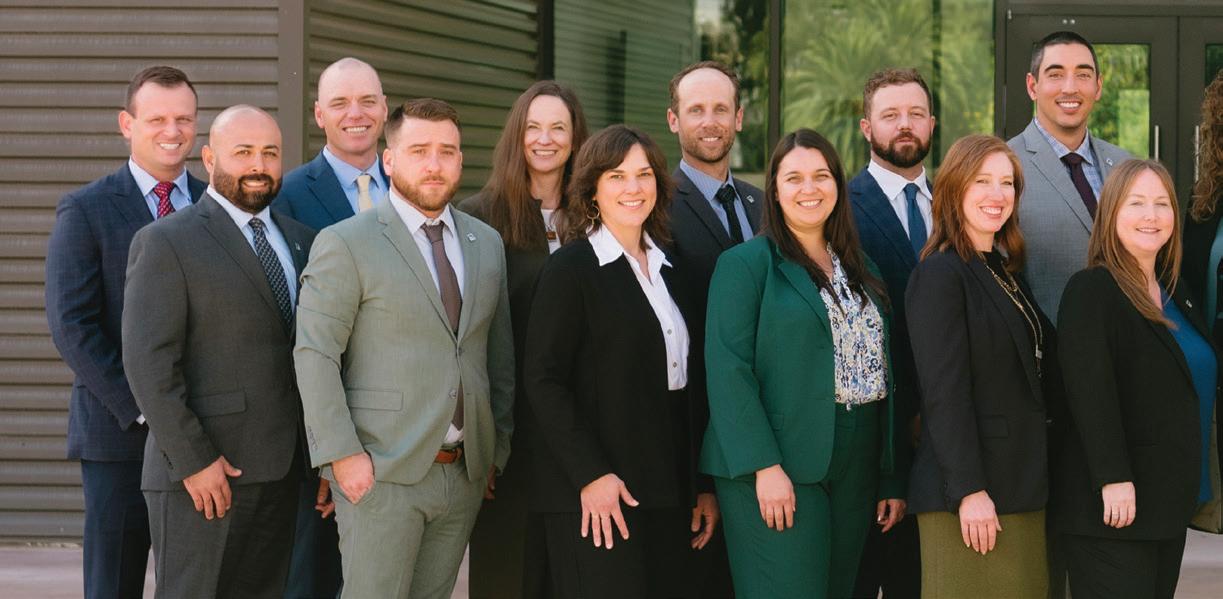
California’s Farm Credit organizations have supported the California Agricultural Leadership Program for more than 20 years because it really is one of the best leadership development programs in the country.
We know that first-hand because many of our own employees have been accepted into the program over the years, and the reviews have been glowing.
Take Kevin Voorhees (Class 55), a vice president for AgWest Farm Credit in Paso Robles, a part of the credit approval team that approves larger loans, Voorhees is a mid-career ag lending professional who felt ready for a next-level leadership development program at a time when California agriculture is facing significant economic, regulatory, and generational challenges.
Out of nearly 40 programs he could choose from, it quickly became clear that the Ag Leadership Program would be his best choice.
Voorhees said he was talking one day to a colleague who had participated in the program and was encouraged to look into it.
“I’d always heard of it, but I wasn’t aware of the focus. So I researched it and talked to a ton of alums and everyone spoke highly of it — each person said it was a life-changing program. That was enough to make it my number one choice,” he said.
After an intense application process, he was accepted into Class 55 of the program and is nearing the end of the 17-month program.
The goal is to build a powerful network to keep agriculture a viable and important part of the state’s economy.
Voorhees said the program has more than lived up to his expectations. He’d gone into the program expecting it would teach participants leadership skills that could be applied whether they’re in a small one-on-one setting or interacting with large groups of people with different skills and different backgrounds. He also thought it would help participants understand themselves as individuals — of what drives them as a leader and in turn how they can help drive other people.
What I didn’t anticipate was how much the program teaches you to understand and influence systems, not just individuals. As leaders, we’re working at a broader level — whether that’s shaping conversations in California agriculture or engaging in policy. That’s probably why Farm Credit has put in so much into the program over the years — It really does teach you to have the kind of leadership confidence to enter into a room — alongside legislators, lobbyists and industry leaders — and effectively a advocate for California farmers,” Voorhees said.
“We don’t advocate for ourselves as well as we need to. And I think that’s what this program is really going to help us get better at.”
AgWest Farm Credit California President Kevin Ralph agreed that the program has made a major difference since it was launched in 1970.
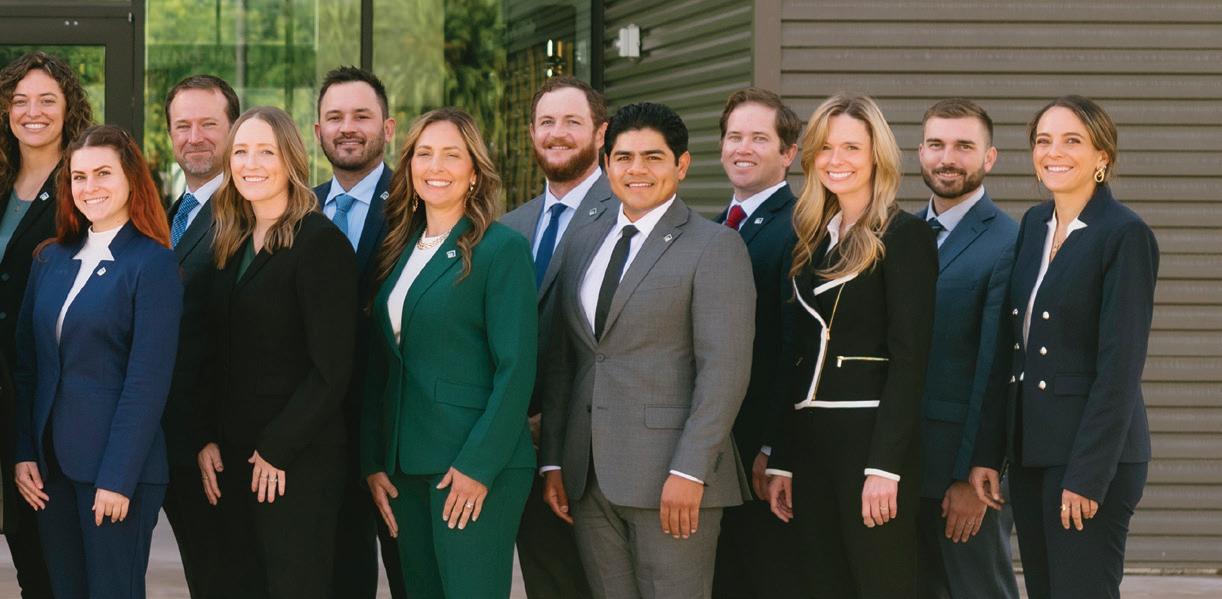
“Farm Credit is proud to support the program because participants become lifelong leaders who individually and collectively make a significant difference in the agricultural industry, their businesses, communities and families,” Ralph said.
“We’re also pleased that while CALF focuses on up-and-coming leaders in the production side of agriculture, they also select participants who are ag-adjacent, like our own team member Kevin Voorhees this year. Lenders, processors, advisors and suppliers play an important role in ag’s future as well.”
Jacob DeBoer, a senior regional marketing manager with American AgCredit, said the program is unique because participants engage in situations and discussions focused on complex social and cultural issues.
“For example, key questions for the current class in their first seminar were ‘Who are we?’ and ‘What does it mean to belong?’ Outside-the-box thinking like this helps shape effective leadership and as importantly helps participants grow as individuals,” DeBoer said.
Farm Credit associations supporting CALF are AgWest Farm Credit, American AgCredit, CoBank, Golden State Farm Credit and Yosemite Farm Credit.
Voorhees said another important part of the curriculum is developing public speaking skills.
“That’s such an important thing to have, especially these days. When you are having to run a program or a meeting and command the audience for an hour and it’s 200 people

that want to be looking at their phones, it’s all about having the presence, having the charisma, having the confidence that’s vital. No one’s going to listen to our story and care about ag or want to change it if we’re not good at telling that story.”
The last step for each participant in the program, is to prepare Impact Reports, their final presentations about their takeaways and how they have grown as leaders — not just what they’ve learned, but what they are going to do back in their jobs and communities.
For Kevin Voorhees, the program helped redefine what leadership looks like.
“Being able to influence large groups of people that may not always agree with you, being able to move a large group of people toward a goal — that’s what leadership is,” he said. “Being in the program has driven my confidence up and forced me out of my comfort zone. I’m confident I can lead and be authentic and have an impact on people’s lives.”

MEET THE AG LEADERSHIP TEAM
Get to know the people behind Ag Leadership and what inspires us to serve California agriculture every day.
President and CEO
I am inspired every day by the vision of those who dared to create Ag Leadership and by the generations of leaders who have sustained and strengthened it over the last 55 years. What inspires me most today is seeing the impact that leadership can have, not only on individual Fellows, but on our communities and California agriculture. I am grateful to work alongside a dedicated board and staff who are helping ensure this foundation continues to grow leaders and make a difference for generations to come.
Director of Education
What inspires me most about serving in my role Ag Leadership is witnessing the transformation of individuals into purpose-driven leaders. The ripple effects are profound: when a leader grows, their family, operation, community, and industry grow with them. That multiplying impact is what drives everything we do.
Anna Nicholson Alumni Engagement and Event Manager
I’m most inspired by the people who make up Ag Leadership. Their accomplishments, both within the program and beyond, are truly impressive. I am continually in awe of the remarkable network of agricultural leaders this program has cultivated, and I am especially inspired by their shared commitment to paying it forward by supporting future generations of agricultural leaders in California.
Jessica Lara
Marketing and Communications Manager
What inspires me most is having the opportunity to tell the stories of the people who make California agriculture stronger. I get to highlight the leadership of alumni and partners while helping raise awareness of a program that is developing leaders who will shape the future of California agriculture.
I’m inspired by the people. Fellows who show up genuinely motivated and earnest about growing and deeply committed to making a difference in their communities and the industry never get old. Then, alumni who continue to show up, lead, and give back years later. That kind of sustained dedication is rare, and getting to witness it up close is a real privilege.
Maria Angulo Financial Controller
What inspires me most about being part of Ag Leadership is the opportunity it has provided me for personal and professional growth. Throughout my time in CALF, I have gained valuable knowledge, developed new skills, and strengthened my leadership abilities. It also inspires me because it brings together passionate individuals who are committed to advancing agriculture, developing leaders, and creating a meaningful impact in their communities.
Mia Mirassou Administrative Assistant
What inspires me about being part of Ag Leadership is the opportunity to be part of an organization that challenges people to grow, better understand themselves and others, transform the way they think and lead, and recognize the meaningful role they play in shaping the Ag industry, their communities, and the world around them.




Michael Young (Class 35)
Chair
Wegis & Young
Dr. Joel Kimmelshue (Class 37)
Vice Chair
Land IQ
Correen Davis (Class 45)
Secretary/Treasurer
Gorrill Ranch
Yissel Barajas (Class 40)
Reiter Affiliated Companies
Nikki Cossio
Measure to Improve LLC
Michael Frantz (Class 36)
Frantz Nursery
Rob Goff (Class 45)
Wonderful Orchards
Fidela Irigoyen (Class 21)
Erin O’Donnell (Class 50)
Sustainable Ag Advisors
Sal Parra Jr. (Class 46)
Bowles Farming
Paul Parreira (Class 44)
Parreira Almond Processing Co. / RPAC LLC
Davidson Pattiz
The Zenith Company
Dr. Rolston St. Hilaire
Fresno State

Core Faculty/Campus Coordinator Members
Dr. Athanasios “Alex” Alexandrou
California State University, Fresno (Retired May 2026)
Dr. Natalie Baumgartner
California State University, Fresno Started July 2026
Dr. Kasey DeAtley (Class 52)
California State University, Chico
Dr. Amanda Crump University of California, Davis
Dr. Erin Gorter (Class 50)
California State Polytechnic University, San Luis Obispo
Dr. Peggy Sears Perry (Class 9)
California State Polytechnic University, Pomona Retired June 2026
Dr. Julie Lee
California State Polytechnic University, Pomona Started June 2026
University Deans
Dr. Rolston St. Hilaire
California State University, Fresno
Dr. Brian Horgan
California Polytechnic State University, San Luis Obispo
Dr. Ethan Orr
California State Polytechnic University, Pomona
Dr. Ashley Stokes University of California, Davis
Dr. David Hassenzahl
California State University, Chico Interim (through June 2026)
Dr. Kevin Patton
California State University, Chico Interim (started July 2026)
Alumni Council Executive Committee
Ian LeMay (Class 48) Chair
Yvonne Sams (Class 45) Vice Chair
Sal Parra Jr. (Class 46) Board Liaison
Heather Mulholland (Class 44) Past Chair
Alumni Council Ed Team Liaisons
Manpreet Bains (Class 43)
Anthony Bozzano (Class 43)
Alumni Council
Regional Directors
Region 1: Megan Byrne (Class 44)
Region 2: Rocco Cunningham (Class 50)
Region 3: Tom Merwin (Class 44)
Region 4: Betty Lindeman (Class 49)
Region 5: James Ewart (Class 49)
Region 6: Heather Johnson (Class 46)
Region 7: Paul Crout (Class 48)
Region 8: Bill VanSkike (Class 32)
Region 9: Helen McGrath (Class 43)
Region 10: Denise Godfrey (Class 37)
Region 11: Manuel Gaitan (Class 53)
Foundation Staff
Lesa Eidman (Class 49) President and CEO
Dr. Dane White Director of Education
Maria Angulo Financial Controller
Judy Sparacino (HF) Programs Manager
Anna Nicholson
Alumni Engagement and Event Manager
Jessica Lara
Marketing and Communications Manager
Mia Mirassou
Administrative Assistant

80 Garden Court, Suite 270 Monterey, CA 93940
For more than 55 years, supporters of the California Agricultural Leadership Foundation have helped develop more than 1,500 leaders who have strengthened their businesses, communities, and California agriculture. Every fellow, every seminar, and every leadership journey is made possible through the generosity of those who believe in the power of leadership.
As you reflect on the impact shared throughout this report, we invite you to invest in the next generation of California agricultural leaders.
Together, we can continue growing leaders who make a difference.
SUPPORT THE NEXT GENERATION OF LEADERS TODAY