The Unforgotten Forces magazine is for older ex-Armed Forces men and women living in Scotland, their families, and carers.
Unforgotten Forces
Age Scotland Causewayside House 160 Causewayside Edinburgh EH9 1PR
Unforgotten Forces is a partnership of military and civilian charities, led and co-ordinated by Age Scotland, that have joined forces to boost the health and wellbeing of veterans in Scotland age 60 and older. This magazine is funded by a grant from the Scottish Government. Age Scotland aims to ensure information is accurate at time of production and cannot be held liable for any errors or omissions.
ISSN 2635-1242 (print)
ISSN 2635-1250 (online)
Age Scotland, part of the Age Network, is an independent charity dedicated to improving the later lives of everyone on the ageing journey, within a charitable company limited by guarantee and registered in Scotland. Registration Number: 153343 Charity Number SC010100. Registered Office: Causewayside House, 160 Causewayside, Edinburgh EH9 1PR.
Foreword
Welcome to the latest edition of the Unforgotten Forces magazine. This edition includes a feature on veteran-related services in the Scottish NHS, drawing attention to both the recently introduced Veterans In-Service Injury Network – intended to help veterans obtain their Armed Forces Covenant rights to NHS treatment for conditions caused or made worse by their military service – and to the Veterans GP Recognition Scheme (p2). Together with the emerging National Framework for the Veterans Mental Health and Wellbeing Pathway (p4), these schemes have the potential to improve significantly the support provided to veterans by the NHS in Scotland.
You can read Nettie’s story of the mistreatment she received during her army career because she was gay (p15) and the benefit she derived from applying to the LGBT Financial Recognition Scheme. The article draws attention to the support available from Fighting With Pride for those, like Nettie, seeking financial reparations for the harm done to them during the period of the ‘gay ban’ in the UK military. It is important that anyone wishing to claim under the LGBT Financial Recognition Scheme does so reasonably soon, as the scheme closes to applicants on 12 December 2026.
We are pleased to be able to pay tribute to Glen MacDonald as he retires. Glen played a central role in establishing Unforgotten Forces and was the consortium’s first Coordinator between 2017 and 2020, when the consortium was led by Poppyscotland. We at Age Scotland have been proud to build upon Glen’s strong foundations. In the period since 2020, Glen has concentrated on delivering bespoke Armed Forces Community-focussed Mental Health First Aid training across Scotland. Hundreds of individuals and organisations have benefitted from Glen’s mental health expertise in the 12 years that he has been delivering this training. We wish Glen well for a long and rewarding retirement.
We at Age Scotland have been proud to lead the Unforgotten Forces consortium since 2020, and are grateful to the Scottish Government for providing funding to support our work for the last six years. However, our Scottish Government funding has now come to an end, and we are beginning the process of winding up our activities. Unfortunately, that means that this will be the final edition of our Unforgotten Forces magazine. It has been a pleasure producing the magazine and I am grateful to my editorial colleagues – initially Doug Anthoney and latterly Laila Henke – for their fantastic work in producing 13 excellent and interesting editions. Thank you to all of you – our loyal readers – for your involvement and connection. So, from Laila and I, it is Auf Wiedersehen, nachd leat an-dràsta.
Frank Gribben, Unforgotten Forces Co-ordinator
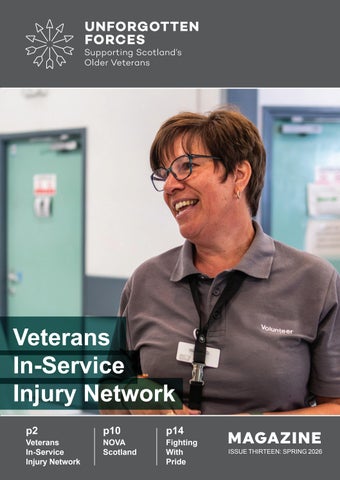
Veterans In-Service Injury Network
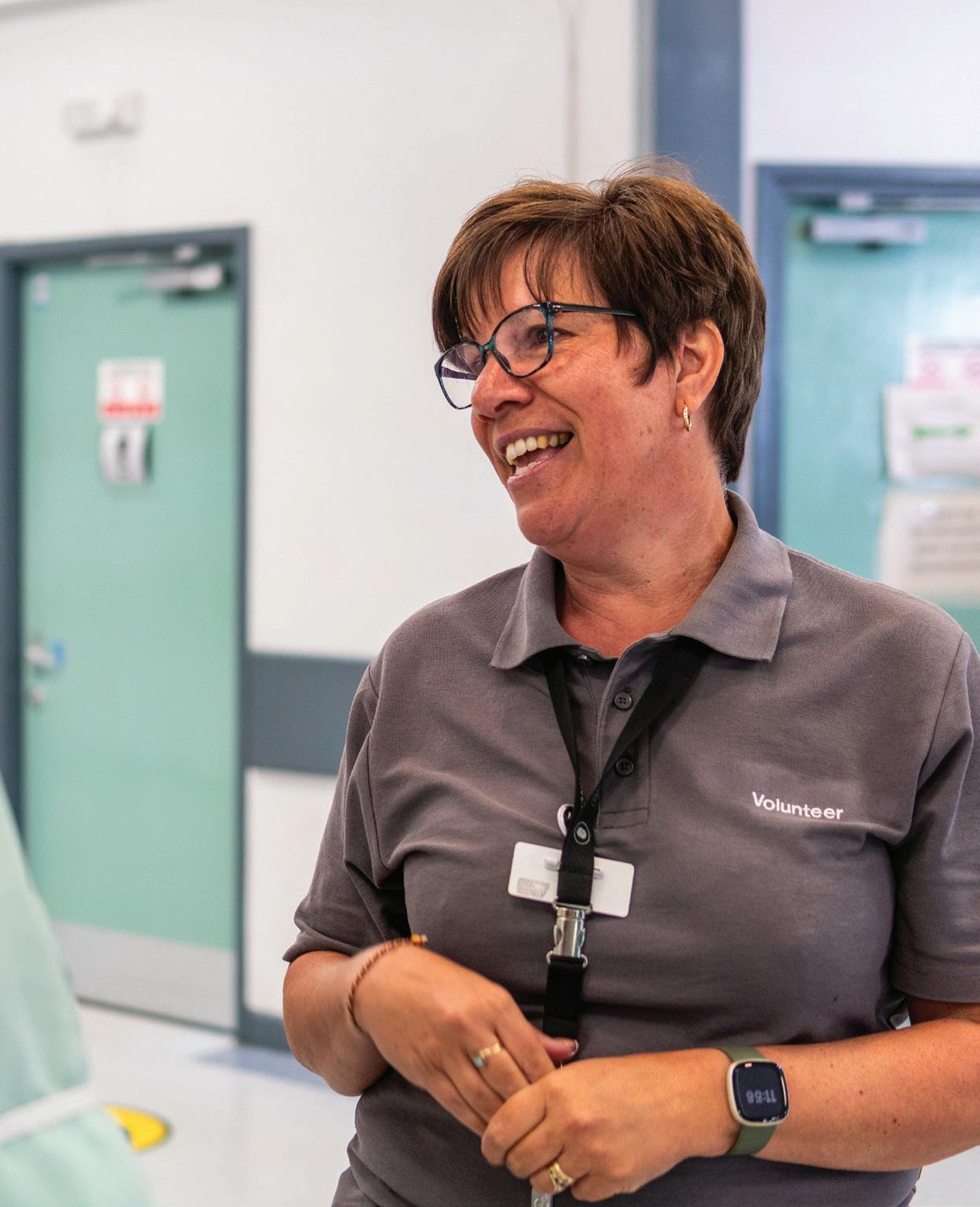
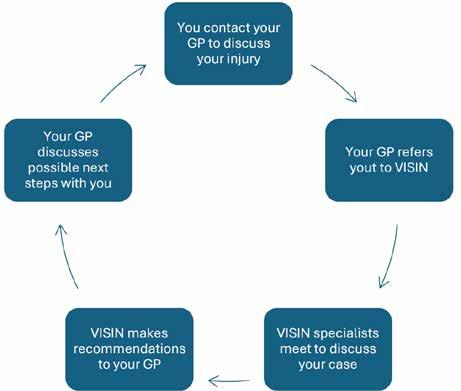
At our Unforgotten Forces Gathering last October, Kari Magee, NHS Highlands Armed Forces and Veteran Project Manager, presented the Veterans In-Service Injury Network (VISIN) to our delegates. She outlined how the network aims to connect, support, and advocate for veterans living with service-related injuries.
In Scotland, the Armed Forces and Veterans Community is held in high regard. Any period of service, whether a single day or a full career, represents dedication, resilience, and sacrifice.
To ensure that healthcare provision reflects that service and supports the ongoing wellbeing of all veterans and their families, there are two national initiatives that are now in place to improve recognition, understanding, and clinical support for those who have served: the Veterans In-Service Injury Network and the General Practice Armed Forces & Veterans Recognition Scheme.
Together, these programmes represent an important step forward in enhancing care for the Armed Forces and Veterans Community across Scotland.
Veterans In-Service Injury Network (VISIN): specialist clinical support for service related injuries
Some physical injuries sustained during military service can persist or become increasingly complex many years later. To help ensure that these issues are fully understood and appropriately managed, a national initiative is now available to veterans.
VISIN provides an independent, specialist clinical review for service related physical injuries when all local treatment options have been explored but ongoing concerns remain. This may include conditions that have not improved as expected, or symptoms that may have emerged earlier because of the physical impact of service.
Referrals can be made by a GP, Practice Nurse, Physiotherapist, or Occupational Therapist, improving accessibility for veterans across Scotland.
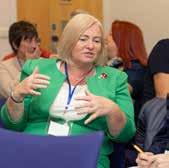
Kari at Gathering
General Practice Armed
Forces & Veterans Recognition Scheme: improving identification and understanding in primary care
Many members of the Armed Forces and Veterans Community do not routinely identify themselves as such during medical appointments, sometimes because they do not consider their service significant, or because they do not realise the relevance of their background to their healthcare. However, anyone who has served even a single day in His Majesty’s Armed Forces, as well as immediate family members, is part of the Armed Forces and Veterans Community. Recording this information in a medical record can support more informed, personalised care.
To encourage better recognition and understanding of this, the General Practice Armed Forces & Veterans Recognition Scheme is now available to GP Practices across Scotland and offers:
• Specialist training materials to help staff understand the unique health challenges associated with service life
• Clinical case studies illustrating common service-related health issues to support more accurate diagnosis and treatment
• Guidance on applying the Armed Forces Covenant, helping ensure fair and timely access to treatment for service related conditions.
Practices involved in the pilot phase of the scheme, including several staffed by veterans, reported significant benefits for both clinicians and patients.
All members of the Armed Forces and Veterans Community should inform their GP practice about their service history so that this can be added to their medical record.
How these initiatives work together
VISIN and the GP Recognition Scheme have been designed to complement one another:
• The Recognition Scheme helps ensure that primary care teams understand the potential impact of service life and can make use of the Armed Forces Covenant
• VISIN provides specialist clinical expertise when physical injuries may be directly linked to military service.
Together, these initiatives help support holistic, person-centred care that acknowledges the lasting effects of service on health and wellbeing.
Veterans Scotland GP Armed Forces
Building on the foundations already in place, work is now underway to give the General Practice Armed Forces and Veterans Recognition Scheme fresh momentum across Scotland. This next phase, referred to as the “acceleration” of the scheme, aims to make sure that many more veterans and their families feel the benefit when they walk through the doors of their local GP practice.
At a national level, there is clear backing to take the scheme further. Funding has been agreed, and work is progressing, to ensure NHS staff can receive recognised Continuing Professional Development training through their involvement. The scheme will also be showcased at the Royal College of General Practitioners conference in Glasgow this October, helping to spread the word among clinicians and underline its growing importance. Closer to home, the focus is on making the scheme visible and meaningful in everyday practice. GP surgeries are being encouraged to highlight their involvement, while staff complete training designed to better understand the health needs that can come with service life. At the same time, charities and community groups are helping to reach out to veterans, as this only works if both GP teams and ex-service Personnel are aware and engaged.
Much of the day-to-day work is being driven through local NHS health boards and dedicated champions, with a clear ambition to increase the number of GP practices taking part from 5% to 50%. There is also a strong emphasis on GP-to-GP conversations. Veterans Scotland is appointing a GP with experience of the military community who will encourage uptake by sharing experiences and building confidence in the scheme across NHS GPs.
The key message remains straightforward: next time you see your GP, let them know you have served. Even if it was only for a short time, it matters. This will allow the practice to code you correctly on the primary care system. Encouraging your GP to sign up to the scheme also matters, helping improve understanding of ex-Armed Forces needs and ensuring you are connected to the right support for your health and wellbeing.
Update on Mental Health Pathway
In March, the Scottish Government published the new Veterans Mental Health and Wellbeing Pathway – National Framework, marking an important step forward in how mental health support is organised and delivered for the Armed Forces Community.
At its heart, the National Framework sets out a clear ambition: that every veteran in Scotland should be able to access timely, effective and compassionate support, no matter where they live.
What makes this important is its focus on removing the barriers to accessing support that many veterans have spoken about over the years - whether that is not knowing where to turn, difficulties connecting to services, or simply feeling reluctant to ask for help. The National Framework acts as a “road map”, bringing together NHS services and charities to create a clearer, more joined-up pathway into mental health support.
For Veterans, this is a positive and practical step. It means that when support is needed, the system should be easier to navigate, more consistent, and better suited to the experiences of those who have served.
Funeral Advice
Many of our partner organisations across Scotland have told us that one topic coming up more often in conversations with veterans and their families is funerals. Whether it is planning ahead or arranging a funeral for a loved one, the demands and costs can feel overwhelming at times. The good news is that there is support available.
Help with arranging a funeral
One useful starting point is Age Scotland’s free information guide Arranging a Funeral, which explains the practical steps involved and choices available. The guide covers things such as checking whether the person left any instructions or a will, and planning the type of service that feels right for the individual and their family. It also highlights the importance of thinking about costs and how these might be paid, including possible financial support. In Scotland, for example, a simple burial or cremation can cost several thousand pounds, so it is important to know what help might be available.
Arranging a Funeral
The guide also encourages people to discuss their own funeral wishes with family members in advance, as this can make things much easier for loved ones later on. The guide can be downloaded for free or ordered as a printed copy if you prefer something to be posted to you.
A new report on supporting the bereaved
Bereavement in the Armed Forces Community has also been highlighted by Susie Hamilton, the Scottish Veterans Commissioner. Her report Supporting the Bereaved Community (published in November 2025) looks at the experiences of families after the death of a serving person or veteran.
The report notes that bereaved families can often feel overwhelmed in the early days after a loss, particularly when faced with large amounts of information or complex processes. It recommends clearer and more accessible support, as well as regular follow-up contact with bereaved families in the months and years after a death. The report also highlights issues such as delays in pension payments for widows and widowers and the importance of continued links with the Armed Forces Community, which many bereaved families value greatly.
Readers can find the full report on the Commissioner’s website.
Support from benevolent funds and military charities
Veterans and their families should also remember that help may be available through military charities and benevolent funds. The Army Benevolent Fund, for example, supports soldiers, veterans and their families with a wide range of needs, including assistance related to bereavement or funeral costs. Applications are usually made through organisations such as SSAFA, Royal British Legion or PoppyScotland.
Many regimental associations also have their own benevolent funds. If you or a loved one served in the Army, Royal Navy or RAF, contacting your former unit, association or service charity can be a good first step. They may be able to offer financial help, practical guidance or simply someone who understands the military community and can support you during a difficult time.
If you need advice, it is always worth reaching out.
Susie Hamilton
International Bomber Command Centre
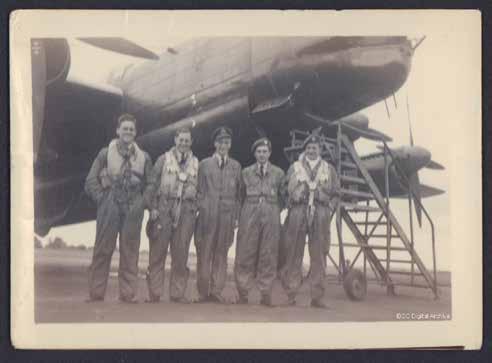
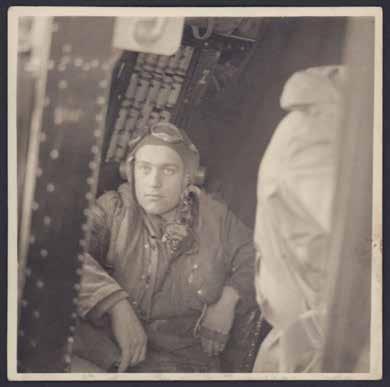
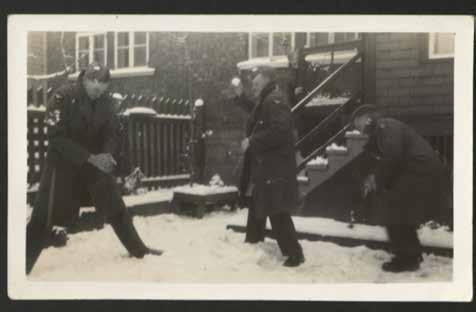
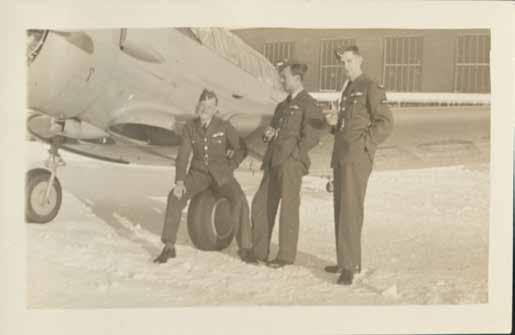
The International Bomber Command Centre (IBCC) opened in 2018 as a memorial centre to RAF Bomber Command’s extensive loss of aircraft and crews during the bombing over Europe in World War II. This world-class facility serves as a place of recognition, remembrance and reconciliation for all, regardless of age, nationality or prior knowledge.
Whilst the legacy of the bombing campaigns left Bomber Command unrecognised and in the shadows, the work done by the IBCC has shone a light on the service and sacrifice of the men and women involved by preserving their documents and memories. It acknowledges the efforts, sacrifices and commitment of the 125,000 volunteer aircrew who flew with Bomber Command during World War II, the more than one million men and women from 62 nations who supported them on the ground and those affected by its campaigns.
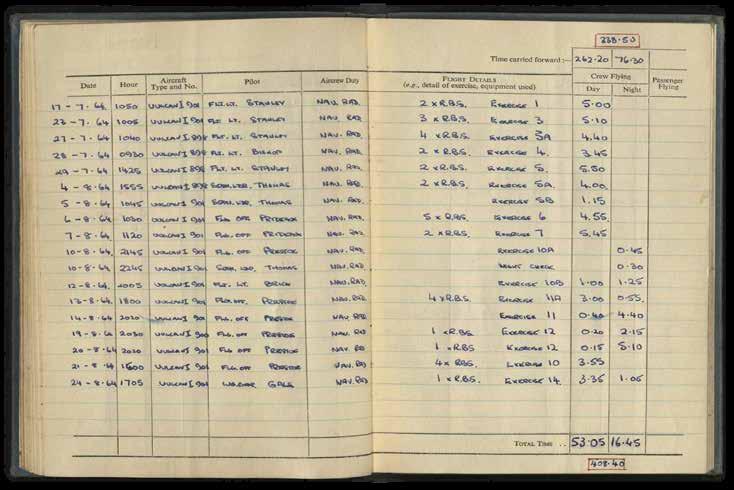
The IBCC Digital Archive has an extensive repository of the personal stories of those who served and suffered during WWII, including personal memorabilia and one of the biggest collections of eyewitness testimonies. It is an important resource for anyone with an interest in aviation or military heritage, 20th century history and those doing family research.
The Collections Team are keen to record Post-War Bomber Command memories and experiences too. They are seeking photographs, letters, diaries, logbooks and other memorabilia to digitally preserve and share freely on their website. The archive not only ensures the preservation of irreplaceable material for perpetuity, but, importantly, recognises and remembers those involved in this period of history.
Everyone who visits the IBCC has the opportunity to learn about the story of Bomber Command and to remember the lives of those who fought to preserve the freedom we enjoy today.
collections@internationalbcc.co.uk
GO ALL IN WITH READING FORCE!
The charity supporting veterans to share books
We all know reading makes your world bigger, makes you smarter, and fuels your creativity. But did you know a study has proven that just SIX minutes of reading can reduce your stress level by 68%? This is because it lowers your breathing rate and reduces muscle tension. Reading also increases your empathy and compassion. Wow!
Despite these benefits, in the face of busy lives and distracting screens, fewer of us are making time for it. But 2026 is the National Year of Reading, reminding us to Go All In and get back into reading.
If you’re into it, read into it. And Reading Force can help veterans do just that!
At Reading Force we don’t just encourage children and young people to read and use our scrapbooks or teen reading journals, we encourage them to chat about books with their parents, grandparents and wider family members.
We help families Go All In with our FREE books and resources. They can take part and chat online or on the phone to grandparents about a book or read and chat when they’re together. Why do it? Because sharing and chatting about books – whether you loved or hated a book is fun, bonding, and a great excuse for an intergenerational conversation. Families often tell us they start talking about a book and before they know it are having good chats about other things.
“The more we do this [Reading Force], whether together or over video call, it means a lot to us. There is always something very special about reading a book with grandchildren - a real privilege!” [Grandpa]
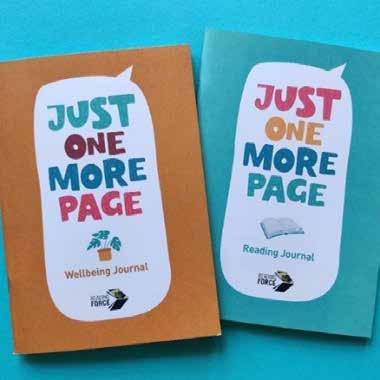
We’re inviting veterans to get involved! You can go to our website to request free resources. Organisations or charities can also go onto our website to order free scrapbooks and teen reading journals to distribute to interested veterans, who can then get their families involved. Additionally, our special Reading and Wellbeing Journal is for adults and can be ordered and distributed by veterans’ organisations and charities.
We are a tri-service charity and will send books to children and young people aged 0-18, who are from serving, veteran, bereaved, and divorced/separated forces families. We have books for dyslexic readers too. We would love veteran families to get involved – whether new to Reading Force or have taken part before, Go All In.
AND veterans can also Go All In with our amazing book clubs! Each book club member will receive three free books to keep! Volunteer coordinators in organisations will be supported by Nicola to set up and run their book club.
“We laughed nonstop through the first meeting, which was lovely. We’ve also had some members that haven’t read books for years and have devoured the first book already.” [RF Book Club Coordinator]
We extend our heartfelt thanks to Fiona Maxwell for her outstanding service and unwavering commitment to Reading Force and offer our very best wishes as she begins her retirement. Over nearly nine years with RF, her love for books has been at the heart of everything she has done, and she told us that for her, “giving children and young people books and encouraging families to read together for pleasure” has truly been her dream job. She also shared how important it is to recognise the role of veteran organisations, asking that we thank them on her behalf for their continued support in spreading the word about what Reading Force does. Everyone who has had the pleasure of working with Fiona knows that her dedication has made a lasting difference in Scotland’s veteran landscape!
FIND OUT MORE
To find out about setting up a book club - call 07519 665410, email nicola@readingforce.org.uk or visit our website.
To request resources go to: www.readingforce.org.uk
For more information about Reading Force, email info@readingforce.org.uk
NOVA Scotland Standing Beside Veterans When It Matters Most
NOVA Scotland, delivered by the Forces Employment Charity, provides person-centred support to veterans who are at risk of becoming involved, or already in contact, with the criminal justice system. Their focus is on addressing the underlying factors that can contribute to offending behaviour, helping veterans stabilise, recover and rebuild their lives in the community.
The service is built on a proven model of prevention and early intervention, trauma-informed community-based practice, collaboration across agencies, whole-person support, and evidence-led delivery. Through this approach, NOVA has consistently delivered life-changing – and often lifesaving – practical and emotional support to veterans in crisis or transition.
Referrals come from a range of sources, including Police Scotland, the Scottish Prison Service, local authority justice social work teams, and voluntary organisations. Veterans can also self-refer. What matters most is that support is offered early, at the point where things can still be turned around.
Every veteran referred to NOVA Scotland is allocated a specialist caseworker who understands military culture and the realities of transitioning to civilian life. Together, they undertake a holistic assessment and co-produce a support plan that reflects the veteran’s priorities, strengths and goals. Support focusses on building motivation and readiness for change, alongside practical progress in areas such as mental health and wellbeing, housing, relationships, employability and social stability. Evaluation by the NOVA team shows clear positive outcomes, including improvements in emotional regulation and mental health, positive relationships, managing addictions, and progress towards a crime-free life. But behind the data are real people, taking difficult steps forward – often after years of feeling stuck or unsupported
What does this look like in practice?
In addition to receiving referrals from custody centres, many veterans are referred by Police Scotland due to welfare concerns, often during moments of acute crisis linked to mental health, housing instability or substance use. At that point, life can feel overwhelming. The NOVA Scotland team express their gratitude to frontline police colleagues who explain what NOVA offers and leave information behind, creating a bridge rather than a dead end. Other veterans are identified within custody centres.
NOVA Scotland caseworkers aim to make contact as quickly as possible and, where appropriate, meet veterans in their own homes or communities. They understand that trust takes time, that progress is rarely linear, and that sometimes the most important thing is simply having someone who listens without judgement. Veterans don’t want to repeat their story again and again, so NOVA support them to engage with specialist services – for example around PTSD, family contact or addictions – and stay alongside them as they do.
Derek’s story:
Derek was diagnosed with PTSD and told he wasn’t mentally fit to continue serving. Anxiety and depression tightened around him until he felt he had no way forward.
“That ripped the heart out of me. My self-esteem was gone. I kept thinking, ‘I’ve let my wife and my son down. What’s the point of me now?’”
Derek’s NOVA Scotland case worker became a steady, calm presence - “He didn’t judge me. He just kept saying, ‘We’ll sort this.’ And that was the first bit of hope I’d had in years.”
Caseworkers support veterans through the justice process, including providing evidence to the court of engagement, insight and progress. Working closely with community justice partners, NOVA Scotland’s aim is to reduce the use of custodial sentences where appropriate, recognising that community-based, trauma-informed support is often more effective in reducing reoffending.
Mark’s experience (not real name):
“On the day of the court sentencing…I was extremely anxious.
“My caseworker was able to calm me down and said that he had sent a court support letter to the court detailing what support I had in place since my arrest and that he would be with me in the court….the Sheriff said that he had read the court letter that my caseworker had sent them and he understood that I was now getting the right support for my problems and issues. I was given a community order which I was relieved about as I thought I would be going to prison.
“I am very grateful for the support given to me by my NOVA Scotland caseworker. If it hadn’t been for him then I wouldn’t be here…My anxiety has greatly reduced and my mental health has improved.”
Where a custodial sentence is unavoidable, NOVA continues to work with partners to ensure continuity of support. On release, caseworkers support veterans to reengage with the community, including moving towards and into employment. Safe, stable accommodation remains one of the biggest challenges on release, and NOVA works closely with housing providers and local authorities to ensure veterans have somewhere suitable to return to.
Veterans are a distinct population. They deserve services that understand their experiences, recognise the impact of trauma and transition, and respond accordingly. Evidence shows that specialist, tailored support delivers better outcomes – not just for veterans, but for communities, public services and Scotland’s economy as a whole.
Almost a year on from the day Derek nearly ended his life, things look very different for him.
“My family’s got their husband and dad back. My mates say I’m me again. I feel like I’ve got purpose.” When asked what he’d say to another veteran who feels themselves slipping the way he did, Derek doesn’t hesitate. “Swallow your pride. Get the support. Don’t wait. I was at the very sharp end in the Army; I commanded men on operations, and I still needed help. If you’re struggling, talk to someone. Don’t give up.”
LVC Female Networking Event
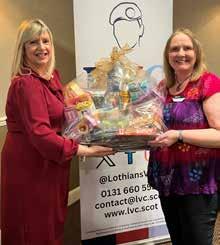
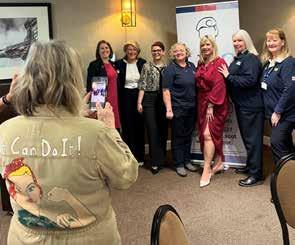
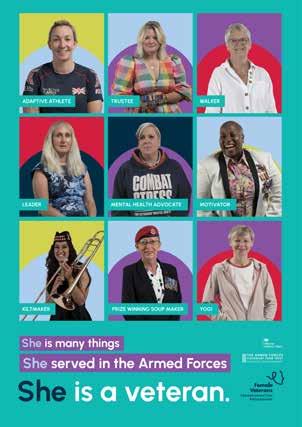
Following our cover feature in the last edition about female veterans, I had the chance to see that community in action by attending Lothians Veterans’ Centre’s Female Veterans Networking Event in Edinburgh.
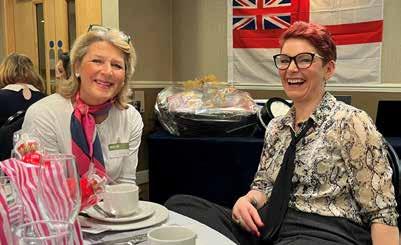
On Saturday 28 February 2026, I joined veterans and supporters at an afternoon tea event specifically for women who have served. Held at the Royal Scots Club in Edinburgh, the event brought together ex-servicewomen and female supporters from all over Scotland. Brilliantly organised by Lothians Veterans Centre (LVC), the day was designed for women who have served to come together over afternoon tea, conversation and shared experience. It was an afternoon built not on rank or role, but on recognition and validation – a space to connect, reflect and celebrate the contribution of female veterans to the Armed Forces Community.
Women Leading the Way
Opening the event, Pauline Cherrington from LVC set the tone with warmth and clarity, saying “If you’re on your own, you can find your tribe at this event”. This sentiment was brought to life in the smallest but most thoughtful detail: each attendee wore a coloured name sticker indicating whether they had served in the Navy, RAF or Army – a simple, yet powerful idea. It echoed Pauline’s second reminder: “There’s no hierarchy here. We’re all equal. We’re all women from Scotland who served.” In a community shaped for so long by rank and structure, the deliberate absence of hierarchy was felt both refreshing and deeply meaningful and was praised with much applause.
Pauline also spoke about putting on things that are attractive for women - creating spaces that genuinely reflect female veterans’ experiences, gesturing to the wealth of experience and support we had in the room that day. Looking around, it was hard to disagree. From Dumfries to the Outer Hebrides, women had travelled all distances to be there, bringing with them years of service, power and experience.
Scottish Veterans Commissioner Susie Hamilton followed with an honest reflection: “A few years ago, a gathering like this would have felt impossible - and now we are here, influencing policy”. She continued, saying that: “we’re showing today what leadership, courage and community look like”, drawing loud applause from women across the room.
Liza Jarvis then introduced the Female Veterans’ Transformation Programme (FVTP), a UK-wide programme that produced an online toolkit to help service providers transform support for female veterans, changing the ways we operate so that ex-service women can access the right support, at the right time, in the right way for them.
Pauline awarding prize Crafting & engraving
Liza thanked those present for “all the amazing work everyone in that room has done and contributed to the project”, emphasising that “Scotland has lent in more than any other devolved nation to the FVTP” In addition to the toolkit, FVTP have launched the female recognition and celebration campaign that is available for everyone to use and explore – this was the cover feature you read in the last edition! All materials are designed to be adaptable for individuals, organisations and communities, forming a lasting legacy of their work. Sharing the toolkit widely is key to maintaining momentum, and learning sessions and webinars will continue to be offered until the end of this year to support that effort.
Research also took centre stage. Dr Alethea McHardy launched Her Service Her Health project, gathering insights from 8,000 female veterans – stating “Scotland has done it again” as this was one of the largest studies of females who had served in the UK Armed Forces. Her work tackles academically and politically challenging topics, including female health, pregnancy, and musculoskeletal outcomes within the Armed Forces context. It is pioneering and important research. In May, Alethea will walk across Scotland to raise funds for LVC, a personal commitment that speaks volumes about her dedication to the cause – while it was also a lovely surprise announcement dedicated to the great work of the LVC team! If you are interested in donating to her walk, visit www.justgiving.com/page/alethea-mchardy
Finding Female Veteran Community
Beyond the speeches, it really was the atmosphere that defined the day for me. Laughter rang out so many times, punctuated by applause that signalled genuine appreciation for each other. There is something unmistakable about the sound of women chatting freely in a room – female readers will know what I mean.
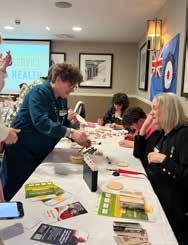
Every detail contributed to an atmosphere where women felt celebrated and seen. There was also a raffle, thoughtful gifts, crafting and engraving taking place at the back of the room. A bagpiper added a special, traditional touch, and Prosecco flowed with afternoon tea. Outside, Peter Menzies from Dundee Gin offered military-themed gin tastings, complete with Armed Forces references and even a custom-designed bullet bottle opener.
It was, in every sense, a wholesome and carefully curated event. More than that, it was proof of what happens when female veterans are given space - equal, welcoming space - to find their tribe. A great thanks to LVC for organising such an outstanding day. And for readers, don’t miss out on their next networking Event!
Laila Henke
Liza with Emma Watson-Mack
Fighting With Pride
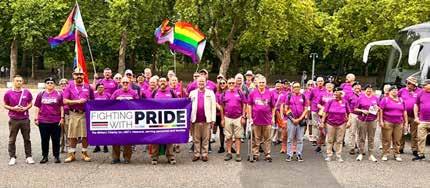
Fighting With Pride (FWP) is a UK charity that supports LGBTQ+ Veterans, particularly those affected by the historic ban on LGBTQ+ people serving in the UK Armed Forces. For many years, service personnel were dismissed, investigated, or forced out simply because of who they were. FWP exists to help address that injustice.
For veterans who may now be entitled to financial compensation, FWP can provide practical, compassionate support. This includes help with understanding eligibility, gathering evidence, and completing applications—especially for those who may find the process overwhelming or difficult to navigate alone. A financial recognition payment can also be made to an eligible next of kin. There is a strict deadline to apply for these reparations. Applications must be submitted before 12th December 2026. After this date, individuals may lose the opportunity to access the compensation and recognition they are entitled to.
FWP can offer support beyond financial claims. They also help veterans access non-financial reparations, such as the restoration of medals, corrections to military records, and support with wellbeing and reconnection. Many veterans have lived with the impact of dismissal for decades, and FWP helps ensure they are treated with dignity and respect throughout the process of obtaining reparations.
Support for Older LGBT+ Veterans in Scotland
Age Scotland and Fighting with Pride have collaborated on a revised edition of our Support for Older LGBT+ Veterans in Scotland guide. This contains advice and guidance on the financial and non-financial reparations that are available for victims of the gay ban in the UK military, as well as information on the range of support available for LGBT+ veterans in Scotland. You can access the revised guide at www.agescotland.org. uk/information-advice/information-guides/ information-for-veterans or call the Age Scotland Helpline on 0800 1244222 to request a printed copy.
Testimonial from Nettie Mccaig
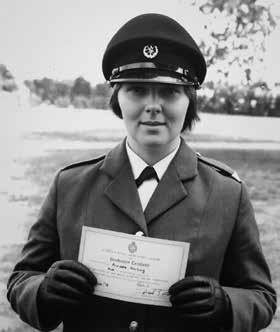
I joined the Army in 1978 when I was 17. Completed training at Guildford, receiving the Best Recruit Award.
My second posting was in Germany where I became aware of my sexuality, engaging in my first female relationship. I spent my free time representing the army in hockey and was happy with life.
I was brought in for interview about my sexuality by the SIB and asked to provide names of other homosexuals. I denied everything. I was released but left feeling vulnerable and afraid.
1980 I was posted to Aldergrove where I became the focus of bullying from an NCO RMP. Her mission was to get me to admit I was gay. She tormented me for months.
1981 I was posted to Wilton Salisbury. One morning, I was arrested by two RMPs. I was interviewed by the two men for hours without breaks. Some days later I was sent for a medical examination and to see a psychiatrist. The questioning was embarrassing and perverse.
May 1982 I was discharged from the army. My Red Discharge Book showed my conduct as Exemplary and reason for discharge, Service No Longer Required.
I’ve since struggled with my mental health and have been unable to hold down a relationship. I’ve moved home often and now live in Scotland close to family.
I received £50,000 from the Financial Recognition Scheme in February for being Dismissed/Discharged.
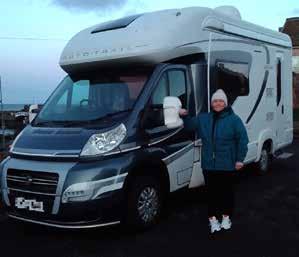
I am waiting to hear if I qualify for an amount under the Impact Payment scheme. I wasn’t going to apply but old army mates encouraged me. I’m glad I did. I purchased a motorhome and have been able to follow my dream exploring the country. I have been able to treat family members and help friends.
It’s not about the money though. It’s about the way we were treated. How we were made to feel. The humiliation, the bullying, the embarrassment. I would urge anyone who has not applied for this recognition to do so.
SEEK SUPPORT
If you, or someone you know, may have been affected by the ban, we strongly encourage you to seek support as soon as possible. Even if you are unsure about eligibility, FWP can help you explore your options in a safe and understanding environment
www.fightingwithpride.org.uk
info@fightingwithpride.org.uk tel: 0203 981 3810
Nettie recently
Scottish Men’s Sheds Association
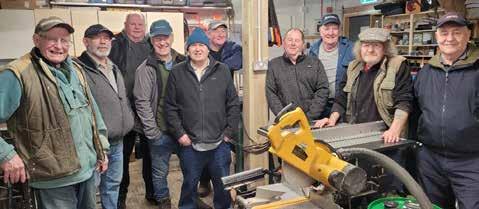
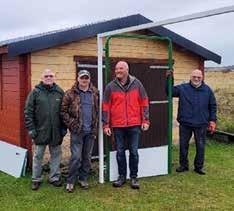
Men’s Sheds in the Highlands and Islands and Northern Isles continue to change people’s lives – not just men, but also their families, friends and communities. Sheds reduce isolation and loneliness, depression/anxiety, and can increase men’s confidence and give a sense of purpose and belonging in a supportive and inclusive environment.
“Men’s sheds are like a mental health defibrillator”
[Michael, Lybster Men’s Shed]
Shed activities are member-led, and the members are all volunteers. Sheds can be whatever the members want them to be – to make friends, share existing skills or learn new ones – and are often stepping stones to other activities, such as walking groups, fishing trips, or writing groups. There are now 33 sheds, open or developing in the Highlands and Islands and 5 in the Orkneys. Isolation and remoteness are common talking points in the Highland Sheds, as is the impact of the Sheds in addressing this.
“Pub’s gone, bank’s gone, petrol station closed. Before this shed opened, the only people I talked to were the Amazon delivery guy and the Aldi checkout staff.”
[Shedder, Kyle of Sutherland Shed]
Traditionally, men’s sheds were based on the garden shed model of being full of tools for making and repairing. Visitors to sheds are often amazed at the breadth of what goes on nowadays. As well as the ubiquitous craic and banter, there is a wide range of activities, including various arts and crafts, 3D printing, bike repairs, model railways, gardening, guest speakers, bands/music groups, woodwork, yoga classes, clock restoration, photography, furniture repair…and much more.
USE THE SCHEME
If you, or anyone you know, are interested in finding out about Men’s Sheds in the Highlands and Islands please get in touch.
Ross Murra, Development Officer, Scottish Men’s Shed Association 07777 134 950 / dev3@scottishmsa.org.uk / scottishmsa.org.uk
If you are aged 60 or older, live in Scotland, and served in the British Armed Forces, Unforgotten Forces is your doorway to camaraderie and extra support, should you need it.
Health InformationAdvice
PracticalSocial&leisure
Reservists Regulars National Service
MerchantNavy
@UFForces
@UnforgottenForces www.unforgottenforces.scot
0800 12 44 222
(The Age Scotland helpline can connect you with Unforgotten Forces services if you are unsure who to approach)