

This final report of a research assignment carried out for AFROPAC, SADCOPAC, and GIZ analyses SADCOPAC’s history as a network of Public Accounts Committees (PACs) in Southern Africa, with a special focus on its resolution-making mechanism. To that end, it comparatively analyses all available resolutions made at annual conferences since 2004 as well as all available country-specific implementation reports about these resolutions since 2011, alongside other primary and secondary sources from SADCOPAC and development partners.
Taking SADCOPAC’s experience as a case study of PAC network cooperation, it then draws lessons for such organisations and their resolution-making in the region. Focusing on the demand for future PAC network cooperation and key lessons for AFROPAC as a continental PAC network, the report draws on discussions at a Webinar with stakeholders held in June 2021, on a follow-up survey among Webinar participants, as well as on semi-structured interviews with PAC MPs, clerks, and AFROPAC functionaries to develop recommendations.
The Southern African Development Community Organisation of Public Accounts Committees (SADCOPAC) is a regional organisation of parliamentary bodies which has two main goals: (1) enabling peer-learning among PACs in the region and (2) coordinating member state policy on parliamentary public financial management (PFM) supervision.
Compared to similar regional organisations in other contexts, the analyses show that despite mixed success and continuous challenges, SADCOPAC represents a positive case study of regional PAC network cooperation in a developing country setting. Further, its challenges and shortcomings in trying to fulfil its mandates hold valuable lessons, including for AFROPAC as a continental PAC network and for developing partners seeking to support parliamentary PFM supervision.
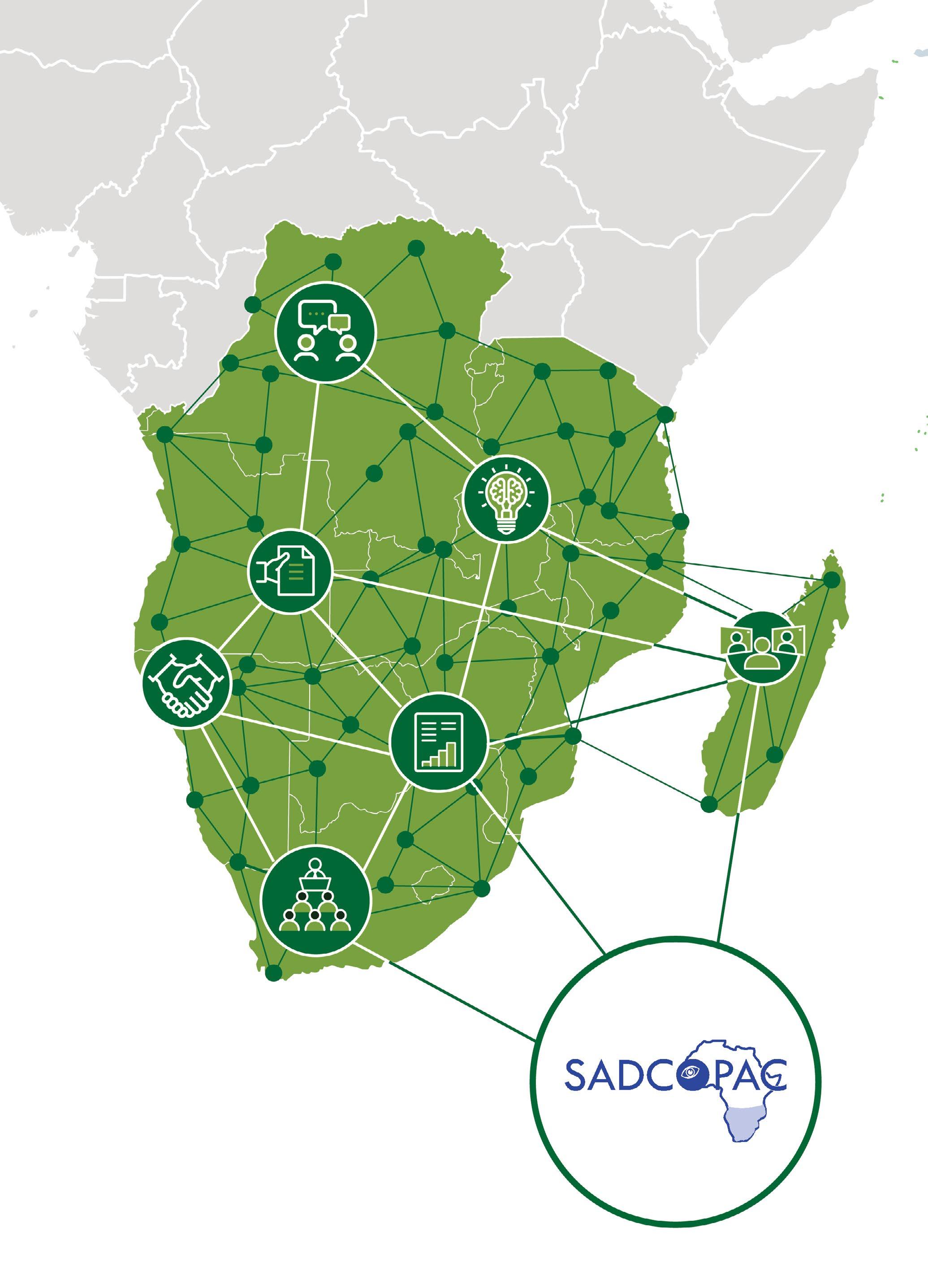
SADOPAC established itself an increasingly successful PAC network over time...
SADCOPAC progressively established itself as a functional network of PACs since its founding in 2003 and professionalised its internal processes and administrative capacities as a PAC network. In contrast to other PAC networks in the developing world, SADCOPAC managed to hold annual conferences since its founding where members exchanged experiences and learned from each other. Responding to member demands, the organisation increased its own institutional capacities in 2009 by hiring an administrator, effectively doubling the permanent staff at its Secretariat. SADCOPAC also successfully established networks with other stakeholder institutions at the regional level such as AFROSAI and EAAPAC and was instrumental in preparing and eventually realising the founding of AFROPAC as a continental organisation of PAC networks in 2013.
Additionally, SADCOPAC carried out several important activities to enable mutual learning and build capacity among its member states, despite a fragile funding basis which depends on instable external support from development partners. These activities included most notably a highly influential good practice guide launched in 2009. This exercise not only set and eventually raised standards for PACs in the region, but it also catalysed a systematic and regular reporting mechanism within the
organisation that stands out positively even against richer other regional parliamentary organisations and strengthened its peer-learning capacities through transparency and peer pressure. Further, SADCOPAC also contributed significantly to directly strengthening member bodies’ capacity by realising workshops and trainings.
However, despite being among the most central demands by member PACs since 2005, these Human Capacity Development (HCD) activities were only possible for SADCOPAC between 2010 and 2014: in this period, GIZ and the World Bank provided external support to supplement SADCOPAC’s limited funds stemming mainly from member state contributions which are often in arrears and cannot be enforced in practice. Its volatile financial basis and only temporary external support forced the organisation to maintain a limited administrative capacity internally and effectively concentrate on organising the annual conferences which are possible because member states host on a rotational basis as in-kind contributions.
... but remained financially unable to meet members’ demands for human capacity development except during limited periods of external support.

1
GOVERNING COUNCIL
Prepares and proposes policy
2
PAC DELEGATES + GOVERNING COUNCIL
Vote at the Annual General Meeting (AGM) / SADCOPAC Annual Conference
TECHNICAL WORKING GROUPS (TWGs) + SECRETARIAT
Translate resolutions into plans and monitors their implementation
Carry out research and facilitate trainings for PAC members
PAC delegations report on the implementation of resolutions and adopt new ones NEXT AGM
Starting in 2004, SADCOPAC members agreed on joint resolutions to strengthen parliamentary budget supervision in their states at annual conferences. These resolutions addressed a wide range of topics, mainly focusing on strengthening PACs as a supervisory institution within the PFM system, covering additionally through legal frameworks
and other actors like SAIs, regional cooperation among PACs as well as dealing with various specific PFM supervision issues. Addressees of resolutions varied accordingly and were not always clear, with most resolutions targeting PACs or SADCOPAC, but also member states, parliament, the SAI, or the executive. Resolution implementation among the membership was tracked by SADCOPAC since 2011, developing out of the need to monitor implementation of the good practice guide’s agreed standards. As the organisation standardised its reporting framework from 2013 on including through templates which included implementation suggestions, increasing numbers of states reported and increasingly addressed all resolutions in their responses.
Despite these achievements, the reporting framework is not without remaining limitations. Most importantly, not all member states participate in reporting implementation progress and not all report each year and on each resolution in sufficient detail, undermining its effectiveness as a peer-learning instrument which depends on transparent and regular reporting to exert peer pressure for domestic reform. Low response rates seem largely due to very limited resources among member PACs and their staff in the region who often struggle already financing their primary duty meetings as parliamentary committees and lack funds to enable additional work on behalf of a PAC network.
But SADCOPAC can help strengthening the framework in at least two ways: (1) standardised reporting could additionally differentiate between
implementation status quo and new activities or reform progress to incentivise even further advanced states to greater progress, (2) it could more systematically track and annually publish resolution implementation reports or overviews to incentivise both reporting and reform efforts, including via scrutiny from the international and domestic media and civil society.
... but this process could be strengthened further by greater detail and publicity.

SADCOPAC achieved slow but steady implementation progress despite lacking formal powers over policymakers in a politically sensitive area like PFM...
Member PACs reported sustained limited-to-medium progress in implementing the resolutions
SADCOPAC made since 2011. High progress is rare at under 10 percent of responses, slightly less than cases where member states did not report on progress towards that specific resolution in their responses. These reported advances generally improved on the existing status quo: most countries report at least some pre-existing implementation, but less than 10 percent of responses indicating a high pre-existing status quo.
Compared to the baseline of other regional organisations seeking to coordinate member states’ policy, this level of implementation appears fully

within the range of expectations for an organisation active in a politically sensitive field like PFM without any formal power over its member states. Overall, SADCOPAC has contributed to important progress over the years in strengthening its member states’ parliamentary PFM oversight.
Implementation rates for SADCOPAC resolutions differed markedly by topic. One area which stands out is HCD: there, members report a very low status quo and they do not on average make at least limited progress towards strengthening human capacity. There also seems to be somewhat lower progress on implementation when resolutions relate to the audit reports produced for PACs to scrutinise, to the SAI, or to the PFM system more generally. However, here member states reported the greatest already existing level of parliamentary budget accountability.
Addressees of SADCOPAC resolutions matter too. By far the lowest level of implementation progress is reported when resolutions target the SAI or are unclear in who should carry out the demanded changes. In contrast, members reported at least limited progress on resolutions which addressed either member states or parliament, and the highest advances where resolutions dealt with the PAC itself.
These patterns suggest that greater progress is likelier where resolutions focus more directly on the PAC rather than other PFM actors like the SAI who SADCOPAC’s member bodies cannot influence as directly without government approval. Further, HCD activities require funding beyond PAC’s current budget and are thus harder to be implemented since they would again require the consent of governments with scarce and politically sensitive financial resources.
Finally, progress on implementation differs depending on the existing status quo of PFM systems. There appears to be a positive relationship between the existing status quo on a resolution and further progress towards its implementation. Countries with stronger existing institutions on resolutions like Mauritius or Malawi also report greater progress towards further strengthening these commitments. In contrast, countries like Namibia or the Seychelles who report the lowest status quo on implementing collective resolutions also report the least progress in strengthening these. To avoid growing bifurcation within the membership over time, it would be valuable to study in more detail how such countries can better be supported in closing existing gaps to their peers.
Overall, almost all reporting countries with less advanced PFM systems than South Africa report

slow but incremental progress in implementing collective resolutions since 2011. But South Africa’s high implementation status quo and low further reported progress also points to increasing difficulty of achieving key reforms which directly challenge executive power over PFM and where even a country like South Africa has more room for improvement: this includes for example the timeliness of audit report examination by parliament and especially government follow-up on audits and PAC recommendations.
... but policy coordination success was more limited where resolutions did not clearly target parliamentary bodies, where they concerned costly HCD, and where existing PFM systems were weaker.
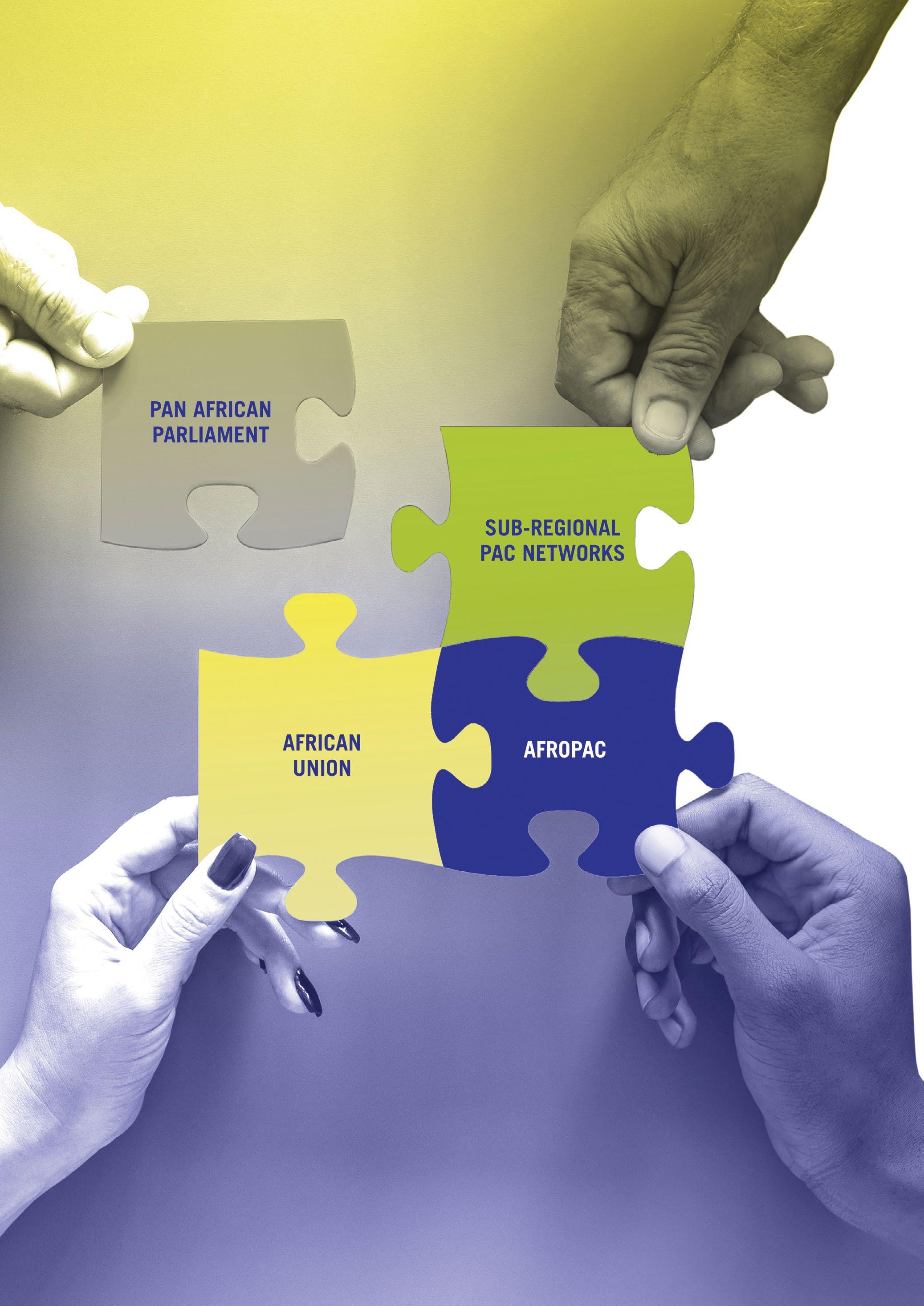
The rationale for regional PAC network cooperation remains as strong as ever in the Sub-Saharan region. According to the respective latest PEFA assessments, no country in Sub-Saharan Africa already has the top mark “A” on all indicator dimensions which assess parliamentary PFM supervision. To the contrary, there remains significant room for strengthening. Against this background of high need to further strengthen parliamentary budget supervision, AFROPAC was born in 2013.
While the demands directed towards regional PAC networks differ across member states, two areas stand out as particularly urgent. First and foremost, the most pressing challenge indicated by PACs was a lack of follow up on PAC recommendations. Similarly, a lack of political will from the government was cited as the most widely mentioned obstacle to strengthening budget supervision, including beyond the membership of SADCOPAC. Second, AFROPAC members indicated strengthening the PAC in the PFM system and developing human capacity among its representatives and staff as another key priority to improve parliamentary budget supervision.
Continually high member state demand requires on the one hand sufficient and sustainable resources at the regional PAC network itself, especially to fund the Executive Committee and the Secretariat which organise members’ conferences and track implementation. Both organisational bodies and their resources are
also key to implement resolutions directed at the PAC network itself, such as AFROPAC’s 2018 constitutional review which would have been impossible to carry out without external development partner support.
But an effective resolution-making mechanism also requires resources among member PACs which cannot simply be taken for granted. These bodies often lack funds to conduct additional activities on top of their parliamentary duties such as reporting on resolution implementation. To ensure that members have the financial possibility to participate in the mechanism, these resources may have to come from the regional level, for example in-kind by hosting national reporting meetings ahead of conferences. Such solutions may also improve the position of the AFROPAC secretariat which today is in the delicate position of constantly having to remind members to please report. There may thus be potential for cross-fertilisation among AFROPAC activities: for example, an annual/biannual training could be combined with the binding requirement for participating member state PACs to previously submit implementation reports on AFROPAC resolutions.
To decrease dependence on individual donors, enforcing member state contributions from those states who are in arrears and building up financial buffers by fundraising including among other stakeholder institutions at the international level may be a necessary way forward for organisations like AFROPAC. The funding structure of older organisations like the IPU or the CPA and their experiences in securing financial sustainability may be valuable inspiration in this regard.
... but meeting these demands requires sustainable financing at the regional and domestic level.
AFROPAC resolutions should be specific and expectations realistic...
Learning from the SADCOPAC case, AFROPAC resolutions should be sufficiently specific including by clarifying which addressees are supposed to carry out concrete activities relating to the resolution. Further, in the case of SADCOPAC, the level of implementation also depended on the topic of resolutions and their addressees.
Organisations like AFROPAC should focus their energies on areas where member bodies indeed can enact domestic political change or accept necessarily slow and partial implementation where resolutions are further removed from the PAC itself. Similarly, implementation among SADCOPAC seems to depend as much as on member states’ efforts as on their existing status quo of PFM oversight, such that additional implementation support for least advanced members might be needed.
So that peer pressure can operate and incentivise members to strengthen domestic PFM oversight, reporting on resolution implementation is key. Reporting must be as comprehensive and regular among the membership as possible and as standardised as SADCOPAC’s became over time. Reporting frameworks could also be further strengthened beyond that for example by distinguishing explicitly between the existing status quo on a resolution and further activities towards implementation progress
Drawing on lessons from other regional organisations with comparable goals, the effectiveness of resolution-making might also be increased by regularly publishing implementation reports or their analyses to increase peer pressure including on the more advanced member states.
... and reporting should be standardised, differentiated and public.

Members’ demands can more effectively be addressed through more strategic cooperation with old and new regional stakeholders.
AFROPAC can effectively address its members’ demands for political support against executives and greater HCD activities also by generating concrete gains from cooperation with other international stakeholders. While strong relations already exist, coordination activities with other institutions should be strategically focused towards better addressing key bottlenecks to strengthened parliamentary budget supervision: increasing political pressure on governments to agree to binding follow-up to PAC recommendations as well as increasing institutional funding to provide regular HCD activities for both MPs and clerks.
Reining in governments who do not follow up on audits and PAC recommendations is a tough challenge to address for regional PAC networks alone. Parliamentary member bodies do not have legal powers to force governments into changing PFM systems. And research on international coordination of public finances shows that the highly political character of government spending complicates effective cooperation.
Accordingly, helping PACs to increase pressure on governments might constitute a promising avenue to support the membership in this endeavour. Compared to other regional networks and policy coordination organisations, there is substantial room to improve the relationship of PAC networks
with political allies of parliamentary budget supervision like the classical and social media as well as civil society organisations who operate in member countries like the International Budget Partnership, the African Centre for Parliamentary Affairs (ACEPA) and the Tax Justice Network. In addition, greater efforts could be invested into putting the issue of binding government follow-up to PAC recommendations on the agenda of other international institutions which can exert pressure on executives in the region to enact legal changes. Especially well-placed in this regard are regional parliaments such as SADC’s parliamentary forum, the EAC’s Legislative Assembly and the Pan-African Parliament, as well as related PFM stakeholder bodies like AFROSAI and development partners like GIZ or the World Bank.
To strengthen HCD in the area of parliamentary PFM supervision, PAC networks could similarly benefit from existing and deepened relationships with other stakeholders at the regional level. In principle, AFROPAC is uniquely well placed to develop centralised HCD capabilities for member states due to its continental reach and the efficiency gains which come from organising and conducting trainings together. Hence, cooperating with a regional PAC network on HCD activities is attractive for both development partners and civil society organisations active in this field because a greater number of beneficiaries can be reached with the same resources compared to national activities.
Additionally, further cooperation opportunities in this area exist with other parliamentary networks such as the Commonwealth Parliamentary Association or the International Parliamentary Union: both organisations are mandated to support parliamentary actors and have long organised onboardings as well as more specific technical trainings for both MPs and clerks including from PACs with similar tasks which might be brought to the continent at comparatively little additional cost.