Safe Working Around Electrical Equipment
Australian Standard AS/NZS 4836 - Safe working on or near low-voltage and extra-low voltage electrical installations and equipment - is a key reference for managing electrical safety risk in operational environments. Its application is particularly important where work on or near electrical equipment cannot be avoided and additional controls are required to protect workers.
This Advisory Note outlines the key electrical and arc flash risks associated with these activities, and explains how risk assessment outcomes inform the selection of appropriate personal protective equipment (PPE) and control measures in line with AS/NZS 4836.
Background of Electrical and Arc Flash Risks
There are a number of electrical work tasks which are unavoidable when working on or near live electrical parts. These generally include:
• Isolation or switching
• Inspections to rectify faults
• Thermal imaging
• Testing or verification of operation.
The risk from unintentional contact with a live electric part can range from minor to serious burns, cardiac arrest or other injuries which may result in fatality. Any of these activities exposes workers to the risk of electrocution or arc flash.
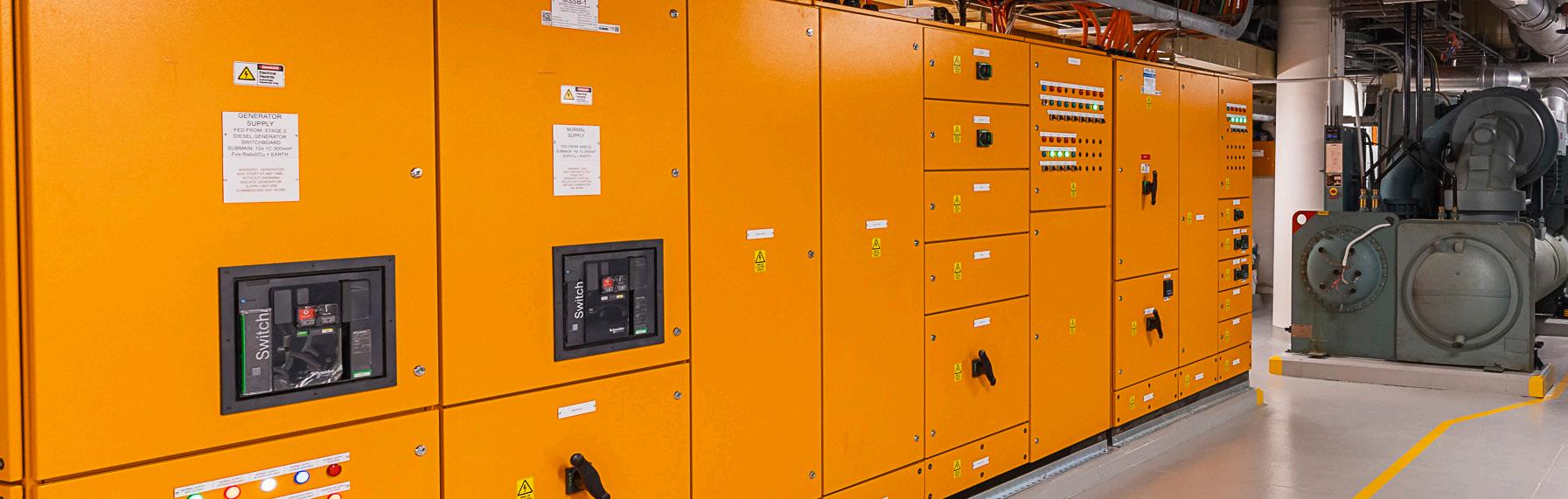
An arc flash is the rapid discharge of a large amount of energy and in some examples may cause the explosion of electrical cubicles or equipment. In these instances the circuit breaker protection may not operate.
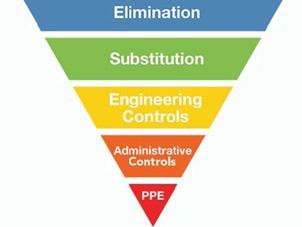
• Elimination - Switching off the device or equipment
• Substitution - Use of alternative power such as batteries or replacing switchboard with improved arc resistance construction
• Isolation or Separation - Provide warning or lock-out tags and switch-off or install barriers around the hazard
• Engineering - Design of disconnection devices to operate faster protection settings
• Administration - Have the correct permits / procedures and safe work practices in place i.e. Safe Work Method Statements (SWMS)
• PPE and Clothing - Least desirable approach which is to be introduced as an additional precautionary measure in conjunction with other controls.
Australian Standard AS/NZS 4836:2023 was developed in response to identified risks to workers from electric shock and arc flash. It provides guidance on safe working practices when working on or near low voltage electrical installations. Figure
In addition to endangering safety, any electric shock or arc flash incident may disrupt business operations due to equipment damage and/or loss of electrical supply.
Regulatory Obligations
Work Health and Safety Regulations identify that if electrical work is to be carried out on energised equipment, a competent person is to complete a risk assessment.
AS/NZS 4836 also provides guidance to the risk assessment process, detailing a hierarchy of control to determine the risk mitigation hazards. The controls identified within the standard include:
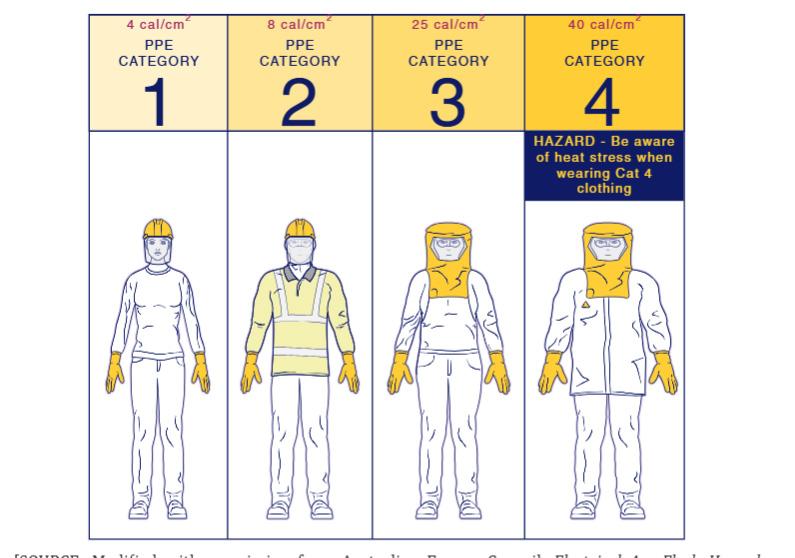
A thorough risk assessment should establish the incident energy which identifies the correct circuit breaker sizing and associated fault current rating, commonly provided with a kA rating. The incident energy is measured in calories per square centimeters (cal/cm2). Energy as low as 1.2 cal/cm2 can produce second degree burns and ignite materials such as cotton, therefore the correct PPE and clothing is imperative when working under these scenarios.
Following the assessment of the incident energy rating, the selection of the appropriate PPE is determined based on the resultant cal/cm2 value. Increased ratings will require different degrees of PPE and the appropriate clothing.
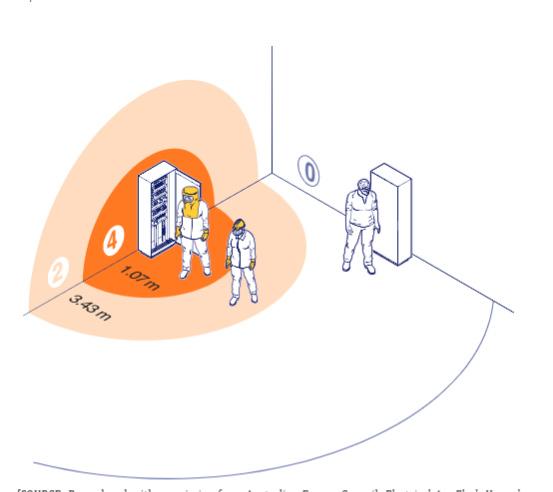
The assessment should also consider the arc flash boundary which identifies the affected distance from the flash source which helps establish the restricted area or zone around the electrical equipment with and without PPE applied.
Following the assessment of the arc flash including the arc flash boundary and incident energy level, an appropriate label should to be applied indicating these values and the minimum level of PPE required.
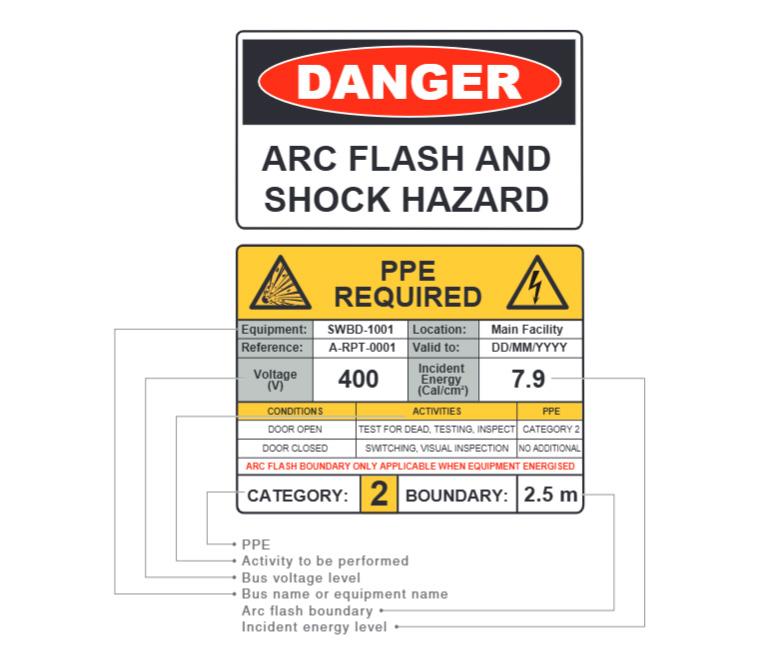
An arc flash register should be completed for each component of the electrical infrastructure. This provides the competent person with the information required to adequately mitigate and manage risks associated with working on electrical components. The information on the warning label includes:
• Fault level calculated at the switchboard
• Voltage phase to earth value at the switchboard
• Working Distance around the switchboard which has been assessed
• Open Panel Arc Flash Energy (cal/m2 value) at the stated working distance
• PPE Category level of minimum PPE required
• Arc Flash Boundary minimum distance from the board a person must be when no PPE is applied.
For further guidance on safe working around electrical equipment, please contact:
John Topouzakis Discipline Leader - Electrical A.G. Coombs Advisory
+61 3 9248 2700 jtopouzakis@agcoombs.com.au
Figure 2. Arc Flash PPE
Adapted from AS/NZS 4836:2023
Figure 3. Arc Flash Boundary
Adapted from AS/NZS 4836:2023
Figure 4. Arc Flash & Shock Hazard Signage
Adapted from AS/NZS 4836:2023