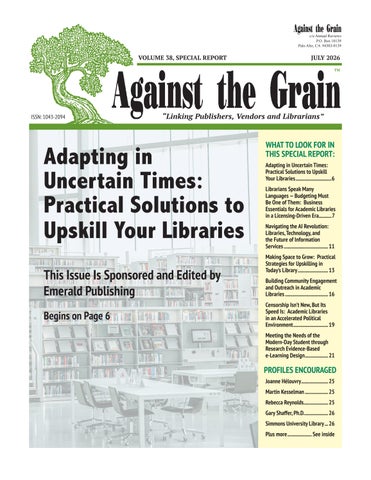

Adapting in Uncertain Times: Practical Solutions to Upskill Your Libraries
About Katina
Katina is a digital publication that uniquely addresses the value of librarians to society and elevates their role as trusted stewards of knowledge. Named after Katina Strauch, the visionary founder of the Charleston Conference, it is written by and for the international communities of librarians, vendors, and publishers.
Katina’s mission is to improve library and information science and inspire a sense of fulfillment among its worldwide professionals. It delivers content that is easy to understand, engaging, informative, and accurate, covering key topics, emerging trends, and transformative technologies and products, while also exploring the ongoing evolution of library practice. It covers key topics, emerging trends, transformative technologies, and library resources, and offers guidance on career and organizational development. By celebrating librarian contributions to open science, scholarship, and the enrichment of society, Katina aims to provide a springboard for community discussion and engagement through three content sections.
Tiered institutional subscription pricing for 2026 is:
$595 for MLIS schools and very high research output institutions
$395 for all other PhD, Masters, and 4-year institutions
$295 for 2-year institutions
Katina Features and Editors:

Editor-in-Chief: Curtis Brundy
Dean of University Libraries, University of Massachusetts Amhurst cbrundy@umass.edu
The Future of Work: Offers practical insight into the technologies, skills, and strategies shaping library practice in a rapidly changing world.
Interim Senior Editor: Curtis Brundy Katina-Work@Annualreviews.org


Resource Reviews: Builds on the groundwork set by The Charleston Advisor to provide critical reviews of products and resources for the information industry.
Senior Editor: Jill Emery
Collection Development and Management Librarian, Portland State University
Katina-Reviews@annualreviews.org
Open Knowledge: Addresses the evolving roles of libraries and librarians and their contributions towards an open knowledge ecosystem.
Senior Editor: Kate McCready
Program Director for Open Publishing, Big Ten Academic Alliance
Katina-Open@annualreviews.org
Leah Hinds, Managing Editor and Executive Director, lhinds@annualreviews.org
Elizabeth Weiss, Associate Managing Editor, eweiss@annualreviews.org
KATINA IS PUBLISHING UNDER THE SUBSCRIBE TO OPEN (S2O) PROGRAM


Against the Grain (ISSN: 1043-2094), Copyright 2026 by the name Against the Grain is published five times a year in February, April, June, September, and November by Annual Reviews. Mailing Address: Annual Reviews, PO Box 10139, Palo Alto, CA 94303-0139. Subscribe online at https://www.charleston-hub.com/ membership-options/
Editor Emerita:
Katina Strauch (College of Charleston, Retired)
Editor: Leah Hinds (Charleston Hub)
Manager:
Caroline Goldsmith (Charleston Hub)
Research Editor:
Judy Luther (Informed Strategies)
International Editor:
Rossana Morriello (Politecnico di Torino)
Contributing Editors:
Glenda Alvin (Tennessee State University)
Rick Anderson (Brigham Young University)
Sever Bordeianu (U. of New Mexico)
Todd Carpenter (NISO)
Ashley Krenelka Chase (Stetson Univ. College of Law)
Eleanor Cook (East Carolina University)
Kyle K. Courtney (Harvard University)
Cris Ferguson (Murray State)
Michelle Flinchbaugh (U. of MD Baltimore County)
Dr. Sven Fund (Fullstopp)
Tom Gilson (College of Charleston, Retired)
Michael Gruenberg (Gruenberg Consulting, LLC)
Bob Holley (Wayne State University, Retired)
Matthew Ismail (Charleston Briefings)
Donna Jacobs (MUSC, Retired)
Ramune Kubilius (Northwestern University)
Myer Kutz (Myer Kutz Associates, Inc.)
Tom Leonhardt (Retired)
Jack Montgomery (Retired)
Lesley Rice Montgomery (Tulane University)
Bob Nardini (Retired)
Jim O’Donnell (Arizona State University)
Ann Okerson (Center for Research Libraries)
David Parker (Lived Places Publishing)
Genevieve Robinson (IGI Global)
Steve Rosato (OverDrive Academic)
Jared Seay (College of Charleston)
Corey Seeman (University of Michigan)
Bruce Strauch (The Citadel, Emeritus)
Lindsay Wertman (IGI Global)
Copy Editor/Proofreader:
Marci Cohen (Boston University, Retired) Graphics:
Bowles & Carver, Old English Cuts & Illustrations. Grafton, More Silhouettes. Ehmcke, Graphic Trade Symbols By German Designers. Grafton, Ready-to-Use Old-Fashioned Illustrations. The Chap Book Style.
Publisher:
Annual Reviews, PO Box 10139 Palo Alto, CA 94303-0139
Production & Ad Sales: Toni Nix, Just Right Group, LLC., P.O. Box 412, Cottageville, SC 29435, phone: 843-835-8604
<justwrite@lowcountry.com>
Advertising Information: Toni Nix, phone: 843-835-8604
<justwrite@lowcountry.com>
Send correspondence, press releases, etc., to: Leah Hinds, Editor, Against the Grain <leah@charlestonlibraryconference.com>
Authors’ opinions are to be regarded as their own. All rights reserved. Produced in the United States of America. Against the Grain is copyright ©2026
AGAINST THE GRAIN – ISSUE HIGHLIGHTS
FEATURED ARTICLES
PROFILES ENCOURAGED
Toni Nix, Advertising Manager, Against the Grain, Charleston Hub <justwrite@lowcountry.com>
AGAINST THE GRAIN ADVERTISING DEADLINES
VOLUME 38 — 2026 Issue Ad Reservation Camera-Ready February 2026 01/08/26 01/22/26
April 2026 02/19/26 03/12/26
June 2026 04/16/26 05/07/26
September 2026 06/11/26 07/09/26
November 2026 08/20/26 09/10/26

Own the future of physics with Frontlist Perpetual Rights
For the first time, APS is offering Frontlist Perpetual Rights , allowing institutions to purchase ownership of an upcoming year’s content along with their subscription renewal. Ownership is permanent. Institutions can opt-in or out on an annual basis with no obligation to purchase in the future and no on-going access fees. Once you own a Frontlist, it’s yours forever, period.
Ready to get started? Meet with one of our representatives to start building the package that best suits your needs.
https://promo.aps.org/fpr
Adapting in Uncertain Times: Practical Solutions to Upskill Your Libraries
By Doug Medland (Senior Regional Marketing Manager, Americas, Emerald Publishing, Floor 5, Northspring, 21-23 Wellington Street, Leeds LS1 4DL) <dmedland@emerald.com> emerald.com
From recent conversations with our community, we know librarians have a great deal of confidence in their ability to serve patrons, but less than half feel they have sufficient time or resources for upskilling, career development or student outreach. Even less feel they can keep up with the changes in technology and socio-political challenges that are rapidly transforming their role.
In this special issue, Emerald turns to its own community of authors, editors, and librarians to see if they might have the answers.
The issue starts with business expert Dr. Gary Shaffer discussing the importance of budgeting in a licensing-driven era, and how librarians must all learn to speak it. Martin Kesselman, Editor of Library Hi Tech News , then tackles perhaps the most prevalent topic of today, the AI revolution, and its impact on libraries and their futures. This is followed by an article from Library Director Vivienne B. Piroli and her colleagues Kelsey M. Kolbet and Lena Serpa Kilburn from Simmons University Library offering practical strategies for librarians who struggle to find time to upskill in today’s busy climate. Joanne Hélouvry, Editorial Board Member of the Advances in Library Administration and Organization book series,
then explores the effectiveness and importance of building community engagement and outreach in academic libraries, using recent case studies from libraries such as Loyola Notre Dame Library and Johns Hopkins. This is followed by an article from John Chrastka, Executive Director at EveryLibrary, offering response strategies for libraries dealing with academic censorship in an accelerated political environment. Finally, Dr. Rebecca B. Reynolds, Editor of Information and Learning Sciences, concludes the issue by exploring how academic libraries can continue to meet the needs of the modern-day student in this new tech-driven era.
The aim of this issue is to provide practical and accessible strategies for librarians dealing with increasingly complex pressures and rapid change. It is our hope that this issue encourages further dialogue amongst our communities and provides some useful tips and tricks which librarians can adopt. We hope you enjoy and encourage you to share any thoughts and feedback with us at contactemerald@emerald.com.
<https://www.charleston-hub.com/media/atg/>
Librarians Speak Many Languages — Budgeting Must Be One of Them: Business Essentials for Academic Libraries in a Licensing-Driven Era
By Gary Shaffer, Ph.D. (Assistant Professor of Library Leadership and Administration, San José State University’s School of Information) <gary.shaffer@sjsu.edu>
Librarians are fluent in instruction, discovery, and access. But one language still often gets sidelined: money.
That’s a problem. After all, libraries do not simply curate knowledge; they allocate scarce capital. As ACRL notes, libraries make investments of time, resources, and energy in order to bring about positive impact (ACRL, 2017).
Every journal package, database, eBook collection, and publisher agreement is a financial decision, often a longterm one. Understanding cost models, return of investment (ROI), and vendor negotiation strategies aren’t a distraction from the mission. It’s how the mission survives. In a climate of rising costs, flat budgets, and rapidly evolving publishing models, business acumen is no longer optional. It is core library work.
The Reality: Libraries Don’t Just Buy Databases Anymore.
For years, spending decisions were framed solely around databases and physical books. That frame obviously exists no longer. What’s changed is complexity. Libraries are no longer just selecting resources; they are navigating an interconnected licensing ecosystem that shapes access.
Today, libraries manage a mix of:
• Database subscriptions
• Publisher packages (“big deals”)
• Open access licensing agreements
• Consortial negotiations
• Perpetual vs. subscription access rights
• Read-and-publish1 and open publishing agreements2
Each comes with different costs, risks, and exit conditions.
Frazier’s (2001) warning about bundled journal deals limiting flexibility still holds, more than two decades later. Despite advances in usage data and assessment tools, libraries continue to face the same structural tension: rising costs, constrained budgets, and limited control over subscription-based resources. Contemporary pricing analyses continue to question whether library budgets can keep pace with the cost of scholarly publishing (Bosch et al., 2023).
At the same time, expectations are increasing. Librarians are asked to support research, adapt to AI-enabled tools, and demonstrate impact, often without the time or training to fully engage in financial strategy (Frederick & Wolff-Eisenberg, 2020).
The gap is clear: high-stakes financial decisions and limited capacity to approach them strategically.

What Business Acumen Actually Looks Like
This isn’t about becoming a finance expert. It’s about asking sharper questions, using data with context, and knowing when to push or walk away.
Four areas matter most:
1. Know What You’re
Paying For (and What You’re Not)
Licenses can look similar while functioning very differently.
Ask:
• Are you paying for access, ownership, or publishing rights?
• What do you keep if you cancel?
• Are there built-in annual increases?
• Are open access rights included or extra?
• Are new costs creeping in (e.g., AI features)?
This applies across institutions. A liberal arts college and an R1 may prioritize different outcomes, but both need clarity on what their dollars actually secure.
Without that, you’re not managing a collection, you’re inheriting commitments.
2. Stop Treating Usage as the Answer
Usage data is easy to get and also easy to misuse.
High use doesn’t automatically mean high value. Low use doesn’t automatically justify cancellation.
Stronger decisions combine:
• Cost-per-use over multiple years
• Program and curriculum alignment
• Institutional priorities (teaching vs. research intensity)
• Strategic importance (e.g., grant support, accreditation)
Value is contextual. What’s essential at a research-intensive university may be optional elsewhere.
The uncomfortable test:
If you wouldn’t buy it today, why are you still paying for it?
Public libraries have long done this, balancing demand, equity, and cost across communities (Jaeger et al., 2014). Academic libraries face different pressures, but the principle holds: value has to be explained, not assumed. See Case Study 1 (Public Library).
3. Negotiation Is Not Optional
Many librarians assume vendors hold all the leverage. That is not entirely true.
<https://www.charleston-hub.com/media/atg/>
Case Study 1 (Public Library)
Large urban public libraries often maintain extensive research collections, while smaller or mid-sized systems rely more heavily on popular materials and shared regional access for specialized resources. One mid-sized urban library conducted a cost-per-use analysis of a research database in its collection and found that usage was extremely low relative to cost.
The analysis revealed an average cost per use exceeding $75, while the library’s annual per-resident cost of service for all library services available to all residents was approximately $65. In other words, one use of the database by one customer, outstripped the average cost of serving one customer for an entire year. After notifying stakeholders of the findings, the library elected not to renew the database. This decision reflected a strategic reallocation of resources toward services with broader community impact.
Leverage comes from:
• Data (usage, cost, impact)
• Clarity about priorities
• Timing and coordination (especially through consortia)
• Willingness to say no
Consortia can strengthen negotiating power, but they are not a guarantee of favorable terms. Some institutions achieve strong outcomes independently; others benefit most from collective agreements. What matters most is preparation. Negotiation is both analytical and relational. It requires not only understanding how pricing works but also knowing when a deal no longer aligns with your institution’s needs.
At the same time, the terms themselves are evolving. New clauses and restrictions related to AI-enabled tools (e.g., content use and text and data mining) are increasingly appearing in vendor agreements, and vendors are beginning to position AI-assisted discovery, summarization, and research tools as premium or add-on services rather than standard functionality (Enis, 2025). In parallel, the International Coalition of Library Consortia (ICOLC) has cautioned against overly restrictive AI licensing provisions that could limit lawful research, teaching, and accessibility uses. These shifts reinforce a broader point: effective negotiation is no longer just about price. It is also about shaping the terms of access, use, and future capabilities.
In some cases, libraries have chosen not to renew major agreements, looking at other modifications, such as breaking big-deal packages, going à-la-carte, and/or relying more heavily on ILL, when terms became unsustainable. While not always feasible, the willingness to consider options often changes the negotiation dynamic.
4. Make the Tradeoffs Visible
Most stakeholders experience library access as seamless. The tradeoffs behind it are invisible.
That’s a problem.
Libraries that communicate clearly about cost and value tend to make stronger decisions:
• Sharing cost-per-use data with faculty
• Explaining what is gained, or lost, in renewals
• Framing cancellations as reallocations, not failures
This doesn’t eliminate pushback but it does make the pushback informed. See Case Study 2 (Academic Library).
What Works (and What Doesn’t)
What works:
• Reviewing licenses regularly, not just at renewal
• Defining institutional priorities before negotiating
• Using data and context
• Entering conversations with clear goals What doesn’t:
• Letting agreements auto-renew
• Treating usage as the only metric
• Paying for prestige
• Avoiding hard decisions to prevent complaints
Avoiding short-term discomfort is how long-term problems grow.
Five Practical Actions You Can Take This Semester
Once a week, pick a day that works best with your calendar and, with coffee or tea in hand, before you even look at your email or return any messages, spend 45 minutes doing one of the following:
1. Run one serious cost-per-use review. Examine at least three years of data. Pair it with program alignment.
2. Audit one license line by line. Identify cancellation terms, price increases, and access rights. Note one thing you’d negotiate next time. Consider using AI to do this.
Case Study 2 (Academic Library)
One West Coast academic library adopted a novel approach to managing article requests not covered by its subscriptions. When a patron identified an article of need, and the library did not have it as part of its print or electronic collections, the patron was given the choice to request it through the traditional method of interlibrary loan or via expedited service. The costs for each delivery method were shared with the patron. If they chose expedited service, it created an unmediated request to purchase the article which would be delivered in minutes.
However, often, the patron, now knowing the cost, would opt for slower delivery. While the financial savings did not directly affect the patron, many demonstrated sensitivity to institutional costs once those costs were made transparent. This said, the library’s turnaround time for ILL was impressive (i.e., approximately 75% of requests were filled within 24 hours and 90% within 48 hours). Once other academic libraries learned of this method, they often adopted it. Eventually, at least one vendor created an article delivery service based on this practice.
<https://www.charleston-hub.com/media/atg/>
Seamless
access, delivered securely, trusted worldwide.

OpenAthens Compass is a premium library single sign-on solution that provides seamless access to digital resources on and off campus. Designed for complex systems, built for librarians, trusted by over 3,200 organizations worldwide.

3. Define your “must-haves.”
Be explicit: what can’t you lose? Everything else is negotiable. Consider developing a library-wide set of principles to guide negotiations.
4. Have one focused vendor conversation. Go in with a clear ask (e.g., price cap, flexibility, or reduced scope) and supporting data.
5. Create and share a one-page value summary. Show cost, usage, and purpose. Use it to start, not end, a conversation.
After the semester, or at review time, be sure to share these activities and any associated savings or improved outcomes with your supervisor.
Closing: Stewardship Means Making the Call
Libraries are not just managing resources anymore. They are managing investments (financial, intellectual property, and institutional). Business acumen doesn’t mean abandoning values. It means applying them under constraint. You won’t get every decision right. That’s not the goal. The goal is to stop defaulting to renewals, to assumptions, to “we’ve always had this.” Because the fastest way to lose control of your collection isn’t a bad deal, it’s avoiding the decision altogether.
References
Adelphi University. (2026). Open access and scholarly communication: OA publishing agreements. https:// libguides.adelphi.edu/openaccess-scholarlycommunication/ openaccessagreements
Association of College and Research Libraries. (2017). Academic library impact on student learning and success: Findings from assessment in action team projects. Chicago, IL: Association of College and Research Libraries.
Bosch, S., Romaine, S., Albee, B., & Elliott, C. M. (2023, April 11). Going for gold, deep in the red: Periodicals price survey. Library Journal, 148(4), 32-37.
Enis, M. (2025, June 9). Highly recommended: Latest advances in discovery at libraries. Library Journal , 150 (9). https://www.libraryjournal.com/story/highly-recommendedlatest-advances-in-discovery-at-libraries
Frazier, K. (2001). The librarians’ dilemma: Contemplating the costs of the “big deal.” D-Lib Magazine, 7(3). https://www. dlib.org/dlib/march01/frazier/03frazier.html
Frederick, J. K., & Wolff-Eisenberg, C. (2020). Academic library strategy and budgeting during the COVID-19 pandemic Ithaka S+R. https://sr.ithaka.org/wp-content/uploads/2020/12/ SR-Report-Academic-Library-Strategy-and-Budgeting-Duringthe-COVID-19-Pandemic-120920.pdf
International Coalition of Library Consortia. (2024). ICOLC Statement on AI in Licensing https://www.icolc.net/statements/ icolc-statement-ai-licensing
Jaeger, P. T., Gorham, U., Bertot, J. C., & Sarin, L. C. (2014). Public libraries, public policies, and political processes. Lanham, MD: Rowman & Littlefield.
University of Louisville. (2025). University Libraries –Open Access. https://library.louisville.edu/open-access/ read-publish
Endnotes
1. Read-and-publish agreements. University of Louisville (2025). Contract negotiations with academic libraries and publishers which provide discounts or waivers for Article Processing Charges to publish open access in eligible journals based on their current subscriptions. These agreements are sometimes referred to as transformative agreements.
2. Open publishing agreements. Adelphi University (2026). Contracts negotiated between academic libraries and publishers that shift costs from individual subscription fees to institutional payments, allowing researchers at that institution to publish their articles open access (OA) without paying expensive individual article processing charges.
Author Bio
Gary Shaffer, Ph.D. is the Assistant Professor of Library Leadership and Administration at San José State University’s School of Information. He is a former Assistant Dean at the University of Southern California Libraries and former director of the USC Center for Library Leadership and Management. He is also the former President of the California Library Association. His research explores how library leaders overcome challenges using emotional intelligence and resilience. He is the author of the book Emotional Intelligence and Critical Thinking for Library Leaders
<https://www.charleston-hub.com/media/atg/>
Navigating the AI Revolution: Libraries, Technology, and the Future of Information Services
By Martin Kesselman (Professor Emeritus, Rutgers University Libraries and Editor, Library Hi Tech News) <martyk@scarletmail.rutgers.edu>
By the time you read this, some reflections may already be outdated. AI is evolving rapidly, making it essential to stay informed. For libraries, this brings both opportunities and challenges that affect our communities. Early in my career, there were no internet or mobile phones, and computers were not yet mainstream. We relied on collaboration and print resources. As technology advanced, librarians remained gatekeepers to online resources due to high costs, primarily serving faculty, graduate students, and other researchers.
The rise of Google, end user searching of databases, access to ejournals and other tools and resources, provided increased access to online information and allowed users to become more independent. The widespread adoption of mobile devices further allowed users to access information anytime, anywhere. As technology advanced, libraries shifted from being primary information centers to serving more as community meeting spaces. Many experienced librarians noticed a decline of users coming into the library for assistance and were slow to adapt to change, remaining closely tied to the physical building. When academic users stopped visiting, we needed to find new ways to engage them.
While academic libraries experienced their own transitions, public libraries faced different challenges. With less hierarchy, public libraries adopted new technologies more quickly, introducing makerspaces and 3D printers two years earlier than academic libraries. Community engagement has always been central to public libraries, from bookmobiles to book clubs, language classes, and entrepreneurial groups. In developing countries, libraries often serve as vital information centers, particularly for agriculture and health. Academic librarians, by contrast, were slower to engage users outside the library building. Over time, however, many became embedded in departments, research teams, and even patient care, creating new opportunities for collaboration with faculty.
With AI, there are many shared global challenges. The volume of available information has increased, as has the spread of misinformation. Librarians now play an even more critical role in teaching critical thinking skills to our user communities. As AI tools like Google, ChatGPT, Perplexity, Gemini, Claude, and Microsoft Co Pilot and others are becoming more advanced, new challenges and opportunities have emerged. To provide effective, proactive services, we must keep pace with ongoing developments and remain adaptable. Some librarians and our users are concerned about job losses as technology advances. However, AI also presents significant opportunities.
The library field is evolving rapidly. Library Hi Tech News, which I edit, and other specialized online newsletters now publish accepted papers quickly with DOIs, making them accessible and downloadable. There is a great diversity of topics in Library Hi Tech News that demonstrate how AI has created new opportunities worldwide. Some examples of topics include AI read-aloud tools, librarian and user competencies, digital
culture preservation, ethics, women’s empowerment, experiences from developing countries, cybersecurity, website creation, misinformation, AI and social media, inventory management, community engagement, and digital storytelling.
Communities worldwide are faced with several dilemmas of information overload and misinformation that, in some cases, has created many dilemmas, especially for young people. Children may become addicted to misinformation, often with disastrous results. A case in point is the app “Character AI Chat: Talk and Text” or the website talkie-ai.com, where anyone can select or create and role-play with very realistic chatbots that appear to be doctors, psychologists and, yes, even librarians. The Texas State Library (tsl-texas.gov) reported on Texas House Bill 149, which includes libraries and others to provide clear, plain language when AI is used for public-facing services. AI and social networks have attracted many more advocates for safeguards in their use. This is also an area in which the libraries can have an important leadership role.
Many librarians, particularly public librarians, do not publish in traditional media. Instead, they and many others actively share up-to-date knowledge through conference presentations and posters which are valuable sources for case studies, new ideas, and innovative programs not found in traditional publications. Librarians should move beyond traditional silos of academic, public, and corporate libraries as challenges now span all library types in a connected digital world. Poster sessions from ALA, IFLA, and other library conferences are free on their websites.
Staying informed is essential, and there are many resources available. One valuable free resource is Shelly Palmer’s (shellypalmer.com) free daily newsletter, “Think About This.” Palmer, a professor of Media at Syracuse University, is a consultant on technology strategies and a frequent speaker at major conferences. He also offers a website with a meta academy and free resource center. There are also several Shelly Palmer YouTube videos of his numerous presentations.
As one example of immediacy, a blog post from just five days ago, as I write this paper, reviewed Google updates to AI Modes and AI Overviews. Google will now be expanded to news and other content from publishers through links to information about published articles that may be behind paywalls. This move will promote publisher content that has decreased in Google AI searches. These new features, including Explore New Angles, Publisher Website Previews, and Community Perspectives, let publishers connect subscription content into search results.
Palmer emphasizes the importance of hands-on experience. He recommends keeping a window of any AI tool you want to use open during your workday to experiment and learn. Using a paid version can reveal the full capabilities of these tools. He also advises being clear and concise in your queries, providing
<https://www.charleston-hub.com/media/atg/>
your own content for deeper follow-up, and asking open-ended questions. Checking for clarity and accuracy is essential, especially when teaching critical thinking. You can even ask AI tools to teach you how to use them effectively.
Another great resource is the free to attend, Generative AI in Libraries (GAIL). The third virtual conference held from July 1316. Previous GAIL conference presentations, panel discussions, demonstrations, lightning, talks, workshops and other resources are available on the GAIL website, shsulibraryguides.org. Many are also available on their YouTube channel.
A good resource is a 60-page document from a workshop, Strategic Implications of AI Futures for Research Libraries (available at arl.org) prepared jointly by the Association of Research Libraries and the Coalition for Networked Information (arl.org). Although it is almost 2 years old, the document deals with major issues that are still valid today such as workforce development, leveraging unique collections, leadership in governance and ethics, and building and deepening partnerships. ARL also has a Futurescape Library Toolkit.
Many library associations dedicate pages on their websites related to libraries. Here are some to look at: the International Federation of Library Association has an Artificial Intelligence Special Interest Groups and also within IFLA there is a dedicated project site focusing on AI in Collection Development and a Literacy and Innovation Webinar Series. The American Library Association also has an AI and Machine Learning Interest Group and an Artificial Intelligence Trend Microsite. Within ALA, the Association of College and Research Libraries has an AI Hub and community of practices site with competency guidelines and collaborative spaces. OCLC has an AI for Libraries Hub. Local public libraries, such as the one in Edison, New Jersey, have a hands-on workshop on AI, and the Job Search has one example. There are too many country-specific professional groups beyond the U.S. to investigate that I have not yet explored.
Librarians should embrace creativity and innovation by experimenting with ideas for current services and thinking about new services without self-criticism to generate new ideas and opportunities. It is increasingly important to look beyond traditional silos and explore how AI is used across sectors, including businesses and campus departments. Attending non-library events, like the Consumer Electronics Show, can inspire ideas for library applications. Engaging with vendors also helps raise awareness of the library market and its needs. For example, Shelly Palmer’s blog recently highlighted that AI tools can now replace traditional operating systems. Claude’s Cowork platform can organize, rename, and sort files, maintaining order even when you step away. Many AI tools offer or will soon offer similar features, though some require technical expertise to implement plugins and APIs.
In summary, here are some actions librarians might consider taking in this fast-moving AI environment.
1. Keeping up to date is critical. AI not only affects our profession but also the communities we serve. Go beyond traditional publications; that may be good for ideas but can be out of date quickly. Participate in virtual conferences and discussion groups. Go beyond library associations and see what is happening in organizations outside of our profession. With AI, we all share similar challenges and opportunities.
2. Play with the technology and experiment beyond your comfort zone. New ideas, imagination and creativity skills are more critical than even. Just as there are word processors, there are idea processors and many online creativity tools.
3. Outreach and community engagement allow others to view librarians in a new light. Teaching critical thinking skills has always been an important role for librarians and is now more important than ever before with an increasing deluge of information and misinformation.
4. Advocate for ethical uses of AI, promote the increased need for safeguards and guardrails and the need for privacy to management, government, and other stakeholders. Librarians are well poised for new leadership roles.
5. Let go of fears of AI and change. It is now or will be part of many things we do and is a constant moving target. Talk to one another and seek out experts outside of the library. Get out of the library and become embedded with the departments or other community groups you serve. Collaborating with others, many with different perspectives, creates a synergy of new ideas and opportunities.
Some fear that AI will replace the work of libraries, while some tasks will soon be automated by machines and robots, except those that involve human interactions. New roles and technology we cannot yet imagine will also emerge. Continually reassess your work, adapt, re-engineer your thinking and remain relevant. We all need to remain positive during this exciting time for libraries and the communities we serve.
<https://www.charleston-hub.com/media/atg/>
Making Space to Grow: Practical Strategies for Upskilling in Today’s Library
By Vivienne B. Piroli, Ed.D., MLIS (Library Director, Simmons University Library) <vivienne.piroli@simmons.edu>
and Kelsey M. Kolbet, MA, MLIS (University Archivist, Simmons University Archives) <kelsey.kolbet@simmons.edu> and Lena Serpa Kilburn, MLIS (Deputy Director, Simmons University Library) <kilburn@simmons.edu>
Libraries operate within rapidly changing informational, technological, and community environments. As services, user expectations, and professional responsibilities evolve, library workers are increasingly expected to adapt alongside them. Ongoing professional learning, therefore, has become an essential component of contemporary library work. Rather than representing a fixed body of expertise, librarianship increasingly requires flexibility, responsiveness, and the ability to develop and advance one’s competencies over time.
Within this context, the concept of upskilling has gained relevance across the profession. Upskilling refers to the ongoing, iterative process of developing new knowledge, abilities, and professional competencies in response to changing workplace needs and responsibilities. In libraries, upskilling may include learning new technologies and digital tools, strengthening communication or leadership skills, developing instructional practices, or adapting to evolving service models. It is essential to recognize that upskilling is not limited to formal education or structured training programs. Indeed, it also occurs through collaborative learning, mentorship, self-directed exploration, and everyday professional experience.
The importance of upskilling within library work is closely tied to the profession’s service-oriented nature. Library workers routinely respond to new technologies, changing patterns of information access, evolving community expectations, and institutional priorities. Continuous learning helps staff remain responsive within these changing environments while also ensuring effective public service for patrons. At the same time, upskilling can contribute to worker confidence, collaboration, and career growth.
This article is grounded in a recent research study funded by the Simmons Center for Information Literacy that explored professional development needs among a diverse range of library workers within an urban, multi-system library environment. Through an analysis of workers’ experiences and understandings of professional development, the study offers insight into the opportunities, challenges, and priorities that shape upskilling in contemporary library work. The sections that follow explore

not only challenges to upskilling but also practical solutions to such problems, informed by perspectives demonstrated during the study.
Issues and Challenges to Upskilling
Many libraries are committed in principle to professional development and offering upskilling opportunities for staff. In practice, there are structural and budgetary constraints that can impede the successful delivery of that commitment. Some of these limitations were revealed in the findings from the focus groups conducted for the research study.

Libraries operate with very fine budget margins and to compensate for increasing costs, monies for training and skill development are often reduced and even eliminated in favor of retaining adequate funding for materials and services. Reductions to staffing levels often result in library staff taking on additional responsibilities and duties and the available time for training and upskilling becomes even more limited. Staff are then faced with the option of doing development work on their own time, if at all.
Even when ideal conditions related to funding and time exist, there may be obstacles to securing the needed and most suitable support. Email inboxes are frequently filled with offers of workshops, webinars, and symposia. Knowing which one will offer the most useful content and the opportunity to learn is not always clear in the prospectus. The background, expertise, and sponsorship of these learning opportunities can also lack transparency. It can be difficult to predict what will produce a fulfilling learning experience and demonstrate a prudent use of precious funds.
The task of approving requests for professional development generally falls to managers and supervisors, and it can be a complex task given the general desire to be equitable in distributing opportunity broadly throughout the library staff. This is further compounded if there is misalignment between library managers and staff around support and expectations for
Author Bio
Vivienne Piroli is the director of the Simmons University Library. In this role, she charts the course of the University Library in service of teaching, learning, and student scholarship. She is an adjunct faculty member in the Simmons University School of Library and Information Science and has published and presented on information literacy and assessment in academic librarianship. She is a member of the steering committee for the Simmons Center for Information Literacy. She serves on the Board of Directors for the Fenway Library Organization, and represents Simmons in the Oberlin Group of Libraries.
<https://www.charleston-hub.com/media/atg/>
Author Bio

Kelsey Kolbet is the University Archivist at the Simmons University Archives. In this capacity, she engages the Simmons community through thoughtful and creative work with the past, grounded in the belief that archival engagement is essential to creating more just futures for all. She is passionate about advancing this mission through the preservation of, and access to, diverse historical records. Kelsey is also an adjunct faculty member in the Simmons University School of Library and Information Science, where she teaches courses focused on access and use of archival collections within the framework of archival description and ethical representation.
continued learning and skills attainment. This decision-making process becomes opaque when the mission and objectives of the library are unclear, unknown, or disconnected from general work practice. Tying upskilling to goals, outcomes, and position responsibilities allows for a fair and reasonable allocation of resources and minimizes the risk for uneven adoption of skills or initiatives which can impact the quality of patron service.
While upskilling is a critical part of library staff development, its greatest relevance is to ensure continued library value for patrons. The breadth of advancement and the attendant consequences for digital services, information literacy, and social needs is happening at a rate that outpaces any single library or organization’s ability to match it. Keen attention to patron needs and sound prioritization can assist libraries in determining what development activities will benefit both library staff and the patrons they serve.
Practical Solutions
The good news is that opportunities for learning and development may be closer than we think. Active engagement with patrons, colleagues, and partners, both internal and external, creates the impetus for librarians to develop the tools and skills necessary to deliver emerging and essential resources and services. Integrating development opportunities as a requirement of fulfilling job obligations and augmented by collaborations with internal and external colleagues can lead to simultaneous productivity and professional development.
Library consortia and networks, in addition to professional associations and organizations, can provide valuable opportunities and funding for learning. Library consortia and professional associations are trusted organizations that frequently provide free or discounted workshops and seminars that are vetted and align with professional priorities. Additionally, these organizations and groups are excellent resources for procuring or discovering funding opportunities for professional development and learning, with many providing inhouse funded grants or pathways to external grant opportunities.
Membership in library consortia has the benefit of being an excellent resource for identifying colleagues to share the load on common goals and priorities. For academic librarians facing the challenge of teaching research skills and information literacy in the age of generative AI and Large Language Models, consortial collaborations can produce tangible outcomes. Establishing

communities of interest allows library staff with diverse skills, knowledge, and perspectives to exchange ideas and share resources in developing tools, guides, or policies relating to the use of AI in academic research and scholarship. Another approach is to convene a task force with the goal of creating toolkits to address broad scale needs such as diversity and equity in hiring. Recognizing that there are common priorities, goals, and needs across similar organizations and institutions and bringing library staff together to learn from one another can be a powerful method for upskilling.
We should not forget our own communities and campuses when considering resources and opportunities for learning and upskilling. Library goals are often closely aligned with many other institutional departments, offices, or centers and connected via the institutional mission. Academic libraries can partner with offices that support academic or student success to benefit from shared learning opportunities and build impactful services. Library initiatives surrounding student experience or student wellness are enhanced by knowledge and expertise provided by health services on campus. The quality and scope of library outreach and marketing can be greatly enhanced by tapping the knowledge of a campus development office or even student organizations. Existing opportunities for learning may come from the very courses and classes academic libraries work to support. Auditing or taking courses for credit is a great way to take advantage of the learning offered right in our institutions while also offering a chance to connect with students and build relationships with faculty.
Staff must feel empowered and encouraged to develop, create, and discover the opportunities for learning and development. Communication from administrators and managers setting these expectations is crucial. In addition, managers should ensure that staff are active members of library consortia and signed up for all relevant communications. Goal setting for staff that includes engaging in collaboration or membership in an external working group or task force will formalize these activities and help achieve partnerships that lead to fruitful outcomes.
Upskilling and professional development may seem wishful or even out of reach in these challenging times, but librarians are nothing if not resourceful and collaborative. Taking upskilling and development opportunities when they come is important, but there are many ways to intentionally create opportunities from the talent and knowledge all around us.
Author Bio
Lena Kilburn is the Library Deputy Director at Simmons University and an adjunct faculty member in the Simmons University School of Library and Information Science. With more than a decade of leadership experience across public and academic libraries, Lena is passionate about working across library sectors and institutions to create robust professional connections that ensure libraries remain vital, connected hubs of knowledge for all users.
<https://www.charleston-hub.com/media/atg/>
November 2 - 6 , 2026
Charleston, South Carolina, US

networking.
Thought-provoking plenaries, panels, lively discussions, posters, and workshops.
In-person registration includes access to vir tual week.
Registration opens June 11
Vendor Showcase
One day only, Nov 3, 10am5:30pm Your chance to connect with librarian decision makers f rom around the world.
Booth registration includes digital booth on the Whova app
Registration opens June 9spaces are assigned f irst come f irst ser ved
Building Community Engagement and Outreach in Academic Libraries
By Joanne Hélouvry (Research and Instruction Librarian, Johns Hopkins University, Editorial Board Member of the Advances in Library Administration and Organization book series) <jhelouvry@jhu.edu>
The idea of outreach to our academic partners is not new. Collection development, programming and information literacy programs have been the hallmarks of research and instruction programs in academic libraries, but in order for it to be successful, leadership must take a role in guiding and supporting librarians and library staff in outreach to the university. ACRL has provided “Competencies for Academic Library Outreach Work,” as a guide for libraries to create and set up successful outreach programs using a framework that outlines skills and competencies allowing librarians to be successful at connecting with students, faculty, administration and staff (American Library Association, 2023). In 2022, I had the privilege of co-editing a book on this same topic, compiling chapters on how libraries can work with their communities to provide critical services and resources. The edition provides valuable insights about the diverse ways that outreach can be accomplished within and through our communities. With chapters on archives, health sciences outreach, working with the deaf, and outreach to new communities, the volume serves as a significant resource for both library managers, their staff, and their partners (Crowe & Hélouvry, 2022).
Outreach to Students
Modern outreach strategies prioritize the “whole student,” aligning services with the student journey lifecycle from pre-entry to graduation (Corrall, 2022). Now, as more of our work increasingly revolves around forming complex relationships and ongoing interactions, a more humanistic approach is required for growth and improvement (Mathews 2014, p. 461). Students are often introduced to the library within orientation week before classes even start. Librarians have become masters at partnering with first year experience programs, providing a look at the differing types of resources that libraries provide. Partnering with faculty to help students discover archives and special collections built around first year themes allows students to gain excitement about the library while orienting them and promoting conversation around diverse perspectives and lenses of looking at the world. Lawrimore, Gwynn and Kim state that archives and archivists must “approach all their outreach activities through a lens of power and equitable engagement [with the community]” (2022). This ties into the idea of marketing and publicizing our work.
Girton et al. suggest using a style of “empathetic marketing” to students which “provides a framework for exploring the subconscious emotions and innate core needs that drive people’s motivations and behavior” (2019). This strategy focuses on understanding the emotional needs of patrons to reduce “library anxiety” even before the student has recognized the need for help. Targeting to specific groups which have certain characteristics (sports, sleeplessness, etc.) can build connection and reframe
conversation and marketing publications to demonstrate how library services can meet students’ individual needs (2019).
Bayne-Lin and Shenk, Librarians at George Mason University, have advocated for getting out of our offices and into departments and school buildings, suggesting “pop-up office hours” in highly trafficked hallways or study spaces, whiteboard engagement at the library entry, and intensive planning of outreach strategy, mapping out a vision that matches the academic calendar (2024).
Faculty Outreach
We must also look at connectivity of librarian liaisons with faculty. Filgo and Been used a “Social Network Analysis” to identify and define how relationships function between the librarians and the campus community. Strengthened ties between them came from active committee work by librarians, work with functional specialists such as data directors and instructional technologists, and departmental overlap between librarians working in the same department. In contrast, lowerranked lecturers, remote campus partners and adjuncts are the least connected to library networks (2026). The use of curriculum mapping, identifying specific courses involving research skills which are being taught by these underconnected faculty, can help librarians target specific faculty. Curriculum mapping also builds connections and avoids both librarian and student burnout by ensuring that too many courses are not being taught within the same department or program to the same students.
Between 2013 and 2015, colleagues and I at Loyola Notre Dame Library (LNDL), a comprehensive level library, undertook a major review of our liaison program. We included all our liaisons in the preparation, having some develop faculty surveys while others performed literature reviews. The result was a redesigned two-year pilot structured as a three-phase program which morphed into a successful program of outreach to faculty. This pilot focused on moving outreach from an optional “addon” to a core responsibility of all librarians within the library. To establish trust and interest, the library awarded each new faculty member a $1,000 allotment for materials in their subject area, a tactic that saw a 98% success rate in fund utilization and early relationship building.
• Phase 1 involved professionalizing outreach and soft skills. Our primary objective was helping our liaisons develop the soft skills necessary for effective engagement. We focused on practical supports: creating scripts, running role-play exercises in our monthly meetings, and pairing staff members with those who were reluctant to reach out. We wanted to move librarians from seeing outreach as an optional “add-on” to a core responsibility of their jobs.
• Phase 2 broke down silos between our instruction librarians who had played the key role in outreach and
<https://www.charleston-hub.com/media/atg/>


librarians from collections, circulation and technical services who were also assigned liaison areas. We emphasized group-based work so we could pursue common goals and respond to interdisciplinary curricula. This collaborative mindset was essential to scaling our services effectively. At Johns Hopkins University, where I am now, we have three groups: humanities, social sciences and sciences. These groups meet monthly, allowing us to collaborate and identify priorities within the larger subject areas and discuss approaches to meeting the collection and outreach needs of our subject areas.
• Phase 3 involved reviewing data and feedback from librarians and faculty to assess strengths and identify areas for improvement. By analyzing statistics and feedback on successes and failures, we were able to present dashboards of measurable outcomes for faculty and administrators to demonstrate our impact.
To monitor work, LNDL librarians developed three checklists. These checklists were key in providing librarians with direction and guidance. The first was a list of individual expectations identifying clear deadlines for email, phone, and in-person outreach to new faculty. The second, a shared checklist recorded meeting dates and linked to helpful scripts for email and phone introductions as well as guidance on presenting to faculty at faculty meetings. This guidance was popular with librarians and was highly successful in encouraging discussion. The third, a spreadsheet of 18 services that could be offered to faculty, proved too complicated and required simplification and reworking. This liaison program was quite popular and the support from instruction librarians and administration was appreciated by all.

Expanding Liaison Roles
Looking ahead to how liaison roles are expanding to include eScience support, data management, and scholarly communication, it is no longer feasible for a single librarian to possess all necessary skills. This has led to the development of “Research Platform Teams” (RPT) that pool specialized expertise to provide deeper research support (Atkins et al., 2022). Some institutions have adopted “super-convergence,” structurally merging the library with IT, careers, and student welfare services to provide seamless, integrated support for the “whole student” (Corrall, 2022).
For distance and remote communities, the systematic review done by Hillman and Ward summarizes a plethora of articles on the necessity of “personalization.” Because remote faculty often miss standard communication channels, successful outreach requires partnerships with distance learning instructional technologists and staff at satellite campuses who serve as the primary point of contact. Integrating library resources directly into course management systems and using pedagogical frameworks like the Quality Matters (QM) rubric builds trust by speaking the same language as faculty (2023).
In conclusion, effective academic library outreach requires more than individual initiative; it depends on strategic leadership, intentional collaboration, and sustained institutional support. As libraries seek to serve the whole student, strengthen faculty partnerships, and reach remote or under-connected communities, outreach must be embedded into the core work of the library organization rather than treated as an optional or secondary activity for librarians. Empathetic marketing, curriculum mapping, liaison restructuring, and team-based
<https://www.charleston-hub.com/media/atg/>
research support all demonstrate ways that libraries can build meaningful relationships while aligning their services with institutional priorities.
The future of academic library outreach will require flexibility, assessment, and a willingness to meet users where they are. As liaison responsibilities continue to expand, libraries must rely on collaborative models that draw on shared expertise across departments and campus units. By combining empathy with evidence-based planning, academic libraries can demonstrate their value not only as providers of information but also as essential partners in teaching, learning, research, and student success.
References
American Library Association. (2023, October 30). Competencies for Academic Library Outreach Work | Association of College and Research Libraries . https://www.ala.org/acrl/ standards/outreach
Atkins, J., Badger, K., Jordan, C., Nelsen, H. G., Ozment, K., & Young, O. (2022). Translating Liaison Librarians to the Scientific Community. Journal of eScience Librarianship, 11(1). https://doi. org/10.7191/jeslib.2022.1229
Bayne-Lin, L., & Shenk, K. E. (2024). Layers of Instructional Outreach: Strategies for Grafting New Growth in the First Year of Liaison Librarianship. LOEX Quarterly, 50(4).
Corrall, S. (2022). The Social Mission of Academic Libraries in Higher Education. In P. Bracke, S. Corrall, & T. Schlak (Eds.), The Social Future of Academic Libraries: New Perspectives on Communities, Networks, and Engagement (pp. 109-148). Facet. https://doi.org/10.29085/9781783304738.007
Crowe, K. M., & Hélouvry, J. (Eds.). (2022). Building Community Engagement and Outreach in Libraries (Vol. 43). Emerald Publishing Limited. https://www.emerald.com/books/ edited-volume/13177/Building-Community-Engagement-andOutreach-in
Filgo, E. H., & Been, J. (2026). Social Network Analysis of Liaison Librarian Relationships. College & Research Libraries, 87(1), 94. https://doi.org/10.5860/crl.87.1.94
Girton, C., Smeraldi, A. M., & Starkey, J. (2019). Marketing to Their Needs: Utilizing Empathetic Marketing Techniques in Student Outreach. Public Services Quarterly, 15(2), 151-162. https://doi.org/10.1080/15228959.2019.1588834
Hillman, C. R., & Ward, L. (2023). Outreach to distance learning faculty: A scoping review. The Journal of Academic Librarianship , 49 (3), 102681. https://doi.org/10.1016/j. acalib.2023.102681
Lawrimore, E., Gwynn, D., & Krim, S. (2022). From Peripheral to Essential: The Evolution of Outreach as a Core Archival Function. In K. M. Crowe & J. Hélouvry (Eds.), Building Community Engagement and Outreach in Libraries (Vol. 43). Emerald Publishing Limited. https://doi.org/10.1108/S0732067120220000043005
Author Bio
Joanne Hélouvry is a Research and Instruction Librarian at Johns Hopkins University. She holds a Post-Masters Certificate of Advanced Study in Education (CASE) from Notre Dame of Maryland University and Masters in Library & Information Science from the University of WI-Milwaukee. Her work centers upon reference, collection development, and instruction outreach to faculty and students in the School of Education and the Psychological and Brain Sciences, Cognitive Science & Neurosciences departments. Outside of Johns Hopkins, Joanne serves on the editorial board of the Advances in Library Administration and Organization book series and two ACRL EBSS committees. Her passions include outreach to students and faculty, scholarly communication, and research on library spaces and library analytics.
<https://www.charleston-hub.com/media/atg/>
Censorship Isn’t New, But Its Speed Is: Academic Libraries in an Accelerated Political Environment
By John Chrastka (Executive Director, EveryLibrary) <john.chrastka@everylibrary.org>
Higher education is always exploring the boundaries of what defines academic freedom. Academic libraries have navigated tensions around collections, curriculum support, and the right to access information for decades. What distinguishes the current moment is not the existence of these pressures, but their speed, coordination, and institutional reach. Topics that could have been a forum for discussion and learning now transmute into challenges and fights. Challenges that once unfolded locally and incrementally now emerge at a national scale and influence higher education policy with unprecedented speed.
For academic librarians, this shift has practical consequences. Established governance processes, accreditation frameworks, and professional norms are not tuned for an environment in which controversies can escalate within days, with administrative or legislative responses that follow just as quickly. Understanding this acceleration, and its implications, is critical to sustaining access, supporting research and teaching, and maintaining institutional integrity.
Several policy dynamics have converged since COVID that affect academic libraries. These include changes to some regional institutional accreditation standards that remove or diminish libraries, the growing complexity introduced by dual-enrollment programs, the impact of anti-CRT and antiDEI policies, and the networked nature of contemporary book challenges. Academic libraries and their home institutions need operational strategies intended to respond more effectively in this accelerated environment.
From Local Questions to Policy Catalyst
In higher ed settings, libraries collect materials that support faculty teaching and student inquiry without viewpoint restriction or ideological perspective. Concerns about materials, and challenges to their presence in the collection, have historically been evaluated against scholarly relevance. Institutions have relied on the fair application of the ethical framework of academic librarianship for generations to ensure that collection development and maintenance policies support institutional priorities.
This professional ethical framework is reinforced within the doctrine of academic freedom, which positions the academic library as an environment for intellectual inquiry that is not filtered or mediated — or even particularly protective of the reader. If materials are relevant to the scholar, the researcher, the faculty, or the student, they generally have a place in the collection.
Historically, a challenge to library materials on campus might originate with a faculty concern, a student complaint, or a campus-community objection. Institutional review processes, which are informed by the professional ethics of librarians, provided time and a certain doctrinal remove for evaluation and response. While these processes were not without conflict, they
have generally operated at a pace aligned with academic governance.

Today, the conditions are markedly different. Academic libraries, which have used the relevance of an item as a rubric for collection development and retention, are increasingly being pushed toward K-12-style “appropriateness” frameworks about their collections. Academic libraries, unlike K-12 school libraries, are places where there has been consensus that adults, as defined by FERPA, are the only actors in the setting.
In K-12 school library challenges, we often see the language of “appropriate” and “inappropriate” used as a framing device that allows ideologically-motivated objections to be lodged instead of concerns about age suitability or protecting students from harm. Because “inappropriateness” is inherently subjective, it can be deployed as a cypher for race, gender, sexuality, or historical interpretation without confronting the social and political issues in those topics directly. This framing has force in school settings, where institutions are directly accountable to parental expectations and local governance.
Appropriate v. Relevant
The use of “inappropriate” has been extraordinarily effective in removing a wide swath of titles from K-12 library settings. Because of that success, it is migrating into higher education contexts. There is a significant risk to the principles of academia if we allow the rhetoric used in K-12 to be the driver for collection decision in higher ed. The concept that a book can be, prima facie, “inappropriate” is fundamentally misaligned with academic norms.
This is more than a social argument. Dual-enrollment programs introduce a complexity to discussion that academic libraries are only beginning to address. High school students who are enrolled in college-level courses gain access to academic library resources. These students operate between two governance frameworks. The K-12 system is shaped by parental oversight and certain legislative constraints, while higher ed is grounded in academic freedom and autonomy. Notably, under FERPA laws, all enrolled students are treated as college students with control over their own educational records, regardless of age. This convergence of K-12 and college modes can create situations where academic libraries face school-style challenges is a very different policy environment. Anticipating this tension requires both clear institutional guidance and recognition that dual enrollment represents a collision of governance regimes, not simply a programmatic expansion.
The Networked Challenge Environment
Challenges to library materials in K-12 and public library settings are increasingly the result of a highly networked effort rather than localized legitimate concerns. Rather than arising independently, many challenges draw on shared lists of “bad
<https://www.charleston-hub.com/media/atg/>
books” and use templates and rhetorical strategies that have been proven across jurisdictions. A title contested in one place may quickly become the subject of challenges elsewhere, often accompanied by identical or closely related justifications. This pattern creates a kind of anticipatory pressure on our school library and public library colleagues to self-censor or even forego purchases that may be tested through a future challenge. Because we ourselves are networked across types of libraries, the climate of overt self-censorship influences decision making by academic libraries.
When an item is challenged on campus, particularly when framed in personally or politically resonant language, it can be amplified rapidly through social media networks, advocacy organizations, and partisan media ecosystems. Within a short period, what began as a legitimate though localized concern may be reframed as evidence of a broader institutional failure, prompting administrative intervention or even legislative interest.
For academic libraries, this time dilation alters the risk landscape. The question is no longer simply how to respond to a challenge, but how to do so in a way that is principled but without the benefit of extended deliberation. If the defining characteristic of the current environment is speed, then the corresponding institutional response must incorporate preparedness, coordination, and clarity of purpose. Several strategies are particularly relevant for academic libraries.
Response Strategies
First, governance frameworks must be established in advance of concerns about materials. Clearly articulated collection policies, review procedures, and lines of authority can reduce uncertainty and enable more timely responses. These frameworks should be developed collaboratively, with input from general counsel, library leadership, faculty governance bodies, student voices, and the administration.
Second, libraries must align their work with institutional priorities in ways that are both explicit and measurable. Demonstrating contributions to student success, research productivity, and community engagement strengthens the library’s position within institutional decision-making, particularly when external pressures arise.
Third, academic libraries should work closely with institutional communications teams to develop messaging about the role of libraries in institutional priorities that can be deployed quickly and consistently. This includes not only responses to specific challenges but also proactive statements that articulate the library’s role in supporting academic freedom and access.
Situational awareness of the broader education policy environment is critical to preventing problems. Monitoring legislative developments, accreditor changes, and emerging trends in K-12 and public library book challenges allows libraries to anticipate rather than simply react. Finally, data and documentation remain powerful tools. Evidence of how collections are used, how they support institutional goals, and how they contribute to outcomes can counter narratives that seek to marginalize or mischaracterize the library’s role.
Censorship is not new to academic libraries, but the conditions under which it operates have changed significantly. The speed at which challenges emerge and evolve requires a corresponding shift in how libraries prepare, respond, and communicate. Traditional strengths centering on deliberative governance, professional standards, and a commitment to academic freedom remain essential. However, they must be complemented by strategies that recognize and address the accelerated nature of the current environment. For academic libraries, our role is not only to defend access but to do so in a way that is responsive to the realities of contemporary institutional and political life.
Author Bio
John Chrastka is the founder of EveryLibrary, the national political action committee for libraries, and the EveryLibrary Institute, a public policy and education policy think tank for libraries. John is a long-time library trustee, supporter, and advocate, and is a former partner in AssociaDirect, a Chicago-based consultancy focused on supporting associations in membership recruitment, conference, and governance activities. He is a former president and member of the Board of Trustees for the Berwyn (IL) Public Library (2006 - 2015) and is a former president of the Reaching Across Illinois Libraries System (RAILS) multi-type library system. He is co-author of Before the Ballot: Building Support for Library Funding and Winning Elections and Influencing Politicians for Library Funding. Before his work at AssociaDirect, he was Director for Membership Development at the American Library Association (ALA) and a co-founder of the Ed Tech startup ClassMap. He was named a 2014 Mover & Shaker by Library Journal.
<https://www.charleston-hub.com/media/atg/>
Meeting the Needs of the Modern-Day Student through Research Evidence-Based e-Learning Design
By Rebecca B. Reynolds, Ph.D. (Editor, Information and Learning Sciences, Associate Professor, Department Chair, Library & Information Science, School of Communication & Information, Rutgers, the State University of New Jersey) <rbreynol@comminfo.rutgers.edu>
Introduction
Today’s modern students are navigating the K-12 and higher education landscape increasingly shaped by rapidly evolving artificial intelligence (AI), data-driven educational technologies, and digital infrastructures and online cultures and sub-cultures. On the one hand, engaging in discerning participation in online digital cultures requires students of all ages to develop digital literacies to become responsible online actors. On the other hand, longstanding disciplinary foundational requirements (the traditional canon) persist in public education. K-12 public schooling requirements in most U.S. states still remain centered on a longstanding core curriculum structure focused largely on English/language arts (ELA), mathematics, science, and social studies/history/civics as primary academic disciplines (with auxiliary options in physical education and health; arts [music, visual arts, theater]; technology/computer literacy; and electives and career/technical education). College students then enter a pathway where they can both diversify interests in a broad array of subject area directions and, eventually, specialize, focusing in and settle upon pathways supportive of their chosen/ intended career.
Establishing design innovations to meet new and longstanding learning objectives for today’s learners, in a changing sociotechnical and learning research terrain, is this article’s focus. Research on the science of learning, for instance in the area of cognitive load theory, indicates that instructional scaffolding needs of learners evolve across time and grade level, based on learners’ cumulative prior and current knowledge and experience — and such that the more novice the learner, the more structure and support is needed from the instructor and the learning environment/activities (Kalyuga, Ayres, Chandler & Sweller, 2003). For more expert and often older learners, who have generated and developed baseline cognitive schema, instruction and learning activities can become more loosely structured and involve greater extents of independent exploration and choice, to tap existing expertise and leverage interest, motivation, inquiry and agency (Kalyuga, 2014). However, for learners at any age/stage, if a learning domain is still new to them, the need for closer and tighter instructional structuring and instructional support will still persist to facilitate achievement of foundational knowledge integration (Bransford, Brown, & Cocking, 2000).
Increasingly, education technology providers aim and attempt to shift the instructional task and burden of scaffolding and structuring student learning away from teachers and onto technologies. This may occur in service to both improving and optimizing learning as well as (and more nefariously) cost- and resource-saving and corner-cutting. When principles such as those briefly outlined in short form above are overlooked by providers (i.e., literatures on cognitive load, expertise and
need for structure and personalized support emergent from the learning sciences discipline), levels of success in improving learning, will vary. The reality is that increasingly, educational technology tools and innovations uncritically adopt the technical and platform affordances of the broader internet, social media technologies, algorithms, and data science / learning analytics to deliver the still-traditional foundational core curriculum at the K-12 levels as default go-to media for educational technology provision. Developers may do so, without consulting scholarly evidence bases in learning sciences and educational psychology that are sensitive to how coupling new design innovations more deliberatively with student-centered learning objectives, processes and outcomes as drivers through design research elicits better results (rather than just moving ahead with new bells and whistles, for innovation’s sake alone). The need for evidence-based and research-driven pursuit of ed-tech design applies universally to the design of innovations supporting more formal learning of core curriculum material in the regular canon (both in K-12 and higher education), and, it also applies to the learning of newer innovative knowledge domains — including digital literacy skills and knowledge — for which evidence- and research-based design and practice (e.g., using methods of the learning sciences) are still necessary to inculcate benefits and improvements in learning if ed-tech is being utilized and proclaimed as “value-added” in these processes.
It tends to be the case that corporate generic learning management system platforms, broadly construed, are lessstructured and more inquiry-intensive instructional channels, often serving mainly as resource hubs (e.g., a place to access electronic / digital readings in weekly course shell modules), while supporting enrollment management (sorting student lists), and grade management/recording, and sometimes online discussions. For the younger, more novice learners especially, such less-structured design and provision of generic corporate learning management system platform affordances like these squarely contradicts what the research tells us they need (i.e., more close, personalized instructional support, and more tightly coupled activities, in context). Nonetheless, such systems are deployed en masse across grade levels, from pre-school to higher education, at great expense to institutions, both financially, and importantly, in the data exploitation risks they increasingly pose to users, for instance, when vendor contracts and terms of service omit or minimize user privacy, intellectual property, and data rights protections (Paris, Reynolds & McGowan, 2022).
In contrast, the learning sciences research discipline focuses on development of learning innovations utilizing design-based implementation research (DBIR) methods that elicit more tightly coupled / structured, research-evidence-based, targeted, tailored and “boutique” learning experiences. These ed-tech and mixed modality curricular offerings tend to be more niche, adaptive and augmentative to specific and targeted learning objectives, grade
<https://www.charleston-hub.com/media/atg/>
levels, participants, and indeed are often quite narrowed in, meant to augment specific activity-level assignments. Learning sciences-derived instructional principles/theories and practical innovations are heavily evidence-based, often emerging from rigorous nationally funded research grants, and many of these offerings do not ever (and may not be meant to), scale or commercialize but rather inform new spin-off design projects building directly from the evidence base (Fischer, Hmelo-Silver, Goldman, Reimann, 2018).
On the whole, learning sciences derived innovations arguably deserve much more spotlight, focus and resources for the student-centered and learning theory-driven approaches to design they invoke, and the learning improvements and outcome gains they engender, in context (Barab & Squire, 2004; Kirschner, Sweller & Clark, 2006; Jeong, Hmelo-Silver & Jo, 2019). Supporting present and new generations of learners will require that we develop technology innovations that are sensitively designed to consider this scientific knowledge base.
Overall, the ed-tech research studies occurring at the intersection of the information science and learning sciences are uniquely well positioned to contribute productively to discussion and policymaking, around what it means to responsibly design and deploy advantageous instructional learning experiences for the learning needs of today’s young people. The Emerald journal Information and Learning Sciences is uniquely poised to facilitate such productive scholarly discourse. The journal addresses research- and theory-driven design, development and implementation of beneficial learning experiences and innovations (whether technology enhanced or not), and also invites work exploring both formal and informal human learning processes and outcomes, as they pertain to human inquiry, information behaviors, knowledge-building and sharing, and pertaining to the learning ecosystems across which these phenomena occur (whether designed intentionally for learning, or where learning is occurring as a by-product, for instance, in various social media).
The journal also expands its scope into the realm of ed-tech policymaking. Concerns are growing, around the types of risks and harms that mass market and widespread corporate ed-tech platform diffusion poses, pertaining especially to user data and content exploitation by providers, and cybersecurity breaches that are rising exponentially in frequency as such platforms become targets of hackers (as in the case of the 2026 Canvas Shinyhunters data breach). Research has found that massmarket generic commercial ed-tech platforms present significant ethical, social, and data governance concerns (Selwyn, 2016; Williamson, 2017).
Further, and increasingly, uninvited AI affordances are encroaching into pre-existing ed-tech platforms used in schools already and are also being newly touted. Policy- and decision-makers must grapple with the myriad of problems posed by AI, ranging from learners’ cognitive offloading (students’ use of AI as side-stepping the hard work required to establish key fundamental building blocks of cognition), to AI hallucinations, content inaccuracies and misinformation, and data privacy concerns, all the way into the realm of societal risks AI expansion poses for environmental damage in local communities caused by the enormous energy demands exerted and data center pollution and run-offs, etc. (Sander, 2024). The AI expansion has initiated a growing groundswell of critiques among a variety of publics questioning learning platform quality and concerns about data exposures, cybersecurity breaches and failures to protect the rights of users (Palmer,
2026). Students and educators around the world are expressing individually and collectively initiated pushback and refusal of AI, often under the banner of labor concerns, and with labor union support (AAUP, 2025). Numerous publicly staged anti AI-statements and graduation protests erupted during the 2026 university commencement season (Taheri, 2025; Bregel, 2026). With the current momentum being fueled by powerful actors to advance AI in education, responsible e-learning policy- and decision-making (as well as design imperatives) for today’s and future students must move beyond a focus on individual or group cognition to the socio-cultural purposes, intentions and effects of e-learning applications (per Nasir, Lee, Pea, & McKinney de Royston, 2020).
In keeping with these socio-cultural concerns and perspectives, Information and Learning Sciences actively invites and publishes critical technology studies and policy research, aiming to provide balance and ballast against overly ambitious education technology designer/developer impulses, and moving too quickly to scaling or commercializing products. For instance, across the articles published in one recent special issue on AI in education in the journal Information and Learning Sciences, coedited by Bilal, He and Liu (2025), the authors highlight how AIenhanced educational systems hold promise for personalizing learning and improving engagement, while also raising urgent critical questions regarding privacy, surveillance, algorithmic bias, academic integrity, transparency, inequitable access, and insufficient AI literacy among both students and educators. In another recent special issue on critical data literacies (Part 1; Part 2) co-edited by Acker, Bowler and Pangrazio (2024), some key themes that emerge are that data literacy is not politically neutral; “skills-only” or technocratic data literacy is incomplete without attention to ethics, critical interpretation, and understanding of societal consequences of datafication; data literacy should address power, race, inequality, and justice; and data literacy is participatory and civic, not just analytical. In keeping, stay tuned for a new special issue in production in the journal, entitled “Critical Perspectives on AI in Education” edited by Davies & Shvartzshnaider (forthcoming).
Conclusion
In summary, this short brief advocates that to meet the needs of today’s students and learners, the onus falls on scholars, designers and developers of educational technology as well as political actors and the public more broadly in society, to apply both critical ed-tech studies (corporate) cautions emerging in the research literature, and, learning sciences context-sensitive constructive design principles, theories and empirical evidence bases — in the study, design, creation, and procurement and deployment decision-making, of more culturally responsive e-learning innovations. Addressing the tensions inherent to both critically sensitive, and constructive approaches, as it relates to design, will produce learning innovations and creations that measurably improve students’ learning processes and outcomes, growth and development in context, thereby centering learner needs and benefits, well far and above, ed-tech company profits from product licensing, as the primary ed-tech deployment imperative.
As editor of Information and Learning Sciences , and on behalf of our associate editors and advisory board, we warmly invite proposals for new special issues pertaining to the themes outlined here. Meanwhile, the submission portal and general issue pipeline are perpetually open to your scholarly contributions.
<https://www.charleston-hub.com/media/atg/>
References
Acker, A., Bowler, L., & Pangrazio, L. (2024). Guest editorial: Special issue — perspectives on data literacies. Information and Learning Sciences, 125(3/4), 157-162.
American Association of University Professors. (2025). Artificial intelligence and academic professions. AAUP.
Barab, S., & Squire, K. (2004). Design-based research: Putting a stake in the ground. Journal of the Learning Sciences, 13(1), 1-14.
Bilal, D., He, J., & Liu, J. (2025). Guest editorial: AI in education: transforming teaching and learning. Information and Learning Sciences, 126(1-2), 1-7.
Bransford, J. D., Brown, A. L., & Cocking, R. R. (2000). How People Learn: Brain, Mind, Experience, and School. Washington DC: National Academy Press.
Bregel, S. (2026, May 19). Students keep booing AI at graduation speeches this year. Fast Company. https:// www.fastcompany.com/91544965/ai-getting-booed-2026commencement-speeches-graduation
Chen, K., Tallant, A. C., & Selig, I. (2025). Exploring generative AI literacy in higher education: Student adoption, interaction, evaluation and ethical perceptions. Information and Learning Sciences, 126(1-2), 132-148.
Davies, H. & Shvartshnaider, Y. (Forthcoming). Guest editorial: Special issue – critical perspectives on AI in education. Information and Learning Sciences.
Fischer, F., Hmelo-Silver, C. E., Goldman, S. R., & Reimann, P. (Eds.). (2018). International handbook of the learning sciences (1st ed.). Routledge. https://doi.org/10.4324/9781315617572
Jeong, H., Hmelo-Silver, C. E., & Jo, K. (2019). Ten years of computer-supported collaborative learning: A meta-analysis of CSCL in STEM education during 2005-2014. Educational Research Review, 28, 100284.
Kalyuga, S., Ayres, P., Chandler, P., & Sweller, J. (2003). The Expertise Reversal Effect. Educational Psychologist, 38(1), 23-31. https://doi.org/10.1207/S15326985EP3801_4
Kalyuga, S. (2014). The Expertise Reversal Principle in Multimedia Learning. In R. E. Mayer (Ed.), The Cambridge Handbook of Multimedia Learning (pp. 576-597). Chapter, Cambridge: Cambridge University Press.
Kirschner, P. A., Sweller, J., & Clark, R. E. (2006). Why minimal guidance during instruction does not work: An analysis of the failure of constructivist, discovery, problem-based, experiential, and inquiry-based teaching. Educational Psychologist, 41(2), 7586. https://doi.org/10.1207/s15326985ep4102_1
Lee, V. R., & Severance, S. (2022). Co-design as a strategy for equitable learning environment development. In Chinn, C., Tan, E., Chan, C., & Kali, Y. (Eds.), Proceedings of the 16th International Conference of the Learning Sciences – ICLS 2022 (pp. 1293-1294). International Society of the Learning Sciences.
May, E. (2024). Critical pedagogy and disability in participatory research: a review. Information and Learning Sciences, 125(7-8), 437-455.
Nasir, N. S., Lee, C. D., Pea, R., & McKinney de Royston, M. (Eds.). (2020). Handbook of the cultural foundations of learning (1st ed.). Routledge.
Palmer, K. (2026, May 5). “Pay or leak”: Hackers target big higher ed vendor. Inside Higher Ed. https://www.insidehighered. com/news/tech-innovation/administrative-tech/2026/05/05/ pay-or-leak-hackers-target-big-higher-ed-vendor
Paris, B., Reynolds, R., & McGowan, C. (2022). Sins of omission: Critical informatics perspectives on privacy in e-learning systems in higher education. Journal of the Association for Information Science and Technology, 73(5), 708-725.
Sander, I. (2024). Critical datafication literacy: A framework for educating about datafication. Information and Learning Sciences, 125(3/4), 270-292.
Selwyn, N. (2016). Education and technology: Key issues and debates (2nd ed.). Bloomsbury Academic.
Taheri, R., et al. (2025). Factors influencing educators’ AI adoption: A grounded theory approach. Computers and Education: Artificial Intelligence, 7.
Williamson, B. (2017). Big Data in Education: The Digital Future of Learning, Policy and Practice. SAGE.
Author Bio
Dr. Rebecca Reynolds is an associate professor and chair in the department of Library and Information Science, within the School of Communication & Information at Rutgers, the State University of NJ. Her work investigates intentional and incidental human learning in formal educational settings of K-12, higher education, continuing education, as well as informal and naturalistic online participatory learning settings. She applies learning sciences, design-based research, socio-technical systems research and critical informatics perspectives in her work. Reynolds also studies and engages in evidence-based, participatory and community-based educational technology design, development and evaluation. Reynolds is the co-founder and co-editor of the journal Information and Learning Sciences, published by Emerald. Her research has been funded by the Institute for Museum and Library Services, National Science Foundation and internal grants from Rutgers University. She holds a BA in Sociology from Tufts University, and an MA in Media Studies and a Ph.D. in Mass Communication from the Newhouse School at Syracuse University.
<https://www.charleston-hub.com/media/atg/>
ATG PROFILES ENCOURAGED
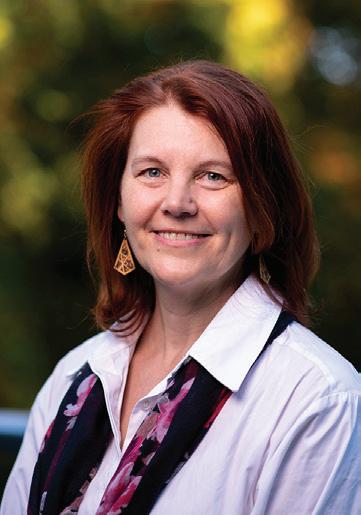
Joanne Hélouvry
Research & Instruction Librarian
Johns Hopkins University 3400 N. Charles Street
Baltimore, MD 21218
Phone: (410) 516-2461
<jhelouvry@jhu.edu>
PROFESSIONAL CAREER AND ACTIVITIES: Library Manager for 15 years and then decided to take a step back and bask in Research & Instruction.
IN MY SPARE TIME: Reading, Dirt Biking, Hiking, Cooking.
FAVORITE BOOKS: I’m a romance novel reader!
HOW/WHERE DO I SEE THE INDUSTRY IN FIVE YEARS: The library industry is changing so much it is hard to see what it will look like in 5 years. Artificial Intellegence is impacting every facet of academic librarianship and it is hard to predict how things will end up with regulation and how researchers will approach writing and publishing. I see value in educating our undergraduates on the necessity of quality sources and basic library instruction and citation skills, where we will be with graduate students and researchers is more of a mystery. The publishing and scholarly communication landscape is already changing as publishing become more open.

Martin Kesselman
Editor, Library Hi Tech News
Professor Emeritus, Information Specialist for Agriculture, Environmental Science and Food Science
Rutgers University Libraries New Brunswick, NJ USA
Phone: (732) 309-6574
<martyk@scarletmail.rutgers.edu>
BORN AND LIVED: Brooklyn, New York. Now in Monroe Township, New Jersey.
PROFESSIONAL CAREER AND ACTIVITIES: In my career I was always a champion of change and new opportunities. In 1986, a former colleague suggested that I contact the editor of Library Hi Tech to be a columnist. That opportunity led to becoming a columnist also for Wilson Library Bulletin. In.1991, I worked at Brunel University in the UK when at the time the internet was very much in its infancy and I gave several presentations introducing the internet. When I demonstrated connecting to the University of Hawaii Aloha library system live, attendees thought it was canned. That year I also attended my first IFLA conference in the Soviet Union as an ALA delegate. During that conference, the Soviet Union completely disbanded. There were tanks at all the bridges over the Moscow River. A French Liberian asked me to take a picture of her in front of the tanks and then asked her to do the same for me. Those opportunities led me to focus on innovative and creative approaches with beginning of an information explosion that continues today. I became a change agent for libraries at Rutgers University, U.S. and internationally. I held leadership positions within ALA and IFLA, gave many presentations and published several papers. I co edited two books — End User Searching Services and Providers published by ALA and Global Librarianship published by Marcel Dekker. A major highlight at the end of my career at Rutgers University was a USAID grant in Liberia
Africa to develop information centers and collaborations for Agriculture at Cuttington University, and in Engineering for the University of Liberia. At the time, the only internet access was very very slow via satellite and required creative approaches providing e-resources via local area networks that could be downloaded to tablets that could circulate outside of the library.in lieu of physical resources. At that time there were only two professional librarians in the country that got their degrees in 1983. I was able to make valuable contacts with the editor of the only daily Liberian newspaper, social entrepreneurs one of which began the first public library in Liberia and a forward looking Liberian American engineer who had written the book, Digital Liberia and several others working in Liberia to build new partnerships and helped revitalizing the Liberian Library Association. I was greatly concerned about sustainability and was able to get two students to obtain professional degrees at the University of Ghana. Since then, three others have gotten library degrees.
These experiences as well as being editor of Library Hi Tech News have helped me expand my global network and stay abreast of current AI initiatives and the effects on our profession and the communities we serve. I have also expanded my thinking and perspectives by attending non-library conferences such as the Consumer Electronics Show that has allowed me to constantly expand my thinking during what I believe is a very exciting future for libraries.
IN MY SPARE TIME: Love to treasure hunt at flea markets and thrift stores. Sell quite a bit of jewelry, antiques, and collectibles on various platforms.
PHILOSOPHY: Never criticize nor provide unsolicited advice. Everyone has unique talents and skills and not discount those with different perspectives.
MOST MEMORABLE CAREER ACHIEVEMENT: U.S./UK Librarian Fulbright Award in 1991 at Brunel University in West London. Member of Rutgers University USAID Team working in Liberia, Africa from 20132018.
GOAL I HOPE TO ACHIEVE FIVE YEARS FROM NOW: Stay healthy and active, continue to be a mentor of other information professionals worldwide.
HOW/WHERE DO I SEE THE INDUSTRY IN FIVE YEARS: Very very difficult to have a technology crystal ball. Hope to see librarians and other information professionals in leadership roles locally and globally to promote information literacy, ethics, privacy, and safety in a rapidly changing and expanding information environment and collaborations with others to lessen the digital divide.
Rebecca Reynolds
Associate Professor, Department Chair Library & Information Science Department, School of Communication & Information, Rutgers University-New Brunswick, NJ
SC&I, 4 Huntington St. New Brunswick, NJ 08901
Phone: (848) 932-7553
<rbreynol@comminfo.rutgers.edu> https://sci.rutgers.edu/reynolds-rebecca
BORN AND LIVED: Philadelphia, PA; Haddonfield, NJ; Boston, MA; Syracuse, NY; Highland Park, NJ.
EARLY LIFE: Jersey roots!
<https://www.charleston-hub.com/media/atg/>
PROFESSIONAL CAREER AND ACTIVITIES: College professor, researcher, devotee of Atlantic coastal adventures and being anywhere outdoors in nature in my spare time.
HOW/WHERE DO I SEE THE INDUSTRY IN FIVE YEARS: I have no idea but I can state that one hope and dream is for the U.S. federal grant funding landscape to be revitalized and research resources in the social and learning sciences areas of my work, replenished! Another is to see the aspirational directions outlined in my article to achieve fruition — for more evidence-based, impactful and beneficial e-learning design and deployment, to proliferate.

Gary Shaffer, Ph.D.
Assistant Professor San José State University 1 Washington Square, Clark Hall 417 San José, CA 95192-0029
Phone: (323) 394-9089 <gary.shaffer@sjsu.edu> https://www.garyshaffer.com/
BORN AND LIVED: California.
EARLY LIFE: Southern California, Catholic school, Boy Scouts, riding bikes amongst track housing. Raised in a home of readers (everyone always reading), and biweekly visits to the library.
PROFESSIONAL CAREER AND ACTIVITIES: Marketing professional, Librarian, Library Director, now Professor.
FAMILY: Uncles, aunts, cousins, brothers, their spouses, nieces and nephews.
IN MY SPARE TIME: I write fiction.
FAVORITE BOOKS: The Inner Side of the Wind, or The Novel of Hero and Leander by Milorad Pavić and Chatterton by Peter Ackroyd.
PHILOSOPHY: No time like the present.
MOST MEMORABLE CAREER ACHIEVEMENT: Raising $33 million dollars to fully renovate the Tulsa Central Library in Oklahoma in 2016.
GOAL I HOPE TO ACHIEVE FIVE YEARS FROM NOW: Publish a bestseller.
HOW/WHERE DO I SEE THE INDUSTRY IN FIVE YEARS: It is an exciting time in libraries. More and more access. More content creation and access to more tools and resources. I see a bigger role for libraries, both academic and public, as a repository of local stories, scholarly work, and datasets. I see librarians helping patrons better use AI tools to create content and analyze data for the betterment of the human condition, (e.g., improved individual health outcomes) or even when some of the content may just bring laughter/joy. Additionally, development of tools and systems to distinguish accurate content from inaccurate content (e.g., deepfakes, validated research).
LIBRARY PROFILES ENCOURAGED
Simmons University Library
300 The Fenway, Boston, MA 02115
Phone: (617) 521-2780
simmons.edu/library
BACKGROUND/HISTORY: Located in Boston’s historic Fenway area, Simmons University has a strong tradition of empowering women and challenging traditional gender roles. Simmons was founded for equality 125 years ago as one of the first higher education institutions dedicated to helping women become leaders. Today, our university continues to grow and evolve and now offers Boston’s only women’s undergraduate program and graduate programs open to all. The Simmons University Library is an active participant in the student learning experience, an essential component of a Simmons education, and a vital asset to the University, fostering an institution-wide culture of academic inquiry and knowledge cultivation.
NUMBER OF STAFF AND RESPONSIBILITIES: 13 Staff in total; 8 professionals and 5 Library Fellows.
OVERALL LIBRARY BUDGET: $2,725,000 TYPES OF MATERIALS YOU BUY (EBOOKS, TEXTBOOKS, DVDS, VIDEO STREAMING SERVICES, DATABASES, OTHER): All of the above.
WHAT TECHNOLOGIES DOES YOUR LIBRARY USE TO SERVE MOBILE USERS? Website is responsive for mobile devices; use chat and email for reference services; and offer research appointments via video-conferencing.
DOES YOUR LIBRARY HAVE AN ILS OR ARE YOU PART OF A COLLABORATIVE ILS? Folio.
DO YOU HAVE A DISCOVERY SYSTEM? Ebsco Discovery Layer. DOES YOUR LIBRARY HAVE A COLLECTION DEVELOPMENT OR SIMILAR DEPARTMENT? Collections & Systems work with Research Services on collection development and management.
IF SO, WHAT IS YOUR BUDGET AND WHAT TYPES OF MATERIALS ARE YOU PURCHASING? Print or electronic or both? The materials budget is $1,200,000 and print and electronic materials are purchased. WHAT PROPORTION OF YOUR MATERIALS ARE LEASED AND NOT OWNED? 90%
WHAT DO YOU THINK YOUR LIBRARY WILL BE LIKE IN FIVE YEARS? It will remain focused on our users prioritizing services that support teaching and learning.
WHAT EXCITES OR FRIGHTENS YOU ABOUT THE NEXT FIVE YEARS? Materials budgets are contracting and there are deep concerns about the ability to continue to subscribe and lease digital content in the access versus ownership model. It actively inhibits the sustainability of libraries as information centers.
IS THERE ANYTHING ELSE YOU THINK OUR READERS SHOULD KNOW? Simmons University Library has the privilege of being part of the educational journey of students developing expertise in fields which improve the human condition.
<https://www.charleston-hub.com/media/atg/>

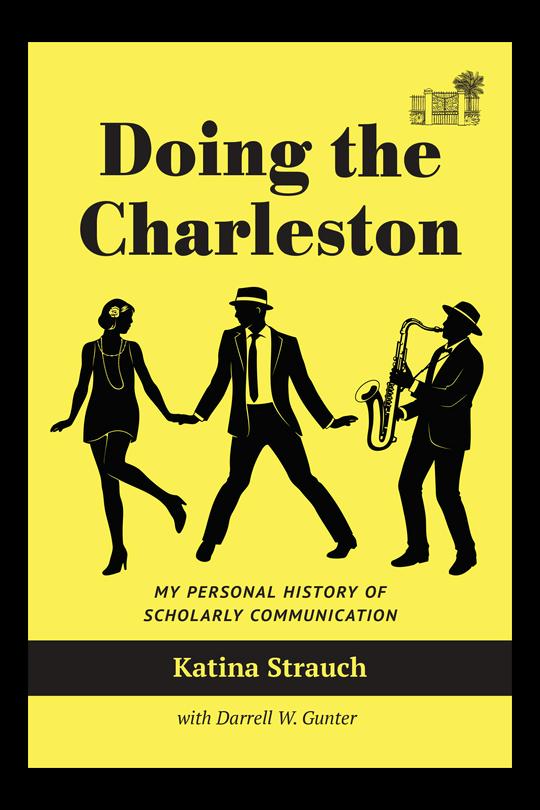
DOI: 10.3998/mpub.14621062
178 pages | 6 x 9
25 b&w illustrations
Paper | 2025 | $2495 US
ISBN 978-1-941269-61-9
Open Access
ISBN 978-1-941269-62-6
For information on bulk orders or discounts, please contact:
Jamie Jones
Director of Sales, Marketing, and Outreach at Michigan Publishing jojamie@umich.edu
DOING THE CHARLESTON
My Personal History of Scholarly Communication
Katina Strauch with Darrell W. Gunter
In 1980, Katina Strauch started the Charleston Conference: Issues in Book and Serial Acquisition to bring together librarians, publishers, and vendors to discuss issues shared by the three groups The meeting has continued annually and boasts over 3,000 attendees in person and virtually This memoir is Katina’s diary and story of the Charleston Conference and its development concurrently with her career as a professional librarian. Over the last 45 years, there have been massive changes in scholarly communication, changes that Katina has been at the heart of Where and what will the library and publishing professions develop next? The sky’s the limit to reimagining! Let’s go


Against the Grain wants your support!
About Against the Grain
TO ADVERTISE IN ATG
Contact Toni Nix at <justwrite@lowcountry.com>
Click the links below for information on how to Subscribe, Submit Content, or Contact Us “Join
Against the Grain (ISSN: 1043-2094) is your key to the latest news about libraries, publishers, book jobbers, and subscription agents. Our goal is to link publishers, vendors, and librarians by reporting on the issues, literature, and people that impact the world of books and journals. ATG’s eJournal, with an open rate of over 48%, is published five times a year (February, April, June, September, and November) and distributed to ATG subscribers, Charleston Library Conference attendees, and registered members on the Charleston Hub.
Find ATG on the Charleston Hub at www.charleston-hub.com