Libraries at the Crossroads: Digital Transformation and Equity in the Global South
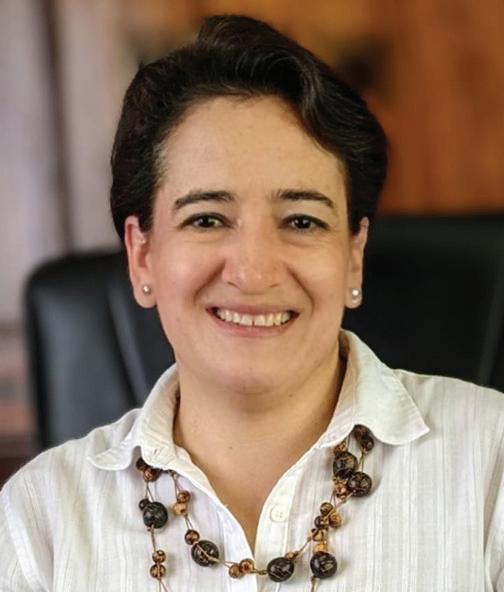
Guest Edited by Andrea Puente (Library and University Press Director,
Universidad Hemisferios, Ecuador)
Begins on Page 8
Highlights from Katina’s Tea Time
Column Editor: Caroline Goldsmith (Associate Director, The Charleston Hub) <caroline@charlestonlibraryconference.com>
Column Editor’s Note: “Tea Time With Katina and Leah” is a weekly series of articles published on the Charleston Hub. In this column, Katina Strauch, (Founder, Charleston Conference and Editor Emeritus, Against the Grain), shares news snippets, science articles and opinion pieces that she reads throughout the week and finds interesting, and it also features some updates from Katina herself! Here are some recent highlights from this series, and you can find all of the “Tea Time” articles here on our site. — CG
Let’s begin with an update from Katina!
Summer is here with lots of new publishing and library information. I am getting used to wearing the “boot” to get around! In other updates….
I am so very excited that Leah, our awesome leader, is back after her medical leave. We really missed you and are so glad your recovery went well. Welcome back, Leah! Kudos!! And much love!
Own the future of physics with Frontlist Perpetual Rights
For the first time, APS is offering Frontlist Perpetual Rights , allowing institutions to purchase ownership of an upcoming year’s content along with their subscription renewal. Ownership is permanent. Institutions can opt-in or out on an annual basis with no obligation to purchase in the future and no on-going access fees. Once you own a Frontlist, it’s yours forever, period.
Ready to get started? Meet with one of our representatives to start building the package that best suits your needs.
https://promo.aps.org/fpr
Against the Grain (ISSN: 1043-2094), Copyright 2026 by the name Against the Grain is published five times a year in February, April, June, September, and November by Annual Reviews. Mailing Address: Annual Reviews, PO Box 10139, Palo Alto, CA 94303-0139. Subscribe online at https://www.charleston-hub.com/ membership-options/
Editor Emerita:
Katina Strauch (College of Charleston, Retired)
Editor:
Leah Hinds (Charleston Hub)
Manager:
Caroline Goldsmith (Charleston Hub)
Research Editor: Judy Luther (Informed Strategies)
International Editor:
Rossana Morriello (Politecnico di Torino)
Contributing Editors:
Glenda Alvin (Tennessee State University)
Rick Anderson (Brigham Young University)
Sever Bordeianu (U. of New Mexico)
Todd Carpenter (NISO)
Ashley Krenelka Chase (Stetson Univ. College of Law)
Eleanor Cook (East Carolina University)
Kyle K. Courtney (Harvard University)
Cris Ferguson (Murray State)
Michelle Flinchbaugh (U. of MD Baltimore County) Dr. Sven Fund (Fullstopp)
Tom Gilson (College of Charleston, Retired)
Michael Gruenberg (Gruenberg Consulting, LLC)
Bob Holley (Wayne State University, Retired)
Matthew Ismail (Charleston Briefings)
Donna Jacobs (MUSC, Retired)
Ramune Kubilius (Northwestern University)
Myer Kutz (Myer Kutz Associates, Inc.)
Tom Leonhardt (Retired)
Jack Montgomery (Retired)
Lesley Rice Montgomery (Tulane University)
Bob Nardini (Retired)
Jim O’Donnell (Arizona State University)
Ann Okerson (Center for Research Libraries)
David Parker (Lived Places Publishing)
Genevieve Robinson (IGI Global)
Steve Rosato (OverDrive Academic)
Jared Seay (College of Charleston)
Corey Seeman (University of Michigan)
Bruce Strauch (The Citadel, Emeritus) Lindsay Wertman (IGI Global)
Copy Editor/Proofreader:
Marci Cohen (Boston University, Retired)
Graphics:
Bowles & Carver, Old English Cuts & Illustrations. Grafton, More Silhouettes. Ehmcke, Graphic Trade Symbols By German Designers. Grafton, Ready-to-Use Old-Fashioned Illustrations. The Chap Book Style.
Publisher:
Annual Reviews, PO Box 10139 Palo Alto, CA 94303-0139
Production & Ad Sales: Toni Nix, Just Right Group, LLC., P.O. Box 412, Cottageville, SC 29435, phone: 843-835-8604
<justwrite@lowcountry.com>
Advertising Information: Toni Nix, phone: 843-835-8604
<justwrite@lowcountry.com>
Send correspondence, press releases, etc., to: Leah Hinds, Editor, Against the Grain <leah@charlestonlibraryconference.com>
Send letters to <editors@against-the-grain.com>, or you can also send a letter to the editor from the Charleston Hub at http://www. charleston-hub.com/contact-us/.
Dear Editor:
Can you help me get added to the Charleston Hub Daily mailing list so I can start receiving your daily news and announcements? I did attend the 2025 Charleston Conference and was hoping that would trigger me being copied on these newsletters.
Highlights from Katina’s Tea Times continued from page 1
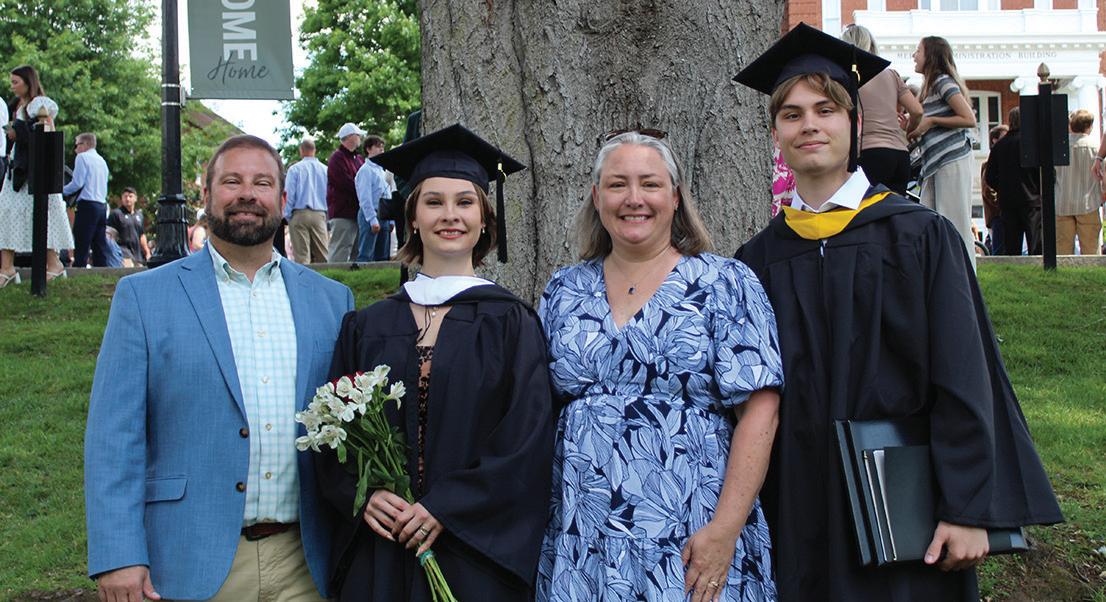
Did I mention that Leah’s two children, Maddie and Jacob, have both graduated from Anderson University? And the awesome Leah went to both graduations amazingly! WOW!!! What a mother!!
I am especially interested in this new lawsuit about the use of AI information! This is huge! Major publishers sue Meta for copyright infringement over AI training. What do you think? What’s going on in our world?
AGAINST THE GRAIN ADVERTISING DEADLINES
— 2026
February
April 2026 02/19/26 03/12/26
June 2026 04/16/26 05/07/26
September 2026 06/11/26 07/09/26
November 2026 08/20/26 09/10/26
FOR MORE INFORMATION CONTACT
Toni Nix <justwrite@lowcountry.com>
Phone: 843-835-8604
Against the Grain / June 2026
Hi Kelly:
I’d be happy to assist with your request. You can easily signup to receive our Daily Emails and other Charleston Hub deployments at this LINK. There are several options to choose from. You can join the Charleston Hub (free account) to receive our Daily emails, our Weekly Blog emails, announcements for Charleston Conference events and/or subscribe to Against the Grain through this same link.
Welcome to our audience! Thank you, Toni
Toni Nix (Advertising Manager Against the Grain, Charleston Hub, Katina publication and Coordinator for the Charleston Vendor Showcase) <justwrite@lowcountry.com>
Also, DPLA is putting public libraries at the center of AI these days! According to Library Technology Guides, the Digital Public Library of America has received an $11 million grant from Humanity AI to ensure that libraries play a central role in shaping how artificial intelligence enters public life. Ben Lee and the U of Washington iSchool are bringing on this initiative. There will be initial conversations at ALA in Chicago June 25-29.
From March 26, 2026:
Have you signed up for the next Charleston In-Between? June 25-26, 2026 in Berlin or online! The creative destruction of scholarly communication. The keynote speaker is Phillippe Aghion from the College de France and London who is a corecipient of the Nobel Prize in economics. I plan to sign up for the online!
I remember going to Rome several years ago. What a great historical place with the coliseum and all the statues. I just ran into this travel guide.
This is pretty exciting! A six-year-old from Virginia has published a book to help boost kids’ confidence. In Finding Myself, the story teaches that confidence isn’t about being the loudest. It’s about being seen and valued! Even the youngest voices can have an impact!
From April 30, 2026:
Michael Upshall is currently editing a new installment of the Charleston Briefings series! The latest title is Institutional Repositories, by Joshua Cromwell, with a target publication date of July 2026. Institutional Repositories manage and preserve an institution’s own content. Since their introduction over 25 years ago, Institutional Repositories have been established in universities and institutions around the world. Yet many people, even within the scholarly world, are unaware of the work that repositories carry out, and the essential role they play...
We’ll be featuring more highlights from “Tea Time” in upcoming issues of Against the Grain. You can read all of these articles (and see each new article posted every week) in their entirety here. Thanks, y’all!
<https://www.charleston-hub.com/media/atg/>
November 2 - 6 , 2026
Charleston, South Carolina, US
networking.
Thought-provoking plenaries, panels, lively discussions, posters, and workshops.
In-person registration includes access to vir tual week.
Registration opens June 11
Vendor Showcase
One day only, Nov 3, 10am5:30pm Your chance to connect with librarian decision makers f rom around the world.
Booth registration includes digital booth on the Whova app
Registration opens June 9spaces are assigned f irst come f irst ser ved
Libraries at the Crossroads: Digital Transformation and Equity in the Global South
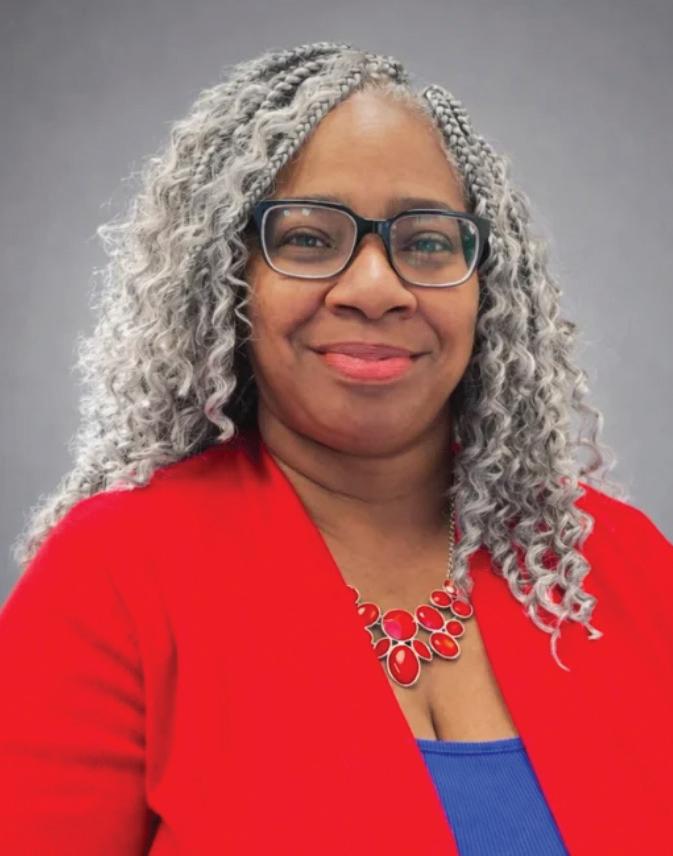
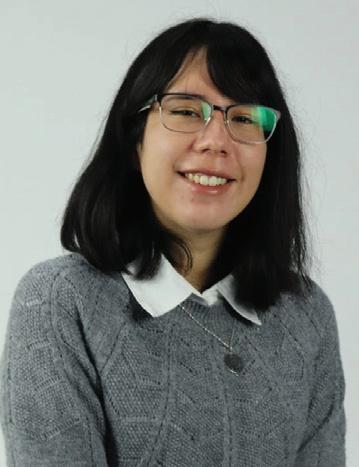
By Andrea Puente (Library and University Press Director, Universidad Hemisferios, Ecuador) <andreap@uhemisferios.edu.ec>
This issue gathers articles that share the concern of the evolving role of libraries in this era of digital transformation, technological acceleration, and deepening inequalities in access to knowledge. It first mentions the progressive decline in reading habits among younger generations, especially in Latin America, and the additional barriers students face: the dominance of English in academic publishing, the economic cost of digital content, the historical absence of library culture in many communities, and the recurring budget constraints that limit institutional capacity.
The second article examines how collection development in academic libraries is undergoing a fundamental transformation, shifting from ownership-based models toward dynamic, accesscentered content management. This demands new professional competencies and a redefined role for the librarian as curator, integrator, and strategic mediator.
The third contribution turns to the challenge of digital heritage preservation in the Latin American and Ecuadorian contexts, showing that when repositories remain static and disconnected from their users, collective memory risks becoming invisible. Thus, libraries must move beyond mere preservation toward active dissemination, interoperability, and user-centered design.
The issue closes with a concrete illustration of these transformations in practice, drawn from the experience of the CRAI at Santo Tomás University, where AI-integrated electronic resources are already reshaping how users discover and interact with information through semantic search, personalized recommendations, and intelligent assistants. In this scenario, the librarian’s evolving responsibility as a critical mediator between technology and knowledge, committed to ethical use and ongoing digital literacy, has never been more necessary.
<https://www.charleston-hub.com/media/atg/>
From Learning Poverty to Open Access: A View from an Ecuadorian University Library
By Andrea Puente (Library and University Press Director, Universidad Hemisferios, Ecuador) <andreap@uhemisferios.edu.ec>
Reading in Decline
I believe one of the strongest educational challenges in many Latin American countries today is a progressive decline in reading, particularly among younger generations who spend increasing amounts of time on social networks and visual entertainment. Also, some data suggest that across the world, people are reading less than in the past. In the United States, for instance, daily reading for pleasure decreased by almost half between 2004 and 2023 (UCL, 2025). In Europe, PISA 2022 revealed one of the largest recorded drops in reading performance, and surveys show a steady reduction in adults reading books regularly (Harrison, 2025; European Commission, 2024). However, Brookbank (2023) found that most university students in the U.S. and UK engage in leisure reading, challenging the prevailing assumption in both scholarly and popular discourse. This same study reveals that students do not necessarily turn to their university library’s leisure collection to do so.
Even though there are fewer studies about reading and writing skills in Latin America (Ramos and Martínez, 2024), there is data that point to a deeper crisis regarding reading skills. More than half of 15-year-olds in the region do not reach basic reading proficiency (World Bank, 2023). Four out of five sixth graders are projected to lack basic comprehension skills, with long-term economic consequences for both individuals and societies (UNICEF, 2022). Even before the pandemic, 52% of children in the region were already in “learning poverty”, unable to read and understand a simple text by the age of ten (Saavedra and Regalia, 2024). Reading comprehension is among the most pressing challenges in Latin American education at all levels, from primary and secondary school through university. A significant proportion of students struggle to read, analyze, and discuss academic texts. Armijos, Paucar, and Quintero (2023) link this partly to the inadequate use of methodological strategies by teachers, which undermines students’ ability to understand and synthesize content across their academic training.
These data show an important contrast: while wealthier regions may struggle to maintain reading habits, large segments of the Latin American population are still fighting to acquire fundamental literacy. Without falling in these extremes dictated by poverty, “middle class” young people who attend college and “successfully” obtain professional degrees often have not read one single book, outside school texts, before entering higher education. This points to a broader problem with reading motivation. Young people in the region tend to read mainly when required to do so by a teacher or as part of an assessed activity. Reading as a self-directed practice that fosters understanding, critical thinking, and the construction of meaningful knowledge remains largely absent (Armijos, Paucar, and Quintero, 2023). In higher education, reading for academic research, outside of the contents addressed directly in class is also frequently absent from students’ practices (Rodríguez, Solano, Martínez and Del Villar, 2013).
Language, Access, and Library Culture
Another dimension that is rarely addressed in global discussions about reading decline is the role of language. In Ecuador, as in much of Latin America, students read and write in Spanish, yet a significant portion of academic literature — particularly in science, technology, and professional fields — is produced and disseminated in English. As a result, students are not only expected to develop reading habits and critical thinking skills in their first language but are also required to engage with sources in a language they may not master. For university libraries, this means that collection development must try to balance international academic content with resources that students can actually access and use independently.
Unlike some parts of the world where community libraries function as cultural “refuges,” many cities in South America lack well-funded public libraries altogether. Outside schools and universities, libraries are scarce, and entire communities grow up without a “library culture.” For many, the only path to reading is through personal book ownership, an option available mainly to those who can afford it. For many families, purchasing academic texts or even recreational books represents a considerable expense. This is compounded by the limited availability of Spanish-language content in open access repositories, which remain largely dominated by English-language publications. In rural and peripheral urban areas, the gap widens further, as digital infrastructure is often insufficient to support consistent access to online resources. In this context, school and university libraries become the only structured access points to books and digital resources for large groups of young people. They are gateways to knowledge in societies where reading is not always culturally or institutionally supported.
The Humanities and the Digital Turn
I believe the general lack of institutional support for humanities studies also has an impact on the decrease of reading habits in higher education. Across the region, funding, prestige, and strategic priorities have shifted decisively toward STEM fields, driven by economic development agendas and the demands of a globalizing labor market. Humanities and social sciences — which are naturally associated with reading, critical thinking, and cultural formation — have been progressively marginalized. This has a direct impact on library use and reading culture. When an institution signals, either through subtle or overt actions, that literature, history, or philosophy are secondary pursuits, students receive a message about what knowledge is worth acquiring. University libraries are not immune to this tendency: collections and resources that support the humanities are often the first casualties of budget cuts. The result is a quiet but consequential erosion of the intellectual environment that reading requires in order to thrive.
Despite the foregoing, it is important to remain open to change and avoid slipping into nostalgia about how reading and learning once were. The real challenge for university professors and for libraries is to recognize current habits and
<https://www.charleston-hub.com/media/atg/>
respond with creativity, offering new ways to engage readers in a “digital first” world.
The rapid expansion of artificial intelligence into academic life presents university libraries and academic institutions with one of their most complex challenges to date. On one hand, generative AI tools have made it easier than ever for students to produce written work without engaging in the reading and thinking that such work is meant to reflect. When a student can obtain a coherent summary, essay, or analysis in seconds, the incentive to read primary sources or develop independent critical judgment is significantly weakened. This affects how students learn, engage and work in the classroom, and the nature of the questions students bring, or no longer bring, to the library.
On the other hand, as is often the case with technological change, AI offers genuine opportunities. Well-designed interactions with AI tools can help students navigate complex texts, overcome language barriers, and locate relevant sources more efficiently. In addition, for libraries operating with modest staff and budgets, AI-assisted cataloguing, reference support, and resource discovery can extend capacity in meaningful ways. The difficulty for many academic actors lies in approaching these tools critically and strategically, neither dismissing them out of fear nor adopting them uncritically out of enthusiasm.
Academic libraries are uniquely positioned to lead this conversation on their campuses, fostering digital and information literacy alongside, and not instead of, the deeper habits of reading and reflection that remain irreplaceable. Academic libraries have a role in preparing students and researchers to navigate the opportunities and risks of these evolving technologies. They must also contend with the proliferation of AI-based academic platforms which sometimes prove costly. Doing so with limited budgets is an enormous challenge, requiring creativity, training, and sharing of resources to lower costs.
A Call for Solidarity
Additionally, for libraries serving students in middleincome countries, like most of the region, operating with constrained budgets and limited infrastructure, the global conversation about open access is urgent and immediate. Every article locked behind a paywall is a resource our students and researchers cannot use. Every database priced for institutions in wealthier economies is a gap in our collection we cannot fill. Higher education institutions in the Global South are unequally burdened by the demands of a global academic publishing system which was not designed with equity in mind.
In this context, international collaboration is a necessity. Initiatives that provide subsidized access to academic content for institutions in lower and middle-income countries represent an important step, though eligibility criteria and awareness of these programs remain uneven. Preprint servers, institutional repositories, and multilingual open access platforms offer further possibilities, provided that libraries have the capacity and training to make use of them effectively.
What libraries like ours need, perhaps more than anything, is visibility within these conversations. The challenges we face — linguistic, economic, infrastructural, cultural — are shared by hundreds of institutions across Latin America, Africa, and Asia, yet our voices are rarely present in the journals, conferences, and policy discussions where decisions about the future of academic publishing are made. Writing in a publication like Against the Grain is, in itself, a small act of that necessary presence. There is much that well-resourced libraries in North
America and Europe can offer, not only in terms of shared resources and technical expertise, but in genuine solidarity — advocating for publishing models, licensing agreements, and international frameworks that recognize that knowledge, to be truly global, must be genuinely accessible.
Declaration of AI use
In the preparation of this article, the author used Claude (Anthropic) as a writing assistance tool to paraphrase sources, translate expressions and refine phrasing. All ideas, arguments, judgments, and editorial decisions are the author’s own. The final text was reviewed, adjusted, and approved by the author, who takes full responsibility for its content and accuracy.
References
Armijos, A.; Paucar, C.; Quintero, J. (2023). Estrategias para la comprensión lectora: Una revisión de estudios en Latinoamérica. Revista Andina de Educación, 6(2). https://doi.org/10.32719/26 312816.2022.6.2.6
Brookbank, E. (2023). “It makes you feel like more of a person:” The leisure reading habits of university students in the U.S. and UK and how academic libraries can support them. College & Undergraduate Libraries, 30(3), 53–94. https://doi.or g/10.1080/10691316.2023.2261918
European Commission. (2024, August 9). Younger people and women in the EU read more books. Eurostat News. https:// ec.europa.eu/eurostat/web/products-eurostat-news/w/ddn20240809-2
Harrison, C. (2025, April 10). Improving reading across Europe: More reading, More talking. European School Education Platform. https://school-education.ec.europa.eu/en/discover/ expert-views/improving-reading-across-europe-more-readingmore-talking
Ramos Monsiavis, C.L. & Martínez Piedra, G. M. (2024). Habilidades de Lectura y Escritura en los estudiantes de Educación Superior. Dilemas Contemporáneos: Educación, Política y Valore, XI (3). https://doi.org/10.46377/dilemas. v11i3.4117
Rodríguez M., A.; Solano, E.; Martínez, A., & Del Villar H, L. (2013). Lectura, escritura y calidad en la universidad colombiana. Zona Próxima , (18), 2-17. http://www.scielo.org.co/scielo. php?script=sci_arttext&pid=S2145-94442013000100002&lng =en&tlng=es
Saavedra, J., & Regalia, F. (2023, December 11). Learning crisis in Latin America and the Caribbean: PISA results. World Bank Blogs. https://blogs.worldbank.org/en/latinamerica/learningcrisis-latin-america-caribbean-pisa-results
UCL. (2025, August 20). Proportion of Americans reading for pleasure fell 40% over 20 years. University College London. https://www.ucl.ac.uk/news/2025/aug/proportion-americansreading-pleasure-fell-40-over-20-years
UNICEF. (2022, June 22). Four in five children in Latin America and the Caribbean will not be able to understand a simple text UNICEF Latin America and Caribbean. https://www.unicef.org/ lac/en/press-releases/four-in-five-children-in-latin-americaand-caribbean-will-not-be-able-understand-a-simple-text
World Bank. (2024, March 22). Tackling the learning crisis in Latin America and the Caribbean. World Bank Projects & Results. https://projects.worldbank.org/en/results/2024/03/22/tacklingthe-learning-crisis-in-latin-america-and-the-caribbean
<https://www.charleston-hub.com/media/atg/>
About Katina
Katina is a digital publication that uniquely addresses the value of librarians to society and elevates their role as trusted stewards of knowledge. Named after Katina Strauch, the visionary founder of the Charleston Conference, it is written by and for the international communities of librarians, vendors, and publishers.
Katina’s mission is to improve library and information science and inspire a sense of fulfillment among its worldwide professionals. It delivers content that is easy to understand, engaging, informative, and accurate, covering key topics, emerging trends, and transformative technologies and products, while also exploring the ongoing evolution of library practice. It covers key topics, emerging trends, transformative technologies, and library resources, and offers guidance on career and organizational development. By celebrating librarian contributions to open science, scholarship, and the enrichment of society, Katina aims to provide a springboard for community discussion and engagement through three content sections.
Tiered institutional subscription pricing for 2026 is:
$595 for MLIS schools and very high research output institutions
$395 for all other PhD, Masters, and 4-year institutions
$295 for 2-year institutions
Katina Features and Editors:
Editor-in-Chief: Curtis Brundy
Dean of University Libraries, University of Massachusetts Amhurst cbrundy@umass.edu
The Future of Work: Offers practical insight into the technologies, skills, and strategies shaping library practice in a rapidly changing world.
Resource Reviews: Builds on the groundwork set by The Charleston Advisor to provide critical reviews of products and resources for the information industry.
Senior Editor: Jill Emery
Collection Development and Management Librarian, Portland State University
Katina-Reviews@annualreviews.org
Open Knowledge: Addresses the evolving roles of libraries and librarians and their contributions towards an open knowledge ecosystem.
Senior Editor: Kate McCready
Program Director for Open Publishing, Big Ten Academic Alliance
Katina-Open@annualreviews.org
Leah Hinds, Managing Editor and Executive Director, lhinds@annualreviews.org
Elizabeth Weiss, Associate Managing Editor, eweiss@annualreviews.org
KATINA IS PUBLISHING UNDER THE SUBSCRIBE TO OPEN (S2O) PROGRAM
Transformations in Collection Development in Academic Libraries: Trends, Challenges, and the Impact of Artificial Intelligence
By Liliana Luchi (Universidad Austral) <lluchi@austral.edu.ar>
and Soledad Lago (Pontificia Universidad Católica Argentina) <soledad_lago@uca.edu.ar>
Abstract
Collection development in academic libraries is undergoing a process of structural redefinition, driven by digital transformation, changes in knowledge production, and the evolution of user practices. This article analyses the main trends affecting this process, examines the challenges associated with the consolidation of digital collections, and reflects on the emerging impact of artificial intelligence on the production, access, and management of knowledge. It states that collection development has ceased to be an operational function and has become a strategic dimension, key to institutional positioning and to the quality of teaching and research.
Keywords: collection development, academic libraries, digital collections, artificial intelligence, knowledge management, and open access.
Introduction
In the current context of higher education, academic libraries face a landscape characterized by technological acceleration, the expansion of digital environments, and the increasing complexity in the production and circulation of knowledge. Within this framework, collection development — traditionally understood as a set of practices related to the selection, acquisition, description, and preservation of materials — is undergoing a significant transformation in its scope, functions, and objectives (Johnson, 2018).
The transition from models centered on ownership of resources to schemes oriented towards access, together with the consolidation of digital information ecosystems, has led to the emergence of a new role for libraries, although not yet fully defined or consolidated. This evolving role challenges their traditional functions and positions them more strategically in the management and mediation of knowledge, within a continuous process of evolution and redefinition (Lewis, 2013). This article aims to analyze these transformations, identify emerging trends, and discuss the challenges faced by the incorporation of advanced technologies — particularly artificial intelligence — into collection development.
Reconfiguration of the Academic Environment and Its Implications
Transformations in collection development must be understood in relation to the broader changes affecting higher education institutions. The diversification of student profiles, the expansion of virtual and hybrid education, changes in research processes, and the substantial incorporation of digital technologies have altered the ways in which information is accessed, used, and produced.
At the same time, the academic publishing ecosystem has evolved towards more complex models in which traditional subscription systems coexist with open access initiatives and new forms of scholarly communication. This scenario generates tensions between economic sustainability, fair access, and the visibility of scientific production, directly impacting decisions related to collection development.
Collection Development as a Strategic Function
In this context, collection development is becoming established as a strategic function that goes beyond the provision of resources to become a key component in the articulation of institutional information policies, the evaluation of scientific output, and support for decision-making. From this perspective, it involves the integrated management of multiple dimensions, including the identification of patron needs, the evaluation of the quality and relevance of resources, the optimization of budget use, and the incorporation of analytical tools to monitor the impact of collections.
This approach also requires the strengthening of specific professional capabilities, such as data analysis, electronic resource management, negotiation with vendors, and user experience design, all of this which evidence a substantial shift in the librarian’s profile and in the competencies required for professional practice.
At the same time, one of the most significant changes shaping this process is the shift from a paradigm centered on physical resources to one oriented towards digital access. The transition from printed books to electronic resources — including eBooks, online journals, databases, and multimedia content — entails not only a transformation in formats but also a profound reconfiguration in the logic underpinning the construction of collections.
In this new scenario, the traditional model based on ownership of materials is progressively giving way to accessbased schemes. Libraries are no longer defined by the possession of resources but by their capacity to manage access rights through licenses, subscriptions, or consortia agreements. Consequently, the value of the collection is no longer measured by its volume but by its ability to ensure relevant, timely, and sustainable access to knowledge.
From this transformation emerges a library collection model that is hybrid, distributed, and dynamic. Collections become constantly evolving content ecosystems, composed of local and external resources, physical and digital, owned and licensed. In this context, the emphasis shifts from accumulation to curation, integration, and the visibility of content.
<https://www.charleston-hub.com/media/atg/>
This paradigm shift directly impacts management practices, giving rise to a conceptual evolution from collection development to content management. This perspective involves not only selecting and acquiring resources but also organizing them, integrating them into technological platforms, facilitating their discovery, and analyzing their use. In doing so, the library is positioned as an active agent in mediating between content and users.
Consolidation of Digital Collections and Transformation of Collection Management
Digital collections have become the cornerstone of collection development in academic libraries, a process closely linked to the shift from a model centered on physical media to one focused on access. This transition responds not only to the need to ensure remote access but also to the growing demand for up-to-date, specialized resources available in digital environments, such as learning management systems (LMS).
In this new context, the role of the librarian is also being substantially redefined. Librarians are no longer solely responsible for describing and organizing content — a function traditionally associated with bibliographic control — but are taking on a broader role as curators, integrators, and facilitators of access to knowledge. Process automation, the availability of third-party-generated metadata, and the integration of multiple information sources mean that cataloging is being set aside to make way for critical selection, the articulation of content within digital ecosystems, and the design of meaningful access experiences. This shift not only transforms professional practices but also invites a deeper reflection on the librarian’s role in knowledge management, positioning them as a strategic agent in the mediation, validation, and circulation of information in increasingly complex environments.
Emerging Challenges in Content Management
The transition from ownership to access introduces increasing complexity into the definition of management policies and decision-making criteria. Ensuring access to resources no longer depends exclusively on acquisition decisions; rather, it has become a strategic process involving economic, technological, legal, and academic dimensions.
One of the principal challenges lies in the costs associated with access-based models. Unlike ownership, where investment is generally one-off, subscription- and license-based schemes involve recurrent and, in many cases, increasing costs. This situation generates tensions in contexts of budgetary constraint, where continuity of access depends upon financial sustainability. Furthermore, the absence of ownership over content entails risks associated with the loss of access resulting from cancellations or contractual modifications.
In this context, the development of clear policies and rigorous criteria to guide decision-making becomes essential, considering not only the academic relevance of resources but also their cost-effectiveness, levels of use, conditions of access, licensing restrictions, and preservation possibilities. Continuous evaluation, grounded in data analysis and in an understanding of users’ needs, thus becomes a central component.
Moreover, the overabundance of available information requires the development of curation strategies capable of selecting relevant, high-quality content. In addition, there is a need to ensure interoperability between systems and the adoption of standards that facilitate the integration of resources into broader digital ecosystems.
In this regard, technological infrastructure plays a strategic role. Investing in platforms, discovery systems, remote authentication mechanisms, and interoperability tools is fundamental to ensuring that content is not merely available but effectively accessible and usable. The capacity to integrate resources from multiple vendors into unified search and access environments significantly improves the user experience and maximizes the use of collections.
Artificial Intelligence and the Transformation of the Knowledge Ecosystem
The incorporation of artificial intelligence (AI) introduces a new layer of complexity and opportunity into collection development and content management (Cox et al., 2019). First, it impacts knowledge production processes by facilitating the generation of scientific content, while simultaneously raising questions concerning authorship, originality, and validation.
Second, AI transforms information discovery systems by enabling more sophisticated environments characterized by personalization, automated recommendation, and semantic analysis. These capabilities redefine users’ experiences and alter the ways in which knowledge is accessed.
From the perspective of content management, AI offers tools to optimize processes of resource selection, analysis, and evaluation through the processing of large volumes of data. However, it also requires the development of critical frameworks capable of identifying biases, assessing content quality, and ensuring transparency in the use of algorithms.
Academic libraries assume a central role as mediators between technology and users, not only by facilitating access to information but also by promoting critical competencies and contributing to the construction of more equitable and reliable knowledge environments.
Conclusions
Collection development in academic libraries is at a turning point, marked by the convergence of technological, economic, and cultural transformations. The transition towards accessbased models, the consolidation of digital collections, and the incorporation of artificial intelligence are redefining both practices and the role of libraries.
In this context, collection development — reconfigured as content management — emerges as a strategic dimension for strengthening research, enhancing academic quality, and reinforcing institutional positioning.
Ultimately, the future of libraries will depend on their ability to integrate technological innovation, data analysis, and a deep understanding of user needs, consolidating their role as dynamic platforms for knowledge management in complex and constantly evolving environments.
References
Cox, A. M., Pinfield, S. & Rutter, S. (2019). The intelligent library: Thought leaders’ views on the likely impact of artificial intelligence on academic libraries. Library Hi Tech, 37(3), 418435. https://doi.org/10.1108/LHT-08-2018-0105
Johnson, P. (2018). Fundamentals of collection development and management (Fourth edition). ALA Editions.
Lewis, D. W. (2013). From stacks to the web: The transformation of academic library collecting. College & Research Libraries, 74(2), 159-76. https://doi.org/10.5860/crl309
<https://www.charleston-hub.com/media/atg/>
Digital Heritage Preservation: A Look at the Latin American and Ecuadorian Context
By Bárbara Venegas (Library Services Coordinator, Universidad Hemisferios, Ecuador) <barbarav@uhemisferios.edu.ec>
Digital transformation has changed the way knowledge is produced, organized, and preserved, which poses new challenges for libraries. In an environment where digital information is produced on a massive scale, with constant technological obsolescence and various legal and economic constraints, collective memory faces a significant risk of loss. Given this scenario, libraries play a key role not only in the preservation of digital heritage but also in its access and dissemination. This article analyzes their role in this context, considering the contributions of the digital humanities and reviewing the main barriers and opportunities in the Latin American and Ecuadorian contexts.
Libraries and Their Role in Heritage Preservation
Historically, libraries have ensured the transmission of knowledge, but the shift of intellectual output to the digital world has introduced the risk of losing collective memory. This threat stems from the ephemeral and massive nature of online information whose brief lifespan resists systematic documentary control . Compounding this is accelerated technological obsolescence that demands constant format migrations, a strategy that, while effective, is economically unattainable for many institutions. Finally, preservation is hindered by the complexity of multimedia environments, which require maintaining not only the data but also the user experience, and by a rigid legal framework that, by failing to fully address the right to copy for preservation, limits the institutional capacity to respond to the disappearance of digital heritage (Orera Orera, 2008).
The Relationship Between Libraries and the Digital Humanities
The Digital Humanities, as a field that bridges humanistic disciplines with technological tools, offer frameworks such as digital curation and knowledge organization systems (KOS), which provide the necessary structure for the digital transformation of community engagement practices, particularly in relation to heritage preservation. In this context, digital transformation within institutions not only expands access to these resources but also promotes their longevity and reuse in diverse contexts. Thus, institutions are shifting from a passive role of information collection to integration into digital culture, fostering new ways of conceiving archival spaces, such as libraries. These initiatives transform collections into open, interactive, and user-centered environments where information is presented in a clear, accessible, and visually meaningful way. In light of these challenges, preserving digital native memory is a complex task that requires significant financial and technical resources. It involves not only constant investment in technological infrastructure and storage but also the coordination of specialized teams in library science and computer science. In the Latin American context, some initiatives have made progress in this area thanks to support from foundations. Such is the case of “Huellas Incómodas,” a project that rescues and analyzes the
digital presence of social movements, helping to ensure that the record of their struggles is not lost due to technical limitations or a lack of systematic preservation (Cerdán Medina, 2025).
Beyond theoretical frameworks, the practical evolution of Digital Humanities relies on the continuous development of digital skills in the community and the removal of accessibility barriers.
Digital Skills and Accessibility
In recent decades, the role of libraries as educational agents within the community has been highlighted. Today, these institutions play a fundamental role in digital inclusion by offering free access to technologies and training in digital skills. In doing so, they enable diverse social groups to overcome economic and technological barriers. However, significant inequalities persist between libraries with different levels of infrastructure, which affects the reach of these services. (Bertot, 2016). So, empowering users through formal training is a strategic necessity that requires a specific budgetary allocation to ensure long-term effectiveness.
In this context, the development of digital environments that are not limited solely to content visualization but promote active user interaction takes on relevance. Thus, websites focused on heritage preservation are establishing themselves as strategic tools by integrating structured repositories, interactive databases, and visualization resources, such as interactive mapping, dynamic collection organization, or gamification. These tools not only facilitate the documentation of information but also foster participation, ownership, and dissemination of heritage in an accessible and meaningful way.
However, although some cultural institutions have incorporated these types of resources, their adoption remains in its infancy and has not yet managed to profoundly transform the relationship with the public. In this regard, the use of interactive technologies, visual content, and digital strategies represents a key opportunity to generate more engaging, personalized, and participatory experiences, as well as to strengthen communication, expand reach, and promote greater social appropriation of heritage (Viñarás-Abad, González-Liendo, & Carrero-Márquez, 2025).
The Latin American Context
Cerdán (2025) notes that web archiving in Latin America remains an underdeveloped field despite its importance for the preservation of digital heritage. In the region, much of the cultural, social, and scientific information is generated directly on the internet, but there are not enough initiatives to preserve and present it systematically. As a result, much digital content is at risk of disappearing due to its ephemeral nature. In this context, national libraries and organizations such as ABINIA
<https://www.charleston-hub.com/media/atg/>
(Association of Ibero-American States for the Development of National Libraries in Ibero-American Countries) have begun to recognize the need to implement web archives as part of the digital legal deposit system. However, progress is uneven: only a few countries have developed concrete projects, such as Mexico, Colombia, Chile, and Brazil, and in many cases, these are not fully consolidated or coordinated at the regional level. The author notes that one of the main barriers is legislative, as many countries in the region lack updated regulations that clearly include the preservation of digital content. Although progress has been made in some cases, most countries still lack legal frameworks defining what content must be preserved, the methods for doing so, and the institutions responsible (Cerdán Medina, 2025).
However, the challenge is not only legislative but also deeply operational. There is a lack of public policies, insufficient budgets, and a technical gap between archivists and IT departments. Furthermore, the absence of archival appraisal criteria complicates the identification of digital objects with historical value that should be preserved (Zapata Cárdenas, 2023).
In summary, it is noted that there is a significant lag in the preservation of digital heritage, and that it is necessary to strengthen international cooperation, update legislation, and promote specialized training.
The Ecuadorian Context
In Ecuador, as in other Latin American countries, the digital transformation of university libraries has been closely linked to the evaluation and accreditation processes of higher education, driven by organizations such as CEAACES. However, studies show that, while academic libraries have made progress in implementing technological tools, particularly institutional repositories, limitations still persist in areas such as the visibility and structuring of their websites. In many cases, these are limited to offering direct access to databases without providing a contextualized environment or a clear, adequate identification of library services, which hinders their use by users (Caridad Sebastián, Martínez Cardama, & Puente Hernández, 2018).
Without a clear visibility strategy aligned with users’ needs, and furthermore lacking structured data and digital accessibility criteria, not only is the user experience diminished, but their role as tools for research and community engagement is also weakened. The absence of standardized metadata, such as Dublin Core standards, and of a network of internal links turns these systems into “information silos,” hindering their interoperability with other repositories at the national and international levels.
As a result, digital heritage fails to become socialized knowledge accessible to diverse audiences; instead, it remains a static repository that loses relevance by failing to provide the context and traceability necessary for its understanding. In this regard, although Ecuador’s national libraries are part of networks such as ABINIA, their digital platforms tend to remain basic structures that function primarily as repositories or image banks, without significant resources for interaction or contextualization.
Conclusions
In conclusion, heritage preservation must be understood as a continuous process that involves not only management but also constant evaluation. Beyond physical safeguards and the digitization of materials, including born-digital materials, it is essential to ensure that information is presented in an accessible format, understandable, and tailored to diverse audiences. When repositories remain static spaces, heritage loses its dynamism and visibility becoming, in many cases, out of reach for users. In contrast, effective dissemination and user-centered design allow for expanding its reach beyond the local sphere, enabling geographically distant audiences to access meaningful experiences through curated collections.
In this context, libraries, whether national, local, or university, have the opportunity to promote interdisciplinary initiatives that integrate technical, cultural, and visual dimensions, enabling an understanding of digital transformation that goes beyond the merely instrumental. Their role in the preservation of digital heritage remains fundamental, but it requires adaptation to the demands of the contemporary digital environment. Among the main challenges is the need to foster cooperation — at the local, national, and international levels — among the various institutions responsible for the management and preservation of information (Orera Orera, 2008).
Finally, as Cerdán (2025) points out, institutions responsible for memory today are committed to developing strategies that ensure not only the protection but also the sustainability and long-term access to digital heritage (Cerdán Medina, 2025).
References
ABINIA. (n.d.). ABINIA. https://www.asociacionabinia.org/ Bertot, J. C. (2016). Building digitally inclusive communities: the roles of public libraries in digital inclusion and development. ICEGOV, 95 - 102. doi: https://doi.org/10.1145/2910019.2910082
Caridad Sebastián, M., Martínez Cardama, S., & Puente Hernández, E. (2018). Bibliotecas universitarias en Ecuador: realidad y situación de los servicios de contenidos digitales. Investigación Bibliotecológica, 32(76), 111-129. doi: https://doi. org/10.22201/iibi.24488321xe.2018.76.57998
Cerdán Medina, J. C. (2025). Los archivos web y su preservación en América Latina: un camino por recorrer. Palabra Clave, 15(1). doi: https://doi.org/10.24215/18539912e269
Orera Orera, L. (2008). Preservación digital y bibliotecas: un nuevo escenario. Revista General de Información y Documentación, 18, 9-24. https://revistas.ucm.es/index.php/RGID/article/view/ RGID0808110009A/9220
Viñarás-Abad, M., González-Liendo, J., & Carrero-Márquez, O. (2025). Museos y Generación Z: el uso de las nuevas narrativas en el paradigma cultural. Revista Mediterránea de Comunicación (RMC), 16 (2), e29133. doi: https://doi. org/10.14198/MEDCOM.29133
Zapata Cárdenas, C. A. (2023). La preservación digital de documentos electrónicos de archivo: una materia pendiente en América Latina. Revista del Archivo Nacional, 87, e596. https:// www.dgan.go.cr/ran/index.php/RAN/article/view/596/508
By María del Pilar Florián Escobar (Technical Director, CRAI, Santo Tomás University ) <dir.crai@usta.edu.co> ORCID: 0000-0002-8977-7873
and Gabriel Ángel Garzón Garzón (CRAI Coordinator, Santo Tomás University) <coord.crai2@usta.edu.co> ORCID: 0000-0002-1548-7267
and Carlos Arturo Prada Jiménez (Circulation and Loan Supervisor, Santo Tomás University) <tec.servicioscra@usta.edu.co> ORCID: 0000-0001-5196-0712
This is a translation of the original article published in Spanish: Florián Escobar, M. del P., Garzón Garzón, G. Ángel, & Prada Jiménez, C. A. (2025). CRAI 4.0: la integración de la IA en los recursos electrónicos suscritos por la Universidad Santo Tomás . Sol De Aquino, 28, 119-125. https://doi. org/10.15332/27448487.11436
Abstract
Currently, the integration of artificial intelligence (AI) tools into electronic resources is an emerging trend transforming bibliographic and educational management, which enhances the user experience in research processes and classroom practices, and generates disruptive academic training strategies. Likewise, it marks an evolutionary process for libraries seeking to leverage their assets to promote innovation and improve efficiency, adapting their resources and services to current technological and educational needs.
The rapid advancement of AI poses significant challenges for information units, particularly in the selection and acquisition of AI-enabled electronic resources, as well as in raising community awareness regarding the ethical use of information and the authenticity of products generated by this technology. To address these challenges, training strategies have been developed focused on the proper use of these tools, with the aim of building skills for responsible user interaction with them, preparing users for a work environment increasingly influenced by the use of digital resources.
This article analyzes the electronic resources — AI assistants and applications — subscribed to by Santo Tomás University through the Center for Resources for Learning and Research (CRAI) at Santo Thomas University, to strengthen academic practice in the classroom and the development of institutional research. Through a qualitative description, it evaluates their functionality and the benefits they generate in strengthening skills for the appropriate use of information.
Keywords: artificial intelligence, electronic bibliographic resources, university libraries, academic training strategies, ethical use of information, digital competencies, and bibliographic management.
Introduction
“Artificial intelligence forces us to redefine what it means to learn, teach, and think” — Rose Luckin (2018)
The information units of higher education institutions (HEIs) work collaboratively with the university’s core academic functions to develop services based on the use of artificial intelligence tools, adapt educational processes to trends in information search and retrieval, and review the institutions’ academic and scientific output.
Likewise, in coordination with providers of electronic resources and research tools, AI integrations are evaluated and disseminated to optimize information retrieval processes through search engines that employ machine learning algorithms (machine learning), which allow for the interpretation of results based on user queries, as well as the generation of intelligent recommendation systems that send email alerts regarding new publications on specific topics — a strategy similar to those used by audiovisual content platforms such as Netflix, Disney, or YouTube; in this particular case, articles, eBooks, journals, theses, systematic reviews, and other resources are suggested based on the user’s search history and academic interests, which are established upon registration with the electronic resource.
In this regard, the CRAI at Santo Tomás University (USTA) periodically produces a detailed review that identifies the resources subscribed to by the university, which incorporate AIbased assistants and other technologies into their operations, and establishes two main areas: the first focused on the development of information search processes, highlighting the integration of natural language processing (NLP), and the second based on the user experience when interacting with the tool.
The conclusions outline the benefits and implications that AI can have on the development of academic and research activities at the University, as well as the impact on the role of librarians in terms of ongoing professional development in resource management and the development of information services that promote the use of these tools.
What is an Electronic Resource and a Research Tool?
In the context of the Learning and Research Resource Center at Santo Tomás University, an electronic resource refers to multidisciplinary and specialized information whose content is available in digital format with full-text access via subscription, and research tools refer to platforms that index peer-reviewed scientific publications and allow for the evaluation of scientific output.
<https://www.charleston-hub.com/media/atg/>
Impact of AI on Information Search and Retrieval
The incorporation of artificial intelligence (AI) into information search and retrieval processes has transformed the way users interact with the electronic bibliographic resources available in academic and professional settings; in this evolution, AI-powered search engines go beyond term matching, as they interpret the user’s intent and generate semantically relevant results. This results in reduced search noise, leading to the retrieval of relevant content, even when the search strategy is imprecise or formulated in colloquial language.
Furthermore, AI-based systems dynamically and personally tailor recommendations by analyzing search history, areas of interest, and patterns of use of bibliographic resources; this functionality increases the visibility of relevant materials and promotes the identification and consultation of related information sources.
Having these technologies as part of the electronic resources available at Santo Tomás University fosters the development of innovative academic processes and enhances information retrieval, thereby contributing to research efforts. In this regard, resources such as Web of Science integrate information search and retrieval processes with the Research Assistant, which functions as a generative AI-powered research assistant that optimizes query construction and offers intelligent information retrieval based on the Core Collection Responsible AI, which is configured with responsible AI principles to ensure the quality and transparency of the data used.
Similarly, the ProQuest platform uses AI tools for semantic search and term suggestions, employing natural language processing (NLP) to interpret the user’s intent beyond exact keywords and offering intelligent suggestions to refine or expand searches. The Elsevier platform, for its part, includes the Fingerprint Engine, a technology that generates a thematic profile of authors and documents through semantic text analysis, thereby connecting users with content more effectively. Similarly, platforms such as Elsevier’s ScienceDirect integrate an intelligent search engine that uses AI to improve the accuracy and relevance of results, adapting to the user’s profile and context, their discipline, and previous search patterns. Another feature they include is the suggestion of articles based on user behavior, for which they use recommendation algorithms similar to those used on commercial platforms such as Amazon and Temu, among others.
Zhang and Begum (2021) note that:
[...] in the field of library and information science, the introduction of AI has not only revolutionized traditional ways of working but has also brought new opportunities and challenges for information management and services. (para. 1)
Thus, these AI-powered tools allow the USTA academic community to interact with technology to retrieve information during search processes, obtain personalized recommendations (based on preferences), and consult complementary bibliographic resources or sources they may not have considered; the benefits are user-centered in terms of access to and use of information. The challenge lies in ensuring that the end user understands the importance of the ethical implications related to copyright.
Personalization of Access and User Experience
AI-based intelligent systems offer personalized experiences to the academic community when interacting with various electronic resources. Through advanced analytics, it is possible to adapt the search interface and the layout of results according to each user’s preferences and behavior; this includes recommending learning resources based on the course or research area in which the user is pursuing their academic studies.
As for these intelligent systems, USTA offers an eBook that incorporates AI to create conversational search interfaces; it also features ELI, a chatbot or virtual assistant that provides quick answers to frequently asked questions, guides users through the resource, and offers assistance in finding information. These digital tools, which are enhanced by AI, not only make the use of the resource more efficient but also provide more immediate and personalized service; similarly, they open up the possibility of creating inclusive services designed for users with disabilities — for example, offering voice-based interaction alternatives for users with visual impairments. This aligns with what TorresSalinas (2024) states about AI: “It is playing a crucial role in the personalization of services, exponentially optimizing and improving the possibilities of analyzing user data to predict their needs and adapt recommendations” (p. 2).
Another support tool for transforming academic practices in an AI-supported environment available to the USTA university community is the Tirant Lo Blanch resource, which specializes in the field of law and features SOFÍA, an integrated AI that functions as an intelligent legal assistant developed by the publisher Tirant Lo Blanch. This tool offers services such as: interactive updates as writing or reading progresses; the ability to analyze the entire text, a page, a paragraph, or a selected phrase; it also sorts retrieved information results by relevance, includes a preview that facilitates text drafting (all documentation is displayed on the same page you are working on), and the generated and/or retrieved documents can be stored within the platform. These features allow users to consult information and, through the assistant, develop a strategy for reading comprehension and interpretation of case law tailored to the specific case, which adds value in terms of managing learning processes for law students and others who need to consult laws, decrees, and court rulings.
Santo Tomás University currently offers nine distance learning programs and six online programs, which further commits the CRAI to providing personalized support to these students. Artificial intelligence allows content to be adapted to individual needs, for example: exercises based on the user’s previous performance, readings tailored to their learning style or academic interests; likewise, it can serve as a virtual tutor that does not replace the instructor or reference librarian, but rather contributes to the students’ comprehensive education. AI can be used — and even leveraged more effectively — by people with visual or hearing impairments, which expands the possibilities for inclusive learning focused on users’ specific needs.
Integrating AI into the digital resources available to higher education institutions is essential for creating synchronous or asynchronous programs, projects, and services that meet users’ needs, requests, and expectations. In addition, information units must strengthen students’ comprehensive skills and competencies to prepare them for the workforce and foster their autonomy in critical reading, research, and knowledge creation;
<https://www.charleston-hub.com/media/atg/>
to achieve this, there must be a workforce willing to continuously update their skills and embrace new digital competencies. This synergy between AI and human talent specialized in information science is what distinguishes the CRAI at USTA, and it is its contribution to quality education.
Implications for the Library Profession
With the incorporation of artificial intelligence into electronic resources, the library profession must become more dynamic and expand its scope beyond the traditional services it offers, such as collection management and reference services.
Now, library professionals must play an active role in the critical interpretation of results generated by automated systems, as well as in training users in the ethical and mindful use of these tools. The librarian assumes a new responsibility as a mediator between technology and knowledge, ensuring that information aligns with the principles of informational inclusion and the development of digital literacy within the academic community. As Marydee Ojala (2024, cited by the Office of Information and Library Services, 2024), editor of the journal Online Searcher (United States), noted: “This is our opportunity to promote our superpowers as librarians, showcase alternatives to ChatGPT, warn about misinformation, explain what these technologies are all about, and position ourselves as experts” (para. 21).
AI has optimized the operational efficiency of librarians, information managers, and other areas involved in the world of information units. Tasks such as automatic indexing, metadata extraction, and other technology-driven automated activities improve response times for information unit staff, freeing up human talent to develop services such as information literacy training and the creation of research projects, while strengthening skills in managing agile and powerful interfaces for independent users. These innovations are reshaping the experience of searching for and retrieving information, positioning AI as a strategic ally in knowledge management.
The widespread presence of AI in education makes it necessary for information science professionals to engage in ongoing training activities, given the rapid evolution of this technology and its integration into electronic resources. This will enable them to offer up-to-date services tailored to users’ needs, such as training on the ethical use of AI tools. In this way, they can facilitate meaningful learning for users and contribute to the advancement of science, as Alonso and Quinde (2024) note: “Libraries remain essential as spaces for continuous learning and equitable access to knowledge in a society increasingly influenced by AI” (p. 4).
Regarding the integration of AI into library processes and services, Andersdotter states that: “Libraries and librarians must simultaneously consider the application of AI in library operations as well as AI competencies and knowledge as part of information literacy training” (p. 111). This confirms that the strategies implemented by the CRAI at Santo Tomás University are in line with global trends regarding information accessibility and the development of skills in the use of technological resources.
Conclusions
The rapid progress in the development of new AI applications that contribute to the generation of new knowledge across various fields of study is not unrelated to the electronic resources
and research tools subscribed to by the CRAI at Santo Tomás University. However, it is necessary to require providers to develop AI applications in their products in order to offer educators alternatives that meet the demands of students, who are increasingly interested in learning about the use and integration of AI in their academic process.
Creating content through artificial intelligence developed by academic and research resource providers does not guarantee the ethical use of information or respect for copyright, although it does present students, faculty, researchers, and information unit managers with social appropriation challenges such as data protection, equitable access, and academic integrity. These innovative tools contribute to greater efficiency in research processes and empower users in intuitive, personalized environments; however, their implementation requires ongoing literacy initiatives aimed at strengthening information literacy skills to ensure the ethical use of these emerging technologies.
Artificial intelligence is transforming learning in higher education by enabling more personalized, efficient, and inclusive processes, and the CRAI at USTA supports access to information, knowledge management, and the strengthening of digital skills — not only through AI integrated into electronic resources but also by engaging the academic and community with services and spaces that foster disruptive education. It is essential that the Santo Tomás community participate in the training opportunities for technological resources promoted by the CRAI at the University of Santo Tomás; likewise, it is important to conduct ongoing reviews of the relevance of the tools integrated into the resources, in order to establish effective coordination between technology, academic content, and the needs of the University community.
References
Alonso-Arévalo, J. y Quinde-Cordero, M. (2024). El papel de las bibliotecas en la era de la inteligencia artificial (IA). Boletín de la Asociación Andaluza de Bibliotecarios, 127, 27-37. http:// hdl.handle.net/10366/159918
Andersdotter, K. (2023). Artificial intelligence skills and knowledge in libraries: Experiences and critical impressions from a learning circle. Journal of Information Literacy, 17(3), 108-130. http://dx.doi.org/10.11645/17.2.14
Dirección de Servicios de Información y Bibliotecas (2024). Congreso internacional abordó cómo la inteligencia artificial está transformando las bibliotecas. Universidad de Chile. https://bit.ly/3IjJcmt
Torres-Salinas, D. (2024, 8 y 9 de noviembre). Bibliotecas ante la inteligencia artificial: la construcción de un nuevo paradigma [ponencia inaugural]. XXII Jornadas Bibliotecarias de Andalucía. Bibliotecas del futuro: tecnologías y estrategias para el siglo XXI. Jerez de la Frontera, España. https://digibug. ugr.es/handle/10481/96890
Universidad Santo Tomás. (s. f.). Recursos electrónicos suscritos por la Biblioteca CRAI. https://crai-bidigital.usta. edu.co/
Zhang, K. y Aslan, A. B. (2021). Tecnologías de IA para la educación: Investigación reciente y perspectivas futuras. Computers and Education: Artificial Intelligence, 2, ID del artículo: 100025. https://doi.org/10.1016/j. caeai.2021.100025
Column Editor: Corey Seeman (Director, Kresge Library Services, Ross School of Business, University of Michigan) <cseeman@umich.edu>
Visit him at https://www.squirreldude.com/
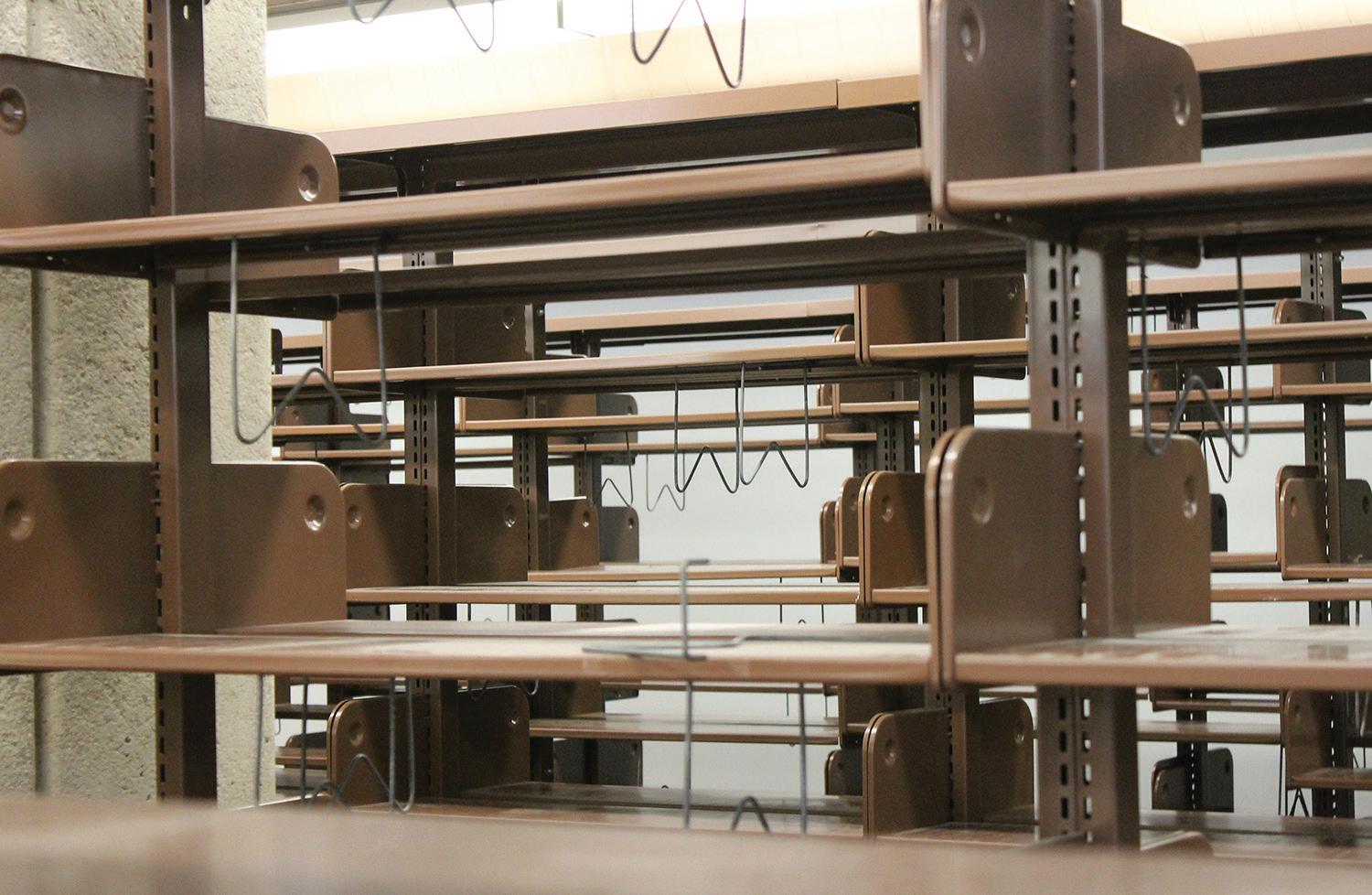
Column Editor’s Note: When tasked to write up a column, I often try to find something that will spark an idea or reveal a direction where I can take my editor’s notes. And many of those inspirations come from photographs I take along the way as I meander through life. For this column, we are going in a different direction. Starting with this image, that might either reflect nothingness or a clean slate. Like with so many things happening these days, it is our approach to the events that can indicate how we respond to what is thrown at us.
Thinking about this somewhat obscure picture, I am taken right back to a difficult moment in my professional career. The Kresge Business Administration Library of the Stephen M. Ross School of Business at the University of Michigan has been my professional home since November 2005. Back in 2013, we learned that our library was essentially losing all its book storage space. It represented a huge intellectual and emotional challenge as we had to reinvent our library with only months to complete the work. Despite our concerns, we were to give away or discard our collections. When that was done, all we had were empty shelves.
The emotions as you walk through a library that is being moved out can be a lot to manage.
That is a good way to transition to the book that we have this issue. We only have one book — and it is about archives and emotions. When working as an archivist, we serve the community of scholars in providing access to resources that fundamentally are unique. When we process the papers of an individual or the records of an organization, we generate a bond with the entity and aspire to let people know about these tools. Those emotions, especially when dealing with archival material from very narrow subjects, can be a tremendous challenge for professionals. But like everything these days, it is just another mountain to climb.
The Empty Shelves of Kresge Business Administration Library on July 2014 as we vacated our building. Taken at the library on Wednesday, July 16th, 2014 at the University of Michigan (Ann Arbor).
Special thanks to our reviewers who take the time to explore these works to see if they are appropriate for libraries. Special thanks to my reviewer for this issue: Carolyn Filippelli (University of Arkansas-Fort Smith). As always, I want to thank my reviewers for bringing this column together.
Every collection is important in a way that is greater than the sum of its parts. A significant percentage of our collection (I believe around 40%) represented unique holdings on campus and were moved to the main University of Michigan Library. The remaining volumes (many of which were journals and other annual publications) were deemed redundant and not needed. We were able to find homes for a few of them, with the majority going for resale. Going through this process is gut wrenching, even when everything is published. Your whole identity is gone with the books that served to indicate that you were in a library.
I remember walking around and looking at the empty shelves that lined our once bustling spot on campus. It was a truly odd experience and one that was a far cry from my early days in the profession. It was hard to think how we arrived at a situation where we were a library with rows and rows of empty shelves.
If you would like to be a reviewer for Against the Grain, please write me at <cseeman@umich.edu>. If you are a publisher and have a book you would like to see reviewed in a future column, please also write me directly. You can also find out more about the Reader’s Roundup here — https://www.squirreldude.com/ atg-readers-roundup
Happy reading and be nutty! — Corey
Scaglia, I., & Vanesio, V. (Eds.). (2025). Archives and Emotions: International Dialogues Across Past, Present, and Future. Bloomsbury Academic, NY. 978-1-3504-1518-8. 289 pages.
Reviewed by Carolyn Filippelli (Reference Librarian at University of Arkansas – Fort Smith) <Carolyn.filippelli@uafs.edu>
Archives and Emotions represents an interesting discussion on the use and importance of archives in preserving the cultural
<https://www.charleston-hub.com/media/atg/>
record as well as an examination of the roles and emotional labor of archivists. It focuses attention on how decisions made regarding the curation and interpretation of archives can influence the accuracy of the historical record.
Through analysis of various types of archival collections such as those of the Old Bailey, family archives, art historian Anna Banti, and the Zimbabwean Displaced Rhodesian Army Archives, this volume highlights some of the fascinating content to be found in archives as well as ethical issues and other challenges of archivists in curation and presentation of historical documents.
There are few books that highlight the emotional labor of archivists as an aspect of their professional roles. This volume points out decisions made involving archives curation which are often not recognized nor fully appreciated by the public. Archivists are usually viewed only in their formal public-facing roles. However, emotional labor also figures prominently in their work.
Another interesting feature of this book is the intersection of the work of archivists and historians. Archivists help protect, present, and guard the historical and cultural record. Historians work to interpret historical events, usually through scholarly writings. Although there are similarities in their goals, they are accomplished through quite different processes.
The work of archivists is influenced by new technologies that bring both opportunities and challenges in archival preservation. The digital technologies and the digital humanities are both important in archival work.
This is a well-documented volume with chapters written by archivists and experts in the field. Each chapter includes a section for very useful conclusions and bibliographies for further reading. Illustrations included for some of the collections add interest to the discussion.
In sum, this is a unique look at several types of archives from the Old Bailey, letters of family archives, war records, individual artists, and displaced archives such as those of Zimbabwe’s Displaced Displaced Rhodesian Army Archives. The significance of archives to the cultural record and historical research, the necessity of ethical representation of diverse archival viewpoints, and the ways in which archival mismanagement can erase and distort events, views, populations, and memories are all important takeaways.
Guide to the ATG Reviewer Ratings
The ATG Reviewer Rating is being included for each book reviewed. Corey came up with this rating to reflect our collaborative collections and resource sharing means and thinks it will help to classify the importance of these books.
• I need this book on my nightstand. (This book is so good, that I want a copy close at hand when I am in bed.)
• I need this on my desk. (This book is so valuable, that I want my own copy at my desk that I will share with no one.)
• I need this in my library. (I want to be able to get up from my desk and grab this book off the shelf, if it’s not checked out.)
• I need this available somewhere in my shared network. (I probably do not need this book, but it would be nice to get it within three to five days via my network catalog.)
• I’ll use my money elsewhere. (Just not sure this is a useful book for my library or my network.)
For persons new to archives and also for professional archivists, this volume reinforces the importance of archives and the often unseen emotional labor of archivists who work behind the scenes to curate documents and make them publicly available. This book would be of use to professionals in archives, graduate students, historians, and others interested in the contribution of archives to the cultural record.
ATG Reviewer Rating: I need this available somewhere in my shared network. (I probably do not need this book, but it would be nice to get it within three to five days via my network catalog.)
<https://www.charleston-hub.com/media/atg/>
Booklover — Shared
Column Editor: Donna Jacobs (Retired, Medical University of South Carolina, Charleston, SC 29425) <donna.jacobs55@gmail.com>
For 1917, the Nobel Prize in Literature was divided equally between Karl Adolph Gjellerup — “for his varied and rich poetry, which is inspired by lofty ideals” and Henrik Pontoppidan — “for his authentic descriptions of present-day life in Denmark.”
It begs the question — why are there years when two authors share the award for the Nobel Prize in Literature? Suffice it to say, I didn’t really find a satisfactory answer during a quick search. But I did learn that Karl Adolph Gjellerup was considered for a shared prize in 1916. Curiouser and curiouser that he could share the award in 1917 but not 1916. Twenty nominations were made for consideration of the 1917 prize, three of the nominees were later awarded the Nobel Prize in Literature: Grazia Deledda (1926), Erik Axel Karlfeldt (1931), and Carl Spitteler (1919).
“I turned to the novel, an artistic form which had in former days been neglected and had thus acquired a bad reputation, but which during the nineteenth century had developed and elevated itself to the ranks occupied by drama and the ancient epic.” — Henrik Pontoppidan
Both Gjellerup and Pontoppidan were of Danish descent and born in 1857. Gjellerup moved through a few influences in his life but found himself increasingly attached to the German culture. He chose to settle in Germany in 1892, identify with the German Empire and later the country’s objectives during the first World War. These decisions made him quite unpopular in Denmark to the point that when he was awarded the Nobel it carried little weight in the country as the populace saw him as a German writer. By contrast, Pontoppidan is described in one essay as “one of the most discussed modern Danish writers” and is seen as a realist writer. Curious the contrast between the two.
Gjellerup’s poetry is highlighted as the basis of the Nobel’s decision but he also penned novels which vary widely in
subject matter. However, the only English offering found from Gjellerup’s work was a translation of the poet “Grimnesmál” from Danish, and it begins:
“Your burning fire
Flares too fervent
Shy away from me, nimble flame
The fur is scorched
Even though I lift it
The flame ignites the cape”
“A Fisher Net” by Pontoppidan, translated by Juliane Sarauw, is one of the many short stories found in Great Stories by Nobel Prize Winners — a real gem of a book I found in a used book section many years ago. The story really hits the mark illustrating the Nobel’s motivation for awarding Pontoppidan the prize. It begins:
“Far out by the open sea there was a poor little fisherhamlet — ten small, black, wooden huts. Half buried in the sand, the string of low houses crept like a caterpillar behind the high, naked sand-down over which the breakers scattered their foam.
On calm summer days, while the sun was melting the tar out of the timber walls and heating the sand till it glowed and burned under the feet, the little hamlet would sometimes expand in its solitude with a beauty as ephemeral as that of a butterfly bursting its chrysalis and hovering on bright wings above the desolation of its usual dreary existence. On the downs wet fishing nets sagged from row upon row of high poles. On the beach below, crowds of half naked, noisy children played, and here and there sun-burned women in scarlet skirts squatted around a fire in the sand, boiling pitch.”
His authentic description continues as the story drifts to a more curious and somewhat tough narrative — just a bit of a teaser.
Now back to the hunt for the next piece of work by a Nobel laureate. Wish it was as easy as finding an Easter Egg!
<https://www.charleston-hub.com/media/atg/>
Katina is a digital publication that addresses the value of librarians to society and elevates their role as trusted stewards of knowledge. Named after Katina Strauch, the visionary founder of the Charleston Conference, it is written by and for the international communities of librarians, vendors, and publishers and covers content across three core sections:
Resource Reviews, which provides critical reviews of products and resources for the information industry.
Open Knowledge, which addresses the evolving roles of libraries and librarians and their contributions toward an open knowledge ecosystem
The Future of Work , which offers practical insight into library careers and organizational development
www.katinamagazine.org
Ar ticle Proposals
our
Katina welcomes proposals from authors interested in contributing to any of our three sections We encourage prospective authors to familiarize themselves with the content of the publication before submitting a proposal . Our readership is broad and varied in their level of experience in the industry, from early career to advanced management level and beyond. Our goal is to provide easy-to-understand, engaging, informative, and accurate content that will be of general interest to the entire library and scholarly communications community.
LEGAL ISSUES
Questions & Answers — Copyright Column
Column Editor: Kyle K. Courtney, Esq. (Executive Director, Social Law, Boston, MA) <kcourtney@socialaw.com>
From a Librarian Trying to Keep Up with the Courts
This month, it feels like the judiciary woke up and decided to rewrite the rules of the road for both secondary liability and fair use. First, the U.S. Supreme Court dropped a new “diss track” on the music industry with a 9-0 unanimous ruling in Cox Communications, Inc. v. Sony Music Entertainment, a consensus rarer these days than a functioning McDonald’s ice cream machine. Then, the Tenth Circuit completely reversed course in the Whyte Monkee (Tiger King) case, breathing a sigh of relief into the post-Warhol fair use landscape.
Let’s start with the U.S. Supreme Court. What exactly did they decide in the Cox Communications case, and what is the TL;DR (too long; didn’t read) for internet providers?
ANSWER: The TL;DR is that Internet Service Providers (ISPs) like Xfinity, AT&T, or Verizon Fios cannot be held liable for their users’ copyright piracy simply because they know about it and fail to stop it.
For context, contributory copyright infringement occurs when an individual or entity does not directly commit the infringing act, but knowingly induces, causes, or materially contributes to the infringing conduct of another. This form of “secondary” liability typically arises when a party provides the tools, facilities, or platform that directly enables the primary infringer (often the users) to unlawfully copy or distribute protected copyrighted works.
With a stroke of Justice Clarence Thomas’s pen, the Court vaporized a massive $1 billion jury verdict against Cox and uprooted decades of complicated, nuanced circuit court precedents. Lower courts had spent years cobbling together a messy web of liability tests: if you provided a product, knew your users were infringing, and gave them a material contribution, you were likely sweating a bit.
The U.S. Supreme Court just took a giant eraser to that whiteboard. Thomas’s 10-page opinion lays out a nationally binding “bright-line” standard. You are now only on the hook for contributory liability if (1) you actively induce infringement (e.g., marketing your service with a winking, nudging “come illegally share music here!” campaign) and (2) your service is tailored to infringement (meaning it has essentially no commercially significant legal uses).
Unless you cross those very specific red lines, you are legally in the clear. “Deliberate indifference” to piracy seems to be no longer a federal crime for some tech platforms.
That sounds like a massive blow to the music industry. Why did the Court rule this way?
ANSWER : Because the alternative was a nightmare. The music industry basically wanted an “automatic kill switch” for any internet connection repeatedly used to download pirated material. But as anyone who has ever shared a Wi-Fi password knows, IP addresses are not people.
If the Court had ruled in favor of the labels, ISPs terrified of billion-dollar judgments would have started cutting the cord on entire university campuses, hospitals, municipal networks, libraries, and your local Starbucks just because one rogue freshman downloaded Taylor Swift’s discography in the corner. The Supreme Court correctly realized that nuking the digital infrastructure of a public library is a terrible way to protect a record label’s bottom line.
How does this ruling fit into the historical copyright and technology cases, like Napster or Grokster?
ANSWER : It’s the culmination of four decades of tech companies trying to outsmart the law, and courts inventing new ways to catch them.
In 1984, the Supreme Court’s decision in the Sony Betamax case handed the technology industry a massive shield. The Court ruled that if a technology (like the VCR which was “on trial” at the time) possesses a “substantial non-infringing use,” such as timeshifting live television broadcasts, the manufacturer cannot be held liable for the copyright infringement committed by its users. This was later called a “Sony style non-infringing use.”
By the early 2000s, the legal landscape shifted significantly with the Napster (2001) and Aimster (2003) decisions. In these instances, courts established that maintaining a central index server or utilizing encryption to intentionally blind yourself to the illicit activities users were conducting on your platform, rendering the platform secondarily liable for infringement.
The legal standard evolved once again in 2005 with the Grokster case. There, the U.S. Supreme Court determined that even if a platform operates entirely without a central server, intentionally inducing users to infringe, for example, by aggressively advertising a service as the “new Napster,” places the company legally on the hook for secondary liability.
<https://www.charleston-hub.com/media/atg/>
With Cox, the Supreme Court just swept all the subsequent lower-court math off the table. They reset the board: you are only liable if you fail the Sony test (no real legal use) or the Grokster test (active inducement).
What about the DMCA? Doesn’t this new Cox decision completely break the “safe harbor” system?
ANSWER: It definitely flips the board over. During the case, Sony argued that because Cox failed to qualify for the strict protections of the DMCA Section 512 safe harbor (like their famous “13-strike” policy where they only terminated 32 subscribers), they must automatically be liable.
The Court completely rejected that logic. Justice Thomas noted that safe harbors do not create liability; they only remove it. If you fall out of the safe harbor, you don’t automatically lose; you just rely on normal legal defenses. Because Cox didn’t legally “induce” anything, they didn’t even need the safe harbor to escape liability.
We are already seeing the aftershocks. Just days after the Cox ruling, Google was facing a massive discovery order in a lawsuit brought by textbook publishers over pirated books on AdSense. Google’s lawyers essentially smirked, dropped their DMCA safe harbor defense entirely, and pointed to Cox. Since Google’s AdSense program clearly isn’t designed exclusively for piracy, Google knew they were now legally untouchable under the new Cox bright-line rule. The judge agreed and canceled the discovery order. It’s the legal equivalent of getting out of a speeding ticket because the U.S. Supreme Court just abolished the speed limit.
Bringing this home to LAMs: Why should a local librarian or archivist care about a brawl between a cable company and Sony?
ANSWER: Because in the crossfire of this billion-dollar war, libraries and archives just dodged a massive bullet. There are two huge wins here:
First, the public Wi-Fi stays on. Libraries are essentially mini-ISPs. This ruling confirms that unless a library is actively inducing piracy or redesigning its reading rooms specifically for illegal file-sharing, they aren’t going to be held liable for what rogue users do on their networks.
Second, the safe harbor fallacy is dead. In copyright law, the LAM community has its own specific safe harbor: Section 108. In recent battles (like Authors Guild v. HathiTrust or Hachette v. Internet Archive), publishers have tried to argue that if a library’s digital project doesn’t perfectly fit into the narrow boxes of Section 108, it is automatically illegal.
The Cox decision validates what library lawyers have screamed for years: A safe harbor is just a safe harbor. If a museum or archive’s digitization project falls outside of Section 108, they aren’t automatically pirates. They just move on to their other critical exceptions, like Section 107 (fair use).
Speaking of fair use, what is going on with the Tiger King case (Whyte Monkee)? I thought the courts had restricted transformative fair use after the U.S. Supreme Court’s Warhol decision?
ANSWER: Well, initially the argument for fair use failed. But the Tenth Circuit agreed to rehear the Whyte Monkee case and completely reversed course.
As a refresher on the facts of the case: Timothy Sepi shot a video of the funeral of Joe Exotic’s husband, Travis Maldonado, which was originally livestreamed on YouTube. Netflix then used about 66 seconds of that footage in Tiger King without obtaining Sepi’s permission. Specifically, the documentary filmmakers juxtaposed Joe Exotic’s eulogy from the funeral video with critical commentary from Maldonado’s mother. The central legal dispute was whether taking a short clip originally meant for a memorial and using it to illustrate a character’s showmanship in a documentary series qualified as a protected fair use.
The original Tenth Circuit panel ruled this was not fair use, taking a disastrously constrained view of what “transformative use” means post- Warhol . They previously claimed that unless a secondary use directly commented on or criticized the creative aspects of the underlying work itself, it wasn’t transformative.
The new opinion largely corrects that misreading. The court affirmed the district court’s holding that Netflix’s use, taking a short clip to give context about a character in a documentary, was indeed fair use.
What does the court actually say about transformative use now, and do you always have to “target” the original work?
ANSWER : The biggest takeaway is that “targeting” the original work is not always required. The court rejected the plaintiffs’ argument that Tiger King wasn’t transformative just because it didn’t comment on the funeral video itself.
The Tenth Circuit took a much closer read of Warhol and identified two different pathways to showing “justification” for using an original work.
The first pathway involves justification in the broad sense. If a secondary work has a truly distinct purpose, for example, using a memorial video to further a larger educational or critical narrative about Joe Exotic and the “big cat world,” it is justified because it furthers the ultimate goal of copyright. In these scenarios, no independent justification, such as explicitly targeting the original work, is necessary.
The second pathway deals with justification in a narrow sense If the secondary work shares the same or a similar purpose as the original, thereby making it a potential market substitute, then it likely needs a much narrower justification. A classic example of this is parody, where the creator must directly target the original work to achieve the intended comic effect.
For anyone working in text and data mining, AI training, indexing, scholarly reuse, or documentary filmmaking, this legal distinction matters immensely. It proves that uses with a meaningfully different purpose do not strictly require commentary on the original to survive a fair use analysis.
Does this mean anything labeled a “documentary” is automatically protected by fair use?
ANSWER : Not at all. The court explicitly stated that documentaries are not categorically favored and there is no magic presumption of fair use just because you attach the label “documentary” to a project.
However, documentaries are strongly favored when they exhibit the characteristics that matter: an objectively different purpose, limited use of the borrowed material, and alignment with the preamble of Section 107 (criticism, comment, news reporting).
<https://www.charleston-hub.com/media/atg/>
Questions & Answers — Copyright Column continued from page 25
The court contrasted two cases to prove this point. In Bouchat v. Baltimore Ravens, the NFL used a contested logo in a historical documentary. It was fair use because the logo was used as a piece of factual historical record, entirely different from its original branding purpose. Conversely, in Elvis Presley Enterprises v. Passport Video , the documentary used substantial portions of music clips for the exact same intrinsic entertainment value as the originals. The “documentary” label didn’t save them there.
What’s the big takeaway for cultural heritage institutions from this whirlwind month in the courts?
ANSWER: The bottom line is that the legal ecosystem just got a lot more breathable for institutions that prioritize access, preservation, and education.
The Supreme Court in Cox raised the bar for secondary liability so high that risk-averse institutions don’t have to act as the internet’s copyright police just to offer public Wi-Fi. Simultaneously, the Tenth Circuit in Whyte Monkee pulled fair use back from the brink, affirming that transformative use is alive and well for projects that serve distinct, socially beneficial purposes; even if they don’t explicitly critique the original work.
Still Seeking Columnist for Legally Speaking Column!
Are you a law librarian, or do you have experience with legal issues in libraries? We’re looking for a new editor for the “Legally Speaking” column. In this role, the column editor would write on legal issues in librarianship and scholarly communication, solicit articles from other authors, or a combination of both. There are five issues per year (February, April, June, September, November) having these editorial deadlines. Please contact us at editors@against-the-grain.com if you’re interested in finding out more! Or if you have suggestions/nominations for someone else who would be a good fit. Thank you!
Column Editor: Caroline Goldsmith (Associate Director, The Charleston Hub) <caroline@charlestonlibraryconference.com>
Column Editor’s Note: Thanks to the Charleston Conference attendees, both those who attended in person and those who attended virtually, who agreed to write brief reports highlighting their 2025 Charleston Conference experience. Our in-person event was held November 3-7, 2025 in historic downtown Charleston, with the virtual event following on November 17-21, 2025. The virtual event included recorded presentations from the in-person event followed by live Q&A sessions with speakers as well as exclusive “virtual only” content. There were more Charleston Conference sessions than there were volunteer reporters for Against the Grain, so the coverage is just a snapshot.
There are many ways to learn more about the 2025 conference. Please visit the Charleston Conference YouTube site, https://www.youtube.com/user/CharlestonConference/ videos?app=desktop, for selected interviews and videos, and the conference site, https://www.charleston-hub.com/thecharleston-conference/ for links to conference information. The 2025 Charleston Conference Proceedings will be published in 2026, in partnership with University of Michigan Press.
In this issue, we have the third installment of 2025 Charleston Conference reports, including some individual session reports and reports on virtual only sessions. We’re also including some reports from the inaugural 2026 Charleston Conference Asia and the 2026 Fiesole Retreat.
You can find the first batch of 2025 Charleston Conference reports, which appeared in ATG’s February issue here, and the second batch of reports from our April issue are available here. Thank you again to all of our volunteer reporters! — CG
2025 CHARLESTON CONFERENCE CONCURRENT SESSIONS
ADA Title II in Action
Reported by David Fiora (Electronic Resources Librarian, St. Mary’s College) <dfiora@saintmarys.edu>
Presented by Katherine Klosek (Association of Research Libraries); Sheri Edwards (University of Florida); Elaina Norlin (Association of Southeastern Research Libraries (ASERL)); and Thomas Teper (University of Illinois UrbanaChampaign) — Video recording available at https://youtu.be/ JTDsAwgzl7U?si=yvbWW9bMGNeYCt23
This was a very informative session regarding the status of ADA Title II. Each of the four presenters spoke about their experiences preparing for the implementation of the regulations of ADA Title II, which will take effect for most local
and state government entities in spring 2026. As a librarian who has not been involved in prior discussions about ADA Title II, I learned a lot about what Title II means for libraries; including how services could be affected, and what work must be done to be in compliance with Title II. It was great to hear from librarians who have been actively involved in Title II work discuss some of the challenges, opportunities, and pitfalls that have arisen in the implementation of ADA Title II prior to 2026. It was exciting to hear about some of the new cross departmental collaborations that have arisen amongst departments as a result of this process. The presenters’ insights on ADA Title II were very helpful in understanding the practical application of the regulation. This information benefited all attendees by strengthening their understanding of how to meet ADA Title II requirements.
Reclaiming the Library Narrative: Strategic Communication for Academic Leaders
Reported by David Fiora (Electronic Resources Librarian, St. Mary’s College) <dfiora@saintmarys.edu>
Presented by Kathleen McEvoy (The EveryLibrary Institute); Lucy Santos Green (University of Iowa); Linda Fontes McCartin (University of South Carolina); and Alex Hodges (Harvard University Graduate School of Education) — Video recording available at https://youtu.be/ g5knR4y2bA0?si=TVL6Gzo8KYCDCG8T
This session featured a panel of four library professionals, each serving in a different leadership role and representing a different institution. The discussion focused on how library leaders can improve their communication and, in turn, strengthen their advocacy efforts. Each panelist spoke of their experiences in how they have used evidence-based advocacy to make positive, real world changes occur at their institution, or to ensure that statewide library policy changes did not have a negative impact on their library or to the profession at large. I was particularly struck by how these library leaders worked with their schools’ lobbyists to communicate the impact libraries have had not only on higher education, but on an entire state. Their efforts contributed to legislative changes that upheld support for libraries and their staff. This session was extremely informative and insightful into how leaders at all libraries can use real world examples of their library work to ensure that libraries are thought of and incorporated into the long term visions of both a school and a state. I left this session with practical ideas regarding how I can better communicate on behalf of and advocate for my own library.
Grain / June 2026
<https://www.charleston-hub.com/media/atg/>
The Great eBook Exodus: Navigating Ownership vs. Access in the Post-Purchase Era
Reported by David Fiora (Electronic Resources Librarian, St. Mary’s College) <dfiora@saintmarys.edu>
Presented by Randyn Heisserer-Miller (San Diego State University); Matthew Ragucci (Wiley); and Jon Elwell (EBSCO) — Video recording available at https://youtu.be/ CXLbtvyEO7o?si=R-BVrqDRt-EQ6KI8
This session on the current state and future of eBook ownership was particularly insightful given the makeup of the panel, which consisted of one librarian, one staffer from an aggregator, and one staffer from a publisher. Each panelist presented their view of the current eBook environment, what the biggest issues are facing them in 2025, what they hoped the future of eBook ownership would look like, and how this would benefit the entire eBook ecosystem. This part of the session was very informative, and helped me to better understand the implications that face libraries, publishers, and aggregators as eBooks move away from a perpetual access model structure. I appreciated the engaging conversations about the pros and cons of moving towards an access only eBook model versus attempting to solidify ownership models. What struck me was the clear acknowledgement by all panelists that changes need to be made by all invested parties in the eBook ecosystem, as the panelists recognized that a broader industry shift was occurring, in which proactive responses are needed. This session met my expectations and was a good introduction into a significant ongoing conversation that could reshape the infrastructure of eBooks and scholarly communications.
Executive Services: Making Your Library’s Impact Visible to Administrators
Reported by Jessica Rigg (Head of Collection Services, Georgia Southern University) <jminihan@georgiasouthern.edu >
Presented by Laura Egan (University of North Dakota) — Video recording available at https://youtu.be/ujJijFTvUQ?si=CyImJudfgfng4C_M
In this session, Laura Egan asks the audience to consider what services and skills they offer as librarians that could be helpful to administrators and other institutional stakeholders. Librarians often focus on serving their target patron population of students and faculty, but they could easily leverage their expertise to benefit the wider university. Egan implores the audience to know their worth and presents some examples of common library activities that could have wider applications such as negotiating contracts, licensing resources, collecting data, and making datadriven decisions. Egan provides the audience with three separate opportunities to reflect on their own libraries’ current practices and imagine how those practices could be extended. She encourages members of the audience to discuss their reflections in small groups and to exchange business cards with a neighbor. This neighbor is intended to be an accountability partner to encourage each member of the audience to apply the concepts discussed in this session after they return to their home libraries. Egan’s engaging presentation provides a structured approach for audience members to reflect on the value of their expertise and the services they provide and to proactively express that value to a wider audience within their institutions.
Marketing Librarian Expertise to Undergraduates
Reported by Lynne Jones (Electronic & Continuing Resources Librarian University of Wisconsin-Milwaukee) <jones873@uwm.edu>
Presented by Audrey Welber (Princeton University) (Virtual Only Session) — Video recording available at https://youtu.be/ Dh2XPnNpIuA?si=3JGLG5CZpg7me86q
In this session, Audrey Welber, Librarian for Teaching and Research at Princeton University, presented tips and tricks for successful library outreach to undergraduate students. Welber’s strategy is to emphasize approachability and librarians-as-people. She suggests including pictures of your pets, talking about your children or hobbies, or sharing personal videos (in addition to going over exactly what you as a librarian can help them with) when trying to connect with students. Additionally, she takes a less polished/cooly professional approach when possible. Suggestions include making instructional videos more cartoon-esque and peppy, talking about “dream source exercises” and “source euphoria” instead of more common phrasing like “library instruction” or “finding relevant sources.”
This approach of bringing your personal life to work has been successful for Welber, but it may not appeal to all librarians (or indeed all students); the potential downsides of this are well documented. That said, the importance of 1) emphasizing approachability, 2) using less staid terminology, and 3) trying new outreach methods and programming ideas cannot be understated.
Hard Lessons in Library Acquisitions
Reported by Uyen Nguyen (Electronic Resources and Discovery Librarian, Duke Medical Center Library) <utn@duke.edu>
Presented by Elyssa Gould (University of Tennessee, Knoxville) and Manda Sexton (Kennesaw State University) (Virtual Only Session) — Video recording available at https:// youtu.be/lwpZaKTFaXU?si=53raPBVp-zYYAj7e
In the session “Hard Lessons in Library Acquisitions,” there were several lessons mentioned by the speakers from their experiences with library acquisitions. One of them was the reminder that libraries were bound by different restrictions from their institutions, state and local government mandates, and technology limits. Another important point was the emphasis on communication between libraries and vendors. It would be helpful that libraries were clear on what they wanted and could afford in the budget and communicated their needs to vendors. Finally, the speakers reminded us that library acquisition was where a lot of people are coming together to fulfill a need, and there could be different moving pieces in the process. Being aware of this fact and being patient when dealing with big contracts would make the already-stressful process more manageable.
<https://www.charleston-hub.com/media/atg/>
Paving the Way Together: Libraries Expanding Access and Affordability through OER
Reported by Uyen Nguyen (Electronic Resources and Discovery Librarian, Duke Medical Center Library) <utn@duke.edu>
Presented by Cori Wilhelm (SUNY Office of Library and Information Services/SUNY OER Services); Tom Mosterd (Sylla); Mark McBride (Ithaka); and Teresa (University of Nevada, Reno) — Video recording available at https://youtu.be/ VzjVVDSDtIc?si=GdOGBwHKJZzfwSW0
In the session “Paving the Way Together: Libraries Expanding Access and Affordability through OER,” the speakers mentioned many successful OER initiatives, both in general and specifically at their institutions. A common thread in the success of these programs was the emphasis on partnership between different stakeholders on campus and a community of practice willing to adapt and adopt OER for academic courses. A main issue that was repeated was the issue of discoverability. While faculty might be interested in adopting OER materials, it could often be difficult to align their course materials with content from OER textbooks. The speakers mentioned another challenge for OER was limited staffing in the libraries to manage these resources. Developing a sustainable model for OER could also take a long time, a lot of resources and efforts from both faculty and library. However, many of the institutions that had a robust OER program did see values in aligning affordability with students’ success and equity.
2026 CHARLESTON CONFERENCE ASIA
My Key Takeaways from Charleston Conference Asia
Reported by Dr. Chiratidzo Chatikobo (University of the Witwatersrand, South Africa)
Two thematic areas stood out for me:
1. AI-informed collection development,
2. Libraries as publishers within the scholarly communication ecosystem.
AI in Collection Development Workflows
Presentations on AI in collection development focused on practical collaboration models between libraries and vendors to build collections informed by AI-driven analytics. Examples of AI integration workflows were shared, demonstrating a strategic shift from human-centered collection development approaches to a hybrid model. In the hybrid model:
• AI generates data-driven insights
• Publishers provide curated recommendations
• Librarians exercise professional judgement and retain final authority over acquisition, retention, and cancellation decisions in consultation with academic stakeholders.
AI was positioned not as a replacement for professional expertise but as a strategic partner enabling more responsive, evidence-based collection growth aligned with user discovery behaviors, and emerging research trends in an AI-augmented information environment. Data-driven insights from AI enable libraries to:
Improve cost-efficiency:
• Using predictive analytics to forecast demand based on historical and real-time usage.
• Illuminating return on investment (ROI) for database subscriptions.
Align collections with research priorities:
• Increasing transparency in selection decisions.
• Map acquisitions against research output and thematic strengths.
Promote equity of access and representation:
• Improving discoverability of underutilized resources.
• Enhancing representation of Global South scholarship within collections.
Data Sources
The following data streams were highlighted as important input:
• Usage statistics (COUNTER 5 compliant)
• Course reading lists
• Research output metadata
• Citation indices
• Interlibrary loan requests
• Budget Emphasis was placed on the fact that AI needs to inform, not determine, acquisitions. Librarians must return final authority over all acquisition decisions to ensure alignment with institutional mission, ethical standards, and academic priorities.
Libraries as Publishers
Papers presented showcased the expanding role of libraries as publishers within the scholarly communication ecosystem. This was framed not as a peripheral innovation but as a structural evolution within the scholarly communication landscape. Presentations reflected a regional and global shift in which academic libraries are transitioning from content purchasers to active producers, curators, and disseminators of scholarly output. Libraries were repositioning themselves from “Buyers of access” to “Producers and distributors of knowledge.” Library publishing was presented as:
• A strategic response to commercial publishing constraints
• A mechanism for advancing equity, access, and research visibility in the Global South.
The scope of library publishing activities included:
• Institutional repository management (e.g, DSpace platform such as the University of the Witwatersrand (Wits) WireDSpace)
• Journal hosting and editorial support, including the Open Journal Systems (OJS), which the Wits Library is considering.
• Monograph and open textbook publishing (e.g., Wits authors’ output on WireDSpace)
• Conference proceedings dissemination
• Diamond Open Access models
• Research data publication and curation (e.g., the Wits Open Data Vault- the library is curating data sets as well as harvesting Wits authors’ data sets from external platforms.
<https://www.charleston-hub.com/media/atg/>
Significant attention was given to Diamond Open Access models, which charge neither authors nor readers. These models were positioned as critical interventions to address systemic inequities in global scholarly publishing, including:
• Underrepresentation of African and Asian scholarship in indexed databases
• High Article Processing Charges (APCs) that limit participation
• Citation bias favoring Global North institutions Library publishing initiatives were framed as mechanisms to:
• Elevate local research output
• Support multilingual scholarship
• Strengthen regional knowledge sovereignty
To be successful in the publishing space, libraries needed to address:
• Sustainable budget allocation strategies
• Editorial independence and governance structures
• Robust quality assurance mechanisms
• Capacity building and skills development (editorial workflows, copyright, licensing expertise, and metadata management).
• Institutional commitment at the executive level
• Research impact analytics and visibility strategies
Concluding Reflection
The conference underscored that AI integration in collection development and library publishing are strategic transformations rather than isolated initiatives. Together, they signal a shift toward data-informed stewardship of collections and a more active role for libraries in shaping equitable scholarly communication ecosystems.
TOP 3 THINGS I LEARNED
While Attending the Very First Charleston Conference Asia — With a Marketing Lens
Reported By Swastika Chatterjee (Marketing Manager – EMEA, South & South East Asia – Oxford University Press) <swastika.chatterjee@oup.com>
Meeting people face-to-face still remains the most important aspect of a conference. No matter how advanced our online meetings and virtual platforms become, nothing compares to face-to-face interactions. Being physically present allows for more natural conversations, stronger connections, and a deeper sense of engagement. Attendees and vendors both remembered their in-person meetings more clearly — highlighting how meaningful and lasting in-person interactions continue to be.
Secondly, paper marketing materials are no longer the HERO: We carried a limited quantity of paper-based materials, but there were hardly any takers — people were comfortable to scan our QRs or take small cards with QRs with them. Digital tools, engaging activities (like our word of the conference instand poll) were generating the early conversations reinforcing that we can continue to build on sustainability and thrive to consciously move away from physical materials.
Finally, AI is the official buzz word in publishing as well. The publishing industry is moving onto AI-enabled research & publishing solutions, and everyone I spoke to has their own unique take. Whether during the sessions / paper presentations or people looking for research solutions — AI was always at the center of most conversations. Some positive, some not-so-much, and some skeptical — but everyone was very well attuned to the AI buzz. AI has firmly placed itself as the core of publishing narrative.
A bonus lesson: Thai food is a masterclass in branding. Once my travel was finalized, I researched social media for some inspiration — what caught my attention is how well branded Thai food is world-over. Quite consistently and brilliantly. If there is one last takeaway, it is that Thai food is a marketing masterclass in flavour and branding.
2026 CHARLESTON CONFERENCE ASIA CONCURRENT SESSIONS
Assessing Impact of Artificial Intelligence (AI) Based Tools on Library Services and Scholarly Publishing
Reported By Dr. Chetan Sudhakar Sonawane (KMC College) <chetan.s2005@gmail.com>
Dr. Chetan Sudhakar Sonawane is working as Librarian in KMC College, Khopoli, Maharashtra, India. He has an MLIS, MPhil, PhD in Library and Information Science from Alagappa University. He has presented papers in International conferences held in Thailand, USA, Taiwan, Croatia and has also presented posters in the IFLA CPDWL Satellite meeting in Croatia and also participated in the IFLA Journal and IFLA Social Science Section Workshops held in Greece. He has also contributed papers in journals and book chapters.
The session delivered by me on the topic titled “Assessing impact of Artificial Intelligence (AI) based tools on library services and scholarly publishing” tried to cover the potential of AI based tools and its application in libraries. Its usefulness in the library is being explored. AI tools are evolving day by day and can change the way the library functions today. I tried to explore its use in the libraries and how a library should prepare itself for the future. The session covered the possible use and also introduced the attendees to the emerging AI tools which can be beneficial in scholarly publishing activities. The presentation was appreciated by one of the other presenters after the session was over.
The session description in the conference Whova app is “Integration of Artificial Intelligence (AI) into library systems has been a topic of interest for libraries. Generative AI based tools are useful to libraries as it helps in creating new text, image or any other type of media. Generative AI based tools like ChatGPT, DeepSeek, or Google Gemini create text upon prompting a query. Libraries have been early adopters of AI in library systems — this ranges from primitive Chatbots to Recommender systems, and now its application in Cataloguing and Classification systems is being explored. We can say that implementation of AI is still in its nascent stage. While there is a concern among library professionals about AI impact on employment and resource allocation. AI tools like ChatGPT and Grammarly are popular among library users. The positive and negative aspects of Generative AI tools like ChatGPT have been debated, and there have been several lawsuits filed against it. In
<https://www.charleston-hub.com/media/atg/>
academics, AI powered tools like Scite, Elicit and Researchrabbit can transform writing the traditional literature reviews. AI based tools can greatly help in writing literature reviews in a short time span, in depth and with speed. AI applications were available before, also, but the recent development in Natural Language Processing (NLP) and Large Language Models (LLM) have changed the dimension of AI application. While implementing AI, factors such as user privacy, funding, and staff expertise and alignment with the goal of the institution is important.”
You can view the full recording including this presentation, and other Lightning Round Presentations here https://youtu. be/ZIjk6b-Bpm0?si=E9s7UmrCsq3G6rz-.
Without a doubt, AI, its impact and adoption in academic libraries was the hot topic at Charleston Asia. One of the most popular sessions was hosted by Clarivate’s Oren Beit-Arie, where he probed the experience and perspectives of library leaders Aaron Tay (Singapore Management University), Lily Ko (Chinese University of Hong Kong), and Prashant Pandey (Flinders University) on a recently released Clarivate Pulse of the Library Report
Major themes of this discussion were that academic libraries are rapidly embracing AI to improve services, but adoption is uneven. Librarians see AI integration as inevitable (“not if, but how”) and stress the need to balance innovation with caution, aligning AI use with library values and missions. Trust, academic integrity, and staff readiness are recurring priorities as libraries navigate this evolution.
The Pulse of the Library Report, which set the scene for this highly interesting discussion, was a 2025 global survey of 2,000+ librarians, (77% academic libraries) which confirmed steady growth in AI adoption. Key findings were:
• ~67% of libraries are now exploring or implementing AI (up from 63% in 2024), and about one-third are in active implementation (tripling year-over-year).
• However, ~33% of libraries still have no plans or are not pursuing AI, signaling a widening gap between early adopters and others.
• There was a clear correlation between libraries that invest in formal AI literacy/upskilling for staff showing greater AI adoption and optimism. Librarians at these institutions report higher confidence in AI’s benefits and fewer concerns, versus those without structured training programs.
One of the questions posed to the panel was, what does a successful AI Adoption model look like?
Panelist Perspectives:
Lily Ko (Chinese Univ. of Hong Kong Library): Advocated for a strategic approach to AI adoption. Her library established an AI vision statement and university-wide responsible AI guidelines to set direction. They formed an internal AI interest group (80+ staff) to share tools and build skills and focused AI on areas of library strength – e.g., using machine learning (ML) for digitization: improving OCR and metadata extraction in a Hong Kong literature archive (saving staff time), and launching
an AI-driven syllabus assistant for course readings via Leganto (auto-generating reading lists from syllabi, scaling from ~600 to ~3,000+ lists/year). Her key message was: have a plan, train people, and target AI where it delivers clear value.
Prashant Pandey (Flinders University Library): Emphasized cultural change over one-off tech fixes. Prashant’s library treats AI literacy as a core competency, and they created stakeholder groups and communities of practice campus-wide to foster a shared understanding of AI (terminology, tools) among staff and faculty. He stressed AI initiatives must be intentional, incremental, and aligned with library values (ethics, service). His key message was: make AI part of the library’s DNA – train continuously, update policies, and approach AI with clear purpose and values.
Aaron Tay (Singapore Management University Library): Focused on practical upskilling of librarians in AI. Aaron notes librarians should build a solid foundation in AI/ML basics (to understand concepts like large language models) and then specialize by role (e.g., metadata librarians learn AI for cataloging, research support librarians learn AI for literature search). He developed multi-session training combining theory and hands-on demos (using AI tools to illustrate how AI works) to demystify concepts like AI-driven search. Aaron advises librarians to be honest about learning – no one knows everything about AI, so collaborate and learn together. Aaron’s key message was that you should equip library staff with the knowledge to confidently evaluate and apply AI tools, which in turn empowers them to guide patrons.
Libraries need to adopt and lead:
The panelists agreed that AI offers transformative opportunities in libraries, specifically noting that libraries must innovate with AI to stay relevant, proactively experimenting and integrating AI where it helps users and streamlines operations.
Staff training and clear ethical guidelines are critical enablers and all panelists stressed that maintaining user trust through transparency, oversight, and supporting responsible use (e.g., teaching proper citation of AI-generated content and addressing biases) was critical. It was noted that librarians are optimistic about AI’s benefits (efficiency, scaled support) but remain wary of risks (misinformation, plagiarism, bias) and that there is uneven readiness across institutions with some forging ahead while others lagging due to limited resources or confidence. Students often adopt AI faster than educators, prompting libraries to catch up and provide guidance.
Measuring Success:
Another open question to the panel was how to measure success with AI especially as traditional metrics (like database usage or downloads) may fail to capture AI’s impact if users get information via AI summaries or chatbots instead.
The panelist suggested that traditional counts (searches, downloads) may decline if users rely on AI summaries, but that doesn’t mean less impact. New metrics should capture time saved, increased service capacity, and quality of outcomes (e.g., faster delivery of resources, or improved user satisfaction/ learning due to AI assistance). They stressed that it is important to gather input from researchers and students on AI tools’ usefulness and track anecdotal successes (like staff hours reallocated to complex tasks, or more courses supported without more staff) and that internal measure on the uptake and proficiency of staff using AI should be monitored and gaps addressed.
<https://www.charleston-hub.com/media/atg/>
Key Takeaways & Recommended Actions for Libraries:
• Define an AI Strategy & Policy: Treat AI adoption as a strategic initiative. Set clear goals and guidelines (e.g., responsible use policies) to steer AI projects in line with library values.
• Invest in Staff Upskilling: Provide formal AI training and dedicate time for librarians to learn and experiment. A confident, AI-literate staff is essential for both effective adoption and user guidance.
• Start with Targeted Pilots: Implement AI in focused workflows where it can yield quick wins (such as automating routine tasks in collection management or user services). Use these pilots to demonstrate impact and inform broader rollout.
• Prioritize Trust & Ethics: Update academic integrity practices for the AI era (educate users on fair use, citing AI outputs; articulate privacy and bias considerations). Maintain transparency in all AI-driven services to preserve user trust.
• Collaborate & Share Knowledge: Work with other campus units (IT, faculty, etc.) to coordinate AI literacy efforts and share best practices. Exchange lessons learned with peer libraries to collectively advance safe and effective AI use.
• Evolve Success Metrics: Redefine how you measure library performance with AI. Track efficiency gains, expanded service reach, and user satisfaction – not just consumption metrics – to capture AI’s true value to the institution.
Summary and New Report:
The panel portrayed AI as a powerful catalyst for academic libraries – increasing efficiency and potentially enriching services – if implemented with thoughtful planning, upskilling, and strong ethical guardrails. Libraries that lead on AI literacy and innovation are better positioned to harness AI’s benefits while safeguarding trust and integrity.
As a follow up to the Pulse of the Library Report, Clarivate has now released a new study examining AI’s operational impact in academic libraries.
Based on interviews with library professionals at 8 institutions, it examines how academic AI affects two core workflows: course reading list preparation and metadata creation. Download the new report.
2026 FIESOLE RETREAT
April 13-15, Tübingen
Reported by Michael Upshall (Editor, Charleston Briefings) <michael@consultmu.co.uk>
If you are seeking a sense of tradition, here was where to find it. This year’s Fiesole Retreat was held at the University of Tübingen, founded by Eberhard the Bearded, no less, in 1477, although the Alte Aula, the conference room, from 1547, is by comparison relatively recent. The title “retreat” suggests quiet meditation and contemplation, and this room, with its impressive wooden construction, was certainly an appropriate place to reflect.
On the agenda for the conference were some suitably heavyweight topics to consider: Does reading matter in the age of AI? Who should we trust in scholarly communication? What, indeed, is the role of the library today?
What is a library for?
Richard Ovenden, head of the Oxford Bodleian Library, is in no doubt about libraries’ public role. Of his newspaper journalism, he says, “I no longer write for the library community, but for decision-makers.” His wide-ranging keynote talked about current challenges for all libraries, academic or public, and possible responses. Drawing on thinkers such as John Rawls, he stated “Libraries are the infrastructure of democracy.” Among his recommendations were a call to diversify income for libraries, and pointed out how 10% of the Bodleian turnover now comes from commercial activities — including (unknown to me) using the site for weddings: 73 couples were married at the Bodleian last year.
One of the more unexpected activities of a library might be to examine fanfiction. Sarah Schnitzler, a researcher at the German Literature Archive, talked about fanfiction and its metadata, which is, in effect, a highly individual type of library catalogue.
Benefits of AI
It was heartening to evidence of how AI had benefitted scholarly workflows. Stephen Rhind-Tutt, head of Coherent Digital, revealed how using ML to add metadata had reduced costs dramatically, from $1 per item at his former company Alexander Street Press in 2016, to $0.01 per item at Coherent, while only reducing accuracy from 99.9% to 95%. Coherent’s existence, in other words, needed such a gain in metadata efficiency for it to be viable. Gaetan Rappo described how he uses AI on thousands of early Japanese Buddhist texts to help indicate borrowings and sources — an impressive example of TDM (text and data mining) on a corpus that would not have seemed a suitable candidate for AI.
Do we still need to read?
The rise of genAI has led to questions about whether we need to read today. Marjorie Levine-Clark, a professor of history, described her course in Victorian Studies to students at the University of Colorado, Denver, and revealed some remarkable findings. Apparently, only 20%-30% of students complete reading assignments. Her statement “The long read is no longer a viable default assumption in undergraduate history course design” sounded bleak, but it’s worth remembering that students have been finding ways to avoid reading texts well
<https://www.charleston-hub.com/media/atg/>
before AI came along, by using study guides and encyclopedias. Nonetheless, showed how, by the end of her course, her students were reading and engaged with classic Victorian novels — and using AI intelligently to compare responses.
One of the most fascinating sessions was a report from a team at Tübingen on the effect of AI on scholarly reading. The project tracked what they called “hybrid epistemic practices,” in other words, using AI as one component of scholarly reading. At one extreme, a student admitted to only using the AI, but most of the 500 interviews with students suggested an “assemblage” of AI-based and human reading. The presenter, Lukas Griessi, was hesitant to praise or to condemn such practices, but clearly, this project is providing evidence of actual practice that is sorely needed at a time when many authors offer deeply pessimistic forecasts for reading.
Projects at Tübingen
Alongside these major themes, Karla Pollmann, president of the University of Tübingen, took advantage of the event to showcase a number of relevant projects taking place at the university, including the University Biobank, which inverted your assumptions about a data repository (“an empty biobank is a good biobank”), plus the ZOERR team, dedicated to producing Open Educational Resources, and a digital project to capture
Asian mantras. Quite apart from presenting to the conference, more than one of these project teams noted how they themselves had learned from the event about what is happening at their own institution.
Conclusion
As Jim O’Donnell pointed out in his concluding remarks, libraries were invented when books were scarce: today, we have more books than in Chaucer’s day on our smartphone. If books are no longer scarce, then it is vital that we identify best procedures for accessing and manipulating information, both in science and in humanities. This conference provided some real insights into current, and future, practice.
This concludes the third installment of reports! Make sure to check out the next batch of reports in the September, 2026 issue to see more reports on Charleston Conference Asia as well as other conferences and events taking place within the scholarly communication industry. You can view recordings of conference sessions, podcast interviews and our new Charleston Conference leadership interview series on our YouTube channel. Thank you again to our volunteer reporters!
<https://www.charleston-hub.com/media/atg/>
Seeing the Whole Board — Between Silence and Sound Bites, Who Speaks, Who Can’t, and Why It Matters. Part Two.
This is part two of a column recapping a closing keynote address called Between Silence and Sound Bites, Who Speaks, Who Can’t, and Why It Matters to address the pressure library professionals face in making their work resonate. As I mentioned in part one, my fellow presenters, Dean of Libraries at Smith College Nancy S. Kirkpatrick, and Director of Monroe C. Gutman Library at the Harvard Graduate School of Education at Harvard Alex Hodges, and I focused on early- to mid-career professionals gaining their voice.
Part one ended while we were talking about how to shape your approach to conversations with different stakeholders. Understanding the messaging and goals of the person to whom you are speaking is an essential part of helping stakeholders or administrators understand the library, its collection, the services it provides to students, and the role it plays in campus life. For some colleges and universities, the library has a significant impact on the research strength and overall reputation of the institution, which is an essential dot to connect for faculty members and departments heads. These same stakeholders may need to understand collection development budgets and the ways budgets may impact their need for journals and books. For other institutions, the size of the collection, number of libraries, special collections, and programming may factor in the college’s reputation and how it compares to institutions with which it competes for faculty, students, and research dollars. The library may be foundational to campus tours and placement testing, giving stakeholders an interest in its physical appearance and upkeep. These are all factors that library professionals may take for granted but each one can be turned into a compelling elevator speech or talking point tailor-made to the right audience.
Librarians, long-time data drivers, can turn gate count, usage statistics, and other interactivity counts into stories that correspond with institutional missions, strategic plans, and administrative goals. It starts by asking which resources tell a story and who needs to hear it and includes data stewardship throughout the institution. In times when stress and doom and gloom overlay academia, research, and information access, library professionals need strategies of their own.
Nancy Kirkpatrick mentioned that she learned about “appreciative inquiry” from the book Conversations Worth Having. “One of the things I’ve learned about in the last, at this point it’s probably ten years … is appreciative inquiry and the impact that it can have on how you see the world and how you frame things ... And one of the tools I’ve learned from that is this sort of name it, flip it, frame it thing, which I think pairs with that. So, when you’re in a stressful, horrible, awful situation, name that thing, right? And then flip it and think what is the positive opposite? And don’t overthink this.”
Nancy also listed some of the strategies she used to cope with the flood of information we are all encountering. “I actually like to put a time limit on my doom scrolls and on
my doom spiraling, just to get it out. But I will set a timer for five minutes, or five hours, or by the end of it, whatever it is. It depends on the situation and what you’re encountering. But you have to, if you can learn to flip things to that positive opposite and then start asking questions about how you get there, that doesn’t just work with like everyday annoyances. It also works with things like strategic planning or when you identify a challenge that you’re having in your library. You … can name it, flip that to the positive opposite. And then you have a sense of where to start in moving forward … So that’s why, to me, that is powerful work. But it also relies on you as an individual, being able to do that and sometimes just stopping long enough to take a breath and catch a beat and go, okay, things are stressful but manageable. Sometimes that’s enough to help you sort of flip to that positive frame and figure out, okay, now what are my next steps?”
For any professional, whether you are just starting your career or just starting to plot your next career move, there is likely going to be an imbalance between what you believe is important and your ability to do something about it. It’s fine to have a sphere of concern that drives you, but it is essential to build the sphere of influence that can help you make a difference. These influences begin with understanding, knowing your institution’s strategic mission and considering the library mission within that framework. One example I use a lot is from Dr. Lucy Santos Green, director of the LIS school at the University of Iowa. I have presented with her several times and have learned that brain drain is an important issue in Iowa, as it is in many states. How do states ensure that the people they are educating in-state stay in the state when they graduate? For Lucy, it’s an example of understanding an issue and its importance and then creating a way to incorporate it into her own mission. She has a simple solution, consistently applied. Every time a librarian graduates from her program and gets a job in Iowa, she highlights it on social media and, I am sure those graduates are added to the statistics she presents to stakeholders and become part of her elevator pitch. She is looking to make the connection between an important issue for the university, legislators, and donors and her program and the ways her program is contributing to the solution. This kind of bigger thinking, I refer to it as getting above yourself and seeing the whole board, is a way to find places where you can have influence.
Alex Hodges took it one step further. “Just being aware of the connections is, you know, a full -time job in and of itself … And I think I found helpful in my work with Dr. Santos Green too is that I just, just from her own socials, I was able to realize that she has a public library director who is a graduate of her school who’s a very active alumnus who happens to be seeking a master’s at my school right now. And so, there’s a connection there that my school can build with Iowa.” Making connections
<https://www.charleston-hub.com/media/atg/>
with people, understanding the messages that will resonate, and drawing the conclusions that tell the story of the library are ways for library professionals in any stage of their careers to build their own reputation and expand their influence. However, in many cases, the first hurdle is the one you set in front of yourself, and it is all about confidence.
Before the session, Nancy, Alex, and I were talking about what we wanted to focus on and we came around to the phrase, find your people, find yourself, and I told a story about pulling together positive things people had said about me throughout my career. Nancy brought it up during the presentation. “It got me thinking about like, yeah, who are my colleagues, friends, that sphere of influence, and why am I hanging out with people that I’m hanging out with, and are they helping me be a better, a better dean, a better person, … are they, not to say like, are they a positive influence, but are they helping me enrich my life in some way, and am I doing the same for them? And sometimes … when our confidence falters, which happens often for all of us, no matter what level of rank we have in our jobs, because our job is not our entire identity, sometimes I feel like you need a hype file. So this is … when you get that email that says, thank you so much for that thing that you helped me with, or that Slack message, or that text message, if there’s a way … for you to print it out, and put it literally physically in a file. I’m not saying print all your emails, but I’m saying some things are worth recording, or if you have a piece of paper and a pen, just write it down, so that when you’re having those days where you’re like, why am I doing this, or what was I thinking, which again, happens to all of us, you can pull out that file of things that other people have said about you that are amazing, and remind yourself that you are in fact amazing.”
As someone who was in a leadership position for many years, I often talk about measuring my own success by how far forward I pushed members of my team. There is a quote about how far forward you push other women in a room full of opportunity. Do you get out of people’s way, are you a facilitator? Do you amplify others? Are others doing that for you? Part of that also comes from understanding power dynamics and your role in using or confronting them. Having a keen understanding about how people like to receive information, what is important to them, what you can do to lay a foundation of trust are core to building your own reputation and pushing yourself forward. Your hype file could be something you pull out when times are tough, or when you need to level set, but it could also be the building blocks of finding your people. Those could be the people you turn to when you are lacking confidence or feeling overwhelmed or they could be the first people you ask to present with or coauthor a paper. They could be your brain trust, which for me is a group of people I text with questions and comments.
Reframing or providing a proper frame for issues naturally led to a conversation about storytelling. Whether it is the one-sheet you put together for those who are speaking about your library or the elevator pitch you pull together as you seek funding, make the case for additional staff, or recruit allies, crafting the story of your role, library, or institution serves multiple functions. For
Nancy, the story gives you agency, “I love that we always seem to come back to just reframing things because it’s, because it works and also, it’s a thing you can control. You can control you and how you view a situation even if you can’t control the situation.” While Nancy focuses her attention on serving the needs of students and faculty, she recognizes that there are different stories for different stakeholders.
The example she used is the contrast between her institution’s reputation, the size of its collection, the strength of its consortia, and the wages on offer to job applicants. She says when she is addressing issues like this with the CFO, she is talking about the school’s reputation and factors administrators use when benchmarking which may not always be the traditional library data. “So how can we make sure that we are investing in our people the same way that we’re investing in our infrastructure? And what data points can I give you that are compelling to you? I know that in the past we’ve tried to get them to look at ARL data or different sort of data for salary stuff specifically. But the way that I feel like we convinced them this year to actually look at that data was about the prestige. We are, we are Smith College. You are proud of the fact that you are elite. If you want to stay elite, we’re going to have to hire amazing people and pay them enough money to live in the Pioneer Valley. And it’s, it is starting to very slowly move that needle. But prestige is the thing that speaks to people outside of my office.”
For Alex, stakeholders include the students themselves and reaching them through vehicles such as the student newspaper. “We rely on storytelling a lot to make sure that our constituents know our stories. And they’re part of the stories. And we’re trying to solve problems so that they have access to the resources that we need to provide to them … Journalists, the media, any kind of comms teams, those are the people that we are also looking to tell these stories about our budgets.” In many cases, the students may be able to say what faculty and staff cannot.
No matter where you are in your career, these tactics — understanding messaging that works at your particular institution and in your specific career stage, finding your allies, strengthening your voice, and investing in yourself — can help you, your institution, and the profession at large.
Kathleen McEvoy is a long-time communications executive with direct experience in crisis communications, media and public relations, and public affairs. She has lobbied and created strategies to address legislation in multiple U.S. states and has met directly with state executives and legislators to call out the unintended consequences of legislation. Kathleen is a Senior Policy Fellow at the EveryLibrary Institute and board member of EveryLibrary, the national political action committee for libraries. Kathleen has also co-chaired a task force on intellectual freedom as part of the American Library Association’s United for Libraries division, where she is a board member and serves on the Intellectual Freedom, Public Policy, and Advocacy Committee. She is a member of the American Library Association’s Committee on Legislation.
<https://www.charleston-hub.com/media/atg/>
Access Granted — What’s the Word?
Column Editor: Michelle K. Hahn (Disability Advocate and Librarian) <michellekhahn@gmail.com>
Accessibility isn’t a checklist — compliance is only the floor, and disability inclusion means going beyond the minimum. This column explores how we get there, one win at a time.
Have you ever suffered from foot-in-mouth disease? Oh wow, did you just see that? I did it again. And maybe again. Let’s get into what I did and why it matters.
When I proudly shared the link to the first Access Granted column on the Charleston Hub blog with my accessibility advocate friends, I read through it again to refresh my memory on how I told my story. And then I was horrified.
Right there, clear as day, I used “paralyzed” as a shorthand. I even suggested that paralysis is an excuse. In the moment of writing, it didn’t occur to me that I was using a physical condition to mean something inherently negative, as though it were something to fear. So many other words and phrases were available to me to convey the intended meaning without reaching into a human medical reality and repurposing it for dramatic effect.
I did the same thing I did when I started writing this column: I asked whether you have ever suffered from a disease. I used “foot-in-mouth disease” as a funny way to say having to put your foot in your mouth. But even that phrase borrows from a medical reality; foot-and-mouth disease is a real viral illness that affects livestock. It also treats having a disease as inherently humiliating — the joke only works if illness is seen as something terrible.
I hadn’t submitted the column yet; I could have just changed it, and no one would have known, just kept on proselytizing about accessible language as though I didn’t keep stumbling on it myself.
But then there was my next line — “did you just SEE that?” Does that disenfranchise the blind and low vision community? Is all body-rooted language ableist?
Not necessarily. Here’s where it gets interesting.
It turns out that metaphors aren’t just figures of speech; they’re how we think. In cognitive linguistics, the connection between seeing and understanding is one of the oldest conceptual metaphors in any language. Lakoff and Johnson’s conceptual metaphor theory, introduced in Metaphors We Live By , identifies UNDERSTANDING IS SEEING as one of these fundamental structures of thought.1
The shift is even older than English. Eve Sweetser traced how vision verbs shifted into cognitive meanings across languages.2 The word “see” has meant “understand” for over a thousand years; so long that most people don’t even register the visual origin when they say “I see what you mean.”
Here’s what clinches it: blind individuals understand vision-based metaphors as readily as sighted people do.3 The connection between “see” and physical sight has faded almost entirely and is no longer dependent on physical reality.
This isn’t about banning words; it’s about awareness of when language reduces someone to their disabilities versus when it’s just language. Not every use is harmful, but some are, and the difference is worth noting.
“See” is an understanding so old and universal, being so fully absorbed in the vernacular that the connection to the body has faded. But other words like “paralyzed” haven’t made the same leap. They draw on a person’s lived experience, which they may or may not consider negative. But an abled audience is likely to consider it undesirable, making the metaphor effective.
A good question to ask is whether the metaphor depends on the disability being stigmatized. Does it only work if the audience believes the disability is something to fear or pity? If so, every use quietly tells the disabled members of the audience: your body is the worst thing we can imagine. And that belief is reinforced every time it’s used, including to the people who experience the disability.
Metaphors like that only work because of implicit and explicit ableism.
Then there are the ways we frame disability. I asked whether you had ever “suffered from” a disease, presenting it as something undesirable. “Suffered from” isn’t a metaphor; it’s a worldview. It imposes a narrative of suffering onto people who may not experience their disability that way. In situations where I would reflexively say “suffered from,” I could say “have the lived experience of.”
And on the other side of that coin is inspiration porn (which we shorten to inspo porn), portraying disabled people as heroic or brave for simply living their lives. One imposes tragedy; the other, triumph. Neither asks the person what their experience actually is; it’s only ever what someone else thinks the disabled person should feel: pride in existing at all.
There’s no master list that works in every context. Preferences vary from person to person and community to community, and the language keeps evolving. But here are some common patterns worth noticing, with alternatives to try. Think of it less as a rulebook and more as a starter kit.4
• Tone deaf → oblivious, out of touch, insensitive
• Turn a blind eye → ignore, look past
• Fall on deaf ears → go unheard
• Paralyzed (as in stuck) → frozen, stalled, unable to act
• Wheelchair-bound, confined to a wheelchair (imposes a narrative of imprisonment) → wheelchair user, person who uses a wheelchair
• Suffers from, afflicted with, victim of → has, lives with, has the lived experience of
• Normal (as the opposite of disabled) → non-disabled, able-bodied
• Challenged (dismissive, minimizes the disability to just an obstacle to overcome) → disabled, has a disability
<https://www.charleston-hub.com/media/atg/>
Then there’s a distinct category of words that deserve their own call-out. “Special needs,” “differently abled,” and “handi-capable” are all linguistic versions of inspiration porn. They don’t insult disability; they do something sneakier and romanticize it. They exist because the plain word “disabled” has been treated as something too uncomfortable to say, so well-meaning people reach for softer alternatives that end up doing the same work inspo porn does: rewriting disabled people’s reality into something more palatable to non-disabled audiences.
A quick note on “special needs” specifically, because most of us grew up hearing it and “special education” as the same thing. They’re not. “Special education” is a legal and professional category that covers students whose learning needs differ from the standard, often referred to as “mainstream,” classroom. It is used in the field of education without the condescension that the phrase carries in everyday speech. The critique here is about “special needs” as a euphemism applied to a person’s identity, not about special education as a field or the teachers, families, and students who live and work within it.
And the r-word has no replacement because it has no good use. Ever.
These conversations aren’t new, though they’ve gained wider attention lately. Communities on the receiving end of systemic barriers have long identified an entire category of phrases whose origins lie in someone else’s oppression. Those expressions are rooted in slavery, anti-immigrant mockery, and ethnic slurs. Most of us grew up saying them without being taught where they came from.
Our conversations absorbed the phrases while discarding the people.
Disability has its own version of this, and I have used every one of them myself. Some of the most ordinary words in English started as descriptions of real disabled people’s bodies and minds, then traveled across decades into insults that nobody consciously connects back to anyone:
• Basket case = WWI-era slang tied to soldiers said to have lost all four limbs; now repurposed for emotional dysregulation, echoing “hysterical”
• Spaz / spastic = from spasticity, a neurological condition causing involuntary muscle contractions, common in the lived experiences of people who have cerebral palsy, multiple sclerosis, or strokes
• Moron, imbecile, idiot = early 20th century clinical classifications for intellectual and developmental disabilities (I/DD)
• Lame = a literal description of mobility disability long before it became shorthand for “bad”
The people those words came from are still here. The words just traveled without them.
Beyond the words we choose as metaphors, there’s an ongoing debate within the disability community about how disabled people should be described at all. The debate is about word order: do you say “a person with a disability” or “a disabled person?” The former is person-first language (PFL). Personfirst language emerged from the People First movement in 1974, when people with disabilities demanded to be seen as people rather than by their diagnoses.5 It became the standard, written into federal law through Rosa’s Law in 20106 and embraced by well-meaning people everywhere.
But not everyone in the disability community agrees. Critics argue that if you need language to distance someone from a trait, you’re treating that trait as something shameful.7 Think of it this way: I’m “left-handed.” I’m not “a person with left-handedness.” (I am, though, very proud to be in that exclusive club!) Or, I’m a librarian. Not a person with librarianism.
Many in the d/Deaf and autistic communities prefer identityfirst language (IFL) because they view their disability as central to their identity, not a medical problem to be cured, but part of who they are.8 Identity-first language recognizes disability as a culture, a neutral or even positive human attribute, not a condition requiring a cure.9
In many contexts, though, either person-first or identity-first language can be linguistically awkward, making it less appealing to some. Current guidance across major style guides, including APA, MLA, AP, Chicago, and the National Center on Disability and Journalism, has converged on a single principle: endorsing both approaches and ultimately deferring to the preference of the person or community being described.10 The real answer isn’t a rule, it’s a question: ask, and honor what you’re told.
There’s an even sharper critique underneath. Person-first language, some argue, has been co-opted by non-disabled people who believe they have the authority to determine how disabled people should declare their identity. That, in itself, is ableism.11 In the autism community specifically, research shows that 87% of autistic adults prefer identity-first language, while professionals working with them are more likely to default to person-first.12 The people most loudly advocating for person-first language are often not disabled themselves.13
The autism community offers another vivid example of this dynamic. In the 1960s, a board member of the UK’s Autistic Children Association (now the National Autistic Society) designed a puzzle piece as the symbol for autism.14 The original logo was a puzzle piece with a crying child inside, signifying that autism was a tragedy and a condition that needed to be solved.
The parents who created it weren’t acting out of malice; they were fighting to ensure their children were educated, accepted, and included.15 But the symbol they chose framed autism as suffering and isolation; and it was the parents’ suffering and isolation they were expressing, not necessarily their children’s. If you want a really visceral account of that history, check out The Ability Toolbox post cited later in this column!
Autism Speaks later adopted it and made it ubiquitous through campaigns such as “Light It Up Blue,” which represents the search for answers.16 In all instances, the implication is that autistic people are a problem to be figured out. But for many autistic people, the puzzle piece suggests they are incomplete, mysterious, or broken.17
What it comes down to is who gets to choose the symbol: “They chose the puzzle piece, not us.”18 Autistic people have since embraced a rainbow infinity symbol, chosen by them, for them, to represent neurodiversity. 19 It’s the disability community’s motto at work: Nihil de nobis, sine nobis = nothing about us without us.
For my part, I choose identity-first language (IFL). I am disabled, and I am not ashamed of it. In fact, I wasn’t always disabled, but I’m honored to have become part of this community. My disabilities are no more separable from me than being left-handed or being a librarian, and I consider them part of my identity.
<https://www.charleston-hub.com/media/atg/>
As you can see (see what I did there?), I started this column by making the very mistakes I set out to write about, and I kept making them as I wrote. But that’s the point. The use of ableist language is so deeply woven into our communication that even I, as a disabled advocate, can’t write about it without stepping into it. And honestly, I’ll probably step in it again — please call me out on it when I do so that we can continue the conversation together!
But this isn’t about getting it perfect. It’s about noticing, caring enough to look closer, and being willing to course-correct
when someone tells you it matters to them. That’s it. That’s the whole thing. When you know better, do better.
If there is a particular topic you would like to see covered or you’d like to share an experience improving accessibility in your corner of the world, please get in touch! I could fill every issue with my own perspective, but that would miss the point. We’re all in this, whether disabled or temporarily able-bodied. So let’s make something incredible together.
Endnotes
1. George Lakoff and Mark Johnson, Metaphors We Live By (Chicago: University of Chicago Press, 1980), 103-104.
2. Eve Sweetser, From Etymology to Pragmatics: Metaphorical and Cultural Aspects of Semantic Structure (Cambridge: Cambridge University Press, 1990).
3. Ricardo A. Minervino et al., “The Understanding of Visual Metaphors by the Congenitally Blind,” Frontiers in Psychology 9 (2018): 1242, https://doi.org/10.3389/fpsyg.2018.01242.
4. “Words Matter! Disability Language Etiquette,” National Education Association, https://www.nea.org/words-matter-disabilitylanguage-etiquette.
5. Michael Wehmeyer et al., “Riding the Third Wave: Self-Determination and Self-Advocacy in the 21st Century,” Focus on Autism and Other Developmental Disabilities 15, no. 2 (2000): 106–15, https://doi.org/10.1177/108835760001500206
6. Amy F. Crocker and Susan N. Smith, “Person-First Language: Are We Practicing What We Preach?,” Journal of Multidisciplinary Healthcare 12 (2019): 125–29; https://doi.org/10.2147/JMDH.S140067; Rosa’s Law, Pub. L. No. 111-256, 124 Stat. 2643 (2010).
7. Cara Liebowitz, “I Am Disabled: On Identity-First Versus People-First Language,” The Body Is Not an Apology, 2015. https://web. archive.org/web/20180710033140/https://thebodyisnotanapology.com/magazine/i-am-disabled-on-identity-first-versus-peoplefirst-language/
8. Shannon Wooldridge, “Writing Respectfully: Person-First and Identity-First Language,” National Institutes of Health, April 12, 2023, https://web.archive.org/web/20240710131420/https://www.nih.gov/about-nih/what-we-do/science-health-public-trust/ perspectives/writing-respectfully-person-first-identity-first-language.
9. Krista L. Best et al., “Language Matters! The Long-Standing Debate Between Identity-First Language and Person-First Language,” Assistive Technology 34, no. 2 (2022): 127-28, https://doi.org/10.1080/10400435.2022.2058315
10. See, for example, American Psychological Association, Publication Manual, 7th ed. (2020), sec. 5.4; Chicago Manual of Style, 18th ed. (2024), secs. 5.255-67; and the National Center on Disability and Journalism’s Disability Language Style Guide at https://ncdj. org/style-guide/
11. Amy Sequenzia, “Person First Language and Ableism,” Ollibean, March 3, 2016, https://ollibean.com/person-first-language-andableism/
12. Amanda Taboas et al., “Preferences for Identity-First Versus Person-First Language in a US Sample of Autism Stakeholders,” Autism 27, no. 2 (2023): 565–570, https://doi.org/10.1177/13623613221130845.
13. Michelle Diament, “’Autistic’ or ‘Person with Autism’? It Depends,” Disability Scoop, December 2, 2022, https://www.disabilityscoop. com/2022/12/02/autistic-or-person-with-autism-it-depends/30154/
14. HeyASD, “Autism Puzzle Piece Explained: History, Harm, and Why Many Autistic Reject It,” HeyASD, January 14, 2026, https:// www.heyasd.com/blogs/autism/autism-puzzle-piece-controversy
15. Helen Green Allison, “Perspectives on a Puzzle Piece,” Communication, 22, no. 1 (1988): 6–9, http://web.archive.org/ web/20070714093137/http:/www.nas.org.uk/nas/jsp/polopoly.jsp?d=364&a=2183.
16. HeyASD, “Autism Puzzle Piece Explained.”
17. Richard Coffey, “The Problem with the Autism Puzzle Piece,” The Mighty, May 15, 2023, https://themighty.com/topic/autismspectrum-disorder/autism-puzzle-piece-problem/
18. Olivia Jayne, “Why the Autism Puzzle Piece Is Bad, and What to Use Instead,” The Ability Toolbox, September 19, 2025, https:// theabilitytoolbox.com/autism-puzzle-piece-alternative/.
19. “Why the Autism Puzzle Piece Is Bad.”
<https://www.charleston-hub.com/media/atg/>
Wandering the Web — Finding Family: Using AI Technology in Genealogical Research
By Nancy Richey (Special Collections Librarian/Professor, Western Kentucky University Libraries)
Column Editor: Lesley Rice Montgomery, MLIS (Catalog Librarian II, Tulane University Libraries’ Technical Services Department)
Introduction
Ms. Richey serves as Special Formats Librarian for the Department of Library Collections & Discovery at Western Kentucky University, where she has been a faculty member since 2008. She earned degrees in Information Science and Southern History from both the University of Kentucky and WKU.
Her work focuses on collection development, archival stewardship, research support, and instructional outreach within Special Collections. She provides research assistance and library instruction for students, faculty, and community researchers, while also leading efforts to expand and preserve the Department’s distinctive image and historical collections.
Ms. Richey has served on numerous historical and preservation organizations, including the Janice Holt Giles Society, the Morrison Park Camp Meeting Site Restoration Board, and the Daughters of the American Revolution. She is the author of two local history volumes in the Images of America series and coauthor of two biographical works centered on noted Kentuckians.
Ms. Richey is joining us this month to share her valuable expertise and personal insights as she discusses the use of AI technologies when conducting genealogical research. — Lesley
Using AI Technology in Genealogical Research
As an academic librarian and experienced genealogist, I am excited about the current and future possibilities of the use of AI in genealogical research and I want to be able to assist a diversity of patrons with their traditional and now, genealogical AI questions. I, like many librarians, am excited at the increased access to records for previously under-documented groups. At present, major platforms such as Ancestry and Ancestry Library Edition (ALE) have over twenty-five million users, and the genealogy industry is projected to have a growth rate of over 11% annually. 1 I am continually surprised at its evolution and genealogical possibilities. The use of AI in genealogical research is not new; popular commercial genealogy websites such as FamilySearch and Ancestry have been using algorithms behind the scenes since the 2000s. But for the individual, AI offers the promise of streamlined research, enhanced accessibility, and multimodal analysis. Its capabilities include transcription and multilingual translation, photo creation and enhancement, document analysis, and DNA interpretation. This article is designed to help any individual or librarian who may be in the novice stage but who wishes to understand terms and uses of the major AI models. I will explore some of the well-known sites and will provide short reviews. As an information professional I do not want to become a “dinosaur,” but I want to keep up with current research methods and tools to better assist my patrons and
to sharpen my own research skills. As I think of this, I like to remember the following dialogue from the 1956 movie, The Invasion of the Body Snatchers :
Dr. Miles J. Bennell: I don’t want any part of it.
Dr. Dan ‘Danny’ Kauffman: You’re forgetting something, Miles.
Dr. Bennell: What’s that?
Dr. Kauffman: You have no choice.
ChatGPT — https://chatgpt.com/ — Chat Generative Pretrained Transformer, (OpenAI) is a great place to start in learning the uses of AI in genealogy. It can help with writing, brainstorming, and creating narratives from your research. It can also create images (an extra fee) and analyze data. The chatbot, developed by OpenAI, was launched in 2022. Its user-friendly search box greets you, “What Can I Help With.” Visually it is uncluttered and offers its own directions “How To Use ChatGPT” in the search bar. You must agree to their terms and privacy policy. Remember this is an LLM (large language model), and it is constantly harvesting information, your information. You cannot put in a prompt such as “give me the name of my third great-grandmother, or I want the life history of Thomas Richey born 1802 in Allen County, Kentucky.” You will quickly receive a polite answer, “I’m sorry, but as an AI language model, I don’t have access to personal information or historical records that could help me to provide specific information about individuals. However, here are some general tips and resources that could help you in your research.” ChatGPT has a free component with usage limits on messaging and file uploads. The cost for the “Plus” version is $20/month.
So, here are some good genealogical prompts for these sites: Can you help me interpret the text of a family document? Can you analyze surname origins and variations? What are some online databases where I can find historical records relevant to my family history? Can you help me contextualize the life of an ancestor within historical events and societal trends? I have a lot of genealogical data. Can you help me organize the data into a timeline? Can you help me craft a story about a family member with the genealogy records I have?2
My father was a great storyteller and passed on many interesting family tales, so I wanted to prompt ChatGPT to create a narrative for me. One story my father told me involved the assassination of one of my great-uncles (Walter “Bud” Richey) in Allen County, Kentucky, in 1892. I had snippets of information from my father, and from extant newspaper articles that included the limited facts of the murder. I entered into ChatGPT some of the following types of facts and keywords: Bud Ritchey, assassination, Moore, Eliza, his wife, William Moore suspected, wealthy, bullet and throat and uploaded the newspaper story with the most information. By entering these facts found in newspaper stories and other limited sources, I prompted
<https://www.charleston-hub.com/media/atg/>
ChatGPT to create a story from this limited input. Below is the exciting and melodramatic story that was generated.
“In the rolling hills of Allen County, Kentucky, in the autumn of 1892, the Ritchey family’s story took a tragic turn that would echo through generations. Bud Ritchey, a man known for his wealth, his land, and his penchant for trouble, met his end in a cowardly ambush on a public road near Gainesville. It was the third attempt on his life, and this time, the assassin succeeded. On that fateful afternoon, as the sun dipped low in the sky, Bud and his wife Eliza were traveling along the road, unaware of the danger that lurked nearby. Suddenly, shots rang out, and Bud fell, a bullet tearing through his neck and windpipe. Eliza, horrified, witnessed the brutal assassination of her husband. William Moore was suspected, a man with whom Bud had a long-standing feud. This was the third attempt on Bud’s life, but this time, the outcome was fatal. The assailant was never charged, and the Ritchey family was left shattered and heartbroken. Bud Ritchey was a well-known figure in the area, a wealthy stock trader and landowner. His overbearing and quarrelsome nature had made him enemies, but nothing could have prepared his family for such a senseless act of violence. The aftermath was grim. Bud’s body was so badly mutilated that he was unrecognizable. His house was later burned, adding to the family’s grief and confusion. In the end, the rest of the Ritchey family made the difficult decision to leave Allen County behind, seeking solace in Barren County. But the story did not end there. Bud’s wife Eliza, devastated by the loss of her husband, lived to be 93-years-old but never remarried, her heart forever haunted by the memory of that tragic day. Their daughter, in a twist of fate, married the nephew of Bud’s assassin, a cruel reminder of the tangled web of life and death. Today, Bud Ritchey rests in peace in the Richey Graveyard, a somber reminder of a man whose life was cut short by cold-blooded murder. His legacy lives on in the stories passed down through the generations, a testament to the resilience of a family torn apart by tragedy.”
In addition, I wanted an image to go along with the story. ChatGPT’s Dall-E image generator created the below image with prompts from the event.
The remembered story really came alive for me through the narrative and the photo created by ChatGPT’s Dall-E.
Some Major Sites to Consider
Claude (Anthropic) — https://claude.ai/login is excellent at handling long genealogical documents, analyzing, summarizing, and even transcribing texts. With effective, iterative, and clear prompts, Claude can process large amounts of data and draft cogent narratives as well as transform raw data from spreadsheets and research logs into more usable and sharable information. One researcher noted Claude “when asked to analyze my genealogy research log and provide a comprehensive summary,” quickly “delivered a solid summary with insights.”3 Claude can also create a family history website and help to interpret data dealing with genealogical brick walls. Claude also stands out because of the high-quality accurate answers. Claude has a limited free use that can write, edit, and create content, but with the Pro version ($17/month billed annually), you can analyze more text and images, search the web, use extended thinking for more complex work, and connect to Google.
Gemini (Google) — https://gemini.google.com/app is called “your personal AI assistant” by the site and lists tools that create images, video, code, and other media, and audio overviews. Gemini offers good verification and helps with workflows and organizational tasks. For Gemini, and all AI tools, the use of detailed, request-specific prompts provides the best results. Since this is a Google product, it feels very familiar. It performs a “double-check” response linking directly to a Google site providing the sources of the information and has access to YouTube and maps. It has the longest context window of any AI model, allowing for more input and a reduced need for retraining. Gemini has an excellent free component with Imagen 4, Veo, and 15 GB storage. The pro version is $20/month.
Copilot (Microsoft) — https://copilot.microsoft.com/ has OneDrive/file Searching capabilities so that the model can “search across all files such as Word, Excel, PowerPoint, Outlook, OneNote, Whiteboard, SharePoint and Teams to find connections between different documents.” Additionally, it “can be used to manage and summarize meeting notes or interview recordings, which is helpful when interviewing living relatives.”4 One fun prompt is to ask that a photo be described in narrative form with scene, setting, people, architectural details, activities, and historical context. It has a read aloud feature, and you can also talk to Copilot with Copilot voice and use Copilot vision to respond based on what websites or other items you are viewing. I like the fact that its responses are to-the-point and can even provide a sample picture of something in the prompt. It also sets its limitations in that it quickly surrenders, saying it does not have enough information to answer the prompt. Copilot has a free version with limited features but offers Copilot Pro at $20/month.
Perplexity AI (privately owned) — https://askgpt.app/ai/ perplexity is an AI search engine that provides cited answers and is always directly connected to the internet. In the Pro Search, the bot can ask follow-up questions that prompt more research on the part of the user. Since footnotes are listed for a search, I can verify information for myself. By using the Pro version, I can also choose various LLMs (large language models) and even in-house models. As well, I can focus on specific sites to search, giving me a more personalized feel for my queries. Related topics, examples, and other sites may be suggested. Multimodal capabilities are limited. Like many of the sites, it
<https://www.charleston-hub.com/media/atg/>
finds information about records, but it may not find the records. Perplexity is free in its basic version. The Pro version is $20/ month.
Other Genealogical / Family History sites using AI
Kindex (privately owned app) — https://app.kindex. org/ is a cloud-based archive platform that allows family historians “to digitize, transcribe, index, and search private family records, letters, and documents. It allows a user to create searchable archives, make documents like handwritten journals accessible rather than just storing images, [and uses] AI models for transcription and image captioning.”5 This is a great collaborative site.
FamilySearch Full-Text Search (Church of Jesus Christ of Latter-day Saints) — https://www.familysearch.org/en/ united-states/ is a remarkable free site that uses AI to instantly search millions of historical records that have been scanned. This full-text search feature enables you to use keywords and surnames to see scanned handwritten and printed relevant documents. This “approach also supports multilingual and cursive-script recognition, broadening accessibility to global record collections.”6
Deep Nostalgia AI (D-ID) — https://deep-nostalgia-ai.com/ is a one-of-a-kind site that allows you to animate the subjects in your old family photos, creating living portraits or animated video. The results can be startling and eerie.
Problems with AI in Genealogy
The uses of AI in genealogical research are many. Additionally, as an academic librarian, I have used the tools in other ways such as creating subject lists for manuscript collections and oral interviews. What a timesaver! However, I am learning that along with the many promises of AI come many concerns. Sometimes, the bot wants to provide as much genealogical information as it can, so it is redundant or it simply hallucinates or makes up information. A researcher noted “that’s part of the problem — it’s an LLM (large language model), meaning it guesses at the next most likely word or character rather than being actual research.”7
Additionally, there are privacy issues, misuse of data, bias, false information, hallucinations, and confabulations. Moreover, issues of copyright, lack of transparency of sources, and the high cost involved in accessing some of the information are failings A genealogist observed “AI produces language, not verified truth. It generates what sounds right — not what is right. Incorrect information is delivered with the exact same confidence as correct information.”8
Researchers are also looking closely at emergent abilities and what that may mean for the future.9 There are many misuse stories out there (see AI Incident Database10) such as a lawyer using ChatGPT to write a brief, only to have it create fake legal citations. In using AI for genealogical research or any research, it is up to you and me to learn about these tools, their strengths, and limits. The Coalition for Responsible AI in Genealogy offers to us five guiding principles to ensure genealogical integrity: accuracy, disclosure, privacy, education, and compliance (ADPEC). 11 Try to go back to the original source, if possible and apply recognized
genealogical standards of evidence. Also, remember your information input is being harvested for training purposes; read user agreements carefully. I have learned that there is no substitute for professional judgment and the human touch, but what an exciting adventure this new genealogical AI world is going to be. Oh, the Places You’ll Go!
References and Further Reading
Kennedy, M. (2025, May 20). Ethics and Best Practice of AI Use in Genealogy Research. https://genealogy.org.nz/Ethics-Best-Practice-of-AI/11482/
Salazar, G. T. (2025, January 24). Unraveling the Past: AI and the Evolution of Genealogy Association for Women in Science (AWIS). https://awis.org/resource/unraveling-the-past-ai-andthe-evolution-of-genealogy/ Schifferdecker, K., & Richey, N. (2024). Artificial Intelligence and Genealogy: Promise and Problems. Kentucky Libraries, 88(3), 1–16.
Tanner, A. (2024, August 15). AI Developments in Genealogy and How they Impact You https://www.familysearch.org/en/ blog/ai-developments-genealogy
Endnotes
1. Genealogy Products and Services Market Report for M&A, Expansion, and Competitive Benchmarking (2025–2034) (2025, June 25). In EIN Presswire https://www.einpresswire.com/article/825455670/ genealogy-products-and-services-market-report-form-a-expansion-and-competitive-benchmarking-20252034?utm_source=chatgpt.com
2. Tanner, A. (2026, February 2026). https://www. familysearch.org/en/blog/ai-developments-genealogy
3. Allen, D. (2025, August 27). I tested Claude, ChatGPT, and Gemini on my research notes. Here’s who won. https://denyseallen.substack.com/p/ai-genealogy-toolscomparison
4. Dunn, M. (2026, February 27). Is Microsoft 365 Copilot Actually Useful? We Put It to the Problem Test. https:// www.youtube.com/watch?v=jxhifAeoTiI
5. Lee, D. N. Amazing AI Tools for Genealogy In One Place – Kindex Archives. https://www.familyhistoryfanatics. com/kindex-ai-tools-for-genealogy
8. Little, S. (2026, March 5). https://www.familysearch. org/en/rootstech/session/ai-family-history-foundationsfirst-steps-mastering-ai-basics-for-genealogy
9. Ornes, S. (2024, March 24). Wired. https://www.wired. com/story/how-quickly-do-large-language-modelslearn-unexpected-skills/
10. https://incidentdatabase.ai/
11. Guiding Principles for Responsible AI in Genealogy. https://craigen.org/
<https://www.charleston-hub.com/media/atg/>
Stacks of Steel — The Impact of Lived Experiences on Librarianship
Column Editor: Daniel L. Huang-Talbot (Library Resources Specialist, Lived Places Publishing; and Acquisitions Librarian, Lehigh University, Bethlehem, PA) <daniel@livedplacespublishing.com>
“Prrt Prrt” and a velvety black tail across my (allergic) nose was his initial response to my thought. “Okay, Sirius, do you think I should stay here?” I asked the black cat as he continued to knead his paws into my thigh. The question was whether I should move in with my then-girlfriend and her two fellow medical student roommates. A loud purr and vibration told me that Sirius’s priority was more treats and attention.
“No really, if I stay would I get in the way of their ... oof!” and my question was cut off as Sirius climbed onto my ribcage and then placed a vaguely litterbox scented paw on my lips as if to say “hush!” He leapt off my chest and sat on the floor, tail curled around his jet black body as he stared at me, before narrowing his eyes and leaving the room, tail whirling as if beckoning me to follow.
I followed Sirius down to the living room and he jumped onto the glass coffee table, where he stared at an empty red plastic cup. He doggedly pushed the cup off the table with a clatter and then jumped after it, purring as he nudged the discarded cup towards an already overflowing trash can. “I guess you’re saying that …”
Before I could finish the thought, I heard doors open quickly and then cries of “no wait, you first” as young doctors in training exploded out of their bedrooms, unshaven and exhausted, to rush to pull on scrubs and short white lab coats before they were late for the next day at the St. Luke’s School of Medicine here in Bethlehem, Pennsylvania. My future wife Brianna was no less frantic than the other two students and didn’t even have time to kiss me goodbye before tearing out of the driveway at maximum speed.
“I guess you’re saying that I should stay and help out in the ways of old, Sirius,” I said, giving him pets since I could finish my thought now. He chirped with some annoyance and wriggled out from under my hand and then stalked over to his food bowl and stared at it. Wait, was it dry AND wet food in the morning or only at night? I walked into the kitchen and saw that Bri also had left her lunch box on the counter. I had my work cut out for me!
After taking out several bags of trash I climbed into my old Subaru and made the drive to the Lehigh Libraries for my usual day of work, which gave me a great view of the now defunct steel stacks of the Bethlehem Steel blast furnaces. The town of Bethlehem had its heyday as one of the two largest steel-producing communities in the United States, but postbankruptcy, the blast furnace stacks now remain as a symbol of as much as people think things won’t change, they actually tend to change.
Life at Med Student Haus
“Med Student Haus” saw a constant stream of different students, most of whom looked up to my then-girlfriend for advice since she was one of the few Millenials in their cohort. I noted the way she spoke to them gently about their anxieties and
fears about their careers, learning, relationships, families, and so many other topics. During a house party, I was listening to Brianna talk about the dearth of medical texts in the medical school library (this is a mystery I’ll explain in a future column about student perceptions of library systems). I ventured a suggestion that perhaps I should speak to her librarian since the medical school had only been founded a few years prior.
She shot a terse response back at me that librarians were not the kind of people who understood the life of someone who is actually under real pressure. I was embarrassed and later asked one of Brianna’s roommates what that meant. He spoke to me at length that the main issue for their generation was feeling welcome and knowing that they would be taken seriously, since apparently nobody had actually “shared the rules” about how young people fit in with more established and secure (older) people.
After the next day of acquisitions work, I found myself mopping floors, loading dishwashers, cleaning litter boxes, carefully writing down cat feeding schedules, and packing lunch boxes for a hungry medical student. In between those chores, I talked more to the three housemates about their experiences and they all concluded that yes, it was nice that a librarian could purchase them books but a core issue was others understanding the unique struggles that students faced in their time, which they suggested were not something I had faced in my nearly two decades earlier university days.
The Question of “Adulting”
On a summer evening, I cracked open a bottle of Yuengling with one of the Med Student Haus guests and asked if video media, such as Kanopy or Docuseek, would help the question of being adequately seen or heard. He laughed at my suggestion and asked if any of those options allowed him to share his thoughts or “is it just a less good Netflix?” and if anything there could help him solve the issue of “adulting” while balancing the strain of being a first-generation medical student.
His reason was that learning how to “adult” could help him feel more confident, and perhaps other adults like myself would take him more seriously, especially if he learned “adulting” plus knowing more about the intricacies of facultystudent relations and expectations. Upon speaking to another med student about the same concept, she explained that well, yes, that sort of thing existed but that was on social media, and it was cool that a university library could think about that, but really they already had YouTube, so I didn’t need to do anything. Also that I was lucky to have been from an ancient time of dinosaurs where university faculty spent a lot of time explaining “adulting” to their students.
<https://www.charleston-hub.com/media/atg/>
Save the Date:
The Charleston Conference at the Frankfur t Book Fair
Friday, October 9, 2026 9:00 – 11:00 am
Micro - conference in Hall 4.1 Innovation Stage
This event will be free and open to all book fair attendees.
Working with Kanopy and Lived Places Publishing
Flash forward several years later after many more similar conversations with medical students and graduate students at both St. Luke’s and here at Lehigh University, I decided that aligning library acquisitions from the perspective of the students and their lived experiences was an important consideration for libraries. At a recent Charleston Conference, during a lunch meeting, I approached our Kanopy rep, Dylan McGinty, and proposed this project on developing a media delivery platform that gave students not only access to lessons on “adulting” but also a platform to write down, video record, or otherwise express why they felt connection between the media and their own lived experiences.
Dylan found this topic not only curious but also sobering, as if somehow we had all let down young university students through an oversight on our part. I asked Dylan that perhaps somehow in the acquisitions world, we were so hyper focused on the delivery of books, journals, and media that we had forgotten to slow down and ask the very people we served if they felt seen and heard. Dylan asked me if this was solely a focus on students, because he saw that, in his experience, even faculty and campus staff had untold stories and also deserved to share.
While putting spoons into bowls of shrimp and grits, we both mused that perhaps it was true our jobs had moved beyond content delivery, and now our job was to provide both context and platform for our users to express their own lives
and experiences. Dylan urged patience when working with vendors since reorienting systems to allow this type of freedom would take a very long time, even with him advocating for these features.
Some time later, I wondered if David Parker from Lived Places Publishing approached me because he had heard of this project I was proposing to publishers. I jumped at the opportunity to work with David and Lived Places because of this important consideration of lived experiences. What better place to give everyone, not just university students, a platform to speak about their lives and their many perspectives and struggles. Life at “Med Student Haus” had put me on a mission to emphasize shedding light on the lived experiences of others.
Our Mission
My new recurring column “Stacks of Steel” is centered around the topic of how library acquisitions interfaces with the real lived experiences of students, librarians, university staff, faculty of all types, practitioners, and anyone else that interacts with the library. Just like Bethlehem Steel, library acquisitions is trying to find a place in a world that has changed dramatically. It is my hope that in writing this column that we start a conversation about how both the library and publishing worlds can collaborate to better see and hear those that we serve, in addition to facilitating an ongoing conversation between user and provider about their needs.
<https://www.charleston-hub.com/media/atg/>
Libraries, Leadership, and Synergies — Serials Decision Analytics Part 2
From GreenGlass Serials Datasets to Decision Insights at Scale
— A Large Serials
Analysis with AI Tools, Machine Learning, and Relational
Database Programming in an R1 Flagship Library System
Column Editor: Antje Mays (Collection Analysis Librarian, University of Kentucky Libraries) <antjemays@uky.edu>
Column Editor’s Note: Libraries in need of data-informed collection decisions face challenges when the obtainable data are raw starting points but not-yet fully formed decision insights. Continuing from the April article that framed the philosophical premise and operational goals of two print-serials GreenGlass projects, this article details the latest project’s technical processes, analytical steps, and artificial intelligence (AI) tools that yielded the exact holdings and overlap details needed for fully informed collection decisions. Additionally, lessons learned for streamlining such projects are also shared. — AM
Introduction
Large research libraries face increasing pressures to reduce physical collections while preserving access to the scholarly record. Serials decisions are particularly complex — serials analyses must balance space recovery and operational efficiency against stewardship obligations, cooperative retention commitments, and the preservation of unique or regionally significant content. Reliable withdrawal decisions therefore depend upon precise identification of sustainable alternative access — whether through digital archives with perpetual rights or shared print partners — to guard against inadvertent losses of scholarly content.
At the University of Kentucky Libraries, OCLC’s GreenGlass for Serials served as the foundation for two large-scale serials analysis projects supporting space-driven collection decisions. The first analyzed 16,658 serials holdings records; the second project preparing for approaching construction analyzed 9,828 holdings records. The second project is detailed here.
GreenGlass provides comparative holdings data across custom-selected comparator archives, repositories, and preservation partners, but its descriptive data are not inherently decision-ready at scale. This article documents how a multipass analytical workflow transformed the latest GreenGlass project’s 9,828 print serial titles into fully verified retention and withdrawal decisions. The complexity of the data was addressed in eleven passes comprising spreadsheets, relational databases and SQL queries, AI-assisted sorting and ordering of disjointed holdings data, and machine-learning-assisted overlap verifications.
The first choice for project design was analysis via SAS and SPSS, but unforeseen software impairments could not be resolved early enough to meet the timeline of approaching construction in the spaces housing the serials being analyzed. Also unexpected were technical barriers on Excel’s invocation of Python formulas. As a workaround toward completing the serials analysis to glean exact retention-decision insights,
existing software suites with reliable track records were deployed in the interest of timelines: Excel launched initial preparations for analysis phases and pivot tables for intermediate summary data. With Alma Analytics, additional metadata were extracted from Ex Libris Alma to enhance the working master data table. Relational database design and SQL queries using Microsoft Access supported joining multiple data sources to produce enhanced master data and iterative updates with phased overlap findings. The first database structurally supported the GreenGlass overlap analyses; the second database facilitated comparing the final overlap findings’ analysis against additional data from related near-future library projects. Machine learning (ML) was performed with PromptLoop AI, Copilot Analyst, and Google Sheets for coding and bulk assessment of comparator archives’ true overlaps with library holdings. Copilot Analyst’s generative AI was deployed for production and finetuning of machine-learning formulas and for transforming the most chaotic of comparators’ holding details into ordered, in-sequence holdings for accurate comparisons against library holdings. Although these alternative solutions with existing tools introduced more steps and analysis layers, these workaround solutions succeeded in producing the needed insights.
The project was guided by a decision hierarchy of comparator archives, prioritized by coverage and sustainable access:
1. JSTOR Electronic (permanent collections as digital surrogate).
2. CRL JSTOR.
3. CRL Serials.
4. Linda Hall Library of Science, Engineering & Technology.
5. Scholars Trust (minus University of Kentucky’s own retention commitments).
6. HathiTrust (public-domain digital coverage, up through 1930 at this writing in 2026).
7. Combined coverage, “stitched together” from multiple partial overlaps.
Portico was consulted for preservation-related background information but not treated as a withdrawal-enabling digital surrogate due to its dark-archive role.
Foundational Data
The project began with Excel exports from the GreenGlass portal, including the master title list and comparator-specific “any match” and “substantial match” tables. For each title, GreenGlass provides local holdings, comparator holdings, start
<https://www.charleston-hub.com/media/atg/>
and end years, as well as enumerated and narrative holding details. While sufficient for title-by-title review, this data structure poses challenges for bulk analysis due to missing insights into true overlaps between library and comparator holdings.
Several data limitations necessitated additional processing:
• Hidden gaps within holdings masked by simple start/ end years.
• Index volumes counted as coverage, despite lacking content for those years.
• Inconsistent and fragmented holdings notations, often within a single record.
• Composite comparator fields, especially for Scholars Trust and HathiTrust.
• Workflow inefficiencies — raw data rendered manual comparisons at scale infeasible.
These constraints laid bare that actionable decision insights required additional structured, phased analysis approaches beyond GreenGlass’s initial data outputs.
Data Enhancements
Two comparator datasets required extensive restructuring:
Parsing Composite Holdings — HathiTrust:
GreenGlass stores public-domain and in-copyright holdings in a single field, even though only public-domain content constitutes a viable digital surrogate. Holdings were parsed into separate fields for public-domain and in-copyright content, with new fields created for public-domain start year, end year, and calculated year span. End years copied from composite HathiTrust holdings exceeding the U.S. public-domain cutoff (1930, as of 2026) were normalized to 1930 for the public-domain end-year field. This separation was essential for accurate digital overlap assessment.
Parsing Composite Holdings — Scholars Trust:
GreenGlass aggregates multiple contributing libraries’ Scholars Trust retention commitments into a single field containing numerous holdings-notation irregularities. Based on the highest number of Scholars Trust contributor libraries on any GreenGlass title, these aggregated holdings were parsed into separate contributor fields (up to seven per title), enabling clearer comparisons and detection of gaps, out-of-sequence listings, and holdings-notation irregularities.
Enriching with ILS Metadata:
Additional metadata were extracted from Ex Libris Alma using Alma Analytics. These data included:
• Holdings and bibliographic identifiers for reliable match-point joins.
• Physical item counts: Data point for quantifying withdrawal impact.
• Subject metadata to flag Kentucky- and Appalachiarelevant titles.
Digital coverage data were also compiled from Alma overlap reports and colleagues’ shared lists of perpetually owned content, allowing print holdings to be evaluated alongside existing digital access.
Relational Database Design
To manage iterative analysis, the project transitioned from spreadsheets to Microsoft Access, where two relational databases were built:
Database 1 supported overlap determinations. GreenGlass data, parsed holdings, Alma metadata, and comparator match tables were joined on holdings IDs. New fields were added to record findings from each analytical pass, including full and partial overlaps.
Database 2 integrated final overlap results with related initiatives (recent digital purchases, publisher packages, Scholars Trust commitments, and digitization-slated titles) to contextualize outcomes beyond the GreenGlass project itself.
This structure enabled phased querying, revision, and auditing of overlap determinations.
Overlap Determinations
Pass 1: Query-Based Full Overlaps
Initial SQL queries identified potential full overlaps by comparing local holdings start/end years against each comparator’s start/end years. A title was flagged when a comparator appeared to fully cover the local holdings span.
Pass 1a: Query-Based Partial Overlaps
Three partial-overlap permutations were captured:
1. Comparator archives’ holdings falling between the library holdings but short of full-span coverage.
2. Comparator archives’ holdings beginning before or with the library holdings but ending earlier.
3. Comparator archives’ holdings beginning later than the library holdings but extending through or beyond the library holdings.
These queries ensured that all forms of partial coverage were recorded for later analysis.
While efficient for first-pass overlap identification, queries based on holdings’ start and end dates alone proved insufficient: Manual verifications based on holding details revealed that datederived full overlaps often concealed gaps in several comparator archives’ actual holdings, most prominently throughout Scholars Trust and HathiTrust.
Full Overlaps: Verification Workflow
Pass 2: Manual Verification of Full Overlaps:
All potential full overlaps from smaller, cleaner datasets (JSTOR, CRL JSTOR, CRL Serials, Portico) were manually verified against library holdings. For larger and more irregular datasets (Linda Hall, Scholars Trust, HathiTrust), 20% of titles were manually reviewed to identify true overlaps and to document gaps. Findings were recorded using controlled vocabulary.
Pass 3: Machine-learning (ML) Bulk Verifications:
The manually verified subset served as training data for machine-learning comparisons. Models were instructed to prioritize detailed holdings statements while treating start/ end years as contextual cues. Outputs populated designated fields indicating verified full overlap, downgrade to partial, or no overlap.
<https://www.charleston-hub.com/media/atg/>
Pass 4: Human Review of ML Outputs:
Machine-learning results were reviewed and corrected where necessary, ensuring accuracy and transparency. This hybrid approach provided scale without sacrificing reliability.
Partial Overlaps: Verification Workflow
Titles proven divergent from full overlaps were reclassified as partial overlaps. These included both query-identified partial overlaps and titles downgraded from false full overlaps. Partial overlaps alone did not justify withdrawal consideration, but they became key inputs for later analysis for stitching together multiple comparators’ partial overlaps into additional full overlaps.
Stitching Partials into Full Overlaps: Verification Workflow
Pass 5: Identifying Full Coverage Across Multiple Partial Overlaps
SQL queries identified titles where multiple comparator archives’ partial holdings collectively spanned the full library holdings, even where no single archive did so alone. Portico was excluded from the decision logic, due to Portico’s role as dark archive rather than digital surrogate for physical holdings.
Passes 5–7: Verification and ML Support
As with single-archive full overlaps, 20% of pass-5-identified overlap-stitching candidates were manually verified, then utilized as training data. Machine-learning detection (Pass 6) was followed by human review (Pass 7). Outcomes were recorded using controlled vocabulary indicating stitched full overlap, remaining gaps, or no overlap.
Machine Learning in Context
Machine learning was applied in two cycles: Verifying single-archive full overlaps and verifying stitched-together full overlaps from multiple partials. Tools included Copilot Analyst, Google Sheets, and initial use of PromptLoop AI. PromptLoop AI’s LLM token allowance is capped at monthly limits which were rapidly exhausted after analyzing 10% of the serial-holdings records. Following errors stemming from the machine-learning formulas exceeding Excel’s complexity thresholds, Google Sheets proved surprisingly robust in supporting the complex inference programs and nested arrays generated via Copilot.
Copilot Analyst was enlisted to reorder chaotic holdings data: While prevalent in Scholars Trust and HathiTrust holdings data, these irregularities were most pronounced in HathiTrust holding details where the magnitude of out-of-sequence listings and inconsistent volume notations defied both human and automated comparison until their AI-assisted reordering. This image typifies HathiTrust’s out-of-sequence holdings and notation inconsistencies:
Figure 1: Library holdings vs. HathiTrust holdings: Raw Data With Irregularities Throughout
Final Verification and Cleanup
Passes 9–11
Final passes ensured that every title received a verified overlap-findings designation. These steps identified:
• Titles with no comparator holding start and end years, skipped by earlier queries due to missing data.
• Records with missing or inconsistent pieces of holdingdetails data that thwarted holding comparisons.
• Records with visually blank-looking fields, but not truly null values in comparator holdings data fields and therefore missed by earlier-phase overlap queries. Some of these late-phase-identified titles yielded full, almost-full, or some usable overlaps, while most others provided no comparator overlap.
• Retention commitments to Scholars Trust: Earlier queries missed a few. These were identified via final failsafe queries and regrouped with the other titles already excluded from withdrawal consideration.
Additional fields were created for partially overlapped titles’ clear documentation of library holdings suitable for withdrawal, with a dedicated field distinctly noting the remaining coverage gaps and corresponding volumes that must be retained for content preservation — to benefit colleagues completing the follow-on physical collections work.
Results
Overlap Findings:
Of the project’s 9,828 print serials holdings records (totaling over 139,000 ILS-documented physical items), 3,804 titles (39% of all 9,828 titles) had varying degrees of overlap from the comparator archives, representing over 77,000 physical items withdrawable without content losses (56% of total items): 3,302 titles (34%) were fully overlapped by one or more comparator archives; 88 titles (<1%) were almost fully overlapped with only minimal missing coverage; 414 titles (4%) had gaps in coverage,
<https://www.charleston-hub.com/media/atg/>
but enough solid overlaps to include in the retention-decision pool. 6,024 titles (61%) were verified to have no overlap. 4,009 (67% of the 6,024 no-overlaps and 41% of all 9,828 GreenGlass titles) had no overlap with any comparator archives; 1,805 (30% of no-overlaps and 18% of all GreenGlass titles) were the result of downgrades from false positives initially derived from flawed or missing holdings data; a further 210 titles (3.5% of no-overlaps and 2% of all GreenGlass titles) were the result of data gaps thwarting comparison.
Figure 2: Final Overlap Findings from GreenGlass Analysis
GreenGlass ’s original “any match” and “substantial match” notations for each comparator archive significantly diverged from the real-life overlaps revealed through this analysis. Follow-on comparisons are still underway at this writing.
Integrated Overlaps with Additional Library Initiatives:
Relational database design and SQL queries seamlessly revealed linkages with separate, adjacent projects:
Overlaps with Perpetually Owned Digital Collections:
100 unique titles from the GreenGlass set of 9,828 titles have additional coverage beyond the comparator archives through UK Libraries’ perpetually owned digital archives and backfiles. Of these, 27 titles with no comparator-archival overlaps have some coverage through perpetually owned digital resources.
Overlaps with Recent Digital Acquisitions:
43 unique GreenGlass titles gained additional digital coverage. Of these, 22 titles had no overlap from the GreenGlassdocumented comparator archives.
Overlaps with Recent Digital Publisher Selections:
Of 13 recently selected digital publisher resources, one title fell outside of both GreenGlass projects; 11 titles overlapped with the first GreenGlass project; one overlapped with the second GreenGlass project.
Overlaps between Digitization-slated Titles and Scholars Trust Retention Commitments:
Of the 400,000-titles-strong digitization list, 194 serials titles are retention commitments for Scholars Trust. Of one series title’s 34 library-held monographic volumes, none of the digitization list’s five volumes are committed to Scholars Trust retention.
Lessons Learned
On Vibe Coding:
Far from replacing human insight, the AI-generated machinelearning formulas and AI-assisted sorting of messy holdings data amplified professional judgment. “Vibe coding” with Copilot Analyst expanded and accelerated analytical reach, but the project’s success was driven by domain knowledge, coding knowledge, well-structured prompts, quality design of relevant training data, and human vetting.
Data First — Preparation, Definitions, and Human Interpretation:
GreenGlass data are powerful but require significant preprocessing to ready them for actionable decision insights at scale. Early parsing and normalization would streamline future projects.
Excel, Access, and Google Sheets — second choices due to preferred tools’ installation barriers — each imposed limits that shaped workflow design. Although resorting to ubiquitous office suites injected workflow complications, this workaround demonstrated that such analysis is feasible with widely available software. Understanding the tools’ limits — and knowing when and how to pivot — was essential to the project’s successful and timely completion.
Trust-building Through Structured Analysis Passes:
The project was embarked upon before knowing the full extent of the data gaps and irregularities. The project’s multi-pass framework enhanced transparency, auditability, and confidence in the findings’ precision. Each pass narrowed uncertainty until every title gained a defensible decision outcome.
Conclusions and Implications for Further Research and Development
Efficiency Gains through AI and Analytical Tools:
This GreenGlass project demonstrates that decision-ready serials analysis at scale is achievable using widely available tools when paired with structured workflows and professional expertise. By combining relational databases, SQL queries, targeted manual verification, machine-learning, and AI-assisted data cleanup, the project transformed inexact holdingscomparison data into reliable retention decisions — supporting both space recovery and long-term stewardship.
Future iterations will refine early data cleaning and further streamline ML workflows; those methods and results will be shared in the future. The core lesson is that precision in serials decisions emerges not from a specific tool alone, but from disciplined, purpose-driven structured analysis rooted in professional and operational knowledge.
continued on page 51
<https://www.charleston-hub.com/media/atg/>
Biz of Digital — From Physical to Digital: Metadata Workflow for Ingesting an A/V Collection into a Digital Media Access Platform
By Lucas Mak (Head, Metadata Strategies & Technologies, Michigan State University Libraries, 366 W. Circle Drive, East Lansing, MI 48824; Phone: 517-884-0822) <makw@msu.edu>
Column Editor: Michelle Flinchbaugh (Digital Scholarship Services Librarian, Albin O. Kuhn Library & Gallery, University of Maryland Baltimore County, 1000 Hilltop Circle, Baltimore, MD 21250; Phone: 410-455-3544) <flinchba@umbc.edu>
Michigan State University (MSU), founded in 1855, is a public land-grant research university with an enrollment of 52,000 undergraduate and graduate students in Fall 2025. MSU Libraries (MSUL) employs about 210 librarians and support staff and holds over 7.2 million print and electronic volumes and two million eBooks, plus more than 235,000 maps, 85,000 sound and video recordings, and nearly 7 million microfilm/microfiche. In the past five years, MSUL cataloged close to 34,000 print and electronic titles annually on average.
The Enormous Gift of A/V Materials
In 2015, MSUL received a gift of nearly 700,000 music CDs and more than 160,000 DVDs from a business enterprise within the state. The donor provided metadata in their own proprietary schema along with the physical materials. Due to its sheer volume, a metadata librarian in the Digital Initiative Division devised a set of XSLT scripts to batch create MARC records for this new collection. Using UPC (Universal Product Code) as the starting point, the process tried matching donated items to existing holdings in MSUL catalog. Instead of using the batch processing function in OCLC Connexion client to search for items not already held by MSUL, the metadata librarian turned to WorldCat API — an interface that allowed searches and retrieval done in a scripted and automated fashion. The script searched WorldCat through its API interface and downloaded copy records. When no copy records were available, the script generated original MARC records based on metadata from the donor (Mak, Barton, and Faulkner 2016). The whole collection was made available for circulation within one year. The physical discs were stored in steel cabinets in both staff and public areas on the first floor and basement of the main library. Due to its giant footprint and, more importantly, concern about degradation of these circulating consumer-grade optical media (Byers, 2003), MSUL entered into an agreement with Internet Archive (IA) in March 2022 to preserve its intellectual content through digitization after standard institutional review processes. In return, MSUL would receive metadata, media files for the audio and video content, and image files for packaging. Except for a small portion reserved for an educational material collection, MSUL transitioned the physical collection out of general circulation and suppressed its MARC records as part of a preservation and digitization workflow. In anticipation of receiving digital assets from IA, MSUL started to explore implementing the open-source Avalon Media System (https://avalon.samvera. org/ ) as a locally managed access platform to provide authenticated access to digitized media. MSUL contracted
with Indiana University Libraries, the developer of Avalon, to build and improve features that would help facilitate media file processing during ingest, streaming and access management of media files on the front end. Development work began in earnest June 2022.
Avalon, Internet Archive, and Metadata Workflow
Avalon uses MODS as its descriptive metadata standard internally. To create MODS records, Avalon would either fetch MARC records from an integrated library system (ILS) based on MARC record ID or import metadata in a spreadsheet for batch ingest. Since MSUL decided to leverage Avalon’s API for ingest instead of uploading a spreadsheet for batch ingest, the spreadsheet method for metadata was out of the window. For the MARC record method, Avalon would transform it into MODS internally using a system default mapping. Metadata coming back from IA was in XML format with typical data elements for bibliographic description of audio and video media. Although the metadata contained detailed track lists, personal names were in direct order. There were no uniform titles for classical music recordings. Also, subject and genre terms were not consistently available nor came from any controlled vocabularies used by libraries even when available. Instead of creating and maintaining a brand-new transformation to generate MARC records from IA metadata, MSUL decided to leverage the MARC records already created for the collection back in 2015 because of the differences in quality.
The next question became how to make these MARC records available for Avalon. As mentioned above, MARC records of this collection were suppressed. During ILS migration to FOLIO from Sierra in 2023, MSUL did not move the already suppressed MARC records over. Reloading over 800,000 records back into MSUL’s FOLIO instance would pose significant strain on the system and interfere with routine record imports from regular cataloging workflows. Even if they were to be suppressed from public view, these records would create a huge amount of noise for staff using the FOLIO backend. MSUL did consider loading these records into its FOLIO test tenant to minimize disruption to staff; however, test tenant would be refreshed with data from the production tenant before every release upgrade. With this upgrade happening three times a year, this would mean a constant reloading of the same set of 800,000 records throughout the year and stoppage of the ingest process during reload. At the end, MSUL decided to set up a local instance of the open-source Koha ILS (https://koha-community.org/) to host these MARC records. In October 2024, the metadata librarian worked with a programmer from the library’s Systems Department to set up and load MARC records into Koha.
<https://www.charleston-hub.com/media/atg/>
Concurrently, another programmer started to develop an ingest script in Python to use the accession number originally assigned by the collection donor to match up metadata records from IA and their corresponding Koha MARC records. It then would pass the Koha record ID of the matching MARC record to Avalon to start the metadata transformation and ingest process.
When the Rubber Hits the Road
Although the first batch of digitized files were made available by IA in March 2024, MSUL didn’t start testing the ingest process until the beginning of 2025 due to the ongoing development work of Avalon. New design does not always work out right off the bat, and this project is no exception. Test ingest ran into a significant number of failures in matching digitized titles against MARC records in the Koha instance. Upon reviewing records sent from IA, it was revealed that not all of them contained the crucial donor-assigned accession number. Their digitization process would first match the incoming items against IA’s existing holdings. If there was a match, they would not add the accession number into their existing metadata nor redigitize the items but would only attach MSU holding to it. On the other hand, they would create a new record including the access number when the title was a new addition to their collection. In addition to the accession number, the ingest script also would match on UPC and IAN (International Article Number) as fallback. However, a significant portion of items in the first ingest found no matching MARC records after this multi-step matching.
Upon review, there were a variety of reasons contributing to the failures. There were cases where IA considered different regional versions, but having the same title and content, as the same and lumped them into a single entry in the IA database. For example, a US release from the donated collection would be considered a match to an existing entry for the corresponding UK release. This caused no match of identifiers between IA metadata and MARC records in Koha. There were also rare cases where the IA database had multiple records for the exact same item. Besides, the original donor-supplied metadata contained in the MARC records caused more chaos. UPC/IAN identifiers supplied by the donor in some Koha MARC records were found to be incorrect after comparing them against images of barcodes on packaging. Moreover, some more obscure items in the collection didn’t have identifiers such as UPC or IAN at all. Once failing to match on the collection accession number, these obscure items would go into the no-match bucket. Finally, there were items coming back from IA that were not in the original donation. It was believed those were donations received after the initial gift and had never been processed, hence no corresponding MARC records in Koha.
Solutions and Outcomes
To address the above issues, IA agreed to retroactively insert accession numbers to processed items by programmatic means, add accession number to both matched and new items moving forward, and improve their matching algorithm to differentiate
different regional versions. For items that failed to match by accession number, UPC, and IAN, MSUL would download records from WorldCat by batch searching standard identifiers from IA metadata. If multiple matches were returned, a script would select the “best” record based on MARC 042 (PCC record), MARC 040 (cataloged by MSUL, Library of Congress, or certain vendors specializing in AV cataloging), and MARC 300 (number of discs). One dilemma faced during batch searching was the inclusion or exclusion of foreign language of cataloging records. This media collection contained releases from continental Europe. French or German language of cataloging records were often found to be the only available copy records for those items. Since their notes (MARC 5XX), subjects (MARC 6XX), and extent (MARC 300) were not in English, ingesting them as is would cause confusion to end users. As a result, those fields would be stripped from the MARC records before being loaded into Koha. For items still failing to find any matches after the multi-step matching and WorldCat searches, MARC records would be created based on IA metadata and then loaded into Koha. Since IA metadata did not differentiate musical group names from personal names and all names were in direct order, creator names were all mapped to MARC 720 fields. Two-letter ISO 3166-1 country codes representing country of publication in IA metadata were converted into three-letter MARC country codes and terms for MARC 008/15-17 and MARC 264$a (place of publication) respectively. Resulting MARC records also contained IA’s local identifier, which would serve as a hook enabling the ingest script to pass the MARC record to Avalon for downstream metadata transformation and ingest process. After all these changes, the ingest process would be able to match up every single media file with correct MARC record either generated during the initial receipt of the collection, downloaded from WorldCat as new copy records, or converted from IA metadata as new original records. The first production run of ingest began in June 2025 after development work of Avalon had wrapped up. This ingest ran 24/7 for 100 days and successfully ingested about 160,000 audio titles. After the soft launch of this new collection in September 2025, the speed of subsequent ingests had to be slowed down to avoid degrading front end experience. By March 2026, 281,000 audio titles have been ingested and made available through Avalon. Ingest will continue in the foreseeable future as IA continues to digitize and deliver the remaining portion of the collection.
References
Mak, Lucas, Joshua Barton, and Autumn Faulkner. “Catalog ALL THE THINGS: Leveraging Automation to Catalog a Massive Audio-Visual Collection.” Paper presented at the ALCTS Technical Services Workflow Efficiency Interest Group, American Library Association Midwinter Meeting, Boston, MA, January 2016.
Byers, Fred R. Care and Handling of CDs and DVDs Washington, D.C.: Council on Library and Information Resources, 2003.
<https://www.charleston-hub.com/media/atg/>
The Digital Toolbox — Expanding Digital Reading Beyond the Library Budget
Column Editor: Steve Rosato (Director of Digital Book Services for Academic Libraries, OverDrive, Cleveland, OH 44125) <srosato@overdrive.com>
Academic libraries continue to face pressure to meet digital access needs amid static or constrained budgets. At the same time, students’ expectations for mobile-first, on - demand reading and availability mirror broader shifts in information consumption. In 2025, the College of St. Scholastica expanded campus-wide access to digital reading through an atypical funding model: the student government allocated student activity funds to support Libby, the digital library platform by OverDrive. This article examines how student- directed funding functioned to expand access to ebooks and audiobooks, supplementing library collections and supporting student academic engagement and wellbeing.
Need Searching for Opportunity
The need to expand digital resources has become an essential component of academic library service models, as students increasingly expect seamless, mobile-friendly access to reading materials that support both academic work and broader engagement. However, rising subscription costs and flat or shrinking budgets often limit libraries’ capacity to meet these expectations through traditional funding structures alone. Leisure reading and audiobooks, valued for their contributions to student persistence, mental health, and holistic success, frequently fall outside the core definition of academic collections. In response to the overt need, the College of St. Scholastica expanded campus-wide access to Libby by working with student government to use student activity funds. The opportunity was a win/win — illustrating how libraries could augment digital access by partnering with student-centered organizations delivering what they are tasked with: enhancing the student experience.
Institutional Context and Student-Identified Needs
The College of St. Scholastica serves a student population with varied learning modalities and responsibilities, including residential students, commuters, online learners, and student-athletes. Prior to the introduction of Libby, the library offered strong academic collections but had limited capacity to provide digital leisure reading materials beyond course-aligned content.
Student feedback, gathered through informal conversations, governance channels, and student leadership forums, consistently reflected interest in:
• Greater access to ebooks and audiobooks
• Reading platforms compatible with personal mobile devices
• Leisure and wellness-oriented reading
• Continuous access independent of library hours While library staff recognized these needs, the existing budget was already overstretched. Addressing student demand for
digital leisure reading would require either displacing existing priorities or identifying alternative funding mechanisms.
At the same time, student government leaders were actively seeking initiatives with clear, campus-wide impact. Proposals from student senators emphasized expanded digital reading access aligned with academic success, affordability, and quality of life. These are all areas that frequently guide student activity fee allocations.
Student Government as a Funding Partner
The proposal to support Libby was reviewed through student government’s established funding process, using criteria familiar across many institutions: demonstrated student demand, scope of benefit, cost effectiveness, and long-term value.
Consultation with library staff helped clarify how the platform would complement existing collections rather than duplicate them. Campus administrators provided guidance on sustainability and implementation of logistics. The resulting allocation of student activity funds positioned student government not merely as a sponsor of programming, but as a contributor to shared academic resource.
This model highlights the potential for libraries to engage student governance bodies — organizations that already command substantial discretionary funds and are charged with enhancing student experience as collaborators in addressing access gaps. By framing digital reading as both an academic and quality-of-life resource, the initiative aligned closely with the mission of the student government.
Implementation and Campus Integration
Following funding approval, library staff and student leadership worked collaboratively to ensure that Libby’s introduction required minimal effort from students. The emphasis was on visibility, clarity, and ease of access rather than extensive training or policy documentation.
Key implementation principles included:
• Integration with existing authentication and discovery workflows
• Communication through student- facing channels already trusted by peers
• Positioning the platform as an extension of everyday digital life
Awareness spread quickly through coordinated announcements and informal peer sharing. Familiarity with Libby from public library systems further reduced barriers to adoption, allowing students to engage with the platform almost immediately.
<https://www.charleston-hub.com/media/atg/>
Listing the Wins
Expanded access to digital reading yielded several institutionally relevant outcomes.
Reading Engagement and Flexibility
Students made use of ebooks and audiobooks in a variety of contexts, supporting reading beyond traditional study spaces and schedules.
Academic and Logistical Support
24/7 access proved especially valuable for students balancing coursework with employment, athletics, or remote study arrangements.
Affordability and Resource Equity
Free access to a broad digital collection reduced reliance on individual purchases or rentals, reinforcing institutional affordability efforts.
Wellbeing and Stress Reduction
Leisure reading and audiobook listening were frequently cited by students as useful during high-stress periods, aligning with broader campus wellbeing initiatives.
Library Strategies for Funding Partnerships
This initiative highlights areas for librarians navigating budgetary constraints to pursue in responding to evolving student expectations as well as campus wide needs.
First, student governance organizations represent an oftenunderutilized funding partner. Many manage significant budgets explicitly intended to enhance the student experience, making them natural collaborators for initiatives that blend academic support, accessibility, and wellbeing.
Second, opportunities for collaboration may also exist beyond student government. Offices or programs focused on:
• student wellbeing or counseling services
• first-year experience initiatives
• diversity, equity, and inclusion efforts
• commuter or online student support
All likely share overlapping goals related to access, engagement, and equity. Libraries can play a valuable role by articulating how shared digital resources advance these institutional priorities.
Finally, this model invites librarians to consider a broader conception of stewardship, one in which responsibility for student-facing resources is distributed across campus units rather than centralized solely within the library budget.
Conclusion
The expansion of digital reading access at the College of St. Scholastica demonstrates how student advocacy and institutional collaboration can intersect to address longstanding service gaps. By engaging student government as a funding partner, the university introduced a digital reading platform that supports academic engagement, affordability, and wellbeing without overextending library collections budgets.
As libraries continue to navigate financial pressures and evolving user expectations, initiatives like this suggest that meaningful solutions may emerge through intentional engagement with campus groups already invested in student success.
Libraries, Leadership, and Synergies continued from page 47
Print Serials Maintenance:
Some digital content opens with moving-wall delays: JSTOR’s recent-content embargoes and HathiTrust’s full digital public-domain coverage exemplify regular coverage updates. This forward-expansion of digital coverage warrants regular print-serials comparisons.
ILS Notations of Digital Ownership:
Library-system annotation of existing and new digital coverage by access type (e.g., perpetual, subscription) for consistent data retrieval strengthens information ecosystems for future print-serials decision projects.
Strategic Librarian-vendor Dialogue:
Recent completion of two large-scale GreenGlass print-serial analyses has yielded valuable insights into data structures and analytical approaches, all considered within the project’s broader scholarly and operational goals. These insights, in turn, strengthen vendor dialogues toward continuous product development — in the spirit of collaboration across our information industry.
<https://www.charleston-hub.com/media/atg/>
Looking Over the Edge — Build vs Buy, Again
By
Tomer du Sautoy (Co-Founder & CEO, Atom Grants) <tomer@atomgrants.com> https://atomgrants.com
Column Editor: Dr. Sven Fund (Managing Director, Fullstopp GmbH, Berlin, Germany; Phone: +49 (0) 172 511 4899) <sven.fund@fullstopp.com> www.fullstopp.com
The scene that’s been sitting with me for the last few months happened at a research administration conference this fall. A research development officer from a large southeastern R1 had just given a well-attended talk on the custom AI workflows she’d built for her office. The room was engaged. The Q&A ran long. People wanted to know how she’d done it, what stack she used, whether she’d share her prompts. Off stage, in the hallway, she pulled me aside.
She wanted to switch to Atom, the AI research development platform my company builds. Not because the tools she’d built didn’t work. They did. She’d assembled a genuinely impressive set of workflows: grant discovery, proposal drafting, competitor analysis, pipeline reporting. The problem was everything that came after the demo. She couldn’t get her IT team to prioritize fixes. She couldn’t get bandwidth for the next feature her faculty wanted. And she’d begun to realize that the whole thing, now quietly load-bearing for her office, was one resignation away from becoming just another piece of legacy software.
That conversation, or some version of it, is happening everywhere right now. It’s also happening in library procurement meetings, in provosts’ offices, in IT steering committees, and on LinkedIn threads about “AI in higher ed.” The argument sounds new because the technology is new, but the shape of the argument is not. Build versus buy, on an institutional level, is a conversation the library world had thirty years ago and settled decisively. Research administration had it twenty years ago and reached the same answer. We are about to have it again, because AI has made the build side of the ledger look more attractive than it has in a generation.
I want to argue, with apologies to all the talented people building impressive things inside their institutions right now, that the answer has not changed — it’s still buy. But to do that honestly, I have to start by taking the build case seriously.
The Strongest Version of the Build Case
Here is the build case at its best, because it’s worth stating properly.
Your institution is not generic. It has its own cost-share rules, its own limited submissions quirks, its own faculty politics, its own relationships with federal program officers, its own internal taxonomy of research strengths. Nobody outside your walls knows any of that. A vendor platform, however polished, is calibrated for the median customer. You are not the median.
Meanwhile, frontier models have become extraordinarily capable and extraordinarily cheap. A motivated staff member with Claude or ChatGPT, a credit card, and a weekend can now produce something that would have required a team of engineers eighteen months ago. Retrieval systems that index your institutional data, workflows tuned to your own review process, dashboards that surface what your leadership actually cares about: all of this is, mechanically, within reach of a
competent generalist. You do not need permission from a vendor’s roadmap to try something. You do not need to wait for a feature request to be triaged.
And institutional data, the argument goes, is the real asset. Your faculty profiles, your grants history, your proposal archive, your internal taxonomy of research strengths: these are the raw material that makes AI useful for research development. Vendors do not have that data. You do. So the platform built on top of it, the argument concludes, will always be a better product in your context than any general-purpose tool.
This is a fair case. I have heard versions of it from teams at some of the best-resourced R1s in the country, and increasingly from institutions much smaller than that. The logic is internally consistent. The demos are real. The enthusiasm is real.
The problem is that almost none of it is actually new.
We Have Been Here Before
Research administration readers will probably remember the ERA consolidation of the 2000s, when dozens of universities that had built their own grants management systems quietly conceded the ground to a handful of commercial platforms. A long-serving VP of research told me at a recent conference that nobody in research administration seems to remember this, and she wishes more people did.
But if the ERA story is too recent or too niche for some readers, the library story is older and better documented. The history of integrated library systems is almost exactly the same movie, shot a generation earlier.
In the 1970s and ’80s, major academic libraries built their own automation systems. These were not toy projects. They were serious, capable systems developed by serious, capable people who understood their institutions intimately. A handful still exist, almost entirely because they were spun out into commercial companies and sold back to the rest of the field. The vast majority were simply retired, over the following two decades, in favor of vendor platforms.
Marshall Breeding, who has tracked this industry for as long as it has existed, made the diagnosis plainly more than twenty years ago: libraries had come to recognize that they did not have the resources required to develop and maintain automation systems of their own, and the trend away from locally developed products toward vendor-supplied ones was not a fashion but a structural fact. He was writing in 2002. The years since have only confirmed him.
Why did it happen? Not because the institutions were incompetent, and not because the vendors were magically better. It happened for three reasons that apply with equal force to the AI research development wave now getting underway.
<https://www.charleston-hub.com/media/atg/>
The Three Things the Build Case Underweights
The first is key-person risk. A homegrown system, at most institutions, lives inside the head of one or two people. When they leave, which on a long enough timeline they always do, the system does not leave with them, but the understanding of it does. What was once an asset becomes a liability: something that has to run, that nobody quite knows how to fix, that everyone is slightly afraid to touch. Libraries learned this the hard way. Research administration offices learned it the hard way a decade later. The research development officer I met at that conference had begun to understand, correctly, that she had become a single point of failure for software her colleagues now depended on.
The second is cross-institutional learning. A vendor serving fifty or a hundred or five hundred institutions sees patterns that no single institution can see. It sees the fifteen different ways limited submissions get mishandled, not the one way yours does. It sees which interface changes actually improve proposal quality across a wide enough sample to know, rather than anecdotally. It sees the specific ways that auditors at different agencies actually read reports, because it has customers being audited. An institution building for itself has only its own experience to draw on, which is deep but narrow. At Atom we work with more than fifty research institutions, and a genuinely large share of what we ship in any given quarter came from a pattern we only noticed because we were watching the same problem play out in fifteen places at once. No single institution, however talented its team, gets that view.
The third is total cost of ownership, which is where most build projects quietly lose the economic argument they appeared to win at the outset. The demo is about five percent of the work. The remaining ninety-five percent is the part that never makes the conference talk: single sign-on, role-based access control, audit logs, SOC 2 readiness, uptime monitoring, incident response, data residency, integration with the SIS and the IRB platform and the effort reporting system, onboarding flows for new users, support when things break at 11pm before a deadline, evaluation harnesses so you know whether a change made the system better or worse, and the endless, uncredited work of keeping up with frontier model changes that invalidate your prompts, your guardrails, or your cost model every few months. None of this is glamorous. All of it is mandatory. And all of it is work a vendor amortizes across its entire customer base and an institution pays for alone, every time.
Add these three together across a ten-year horizon, and the ostensibly cheaper option stops being cheaper. It was never actually cheaper. It just looked that way in year one.
The Institutional Data Myth
That leaves the most interesting part of the build case, which is the claim that institutional data is the real moat and therefore the thing built on top of it will always win locally.
I think this is almost exactly backwards, and I think it is the argument most worth engaging with honestly, because it is the one most likely to send a smart institution in the wrong direction.
The thing people imagine is valuable is the raw data: the papers, the grants history, the faculty profiles, the funding records. Some of this is public already. Most of the rest will be accessible at the model layer, or through standard institutional data feeds, within a short enough horizon that building
permanent infrastructure around “we have the data and the vendors do not” is a bet against the direction of the entire industry. The asymmetry the build case relies on is a melting asset.
What is actually valuable, and what a vendor genuinely cannot replicate without you, is workflow knowledge. How your office handles limited submissions. Who approves what, in what order, with what carve-outs. Which PIs need more hand-holding and which resent it. The tacit rules of your cost-share negotiations. The personality of your pre-award versus post-award split. This is the real institutional asset. And it has almost nothing to do with retrieval over your grants database.
The further complication is pacing. The frontier labs themselves advise builders to aim at the model six to twelve months from now, not the model in front of them. A retrieval system designed around today’s context windows is aging infrastructure before it ships. An institution investing two years in a platform tuned to a specific generation of models is investing in a rapidly depreciating asset, at the exact moment when the models underneath it are the thing changing most quickly. Vendors whose full-time job is tracking that frontier and re-plumbing underneath their customers are better positioned to absorb that volatility than an institutional team whose day job is something else entirely.
So where does that leave the build case? Mostly, it leaves it where the ILS story left it. Build on top of platforms, not underneath them. Build the workflow layer that encodes your institutional knowledge. Build the integration glue, the reporting views, the institution-specific policies and rules. Those are real, valuable, and genuinely yours to build. The core platform is not, and the history of higher education technology is, at this point, a very long line of institutions that learned this the expensive way.
Back to the Hallway
Which brings me back to the person in the hallway at that conference.
She is not a cautionary tale. She is a talented, resourceful officer who did exactly what her institution asked her to do, which was to figure out how to use AI to make her research development work better. She succeeded, on the terms set for her. Her office is measurably more effective than it was. Her talk was, correctly, celebrated.
What she realized, and what I think more institutions will realize over the next eighteen months as the first wave of homegrown AI research development tools enters its second year, is that succeeding at building is not the same thing as succeeding at running. The thing she built was real. The organization around it, the one that would have to maintain it, extend it, secure it, and survive her eventual departure from the role, was not. That is not a failure of her work. It is a statement about what an office is and is not structured to do.
The library world reached this understanding in the 1990s. Research administration reached it in the 2000s. Research development is reaching it now, in the form of thousands of extraordinarily promising AI projects that will look, at the twoyear mark, very similar to how the homegrown library systems of 1995 looked at the same age: impressive, load-bearing, and quietly becoming a problem their institutions are not equipped to solve.
<https://www.charleston-hub.com/media/atg/>
A Disclosure, and a Conclusion
I run an AI company that sells into exactly this market, so you should apply the appropriate discount to anything I say. I am aware the conclusion I am drawing happens to be good for us.
But I would note two things. The first is that I have watched more institutions start to build and quietly abandon than I have watched finish, and the pattern is consistent enough that the conclusion is not actually about Atom. It is about the gap between what AI lets you demo and what running software actually requires, and that gap has not closed. If anything, the better the models get, the larger that gap becomes, because the demo gets cheaper while the operations do not.
The second is that the library world already wrote this article. Marshall Breeding wrote it in 2002. His judgment has held up for more than twenty years, and I see no reason it will fail in the twenty-fourth. Research administration figured out the same thing a decade later. Research development, and the AI wave washing across higher education more broadly, is not exempt from the pattern. It is just earlier in it.
Build the layer that is yours. Buy the platform that is not. That is what the ILS story taught us, it is what the ERA story taught us, and it is what the next round of homegrown AI tools will, expensively, teach us again.
<https://www.charleston-hub.com/media/atg/>
Librarian Luminaries — Tamika Barnes
Associate Dean, Perimeter College Library Services, Georgia State University, and ALA President elect
Column Editor: Caroline Goldsmith (Associate Director, The Charleston Hub) <caroline@charlestonlibraryconference.com>
Academic librarians and library staff are a bridge between the vast world of knowledge and the needs of students, faculty, and researchers. The “Librarian Luminaries” is a column which will feature a different librarian each month who has had a recent notable achievement, implemented a new idea or approach in their library, who is a trail blazer, or who is an overall exemplary model of service, scholarship and innovation.
We’re happy to share this interview with Tamika Barnes, Associate Dean, Perimeter College Library Services, Georgia State University, and ALA President elect, who was featured for our May 2026 Librarian Luminaries column!
ATG: Hi, Tamika! Thank you so much for taking the time to talk with us. Can you share a little bit with us about your background and education?
TB: I would be pleased to share a brief overview of my background. I grew up as a dependent of an Air Force service member, which allowed me to live in various states. During my junior year of high school, my family relocated to Germany, where I graduated from Zweibrücken American High School. Following high school, I moved to Chapel Hill, North Carolina, to attend the University of North Carolina at Chapel Hill (Go Heels), where I earned a degree in Biology. I later obtained my Masters Library Science (MLS) from North Carolina Central University (Go Eagles!).
ATG: You’ve had a long, distinguished library career beginning in 1999. What made you decide to go to library school or drew you towards librarianship?
TB: My career path was not driven by a lifelong dream or a particular love of reading. Instead, I began working at the undergraduate library as a student assistant during my studies. After graduation, I secured a full-time position at North Carolina State University Libraries as one of three receivers in the acquisitions department, responsible for processing monograph books. Initially, I intended to work there temporarily while exploring my career options in the science field, since attending medical school was no longer part of my plans.
However, the assistant department head, Nancy Gibbs, had a different perspective. She discussed the possibility of pursuing a master’s degree in library science with me, which I was not previously aware you could do. Nancy also informed me about the Spectrum Scholarship, a new initiative by the American Library Association aimed at increasing diversity among librarians. I became interested in librarianship because I wanted to play a role in connecting people to information that could support them personally, academically, or professionally.
ATG: That seems to be a common thread with many library origin stories. Many don’t set out to go to library school initially, but it sort of happens serendipitously along the way. You were named Associate Dean of Library Services at Perimeter College Library at Georgia State University. Before this, you’ve worked in the U.S. Environmental Protection Agency along with various other universities. Can you tell us about the evolution of your career and how you came to be in your current position? What was it like working for the EPA? Did you use your biology degree in this role?
different types of furniture to meet student needs.
TB: I had the opportunity to start my librarian career at the same library where I was previously employed as staff. This allowed me to focus primarily on learning my new role without the additional challenge of adjusting to a new city or library system. My initial position was as an engineering reference librarian at North Carolina State University Libraries. During my tenure there, my responsibilities expanded to include service to the College of Textiles, which involved working at a branch library before returning to the main library, D.H. Hill.
Subsequently, I accepted the position of Head of Reference at Bluford Library at North Carolina Agricultural and Technical State University (NC A&T). After two years
<https://www.charleston-hub.com/media/atg/>
Decatur Library features
in that role, I became the library director at the EPA Library in Research Triangle Park, a contract position through the University of North Carolina at Chapel Hill’s School of Library and Information Science. At the EPA, I managed an internship program for graduate students enrolled in library science programs from local institutions. This program provided them with practical experience working in a library that supports research activities at the EPA. My background in biology was valuable in understanding and addressing the specific needs and resource requirements of the research community.
Following this, I served as the library director at the Dunwoody Campus of Georgia Perimeter College, an institution offering associate degrees. In 2016, Georgia Perimeter College was consolidated with Georgia State University. After the consolidation, I assumed the roles of department head and now serve as Associate Dean overseeing five campus libraries.
ATG: You oversee five libraries in your current role after the consolidation! Can you tell us about this and how you balance it all? What does a day in your job look like?
TB: The reality is that achieving perfect balance is not always possible; however, I am fortunate to work with an exceptional team of leaders who handle the day-to-day operations at each campus. A typical day in my role involves a high volume of emails and meetings. My primary focus is on personnel management, which includes overseeing professional development, addressing HR-related issues, managing facilities — such as maintenance and space upgrades — and fostering engagement with the college. This may involve serving on committees, participating in student events, or communicating about library services and resources.
ATG: How many students does your library serve and what do your students seem to find most valuable in your library space right now?
TB: Georgia State University enrolls approximately 53,000 students, with 30% pursuing associate degrees at Perimeter College. The preferences and priorities of students vary across the five campuses and are as diverse as they are. Notable features at each campus include Alpharetta — convenient access to the computer lab; Dunwoody — massage chairs and diverse seating options; Clarkston — spacious areas for collaboration and meditation; Decatur — an upgraded lounge area; and Newton — abundant natural light in study areas and dedicated study rooms.
ATG: Are there any current exhibits, maker spaces or programs that you’ve recently implemented for students that have been successful? What are some ways that your library helps to educate incoming students about what all the library has to offer?
TB: The newly redesigned Information Hub Pilot exemplifies a collaborative effort between Instructional Innovation & Technology (IIT) / Learning and Production Environments, the University Library, and Perimeter College.
The objective of this initiative is to evaluate a unified model of co-located student support services — integrating technology access, specialized equipment, training, and personalized assistance into a single, centralized location. By consolidating resources, the pilot aims to increase visibility, improve support efficiency, and provide a more seamless experience for students.
Some of the methods we use to inform students about our services include setting up informational tables at new student orientation events, offering in-person and virtual workshops on how to utilize our resources, communicating with faculty members to encourage the inclusion of links to LibGuides or other learning modules in course syllabi, and rotating signage within the library to highlight various resources and services.
ATG: We understand that you believe in the importance of professional development and continuous training for library staff to succeed in meeting the evolving needs of patrons. What are some programs or types of training or staff development that you’ve done for your staff recently? What kinds of training are you doing for the use of Artificial Intelligence and what are your views on the use of Artificial Intelligence in your library?
TB: Professional development for all library staff is a priority for me. Each year, I implement at least two initiatives: First, I request that team members complete a survey indicating their interests in professional development for that fiscal year. Second, I organize an annual in-person development day, bringing together staff from all five campuses. The goal is to promote team building across the department and to provide training that benefits both professional and personal growth.
Recently, during our last development day, we hosted a presentation on Artificial Intelligence led by a librarian with a particular interest in the topic. Since faculty increasingly seek our guidance on this subject, my approach is to ensure all staff gain basic exposure to AI tools. This will enable us to address foundational questions and to use the university’s enterprise AI platform effectively.
ATG: Your library career began during the time when all the hype and fear around Y2K were unfolding, and you worked in the library during the Covid-19 Pandemic. You’ve seen great technological change in the library through the years. What do you think was the most transformative?
TB: The most transformative period for libraries in my experience was during the pandemic. It required us to reevaluate our approaches to community service and our work processes. As institutions that facilitate access to technology, information, and education, we quickly adapted by
<https://www.charleston-hub.com/media/atg/>
The new desk for the Clarkston Library Information Hub.
expanding electronic resources, enhancing online learning opportunities, and implementing curbside pickup services for books and other printed materials essential to our communities.
ATG: For over 20 years, you’ve served on various committees within ALA including the Executive Board, the Planning and Budget Assembly, Membership Committee, ALA Council and many more, along with serving as President of the Georgia Library Association, serving on the North Carolina Library Association, and Special Libraries Association. You’ve won many honors and awards over the years: BCALA Library Advocacy Award, the North Carolina Library Association Round Table for Ethnic Minority Concerns Roadbuilders’ Award, the Special Libraries Association Diversity Leadership and Development Award, the Special Libraries President Award and many more. Now, you’ve been elected to stand as President for the ALA. Congratulations! What does this mean to you and what do you hope to accomplish as President?
TB: I am truly honored to have been elected as the 2027-2028 ALA President. This achievement reflects years of dedicated effort within the organization and provides an opportunity to give back and serve on behalf of many members. My primary goal is to lead with purpose while advocating for all stakeholders. I aim to foster a sense of belonging for everyone by advancing policies that protect the freedom to read, promote digital equity, and work collaboratively with leadership to ensure sustainable funding for the association.
ATG: What advice would you give now to an early career librarian or an LIS or MLIS Student?
TB: There are several pieces of advice I would offer to MLIS students or early-career librarians, tailored to their specific work environments and career aspirations. I will highlight three key points. First, seek out a mentor who can also serve as a sponsor to support your professional development. Second, build a network of colleagues and peers whom you can trust for guidance during challenging times and to celebrate your accomplishments. Lastly, commit to continuous professional growth to ensure you remain adaptable and open to diverse roles and work settings.
ATG: That sounds like very valuable advice. What’s a major challenge you have faced in your role in librarianship and how did you overcome it?
TB: One of the most challenging experiences I have encountered was managing a reduction in force. Throughout this process, I prioritized transparency and provided as much guidance and support as possible to those affected. Navigating this situation was particularly stressful because the decisions directly impacted the lives of colleagues I have worked with. Additionally, it was essential to offer support to team members who experienced the loss of their coworkers.
ATG: What does “Librarianship Elevated” Mean to you?
TB: To me, “Librarianship Elevated” signifies establishing the library as a vital participant in all discussions and decisions that influence the university’s research and student success initiatives. Internally, it involves consistently providing opportunities for the team to develop and enhance their skill sets for their current roles and future career growth.
ATG: Is there something that you enjoy doing in your “spare time” or a hobby that you enjoy that you want to share with us?
TB: In my leisure time, I enjoy watching college sports both in person and on television, with basketball being my favorite. I am also an avid viewer of HGTV and aspire to develop my design skills in the future.
ATG: Thank you so much, Tamika, for taking the time to talk with us, and for sharing insight into your experiences at your library. We know you are very busy. We really appreciate it!
If you would like to nominate a librarian or library staff to be featured in this column, please reach out to us at info@charlestonhub.com.
<https://www.charleston-hub.com/media/atg/>
ATG Interviews Mazmin Mat Akhir
Chief Librarian, University Malaysia Perlis
By Leah Hinds (Executive Director, Charleston Hub) <leah@charlestonlibraryconference.com>
and Caroline Goldsmith (Associate Director, Charleston Hub) <caroline@charlestonlibraryconference.com>
ATG: Hello, Mazmin! Thank you so much for agreeing to this interview. We really appreciate it. To start out, can you share a little bit with us about your background and education?
Mazmin Mat Akhir: I am Malaysian and currently live and work in the northern region of Peninsular Malaysia. I hold a bachelor’s degree in human development from Universiti Putra Malaysia, a leading research university. I later completed a library and information science program at Universiti Teknologi MARA, which is well known for its library science programs.
ATG: For over a decade now, you’ve served as Chief Librarian at Universiti Malaysia Perlis. Can you tell us about your career progression and how you came to be in your current position?
MMA: I began my career as a reference librarian in 1994 at Universiti Putra Malaysia, where I later became the Distance Learning Librarian. This role allowed me to build strong professional networks with faculty and distance-learning professionals across Malaysia. In 1999, I joined Universiti Utara Malaysia, where I helped establish the library training division and worked as both Reference Librarian and Serials Librarian for six years. In 2006, I moved to Universiti Malaysia Perlis, a leading technical university, and was appointed Chief Librarian in 2014, a position I continue to hold at the Tuanku Syed Faizuddin Putra Library, Universiti Malaysia Perlis.
ATG: How many students does your library serve, and what do your students seem to find most valuable in your library space right now?
MMA: Universiti Malaysia Perlis serves about 14,000 students, enrolled in both undergraduate and postgraduate programs from diverse backgrounds. Our library users value collaborative learning areas with strong Wi-Fi, smart TVs, and software for group discussions and presentations. These spaces also support access to digital and traditional library resources. They help connect users to a broader community.
ATG: Are there any current exhibits or programs that you’ve recently implemented in your library for students that have been successful? What are some ways that your library helps to educate students about what the library has to offer?
MMA: For the past four years, the library has welcomed new students during orientation week. My team uses these opportunities to gather students’ first impressions and expectations. We have collected over 6,000 responses, which we analyze to inform our strategic planning and future improvements.
In 2022, the library established a Museum and Gallery Division to educate the university and local communities about the university’s teaching, research, student development, and leadership. Instead of a physical gallery, we developed a digital gallery for immersive learning, integrating exhibitions with the library’s digital resources, including the repository and electronic collections.
We prioritize introducing new students to the library during orientation week to encourage use of our resources. For first-year students, we offer the First-Year-Experience Program, which allows them to meet library staff and explore available resources and facilities.
For final-year students, we offer a Dedicated Information Literacy Program to support their project work. This program is developed in close collaboration with faculty and scheduled to align with students’ needs.
Our key strategy is to empower users to explore their information needs through FAQs, LibGuides, LibAnswers, and LibChat. Students increasingly use LibAnswers to find resources and connect with staff. We continue to develop guides to enhance engagement.
ATG: Wow — 6,000 responses! And those programs for new, first year and final year students — meeting them at those different stages within their academic journey, — that is a lot of support and I’m sure very helpful for them. What current challenges do you feel that students face at Universiti Malaysia Perlis that students elsewhere, especially in western countries, may not be facing?
MMA: This question is challenging to answer due to differences in students’ locations, geographical barriers, education policies, infrastructure, and financial support in Perlis and globally. At Universiti Malaysia Perlis, we provide a supportive ecosystem, secure living, and opportunities for community engagement. We offer food bank initiatives, financial support, infrastructure development, and targeted assistance for students in need. Campus life emphasizes unity, well-being, and welfare. Since 2020, the library has offered a free breakfast initiative to support students and encourage early visits for learning. By December 2025, we will have served over 30,000 meals. The library plays a key role in this environment, providing an innovative learning space and remaining a focal point for the university’s intellectual discourse.
ATG: We love to see the support that your students are receiving, and how the library works to align with their needs. We see that you signed a landmark open access agreement with
<https://www.charleston-hub.com/media/atg/>
Springer Nature last June as representative of the consortia group KONSEPt. How has that worked out, and what can you share about this?
MMA: The Transformative Agreement with Springer is a long-term initiative aimed at optimizing resources for the higher education community. All Malaysian public universities collaborate on this read-and-publish project. KONSEPT worked with the publisher to design a model tailored to Malaysian public universities. The consortia engage with stakeholders including the research community, research management offices, and the Ministry of Higher Education to ensure successful nationwide implementation. By the end of 2025, researchers from Malaysian public universities will have published in high-impact journals recognized globally. The project also increases access to Springer Nature content for the higher education community, which was the consortia’s ultimate goal.
KONSEPT has had an excellent experience collaborating with 20 public universities in Malaysia to maximize the benefits and impact of the transformative agreement for each institution. Achieving this required close collaboration with the publisher to develop tailored solutions for KONSEPT members.
In my experience, KONSEPT is fortunate to work with publishers who understand our direction and support our subscription and purchasing model.
ATG: How have library consortia in Malaysia influenced the development of academic libraries in terms of resource sharing, cost efficiencies, and access to digital content, and what impact have these collaborations had on the professional growth of librarians?
MMA: The KONSEPT business model is designed to optimize resources and achieve cost efficiencies. The consortia subscription model has resulted in significant financial savings for all members. Our initiatives broaden access to digital resources across the higher education community, with a continued focus on read provision. The implementation of Read and Publish and the transformative agreement was planned for the second phase of the KONSEPT strategic plan. Since 2024, KONSEPT has managed more transformative agreements and read-and-publish proposals.
KONSEPT’s business model also addresses the needs of institutions unable to subscribe to databases due to limited demand for overall content. KONSEPT negotiates specialized access to specific content, providing benefits beyond those available to public universities. We are fortunate that publishers support us in fulfilling the KONSEPT business model.
I see KONSEPT as a catalyst for impactful initiatives within universities and library communities. Since its establishment, KONSEPT has organized sessions with Chief Librarians and Electronic Resource Librarians to raise awareness of future open-access models. Members have also provided training on topics such as open access, libraries of the future, and AI for academic libraries. This approach supports the professional growth of Electronic Resource Librarians and the broader library community. Our main focus is to enhance librarians’ competencies by expanding their roles and improving competitiveness.
ATG: In what ways do Malaysian library consortia support innovation, capacity building, and emerging priorities (such as open access, AI, or research data management), and how
do you see their role evolving to further strengthen academic librarianship in the region?
MMA: KONSEPT’s strategy focuses on open science and emerging technologies for academic libraries, particularly public universities. We are expanding beyond scholarly content and evaluating impactful research and teaching tools with trusted AI solutions. As a consortium serving Malaysian libraries, our approach, business model, and success stories are also influencing library communities in the region.
ATG: This past January, you traveled to Bangkok where you attended, and presented, at the inaugural Charleston Conference Asia. What can you share with us about that experience — what did you learn, and how did it meet up to your expectations?
MMA: Attending Charleston Conference Asia was a privilege. Previously, I have read many Charleston Conference Proceedings and papers to explore new approaches used by global libraries. I am also interested in the publishers’ solutions presented at the conference. For me, attending Charleston Conference Asia is a valuable learning experience for career and professional development, which benefits the university. I spent considerable time meeting with publishers and exploring new business models for the consortium. I would love to attend the Charleston Conference Asia in the future!
ATG: We’re always glad to hear of the proceedings and papers being utilized, and that you had such a positive experience at the Conference. Thank you for sharing that. Some of the topics discussed throughout the Conference in Bangkok were regional trends, global connections, global equity, libraries as catalysts of change, open access books in Asia, AI in academic libraries, breaking barriers with gender equity, metadata, resource sharing for all, and empowering early career researchers in emerging research communities. What did you feel was the most important topic, or a theme that should have been discussed in this space that wasn’t represented?
MMA: Resource sharing and global equity are essential topics, as libraries worldwide must excel in these areas to remain relevant. While the definition of emerging technologies evolves, collaboration to enrich resources and enhance access to high-quality content remains a core responsibility for librarians and libraries. AI in academic libraries was another engaging session at the Charleston Conference in Bangkok, and I believe we should also consider AI from an academic library leadership perspective.
ATG: Is there anything that we didn’t ask you that you would like to tell our readers about?
MMA: I love sketching and designing library spaces, and the Tuanku Syed Faizuddin Putra Library is a showcase of how sketches can be transformed into real space.
ATG: Is there something that you enjoy doing in your spare time, or a hobby that you enjoy that you want to share with us?
MMA: I enjoy visiting museums and galleries and always look forward to spending time with my two cats.
ATG: Thank you very much, Mazmin, for taking time out of your busy schedule to talk with us and share your experiences at your library. We truly appreciate it!
<https://www.charleston-hub.com/media/atg/>
ATG Interviews Tiberius Ignat
Director, SKS Knowledge Services
By Leah Hinds (Executive Director, Charleston Hub) <leah@charlestonlibraryconference.com>
ATG: Hello, Tiberius! Thank you so much for agreeing to this interview. We really appreciate it. To start out, we would like to ask you about the recent announcement which describes the transfer of ownership of the Researcher to Reader Conference as a step to ensure its long-term future. What factors made this the right moment for that decision?
Tiberius Ignat : Since the transfer begins officially at the beginning of June, I can only offer my own perspective rather than speak for Mark Carden (founder). I believe this was the right moment because the decision was made by Mark from a volunteer position, not by external factors determining a successor. He could spread the word, choose the successor and offer a period of transition. This sounds, indeed, like the right moment. Mark also made clear that the ideal outcome was a handover to someone who could preserve the conference’s collaborative ethos while carrying it forward into a new phase. With continuity built in through his advisory role for at least two years, the timing allowed for a thoughtful transition. This way, R2R will see no abrupt change.
ATG: What attracted you to taking on stewardship of the Researcher to Reader Conference, and how do you view its role within the scholarly communications community today?
TI: I have known the conference for a long time, and what always stood out to me was that it created a space where publishers, librarians, technologists and researchers are exposed to unfamiliar practices (first of all) and sometimes unfamiliar rhetoric. More oddly, they could disagree (lightly or seriously) and still remain in conversation afterwards, usually with a glass of wine. That is not a trivial achievement. In a sector increasingly shaped by advocacy instead of analysis and audience-pleasing scripts, a productive forum has real value. I am especially attracted by the fact that R2R sits at an important junction in the scholarly communications ecosystem. It is one of the few places where people from different professional cultures can test assumptions against one another. Although that became unusual, it matters a lot because too many parts of our sector now speak mainly to themselves.
In reality, publishers want more researchers and librarians in the room. Researchers and research managers often seek conferences to make an impact, explore new ways to do so, and learn about new incentives and related research practices. Librarians enjoy meeting people from research infrastructures, publishers committed to long-term curations (and, ideally, permissive licenses), researchers and policymakers. At the R2R Conference, these participants come with different expectations, but they will find ample opportunities for crosssector meetings that leave room for debate and testing ideas.
For me, R2R’s role is to remain one of the independent places where these worlds interrogate one another politely and constructively at the same time.
Looking ahead, I see R2R as a platform with the conference at its centre. The conference remains a central pillar, but around it there is room for more specialised workshops, more focused networking, asynchronous materials, learning paths, formats for nurturing leaders, partnerships, recruitment and talent development, a place where case reports make an impact, interviews and year-round conversations. That is, I believe, how R2R can respond to a wider community with broader expectations which elevates the bar continuously.
ATG: In practical terms, how will the change in ownership affect the way the conference is governed or curated, if at all, from the perspective of attendees, speakers, and sponsors?
TI: In practical terms, attendees should not expect an abrupt change. The intention is continuity first: to keep the conference at its usual time, to keep BMA House as its home for as long as it remains right for the event, and to benefit from Mark’s continued involvement as an adviser during the transition. So from the perspective of speakers, attendees and sponsors, the immediate message is stability.
Where change may gradually become visible is in the curation and in the wider architecture around the conference. I would like the programme to become slightly more intentional about balancing breadth and depth. One legitimate criticism of broad conferences is that they often try to cover everything, sometimes repeating familiar conversations at a high level. So I expect us to think more carefully about formats: where a panel works, where a presentation is better, where a debate is better, and where an issue deserves a workshop, a leadership seminar, a showcase, or a follow-up session later in the year.
For sponsors, I also think there is scope to move from a narrower sponsorship logic toward a broader value proposition around visibility, networking, insight, and participation in a professional community. That means being clearer about what the conference and the wider platform can do well for different participants, contributors, and sponsors.
ATG: R2R is widely recognised for fostering open, candid discussion across libraries, publishers, intermediaries, and researchers. How will this independence and neutrality be maintained under the new ownership structure?
TI: For me, neutrality does not mean blandness or false balance. It means creating conditions in which different parts of the ecosystem can speak honestly, disagree politely and intelligently, and still feel that the forum itself is not captured
<https://www.charleston-hub.com/media/atg/>
by one constituency or one ideology. That principle is already deeply present in how I think about R2R. In my notes for its future, I keep returning to the idea that R2R should remain a genuinely independent forum, equidistant from publishers, librarians, universities, funders, researchers, consultants, and technology companies, while promoting analysis before advocacy and critical thinking before dogma.
That neutrality also has an operational side. It depends on governance, on who is represented in advisory structures, on how speakers are selected, on whether disagreement is welcomed in the room, and on whether the event resists becoming an echo chamber for whichever discourse is currently most fashionable. I would much rather R2R be known as a place where people reflect with an open mind before agreeing than as a place where everyone already knows how ideas will travel and prepares for the likelihood.
There is also a cultural dimension. SKS is built around a few simple values: honesty, transparency, hard work, and politeness. They are our discipline and imply appreciating and offering honest feedback, being grateful and polite (especially in disagreements), and a preference for practice-sharing and scrutiny over slogan-driven alignment. I think that is compatible with the best traditions of R2R, and it is the spirit in which I want to steward it.
ATG: The announcement emphasises continuity as well as sustainability. What does “long-term success” look like for R2R over the next five to ten years?
TI: Long-term success in this case begins with something quite modest, that R2R remains recognisable for a long time. Let me repeat, please: it should still be a place people trust for candid conversation, serious networking, and intellectual cross-pollination. It should be independent and self-sustaining through a diverse set of resources. It should still attract people who value the conversation first, and not anticipated agreements. If we preserve that, we preserve the core asset.
But continuity alone is not enough. I already unveiled some gentle ambitions. Over five to ten years, success would also mean building something more durable around the conference. We would like the R2R output to become more perennial and relevant across geographies; one that offers not only a two-day annual gathering but a strong platform that turns discussions into cross-sector actions. That kind of extension would help us serve senior specialists without excluding early-career professionals or adjacent communities who need different forms of entry and value.
I would also count it as success if R2R becomes more internationally and professionally representative than it is today. That means not only sustaining strong participation from publishers, intermediaries and consultants, but also bringing in more researchers, research managers, librarians, funders, and underrepresented geographies. A healthy platform should expand and manage the diversity that arises. Some people need depth. Some need access. Some need networking. Some need training. The long-term task is to build an ecosystem that can accommodate all of that without losing editorial discipline.
ATG: What message would you like to share with long-standing members of the R2R community who may be curious, or cautious, about what this transition means for the conference they value?
TI: Curiosity and caution are reasonable reactions. I would be worried if such reactions are absent. When people care about a conference and have invested in it over many years, they are right to pay attention when stewardship changes. I respect that. The good news is that this is not a hostile takeover, a rescue operation, or an attempt to reinvent R2R overnight. It is a carefully timed transition, with continuity built in, including Mark’s ongoing advisory role and the intention to preserve the conference’s essential character. This transition, I am convinced, is typical of our sector, and I am honoured to have the chance to offer predictability at a time when many things are starting to fly wild.
My second message is that continuity does not mean stagnation. I know that some participants want more depth, some want more networking, some want more new voices, and some want R2R to open itself more clearly to other geographies and professional communities. I think all of those are legitimate aspirations. My approach will be to listen carefully, protect what is distinctive, and evolve where evolution is needed. Not every change will happen at once, and not every suggestion belongs in the main conference itself (the two-day gathering in London). But taken together, those ideas can help build a stronger R2R community around the conference and within it.
So the message is: keep your expectations high, keep your feedback candid, and judge us by whether R2R remains a place worth your time. That is the standard I would use myself.
ATG: That seems like a good standard to use! Looking back and ahead, how do you hope this moment will be viewed in the wider story of the Researcher to Reader Conference?
TI: I hope this moment will be seen as a responsible handover between generations rather than a rupture. If, years from now, people say that this was the moment R2R secured its future without losing its soul, I would consider that a very good outcome.
From my side, I would also hope it is seen as the point at which the R2R Conference began to extend its strengths, by building around it. That is, continuity between one edition and the next, more ways for people to participate across borders and career stages, more opportunities for learning, debate, recruitment, leadership, and practical follow-through. In that sense, I would like this moment to be remembered as a change in format: from a conference with a community to a platform for a community.
ATG: Thank you very much, Tiberius, for taking time out of your busy schedule to talk with us . We truly appreciate it!
<https://www.charleston-hub.com/media/atg/>
ATG PROFILES ENCOURAGED
María del Pilar Florián Escobar
Information Science Professional – Library Science
Santo Tomás University
Cra.9 #51-11
Phone: 5878797 Ext 1102
<dir.crai@usta.edu.co>
https://crai.usta.edu.co/
BORN AND LIVED: Bogotá, Colombia.
EARLY LIFE: 47 años.
PROFESSIONAL CAREER AND ACTIVITIES: Library Science professional with a Master’s degree in Project Management and 24 years of experience in university libraries. Extensive expertise in information services, strategic planning, resource management, and team leadership, along with a strong background in teaching, innovation, academic quality, and collaboration within national and international networks. Focused on developing innovative services and driving continuous improvement to create institutional value.
FAMILY: Single mother of a 14-year-old daughter.
IN MY SPARE TIME: I enjoy watching TV series and movies at the cinema, solving brain-training games, and riding a bicycle.
FAVORITE BOOKS: My favorite books are about soft skills development and entrepreneurship, such as Tu Mundo en Una Servilleta by Dan Roam.
PET PEEVES: Excuses for not following the rules.
PHILOSOPHY: There is always a way to get things done — never say never.
MOST MEMORABLE CAREER ACHIEVEMENT: All the challenges successfully accomplished during my tenure as Director of the CRAI at Santoto.
GOAL I HOPE TO ACHIEVE FIVE YEARS FROM NOW: To grow professionally and achieve broader recognition in the field of library science.
Gabriel Angel Garzón Garzón
Information Science Professional – Library Science
PROFESSIONAL CAREER AND ACTIVITIES: More than 12 years of experience in coordinating university libraries and developing information services, with teaching experience in areas related to information science in professional, technological, and technical institutions.
FAMILY: Father of two sons.
IN MY SPARE TIME: I enjoy spending time with my children, I like to read, play soccer, go to the movies, and participate in athletic races.
FAVORITE BOOKS: My favorite book is Reading is Resisting by Mario Mendoza, and my favorite literary genre is the chronicle.
PET PEEVES: Nothing.
PHILOSOPHY: I work for the common good, fulfilling the social responsibility of library science.
MOST MEMORABLE CAREER ACHIEVEMENT: To contribute from my profession to the development of new professionals with critical thinking, social responsibility, and high levels of service to the community.
GOAL I HOPE TO ACHIEVE FIVE YEARS FROM NOW: Optimize information services at the CRAI of the Santo Tomás University based on the use of artificial intelligence tools, with a sustainable awareness in line with the Sustainable Development Goal.
Carlos Arturo Prada Jiménez
Graphic Designer
Santo Tomás University
Cra.9 #51-11
Phone: 5878797 Ext 1105
<tec.servicioscrai@usta.edu.co>
https://crai.usta.edu.co/
BORN AND LIVED: Bogotá, Colombia.
EARLY LIFE: 52 años.
PROFESSIONAL CAREER AND ACTIVITIES: Graphic designer with more than 30 years of experience in university libraries. He has worked in the organization and development of cultural activities in academic settings and leads the cultural management and library services development area at the CRAI of Universidad Santo Tomás. His work focuses on strengthening the relationship between the library and the academic community through mediation strategies and cultural promotion.
FAMILY: Brother and father of two sons.
IN MY SPARE TIME: I enjoy drawing, playing basketball, and reading in peace.
FAVORITE BOOKS: El Espejo Mágico de M.C. Escher and I like biographical and historical novels.
PET PEEVES: I am bothered by malicious comments.
PHILOSOPHY: I listen not to judge, but to understand.
MOST MEMORABLE CAREER ACHIEVEMENT: To be recognized for the performance achieved in the different proposed and completed activities.
GOAL I HOPE TO ACHIEVE FIVE YEARS FROM NOW: I want to be leading alternative metrics processes in research with the support of artificial intelligence.
Soledad Lago
Libraries Head, Pontificia Universidad Católica Argentina
PROFESSIONAL CAREER AND ACTIVITIES: I am a Librarian and Information Specialist graduated from the National University of Mar
<https://www.charleston-hub.com/media/atg/>
del Plata and currently serve as Director of the Library System at the Pontifical Catholic University of Argentina. I hold two master’s degrees from FLACSO-Argentina, one in Library Management and another in Image and Communication in Libraries. I am also a professor in the Library Science program at the Pontifical Catholic University of Argentina. Since September 2023, I have coordinated the ODUCAL Library Network (Organization of Catholic Universities of Latin America and the Caribbean), and I serve on the executive committee of directors for the network of Catholic and Catholic-oriented university libraries in Argentina and Latin America. Additionally, I am a member of the permanent organizing committee for the Argentine University Digital Library Conference, the Latin American Study Group on Innovation Focused on User Experience, and the LATAM Library Study Group. Throughout my professional career, I have led projects focused on innovation, user experience, and organizational culture change in academic libraries.
HOW/WHERE DO I SEE THE INDUSTRY IN FIVE YEARS: I believe that over the next five years, university libraries will be much more integrated into teaching, learning, and research processes, offering personalized services, greater automation, and the increasing incorporation of artificial intelligence. Physical spaces will remain relevant but will be more oriented toward collaborative work, creation, experimentation, and academic support. At the same time, libraries will play an increasingly important role in training in digital skills, artificial intelligence, and academic integrity.
Liliana Luchi
Libraries Coordinator
Universidad Austral
Mariano Acosta 1611, B1630 Pilar, Provincia de Buenos Aires, Argentina
PROFESSIONAL CAREER AND ACTIVITIES: I began my career in primary education before transitioning to the higher education sector, where I managed the establishment and development of the IAE Business School Library at Universidad Austral. Following several years of leadership in this role, I was appointed to my current position as Coordinator of the University Library System. My primary areas of research and professional interest include academic copyright, User Experience (UX), service quality assessment, and collection development. A firm believer that collaborative networks are the cornerstone of the modern information profession, I represent my institution and Argentina within various international networks including CLADEA, EBSLG, ABLD, EconBiz, and HUC.
HOW/WHERE DO I SEE THE INDUSTRY IN FIVE YEARS: I consider that over the forthcoming five years, the library industry will undergo a radical transformation, transitioning from a collection-centric model to one oriented towards connectivity and data. Librarians are likely to be perceived and regarded as digital curators, research partners, and AI facilitators.
Artificial Intelligence will serve as a primary catalyst for change. Libraries may increasingly engage in open-access publishing. Furthermore, another significant evolution will involve the redefinition of physical spaces to include collaborative and technologically advanced environments.
Andrea Puente Director of the Library and Publishing Center
Universidad Hemisferios
Paseo de la Universidad N. 300 y Juan Díaz. Quito, Ecuador. Phone: +593 997974988
<andreap@uhemisferios.edu.ec>
BORN AND LIVED: Quito, Ecuador.
PROFESSIONAL CAREER AND ACTIVITIES: Library Director, educator, and researcher with experience in higher education leadership, strategic planning, and academic publishing. Dedicated to fostering access to knowledge, supporting innovation in libraries, and mentoring young people through teaching, cultural initiatives, and community engagement. Internationally trained (Spain, USA) with a Fulbright fellowship and active in research on humanities, ethics, and the role of liberal arts in contemporary education.
IN MY SPARE TIME: I enjoy hikes and being in nature. I love to read, watch movies, and to spend time with friends.
FAVORITE BOOKS: The Elegance of the Hedgehog, Fahrenheit 451, The Count of Montecristo, Harry Potter, The Lord of the Rings and many more, including memoirs and non-fiction books.
PET PEEVES: Feigned poses and lack of authenticity, continuous complaints.
PHILOSOPHY: One of the most worthwhile life missions is to serve others.
MOST MEMORABLE CAREER ACHIEVEMENT: Having been able to make a positive impact on the lives of others, especially students and colleagues.
GOAL I HOPE TO ACHIEVE FIVE YEARS FROM NOW: To remain up to date with technological developments and find effective ways to integrate them into academic work.
Barbara Venegas
Universidad Hemisferios
Quito - Ecuador
Phone: +593 401-4100 Ext. 111 <barbarav@uhemisferios.edu.ec> https://www.uhemisferios.edu.ec/biblioteca/ BORN AND LIVED: Quito, Ecuador.
PROFESSIONAL CAREER AND ACTIVITIES: Bachelor’s degree in communication and a master’s degree in Digital Humanities. I currently work at a university library, where I contribute to academic information management, digital projects, and the development of library services.
IN MY SPARE TIME: Journaling, collage, and photography
FAVORITE BOOKS: Frankenstein, The Metamorphosis
PHILOSOPHY: To seek the truth and always do my best to contribute positively to the community.
MOST MEMORABLE CAREER ACHIEVEMENT: Studying and discovering the field of Digital Humanities. It has allowed me to connect technology, culture, and education in innovative ways. I am also proud of organizing and promoting cultural activities within the university library, helping to create spaces for learning, creativity, and community engagement.
<https://www.charleston-hub.com/media/atg/>
GOAL I HOPE TO ACHIEVE FIVE YEARS FROM NOW: I hope to continue growing professionally and apply the knowledge and skills from my studies to develop innovative projects, especially in the fields of Digital Humanities, culture, and university libraries.
HOW/WHERE DO I SEE THE INDUSTRY IN FIVE YEARS: In five years, I believe the industry will be deeply influenced by artificial intelligence, transforming the way information is created, accessed, and shared. At
the same time, I hope libraries will strengthen their role as communitycentered spaces that promote learning, culture, and collaboration. I also see libraries becoming even more important in content curation, digital literacy, and the creation of educational and training spaces that help people navigate the growing flow of information in a critical and meaningful way.
LIBRARY PROFILES ENCOURAGED
Biblioteca Juan Larrea Holguín de la Universidad Hemisferios
Iñaquito Alto, Paseo de la Universidad No. 300 y Juan Díaz Quito, Pichincha, Ecuador Phone: 401 – 4100 Ext. 155 <biblioteca@uhemisferios.edu.ec> https://www.uhemisferios.edu.ec/ biblioteca/
BACKGROUND/HISTORY: Our library belongs to a relatively young institution, Universidad Hemisferios, that recently celebrated its 21st anniversary. As a growing university, we are working to expand our services to support our academic offerings.
Since the pandemic, we have increased our focus on digital resources, ensuring our community has remote access to high-quality information. However, we remain committed to our physical collection, continuing to acquire printed books to support our curricula. Beyond academic resources, we have enriched our collection with literature and leisure reading to promote a culture of literacy among our students.
We complement our resources with academic and cultural workshops, fostering a space that is not only for research but also for the comprehensive development and formation of our university community.
NUMBER OF STAFF AND RESPONSIBILITIES: The Library and Publishing Center Director, a Library Services Coordinator, a Library Services Assistant, an Administrative Assistant. The University Press also depends on the library and we have a Books Publishing Coordinator and a Coordinator of Academic Journals.
OVERALL LIBRARY BUDGET: $38,000 USD
TYPES OF MATERIALS WE BUY: We maintain a consistent acquisition program for physical books. Our digital ecosystem includes digital libraries and academic databases that integrate AI-powered assistants.
WHAT TECHNOLOGIES DOES YOUR LIBRARY USE TO SERVE MOBILE USERS? All of our resources are accessible to students and faculty through the web browser that can be accessed from any mobile device.
DOES YOUR LIBRARY HAVE AN ILS OR ARE YOU PART OF A COLLABORATIVE ILS? Yes, we utilize Koha as our integrated library system (ILS) for managing institutional operations, including cataloging and circulation of the physical collection.
WHAT PROPORTION OF YOUR MATERIALS ARE LEASED AND NOT OWNED? All of our physical collection is owned by the institution. All printed books and physical volumes are acquired as permanent assets of the library.
Our entire digital collection operates under a subscription model. This includes all academic databases, electronic journals, and digital platforms, which are renewed periodically to ensure our users have access to the latest updated content.
IS THERE ANYTHING ELSE YOU THINK OUR READERS SHOULD KNOW? As a relatively young library, we are still evolving. We are committed to continuous improvement, seeking new ways to bridge the gap between traditional library services and the needs of modern education. We are also exploring external funding opportunities to expand our collections and services beyond what our current budget allows. We are a small team, dedicated to learning and growing alongside our users, with the goal of keeping our library a welcoming and essential part of the university experience.
Biblioteca Universidad Austral Mariano Acosta 1611, B1630 Pilar, Provincia de Buenos Aires, Argentina Phone: +54 9 11 5919 4914 www.austral.edu.ar/biblioteca
BACKGROUND/HISTORY: Established in 1991, Universidad Austral integrated its library services from the institution’s early activities. Over the intervening years, the library system has expanded to encompass five distinct branches distributed across three campuses: the Main, Biomedical Sciences, and IAE Business School libraries at the Pilar Campus; the Baires Library at the Cerrito Campus; and the Rosario Campus library.
NUMBER OF STAFF AND RESPONSIBILITIES: 15 staff members which include 10 Professional Librarians covering Referencing Services, Circulations Services, and Materials Processing, and 3 Library Assistants and 2 Administrative Assistants.
TYPES OF MATERIALS YOU BUY: We are aiming to base our collections on eBooks and digital materials but we still are still buying printed resources. We subscribe to numerous databases and research tools.
DOES YOUR LIBRARY HAVE AN ILS OR ARE YOU PART OF A COLLABORATIVE ILS? DO YOU HAVE A DISCOVERY SYSTEM? Yes, ALMA, Primo, ALMA Specto and MyLoft.
DOES YOUR LIBRARY HAVE A COLLECTION DEVELOPMENT OR SIMILAR DEPARTMENT? Yes, and we work together with the Heads of different schools and departments.
WHAT DO YOU THINK YOUR LIBRARY WILL BE LIKE IN FIVE YEARS?
A user experience-focused knowledge and learning environment, increasingly oriented towards digital media and reconfigured learning spaces, underpins our work. We are committed to delivering high-quality, inclusive services that meet the diverse needs of all users.
continued on page 66
<https://www.charleston-hub.com/media/atg/>
DOI: 10.3998/mpub.14621062
178 pages | 6 x 9
25 b&w illustrations
Paper | 2025 | $2495 US
ISBN 978-1-941269-61-9
Open Access
ISBN 978-1-941269-62-6
For information on bulk orders or discounts, please contact:
Jamie Jones
Director of Sales, Marketing, and Outreach at Michigan Publishing jojamie@umich.edu
DOING THE CHARLESTON
My Personal History of Scholarly Communication
Katina Strauch with Darrell W. Gunter
In 1980, Katina Strauch started the Charleston Conference: Issues in Book and Serial Acquisition to bring together librarians, publishers, and vendors to discuss issues shared by the three groups The meeting has continued annually and boasts over 3,000 attendees in person and virtually This memoir is Katina’s diary and story of the Charleston Conference and its development concurrently with her career as a professional librarian. Over the last 45 years, there have been massive changes in scholarly communication, changes that Katina has been at the heart of Where and what will the library and publishing professions develop next? The sky’s the limit to reimagining! Let’s go
WHAT EXCITES OR FRIGHTENS YOU ABOUT THE NEXT FIVE YEARS? What both excites and unsettles me about the next five years is the remarkable pace at which digital and artificial intelligence tools are advancing, compelling us to rethink and reconfigure ourselves, our profession, and our libraries. We are called upon to learn how to live and adapt within conditions of profound uncertainty — an endeavour that is, in equal measure, exhilarating and daunting.
IS THERE ANYTHING ELSE YOU THINK OUR READERS SHOULD KNOW? Our profession is both remarkable and demanding; we have consistently adapted to diverse environments and acquired a range of new competencies. We look forward with great anticipation to the future developments within our field.
Sistema de Bibliotecas Pontificia Universidad Católica de Argentina
Av. Alicia Moreau de Justo 1300 (C1107AAZ). Ciudad de Buenos Aires Phone: 0810-2200-822 (UCA) • https://biblioteca.uca.edu.ar/
BACKGROUND/HISTORY: The Library System of the Pontificia Universidad Católica de Argentina (SIBUCA) supports the University’s academic development through libraries located across its various campuses and locations. Currently, the system comprises the libraries in Buenos Aires, Rosario, Mendoza, and Paraná, as well as specialized libraries (Theology and Canon Law) and those of schools affiliated with the University. Over the years, SIBUCA has established a management model focused on innovation, digital transformation, and the design of user-centered services, thereby strengthening access to knowledge, research, and academic education.
NUMBER OF STAFF AND RESPONSIBILITIES: The Library System is comprised of an interdisciplinary team of 45 people, including 20 professional librarians and 25 professionals from other fields such as user experience (UX), technology, communication, design, management, and research support.
TYPES OF MATERIALS YOU BUY: We prioritize the acquisition of eBooks and eJournals, as well as access to academic databases, specialized platforms, and tools to support research and learning. We also develop collections in multiple formats, including print resources, audiovisual materials, and specialized digital resources, in accordance with the University’s academic and research needs.
DOES YOUR LIBRARY HAVE AN ILS OR ARE YOU PART OF A COLLABORATIVE ILS? DO YOU HAVE A DISCOVERY SYSTEM? We use an ecosystem of platforms for the comprehensive management of your services and resources, including Alma with Rialto as an integrated library management system, Primo as a discovery and access tool, Leganto for reading lists and teaching support, Alma Digital/Specto for the management and dissemination of digital collections, and RapidILL for interlibrary loan services and document delivery.
DOES YOUR LIBRARY HAVE A COLLECTION DEVELOPMENT OR SIMILAR DEPARTMENT? We have a Content Management department responsible for developing and managing the collections, in coordination with the University’s academic departments.
IF SO, WHAT IS YOUR BUDGET AND WHAT TYPES OF MATERIALS ARE YOU PURCHASING? PRINT OR ELECTRONIC OR BOTH? Acquisitions include both print and electronic resources, with a focus on digital access to books, academic journals, and specialized databases, in accordance with the teaching, learning, and research needs of the university community.
WHAT PROPORTION OF YOUR MATERIALS ARE LEASED AND NOT OWNED? Approximately 80% of the Library System’s electronic resources consist of subscribed content, while the remaining 20% consists of owned electronic resources.
WHAT DO YOU THINK YOUR LIBRARY WILL BE LIKE IN FIVE YEARS?
A library increasingly focused on the holistic learning experience, with services, spaces, and technologies designed to meet the real needs of the university community. We envision a hybrid, flexible, and innovative environment that integrates digital resources, artificial intelligence, and personalized services to enhance teaching, research, and collaborative learning.
WHAT EXCITES OR FRIGHTENS YOU ABOUT THE NEXT FIVE YEARS? What excites me most are the challenges and opportunities facing libraries amid the profound changes taking place in the higher education ecosystem. Libraries have historically demonstrated a remarkable capacity for adaptation, innovation, and transformation in the face of new technological and academic landscapes.
At the same time, one of the issues that most challenges us is the need to understand how teaching, learning, and research will be redefined as artificial intelligence becomes increasingly integrated into these processes. This requires rethinking not only services and technologies but also the role of libraries and information professionals in fostering critical, ethical, and digital competencies for the future.
IS THERE ANYTHING ELSE YOU THINK OUR READERS SHOULD KNOW? University libraries are undergoing a process of constant transformation. Today, in addition to managing information, we must design experiences, support new forms of learning, and assess the impact that technologies such as artificial intelligence will have on education and research. This challenge also presents a great opportunity to redefine the value of libraries within the university.
<https://www.charleston-hub.com/media/atg/>
sessions of the program included the first one, which again I had the privilege of organizing, “Does Reading Matter (Anymore).” The centerpieces of this were talks by Lukas Griessl of Tübingen University and Marjorie Levine-Clark of the University of Colorado-Denver. Both are experienced (and to my eye, likely to be very successful) classroom teachers, and they were able to give us detailed case studies of what has become of reading for the university-going students of the mid-2020s: less sustained reading, more grazing, unquestionably more reach for the new large language models as tools to gain control of complex material. Levine-Clark in particular was eloquent on her quite evidently successful efforts to make the reading itself an object of attention and to train students to find their way back to the skills and experience of sustained reading (in her case, a vast Victorian novel read episodically through the course of study alongside other materials on Victorian culture).
The next sessions of the retreat emphasized the way our traditional collections are less and less indiscriminate heaps of material gathered from everywhere and gradually more and more themselves collections of data, to be processed as well as read, to be organized and utilized as more than just a thousand or a million points of unrelated information. Then the corner turned to a series, from vendors for the most part, on the ways in which the information producing world is responding to these challenges by emphasizing the reliability and integrity of their offerings — the way they earn and will continue to earn the trust of
users. The final morning then gave us a tour of the “how” of collection building today, with an emphasis on collaborative projects over multiple institutions and even countries.
Taking a deep breath, Jim O’Donnell of Arizona State University offered the closing remarks, a valiant effort at finding a way to think forward. He emphasized the theme of artificial intelligence, posing the question of whether its tools will bring us doom or utopia — or whether we are watching a flash in the pan. (He reminded us of the revolutionary impact that the Segway scooter was supposed to bring when it was introduced around 2000. The last Segways were manufactured in 2020.) He cautioned that human beings do a poor job of imagining the impact of new technologies when we fail to recognize that they will allow us to do things on vastly larger scales than before, and he left us wondering what we could make not only of the tools we see, but also of the ones that are coming and the broad social and intellectual impact they will have.
We parted company in Tübingen thoughtfully, coming down from what it is tempting to call the remote and isolated “magic mountain” of the German university town to reenter the world of airports and eventually libraries, universities, and cities fully caught up in the revolutions of our times. Fiesole Retreats are perfect for that experience of withdrawal and return and for the refreshed way we can think about our issues and our futures as a result of these all-toobrief opportunities for reflection and contemplation.
<https://www.charleston-hub.com/media/atg/>
Tubingen City Hall
Back Talk — Fiesole Goes to Tübingen, Germany
Column Editor: Ann Okerson (Director, Offline Internet Consortium) <aokerson@gmail.com>
It was the 26th in ’26: the Fiesole Retreats began in 1999 with a talk, in Fiesole, by Mike Keller of Stanford on “Thoughts on the New World Order in Collection Development.” Online journals were barely a decade old, and the big publishers had only entered the space of libraries en masse by offering digital access to their journals in 1995 and following, so there was a lot to talk about.
This year marked the 26th actual instantiation of the retreat, allowing for the two years that COVID took away. Much of the discussion over those years has been devoted to developments in international publishing and the global movement of information. What the retreats have in common is their size (not usually more than 100 participants, good for conversation), the sense of a continuing conversation (with always some familiar faces and many new ones), and a conscious attempt to track the issues that bring publishers, vendors, and libraries together.
Last year’s retreat was actually held in Fiesole (8 of the 26 have been in the home town of Casalini Libri, the series’ main sponsor), and featured a panel that I organized on the state of scholarly communication in the humanities. It included Karla Pollman, a distinguished scholar of the philosophical and religious history of the late Roman and early medieval worlds who is also Rector of the University of Tübingen. She was so struck by the collegiality and value of the program that she invited the retreat to come to her university and town this year — and so we did. Tübingen is a smallish city in Swabia
(between Stuttgart and Zurich), a quarter of whose population is made up of the students of the university, just now preparing to celebrate its five hundredth anniversary next year — and still one of the most distinguished handful of German universities. The postcard-pretty town sits on the banks of the Neckar River (as shown in the photo above), where the German poet Hölderlin spent thirty years confined as mad but still writing luminous poetry. We met in the Alte Aula of the University in the old hilly center (the Altstadt) for three cool days in spring. It was a peaceful and refreshing environment.
“May You Live in Interesting Times” was our theme, and there was universal agreement: we do live in interesting and challenging times. The conference announcement had predicted discussion of “developing strategies to deal with uncertainties,” but, when it came to the meetings, one uncertainty more than others loomed up on our common screen: the changes being wrought and soon to be wrought by the introduction of artificial (or “augmented”) intelligence in the ways people seek, access, and use the collective information heritage of our society.
ADVERTISER’S INDEX
7 Charleston Conference 2026
43 Charleston Hub at Frankfurt
65 Doing the Charleston 11 Katina Publication (About)
ATGthePodcast 15 Charleston Briefings
23 Katina Publication (Article Proposals)
69 Knowable Magazine
FOR ADVERTISING INFORMATION CONTACT
Our keynote was set by Bodley’s Librarian from Oxford, Richard Ovenden, who also has the enviable title there of “Head of Glam” — gardens, libraries, and museums! He well described the things that make our times interesting under headings of a military acronym that he enhanced: VUCA. The soldiers speak of the things they should worry about: vulnerability, uncertainty, complexity, and ambiguity — to which Ovenden added a fifth, complacency, perhaps thinking librarians, publishers, and scholars a little more at risk of that attitude than the military are! A second near-keynote came from Rector Pollman herself, doing quite a bit more than welcoming us but admirably summarizing the challenges and opportunities of the moment as seen from her unique vantage point.
One of the most lively and anti-VUCA, anti-complacent
Toni Nix, Advertising Manger, Against the Grain, Charleston Hub <justwrite@lowcountry.com> • Phone: 843-835-8604 continued on page 67
Richard Ovenden, Bodley’s Librarian from Oxford
<https://www.charleston-hub.com/media/atg/>
Against the Grain wants your support!
About Against the Grain
TO ADVERTISE IN ATG
Contact Toni Nix at <justwrite@lowcountry.com>
Click the links below for information on how to Subscribe, Submit Content, or Contact Us “Join
Against the Grain (ISSN: 1043-2094) is your key to the latest news about libraries, publishers, book jobbers, and subscription agents. Our goal is to link publishers, vendors, and librarians by reporting on the issues, literature, and people that impact the world of books and journals. ATG’s eJournal, with an open rate of over 48%, is published five times a year (February, April, June, September, and November) and distributed to ATG subscribers, Charleston Library Conference attendees, and registered members on the Charleston Hub.
Find ATG on the Charleston Hub at www.charleston-hub.com