
By D. Kevin
Traffic came to a standstill on July 25 as demonstrators marched from Union Station to the U.S. Supreme Court in Washington, D.C., chanting all along the way.
Their powerful words echoed into the air as tourists turned their attention away from their sight seeing to the hundreds of Black men
marching and chanting in unison.
“Kendrick Johnson … We know the truth, we stand for you … . Kendrick Johnson … we ain’t forgot about you … .”
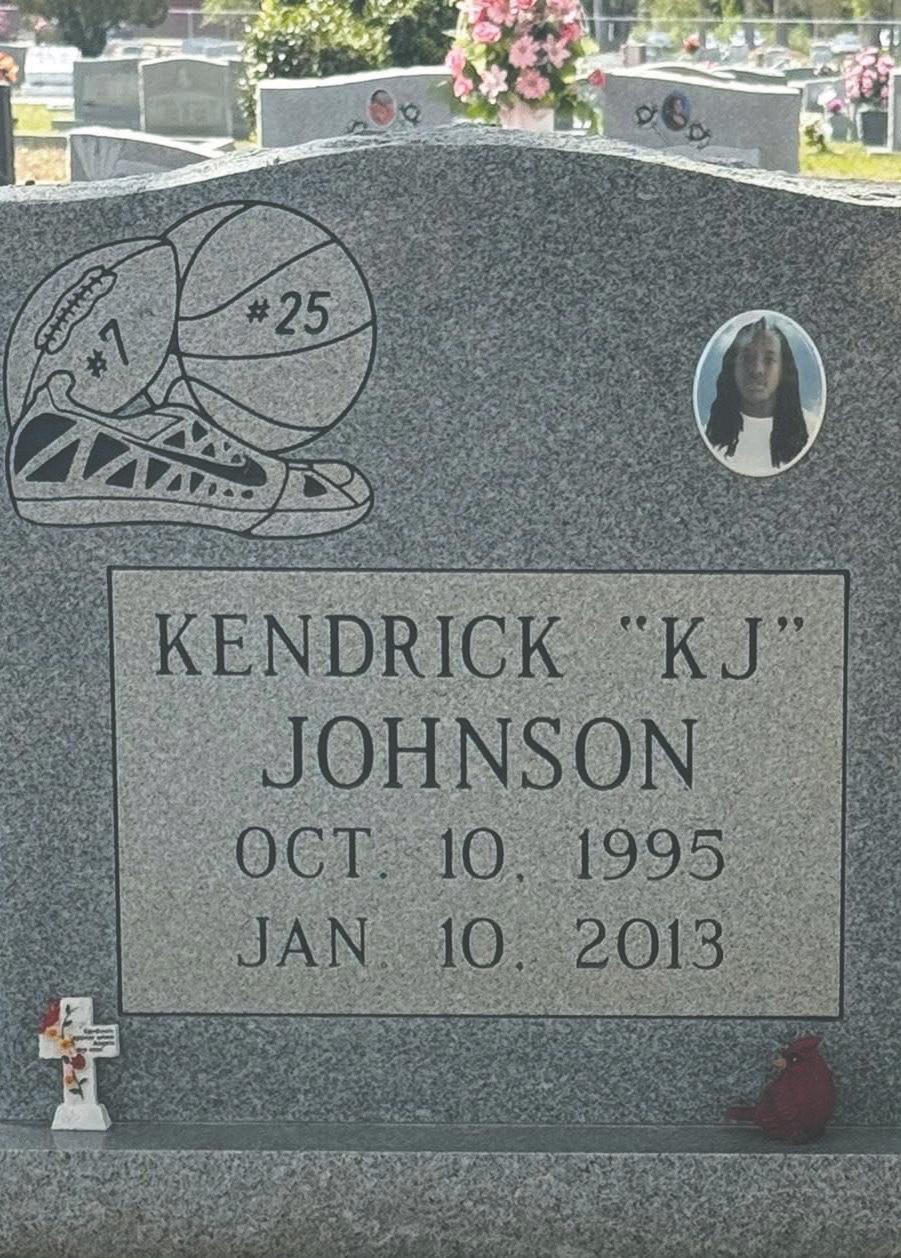
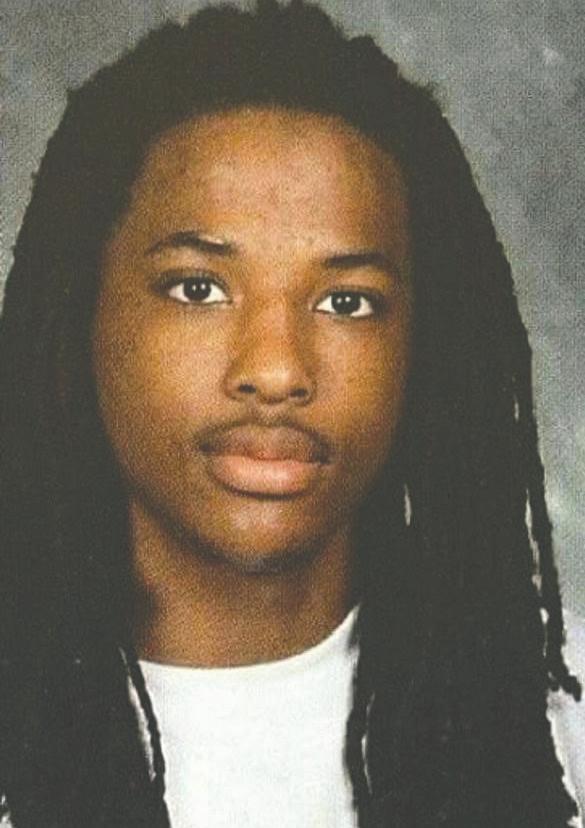
It has been 13 years since the parents of Kendrick Lamar Johnson learned their son, a sophomore at Lowndes High School in Valdosta, Ga., was found dead in the school’s gymnasium. The sophomore’s body was found on Jan.
11, 2013, just one day after he failed to return home from school. The medical examiner for the Georgia Bureau of Investigation concluded that the 17-year-old died from “positional asphyxia.” The death was ruled an accident and the Lowndes County Sheriff’s Office wrapped up their investigation.
Unconvinced, the family hired a private pathologist to conduct a second autopsy.
According to the Department of Justice


(DOJ), “on June 15, 2013, at his family’s request, Kendrick Johnson’s body was exhumed and Dr. William Anderson conducted a second autopsy. Two months later, Dr. Anderson determined the cause of death was blunt force trauma to the right side of Kendrick’s neck, near the jaw, and the manner of death was not an accident. He found hemorrhages to the jaw line


By Black Press USA
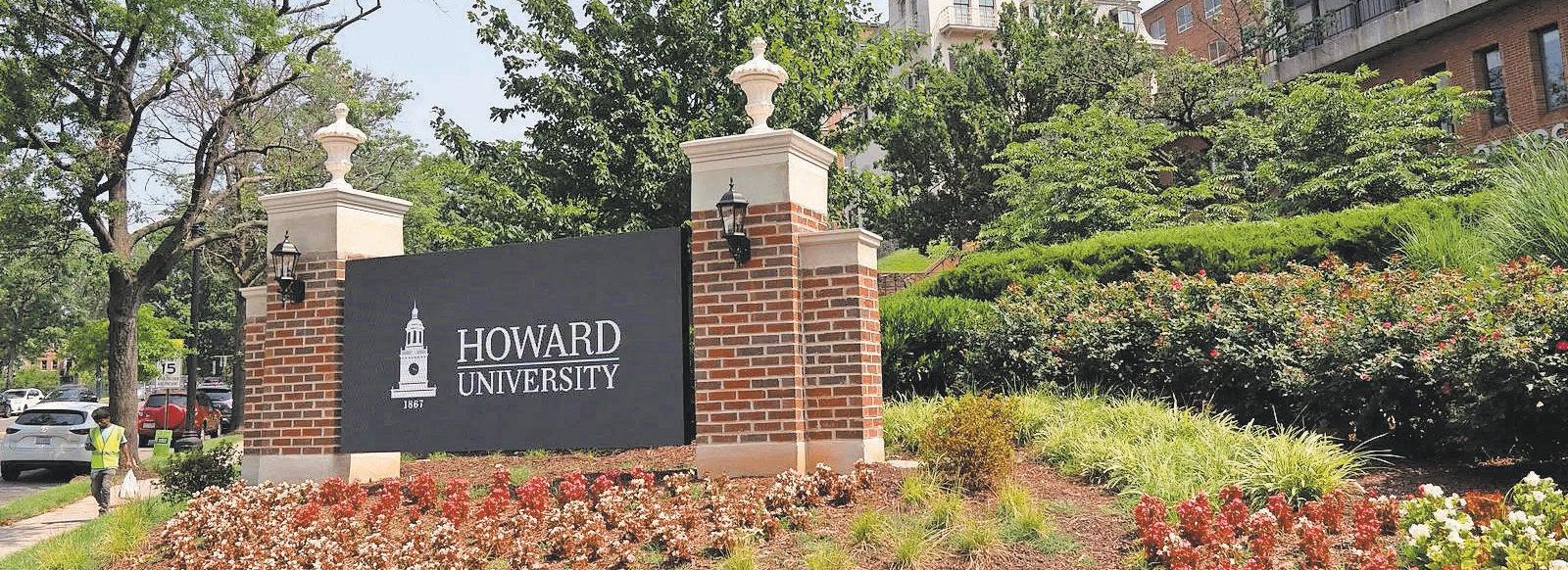
Howard University has successfully reenrolled 46 incoming freshmen following a significant enrollment crisis that initially left more than 500 students without a spot at the historically Black university. The situation has raised broader concerns about the school’s enrollment management processes and whether adequate resources exist to support students navigating complex financial and administrative requirements.
How the enrollment crisis began
On July 24, Howard University confirmed it had notified 502 first-time-in-college students that their accounts did not meet the enrollment and financial obligations required by previously communicated deadlines. The announcement sent shockwaves through the incoming student community, prompting an outpouring of emotional reactions across social media, where many students shared videos expressing distress after learning they had been unenrolled from the university.
According to school officials, students had reportedly been informed about enrollment
requirements, payment expectations and key deadlines as early as March, through channels that included emails and orientation sessions. Despite that earlier communication, the sudden enforcement of these policies left many students and their families scrambling to resolve the issue in a short window of time.
Families rush to campus seeking resolution
In response to the unfolding crisis, numerous families traveled to Howard’s campus in Washington, D.C., hoping to rectify the situation and secure

The Afro-American Newspapers
Baltimore Office • Corporate Headquarters
233 E. Redwood Street
6th Floor, Suite 600G Baltimore, Maryland 21202
410-554-8200
Customer Service, Home Delivery and Subscriptions: 410-554-8200
customerservice@afro.com
Founded by John Henry Murphy Sr., August 13, 1892
Chairman of the Board/Publisher - Frances Murphy Draper (Publisher Emeritus - John J. Oliver Jr.)
President - Benjamin Murphy Phillips IV VP of Marketing and Technology - Kevin E. Peck
Director Digital Solutions - Dana Peck
Receptionist - Wanda Pearson - 410-554-8200, ext. 246
Director of Operations Andrè Draper - 410-554-8200
Director of Finance Bonnie Deanes - 410-554-8242
Director of Sales Robert Walker-Smith - 410-554-8200 rwalker-smith@afro.com
Editorial
Managing Editor - Alexis Taylor - 410-554-8257
Editorial Assistant - Ama Brown-Parson Evening / Weekend Editor - Zenitha Prince Archivist - Savannah Wood- 410-554-8277
Baltimore Circulation/Distribution Manager Andrè Draper - 410-554-8200
Creative Design and Content
Matthew McDonald
Washington Office 1140 3rd Street, N.E., 2nd Floor Washington, D.C. 20002-6723
202-332-0080 • Fax: 410-554-8213
(Washington Publisher Emerita - Frances L. Murphy II)
Director of Operations - Andrè Draper - 410-554-8200

their students’ enrollment ahead of the upcoming fall semester. The urgency behind these visits reflected both the emotional weight and financial stakes tied to attending a university with Howard’s long-standing academic legacy.
University acknowledges gaps in its process
Howard University’s senior vice president for enrollment management addressed the situation publicly, acknowledging that some students had in fact submitted documentation or made genuine attempts to meet the school’s enrollment requirements before the deadline. University officials indicated
they are now working through a review process, examining student records and submitted documentation to determine whether reinstatement or reenrollment is appropriate on a case-by-case basis.
The university’s leadership also acknowledged that the situation revealed a need for greater investment in enrollment support resources going forward, signaling an openness to reassessing how the school communicates and enforces its enrollment policies moving forward.
How can affected students get help?
In light of the ongoing crisis,
Howard University is encouraging impacted families to reach out to the appropriate university offices for support. Families with questions about a student’s enrollment status have been directed to contact the Enrollment Management Office directly.
Separate channels have been established for financial aid inquiries, as well as questions related to pending scholarships or outstanding student account issues, allowing families to route their concerns to the office best equipped to assist them.
A broader reflection on higher education access
The situation at Howard serves as a pointed reminder
of the challenges many students continue to face while navigating the financial and administrative complexities of higher education institutions across the nation. As the university works through its review process, the events highlight the importance of clear communication and consistent support systems, particularly at historically Black colleges and universities that play an outsized role in educating Black students across the country.
What comes next for Howard Moving forward, Howard University’s administration faces mounting pressure to implement lasting changes that ensure students remain properly informed and supported throughout the enrollment process. How the university addresses these underlying resource and communication gaps is likely to shape both the immediate outcomes for affected students and the institution’s broader reputation as it continues serving future generations of students. This article was originally published by Black Press USA, with contributions from The Associated Press, WJLA 7News and Rolling Out.
By Russ Bynum
A U.S. Secret Service agent and two other men have been arrested and charged with violent felonies in the Miami area, where authorities say they committed brutal beatings as part of a fraternity hazing ritual in April that left two people hospitalized with severe injuries.
One of the men charged, 29-year-old Marquez Christopher Pinder, works in the Secret Service’s Miami field office and is described in an arrest warrant as a “dean of pledges” for a Miami chapter of the Kappa Alpha Psi Fraternity, Inc.
The Secret Service said it’s cooperating with investigators and has placed Pinder on administrative leave. He was released from jail after posting a $75,000 bond July 27 and faces arraignment before a judge Sept. 24.
The three men were charged last week after police uncovered evidence of “alleged hazing incidents involving prolonged and repeated beatings with canes and paddles,” the Miami-Dade County state attorney’s office said in a news release.
Police said in court documents that a University of Miami graduate student and another young man had injuries that could have been fatal had they not been treated. One required skin grafts to his backside and suffered kidney damage, the documents said, while the other had a tube placed in his windpipe to help him breathe.
Accused agent has worked for Secret Service since 2023
Charges against the three men include felony counts of hazing with a deadly weapon, aggravated battery
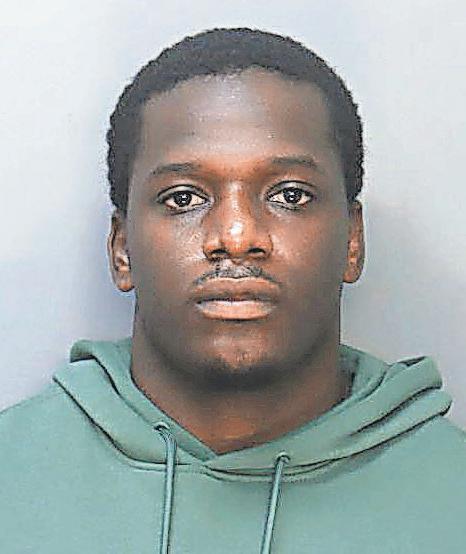
Christopher Pinder,
with great bodily harm and attempted manslaughter.
“In Florida, hazing is abuse and it is a crime,” Katherine Fernandez Rundle, state attorney for Miami-Dade County, said in a statement July 26. “Its victims too often lie in their graves and in hospital beds.”
An attorney for Pinder, Justin Beckham, did not immediately return phone and email messages seeking comment July 27. Court and jail records did not list attorneys for the other two men.
Pinder has worked as a Secret Service agent since 2023, agency spokesman Matt Fagiana confirmed July 27.
“Any misconduct will be addressed swiftly and appropriately upon completion of the investigative and
judicial process,” Michael Townsend, the special agent in charge of the Secret Service’s Miami field office, said in a statement.
A spokesman for Kappa Alpha Psi did not immediately return a phone message left at the fraternity’s Philadelphia headquarters.
Arrest warrant describes bloody paddling, emergency medical care
According to Pinder’s arrest warrant, the graduate student told police that he and another young man had their backsides beaten by Pinder and the other defendants during four nights in early April at an apartment and a home off-campus. The paddling started when the victims failed to correctly answer
questions about the fraternity and its history, a police investigator said in an arrest warrant filed in court.
The warrant did not name either victim.
The beatings stopped on the fourth night when one of the victims had blood seeping through the seat of his pants, according to the warrant. It said fraternity leaders ordered both victims to strip off their clothes and place them in garbage bags before going home.
One of the victims suffered vomiting, fevers and intense pain before being admitted to a hospital, where he required skin grafts on his buttocks and treatment for kidney damage, according to police.
Without emergency medical treatment, the warrant said, “his injuries would have resulted in renal failure leading to death.”
The second victim told police he knew the other victim from the fraternity. He denied being paddled, the warrant said, but acknowledged receiving emergency medical care in April.
That person’s medical records showed he had been hospitalized with injuries to his backside and “was intubated during his stay in the hospital to prevent further physical deterioration and death,” the arrest warrant said.
Florida lawmakers in 2005 made hazing a felony punishable by up to five years in prison if it results in serious injury or death. The law was spurred by the 2001 death of Chad Meredith, a University of Miami freshman who drowned after drinking alcohol and then attempting to swim across a lake at the urging of campus fraternity leaders. Bynum reported from Savannah, Ga. This article was originally published by The Associated Press.
area not detected during the GBI autopsy.”
Still, after an investigation by the U.S. Attorney for the Middle District of Georgia, DOJ officials announced no criminal charges would be filed in relation to Kendrick’s death.
The DOJ agreed with the medical examiner’s report, the teen had become “entrapped upside-down in the rolled-up mat and had suffocated.”
“It hurts – it still hurts,” Kenneth Johnson, Kendrick’s father, said. “We’ve been given a lot of promises that have all been broken from officials who said they would determine what really happened. They said they wanted to uncover the truth. But we’re still dissatisfied. That’s why we’re here today at the Supreme Court – to ask the justices for their help.”
“We’re convinced that some of the evidence was either tampered with, hidden away or destroyed. We just don’t believe that Kendrick’s death was accidental. When I viewed his body, one side of his face was bruised and his lip was swollen,” said Kenneth Johnson. “That sounds like he had been in a fight. And then his fingernails had been cut down to the skin. He wore his nails long – he’d never have done that.
gathered in Washington, on Aug. 28, 1963, to protest racial discrimination, high unemployment, and segregation faced by Black Americans. Known as the March on Washington, the event is widely regarded as one of the defining moments of the Civil Rights Movement.
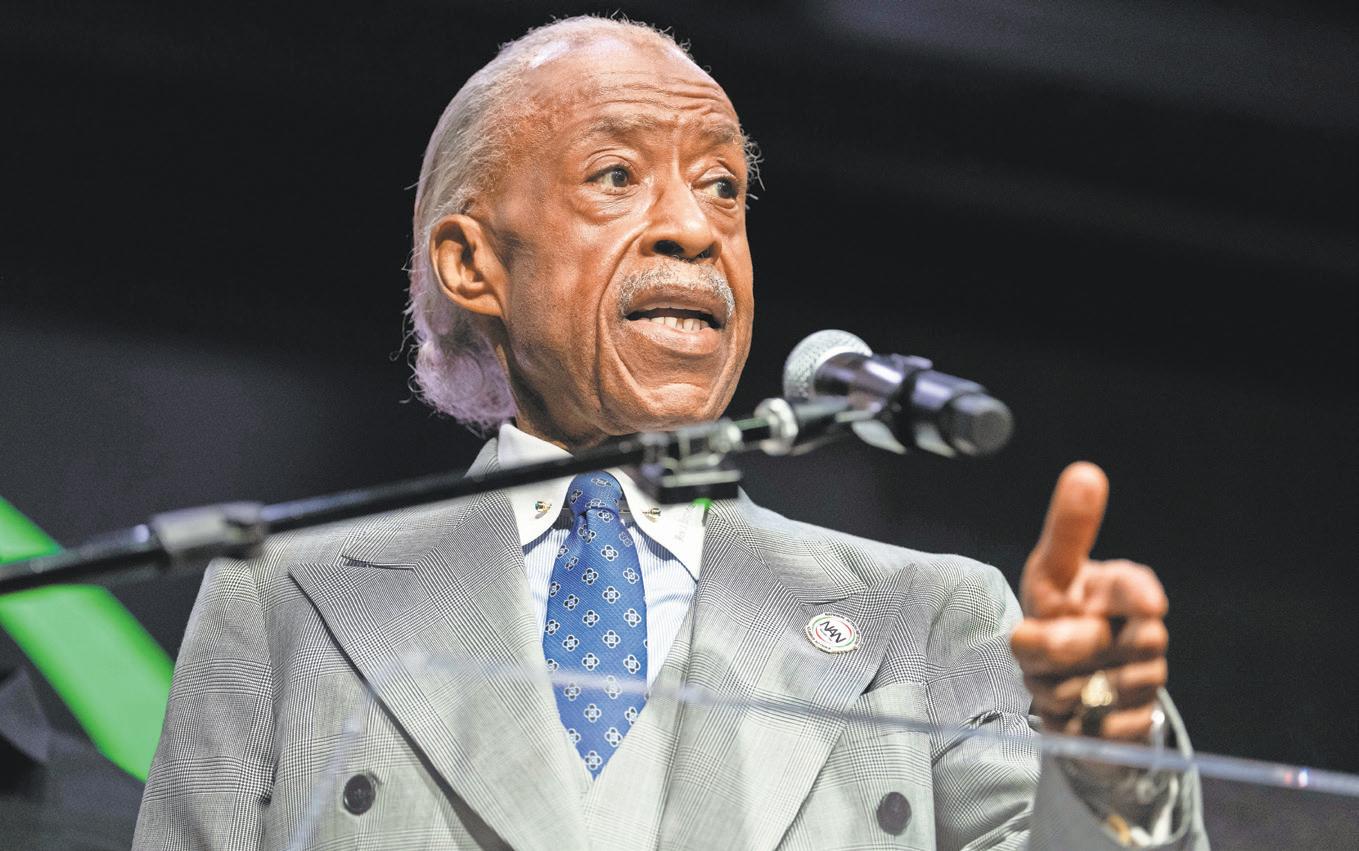
In 2000, at the Redeem the Dream March, Coretta Scott King challenged the next generation of leaders to continue the fight pioneered by her late husband, Dr. Martin Luther King Jr. Twenty-six years later, Sharpton said “We’re fulfilling the assignment Mrs. King gave us.”
This year’s theme, “Defend the Vote,” reflects concerns about
Someone knows what happened. Someone was responsible. And we’re not going to rest until justice is served for our son.”
Over the years, the family has maintained that they believe Kendrick’s death was in fact a murder. The teens they alleged were responsible for the death were children of an FBI agent. There have been lawsuits filed, lawsuits dropped and lawsuits that were dismissed. In 2017, the Kendrick’s family was ordered to pay the legal fees of those they accused of killing their son, and the entities they believe engaged in a coverup.
In 2020, the documentary “Finding Kendrick Johnson” was released. The film was directed by Jason Pollock and narrated by actress Jenifer Lewis. In the film, Kendrick’s parents and Private Investigator Mitch Credle, a homicide detective from Washington D.C., allege that Kendrick was involved in a physical altercation over a girl. That fight allegedly led to Kendrick’s death.
Now, despite several failed efforts to seek justice for Kendrick in civil courts, Kendrick Johnson’s family have brought their argument and concerns to the Supreme Court of the United States in Washington, D.C.
In exclusive interviews with AFRO News, both Kenneth and Jacquelyn Johnson, the private investigator of the late teenager, explained why they are demanding that officials reopen the case.
voting rights and other civil rights protections. Sharpton said the march is part of ongoing efforts to protect access to the ballot.
“We stand on the same ground because the work is not finished. The right to vote, the very foundation of our power, is being chipped away in statehouse after statehouse,” Sharpton said. When the vote is weakened, every other right grows fragile with it. That is why we march. That is what we mean when we say ‘Defend the Vote.’”
Several organizations are coordinating transportation to the march, including charter buses, local chapter transportation and independent reservation services.
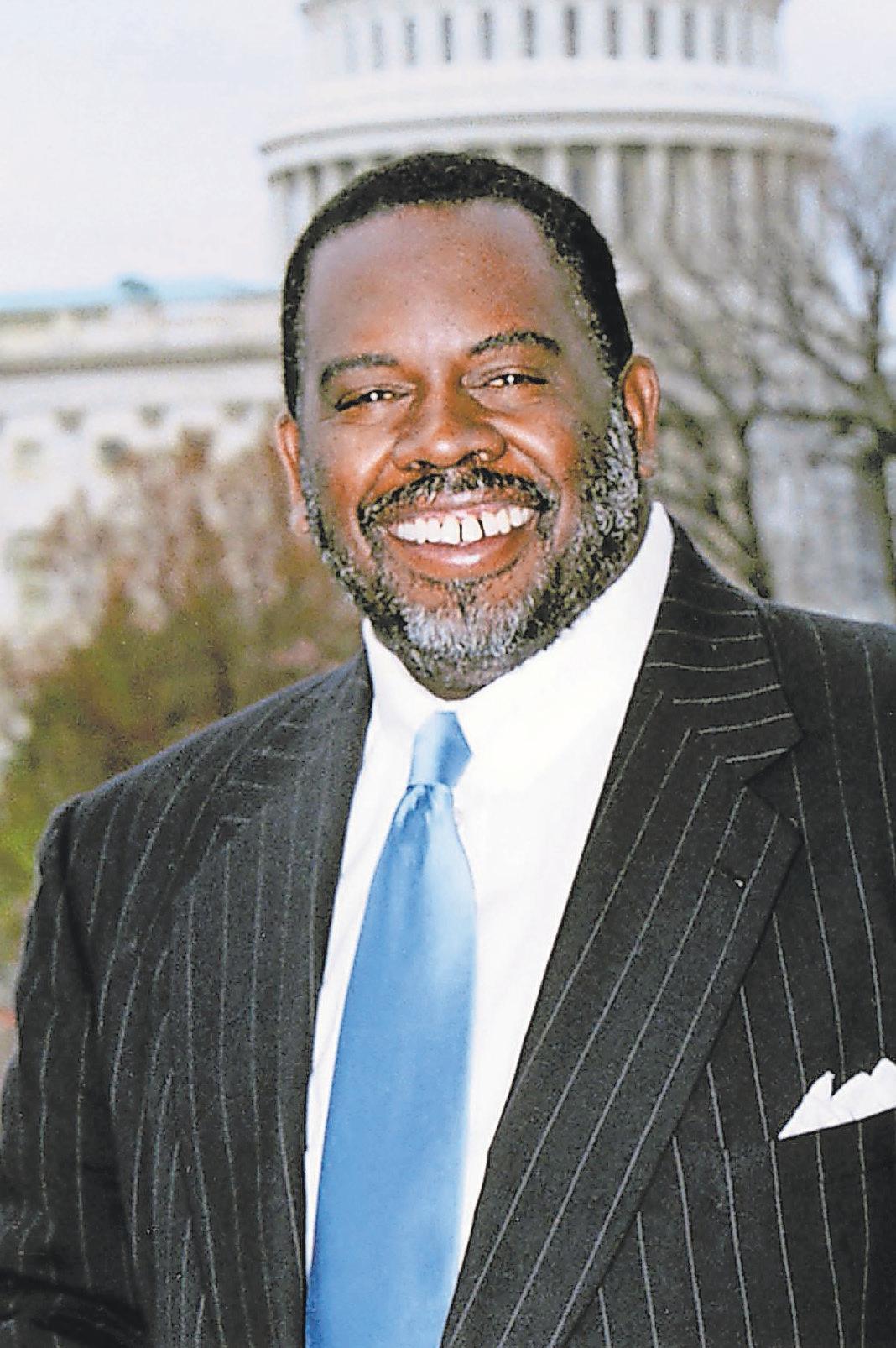
Former Maryland Sen. Larry Young, president of the NAN Greater Baltimore Chapter, has been busy organizing transportation for those in Baltimore who want to attend the
march later this month.
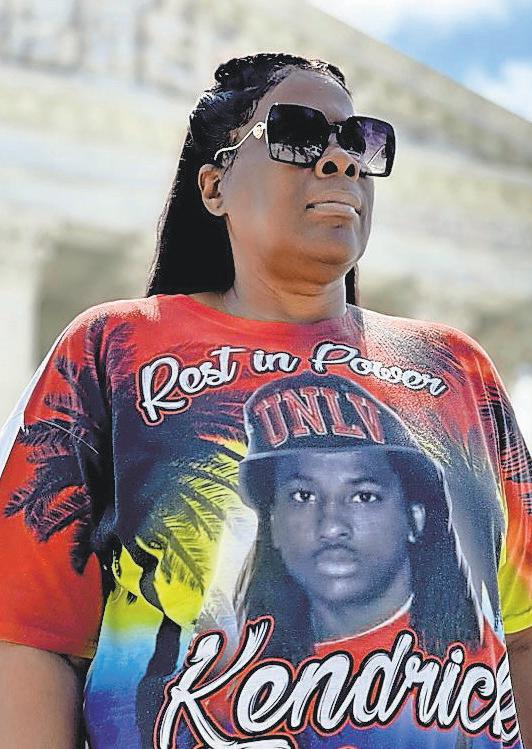
On July 24, Kendrick’s parents say they filed a petition with the U.S. Supreme Court seeking relief they say they have not found in lower courts. On July 25 they were joined outside of the Court by other family members, friends and supporters, including more than 100 Black men from Israel United in Christ.
Jacquelyn Johnson said she understands the pain faced by the family of Nolan Wells, a Black teen found dead on July 6 after a Fourth of July party on Horn Island in Mississippi.
“It hurts my heart to see another set of Black parents experiencing what we’ve been dealing with for the last 13 years,” Jacquelyn Johnson said. “I wonder why Black people must still face these kinds of nightmares in our own country in 2026. Is it wrong for us to expect justice like anyone else?”
To other parents she had the following to say:
“I’ve learned that it’s okay not to be okay,” she said. “Sometimes, when you’re in this kind of fight for justice, you have to take a break. But then you have to get back up and join the battle. As for me, I will forever say Kendrick’s name and I’m not going to rest until his spirit is at rest and justice has been served.”
Jacquelyn Johnson took time to share memories of Kendrick that she still cherishes.
“Kendrick was my baby boy and when I look back, I realize that we took a lot of everyday
Young, who attended the 1963 March on Washington, said he remembers the event as peaceful and believes this year’s march is equally important.
“I was just barely close enough to see the faces of the people speaking. There were many thousands, and much like the Million Man March, no incidents. Just loving brothers and sisters connecting to make a powerful statement–250,000 people gathered together,” said Young.
“I’ve always taken pride that I was able to be among that number. We have to send a message to Trump and his folk that we’re not going backwards. We’re going to go forward and we’re going to beat them at the polls come November.”
More information can be found on the March on Washington 2026 website.
things that he did or said for granted. He was a jokester,” she told the AFRO. “He loved to aggravate his sister, and he loved football. But he was quiet and only had a few friends outside of our family. A lot of people say they knew him, but they really didn’t. But now, I guess they do – or at least they know his name.”
Kenneth Johnson spoke with emotion as he described his son.
“Kendrick was a responsible child,” Kenneth Johnson said. “He respected his elders and he obeyed our rules and the laws of the state of both our state and the nation. Respect for others and honesty were something we emphasized in our home.”
Kenneth Johnson says a moment he had with his son years ago still sticks with him.
“I’ll never forget one afternoon that started like a lot of others. We were watching a football game which was interrupted by a special news bulletin. Trayvon Martin had been killed in Florida by a white man who claimed he was protecting his community. Neither of us said anything and after the announcement, the football continued,” Kenneth Johnson said. “But then Kendrick looked over at me and said, ‘If something like that happens to me, would you fight for me – for justice?’ I told him I would. But I never imagined that I’d actually be doing that one day.”


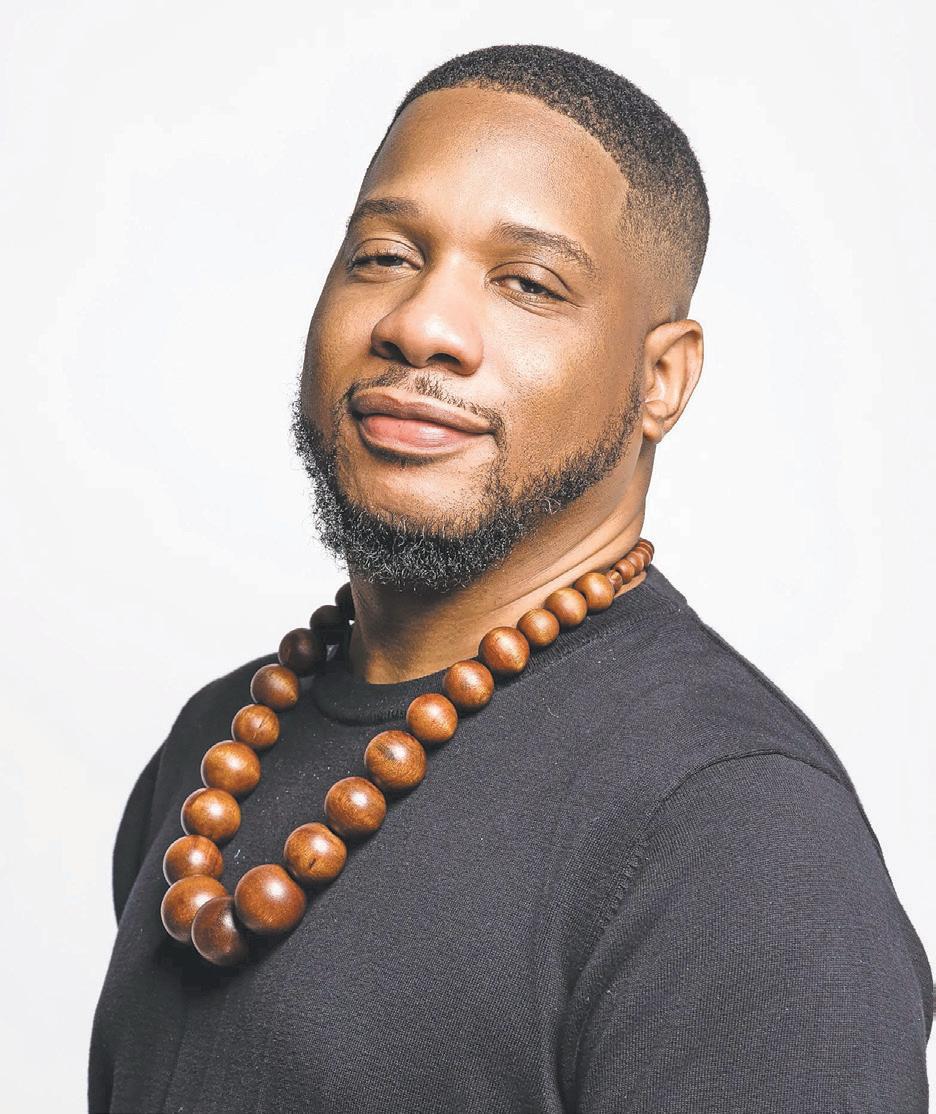
discusses the threat of data centers.
By Dayvon Love
The political contestation over data centers is not just a battle over the role of artificial intelligence (AI) in modern society, environmental regulations and local zoning. It’s a manifestation of the next iteration of the global domination of white monopoly capital.
The tech industry is pushing forward an agenda that centers the discourse of technological innovation as a guise for unprecedented wealth accumulation for tech billionaires. Similar to the robber barons of the late 19th and early 20th century, industries like steel and the railroads became essential elements of a new highly industrialized world. This generated unprecedented wealth for the owners of the businesses
that dominated these industries. Today, with the integration of AI in many aspects of our daily lives, the owners of the businesses that monopolize the tech world are on the verge of acquiring unprecedented wealth and power.
In pursuit of this wealth on the part of tech billionaires they have the ability to shape the political landscape in a way that is favorable to their economic interests. What is at stake for communities around the country is the environmental degradation that comes with these data center complexes that utilize tremendous amounts of energy and water. These data centers put a strain on energy generation which can (and has) driven up the cost of energy for the surrounding communities. They also contribute to increased levels of pollution due to the
accelerated levels of energy production that data centers require. Black people and poor/working class communities of color historically have been hardest hit by the impacts of environmental degradation.
Harford County became the first county in Maryland to ban data centers. Harford County is a jurisdiction that is heavily Republican but is becoming more purple. Their ban demonstrates that communities have the ability to force their elected representatives to reject the idea that these data centers are a political inevitability.
This is a contrast to Baltimore
City that is calling for a one year moratorium on data centers, and established a commission that would lay out regulations for data centers in Baltimore.
I attended a hearing on May 7
By Albert Wynn
I was honored to represent Maryland’s Fourth Congressional District for over 15 years, including two terms on the then-Banking Committee. During this time, I met with entrepreneurs, banks, lenders and small businesses to address the problem of access to capital for underserved communities. The problem persists, and as a result, these folks continue to rely heavily on credit cards as their most accessible source of working capital. This reality leads me to seriously question the wisdom of the current federal proposal to cap credit card interest rates at 10 percent.
Over the years, we’ve made significant progress in expanding access to credit. Today, a broader range of borrowers can access credit through starter credit cards and other products, opening new possibilities for Marylanders looking to start or grow a business.
Now, however, proposals in Congress threaten to halt that progress. At first glance, a rate cap looks like a win for consumers
and small business owners. Who would not want to pay less on borrowed money? Though well-intentioned, this approach overlooks the harsh economic realities of the people it seeks to help and could lead to the unintended consequence of less, rather than more, access to capital.
Small businesses, especially Black- and minority-owned businesses, rely on credit cards as a vital bridge: paying for equipment, financing inventory and managing uneven cash flow.
The Federal Reserve’s own 2024 Small Business Credit Survey found that 58 percent of small businesses regularly use credit cards, more than any other financing product.
Capping interest rates at 10 percent would significantly limit access to credit cards. Lenders evaluate every dollar they lend for risk. When they lend to applicants with lower credit scores or sparse financial histories, they do so at a higher interest rate because of the risk they assume. A 10 percent cap doesn’t mean they would lend
to riskier borrowers at that rate; it means they wouldn’t lend to them at all. Black borrowers, who carry a lower average credit score than white borrowers, would bear the brunt of this.
The impact would ripple through Black entrepreneurs and small business owners. The Federal Reserve’s 2024 Small Business Credit Survey already found that only 35 percent of Black-owned employer firms that applied for financing were fully approved, compared to 56 percent of white-owned firms. A rate cap would make it harder for these entrepreneurs.
Like many business owners, Black business owners rely heavily on personal credit for financing. The way most build up that credit profile is through the responsible use of credit cards. Without the conditions that allow borrowers across the risk spectrum to access credit cards, these same business owners would find themselves priced out of the system.
In the absence of credit cards,
these business owners would still have to access capital. This could force them toward merchant cash advances and unregulated lenders, where effective rates can run 40 to 150 percent or higher, with none of the protections that come with a regulated credit card.
Removing this credit line without offering a real alternative does not protect anyone; rather, it moves the risk from the boardroom to the kitchen table. Instead of a punitive cap, we should find solutions that actually expand opportunity: stronger CDFI funding, fairer underwriting that counts rent and utility payments, and credit education that helps entrepreneurs become bankable.
Black-owned small businesses are employers, anchors of local economies, and generators of wealth in our communities. Every barrier to credit access is a barrier to economic growth and financial independence. Economic growth, particularly in minority communities, requires practical solutions that open more doors to capital, not fewer.
at City Hall where the public had an opportunity to weigh in on a proposal for a data center moratorium in Baltimore. There were many people who were making important arguments about why data centers are harmful to our communities, but the only person that explicitly called for a ban was Andy Ellis, who is the Green Party nominee for governor. I think that the political left will need to be more forceful about demanding that we ban data centers in Baltimore and in majority Black communities around the country. Just like the majority-white, deeply Republican Harford County banned data centers in a move to protect their community from the impacts of data centers, we need to protect our communities in that same way.
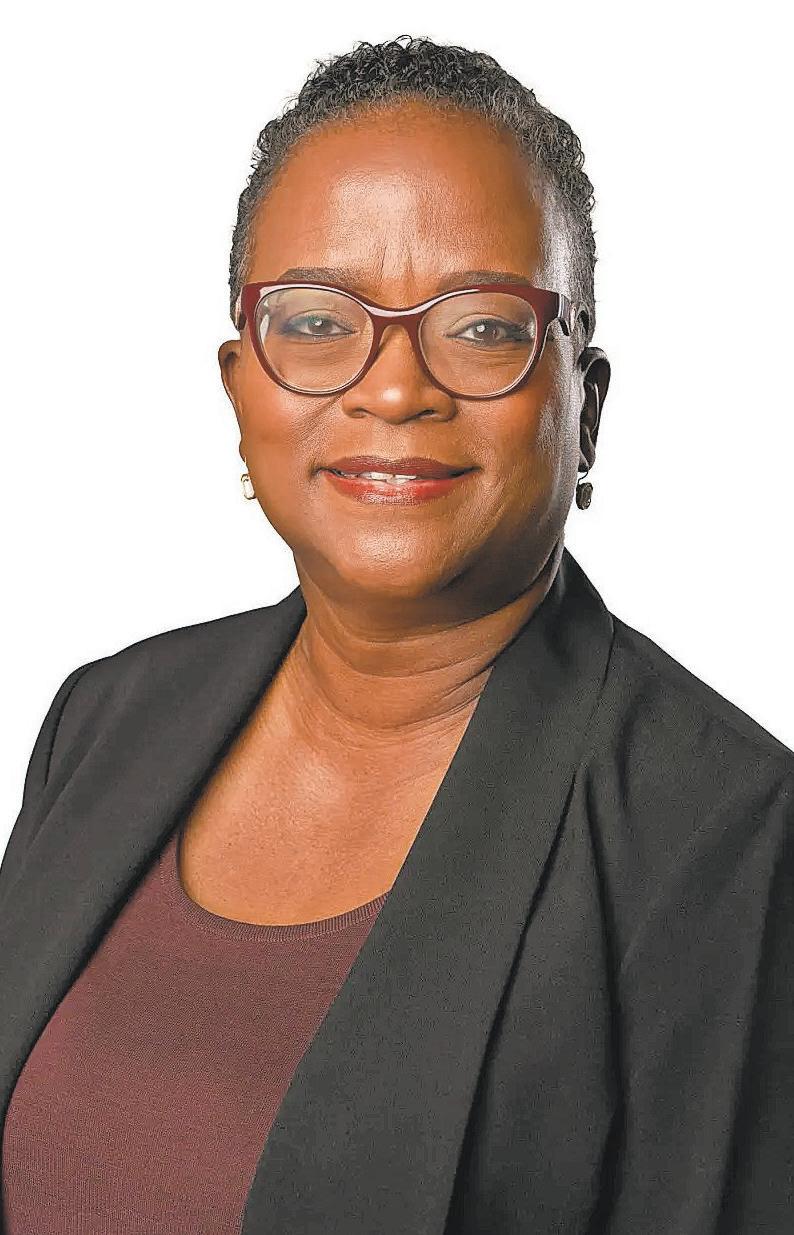
My father, who was an entrepreneur, taught me confidence, self-efficacy, and determination. He believed that if you wanted something, you had to assert yourself.
Ask for the moon, he said, and if the answer was no, work your way down. Never start low and expect to work your way up.
It proved to be good advice.
Grateful as I am for his wisdom, my career trajectory might have been very different if an experienced colleague had spotted my potential and nurtured it. Having a mentor would have made a meaningful difference. And right now, perhaps more than at any time in recent history, Black women need the steady guidance, insight and wise counsel a mentor can provide.
Disturbing trends
Across the country, diversity programs are under attack. Commitment to women’s advancement is declining. Companies are scaling back or eliminating anti-bias training. For the first time in more than a decade, Lean In’s Women in the Workplace 2025 report found that women are
significantly less likely than men to want a promotion at work.
The message is clear: We can’t rely on government programs or corporate enlightenment to see us. If women, and Black women in particular, hope to preserve the gains we’ve made, it’s up to us to help one another.
I may never have had a mentor in any official sense. But I’ve benefitted from others’ advice. Like the friend I met regularly for breakfast. Or the leadership coach who recognized that I was always racing to a finish line. That sense of urgency works — sometimes.
But when it comes to personal development, my coach advised that it’s an ongoing journey. If you have a finish-line mindset, you end up underestimating yourself. It took someone from the outside to help me see that.
I tell young women they must be open to seeking and receiving guidance. Don’t make it hard for people to help you. Invite honest feedback. Self-confidence is important, but being self-reflective is, too. Figure out who you are when nobody’s looking and focus on what you need to flourish. It can help you identify a mentor
who can get you to the next level.
Many of us are capable and brilliant, but it’s easy to be in our own way. Mentors can teach us to view our careers from the balcony, where it’s easier to see the patterns that hold us back — and the changes we must make to move forward.
Being a mentor doesn’t take special talent, require a course, or even a massive time commitment. All that’s needed is a desire to be of service.
In our patriarchal society, women don’t have a great track record of helping one another. That is why we must be very deliberate in our efforts to help the advancement of other women.
The best mentors don’t enter a relationship assuming they know anything about the person they’re helping. Instead, they listen. They ask their mentees what they believe are the solution to a problem, then — and only then — offer advice.
It’s also important for mentors to let go of any preconceptions or stereotypes they might carry. For example, some people still tell me that I’m “so articulate,” or
“so well-spoken.” It’s as insulting now as it was when I was a child. Yet those kind of statements reveal so much more about the speaker than they realize.
We all need help to get to where we want to be. Assistance in expanding our vision for what is possible for ourselves, our families and our communities is vital. Some of us are comfortable asking for assistance; others are lucky to have someone spot their potential and offer to help develop it.
We all need to be mentoring when the time and opportunity allow.
My father said one other thing that has stayed with me: “White children are born with expectations, and Black children are born with hope. I raised you and your sister with expectations.” He added that whatever I do, always work to turn hope into expectation for those you encounter.
I’m committed to helping women grow and prosper as leaders, especially young Black women. It makes a difference.
This article was originally published by Word in Black.
By D.
With the issue of affordability of tantamount concern for millions of Americans, and at a time when an estimated 600,000 African-American women have been disconnected from the workforce, a highly regarded national organization of Black women recently held a virtual discussion on how the current economy and unequal pay continue to impact their lives.
On July 21, the date established in 1996 by the National Committee on Pay Equity to annually highlight the impact of race and gender on the wage gap, Americans once again observed Black Women’s Equal Pay Day.
In its contribution to the conversations, demonstrations and strategy meetings which occurred across America on July 21, the National Coalition on Black Civic Participation (NCBCP) and the Black Women’s Roundtable (BWR) released findings of the 10th Annual “Power of the Sister Vote” Poll.
Melanie L. Campbell, president/ CEO of NCBCP and national convener of BWR, said releasing the results of the poll on Black Women’s Equal Pay Day was an intentional decision.
“We found it most appropriate that we release this poll today because Black women have never been paid what their true value has been to America,” Campbell said. “And now, with the attacks on DEI and a faltering economy, we are truly suffering.
“The poll shows that pay inequity has a face: that of a Black woman.”
The poll represents the views of 1,000 Black women and registered voters.
Moderator Irene Marion, head of special projects for The Root, said with 10 years of results, Black women have their marching orders as the midterms elections approach.
“We at The Root take Black women’s lives seriously, not as a footnote but as a story – often as a headline,”
in support of Black democratic candidates running for various elected offices. Moore has made it clear that he will not allow President Donald J. Trump’s recent comments towards leaders of color to prevent him from uplifting Black candidates.
“At a time when communities have been under direct attack from the Trump Administration, it’s never been more critical to stand with leaders who aren’t just pushing back but pushing forward,” said Moore, in a statement sent to AFRO News. “I am proud to support so many commonsense leaders all across the country–leaders who are dedicated to tackling the issues people care about: growing the economy, making life more affordable, keeping communities safe, strengthening public schools, and creating states that leaves no one behind.”
During Moore’s visit to South Carolina, he attended various meet and greets to support Black democrats, including U.S. Congressman Jim Clyburn, who represents South Carolina’s 6th District. Clyburn joined Congress in 1993.
Clyburn’s campaign for reelection highlights plans of making health care more affordable, relieving student debt and providing equal access to jobs and economic opportunities. Additionally, Clyburn wants to aid communities throughout South Carolina, New Mexico and Arizona that are below the poverty line with his 10-20-30 funding plan.
Marion said. “And with a decade of responses on record of what Black women have said in their own words, the Sister Vote poll clearly indicates what is on our minds.”
Joining Campbell to present key findings from the poll and to share their perspectives on the more salient responses were Katrina Gamble, pollster at Sojourn Strategies; Dr. Avis Jones-DeWeever, principal at Nouveau Strategies; Dr. Mikhiela Sherrod, director of U.S. Domestic Programs, Oxfam America; and Holli Holliday, president/CEO, Sisters Lead Sisters Vote.
Key findings from the 2026 poll
Gamble emphasized that nearly half of respondents – 47 percent – said they are paid less than their white male or female coworkers, and nearly nine out of 10 said they were very concerned about being paid. This wage gap, which increases as Black women grow older, is also higher among Black women with college degrees.
“The attack on DEI has had a human cost,” Gamble said. “DEI cuts have impacted Black women in two ways: either directly or among someone close to them (44 percent), often forcing them to cut back on groceries or resulting in their buying cheaper food within the last three months. And the concerns are similar whether the women have college degrees or not.
“More troubling are the ways Black women have adjusted their normal routines simply to get by, including putting off seeing a doctor (30 percent for those with college degrees), utilizing food banks or church food pantries to supplement their groceries, borrowing money from family members (37 percent), or going into their savings (32 percent).”
Job security also served as a key concern for those who participated in the poll with even those who are currently employed (71 percent) expressing the need to find a job that allows them to adequately provide for themselves and their families.
“Among those who are unemployed, 31 percent lost their jobs due to layoffs or termination within the last two years,” Gamble said. “The reasons vary and include downsizing, the elimination of positions, or the elimination of DEI programs.”
The poll found that “women without a degree face deeper subsistence hardship. They are more likely to fall behind on rent or utilities (29 percent vs. 21 percent) and to borrow from family (41 percent vs. 28 percent).”
Jones-DeWeever said between 2024 and 2026, there have been notable shifts in how Black women assess the top issues impacting their lives.
“In 2024, economics was at the top of the list and while that’s still a primary concern, Black women in 2026 now say protecting Social Security, Medicaid and fighting discrimination have risen to the top of the list (91 percent),” Jones-DeWeever said. “Protecting voting rights has become a priority at 90 percent – something which didn’t even show up in our poll in 2024.”
Jones-DeWeever said a long-standing issue within the Black community, the disproportionate number of Black maternal deaths among women in childbirth, has risen to the top of the list of concerns for the first time in the 10-year history of the poll.
And despite more Black women expressing discontent over the direction the nation has taken over the past two years, rising from 65 percent to 80 percent, most still said they’re satisfied with their lives as a whole.
“Perhaps it seems strange, but Black women, despite the challenges they face, point to things outside of the shifting political terrain, like their relationships with their families and friends and their faith, on which they rely to help them face and overcome the challenges before them,”
Jones-DeWeever said.
Sherrod said she views Black Women’s Equal Pay Day as more than just a calendar date. She said to
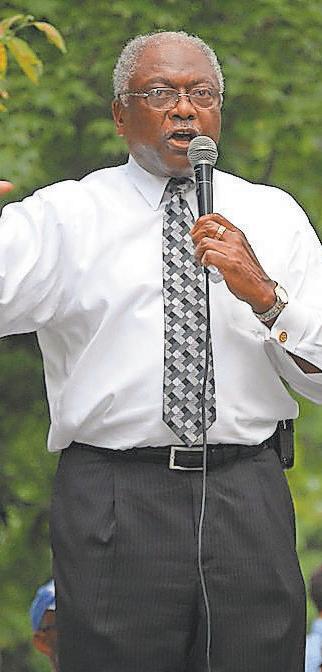

On an annual basis,Black Women’s Equal Pay Day marks how far into the year Black women have to work to make the same amount as what their white male counterparts earned in the year prior. This year, the day was observed on July 21.
overcome poverty and injustice, the focus must be not on choices made by individuals or their failed efforts.
Rather, Americans must come to terms with the legacy of occupational segregation that has failed to protect the rights of Black women and relegated them to the sector of low wage industries.
“For decades, women, especially Black women, have kept the American economy running, despite being undervalued and underpaid in industries like service, care giving, retail, and hospitality,” Sherrod said.
“Even those with college degrees and years of experience are still paid less than white men because of systemic barriers that have been in place for centuries.”
Sherrod said policies created the inequities and believes that policies can also dismantle the same. She said to reduce the wage gap American society has to:
1. Convince Congress to pass the Pay Check Fairness Act;
2. Raise wages for women across the U.S. and eliminate those wages which trap women in poverty;
3. Invest in quality jobs – not just more jobs – that expand access to careers which offer family-sustaining wages, benefits, opportunities for investment and safer work places;
4. Recognize care as an essential infrastructure with paid family leave guaranteed for all workers so that no one has to choose between taking care of a loved one or a paycheck;
5. Protect workers’ ability to organize.
“Equal pay is an economic, racial, gender and democracy issue,” Sherrod said. “The poll’s findings are more than a snapshot – they’re a call to action. Black women’s equal pay day is not about how long we’ve had to wait, but how we are coming together to close the wage gap.”
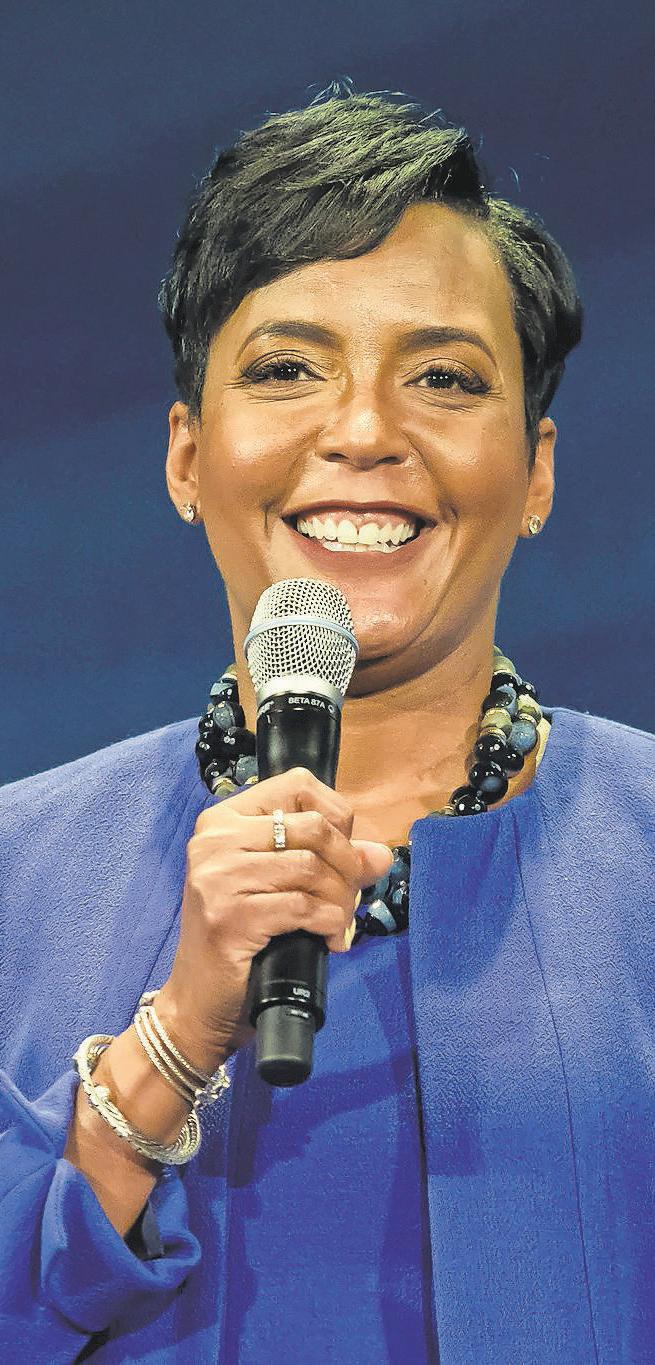
According to Clyburn’s campaign website, “Clyburn for Congress,” the 10-20-30 funding formula incorporates the following: “at least 10 percent of appropriated funds to
communities where 20 percent or more of their populations have lived below the poverty level for the last 30 years.” Clyburn took to Instagram and made certain to explain
why voting during the Democratic primary election is significant. “Vote as soon as you possibly can because as we are voting, the United States Senate is debating whether or not to allow congressional districts to remain as they currently are,” Clyburn warned his followers. “As many people that can vote, should vote, and challenge the process.”
Moore’s journey around the country continued to Georgia, where he campaigned for former mayor of Atlanta, Keisha Lance Bottoms who is running for governor of Georgia. Angela Alsobrooks, senator of Maryland, also showed support for Keisha Lance Bottoms’ campaign.
“This election is about all of us,” said Alsobrooks, in a video posted to Meta (Facebook).
“It is about all of our families.”
Lance Bottoms aims to lower the costs of healthcare by broadening Medicaid, making housing more affordable for Georgia citizens by building more homes.
Lance Bottoms has said she plans to prioritize Georgia’s education system by ensuring that it is completely funded. She also wants to protect farmers and producers from financial struggles that are out of their hands.
Another main focus for Lance Bottoms is women’s reproductive rights and the fight against any potential threats against democracy– including Trump.
If elected on Nov. 3, 2026, Lance Bottoms would be the first Black woman to ever become a governor in the United States of America. Wes Moore took to Instagram to remind his followers why it is vital to have African Americans in office.
“Getting more Black leaders into higher office is personal for me,” said Moore. “That’s why I’ve been traveling the country to support candidates with a proven record of moving us forward, especially when times are tough. I’ve got their back because I know they’ll fight to make sure no one is left behind.”

By Rev. Dorothy S. Boulware
For nearly a decade, Kimmoly LaBoo says she poured herself into her Baltimore-area church. An author, publisher and speaker, she completed leadership training, mentored others and became a trusted servant without ever seeking a formal title.
When her marriage began falling apart, she expected the same church that had nurtured her faith to help her navigate one of life’s darkest seasons. Instead, she said, she encountered misunderstanding and blame-shifting — starting with church leadership.
In church counseling sessions, LaBoo and her then-husband met with the senior pastor and the pastor’s husband. To protect her husband’s dignity, LaBoo says she initially withheld details of her husband’s years-long emotional abuse, only to have the pastor privately blame LaBoo for the faltering marriage.
Troubling pattern
Only after LaBoo described years of her husband’s misconduct — explosive, angry tirades and property destruction that sometimes required police intervention and caused her to live in fear — did the pastor acknowledge that conventional mentoring would not solve the problem.
LaBoo recalled the pastor’s conclusion: “‘None of what I was going to suggest is going to work in your situation.’” Yet LaBoo says the church never adjusted its response to her.
The Black church has long upheld marriage as a sacred covenant, even as many congregations minister to communities where divorce is an everyday reality. For many Christians involved in their churches, divorce marks not only the end of
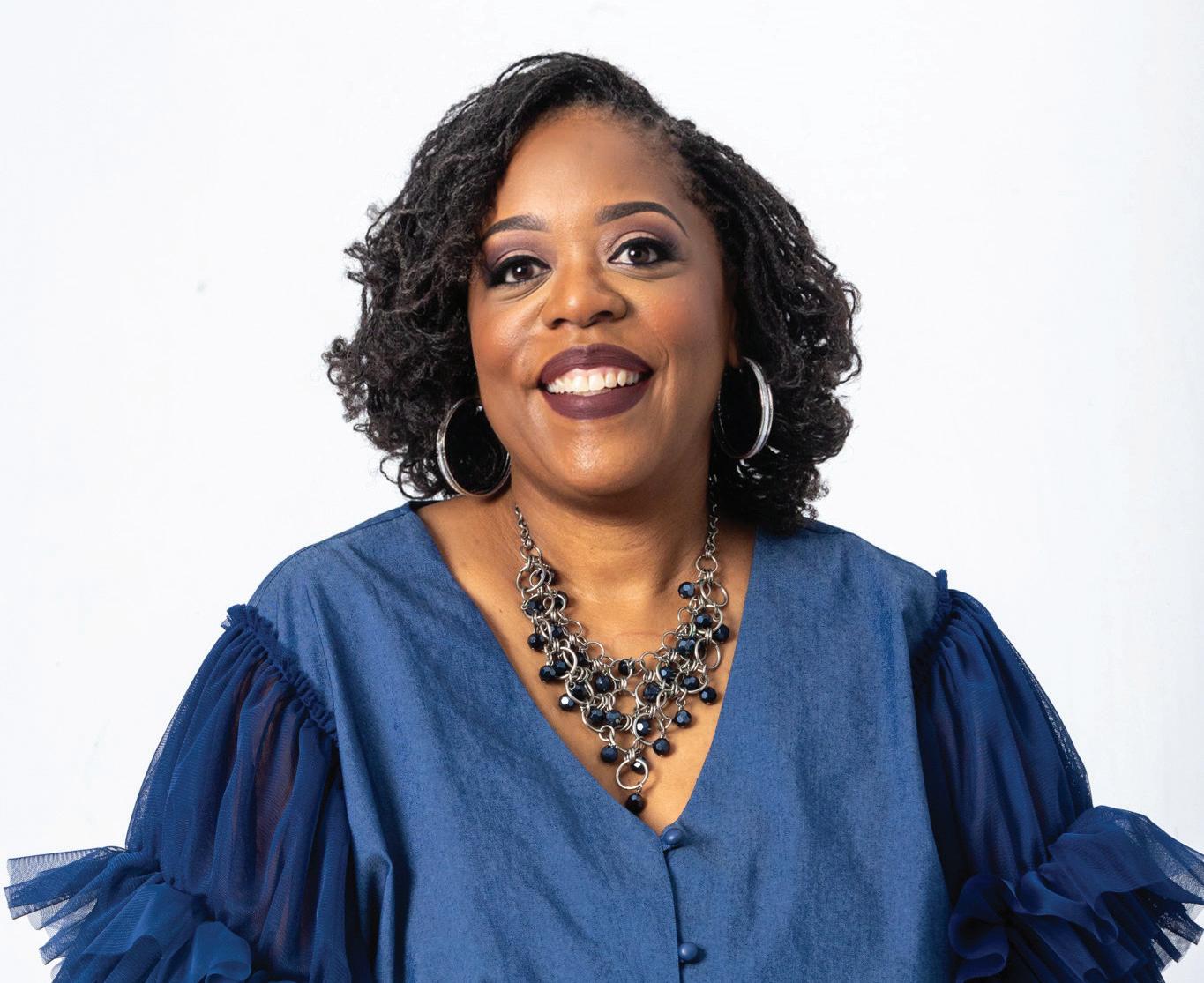
In LaBoo’s case, after her marriage fell apart, a writing ministry she had developed by request was indefinitely postponed; church leadership questioned whether her troubled marriage made her unfit to lead. Meanwhile, LaBoo says, her husband continued to lead lay worship and direct the senior choir.
“How could I be removed from teaching a writing class while the person creating the chaos at home remained in front of the congregation every week?” she says.
interested in where my then-husband was instead of ministering to my needs as a very present member,” Ellis said.
Marva Jones, a veteran couples counselor and family therapist, believes many of the painful endings between couples and their church begin long before the pair reach the altar.
a marriage but also the beginning of another painful separation—from the faith community they expected would carry them through the valley. Interviews with several divorced church members, therapists and ministry leaders reveal a troubling pattern. The same congregations that excel at weddings, marriage conferences and preaching the covenant, struggle to respond when marriages collapse.
Patriarchal tradition
Like the experience LaBoo described, some church leaders and congregants unintentionally shame the divorced. Sometimes, they side with one of the exes; given the patriarchal nature of the church, it’s usually the husband. Still other churches do nothing as one former spouse — often the ex-wife — disappears from the pews while the other remains.
That dynamic has prompted a growing body of research asking whether churches have devoted as much attention to helping members heal after
divorce as they have to preparing couples for marriage.
While studies have found that Black Christian couples often rely on shared faith and prayer to sustain their marriages, pastoral scholars say divorced women frequently describe feeling isolated, overlooked or quietly stigmatized in congregations where marriage remains the spiritual ideal. Researchers have argued that separated and divorced church members can be subtly devalued in religious settings, discouraging them from fully participating in congregational life and prompting calls for ministries that offer the same grace after divorce that churches extend before the wedding.
Whether divorced members experience compassion or condemnation often depends less on theology than on local church culture, leadership maturity and whose story gets believed first. What often results is a faith crisis that worsens the emotional pain that accompanies divorce.
Looking back, LaBoo believes many churches aren’t prepared for the modern, emotionally challenging, complex issues when a marriage hits serious turbulence. Some answers, she says, can’t easily be found in scripture alone.
“The church has to know when a situation is beyond Bible study,” LaBoo says. “If leaders aren’t equipped to help, they have a responsibility to refer people to someone who is.”
Then there’s the patriarchy that’s often embedded in church culture. LaBoo believes too many divorced women quietly disappear while the systems that failed them, and turn a blind eye to men’s abuses, remain unchanged.
‘How is your husband?’
For T’Jae Gibson Ellis, the pain came less from criticism than invisibility.
As a young wife, Ellis attended church alone, usually because her husband, who served in the military, worked unpredictable schedules—or sometimes simply chose not to attend. Yet church leaders routinely kept him in mind, not her.
“‘How is your husband?’” she recalls them asking her. “Tell him we asked about him,’” Few asked about her, Ellis says.
“I found ‘the church’ more
“I think the initial change we need to make is what we do before people get married,” said Jones, founder and president of Tree of Life Counseling and Training Center in Ohio. She worries some churches unintentionally nudge dating couples toward the altar before an honest exploration of challenges that stress a marriage: finances, trauma histories, parenting philosophies, conflict resolution and family dynamics.
“I think there needs to be more work up front,” she said.
Death of a relationship
Jones, author of “The Dance: The Power of the Father, Parenting Through Divorce and Separation, Don’t Let Your Children Become Collateral Damage,” rejects the rigid six- or eight-week premarital counseling sessions churches frequently mandate. She argues that every couple has unique histories that require individualized preparation.
Jones also believes churches must create ministries specifically for divorced members rather than folding them into general singles ministries.
“People divorced with children is a different group than people who are divorced without children,” she says. “They’re trying to heal … but they’re seeing their children every day and they still have to interact with this person.”
Equally important, Jones says, churches should recognize divorce as the death of a once-promising relationship, triggering emotions similar to
Johns Hopkins University has launched a new five-year initiative designed to support collaborative projects and neighborhood programming that address the interests and needs of communities in Baltimore and beyond.
The university recently awarded nearly $1 million to 14 inaugural partnerships between community and academic leaders working together to improve health care delivery in neighborhoods, combat pollution, provide music and genetics education in city schools, foster entrepreneurship, promote composting and more.
The awards to 14 projects are part of the five-year, $5 million university investment in such pairings through the Johns Hopkins Innovation Fund for Community-Academic Partnerships.
“At the heart of this new endeavor is our enduring belief that Hopkins and the communities of which we are a part thrive best together,” JHU President Ron Daniels said. “Through the Innovation Fund for Community-Academic Partnerships, Hopkins is further deepening our commitment to partnering with our neighbors to ensure the best ideas are put in action in, with, and for our communities here in Baltimore and in Washington, D.C.”
The Innovation Fund for Community-Academic Partnerships builds on Johns Hopkins’ longstanding commitment to bolster nearby neighborhoods through financial investment, technical assistance, and legislative advocacy in tandem with support for local education, job training and creation, health and wellbeing, and public safety efforts by embracing the ideas and expertise of community stakeholders.
“At a time of diminishing federal research support and tightening budgets across
bereavement.
Both exes “need that grief group to be able to process” the hurt, anger, and sadness, she said. “They were planning their hopes and dreams together. Something happened that shattered the dream.”
Too often, Jones says, churches emphasize that God hates divorce, but they don’t adequately confront the abuse, violence, infidelity or coercive control that may have triggered it.
Church leaders “don’t want to hear about [a husband or wife] being violent at home” because it’s hard to reconcile abuse with a member who’s active, involved and faithful, Jones says. “People can be whatever they want to be in the church and something completely different at home.”
Rendering judgment
Not every story ends in rejection.
She also believes women frequently bear a disproportionate share of judgment in a divorce: “You will see that being implemented more with women in ministry than men,” Jones says. When her marriage to a pastor ended, Roxanne Freeman said members of her denomination rallied around her after they gradually recognized what had happened behind closed doors.
“They always supported me,” Freeman says. “But I don’t think after a while they supported him.”
Still, she acknowledged that her experience was unusual.
“I have seen other people … leave the church,” she says. “They embrace the people who they like … and the other one kind of flees because we don’t want to deal with these people anymore.”
higher education, Johns Hopkins is reaffirming its commitment to Baltimore by investing in the power of partnership,” said Alicia Wilson, vice president for civic engagement and opportunity who oversees the fund. “The Innovation Fund reflects our belief that when we listen, learn, and work alongside our communities, we can create solutions that expand opportunity, improve lives, and strengthen our shared future.”
The Innovation Fund is supporting such partnerships as:
Medicine for the Greater Good (MGG): The Johns Hopkins initiative trains medical residents and healthcare professionals to tackle socioeconomic barriers to health by partnering directly with Baltimore communities. The program eliminates hospital walls by bringing care, health education, and advocacy straight to churches, schools, and community centers.
Tuned-In: Founded in 2007, the Johns Hopkins Peabody Institute’s project supports students who lack access to music education and other basic developmental supports by changing the trajectory of their lives with new pathways to success. Students receive weekly private lessons, classes, and ensemble experience in woodwinds, brass, percussion, piano, strings, and jazz.
Better Neighbors: The project will expand health and social care for communities delivered by two established Johns Hopkins School of Nursing community-facing programs by integrating them with Baltimore City Public Schools. Baltimore families face significant barriers to accessing coordinated health and social services, such as limited availability of services during nonwork hours, lack of transportation and a fragmented system of care delivery. The program aims to help break down such barriers.

As families prepare for a new school year, many parents are wondering whether their child is getting the support they need to succeed in the classroom. For families of children with learning differences or disabilities, understanding the difference between a 504 Plan and an Individualized Education Program (IEP) can make a significant difference in a child’s educational journey.
Consider Jane, whose fifth-grade son, Joshua, has been diagnosed with ADHD – or Attention Deficit Hyperactivity Disorder. Last year was challenging. He struggled to complete assignments, became frustrated in class, and was even suspended from school. Although Joshua has a 504 Plan, Jane doesn’t believe it’s meeting his needs. When she asked the school for additional help, she was told they would “start fresh” next year. During a summer visit, Joshua’s pediatrician suggested he be evaluated for dyslexia and recommended that he may qualify for an IEP. Stories like Joshua’s are common.
As the school year begins, parents should know they have rights – and there are clear steps they can take if they believe their child needs additional support.
The first step is requesting a special education evaluation. Parents should submit a written request explaining why they believe their child may need special education services. Once the request is received, the school must evaluate the student and determine whether the child qualifies for an IEP within the timeline required by law.
It’s also important to understand the difference between a 504 Plan and an IEP. A 504 Plan provides accommodations that help students access the general education curriculum, such as extended time on tests, preferential seating or reduced classroom distractions. An IEP, however, goes a step further by providing specialized instruction and related services tailored to a student’s individual educational needs. These services may include reading intervention, speech or occupational therapy, counseling, assistive technology or instruction from a special education teacher.

An IEP is not limited to academics. If a student’s behavior affects learning, the IEP team may conduct a Functional Behavioral Assessment (FBA) to identify the reasons behind the behavior and develop a Behavior Intervention Plan (BIP) with positive strategies to help the student succeed both academically and socially.
Even after an IEP is in place, parents should remain actively involved. An IEP is a legally binding document under the federal Individuals with Disabilities Education Act (IDEA), and schools are required to provide the services and supports outlined in the plan while monitoring the student’s progress.
Parents are essential members of the IEP team. They know their child better
than anyone else and play a critical role in developing educational goals and identifying effective supports. While IEP meetings can feel overwhelming, families should ask questions, share relevant information and advocate for what their child needs. Communication is equally important. Parents should document concerns in writing and maintain open communication with teachers and school staff. Written communication helps ensure concerns are addressed and creates a record if additional action becomes necessary. If parents believe their child’s educational needs are not being met, they have options. They may request another IEP meeting, seek mediation with the school district, file a
complaint with the Maryland State Department of Education or request a due process hearing. Understanding these rights can help families ensure their children receive the free and appropriate public education guaranteed under federal law.
As another school year begins, the most important lesson for families is this: Don’t wait if something doesn’t seem right. Early intervention, collaboration and informed advocacy can have a lasting impact on a child’s confidence, academic success and future. This commentary was originally published by Maryland Volunteer Lawyers Service.The opinions expressed in this commentary are those of the writer and not necessarily those of the AFRO.



By Alanah Nichole Davis Special to
“They Fight,” a coming-ofage boxing drama, made its streaming debut on Hulu and on Andscape via Disney+ on July 17. The film was released on the same day the Baltimore Mayor’s Office of Arts, Culture and Entertainment, in partnership with the SNF Parkway Theatre and others, hosted a Baltimore premiere to celebrate the film.
The movie is directed and written by Baltimore native Sheldon Candis, best known for his 2012 crime drama “LUV,” also set and filmed in Baltimore. While “They Fight” was filmed in Charm City, it centers on a boxing program in Washington, D.C.
The film follows Walt Manigan, a returning citizen who, upon coming home, must get back on his feet, reconnect with his love of boxing, grapple with love, addiction
and show up for his community, all while confronting a series of barriers, in a story that underscores the impact of mentorship.
In addition to Walt’s storyline, there’s Quincy, played by Toussaint Francois Battiste and Peanut, played by Anthony B. Jenkins. Throughout the film Walt finds himself growing as he coaches his mentees through not only boxing, but life as young boys navigating everything from love to school and loss.
On the red carpet for the premiere, Candis told this writer the film was written with a special purpose.
“I learned how to swim in the YMCA Reservoir Hill,” said Candis. “I feel like it’s a thing where our mentors are in those spaces. This is a love letter to the old school rec centers of our neighborhoods and communities.”
The film has been released just as Baltimore Mayor
Brandon M. Scott’s continues to prioritize rec centers. As of June 2026, Scott’s administration has opened eight new or renovated recreation centers in addition to renovating several of the city’s more than 20 public pools. The investment is part of “Rec Rollout,” Scott’s $120 million initiative, launched in 2023, to revitalize, rebuild and upgrade recreation centers and playgrounds so that every neighborhood has access to modern facilities.
Wendell Pierce, known for his role as Detective Bunk Moreland in “The Wire,” returned to Baltimore for the screening of the “They Fight,” which adds to his 40-year career. Pierce plays Slim, a character he says stood out to him as an amalgamation of the men who taught him throughout his life, including his grandfather, father and other mentors. Pierce said he’s glad to be back in
Baltimore.
“Before I came here, I had like a half dozen crabs,” said Pierce. “I’m from New Orleans, so I love my seafood. We’re cousins. Baltimore is like a second home to me. I love Baltimore, and so I love coming back here. I love being here. It’s really great to be here on North Avenue, you know, once again.”
Other well-known actors, like André Holland, Samira Wiley and J. Alphonse Nicholson,all appear in “They Fight.” Baltimore-based actors and actresses who were part of the project include the likes of Rebecca L. Hargrove, who plays a doctor in the movie and is starring in a play set to debut at Baltimore Center Stage called “Bocking,” and Morgan Dixon, who plays a waitress in “They Fight.”
Dixon, who has had her SAG card since 2015, shared insight for up-and-coming talent looking to star in movies

or television coming out of Baltimore.
“Create your own opportunities,” said Dixon. “If I had to do it all over again from the very beginning, I still would have been auditioning for other people’s projects, but I would have been creating my own and just working … doing the thing. Don’t wait for anybody else to give you permission to do the thing. Just do it. Don’t wait for anybody
By Andrew Hall AFRO Intern ahall@afro.com
Music is woven into Baltimore’s cultural identity. For Charm City youths, music often serves not only as an outlet for emotional relief, but an opportunity for academic growth and personal development.
Organizations like The Marching Elite Foundation (TME) use music to foster a community where young people can express themselves and develop a sense of belonging.
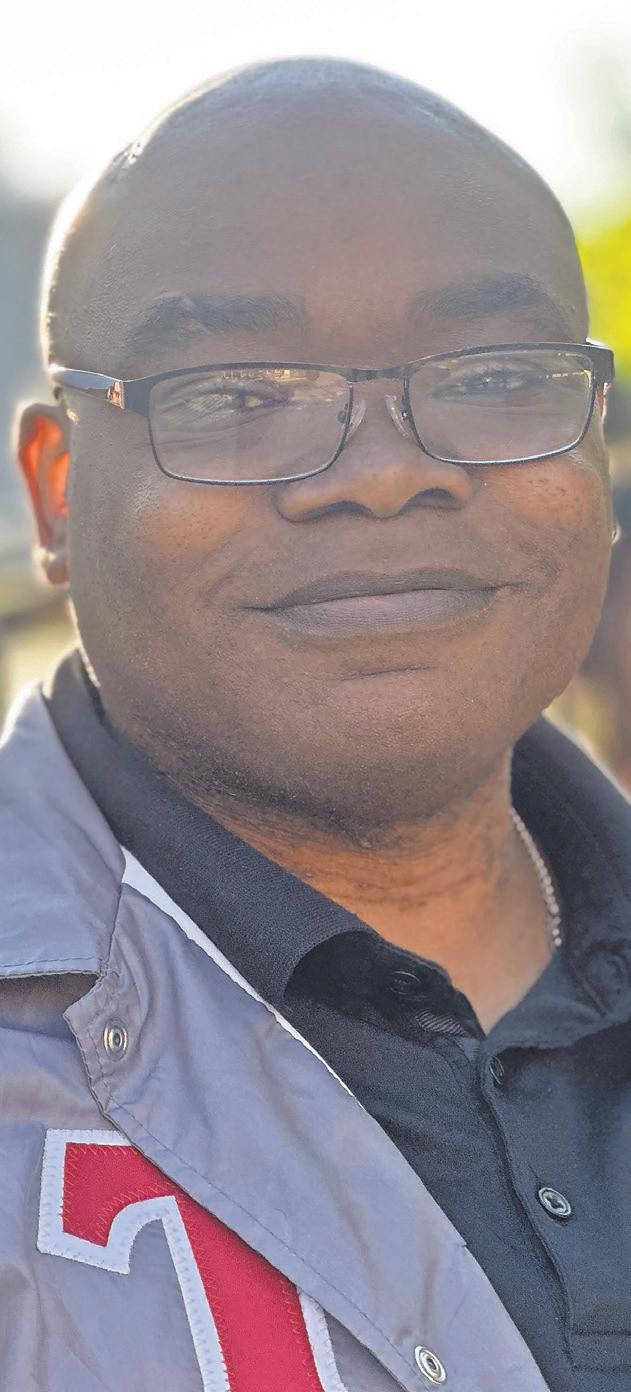
In 2000, Dennis Lee Jr. co-founded community classes for kids and teens around the city to learn about music. Recognizing a need for music education and seeing an opportunity to leave a positive impact on those around him, Lee launched TME in 2006.
“I went to several schools and saw that from the time I was home, to the time I got back from the military, not much was changing,” Lee said.
Over 20 years later, that initial mission of providing enrichment to youth through music and arts education remains the foundation of TME. Today, the grassroots organization has grown into a youth development initiative.
else. Just do the thing.” In addition to featuring several local actors, the film includes local rapper Lonnie Moore co-producing the score and contributing new music to “They Fight,” Nefertiti Powell as head hair stylist, and Emmy-nominated, two-time NAACP Image Award-winning makeup artist Ngozi Olandu Young as head makeup artist for the production.
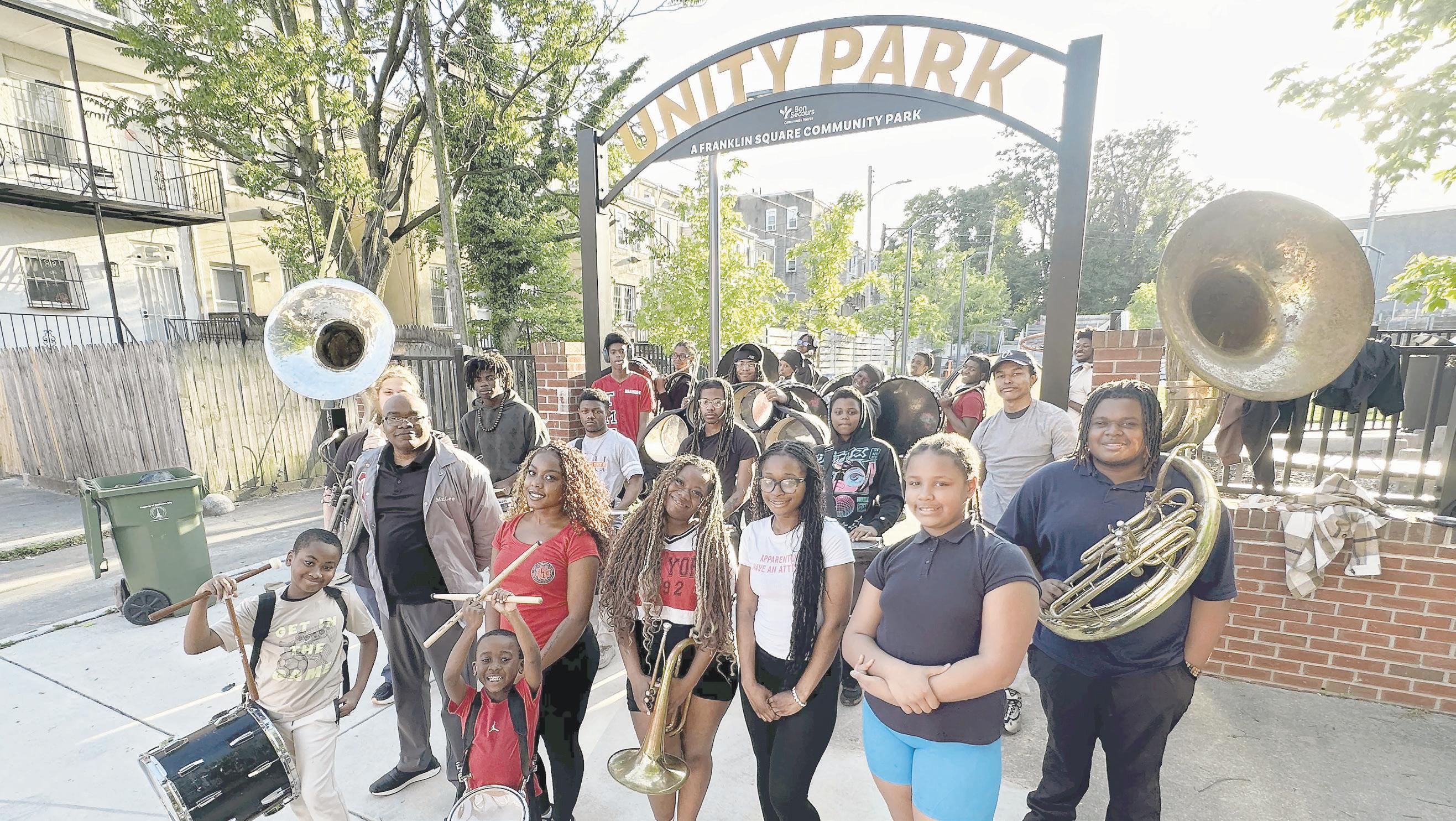
When asked what motivates him to continue, Lee pointed to the leadership qualities he sees in the group’s members.
“The passion is I get to see them lead. It’s a youth-led organization. Everyone sees me, but they’re the ones figuring it out–working out the issues. Inside their sections, each person is helping each other and teaching each other,” said Lee, TME’s executive director. “I give the foundation, and they take it and run with it. From the youngest to the oldest ones, everyone’s helping and that makes me happy.”
On the importance of pouring into Baltimore’s youth, Lee said, “It’s the only way our city changes. If we’re truly going to see the change we want in our city, state and country, we have to give back, it’s not a choice.”
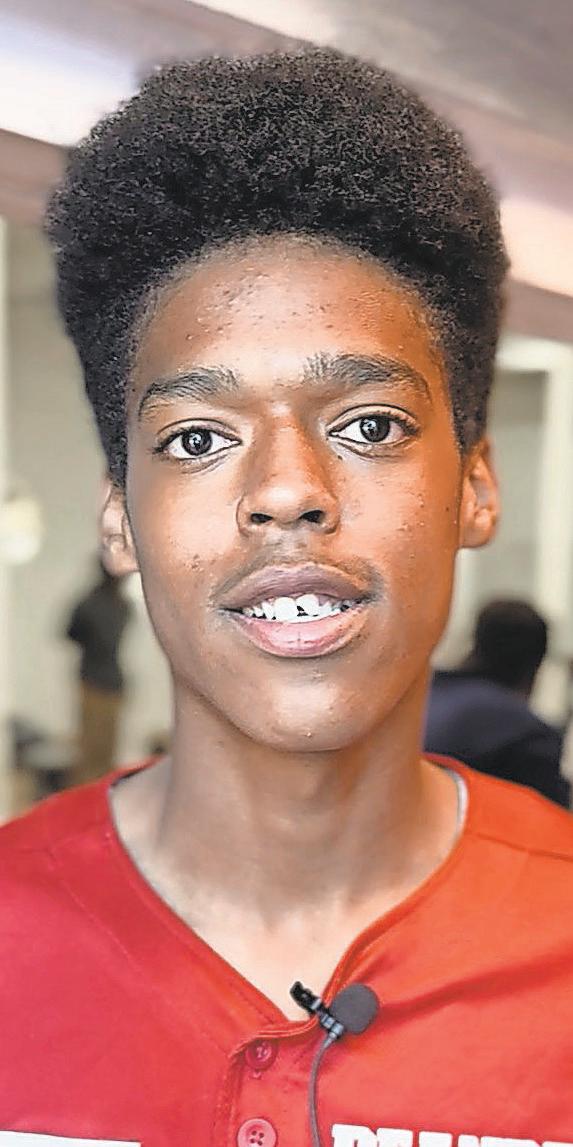
Lee’s love for music has transferred to children and teens across the city. De’Andre Railey, a hornist for The Marching Elite, spoke on what the group means to him.
“I got a place to feel safe, a second home, basically. I get fed, I have fun. I can express myself in ways that I can’t do at home,” said De’Andre. “If I’m stressed at home, I can come here and dance or play all my
frustrations out and feel so much better at the end of the day.”
Lee weighed in on the mental and emotional benefits for youth in The Marching Elite.
“It’s better for them to be out here beating the drums, rather than beating up somebody. It’s better for them to be dancing together than running away together from something negative,” explained Lee. “Music is medicine. When you see them dancing and playing–that’s the medicine. The music itself is healing, and it doesn’t just heal them, it heals the community.”
For Shamara Simpson, TME unlocked a love for marching bands and much more.
“I found out about The Marching Elite through Youth Works. I heard about marching bands and always wanted to do it, but I was just never able to actually get into it. Coming in, I was a little nervous, but when I met Mr. Dennis and Ms. Kelly [Nolan, the band director]. They created this safe space. It was very open and welcoming,” Simpson told the AFRO. “I was always shy, but Elite has really helped me build my confidence and become more outgoing.”
Aniyah Bess, who has been with TME since 2023, is a dancer, a coach
and the TME social media coordinator.
“I heard about the organization through a friend of mine who used to go to Dunbar with me. She was in [TME], and we were in the same band in school. She kept recommending it to me. Eventually, she brought the director down, I spoke to him, and here I am,” Bess said.
Bess said the organization provides an outlet for youth within the community to learn new skills and stay away from negative influences.
“It’s important for young people to have this type of outlet because it gives them a chance to experience new things and new skills that they never thought they could. We don’t just offer drums, horns or dance,” Bess said. “We give opportunities to make your own money. We do fundraisers. It’s an outlet to not be in the streets doing any of the bad things in society today.”
Programs at TME include drumline, dance ensembles, color guard, brass and hornline, band and dance camp, youth works and more. Participants can also help run the TME social media pages or learn to DJ. Youth aged 6-24 can join by registering at themarchingelite.org.
All AFRO Photos / Alexis Taylor

By Jennifer Porter Gore
The conversation with her mother lasted only a few minutes. But for Kyra Wagner, it changed the trajectory of her life.
During the isolation of the COVID-19 pandemic, Wagner learned that one of her brothers was struggling with his mental health. Watching her family navigate a crisis shared by millions of American households, the Nashville teenager found herself asking a difficult question: Who helps children through moments like this?
The answer became her calling. Wagner enrolled at Spelman College to study psychology, determined to become a child therapist and help young people—particularly Black children—find support before a crisis becomes a tragedy.
The COVID-19 pandemic takes its toll
As rates of anxiety, depression, and suicide among Black youth climbed during and after the pandemic, Wagner’s family experience became a lifelong mission, and it has now earned her national recognition.
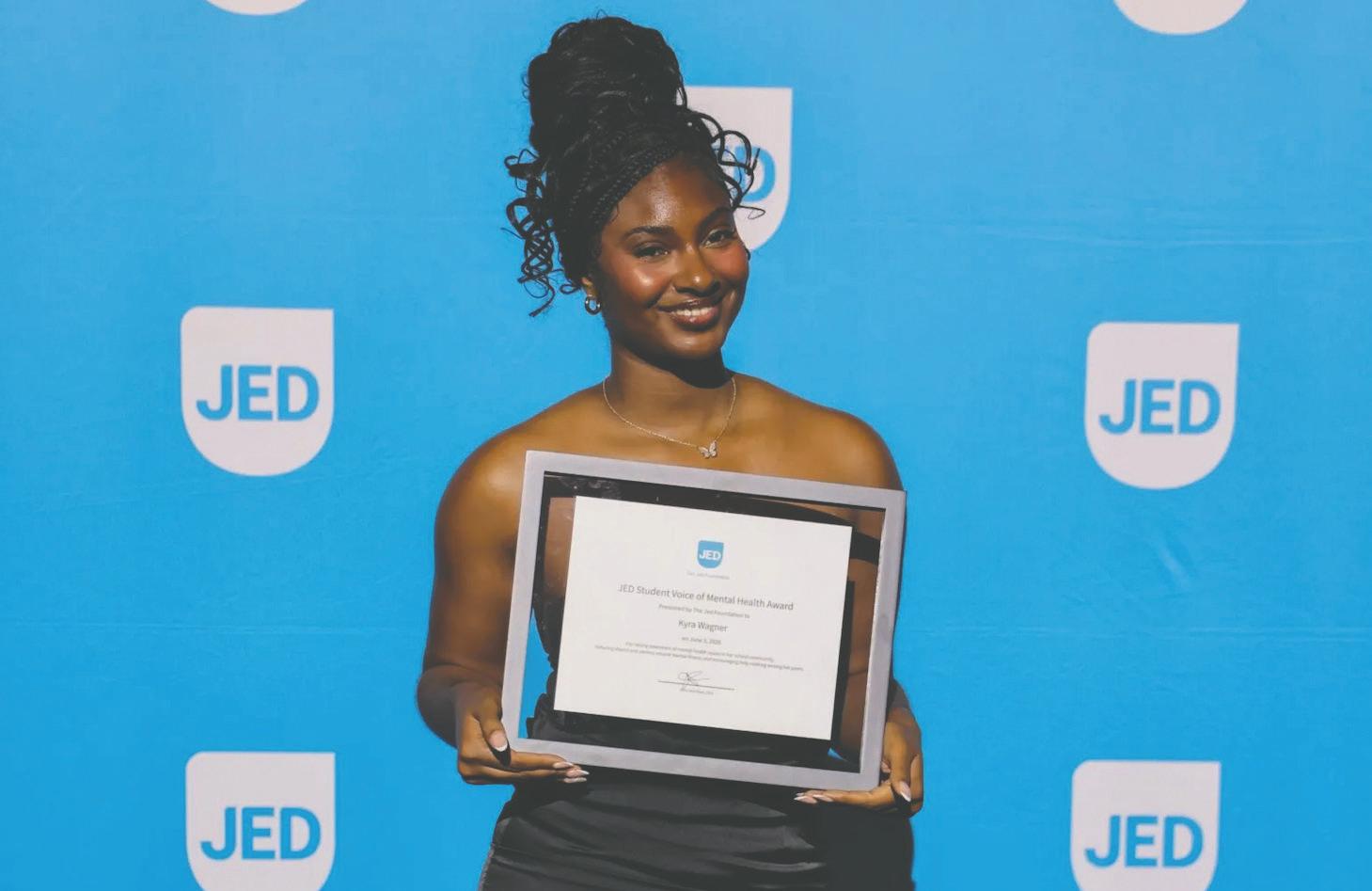
A 21-year-old rising senior at Spelman, Wagner has been named the undergraduate recipient of The Jed Foundation‘s 2026 Student Voice of Mental Health Award, honoring college students who are transforming the emotional well-being of their campuses and communities.
“I’ve always believed turning lived experiences into action is one of the most powerful ways to create change,” Wagner says. “I
remain committed to building solutions that improve mental health outcomes for groups with limited access to resources or opportunities and inspire others to do the same.”
Wagner’s path to the award was shaped by her upbringing in Tennessee, where she was known for academic excellence and a deep commitment to family. Like many teenagers with divorced parents and blended families, she navigated shifting roles — the eldest child in one household but not in the other — while watching her mother manage financial strain and family transitions.
But it was a pivotal conversation with her mother during the COVID-19 pandemic, while Wagner was still in high school, that became the “aha” moment, pointing her toward mental health advocacy. Her brother was struggling, and the family was unsure what to do.
The situation influenced Wagner’s decision to pursue a degree in psychology, with an eye toward helping children. Indeed, her brother’s struggle was common for Black families during the pandemic.
Black youth are highly vulnerable
According to the CDC’s 2021 Youth Risk Behavior Survey, roughly 29 percent of high school students use alcohol, marijuana, or misuse of prescription opioids. About a third of those students use two or more substances.
A related CDC survey, the Adolescent Behaviors and Experiences Survey, found that during the first six months of 2021, the height of the nationwide COVID-19 lockdown, 31.6 percent of high school students
said they were using tobacco, alcohol, or marijuana to cope. Alcohol use alone reached 19.5 percent, with a notable share of students reporting binge drinking.
The toll was especially severe for Black youth between the ages of 10 and 24. They experienced a 37 percent increase in suicides between 2018 and 2021 — the largest increase of any racial group in the country.
At Spelman, Wagner has built a record of leadership rooted in community and entrepreneurship. She serves as the inaugural president of the college’s Center for Black Entrepreneurship and as co-director of events for the local chapter of the nonprofit organization Sisters in Sync.
Wagner is also conducting academic
research that examines how stress and financial pressures affect maternal mortality among Black women. She mentors young girls in her community and was also selected as a Rare Impact Ambassador through Selena Gomez’s Rare Beauty brand.
JED’s Student Voice of Mental Health Award recognizes students who build peer support systems and advance suicide prevention efforts on campus and in their communities. Wagner’s selection places her among a small group of young advocates nationally recognized for transforming personal hardship into public service.
“This award reaffirms that the work I am doing matters and our stories deserve to be seen and heard,” Wagner said.
By Andrew Hall AFRO Intern ahall@afro.com
According to the World Health Organization (WHO), the life expectancy of the average man is five to seven years shorter than that of the average woman. This mortality gap exists largely because men are less likely to seek routine healthcare than women.
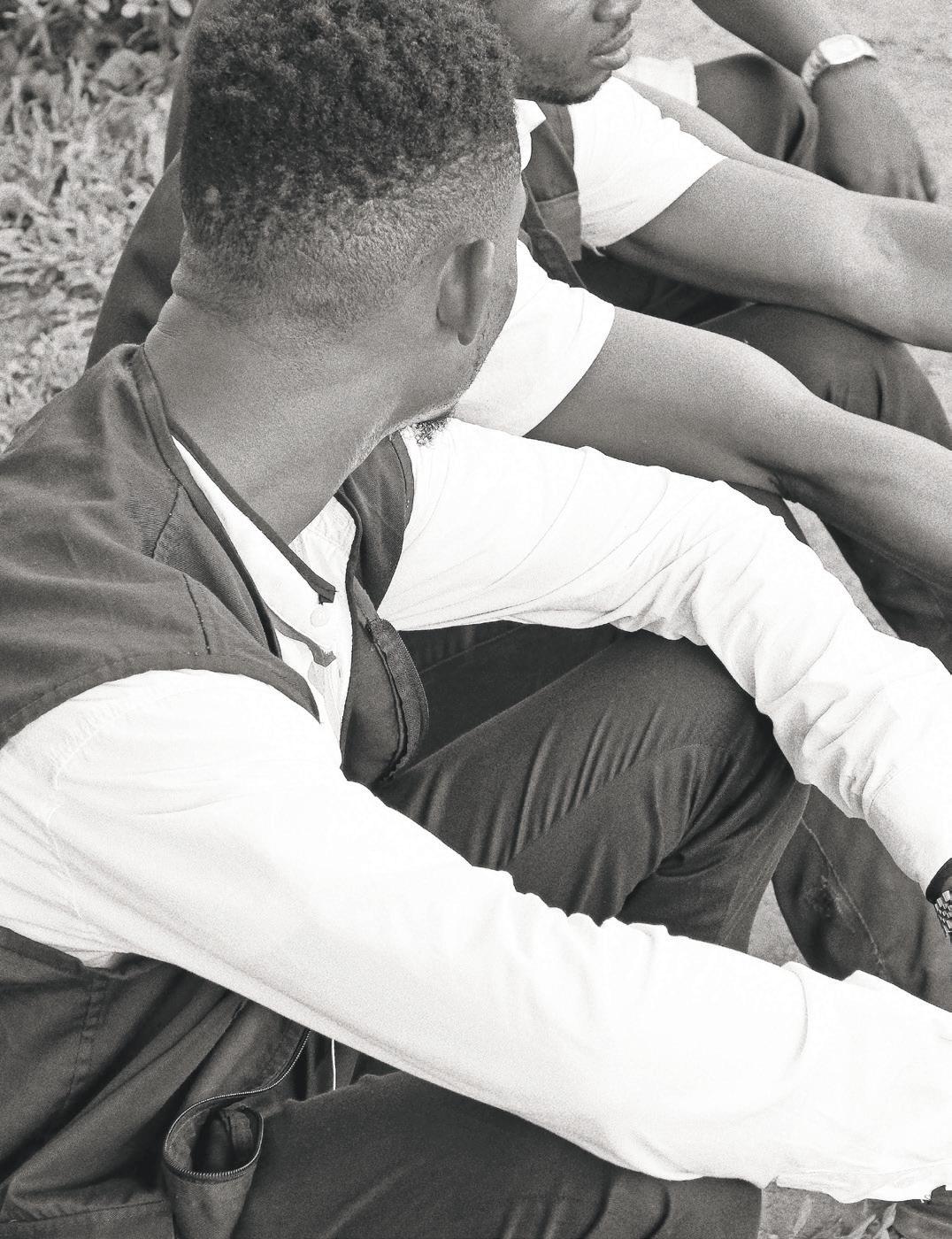
For men, particularly those in the Black community, not only is there a lack of health knowledge, but there are also stigmas that discourage them from taking action on all aspects of their health.
The Urology Care Foundation notes Black men face significant health disparities, largely due to socioeconomic factors and systemic healthcare barriers. The leading physical concerns are cardiovascular disease, prostate cancer, diabetes and HIV/AIDS.
Data from the American Heart Association (AHA) shows that about 62 percent of Black men live with high blood pressure. The American Cancer Society reports that Black men are nearly 73 percent more likely to develop prostate cancer and over twice as likely to die from it compared to white men.
Various U.S. health agencies also proved that Black men face significantly higher rates of type 2 diabetes compared to other groups, which increases the risk of kidney disease and vision complications. Black men remain disproportionately affected by new HIV diagnoses and African Americans also have the highest lifetime prevalence of Post-Traumatic Stress Disorder (PTSD) of any racial group in the U.S. For Black males specifically, the lifetime prevalence of PTSD is 6.3 percent.
The trend between these diseases is they all require early, proactive screening and lifestyle management. Oftentimes, when these diseases are diagnosed, they’re caught too late to fight them off. For many Black men, prioritizing health fades into the background as they attempt to navigate the waves of life and stay above water on a day-to-day basis.
Men’s Health Awareness Month places great emphasis on the mental aspect of health. The Center for Disease Control and Prevention (CDC) notes that suicide is the third leading cause of death for Black men ages 15 to 24. Even further, Black men are four times more likely to die by suicide than Black women.
Despite this, the U.S. Department of Health and Human Services (HHS) Office of Minority Health states that Black men are 36 percent less likely than the overall U.S. population to receive mental health treatment.
In an interview with the AFRO , Quinton Myers, a psychiatric mental health nurse practitioner (PMHNP), discussed the various mental health issues Black men can face.
“The biggest mental health issues that men face are depression, anxiety, bipolar disorder–even schizophrenia,” Myers said. “There are all types of anxieties. Post-traumatic stress, social anxiety, specific phobias. There’s a myriad of mental health issues that men can actually have.”
Large-scale national psychiatric and epidemiological studies underscore Myers’ claim.
According to the CDC, “Among men aged 18–44, non-Hispanic black and Hispanic men were less likely than non-Hispanic white men
to report daily feelings of anxiety or depression.” The agency found that “the significant racial and ethnic disparity in treatment utilization was associated with lack of health insurance coverage.”
According to Myers, neglected mental health can turn into a stressful disorder that affects everyday life. A health issue can grow and grow until it can no longer be ignored.
“It’ll keep pecking and pecking, and then it’ll eventually break to the point where it becomes a disorder,” he said. “It changes them as far as their daily functioning, maybe not being able to go to work or decompensating to the point where they’re just
not functioning.”
PMHNPs, like Myers, play a unique role in the health field. As advanced registered nurses, they have the power to assess, diagnose and treat mental health and substance abuse disorders. Only about 1 percent of nurse practitioners in America are Black men.
According to Myers, representation for Black men in the healthcare field remains important.
When asked how Black men in Baltimore can access adequate healthcare, Myers encourages the use of resources.
“There’s more programs available than there were before. Now there’s a plethora
of resources available for people to get mental health treatment,” he said. “Before, people thought they were stuck. Now, you have the ability to find someone like-minded who can help you appropriately.”
For Black men, mental health issues can start as early as adolescence. The aforementioned stigmas surrounding men’s mental health are often passed down to young boys from older generations. For years, it wasn’t seen as masculine or acceptable for men to be open about their feelings and emotions. This means, for young Black boys, they are rarely given the opportunity to express themselves openly.
According to the Pew Research Center, the suicide rate for Black youth, aged 10-17, rose 144 percent from 2007 to 2020. Between 2013 and 2019, there was a 50 percent spike in suicide rates among Black males between the ages of 15 and 24. The CDC also revealed that Black boys between the ages of 5 and 12 are twice as likely to commit suicide than their white peers. These staggering statistics reflect an urgent need for society to address mental health awareness in the young black male community.
Sports have often served as an outlet for Black boys. In the eyes of Darereis Montgomery, young Black athletes should place emphasis on their mental health.
“Your mental health is the birthplace of your increase or decrease,” said Montgomery. “Being able to have your mind mentally strong and have your emotions mentally strong allows you to be more adaptable. You’re able to manage pressure differently, you’re able to manage change
differently.”
As the boys’ Varsity Track and Field coach at Woodlawn High School, Montgomery works closely with Black youth. Understanding the pivotal role that coaches can play in a young athlete’s life, Montgomery uses his coaching to develop boys into men.
“Our job is to mentor, especially in our community, there’s a stigma in the Black community that dads are not present, so mothers look to coaches to mentor their sons,” he said. “I think even outside of health, caring about the person—before they provide any type of service to you on the field, on the court, on the track—is what’s most important.”
Montgomery highlighted the importance of reading and maintaining spiritual awareness as ways young Black men can increase their mental capacity.
Male athletes playing high intensity sports like track and field, basketball or football can be susceptible to mental or physical health issues long after they finish playing. When asked how he prepares his young men for clean health after leaving his program, Montgomery stressed the importance of building a strong foundation.
Montgomery said he focuses on “just building them up while they’re here, trying to again teach them that you have to take care of yourself.”
“As men in general, there’s a stigma that we don’t go to the doctors, or we don’t want to take medicine,” he said.
“I don’t know if that’s like a pride thing or where that stems from, but those are the things that if we take care of early on, it could help with any future health issues that we may have.”
By Megan Sayles AFRO Staff Writer msayles@afro.com
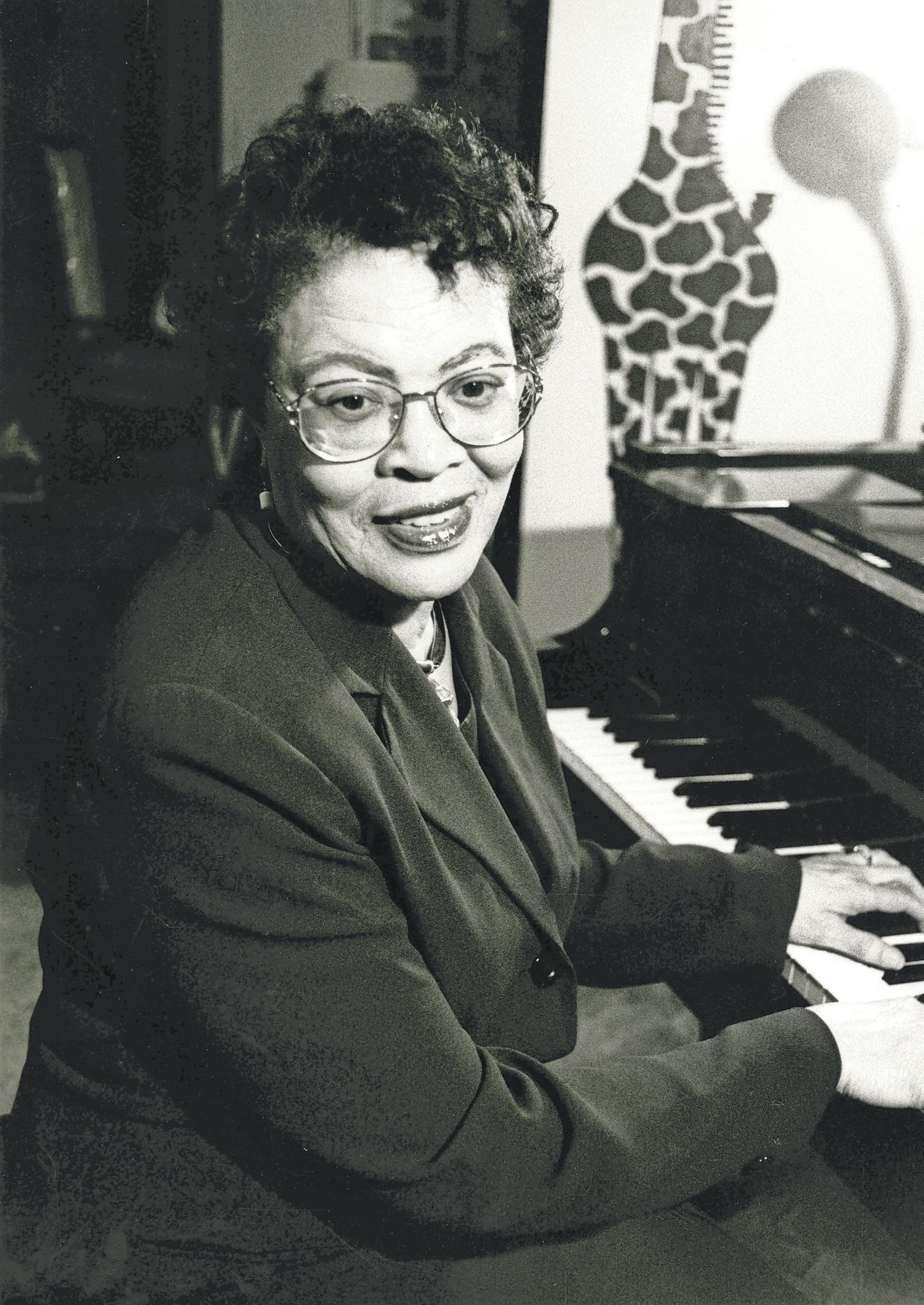
The life and legacy of Audrey McCallum, the first Black student to attend Peabody Preparatory and a beloved Baltimore music teacher, was celebrated July 24 during a homegoing service at Providence Baptist Church.
McCallum, who spent decades teaching and mentoring young musicians, died on July 6 following a lengthy battle with Alzheimer’s disease. She was 87.
Family, friends, former students and fellow musicians gathered to remember a woman whose influence extended far beyond the classroom and the piano bench. Delivering the eulogy, the Rev. Dr. Douglas E. Summers described McCallum as a phenomenal woman who was kind in her spirit and humble in her demeanor.
“With her giftedness, she paved the way to become the first where many were denied. She adopted many and sought to take them under her wings and to give them what they needed in order to be somebody in life. She practiced what our African-American legacy has taught: we have more than just two parents,” said Summers. “Dr. McCallum was a master in seeing the potential in others. She
By Makayla Walker AFRO Intern mwalker@afro.com
CLLCTIVLY, the Baltimore-based Black philanthropy network, will launch a 24-hour fundraising event at midnight on Aug. 7. The initiative, CLLCTIVGive, is an annual time to raise funds for organizations focused on improving Black life and preserving Black history and culture. This year, supporters will gather at the Baltimore Museum of Industry to celebrate the fundraiser, which takes place during Black Philanthropy Month.
“We want the event to honor not only how Black communities give, but also how we build, own and sustain institutions,” said Jamye Wooten, community advocate and founder of CLLCTIVLY.
“To deepen that story, we are working with the I. Henry
Photo Project and the AFRO Archives to make Baltimore’s Black life, labor, leadership and entrepreneurship visible throughout the event.” Wooten founded CLLCTIVLY in January 2019. He launched the company with experience from his time at
the Collective Banking Group, which worked with more than 200 churches, businesses and banks around community economic development. His time there showed him what can be achieved when Black organizations unite under a shared mission.
Though CLLCTIVGive may be an annual event, there are key components that set this year apart from preceding years.
“We are seeing coordinated attacks on DEI, race-conscious grantmaking, and organizations that are unapologetic about advancing racial justice. At the same time, many institutions are retreating from commitments they made after 2020,” said Wooten. “The data reflects that retreat. Institutional giving
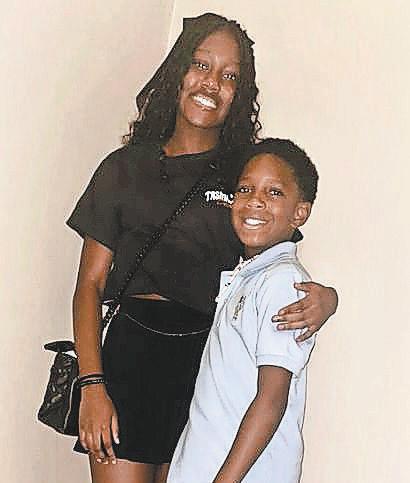
By DaQuan Lawrence, Ph.D. AFRO International Writer DLawrence@afro.com
A teenager has been arrested in connection with the lethal shooting of two siblings in Gwynn Oak, Md., earlier this month, officials with the Baltimore County Police Department announced July 22.
Keith Maurice James Jr., 16, was arrested and charged by county detectives for the July 7 homicides of 15-yearold Giovanna Myrie and 9-year-old Steven Allen. The children were discovered by their mother,
The Baltimore County government released a statement declaring that Keith is being charged as an adult and would be held without bond. Based on Baltimore County District Court records, Keith appeared via video in court and his attorney waived his request for a bond hearing.
The announcement of the arrest via social media
By Megan Sayles AFRO Staff Writer msayles@afro.com
Jack and Jill of America kicked off their 47th National Convention with a town hall titled “The Power of Us” at the Baltimore Convention Center on July 21. The gathering honored seven community leaders who are driving change in education, Black business investment, digital equity, media, health and representation.
AFRO CEO and Publisher Frances Toni Draper took home the Power of Record and Remembrance Award for the media company’s more than 130-year legacy of amplifying the voices of African Americans and spotlighting critical issues facing the Black community.
Suzanne Orneals, national editor for Jack and Jill of America, said the AFRO was not just a newspaper but a living archive of Black identities and experiences.
“In a media landscape where Black voices are still fighting for space and ownership, the AFRO stands as both a reminder of how far we’ve come and a challenge for us to keep fighting for the full story to be told,” said Orneals.
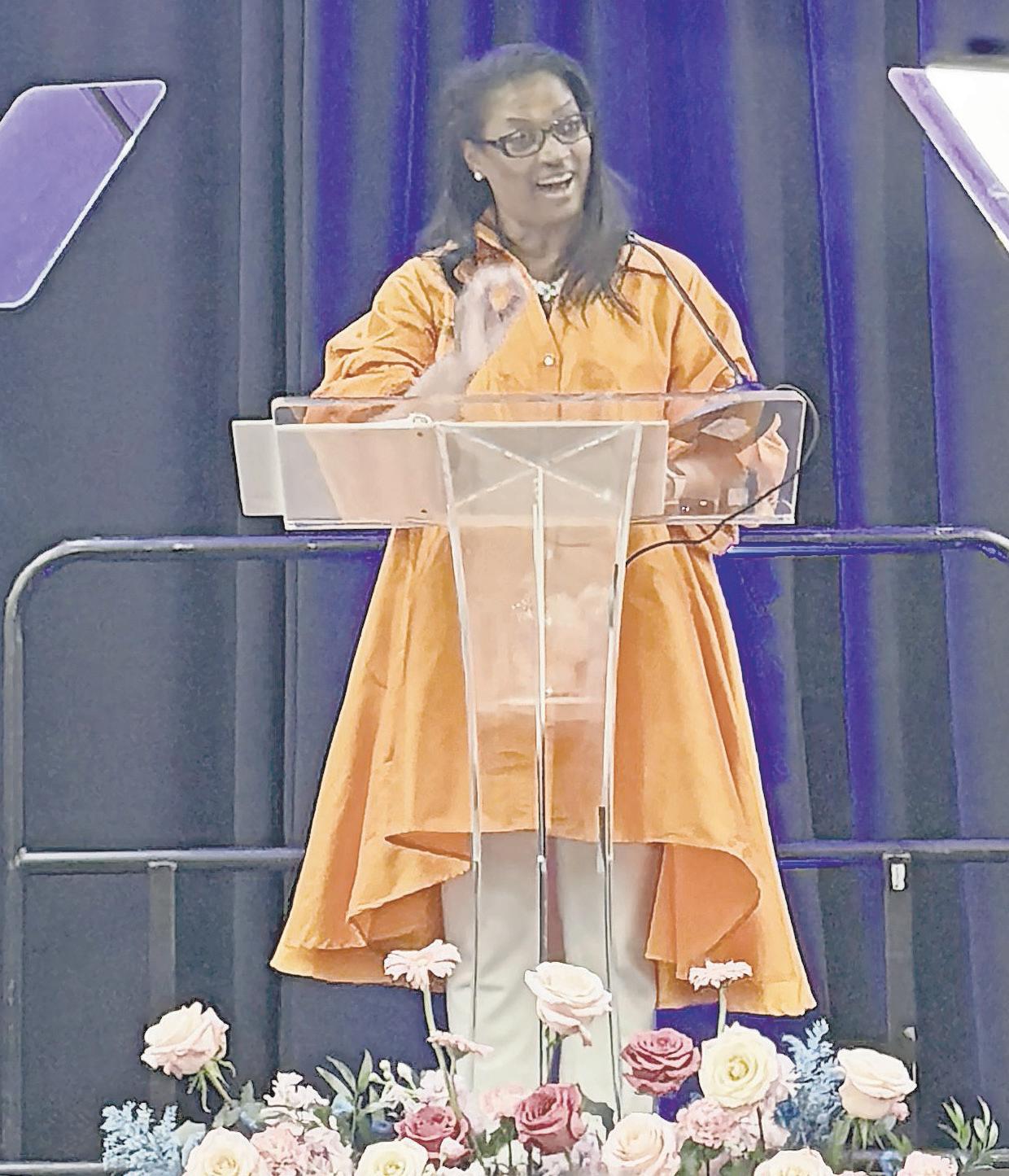

Continued from A10
believed in marvel, and the brightest, and the gifted and the determined.”
The scale of McCallum’s impact was also reflected in the sympathy messages shared during the service. Sharon Speaks read condolences from several community leaders and institutions, including U.S. Rep. Kweisi Mfume (D-Md.-07).
“She was a remarkable woman whose musical talent and strength of character inspired a generation of young musicians and left an indelible mark on the city of Baltimore and its people,” Mfume wrote.
The tributes echoed what Audrey McCallum’s family said they witnessed throughout her life: a woman who used her gifts to uplift others.
“I believe wholeheartedly that my mother’s spirit will live on in this community in particular and beyond for a long time because she reached people with her music, her dedication to helping them better themselves and her support of institutions, choirs and churches that are the fabric of what the Black community is about,” Allen McCallum Jr., son of Audrey McCallum, told the AFRO. “My mom was at the heart of that for 60 years.”
Born in Timmonsville, S.C., on Sept. 28, 1938, Audrey McCallum moved to Baltimore as a child, where she began the musical journey that would define much of her life.
She started her musical training at age 5 under the late Rev. Eugene T. Grove at Baltimore’s Grace Memorial Baptist Church. His wife, Eursilla Grove, was her first piano teacher.
In 1955, Audrey McCallum became the first Black student to attend Peabody Preparatory after receiving a private scholarship to study piano there. She and Miriam Sachs became the first Black graduates of the community performing arts school in 1956.
After graduating from Dunbar High School, Audrey McCallum was awarded a senatorial scholarship to attend the Peabody Conservatory. There, she honed her piano training and earned a bachelor of music degree—graduating third in her class in 1967. She would later secure a master’s degree in music from the conservatory.
In 1961, she married Allen V. McCallum Sr., whom she met while serving as a pianist and organist at Wayland Baptist Church. Her husband steadfastly supported her music career—transporting her to rehearsals, performances and piano lessons. The couple had two children: Michelle D. McCallum and Allen McCallum Jr.
Allen V. McCallum Sr. died in November 2022, just shy of celebrating 61 years of marriage with Audrey McCallum.
“My father was invested in helping my mother be a success
Continued from A10
Accepting the award, Draper said the AFRO shares Jack and Jill of America’s commitment to investing in young people and supporting their aspirations. She noted that she’s been involved with the organization since she was a child, and her experiences with it have informed her leadership at the AFRO
“We built lifelong friendships, and we discovered that Jack and Jill was a family way beyond our own chapter,” said Draper. “Years later, I came back as a Jack and Jill mother, and because I was a mother for two decades, I was elected president twice, not consecutively. I watched my four children develop friendships. These lessons have shaped how I lead the AFRO today.”
Morgan State University (MSU) was honored with the Power of
Legacy in Learning Award and celebrated for its work with the university’s Food Resource Center, which provides food, clothing and other essentials to students and members of the surrounding community. MSU also received a $25,000 donation from the Jack and Jill of America Foundation.
“I remember growing up and always being told that education is power,” said Ily J. Houston, national vice president of Jack and Jill of America. “There’s nothing more dangerous than an educated person—one who can critically think for themselves, weigh arguments and balance the truth amid varying belief systems. It is not a simple task nor one which we can take for granted.”
Accepting the award on behalf of President David K. Wilson, Stacey Benn, senior executive assistant to the president, said MSU continues to
in everything that she did. He was incredibly proud of the work that she did,” said Allen McCallum Jr. “He loved music, and I think he really enjoyed being around the people who were in her atmosphere.”
Over her career, Audrey McCallum’s piano prowess led her to accompany The Olton Singers, Baltimore Chapel Choir, Municipal Opera Company and Great Hymns Choir. She spent 30 years teaching in the Baltimore City Public School System—primarily at Western High School, where she retired as head of the music department in 1990.
But that would not be the end of her career in music education. Upon her retirement, the late Nathan Carter, then-chair of Morgan State University’s (MSU) Fine Arts Department and director of the acclaimed MSU Choir, persuaded her to teach at the historically Black university. She remained at MSU for 20 years and also worked under Carter at the Carter School of Music.
Eric Conway, current chair of MSU’s Fine and Performing Arts Department, described her legacy as one of excellence and commitment. He said that she paved the way for his own education at Peabody Preparatory and the Peabody Conservatory, which were segregated for decades. He noted that she taught all four levels of aural skills at MSU, a core component of training for music majors.
foster both academic excellence and student success.
“At Morgan State, we like for our students to know that Morgan is a national treasure, but there’s a certain treasure in each of them,” said Benn.
The town hall also recognized Downtown Partnership of Baltimore President Shelonda Stokes with the Power of Investment Award; the American Red Cross with the Power of Service to Others Award; Digital Harbor Foundation CEO Andrew Coy with the Power of Access Award; and March of Dimes with the Power of Beginnings Award.
The gathering concluded with the presentation of the Power of Voice and Presence Award to former White House Press Secretary Karine JeanPierre. Reflecting on her career, she said representation in leadership matters because it allows young
“To be a pianist at the level that she was, she put in hours and hours of practice and discipline,” said Conway. “Then, she built that into her teaching and instilled that discipline in her students. She showed students by example that you must be committed and focused.”
During the homegoing service, Conway also honored Audrey McCallum through music, performing a rendition of “My Tribute” on piano.
As a teacher, Audrey McCallum accepted nothing less than the best from her students. Marco K. Merrick, a former piano student and mentee of hers, praised her impact on him as a Christian and musician in a July 8 Facebook post.
“She was tough, patient, poised and professional,” wrote Merrick. “Her Christian character was on display in her action. I never heard her preaching or exclaiming her faith.
She demonstrated it in her brilliant gift, expertise, kindness and remarkable ministry.”
Audrey McCallum’s life was also marked by her rich faith. She believed her musical talent was a gift from God and that she was called to share it with others.
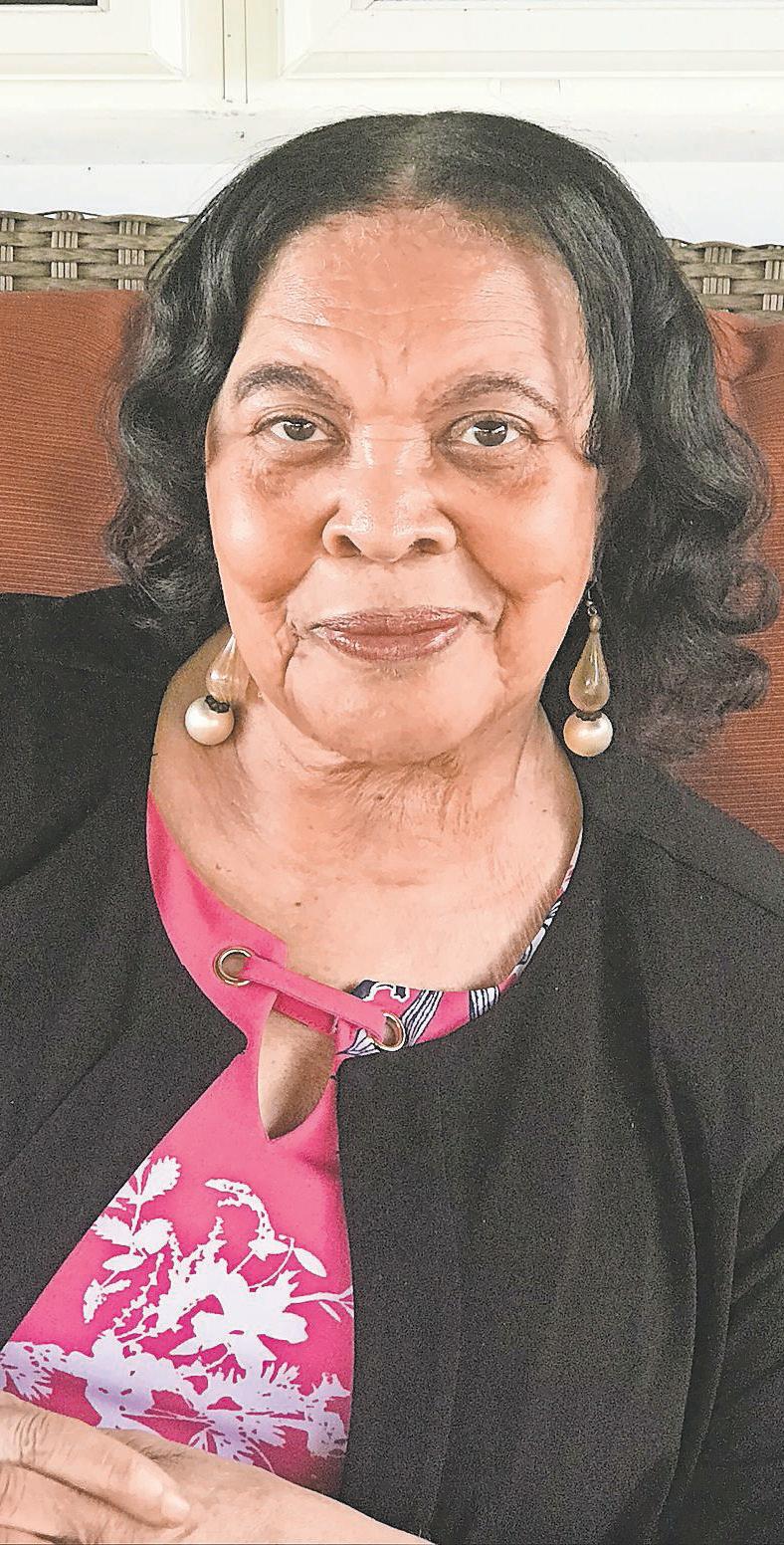
Continued from A10
grew by 44 percent between 2019 and 2023, but the share reaching communities of color fell to 6.8 percent. Funding focused specifically on Black communities declined from 2.3 percent in 2021 to 1.2 percent in 2023.”
Wooten said CLLCTIVGive has already proven what can happen when everyday people combine their resources.
In the span of seven years this group has supported more than 400 organizations, allocated $7 million in direct funding and provided crucial resources that ensure these Black-led initiatives are able to grow and prosper. Now in year eight, the CLLCTIVGive fundraiser has a reputation of success.
“For three consecutive years, we have raised more than $1 million in 24 hours for Black-led organizations across Greater Baltimore. Last year, more than 3,100 donors contributed over $1.2 million to support more than 130 organizations,” said Wooten.
The group’s mission mission to fund Black-led organizations is deeper than simply providing money to selected organizations; it understands the leverage that having access to capital provides.
“Capital determines who can experiment, survive a difficult season, hire staff, purchase property, strengthen internal systems and enter new markets,” Wooten said. “Other entrepreneurs are often given room to take risks, learn, adapt and even fail without that failure permanently defining them. Black founders deserve that same
opportunity.”
There’s a wide array of Black-led organizations in greater Baltimore, but there are qualities that will grant a higher chance of receiving funding.
CLLCTIVLY is looking for, “Blackled organizations that are deeply rooted in community and accountable to the people they serve,” said Wooten, “There is also a fundamental question beneath our work: Is it good for Black people? What does it have to do with the liberation of Black people?”
An organization’s degree of collaboration is a key-factor they look at when considering funding.
Black Church Food Security Network (BCFSN) is one of many organizations to partner with CLLCTIVLY.
Rev. Dr. Heber Brown III founded the organization in 2015, from his garden at Pleasant Hope Baptist Church in Baltimore.This organization was founded with the purpose of addressing food insecurities nationwide through local Black-owned food systems.
AFRO News spoke with Yekatit Bezooayehu, deputy director of Black Church Food Security Network, for more insight on the impact of their organization and what further funding will help them do.
“We’ve already built a church network of 300 people, coalesced together so we can bridge the food system gap,” said Bezooayehu. “The church is already an established pillar in the community. With CLLCTIVGive, we’ll be able to put more policies and roles in place for staff to help us focus on legislation and take the ideas that
we’ve already created up to the federal level.”
Attendees of the CLLCTIVGive fundraiser will have the opportunity to learn more about the organizations funded through the annual initiative. VIP access begins at 7 p.m., with general admission beginning at 8 p.m.
When asked about the decision behind the Dandyism theme for the evening, Wooten explained that it was deeper than mere aesthetics, it was a means of celebration.
“My mother had the talent to be a classically-touring pianist. I don’t know that the time she grew up in would have afforded her the opportunity, but she certainly had the talent,” said Allen McCallum Jr. “But, she decided it was more important to give that back to her community and use it to teach and impart what she knew to people—not just in music, but in how to learn.”
The service concluded with a recording of Audrey McCallum playing piano, allowing mourners to hear the music that marked her life and touched generations of students and musicians.
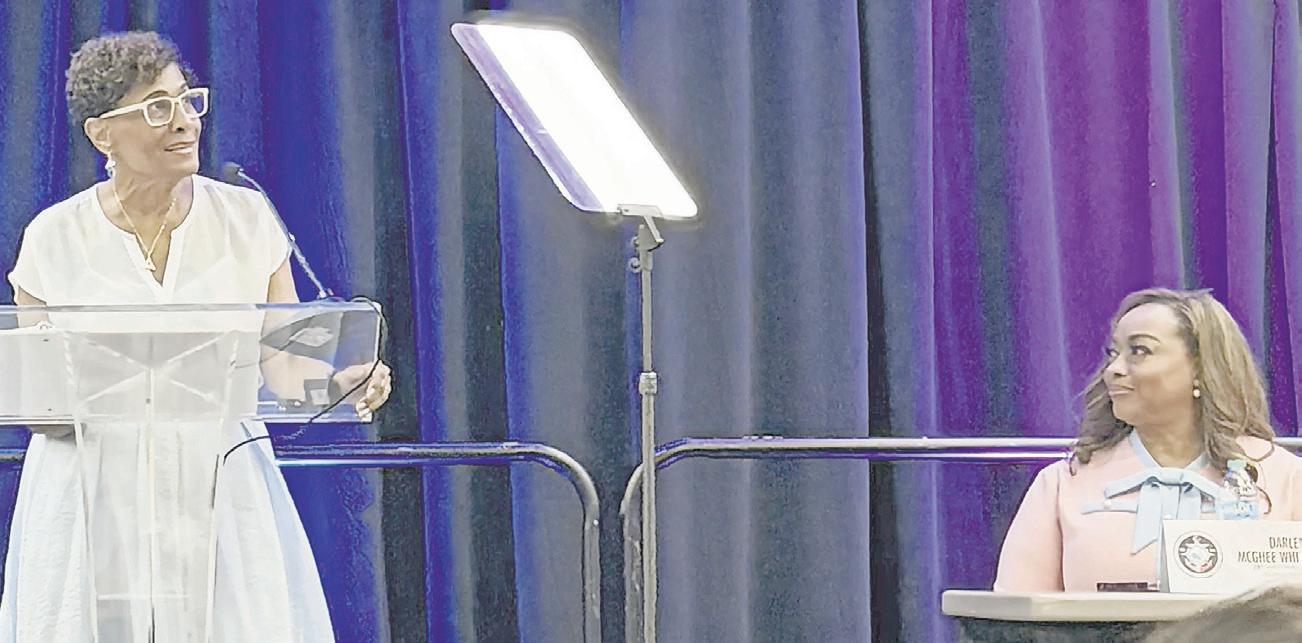
people to see themselves in spaces where they have historically been absent and encourages others to use their voices to create opportunities for those who follow.
“Trailblazing to me means leaving the door open behind you. It means
“Summer Dandyism gives us a way to celebrate Black joy, creativity, freedom and self-expression. Too often, Black communities are discussed only through the language of crisis, struggle, or need. We wanted the evening to reflect the fullness of who we are,” said Wooten. “Black joy is not separate from the work. It is part of what sustains us in the work.”
The event will include live entertainment, prize announcements, fundraising milestones and recognition of the Black-led social impact organizations moving the Black community forward.
“When more Baltimore residents own businesses, property and institutions, more people have a real stake in the city’s future and the power to shape what happens next,” Wooten said. “Investing in Black-owned businesses is not charity, and it does not benefit only Black communities. It is essential to building a stronger Baltimore economy in which more residents can participate, contribute, and benefit from the city’s growth.”
For more information, visit www. cllctivgive.com.
making sure someone else can walk through it with less resistance than you faced,” said Jean-Pierre. “It means choosing courage over comfort again and again. Tonight, I accept this award with such gratitude and purpose. The work continues.”
throughout
Continued from A10
accounts on Facebook and Instagram was made prior to a public safety town hall meeting held at the Randallstown Community Center on July 22. Several county officials were present, including Baltimore County Police Chief Robert McCollough, Baltimore County Executive Kathy Klausmeier and Councilman Julian Jones.
Baltimore County police said they are still conducting an investigation as they have yet to identify a motive. James is suspected to have had some form of relationship with Myrie, as it is believed that the two teenagers were associated during the past few months.
The AFRO previously reported that Giovanna, also known as “Gigi,” was a student at Western High School in Baltimore, the nation’s oldest public high school exclusively for girls. Allen was known as a multi-cultural youth who loved to play Roblox, enjoyed TikTok and sports.
Those interested in providing tips and information that will assist with the ongoing investigation can do so through the Baltimore County Police Department’s iWatch program.

By
The West North Avenue Development Authority (WNADA) launched a monthly community farmers market at the former Greenwood Towing site on July 25. The market provides fresh produce to an area with limited food access while also promoting revitalization, culture and community engagement.
Chad Williams, executive director of WNADA, explained the importance of the farmers market.
“Today’s event is really about activating the historic Penn North area around the Greenwood Towing site,” Williams said. “The West North Avenue corridor— even though it’s the second most traveled bus route in the state of Maryland—is a food desert. Activating the area provides fresh fruit, groceries, arts and culture, clothing and more for folks in the neighborhoods of Penn North, Sandtown, Upton and Reservoir Hill.”
When asked to describe West North Avenue, Williams said the community is genuine, hopeful and loving.
Several vendors sold fresh produce to the community.
Erica Jones, who represented the Mid-Atlantic Black Farmers Caucus, told the AFRO why direct access to fresh food is essential.
“The food system is not out there for us. That’s the bottom line,” Jones said. “We, the caucus, are trying to bring locally grown food to the community, where it’s clean, nutrient-rich and nutrient-dense, as opposed to the crap that we’re seeing in the grocery stores.”
Jones, a native of Maryland, also described the atmosphere of the event.
“The energy is vibrant, there’s lots of good energy, lots of beautiful artists, and of course, we have this beautiful food,” noted Jones. “WNADA is really just trying to bring access to a community that doesn’t have it on its own. So, we’re really happy to be here to support that and bring food that will nourish the body inside and out.”
More than fresh food, the farmers market provided a platform for small business owners to connect with community members.

Radiance Monique, a florist also known as the “Dirtbag Mixologist,” explained the passion behind her business.
“I teach everyone how to create gardens in small spaces. I want to teach the world
how to grow their own food,” Monique said. “This is my first year having my own gardening business, but I’ve been gardening since I was a little girl. Growing up in Jackson, Miss., gardening was the natural way of life. I feel like I’m living out my grandfather’s wildest dreams.”
Along with Monique’s gardening, attendees enjoyed art, clothing, food, jewelry and massages from other vendors. Entertainment included musical performances from Marc Evans, DJ Afr0Delic and more.
Cierra Spence, of East Baltimore, said she really enjoyed the market.
“This was really nice. I love community with my own people. Good vibes, nice people, very informational. I really enjoyed it,” said Spence. “I encourage everyone to try to go to any local farmers market.”
Theo Atlas, also of East Baltimore, detailed his experience.
“It’s been amazing. The food is delicious, the music is great, the art is ‘arting’ right now and everything is beautiful,” said Atlas. “If you missed out, then you missed out on some history. You missed out on Black excellence. You missed out on pouring back into the community in a way that is direct and not indirect.
Don’t miss the next one.”
In an interview with the AFRO, Maryland Delegate Sean Stinnett, D-41, explained what brought him to the farmers market.
“My neighbor Tasha, from West Arlington—I knew her when she started doing her garden, then I saw her post on social media, and I said ‘I need to come out and support, not just for the North Avenue community, but also for Tasha,’” Stinnett said. “So far,
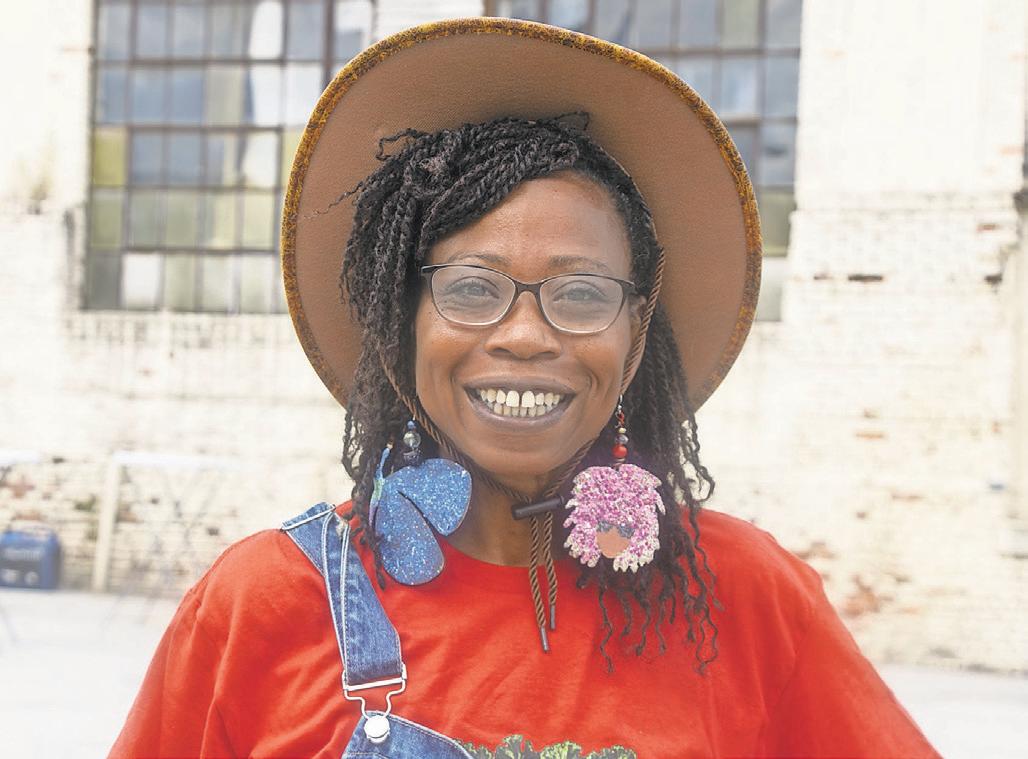
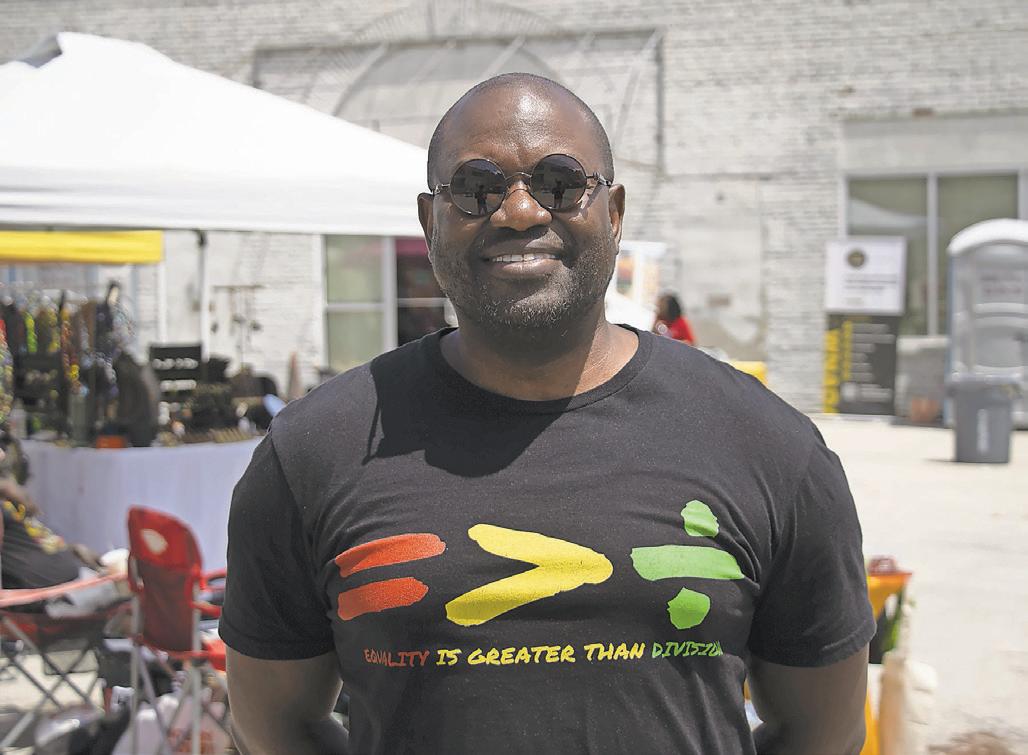
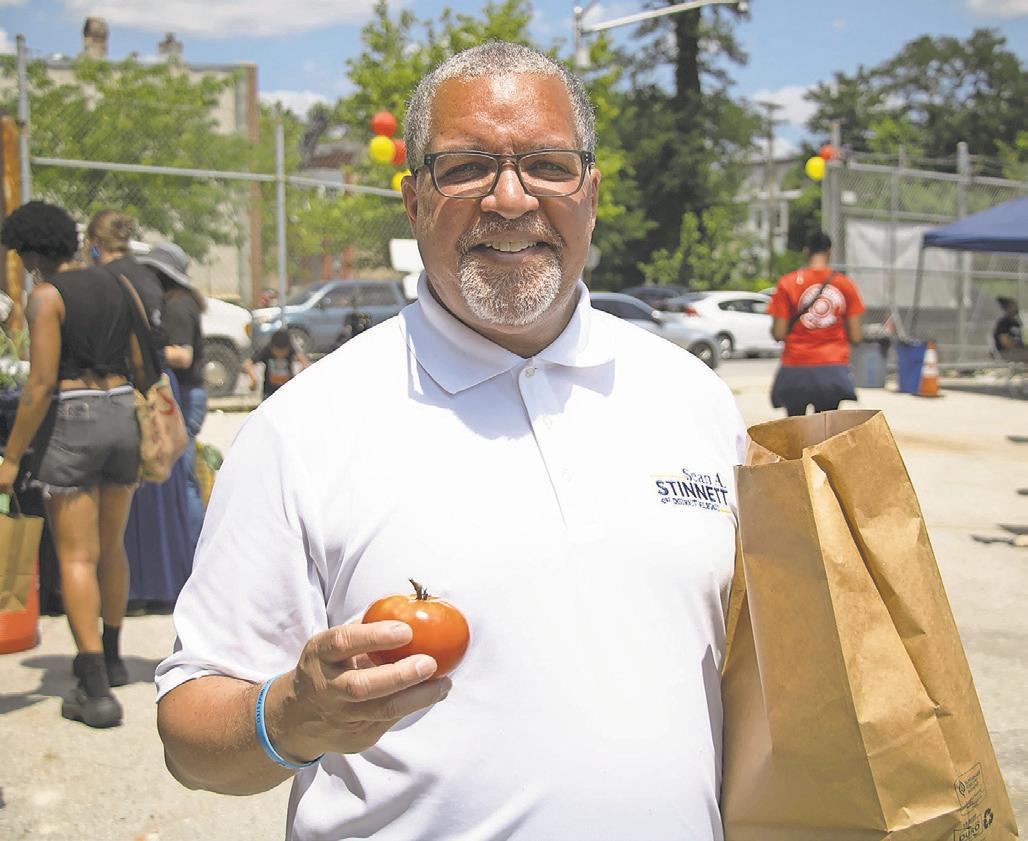
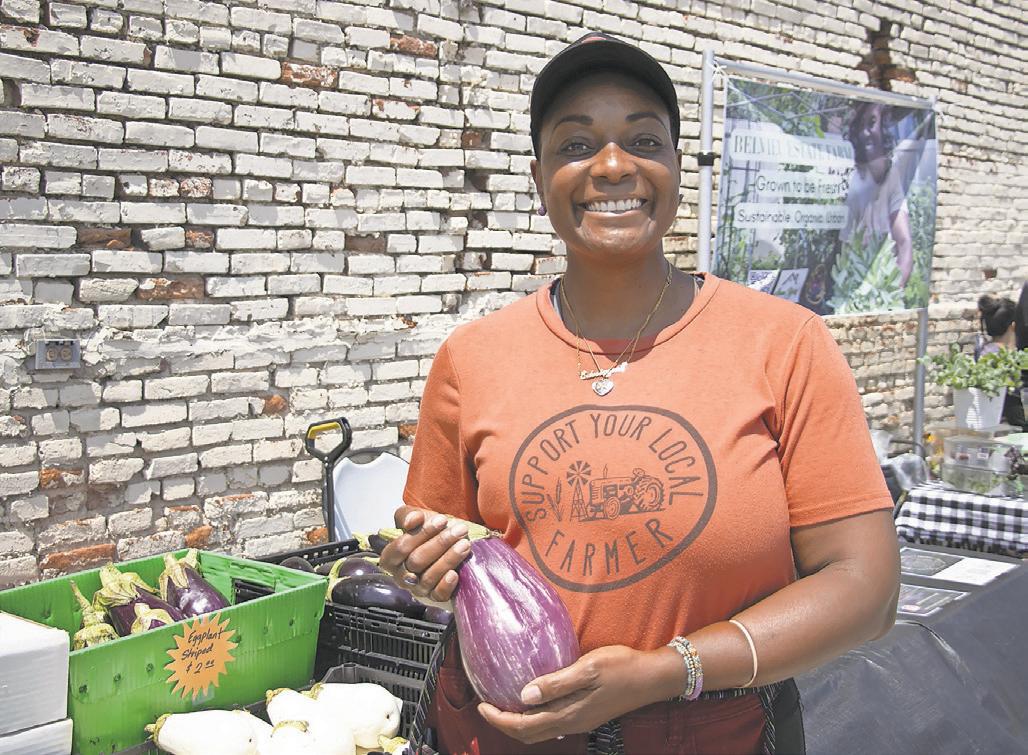
it’s been great. I love coming out to different farmers markets because this is needed.
It’s about the community coming together, sharing information with each other.
This is how we collaborate and get our morale up within the community to make us stronger and better.”
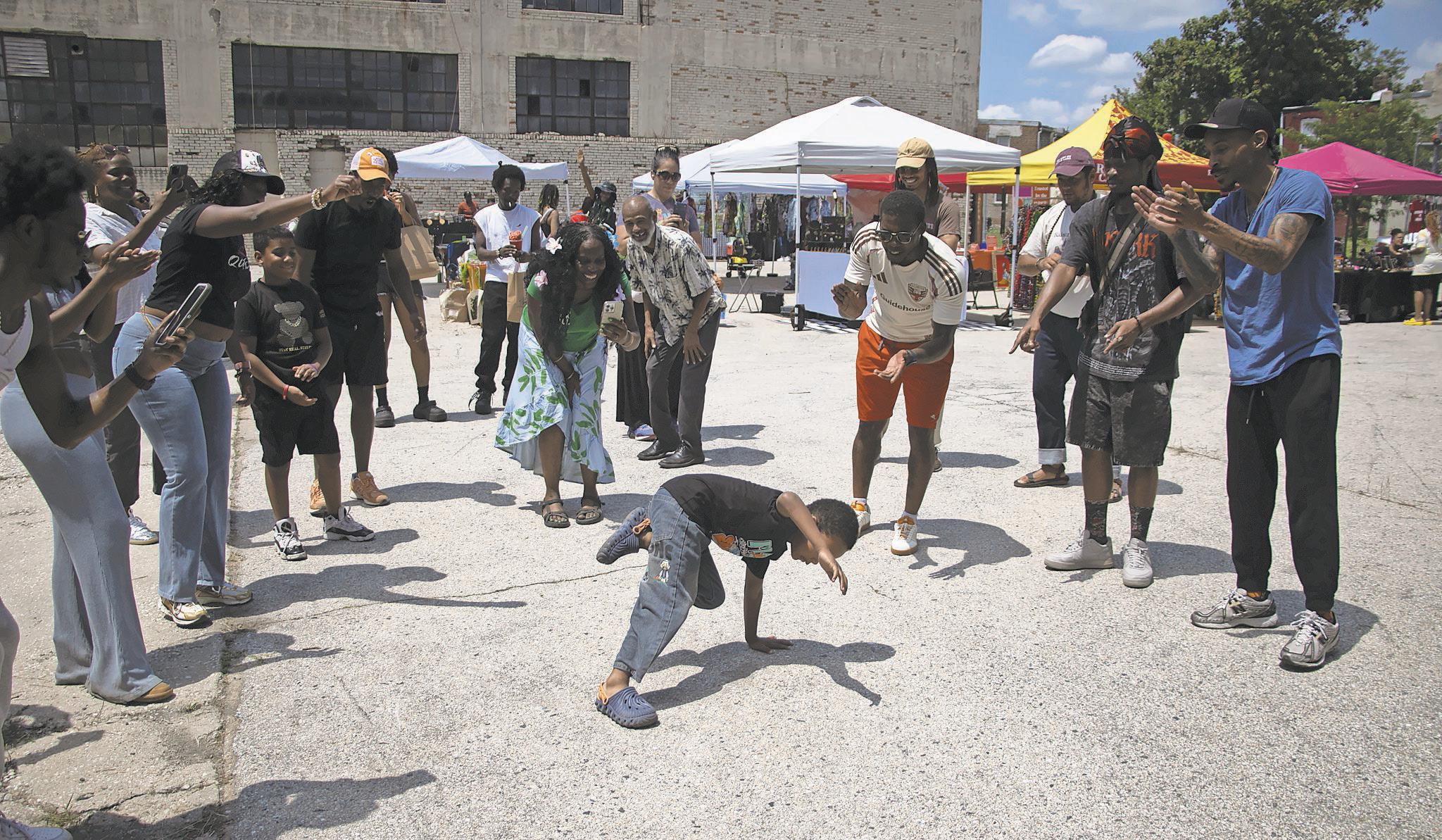
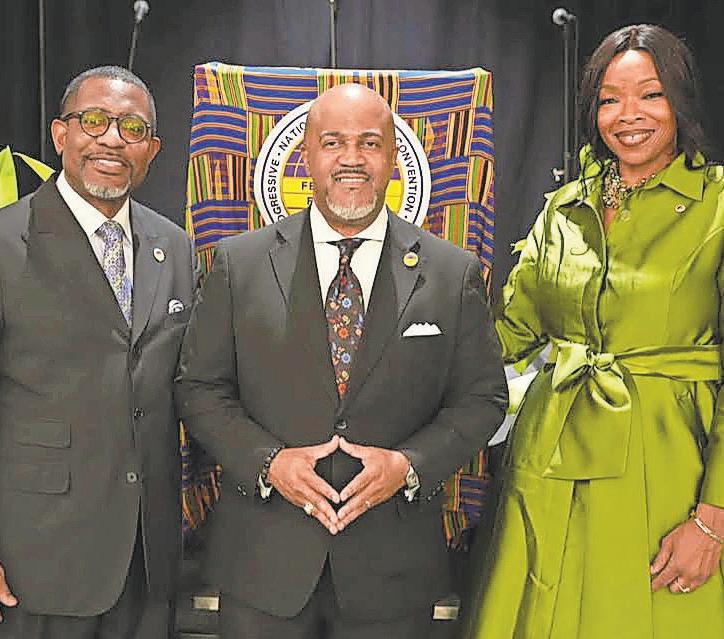
By Dr. Deborah Bailey AFRO Contributing Editor
Members of the Congressional Black Caucus, civil rights activists and progressive clergy addressed this year’s Progressive National Baptist Convention (PNBC) with a unified message: Protect and turn out the vote for the upcoming 2026 general election on Nov. 3.
“The Gospel and social justice go hand in hand [and] we’re uniquely situated to continue that fight.”
– PNBC General Secretary Thomas Bowen
R. Peoples, pastor of Jabez Missionary Church in Lexington, Ky.
By Dr. Deborah Bailey AFRO Contributing Editor
The woods surrounding the current Bowie MARC Station will soon be transformed into a vibrant village, thanks to a new coordinated state-county partnership announced by Lt. Gov. Aruna Miller and Prince George’s County Executive Aisha Braveboy.
Miller and Braveboy joined Bowie State University President Aminta Breaux July 21 to announce the partners who will guide the development of 100 acres of state- and county-owned land surrounding the MARC station into “transit-oriented development” with an eye toward advancing housing, connectivity, infrastructure and economic opportunities for the county and state.
Mosaic Development Partners JV and Campus Apartments have been selected as the state’s joint development partner while Prince George’s County has selected BSU MARCH Community Partners, LLC to steer the multiyear project to transform the land bordering the university’s campus.
“Transportation-oriented development is about access – access to jobs, education, healthcare and the opportunities that help people build better lives,” Miller said at the partnership announcement.
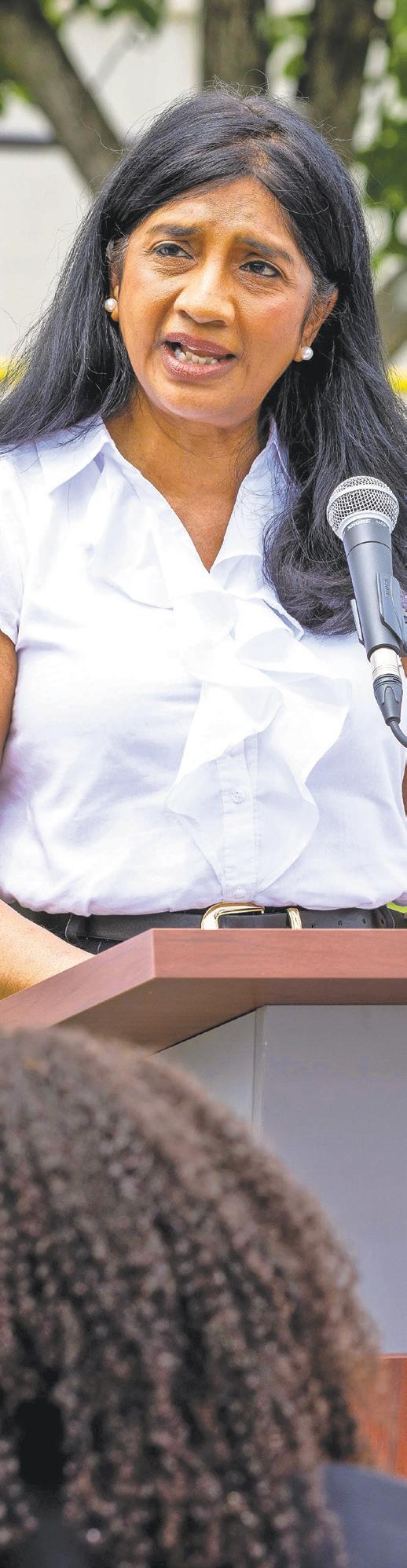
“When we create vibrant walkable communities connected by reliable transit, we make it easier for Marylanders to reach opportunity and for opportunity to reach every Maryland community.”
“We are in lockstep with our brothers and sisters
As the organization held its 65th annual session July 19–23, leaders say PNBC is prepared to meet the moment as voting rights hang in the balance.
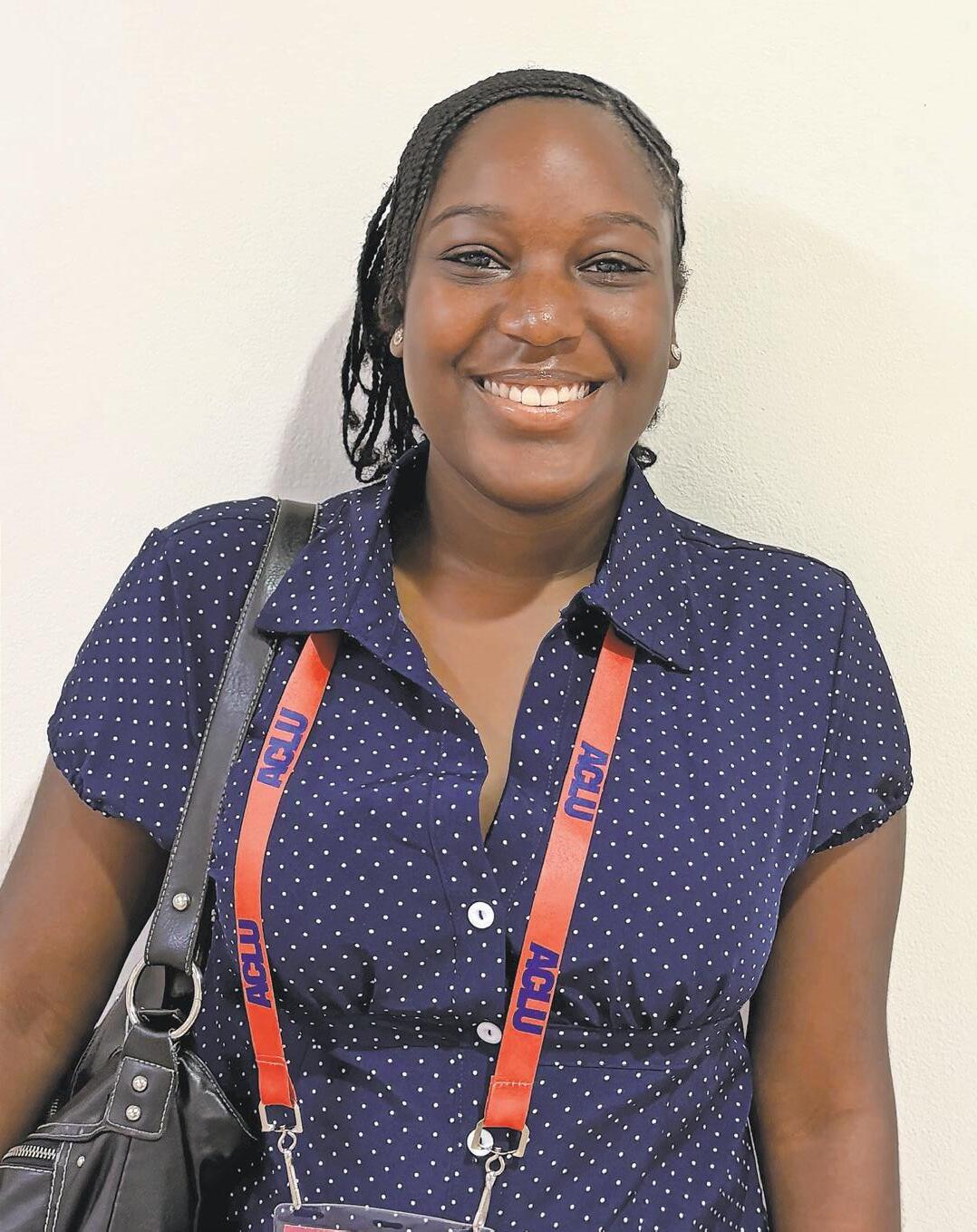
across the country fighting against legislation like the Save Act,” said outgoing PNBC President Dr. David
The Save Voter Eligibility Act (SAVE) would require all Americans to provide documentary proof of citizenship to register to vote and a photo ID at the time of voting. The SAVE Act was passed in the U.S. House of Representatives in February 2026 but it has not yet passed the Senate. Congress is now weighing a scaled back version through
By Briannia Robinson AFRO Intern brobinson@afro.com
The American Civil Liberties Union’s (ACLU) 11th annual National Advocacy Institute took place July 20 through July 29. The conference pulled together one of the largest annual gatherings of young activists, who do the work of pushing their communities forward in their respective states and U.S. territories.
This year, more than 900 high school students converged on the nation’s capital to prepare for the front lines of America’s civil rights movement. The AFRO spent
“The youth are the future, the youth have so much power in their hands and we really need their action.”
—- Victor Leonard, ACLU Artist and Influencer Engagement Strategist
time at the conference, attending the session focused on youth activism on July 22. Victor Leonard, artist and influencer engagement strategist at the American Civil Liberties Union, says that it is important for Gen Z to engage in organizations such as the ACLU.
“The youth are the future, the youth have so much power in their hands and we really need their action,” he said.
As members of Gen Z prepare to become the next generation of voters, leaders and community advocates, organizers say it is increasingly important for young people to understand how government decisions impact their daily lives. With issues such as voting rights, free speech, technology, immigration and public safety shaping national conversations, the Institute gives students the knowledge
Braveboy said the 93 acres surrounding the MARC station and HBCU campus that will be managed by the Revenue Authority of Prince George’s County is slated for 400
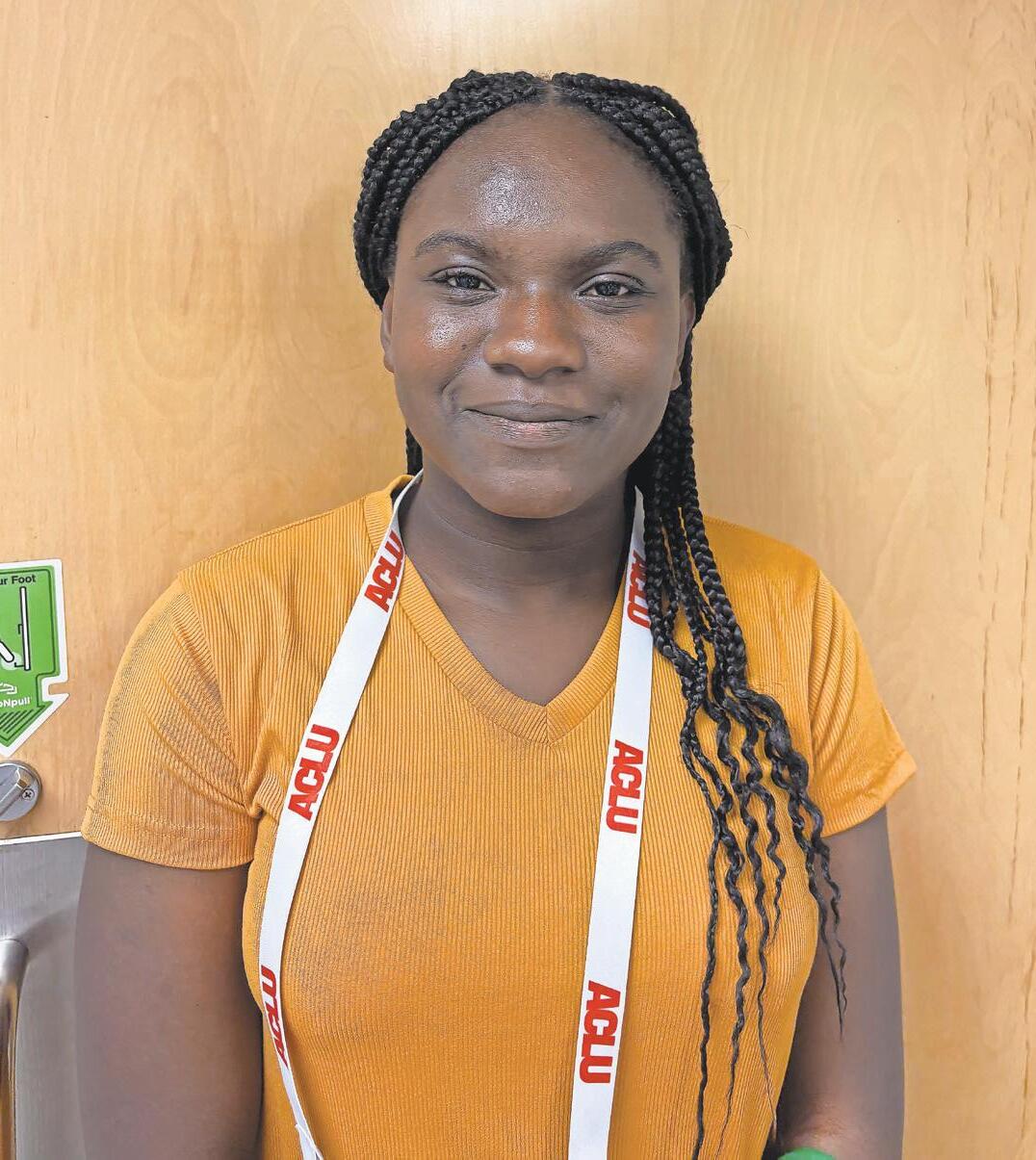
By Briannia Robinson AFRO Intern brobinson@afro.com
The HBCU First Look and Initiative’s Film Festival is an organization dedicated to discovering, supporting and promoting the unseen creative talents amongst students and alumnas from Historically Black Colleges and Universities. The festival, which features selected films on Tubi’s dedicated HBCU First LOOK channel, is accepting submissions through Aug. 28.
Founded in 2023, the festival is the brainchild of Howard University alumna Sheila Eldridge, a media entrepreneur and founder of Miles Ahead Entertainment and Broadcasting. The organization helps aspiring filmmakers and content creators connect with industry professionals through mentorship, networking and career development.
The HBCU First Look Film Festival debuted in November 2023 with events at Howard University and the Smithsonian National Museum of African American History and Culture. The festival celebrates authentic storytelling while providing film screenings, workshops, panel discussions, and networking opportunities to help participants launch careers in film and television.
Eldridge said her inspiration for creating the HBCU First Look Festival was simple: “I found that there was a lack of a pipeline that can align students with HBCU alumni in their careers.”
HBCU First Look and Initiative launched a partnership with Tubi in 2026, marking a major step forward in expanding opportunities for HBCU filmmakers. The new streaming channel will showcase student and alumni films to a global audience while providing creators
“I found that there was a lack of a pipeline that can align students with HBCU alumni in their careers.”
—-
Sheila Eldridge, Founder of the HBCU First Look and Initiative’s Film Festival
‘Get
Continued from A13
Congress’ budget reconciliation process, according to the Bipartisan Policy Center.
The Brennan Center for Justice indicates more than a dozen states have already implemented policies similar to SAVE Act mandates.
Peoples said PNBC churches are ready to support their congregations and communities with both registration and voting this fall at the polls.
“We’re not dismayed. We’re not scared. We’re not shaken. We will continue to fight and galvanize our people here in PNBC to go back out there and identify what each state is dealing with,” Peoples said to reporters at a press conference during the convention.
The call for PNBC to honor their legacy of social action was echoed by Black lawmakers who addressed the assembly.
“We’re at the ‘Progressive National Convention’ – The Gospel is liberation,” said Sen. Raphael Warnock (D-Ga.).
In an exclusive interview with AFRO News after addressing delegates after the President’s Celebration, Warnock said PNBC must help get people to the polls in November.
“We have to turn out people to vote. We have to put some guardrails on this president, which means we need to flip both houses. Even if we
Continued from A13
and tools to participate in civic life beyond the classroom.
Kiley Bernard, a rising high school junior participant of ACLU, says that participating in ACLU has changed the way that she thinks about advocacy and civic engagement.
“I don’t have to know it all to fit in the room with people that may know it all,” said Kiley. Through the Institute, students gain firsthand experience in the democratic process by connecting with legal experts, organizers, and policy leaders who work directly on civil rights issues. They learn how campaigns are built, how legislation moves through government, and how young people can use their voices to influence conversations both locally and nationally.
The conference serves as a time for participants to take advantage of workshops, lectures and discussions on legal strategy and public policy led by ACLU attorneys.
topics included free
with greater visibility, industry access and the opportunity to generate revenue from their work.
Chazriq Clarke, a first-place winner at this year’s HBCU First Look Film Festival and a participant in the Tubi partner program, spoke about the collaboration with Tubi.
“It is opening the doors for a lot of future filmmakers to be in the room. Growing up, I didn’t see people like me in rooms like this and have opportunities like this,” said Clarke. “I think having that reassurance from college that you’re able to get into rooms with people like Ryan Coogler or Lynn Whitfield.”
This partnership strengthens the pipeline for diverse voices by providing the resources and access needed to help the next generation of Black filmmakers succeed in film and television.
Serenity Owens, a second-runner-up finalist at this year’s HBCU First Look Film Festival and a participant in the Tubi partner program, shared how the new collaboration has helped her career.
“It puts me in a room where I can start to feel familiarity in these spaces,” she said. “I think it was good that we were all able to intermingle with a lot of industry filmmakers.”
flip one, that will go a long way toward holding him accountable,” said Warnock, who also pastors Ebenezer Baptist Church in Atlanta, a PNBC-affiliated church.
South Carolina Rep. Jim Clyburn, the PNBC women’s luncheon speaker, spoke about ensuring young Blacks are motivated to vote in November. “We’ve got to do it this year or I’m not so sure there will ever be another fair and impartial election in this country,” he said about the need to change leadership in Congress.
“So, I came today to ask you to think about your children, your grandchildren and whether what you are doing today will make a better life for them than it was for your parents and grandparents,” he further said. “I’m afraid we aren’t doing enough. I don’t think we realize how serious this is.”
Civil rights activist the Rev. Al Sharpton urged delegates not to become complacent.
“If we are in very serious times, it calls for those who are called by God to stand up in these very serious times,” he said. Sharpton also encouraged delegates to attend the Aug. 28 March on Washington, organized by his National Action Network, Martin L. King III and other social justice organizations.
Pastor and social justice activist Jamal Bryant, pastor of New Birth Missionary Baptist Church in Lithonia, Ga., reminded delegates
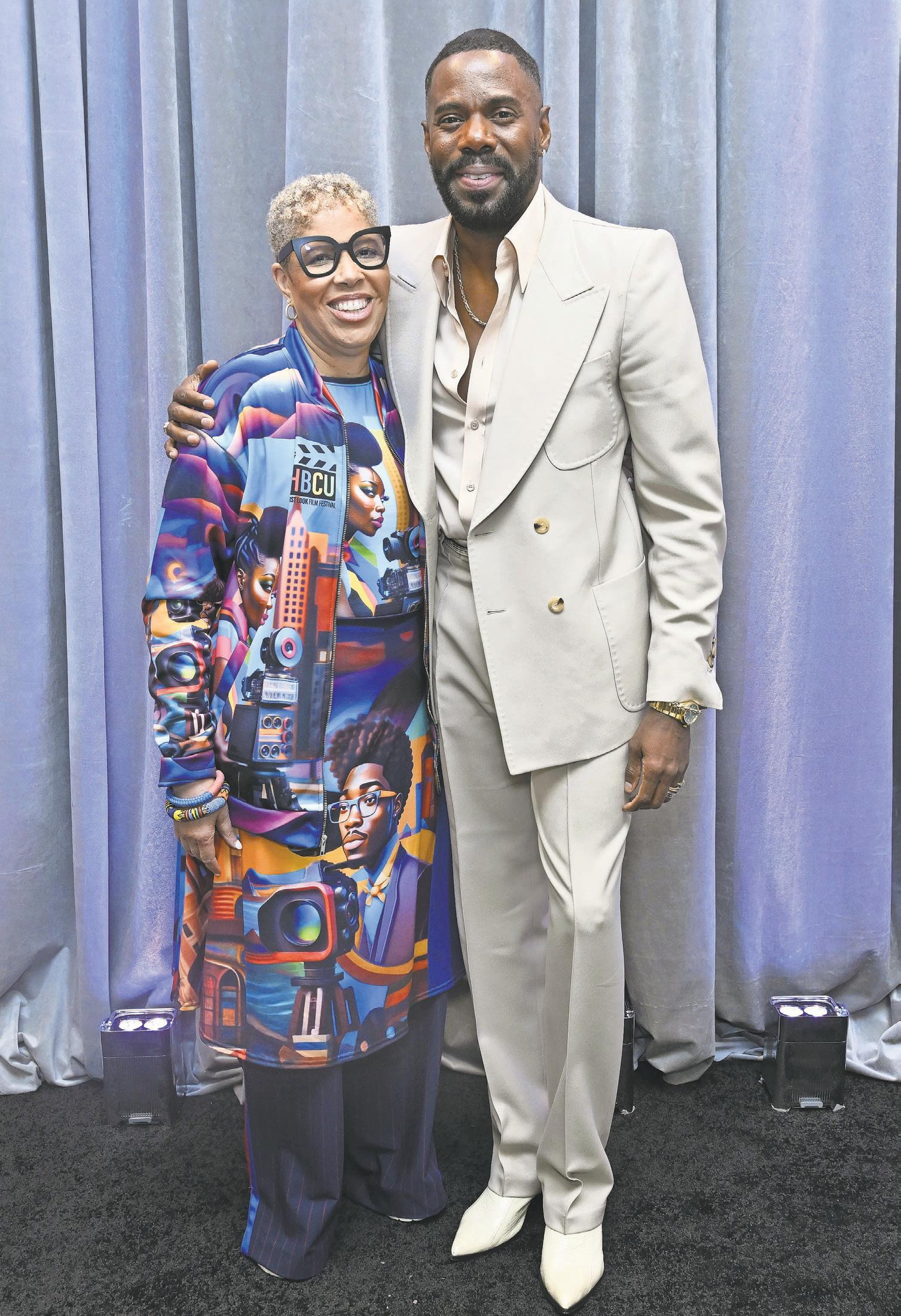
that sound economic policies must accompany political activism in the Black community.
Bryant highlighted the fact that “400,000 Black women have lost their jobs, and they make up 65 percent of our congregations.”
“If we do not have an economic agenda that goes with our political agenda, then we are just having a parade full of sound and fury signifying nothing,” said Bryant.
Incoming PNBC President Dr. Keith Byrd, pastor of Washington’s Zion Baptist Church, said D.C. reflects the challenges to democracy going on nationwide.
“We are walking through some very difficult times in American life as racial tension and strife continue to rise to levels of great concern,” he said.
Delegates prepare for fall call to action
Deidre Reed, strategist for the PNBC, discussed plans for the denomination’s voter turnout campaign this fall with delegates attending the conference’s social justice town hall.
“Our first target is our own house. We are asking 100 percent of eligible voters in PNBC congregations, across 50 states, to be registered and to vote early in their state,” she said.
PNBC’s next target populations are Black women, the most consistent voting bloc in America, said Reed. PBNC will also connect
with young Black voters aged 18-35, who are often registered but fail to participate in early voting or go to the polls on Election Day at higher rates..
“Our job is to inspire and support their concerns,” Reed said.
PNBC delegate, the Rev. Dr. Christine Smith, senior pastor of Restoration Ministries of Greater Cleveland, said her church is already engaging in voter registration and preparing for fall 2026 elections. She was encouraged to see PNBC doubling down on efforts to get involved in the November 2026 elections.
“Some of our churches are very active, but some of our churches have fallen asleep,” said Smith, author of “Deconstructing Power and Isms within Church and Society” (Judson Press). “But I believe we’re on a good track. We have a strong social justice division. Our leaders are doing the utmost to bring in speakers not just at the convention, but throughout the year.”
PNBC General Secretary Thomas Bowen said the fall agenda for their churches will wake parishioners up at every PNBC church.
“The Gospel and social justice go hand in hand [and] we’re uniquely situated to continue that fight,” Bowen said. “We’ll be leaving this convention ready to get involved in the midterms.”
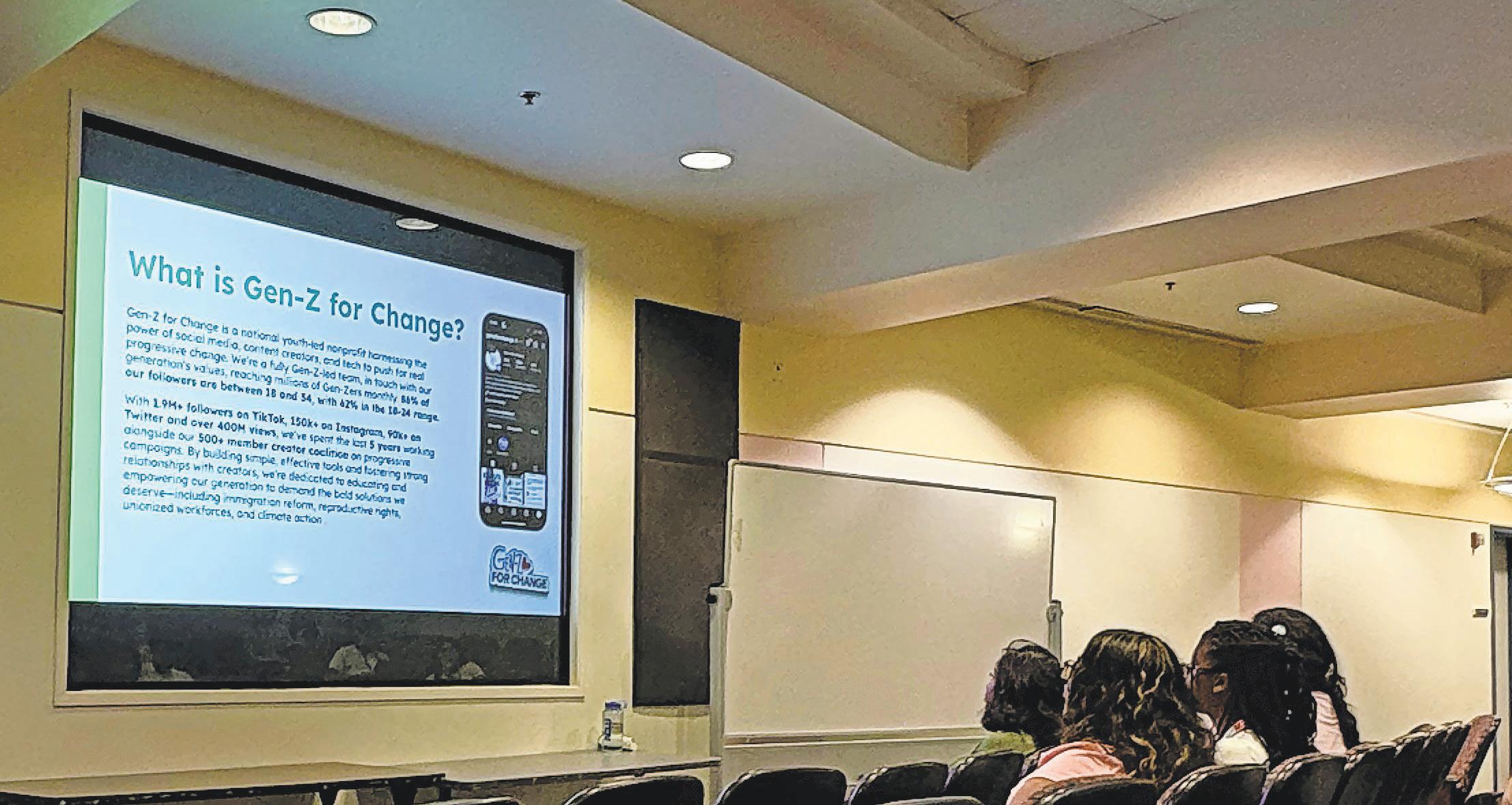
By D. Kevin McNeir Special to the AFRO
Teachers from across America discussed the latest trends and challenges they continue to face as they seek to prepare their students for an ever changing world during the 2026 Smithsonian National Education Summit in Washington, D.C.
Under the theme of “Together We Thrive: Towards a More Perfect Union,” leading education experts explored instructional strategies and resources, July 14-16 while reflecting on shared stories and imagining a more diverse and inclusive future.
Dr. Monique M. Chism, the Smithsonian’s undersecretary for education, said educators must use words and employ strategies with care if their goal is to prepare students for the kinds of unchartered waters that lie ahead.
their places and assert their voices.”
Leon Smith, 46, a social studies teacher at Haverford High School in Havertown, Pa., served as the keynote speaker for the three-day conference.
Smith, who has spent his entire 25-year career teaching advanced placement (AP) U.S. history and African-American studies, was recently named the 2026 National Teacher of the Year by the Council of Chief State Schools Officers. In 2025, he was named the Pennsylvania Teacher of the Year.
Smith said as the only Black teacher in his school for 20 years, he learned that his survival rested on his ability to trust his inherent ability to teach and his success at creating a supportive community.
“It’s important for educators to ensure that our students feel like they’re
It’s our responsibility to prepare our students for the time when they will enter the world and seek to both claim their places and assert their voices.”
-
“Words can serve as life rafts that can carry us – teachers and students – over rough waters, which we will all inevitably face,” Chism said. “However, it’s imperative that teachers focus on intentionality. It’s our responsibility to prepare our students for the time when they will enter the world and seek to both claim
being seen and heard – something that was critical to my success after joining a faculty that was all-white,” Smith said. “Students, no matter what color they may be, need to be invited to participate in an environment in which they feel safe enough to be their authentic selves and join the classroom community. They
need to feel valued … like they matter. As they complete their education and move into their careers, this is particularly important, especially for children of color.”
Smith said he remains committed to helping youth obtain a panoramic view of history – one in which all facets of history are included and deemed significant.
“Whether it’s a story, a photo, or a painting, what is in the center versus what’s on the periphery influences how we understand the images and shape our perspective,”
Smith said. “But the process of expanding one’s perspective is something that only occurs through practice. Further, shared history relies on the inclusion of many voices.
“Without a more expansive perspective that recognizes the need and importance of honoring America’s diversity, many of us would never have heard about Elizabeth Freeman, an enslaved Black woman in Massachusetts, who used the state’s new 1780 Constitution which declared ‘all men are born free and equal,’ to successfully sue for her freedom in 1781.”
Smith continued, “As a historian, I knew I had to teach my students about the Montford Point Marines – the first African-American recruits integrated into the U.S. Marine Corp, who trained at a segregated camp in Jacksonville, N.C., from 1942 to 1949. That’s American history.”
Black teachers stress importance of critical thinking
Jasmine Pritchett, who teaches at Discovery Middle School in Selma, Ala., said to prepare students to successfully compete in a multicultural world, they must receive
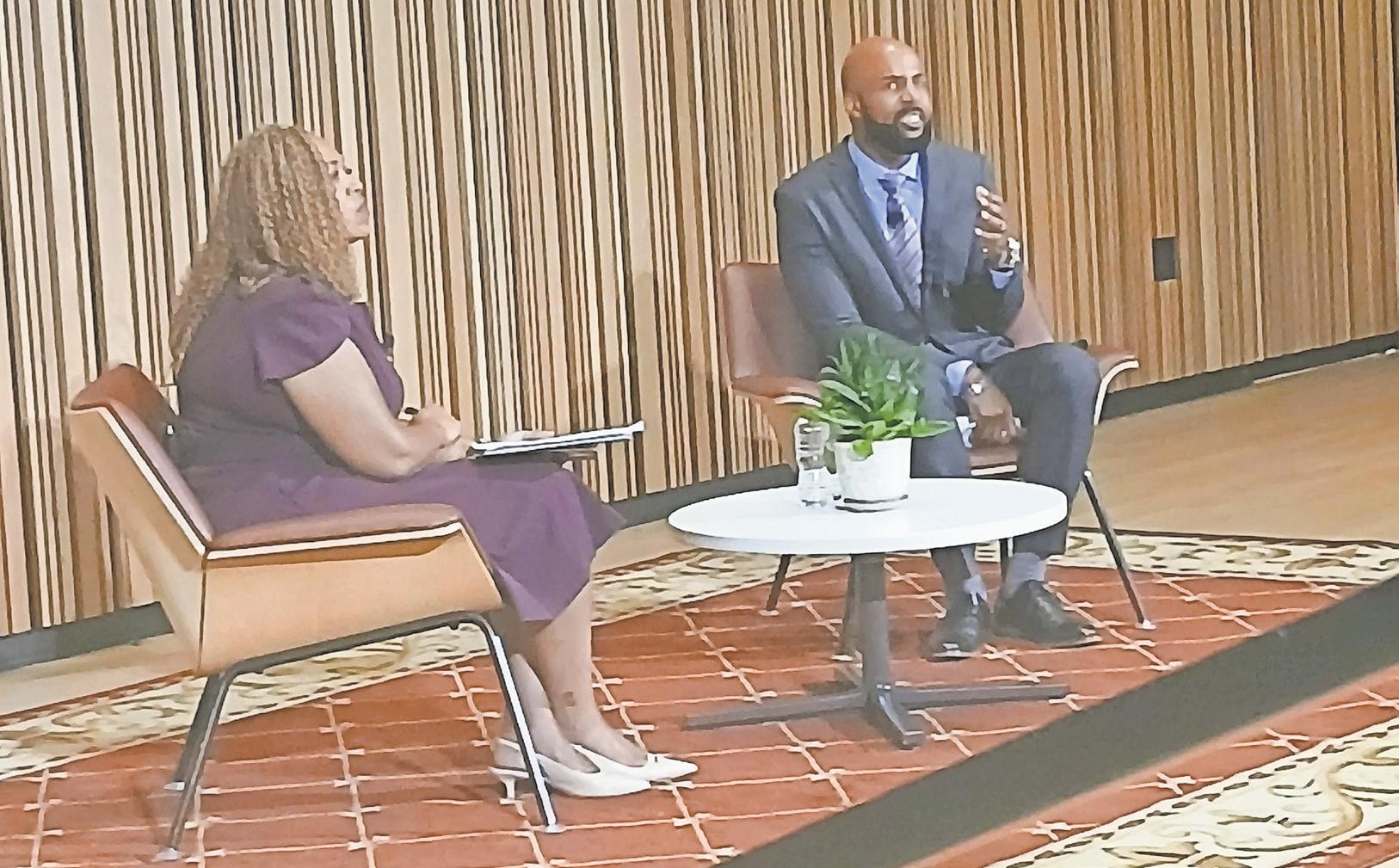
“This is another example of how my administration is laser focused on economic development,” Braveboy said.
“We are elevating the quality of development throughout the county to bring the much-needed retail, housing, and entertainment our residents deserve. I look forward to continued partnership with MDOT (Maryland Department of Transportation), Bowie State University and the state of Maryland to advance this transit-oriented development.”
Mosaic Development Partners JV and Campus Apartments will lead a master planning process for the area that includes the state’s 4.6-acre site along the north side of the rail corridor. The Maryland Department of Transportation will contribute up to $1.5 million in support of the planning, including evaluation of long-term
redevelopment opportunities surrounding the station. Key infrastructure items include an extended MARC platform, a new pedestrian bridge connecting the MARC platform to Bowie State University’s campus and improved bike and pedestrian access throughout the area.
Maryland Transportation Secretary Kathryn “Katie” Thomson reiterated the importance of selecting the Bowie MARC Station for this joint project.
“The Bowie State MARC Station is a prime location along the MARC Penn Line for transit-oriented development, and I’m thrilled to have the state’s selected-development partner on board to build out our vision,” said Thomson.
Bowie State University President Breaux celebrated the mix of new housing, business opportunities and transit that will be available at the campus’ doorstep as a result of the
lessons that embrace a more inclusive American history.
“My classes are almost all-Black at 93 percent, so my first task is helping them better engage with people who are different from them,” Pritchett said. “They have to become masters at engagement in the world and to appreciate the diversity of cultures. As a Black woman teaching children, that remains one of my greatest joys.”
Ruth E. Ray, a middle school science teacher at Inspire NOLA, in New Orleans, La., also teaches classes that are predominantly Black or Hispanic. She said the prevailing winds of white supremacy have forced her to revise her classroom strategies and lesson plans.
“White supremacists are committed to systemically erase Black history – not only in the books that they want us to use in our instructions but in the way we shape our students’ minds and attitudes,” Ray said. “That’s why teaching youth how to think critically, rather than relying on AI, is so important today.
“The only way a child can recognize truth from the false notions promoted by white supremacists is by employing critical thinking. No matter what color my students may be, critical thinking remains their first line of defense.”
Kevin Coleman, the director of the art department at Crossland High School in Prince George’s County, Md., attended the conference as part of the first cohort of teachers chosen for the Smithsonian’s Schools of Distinction program.
His school serves as the dedicated Career Technical Education (CTE) Hub for the southern area of the county. With over 150 CTE programs across 24 different high schools, he said it’s clear that in Prince George’s County, more students and their parents are recognizing that receiving instruction in specific skills or trades can give them an advantage as they enter adulthood.
“Our students graduate with both a high school diploma and a certificate of proficiency which they can use in the future to either secure a license in a specific trade, like cosmetology, or to use as a side job when they enter college or go into the military,” Coleman said.
One surprising conversation to take place during the conference included Black educators who said their students seem less inclined to
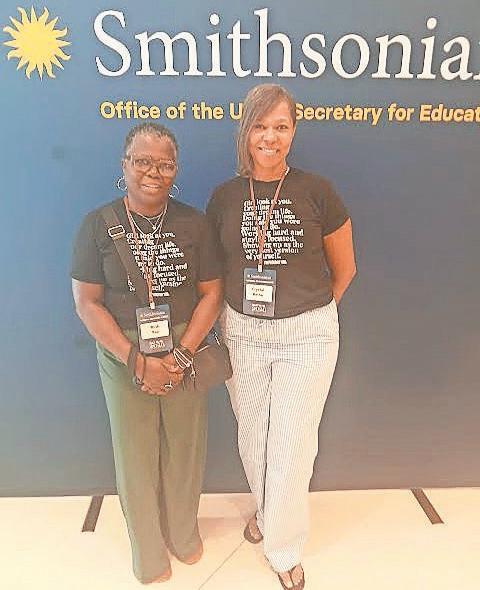
rely on artificial intelligence (AI) and are instead more interested in developing the skills that lead to proficiency in critical thinking.
“Our superintendent understands that career paths have changed from past generations. Even while we are working with artificial intelligence, we find that our students want to create their own work rather than feeding information into a computer and getting back what it gives to them,” said Coleman.
“Learning to use materials essential to one’s degree or area of specialty and mastering critical thinking are what today’s youth have found lead to more successful outcomes.”
Creating an inclusive environment
Crystal Betha, who teaches at Moten Elementary in Washington, D.C., said adults must learn how to
provide inclusive spaces for all students to learn.
“Just because a child may learn differently from others or have challenges in understanding basic concepts, does not mean we should label them or see them as having less to offer than other students,” Betha said. “I’ve found that the best advocates for special education children are their parents because they focus more on how their children are similar to others, not how they differ.
“All children, just like adults, want to feel they’re being invited to participate in the community,” she continued. “That’s especially important for Black boys and children of color. Last year, out of 12 children in my courseload, only one was a female and all of them were Black. But they all wanted to feel included.”
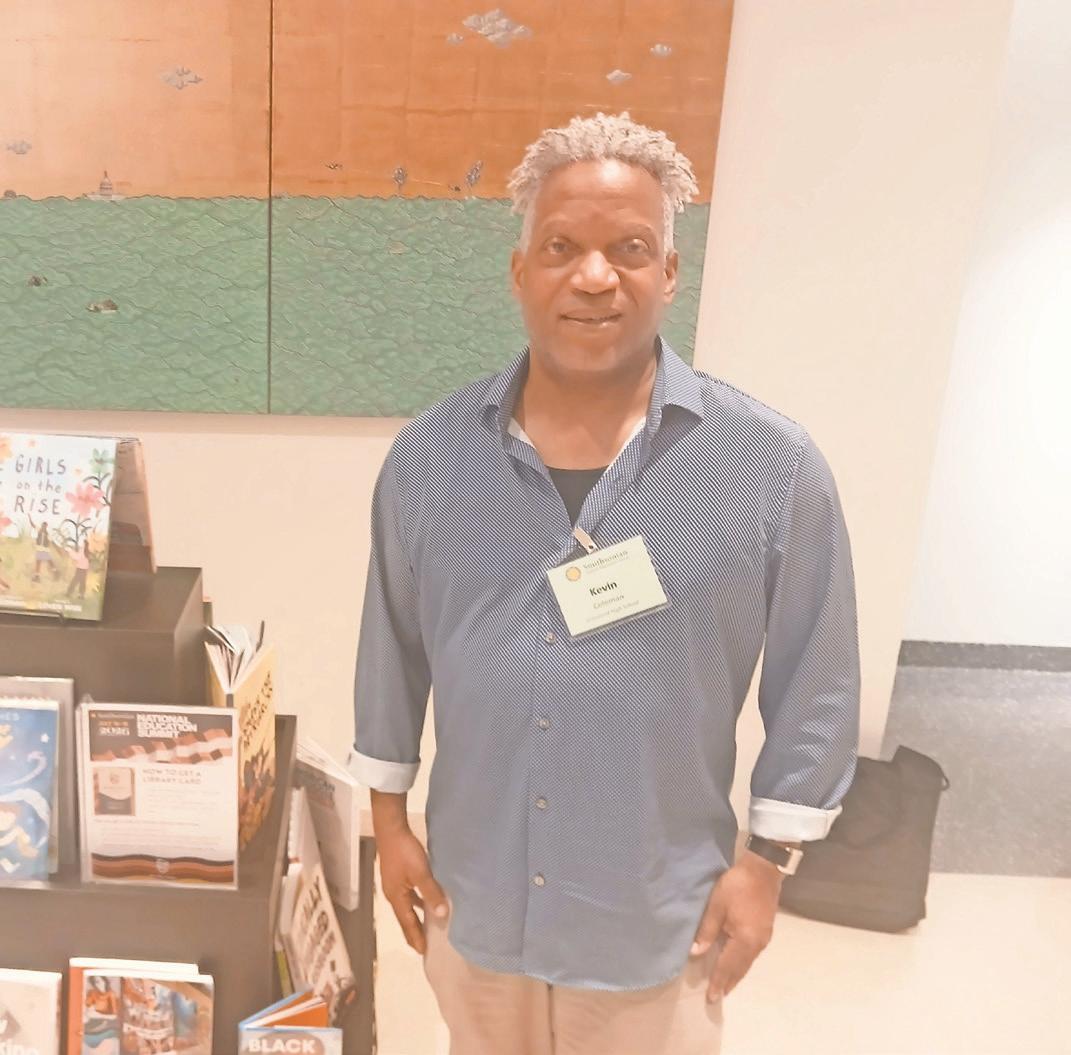

Bowie MARC project. “This development advances our vision for Bowie State to continue serving as an anchor institution that expands opportunity, strengthens communities and expands the economic vitality of our community,”Breaux said.

Payment Policy for legal notice advertisements.
Effective immediately, The Afro American Newspapers will require prepayment for publication of all
accepted in the form of checks, credit card or money order. Any returned checks
result in the suspension of any future advertising at our discretion.
CITY OF BALTIMORE DEPARTMENT OF TRANSPORTATION
Citywide Traffic Signal Reconstruction & Pedestrian Crossing Sector 1 Public Meeting
Join us to review proposed citywide traffic and pedestrian safety improvements. This meeting will cover upgrades to traffic signals and pedestrian crossing beacons, enhancements to ADA accessibility, and related sidewalk and roadway modifications.
TR19309, TR17305, TR25301 Citywide Traffic Signal Reconstruction & Pedestrian Crossing
PUBLIC MEETING
Thursday, August 6, 2026
6:00p.m. to 7:30 p.m.
Enoch Pratt Free Library Govans Branch 5714 Bellona Ave. Baltimore, Maryland 21212
If you have any questions, comments or need special accommodations, please contact dotengagement@baltimorecity.gov subject line Citywide Traffic Signal Sector 1 Or call 410-396-6802
Accommodation requests should be received by Thursday, July 30, 2026
Receive regular updates via Facebook, “X” formerly known as Twitter at @BmoreCityDOT. Instagram at @BmoreDOT
Veronica P. McBeth, DIRECTOR DEPARTMENT OF TRANSPORTATION
and
ADA accessibility, and related sidewalk and roadway modifications.
TR19309, TR17305, TR25301 Citywide Traffic Signal
Reconstruction & Pedestrian Crossing
PUBLIC MEETING
Tuesday, August 4, 2026
6:00p.m. to 7:30 p.m.
The Factory: A West Baltimore Opportunity Center 5 N Calhoun St Baltimore, Maryland 21223
If you have any questions, comments or need special accommodations, please contact dotengagement@baltimorecity.gov subject line Citywide Traffic Signal Sector 3 Or call 410-396-6802
Accommodation requests should be received by Tuesday , July 28, 2026
Veronica P. McBeth, DIRECTOR DEPARTMENT OF TRANSPORTATION
HOUSING AUTHORITY OF BALTIMORE CITY INVITATION FOR BIDS
ALBERT SPENCE GARDENS - PHASE 2: UNIT CONVERSION PROJECT IFB NUMBER: B-2070-26
The Housing Authority of Baltimore City (“HABC”) will issue an Invitation for Bids (“IFB”) for interested and qualified contractors for the conversion of 4 existing residential units into 9 residential units at Alber Spencer Gardens. The work will include but not limited to: Structural, mechanical, electrical (upgrade for entire site, including the excavation of trenches for the installation of new conduits), plumbing and exterior/interior upgrades. New roofing (entire site, 2-buildings), new siding (entre site 2-buildings), windows, doors, new fencing and landscaping.
BIDS WILL BE DUE no later than 2:00 p.m. Eastern Time on Friday, August 28, 2026.
A non-mandatory pre-bid meeting will be held on Wednesday, August 18, 2026, at 10:00 a.m., which will be scheduled as a virtual meeting.
The entire IFB can be viewed and downloaded by visiting https://habc. bonfirehub.com/projects on or after Monday, August 3, 2026. Questions regarding the IFB should be directed in writing to the address and individual indicated below and must include the reference: HABC IFB Number B-2070-26.
Housing Authority of Baltimore City Division of Fiscal Operations, Procurement Department Attention: James Demchenko, Senior Buyer Tel: (443) 398-41956 James.demchenko@habc.org
CITY OF BALTIMORE DEPARTMENT OF TRANSPORTATION
Citywide Traffic Signal Reconstruction & Pedestrian Crossing Sector 2 Public Meeting
Join us to review proposed citywide traffic and pedestrian safety improvements. This meeting will cover upgrades to traffic signals and pedestrian crossing beacons, enhancements to ADA accessibility, and related sidewalk and roadway modifications.
TR19309, TR17305, TR25301 Citywide Traffic Signal Reconstruction & Pedestrian Crossing
PUBLIC MEETING
Wednesday, August 5, 2026
6:00p.m. to 7:30 p.m.
Center for Urban Families 2201 N
If
Receive regular updates via Facebook, “X” formerly known as Twitter at @BmoreCityDOT. Instagram at @BmoreDOT
Veronica P. McBeth, DIRECTOR DEPARTMENT OF TRANSPORTATION
BOARD OF LIQUOR LICENSE COMMISSIONERS FOR BALTIMORE CITY NOTICE—SPECIAL AD – JULY 27, 2026
Petitions have been filed by the following applicants for licenses to sell alcoholic beverages at the premises set opposite their respective names. The real property for these applications will be posted on or about August 3, 2026. Written protests concerning any application will be accepted until and including the time of the hearing. Public hearings may be scheduled on or after September 10, 2026 at 10:30 AM in the Liquor Board Hearing Room, located at 200 St. Paul Place, Suite 2300, Baltimore, Maryland 21202. Please visit baltimorecity.gov/ llb under the link for “Hearing Schedules” for confirmation of the date, time, and place for all matters being heard by the Board.
1. CLASS “B” BEER, WINE & LIQUOR LICENSE
Applicant: Ashe Enterprises, LLC T/a Creole Soul Kitchen & Bar - Ashley Wilson Petition: New restaurant license requesting outdoor table service and off-premises catering Premises: 514 S. Broadway 21231 (City Council District: 1st; State Legislative District: 46th) City of Baltimore Department of Finance Bureau of Procurement
Sealed proposals addressed to the Board of Estimates of Baltimore will be Received until, but not later than 11:00 am local time on the following dates for the stated requirements. July 1, 2026
• Supply & Delivery of Bulk Chemicals: Water and Wastewater Treatment Facilities- RFQ-000770
ENTIRE SOLICITATION CAN BE VIEWED AND DOWNLOADED BY
VISITING THE WEBSITE: cityservices.baltimorecity.gov/suppliers/bid-opportunities
SUPERIOR COURT OF THE DISTRICT OF COLUMBIA PROBATE DIVISION ADMINISTRATION NO. 2026ADM000690 Wilton Younger Morgan Name of Decedent Notice of Appointment, Notice to Creditors and Notice to Unknown Heirs VALERIE DENISE COVINGTON whose address(es) is 128 N. GOVERNORS BLVD., DOVER, DE 19901 was appointed Personal Representative of the estate of WILTON YOUNGER MORGAN who died on MAY 13, 2026, without a Will and will serve without Court supervision. All unknown heirs and heirs whose whereabouts are unknown shall enter their appearance In this proceeding. Objections to such, appointment shall be filed With the Register of Wills, D.C., Building A, 515 5th Street, N.W., 3rd Floor, Washington, D.C. 20001, on or before JANUARY 24, 2027, Claims against the decedent shall be presented to the undersigned with a copy to the Register of Wills or filed with the Register of Wills with a copy to the undersigned, on or before JANUARY 24, 2027 or be forever barred. Persons believed to be heirs or legatees of the decedent who do not receive a copy of this notice by mail within 25 days of its publication shall so inform the Register of Wills, including name, address and relationship. Date of first publication: July 24, 2026 Name of newspaper and/or periodical: AFRO American Newspapers
VALERIE DENISE COVINGTON Personal Representative TRUE TEST COPY REGISTER OF WILLS 7/24, 7/31, 8/7/26
Citywide
OF BALTIMORE DEPARTMENT OF TRANSPORTATION
TR19309, TR17305,
Accommodation
Veronica P. McBeth, DIRECTOR DEPARTMENT OF TRANSPORTATION
SUPERIOR COURT OF THE DISTRICT OF COLUMBIA PROBATE DIVISION ADMINISTRATION NO. 2026ADM000704 CHARLES C CHRISTIAN Name of Decedent NATHAN A NEAL, ESQ LAW OFFICES OF NEAL AND HANEY, PLLC 209 KENNEDY STREET NW WASHINGTON, DC 20011-5214 Notice of Appointment, Notice to Creditors and Notice to Unknown Heirs
ERIK P. CHRISTIAN whose address(es) is 1729
JUNIPER STREET NW, WASHINGTON, DC 20012 was appointed Personal Representative of the estate of CHARLES C CHRISTIAN who died on MARCH 21, 2019, without a Will and will serve without Court supervision. All unknown heirs and heirs whose whereabouts are unknown shall enter their appearance In this proceeding. Objections to such, appointment shall be filed With the Register of Wills, D.C., Building A, 515 5th Street, N.W., 3rd Floor, Washington, D.C. 20001, on or before JANUARY 24, 2027, Claims against the decedent shall be presented to the undersigned with a copy to the Register of Wills or filed with the Register of Wills