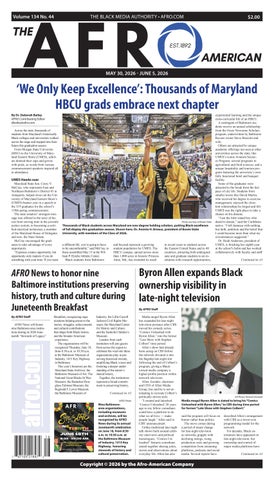

‘We Only Keep Excellence’: Thousands of Maryland HBCU grads embrace next chapter
By Dr. Deborah Bailey
Contributing Editor dbailey@afro.com
Across the state, thousands of students from Maryland’s historically Black colleges and universities walked across the stage and stepped into their future this graduation season.
From Morgan State University (MSU) to the University of Maryland Eastern Shore (UMES), scholars donned their caps and gowns with pride, as words from various commencement speakers inspired all in attendance.
UMES Hawks soar
Maryland State Sen. Corey V. McCray, who represents East and Northeast Baltimore’s District 45 in Annapolis, helped close out the University of Maryland Eastern Shore’s (UMES) banner year in a speech to the 319 graduates for the school’s 139th spring commencement.
The state senators’ strongest message was offered in the story of his rise from serving time in the juvenile justice system, to becoming a certified electrical technician, a member of the Maryland House of Delegates and now, the State Senate.
McCray encouraged the graduates to take advantage of every opportunity.
“Exposure creates opportunity, but opportunity only matters if you do something with your time. If you want
a different life, you’re going to have to be uncomfortable,” said McCray, to those assembled May 15 in the William P. Hytche Athletic Center. Black students from Baltimore
and beyond represent a growing student population for UMES. The HBCU campus, spread across more than 1,000 acres in historic Princess Anne, Md., has extended its reach
AFRO News to honor nine Baltimore institutions preserving history, truth and culture during Juneteenth Breakfast
By AFRO Staff
AFRO News will honor nine Baltimore-area institutions during its 2026 Juneteenth “Stewards of Legacy”
Breakfast, recognizing organizations helping preserve the stories, struggles, achievements and cultural contributions that shape both Black history and the broader American experience.
The organizations will be recognized Thursday, June 18, from 8:30 a.m. to 10:30 a.m. at the Baltimore Museum of Industry, 1415 Key Highway in Baltimore.
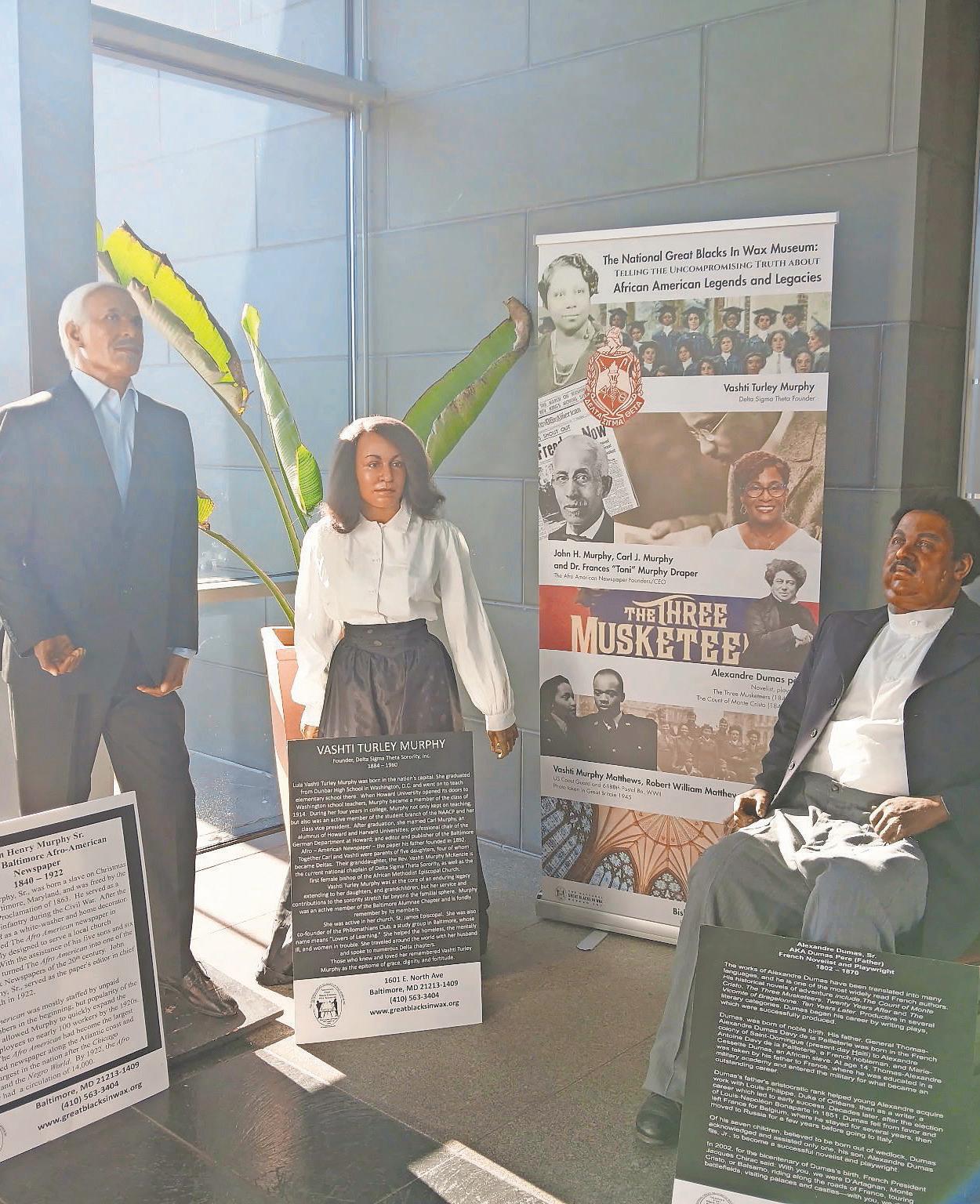
This year’s honorees are the Maryland State Archives; the Baltimore Museum of Art; The National Great Blacks In Wax Museum; the Banneker-Douglass-Tubman Museum; the Reginald F. Lewis Museum; the Baltimore Museum of

Industry; the Lillie Carroll Jackson Civil Rights Museum; the Maryland Center for History and Culture; and the Sankofa Children’s Museum.
Leaders from each institution will join guests from across the region to celebrate the vital role these organizations play in preserving historical records, amplifying Black voices and fostering a deeper understanding of the nation’s shared history.
Together, the institutions represent a broad commitment to preserving history,
AFRO Photo
Nine Baltimorearea organizations, including museums and archives, will be recognized by AFRO News during its annual Juneteenth celebration on June 18, from 8:30 a.m. to 10:30 a.m. at the Baltimore Museum of Industry, 1415 Key Highway, honoring stewards of history and cultural preservation.
in recent years to students across the Eastern United States and to 40 countries, attracting both undergraduate and graduate students to an institution with research opportunities,
experiential learning and the unique extra-curricular life of an HBCU.
A contingent of Baltimore students receive an annual scholarship from the Ozzie Newsome Scholars program, underwritten by Baltimore Ravens owner Steve Bisciotti and wife.
Others are attracted by unique academic offerings not seen at other universities across the state, like UMES’s iconic Aviation Sciences Program, several programs in agricultural and food sciences, and a unique hospitality and tourism program featuring the university’s own fully functional hotel and banquet facility.
Some of the graduates were attracted to the break from the fast pace of city life. Students from smaller towns like David Martin, who received his degree in exercise management, enjoyed the closeknit relationships he forged and felt UMES was the right place to take a chance on his dreams.
“I am the little island boy who dared to dream,” said the Caribbean native. “I left Jamaica with nothing but faith, ambition and the belief that I could become more than what my circumstances suggested.”
Dr. Heidi Anderson, president of UMES, is finishing her eighth year at the school’s helm and has worked collaboratively with faculty and staff
Byron Allen expands Black ownership visibility in late-night television
By AFRO Staff
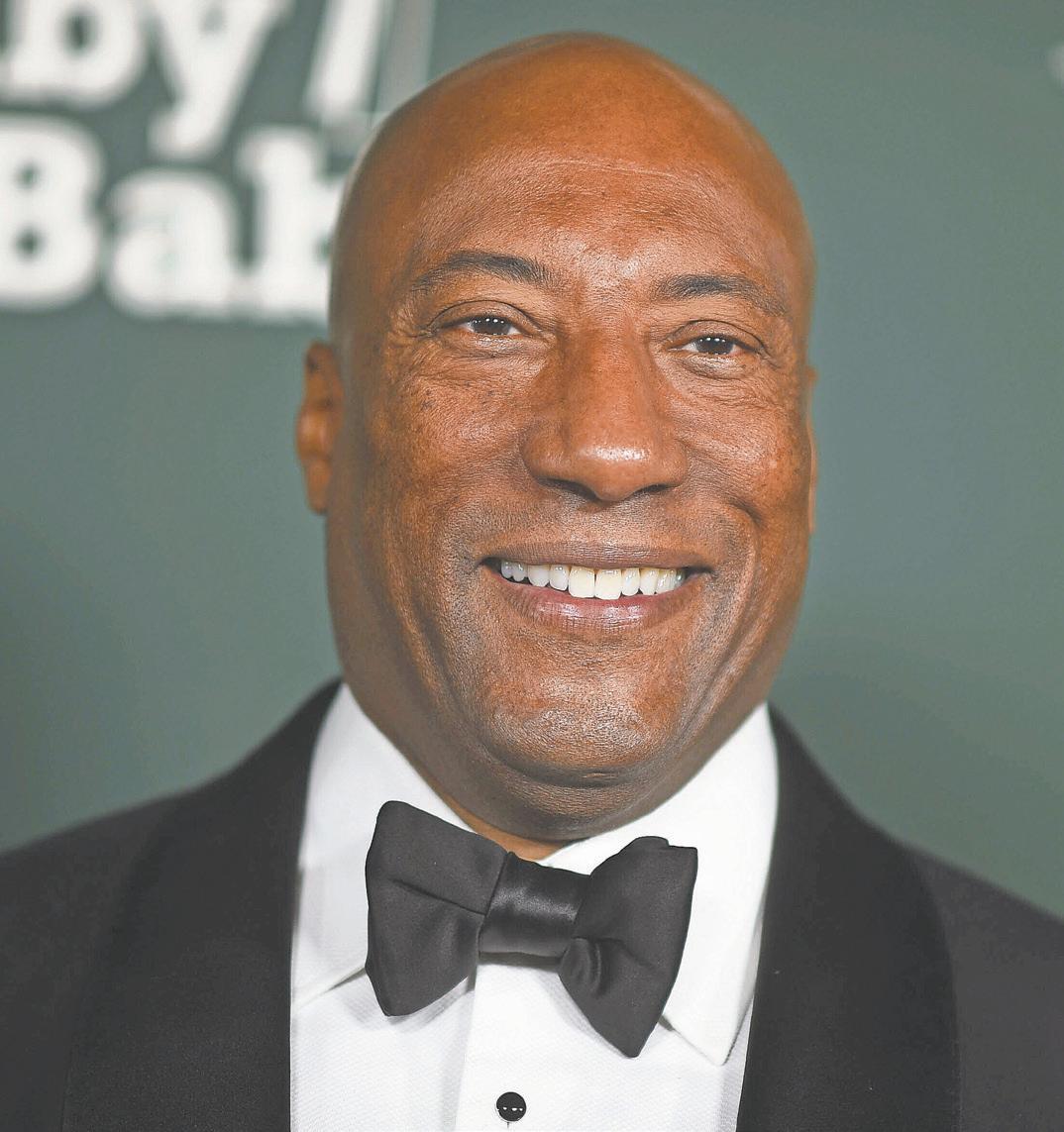
Media mogul Byron Allen has expanded his late-night television presence after CBS moved his comedy series, “Comics Unleashed with Byron Allen,” into the former “Late Show with Stephen Colbert” time period.
Allen’s show had already been airing on CBS before the network elevated it into the flagship late-night slot following the end of Colbert’s program, giving a Blackowned media company a higher-profile position within network television.
Allen, founder, chairman and CEO of Allen Media Group, has said he is not attempting to recreate Colbert’s politically driven style.
“I created and launched ‘Comics Unleashed’ 20 years ago so my fellow comedians could have a platform to do what we all love — make people laugh,” Allen said in CBS’ announcement.
Unlike traditional late-night talk shows built around celebrity interviews and political monologues, “Comics Unleashed” features comedians seated together sharing jokes, stories and observations about everyday life. Allen has also
said the program will focus on humor rather than politics.
The move comes during a period of major change for late-night television as networks grapple with declining ratings, rising production costs and growing competition from streaming platforms, podcasts and social media. Several reports have
described Allen’s arrangement with CBS as a lower-cost programming model for the network. For decades, Black entertainers have appeared on late-night television, but ownership and control of major media platforms have
AFRO
Photo courtesy of Bowie State
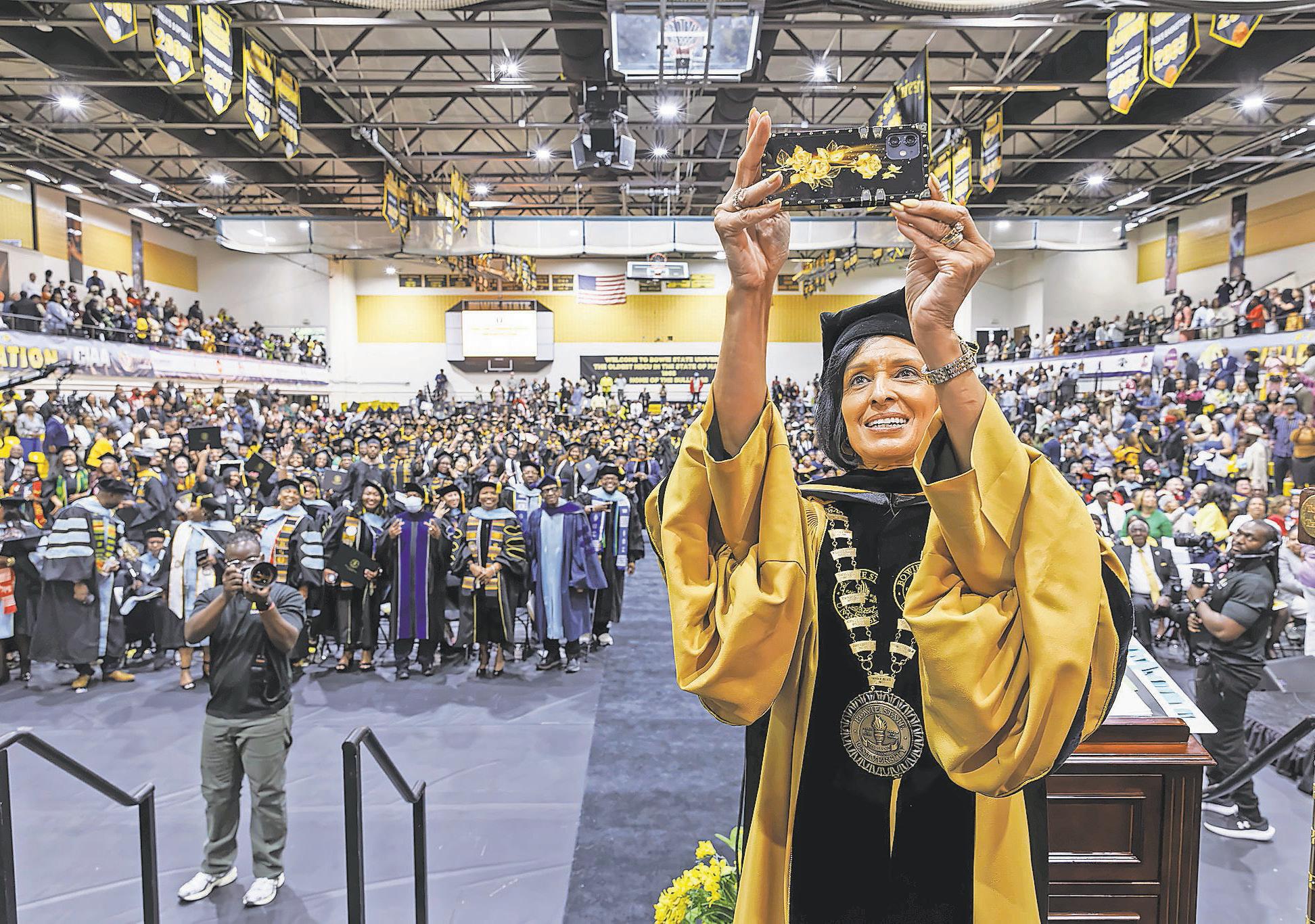
Thousands of Black students across Maryland are now degree holding scholars, putting Black excellence of full display this graduation season. Shown here, Dr. Aminta H. Breaux, president of Bowie State University, with members of the Class of 2026.
AP Photo/ Richard Shotwell
Media mogul Byron Allen is slated to bring his “Comics Unleashed with Byron Allen,” to CBS during time period for former “Late Show with Stephen Colbert.”

WHAT’S TRENDING ON AFRO.COM
Crystal R. Emery, director, author and advocate dies at 65
Filmmaker, disability rights leader, and comedian celebrated for a life’s work championing equity, STEM, and the power of the human spirit
By Cheryl Duncan and Company
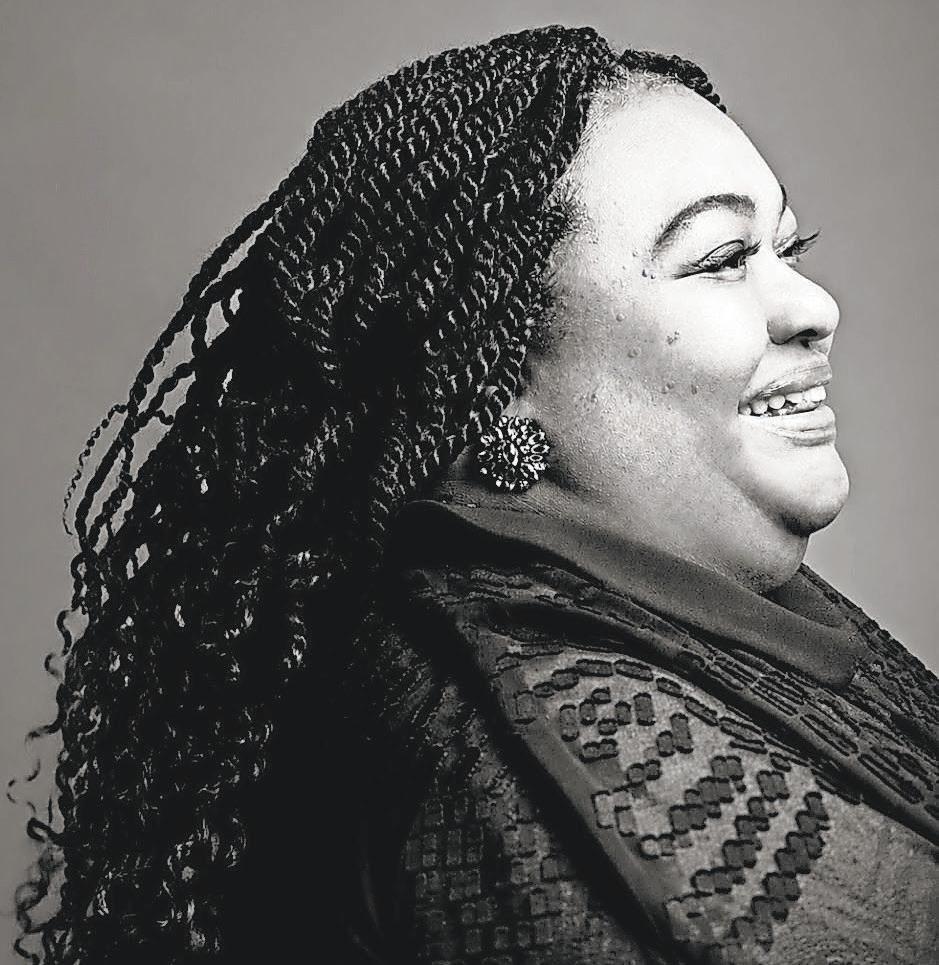
Crystal R. Emery, an award-winning producer, director, author and nationally recognized STEM and disability advocate whose work championed equity and inclusion across film, theater, publishing and education, died May 5. She was 65. Emery passed away at Yale New Haven Hospital, Saint Raphael Campus in New Haven, Conn., after a long series of illnesses.
A longtime resident of the New Haven area, she was the founder and chief executive officer of URU, The Right to Be, Inc., a New Haven–based 501(c) (3) content production company dedicated to addressing social issues through film, theater, publishing, educational media and other arts-based initiatives.
A graduate of the University of Connecticut, where she earned a bachelor’s of arts degree, and The New School for Public Engagement, where she received a master’s degree in media studies, Emery built a multifaceted career in theater and film. She apprenticed with the late Lloyd Richards, the renowned theater director of “The Piano Lesson,” and worked under the tutelage of award-winning film director Bill Duke (“A Rage in Harlem”).
As a filmmaker, Emery explored issues including race, diversity, equity, inclusion, social justice and STEM education. A member of the Producers Guild of America and New York Women in Film & Television, she directed “The Deadliest Disease inAmerica” and “Black Women in Medicine,” both of which aired nationally on public television. In 2016, “Black Women in Medicine” met all Academy of Motion Picture Arts and Sciences eligibility requirements for consideration in the Best Documentary Feature category and later screened internationally in Ethiopia and

Customer Service, Home Delivery and Subscriptions: 410-554-8200 customerservice@afro.com
Founded by John Henry Murphy Sr., August 13, 1892
Chairman of the Board/Publisher - Frances Murphy Draper
(Publisher Emeritus - John J. Oliver Jr.)
President - Benjamin Murphy Phillips IV VP of Marketing and Technology - Kevin E. Peck
Director Digital Solutions - Dana Peck
Receptionist - Wanda Pearson - 410-554-8200, ext. 246
Director of Operations
Andrè Draper - 410-554-8200
Director of Finance
Bonnie Deanes - 410-554-8242
Director of Sales
Robert Walker-Smith - 410-554-8200 rwalker-smith@afro.com
Editorial
Managing Editor - Alexis Taylor - 410-554-8257
Editorial Assistant - Ama Brown-Parson
Evening / Weekend Editor - Zenitha Prince
Archivist - Savannah Wood- 410-554-8277
Baltimore Circulation/Distribution Manager Andrè Draper - 410-554-8200
Creative Design and Content
Matthew McDonald
Washington Office 1140 3rd Street, N.E., 2nd Floor Washington, D.C. 20002-6723
202-332-0080 • Fax: 410-554-8213
(Washington Publisher Emerita - Frances L. Murphy II)
Director of Operations - Andrè Draper - 410-554-8200

Germany as part of the American Film Showcase, the U.S. State Department’s premier film diplomacy program. Emery also launched the national campaign “Changing the Face of Medicine” alongside former U.S. Surgeon General Dr. Joycelyn Elders to help increase the number of Black physicians in the United States. A subsequent initiative, “Changing the Face of STEM.” encouraged young people to pursue careers in science, technology, engineering and mathematics. For this work, Emery was named an AAAS IF/THEN® Ambassador by the American Association for the Advancement of Science, and her likeness was among 120 life-size 3D-printed statues featured in the Smithsonian Institution’s 2019 exhibition “#IfThenSheCan–The Exhibit.” Aligned with that mission, she created the virtual-reality game “You Can’t Be What You Can’t See,” allowing young people to explore STEM careers through an immersive experience. Among her many honors were Good Housekeeping’s “50 Over 50: Women Who Are Changing the World,” the Congressional Black Caucus Health Brain Trust Award in Journalism and recognition as
a Rebecca Minkoff Superwoman in 2018. She also received an honorary doctor of letters degree from the University of Connecticut.
Emery was the author of numerous works, including “Against All Odds: Celebrating Black Women in Medicine;” “Master Builders of the Modern World: Reimagining the Face of STEM;” the children’s book series “Little Man;” and her 2025 debut novel “Without A Trace.” Her writing appeared in national outlets including TIME, Variety, Ms. and HuffPost. She was also the author of “Stat!: An Action Plan for Replacing the Broken System of Recruitment and Retention of Underrepresented Minorities in Medicine with a New Paradigm,” published by the National Academy of Medicine.
A sought-after speaker, Emery delivered keynote addresses for organizations, including the National Security Agency, the National Institutes of Health, the National Organization on Disability, and RespectAbility.
In 2018, she made history as the first Black woman commencement speaker for the University of Connecticut’s College of Liberal Arts and Sciences.
In 2025, Emery embarked on a career in stand-up comedy.
She appeared on shows hosted by comedians Michelle Buteau and D.L. Hughley, performed across the East Coast as well as a solo show in New Haven later that year.
A quadriplegic who lived with multiple chronic illnesses, including Charcot-Marie-Tooth disease, Emery consistently rejected limitations imposed by circumstance. Her life and work stood as a testament to resilience, creativity and the triumph of the human spirit. A memorial service celebrating the life and legacy of Crystal Emery will be held on Sunday, June 14 at 2:00 p.m. at Lost in New Haven, 80 Hamilton St., New Haven, CT 06511.
Federal court blocks Alabama plan for new congressional districts that could help Republicans
Federal judges on May 26 blocked Alabama’s plan to use a congressional map that could give Republicans an advantage in a key U.S. House race in the midterm elections.
A three-judge panel in the state’s long-running redistricting case issued a preliminary injunction that prevents the state from switching maps, ruling that the Republican-backed plan “intentionally discriminated based on race” by including only one Black-majority district. The judges instead required Alabama to continue using a court-ordered map in place for the 2024 elections that includes two districts where Black residents compose a majority or close to it.
“Ultimately, we cannot see our way clear to requiring Alabamians to cast their votes in the 2026 elections under a districting plan tainted by intentional race-based discrimination,” the judges wrote.
The ruling is a setback for Republicans, who want to use a map for the November midterms that would give the GOP a chance to reclaim the seat now held by Democratic U.S. Rep. Shomari Figures.
Alabama Attorney General Steve Marshall, a Republican, said the state will immediately appeal to the U.S. Supreme Court. He contended the judges had no basis for their decision to block what he described as a “blandly unobjectionable congressional map.”
“Know this — in my mind, it is not a matter of whether we win this case, only when,” Marshall said.
Figures said he is pleased with the ruling, adding: “This is a significant step in the right direction, but there is
still a long way to go before this fight is settled.”
The court order is the latest development in the twisting legal and political saga following a U.S. Supreme Court ruling that struck down a Black-majority district in Louisiana and weakened the federal Voting Rights Act. That ruling has led Republicans in several Southern states, including Alabama, to take steps to reshape voting districts with large minority populations that have elected Democrats.
The redistricting frenzy is part of a broader push by President Donald Trump to try to hold on to Republicans’ slim House majority in the November elections.
Alabama court fight stretches back several years
The three-judge panel in 2023 ruled that a map drawn by Republican state lawmakers intentionally diluted the voting power of Black citizens. The court said the state, which is about 27 percent
Black, should have two districts where Black voters are the majority or close to it. The court-selected map was used in 2024.
After the Supreme Court’s recent ruling in the Louisiana case, Alabama officials moved to implement the 2023 statedrawn map. The Supreme Court’s conservative majority agreed to lift the injunction that had blocked the map’s use and sent the case back to the three-judge panel for reconsideration in light of the Louisiana ruling.
In the meantime, voters cast ballots in Alabama’s May 11 primaries, and Republican Gov. Kay Ivey set new special primaries for Aug. 11 in four congressional districts affected by the map switch.
Upon further review, the judicial panel said there was “undisputed evidence” of intentional racial discrimination. It said the special congressional primaries should instead proceed under the previous court-approved districts.
The decision to temporarily
block the map switch came after a seven-hour hearing on May 22 in which judges sharply questioned state lawyers about the timeline and the impact of the Louisiana ruling.
Using the same districts that had been in place for the previous election would prevent “an expensive, aggressive and perhaps logistically impossible voter reassignment effort,” the judges wrote.
“Candidate and voter confusion is troublesome and warrants significant consideration, but we do not see that a preliminary injunction will worsen it. To the contrary, we expect a preliminary injunction to lessen it,” the judges said.
Deuel Ross, director of litigation for the NAACP Legal Defense Fund, said the court ruling “again vindicated the constitutional rights of voters in the Black Belt, and our clients look forward to voting under a fair map this fall.”
Photo courtesy of Taea Thale
Crystal R. Emery, award-winning filmmaker, author and STEM advocate, dedicated her career to advancing equity in medicine, science and the arts through documentaries, public speaking and nonprofit leadership.
By Kim Chandler and David A. Lieb
AP Photo/Kim Chandler
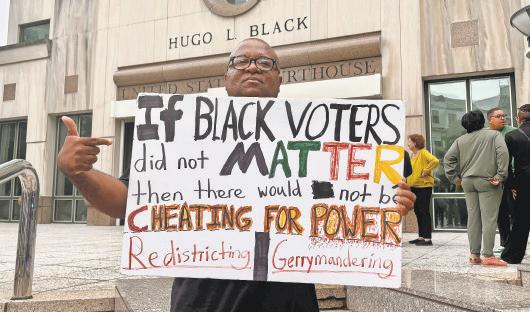
Travis Jackson stands outside the federal courthouse on Friday, May 22, 2026, in Birmingham, Ala. after a court hearing related to redistricting litigation.
Nearly a decade later,
Mason “Deon” Gomez is still missing
By Victoria Mejicanos AFRO Staff Writer vmejicanos@afro.com
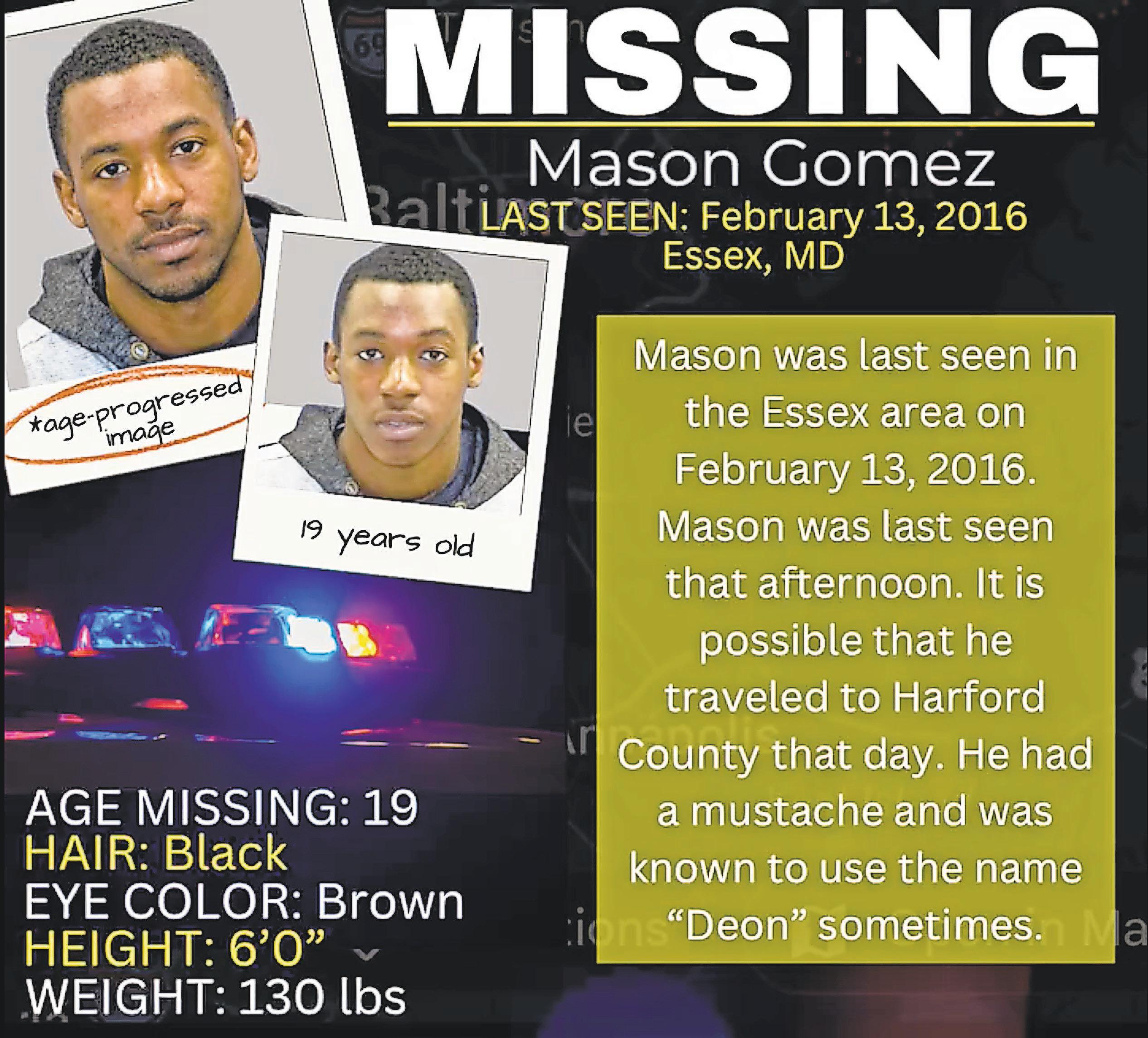
It has been a decade now and Mason Gomez, who went missing in February 2016 at the age of 19, has yet to be found.
Public information about his case is relatively unchanged, and Baltimore County Police confirmed in multiple emails to the AFRO that his case remains open.
“The case is still open and Mason Gomez is still missing,” said Cpl. Jasmine Fleet in a statement. “Multiple check-ins with the family occurred since he was reported missing and there were no updates.”
The AFRO was not able to reach the family in time for publication.
According to publicly available information online through the Baltimore County Police Department, Gomez was last seen by “associates” in the Essex area, along the Eastern Avenue corridor. It is possible that
he traveled to Harford County on the day that he went missing. It is also noted that he sometimes used the name “Deon.”
Gomez is described as a Black man, measuring 6 feet tall and weighing approximately 130 pounds with brown eyes and black hair. He had a mustache at the time of his disappearance.
In an interview with ABC WMAR in the months after his disappearance, his mother, Aretha Grinage said there was no reason he would leave willingly.
His girlfriend at the time, Carly Seibl had been dating Gomez for six years, and they shared a 9-monthold daughter. Seibl described him as “caring” and “very lovable.”
Anyone with additional information is encouraged to call the Baltimore County Police department at 410-307-2020. Residents can also text “TIPS” to: (274637). Those who do text must start their text with “MCS.”
Juneteenth
Continued from A1
educating communities and ensuring future generations understand the complexity, diversity and richness of the American story.
The recognition comes during a particularly meaningful season. Juneteenth commemorates the delayed announcement of freedom to enslaved African Americans in Texas in 1865 and has evolved into a national observance celebrating liberation, resilience, truth-telling and continued progress.
For AFRO News, this year’s “Stewards of Legacy” theme reflects the continuing importance of protecting historical narratives and supporting institutions that preserve stories which might otherwise be lost, overlooked or erased.
“For generations, these institutions have helped safeguard stories that might otherwise be forgotten, overlooked or erased,” said Frances “Toni” Draper, CEO and Publisher of AFRO News. “We must continue supporting the organizations that preserve truth, protect memory and help tell the full American story.”
According to Draper, the breakfast is intended not only to recognize the institutions
themselves, but also to encourage the public to engage more deeply with museums, archives and cultural organizations that serve as custodians of history and culture.
The breakfast’s special guest speaker will be Savannah Wood, executive director of Afro Charities.
Several honorees expressed appreciation for the recognition and the opportunity to participate in the Juneteenth observance.
“This is a true honor! Thank you, and I look forward to the occasion,” said Chanel Compton-Johnson, executive director of the Banneker-Douglass-Tubman Museum.
“We are truly honored to be recognized at the Juneteenth Breakfast,” said Lisa Mitchell-Sennaar, advisor to the Lillie Carroll Jackson Civil Rights Museum.
“Again, thank you and I am truly honored,” said Corey Lewis, assistant deputy state archivist for the Maryland State Archives.
The event will take place at the Baltimore Museum of Industry, and free, easily accessible parking will be available onsite.
Tickets are $100. Advance registration is required and limited seating is available.
Tickets may be purchased at afrotix.live.
Byron Allen
Continued from A1
remained concentrated among large corporations. Allen’s expanded role increases Black ownership visibility within mainstream media.
Allen’s media holdings include television stations, The Weather Channel and TheGrio, the Black-owned news and culture platform acquired by Allen Media Group in 2016.
Born in Detroit and raised in Los Angeles, Allen began performing stand-up comedy as a teenager before becoming one of the youngest comedians to appear on “The Tonight Show Starring Johnny Carson.” He later built one
of the nation’s largest Black-owned media companies.
Allen has also challenged major corporations over advertising equity and Black media ownership. In 2021, Allen Media Group sued McDonald’s for $10 billion, alleging racial discrimination in the company’s advertising practices toward Black-owned media. McDonald’s denied wrongdoing, and the case was later settled.
Those legal battles have placed Allen at the center of broader conversations about advertising equity, Black media ownership and who profits from Black audiences and culture.

Facebook / Baltimore County Police Department
Pictured is Mason “Deon” Gomez at the time of his disappearance and an age progression photo of what he may look like today. Gomez went missing a decade ago.
Courtesy photo
A total of nine institutions will be honored at the AFRO’s Juneteenth breakfast, including The National Great Blacks in Wax Museum. Shown here, figures included in the collection: AFRO Founder John Henry Murphy Sr. (left); Vashti Turley Murphy, a member of the AFRO’s founding family and a co-founder of Delta Sigma Theta Sorority Inc., and Alexandre Dumas (right), the great writer known for penning “The Count of Monte Cristo” and “The Three Musketeers.”
COMMENTARY
Whose pain counts?
violence matters. Prevention matters. Context matters.
The most dangerous bias in the media today is not necessarily partisan bias. Most Americans already expect that.
Conservatives expect liberal slants. Progressives expect conservative framing. We have almost become numb to ideological spin.
What is far more troubling is a different kind of bias: the quiet, subtle, deeply ingrained bias that determines whose pain matters most.
Two recent stories brought that reality into sharp focus.
In San Diego, three innocent people were murdered in a shooting carried out by teenagers at a mosque. Yet much of the national coverage quickly pivoted toward understanding the perpetrators — their backgrounds, mental health struggles, online radicalization, family dynamics and warning signs.
Certainly, understanding
But somewhere in the coverage, the victims began to disappear.
Three human beings lost their lives. Families were shattered. Worshippers watched their sacred space become a crime scene. Yet too much of the storytelling centered on the shooters rather than the people whose lives were stolen.
Why does that happen so often?
Why do some victims become secondary characters in their own tragedy?
The second example is global but equally revealing.
The Ebola outbreak now spreading through the Democratic Republic of Congo and Uganda has already killed scores of Africans and infected hundreds more. The World Health Organization has declared it a global public health emergency.
And yet many American headlines intensified only after
reports emerged that an American citizen had contracted the disease.
To be clear: every life matters, including that American life.
But so do the Ugandan nurses. The Congolese families. The African health workers risking death daily. The children orphaned before Western audiences began paying close attention.
If dozens of Africans die before America notices, what does that say about whose suffering the world has been conditioned to value?
This pattern is not new.
When missing persons cases involve attractive young White women, coverage often becomes relentless and wall-to-wall. Missing Black children and women frequently receive only a fraction of the
attention — a disparity so well documented it has its own name: “Missing White Woman Syndrome.”
When wars erupt in Europe, coverage often emphasizes civilization under attack. Conflicts in Africa or parts of the Middle East are too often framed as perpetual instability, almost expected.
When addiction devastated predominantly White rural communities, media narratives shifted toward public health and compassion. During earlier urban crack epidemics that ravaged Black communities, the dominant framing was crime, punishment and incarceration.
The question is not whether journalists care. Many do.
The question is whether newsrooms fully recognize the unconscious hierarchy that can shape storytelling.
Whose humanity gets centered?
Whose background gets explored with empathy?
Whose trauma becomes personalized?
Whose deaths become
statistics?
Media framing matters because it shapes public compassion. Compassion influences policy. Policy influences resources, funding, policing, healthcare, and ultimately survival itself.
The press does more than report reality. It signals value.
This is precisely why diverse ownership and diverse newsrooms matter. Communities that tell their own stories are far more likely to fully humanize the people inside those stories.
For 133 years, the AFRO has believed that every community deserves not merely coverage, but dignity.
The challenge before American journalism is not simply to report faster or louder. It is to report more fairly — with equal humanity.
Because the measure of ethical journalism is not how deeply we understand perpetrators or how urgently we protect people who look like us.
It is whether we can fully see the humanity of people the world too often overlooks.
For such a time as this: Black church gardens are evolving
As a preacher, there are moments in my sermons when I ask people to give an enthused “Amen!”
I have had my share of Sunday mornings when my parishioners needed a cue to get excited. Sometimes, we must help people recognize what’s a big deal.
Now is one of those moments.
The Black Church Food Security Network just signed a 10-year memorandum of understanding with Baltimore’s New Creation Christian Church. We are partnering to develop their land and maximize its impact to further food security in our community. Not only is this an exciting development for us, but it is an exciting moment for Black churches everywhere; it signals an important pivot where congregations are increasingly ready to make their assets available for the common good.
New Creation Christian Church acknowledged that they weren’t getting the most out of their land. For more than a decade they’ve had a garden largely run by volunteer members of the church, but it has never reached its full potential. The garden has never been deeply integrated into their ministry or the food ecosystem of their neighborhood. They recognized that while they had a vision, they did not have the resources, staff or systems to bring
it to pass. This kind of awareness makes the difference.
Where they have land, we have resources and the structure to work it efficiently. We have hired growers who will lead the cultivation, and soon we will organize door-to-door in the neighborhood as an integral component of this new initiative. We’ll invest tens of thousands of dollars in the church’s agricultural infrastructure (water, electrical, fencing, etc.), expand their growing space and ensure that the harvest from the garden provides fresh produce (not just canned goods) to their food distribution ministry.
Our decade-long partnership is the launching pad for a chapter of clarity, strategy and collaboration among Black churches. This will only grow in scale — New Creation’s willingness to make their assets available to outside expertise with resources should inspire other churches to do the same. That is something to celebrate.
We need more congregations to conduct very honest assessments regarding not only the political, social and economic disruptions that our people are facing, but also where their internal wherewithal to meet this moment falls short. There is nothing wrong with Black churches saying, “We can’t do it all” or “We don’t have what is needed to fulfill this vision alone.”
The sooner that more churches can bravely come to that conclusion, the sooner we can work together to address the food apartheid plaguing our communities.
It is important for Black churches to be transparent about their limitations when recognizing food insecurity at a community level. The devastating food insecurity-related outcomes that we’re experiencing is based on a racist food system that we all are currently subjected to. We cannot overcome this well-funded, efficient, staffed, national system with church volunteer food programs. It takes a system to fight a system. We cannot overcome this problem in silos and without infrastructure, expertise or resources.
In this time where the African-American community is under political assault, it’s more critical than ever to collaborate, as more people are experiencing economic hardship and food insecurity. As there is no end in sight to remedy high food and gas prices, we cannot respond with business as usual. We must meet the urgency of this moment and local partnerships can prevent further destabilization.
The Black Church Food Security Network is always conducting real-time assessments and evaluating how we can best unlock more of the potential of African-American congregations. Our latest pilot initiative in
partnership with New Creation Christian Church reflects that commitment. We need more congregations to follow in the footsteps of New Creation Christian Church and consider opportunities for collaboration. The success of these efforts is dependent on the willingness of Black churches to make brave and timely decisions regarding their assets (land, kitchens, classrooms, etc.) while strategically sharing skills and resources. We cannot do it
alone; it takes all of us. We are called to be stewards of the Earth — to be fruitful and multiply its goodness. With our land serving as sites of freedom, we can expand our gardens, scale deep and systematize the ways that we can be blessings to our community. If we are aware and honest with ourselves, Black churches can be the institutional catalyst that helps Black America to flourish.
The legal mistakes that can sink a promising business
By Kisha A. Brown
I had a friend who asked me to join him in building his business. I suggested we create an agreement outlining the terms and specifying my role and responsibilities. He dragged his feet and never responded with details. Things were going well until they didn’t. When we had a disagreement it shattered our business and personal relationship. I knew better. It happens to the best of us and this is why it’s so critical to formalize arrangements when money is moving and decisions are being made. It’s not about whether you trust someone or trying to avoid the discomfort of a hard conversation, it’s about ensuring that the small stuff doesn’t break down the bigger vision. And there will always be
small stuff.
When good deals go bad it’s usually because of one of three things:
1. The agreements weren’t structured properly. Every contract you sign is written for the benefit of the person or company who gave it to you. It doesn’t mean it’s a bad contract or that they have malicious intent. It means that the contract wasn’t written from your perspective and could be extremely one-sided.
2. Assets aren’t protected. You built it but you didn’t capture the value of your curriculum/course/manuscript/report and now someone else has ownership rights to it. I’ve had to walk away from opportunities that required me to forego ownership over my content. Short-term money isn’t always worth losing long-term rights.
3. Obligations aren’t clearly defined. Everyone was on the same page when things were going good but the minute conflict arose the rose-colored glasses came off and no one could see who was supposed to do what. When each party’s expectations are in alignment with their roles and responsibilities, things run smoother.
One of my most consistent advice to business owners is to get legal clarity regarding their business affairs. Let me be clear: if you’re in business, you have legal matters before you –whether you recognize them or not. Having a lawyer walk through your good deals before they go bad is what keeps you from going under when the small stuff hits—as it always does.
Courtesy photo
A graduate of Georgetown University Law Center and Wellesley College, Kisha A. Brown, was the first woman to lead the Baltimore City Civil Rights Office. This week, she explains how trust is important in business, but legal clarity is what protects partnerships when challenges and conflict arise.
By Dr. Frances “Toni” Draper
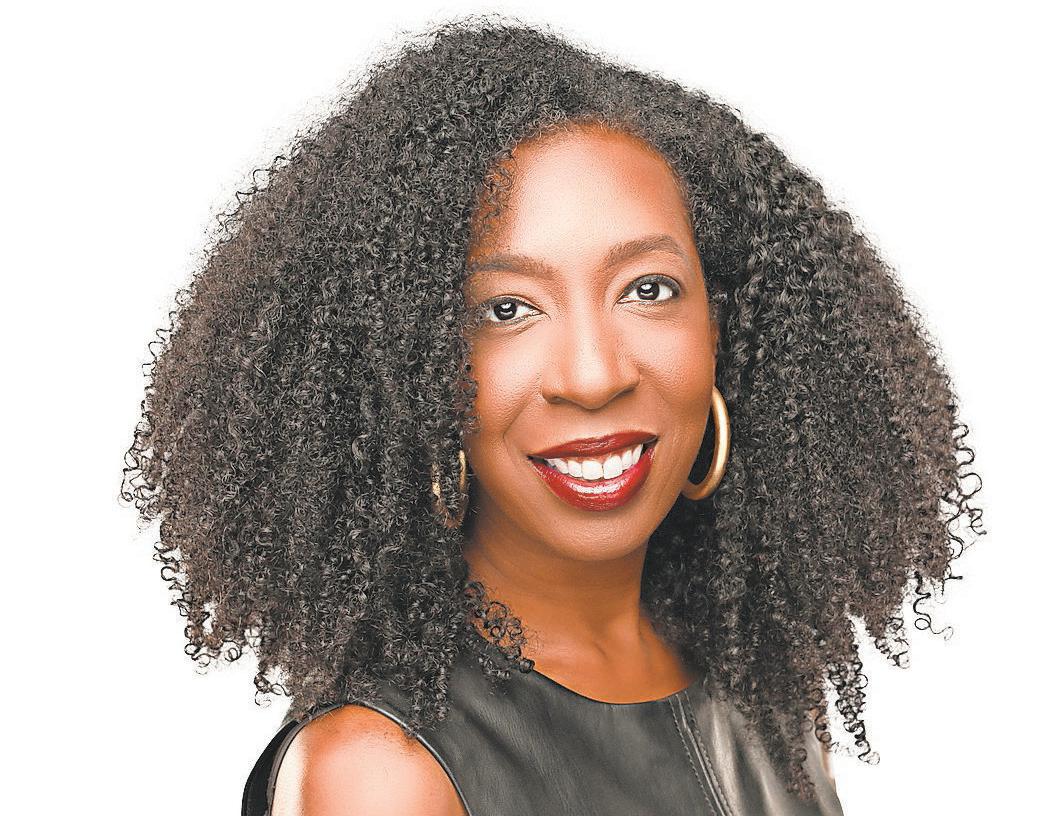
Photo courtesy of John Hopkins University / Will Kirk AFRO Publisher Dr. Frances “Toni” Draper argues that the most troubling bias in journalism is not political but the unequal value placed on human suffering.
By Rev. Dr. Heber Brown III
Courtesy photo
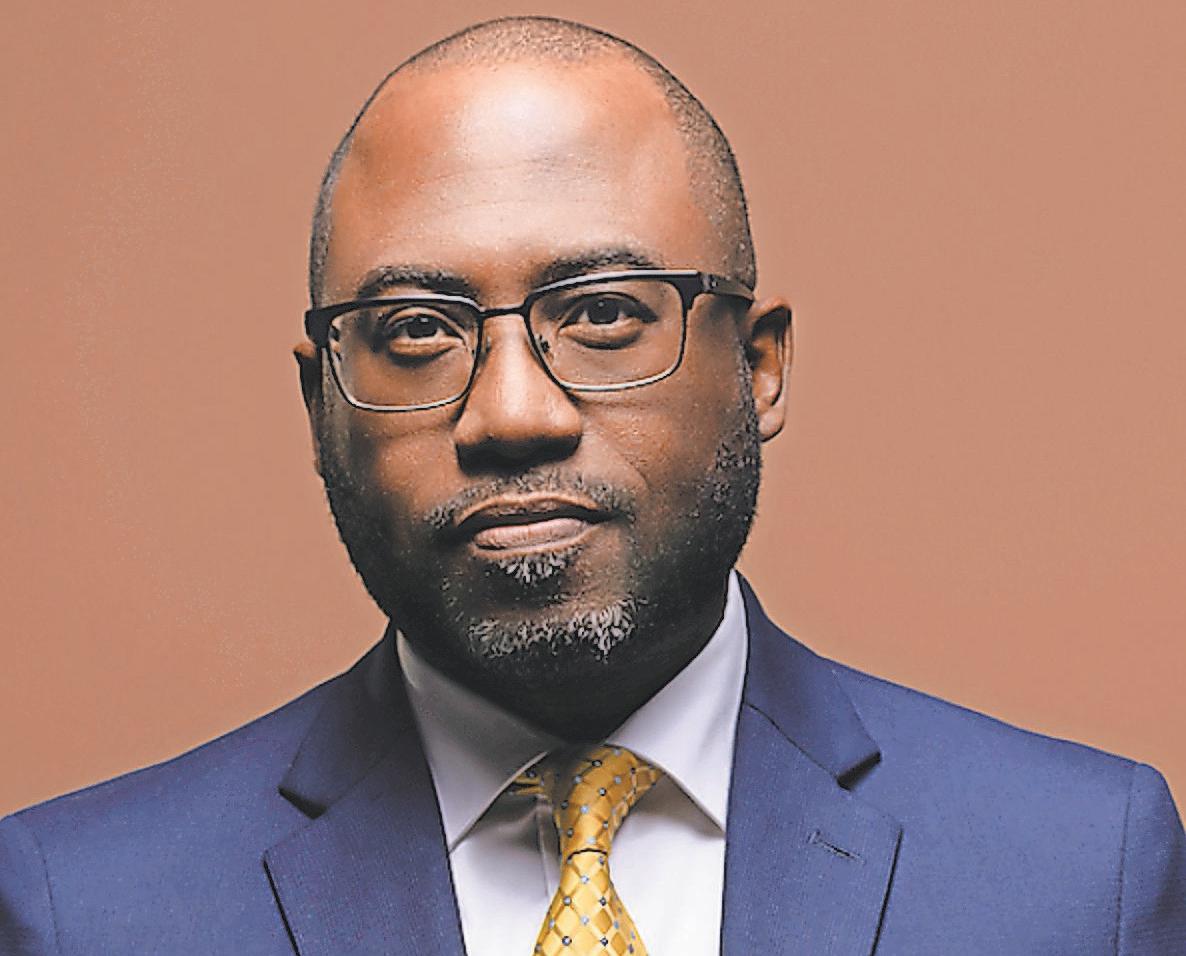
Rev. Dr. Heber Brown III is founder and executive director of the Black Church Food Security Network. This week, he speaks to efforts being made by the church to care for the community.
Graduation
Continued from A1
to grow UMES’ footprint in unique STEM programs and other distinct learning opportunities that fit well with Eastern Maryland’s needs.
With the close of the spring semester, faculty will spend the summer making final preparations for a new College of Veterinary Medicine (CVM) tentatively slated to start in fall 2026.
“We are now at the final milestone of what is needed for accreditation. We are the first veterinary medicine school in the state of Maryland,” said Anderson. “We are the first public HBCU that will have a veterinary medicine school. We partner with Tuskegee (a private HBCU).”
Under Anderson’s leadership, faculty are also working to restore accreditation to the physician assistant program, a profession especially needed in rural areas and sometimes in core urban areas, where shortages of licensed medical doctors are more prevalent. The school boasts a summer transportation institute for middle and high school students, introducing them to related majors they can pursue in college.
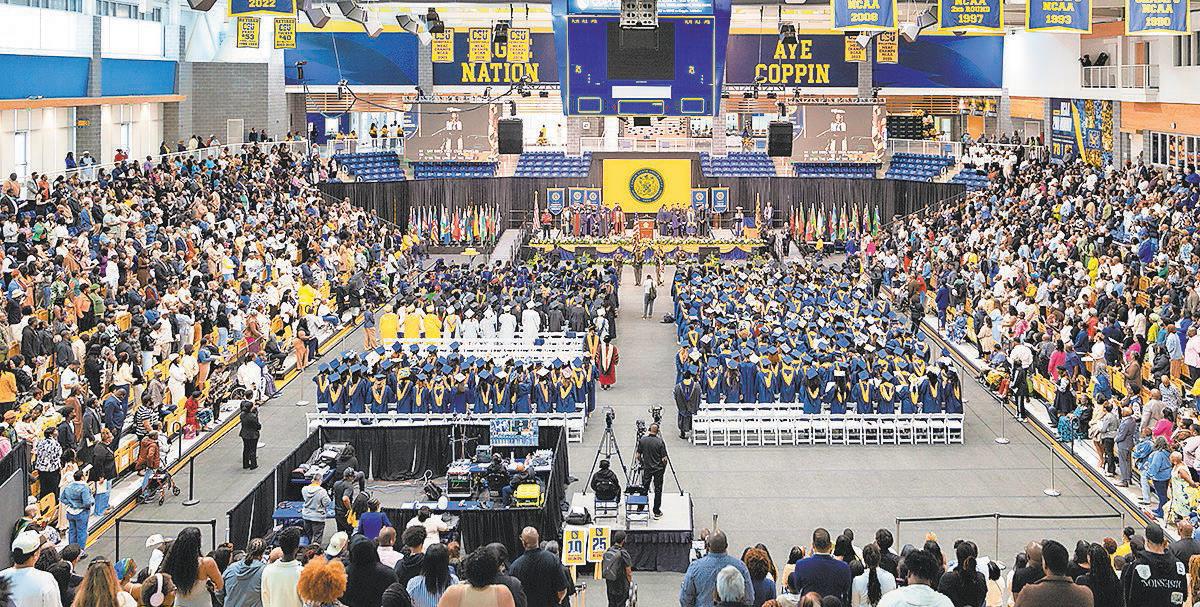
Michael Eric Dyson inspires Bowie State graduates as university marks record commencement Bowie State University graduates, their families, friends and BSU faculty and staff packed the school’s A.C. Jordan Arena on a rainy May 22 to celebrate 887 graduates: the largest graduating class in the school’s 161year history, according to university President Aminta Breaux.
The milestone achievement comes amid a tumultuous time in U.S. history, a time where African Americans – once again – are being targeted. However, Breaux challenged the graduates to rise to meet the moment.
“Change is not new to our community,” Breaux said in greeting the graduates. “African Americans have long led through moments of uncertainty and transformation.”
Breaux continued, quoting Dr. Martin Luther King Jr. and the late Congresswoman Shirley Chisholm, who refused to accept limitations, saying, “If they don’t give you a seat, bring a folding
chair.”
Michael Eric Dyson, Black studies scholar, author, social activist, ordained minister and Vanderbilt University distinguished professor, de-
affecting young Black
“You live in a generation where they’ve made ‘woke’ a bad word,” he said.
In his trademark style, Dyson urged graduates
“You got to stay WOKE. And for me WOKE is an acronym. And that first acronym is We Only Keep Excellence.”
– Michael Eric Dyson
livered the keynote address. And, he wasted no time in addressing one of the nation’s most divisive political issues
to reject pressures to dismiss “woke” as a negative label and instead redefine it through the discipline and
excellence they had gained through years of study.
“You got to stay woke. And for me WOKE is an acronym … We Only Keep Excellence,” he said.
Blending old-school and contemporary hip-hop and R&B lyrics with storytelling and cultural analysis, Dyson urged graduates and their families to remain vigilant in protecting their civil rights.
“You got to get up off of your couch, get up off of Twitter, get up off of Facebook and march your Black behind to the poll and pull that lever,” Dyson said, as the graduates roared in affirmation.
“It gave me hope for what I have to do next,” said Jason Johnson, a graduating psychology major from Bowie, Md. “It’s up to us as the next generation, so we needed to hear this. A lot of time, people pull the ladder out from under you instead of reaching out to help the next generation. This kind of message is inspirational.”
The graduating class included 31 doctoral students in education leadership and computer science after
Bowie State was formally granted designation as a research institution in 2025.
A posthumous doctorate was awarded to Clyde Doughty Jr., the university’s late vice president of Intercollegiate Athletics and Recreation, who died unexpectedly in February. His wife and two children accepted the honor at the May 22 ceremony.
Coppin Eagles take to the sky
“Go out into this world, and take up some space,” said U.S. Senator Angela Alsobrooks, as she addressed those gathered for Coppin State University’s (CSU) 126th commencement ceremony on May 22. “We need you in every room where power is assembled.”
A total of 339 degrees were conferred by the university this year, according to information released by CSU leadership. This included 291 bachelor’s degrees, 45 master’s degrees and 3 doctoral degrees.
“Today is a celebration of perseverance, purpose and possibility,” said Dr. Anthony Jenkins, in a press
release. “The Class of 2026 represents the very best of Coppin State University. Our graduates leave this institution prepared to lead, innovate, serve and make meaningful contributions to their communities and professions.”
In addition to honoring this year’s graduates, CSU also recognized the Golden Graduates of the Class of 1976, who walked the commencement stage 50 years ago.
Morgan State University celebrates largest graduation total in school history
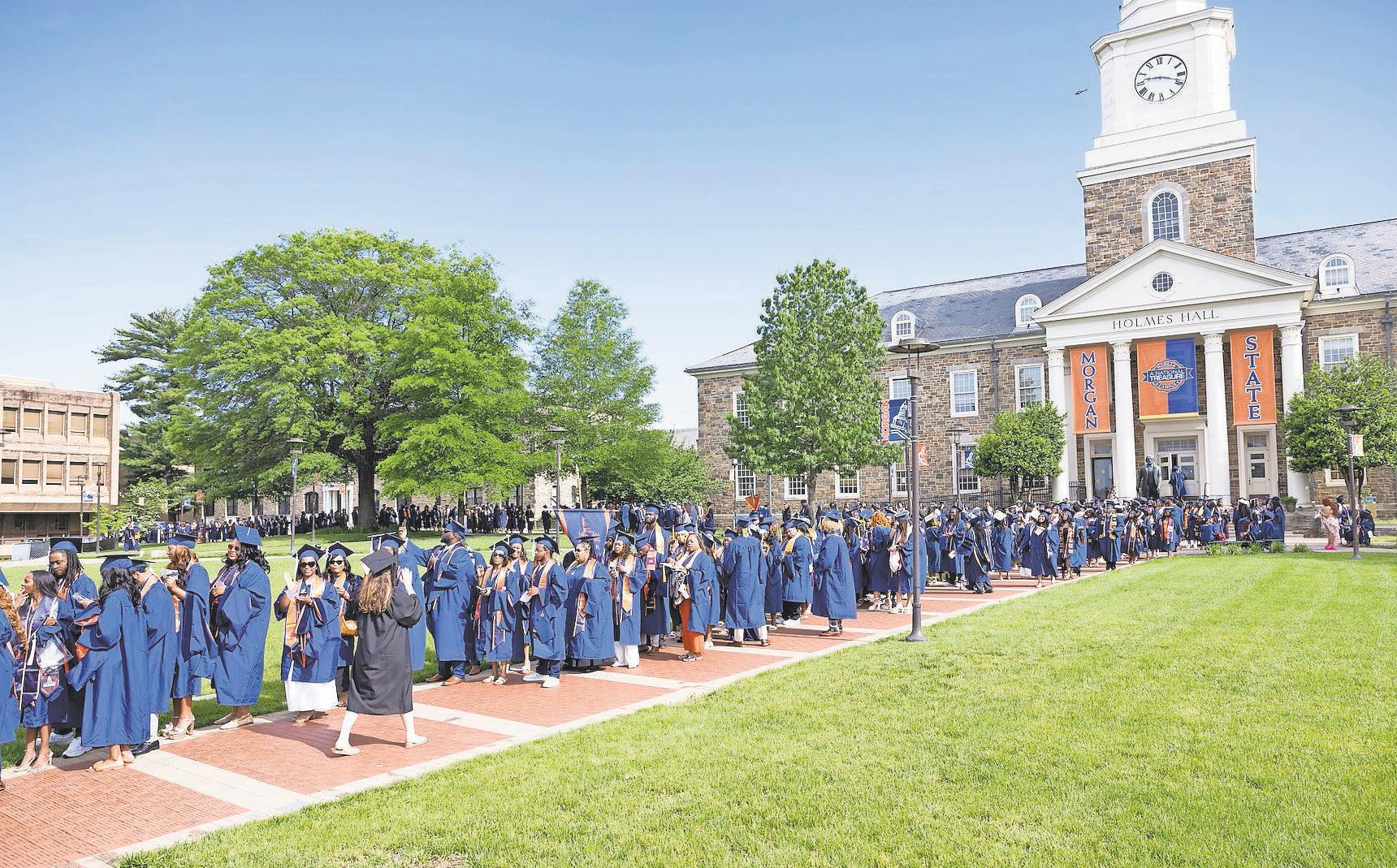
Morgan State University once again broke records in enrollment and degree conferrals. This school year was the fifth school year in a row for record breaking enrollment, which university leadership says is “now approaching 12,000 students.”
A total of 1,876 scholars earned their degree during the 2025-2026 school year with 1,268 graduates crossing the stage this spring. This marked a sharp uptick from the 946 graduates to walk the stage in 2010.
“This year’s degree production is a powerful indicator of Morgan’s trajectory,” said David K. Wilson, president of Morgan State University, in a press release. “It reflects the intentional work we have undertaken to grow enrollment, expand academic pathways, invest in our physical and research infrastructure and govern the institution with a future-focused strategy that keeps student success and public impact at the center of our mission.”
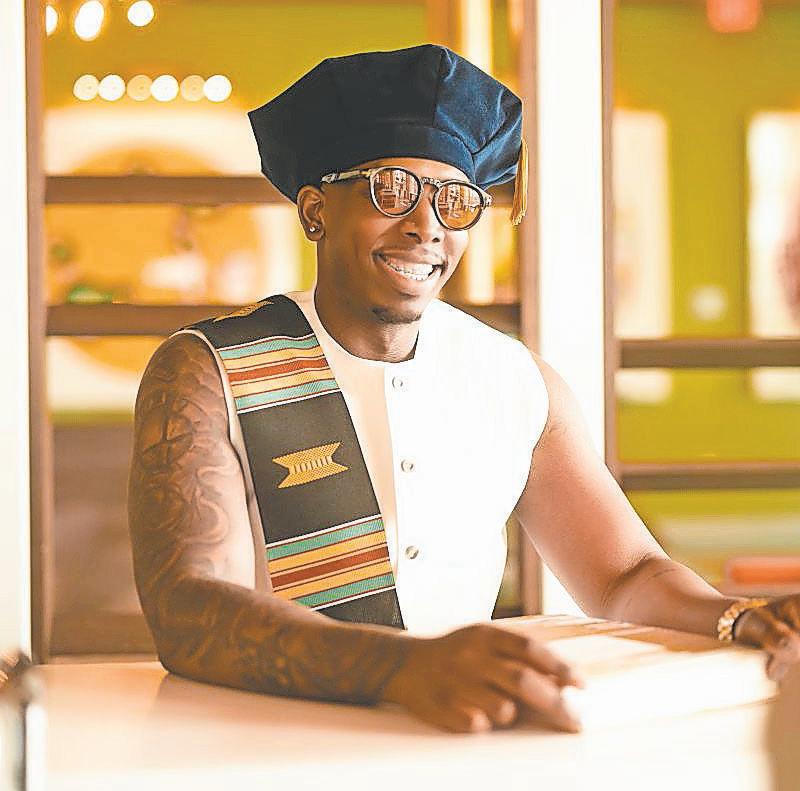
Dr. Jamal Percy was just one of 81 graduate students to don the mighty orange and blue and take to the commencement stage on May 14. At just 32 years old, the Columbia, South Carolina native is now a doctor of public health.
“I wanted to get all my degrees from HBCUs. They are very important to the community. I needed to get my degree from an institution where the students and the professors looked like me,” he told the AFRO. “Morgan has prepared me to deal with the world, professionally, academically and even personally.”
Now, Percy plans to start his own public health consulting business with a classmate. He has a goal of ensuring that “Baltimore has healthcare for all population needs.”
Percy said, as a child, he never imagined his new reality. Today, he has a message for all of the Black boys searching for a path to success:
“You can do anything. Create a plan. If you don’t know how to create a plan you can contact me,” he said. “I love helping people who look like me.”
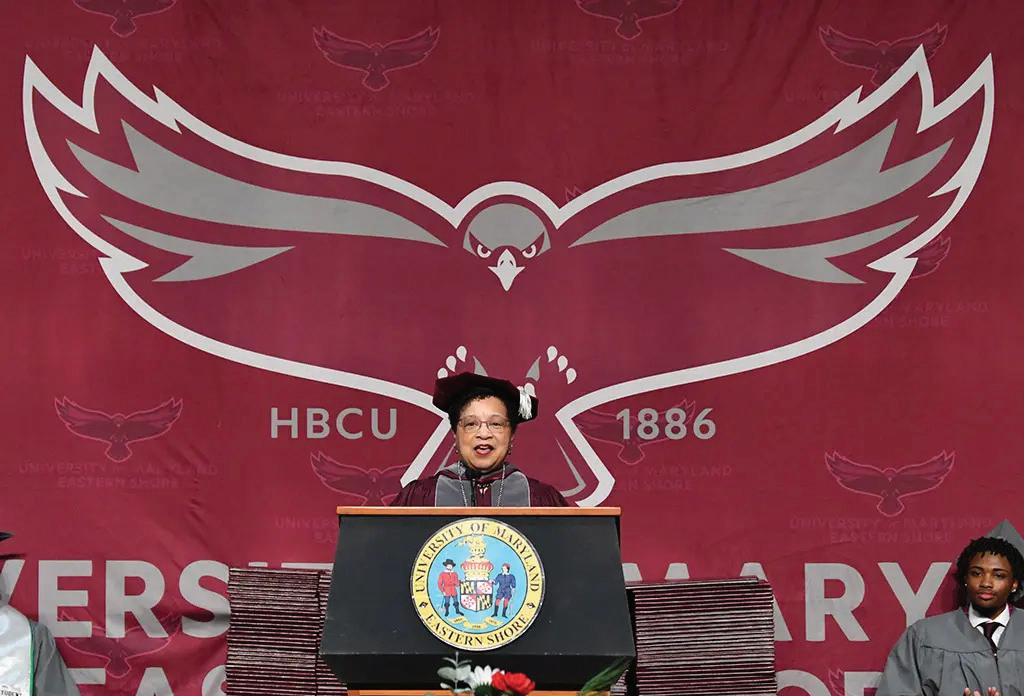
Photo courtesy of Morgan State University
Morgan State University’s graduating class of 2026.
Photo courtesy of Coppin State University
Coppin State University’s graduating class of 2026.
Photo courtesy of Dr. Jamal Percy / Kai Holmes
Dr. Jamal Percy is just one of 81 doctoral students to graduate from Morgan State University this spring. Dr. Percy, a South Carolina native, is now a doctor of public health.
Photo courtesy of Todd Dudek/UMES Ag Communication
Shown here, Dr. Heidi Anderson, president of University of Maryland Eastern Shore.

Six years after George Floyd’s death, a push for federal policing reform begins anew
By Ashlee Banks Special to the AFRO
Six years ago today, a cellphone video recorded on a Minneapolis street corner fundamentally shook the conscience of the nation.
May 25 marks the sixth anniversary of the murder of George Floyd, a 46-yearold Black man whose dying breaths under the knee of a White police officer ignited a global reckoning on racial injustice and police accountability. Today, while the streets that once filled with millions of protesters are quiet, the battle over Floyd’s legacy has firmly returned to the halls of Congress.
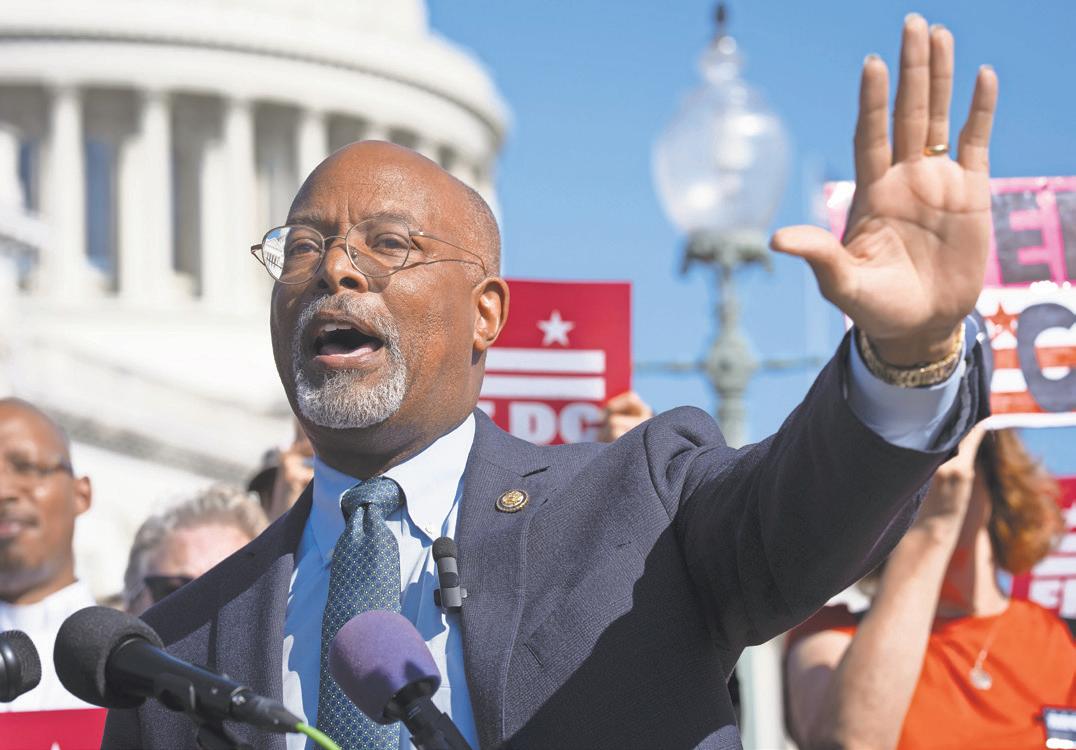
U.S. Rep. Glenn Ivey (DMd.-04), alongside members of the Congressional Black Caucus and Floyd’s family, is leading a renewed push to pass the George Floyd Justice in Policing Act, a comprehensive federal reform bill that previously stalled in the face of partisan gridlock.
Ivey told the AFRO that “it’s important for us to continue to
push the issue.”
“The George Floyd Act was important when it was introduced several years ago,” said the Maryland Democrat.
“What’s happening with ICE is a powerful reminder of the need to have these kinds of legal protections in place.”
On May 25, 2020, Minneapolis police officers responded to a call alleging that Floyd had used a counterfeit $20 bill at a local convenience store.
What followed was captured in agonizing detail by Darnella Frazier, a teenage bystander whose video footage went viral.
Officer Derek Chauvin pinned Floyd face-down on the asphalt, pressing his knee into Floyd’s neck for more than nine minutes. Despite Floyd’s repeated, desperate pleas – “I can’t breathe” – and the urging of horrified onlookers, the officers did not relent. Floyd was pronounced dead later that evening. The footage dismantled the initial, sanitized police press release that described Floyd as suffering “medical distress” during an arrest. Within days, cities across the globe erupted
AP Photo. Scott/Applewhite
U.S. Rep. Glenn Ivey, D-Md., has reintroduced the George Floyd Justice in Policing Act, a sweeping reform bill aimed at increasing police accountability, transparency, and community trust nearly five years after Floyd’s killing.
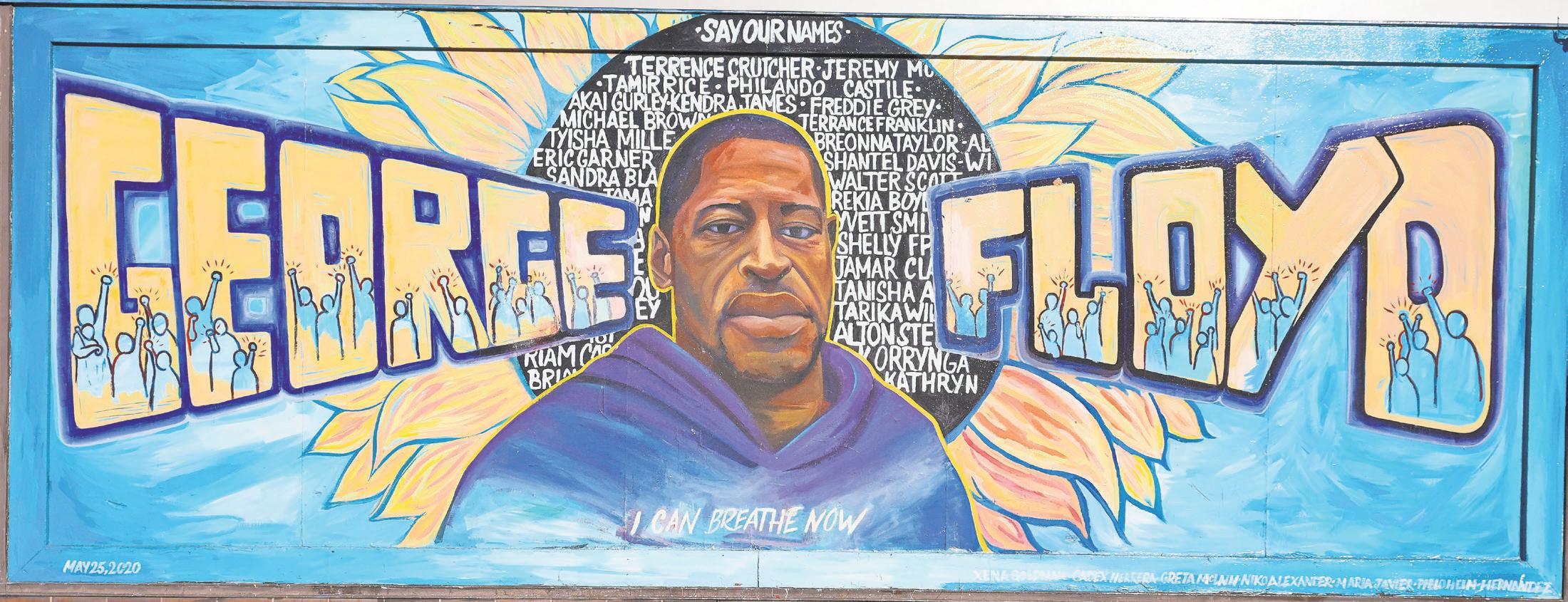
On the sixth anniversary of George Floyd’s death, federal lawmakers are resurrecting stalled police reform legislation to secure national accountability, even as past judicial convictions of the involved officers are viewed
as merely a first step toward true systemic justice.
in historic protests, demanding systemic changes to law enforcement culture.
In April 2021, Derek Chauvin was found guilty of state charges of second-degree unintentional murder, third-degree murder, and second-degree manslaughter, later receiving a 22.5-year state sentence. He also pleaded guilty to federal civil rights violations.
Three other officers at the scene, J. Alexander Kueng, Thomas Lane, and Tou Thao, were convicted in both federal and state courts for their roles in aiding and abetting the murder.
Minnesota Attorney General Keith Ellison led the charge for the convictions. He told the AFRO that contrary to what some may believe, he brought Chauvin to “accountability” not “justice.”
“Justice would be true restoration of constitutional democracy,” said Ellison. “What we have is one bad actor being brought to answer for their bad behavior. Their illegal, unconstitutional behavior.”
Following Floyd’s death, a wave of local policing reforms swept the nation as dozens of
states and municipalities instituted local bans on chokeholds, restricted no-knock warrants, and mandated the use of bodyworn cameras. Yet, civil rights advocates have long maintained that a patchwork of local ordinances is insufficient to cure what they describe as systemic flaws in American policing.
The legislative centerpiece of the movement, the George Floyd Justice in Policing Act, was designed to establish sweeping federal standards. The bill successfully passed the Democratic-controlled House of Representatives twice, once in 2020 and again in 2021. However, it repeatedly hit an immovable wall in the U.S. Senate.
Despite months of intense, bipartisan negotiations between U.S. Sen. Cory Booker (D-N.J.) and U.S. Sen. Tim Scott (R-S.C.), lawmakers ultimately failed to reach a compromise. The factions primarily clashed over provisions to alter qualified immunity, the legal doctrine that heavily shields individual officers from civil lawsuits. For years, the federal legislative response languished, reduced to an executive order
signed by President Biden in 2022 that applied primarily to federal law enforcement agencies rather than state and local departments.
With the arrival of the sixth anniversary, Rep. Ivey, a former federal prosecutor, leads the vanguard trying to revive the stalled legislation.
“We’re going to keep fighting until we get it,” Ivey told the AFRO
The reintroduced bill aims to establish a new national framework for transparency and accountability through several key mechanisms.
First, it amends the federal mens rea standard for prosecuting police misconduct, shifting the requirement from proving “willfulness” to proving “recklessness.” It also alters the strict protections of qualified immunity to ensure individuals can seek civil justice when their constitutional rights are violated.
Furthermore, the legislation creates a national police misconduct registry to track officers with histories of misconduct, preventing them from simply switching jurisdictions to avoid accountability.
Ellison told the AFRO that the legislation will “improve policing, build trust between police and community, and ultimately result in safer communities.”
“If we didn’t have bad actors on the police force like in the case of Tamir Rice and Sonya Massey … it could go a long way toward restoring order and collaboration between police and community,” said the attorney general. On a tactical level, the act mandates nationwide bans on chokeholds, carotid holds, and no-knock warrants in federal drug cases. Finally, the bill increases data transparency by requiring state and local law enforcement agencies to report disaggregated data on use-offorce incidents, categorized by race, sex, disability and age. As Congress gavels back into session, Ivey faces the same steep, uphill legislative climb that thwarted his predecessors. But for the advocates, lawmakers, and family members gathering to honor Floyd’s memory today, the introduction of the bill serves as a firm reminder that the mandate of May 25, 2020, remains unfulfilled.
Facing 17 years in prison and pregnant, NJ Congresswoman LaMonica McIver fights federal charges tied to ICE oversight visit
U.S. Rep. LaMonica McIver (D-N.J.-10) is scheduled to appear before the Third Circuit Court of Appeals on June 23, 2026, to appeal a federal judge’s refusal to dismiss criminal charges against her.
The case follows a May 2025 incident at Delaney Hall, an immigration detention center in Newark, where the Department of Justice alleges McIver “forcibly impeded and interfered” with federal officers during an oversight visit.
The legal proceedings coincide with McIver’s announcement that she is 17 weeks pregnant with her second child. She faces up to 17 years behind bars if convicted. In a statement following her pregnancy announcement, McIver noted that the case will not deter her from her official duties or her personal life.
“I will keep fighting against the administration’s cruel agenda and for a better world,” wrote the Democratic lawmaker. “That’s what moms do for our babies, and it is what I have always done for my community.”
U.S. Rep. Gabe Amo (D-R.I.-01) told the AFRO that the charges against the congresswoman are “beyond ridiculous.”
“She was merely exercising her
role, responsibility and duty of presenting congressional oversight,”
said Amo. “Once again, we see one of my Black women colleagues addressed by this administration, addressed by our system with the type of inequity that they have historically faced and I find unacceptable.”
Meanwhile, U.S. Rep. Byron Donalds (R-Fla.-19) told the AFRO that the validity of the charges remains a matter for the judiciary.
“It’s up to the court of law to decide [her fate],” said the Republican lawmaker. “We’ll see what happens.”
McIver has maintained her innocence, saying her actions were part of her constitutional oversight responsibilities. In recent statements and media profiles, she has claimed a lack of institutional support from the Democratic Party throughout the legal process. According to McIver, national party organizations, including the Democratic National Committee (DNC) and the Democratic Congressional Campaign Committee (DCCC) did not have a system in place to assist a member of Congress facing criminal charges for work-related activities.
Rep. Amo said this is why he and many of his Democratic colleagues have “rallied” around the congresswoman.
“It’s important that we make sure
to protect ‘a fighter for justice,’ that we have in LaMonica McIver.”
House ethics rules prohibit members of Congress from accepting pro bono legal services for such cases. Consequently, McIver is responsible for legal fees that are expected to exceed $1 million.
Despite the legal and personal pressure, McIver has continued her legislative work for New Jersey’s 10th District. In February, she announced the securing of over $10 million in federal Community Project Funding for her district, including $1.6 million for fire department equipment and $1 million for youth innovation programs.
we provide her with all of the support that she needs at this juncture,” said the Rhode Island lawmaker. “We’ll
have to ultimately win at the ballot box for the long term but, in the short term we have to do everything we can
The upcoming appeal will focus on the Speech or Debate Clause found in Article I, Section 6, Clause 1 of the U.S. Constitution. The statute shields lawmakers from prosecution for legislative acts. The charges, filed by then-interim U.S. Attorney Alina Habba, represent a rare effort to prosecute a sitting member for conduct during an oversight visit. The Third Circuit’s decision will determine if the case proceeds to trial or if the indictment is dismissed, a ruling that will shape both McIver’s political future and the legal protections afforded to members of Congress performing oversight of the executive branch.
AP Photo/Brandon
by prosecutors
By Ashlee Banks Special to the AFRO
AP Photo / Tom Brenner A
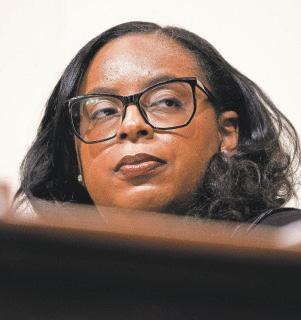
New Jersey lawmaker is heading to a federal appeals court this June to fight criminal charges from a 2025 detention center clash, mounting a million-dollar defense that could alter the legal protections of congressional oversight.
WASHINGTON AREA
Theaters and thespians from the D.C. region honored at the 42nd Annual Helen Hayes Awards
for “Fremont Ave.,” and “Bad Books,” respectively.
Theatre Washington honored the region’s stellar theater community during the 42nd Annual Helen Hayes Awards, held at The Anthem on the District Wharf on May 18.
This year’s ceremony, hosted by actors Felicia Curry and Derrick Truby, and actor/director Holly Twyford, included performances from the Helen Hayes Awards Ensemble that illustrated the creativity of the local theater community.
The most-awarded productions of the evening included “Damn Yankees” from Arena Stage with eight honors, followed by “The Inheritance: Parts One and Two” from Round House Theatre, and “Professor Woland’s Black Magic Rock Show” from Spooky Action Theater, each with five honors. Both Arena Stage and Round House Theatre picked up an additional award
Amy Austin, president and CEO of Theatre Washington, an alliance that promotes an environment of creative and diverse regional theaters, said with a tradition that spans 42 years of recognizing the best in the industry, those who win or are nominated for an award consider it among the highlights of their career.
“Many people who live in the D.C. area may be unfamiliar with the Helen Hayes Awards, unless they’re part of the theater community,” Austin said.
“But for us, it represents a major accomplishment – it means you’ve been recognized by your peers which is something that doesn’t come easy in this profession.”
“While we may not have the glitz and glamour of Broadway in New York City, Washington, D.C., has a proud legacy of its own within the theater world. Arena Stage has been here for over 75 years – even before The
Kennedy Center. And rather than yield to the discriminatory practices prevalent in the 1950s when it opened, Arena Stage, under the direction of its first artistic director and co-founder, Zelda Fichandler, bears the distinction of being the first racially integrated theater in Washington, D.C.,” Austin continued. “There’s something for everyone on the stages in this region – from Shakespeare’s ‘Merry Wives’ being set in the Caribbean to works being done in both Spanish and English.”
Native Washingtonian Ashleigh King, who served as co-director and choreographer for the awards, said this year’s theme, “Make a Scene,” speaks to the power of words which in a city like D.C., often have life or death implications.
“Through the words delivered by the actors, staged theatrical performances remind us of the transformative power of empathy and often share portraits
Advocates warn of funding gap between DCPS and charter schools in FY27 budget
By Megan Sayles AFRO Staff Writer msayles@afro.com
Education advocates are warning against funding gaps for the District’s nearly 48,000 public charter school students, as the budget cycle for Fiscal Year 2027 continues.
Though the D.C. Council recently approved recommendations targeted at making funding more equitable between the public charter sector and D.C. Public Schools (DCPS), the DC Charter School Alliance—the leading advocacy organization for District public charter schools—is sounding the alarm on a roughly $1,850 per-pupil gap between public charter and DCPS students under the mayor’s proposed spending plan.
In D.C., all public schools are supposed to be funded through the Uniform Per
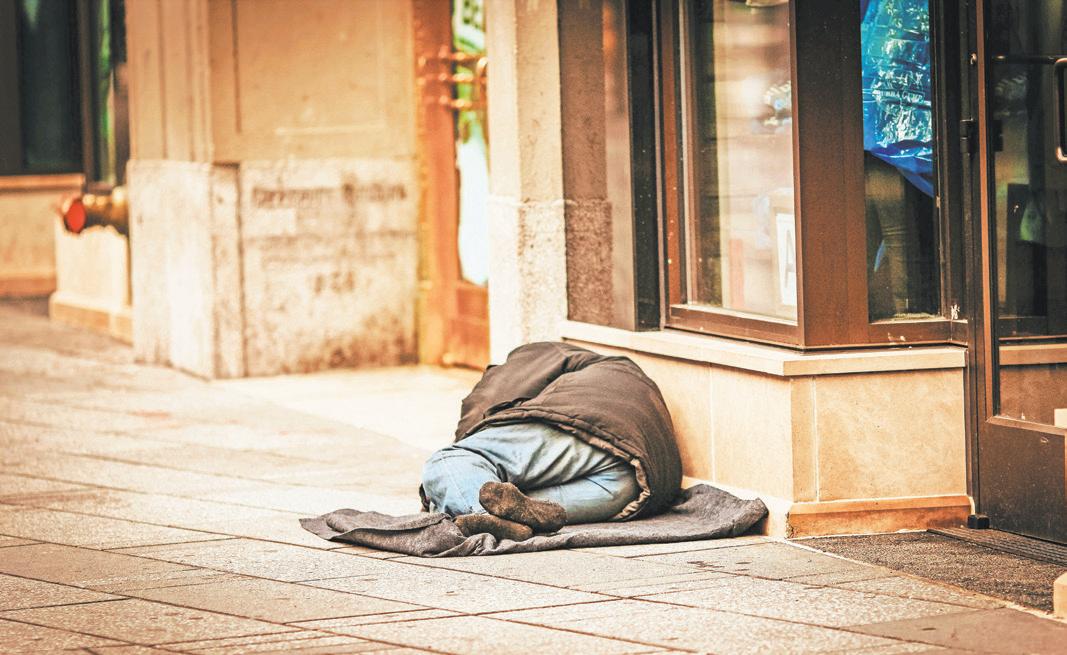
Newly released data from the District’s 2026 point-intime count shows an overall 4.4 percent increase in homelessness when compared to the count taken in 2025.
2026 D.C. homelessness count highlights District’s housing challenges
By Tashi McQueen AFRO Staff Writer tmcqueen@afro.com
Mayor Muriel Bowser (D) and the District’s Department of Human Services (DHS) on May 12, unveiled the results of the 2026 Point-InTime (PIT) Count, the annual census of people experiencing homelessness.
This year’s PIT took place on Feb. 4, and showed an overall 4.4 percent increase from 2025. Homelessness for unaccompanied individuals and transition age youth (18-24) remained relatively flat year-over-year, up 0.3 percent and down 0.7 percent, respectively, and homelessness amid families increased 15.8 percent.
Despite the increase from 2025 to 2026, family homelessness is down 35.5 percent from 2020, and dropped 54.8 percent from 2015.
The count looked different this year, due to the inclement weather experienced earlier in the year, when the PIT Count takes place.
According to information released by the D.C. Mayor’s Office, “Due to this past winter’s snow emergency, the street canvassing portion of the PIT Count focused
on individuals experiencing unsheltered homelessness had to be limited to certain areas and to key staff from provider organizations. However, the District was able to produce an estimated citywide count using information gathered the night of the PIT Count and the next morning at meal programs and drop-in centers, and by employing a predictive model that used PIT data dating back to 2020.”
DHS Director A.D. Rachel Pierre spoke on what is being done to address family homelessness in the District of Columbia in a statement.
“We have implemented a more targeted approach that matches each family with a tailored housing resource— which can take longer—and at the same time increased our focus on prevention and diversion programs, like HPP and D.C. Flex, which have reduced inflows into our family homeless system,” said Pierre. Pre-pandemic and prior to the mayor’s Homeward D.C. plan, homelessness continues to notably trend down. In general, homelessness is down 16 percent compared to 2020, the last PIT Count recorded before COVID-19, and decreased 26.5 percent compared to 2015.
Student Funding Formula (UPSFF), a system created in 1995 to ensure traditional and public charter schools receive the same level of funding. Under the UPSFF rules, a school receives a set amount of funding for each student enrolled. The base amount per student is the same regardless of which neighborhood the school is in or where the student lives.
“Our students need more than policy statements calling for equitable funding. They need action.”
– Ariel Johnson, Executive Director of the DC Charter School Alliance
Under Mayor Muriel Bowser’s budget, that base amount for each student would increase by 2.55 percent, from $15,070 to $15,455 per student, for both charter school students and those enrolled
in DCPS. But Bowser’s proposed budget also allocates $25.5 million outside of the standard funding formula for IMPACTplus bonuses, specifically aimed at DCPS teachers who are evaluated as highly effective. Additionally, the mayor has proposed changing the agency responsible for covering electricity costs from DCPS. In the past, DCPS has historically paid its own electricity bill. Now, Mayor Bowser is proposing that DCPS electricity costs be deducted from the budget of the Department of General Services (DGS). While charter schools
would have to cover costs such as teacher bonuses and electricity out of the pot of money they receive based on student enrollment, DCPS would have additional resources to cover teacher bonuses and certain operating costs. In turn, this means DCPS students essentially have more funding because teacher bonuses and other bills would not come out of the funds allotted per student.
“We see progress in the report, but the council still has a choice to ensure that D.C.’s 48,000-plus public charter
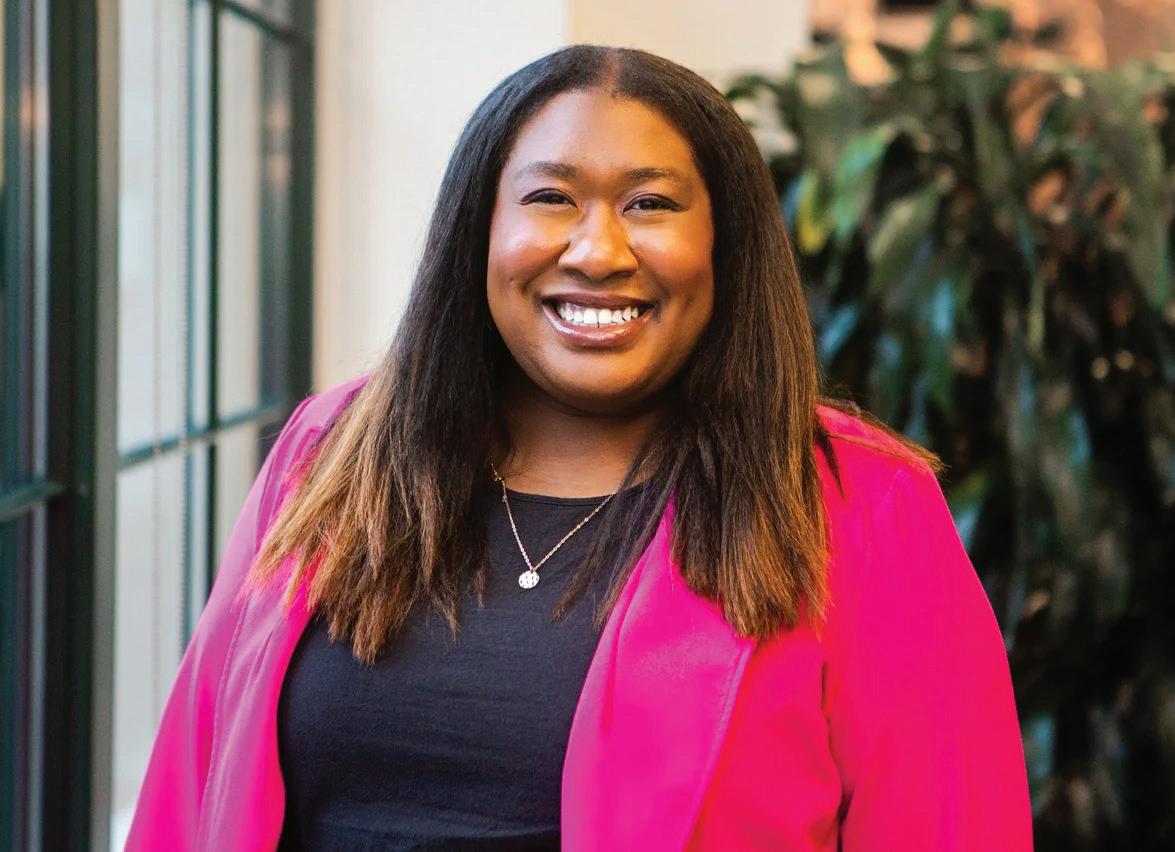

Unsplash / Jon Tyson
Photo courtesy of DC Charter School Alliance Ariel Johnson serves as the executive director of the DC Charter School Alliance. The organization has been advocating for more equitable funding for public charter school students in the District, who currently face a $1,850 per-pupil gap compared to their D.C. Public Schools (DCPS) counterparts.
By D. Kevin McNeir Special to The AFRO
Photo Courtesy Nina Palazzolo
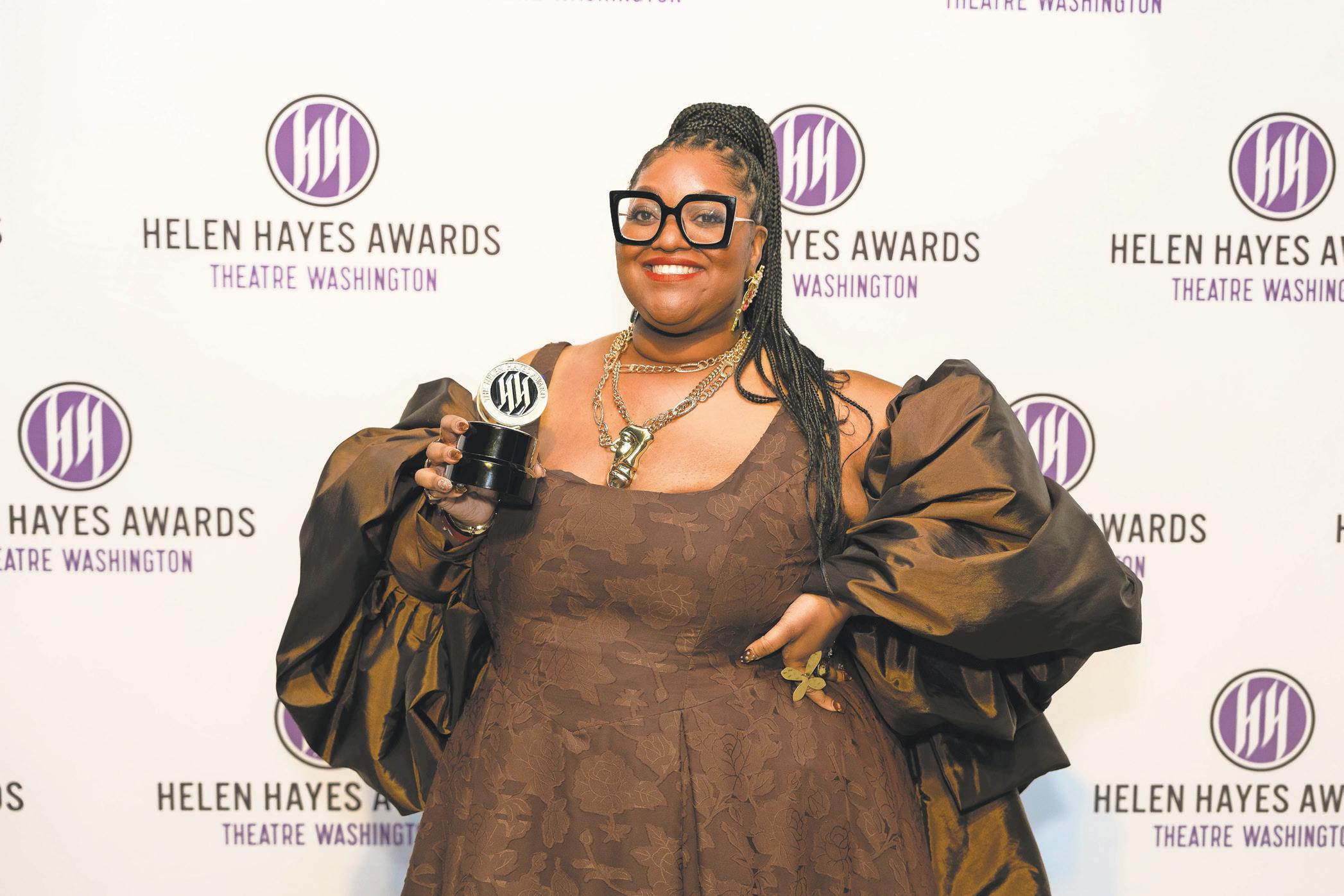
Paris Francesca, a multi-time nominee, wins her first Helen Hayes Award for Outstanding Costume Design for her work on “Not Your Mother’s Goose!” at Adventure Theatre MTC, a children’s theater founded in 1951 in Glen Echo, Md. Francesca was honored during the 42nd annual awards ceremony on May 18, sponsored by Theatre Washington, at The Anthem on the District Wharf.
Caesar Rodney statue sparks controversy over legacy of slavery
By Victoria Mejicanos AFRO Staff Writer vmejicanos@afro.com
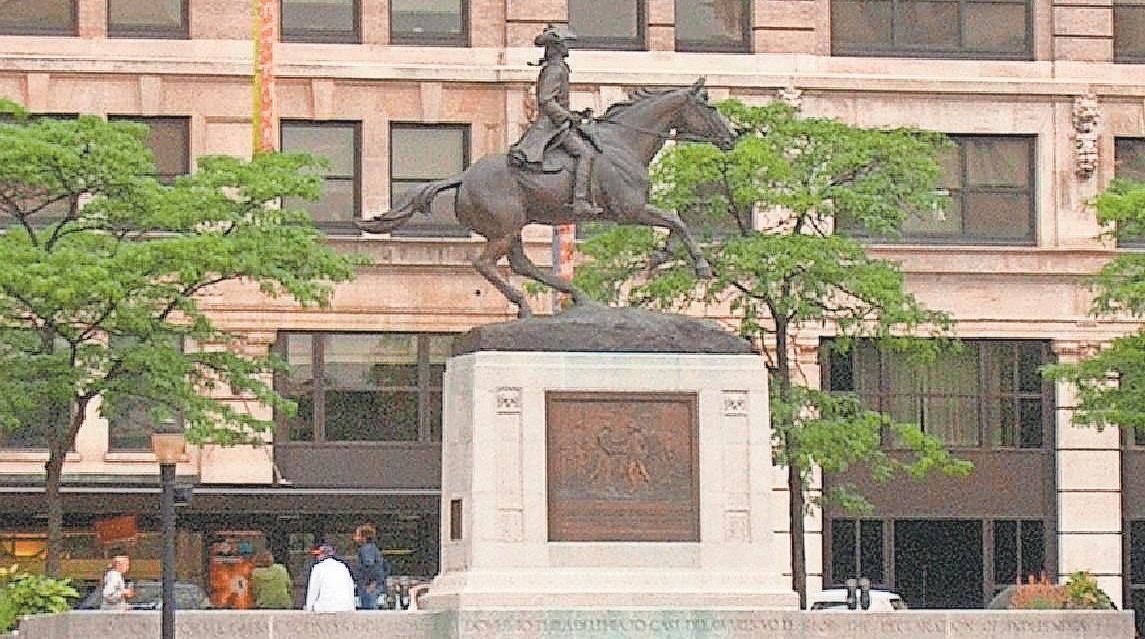
In celebration of the country’s 250th anniversary on July 4, the National Park Service has installed new statues in Washington, D.C.’s Freedom Plaza. But one statue in particular, the statue that honors Caesar Rodney, is causing controversy.
According to information released by the National Park Service (NPS), Caesar Rodney was a “colonial leader, military officer, and public servant.” He was a leader during the American Revolution and in 1778, made
Bystander in serious condition after fatal shooting near White House checkpoint
By Sarah Raza
A bystander who was struck by gunfire after a man fired on a checkpoint outside the White House and was fatally shot by U.S. Secret Service officers remained in serious but stable condition May 24.
The Secret Service said the bystander, who has not been identified, suffered a gunshot wound described as not life-threatening. It was not clear how he was shot. Authorities have released few additional details about the early Saturday evening shooting. The District of Columbia Metropolitan Police Department said the suspect, identified as 21-year-old Nasire Best, started shooting toward a White House security checkpoint when Secret Service officers returned fire. Best, of Dundalk, Md., was later pronounced dead at a hospital.
No officers were injured, Secret Service Director Sean Curran said in a statement posted on social media.
“Our thoughts are also with the innocent bystander who was wounded during this incident,” Curran said. “The Secret Service is hopeful he will make a full recovery.”
President Donald Trump was in the White House at the
time of the shooting. It was the third shooting near the president in the past month, after a man stormed the White House Correspondents’ Association Dinner in April armed with guns and knives, and Secret Service officers shot and wounded a man who fired at them earlier this month near the Washington Monument. In a Truth Social post,
Trump said the suspect in the shooting had a “possible obsession with our Country’s most cherished structure.”
He also used the shooting to promote the ballroom he is seeking to build on the site of the White House’s former East Wing, saying the shooting “goes to show how important it is, for all future Presidents, to get, what will be, the most safe and secure
space of its kind ever built in Washington, D.C.”
Trump is asking Congress for $1 billion for security additions for the White House campus, including the ballroom.
Best had a previous run-in with law enforcement near the White House, according to District of Columbia court records. He was arrested last July for attempting to enter White House grounds
Funding Gap Awards
Continued from A7
students, who are predominantly Black and Brown and come from families who are furthest from opportunity, are equitably supported by the city they call home—or continue down the mayor’s proposed budget path for shortchanging their education funding and their futures,” said Ariel Johnson, executive director of the DC Charter School Alliance, in a May 22 release.
The gap also extends to school facilities funding.
The mayor’s budget includes $555.9 million for building modernizations and upgrades at D.C. Public Schools, while public charter schools— which do not receive cityowned school buildings and instead must fund their own facilities— would receive $187.3 million through the per-pupil facilities allotment. That allotment is intended to increase by 3.1 percent annually to help cover rising costs, but the increase has been paused for a second consecutive year.
D.C. Council Chairman Phil Mendelson spoke on the issue during a May 22 Committee of the Whole meeting.
“Teacher bonuses at DCPS are funded … that’s $25 million. With this year’s budget, the mayor has taken all of the maintenance costs that DCPS has paid for decades and has moved it outside the formula to DGS. That’s about $60 million,” said Mendelson.
“We’re not going to be able to reverse that $85 million, so we’re not going nearly as far as the charter sector would like.”
During the Committee of the Whole meeting, council members recommended gradually redirecting DCPS IMPACTplus bonuses to the UPSFF and rejected the mayor’s proposed extension of the pause on the 3.1 percent charter facilities allotment increase to fiscal year 2031—instead recommending that the original freeze period through fiscal year 2029 is maintained.
Council members also supported a one-time investment of $2.7 million for St. Coletta of Greater Washington, a public charter school that serves 270 intensive special education students, to address its budget deficit.
“I appreciate the committee’s approach to charter school funding, especially
striking the mayor’s proposed out-year reductions to the charter school facility allowance,” said Ward 4 Councilwoman Janeese Lewis George, during the Committee of the Whole meeting.
“I know there are real and ongoing questions about how we balance funding across sectors, and I continue to believe we need transparency, accountability and responsible planning from every school that receives public dollars.”
While the DC Charter Alliance recognizes that the District is facing a challenging fiscal landscape, the organization continues to call on leaders to close the funding divide between public charter schools and DCPS.
“Our students need more than policy statements calling for equitable funding. They need action,” said Johnson. “We need public charter school families, students, staff and advocates to continue calling, emailing and tagging councilmembers on social media to remind them that public charter school students are not worth less than their DCPS peers, and we need our lawmakers to listen.”
a name for himself as the “president” of Delaware, the state in which he was born.
Though the Delaware Public Archives currently describe Rodney as “one of Delaware’s most distinguished statesmen,” others disagree. Rodney may have been a man of influence, but he took no issue with owning human beings and forcing them into America’s brutal system of chattel slavery.
A statue of Rodney, which used to be in Delaware, was taken down in 2020 following the death of George Floyd. Now, it’s installed in the nation’s capital.
Continued from A7
of cultures different from one’s own,” King said. “The theaters in the region are among the most diverse in the country with some working with huge budgets and others with more limited funds producing works from church basements. But none of them are afraid to take risks and they’re willing to make bold statements.”
“For two hours, a room full of strangers hear stories, listen to those around them react with laughter and applause, and are touched by human experiences that they may not have felt for a while or ever. But they feel them,” Kind added. “And while change may not happen overnight, those feelings people experienced during a performance go with them as they move forward in their own lives.”
Austin agreed and said this year’s ceremony and chosen theme showcase “the essential role of theater in today’s world as both an art form and a platform for conversation, change, and reflection.”
The Helen Hayes Awards honored work presented during the 2025 calendar year from 149 eligible productions,
“Let’s analyze something here...these are things that actually make people feel American? They have nothing else, but this? Let that sink in,” she said. “Who really wants to continuously acknowledge THIS part of their heritage?”
Others said they were disappointed—but not surprised. Kraven Danielle Rowry, a digital creator from Waco, Texas, also used the platform to speak out.
“Not surprised,” she wrote. “No matter how much this administration and its supporters sanction racism, it is still a sin.”
People took to social media to express their thoughts on the installation, including Troi Bella, a Meta (Facebook) user.
near a different checkpoint.
He failed to heed officers’ commands to stop, claimed to be Jesus Christ and said he wanted to be arrested.
Best was a track and field athlete at Dundalk High School, from which he graduated in 2023.
A woman who identified herself as Best’s mother told The Washington Post that she learned about the shooting on social media and was in disbelief. She said her son “was never violent, regardless of what people are posting.” This article was originally published by The Associated Press.
including 42 musicals, 107 plays, and 33 world premieres. Awards were presented across 41 categories, including gender-inclusive performance categories.
Austin said as the awards platform has continued to
while others put on productions in churches or are run by immigrants from Eastern Europe. But even if an actor or a stagehand cannot commit to making theater a full-time job, they can be part of the theatrical community. So,
“For two hours, a room full of strangers hear stories, listen to those around them react with laughter and applause, and are touched by human experiences that they may not have felt for a while or ever.”
— Ashleigh King
expand, even smaller theater companies and part-time actors find encouragement.
“Since our founding in 1983, Theatre Washington has emerged as the official representative for the area’s robust and diverse theater scene,” Austin said. “Some only have about 100 seats,
everyone gets a chance to both participate and to be recognized.”
“We’re the only large scale awards system for the theater community in Washington, D.C. – at least for now. And it’s an opportunity that becomes more exciting each year.”
Photo courtesy of the National Park Service / Public domain, Gail Van Gilder
The statue of Caesar Rodney, formerly located in downtown Wilmington’s Rodney Square.
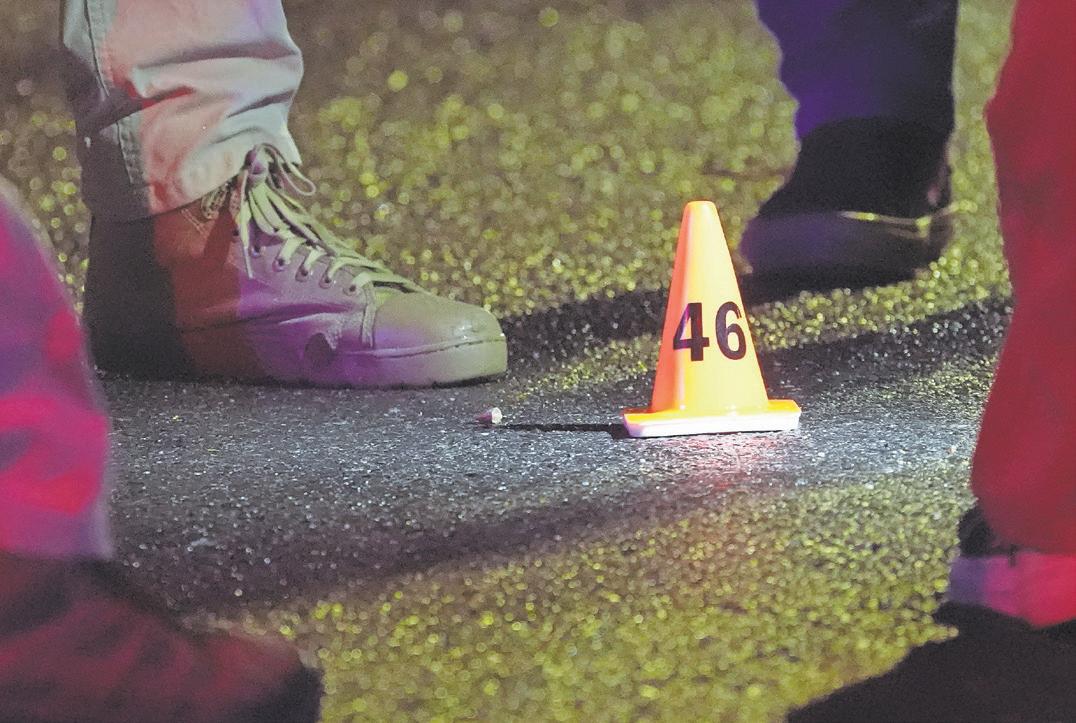
AP Photo/Alex Brandon Authorities place evidence markers in the street after the May 23 shooting in the nation’s capital.
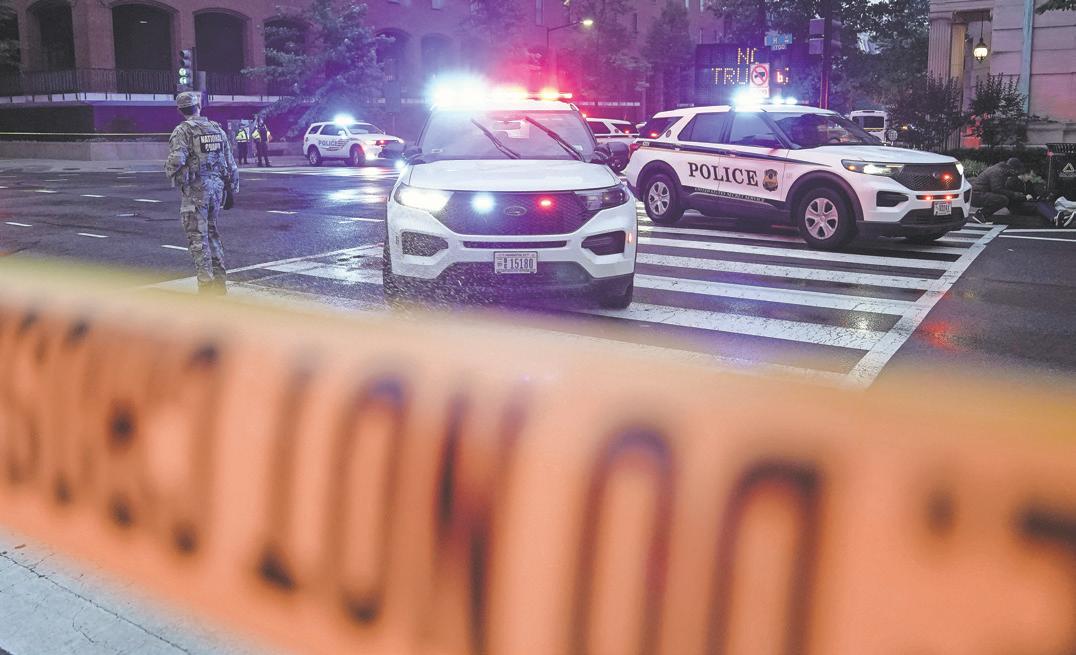
AP Photo/Jose Luis Magana Police respond to the May 23 shooting outside of the White House, where a bystander was shot and a suspect was killed.
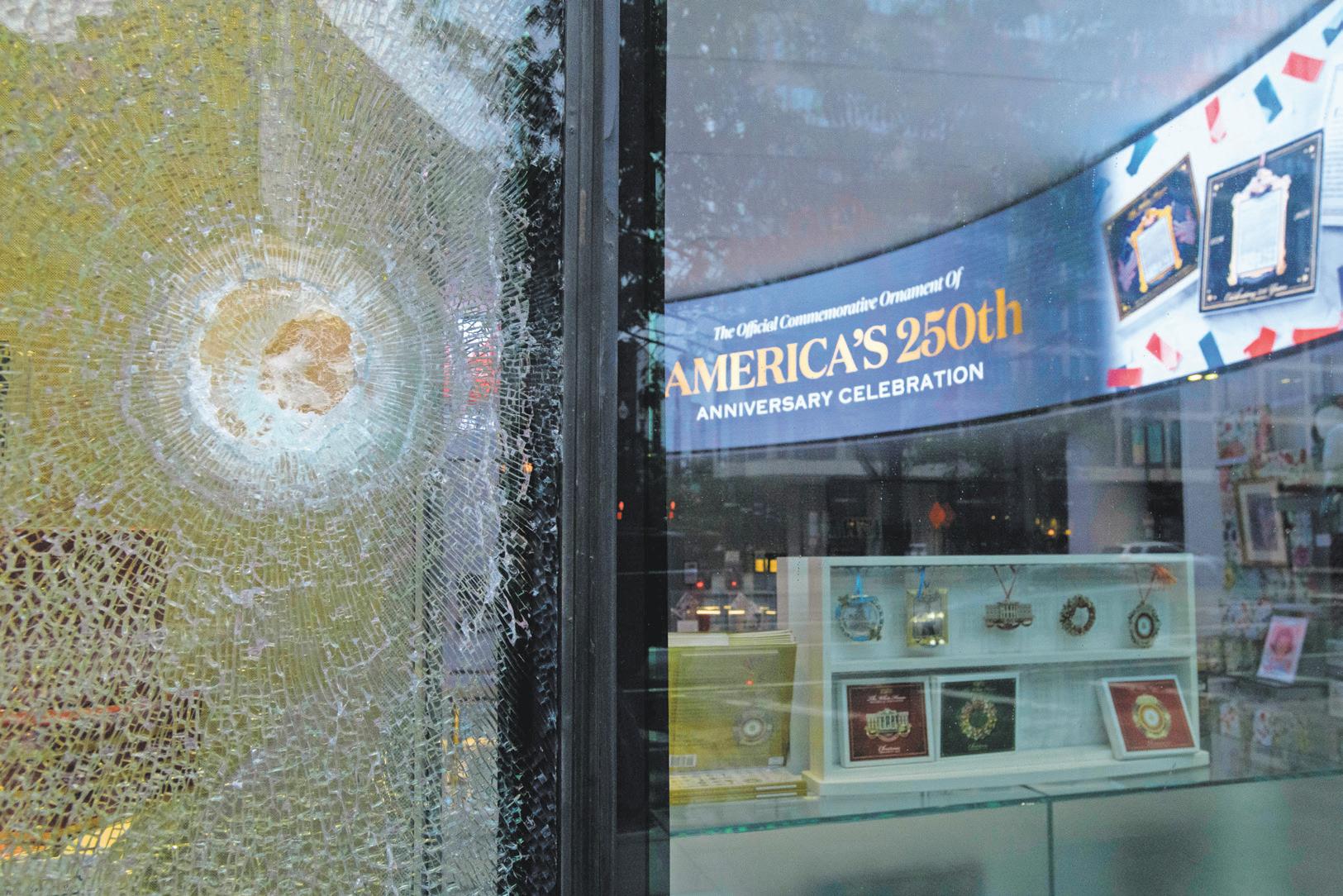
AP Photo/Rod Lamkey Jr. Bullet holes and shattered glass remain at The People’s House, a museum focused on White House history, in this May 24 photo from Washington, D.C. A person was shot by U.S. Secret Service near the White House on May 23.
BALTIMORE AREA
Civil rights complaint, petition intensify fallout from Lyric Baltimore seating dispute
By Alexis Taylor Managing Editor
“Why did you steal my seat, thief ?...Of course it would be you who stole our seats.”
Standing inside the esteemed theater house, Lyric Baltimore, the insults landed on Veronica Dunlap with a sting.
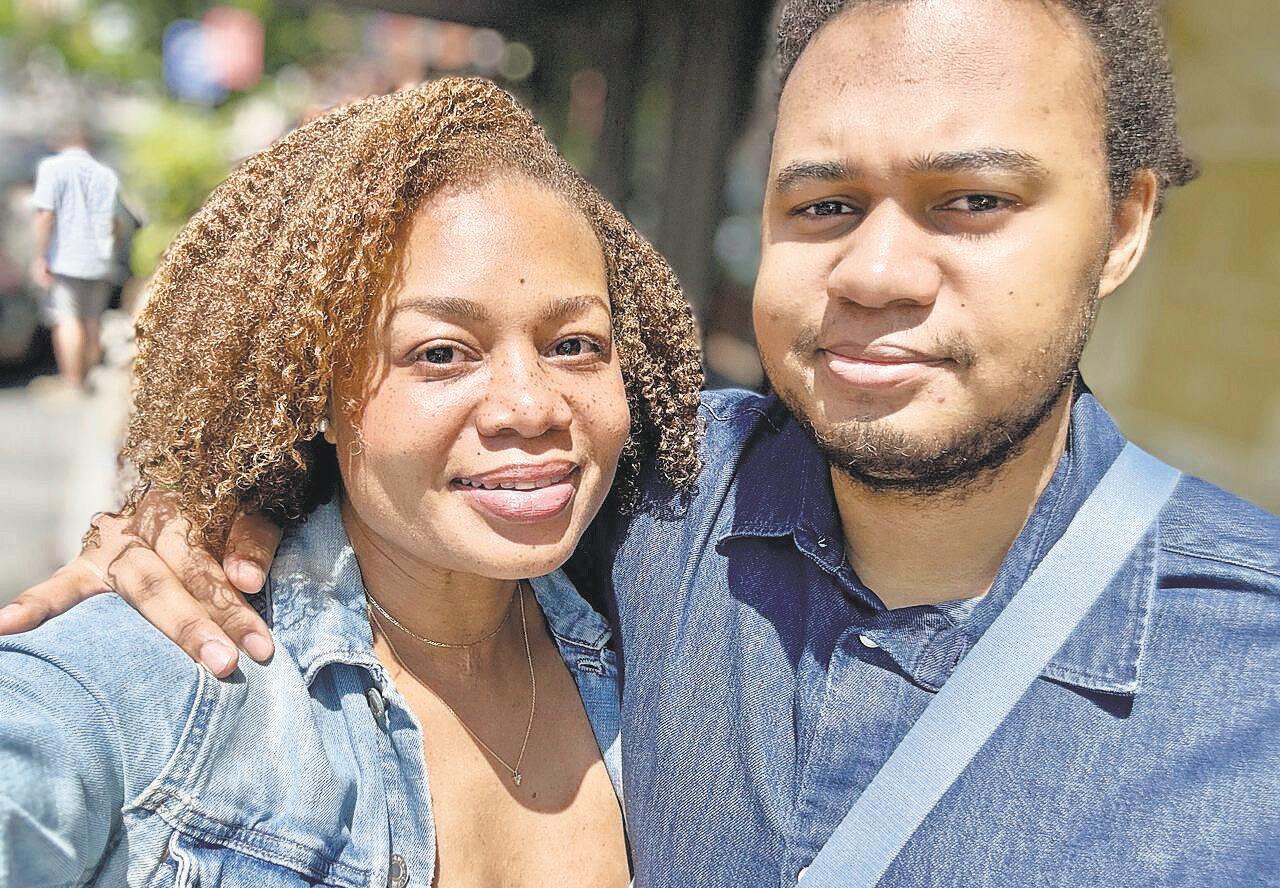
The civil rights attorney of 15 years was looking for an afternoon of culture with her son, Massawa El. Instead, Dunlap says she was embarrassed in front of hundreds of Lyric Baltimore patrons on Mother’s Day, labeled “aggressive” and asked to leave the premises after a White family accused her and her son of stealing their seats.
Now, what started as a simple misunderstanding has escalated into a formal complaint with the Maryland Commission on Civil Rights and a petition to remove
Thomas Bailey, Lyric Baltimore’s CEO and general manager.
Dunlap says she and her son arrived at Lyric Baltimore shortly before a 2 p.m. showing of the Washington National Opera’s production of “West Side Story.” Once inside, she says she presented her electronic tickets to a Lyric Baltimore usher and verbally told the usher she was in Row R, seats 133 and 134. The theater house lights were dark, as the show was about to start.
“She said, ‘follow me,’” recalled Dunlap. “She gets us to Row R … there were two seats in the middle, and the usher said, ‘those are your seats right there.’”
The mother and son quickly settled into the open seats pointed out by the usher.
Dunlap says, unbeknownst to her, two patrons were already sitting in seats 133 and 134 of Row R. And the unoccupied seats pointed
out in the dark by the usher might have been empty—but they belonged to someone else.
The game of musical chairs wasn’t discovered until she returned from the bathroom after Act I.
“He (Massawa El) wasn’t there when I got back. I looked down and saw the seats we were sitting in. It was the right row, but the wrong seat numbers,” said Dunlap.
She was only a few seats away from the right seats, so she moved down and waited for her son.
“A woman sitting beside us, where our actual seats [were], said to me, ‘You should make a complaint against that man down there where you all had been sitting. If this is your son, he was yelling at him and telling him he stole his seat. His behavior was unacceptable,’” Dunlap said. “My son, who is a very shy, very
sweet person, said, ‘You know, Mom, I don’t want to make a big deal about it. Yes, he was really yelling, but it’s Mother’s Day, let’s just watch the show.’”
In the commotion, her son had left the snacks where they were previously sitting.
“It was–again–just a few seats down, and the second act hadn’t started,” she said. “I say to the patrons sitting in the seats where we had been, ‘Excuse me, I left my popcorn here, do you mind if I get it?’”
Dunlap bent down to pick up the popcorn.
“As I am standing up… the woman yells out ‘Why did you steal my seat, thief?’ I was taken aback,” said Dunlap.
“I didn’t steal your seat,” she replied. “The usher brought us to the wrong seats. There’s nothing I can do about that.”
The Literacy Brigade: How Morgan State students are expanding access to reading support in Baltimore
By Jamanie Morgan AFRO Intern
jmorgan@afro.com
A partnership between the Dyslexia Tutoring Program (DTP) and Morgan State University is working to close long-standing literacy gaps in Baltimore by training college students to become reading interventionists while providing free tutoring to local youth.
The Literacy Brigade Incubator, launched in early 2026 in collaboration with Morgan State’s National Center for Education, Equity and Development (NCEED), aims to address literacy disparities that disproportionately affect Black and Brown students.
“Students that look like me–Black or Brown students–their neighborhoods [are]
blood dry when it comes to resources,” said Dalbin Osorio, executive director of DTP. That’s where the Literacy Brigade steps in.
The first cohort of the program included 25 Morgan State students. They were all trained to deliver high-quality, one-on-one tutoring to K-8 students across Baltimore City and County. In March, the tutors were matched with approximately 100 students and began to provide up to three hours of weekly literacy instruction at no cost to families.
Organizers say the initiative tackles both student learning gaps and a shortage of Black educators by creating a pipeline for future teachers.
“Black and Brown

Advocates, state leaders call on PJM to lower energy bills
By Tashi McQueen AFRO Staff Writer tmcqueen@afro.com
Regional state leaders and climate advocates gathered May 11 outside the Baltimore Marriott Waterfront during the PJM Interconnection annual meeting to call for lower electricity costs and faster clean energy approvals.
The meeting, which ran through May 13, brought stakeholders together to review the regional power grid and plan future energy needs.
Speakers said delays in connecting renewable energy projects to the grid, a network of power lines and equipment that moves electricity across regions, are contributing to higher utility bills.
demands: They called for requiring large energy users, including data centers, to help support the electricity they consume; removing users that do not bring new supply from key market auctions and prioritizing clean energy in backup power planning.
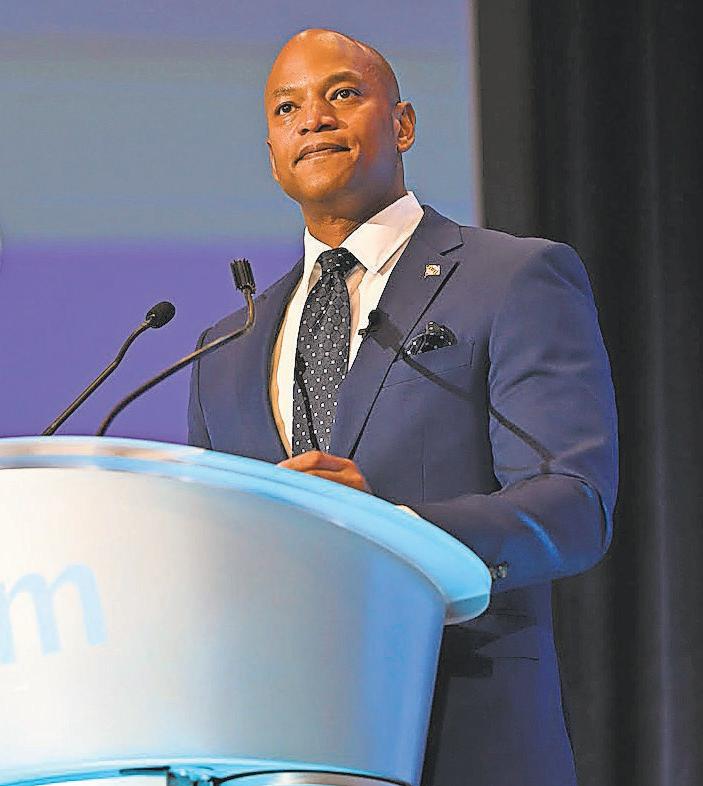
Maryland Gov. Wes Moore (D) both commended PJM for some of their progress in making utility costs more affordable and pressed them to do more.
“Let more affordable clean energy onto the grid.”
- Rebecca Rehr, Director of Climate Policy and Justice at the Maryland League of Conservation Voters
“Today, low-income consumer advocates, environmental groups and lawmakers are here together with a simple message to PJM: Let more affordable clean energy onto the grid,” said Rebecca Rehr, director of Climate Policy and Justice at the Maryland League of Conservation Voters.
A 2025 Synapse Energy Economics analysis found that allowing more clean energy onto the grid could save customers about $500 a year in electricity bills.
Maryland Sen. Katie Fry Hester (D-Md.-09) said PJM serves 67 million ratepayers across 13 states and the District of Columbia.
Advocates expressed three
“Earlier this year, PJM Board of Managers made the choice to extend the capacity price cap through 2030 and I want to say thank you, because that was the right choice. It’s a choice that’s projected to save rate payers across the region $27 billion dollars,” said Moore. “But, today, I am here to say plainly that PJM can and must do more for rate payers.”
“For too long, affordability and reliability have been framed as somehow competing goals…that somehow keeping the lights on tomorrow requires working families to pay crushing prices today,” Moore added.
PJM provided comments directly to the AFRO in response to Moore’s speech.
“PJM recognizes the pressure many families and businesses are feeling about rising electricity costs across the region,” said the company. “This is a generational
Photo courtesy of Dalbin Osorio
Scholar Janetta DeBaignaute (left) and her assigned tutor from Morgan State University, Jayla Vaughn.
Photo courtesy of Office of Governor Maryland
Maryland Gov. Wes Moore (D) speaks during the PJM Interconnection’s annual meeting at the Baltimore Marriott Waterfront calling for lower electricity costs and urging PJM to expand clean energy access and better protect ratepayers.
Photo courtesy of LinkedIn / Dunlap
A seating dispute at Lyric Baltimore has sparked a civil rights complaint, public backlash, and an independent investigation as community leaders criticize the theater’s response as inadequate and discriminatory.
Maryland Christian Chamber of Commerce blends faith and business
By Megan Sayles AFRO Staff Writer
msayles@afro.com
Since its March launch, the Maryland Christian Chamber of Commerce (MDCCC) has hosted networking events, prayer calls and monthly forums. More than 100 businesses have already joined.
a chance meeting with the president of the U.S. Christian Chamber of Commerce, Krystal Parker, the seed was planted.
In February 2025, Davis, sensing a transition in her life, prayed on what she should do next. She said the Lord told her to start the MDCCC. It was a call she
“As we build our businesses as entrepreneurs and we think about all of the things we want to accomplish as Christians, above all of that is to make sure that we’re doing what is in alignment with God’s plan for our lives.”
- Nicole Davis, Founder of MDCCC
Unlike other chambers, MDCCC blends Christian values, like faithfulness and godly wisdom, with business principles, like innovation and integrity, to advance local entrepreneurs and a shared sense of purpose.
“It’s a resting place, an oasis for business owners who also believe in Christ— where they can feel comfortable coming and talking about that part of who they are,” said Nicole Davis, founder of MDCCC. “They know we’re going to pray together and study biblical principles. They know that our motivation and everything we’re doing is to advance the kingdom, support families and to undergird our spirit, soul and body.”
Davis, who’s spent over two decades in alternative conflict resolution, was initially reluctant to start the organization. But after
knew she could not ignore.
In this first year of operation, Davis has already laid out central objectives for the group. Economic development is the foremost priority.
“As Christians we spend a lot of money, but we don’t pull it together to make an impact and have relevance at tables where it matters, like with policy and legislation,” said Davis. “We want to educate people biblically on the importance of not only making the money, but of where you’re spending the money.”
Davis said she eventually wants to establish “Kingdom Commerce” communities across Maryland, in which the chamber will forge connections between churches, nonprofits, businesses, families and local experts to invest in each other.
Other objectives of the MDCCC include policy
Civil rights complaint
Dunlap says the woman yelled, “‘Of course, it would be you who stole our seats,’” prompting her to wave her hand and call for security.
“I know the dog whistles of racism when I hear them,” Dunlap told the AFRO
But when security and other theatre staff arrived, Dunlap says she was asked to leave instead of the woman who was still screaming in their presence.
Dunlap said when a security guard put his hands on her elbow she realized the gravity of the situation.
“I am a Black mother. I have a son who is 24 years old. He is a big Black male,” she thought. “The last thing I want is for him to react and try to save me from whatever physical altercation might happen, so I’m going to leave this aisle, be safe and deal with it when I get outside the theater.”
In a hall, surrounded by more than four security officers, Dunlap says a woman from the Washington National Opera tried to get to the bottom of the situation before pointing out Thomas Bailey as the general manager.
Dunlap says he made no attempt to speak with her, but did speak with security. When her son was removed from the theater, she walked over to Bailey to speak with him.
“‘Why would you have them pull me out of the theater and let those people stay after the way they treated me and my son–calling us thieves and saying we stole their seats?’” Dunlap said she asked Bailey. “The usher is the one who put us there.”
Dunlap says Bailey’s response was less than satisfactory.
advocacy around religious rights and freedoms, preserving marriage and family, advancing health and wellness and educating young people.
Kevin Wayne Johnson, CEO of executive coaching firm The Johnson Leadership Group, became interested in joining the MDCCC after learning about it on LinkedIn.
“I went to a couple of events out of curiosity. It was like an interview phase, taking a look at what’s going on and how people are conducting themselves,” said Johnson. “Then, of course, I read the mission, vision and core values, and I thought it would be a good opportunity to connect with other business owners that think, act and move like I do.”
Since joining MDCCC, Johnson said he’s been struck by the level of support among the members and leaders. On one occasion, Tony Davis, Davis’ husband and legislative chair for the MDCCC, came out with his son to support and patronize Johnson during his book signing.
“I’m anticipating, and I believe it will happen, a much higher level of integrity and ethical behavior when it comes to getting things done and people keeping their word,” said Johnson. “That hasn’t always been the case with other organizations.”
The MDCCC has already loaded its calendar with events, like networking extravaganzas, worship nights, legislative lunchand-learns and date nights, to keep members engaged, motivated and connected. The organization is also continuing to accept new members on a rolling basis, with an application on its website.
Through MDCCC, Davis hopes to help Maryland’s Christian business owners live out their purpose.
“As we build our businesses as entrepreneurs and we think about all of the things we want to accomplish as Christians, above
“‘Well, you were being aggressive,’” Dunlap says Bailey told her.
In the end, the woman from the Washington National Opera offered them tickets to a future show. The two were let back into the theatre and Dunlap says Bailey told her he would “talk to those people,” resolve the issue and speak with her after the show. However, after the play she says she made eye contact with Bailey and then he disappeared into the crowd. At that point, an older Black lady came up and asked to give a hug.
“I said, ‘Thank you, but why?’ And she said, ‘It’s Mother’s Day. You should not have gone through this. She said, ‘Did you get that general manager’s information? …You need to reach out to him, because he did bring those people out here, and he apologized to them. He offered them seats to another show, and he told them that they were going to get a refund.’”
“He did not offer us a refund at all. He did not apologize to us. He was completely dismissive,” said Dunlap. “I was [there] for Community Day, because I’m on the board of Baltimore Schools for the Arts … Why would I be here stealing seats? It makes no sense at all.”
Dunlap wrote Bailey an email when she got home, explaining the trauma experienced and asking for a refund.
In response to the request, Bailey then arranged the refund of $29.36. He still never apologized in the correspondence, which was shared with AFRO News.
The AFRO reached out to Lyric Baltimore about the incident and received the following response from Stephen Palmer, chairman of
all of that is to make sure that we’re doing what is in alignment with God’s plan for our lives. How sad would it be to realize at the end of it that you did great things, but you didn’t do the things that God had in mind for you?” said Davis. “I don’t think I’ve ever been happier, and I didn’t choose this for myself.”
Nicole Davis, who is from Ohio and in Maryland by way of the Navy, went to Morgan State.
Over the last 25 years, she’s worked in alternative dispute resolution, supporting families and organizations. She also did therapeutic foster care.
She provided mediation within the federal government, but in 2022, she decided she wanted to focus more on the mediation, coaching and consulting firm, Empower to Engage, where they work with families and organizations.
In 2023, while promoting her new book at a conference, Davis met Krystal Parker, the president of the U.S. Christian Chamber of Commerce. The pair quickly bonded over their interest in women leaders. Davis learned more about the chamber and decided to join.
Later that year, Parker asked Davis to be a contributing author to a new book she was writing, and Davis agreed. Part of the collaboration included Davis attending the U.S. Christian Chamber of Commerce’s Conference in 2024. While there, Davis ran into a Maryland businessman who she knew, and he encouraged her to start a Christian chamber of commerce in the state.
Davis said her first answer was “absolutely not.” She didn’t have much of an interest and her schedule was already packed. But, the seed was planted. Months later, in February 2025, Davis started to sense a transition period approaching in her life, so she prayed on it. Davis said the Lord told her to start the MDCCC.
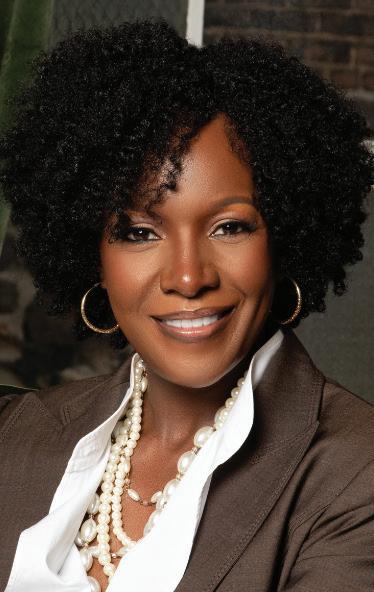
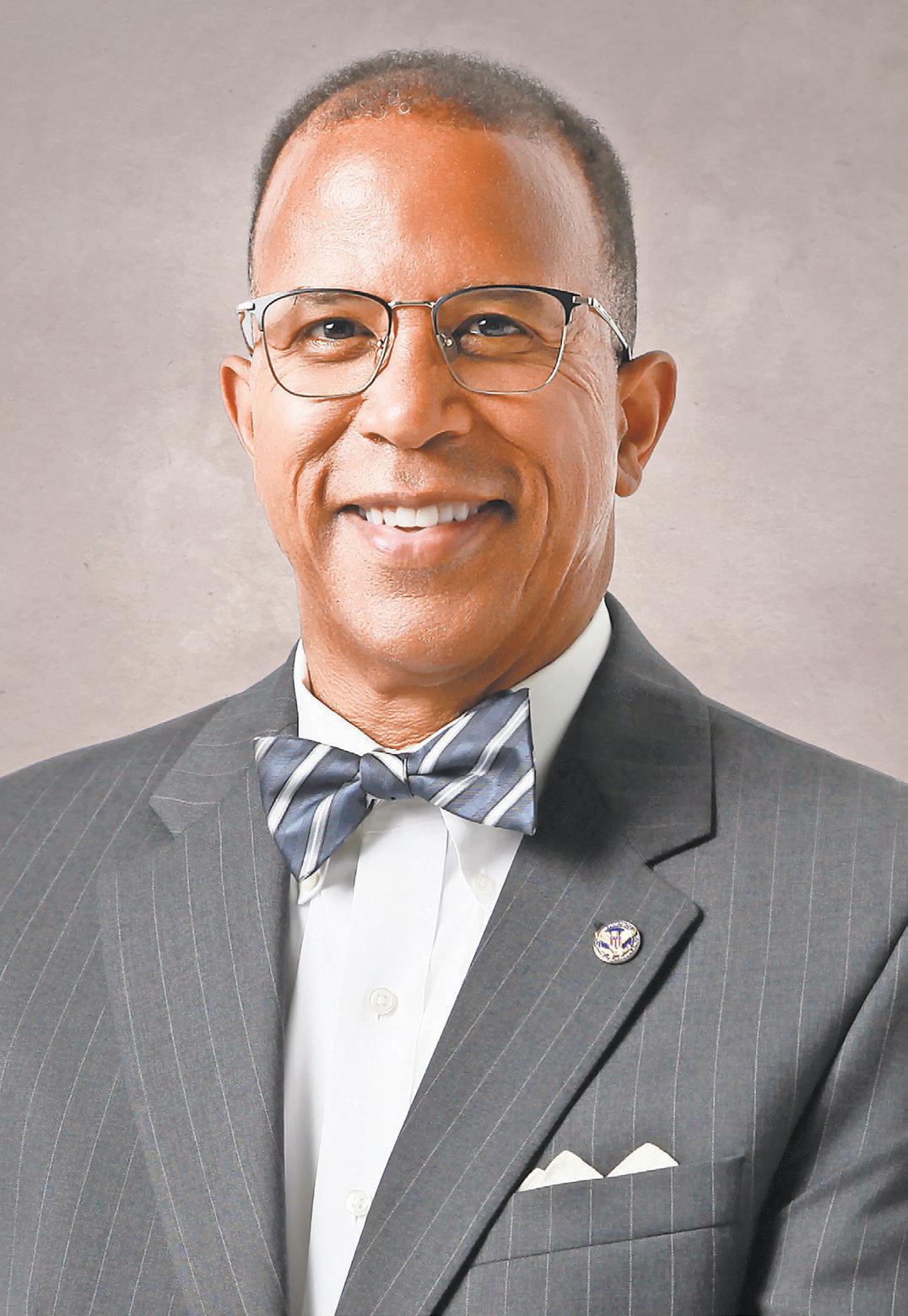
the Lyric Baltimore Board of Trustees:
The Lyric is deeply disheartened about the experiences described by certain patrons during the performance of West Side Story on Sunday, May 10.
The Lyric has the utmost respect for every person who walks through our doors, and we are committed to providing a welcoming, respectful, and safe environment for all members of our community.
We take these concerns very seriously. The Board of Trustees is conducting a thorough investigation of the incident and the circumstances surrounding it, including conversations with staff and patrons who were present.
As part of our immediate response that evening, both parties involved were addressed by staff in a consistent manner and were offered the same accommodations, including refunds and invitations to attend a future performance of West Side Story.
While the investigation is ongoing, we believe it is important to acknowledge the distress expressed by those involved and to reaffirm our commitment to treating everyone with dignity and care.
The Lyric has long valued its role as a cultural institution that serves the entire Baltimore community, and we remain committed to this mission and responding thoughtfully as we move through this process.
Chrissy Thornton, CEO of Associated Black Charities, said the statement is not enough.
“It is sterile, evasive, institutionally self-protective, and painfully inadequate for the seriousness of what Veronica and her son, Massawa, experienced,” said Thornton, in a response to Palmer’s statement. “It was a
discriminatory institutional response. It was a weaponization of staff, security, and police power against a Black woman and her Black son who had every right to be present, protected, and treated with dignity.”
On May 21, leaders at the Lyric issued an additional statement, announcing an investigation.
“The Mintz law firm, led by former Maryland U.S. Attorney Erek L. Barron, Michelle N. Lipkowitz, and Natashia Tidwell, is leading an investigation of the events of our May 10, 2026 performance,” said part of the statement. “In commissioning this work, Board Chair Stephen Palmer stressed the seriousness of the concerns raised and the critical need for an objective and thorough review to establish the facts and evaluate where changes may be needed. The Board’s selection of this experienced team reflects its commitment to the safety and well-being of The Lyric’s patrons, employees, and wider community.”
“The Lyric is committed to the highest professional standards in its treatment of patrons and employees, and to the fair and equitable treatment of every person who comes through our doors,” the statement continued. “The Board is undertaking this work to ensure those commitments are fully reflected in the institution’s policies, training, and practices.” Still, a petition has been created, calling for Bailey’s resignation. The petition says a true remedy would include the refund, but also a public written apology, a review of the entire incident, training for staff from “credible outside partners” and a “clear non-discrimination and patron protection policy.”
Photo courtesy of Nicole Davis
Nicole Davis said she was led to start the Maryland Christian Chamber of Commerce by God.
Photo courtesy of Kevin Wayne Johnson Kevin Wayne Johnson is the founder and CEO of The Johnson Leadership Group. He recently became a member of the Maryland Christian Chamber of Commerce (MDCCC).
Lawsuit against Baltimore mayor emerges amid EEOC call for discrimination cases with White, male plaintiffs
By Victoria Mejicanos AFRO Staff Writer vmejicanos@afro.com
Andrew C. Freeman, former vice president of real estate development at East Baltimore Development Inc., has filed a federal lawsuit and Equal Employment Opportunity Commission (EEOC) complaint against Mayor Brandon M. Scott, alleging racial discrimination.
Freeman, who identifies as White and Jewish, claims he was terminated shortly after being promoted to vice president. The suit also alleges there was an attempt to rehire former chief real estate officer Karen Major Johnson, who was fired shortly after his promotion. The lawsuit alleges that he was unfairly terminated on the basis of race.
“While lawful DEI (diversity, equity and inclusion) initiatives appropriately seek to create equal opportunities for groups that have historically been subjected to discrimination and exclusionary practices, Mr. Scott’s brand of DEI gives people opportunities simply because they check a box,” the suit states.
The lawsuit further alleges Cheryl Y. Washington, president and CEO of East Baltimore Development Inc., Cheryl Y. Washington, president and
CEO of East Baltimore Development Inc., acknowledged in writing that she had been instructed by Mayor Scott to terminate Freeman.
When asked about the EEOC complaint and lawsuit, the Mayor’s Office provided the following statement to the AFRO: “Our office will respond at the appropriate time in the appropriate legal forum.”
Freeman’s lawsuit comes amid federal changes surrounding DEI initiatives and the rise of “reverse discrimination” cases.
In December 2025, Andrea Lucas, chair of the EEOC, posted on X, encouraging White men who believe they experienced workplace discrimination to contact the agency.
“Are you a white male who has experienced discrimination at work based on your race or sex?” Lucas wrote. “You may have a claim to recover money under federal civil rights laws. Contact the EEOC as soon as possible.”
Rebecca Dixon, CEO of the National Employment Law Project, said Freeman’s case reflects a broader national trend regarding civil rights enforcement and workplace litigation.
“Over the last several years, there’s been a sharp increase in political and legal attacks on DEI initiatives,” she said. “There have been more reverse
The Literacy Brigade
Continued from A9
educators leave the field at an alarming rate within the first five years,” Osorio said. “If we want students to see teachers who look like them, we have to support those educators early.”
The Literacy Brigade Incubator compensates the participants who serve as tutors with an hourly wage and offers mentorship from experienced educators. The program also provides a pathway for the Morgan State students to earn a reading specialist credential through the International Dyslexia Association.
In September 2025, Morgan State University made history when it stepped out as the first historically Black college or university (HBCU) to offer its undergraduate students the opportunity to join a teacher preparation program that is accredited by the International Dyslexia Association (IDA).
Now, the students have an opportunity to remove barriers that have historically limited access to dyslexia support. Through the Literacy Brigade Incubator, families receive free diagnostic assessments, services that can cost thousands of dollars, along with flexible tutoring options in homes, libraries, on campus and

Unsplash/Tingey Law Firm
A lawsuit against Baltimore Mayor Brandon M. Scott and other city leaders emerges at a time when equity, diversity and inclusion initiatives are being dismantled or scrutinized nationwide.
discrimination claims and increased scrutiny of workplace diversity efforts, and a major shift in the EEOC’s enforcement priorities. The EEOC leadership has made it clear that DEIrelated practices are now a central enforcement target for them.”
online. Transportation and technology support are provided when needed.
“A diagnostic exam for dyslexia costs anywhere between $3,000 and $5,000,” Osorio said. “We do it for free.”
The initiative is grounded in a structured literacy approach. Morgan students must complete approximately 30 hours of training before beginning tutoring sessions. Instruction is tailored to each student, often focusing on skills such as phonemic awareness, decoding and reading fluency.
Osorio said early intervention is critical to preventing what educators refer to as the “third grade cliff,” the point when students transition from learning to read to reading to learn.
“By the time you get to third grade, you’re already well behind,” he said. “You’ve already lost years of preparation.”
He added that many students in under-resourced communities enter school already behind, and delays in diagnosing dyslexia or other language-based learning differences can widen that gap.
“If you’re starting behind and it takes time to identify what support a child needs, that gap can grow significantly in those early years,” Osorio
Dixon pointed to another recent example involving the New York Times, where a White Jewish male employee filed a discrimination complaint.
Dixon said federal anti-discrimination law protects workers of all racial backgrounds, including White employees, but argued lawful DEI initiatives are increasingly being treated as potential discrimination cases.
Legal experts interviewed by the AFRO noted that federal anti-discrimination laws apply equally to employees of all racial backgrounds, including white workers, though discrimination claims still require evidence that an employee was treated differently because of a protected characteristic.
“The concern today is that the federal government is collapsing the distinction between unlawful discrimination — which does apply to White workers if there is unlawful discrimination — and lawful efforts to address persistent labor market inequality,” Dixon said. “The two things are not the same, but are being collapsed in the priorities of this administration.”
Dixon noted that many DEI initiatives are still legal.
“Many of the DEI efforts are lawful and include things like outreach, mentorship, broadening the recruitment pipeline, anti-bias training, inclusion initiatives and efforts to address
said. “That’s why getting into communities sooner is so important.”
The program model emphasizes both academic outcomes and long-term community impact organizers. Hope to develop a new generation of educators while improving literacy outcomes for participating students.
“If we can incubate this idea, Morgan state, we can then take it to other HBCUs,” Osorio said.
Dr. Simone Gibson, an associate professor at Morgan State, said the initiative reflects a broader shift toward community driven solutions to educational inequities.
“You don’t have to have a Ph.D or some ‘high-falutin’ degree in order to teach someone how to read. You just have to have the skill set,” Gibson said, who also serves as assistant director of literacy at Morgan State University’s National Center for the Elimination of Educational Disparities. She said the program challenges long standing narratives about literacy and Black communities.
“Too often the conversation is about what’s wrong with us,” Gibson said. “This is about what we are doing.”
Participants in the program said the training

historical underrepresentation,” she said.
Dixon added that increased scrutiny on DEI can have a “chilling effect” as it discourages companies from having mentorship and outreach programs for professionals of color.
“We’re actually going in reverse, probably in terms of being able to have better opportunities for workers of color who have traditionally been locked out of higher paying jobs and certain industries and promotions,” Dixon said.
Laurie E. Morrison, a New Yorkbased employment and civil rights attorney, has represented workers in discrimination cases involving employees of multiple racial backgrounds.
She said White employees can and do bring legitimate workplace discrimination claims, but noted that such cases are receiving heightened political and public attention.
Morrison said that while discrimination protections apply to all workers, public conversations surrounding these lawsuits can become politically divisive and shift focus away from broader workplace issues.
“As long as you have workers fighting against each other, rather than looking at the bigger picture, you divide the workforce,” Morrison said.
Freeman’s case is still pending.
has had an impact beyond the classroom.
Chanel Green, a Morgan State student and entrepreneur, said the experience has strengthened her own literacy skills while preparing her to better support others.
“That’s why I’m here– to give back to those who are coming after me,” Green said. “If we don’t see each other, it doesn’t make sense,” she said. Beyond academic improvement, Gibson said the program addresses the emotional and generational impact of literacy challenges.
“We’ve had parents crying–feeling like it was their fault,” said Gibson. “This is the part of the healing our community needs. This is not just something you write on your resume. This is about uplifting our community.”
The first cohort of the Literacy Brigade Incubator continued their work through the spring semester. Now, program leaders are evaluating student progress and program outcomes. They hope to expand the model to additional universities and communities.
“We have seen kids increase their grade levels by two full grades,” said Osorio. “To see that much improvement in such a short time, I think for us, significantly validates us offering this high dosage model at a larger scale.”
Energy bills
Continued from A9
challenge that no one organization, state or industry can solve alone. It will take coordination across policymakers, grid operators, utilities, generators, and large energy users to help evolve the grid at the speed and scale this moment demands.”
“PJM is working with relentless focus to accelerate the connection of new generation while preparing the system to support growing demand, evolving technologies and the needs of the 67 million people we serve,” they added.
PJM Interconnection said its interconnection process is working and has processed thousands of megawatts of renewable projects. The company said delays are driven in part by factors outside its control, including permitting, siting, financing and supply chain issues.
“We have approved ~53 GW of mostly renewable generation, including 1.6 GW of projects in Maryland, that have agreements and could be built today,” said PJM in a statement to the AFRO
“We continue to work closely with state and federal policymakers and all our
stakeholders to bring new generation online to serve the growing economy without an unfair burden to electricity customers,” PJM added. “PJM will continue to keep the power flowing this summer to the Chesapeake region and the 67 million people we serve by placing the reliability of the system first.” Income disparities also shape the stakes of rising utility costs, with Black Marylanders and other lower-income households standing to be more vulnerable to rate increases.
The typical African-American household makes $66,727, compared to $105,270 for the typical White American household. The typical Black Marylander household makes $101,781, compared to $141,988 for the typical White Marylander household.
In Baltimore City, the typical White household income is $129,446, compared to the typical Black household income of $60,085. State leaders and advocates said they will continue working together to improve affordability for all ratepayers and achieve a more stable energy future.
Unsplash Photo/Aldward Castillo
Advocates say the power grid is being strained and demand PJM speed up connecting clean energy projects to reduce costs and improve reliability.

Artscape 2026 turns Downtown Baltimore into cultural dreamscape despite rain
By
The sky was grey, but the atmosphere was bright and electric. Despite a soggy Saturday, the rain let up a bit on Sunday, and Artscape, America’s largest free outdoor festival, welcomed art and art lovers on May 23 and May 24.
For over 40 years, Artscape has served as a means of showcasing the culture of Baltimore’s art community, while also delivering an economic boost for the area. In 2025, Mayor Brandon Scott moved the arts festival from its traditional home in the Mount Royal area to Downtown Baltimore. The event was also moved to Memorial Day weekend.
For those with retail therapy in mind, there was a wide variety of vendors selling from arts and crafts to clothing and body care essentials. There was 11-year-old Athena Brown, whose stall showcased Brown Beauty, her line of all-natural beauty products created to inspire Black and Brown girls to discover their inner beauty. Daughter of former Baltimore State’s Attorney Marilyn Mosby, Nylyn Mosby, also put her art on display as the artist and owner behind NY Mahogany.
The festival’s 2026 iteration was a rich and varied showcase of sounds, sights, smells and flavors. Musicians of varied genres graced different stages. Kwaku Payton, of the Drum Love Movement,

led African drumming circles for attendees. And the War Memorial housed the SCOUT Art Fair, which showcased talent from around the region whose works were rooted in culture, community and authentic expression.
Mimes, stilt walkers and street performers walked among the crowds, providing up-close-andpersonal entertainment. Culinary showcases by talented chefs and a variety of food stalls offered a cornucopia of delicious delights to satisfy every diet and taste.
All
AFRO Photos / Ronald Christian Jr.
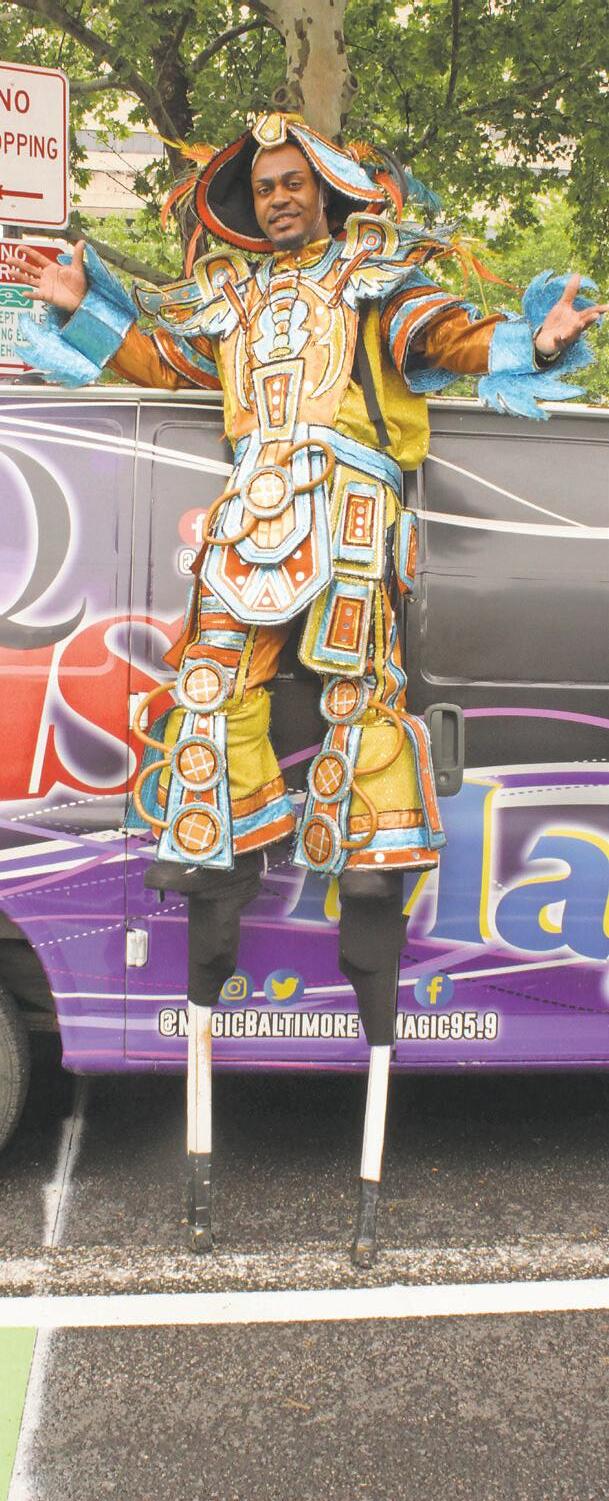
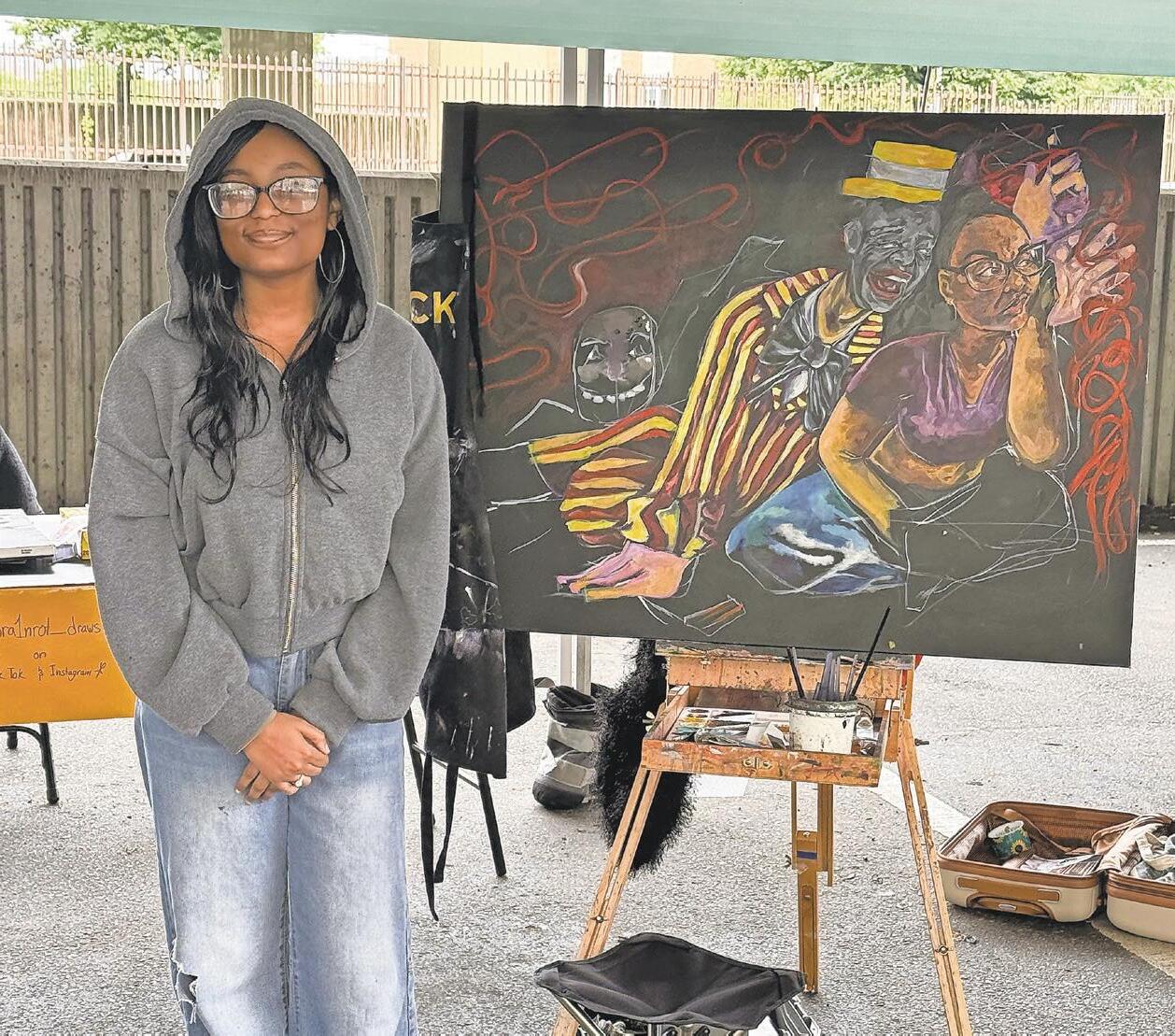

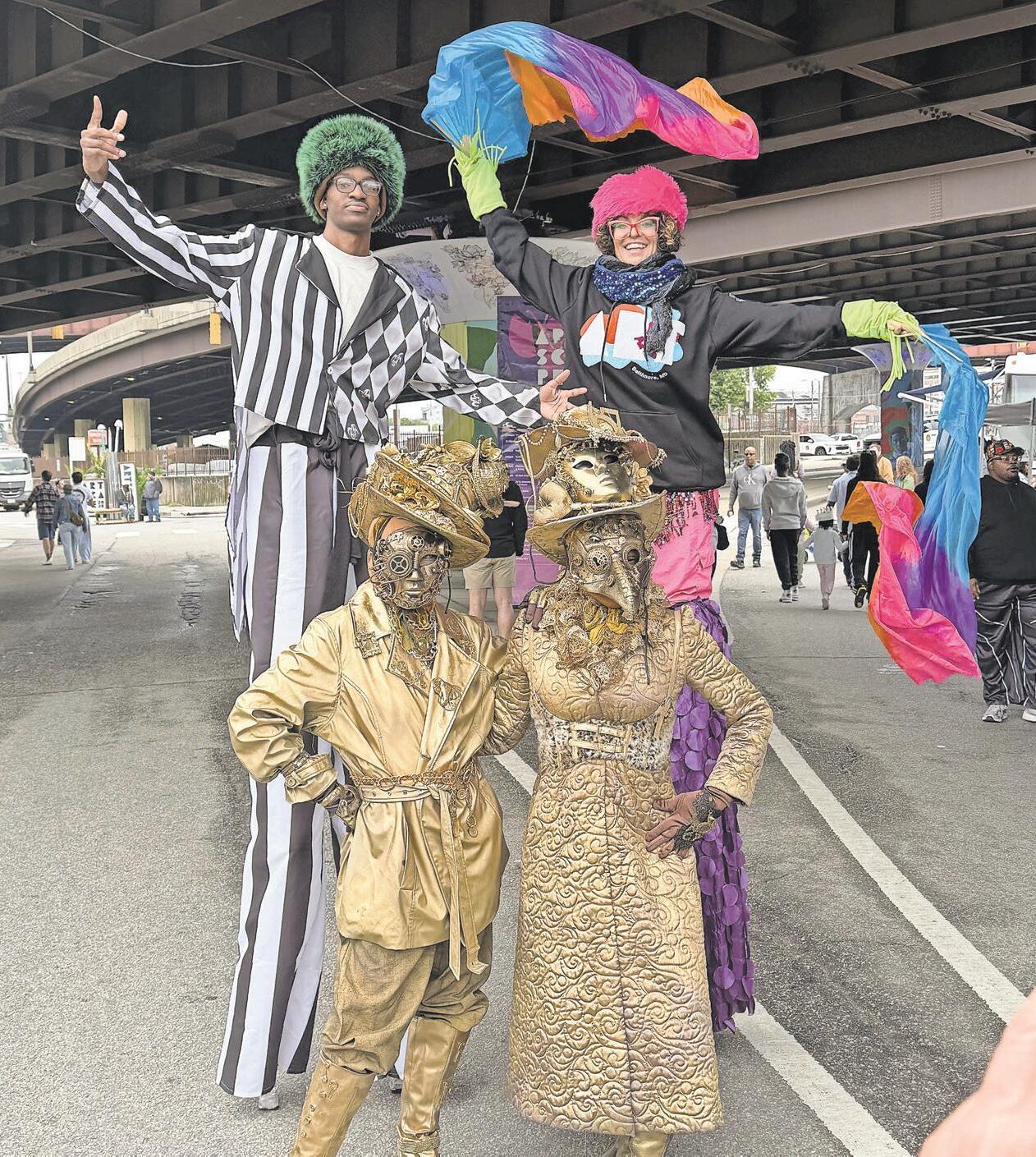
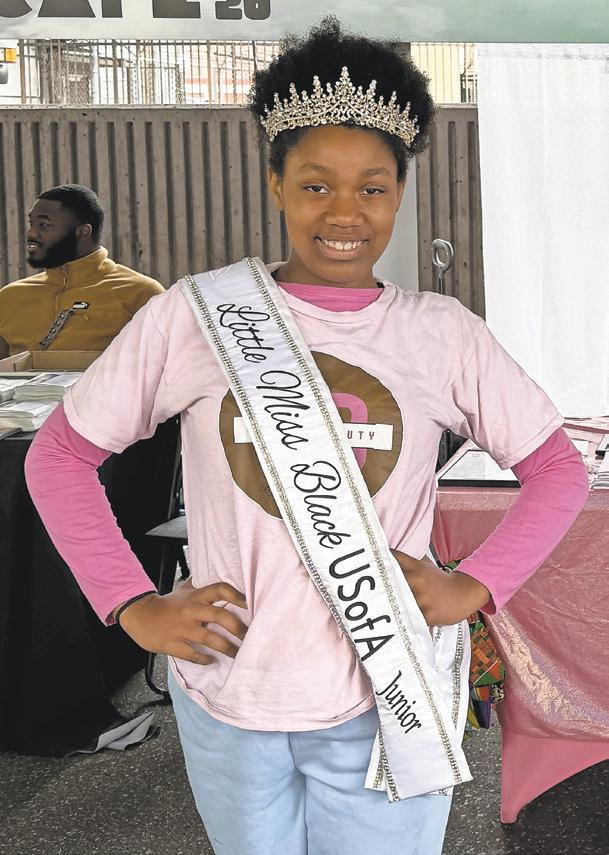
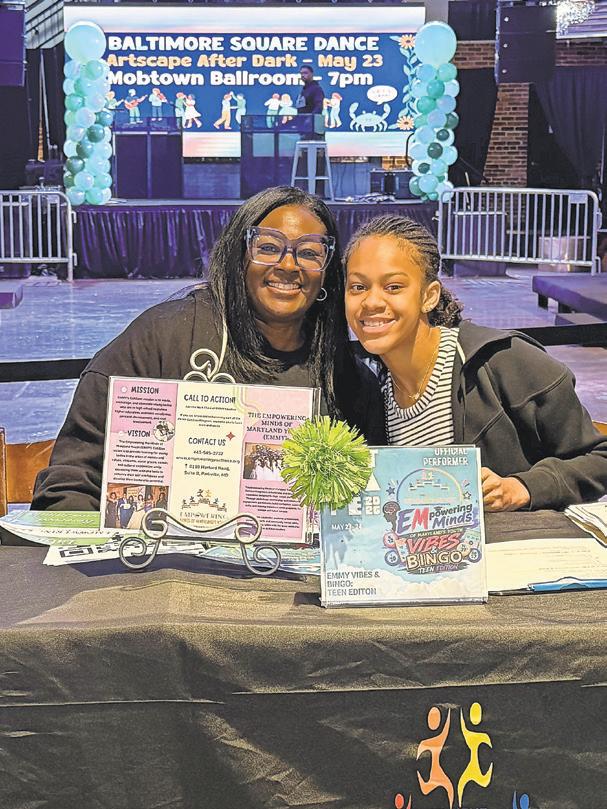
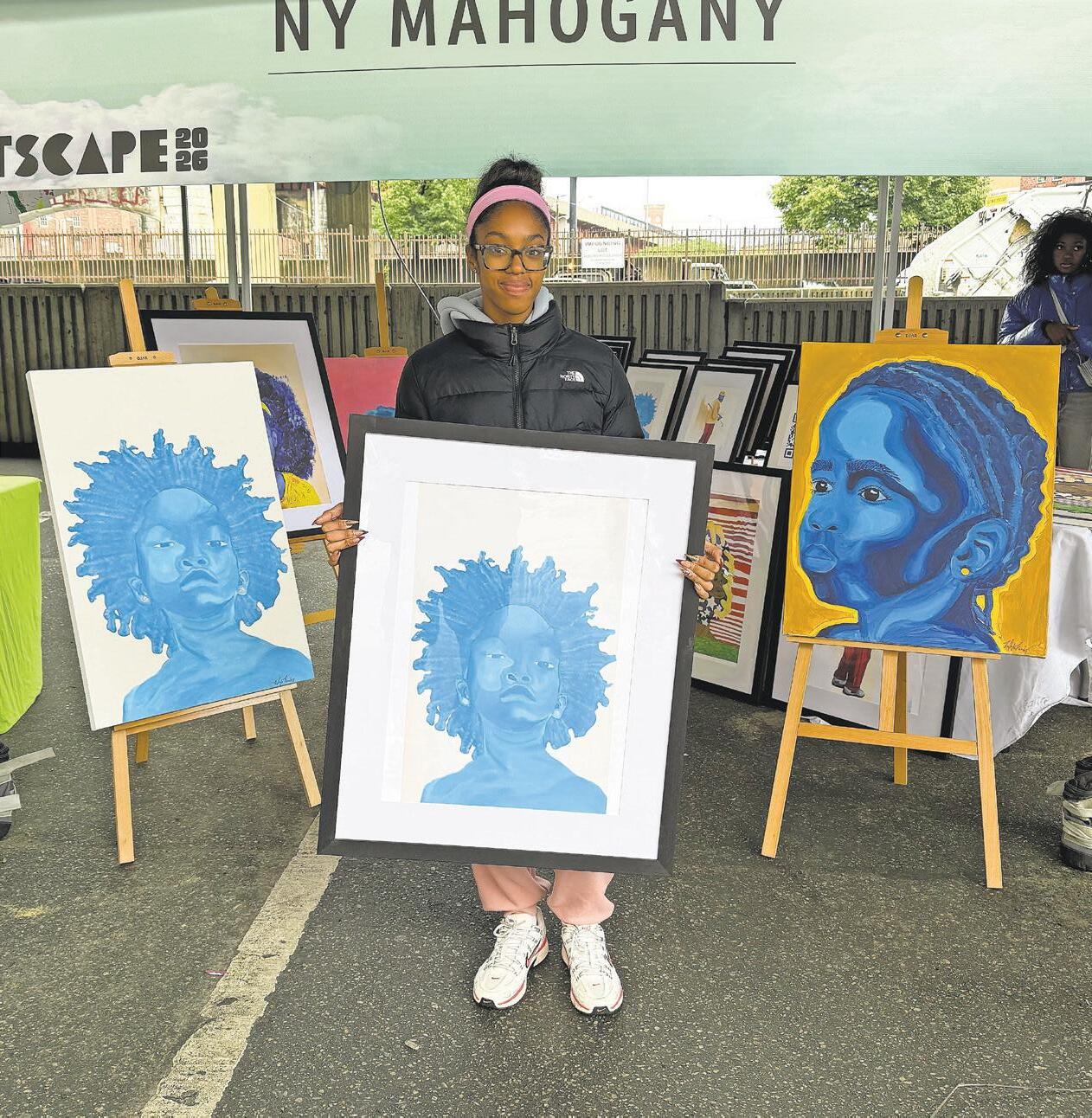
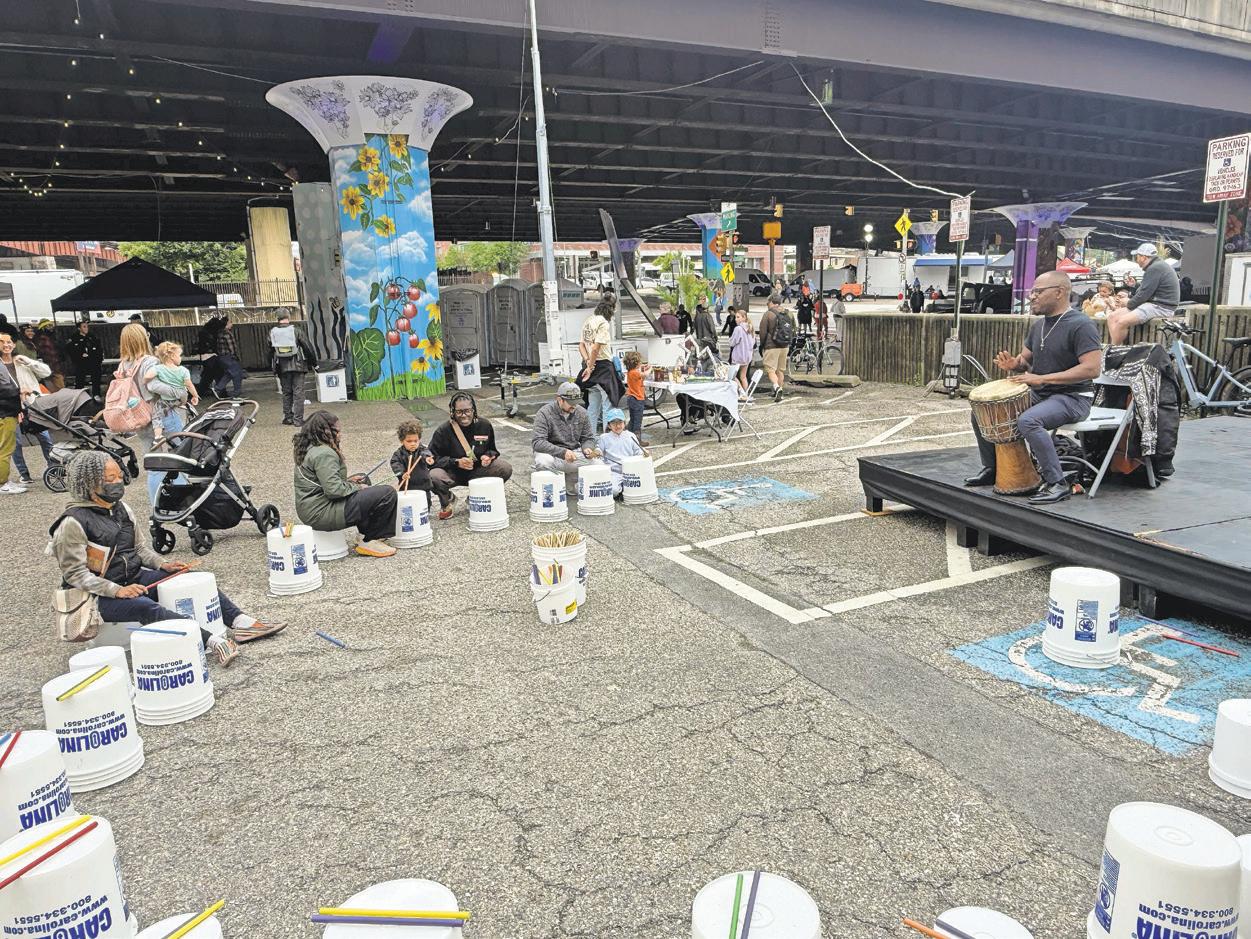
Photos:
Ronald Christian Jr. Special to the AFRO
Street performers Swaggy Fresh (back, left), Jess Raschella, Safiyatou (front, left) and Tracie Jiggets (front, right) entertain festival-goers.
Digital artist and sculptor Sonny shows off his art.
Knicole Mosby-Taylor (left) and Aniyah Mosby prepare to host a round of bingo for teenage Artscapers.
Tarenzo “Renzi” Davison shows off his balancing act on stilts.
D’Ziyre of Bra1nrot Draws stands before one of her original art pieces.
Kwaku Payton of Drum Love Movement leads a drum circle of all ages.
Kobby Aboagye and his son, Kwame Aboagye enjoy the festival.
Kayenecha Daugherty enjoys a moment at Artscape 2026. Daughtery is founder of Creative Nomads, a nonprofit created to connect, educate, inspire and support local youths and members of the art community.
Ridge Dogget (right), owner and artist behind Ridge Dogget Studios, and his father, Jeremy Dogget.
Athena Brown, 11, owner of Brown Beauty, showcases her products.
Nylyn Mosby, daughter of former Baltimore City State’s Attorney Marilyn Mosby, showcases her work at Artscape as owner of NY Mahogany.

Sonny Rollins, saxophonist and restless genius of jazz, dead at 95
By The Associated Press
NEW YORK (AP) — Sonny Rollins, the tenor saxophonist and restless genius whose bold, distinctive tone and constant experimentation kept him on the cutting edge of jazz for more than 50 years, died May 25 at age 95.
Spokesperson Terri Hinte told The Associated Press that Rollins died at his home in Woodstock, N.Y. She cited no specific cause of death, but said he had been largely housebound over the past couple of years because of various physical problems.
From his early days as a teen phenom to his more measured solo work and experimentation with free jazz, Rollins was revered for his improvisational skill. He was one of the last living greats of the bebop era and — along with John Coltrane and Charlie Parker — one of the most influential saxophonists of his time.
Rock fans got a dose of his music with the Rolling Stones’ 1981 album “Tattoo You,” which features Rollins’ wistful sax solo on the ballad
“Waiting on a Friend,” devised after watching Mick Jagger dance.
Despite his enduring success, Rollins was never quite satisfied with his art, occasionally taking lengthy hiatuses from playing and consistently
adopting eclectic new styles.
He always referred to himself as “a work in progress,” saying he wasn’t one of those artists who settled into one way of playing.
While his early bebop work was the most popular with his fans, Rollins never looked back, saying he found it “excruciating” to even listen to the flaws in his older recordings.
“I don’t consider myself a musician that has learned as much as I want to learn,” he told The Associated Press in 2007.
Enduring achievements
In the 1990s and 2000s, Rollins released a string of critically acclaimed albums. He maintained a rigorous practice regimen, and continued to tour into his 80s. Pulmonary fibrosis, a thickening and damaging of the lungs, would eventually force him into retirement. He played his last concert in 2012 and stopped playing altogether in 2014.
While he missed the adoration of crowds, he missed the actual playing more.
“I played a couple of concerts early on where I was out in the open in the afternoon,” he told the New York Times in 2020. “I was able to look up in the sky, and I felt a communication; I felt that I was
part of something. Not the crowd. Something bigger.”
His 2001 album “This is What I Do” earned him a Grammy award for best jazz instrumental album. He won again in 2006 for best jazz instrumental solo for “Why Was I Born?”
“Why Was I Born” was from the album “Without a Song: The 9/11 Concert,” a live recording from a performance in Boston just four days after the Sept. 11 attacks. Rollins, who had been evacuated from his apartment a few blocks from ground zero, had gone ahead with the concert at the urging of his wife and manager, Lucille. She died in 2004.
His survivors include a nephew, Clifton Anderson, and nieces Vallyn Anderson and Gabrielle DeGroat.
Meeting the greats
Rollins had gotten his first major break in his late teens when he was invited to join Thelonious Monk’s band. He soon was jamming with Miles Davis and Bud Powell, who introduced him to the recording world even before he finished high school.
But like many jazz musicians in the late 1940s and early 1950s, Rollins’ rising star almost faded when he became hooked on heroin at the age of 19. As his addiction grew steadily worse, Rollins served two stints in
Imani Bilal and `The Beauty of Enough’
Groundbreaking artist continues to transcend barriers with her latest exhibit in Brooklyn
“Overwork, overgiving … self betrayal and not keeping enough to yourself, for yourself,” is how Imani Bilal describes a recurring theme in her life and the often obstinate muse for her latest art exhibit, “The Beauty of Enough.”
“It challenges this … I call it the quiet expectation of giving to the point of exhaustion–you know what I mean? To the point where you sometimes don’t recognize yourself … or your selfhood is compromised,” Bilal added. “And so the paintings, they kind of became my way of telling those stories, my story and the stories of others.”
Bilal’s latest series of stories (nine works that range in size from 6 feet tall to 12 inches high) were on
display at the Mazlish+Wright Contemporary art gallery in the eclectic Dumbo neighborhood of Brooklyn, N.Y., May 7-27.
“I was telling a lady at the show (opening night) that they hold traces of the things that we carry, the things that we protect, withhold, preserve and that they offer a visual language for self discovery,” Bilal said.
For more than 10 years Bilal has manifested the revolutionary visual language of her soul, defying parameters and astonishing many in the art world, with Forbes magazine in 2021 acknowledging her as, “A force to be reckoned with in the contemporary art world.”
A self-taught artist, Bilal decided at age 17, that she didn’t want to “work a regular job,” after a perfunctory food service job experience at the Columbia Mall in Maryland (Bilal is

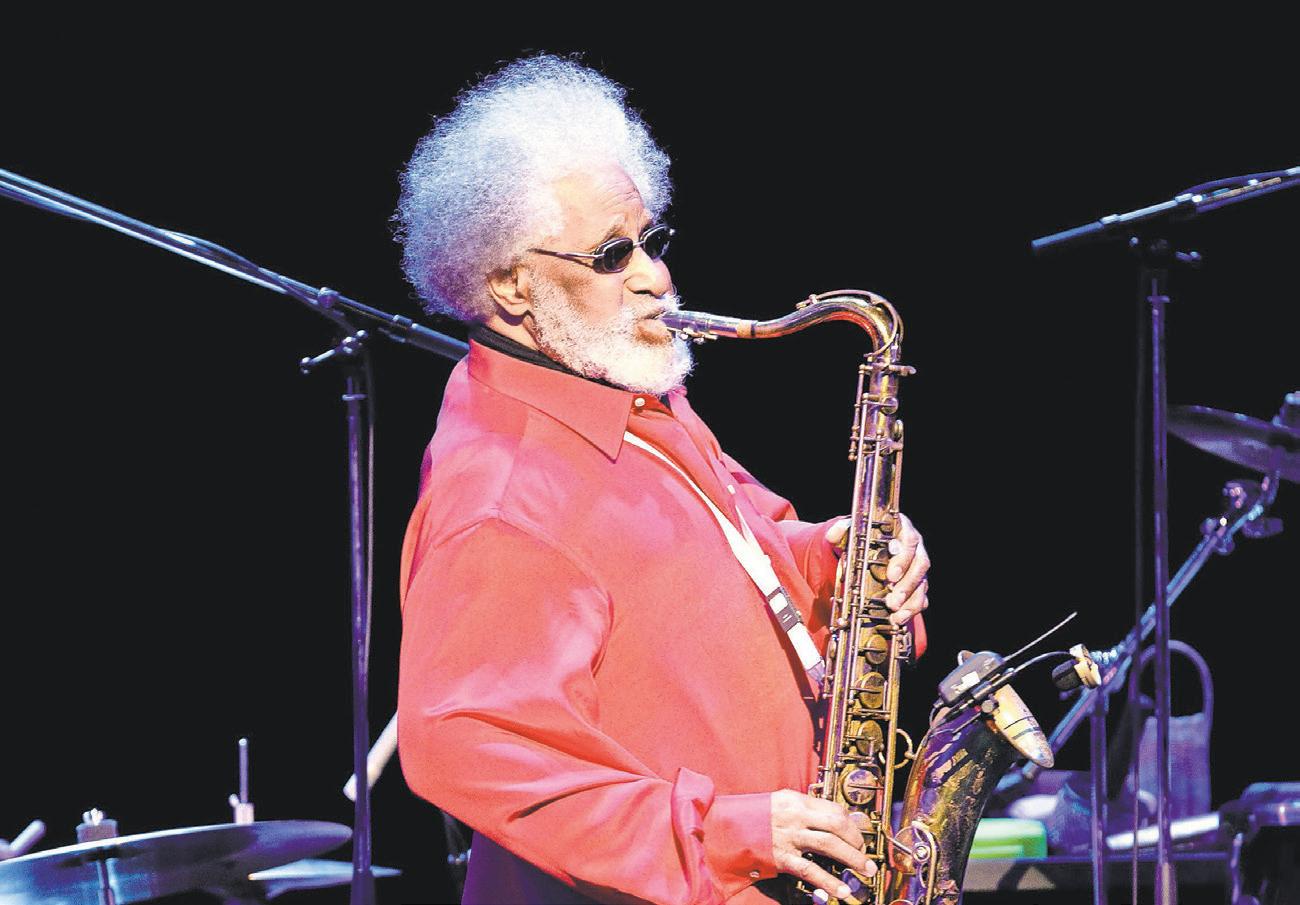
jail — 10 months in 1950 and three months in 1953 — and ultimately found himself living on the streets in Chicago. In 1954, Rollins checked himself into a hospital in Lexington, Ky., to undergo drug treatment.
He underwent a spiritual awakening as he kicked drugs.
“I began to have a deeper philosophy of what life was about,” he told the AP in 2007. “From that point on is when my consciousness awoke.”
After being discharged, he returned to Chicago and signed on as a member of the Max Roach-Clifford Brown quintet. In 1956 he recorded a solo album, “Saxophone Colossus.” Its stripped-down, hard bop sound announced him as one of jazz’s premier sax players and
a Harlem native who moved to Maryland with her family at age 10). She has never worked a so-called regular job since.
“I always wanted to paint. I always wanted to create. Before I was a painter I was a metal smith. But, I’ve always … created,” said Bilal.
“I’ve always wanted to share and connect people through art. That’s been my mission and my goal and to add beauty to a world that can often be very chaotic and ugly in some ways,” she added. “I wanted to add more of the things that beautify the world and also more things that challenge perspectives and get people to look a little bit longer and ask questions that connect people with themselves.”
Experiencing an Imani Bilal painting may be akin to sliding down the side of a beautifully vibrant mountain with impunity – visceral and exhilarating on multiple levels.
“A lot of what you are seeing on the canvas is me translating … the ebb and flow in real time. So the tension on the canvas may look like a bunch of intersecting lines, or it might be something that might be very expansive, suddenly, gets very tight and small,” Bilal explained.
“Sometimes you’ll look at my painting and it will almost feel like it’s leaning. These things are ways for me to articulate the story and articulate the journey of the story without words,” she added.
For Bilal, a devout Muslim, her art and spirit are indistinguishable. “There are some pieces that are purely about me being in a meditative state. There are pieces that aren’t me telling a story and more so translating like the current emotion that I’m presently in. An active meditation, a prayer through color,” Bilal said.
Her work has been exhibited internationally and housed in galleries across the United States. And in January 2023, Bilal’s undeniable virtuosity led to her most prodigious offering to date, in Riyadh, Saudi Arabia.
That’s when she was commissioned to create artwork for the Vivienda luxury hotel in Riyadh, more than 200 works across 43 villas. In creating, “The Shape of Light,” Bilal became the first Black American artist to design a hotel in Saudi Arabia.
“I was pretty much tasked with creating an art story, creating a selection of work that tells a story of what they were trying to convey in regards to their property and also their country,”
Bilal said.
“The Saudi people are a different people, a different culture but they still trusted me on a human level to tell the story of spirit, the story of humanity, the story of interconnectedness through land, through language,” she added.
Bilal collaborated with Italian architect Michele Arcarese and South Korean interior designer Michelle Song on the sprawling and elaborate Vivienda.
“Michelle is the one that found my work. She found it through visiting one of my exhibitions, a photo exhibition in New York City and that’s how she found me. And she contacted the owner (of the Vivienda) and showed him some of my work along with the architect (Arcarese) and things kind of went up from there,” Bilal explained.
“They (the Vivienda) had a lot of things that they wanted incorporated into the work. The depth of their culture and the richness of the colors that they use within their culture, in their clothing and their foods and their spices. They wanted all of that combined, for me to bring that into the work … while keeping the elegance,” she added.
Yet, in the midst of Bilal’s towering professional triumph she was confronted with a devastating tragedy; her beloved little sister died the day before Bilal received the contract for the Vivienda project.
“My baby sister, she passed March 31, 2023, I got the contract the next day,” she revealed. “I was grieving and then it was like this huge blessing and she would be the person that I would usually go to to celebrate and all the things. And I was having to navigate the grief … and kind of use some type of emotional alchemy to take that energy and channel the best parts of her and use it to fuel me to get the project done.”
“It was a lot. But I got it done,” she said. “That’s what made me that much more proud of completing the project and completing it successfully and really feeling good about the
remained one of his most influential works.
In the following two years Rollins hit upon a different approach, switching to a pianoless trio on three more landmark albums: “Way Out West,” “A Night at the Village Vanguard” and “Freedom Suite.”
Then, at the peak of his popularity, Rollins went into seclusion, spending the next two years practicing alone on a solitary niche above the East River on a Williamsburg Bridge walkway.
“The thing that I am most proud of in my career is that fact that I was able to see beyond being popular and all that stuff,” he told the AP in 2007, “and do what my inner self told me to do.”
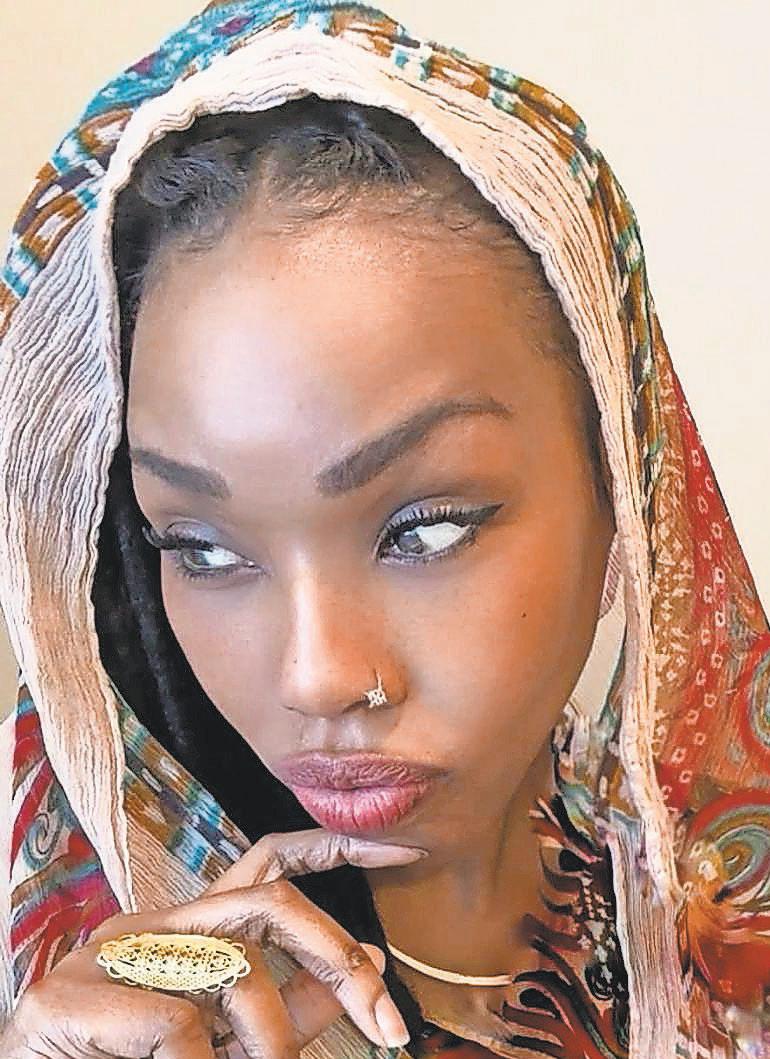
categorization,
to be caged by such labels as abstract artist, Black artist, Black woman artistist, Muslim woman artist or “not-Black-enough” artist.
work, because I did do it in the midst of grieving and … the energy and spirit of my sister was with me in a way.”
“In that land where a princess sits under lock and key,
Pining behind massive walls.
There gardens surround a palace all of glass;
There Firebirds sing by night…”
-From the poem, “A Winter’s Journey,” which inspired Igor Stravinsky’s, “The Firebird.”
During her ascension as an artist, Bilal has defied categories. Yet, there are those who seem determined to build cages for her: abstract artist, Black artist, Black woman artistist, Muslim woman artist, not-Blackenough artist.
“There’s this idea that Blackness is reduced to concrete representations. Blackness is powerful in a literal way but it’s so limiting because Blackness is abstract,” Bilal said.
“It doesn’t get more abstract than the Black experience,” the artist continued. “It’s atmosphere, it’s vibration, it’s density, that’s Blackness. It’s interruption, it’s mystery, it’s the beginning of all like the cosmos.
“I’m really determined to present myself in the wholeness of my Blackness and to create art that can be considered Black art, but doesn’t have to be,” she added.
AP Photo/Junji Kurokawa, File
Sonny Rollins performs during a concert in Tokyo, Oct. 4, 2010.
By Sean Yoes Special to the AFRO
Imani Bilal in her latest exhibit, “The Beauty of Enough,” at the Mazlish+Wright Contemporary gallery in Brooklyn, explores themes of selfhood, grief and emotional restoration.
Courtesy photo Self-taught artist Imani Bilal defies
refusing

‘Reparations Sunday’ brings a hot debate into Black churches
By Joseph Williams Word In Black
More than a half-century ago, activist James Forman walked into New York’s hallowed Riverside Church during Sunday worship and made a demand that White religious America had spent generations avoiding: Pay reparations.
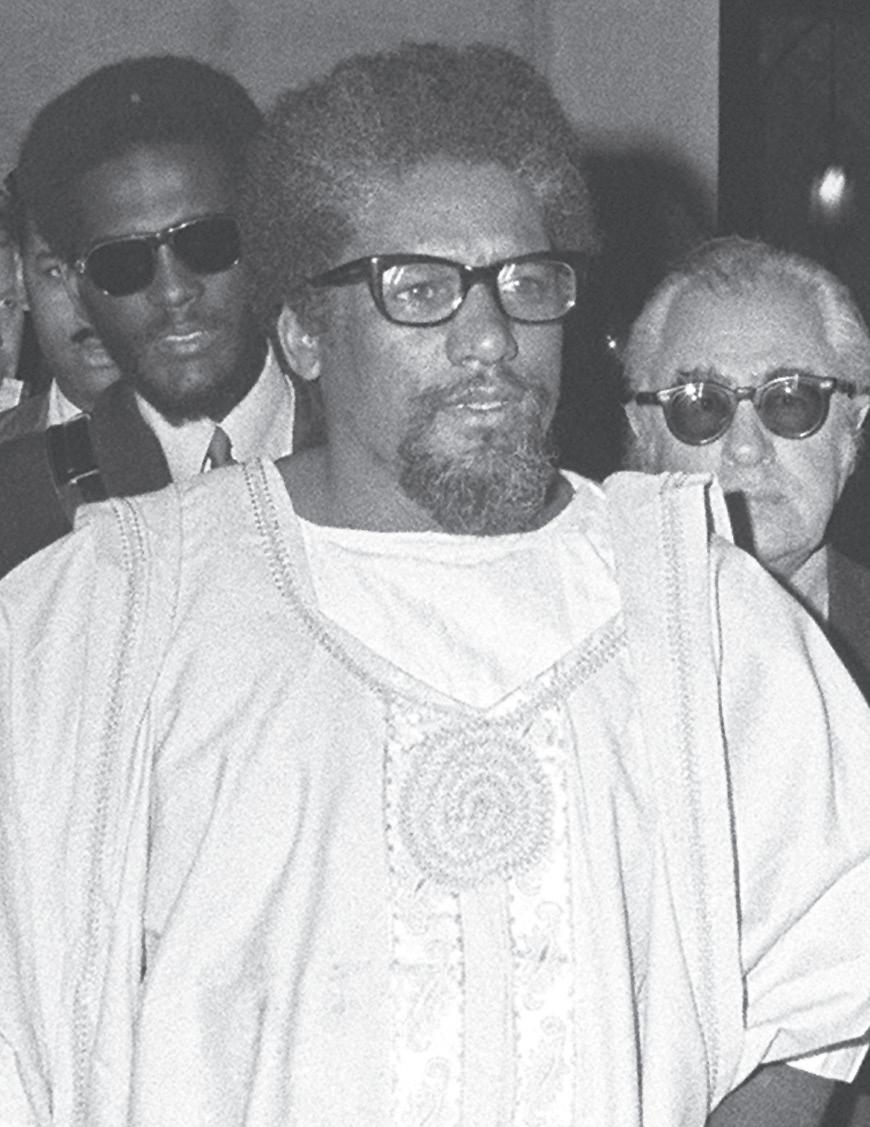
In this May 11, 1969, file
walks in New York’s Riverside Church. Fifty years ago, the SNCC co-founder interrupted the Sunday worship service and demanded $500 million in reparations for the mistreatment of African Americans from White churches and synagogues. The demands never caught fire in the broader American religious community. But decades later, the reparations debate has reentered the national spotlight, with some faith-based institutions leading the way.
In what became known as the “Black Manifesto,” Forman called on White faith communities to contribute $500 million to Black America. It would be long-overdue recompense for centuries of stolen labor, systemic oppression and plunder — brazen crimes that helped America build the world’s most powerful economy.
Many White clergy recoiled. Others denounced him as divisive, militant or dangerous. The sanctuary, they believed, was no place for demands about debt.
This weekend, the debate Forman forced into the pews is returning to the pulpit with fresh urgency, especially as the nation heads towards its 250th anniversary — and as the Trump administration continues its sweeping rollback of civil rights protections.
Across the country, Black churches are observing “Reparations Sunday,” using sermons, prayer vigils, film screenings and educational forums to argue that reparations are not merely a political talking point or academic theory, but a moral obligation rooted in Scripture itself.
The movement, supported by the National African American Reparations Commission and other faithbased advocates, reflects how the reparations conversation has evolved in recent years.
Once largely confined to college lecture halls, think-tank symposiums, and activist circles, the push for reparations is increasingly being woven into worship services and congregational life. Churches are collecting offerings for reparative causes, supporting historically Black colleges and universities, teaching members about legislation like HR-40 and framing
economic justice as inseparable from Christian discipleship.
For many pastors, the argument is as theological as it is political.
Theologians point to Deuteronomy 15, for example, which commands that formerly enslaved people not be sent away “empty-handed.” It’s evidence, they say, that repair, restitution and restoration are biblical principles, not modern inventions.
In churches embracing Reparations Sunday, supporters argue the observance is ultimately about more than money. It is about forcing America to confront a truth it has repeatedly tried to bury: that the nation’s wealth and power were built on Black suffering — and that repentance without repair is merely performance.
“America, you owe us. What you done to us has been immoral. It’s been evil. It’s been unjust,” Dr. Frederick Haynes III, senior pastor of Friendship West in Dallas, Texas, told a 2022
gathering in San Francisco. ”What you done to us has been immoral. It’s been evil. It’s been unjust. The only way to bring salvation to America—you gotta pay us what you owe us.”
The Rev. Robert Turner, a Baltimore pastor known for monthly walks to Washington advocating for reparations, recently described the issue in deeply spiritual terms while standing outside the National Museum of African American History and Culture — just blocks from the White House and the Treasury Department.
Turner carried a sign reading “Reparations Now” during his 43-mile walk from Baltimore to Washington earlier this spring. Meanwhile, a growing number of reparations discussions are taking shape at the state and local level.
In Maryland, a state commission studying the legacy of racial terror recently recommended financial compensation for descendants of
lynching victims and communities harmed by racial violence.
Some supporters say Reparations Sunday gives churches an opportunity to move the discussion from abstract politics to personal responsibility. Others argue that the observance reminds congregations that reparations are not solely about money, but include historical acknowledgment, public truth telling, educational opportunity, land access, housing equity and healing generational trauma.
At its core, Reparations Sunday asks churches to wrestle with an old biblical question in a modern American context: What does repentance look like when the wounds of injustice still remain visible?
For many congregations this year, the answer begins with remembrance, prayer and the conviction that faith without justice remains incomplete. This article was originally published by Word In Black.
United Baptist Missionary Convention marks 100 years of faith, fellowship and community service
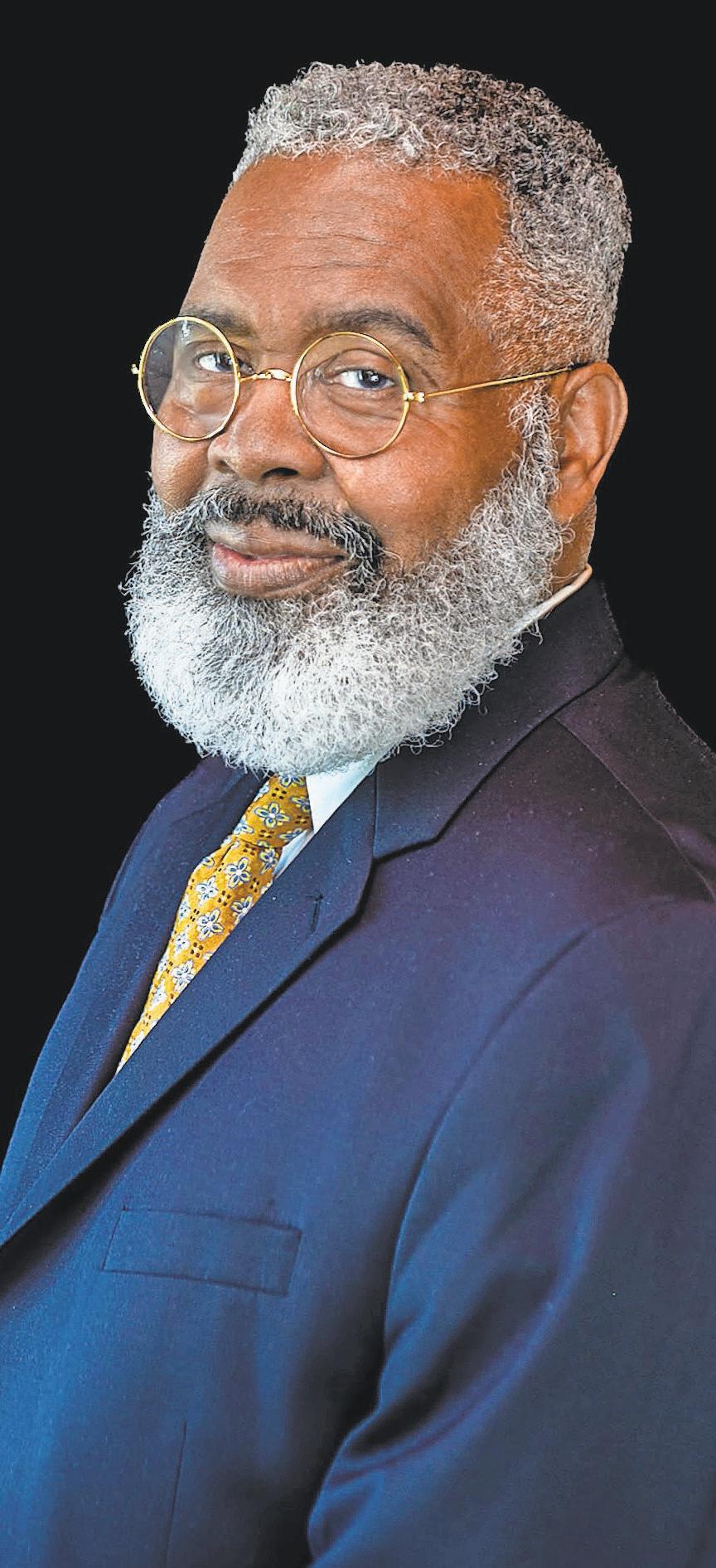
By Victoria Mejicanos AFRO Staff Writer vmejicanos@afro.com
The United Baptist Missionary Convention (UBMC) of the State of Maryland celebrated its 100th anniversary May 22, at the Sheraton, Baltimore North in Towson.
The convention was established on Dec. 10, 1926, by Rev. Daniel Glasco Mack, of Macedonia Baptist Church, to support and meet the needs of Black Baptists seeking greater venues for Christian education, fellowship and collaboration among churches.
Today, the convention includes 130 member churches and several auxiliaries serving women, men, youth, educators and young adults.
The convention also owns and operates The Maryland Baptist Aged Home. The home is the oldest African-American owned and operated nursing home in the state of Maryland, according to information provided by the convention’s website. Governed by the UBMC board of trustees, the 29-bed facility provides short- and long-term nursing care to all residents regardless of race, sex, religion or country of origin.
While the ministries within the convention have expanded over time, mentorship and community remain central. For current president of the convention Greggory R. Maddox, much of the mission remains the same, but has been “upgraded.”
“We’re putting some new
paradigms in place that cause our people to be more aware of different things,” said Maddox.
The church continues to support young adults in the convention and educate senior members about health and technology issues.
Throughout its 100-year history, one of the convention’s central focuses has been mentoring the next generation of Baptist leaders.
Maddox said he is encouraged by the “plethora of young gifted African-American preachers” entering ministry today. He said that they are more formally seminary-trained than previous generations and praised the sincerity of the convention’s young leaders.
“I’m hopeful that the young preachers of today and in the future will be dedicated and be critically acknowledging their calling,” said Maddox. “[I hope] they prepare themselves to do the very best they can and serve their congregation with sincerness and not necessarily wonder about the financial and other trappings.”
Eloise Jackson, who has been a member of the convention since 1979 and currently serves in the women’s auxiliary, said the convention’s impact goes beyond church walls. Through the women’s auxiliary, she has fed people, provided Christmas for those who may not have had one otherwise, donated to homeless shelters and provided scholarships for youth, Jackson said.
Outside of service to those
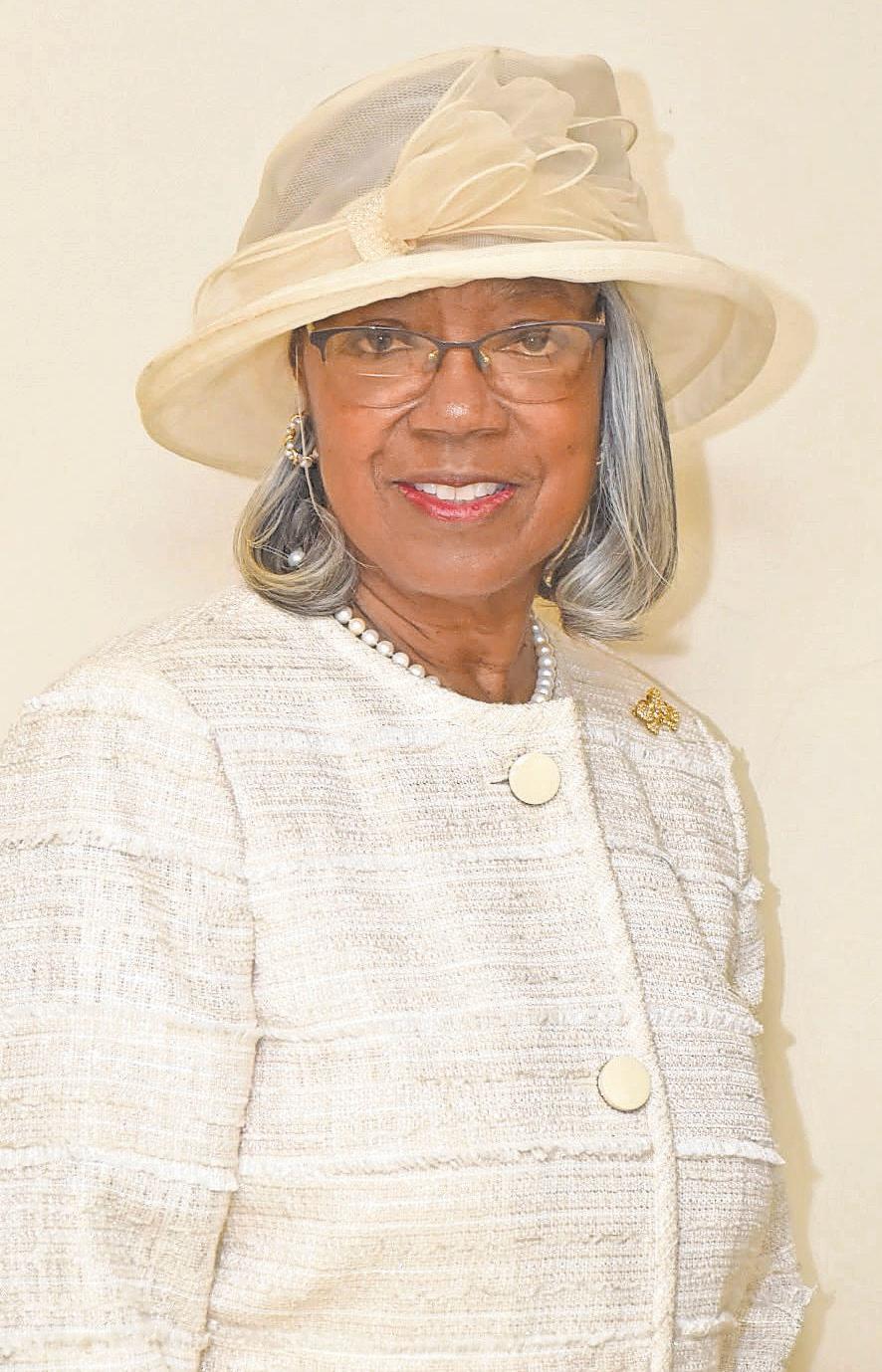
Eloise Jackson has been a member of the convention since 1979 and currently serves in the women’s auxiliary. She says the community support goes beyond church walls.
throughout the state, Jackson shared that the community uplifts each other through difficult times. When she lost her mother and husband in the same year, the women’s auxiliary was her support system. She says that when she thinks about the convention and its impact through the years, she thinks of “the love that just showers out from the convention itself.” Maddox said that the
success of the convention for the past 100 years is because of its members.
“I want people to understand that our convention has lasted 100 years because of the faithfulness of the constituency both spiritually and financially,” he said. “It’s a viable entity in the community. It supplies not only its constituency but those who are around with different resources that anybody can use.”
AP Photo, File
photo, civil activist James Forman
Unsplash / Debby Hudson
A growing number of Black churches across the United States are observing “Reparations Sunday,” reframing reparations as a biblical and moral obligation rooted in justice, restoration and truth-telling.
Courtesy photo
Courtesy photo Greggory Maddox is the current president of the United Baptist Missionary Convention of the State of Maryland.

Elon Musk expands AI plant accused of polluting Black areas
Updated FAFSA form helps Black students get more aid
By Bria Overs Word In Black
Over one million students applied for financial aid through the Free Application for Federal Student Aid (FAFSA) in the first week of its opening. However, this year was different. On Dec. 30, the Department of Education released the updated and redesigned application.
plant supplies power to Colossus 1 and Colossus 2, a massive pair of supercomputers that Musk’s xAI company has built in the area. The facilities both run and train Grok, Musk’s entry in the crowded AI chatbot field.
The new turbines bring the total number operating there from 27 to 33, and the additions are some of the largest in use at the facility, capable of generating even more air pollution.
“With the Better FAFSA now live 24/7, we are moving the federal financial aid application into the 21st century and, in the process, putting affordable higher education within the reach of 610,000 students
For months, the NAACP and a coalition of environmental justice groups have accused Elon Musk’s artificial intelligence company of poisoning Black communities in North Mississippi and Memphis with an improvised power plant fueled by unpermitted gas turbines. Now, even after the groups sued him, alleging violations of the Clean Air Act, Musk appears to be escalating the fight.
The billionaire recently added six more gas-powered turbines to the sprawling xAI data center operation, and civil rights and environmental advocates are racing to prevent the pollution from becoming permanent.
The NAACP, represented by Earthjustice and the Southern Environmental Law Center, asked a federal court earlier in May to immediately shut them down.
‘Blatant disregard’ for law
“We have heard from students and families that the new FAFSA form is a better experience that’s easier to complete.”
Increasing pollution
“We have heard from students and families that the new FAFSA form is a better experience that’s easier to complete,” said Federal Student Aid Chief Richard Cordray in a statement.
In a statement, Abre’ Conner, the NAACP’s director of environmental and climate justice, said that “the urgency of ensuring that our communities’ health and environment are protected is clear.” Musk’s deliberate expansion of an “unpermitted” power plant, she says, is an end run around environmental safeguards, and shows xAI’s “blatant disregard for the law.”
from families with low incomes who will now be eligible for Pell Grants for the very first time,” U.S. Secretary of Education Miguel Cardona said in a statement in January.
Ben Grillot, a senior attorney at the Southern Environmental Law Center, said in a statement that the court must act “in order to protect communities in North Mississippi and Memphis from the tech company’s harmful pollution.”
Sitting just across the state line from Memphis, the ad hoc power
According to the department, nearly 1.5 million more students will receive $7,395, the maximum award of the Federal Pell Grant, bringing the total to more than 5.2 million students. The new form should take around an hour to complete, and students and their families can skip “as many as 26 questions, depending
Adding six more turbines “further exacerbates the health risks facing families in North Mississippi and the Greater Memphis region,” Conner said. “We will not stand by and idly watch as the Clean Air Act is ignored. We will continue to fight to ensure all polluters, including billionaires’ companies, understand that the law is not to be treated as a suggestion while local communities

bear the consequences.”
on their individual circumstances.”
The turbines are running near Southaven, Mississippi, a residential community with homes, schools, churches and workplaces. The city, which is part of the greater Memphis metro area, is about one-third Black.
Bad air is even worse
Across the state line in Memphis, xAI’s Colossus 1 facility is located near Boxtown, a community
Congress passed the Fostering Undergraduate Talent by Unlocking Resources for Education (FUTURE) Act in 2019 and the FAFSA Simplification Act in 2022, allowing changes to the form. According to the 20242025 Better FAFSA Better Future Roadmap, more features will come in the near future.
“Financial aid is a critical part of the college planning process, but many families are unaware of the necessary steps to take or don’t think they qualify for support when they actually do,” said Autumn Caviness, director of Real Talk. Real Talk is a “career and college exploration initiative” for Black students and their families as part of BigFuture, a free online college planning guide.
founded by freedmen that remains a predominantly Black neighborhood.
Musk pioneered the use of gas-powered turbines, which are mobile and, under some circumstances, can be used without regulatory permits or an environmental review because they are considered temporary.
More questions are skippable because the department previously acknowledged that not all students are “in touch with their parents” and “approximately 300,000 students are experiencing homelessness.” The new form allows users to securely and directly import tax information from the Internal Revenue Service (IRS) instead of manually entering it.
A 2018 National Center for Education Statistics report found that 72 percent of Black undergraduate students received a Federal Pell Grant with an average annual amount of $4,900, more than any other racial group. Caviness said there has been a lot of interest from Black students and families in their offerings, specifically their event about FAFSA with financial aid experts from colleges and universities.
But according to the NAACP, the turbines are now likely the leading source of nitrogen oxide emissions in the greater Memphis area.
“We believe that all young people, especially our underrepresented students, deserve access to the necessary information that opens all doors,” she said.
Nitrogen oxides generate smog, which is already a significant issue around Memphis and in Northern Mississippi. Both DeSoto County, Miss., where Southaven is located, and Shelby County, Tenn., home to Memphis, recently received F grades for smog pollution from the American Lung Association.
This article was originally published by Word in Black.
This article was originally published by Word In Black.
Black teens face a hidden crisis of dating violence
For Black kids, underfunded public schools are inequality factories
severe abuse that still impacts her to this day.”
By Joseph Williams Word In Black
Violence between young people aged 14 to 24 doesn’t match fantasies about young love. It’s worse among Black youth—but there are answers.
Mental health counselor
For the Black community, education is considered an investment, the best way for Black children to get ahead in life, and a key to overcoming systemic racism. But a new study indicates states are short-changing the schools Black children attend, worsening the achievement gap.
Regine Roy had “a situation” on her hands. More accurately, the 17-year-old female member of her therapy group did — and didn’t know it.
physical hold on her — circumstances that Roy considers the definition of intimate partner violence.
Understanding vulnerabilities
IPV increasingly arrive too late, or not at all.
Risky behaviors
That history shapes how Roy approaches her work, starting with building trust in a group setting. It can take weeks for a member to feel secure enough to tell their stories.
and passwords, or pressure to spend more time together — all of it can read like devotion. But those behaviors, Norris says, “can quickly turn into isolation” from close friends and family.
A study titled “The Adequacy and Fairness of State School Finance Systems” found that Black students are twice as likely as White students to attend school in districts with subpar government funding and more than three times as likely to live in “chronically underfunded” districts.
The teenager, participating in Roy’s program for young people, was telling Roy that she and her boyfriend, a 27-yearold man with several children, had an argument. At one point, the teen said, her boyfriend told her she was “at the bottom of his totem pole.” But Roy saw a giant red flag.
Advocates and health professionals say stories like the 17-year-old’s underscore a troubling reality: Black youth are navigating abusive and manipulative relationships long before adulthood.
Roughly 1 in 12 U.S. high school students who dated in the previous year reported physical dating violence, and 1 in 10 reported sexual violence from an intimate partner, according to the Centers for Disease Control and Prevention.
“My biggest goal,” she says, “is getting people safe enough to actually acknowledge — not just to themselves, but out loud to others — ‘OK, this is what I’m dealing with.’”
Technology, such as cell phones, has made things worse. “There is more of an opportunity to control, [conduct] surveillance, and have constant access,” she says.
“This is often disguised as connection and care.”
could be unprocessed trauma, attachment wounds, feelings of shame and powerlessness or even internalized models of dominance,” she says. But she cautions that the therapy isn’t allowed to become “a space where harm is minimized by intellectualizing abusive behavior.”
Both Norris and Roy say teens are more likely to avoid abusive relationships if they have a steady model of healthy attachment in their lives.
Roots of abuse
At the same time, researchers found that “educational opportunity is unequal in every state — that is, higherpoverty districts are funded less adequately than lowerpoverty districts,” according to the report.
“I asked her, ‘Do you know what a totem pole is?’” Roy recalls. “And she said she guessed it meant she was at the very bottom of the people in his life.”
The funding disparities are likely to further increase “opportunity gaps” between Black and White children, creating what one researcher called “inequality factories.” And the disparities are occurring as school districts set academic achievement standards that children in underfunded districts often struggle to meet.
“And I asked, ‘What’s having you stay there? ‘Are you okay with that?’” The teenager admitted her partner had an emotional and
What begins as controlling behavior on phones and social media or an occasional shove can escalate into emotional, physical or sexual violence that many young people don’t immediately recognize as abuse. Helping them realize what’s happening and getting them out of danger takes patient guidance and a keen awareness of what makes a young person vulnerable.
The findings, compiled by a team of researchers from the Albert Shanker Institute, the University of Miami and Rutgers University, evaluated the K-12 school finance systems of all 50 states and the District of Columbia. The project analyzed data from 2009 — the
But health professionals working with youth say traditional methods intended to stop

school districts and states spending far more per pupil —
to districts that need it most),” according to the study. “We have devised a framework that evaluates states based largely on how well they accomplish this balance. We assess each state’s funding while accounting directly for the students and communities served by its public schools.”
The framework found that in 2021, 39 of 50 states
Data from the CDC’s 2021 Youth Risk Behavior Survey, the most recent available, shows Black youth are disproportionately affected, with elevated rates of victimization tied to systemic issues: poverty, neighborhood disinvestment and parental mistreatment, compounded by racial and gender discrimination.
Roy, who has worked with clients as young as 13, has built a framework she calls MESSY: Meditate, Evaluate, Share, Situate, Yield. The process guides the young person through recognizing the harm, overcoming shame, and evaluating the relationship with a trusted friend or relative. Only at the fourth step — situate — does the conversation turn to safely leaving the relationship.
Norris helps clients distinguish between the two. She watches for adolescents who are “shifting who they naturally are, becoming withdrawn, hypervigilant or anxious, and disconnected from support.”
Nappy.co/holisticcare
A new report reveals how hundreds of billions of dollars have been snatched away from the nation’s public schools since 2016.
spending deficit, meanwhile, cost schools “over $360 billion between 2016 and 2021,” the report states.
Girls are more likely to experience IPV than boys, and students identifying as LGBTQ, or who are unsure of their gender identity, report even higher rates.
At that point, “women are usually the ones at highest danger,” Roy says. It can take years to reach that path, she says, and the Black community’s cultural norms can make it harder to find.
Yet “most states have increased their expectations for the performance of schools, teachers and students” without increasing funding needed to reach the higher benchmarks, Bruce Baker, a University of Miami professor and one of the report’s co-authors, said in a statement. The “permanent divestment” in public schools, he says, is a mistake by states who “have refused to make their districts whole after the disastrous cuts during that recession.”
Teens who experience dating violence are more likely to report symptoms of anxiety and depression as well as tobacco, drugs or alcohol use, and — in the most extreme cases — suicidal ideation. They also face an elevated risk of IPV during college and adulthood.
‘They practice rage’
The report also found that 20 percent of all U.S.
“The
Trust and security
Roy, the New York social worker, has spent more than a decade working with young women and families inside those statistics. She knows the issue personally: the fourth of five children, Roy grew up with a father who was “incredibly abusive” before abandoning the family when she was 7.
“There’s still that corporal punishment legacy from slavery — the normalization of hitting,” Roy says. At the same time, some Black men “have not dealt with their emotions, [and] don’t know how to process their own neglect.”
reality is that it costs more to achieve higher educational outcomes, and we’re unlikely to see much return on our investments when we’re not really making those investments.”
“I not only heard the abuse that was happening in my home, but I witnessed it,” she said, noting her mother and her older siblings bore the worst of it. “My mother experienced
Rather than manage their anger, “they practice rage,” Roy says. “And in this patriarchal world, it’s accepted — and the people who are impacted the most are the women closest to them.”
Krista Norris, a marriage and family therapist in suburban Dallas, sees many young people who misread warning signs.
“Behaviors that are manipulative, controlling or violating can be misinterpreted as care and love,” Norris says. “Even instances of jealousy can be interpreted as protective.”
Excessive texting, demands for shared locations
public school students attend “chronically below adequate” districts, in which actual state funding is the furthest below adequate levels. But 60 percent of those districts are in just 10 Sun Belt states: Alabama, Arkansas, Florida, Georgia, Louisiana, Mississippi, Nevada, New Mexico, North Carolina and Texas.
“The reality is that it costs more to achieve higher educational outcomes,” said Baker, “and we’re unlikely
“[Unhealthy] cycles do not have to continue. If there is at minimum one model of healthy attachment, this can disrupt the intergenerational transmission,” says Norris. Roy puts it more bluntly. Resources for young people in abusive relationships exist, she said, but they are less likely to take advantage “if there’s shame attached to it.”
revenue but are choosing not to do so.”
Not surprisingly, Black students bore the brunt of the funding downturn.
For the men she treats who have perpetrated abuse, Norris tries to determine the source of the anger by looking at the “shadow,” or subconscious side of an individual. This might come up when an individual is unable to tolerate moments of vulnerability or emotional regulation. Male perpetrators of IPV may struggle with vulnerability because it’s “unsafe, dangerous or weak,” which then activates defensive control, manipulation, rage and fear.“Beneath the violence there
For the young people in her workshops, that is where the work begins: not when a survivor calls a hotline, but at the much earlier moment of saying the thing out loud.
“When he shoved you, or when he called you a name — when is the line drawn?” Roy said. “That’s the point of entry where I come in.”
Black students “are twice as likely as White students to be in districts with funding below estimated adequate levels, and 3.5 times more likely to be in ‘chronically underfunded’ districts,” according to the study. The discrepancies between Hispanic and White students, the report states, “are smaller but still large.”
This article was originally published by Word In Black.
The largest opportunity gaps “tend to be in states such as Connecticut, New York and Massachusetts,” where statewide spending adequacy is relatively high “but where wealthier districts contribute copious amounts of local (property tax) revenue to their schools,” according to the study. “This exacerbates the discrepancies in funding adequacy between these districts and their less affluent counterparts.”
Matthew Di Carlo of the Albert Shanker Institute, who co-authored the report, believes the opportunity gaps “are essentially inequality factories, with affluent districts funded to achieve higher student outcomes than lower-income districts, year after year.” And the inequality, he said, is a feature — not a bug.
“We cannot expect to close achievement gaps,” he said, “when states’ systems are designed to reproduce them.”
Bridging those gaps will require states to make a host of changes to district funding, including revamping district funding targets and increasing revenue, particularly state aid, according to the report. Researchers also believe the federal government must step up to help states that, due to high poverty and small
By Willy Blackmore Word In Black
AP Photo/George Walker IV
Civil rights and environmental groups say xAI’s growing network of gas-powered turbines near Southaven and Memphis is worsening air pollution in communities already struggling with poor smog ratings.
The Department of Education expects the updated and redesigned financial aid form to help students get more for their higher education.
Unsplash/ Towfiqu Barbhuiya
By Jennifer Porter Gore Word In Black
Unsplash / Kev Kombs Mental health experts say controlling behaviors among teens are often mistaken for signs of love and protection, masking deeper patterns of abuse.

Petitions
BOARD OF LIQUOR LICENSE COMMISSIONERS FOR BALTIMORE CITY NOTICE – MAY 2026
for confirmation of the date, time, and place for all matters
by the Board.
1. CLASS “A” BEER, WINE & LIQUOR LICENSE
Applicant: Artha Holdings, LLC T/a Edmondson Liquors & Food StoreAnoj Jung Thapa
Petition: Transfer of ownership requesting delivery of alcoholic beverages
Premises: 2000 Edmondson Avenue 21223
(City Council District: 9th; State Legislative District: 40th)
Notice to Unknown Heirs
JOYCE PIERCE, whose address is 8228 EASTERN AVE NW, WASHINGTON, DC 20012 was appointed Personal Representative of the estate of THEODORE H PIERCE who died on FEBRUARY 13, 2025 without a Will and will serve without Court supervision. All unknown heirs and heirs whose whereabouts are unknown shall enter their appearance in this proceeding. Objections to such appointment shall be filed With the Register of Wills, D.C., Building A, 515 5th Street, N.W., 3rd Floor, Washington, D.C. 20001, on or before November 22, 2026 Claims against the decedent shall be presented to the undersigned with a copy to the Register of Wills or filed with the Register of Wills with a copy to the undersigned, on or before November 22, 2026 or be forever barred. Persons believed to be heirs or legatees of the decedent who do not receive a copy of this notice by mail within 25 days of its publication shall so inform the Register of Wills, including name, address and relationship. Date of first publication: May 22, 2026 Name of newspaper and/or periodical: Daily Law Washington Reporter AFRO American Newspapers
SUPERIOR COURT OF THE DISTRICT OF COLUMBIA PROBATE DIVISION ADMINISTRATION NO. 2026ADM000457 ELIZABETH M. SMITH aka ELIZABETH MARY SMITH Name of Decedent
2. CLASS “B” BEER & LIGHT WINE LICENSE
Estate of JUNE C. TALIAFERRO
Deceased
from the Anne Arundel County Web Page at the following address: https://www.aacounty.org/departments/central-services/purchasing/ P.O.R.T./bids/index.html. Proposals will be received until time/date shown below, please submit your Proposal electronically via the PORT. Proposals received after the date and time set will be rejected Due by 3:00 p.m. Local Time, Thursday, July 2, 2026
Project: OurWaater Program – Communication and Outreach Support Services Solicitation No.: RFP26000229
Contact: Kim Lee – 410-222-4142 LEGAL NOTICES SUPERIOR COURT OF THE DISTRICT OF COLUMBIA PROBATE DIVISION ADMINISTRATION NO. 2004ADM000016
BOARD OF LIQUOR LICENSE COMMISSIONERS FOR BALTIMORE CITY NOTICE – MAY 2026
Petitions have been filed by the following applicants for licenses to sell alcoholic beverages at the premises set opposite their respective names. The real property for these applications will be posted on or about May 18, 2026. Written protests concerning any application will be accepted until and including the time of the hearing. Public hearings may be scheduled on or after May 28, 2026 at 10:30 AM in the Liquor Board Hearing Room, located at 200 St. Paul Place, Suite 2300, Baltimore, Maryland 21202. Please visit baltimorecity.gov/llb under the link for “Hearing Schedules” for confirmation of the date, time, and place for all matters being heard by the Board.
1. CLASS “A” BEER, WINE & LIQUOR LICENSE
Applicant: Artha Holdings, LLC T/a Edmondson Liquors & Food StoreAnoj Jung Thapa Petition: Transfer of ownership requesting delivery of alcoholic beverages Premises: 2000 Edmondson Avenue 21223
(City Council District: 9th; State Legislative District: 40th)
2. CLASS “B” BEER & LIGHT WINE LICENSE
Applicant: La Esquinita Del Sabor, LLC T/a Trade Name Pending - Jose Edgar Vargas Campos and Christy Ann Almony
Petition: Transfer of ownership
Premises: 3733-38 E. Lombard Street 21224
(City Council District: 1st; State Legislative District: 46th)
3. CLASS “B” BEER, WINE & LIQUOR LICENSE
Applicant: Vivians, LLC T/a
Applicant: La Esquinita Del Sabor, LLC T/a Trade Name Pending - Jose Edgar Vargas Campos and Christy Ann Almony
Petition: Transfer of ownership
Premises: 3733-38 E. Lombard Street 21224
SHERRI L. WYATT, ESQ 114 WEBSTER STREET, NE, STE 100 WASHINGTON, DC 20011 Name and Address of Attorney Notice of Appointment, Notice to Creditors and Notice to Unknown Heirs
(City Council District: 1st; State Legislative District: 46th)
3. CLASS “B” BEER, WINE & LIQUOR LICENSE
Applicant: Vivians, LLC T/a Vivian’s - Jacqueline Erin Mearman
Petition: New restaurant license requesting outdoor table service, offpremises catering, and delivery of alcoholic beverages
Premises: 3100 E. Baltimore Street 21224
(City Council District: 13th; State Legislative District: 46th)
Applicant: Fezzy, LLC T/a Unity Bar - Michael Fiseha
MICHAEL W. SMITH AND DEBBIE SMITH RAYFORD, whose addresses are 12922 ALLERTON LN., SILVER SPRING, MD & 1837 REDWOOD TERR., NW, WDC 20012; were appointed Personal Representative(s) of the estate of ELIZABETH M. SMITH who died on DECEMBER 31, 2025, with a will and will serve without Court supervision. All unknown heirs and heirs whose whereabouts are unknown shall enter their appearance in this proceeding. Objections to such appointment shall be filed with the Register of Wills, D.C., Building A, 515 5th Street, N.W., 3rd Floor, Washington, D.C. 20001, on or before NOVEMBER 15, 2026. Claims against the
Petition: Transfer of ownership with continuation of live entertainment and outdoor table service, requesting off-premises catering
Premises: 111 W. Centre Street 21201
(City Council District: 11th; State Legislative District: 40th)
Applicant: Nepal Bistro, Inc. T/a Lumbini Restaurant - Dinesh Kumar
JOYCE PIERCE Personal Representative TRUE TEST COPY REGISTER OF WILLS 05.22, 05.29, 06.05.26
Gurung and Rajesh K. Raut
Petition: Transfer of ownership with continuation of live entertainment, requesting off-premises catering and delivery of alcoholic beverages
Premises: 322 N. Charles Street 21201
(City Council District: 11th; State Legislative District: 40th)
Applicant: Luigi, LLC T/a GameOn Bar & Arcade - Casey Taylor Linthicum and John T. Woods
Petition: Transfer of ownership and location of a Class “B” BWL license
presently located at 1113 S. Charles Street to 1118 S. Charles Street
requesting live entertainment and outdoor table service
Premises: 1118 S. Charles Street 21230
(City Council District: 11th; State Legislative District: 46th)
Applicant: Viale Pizza, LLC T/a Trade Name Pending - Kate Mariya
Victoria Shotwell
Petition: New restaurant license requesting live entertainment, outdoor table service, and off-premises catering
Premises: 3535 Chestnut Avenue 21211
(City Council District: 14th; State Legislative District: 40th)
Applicant: Papi’s Lauraville, LLC T/a Alexander’s Soha - Charles Gjerde, Carrie Podles, and John Burke
Petition: Request to add outdoor table service and off-premises catering
Premises: 4801 Harford Road, Suite H1 21214
(City Council District: 3rd; State Legislative District: 45th)
4. CLASS “B”, BEER, WINE & LIQUOR LICENSE (HOTEL-MOTEL)
Applicant: GF Hospitality BHMD Associates, LLC T/a Renaissance Baltimore Harborplace Hotel - Jeffrey Kolessar and Patricia YevicsEisenberg
Petition: Transfer of ownership with continuation of live entertainment and outdoor table service
Premises: 200-02 E. Pratt Street 21202
(City Council District: 11th; State Legislative District: 46th)
5. CLASS “BD7” BEER, WINE & LIQUOR LICENSE
Applicant: The Charmery, LLC T/a The Charmery - David Alima
Petition: Transfer of
36th Street to 801 W. 26th Street
requesting outdoor table service and off-premises catering (Amended)
Premises: 801 W. 36th Street 21211
(City Council District: 14th; State Legislative District: 40th)
Applicant: Sri Saahhe Nath, LLC T/a North Café - Urmala Bai Maheshwari
Petition: Transfer of ownership requesting delivery of alcoholic beverages
Premises: 3716 W. Belvedere Avenue 21215
(City Council District: 5th; State Legislative District: 41st)
Applicant: Melmat, Inc. T/a Locals - Djordje Vujatovic
Petition: Transfer of ownership requesting live entertainment
Premises: 25 E. Cross Street 21230
(City Council District: 11th; State Legislative District: 46th)
Applicant: MDBA Group, LLC T/a Big Joe’s Love Nest - Manish Khadka
Petition: Transfer of ownership
Premises: 2830 Edmondson Avenue 21223
(City Council District: 9th; State Legislative District: 40th)
Applicant: Barracuda, LLC T/a Barracuda’s Tavern - William B. Hughes, III
Petition: Request to add outdoor table service
Premises: 1230 E. Fort Avenue 21230
(City Council District: 11th; State Legislative District: 46th)
Applicant: Adams Neighborhood Sports Bar, LLC T/a J & M Sports Tavern
- Jamar M. Adams, Sr.
Petition: Transfer of ownership
Premises: 2949 Frederick Avenue 21223
(City Council District: 9th; State Legislative District: 40th)
Applicant: Onyx & Ember, LLC T/a Trade Name Pending - Danielle Silver
Harrington Petition: Transfer of ownership with continuation of outdoor table service, requesting delivery of alcoholic beverages
Premises: 1901 Gough Street 21231
(City Council District: 13th; State Legislative District: 46th)
Applicant: Perla De Oro, LLC T/a Costa De Oro - Lucia Catalan Guzman
Petition: Transfer of ownership with continuation of live entertainment
(Amended)
Premises: 4330 E. Lombard Street 21224
(City Council District: 1st; State Legislative District: 46th)
Applicant: New Maceos, LLC T/a Maceos - Juanita C. Bass
Petition: Transfer of ownership requesting off-premises catering
Premises: 1924-26 N. Monroe Street 21217
(City Council District: 7th; State Legislative District: 40th)
Applicant: 2933 O’Donnell, LLC T/a Trade Name Pending - Moshoula Koukides Petition: Transfer of ownership with continuation of outdoor table service, requesting off-premises catering Premises: 2907-11 O’Donnell Street 21224
(City Council District: 1st; State Legislative District: 46th)
6. CLASS “D” BEER (BREWERY) LICENSE
1924-26 N.
(City Council District: 7th; State Legislative District: 40th)
Applicant: 2933 O’Donnell, LLC T/a Trade Name Pending - Moshoula Koukides
Petition: Transfer of ownership with continuation of outdoor table service, requesting off-premises catering Premises: 2907-11 O’Donnell Street 21224
(City Council District: 1st; State Legislative District: 46th)
6. CLASS “D” BEER (BREWERY) LICENSE
Applicant: Pickett Brewing, LLC T/a Pickett Brewing Company - Nick John Lambropoulos
Petition: Request to add live entertainment and outdoor table service
Premises: 1130 S. Paca Street 21230
(City Council District: 10th; State Legislative District: 46th)
7. CLASS “D” BEER, WINE & LIQUOR LICENSE
Applicant: Feed the Scene Presents, LLC T/a The Sidebar - Rachel Taft
Petition: Transfer of ownership with continuation of live entertainment Premises: 218-20 E. Lexington Street 21202
(City Council District: 11th; State Legislative District: 46th)
City of Baltimore Department of Finance Bureau of Procurement
Sealed proposals addressed to the Board of Estimates of Baltimore will be Received until, but not later than 11:00 am local time on the following dates for the stated requirements.
July 1, 2026
Supply & Delivery of Bulk Chemicals: Water and Wastewater Treatment Facilities- RFQ-000770
ENTIRE SOLICITATION CAN BE VIEWED AND DOWNLOADED BY VISITING THE WEBSITE: cityservices.baltimorecity.gov/suppliers/bid-opportunities
City of Baltimore Department of Finance Bureau of Procurement
Sealed proposals addressed to the Board of Estimates of Baltimore will be Received until, but not later than 11:00 am local time on the following dates for the stated requirements.
June 03, 2026
VETERINARY POLICE K-9 SERVICES RFQ-000811
ENTIRE SOLICITATION CAN BE VIEWED AND DOWNLOADED BY VISITING THE WEBSITE: cityservices.baltimorecity.gov/suppliers/bid-opportunities
City of Baltimore Department of Finance Bureau of Procurement
Sealed proposals addressed to the Board of Estimates of Baltimore will be Received until, but not later than 11:00 am local time on the following dates for the stated requirements.
July 1, 2026
Envelope Assessment, Air Sealing, Insulation, and Airtightness Testing for Municipal Buildings- RFQ-000817
O.E.M. Parts & Service for Cummins Engines- RFQ-000818
ENTIRE SOLICITATION CAN BE VIEWED AND DOWNLOADED BY VISITING THE WEBSITE: cityservices.baltimorecity.gov/suppliers/ bid-opportunities
City of Baltimore Department of Finance Bureau of Procurement
Sealed proposals addressed to the Board of Estimates of Baltimore will be Received until, but not later than 11:00 am local time on the following dates for the stated requirements.
Jun 17, 2026
Portable Chemical Restroom Rentals- RFQ-000821
ENTIRE SOLICITATION CAN BE VIEWED AND DOWNLOADED BY VISITING THE WEBSITE: cityservices.baltimorecity.gov/suppliers/bid-opportunities