

By Megan Sayles
AFRO Staff Writer msayles@afro.com
Nearly every person encounters an event that changes the course of their lives, whether planned or unexpected. From welcoming a new baby to surviving a natural disaster, these life transitions can reshape not only daily routines, but financial stability as well.
To help readers prepare for these moments, the AFRO spoke with certified financial planner Zaneilia Harris, founder of Harris and Harris Wealth Management, about how to navigate life-changing scenarios.
When divorce happens
No one expects their marriage to come to an end, but when someone makes the decision to file for divorce, Harris said it’s crucial that they build the right team around them. This team can include a divorce attorney, financial planner and therapist.
Harris warned people to
refrain from making emotional decisions about assets. In her work, she’s seen spouses focus on keeping the house for the perceived benefit of their children, while forgoing retirement accounts or other financial resources that might better support long-term stability. She also emphasized that people must be able to distinguish between their premarital and marital assets.
Each partner should identify what they’re bringing into the marriage and determine what they would like to commingle or keep separate.
She recommended that people consider a prenuptial agreement if they are entering a relationship with substantial assets.
“You may want to consider doing a prenup as a risk management tool to protect yourself in the event that things go awry,” said Harris.
Staying ready for catastrophe As climate change intensifies across the globe, households are facing more intense

Your History • Your Community • Your News
The Afro-American Newspapers
Baltimore Office • Corporate Headquarters
233 E. Redwood Street 6th Floor, Suite 600G
Baltimore, Maryland 21202
410-554-8200
Customer Service, Home Delivery and Subscriptions: 410-554-8200
customerservice@afro.com
Founded by John Henry Murphy Sr., August 13, 1892
Chairman of the Board/Publisher - Frances Murphy Draper
(Publisher Emeritus - John J. Oliver Jr.)
President - Benjamin Murphy Phillips IV
VP of Marketing and Technology - Kevin E. Peck
Director Digital Solutions - Dana Peck
Receptionist - Wanda Pearson - 410-554-8200, ext. 246
Director of Operations
Andrè Draper - 410-554-8200
Director of Finance
Bonnie Deanes - 410-554-8242
Executive Director/Director of Advertising Lenora Howze - 410-554-8271 - lhowze@afro.com
Director of Community & Public Relations
Diane W. Hocker - 410-554-8243
Editorial
Managing Editor - Alexis Taylor - 410-554-8257
Editorial Assistant - Ama Brown-Parson Evening / Weekend Editor - Zenitha Prince
Archivist - Savannah Wood - 410-554-8277
Baltimore Circulation/Distribution Manager
Andrè Draper - 410-554-8200
Creative Design and Content
Matthew McDonald
Washington Office 1140 3rd Street, N.E., 2nd Floor Washington, D.C. 20002-6723 202-332-0080
(Washington Publisher Emerita - Frances L. Murphy II)
Director of Operations - Andrè Draper - 410-554-8200

and frequent extreme weather events. According to the National Centers for Environmental Information (NCEI), between 2020 and 2024, there were 115 weather and climate disasters with total losses amounting to $746.7 billion.
In light of these growing risks, Harris said preparation begins with understanding insurance coverage before disaster strikes. She urged homeowners and renters to carefully review their insurance policies to determine exactly what is covered, stressing that not all policies protect against every type of damage.
“With the fires in California, people did not have adequate insurance to cover, or they were fighting the insurance company because insurance companies don’t want to pay,” said Harris.
Standard homeowners insurance, she explained, typically covers structural damage but may not include flooding or other disaster-related losses. Because of this, Harris recommended exploring supplemental coverage or policy riders that address specific risks that are common in a person’s region.
She also advised that households review their insurance policies annually.
Getting clear on policy terms ahead of time, Harris said, can prevent confusion or mistakes when filing claims and help households recover more quickly after a disaster.
“You have to understand the language that they have in the policy, but you also have to understand the language in reporting claims and how to report a claim,” said Harris.
Getting a serious diagnosis
In the event that someone is diagnosed with a life-changing illness, Harris said the first step is to pause and reevaluate priorities to see how longterm life goals may need to be adjusted.
“During those periods when you have to pivot, it forces you to get grounded into what’s important and what you want now going forward,” said Harris. “Once that’s clear, you can start developing a plan.”
Harris also stressed that individuals should not wait to receive a serious diagnosis before setting aside a dedicated emergency fund to cover medical expenses and unexpected costs. If someone doesn’t have this emergency fund, they may need to make more drastic changes to their lifestyles.
In addition to savings,
Harris emphasized the importance of insurance as a form of risk management. Disability insurance can provide income replacement if an illness prevents someone from working, while long-term care insurance helps cover costs if ongoing assistance is needed to navigate daily activities.
By Janet Currie
As many households continue to watch their budgets, “joy-based budgeting” has become a more positive and realistic way to manage their money. Instead of focusing only on cutting spending, this approach encourages people to spend intentionally on the things that matter most to them.
Joy-based budgeting helps consumers prioritize purchases and experiences that bring real value while cutting back on expenses that don’t. Data from a recent Bank of America survey indicates that last year, lower-priced discretionary retail and service categories like big box stores, secondhand and novelty stores saw spending growth, while customers pulled back on bigger ticket services. Need some advice on ways to balance enjoying life while still working toward your financial goals? Here are some joy-based budgeting tips to help:
Define what brings you joy
Align your spending and saving with what truly enriches your life and aligns with your values. Start by reviewing your past spending to identify your “joy” spending categories – these might be experiences, specific hobbies, connecting with loved ones, or personal development.
Next, determine how much of your after-tax income is required to cover your essential needs, which can include housing
(whether rent, mortgage or shared living expenses), utilities, food and transportation. Then consider allocating around 50-60 percent of your remaining discretionary funds to these joy-giving activities and committing the rest to savings.
Embrace strategic sacrifices
Cultivating a strong financial well-being often means making intentional tradeoffs. Bank of America found that 86 percent of consumers are cutting back on discretionary spending, and the key is adopting a “save-forit” rather than “do-without” mindset. Cooking at home more often or streaming
entertainment instead of going out means more savings to redirect toward purchases that align with your values.
Maximize joy spending with strategic rewards
Once you’ve identified your priority spending categories, choose a credit card that rewards you accordingly. For example, the Bank of America Customized Cash Rewards currently offers 6 percent cash back for the first year after account opening (up from 3 percent cash back) in one of six categories of choice each month. This card also allows you to switch your category of choice once a month to align with where you’re spending most.
“In addition to having your money separate in buckets to address the different categories in your life, you need to protect yourself by having disability insurance when you’re in the workforce and long-term care insurance when you get older,” said Harris.
Automate your emergency fund
Building an emergency fund can feel daunting. In fact, 32 percent of Americans find it to be the most challenging aspect of managing their money. Make it effortless by setting up automatic transfers from each paycheck to build three to six months’ worth of living expenses in a dedicated fund. A solid safety net reduces financial anxiety and strengthens your financial well-being – giving you the confidence to spend joyfully on what aligns with your values. Get ahead on tax preparedness
Establish financial peace of mind by gathering tax documents early. This year, there’s extra incentive: BofA Global Research estimates that refunds in 2026 could be about $65 billion higher than 2025 – a rise of 18 percent. Proactively collecting W-2s, 1099s, and other necessary forms now means less stress as Tax Day approaches and more clarity around your financial picture year-round. Financial well-being doesn’t mean giving up the things that bring you happiness. With thoughtful planning and intentional spending, joy-based budgeting can help you stay on track to meet your goals while still making room for the moments and experiences that make life meaningful. The opinions expressed in this commentary are those of the writer and not necessarily those of the AFRO.
By Victoria Mejicanos AFRO Staff Writer vmejicanos@afro.com
For many Black Americans, the racial wealth gap has always been apparent. Race and zipcode have been proven to skew everything from credit scores to home values in Black neighborhoods. What can be underestimated are the impacts of smaller, unpaid fines.
Municipal fines such as tickets and toll fees or even a missed cell phone payment can easily spiral into debt. Whether or not it impacts their credit score depends on if the fee is reported to a debt collector, according to Odette Williamson, director of racial justice advocacy at the National Consumer Law Center (NCLC).
“These are usually non-credit debts that were not created by a contract,” said Williamson. “[When] you go in, and you don’t pay your library fines, there’s no contract with you and the library, it’s a fine or fee, so the credit bureaus will not typically report that—or, are not supposed to. But it may show up on the credit because of the debt collector or collection agency is involved, and they may go and sue on that debt.”
According to a recent study published in the Journal of Banking and Finance, “Black and Hispanic borrowers are 52 percent more likely to experience a debt collection judgment compared to their counterparts.”
In addition to this disparity, there is also a rising number of debt collector harassment complaints to the Consumer Financial Protections Bureau (CFPB) across the nation, according to a press release by Legal Rights Advocates, a nationally ranked consumer law firm.
What are my rights?
Williamson noted that generally, credit reporting agencies are prohibited from adding information about fines to credit reports. This is due to a 2015 multi-state settlement reached with several credit reporting agencies.
Williamson called current federal protections “multifaceted.” Consumers cannot be harassed. They also have the ability to dispute a debt and the credit bureaus must thoroughly investigate. If the debt is illegitimate, it must be removed from a consumer’s report. If someone is older and their income is protected, they can send a letter stating it.
According to The People’s Law Library of Maryland, a resource provided by the Thurgood Marshall State Law Library, “There are laws that protect certain income and assets from debt collectors.”
Income that is protected from “garnishment” (legally deducted from your check as the result of a court judgment against you) includes:
• Public Assistance Benefits (TCA, TDAP)
• Workers Compensation
•
• Unemployment Insurance
Benefits
• Veterans Benefits
• Retirement Benefits (most public and private pensions)
“Child support or alimony may be taken from State Police Pensions, Unemployment Benefits, Social Security Benefits, and Veteran Benefits,” according to the law library.
Still, when it comes to harassment for debt, there are steps that can be taken to make it stop.
“If the debt collector is calling you and it’s inconvenient, you can send a stop or cease letter. You can certainly try to negotiate down the debt if, if that’s you know, more amenable for you, you can have them verify the debt. You can complain to the federal agencies. There are a variety of ways.”
Tips to tackle the debt
Linda Bell, a lead insights analyst and journalist with nearly 30 years of experience of business and finance reporting, provided insight into some practical tips to tackle debt.
“You have to prioritize your debt,” said Bell. “Figure out what needs to be taken care of most urgently, and what can be stretched out. Do things old school and write things down on a piece of paper.”
Next, Bell recommends choosing between what she called the “snowball” method, and the “avalanche” method. The “snowball” method requires paying off smaller debts first, which she said can bring faster gratification. If a person is trying to tackle debt comprehensively, they should use the “avalanche” method, which requires that they pay off larger debts first.
Other strategies for general financial wellness include always checking balances on credit cards, especially if a person’s budget is tight. Secondly, avoid paying only the minimum balance on

constantly keep paying, and what you paid in full, that’s when you got the TV, not immediately.”
Bell said not to ignore small payments or debts, because of the massive impact it can have on larger purchases like a car or home.
“Every day, interest is just growing on it, and it’s just gonna become a bigger problem, because eventually it might affect you if you want to buy a home, or if it goes into collections, if you want to buy a home, if you want to buy a car, it will follow you,” said Bell.
Bell acknowledged however, that many Americans
“You have to prioritize your debt. Figure out what needs to be taken care of most urgently... write things down on a piece of paper.”
- Linda
Bell, Lead Insights Analyst
credit cards. Bell describes it as “running in place.” Additionally Bell says it is critical whenever possible to have savings accounts so that they may act as a financial cushion.
These steps don’t guarantee debt will disappear, but can alleviate it. Bell also cautioned against “buy now, pay later” programs that are growing in popularity as people try to manage everyday expenses, but they can create additional fees and obligations if payments are delayed.
“People want the instant gratification,” Bell said. “Unlike before the days of old, it was layaway, where you would have to
struggling with debt are navigating a difficult economic landscape.
Although America is not in the textbook definition of a recession, Bell explained, the financial pressures people are facing tell a different story.
“If you ask, the man on the street, the woman on the street, everybody is saying, “Listen, this economy is tough,” said Bell. “You have the job market, the labor market, many people are unemployed. You have wages that are not growing on pace with things like home prices, which are just rising. Inflation is growing. It’s a real tough economy for everybody out there.”

By Rev. Dorothy Scott Boulware Word in Black
On a stretch of 75th Street long known for its legacy of Black entrepreneurship, a South Side megachurch is urging residents to rethink how and where they spend their money. It’s not the first time.
On April 4, Salem Baptist Church of Chicago once again co-hosted “Spend in the Black,” a faith-driven economic initiative designed to channel consumer dollars into Black-owned businesses and rebuild what organizers call “the Black dollar.”
Led by senior pastor the Rev. Dr. Charlie E. Dates
— who also serves as senior pastor of Progressive Baptist Church — in partnership with local elected officials and community leaders, the effort blends ministry with marketplace, transforming church influence into economic activism.
“This is about resurrecting the Black dollar,” Dates said during one of the marketplace events. “So rather than being in the red, we are spending in the Black.”
A marketplace model rooted in community
The initiative has taken shape most visibly through large-scale vendor marketplaces held on the South Side, where at times more than 100 Black-owned businesses line commercial corridors, offering everything from food and coffee to handmade jewelry and beauty products.
Organizers say the goal is both symbolic and practical: to recreate the economic
density of historic Black business districts while equipping a new generation of entrepreneurs.
At one recent event, city leaders estimated that hundreds of thousands of dollars could circulate within a single day across just a few blocks.
“We can literally see half a million to $1 million spent between three blocks,” said Alderman William Hall, who has partnered with the church to expand the initiative.
Business owners see immediate impact
The movement is rooted in a broader national push encouraging consumers to support Black-owned businesses, particularly during the Easter season. In Chicago, however, faith leaders have taken a leading role, framing economic engagement as both a spiritual and communal responsibility.
Stephanie Hart, owner of Brown Sugar Bakery, who participated in last year’s event, said it was “absolutely a blessing” and “so inspiring and encouraging.”
“As a businesswoman who’s been on 75th Street for more than 24 years, to have over 100 potential businesses set up — as a businessperson, you know you need a community and strong support to be successful,” she said.
“Last year’s event gave all the established businesses hope for a future — that we won’t be alone over here, that there’ll be new businesses and fresh blood,” she told Dates.
“Furthermore, the support you garnered—it was the absolute largest day that we have ever had.”

She said customers bought more cake slices, cheesecakes, and candy, and that more families came through the door “with a good spirit.”
Building generational wealth
“Every dollar spent at a Black-owned business
strengthens our communities, creates jobs, and builds generational wealth,” the church said in materials promoting the effort.
For participants, the initiative offers more than a marketplace — it provides visibility and access often difficult to secure in traditional retail environments.
“It’s a blessing, an honor,” said Stefanie Moore, a local vendor. “We are grateful to be a part of this.”
Business owners and civic leaders alike say such exposure is critical as many small enterprises continue to recover from economic disruptions and navigate shifting corporate diversity, equity, and inclusion commitments.
The event has also drawn support from city officials, including Chicago Treasurer Melissa Conyears-Ervin, who emphasized the long-term implications of local spending habits.
“When we begin to invest in Black-owned businesses, we begin to build generational wealth for our community,” she said.
A grassroots response to economic shifts
The initiative came amid growing concern among some advocates about reduced corporate investment in diversity programs. In response, faith leaders are encouraging grassroots economic strategies that rely less on large institutions and more on community participation.
Chicago Urban League President Karen Freeman-Wilson noted that Black-owned businesses often serve as anchors in their neighborhoods, employing
local residents and reinvesting in community life.
More than a moment — a movement
Founded in 1985, Salem Baptist Church has long been active in social and economic outreach, but “Spend in the Black” represents one of its most visible efforts to merge faith with financial empowerment.
The church, which draws thousands of worshippers, is leveraging its platform to encourage parishioners to reconsider everyday purchasing decisions — from where they buy groceries to how they support local services.
Organizers say the effort is intentionally scalable, with hopes of expanding beyond Chicago and inspiring similar initiatives in other cities.
“This is a movement to strengthen Black wealth … by increasing community support and economic circulation,” the church said.
For many involved, the vision extends beyond a single weekend or event.
Instead, “Spend in the Black” is framed as a longterm strategy — one that calls on churches, consumers, and entrepreneurs alike to participate in building sustainable economic ecosystems rooted in community trust and shared prosperity.
As shoppers browse vendor tables and business owners exchange contact information, organizers say the deeper goal is already taking shape: a renewed sense that economic power, when pooled intentionally, can become a tool for both faith and freedom.
This article was originally published by Word in Black.
By Victoria Mejicanos
AFRO Staff Writer
vmejicanos@afro.com
Maxed out credit cards, overdraft fees, car repossessions and a 385 credit score once defined Steven M. Hughes’ financial reality. Years later, working as a financial therapist, he now recognizes what he was experiencing wasn’t just poor money management, it was financial trauma.
Although financial trauma does not have a clinical diagnosis, it shares characteristics with PTSD, such as hypervigilance and emotional reactivity. According to Hughes, financial trauma can be experienced mentally, physically, emotionally and physiologically—meaning the actions taken as a result of financial trauma may cause financial trauma in others.
“Financial trauma is the experience that we have around money that may change a behavior or our thoughts around money,” said Hughes. “A lot of people don’t even know that they have experienced some type of financially traumatic episode that has literally changed the grooves of their brain and how they think and feel about money.”
Experts say that everyone’s experience when it comes to financial trauma is different and can occur in people’s
formative experiences through what they observed or heard in their environment, as well as their experience with direct financial hardships such as not being able to afford food, displacement and evictions. These experiences then shape how people view money and make financial decisions as they age into adulthood. In some cases, that may look like avoiding bank
accounts, feeling anxious about spending or carrying shame tied to past financial decisions.
Bethel Habte, an accredited financial counselor and the founder of Good Bones Financial, calls these experiences “money stories.”
“I think that everyone wants to be heard for who they are and what their experience is. The way that
I think about money stories is helping people understand that unique fingerprint, that unique narrative that they’ve built throughout their lives.”
Hughes said many people focus on fixing surface-level behaviors such as budgeting without addressing the underlying cause.
“If you’re somebody who just feels like ‘I’m bad with budgeting,’ or ‘I can never pay off debt’, or ‘I’m never doing the right things with money,’ odds are you are working on the fruit, not the root,” said Hughes.
For Habte, building an intentional relationship with money starts with small steps. Rather than trying to address financial issues all at once, she encourages people to begin by paying attention to their everyday spending habits. She recommends tracking three purchases each week and reflecting on the emotions tied to each purchase as well as what prompted the purchase and how it felt afterward.
That process, she said, can help people better understand if they are spending above their means and why.
She also emphasizes the importance of approaching finances with compassion, especially for those who were never taught how to manage money.
“Being mad at yourself
for not understanding how to manage your own personal finances is like being mad at someone who’s getting in the car for the first time and not knowing how to drive,” said Hatbe. “Money is the least interesting thing about you. Looking at it will make it less scary.”
For Hughes, a rapid way to make change is language. Hughes uses affirmations with his clients to help them rewrite their “money story.”
“Affirmations have the ability to rewire and reprogram your brain to think the statements that you are feeding it, and thoughts become things,” he said. “The quickest way to get some help is changing the way you talk to yourself about money. That is generally the last place that people will [look], but it is the first and fastest way to impact the way that you manage and think about money.”
explained: What they do, what they don’t and why they matter
By Megan Sayles AFRO Staff Writer msayles@afro.com
Trusts are often mentioned in conversations about estate planning, but many people aren’t exactly sure how they work—or when they should consider creating one.
Financial experts and attorneys, like Tillena G. Clark, say trusts can be useful to people who own numerous and substantial assets, hold out-of-state property, want someone else to manage their assets currently or anticipate disputes over their will.
“A trust is a legal arrangement where one person gives legal ownership of property to a second person who is responsible for managing the property for the benefit of a third person,” said Clark. “The person who creates the trust is known as the settlor, grantor or transferor. The person who manages the property is the trustee. The person who benefits from the trust is called the beneficiary.”
Trusts let individuals decide how their property is managed and distributed, both during life and after death. Unlike a will, which generally takes effect only after death, some trusts operate immediately.
Clark said that selecting a capable trustee is critical, since they manage assets and carry out the trust’s terms. She added that a trust must be properly funded to be effective—it isn’t enough to simply create one.
Clark outlined two types of trusts: revocable, which can be changed or dissolved by the creator, and irrevocable, which generally cannot. Trusts may also be created during a person’s lifetime— living trusts—or through a will to take effect after death—testamentary
trusts. Some assets, such as retirement accounts or cars, should not—or cannot—be transferred into a trust.
Clark cautioned that trusts do not always save time or money and noted that probate—a court-supervised process to ensure a deceased person’s money, property and belongings are distributed correctly—can oftentimes be an uncomplicated process.
“The immediate costs and administrative burdens involved in setting up a revocable trust and transferring assets to it may outweigh any potential savings realized by avoiding probate in the future,” said Clark.
“Establishing a trust depends on the nature, location and titling of assets owned and personal preferences for asset distribution.”
For Suren G. Adams, founding attorney of Adams Law Office, trusts give people flexibility and control over their assets, sometimes more efficiently and securely than the probate process.
Adams urged people not to rely on a will alone, especially for substantial assets. She explained that having children or owning real estate can be reason enough to establish a trust.
“The will [goes] through probate, and the worst possible time for a family to be dealing with a court process is when they’re mourning a loved one,” said Adams. “Oftentimes, nothing gets done. Properties can get lost to foreclosures just from simply not doing anything, or if you get into the court process and don’t know what to do, you could end up wasting money.”
She said trusts can be tailored to meet specific needs. For example, individuals can spread money over time to prevent children from

squandering a lump sum when they turn 18. For beneficiaries with special needs, trusts can provide support without putting government benefits, like Medicaid or Supplemental Security Income, at risk.
“The probate process alone is reason enough to be using trust planning, but also the control over assets is the other big reason to do it,” said Adams. “If you add in asset protection language, you can make sure that your beneficiaries—if when they’re inheriting they’re going through something like a divorce, tax issue or lawsuit—can actually protect what you’re leaving them in your trust.”
This article is for information purposes only and should not be taken as legal advice.

Personal checking and savings account options from United Bank are crafted to perform for you today and throughout your financial future. Our flexible options give you the features and benefits you need and expect, supported by outstanding customer service that meets you wherever you are.
Personal Banking
Checking | Savings | Credit Cards | Lending
By Laura Onyeneho
You’ve been saving.
You’ve been budgeting.
You’ve cut back on brunch, skipped the vacation and maybe even moved back in with your parents for a year. But every time you check Zillow, the houses you can afford are further out, smaller, or in neighborhoods you don’t want to live in. And the ones you actually want? They’re expensive.
So homebuyers are pooling money with friends, siblings and people they trust to buy property together.
Welcome to the era of co-buying, where homeownership is less about waiting for “the one” and more about refusing to wait at all. If this sounds familiar, you’re not alone. The Kinder Institute for Urban Research at Rice University released the 2025 State of Housing in Harris County and Houston research, which examines a range of issues influencing housing affordability and the residential options available
to locals.
It shows that families with a median income can only buy homes close to $195,000, while the median property price in Harris County has increased to almost $325,000. For many families, homeownership is becoming increasingly unaffordable due to this stark affordability gap.
Co-buying is the practice of purchasing property with friends, siblings or other non-romantic partners.
According to a recent study by JW Surety Bonds, nearly 15 percent of Americans have co-purchased a home with someone other than a romantic partner, and another 48 percent would consider it.
Society historically viewed homeownership as a post-marriage goal. Co-buying breaks this norm, making it acceptable to enter the market with a “platonic” or “romantic-but-unmarried” partner.
Buyers typically choose between joint tenancy with automatic rights of survivorship (also called Tenancy in Common) and equal shares
with automatic rights of survivorship, which means buyers can have unequal shares, with each party able to sell or pass on their share.
“Younger people are absolutely being shut out of home buying due to unaffordability and inaccessibility,” says Ayesha Shelton, co-founder of Park Street Homes in Houston. “The ability to co-purchase property is one way that millennials have the ability to access homeownership and investing.”
Gen-Z and Millennials are leading a surge in co-buying, with roughly 32 percent of Gen Z and 18 percent of Millennials considering purchasing homes with friends, family, or partners to combat high interest rates and low affordability.
The benefits, and the risks Shared down payments, split monthly costs, and earlier market entry are just a few of the benefits. Houston’s abundance of duplexes makes the city particularly

well-suited for co-buying.
“I think it’s an amazing idea for two people to come together and buy a duplex together,” Shelton said. “The piece that’s most easily overlooked is we are in agreement at this time. It’s important to evaluate what your steps will be if there ever comes a time when you all are not in agreement.”
Kristina Modares, a co-buying strategist at Joynt who has co-purchased property 10 times, sees it as a natural evolution. “This is just like another thing that’s being introduced to them that’s maybe not so
crazy as it may have been to their parents,” she says.
Legal agreements are essential. Modares recounts helping a woman who bought with her boyfriend, only to have him unexpectedly end the relationship and demand that they sell. “She was like, I wish I had known my options,” Modares says.
Operating agreements should spell out ownership percentages, exit strategies, and what happens if someone wants out early. Shelton recommends involving an attorney from the start because “If you don’t, then it can get pretty messy.”
By Trevor Mahoney
Mortgage rates are one of the most influential drivers of the U.S. housing market dynamic, but they are often misunderstood. And, for generations of homebuyers, the interest rate attached to a mortgage loan has dramatically shaped affordability, savings and the trajectory of wealth building through homeownership.
Today, however, buyers face mortgage rates that are far above the record lows seen during recent decades. To understand what the highs and lows truly mean, as well as to appreciate how historical conditions affect changing prices and incomes, it’s crucial to examine how mortgage rates have trended over time. Splitero has compiled mortgage rate insights from Freddie Mac, U.S. federal housing data, the Bureau of Labor Statistics and Federal Reserve Economic data to examine how mortgage rates have changed and break down what it means for buyers across generations.
How mortgage rates have shifted through the decades
As economic conditions have changed over the decades, 30-year mortgage rates have fluctuated with them. The following data, compiled from the Federal Reserve Bank of St. Louis and collected from 1970 to 2025, demonstrates the differences over the years.
Understanding these historical shifts helps explain why today’s rate environment and homeowners’ equity positions look the way they do.
Starting in the 1970s, rising inflation and tighter monetary policy caused rates to climb rapidly from the mid-7 percent range. By 1979, the average 30-year fixed mortgage rate exceeded 11 percent.
Rates reached their highest levels ever in the early 1980s, when the Federal Reserve

aggressively raised rates to tame inflation. With averages peaking around 16 percent in 1981, the borrowing environment was one that even modern buyers can scarcely imagine.
From that peak, rates began a long, gradual decline. By the 1990s, strong economic growth and easing inflation brought averages into the 7-10 percent range. While this was still high by today’s standards, it was a significant improvement for borrowers at the time.
The 2000s saw rates hover in the mid-5 percent to low-7 percent range, though loose lending practices like subprime and adjustable-rate mortgages masked underlying risks. After the financial crisis of 2008, the Fed’s response pushed rates even lower.
The 2010s and early 2020s brought historically low rates, often lingering between 3 percent-5 percent, and dipping below 3 percent in 2020 and 2021. This fueled a housing frenzy around the time of the pandemic and helped homeowners build the record equity levels we see today.
In response to this increased demand, the Federal Reserve tightened in 2022 and 2023,
pushing mortgage rates back above 7 percent. By late 2025, averages have settled into the mid-6 percent range, marking the lowest levels in several years and a window that may encourage homeowners to tap their equity.
Adjusting for inflation and home prices: Who really had it harder?
Just comparing mortgage rates at face value doesn’t tell the whole story. Real affordability also depends on how rates interact with home prices and incomes. To illustrate,
we consider the cost of buying a home as a percentage of income over the years.
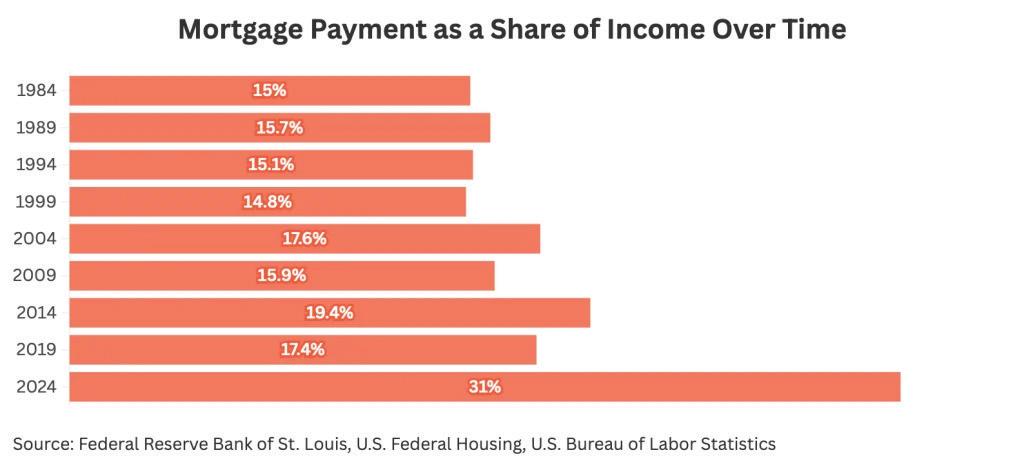
In January 1984, the median home sale price was $79,950, and the average 30year mortgage rate was 13.9 percent. With a 20 percent down payment, a buyer’s monthly mortgage payment would have been approximately $753, about 15 percent of the median household income at the time.
Fast forward to 2024: the median home price has risen to approximately $419,000, while rates have dropped to 6.7 percent. That sounds like progress, until you calculate the monthly payment. With a 20 percent down payment, today’s buyer would pay roughly $2,163 per month, or about 31 percent of median household income.
In other words, despite rates being cut nearly in half, today’s buyers face a larger monthly burden relative to their earnings. The culprit isn’t rates alone, it’s the combination of home prices rising faster than wages over four decades.
Generational Impact:
Boomers vs. Gen X vs. Millennials and Gen Z
Each generation has entered the housing market under a unique set of conditions. These are the key trends.
Baby boomers: Boomers benefited from declining rates through the 1980s and 1990s alongside comparatively affordable home prices, allowing significant wealth accumulation through home equity. Today, 74 percent own their homes, the highest rate of any generation.
• Generation X: Gen X saw moderate rates during the late 1990s and 2000s, but Gen X homeowners in their 30s and 40s were potentially hit hard by foreclosures when the housing bubble burst. However, Gen X homeownership rates have since rebounded from roughly 50 percent in 2005 to 65 percent in 2024, after remaining relatively stagnant from 2005 to 2015.
• Millennials: Despite entering adulthood during a low-rate era (before the 2008 crash to the mid 2010s), Millennials faced skyrocketing home prices and tighter lending conditions. Their homeownership rate at ages 25-34 was approximately 8 percent lower than Boomers and Gen Xers at the same age.
• Gen Z: Gen Z faces elevated rates and near-record home prices,
While some see co-buying as a temporary workaround for high rates, Modares believes it’s a long-term solution. “As things get more expensive, this is still going to be a really popular idea,” she says. “It all depends on how the market moves.” Modares offers homebuyers straightforward advice: -Vet partners carefully -Have difficult money conversations early -Put everything in writing. This article was originally published by The Houston Defender.
leading many to delay purchasing. A 2025 survey found that 97 percent report facing barriers to homeownership, with high prices cited as the top obstacle.
What today’s buyers can learn from history
Mortgage rates have swung dramatically over the past five decades, from the double-digit peaks of the early 1980s to the sub-3 percent lows of the pandemic era. However, the story of housing affordability isn’t just about the interest rates on paper. As the data shows, today’s buyers dedicate a larger share of their income to mortgage payments than buyers in 1984, despite rates being half of what they were then. And generational trends reveal that younger buyers face compounding barriers their parents didn’t. Rates may feel high compared to recent years, but they sit at levels that were relatively normal or even favorable for much of the last half-century. The real barrier today isn’t the rate itself, but what buyers are financing: home prices that have far outpaced wage growth.
This story was produced by Splitero and reviewed and distributed by Stacker. This article was originally published by Stacker.
By Cora Lewis
Robocalls, texts, and phishing emails from scammers are up this tax season compared to previous years, with artificial intelligence likely increasing fraud attempts, according to the consumer protection bureau of the Federal Trade Commission. Consumer advocates and government officials urge the public to stay wary, to stop and think before engaging with phone or text messages, and to remember the IRS will not contact you directly by text or phone. Here’s what to know.
‘Tis the season for tax scams
Each year, the IRS releases its “Dirty Dozen” of tax scams that target taxpayers. At the top of the list is impersonation of the agency by email, text, and phone. The IRS reported over 600 social media impersonators during fiscal year 2025, and urges people not to “click links or open attachments from unexpected messages.”
The IRS also reminds taxpayers it “does not leave urgent, threatening prerecorded messages, call to demand immediate payment, or threaten arrest.”
Scammers often use alarming language and QR codes to send people to fake websites where they ask the taxpayer to “verify” accounts or enter personal information,

From
and
according to the IRS. Links may also install malware or malicious software, such as ransomware, which could prevent access to files and private information. “AI-enabled IRS impersonation by phone (robocalls, voice mimicry, and spoofed caller ID),” is also increasing, according to the agency. As phone scams evolve, AI provides new computer-generated tactics and spoofed caller identification to look legitimate. In this vein, identity theft is one of the most common forms of fraud around tax season, according to Rosario Mendez, an attorney for the
bureau of consumer protection at the FTC. Mendez defines this type of theft as the misuse of one’s social security number or other personal information, often to collect a tax refund.
“People usually discover this when they go to file their tax returns and discover someone else has already filed,” she said. “For the records of the IRS, that is, it’s already happened. But it’s not the person — it’s an identity thief.”
A deluge of scams
Eva Velasquez, CEO of the Identity Theft Resource
Center, said the ITRC has also tracked an increase in scams and identity theft attempts over the past several years, likely aided by AI-generated messages.
“We’re seeing an uptick in phishing emails, fake texts, and even phone calls,” Velasquez said. “Scammers are trying to get you to engage in any manner - talk to them, click the link, share your personal data, or share access to your devices or accounts.”
The “sheer volume and level of sophistication” suggests AI is being leveraged, according to Velasquez.
“‘Deluge’ is the best word I can think of, because it’s relentless,” she said.
“Type, don’t tap.”
Whenever possible, according to Velasquez, the best practice when receiving any of these messages is, “Type, don’t tap.” That is, rather than tapping on any link sent in any kind of message, type in the URL of the official website for the IRS (IRS.gov), or whichever agency is supposedly contacting you.
“Go to the source. Don’t click any of those links,” she said. “If you didn’t initiate the contact, don’t engage.”
Scammers hit all ages
According to Kathy Stokes, director of fraud prevention programs for the AARP, younger people more frequently file reports stating they’ve been scammed, but
older individuals report losing more money than younger consumers.
“That’s because they have more money to lose,” she said.
If you suspect fraud, or a message seems suspicious,
Stokes emphasized the importance of slowing down and talking to someone. When someone receives a notification that sounds strange, scary or urgent, if they stop to talk to a friend or family member or someone they trust, they can typically figure out it’s a scam.
“That’s also going to inoculate the people you share it with from falling for the scam,” she said.
Ask for help if your identity is compromised
If someone has already used your social security number to file a tax return before you, it’s important to let the IRS know.
You should also go to IdentityTheft.gov to report the theft, according to Mendez. At the end of that reporting process, the government will give you a personal recovery plan.
“If a scammer has used your social security number to file a tax return, it’s possible the same thief could use it to open bank accounts, credit cards, or file for unemployment,” she said. “Another worthwhile step is to monitor your credit report and freeze credit accounts so they can’t be misused.”
Alan Butler, executive director of the Electronic Privacy Information Center, echoed this, encouraging victims of scams to seek identity theft monitoring going forward as well. That said, he warns people not to pay high costs for these services, which are sometimes shady themselves, but to thoroughly vet the offerings.
“People can be victimized not only once with the theft of their identity, but a second time, because the monitoring services are trying to up-sell them,” he said.
Filing a police report is also an option
If you’ve been the victim of a scam and you’ve lost money, you may also want to file a report with local police, according to Stokes. “Even if you get pushback from local law enforcement, you should insist on the report,” she said. “There may be a means of restitution for fraud victims down the road, and they would want that as a point of proof of what happened.” This article was originally published by The Associated Press (AP). AP receives support from the Charles Schwab Foundation for educational and explanatory reporting to improve financial literacy. The independent foundation is separate from Charles Schwab and Co. Inc. The AP is solely responsible for its journalism.
By Maurie Backman
When a person owes money and doesn’t pay, it’s not unusual for debt collectors to get involved. It’s also not unusual for collection agencies to resort to aggressive tactics to get people to pay their debts.
But what if you’re being contacted by a debt collector for a debt that isn’t yours? It could be that you have a similar name to the actual person who owes the money, and the debt collector is confused. Or it could be that a family member of yours owes the debt, and the debt collector is trying to pressure you into getting them to pay. Any number of situations could lead to you being contacted for a debt that isn’t yours.
It’s important to know your rights when a debt collector reaches out to you. Freedom Debt Relief explains how to handle this type of situation.
Key Takeaways:
• A debt collector might contact you for a debt you do not owe.
• Make sure you know your rights in this situation, and be clear that they have the wrong person.
• Keep a record of all communications in case you need to file a complaint or take legal action.
Make it clear that they have the wrong person
If your name is similar to that of someone whose debt has landed in collections, a debt collector might contact you accidentally. If that’s the case, make it clear that the debt in question is not yours. You should also state that you have no knowledge of the debt or the person whose debt it is.
Keep in mind that if a debt collector has the wrong person, the burden is not on you to prove that you don’t owe the money. You are not required to provide a debt collector with personal details such as your address
or Social Security number.
In fact, you shouldn’t provide a debt collector with this information because sometimes, scammers can pose as debt collectors in an attempt to obtain your personal data.
If the debt collector continues to call you despite having been told that the debt is not yours, send them a letter by certified mail demanding that they stop communicating with you regarding the debt. If they don’t comply, you can file a complaint with the Consumer Financial Protection Bureau (CFPB) and Federal Trade Commission (FTC).
You might also, depending on the situation, need to seek the help of an attorney if the calls don’t stop.
Know your rights under the FDCPA
The Fair Debt Collection Practices Act (FDCPA) is a set of rules that dictates what debt collectors can and cannot do.
Debt collectors are allowed to try to locate debt holders by reaching out to known associates, such as family members. If you have a family member who owes money, a debt collector is legally allowed to ask you for their address, phone number, and where they work. They can ask, but you don’t have to answer. You are not obligated to share any details about that person, even if you know them.
Also, debt collectors are not allowed to discuss somebody else’s debt with you. They also generally can’t call you more than once to track down somebody you know who holds the debt.
If you continue to receive calls about someone else’s debt when it’s been made clear to the debt collector that you’re not the debt holder, you can report them to the CFPB and FTC. In an extreme case, you could contact an attorney if you feel you’re being harassed.
Unsplash/Muhammad Taha Ibrahim
Experts say it’s important to know what rights you have as a consumer if you’re contacted by debt collectors—whether by mistake or due to a debt you did incur.
Keep detailed records of all communications
If a debt collector calls you for a debt you don’t owe, in some cases, explaining that they have the wrong person will put the matter to rest. If it doesn’t, make sure to keep a detailed record of all communications with the debt collector so you’re able to file an accurate complaint and/or pursue legal action if necessary.
That record should include:
• The date and time of each call
• The incoming phone number
• The number the debt collector contacts you at
• The name of the debt collection representative, if it’s provided to you
• The nature of the call (meaning, what the debt collector says and what you say in return)
Also, keep any written communication you receive from a debt
collector, as well as a record of any communication you send them via mail (like a letter demanding that they stop contacting you).
Understand your rights if you’re contacted about a deceased family member’s debt
It may be that you’re being contacted by a debt collector because a parent of yours has passed before paying off their debt, and you’re the next of kin. Generally speaking, you’re not responsible for paying a parent or family member’s debt unless you co-signed an agreement.
For example, if you cosign a personal loan for a parent or the two of you submitted a joint application, and they pass away, you are generally responsible for the balance. If the loan was in their name only, you are not personally responsible for it.
That said, when a person passes away, their remaining debts become part of their estate. Whoever administers the estate is required to pay off debts before assets can be distributed.
In other words, let’s say your mom passes away and leaves a $500,000 home, a $100,000 mortgage, and $50,000 worth of various debts. The estate would need to repay the $150,000 in debt before giving the heirs money from the sale of the home.
If you’re not the executor or administrator of the estate, you want to make a note of the details of the debt and inform the executor or administrator so they’re aware of it.
If you’re the person administering the estate, it’s a good idea to consult with an attorney if you receive a call from a debt collector about money that’s owed.
Know how to handle debt collections
It’s important to know what
rights you have as a consumer if you’re contacted by debt collectors—whether by mistake or due to a debt you did incur. While it’s not so uncommon to be contacted about somebody else’s debt, know that you do not have to put up with repeated collection calls. If a debt collector doesn’t leave you alone, you shouldn’t hesitate to take appropriate action.
Frequently asked questions
How can debt collectors contact you?
Debt collectors can call you between 8 a.m. and 9 p.m. unless you allow them to call you at other times. However, they are not allowed to harass you. If you’re getting multiple calls each day, or if you are getting threatening calls, tell the debt collector you know your rights, and report the collector to your state’s attorney general.
How can I file a complaint against a debt collector?
You can contact the debt collector and ask them to stop, or you can sue them. You can also submit a complaint with the CFPB or contact your state’s attorney general.
What is the difference between FCRA and FDCPA?
It’s the difference between fair credit reporting and legal debt collection.
The Fair Credit Reporting Act (FCRA) is designed to ensure fairness in credit reporting. Under the FCRA, you have the right to dispute inaccurate or erroneous information in your credit reports.
The Federal Debt Collection Practices Act (FDCPA) deals with debt collections and what debt collectors are allowed to do when contacting you.
This story was produced by Freedom Debt Relief and reviewed and distributed by Stacker. This article was originally published by Stacker.
By Anna Caldwell
Maxing out a credit card can lead to financial distress if not handled correctly. It can also signal budgeting issues or deeper financial wellness concerns like overspending.
This is a growing reality for many, as recent data from Debt.com shows that 32 percent of Americans have maxed out a credit card due to inflation and rising costs, with 11 percent of
• If you’ve maxed out your credit card and can afford to pay down the balance, you’ll want to do that as soon as possible. If you can’t, you’ll want to follow the tips in this blog to get things under control.
The financial consequences of reaching your credit limit While policies vary by issuer, maxing out a credit card can have both immediate and
lower a credit score if you do not pay down the balance before it shows up in the next reporting cycle.
Reduced Borrowing Power: High utilization may make it more difficult to qualify for new credit or secure favorable interest rates.
Possible Issuer Action: In some cases, credit card issuers may reduce a cardholder’s limit or close an account if they determine the borrower to be an increased risk, which can









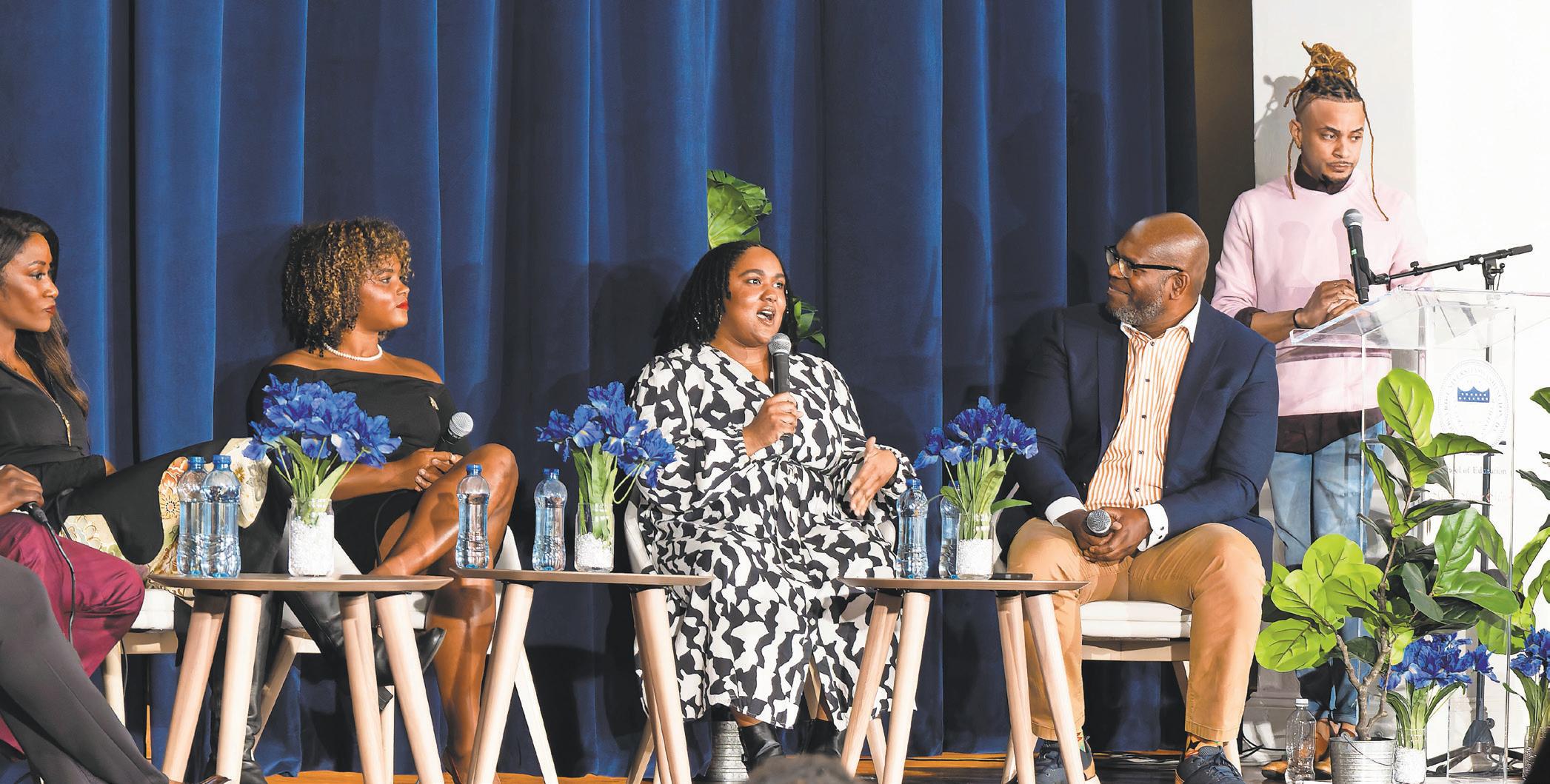
Seasoned, award-winning journalists joined with college reporters of the Greater Washington Area at Howard University on April 2 for an engaging panel discussion on the rapidly changing landscape of the media industry.
The session, titled “Reporting While Black,” focused on how African Americans must adapt to survive. Yet, adaptation has become the least of their concerns as Black journalists face layoffs, and firings.
Combined with outlets–particularly legacy, mainstream publications–falling in lockstep to the whims of the president to eliminate diversity, equity and inclusion (DEI) initiatives, journalists of color have been victimized by what many describe as a “bloodbath.”
These and other concerns were among the topics discussed in the Miner Building Auditorium on the campus of Howard University.
During her opening remarks, Dr. Kimberly R.
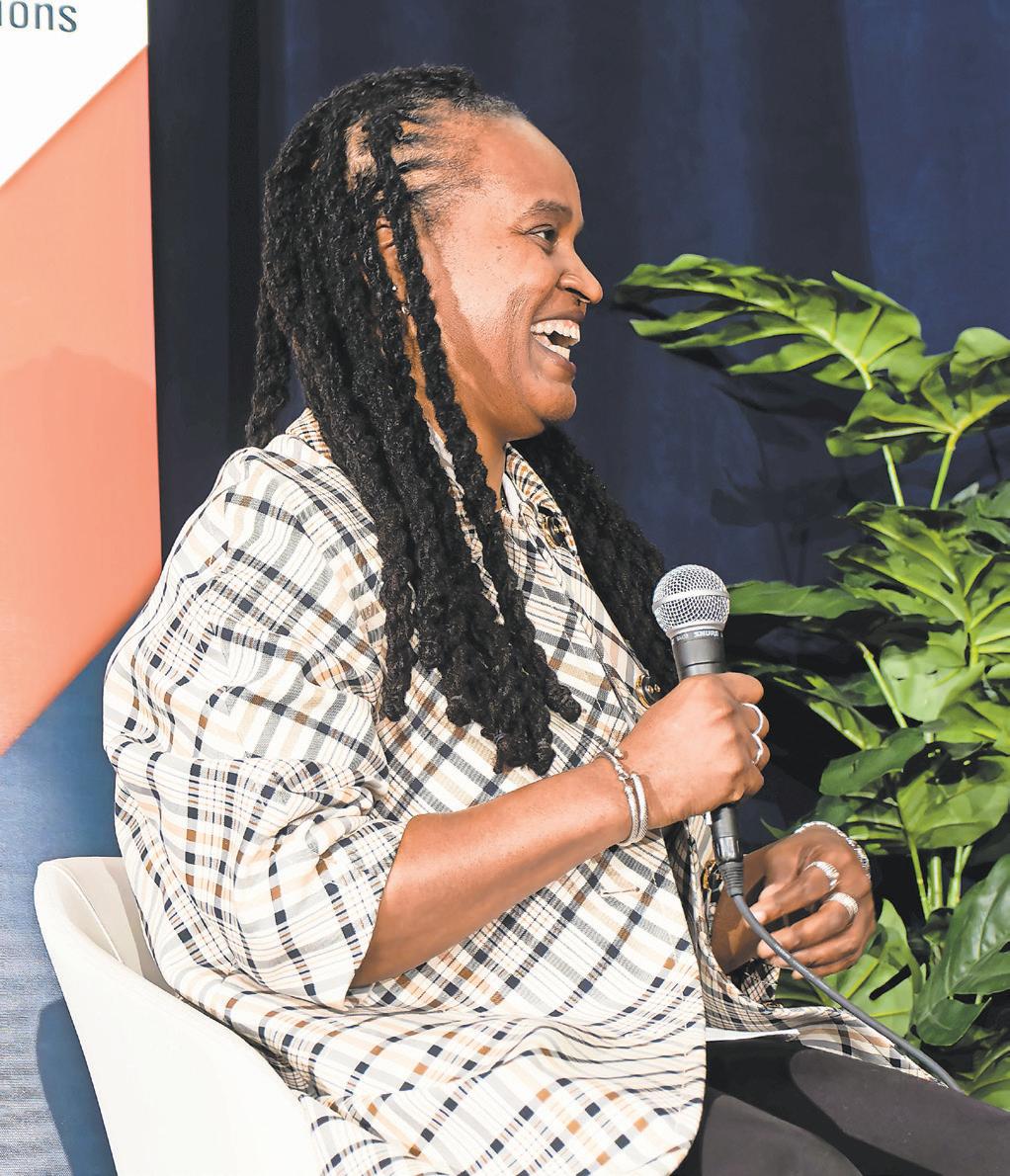
Moffitt, dean of the Cathy Hughes School of Communications at Howard University, addressed changes in the industry, such as generative AI integration and shifts from traditional text articles
to vertical video content. Dr. Jason Johnson, author and associate professor of communication and journalism at Morgan State University, moderated the discussion and served as a panelist.
Innovation gives way to freedom
At the forefront of the discussion was the need for greater independence and truth-telling in journalism and how more Blacks are using platforms like Substack to produce work free of traditional newsroom constraints.
Panelists included Dr. Stacey Patton, a writer, author and HU professor of journalism; Michael Harriot, journalist, author and public historian; Karen Attiah, writer, commentator and former Washington Post opinion columnist; and HU student journalists Zoe Cummings and Myla Roundy.
Unfortunately, Joy Reid, who will soon mark the first anniversary of her popular, independently produced podcast, “The Joy Reid Show,” was unable to join the panel as originally planned.
However, Patton stepped in and more than adequately filled in for her colleague.
Patton spoke to having
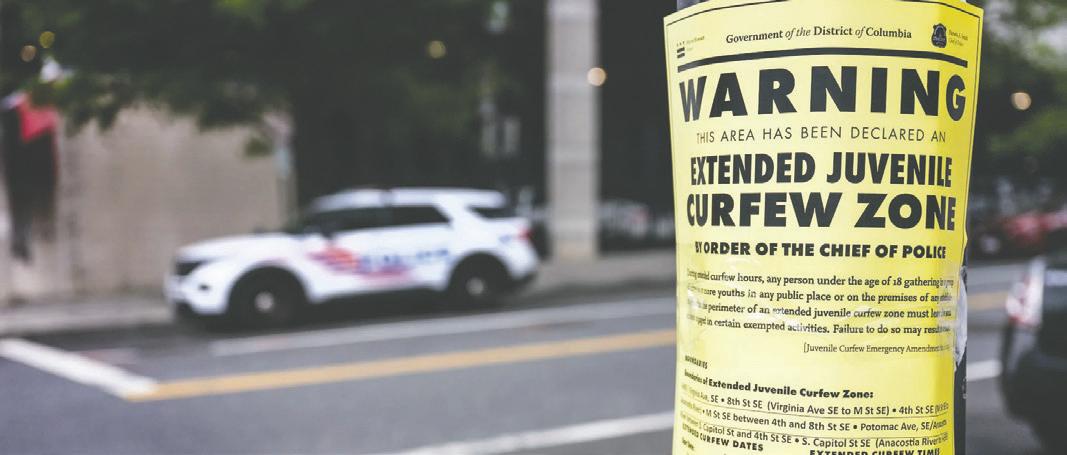
Fliers like the one above are being posted on social media to attract the attention of teens in the District in efforts by city officials to steer juveniles away from “teen takeovers” which have recently increased throughout Washington, D.C. In several cases, these huge gatherings have resulted in fights, injuries, and the need for police intervention.
By D. Kevin McNeir Special to the AFRO
Thousands of D.C. Public School (DCPS) youth anxiously await a temporary hiatus from classes during spring break, scheduled from April 13 through Friday, April 17.
However, city officials, business owners and parents remain unable to agree on the most effective ways to circumvent the recent escalation of “teen takeovers” that have occurred throughout Washington, D.C.
These gatherings of youth, which have sometimes totaled several hundred, have primarily been composed of teens, but have even included children as young as eight.
And while the reasons for such gatherings remain both varied and often unclear, outcomes include violent fights and arrests.
One Instagram video, posted by a local youth (alexiswainwright), described what occurred on Saturday, April 4, in and around the King Greenleaf Recreation Center in southwest D.C. during the second night of the Teen Spring Jam.
“Outside, as huge crowds waited to get in, youth in masks and hoodies jumped the gates and started fights,” the post said. “Police had to step in several times to clear the area, but then fights would happen again. But inside, the youth, unable to wear masks or carry backpacks, were meeting friends, dancing, and eating for free – all in fun. They said to their surprise, things were organized, and that it felt good that someone cared about them and their safety. They said troublemakers should either join the fun inside or to go home.”
Turning the page toward a healthier and more engaged D.C.
By Jimmie Williams and Adrian Jordan
April is School Library
Month. In schools and libraries across the District, children are encouraged to discover the joy and power of reading and visiting the library.
That celebration matters.
Yet in Washington, D.C., too many children are not reading at grade level, and too many adults struggle with basic reading, math and digital skills. In parts of the District, more than one in three adults reads at or below a basic level, with disparities closely tracking race and
income and concentrated in predominantly Black and Latino neighborhoods. If we want children to thrive, we must support the literacy of their parents and caregivers as well. Literacy is more than an education issue. It is a health, economic and workforce, and a civic issue.
Reading skills affect whether someone can understand a prescription label, follow discharge instructions after a hospital visit, complete a job application, interpret a lease, or enroll in health coverage. Limited literacy is closely tied to higher rates of chronic illness, lower
use of preventive care, and greater difficulty navigating the health system.
Health literacy begins with basic literacy. When adults have strong foundational skills, they are better able to manage diabetes or hypertension, compare insurance plans, schedule appointments and advocate for themselves and their families.
The impact extends beyond health care. Adults with stronger literacy skills are more likely to secure stable employment, earn higher wages, and access benefits that support longterm stability. Families are better positioned to maintain
housing, build savings, and plan for the future.
In the District, where racial and income disparities remain stark, literacy is directly connected to opportunity. It is also connected to civic participation.
This June, Washington, D.C., will implement rankedchoice voting for the first time. The system is intended to expand voter choice and will require a clear understanding of ballot instructions and candidate rankings. For residents who already feel disconnected from government, added complexity can
Discussions continue among D.C. Council members, the mayor and residents as the Juvenile Curfew Second Temporary Amendment Act of 2025 is set to expire on April 15.
The legislation, which allows for special curfew zones and expanded hours for those under 18, faces an uncertain extension, as the D.C. Council has delayed a vote on continuing the measures into the summer.
“It was a decision by the Council as a whole,” Bowser said. “The chairman moved for postponement, and all of the council members agreed. And that is, in essence, killing the youth curfew.”
Council Chairman Phil Mendelson noted that part of the challenge is that teens who are gathering have become more astute as to the law.
“They’re figuring they can gather without breaking the law, if they’re on the edge of the (curfew) zone but not in the zone, so, we have to just be smarter,” he said, adding that Bowser could declare a crime emergency to maintain the youth curfews.
The Rev. Thomas Brackeen Jr., who grew up in Prince George’s County, Maryland, and has served as the youth minister at Metropolitan AME Church in Washington, D.C., said he believes most youth just want to belong, be accepted by their peers, and have a good time.
“A lot of young people don’t go out with the intention of causing trouble, but if their friends are going out, they want to be there, too,” Brackeen said. “For many, staying home feels like missing out – not just socially, but in terms of identity and connection. But there isn’t always a full understanding of how quickly situations can escalate or what the real consequences can be.”
“It’s also important to note that while there are programs and structured activities available, not all young people are drawn to them,” he said. “Many of those programs come with rules, expectations and accountability. And some young people – especially those who may not experience much structure elsewhere – are looking for spaces where they can just be, without feeling controlled or corrected.”
D.C. Mayor Muriel Bowser has made limited comments about extending the curfew – a decision which was allegedly made so more data could be received related to the total number of recent violent outbreaks, the number of youth involved, and where those curfew breaks occurred.

By Megan Sayles AFRO Staff Writer msayles@afro.com
A recent settlement highlights the importance of proper classification when it comes to employee payroll and contract work, specifically in the construction field.
After allegedly misclassifying more than 100 workers as independent contractors, DR Construction and Consulting (DRCC) and Pedro and Pablo’s Construction Company have settled with the District of Columbia, agreeing to pay more than $302,000 to workers and the District.
An investigation by the D.C. Office of the Attorney General (OAG) discovered the alleged misclassification, which denied the construction workers wages and benefits they were entitled to under D.C. law.
“Today, we’re putting money back in the pockets of more than one hundred construction workers who were illegally deprived of
wages and benefits they were legally entitled to receive. Misclassifying workers as independent contractors undermines fair competition, cheats the District and hurts working families who are increasingly stretched thin” said Attorney General Brian L. Schwalb, in a March 25 statement. “As D.C. attorney general, I will continue to have workers’ backs and ensure that all businesses in the District play by the rules and compete on a level playing field.”
The OAG defined misclassification as a type of payroll fraud that cuts costs for companies. When employees are misclassified as independent contractors, rights given to employees, like minimum wage, overtime pay and paid sick leave, are withheld. The companies also transfer their tax obligation to employees and strip the District of tax revenue, unemployment insurance premiums and worker’s compensation payments.
The OAG’s investigation found that Pedro and Pablo’s

Under the settlement with the District, Pedro and Pablo’s Construction Company will pay $135,750 in restitution to workers and $57,500 in penalties to D.C., while DRCC will pay $56,250 in worker restitution and $46,489 in fines to the city.
Pedro and Pablo must also reclassify its entire workforce as employees and comply with OAG monitoring through 2027. In order to ensure all workers are properly classified at its sites, DRCC is obligated to require certified payroll reports from subcontractors and randomly audit them. It will also stop using subcontractors who have a history of misclassifying workers, unless those companies can prove their workers are correctly classified or settle past claims with the District.
freedom as a writer with platforms like Substack and her own digital newsletter.
“It was Toni Morrison who said, ‘it was amazing how freed up the canvas became once I took White people out as predominant figures,’ and I have followed her lead to the letter,” Patton told the audience. “My primary audience is my people and when I write I always make sure that my words reflect the respect I have for my ancestors. Given how Whites have treated one another and the world, I would be wasting my time if, when I write, I had them in mind.”
Harriot, author of the New York Times bestseller, “Black AF History: The Un-Whitewashed Story of America,” said Black journalists should always speak on race and racism.
“When we look at legacy publications, we cannot allow ourselves to be fooled,” he said. “As for objectivity, there’s no such thing – it doesn’t exist. We should focus
become another barrier.
Communities with lower literacy levels historically experience lower voter turnout. When residents struggle to interpret ballots, candidate materials, or policy information, they are less likely to participate fully in elections. That distance from civic life affects which voices are heard and which priorities receive attention.
Stronger literacy skills support stronger democratic participation. Residents who can confidently read and evaluate information are better equipped to select leaders who reflect their concerns and to hold institutions accountable.
At the Washington Literacy Center, adult learners are parents, workers and grandparents who are strengthening their skills to advance professionally, support their children’s education, and engage more fully in civic life. When adults improve their literacy, children benefit. Parents feel more confident
Construction Company, a Virginia-based drywall contractor, allegedly misclassified its own workers, including on projects where it served as a subcontractor
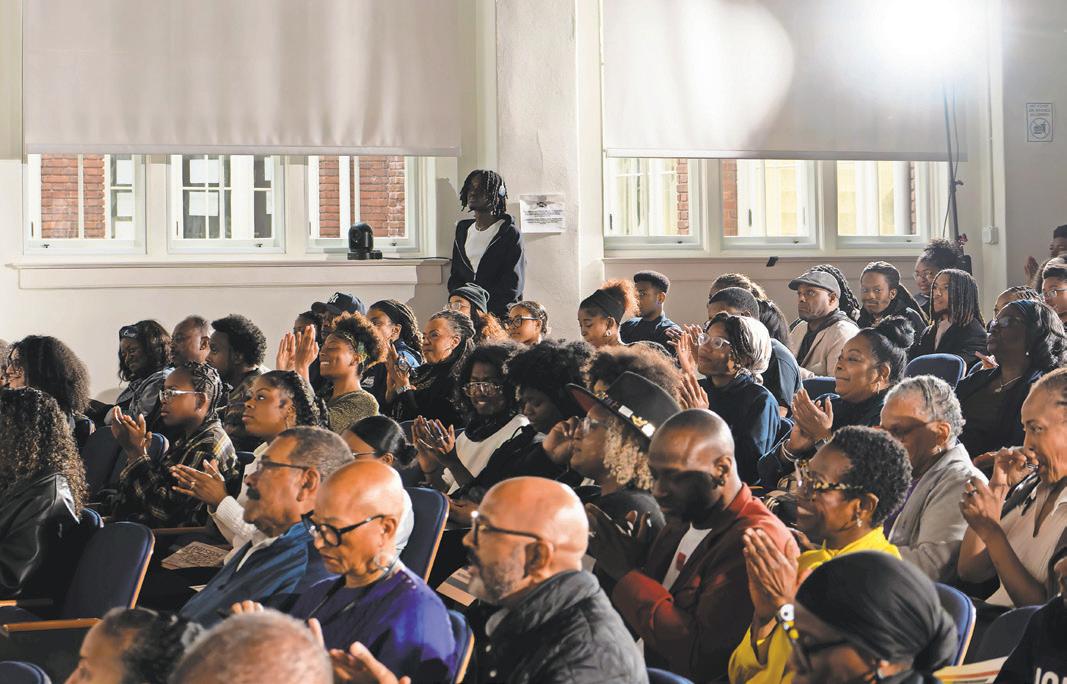
discussion on the future of journalism and how African-American journalists have been forced to adjust after attacks on diversity.
on holding up the mirror and showing America for who and what it is, and how Blacks continue to be oppressed.”
Constraints of mainstream media
Attiah had won awards writing for The Washington Post’s Global Opinions section, but was dismissed in 2025 for remarks made after the death of Charlie Kirk, the far right wing commentator known for publicly denigrating the Black community and its leaders. After being fired
from the Post, she had to reassess her future.
“I can’t say a lot because I am still in legal deliberations,” she said. “But I was forced to ask myself if I was writing about or writing for Black people. I had to decide. For Blacks who work for legacy publications, we are often used so they can secure outreach to our people, to our community. Then, that outreach is monetized for their benefit. Now, after moving to Substack, my work belongs to me and the revenue I earn is
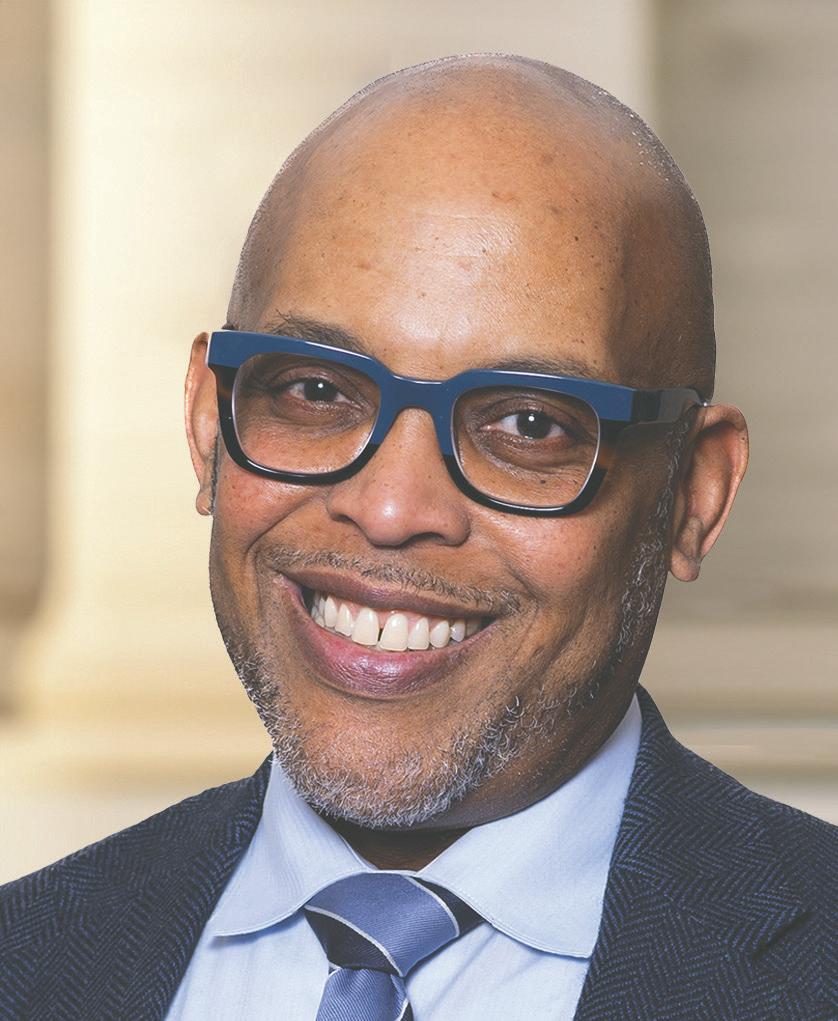
for DRCC. The investigation also found that DRCC, a Maryland-based construction company, allegedly used subcontractors—including Pedro and Pablo’s Construction
mine.”
Panelists acknowledge benefits of moving to digital media platforms
While the panelists differed on the platforms they currently use to independently publish their perspectives, they agreed that owning their content has resulted in a plethora of beneficial outcomes. The platforms have given way to a model that is grounded in monetized trust. They also offer opportunities for community engagement.
“I’ve always been an entrepreneur,” said Attiah. “It wasn’t hard for me to move away from the corporate environment– in which I was giving my value away–to cashing in on my own sovereignty and intellectual property.”
“I continue to shop around for the best media platform – a decision which changes from time to time,” she said.
Cummings, a rising senior, said she regularly uses and prefers Substack because it has allowed her to pay herself for the hard work she does as a journalist.
“While I have had some great summer jobs, internships and fellowships, I often
Company—who misclassified workers at job sites in the District. These practices have reportedly been ongoing since 2021, according to the OAG.
have had to try to convince editors that I had ideas for stories that merited attention,” she said. “At one point, I remember asking myself, ‘if not me, who else will tackle this story. Why not me?’”
Cummings said that as an emerging journalist, she realizes that “being in the room is not enough.”
“You must be able to say something of substance. Often, we can’t do that with legacy publications,” she said, “But you can–and I do–on my own platform.”
Johnson, removing his moderator cap for a moment, pointed to several experiences which convinced him to use platforms like Substack that give him free reign to express his views.
“There will always be times when what we write may cause those in the Black community to feel a sense of rage – telling the truth will do that sometimes,” he said. “But that’s our job. So, we must do so and always address issues and topics with integrity, even if that means you may lose your job or not be called back because you refused to blur the facts.
“I was good friends with
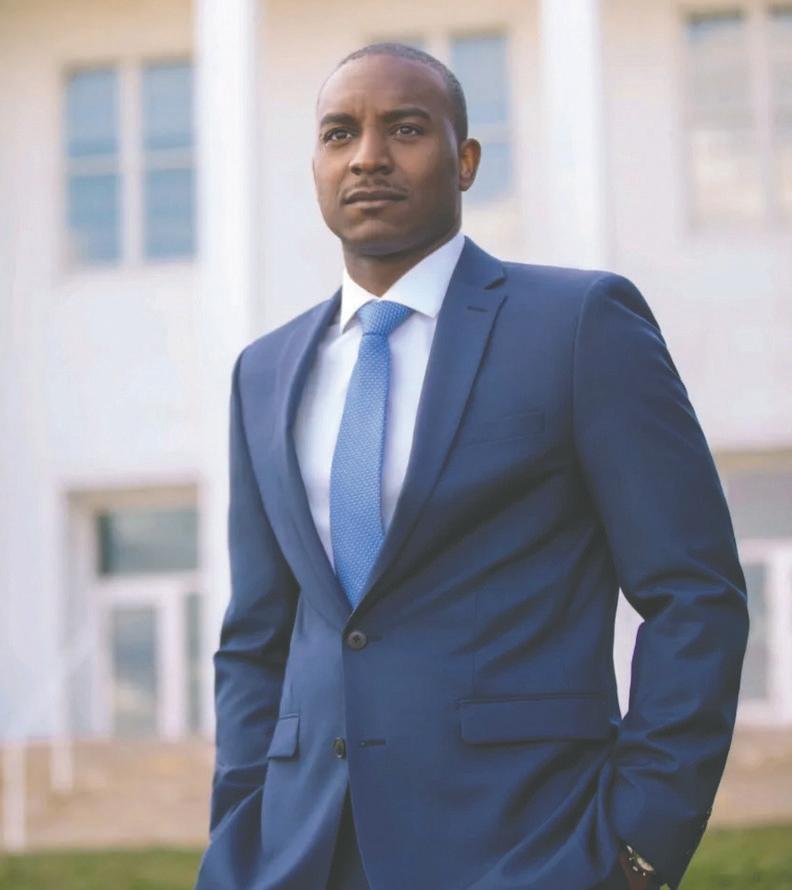
The AFRO has reached out to Pedro and Pablo’s Construction Company and DR Construction and Consulting. This story will be updated online at AFRO.com if a response is received.
the state senator and pastor of Emanuel AME Church, the Rev. Clementa C. Pinckney, in Charleston, South Carolina, and I’ll never forget the day that he and eight others were murdered while attending Bible study,” Johnson said. “When Senator Lindsey Graham (R-SC) described the shooting as an attack on Christianity, I called it for what it was – a racist attack. When you’ve done your homework and when you’re in the heat of battle, you must speak your truth and be willing and prepared for possible retaliatory consequences from your employer.”
The future of journalism Patton said she’s unsure of the future but she’s certainly not afraid.
“The future looks like Don Lemon bringing in the New Year, getting lit, finding his microphone upside down, turning it rightside up, and continuing without missing a beat. The future looks like Joy Reid delivering news from the political scene and, as always, being on point,” said Patton. “The future of journalism will not be televised. It will be streamed.”
and
simplify communications and connect members to adult education programs. Employers can invest in workforce literacy as part of economic mobility strategies. Policymakers can sustain funding for adult education as both a health intervention and an economic development strategy. Most importantly, we must
remove stigma. Adults returning to strengthen their skills demonstrate commitment and resilience. They deserve access, respect and opportunity. School Library Month should inspire more than classroom celebrations. In Washington, D.C., it should prompt us to take a broader view. If we want children to read at grade level, we must invest in the adults who guide them. If we want healthier neighborhoods, we must strengthen the foundational skills that allow residents to manage their health. If we want full participation in a changing civic landscape, we must ensure residents have the tools to understand and engage. Celebrating books is important. Building literacy across generations is essential. This month, let us recommit not only to reading with our children, but to strengthening literacy across our city: in homes, workplaces, health settings and community spaces. When families learn together, Washington grows stronger. Literacy strengthens health. It strengthens opportunity. And it strengthens our democracy.
By
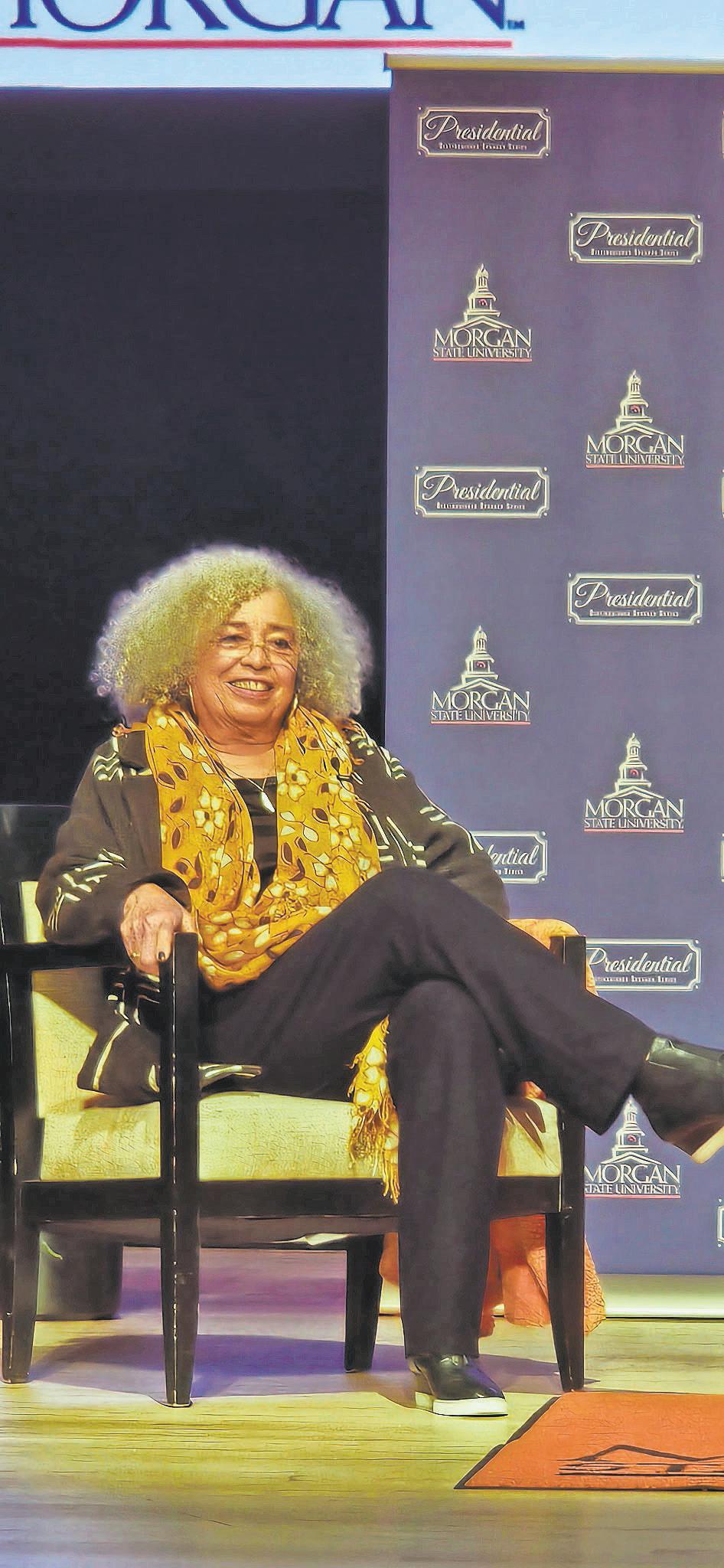
Angela Y. Davis, professor emerita of history of consciousness and feminist studies at the University of California, Santa Cruz, spoke to a full audience inside of Morgan State University’s (MSU) Murphy Fine Arts Center on April 2.
Dr. David K. Wilson, Morgan State University president, welcomed the audience and political activist, philosopher, author and social theorist, noting she is the first to be interviewed in this year’s Presidential Distinguished Speakers Series.
“The series is designed to bring some of the nation’s leading and most provocative thought leaders from various disciplines in professional fields of study to Morgan State University,” said Wilson, standing inside of Gilliam Concert Hall.
He added that the sessions are aimed at exposing the “university community to a broad range of views, perspectives and angles on the myriad of opportunities and challenges we face as a nation” in a way that is in line with “Morgan’s mission of serving as a premier public urban research university that is steeply rooted in HBCU (historically Black college and university) tradition.”
Wilson called Angela Davis one of the most incredible voices in our nation.
Following an introduction by Selah Brashear, a pre-medical student at Morgan, Davis was invited to the stage. Dr. Wilson opened the conversation with a September 2024 clip of Davis’ appearance on PBS’ “Finding Your Roots.” The show has been made popular by historian Henry Louis Gates Jr., who often surprises his guests with information about their lineage. At the conclusion of the video, Dr. Wilson disclosed that Davis’ great-grandmother, named “Mary,” was also his greatgreat-grandmother. The
audience burst into enthusiastic applause as Dr. Wilson revealed that he and Davis, according to their family tree, were in fact fourth cousins.
Angela Yvonne Davis was born on Jan. 26, 1944, to two school teachers. The Birmingham, Ala. native rose to become one of the most powerful voices of the Black Power Movement.
During the conversation, Wilson took on many topics, including Davis’ run for vice president on the community ticket in 1980 and 1984.
Davis said she knew running for public office was a shot in the dark, but the issues at hand demanded bold action.
“I didn’t expect to get elected,” she said. “It was time to address the injustices, including education and free healthcare. The idea was to build movements and to stand for equality, justice and freedom.”
‘I think I was supposed to go to New York’
During the conversation Davis shared how she wanted to attend an HBCU, and had been accepted to Fisk University in their earlier entry program.
“I was 15 years old,” she recalled. “Both of my parents attended HBCUs. Two or three days before my departure, they expressed their concern for me. My father said ‘I am not sure this is the right decision for you.’
He had no doubt about my being able to do the academic work but thought I wasn’t socially mature enough.”
Instead, she moved to New York and spent two years at Elisabeth Irwin High School on scholarship. There, she first read the Communist Manifesto. The document forever changed her life.
Davis reflected on what might have happened had she attended the HBCU.
“I might not have ended up in California … fired from UCLA, or going to jail on charges of murder,
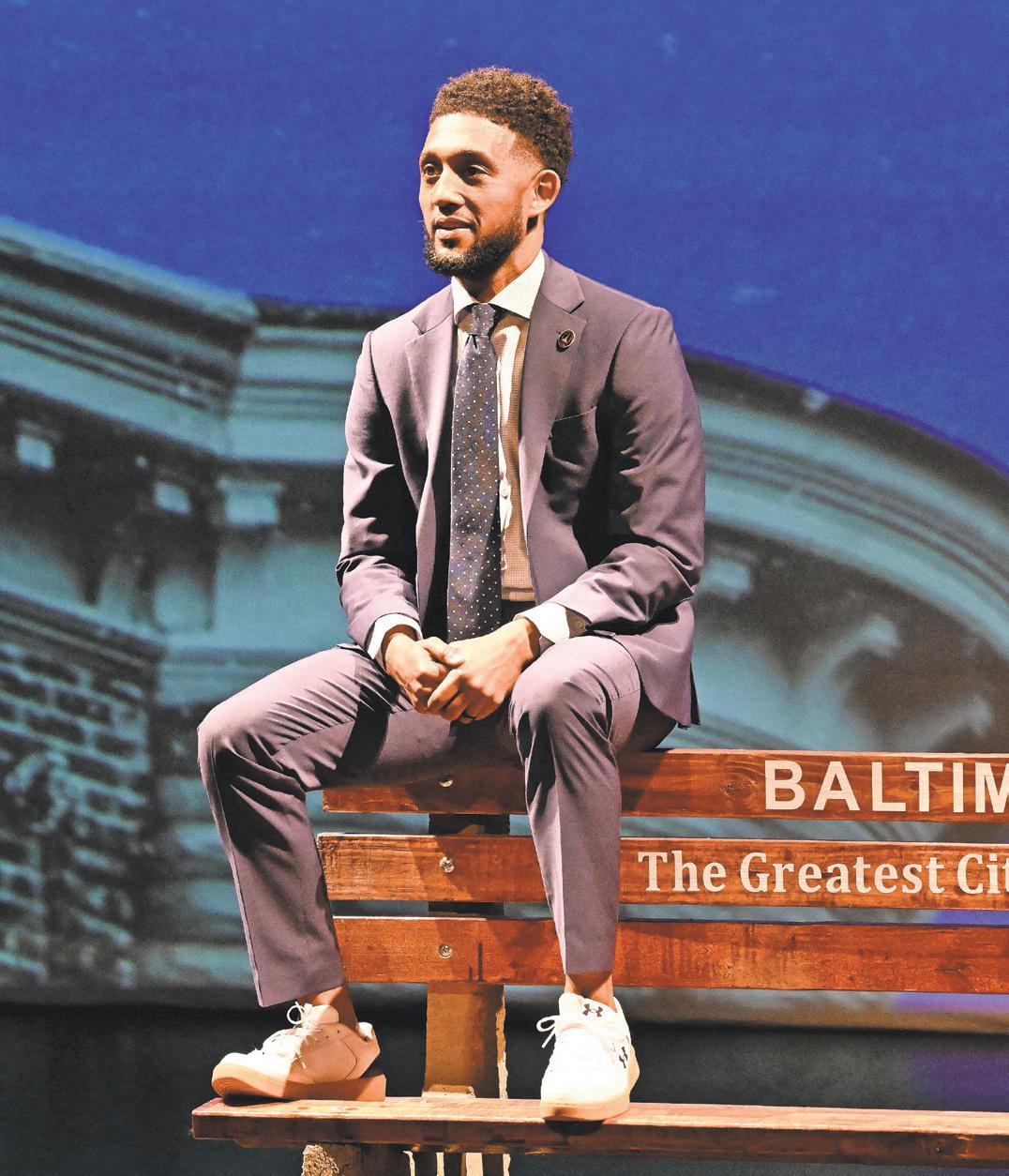
By Tashi McQueen AFRO Staff Writer tmcqueen@afro.com
Mayor Brandon M. Scott (D) delivered his sixth annual State of the City address on March 31 at Baltimore Center Stage under the theme, “Building Together, Block by Block.”
kidnapping and conspiracy–three capital offenses. That might not have happened,” she said, before chuckling “Maybe it would have happened.”
“I think I was supposed to go to New York,” said Davis. “I made the right choice to go to New York, but being a part of a collective struggle, my social life was still connected to HBCUs.”
Davis attended Brandeis University in Massachusetts, where she graduated magna cum laude with a bachelor’s degree in French in 1965.
Wilson asked if there was a particular turning point that led her to dedicate her entire life and career to activism which included justice, gender equality and Black Liberation.
“I don’t think there was a particular moment,” replied
Davis.
She added that her desire to join the collective struggle for equality and justice “came from growing up in Birmingham, Ala.”
Davis pointed out that instead of her mother telling her and her sibling they should not be concerned about such things. She encouraged them to be a part of the change.
“‘This is not the way things are supposed to be … and one day they will be different, and you will be a part of those who make a difference,’” said Davis, recalling her mother’s words. “She said that to me again and again and to my siblings. We grew with the sense of collective responsibility to create a better world.”
By Catherine Pugh
Yvonne Frances Lansey, daughter of E. Gaines Lansey and Martha Priscilla Phillips Lansey (both deceased) died on March 27. The 79-yearold succumbed to a heart condition at the University of Maryland Hospital. Lansey was known as a leader within the business community. Following in her father’s footsteps, she became president and CEO of Ideal Federal Savings and Loan. Founded in 1920 by her great-grandfather, Teackle Wallis Lansey, the business touted itself as Maryland’s oldest Blackowned bank.
Situated at 1629 Druid Hill Ave., the bank provided
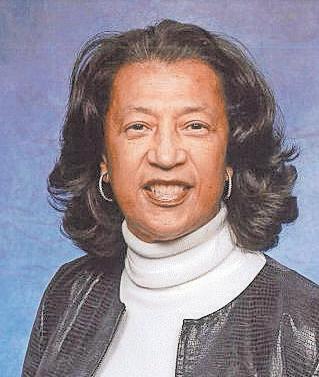
closed, the legacy of Teackle Lansey lives on in the community. Teackle Lansey appears in a mural depicting six great Baltimoreans, including Supreme Court Justice Thurgood Marshall and AFRO founder John Henry Murphy Sr. Lansey served as deputy trust clerk for the Circuit Court of Baltimore City from March 2012 until her death.
Laura Byrd, Lansey’s first cousin, warmly remembers her as an exceptionally kind person.
services to African Americans during a time when other institutions declined to do so, remaining in operation for 90 years before closing in April 2010. Though the bank
“Yvonne would go out of her way to help anyone. She genuinely cared about others,” she said. “She always dressed with style—her sense of fashion was truly elegant.” Byrd said Lansey “was
active in several organizations including her sorority, Alpha Kappa Alpha, Smart Set and the Northeasterners.” Lansey had five siblings. Frank, James and her older sister Priscilla passed away before her. She is survived by her brother Patrick and her niece Stephanie Lansey.
A viewing for Yvonne Frances Lansey will be held at Wylie Funeral Home, 701 Mount St., Baltimore, on Wednesday, April 15, 2026, from 5–8 p.m. The wake is Thursday, April 16 at 9 a.m., followed by the funeral at 9:30 a.m. at the same location. The burial will follow at King Memorial Park. Wylie Funeral Home offers a memory page for family and friends to send flowers or condolences.
Scott announced several major initiatives, including a five-year comprehensive violence prevention plan to be released this summer and a state-of-the-art sports facility the city will break ground on by the end of his second term.
He also unveiled a pilot program to wipe out property tax debt for legacy residents.
“Baltimoreans who are over 65, who have owned their home for more than 10 years and make less than $73,000 a year, can qualify next year if they sign up by April 15,” said Scott. “As Baltimore continues to grow, we have to do everything we can to protect the folks who built our city.”
To ensure eligible older adults are informed of the program, the Mayor’s Office of Older Adult Affairs and Advocacy will conduct outreach through the April 15 deadline.
Scott also announced two programs designed to help lower energy costs. The Energy Stability Fund is a targeted fund providing up to $1,500 in assistance to residents who are struggling with utility bills.
The Baltimore City Development Corporation provides small and medium-sized businesses with up to $25,000 in grant funding to assist with their utility bills. Businesses can begin finding out their eligibility and applying for this relief after May 1. He also discussed a
citywide security deposit assistance program.
“This program will help low-income residents who have found an apartment to rent, but don’t have the money in-hand for a security deposit,” said Scott. “It’s especially focused on residents transitioning out of homelessness or temporary housing. If you qualify, you can apply for up to $2,000 to cover a security deposit.”
Scott introduced Repave Baltimore, a new initiative to improve roads.
“I know this is a point of frustration for everybody in Baltimore,” he said. “During the Great Recession, the state cut our funding to the tune of $900 million and never put it back. I don’t control the state budget, but while we continue to work with our state partners to maintain the funding we have, there are steps we can and will take to improve our resurfacing program.”
The program will include paving 25 lane miles, filling 25,000 potholes, cleaning and mulching 500 tree pits, sweeping 25,000 miles of road, removing 6,000 graffiti tags, and completing 12,000 bulk waste pickups within 90 days starting in mid-April. Scott also highlighted a goal to reduce overdose deaths by 50 percent by 2040 and announced Baltimore’s membership in the Partnership for Healthy Cities.
Despite the expiration of American Rescue Plan Act funding, Scott revealed Clean Corps Baltimore will continue, receiving $3 million in the fiscal year 2027 budget. The program has completed thousands of street, alley, vacant lot and tree pit cleanings citywide.
“When we talk about the
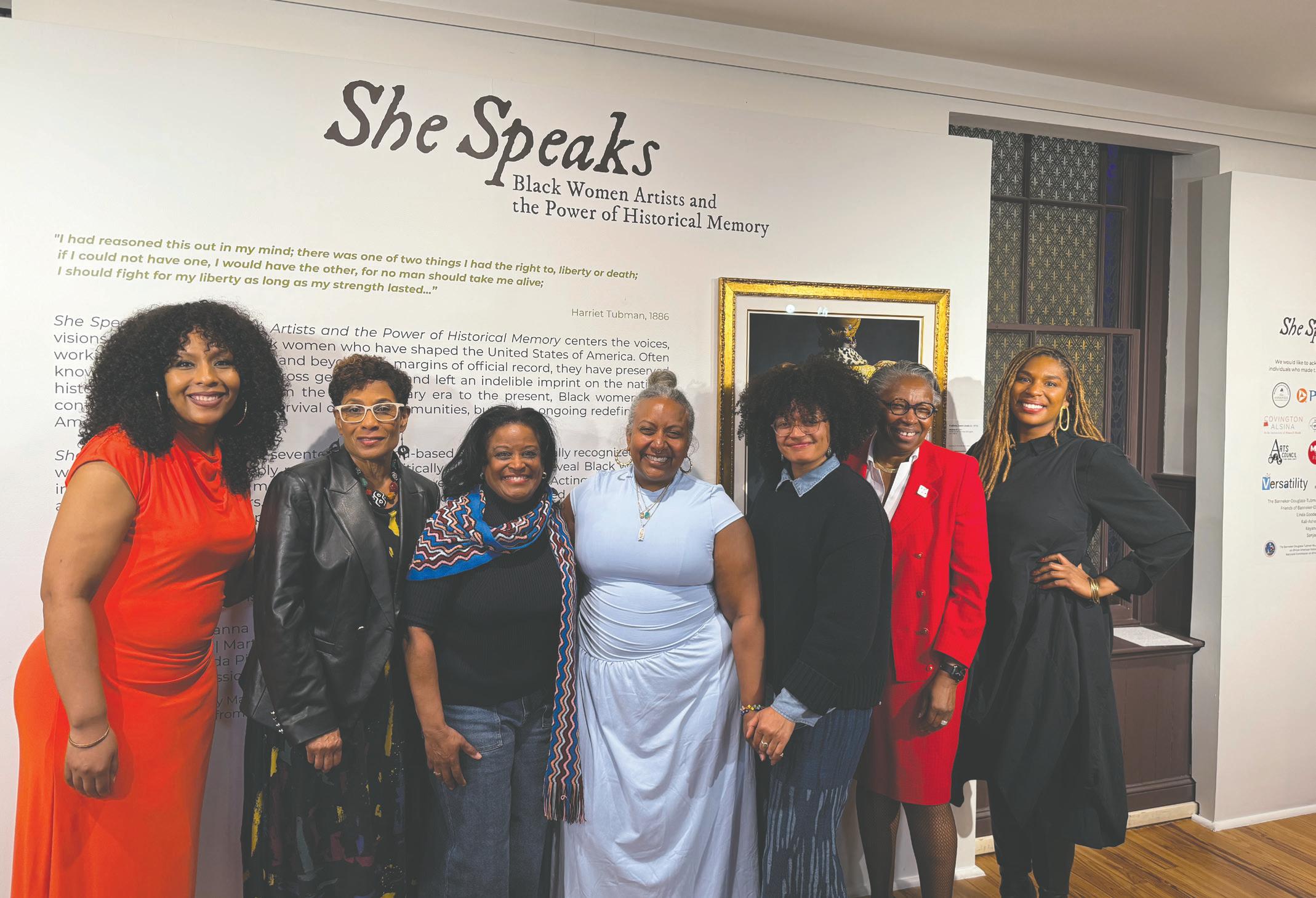
Shown here, Executive Director of the Banneker-Douglass Museum Chanel C. Johnson
CEO and Publisher Dr. Frances “Toni” Draper, writer and artist Darlene R. Taylor, artist Charlyn Griffith-Oro, Afro
Executive Director Savannah G. M. Wood, Dr. Tuajuanda Jordan, president emerita of St. Mary’s College of Maryland, and art historian Martina Dodd
artist talk and the Harriet Tubman Spirit Awards.
By Tavon N. Thomasson Special to
The Harriet Tubman Spirit Awards honored local leaders March 21 at the Banneker-Douglass-Tubman Museum in Annapolis during a two-part program that also featured an artist discussion on history, memory and Black women’s stories.
Held during Maryland Day programming from March 19-25, the event was one of several programs recognizing the March 25, 1634 landing of European settlers on Maryland soil. At the Banneker-Douglass-Tubman Museum, the day centered on Black women’s impact across generations, beginning with a conversation on preserving history and ending with honors for leaders continuing Harriet Tubman’s legacy.
This year’s award recipients included AFRO CEO and Publisher Dr. Frances “Toni” Draper, Patricia Ross Hawkins and Dr. Tuajuanda Jordan, who were recognized for work in justice and community empowerment.
Jordan, president emerita of St. Mary’s College of Maryland, said receiving the award was humbling and prompted her to reflect on how her life’s work has carried forward Tubman’s legacy.
“Harriet was led by God to get people out of slavery, and I’ve always been led to make sure that our people have the same experiences and opportunities in education as everyone else did,” Jordan said.
“The programs I’ve implemented and developed over my career have been about equity and providing experiences so that when our people walk out the door, they are as prepared as anyone else. When you think about freedom, that is a form of freedom,” she continued.
That commitment to a larger purpose also surfaced in Hawkins’ remarks. While grateful for the honor, she said her advocacy did not begin with public recognition in mind but from a personal need to represent her family.
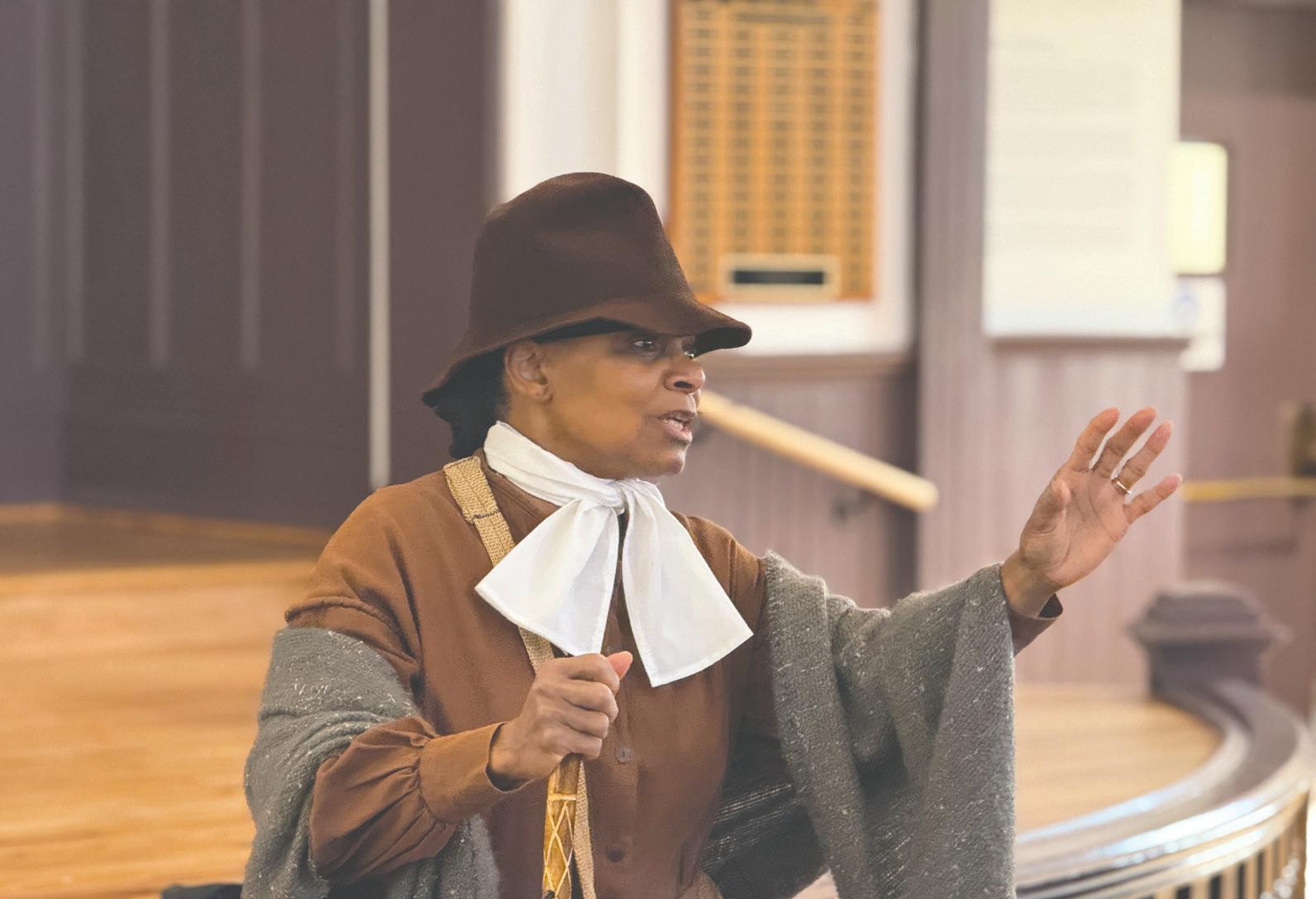
Janice Curtis Greene, the
Photos / Tavon Thomasson)
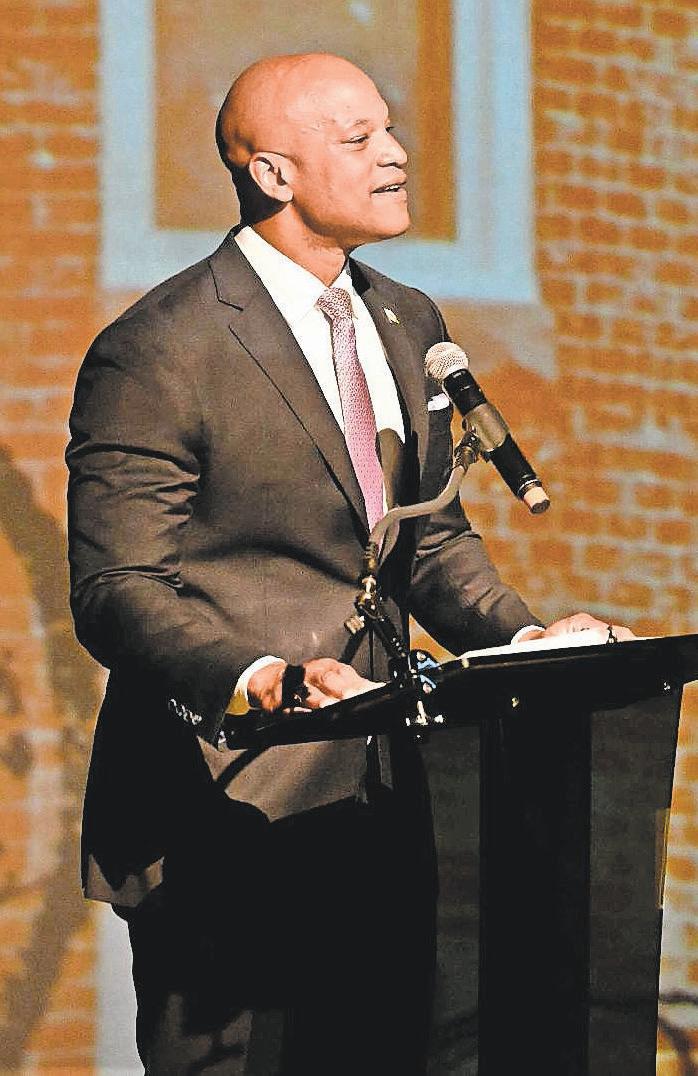
highlighted the
improved partnership and recent accomplishments.
Continued from B3
‘State of the City,’ we have to talk about so much more than what goes on at City Hall,” said Scott. “This is the greatest city in America because Baltimoreans are the greatest people on Earth. Baltimore’s potential is the potential of each and every person that calls her home.”
Scott recognized community leaders, including Regina Hammons of Rebuild Johnston Square and Yolanda Jiggets of Park Heights Renaissance, for improving their historic neighborhoods. He also addressed crime reduction efforts.
“In 18 of the 41 years I’ve been alive, Baltimore lost over 300 people to homicide,” said Scott. “That’s over 300 parents, neighbors, friends, children, loved ones – receiving the worst call of their lives.”
partnership is about results.”
Faith P. Leach, Baltimore City chief administrative officer, praised the city’s community-driven approach.
“We define Baltimore, not the headlines, not the stereotypes, but the community and how we show up for one another, tells the real story of who we are,” said Leach.
Scott also launched a new map of city investments since his inauguration on Dec. 8, 2020, highlighting major projects tied to specific addresses across Baltimore.
“In this moment, in this job, every day is an opportunity to go further and do better than the day before,” said Scott. “Neighborhood by neighborhood, block by block, it’s a chance to improve the lives of the residents of this city.”
Councilman Paris Gray (D-District 8) expressed support while noting budget considerations.
Before the awards began, a live portrayal of Harriet Tubman connected the ceremony to the earlier artist talk featuring Charlyn Griffith-Oro, Darlene R. Taylor and Savannah G. M. Wood, whose work is included in “She Speaks: Black Women Artists and the Power of Historical Memory” exhibition.
During the panel, the artists discussed the work on display and how they use
cloths as a way of holding on to legacy and the memory [within] them.”
According to Taylor, memory lives in the cloth itself, especially in the stains and worn marks that point to a past life and the people who once carried it.
“Think of the marks that may have been from a child who was cut and grandma’s taps to make them feel better. It leaves a mark in that cloth,” Taylor said. “ It leaves a memory in that cloth. And for me, those are memories of Black family survival.”
By cutting and stitching together cloth, she creates
women moved in, walked in, worked in and loved their families in.”
Taylor also carries over pieces of cloth from one work to another, using shared textiles to emphasize the connection between the women and mothers represented in her art.
“I have about 40 pieces in my Heirlooms series, but there’s something that came from a mother from before that’s in that work, which is very much the way I see us sharing stories, the way I see that intergenerational connection,” she said.
The exhibit, which
“Harriet was led by God to get people out of slavery, I’ve always been led to make sure that our people have the same experiences and opportunities in education as everyone else did.”
- Dr. Tuajuanda Jordan, President Emerita of St. Mary’s College of Maryland
art to preserve Black history and honor the memory of the people at the center of those stories. For Taylor, that preservation can take the form of what she calls “heirloom cloth.”
“I didn’t do the work for the recognition,” Hawkins said. “ I did the work because somebody in our family at that time needed to stand up and be vocal enough to speak for our family so we could have a seat at the table, and that was me because Harriet was in me.”
“I use cloths found in vintage shops or that were passed down to me through the women in my life,” Taylor said. “I use those
textile images that tell stories and capture glimpses of the women represented in her work.
“Cloth allows me to kind of manipulate and tell a story in a particular way. I have whole pieces, then I cut them, and I blend those stories together,” she said. ”I’m shaping the environment these
includes Taylor’s work alongside that of the other featured artists, will remain on display at the museum through Jan. 16, 2027. Together, the day’s artist talk and awards ceremony highlighted the importance of celebrating Black women not only as figures of history, but also as forces shaping the present.
“These smart on crime solutions have reduced homicides and nonfatal shootings in Baltimore by 60 percent in the last five years,” he said. “No National Guard zero tolerance needed. Just a comprehensive plan by Baltimore for Baltimore. After years and years of 300-plus homicides, there were 133 in 2025 – the lowest number in 50 years.”
Maryland Gov. Wes Moore (D) spoke at the address, noting the historic city-state partnership.
“As far as we know–we’ve gone back now several decades–a governor has never been invited to the Baltimore State of the City address, and that’s why this partnership is different,” Moore said. “The momentum we are seeing right now in the state of Maryland could not happen without Baltimore. This
Continued from B3
During the conversation, Wilson and Davis spoke about her major influences, the historic election of Barack Obama as the first Black president of the United States, and more.
“I am glad I’ve lived this long,” said Davis. “I get to see this historical moment of Black people, [the] current generation standing up for Palestine all over the world.
“It looks like we’re continuing to push the city forward, and that’s something I’m proud of,” he said. “When it comes to the Mayor’s plan…it’s very ambitious. I’m very eager to look at the numbers, but, anything to push the city forward I am in full support.”
Gray acknowledged the need for careful budgeting before outlining his approach.
“My team will break it down, we’ll start looking at it and seeing what makes sense and what doesn’t for this fiscal year,” he said. But, Gray pointed out that these initiatives include multi-year endeavors.
“Our job is going to be to figure out which ones can the city do along with the priorities that we have as a council,” he said.
A full recording of the speech is available at www. baltimorecity.gov/live.
I cannot tell you how joyful I am.” Near the end of the session, Davis encouraged those present to “Never take anything for granted and to never “be afraid to be critical” and to ask questions, respectfully.
“Don’t be afraid to think more deeply and to imagine a better place,” she said.
“We don’t have to live in this world in the way it is constructed. We can all participate in imaging and building a new world.”

By Dr. Frances “Toni” Draper AFRO CEO and Publisher
The pushback against diversity, equity and inclusion is not new.
For years, these efforts have been questioned, criticized and quietly rolled back. But what we are witnessing now is different. What was once rhetoric is now enforcement.
In a federal lawsuit filed this year, the Equal Employment Opportunity Commission sued Coca-Cola Beverages Northeast – a regional bottler – over a women’s networking retreat.
The case stems from a complaint filed by a male employee and centers on a 2024 women-focused professional development event for which attendees were paid and excused from work. The EEOC now argues that excluding men from that opportunity constituted unlawful sex discrimination under Title VII of the Civil Rights Act of 1964. That alone would be notable. But what makes this moment more striking is the
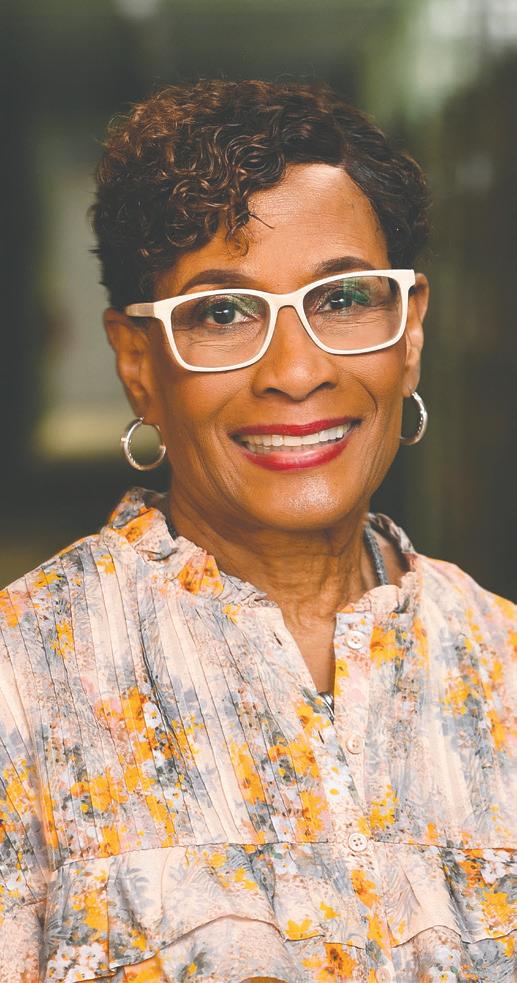
initiatives.
That shift is more than unusual. It is revealing. And it is disturbing.
Because the question is no longer simply how discrimination is being addressed — but how it is being redefined, and for whom.
Placed alongside the most recent presidential executive order rescinding prior federal diversity, equity and inclusion directives and instructing federal agencies and contractors to eliminate DEI-related programs, preferences, and considerations in hiring, contracting, and operations, the pattern becomes unmistakable. Enforcement and policy are now moving in the same direction.
posture of the agency itself.
Under the leadership of Andrea Lucas, recently elevated to EEOC Chair, the agency has taken a more aggressive stance publicly encouraging men—especially White men—to come forward with claims tied to diversity
On one hand, the federal government has removed the expectation that institutions pursue equity. On the other hand, it is signaling that even voluntary efforts to support underrepresented people may now carry legal risk. Together, the message is clear. Do not prioritize diversity. Do not pursue equity. Do not create inclusion.
By N. Scott
In America, we do not punish people before they have their day in court. The Constitution guarantees it. Yet in Maryland today, that promise is quietly being undermined—not in theory, but in practice.
Earlier this year, Maryland took an important step by banning 287(g) agreements that pulled local law enforcement into federal immigration enforcement. That was the right move. It kept our officers focused on public safety, not federal civil enforcement. But we left a critical gap unresolved: what happens inside our jails.
Right now, individuals who have only been accused of a crime, people presumed innocent, are being transferred into immigration custody before they ever have a chance to defend themselves. That means Marylanders are being separated from their families without their day in court, without a conviction, and often without due process. This is not an abstract concern. It is happening to our neighbors, our constituents and the families who call our communities home.
Even without formal agreements, cooperation continues behind the scenes. Local agencies notify ICE of release dates, honor administrative detainers that lack judicial warrants, and facilitate transfers into federal custody. Some sheriffs have made clear they intend to expand these practices.
The Community Trust Act closes this loophole with a simple, constitutional standard: if someone is to be held for immigration purposes in Maryland, there must be a judicial warrant.
That’s it. No ambiguity.
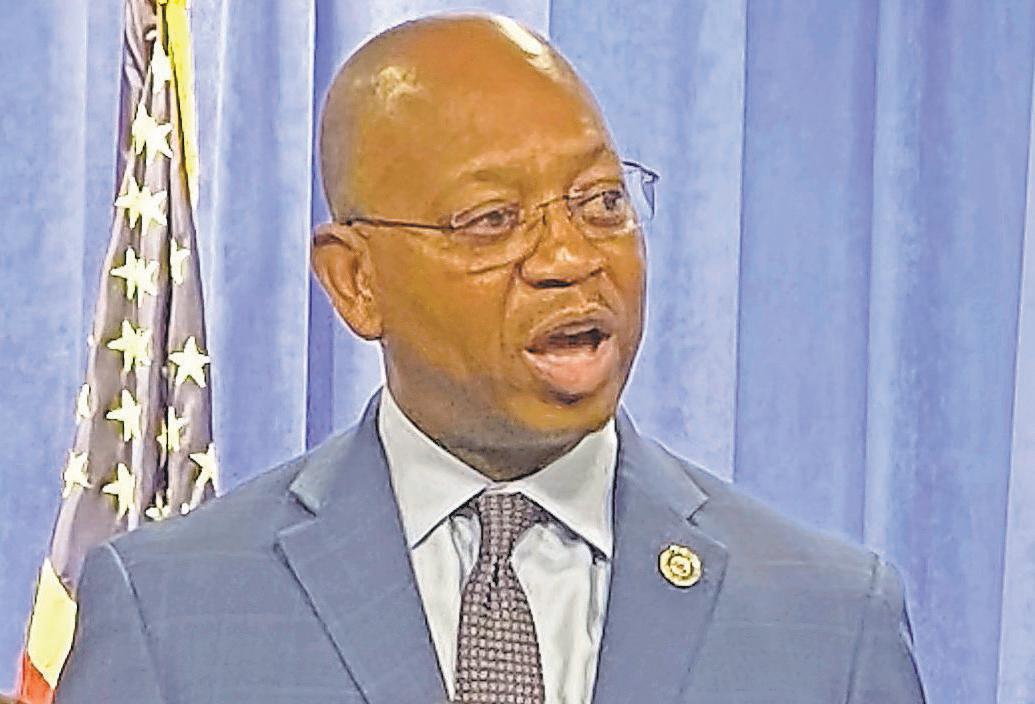
No overreach. Just adherence to the Constitution.
This legislation does not interfere with federal immigration enforcement. It simply ensures that Maryland resources are not used to carry out civil immigration actions without judicial oversight. It reinforces a basic principle: in our justice system, judges, not administrative requests, determine when someone can be detained.
The stakes are not just legal; they are human.
During a recent hearing on HB1575, the Community Trust Act, I met a 10-yearold from my district, Evyn. He testified about his uncle, who was deported last year. He described the absence left behind, not only in his own life, but for his cousins now growing up without their father. His story moved me. It is not unique. It is increasingly common. And it has consequences beyond individual families.
When people are removed from the legal process before their cases are resolved, prosecutions fall apart, victims are denied closure, and the integrity of our courts is weakened. When residents fear that any interaction with law enforcement could lead
And, if you do, you may be challenged.
This is not about one retreat. This is about dismantling the infrastructure of access. And the consequences are already visible.
According to the Institute for Women’s Policy Research, more than 113,000 Black women lost jobs in 2025 alone, with over 250,000 losses concentrated in just the first eight months. Black women, only 14 percent of the female workforce, accounted for more than half of all women’s job losses. And, in 2026, there are no signs of recovery.
Data from the National Women’s Law Center shows Black women’s unemployment continuing to rise, now exceeding 7 percent. This is what researchers call an economic crisis.
So, while it looks like a court will decide whether or not a particular networking event is “fair”, Black women are already experiencing the consequences of a broader rollback.
Jobs lost. Opportunities
erased. Progress reversed. Quietly and decisively.
And yet, Black women are not standing still. National organizations like Win With Black women, a collective of leaders across business, media and policy, have mobilized thousands, raised significant resources, and helped shape leadership in the highest levels of this country.
And still, at the very moment that collective power is growing, the pathways that made that progress possible are being narrowed That is not accidental. That is reaction. And let us be honest about what this moment represents. This is not progress. It is regression.
Women, Black Americans and other historically marginalized communities are once again being forced to defend ground that was already won; forced to access opportunity and the right to be supported within systems that were never designed for them.
The language has changed, but the pattern has not.
When efforts to expand opportunity are dismantled,
and the burden shifts back onto those who were historically excluded to justify their presence once again, we are not witnessing neutrality. We are witnessing a system of control – one that quietly determines who advances and who must continue to fight for what should already be theirs. History does not always repeat itself in form, but it does repeat itself in function. And what we are witnessing is not subtle. It is a narrowing of access; a redefinition of fairness; a quiet rewriting of who belongs and who must continue to prove that they do. We have seen this before: Not in the same language, not in the same form, but in the same outcome. And the danger is not just in what is being done. It is how quietly it is being accepted. So, we cannot afford to be silent. Not now. Not here. Not on this. We must name it, we must challenge it, and we must stand—clearly, collectively and unapologetically—for the access, equity, and opportunity that are already ours.
to deportation, they are less likely to report crimes or cooperate with police. That makes all of us less safe.
Due process is not contingent on immigration status. The Constitution does not allow us to apply its protections selectively.
Courts have already made clear that holding someone solely on the basis of an ICE detainer, an administrative request, not a judicial warrant, can violate the Fourth Amendment.
The Community Trust Act simply aligns Maryland law with that reality.
With only days left in the legislative session, the issue is no longer whether we understand the problem. We do. The legal concerns are clear. The human impact is undeniable.
The question is whether Maryland will finish what it started.
The Community Trust Act is a measured, constitutionally grounded solution. It protects due process, respects the role of the courts and recognizes the real impact our policies have on families and communities.
Our laws should reflect a simple truth: due process is not optional. It is a constitutional right, one that belongs to everyone.
President Obama, while on a podcast, discussed two competing narratives shaping American society. The narrative of hierarchy centers on exclusion — often by race and gender — while the narrative of equality emphasizes a shared creed and collective action. Hierarchy, by design, is anti-democratic because it privileges solutions from the top, silencing those at the bottom. In contrast, equality is inherently democratic, empowering communities to develop solutions together.
School closures are being decided without communities Across the country, school closures are happening in an anti-democratic way. Many closures are justified by budget deficits, the high costs of maintaining old buildings, population declines, or the need to improve struggling schools.
Cities like Pittsburgh, Austin, Texas, Houston and Philadelphia all cite similar reasons for proposed closures.
In Philadelphia, Superintendent Tony B. Watlington Sr. has proposed closing 18 schools. The plan has sparked strong resistance from students, parents and community members. Black and Brown students make up 75 percent of the district and the closures would affect 5,000 students — disproportionately harming them. The last time Philadelphia closed schools, the consequences for students, families and communities were severe.
Democracy requires community-led education reform
For educational reform to truly be democratic, it must be led by the people most affected: students, parents and community members. Philadelphia, the birthplace
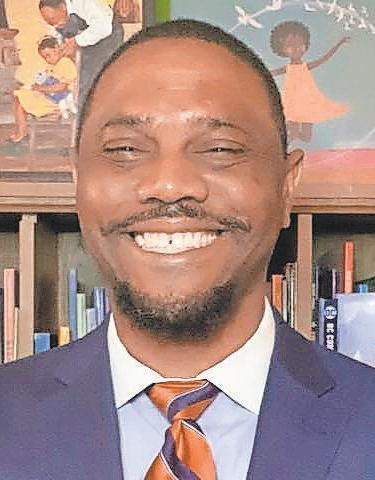
is a Public Voices Fellow of The
in partnership with the National Black Child Development Institute.
of American democracy, is now witnessing an anti-democratic process that diminishes educational spaces where Black and Brown children can dream within their own communities.
What we lose when schools close
You may be able to tell that closing schools is personal to me. I am a graduate of University City High School. My school was closed in 2013 and sold to Drexel University for $14 million. A few years later, Drexel built a skyscraper on the land that once served as a place where Black children could dream.
U-City was a place where teachers saw us not as test scores but as children with the potential to achieve anything. Our principals held both teachers and students to high standards, offering encouragement that would last a lifetime.
U-City was more than a building — it was an ecosystem of possibility, what I call a “Dreamocracy,” where adults supported children in developing and advancing their dreams.
A call for democratic action
As a graduate of a school that was shut down, I stand in solidarity with students, parents and community members fighting to keep their schools open. Black students deserve places where they can dream within their own communities. What is needed is democratic action:
First, a democratic educational reform process must uphold the principle of one voice, one vote. Communities facing school closures should have local referendums, empowering residents to decide the fate of their neighborhood schools. Second, the city should dissolve the mayoral-appointed board in favor of a democratically elected board. This would create a direct link between the community and representation. Two students should also hold voting seats to help shape district policies from development to implementation.
Lastly, all school buildings should be transferred to community land trusts. If a school is closed and the property is sold, the proceeds should be returned to the community to reinvest in new educational spaces.
This is a moral question, not just a financial one Some argue that old school buildings are too expensive to repair and should be closed. But when it is time to help poor Black children, cost becomes the focus. A budget is a moral document — it reveals what an organization values.
Black children deserve places that inspire them to dream. Closing schools is not simply a financial decision; it is a moral one that demands democratic action.













































Thanks to the support of our players, the Maryland Lottery contributed $667.2 million to Maryland’s schools, public health and safety initiatives and other state programs in Fiscal Year 2025. We also paid more than $1.67 billion in prizes to players. Not bad. We’d like to think we generated a few million smiles as well. When you play, everybody wins.




State Legislative District: 40th)
11:00 AM – Melvin T. Daniels and Gustavus Durr, Jr., Meltor, Inc., T/a Mug Shots, 31 E. Cross Street Class “B” Beer, Wine & Liquor License
(City Council District: 11th;
12:00 PM – Vasilios G. Tserkis, Admiral’s of Thames, LLC, T/a Waterfront Hotel, 1710 Thames Street
Class “BD7” Beer, Wine & Liquor License
(City Council District: 1st; State Legislative District: 46th)
12:30 PM – Bubodha Bilas Panta and Prabhat Jung Thapa, Surakshya, LLC, T/a Sweet Carolina Liquor, 309 S. Broadway
Class “A” Beer, Wine & Liquor License (City Council District: 13th; State Legislative District: 46th)