Small-Scale Farmers and Africa’s Emerging Continental Seed and IP Architecture
A civil society briefing on the AU FMSS Policy Framework, the AU FMSS Strategy and Action Plan, and the AfCFTA IP Protocol/PVP Annex—with implications for small-scale farmers, seed sovereignty and food sovereignty
The African Centre for Biodiversity (ACB) is committed to dismantling inequalities and resisting corporate industrial expansion in Africa’s food and agriculture systems.
PO Box 29170, Melville 2109 Johannesburg, South Africa
Tel: +27 (0)11 486 1156
Researched and written by ACB executive director Mariam Mayet
Design and layout by Vicky-Lee Vermeulen, Align Creative
Acknowledgments
The ACB gratefully acknowledges the financial support of several donors, though the views expressed may not necessarily reflect the views of our donors.
Whose Seeds, Whose Sovereignty? Small-Scale Farmers and Africa’s Emerging Continental Seed and IP Architecture
Comprehensive Africa Agriculture Development Programme
Common Market for Eastern and Southern Africa
Distinctness, uniformity and stability
East African Community
Food and Agriculture Organization of the United Nations
Farmer-managed seed systems
Free, prior and informed consent
Intellectual property
Intellectual property rights
International Treaty on Plant Genetic Resources for Food and Agriculture
Least developed countries
Office of the United Nations High Commissioner for Human Rights
Plant genetic resources
Participatory guarantee system
Plant variety protection
Quality declared seed
Regional economic communities
Rural Women’s Assembly
Southern African Development Community
Trade Law Centre (South Africa)
Agreement on Trade-Related Aspects of Intellectual Property Rights
Third World Network
United Nations Declaration on the Rights of Peasants and Other People Working in Rural Areas
International Union for the Protection of New Varieties of Plants
World Trade Organization
EXECUTIVE SUMMARY
Recognition is not protection
This briefing is written at a decisive moment for African seed governance. Two African Union (AU) instruments on farmermanaged seed systems (FMSS)—the Draft Policy Framework for Enhancing Farmer Managed Seed Systems in Africa and the FMSS Strategy and Action Plan 2026–2035—are open for comments, inputs and advocacy, while the African Continental Free Trade Area (AfCFTA) Annex on Plant Varieties Protection has already been adopted as part of the AfCFTA Protocol on Intellectual Property Rights architecture (AUC, 2025; AUC, 2026; AfCFTA, 2026).
Taken together, these instruments mark a shift from earlier regional seed and plant variety protection (PVP) harmonisation
From visibility to control
The legal status of these instruments is uneven, and that unevenness matters for domestication. The AU FMSS Policy Framework is normative, while the FMSS Strategy and Action Plan is programmatic and operational; both can guide Member States but cannot prescribe binding domestic law or override national sovereignty. By contrast, the AfCFTA IP Protocol and its PVP Annex sit within a treaty-based continental trade and IP architecture.
This creates a legal and political asymmetry: FMSS protection may remain soft guidance, while PVP harmonisation may move through stronger legal channels as Member States review, amend or enact national PVP laws.
Civil society and Member States must therefore insist that the Annex does not define Farmers’ Rights downward or become the new continental benchmark for FMSS recognition, seed law reform, quality assurance, public funding or farmers’ seed practices (African Legal Information Institute, 2023; AfCFTA, 2026; APBREBES, 2026).
under the African Regional Intellectual Property Organization (ARIPO), Southern African Development Community (SADC), Common Market for Eastern and Southern Africa (COMESA), and the East African Community (EAC) toward a continental seed and intellectual property architecture.
This creates both an opening and a danger: the opening is to secure stronger public recognition, protection, and support for FMSS; the danger is that recognition becomes a route to making farmer seed systems more visible, administrable, and absorbable into formal seed, trade, digital, and intellectual property (IP) systems.
When PVP hardens the imbalance
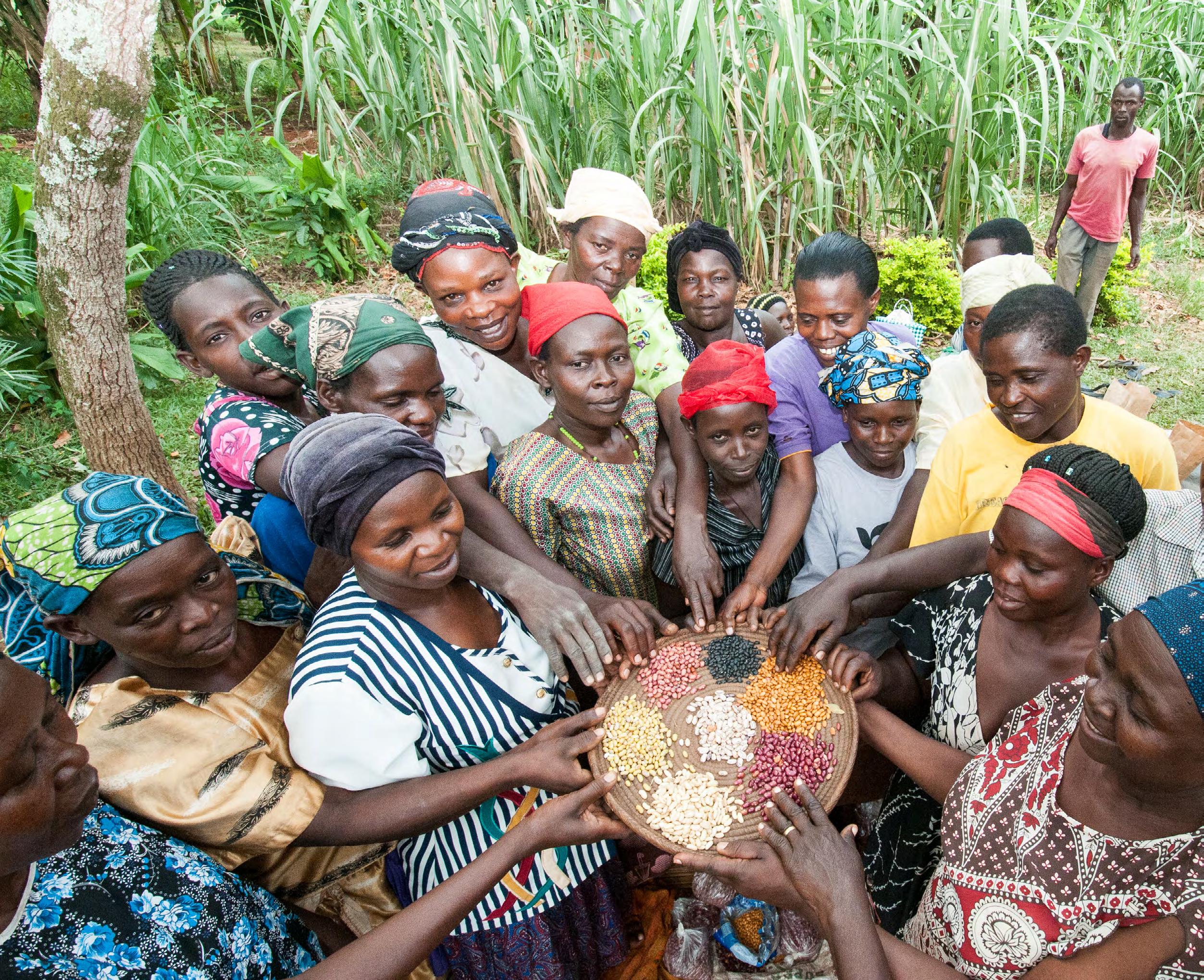
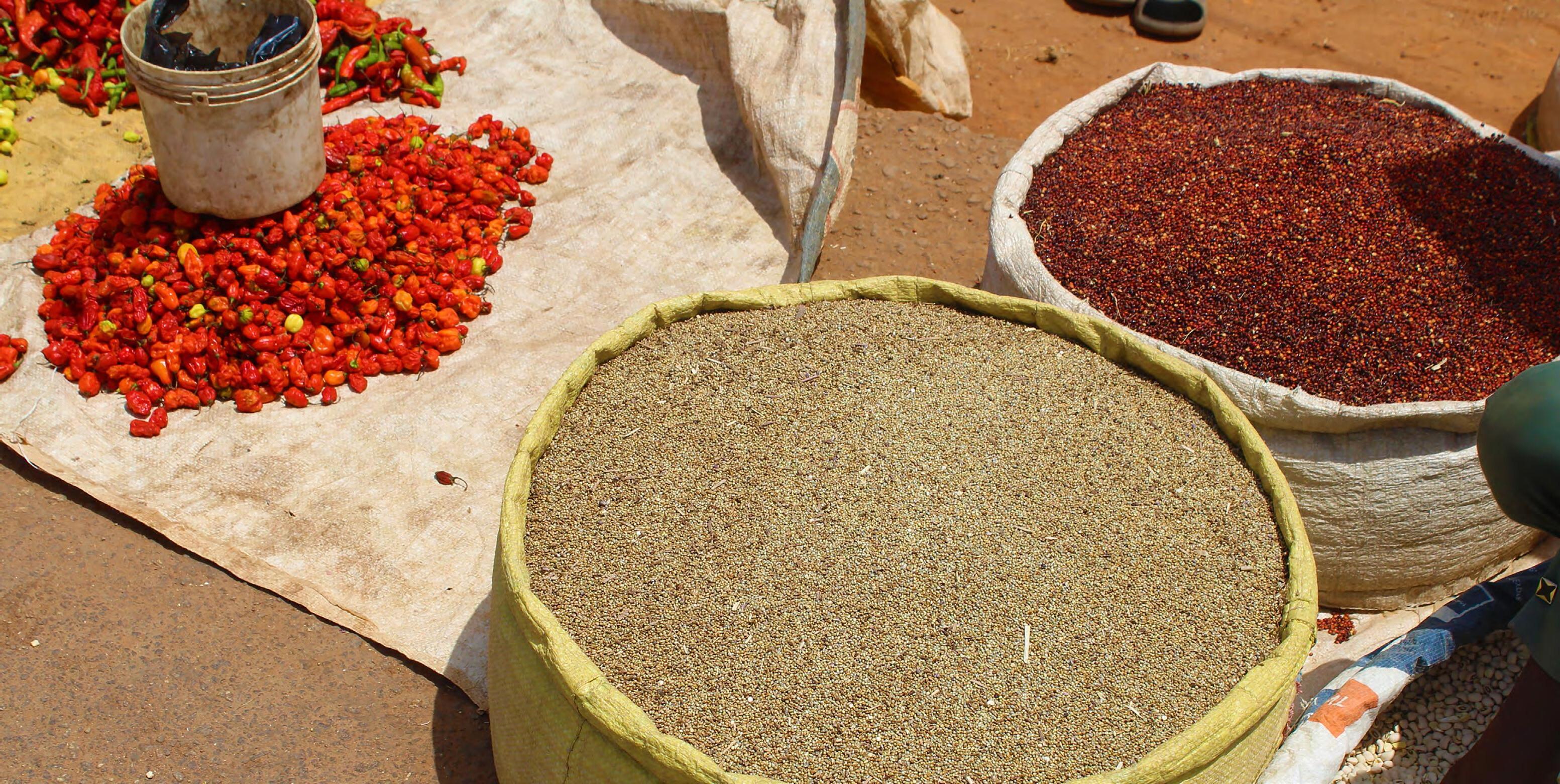
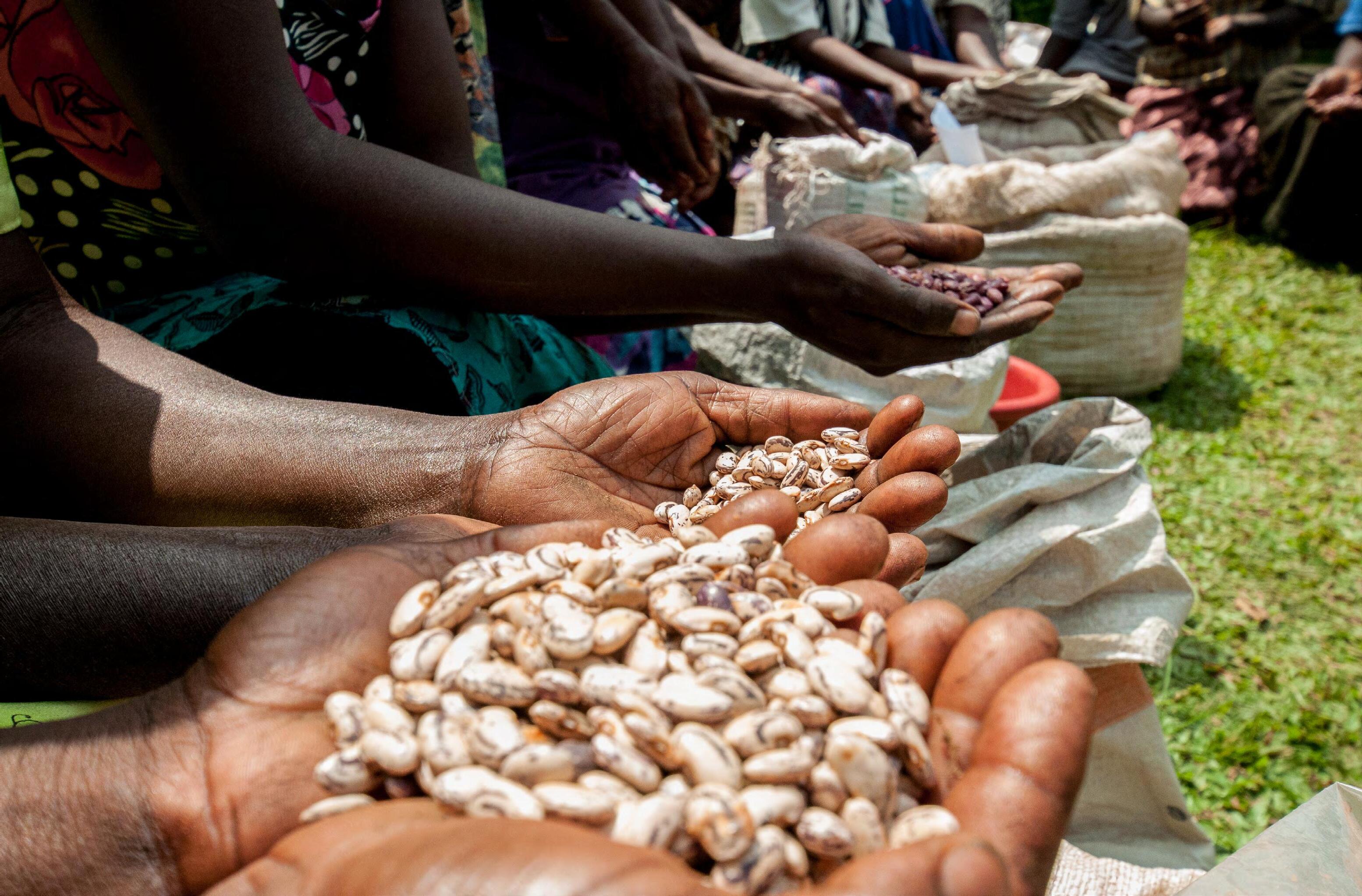
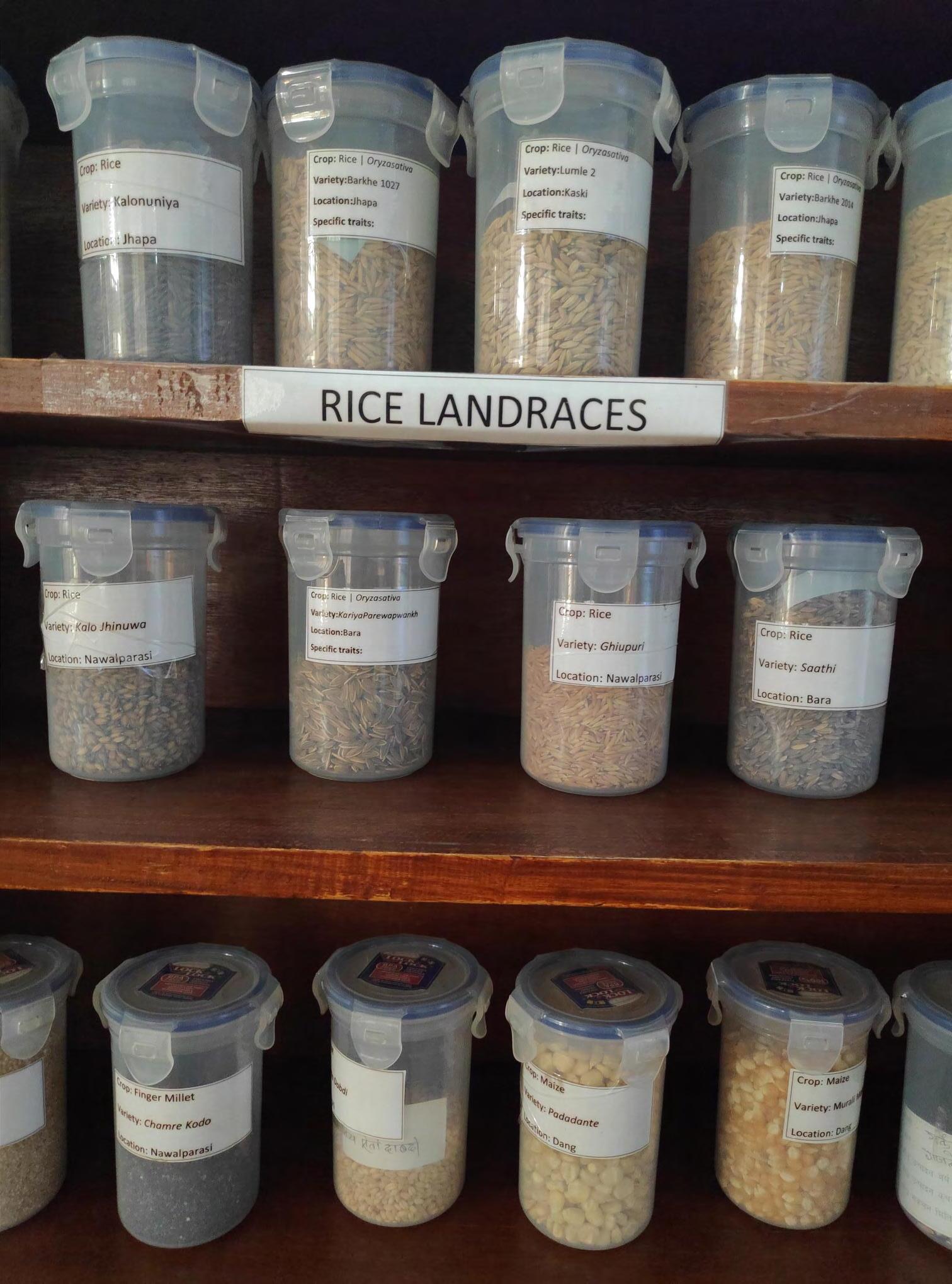
This briefing starts from the living reality of FMSS, not from institutional design. Across Africa, small-scale farmers, women seed custodians, and pastoral and agroecological communities already conserve, select, improve, exchange, store, revive and circulate seed through community seed banks, seed fairs, local markets, customary exchange, farmer associations, women’s networks and territorial food economies.
These systems supply the overwhelming majority of seed used by smallholder farmers in many African contexts and are fundamental to food security, agricultural biodiversity, climate adaptation, nutrition, agroecology and food sovereignty. Yet they remain under pressure from laws and institutions designed around commercial varieties, weak public finance, under-recognition of women’s knowledge, land and biodiversity insecurity, and growing risks of germplasm, data, and knowledge extraction (AFSA & GRAIN, 2018; AFSA, 2025c; McGuire & Sperling, 2016; FAO, 2018; Wynberg, 2024).
The central danger is that FMSS may be recognised only to be made more visible, measurable, fundable, documented, digitised, quality-assured, registered and market-accessible, while farmers’ autonomy, collective rights and customary governance remain insufficiently protected.
The AU FMSS instruments should therefore include clear guardrails for Member States:
FMSS recognition must not depend on registration; certification; distinctness, uniformity and stability (DUS) compliance; quality declared seed (QDS); market participation; or integration into formal seed systems;
Farmer-variety catalogues must be voluntary protective evidence tools, not eligibility mechanisms;
Funding must be public-interest and farmer-controlled;
Digital tools must be optional, community-governed and subject to data sovereignty safeguards; and
Women seed custodians and rural women’s United Nations Declaration on the Rights of Peasants and Other People
Working in Rural Areas (UNDROP) organising must be recognised as rights-based governance, not project participation (RWA, 2023; RWA, 2026; Canfield, Masinjila & Ntambirweki, 2026; Mann & Daly, 2024).
The briefing’s core advocacy message is therefore clear: do not let recognition become absorption, and do not let the AfCFTA PVP Annex define Farmers’ Rights downward. The AU FMSS Policy Framework and Strategy should be revised so that domestication begins with barrier removal, noncriminalisation, public support, agroecology, biodiversity, community governance and farmer autonomy.
Member States should use all available constitutional, legislative and policy space to go beyond the PVP Annex, protect national policy space, avoid International Union for the Protection of New Varieties of Plants (UPOV) 1991-style lock-in, preserve the Agreement on Trade-Related Aspects of Intellectual Property Rights (TRIPS) flexibilities for least-developed countries, and build farmer-centred sui generis systems that protect seed sovereignty and food sovereignty. FMSS need protection and public support, not absorption into the formal, commercial, digital and IP architectures that have historically marginalised farmer seed systems.
INTRODUCTION: WHY THIS POLICY MOMENT MATTERS
From regional harmonisation to continental architecture
This briefing is written at an unusually decisive moment for African seed governance, in terms of how it affects small-scale farmers. Three instruments have emerged in close succession at the continental level and must be read together: the AU Draft Policy Framework for Enhancing Farmer Managed Seed Systems in Africa; the AU FMSS Strategy and Action Plan 2026–2035; and the AfCFTA Annex on Plant Varieties Protection to the Protocol on Intellectual Property Rights.
Their continental character marks an important shift. Earlier seed harmonisation efforts were largely pursued through regional economic communities (RECs) and institutions such as ARIPO, SADC, COMESA and EAC. The current moment moves that harmonisation agenda onto an AU and AfCFTA-wide plane, where FMSS, PVP, seed harmonisation, agrifood systems transformation and continental trade integration are being reorganised within a common African policy terrain (AUC, 2025; AUC, 2026; AfCFTA, 2026).
Starting from living seed systems
The starting point for this briefing is not law, trade or institutional architecture, but the living reality of FMSS. Across Africa, small-scale farmers, women seed custodians, pastoral and agroecological communities already conserve, select, improve, exchange, store, revive and circulate seed through diverse crop cultivation, seed saving, community seed banks, seed fairs, local markets, customary exchange, farmer associations, women’s networks and territorial food economies.
The AU FMSS Policy Framework and Strategy process is open to comments, inputs and advocacy at this stage. This creates an important political opening for farmer organisations, women’s seed networks, agroecology movements, and civil society to shape the terms on which FMSS are recognised before these instruments are domesticated through national policies, laws, investment plans and implementation programmes.
The AfCFTA PVP Annex is in a different position: it has been adopted as part of the AfCFTA IP Protocol architecture and now raises urgent questions about how plant variety protection will be domesticated in national laws across Member States.
This paper is offered as a contribution to civil society engagement on both fronts: to strengthen advocacy on the open AU FMSS process, and to support scrutiny of how the PVP Annex may be implemented nationally so that FMSS protection, Farmers’ Rights, seed sovereignty and food sovereignty are not subordinated to breeders’ rights and trade/IP harmonisation.
These systems are vital to food sovereignty, climate adaptation, biodiversity, nutrition, culture and local autonomy. Examples from Ethiopia, Mali, Senegal, Uganda, Kenya, Zambia, Zimbabwe, South Africa, Malawi and Morocco show that FMSS are diverse, adaptive and regionally rooted systems, not informal gaps waiting to be formalised (AFSA & GRAIN, 2018; AFSA, 2024; Mokoena et al., 2019; Andersen, Meixner Vásquez & Wynberg, 2022; Vernooy, Otieno & Adokorach, 2024a; Sahri et al., 2014; Wynberg, 2024). Yet they operate in a political economy that rarely favours them: public policy, donor finance, research agendas, quality systems, market integration, digital tools and IP frameworks often privilege commercial seed systems, administratively legible varieties, formal value chains and private-sector delivery.
This is why the AU FMSS process matters. It can either recognise and resource FMSS on their own terms, or pull them into the same formal, commercial and IP architectures that have long marginalised them.
This lived reality is well documented by farmer and civil society work. The Alliance for Food Sovereignty in Africa (AFSA) and GRAIN show how farmers conserve, select, multiply and circulate diverse crops through seed saving, farmer-to-farmer exchange, seed fairs, local markets and customary relations across several African countries (AFSA & GRAIN, 2018). Rural Women’s Assembly (RWA)’s seed audit work foregrounds rural women’s seedsaving practices, indigenous knowledge and community-based seed systems as living forms of resistance to dispossession and corporate control (RWA, 2023). Community seed bank work in Zimbabwe, South Africa, Kenya, Uganda, Ethiopia, Malawi and Morocco further shows that FMSS can strengthen seed access, participatory selection, crop diversity, drought resilience, nutrition and local governance without being reduced to commercial seed enterprises (FAO, 2025; Mokoena et al., 2019; Kruzman, 2025; Vernooy, Otieno & Adokorach, 2024a; Andersen et al., 2026; Almouhtadi, 2024).
Their significance is difficult to overstate. Across sub-Saharan Africa, FMSS are widely estimated to supply the overwhelming majority of seed used by smallholder farmers, with AFSA citing 80%–95% and other studies commonly placing the share around 80% or higher (AFSA, 2025c; McGuire & Sperling, 2016; AFSA & GRAIN, 2018).
These systems are not simply supply channels; they are the everyday infrastructure of food security, nutrition and biodiversity. By maintaining landraces, farmer varieties, neglected and underutilised crops, mixed cropping systems, local seed exchange and continual selection under real farming conditions, FMSS conserve agricultural biodiversity in situ and keep it evolving in farmers’ fields.
They are also central to agroecology because they support diversity, local adaptation, co-creation and sharing of knowledge, reduced dependence on purchased inputs, ecological resilience, culture and food traditions, and community control over the means of production.
The United Nations Food and Agriculture Organization (FAO)’s 10 Elements of Agroecology identify the following as core to agroecological transitions:
diversity
resilience
co-creation of knowledge
culture and food traditions
responsible governance
circular/solidarity economies
All of these depend on living seed systems rather than homogenised seed markets (FAO, 2018; Barrios et al., 2020).
In this sense, protecting FMSS is not a niche seed-policy concern: it is fundamental to climate adaptation, food sovereignty, dietary diversity, rural livelihoods and the future of agroecological transitions in Africa (FAO, 2024; Wynberg, 2024; Vernooy, Otieno & Adokorach, 2024a). The AU FMSS instruments should therefore require Member States to place agroecology, biodiversity, farmer-led seed governance and public support for living seed systems at the centre of national implementation.
Barriers to recognition, protection and support: why FMSS remain under pressure
The importance of FMSS has not translated into adequate recognition, protection or public support. These systems face multiple and overlapping barriers.
Legally, seed laws, variety registration systems, certification rules and phytosanitary controls are often designed around formal commercial varieties, registered seed producers and officially recognised marketing channels, leaving farmer varieties and customary exchange legally ambiguous or vulnerable.
Institutionally, public research, extension, and investment systems frequently prioritise formal breeding, commercial seed multiplication, productivity packages and market integration over farmer-led breeding, participatory selection, community seed banks, and agroecological knowledge.
Economically, FMSS operate with limited public finance while donorbacked and private-sector programmes channel support toward agrodealer networks, commercial seed enterprises, value chains and input-based models.
Socially and politically, women’s seed custodianship, indigenous knowledge, and pastoral and local seed governance systems remain under-recognised, even though they sustain much of the diversity on which resilience depends.
Ecologically, farmers’ access to land, water, grazing, forests, wild relatives, and biodiverse landscapes is increasingly insecure.
Digitally and scientifically, new pressures arise from databases, traceability tools, genomic research, artificial intelligence (AI)-enabled platforms and IP systems that can turn seed, knowledge and biodiversity into extractable data and proprietary value.
This makes it possible for farmermanaged diversity to be analysed, commercialised or incorporated into breeding pipelines without meaningful community control, FPIC, benefit-sharing, or limits on IP claims.
Digital extraction must therefore be treated as part of the same struggle over germplasm, knowledge and seed sovereignty.
This is the terrain on which two continental streams now meet.
This is also why germplasm conserved and continually adapted within FMSS is increasingly valuable to breeders, researchers, genebanks, climate-resilience programmes and commercial seed actors.
Farmer varieties and associated knowledge may contain traits for drought tolerance, pest and disease resistance, nutritional diversity, local adaptation, storage, taste, and culturally important food uses. Without strong community governance; free, prior, and informed consent (FPIC); benefit-sharing; restrictions on commercial use; and clear prohibitions on IP claims over farmer varieties and associated knowledge, the diversity maintained by farmers can become a resource for extraction rather than a foundation for farmer autonomy, agroecology, and seed sovereignty.
The risk is no longer only physical collection of seed or conventional bioprospecting. Digital sequencing, genomic databases, AI-enabled trait discovery, digital sequence information, and platform-based research can separate genetic information from the communities that conserved, selected and developed it.
One stream—the AU FMSS Policy Framework and Strategy—offers an opening to recognise and support FMSS, but its orientation toward documentation, quality systems, investment plans, reporting frameworks, genebank linkages, digital tools, and market-facing implementation also carries a risk of absorption if these mechanisms are not clearly subordinated to farmer autonomy, community governance and Farmers’ Rights.
The other stream—the AfCFTA IP Protocol and PVP Annex—strengthens the continental legal architecture for breeders’ rights, PVP, enforcement, and harmonised IP rules.
Looking at either stream alone is insufficient. Together, they could create a pipeline from farmers’ fields to catalogues, databases, genebanks, breeding programmes, IP claims and commercial seed markets unless strong safeguards are built in.
The future trajectory of FMSS and Africa’s seed sectors will be shaped by how these streams interact: whether recognition removes barriers, expands farmer autonomy and protects existing seed practices, or whether FMSS are made more visible and administrable while PVP, markets, digital systems, and formal seed-sector standards define the terms of inclusion.
The legal status of these instruments differs, and this matters for domestication. The AU FMSS Policy Framework is a normative continental policy instrument: it sets out the principles, concepts and policy direction through which Member States are encouraged to recognise, protect and support FMSS as legitimate components of African seed governance. The FMSS Strategy and Action Plan is more programmatic and operational: it translates that policy direction into proposed actions, institutional roles, coordination arrangements, investment priorities, implementation pathways and Comprehensive Africa Agriculture Development Programme (CAADP)aligned reporting over the 2026–2035 period.
Neither instrument is a self-executing law or directly binding legal obligation, and the AU cannot prescribe detailed domestic legal rules to Member States in a manner that overrides national sovereignty.
However, the AU can and should set clear normative guardrails for domestication: minimum safeguards that Member States are urged to put in place to prevent absorption, criminalisation, data extraction, compulsory registration, DUS creep, corporate capture and subordination of FMSS to PVP or trade rules. Together, the Policy Framework and Strategy are intended to guide Member States, RECs, seed authorities, parliaments, donors and CAADP processes in reviewing and adapting national policies, laws, agricultural investment plans, biodiversity strategies, research agendas, extension systems, genebank linkages, and reporting frameworks where relevant (AUC, 2025; AUC, 2026).
The AfCFTA Protocol on Intellectual Property Rights is the broader treaty instrument adopted under the Agreement Establishing the African Continental Free Trade Area to harmonise IP rules and principles across the continent. The PVP Annex is narrower: it is one of the annexes adopted under that Protocol and deals specifically with PVP. It complements the Protocol’s provisions on plant varieties and makes them more operational by setting out detailed rules on applications, examination, breeders’ rights, Farmers’ Rights, enforcement, remedies, and cooperation between national offices (AfCFTA, 2026; African Legal Information Institute, 2023; APBREBES, 2026).
This distinction matters because the Protocol supplies the continental IP framework, while the PVP Annex supplies the seed-specific legal machinery through which PVP may be domesticated in national law. For Member States, the legal implication is not simply that the Annex exists at the continental level, but that national governments may now face pressure to:
Review, amend or enact PVP legislation;
Establish or adapt competent PVP authorities;
Align application and examination procedures;
Provide for breeders’ rights and exceptions, and
Create enforcement and remedies systems consistent with the Annex.
On the face of it, the Annex broadly aligns with several UPOV 1991-style features, including DUS-based protectability, broad breeder entitlements, protection terms, enforcement mechanisms, and limited exceptions. However, it is not a simple copy of UPOV 1991. It also includes African-specific elements such as disclosure of the source of genetic resources and traditional knowledge, proof of FPIC and benefit-sharing, and a dedicated chapter on Farmers’ Rights (AfCFTA, 2026; APBREBES, 2026). These departures are important, but they are not sufficient.
The Annex does not provide a full, robust or satisfactory articulation of Farmers’ Rights as recognised in the International Treaty on Plant Genetic Resources for Food and Agriculture (ITPGRFA) Article 9, UNDROP Article 19 and African farmer seed practices. Its Farmers’ Rights provisions refer to protection of traditional knowledge, participation in decision-making, FPIC, and benefit-sharing, and allow smallholder farmers limited use or exchange of protected varieties for propagating purposes under specified conditions.
This formulation falls short of the full normative promise of ITPGRFA Article 9 because it does not clearly protect farmers as active custodians, innovators and decision-makers in the conservation, development, use and governance of plant genetic resources (PGR), but instead situates their seeduse practices as limited permissions within a PVP framework.
It is also much narrower than UNDROP Article 19, which recognises the right of peasants to seeds, including the rights to save, use, exchange, and sell farm-saved seed or propagating material, and to maintain, control, protect, and develop their own seeds and traditional knowledge.
In the Annex, by contrast, Farmers’ Rights remain narrow, conditional and embedded within a breeders’ rights framework: breeders receive enforceable legal entitlements, while Farmers’ Rights risk being treated as limited permissions—exceptions at the margins of PVP. This matters profoundly for domestication.
If national PVP laws are drafted around the Annex’s narrow farmers’ rights formulation, they may reproduce a UPOV-style hierarchy even while appearing more “African” or flexible than UPOV 1991.
This is why the Annex’s narrow formulation of Farmers’ Rights has implications well beyond PVP law. Because the PVP Annex is part of the AfCFTA IP Protocol architecture, its domestication is likely to carry greater legal force than the AU FMSS Policy Framework and Strategy, which remain normative and programmatic instruments. The Annex therefore does more than regulate protected varieties: it risks becoming the new continental “African” formulation of Farmers’ Rights against which national governments, RECs, donors, technical agencies and law reform processes measure seed policy. It could well become the benchmark not only for national PVP legislation but also for FMSS recognition, seed law reform, quality assurance systems, farmer-variety registration, market-support programmes, and public funding.
This creates a serious spillover risk: the stronger legal instrument may pull the softer FMSS instruments toward a limited, administratively managed understanding of Farmers’ Rights, centred on registration, quality control, documentation, market participation, and permitted uses of protected varieties, rather than on farmer autonomy, collective rights, customary governance, agroecology, and seed sovereignty.
Core advocacy intervention: do not let the PVP Annex define Farmers’ Rights downward.
Member States should therefore use all available constitutional, legislative and policy space to go beyond the Annex by expressly protecting farmers’ rights to save, use, exchange, sell, develop, maintain, control, and govern seed; by ensuring that PVP laws are subordinated to biodiversity conservation and sustainable use, food sovereignty, agroecology, gender justice, and customary seed governance; and by making clear that FMSS recognition under the AU Policy and Strategy cannot be reduced to registration, exceptions in PVP and seed laws, quality control, documentation, market participation, or permitted uses of protected varieties.
The enforcement architecture of the PVP Annex also requires close scrutiny. Its provisions on infringement proceedings, remedies, injunctions, seizure, confiscation, damages, and possible criminal responsibility may appear technical, but in contexts where farmers routinely save, reuse, exchange, barter, and locally sell seed, these provisions can create legal uncertainty and enforcement risks for ordinary seed practices.
Any national domestication of the Annex must therefore include explicit non-criminalisation safeguards for customary seed saving, exchange, local sale, and circulation within FMSS, and must ensure that PVP enforcement is subordinated to Farmers’ Rights and seed sovereignty.
Does the PVP Annex reset the harmonisation landscape?
A further question is whether the AfCFTA PVP Annex now supersedes earlier regional PVP harmonisation processes, such as ARIPO’s Arusha Protocol or the SADC PVP Protocol.
The AfCFTA does not automatically abolish or replace RECs, regional IP organisations, or existing regional arrangements; the AfCFTA Agreement recognises RECs as building blocks of continental integration and Article 19 of the AfCFTA preserves higher levels of regional integration among State Parties that have already attained them (AfCFTA, 2018; Tralac, 2019; Tralac, 2022). The PVP Annex will coexist with existing regional and national PVP regimes, but may become a new continental benchmark for future alignment. This creates legal and political complexity: ARIPO Contracting States, SADC Member States and AfCFTA State Parties may find themselves navigating overlapping obligations, and institutional pathways. Where regional instruments and the AfCFTA PVP Annex differ, governments will need to interpret their obligations in good faith, avoid lowering Farmers’ Rights protections, and ensure that national lawmaking does not simply harmonise upward toward stronger breeders’ rights.
For civil society, the key point is that the Annex may not formally supersede REC PVP instruments, but it can still reshape them by setting a continental reference point for legal reform, technical assistance, regulatory benchmarking, and future harmonisation.
The implications will also differ across Member States depending on their existing international and national PVP position. For countries that are already UPOV 1991 members and have enacted UPOV 1991-style PVP laws, the AfCFTA PVP Annex may reinforce existing breeders’ rights frameworks (UPOV, 1991; UPOV Lex, 2026). However, their ability to incorporate stronger disclosure, FPIC, benefit-sharing or expansive Farmers’ Rights provisions within PVP law may be constrained by UPOV if those provisions are viewed as additional conditions for protection or as limitations on breeders’ rights beyond what UPOV permits.
Civil society in UPOV 1991 member countries should press governments not only to use every lawful interpretive space within UPOV, but also to review the costs and consequences of UPOV
1991 membership, including the option of withdrawal where membership prevents the full protection of Farmers’ Rights, FMSS, biodiversity, seed sovereignty, and food sovereignty, and continue to challenge PVP laws that criminalise customary seed saving, exchange, local sale or circulation.
For countries moving toward UPOV 1991 accession or drafting UPOV-style laws, the advocacy message is even clearer: do not use the AfCFTA PVP Annex as a bridge into UPOV 1991.
TRIPS Article 27.3(b) does not require UPOV membership; it allows countries to establish effective sui generis systems for PVP (WTO, 2008). These countries still have policy space to design laws that begin from Farmers’ Rights, FMSS, biodiversity, customary seed governance, seed sovereignty and food sovereignty. Accession to UPOV 1991 would drastically narrow that space by locking national law into a breeders’ rights-centred model and making it harder to protect customary seed saving, exchange, local sale, and farmerled seed systems.
The core civil society demand should therefore be: do not join UPOV 1991; use the AfCFTA moment to build farmercentred sui generis laws instead.
For least-developed countries (LDCs) benefiting from World Trade Organization (WTO) TRIPS transition periods, including exemptions from implementing certain TRIPS obligations until the relevant transition period expires, the core civil society demand should be that AfCFTA implementation must not be used to prematurely import PVP obligations that these countries are not yet required to implement under WTO rules (WTO, 2008).
LDCs should preserve and use their TRIPS flexibilities to protect policy space, delay or avoid restrictive PVP legislation, and design farmer-centred policies and laws centred on Farmers’ Rights, FMSS, biodiversity, customary seed governance, seed sovereignty, and food sovereignty. The PVP Annex must not become a backdoor route for accelerating breeders’ rights obligations in countries that still retain multilateral flexibility.
For countries that are not UPOV members, are not in an accession process, or have not yet adopted comprehensive PVP laws, the Annex creates a risk because it may become the default template for national law-making.
In all the above scenarios, civil society should resist the idea that AfCFTA implementation requires copying UPOV 1991 or the Annex wholesale into national law.
ACB and allied civil society analyses of the AfCFTA have already warned that the Free Trade Area’s approach to agriculture is not politically neutral. ACB’s submission to the FAO discussion on AfCFTA and food and agriculture argued that the agreement risks accelerating standardised, industrialised, and corporate-controlled food systems unless it is redirected toward people-
and nature-centred food sovereignty approaches (ACB, 2020). AFSA’s later work makes a related argument from the perspective of smallholder farmers and seed sovereignty: AfCFTA and postMalabo agricultural policy may deepen corporate capture of agriculture, expand commercial seed and agro-input markets, weaken biosafety safeguards, and entrench IP regimes that restrict Farmers’ Rights unless a different framework is adopted (AFSA, 2025). This broader AfCFTA critique is directly relevant here because the PVP Annex does not sit outside trade policy; it is one of the legal tools through which the AfCFTA’s marketintegration project may reshape African seed governance.
The present continental moment is therefore not a blank slate. It must be read through the history of African farmer, women’s, agroecology, and foodsovereignty movements that have already contested the regional harmonisation of seed laws, seed trade rules and PVP regimes. Those struggles offer crucial lessons for how civil society should approach the AU FMSS instruments and the AfCFTA PVP Annex today.
Lessons from earlier seed harmonisation struggles
Earlier regional seed and PVP harmonisation efforts already provide an important warning for the current continental moment.
Across ARIPO, SADC, COMESA and the EAC, seed law reform was often framed as technical coordination for trade, productivity, and regulatory efficiency, yet it tended to build legal, institutional, and market infrastructure for commercial seed expansion, breeders’ rights, regional variety catalogues, certification systems, and cross-border seed trade. These processes repeatedly marginalised FMSS, customary seed exchange, agroecology, and agricultural biodiversity. The lesson for the AU FMSS instruments and the AfCFTA PVP Annex is therefore clear: continental recognition of FMSS must not repeat the same harmonisation logic under the language of support, integration, investment or modernisation (ACB, 2018a; ACB, 2018b; ACB, 2023; TWN, 2023).
The task now is to ensure that continental policy breaks with that trajectory, rather than scaling it up under a new African architecture.
Why this moment is political, not merely technical
The simultaneous emergence of the AU FMSS Policy Framework, the AU FMSS Strategy and Action Plan, and the AfCFTA PVP Annex is not only a technical policy development. It reflects a wider shift in African seed governance: seed is increasingly treated as a site of trade integration, investment planning, formal quality control, digitalisation, climate adaptation, genetic-resource management, and IP regulation. This does not mean the same dynamics operate uniformly across all African countries, or that every intervention has the same purpose or effect. It does mean that FMSS recognition is being negotiated in a policy environment that increasingly privileges market access, regulatory alignment, administratively legible seed flows, private-sector participation, and harmonised rules. That context is essential for understanding both the promise and the danger of the current continental moment (ACB, 2023; Munyi, 2022; Wise, 2020).
food security, biodiversity and climate adaptation, and can no longer be ignored in continental policy.
The result is a contested institutional response: FMSS are being recognised because they are indispensable, but they are also being made visible within systems of planning, investment, monitoring, quality assurance, digitalisation and trade/IP harmonisation. This dual movement— recognition on the one hand, administrative and market incorporation on the other—is what makes the current moment politically important.
For FMSS, the key issue is not whether continental policy uses the language of support, recognition, or inclusion, but on whose terms that support is organised. If funding, quality assurance, documentation, genebank linkages, digital systems, market access and PVP implementation are designed around formal seed-sector priorities, they may make farmer seed systems more visible while also making them easier to discipline, extract from, or absorb.
The test: protection—not absorption
Several forces help explain why these frameworks have emerged together. The AU is seeking to consolidate a continent-wide architecture for agrifood systems transformation, CAADP implementation, climate resilience, seed-sector coordination and AfCFTArelated trade integration. At the same time, there is growing acknowledgment that FMSS remain central to African
If they are grounded instead in Farmers’ Rights, agroecology, biodiversity, community governance, gender justice, and food sovereignty, the same policy moment could help remove barriers and resource systems that already feed, adapt, and sustain communities.
This briefing therefore argues that the AU FMSS instruments and the AfCFTA PVP Annex must be assessed together—not in isolation. The central question is whether this wave of continental policy-making will protect FMSS as autonomous, farmerled, and rights-bearing systems grounded in seed sovereignty, agroecology, biodiversity, gender justice, digital justice, and community governance, or whether recognition will become a route to formalisation, market capture, digital enclosure, and UPOV-style PVP across Africa. FMSS need protection and public support, not absorption into the formal, commercial, digital, and IP architectures that have historically marginalised farmer seed systems (AFSA, 2022; Peschard, Golay & Araya, 2023; ACB, 2026b).
One of the most important conceptual issues is how FMSS are defined. The AU draft policy describes FMSS as community-based systems through which farmers conserve, select, produce, save, exchange, and trade seed—predominantly based on traditional varieties, landraces,
indigenous knowledge and customary rules (AUC, 2025). This is a useful starting point, but it remains insufficient unless FMSS are understood as autonomous, rights-bearing, and community-governed systems rather than merely informal components of a broader seed sector.
Recommendation for the AU Policy Framework
The Policy Framework should include a clear domestication guidance clause urging Member States to recognise FMSS as autonomous, rights-bearing, and community-governed systems, not merely informal or complementary seed channels. Such a clause should invite national governments to:
Protect farmers’ rights to save, use, exchange, sell, develop, maintain, control, and govern seed;
Recognise customary seed governance, women’s seed custodianship, and community protocols; and
Ensure that FMSS recognition is not made conditional on registration, certification, DUS compliance, formal market participation, or integration into the commercial seed sector.
DUS must not enter FMSS by implication
A related definitional concern is the presence of DUS in the Policy Framework’s definitions. DUS is the technical standard used in formal variety registration and PVP systems to assess whether a variety is sufficiently distinct, uniform and stable for protection or formal release. The difficulty is that farmer varieties within FMSS are often dynamic, heterogeneous, locally adapted, and evolving; their value lies precisely in diversity, adaptation and continued
selection under farmer conditions. Although neither the Policy Framework nor the Strategy and Action Plan explicitly states that DUS must be applied to farmer varieties or used as a condition for FMSS recognition, the Strategy does refer to quality assurance, farmer variety recognition, cataloguing, and related pathways in ways that could allow DUS logic to enter FMSS implementation by implication (AUC, 2025; AUC, 2026).
Recommendation for the AU Policy Framework
The Policy Framework should remove DUS from the definitions relevant to FMSS, or clearly quarantine it as applying only to formal PVP and commercial variety registration systems. Member States should be urged not to use DUS as a condition for:
Recognising farmer varieties,
Documenting FMSS,
Supporting community seed systems,
Accessing public finance,
Participating in seed exchange, or
Allowing farmers to save, use, exchange, sell and circulate seed.
The Strategy and Action Plan should also clarify that any farmer-variety recognition, documentation, quality assurance or cataloguing pathway must be based on farmer-defined and community-governed criteria, not DUS-based standards.
AU POLICY FRAMEWORK: RECOGNITION WITHOUT A STRONG RIGHTS FOUNDATION
Valuable recognition, technocratic limits
The AU Policy Framework contains valuable language on FMSS, women’s roles, biodiversity, climate resilience, and the need for national policy recognition (AUC, 2025). Yet its orientation remains too technocratic and institutional. It repeatedly speaks of enabling environments, complementarity, quality seed, registration, investment, coordination, market positioning, and institutional arrangements. These concepts sound benign, but in the absence of a clear rights hierarchy they can become vehicles for bureaucratic containment and market absorption.
Recommendation for the AU Policy Framework
The Policy Framework should include a rights-hierarchy clause urging Member States to interpret all FMSS recognition measures through:
Farmers’ Rights
UNDROP Article 19
ITPGRFA Article 9
Biodiversity obligations
Customary seed governance
Food sovereignty
It should make clear that FMSS recognition must not be subordinated to formal seed-sector objectives such as certification, commercial variety registration, DUS compliance, market integration, enterprise development, or PVP implementation.
The framework’s most serious omission is its weak anchoring in Farmers’ Rights and the absence of an explicit UNDROP foundation. Article 9 of the ITPGRFA recognises Farmers’ Rights, including the protection of traditional knowledge, equitable benefit-sharing, and participation in decision-making (FAO, 2009). UNDROP goes further by recognising the right to seeds—including the rights to save, use, exchange, and sell farm-saved seed or propagating material—and the right of peasants to maintain, control, protect, and develop their own seeds and traditional knowledge (UN General Assembly, 2018, Art. 19). The Office of the United Nations High Commissioner for Human Rights (OHCHR) has reaffirmed that the right to seeds is closely connected to food sovereignty, biodiversity, participation, and land and environmental rights (OHCHR, 2026).
Recommendation for the AU Policy Framework
The AU should revise the Policy Framework to explicitly anchor FMSS in Farmers’ Rights and the right to seeds, including the rights to:
Save, use, exchange, and sell farm-saved seed;
Maintain, control, protect and develop farmers’ seeds and associated knowledge;
Participate in decision-making; and
Benefit from the use of PGR.
This should be framed as guidance for Member States to incorporate these protections into national FMSS policies, seed laws, biodiversity laws, agricultural investment plans,and implementation programmes, consistent with national sovereignty.
Without this rights foundation, legal recognition can become a new set of obligations, permissions, registration requirements, and state oversight mechanisms rather than a shield for existing farmer practices. FMSS must be recognised as autonomous and rights-bearing systems, and not merely as informal systems to be upgraded, integrated, or formalised. The framework should therefore be revised to affirm that farmers’ rights to save, use, exchange, sell, develop, and govern seed exist independently of state registration, certification or market-oriented standards.
Recommendation for the AU Policy Framework
The Policy Framework should include a non-permission clause stating that farmers’ rights to save, use, exchange, sell, develop, and govern seed do not depend on prior registration, certification, licensing, listing, formal market participation. or approval by seed authorities. Member States should be encouraged to remove legal ambiguity around customary seed practices and to protect local sale, barter, exchange, gifting, and farmer-to-farmer circulation within FMSS from criminalisation.
The AU FMSS Strategy and Action Plan is more politically consequential than the Policy Framework because it operationalises recognition through a 10-year programme of domestication, coordination, investment, quality assurance, documentation, genebank linkages, digital systems, market development, and CAADP-aligned reporting (AUC, 2026). Its theory of change assumes that FMSS will be strengthened through formal
THE STRATEGY AND ACTION PLAN: WHERE RECOGNITION BECOMES OPERATIONAL MACHINERY
recognition, documentation, investment, enterprise support, market linkages, quality assurance, and institutional coordination. Yet the problem is that FMSS are already functioning systems. The role of policy should be to remove barriers, prevent criminalisation, resource farmerled systems, and protect them from enclosure, rather than require them to become legible to formal institutions before they are treated as legitimate.
Recommendation for the AU Strategy and Action Plan
The Strategy should be revised so that domestication begins with barrier removal and protection, not administrative visibility. Member States should be urged to identify and remove legal, financial, institutional, and enforcement barriers facing FMSS before introducing documentation, cataloguing, quality assurance, market-linkage, or reporting tools. Implementation plans should include non-criminalisation measures, public support for farmer-led systems, and safeguards against using recognition as a pathway to formalisation or absorption.
Whose Seeds, Whose Sovereignty? Small-Scale Farmers and Africa’s
The Strategy repeatedly calls for FMSS to be integrated into national and regional agriculture investment plans, seed policies, climate strategies, biodiversity frameworks, research agendas, extension systems, and CAADP reporting (AUC, 2026). Integration may appear constructive, but without non-subordination safeguards it can become formalisation, containment, and bureaucratic absorption. The same concern applies to farmer variety recognition, cataloguing, QDS, traceability, and quality assurance. These tools may be useful in limited circumstances, but they must never become preconditions for farmers to save, exchange, sell, or circulate seed within FMSS.
Financing can protect or capture FMSS
The Strategy and Action Plan’s financing approach is therefore a major political battleground.
It calls for investment in FMSS infrastructure, research, extension, local seed economies, community seed banks, genebank linkages, farmer seed enterprises, digital infrastructure, cooperatives, quality systems, and CAADPaligned reporting (AUC, 2026). Dedicated funding is necessary, but how that funding is designed will determine whether FMSS are strengthened or captured.
FMSS financing should be framed first as a public obligation to support Farmers’ Rights, agroecology, biodiversity, community seed systems, and seed sovereignty, not as an investment opportunity for markets, finance institutions, corporate actors, or public-private-community partnerships. Funding should prioritise domestic public finance, ring-fenced FMSS budget lines, community seed banks, farmer-to-farmer exchange, seed fairs, local storage, participatory agroecological research, women’s seed custodianship, farmer-led extension, legal literacy, and community governance. Any role for private, blended, or donor finance must be transparent, limited, accountable to farmer organisations, and subject to strict safeguards against debt exposure, enterprise bias, elite capture, donor conditionalities, digital enclosure, corporate influence, misappropriation of indigenous knowledge, and diversion of funds toward formal seed-sector infrastructure (AFSA, 2025; AFSA, 2025b).
Recommendation for the AU Strategy and Action Plan
The Strategy should include a non-subordination safeguard for all integration measures. Member States should be encouraged to integrate FMSS into national agriculture, climate, biodiversity, research, and investment frameworks only where this strengthens farmer autonomy, community governance, agroecology, and public support. Integration should never make FMSS subject to formal seed-sector standards, compulsory registration, commercial certification, enterprise formation, market access conditions, or PVP compliance.
Recommendation for the AU Strategy and Action Plan
The Strategy should urge Member States to establish public-interest FMSS financing mechanisms, including ring-fenced national budget lines, communitymanaged funds, support for women’s seed networks, farmer-led extension, seed fairs, local storage, participatory agroecological research, and community seed banks. Any private, donor or blended finance should be subject to conflict-of-interest rules, transparency, farmer-organisation oversight, antidebt safeguards, data sovereignty conditions, and prohibitions on using FMSS funding to build proprietary seed, digital, or IP pipelines.
Quality assurance, registration, and cataloguing as high-risk tools
Who defines quality?
Quality assurance is one of the most important pressure points. In formal seed systems, quality is often defined through certification, varietal registration, labelling, traceability and standards linked to commercial markets. The draft FMSS Policy and Strategy use the language of simplified and contextappropriate quality assurance, but they do not sufficiently clarify who defines quality, whether mechanisms are voluntary or
mandatory, whether they are farmergoverned, or whether they are distinct from commercial certification (AUC, 2025; AUC, 2026). ACB’s critique is that quality in FMSS must be understood through farmer-defined criteria: local adaptation, seed health, taste, storage performance, resilience, cultural value, multiple-use traits, trust, reciprocity and community accountability.
Recommendation for the AU Policy Framework and Strategy
The AU should require that any FMSS quality assurance guidance be voluntary, farmer-defined, community-governed, locally adapted and clearly distinct from commercial seed certification. Member States should be encouraged to recognise farmer quality criteria such as local adaptation, resilience, taste, storage, multiple-use traits, trust, reputation, reciprocity, and community accountability. Where appropriate, Member States may draw on participatory guarantee system (PGS) principles—peer review, trust, transparency, local knowledge, community accountability, and farmer participation—provided these are adapted to FMSS and do not become new certification, market-entry, or compliance requirements.
QDS must not become certification by another name
Quality Declared Seed (QDS) is often presented as a lighter, more appropriate alternative to full commercial seed certification, and the Strategy and Action Plan refers to developing QDS or equivalent approaches where relevant (AUC, 2026).
FAO’s QDS model was originally designed as a more flexible quality assurance system for situations where full certification is too costly or impractical, relying on minimum standards, producer responsibility, and limited official inspection rather than intensive state control (FAO, 2006). In FMSS, however, QDS is only acceptable if it remains voluntary, farmer-governed, low-cost, locally adapted, non-punitive, and clearly separate from commercial certification. It must not become certification by another name, nor a requirement for farmers to save, exchange, sell, barter, gift, or circulate seed within community-based systems.
The danger is that QDS can become a gateway to formalisation if it is linked to farmer-variety registration, market access, public procurement, extension support, finance, seed enterprise support, traceability, or official recognition. Once QDS becomes attached to labelling, inspection, record-keeping, producer registration, seed authority oversight, or digital reporting, it can create new compliance burdens and exclude the very farmers and seed networks the policy is meant to protect. QDS should therefore be treated as one optional tool among many, not as the default pathway for FMSS. Existing farmer quality practices—selection, sorting, storage, field observation, reputation, reciprocity, trusted exchange, seed fairs, and community accountability—must be recognised as legitimate quality systems in their own right.
Recommendation for the AU Strategy and Action Plan
The Strategy should clarify that QDS or equivalent systems are optional tools, not default pathways for FMSS recognition. Member States should be urged not to link QDS to legality, market access, public procurement, farmer-variety registration, finance, traceability, digital reporting, or eligibility for support unless communities voluntarily choose such systems and retain control over their design and use.
When farmer variety registration and cataloguing becomes control
Similarly, registration and cataloguing can become routes to control. Farmer varieties are dynamic, heterogeneous and evolving. They often do not fit DUS criteria, which were developed for formal variety registration, market access, and IP protection, not for the living diversity of FMSS. As mentioned above, this makes the inclusion of DUS in the Policy Framework’s definitions politically and legally troubling: even if it is presented descriptively, it can import the grammar of formal seed certification and PVP systems into a policy that is meant to recognise FMSS (AUC, 2025; AUC, 2026).
Farmer-variety registration or cataloguing should therefore be framed as a protective evidence system, not an eligibility system. It may help document community claims, prevent misappropriation, support recognition, and strengthen local seed histories, but it must never determine whether a farmer variety is lawful, legitimate, exchangeable, or worthy of public support. If recognition is tied to registration, farmers may be required to name, describe, stabilise, document, and submit varieties to administrative systems in order for their seed practices to remain lawful or valued.
This creates a risk of a two-tier system in which registered farmer varieties are treated as legitimate while unregistered varieties become marginal, suspect, or vulnerable to restriction. Registration must therefore be voluntary, farmer-controlled, communitygoverned, non-exclusive, non-punitive, and incapable of limiting customary seed saving, exchange, sale or circulation.
Any register, catalogue, database or description of farmer varieties must also protect associated knowledge and collective rights. Community protocols, FPIC, benefit-sharing, restrictions on third-party use, limits on digital access, and clear prohibitions on IP claims over listed farmer varieties or associated knowledge are essential. Registers should be designed to strengthen community control and legal defense against misappropriation—not to make farmer varieties available for extraction by breeders, researchers, genebanks, platforms, or commercial seed companies.
Recommendation for the AU Policy Framework and Strategy
The AU should instruct that any farmer-variety register, catalogue, or database be designed only as a voluntary protective evidence tool, not an eligibility mechanism. Member States should be urged to require community protocols, FPIC, benefit-sharing, restrictions on third-party use, limits on digital access, and prohibitions on IP claims over listed farmer varieties or associated knowledge.
Genebanks, research and the politics of extraction
Conservation or extraction?
The Strategy presents linkages between FMSS, genebanks and research institutions as positive, and it proposes:
Documenting farmer varieties,
Linking community seed banks to national genebanks, and
Developing databases and knowledge platforms.
(AUC, 2026)
Conservation is important, but ex-situ conservation cannot replace in-situ conservation and continued use within farming communities. When farmer varieties, genetic resources, and associated knowledge are collected, documented, stored, studied, or digitised without strong community governance, reciprocal access, FPIC, and benefit-sharing, the result can be extraction rather than protection.
Community seed banks should therefore not be framed as subordinate to national genebanks or as local collection points for formal conservation systems. They should be recognised as farmer-led and community-governed institutions that strengthen local seed sovereignty, intergenerational knowledge transfer, ecological adaptation, and reciprocal seed exchange. Any genebank or research linkage must be governed by community protocols, FPIC, benefit-sharing, restrictions on commercial use, and clear rules preventing IP claims over farmer varieties and associated knowledge.
Recommendation for the AU Strategy and Action Plan
The Strategy should require that genebank, research, and community seed-bank linkages be governed by community protocols, FPIC, benefit-sharing, reciprocal access, restrictions on commercial use, and clear prohibitions on IP claims over farmer varieties and associated knowledge. Member States should recognise community seed banks as governance institutions in their own right, not merely local collection points for national or international conservation systems.
Digital justice is missing
Seed data is power
The digital dimension is not adequately addressed in either the Policy Framework or the Strategy and Action Plan. Digital seed catalogues, traceability systems, advisory platforms, databases, genomic tools, AI-enabled analytics, and CAADP-aligned reporting systems can collect data on farmer varieties, seed flows, genetic resources, agronomic practices, community relationships, land use, local markets, and traditional knowledge.
ACB’s digital justice framing emphasises that the battle over FMSS is also a struggle over:
Who controls data,
Who benefits from it,
Where it is stored,
Who can access it, and
Whether it can be used for genomic research, IP claims, commercial targeting, surveillance, platform dependency, or automated decision-making.
(ACB, 2026b)
Digital agriculture can reshape agrarian power relations by turning seeds, soils, farms, practices, and knowledge into extractable data assets, while data-justice scholars argue that Farmers’ Rights must be understood collectively and not only through individual privacy models (Canfield, Masinjila & Ntambirweki, 2026; Mann & Daly, 2024).
These risks are heightened when digital tools are tied to financing, monitoring, and implementation. If access to FMSS funding, recognition, quality assurance, market support, or public programmes becomes linked to digital registration, mapping, traceability, reporting dashboards, or platform-based advisory services, then digital visibility can become a condition for support. This would advantage farmers, organisations and enterprises that can comply with digital systems, while marginalising more autonomous, low-tech, customary, or women-led seed networks. It may also create valuable datasets for governments, donors, researchers, platforms, and private firms, without guaranteeing community control, reciprocal benefits, or limits on reuse.
Digital justice must therefore be treated as a core seed-rights issue, not a technical add-on to implementation.
Any AU FMSS implementation plan should therefore include a dedicated digital rights and data sovereignty objective.
Farmers and communities must be recognised as collective rights-holders over data relating to seeds, biodiversity, land, agronomic practices, and traditional knowledge. Digital tools must not become mechanisms for restricting farmers’ rights to save, use, exchange, or sell seed, nor for appropriating genetic resources, traditional knowledge, or community seed maps. Digital systems must be optional, transparent, interoperable, publicly accountable, farmer-governed, based on FPIC, and subject to strict limits on commercial use, third-party access, cross-border data transfer, AI training, genomic use, and IP claims. Where digital infrastructure is publicly funded, it should function as a public-interest digital commons under community governance, not as a pipeline for platform dependency, private data extraction, or donor-driven surveillance.
GENDER, YOUTH
AND LIMITS OF INSTRUMENTAL INCLUSION
Beyond enterprise language
The AU documents recognise women and youth, but the Strategy often frames them through leadership targets, enterprise grants, innovation programmes, finance, digital advisory services, and agribusiness (AUC, 2026). This is too narrow. Women are not simply beneficiaries, entrepreneurs or participants in value chains. They are seed custodians, selectors, processors, breeders, knowledge holders, agroecological leaders, and guardians of cultural and ecological memory. Youth should not be reduced to entrepreneurship, logistics, or digital services. A rights-based FMSS agenda should address intergenerational knowledge transfer, access to land and seed, agroecological learning, political education, dignified rural livelihoods, and youth participation in community seed governance.
Recommendation for the AU Policy Framework and Strategy
Recommendation for the AU Policy Framework and Strategy
The AU should include a dedicated digital justice and data sovereignty safeguard for FMSS. Member States should be urged to make digital tools optional, transparent, interoperable, publicly accountable, and community-governed, with strict limits on commercial use, thirdparty access, cross-border data transfer, AI training, genomic use, and IP claims.
Publicly funded digital infrastructure should function as a public-interest digital commons, not as a pipeline for platform dependency or data extraction.
The AU should require Member States to treat women and youth in FMSS as rights-holders, knowledge holders, and governance actors—not merely beneficiaries, entrepreneurs, labour pools, or value-chain participants. National implementation should include measures to support women and youth’s access to land, seed, water, biodiversity, public finance, agroecological training, intergenerational learning, community seed governance, and participation in policy-making.
Gender justice also requires confronting structural barriers to women’s control over land, resources, decision-making, and public recognition. If women’s seed work is recognised only to enrol women into enterprise and market programmes, the policy will reproduce instrumental inclusion. The stronger approach is to recognise women seed custodians as rights-holders and knowledge authorities whose collective governance systems must shape FMSS policy from the outset.
RWA’s work on UNDROP makes this point especially clearly. By translating, popularising, and using UNDROP in rural political education, RWA frames rural women not as beneficiaries of agricultural development but as rightsholders whose seed work is inseparable from struggles over land, water, biodiversity, climate justice, food sovereignty, and corporate accountability (RWA, 2026; RWA, 2025). This perspective should inform the AU FMSS process: women’s seed custodianship must be protected through collective rights, land and resource access, community governance, and meaningful participation in policy-making—not reduced to enterprise grants, value chains or digital advisory services.
Recommendation for the AU Policy Framework and Strategy
The AU should include a dedicated safeguard on women’s seed custodianship and rural women’s UNDROP-based organising. Member States should be urged to:
Recognise women’s seed knowledge as a collective rights issue;
Support women-led seed networks, community seed banks, seed fairs, and agroecology schools;
Remove legal and institutional barriers to women’s control over land, seed, and biodiversity; and
Ensure that women’s participation in FMSS policy is meaningful, resourced, and decisionmaking oriented, rather than consultative or project-based.
WHAT MUST CHANGE: REDLINES AND RECOMMENDATIONS
Redlines for a protective FMSS agenda
For the AU FMSS agenda to become protective rather than absorptive, the Policy Framework and Strategy should include a smaller number of clear political redlines for Member States.
These redlines should guide civil society advocacy during the open AU FMSS process and provide a basis for scrutinising national domestication of the AfCFTA PVP Annex. They are not technical add-ons; they are the minimum conditions for ensuring that recognition strengthens farmer autonomy, community governance, seed sovereignty, and food sovereignty rather than deepening formalisation, extraction, or enclosure.
Place Farmers’ Rights and the right to seeds at the centre
The AU Policy Framework and Strategy should explicitly anchor FMSS in Farmers’ Rights, UNDROP Article 19, ITPGRFA Article 9, biodiversity obligations, customary seed governance, seed sovereignty, and food sovereignty.
Member States should be urged to protect farmers’ rights to save, use, exchange, sell, maintain, control, protect, and develop seed and associated knowledge, and to ensure that these rights do not depend on registration, certification, licensing, listing, formal market participation, or approval by seed authorities.
Any genebank, research, database, genomic, AI, digital, or breeding linkage must require community protocols, FPIC, reciprocal access, benefit-sharing, restrictions on commercial use, and prohibitions on IP claims over farmer varieties and associated knowledge.
Do not allow the AfCFTA PVP Annex to define Farmers’ Rights downward
Member States should not treat the Annex as a ceiling for Farmers’ Rights or as a model law to be copied into national legislation.
National PVP laws should go beyond the Annex by embedding strong protections for FMSS, customary seed practices, biodiversity, disclosure, FPIC, benefit-sharing, gender justice, community governance, and food sovereignty.
The Annex must not become the new continental benchmark for limiting Farmers’ Rights in FMSS policy, seed law reform, public funding, quality assurance, or farmer-variety registration.
Protect national policy space and reject UPOV 1991 lock-in
The AU should make clear that FMSS domestication must respect national sovereignty and constitutional, biodiversity, customary, and food-sovereignty obligations.
Countries moving toward UPOV 1991 accession should not use the AfCFTA PVP Annex as a bridge into UPOV.
LDCs should preserve TRIPS flexibilities and avoid premature PVP obligations.
Existing UPOV members should use every lawful interpretive space, challenge criminalising enforcement, and assess whether continued UPOV membership prevents full protection of Farmers’ Rights, FMSS, biodiversity, and seed sovereignty.
Begin with barrier removal, non-criminalisation, and public support
Member States should identify and remove legal, institutional, financial, enforcement, gendered, ecological, and digital barriers facing FMSS before introducing documentation, cataloguing, quality assurance, investment, market-linkage, or reporting tools.
Farmers must not be penalised for saving, using, exchanging, bartering, gifting, locally selling, developing, or circulating seed within FMSS.
PVP enforcement must be subordinated to Farmers’ Rights and seed sovereignty.
Keep quality, QDS, registration, and cataloguing voluntary and farmer-governed
DUS criteria should be removed from FMSS-related definitions or clearly quarantined as applying only to formal PVP and commercial variety registration systems.
Quality assurance, QDS, farmer-variety registers, catalogues, and databases must never become preconditions for legality, public finance, market access, recognition, or seed circulation. Where communities choose to use these tools, they should be voluntary, low-cost, protective, communitygoverned, and based on farmer-defined quality criteria, with PGS principles used only where adapted to FMSS and not converted into new compliance requirements.
Make FMSS financing public-interest, redistributive and farmer-controlled
FMSS funding should be treated as a public obligation to support Farmers’ Rights, agroecology, biodiversity, women’s seed custodianship, community seed banks, seed fairs, farmer-led extension, participatory research, and territorial seed economies—not as an investment pipeline for formal seed enterprises, digital platforms, blended finance, agrodealers, private certification systems, or proprietary breeding.
Member States should establish ring-fenced FMSS budget lines and community-managed funds, with transparent governance, farmer-organisation oversight, conflict-of-interest rules, anti-debt safeguards, data sovereignty conditions, and clear prohibitions on using FMSS funding to build proprietary seed, digital, data, or IP pipelines.
Adopt digital justice and data sovereignty safeguards
Digital tools, seed databases, genomic systems, traceability platforms, CAADP reporting systems, and advisory platforms should be optional, transparent, interoperable, publicly accountable, and community-governed. They must include strict limits on commercial use, third-party access, cross-border data transfer, AI training, genomic use, and IP claims, and should not become conditions for funding, recognition, quality assurance, market access, or participation in public programmes.
Recognise women seed custodians and rural women’s UNDROP organising
Women and youth must be treated as rights-holders, knowledge authorities, and governance actors, not merely beneficiaries, entrepreneurs, labour pools or value-chain participants.
Implementation should support women-led seed networks, land and biodiversity access, agroecology schools, community seed banks, seed fairs, intergenerational learning, and meaningful decision-making power.
Subject AfCFTA implementation to food sovereignty and smallholder safeguards
The PVP Annex and any AfCFTA-related seed, IP, standards, trade, or investment measures must not privilege corporate value chains, commercial seed markets, or agro-input expansion over small-scale farmers, FMSS, agroecology, biodiversity, biosafety, and local food systems.
Any AfCFTA domestication affecting seed must be assessed against Farmers’ Rights, food sovereignty, biodiversity, gender justice, and the non-criminalisation of customary seed practices.
Use rights-based monitoring indicators
Prevent extraction through genebanks, research and digital systems
Community seed banks should be recognised as farmer-governed institutions, not collection points for formal conservation systems.
Monitoring, evaluation, and CAADP-aligned reporting should measure whether implementation protects seed rights, reduces enforcement risks, strengthens women’s seed leadership, supports community governance, maintains biodiversity in situ, increases public finance for FMSS, protects farmer control over data and knowledge, and prevents corporate capture, extraction, and enclosure.
CONCLUSION: PROTECTION, NOT ABSORPTION
Recognition is only the starting point
Recognition of FMSS is an important political opening, but it is not enough. The current continental moment brings together an open AU FMSS Policy Framework and Strategy process that civil society can still shape, and an already adopted AfCFTA PVP Annex that may influence national PVP law-making.
The measure of success
Reorient from integration to protection
For the AU FMSS agenda to be protective, domestication must begin with barrier removal, noncriminalisation, and public-interest support, not with administrative visibility. The AU cannot override national sovereignty, but it can set clear guardrails: FMSS recognition should not depend on registration, certification, DUS compliance, QDS, documentation, digital visibility, market participation, or PVP compliance.
Quality assurance, farmer-variety registers, genebank linkages, digital tools, and funding mechanisms should be voluntary, community-governed, and subordinated to Farmers’ Rights, not converted into new routes for control over seed, knowledge, data, and biodiversity.
The AfCFTA IP Protocol and PVP Annex must also be implemented in ways that protect national policy space and do not define Farmers’ Rights downward. Member States should use all available legal and policy space to go beyond the Annex by embedding Farmers’ Rights, FMSS, biodiversity, customary seed governance, FPIC, benefit-sharing, food sovereignty, gender justice, and digital sovereignty in national law.
Countries moving toward UPOV 1991 should not use the Annex as a bridge into UPOV; LDCs should preserve TRIPS flexibilities; and existing UPOV members should challenge criminalising PVP enforcement and assess whether continued membership prevents full protection of Farmers’ Rights, FMSS, biodiversity, and seed sovereignty.
The task is therefore not simply to welcome recognition, but to define its terms: whether it strengthens living seed systems, farmer autonomy, women’s seed custodianship, agroecology, biodiversity, and food sovereignty, or whether it makes FMSS more visible and easier to absorb into formal seed systems, commercial markets, digital infrastructures, genebank systems, and IP regimes.
The measure of success should be whether continental seed governance expands farmer autonomy, public-interest finance, women’s seed leadership, community control over seed and knowledge, in-situ biodiversity, and freedom from criminalisation, data extraction, genetic and genomic appropriation, and corporate capture. Recognition without autonomy can become management.
Harmonisation without safeguards can become dispossession. Implementation without rights can become enclosure. Protection—not absorption—must be the test of the AU FMSS agenda and any AfCFTA-related PVP implementation.
The test for African seed governance is therefore simple but profound: whether it expands the freedom of farmers and communities to keep seed alive on their own terms, or whether it turns recognition into another route for control.
AfCFTA (2026). Annex on Plant Varieties Protection to the Protocol to the Agreement Establishing the African Continental Free Trade Area on Intellectual Property Rights. Adopted text.
ACB (2018a). APBREBES submission to ARIPO on the draft regulations to the Arusha Protocol for the Protection of New Varieties of Plants. Johannesburg: African Centre for Biodiversity.
ACB (2018b). Comments on the draft SADC Protocol for the Protection of New Varieties of Plants. Johannesburg: African Centre for Biodiversity. Available at: https://acbio.org.za/wp-content/uploads/2022/04/The-SADC-PVP-Protocol-Blueprintfor-uptake-of-UPOV-1991-in-Africa-REPORT.pdf (Accessed: 22 July 2026).
ACB (2020). Input to FAO e-consultation on the African Continental Free Trade Area, food and agriculture. Johannesburg: African Centre for Biodiversity.
ACB (2023). Seed harmonisation in Eastern and Southern Africa: implications for farmer-managed seed systems and seed sovereignty. Johannesburg: African Centre for Biodiversity. Available at: https://acbio.org.za/wp-content/uploads/2023/08/ Seed-Harmonisation-in-Eastern-and-Southern-Africa_August2023_fin.pdf (Accessed: 22 July 2026).
ACB (2026b). Seeds, power, and digital futures in Africa. The AU’s farmer-managed seed systems agenda and digital justice. Johannesburg: African Centre for Biodiversity. Available at: https://acbio.org.za/wp-content/uploads/2026/06/Seeds-powerdigital-futures-in-Africa_EN_fin.pdf (Accessed: 22 July 2026).
African Legal Information Institute. (2023) Protocol to the Agreement Establishing the African Continental Free Trade Area on Intellectual Property Rights. Available at: https://africanlii.org/akn/aa-au/act/protocol/2023/intellectual-property-rights/ eng@2023-02-19 (Accessed: 22 July 2026).
AUC (2025). Draft Policy Framework for Enhancing Farmer Managed Seed Systems in Africa. Addis Ababa: African Union Commission.
AUC (2026). Farmer Managed Seed Systems Strategy and Action Plan 2026–2035. Addis Ababa: African Union Commission.
AFSA (2022). Farmers’ Rights and Farmer Managed Seed Systems: A legal framework for Africa. Kampala: AFSA.
AFSA (2024). Stories of resilience: farmer seed systems and agroecology in Africa. Kampala: AFSA.
AFSA (2025b). Funding mechanisms for farmer managed seed systems: snapshot and advocacy note. Kampala: AFSA.
AFSA (2025c). Farmer Managed Seed Systems: foundations of climate resilience, food sovereignty and sustainable food systems in Africa. Kampala: AFSA.
AFSA & GRAIN (2018). The real seed producers: small-scale farmers save, use, share and enhance the seed diversity of the crops that feed Africa. Kampala/Barcelona: AFSA and GRAIN.
Almouhtadi, N. (2024). ‘Preserving traditional seeds in Morocco’s Sidi Ifni region’, Mongabay, 14 February.
Andersen, R., Meixner Vásquez, J. & Wynberg, R. (2022). Community seed banks and farmers’ rights in Malawi. Oslo/Cape Town: Fridtjof Nansen Institute and University of Cape Town.
Andersen, R., Otieno, G., Adokorach, J. & Vernooy, R. (2026). Community seed banks, crop diversity and seed security in Africa. Rome: Bioversity International.
APBREBES (2026). Preliminary analysis of the AfCFTA Annex on Plant Variety Protection. Zurich: APBREBES.
Barrios, E., Gemmill-Herren, B., Bicksler, A., Siliprandi, E., Brathwaite, R., Moller, S., Batello, C. & Tittonell, P. (2020) .‘The 10 Elements of Agroecology: enabling transitions towards sustainable agriculture and food systems through visual narratives’, Ecosystems and People, 16(1), pp. 230–247.
Canfield, M., Masinjila, M. & Ntambirweki, J. (2026). Data justice for African smallholder farmers: collective rights, digital agriculture and food sovereignty. Kampala: AFSA.
FAO (2006). Quality Declared Seed System. FAO Plant Production and Protection Paper 185. Rome: Food and Agriculture Organization of the United Nations.
FAO (2009). International Treaty on Plant Genetic Resources for Food and Agriculture. Rome: Food and Agriculture Organization of the United Nations.
FAO (2018). The 10 Elements of Agroecology: guiding the transition to sustainable food and agricultural systems. Rome: Food and Agriculture Organization of the United Nations.
FAO (2025). ‘Seeds of hope: community seed banks forge path to agricultural empowerment’, 28 March. Rome: Food and Agriculture Organization of the United Nations.
Kruzman, D. (2025). ‘In Zimbabwe, community seed banks are helping build climate resilience’, Earth Island Journal, 1 May.
Mann, L. & Daly, A. (2024). ‘Datafying African agriculture: from data governance to farmers’ rights?’, Development and Change.
McGuire, S. & Sperling, L. (2016). ‘Seed systems smallholder farmers use’, Food Security, 8, pp. 179–195.
Mokoena, M.L., Sema, P.R., Maluleke, N.L., Tjikana, T.T. & Vernooy, R. (2019). Strengthening community seed banks in South Africa. Pretoria/Rome: Department of Agriculture, Forestry and Fisheries and Bioversity International.
Munyi, P. (2022). Current developments in seed laws harmonisation in Africa. DeSIRA-LIFT report. Brussels: European Commission.
OHCHR (2026). The right to seeds and peasants’ rights: implementation of UNDROP. Geneva: OHCHR
Peschard, K., Golay, C. & Araya, L. (2023). The right to seeds in Africa: the United Nations Declaration on the Rights of Peasants and Other People Working in Rural Areas and the right to seeds in Africa. Geneva: Geneva Academy.
RWA (2023). RWA Seed Audit Report: a journey into rural women’s seed savers. Southern Africa: Rural Women’s Assembly.
RWA Southern Africa (2025). Submission on the implementation of the United Nations Declaration on the Rights of Peasants and Other People Working in Rural Areas. Regional submission to OHCHR.
Sahri, A., Chentoufi, L., Arbaoui, M., Ardisson, M., Belqadi, L., Birouk, A., Roumet, P. & Muller, M-H. (2014). ‘Towards a comprehensive characterisation of durum wheat landraces in Moroccan traditional agro-systems’, BMC Evolutionary Biology, 14, 264.
Third World Network (2023). ‘Seed harmonisation in Eastern and Southern Africa’, TWN Info Service on Sustainable Agriculture, 29 August.
Trade Law Centre (Tralac) (2019). The AfCFTA Agreement and regional economic communities: Article 19 and the preservation of higher levels of integration. Stellenbosch: Trade Law Centre.
Tralac (2022). How the AfCFTA fits into Africa’s existing regional integration scheme. Stellenbosch: Trade Law Centre.
United Nations General Assembly. (2018) United Nations Declaration on the Rights of Peasants and Other People Working in Rural Areas. A/RES/73/165. New York: United Nations.
UPOV (1991.) International Convention for the Protection of New Varieties of Plants. Geneva: International Union for the Protection of New Varieties of Plants.
UPOV Lex. (2026). Members of the International Union for the Protection of New Varieties of Plants. Geneva: UPOV.
Vernooy, R., Otieno, G. & Adokorach, J. (2024a). Community seed banks boost seed, food and nutrition security for thousands in Kenya and Uganda. Rome: Bioversity International; Cali: International Center for Tropical Agriculture (CIAT).
Wise, T.A. (2020). Failing Africa’s farmers: an impact assessment of the Alliance for a Green Revolution in Africa. Medford, MA: Tufts University Global Development and Environment Institute.
WTO (2008). TRIPS: Article 27.3(b), traditional knowledge and biodiversity. Geneva: World Trade Organization. Wynberg, R. (ed.) (2024). African Perspectives on Agroecology: why farmer-led seed and knowledge systems matter. Rugby: Practical Action Publishing.